Wolfgang Effenberger | NARRATIVE #223 by Robert Cibis
Here is a version of about 30 minutes without restrictions – our OVALmedia subscribers can enjoy the full programme.
Watch the full episode with OVAL Abo
Above you can watch a short version.
from €7 / month · cancel anytime · this and all other films, shows and articles
Already a subscriber? Log in
Concepts of War
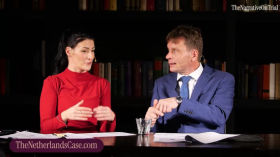
Wolfgang Effenberger – former Bundeswehr officer, author and one of the most prominent critical writers on geopolitics in the German-speaking world – talks with Robert Cibis about war plans he helped to draft himself, about manipulation and about the question of whether World War III has already begun.
Anyone who wants to understand how close Central Europe has come to the nuclear abyss in recent decades gets first-hand insights in this conversation: as a young officer in the 1970s, the guest sat in front of a safe in a Munich barracks with the task of “beaming himself into the war” every morning – specifically into the planned deployment of atomic demolition platoons between the Weser and the Vistula. More than 1,100 nuclear target points were planned in this zone alone at the time. He was not allowed to share what he read there with anyone. In a quiet act of resistance he smuggled one page of the secret order out of the barracks – a piece of evidence that still lies in his desk drawer today, so that he himself never begins to doubt whether he only dreamed it all.
The programme moves from these personal memories to the major geopolitical lines: to the NATO war plan “Dropshot” of 1949, to the 2014 US doctrine paper that defines China, Russia, North Korea and Iran as threats to be reduced by 2040, to the quiet build-up of military logistics across Europe – eight-lane supply routes, the world’s second-largest military hospital in Wiesbaden with 4,500 rooms, a new warfare centre where Ukrainian generals now report.
Particularly striking is the anecdote of an orange demonstration on Munich’s Odeonsplatz in December 2004, which suddenly made the guest realise how deeply staged revolutions reach even into German municipal structures – with street sweepers of the City of Munich at the head of the march.
The conversation does not shy away from big questions: can a war in Germany still be averted? Are we already in World War III, only in a hybrid form, the Omniwar? What role do fear, media manipulation and – the strongest word of the evening – obedience play in this? One quote sticks: “All the suffering in this world has a single origin. It is obedience.”
Towards the end it becomes controversial: the host pushes back, by no means sees Russia and China simply as the better adversaries, warns of a technocratic future in the style of Beijing and recalls dissidents he has met personally. NATO insider Effenberger meets host Cibis, who challenges him respectfully…
All suffering in this world has a single origin. All suffering in this world has a single origin. That is obedience. What you want to do, you can also do conventionally. But it will be said that the nuclear weapon was used not just to unsettle the population, but to frighten them. To absolutely terrify them. And then they are completely without a will of their own. And you can manipulate them as you please. So that is why I am convinced, and I fear, that it will be said: they used the nuclear weapon, and now it gets very dangerous. And now you must do exactly what we tell you. But the art of the manipulators is precisely to combine the two. Sometimes the staging does have a kernel of truth.
There is something true somewhere, but then it becomes a perversion of it by twisting the words around three times. You have dealt so much with these questions and with the staging as well, so of course anyone listening now would want to know, first of all: is war in Germany unavoidable? Hello, my name is Robert Cibis. I am very proud and honored to be sitting here with Wolfgang Effenberger. Before we begin the conversation, I would like to remind you that all our programs can be viewed on our website, www.oval.media. Everything is there, sometimes behind a paywall. We need support. However, we also publish a lot of it
free of charge. Yes, and today's conversation is totally important and relevant to me. I have waited a long time for it. Mr. Effenberger doesn't know this, but I have had you, so to speak, in my sights for years. And for a very simple reason: your résumé gives us so much. Because you got to know part of the machinery of power from the inside, and as a result you were able to give ordinary citizens insights that are otherwise closed to them. Because, as is so often the case in our Federal Republic and sadly in all countries of the world, what is really important, where the course is set for society, is exactly what is kept secret. In a world where citizens decide where things are headed,
precisely that would be public. And perhaps intimacies and private trivia, all those boudoir stories, would be secret. Because people's private lives are perhaps not so relevant, but the great decisions are. What is the military doing? What are the corporations doing? What are they actually doing? That, so to speak, would concern us if we were the sovereign. And now it is the case that even ordinary citizens are saying to themselves, damn, war could come. Not all of them, but some say so, and there are more every day. I heard that real estate prices in remote corners of the world exploded after the attack on Iran by Israel and the USA. Places where people would flee to. Whether it's South America
or some islands. Suddenly houses there cost much more. Because obviously there is an ever-growing share of people who are genuinely afraid of so-called kinetic destruction. And you see, that has something incredibly threatening about it. Surprisingly, much more threatening than, for example, poisoned food. Or some injections you get from the doctor, which might also contain toxic substances. In wartime, that would be used. They would use every lever. And now you are someone who gives lectures and writes articles, 500 articles, and has published a dozen books. And that is very impressive. What is the core message you communicate in all these publications?
Yes, I deal above all with geopolitics and American war planning. Because I once had to do that professionally. I became a soldier at the age of 18. I was an officer candidate. Two years of officer training. At 20 I was a lieutenant, also in the troops. Then, after the corresponding time with the troops, two years, as a platoon leader and company officer, I studied civil engineering at the engineer school. And after my studies I joined the staff of an engineer battalion in Munich. And I had only one sergeant and a safe. And in the safe was an excerpt of the actually valid General Defense Plan. Of course only in part, for the Bavarian engineers. That was the border with Czechoslovakia back then.
And I now had to immerse myself in this war plan. And of course in the geographic situation on the ground too. And then basically beam myself into this future war. And draft orders there. And then once a week the commander came and looked at what I had done so far. Then he gave me advice or instructions for continuing and so on. And when about three orders were somehow finished, I would take those orders, a leather bag, a heavy leather bag with a chain, and a pistol. And I would be driven to Ulm, to the Second Corps. And there I presented these drafted orders. Of course they were corrected again
and so on. So just at that age, 26, imagining war every day from 7 a.m. onwards, that was not easy. And above all, what was not at all easy back then was not being allowed to talk to anyone about it. To no one. Except my commander. Nobody knows the war planning that was done there, '73, from age 43, when I had insight into it. The NATO Nuclear Planning Group also formulated nuclear target points between the Weser and the Vistula. If I remember correctly, it was 1973, I believe, a little over 2,000, 2,100, between the Weser and the Vistula. That was the envisioned war zone. Or "under the war tribune," as it was put even better. Euphemistically, that is. And as I said, I couldn't talk to anyone about
it. And then in the evenings I went to the University of Politics. And the advantage of this post was that I had regular working hours and could drive into Munich at 5 p.m., to Ludwigstraße, to the University of Politics. I was there every evening until 11 p.m. And there I managed to clear my head somewhat. But as I said, what was planned here, well, we are a democracy again. The population had no idea at all what was planned here. The regulation, which also came in 1973, Command in Combat. Under item, I think, 3326, for the engineers, the use of nuclear demolition charges was specified. Everything, transport networks, was to be blown up with nuclear weapons, narrow passes and heaven
knows what. So I say, how could one, how could one in the Federal Republic, well, no. It would have been catastrophic in terms of the degree of destruction. That was how it was back then, from the Weser to the Vistula. And I don't even want to know what is planned today. I think it has never become less. And we do notice that every year, at the end of October, beginning of November, the Luftwaffe practices nuclear sharing. And the deployment is practiced for 14 days. That is an issue in this country, but it finds no resonance. And when I also imagine that in Biden's 2022 security strategy, in the nuclear sections, I had to read it several times until I understood it, it was stated that renouncing a nuclear first strike is explicitly ruled out. In a roundabout way, that means the USA will carry out the
first strike. Or at least they don't rule it out. You are talking about a text from 2022. Yes, exactly. Exactly. Whereas the Chinese have ruled it out completely. And why is it in there? You have to ask the Americans, you have to ask both. And that is what really preoccupies me, that what was planned here is not being addressed. It could be, in my view it should be, but it doesn't happen. And that is what has now of course worked to my advantage. Because I could no longer become a career officer, I left after twelve years and studied again at the Technical University, for a higher teaching degree in construction
and mathematics. And then I was a teacher for 20 years at a technical college for construction. Yes, and then, as I said, I began writing. Mainly focusing on geopolitics and American war planning. And that is only possible for me thanks to the insights I gained back then. And then I also had the great fortune of meeting Willy Wimmer at the Kirchentag in Munich, in 2010, I believe. He was State Secretary in the Ministry of Defense and in 1989, if I remember correctly, at the exercise Wintex-Cimex, he played the Minister of Defense in the government bunker in the Eifel. And on the 7th day of the war he was supposed to order the attack with nuclear weapons on Potsdam and
Dresden. He did not do it, but demanded to be released from the bunker. And then he drove to Bonn to Chancellor Kohl. And he was, I believe, relatively close friends with him. And told him what he was supposed to do. And Chancellor Kohl immediately ordered that the Federal Republic withdraw from the exercise at once. And no longer take part in such exercises. I didn't know that either; I learned it from Willy Wimmer. And Willy Wimmer is truly a trustworthy person. So that should be taken seriously. And as I said, he went public with it, with that. And I, way down below, with my role in wartime as platoon leader of a nuclear barrier platoon, also from the very lowest level,
actually the lowest level. And that is a stroke of luck in my life too, that we found each other. And the two of us went public with it. So you are, de facto, a whistleblower. You could say that. I did the following back then, truly aware that what I was doing at my workplace was top secret, and that I could not talk to anyone about it. And I thought to myself, I don't know what possessed me. I really don't know. Nobody will believe later what I had to do here. And as I said, the orders, these war orders, or orders for a real emergency, were written on a certain colored paper. And I thought, I have to take one of those colored sheets, smuggle it out of the barracks, so there's proof that I have the real
paper. And type up my secret job description on the back. And that's what I did. So I put this paper into the typewriter and typed my job description on the back. If the commander had walked in and seen it, "What do you have there in the machine?" I didn't think about it. I then smuggled it out of the barracks and hid it. Yes, until reunification. And I thought, well, now it's probably no longer critical. But I have proof. And then it was also like this: my father-in-law, a police chief inspector, when I told him what I had done, he didn't believe it. He can't believe it. And he says I
must have dreamed it. And when I think about it, he might be right, I might have dreamed it. Really. But I keep this paper in my drawer, the top one, at my desk. And when these doubts come up, whether I dreamed it or not, I open the drawer. No, I didn't dream it, it's there. What is the worst-case scenario? What could have happened if you had been caught? If you had been caught. Well, that would certainly have meant dishonorable discharge from the Bundeswehr and high treason. Certainly, yes. That means possibly criminal proceedings. Yes, definitely, yes. Certainly. Goodness. Yes, that is, but I mean, as Hannah Arendt famously said, there is no moral duty to obey.
And as Eugen Drewermann says, sometimes it is simply a duty to say no to crimes. And the interesting thing, and the beauty of your story, is that this is about a fictional scenario. But even in fiction, there is already an act. You gave a talk at the conference in Berlin, which is also available on OVALmedia. And there you quickly explained that war actually begins with what happens between the ears, that is, in the consciousness, in people's minds. And that it's not just preparation for war, but de facto already a war. And this fictional scenario is de facto a mental step toward confrontation. And you also described that these strikes would have been carried out by the Bundeswehr, in that scenario,
is that right? So by NATO and the Bundeswehr together, I assume, right? Yes. When exactly the individual operation would have taken place, I can't say. But as I said, the relevant regulations we had there, that is, this "Truppenführung im Gefecht," it already assumed that there would have been attacks into the depth of the area, accompanied by nuclear strikes and so on. It is always the other side that strikes first. Of course, of course. That's also the art of a good politician, to conduct politics in such a way that the opponent strikes first. Yes, we know that from these "letting it happen" techniques for starting wars. But nevertheless it also shows how much a war is always also a war against one's own population. We know this from Ukraine, where the minority, the Russian minority, was also fought by the Ukrainian government, where a conflict was thereby escalated as well.
That may be part of it. For me, it was really not acceptable back then that a comprehensive nuclear deployment was indeed planned and no protection for the civilian population. And I said, that's simply impossible. And on such a scale, too. On such a scale. And if we imagine the nuclear arsenals back then, both of the USA and of the Soviet Union, they had 9,000 to 10,000 nuclear warheads on each side. Just toying with the idea, in such a densely populated region as Central Europe is. I'd say from the Weser to the Vistula. To plan such a nuclear war here, to plan it comprehensively. And I think if I plan something, I'm also prepared to
use it. For me there's no other option. And if you have something, then you want to use it. Given that, so to speak, there has been no use of atomic bombs since 1945, and there are also quite good arguments that in 1945 there were no atomic bombs yet either. I don't know if you know this, but as you say, that's why, because we had Michael Palmer as a guest, who wrote a book arguing that he believes that in Hiroshima and Nagasaki an atomic bomb was simulated, but it wasn't an atomic bomb yet. That's not the question we need to discuss today. I also find it completely irrelevant to these questions concerning war. I only mention it because we only did these and people say, yes,
but maybe none of this is true at all. No, there are weapons, I'm firmly convinced of that, that we don't know about, which are even deadlier than what we can imagine. And there are chemical weapons and of course there are bombs that explode with incredible force. That comes close to what one imagines an atomic bomb to be. So it's completely irrelevant what kind of weapon kills people there. I really find that irresponsible. So I can't rule that out either. So Hiroshima and Nagasaki could of course have been a simulated use of a nuclear weapon. I don't want to rule it out, because of the timing, the conference in Potsdam, and the fact that Truman, as he said, wanted a hammer against Stalin, that they
did it there. So I can't rule it out. But to go public with that and say that these were most likely not nuclear weapons, and the others go right on and say there are probably no nuclear weapons at all. And there I have to say, what we trained for there, we already assumed that they exist, and I wouldn't want to put it to the test. And when I think about what I know, well, in the end it could all be fake, but I don't believe it, when we think of Bikini Atoll, the radioactivity that is still there today and so on, the people who were displaced there over generations, what consequences that had, yes, I have to say, folks, trying to downplay that, I ask myself,
who has an interest in that? So it's an incredibly dangerous weapon and I wouldn't put it to the test. So, what I... There are countless ways to kill people, and the military has, as I just said, possibly weapons that are still secret. That's the wrong question. The question is where this is headed and what the goal is. That the military can kill, we've known for a long time. And I think the destructive potential, regardless of whether it's nuclear or conventional, is so massive, so dangerous. We see it in Ukraine, or we see it now in Iran as well, and before that, too. In World War II, the destruction in Hamburg with that firestorm, or in Dresden, is no different in its effect from the use of a
nuclear weapon. So ultimately, when people, and that was 30,000, 40,000 burned up in the fire, with conventional weapons, so to worry about that, no, well, with nuclear weapons there are other components that are more important militarily, for example the flash of light, which is only partially significant militarily, but the electromagnetic pulse is important. It knocks out all electronics. That can of course be the point, that one could do that with a high-altitude air burst. But what else? I assume so. If it should come to a further escalation, I don't believe that the use of nuclear weapons is actually necessary. What one wants to do can also be done
conventionally. But it will be said that the nuclear weapon was used to not just unsettle the population, but to frighten them. To absolutely terrify them. And then they are completely without a will of their own. And you can manipulate them however you like. So that's why I'm convinced, and I fear, that it will be said, they have used the nuclear weapon and now it's getting very dangerous and now you must do exactly what we tell you, otherwise you have hardly any chance of survival left. So that could happen, I don't know. Because when I see it, one has to expect any perversion here. That's also something, I have to say, where you have an edge over me, because you got to know these scenarios so young, which are obviously inhuman and which obviously have to be approached very coolly
and detachedly. That is the military's concept. You learn, so to speak, not to see the enemy as a human being, but as an object, or you try to dehumanize them. And I believe this is a process that has advanced further and further in recent years, this dehumanization of others. And for me, because I was an active officer, and at first I was absolutely convinced of my work. I was two years after the Cuban Missile Crisis, when nuclear war was already being painted on the wall and people were frightened. I experienced that at 16. And I said, okay, then you'll join the Bundeswehr afterward, because of course we have to defend our freedom. Until I gradually saw, no, we're not defending. With the potential for destruction, we are by no means
defending our freedom. And if you know our Federal Republic and know Central Europe, then I have to say, waging war here is completely unsuitable, absolutely unsuitable. Because this densely populated region, already an industrialized region, if we just think of the power plants we have here, of all different kinds and so on, no, that simply isn't possible. And it's simply... [garbled in the original]. Of course that interests me, because, explain it, what does that actually mean? What does the geography of the Federal Republic of Germany mean? Well, it starts with the fact that we have so many cities here. Cities that have in part grown into one another by now, whatever. That we have transport networks that we need. If those were destroyed, and that would soon be the case, then of course the entire supply chains would no longer function.
It would all collapse. We can't even imagine what that would mean. The entire energy supply would be gone, and so on. With all the consequences that go with it. Unimaginable. It's unimaginable. And in these confined spaces, and then on top of that, if we think, we have a tank division, and I then, yes, after I left the service, after twelve years, because I had always been committed, yes, and always took responsibility for the soldiers entrusted to me, I was called up again and again for reserve exercises. And I was slotted into mobilization planning. These were units and formations that could be called up relatively quickly and were available, and we often trained, more or less, and there, at first I had a company, so 120 soldiers, all reservists. I was a reservist too, and I actually had no interest.
But then I had these people there who were fully committed. Small business owners, master craftsmen, who sent their journeymen on vacation so that they could do their reserve exercise. And I saw that, and then I said, okay, if they've been entrusted to me, and the only obligation I have is that the people entrusted to me can survive in war. So I have to train them so that they master their weapons, for example. And I did that, and then of course it went on like this, I was of course slotted in further. At some point I was deputy battalion commander, and then I got into a conflict, and I was supposed to be planned out, and then, nevertheless, they wanted to annoy me,
so I had to do one more reserve exercise. And I did that exercise in September 1989, during an army exercise in northern Germany. In the Münsterland, the 1st Armored Division was set up, completely set up, in full wartime configuration, complete with the mission to go from Münsterland across the country to the eastern border to relieve a division worn out from fighting. So I went along in the role of the reservist division engineer commander, so the shadow of the active officer. In shift duty, we switched every twelve hours. So that was this armored division, 14,000 soldiers, I don't know, 350 Leopards or so around it, and 1,500 engineers in total. And according to the plan, of course, all bridges were blown up,
which would also be the case in wartime. But that couldn't be sustained at all. So it worked poorly, let's put it that way. And that in peacetime. And when I think of what happens in war, this dense landscape, how it gets destroyed, the degree of destruction, an armored division moving through there, it would never arrive. It actually wouldn't arrive. And that became clear to me: an area like this, whether it's Germany or, say, Poland, it's industrialized in the same way. I can't move armored divisions back and forth there, large formations. And they're all, the units we have are all extremely mobile, fully motorized. In such terrain, completely impossible. So again, that alone rules out even thinking about such a war
deployment. So I consider it completely out of the question. And the annihilation that would come upon us, upon these people, is so unimaginable. And what comes afterwards, the images we have from 1945, of the destroyed cities, they're still relatively harmless by comparison, I think. So no, it's out of the question, and we can only live together in peace. And what I see now, since we had the coup in Ukraine in February 2014, and this war developed, from May 2, when we had the massacre in Odessa, where over 40 trade union youths were massacred, or rather the Trade Unions House was set on fire, so that they all burned to death, still not cleared up to this day, to this day.
And from May 2, 2014, this civil war has been running, so to speak. Our media about this war, about the Ukrainian government troops attacking the separatists, bombing them, until February 24, 2022. There wasn't much reporting on it here. The UN says there were 14,000 dead in that period. So, and the West here did nothing to intervene, to perhaps bring about a solution. Yes, they had the Minsk agreements, Minsk 1 and 2, 2015. And of course these separatists, that is mainly in the Donbass, the people who live in the Donbass, they are mostly Russians, who also speak Russian, and of course they want to keep Russian as a colloquial language and also
as an official language. And this new putsch government in Kyiv immediately issued a decree banning the Russian language. And your opinion is basically that by the 2014 coup at the latest, it was clear that NATO wanted war with Russia. Yes, of course, yes. And above all, it is the case that we, here we come to the essential point that still holds true today, and it underscores this intention, this absolute intention to wage this war against Russia. This intention has existed since NATO's founding. NATO was founded in April 1949, and not even nine months later, on December 19, 1949, the USA adopted the war plan Dropshot. And this war plan Dropshot provided for an attack on the Soviet Union in 1957, with 300 atomic bombs and a huge arsenal of other bombs, in order to destroy 85 percent of the Soviet Union's
industrial potential. That was the intention. And for this purpose the Bundeswehr was also supposed to be ready for action with twelve divisions. That's why the remilitarization of the Bundeswehr, in '57 with twelve divisions. And in '55 the Federal Republic became a NATO member, and so on. It all fit this plan exactly. But then came a technical achievement of the Soviet Union, which in all other developments, military ones, lagged behind the Americans. But not there. Namely in the ability to put a satellite into orbit. Sputnik, back then. And the USA first had to put their war plans on hold, because they didn't know what Sputnik could observe. It wasn't clear. So.
And then that changed. And in this war plan Dropshot of 1949, December 19, it says in the preamble at the front, at or around 1957, a war was forced upon the USA by the Soviet Union and one of its satellites. This is in the plan from 1949. So that's why, the war against the Soviet Union, the destruction of the Soviet Union and now the destruction of Russia, runs through it like a red thread. And this plan is again a fictional scenario, as one imagines it, just like you experienced in the Bundeswehr. But scenarios have something like that. Sometimes you can't distinguish between a scenario and a plan. It's like how you sometimes can't clearly tell a maneuver from a troop deployment. What I always hear when I talk about these war plans is that they're just war
games. That it's just play-acting. Well, I have to say, no. A war game, let's say, on a sandbox table, on the sandbox, no troops are moved, no big money is spent, no materiel is relocated, no logistics are deployed, nothing. And for war plans, it's different. Preparations are made. For example, what's going on now, we have the PESCO agreement with the EU for this war on the eastern flank. Tell us briefly what that agreement is? The Americans wanted that. So we have, I have to come back to this paper, half a year after the Maidan, in September 2014, from the US command, the Training and Doctrine Command, a command with influence equal to the Army, Air Force or anything else, a four-star general, and they make the doctrines for the deployment of army, air force, navy, all-service command,
cyber command. That's what they do. So, and it was adopted there, and it is titled, to be exact, TRADOC, Training and Doctrine Command, 525-3-1, Win in a Complex World 2020 to 2040. So, now it's 2026, so you still have 14 years to implement it. And under point 2.4, titled Future Conflicts, it says the task of the armed forces is, or the armed forces have to prepare in the stated period to reduce the threat emanating from Russia, China, North Korea and Iran. Yes, of course that is readable for anyone, it's open. The real plan is of course strictly secret, obviously, right? Anyway. But anyone may know this, you have to let the members of parliament know too what is roughly planned, more or less, so that is still publicly accessible, but no more than that. But anyone could actually know it, and whoever has dealt with such war plans knows this
must be taken seriously. And it's also recognizable what is being done here. So these armed forces, in order to reduce this threat, they won't deploy missionaries or diplomats, they'll deploy what they have. And that's cruise missiles and rockets and whatever else. So that's the situation, and they are preparing for it. And this paper is still valid. Still valid. And now it's like this, but not an issue here. So I googled it then, or rather, worldwide it was, from 2014 until now, half a year ago, I think over three million times, it was covered in the media somehow. But then I checked how often in the Süddeutsche Zeitung. I worked with two different search terms, and each time nothing. Not once.
Not once. So, and I have to say, it's simply, you have to know that people are deliberately kept stupid, quite deliberately. And that it simply isn't discussed. And when I think that after I had read it, in September 2014, within, in October already, I wrote an article about this paper, where I wrote, where I warned that this paper leads the way into World War III. Or prepares it. And the EU's PESCO agreement, that was in 2015, when it slowly took shape. In 2017 the Americans put pressure on the EU to conclude this PESCO agreement. These are agreements, framework conditions, to achieve military and arms-industry
synergies. That means, first, that arms companies are merged, jointly and whatever, in order to be more effective, and second, to prepare the infrastructure. And that, as I said, you only have to look once at the supply route north of Görlitz, via Wrocław, Kraków, Kyiv, it's eight lanes, completely new, eight lanes. So, certainly not necessary to handle passenger and freight traffic. And all these bridges from the Channel and the North Sea over these hubs, they have all been expanded to the absolute limit, for the highest load classes. And the logistics center in Wiesbaden, the foundation stone was laid in 2010, and in 2012, I think, construction began on the largest military hospital,
the second largest in the world. So that is also... 4,500 rooms. Exactly, and now our General Bodemann says in the Operations Plan Germany, yes, we have to reckon with, I think, 2,000 wounded every day, and they will be given priority, and all other operations in the hospitals will have to be postponed. That takes precedence, absolute precedence. And I remember back then, when I brought this up in my first lectures, PowerPoint lectures, I was told: conspiracy theory. I said, but if you build a hospital like that, with 4,500 rooms, a military hospital, what for? You expect wounded, and where are they supposed to come from? Surely not just from the motorways, from rear-end collisions,
but something more has to happen. It can only be a war. Or, around the same time, 2010, 2012, ground was broken in Wiesbaden for a New Battle and Command Center. So, for a new war-fighting center. And I said then, too, if you need a new war-fighting center, perhaps you want to wage war. Just asking the question. Again, immediately: conspiracy theory, conspiracy theory. And what is going on in Wiesbaden now? It has long been finished. And the Ukrainian generals now report there for briefings and get their orders. By the way, this is completely undisputed, even for the public. There is a long article in the New York Times about exactly this, saying that the entire command structure of the Ukrainian army is actually based in Wiesbaden and that the Americans are in charge there.
So that is, if someone now says this is a war between the USA and Russia, then that is completely undisputed. That's how it is. And the Ukrainians are fighting for the USA. That we really do have honorable people here, Ambassador von der Schulenburg. Truly honorable people who really work for peace, and with General Kujat, I see that differently, though. We were socialized similarly, we had similar postings. So he was in 1988 the battalion commander of a training battalion, and I was the deputy commander of an engineer deployment battalion. Reservists only, but during large army exercises. So I had a different
insight there. So from then on we were similar, similar. And that he also believes that a war is being fought here between Ukraine and Russia, and that a peace plan has to be drawn up. That's what he says. Yes, of course. Yes, right. And then I have to say, excuse me? No, Ukraine is not at war with Russia, rather the USA is at war with Russia, and on the back of Ukraine. On the back of Ukraine. But Ukraine itself certainly is not, no. And this has been planned long in advance, and that is simply what makes me truly sad. That young people here in Ukraine, and I have to say, I have empathy for both the young Ukrainians
and the young Russians. They are, they are related, so to speak, I would say. They have a similar history and whatever. But a tragic history, when I see that the Ukrainians, a part of western Ukraine still socialized by the Holy Roman Empire and by Austria-Hungary, and the others in Russia of course purely Russian, and that in the First World War they had to kill each other. Without any reason, really. In the Second again, and now once more. You have to say, this must not be. And that also made me very sad, because I am of the opinion that with this history, with this eventful history of Ukraine, one part of Ukraine entirely from the West and the other entirely from the East, it could play a bridging role between West and East, in which Ukraine would
truly flourish. And to the benefit of both the West and the East. But the West did not want that. The color revolution in early December 2004. It was on December 6, I will never forget it. I was in the State Library all day reading, and then I walked toward Marienplatz and arrived at Odeonsplatz at 6 p.m., and of course there were Santas, there were Christmas trees being sold. And then on the right, between the Feldherrnhalle and the Theatine Church, a steel-tube scaffold was set up, with a heavy metal band making noise. People were going wild. And then there were 400 young people, all with an orange scarf, chanting "Ukraine,
Ukraine." And I didn't know, I didn't know what was happening here. I didn't know. But I was curious. So I stopped. All young people, students, I assume. And then they set off, and with the street-sweeping vehicles of the City of Munich, which are orange, which took the lead toward the Siegestor. And then the penny dropped. And it can't be that the City of Munich provides municipal vehicles for an event like that. It can't be. This was in 2004. December 6, I remember it exactly. That means I had no idea at all that this pro-Ukraine campaign had been running for over 20 years.
And it was like that, and I also didn't know what was going on. And then I, the only thing that, I would never have done it. But in my role, in December '73, as far as I know, I stood in for the deputy commander, who was also responsible for issuing orders, and I had to do that, and so I drew up an order for the City of Munich, directly from the Lord Mayor, that we engineers would set up the Munich Christmas market. And the order carried my signature, and I deployed an engineer company. And I know what arrangements we made with the City of Munich. Although we did that only for the City of Munich, and how can you do something like this within a few days, and I said, something isn't right. Then I went home and went
to the computer. Everything I had seen, I typed in. Yes. And around half past one in the morning I had the result. It was a color revolution. Freedom House, so the everything, and I also saw that these demos were all over the world. And I said, it was about the election of the presidential candidates, so Yushchenko and Yanukovych. Yushchenko, and the West said Yanukovych is pro-Russian, we want a pro-American, the pro-Russian one rigged the election, so the election must be annulled and so on, and then of course Yushchenko became president. In 2010, during his presidency he really only built huge monuments to Bandera, and the population didn't want him anymore, and in 2010 they elected Yanukovych again, a second time, and of course it all fizzled out. It was clear that the next one would come, because they had already prevented him successfully once, they knew they could do it again, but now of course with tougher methods. And all of that was clear to me, and above all, I said, how can an election in Ukraine, whether Yanukovych or Yushchenko becomes president, interest the world relatively little, and large demonstrations in Hong Kong too, how is that possible? Somebody must be pulling strings. So from then on I was very attentive. That is very,
very interesting, because that is what we at OVALmedia observed so strongly regarding Corona, that completely weird, irrational actions were implemented by authorities globally at the same time. And that is truly fascinating, because you wouldn't think the City of Munich is part of Ukraine's deep state. You would think these are two different structures that certainly don't, well, I
from high above, perhaps the Chancellor, or that it went through the American ambassador, that the ambassador in Berlin made a call, and then they must have had the orange scarves days earlier, and all permits are quickly obtained, yes. And then you must have
got the people with 25 dollars a day, they simply received money. Of course I don't know how it was in Munich, it was a few days before. But it simply, I said, I instinctively felt that something wasn't right, yes. Sometimes, that is also a very interesting thing, because I think it is valuable for many things, when you notice that something is being staged, as opposed to arising organically. Of course there are also organic movements or moods and so on, but the art of the manipulators is precisely to combine the two. Sometimes
that's how it is. There is something true somewhere, and then it becomes the perversion of itself by twisting the words three times. I mean, you have dealt so much with these questions and with the stagings, so of course everyone listening would want to know: as
war in Germany is unavoidable, given how the planning is going, I can say nothing else. Can you judge how global it will become? the two World Wars were Training and Doctrine Command, it was dissolved in October of last year, so four, five months ago, and was replaced by a newer command. It's now called Transformation United States Transformation and Doctrine Command. So it's now about a much higher level, it's about transformation and the path into the Omnivore, into war, from the cell nucleus to the stratosphere. So it's no longer following this new doctrine of winning battles. They're no longer interested in that, they moved past that long ago. So the idea that we imagine big wars like in the Second World War, the First, no, that won't happen anymore. There will of course be partial wars, but overall war will be waged on all levels. It will be a hybrid war, and I think we're already in the Third World War. So, I'm convinced of that.
those behind it and what is being done there, or also deal with the keyword Omnivore, so well, we covered that with the lecture I gave today, where I tried to give an answer to that. You can take some things from it and please work on it and take a look, and so on. In the current phase, it matters to get this far
so, I think, when I think of Omnivore, Mr. Use, the professor from England, he's been saying since 2020 that we're in the Third World War, and the beginning of this pandemic was the path into this Third World War. That's from him, and I think he coined the term Omnivore, and I
so that's it. And now the WHO, the latest WHO figures were that vaccine deaths worldwide in total, the WHO says 14.9 million vaccine deaths. That's not bad for the start of a Third World War.
In and it's not about the number, I think. I mean, a large number is missing, no question, but all the people suffering here in the world because just a few madmen, I can't put it any other way, pursue some irrational, inhumane plans. I simply don't understand it: people who actually have everything, who live here in this world in complete prosperity, completely, and who behave so inhumanely for some irrational goals, I simply don't understand it. And above all, the money that's being burned for it. Climate policy goes in the same direction too, it also serves to control people. All the suffering in this world has a single origin, all the suffering in this world has a single origin, it
and only with obedience can all this be done, and people no longer think and perhaps conscience itself has been killed off too, I don't know. And how many dead do you think there will be after the end of the Third World War, if
there in 2 million, yes, we don't know exactly. No, that's outrageous, and it's more or less not acknowledged, hardly at all, really, and no, it makes me very sad. And the question is so banal and direct, because you rightly say that people who want this must be sick. I think so too. Above all, with what happened there, we have no diplomatic negotiations, no diplomacy, nothing, not even from the EU, from anyone. We've now had this war for over four years, and when I consider that Putin, or rather the Russian Federation, on December 17, 2021, did the following: they sent two letters, one to the USA, one to NATO, with a request for a long-term security agreement. So, and what happened? I remember exactly, the first conversation was on December 30, '21, Putin and Biden, and I read the commentaries too, so midnight, the Kremlin says hopefully, great atmosphere, and we are optimistic that this can lead to a result and so on, so a three-quarter-page positive statement, and from the USA only one or two sentences, very terse: without de-escalation from the Russian side, no progress. So, and then two days later came the coup in Kazakhstan, or the attempt, and the talks were over anyway,
and after that there were only talks at a subordinate level, which were all stifled, and already on the 19th of January a bill was introduced in Congress, namely the Ukrainian Land Lease Act, which is what was done with the British in 1941, so that the Americans, as a neutral country, could give destroyers to the belligerent party Great Britain, they more or less passed this act. It's only lending, they aren't allowed to sell it, but lending, that was a kind of niche,
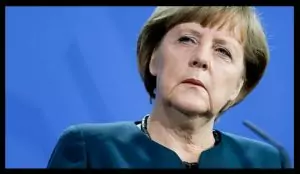
that the Americans may now lend weapons to the belligerent party; as a neutral they can't sell, but they can lend. It was then passed in April, and I still remember our media making a big deal: the Land Lease Act has now been passed, help for Ukraine and so on, for the unprovoked victim of attack and so on and so forth, and I said, yes, as a reaction to the brutal Russian invasion of February 24. And I said, could be. Then I went into Congress and looked at how the bill was put together, looked at when it was submitted, and I saw: on the 19th of January, so before. That's very good work, it's very often like this, that you get the feeling the law is a reaction to an event, and if you look closely and look at exactly this submission, you see that apparently the event was a kind of preparation for the law. And when I also consider that Ms. Merkel, on December 7, 2022, in an interview with Die Zeit,
said proudly: we never intended to implement the Minsk 2 agreement, it was only about stalling the Russians so that we could arm Ukraine, and we're supposed to trust them now? We have no confidence-building measures left, we're supposed to still trust, while on the other side rule those who can't negotiate. It simply seems to me as if the overriding goal were to weaken Europe anyway, yes of course, to produce as many dead as possible, that is, what is always called population reduction, or simply genocide, and that this were the political goal, in order, on the one hand, to let the world's plutocrats, but above all of course the Anglo-Saxon plutocrats and sea powers, so to speak, keep their sovereignty over the world order, and then with the Third World War there's also the other level from my point of view, where China, Iran and Russia are now supposed to join in too, officially, we're already in it anyway, but officially, into this plutocratic elite, which is then to implement the new world government or global governance, as it's called in modern German, that's how it seems to me. So we must, there are many factions at work here, so there's no uniform direction, certainly not, neither in the USA nor anywhere else, but in China the USA could of course break away or bribe one or another oligarch or high-ranking military man, whatever,
but that would be one of many, certainly not all. Sorry, but that's not what I meant, what I mean is that basically even the party structure in You know, an attack against you is being prepared on all levels, and
you have to take the Chinese psyche into account a bit, and Xi Jinping only has to, and he did that on September 3 at the celebrations for the end of the Second World War, he had invited all heads of state to it, the end of the Second World War, and out of that came two heads of state, two out of all of them, but that was the end, the end of the Second World War was on September 2, 1945, when the Japanese surrendered, and for the Chinese that's very important, the Japanese surrender, what Japan inflicted on China since 1894, you can't even imagine, so it sits very deep there, and a head of state in China only has to remind the Chinese: we don't want these 120, 130 years of humiliation and suffering again, with the British Opium Wars, then with the Japanese annexation of Formosa, that is Taiwan, in 1894 and so on, then the Japanese attack at the end of November, beginning of December 1937, which for the Chinese was the beginning of the Second World War, when they massacred 100,000 inhabitants of Nanking, that's ingrained in them, and we
will never allow that again, and that of course unites them, no question, when pressure is applied from outside, it unites World War, I think, perhaps it's the first on this scale, the war,
a real world war, the struggle of the unipolar world order against the multipolar world order, that wasn't the case before, that it was so clear, two large warring parties and the others partly still had different focuses, yes, that I understand, and my impression, however, is, just look at the politics in Germany, which is often rather harmful to the German nation, almost like sabotage, the infrastructure is being many citizens have the impression the government is fighting its own citizens,
and now the attack on Iran too is something like suicide, because that the Strait of Hormuz would be closed and the oil price would explode, every child knew beforehand, if they had only looked into it briefly, and that the war would happen, that was also known. So I see it this way: the unipolar world order is being replaced by a new multipolar world order, but in both structures the same people are in power. By the way, the term multipolar world order, I know this from an article that appeared very recently, even comes from the Council on Foreign Relations, who coined it back in the '70s since their founding, and my impression is that it's somewhat put into the mouths of the Russians and Brazilians and South Africans and Chinese, but actually this term comes from the oligarchs, from the plutocrats, and is basically a way to sell global governance, because you make the world equal, so to speak, equally poor, equally rich, all ethnic groups are supposed to mix so that you really can't see a difference between the various regions and countries, the regions are supposed to join together, the EU, and Latin America, Asia and so on are supposed to follow the EU model, a union. So I believe that that's right, we have a replacement, but I believe that the brutality is in reality a class war, as Warren Buffett said,
the world is at war, namely rich against poor, and I can already say that the rich will win. Well, that's one way to see it. But I also want to hope that it's the struggle of the unipolar against how they're networked with each other, or rather no comparison to the
structures of the EU, there everyone has freedom, so you don't find it so threatening, the multipolar world order? Not at all. Oh, that's interesting. Not at all, on the contrary, I see in it the only hope we have, at least I think so, yes, also with the Shanghai Organization, the structures are very open, very open, everyone can decide for themselves how far they get involved and so on, so no comparison to the NATO structures, no comparison at all, where it's only from the top, where there's an American supreme command and from the top down and so on and so forth, that is very, very positive, these people of the Global South, these are all countries
that have suffered for centuries under the colonialism of the Western masters, the British, so the colonialism of the British and then the wars of the Americans for 150 years, they've had enough, they don't want it anymore, they don't want it anymore, and that's a very different driving force in my view, and I can imagine, for example China, and I was there, I also held political conversations with intelligent young people, partly, really very open-minded, who also made me see things, because some it the little ones are at the bottom, those are the workers, then come the farmers, then
come the city dwellers, and then come the productive capitalists or the productive capital, yes, and then they say, of course, only with this Communist Party we wouldn't be able to build up this country the way we can with the help of this, but they're only a part down there, so the they're allowed to take part, they're allowed to share in the development, but not to decide, not to decide, so that's, I think, already an interesting compromise that they've found, and this young Chinese man told me, he was in his early 30s and was the responsible sales manager for environmental technology for the Near, Middle East and Africa, so, and he says, he also looks very tired, he says what he works, he has no apartment of his own, is only in hotels, can't have a girlfriend either, because only this, this position, which told me, 100 million members of the Communist Party, in all, at the very
bottom, in all companies, everywhere, and they watch closely, they watch closely, and then it goes all the way up this pyramid, where 100 people ultimately make up the Central Committee, and they set the framework or the free space for the represent the Central Committee, and they set the framework, or the leeway, for the president, this is the frame within which he can move. If that goes well, then the frame gets enlarged, then smaller again, and so on. But breaking all these 100 people out for one system, for another system, is completely impossible, completely impossible, the control is simply too strong. Yes, well, I mean, the question is, I understand. So in my view, China is the model of the technocratic society. That is
something I keep being shocked by. On the one hand I'm also impressed by the efficiency and the scale, and all the beautiful buildings they build, and there are now artists who make beautiful things too. But in 2019 I filmed with dissidents who found refuge here in Berlin, but who had been in prison there. One had been in prison for a long time, was tortured daily, and what did he do? He wrote poems, but they were a little bit critical. Booksellers are imprisoned because they distribute books that are critical too. So this is an attack on freedom of thought, but also on freedom of movement. I mean, what we saw was: families who had come from Wuhan were sealed into their apartments, and some starved to death.
This is not for the structure, it serves the concentration of power, but against the interests of individual citizens, and that is of course horrifying. And if I, as someone who loves freedom, and in Russia I think the USA is more to blame for the Ukraine war than Russia, even though Russia carried out the invasion. Still, I would rather live in the USA than in Russia, because individual freedom is also extremely restricted in Russia, and I met dissidents there too, and my goodness, I'm glad I never have to live there. And now Germany is slowly becoming like that too. I
Yekaterinburg, Yekaterinburg have talked with people there and I'm still in contact. There is someone I send my articles to every week, and I always get a response. So I got other impressions there, different ones. And above all, when you see what Russia was like under Yeltsin. In Yekaterinburg there is a museum, a Yeltsin Museum, which Yeltsin had built on a plot donated by the city of Yekaterinburg, an expensive plot, and the granite statue alone, ten meters high, of Yeltsin, a personality cult you can't imagine. So no. And that Yeltsin, as I said, gave Aeroflot to his daughter, and
you have to see all of that, above all what the USA did after it put Yeltsin into power by a coup, and carried out the total sell-off. And I noticed that in Russia, in Siberia, in the expensive restaurants only American music, in the hotels only American music and so on. So there is, and he, no, it's not that clear-cut, really not that clear-cut. And I think Putin has two great ghosts to fight: One is Yeltsin, everything so oversized, and the other is the Tsar, canonized, and the Patriarchate venerates the Tsar to the point of excess, and that's the next ghost he has, and he has to juggle between them somehow, I don't know. And with Yeltsin, when Putin then took over the nuclear briefcase in 2000, or December 31, 1999, because I saw the picture in there, a small nothing, let's say, there sat Yeltsin, and it was also arranged so that all important positions in Russia were all occupied by pro-American young people, whether in the central banks or anywhere else, everywhere, and Putin has now been able to slowly remove them, slowly, a very long process. So I didn't experience it that way in Kaliningrad either. Putin has the Russian Federation declare 2024 the Kant Year, he is rebuilding the Kant
Museum in Juchen, it has just been finished, and I was invited to the big celebrations in Kaliningrad to give a speech at the congress on Perpetual Peace. And then two days before, the young governor, also around the end of his thirties, early forties perhaps, says: No, forbidden, I ban all the celebrations because Kant is an evil spirit. So again, what is going on in Russia? The president declares a Kant Year, and the governor says: No, an evil spirit, I ban everything. So I don't know, it's not that clear-cut. What I meant is no black-and-white thinking, and I believe there are no good players, let's put it that way. There is no truly good side, everyone has interests, and the world will reorder itself, and the West is on the decline, and the BRICS states are probably
on the rise. I assume so; it shows in many key indicators in that respect. Whether one replaces the other, I completely agree with you. The only question is which forces, whether they are international capital. I told myself recently: Of course, if he has a billion, I
you have to imagine that, they are of course not tied to nations. When we talk about plutocrats, you can't say the Swedish plutocrats or those from Peru, rather plutocrats are always deterritorialized, and they do have something to say, quite obviously, especially as the world becomes increasingly apolitical. And you have to say, this dimension also gives us the transnational, and it's always important to me that we don't forget that money is not national. It's actually banal, but still, one forgets it. You see them with the war and so on, but as I said, in this context, the cosmopolitan or the transnational or the international person can only live if on the other side, everywhere in the world, there are people who live in the region and who make the region habitable, otherwise he can't travel anywhere. So that's the point, and these two groups: the one who sits on his plot of land, and the one who moves normally through the world, the two can only exist together, one needs the other, and without the other it doesn't work. So both are important, and yes, that has to be recognized, both have their function, and both are important, I think.
I think we've made a wonderful arc. I also thank you that in part, I come to the same result with completely different information, and I do see a real truth there and not just an opinion, because you really argue on solid ground, and for that I thank you, I thank you for this conversation. I wish you strength to keep going. And your work too, of course, your books are important, your articles too. Of course I also recommend them to viewers. There will be a link in the description below. Please also share this conversation and stay with us and with Mr. Effenberger. Thank you. Yes, thank you.
Alles Leid dieser Welt hat einen einzigen Ursprung. Alles Leid dieser Welt hat einen einzigen Ursprung. Das ist der Gehorsam. Man kann das, was man machen will, auch konventionell machen. Aber es wird gesagt werden, die Atomwaffe ist eingesetzt, um die Bevölkerung nicht nur zu verunsichern, sondern zu verängstigen. Absolut zu verängstigen. Und dann sind die absolut willenslos. Und man kann sie manipulieren, wie man mag. Also deswegen bin ich überzeugt und befürchte es, dass gesagt wird, die haben die Atomwaffe eingesetzt und jetzt wird es ganz gefährlich. Und jetzt müsst ihr genau das machen, was wir euch sagen. Aber die Kunst der Manipulateure ist ja gerade, das dann auch zu verbinden. Manchmal hat ja die Inszenierung auch einen wahren Kern.
Es gibt irgendwo was Wahres und dann wird es aber zu einer Perversion dessen, indem man die Wörter dreimal umdreht. Sie haben sich so viel mit diesen Fragen und auch mit den Inszenierungen beschäftigt, dann würde natürlich jeder, der jetzt zuhört, wissen wollen, als allererstes ist der Krieg in Deutschland unausweichlich. Hallo, mein Name ist Robert Cibis. Ich bin ganz stolz, ganz geehrt, hier mit Wolfgang Effenberger zu sitzen. Bevor wir ins Gespräch gehen, möchte ich nochmal daran erinnern, dass unsere Sendungen alle auf unserer Webseite www.oval.media zu sehen sind. Dort ist immer alles ganz, manchmal auch hinter der Bezahlschranke. Wir brauchen Unterstützung. Vieles allerdings veröffentlichen wir auch einfach kostenfrei.
Ja, und jetzt das Gespräch heute ist für mich total wichtig und relevant. Lange habe ich darauf gewartet. Herr Effenberger weiß das gar nicht, aber ich habe Sie schon seit Jahren sozusagen im Visier. Und zwar aus einem ganz einfachen Grund, weil Ihr Lebenslauf uns so viel schenkt. Denn Sie haben im Grunde einen Teil der Machtmaschine von innen kennengelernt und dadurch dann für den Normalbürger Einblicke vermitteln können, die ihm sonst verschlossen sind. Denn wie das eben so oft ist in unserer Bundesrepublik und leider in allen Ländern der Welt, das, was wirklich wichtig ist, das, wo die Weichen gestellt werden für die Gesellschaft, genau das ist geheim. In einer Welt, in der die Bürger entscheiden, wohin die Reise geht, da wäre genau das öffentlich.
Und vielleicht wären Intimitäten und privater Kleinkram, diese ganzen Boudoir-Storys, die wären geheim. Weil das Privatleben der Leute vielleicht nicht so relevant ist, aber die großen Geschicke. Was macht das Militär? Was machen die Konzerne? Was machen die eigentlich? Das sozusagen, das würde uns ja betreffen, wenn wir der Souverän wären. Und jetzt ist es so, dass schon der Normalbürger sich sagt, verdammt, der Krieg könnte ja kommen. Nicht alle, aber ein paar sagen sich das und es sind jeden Tag mehr. Ich habe gehört, dass die Immobilienpreise an fernen Ecken der Welt mit dem Angriff auf den Iran durch Israel und die USA explodierten. Dahin, wo man so fliehen würde. Ob es jetzt Südamerika ist oder irgendwelche Inseln.
Da auf einmal kosten jetzt die Häuser viel mehr. Weil offensichtlich tatsächlich es einen immer größeren Teil der Menschen gibt, die tatsächlich vor sogenannter kinetischer Zerstörung Angst haben. Und sie sah, das hat auch so etwas unglaublich Bedrohliches. Viel bedrohlicher erstaunlicherweise als zum Beispiel vergiftetes Essen. Oder irgendwelche Spritzen, die man mit dem Arzt kriegt, wo vielleicht auch Giftstoffe drin sein könnten. Im Kriegsfall würde man das nutzen. Man würde alle Hebel nutzen. Und jetzt sind Sie jemand, der Vorträge hält und Artikel schreibt, 500 Artikel, ein Dutzend Bücher veröffentlicht haben. Und das ist schon sehr beeindruckend. Was ist denn die Kernaussage, die Sie kommunizieren in all diesen Veröffentlichungen?
Ja, ich beschäftige mich vor allem mit der Geopolitik und der amerikanischen Kriegsplanung. Weil das habe ich mal machen müssen, berufsmäßig. Ich bin also mit 18 Jahren Soldat geworden. War Offizieranwärter. Zweijährige Offizierausbildung. War dann mit 20 Jahren Leutnant auch in der Truppe. Dann nach entsprechender Truppenzeit, zwei Jahre, als Zugführer und Kompanieoffizier. Da habe ich dann studiert an der Pionierschule, Bauingenieurwesen. Und nach dem Studium kam ich in den Stab eines Pionierbataillons in München. Und hatte dann nur einen Feldwebel und noch einen Panzerschrank. Und in dem Panzerschrank war ein Ausschnitt des wirklich gültigen General Defense Plans. Natürlich nur ausschnittweise für die bayerischen Pioniere. Das war halt die Grenze zur Tschechoslowakei damals.
Und ich musste mich jetzt dann in diesen Kriegsplan vertiefen. Und in die geografische Situation vor Ort natürlich auch. Und dann mich eigentlich in diesen künftigen Krieg hinein beamen. Und da Befehle entwerfen. Und dann kam da einmal in der Woche der Kommandeur und hat geschaut, was ich bisher gemacht habe. Dann hat mir Ratschläge gegeben oder Anweisungen, um das weiterzumachen und so weiter. Und wenn da so drei Befehle irgendwie in so einem abfettig waren, bin ich dann mit diesen Befehlen eine Ledertasche, eine schwere Ledertasche mit Kette, eine Pistole. Und habe mich dann nach Ulm ins Zweite Korps fahren lassen. Und habe dort dann diese ausgearbeiteten Befehle vorgestellt. Da wurde natürlich wieder korrigiert und so weiter.
Also alleine sich in dem Alter mit 26 Jahren dann jeden Tag morgens von 7 Uhr an sich in den Krieg vorzustellen, also das war schon nicht einfach. Und vor allem, was gar nicht einfach war damals, mit niemandem drüber sprechen zu dürfen. Mit niemandem. Außer mit meinem Kommandeur. Niemand kennt ja die Kriegsplanung, die da gemacht wurden, 73, ab 43 Jahren, wo ich da den Einblick hatte. Auch die nukleare Planungsgruppe der NATO hat jetzt Atomzielpunkte formuliert zwischen Weser und Weichsel. Wenn man mich erinnert, es war 1973, ich glaube, es waren etwas über 2000, 2100, zwischen Weser und Weichsel. Das war also das angedachte Kriegsgebiet. Also unter die Kriegstribüne, wie man noch besser sagte. Also euphemistisch. Und ich konnte ja, wie gesagt, mit niemandem drüber sprechen.
Und bin dann abends in die Hochschule für Politik. Und der Vorteil war an diesem Posten, dass ich ja geregelte Dienstzeit hatte und abends um 17 Uhr dann nach München reinfahren könnte, die Ludwigstraße in die Hochschule für Politik. Da habe ich dann das jeden Abend bis 23 Uhr war ich dann da. Und da habe ich den Kopf so einigermaßen frei bekommen. Aber wie gesagt, was hier geplant war, das ist ja, wir sind ja wieder bei einer Demokratie. Die Bevölkerung hat das überhaupt nicht mitbekommen, was hier geplant war. Die Vorschrift, die kam 1973 auch, die Führung im Gefecht. Da wurde unter der Ziffer, glaube ich, 3326 für die Pioniere, wurde der Einsatz der Atomsprengkörper vorgegeben. Da wurde ja alles, Verkehrsnetze wurden atomar gesprengt, Engen und Tut und Teufel.
Also wo ich sage, wie kann man nur, wie kann man nur jetzt in der Bundesrepublik, also nicht. Also es wäre katastrophal geworden, was den Vernichtungsgrad angegangen wäre. Das war damals so, also zwischen Weser bis zur Weichsel. Und was heute geplant ist, möchte ich ja nicht wissen. Also ich denke, es ist nie weniger geworden. Und wir kriegen das ja mit, dass sie jedem Jahr, Ende Oktober, Anfang November, übt ja die Luftwaffe die nukleare Teilhabe. Und da wird der Einsatz, dann kommt 14 Tage, üben da den Einsatz. Das ist ein Thema in diesem Land, aber es findet keinen Widerhall. Und wenn ich mir dann noch vorstelle, dass in der Sicherheitsstrategie von 2022 von Biden, da wurde also in den nuklearen Abschnitten, da wurde, ich habe es mehrfach lesen müssen, bis ich es verstanden habe, da wurde festgehalten, dass explizit der Verzicht auf den nuklearen Erstschlag ausgeschlossen wird. Also um drei Ecken herum, das heißt also die USA werden den Erstschlag machen.
Also sie schließen ihn zumindest nicht aus. Sie reden von einem Text von 2022. Ja, genau. Genau. Wenn die Chinesen das komplett ausgeschlossen haben. Und wieso steht das da drin? Das muss man die Amerikaner, das muss man beiden fragen. Und das ist das, was mich eigentlich auch umtreibt, dass das, was hier geplant wurde, dass das nicht thematisiert wird. Man könnte es, man müsste es meiner Ansicht nach, aber findet nicht statt. Und das war das, was mir jetzt natürlich zugute kommt. Ich bin dann natürlich, weil ich das, ich konnte nicht mehr Berufsoffizier werden, bin dann nach zwölf Jahren ausgeschieden und habe dann nochmal an der Technischen Universität, also für das höhere Lehramt Bauwesen und Mathematik studiert.
Und war dann 20 Jahre Lehrer an einer Fachschule für Bautechnik. Ja, und dann habe ich, wie gesagt, mit dem Schreiben begonnen. Vor allem Schwerpunkt Geopolitik und die amerikanische Kriegsplanung. Und das ist nur mir so möglich mit den Einsichten, die ich damals bekommen habe. Und dann hatte ich auch noch das ganz große Glück, dass ich auf dem Kirchentag in München, 2010 war es, glaube ich, Willi Wimmer kennenlernen durfte. Und er war ja Staatssekretär im Verteidigungsministerium und hatte 1989, wenn ich mich genau erinnere, auf der Übung Wintex-Cimex, hat er den Verteidigungsminister gespielt im Regierungsbunker in der Eifel. Und am 7. Kriegstag hätte er den Angriff auf den nuklearen, so gemerkt, den nuklearen Angriff auf Potsdam und Dresden befehlen sollen.
Hat er nicht gemacht, sondern hat verlangt, dass er entlassen wird aus dem Bunker. Und dann ist er nach Bonn gefahren zum Kanzler Kohl. Und mit dem war er relativ, glaube ich, war schon nah befreundet, ja. Und hat ihm das mitgeteilt, was er da machen sollte. Und da hat der Kanzler Kohl damals sofort angeordnet, dass die Bundesrepublik aus der Art Übung sofort aussteigt. An derartigen Übung nicht mehr teilnimmt. Also das wusste ich auch nicht, das habe ich von Willi Wimmer erfahren. Und Willi Wimmer ist ja wirklich eine wirklich vertrauenswürdige Persönlichkeit. Also das darf man schon ernst nehmen. Und wie gesagt, er ist damit in die Öffentlichkeit gegangen, mit dem. Und ich ganz unten, also mit meiner Tätigkeit als im Kriegsfall der Zugführer eines atomaren Sperrzuges, auch von ganz unterster Ebene, also auf der niedrigsten Ebene eigentlich.
Und das ist ein Glücksfall auch in meinem Leben, dass wir uns da gefunden haben. Und wir beide sind damit in die Öffentlichkeit gegangen. Dann sind Sie also de facto ein Whistleblower. Könnte man so sagen. Ich habe da ein Folgendes gemacht damals, also wirklich, in dem Bewusstsein, was ich hier mache, an meinem Arbeitsplatz, streng geheim war, ich ja mit niemandem darüber sprechen konnte. Und ich mir gedacht habe, ich weiß nicht, was mich geritten hat. Ich weiß es wirklich nicht. Das glaubt mir später kein Mensch, was ich hier machen muss. Und wie gesagt, die Befehle, diese Kriegsbefehle, oder Befehle für den Ernstfall, die wurden auf einem bestimmt farbigen Papier geschrieben. Und da dachte ich, ich muss eines von diesen farbigen Papieren nehmen, aus der Kaserne schmuggeln, damit man nachweisbar ist, dass ich das echte Papier habe.
Und auf der Rückseite meine geheime Arbeitsplatzbeschreibung abtippen. Und das habe ich gemacht. Also ich habe das eingespannt, dieses Papier, und habe auf der Rückseite dann meine Arbeitsplatzbeschreibung abgetippt. Wenn da der Kommandeur reingekommen wäre und gesehen, was haben Sie denn da in der Maschine? Ich habe nicht drüber nachgedacht. Ich habe das dann aus der Kaserne gesprungelt und versteckt. Ja, bis zur Wiedervereinigung. Und dachte, naja, jetzt ist das wohl nicht mehr kritisch. Aber ich habe einen Nachweis. Und dann war es auch so, mein Schwieger, so ein Polizeihauptkommissar, wenn ich das erzählt habe, was ich gemacht habe, das glaubt er nicht. Das kann er nicht glauben. Und er sagt, jetzt muss ich geträumt haben.
Und wenn ich dann so nachdenke, der könnte recht haben, das könnte ich geträumt haben. Wirklich ja. Aber ich habe dann dieses Papier in meiner Schublade, in der obersten, am Schreibtisch. Und wenn mir diese Zweifel kommen, ob ich es geträumt habe oder nicht, mache ich die Schublade auf. Nein, ist nicht geträumt, ist da. Was ist denn das Worst-Case-Szenario? Was hätte dann passieren können, wenn Sie ertappt worden wären? Wenn Sie ertappt worden wären. Also das wäre mit Sicherheit unehrenhafte Entlassung aus der Bundeswehr und Hochverrat. Mit Sicherheit, ja. Das heißt möglicherweise Strafverfahren. Ja, sowieso, ja. Mit Sicherheit, ja. Meine Güte. Ja, das ist, aber ich meine, wie Hannah Arendt so berühmt sagt, es gibt keine moralische Pflicht zum Gehorsam.
Und wie Eugen Drewermann sagt, es ist einfach manchmal die Pflicht, Nein zu Verbrechen zu sagen. Und das Interessante ist, und das ist das Schöne an Ihrer Geschichte, es geht hier um ein fiktives Szenario. Aber selbst in der Fiktion liegt ja schon ein Handeln. Sie haben einen Vortrag auf der Konferenz in Berlin gehalten, der auch auf OVALmedia zur Verfügung steht. Und da haben Sie so schnell erklärt, dass der Krieg tatsächlich beginnt mit dem, was zwischen den Ohren passiert, also im Bewusstsein, in den Köpfen der Leute. Und dass das nicht nur eine Kriegsvorbereitung sei, sondern de facto wirklich schon ein Krieg. Und dieses fiktive Szenario ist ja de facto ein mentaler Schritt in Richtung Konfrontation. Und Sie haben jetzt auch beschrieben, dass diese Schläge von der Bundeswehr ausgeübt worden wären, in dem Szenario, ist das richtig?
Also von der NATO und der Bundeswehr zusammen, nehme ich mal an, oder? Ja. Wann jetzt der einzelne Einsatz erfolgt worden wäre, kann ich so nicht sagen. Aber wie gesagt, die entsprechenden Vorschriften, die wir da hatten, also diese Truppenführung im Gefecht, die hat schon davon, dass es Angriffe auf die Tiefe des Raumes gegeben hätte und zu begleiten von Atomschlägen und so weiter. Es ist immer die Gegenseite, die zuerst zuschlägt. Natürlich, natürlich. Das ist auch die Kunst eines guten Politikers, die Politik so zu machen, dass der Gegner zuerst schlägt. Ja, das kennen wir ja aus diesen geschehen lassenden Techniken, um Kriege zu beginnen. Aber nichtsdestotrotz zeigt es auch auf, wie sehr sozusagen ein Krieg, auch immer ein Krieg gegen die eigene Bevölkerung ist. Wir kennen das aus der Ukraine, wo die Minderheit, die russische Minderheit, auch bekämpft wurde von der ukrainischen Regierung, wo auch da somit ein Konflikt eskaliert worden war.
Das kann dazugehören. Für mich war das damals wirklich so nicht hinnehmbar, dass hier tatsächlich der umfassende atomare Einsatz durchaus geplant war und kein Schutz für die Zivilbevölkerung. Und da habe ich gesagt, das geht ja gar nicht. Und zwar in diesem Umfang auch. In diesem Umfang. Und wenn wir uns vorstellen, die damaligen Atomarsenale, sowohl bei den USA wie auch bei der Sowjetunion, die hatten ja damals 9.000 bis 10.000 Atomsprengköpfe auf jeder Seite. Alleine mit dem Gedanken zu spielen, in so einer dicht besiedelten Region, wie das hier Mitteleuropa ist. Ich denke, von der Weser bis zur Weichsel. Da hier einen derartigen Atomkrieg zu planen, umfassend zu planen. Und ich denke, wenn ich was plane, bin ich auch bereit, das einzusetzen.
Gibt es für mich gar keine. Und wenn man etwas hat, dann will man es auch benutzen. Dadurch, dass es jetzt sozusagen seit 1945 keine Benutzung von Atombomben gab und auch es tatsächlich ganz gut Argumentationen gibt, dass es 1945 auch noch keine Atombomben gab. Ich weiß nicht, ob Sie das kennen, aber wie sagst du deswegen, weil wir hatten als Gast Michael Palmer, der ein Buch darüber geschrieben hat, dass er glaubt, dass in Hiroshima und Nagasaki eine Atombombe simuliert wurde, aber es noch keine Atombombe war. Ist ja nicht die Frage, die wir heute besprechen müssen. Ich finde es auch völlig irrelevant für diese Fragen, die um den Krieg gehen. Denn ich sage es nur deswegen, weil wir diese nur gemacht haben und die Leute sagen, ja, aber vielleicht stimmt das ja alles gar nicht.
Nee, es gibt Waffen, davon bin ich fest überzeugt, die wir nicht kennen, die noch tödlicher sind als das, was wir uns vorstellen können. Und es gibt Chemiewaffen und es gibt natürlich Bomben, die explodieren mit einer unglaublichen Gewalt. Das kommt schon an dem, was man sich bei einer Atombombe vorstellt, nahe. Also es ist völlig irrelevant, welche Art von Waffe da umkommt. Dass ich das wirklich als verantwortungslos empfinde. Also ich kann das auch nicht ausschließen. Also das Hiroshima und Nagasaki können natürlich, kann der Einsatz einer Atomwaffe simuliert worden sein. Will ich nicht ausschließen, weil der Zeitpunkt, die Konferenz in Potsdam und dass der Truman, wie er sagt hat, einen Hammer gegen Stalin haben wollte, dass sie das da gemacht haben.
Also kann ich nicht ausschließen. Aber damit jetzt in die Öffentlichkeit und sagen, dass das höchstwahrscheinlich keine Atomwaffen, und die anderen gehen da gleich weiter und sagen, es gibt vermutlich gar keine Atomwaffen. Und da muss ich sagen, also das, was wir da trainiert haben, da sind wir aber schon davon ausgegangen, dass es sie gibt und ich möchte es nicht auf einen Versuch ankommen lassen. Und wenn ich denke, mit dem, was ich weiß, gut, das kann ja auch alles letztendlich Fake sein, aber ich glaube es nicht, wenn wir an das Bikini-Atoll denken, diese Radioaktivität, die noch heute da ist und so weiter, die Menschen, die da in Generationen jetzt da vertrieben worden sind, was, nein, was das für Folgen hatte, ja, da muss man sagen, Leute, also das versuchen zu relativieren, da frage ich mich, wer hat Interesse daran?
Also es ist eine unglaublich gefährliche Waffe und ich würde es nicht auf einen Versuch ankommen. Also so, das, was ich... Es gibt unendlich viele Möglichkeiten, Menschen umzubringen, und dieses Militär hat, wie ich eben schon sagte, möglicherweise Waffen, die noch geheim sind. Das ist die falsche Frage. Die Frage ist, wo soll es hingehen und was ist das Ziel, das das Militär töten kann, das wissen wir schon länger. Und ich denke, das Zerstörungspotenzial, unabhängig, ob das jetzt Atom oder ob das konventionell ist, ist sowas von massiv, sowas von gefährlich. Wir sehen es ja in der Ukraine oder wir sehen es jetzt auch im Iran und wie auch immer, auch vorher schon. Im Zweiten Weltkrieg, die Zerstörung da in Hamburg mit diesem Feuersturm oder in Dresden, das ist doch nicht anders von der Wirkung her wie der Einsatz einer Atomwaffe.
Also letztendlich ist, wenn man Menschen, und das hat 30.000, 40.000 verglühen im Feuer, mit konventionellen Waffen, also sich da Gedanken zu machen, nein, gut, hier gibt es bei der Atomwaffe noch andere Komponenten, die militärisch wichtiger sind, zum Beispiel, dass wir da den Lichtblitz haben, wo der kann man militärisch nur teilweise bedeutungsvoll, aber der elektromagnetische Impuls ist wichtig. Damit fällt die gesamte Elektronik aus. Das kann natürlich Sinn und Zweck sein, dass man bei einer hohen Luftdetonation das so machen könnte. Aber was noch mehr? Davon gehe ich aus. Wenn es jetzt zu einer weiteren Eskalation kommen sollte, ich glaube nicht, dass der Atomwaffeneinsatz tatsächlich, der ist nicht notwendig. Man kann das, was man machen will, auch konventionell machen.
Aber es wird gesagt werden, die Atomwaffe ist eingesetzt, um die Bevölkerung nicht nur zu verunsichern, sondern zu verängstigen. Absolut zu verängstigen. Und dann sind die absolut willenslos. Und man kann sie manipulieren, wie man mag. Also deswegen bin ich überzeugt und befürchte es, dass gesagt wird, die haben die Atomwaffe eingesetzt und jetzt wird es ganz gefährlich und jetzt müsst ihr genau das machen, was wir euch sagen, sonst habt ihr gar keine Überlebenschancen mehr oder weniger. Also das könnte passieren, weiß ich nicht. Weil wenn ich sehe, man muss hier mit jeder Perversion rechnen. Das ist auch, was ich, muss ich sagen, da haben Sie mir was voraus, weil Sie so jung schon diese Szenarien kennengelernt haben, die eben offensichtlich unmenschlich sind und so ganz, ganz kühl und distanziert offensichtlich sein müssen.
Das ist ja das Konzept vom Militär. Man lernt ja sozusagen, den Feind nicht als Menschen zu sehen, sondern als Objekt oder man versucht, das zu entmenschlichen. Und ich glaube, dass das halt ein Prozess ist, der in den letzten Jahren immer weiter sich vorangerückt ist, diese Entmenschlichung der anderen. Und für mich, also weil ich aktiver Offizier war und ich war ja zunächst von meiner Tätigkeit absolut überzeugt. Also ich bin zwei Jahre nach der Kubakrise, wo der Atomkrieg auch schon an die Wand gemalt wurde, die Leute verängstigt waren. Das habe ich als 16-Jähriger erlebt. Und da habe ich gesagt, okay, dann gehst du zur Bundeswehr anschließend, weil wir müssen natürlich unsere Freiheit verteidigen. Bis ich dann sukzessive gesehen habe, nein, verteidigen wir nicht. Wir verteidigen mit dem Potenzial an Vernichtung, verteidigen wir unsere Freiheit dreimal nicht.
Und wenn man unsere Bundesrepublik kennt und Mitteleuropa kennt, dann muss ich sagen, hier ist Kriegführung, also es ist völlig untauglich, absolut untauglich. Weil diese dicht besiedelte Region und so in eine industrialisierte Region, wenn wir allein denken an die Kraftwerke, die wir hier haben, der verschiedensten Arten und dergleichen, nein, das geht einfach nicht. Und es ist einfach hiernmäßig. Das interessiert mich natürlich, weil, beschreiben Sie mal, was heißt das überhaupt? Was heißt die Geografie der Bundesrepublik Deutschland? Also es geht damit an, dass wir hier so viele Städte haben. Die Städte, die ineinander teilweise inzwischen verwachsen sind, wie auch immer. Dass wir Verkehrsnetze haben, die wir brauchen. Wenn die zerstört werden und das wäre ja bald der Fall, dann würden natürlich die ganzen Lieferketten nicht mehr funktionieren.
Das bricht, wäre alles. Können wir uns gar nicht vorstellen, was das bedeuten würde. Die gesamte Energieversorgung wäre weg und so weiter. Mit allen Folgen, die da dran hängen. Gar nicht vorstellbar. Es ist nicht vorstellbar. Und in diesen engen Räumen und dann auch noch, wenn wir denken, wir haben Panzerdivision und ich habe dann, ja, ich bin nach meinem Ausscheiden, nach zwölf Jahren, habe ich, weil ich mich immer engagiert habe, ja, und habe immer auch Verantwortung für die mir anvertrauten Soldaten übernommen, hat man mich immer wieder zu Wehrübungen einbefohlen. Und zwar war ich dann Mobilmachung eingeplant. Das waren dann Verbände, Einheiten und Verbände, die relativ dann schnell eingezogen werden konnten und die verfügbar waren und wir haben auch häufig geübt, mehr oder weniger und da war, zunächst hatte ich da eine Kompanie, also 120 Soldaten, alles Reservisten. Ich war auch Reservist und ich hatte eigentlich kein Interesse.
Aber dann habe ich die Leute da, die voll engagiert sind. Kleine, Kleinunternehmer, Handwerksmeister, die haben ihre Gesellen in den Urlaub geschickt, damit sie ihre Wehrübung machen können. Und ich habe gesehen und dann habe ich gesagt, okay, wenn man mir die anvertraut hat und die einzige Verpflichtung, die ich habe, dass die mir anvertrauten Leute überleben können im Krieg. Also muss ich sie so ausbilden, dass sie ihre Waffen beherrschen, beispielsweise. Und das habe ich gemacht und dann ging es natürlich so, dann wurde ich natürlich weiter eingeplant. Irgendwann war ich mal stellvertretender Bataillonskommandeur und dann habe ich mich aber doch mal angelegt und dann soll ich ausgeplant werden und dann wurde mir aber doch noch, wollte man mich ärgern, dass ich noch eine Wehrübung mache.
Und diese Wehrübung habe ich dann gemacht im September 1989 und zwar bei einer Heeresübung in Norddeutschland. Und da wurde im Münsterland die erste Panzerdivision aufgestellt, komplett aufgestellt, also vollkriegsmäßig, komplett mit dem Auftrag von Münsterland quer durch die Republik an die Ostgrenze, um dort eine abgekämpfte Division abzulösen. So und ich bin da mitgefahren in der Funktion als der wehrübende Divisionspionierführer, also der Schatten des Aktiven. Im Stundendienst, alle zwölf Stunden haben wir gewechselt. So und das waren also diese Panzerdivisionen, 14.000 Soldaten, ich weiß nicht, 350 Leoparden oder sowas drumherum und insgesamt 1500 Pioniere. Und nach dem Plan waren natürlich alle Brücken gesprengt, was ja im Kriegsfall auch der Fall sein würde.
Aber das konnte ja gar nicht durchgehalten werden. Also es hat wenig funktioniert, sagen wir es mal wenig so. Und das in Friedenszeiten. Und wenn ich denke, was im Krieg, diese dichte Landschaft, wie die zerstört wird, der Zerstörungsgrad, da eine Panzerdivision durchsagt, die kommt ja nie an. Die käme ja eigentlich nicht an. Und das ist mir da klar geworden, so ein Gebiet wie hier, ob das jetzt Deutschland ist oder ob das meinetwegen auch Polen ist, das ist so industrialisiert auch. Da kann ich nicht mit Panzerdivisionen hin und her schieben, große Verbände. Und das sind ja alles, die Verbände, die wir haben, die sind ja alles äußerst beweglich, vollmotorisiert. In so einem Gelände völlig unmöglich. Also nochmal, alleine das verbietet schon, über so einen Kriegseinsatz nachzudenken.
Also ich halte es für völlig ausgeschlossen. Und die Vernichtung, die dann auf uns, auf diese Menschen zukommen würde, und das ist so unvorstellbar. Und was anschließend dann, das sind die Bilder, die wir von 1945 haben, aus den zerstörten Städten, die sind noch relativ harmlos dann, denke ich mal. Also nein, es verbietet sich und wir können nur in Frieden miteinander leben. Und was ich jetzt sehe, seit wir den Putsch in der Ukraine haben, vom Februar 2014, und dass dann sich dieser Krieg entwickelt hat, ab 2. Mai, da haben wir das Massaker in Odessa, wo über 40 Gewerkschaftsjugendliche massakriert wurden, beziehungsweise das Trippenhaus in Brand gesetzt, dass die da alle verbrannt sind, so bis heute nicht aufgeklärt, bis heute nicht. Und ab 2.
Mai 2014 läuft quasi dieser Bürgerkrieg. Unsere Medien haben ja von diesem Krieg, dass die ukrainischen Regierungstruppen die Separatisten angegriffen haben, bombardiert haben, bis zum 24. Februar 2022. Da wurde doch hier nicht großartig berichtet. Die UN sagt, das sind 14.000 Tote hat es da gegeben, in diesem Zeitraum. Also, und der Westen hier, nichts gemacht, um da einzuschreiten, um da vielleicht eine Lösung zu bringen. Ja, die haben die Minsk-Abkommen gehabt, Minsk 1 und 2, 2015. Und da hätte natürlich diese Separatisten, das sind natürlich, das ist vor allem im Donbass, die Menschen, die im Donbass leben, das sind natürlich vor allem auch Russen, die Russisch sprechen da auch, und die wollen natürlich Russisch auch weiter als Umgangssprache haben und auch als Amtssprache.
Und da hat diese neue Putschregierung da in Kiew ja sofort ein Dekret herausgegeben, dass die russische Sprache verboten wurde. Und Ihre Meinung ist im Grunde, dass spätestens ab dem Putsch 2014 klar war, dass die NATO den Krieg mit Russland möchte. Ja, natürlich, ja. Und vor allem ist ja so, dass wir, da sind wir bei wesentlich, was heute noch Gültigkeit hat, und das unterstreicht diese Absicht, diese absolute Absicht, diesen Krieg gegen Russland zu führen. Diese Absicht ist ja da seit Gründung der NATO. Die NATO wurde im April 1949 gegründet und keine neun Monate später, am 19. Dezember 1949, haben die USA den Kriegsplan Dropshot verabschiedet. Und dieser Kriegsplan Dropshot sah vor, der Angriff 1957 auf die Sowjetunion, zwar mit 300 Atombomben und einem Riesenarsenal an anderen Bomben, um die Sowjetunion, um das Industriepotenzial zu 85 Prozent zu zerstören.
Das war die Absicht. Und zu dieser Absicht sollte auch die Bundeswehr einsatzbereit sein mit zwölf Divisionen. Deshalb die Remilitarisierung der Bundeswehr, 57 mit zwölf Divisionen. Und 55 ist die Bundesrepublik ein NATO-Mitglied geworden und so weiter. Passte alles haargenau in diesen Plan hinein. Und dann kam aber eine technische Errungenschaft der Sowjetunion, die sonst in allen Entwicklungen, militärischen, den Amerikanen hinterher hinkte. Aber da nicht. Nämlich in der Fähigkeit, einen Erdtrabanten in Umlauf zu bringen. Den Sputnik damals. Und da mussten die am USA zunächst ihre Kriegsbrände zurückstecken, weil sie nicht wussten, was kann der Sputnik alles beobachten. War nicht klar. So. Und dann hat sich das Sinn.
Und in diesem Kriegsplan Dropshot von 1949, 19. Dezember, da steht in der Präambel vorne, am oder um 1957 ist den USA durch die Sowjetunion unter einer ihrer Satelliten ein Krieg aufgezwungen worden. Das steht in dem Plan von 1949. Also deswegen, also der Krieg gegen die Sowjetunion, die Vernichtung der Sowjetunion und jetzt die Vernichtung Russlands, das zieht sich durch wie ein roter Faden. Und dieser Plan ist wieder so ein fiktives Szenario, wie man sich das vorstellt, so wie Sie die auch bei der Bundeswehr erlebt haben. Aber die Szenarien haben ja dann so was. Man kann manchmal dann nicht unterscheiden zwischen einem Szenario und einem Plan. Es ist so, wie man ein Manöver und eine Truppenverlegung auch manchmal nicht so gut unterscheiden kann. Was ich ja immer höre, wenn ich von diesen Kriegsplänen spreche, das sind ja nur Planspiele.
Also da wird ja nur was gespielt. Also muss ich sagen, nein. Also ein Planspiel, sagen wir mal, am Sandkasten, da wird am Sandkasten, da werden keine Truppen, da wird kein Geld, großes Geld ausgegeben, da wird kein Material verlegt, da wird keine Logistik aufgefahren, nichts. Und für Kriegspläne dahin. Da wird vorbereitet. Zum Beispiel, was jetzt läuft, wir haben das PESCO-Abkommen mit der EU für diesen Krieg an der Ostflanke. Sagen Sie kurz, was das ist, das Abkommen? Das haben die Amerikaner gewollt. Also wir haben, muss ich nochmal draufkommen auf dieses Papier, ein halbes Jahr nach dem Maidan, wurde dann im September 2014 vom US-Befehlsbereich, von dem Training and Doctrine Command, das ist ein Befehlsbereich so Einfluss gleichrangig wie Heer, Luftwaffe oder sonst was, Vier-Sterne-General und die machen die Doktrinen für den Einsatz von Heer, Luftwaffe, Marine, Allkommando, Cyberkommando.
Das machen die. So, und das ist da verabschiedet worden und das ist überschrieben, das ist genau genannt, TRADOC, Training and Doctrine Command, 525-3-1, Win in a Complex World 2020 bis 2040. So, wir haben jetzt 2026, also Sie haben noch 14 Jahre Zeit, das umzusetzen. Und da steht unter Punkt 2.4, das ist überschrieben, künftige Konflikte, da steht, Aufgabe der Streitkräfte ist es, oder Streitkräfte haben sich darauf vorzubereiten, in dem angegebenen Zeitraum, die von Russland, von China, von Nordkorea und vom Iran ausgehende Bedrohung abzubauen. Ja, das ist natürlich für jedermann lesbar, das ist offen. Der wahre Plan, der ist natürlich streng geheim, auch klar, nicht? Sowieso. Aber das darf jeder wissen, man muss ja auch den Abgeordneten, die müssen ja auch wissen, was grob geplant ist, mehr oder weniger, das ist also noch allgemein zugänglich, aber mehr auch nicht. Aber das könnte eigentlich jeder wissen und wer sich schon mit solchen Kriegsplänen beschäftigt hat, weiß, das muss man ernst nehmen.
Und es ist auch erkennbar, was hier gemacht wird. Also diese Streitkräfte, die werden also, um diese Bedrohung abzubauen, da werden die keine Missionare einsetzen und keine Diplomaten, sondern die werden das einsetzen, was sie haben. Und das sind die Cruise Missiles und das sind die Raketen und weiß ich was alles. Also das ist die Situation und die bereiten sich darauf vor. Und dieses Papier ist immer noch gültig. Ist immer noch gültig. Und jetzt ist es so, aber hier kein Thema. Also ich habe jetzt da gegoogelt dann, beziehungsweise in der ganzen Welt wurde das von 2014 bis jetzt, vor einem halben Jahr, ich glaube über drei Millionen Mal, wurde das medial aufbereitet irgendwie. Aber dann habe ich geguckt, wie oft in der Süddeutschen Zeitung, ich habe mit zwei verschiedenen Suchbegriffen gearbeitet und jedes Mal Fehlanzeige. Keinmal. Keinmal.
Also, und das muss ich sagen, das ist einfach, da muss man sicherlich wissen, dass die Menschen einfach dumm gehalten werden, ganz gezielt. Und dass es einfach nicht thematisiert wird. Und wenn ich denke, dass ich, nachdem ich das gelesen habe, im September 2014, habe ich innerhalb von, im Oktober schon, einen Artikel gemacht, über dieses Papier, wo ich da geschrieben habe, davor gewarnt habe, dass mit diesem Papier der Weg in den Dritten Weltkrieg geführt wird. So, oder vorbereitet wird. So, und das PESCO-Abkommen von der EU, das war also 2015, wo das so langsam Form annahm, 2017 haben die Amerikaner einen Druck auf die EU gemacht, dass sie also dieses PESCO-Abkommen abgeschlossen haben. Das sind also Vereinbarungen, Rahmenbedingungen, um militärisch und rüstungstechnische Synergieeffekte zu erzielen.
Das heißt also, was die, einmal, dass Rüstungsfirmen zusammengelegt werden, gemeinsam und wie auch immer, um da effektiver zu sein und zum anderen, die Infrastruktur vorzubereiten. Und das, wie gesagt, man muss sich einmal nur, die Versorgungstrasse an den nördlich von Görlitz, da ist über Breslau, Krakau, Kiew, das ist acht klein, völlig neu, achtspurig. Also, also, also mit Sicherheit nicht notwendig, um da den Personen- und Güterverkehr zu regeln. Und diese gesamten Brücken von dem Kanal und von der Nordsee hier über diese Drehscheiben, die sind alle, alle ausgebaut, bis zum geht nicht mehr, für höchsten Lastenklassen. Und das Logistikzentrum in Wiesbaden wurde ja, Grundsteinlegung war 2010, ich glaube 2012 wurde das größte Militärkrankenhaus, das zweitgrößte der Welt angefangen zu bauen.
Also das ist ja auch. 4.500 Zimmern. Genau, und jetzt sagt ja unser General Bodemann in dem Operationsplan Deutschland, ja wir müssen mit, ich glaube, 2000 Verwundete jeden Tag rechnen und die werden bevorzugt dann alle anderen Operationen in den Krankenhäusern müssen zurückstellen. Das hat Vorrang, absoluten Vorrang. Und ich habe damals, weiß ich noch, wo ich das gebracht habe in meinen ersten Vorträgen, Powerpoint-Vorträgen zu mir her, Verschwörungstheorie, ich sage, aber wenn man so ein Krankenhaus baut, mit 4.500 Zimmern, ein Militärkrankenhaus, wozu? Da rechnet man doch mit Verwundeten und wo sollen die herkommen? Doch eigentlich nicht nur von den Autobahnen, von den Auffahrunfällen, sondern da muss schon mehr passieren.
Kann doch nur ein Krieg sein. Oder, sie haben auch um die gleiche Zeit, 2010, 12, wurde in Wiesbaden der Spatenstich gemacht für ein New Battle and Command Center. Also für ein neues Kriegsführungscenter. Und da habe ich auch gesagt, also wenn man ein neues Kriegsführungscenter braucht, möchte man doch vielleicht Krieg führen. Die Frage alleine nur mal. Auch sofort, Verschwörungstheorie, Verschwörungstheorie. Und was läuft jetzt in Wiesbaden? Das ist schon lange fertig. Und da melden sich jetzt die ukrainischen Generäle zum Rapport und werden da eingenordet. Das ist übrigens nur für das Publikum völlig unstrittig. Es gibt so einen langen Artikel in der New York Times genau darüber, dass die gesamte Kommandostruktur der ukrainischen Armee tatsächlich in Wiesbaden sitzt und dass die US-Amerikaner da dort das Sagen haben.
Also das ist, wenn jetzt jemand sagt, das ist ein Krieg zwischen den USA und Russland, dann ist das völlig unstrittig. Das ist ja so. Und die Ukrainer kämpfen für die USA. Dass wir hier wirklich honorige Leute haben, der Botschafter von der Schulenburg. Wirklich honorige, die wirklich sich für den Frieden einsetzen und der auch mit dem General Kujat, das sehe ich dann schon anders, wir sind ja ähnlich sozialisiert, wir waren ähnlich in ähnlichen Verwendungen. Also er war 1988 war der Bataillonskommandeur von einem Ausbildungsbataillon. und ich war da der stellvertretende Kommandeur von einem Pioniereinsatzbataillon. Nur Reservisten, aber bei großen Heeresübungen. Also da habe ich schon einen anderen Einblick gehabt.
Also von da an haben wir ähnlich, ähnlich. Und dass er auch meint, dass man der Krieg, dass hier ein Krieg geführt wird zwischen Ukraine und Russland und dass man da einen Friedensplan erstellen muss. Das sagt er. Ja, natürlich. Ja, richtig. Und dann muss ich sagen, wie bitte? Nein, die Ukraine befindet sich doch nicht mit Russland im Krieg, sondern im Krieg befinden sich die USA mit Russland und zwar auf dem Rücken der Ukraine. Auf dem Rücken der Ukraine. Aber die Ukraine selbst mit Sicherheit nicht, nein. Und das ist von langer Hand so geplant und das ist einfach, was mich wirklich traurig macht. Dass hier junge Menschen da in der Ukraine und ich muss sagen, ich habe Empathie sowohl für die jungen Ukrainer und für die jungen Russen.
Das sind, die sind ja, die kommen ja, die sind ja in Vetternschaft, würde ich ja mal sagen. Die haben ja eine ähnliche Geschichte und wie auch immer. Aber eine tragische Geschichte, wenn ich sehe, dass die die Ukrainer da ein Teil der westlichen Ukraine noch aus dem Heiligen Römischen Reich sozialisiert ist und über Österreich-Ungarn und die anderen in Russland natürlich rein russisch und dass sie im Ersten Weltkrieg gegenseitig sie getötet töten mussten. Ohne Grund eigentlich. Im Zweiten wieder und jetzt schon wieder. Da muss man sagen, das darf doch nicht sein. Und das hat mich auch sehr traurig gemacht, weil ich der Meinung mit dieser Geschichte, mit dieser wechselvollen Geschichte der Ukraine, der einen Teil der Ukraine komplett aus dem Westen und der andere komplett aus dem Osten. Sie könnte als Brückenfunktion zwischen West und Ost könnte eine Rolle spielen, wo diese Ukraine wirklich erblühen würde.
Und zwar zum Nutzen des Westens und des Ostens. Aber das hat der Westen ja nicht gewollt. Die farbige Revolution Anfang Dezember 2004. Das war am 6. Dezember, das werde ich nie vergessen. Da war ich in der Staatsbibliothek den ganzen Tag und habe da gelesen und bin dann Richtung Marienplatz und komme dann abends um 18 Uhr zum Odeonsplatz und natürlich Weihnachtsmänner sind da, das sind Weihnachtsbäume, die da verkauft werden. Und dann ist da rechts zwischen Feldherrnhalle und Theatinerkirche ein Stahlrohrbaugerüst aufgebaut und da ist eine Heavy Metal Band, die da Lärm macht. Da geht man so weit ab. Und dann stehen da 400 junge Leute alle mit einem orangefarbigen Schal und machen so Ukrainer und Ukrainer.
Und da wusste ich nicht, ich wusste nicht, was hier passiert. Ich wusste es nicht. Da war ich aber neugierig. Da bin ich stehen geblieben. Alle junge Leute, Studenten nehme ich an. Und dann haben sich die dann in Bewegung gesetzt und zwar mit den Straßenkehrfahrzeugen der Stadt München, die sind orangefarben, die haben sich an die Spitze gesetzt Richtung Siegestor. Und dann stand und da ist mir der Groschen gefallen. Und das kann nicht sein, dass die Stadt München für so eine Veranstaltung städtische Fahrzeuge zur Verfügung stellt. Kann nicht sein. Das ist ja fast das war 2004. 6. Dezember, weiß ich noch ganz genau. Das heißt, das war mir überhaupt nicht klar, dass diese Pro-Ukraine-Kampagne schon über 20 Jahre läuft.
Und das war so, und ich wusste auch nicht, was da los war. Und dann bin ich, das Einzige, was mich dann, ich hätte das nie gemacht. Aber in meiner Funktion da habe ich dann im Dezember 73 war das soweit ich weiß, ja, den stellvertretenden Kommandeur da vertreten und der hat zugleich die Befehlsgebung gemacht und die musste ich dann machen und dann habe ich einen Befehl aufgesetzt für die Stadt München, direkt vom Oberbürgermeister, dass wir Pioniere den Münchner Christkindlmarkt aufbauen. Und der Befehl hat dann meine Unterschrift getragen und ich habe dann eine Pionierkompanie eingesetzt. Und da weiß ich, was wir für Absprachen getroffen haben mit der Stadt München. Obwohl wir das ja nur für die Stadt München gemacht haben und wie könnt ihr innerhalb von paar Tagen so was hier machen und und da habe ich gesagt da stimmt was nicht. Dann bin ich heim und dann bin ich an den Computer gegangen.
All das was ich gesehen habe habe ich eingegeben. Ja. Und so morgens um halb zwei hatte ich das Ergebnis. Es handelt sich um eine farbige Revolution. Freedom House also die alles, und da habe ich auch gesehen, dass diese Demos in der ganzen Welt waren. Und da habe ich gesagt, es ging um die Wahl der Präsidentenanwärter, also Yushchenko und Janukowitsch. Yushchenko, und da wurde gesagt vom Westen, das ist ja pro-russisch, wir wollen einen pro-amerikanischen, der pro-russische, der hat die Wahl betrogen, also die Wahl muss annulliert werden und so weiter, und dann wurde ja natürlich Yushchenko wurde dann Präsident 2010, er hat dann in seiner Präsidentschaft eigentlich nur riesen Denkmäle für Bandera gebaut, und da wollte ihn die Bevölkerung auch nicht mehr, und sie haben 2010 wieder Janukowitsch gewählt, zweiter, und da war natürlich das verpufft alles. Da war klar, dass da jetzt die nächste kommen wird, weil man den wollte, hatte man schon einmal erfolgreich verhindert, den wusste man jetzt nochmal, aber jetzt natürlich mit härteren Bandagen, ja. Und das war mir dann alles klar, und vor allem, ich sage, wie kann so eine Wahl in der Ukraine, ob jetzt der Janukowitsch Präsident wird oder der Juschenko, das interessiert die Welt eigentlich relativ wenig, und dass da große Demonstrationen auch in Hongkong waren, wie ist das möglich? Da müssen Leute dran drehen. Also von da an war ich sehr aufmerksam. Das ist sehr, sehr interessant,
weil das ist ja, was wir bei OVALmedia bezüglich Corona ja so wahnsinnig stark beobachtet haben, dass völlig schräge, irrationale Handlungen durch Behörden global gleichzeitig umgesetzt wurden. Und das ist wirklich faszinierendes, weil die Stadt München, würde man sich jetzt nicht denken, dass sie im Deep State von der Ukraine sitzt. Also man würde sich denken, dass das ja eigentlich zwei verschiedene Strukturen sind, die jetzt nicht, mit Sicherheit nicht, also ich
von weit oben kommen vielleicht Kanzler, Kanzlerin oder oder dass es über den amerikanischen Botschafter gegangen ist, dass der Botschafter in Berlin einen Anruf getätigt hat und dann müssen die orangenen Schals ja schon Tage vorher haben, und alle Genehmigungen, die sind ja schnell besorgt, ja. Und dann muss
hat man die Leute gekriegt mit 25 Dollar pro Tag, die haben einfach Geld bekommen. Ich weiß natürlich nicht, wie das in München ist, das ging ein paar Tage vorher. Aber das hat mich einfach, gesagt, ich habe instinktiv gespürt, dass da was nicht stimmt, ja. Manchmal, das ist auch sehr interessante Sache, weil das ist glaube ich für vieles wertvoll, finde ich, wenn man merkt, da ist gerade was inszeniert, also ob das organisch entsteht oder inszeniert. Natürlich gibt es auch organische Bewegungen oder Stimmungen und so weiter, aber die Kunst der Manipulateure ist ja gerade das dann auch zu verbinden. Manchmal hat ja
so ist das dann. Es gibt irgendwo was Wahres, und dann wird es aber zu der Perversion dessen, indem man die Wörter dreimal umdreht. Ich meine, Sie sind jetzt, Sie haben sich so viel mit diesen Fragen und auch mit den Inszenierungen beschäftigt, dann würde natürlich jeder, der zuhört, wissen wollen, als
der Krieg in Deutschland ist unausweichlich, so wie die Planung jetzt laufen, kann ich nichts anderes sagen. Können Sie beurteilen, wie global er wird? die beiden Weltkriege waren ja Training and Doctrine Command, der wurde im Oktober aufgelöst letzten Jahres, also vor vier, fünf Monaten, und wurde ersetzt durch ein neueres Kommando. Das heißt jetzt Transformation United States Transformation and Doctrine Command. Also es geht jetzt um eine ganz höhere Stufe, es geht um die Transformation und der Weg in den Omnivor, in den Krieg, also vom Zellkern bis zur Stratosphäre. Also es geht jetzt nicht mehr nach dieser neuen Doktrin, dass es darum geht, Schlachten zu gewinnen, interessiert die nicht mehr, da sind die schon längst drüber hinweg. Also dass wir uns vorstellen, dass es große Kriege gibt wie im Zweiten Weltkrieg, im Ersten, nein, das wird so nicht mehr sein. Es wird partiell natürlich Kriege geben, aber insgesamt wird der Krieg auf allen Ebenen laufen. Es wird ein hybrider Krieg sein und da denke ich, dass wir jetzt schon im Dritten Weltkrieg sind. Also, bin ich überzeugt, also
zichten die dahinter stecken und was da gemacht wird oder auch mit dem Stichwort Omnivor beschäftigen, also gut, da haben wir das ja aufgenommen mit dem Vortrag, den ich heute gehalten habe, da habe ich versucht, das ja eine Antwort zu geben, da kann man sich einiges und dann sich bitte da ein arbeit und schauen und so, es kommt drauf an in der jetzigen Phase sich so weit
das ist kommen, also ich denke, wenn ich denke Omnivor, der der Mr. Use Professor da aus England, der bringt das ja seit 2020, dass wir da im Dritten Weltkrieg sind und der Beginn dieser Pandemie war der Weg in diesen Dritten Weltkrieg, also das ist von ihm und ich denke, und er hat den Begriff Omnivors geprägt und ich
also das ist und wenn wir jetzt die WHO, die neuesten Zahlen der WHO waren, dass Impftote insgesamt weltweit, die WHO sagt 14,9 Million Impftote. Das ist für so den Beginn eines Dritten Weltkriegs ja nicht schlecht.
In also und das kommt auch nicht auf die Zahl an, denke ich mal, ich meine, es fehlt eine große Zahl, gar keine Frage, aber alle Menschen, die hier auf der Welt leiden, weil nur so ein paar Verrückte, ich kann es nicht anders sagen, irgendwelche irrationalen menschenverachtende Pläne verfolgen, ich begreife es einfach nicht, Leute, die eigentlich alles haben, die hier auf dieser Welt voll im Wohlstand leben, voll, und dass sie sich so menschenverachtend gebärden für irgendwelche irrationalen Ziele, das begreife ich einfach nicht. Also und vor allem, was dafür Geld verbraten wird, die Klimapolitik geht ja auch mit in die Richtung, die dient auch zum Beherrschen der Menschen. Alles Leid dieser Welt hat einen einzigen Ursprung, alles Leid dieser Welt einen einzigen Ursprung, es
so und nur mit dem Gehorsam kann man das alles machen und die Menschen denken nicht mehr nach und das Gewissen selber ist vielleicht auch abgetötet, ich weiß es nicht. Und was meinen Sie, wie viele Tote wird es nach dem Ende des Dritten Weltkriegs, wenn
dort in 2 Millionen, ja, wir wissen es nicht genau, also nein, das ist doch ungeheuerlich und das wird nicht zur Kenntnis genommen mehr oder weniger oder kaum, kaum eigentlich und nein, das macht mich sehr traurig, ja, und das also die Frage auch so banal und direkt, denn Sie sagen ja zu Recht, das müssen ja kranke Leute sein, die so was wollen. Das denke ich auch, vor allem, wir haben ja mit dem, was da passiert ist, keine diplomatischen Verhandlungen, keine Diplomatik, nichts, da auch von der EU nicht, von niemandem, seit, wir haben jetzt über vier Jahre diesen Krieg und wenn ich mir überlege, dass Putin beziehungsweise die Russische Föderation am 17. Dezember 2021 haben Sie folgendes gemacht, hatte zwei Briefe, einen an die USA, einen an die NATO, mit der Bitte um ein langfristiges Sicherheitsabkommen. So, und was ist passiert, ich erinnere mich noch genau, das erste Gespräch war am 30. Dezember 21, Putin und Biden und da habe ich die Kommentare gelesen auch, so Mitternacht, Kreml sagt hoffnungsfroh, großartige Atmosphäre und wir sind positiv eingestimmt, dass das zu einem Ergebnis führen kann und so weiter, also eine dreiviertel Seite Statement positiv und von den USA kam nur ein, zwei Sätze, ganz lapidar, ohne Deeskalierung von russischer Seite keine Fortschritte. So, und dann haben wir gehabt, zwei Tage später war ja der Putsch in Kasachstan oder der Versuch, wo dahin, da waren die Gespräche sowieso vorbei und dann
gab es ja nur noch auf untergeordneter Ebene Gespräche, die auch nur alle abgewürgt wurden und schon am 19. Januar wurde ein Gesetz in den Kongress eingebracht, nämlich das Ukrainian Land Lease Act, also das, was 1941 mit den Briten gemacht wurde, damit die Amerikaner dem als neutrales Land, der kriegführenden Partei Groß britannien, Zerstörer geben konnte, haben sie diesen Act gemacht mehr oder weniger. Das ist nur verleihen, verkaufen dürfen sie es ja nicht, aber verleihen, das war so eine Nische,
dass die Amerikaner jetzt an die kriegführende Partei Waffen verleihen dürfen, verleihen, verkaufen dürfen sie nicht als neutral, aber verleihen. Der wurde dann verabschiedet im April und da weiß ich noch, unsere Medien ganz groß, der Land Lease Act wurde jetzt verabschiedet und Hilfe für die Ukraine und so weiter, für die unprovoziert Angegriffene und so weiter und so weiter und da habe ich gesagt, ja, als Reaktion auf den russischen brutalen Überfall vom 24. Februar, und da habe ich gesagt, könnte sein, und dann bin ich in den Kongress und habe geguckt, wie ist das Gesetz zusammen, habe geguckt, wann ist es eingereicht worden, und habe ich gesehen, am 19. Januar, also davor, das ist sehr gute Arbeit, das ist ganz oft so, dass man das Gefühl hat, das Gesetz ist eine Reaktion auf ein Event und wenn man genau hinschaut und genau auf diese Einreichen sieht, man, dass offensichtlich das Event eine Art Vorbereitung aufs Gesetz war. Und wenn ich dann mir noch überlege, dass die Frau Merkel am 7.
Dezember 22 im Interview mit der Zeit voller Stolz sagte, wir hatten ja nie vor, Minsk 2 Abkommen umzusetzen, es ging uns darum, ja nur darum, die Russen hinzuhalten, damit wir die Ukraine aufrüsten konnten, und wir sollen da jetzt noch vertrauen, wir haben keine vertrauensbildende Maßnahmen mehr, wir sollen da noch vertrauen, auf der anderen Seite herrschen, die können doch keine Verhandlung machen. Es wirkt eben auf mich so, als sei das übergeordnete Ziel, Europa zu schwächen sowieso, ja natürlich, möglichst viele Tote zu produzieren, also das, was man immer Bevölkerungsreduktion nennt oder einfach Völkermord, und dass das das politische Ziel sei, um einerseits der den Plutokraten der Welt, aber vor allem natürlich der angelsächsischen Plutokraten und Meeresmächte sozusagen weiterhin die Hoheit über die Weltordnung zu lassen und dann gibt es mit dem Dritten Weltkrieg eben noch die andere Ebene aus meiner Sicht, wo eben jetzt China, Iran und Russland auch einsteigen sollen, offiziell, wir sind ja sowieso schon drin, aber offiziell in diese plutokratische Elite, die dann die neue Weltregierung oder Global Governance, wie das im Neudeutschen heißt, umzusetzen, also so kommt es mir vor, ja, das wäre also, wir müssen, es sind viele Flügel am Werk hier, also es gibt keine einheitliche Richtung, mit Sicherheit nicht, weder in den USA noch sonst irgendwo, aber in China könnten, könnten die USA natürlich den einen oder anderen Oligarchen oder den
hohen Militär herausbrechen, bestechen, wie auch immer, aber das wäre einer von vielen, also mit Sicherheit nicht alle. Entschuldigung, ich meinte das aber nicht, was ich meine, ist, dass im Grunde selbst die Parteistruktur in
Sie wissen, es läuft ein Angriff gegen Sie, der wird vorbereitet auf allen Ebenen und da muss man die Psyche der Chinesen ein bisschen berücksichtigen und der Xi Jinping, der muss nur, und das hat er gemacht am 3. September bei den Feierlichkeiten zum Ende des Zweiten Weltkrieges, da hatte ja alle Staatsführer eingeladen dazu, Ende des Zweiten Weltkrieges, und aus dem gekommen zwei Staatschefs, zwei von allen, aber das war das Ende, das Ende des Zweiten Weltkrieges war am 2. September 1945, als die Japaner kapitulierten, und das ist für die Chinesen ganz was Wichtiges, die Kapitulation der Japaner, was Japan in China angerichtet hat seit 1894, das kann man sich gar nicht vorstellen, so, also das sitzt da ganz tief und da müssen die, ein Staatschef in China muss die Chinesen nur daran erinnern, wir wollen nicht noch einmal diese 120, 130 Jahre der Demütigung und des Leides haben, da mit den britischen Opiumkriegen, dann mit der Annexion der Japaner 1894 von Formosa beziehungsweise Taiwan und so weiter, dann der Angriff von den Japanern Ende November, Anfang Dezember 1937, das war für die Chinesen der Beginn des Zweiten Weltkrieges, als
100.000 Einwohner von Nanking massakriert haben, das haben die drin, und das werden wir nie mehr zulassen, und das schließt sie zusammen natürlich, gar keine Frage, wenn von außen Druck gemacht wird, schließt sich
Weltkrieg, denke ich mal, vielleicht ist es der erste so in dieser Dimension, den Krieg, wirklich einen wirklichen Weltkrieg, der Kampf der unipolaren Weltordnung gegen die multipolare Weltordnung, das war ja vorher nicht der Fall, dass es so eindeutig war, zwei große Kriegsparteien und die anderen waren ja doch teilweise noch unterschiedlichen Schwerpunkten, ja, was das verstehe ich, und ich, mein Eindruck ist allerdings, sehen wir doch nur die Politik in Deutschland, die oft der deutschen Nation eher schädlich ist, also fast sabotageartig ist, die Infrastruktur wird ja
haben viele Bürger den Eindruck, die Regierung kämpft gegen die eigenen Bürger, und jetzt auch der Angriff auf den Iran ist ja so was wie ein Selbstmord, weil dass die Straße von Hormus gesperrt werden wird, dass der Ölpreis explodieren wird, das wusste jedes Kind vorher, wenn er sich nur kurz damit beschäftigt hätte, und dass der Krieg passieren würde, wusste man auch. Also ich sehe das so, dass die unipolare Weltordnung abgelöst wird durch eine neue multipolare Weltordnung, aber dass in beiden Strukturen dieselben Menschen an der Macht sind. Übrigens, das Wort multipolare Weltordnung, das weiß ich jetzt von dem Artikel, der vor ganz kurzem erschienen ist, kommt sogar von dem Council on Foreign Relations, die haben das seit der Gründung in den 70ern schon geprägt, und mein Eindruck ist, dass es so ein bisschen den Russen und Brasilianern und Südafrikanern und Chinesen in den Mund gelegt wird, aber eigentlich kommt dieser Begriff von den Oligarchen, von den Plutokraten und ist im Grunde eine Art, Global Governance zu verkaufen, weil man die Welt sozusagen gleich macht, gleich arm, gleich reich, alle Ethnien sollen sich vermischen, sodass man wirklich nicht einen Unterschied sieht zwischen den verschiedenen Regionen und Ländern, die Regionen sollen sich verbinden, die EU und dem Modell der EU folgen soll Lateinamerika, Asien und so weiter, Zusammenschluss. Also ich glaube, dass das das stimmt, wir haben eine Ablösung, aber ich glaube, dass die Brutalität in
Wirklichkeit so ein Klassenkampf ist, das hat Warren Buffett gesagt, die Welt befindet sich im Krieg, nämlich Reich gegen Arm, und kann ich jetzt schon sagen, dass Reich gewinnen wird. Also so kann man es natürlich auch sehen. Also, aber ich will auch hoffen, dass es der Kampf der Unipolaren gegen
wie die untereinander vernetzt sind beziehungsweise kein Vergleich zu den Strukturen der EU, also da hat jeder Freiräume, da Sie finden das nicht so bedrohlich, die multipolare Weltordnung? Überhaupt nicht. Ach, das ist ja interessant. Überhaupt nicht, im Gegenteil, ich sehe da die einzige Hoffnung, die wir haben, also finde ich zumindest, ja, ja, auch bei den, bei den, bei der Shanghai-Organisation, die Strukturen sind sehr offen, sehr offen, da kann jeder selber entscheiden, wie weit er sich einbringt und dergleichen mehr, also kein Vergleich zu den NATO-Strukturen, überhaupt gar kein Vergleich, wo nur von oben, wo ein Oberbefehl der Amerikaner und von oben an und so weiter und so weiter, das ist
sehr, sehr positiv, diese Menschen des globalen Südens, das sind ja alles Länder, die unter diesem Kolonialismus der westlichen Herren in Briten gelitten haben über Jahrhunderte, also über den Kolonialismus der Briten und dann über die Kriege der Amerikaner seit 150 Jahren, es reicht ihnen, sie wollen nicht mehr, sie wollen es nicht mehr, und das ist eine ganz andere Triebfeder meiner Ansicht nach, und ich kann mir vorstellen, zum Beispiel China, und ich war ja da, ich habe ja auch politische Gespräche geführt mit intelligenten jungen Leuten zum Teil, ja auch wirklich sehr aufgeschlossen, die mich ja auch einsichtig gemacht haben, weil manche es ja
die Kleinen stehen da drunter, das sind die Arbeiter, dann kommen die Bauern, dann kommen die Städter und dann kommt das die produktiven Kapitalisten oder das produktive Kapital, ja, ja, und dann sagen die, klar, wir nur mit dieser kommunistischen Partei würden dieses Land nicht so aufbauen können, wie wir mithilfe dieser, aber die sind nur ein Teil unten da, also die dürfen mitmachen, sie dürfen an der Entwicklung teilhaben, aber nicht bestimmen, nicht bestimmen, also das ist, denke ich, schon mal ein interessanter Kompromiss, den die gefunden haben, und dieser junge Chinese sagte mir, er war Anfang 30 und war der verantwortliche, für, verantwortliche Vertriebsleiter Umfeldtechnik für Nahen, Mittleren Osten und Afrika, also, und er sagt, er macht auch sehr müden Eindruck, er sagt, was er arbeitet, er hat keine eigene Wohnung, ist nur in Hotels, kann auch keine Freundin haben, weil er nur dieser, dieser Posten, den
sagte mir also, 100 Millionen Mitglieder der Kommunistischen Partei, in allen, ganz unten, in allen Firmen, überall, und die schauen genau hin, die schauen genau hin, und dann geht das hin bis zu ganz oben in dieser Pyramide, wo 100 Leute letztendlich das Zentralkomitee darstellen, und die geben den Rahmen oder den Freiraum für den Präsidenten so in diesem Rahmen darf er sich bewegen, wenn das gut läuft, dann vergrößert den Rahmen und dann wieder kleiner und so weiter. Aber diese 100 Leute alle herauszubrechen für ein System, für ein anderes System, hat völlig unmöglich völlig unmöglich, ist die Kontrolle einfach zu stark. Ja, gut, ich meine, die Frage ist, ich verstehe. Also aus meiner Sicht ist China das Modell der technokratischen Gesellschaft. Das ist
bin ich immer wieder schockiert. Ich bin einerseits auch beeindruckt von der Effizienz oder von der Größe und was die alles für schöne Gebäude machen, und es gibt auch mittlerweile Künstler, die auch was Schönes machen. Aber ich habe 2019 mit Dissidenten gedreht, die hier in Berlin Zuflucht gefunden haben, die aber dort im Gefängnis waren. Der eine war lange im Gefängnis, wurde täglich gefoltert, und was hat er gemacht? Gedichte geschrieben, die waren aber schon auch so ein bisschen kritisch. Buchhändler werden eingesperrt, weil sie Bücher vertreiben, die auch kritisch sind. Es ist also diese, das ist jetzt eine gedankliche Freiheit, die angegriffen wird, aber auch die Bewegungsfreiheit. Ich meine, was wir gesehen haben, ist: Familien, die aus Wuhan angereist kamen, wurden eingeschweißt in ihre Wohnungen, haben sind teilweise verhungert.
Als hier, das ist nichts für die Struktur, ist im Sinne der Machtkonzentration, aber gegen die Interessen der einzelnen Bürger, und das ist natürlich der Horror. Und wenn also für mich jetzt jemand, der freiheitsliebend ist, und in Russland ich finde, dass an dem Ukrainekrieg die USA mehr schuld sind als Russland, auch wenn Russland die Invasion gemacht hat. Trotzdem würde ich lieber in USA leben als in Russland, denn die Freiheit des Einzelnen ist auch in Russland extrem beschnitten, und ich habe auch da Dissidenten getroffen, wo ich meine Güte, bin ich froh, dass ich da nie leben muss. Und jetzt wird es in Deutschland langsam auch so. Ich
Jekaterinburg, Jekaterinburg habe da auch da mich unterhalten und bin da auch in Kontakt. Da ist jemand, dem ich jede Woche auch meine Artikel schicke, und da kommt immer eine Rückmeldung auf. Also da habe ich auch andere Eindrücke bekommen, andere. Und vor allem, wenn man sieht, was hier in Russland war unter Jelzin. In Jekaterinburg ist ein Museum, ein Jelzin-Museum, was Jelzin gebaut hat von einem geschenkten Grundstück der Stadt Jekaterinburg, teures Grundstück, allein die Granitstatue, zehn Meter hoch, von dem Jelzin, ein Personen, wie man sich das nicht vorstellen kann. Also nein. Und dass der Jelzin, wie gesagt, der Tochter die Aeroflot geschenkt hat, und
da muss man das alles sehen, vor allem, was die USA, nachdem sie da den Jelzin an die Macht geputscht haben, und den totalen Ausverkauf betrieben hat. Und ich habe festgestellt, also in Russland, also in Sibirien, in den teuren Lokalen nur amerikanische Musik, nur in den Hotels nur amerikanische Musik und so weiter. Also da ist, und da hat er, nein, also das ist nicht so eindeutig, wirklich nicht so eindeutig. Und ich denke, Putin hat gegen zwei große Geister zu kämpfen: Der eine ist der Jelzin, so überdimensional alles, und der andere ist der Zar, heiliggesprochen, und das Patriarchat verehrt den Zaren bis zum Geht-nicht-mehr, und das ist der nächste Geist, der hat er also, und dazwischen muss jonglieren irgendwie, ich weiß nicht. Also und mit dem, mit dem Jelzin wurde, als Putin dann 2000 oder 31. Dezember 1999 dann den Atomkoffer übernommen hat, denn ich habe das Bild da drin gesehen, da war ein kleines Nichts, sagen, das wirst ich mehr weniger, da saß der Jelzin, und da wurde auch so gemacht, dass alle wichtigen Positionen in Russland alle von proamerikanischen jungen Leuten besetzt waren, jungen Leuten, ob das jetzt in den Zentralbanken war oder sonst irgendwo, überall, und die hat Putin jetzt mal langsam entfernen können, langsam, also ein ganz langer Prozess. Also ich habe das so auch in Kaliningrad habe ich das so nicht erlebt. Putin ruft, lässt über die Russische Föderation 2024 das Kantjahr ausrufen, der baut das Kant-
Museum in Juchen wieder auf, ist gerade fertig geworden, und ich war eingeladen zu den großen Feierlichkeiten in Kaliningrad für eine Rede, und zwar auf dem Kongress zum Ewigen Frieden. Und dann sagt zwei Tage vorher der junge Gouverneur, auch so Ende 30, Anfang 40 vielleicht, der sagt: Nein, verboten, ich verbiete alle Feierlichkeiten, weil Kant ein böser Geist ist. Also nochmal, was ist hier los in Russland? Der Präsident macht ein Kant-Jahr, und der Gouverneur: Nein, ein böser Geist, verbiete ich alles. Also ich weiß nicht, was so, es ist nicht so eindeutig. So meinte das wäre bloß keine Schwarz-Weiß-Malerei, und ich wollte, ich glaube, es gibt keine guten Player, sagen wir mal so. Es gibt nicht die richtig gute Seite, jeder hat Interessen, und die Welt wird sich neu sortieren, und der Westen ist auf dem absteigenden Ast, und wahrscheinlich sind die BRICS-Staaten auf dem steigenden Ast.
Davon gehe ich aus, das zeichnet sich aus vielen Eckdaten ab in der Hinsicht. Löst das eine den anderen ab, da bin ich völlig Ihrer Meinung. Die Frage ist nur, was, ob es, ob welche Kräfte, das internationale Kapital sind. Ich habe mir neulich gesagt: Klar, wenn er eine Milliarde hat, ich
also das muss man sich ja vorstellen, die sind natürlich nicht an Nationen gebunden. Wenn wir von Plutokraten reden, kann man nicht sagen, die schwedischen Plutokraten oder die, die aus Peru, sondern die Plutokraten sind immer entterritorialisiert, und wenn, die haben ja auch irgendwas zu sagen, ganz offensichtlich, vor allem wenn die Welt immer unpolitischer wird. Und da muss man sagen, diese Dimension gibt halt auch die transnationale, und das ist mir immer wichtig, dass man das nicht vergisst, dass das Geld nicht national ist. Das ist, es war eigentlich banal, aber es ist, man vergisst es dann doch. Man sieht die für mit den Krieg und so, aber wie gesagt, in dem Zusammenhang, dass der Kosmopolit oder der Transnationale oder der Internationale kann das ja nur leben, wenn es auf der anderen Seite überall auf der Welt Leute gibt, die in der Region leben und die Region bewohnbar machen, sonst kann der nirgendwo hinfahren. Also das ist doch der Punkt, also und diese beiden Gruppierungen: Derjenige, der also auf der Scholle hockt, und der normalisiert durch die Welt zieht, die beiden können doch nur miteinander existieren, der eine braucht den anderen, und ohne den anderen geht das nicht. Also beide sind wichtig, und ja, und das muss man eingesehen, es ist einzusehen, beide haben ihre Funktion, und beides ist wichtig, finde ich.
Ich finde, wir haben einen wunderbaren Bogen gemacht. Ich danke auch, dass teils, ich komme mit völlig anderen Informationen zum selben Ergebnis, und ich sehe da schon eine richtige Wahrheit und nicht eine Meinung, weil Sie wirklich fundiert argumentieren, und dafür bedanke ich Ihnen, bedanke ich für dieses Gespräch. Geben ihr Kraft, so weiter zu arbeiten. Ja, und Ihre Arbeit natürlich auch, Ihre Bücher sind wichtig, Ihr Artikel auch. Ich empfehle das natürlich den Zuschauern auch. Dazu gibt es dann Link in der Beschreibung unten. Bitte teilen Sie auch dieses Gespräch und bleiben Sie uns und Herrn Effenberger treu. Danke. Ja, danke.
All suffering in this world has a single origin. All suffering in this world has a single origin. That is obedience. What you want to do, you can also do conventionally. But it will be said that the nuclear weapon was used not just to unsettle the population, but to frighten them. To absolutely terrify them. And then they are completely without a will of their own. And you can manipulate them as you please. So that is why I am convinced, and I fear, that it will be said: they used the nuclear weapon, and now it gets very dangerous. And now you must do exactly what we tell you. But the art of the manipulators is precisely to combine the two. Sometimes the staging does have a kernel of truth.
Alles Leid dieser Welt hat einen einzigen Ursprung. Alles Leid dieser Welt hat einen einzigen Ursprung. Das ist der Gehorsam. Man kann das, was man machen will, auch konventionell machen. Aber es wird gesagt werden, die Atomwaffe ist eingesetzt, um die Bevölkerung nicht nur zu verunsichern, sondern zu verängstigen. Absolut zu verängstigen. Und dann sind die absolut willenslos. Und man kann sie manipulieren, wie man mag. Also deswegen bin ich überzeugt und befürchte es, dass gesagt wird, die haben die Atomwaffe eingesetzt und jetzt wird es ganz gefährlich. Und jetzt müsst ihr genau das machen, was wir euch sagen. Aber die Kunst der Manipulateure ist ja gerade, das dann auch zu verbinden. Manchmal hat ja die Inszenierung auch einen wahren Kern.
There is something true somewhere, but then it becomes a perversion of it by twisting the words around three times. You have dealt so much with these questions and with the staging as well, so of course anyone listening now would want to know, first of all: is war in Germany unavoidable? Hello, my name is Robert Cibis. I am very proud and honored to be sitting here with Wolfgang Effenberger. Before we begin the conversation, I would like to remind you that all our programs can be viewed on our website, www.oval.media. Everything is there, sometimes behind a paywall. We need support. However, we also publish a lot of it
Es gibt irgendwo was Wahres und dann wird es aber zu einer Perversion dessen, indem man die Wörter dreimal umdreht. Sie haben sich so viel mit diesen Fragen und auch mit den Inszenierungen beschäftigt, dann würde natürlich jeder, der jetzt zuhört, wissen wollen, als allererstes ist der Krieg in Deutschland unausweichlich. Hallo, mein Name ist Robert Cibis. Ich bin ganz stolz, ganz geehrt, hier mit Wolfgang Effenberger zu sitzen. Bevor wir ins Gespräch gehen, möchte ich nochmal daran erinnern, dass unsere Sendungen alle auf unserer Webseite www.oval.media zu sehen sind. Dort ist immer alles ganz, manchmal auch hinter der Bezahlschranke. Wir brauchen Unterstützung. Vieles allerdings veröffentlichen wir auch einfach kostenfrei.
free of charge. Yes, and today's conversation is totally important and relevant to me. I have waited a long time for it. Mr. Effenberger doesn't know this, but I have had you, so to speak, in my sights for years. And for a very simple reason: your résumé gives us so much. Because you got to know part of the machinery of power from the inside, and as a result you were able to give ordinary citizens insights that are otherwise closed to them. Because, as is so often the case in our Federal Republic and sadly in all countries of the world, what is really important, where the course is set for society, is exactly what is kept secret. In a world where citizens decide where things are headed,
Ja, und jetzt das Gespräch heute ist für mich total wichtig und relevant. Lange habe ich darauf gewartet. Herr Effenberger weiß das gar nicht, aber ich habe Sie schon seit Jahren sozusagen im Visier. Und zwar aus einem ganz einfachen Grund, weil Ihr Lebenslauf uns so viel schenkt. Denn Sie haben im Grunde einen Teil der Machtmaschine von innen kennengelernt und dadurch dann für den Normalbürger Einblicke vermitteln können, die ihm sonst verschlossen sind. Denn wie das eben so oft ist in unserer Bundesrepublik und leider in allen Ländern der Welt, das, was wirklich wichtig ist, das, wo die Weichen gestellt werden für die Gesellschaft, genau das ist geheim. In einer Welt, in der die Bürger entscheiden, wohin die Reise geht, da wäre genau das öffentlich.
precisely that would be public. And perhaps intimacies and private trivia, all those boudoir stories, would be secret. Because people's private lives are perhaps not so relevant, but the great decisions are. What is the military doing? What are the corporations doing? What are they actually doing? That, so to speak, would concern us if we were the sovereign. And now it is the case that even ordinary citizens are saying to themselves, damn, war could come. Not all of them, but some say so, and there are more every day. I heard that real estate prices in remote corners of the world exploded after the attack on Iran by Israel and the USA. Places where people would flee to. Whether it's South America
Und vielleicht wären Intimitäten und privater Kleinkram, diese ganzen Boudoir-Storys, die wären geheim. Weil das Privatleben der Leute vielleicht nicht so relevant ist, aber die großen Geschicke. Was macht das Militär? Was machen die Konzerne? Was machen die eigentlich? Das sozusagen, das würde uns ja betreffen, wenn wir der Souverän wären. Und jetzt ist es so, dass schon der Normalbürger sich sagt, verdammt, der Krieg könnte ja kommen. Nicht alle, aber ein paar sagen sich das und es sind jeden Tag mehr. Ich habe gehört, dass die Immobilienpreise an fernen Ecken der Welt mit dem Angriff auf den Iran durch Israel und die USA explodierten. Dahin, wo man so fliehen würde. Ob es jetzt Südamerika ist oder irgendwelche Inseln.
or some islands. Suddenly houses there cost much more. Because obviously there is an ever-growing share of people who are genuinely afraid of so-called kinetic destruction. And you see, that has something incredibly threatening about it. Surprisingly, much more threatening than, for example, poisoned food. Or some injections you get from the doctor, which might also contain toxic substances. In wartime, that would be used. They would use every lever. And now you are someone who gives lectures and writes articles, 500 articles, and has published a dozen books. And that is very impressive. What is the core message you communicate in all these publications?
Da auf einmal kosten jetzt die Häuser viel mehr. Weil offensichtlich tatsächlich es einen immer größeren Teil der Menschen gibt, die tatsächlich vor sogenannter kinetischer Zerstörung Angst haben. Und sie sah, das hat auch so etwas unglaublich Bedrohliches. Viel bedrohlicher erstaunlicherweise als zum Beispiel vergiftetes Essen. Oder irgendwelche Spritzen, die man mit dem Arzt kriegt, wo vielleicht auch Giftstoffe drin sein könnten. Im Kriegsfall würde man das nutzen. Man würde alle Hebel nutzen. Und jetzt sind Sie jemand, der Vorträge hält und Artikel schreibt, 500 Artikel, ein Dutzend Bücher veröffentlicht haben. Und das ist schon sehr beeindruckend. Was ist denn die Kernaussage, die Sie kommunizieren in all diesen Veröffentlichungen?
Yes, I deal above all with geopolitics and American war planning. Because I once had to do that professionally. I became a soldier at the age of 18. I was an officer candidate. Two years of officer training. At 20 I was a lieutenant, also in the troops. Then, after the corresponding time with the troops, two years, as a platoon leader and company officer, I studied civil engineering at the engineer school. And after my studies I joined the staff of an engineer battalion in Munich. And I had only one sergeant and a safe. And in the safe was an excerpt of the actually valid General Defense Plan. Of course only in part, for the Bavarian engineers. That was the border with Czechoslovakia back then.
Ja, ich beschäftige mich vor allem mit der Geopolitik und der amerikanischen Kriegsplanung. Weil das habe ich mal machen müssen, berufsmäßig. Ich bin also mit 18 Jahren Soldat geworden. War Offizieranwärter. Zweijährige Offizierausbildung. War dann mit 20 Jahren Leutnant auch in der Truppe. Dann nach entsprechender Truppenzeit, zwei Jahre, als Zugführer und Kompanieoffizier. Da habe ich dann studiert an der Pionierschule, Bauingenieurwesen. Und nach dem Studium kam ich in den Stab eines Pionierbataillons in München. Und hatte dann nur einen Feldwebel und noch einen Panzerschrank. Und in dem Panzerschrank war ein Ausschnitt des wirklich gültigen General Defense Plans. Natürlich nur ausschnittweise für die bayerischen Pioniere. Das war halt die Grenze zur Tschechoslowakei damals.
And I now had to immerse myself in this war plan. And of course in the geographic situation on the ground too. And then basically beam myself into this future war. And draft orders there. And then once a week the commander came and looked at what I had done so far. Then he gave me advice or instructions for continuing and so on. And when about three orders were somehow finished, I would take those orders, a leather bag, a heavy leather bag with a chain, and a pistol. And I would be driven to Ulm, to the Second Corps. And there I presented these drafted orders. Of course they were corrected again
Und ich musste mich jetzt dann in diesen Kriegsplan vertiefen. Und in die geografische Situation vor Ort natürlich auch. Und dann mich eigentlich in diesen künftigen Krieg hinein beamen. Und da Befehle entwerfen. Und dann kam da einmal in der Woche der Kommandeur und hat geschaut, was ich bisher gemacht habe. Dann hat mir Ratschläge gegeben oder Anweisungen, um das weiterzumachen und so weiter. Und wenn da so drei Befehle irgendwie in so einem abfettig waren, bin ich dann mit diesen Befehlen eine Ledertasche, eine schwere Ledertasche mit Kette, eine Pistole. Und habe mich dann nach Ulm ins Zweite Korps fahren lassen. Und habe dort dann diese ausgearbeiteten Befehle vorgestellt. Da wurde natürlich wieder korrigiert und so weiter.
and so on. So just at that age, 26, imagining war every day from 7 a.m. onwards, that was not easy. And above all, what was not at all easy back then was not being allowed to talk to anyone about it. To no one. Except my commander. Nobody knows the war planning that was done there, '73, from age 43, when I had insight into it. The NATO Nuclear Planning Group also formulated nuclear target points between the Weser and the Vistula. If I remember correctly, it was 1973, I believe, a little over 2,000, 2,100, between the Weser and the Vistula. That was the envisioned war zone. Or "under the war tribune," as it was put even better. Euphemistically, that is. And as I said, I couldn't talk to anyone about
Also alleine sich in dem Alter mit 26 Jahren dann jeden Tag morgens von 7 Uhr an sich in den Krieg vorzustellen, also das war schon nicht einfach. Und vor allem, was gar nicht einfach war damals, mit niemandem drüber sprechen zu dürfen. Mit niemandem. Außer mit meinem Kommandeur. Niemand kennt ja die Kriegsplanung, die da gemacht wurden, 73, ab 43 Jahren, wo ich da den Einblick hatte. Auch die nukleare Planungsgruppe der NATO hat jetzt Atomzielpunkte formuliert zwischen Weser und Weichsel. Wenn man mich erinnert, es war 1973, ich glaube, es waren etwas über 2000, 2100, zwischen Weser und Weichsel. Das war also das angedachte Kriegsgebiet. Also unter die Kriegstribüne, wie man noch besser sagte. Also euphemistisch. Und ich konnte ja, wie gesagt, mit niemandem drüber sprechen.
it. And then in the evenings I went to the University of Politics. And the advantage of this post was that I had regular working hours and could drive into Munich at 5 p.m., to Ludwigstraße, to the University of Politics. I was there every evening until 11 p.m. And there I managed to clear my head somewhat. But as I said, what was planned here, well, we are a democracy again. The population had no idea at all what was planned here. The regulation, which also came in 1973, Command in Combat. Under item, I think, 3326, for the engineers, the use of nuclear demolition charges was specified. Everything, transport networks, was to be blown up with nuclear weapons, narrow passes and heaven
Und bin dann abends in die Hochschule für Politik. Und der Vorteil war an diesem Posten, dass ich ja geregelte Dienstzeit hatte und abends um 17 Uhr dann nach München reinfahren könnte, die Ludwigstraße in die Hochschule für Politik. Da habe ich dann das jeden Abend bis 23 Uhr war ich dann da. Und da habe ich den Kopf so einigermaßen frei bekommen. Aber wie gesagt, was hier geplant war, das ist ja, wir sind ja wieder bei einer Demokratie. Die Bevölkerung hat das überhaupt nicht mitbekommen, was hier geplant war. Die Vorschrift, die kam 1973 auch, die Führung im Gefecht. Da wurde unter der Ziffer, glaube ich, 3326 für die Pioniere, wurde der Einsatz der Atomsprengkörper vorgegeben. Da wurde ja alles, Verkehrsnetze wurden atomar gesprengt, Engen und Tut und Teufel.
knows what. So I say, how could one, how could one in the Federal Republic, well, no. It would have been catastrophic in terms of the degree of destruction. That was how it was back then, from the Weser to the Vistula. And I don't even want to know what is planned today. I think it has never become less. And we do notice that every year, at the end of October, beginning of November, the Luftwaffe practices nuclear sharing. And the deployment is practiced for 14 days. That is an issue in this country, but it finds no resonance. And when I also imagine that in Biden's 2022 security strategy, in the nuclear sections, I had to read it several times until I understood it, it was stated that renouncing a nuclear first strike is explicitly ruled out. In a roundabout way, that means the USA will carry out the
Also wo ich sage, wie kann man nur, wie kann man nur jetzt in der Bundesrepublik, also nicht. Also es wäre katastrophal geworden, was den Vernichtungsgrad angegangen wäre. Das war damals so, also zwischen Weser bis zur Weichsel. Und was heute geplant ist, möchte ich ja nicht wissen. Also ich denke, es ist nie weniger geworden. Und wir kriegen das ja mit, dass sie jedem Jahr, Ende Oktober, Anfang November, übt ja die Luftwaffe die nukleare Teilhabe. Und da wird der Einsatz, dann kommt 14 Tage, üben da den Einsatz. Das ist ein Thema in diesem Land, aber es findet keinen Widerhall. Und wenn ich mir dann noch vorstelle, dass in der Sicherheitsstrategie von 2022 von Biden, da wurde also in den nuklearen Abschnitten, da wurde, ich habe es mehrfach lesen müssen, bis ich es verstanden habe, da wurde festgehalten, dass explizit der Verzicht auf den nuklearen Erstschlag ausgeschlossen wird. Also um drei Ecken herum, das heißt also die USA werden den Erstschlag machen.
first strike. Or at least they don't rule it out. You are talking about a text from 2022. Yes, exactly. Exactly. Whereas the Chinese have ruled it out completely. And why is it in there? You have to ask the Americans, you have to ask both. And that is what really preoccupies me, that what was planned here is not being addressed. It could be, in my view it should be, but it doesn't happen. And that is what has now of course worked to my advantage. Because I could no longer become a career officer, I left after twelve years and studied again at the Technical University, for a higher teaching degree in construction
Also sie schließen ihn zumindest nicht aus. Sie reden von einem Text von 2022. Ja, genau. Genau. Wenn die Chinesen das komplett ausgeschlossen haben. Und wieso steht das da drin? Das muss man die Amerikaner, das muss man beiden fragen. Und das ist das, was mich eigentlich auch umtreibt, dass das, was hier geplant wurde, dass das nicht thematisiert wird. Man könnte es, man müsste es meiner Ansicht nach, aber findet nicht statt. Und das war das, was mir jetzt natürlich zugute kommt. Ich bin dann natürlich, weil ich das, ich konnte nicht mehr Berufsoffizier werden, bin dann nach zwölf Jahren ausgeschieden und habe dann nochmal an der Technischen Universität, also für das höhere Lehramt Bauwesen und Mathematik studiert.
and mathematics. And then I was a teacher for 20 years at a technical college for construction. Yes, and then, as I said, I began writing. Mainly focusing on geopolitics and American war planning. And that is only possible for me thanks to the insights I gained back then. And then I also had the great fortune of meeting Willy Wimmer at the Kirchentag in Munich, in 2010, I believe. He was State Secretary in the Ministry of Defense and in 1989, if I remember correctly, at the exercise Wintex-Cimex, he played the Minister of Defense in the government bunker in the Eifel. And on the 7th day of the war he was supposed to order the attack with nuclear weapons on Potsdam and
Und war dann 20 Jahre Lehrer an einer Fachschule für Bautechnik. Ja, und dann habe ich, wie gesagt, mit dem Schreiben begonnen. Vor allem Schwerpunkt Geopolitik und die amerikanische Kriegsplanung. Und das ist nur mir so möglich mit den Einsichten, die ich damals bekommen habe. Und dann hatte ich auch noch das ganz große Glück, dass ich auf dem Kirchentag in München, 2010 war es, glaube ich, Willi Wimmer kennenlernen durfte. Und er war ja Staatssekretär im Verteidigungsministerium und hatte 1989, wenn ich mich genau erinnere, auf der Übung Wintex-Cimex, hat er den Verteidigungsminister gespielt im Regierungsbunker in der Eifel. Und am 7. Kriegstag hätte er den Angriff auf den nuklearen, so gemerkt, den nuklearen Angriff auf Potsdam und Dresden befehlen sollen.
Dresden. He did not do it, but demanded to be released from the bunker. And then he drove to Bonn to Chancellor Kohl. And he was, I believe, relatively close friends with him. And told him what he was supposed to do. And Chancellor Kohl immediately ordered that the Federal Republic withdraw from the exercise at once. And no longer take part in such exercises. I didn't know that either; I learned it from Willy Wimmer. And Willy Wimmer is truly a trustworthy person. So that should be taken seriously. And as I said, he went public with it, with that. And I, way down below, with my role in wartime as platoon leader of a nuclear barrier platoon, also from the very lowest level,
Hat er nicht gemacht, sondern hat verlangt, dass er entlassen wird aus dem Bunker. Und dann ist er nach Bonn gefahren zum Kanzler Kohl. Und mit dem war er relativ, glaube ich, war schon nah befreundet, ja. Und hat ihm das mitgeteilt, was er da machen sollte. Und da hat der Kanzler Kohl damals sofort angeordnet, dass die Bundesrepublik aus der Art Übung sofort aussteigt. An derartigen Übung nicht mehr teilnimmt. Also das wusste ich auch nicht, das habe ich von Willi Wimmer erfahren. Und Willi Wimmer ist ja wirklich eine wirklich vertrauenswürdige Persönlichkeit. Also das darf man schon ernst nehmen. Und wie gesagt, er ist damit in die Öffentlichkeit gegangen, mit dem. Und ich ganz unten, also mit meiner Tätigkeit als im Kriegsfall der Zugführer eines atomaren Sperrzuges, auch von ganz unterster Ebene, also auf der niedrigsten Ebene eigentlich.
actually the lowest level. And that is a stroke of luck in my life too, that we found each other. And the two of us went public with it. So you are, de facto, a whistleblower. You could say that. I did the following back then, truly aware that what I was doing at my workplace was top secret, and that I could not talk to anyone about it. And I thought to myself, I don't know what possessed me. I really don't know. Nobody will believe later what I had to do here. And as I said, the orders, these war orders, or orders for a real emergency, were written on a certain colored paper. And I thought, I have to take one of those colored sheets, smuggle it out of the barracks, so there's proof that I have the real
Und das ist ein Glücksfall auch in meinem Leben, dass wir uns da gefunden haben. Und wir beide sind damit in die Öffentlichkeit gegangen. Dann sind Sie also de facto ein Whistleblower. Könnte man so sagen. Ich habe da ein Folgendes gemacht damals, also wirklich, in dem Bewusstsein, was ich hier mache, an meinem Arbeitsplatz, streng geheim war, ich ja mit niemandem darüber sprechen konnte. Und ich mir gedacht habe, ich weiß nicht, was mich geritten hat. Ich weiß es wirklich nicht. Das glaubt mir später kein Mensch, was ich hier machen muss. Und wie gesagt, die Befehle, diese Kriegsbefehle, oder Befehle für den Ernstfall, die wurden auf einem bestimmt farbigen Papier geschrieben. Und da dachte ich, ich muss eines von diesen farbigen Papieren nehmen, aus der Kaserne schmuggeln, damit man nachweisbar ist, dass ich das echte Papier habe.
paper. And type up my secret job description on the back. And that's what I did. So I put this paper into the typewriter and typed my job description on the back. If the commander had walked in and seen it, "What do you have there in the machine?" I didn't think about it. I then smuggled it out of the barracks and hid it. Yes, until reunification. And I thought, well, now it's probably no longer critical. But I have proof. And then it was also like this: my father-in-law, a police chief inspector, when I told him what I had done, he didn't believe it. He can't believe it. And he says I
Und auf der Rückseite meine geheime Arbeitsplatzbeschreibung abtippen. Und das habe ich gemacht. Also ich habe das eingespannt, dieses Papier, und habe auf der Rückseite dann meine Arbeitsplatzbeschreibung abgetippt. Wenn da der Kommandeur reingekommen wäre und gesehen, was haben Sie denn da in der Maschine? Ich habe nicht drüber nachgedacht. Ich habe das dann aus der Kaserne gesprungelt und versteckt. Ja, bis zur Wiedervereinigung. Und dachte, naja, jetzt ist das wohl nicht mehr kritisch. Aber ich habe einen Nachweis. Und dann war es auch so, mein Schwieger, so ein Polizeihauptkommissar, wenn ich das erzählt habe, was ich gemacht habe, das glaubt er nicht. Das kann er nicht glauben. Und er sagt, jetzt muss ich geträumt haben.
must have dreamed it. And when I think about it, he might be right, I might have dreamed it. Really. But I keep this paper in my drawer, the top one, at my desk. And when these doubts come up, whether I dreamed it or not, I open the drawer. No, I didn't dream it, it's there. What is the worst-case scenario? What could have happened if you had been caught? If you had been caught. Well, that would certainly have meant dishonorable discharge from the Bundeswehr and high treason. Certainly, yes. That means possibly criminal proceedings. Yes, definitely, yes. Certainly. Goodness. Yes, that is, but I mean, as Hannah Arendt famously said, there is no moral duty to obey.
Und wenn ich dann so nachdenke, der könnte recht haben, das könnte ich geträumt haben. Wirklich ja. Aber ich habe dann dieses Papier in meiner Schublade, in der obersten, am Schreibtisch. Und wenn mir diese Zweifel kommen, ob ich es geträumt habe oder nicht, mache ich die Schublade auf. Nein, ist nicht geträumt, ist da. Was ist denn das Worst-Case-Szenario? Was hätte dann passieren können, wenn Sie ertappt worden wären? Wenn Sie ertappt worden wären. Also das wäre mit Sicherheit unehrenhafte Entlassung aus der Bundeswehr und Hochverrat. Mit Sicherheit, ja. Das heißt möglicherweise Strafverfahren. Ja, sowieso, ja. Mit Sicherheit, ja. Meine Güte. Ja, das ist, aber ich meine, wie Hannah Arendt so berühmt sagt, es gibt keine moralische Pflicht zum Gehorsam.
And as Eugen Drewermann says, sometimes it is simply a duty to say no to crimes. And the interesting thing, and the beauty of your story, is that this is about a fictional scenario. But even in fiction, there is already an act. You gave a talk at the conference in Berlin, which is also available on OVALmedia. And there you quickly explained that war actually begins with what happens between the ears, that is, in the consciousness, in people's minds. And that it's not just preparation for war, but de facto already a war. And this fictional scenario is de facto a mental step toward confrontation. And you also described that these strikes would have been carried out by the Bundeswehr, in that scenario,
Und wie Eugen Drewermann sagt, es ist einfach manchmal die Pflicht, Nein zu Verbrechen zu sagen. Und das Interessante ist, und das ist das Schöne an Ihrer Geschichte, es geht hier um ein fiktives Szenario. Aber selbst in der Fiktion liegt ja schon ein Handeln. Sie haben einen Vortrag auf der Konferenz in Berlin gehalten, der auch auf OVALmedia zur Verfügung steht. Und da haben Sie so schnell erklärt, dass der Krieg tatsächlich beginnt mit dem, was zwischen den Ohren passiert, also im Bewusstsein, in den Köpfen der Leute. Und dass das nicht nur eine Kriegsvorbereitung sei, sondern de facto wirklich schon ein Krieg. Und dieses fiktive Szenario ist ja de facto ein mentaler Schritt in Richtung Konfrontation. Und Sie haben jetzt auch beschrieben, dass diese Schläge von der Bundeswehr ausgeübt worden wären, in dem Szenario, ist das richtig?
is that right? So by NATO and the Bundeswehr together, I assume, right? Yes. When exactly the individual operation would have taken place, I can't say. But as I said, the relevant regulations we had there, that is, this "Truppenführung im Gefecht," it already assumed that there would have been attacks into the depth of the area, accompanied by nuclear strikes and so on. It is always the other side that strikes first. Of course, of course. That's also the art of a good politician, to conduct politics in such a way that the opponent strikes first. Yes, we know that from these "letting it happen" techniques for starting wars. But nevertheless it also shows how much a war is always also a war against one's own population. We know this from Ukraine, where the minority, the Russian minority, was also fought by the Ukrainian government, where a conflict was thereby escalated as well.
Also von der NATO und der Bundeswehr zusammen, nehme ich mal an, oder? Ja. Wann jetzt der einzelne Einsatz erfolgt worden wäre, kann ich so nicht sagen. Aber wie gesagt, die entsprechenden Vorschriften, die wir da hatten, also diese Truppenführung im Gefecht, die hat schon davon, dass es Angriffe auf die Tiefe des Raumes gegeben hätte und zu begleiten von Atomschlägen und so weiter. Es ist immer die Gegenseite, die zuerst zuschlägt. Natürlich, natürlich. Das ist auch die Kunst eines guten Politikers, die Politik so zu machen, dass der Gegner zuerst schlägt. Ja, das kennen wir ja aus diesen geschehen lassenden Techniken, um Kriege zu beginnen. Aber nichtsdestotrotz zeigt es auch auf, wie sehr sozusagen ein Krieg, auch immer ein Krieg gegen die eigene Bevölkerung ist. Wir kennen das aus der Ukraine, wo die Minderheit, die russische Minderheit, auch bekämpft wurde von der ukrainischen Regierung, wo auch da somit ein Konflikt eskaliert worden war.
That may be part of it. For me, it was really not acceptable back then that a comprehensive nuclear deployment was indeed planned and no protection for the civilian population. And I said, that's simply impossible. And on such a scale, too. On such a scale. And if we imagine the nuclear arsenals back then, both of the USA and of the Soviet Union, they had 9,000 to 10,000 nuclear warheads on each side. Just toying with the idea, in such a densely populated region as Central Europe is. I'd say from the Weser to the Vistula. To plan such a nuclear war here, to plan it comprehensively. And I think if I plan something, I'm also prepared to
Das kann dazugehören. Für mich war das damals wirklich so nicht hinnehmbar, dass hier tatsächlich der umfassende atomare Einsatz durchaus geplant war und kein Schutz für die Zivilbevölkerung. Und da habe ich gesagt, das geht ja gar nicht. Und zwar in diesem Umfang auch. In diesem Umfang. Und wenn wir uns vorstellen, die damaligen Atomarsenale, sowohl bei den USA wie auch bei der Sowjetunion, die hatten ja damals 9.000 bis 10.000 Atomsprengköpfe auf jeder Seite. Alleine mit dem Gedanken zu spielen, in so einer dicht besiedelten Region, wie das hier Mitteleuropa ist. Ich denke, von der Weser bis zur Weichsel. Da hier einen derartigen Atomkrieg zu planen, umfassend zu planen. Und ich denke, wenn ich was plane, bin ich auch bereit, das einzusetzen.
use it. For me there's no other option. And if you have something, then you want to use it. Given that, so to speak, there has been no use of atomic bombs since 1945, and there are also quite good arguments that in 1945 there were no atomic bombs yet either. I don't know if you know this, but as you say, that's why, because we had Michael Palmer as a guest, who wrote a book arguing that he believes that in Hiroshima and Nagasaki an atomic bomb was simulated, but it wasn't an atomic bomb yet. That's not the question we need to discuss today. I also find it completely irrelevant to these questions concerning war. I only mention it because we only did these and people say, yes,
Gibt es für mich gar keine. Und wenn man etwas hat, dann will man es auch benutzen. Dadurch, dass es jetzt sozusagen seit 1945 keine Benutzung von Atombomben gab und auch es tatsächlich ganz gut Argumentationen gibt, dass es 1945 auch noch keine Atombomben gab. Ich weiß nicht, ob Sie das kennen, aber wie sagst du deswegen, weil wir hatten als Gast Michael Palmer, der ein Buch darüber geschrieben hat, dass er glaubt, dass in Hiroshima und Nagasaki eine Atombombe simuliert wurde, aber es noch keine Atombombe war. Ist ja nicht die Frage, die wir heute besprechen müssen. Ich finde es auch völlig irrelevant für diese Fragen, die um den Krieg gehen. Denn ich sage es nur deswegen, weil wir diese nur gemacht haben und die Leute sagen, ja, aber vielleicht stimmt das ja alles gar nicht.
but maybe none of this is true at all. No, there are weapons, I'm firmly convinced of that, that we don't know about, which are even deadlier than what we can imagine. And there are chemical weapons and of course there are bombs that explode with incredible force. That comes close to what one imagines an atomic bomb to be. So it's completely irrelevant what kind of weapon kills people there. I really find that irresponsible. So I can't rule that out either. So Hiroshima and Nagasaki could of course have been a simulated use of a nuclear weapon. I don't want to rule it out, because of the timing, the conference in Potsdam, and the fact that Truman, as he said, wanted a hammer against Stalin, that they
Nee, es gibt Waffen, davon bin ich fest überzeugt, die wir nicht kennen, die noch tödlicher sind als das, was wir uns vorstellen können. Und es gibt Chemiewaffen und es gibt natürlich Bomben, die explodieren mit einer unglaublichen Gewalt. Das kommt schon an dem, was man sich bei einer Atombombe vorstellt, nahe. Also es ist völlig irrelevant, welche Art von Waffe da umkommt. Dass ich das wirklich als verantwortungslos empfinde. Also ich kann das auch nicht ausschließen. Also das Hiroshima und Nagasaki können natürlich, kann der Einsatz einer Atomwaffe simuliert worden sein. Will ich nicht ausschließen, weil der Zeitpunkt, die Konferenz in Potsdam und dass der Truman, wie er sagt hat, einen Hammer gegen Stalin haben wollte, dass sie das da gemacht haben.
did it there. So I can't rule it out. But to go public with that and say that these were most likely not nuclear weapons, and the others go right on and say there are probably no nuclear weapons at all. And there I have to say, what we trained for there, we already assumed that they exist, and I wouldn't want to put it to the test. And when I think about what I know, well, in the end it could all be fake, but I don't believe it, when we think of Bikini Atoll, the radioactivity that is still there today and so on, the people who were displaced there over generations, what consequences that had, yes, I have to say, folks, trying to downplay that, I ask myself,
Also kann ich nicht ausschließen. Aber damit jetzt in die Öffentlichkeit und sagen, dass das höchstwahrscheinlich keine Atomwaffen, und die anderen gehen da gleich weiter und sagen, es gibt vermutlich gar keine Atomwaffen. Und da muss ich sagen, also das, was wir da trainiert haben, da sind wir aber schon davon ausgegangen, dass es sie gibt und ich möchte es nicht auf einen Versuch ankommen lassen. Und wenn ich denke, mit dem, was ich weiß, gut, das kann ja auch alles letztendlich Fake sein, aber ich glaube es nicht, wenn wir an das Bikini-Atoll denken, diese Radioaktivität, die noch heute da ist und so weiter, die Menschen, die da in Generationen jetzt da vertrieben worden sind, was, nein, was das für Folgen hatte, ja, da muss man sagen, Leute, also das versuchen zu relativieren, da frage ich mich, wer hat Interesse daran?
who has an interest in that? So it's an incredibly dangerous weapon and I wouldn't put it to the test. So, what I... There are countless ways to kill people, and the military has, as I just said, possibly weapons that are still secret. That's the wrong question. The question is where this is headed and what the goal is. That the military can kill, we've known for a long time. And I think the destructive potential, regardless of whether it's nuclear or conventional, is so massive, so dangerous. We see it in Ukraine, or we see it now in Iran as well, and before that, too. In World War II, the destruction in Hamburg with that firestorm, or in Dresden, is no different in its effect from the use of a
Also es ist eine unglaublich gefährliche Waffe und ich würde es nicht auf einen Versuch ankommen. Also so, das, was ich... Es gibt unendlich viele Möglichkeiten, Menschen umzubringen, und dieses Militär hat, wie ich eben schon sagte, möglicherweise Waffen, die noch geheim sind. Das ist die falsche Frage. Die Frage ist, wo soll es hingehen und was ist das Ziel, das das Militär töten kann, das wissen wir schon länger. Und ich denke, das Zerstörungspotenzial, unabhängig, ob das jetzt Atom oder ob das konventionell ist, ist sowas von massiv, sowas von gefährlich. Wir sehen es ja in der Ukraine oder wir sehen es jetzt auch im Iran und wie auch immer, auch vorher schon. Im Zweiten Weltkrieg, die Zerstörung da in Hamburg mit diesem Feuersturm oder in Dresden, das ist doch nicht anders von der Wirkung her wie der Einsatz einer Atomwaffe.
nuclear weapon. So ultimately, when people, and that was 30,000, 40,000 burned up in the fire, with conventional weapons, so to worry about that, no, well, with nuclear weapons there are other components that are more important militarily, for example the flash of light, which is only partially significant militarily, but the electromagnetic pulse is important. It knocks out all electronics. That can of course be the point, that one could do that with a high-altitude air burst. But what else? I assume so. If it should come to a further escalation, I don't believe that the use of nuclear weapons is actually necessary. What one wants to do can also be done
Also letztendlich ist, wenn man Menschen, und das hat 30.000, 40.000 verglühen im Feuer, mit konventionellen Waffen, also sich da Gedanken zu machen, nein, gut, hier gibt es bei der Atomwaffe noch andere Komponenten, die militärisch wichtiger sind, zum Beispiel, dass wir da den Lichtblitz haben, wo der kann man militärisch nur teilweise bedeutungsvoll, aber der elektromagnetische Impuls ist wichtig. Damit fällt die gesamte Elektronik aus. Das kann natürlich Sinn und Zweck sein, dass man bei einer hohen Luftdetonation das so machen könnte. Aber was noch mehr? Davon gehe ich aus. Wenn es jetzt zu einer weiteren Eskalation kommen sollte, ich glaube nicht, dass der Atomwaffeneinsatz tatsächlich, der ist nicht notwendig. Man kann das, was man machen will, auch konventionell machen.
conventionally. But it will be said that the nuclear weapon was used to not just unsettle the population, but to frighten them. To absolutely terrify them. And then they are completely without a will of their own. And you can manipulate them however you like. So that's why I'm convinced, and I fear, that it will be said, they have used the nuclear weapon and now it's getting very dangerous and now you must do exactly what we tell you, otherwise you have hardly any chance of survival left. So that could happen, I don't know. Because when I see it, one has to expect any perversion here. That's also something, I have to say, where you have an edge over me, because you got to know these scenarios so young, which are obviously inhuman and which obviously have to be approached very coolly
Aber es wird gesagt werden, die Atomwaffe ist eingesetzt, um die Bevölkerung nicht nur zu verunsichern, sondern zu verängstigen. Absolut zu verängstigen. Und dann sind die absolut willenslos. Und man kann sie manipulieren, wie man mag. Also deswegen bin ich überzeugt und befürchte es, dass gesagt wird, die haben die Atomwaffe eingesetzt und jetzt wird es ganz gefährlich und jetzt müsst ihr genau das machen, was wir euch sagen, sonst habt ihr gar keine Überlebenschancen mehr oder weniger. Also das könnte passieren, weiß ich nicht. Weil wenn ich sehe, man muss hier mit jeder Perversion rechnen. Das ist auch, was ich, muss ich sagen, da haben Sie mir was voraus, weil Sie so jung schon diese Szenarien kennengelernt haben, die eben offensichtlich unmenschlich sind und so ganz, ganz kühl und distanziert offensichtlich sein müssen.
and detachedly. That is the military's concept. You learn, so to speak, not to see the enemy as a human being, but as an object, or you try to dehumanize them. And I believe this is a process that has advanced further and further in recent years, this dehumanization of others. And for me, because I was an active officer, and at first I was absolutely convinced of my work. I was two years after the Cuban Missile Crisis, when nuclear war was already being painted on the wall and people were frightened. I experienced that at 16. And I said, okay, then you'll join the Bundeswehr afterward, because of course we have to defend our freedom. Until I gradually saw, no, we're not defending. With the potential for destruction, we are by no means
Das ist ja das Konzept vom Militär. Man lernt ja sozusagen, den Feind nicht als Menschen zu sehen, sondern als Objekt oder man versucht, das zu entmenschlichen. Und ich glaube, dass das halt ein Prozess ist, der in den letzten Jahren immer weiter sich vorangerückt ist, diese Entmenschlichung der anderen. Und für mich, also weil ich aktiver Offizier war und ich war ja zunächst von meiner Tätigkeit absolut überzeugt. Also ich bin zwei Jahre nach der Kubakrise, wo der Atomkrieg auch schon an die Wand gemalt wurde, die Leute verängstigt waren. Das habe ich als 16-Jähriger erlebt. Und da habe ich gesagt, okay, dann gehst du zur Bundeswehr anschließend, weil wir müssen natürlich unsere Freiheit verteidigen. Bis ich dann sukzessive gesehen habe, nein, verteidigen wir nicht. Wir verteidigen mit dem Potenzial an Vernichtung, verteidigen wir unsere Freiheit dreimal nicht.
defending our freedom. And if you know our Federal Republic and know Central Europe, then I have to say, waging war here is completely unsuitable, absolutely unsuitable. Because this densely populated region, already an industrialized region, if we just think of the power plants we have here, of all different kinds and so on, no, that simply isn't possible. And it's simply... [garbled in the original]. Of course that interests me, because, explain it, what does that actually mean? What does the geography of the Federal Republic of Germany mean? Well, it starts with the fact that we have so many cities here. Cities that have in part grown into one another by now, whatever. That we have transport networks that we need. If those were destroyed, and that would soon be the case, then of course the entire supply chains would no longer function.
Und wenn man unsere Bundesrepublik kennt und Mitteleuropa kennt, dann muss ich sagen, hier ist Kriegführung, also es ist völlig untauglich, absolut untauglich. Weil diese dicht besiedelte Region und so in eine industrialisierte Region, wenn wir allein denken an die Kraftwerke, die wir hier haben, der verschiedensten Arten und dergleichen, nein, das geht einfach nicht. Und es ist einfach hiernmäßig. Das interessiert mich natürlich, weil, beschreiben Sie mal, was heißt das überhaupt? Was heißt die Geografie der Bundesrepublik Deutschland? Also es geht damit an, dass wir hier so viele Städte haben. Die Städte, die ineinander teilweise inzwischen verwachsen sind, wie auch immer. Dass wir Verkehrsnetze haben, die wir brauchen. Wenn die zerstört werden und das wäre ja bald der Fall, dann würden natürlich die ganzen Lieferketten nicht mehr funktionieren.
It would all collapse. We can't even imagine what that would mean. The entire energy supply would be gone, and so on. With all the consequences that go with it. Unimaginable. It's unimaginable. And in these confined spaces, and then on top of that, if we think, we have a tank division, and I then, yes, after I left the service, after twelve years, because I had always been committed, yes, and always took responsibility for the soldiers entrusted to me, I was called up again and again for reserve exercises. And I was slotted into mobilization planning. These were units and formations that could be called up relatively quickly and were available, and we often trained, more or less, and there, at first I had a company, so 120 soldiers, all reservists. I was a reservist too, and I actually had no interest.
Das bricht, wäre alles. Können wir uns gar nicht vorstellen, was das bedeuten würde. Die gesamte Energieversorgung wäre weg und so weiter. Mit allen Folgen, die da dran hängen. Gar nicht vorstellbar. Es ist nicht vorstellbar. Und in diesen engen Räumen und dann auch noch, wenn wir denken, wir haben Panzerdivision und ich habe dann, ja, ich bin nach meinem Ausscheiden, nach zwölf Jahren, habe ich, weil ich mich immer engagiert habe, ja, und habe immer auch Verantwortung für die mir anvertrauten Soldaten übernommen, hat man mich immer wieder zu Wehrübungen einbefohlen. Und zwar war ich dann Mobilmachung eingeplant. Das waren dann Verbände, Einheiten und Verbände, die relativ dann schnell eingezogen werden konnten und die verfügbar waren und wir haben auch häufig geübt, mehr oder weniger und da war, zunächst hatte ich da eine Kompanie, also 120 Soldaten, alles Reservisten. Ich war auch Reservist und ich hatte eigentlich kein Interesse.
But then I had these people there who were fully committed. Small business owners, master craftsmen, who sent their journeymen on vacation so that they could do their reserve exercise. And I saw that, and then I said, okay, if they've been entrusted to me, and the only obligation I have is that the people entrusted to me can survive in war. So I have to train them so that they master their weapons, for example. And I did that, and then of course it went on like this, I was of course slotted in further. At some point I was deputy battalion commander, and then I got into a conflict, and I was supposed to be planned out, and then, nevertheless, they wanted to annoy me,
Aber dann habe ich die Leute da, die voll engagiert sind. Kleine, Kleinunternehmer, Handwerksmeister, die haben ihre Gesellen in den Urlaub geschickt, damit sie ihre Wehrübung machen können. Und ich habe gesehen und dann habe ich gesagt, okay, wenn man mir die anvertraut hat und die einzige Verpflichtung, die ich habe, dass die mir anvertrauten Leute überleben können im Krieg. Also muss ich sie so ausbilden, dass sie ihre Waffen beherrschen, beispielsweise. Und das habe ich gemacht und dann ging es natürlich so, dann wurde ich natürlich weiter eingeplant. Irgendwann war ich mal stellvertretender Bataillonskommandeur und dann habe ich mich aber doch mal angelegt und dann soll ich ausgeplant werden und dann wurde mir aber doch noch, wollte man mich ärgern, dass ich noch eine Wehrübung mache.
so I had to do one more reserve exercise. And I did that exercise in September 1989, during an army exercise in northern Germany. In the Münsterland, the 1st Armored Division was set up, completely set up, in full wartime configuration, complete with the mission to go from Münsterland across the country to the eastern border to relieve a division worn out from fighting. So I went along in the role of the reservist division engineer commander, so the shadow of the active officer. In shift duty, we switched every twelve hours. So that was this armored division, 14,000 soldiers, I don't know, 350 Leopards or so around it, and 1,500 engineers in total. And according to the plan, of course, all bridges were blown up,
Und diese Wehrübung habe ich dann gemacht im September 1989 und zwar bei einer Heeresübung in Norddeutschland. Und da wurde im Münsterland die erste Panzerdivision aufgestellt, komplett aufgestellt, also vollkriegsmäßig, komplett mit dem Auftrag von Münsterland quer durch die Republik an die Ostgrenze, um dort eine abgekämpfte Division abzulösen. So und ich bin da mitgefahren in der Funktion als der wehrübende Divisionspionierführer, also der Schatten des Aktiven. Im Stundendienst, alle zwölf Stunden haben wir gewechselt. So und das waren also diese Panzerdivisionen, 14.000 Soldaten, ich weiß nicht, 350 Leoparden oder sowas drumherum und insgesamt 1500 Pioniere. Und nach dem Plan waren natürlich alle Brücken gesprengt, was ja im Kriegsfall auch der Fall sein würde.
which would also be the case in wartime. But that couldn't be sustained at all. So it worked poorly, let's put it that way. And that in peacetime. And when I think of what happens in war, this dense landscape, how it gets destroyed, the degree of destruction, an armored division moving through there, it would never arrive. It actually wouldn't arrive. And that became clear to me: an area like this, whether it's Germany or, say, Poland, it's industrialized in the same way. I can't move armored divisions back and forth there, large formations. And they're all, the units we have are all extremely mobile, fully motorized. In such terrain, completely impossible. So again, that alone rules out even thinking about such a war
Aber das konnte ja gar nicht durchgehalten werden. Also es hat wenig funktioniert, sagen wir es mal wenig so. Und das in Friedenszeiten. Und wenn ich denke, was im Krieg, diese dichte Landschaft, wie die zerstört wird, der Zerstörungsgrad, da eine Panzerdivision durchsagt, die kommt ja nie an. Die käme ja eigentlich nicht an. Und das ist mir da klar geworden, so ein Gebiet wie hier, ob das jetzt Deutschland ist oder ob das meinetwegen auch Polen ist, das ist so industrialisiert auch. Da kann ich nicht mit Panzerdivisionen hin und her schieben, große Verbände. Und das sind ja alles, die Verbände, die wir haben, die sind ja alles äußerst beweglich, vollmotorisiert. In so einem Gelände völlig unmöglich. Also nochmal, alleine das verbietet schon, über so einen Kriegseinsatz nachzudenken.
deployment. So I consider it completely out of the question. And the annihilation that would come upon us, upon these people, is so unimaginable. And what comes afterwards, the images we have from 1945, of the destroyed cities, they're still relatively harmless by comparison, I think. So no, it's out of the question, and we can only live together in peace. And what I see now, since we had the coup in Ukraine in February 2014, and this war developed, from May 2, when we had the massacre in Odessa, where over 40 trade union youths were massacred, or rather the Trade Unions House was set on fire, so that they all burned to death, still not cleared up to this day, to this day.
Also ich halte es für völlig ausgeschlossen. Und die Vernichtung, die dann auf uns, auf diese Menschen zukommen würde, und das ist so unvorstellbar. Und was anschließend dann, das sind die Bilder, die wir von 1945 haben, aus den zerstörten Städten, die sind noch relativ harmlos dann, denke ich mal. Also nein, es verbietet sich und wir können nur in Frieden miteinander leben. Und was ich jetzt sehe, seit wir den Putsch in der Ukraine haben, vom Februar 2014, und dass dann sich dieser Krieg entwickelt hat, ab 2. Mai, da haben wir das Massaker in Odessa, wo über 40 Gewerkschaftsjugendliche massakriert wurden, beziehungsweise das Trippenhaus in Brand gesetzt, dass die da alle verbrannt sind, so bis heute nicht aufgeklärt, bis heute nicht. Und ab 2.
And from May 2, 2014, this civil war has been running, so to speak. Our media about this war, about the Ukrainian government troops attacking the separatists, bombing them, until February 24, 2022. There wasn't much reporting on it here. The UN says there were 14,000 dead in that period. So, and the West here did nothing to intervene, to perhaps bring about a solution. Yes, they had the Minsk agreements, Minsk 1 and 2, 2015. And of course these separatists, that is mainly in the Donbass, the people who live in the Donbass, they are mostly Russians, who also speak Russian, and of course they want to keep Russian as a colloquial language and also
Mai 2014 läuft quasi dieser Bürgerkrieg. Unsere Medien haben ja von diesem Krieg, dass die ukrainischen Regierungstruppen die Separatisten angegriffen haben, bombardiert haben, bis zum 24. Februar 2022. Da wurde doch hier nicht großartig berichtet. Die UN sagt, das sind 14.000 Tote hat es da gegeben, in diesem Zeitraum. Also, und der Westen hier, nichts gemacht, um da einzuschreiten, um da vielleicht eine Lösung zu bringen. Ja, die haben die Minsk-Abkommen gehabt, Minsk 1 und 2, 2015. Und da hätte natürlich diese Separatisten, das sind natürlich, das ist vor allem im Donbass, die Menschen, die im Donbass leben, das sind natürlich vor allem auch Russen, die Russisch sprechen da auch, und die wollen natürlich Russisch auch weiter als Umgangssprache haben und auch als Amtssprache.
as an official language. And this new putsch government in Kyiv immediately issued a decree banning the Russian language. And your opinion is basically that by the 2014 coup at the latest, it was clear that NATO wanted war with Russia. Yes, of course, yes. And above all, it is the case that we, here we come to the essential point that still holds true today, and it underscores this intention, this absolute intention to wage this war against Russia. This intention has existed since NATO's founding. NATO was founded in April 1949, and not even nine months later, on December 19, 1949, the USA adopted the war plan Dropshot. And this war plan Dropshot provided for an attack on the Soviet Union in 1957, with 300 atomic bombs and a huge arsenal of other bombs, in order to destroy 85 percent of the Soviet Union's
Und da hat diese neue Putschregierung da in Kiew ja sofort ein Dekret herausgegeben, dass die russische Sprache verboten wurde. Und Ihre Meinung ist im Grunde, dass spätestens ab dem Putsch 2014 klar war, dass die NATO den Krieg mit Russland möchte. Ja, natürlich, ja. Und vor allem ist ja so, dass wir, da sind wir bei wesentlich, was heute noch Gültigkeit hat, und das unterstreicht diese Absicht, diese absolute Absicht, diesen Krieg gegen Russland zu führen. Diese Absicht ist ja da seit Gründung der NATO. Die NATO wurde im April 1949 gegründet und keine neun Monate später, am 19. Dezember 1949, haben die USA den Kriegsplan Dropshot verabschiedet. Und dieser Kriegsplan Dropshot sah vor, der Angriff 1957 auf die Sowjetunion, zwar mit 300 Atombomben und einem Riesenarsenal an anderen Bomben, um die Sowjetunion, um das Industriepotenzial zu 85 Prozent zu zerstören.
industrial potential. That was the intention. And for this purpose the Bundeswehr was also supposed to be ready for action with twelve divisions. That's why the remilitarization of the Bundeswehr, in '57 with twelve divisions. And in '55 the Federal Republic became a NATO member, and so on. It all fit this plan exactly. But then came a technical achievement of the Soviet Union, which in all other developments, military ones, lagged behind the Americans. But not there. Namely in the ability to put a satellite into orbit. Sputnik, back then. And the USA first had to put their war plans on hold, because they didn't know what Sputnik could observe. It wasn't clear. So.
Das war die Absicht. Und zu dieser Absicht sollte auch die Bundeswehr einsatzbereit sein mit zwölf Divisionen. Deshalb die Remilitarisierung der Bundeswehr, 57 mit zwölf Divisionen. Und 55 ist die Bundesrepublik ein NATO-Mitglied geworden und so weiter. Passte alles haargenau in diesen Plan hinein. Und dann kam aber eine technische Errungenschaft der Sowjetunion, die sonst in allen Entwicklungen, militärischen, den Amerikanen hinterher hinkte. Aber da nicht. Nämlich in der Fähigkeit, einen Erdtrabanten in Umlauf zu bringen. Den Sputnik damals. Und da mussten die am USA zunächst ihre Kriegsbrände zurückstecken, weil sie nicht wussten, was kann der Sputnik alles beobachten. War nicht klar. So. Und dann hat sich das Sinn.
And then that changed. And in this war plan Dropshot of 1949, December 19, it says in the preamble at the front, at or around 1957, a war was forced upon the USA by the Soviet Union and one of its satellites. This is in the plan from 1949. So that's why, the war against the Soviet Union, the destruction of the Soviet Union and now the destruction of Russia, runs through it like a red thread. And this plan is again a fictional scenario, as one imagines it, just like you experienced in the Bundeswehr. But scenarios have something like that. Sometimes you can't distinguish between a scenario and a plan. It's like how you sometimes can't clearly tell a maneuver from a troop deployment. What I always hear when I talk about these war plans is that they're just war
Und in diesem Kriegsplan Dropshot von 1949, 19. Dezember, da steht in der Präambel vorne, am oder um 1957 ist den USA durch die Sowjetunion unter einer ihrer Satelliten ein Krieg aufgezwungen worden. Das steht in dem Plan von 1949. Also deswegen, also der Krieg gegen die Sowjetunion, die Vernichtung der Sowjetunion und jetzt die Vernichtung Russlands, das zieht sich durch wie ein roter Faden. Und dieser Plan ist wieder so ein fiktives Szenario, wie man sich das vorstellt, so wie Sie die auch bei der Bundeswehr erlebt haben. Aber die Szenarien haben ja dann so was. Man kann manchmal dann nicht unterscheiden zwischen einem Szenario und einem Plan. Es ist so, wie man ein Manöver und eine Truppenverlegung auch manchmal nicht so gut unterscheiden kann. Was ich ja immer höre, wenn ich von diesen Kriegsplänen spreche, das sind ja nur Planspiele.
games. That it's just play-acting. Well, I have to say, no. A war game, let's say, on a sandbox table, on the sandbox, no troops are moved, no big money is spent, no materiel is relocated, no logistics are deployed, nothing. And for war plans, it's different. Preparations are made. For example, what's going on now, we have the PESCO agreement with the EU for this war on the eastern flank. Tell us briefly what that agreement is? The Americans wanted that. So we have, I have to come back to this paper, half a year after the Maidan, in September 2014, from the US command, the Training and Doctrine Command, a command with influence equal to the Army, Air Force or anything else, a four-star general, and they make the doctrines for the deployment of army, air force, navy, all-service command,
Also da wird ja nur was gespielt. Also muss ich sagen, nein. Also ein Planspiel, sagen wir mal, am Sandkasten, da wird am Sandkasten, da werden keine Truppen, da wird kein Geld, großes Geld ausgegeben, da wird kein Material verlegt, da wird keine Logistik aufgefahren, nichts. Und für Kriegspläne dahin. Da wird vorbereitet. Zum Beispiel, was jetzt läuft, wir haben das PESCO-Abkommen mit der EU für diesen Krieg an der Ostflanke. Sagen Sie kurz, was das ist, das Abkommen? Das haben die Amerikaner gewollt. Also wir haben, muss ich nochmal draufkommen auf dieses Papier, ein halbes Jahr nach dem Maidan, wurde dann im September 2014 vom US-Befehlsbereich, von dem Training and Doctrine Command, das ist ein Befehlsbereich so Einfluss gleichrangig wie Heer, Luftwaffe oder sonst was, Vier-Sterne-General und die machen die Doktrinen für den Einsatz von Heer, Luftwaffe, Marine, Allkommando, Cyberkommando.
cyber command. That's what they do. So, and it was adopted there, and it is titled, to be exact, TRADOC, Training and Doctrine Command, 525-3-1, Win in a Complex World 2020 to 2040. So, now it's 2026, so you still have 14 years to implement it. And under point 2.4, titled Future Conflicts, it says the task of the armed forces is, or the armed forces have to prepare in the stated period to reduce the threat emanating from Russia, China, North Korea and Iran. Yes, of course that is readable for anyone, it's open. The real plan is of course strictly secret, obviously, right? Anyway. But anyone may know this, you have to let the members of parliament know too what is roughly planned, more or less, so that is still publicly accessible, but no more than that. But anyone could actually know it, and whoever has dealt with such war plans knows this
Das machen die. So, und das ist da verabschiedet worden und das ist überschrieben, das ist genau genannt, TRADOC, Training and Doctrine Command, 525-3-1, Win in a Complex World 2020 bis 2040. So, wir haben jetzt 2026, also Sie haben noch 14 Jahre Zeit, das umzusetzen. Und da steht unter Punkt 2.4, das ist überschrieben, künftige Konflikte, da steht, Aufgabe der Streitkräfte ist es, oder Streitkräfte haben sich darauf vorzubereiten, in dem angegebenen Zeitraum, die von Russland, von China, von Nordkorea und vom Iran ausgehende Bedrohung abzubauen. Ja, das ist natürlich für jedermann lesbar, das ist offen. Der wahre Plan, der ist natürlich streng geheim, auch klar, nicht? Sowieso. Aber das darf jeder wissen, man muss ja auch den Abgeordneten, die müssen ja auch wissen, was grob geplant ist, mehr oder weniger, das ist also noch allgemein zugänglich, aber mehr auch nicht. Aber das könnte eigentlich jeder wissen und wer sich schon mit solchen Kriegsplänen beschäftigt hat, weiß, das muss man ernst nehmen.
must be taken seriously. And it's also recognizable what is being done here. So these armed forces, in order to reduce this threat, they won't deploy missionaries or diplomats, they'll deploy what they have. And that's cruise missiles and rockets and whatever else. So that's the situation, and they are preparing for it. And this paper is still valid. Still valid. And now it's like this, but not an issue here. So I googled it then, or rather, worldwide it was, from 2014 until now, half a year ago, I think over three million times, it was covered in the media somehow. But then I checked how often in the Süddeutsche Zeitung. I worked with two different search terms, and each time nothing. Not once.
Und es ist auch erkennbar, was hier gemacht wird. Also diese Streitkräfte, die werden also, um diese Bedrohung abzubauen, da werden die keine Missionare einsetzen und keine Diplomaten, sondern die werden das einsetzen, was sie haben. Und das sind die Cruise Missiles und das sind die Raketen und weiß ich was alles. Also das ist die Situation und die bereiten sich darauf vor. Und dieses Papier ist immer noch gültig. Ist immer noch gültig. Und jetzt ist es so, aber hier kein Thema. Also ich habe jetzt da gegoogelt dann, beziehungsweise in der ganzen Welt wurde das von 2014 bis jetzt, vor einem halben Jahr, ich glaube über drei Millionen Mal, wurde das medial aufbereitet irgendwie. Aber dann habe ich geguckt, wie oft in der Süddeutschen Zeitung, ich habe mit zwei verschiedenen Suchbegriffen gearbeitet und jedes Mal Fehlanzeige. Keinmal. Keinmal.
Not once. So, and I have to say, it's simply, you have to know that people are deliberately kept stupid, quite deliberately. And that it simply isn't discussed. And when I think that after I had read it, in September 2014, within, in October already, I wrote an article about this paper, where I wrote, where I warned that this paper leads the way into World War III. Or prepares it. And the EU's PESCO agreement, that was in 2015, when it slowly took shape. In 2017 the Americans put pressure on the EU to conclude this PESCO agreement. These are agreements, framework conditions, to achieve military and arms-industry
Also, und das muss ich sagen, das ist einfach, da muss man sicherlich wissen, dass die Menschen einfach dumm gehalten werden, ganz gezielt. Und dass es einfach nicht thematisiert wird. Und wenn ich denke, dass ich, nachdem ich das gelesen habe, im September 2014, habe ich innerhalb von, im Oktober schon, einen Artikel gemacht, über dieses Papier, wo ich da geschrieben habe, davor gewarnt habe, dass mit diesem Papier der Weg in den Dritten Weltkrieg geführt wird. So, oder vorbereitet wird. So, und das PESCO-Abkommen von der EU, das war also 2015, wo das so langsam Form annahm, 2017 haben die Amerikaner einen Druck auf die EU gemacht, dass sie also dieses PESCO-Abkommen abgeschlossen haben. Das sind also Vereinbarungen, Rahmenbedingungen, um militärisch und rüstungstechnische Synergieeffekte zu erzielen.
synergies. That means, first, that arms companies are merged, jointly and whatever, in order to be more effective, and second, to prepare the infrastructure. And that, as I said, you only have to look once at the supply route north of Görlitz, via Wrocław, Kraków, Kyiv, it's eight lanes, completely new, eight lanes. So, certainly not necessary to handle passenger and freight traffic. And all these bridges from the Channel and the North Sea over these hubs, they have all been expanded to the absolute limit, for the highest load classes. And the logistics center in Wiesbaden, the foundation stone was laid in 2010, and in 2012, I think, construction began on the largest military hospital,
Das heißt also, was die, einmal, dass Rüstungsfirmen zusammengelegt werden, gemeinsam und wie auch immer, um da effektiver zu sein und zum anderen, die Infrastruktur vorzubereiten. Und das, wie gesagt, man muss sich einmal nur, die Versorgungstrasse an den nördlich von Görlitz, da ist über Breslau, Krakau, Kiew, das ist acht klein, völlig neu, achtspurig. Also, also, also mit Sicherheit nicht notwendig, um da den Personen- und Güterverkehr zu regeln. Und diese gesamten Brücken von dem Kanal und von der Nordsee hier über diese Drehscheiben, die sind alle, alle ausgebaut, bis zum geht nicht mehr, für höchsten Lastenklassen. Und das Logistikzentrum in Wiesbaden wurde ja, Grundsteinlegung war 2010, ich glaube 2012 wurde das größte Militärkrankenhaus, das zweitgrößte der Welt angefangen zu bauen.
the second largest in the world. So that is also... 4,500 rooms. Exactly, and now our General Bodemann says in the Operations Plan Germany, yes, we have to reckon with, I think, 2,000 wounded every day, and they will be given priority, and all other operations in the hospitals will have to be postponed. That takes precedence, absolute precedence. And I remember back then, when I brought this up in my first lectures, PowerPoint lectures, I was told: conspiracy theory. I said, but if you build a hospital like that, with 4,500 rooms, a military hospital, what for? You expect wounded, and where are they supposed to come from? Surely not just from the motorways, from rear-end collisions,
Also das ist ja auch. 4.500 Zimmern. Genau, und jetzt sagt ja unser General Bodemann in dem Operationsplan Deutschland, ja wir müssen mit, ich glaube, 2000 Verwundete jeden Tag rechnen und die werden bevorzugt dann alle anderen Operationen in den Krankenhäusern müssen zurückstellen. Das hat Vorrang, absoluten Vorrang. Und ich habe damals, weiß ich noch, wo ich das gebracht habe in meinen ersten Vorträgen, Powerpoint-Vorträgen zu mir her, Verschwörungstheorie, ich sage, aber wenn man so ein Krankenhaus baut, mit 4.500 Zimmern, ein Militärkrankenhaus, wozu? Da rechnet man doch mit Verwundeten und wo sollen die herkommen? Doch eigentlich nicht nur von den Autobahnen, von den Auffahrunfällen, sondern da muss schon mehr passieren.
but something more has to happen. It can only be a war. Or, around the same time, 2010, 2012, ground was broken in Wiesbaden for a New Battle and Command Center. So, for a new war-fighting center. And I said then, too, if you need a new war-fighting center, perhaps you want to wage war. Just asking the question. Again, immediately: conspiracy theory, conspiracy theory. And what is going on in Wiesbaden now? It has long been finished. And the Ukrainian generals now report there for briefings and get their orders. By the way, this is completely undisputed, even for the public. There is a long article in the New York Times about exactly this, saying that the entire command structure of the Ukrainian army is actually based in Wiesbaden and that the Americans are in charge there.
Kann doch nur ein Krieg sein. Oder, sie haben auch um die gleiche Zeit, 2010, 12, wurde in Wiesbaden der Spatenstich gemacht für ein New Battle and Command Center. Also für ein neues Kriegsführungscenter. Und da habe ich auch gesagt, also wenn man ein neues Kriegsführungscenter braucht, möchte man doch vielleicht Krieg führen. Die Frage alleine nur mal. Auch sofort, Verschwörungstheorie, Verschwörungstheorie. Und was läuft jetzt in Wiesbaden? Das ist schon lange fertig. Und da melden sich jetzt die ukrainischen Generäle zum Rapport und werden da eingenordet. Das ist übrigens nur für das Publikum völlig unstrittig. Es gibt so einen langen Artikel in der New York Times genau darüber, dass die gesamte Kommandostruktur der ukrainischen Armee tatsächlich in Wiesbaden sitzt und dass die US-Amerikaner da dort das Sagen haben.
So that is, if someone now says this is a war between the USA and Russia, then that is completely undisputed. That's how it is. And the Ukrainians are fighting for the USA. That we really do have honorable people here, Ambassador von der Schulenburg. Truly honorable people who really work for peace, and with General Kujat, I see that differently, though. We were socialized similarly, we had similar postings. So he was in 1988 the battalion commander of a training battalion, and I was the deputy commander of an engineer deployment battalion. Reservists only, but during large army exercises. So I had a different
Also das ist, wenn jetzt jemand sagt, das ist ein Krieg zwischen den USA und Russland, dann ist das völlig unstrittig. Das ist ja so. Und die Ukrainer kämpfen für die USA. Dass wir hier wirklich honorige Leute haben, der Botschafter von der Schulenburg. Wirklich honorige, die wirklich sich für den Frieden einsetzen und der auch mit dem General Kujat, das sehe ich dann schon anders, wir sind ja ähnlich sozialisiert, wir waren ähnlich in ähnlichen Verwendungen. Also er war 1988 war der Bataillonskommandeur von einem Ausbildungsbataillon. und ich war da der stellvertretende Kommandeur von einem Pioniereinsatzbataillon. Nur Reservisten, aber bei großen Heeresübungen. Also da habe ich schon einen anderen Einblick gehabt.
insight there. So from then on we were similar, similar. And that he also believes that a war is being fought here between Ukraine and Russia, and that a peace plan has to be drawn up. That's what he says. Yes, of course. Yes, right. And then I have to say, excuse me? No, Ukraine is not at war with Russia, rather the USA is at war with Russia, and on the back of Ukraine. On the back of Ukraine. But Ukraine itself certainly is not, no. And this has been planned long in advance, and that is simply what makes me truly sad. That young people here in Ukraine, and I have to say, I have empathy for both the young Ukrainians
Also von da an haben wir ähnlich, ähnlich. Und dass er auch meint, dass man der Krieg, dass hier ein Krieg geführt wird zwischen Ukraine und Russland und dass man da einen Friedensplan erstellen muss. Das sagt er. Ja, natürlich. Ja, richtig. Und dann muss ich sagen, wie bitte? Nein, die Ukraine befindet sich doch nicht mit Russland im Krieg, sondern im Krieg befinden sich die USA mit Russland und zwar auf dem Rücken der Ukraine. Auf dem Rücken der Ukraine. Aber die Ukraine selbst mit Sicherheit nicht, nein. Und das ist von langer Hand so geplant und das ist einfach, was mich wirklich traurig macht. Dass hier junge Menschen da in der Ukraine und ich muss sagen, ich habe Empathie sowohl für die jungen Ukrainer und für die jungen Russen.
and the young Russians. They are, they are related, so to speak, I would say. They have a similar history and whatever. But a tragic history, when I see that the Ukrainians, a part of western Ukraine still socialized by the Holy Roman Empire and by Austria-Hungary, and the others in Russia of course purely Russian, and that in the First World War they had to kill each other. Without any reason, really. In the Second again, and now once more. You have to say, this must not be. And that also made me very sad, because I am of the opinion that with this history, with this eventful history of Ukraine, one part of Ukraine entirely from the West and the other entirely from the East, it could play a bridging role between West and East, in which Ukraine would
Das sind, die sind ja, die kommen ja, die sind ja in Vetternschaft, würde ich ja mal sagen. Die haben ja eine ähnliche Geschichte und wie auch immer. Aber eine tragische Geschichte, wenn ich sehe, dass die die Ukrainer da ein Teil der westlichen Ukraine noch aus dem Heiligen Römischen Reich sozialisiert ist und über Österreich-Ungarn und die anderen in Russland natürlich rein russisch und dass sie im Ersten Weltkrieg gegenseitig sie getötet töten mussten. Ohne Grund eigentlich. Im Zweiten wieder und jetzt schon wieder. Da muss man sagen, das darf doch nicht sein. Und das hat mich auch sehr traurig gemacht, weil ich der Meinung mit dieser Geschichte, mit dieser wechselvollen Geschichte der Ukraine, der einen Teil der Ukraine komplett aus dem Westen und der andere komplett aus dem Osten. Sie könnte als Brückenfunktion zwischen West und Ost könnte eine Rolle spielen, wo diese Ukraine wirklich erblühen würde.
truly flourish. And to the benefit of both the West and the East. But the West did not want that. The color revolution in early December 2004. It was on December 6, I will never forget it. I was in the State Library all day reading, and then I walked toward Marienplatz and arrived at Odeonsplatz at 6 p.m., and of course there were Santas, there were Christmas trees being sold. And then on the right, between the Feldherrnhalle and the Theatine Church, a steel-tube scaffold was set up, with a heavy metal band making noise. People were going wild. And then there were 400 young people, all with an orange scarf, chanting "Ukraine,
Und zwar zum Nutzen des Westens und des Ostens. Aber das hat der Westen ja nicht gewollt. Die farbige Revolution Anfang Dezember 2004. Das war am 6. Dezember, das werde ich nie vergessen. Da war ich in der Staatsbibliothek den ganzen Tag und habe da gelesen und bin dann Richtung Marienplatz und komme dann abends um 18 Uhr zum Odeonsplatz und natürlich Weihnachtsmänner sind da, das sind Weihnachtsbäume, die da verkauft werden. Und dann ist da rechts zwischen Feldherrnhalle und Theatinerkirche ein Stahlrohrbaugerüst aufgebaut und da ist eine Heavy Metal Band, die da Lärm macht. Da geht man so weit ab. Und dann stehen da 400 junge Leute alle mit einem orangefarbigen Schal und machen so Ukrainer und Ukrainer.
Ukraine." And I didn't know, I didn't know what was happening here. I didn't know. But I was curious. So I stopped. All young people, students, I assume. And then they set off, and with the street-sweeping vehicles of the City of Munich, which are orange, which took the lead toward the Siegestor. And then the penny dropped. And it can't be that the City of Munich provides municipal vehicles for an event like that. It can't be. This was in 2004. December 6, I remember it exactly. That means I had no idea at all that this pro-Ukraine campaign had been running for over 20 years.
Und da wusste ich nicht, ich wusste nicht, was hier passiert. Ich wusste es nicht. Da war ich aber neugierig. Da bin ich stehen geblieben. Alle junge Leute, Studenten nehme ich an. Und dann haben sich die dann in Bewegung gesetzt und zwar mit den Straßenkehrfahrzeugen der Stadt München, die sind orangefarben, die haben sich an die Spitze gesetzt Richtung Siegestor. Und dann stand und da ist mir der Groschen gefallen. Und das kann nicht sein, dass die Stadt München für so eine Veranstaltung städtische Fahrzeuge zur Verfügung stellt. Kann nicht sein. Das ist ja fast das war 2004. 6. Dezember, weiß ich noch ganz genau. Das heißt, das war mir überhaupt nicht klar, dass diese Pro-Ukraine-Kampagne schon über 20 Jahre läuft.
And it was like that, and I also didn't know what was going on. And then I, the only thing that, I would never have done it. But in my role, in December '73, as far as I know, I stood in for the deputy commander, who was also responsible for issuing orders, and I had to do that, and so I drew up an order for the City of Munich, directly from the Lord Mayor, that we engineers would set up the Munich Christmas market. And the order carried my signature, and I deployed an engineer company. And I know what arrangements we made with the City of Munich. Although we did that only for the City of Munich, and how can you do something like this within a few days, and I said, something isn't right. Then I went home and went
Und das war so, und ich wusste auch nicht, was da los war. Und dann bin ich, das Einzige, was mich dann, ich hätte das nie gemacht. Aber in meiner Funktion da habe ich dann im Dezember 73 war das soweit ich weiß, ja, den stellvertretenden Kommandeur da vertreten und der hat zugleich die Befehlsgebung gemacht und die musste ich dann machen und dann habe ich einen Befehl aufgesetzt für die Stadt München, direkt vom Oberbürgermeister, dass wir Pioniere den Münchner Christkindlmarkt aufbauen. Und der Befehl hat dann meine Unterschrift getragen und ich habe dann eine Pionierkompanie eingesetzt. Und da weiß ich, was wir für Absprachen getroffen haben mit der Stadt München. Obwohl wir das ja nur für die Stadt München gemacht haben und wie könnt ihr innerhalb von paar Tagen so was hier machen und und da habe ich gesagt da stimmt was nicht. Dann bin ich heim und dann bin ich an den Computer gegangen.
to the computer. Everything I had seen, I typed in. Yes. And around half past one in the morning I had the result. It was a color revolution. Freedom House, so the everything, and I also saw that these demos were all over the world. And I said, it was about the election of the presidential candidates, so Yushchenko and Yanukovych. Yushchenko, and the West said Yanukovych is pro-Russian, we want a pro-American, the pro-Russian one rigged the election, so the election must be annulled and so on, and then of course Yushchenko became president. In 2010, during his presidency he really only built huge monuments to Bandera, and the population didn't want him anymore, and in 2010 they elected Yanukovych again, a second time, and of course it all fizzled out. It was clear that the next one would come, because they had already prevented him successfully once, they knew they could do it again, but now of course with tougher methods. And all of that was clear to me, and above all, I said, how can an election in Ukraine, whether Yanukovych or Yushchenko becomes president, interest the world relatively little, and large demonstrations in Hong Kong too, how is that possible? Somebody must be pulling strings. So from then on I was very attentive. That is very,
All das was ich gesehen habe habe ich eingegeben. Ja. Und so morgens um halb zwei hatte ich das Ergebnis. Es handelt sich um eine farbige Revolution. Freedom House also die alles, und da habe ich auch gesehen, dass diese Demos in der ganzen Welt waren. Und da habe ich gesagt, es ging um die Wahl der Präsidentenanwärter, also Yushchenko und Janukowitsch. Yushchenko, und da wurde gesagt vom Westen, das ist ja pro-russisch, wir wollen einen pro-amerikanischen, der pro-russische, der hat die Wahl betrogen, also die Wahl muss annulliert werden und so weiter, und dann wurde ja natürlich Yushchenko wurde dann Präsident 2010, er hat dann in seiner Präsidentschaft eigentlich nur riesen Denkmäle für Bandera gebaut, und da wollte ihn die Bevölkerung auch nicht mehr, und sie haben 2010 wieder Janukowitsch gewählt, zweiter, und da war natürlich das verpufft alles. Da war klar, dass da jetzt die nächste kommen wird, weil man den wollte, hatte man schon einmal erfolgreich verhindert, den wusste man jetzt nochmal, aber jetzt natürlich mit härteren Bandagen, ja. Und das war mir dann alles klar, und vor allem, ich sage, wie kann so eine Wahl in der Ukraine, ob jetzt der Janukowitsch Präsident wird oder der Juschenko, das interessiert die Welt eigentlich relativ wenig, und dass da große Demonstrationen auch in Hongkong waren, wie ist das möglich? Da müssen Leute dran drehen. Also von da an war ich sehr aufmerksam. Das ist sehr, sehr interessant,
very interesting, because that is what we at OVALmedia observed so strongly regarding Corona, that completely weird, irrational actions were implemented by authorities globally at the same time. And that is truly fascinating, because you wouldn't think the City of Munich is part of Ukraine's deep state. You would think these are two different structures that certainly don't, well, I
weil das ist ja, was wir bei OVALmedia bezüglich Corona ja so wahnsinnig stark beobachtet haben, dass völlig schräge, irrationale Handlungen durch Behörden global gleichzeitig umgesetzt wurden. Und das ist wirklich faszinierendes, weil die Stadt München, würde man sich jetzt nicht denken, dass sie im Deep State von der Ukraine sitzt. Also man würde sich denken, dass das ja eigentlich zwei verschiedene Strukturen sind, die jetzt nicht, mit Sicherheit nicht, also ich
from high above, perhaps the Chancellor, or that it went through the American ambassador, that the ambassador in Berlin made a call, and then they must have had the orange scarves days earlier, and all permits are quickly obtained, yes. And then you must have
von weit oben kommen vielleicht Kanzler, Kanzlerin oder oder dass es über den amerikanischen Botschafter gegangen ist, dass der Botschafter in Berlin einen Anruf getätigt hat und dann müssen die orangenen Schals ja schon Tage vorher haben, und alle Genehmigungen, die sind ja schnell besorgt, ja. Und dann muss
got the people with 25 dollars a day, they simply received money. Of course I don't know how it was in Munich, it was a few days before. But it simply, I said, I instinctively felt that something wasn't right, yes. Sometimes, that is also a very interesting thing, because I think it is valuable for many things, when you notice that something is being staged, as opposed to arising organically. Of course there are also organic movements or moods and so on, but the art of the manipulators is precisely to combine the two. Sometimes
hat man die Leute gekriegt mit 25 Dollar pro Tag, die haben einfach Geld bekommen. Ich weiß natürlich nicht, wie das in München ist, das ging ein paar Tage vorher. Aber das hat mich einfach, gesagt, ich habe instinktiv gespürt, dass da was nicht stimmt, ja. Manchmal, das ist auch sehr interessante Sache, weil das ist glaube ich für vieles wertvoll, finde ich, wenn man merkt, da ist gerade was inszeniert, also ob das organisch entsteht oder inszeniert. Natürlich gibt es auch organische Bewegungen oder Stimmungen und so weiter, aber die Kunst der Manipulateure ist ja gerade das dann auch zu verbinden. Manchmal hat ja
that's how it is. There is something true somewhere, and then it becomes the perversion of itself by twisting the words three times. I mean, you have dealt so much with these questions and with the stagings, so of course everyone listening would want to know: as
so ist das dann. Es gibt irgendwo was Wahres, und dann wird es aber zu der Perversion dessen, indem man die Wörter dreimal umdreht. Ich meine, Sie sind jetzt, Sie haben sich so viel mit diesen Fragen und auch mit den Inszenierungen beschäftigt, dann würde natürlich jeder, der zuhört, wissen wollen, als
war in Germany is unavoidable, given how the planning is going, I can say nothing else. Can you judge how global it will become? the two World Wars were Training and Doctrine Command, it was dissolved in October of last year, so four, five months ago, and was replaced by a newer command. It's now called Transformation United States Transformation and Doctrine Command. So it's now about a much higher level, it's about transformation and the path into the Omnivore, into war, from the cell nucleus to the stratosphere. So it's no longer following this new doctrine of winning battles. They're no longer interested in that, they moved past that long ago. So the idea that we imagine big wars like in the Second World War, the First, no, that won't happen anymore. There will of course be partial wars, but overall war will be waged on all levels. It will be a hybrid war, and I think we're already in the Third World War. So, I'm convinced of that.
der Krieg in Deutschland ist unausweichlich, so wie die Planung jetzt laufen, kann ich nichts anderes sagen. Können Sie beurteilen, wie global er wird? die beiden Weltkriege waren ja Training and Doctrine Command, der wurde im Oktober aufgelöst letzten Jahres, also vor vier, fünf Monaten, und wurde ersetzt durch ein neueres Kommando. Das heißt jetzt Transformation United States Transformation and Doctrine Command. Also es geht jetzt um eine ganz höhere Stufe, es geht um die Transformation und der Weg in den Omnivor, in den Krieg, also vom Zellkern bis zur Stratosphäre. Also es geht jetzt nicht mehr nach dieser neuen Doktrin, dass es darum geht, Schlachten zu gewinnen, interessiert die nicht mehr, da sind die schon längst drüber hinweg. Also dass wir uns vorstellen, dass es große Kriege gibt wie im Zweiten Weltkrieg, im Ersten, nein, das wird so nicht mehr sein. Es wird partiell natürlich Kriege geben, aber insgesamt wird der Krieg auf allen Ebenen laufen. Es wird ein hybrider Krieg sein und da denke ich, dass wir jetzt schon im Dritten Weltkrieg sind. Also, bin ich überzeugt, also
those behind it and what is being done there, or also deal with the keyword Omnivore, so well, we covered that with the lecture I gave today, where I tried to give an answer to that. You can take some things from it and please work on it and take a look, and so on. In the current phase, it matters to get this far
zichten die dahinter stecken und was da gemacht wird oder auch mit dem Stichwort Omnivor beschäftigen, also gut, da haben wir das ja aufgenommen mit dem Vortrag, den ich heute gehalten habe, da habe ich versucht, das ja eine Antwort zu geben, da kann man sich einiges und dann sich bitte da ein arbeit und schauen und so, es kommt drauf an in der jetzigen Phase sich so weit
so, I think, when I think of Omnivore, Mr. Use, the professor from England, he's been saying since 2020 that we're in the Third World War, and the beginning of this pandemic was the path into this Third World War. That's from him, and I think he coined the term Omnivore, and I
das ist kommen, also ich denke, wenn ich denke Omnivor, der der Mr. Use Professor da aus England, der bringt das ja seit 2020, dass wir da im Dritten Weltkrieg sind und der Beginn dieser Pandemie war der Weg in diesen Dritten Weltkrieg, also das ist von ihm und ich denke, und er hat den Begriff Omnivors geprägt und ich
so that's it. And now the WHO, the latest WHO figures were that vaccine deaths worldwide in total, the WHO says 14.9 million vaccine deaths. That's not bad for the start of a Third World War.
also das ist und wenn wir jetzt die WHO, die neuesten Zahlen der WHO waren, dass Impftote insgesamt weltweit, die WHO sagt 14,9 Million Impftote. Das ist für so den Beginn eines Dritten Weltkriegs ja nicht schlecht.
In and it's not about the number, I think. I mean, a large number is missing, no question, but all the people suffering here in the world because just a few madmen, I can't put it any other way, pursue some irrational, inhumane plans. I simply don't understand it: people who actually have everything, who live here in this world in complete prosperity, completely, and who behave so inhumanely for some irrational goals, I simply don't understand it. And above all, the money that's being burned for it. Climate policy goes in the same direction too, it also serves to control people. All the suffering in this world has a single origin, all the suffering in this world has a single origin, it
In also und das kommt auch nicht auf die Zahl an, denke ich mal, ich meine, es fehlt eine große Zahl, gar keine Frage, aber alle Menschen, die hier auf der Welt leiden, weil nur so ein paar Verrückte, ich kann es nicht anders sagen, irgendwelche irrationalen menschenverachtende Pläne verfolgen, ich begreife es einfach nicht, Leute, die eigentlich alles haben, die hier auf dieser Welt voll im Wohlstand leben, voll, und dass sie sich so menschenverachtend gebärden für irgendwelche irrationalen Ziele, das begreife ich einfach nicht. Also und vor allem, was dafür Geld verbraten wird, die Klimapolitik geht ja auch mit in die Richtung, die dient auch zum Beherrschen der Menschen. Alles Leid dieser Welt hat einen einzigen Ursprung, alles Leid dieser Welt einen einzigen Ursprung, es
and only with obedience can all this be done, and people no longer think and perhaps conscience itself has been killed off too, I don't know. And how many dead do you think there will be after the end of the Third World War, if
so und nur mit dem Gehorsam kann man das alles machen und die Menschen denken nicht mehr nach und das Gewissen selber ist vielleicht auch abgetötet, ich weiß es nicht. Und was meinen Sie, wie viele Tote wird es nach dem Ende des Dritten Weltkriegs, wenn
there in 2 million, yes, we don't know exactly. No, that's outrageous, and it's more or less not acknowledged, hardly at all, really, and no, it makes me very sad. And the question is so banal and direct, because you rightly say that people who want this must be sick. I think so too. Above all, with what happened there, we have no diplomatic negotiations, no diplomacy, nothing, not even from the EU, from anyone. We've now had this war for over four years, and when I consider that Putin, or rather the Russian Federation, on December 17, 2021, did the following: they sent two letters, one to the USA, one to NATO, with a request for a long-term security agreement. So, and what happened? I remember exactly, the first conversation was on December 30, '21, Putin and Biden, and I read the commentaries too, so midnight, the Kremlin says hopefully, great atmosphere, and we are optimistic that this can lead to a result and so on, so a three-quarter-page positive statement, and from the USA only one or two sentences, very terse: without de-escalation from the Russian side, no progress. So, and then two days later came the coup in Kazakhstan, or the attempt, and the talks were over anyway,
dort in 2 Millionen, ja, wir wissen es nicht genau, also nein, das ist doch ungeheuerlich und das wird nicht zur Kenntnis genommen mehr oder weniger oder kaum, kaum eigentlich und nein, das macht mich sehr traurig, ja, und das also die Frage auch so banal und direkt, denn Sie sagen ja zu Recht, das müssen ja kranke Leute sein, die so was wollen. Das denke ich auch, vor allem, wir haben ja mit dem, was da passiert ist, keine diplomatischen Verhandlungen, keine Diplomatik, nichts, da auch von der EU nicht, von niemandem, seit, wir haben jetzt über vier Jahre diesen Krieg und wenn ich mir überlege, dass Putin beziehungsweise die Russische Föderation am 17. Dezember 2021 haben Sie folgendes gemacht, hatte zwei Briefe, einen an die USA, einen an die NATO, mit der Bitte um ein langfristiges Sicherheitsabkommen. So, und was ist passiert, ich erinnere mich noch genau, das erste Gespräch war am 30. Dezember 21, Putin und Biden und da habe ich die Kommentare gelesen auch, so Mitternacht, Kreml sagt hoffnungsfroh, großartige Atmosphäre und wir sind positiv eingestimmt, dass das zu einem Ergebnis führen kann und so weiter, also eine dreiviertel Seite Statement positiv und von den USA kam nur ein, zwei Sätze, ganz lapidar, ohne Deeskalierung von russischer Seite keine Fortschritte. So, und dann haben wir gehabt, zwei Tage später war ja der Putsch in Kasachstan oder der Versuch, wo dahin, da waren die Gespräche sowieso vorbei und dann
and after that there were only talks at a subordinate level, which were all stifled, and already on the 19th of January a bill was introduced in Congress, namely the Ukrainian Land Lease Act, which is what was done with the British in 1941, so that the Americans, as a neutral country, could give destroyers to the belligerent party Great Britain, they more or less passed this act. It's only lending, they aren't allowed to sell it, but lending, that was a kind of niche,
gab es ja nur noch auf untergeordneter Ebene Gespräche, die auch nur alle abgewürgt wurden und schon am 19. Januar wurde ein Gesetz in den Kongress eingebracht, nämlich das Ukrainian Land Lease Act, also das, was 1941 mit den Briten gemacht wurde, damit die Amerikaner dem als neutrales Land, der kriegführenden Partei Groß britannien, Zerstörer geben konnte, haben sie diesen Act gemacht mehr oder weniger. Das ist nur verleihen, verkaufen dürfen sie es ja nicht, aber verleihen, das war so eine Nische,
that the Americans may now lend weapons to the belligerent party; as a neutral they can't sell, but they can lend. It was then passed in April, and I still remember our media making a big deal: the Land Lease Act has now been passed, help for Ukraine and so on, for the unprovoked victim of attack and so on and so forth, and I said, yes, as a reaction to the brutal Russian invasion of February 24. And I said, could be. Then I went into Congress and looked at how the bill was put together, looked at when it was submitted, and I saw: on the 19th of January, so before. That's very good work, it's very often like this, that you get the feeling the law is a reaction to an event, and if you look closely and look at exactly this submission, you see that apparently the event was a kind of preparation for the law. And when I also consider that Ms. Merkel, on December 7, 2022, in an interview with Die Zeit,
dass die Amerikaner jetzt an die kriegführende Partei Waffen verleihen dürfen, verleihen, verkaufen dürfen sie nicht als neutral, aber verleihen. Der wurde dann verabschiedet im April und da weiß ich noch, unsere Medien ganz groß, der Land Lease Act wurde jetzt verabschiedet und Hilfe für die Ukraine und so weiter, für die unprovoziert Angegriffene und so weiter und so weiter und da habe ich gesagt, ja, als Reaktion auf den russischen brutalen Überfall vom 24. Februar, und da habe ich gesagt, könnte sein, und dann bin ich in den Kongress und habe geguckt, wie ist das Gesetz zusammen, habe geguckt, wann ist es eingereicht worden, und habe ich gesehen, am 19. Januar, also davor, das ist sehr gute Arbeit, das ist ganz oft so, dass man das Gefühl hat, das Gesetz ist eine Reaktion auf ein Event und wenn man genau hinschaut und genau auf diese Einreichen sieht, man, dass offensichtlich das Event eine Art Vorbereitung aufs Gesetz war. Und wenn ich dann mir noch überlege, dass die Frau Merkel am 7.
said proudly: we never intended to implement the Minsk 2 agreement, it was only about stalling the Russians so that we could arm Ukraine, and we're supposed to trust them now? We have no confidence-building measures left, we're supposed to still trust, while on the other side rule those who can't negotiate. It simply seems to me as if the overriding goal were to weaken Europe anyway, yes of course, to produce as many dead as possible, that is, what is always called population reduction, or simply genocide, and that this were the political goal, in order, on the one hand, to let the world's plutocrats, but above all of course the Anglo-Saxon plutocrats and sea powers, so to speak, keep their sovereignty over the world order, and then with the Third World War there's also the other level from my point of view, where China, Iran and Russia are now supposed to join in too, officially, we're already in it anyway, but officially, into this plutocratic elite, which is then to implement the new world government or global governance, as it's called in modern German, that's how it seems to me. So we must, there are many factions at work here, so there's no uniform direction, certainly not, neither in the USA nor anywhere else, but in China the USA could of course break away or bribe one or another oligarch or high-ranking military man, whatever,
Dezember 22 im Interview mit der Zeit voller Stolz sagte, wir hatten ja nie vor, Minsk 2 Abkommen umzusetzen, es ging uns darum, ja nur darum, die Russen hinzuhalten, damit wir die Ukraine aufrüsten konnten, und wir sollen da jetzt noch vertrauen, wir haben keine vertrauensbildende Maßnahmen mehr, wir sollen da noch vertrauen, auf der anderen Seite herrschen, die können doch keine Verhandlung machen. Es wirkt eben auf mich so, als sei das übergeordnete Ziel, Europa zu schwächen sowieso, ja natürlich, möglichst viele Tote zu produzieren, also das, was man immer Bevölkerungsreduktion nennt oder einfach Völkermord, und dass das das politische Ziel sei, um einerseits der den Plutokraten der Welt, aber vor allem natürlich der angelsächsischen Plutokraten und Meeresmächte sozusagen weiterhin die Hoheit über die Weltordnung zu lassen und dann gibt es mit dem Dritten Weltkrieg eben noch die andere Ebene aus meiner Sicht, wo eben jetzt China, Iran und Russland auch einsteigen sollen, offiziell, wir sind ja sowieso schon drin, aber offiziell in diese plutokratische Elite, die dann die neue Weltregierung oder Global Governance, wie das im Neudeutschen heißt, umzusetzen, also so kommt es mir vor, ja, das wäre also, wir müssen, es sind viele Flügel am Werk hier, also es gibt keine einheitliche Richtung, mit Sicherheit nicht, weder in den USA noch sonst irgendwo, aber in China könnten, könnten die USA natürlich den einen oder anderen Oligarchen oder den
but that would be one of many, certainly not all. Sorry, but that's not what I meant, what I mean is that basically even the party structure in You know, an attack against you is being prepared on all levels, and
hohen Militär herausbrechen, bestechen, wie auch immer, aber das wäre einer von vielen, also mit Sicherheit nicht alle. Entschuldigung, ich meinte das aber nicht, was ich meine, ist, dass im Grunde selbst die Parteistruktur in
you have to take the Chinese psyche into account a bit, and Xi Jinping only has to, and he did that on September 3 at the celebrations for the end of the Second World War, he had invited all heads of state to it, the end of the Second World War, and out of that came two heads of state, two out of all of them, but that was the end, the end of the Second World War was on September 2, 1945, when the Japanese surrendered, and for the Chinese that's very important, the Japanese surrender, what Japan inflicted on China since 1894, you can't even imagine, so it sits very deep there, and a head of state in China only has to remind the Chinese: we don't want these 120, 130 years of humiliation and suffering again, with the British Opium Wars, then with the Japanese annexation of Formosa, that is Taiwan, in 1894 and so on, then the Japanese attack at the end of November, beginning of December 1937, which for the Chinese was the beginning of the Second World War, when they massacred 100,000 inhabitants of Nanking, that's ingrained in them, and we
Sie wissen, es läuft ein Angriff gegen Sie, der wird vorbereitet auf allen Ebenen und da muss man die Psyche der Chinesen ein bisschen berücksichtigen und der Xi Jinping, der muss nur, und das hat er gemacht am 3. September bei den Feierlichkeiten zum Ende des Zweiten Weltkrieges, da hatte ja alle Staatsführer eingeladen dazu, Ende des Zweiten Weltkrieges, und aus dem gekommen zwei Staatschefs, zwei von allen, aber das war das Ende, das Ende des Zweiten Weltkrieges war am 2. September 1945, als die Japaner kapitulierten, und das ist für die Chinesen ganz was Wichtiges, die Kapitulation der Japaner, was Japan in China angerichtet hat seit 1894, das kann man sich gar nicht vorstellen, so, also das sitzt da ganz tief und da müssen die, ein Staatschef in China muss die Chinesen nur daran erinnern, wir wollen nicht noch einmal diese 120, 130 Jahre der Demütigung und des Leides haben, da mit den britischen Opiumkriegen, dann mit der Annexion der Japaner 1894 von Formosa beziehungsweise Taiwan und so weiter, dann der Angriff von den Japanern Ende November, Anfang Dezember 1937, das war für die Chinesen der Beginn des Zweiten Weltkrieges, als
will never allow that again, and that of course unites them, no question, when pressure is applied from outside, it unites World War, I think, perhaps it's the first on this scale, the war,
100.000 Einwohner von Nanking massakriert haben, das haben die drin, und das werden wir nie mehr zulassen, und das schließt sie zusammen natürlich, gar keine Frage, wenn von außen Druck gemacht wird, schließt sich
a real world war, the struggle of the unipolar world order against the multipolar world order, that wasn't the case before, that it was so clear, two large warring parties and the others partly still had different focuses, yes, that I understand, and my impression, however, is, just look at the politics in Germany, which is often rather harmful to the German nation, almost like sabotage, the infrastructure is being many citizens have the impression the government is fighting its own citizens,
Weltkrieg, denke ich mal, vielleicht ist es der erste so in dieser Dimension, den Krieg, wirklich einen wirklichen Weltkrieg, der Kampf der unipolaren Weltordnung gegen die multipolare Weltordnung, das war ja vorher nicht der Fall, dass es so eindeutig war, zwei große Kriegsparteien und die anderen waren ja doch teilweise noch unterschiedlichen Schwerpunkten, ja, was das verstehe ich, und ich, mein Eindruck ist allerdings, sehen wir doch nur die Politik in Deutschland, die oft der deutschen Nation eher schädlich ist, also fast sabotageartig ist, die Infrastruktur wird ja
and now the attack on Iran too is something like suicide, because that the Strait of Hormuz would be closed and the oil price would explode, every child knew beforehand, if they had only looked into it briefly, and that the war would happen, that was also known. So I see it this way: the unipolar world order is being replaced by a new multipolar world order, but in both structures the same people are in power. By the way, the term multipolar world order, I know this from an article that appeared very recently, even comes from the Council on Foreign Relations, who coined it back in the '70s since their founding, and my impression is that it's somewhat put into the mouths of the Russians and Brazilians and South Africans and Chinese, but actually this term comes from the oligarchs, from the plutocrats, and is basically a way to sell global governance, because you make the world equal, so to speak, equally poor, equally rich, all ethnic groups are supposed to mix so that you really can't see a difference between the various regions and countries, the regions are supposed to join together, the EU, and Latin America, Asia and so on are supposed to follow the EU model, a union. So I believe that that's right, we have a replacement, but I believe that the brutality is in reality a class war, as Warren Buffett said,
haben viele Bürger den Eindruck, die Regierung kämpft gegen die eigenen Bürger, und jetzt auch der Angriff auf den Iran ist ja so was wie ein Selbstmord, weil dass die Straße von Hormus gesperrt werden wird, dass der Ölpreis explodieren wird, das wusste jedes Kind vorher, wenn er sich nur kurz damit beschäftigt hätte, und dass der Krieg passieren würde, wusste man auch. Also ich sehe das so, dass die unipolare Weltordnung abgelöst wird durch eine neue multipolare Weltordnung, aber dass in beiden Strukturen dieselben Menschen an der Macht sind. Übrigens, das Wort multipolare Weltordnung, das weiß ich jetzt von dem Artikel, der vor ganz kurzem erschienen ist, kommt sogar von dem Council on Foreign Relations, die haben das seit der Gründung in den 70ern schon geprägt, und mein Eindruck ist, dass es so ein bisschen den Russen und Brasilianern und Südafrikanern und Chinesen in den Mund gelegt wird, aber eigentlich kommt dieser Begriff von den Oligarchen, von den Plutokraten und ist im Grunde eine Art, Global Governance zu verkaufen, weil man die Welt sozusagen gleich macht, gleich arm, gleich reich, alle Ethnien sollen sich vermischen, sodass man wirklich nicht einen Unterschied sieht zwischen den verschiedenen Regionen und Ländern, die Regionen sollen sich verbinden, die EU und dem Modell der EU folgen soll Lateinamerika, Asien und so weiter, Zusammenschluss. Also ich glaube, dass das das stimmt, wir haben eine Ablösung, aber ich glaube, dass die Brutalität in
the world is at war, namely rich against poor, and I can already say that the rich will win. Well, that's one way to see it. But I also want to hope that it's the struggle of the unipolar against how they're networked with each other, or rather no comparison to the
Wirklichkeit so ein Klassenkampf ist, das hat Warren Buffett gesagt, die Welt befindet sich im Krieg, nämlich Reich gegen Arm, und kann ich jetzt schon sagen, dass Reich gewinnen wird. Also so kann man es natürlich auch sehen. Also, aber ich will auch hoffen, dass es der Kampf der Unipolaren gegen
structures of the EU, there everyone has freedom, so you don't find it so threatening, the multipolar world order? Not at all. Oh, that's interesting. Not at all, on the contrary, I see in it the only hope we have, at least I think so, yes, also with the Shanghai Organization, the structures are very open, very open, everyone can decide for themselves how far they get involved and so on, so no comparison to the NATO structures, no comparison at all, where it's only from the top, where there's an American supreme command and from the top down and so on and so forth, that is very, very positive, these people of the Global South, these are all countries
wie die untereinander vernetzt sind beziehungsweise kein Vergleich zu den Strukturen der EU, also da hat jeder Freiräume, da Sie finden das nicht so bedrohlich, die multipolare Weltordnung? Überhaupt nicht. Ach, das ist ja interessant. Überhaupt nicht, im Gegenteil, ich sehe da die einzige Hoffnung, die wir haben, also finde ich zumindest, ja, ja, auch bei den, bei den, bei der Shanghai-Organisation, die Strukturen sind sehr offen, sehr offen, da kann jeder selber entscheiden, wie weit er sich einbringt und dergleichen mehr, also kein Vergleich zu den NATO-Strukturen, überhaupt gar kein Vergleich, wo nur von oben, wo ein Oberbefehl der Amerikaner und von oben an und so weiter und so weiter, das ist
that have suffered for centuries under the colonialism of the Western masters, the British, so the colonialism of the British and then the wars of the Americans for 150 years, they've had enough, they don't want it anymore, they don't want it anymore, and that's a very different driving force in my view, and I can imagine, for example China, and I was there, I also held political conversations with intelligent young people, partly, really very open-minded, who also made me see things, because some it the little ones are at the bottom, those are the workers, then come the farmers, then
sehr, sehr positiv, diese Menschen des globalen Südens, das sind ja alles Länder, die unter diesem Kolonialismus der westlichen Herren in Briten gelitten haben über Jahrhunderte, also über den Kolonialismus der Briten und dann über die Kriege der Amerikaner seit 150 Jahren, es reicht ihnen, sie wollen nicht mehr, sie wollen es nicht mehr, und das ist eine ganz andere Triebfeder meiner Ansicht nach, und ich kann mir vorstellen, zum Beispiel China, und ich war ja da, ich habe ja auch politische Gespräche geführt mit intelligenten jungen Leuten zum Teil, ja auch wirklich sehr aufgeschlossen, die mich ja auch einsichtig gemacht haben, weil manche es ja
come the city dwellers, and then come the productive capitalists or the productive capital, yes, and then they say, of course, only with this Communist Party we wouldn't be able to build up this country the way we can with the help of this, but they're only a part down there, so the they're allowed to take part, they're allowed to share in the development, but not to decide, not to decide, so that's, I think, already an interesting compromise that they've found, and this young Chinese man told me, he was in his early 30s and was the responsible sales manager for environmental technology for the Near, Middle East and Africa, so, and he says, he also looks very tired, he says what he works, he has no apartment of his own, is only in hotels, can't have a girlfriend either, because only this, this position, which told me, 100 million members of the Communist Party, in all, at the very
die Kleinen stehen da drunter, das sind die Arbeiter, dann kommen die Bauern, dann kommen die Städter und dann kommt das die produktiven Kapitalisten oder das produktive Kapital, ja, ja, und dann sagen die, klar, wir nur mit dieser kommunistischen Partei würden dieses Land nicht so aufbauen können, wie wir mithilfe dieser, aber die sind nur ein Teil unten da, also die dürfen mitmachen, sie dürfen an der Entwicklung teilhaben, aber nicht bestimmen, nicht bestimmen, also das ist, denke ich, schon mal ein interessanter Kompromiss, den die gefunden haben, und dieser junge Chinese sagte mir, er war Anfang 30 und war der verantwortliche, für, verantwortliche Vertriebsleiter Umfeldtechnik für Nahen, Mittleren Osten und Afrika, also, und er sagt, er macht auch sehr müden Eindruck, er sagt, was er arbeitet, er hat keine eigene Wohnung, ist nur in Hotels, kann auch keine Freundin haben, weil er nur dieser, dieser Posten, den
bottom, in all companies, everywhere, and they watch closely, they watch closely, and then it goes all the way up this pyramid, where 100 people ultimately make up the Central Committee, and they set the framework or the free space for the represent the Central Committee, and they set the framework, or the leeway, for the president, this is the frame within which he can move. If that goes well, then the frame gets enlarged, then smaller again, and so on. But breaking all these 100 people out for one system, for another system, is completely impossible, completely impossible, the control is simply too strong. Yes, well, I mean, the question is, I understand. So in my view, China is the model of the technocratic society. That is
sagte mir also, 100 Millionen Mitglieder der Kommunistischen Partei, in allen, ganz unten, in allen Firmen, überall, und die schauen genau hin, die schauen genau hin, und dann geht das hin bis zu ganz oben in dieser Pyramide, wo 100 Leute letztendlich das Zentralkomitee darstellen, und die geben den Rahmen oder den Freiraum für den Präsidenten so in diesem Rahmen darf er sich bewegen, wenn das gut läuft, dann vergrößert den Rahmen und dann wieder kleiner und so weiter. Aber diese 100 Leute alle herauszubrechen für ein System, für ein anderes System, hat völlig unmöglich völlig unmöglich, ist die Kontrolle einfach zu stark. Ja, gut, ich meine, die Frage ist, ich verstehe. Also aus meiner Sicht ist China das Modell der technokratischen Gesellschaft. Das ist
something I keep being shocked by. On the one hand I'm also impressed by the efficiency and the scale, and all the beautiful buildings they build, and there are now artists who make beautiful things too. But in 2019 I filmed with dissidents who found refuge here in Berlin, but who had been in prison there. One had been in prison for a long time, was tortured daily, and what did he do? He wrote poems, but they were a little bit critical. Booksellers are imprisoned because they distribute books that are critical too. So this is an attack on freedom of thought, but also on freedom of movement. I mean, what we saw was: families who had come from Wuhan were sealed into their apartments, and some starved to death.
bin ich immer wieder schockiert. Ich bin einerseits auch beeindruckt von der Effizienz oder von der Größe und was die alles für schöne Gebäude machen, und es gibt auch mittlerweile Künstler, die auch was Schönes machen. Aber ich habe 2019 mit Dissidenten gedreht, die hier in Berlin Zuflucht gefunden haben, die aber dort im Gefängnis waren. Der eine war lange im Gefängnis, wurde täglich gefoltert, und was hat er gemacht? Gedichte geschrieben, die waren aber schon auch so ein bisschen kritisch. Buchhändler werden eingesperrt, weil sie Bücher vertreiben, die auch kritisch sind. Es ist also diese, das ist jetzt eine gedankliche Freiheit, die angegriffen wird, aber auch die Bewegungsfreiheit. Ich meine, was wir gesehen haben, ist: Familien, die aus Wuhan angereist kamen, wurden eingeschweißt in ihre Wohnungen, haben sind teilweise verhungert.
This is not for the structure, it serves the concentration of power, but against the interests of individual citizens, and that is of course horrifying. And if I, as someone who loves freedom, and in Russia I think the USA is more to blame for the Ukraine war than Russia, even though Russia carried out the invasion. Still, I would rather live in the USA than in Russia, because individual freedom is also extremely restricted in Russia, and I met dissidents there too, and my goodness, I'm glad I never have to live there. And now Germany is slowly becoming like that too. I
Als hier, das ist nichts für die Struktur, ist im Sinne der Machtkonzentration, aber gegen die Interessen der einzelnen Bürger, und das ist natürlich der Horror. Und wenn also für mich jetzt jemand, der freiheitsliebend ist, und in Russland ich finde, dass an dem Ukrainekrieg die USA mehr schuld sind als Russland, auch wenn Russland die Invasion gemacht hat. Trotzdem würde ich lieber in USA leben als in Russland, denn die Freiheit des Einzelnen ist auch in Russland extrem beschnitten, und ich habe auch da Dissidenten getroffen, wo ich meine Güte, bin ich froh, dass ich da nie leben muss. Und jetzt wird es in Deutschland langsam auch so. Ich
Yekaterinburg, Yekaterinburg have talked with people there and I'm still in contact. There is someone I send my articles to every week, and I always get a response. So I got other impressions there, different ones. And above all, when you see what Russia was like under Yeltsin. In Yekaterinburg there is a museum, a Yeltsin Museum, which Yeltsin had built on a plot donated by the city of Yekaterinburg, an expensive plot, and the granite statue alone, ten meters high, of Yeltsin, a personality cult you can't imagine. So no. And that Yeltsin, as I said, gave Aeroflot to his daughter, and
Jekaterinburg, Jekaterinburg habe da auch da mich unterhalten und bin da auch in Kontakt. Da ist jemand, dem ich jede Woche auch meine Artikel schicke, und da kommt immer eine Rückmeldung auf. Also da habe ich auch andere Eindrücke bekommen, andere. Und vor allem, wenn man sieht, was hier in Russland war unter Jelzin. In Jekaterinburg ist ein Museum, ein Jelzin-Museum, was Jelzin gebaut hat von einem geschenkten Grundstück der Stadt Jekaterinburg, teures Grundstück, allein die Granitstatue, zehn Meter hoch, von dem Jelzin, ein Personen, wie man sich das nicht vorstellen kann. Also nein. Und dass der Jelzin, wie gesagt, der Tochter die Aeroflot geschenkt hat, und
you have to see all of that, above all what the USA did after it put Yeltsin into power by a coup, and carried out the total sell-off. And I noticed that in Russia, in Siberia, in the expensive restaurants only American music, in the hotels only American music and so on. So there is, and he, no, it's not that clear-cut, really not that clear-cut. And I think Putin has two great ghosts to fight: One is Yeltsin, everything so oversized, and the other is the Tsar, canonized, and the Patriarchate venerates the Tsar to the point of excess, and that's the next ghost he has, and he has to juggle between them somehow, I don't know. And with Yeltsin, when Putin then took over the nuclear briefcase in 2000, or December 31, 1999, because I saw the picture in there, a small nothing, let's say, there sat Yeltsin, and it was also arranged so that all important positions in Russia were all occupied by pro-American young people, whether in the central banks or anywhere else, everywhere, and Putin has now been able to slowly remove them, slowly, a very long process. So I didn't experience it that way in Kaliningrad either. Putin has the Russian Federation declare 2024 the Kant Year, he is rebuilding the Kant
da muss man das alles sehen, vor allem, was die USA, nachdem sie da den Jelzin an die Macht geputscht haben, und den totalen Ausverkauf betrieben hat. Und ich habe festgestellt, also in Russland, also in Sibirien, in den teuren Lokalen nur amerikanische Musik, nur in den Hotels nur amerikanische Musik und so weiter. Also da ist, und da hat er, nein, also das ist nicht so eindeutig, wirklich nicht so eindeutig. Und ich denke, Putin hat gegen zwei große Geister zu kämpfen: Der eine ist der Jelzin, so überdimensional alles, und der andere ist der Zar, heiliggesprochen, und das Patriarchat verehrt den Zaren bis zum Geht-nicht-mehr, und das ist der nächste Geist, der hat er also, und dazwischen muss jonglieren irgendwie, ich weiß nicht. Also und mit dem, mit dem Jelzin wurde, als Putin dann 2000 oder 31. Dezember 1999 dann den Atomkoffer übernommen hat, denn ich habe das Bild da drin gesehen, da war ein kleines Nichts, sagen, das wirst ich mehr weniger, da saß der Jelzin, und da wurde auch so gemacht, dass alle wichtigen Positionen in Russland alle von proamerikanischen jungen Leuten besetzt waren, jungen Leuten, ob das jetzt in den Zentralbanken war oder sonst irgendwo, überall, und die hat Putin jetzt mal langsam entfernen können, langsam, also ein ganz langer Prozess. Also ich habe das so auch in Kaliningrad habe ich das so nicht erlebt. Putin ruft, lässt über die Russische Föderation 2024 das Kantjahr ausrufen, der baut das Kant-
Museum in Juchen, it has just been finished, and I was invited to the big celebrations in Kaliningrad to give a speech at the congress on Perpetual Peace. And then two days before, the young governor, also around the end of his thirties, early forties perhaps, says: No, forbidden, I ban all the celebrations because Kant is an evil spirit. So again, what is going on in Russia? The president declares a Kant Year, and the governor says: No, an evil spirit, I ban everything. So I don't know, it's not that clear-cut. What I meant is no black-and-white thinking, and I believe there are no good players, let's put it that way. There is no truly good side, everyone has interests, and the world will reorder itself, and the West is on the decline, and the BRICS states are probably
Museum in Juchen wieder auf, ist gerade fertig geworden, und ich war eingeladen zu den großen Feierlichkeiten in Kaliningrad für eine Rede, und zwar auf dem Kongress zum Ewigen Frieden. Und dann sagt zwei Tage vorher der junge Gouverneur, auch so Ende 30, Anfang 40 vielleicht, der sagt: Nein, verboten, ich verbiete alle Feierlichkeiten, weil Kant ein böser Geist ist. Also nochmal, was ist hier los in Russland? Der Präsident macht ein Kant-Jahr, und der Gouverneur: Nein, ein böser Geist, verbiete ich alles. Also ich weiß nicht, was so, es ist nicht so eindeutig. So meinte das wäre bloß keine Schwarz-Weiß-Malerei, und ich wollte, ich glaube, es gibt keine guten Player, sagen wir mal so. Es gibt nicht die richtig gute Seite, jeder hat Interessen, und die Welt wird sich neu sortieren, und der Westen ist auf dem absteigenden Ast, und wahrscheinlich sind die BRICS-Staaten auf dem steigenden Ast.
on the rise. I assume so; it shows in many key indicators in that respect. Whether one replaces the other, I completely agree with you. The only question is which forces, whether they are international capital. I told myself recently: Of course, if he has a billion, I
Davon gehe ich aus, das zeichnet sich aus vielen Eckdaten ab in der Hinsicht. Löst das eine den anderen ab, da bin ich völlig Ihrer Meinung. Die Frage ist nur, was, ob es, ob welche Kräfte, das internationale Kapital sind. Ich habe mir neulich gesagt: Klar, wenn er eine Milliarde hat, ich
you have to imagine that, they are of course not tied to nations. When we talk about plutocrats, you can't say the Swedish plutocrats or those from Peru, rather plutocrats are always deterritorialized, and they do have something to say, quite obviously, especially as the world becomes increasingly apolitical. And you have to say, this dimension also gives us the transnational, and it's always important to me that we don't forget that money is not national. It's actually banal, but still, one forgets it. You see them with the war and so on, but as I said, in this context, the cosmopolitan or the transnational or the international person can only live if on the other side, everywhere in the world, there are people who live in the region and who make the region habitable, otherwise he can't travel anywhere. So that's the point, and these two groups: the one who sits on his plot of land, and the one who moves normally through the world, the two can only exist together, one needs the other, and without the other it doesn't work. So both are important, and yes, that has to be recognized, both have their function, and both are important, I think.
also das muss man sich ja vorstellen, die sind natürlich nicht an Nationen gebunden. Wenn wir von Plutokraten reden, kann man nicht sagen, die schwedischen Plutokraten oder die, die aus Peru, sondern die Plutokraten sind immer entterritorialisiert, und wenn, die haben ja auch irgendwas zu sagen, ganz offensichtlich, vor allem wenn die Welt immer unpolitischer wird. Und da muss man sagen, diese Dimension gibt halt auch die transnationale, und das ist mir immer wichtig, dass man das nicht vergisst, dass das Geld nicht national ist. Das ist, es war eigentlich banal, aber es ist, man vergisst es dann doch. Man sieht die für mit den Krieg und so, aber wie gesagt, in dem Zusammenhang, dass der Kosmopolit oder der Transnationale oder der Internationale kann das ja nur leben, wenn es auf der anderen Seite überall auf der Welt Leute gibt, die in der Region leben und die Region bewohnbar machen, sonst kann der nirgendwo hinfahren. Also das ist doch der Punkt, also und diese beiden Gruppierungen: Derjenige, der also auf der Scholle hockt, und der normalisiert durch die Welt zieht, die beiden können doch nur miteinander existieren, der eine braucht den anderen, und ohne den anderen geht das nicht. Also beide sind wichtig, und ja, und das muss man eingesehen, es ist einzusehen, beide haben ihre Funktion, und beides ist wichtig, finde ich.
I think we've made a wonderful arc. I also thank you that in part, I come to the same result with completely different information, and I do see a real truth there and not just an opinion, because you really argue on solid ground, and for that I thank you, I thank you for this conversation. I wish you strength to keep going. And your work too, of course, your books are important, your articles too. Of course I also recommend them to viewers. There will be a link in the description below. Please also share this conversation and stay with us and with Mr. Effenberger. Thank you. Yes, thank you.
Ich finde, wir haben einen wunderbaren Bogen gemacht. Ich danke auch, dass teils, ich komme mit völlig anderen Informationen zum selben Ergebnis, und ich sehe da schon eine richtige Wahrheit und nicht eine Meinung, weil Sie wirklich fundiert argumentieren, und dafür bedanke ich Ihnen, bedanke ich für dieses Gespräch. Geben ihr Kraft, so weiter zu arbeiten. Ja, und Ihre Arbeit natürlich auch, Ihre Bücher sind wichtig, Ihr Artikel auch. Ich empfehle das natürlich den Zuschauern auch. Dazu gibt es dann Link in der Beschreibung unten. Bitte teilen Sie auch dieses Gespräch und bleiben Sie uns und Herrn Effenberger treu. Danke. Ja, danke.
Never miss a show
New films, shows and articles by email – free, unsubscribe anytime.