Dr. Eugen Zentner | NARRATIVE #227 by Robert Cibis
Here is a version of about 30 minutes without restrictions – our OVALmedia subscribers can enjoy the full programme.
Watch the full episode with OVAL Abo
Above you can watch a short version.
from €7 / month · cancel anytime · this and all other films, shows and articles
Already a subscriber? Log in
A Culture of Dissent
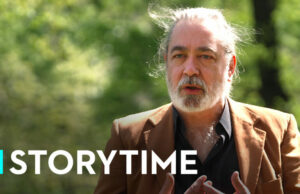
Robert Cibis talks with cultural journalist and author Dr. Eugen Zentner about critical art, alternative publishers and building a counter-public
Since 2020, Zentner has made a name for himself as the chronicler of the cultural scene critical of the lockdown measures; alongside this he publishes short stories and poems. Cibis and Zentner know each other from that period, when – as Cibis puts it – those “who spoke up” quickly found one another and formed their own informal community. Cibis recalls that an interview with him on Kontrafunk was deleted after one day, while Zentner published a conversation with him on Transition News that is still online today.
Short stories with documentary value
The starting point is Zentner’s collection of short stories from the Corona period. Cibis describes the texts as condensed, pointed, but at their core documentary notes. A scene in which a train stops specially to put off a woman with a mask exemption reminds him of an experience of his own: he was taken off a train by the police because he had not pulled his mask over his nose.
Zentner explains that the stories are based on real events that he either experienced himself or learned about through social media. The time was so crazy that basically anything could have happened. He deliberately did not write an account from an observer’s perspective, however, but from the inside view of those affected – with their perceptions and psychological processes. This creates immediacy and emotion. Many readers tell him that reading the book brings back memories and feels almost retraumatising; Zentner speaks of the classic cathartic effect. The texts were written between 2022 and 2024 as a personal way of working through a time that had shaken him.
Books you cannot find
Both agree that such books mainly reach readers who themselves suffered under the measures. The “other side” never comes across them: the book is not on display at Thalia or Dussmann, nor in smaller bookshops. Small publishers with critical content struggle to get into the book trade; established publishers shy away even from novels with mild criticism.
Cibis explains why OVALmedia founded its own publishing house and bookshop in 2020. While filming with Chinese dissidents in 2009, he learned that in China it was precisely booksellers who were being targeted by the regime – because without distribution no book finds its readers. He gives examples from Germany: a publisher withdrawing a bestseller by Sucharit Bhakdi after media pressure, and Ernst Wolff’s “Finanz-Tsunami”, whose remaining stock OVALmedia took over after the previous distributor pulled out.
Zentner points out that critical bestsellers did not make it onto the Spiegel bestseller list despite high sales, and therefore not onto the bestseller tables of the big bookshops either. Cibis reports that in the first weeks OVALmedia was the only retailer selling Michael Nehls’ “Das indoktrinierte Gehirn” (“The Indoctrinated Brain”), several thousand copies – but those sales were not counted towards the Spiegel bestseller list because the shop does not carry a broad enough range. For him, this list is therefore anything but objective; Zentner calls it ideologically coloured.
Both see printing companies as a further risk. Cibis refers to new EU supply-chain rules for paper which, according to printers, could squeeze out smaller businesses. Zentner also explains the economics of the book market: through wholesalers a publisher has to grant a discount of around 50 per cent. Small publishers can only survive if readers order directly from them – something only digitalisation makes possible. Cibis adds that digital content can be copied without loss, which is a great advantage for spreading dissenting voices.
Who spoke out – and who did not
In his non-fiction book, Zentner documented the alternative cultural scene since the large Berlin demonstration of 1 August 2020, organised into cabaret, literature, music, visual arts and newly founded initiatives, competitions and festivals. Critical artists were mostly newcomers who had previously pursued their art as a hobby, plus professionals from small-scale stages. There were only a few big names – he mentions Xavier Naidoo, Nena, Michael Wendler, Uwe Steimle and Lisa Fitz.
The conversation turns to Naidoo’s song “Ich mach da nicht mit” (“I won’t go along with it”), which he recorded with little-known rappers and which is played during the programme. Cibis sees it as genuine resistance. Zentner stresses that it was only Naidoo’s fame that brought the song media attention – albeit negative. The video was deleted from YouTube within a short time and then spread again by fans through various channels.
Literature as a diagnosis of the times
Zentner explains why he works in literature as well as non-fiction: stories, fates and emotions can convey what is going wrong in society. Cibis draws lines to the present – to the “drums of war” and a war economy being built up step by step – and to a climate in which neighbours keep watch on each other. Zentner speaks of widespread denunciation: citizens take over the state’s surveillance functions and see themselves as guardians of morality; to him, “trusted flaggers” are institutionalised informers. That, he says, is not a free society.
From his poetry collection “Die Welt steht Kopf” (“The World Turned Upside Down”), organised into sections including Corona, war, language and journalism, Zentner reads the poem “Vierte Gewalt” (“Fourth Estate”). It traces journalism’s path from a courageous, critical watchdog to a part of the apparatus of power. The two then talk about how satire has changed: cabaret artists used to punch upwards – Zentner recalls the mockery of Helmut Kohl – while today satire tends to go after those branded “conspiracy theorists”. Anyone who acts differently is no longer invited, as with Lisa Fitz or Uwe Steimle.
“Said the wrong thing once”
Zentner recounts his time as a junior editor at Welt TV in spring 2020, where he looked after the news ticker. Editorial teams, he says, keep lists of experts whose positions are known and who are invited depending on the desired direction. The interviews with Beate Bahner and Stefan Homburg during that period were their last appearances there. Cibis, too, was a guest on Welt TV once at the beginning of April 2020 as an expert on the WHO – and never again.
Cibis also describes how informal pressure works: a Tagesspiegel journalist called Arte and raised its cooperation with OVALmedia; he was later told that an apolitical project about classical music fell through because of this. There is no law for it, but the intimidation works – in its effect more strongly than the professional bans of the 1970s.
Parallel structures and the question of leading media
Cibis sees a large audience: during Corona, 20 to 30 per cent of the population were critical, today more. He cites surveys showing that a majority feel restricted in their freedom of expression, and issues that fuel discontent – from the culling of poultry in Brandenburg to policy on Russia, Gaza and Iran. Zentner shares the diagnosis of discontent but stresses that many people still watch the Tagesthemen and listen to radio news and do not know alternative media such as the NachDenkSeiten. The parallel structures – publishers, an alternative book fair, increasingly professional media – are growing, but slowly.
Cibis is also critical of larger new media that court the political centre and keep the space for debate narrow: they focus on politicians such as Merz or Spahn instead of asking who actually decides – in the case of Corona, for example, the WHO, and on questions of war, military alliance structures. Zentner points to the diversity within alternative media and to their scarce resources. In principle, he believes power and leading media can hardly be separated: whoever leads public opinion is itself a power; Der Spiegel, too, was once alternative. Cibis agrees that size itself is a structural problem.
Support as the key
Both see direct funding by the audience as the way forward. Zentner reports that people are donating less and that some small media outlets could disappear within a few months. Only when artists and media are carried by many people does a real counter-public emerge. Cibis widens the idea: at every level – food, education, infrastructure, information and culture – we need structures close to citizens, right down to barter and cash payment. Against “learned helplessness” he sets the conviction that everyone can contribute something. In closing, he pays tribute to Zentner as someone who builds cultural infrastructure and shows that a new world has long been emerging among freedom-loving people.
Here you can find Kunst und Kultur gegen den Strom and Corona-Schicksale by Dr. Eugen Zentner (in German)
Dr. Eugen ZentnerYes, denunciation is widespread. Many citizens, so to speak, internalize the activities of the state, or surveillance activities, let's put it that way. And it keeps advancing. In that respect, you can't really speak of a free society. Very, very many people are dissatisfied. But that doesn't necessarily mean they know the alternative media or that they stop watching the evening news. Those who drive to work by car every day listen to the news on the radio every day. It really makes you stupid. It's hard to break away from it. And many still don't know the alternative media. If you look at the artists who didn't conform or who were critical, who spoke out on Corona policy, they are mostly newcomers. The big names, there were really only a few. Which ones were those few?
Robert CibisHello, my name is Robert Cibis. Welcome to a new episode of NARRATIVE. I'm very proud and honored to be sitting here with Dr. Eugen Zentner. Eugen Zentner is someone you can't really get around if you were active in the critical scene, the government-critical scene, or back then the scene critical of the Corona measures. He is a cultural journalist and author. Before we start the conversation, I'd like to point out that our shows can always be watched in full on our website, www.oval.media. That's very important, because on all other platforms it's never certain whether people can find us or whether the shows will stay there. Accordingly, I would also encourage you to subscribe to us. But now to Eugen Zentner. Eugen Zentner is someone who writes about culture, meets many cultural figures, but also writes poems, short stories and novellas himself. Someone who is creative and moves in the creative world, in the world of
imagination. The opposite of someone who just does what he's told all the time, but who feels at ease among people who simply want to do what they want. I don't even know why we first met. But in any case, it happened almost automatically, because those who spoke up quickly recognized each other and created a community of their own. Not formalized, but still very real. And what I also found very impressive is that there was an interview with me on Kontrafunk about the people who worked against OVALmedia, and they deleted it after one day. But Eugen Zentner published an interview with me on Transition News, and it simply stayed up there. So I
was very glad that this still exists, that people or editorial teams stand by what was said. I also had no information that anything was wrong in what was published by Kontrafunk or now in the other article. Of course, it was only about politics in the broader sense. But back to our little story. So I took a look at this, and first I'd like to say, I'd like to start with the short stories. I'd like to say something about them, because I found it totally fascinating, because the funny thing is, to me they didn't come across as short stories per se at all, but more like documentary notes. I listened to a conversation with Bernhard Lassan. He said, well, it's quite condensed and exaggerated and so on. And I said, no, that's exactly how it was. I thought, for example, of the story on the train, where a train makes an extra stop to throw off a woman who has a mask
exemption. And then, of course, many readers react like this: "Ah, this happened to an acquaintance of mine too," or "it happened to me." It happened to me that I was on a train and the police removed me, not because I had no mask, but because I hadn't pulled the mask properly over my nose. I only had it over my mouth. And the conductor had warned me three times that I wasn't wearing it properly. Just to say how absurd it really was. So I find that these short stories have a documentary value. That's what I find interesting, because artistic condensation and reality merge there. So how do
Dr. Eugen Zentneryou see it? Yes, the stories are of course very, very true to life and are based on many events that really happened. Whether they happened exactly as portrayed in the stories, I can't say. But quite possibly,
Robert Cibisbecause the time... Show it for a moment, the book we're talking about, it's this one here,
Dr. Eugen Zentnerright? Right. Yes. The time was so crazy that, in principle, anything could have happened, however surreal it may seem today. In that respect, of course, I stuck to events that happened. I either experienced them myself or saw them on social media. A lot was shared, a lot was also told. They are very true-to-life stories. But I didn't write them as a report, not as an account of personal experience. Then I would have had to write it, as in journalistic style, very objectively, from the perspective of an observer. I wrote the stories from an inner perspective, from the story of the characters who became victims during the Corona policy, and portrayed what happened through the psychological processes, through the processes of perception in each situation.
Which of course has the effect of immediacy, and naturally also feels much more dramatic and more emotional, because you put yourself into the character and live through it again. That's why many people tell me after reading it that the stories awaken memories, that they have a certain retraumatizing
Robert Cibiseffect. Yes, retraumatization. Well, they also say you have to confront evil, so to speak, and shouldn't suppress it,
Dr. Eugen Zentnerin order to overcome it. The classic
Robert Cibiscatharsis effect. Yes, exactly. But yes, it's true. I mean, I would wish that the people who didn't witness these conflicts would read it. But the de facto readership is probably more people who also suffered especially under the measures. Or is that wrong?
Dr. Eugen ZentnerYes, of course. Because you can't reach the other side, if you can put it that way, at all. Even if they wanted to read it, they wouldn't know where to get the book. The book also flies under the radar, like all works of art by critical artists. At Thalia or Dussmann, for example, you won't find the book. Nor in other small bookshops. You have to know exactly where it's available and only then get hold of it. It would be nice if the book could be displayed in various bookshops. But that's difficult for small publishers, especially for those who publish books with
Robert Cibiscritical content. Yes, I know the publisher, Massel Verlag. And in our shop, on our website, which I already mentioned, all the books from Massel Verlag are available. So your books too. Yes, funnily enough, I told myself that in 2020, in quotation marks, when I realized, damn, democracy is going down the drain right now. And in 2019 I had filmed interviews with Chinese dissidents for a documentary that in the end wasn't financed by WDR. And back then they told me that booksellers are an extremely prominent target of the Chinese regime. Because nothing is more dangerous than books. And books involve not only the author and the printer, but also distribution and the actual bookseller. It doesn't work without them. And in China there's a network where books are sold under the counter to
people who are interested in Chinese authors who describe the truth or report critically. And that's extremely dangerous. Many booksellers end up in prison there. And I realized, aha, if they're dealing in books there and ending up in prison, then it's the critical infrastructure of people who are in dissent with the ruling power dynamic. And so I said in 2020, we have to set up a bookshop and a publishing house. And that's how these books ended up in the OVALmedia shop.
Dr. Eugen ZentnerYes, several small publishers emerged during this time who try to distribute critical books or books with critical content, because the established publishers don't do it. They stay within a certain framework, within the narrative, as they nicely say, and shy away from publishing books, even novels, if there is even a little
Robert Cibiscriticism in them. That's totally fascinating. That also impressed me a lot. The funny thing is that the big publishers curtail themselves commercially. In nonfiction, there was Wolfgang Wodarg's book at number 1 for weeks, Sucharit Bhakdi's book at number 1 for weeks, even months, millions, I don't know if it was a million seller, but at least 100,000 sold, so many hundreds of thousands, the first one by Bhakdi. And then Goldegg Verlag, a smaller publisher, also got cold feet. And because of media pressure, I believe, the new edition, after it had sold out, was not printed. Because they realized, oh God, oh God, and then Sucharit also had to change publishers. You think, that can't be true.
Even Goldegg Verlag. And now the other example, which I absolutely have to mention for the viewers: there is this wonderful book Finanztsunami by Ernst Wolff, about the history of the global money economy. It's a real page-turner, very, very accessible and not written abstractly at all. And he is so good at explaining things in a way that's exciting. And this book was with a distributor. And the distributor said, no, we can't handle Ernst Wolff anymore. And then we took over the distribution. So we took over the entire remaining stock of several thousand books. And at the moment they're available worldwide only in the OVALmedia shop, the book by Ernst Wolff. So things like that, those are things that already happened in 2020, I think. And because of them I tell myself it's good that we decided to build our own infrastructure, not only for the website and the videos and the articles, but also for book production, distribution and shipping.
Dr. Eugen ZentnerYes, those are interesting mechanisms. These bestsellers you mentioned don't land on the Spiegel bestseller list either. Normally books do. And normally in bigger bookshops like Thalia there's always a display with the Spiegel bestsellers. Right. But those books aren't what's
Robert Cibislying there. And they simply get left out.
Dr. Eugen ZentnerThat's completely fascinating. Yes, and deliberately so. And then, to get around that, they just make their own lists. If you ask them why they don't include these bestsellers in the Spiegel list, they argue that these are disreputable books. And they prefer to create their own lists, their own bestseller lists. And so you can't find these books in bookstores. And building your own structures is quite good, as long as the printers keep cooperating. If they ever go on strike,
Robert Cibisit gets very hard. Sure, and then there are other levers, like the EU's timber regulation, which requires these printers to know exactly where their paper comes from. So basically they have to know which forest the tree came from that the paper was made from. So, supply chains. These supply chains, yes. And especially for paper. And that was supposed to apply a few months ago already, but now it's supposed to apply at the end of the year. And people suspect it could become a lever against the printers, so that smaller printers can no longer operate. So that it really does become a lever. And the other thing, speaking of Spiegel bestsellers, that I absolutely wanted to get off my chest. We had the situation that the book "Das indoktrinierte Gehirn" by Michael Nehls was only available in our shop in the first weeks. And
it sold well. We sold several thousand copies. Because we were the only store. And then I found out that the Spiegel bestseller lists are compiled by some NGO. So I called them to ask how our sales would be counted in their figures. And they said, well, no, a shop like Ira doesn't count. Why not? Well, because it doesn't have such a broad range of books. Because it only has a few hundred books in the shop, not a few thousand. I was like: I find that illogical, of course. Because ultimately, when you think of a bestseller, you think it's the book that sold best. Not the one that
sold best only in those stores. Yes, and especially in non-fiction, or in book rankings generally, it's like this: whatever was a bestseller 30 years ago sold hundreds of thousands, and today with 40,000 or 50,000 you're among the bestsellers. That's become a different dimension, because fewer books are sold overall. And that's why I find it totally absurd. So it's also a rigged game. These Spiegel bestseller lists are
Dr. Eugen Zentneranything but objective. Of course not. They're also ideologized to a degree, like pretty much everything. Ideologically tinted too.
Robert CibisYes, and I mean, so, tell me again, back to the book, maybe, I'd suggest. Yes. How did you, have you now changed careers? From journalist to author of fiction?
Dr. Eugen ZentnerWell, changed, maybe not yet. I'm still doing both, in parallel. But I come from literature, I studied literature, then did my doctorate. And like all German studies students, I too have always written stories or made literary attempts. But often it stays at attempts. During the Corona period, though, I had a topic that stirred and moved me. I really had a topic I wanted to process, and then I wrote the first short stories. The first ones were written in 2022. And the last ones two years later, in 2024. So during that period I wrote a short story every now and then about particular aspects or, let's say, situations that were typical of that time. And at that point I also had a publisher, because the non-fiction book had come out before, in which I summarized the alternative cultural
Robert Cibisscene. Oh yes,
Dr. Eugen Zentnerthat's this one here, isn't it? The scene that emerged in reaction to the Corona policies. I started writing about it very early. In 2020, after the first big demonstration here in Berlin on August 1st, and I also built my own blog and then wrote for more alternative media. Always about artists who didn't conform, who criticized the Corona policies, who criticized the media for false reporting, and I then summarized them in this book. And in parallel, as I said, I wrote short stories, because it affected me so much at the time, because I had to process it, and I succeeded in doing so in short story form.
Robert CibisA world of its own really took shape, and you always wonder why so few of the old, established artists, whom you may have liked at times, don't belong to it. And then there are some who did say something critical, and everyone's grateful that a critical word came from X or Y, but they're still not really there. How would you describe the profile of these artists? Maybe we should also mention that these are really all art genres you cover, from cabaret artists to authors,
Dr. Eugen Zentnerand so on. Yes, the book is divided into five large areas: cabaret, literature, music and visual arts, and the fifth, which is more about the institutional framework, so, competitions have emerged, initiatives that in turn organize cultural events, festivals, so a bit of the surroundings, not necessarily the artists. And when you look at the artists who didn't conform or were critical, who spoke out on the Corona policies and the problems that followed, they are mostly newcomers, that is, artists who had pursued their art as a hobby before and tried to professionalize in the process. The second group consists of artists who actually earn money with their art, but who weren't big stars, mainly performing on small stages, but were professional nonetheless. And the third group is the ones you mentioned, the big names, and there were really
Robert Cibisonly a few. Which ones were
Dr. Eugen Zentnerthose few? Xavier Naidoo, Nena, Wendler, Uwe Steimle, if you like, Lisa Fitz,
Robert Cibisthat's them,
Dr. Eugen Zentnerthere weren't
Robert Cibismany. And they basically, well, you always just wonder, yes, that's true, what I thought was great about Serena Du is this video, I forgot, this rap video with all the Rebellions, exactly. Rebellions, I liked that so much,
Dr. Eugen ZentnerI really loved it. "Ich mache da nicht mit,"
Robert Cibisthat's the song, exactly. It's pretty cool, because I found it, so to speak, one of the top songs where I felt, this is real resistance, this is resistance that disturbs. So, "I'm not going along with it," that's what it's called, right? "I'm not going along with it," exactly.
Dr. Eugen ZentnerExactly,
Robert Cibisso after Gunnar Kaiser, Gunnar, Gunnar, Gunnar, right, it also refers to the vaccination,
Dr. Eugen Zentner"I'm not going along with it," and it's quite remarkable that he teamed up with several rappers who weren't really known before and took part. Let's play
Robert Cibisit quickly. I'm not going along with it.
Speaker 3I won't
Unknowngo along with it.
Speaker 3What do you want to do when this tube weakens your breathing? Take your occultism and I'll strike it down under Christ, this wondrous fascism makes me sick like this. Under the business, underexposed rappers lost, we're going after the sick agenda, hit Klaus Schwab hard, the legendary
Unknownpage in the stores. I'm not going along with it, they want me to get vaccinated, the economy gets screwed and masks are mandatory, eight years ago I already saw the situation, and it's all coming true, but the sheep are blind, satanic slaves are apathetic and sick,
Speaker 3exact, and
UnknownI keep my face. They follow the plan, there's nothing to it, are you sure, we're bringing the tone of Babel to full volume. I'm not going along with it,
Speaker 3I don't live like a slave, I paid attention in history, I see how they click, they fail, live by rules and say nothing, dutifully wear their masks, I've given up asking, look, I endure their grimaces, I'm on the run, I fly, I flee, I shed a tear, I can't believe it, I pray for many displaced souls, how they torment themselves willingly, it just won't get into my head, brother, the madness has to stop, and look, it's time for me to stop. I'm not going along anymore, it can't be,
Unknownnew poison will never enter our bodies, my siblings and I, we're taking the step, we're not going along, it can't be, this poison will never enter our bodies, my siblings and I, we're taking the step, we're not going along.
Speaker 3I'm not going along with it, I hear myself say, but how honest this is is measured by deeds, tell me, isn't it a joke that openly psychopaths casually enslave
Unknownthe whole of humanity, I stand outside the Matrix, the one elf plays nothing, the other elf sees what's happening but says nothing,
Speaker 3frightening zeitgeist, but my soul stays free,
Unknownevery day in resistance, karma gives me a high five. Hey yo, I'm not going along with it, I won't stand around for just one jab,
Speaker 3if I give you the needle with your grip, you miss your guard, now your step, I'm no fool, just stay away, I'm no fool, just stay away, The dummies from this Bills, a real German hit pop, making Aschaffen out of this crap again, Visa yesterday, Stasi today, like the influencers following the agenda, like Cardi, like those in front of little kids' eyes, playing with the Rapunani, they copy it like Nasenziel, I'm not going along with it anymore, I give a fuck and I warn it. The point is, I'm not going along, it all goes against the grain for me, the vaccination campaign is a trick, first comes the chip fitting, whoever goes along isn't quite right in the head, your Takke Shitness, slowly the poison wakes up, so the trap catches every rat, Brother and Sis, believe nothing of what Satan
promises you, conditional freedom means you have no freedom at all, I'm a prayer warrior, because with me the battle begins on my knees, go out on the street, tell about Jesus, that's how resistance works,
Unknownhey, I'm not going along with it anymore, the guy is freed from the shackles, I wear no mask to rap you a few tunes, they want to hide the solution,
Speaker 3put the rabble in chains, forget the sheep,
Unknownit's time to wake the lions, and the resistance gets louder, but they listen less and less, they don't want to see it, like disturbed dyslexics, then you bury Grandpa, because he dies from AstraZeneca, and who warned you? The conspiracy theory. I don't want you there anymore, it can't be, your poison will never enter our bodies, my brothers and sisters and I,
we're taking the step, we calmly do our own thing, it can't be, this poison will never enter our bodies, my brothers and sisters and I,
Speaker 3we're taking the step, we're not going along, I'm not going along anymore, because that is exactly my duty,
UnknownI bring the mask and also safely, if need be, to court, and if that would have suited you, read the Weimar ruling,
Speaker 3because your health doesn't rank above mine, let's talk about facts,
Unknownbut stop fanning me with your subjunctive, because anything else would be anything but constructive, Lockdown, vaccine pass, masks, it's all coming true, please don't tell the children you weren't warned, I'm not going along, Elf has better things in mind, I see the agenda,
Speaker 3so I step into
Unknownthe breach, what the one percenters want, the 99 don't want, Covid-19 84, thinking for yourself a crime,
Speaker 3that's why I charge ahead and speak,
Unknownthe spiral of their silence, leads down to the Devil, fuck political correctness, the awakening, brothers and sisters, Wala, nobody stops it,
Speaker 3it goes live like 9/11, people are finally waking up, ♪ Song ♪
Unknownthey have us in their grip, you track them down,
Speaker 3carry it out, the signs are here, sound the alarm, arm yourself, destroy the deep state, bad karma for the beast, we hunt, they are hurt like heavenly hosts, our children are waiting for us to
Unknownrescue them, so let's go. It can't be, your poison will never enter our bodies, my brothers and sisters and I, we're taking the step, we're not going along, it can't be, this poison will never enter our bodies, my brothers and sisters and I,
Speaker 3we're taking the step, we're not going along, I'm not going along, no, will never be a fascist, as you believe, the telly, dude, switch your grip on, hey, King Jens of Neuschwanstein, says, which of the two of us is the enemy of the state, I want, every day, God willing, Söder to tick down that far, can't stand seeing him anymore, that petty barrel-like stare, screw your panic, make Covid-Doder, mad cow disease, I swear, I'll get you all, this goes after our children, I'm not going along, Dude, no way, Antinom will never go with the Stromschild, okay, kill Illuminati, take the pen and build Brütenstadt, left and right, the center,
Unknownthe voice, that oppresses, they want to judge and destroy, poison through the jabs, Wegruf is and transform, act to protect the children, these fake partners never let humanity, dumbed down, NWO, the whole world is the
Speaker 3Bad Stadio, I'm not going along, out of my magic, weight bears down against the sacrificial energy, from a masked face, because it hasn't been fun for a long time, because we stand for the people, out of the darkness, yet one of the most effective weapons of light, you end up in a harsh conflict, thinking, soon normality returns, and then the matter would be off the table, yeah no, blanket needling,
Unknownyeah sure, or can it still be stopped, ask, Geilstar, My God, then I'll join you, stand up to the devil, so that the children of God here never shine, lose, they want to create something new, people see, poison, and since the beginning of time, destroy true values, build bad paths, to make us slaves,
Speaker 3but the resistance is strong, look, we stick together, fight against snakes and dragons, against the princes of the world,
UnknownKiluminati, you will know them by their fruits, Willi, I'm not going along anymore, not going along anymore, not
Speaker 3anymore, I'm not going along anymore,
Unknownit can't be, your poison will never enter our bodies, my brothers and sisters and I, we're taking the step, we're not going along, it can't be, this poison will never enter our bodies, my brothers and sisters and I,
Speaker 3we're taking the step, we're not going along.
Robert CibisI think it's great too, because this group also creates such political pressure, from the group and because, as I said, like you, he's really a superstar, and he accordingly got a lot of headwind.
Dr. Eugen ZentnerRight, so the song, and because of Xavier Naidoo's participation, it also got media attention, all the mainstream media pounced on it, that wouldn't have happened if I had performed there, the big name did achieve something, of course the press was negative, that's clear, but nonetheless,
Robert Cibisa lot was achieved with it. Although it's hard to find on the internet, if you just google normally, I'd say.
Dr. Eugen ZentnerRight, it was also deleted immediately at the start by the platforms, YouTube, I think, even within 24 hours. Censorship struck immediately, but by now there's the...
Robert CibisYes, my friends who think there are media outlets with differing opinions, between Die Welt and NZZ and Frankfurter Rundschau and taz, they may not have noticed. That is just... But probably still many, probably still 100,000 or millions of...
Dr. Eugen Zentnerclicks or views? Yes, indeed. I can't give the exact number now, especially since the video was deleted at first and then re-uploaded by fans, by listeners, through various channels. But a few people were reached
Robert Cibiswith it. That's also, by the way, something I'd like to emphasize, we have many guests on the NARRATIVE show who criticize digitalization and the tool itself, but the digital of course has a huge advantage. You can copy practically without loss, and that is of course a huge advantage for spreading information. If you think about it, if these had been vinyl records, you would have had to distribute and press them, so much effort. It is emancipatory that so much is possible digitally, and if you hand out USB sticks, that's still easier to distribute than a vinyl record or printing a book. That's more effort. That means, if you say now, we simply want to spread dissent, then it's easier thanks to digitalization. And today you can actually still publish it over the internet, even if it's not that easy right now with YouTube, because it's full of bans,
and the other American platforms too. But well,
Dr. Eugen Zentnerthere are other platforms as well. Yes, also applied to the book market. Without digitalization, the small publishers wouldn't survive either, the ones that have established themselves during the Corona crisis. Because digitalization makes it possible for people to order directly from them. The publisher can only survive if people order directly from them. If the order goes through retail, it's always an order through the wholesaler, because retailers get their books from three, there are only three, wholesalers who deliver to them. And then the publisher has to grant a 50% discount. That means little remains from a book sale. Only when people order directly,
Robert Cibisand they can only order digitally. Yes, that's right. That's a very interesting point. And by the way, I also learned this, because we've published books ourselves, that these big distributors are really the gatekeepers. It's not specifically just Thalia or Hugendubel, but these distributors in between. And with some books it's even the case that there are two distributors. I was advised to give our books to a smaller distributor, 50-50 from Westend, for example, or something, which then passes it to the big distributor, which then passes it to the booksellers. So you have three middlemen, compared to someone simply ordering from OVALmedia or from Muzzle Verlag. That's completely insane. They all want money, and in the end nothing is left for the author anyway, but even for
the publisher not much.
Dr. Eugen ZentnerSo that's... For the author, yes. There are contracts that stipulate how much the author gets per book sold. But the publishers, if they already have to hand 50 percent to the wholesaler, then they're left with only 50 percent as well. And from that they have to pay the author, the printing, the delivery. Not much is left over. And marketing isn't even covered yet. Marketing is a huge problem for small publishers. How do
Robert Cibisyou reach people? Yes, that's right. Absolutely. These are truly vital structures, and books in particular are so important, I think, because they can go in depth and because you have to think more yourself, and because all this drizzling with different media, well, everyone has the feeling of being oversaturated. That's why I prefer to have longer conversations or make documentaries, because you can go a bit deeper than with these constantly outrage-inducing short videos. Right.
Dr. Eugen ZentnerFirst of all, that. Outrage mode always goes down well, because you get an outlet for your own frustration. I prefer, well, "prefer" is not quite the word, a lot of nonfiction books are coming onto the market too. This is about facts again. And we've heard a great many facts in recent years, whether in non-fiction books, in alternative media, in the many videos or podcasts that come out. I also find it interesting to say something on the topic in literature, or on the zeitgeist, because stories let you convey what's going wrong right now, or what the social processes look like. The advantage is that you can do that through human fates, through sensitivities, through emotions. Literature offers exactly that possibility.
Robert CibisThat's absolutely right. And I have to say, with these short stories, for example, simply because the story is written down as fiction, you start to wonder a little: was it really like that? Yes, true. And because it is, in a way, so condensed, taken a step further, it has an incredible effect, because you realize how surreal that time really was, and in essence today as well, with these war drums being beaten and the war economy that is gradually being set up over the years in Germany and in the whole Western world, in the whole world, actually, "Western world" is wrong, because the war economy is being built up just the same in Asia and elsewhere. It's all totally surreal. And then these neighbors who go
Dr. Eugen Zentnerto
Robert Cibisthe policeman, denunciation at the highest level, or everyone makes sure that everyone else submits too. So this is not a normal dictatorship, this is truly totalitarian. And that's what shocked me the most during the Corona period, but also today, in essence. There are still people who say, "But you can't say that," without being able to offer a real
Dr. Eugen Zentnercounterargument. Yes, denunciation is widespread. Many citizens internalize, so to speak, the activities of the state, or surveillance activities, let's put it that way. They see themselves as guardians, as defenders of norms, ideals, morals. The Trusted Flaggers, for example, are institutionalized informers. And it keeps advancing more and more. So you can't really speak of a free society when citizens take on state functions, so to speak, and start monitoring
Robert Cibisother citizens. Yes, absolutely. Absolutely. And one form of condensation that you also have is poems. Would you do us the pleasure
Dr. Eugen Zentnerof reading one? I can read one, of course. Maybe I should say something first. The poetry collection is titled The World Is Upside Down. That hints that a lot has changed in recent years, in this time of crisis. Everything that used to be taken for granted no longer is. The collection deals with phenomena, in part with current political events that have occupied everyone. It's organized into major themes, including, of course, Corona, war, language, journalism. Maybe you name a topic and I'll pick a poem from it.
Robert CibisThat's not so easy for me, but I'm happy to do it. Well, why not journalism? That's an area you know well. You're an experienced journalist yourself.
Dr. Eugen ZentnerI am, yes. But so are you. Your
Robert Cibisfilms also have a journalistic touch. That's right. I've become more and more of a journalist. I used to be just a filmmaker, but you notice
Dr. Eugen Zentnerthat... Yes, by and large everyone has become a journalist by now, because everyone shares something on social media. What they come across, they pass on again. That is also a form of journalism. True. The poem is called "Fourth Estate" and of course deals with how it has changed in recent years. You were known years ago for your courage to criticize. With fearless bearing, you did not yet crawl on all fours. You put them in your crosshairs, the fine gentlemen up there. You didn't swim with the current and didn't want to praise them constantly. You still took the written word as a vehicle for your treasure of arguments. You didn't yet write smear pieces or rail against dissidents. The lines you once printed were truly not lies, written without haste, broad in theme and balanced.
You described, even on the run, only how things are, nothing smoothed over, not constantly trying to sell us the world the way you'd like it to be. You set out to be a check, as the fourth pillar of this state, then began to crave power and became part of the apparatus.
Robert CibisWow, yes, that hits the nail on the head. Very, very fitting. And yes, everything used to be better. So you can say that too. And once you've drunk good wine, you don't want cheap wine anymore. That's how it is. And it's the same with freedom. Once you've tasted freedom, you don't want to give
it up. That's right. Maybe we were just naive back then. That's certainly possible, and we didn't notice how we were being lied to, what power or the power
Robert Cibisstructures looked like. Yes,
Dr. Eugen Zentnerbut it felt different. You
Robert Cibiscould complain about politicians more freely,
Dr. Eugen Zentnerfor example. That's right, exactly. Politicians weren't so thin-skinned back then. Cabaret artists could really let loose too. Think of everything Kohl had to listen to, for example. A Merz would have keeled over long ago. He's already complaining now about everything he has to endure. And the cabaret artists, they really laid into them. And today, that's also the change in satire. There's a poem about that too. It no longer punches upward. Satire means you take on the authorities. But nowadays it's more aimed at the wrong people, at those who are branded conspiracy theorists.
Robert CibisYes, the authorities use satire against
Dr. Eugen Zentnerthe
Robert Cibisopposition. Right. Even the clown or jester at court criticized the king, not
Dr. Eugen Zentnerhis critics. Right. And if a cabaret artist did that in the mass media, he would no longer
get to perform. Yes,
Dr. Eugen Zentnerthat's what happened with Lisa Fitz. Lisa Fitz, exactly. Or Uwe Steimle. And it's similar in journalism. It's similar in journalism. If someone doesn't say what's wanted in an interview, they won't be invited again. In the newsroom, you basically have experts, a whole list of experts, and you roughly know what they'll say, what opinion they have. And then you bring them in accordingly. And if a mistake happens,
Robert Cibiswhat can you do? That's also what's fascinating about cancel culture. It takes just one thing and you're out, so to speak. Yes, yes. By the way, I remembered recently that I was an expert on Corona and the WHO in, let me think, I believe it was still the end of March or beginning of April 2020, I was invited as an expert on Welt TV to comment on the situation.
Dr. Eugen ZentnerBut that was only once. I worked at Welt TV as a junior editor. Ah, interesting.
Robert CibisRight at that time. Tell us,
Dr. Eugen Zentnerwhat kind of work was it? No, but I did already have the feeling, as I said, I was a very junior editor, I operated the ticker there, the one running at the bottom, but I noticed, you listen in and pick up this and that, that, as I said, you know the experts and roughly know what they'll say. Is someone for masks? Is someone against masks? Is he a hardliner? You roughly know that, and depending on what you want to report, you bring one in. So at that time, the interviews with Beate Bahner or Stefan Homburg also aired on Welt TV.
Robert CibisOh, I didn't catch that. They were interviewed there too.
Yes, I wasn't in the newsroom at that point, but I saw the interviews, and they were of course critical. But that was also the last time they appeared there. I see. And that's how it works. Once they don't say what's wanted, they're not invited
Robert Cibisagain. Yes, you wonder why those people were invited. In my case, they once asked us, because we had made a feature film about the World Health Organization, and we were supposed to say something about the World Health Organization, so I just went. With Beate Bahner it's also logical that she'd be invited, since she was responsible for health at Transparency International. So she's basically the typical TV guest you would normally invite. With Mr. Homburg, I don't know why they
Dr. Eugen Zentnerwould invite him. He was on talk shows before,
Robert Cibistoo. Oh,
Dr. Eugen ZentnerI didn't know that. Also on TV talk shows, as a finance expert.
Robert CibisAh, he was also an advisor to the Chancellor, but I don't know,
Dr. Eugen Zentnereven Mrs. Merkel. I don't know exactly. In any case, he was seen more often on finance topics and the economy, of course. True. And at some point it tipped. At some point it was too critical. You can be critical,
Robert Cibisbut not too critical. Interesting. So where is all this leading? Let's maybe stay with art and culture for now. Where is that heading?
Dr. Eugen ZentnerCritical culture is currently moving under the radar and will probably keep doing so if the socio-political conditions don't change. For now, it doesn't look like they will.
Robert CibisSo. That's just like in the Eastern Bloc.
Dr. Eugen ZentnerYes, similar, yes. Well, not quite as rigorous, I don't want to compare it one to one. Critical artists can perform, me included. Just in small venues. Yes,
Robert Cibisbut there are these commercial levers. We've seen that many times, that then, I don't know, people meet Critical of the measures, and they are in the, in the, for example, there was a big event at the Konzerthaus in Vienna, where Wolfgang Bruder was supposed to receive the award. And then the mayor calls, or some Antifa people, and they say: Are you sure you want this event? Isn't it a bit odd that you're inviting conspiracy theorists like this and so on? Even today, that is a lever that makes many organizers get cold feet, and they cancel. And the interesting thing about it is that there is no law, the police don't show up, it's only a phone call. That's how it was, for example, in my case. A journalist from the Tagesspiegel, Sebastian Leber, actually called Arte,
because in the past, before 2020, I repeatedly did co-productions with them. They co-financed films; those were never commissions, but I developed projects myself and then, for part of the money I needed to make them, I also got funding from the broadcaster, so to speak. And Arte was a broadcaster I had worked with quite often, very regularly. And yes, he had called and said, do you actually know, do you still have a project with them, isn't that odd, and so on. And basically that is the implicit threat that they'll write more articles against you because they work with me or with OVALmedia. And basically, as I said, there is no regulation, no law, everything still looks like a state under the rule of law, but this kind of intimidation works,
fascinatingly. That's what impresses me enormously, that even such a big structure as a TV broadcaster goes along with it when a journalist from a smaller newspaper, in this case, simply calls. But it works. And it's also a bit warlike, of course. For me it's about the destruction of professional prospects. Of course, yes. And I mean, I don't know what you've experienced, but perhaps just to conclude: I actually got it confirmed. We had a project with an editor at Arte Strasbourg about classical music and art. So it wasn't political at all. And then the program director said to the editor, we can under no circumstances work with
them anymore. So it worked. Yes. Then one... wow, that's really, in the past there were the Berufsverbote under Willy Brandt. If someone was in the Communist Party, you were allowed to be in the party, you were allowed to say so. You just weren't allowed to hold certain professions, which I also find undemocratic. But in effect, this is even stronger, because you can no longer work in important positions at all once you are attacked like that. And entirely without laws. How was it for you?
Dr. Eugen ZentnerI'm too small for that, so I have no problems. But it's exactly what you describe. That's the tendency: as long as you stay under the radar, you're left alone, more or less. But when you have a certain reach, or break through the sound barrier and reach the broad public, then they attack, mechanisms like that; then pressure is actually put on institutions that play an important role in this process. They then get cold feet too, distance themselves, and then it becomes difficult for the artists and for the publishers or labels.
Robert CibisYes, I mean, exactly. And then there's the other side, which also happened to me. New worlds open up, new windows. I interview bestselling authors, like those just mentioned and the other artists you name; they also have a public. And it's not a small public. That's the crazy thing. It concerns 30, well, during Corona easily 20 to 30 percent of the population, right? Let's say at least 20. Yes, yes. And that is an enormous market. Yes. And now it's probably even more, because the people who are critical are increasing. Criticism is a virus. Because more and more people are
Dr. Eugen Zentnervery dissatisfied. In the book too, in the nonfiction book, I talk about parallel structures that have developed, which of course keep getting bigger. They're not big enough yet, but they're growing. That's true. It's a very slow process. There's also an alternative book fair. There
Robert Cibisare more
Dr. Eugen Zentnerand more publishers. More and more alternative media, and increasingly professional ones. Public, what does public mean? That is always tied to the media. Mainstream media always have greater power than small alternative media, because they simply
Robert Cibisreach many more people. The question is, which media are the mainstream media today?
Dr. Eugen ZentnerWell, still the old ones. Definitely the public broadcasters.
Robert CibisFor me personally, but I'm sure I'm an exception, that isn't the case at all,
Dr. Eugen Zentneris it? Not for me either. But for a large part of the population. because I do watch,
Robert CibisI do already look, I'm not someone who wants to do current affairs, but I always check, ah, that's being talked about right now, ah, that's the topic at the moment. And then of course I look at media that set impulses, sometimes too. And those are not these old media. Although sometimes there are overlaps, because there's some topic, Russia, an attack on Russia, and then it's of course covered in the old and the new media. The topic is set, but perhaps also by an event or some agency or something.
Dr. Eugen ZentnerBut the majority still reads Bild, Spiegel, the Süddeutsche, watches the Tagesthemen. There aren't as many as before, but still the majority. And that's the problem. And maybe that will shift at some point. In five years, maybe in ten, maybe sooner. And then it may also be possible for the artists to reach the larger
Robert Cibispublic. My observation is even more radical. A year ago, for example, it was already the case that the majority of Germans, 59 percent, think they can't say what they think. And see their freedom of speech massively restricted, so to speak. So the majority lets itself be tyrannized by the minority. The minority is the one with the so-called dominant culture or ruling culture. And the majority says, no, I find what they're doing to the farmers unacceptable. I find it unacceptable. I mean, just imagine it. They've now killed hundreds of thousands of chickens in Brandenburg again. And it doesn't even appear in the old, big media. Sorry, for the word "killed," too; it's called culling. But basically, if it's murder, in order to let the dead animals rot, then it
isn't even slaughter. It's simply destruction. These are conditions that more and more people notice, more and more also notice that it isn't covered in the media. Just like this escalation policy with Russia. There are many reasons why people rebel and say, I'm no longer part of this, and I think that what is the general mainstream here, and an important point is also the genocide in Palestine, in Gaza, and now the war against Iran. Someone, at some point, everyone has to say, that's it, this has to stop, this is not a free democratic
Dr. Eugen Zentnerpolicy. I agree that very many are dissatisfied. There's also reason for it. Very, very many are dissatisfied. But that doesn't necessarily mean they know alternative media or that they stop watching the Tagesthemen. Those who drive to work by car every day hear the news on the radio every day. When I'm with my family in Darmstadt, I don't have a car, but there I drive, and I notice it right away, you really get bombarded. With certain narratives. Even if you're dissatisfied, you get certain perspectives. It's hard to break away from them, and many still don't know alternative media. You ask them whether they know Nachdenkseiten, for example, Multipolar, all unknown. But they are dissatisfied.
So it's a longer process.
Robert CibisAbove all, there is of course this vacuum, and now after Corona more and more media professionals are moving into it, also with larger investments, NIUS is obviously leading, but also Kontrafunk. These are structures that court the bourgeois center, and they also censor themselves. So they don't say everything they know, because they want to stay in the discourse. So that's of course a bit vague. I know of some editors who don't say what they think because they want to stay within the bourgeois space. And the crazy thing is that these platforms, I meant Kontrafunk and NIUS, are seen as oppositional dissident voices, but in reality they strive to keep the debate space from going too far. Much of what they report is super interesting and right and important,
and it's also professionally made. I don't want to run them down on principle. I just think there's a need in the editorial leadership of these big new players, I say big because they really reach a lot of people, that, well, when it comes to, I don't know, who actually calls the shots here, then they want to, but often they have, their references are also those of the old media. So, do you understand what I mean? Yes, yes, but that applies to all media, Do you
Dr. Eugen Zentnersee what I mean? Yes, yes, but that applies to all media, also for the alternatives. Everyone has a view of the world and, on a given topic, a certain
Robert Cibisstance. Yes, but that's not what I mean. I think that there is, I mean, so what I mean is, yes, now on this question, if we say, let's take an example, Iran policy, what the federal government decides there is obviously irrelevant, because it decides the same as all the others anyway. Yes, it does exactly the same as France and Ireland and Canada and Australia and so on and so on. So there is no autonomous decision, rather they are basically just press spokespeople for some other power. It's like with the Corona affair: if all countries pursue exactly the same policy in the same week, without there being any argument that the health situation was identical everywhere, then we have to assume it's not about health,
and then we must assume that the decision isn't made in the government, but that there is some coordinating entity above it. And that applies here. With the health issue you could say, well, then it's the WHO, and with this war question with Iran, then it's the NATO, even though it isn't actually a NATO operation, but it is still a military structure to which the Bundeswehr is subordinate in a certain way, and the other armies too. So somehow one has to argue it that way, but this, for example, and I'm only using it as an example, doesn't appear. Many people, also in the alternative media, adopt this debate space and say we now have to rail against Jens Spahn because he ordered this and that, we now have to, I don't know, rail against Chancellor Merz because he positions himself this way in this political situation,
and in reality they obviously aren't the ones responsible. And you don't need to research for long to find out that they aren't responsible for it, it's simply logical. Any child can see that they aren't responsible. Yet these big, alternative, new media adopt this self-limiting thinking and rail against these people, and then you can get upset and outraged and be in a quarrel, but you have no analytical level at all, because the deciding isn't part of the conversation. Namely, who actually decides here? So those are the things I notice, where I think it's the same thing in green as what we had before with the old media, which just distract from the truth.
Dr. Eugen ZentnerWell, there are differences among alternative media too, and what some don't, or what some adopt, as you say, we criticize in others. Perhaps one aspect, one area, one field. In that respect there are also differences in this field,
Robert CibisI would say. Yes, definitely.
Dr. Eugen ZentnerOf course. And there are the bigger ones and the small ones, ultimately there's also a lack of resources to really do everything...
Robert CibisThat's the big point. I mean, that's just... I don't know... Well, it's certainly not unknown that Kontrafunk and NIUS, to stay with these examples, one could name others too, have to be financed by third parties as well. That they aren't financed solely by their listeners and readers. Well, I know they have a financing model there, so you can donate to them or take out subscriptions, and I think that this must naturally be the solution: if people are willing to pay themselves for what they have and read and watch, then they know that people are working for them.
Dr. Eugen ZentnerYes. And can work. The same goes for the cultural sector. How do you survive there if you stay under the radar? Basically only if people buy the products, or, but for them to buy them, they of course first have to know about them. And
Robert Cibisthat is difficult. Well, but you were able to bring out the books here, and we're on this show. That's already a step in that direction, and I believe that these have developed further. However, I also believe that these alternative media, as they're called today, will soon no longer be alternative, but are on their way to becoming leading media. The question is then whether these new leading media are really better than the old ones. I only see it in politics. There was Macron, who became president with a new party because the French were fed up with the old politicians, and he managed to be hated even more by the French population than the
politicians before him. That is a real achievement, so, hats off, surely only few manage that, because the ones before were so hated that the parties that previously had 30 percent of the vote, like the Parti Socialiste, suddenly had only four percent or so. So those are incredible differences. It's the same in Italy. I'm taking these two examples with Ms. Meloni, who likewise didn't really bring about a change of policy, even though she was elected
Dr. Eugen Zentnerprecisely for that. Yes, perhaps one can put it this way: it's contradictory for leading media to criticize power. Power and leading media are almost
Robert Cibisalways connected. Leading media are actually
Dr. Eugen Zentnerclose to power. Exactly, so it's rare that leading media really engage in criticism of power. And if alternative media, or Spiegel was once alternative too,
Robert Cibisif you like. Yes, exactly. That's interesting, I hadn't seen it that way before. I'm also naturally a little influenced, because I know that the Interstate Broadcasting Treaty in the Federal Republic states that public broadcasters must be independent of the state and must give preferential treatment to minority opinions, meaning opinions and perspectives that don't match the government's. That's what it says. And obviously, and they've also been condemned several times by the Federal Constitutional Court for not respecting that. It's been decades since they were condemned. And today we see that it's exactly the opposite of what's written there in the statutes. So you probably have a point there. And it's probably not only down to the structure, so technically the broadcasting councils,
but surely also to the size itself. When a company is big, it has constraints.
Dr. Eugen ZentnerWhen it reaches many
Robert Cibis
Dr. Eugen Zentnerpeople, when it has a guiding function, as the term implies: leading medium, which guides the public.
Robert CibisThere is power behind that. Then it's an apparatus of power and thereby of course somehow bound up with power, somehow. And then there's a kind of automatism that the powerful among themselves are the voice of the powerful. That's interesting. So yes, you've probably said something true there. Of course one doesn't know how to get out of this vicious circle. Because I always somehow have hope, but I understand that size itself is a
Dr. Eugen Zentnerstructural problem. Exactly. I think you also hinted at that in an interview. Resources, media need resources too. Who has the resources? The bankers. Those who exercise power. Right? In that respect the circle closes.
Robert CibisYes, that's true. But there is the democratic principle that we already touched on with digitalization. Because media are infinitely reproducible, you can actually, with relatively small sums from people who pay to read an article or watch a film, move an enormous amount, if it's just thousands and not just hundreds. And thousands is, with a German-speaking population of 100 million, absolutely conceivable. And then you can really do things. For me, that is the solution, so to speak, because then you're independent of the apparatus of power,
Dr. Eugen Zentneryet still able to act. That's right. That's also a good way to conclude, to encourage viewers to continue supporting alternative media and alternative culture. I know from alternative media, since I write for several, that willingness to donate is declining right now. That's understandable, everything has become more expensive. Everyone now has to see for themselves how to make ends meet. But the income of the small alternative media is falling. And it's quite possible that some will be gone within a few months or in a year. Nevertheless, it has to go on. Artists and alternative media need support, and only when it is really done in a certain number, en masse, can they survive. And then you can also exert counterpressure and form something like a counter-public
Robert Cibissphere. Yes, that's exactly the point. I also think that structural changes are now taking place that many people, including me to this extent, couldn't yet see at the beginning of the Corona crisis. And during the Corona period there was still hope for a quick U-turn. People thought, oh, I'll donate a larger sum too, so that something finally happens. We need pressure on politics here and so on, and then we have to have clarification. And precisely that didn't happen as quickly as I, and everyone else, would have wished. And that's why it's all the more dramatic. That's why the situation is all the more complicated. If it could have been tipped quickly, it would have needed less force. But because we actually have an agenda here that is active on all levels, we need on all levels a new structure close to the citizens.
And that concerns food security, it concerns education, it concerns self-defense, it concerns infrastructure, whether it's water or electricity or everything that's so important, or roads. And of course it also concerns the flow of information and the media in general, and culture. That has to come into citizens' hands, and anyone can take it in hand. It doesn't cost that much, it's possible for everyone to do something. And that's also the thing: many have been somewhat indoctrinated, first, ah, they are so all-powerful, and second, we ourselves are so limited. So this feeling of powerlessness, learned helplessness, as it's called, or learned dependence, and that is precisely very easy to change, because everyone can do something, everyone. And the monetary system is, as I just hinted, another important point for me, if you try to do
more bartering, more, not just paying more in cash, that too of course, but say, I tutor the child of so-and-so, and in return the parents help me with renovating or something like that. So doing some kind of swap deals is of course always best. That gives you an incredible advantage. That's how I see it, and if someone now wants to give subscriptions as gifts or order your books, then that is likewise in that sense,
Dr. Eugen Zentnerfor a birthday or for
Robert CibisChristmas. Yes, would I like to say something in closing?
Dr. Eugen ZentnerNo,
Robert CibisI have said everything. All good. Then I thank the viewers for following our conversation, and now you have seen the face of the author Eugen Zentner, who publishes many important articles in all kinds of alternative media and is indeed also art, and an art condenser, how should I put it, in which you can see everything that is happening. I think, Eugen, that you are actually building cultural infrastructure, drawing connections where they are in fact already happening, and saying, hey, this is our culture now. We can grow with it, it can grow, because there are indeed freedom-loving people who are building a new world among themselves. The building is happening, not "could happen," it's not a plan, it is actually happening and you describe it. And for me that is the crucial point in all of this, that we are not just standing helplessly like a fool before a mountain, as many might think, that sometimes, yes, it's a lot, no, no, a huge amount is happening. You can simply join in, you can help build the world the way you
Dr. Eugen Zentnerlike it. You put that
Robert Cibisnicely. So with that, I thank the viewers, and please stay with us, and have a nice day.
Dr. Eugen ZentnerJa, Denunziation ist weitverbreitet. Viele Bürger internalisieren sozusagen die staatlichen Tätigkeiten, indem sie oder Überwachungsstätigkeiten, sagen wir so unterscheidet, immer mehr Verlangen. Insofern kann man auch nicht wirklich von einer freien Gesellschaft sprechen. Sehr, sehr viele sind unzufrieden. Das heißt aber nicht unbedingt, dass sie die alternativen Medien kennen oder dass sie aufhören, Tagesthemen zu schauen. Also schon von denjenigen, die täglich mit dem Auto zur Arbeit fahren, hernach täglich die Nachrichten, die im Radio laufen. Man wird wirklich beschallt. Man kann sich davon nur schwer lösen. Und viele kennen trotzdem nicht die alternativen Medien. Wenn man die Künstler betrachtet, die, die unangepasst waren oder kritisch waren, die sich äußerten zur Politik, sind es meist Newcomer, die großen Namen. Da waren wirklich nur ein paar, welche wahrnehmbar.
Robert CibisHallo, mein Name ist Robert Cibis. Herzlich willkommen zur neuen Sendung Narrative. Ich bin ganz stolz, ganz geehrt, hier mit Dr. Eugen Zentner zu sitzen. Eugen Zentner ist jemand, an dem man nicht so richtig vorbeikommt. Wenn man in der kritischen Szene, regierungskritischen Szene oder damals Corona Maßnahmen kritisch zu sehen unterwegs war. Er ist Kulturjournalist und Autor. Bevor wir aber ins Gespräch gehen, möchte ich Sie darauf hinweisen, dass unsere Sendung immer vollständig auf unserer Website zu sehen sind... www.oval.media. Das ist ganz wichtig, weil bei allen einer Plattform ist nie sicher, ob man uns findet oder ob die Sendung dort bleiben. Dementsprechend möchte ich Ihnen auch nahelegen, ein Abo bei uns abzuschließen. Aber jetzt, zu allen Zeiten Euren Zentner, ist jemand, der über Kultur schreibt, viele Kulturschaffende, trifft aber auch selber Gedichte und Kurzgeschichten und Novellen schreibt. Jemand, der kreativ ist und in der kreativen Welt in der Fantasie freien Welt unterwegs ist.
Das Gegenteil von jemandem, der die ganze Zeit nur das macht, was ihm gesagt wird, sondern sich wohlfühlt bei Leuten, die einfach tun möchten, was sie wollen. Ich weiß gar nicht, warum wir uns erst mal kennengelernt haben. Das war. Aber auf jeden Fall ergibt sich das dann automatisch, weil die, die den Mund aufgemacht haben, haben sich dann schnell erkannt und haben so eine eigene Gemeinschaft geschaffen. Zwar nicht formalisiert, aber dann doch sehr real. Und was ich auch ganz beeindruckend fand ist ja, es gab ein Interview mit mir auf Contrafunk über die Leute, die gegenüber Media gearbeitet haben und die haben das nach einem Tag gelöscht. Aber Eugen Zentner hat ein Interview mit mir auf TransitionNews veröffentlicht und das blieb dort einfach bestehen. Also da bin ich sagen Mitte.
Ich bin ganz froh gewesen, dass es das noch gibt, dass Leute oder Redaktionen zu ihren zu den Aussagen stehen. Es ging also ich hatte auch keine Informationen darüber, dass etwas falsch wäre an dem, was bei Contrafunk veröffentlicht war oder jetzt in dem anderen Artikel. Es ging natürlich in dem nur um Politik in im weiteren Sinne. Aber jetzt nur zur und unserer kleinen Geschichte. Ich habe also hier reingeschaut und ich möchte erst mal sagen, ich möchte, ich möchte über den Kurzgeschichtenanfang, ich möchte dazu was sagen, weil ich habe ich Ich fand das total spannend, weil der Witz ist, für mich wirkte das überhaupt nicht wie Kurzgeschichten per se, sondern es wirkte so eine Art dokumentarischen Notizen. Ich habe im Gespräch mit Bernhard Lassahn angehört, ganz schön verdichtet und überspitzt und so und ich meine, es war genau so, also ich dachte da zum Beispiel an diese Geschichte im Zug, wie eine ein Zug extra Halt macht um eine Frau, die eine Massenbefreiung hat herauszuschmeißen.
Ich hatte gesagt na dann kommt natürlich, es geht sich ja vielen Lesern so ein Bekannter von mir ist das auch passiert oder mir ist das passiert. Mir ist passiert, dass ich in einem Zug saß und die Polizei mich rausgeholt hat. Nicht, weil ich keine Maske hatte, so weil ich die Maske nicht ordentlich über die Nase gezogen habe. Ich hatte sie nur über den Mund und die Schaffnerin hatte mich dreimal ermahnt, dass ich sie nicht ordentlich aufsetze und, äh, also wie absurd das in Wirklichkeit war. Ich finde, diese Kurzgeschichten haben dokumentarischen Wert. Also das finde ich eben das Interessante, weil. Künstlerische Verdichtung und Wirklichkeit da so verschmelzen. Also wie siehst du das?
Dr. Eugen ZentnerJa, die Geschichten sind natürlich sehr, sehr lebensnah und beruhen auf vielen Ereignissen, die wirklich passiert sind. Ob sie genau so passiert sind wie in den Geschichten dargestellt, kann ich nicht sagen. Aber gut möglich, Denn die.
Robert CibisZeit, kurz das, worum es hier geht, das ist das eine.
Dr. Eugen ZentnerRichtig? Ja, dass die Zeit war so verrückt, dass im Prinzip alles passiert sein konnte. So surreal es heute vielleicht anmutet. Insofern Klar habe ich mich natürlich an Ereignisse gehalten, die die passiert sind. Das habe ich entweder selber mitbekommen oder über die sozialen Medien gesehen. Vieles wurde ja auch geteilt, vieles wurde auch erzählt. Es sind schon sehr lebensnahe Geschichten. Ich habe sie eben aber nicht als Bericht geschrieben, nicht als Erfahrungsbericht. Dann müsste ich ihn ja wie im journalistischen Stil in in der also sehr objektiv schreiben in der Perspektive eines Beobachters. Ich habe die Geschichten aus der Innenperspektive geschrieben, aus der Geschichte der Figuren, die zu Leidtragenden geworden sind während der Kommunalpolitik und sozusagen über die psychologischen Prozesse, über die Wahrnehmungsprozesse in der jeweiligen Situation dargestellt.
Was passierte? Was natürlich den Effekt der Unmittelbarkeit hat und natürlich auch viel dramatischer wirkt und auch emotionaler, weil man sozusagen in die Figur sich hineinversetzt und das noch mal miterlebt, weshalb mir auch viele sagen, nach der Lektüre, dass die Geschichten Erinnerungen wachrufen, dass sie ein gewissen Retraumatisierung seffekt haben.
Robert CibisRetraumatisierung. Na ja, man sagt ja auch, man muss sich sozusagen das Böse konfrontieren und sollte es nicht verdrängen, um es zu überwinden. Also.
Dr. Eugen ZentnerAber es ist der klassische Katharsis Effekt.
Robert CibisJa, genau. Aber ja, es stimmt. Ich meine das. Ich würde mir wünschen, die Leute, die diese Konflikte nicht mitbekommen haben, dass sie das lesen. Aber wahrscheinlich ist das ZiB. Also ist das De facto Lesepublikum eher Leute, die auch unter den Maßnahmen besonders gelitten haben, oder sehe ich das falsch?
Dr. Eugen ZentnerJa, natürlich, weil man auch an die an die andere Seite, wenn man es so ausdrücken kann, gar nicht herankommt. Also selbst wenn Sie lesen wollten, Sie wüssten nicht, wo Sie das das Buch bekommen. Das Buch läuft ebenfalls unter dem Radar, wie alle Kunstwerke kritischer Künstler, zum Beispiel bei Thalia oder Dussmann findet man das Buch nicht, auch auch nicht in anderen kleinen Buchläden. Man muss schon genau wissen, wo das erhältlich ist und sich dann erst das besorgen. Es wäre schön, wenn das Buch ausliegen könnte und würde in verschiedenen Buchläden. Aber das ist für kleine Verlage schwierig, erst recht für solche, die Bücher mit kritischem Inhalt herausbringen.
Robert CibisJa, ich kenne ja den Verlag, den Massenverlag und in unserem Shop auf unserer Webseite sich eben schon erwähnt habe, sind alle Bücher des Verlags erhältlich, also auch deine Bücher. Ja, das ist habe ich witzigerweise in Anführungsstrichen 2020 mir gesagt, als ich merkte Verdammt, hier geht gerade die Demokratie den Bach runter und wird 2009 sein, hatte ich Interviews mit chinesischen Dissidenten gefilmt für ein Dokumentarfilm, der dann doch nicht vom WDR finanziert wurde. Und damals haben sie mir erzählt, dass die Buchhändler eine ganz extreme Zielscheibe der des chinesischen Regimes sind, weil nichts ist gefährlicher als Bücher. Und zum Büchern gehört ja nicht nur der Autor und die Druckerei, sondern eben auch der Vertrieb und der konkrete Händler. Ohne den geht's halt nicht. Und in China gibt es so ein Netzwerk, wo Bücher unter der Hand verkauft werden.
An Leute, die interessiert sind von chinesischen Autoren, die dann die ihre waren, die dann die Wahrheit schreiben oder auch kritisches Berichten und das ist hochgefährlich. Viele Buchhändler landen dort im Gefängnis, wo ich merke Aha, wenn die dort im Gefängnis handeln, dann ist es ja kritisch. Kritische Infrastruktur von Menschen, die im Dissens mit der herrschenden Machtdynamik sind. Und, und da habe ich deswegen gesagt, 2020, wir müssen einen Buchladen machen und ein Verlag und. Und so kommt es, dass diese Bücher im Shop von überall wieder sind.
Dr. Eugen ZentnerJa, es sind ja mehrere kleine Verlage entstanden in dieser Zeit, die versuchen, gewisse Bücher oder Bücher mit gewissem Inhalt zu verbreiten, weil das die etablierten Verlage nicht machen. Sie bleiben dann doch in einem bestimmten Rahmen innerhalb des Narrativs, wie man so schön sagt, und scheuen sich Bücher, selbst Romane herauszubringen, wenn dort nur ein bisschen Kritik geübt wird.
Robert CibisDas ist total faszinierend. Also das hat mich auch sehr beeindruckt. Der Witz ist das, dass die großen Verlage sich damit selber kommerziell beschneiden. Nein, jetzt in dem Sachbüchern war Wahrheit das Buch von Wolfgang Wodak wochenlang auf Platz eins, das Buch von Social Impact, wochenlang auf Platz eins oder monatelang sogar Millionär. Ich weiß nicht, ob es 1 Million Fahrer hunderttausendfach mindestens verkauft, also viele Hunderttausende. Das erste von dem Bhakti. Und dann hat der Goldeckverlag, also ein kleinerer Verlag, doch auch weiche Knie bekommen. Und aufgrund des medialen Drucks ich glaube, die Neuauflage, nachdem es ausverkauft war, nicht gedruckt, weil sie merkten Oh Gott, oh Gott, dann hat ja das auch der Verlag wechseln müssen. Also man kann ja nicht wahr sein, Selbst der Gold Verlag.
So und dann und die und jetzt als andere Beispiel ist, muss ich da unbedingt auch für die Zuschauer erwähnen. Es gibt dieses wunderbare Buch Finanztsunami von Ernst Wolff über die Geschichte der, der der Geldwirtschaft global das liest. Das ist richtiger Petz örner, sehr, sehr zugänglich und überhaupt nicht abstrakt geschrieben. Und er kann ja so gut Sachen auch so erklären, dass es spannend ist. Und dieses Buch war hatte er in einem Vertrieb und der Richtige gesagt Nein, Ernst Wolff können wir es nicht mehr betreiben. Und er hat und dann haben wir den Vertrieb übernommen. Also wir haben dann alle seine und den Restbestand von mehreren 1000 Büchern übernommen und die gibt es im Moment weltweit nur im Shop von Oral Media. Das Buch von Ernst Wolff Also solche Sachen, das sind Sachen, die schon 2020 passiert sind, glaube ich, und aufgrund derer ich mir sage Gut, dass wir das entschieden haben, dass wir unsere eigene Infrastruktur aufbauen, nicht nur für die Webseite und die Videos und die Artikel, sondern eben auch für die Buchherstellung, Vertrieb und Versand.
Dr. Eugen ZentnerDas sind interessante Mechanismen. Diese Bestseller, die du erwähnt hast, die landen auch nicht auf der Spiegel Bestsellerliste. Normalerweise tun das ja Bücher und normalerweise gibt es in größeren Buchläden wie Thalia ja auch immer einen Stand mit den Spiegelspiegel Bestsellern. Richtig. Und dort liegt aber liegen nicht die Bücher.
Robert CibisSie werden einfach weggelassen. Das ist völlig, was.
Dr. Eugen ZentnerDu ja uns von uns war, und zwar bewusst. Und dann machen sie einfach, um das zu umgehen, eigene Listen. Wenn man sie danach fragt, warum sie, warum sie nicht diese Bestseller in die Spiegelliste aufnehmen, dann argumentieren sie, dass das ja verruchte Bücher seien und und sie ja ständig über eigene Listen eigene Bestseller lassen. Und insofern kann man, kann man, kann man diese Bücher auch nicht finden im Buchhandel und und wenn man eigene Strukturen aufbaut, das ist ja schon ganz gut, solange die Druckereien noch mitmachen. Wenn die irgendwann mal steigen, wird es ganz schwer.
Robert CibisKlar, und da gibt es ja auch unterschiedliche Hebel, wie diese Holznutzungsdirektive der Europäischen Union, die dann so den Druckereien vorschreibt, dass sie genau den Ursprung des Papiers wissen müssen. Also sie müssen im Grunde wissen, aus welchem Wald der Baum stammt, der diesen Papier gemacht hat. Lieferketten, diese Lieferketten sagen ja auch viel Papier und und das kann das wurde sollte eigentlich jetzt schon vor ein paar Monaten gelten und soll jetzt aber Ende des Jahres gelten. Und das könnte so vermuten die Druckereien als Hebel benutzt werden, damit kleinere Druckereien nicht mehr arbeiten können, so dass dann wirklich auch darüber ein Hebel ist. Und die andere Sache? Apropos Spiegelbest hatte ich noch unbedingt loswerden wollte. Wir hatten die Situation, dass das Buch Das indoktrinierte Gehirn von Michael Neels, dass nur wir das in den ersten Wochen im Shop hatten und das wurde aber gut verkauft.
Also wir haben davon mehrere 1000 verkauft, weil wir der einzige Laden an und dann habe ich da herausgefunden, dass die Spiegel Bestsellerlisten erstellt werden von irgendwo nur noch so und dann habe ich die angerufen, ob da wieder so wie unsere Verkäufe jetzt da auch in deren Rechnung kommen. Und dann haben sie gesagt ja nee, aber so ein Laden wie Ihrer geht nicht. Wieso nicht? Ja, weil sie nicht so ein breites Spektrum haben an Büchern. Weil sie nur ein paar 100, aber nicht ein paar 1000 Bücher im Shop haben. Nicht so, Ähm. Für mich völlig unlogisch, wenn man ganz weiß. Letztendlich will man, denkt man bei Bestseller, dass es sich am besten verkauft hat. Ja und nicht das, dass es sich am besten verkauft hat.
Nur in diesen Läden und gerade im Sachbuch oder überhaupt in dem Buch Listen ist es ja so, dass die was weiß ich, was vor 30 Jahren ein Bestseller war, hatte Hunderttausende verkauft und heute bist du mit 40, 50.000 unter den Bestsellern. Das ist ja eine andere Dimension geworden, weil insgesamt weniger Bücher verkauft werden. Und deswegen ist das natürlich, finde ich das total absurd, also auch ein abgekartetes Spiel. Diese Spiegel Bestsellerlisten sind alles andere als objektiv.
Dr. Eugen ZentnerNatürlich sind auch ein Stück weit ideologisiert, wie so ziemlich alles ist auch ideologisch gefärbt.
Robert CibisJa, und ich meine wie, wie, Wie? Also erzähl noch mal so ganz zurück zum Buch. Vielleicht würde ja, Wie bist du jetzt? Hast du es im Beruf gewechselt? Vom Journalisten zum Autor, von fiktionalen Texten Ja.
Dr. Eugen ZentnerGewechselt vielleicht noch nicht. Macht beides noch parallel. Aber ich komme ja aus der Literatur, habe Literatur studiert, danach promoviert und wie alle Germanistikstudenten habe auch ich schon immer Geschichten geschrieben oder literarische Versuche gehabt. Aber oftmals bleibt es auch bei Versuchen. Und in der Corona Zeit hatte ich aber ein Thema, das mich aufwühlt und berührte. Also ich hatte wirklich ein Thema, das ich verarbeiten wollte und habe dann die ersten Kurzgeschichten geschrieben, die ersten entstanden 2022 und die letzten dann zwei Jahre später 24. Also in diesem Zeitraum habe ich hin und wieder eine Kurzgeschichte geschrieben zu zu jeweiligen Aspekten oder sagen wir mal Situationen, die typisch waren für diese Zeit. Und zu dem Zeitpunkt hatte ich auch einen Verlag, weil ja davor das Sachbuch erschienen ist, in dem ich die alternative Kulturszene zusammenfasste.
Robert CibisAber das ist dieses hier nicht richtig.
Dr. Eugen ZentnerGenau dort geht es um die alternative Kulturszene, die sich herausgebildet hat in Reaktion auf die Politik. Darüber habe ich schon sehr früh angefangen zu schreiben. 2020, nach der ersten großen Demonstration hier in Berlin am 1. August und baute auch einen eigenen Blog auf, schrieb dann für für mehr alternative Medien immer über. Über Künstler, die, die unangepasst waren, die die Kommunalpolitik kritisierten. Die Medien kritisierten für die falsche Berichterstattung. Und habe sie dann in diesem Buch zusammengefasst. Und parallel habe ich wie gesagt, Kurzgeschichten geschrieben. Weil. Weil mich das so berührt hat zu dem Zeitpunkt, weil ich das verarbeiten musste und es mir auch gelang, im Stil von Kurzgeschichten.
Robert CibisDa hat sich wirklich eine eigene Welt herausgebildet und man fragt sich immer, warum so wenig von den alten, etablierten Künstlern, die man vielleicht auch manchmal gemocht hat, da nicht zugehören. Und dann gibt es einige, die mal auch was Kritisches gesagt hat. Dann sind alle ganz dankbar, dass auch ein kritisches Wort von Ex oder Epsilon kam, aber sie sind dann trotzdem nicht so richtig da. Also wie. Wie würdest du das Profil dieser Künstler beschreiben? Also vielleicht muss man auch noch erwähnen, das sind wirklich alle Kunstgenres, die du so angehst, vom Kabarettisten bis zum Autor, oder?
Dr. Eugen ZentnerJa, ja, das Buch ist aufgeteilt in fünf große Bereiche Kabarett, Literatur, Musik und Bildende Kunst. Und der fünfte, Da geht es ja um den institutionellen Rahmen, also es sind ja Wettbewerbe entstanden, Initiativen, die wiederum Kulturveranstaltungen organisieren. Festivals, also ein bisschen drum herum, nicht unbedingt die Künstler. Und wenn man die Künstler betrachtet, die, die unangepasst waren oder kritisch waren, die sich äußerten zur Kommunalpolitik und den Problemen, die darauf folgen, sind es meist Newcomer, also Künstler, die ihre Kunst vorher hobbymäßig betrieben und in diesem Zuge zu professionalisieren versuchten. Die zweite Gruppe besteht aus aus Künstlern, die tatsächlich mit ihrer Kunst Geld verdienen, allerdings nicht große Stars waren, ja auf Kleinkunstbühnen hauptsächlich auftraten, aber dennoch professionell waren und in dieser Gruppe, das ist diejenigen, die du erwähnt hast, das sind die großen Namen. Da waren wirklich nur ein paar.
Robert Cibis Welche waren in den paar?
Dr. Eugen ZentnerXavier Naidoo, Nena, Wendler, äh, Uwe Steimle, wenn man so will. Lisa Fitz und.
Robert CibisDas sind sie ja.
Dr. Eugen ZentnerWaren nicht viele.
Robert CibisUnd die haben sie im Grunde. Aber na gut, man fragt sich immer nur Ja, das stimmt. Also was ich an Sabina so toll fand, ist dieses diese wie dieses Video. Ich hab vergessen, wie dieses Rap Video mit den ganzen Hintermännern ionsaliens. Das fand ich so ich.
Dr. Eugen ZentnerMach da nicht mit. Ja, ja.
Robert CibisDas ist ziemlich cool. Also das war das fand ich sozusagen. Das wird einer der Top Songs, wo ich merkte, das ist echt Widerstand, das ist Widerstand, wie er stört. Also ich mach da nicht mit. Heißt das.
Dr. Eugen ZentnerIch mache da nicht mit? Genau. Genau.
Robert CibisAlso nach Gunnar Kaiser.
Dr. Eugen ZentnerRecht, Der bezieht sich auch auf die Impfung. Ich mach da nicht mit. Und es ist ja schon beachtlich, dass er sich mit mehreren Rappern, die vorher nicht wirklich bekannt waren, zusammengetan hat und und.
Robert CibisWir spielen es mal eben ein.
Sprecher 3Ich mache da nicht mit und ich mach da nicht mit, denn meine Kinder sind mir heilig. Ich will, dass die treffen. Vorher werde ich gesteinigt.
UnbekanntDer Unterricht verteidigt hab gefühlt die Polizei. Ich will, dass die zeigt, dass die niemand freundlich sind. Wir alle sind uns einig, dass es allerhöchste Zeit ist und dass die Lösung unser Volk und niemals eine Partei ist, Mein Gesicht zu zeigen. Ich kann das nicht von jetzt kann, ganz egal wie hoch der Preis ist, was ich mache. Dadurch wird der.
Sprecher 3Ich bin nicht down mit der Maskenfest die Diktatur, die Kinderaugen nicht lachen lässt. Der Teufel, der Mörder dahinter Tausenden Waffen test dich. Was willst du tun, wenn dieser Schlauch deine Atmung schwächt? Nimm dir den Okkultismus und leg ihn unter. Den kannst Du stehst auf und Faschismus macht mich krank in dieser Kultur. Im Business Unterbelichtete Weiber verloren wegen der Kranken Agenda steht im Kloster.
UnbekanntPater, ich mach da nicht mit. Sie wollen, dass ich mich in die Wirtschaftswelt gefickt. Und die Masken sind Pflicht. Hab vor acht Jahren zu damals die Leute geblickt und es wird alles war.
Sprecher 3Doch die Show.
UnbekanntIst im Prinzip satanische Schlampen sind auf Partys so zickig. Sag und bitte war mein Gesicht. Sie folgen dem Plan. Da ist gar nicht so falscher gesichert. Die bringen den Turm von Babel zu Fall.
Sprecher 3Ich mach da nicht mit. Ich hab aufgepasst in Geschichte. Sie wissen, Versagen, Leben nach Regeln und sagen nix tragen, was Ihre Masken. Hab auf aufgegeben zu fragen. Du bist der Tag. Ihre Fakten. Ich bin am Laufen. Ich fliege sie fertig. So eine Träne kann doch nicht glauben. Ich bete. Viele Vertriebene sehen, wie sie sich freiwillig bejahen. Ich will einfach nicht in meinen Kopf, oder Der Wahnsinn muss auf den Punkt. Ist der Feind. Das macht dann.
UnbekanntSchnell. Es kann gar nicht sein. Mehr Gift kommt niemals in unsere Körper rein. Die Geschwister und ich, wir wagen den Schritt machen. Ich bin. Ich kann gar nicht sein. Dieses Licht kommt niemals in unsere Körper rein. Die Geschwister und ich.
Sprecher 3Wir wagen den Schritt. Wir machen. Ich mache da nicht mit. Höre ich mich sagen wir ich Das hier ist wird gemessen an den Tod. Sag mir, ist das nicht ein Witz, das dann auf den Tisch zu packen.
UnbekanntWeil er die gesamte Menschheit einfach nebenbei versklaven. Ich steh außerhalb der Matrix. Hilft Disput gar nichts. Die andere Hälfte sieht, was.
Sprecher 3Passiert, aber sagt nicht wichtigen.
UnbekanntDer Zeitgeist. Doch meine Seele bleibt frei. Jeden Tag im Widerstand. Karma gibt mir Ich weiß.
Sprecher 3Ich mache das nicht, weil ich stehe nicht stark genug für ein Strich. Man nicht sieht die Narbe mit deinen Christopher Passerelle. Was ist eine christlich? Aber das ist doch die Attrappe aus diesem Bild. Echter deutscher Widerstand. Wenn uns diese früher bis heute Stasi wie die Folgen der Kinder, so wie die vor den Augen kleiner Kinder mit ihrer unartig Spiel zu machen, Das darf die Nase ziehen. Ich mache da nicht mehr mit. Ich geh weit weg und ich warne Punkte sich macht gar nicht mit, das geht mir alles gegen. Spricht die Kampagne ist ein Text, der passt und der Chip, der mitmacht, ist nicht ganz dicht. Eine taktische. Den anderen fängt das Gift, damit die Falle jede Seite erwischt. Das ist es doch nicht davon, was dir der Satan verspricht.
Bedingte Freiheit heißt, dass du gar keine Freiheit besitzt. Ich bin Gebet viel Gewalt. Dann hier auf Knien. Die Schlacht beginnt auf die Straße, geht von Jesus und macht sie. Der Mensch macht da nicht mehr mit.
UnbekanntDer Typ ist gelöst von den Fesseln. Trage keine Maske, um euch zu retten. Sie wollen die Lösung verstecken, legen den Pöbel in Ketten.
Sprecher 3Vergesst die Schafe.
UnbekanntEs ist Zeit, die Löwen zu finden und der Widerstand wird lauter. Doch sie hören immer weniger. Wollen sie, Sehen Sie gestörte Legastheniker und begreift sofort in der Stück Botschaft von Seneca. Und wer hat dich gewarnt? Der Verschwörungstheoretiker Schmidt Ich kann gar nicht. Sein neuer Gift kommt niemals in unsere Körper rein. Die Geschwister und ich, wir wagen den Schritten.
Unbekannt Ihr Motto Ich weiß, dass ich bin. Ich kann gar nicht sein. Dieses Licht kommt niemals in unsere Körper rein. Die Geschwister und ich, wir sagen den Städten wir.
Sprecher 3Machen eine Schule. Ich mache da nicht mehr mit, denn genau das ist meine Pflicht.
UnbekanntIch bring die Macht um. Doch sicher, wenn es sein muss vor Gericht. Und wenn dir das jetzt nicht passt, nicht Das Gute aus Weimar ist, Deine.
Sprecher 3Gesundheit steht nicht über meiner Lassen. Pass über Fakten, Doch verschone mich bitte.
UnbekanntKonjunktiv. Denn alles andere wäre doch alles andere als konstruktiv, locker und nimmt Spaß. Macht mir brutales Worte. Sag den Kindern nicht, du wolltest nicht Gefahr laufen. Ich mach das nicht. Würde es helfen? Besser gesund sind die Agenda überblickt es.
Sprecher 3Also springe ich in die Bresche.
UnbekanntWas die 1 % so wollen wollen 99 nicht gut 90 84 selber denken. Ein Verbrechen. Deshalb preschen vor und.
Sprecher 3Sprechen die Spirale.
UnbekanntNach unten hin zum Devil Chick Political Correctness. Das Erwachen Brüder, Schwestern oder Keiner hört es auf. Es gibt in deinem Leben.
Sprecher 3Endlich Menschen, wachen auf. Sie haben uns im Griff. Er ein Ende nicht in Sicht. Na, die Menschen unterdrückt durch diese Politik. Ja, das ist in deiner Crew der man sich so leicht zurück ja, du musst ja nicht mehr mit. Ja, du machst jetzt Politik. Es muss deine Stimme bleiben. Aktiv auf verschiedenen Ebenen und mit Stil weiter skeptisch.
UnbekanntHinterfragen bringt genau Plan und warten auf den richtigen Zeitpunkt. Um sie zu schlagen, liegt die vierte und ich muss sie schützen.
Sprecher 3Sonst die Zeichen sind doch immer so laut. Du sagst du dich, Für mich ist es die beste. Wir sagen, sie sind verletzt. Die Himmels werden unsere Kinder werden. Das Schlimmste wird kommen.
UnbekanntDie muss. Es kann gar nicht sein. Neuer Gift kommt niemals in unsere Körper rein. Die Geschwister und ich, wir wagen den Schritten. Wir machen ich. Bin ich. Es kann gar nicht sein. Dieses. Das Problem. Es sind unsere Körper. Seine Geschwister und ich. Wir wagen den Schritt.
Sprecher 3Wir machen nicht mit. Ich mach da nicht fest. Nein, wird niemals Faschist sein, wie du glaubst. A Glotze Dinger statt an Krebs. Ein König von Europa. Einstein sagt, Wer von uns beiden ist der Staatsfeind? Ich bete jeden Tag zu Gott. Noch schöner. So, Und ich kann ihn nicht mehr sehen. Diesen ekelhaften Tunnelblick. Ich verfolge Panikmache Gruppe total. In der Tat. Ich mach euch alle Pakete an unsere Kinder, dann machst du dich dick. Also wer hat die nur mit dem was mit dem Stock wird? Okay, Illuminati Stiftung ganz links und rechts die Mitte, die Stimme.
UnbekanntDer unterdrückt sie. Vernichten nur vernichten, Vergiften. Durch das Schimpfen Weg. Du bist du. Was den handelt um die Kinder zu beschützen. Diese Facebook, die lässt die Menschheit verdummen. Die ganze Welt ist das Bild Staat.
Sprecher 3Ich möchte nicht mit dem Zauber lassen Gewicht gegen die Opfer Energie von einem Maskengesicht, wenn schon lange kein Spaß mehr hilft, weil wir fürs Volk stehen. Aus der Dunkelheit doch eine der wirkungsvollsten Waffen des Lichts durch Reden. Ein Klassenkonflikt, Ängstlichkeit, Normalität, ein Unterbrechen Sache vom Fischernetz flächendeckendes Nadeln hin?
UnbekanntOder ist es noch auf haltbar? Frag kein Politiker, Mache ich das gut? Bitte die Größe des zynisch, dass die Kinder Gottes hier spielen durchgeführt. Niemand will das brüskieren. Die Menschen sehen schon seit Anbeginn der Zeit echte Werte. Für mich ist nur Mut zu Sklaven zu machen durch den.
Sprecher 3Widerstand des Staates. So viel Rücken zusammen gibt Gegenständen und Rücken gegen die Fürsten der Wüste Gobi, die man gut.
Unbekannt Mich frühstücken will. Ich. Ich Was kann das nicht mehr? Machen, Was das bedeutet, ist niemand mehr. Nicht.
Sprecher 3Ich mach deine Spiel.
UnbekanntIch kann gar nicht sein. Neue Kraft kommt. Die macht Sie und Ihr Körper. Nein, Die Geschwister und ich. Wir wagen den Schritt. Wir machen. Ich. Ich bringe. Ich kann gar nicht sein. Dieses. Das kommt niemals in unsere Körper rein. Meine Geschwister und ich, wir wagen den Schritt. Wir machen.
Sprecher 3Nicht mehr.
Robert CibisIch finde es ein Hammer. Auch weil es durch diese Gruppe aus einem politischen Druck, erzeugt von Gruppe und weil wir es haben. So ist natürlich wirklich ein Superstar und er hatte dementsprechend auch dann Gegenwind bekommen.
Dr. Eugen ZentnerHeute also der Song und und wegen der Teilnahme von Xavier Naidoo wurde er auch dann beachtet, medial die ganzen Leitmedien stürzten sich darauf, das wäre nicht passiert, wenn ich da aufgetreten wäre, sondern der große Name hat schon was bewirkt. Natürlich war die Presse negativ, ist klar, aber nichtsdestotrotz, damit wurde viel erreicht.
Robert CibisObwohl er dann im Internet doch schwer zu finden ist. Wenn man jetzt normal googelt.
Dr. Eugen ZentnerRichtig war, wurde auch am Anfang sofort gelöscht. Von den Portalen von YouTube glaube ich sogar innerhalb von 24 Stunden. Die Zensur schlug zu, sofort. Aber mittlerweile gibt es.
Robert CibisJa meine Freunde, die denken, dass es Medien gäbe, die unterschiedliche Meinungen hätten zwischen Welt und NZZ und Frankfurter Rundschau und taz. Die, die haben das vielleicht nicht mitbekommen. Nein, das ist halt aber so, aber trotzdem wahrscheinlich viele Leser, wahrscheinlich Hunderttausende, Millionen von Klicks oder Aufrufen.
Dr. Eugen Zentner Ja, schon. Ich kann jetzt nicht genau Zahl sagen, zumal das Video anfangs gelöscht wurde und dann wieder wieder hochgeladen von von von Fans von zu hören über verschiedene Kanäle. Aber die ein paar Leute wurden schon erreicht damit.
Robert CibisDas ist ja auch übrigens, was ich mal betonen möchte wir haben viele Gäste in einer Radiosendung, die die Digitalisierung zu kritisieren und das ist Werkzeuge damit. Aber das Digitale hat einen riesigen Vorteil Man kann quasi verlustfrei kopieren und das ist natürlich zur Verbreitung von Information ein Riesenvorteil. Also wenn man sich überlegt, das wären Schallplatten gewesen und die hätte man verboten vertreiben müssen und pressen müssen. Also was ein Aufwand. Das ist natürlich emanzipatorisch, dass so viel digital möglich ist. Und wenn man sich USB Sticks in die Hand drückt, dann kann man es immer noch leichter vertreiben als früher eine Schallplatte oder ein Buch drucken, das mehr Aufwand. Das heißt, wenn man jetzt sagt, wir wollen einfach Dissenz verbreiten, dann ist es dank des Kredits leichter und man kann ja heute das sogar tatsächlich übers Internet noch veröffentlichen, wenn es auch nicht so einfach gerade mit YouTube ist, weil es voll wenn und die anderen amerikanischen Plattformen auch.
Aber gut, es gibt ja auch andere Plattformen.
Dr. Eugen ZentnerJa, auch gemünzt auf den Buchmarkt. Ohne Digitalisierung würden auch die kleinen Verlage nicht überleben. Die, die sich jetzt etabliert haben während der Krise. Denn die Digitalisierung ermöglicht, dass man bei ihnen direkt bestellt Da Erst dann kann der Verlag überleben, wenn man bei ihnen direkt bestellt, wenn der. Wenn die Bestellung über den Einzelhandel erfolgt, ist es immer eine Bestellung bei Großhandel, weil die Einzelhändler natürlich die Bücher von Es gibt nur drei von den Großhändlern sich liefern lässt und dann muss der Verlag aber 50 % Rabatt gewähren. Das heißt, vom Buchverkauf bleibt nicht viel übrig. Erst wenn die Leute direkt bestellen und einfach nur digital bestellen.
Robert CibisJa, das ist richtig. Das ist ein sehr interessanter Punkt. Und das sind übrigens auch wirklich habe ich auch gelernt als bei mir selber Bücher heraustritt. Haben das diese großen Vertriebe, das sind eigentlich die Gatekeeper. Es ist gar nicht jetzt speziell nur Thalia oder Hugendubel, sondern diese Vertriebe dazwischen. Und bei einigen Büchern ist es sogar so, dass da dass da zwei Vertriebe sind. Also mir wurde geraten, dass wir unsere Bücher einem kleineren Vertrieb geben, Fifty fifty von Western zum Beispiel, also der das dann einen großen Vertrieb gibt, der das dann an die Buchhändler gibt, Das heißt, man hat dann quasi drei Zwischenhändler im Vergleich zu jemand bestellt einfach bei Oval Media oder wie bei Verlag. Es ist ja völlig wahnsinnig, Also diese, die wollen alle Geld und am Ende bleibt für den Autor sowieso nichts, aber selbst für den Verlag nicht viel.
Also das ist.
Dr. Eugen ZentnerEs für den Autor schon. Es gibt ja Verträge, in denen in den festgehalten wird, wie viel da Autor bekommt pro pro Verkauf das Buch, aber die Verlage ja, wenn sie 50 % an Großhändler schon mal abtreten müssen, dann bleiben ebenfalls 50 % übrig. Und davon muss er dann den Autor bezahlen. Denn durch die Auslieferung, da bleibt nicht mehr viel hängen. Marketing ist noch okay. Einbringen mag ist ein ganz großes Problem für kleine Verlage. Wie erreicht man die Leute?
Robert CibisNa ja, das ist richtig. Absolut. Also das das sind wirklich überlebenswichtige Strukturen. Und gerade gerade Bücher sind, finde ich, so wichtig, weil weil es eben in die Tiefe gehen kann und weil man eben selber mehr denken muss und weil dieses ganze Berieseln mit den verschiedenen Medien gut, dass das das ist, das sind alle schon da, haben also das Gefühl, übersättigt zu sein. Deswegen finde ich ja und deswegen ist mir auch lieber, längere Gespräche zu führen oder Dokumentarfilme zu machen, weil man eben etwas tiefer gehen kann als bei diesen ständig empörenden kurzen Videos.
Dr. Eugen ZentnerErreichte ich erstens, dass der Empörungsmodus kommt natürlich immer gut an, weil man ein Ventil hat für den eigenen Frust. Ich ich bevorzuge ja auch Was heißt bevorzugen? Es kommen ja auch sehr viele Sachbücher auf den Markt. Da geht es schon wieder um Fakten und und. Fakten haben ja sehr viel gehört in den letzten Jahren, ob jetzt in Sachbüchern, in alternativen Medien, in den vielen Videos oder Podcasts erscheinen. Ich finde es halt auch interessant, in der Literatur etwas zum Thema zu sagen, zum Zeitgeist, weil man über Geschichten sozusagen das transportiert, was gerade schiefläuft oder wie wie die Gesellschaft und gesellschaftliche Prozesse gerade aussehen. Das hat den Vorteil, dass man das eben über menschliche Schicksale tun kann, über über Befindlichkeiten, über Emotionen, das diese Möglichkeit gibt eben die Literatur in die Hand.
Robert CibisDas ist absolut richtig. Und ich muss sagen, zum Beispiel bei diesen Kurzgeschichten einfach dadurch, dass diese Geschichte aufgeschrieben ist als Fiktion, fragt man sich dann so ein bisschen War das wirklich so? Ja, stimmt. Und dadurch, dass es quasi dadurch so verdichtet es noch mal abbildet, hat es ein unglaublich Effekt, weil man, wie surreal das wirklich war, diese Zeit und auch im Grunde die heutige Zeit. Jetzt mit dieser Kriegstrommeln, die geschlagen werden und die Kriegswirtschaft, die über die Jahre jetzt sukzessive eingerichtet wird in Deutschland und in der gesamten westlichen Welt, in der gesamten Welt, also westliche Welt ist noch falsch. Die Kriegswirtschaft wird ja in den in Asien und soweiter ebenfalls genauso aufgebaut. Das ist ja alles total surreal. Und dann diese Nachbarn, die zum sich zum Polizisten.
Dr. Eugen ZentnerUnd Denunziation.
Robert CibisHoch drang oder die jeder passt auf, dass der andere auch sich unterwirft. Also das ist ja eben nicht normal Diktatur, das ist wirklich totalitär und das ist ja wirklich, was mich auch am meisten schockiert hat in der Korona Zeit, aber auch im Grunde heute. Es gibt immer noch Leute heute, sagen aber das darf man doch nicht sagen, ohne dann aber wirklich ein Gegenargument sagen zu können.
Dr. Eugen ZentnerJa, die Denunziation ist weitverbreitet. Viele Bürger internalisieren sozusagen die staatlichen Tätigkeiten, indem sie oder Überwachungstätigkeiten sagen wir so Sie fühlen sich als die. Als die Wächter, die die Verteidiger von von Norm Idealen, von Moral, also die Trusted Lager zum Beispiel, das sind institutionalisierte Denunzianten unterscheidet immer mehr voran. Insofern kann man auch nicht wirklich von einer freien Gesellschaft sprechen, wenn wenn die Bürger sozusagen staatliche Funktion übernehmen und anfangen, andere Bürger zu überwachen.
Robert CibisJa, absolut, absolut. Und ja, eine Art der Verpflichtung, die du auch hast, sind ja Gedichte. Würdest du die uns die Freude machen, eins vorzulesen?
Dr. Eugen ZentnerIch kann es vorlesen, natürlich. Ich muss vielleicht dazu erst mal etwas sagen. Der Gedichtband, der trägt auch den Titel Die Welt steht Kopf, damit das angedeutet, dass vieles sich verändert hat in den letzten Jahren, in der in der Krisenzeit alles, was früher als selbstverständlich galt, ist es nicht mehr. Der Gedichtband beschäftigt sich mit Phänomenen, teilweise mit tagespolitischen Ereignissen. Die, die alle beschäftigt haben. Und gegliedert ist es nach großen Themenkomplexen, unter anderem natürlich auch Korona, Krieg, Sprache, Journalismus. Vielleicht sagst es mir ein Thema und ich suche einen ein Gedicht daraus aus.
Robert CibisDas es jetzt nicht so einfach für mich, aber ich mach's gerne. Ja, warum nicht? Journalismus? Ja, das ist doch ein Bereich, in dem du dich gut auskennt. Du bist ja auch ein routinierter Journalist.
Dr. Eugen ZentnerBin ich auch. Ja, aber du ja auch. Deine Filme sind ja auch.
Robert CibisJa, das stimmt. Da war ich journalistisch angehaucht. Das ist richtig. Ich bin immer mehr Journalist geworden. Früher war ich eigentlich nur Filmemacher, aber man merkt, dass das.
Dr. Eugen ZentnerJa im großen Ganzen. Es ist mittlerweile jeder zum Journalisten geworden, weil jeder in den sozialen Medien etwas teilt, das, was er mitbekommt, auch wieder weitergibt. Das ist auch eine Form von Journalismus. Das Gedicht heißt vierte Gewalt und beschäftigt sich natürlich, wie sich diese verändert hat. In den in den letzten Jahren. Ihr wart bekannt vor vielen Jahren für euren Mut zu kritisieren mit unerschrockenen Gebaren. Ihr kocht noch nicht auf allen Vieren. Ihr habt die ins Fadenkreuz genommen, die feinen Herren dort ganz oben. Ihr seid nicht mit dem Strom geschwommen und wolltet sie nicht ständig loben. Ihr nahm die Schrift noch als Vehikel für euren Schatz an Argumenten. Ihr schrieb noch keine Schmähartikel, erst recht nicht über Dissidenten, die einst von euch gedruckten Zeilen. Sie waren wahrhaft nicht erlogen geschrieben, ohne sich zu eilen, thematisch breit und ausgewogen.
Ihr habt beschrieben selbst beim Laufen nur wie es ist und nichts geglättet, nicht stets versucht, uns zu verkaufen, wie ihr die Welt doch gerne hättet. Ihr tretet an zur kontrollieren. Als vierte Säule dieses Staates begann dann nach der Macht zu gieren und wurde Teil des Apparates.
Robert CibisWow, ja, das bringt es auf den Punkt. Sehr, sehr treffend. Ich Und ja, früher war alles besser. Also das kannst du also auch sagen, Wenn man einmal. Guten Wein getrunken hat, mag man keinen billigen mehr. So ist das, wo es mit der Freiheit. Wenn man die Freiheit gekostet hat, dann will man darauf nicht mehr verzichten.
Dr. Eugen Zentner Das ist richtig. Vielleicht waren wir auch früher einfach nur naiv. Das kann natürlich auch möglich sein und haben nicht gemerkt, wie wir belogen wurden, wie die Macht oder die Machtstrukturen aussahen.
Robert CibisJa, aber es fühlte sich.
Dr. Eugen ZentnerDas fühlte sich an, was doch.
Robert CibisZum Beispiel über Politiker besser schimpfen.
Dr. Eugen ZentnerDas ist auch richtig. Genau das. Da war man noch nicht so dünnhäutig als Politiker. Also die Kabarettisten konnten auch vom Leder ziehen. Was musste sich Kohl alles anhören, Beispielsweise. Das Fell. Da würde ein Merz schon längst umfallen. Der beschwert sich ja jetzt schon, was er alles ertragen muss. Und die Kabarettisten, die die hauten ganz schön. War auch früher und heute das es. Das ist auch die Veränderung von Satire. Dazu gibt es auch ein ein Gedicht. Sie tritt ja nicht mehr nach oben. Satire heißt ja, man arbeitet sich an der Obrigkeit ab, aber heutzutage arbeitet man sich eher. Gegen die Falschen, Gegen diejenigen, die als Verschwörungstheoretiker gebrandmarkt werden, die.
Robert CibisMan, also die Obrigkeit, arbeitet sich an der Opposition mit Satire ab.
Dr. Eugen ZentnerRichtet.
Robert CibisSelbst der Clown oder Kasper am Hofe hat den König kritisiert und nicht seine Kritiker.
Dr. Eugen ZentnerRichtig. Und würde das ein Kabarettist tun? In den Massenmedien und dann würde er auch nicht mehr auftreten.
Robert Cibis Ja, so war es ja mit Lisa Fitz.
Dr. Eugen ZentnerLisa Fitz Genau. Oder eben Uwe Steimle. Und im Januar, so ist es ja ähnlich im Journalismus. Ja, ähnlich. Wenn jemand im Interview nicht das sagt, was, was gewünscht ist, wird er auch nicht mehr eingeladen. Man hat in einer Redaktion im Prinzip Experten eine ganze Liste von Experten, weiß ungefähr, was sie sagen, welche Meinung sie haben. Und die lässt man dann auch ein. Und wenn da mal ein Fehler passiert es geht. Was ist also.
Robert CibisDas ist auch das Faszinierende an der Kanzel Kanzleramt braucht nur eine Sache und schon ist man sozusagen draußen. Ja, ja, ich war übrigens noch da, ist mir neulich wieder ein Ich war noch Experte zu Korona und der wo im. Jetzt muss ich kurz überlegen. Ich glaube, es war noch Ende März oder Anfang April 2020, da war ich noch als Experte bei Welt TV eingeladen und solche Situationen kommentieren. Das war aber auch nur einmal.
Dr. Eugen ZentnerIch habe bei Welt TV gearbeitet als kleiner Redakteur. Ah, interessant. Genau zu dieser Zeit.
Robert CibisErzähl, was war denn das für eine Arbeit? Also.
Dr. Eugen ZentnerNein, aber ich hatte schon das Gefühl. Wie gesagt, ich war ein ganz kleiner Redakteur, habe den Ticker dort bedient, der unten unten läuft. Aber mir ist aufgefallen, man hört ja zu und man bekommt das einige das eine oder andere mit, dass man wie gesagt die Experten kennt und weiß ungefähr, was sie sagen. Ist jemand für die Masken? Ist jemand gegen Masken? Das ist ein Hardliner, das weiß man ungefähr und je nachdem was man berechnet Welt holt man ein. Also in diese Zeit fielen zum Beispiel auch die Interviews von Beate Bahner oder Stefan Homburg bei Welt TV.
Robert CibisAch, das habe ich gar nicht mitbekommen. Die wurden auch. Ja, ja.
Dr. Eugen Zentner Ja, ja, ich war da jetzt nicht in der Redaktion, aber ich habe sie gesehen, die Interviews und die waren sicher. Das war aber auch das letzte Mal, dass sie dann auftraten. Ach, so funktioniert das einmal nicht. Das gesagt, was gewünscht ist, und schon werden Sie nicht mehr eingeladen.
Robert CibisDa fragt man nach, warum die Leute einladen. Bei mir war es ja so ich hatte die niemals angefragt, weil wir einen Kinofilm über die Weltgesundheitsorganisation gemacht haben. Und dann sollten wir was zur Weltgesundheitsorganisation sagen. Und dann bin ich halt hingegangen. Aber bei Beate war es auch logisch, dass sie eingeladen wird. Und sie war ja bei Transparency International zuständig für Gesundheit. Also das ist im Grunde der typische Fernsehgast, den man eigentlich normalerweise einladen würde. Bei Herrn Homburg weiß ich nicht, warum man ihn einladen würde.
Dr. Eugen ZentnerDer war ja auch früher in Talkshows.
Robert CibisAch, das habe ich nicht.
Dr. Eugen ZentnerMitbekommen im Fernsehen, wie ich als Finanzexperte immer was jetzt?
Robert CibisFinanzexperten, Talkshows, Richter war, ja auch Berater des Bundeskanzlers. Aber ich weiß gar nicht, wer in die Frau Merkel sogar.
Dr. Eugen ZentnerDas weiß nicht genau. Jedenfalls war war öfter zu sehen, so zu Finanzthemen und Wirtschaft. Natürlich stimmt. Und irgendwann kippt es ja. Irgendwann war es dann Zucker. Das. Man kann ja kritisch sein, aber nicht zu kritisch.
Robert CibisInteressant. Ja, wo führt das denn jetzt alles hin? Ich meine, seien wir vielleicht erst mal bei der Kunst und Kultur. Wo geht die den ganzen?
Dr. Eugen ZentnerDie kritische Kultur bewegt sich momentan unter dem Radar und wird sich da wohl auch weiter bewegen, wenn wenn sich die gesellschaftspolitischen Verhältnisse nicht ändern. Danach sieht es erst einmal nicht aus. Insofern.
Robert CibisDas ist also wie im Ostblock.
Dr. Eugen ZentnerJa so ähnlich ja. Also nicht nicht ganz so rigoros. Das will ich jetzt nicht eins zu eins vergleichen. Kritische Künstler können auftreten, Ich auch. Eben in kleinen und in kleinen Räumen.
Robert CibisAber diese kommerziellen Hebel, also genau mitbekommen, dass dann man tatsächlich also was, was ich da treffen sich. Maßnahmen kritisch und sind in der in der im Konzerthaus in Wien zum Beispiel gab es ein großes Event, wo dann auch Wolfgang wurde einen Preis kriegen sollte und dann ruft da halt der Bürgermeister an oder irgendwelche Antifa. Sind Sie sicher, dass Sie dieses Event wollen? Ist das nicht ein bisschen komisch, dass Sie jetzt also Verschwörungstheoretiker einladen usw auch heute noch? Ist das dann so ein Hebel, dass dann viele Veranstalter kalte Füße bekommen und das dann absagen? Und das Interessante daran ist, dass es kein Gesetz gibt, dass die Polizei nicht kommt. Das ist nur so ein Anrufers. Das ist so zum Beispiel bei mir war es so, da hat da tatsächlich ein Journalist von dem Tagesspiegel, der Sebastian Leber, bei dem bei Arte angerufen.
Also weil wir früher, also vor 20, 20, mit den immer wieder Koproduktionen gemacht habe, also die haben Filme kofinanziert, zwar nie Aufträge, aber ich habe Projekte selber entwickelt. Und dann, wenn ein Teil des Geldes, was ich brauchte, um sie umzusetzen, auch von dem Sender sozusagen geholt und dem Sender, mit dem ich öfter so sehr regelmäßig gearbeitet hatte. Und ja, der hatte angerufen, gesagt Wissen Sie eigentlich, mit wem Sie da arbeiten? Haben Sie sie nach dem Projekt mit den Ist das nicht komisch? Usw Und im Grunde ist eine implizite Drohung, dass man gegen Arte Schmähartikel schreibt, weil sie mit mir oder mit Oval Media zusammenarbeiten. Und das ist im Grunde, wie gesagt, da ist keine Verordnung, da ist kein Gesetz alles. Es wirkt noch nach Rechtsstaat. Aber diese Art der Einschüchterung wirkt faszinierender Weise.
Das ist eben, was mich wahnsinnig beeindruckt, dass auch dann so eine große Struktur wie so ein Fernsehsender auch mitmacht, wenn ein so ein Journalist von einer kleineren Zeitung, in dem Fall, der einfach anruft, aber das scheint, dass das das klappt und das ist natürlich auch ein bisschen kriegerisch. Also für mich hat das geht es ja da um die Vernichtung von beruflichen Perspektiven natürlich. Und ich meine, ich weiß nicht, was du erlebt hast, aber jetzt vielleicht nur abschließend. Ich habe es dann tatsächlich bestätigt bekommen. Wir hatten an ein Projekt mit einer Redakteurin bei ARD Straßburg gehen und klassische Musik und Kunst, also das war überhaupt nicht politisch. Und dann hat der Programmdirektor gesagt zu der Redakteurin Wir können auf keinen Fall mehr mit den arbeiten.
Also es hat gewirkt. Ja, nun habe ich Wow, also das ist wirklich. Also früher gab es die Berufsverbote unter Willy Brandt. Wenn jetzt jemand in der Kommunistischen Partei war, dann durfte man durfte oder die Partei in der Partei sein. Man durfte es auch sagen, man durfte nur nicht dann gewisse Berufe haben, was ich auch antidemokratisch finde. Aber das ist ja im Grunde in der Wirkung ja noch stärker, weil man gar nicht mehr in wichtigen Positionen arbeiten kann. Und wenn man dann so angegriffen wird und auch und ganz ohne Gesetz, wie war das jetzt für dich?
Dr. Eugen ZentnerIch bin zu klein dafür und deswegen habe ich keine Probleme. Aber das ist genau das, was du beschreibst. Das ist die Tendenz, solange man unter dem Radar bleibt, wird man in Ruhe gelassen, mehr oder weniger. Aber solange man aber wenn man eine gewisse Reichweite hat oder die Schallmauer durchbricht, die große Öffentlichkeit erreicht, dann greifen solche Mechanismen ja dann. Dann wird tatsächlich Druck gemacht auf Institutionen, die in diesem Prozess eine wichtige Rolle spielen. Sie bekommen dann auch kalte Füße, distanzieren sich, und dann wird es schwierig für die Künstler und für die Verlage oder Labels.
Robert CibisJa, ich meine, genau. Und dann gibt es eben das andere, was mir ja auch passiert ist Es bilden sich, öffnen sich neue Welten, neue Fenster. Ich interviewe die Bestsellerautoren wie die eben genannten und wie die anderen Künstler, die du auch nennt. Die haben ja auch Öffentlichkeit und es sind ja nicht ist es ja nicht eine kleine Öffentlichkeit. Das ist ja das Verrückte. Es betrifft ja 30, also traf bei Corona mal locker 20 bis 30 % der Bevölkerung oder mit 20 mindestens. Ja, und das sind ist ein enormer Markt. Ja, und jetzt sind es wahrscheinlich noch mehr, weil die Menschen, die kritisch sind, die, die, die mehren sich ja, das ist ja ein Virus. Die Kritik, weil, weil immer mehr Leute sehr unzufrieden sind.
Dr. Eugen ZentnerIch spreche auch im Buch, also im Sachbuch, von parallelen Strukturen, die sich entwickelt haben, die natürlich immer größer werden. Sie sind noch nicht groß genug, aber sie werden größer. Das stimmt schon. Das ist ein sehr langsamer Prozess. Es gibt auch eine alternative Buchmesse. Es gibt immer mehr.
Robert CibisDavon, dass.
Dr. Eugen ZentnerMan immer mehr Verlage ja, ja, ja, immer mehr alternative Medien und immer professionellere. Öffentlichkeit, was bedeutet Öffentlichkeit ist immer an andere Medien gekoppelt. Also Leitmedien haben immer eine größere Macht als als kleine Alternativmedien, weil sie einfach viel mehr Leute erreichen.
Robert CibisDie Frage ist, welche Medien sind Leitmedien heute?
Dr. Eugen ZentnerNa ja, immer noch die Alten. Ja, auf jeden Fall der öffentlich rechtliche.
Robert CibisAlso für mich persönlich, aber, da bin ich sicher noch eine Ausnahme, ist das überhaupt nicht der Fall.
Dr. Eugen ZentnerFür mich ja auch nicht, aber für ein Großteil der Bevölkerung, weil ich.
Robert CibisWeil ich gucke ja auch schon, also ich bin ja nicht jemand, der Aktuelles machen möchte, aber ich schaue mir schon an, darüber wird gerade gesprochen, Ah, jetzt ist das Thema und dann gucke ich natürlich nach so Medien, die da Impulse setzen, auch manchmal und das sind nicht diese alten Medien. Wobei das natürlich manchmal so Überlappung gibt, weil dann gibt es irgendein Thema Russland Angriff auf Russland und dann wird das natürlich in den alten und den neuen Medien behandelt, das Thema gesetzt, aber vielleicht auch ein Event oder irgendeine Agentur oder so was.
Dr. Eugen ZentnerDer Großteil liest aber immer nach BILD, SPIEGEL Die Süddeutsche schauen, sich die Tagesthemen sind es sind nicht mehr so viele wie früher, aber immer noch der Großteil. Und das ist das Problem. Und vielleicht verschiebt sich das irgendwann in fünf Jahren, vielleicht in zehn, vielleicht früher. Und dann ist es vielleicht auch für die Künstler möglich, die größere, also ich.
Robert CibisAlso meine Beobachtung ist noch radikaler. Also zum Beispiel vor einem Jahr war es schon so, dass die Mehrheit der Deutschen 59 % denken, dass sie nicht sagen können, was sie, was sie denken und sich sozusagen in der Redefreiheit massiv eingeschränkt sehen und also die Mehrheit lässt sich in dem Fall von der Minderheit tyrannisieren. Die Minderheit ist die mit dem mit der sogenannten Leitkultur der herrschenden Kultur und die Mehrheit sagt Nee, also ich finde das, was die mit dem Bauern machen, unmöglich. Ich finde es unmöglich. Man muss sich noch vorstellen, die haben jetzt wieder Hunderttausende von Hühnern in Brandenburg umgebracht und das erscheint nicht mehr in den alten großen Medien. Die Entschuldigung auch für das Wort umbringen, das heißt ja dann Keulen. Aber im Grunde, wenn. Wenn das Mord ist und dann die toten Tiere verwesen zu lassen, dann ist das auch kein Schlachten.
Also das ist einfach nur Zerstörung. Das sind Zustände, das kriegen immer mehr mit, das kriegen wir jetzt mit, dass es nicht in den Medien behandelt wird. Genau wie diese Eskalationspolitik mit Russland. Es gibt viele Gründe, warum sich Leute auflehnen und sagen Ich bin nicht mehr dabei und ich kann. Und ich denke, das, was hier, da der allgemeine Mainstream ist. Ein wichtiger Punkt ist auch der, der am Völkermord in Palästina mit dem Gaza und jetzt mit dem Krieg gegen den Iran irgendjemand. Irgendwann muss doch jeder sagen also jetzt hat es irgendwie auf, dass es nicht eine freiheitlich demokratische Politik.
Dr. Eugen ZentnerDa gehe ich mit, dass das sehr viele unzufrieden sind. Es gibt auch Anlass, sehr, sehr viele sind unzufrieden. Das heißt aber nicht unbedingt, dass sie die alternativen Medien kennen oder dass sie aufhören, Tagesthemen zu schauen. Also schon schon diejenigen, die täglich mit dem Auto zur Arbeit fahren, hernach täglich die die Nachrichten, die im Radio laufen. Wenn ich mal bei meiner Familie in Darmstadt bin. Ich habe ja kein Auto, aber dort fahre ich dann Auto. Dann dann merkt das sofort, man wird wirklich beschallt mit bestimmten Narrativen, auch wenn man unzufrieden ist. Man bekommt bestimmte Sichtweisen, man kann sich davon nur schwer lösen. Und viele kennen trotzdem nicht die alternativen Medien. Also man fragt sie, ob sie Nachdenkseiten zum Beispiel kennen und die Paula alles unbekannt, aber sind unzufrieden.
Also das ist ein langer Prozess.
Robert CibisVor allen Dingen dann gibt es natürlich dieses Vakuum. Ging ja jetzt auch nach Korona tatsächlich immer mehr Medienschaffende auch mit größeren Investitionen führendes, Da offensichtlich News und aber auch Kontrafunk. Das sind ja Strukturen, die sich eben um die bürgerliche Mitte bemühen, die auch sich selbst zensieren. Also Sie sagen nicht alles, was Sie wissen, weil sie noch im Diskurs bleiben wollen. Also sie ist jetzt natürlich ein bisschen vage, also ich weiß von einigen Redakteuren, dass sie nicht sagen, was sie denken, weil sie noch in einem bürgerlichen Raum bleiben, weil es verrückt ist, dass diese Plattform jetzt, ich meine jetzt funk ohne OS angesehen werden als oppositionelle Dissidenten stimmen, aber in Wirklichkeit sich bemühen, dass der Debatten Raum nicht zu weit geht.
Also ich Vieles was die berichten ist super interessant und wichtig, richtig und wichtig. Und das ist ja auch professionell gemacht. Ich will jetzt das nicht grundsätzlich schlecht machen. Ich finde nur, dass es so ein Bedürfnis in der Redaktionsleitung gibt bei diesen großen neuen Playern. Also groß, sag ich, weil die wirklich viele Leute erreichen, dass sie ja also wenn es dann um keine Ahnung, äh wer hat die eigentlich das Sagen geht dann dann wollen sie aber oft nicht oft sind in diesen haben sie sind ihre Referenzen die auch der alten Medien also verstehst du, was ich meine?
Dr. Eugen ZentnerJa, ja, aber das gilt für alle Medien, auch auch für die Alternativen. Jeder hat einen Blick auf die Welt und bei einem bestimmten Thema eine bestimmte Haltung.
Robert CibisJa, aber so meine ich das nicht. Ich glaube, dass es. Ich meine, wenn also meine ich sage ja jetzt in dieser Frage immer sagen, wenn jemand irgendwas über Iranpolitik, Was die Bundesregierung da entscheidet, ist offensichtlich irrelevant, denn die entscheiden sowieso wie alle anderen. Die macht genau das gleiche wie Frankreich und wie Irland. Und wie Kanada und Australien und Kanada. Da gibt es ja keine autonome Entscheidung, sondern das sind ja im Grunde nur Pressesprecher von irgendeiner anderen Kraft, die, wenn Sie das so wie bei der Krone sagen, wenn alle Länder in derselben Woche die exakt selbe Politik machen, ohne dass es ein Gegenargument dafür gäbe, dass die gesundheitliche Lage überall identisch wäre, dann müssen wir davon ausgehen, dass es nicht um die Frage geht.
Und dann muss man davon ausgehen, dass die Entscheidung nicht in der Regierung gefällt wird, sondern dass es. Dass es irgendeine Art darüber verschiedene Konfektionsgrößen gibt und das betrifft. Da kann man bei der gesundheitlichen Sache sagen ja gut, dann ist da die WHO und bei dem bei jetzt dieser Kriegsfrage mit dem Iran, dann ist es halt die NATO, obwohl die ja eigentlich keine NATO Operation ist, aber trotzdem, es ist ja eine Militärstruktur, der die Bundeswehr untergeordnet ist in gewisser Weise und und die anderen Armeen auch. Also so irgendwie muss man das argumentieren, aber dass zum Beispiel ich sage es jetzt nur als Beispiel erscheint, halt nicht viele Leute auch in den alternativen Medien übernehmen diesen Debattenraum und sagen, wir müssen jetzt auf Jens Spahn schimpfen, weil er dieses und jenes verordnet. Wir müssen jetzt über was ich auf Kanzler Merz schimpfen, weil er sich in dieser politischen Lage so positioniert.
Und in Wirklichkeit sind das ja offensichtlich nicht die Verantwortlichen. Und das da und da muss man ja nicht lange recherchieren, um festzustellen, dass die dafür nicht verantwortlich sind. Es ist einfach nur logisch. Das kann jedes Kind doch sehen, dass sie nicht verantwortlich sind und diese großen alternativen neuen Medien übernehmen. Aber dieses, diesen dieses selbst beschränkte Denken und und Schimpfen auf diese Leute. Und dann kann man sich aufregen und dann kann man sich empören und man kann im Streit sein, aber man hat überhaupt keine analytische Ebene, weil das Entscheidende nicht mit besprochen wird, nämlich Wer entscheidet hier eigentlich? Also das, das sind so die Sachen, die, die mir auffallen, wo ich denke, das ist dann das gleiche in Grün wie das, was wir vorher hatten mit den alten Medien, die einfach nur von der Wahrheit ablenken.
Dr. Eugen ZentnerAlso zwischen alternativen Medien gibt es ja auch noch mal Unterschiede und das was die einen nicht oder was? Was die einen übernehmen. Wie du sagst, kritisieren wir so, ein anderer vielleicht ein Aspekt, 111 Gebiet, ein Bereich. Insofern gibt es auch Unterschiede in diesem Feld, würde ich sagen.
Robert CibisJa, Fall klar.
Dr. Eugen ZentnerUnd es gibt die Größeren, die Kleinen und es fehlt letztendlich auch an Ressourcen, um um euch alles das ist.
Robert CibisDas ist ein großer Punkt. Ich meine, das ist eben ich weiß nicht. Also es ist jedenfalls nicht unbekannt, dass sich Kontrafunk und News, um bei diesen Beispielen zu bleiben, kann jetzt auch andere nennen von Dritten auch finanzieren müssen. Das sind nicht jetzt nur von den Zuhörern und Lesern finanziert wären. Also ich weiß, dass die da Finanzierungsmodell haben. Also wir haben man kann den auch was spenden oder so Abos abschließen und ich finde eben, dass das so dass das natürlich die Lösung sein muss, wenn die Leute bereit sind, für das, was sie hören, lesen und sehen, selber zu bezahlen, dann weil dann wissen sie, dass man für sie arbeitet, ja arbeiten kann.
Dr. Eugen ZentnerGleiches gilt für den Kulturbereich. Wie überlebt man da, wenn man unter dem Radar bleibt? Im Prinzip nur wenn. Wenn die Leute die Produkte kaufen oder aber damit sie sie kaufen, müssen sie natürlich davon erst mal wissen. Und das ist eben schwierig.
Robert CibisGut, aber du hast die Bücher ja hier raus bringen können und wir sind ja in dieser Sendung, Das ist ja schon mal ein Schritt in diese Richtung und ich glaube das jetzt in weiter entwickelt. Ich glaube allerdings auch, dass diese alternativen Medien, wie man sie heute bezeichnet, bald nicht mehr alternativ sind, sondern auf dem Weg dazu sich befinden, Leitmedien zu werden. Die Frage ist dann, ob diese neuen Leitmedien dann wirklich besser sind als die alten. Ich sehe es ja nur in der Politik. Es gab halt Macron. Der Präsident wurde mit seiner neuen Partei, weil die Franzosen die Nase voll hatten von dem alten Politiker und er hat erreicht, dass er noch mehr gehasst wird von der französischen Bevölkerung als die Politiker zuvor.
Das ist eine wirkliche, wirkliche errungen also geschafft. Das gelingt sicher nur wenigen, weil weil die vorher so verhasst waren, dass die Parteien, die vorher 30 % der Stimmen hatten, die Parti Socialiste, dann plötzlich nur noch 4 % hatten oder so, Also das sind unglaubliche Unterschiede und in Italien ist das gleiche. Ich nehme jetzt diese beiden Beispiele mit Frau Meloni, die ebenfalls nicht wirklich Politikwechsel vollbracht hatte, obwohl sie da genau dazu gewählt wurde.
Dr. Eugen ZentnerJa, vielleicht kann man es so ausdrücken, dass das sich widerspricht. Das Leitmedium macht Kritik üben, Macht und und Leitmedien ist fast immer, fast immer verbunden.
Robert CibisLeitmedien sind eigentlich Macht.
Dr. Eugen ZentnerNa genau, also sind das leicht Leitmedien. Wirklich? Macht Kritik betreiben Und wenn er dann die Medien oder Spiegel war früher auch alternativ in dieser Welt.
Robert CibisJa eben, das ist interessant, das habe ich so noch nicht gesehen. Ich bin auch so ein bisschen beeinflusst, weil ich weiß, im Rundfunkstaatsvertrag in der Bundesrepublik steht geschrieben, dass die öffentlich rechtlichen Sender staatsfern sein müssen. Und Minderheitenmeinung, das heißt aber Meinungen und Perspektiven, die nicht der Regierung entsprechen, bevorzugt behandeln müssen. Und so steht es da geschrieben und offensichtlich. Und sie wurden ja auch schon öfter verurteilt vom Bundesverfassungsgericht, dass sie das nicht respektieren. Aber das ist schon Jahrzehnte her, dass sie verurteilt wurden. Und heute sehen wir, das ist exakt das Gegenteil von dem, was dort geschrieben wird. Es steht in den Statuten. Also deswegen hast du wahrscheinlich da einen Punkt und wahrscheinlich liegt es nicht nur an der Struktur, also Stichwort Rundfunkräte, sondern das liegt sicher auch an der Größe.
Selbst wenn ein Unternehmen groß ist, hat es Zwänge.
Dr. Eugen ZentnerWenn es viele erreicht.
Robert CibisUnd.
Dr. Eugen ZentnerWenn es eine leitende Funktion hat, wie ein Begriff angelegtes Leitmedium, Dass das die Öffentlichkeit leitet. Das macht ein Paar.
Robert CibisDann hat das eben ist es sozusagen. Es ist ein Machtapparat und dadurch natürlich irgendwie die Macht eingebunden irgendwie. Und da gibt es dann so eine Art Automatismus, dass die Mächtigen unter sich die Stimme der Mächtigen sind. Dies ist interessant, das ja, da hast du wahrscheinlich was Wahres gesagt. Da weiß man natürlich nicht, wie man aus dieser Zwickmühle rauskommt. Weil ich habe immer irgendwie die Hoffnung, aber ich verstehe, dass Größe selbst ein strukturelles Problem ist.
Dr. Eugen ZentnerGenau das hat sie ja glaube ich auch in einem Interview auch angedeutet. Ressourcen, auch Medien brauchen Ressourcen. Wer hat sie? Die Ressourcen, Die Banker? Diejenigen, die Macht ausüben. Insofern schließt sich der Kreis.
Robert CibisJa, das stimmt. Aber es gibt eben das demokratische Prinzip, was wir eben schon angesprochen haben mit der Digitalisierung, dadurch, dass Medien ja unendlich reproduzierbar sind, kann man tatsächlich, wenn er mit relativ kleinen Summen von Menschen, die was dafür bezahlen, Artikel zu lesen oder einen Film zu sehen, wahnsinnig viel bewegen, wenn es nur Tausende sind und nicht nur Hunderte und Tausende, ist bei einer deutschsprachigen Population von 100 Millionen absolut denkmöglich. Ja und dann kann man wirklich Sachen machen. Das ist sozusagen für mich die Lösung, weil dann ist man sozusagen unabhängig vom Machtapparat, aber auch.
Dr. Eugen Zentner Handlungsfähig. Das ist richtig. Also so kann man auch abschließen, auch die Zuschauer dazu anregen, weiterhin die alternativen Medien und die alternative Kultur zu unterstützen. Ich weiß es von alternativen Medien, weil ich ja für einige schreiben das gerade die Spendenbereitschaft zurückgeht ist auch verständlich. Alles ist teurer geworden, jeder muss selber mittlerweile schauen. Millionen kommt. Aber die, die die Einnahmen der kleinen Alternativmedien, die sinken und es gut möglich, dass einige ihn in wenigen Monaten schon nicht mehr da sind, was in einem Jahr nicht. Also das muss weitergehen. Künstler, Alternativen, Medien brauchen Unterstützung und erst wenn das wirklich getan wird, in einer bestimmten Zahl, in der Masse, dann können sie überleben. Und dann kann man auch gegen Druck ausüben und so etwas wie eine Gegenöffentlichkeit bilden.
Robert CibisJa, dass es genau der Punkt. Ich finde auch, dass jetzt strukturelle Veränderungen stattfinden, die für viele, auch für mich in dem Ausmaß am Anfang der Krise noch nicht zu sehen waren und die Hoffnung auf eine schnelle Kehrtwende gab es in der Zeit noch. Würde meine Spende jetzt mal auch eine größere Summe, damit jetzt mal was passiert. Wir brauchen hier Druck auf die Politik usw und dann müssen wir Aufklärung haben. Und genau das ist nicht so schnell passiert, wie man sich wie ich das auch wie alle anderen sich das auch gewünscht hätten und deswegen ist es aber umso dramatischer. Deswegen ist die Situation umso komplizierter, Hätte man es schnell kippen können, hätte es ja nicht sehr weniger Kraft gebraucht. Aber dadurch, dass wir hier tatsächlich eine Agenda haben, die auf allen Ebenen aktiv ist, brauchen wir auf allen Ebenen eine neue, bürgernahe Struktur.
Und das betrifft die Ernährungssicherheit, das betrifft die Ausbildung, das betrifft die Selbstverteidigung. Das betrifft die Infrastruktur, ob es jetzt um Wasser oder Strom oder alles, was so wichtig ist, über die Straßen geht. Und es betrifft natürlich auch den Informationsfluss und die Medien im Allgemeinen und die Kultur. Das muss in Bürgerhand kommen und jeder kann es in die Hand nehmen. Es kostet nicht so viel, es ist für alle möglich, da was zu tun und das ist auch das Ding. Viele haben so ein bisschen indoktriniert bekommen. Erstens all die sind so übermächtig und zweitens wir selber sind so beschränkt. Also dieses Gefühl der Ohnmacht erlernte Ohnmacht sagt man ja auch oder lernt Unmündigkeit. Und das ist eben ganz einfach zu ändern war Jeder kann irgendwas machen, jeder und das Geld, das Geldsystem ist, was ich eben heute für mich auch noch so ein wichtiger Punkt, wenn man halt versucht mehr Tauschhandel zu machen.
Mehr nicht. Nur mehr Barzahlung, das sowieso, aber meinetwegen. Ich gebe dem Kind von XY Nachhilfe und dafür gibt er geben die Eltern mir helfen damit beim Renovieren oder so was. Also dass man halt irgendwelche Tauschaktionen macht, ist natürlich immer am besten. Also da hat man einen unglaublichen Vorteil. Also so so sehe ich das. Und wenn jemand jetzt. Abos verschenken will oder seine Bücher bestellen will, dann ist das ebenfalls dem Sender.
Dr. Eugen ZentnerZum Geburtstag oder zu Weihnachten.
Robert CibisJa, ich möchte noch abschließend was sagen. Nein.
Dr. Eugen ZentnerIch habe alles gesagt.
Robert CibisAlles gut. Gerne danke ich den Zuschauern, dass sie in unserem Gespräch beide worden sind. Und jetzt haben sie das Gesicht des Autors, sein Haus gesehen, dass ganz viele wichtige Artikel auf in verschiedensten alternativen Medien veröffentlicht und eben tatsächlich auch Kunst ist und Kunst eine, wie soll ich sagen, Kunstverdichter, in dem man sieht, was alles passiert. Also ich. Ich finde, dass du eigentlich tatsächlich kulturelle Infrastruktur aufbaust und da sozusagen Verbindungen herzieht, wo sie natürlich eigentlich schon stattfinden und sagst Hey, das ist jetzt unsere Kultur, damit können wir groß werden, die kann groß werden, denn es gibt tatsächlich freiheitsliebende Leute, die untereinander eine neue Welt aufbauen. Das Aufbauen findet statt, nicht sie können. Es ist nicht ein Plan, es findet tatsächlich statt. Und du beschreibst ist und das ist eben der für mich springende Punkt an dieser ganzen Sache, dass wir jetzt nicht etwa wieder als Hommage stehen sollten. Viele denken das manchmal ja. Es also viel. Es passiert total viel. Man kann halt mit machen, man kann halt die Welt mit aufbauen, wie sie einem gefällt.
Dr. Eugen ZentnerWas es schön ausgedrückt.
Robert CibisJa, also wenn wir damit eigentlich den Zuschauern und bitte bleiben Sie uns treu und noch einen schönen Tag.
Dr. Eugen ZentnerYes, denunciation is widespread. Many citizens, so to speak, internalize the activities of the state, or surveillance activities, let's put it that way. And it keeps advancing. In that respect, you can't really speak of a free society. Very, very many people are dissatisfied. But that doesn't necessarily mean they know the alternative media or that they stop watching the evening news. Those who drive to work by car every day listen to the news on the radio every day. It really makes you stupid. It's hard to break away from it. And many still don't know the alternative media. If you look at the artists who didn't conform or who were critical, who spoke out on Corona policy, they are mostly newcomers. The big names, there were really only a few. Which ones were those few?
Dr. Eugen ZentnerJa, Denunziation ist weitverbreitet. Viele Bürger internalisieren sozusagen die staatlichen Tätigkeiten, indem sie oder Überwachungsstätigkeiten, sagen wir so unterscheidet, immer mehr Verlangen. Insofern kann man auch nicht wirklich von einer freien Gesellschaft sprechen. Sehr, sehr viele sind unzufrieden. Das heißt aber nicht unbedingt, dass sie die alternativen Medien kennen oder dass sie aufhören, Tagesthemen zu schauen. Also schon von denjenigen, die täglich mit dem Auto zur Arbeit fahren, hernach täglich die Nachrichten, die im Radio laufen. Man wird wirklich beschallt. Man kann sich davon nur schwer lösen. Und viele kennen trotzdem nicht die alternativen Medien. Wenn man die Künstler betrachtet, die, die unangepasst waren oder kritisch waren, die sich äußerten zur Politik, sind es meist Newcomer, die großen Namen. Da waren wirklich nur ein paar, welche wahrnehmbar.
Robert CibisHello, my name is Robert Cibis. Welcome to a new episode of NARRATIVE. I'm very proud and honored to be sitting here with Dr. Eugen Zentner. Eugen Zentner is someone you can't really get around if you were active in the critical scene, the government-critical scene, or back then the scene critical of the Corona measures. He is a cultural journalist and author. Before we start the conversation, I'd like to point out that our shows can always be watched in full on our website, www.oval.media. That's very important, because on all other platforms it's never certain whether people can find us or whether the shows will stay there. Accordingly, I would also encourage you to subscribe to us. But now to Eugen Zentner. Eugen Zentner is someone who writes about culture, meets many cultural figures, but also writes poems, short stories and novellas himself. Someone who is creative and moves in the creative world, in the world of
Robert CibisHallo, mein Name ist Robert Cibis. Herzlich willkommen zur neuen Sendung Narrative. Ich bin ganz stolz, ganz geehrt, hier mit Dr. Eugen Zentner zu sitzen. Eugen Zentner ist jemand, an dem man nicht so richtig vorbeikommt. Wenn man in der kritischen Szene, regierungskritischen Szene oder damals Corona Maßnahmen kritisch zu sehen unterwegs war. Er ist Kulturjournalist und Autor. Bevor wir aber ins Gespräch gehen, möchte ich Sie darauf hinweisen, dass unsere Sendung immer vollständig auf unserer Website zu sehen sind... www.oval.media. Das ist ganz wichtig, weil bei allen einer Plattform ist nie sicher, ob man uns findet oder ob die Sendung dort bleiben. Dementsprechend möchte ich Ihnen auch nahelegen, ein Abo bei uns abzuschließen. Aber jetzt, zu allen Zeiten Euren Zentner, ist jemand, der über Kultur schreibt, viele Kulturschaffende, trifft aber auch selber Gedichte und Kurzgeschichten und Novellen schreibt. Jemand, der kreativ ist und in der kreativen Welt in der Fantasie freien Welt unterwegs ist.
imagination. The opposite of someone who just does what he's told all the time, but who feels at ease among people who simply want to do what they want. I don't even know why we first met. But in any case, it happened almost automatically, because those who spoke up quickly recognized each other and created a community of their own. Not formalized, but still very real. And what I also found very impressive is that there was an interview with me on Kontrafunk about the people who worked against OVALmedia, and they deleted it after one day. But Eugen Zentner published an interview with me on Transition News, and it simply stayed up there. So I
Das Gegenteil von jemandem, der die ganze Zeit nur das macht, was ihm gesagt wird, sondern sich wohlfühlt bei Leuten, die einfach tun möchten, was sie wollen. Ich weiß gar nicht, warum wir uns erst mal kennengelernt haben. Das war. Aber auf jeden Fall ergibt sich das dann automatisch, weil die, die den Mund aufgemacht haben, haben sich dann schnell erkannt und haben so eine eigene Gemeinschaft geschaffen. Zwar nicht formalisiert, aber dann doch sehr real. Und was ich auch ganz beeindruckend fand ist ja, es gab ein Interview mit mir auf Contrafunk über die Leute, die gegenüber Media gearbeitet haben und die haben das nach einem Tag gelöscht. Aber Eugen Zentner hat ein Interview mit mir auf TransitionNews veröffentlicht und das blieb dort einfach bestehen. Also da bin ich sagen Mitte.
was very glad that this still exists, that people or editorial teams stand by what was said. I also had no information that anything was wrong in what was published by Kontrafunk or now in the other article. Of course, it was only about politics in the broader sense. But back to our little story. So I took a look at this, and first I'd like to say, I'd like to start with the short stories. I'd like to say something about them, because I found it totally fascinating, because the funny thing is, to me they didn't come across as short stories per se at all, but more like documentary notes. I listened to a conversation with Bernhard Lassan. He said, well, it's quite condensed and exaggerated and so on. And I said, no, that's exactly how it was. I thought, for example, of the story on the train, where a train makes an extra stop to throw off a woman who has a mask
Ich bin ganz froh gewesen, dass es das noch gibt, dass Leute oder Redaktionen zu ihren zu den Aussagen stehen. Es ging also ich hatte auch keine Informationen darüber, dass etwas falsch wäre an dem, was bei Contrafunk veröffentlicht war oder jetzt in dem anderen Artikel. Es ging natürlich in dem nur um Politik in im weiteren Sinne. Aber jetzt nur zur und unserer kleinen Geschichte. Ich habe also hier reingeschaut und ich möchte erst mal sagen, ich möchte, ich möchte über den Kurzgeschichtenanfang, ich möchte dazu was sagen, weil ich habe ich Ich fand das total spannend, weil der Witz ist, für mich wirkte das überhaupt nicht wie Kurzgeschichten per se, sondern es wirkte so eine Art dokumentarischen Notizen. Ich habe im Gespräch mit Bernhard Lassahn angehört, ganz schön verdichtet und überspitzt und so und ich meine, es war genau so, also ich dachte da zum Beispiel an diese Geschichte im Zug, wie eine ein Zug extra Halt macht um eine Frau, die eine Massenbefreiung hat herauszuschmeißen.
exemption. And then, of course, many readers react like this: "Ah, this happened to an acquaintance of mine too," or "it happened to me." It happened to me that I was on a train and the police removed me, not because I had no mask, but because I hadn't pulled the mask properly over my nose. I only had it over my mouth. And the conductor had warned me three times that I wasn't wearing it properly. Just to say how absurd it really was. So I find that these short stories have a documentary value. That's what I find interesting, because artistic condensation and reality merge there. So how do
Ich hatte gesagt na dann kommt natürlich, es geht sich ja vielen Lesern so ein Bekannter von mir ist das auch passiert oder mir ist das passiert. Mir ist passiert, dass ich in einem Zug saß und die Polizei mich rausgeholt hat. Nicht, weil ich keine Maske hatte, so weil ich die Maske nicht ordentlich über die Nase gezogen habe. Ich hatte sie nur über den Mund und die Schaffnerin hatte mich dreimal ermahnt, dass ich sie nicht ordentlich aufsetze und, äh, also wie absurd das in Wirklichkeit war. Ich finde, diese Kurzgeschichten haben dokumentarischen Wert. Also das finde ich eben das Interessante, weil. Künstlerische Verdichtung und Wirklichkeit da so verschmelzen. Also wie siehst du das?
Dr. Eugen Zentneryou see it? Yes, the stories are of course very, very true to life and are based on many events that really happened. Whether they happened exactly as portrayed in the stories, I can't say. But quite possibly,
Dr. Eugen ZentnerJa, die Geschichten sind natürlich sehr, sehr lebensnah und beruhen auf vielen Ereignissen, die wirklich passiert sind. Ob sie genau so passiert sind wie in den Geschichten dargestellt, kann ich nicht sagen. Aber gut möglich, Denn die.
Robert Cibisbecause the time... Show it for a moment, the book we're talking about, it's this one here,
Robert CibisZeit, kurz das, worum es hier geht, das ist das eine.
Dr. Eugen Zentnerright? Right. Yes. The time was so crazy that, in principle, anything could have happened, however surreal it may seem today. In that respect, of course, I stuck to events that happened. I either experienced them myself or saw them on social media. A lot was shared, a lot was also told. They are very true-to-life stories. But I didn't write them as a report, not as an account of personal experience. Then I would have had to write it, as in journalistic style, very objectively, from the perspective of an observer. I wrote the stories from an inner perspective, from the story of the characters who became victims during the Corona policy, and portrayed what happened through the psychological processes, through the processes of perception in each situation.
Dr. Eugen ZentnerRichtig? Ja, dass die Zeit war so verrückt, dass im Prinzip alles passiert sein konnte. So surreal es heute vielleicht anmutet. Insofern Klar habe ich mich natürlich an Ereignisse gehalten, die die passiert sind. Das habe ich entweder selber mitbekommen oder über die sozialen Medien gesehen. Vieles wurde ja auch geteilt, vieles wurde auch erzählt. Es sind schon sehr lebensnahe Geschichten. Ich habe sie eben aber nicht als Bericht geschrieben, nicht als Erfahrungsbericht. Dann müsste ich ihn ja wie im journalistischen Stil in in der also sehr objektiv schreiben in der Perspektive eines Beobachters. Ich habe die Geschichten aus der Innenperspektive geschrieben, aus der Geschichte der Figuren, die zu Leidtragenden geworden sind während der Kommunalpolitik und sozusagen über die psychologischen Prozesse, über die Wahrnehmungsprozesse in der jeweiligen Situation dargestellt.
Which of course has the effect of immediacy, and naturally also feels much more dramatic and more emotional, because you put yourself into the character and live through it again. That's why many people tell me after reading it that the stories awaken memories, that they have a certain retraumatizing
Was passierte? Was natürlich den Effekt der Unmittelbarkeit hat und natürlich auch viel dramatischer wirkt und auch emotionaler, weil man sozusagen in die Figur sich hineinversetzt und das noch mal miterlebt, weshalb mir auch viele sagen, nach der Lektüre, dass die Geschichten Erinnerungen wachrufen, dass sie ein gewissen Retraumatisierung seffekt haben.
Robert Cibiseffect. Yes, retraumatization. Well, they also say you have to confront evil, so to speak, and shouldn't suppress it,
Robert CibisRetraumatisierung. Na ja, man sagt ja auch, man muss sich sozusagen das Böse konfrontieren und sollte es nicht verdrängen, um es zu überwinden. Also.
Dr. Eugen Zentnerin order to overcome it. The classic
Dr. Eugen ZentnerAber es ist der klassische Katharsis Effekt.
Robert Cibiscatharsis effect. Yes, exactly. But yes, it's true. I mean, I would wish that the people who didn't witness these conflicts would read it. But the de facto readership is probably more people who also suffered especially under the measures. Or is that wrong?
Robert CibisJa, genau. Aber ja, es stimmt. Ich meine das. Ich würde mir wünschen, die Leute, die diese Konflikte nicht mitbekommen haben, dass sie das lesen. Aber wahrscheinlich ist das ZiB. Also ist das De facto Lesepublikum eher Leute, die auch unter den Maßnahmen besonders gelitten haben, oder sehe ich das falsch?
Dr. Eugen ZentnerYes, of course. Because you can't reach the other side, if you can put it that way, at all. Even if they wanted to read it, they wouldn't know where to get the book. The book also flies under the radar, like all works of art by critical artists. At Thalia or Dussmann, for example, you won't find the book. Nor in other small bookshops. You have to know exactly where it's available and only then get hold of it. It would be nice if the book could be displayed in various bookshops. But that's difficult for small publishers, especially for those who publish books with
Dr. Eugen ZentnerJa, natürlich, weil man auch an die an die andere Seite, wenn man es so ausdrücken kann, gar nicht herankommt. Also selbst wenn Sie lesen wollten, Sie wüssten nicht, wo Sie das das Buch bekommen. Das Buch läuft ebenfalls unter dem Radar, wie alle Kunstwerke kritischer Künstler, zum Beispiel bei Thalia oder Dussmann findet man das Buch nicht, auch auch nicht in anderen kleinen Buchläden. Man muss schon genau wissen, wo das erhältlich ist und sich dann erst das besorgen. Es wäre schön, wenn das Buch ausliegen könnte und würde in verschiedenen Buchläden. Aber das ist für kleine Verlage schwierig, erst recht für solche, die Bücher mit kritischem Inhalt herausbringen.
Robert Cibiscritical content. Yes, I know the publisher, Massel Verlag. And in our shop, on our website, which I already mentioned, all the books from Massel Verlag are available. So your books too. Yes, funnily enough, I told myself that in 2020, in quotation marks, when I realized, damn, democracy is going down the drain right now. And in 2019 I had filmed interviews with Chinese dissidents for a documentary that in the end wasn't financed by WDR. And back then they told me that booksellers are an extremely prominent target of the Chinese regime. Because nothing is more dangerous than books. And books involve not only the author and the printer, but also distribution and the actual bookseller. It doesn't work without them. And in China there's a network where books are sold under the counter to
Robert CibisJa, ich kenne ja den Verlag, den Massenverlag und in unserem Shop auf unserer Webseite sich eben schon erwähnt habe, sind alle Bücher des Verlags erhältlich, also auch deine Bücher. Ja, das ist habe ich witzigerweise in Anführungsstrichen 2020 mir gesagt, als ich merkte Verdammt, hier geht gerade die Demokratie den Bach runter und wird 2009 sein, hatte ich Interviews mit chinesischen Dissidenten gefilmt für ein Dokumentarfilm, der dann doch nicht vom WDR finanziert wurde. Und damals haben sie mir erzählt, dass die Buchhändler eine ganz extreme Zielscheibe der des chinesischen Regimes sind, weil nichts ist gefährlicher als Bücher. Und zum Büchern gehört ja nicht nur der Autor und die Druckerei, sondern eben auch der Vertrieb und der konkrete Händler. Ohne den geht's halt nicht. Und in China gibt es so ein Netzwerk, wo Bücher unter der Hand verkauft werden.
people who are interested in Chinese authors who describe the truth or report critically. And that's extremely dangerous. Many booksellers end up in prison there. And I realized, aha, if they're dealing in books there and ending up in prison, then it's the critical infrastructure of people who are in dissent with the ruling power dynamic. And so I said in 2020, we have to set up a bookshop and a publishing house. And that's how these books ended up in the OVALmedia shop.
An Leute, die interessiert sind von chinesischen Autoren, die dann die ihre waren, die dann die Wahrheit schreiben oder auch kritisches Berichten und das ist hochgefährlich. Viele Buchhändler landen dort im Gefängnis, wo ich merke Aha, wenn die dort im Gefängnis handeln, dann ist es ja kritisch. Kritische Infrastruktur von Menschen, die im Dissens mit der herrschenden Machtdynamik sind. Und, und da habe ich deswegen gesagt, 2020, wir müssen einen Buchladen machen und ein Verlag und. Und so kommt es, dass diese Bücher im Shop von überall wieder sind.
Dr. Eugen ZentnerYes, several small publishers emerged during this time who try to distribute critical books or books with critical content, because the established publishers don't do it. They stay within a certain framework, within the narrative, as they nicely say, and shy away from publishing books, even novels, if there is even a little
Dr. Eugen ZentnerJa, es sind ja mehrere kleine Verlage entstanden in dieser Zeit, die versuchen, gewisse Bücher oder Bücher mit gewissem Inhalt zu verbreiten, weil das die etablierten Verlage nicht machen. Sie bleiben dann doch in einem bestimmten Rahmen innerhalb des Narrativs, wie man so schön sagt, und scheuen sich Bücher, selbst Romane herauszubringen, wenn dort nur ein bisschen Kritik geübt wird.
Robert Cibiscriticism in them. That's totally fascinating. That also impressed me a lot. The funny thing is that the big publishers curtail themselves commercially. In nonfiction, there was Wolfgang Wodarg's book at number 1 for weeks, Sucharit Bhakdi's book at number 1 for weeks, even months, millions, I don't know if it was a million seller, but at least 100,000 sold, so many hundreds of thousands, the first one by Bhakdi. And then Goldegg Verlag, a smaller publisher, also got cold feet. And because of media pressure, I believe, the new edition, after it had sold out, was not printed. Because they realized, oh God, oh God, and then Sucharit also had to change publishers. You think, that can't be true.
Robert CibisDas ist total faszinierend. Also das hat mich auch sehr beeindruckt. Der Witz ist das, dass die großen Verlage sich damit selber kommerziell beschneiden. Nein, jetzt in dem Sachbüchern war Wahrheit das Buch von Wolfgang Wodak wochenlang auf Platz eins, das Buch von Social Impact, wochenlang auf Platz eins oder monatelang sogar Millionär. Ich weiß nicht, ob es 1 Million Fahrer hunderttausendfach mindestens verkauft, also viele Hunderttausende. Das erste von dem Bhakti. Und dann hat der Goldeckverlag, also ein kleinerer Verlag, doch auch weiche Knie bekommen. Und aufgrund des medialen Drucks ich glaube, die Neuauflage, nachdem es ausverkauft war, nicht gedruckt, weil sie merkten Oh Gott, oh Gott, dann hat ja das auch der Verlag wechseln müssen. Also man kann ja nicht wahr sein, Selbst der Gold Verlag.
Even Goldegg Verlag. And now the other example, which I absolutely have to mention for the viewers: there is this wonderful book Finanztsunami by Ernst Wolff, about the history of the global money economy. It's a real page-turner, very, very accessible and not written abstractly at all. And he is so good at explaining things in a way that's exciting. And this book was with a distributor. And the distributor said, no, we can't handle Ernst Wolff anymore. And then we took over the distribution. So we took over the entire remaining stock of several thousand books. And at the moment they're available worldwide only in the OVALmedia shop, the book by Ernst Wolff. So things like that, those are things that already happened in 2020, I think. And because of them I tell myself it's good that we decided to build our own infrastructure, not only for the website and the videos and the articles, but also for book production, distribution and shipping.
So und dann und die und jetzt als andere Beispiel ist, muss ich da unbedingt auch für die Zuschauer erwähnen. Es gibt dieses wunderbare Buch Finanztsunami von Ernst Wolff über die Geschichte der, der der Geldwirtschaft global das liest. Das ist richtiger Petz örner, sehr, sehr zugänglich und überhaupt nicht abstrakt geschrieben. Und er kann ja so gut Sachen auch so erklären, dass es spannend ist. Und dieses Buch war hatte er in einem Vertrieb und der Richtige gesagt Nein, Ernst Wolff können wir es nicht mehr betreiben. Und er hat und dann haben wir den Vertrieb übernommen. Also wir haben dann alle seine und den Restbestand von mehreren 1000 Büchern übernommen und die gibt es im Moment weltweit nur im Shop von Oral Media. Das Buch von Ernst Wolff Also solche Sachen, das sind Sachen, die schon 2020 passiert sind, glaube ich, und aufgrund derer ich mir sage Gut, dass wir das entschieden haben, dass wir unsere eigene Infrastruktur aufbauen, nicht nur für die Webseite und die Videos und die Artikel, sondern eben auch für die Buchherstellung, Vertrieb und Versand.
Dr. Eugen ZentnerYes, those are interesting mechanisms. These bestsellers you mentioned don't land on the Spiegel bestseller list either. Normally books do. And normally in bigger bookshops like Thalia there's always a display with the Spiegel bestsellers. Right. But those books aren't what's
Dr. Eugen ZentnerDas sind interessante Mechanismen. Diese Bestseller, die du erwähnt hast, die landen auch nicht auf der Spiegel Bestsellerliste. Normalerweise tun das ja Bücher und normalerweise gibt es in größeren Buchläden wie Thalia ja auch immer einen Stand mit den Spiegelspiegel Bestsellern. Richtig. Und dort liegt aber liegen nicht die Bücher.
Robert Cibislying there. And they simply get left out.
Robert CibisSie werden einfach weggelassen. Das ist völlig, was.
Dr. Eugen ZentnerThat's completely fascinating. Yes, and deliberately so. And then, to get around that, they just make their own lists. If you ask them why they don't include these bestsellers in the Spiegel list, they argue that these are disreputable books. And they prefer to create their own lists, their own bestseller lists. And so you can't find these books in bookstores. And building your own structures is quite good, as long as the printers keep cooperating. If they ever go on strike,
Dr. Eugen ZentnerDu ja uns von uns war, und zwar bewusst. Und dann machen sie einfach, um das zu umgehen, eigene Listen. Wenn man sie danach fragt, warum sie, warum sie nicht diese Bestseller in die Spiegelliste aufnehmen, dann argumentieren sie, dass das ja verruchte Bücher seien und und sie ja ständig über eigene Listen eigene Bestseller lassen. Und insofern kann man, kann man, kann man diese Bücher auch nicht finden im Buchhandel und und wenn man eigene Strukturen aufbaut, das ist ja schon ganz gut, solange die Druckereien noch mitmachen. Wenn die irgendwann mal steigen, wird es ganz schwer.
Robert Cibisit gets very hard. Sure, and then there are other levers, like the EU's timber regulation, which requires these printers to know exactly where their paper comes from. So basically they have to know which forest the tree came from that the paper was made from. So, supply chains. These supply chains, yes. And especially for paper. And that was supposed to apply a few months ago already, but now it's supposed to apply at the end of the year. And people suspect it could become a lever against the printers, so that smaller printers can no longer operate. So that it really does become a lever. And the other thing, speaking of Spiegel bestsellers, that I absolutely wanted to get off my chest. We had the situation that the book "Das indoktrinierte Gehirn" by Michael Nehls was only available in our shop in the first weeks. And
Robert CibisKlar, und da gibt es ja auch unterschiedliche Hebel, wie diese Holznutzungsdirektive der Europäischen Union, die dann so den Druckereien vorschreibt, dass sie genau den Ursprung des Papiers wissen müssen. Also sie müssen im Grunde wissen, aus welchem Wald der Baum stammt, der diesen Papier gemacht hat. Lieferketten, diese Lieferketten sagen ja auch viel Papier und und das kann das wurde sollte eigentlich jetzt schon vor ein paar Monaten gelten und soll jetzt aber Ende des Jahres gelten. Und das könnte so vermuten die Druckereien als Hebel benutzt werden, damit kleinere Druckereien nicht mehr arbeiten können, so dass dann wirklich auch darüber ein Hebel ist. Und die andere Sache? Apropos Spiegelbest hatte ich noch unbedingt loswerden wollte. Wir hatten die Situation, dass das Buch Das indoktrinierte Gehirn von Michael Neels, dass nur wir das in den ersten Wochen im Shop hatten und das wurde aber gut verkauft.
it sold well. We sold several thousand copies. Because we were the only store. And then I found out that the Spiegel bestseller lists are compiled by some NGO. So I called them to ask how our sales would be counted in their figures. And they said, well, no, a shop like Ira doesn't count. Why not? Well, because it doesn't have such a broad range of books. Because it only has a few hundred books in the shop, not a few thousand. I was like: I find that illogical, of course. Because ultimately, when you think of a bestseller, you think it's the book that sold best. Not the one that
Also wir haben davon mehrere 1000 verkauft, weil wir der einzige Laden an und dann habe ich da herausgefunden, dass die Spiegel Bestsellerlisten erstellt werden von irgendwo nur noch so und dann habe ich die angerufen, ob da wieder so wie unsere Verkäufe jetzt da auch in deren Rechnung kommen. Und dann haben sie gesagt ja nee, aber so ein Laden wie Ihrer geht nicht. Wieso nicht? Ja, weil sie nicht so ein breites Spektrum haben an Büchern. Weil sie nur ein paar 100, aber nicht ein paar 1000 Bücher im Shop haben. Nicht so, Ähm. Für mich völlig unlogisch, wenn man ganz weiß. Letztendlich will man, denkt man bei Bestseller, dass es sich am besten verkauft hat. Ja und nicht das, dass es sich am besten verkauft hat.
sold best only in those stores. Yes, and especially in non-fiction, or in book rankings generally, it's like this: whatever was a bestseller 30 years ago sold hundreds of thousands, and today with 40,000 or 50,000 you're among the bestsellers. That's become a different dimension, because fewer books are sold overall. And that's why I find it totally absurd. So it's also a rigged game. These Spiegel bestseller lists are
Nur in diesen Läden und gerade im Sachbuch oder überhaupt in dem Buch Listen ist es ja so, dass die was weiß ich, was vor 30 Jahren ein Bestseller war, hatte Hunderttausende verkauft und heute bist du mit 40, 50.000 unter den Bestsellern. Das ist ja eine andere Dimension geworden, weil insgesamt weniger Bücher verkauft werden. Und deswegen ist das natürlich, finde ich das total absurd, also auch ein abgekartetes Spiel. Diese Spiegel Bestsellerlisten sind alles andere als objektiv.
Dr. Eugen Zentneranything but objective. Of course not. They're also ideologized to a degree, like pretty much everything. Ideologically tinted too.
Dr. Eugen ZentnerNatürlich sind auch ein Stück weit ideologisiert, wie so ziemlich alles ist auch ideologisch gefärbt.
Robert CibisYes, and I mean, so, tell me again, back to the book, maybe, I'd suggest. Yes. How did you, have you now changed careers? From journalist to author of fiction?
Robert CibisJa, und ich meine wie, wie, Wie? Also erzähl noch mal so ganz zurück zum Buch. Vielleicht würde ja, Wie bist du jetzt? Hast du es im Beruf gewechselt? Vom Journalisten zum Autor, von fiktionalen Texten Ja.
Dr. Eugen ZentnerWell, changed, maybe not yet. I'm still doing both, in parallel. But I come from literature, I studied literature, then did my doctorate. And like all German studies students, I too have always written stories or made literary attempts. But often it stays at attempts. During the Corona period, though, I had a topic that stirred and moved me. I really had a topic I wanted to process, and then I wrote the first short stories. The first ones were written in 2022. And the last ones two years later, in 2024. So during that period I wrote a short story every now and then about particular aspects or, let's say, situations that were typical of that time. And at that point I also had a publisher, because the non-fiction book had come out before, in which I summarized the alternative cultural
Dr. Eugen ZentnerGewechselt vielleicht noch nicht. Macht beides noch parallel. Aber ich komme ja aus der Literatur, habe Literatur studiert, danach promoviert und wie alle Germanistikstudenten habe auch ich schon immer Geschichten geschrieben oder literarische Versuche gehabt. Aber oftmals bleibt es auch bei Versuchen. Und in der Corona Zeit hatte ich aber ein Thema, das mich aufwühlt und berührte. Also ich hatte wirklich ein Thema, das ich verarbeiten wollte und habe dann die ersten Kurzgeschichten geschrieben, die ersten entstanden 2022 und die letzten dann zwei Jahre später 24. Also in diesem Zeitraum habe ich hin und wieder eine Kurzgeschichte geschrieben zu zu jeweiligen Aspekten oder sagen wir mal Situationen, die typisch waren für diese Zeit. Und zu dem Zeitpunkt hatte ich auch einen Verlag, weil ja davor das Sachbuch erschienen ist, in dem ich die alternative Kulturszene zusammenfasste.
Robert Cibisscene. Oh yes,
Robert CibisAber das ist dieses hier nicht richtig.
Dr. Eugen Zentnerthat's this one here, isn't it? The scene that emerged in reaction to the Corona policies. I started writing about it very early. In 2020, after the first big demonstration here in Berlin on August 1st, and I also built my own blog and then wrote for more alternative media. Always about artists who didn't conform, who criticized the Corona policies, who criticized the media for false reporting, and I then summarized them in this book. And in parallel, as I said, I wrote short stories, because it affected me so much at the time, because I had to process it, and I succeeded in doing so in short story form.
Dr. Eugen ZentnerGenau dort geht es um die alternative Kulturszene, die sich herausgebildet hat in Reaktion auf die Politik. Darüber habe ich schon sehr früh angefangen zu schreiben. 2020, nach der ersten großen Demonstration hier in Berlin am 1. August und baute auch einen eigenen Blog auf, schrieb dann für für mehr alternative Medien immer über. Über Künstler, die, die unangepasst waren, die die Kommunalpolitik kritisierten. Die Medien kritisierten für die falsche Berichterstattung. Und habe sie dann in diesem Buch zusammengefasst. Und parallel habe ich wie gesagt, Kurzgeschichten geschrieben. Weil. Weil mich das so berührt hat zu dem Zeitpunkt, weil ich das verarbeiten musste und es mir auch gelang, im Stil von Kurzgeschichten.
Robert CibisA world of its own really took shape, and you always wonder why so few of the old, established artists, whom you may have liked at times, don't belong to it. And then there are some who did say something critical, and everyone's grateful that a critical word came from X or Y, but they're still not really there. How would you describe the profile of these artists? Maybe we should also mention that these are really all art genres you cover, from cabaret artists to authors,
Robert CibisDa hat sich wirklich eine eigene Welt herausgebildet und man fragt sich immer, warum so wenig von den alten, etablierten Künstlern, die man vielleicht auch manchmal gemocht hat, da nicht zugehören. Und dann gibt es einige, die mal auch was Kritisches gesagt hat. Dann sind alle ganz dankbar, dass auch ein kritisches Wort von Ex oder Epsilon kam, aber sie sind dann trotzdem nicht so richtig da. Also wie. Wie würdest du das Profil dieser Künstler beschreiben? Also vielleicht muss man auch noch erwähnen, das sind wirklich alle Kunstgenres, die du so angehst, vom Kabarettisten bis zum Autor, oder?
Dr. Eugen Zentnerand so on. Yes, the book is divided into five large areas: cabaret, literature, music and visual arts, and the fifth, which is more about the institutional framework, so, competitions have emerged, initiatives that in turn organize cultural events, festivals, so a bit of the surroundings, not necessarily the artists. And when you look at the artists who didn't conform or were critical, who spoke out on the Corona policies and the problems that followed, they are mostly newcomers, that is, artists who had pursued their art as a hobby before and tried to professionalize in the process. The second group consists of artists who actually earn money with their art, but who weren't big stars, mainly performing on small stages, but were professional nonetheless. And the third group is the ones you mentioned, the big names, and there were really
Dr. Eugen ZentnerJa, ja, das Buch ist aufgeteilt in fünf große Bereiche Kabarett, Literatur, Musik und Bildende Kunst. Und der fünfte, Da geht es ja um den institutionellen Rahmen, also es sind ja Wettbewerbe entstanden, Initiativen, die wiederum Kulturveranstaltungen organisieren. Festivals, also ein bisschen drum herum, nicht unbedingt die Künstler. Und wenn man die Künstler betrachtet, die, die unangepasst waren oder kritisch waren, die sich äußerten zur Kommunalpolitik und den Problemen, die darauf folgen, sind es meist Newcomer, also Künstler, die ihre Kunst vorher hobbymäßig betrieben und in diesem Zuge zu professionalisieren versuchten. Die zweite Gruppe besteht aus aus Künstlern, die tatsächlich mit ihrer Kunst Geld verdienen, allerdings nicht große Stars waren, ja auf Kleinkunstbühnen hauptsächlich auftraten, aber dennoch professionell waren und in dieser Gruppe, das ist diejenigen, die du erwähnt hast, das sind die großen Namen. Da waren wirklich nur ein paar.
Robert Cibisonly a few. Which ones were
Robert Cibis Welche waren in den paar?
Dr. Eugen Zentnerthose few? Xavier Naidoo, Nena, Wendler, Uwe Steimle, if you like, Lisa Fitz,
Dr. Eugen ZentnerXavier Naidoo, Nena, Wendler, äh, Uwe Steimle, wenn man so will. Lisa Fitz und.
Robert Cibisthat's them,
Robert CibisDas sind sie ja.
Dr. Eugen Zentnerthere weren't
Dr. Eugen ZentnerWaren nicht viele.
Robert Cibismany. And they basically, well, you always just wonder, yes, that's true, what I thought was great about Serena Du is this video, I forgot, this rap video with all the Rebellions, exactly. Rebellions, I liked that so much,
Robert CibisUnd die haben sie im Grunde. Aber na gut, man fragt sich immer nur Ja, das stimmt. Also was ich an Sabina so toll fand, ist dieses diese wie dieses Video. Ich hab vergessen, wie dieses Rap Video mit den ganzen Hintermännern ionsaliens. Das fand ich so ich.
Dr. Eugen ZentnerI really loved it. "Ich mache da nicht mit,"
Dr. Eugen ZentnerMach da nicht mit. Ja, ja.
Robert Cibisthat's the song, exactly. It's pretty cool, because I found it, so to speak, one of the top songs where I felt, this is real resistance, this is resistance that disturbs. So, "I'm not going along with it," that's what it's called, right? "I'm not going along with it," exactly.
Robert CibisDas ist ziemlich cool. Also das war das fand ich sozusagen. Das wird einer der Top Songs, wo ich merkte, das ist echt Widerstand, das ist Widerstand, wie er stört. Also ich mach da nicht mit. Heißt das.
Dr. Eugen ZentnerExactly,
Dr. Eugen ZentnerIch mache da nicht mit? Genau. Genau.
Robert Cibisso after Gunnar Kaiser, Gunnar, Gunnar, Gunnar, right, it also refers to the vaccination,
Robert CibisAlso nach Gunnar Kaiser.
Dr. Eugen Zentner"I'm not going along with it," and it's quite remarkable that he teamed up with several rappers who weren't really known before and took part. Let's play
Dr. Eugen ZentnerRecht, Der bezieht sich auch auf die Impfung. Ich mach da nicht mit. Und es ist ja schon beachtlich, dass er sich mit mehreren Rappern, die vorher nicht wirklich bekannt waren, zusammengetan hat und und.
Robert Cibisit quickly. I'm not going along with it.
Robert CibisWir spielen es mal eben ein.
Speaker 3I won't
Speaker 3Ich mache da nicht mit und ich mach da nicht mit, denn meine Kinder sind mir heilig. Ich will, dass die treffen. Vorher werde ich gesteinigt.
Unknowngo along with it.
UnknownDer Unterricht verteidigt hab gefühlt die Polizei. Ich will, dass die zeigt, dass die niemand freundlich sind. Wir alle sind uns einig, dass es allerhöchste Zeit ist und dass die Lösung unser Volk und niemals eine Partei ist, Mein Gesicht zu zeigen. Ich kann das nicht von jetzt kann, ganz egal wie hoch der Preis ist, was ich mache. Dadurch wird der.
Speaker 3What do you want to do when this tube weakens your breathing? Take your occultism and I'll strike it down under Christ, this wondrous fascism makes me sick like this. Under the business, underexposed rappers lost, we're going after the sick agenda, hit Klaus Schwab hard, the legendary
Speaker 3Ich bin nicht down mit der Maskenfest die Diktatur, die Kinderaugen nicht lachen lässt. Der Teufel, der Mörder dahinter Tausenden Waffen test dich. Was willst du tun, wenn dieser Schlauch deine Atmung schwächt? Nimm dir den Okkultismus und leg ihn unter. Den kannst Du stehst auf und Faschismus macht mich krank in dieser Kultur. Im Business Unterbelichtete Weiber verloren wegen der Kranken Agenda steht im Kloster.
Unknownpage in the stores. I'm not going along with it, they want me to get vaccinated, the economy gets screwed and masks are mandatory, eight years ago I already saw the situation, and it's all coming true, but the sheep are blind, satanic slaves are apathetic and sick,
UnknownPater, ich mach da nicht mit. Sie wollen, dass ich mich in die Wirtschaftswelt gefickt. Und die Masken sind Pflicht. Hab vor acht Jahren zu damals die Leute geblickt und es wird alles war.
Speaker 3exact, and
Speaker 3Doch die Show.
UnknownI keep my face. They follow the plan, there's nothing to it, are you sure, we're bringing the tone of Babel to full volume. I'm not going along with it,
UnknownIst im Prinzip satanische Schlampen sind auf Partys so zickig. Sag und bitte war mein Gesicht. Sie folgen dem Plan. Da ist gar nicht so falscher gesichert. Die bringen den Turm von Babel zu Fall.
Speaker 3I don't live like a slave, I paid attention in history, I see how they click, they fail, live by rules and say nothing, dutifully wear their masks, I've given up asking, look, I endure their grimaces, I'm on the run, I fly, I flee, I shed a tear, I can't believe it, I pray for many displaced souls, how they torment themselves willingly, it just won't get into my head, brother, the madness has to stop, and look, it's time for me to stop. I'm not going along anymore, it can't be,
Speaker 3Ich mach da nicht mit. Ich hab aufgepasst in Geschichte. Sie wissen, Versagen, Leben nach Regeln und sagen nix tragen, was Ihre Masken. Hab auf aufgegeben zu fragen. Du bist der Tag. Ihre Fakten. Ich bin am Laufen. Ich fliege sie fertig. So eine Träne kann doch nicht glauben. Ich bete. Viele Vertriebene sehen, wie sie sich freiwillig bejahen. Ich will einfach nicht in meinen Kopf, oder Der Wahnsinn muss auf den Punkt. Ist der Feind. Das macht dann.
Unknownnew poison will never enter our bodies, my siblings and I, we're taking the step, we're not going along, it can't be, this poison will never enter our bodies, my siblings and I, we're taking the step, we're not going along.
UnknownSchnell. Es kann gar nicht sein. Mehr Gift kommt niemals in unsere Körper rein. Die Geschwister und ich, wir wagen den Schritt machen. Ich bin. Ich kann gar nicht sein. Dieses Licht kommt niemals in unsere Körper rein. Die Geschwister und ich.
Speaker 3I'm not going along with it, I hear myself say, but how honest this is is measured by deeds, tell me, isn't it a joke that openly psychopaths casually enslave
Speaker 3Wir wagen den Schritt. Wir machen. Ich mache da nicht mit. Höre ich mich sagen wir ich Das hier ist wird gemessen an den Tod. Sag mir, ist das nicht ein Witz, das dann auf den Tisch zu packen.
Unknownthe whole of humanity, I stand outside the Matrix, the one elf plays nothing, the other elf sees what's happening but says nothing,
UnknownWeil er die gesamte Menschheit einfach nebenbei versklaven. Ich steh außerhalb der Matrix. Hilft Disput gar nichts. Die andere Hälfte sieht, was.
Speaker 3frightening zeitgeist, but my soul stays free,
Speaker 3Passiert, aber sagt nicht wichtigen.
Unknownevery day in resistance, karma gives me a high five. Hey yo, I'm not going along with it, I won't stand around for just one jab,
UnknownDer Zeitgeist. Doch meine Seele bleibt frei. Jeden Tag im Widerstand. Karma gibt mir Ich weiß.
Speaker 3if I give you the needle with your grip, you miss your guard, now your step, I'm no fool, just stay away, I'm no fool, just stay away, The dummies from this Bills, a real German hit pop, making Aschaffen out of this crap again, Visa yesterday, Stasi today, like the influencers following the agenda, like Cardi, like those in front of little kids' eyes, playing with the Rapunani, they copy it like Nasenziel, I'm not going along with it anymore, I give a fuck and I warn it. The point is, I'm not going along, it all goes against the grain for me, the vaccination campaign is a trick, first comes the chip fitting, whoever goes along isn't quite right in the head, your Takke Shitness, slowly the poison wakes up, so the trap catches every rat, Brother and Sis, believe nothing of what Satan
Speaker 3Ich mache das nicht, weil ich stehe nicht stark genug für ein Strich. Man nicht sieht die Narbe mit deinen Christopher Passerelle. Was ist eine christlich? Aber das ist doch die Attrappe aus diesem Bild. Echter deutscher Widerstand. Wenn uns diese früher bis heute Stasi wie die Folgen der Kinder, so wie die vor den Augen kleiner Kinder mit ihrer unartig Spiel zu machen, Das darf die Nase ziehen. Ich mache da nicht mehr mit. Ich geh weit weg und ich warne Punkte sich macht gar nicht mit, das geht mir alles gegen. Spricht die Kampagne ist ein Text, der passt und der Chip, der mitmacht, ist nicht ganz dicht. Eine taktische. Den anderen fängt das Gift, damit die Falle jede Seite erwischt. Das ist es doch nicht davon, was dir der Satan verspricht.
promises you, conditional freedom means you have no freedom at all, I'm a prayer warrior, because with me the battle begins on my knees, go out on the street, tell about Jesus, that's how resistance works,
Bedingte Freiheit heißt, dass du gar keine Freiheit besitzt. Ich bin Gebet viel Gewalt. Dann hier auf Knien. Die Schlacht beginnt auf die Straße, geht von Jesus und macht sie. Der Mensch macht da nicht mehr mit.
Unknownhey, I'm not going along with it anymore, the guy is freed from the shackles, I wear no mask to rap you a few tunes, they want to hide the solution,
UnknownDer Typ ist gelöst von den Fesseln. Trage keine Maske, um euch zu retten. Sie wollen die Lösung verstecken, legen den Pöbel in Ketten.
Speaker 3put the rabble in chains, forget the sheep,
Speaker 3Vergesst die Schafe.
Unknownit's time to wake the lions, and the resistance gets louder, but they listen less and less, they don't want to see it, like disturbed dyslexics, then you bury Grandpa, because he dies from AstraZeneca, and who warned you? The conspiracy theory. I don't want you there anymore, it can't be, your poison will never enter our bodies, my brothers and sisters and I,
UnknownEs ist Zeit, die Löwen zu finden und der Widerstand wird lauter. Doch sie hören immer weniger. Wollen sie, Sehen Sie gestörte Legastheniker und begreift sofort in der Stück Botschaft von Seneca. Und wer hat dich gewarnt? Der Verschwörungstheoretiker Schmidt Ich kann gar nicht. Sein neuer Gift kommt niemals in unsere Körper rein. Die Geschwister und ich, wir wagen den Schritten.
we're taking the step, we calmly do our own thing, it can't be, this poison will never enter our bodies, my brothers and sisters and I,
Unbekannt Ihr Motto Ich weiß, dass ich bin. Ich kann gar nicht sein. Dieses Licht kommt niemals in unsere Körper rein. Die Geschwister und ich, wir sagen den Städten wir.
Speaker 3we're taking the step, we're not going along, I'm not going along anymore, because that is exactly my duty,
Speaker 3Machen eine Schule. Ich mache da nicht mehr mit, denn genau das ist meine Pflicht.
UnknownI bring the mask and also safely, if need be, to court, and if that would have suited you, read the Weimar ruling,
UnknownIch bring die Macht um. Doch sicher, wenn es sein muss vor Gericht. Und wenn dir das jetzt nicht passt, nicht Das Gute aus Weimar ist, Deine.
Speaker 3because your health doesn't rank above mine, let's talk about facts,
Speaker 3Gesundheit steht nicht über meiner Lassen. Pass über Fakten, Doch verschone mich bitte.
Unknownbut stop fanning me with your subjunctive, because anything else would be anything but constructive, Lockdown, vaccine pass, masks, it's all coming true, please don't tell the children you weren't warned, I'm not going along, Elf has better things in mind, I see the agenda,
UnknownKonjunktiv. Denn alles andere wäre doch alles andere als konstruktiv, locker und nimmt Spaß. Macht mir brutales Worte. Sag den Kindern nicht, du wolltest nicht Gefahr laufen. Ich mach das nicht. Würde es helfen? Besser gesund sind die Agenda überblickt es.
Speaker 3so I step into
Speaker 3Also springe ich in die Bresche.
Unknownthe breach, what the one percenters want, the 99 don't want, Covid-19 84, thinking for yourself a crime,
UnknownWas die 1 % so wollen wollen 99 nicht gut 90 84 selber denken. Ein Verbrechen. Deshalb preschen vor und.
Speaker 3that's why I charge ahead and speak,
Speaker 3Sprechen die Spirale.
Unknownthe spiral of their silence, leads down to the Devil, fuck political correctness, the awakening, brothers and sisters, Wala, nobody stops it,
UnknownNach unten hin zum Devil Chick Political Correctness. Das Erwachen Brüder, Schwestern oder Keiner hört es auf. Es gibt in deinem Leben.
Speaker 3it goes live like 9/11, people are finally waking up, ♪ Song ♪
Speaker 3Endlich Menschen, wachen auf. Sie haben uns im Griff. Er ein Ende nicht in Sicht. Na, die Menschen unterdrückt durch diese Politik. Ja, das ist in deiner Crew der man sich so leicht zurück ja, du musst ja nicht mehr mit. Ja, du machst jetzt Politik. Es muss deine Stimme bleiben. Aktiv auf verschiedenen Ebenen und mit Stil weiter skeptisch.
Unknownthey have us in their grip, you track them down,
UnknownHinterfragen bringt genau Plan und warten auf den richtigen Zeitpunkt. Um sie zu schlagen, liegt die vierte und ich muss sie schützen.
Speaker 3carry it out, the signs are here, sound the alarm, arm yourself, destroy the deep state, bad karma for the beast, we hunt, they are hurt like heavenly hosts, our children are waiting for us to
Speaker 3Sonst die Zeichen sind doch immer so laut. Du sagst du dich, Für mich ist es die beste. Wir sagen, sie sind verletzt. Die Himmels werden unsere Kinder werden. Das Schlimmste wird kommen.
Unknownrescue them, so let's go. It can't be, your poison will never enter our bodies, my brothers and sisters and I, we're taking the step, we're not going along, it can't be, this poison will never enter our bodies, my brothers and sisters and I,
UnknownDie muss. Es kann gar nicht sein. Neuer Gift kommt niemals in unsere Körper rein. Die Geschwister und ich, wir wagen den Schritten. Wir machen ich. Bin ich. Es kann gar nicht sein. Dieses. Das Problem. Es sind unsere Körper. Seine Geschwister und ich. Wir wagen den Schritt.
Speaker 3we're taking the step, we're not going along, I'm not going along, no, will never be a fascist, as you believe, the telly, dude, switch your grip on, hey, King Jens of Neuschwanstein, says, which of the two of us is the enemy of the state, I want, every day, God willing, Söder to tick down that far, can't stand seeing him anymore, that petty barrel-like stare, screw your panic, make Covid-Doder, mad cow disease, I swear, I'll get you all, this goes after our children, I'm not going along, Dude, no way, Antinom will never go with the Stromschild, okay, kill Illuminati, take the pen and build Brütenstadt, left and right, the center,
Speaker 3Wir machen nicht mit. Ich mach da nicht fest. Nein, wird niemals Faschist sein, wie du glaubst. A Glotze Dinger statt an Krebs. Ein König von Europa. Einstein sagt, Wer von uns beiden ist der Staatsfeind? Ich bete jeden Tag zu Gott. Noch schöner. So, Und ich kann ihn nicht mehr sehen. Diesen ekelhaften Tunnelblick. Ich verfolge Panikmache Gruppe total. In der Tat. Ich mach euch alle Pakete an unsere Kinder, dann machst du dich dick. Also wer hat die nur mit dem was mit dem Stock wird? Okay, Illuminati Stiftung ganz links und rechts die Mitte, die Stimme.
Unknownthe voice, that oppresses, they want to judge and destroy, poison through the jabs, Wegruf is and transform, act to protect the children, these fake partners never let humanity, dumbed down, NWO, the whole world is the
UnknownDer unterdrückt sie. Vernichten nur vernichten, Vergiften. Durch das Schimpfen Weg. Du bist du. Was den handelt um die Kinder zu beschützen. Diese Facebook, die lässt die Menschheit verdummen. Die ganze Welt ist das Bild Staat.
Speaker 3Bad Stadio, I'm not going along, out of my magic, weight bears down against the sacrificial energy, from a masked face, because it hasn't been fun for a long time, because we stand for the people, out of the darkness, yet one of the most effective weapons of light, you end up in a harsh conflict, thinking, soon normality returns, and then the matter would be off the table, yeah no, blanket needling,
Speaker 3Ich möchte nicht mit dem Zauber lassen Gewicht gegen die Opfer Energie von einem Maskengesicht, wenn schon lange kein Spaß mehr hilft, weil wir fürs Volk stehen. Aus der Dunkelheit doch eine der wirkungsvollsten Waffen des Lichts durch Reden. Ein Klassenkonflikt, Ängstlichkeit, Normalität, ein Unterbrechen Sache vom Fischernetz flächendeckendes Nadeln hin?
Unknownyeah sure, or can it still be stopped, ask, Geilstar, My God, then I'll join you, stand up to the devil, so that the children of God here never shine, lose, they want to create something new, people see, poison, and since the beginning of time, destroy true values, build bad paths, to make us slaves,
UnknownOder ist es noch auf haltbar? Frag kein Politiker, Mache ich das gut? Bitte die Größe des zynisch, dass die Kinder Gottes hier spielen durchgeführt. Niemand will das brüskieren. Die Menschen sehen schon seit Anbeginn der Zeit echte Werte. Für mich ist nur Mut zu Sklaven zu machen durch den.
Speaker 3but the resistance is strong, look, we stick together, fight against snakes and dragons, against the princes of the world,
Speaker 3Widerstand des Staates. So viel Rücken zusammen gibt Gegenständen und Rücken gegen die Fürsten der Wüste Gobi, die man gut.
UnknownKiluminati, you will know them by their fruits, Willi, I'm not going along anymore, not going along anymore, not
Unknown Mich frühstücken will. Ich. Ich Was kann das nicht mehr? Machen, Was das bedeutet, ist niemand mehr. Nicht.
Speaker 3anymore, I'm not going along anymore,
Speaker 3Ich mach deine Spiel.
Unknownit can't be, your poison will never enter our bodies, my brothers and sisters and I, we're taking the step, we're not going along, it can't be, this poison will never enter our bodies, my brothers and sisters and I,
UnknownIch kann gar nicht sein. Neue Kraft kommt. Die macht Sie und Ihr Körper. Nein, Die Geschwister und ich. Wir wagen den Schritt. Wir machen. Ich. Ich bringe. Ich kann gar nicht sein. Dieses. Das kommt niemals in unsere Körper rein. Meine Geschwister und ich, wir wagen den Schritt. Wir machen.
Speaker 3we're taking the step, we're not going along.
Speaker 3Nicht mehr.
Robert CibisI think it's great too, because this group also creates such political pressure, from the group and because, as I said, like you, he's really a superstar, and he accordingly got a lot of headwind.
Robert CibisIch finde es ein Hammer. Auch weil es durch diese Gruppe aus einem politischen Druck, erzeugt von Gruppe und weil wir es haben. So ist natürlich wirklich ein Superstar und er hatte dementsprechend auch dann Gegenwind bekommen.
Dr. Eugen ZentnerRight, so the song, and because of Xavier Naidoo's participation, it also got media attention, all the mainstream media pounced on it, that wouldn't have happened if I had performed there, the big name did achieve something, of course the press was negative, that's clear, but nonetheless,
Dr. Eugen ZentnerHeute also der Song und und wegen der Teilnahme von Xavier Naidoo wurde er auch dann beachtet, medial die ganzen Leitmedien stürzten sich darauf, das wäre nicht passiert, wenn ich da aufgetreten wäre, sondern der große Name hat schon was bewirkt. Natürlich war die Presse negativ, ist klar, aber nichtsdestotrotz, damit wurde viel erreicht.
Robert Cibisa lot was achieved with it. Although it's hard to find on the internet, if you just google normally, I'd say.
Robert CibisObwohl er dann im Internet doch schwer zu finden ist. Wenn man jetzt normal googelt.
Dr. Eugen ZentnerRight, it was also deleted immediately at the start by the platforms, YouTube, I think, even within 24 hours. Censorship struck immediately, but by now there's the...
Dr. Eugen ZentnerRichtig war, wurde auch am Anfang sofort gelöscht. Von den Portalen von YouTube glaube ich sogar innerhalb von 24 Stunden. Die Zensur schlug zu, sofort. Aber mittlerweile gibt es.
Robert CibisYes, my friends who think there are media outlets with differing opinions, between Die Welt and NZZ and Frankfurter Rundschau and taz, they may not have noticed. That is just... But probably still many, probably still 100,000 or millions of...
Robert CibisJa meine Freunde, die denken, dass es Medien gäbe, die unterschiedliche Meinungen hätten zwischen Welt und NZZ und Frankfurter Rundschau und taz. Die, die haben das vielleicht nicht mitbekommen. Nein, das ist halt aber so, aber trotzdem wahrscheinlich viele Leser, wahrscheinlich Hunderttausende, Millionen von Klicks oder Aufrufen.
Dr. Eugen Zentnerclicks or views? Yes, indeed. I can't give the exact number now, especially since the video was deleted at first and then re-uploaded by fans, by listeners, through various channels. But a few people were reached
Dr. Eugen Zentner Ja, schon. Ich kann jetzt nicht genau Zahl sagen, zumal das Video anfangs gelöscht wurde und dann wieder wieder hochgeladen von von von Fans von zu hören über verschiedene Kanäle. Aber die ein paar Leute wurden schon erreicht damit.
Robert Cibiswith it. That's also, by the way, something I'd like to emphasize, we have many guests on the NARRATIVE show who criticize digitalization and the tool itself, but the digital of course has a huge advantage. You can copy practically without loss, and that is of course a huge advantage for spreading information. If you think about it, if these had been vinyl records, you would have had to distribute and press them, so much effort. It is emancipatory that so much is possible digitally, and if you hand out USB sticks, that's still easier to distribute than a vinyl record or printing a book. That's more effort. That means, if you say now, we simply want to spread dissent, then it's easier thanks to digitalization. And today you can actually still publish it over the internet, even if it's not that easy right now with YouTube, because it's full of bans,
Robert CibisDas ist ja auch übrigens, was ich mal betonen möchte wir haben viele Gäste in einer Radiosendung, die die Digitalisierung zu kritisieren und das ist Werkzeuge damit. Aber das Digitale hat einen riesigen Vorteil Man kann quasi verlustfrei kopieren und das ist natürlich zur Verbreitung von Information ein Riesenvorteil. Also wenn man sich überlegt, das wären Schallplatten gewesen und die hätte man verboten vertreiben müssen und pressen müssen. Also was ein Aufwand. Das ist natürlich emanzipatorisch, dass so viel digital möglich ist. Und wenn man sich USB Sticks in die Hand drückt, dann kann man es immer noch leichter vertreiben als früher eine Schallplatte oder ein Buch drucken, das mehr Aufwand. Das heißt, wenn man jetzt sagt, wir wollen einfach Dissenz verbreiten, dann ist es dank des Kredits leichter und man kann ja heute das sogar tatsächlich übers Internet noch veröffentlichen, wenn es auch nicht so einfach gerade mit YouTube ist, weil es voll wenn und die anderen amerikanischen Plattformen auch.
and the other American platforms too. But well,
Aber gut, es gibt ja auch andere Plattformen.
Dr. Eugen Zentnerthere are other platforms as well. Yes, also applied to the book market. Without digitalization, the small publishers wouldn't survive either, the ones that have established themselves during the Corona crisis. Because digitalization makes it possible for people to order directly from them. The publisher can only survive if people order directly from them. If the order goes through retail, it's always an order through the wholesaler, because retailers get their books from three, there are only three, wholesalers who deliver to them. And then the publisher has to grant a 50% discount. That means little remains from a book sale. Only when people order directly,
Dr. Eugen ZentnerJa, auch gemünzt auf den Buchmarkt. Ohne Digitalisierung würden auch die kleinen Verlage nicht überleben. Die, die sich jetzt etabliert haben während der Krise. Denn die Digitalisierung ermöglicht, dass man bei ihnen direkt bestellt Da Erst dann kann der Verlag überleben, wenn man bei ihnen direkt bestellt, wenn der. Wenn die Bestellung über den Einzelhandel erfolgt, ist es immer eine Bestellung bei Großhandel, weil die Einzelhändler natürlich die Bücher von Es gibt nur drei von den Großhändlern sich liefern lässt und dann muss der Verlag aber 50 % Rabatt gewähren. Das heißt, vom Buchverkauf bleibt nicht viel übrig. Erst wenn die Leute direkt bestellen und einfach nur digital bestellen.
Robert Cibisand they can only order digitally. Yes, that's right. That's a very interesting point. And by the way, I also learned this, because we've published books ourselves, that these big distributors are really the gatekeepers. It's not specifically just Thalia or Hugendubel, but these distributors in between. And with some books it's even the case that there are two distributors. I was advised to give our books to a smaller distributor, 50-50 from Westend, for example, or something, which then passes it to the big distributor, which then passes it to the booksellers. So you have three middlemen, compared to someone simply ordering from OVALmedia or from Muzzle Verlag. That's completely insane. They all want money, and in the end nothing is left for the author anyway, but even for
Robert CibisJa, das ist richtig. Das ist ein sehr interessanter Punkt. Und das sind übrigens auch wirklich habe ich auch gelernt als bei mir selber Bücher heraustritt. Haben das diese großen Vertriebe, das sind eigentlich die Gatekeeper. Es ist gar nicht jetzt speziell nur Thalia oder Hugendubel, sondern diese Vertriebe dazwischen. Und bei einigen Büchern ist es sogar so, dass da dass da zwei Vertriebe sind. Also mir wurde geraten, dass wir unsere Bücher einem kleineren Vertrieb geben, Fifty fifty von Western zum Beispiel, also der das dann einen großen Vertrieb gibt, der das dann an die Buchhändler gibt, Das heißt, man hat dann quasi drei Zwischenhändler im Vergleich zu jemand bestellt einfach bei Oval Media oder wie bei Verlag. Es ist ja völlig wahnsinnig, Also diese, die wollen alle Geld und am Ende bleibt für den Autor sowieso nichts, aber selbst für den Verlag nicht viel.
the publisher not much.
Also das ist.
Dr. Eugen ZentnerSo that's... For the author, yes. There are contracts that stipulate how much the author gets per book sold. But the publishers, if they already have to hand 50 percent to the wholesaler, then they're left with only 50 percent as well. And from that they have to pay the author, the printing, the delivery. Not much is left over. And marketing isn't even covered yet. Marketing is a huge problem for small publishers. How do
Dr. Eugen ZentnerEs für den Autor schon. Es gibt ja Verträge, in denen in den festgehalten wird, wie viel da Autor bekommt pro pro Verkauf das Buch, aber die Verlage ja, wenn sie 50 % an Großhändler schon mal abtreten müssen, dann bleiben ebenfalls 50 % übrig. Und davon muss er dann den Autor bezahlen. Denn durch die Auslieferung, da bleibt nicht mehr viel hängen. Marketing ist noch okay. Einbringen mag ist ein ganz großes Problem für kleine Verlage. Wie erreicht man die Leute?
Robert Cibisyou reach people? Yes, that's right. Absolutely. These are truly vital structures, and books in particular are so important, I think, because they can go in depth and because you have to think more yourself, and because all this drizzling with different media, well, everyone has the feeling of being oversaturated. That's why I prefer to have longer conversations or make documentaries, because you can go a bit deeper than with these constantly outrage-inducing short videos. Right.
Robert CibisNa ja, das ist richtig. Absolut. Also das das sind wirklich überlebenswichtige Strukturen. Und gerade gerade Bücher sind, finde ich, so wichtig, weil weil es eben in die Tiefe gehen kann und weil man eben selber mehr denken muss und weil dieses ganze Berieseln mit den verschiedenen Medien gut, dass das das ist, das sind alle schon da, haben also das Gefühl, übersättigt zu sein. Deswegen finde ich ja und deswegen ist mir auch lieber, längere Gespräche zu führen oder Dokumentarfilme zu machen, weil man eben etwas tiefer gehen kann als bei diesen ständig empörenden kurzen Videos.
Dr. Eugen ZentnerFirst of all, that. Outrage mode always goes down well, because you get an outlet for your own frustration. I prefer, well, "prefer" is not quite the word, a lot of nonfiction books are coming onto the market too. This is about facts again. And we've heard a great many facts in recent years, whether in non-fiction books, in alternative media, in the many videos or podcasts that come out. I also find it interesting to say something on the topic in literature, or on the zeitgeist, because stories let you convey what's going wrong right now, or what the social processes look like. The advantage is that you can do that through human fates, through sensitivities, through emotions. Literature offers exactly that possibility.
Dr. Eugen ZentnerErreichte ich erstens, dass der Empörungsmodus kommt natürlich immer gut an, weil man ein Ventil hat für den eigenen Frust. Ich ich bevorzuge ja auch Was heißt bevorzugen? Es kommen ja auch sehr viele Sachbücher auf den Markt. Da geht es schon wieder um Fakten und und. Fakten haben ja sehr viel gehört in den letzten Jahren, ob jetzt in Sachbüchern, in alternativen Medien, in den vielen Videos oder Podcasts erscheinen. Ich finde es halt auch interessant, in der Literatur etwas zum Thema zu sagen, zum Zeitgeist, weil man über Geschichten sozusagen das transportiert, was gerade schiefläuft oder wie wie die Gesellschaft und gesellschaftliche Prozesse gerade aussehen. Das hat den Vorteil, dass man das eben über menschliche Schicksale tun kann, über über Befindlichkeiten, über Emotionen, das diese Möglichkeit gibt eben die Literatur in die Hand.
Robert CibisThat's absolutely right. And I have to say, with these short stories, for example, simply because the story is written down as fiction, you start to wonder a little: was it really like that? Yes, true. And because it is, in a way, so condensed, taken a step further, it has an incredible effect, because you realize how surreal that time really was, and in essence today as well, with these war drums being beaten and the war economy that is gradually being set up over the years in Germany and in the whole Western world, in the whole world, actually, "Western world" is wrong, because the war economy is being built up just the same in Asia and elsewhere. It's all totally surreal. And then these neighbors who go
Robert CibisDas ist absolut richtig. Und ich muss sagen, zum Beispiel bei diesen Kurzgeschichten einfach dadurch, dass diese Geschichte aufgeschrieben ist als Fiktion, fragt man sich dann so ein bisschen War das wirklich so? Ja, stimmt. Und dadurch, dass es quasi dadurch so verdichtet es noch mal abbildet, hat es ein unglaublich Effekt, weil man, wie surreal das wirklich war, diese Zeit und auch im Grunde die heutige Zeit. Jetzt mit dieser Kriegstrommeln, die geschlagen werden und die Kriegswirtschaft, die über die Jahre jetzt sukzessive eingerichtet wird in Deutschland und in der gesamten westlichen Welt, in der gesamten Welt, also westliche Welt ist noch falsch. Die Kriegswirtschaft wird ja in den in Asien und soweiter ebenfalls genauso aufgebaut. Das ist ja alles total surreal. Und dann diese Nachbarn, die zum sich zum Polizisten.
Dr. Eugen Zentnerto
Dr. Eugen ZentnerUnd Denunziation.
Robert Cibisthe policeman, denunciation at the highest level, or everyone makes sure that everyone else submits too. So this is not a normal dictatorship, this is truly totalitarian. And that's what shocked me the most during the Corona period, but also today, in essence. There are still people who say, "But you can't say that," without being able to offer a real
Robert CibisHoch drang oder die jeder passt auf, dass der andere auch sich unterwirft. Also das ist ja eben nicht normal Diktatur, das ist wirklich totalitär und das ist ja wirklich, was mich auch am meisten schockiert hat in der Korona Zeit, aber auch im Grunde heute. Es gibt immer noch Leute heute, sagen aber das darf man doch nicht sagen, ohne dann aber wirklich ein Gegenargument sagen zu können.
Dr. Eugen Zentnercounterargument. Yes, denunciation is widespread. Many citizens internalize, so to speak, the activities of the state, or surveillance activities, let's put it that way. They see themselves as guardians, as defenders of norms, ideals, morals. The Trusted Flaggers, for example, are institutionalized informers. And it keeps advancing more and more. So you can't really speak of a free society when citizens take on state functions, so to speak, and start monitoring
Dr. Eugen ZentnerJa, die Denunziation ist weitverbreitet. Viele Bürger internalisieren sozusagen die staatlichen Tätigkeiten, indem sie oder Überwachungstätigkeiten sagen wir so Sie fühlen sich als die. Als die Wächter, die die Verteidiger von von Norm Idealen, von Moral, also die Trusted Lager zum Beispiel, das sind institutionalisierte Denunzianten unterscheidet immer mehr voran. Insofern kann man auch nicht wirklich von einer freien Gesellschaft sprechen, wenn wenn die Bürger sozusagen staatliche Funktion übernehmen und anfangen, andere Bürger zu überwachen.
Robert Cibisother citizens. Yes, absolutely. Absolutely. And one form of condensation that you also have is poems. Would you do us the pleasure
Robert CibisJa, absolut, absolut. Und ja, eine Art der Verpflichtung, die du auch hast, sind ja Gedichte. Würdest du die uns die Freude machen, eins vorzulesen?
Dr. Eugen Zentnerof reading one? I can read one, of course. Maybe I should say something first. The poetry collection is titled The World Is Upside Down. That hints that a lot has changed in recent years, in this time of crisis. Everything that used to be taken for granted no longer is. The collection deals with phenomena, in part with current political events that have occupied everyone. It's organized into major themes, including, of course, Corona, war, language, journalism. Maybe you name a topic and I'll pick a poem from it.
Dr. Eugen ZentnerIch kann es vorlesen, natürlich. Ich muss vielleicht dazu erst mal etwas sagen. Der Gedichtband, der trägt auch den Titel Die Welt steht Kopf, damit das angedeutet, dass vieles sich verändert hat in den letzten Jahren, in der in der Krisenzeit alles, was früher als selbstverständlich galt, ist es nicht mehr. Der Gedichtband beschäftigt sich mit Phänomenen, teilweise mit tagespolitischen Ereignissen. Die, die alle beschäftigt haben. Und gegliedert ist es nach großen Themenkomplexen, unter anderem natürlich auch Korona, Krieg, Sprache, Journalismus. Vielleicht sagst es mir ein Thema und ich suche einen ein Gedicht daraus aus.
Robert CibisThat's not so easy for me, but I'm happy to do it. Well, why not journalism? That's an area you know well. You're an experienced journalist yourself.
Robert CibisDas es jetzt nicht so einfach für mich, aber ich mach's gerne. Ja, warum nicht? Journalismus? Ja, das ist doch ein Bereich, in dem du dich gut auskennt. Du bist ja auch ein routinierter Journalist.
Dr. Eugen ZentnerI am, yes. But so are you. Your
Dr. Eugen ZentnerBin ich auch. Ja, aber du ja auch. Deine Filme sind ja auch.
Robert Cibisfilms also have a journalistic touch. That's right. I've become more and more of a journalist. I used to be just a filmmaker, but you notice
Robert CibisJa, das stimmt. Da war ich journalistisch angehaucht. Das ist richtig. Ich bin immer mehr Journalist geworden. Früher war ich eigentlich nur Filmemacher, aber man merkt, dass das.
Dr. Eugen Zentnerthat... Yes, by and large everyone has become a journalist by now, because everyone shares something on social media. What they come across, they pass on again. That is also a form of journalism. True. The poem is called "Fourth Estate" and of course deals with how it has changed in recent years. You were known years ago for your courage to criticize. With fearless bearing, you did not yet crawl on all fours. You put them in your crosshairs, the fine gentlemen up there. You didn't swim with the current and didn't want to praise them constantly. You still took the written word as a vehicle for your treasure of arguments. You didn't yet write smear pieces or rail against dissidents. The lines you once printed were truly not lies, written without haste, broad in theme and balanced.
Dr. Eugen ZentnerJa im großen Ganzen. Es ist mittlerweile jeder zum Journalisten geworden, weil jeder in den sozialen Medien etwas teilt, das, was er mitbekommt, auch wieder weitergibt. Das ist auch eine Form von Journalismus. Das Gedicht heißt vierte Gewalt und beschäftigt sich natürlich, wie sich diese verändert hat. In den in den letzten Jahren. Ihr wart bekannt vor vielen Jahren für euren Mut zu kritisieren mit unerschrockenen Gebaren. Ihr kocht noch nicht auf allen Vieren. Ihr habt die ins Fadenkreuz genommen, die feinen Herren dort ganz oben. Ihr seid nicht mit dem Strom geschwommen und wolltet sie nicht ständig loben. Ihr nahm die Schrift noch als Vehikel für euren Schatz an Argumenten. Ihr schrieb noch keine Schmähartikel, erst recht nicht über Dissidenten, die einst von euch gedruckten Zeilen. Sie waren wahrhaft nicht erlogen geschrieben, ohne sich zu eilen, thematisch breit und ausgewogen.
You described, even on the run, only how things are, nothing smoothed over, not constantly trying to sell us the world the way you'd like it to be. You set out to be a check, as the fourth pillar of this state, then began to crave power and became part of the apparatus.
Ihr habt beschrieben selbst beim Laufen nur wie es ist und nichts geglättet, nicht stets versucht, uns zu verkaufen, wie ihr die Welt doch gerne hättet. Ihr tretet an zur kontrollieren. Als vierte Säule dieses Staates begann dann nach der Macht zu gieren und wurde Teil des Apparates.
Robert CibisWow, yes, that hits the nail on the head. Very, very fitting. And yes, everything used to be better. So you can say that too. And once you've drunk good wine, you don't want cheap wine anymore. That's how it is. And it's the same with freedom. Once you've tasted freedom, you don't want to give
Robert CibisWow, ja, das bringt es auf den Punkt. Sehr, sehr treffend. Ich Und ja, früher war alles besser. Also das kannst du also auch sagen, Wenn man einmal. Guten Wein getrunken hat, mag man keinen billigen mehr. So ist das, wo es mit der Freiheit. Wenn man die Freiheit gekostet hat, dann will man darauf nicht mehr verzichten.
it up. That's right. Maybe we were just naive back then. That's certainly possible, and we didn't notice how we were being lied to, what power or the power
Dr. Eugen Zentner Das ist richtig. Vielleicht waren wir auch früher einfach nur naiv. Das kann natürlich auch möglich sein und haben nicht gemerkt, wie wir belogen wurden, wie die Macht oder die Machtstrukturen aussahen.
structures looked like. Yes,
Ja, aber es fühlte sich.
Dr. Eugen Zentnerbut it felt different. You
Dr. Eugen ZentnerDas fühlte sich an, was doch.
Robert Cibiscould complain about politicians more freely,
Robert CibisZum Beispiel über Politiker besser schimpfen.
Dr. Eugen Zentnerfor example. That's right, exactly. Politicians weren't so thin-skinned back then. Cabaret artists could really let loose too. Think of everything Kohl had to listen to, for example. A Merz would have keeled over long ago. He's already complaining now about everything he has to endure. And the cabaret artists, they really laid into them. And today, that's also the change in satire. There's a poem about that too. It no longer punches upward. Satire means you take on the authorities. But nowadays it's more aimed at the wrong people, at those who are branded conspiracy theorists.
Dr. Eugen ZentnerDas ist auch richtig. Genau das. Da war man noch nicht so dünnhäutig als Politiker. Also die Kabarettisten konnten auch vom Leder ziehen. Was musste sich Kohl alles anhören, Beispielsweise. Das Fell. Da würde ein Merz schon längst umfallen. Der beschwert sich ja jetzt schon, was er alles ertragen muss. Und die Kabarettisten, die die hauten ganz schön. War auch früher und heute das es. Das ist auch die Veränderung von Satire. Dazu gibt es auch ein ein Gedicht. Sie tritt ja nicht mehr nach oben. Satire heißt ja, man arbeitet sich an der Obrigkeit ab, aber heutzutage arbeitet man sich eher. Gegen die Falschen, Gegen diejenigen, die als Verschwörungstheoretiker gebrandmarkt werden, die.
Robert CibisYes, the authorities use satire against
Robert CibisMan, also die Obrigkeit, arbeitet sich an der Opposition mit Satire ab.
Dr. Eugen Zentnerthe
Dr. Eugen ZentnerRichtet.
Robert Cibisopposition. Right. Even the clown or jester at court criticized the king, not
Robert CibisSelbst der Clown oder Kasper am Hofe hat den König kritisiert und nicht seine Kritiker.
Dr. Eugen Zentnerhis critics. Right. And if a cabaret artist did that in the mass media, he would no longer
Dr. Eugen ZentnerRichtig. Und würde das ein Kabarettist tun? In den Massenmedien und dann würde er auch nicht mehr auftreten.
get to perform. Yes,
Robert Cibis Ja, so war es ja mit Lisa Fitz.
that's what happened with Lisa Fitz. Lisa Fitz, exactly. Or Uwe Steimle. And it's similar in journalism. It's similar in journalism. If someone doesn't say what's wanted in an interview, they won't be invited again. In the newsroom, you basically have experts, a whole list of experts, and you roughly know what they'll say, what opinion they have. And then you bring them in accordingly. And if a mistake happens,
Lisa Fitz Genau. Oder eben Uwe Steimle. Und im Januar, so ist es ja ähnlich im Journalismus. Ja, ähnlich. Wenn jemand im Interview nicht das sagt, was, was gewünscht ist, wird er auch nicht mehr eingeladen. Man hat in einer Redaktion im Prinzip Experten eine ganze Liste von Experten, weiß ungefähr, was sie sagen, welche Meinung sie haben. Und die lässt man dann auch ein. Und wenn da mal ein Fehler passiert es geht. Was ist also.
Robert Cibiswhat can you do? That's also what's fascinating about cancel culture. It takes just one thing and you're out, so to speak. Yes, yes. By the way, I remembered recently that I was an expert on Corona and the WHO in, let me think, I believe it was still the end of March or beginning of April 2020, I was invited as an expert on Welt TV to comment on the situation.
Robert CibisDas ist auch das Faszinierende an der Kanzel Kanzleramt braucht nur eine Sache und schon ist man sozusagen draußen. Ja, ja, ich war übrigens noch da, ist mir neulich wieder ein Ich war noch Experte zu Korona und der wo im. Jetzt muss ich kurz überlegen. Ich glaube, es war noch Ende März oder Anfang April 2020, da war ich noch als Experte bei Welt TV eingeladen und solche Situationen kommentieren. Das war aber auch nur einmal.
Dr. Eugen ZentnerBut that was only once. I worked at Welt TV as a junior editor. Ah, interesting.
Dr. Eugen ZentnerIch habe bei Welt TV gearbeitet als kleiner Redakteur. Ah, interessant. Genau zu dieser Zeit.
Robert CibisRight at that time. Tell us,
Robert CibisErzähl, was war denn das für eine Arbeit? Also.
Dr. Eugen Zentnerwhat kind of work was it? No, but I did already have the feeling, as I said, I was a very junior editor, I operated the ticker there, the one running at the bottom, but I noticed, you listen in and pick up this and that, that, as I said, you know the experts and roughly know what they'll say. Is someone for masks? Is someone against masks? Is he a hardliner? You roughly know that, and depending on what you want to report, you bring one in. So at that time, the interviews with Beate Bahner or Stefan Homburg also aired on Welt TV.
Dr. Eugen ZentnerNein, aber ich hatte schon das Gefühl. Wie gesagt, ich war ein ganz kleiner Redakteur, habe den Ticker dort bedient, der unten unten läuft. Aber mir ist aufgefallen, man hört ja zu und man bekommt das einige das eine oder andere mit, dass man wie gesagt die Experten kennt und weiß ungefähr, was sie sagen. Ist jemand für die Masken? Ist jemand gegen Masken? Das ist ein Hardliner, das weiß man ungefähr und je nachdem was man berechnet Welt holt man ein. Also in diese Zeit fielen zum Beispiel auch die Interviews von Beate Bahner oder Stefan Homburg bei Welt TV.
Robert CibisOh, I didn't catch that. They were interviewed there too.
Robert CibisAch, das habe ich gar nicht mitbekommen. Die wurden auch. Ja, ja.
Yes, I wasn't in the newsroom at that point, but I saw the interviews, and they were of course critical. But that was also the last time they appeared there. I see. And that's how it works. Once they don't say what's wanted, they're not invited
Dr. Eugen Zentner Ja, ja, ich war da jetzt nicht in der Redaktion, aber ich habe sie gesehen, die Interviews und die waren sicher. Das war aber auch das letzte Mal, dass sie dann auftraten. Ach, so funktioniert das einmal nicht. Das gesagt, was gewünscht ist, und schon werden Sie nicht mehr eingeladen.
again. Yes, you wonder why those people were invited. In my case, they once asked us, because we had made a feature film about the World Health Organization, and we were supposed to say something about the World Health Organization, so I just went. With Beate Bahner it's also logical that she'd be invited, since she was responsible for health at Transparency International. So she's basically the typical TV guest you would normally invite. With Mr. Homburg, I don't know why they
Da fragt man nach, warum die Leute einladen. Bei mir war es ja so ich hatte die niemals angefragt, weil wir einen Kinofilm über die Weltgesundheitsorganisation gemacht haben. Und dann sollten wir was zur Weltgesundheitsorganisation sagen. Und dann bin ich halt hingegangen. Aber bei Beate war es auch logisch, dass sie eingeladen wird. Und sie war ja bei Transparency International zuständig für Gesundheit. Also das ist im Grunde der typische Fernsehgast, den man eigentlich normalerweise einladen würde. Bei Herrn Homburg weiß ich nicht, warum man ihn einladen würde.
Dr. Eugen Zentnerwould invite him. He was on talk shows before,
Dr. Eugen ZentnerDer war ja auch früher in Talkshows.
Robert Cibistoo. Oh,
Robert CibisAch, das habe ich nicht.
Dr. Eugen ZentnerI didn't know that. Also on TV talk shows, as a finance expert.
Dr. Eugen ZentnerMitbekommen im Fernsehen, wie ich als Finanzexperte immer was jetzt?
Robert CibisAh, he was also an advisor to the Chancellor, but I don't know,
Robert CibisFinanzexperten, Talkshows, Richter war, ja auch Berater des Bundeskanzlers. Aber ich weiß gar nicht, wer in die Frau Merkel sogar.
Dr. Eugen Zentnereven Mrs. Merkel. I don't know exactly. In any case, he was seen more often on finance topics and the economy, of course. True. And at some point it tipped. At some point it was too critical. You can be critical,
Dr. Eugen ZentnerDas weiß nicht genau. Jedenfalls war war öfter zu sehen, so zu Finanzthemen und Wirtschaft. Natürlich stimmt. Und irgendwann kippt es ja. Irgendwann war es dann Zucker. Das. Man kann ja kritisch sein, aber nicht zu kritisch.
Robert Cibisbut not too critical. Interesting. So where is all this leading? Let's maybe stay with art and culture for now. Where is that heading?
Robert CibisInteressant. Ja, wo führt das denn jetzt alles hin? Ich meine, seien wir vielleicht erst mal bei der Kunst und Kultur. Wo geht die den ganzen?
Dr. Eugen ZentnerCritical culture is currently moving under the radar and will probably keep doing so if the socio-political conditions don't change. For now, it doesn't look like they will.
Dr. Eugen ZentnerDie kritische Kultur bewegt sich momentan unter dem Radar und wird sich da wohl auch weiter bewegen, wenn wenn sich die gesellschaftspolitischen Verhältnisse nicht ändern. Danach sieht es erst einmal nicht aus. Insofern.
Robert CibisSo. That's just like in the Eastern Bloc.
Robert CibisDas ist also wie im Ostblock.
Dr. Eugen ZentnerYes, similar, yes. Well, not quite as rigorous, I don't want to compare it one to one. Critical artists can perform, me included. Just in small venues. Yes,
Dr. Eugen ZentnerJa so ähnlich ja. Also nicht nicht ganz so rigoros. Das will ich jetzt nicht eins zu eins vergleichen. Kritische Künstler können auftreten, Ich auch. Eben in kleinen und in kleinen Räumen.
Robert Cibisbut there are these commercial levers. We've seen that many times, that then, I don't know, people meet Critical of the measures, and they are in the, in the, for example, there was a big event at the Konzerthaus in Vienna, where Wolfgang Bruder was supposed to receive the award. And then the mayor calls, or some Antifa people, and they say: Are you sure you want this event? Isn't it a bit odd that you're inviting conspiracy theorists like this and so on? Even today, that is a lever that makes many organizers get cold feet, and they cancel. And the interesting thing about it is that there is no law, the police don't show up, it's only a phone call. That's how it was, for example, in my case. A journalist from the Tagesspiegel, Sebastian Leber, actually called Arte,
Robert CibisAber diese kommerziellen Hebel, also genau mitbekommen, dass dann man tatsächlich also was, was ich da treffen sich. Maßnahmen kritisch und sind in der in der im Konzerthaus in Wien zum Beispiel gab es ein großes Event, wo dann auch Wolfgang wurde einen Preis kriegen sollte und dann ruft da halt der Bürgermeister an oder irgendwelche Antifa. Sind Sie sicher, dass Sie dieses Event wollen? Ist das nicht ein bisschen komisch, dass Sie jetzt also Verschwörungstheoretiker einladen usw auch heute noch? Ist das dann so ein Hebel, dass dann viele Veranstalter kalte Füße bekommen und das dann absagen? Und das Interessante daran ist, dass es kein Gesetz gibt, dass die Polizei nicht kommt. Das ist nur so ein Anrufers. Das ist so zum Beispiel bei mir war es so, da hat da tatsächlich ein Journalist von dem Tagesspiegel, der Sebastian Leber, bei dem bei Arte angerufen.
because in the past, before 2020, I repeatedly did co-productions with them. They co-financed films; those were never commissions, but I developed projects myself and then, for part of the money I needed to make them, I also got funding from the broadcaster, so to speak. And Arte was a broadcaster I had worked with quite often, very regularly. And yes, he had called and said, do you actually know, do you still have a project with them, isn't that odd, and so on. And basically that is the implicit threat that they'll write more articles against you because they work with me or with OVALmedia. And basically, as I said, there is no regulation, no law, everything still looks like a state under the rule of law, but this kind of intimidation works,
Also weil wir früher, also vor 20, 20, mit den immer wieder Koproduktionen gemacht habe, also die haben Filme kofinanziert, zwar nie Aufträge, aber ich habe Projekte selber entwickelt. Und dann, wenn ein Teil des Geldes, was ich brauchte, um sie umzusetzen, auch von dem Sender sozusagen geholt und dem Sender, mit dem ich öfter so sehr regelmäßig gearbeitet hatte. Und ja, der hatte angerufen, gesagt Wissen Sie eigentlich, mit wem Sie da arbeiten? Haben Sie sie nach dem Projekt mit den Ist das nicht komisch? Usw Und im Grunde ist eine implizite Drohung, dass man gegen Arte Schmähartikel schreibt, weil sie mit mir oder mit Oval Media zusammenarbeiten. Und das ist im Grunde, wie gesagt, da ist keine Verordnung, da ist kein Gesetz alles. Es wirkt noch nach Rechtsstaat. Aber diese Art der Einschüchterung wirkt faszinierender Weise.
fascinatingly. That's what impresses me enormously, that even such a big structure as a TV broadcaster goes along with it when a journalist from a smaller newspaper, in this case, simply calls. But it works. And it's also a bit warlike, of course. For me it's about the destruction of professional prospects. Of course, yes. And I mean, I don't know what you've experienced, but perhaps just to conclude: I actually got it confirmed. We had a project with an editor at Arte Strasbourg about classical music and art. So it wasn't political at all. And then the program director said to the editor, we can under no circumstances work with
Das ist eben, was mich wahnsinnig beeindruckt, dass auch dann so eine große Struktur wie so ein Fernsehsender auch mitmacht, wenn ein so ein Journalist von einer kleineren Zeitung, in dem Fall, der einfach anruft, aber das scheint, dass das das klappt und das ist natürlich auch ein bisschen kriegerisch. Also für mich hat das geht es ja da um die Vernichtung von beruflichen Perspektiven natürlich. Und ich meine, ich weiß nicht, was du erlebt hast, aber jetzt vielleicht nur abschließend. Ich habe es dann tatsächlich bestätigt bekommen. Wir hatten an ein Projekt mit einer Redakteurin bei ARD Straßburg gehen und klassische Musik und Kunst, also das war überhaupt nicht politisch. Und dann hat der Programmdirektor gesagt zu der Redakteurin Wir können auf keinen Fall mehr mit den arbeiten.
them anymore. So it worked. Yes. Then one... wow, that's really, in the past there were the Berufsverbote under Willy Brandt. If someone was in the Communist Party, you were allowed to be in the party, you were allowed to say so. You just weren't allowed to hold certain professions, which I also find undemocratic. But in effect, this is even stronger, because you can no longer work in important positions at all once you are attacked like that. And entirely without laws. How was it for you?
Also es hat gewirkt. Ja, nun habe ich Wow, also das ist wirklich. Also früher gab es die Berufsverbote unter Willy Brandt. Wenn jetzt jemand in der Kommunistischen Partei war, dann durfte man durfte oder die Partei in der Partei sein. Man durfte es auch sagen, man durfte nur nicht dann gewisse Berufe haben, was ich auch antidemokratisch finde. Aber das ist ja im Grunde in der Wirkung ja noch stärker, weil man gar nicht mehr in wichtigen Positionen arbeiten kann. Und wenn man dann so angegriffen wird und auch und ganz ohne Gesetz, wie war das jetzt für dich?
Dr. Eugen ZentnerI'm too small for that, so I have no problems. But it's exactly what you describe. That's the tendency: as long as you stay under the radar, you're left alone, more or less. But when you have a certain reach, or break through the sound barrier and reach the broad public, then they attack, mechanisms like that; then pressure is actually put on institutions that play an important role in this process. They then get cold feet too, distance themselves, and then it becomes difficult for the artists and for the publishers or labels.
Dr. Eugen ZentnerIch bin zu klein dafür und deswegen habe ich keine Probleme. Aber das ist genau das, was du beschreibst. Das ist die Tendenz, solange man unter dem Radar bleibt, wird man in Ruhe gelassen, mehr oder weniger. Aber solange man aber wenn man eine gewisse Reichweite hat oder die Schallmauer durchbricht, die große Öffentlichkeit erreicht, dann greifen solche Mechanismen ja dann. Dann wird tatsächlich Druck gemacht auf Institutionen, die in diesem Prozess eine wichtige Rolle spielen. Sie bekommen dann auch kalte Füße, distanzieren sich, und dann wird es schwierig für die Künstler und für die Verlage oder Labels.
Robert CibisYes, I mean, exactly. And then there's the other side, which also happened to me. New worlds open up, new windows. I interview bestselling authors, like those just mentioned and the other artists you name; they also have a public. And it's not a small public. That's the crazy thing. It concerns 30, well, during Corona easily 20 to 30 percent of the population, right? Let's say at least 20. Yes, yes. And that is an enormous market. Yes. And now it's probably even more, because the people who are critical are increasing. Criticism is a virus. Because more and more people are
Robert CibisJa, ich meine, genau. Und dann gibt es eben das andere, was mir ja auch passiert ist Es bilden sich, öffnen sich neue Welten, neue Fenster. Ich interviewe die Bestsellerautoren wie die eben genannten und wie die anderen Künstler, die du auch nennt. Die haben ja auch Öffentlichkeit und es sind ja nicht ist es ja nicht eine kleine Öffentlichkeit. Das ist ja das Verrückte. Es betrifft ja 30, also traf bei Corona mal locker 20 bis 30 % der Bevölkerung oder mit 20 mindestens. Ja, und das sind ist ein enormer Markt. Ja, und jetzt sind es wahrscheinlich noch mehr, weil die Menschen, die kritisch sind, die, die, die mehren sich ja, das ist ja ein Virus. Die Kritik, weil, weil immer mehr Leute sehr unzufrieden sind.
Dr. Eugen Zentnervery dissatisfied. In the book too, in the nonfiction book, I talk about parallel structures that have developed, which of course keep getting bigger. They're not big enough yet, but they're growing. That's true. It's a very slow process. There's also an alternative book fair. There
Dr. Eugen ZentnerIch spreche auch im Buch, also im Sachbuch, von parallelen Strukturen, die sich entwickelt haben, die natürlich immer größer werden. Sie sind noch nicht groß genug, aber sie werden größer. Das stimmt schon. Das ist ein sehr langsamer Prozess. Es gibt auch eine alternative Buchmesse. Es gibt immer mehr.
Robert Cibisare more
Robert CibisDavon, dass.
Dr. Eugen Zentnerand more publishers. More and more alternative media, and increasingly professional ones. Public, what does public mean? That is always tied to the media. Mainstream media always have greater power than small alternative media, because they simply
Dr. Eugen ZentnerMan immer mehr Verlage ja, ja, ja, immer mehr alternative Medien und immer professionellere. Öffentlichkeit, was bedeutet Öffentlichkeit ist immer an andere Medien gekoppelt. Also Leitmedien haben immer eine größere Macht als als kleine Alternativmedien, weil sie einfach viel mehr Leute erreichen.
Robert Cibisreach many more people. The question is, which media are the mainstream media today?
Robert CibisDie Frage ist, welche Medien sind Leitmedien heute?
Dr. Eugen ZentnerWell, still the old ones. Definitely the public broadcasters.
Dr. Eugen ZentnerNa ja, immer noch die Alten. Ja, auf jeden Fall der öffentlich rechtliche.
Robert CibisFor me personally, but I'm sure I'm an exception, that isn't the case at all,
Robert CibisAlso für mich persönlich, aber, da bin ich sicher noch eine Ausnahme, ist das überhaupt nicht der Fall.
Dr. Eugen Zentneris it? Not for me either. But for a large part of the population. because I do watch,
Dr. Eugen ZentnerFür mich ja auch nicht, aber für ein Großteil der Bevölkerung, weil ich.
Robert CibisI do already look, I'm not someone who wants to do current affairs, but I always check, ah, that's being talked about right now, ah, that's the topic at the moment. And then of course I look at media that set impulses, sometimes too. And those are not these old media. Although sometimes there are overlaps, because there's some topic, Russia, an attack on Russia, and then it's of course covered in the old and the new media. The topic is set, but perhaps also by an event or some agency or something.
Robert CibisWeil ich gucke ja auch schon, also ich bin ja nicht jemand, der Aktuelles machen möchte, aber ich schaue mir schon an, darüber wird gerade gesprochen, Ah, jetzt ist das Thema und dann gucke ich natürlich nach so Medien, die da Impulse setzen, auch manchmal und das sind nicht diese alten Medien. Wobei das natürlich manchmal so Überlappung gibt, weil dann gibt es irgendein Thema Russland Angriff auf Russland und dann wird das natürlich in den alten und den neuen Medien behandelt, das Thema gesetzt, aber vielleicht auch ein Event oder irgendeine Agentur oder so was.
Dr. Eugen ZentnerBut the majority still reads Bild, Spiegel, the Süddeutsche, watches the Tagesthemen. There aren't as many as before, but still the majority. And that's the problem. And maybe that will shift at some point. In five years, maybe in ten, maybe sooner. And then it may also be possible for the artists to reach the larger
Dr. Eugen ZentnerDer Großteil liest aber immer nach BILD, SPIEGEL Die Süddeutsche schauen, sich die Tagesthemen sind es sind nicht mehr so viele wie früher, aber immer noch der Großteil. Und das ist das Problem. Und vielleicht verschiebt sich das irgendwann in fünf Jahren, vielleicht in zehn, vielleicht früher. Und dann ist es vielleicht auch für die Künstler möglich, die größere, also ich.
Robert Cibispublic. My observation is even more radical. A year ago, for example, it was already the case that the majority of Germans, 59 percent, think they can't say what they think. And see their freedom of speech massively restricted, so to speak. So the majority lets itself be tyrannized by the minority. The minority is the one with the so-called dominant culture or ruling culture. And the majority says, no, I find what they're doing to the farmers unacceptable. I find it unacceptable. I mean, just imagine it. They've now killed hundreds of thousands of chickens in Brandenburg again. And it doesn't even appear in the old, big media. Sorry, for the word "killed," too; it's called culling. But basically, if it's murder, in order to let the dead animals rot, then it
Robert CibisAlso meine Beobachtung ist noch radikaler. Also zum Beispiel vor einem Jahr war es schon so, dass die Mehrheit der Deutschen 59 % denken, dass sie nicht sagen können, was sie, was sie denken und sich sozusagen in der Redefreiheit massiv eingeschränkt sehen und also die Mehrheit lässt sich in dem Fall von der Minderheit tyrannisieren. Die Minderheit ist die mit dem mit der sogenannten Leitkultur der herrschenden Kultur und die Mehrheit sagt Nee, also ich finde das, was die mit dem Bauern machen, unmöglich. Ich finde es unmöglich. Man muss sich noch vorstellen, die haben jetzt wieder Hunderttausende von Hühnern in Brandenburg umgebracht und das erscheint nicht mehr in den alten großen Medien. Die Entschuldigung auch für das Wort umbringen, das heißt ja dann Keulen. Aber im Grunde, wenn. Wenn das Mord ist und dann die toten Tiere verwesen zu lassen, dann ist das auch kein Schlachten.
isn't even slaughter. It's simply destruction. These are conditions that more and more people notice, more and more also notice that it isn't covered in the media. Just like this escalation policy with Russia. There are many reasons why people rebel and say, I'm no longer part of this, and I think that what is the general mainstream here, and an important point is also the genocide in Palestine, in Gaza, and now the war against Iran. Someone, at some point, everyone has to say, that's it, this has to stop, this is not a free democratic
Also das ist einfach nur Zerstörung. Das sind Zustände, das kriegen immer mehr mit, das kriegen wir jetzt mit, dass es nicht in den Medien behandelt wird. Genau wie diese Eskalationspolitik mit Russland. Es gibt viele Gründe, warum sich Leute auflehnen und sagen Ich bin nicht mehr dabei und ich kann. Und ich denke, das, was hier, da der allgemeine Mainstream ist. Ein wichtiger Punkt ist auch der, der am Völkermord in Palästina mit dem Gaza und jetzt mit dem Krieg gegen den Iran irgendjemand. Irgendwann muss doch jeder sagen also jetzt hat es irgendwie auf, dass es nicht eine freiheitlich demokratische Politik.
Dr. Eugen Zentnerpolicy. I agree that very many are dissatisfied. There's also reason for it. Very, very many are dissatisfied. But that doesn't necessarily mean they know alternative media or that they stop watching the Tagesthemen. Those who drive to work by car every day hear the news on the radio every day. When I'm with my family in Darmstadt, I don't have a car, but there I drive, and I notice it right away, you really get bombarded. With certain narratives. Even if you're dissatisfied, you get certain perspectives. It's hard to break away from them, and many still don't know alternative media. You ask them whether they know Nachdenkseiten, for example, Multipolar, all unknown. But they are dissatisfied.
Dr. Eugen ZentnerDa gehe ich mit, dass das sehr viele unzufrieden sind. Es gibt auch Anlass, sehr, sehr viele sind unzufrieden. Das heißt aber nicht unbedingt, dass sie die alternativen Medien kennen oder dass sie aufhören, Tagesthemen zu schauen. Also schon schon diejenigen, die täglich mit dem Auto zur Arbeit fahren, hernach täglich die die Nachrichten, die im Radio laufen. Wenn ich mal bei meiner Familie in Darmstadt bin. Ich habe ja kein Auto, aber dort fahre ich dann Auto. Dann dann merkt das sofort, man wird wirklich beschallt mit bestimmten Narrativen, auch wenn man unzufrieden ist. Man bekommt bestimmte Sichtweisen, man kann sich davon nur schwer lösen. Und viele kennen trotzdem nicht die alternativen Medien. Also man fragt sie, ob sie Nachdenkseiten zum Beispiel kennen und die Paula alles unbekannt, aber sind unzufrieden.
So it's a longer process.
Also das ist ein langer Prozess.
Robert CibisAbove all, there is of course this vacuum, and now after Corona more and more media professionals are moving into it, also with larger investments, NIUS is obviously leading, but also Kontrafunk. These are structures that court the bourgeois center, and they also censor themselves. So they don't say everything they know, because they want to stay in the discourse. So that's of course a bit vague. I know of some editors who don't say what they think because they want to stay within the bourgeois space. And the crazy thing is that these platforms, I meant Kontrafunk and NIUS, are seen as oppositional dissident voices, but in reality they strive to keep the debate space from going too far. Much of what they report is super interesting and right and important,
Robert CibisVor allen Dingen dann gibt es natürlich dieses Vakuum. Ging ja jetzt auch nach Korona tatsächlich immer mehr Medienschaffende auch mit größeren Investitionen führendes, Da offensichtlich News und aber auch Kontrafunk. Das sind ja Strukturen, die sich eben um die bürgerliche Mitte bemühen, die auch sich selbst zensieren. Also Sie sagen nicht alles, was Sie wissen, weil sie noch im Diskurs bleiben wollen. Also sie ist jetzt natürlich ein bisschen vage, also ich weiß von einigen Redakteuren, dass sie nicht sagen, was sie denken, weil sie noch in einem bürgerlichen Raum bleiben, weil es verrückt ist, dass diese Plattform jetzt, ich meine jetzt funk ohne OS angesehen werden als oppositionelle Dissidenten stimmen, aber in Wirklichkeit sich bemühen, dass der Debatten Raum nicht zu weit geht.
and it's also professionally made. I don't want to run them down on principle. I just think there's a need in the editorial leadership of these big new players, I say big because they really reach a lot of people, that, well, when it comes to, I don't know, who actually calls the shots here, then they want to, but often they have, their references are also those of the old media. So, do you understand what I mean? Yes, yes, but that applies to all media, Do you
Also ich Vieles was die berichten ist super interessant und wichtig, richtig und wichtig. Und das ist ja auch professionell gemacht. Ich will jetzt das nicht grundsätzlich schlecht machen. Ich finde nur, dass es so ein Bedürfnis in der Redaktionsleitung gibt bei diesen großen neuen Playern. Also groß, sag ich, weil die wirklich viele Leute erreichen, dass sie ja also wenn es dann um keine Ahnung, äh wer hat die eigentlich das Sagen geht dann dann wollen sie aber oft nicht oft sind in diesen haben sie sind ihre Referenzen die auch der alten Medien also verstehst du, was ich meine?
Dr. Eugen Zentnersee what I mean? Yes, yes, but that applies to all media, also for the alternatives. Everyone has a view of the world and, on a given topic, a certain
Dr. Eugen ZentnerJa, ja, aber das gilt für alle Medien, auch auch für die Alternativen. Jeder hat einen Blick auf die Welt und bei einem bestimmten Thema eine bestimmte Haltung.
Robert Cibisstance. Yes, but that's not what I mean. I think that there is, I mean, so what I mean is, yes, now on this question, if we say, let's take an example, Iran policy, what the federal government decides there is obviously irrelevant, because it decides the same as all the others anyway. Yes, it does exactly the same as France and Ireland and Canada and Australia and so on and so on. So there is no autonomous decision, rather they are basically just press spokespeople for some other power. It's like with the Corona affair: if all countries pursue exactly the same policy in the same week, without there being any argument that the health situation was identical everywhere, then we have to assume it's not about health,
Robert CibisJa, aber so meine ich das nicht. Ich glaube, dass es. Ich meine, wenn also meine ich sage ja jetzt in dieser Frage immer sagen, wenn jemand irgendwas über Iranpolitik, Was die Bundesregierung da entscheidet, ist offensichtlich irrelevant, denn die entscheiden sowieso wie alle anderen. Die macht genau das gleiche wie Frankreich und wie Irland. Und wie Kanada und Australien und Kanada. Da gibt es ja keine autonome Entscheidung, sondern das sind ja im Grunde nur Pressesprecher von irgendeiner anderen Kraft, die, wenn Sie das so wie bei der Krone sagen, wenn alle Länder in derselben Woche die exakt selbe Politik machen, ohne dass es ein Gegenargument dafür gäbe, dass die gesundheitliche Lage überall identisch wäre, dann müssen wir davon ausgehen, dass es nicht um die Frage geht.
and then we must assume that the decision isn't made in the government, but that there is some coordinating entity above it. And that applies here. With the health issue you could say, well, then it's the WHO, and with this war question with Iran, then it's the NATO, even though it isn't actually a NATO operation, but it is still a military structure to which the Bundeswehr is subordinate in a certain way, and the other armies too. So somehow one has to argue it that way, but this, for example, and I'm only using it as an example, doesn't appear. Many people, also in the alternative media, adopt this debate space and say we now have to rail against Jens Spahn because he ordered this and that, we now have to, I don't know, rail against Chancellor Merz because he positions himself this way in this political situation,
Und dann muss man davon ausgehen, dass die Entscheidung nicht in der Regierung gefällt wird, sondern dass es. Dass es irgendeine Art darüber verschiedene Konfektionsgrößen gibt und das betrifft. Da kann man bei der gesundheitlichen Sache sagen ja gut, dann ist da die WHO und bei dem bei jetzt dieser Kriegsfrage mit dem Iran, dann ist es halt die NATO, obwohl die ja eigentlich keine NATO Operation ist, aber trotzdem, es ist ja eine Militärstruktur, der die Bundeswehr untergeordnet ist in gewisser Weise und und die anderen Armeen auch. Also so irgendwie muss man das argumentieren, aber dass zum Beispiel ich sage es jetzt nur als Beispiel erscheint, halt nicht viele Leute auch in den alternativen Medien übernehmen diesen Debattenraum und sagen, wir müssen jetzt auf Jens Spahn schimpfen, weil er dieses und jenes verordnet. Wir müssen jetzt über was ich auf Kanzler Merz schimpfen, weil er sich in dieser politischen Lage so positioniert.
and in reality they obviously aren't the ones responsible. And you don't need to research for long to find out that they aren't responsible for it, it's simply logical. Any child can see that they aren't responsible. Yet these big, alternative, new media adopt this self-limiting thinking and rail against these people, and then you can get upset and outraged and be in a quarrel, but you have no analytical level at all, because the deciding isn't part of the conversation. Namely, who actually decides here? So those are the things I notice, where I think it's the same thing in green as what we had before with the old media, which just distract from the truth.
Und in Wirklichkeit sind das ja offensichtlich nicht die Verantwortlichen. Und das da und da muss man ja nicht lange recherchieren, um festzustellen, dass die dafür nicht verantwortlich sind. Es ist einfach nur logisch. Das kann jedes Kind doch sehen, dass sie nicht verantwortlich sind und diese großen alternativen neuen Medien übernehmen. Aber dieses, diesen dieses selbst beschränkte Denken und und Schimpfen auf diese Leute. Und dann kann man sich aufregen und dann kann man sich empören und man kann im Streit sein, aber man hat überhaupt keine analytische Ebene, weil das Entscheidende nicht mit besprochen wird, nämlich Wer entscheidet hier eigentlich? Also das, das sind so die Sachen, die, die mir auffallen, wo ich denke, das ist dann das gleiche in Grün wie das, was wir vorher hatten mit den alten Medien, die einfach nur von der Wahrheit ablenken.
Dr. Eugen ZentnerWell, there are differences among alternative media too, and what some don't, or what some adopt, as you say, we criticize in others. Perhaps one aspect, one area, one field. In that respect there are also differences in this field,
Dr. Eugen ZentnerAlso zwischen alternativen Medien gibt es ja auch noch mal Unterschiede und das was die einen nicht oder was? Was die einen übernehmen. Wie du sagst, kritisieren wir so, ein anderer vielleicht ein Aspekt, 111 Gebiet, ein Bereich. Insofern gibt es auch Unterschiede in diesem Feld, würde ich sagen.
Robert CibisI would say. Yes, definitely.
Robert CibisJa, Fall klar.
Dr. Eugen ZentnerOf course. And there are the bigger ones and the small ones, ultimately there's also a lack of resources to really do everything...
Dr. Eugen ZentnerUnd es gibt die Größeren, die Kleinen und es fehlt letztendlich auch an Ressourcen, um um euch alles das ist.
Robert CibisThat's the big point. I mean, that's just... I don't know... Well, it's certainly not unknown that Kontrafunk and NIUS, to stay with these examples, one could name others too, have to be financed by third parties as well. That they aren't financed solely by their listeners and readers. Well, I know they have a financing model there, so you can donate to them or take out subscriptions, and I think that this must naturally be the solution: if people are willing to pay themselves for what they have and read and watch, then they know that people are working for them.
Robert CibisDas ist ein großer Punkt. Ich meine, das ist eben ich weiß nicht. Also es ist jedenfalls nicht unbekannt, dass sich Kontrafunk und News, um bei diesen Beispielen zu bleiben, kann jetzt auch andere nennen von Dritten auch finanzieren müssen. Das sind nicht jetzt nur von den Zuhörern und Lesern finanziert wären. Also ich weiß, dass die da Finanzierungsmodell haben. Also wir haben man kann den auch was spenden oder so Abos abschließen und ich finde eben, dass das so dass das natürlich die Lösung sein muss, wenn die Leute bereit sind, für das, was sie hören, lesen und sehen, selber zu bezahlen, dann weil dann wissen sie, dass man für sie arbeitet, ja arbeiten kann.
Dr. Eugen ZentnerYes. And can work. The same goes for the cultural sector. How do you survive there if you stay under the radar? Basically only if people buy the products, or, but for them to buy them, they of course first have to know about them. And
Dr. Eugen ZentnerGleiches gilt für den Kulturbereich. Wie überlebt man da, wenn man unter dem Radar bleibt? Im Prinzip nur wenn. Wenn die Leute die Produkte kaufen oder aber damit sie sie kaufen, müssen sie natürlich davon erst mal wissen. Und das ist eben schwierig.
Robert Cibisthat is difficult. Well, but you were able to bring out the books here, and we're on this show. That's already a step in that direction, and I believe that these have developed further. However, I also believe that these alternative media, as they're called today, will soon no longer be alternative, but are on their way to becoming leading media. The question is then whether these new leading media are really better than the old ones. I only see it in politics. There was Macron, who became president with a new party because the French were fed up with the old politicians, and he managed to be hated even more by the French population than the
Robert CibisGut, aber du hast die Bücher ja hier raus bringen können und wir sind ja in dieser Sendung, Das ist ja schon mal ein Schritt in diese Richtung und ich glaube das jetzt in weiter entwickelt. Ich glaube allerdings auch, dass diese alternativen Medien, wie man sie heute bezeichnet, bald nicht mehr alternativ sind, sondern auf dem Weg dazu sich befinden, Leitmedien zu werden. Die Frage ist dann, ob diese neuen Leitmedien dann wirklich besser sind als die alten. Ich sehe es ja nur in der Politik. Es gab halt Macron. Der Präsident wurde mit seiner neuen Partei, weil die Franzosen die Nase voll hatten von dem alten Politiker und er hat erreicht, dass er noch mehr gehasst wird von der französischen Bevölkerung als die Politiker zuvor.
politicians before him. That is a real achievement, so, hats off, surely only few manage that, because the ones before were so hated that the parties that previously had 30 percent of the vote, like the Parti Socialiste, suddenly had only four percent or so. So those are incredible differences. It's the same in Italy. I'm taking these two examples with Ms. Meloni, who likewise didn't really bring about a change of policy, even though she was elected
Das ist eine wirkliche, wirkliche errungen also geschafft. Das gelingt sicher nur wenigen, weil weil die vorher so verhasst waren, dass die Parteien, die vorher 30 % der Stimmen hatten, die Parti Socialiste, dann plötzlich nur noch 4 % hatten oder so, Also das sind unglaubliche Unterschiede und in Italien ist das gleiche. Ich nehme jetzt diese beiden Beispiele mit Frau Meloni, die ebenfalls nicht wirklich Politikwechsel vollbracht hatte, obwohl sie da genau dazu gewählt wurde.
Dr. Eugen Zentnerprecisely for that. Yes, perhaps one can put it this way: it's contradictory for leading media to criticize power. Power and leading media are almost
Dr. Eugen ZentnerJa, vielleicht kann man es so ausdrücken, dass das sich widerspricht. Das Leitmedium macht Kritik üben, Macht und und Leitmedien ist fast immer, fast immer verbunden.
Robert Cibisalways connected. Leading media are actually
Robert CibisLeitmedien sind eigentlich Macht.
Dr. Eugen Zentnerclose to power. Exactly, so it's rare that leading media really engage in criticism of power. And if alternative media, or Spiegel was once alternative too,
Dr. Eugen ZentnerNa genau, also sind das leicht Leitmedien. Wirklich? Macht Kritik betreiben Und wenn er dann die Medien oder Spiegel war früher auch alternativ in dieser Welt.
Robert Cibisif you like. Yes, exactly. That's interesting, I hadn't seen it that way before. I'm also naturally a little influenced, because I know that the Interstate Broadcasting Treaty in the Federal Republic states that public broadcasters must be independent of the state and must give preferential treatment to minority opinions, meaning opinions and perspectives that don't match the government's. That's what it says. And obviously, and they've also been condemned several times by the Federal Constitutional Court for not respecting that. It's been decades since they were condemned. And today we see that it's exactly the opposite of what's written there in the statutes. So you probably have a point there. And it's probably not only down to the structure, so technically the broadcasting councils,
Robert CibisJa eben, das ist interessant, das habe ich so noch nicht gesehen. Ich bin auch so ein bisschen beeinflusst, weil ich weiß, im Rundfunkstaatsvertrag in der Bundesrepublik steht geschrieben, dass die öffentlich rechtlichen Sender staatsfern sein müssen. Und Minderheitenmeinung, das heißt aber Meinungen und Perspektiven, die nicht der Regierung entsprechen, bevorzugt behandeln müssen. Und so steht es da geschrieben und offensichtlich. Und sie wurden ja auch schon öfter verurteilt vom Bundesverfassungsgericht, dass sie das nicht respektieren. Aber das ist schon Jahrzehnte her, dass sie verurteilt wurden. Und heute sehen wir, das ist exakt das Gegenteil von dem, was dort geschrieben wird. Es steht in den Statuten. Also deswegen hast du wahrscheinlich da einen Punkt und wahrscheinlich liegt es nicht nur an der Struktur, also Stichwort Rundfunkräte, sondern das liegt sicher auch an der Größe.
but surely also to the size itself. When a company is big, it has constraints.
Selbst wenn ein Unternehmen groß ist, hat es Zwänge.
Dr. Eugen ZentnerWhen it reaches many
Dr. Eugen ZentnerWenn es viele erreicht.
Robert Cibis
Robert CibisUnd.
Dr. Eugen Zentnerpeople, when it has a guiding function, as the term implies: leading medium, which guides the public.
Dr. Eugen ZentnerWenn es eine leitende Funktion hat, wie ein Begriff angelegtes Leitmedium, Dass das die Öffentlichkeit leitet. Das macht ein Paar.
Robert CibisThere is power behind that. Then it's an apparatus of power and thereby of course somehow bound up with power, somehow. And then there's a kind of automatism that the powerful among themselves are the voice of the powerful. That's interesting. So yes, you've probably said something true there. Of course one doesn't know how to get out of this vicious circle. Because I always somehow have hope, but I understand that size itself is a
Robert CibisDann hat das eben ist es sozusagen. Es ist ein Machtapparat und dadurch natürlich irgendwie die Macht eingebunden irgendwie. Und da gibt es dann so eine Art Automatismus, dass die Mächtigen unter sich die Stimme der Mächtigen sind. Dies ist interessant, das ja, da hast du wahrscheinlich was Wahres gesagt. Da weiß man natürlich nicht, wie man aus dieser Zwickmühle rauskommt. Weil ich habe immer irgendwie die Hoffnung, aber ich verstehe, dass Größe selbst ein strukturelles Problem ist.
Dr. Eugen Zentnerstructural problem. Exactly. I think you also hinted at that in an interview. Resources, media need resources too. Who has the resources? The bankers. Those who exercise power. Right? In that respect the circle closes.
Dr. Eugen ZentnerGenau das hat sie ja glaube ich auch in einem Interview auch angedeutet. Ressourcen, auch Medien brauchen Ressourcen. Wer hat sie? Die Ressourcen, Die Banker? Diejenigen, die Macht ausüben. Insofern schließt sich der Kreis.
Robert CibisYes, that's true. But there is the democratic principle that we already touched on with digitalization. Because media are infinitely reproducible, you can actually, with relatively small sums from people who pay to read an article or watch a film, move an enormous amount, if it's just thousands and not just hundreds. And thousands is, with a German-speaking population of 100 million, absolutely conceivable. And then you can really do things. For me, that is the solution, so to speak, because then you're independent of the apparatus of power,
Robert CibisJa, das stimmt. Aber es gibt eben das demokratische Prinzip, was wir eben schon angesprochen haben mit der Digitalisierung, dadurch, dass Medien ja unendlich reproduzierbar sind, kann man tatsächlich, wenn er mit relativ kleinen Summen von Menschen, die was dafür bezahlen, Artikel zu lesen oder einen Film zu sehen, wahnsinnig viel bewegen, wenn es nur Tausende sind und nicht nur Hunderte und Tausende, ist bei einer deutschsprachigen Population von 100 Millionen absolut denkmöglich. Ja und dann kann man wirklich Sachen machen. Das ist sozusagen für mich die Lösung, weil dann ist man sozusagen unabhängig vom Machtapparat, aber auch.
Dr. Eugen Zentneryet still able to act. That's right. That's also a good way to conclude, to encourage viewers to continue supporting alternative media and alternative culture. I know from alternative media, since I write for several, that willingness to donate is declining right now. That's understandable, everything has become more expensive. Everyone now has to see for themselves how to make ends meet. But the income of the small alternative media is falling. And it's quite possible that some will be gone within a few months or in a year. Nevertheless, it has to go on. Artists and alternative media need support, and only when it is really done in a certain number, en masse, can they survive. And then you can also exert counterpressure and form something like a counter-public
Dr. Eugen Zentner Handlungsfähig. Das ist richtig. Also so kann man auch abschließen, auch die Zuschauer dazu anregen, weiterhin die alternativen Medien und die alternative Kultur zu unterstützen. Ich weiß es von alternativen Medien, weil ich ja für einige schreiben das gerade die Spendenbereitschaft zurückgeht ist auch verständlich. Alles ist teurer geworden, jeder muss selber mittlerweile schauen. Millionen kommt. Aber die, die die Einnahmen der kleinen Alternativmedien, die sinken und es gut möglich, dass einige ihn in wenigen Monaten schon nicht mehr da sind, was in einem Jahr nicht. Also das muss weitergehen. Künstler, Alternativen, Medien brauchen Unterstützung und erst wenn das wirklich getan wird, in einer bestimmten Zahl, in der Masse, dann können sie überleben. Und dann kann man auch gegen Druck ausüben und so etwas wie eine Gegenöffentlichkeit bilden.
Robert Cibissphere. Yes, that's exactly the point. I also think that structural changes are now taking place that many people, including me to this extent, couldn't yet see at the beginning of the Corona crisis. And during the Corona period there was still hope for a quick U-turn. People thought, oh, I'll donate a larger sum too, so that something finally happens. We need pressure on politics here and so on, and then we have to have clarification. And precisely that didn't happen as quickly as I, and everyone else, would have wished. And that's why it's all the more dramatic. That's why the situation is all the more complicated. If it could have been tipped quickly, it would have needed less force. But because we actually have an agenda here that is active on all levels, we need on all levels a new structure close to the citizens.
Robert CibisJa, dass es genau der Punkt. Ich finde auch, dass jetzt strukturelle Veränderungen stattfinden, die für viele, auch für mich in dem Ausmaß am Anfang der Krise noch nicht zu sehen waren und die Hoffnung auf eine schnelle Kehrtwende gab es in der Zeit noch. Würde meine Spende jetzt mal auch eine größere Summe, damit jetzt mal was passiert. Wir brauchen hier Druck auf die Politik usw und dann müssen wir Aufklärung haben. Und genau das ist nicht so schnell passiert, wie man sich wie ich das auch wie alle anderen sich das auch gewünscht hätten und deswegen ist es aber umso dramatischer. Deswegen ist die Situation umso komplizierter, Hätte man es schnell kippen können, hätte es ja nicht sehr weniger Kraft gebraucht. Aber dadurch, dass wir hier tatsächlich eine Agenda haben, die auf allen Ebenen aktiv ist, brauchen wir auf allen Ebenen eine neue, bürgernahe Struktur.
And that concerns food security, it concerns education, it concerns self-defense, it concerns infrastructure, whether it's water or electricity or everything that's so important, or roads. And of course it also concerns the flow of information and the media in general, and culture. That has to come into citizens' hands, and anyone can take it in hand. It doesn't cost that much, it's possible for everyone to do something. And that's also the thing: many have been somewhat indoctrinated, first, ah, they are so all-powerful, and second, we ourselves are so limited. So this feeling of powerlessness, learned helplessness, as it's called, or learned dependence, and that is precisely very easy to change, because everyone can do something, everyone. And the monetary system is, as I just hinted, another important point for me, if you try to do
Und das betrifft die Ernährungssicherheit, das betrifft die Ausbildung, das betrifft die Selbstverteidigung. Das betrifft die Infrastruktur, ob es jetzt um Wasser oder Strom oder alles, was so wichtig ist, über die Straßen geht. Und es betrifft natürlich auch den Informationsfluss und die Medien im Allgemeinen und die Kultur. Das muss in Bürgerhand kommen und jeder kann es in die Hand nehmen. Es kostet nicht so viel, es ist für alle möglich, da was zu tun und das ist auch das Ding. Viele haben so ein bisschen indoktriniert bekommen. Erstens all die sind so übermächtig und zweitens wir selber sind so beschränkt. Also dieses Gefühl der Ohnmacht erlernte Ohnmacht sagt man ja auch oder lernt Unmündigkeit. Und das ist eben ganz einfach zu ändern war Jeder kann irgendwas machen, jeder und das Geld, das Geldsystem ist, was ich eben heute für mich auch noch so ein wichtiger Punkt, wenn man halt versucht mehr Tauschhandel zu machen.
more bartering, more, not just paying more in cash, that too of course, but say, I tutor the child of so-and-so, and in return the parents help me with renovating or something like that. So doing some kind of swap deals is of course always best. That gives you an incredible advantage. That's how I see it, and if someone now wants to give subscriptions as gifts or order your books, then that is likewise in that sense,
Mehr nicht. Nur mehr Barzahlung, das sowieso, aber meinetwegen. Ich gebe dem Kind von XY Nachhilfe und dafür gibt er geben die Eltern mir helfen damit beim Renovieren oder so was. Also dass man halt irgendwelche Tauschaktionen macht, ist natürlich immer am besten. Also da hat man einen unglaublichen Vorteil. Also so so sehe ich das. Und wenn jemand jetzt. Abos verschenken will oder seine Bücher bestellen will, dann ist das ebenfalls dem Sender.
Dr. Eugen Zentnerfor a birthday or for
Dr. Eugen ZentnerZum Geburtstag oder zu Weihnachten.
Robert CibisChristmas. Yes, would I like to say something in closing?
Robert CibisJa, ich möchte noch abschließend was sagen. Nein.
Dr. Eugen ZentnerNo,
Dr. Eugen ZentnerIch habe alles gesagt.
Robert CibisI have said everything. All good. Then I thank the viewers for following our conversation, and now you have seen the face of the author Eugen Zentner, who publishes many important articles in all kinds of alternative media and is indeed also art, and an art condenser, how should I put it, in which you can see everything that is happening. I think, Eugen, that you are actually building cultural infrastructure, drawing connections where they are in fact already happening, and saying, hey, this is our culture now. We can grow with it, it can grow, because there are indeed freedom-loving people who are building a new world among themselves. The building is happening, not "could happen," it's not a plan, it is actually happening and you describe it. And for me that is the crucial point in all of this, that we are not just standing helplessly like a fool before a mountain, as many might think, that sometimes, yes, it's a lot, no, no, a huge amount is happening. You can simply join in, you can help build the world the way you
Robert CibisAlles gut. Gerne danke ich den Zuschauern, dass sie in unserem Gespräch beide worden sind. Und jetzt haben sie das Gesicht des Autors, sein Haus gesehen, dass ganz viele wichtige Artikel auf in verschiedensten alternativen Medien veröffentlicht und eben tatsächlich auch Kunst ist und Kunst eine, wie soll ich sagen, Kunstverdichter, in dem man sieht, was alles passiert. Also ich. Ich finde, dass du eigentlich tatsächlich kulturelle Infrastruktur aufbaust und da sozusagen Verbindungen herzieht, wo sie natürlich eigentlich schon stattfinden und sagst Hey, das ist jetzt unsere Kultur, damit können wir groß werden, die kann groß werden, denn es gibt tatsächlich freiheitsliebende Leute, die untereinander eine neue Welt aufbauen. Das Aufbauen findet statt, nicht sie können. Es ist nicht ein Plan, es findet tatsächlich statt. Und du beschreibst ist und das ist eben der für mich springende Punkt an dieser ganzen Sache, dass wir jetzt nicht etwa wieder als Hommage stehen sollten. Viele denken das manchmal ja. Es also viel. Es passiert total viel. Man kann halt mit machen, man kann halt die Welt mit aufbauen, wie sie einem gefällt.
Dr. Eugen Zentnerlike it. You put that
Dr. Eugen ZentnerWas es schön ausgedrückt.
Robert Cibisnicely. So with that, I thank the viewers, and please stay with us, and have a nice day.
Robert CibisJa, also wenn wir damit eigentlich den Zuschauern und bitte bleiben Sie uns treu und noch einen schönen Tag.
Never miss a show
New films, shows and articles by email – free, unsubscribe anytime.