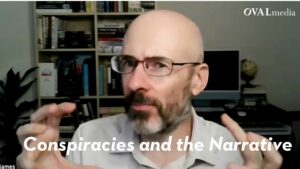
Dr. Hannes Hofbauer | NARRATIVE #225 by Robert Cibis
Here is a version of about 30 minutes without restrictions – our OVALmedia subscribers can enjoy the full programme.
Watch the full episode with OVAL Abo
Above you can watch a short version.
from €7 / month · cancel anytime · this and all other films, shows and articles
Already a subscriber? Log in
Civil Death
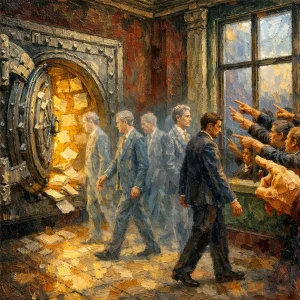
It begins inconspicuously, with an entry on a list. No courtroom, no indictment, no verdict – and yet a person’s life is over with the stroke of a pen. Accounts frozen, assets blocked, passport as good as surrendered, any travel impossible. Anyone who helps the person concerned becomes liable to prosecution themselves. It is precisely this mechanism that the Viennese historian and publisher Dr. Hannes Hofbauer lays bare in his new book “Aller Rechte beraubt. Mit außergerichtlichen EU-Sanktionen zum autoritären Staat” (“Stripped of All Rights: Extrajudicial EU Sanctions on the Road to the Authoritarian State”, Promedia Verlag, Vienna 2026).
Hofbauer places the European Union’s sanctions policy in a broader context. It is a tool in the conflict with Russia, forged since spring 2014 – since the coup on the Maidan. At first it targeted Russian and Ukrainian politicians, economists and oligarchs. But the instrument has grown. Around 2,700 people and organisations now fill Brussels’ lists, and for a good year they have also included citizens of the EU and Switzerland.
What is new, Hofbauer stresses, is the procedure – or more precisely, its absence. There is no indictment, no conviction, no defence. The accusations are “undermining the sovereignty of Ukraine” or “disinformation” – offences that could not be tried before any regular court. That is exactly why, the author says, the sanctions regime is used. He calls the consequence by its historical name: civil death. As a historian, Hofbauer traces the line back to the medieval ban, to outlawry. Whoever was declared an outlaw was cast out of the community and became a “forest-goer”; his wife was considered a widow, his children orphans. “We believed this had long been overcome,” says Hofbauer. “In this case it is returning in a terrible way.”
How can something like this happen under the rule of law? Hofbauer’s answer goes to the construction principle of the Union. National executives – the ministers, literally the “servants” – raise themselves at EU level in the Council to legislative power, switch off the judiciary and decide who goes on the list. This contradicts everything one learns at school about the separation of powers. He is surprised that the legal profession does not protest more loudly.
He uses concrete cases to show that legal recourse leads nowhere. The former Ukrainian president won twice before the European General Court – and was listed anew by Brussels each time. A certain victory on paper, without any consequence. Conversely, it turns out that political will does indeed work: the Slovak biker Jozef Hambálek, European representative of the Russian “Night Wolves”, was taken off the list again by Prime Minister Robert Fico. And the Russian Patriarch Kirill never got onto it at all, because several states, led by Hungary, prevented it. Hofbauer’s conclusion: every name on these lists was put there by a foreign ministry. Where a state says no, it does not work.
In the conversation it quickly became concrete what “civil death” means in everyday life. The Swiss officer and author Jacques Baud, stuck in Brussels, may continue to publish and appear by video – he just may not take money for it, not a single euro in royalties. The journalist Hüseyin Doğru, not at all particularly pro-Russian, is completely isolated. And a Swiss-Cameroonian activist living in Africa lost, as soon as her name was on the list, her bank account, her credit card, even her access to Netflix and PayPal – because financial and platform service providers comply, or have to comply, with the sanctions. She could not even buy a domestic flight within Africa. This is how a globalised world carries every punishment into the farthest corner.
In the final chapter Hofbauer speaks of a selective martial law. Under martial law the state may seize property, requisition and billet people. Something similar applies to those sanctioned – only undeclared and tailored to individual persons. So are we at war? Hofbauer remains sober: “We are in the preparations.” He rejects as alarmist the talk of fascism that was hurled at him at a reading. What he observes is the movement towards an authoritarian state – a state that breaks its own basic laws, its own separation of powers.
Here his analysis met an observation that has long preoccupied us: the sanctions are a building block of propaganda – a defence against narratives considered dangerous. Hofbauer pins it down to energy prices. The prevailing reading blames the price rises on the Russian attack; in fact, by his calculation, prices rose as a result of the economic sanctions and the economic war unleashed by Europe and the USA. If this simple insight, which anyone can follow without a degree, were to prevail, politicians would come under pressure to justify themselves. And that brings us to the group that is at the heart of it all: the middle class. The academics, teachers, lawyers, journalists – those multipliers whose change of opinion at the Rotary Club or the tennis club becomes dangerous to the powerful. Dear viewers: if you are one of them, now you know: you are meant to be manipulated.
At the same time Hofbauer warned of a “double trap” between the nation state and the EU, in which democratic structures get caught and in which thousands of Brussels lobbyists find plenty of room. The 19th sanctions package is now in place; Hungary is blocking the 20th. Should the Union abolish the principle of unanimity, this corrective would also fall. It depends, he says, on elections – and on those countries that dig in their heels.
And the individual? In the end, the two speakers’ answer was strikingly hopeful and unspectacular. Do not fall into depression, do not be afraid, join together. Above all: read, and read together. Hofbauer recalls the reading circles, consumer and mutual-aid associations with which the workers’ movement of the 19th century grew big and strong. He recommends Fabian Scheidler’s “Friedenstüchtig” (“Fit for Peace”) as a counterpart to “war-readiness” and, half tongue-in-cheek, Heinrich Mann’s “Der Untertan” (“The Loyal Subject”) – that age-old book about how subjects are produced.
For the real preparation for war, we agreed, lies in isolation: in the vanished choral society, the dissolved village centre, in the atomisation that makes obedience easier. Protection, however, lies in community. “Singing and reading is always a good thing,” Hofbauer concluded. If only enough people understood this – perhaps five per cent would be enough – we would already have gained a great deal of room to manoeuvre.
See also NARRATIVE #02 with Dr. Hannes Hofbauer
Dr. Hannes HofbauerThis double mill that is being built up between the nation-state and the EU. Many democratic structures get caught in this double mill, and it offers a great deal of room for lobbying. So I can trace that quite well, since I've been making books for 30 years or more. For me, the bigger concern is the attention span of young people. That is, that people are no longer able to read longer texts. Interest in political topics has generally been rising again since Covid.
Robert CibisIt's about the civic middle. So, dear viewers, if you belong to it, you know you do. It's about you. That is the decisive vector that moves a society in one direction or another. And they have to be manipulated. My name is Robert Cibis. I'm very proud and honored to be sitting here with Dr. Hannes Hofbauer. Before we get down to business, I'd like to stress once more that all our content is on our website. www.oval.media. I don't know where you're watching this video right now. But please, please watch everything there. We are also present on other platforms. But that is somewhat less secure. Every now and then we get deleted or are not so easy to find. This website, at least until today, has always worked. Yes, and we have a very specific occasion. There is this new book that Hannes Hofbauer, as author and publisher, is making available to the world. And first I'd like to address the publisher role that Mr. Hofbauer has long used to give the world insights and convey analyses that it might not otherwise have had.
Few people have contributed as much to social criticism as Dr. Hofbauer. And I'd like to emphasize this right away. He is important as an author, but above all as a multiplier, as a publisher. He also brings other important authors before the eyes of other readers, so that complex ideas, so to speak, also find their distribution. Because the problem with social media, with the audiovisual media, which I represent, is often that people seek a certain lack of complexity. That facts perhaps only have to be hinted at, or at least that's what people think. And that's why I find books very important, because it's something completely different when you can read at your own pace, reflect, and have the references. For me, when I watch more demanding videos, I'm still grateful if there's a website with all the references, or maybe even a transcript. Sometimes I do both.
I listen to something first and then I look at the transcript again. Did they really say that, and so on? If you really want to understand things, to grasp them, then that is really very important. And I notice that it's a tragedy that precisely those who are critical and want to understand society often have no time to read books. I oppose that. That's why OVALmedia has also published books, because I simply find that it's important in principle. And a key result for me was when I filmed with Chinese dissidents in 2019. I did interviews for a film that was unfortunately canceled by WDR, because they were a bit afraid the message would cause too much trouble.
The editorial management told me that. So I still have to do that at some point. In any case, I saw how important booksellers are, for example. Booksellers and publishers, of course, and authors are a group that is very, very threatened in totalitarian systems. And not only in totalitarian ones, but also in systems that are extremely centralized, where diversity of opinion simply becomes dangerous because then power cannot be exercised as easily. And now to this matter. I mean, "stripped of all rights" refers to these EU sanctions that many have already heard of; many know the case of Jacques Baud. What is the book about?
Dr. Hannes HofbauerYes, first, thank you for the invitation and for the flowers you've strewn for me, I won't forget them, I'll take them with me. Yes, the book is about, the subtitle is a bit more concrete: from extrajudicial EU sanctions to the authoritarian state. The European Union's sanctions policy is actually part of a struggle against Russia, if you will, that is being waged on many levels. And since 2014, specifically since March, since this turning point brought about by the Maidan, a new government in Ukraine, it affects people who have somehow got in the EU's way or are an obstacle. And at the beginning it was mainly Russian and Ukrainian politicians, economists, oligarchs, and for almost a year now, citizens have been on it too, who come from the EU or from Switzerland. Jacques Baud, as you already mentioned, is perhaps the best-known example. So the phenomenon, or the tool,
that the EU devised is new in that it operates without court proceedings. There is no indictment either, and no guilty verdict. The accusations the EU makes against these Europeans are by and large undermining Ukraine's sovereignty or disinformation, that is, no offenses that could be actionable in court in any form. And that's why this sanctions regime is used. The consequence is that these people are blocked from their property. So they have no access to assets, account frozen, passport surrendered, completely blocked. And all of that without court proceedings. It would only become a matter for the courts if someone helps these people. And that is a particular perfidy, because helping is punishable. Helping is deemed a sanctions violation. It would be as if one were supplying weapons to Russia.
And I would say that this has the consequence that these few people, by now almost a dozen, Europeans or Swiss, then suffer what I would call a kind of social death. Because of course hardly anyone wants to get particularly close to them, since they always risk being charged with violating sanctions. I mean,
Robert Cibisof course, every child knows this: it's not only a social death for these people, but possibly for the whole profession. Because I saw in the faces of some journalists how truly shocked they were when they heard this news. Especially Jacques Baud, because he is already so well known. They said, damn it, damn it, then I'll be next soon.
Robert CibisOr I could be. And above all, it seems deliberately hopeless, because it is not a court proceeding, because you can't say, then I'll just appeal. They'll see, we'll get an expert opinion. I haven't violated any law. That is exactly what doesn't happen. And that is what is so frightening about it.
Robert CibisSo this "punish a few and educate the many" is implemented here to perfection. But of course the first question that arises is, how is this even possible? How can it be that citizens are restricted without any means of defense to the point that, for example, one is no longer allowed to do business with them?
Dr. Hannes HofbauerNo, there has been a development. So the first on the sanctions list of this new kind was Viktor Yanukovych, the Ukrainian president who was driven out in February 2014 by the Maidan activists. And back then it was somehow still argued: Well, an oligarch, unsympathetic, sure, he certainly didn't amass his money in a legitimate way. A multibillionaire, president of one of the largest countries in Europe. And he lives in Moscow, fled to Moscow, or at least to Russia. Of course it affects him, because he had assets here, but no tears shed, so to speak, looking at this case, on my part, for example. But by now it also affects people who have their center of life here. In Germany it is at least one person already. A certain Hüseyin Doğru, also a journalist, who is not particularly pro-Russian at all.
His own story. And they are completely isolated and affected. Because the account is not accessible. It is frozen and you are not allowed to help them. They are not allowed to travel. And this development was basically gradual. But at one point it happened that alongside Russian, Ukrainian, or Uzbek oligarchs, African ones, it's all there now, there are 2,700 people and organizations in total on these lists. That people from here were suddenly punished too, in this way. Premodern. It is actually premodern, because it is without court proceedings. That's why in the book I dealt at some length with such premodern penal regimes. Oh, very interesting. Like outlawry or being declared an outlaw. There are cases in history where this also happened on a mass scale. But
we believed that was long overcome. We have a separation of powers. But in this case none of that is overcome, it is returning in a truly dreadful
Robert Cibisway. Fascinating. I mean, I heard from a lawyer who said, yes, that can be without court proceedings, because it is preemptive, in English a kind of preventive measure. A sanction is a preventive measure. It is not a punishment. So that's why no criminal court would be involved. And it is also not a conviction for something that happened, but rather the aim is that something will not happen, so to speak. So that was from the lawyer, so maybe it's not reality, but at least legally, that's apparently why there's no proceeding, as I had heard. Yes,
Dr. Hannes Hofbauerbut in this case it is not preventive, because Jacques Baud was sanctioned for something he wrote. Or what he published. That has already happened. So you can't prevent anything anymore. And you don't prevent his further political activity either. That's interesting. He can appear via video or he can
Robert Cibiswrite. So it's not illegal for him to hold, for example, a video conference. It's not illegal,
Dr. Hannes Hofbauerhe just may not take money for
Robert Cibisit. That's fascinating. That's fascinating. So really, then it is, perhaps not legally, but in substance, really a punishment.
Dr. Hannes HofbauerSo at the Leipzig Book Fair, for example, which just took place, I spoke with people from Westend Verlag, who published Jacques Baud's books. And they said it all goes its way, only he may not receive royalties.
Robert CibisThat's crazy. And probably not his relatives or his friends either, because that would be the first thing you'd do in such a situation. Maybe he has siblings or, I don't know, someone who could accept it on his behalf. Even that probably wouldn't work. It doesn't work.
Dr. Hannes HofbauerIt's punishable then. It's somehow new, and you first have to get to grips with it. So the first EU European to end up on this list was a Slovak. He has nothing to do with the media. He was a representative of the Russian Night Wolves, a motorcycle gang that always celebrated the victory over fascism on May 9 at Treptower Park. They would show up with 20 motorcycles or more. Nationalist Russians, if you will. Bikers, in other words. Not exactly my favorite people either. And the EU sanctioned them as a whole group back in 2022. They were no longer allowed to travel to the EU and so on. And they had a European president. This Hambálek, a Slovak. And he was put on the list too. And exactly the same thing happened to him as now to Jacques Baud.
Only, in Slovakia there was then a change of government, with the Smer group making Robert Fico prime minister. And he stood up for his citizen. So he went to Ursula von der Leyen, or to Olaf Scholz back then. And everywhere he appeared, I've seen one or two press conferences on video myself, he said, by the way, there's another citizen, one of my citizens, who is on the sanctions list because he rides a motorcycle. He hasn't actually done anything. He isn't just close to this group, he represents it. But it's not a group that is waging war anywhere.
Robert CibisIt's also not illegal to be pro-Putin, is it? No, actually not. Under the law,
one is allowed to hold these opinions, right? But they are pro-Putin. Yes, that's completely clear. And he got him taken off the list. So, through political insistence as well, what he gave up for it, or whether he made some kind of deal, remains unknown, at least to me. But it is possible to remove people from this list. And it's also possible to keep people from getting on the list at all.
Dr. Hannes HofbauerBecause it has to be said, all these persons and organizations on EU sanctions lists were at some point put on this list by the EU member states, specifically by the foreign ministries or by officials of the foreign ministry. So if one state says, that's not possible, then it doesn't work. And the most famous case where that didn't happen, so to speak, is Kirill I, the Russian Patriarch of the Moscow Orthodox Church. Several EU states, Hungary leading the way, said it's not acceptable to put a church leader of a huge religious community on the sanctions list. Even though he, of course, like many other popes or priests, blesses his soldiers and in that sense actually supports the war.
Robert CibisYou just said something very interesting. Namely, that this kind of punishment is actually premodern. And you spoke of being outlawed. Can you elaborate on that a little? So how did that work in the past?
Dr. Hannes HofbauerYes, being outlawed is, so to speak, a medieval form of punishment. People were expelled from the community. They could then no longer live in the community. It was structured completely differently. Today, in a city, one is more or less an individual, and if you exclude someone from the city, other than through these sanctions, it's actually not possible. But in medieval communities, you were then no longer able to live in that village, in that place, in that town. They were called forest-goers. They basically went into the forest and somehow tried to survive. Their wives were declared widows and their children orphans, because they were no longer persons. And with that, the matter was settled for the prince who had, so to speak, decreed it and carried it out. Done. What these people had to have done to be declared outlaws ranged from murder to lèse-majesté or breach of the public peace. So definitely actual deeds as well, which is not at all the case with Jacques Baud or similar
cases now, where it's only about opinion. Or also political, if you will, political statements, if you didn't pay homage to the majesty or the like.
Robert CibisAnd what does it actually mean for us that this kind of punishment exists?
Dr. Hannes HofbauerWell, that we as a society, which always relies on the separation of powers, have thrown it overboard. Because what exactly happened, the European Union as a whole is already questionable in this context, in that national executives, that is, the minister, the servant in Latin, that is, in German, the Latin word, rise at the EU level to become the legislature in the Council, switch off the judiciary and decide, for example, to put a person on this list. That contradicts everything you learn in school, and it also made me, it surprises me that the legal profession doesn't cry out. There are lawyers who represent these people. If it's a person who lives within the EU, then they have to obtain a permit for it from the competent body, so there is a sanctions regime in Germany too, set up specifically for this, and they do actually get this possibility.
You can then tell the European court that you want access to your account, or you say that the accusation isn't true. So far that hasn't really worked, because there are oligarchs, Russian oligarchs, who have already gone through this. Yanukovych himself, the former Ukrainian president, won twice before the European court. So he was found to be right that it was not correct to put him on the list and to seize his assets, but it did no good, because Brussels, the EU, kept putting him on the next list. A certain Mikhail Fridman, also a Russian oligarch, has already gone through this too, winning before the European court, but without consequences, at least positive ones.
Robert CibisYes, that's the fascinating thing, that we no longer have a hidden concentration of power in the executive, but that it is completely out in the open.
Dr. Hannes HofbauerYes, and above all that the protest remains limited. You said Jacques Baud is well known. In Switzerland it really is a well-known case. And the Swiss embassy to the European Union also wrote a protest letter, which quite correctly addresses two things. One, it's about freedom of opinion, and this restricts it. And the other is, it's not a court proceeding. So what is the point of this? And Switzerland doesn't take part in the sanctions. In these sanctions, economic sanctions yes, but in these personal sanctions Switzerland doesn't take part. But in Germany, I'd say, this Jacques Baud is not very well known either. As a publisher, I had German booksellers in Vienna a few weeks ago to present our program.
We do that together with other publishers. We can't afford to do it alone, flying in about 20 booksellers or having them come by bus or train. And then we have a weekend where we present our programs to each other, and they take part. And I presented this book to these booksellers as well, because it's brand new, and as an introduction I asked, in a schoolmasterly way, who knows Jacques Baud? And of the 20, none of the German booksellers, some of them very young women, knew Jacques Baud. That shocked me a little too. In Switzerland that wasn't the case. In Austria, hardly anyone would probably know Jacques Baud either. It's becoming a bit more popular now, this case, because I haven't met him, I haven't met the others either,
I only report on them because I find it very interesting how he deals with the phenomenon. Of course he complains to me a bit, because he lives in Brussels and is confined there, and if food parcels are sent to him, the Belgian post office won't deliver them, because that would be a breach of sanctions. The post office commits a sanctions breach. Well, because it's really afraid, too. Well, no, it isn't.
Robert CibisThat's fascinating. You have to think of that first. These are things where we read "sanctions list" somewhere in the new media, but we don't understand what it means. Yes, I've also heard that, for example, in the other case, this other Swiss woman, who is also African,
Dr. Hannes HofbauerNathalie
Robert CibisYamb, I saw an interview with her too, and it impressed me a lot. And she said that the bank terminates her account, not because anyone is pressuring it, but because it is no longer allowed to have
Dr. Hannes Hofbauera business relationship with her. That's it exactly.
Robert CibisShe's not allowed to have a Netflix account anymore. She says she always liked listening to music. She had a Deezer account. Impossible. She can't have a music account anymore. On the internet, that is. All these totally banal things. That's the crazy thing. That's something I couldn't have imagined myself beforehand.
Dr. Hannes HofbauerWe probably saw the same video earlier, which several people made. A fantastic woman. Really a, how should I put it, a strong woman. She is Black, because she has a Cameroonian father, was born in Switzerland and has lived in Africa for many years. And in the video she says that she heard that she had ended up on the EU sanctions list. At first she thought, I don't live there anyway. I'm in Africa. So it's not that important. And then she noticed that a Visa card, Netflix, PayPal, none of that is possible, because these financial and other service providers have to comply with these sanctions.
Robert CibisAnd she even said, exactly, a simple flight. Yes. She can't even pay for a flight within Africa, even if the company isn't African, because they say, yes, but we also have ties to Europe and so on. So that's the thing, it never stops. Everything is connected. That's also what a globalized world brings with it. If you have a problem, it can immediately spread to him.
Dr. Hannes HofbauerThough of course with the people who now live in Russia or in Israel or in Turkey or somewhere, where these oligarchs have often returned, By then, globalization had effectively split into large regional blocs. In Russia, with the Mir card instead of Visa, you have little trouble with local institutions, insurers and so on. Whereas in Africa, if you live there and rely on our Western systems, it's already more difficult.
Robert CibisInteresting. What are the main findings of your research? I actually
Dr. Hannes Hofbaueralready said it. In the final chapter I spoke of a selective martial law, because I believe that for the people who are affected, and I'm only talking about those stuck in Europe, it has essentially the same effect as if martial law had been declared. Because under martial law, the state is entitled, by law, to use its powers to access property. You can requisition a car, you can say you have to billet 17 refugees or soldiers in your apartment, or it can take you yourself and put you in the trenches. So everything is possible. And for these people it's a bit like that, selectively, for these people, that they are subjected to an undeclared martial law.
Robert CibisThat, yes, exactly. And of course the key question: are we at war?
Dr. Hannes HofbauerWe are in the preparations. I increasingly believe that this is actually happening, these preparations. I tend to be a bit careful about picturing the worst possible vision. Firstly, because it depresses me, and you, or whenever you also have viewers. And secondly, because of course one also has to bear in mind that it can get even worse, and perhaps will. And then you lack the words for it. That's
Robert Cibisworse than what?
Dr. Hannes HofbauerWell, than now. Of course.
Robert CibisIt can always get worse. It can always get worse,
Dr. Hannes Hofbaueryes. For example, I did a presentation of the book in Vienna, and someone from the audience said, we're living in fascism here and so on. And I would reject that. Because that was still a completely different dimension. We are moving toward an authoritarian state, because it breaks its own constitutional principles and notions of separation of powers. So that I would attribute to it. But not that it says, we're at war, it's fascism. That is alarmist. Yes, well,
Robert CibisI think a historian wrote that the period between 1933 and 1938 in Germany was referred to as the normal years. That is, as the years when most Germans still thought, well, everything is as always, it just goes on like this, and they didn't really perceive the upheavals that were taking place politically. Even the exclusion, for example, of the Communists, even the crimes that had already been committed by state structures or pseudo-state structures, if you think of the SA, most people weren't really aware of them either. And when we now think of people who became disabled through toxic injections that they received, or of people who even died as a result, other, similar mechanisms of harm through recommended injections and medications are also said to exist. The food is toxic, at least in part. And you have the feeling that there are dangers and dangers,
where it is very, very hard to assess them. So it could be that someone just messes up and that's why something is poisoned, as an example, or that it is even poisoned deliberately. And there lies the line between war and sloppiness. And I say this because I myself increasingly have fears, real fear that a lot of deliberate harm is happening, more than one thinks, and that it is all the more harmful because it isn't perceived as such.
Dr. Hannes HofbauerYes, in the book I have now concentrated on these sanctions. And I want to point to something you touched on indirectly, '33, '38, that is, the pre-war period under the NSDAP. There was, and it also occurs before that, denaturalization, a state practice of getting rid of undesirable voices. And that happened en masse. So, apart from the persecution of the Jews, which was far worse still, there was the expatriation of Germans who had mostly already been living abroad, but who from abroad still took a stand against the policy and were in part very noticeably perceived. I'm talking about Heinrich Mann, Thomas Mann, Lion Feuchtwanger, Münzenberg, so really a whole list of writers and publishers who were made stateless.
And their assets were also taken away. That was also part of this repression.
Robert CibisIt's really somewhat similar, I think. Because the travel bans are tied to the sanctions, and so it has a similar
Dr. Hannes Hofbauereffect. And that corresponds to what I said, the people here, Joe Average, so to speak, probably noticed little of it. Except of course intellectuals or the like. But if you took a particularly strong stand on the side of those expatriated, you would surely soon have ended up on such lists yourself and experienced the repression too.
Robert CibisIt's very interesting. It really makes sense to compare this, I think, in order to assess it. Certainly different in form, but you can still see the mechanisms and their similarity, I think.
Dr. Hannes HofbauerYes, it's a tool of power to establish calm on the home front, if you will. But the positive thing I see is of course perhaps a bit wishful thinking, how should I put it, that this is of course a sign of weakness. So if this European Union, or the states within it, stood by what they're doing, for example in the conflict with Russia or Palestine or whatever, then one could, taking this problem with Russia as an example, invite Thomas Röper, Alina Lipp, who are such sanctioned people, or Jacques Baud onto the ARD talk shows and discuss it. Where's the problem? They're not going to pull a knife and stab the host in the back. That's not at all what the fear is; the fear of those imposing sanctions is that they won't get through with their arguments otherwise.
Robert CibisYes, absolutely. And you are also a propaganda expert, you've written a book on it too. How does that fit in? Is this a building block of propaganda, this... No,
Dr. Hannes Hofbauerit's the defense against narratives that are seen as dangerous. That's how I would describe it. And
Robert Cibiswhy can narratives be so dangerous? You just said it's a weakness if you don't face the discussion, perhaps because the arguments are lacking. But perhaps describe it more concretely. What is, let's say, the worst-case scenario from the point of view of the ruling narrative?
Dr. Hannes HofbauerI'd take a very simple example, not the worst-case scenario. If today you're confronted with the problem that energy prices are rising, since 2014 or a bit later with the blowing up of Nord Stream, then there are two stories about why that is. The official one, if you will, is that Putin attacked Ukraine. That was an attack in violation of international law, I'm completely convinced of that. But it has nothing to do with energy prices having risen. Energy prices rose because the European Union imposed economic sanctions and Russia, so to speak, countermeasures, that is, initiated an economic war, so to speak. And that started from Europe and the USA. That's a given anyway. And then the question is, if the view now takes hold that it's because of the sanctions that we all have less in our wallets and a much worse quality of life than 15 years ago, then of course the rulers are in big trouble. And that's why they have to make sure we all believe that the Russian army's invasion of Ukraine drove energy prices and our quality of life, energy prices up and our quality of life down.
That's a small example. It's not just that;
Robert CibisI think it's a very, very good example, because of course one notices that the suffering of people far away is often hard to convey and that people often block it out. But when it hits their own wallet, they notice, oh God, I'm suffering directly and personally too. And that
Robert Cibisis another level of involvement. And yes, you're totally right. I think this shift, if this insight became mainstream, would bring pressure to justify themselves that would be very difficult for the rulers. And above all, it's not so complicated either; you don't have to have studied anything to understand it. And the most important
Robert Cibismultipliers in our Western societies are these academics, by which I of course mean journalists, but above all it's often also the teachers, the lawyers, the so-called bourgeois center, which counts for an incredible amount, and when they voice this opinion at their Rotary Club or tennis club, then it gets hot for the government. That, I once heard, is so to speak the great fear of the intelligence services, that these people tip over, so to speak, and adopt a different narrative, because they suffer from what is happening. I didn't understand that earlier, but I understand more and more that this is what it's about, because if you have an unskilled worker or some punk on the margins of society, a bit fringe, or an artist, and they say something like that, it's not so dramatic. I think it's about the bourgeois center, so dear viewers, if you belong to it, you know, you are the ones, it's about you.
That is the decisive vector that steers a society in one direction or another. And they have to be manipulated. Where do you think this is leading? Where does this lead? What could be the escalation of this kind of policy?
Dr. Hannes HofbauerSo, step by step. As you mentioned, this spreading of fear is, I think, a very important effect. A few weeks ago at the Federal Press Conference, the Foreign Office spokesman spoke rather smugly about it, saying that these very sanctions are meant to show people that disinformation can get expensive. It can even cost you your accounts.
Robert CibisPlaying games with bank
Dr. Hannes Hofbauercards. Exactly. So this spreading of fear is, I think, an essential point. And step by step, they can keep going. A few days ago, a British journalist living in Donetsk, who did embedded journalism with the soldiers of the Donetsk People's Republic, not something I particularly approve of, was also put on the EU sanctions list, I saw. So it just keeps going. We are at the European Union's 19th package. Most of it, however, is economic measures. And the 20th is being blocked again by Hungary, because Hungary is pressing to have Russian gas routed through Ukraine. And Ukraine doesn't want that, or says it's not possible for technical reasons. And there is this geopolitical dispute, which means that the 20th package is already on the table, but not yet ratified, because all states have to agree. To
take this one step further, it could of course also lead the European Union to consider abolishing the unanimity principle. In some individual cases, it is already heading in that direction, it is already being argued, because the Hungarian side, the Slovak side, and partly now the new Czech side are skeptical to opposed. I'm not just talking about these individual sanctions, but about the entire policy of the European Union on the international stage. Or more countries will dig in their heels, and then of course there is also a chance that this will be curbed a little. It depends on the elections, and on France soon, how that turns out.
Robert CibisVery interesting. Yes. You have been a publisher for decades now, and always in friction with the prevailing narratives, because books can, want to, and should offer a new perspective. How do you see the development of the media and book world over the last 30 years? And do you see a connection to this?
Dr. Hannes HofbauerWell, I can trace it a little, because I have been making books for 30 years or more. And it was like this: political non-fiction was in great demand 30, 35 years ago, then declined, and with the Corona period demand rose again, so to speak, and now again too. I would say the political non-fiction book is not dead. People are interested, they can read it in print or electronically, we make e-books and many others do too. The bigger concern for me is the attention span of young people, because with an almost entirely digital life with mobile phones and TikTok and so on, the attention span is shrinking. People are simply no longer technically capable, because of their own behavior, of reading longer texts. I think that is a problem we are confronted with.
It may keep developing for a few more years, and how it ends is unknown, but I would see that as the biggest problem. While in general, interest in political topics has been rising since Corona, I would say.
Robert CibisThat is certainly a result of the crisis, and it is a kind of setback also for the powerful, who are actually pushing people out of political decisions. Take, for example, in Germany, which I know quite well, you are welcome to add the Austrian perspective, there is the Ethics Council, which debates matters that actually ought to be debated in the Bundestag. That is an example of how the important questions are pushed out of politics and politics just has to obey, so to speak, and it is similar with many other things, where you notice that meetings are not public. In Germany during the Corona period, it was the conference of minister- presidents that made the decision, since health is a matter for the states in Germany and was never the responsibility of the federal
government. That's why this body exists, and this conference of minister-presidents has no minutes. There are no minutes that one could sue to obtain, as with the Robert Koch Institute. It is simply secret. It is like the Bilderberg meetings. Yes, it is completely, utterly opaque and of course not provided for in the Basic Law. I am only taking this as an example of a kind of dictatorial-seeming centralization of power. Dictatorial because it is not comprehensible to the supposed sovereign, and this secrecy around political decisions, and above all the decision-making, is of course a fundamental problem. How are citizens supposed to decide? How are citizens supposed to judge if they don't know what is happening and why?
Dr. Hannes HofbauerAnd also this double mill that is being built up between the nation-state and the EU. I think that is something too. Many potentially democratic structures get caught in this double mill, and it offers a lot of room for lobbying. And that's why we know that thousands of registered lobbyists sit in Brussels, who partly write these EU laws in-house, not this one in particular, but laws in general, economic laws, and then give them to the members of parliament or the Council to proofread, so to speak.
Robert CibisThat is truly worrying. And now, you are active, you educate, which I think is very important. The diagnosis is part of it, the knowledge, the understanding. What would you recommend to readers who say, the current development bothers me, I want to do something about it,
Dr. Hannes Hofbauerwhat can I do? Well, quite concretely on this sanctions policy, one can, of course, spreading the word that such a thing exists is important, and discussing it with one another. There is also a concrete list for Jacques Baud, which tens of thousands of people have already signed, an address of solidarity. That doesn't help directly, but it does you good yourself when you sign something like that. You have to factor in this psychological effect somehow. And for Baud, if he knows that it exists, I assume, I signed it too, then that is good for him as well, even though he knows full well that he won't get a single euro out of his account, but he knows about the people behind him.
Robert CibisThere is a community. You're so right. I am very proud to have been one of the first signatories, and I find there is a sense of community, you're in the same boat and you stand by it publicly. I think Pastor Michael Elisden, whom I once had on the show, always spoke of the confession, which is such an important word in the church, and I meet so many people who say, yes, Robert, I completely agree with you, but I can't go public with it, because I have this building savings contract, I have my job and so on. So of course they are afraid to step forward, and then I always think, in this culturally and historically valuable story of Jesus, standing up, and the power of confession,
wow, that really achieves something. So signing publicly with your name, saying I stand by this, I stand by that, and so on, is sometimes underestimated, because when a few people do it, a group quickly forms, and that group is one that other people can join, and a group exists already with two people. Often the first person gets the glory, the one who says, I want this, this, and this, and then others join, but the second person is the one who turns the first opinion into a group, and together you can achieve a lot. I have often observed that.
Dr. Hannes HofbauerYes, and above all, in society there are always tipping points in history. I don't see one directly ahead of us, but dissatisfaction is rising, also because the social situation is getting worse, because money goes into armaments instead of housing or healthcare or wherever. It's simply clear that people will be more dissatisfied with those in power in the future. That's why those in power are taking precautions with such authoritarian measures, to keep that from actually being put into effect, so to speak, but at some point it can no longer be stopped. You can see that in history. The collapse of communism in the East was something nobody would have foreseen three years earlier, but the dissatisfaction was already there,
and then at some point it tipped, and so to the question of what one should do, I can only say: join such initiatives, keep discussing the matter, don't fall into depression, don't be afraid, and of course you can only do that if you talk it over together, knowing that there are formats like yours and many others. That is already happening. So we critics of the power structure are not that isolated. And to add more
Robert Cibiswater to your mill, if five, maybe 15 percent of the population reach the right diagnosis, the others follow. I notice that this is group behavior, it depends on the second, third person, when they turn the single opinion into a group, and then you can suddenly have leverage.
Robert CibisI would also like to add something a friend told me, who has spent 40 years on exactly such questions of social upheaval, revolution, subversion and so on. He says the most effective means for democracy are small reading groups. Because that way, you don't just need the book; through people really thinking and getting together, it has a strong effect, because the diagnosis is also what is decisive. People don't like what the government is doing. That is the case all over the world, especially in the Western world. That is of course something that can be exploited, by the powerful too, even against the people. One can steer it against minorities, as we know from the Third Reich, steer the discontent. Or one can also steer it against the current government,
But if the real plan is, for example, to have a central European government, or even a world government, then it may well serve that world government or European government if we think this Merz is a complete idiot. And if we're fed up with the entire government, with the Office for the Protection of the Constitution and so on, and with the military or whatever else, that can be exploited, precisely for that. That's why feelings are one thing, but the question of where they lead us is the second. And for that you have to do a bit of consciousness-raising. Books help with that, and so does your work. But it also helps to read them and then talk about them. And funnily enough, I have to tell you this too, he has had practical success with
his advice. He worked with Kurdish resistance fighters, an acquaintance of mine, and did exactly that: they form reading groups, they think things through carefully, and so on. And that actually led to a slow and continuous transformation. And on the day they said, we have to fight now, and drew their Kalashnikovs, there was a pretext to slaughter them. And you can also see this in the creation of the European Union. Napoleon tried it with a unified Europe, Hitler tried it with a unified Europe. It only worked after people tried, in tiny little steps, to manipulate consciousness and then create a centralist structure that isn't presented as such at all. Instead, what I'm told is that it is democratic, that we have a say, that there are European elections. But if
you look at the mechanisms exactly, that's not the case. And so that viewers, or you, don't misunderstand me: I love Europe, and I like nothing better than being able to travel around every country in the world or in Europe, and that people can come here and so on. But the point is who has the say and where the power lies. And there are developments that are moving further and further away from the citizens.
Dr. Hannes HofbauerThere would be a lot to say about Europe, but I'll spare myself that now. But I find the reading groups interesting, because it occurred to me, firstly, as a publisher you naturally wish for your reading groups, that's obvious. But social democracy, yes, around 1870, 80, when it emerged, they formed reading groups. And they grew out of those. And if you look at it today, the structure and organization are of course quite different. But they started the same way, with reading groups, consumer cooperatives, mutual aid societies. So with that, the working class empowered itself, so to speak, and became strong and big. In the end it didn't do them any good, though.
Robert CibisBut historically it was a huge thing. That is class struggle. The anarchist movement in Spain achieved a lot. The Soviets had to come to slaughter them. The Makhno movement in Ukraine too. So there are examples where this educational work really changed something. And I often read on the internet, on social media, "we need better psyops," in English. So we need better psychological operations, along the lines of: I can see through you, dear government, you only want us to do this, and you only want us to do that. And I'd like to disagree. I'd like to say, folks, you have no idea how many psyops are happening right now and how important the right diagnosis is. You only notice the few, and then you're very proud that you recognized you were about to be manipulated, but then weren't, because you exposed the manipulation attempt as such.
But in fact, there is so much manipulation, so many smokescreens, it's so professionalized, that diagnosis before action, this calm banding together, building connections with other people, is truly crucial for, I would claim, much more than just democracy. It's even important for your own mental health, and thus also physical health, and for mental resilience, as they say. What would you like to give our listeners and viewers to take with them?
Dr. Hannes HofbauerI believe you can only be resistant in a group, because if you're alone and bottle it up inside, you get stomach cramps and poor health, and so it's only advisable to band together, whether you do that with reading circles or with choirs, or whatever. And the important questions: you actually recognize the important questions where you don't find them in the mainstream. So I'd say right now that's the question of the Ukraine war, it's the question of Palestine, it's migration, it's how one views the entire European Union. There are obstacles from above to being able to discuss freely, and where these obstacles exist, you have to confront them by bringing precisely these questions up and discussing them.
Robert CibisNow I want to seize the opportunity once more: which books would you recommend on these various topics? Surely you know some, from your own publishing house or from others, but what should one read to understand something?
Dr. Hannes HofbauerI'm currently reading Heinrich Mann, Der Untertan, an ancient book that shows you how subjects were produced, and there are plenty more.
Robert CibisAnd you would
Dr. Hannes Hofbauerrecommend that book? It's an interesting book, I don't even know whether it's still in print, but you can certainly buy it second-hand. You can also read books written as crime novels. I find Robert Harris fantastic as an author, that one isn't from my publishing house, I'd love to publish him. Or non-fiction books like the ones we do at Promedia Verlag.
Robert CibisWhat would you recommend on these topics now? Do tell us a bit about the books you publish. Well,
Dr. Hannes Hofbauerfor example, we've just made a book called "Friedenstüchtig" ("Fit for Peace"), a counterpart to "Kriegstüchtig" ("Fit for War"), by a certain Fabian Scheidler, who is traveling across Germany, he's a Berliner, incidentally, and also appears in theaters with Daniela Dahn to present this book and so on. I think that's a very important thing right now, to counter with something what Pistorius, the Social Democrat, calls becoming fit for war, really fit for war. The author Scheidler says no, we must be fit for peace, and we must make sure, I think that's the subtitle, that we don't set a precedent that creates our enemies ourselves by producing, so to speak, enemy images, say Russia or Iran or the Turks or the Muslims, there's plenty of enemy-image production. So that's the title, for example, that is also current, which I'd recommend.
It's a small little book and briskly written, but as a publisher I actually yes, I constantly promote, but what I never do, for example, is write book reviews for others. I never got into the habit, so I read the books and can recommend them, but reviewing them in other media is something I'm unfamiliar with so far.
Robert CibisYes, but that's something already, and yes, I think that analyses, diagnoses and groups are really the opposite of what we have now. What we have now is affect-driven mass communication, this propaganda, so that you just get "ah, evil, ah, terrible, ah," so that you no longer have the step of "let me think for a moment," and this atomization, isolating people, which is why I also like that you mentioned the choir, which is also disappearing more and more. When I grew up, it was the center of the village I lived in, and it no longer exists there now, and that really shocked me, and it's the case with very many such clubs, that's what happened, they no longer exist, and I think, yes, that is at the very least preparation for war, because through this atomization, through this lack, you end up on a track where you say, okay,
I'm following my duty now, I'm obeying, this famous mass formation, which is also mentioned again and again, is de facto already part of the war, or at least, well, one can argue about it, is it already war or only preparation for war, I'd say at the very least that you've already lost something psychologically, that you've already been harmed once the mass has formed, even without a shot being fired, and the counter-movement seems a bit like, yes, but what can I do against tanks with a choir? Well, I think you can do something with it, because I think protection lies in community, since you can only protect each other. There won't be some higher structure that we don't know, that we have no contact with, that protects us; it will be people who protect us,
and especially in a crisis, whether it's a power outage, famine or soldiers arriving, in all these cases a community would definitely be an advantage, and of course you can build one like this. And singing and reading are always a good thing.
Dr. Hannes HofbauerYes.
Robert CibisYes. Dear Dr. Hofbauer, thank you for the conversation, and thanks also to the viewers who have stayed with us until now. Please share the video, of course draw attention to our website and above all to Hannes Hofbauer's book. It's about understanding what is happening right now in the European Union, in the Federal Republic, in Austria, in all the countries so close to us geographically, there are similar developments, and it's about us saying, we people and citizens of this country, from my point of view at least, it's about saying enough, I want to keep my space, I want to keep my freedom, and if enough people do that, I believe five percent would probably be enough, then we would already have a lot, a lot of room to maneuver. Thank you very much.
Dr. Hannes HofbauerDiese Doppelmühle, die zwischen Nationalstaat und EU aufgebaut wird. In dieser Doppelmühle verfangen sich viele demokratische Strukturen und die bietet aber sehr viel Platz für Lobbyismus. Also ich kann das schon bisschen nachzeichnen, weil ich auch schon seit 30 oder mehr Jahren Bücher mache, die größere Sorge ist die Aufmerksamkeitsspanne von jungen Menschen für mich, also dass Menschen niemals in der Lage sind, längere Texte zu lesen. Grundsätzlich ist das Interesse für politische Themen erst wieder seit Corona würde ich sagen, steigend.
Robert CibisEs geht um die bürgerliche Mitte. Also, liebe Zuschauer, falls Sie dazu gehören, wissen Sie, Sie sind es, Um Sie geht es. Das ist der entscheidende Faktor, die eine Gesellschaft in diese oder jene Richtung drängt. Und die müssen manipuliert werden. Mein Name ist Robert Cibis. Ich bin ganz stolz, ganz geehrt, hier mit Dr. Hannes Hofbauer zu sitzen. Ich möchte, bevor wir jetzt zur Sache gehen, noch mal betonen, dass all unsere Inhalte auf unserer Internetseite sind www.oval.media. Ich weiß nicht, wo Sie dieses Video jetzt sehen, aber bitte, bitte schauen Sie sich alles dort an! Wir sind sonst auch auf anderen Plattformen vertreten, aber das ist etwas unsicherer. Hin und wieder werden wir gelöscht oder sind nicht aufzufinden. Diese Webseite, zumindest bis heute, hat immer funktioniert. Ja, und wir haben einen ganz konkreten Anlass. Es gibt dieses neue Buch, was Hannes Hofbauer als Autor und Verleger der Welt zur Verfügung stellt. Und da möchte ich erst mal auf die Verlegerrolle eingehen, die Herr Hofbauer schon lange nutzt, um der Welt Einblicke zu geben, Analysen zu vermitteln, die sie sonst vielleicht gar nicht hätte.
Es gibt wenig Menschen, die so viel zur Gesellschaftskritik beigetragen haben wie Dr. Hofbauer und möchte erst mal gleich das hier betonen. Er ist als Autor wichtig, aber auch vor allen Dingen als Multiplikator. Als Verleger nämlich bringt er zudem auch noch andere wichtige Autoren vor die Augen der anderen Leser, damit sozusagen komplexe Gedanken auch noch ihre Verteilung finden, nämlich das Problem mit den sozialen Medien, mit den audiovisuellen Medien, die ich ja vertrete, ist oft, dass man so ein bisschen die Unterkomplexität sucht, dass man auch die Fakten vielleicht auch nur so andeuten muss. Denkt man zumindest. Und ich finde deswegen Bücher sehr wichtig, weil es ist was ganz anderes, wenn man in seinem Tempo lesen kann, nachdenken kann. Die Referenzen hat ich. Bei mir ist es so Wenn ich jetzt anspruchsvollere Videos sehe, dann bin ich immer noch dankbar, wenn es eine Internetseite gibt mit den ganzen Referenzen oder vielleicht sogar ein Transkript. Manchmal mache ich auch beides.
Ich habe Hör mir erst was an und dann schaue ich noch mal ins Transkript. Haben die wirklich das gesagt? Usw. Wenn man wirklich Sachen verstehen will erfassen will, dann ist das wirklich sehr wichtig und und ich merke, dass es ein Drama ist, dass gerade die, die auch kritisch sind und die Sätze verstehen wollen, oft dann doch keine Zeit haben, Bücher zu lesen. Dem schließe ich mich gegen. Deswegen hat er ja auch Bücher herausgegeben, weil wie ich das einfach finde, dass das prinzipiell wichtig ist. Und ein Schlüsselerlebnis dafür war für mich, als ich 2009 zehn mit chinesischen Dissidenten gefilmt habe. Ich habe Interviews gemacht für einen Film, der leider dann doch abgesagt wurde. Vom WDR, weil sie ein bisschen Schiss hatten, dass die Botschaft dann zu sehr stresst.
Das hat mir die Redaktionsleitung gesagt. Das heißt, ich müsste ja immer mehr machen. Da jedenfalls habe ich gesehen, wie wichtig zum Beispiel Buchhändler sind, Buchhändler und Verleger natürlich. Und Autoren sind eine Gruppe, die sehr, sehr bedroht ist in totalitären Systemen und nicht nur in totalitären, auch in Systemen, die extrem zentralisiert sind, wo einfach Meinungsvielfalt gefährlich wird, weil dann die Macht nicht so ausgeübt werden kann. Und jetzt zu dieser Sache Ich meine, alle Rechte beraubt. Das bezieht sich auf diese EU Sanktionen, von denen viele schon gehört haben. Viele kennen Falljackpot. Worum geht es in dem Buch?
Dr. Hannes HofbauerJa, erstens Danke für die Einladung und danke für die Blumen, die Sie mir gestreut haben, die ich nicht vergessen. Mitnehmen. Ja, im Buch geht's der Untertitel ein bisschen konkreter mit außergerichtlichen Sanktionen zum autoritären Staat. Diese Sanktionspolitik der Europäischen Union ist Teil eigentlich eines Kampfes gegen Russland. Aber so Will, der auf vielen Ebenen geführt wird und seit 2014, konkret seit März, seit dieser Wende, die durch den Maidan herbeigeführt worden ist. Neue Regierung in der Ukraine betrifft das Menschen, die der EU irgendwie in den Weg gekommen sind oder hinderlich sind. Und am Anfang waren es hauptsächlich russische ukrainische Politiker, Ökonomen, Oligarchen und mittlerweile seit fast einem Jahr sind auch Bürger und Bürgerinnen drauf, die aus der EU stammen oder aus der Schweiz. Chapeau! Sie haben nicht erwähnt, ist vielleicht das bekannteste Beispiel, Also das Phänomen oder das Werkzeug.
Das die EU es sich ausgedacht hat, ist insofern neu, als dass es ohne Gerichtsverfahren läuft. Es gibt auch keine Anklage, es gibt keinen Schuldspruch. Die Vorwürfe, die die EU gegen die Europäer nennt, sind im Großen und Ganzen Untergrabung der Souveränität der Ukraine oder Desinformation. Also keine Tatbestände, die vor Gericht in jener Form klagbar wären und deshalb nimmt man auch dieses Sanktionsregime. Die Folge ist, dass diese Menschen von ihrem Eigentum gesperrt sind. Also sie haben keinen Vermögenszugang. Konto gesperrt, Pass abgegeben, vollkommen blockiert und das alles ohne Gerichtsverfahren. Gerichtlich würde es erst werden, wenn jemand diesen Menschen hilft. Das ist eine besondere Perfidie, weil die Hilfe ist strafbar. Beihilfe gilt als sbruch. Das wäre so, wie wenn man Waffen nach Russland liefern würde.
Und da würde ich meinen, hat das dann die Folge, dass man diese Menschen mittlerweile sind es ein knappes Dutzend, also Europäer oder Schweizer, die den Ländern, ich würde es nennen einen gesellschaftlichen Tod, weil natürlich auch kaum jemand sich mit denen besonders nah beschäftigen will, weil er immer Gefahr lauft, angeklagt zu werden wegen Sanktionsbruch.
Robert CibisIch meine natürlich, das weiß jedes Kind. Ist das nicht nur ein gesellschaftlicher Tod für diese Menschen, sondern möglicherweise für die ganze Zunft? Denn ich habe in den Gesichtern von einigen Journalisten gesehen, wie sie richtig schockiert waren, als sie diese Nachrichten hörten. Insbesondere Jacques, weil er so bekannt schon auch ist, so sie sagt Verdammter Dreck war dann der Dreck, dann bin ich auch bald dran.
Robert CibisOder ich könnte es sein. Und vor allen Dingen es wirkt so armselig. Aussichtslos, weil es eben kein Gerichtsverfahren ist. Weil man nicht sagt Dann gehe ich halt in Berufung, werden die schon sehen, Wir bringen machen ein Sachgutachten. Ich habe gegen kein Gesetz verstoßen. Das ist ja genau das, was nicht passiert. Und das ist ja das das, was daran so Angst macht.
Robert CibisAlso dieses Ziel bestrafe weniger und erziehe viele. Das ist da ja im perfekten Maße umgesetzt. Aber natürlich die erste Frage, die aufkommt wie ist das überhaupt möglich? Wie kann das sein, dass das ohne eine Verteidigungsmöglichkeit Bürger so eingeschränkt werden, dass man zum Beispiel nicht mehr mit ihnen handeln darf?
Dr. Hannes HofbauerNa ja, es hat eine Entwicklung gegeben. Also da erst auf der Sanktionsliste dieser neuen war, wird da Janukowitsch, der ukrainische Präsident, der vertrieben worden ist, im Februar 2014 von dem Maidanaktivisten und da hat man auch noch irgendwie argumentiert na gut, ein Oligarch, unsympathisch. Klar, sein Geld hat er sicher nicht auf. Reale Weise zusammengebracht. Multimilliardär, Präsident eines der größten Länder in Europa. Und er lebt in Moskau, ist nach Moskau geflohen oder zumindest nach Russland. In betrifft natürlich, weil er hier Vermögenswerte hatte, aber ihm also keine Träne sozusagen. Wenn man sich diesen Fall anschaut, von meiner Seite beispielsweise. Aber mittlerweile trifft es eben auch Menschen, die hier ihren Lebensmittelpunkt haben. In Deutschland sind schon eine Person, auf jeden Fall gewisser Hussein Dogro, auch ein Journalist, der gar nicht so besonders russlandfreundlich ist.
Eigene Geschichte. Und die sind also vollkommen isoliert und betroffen, weil das konnte ich nicht zugänglich. Es ist eingefroren und man darf ihnen nicht helfen. Sie dürfen nicht reisen. Und diese Entwicklung war im Prinzip schleichend, aber in einem Moment hat es halt. Dann ist es so passiert, dass es neben russischen, ukrainischen Oligarchen oder usbekischen, afrikanischen gibt es jetzt alles schon. Insgesamt sind es 2700 Menschen und Organisationen, die auf diesen Listen sind. Dass man dann plötzlich auch Leute von hier bestraft hat auf diese Art und Weise vormodernen, eigentlich ist es vormodernen Weise. Ohne Gerichtsverfahren ist. Deshalb habe ich mich im Buch auch relativ ausführlich beschäftigt mit so vormodernen Strafregimen wie das mit der acht oder oder da Vogel Freiheit. Da gibt es ja Fälle aus der Geschichte, wo das auch in Massen passiert ist.
Aber wir haben geglaubt, es ist längst überwunden, wir haben eine Gewaltenteilung, Aber in dem Fall ist das alles nicht überwunden, sondern kehrt auf auf eine ganz fürchterliche Art und Weise zurück.
Robert CibisFaszinierend. Ich meine, ich habe von einer Juristin gehört, die erzählte Na ja, das kann sein, ohne Gerichtsverfahren, weil es ja eine präemptive, also auf Englisch, also eine Art vorbeugende Maßnahme ist. Eine Sanktion ist eine vorbeugende Maßnahme, ist es keine Bestrafung Also deswegen würde es auch kein Strafgericht betreffen. Und es ist auch keine Verurteilung für das, was passiert ist, sondern man will, dass etwas nicht passieren wird, sozusagen, also das sei von der juristisch also das ist vielleicht die Wirklichkeit, aber es hat zumindest juristisch deswegen wohl kein Verfahren, hatte ich so gehört, also.
Dr. Hannes HofbauerJa, aber vorbeugend ist es in dem Fall nicht, weil es ist ja für etwas sanktioniert, denn was er geschrieben hat oder was er veröffentlicht hat, das ist ja schon passiert. Also man kann das nicht mehr verhindern und man verhindert ja auch nicht seine weitere politische Aktivität. Das ist ja interessant, Er kann ja auftreten über Video oder er kann.
Robert CibisSich ja, es ist nicht illegal. Dass er jetzt zum Beispiel eine Videokonferenz macht.
Dr. Hannes HofbauerIst nicht illegal, Nur Geld darf er dafür nicht nehmen.
Robert CibisDas ist ja faszinierend. Das ist ja faszinierend. Also das wirkt dann Und dann ist es ja in der vielleicht nicht juristisch, aber in der Sache ist es eine wirklich eine Bestrafung.
Dr. Hannes HofbauerAlso ich habe zum Beispiel der Leipziger Buchmesse, die eben erst war, mit dem Verlag Leuten vom Westend Verlag gesprochen, die die Bücher vom Chapo herausgegeben haben. Und die haben gesagt, es geht alles seinen Weg, nur darf er keine Tantiemen bekommen.
Robert CibisEs ist ja verrückt und wahrscheinlich auch nicht seine Verwandten oder seine Freunde, weil sie es wissen. Nicht, dass er es war. Das erste, was man machen würde in so einer Situation. Vielleicht hat man, hat er ja Geschwister oder wer wäre das dann für ihn entgegennehmen kann. Das geht auch dann wahrscheinlich nicht. Das geht ja.
Dr. Hannes Hofbauer Das ist dann strafwürdig. Ja, ja, es ist irgendwie neu und man muss sich erst damit beschäftigen. Also der erste Europäer, der auf diese Liste kam, war ein Slowake. Der hat nichts mit Medien zu tun. Das war ein Vertreter der russischen Nachtwölfe in einem Motorradgang, wie immer, die den Sieg über den Faschismus am 9. Mai am Treptower Park gefeiert haben, sondern mit 20 Motorrädern oder mehr hergekommen. Nationalistische Russen, wenn man so will. Also Motorradfahrer. Auch für mich keine extremen Sympathieträger. Und die hat die EU schon 2022 als gesamte Gruppe sanktioniert. Die durften dann nicht mehr in die EU reisen usw und die hatten einen europäischen Präsidenten eben diesen Herrn Ballack, ein Slowake und der kam auch auf die Liste und dem ist genau dasselbe passiert wie jetzt im Shakbo.
Nur hatte dann in der Slowakei ein Regierungswechsel mit der Gruppe mehr den Robert Fico zum Ministerpräsidenten gemacht und der hat sich für seinen Staatsbürger eingesetzt. Also der ist dann zur Ursula von der Leyen gegangen oder zum Olaf Scholz, damals noch und überall, wo er so aufgetreten ist. Ich habe selber in der Pressekonferenz ein Video dann gesehen, hat er gesagt, Da gibt es übrigens noch einen Staatsbürger, einer meiner Bürger, der sitzt auf das Sanktionsliste, weil er der eigentlich nichts gemacht, also er ist dieser Gruppe steht er nicht nur nahe, sondern vertritt die. Aber das ist ja auch keine Gruppe, die irgendwo Krieg führt.
Robert CibisEs ist auch nicht illegal pro Putin zu sein, oder? Nein, das nicht. Aber dafür.
Dr. Hannes Hofbauer Aber die sind pro Putin, das ist völlig klar. Und er hat dann runtergebracht von der Liste. Also es gibt auch durch politisches Insistieren, was er dafür hergegeben hat oder ob er da irgendeinen Deal gemacht hat, bleibt im Dunkeln. Zumindest für mich. Aber es ist möglich, Leute von dieser Liste zu streichen. Und es ist auch möglich, Leute alles zu gar nicht auf die Liste kommen zu lassen.
Dr. Hannes HofbauerWas man dazu sagen muss Alle diese Personen und Organisationen, die auf EU Sanktionsliste sind, sind irgendwann im Moment von den EU Mitgliedsstaaten, konkret von den Außenministerien oder von den Beamten des Außenministeriums auf diese Liste gesetzt worden. Also wenn da ein Staat sagt, das geht nicht, dann funktioniert es nicht. Und der berühmteste Fall, dem das quasi nicht passiert ist, ist der Kyrill. Der erste, der da der russische Patriarch von der orthodoxen Moskau Kirche war, haben mehrere EU Staaten, auch Ungarn führend gesagt. Es geht nicht einen Kirchenfürsten von einer gewissen Religionsgemeinschaft auf die Sanktionsliste zu stellen, obwohl der natürlich wie wie viele andere Päpste oder Priester seine Soldaten segnet und in diesem Sinne ganz eigentlich den Krieg auch befürwortet. Ja.
Robert CibisSie haben gerade was ganz Interessantes gesagt, und zwar, dass diese Art der Bestrafung eigentlich Vormoderne ist. Und jetzt haben Sie von vogelfrei gesprochen. Können Sie das ein bisschen ausführen? Also was, wie? Wie hat das früher funktioniert?
Dr. Hannes HofbauerEr vogelfrei. Es ist quasi eine mittelalterliche Bestrafungsaktion. Da wurden die Menschen aus der Gemeinschaft ausgestoßen. Die konnten dann auch nicht mehr in der Gemeinschaft leben. Die war ja vollkommen anders strukturiert, hat der Staat quasi individuell. Und wen ausschließt aus der Stadt, außer über diese Sanktionen. Es geht eigentlich nicht, aber in Gemeinschaften aus dem Mittelalter war man dann eigentlich nicht mehr in der Lage, in diesem Dorf, in diesem Ort oder dieser Stadt zu leben. Man nennt die dann Waldgänger. Also die sind quasi in den Wald gegangen und haben irgendwie versucht zu überleben. Ihre Frauen wurden zu Witwen erklärt und ihre Kinder zu Waisen, weil sie ja keine Personen mehr waren. Und damit war die Sache für den Fürsten, der das sozusagen postuliert hat und gemacht durchgeführt hat, erledigt. Also was diese Menschen getan haben mussten, um auf vogelfrei erklärt zu werden, das geht von Mord bis hin zu meistens Beleidigung oder Landfriedensbruch, also durchaus auch Taten, also beim Chatbot oder so jetzt überhaupt nicht der Fall ist.
Da geht es ja nur Meinung oder eben auch politische, wenn man so will. Politische Äußerungen, der man nicht gehuldigt hat da Majestät oder so.
Robert CibisUnd was bedeutet das eigentlich jetzt für uns, dass es diese Art der Bestrafung gibt?
Dr. Hannes HofbauerJa, dass wir als Gesellschaft, die wir immer so auf diese Gewaltenteilung setzen, dass wir die über Bord geworfen haben, weil was ist genau passiert? Also das ist ja die Europäische Union insgesamt schon fragwürdig in dem Zusammenhang, dass sich nationale Exekutiven, also der Minister, der Diener auf Lateinisch, also auf Deutsch das Lateinische, die erheben sich auf der EU Ebene zur Legislative im Rat, schalten die Judikatur aus und bestimmen zum Beispiel eine Person auf diese Liste zu setzen. Das widerspricht allem, was man in der Schule lernt und das hat mich auch dazu. Das verwundert mich, dass da die Juristenzunft nicht aufschreit. Es gibt Juristen, die diese Personen vertreten. Wenn das eine Person ist, die in EU oder Armen lebt, dann muss eine Genehmigung dafür einholen. Wenn das zuständige Organ, also es gibt ein Sanktionsregime auch in Deutschland, das ist da extra eingerichtet, die bekommen eigentlich diese Möglichkeit.
Man kann dann vom europäischen Gericht sagen, man will den Zucker auf sein Konto oder man sagt, es stimmt nicht, was der Vorwurf ist. Das hat bis jetzt eigentlich nicht wirklich funktioniert, weil es gibt Oligarchen, russischer, russische Oligarchen, die das schon durchexerziert haben. Da Janukowitsch selbst der ehemalige ukrainische Präsident, hat zweimal vor dem europäischen Gericht gewonnen. Also er hat recht bekommen, dass das nicht korrekt ist. Ihn auf die Liste zu setzen und sein Vermögen zu entziehen, hat aber nichts genützt, weil Brüssel die EU hat ihn immer wieder auf die nächste Liste gesetzt. Auch ein gewisser Michel Friedmann, auch ein russischer Oligarch, hat das bereits durchexerziert. Mit dem Sieg vor dem europäischen Gericht, aber ohne Folgen. Also Positiver Rat?
Robert CibisJa, das ist es. Das ist ja das Faszinierende. Also dass wir wirklich nicht mehr eine versteckte Machtkonzentration bei der Exekutive haben, sondern dass es hier ganz offen ist.
Dr. Hannes HofbauerJa, und dass sich vor allem der Protest in Grenzen hält. Also Sie haben gesagt, Chuck Bois ist bekannt, also in der Schweiz ist es wirklich ein bekannter Tatbestand. Und es hat ja auch der Schweizer Botschafter bei der Europäischen Union ein Protestbrief geschrieben. Der gab ganz korrekt zwei, im Prinzip zwei Dinge thematisiert das eine Es geht um Meinungsfreiheit und das schränkt die ein. Also, Und das andere ist, es ist kein Gerichtsverfahren. Also was soll das eigentlich? Und die Schweiz macht ja nicht mit bei den Sanktionen, bei diesen Sanktionen, bei Wirtschaftssanktionen schon, aber bei diesen Personen. Sanktionen macht die Schweiz nicht mit. Aber in Deutschland würde ich sagen, ist da auch dieser Chapo nicht sehr bekannt. Ich habe selber als Verleger vor wenigen Wochen deutsche Buchhändler kennen und Buchhändler in Wien gehabt, um unser Programm vorzustellen.
Das machen wir gemeinsam mit anderen Verlagen. Allein können wir uns das nicht leisten, 120 Buchhändler einzufliegen oder in Bus oder Bahn herkommen zu lassen. Und dann haben es am Wochenende und da stellen wir dann gegenseitig unsere Programme vor und es sind dabei. Und ich habe dieses Buch auch vor diesen Buchhändlern vorgestellt, weil es ja ganz neu ist, und habe einleitend so oberlehrerhaft gefragt Wer kennt Chabbo? Und es war von den 20 niemand von den deutschen Buchhändlern, ganz junge Frauen, teilweise, die den Chapo gekannt haben. Ja, bissel schockiert. In der Schweiz war das nicht der Fall, in Österreich wahrscheinlich würde auch kaum jemand kommen. Kennen. Er Es popularisiert sich jetzt ein bisschen dieser Fall, weil ich ihn. Ich habe ihn nicht kennengelernt. Ich habe auch die anderen nicht kennengelernt.
Ich tue nur über sie berichten, weil ich ihn doch sehr interessant finde, wie er mit dem Phänomen umgeht. Ja, er klagt natürlich ein bisschen, weil er ja da in Brüssel lebt und festgesetzt ist und Und wenn er Essenspakete zugeschickt bekommt und die belgische Post, die nicht zustellen weiß, es uns schon gehen würde. Es ist ja also unsere Angst. Na, er hat eben nicht vergessen.
Robert CibisWenn also wenn sie ihre Pakete. Darauf muss man erst mal kommen. Es sind so Sachen, wir lesen Sanktionsliste irgendwo in den neuen Medien, aber man versteht nicht, was das bedeutet. Ja, ich habe auch gehört, dass zum Beispiel dann im anderen Fall diese andere Schweizerin, die auch Afrikanerin.
Dr. Hannes HofbauerNatalija.
Robert CibisNatalija Genau. Und von ihr habe ich auch ein Interview gesehen. Das hat mich auch sehr beeindruckt. Und sie erzählte, dass dann die Bank kündigt. Nicht, weil irgendjemand Druck macht und sie darf nicht mehr mit ihr.
Dr. Hannes HofbauerNicht Handelsbeziehungen sein. Also das ist jetzt ja.
Robert CibisSie darf keinen Netflixaccount mehr haben. Sie sagt, sie hat immer so gerne Musik gehört. Sie kannten sie hatte ein Visa Account. Unmöglich. Sie kann kein Musikaccount mehr haben. Also im Internet. Also sie. Das ist so, weil die ganz banalen Sachen, das ist das verrückte, das Band, das, was ich mir selber dann auch nicht vorstellen konnte vorher.
Dr. Hannes HofbauerNa, sie hat das ja. Wir haben wahrscheinlich dasselbe Video vorher gesehen und das ja da mehr gemacht. Fantastische Frau, also wirklich eine neue ist und wir sagen eine kräftige Frau schwarzer Hautfarbe, weil sie einen kamerunesischen Vater hat und in der Schweiz geboren ist und lebt in Afrika seit langen Jahren und sie erzählt dann in dem Video, dass sie wie das Kind das gehört hat, dass sie auf die EU Sanktionsliste gekommen ist. Hat sie sich am Anfang gedacht Ich leb eh nicht dort. Ja, ich bin in Afrika, also nicht so wichtig. Und dann hat sie gemerkt, wie sehr Karte, Netflix, PayPal das ist alles nicht möglich, weil eben diese Finanz und sonstigen Dienstleister sich an diese Sanktionen halten müssen.
Robert CibisUnd sie erzählte sogar genau jetzt ein einfacher Flug selbst sie kann nicht, sie kann kein Flug bezahlen innerhalb Afrikas, auch wenn die Firma nicht afrikanisch ist, weil sie dann sagen habe, wir haben auch Beziehungen zu Europa und so, also das ist ja das, es hat dann gar nicht auf es gehört, man hat ja alles hängt damit zusammen, das ist ja auch das eine globalisierte Welt mit sich bringt, wenn man ein Problem hat, kann das gleich über einen ausstrahlen.
Dr. Hannes HofbauerWobei natürlich bei den Leuten, die jetzt in Russland leben oder in Israel oder in der Türkei oder so, wo, wo oft auch diese Oligarchen dann zurückgekehrt sind, da hat sich dann schon diese Globalisierung quasi geteilt in Großräume, weil in Russland hat man mit Amir Kazakate, mit den dortigen Institutionen, Versicherungen usw wenig Probleme, während in Afrika, wenn man lebt und da hat man doch unsere westlichen Systeme, dann ist es schon schwieriger.
Robert CibisInteressant, was uns die Haupterkenntnisse Ihrer Recherche.
Dr. Hannes HofbauerIch habe es eigentlich schon gesagt also ich habe. Ich habe im Schlusskapitel dann von einem selektiven Kriegsrecht gesprochen, weil ich der Meinung bin, dass es für diese Personen, die betroffen sind und da rede ich jetzt auch nur von denen, die in Europa festsitzen. Das ist im Prinzip so eine Wirkung hat, wenn das Kriegsrecht ausgerufen wäre, wenn beim Kriegsrecht ist der Staat berechtigt, durch das Gesetz das Recht einzusetzen, auf Eigentum zuzugreifen. Ganz Auto requirieren kann sagen Du musst in deiner Wohnung 17 Flüchtlinge einquartieren oder was? Oder die Soldaten oder kann dich selbst nehmen und und in den Schützengraben stecken. Also da ist alles möglich und für diese Leute ist es ein bisschen so, also selektiv für diese Leute. Das ist so einem nicht erklärten Kriegsrecht ausgesetzt sind.
Robert CibisDas ja richtig. Und natürlich die Gretchenfrage Sind wir im Krieg?
Dr. Hannes HofbauerWir sind in den Vorbereitungen. Ich glaube immer mehr, dass das tatsächlich passiert. Diese Vorbereitungen. Ich schaue mich immer ein bisschen, sozusagen die die schlimmste, die schlimmste Vision mir vorzustellen. Erstens, weil. Weil das deprimiert mich und sie oder wenn immer mit wenn man ja jetzt auch Zuschauer Zuschauerinnen hat und zweitens, weil man natürlich auch aufpassen muss, dass es noch schlimmer werden kann und vielleicht auch wird. Und dann fehlen einem die Vokabeln dafür.
Robert CibisDas schlimmer als was.
Dr. Hannes HofbauerIst jetzt also sicher kann.
Robert CibisMan geht immer.
Dr. Hannes HofbauerNehmen und also ich habe zum Beispiel dieser Vorstellung gehabt von dem Buch in Wien in Wien auch und da irgendwann aus dem Publikum dann gesagt wir leben im Faschismus und so und dass es ist, würde ich zurückweisen, weil das war schon noch eine ganz andere Dimension. Wir leben in, in hinten in Richtung eines autoritären Staates, weil er eben seine eigenen Grundgesetze, Gewaltenteilung, Vorstellungen bricht. Also das würde ich zu schreiben. Aber nicht, dass er jetzt sagt, wir sind im Krieg, das ist Faschismus, das ist alarmistisch.
Robert CibisAlso ich find ein Historiker hat geschrieben Das die Zeit zwischen 1933 1938 in Deutschland als die normalen Jahre bezeichnet wurden, also als die Jahre, wo die meisten Deutschen noch dachten lass alles wie immer, es geht immer so weiter und die Umbrüche die politisch stattgefunden haben, eigentlich gar nicht richtig wahrgenommen haben. Selbst auch die Ausgrenzung zum Beispiel von den Kommunisten, auch die Verbrechen, die schon begangen wurden durch die staatlichen Strukturen oder pseudo staatlichen Strukturen. Und an die SA denkt, die waren ja auch die meisten Leute nicht so bewusst und. Und wenn wir jetzt von Leuten, die invalide geworden sind durch giftige Spritzen, die sie bekommen haben, wenn wir daran denken oder an Leute, die gestorben sind, andere, ähnliche Mechanismen der Verletzungen durch andere Arten von Spritzen und Medikamenten soll es auch geben. Das Essen ist giftig, zumindest zum Teil und also man hat das Gefühl, es gibt schon Gefahren und Gefahren wurden.
Sehr, sehr schwer ist sie zu beurteilen. Es könnte sein, dass jemand einfach nur Mist baut und deswegen was vergiftet ist, also als Beispiel oder dass es sogar absichtlich vergiftet ist. Und da ist dann die Grenze zwischen Krieg und Schlamperei. Also, und ich sage das deswegen, weil ich habe immer mehr Ängste selber richtige Furcht davor, dass viel absichtliche Schadwirkung passiert, mehr als man so denkt, und dass sie umso schädlicher ist, weil man sie nicht als solche wahrnimmt.
Dr. Hannes HofbauerJa, ich habe in dem Buch auf die Sanktionen konzentriert und will auf was hinweisen, was ja indirekt angesprochen am 33 38 also diese Vorkriegszeit und NSDAP da war. Also kommt auch davor die Ausbürgerung, eine Praxis des Staates, missliebige Stimmen loszuwerden. Und das ist in Massen passiert. Also das war jetzt abgesehen von der Judenverfolgung und das ist alles noch viel schlimmer. Aber die Ausbürgerung von von Deutschen, die meistens schon im Ausland gelebt haben, die aber immer noch im Ausland gegen die Politik Stellung genommen haben und teilweise sehr massiv auch wahrgenommen wurden. Also Rede von Heinrich Mann von Thomas Mann, von Lion Feuchtwanger, von Münzenberg, also von vielen eigentlich von einer Liste von Literaten und und und. Verlegern, die da dann zu Staatenlosen gemacht worden sind.
Und auch denen wurde das Vermögen entzogen, so auch ein Teil dieser, dieser Repression.
Robert CibisDas ist. Das ist wirklich ein bisschen ähnlich finde ich sie Reiseverbot. Die sind ja mit den Sanktionen verbunden und dadurch hat es und und und.
Dr. Hannes HofbauerEs entspricht dem, was ich gesagt habe. Die Leute hier, also sozusagen Otto Normalverbraucher, hat wahrscheinlich von dem haben wenig mitbekommen, Außerirdische Intellektuelle oder so, ja, aber wenn man sich dann besonders stark auf die Seite dieser Ausgebildeten gestellt hat, ist man sicher selber bald auf solche Listen gekommen und hat die Repression auch hervorragende.
Robert CibisDas ist ja. Es ist ja interessant, dass es wirklich sinnvoll, das zu vergleichen, finde ich, um das zu bewerten, sicher, sicher, irgendwie in der Form anders, aber trotzdem kann man die Mechanismen schon in der Ähnlichkeit sehen, finde ich. Ja, ja.
Dr. Hannes HofbauerEs ist ein herrschaftliches Werkzeug, um um an der Heimatfront, wenn man so will, Ruhe herzustellen. Aber das Positive, was ich erkenne, ist natürlich jetzt vielleicht ein bisschen, soll man sagen, da von Vater des Gedanken, dass das natürlich ein Schwächezeichen ist. Also wenn diese Europäische Union oder die Staaten darin. Dazu stehen, was die machen, zum Beispiel jetzt in Konflikt mit Russland oder Palästina oder was auch immer, dann könnte man also zum Beispiel auf dieses Problem mit Russland runtergebrochen könnte man Thomas Röhl bei All in erlebt. Das sind solche Sanktionierten oder auch Shakbo in die ARD Talkshows einladen und man spricht darüber. Wo ist das Problem? Also sie Messer zucken und irgendwie da dieser Moderator in den Rücken stoßen, das ist ja nicht überhaupt nicht das, was der Angst ist, sondern die Angst dieser Sanktionierung. Er ist, dass sie eben mit ihren Argumenten anders nicht durchkommen.
Robert CibisJa, absolut. Und Sie sind ja auch ein Propagandaexperte. Mein Buch dazu auch geschrieben. Wie passt das dazu? Also ist das ein Baustein der Propaganda, Diese.
Dr. Hannes HofbauerEs ist die Abwehr von Narrativen, die als gefährlich angesehen werden. So würde das bezeichnen.
Robert CibisUnd wieso können Narrative so gefährlich sein? Sie haben gesagt, das ist eine Schwäche, wenn man sich der Diskussion nicht stellt, weil vielleicht die Argumente fehlen. Aber beschreiben Sie vielleicht doch konkreter Was ist, sagen wir mal so Was ist das Worst Case Szenario aus Sicht des herrschenden Narrativs.
Dr. Hannes HofbauerÜbrigens ein ganz einfaches Beispiel am Ende das, was gestern, also wenn wir heute mit dem Problem konfrontiert ist, dass die Energiepreise so steigen, seit 2014 oder ein bisschen spät, dann auch mit der Sprengung von Nord Stream, dann hat gibt es zwei Erzählungen, warum das so ist. Die herrschaftliche Aber so will es, weil Putin die Ukraine angegriffen hat, das war völkerrechtswidrige Angriff, bin ich vollkommen überzeugt. Aber es hat nichts damit zu tun, dass die Energiepreise gestiegen sind. Die Energiepreise sind gestiegen, weil die Europäische Union Wirtschaftssanktionen verhängt hat und Russland sozusagen Gegenmaßnahmen, also sozusagen einen Wirtschaftskrieg initiiert hat. Und der ist von Europa ausgegangen und von den USA, das sowieso. Und da ist halt die Frage, wenn sich jetzt die Meinung durchsetzt, dass das wegen der Sanktionen ist, dass wir alle im Geldbeutel weniger haben und viel schlechtere Lebensqualität als noch vor 15 Jahren, dann ist natürlich Feiern Bach für die Regierenden und deshalb müssen sie schauen, dass man alle glauben, dass der Einmarsch der russischen Armee in die Ukraine, die Energiepreise und unsere Lebensqualität, die Energiepreise in die Höhe und unsere Lebensqualität nach unten
gerissen hat. Das ein kleines Beispiel.
Robert CibisIst nicht nur. Ich finde es ein sehr, sehr gutes Beispiel, weil ich mir fällt auf, dass das Leid von Menschen, die weit weg sind, oft schwer zu vermitteln ist und dass die Menschen auch da oft blockieren. Aber wenn es an die eigene Geldbörse geht, merken sie Oh Gott, ich leide ja auch direkt persönlich darunter. Das ist eine andere Ebene.
Robert CibisDer ein das einbezog und ja, Sie haben total recht. Ich finde dieser Wechsel, wenn diese Erkenntnis Mainstream wäre, dass dann Rechtfertigungsdruck käme, sehr, sehr schwierig für die Regierenden ist und vor allen Dingen, wenn man das ist ja auch nicht so kompliziert, was man muss er nicht studiert haben, um das nachzuvollziehen und und die wichtigsten.
Robert CibisMultiplayer in unseren westlichen Gesellschaften sind ja diese Akademiker. Also ich war nicht selbstverständlich Journalist, aber vor allen Dingen sind es oft auch die Lehrer, die Rechtsanwälte, die sogenannte bürgerliche Mitte, die unglaublich viel ausmacht, die dann, wenn da, wenn sie dann in ihrem Rotary Club oder im Tennisverein diese Meinung vertreten, dann wird es heiß für die Regierung. Das hat, habe ich mal gehört, sozusagen ist sozusagen die große Angst Angst der Geheimdienste, dass diese Menschen, ähm kippen sozusagen ein anderes Narrativ haben, weil sie ja drunter leiden unter dem, was passiert. Das habe ich früher nicht so verstanden. Ich verstehe aber immer mehr, dass es darum geht, weil wenn man jetzt meint unqualifizierten Arbeiter hat oder irgendein Punk, der so am Rande der Gesellschaft ist, bisschen Friends oder so ein Künstler und die sagen irgendwie so was, ist das nicht so dramatisch. Ich glaube, es geht um die bürgerliche Mitte. Also, liebe Zuschauer, falls Sie dazugehören, wissen Sie, Sie sind es, Um Sie geht es.
Das ist der entscheidende Faktor, die eine Gesellschaft in diese oder jene Richtung bringt. Ja, und die müssen manipuliert werden. Was glauben Sie, wohin führt das? Wohin führt das? Was könnten, können Sie die Steigerung von dieser Art Politik sein?
Dr. Hannes Hofbauer Also Schritt für Schritt? Sie haben es angesprochen Diese Verbreitung von Angst ist ein ganz wichtiger Effekt. Sie ist ja bei der Bundespressekonferenz vor paar Wochen mal der Außenamtssprecher. Hat er recht süffisant darüber berichtet, dass genau diese Sanktionen dazu führen sollen, dass die Leute wissen, für Desinformation, Das kann daher werden. Also es kann quasi die. Dem Spiel.
Robert CibisMit offenen Karten.
Dr. Hannes HofbauerAlso also diese Angstverbreitung ist, glaube ich ein wesentlicher Punkt und Schritt für Schritt kann man da weitermachen. Es ist auch vor wenigen Tagen ein britischer, in Donezk lebender Journalist, der embedded journalist und macht dort mit den Donezker volksrepublikanischen Soldaten also nicht unbedingt etwas, was ich für besonders gut finde. Der ist jetzt auch auf die EU Sanktionsliste gesetzt worden, habe ich gesehen. Also es geht ja quasi weiter. Wir sind im 19. Paket von der Europäischen Union, da ist das meiste allerdings Wirtschaftsmaßnahmen und das 20. wird gerade wieder mal blockiert von Ungarn, weil die Ungarn urgieren, dass sie das russische Gas durch die Ukraine geleitet haben wollen. Und die Ukraine will das nicht oder sagt, das geht nicht aus technischen Gründen. Und da gibt es diesen geopolitischen Streit, der dazu führt, dass das 20. Paket schon vorliegt, aber noch nicht ratifiziert ist, weil eben alle Staaten zustimmen müssen.
Es kann, um das noch einmal weiter zu treiben, natürlich auch dazu führen, dass die Europäische Union sich überlegt, dieses Einstimmigkeitsprinzip aufzuheben. In einzelnen Fällen ist es so in diese Richtung wird es schon argumentiert, weil eben die ungarische Seite die slowakische Seite ist jetzt die tschechische Seite da skeptisch bis ablehnend sind. Ich rede jetzt nicht nur von diesen Personen Sanktionen, sondern von der ganzen Politik der Europäischen Union im internationalen Rahmen. Oder es werden mehr Länder, die sich da auf die Hinterfüße stellen. Dann ist natürlich auch die Chance, dass sich das ein bisschen eindämmt. Da kommt es auf die Wahlen an und Frankreich demnächst. Wie das ausgeht?
Robert CibisSehr interessant. Ja, ich meine, Sie sind ja jetzt seit Jahrzehnten Verleger und immer auch. In Reibung mit den herrschenden Narrativen, weil natürlich Bücher immer einen neuen Blick geben können und wollen und sollen. Wie sehen Sie die Entwicklungen in der Medien und Buchwelt in den letzten 30 Jahren und was hat das? Also sehen Sie da ein Bezug?
Dr. Hannes HofbauerJa, also ich kann das schon ein bisschen nachzeichnen, weil jetzt auch schon seit 30 oder mehr Jahren Bücher macht und es war so, also politisches Sachbuch war vor 30, 35 Jahren sehr gefragt, hat dann nachgelassen und mit der Zeit uns wieder sozusagen Nachfrage gegeben, erhöht. Und auch jetzt wieder würde ich sagen, das politische Sachbuch ist nicht tot. Die Leitmedien interessiert ja, sie können es auf Print lesen oder elektronisch und machen eBooks und viele andere machen das auch. Die größere Sorge ist die Aufmerksamkeitsspanne von jungen Menschen für mich, weil durch das fast nur mehr digitale Leben mit Mobiltelefonen und ganz dick Doku usw sinkt die Aufmerksamkeitsspanne, also das Menschen auch technisch von ihrer eigenen. PC wir nicht mehr in der Lage sind längere Texte zu lesen. Das glaube ist ein Problem, dem wir mit dem wir konfrontiert sind.
Das kann sich nur paar Jahre weiterentwickeln und wie das ausgeht weiß man nicht. Aber das würde als größtes Problem sehen. Während grundsätzliches Interesse für politische Themen ist wieder seit Corona würde ich sagen steigend.
Robert CibisDas ist sicher ein Ergebnis der Krise und das ist so eine Art Rückschlag auch für die Mächtigen, die ja eigentlich die Menschen aus den politischen Entscheidungen herausdrängen. Also man kann jetzt zum Beispiel. Ich weiß es halt von Deutschland ganz gut. Sie können gerne auch die österreichische Perspektive hinzugeben, aber da gibt es dann den Ethikrat, der Sachen debattiert und eigentlich im Bundestag debattiert werden müssten. Ja, das ist jetzt ein Beispiel für Man drängt die wichtigen Fragen aus der Politik heraus und die Politik muss nur noch sozusagen gehorchen und ähnlich ist es mit so vielen anderen Sachen, wo man merkt, dass das Besprechungen nichtöffentlich sind in Deutschland. Sei es, weil in der Korona Zeit die Ministerpräsidentenkonferenz, die die Entscheidung getroffen hat, denn die gesunde ist ja Länderfrage in Deutschland gar nicht in der Verantwortung der Bundesregierung je gewesen.
Deswegen gibt es dann dieses Organ und diese Ministerpräsident Konferenz hat kein Protokoll. Dazu gibt es auch kein Protokoll, was man herausklagen könnte, wie bei dem Robert Koch Institut. Das ist einfach geheim. Das ist so wie die Bilderberger treffen. Ja, das ist völlig, völlig opak und natürlich nicht im Grundgesetz vorgesehen. Ich nehme das jetzt nur als Beispiel für eine Art diktatorisch anmutende Zentralisierung der Gewalt. Diktatorisch deswegen, weil sie für den Souverän, gerade für den vermeintlichen Souverän nicht nachvollziehbar ist und dieses Geheimnis um politische Entscheidungen und vor allem die Entscheidungsfindung ist natürlich ein grundsätzliches Problem Wie soll die Bürger, wie sollen die Bürger entscheiden? Wie sollen die Bürger beurteilen, wenn sie nicht wissen, was passiert und warum?
Dr. Hannes HofbauerJa, und auch diese, diese Doppelmühle, die zwischen Nationalstaat und EU aufgebaut wird. Also das ist glaube ich auch was in dieser Doppelmühle verfangen sich viele und möglicherweise demokratische Strukturen und die bietet aber sehr viel Platz für Lobbyismus. Und deshalb weiß man auch, dass in Brüssel tausende angemeldete Lobbyisten sitzen, die dann auch teilweise diese EU Gesetze jetzt erst mal nicht von dem, sondern allgemeine Gesetze, Wirtschaftsgesetze im Haus schreiben und dann den Abgeordneten oder dem Rat quasi zur zum zum lektorieren geben.
Robert CibisEs schon besorgniserregend. Und jetzt? Sie sind aktiv? Ja, Sie klären auf, was ich glaube ich, ganz wichtig ist. Die Diagnose gehört dazu, Das Wissen, das Verstehen. Was würden Sie jetzt den Lesern empfehlen, wenn Sie sagen Mich stört die Entwicklung aktuell, ich will was dagegen tun, was kann ich machen?
Dr. Hannes HofbauerAlso ganz konkret zu dieser Sanktionspolitik kann man also natürlich die Verbreitung, dass es da so was gibt, ist wichtig, miteinander darüber diskutieren. Es gibt auch konkret zum Film Chicago so eine Liste, die schon zigtausend Leute unterschrieben haben. Solidaritätsadresse. Das hilft jetzt nicht unmittelbar, aber es tut einem selber gut, dass man so was unterschreibt. Man muss ja an diesem psychologischen Effekt irgendwie mit einbeziehen. Und für einen Tag pro Waren Aber ist es das? Gibt, nehme ich an, so auch unterschrieben, dann ist es für ihn auch gut, obwohl er genau weiß, er kann keinen Euro mehr von seinem Konto weg. Aber er weiß es den Leuten hilft.
Robert CibisEs gibt eine Gemeinschaft, das Sie haben so recht. Ich bin sehr stolz, auch einer der ersten Unterzeichner gewesen zu sein. Und ich finde, es gibt so ein Gemeinschaftsgefühl. Man ist in einem Boot und man steht öffentlich dazu. Ich find, das hat der Pastor Michaelis, den hatte ich mal auch in der Sendung, der hat immer von der Bekenntnis gesprochen, das ist ein wichtiges Wort in der Kirche. Und ich kenne Treff, dass viele Leute sagen Herr Robert, ich bin ganz deiner Meinung, aber ich kann nicht nach außen drehen, weil ich habe ja diesen Bausparvertrag, ich habe meinen Job und ich muss usw die haben also natürlich Angst nach auszutreten und und dann denke ich immer also ich bin ja Atheist, aber ich sehe das doch viele Sachen in dieser kulturgeschichtlich wertvollen Geschichte von Jesus stehen und die Macht der Bekenntnis.
Wow, das bringt wirklich was. Also diese Unterschrift öffentlich mit dem Namen sagen, Ich stehe dazu, ich stehe hierzu usw. Das unterschätzt man manchmal, weil wenn das ein Paar tun, dann entsteht schnell eine Gruppe und die Gruppe ist dann eine Gruppe, derer sich andere Menschen anschließen können. Und die Gruppe besteht schon, wenn es zwei Leute sind. Oft kriegt sozusagen in Ruhm die erste Person, die sagt Ich will aber Dada da und dann kommt, kommen andere hinzu. Aber die zweite Person ist die Person, die aus der ersten Meinung eine Gruppe macht und ich diese. Dieses in gemeinsam kann man viel erreichen. Das habe ich oft beobachtet.
Dr. Hannes HofbauerJa, weil man kann ja. Also gesellschaftlich gibt es in der Geschichte immer wieder punkte. Also ich sehe jetzt keinen vor uns direkt, aber die Unzufriedenheit steigt also auch, weil die soziale Lage schlechter wird, wenn das Geld in die Rüstung geht statt in den Wohnbau oder in die Gesundheit oder wo immer. Ja, also das ist einfach klar, dass Menschen in Zukunft mehr unzufrieden sind mit den Regierenden. Deshalb waren ja die Regierenden auch vor mit mit solchen autoritären Maßnahmen, um möglichst sozusagen der das nicht in Wirklichkeit umsetzen zu lassen. Aber irgendwann kann sie sich, kann es nicht mehr aufgehalten werden. Also das sieht man in der Geschichte, also der Zusammenbruch des Kommunismus im Osten war so was, was man drei Jahre vorher nicht vorhergesehen hätte, aber die Unzufriedenheit war schon da.
Und dann ist es irgendwann gekippt. Und insofern kann es eigentlich nur auf die Frage, was man tun soll, sagen, ja eben sich solchen Initiativen anschließen, die Sache weiter zu diskutieren, nicht in die Depression zu verfallen, keine Angst zu haben. Und das kann man natürlich auch nur, weil man gemeinsam das bespricht, weiß. Es gibt solche Formate wie das Ihre und viele andere. Das ist ja also was gut ist. Also so nicht so isoliert sind wir Kritiker der, der der der herrschaftlichen Strukturen nicht und man.
Robert CibisUm noch Wasser auf ihre Mühlen zu liefern, wenn man fünf vielleicht 15 % der Bevölkerung die richtige Diagnose fällt, dann ziehen die anderen mit. Ich merke, dass das das Gruppenverhalten ist. Es kommt auf die 2. 03. Person an, wenn sich die dann die Gruppe, also die sind die einzelne Meinung als eine Gruppe macht und dann sofort so einen Hebel haben kann.
Robert CibisUnd ich möchte auch noch was mir einem Freund erzählt. Er, der sich seit 40 Jahren mit genau solchen Fragen, der das gesellschaftliche Umbruchs, der Revolution, der Unterwanderung usw beschäftigt. Er sagt das effektivste Mittel für Demokratie sind kleine Lesegruppen. Wenn es nämlich so. Dazu braucht es nicht nur das Buch, sondern dadurch, dass sich Menschen wirklich nachdenken und zusammentun, sind das hat es einen starken Effekt, weil das entscheidend ist, auch die Diagnose, die Leute mögen nicht, was die Regierung macht. Das ist ja in der ganzen Welt so, in dem Fall in der westlichen Welt. Das ist natürlich eine Sache, die ausgenutzt werden kann, auch von den Mächtigen, auch gegen die Leute. Man kann, man kann das dann gegen Minderheiten wie wir das aus dem Dritten Reich kennen, steuern. Ja, die, die, die der den Unmut oder man kann es auch gegen die aktuelle Regierung steuern.
Wenn aber der eigentliche Plan ist, dass man jetzt zum Beispiel zentrale europäische Regierung hat oder gar eine Weltregierung, kann es ja gerade im Sinne dieser Weltregierung oder europäische Regierung sein, dass wir diesen März ganz blöd finden und die gesamte Regierung das die Nase voll haben, auch von den Bundesverfassungsschutz usw oder von dem Militär oder sonst was. Das kann ja genutzt werden gerade dafür. Deswegen Gefühle sind eine Sache, aber die Frage wo hin, wo fühlen sie uns hin ist die zweite. Und dazu muss man so ein bisschen Bewusstseinsarbeit machen. Dazu helfen Bücher, dazu hilft ihre Arbeit, aber dann hilft das. Hilft es auch, sie zu lesen und dann darüber zu reden. Und er hat witzigerweise, das muss ich eben noch erzählen, eine praktischen Erfolg mit seinem Rat.
Er hat mit tatsächlich kurdischen Widerständlern zusammengearbeitet, mein Bekannter, und genau das gemacht, dass sie Lesegruppen machen, dass sie genau überlegen usw und das hat tatsächlich zu einer langsam und kontinuierlich Transformation geführt. Und an dem Tag, an dem sie gesagt hat, wir müssen jetzt kämpfen und ziehen die Kalaschnikows, dann wurde hatte gab einen Vorwand, sich niederzumetzeln. Und man sieht das ja auch an der Entstehung der Europäischen Union. Napoleon als Versuch mit der gemeinsamen Europa. Hitler versucht mit der gemeinsamen Europa. Geklappt hat das erst, nachdem man so ein klitzekleinen Schritten versuchte, das Bewusstsein zu manipulieren und dann eine zentralistische Struktur zu schaffen, die aber gar nicht als solche vermittelt wird, sondern was mir vermittelt wird, ist, dass es demokratisch ist, dass wir mitbestimmen können, dass es Europawahlen gibt.
Und wenn man dann aber genau die Mechanismen anschaut, ist es nicht so, also nicht, dass mich jetzt die Zuschauer oder sie falsch verstehen. Ich liebe Europa und ich finde nichts besser, als dass ich in jedem Land der Welt oder in Europa herumreisen kann und dass die auch herkommen usw. Es geht aber darum, wer ist, wer das Sagen hat und wo die Macht liegt. Und da gibt es eben Entwicklungen, die fern vom Bürger sich entwickeln.
Dr. Hannes HofbauerFür Europa wäre viel zu sagen, erspare ich mir jetzt aber den Leser. Gruppen finde ich interessant, weil das ist mir erst mal als Verleger Mensch, was eigentlich? Das ist logisch, klar, aber die Sozialdemokratie Jahr 1870 18 rum, wo sie entstanden ist, die haben Lesegruppen gebildet und die sind auch gewachsen. Und wenn man sich anschaut, ist es natürlich ganz was anderes an Struktur und Organisation. Aber die haben genauso angefangen mit Leseclub, mit Konsumvereinen, mit Unterstützungsvereinen, gegenseitig. Das und und damit ist diese Arbeiterschaft eben hat sich sozusagen auch ein Powert und ist stark und groß geworden. Wirklich hat es nichts gebracht für sie jetzt aber.
Robert CibisAber das ist ein großes Wagnis, das ist der Klassenkampf. Es gab ja die anarchistische Bewegung in Spanien hat ja viel erreicht. Die Sowjets musste ja kommen, sich zumetzeln. Also auch die machen Bewegung in der Ukraine. Also es gibt Beispiele, wo diese Aufklärungsarbeit wirklich was verändert hat und man. Ich lese oft im Internet, in den sozialen Medien We need bei Dark Jobs auf Englisch. Also wir brauchen bessere psychologische Operationen nach dem Motto Ich kann euch durchschauen, liebe Regierung, gewollt jetzt nur dass wir das machen und ihr wollt hier nur, dass wir das machen. Und ich möchte da widersprechen. Ich möchte sagen Leute, ihr wisst gar nicht, wie viel das gerade passiert und wie wichtig die richtige Diagnose ist. Nur die paar, die man bemerkt, die fallen einem dann auf und dann ist man ganz stolz, dass man erkannt hat, dass man gerade manipuliert werden sollte, aber das dann eben doch nicht wird, weil man die Manipulationsversuche als solchen entlarvt hat.
Aber de facto ist es so Es gibt so viel Manipulation an so viel, eben so viel Nebelkerzen. Ist es so professionalisiert, dass die Diagnose vor dem Handeln dieses ruhige sich Zusammenschließen, Verbindung Aufbauen zu anderen Menschen wirklich entscheidend ist für na, ich möchte behaupten, viel mehr als nur die Demokratie ist es sogar wichtig für die eigene mentale Gesundheit und damit auch die körperliche und für die mentale Resilienz, wie man so sagt. Was möchten Sie den Zuhörern und Zuschauern noch auf dem Weg mitgeben?
Dr. Hannes HofbauerIch glaube, das ist so widerständig kann man nur zum Erzählen alleine, weil man das in sich hineinfrisst. Dann kriegt man Magenkrämpfe und schlechte Gesundheit. Und insofern ist nur zu empfehlen, zu sich zusammenzuschließen. Ob man das mit Lesekreisen macht oder mit. Gesangsverein oder ist egal also. Und ob die wichtigen Fragen, die es war, er kennt die wichtigen Fragen eigentlich dort, wo man im Mainstream sie nicht findet. Also ich würde sagen, das ist derzeit die Frage des Ukrainekrieges. Das ist die Frage Palästina, es ist Migration. Es ist wie immer die ganze Europäische Union sieht, da gibt es Behinderungen von oben, dass man frei diskutieren kann. Und dort, wo diese Behinderungen sind, muss man diesen Behinderungen entgegentreten, in dem man sie gerade diese diese Fragen aufs Tapet bringt und diskutiert.
Robert Cibis Jetzt will ich aber die Gelegenheit auch beim Schopfe fassen. Welche Bücher würden Sie denn empfehlen, zu diesen verschiedenen Themen? Da kennen Sie doch sicher welche und gerne auch aus Ihrem Verlag oder auch aus anderen Verlagen. Aber was sollte man denn mal lesen, um was zu verstehen?
Dr. Hannes HofbauerIch lese gerade Heinrich Mann, der Untertan. Uraltes Buch, wo man versteht, wie Untertanen produziert worden sind. Und es gibt jede Menge.
Robert CibisUnd das würden Sie empfehlen?
Dr. Hannes HofbauerDas Buch ist jetzt interessantes Buch. Ich weiß gar nicht, ob das überhaupt lieferbar ist, aber man kann es antiquarisch sicher kaufen. Also man kann auch Bücher lesen, die in Krimis verfasst sein. Robert Harris finde ich fantastisch als Autor. Also es ist nicht so mein Verlag würde ich gern verlegen oder eben so Sachbücher, wie wir es im Pro Media Verlag machen.
Robert CibisWas würden Sie denn zu diesen Themen jetzt empfehlen? Haben Sie was? Sind Sie doch ein bisschen ruhig zu den Büchern, die Sie verlegen.
Dr. Hannes HofbauerAlso wir machen zum Beispiel, wenn man jetzt ein Buch macht, das heißt Friedensstifter, das Gegenstück zu kriegstüchtig von Gewissen Fabian Scheidler, der reist durch die deutschen Lande, ist ja Berliner. Nebenbei bemerkt und und tritt auch im Theater auf mit Daniela Ball, um dieses Buch vorzustellen und so, das ist derzeit, glaube er, ganz wichtige Sache, dass man eben dem, was entgegensetzt, Historius als Kriegs tüchtig, der Sozialdemokrat plötzlich Kriegsflüchtling wäre. Das sagt ihm der Autor Scheidler Na, wir müssen friedens tüchtig sein, und wir müssen schauen. Das ist, glaube ich, der Untertitel. Das mal eine Vorgabe machen, um unsere Feinde selbst zu schaffen, indem man quasi Feindbilder produziert. Sag mal, Russland oder Iran oder die Türken oder die Muslime. Gibt ja jede Menge Feindbild Produktion, also des. Das ist zum Beispiel gar der Titel, der aktuell auch ist, den ich empfehlen würde.
Ist ja kleines Büchlein und sehr flott geschrieben. Aber ich bin eigentlich als Verleger ja durch ständig promoten, aber was sie zum Beispiel nie auch ist Buchbesprechungen schreiben für andere, das habe ich mir nie angewöhnt und insofern lese die Bücher und kann sie nur empfehlen. Aber da sie die dann besprechen anderen Medien, das ist mir bis jetzt fremd.
Robert CibisJa, aber das ist ja schon mal was. Und ja, also ich find das Analysen, Diagnosen und Gruppen wirklich das Gegenteil ist von dem was wir jetzt haben. Was wir jetzt haben, sind affektgetriebene Massenkommunikation. Dass es diese Propaganda, dass man quasi nur recht ah böse, ah, schlimm Angst, dass man quasi gar nicht mehr diesen Schritt hat. Ich muss mal kurz nachdenken Und dieses dieses isieren, dass man die Menschen vereinzelt. Deswegen finde ich es auch gut, dass sie den Gesangsverein genannt haben, der ja auch immer mehr. Also als ich groß geworden bin, war das das Zentrum des Dorfes, in dem ich war. Und dann gibt es da jetzt nicht mehr. Und das hat mich wirklich schockiert. Und das ist bei ganz vielen solcher Vereine, es ist so ergangen, dass sie nicht mehr existieren und und ich finde ja, das ist schon so, also mindestens Kriegsvorbereitung, weil ich durch diese Atomisierung wie diese mangelnde.
Und dann kommt man in so eine Schiene, wo man sagt okay, ich folge jetzt meiner Pflicht, ich bin jetzt im Gehorsam. Diese berühmte Massenbildung, die auch immer wieder genannt wird, die, die ist ja de facto schon Teil des Krieges ist zumindest, also da kann man drüber streiten, ist es schon Krieg oder ist es erst die Kriegsvorbereitung? Ich würde mindestens sagen, dass man damit schon technologisch etwas verloren hat, dass man schon Schaden genommen hat, wenn die Masse gebildet ist, auch ohne dass ein Schuss gefallen ist. Und die Gegenbewegung dazu wirkt so ein bisschen so, ja, aber was kann ich mit einem Gesangsverein gegen Panzer tun? Ja doch, da kann man was meiner Meinung nach mit tun, weil ich finde, in der Gemeinschaft liegt dann auch der Schutz, den denn man kann sich nur untereinander schützen. Es wird nicht eine übergeordnete Struktur geben, die wir nicht kennen, mit der wir nicht in Kontakt sind, die uns beschützt.
Und es werden Menschen sein, die uns beschützen. Und gerade in der Krise, ob es jetzt Stromausfall ist, Hungersnot oder Soldaten, die ankommen. In all diesen Fällen würde eine Gemeinschaft auf jeden Fall von Vorteil sein. Und die kann man natürlich so aufbauen.
Dr. Hannes HofbauerUnd singen und lesen ist immer was Gutes.
Robert CibisJa, lieber Dr. Hofbauer, vielen Dank für das Gespräch. Ich danke auch den Zuschauern, die bis hierhin dabeigewesen sind. Bitte teilen Sie das Video. Machen Sie natürlich auf unsere Webseite und vor allen Dingen auch auf das Buch von Hannes Hofbauer aufmerksam. Es geht darum, zu verstehen, was hier gerade passiert. In der Europäischen Union, in der Bundesrepublik, in Österreich, in allen Ländern, die uns so nahe geografisch sind, gibt es ähnliche Entwicklungen. Und und es geht darum, dass wir, sagen wir Menschen und Bürger dieses Landes. Aus meiner Sicht geht es zumindest darum. Schluss. Ich will meinen Raum behalten. Ich will meine Freiheit behalten und Und wenn das nur genug Leute tun. Ich glaube, 5 % würden wahrscheinlich reichen, Dann hätten wir schon viel, viel Bewegungsspielraum. Vielen Dank.
Dr. Hannes HofbauerThis double mill that is being built up between the nation-state and the EU. Many democratic structures get caught in this double mill, and it offers a great deal of room for lobbying. So I can trace that quite well, since I've been making books for 30 years or more. For me, the bigger concern is the attention span of young people. That is, that people are no longer able to read longer texts. Interest in political topics has generally been rising again since Covid.
Dr. Hannes HofbauerDiese Doppelmühle, die zwischen Nationalstaat und EU aufgebaut wird. In dieser Doppelmühle verfangen sich viele demokratische Strukturen und die bietet aber sehr viel Platz für Lobbyismus. Also ich kann das schon bisschen nachzeichnen, weil ich auch schon seit 30 oder mehr Jahren Bücher mache, die größere Sorge ist die Aufmerksamkeitsspanne von jungen Menschen für mich, also dass Menschen niemals in der Lage sind, längere Texte zu lesen. Grundsätzlich ist das Interesse für politische Themen erst wieder seit Corona würde ich sagen, steigend.
Robert CibisIt's about the civic middle. So, dear viewers, if you belong to it, you know you do. It's about you. That is the decisive vector that moves a society in one direction or another. And they have to be manipulated. My name is Robert Cibis. I'm very proud and honored to be sitting here with Dr. Hannes Hofbauer. Before we get down to business, I'd like to stress once more that all our content is on our website. www.oval.media. I don't know where you're watching this video right now. But please, please watch everything there. We are also present on other platforms. But that is somewhat less secure. Every now and then we get deleted or are not so easy to find. This website, at least until today, has always worked. Yes, and we have a very specific occasion. There is this new book that Hannes Hofbauer, as author and publisher, is making available to the world. And first I'd like to address the publisher role that Mr. Hofbauer has long used to give the world insights and convey analyses that it might not otherwise have had.
Robert CibisEs geht um die bürgerliche Mitte. Also, liebe Zuschauer, falls Sie dazu gehören, wissen Sie, Sie sind es, Um Sie geht es. Das ist der entscheidende Faktor, die eine Gesellschaft in diese oder jene Richtung drängt. Und die müssen manipuliert werden. Mein Name ist Robert Cibis. Ich bin ganz stolz, ganz geehrt, hier mit Dr. Hannes Hofbauer zu sitzen. Ich möchte, bevor wir jetzt zur Sache gehen, noch mal betonen, dass all unsere Inhalte auf unserer Internetseite sind www.oval.media. Ich weiß nicht, wo Sie dieses Video jetzt sehen, aber bitte, bitte schauen Sie sich alles dort an! Wir sind sonst auch auf anderen Plattformen vertreten, aber das ist etwas unsicherer. Hin und wieder werden wir gelöscht oder sind nicht aufzufinden. Diese Webseite, zumindest bis heute, hat immer funktioniert. Ja, und wir haben einen ganz konkreten Anlass. Es gibt dieses neue Buch, was Hannes Hofbauer als Autor und Verleger der Welt zur Verfügung stellt. Und da möchte ich erst mal auf die Verlegerrolle eingehen, die Herr Hofbauer schon lange nutzt, um der Welt Einblicke zu geben, Analysen zu vermitteln, die sie sonst vielleicht gar nicht hätte.
Few people have contributed as much to social criticism as Dr. Hofbauer. And I'd like to emphasize this right away. He is important as an author, but above all as a multiplier, as a publisher. He also brings other important authors before the eyes of other readers, so that complex ideas, so to speak, also find their distribution. Because the problem with social media, with the audiovisual media, which I represent, is often that people seek a certain lack of complexity. That facts perhaps only have to be hinted at, or at least that's what people think. And that's why I find books very important, because it's something completely different when you can read at your own pace, reflect, and have the references. For me, when I watch more demanding videos, I'm still grateful if there's a website with all the references, or maybe even a transcript. Sometimes I do both.
Es gibt wenig Menschen, die so viel zur Gesellschaftskritik beigetragen haben wie Dr. Hofbauer und möchte erst mal gleich das hier betonen. Er ist als Autor wichtig, aber auch vor allen Dingen als Multiplikator. Als Verleger nämlich bringt er zudem auch noch andere wichtige Autoren vor die Augen der anderen Leser, damit sozusagen komplexe Gedanken auch noch ihre Verteilung finden, nämlich das Problem mit den sozialen Medien, mit den audiovisuellen Medien, die ich ja vertrete, ist oft, dass man so ein bisschen die Unterkomplexität sucht, dass man auch die Fakten vielleicht auch nur so andeuten muss. Denkt man zumindest. Und ich finde deswegen Bücher sehr wichtig, weil es ist was ganz anderes, wenn man in seinem Tempo lesen kann, nachdenken kann. Die Referenzen hat ich. Bei mir ist es so Wenn ich jetzt anspruchsvollere Videos sehe, dann bin ich immer noch dankbar, wenn es eine Internetseite gibt mit den ganzen Referenzen oder vielleicht sogar ein Transkript. Manchmal mache ich auch beides.
I listen to something first and then I look at the transcript again. Did they really say that, and so on? If you really want to understand things, to grasp them, then that is really very important. And I notice that it's a tragedy that precisely those who are critical and want to understand society often have no time to read books. I oppose that. That's why OVALmedia has also published books, because I simply find that it's important in principle. And a key result for me was when I filmed with Chinese dissidents in 2019. I did interviews for a film that was unfortunately canceled by WDR, because they were a bit afraid the message would cause too much trouble.
Ich habe Hör mir erst was an und dann schaue ich noch mal ins Transkript. Haben die wirklich das gesagt? Usw. Wenn man wirklich Sachen verstehen will erfassen will, dann ist das wirklich sehr wichtig und und ich merke, dass es ein Drama ist, dass gerade die, die auch kritisch sind und die Sätze verstehen wollen, oft dann doch keine Zeit haben, Bücher zu lesen. Dem schließe ich mich gegen. Deswegen hat er ja auch Bücher herausgegeben, weil wie ich das einfach finde, dass das prinzipiell wichtig ist. Und ein Schlüsselerlebnis dafür war für mich, als ich 2009 zehn mit chinesischen Dissidenten gefilmt habe. Ich habe Interviews gemacht für einen Film, der leider dann doch abgesagt wurde. Vom WDR, weil sie ein bisschen Schiss hatten, dass die Botschaft dann zu sehr stresst.
The editorial management told me that. So I still have to do that at some point. In any case, I saw how important booksellers are, for example. Booksellers and publishers, of course, and authors are a group that is very, very threatened in totalitarian systems. And not only in totalitarian ones, but also in systems that are extremely centralized, where diversity of opinion simply becomes dangerous because then power cannot be exercised as easily. And now to this matter. I mean, "stripped of all rights" refers to these EU sanctions that many have already heard of; many know the case of Jacques Baud. What is the book about?
Das hat mir die Redaktionsleitung gesagt. Das heißt, ich müsste ja immer mehr machen. Da jedenfalls habe ich gesehen, wie wichtig zum Beispiel Buchhändler sind, Buchhändler und Verleger natürlich. Und Autoren sind eine Gruppe, die sehr, sehr bedroht ist in totalitären Systemen und nicht nur in totalitären, auch in Systemen, die extrem zentralisiert sind, wo einfach Meinungsvielfalt gefährlich wird, weil dann die Macht nicht so ausgeübt werden kann. Und jetzt zu dieser Sache Ich meine, alle Rechte beraubt. Das bezieht sich auf diese EU Sanktionen, von denen viele schon gehört haben. Viele kennen Falljackpot. Worum geht es in dem Buch?
Dr. Hannes HofbauerYes, first, thank you for the invitation and for the flowers you've strewn for me, I won't forget them, I'll take them with me. Yes, the book is about, the subtitle is a bit more concrete: from extrajudicial EU sanctions to the authoritarian state. The European Union's sanctions policy is actually part of a struggle against Russia, if you will, that is being waged on many levels. And since 2014, specifically since March, since this turning point brought about by the Maidan, a new government in Ukraine, it affects people who have somehow got in the EU's way or are an obstacle. And at the beginning it was mainly Russian and Ukrainian politicians, economists, oligarchs, and for almost a year now, citizens have been on it too, who come from the EU or from Switzerland. Jacques Baud, as you already mentioned, is perhaps the best-known example. So the phenomenon, or the tool,
Dr. Hannes HofbauerJa, erstens Danke für die Einladung und danke für die Blumen, die Sie mir gestreut haben, die ich nicht vergessen. Mitnehmen. Ja, im Buch geht's der Untertitel ein bisschen konkreter mit außergerichtlichen Sanktionen zum autoritären Staat. Diese Sanktionspolitik der Europäischen Union ist Teil eigentlich eines Kampfes gegen Russland. Aber so Will, der auf vielen Ebenen geführt wird und seit 2014, konkret seit März, seit dieser Wende, die durch den Maidan herbeigeführt worden ist. Neue Regierung in der Ukraine betrifft das Menschen, die der EU irgendwie in den Weg gekommen sind oder hinderlich sind. Und am Anfang waren es hauptsächlich russische ukrainische Politiker, Ökonomen, Oligarchen und mittlerweile seit fast einem Jahr sind auch Bürger und Bürgerinnen drauf, die aus der EU stammen oder aus der Schweiz. Chapeau! Sie haben nicht erwähnt, ist vielleicht das bekannteste Beispiel, Also das Phänomen oder das Werkzeug.
that the EU devised is new in that it operates without court proceedings. There is no indictment either, and no guilty verdict. The accusations the EU makes against these Europeans are by and large undermining Ukraine's sovereignty or disinformation, that is, no offenses that could be actionable in court in any form. And that's why this sanctions regime is used. The consequence is that these people are blocked from their property. So they have no access to assets, account frozen, passport surrendered, completely blocked. And all of that without court proceedings. It would only become a matter for the courts if someone helps these people. And that is a particular perfidy, because helping is punishable. Helping is deemed a sanctions violation. It would be as if one were supplying weapons to Russia.
Das die EU es sich ausgedacht hat, ist insofern neu, als dass es ohne Gerichtsverfahren läuft. Es gibt auch keine Anklage, es gibt keinen Schuldspruch. Die Vorwürfe, die die EU gegen die Europäer nennt, sind im Großen und Ganzen Untergrabung der Souveränität der Ukraine oder Desinformation. Also keine Tatbestände, die vor Gericht in jener Form klagbar wären und deshalb nimmt man auch dieses Sanktionsregime. Die Folge ist, dass diese Menschen von ihrem Eigentum gesperrt sind. Also sie haben keinen Vermögenszugang. Konto gesperrt, Pass abgegeben, vollkommen blockiert und das alles ohne Gerichtsverfahren. Gerichtlich würde es erst werden, wenn jemand diesen Menschen hilft. Das ist eine besondere Perfidie, weil die Hilfe ist strafbar. Beihilfe gilt als sbruch. Das wäre so, wie wenn man Waffen nach Russland liefern würde.
And I would say that this has the consequence that these few people, by now almost a dozen, Europeans or Swiss, then suffer what I would call a kind of social death. Because of course hardly anyone wants to get particularly close to them, since they always risk being charged with violating sanctions. I mean,
Und da würde ich meinen, hat das dann die Folge, dass man diese Menschen mittlerweile sind es ein knappes Dutzend, also Europäer oder Schweizer, die den Ländern, ich würde es nennen einen gesellschaftlichen Tod, weil natürlich auch kaum jemand sich mit denen besonders nah beschäftigen will, weil er immer Gefahr lauft, angeklagt zu werden wegen Sanktionsbruch.
Robert Cibisof course, every child knows this: it's not only a social death for these people, but possibly for the whole profession. Because I saw in the faces of some journalists how truly shocked they were when they heard this news. Especially Jacques Baud, because he is already so well known. They said, damn it, damn it, then I'll be next soon.
Robert CibisIch meine natürlich, das weiß jedes Kind. Ist das nicht nur ein gesellschaftlicher Tod für diese Menschen, sondern möglicherweise für die ganze Zunft? Denn ich habe in den Gesichtern von einigen Journalisten gesehen, wie sie richtig schockiert waren, als sie diese Nachrichten hörten. Insbesondere Jacques, weil er so bekannt schon auch ist, so sie sagt Verdammter Dreck war dann der Dreck, dann bin ich auch bald dran.
Robert CibisOr I could be. And above all, it seems deliberately hopeless, because it is not a court proceeding, because you can't say, then I'll just appeal. They'll see, we'll get an expert opinion. I haven't violated any law. That is exactly what doesn't happen. And that is what is so frightening about it.
Robert CibisOder ich könnte es sein. Und vor allen Dingen es wirkt so armselig. Aussichtslos, weil es eben kein Gerichtsverfahren ist. Weil man nicht sagt Dann gehe ich halt in Berufung, werden die schon sehen, Wir bringen machen ein Sachgutachten. Ich habe gegen kein Gesetz verstoßen. Das ist ja genau das, was nicht passiert. Und das ist ja das das, was daran so Angst macht.
Robert CibisSo this "punish a few and educate the many" is implemented here to perfection. But of course the first question that arises is, how is this even possible? How can it be that citizens are restricted without any means of defense to the point that, for example, one is no longer allowed to do business with them?
Robert CibisAlso dieses Ziel bestrafe weniger und erziehe viele. Das ist da ja im perfekten Maße umgesetzt. Aber natürlich die erste Frage, die aufkommt wie ist das überhaupt möglich? Wie kann das sein, dass das ohne eine Verteidigungsmöglichkeit Bürger so eingeschränkt werden, dass man zum Beispiel nicht mehr mit ihnen handeln darf?
Dr. Hannes HofbauerNo, there has been a development. So the first on the sanctions list of this new kind was Viktor Yanukovych, the Ukrainian president who was driven out in February 2014 by the Maidan activists. And back then it was somehow still argued: Well, an oligarch, unsympathetic, sure, he certainly didn't amass his money in a legitimate way. A multibillionaire, president of one of the largest countries in Europe. And he lives in Moscow, fled to Moscow, or at least to Russia. Of course it affects him, because he had assets here, but no tears shed, so to speak, looking at this case, on my part, for example. But by now it also affects people who have their center of life here. In Germany it is at least one person already. A certain Hüseyin Doğru, also a journalist, who is not particularly pro-Russian at all.
Dr. Hannes HofbauerNa ja, es hat eine Entwicklung gegeben. Also da erst auf der Sanktionsliste dieser neuen war, wird da Janukowitsch, der ukrainische Präsident, der vertrieben worden ist, im Februar 2014 von dem Maidanaktivisten und da hat man auch noch irgendwie argumentiert na gut, ein Oligarch, unsympathisch. Klar, sein Geld hat er sicher nicht auf. Reale Weise zusammengebracht. Multimilliardär, Präsident eines der größten Länder in Europa. Und er lebt in Moskau, ist nach Moskau geflohen oder zumindest nach Russland. In betrifft natürlich, weil er hier Vermögenswerte hatte, aber ihm also keine Träne sozusagen. Wenn man sich diesen Fall anschaut, von meiner Seite beispielsweise. Aber mittlerweile trifft es eben auch Menschen, die hier ihren Lebensmittelpunkt haben. In Deutschland sind schon eine Person, auf jeden Fall gewisser Hussein Dogro, auch ein Journalist, der gar nicht so besonders russlandfreundlich ist.
His own story. And they are completely isolated and affected. Because the account is not accessible. It is frozen and you are not allowed to help them. They are not allowed to travel. And this development was basically gradual. But at one point it happened that alongside Russian, Ukrainian, or Uzbek oligarchs, African ones, it's all there now, there are 2,700 people and organizations in total on these lists. That people from here were suddenly punished too, in this way. Premodern. It is actually premodern, because it is without court proceedings. That's why in the book I dealt at some length with such premodern penal regimes. Oh, very interesting. Like outlawry or being declared an outlaw. There are cases in history where this also happened on a mass scale. But
Eigene Geschichte. Und die sind also vollkommen isoliert und betroffen, weil das konnte ich nicht zugänglich. Es ist eingefroren und man darf ihnen nicht helfen. Sie dürfen nicht reisen. Und diese Entwicklung war im Prinzip schleichend, aber in einem Moment hat es halt. Dann ist es so passiert, dass es neben russischen, ukrainischen Oligarchen oder usbekischen, afrikanischen gibt es jetzt alles schon. Insgesamt sind es 2700 Menschen und Organisationen, die auf diesen Listen sind. Dass man dann plötzlich auch Leute von hier bestraft hat auf diese Art und Weise vormodernen, eigentlich ist es vormodernen Weise. Ohne Gerichtsverfahren ist. Deshalb habe ich mich im Buch auch relativ ausführlich beschäftigt mit so vormodernen Strafregimen wie das mit der acht oder oder da Vogel Freiheit. Da gibt es ja Fälle aus der Geschichte, wo das auch in Massen passiert ist.
we believed that was long overcome. We have a separation of powers. But in this case none of that is overcome, it is returning in a truly dreadful
Aber wir haben geglaubt, es ist längst überwunden, wir haben eine Gewaltenteilung, Aber in dem Fall ist das alles nicht überwunden, sondern kehrt auf auf eine ganz fürchterliche Art und Weise zurück.
Robert Cibisway. Fascinating. I mean, I heard from a lawyer who said, yes, that can be without court proceedings, because it is preemptive, in English a kind of preventive measure. A sanction is a preventive measure. It is not a punishment. So that's why no criminal court would be involved. And it is also not a conviction for something that happened, but rather the aim is that something will not happen, so to speak. So that was from the lawyer, so maybe it's not reality, but at least legally, that's apparently why there's no proceeding, as I had heard. Yes,
Robert CibisFaszinierend. Ich meine, ich habe von einer Juristin gehört, die erzählte Na ja, das kann sein, ohne Gerichtsverfahren, weil es ja eine präemptive, also auf Englisch, also eine Art vorbeugende Maßnahme ist. Eine Sanktion ist eine vorbeugende Maßnahme, ist es keine Bestrafung Also deswegen würde es auch kein Strafgericht betreffen. Und es ist auch keine Verurteilung für das, was passiert ist, sondern man will, dass etwas nicht passieren wird, sozusagen, also das sei von der juristisch also das ist vielleicht die Wirklichkeit, aber es hat zumindest juristisch deswegen wohl kein Verfahren, hatte ich so gehört, also.
Dr. Hannes Hofbauerbut in this case it is not preventive, because Jacques Baud was sanctioned for something he wrote. Or what he published. That has already happened. So you can't prevent anything anymore. And you don't prevent his further political activity either. That's interesting. He can appear via video or he can
Dr. Hannes HofbauerJa, aber vorbeugend ist es in dem Fall nicht, weil es ist ja für etwas sanktioniert, denn was er geschrieben hat oder was er veröffentlicht hat, das ist ja schon passiert. Also man kann das nicht mehr verhindern und man verhindert ja auch nicht seine weitere politische Aktivität. Das ist ja interessant, Er kann ja auftreten über Video oder er kann.
Robert Cibiswrite. So it's not illegal for him to hold, for example, a video conference. It's not illegal,
Robert CibisSich ja, es ist nicht illegal. Dass er jetzt zum Beispiel eine Videokonferenz macht.
Dr. Hannes Hofbauerhe just may not take money for
Dr. Hannes HofbauerIst nicht illegal, Nur Geld darf er dafür nicht nehmen.
Robert Cibisit. That's fascinating. That's fascinating. So really, then it is, perhaps not legally, but in substance, really a punishment.
Robert CibisDas ist ja faszinierend. Das ist ja faszinierend. Also das wirkt dann Und dann ist es ja in der vielleicht nicht juristisch, aber in der Sache ist es eine wirklich eine Bestrafung.
Dr. Hannes HofbauerSo at the Leipzig Book Fair, for example, which just took place, I spoke with people from Westend Verlag, who published Jacques Baud's books. And they said it all goes its way, only he may not receive royalties.
Dr. Hannes HofbauerAlso ich habe zum Beispiel der Leipziger Buchmesse, die eben erst war, mit dem Verlag Leuten vom Westend Verlag gesprochen, die die Bücher vom Chapo herausgegeben haben. Und die haben gesagt, es geht alles seinen Weg, nur darf er keine Tantiemen bekommen.
Robert CibisThat's crazy. And probably not his relatives or his friends either, because that would be the first thing you'd do in such a situation. Maybe he has siblings or, I don't know, someone who could accept it on his behalf. Even that probably wouldn't work. It doesn't work.
Robert CibisEs ist ja verrückt und wahrscheinlich auch nicht seine Verwandten oder seine Freunde, weil sie es wissen. Nicht, dass er es war. Das erste, was man machen würde in so einer Situation. Vielleicht hat man, hat er ja Geschwister oder wer wäre das dann für ihn entgegennehmen kann. Das geht auch dann wahrscheinlich nicht. Das geht ja.
Dr. Hannes HofbauerIt's punishable then. It's somehow new, and you first have to get to grips with it. So the first EU European to end up on this list was a Slovak. He has nothing to do with the media. He was a representative of the Russian Night Wolves, a motorcycle gang that always celebrated the victory over fascism on May 9 at Treptower Park. They would show up with 20 motorcycles or more. Nationalist Russians, if you will. Bikers, in other words. Not exactly my favorite people either. And the EU sanctioned them as a whole group back in 2022. They were no longer allowed to travel to the EU and so on. And they had a European president. This Hambálek, a Slovak. And he was put on the list too. And exactly the same thing happened to him as now to Jacques Baud.
Dr. Hannes Hofbauer Das ist dann strafwürdig. Ja, ja, es ist irgendwie neu und man muss sich erst damit beschäftigen. Also der erste Europäer, der auf diese Liste kam, war ein Slowake. Der hat nichts mit Medien zu tun. Das war ein Vertreter der russischen Nachtwölfe in einem Motorradgang, wie immer, die den Sieg über den Faschismus am 9. Mai am Treptower Park gefeiert haben, sondern mit 20 Motorrädern oder mehr hergekommen. Nationalistische Russen, wenn man so will. Also Motorradfahrer. Auch für mich keine extremen Sympathieträger. Und die hat die EU schon 2022 als gesamte Gruppe sanktioniert. Die durften dann nicht mehr in die EU reisen usw und die hatten einen europäischen Präsidenten eben diesen Herrn Ballack, ein Slowake und der kam auch auf die Liste und dem ist genau dasselbe passiert wie jetzt im Shakbo.
Only, in Slovakia there was then a change of government, with the Smer group making Robert Fico prime minister. And he stood up for his citizen. So he went to Ursula von der Leyen, or to Olaf Scholz back then. And everywhere he appeared, I've seen one or two press conferences on video myself, he said, by the way, there's another citizen, one of my citizens, who is on the sanctions list because he rides a motorcycle. He hasn't actually done anything. He isn't just close to this group, he represents it. But it's not a group that is waging war anywhere.
Nur hatte dann in der Slowakei ein Regierungswechsel mit der Gruppe mehr den Robert Fico zum Ministerpräsidenten gemacht und der hat sich für seinen Staatsbürger eingesetzt. Also der ist dann zur Ursula von der Leyen gegangen oder zum Olaf Scholz, damals noch und überall, wo er so aufgetreten ist. Ich habe selber in der Pressekonferenz ein Video dann gesehen, hat er gesagt, Da gibt es übrigens noch einen Staatsbürger, einer meiner Bürger, der sitzt auf das Sanktionsliste, weil er der eigentlich nichts gemacht, also er ist dieser Gruppe steht er nicht nur nahe, sondern vertritt die. Aber das ist ja auch keine Gruppe, die irgendwo Krieg führt.
Robert CibisIt's also not illegal to be pro-Putin, is it? No, actually not. Under the law,
Robert CibisEs ist auch nicht illegal pro Putin zu sein, oder? Nein, das nicht. Aber dafür.
one is allowed to hold these opinions, right? But they are pro-Putin. Yes, that's completely clear. And he got him taken off the list. So, through political insistence as well, what he gave up for it, or whether he made some kind of deal, remains unknown, at least to me. But it is possible to remove people from this list. And it's also possible to keep people from getting on the list at all.
Dr. Hannes Hofbauer Aber die sind pro Putin, das ist völlig klar. Und er hat dann runtergebracht von der Liste. Also es gibt auch durch politisches Insistieren, was er dafür hergegeben hat oder ob er da irgendeinen Deal gemacht hat, bleibt im Dunkeln. Zumindest für mich. Aber es ist möglich, Leute von dieser Liste zu streichen. Und es ist auch möglich, Leute alles zu gar nicht auf die Liste kommen zu lassen.
Dr. Hannes HofbauerBecause it has to be said, all these persons and organizations on EU sanctions lists were at some point put on this list by the EU member states, specifically by the foreign ministries or by officials of the foreign ministry. So if one state says, that's not possible, then it doesn't work. And the most famous case where that didn't happen, so to speak, is Kirill I, the Russian Patriarch of the Moscow Orthodox Church. Several EU states, Hungary leading the way, said it's not acceptable to put a church leader of a huge religious community on the sanctions list. Even though he, of course, like many other popes or priests, blesses his soldiers and in that sense actually supports the war.
Dr. Hannes HofbauerWas man dazu sagen muss Alle diese Personen und Organisationen, die auf EU Sanktionsliste sind, sind irgendwann im Moment von den EU Mitgliedsstaaten, konkret von den Außenministerien oder von den Beamten des Außenministeriums auf diese Liste gesetzt worden. Also wenn da ein Staat sagt, das geht nicht, dann funktioniert es nicht. Und der berühmteste Fall, dem das quasi nicht passiert ist, ist der Kyrill. Der erste, der da der russische Patriarch von der orthodoxen Moskau Kirche war, haben mehrere EU Staaten, auch Ungarn führend gesagt. Es geht nicht einen Kirchenfürsten von einer gewissen Religionsgemeinschaft auf die Sanktionsliste zu stellen, obwohl der natürlich wie wie viele andere Päpste oder Priester seine Soldaten segnet und in diesem Sinne ganz eigentlich den Krieg auch befürwortet. Ja.
Robert CibisYou just said something very interesting. Namely, that this kind of punishment is actually premodern. And you spoke of being outlawed. Can you elaborate on that a little? So how did that work in the past?
Robert CibisSie haben gerade was ganz Interessantes gesagt, und zwar, dass diese Art der Bestrafung eigentlich Vormoderne ist. Und jetzt haben Sie von vogelfrei gesprochen. Können Sie das ein bisschen ausführen? Also was, wie? Wie hat das früher funktioniert?
Dr. Hannes HofbauerYes, being outlawed is, so to speak, a medieval form of punishment. People were expelled from the community. They could then no longer live in the community. It was structured completely differently. Today, in a city, one is more or less an individual, and if you exclude someone from the city, other than through these sanctions, it's actually not possible. But in medieval communities, you were then no longer able to live in that village, in that place, in that town. They were called forest-goers. They basically went into the forest and somehow tried to survive. Their wives were declared widows and their children orphans, because they were no longer persons. And with that, the matter was settled for the prince who had, so to speak, decreed it and carried it out. Done. What these people had to have done to be declared outlaws ranged from murder to lèse-majesté or breach of the public peace. So definitely actual deeds as well, which is not at all the case with Jacques Baud or similar
Dr. Hannes HofbauerEr vogelfrei. Es ist quasi eine mittelalterliche Bestrafungsaktion. Da wurden die Menschen aus der Gemeinschaft ausgestoßen. Die konnten dann auch nicht mehr in der Gemeinschaft leben. Die war ja vollkommen anders strukturiert, hat der Staat quasi individuell. Und wen ausschließt aus der Stadt, außer über diese Sanktionen. Es geht eigentlich nicht, aber in Gemeinschaften aus dem Mittelalter war man dann eigentlich nicht mehr in der Lage, in diesem Dorf, in diesem Ort oder dieser Stadt zu leben. Man nennt die dann Waldgänger. Also die sind quasi in den Wald gegangen und haben irgendwie versucht zu überleben. Ihre Frauen wurden zu Witwen erklärt und ihre Kinder zu Waisen, weil sie ja keine Personen mehr waren. Und damit war die Sache für den Fürsten, der das sozusagen postuliert hat und gemacht durchgeführt hat, erledigt. Also was diese Menschen getan haben mussten, um auf vogelfrei erklärt zu werden, das geht von Mord bis hin zu meistens Beleidigung oder Landfriedensbruch, also durchaus auch Taten, also beim Chatbot oder so jetzt überhaupt nicht der Fall ist.
cases now, where it's only about opinion. Or also political, if you will, political statements, if you didn't pay homage to the majesty or the like.
Da geht es ja nur Meinung oder eben auch politische, wenn man so will. Politische Äußerungen, der man nicht gehuldigt hat da Majestät oder so.
Robert CibisAnd what does it actually mean for us that this kind of punishment exists?
Robert CibisUnd was bedeutet das eigentlich jetzt für uns, dass es diese Art der Bestrafung gibt?
Dr. Hannes HofbauerWell, that we as a society, which always relies on the separation of powers, have thrown it overboard. Because what exactly happened, the European Union as a whole is already questionable in this context, in that national executives, that is, the minister, the servant in Latin, that is, in German, the Latin word, rise at the EU level to become the legislature in the Council, switch off the judiciary and decide, for example, to put a person on this list. That contradicts everything you learn in school, and it also made me, it surprises me that the legal profession doesn't cry out. There are lawyers who represent these people. If it's a person who lives within the EU, then they have to obtain a permit for it from the competent body, so there is a sanctions regime in Germany too, set up specifically for this, and they do actually get this possibility.
Dr. Hannes HofbauerJa, dass wir als Gesellschaft, die wir immer so auf diese Gewaltenteilung setzen, dass wir die über Bord geworfen haben, weil was ist genau passiert? Also das ist ja die Europäische Union insgesamt schon fragwürdig in dem Zusammenhang, dass sich nationale Exekutiven, also der Minister, der Diener auf Lateinisch, also auf Deutsch das Lateinische, die erheben sich auf der EU Ebene zur Legislative im Rat, schalten die Judikatur aus und bestimmen zum Beispiel eine Person auf diese Liste zu setzen. Das widerspricht allem, was man in der Schule lernt und das hat mich auch dazu. Das verwundert mich, dass da die Juristenzunft nicht aufschreit. Es gibt Juristen, die diese Personen vertreten. Wenn das eine Person ist, die in EU oder Armen lebt, dann muss eine Genehmigung dafür einholen. Wenn das zuständige Organ, also es gibt ein Sanktionsregime auch in Deutschland, das ist da extra eingerichtet, die bekommen eigentlich diese Möglichkeit.
You can then tell the European court that you want access to your account, or you say that the accusation isn't true. So far that hasn't really worked, because there are oligarchs, Russian oligarchs, who have already gone through this. Yanukovych himself, the former Ukrainian president, won twice before the European court. So he was found to be right that it was not correct to put him on the list and to seize his assets, but it did no good, because Brussels, the EU, kept putting him on the next list. A certain Mikhail Fridman, also a Russian oligarch, has already gone through this too, winning before the European court, but without consequences, at least positive ones.
Man kann dann vom europäischen Gericht sagen, man will den Zucker auf sein Konto oder man sagt, es stimmt nicht, was der Vorwurf ist. Das hat bis jetzt eigentlich nicht wirklich funktioniert, weil es gibt Oligarchen, russischer, russische Oligarchen, die das schon durchexerziert haben. Da Janukowitsch selbst der ehemalige ukrainische Präsident, hat zweimal vor dem europäischen Gericht gewonnen. Also er hat recht bekommen, dass das nicht korrekt ist. Ihn auf die Liste zu setzen und sein Vermögen zu entziehen, hat aber nichts genützt, weil Brüssel die EU hat ihn immer wieder auf die nächste Liste gesetzt. Auch ein gewisser Michel Friedmann, auch ein russischer Oligarch, hat das bereits durchexerziert. Mit dem Sieg vor dem europäischen Gericht, aber ohne Folgen. Also Positiver Rat?
Robert CibisYes, that's the fascinating thing, that we no longer have a hidden concentration of power in the executive, but that it is completely out in the open.
Robert CibisJa, das ist es. Das ist ja das Faszinierende. Also dass wir wirklich nicht mehr eine versteckte Machtkonzentration bei der Exekutive haben, sondern dass es hier ganz offen ist.
Dr. Hannes HofbauerYes, and above all that the protest remains limited. You said Jacques Baud is well known. In Switzerland it really is a well-known case. And the Swiss embassy to the European Union also wrote a protest letter, which quite correctly addresses two things. One, it's about freedom of opinion, and this restricts it. And the other is, it's not a court proceeding. So what is the point of this? And Switzerland doesn't take part in the sanctions. In these sanctions, economic sanctions yes, but in these personal sanctions Switzerland doesn't take part. But in Germany, I'd say, this Jacques Baud is not very well known either. As a publisher, I had German booksellers in Vienna a few weeks ago to present our program.
Dr. Hannes HofbauerJa, und dass sich vor allem der Protest in Grenzen hält. Also Sie haben gesagt, Chuck Bois ist bekannt, also in der Schweiz ist es wirklich ein bekannter Tatbestand. Und es hat ja auch der Schweizer Botschafter bei der Europäischen Union ein Protestbrief geschrieben. Der gab ganz korrekt zwei, im Prinzip zwei Dinge thematisiert das eine Es geht um Meinungsfreiheit und das schränkt die ein. Also, Und das andere ist, es ist kein Gerichtsverfahren. Also was soll das eigentlich? Und die Schweiz macht ja nicht mit bei den Sanktionen, bei diesen Sanktionen, bei Wirtschaftssanktionen schon, aber bei diesen Personen. Sanktionen macht die Schweiz nicht mit. Aber in Deutschland würde ich sagen, ist da auch dieser Chapo nicht sehr bekannt. Ich habe selber als Verleger vor wenigen Wochen deutsche Buchhändler kennen und Buchhändler in Wien gehabt, um unser Programm vorzustellen.
We do that together with other publishers. We can't afford to do it alone, flying in about 20 booksellers or having them come by bus or train. And then we have a weekend where we present our programs to each other, and they take part. And I presented this book to these booksellers as well, because it's brand new, and as an introduction I asked, in a schoolmasterly way, who knows Jacques Baud? And of the 20, none of the German booksellers, some of them very young women, knew Jacques Baud. That shocked me a little too. In Switzerland that wasn't the case. In Austria, hardly anyone would probably know Jacques Baud either. It's becoming a bit more popular now, this case, because I haven't met him, I haven't met the others either,
Das machen wir gemeinsam mit anderen Verlagen. Allein können wir uns das nicht leisten, 120 Buchhändler einzufliegen oder in Bus oder Bahn herkommen zu lassen. Und dann haben es am Wochenende und da stellen wir dann gegenseitig unsere Programme vor und es sind dabei. Und ich habe dieses Buch auch vor diesen Buchhändlern vorgestellt, weil es ja ganz neu ist, und habe einleitend so oberlehrerhaft gefragt Wer kennt Chabbo? Und es war von den 20 niemand von den deutschen Buchhändlern, ganz junge Frauen, teilweise, die den Chapo gekannt haben. Ja, bissel schockiert. In der Schweiz war das nicht der Fall, in Österreich wahrscheinlich würde auch kaum jemand kommen. Kennen. Er Es popularisiert sich jetzt ein bisschen dieser Fall, weil ich ihn. Ich habe ihn nicht kennengelernt. Ich habe auch die anderen nicht kennengelernt.
I only report on them because I find it very interesting how he deals with the phenomenon. Of course he complains to me a bit, because he lives in Brussels and is confined there, and if food parcels are sent to him, the Belgian post office won't deliver them, because that would be a breach of sanctions. The post office commits a sanctions breach. Well, because it's really afraid, too. Well, no, it isn't.
Ich tue nur über sie berichten, weil ich ihn doch sehr interessant finde, wie er mit dem Phänomen umgeht. Ja, er klagt natürlich ein bisschen, weil er ja da in Brüssel lebt und festgesetzt ist und Und wenn er Essenspakete zugeschickt bekommt und die belgische Post, die nicht zustellen weiß, es uns schon gehen würde. Es ist ja also unsere Angst. Na, er hat eben nicht vergessen.
Robert CibisThat's fascinating. You have to think of that first. These are things where we read "sanctions list" somewhere in the new media, but we don't understand what it means. Yes, I've also heard that, for example, in the other case, this other Swiss woman, who is also African,
Robert CibisWenn also wenn sie ihre Pakete. Darauf muss man erst mal kommen. Es sind so Sachen, wir lesen Sanktionsliste irgendwo in den neuen Medien, aber man versteht nicht, was das bedeutet. Ja, ich habe auch gehört, dass zum Beispiel dann im anderen Fall diese andere Schweizerin, die auch Afrikanerin.
Dr. Hannes HofbauerNathalie
Dr. Hannes HofbauerNatalija.
Robert CibisYamb, I saw an interview with her too, and it impressed me a lot. And she said that the bank terminates her account, not because anyone is pressuring it, but because it is no longer allowed to have
Robert CibisNatalija Genau. Und von ihr habe ich auch ein Interview gesehen. Das hat mich auch sehr beeindruckt. Und sie erzählte, dass dann die Bank kündigt. Nicht, weil irgendjemand Druck macht und sie darf nicht mehr mit ihr.
Dr. Hannes Hofbauera business relationship with her. That's it exactly.
Dr. Hannes HofbauerNicht Handelsbeziehungen sein. Also das ist jetzt ja.
Robert CibisShe's not allowed to have a Netflix account anymore. She says she always liked listening to music. She had a Deezer account. Impossible. She can't have a music account anymore. On the internet, that is. All these totally banal things. That's the crazy thing. That's something I couldn't have imagined myself beforehand.
Robert CibisSie darf keinen Netflixaccount mehr haben. Sie sagt, sie hat immer so gerne Musik gehört. Sie kannten sie hatte ein Visa Account. Unmöglich. Sie kann kein Musikaccount mehr haben. Also im Internet. Also sie. Das ist so, weil die ganz banalen Sachen, das ist das verrückte, das Band, das, was ich mir selber dann auch nicht vorstellen konnte vorher.
Dr. Hannes HofbauerWe probably saw the same video earlier, which several people made. A fantastic woman. Really a, how should I put it, a strong woman. She is Black, because she has a Cameroonian father, was born in Switzerland and has lived in Africa for many years. And in the video she says that she heard that she had ended up on the EU sanctions list. At first she thought, I don't live there anyway. I'm in Africa. So it's not that important. And then she noticed that a Visa card, Netflix, PayPal, none of that is possible, because these financial and other service providers have to comply with these sanctions.
Dr. Hannes HofbauerNa, sie hat das ja. Wir haben wahrscheinlich dasselbe Video vorher gesehen und das ja da mehr gemacht. Fantastische Frau, also wirklich eine neue ist und wir sagen eine kräftige Frau schwarzer Hautfarbe, weil sie einen kamerunesischen Vater hat und in der Schweiz geboren ist und lebt in Afrika seit langen Jahren und sie erzählt dann in dem Video, dass sie wie das Kind das gehört hat, dass sie auf die EU Sanktionsliste gekommen ist. Hat sie sich am Anfang gedacht Ich leb eh nicht dort. Ja, ich bin in Afrika, also nicht so wichtig. Und dann hat sie gemerkt, wie sehr Karte, Netflix, PayPal das ist alles nicht möglich, weil eben diese Finanz und sonstigen Dienstleister sich an diese Sanktionen halten müssen.
Robert CibisAnd she even said, exactly, a simple flight. Yes. She can't even pay for a flight within Africa, even if the company isn't African, because they say, yes, but we also have ties to Europe and so on. So that's the thing, it never stops. Everything is connected. That's also what a globalized world brings with it. If you have a problem, it can immediately spread to him.
Robert CibisUnd sie erzählte sogar genau jetzt ein einfacher Flug selbst sie kann nicht, sie kann kein Flug bezahlen innerhalb Afrikas, auch wenn die Firma nicht afrikanisch ist, weil sie dann sagen habe, wir haben auch Beziehungen zu Europa und so, also das ist ja das, es hat dann gar nicht auf es gehört, man hat ja alles hängt damit zusammen, das ist ja auch das eine globalisierte Welt mit sich bringt, wenn man ein Problem hat, kann das gleich über einen ausstrahlen.
Dr. Hannes HofbauerThough of course with the people who now live in Russia or in Israel or in Turkey or somewhere, where these oligarchs have often returned, By then, globalization had effectively split into large regional blocs. In Russia, with the Mir card instead of Visa, you have little trouble with local institutions, insurers and so on. Whereas in Africa, if you live there and rely on our Western systems, it's already more difficult.
Dr. Hannes HofbauerWobei natürlich bei den Leuten, die jetzt in Russland leben oder in Israel oder in der Türkei oder so, wo, wo oft auch diese Oligarchen dann zurückgekehrt sind, da hat sich dann schon diese Globalisierung quasi geteilt in Großräume, weil in Russland hat man mit Amir Kazakate, mit den dortigen Institutionen, Versicherungen usw wenig Probleme, während in Afrika, wenn man lebt und da hat man doch unsere westlichen Systeme, dann ist es schon schwieriger.
Robert CibisInteresting. What are the main findings of your research? I actually
Robert CibisInteressant, was uns die Haupterkenntnisse Ihrer Recherche.
Dr. Hannes Hofbaueralready said it. In the final chapter I spoke of a selective martial law, because I believe that for the people who are affected, and I'm only talking about those stuck in Europe, it has essentially the same effect as if martial law had been declared. Because under martial law, the state is entitled, by law, to use its powers to access property. You can requisition a car, you can say you have to billet 17 refugees or soldiers in your apartment, or it can take you yourself and put you in the trenches. So everything is possible. And for these people it's a bit like that, selectively, for these people, that they are subjected to an undeclared martial law.
Dr. Hannes HofbauerIch habe es eigentlich schon gesagt also ich habe. Ich habe im Schlusskapitel dann von einem selektiven Kriegsrecht gesprochen, weil ich der Meinung bin, dass es für diese Personen, die betroffen sind und da rede ich jetzt auch nur von denen, die in Europa festsitzen. Das ist im Prinzip so eine Wirkung hat, wenn das Kriegsrecht ausgerufen wäre, wenn beim Kriegsrecht ist der Staat berechtigt, durch das Gesetz das Recht einzusetzen, auf Eigentum zuzugreifen. Ganz Auto requirieren kann sagen Du musst in deiner Wohnung 17 Flüchtlinge einquartieren oder was? Oder die Soldaten oder kann dich selbst nehmen und und in den Schützengraben stecken. Also da ist alles möglich und für diese Leute ist es ein bisschen so, also selektiv für diese Leute. Das ist so einem nicht erklärten Kriegsrecht ausgesetzt sind.
Robert CibisThat, yes, exactly. And of course the key question: are we at war?
Robert CibisDas ja richtig. Und natürlich die Gretchenfrage Sind wir im Krieg?
Dr. Hannes HofbauerWe are in the preparations. I increasingly believe that this is actually happening, these preparations. I tend to be a bit careful about picturing the worst possible vision. Firstly, because it depresses me, and you, or whenever you also have viewers. And secondly, because of course one also has to bear in mind that it can get even worse, and perhaps will. And then you lack the words for it. That's
Dr. Hannes HofbauerWir sind in den Vorbereitungen. Ich glaube immer mehr, dass das tatsächlich passiert. Diese Vorbereitungen. Ich schaue mich immer ein bisschen, sozusagen die die schlimmste, die schlimmste Vision mir vorzustellen. Erstens, weil. Weil das deprimiert mich und sie oder wenn immer mit wenn man ja jetzt auch Zuschauer Zuschauerinnen hat und zweitens, weil man natürlich auch aufpassen muss, dass es noch schlimmer werden kann und vielleicht auch wird. Und dann fehlen einem die Vokabeln dafür.
Robert Cibisworse than what?
Robert CibisDas schlimmer als was.
Dr. Hannes HofbauerWell, than now. Of course.
Dr. Hannes HofbauerIst jetzt also sicher kann.
Robert CibisIt can always get worse. It can always get worse,
Robert CibisMan geht immer.
Dr. Hannes Hofbaueryes. For example, I did a presentation of the book in Vienna, and someone from the audience said, we're living in fascism here and so on. And I would reject that. Because that was still a completely different dimension. We are moving toward an authoritarian state, because it breaks its own constitutional principles and notions of separation of powers. So that I would attribute to it. But not that it says, we're at war, it's fascism. That is alarmist. Yes, well,
Dr. Hannes HofbauerNehmen und also ich habe zum Beispiel dieser Vorstellung gehabt von dem Buch in Wien in Wien auch und da irgendwann aus dem Publikum dann gesagt wir leben im Faschismus und so und dass es ist, würde ich zurückweisen, weil das war schon noch eine ganz andere Dimension. Wir leben in, in hinten in Richtung eines autoritären Staates, weil er eben seine eigenen Grundgesetze, Gewaltenteilung, Vorstellungen bricht. Also das würde ich zu schreiben. Aber nicht, dass er jetzt sagt, wir sind im Krieg, das ist Faschismus, das ist alarmistisch.
Robert CibisI think a historian wrote that the period between 1933 and 1938 in Germany was referred to as the normal years. That is, as the years when most Germans still thought, well, everything is as always, it just goes on like this, and they didn't really perceive the upheavals that were taking place politically. Even the exclusion, for example, of the Communists, even the crimes that had already been committed by state structures or pseudo-state structures, if you think of the SA, most people weren't really aware of them either. And when we now think of people who became disabled through toxic injections that they received, or of people who even died as a result, other, similar mechanisms of harm through recommended injections and medications are also said to exist. The food is toxic, at least in part. And you have the feeling that there are dangers and dangers,
Robert CibisAlso ich find ein Historiker hat geschrieben Das die Zeit zwischen 1933 1938 in Deutschland als die normalen Jahre bezeichnet wurden, also als die Jahre, wo die meisten Deutschen noch dachten lass alles wie immer, es geht immer so weiter und die Umbrüche die politisch stattgefunden haben, eigentlich gar nicht richtig wahrgenommen haben. Selbst auch die Ausgrenzung zum Beispiel von den Kommunisten, auch die Verbrechen, die schon begangen wurden durch die staatlichen Strukturen oder pseudo staatlichen Strukturen. Und an die SA denkt, die waren ja auch die meisten Leute nicht so bewusst und. Und wenn wir jetzt von Leuten, die invalide geworden sind durch giftige Spritzen, die sie bekommen haben, wenn wir daran denken oder an Leute, die gestorben sind, andere, ähnliche Mechanismen der Verletzungen durch andere Arten von Spritzen und Medikamenten soll es auch geben. Das Essen ist giftig, zumindest zum Teil und also man hat das Gefühl, es gibt schon Gefahren und Gefahren wurden.
where it is very, very hard to assess them. So it could be that someone just messes up and that's why something is poisoned, as an example, or that it is even poisoned deliberately. And there lies the line between war and sloppiness. And I say this because I myself increasingly have fears, real fear that a lot of deliberate harm is happening, more than one thinks, and that it is all the more harmful because it isn't perceived as such.
Sehr, sehr schwer ist sie zu beurteilen. Es könnte sein, dass jemand einfach nur Mist baut und deswegen was vergiftet ist, also als Beispiel oder dass es sogar absichtlich vergiftet ist. Und da ist dann die Grenze zwischen Krieg und Schlamperei. Also, und ich sage das deswegen, weil ich habe immer mehr Ängste selber richtige Furcht davor, dass viel absichtliche Schadwirkung passiert, mehr als man so denkt, und dass sie umso schädlicher ist, weil man sie nicht als solche wahrnimmt.
Dr. Hannes HofbauerYes, in the book I have now concentrated on these sanctions. And I want to point to something you touched on indirectly, '33, '38, that is, the pre-war period under the NSDAP. There was, and it also occurs before that, denaturalization, a state practice of getting rid of undesirable voices. And that happened en masse. So, apart from the persecution of the Jews, which was far worse still, there was the expatriation of Germans who had mostly already been living abroad, but who from abroad still took a stand against the policy and were in part very noticeably perceived. I'm talking about Heinrich Mann, Thomas Mann, Lion Feuchtwanger, Münzenberg, so really a whole list of writers and publishers who were made stateless.
Dr. Hannes HofbauerJa, ich habe in dem Buch auf die Sanktionen konzentriert und will auf was hinweisen, was ja indirekt angesprochen am 33 38 also diese Vorkriegszeit und NSDAP da war. Also kommt auch davor die Ausbürgerung, eine Praxis des Staates, missliebige Stimmen loszuwerden. Und das ist in Massen passiert. Also das war jetzt abgesehen von der Judenverfolgung und das ist alles noch viel schlimmer. Aber die Ausbürgerung von von Deutschen, die meistens schon im Ausland gelebt haben, die aber immer noch im Ausland gegen die Politik Stellung genommen haben und teilweise sehr massiv auch wahrgenommen wurden. Also Rede von Heinrich Mann von Thomas Mann, von Lion Feuchtwanger, von Münzenberg, also von vielen eigentlich von einer Liste von Literaten und und und. Verlegern, die da dann zu Staatenlosen gemacht worden sind.
And their assets were also taken away. That was also part of this repression.
Und auch denen wurde das Vermögen entzogen, so auch ein Teil dieser, dieser Repression.
Robert CibisIt's really somewhat similar, I think. Because the travel bans are tied to the sanctions, and so it has a similar
Robert CibisDas ist. Das ist wirklich ein bisschen ähnlich finde ich sie Reiseverbot. Die sind ja mit den Sanktionen verbunden und dadurch hat es und und und.
Dr. Hannes Hofbauereffect. And that corresponds to what I said, the people here, Joe Average, so to speak, probably noticed little of it. Except of course intellectuals or the like. But if you took a particularly strong stand on the side of those expatriated, you would surely soon have ended up on such lists yourself and experienced the repression too.
Dr. Hannes HofbauerEs entspricht dem, was ich gesagt habe. Die Leute hier, also sozusagen Otto Normalverbraucher, hat wahrscheinlich von dem haben wenig mitbekommen, Außerirdische Intellektuelle oder so, ja, aber wenn man sich dann besonders stark auf die Seite dieser Ausgebildeten gestellt hat, ist man sicher selber bald auf solche Listen gekommen und hat die Repression auch hervorragende.
Robert CibisIt's very interesting. It really makes sense to compare this, I think, in order to assess it. Certainly different in form, but you can still see the mechanisms and their similarity, I think.
Robert CibisDas ist ja. Es ist ja interessant, dass es wirklich sinnvoll, das zu vergleichen, finde ich, um das zu bewerten, sicher, sicher, irgendwie in der Form anders, aber trotzdem kann man die Mechanismen schon in der Ähnlichkeit sehen, finde ich. Ja, ja.
Dr. Hannes HofbauerYes, it's a tool of power to establish calm on the home front, if you will. But the positive thing I see is of course perhaps a bit wishful thinking, how should I put it, that this is of course a sign of weakness. So if this European Union, or the states within it, stood by what they're doing, for example in the conflict with Russia or Palestine or whatever, then one could, taking this problem with Russia as an example, invite Thomas Röper, Alina Lipp, who are such sanctioned people, or Jacques Baud onto the ARD talk shows and discuss it. Where's the problem? They're not going to pull a knife and stab the host in the back. That's not at all what the fear is; the fear of those imposing sanctions is that they won't get through with their arguments otherwise.
Dr. Hannes HofbauerEs ist ein herrschaftliches Werkzeug, um um an der Heimatfront, wenn man so will, Ruhe herzustellen. Aber das Positive, was ich erkenne, ist natürlich jetzt vielleicht ein bisschen, soll man sagen, da von Vater des Gedanken, dass das natürlich ein Schwächezeichen ist. Also wenn diese Europäische Union oder die Staaten darin. Dazu stehen, was die machen, zum Beispiel jetzt in Konflikt mit Russland oder Palästina oder was auch immer, dann könnte man also zum Beispiel auf dieses Problem mit Russland runtergebrochen könnte man Thomas Röhl bei All in erlebt. Das sind solche Sanktionierten oder auch Shakbo in die ARD Talkshows einladen und man spricht darüber. Wo ist das Problem? Also sie Messer zucken und irgendwie da dieser Moderator in den Rücken stoßen, das ist ja nicht überhaupt nicht das, was der Angst ist, sondern die Angst dieser Sanktionierung. Er ist, dass sie eben mit ihren Argumenten anders nicht durchkommen.
Robert CibisYes, absolutely. And you are also a propaganda expert, you've written a book on it too. How does that fit in? Is this a building block of propaganda, this... No,
Robert CibisJa, absolut. Und Sie sind ja auch ein Propagandaexperte. Mein Buch dazu auch geschrieben. Wie passt das dazu? Also ist das ein Baustein der Propaganda, Diese.
Dr. Hannes Hofbauerit's the defense against narratives that are seen as dangerous. That's how I would describe it. And
Dr. Hannes HofbauerEs ist die Abwehr von Narrativen, die als gefährlich angesehen werden. So würde das bezeichnen.
Robert Cibiswhy can narratives be so dangerous? You just said it's a weakness if you don't face the discussion, perhaps because the arguments are lacking. But perhaps describe it more concretely. What is, let's say, the worst-case scenario from the point of view of the ruling narrative?
Robert CibisUnd wieso können Narrative so gefährlich sein? Sie haben gesagt, das ist eine Schwäche, wenn man sich der Diskussion nicht stellt, weil vielleicht die Argumente fehlen. Aber beschreiben Sie vielleicht doch konkreter Was ist, sagen wir mal so Was ist das Worst Case Szenario aus Sicht des herrschenden Narrativs.
Dr. Hannes HofbauerI'd take a very simple example, not the worst-case scenario. If today you're confronted with the problem that energy prices are rising, since 2014 or a bit later with the blowing up of Nord Stream, then there are two stories about why that is. The official one, if you will, is that Putin attacked Ukraine. That was an attack in violation of international law, I'm completely convinced of that. But it has nothing to do with energy prices having risen. Energy prices rose because the European Union imposed economic sanctions and Russia, so to speak, countermeasures, that is, initiated an economic war, so to speak. And that started from Europe and the USA. That's a given anyway. And then the question is, if the view now takes hold that it's because of the sanctions that we all have less in our wallets and a much worse quality of life than 15 years ago, then of course the rulers are in big trouble. And that's why they have to make sure we all believe that the Russian army's invasion of Ukraine drove energy prices and our quality of life, energy prices up and our quality of life down.
Dr. Hannes HofbauerÜbrigens ein ganz einfaches Beispiel am Ende das, was gestern, also wenn wir heute mit dem Problem konfrontiert ist, dass die Energiepreise so steigen, seit 2014 oder ein bisschen spät, dann auch mit der Sprengung von Nord Stream, dann hat gibt es zwei Erzählungen, warum das so ist. Die herrschaftliche Aber so will es, weil Putin die Ukraine angegriffen hat, das war völkerrechtswidrige Angriff, bin ich vollkommen überzeugt. Aber es hat nichts damit zu tun, dass die Energiepreise gestiegen sind. Die Energiepreise sind gestiegen, weil die Europäische Union Wirtschaftssanktionen verhängt hat und Russland sozusagen Gegenmaßnahmen, also sozusagen einen Wirtschaftskrieg initiiert hat. Und der ist von Europa ausgegangen und von den USA, das sowieso. Und da ist halt die Frage, wenn sich jetzt die Meinung durchsetzt, dass das wegen der Sanktionen ist, dass wir alle im Geldbeutel weniger haben und viel schlechtere Lebensqualität als noch vor 15 Jahren, dann ist natürlich Feiern Bach für die Regierenden und deshalb müssen sie schauen, dass man alle glauben, dass der Einmarsch der russischen Armee in die Ukraine, die Energiepreise und unsere Lebensqualität, die Energiepreise in die Höhe und unsere Lebensqualität nach unten
That's a small example. It's not just that;
gerissen hat. Das ein kleines Beispiel.
Robert CibisI think it's a very, very good example, because of course one notices that the suffering of people far away is often hard to convey and that people often block it out. But when it hits their own wallet, they notice, oh God, I'm suffering directly and personally too. And that
Robert CibisIst nicht nur. Ich finde es ein sehr, sehr gutes Beispiel, weil ich mir fällt auf, dass das Leid von Menschen, die weit weg sind, oft schwer zu vermitteln ist und dass die Menschen auch da oft blockieren. Aber wenn es an die eigene Geldbörse geht, merken sie Oh Gott, ich leide ja auch direkt persönlich darunter. Das ist eine andere Ebene.
Robert Cibisis another level of involvement. And yes, you're totally right. I think this shift, if this insight became mainstream, would bring pressure to justify themselves that would be very difficult for the rulers. And above all, it's not so complicated either; you don't have to have studied anything to understand it. And the most important
Robert CibisDer ein das einbezog und ja, Sie haben total recht. Ich finde dieser Wechsel, wenn diese Erkenntnis Mainstream wäre, dass dann Rechtfertigungsdruck käme, sehr, sehr schwierig für die Regierenden ist und vor allen Dingen, wenn man das ist ja auch nicht so kompliziert, was man muss er nicht studiert haben, um das nachzuvollziehen und und die wichtigsten.
Robert Cibismultipliers in our Western societies are these academics, by which I of course mean journalists, but above all it's often also the teachers, the lawyers, the so-called bourgeois center, which counts for an incredible amount, and when they voice this opinion at their Rotary Club or tennis club, then it gets hot for the government. That, I once heard, is so to speak the great fear of the intelligence services, that these people tip over, so to speak, and adopt a different narrative, because they suffer from what is happening. I didn't understand that earlier, but I understand more and more that this is what it's about, because if you have an unskilled worker or some punk on the margins of society, a bit fringe, or an artist, and they say something like that, it's not so dramatic. I think it's about the bourgeois center, so dear viewers, if you belong to it, you know, you are the ones, it's about you.
Robert CibisMultiplayer in unseren westlichen Gesellschaften sind ja diese Akademiker. Also ich war nicht selbstverständlich Journalist, aber vor allen Dingen sind es oft auch die Lehrer, die Rechtsanwälte, die sogenannte bürgerliche Mitte, die unglaublich viel ausmacht, die dann, wenn da, wenn sie dann in ihrem Rotary Club oder im Tennisverein diese Meinung vertreten, dann wird es heiß für die Regierung. Das hat, habe ich mal gehört, sozusagen ist sozusagen die große Angst Angst der Geheimdienste, dass diese Menschen, ähm kippen sozusagen ein anderes Narrativ haben, weil sie ja drunter leiden unter dem, was passiert. Das habe ich früher nicht so verstanden. Ich verstehe aber immer mehr, dass es darum geht, weil wenn man jetzt meint unqualifizierten Arbeiter hat oder irgendein Punk, der so am Rande der Gesellschaft ist, bisschen Friends oder so ein Künstler und die sagen irgendwie so was, ist das nicht so dramatisch. Ich glaube, es geht um die bürgerliche Mitte. Also, liebe Zuschauer, falls Sie dazugehören, wissen Sie, Sie sind es, Um Sie geht es.
That is the decisive vector that steers a society in one direction or another. And they have to be manipulated. Where do you think this is leading? Where does this lead? What could be the escalation of this kind of policy?
Das ist der entscheidende Faktor, die eine Gesellschaft in diese oder jene Richtung bringt. Ja, und die müssen manipuliert werden. Was glauben Sie, wohin führt das? Wohin führt das? Was könnten, können Sie die Steigerung von dieser Art Politik sein?
Dr. Hannes HofbauerSo, step by step. As you mentioned, this spreading of fear is, I think, a very important effect. A few weeks ago at the Federal Press Conference, the Foreign Office spokesman spoke rather smugly about it, saying that these very sanctions are meant to show people that disinformation can get expensive. It can even cost you your accounts.
Dr. Hannes Hofbauer Also Schritt für Schritt? Sie haben es angesprochen Diese Verbreitung von Angst ist ein ganz wichtiger Effekt. Sie ist ja bei der Bundespressekonferenz vor paar Wochen mal der Außenamtssprecher. Hat er recht süffisant darüber berichtet, dass genau diese Sanktionen dazu führen sollen, dass die Leute wissen, für Desinformation, Das kann daher werden. Also es kann quasi die. Dem Spiel.
Robert CibisPlaying games with bank
Robert CibisMit offenen Karten.
Dr. Hannes Hofbauercards. Exactly. So this spreading of fear is, I think, an essential point. And step by step, they can keep going. A few days ago, a British journalist living in Donetsk, who did embedded journalism with the soldiers of the Donetsk People's Republic, not something I particularly approve of, was also put on the EU sanctions list, I saw. So it just keeps going. We are at the European Union's 19th package. Most of it, however, is economic measures. And the 20th is being blocked again by Hungary, because Hungary is pressing to have Russian gas routed through Ukraine. And Ukraine doesn't want that, or says it's not possible for technical reasons. And there is this geopolitical dispute, which means that the 20th package is already on the table, but not yet ratified, because all states have to agree. To
Dr. Hannes HofbauerAlso also diese Angstverbreitung ist, glaube ich ein wesentlicher Punkt und Schritt für Schritt kann man da weitermachen. Es ist auch vor wenigen Tagen ein britischer, in Donezk lebender Journalist, der embedded journalist und macht dort mit den Donezker volksrepublikanischen Soldaten also nicht unbedingt etwas, was ich für besonders gut finde. Der ist jetzt auch auf die EU Sanktionsliste gesetzt worden, habe ich gesehen. Also es geht ja quasi weiter. Wir sind im 19. Paket von der Europäischen Union, da ist das meiste allerdings Wirtschaftsmaßnahmen und das 20. wird gerade wieder mal blockiert von Ungarn, weil die Ungarn urgieren, dass sie das russische Gas durch die Ukraine geleitet haben wollen. Und die Ukraine will das nicht oder sagt, das geht nicht aus technischen Gründen. Und da gibt es diesen geopolitischen Streit, der dazu führt, dass das 20. Paket schon vorliegt, aber noch nicht ratifiziert ist, weil eben alle Staaten zustimmen müssen.
take this one step further, it could of course also lead the European Union to consider abolishing the unanimity principle. In some individual cases, it is already heading in that direction, it is already being argued, because the Hungarian side, the Slovak side, and partly now the new Czech side are skeptical to opposed. I'm not just talking about these individual sanctions, but about the entire policy of the European Union on the international stage. Or more countries will dig in their heels, and then of course there is also a chance that this will be curbed a little. It depends on the elections, and on France soon, how that turns out.
Es kann, um das noch einmal weiter zu treiben, natürlich auch dazu führen, dass die Europäische Union sich überlegt, dieses Einstimmigkeitsprinzip aufzuheben. In einzelnen Fällen ist es so in diese Richtung wird es schon argumentiert, weil eben die ungarische Seite die slowakische Seite ist jetzt die tschechische Seite da skeptisch bis ablehnend sind. Ich rede jetzt nicht nur von diesen Personen Sanktionen, sondern von der ganzen Politik der Europäischen Union im internationalen Rahmen. Oder es werden mehr Länder, die sich da auf die Hinterfüße stellen. Dann ist natürlich auch die Chance, dass sich das ein bisschen eindämmt. Da kommt es auf die Wahlen an und Frankreich demnächst. Wie das ausgeht?
Robert CibisVery interesting. Yes. You have been a publisher for decades now, and always in friction with the prevailing narratives, because books can, want to, and should offer a new perspective. How do you see the development of the media and book world over the last 30 years? And do you see a connection to this?
Robert CibisSehr interessant. Ja, ich meine, Sie sind ja jetzt seit Jahrzehnten Verleger und immer auch. In Reibung mit den herrschenden Narrativen, weil natürlich Bücher immer einen neuen Blick geben können und wollen und sollen. Wie sehen Sie die Entwicklungen in der Medien und Buchwelt in den letzten 30 Jahren und was hat das? Also sehen Sie da ein Bezug?
Dr. Hannes HofbauerWell, I can trace it a little, because I have been making books for 30 years or more. And it was like this: political non-fiction was in great demand 30, 35 years ago, then declined, and with the Corona period demand rose again, so to speak, and now again too. I would say the political non-fiction book is not dead. People are interested, they can read it in print or electronically, we make e-books and many others do too. The bigger concern for me is the attention span of young people, because with an almost entirely digital life with mobile phones and TikTok and so on, the attention span is shrinking. People are simply no longer technically capable, because of their own behavior, of reading longer texts. I think that is a problem we are confronted with.
Dr. Hannes HofbauerJa, also ich kann das schon ein bisschen nachzeichnen, weil jetzt auch schon seit 30 oder mehr Jahren Bücher macht und es war so, also politisches Sachbuch war vor 30, 35 Jahren sehr gefragt, hat dann nachgelassen und mit der Zeit uns wieder sozusagen Nachfrage gegeben, erhöht. Und auch jetzt wieder würde ich sagen, das politische Sachbuch ist nicht tot. Die Leitmedien interessiert ja, sie können es auf Print lesen oder elektronisch und machen eBooks und viele andere machen das auch. Die größere Sorge ist die Aufmerksamkeitsspanne von jungen Menschen für mich, weil durch das fast nur mehr digitale Leben mit Mobiltelefonen und ganz dick Doku usw sinkt die Aufmerksamkeitsspanne, also das Menschen auch technisch von ihrer eigenen. PC wir nicht mehr in der Lage sind längere Texte zu lesen. Das glaube ist ein Problem, dem wir mit dem wir konfrontiert sind.
It may keep developing for a few more years, and how it ends is unknown, but I would see that as the biggest problem. While in general, interest in political topics has been rising since Corona, I would say.
Das kann sich nur paar Jahre weiterentwickeln und wie das ausgeht weiß man nicht. Aber das würde als größtes Problem sehen. Während grundsätzliches Interesse für politische Themen ist wieder seit Corona würde ich sagen steigend.
Robert CibisThat is certainly a result of the crisis, and it is a kind of setback also for the powerful, who are actually pushing people out of political decisions. Take, for example, in Germany, which I know quite well, you are welcome to add the Austrian perspective, there is the Ethics Council, which debates matters that actually ought to be debated in the Bundestag. That is an example of how the important questions are pushed out of politics and politics just has to obey, so to speak, and it is similar with many other things, where you notice that meetings are not public. In Germany during the Corona period, it was the conference of minister- presidents that made the decision, since health is a matter for the states in Germany and was never the responsibility of the federal
Robert CibisDas ist sicher ein Ergebnis der Krise und das ist so eine Art Rückschlag auch für die Mächtigen, die ja eigentlich die Menschen aus den politischen Entscheidungen herausdrängen. Also man kann jetzt zum Beispiel. Ich weiß es halt von Deutschland ganz gut. Sie können gerne auch die österreichische Perspektive hinzugeben, aber da gibt es dann den Ethikrat, der Sachen debattiert und eigentlich im Bundestag debattiert werden müssten. Ja, das ist jetzt ein Beispiel für Man drängt die wichtigen Fragen aus der Politik heraus und die Politik muss nur noch sozusagen gehorchen und ähnlich ist es mit so vielen anderen Sachen, wo man merkt, dass das Besprechungen nichtöffentlich sind in Deutschland. Sei es, weil in der Korona Zeit die Ministerpräsidentenkonferenz, die die Entscheidung getroffen hat, denn die gesunde ist ja Länderfrage in Deutschland gar nicht in der Verantwortung der Bundesregierung je gewesen.
government. That's why this body exists, and this conference of minister-presidents has no minutes. There are no minutes that one could sue to obtain, as with the Robert Koch Institute. It is simply secret. It is like the Bilderberg meetings. Yes, it is completely, utterly opaque and of course not provided for in the Basic Law. I am only taking this as an example of a kind of dictatorial-seeming centralization of power. Dictatorial because it is not comprehensible to the supposed sovereign, and this secrecy around political decisions, and above all the decision-making, is of course a fundamental problem. How are citizens supposed to decide? How are citizens supposed to judge if they don't know what is happening and why?
Deswegen gibt es dann dieses Organ und diese Ministerpräsident Konferenz hat kein Protokoll. Dazu gibt es auch kein Protokoll, was man herausklagen könnte, wie bei dem Robert Koch Institut. Das ist einfach geheim. Das ist so wie die Bilderberger treffen. Ja, das ist völlig, völlig opak und natürlich nicht im Grundgesetz vorgesehen. Ich nehme das jetzt nur als Beispiel für eine Art diktatorisch anmutende Zentralisierung der Gewalt. Diktatorisch deswegen, weil sie für den Souverän, gerade für den vermeintlichen Souverän nicht nachvollziehbar ist und dieses Geheimnis um politische Entscheidungen und vor allem die Entscheidungsfindung ist natürlich ein grundsätzliches Problem Wie soll die Bürger, wie sollen die Bürger entscheiden? Wie sollen die Bürger beurteilen, wenn sie nicht wissen, was passiert und warum?
Dr. Hannes HofbauerAnd also this double mill that is being built up between the nation-state and the EU. I think that is something too. Many potentially democratic structures get caught in this double mill, and it offers a lot of room for lobbying. And that's why we know that thousands of registered lobbyists sit in Brussels, who partly write these EU laws in-house, not this one in particular, but laws in general, economic laws, and then give them to the members of parliament or the Council to proofread, so to speak.
Dr. Hannes HofbauerJa, und auch diese, diese Doppelmühle, die zwischen Nationalstaat und EU aufgebaut wird. Also das ist glaube ich auch was in dieser Doppelmühle verfangen sich viele und möglicherweise demokratische Strukturen und die bietet aber sehr viel Platz für Lobbyismus. Und deshalb weiß man auch, dass in Brüssel tausende angemeldete Lobbyisten sitzen, die dann auch teilweise diese EU Gesetze jetzt erst mal nicht von dem, sondern allgemeine Gesetze, Wirtschaftsgesetze im Haus schreiben und dann den Abgeordneten oder dem Rat quasi zur zum zum lektorieren geben.
Robert CibisThat is truly worrying. And now, you are active, you educate, which I think is very important. The diagnosis is part of it, the knowledge, the understanding. What would you recommend to readers who say, the current development bothers me, I want to do something about it,
Robert CibisEs schon besorgniserregend. Und jetzt? Sie sind aktiv? Ja, Sie klären auf, was ich glaube ich, ganz wichtig ist. Die Diagnose gehört dazu, Das Wissen, das Verstehen. Was würden Sie jetzt den Lesern empfehlen, wenn Sie sagen Mich stört die Entwicklung aktuell, ich will was dagegen tun, was kann ich machen?
Dr. Hannes Hofbauerwhat can I do? Well, quite concretely on this sanctions policy, one can, of course, spreading the word that such a thing exists is important, and discussing it with one another. There is also a concrete list for Jacques Baud, which tens of thousands of people have already signed, an address of solidarity. That doesn't help directly, but it does you good yourself when you sign something like that. You have to factor in this psychological effect somehow. And for Baud, if he knows that it exists, I assume, I signed it too, then that is good for him as well, even though he knows full well that he won't get a single euro out of his account, but he knows about the people behind him.
Dr. Hannes HofbauerAlso ganz konkret zu dieser Sanktionspolitik kann man also natürlich die Verbreitung, dass es da so was gibt, ist wichtig, miteinander darüber diskutieren. Es gibt auch konkret zum Film Chicago so eine Liste, die schon zigtausend Leute unterschrieben haben. Solidaritätsadresse. Das hilft jetzt nicht unmittelbar, aber es tut einem selber gut, dass man so was unterschreibt. Man muss ja an diesem psychologischen Effekt irgendwie mit einbeziehen. Und für einen Tag pro Waren Aber ist es das? Gibt, nehme ich an, so auch unterschrieben, dann ist es für ihn auch gut, obwohl er genau weiß, er kann keinen Euro mehr von seinem Konto weg. Aber er weiß es den Leuten hilft.
Robert CibisThere is a community. You're so right. I am very proud to have been one of the first signatories, and I find there is a sense of community, you're in the same boat and you stand by it publicly. I think Pastor Michael Elisden, whom I once had on the show, always spoke of the confession, which is such an important word in the church, and I meet so many people who say, yes, Robert, I completely agree with you, but I can't go public with it, because I have this building savings contract, I have my job and so on. So of course they are afraid to step forward, and then I always think, in this culturally and historically valuable story of Jesus, standing up, and the power of confession,
Robert CibisEs gibt eine Gemeinschaft, das Sie haben so recht. Ich bin sehr stolz, auch einer der ersten Unterzeichner gewesen zu sein. Und ich finde, es gibt so ein Gemeinschaftsgefühl. Man ist in einem Boot und man steht öffentlich dazu. Ich find, das hat der Pastor Michaelis, den hatte ich mal auch in der Sendung, der hat immer von der Bekenntnis gesprochen, das ist ein wichtiges Wort in der Kirche. Und ich kenne Treff, dass viele Leute sagen Herr Robert, ich bin ganz deiner Meinung, aber ich kann nicht nach außen drehen, weil ich habe ja diesen Bausparvertrag, ich habe meinen Job und ich muss usw die haben also natürlich Angst nach auszutreten und und dann denke ich immer also ich bin ja Atheist, aber ich sehe das doch viele Sachen in dieser kulturgeschichtlich wertvollen Geschichte von Jesus stehen und die Macht der Bekenntnis.
wow, that really achieves something. So signing publicly with your name, saying I stand by this, I stand by that, and so on, is sometimes underestimated, because when a few people do it, a group quickly forms, and that group is one that other people can join, and a group exists already with two people. Often the first person gets the glory, the one who says, I want this, this, and this, and then others join, but the second person is the one who turns the first opinion into a group, and together you can achieve a lot. I have often observed that.
Wow, das bringt wirklich was. Also diese Unterschrift öffentlich mit dem Namen sagen, Ich stehe dazu, ich stehe hierzu usw. Das unterschätzt man manchmal, weil wenn das ein Paar tun, dann entsteht schnell eine Gruppe und die Gruppe ist dann eine Gruppe, derer sich andere Menschen anschließen können. Und die Gruppe besteht schon, wenn es zwei Leute sind. Oft kriegt sozusagen in Ruhm die erste Person, die sagt Ich will aber Dada da und dann kommt, kommen andere hinzu. Aber die zweite Person ist die Person, die aus der ersten Meinung eine Gruppe macht und ich diese. Dieses in gemeinsam kann man viel erreichen. Das habe ich oft beobachtet.
Dr. Hannes HofbauerYes, and above all, in society there are always tipping points in history. I don't see one directly ahead of us, but dissatisfaction is rising, also because the social situation is getting worse, because money goes into armaments instead of housing or healthcare or wherever. It's simply clear that people will be more dissatisfied with those in power in the future. That's why those in power are taking precautions with such authoritarian measures, to keep that from actually being put into effect, so to speak, but at some point it can no longer be stopped. You can see that in history. The collapse of communism in the East was something nobody would have foreseen three years earlier, but the dissatisfaction was already there,
Dr. Hannes HofbauerJa, weil man kann ja. Also gesellschaftlich gibt es in der Geschichte immer wieder punkte. Also ich sehe jetzt keinen vor uns direkt, aber die Unzufriedenheit steigt also auch, weil die soziale Lage schlechter wird, wenn das Geld in die Rüstung geht statt in den Wohnbau oder in die Gesundheit oder wo immer. Ja, also das ist einfach klar, dass Menschen in Zukunft mehr unzufrieden sind mit den Regierenden. Deshalb waren ja die Regierenden auch vor mit mit solchen autoritären Maßnahmen, um möglichst sozusagen der das nicht in Wirklichkeit umsetzen zu lassen. Aber irgendwann kann sie sich, kann es nicht mehr aufgehalten werden. Also das sieht man in der Geschichte, also der Zusammenbruch des Kommunismus im Osten war so was, was man drei Jahre vorher nicht vorhergesehen hätte, aber die Unzufriedenheit war schon da.
and then at some point it tipped, and so to the question of what one should do, I can only say: join such initiatives, keep discussing the matter, don't fall into depression, don't be afraid, and of course you can only do that if you talk it over together, knowing that there are formats like yours and many others. That is already happening. So we critics of the power structure are not that isolated. And to add more
Und dann ist es irgendwann gekippt. Und insofern kann es eigentlich nur auf die Frage, was man tun soll, sagen, ja eben sich solchen Initiativen anschließen, die Sache weiter zu diskutieren, nicht in die Depression zu verfallen, keine Angst zu haben. Und das kann man natürlich auch nur, weil man gemeinsam das bespricht, weiß. Es gibt solche Formate wie das Ihre und viele andere. Das ist ja also was gut ist. Also so nicht so isoliert sind wir Kritiker der, der der der herrschaftlichen Strukturen nicht und man.
Robert Cibiswater to your mill, if five, maybe 15 percent of the population reach the right diagnosis, the others follow. I notice that this is group behavior, it depends on the second, third person, when they turn the single opinion into a group, and then you can suddenly have leverage.
Robert CibisUm noch Wasser auf ihre Mühlen zu liefern, wenn man fünf vielleicht 15 % der Bevölkerung die richtige Diagnose fällt, dann ziehen die anderen mit. Ich merke, dass das das Gruppenverhalten ist. Es kommt auf die 2. 03. Person an, wenn sich die dann die Gruppe, also die sind die einzelne Meinung als eine Gruppe macht und dann sofort so einen Hebel haben kann.
Robert CibisI would also like to add something a friend told me, who has spent 40 years on exactly such questions of social upheaval, revolution, subversion and so on. He says the most effective means for democracy are small reading groups. Because that way, you don't just need the book; through people really thinking and getting together, it has a strong effect, because the diagnosis is also what is decisive. People don't like what the government is doing. That is the case all over the world, especially in the Western world. That is of course something that can be exploited, by the powerful too, even against the people. One can steer it against minorities, as we know from the Third Reich, steer the discontent. Or one can also steer it against the current government,
Robert CibisUnd ich möchte auch noch was mir einem Freund erzählt. Er, der sich seit 40 Jahren mit genau solchen Fragen, der das gesellschaftliche Umbruchs, der Revolution, der Unterwanderung usw beschäftigt. Er sagt das effektivste Mittel für Demokratie sind kleine Lesegruppen. Wenn es nämlich so. Dazu braucht es nicht nur das Buch, sondern dadurch, dass sich Menschen wirklich nachdenken und zusammentun, sind das hat es einen starken Effekt, weil das entscheidend ist, auch die Diagnose, die Leute mögen nicht, was die Regierung macht. Das ist ja in der ganzen Welt so, in dem Fall in der westlichen Welt. Das ist natürlich eine Sache, die ausgenutzt werden kann, auch von den Mächtigen, auch gegen die Leute. Man kann, man kann das dann gegen Minderheiten wie wir das aus dem Dritten Reich kennen, steuern. Ja, die, die, die der den Unmut oder man kann es auch gegen die aktuelle Regierung steuern.
But if the real plan is, for example, to have a central European government, or even a world government, then it may well serve that world government or European government if we think this Merz is a complete idiot. And if we're fed up with the entire government, with the Office for the Protection of the Constitution and so on, and with the military or whatever else, that can be exploited, precisely for that. That's why feelings are one thing, but the question of where they lead us is the second. And for that you have to do a bit of consciousness-raising. Books help with that, and so does your work. But it also helps to read them and then talk about them. And funnily enough, I have to tell you this too, he has had practical success with
Wenn aber der eigentliche Plan ist, dass man jetzt zum Beispiel zentrale europäische Regierung hat oder gar eine Weltregierung, kann es ja gerade im Sinne dieser Weltregierung oder europäische Regierung sein, dass wir diesen März ganz blöd finden und die gesamte Regierung das die Nase voll haben, auch von den Bundesverfassungsschutz usw oder von dem Militär oder sonst was. Das kann ja genutzt werden gerade dafür. Deswegen Gefühle sind eine Sache, aber die Frage wo hin, wo fühlen sie uns hin ist die zweite. Und dazu muss man so ein bisschen Bewusstseinsarbeit machen. Dazu helfen Bücher, dazu hilft ihre Arbeit, aber dann hilft das. Hilft es auch, sie zu lesen und dann darüber zu reden. Und er hat witzigerweise, das muss ich eben noch erzählen, eine praktischen Erfolg mit seinem Rat.
his advice. He worked with Kurdish resistance fighters, an acquaintance of mine, and did exactly that: they form reading groups, they think things through carefully, and so on. And that actually led to a slow and continuous transformation. And on the day they said, we have to fight now, and drew their Kalashnikovs, there was a pretext to slaughter them. And you can also see this in the creation of the European Union. Napoleon tried it with a unified Europe, Hitler tried it with a unified Europe. It only worked after people tried, in tiny little steps, to manipulate consciousness and then create a centralist structure that isn't presented as such at all. Instead, what I'm told is that it is democratic, that we have a say, that there are European elections. But if
Er hat mit tatsächlich kurdischen Widerständlern zusammengearbeitet, mein Bekannter, und genau das gemacht, dass sie Lesegruppen machen, dass sie genau überlegen usw und das hat tatsächlich zu einer langsam und kontinuierlich Transformation geführt. Und an dem Tag, an dem sie gesagt hat, wir müssen jetzt kämpfen und ziehen die Kalaschnikows, dann wurde hatte gab einen Vorwand, sich niederzumetzeln. Und man sieht das ja auch an der Entstehung der Europäischen Union. Napoleon als Versuch mit der gemeinsamen Europa. Hitler versucht mit der gemeinsamen Europa. Geklappt hat das erst, nachdem man so ein klitzekleinen Schritten versuchte, das Bewusstsein zu manipulieren und dann eine zentralistische Struktur zu schaffen, die aber gar nicht als solche vermittelt wird, sondern was mir vermittelt wird, ist, dass es demokratisch ist, dass wir mitbestimmen können, dass es Europawahlen gibt.
you look at the mechanisms exactly, that's not the case. And so that viewers, or you, don't misunderstand me: I love Europe, and I like nothing better than being able to travel around every country in the world or in Europe, and that people can come here and so on. But the point is who has the say and where the power lies. And there are developments that are moving further and further away from the citizens.
Und wenn man dann aber genau die Mechanismen anschaut, ist es nicht so, also nicht, dass mich jetzt die Zuschauer oder sie falsch verstehen. Ich liebe Europa und ich finde nichts besser, als dass ich in jedem Land der Welt oder in Europa herumreisen kann und dass die auch herkommen usw. Es geht aber darum, wer ist, wer das Sagen hat und wo die Macht liegt. Und da gibt es eben Entwicklungen, die fern vom Bürger sich entwickeln.
Dr. Hannes HofbauerThere would be a lot to say about Europe, but I'll spare myself that now. But I find the reading groups interesting, because it occurred to me, firstly, as a publisher you naturally wish for your reading groups, that's obvious. But social democracy, yes, around 1870, 80, when it emerged, they formed reading groups. And they grew out of those. And if you look at it today, the structure and organization are of course quite different. But they started the same way, with reading groups, consumer cooperatives, mutual aid societies. So with that, the working class empowered itself, so to speak, and became strong and big. In the end it didn't do them any good, though.
Dr. Hannes HofbauerFür Europa wäre viel zu sagen, erspare ich mir jetzt aber den Leser. Gruppen finde ich interessant, weil das ist mir erst mal als Verleger Mensch, was eigentlich? Das ist logisch, klar, aber die Sozialdemokratie Jahr 1870 18 rum, wo sie entstanden ist, die haben Lesegruppen gebildet und die sind auch gewachsen. Und wenn man sich anschaut, ist es natürlich ganz was anderes an Struktur und Organisation. Aber die haben genauso angefangen mit Leseclub, mit Konsumvereinen, mit Unterstützungsvereinen, gegenseitig. Das und und damit ist diese Arbeiterschaft eben hat sich sozusagen auch ein Powert und ist stark und groß geworden. Wirklich hat es nichts gebracht für sie jetzt aber.
Robert CibisBut historically it was a huge thing. That is class struggle. The anarchist movement in Spain achieved a lot. The Soviets had to come to slaughter them. The Makhno movement in Ukraine too. So there are examples where this educational work really changed something. And I often read on the internet, on social media, "we need better psyops," in English. So we need better psychological operations, along the lines of: I can see through you, dear government, you only want us to do this, and you only want us to do that. And I'd like to disagree. I'd like to say, folks, you have no idea how many psyops are happening right now and how important the right diagnosis is. You only notice the few, and then you're very proud that you recognized you were about to be manipulated, but then weren't, because you exposed the manipulation attempt as such.
Robert CibisAber das ist ein großes Wagnis, das ist der Klassenkampf. Es gab ja die anarchistische Bewegung in Spanien hat ja viel erreicht. Die Sowjets musste ja kommen, sich zumetzeln. Also auch die machen Bewegung in der Ukraine. Also es gibt Beispiele, wo diese Aufklärungsarbeit wirklich was verändert hat und man. Ich lese oft im Internet, in den sozialen Medien We need bei Dark Jobs auf Englisch. Also wir brauchen bessere psychologische Operationen nach dem Motto Ich kann euch durchschauen, liebe Regierung, gewollt jetzt nur dass wir das machen und ihr wollt hier nur, dass wir das machen. Und ich möchte da widersprechen. Ich möchte sagen Leute, ihr wisst gar nicht, wie viel das gerade passiert und wie wichtig die richtige Diagnose ist. Nur die paar, die man bemerkt, die fallen einem dann auf und dann ist man ganz stolz, dass man erkannt hat, dass man gerade manipuliert werden sollte, aber das dann eben doch nicht wird, weil man die Manipulationsversuche als solchen entlarvt hat.
But in fact, there is so much manipulation, so many smokescreens, it's so professionalized, that diagnosis before action, this calm banding together, building connections with other people, is truly crucial for, I would claim, much more than just democracy. It's even important for your own mental health, and thus also physical health, and for mental resilience, as they say. What would you like to give our listeners and viewers to take with them?
Aber de facto ist es so Es gibt so viel Manipulation an so viel, eben so viel Nebelkerzen. Ist es so professionalisiert, dass die Diagnose vor dem Handeln dieses ruhige sich Zusammenschließen, Verbindung Aufbauen zu anderen Menschen wirklich entscheidend ist für na, ich möchte behaupten, viel mehr als nur die Demokratie ist es sogar wichtig für die eigene mentale Gesundheit und damit auch die körperliche und für die mentale Resilienz, wie man so sagt. Was möchten Sie den Zuhörern und Zuschauern noch auf dem Weg mitgeben?
Dr. Hannes HofbauerI believe you can only be resistant in a group, because if you're alone and bottle it up inside, you get stomach cramps and poor health, and so it's only advisable to band together, whether you do that with reading circles or with choirs, or whatever. And the important questions: you actually recognize the important questions where you don't find them in the mainstream. So I'd say right now that's the question of the Ukraine war, it's the question of Palestine, it's migration, it's how one views the entire European Union. There are obstacles from above to being able to discuss freely, and where these obstacles exist, you have to confront them by bringing precisely these questions up and discussing them.
Dr. Hannes HofbauerIch glaube, das ist so widerständig kann man nur zum Erzählen alleine, weil man das in sich hineinfrisst. Dann kriegt man Magenkrämpfe und schlechte Gesundheit. Und insofern ist nur zu empfehlen, zu sich zusammenzuschließen. Ob man das mit Lesekreisen macht oder mit. Gesangsverein oder ist egal also. Und ob die wichtigen Fragen, die es war, er kennt die wichtigen Fragen eigentlich dort, wo man im Mainstream sie nicht findet. Also ich würde sagen, das ist derzeit die Frage des Ukrainekrieges. Das ist die Frage Palästina, es ist Migration. Es ist wie immer die ganze Europäische Union sieht, da gibt es Behinderungen von oben, dass man frei diskutieren kann. Und dort, wo diese Behinderungen sind, muss man diesen Behinderungen entgegentreten, in dem man sie gerade diese diese Fragen aufs Tapet bringt und diskutiert.
Robert CibisNow I want to seize the opportunity once more: which books would you recommend on these various topics? Surely you know some, from your own publishing house or from others, but what should one read to understand something?
Robert Cibis Jetzt will ich aber die Gelegenheit auch beim Schopfe fassen. Welche Bücher würden Sie denn empfehlen, zu diesen verschiedenen Themen? Da kennen Sie doch sicher welche und gerne auch aus Ihrem Verlag oder auch aus anderen Verlagen. Aber was sollte man denn mal lesen, um was zu verstehen?
Dr. Hannes HofbauerI'm currently reading Heinrich Mann, Der Untertan, an ancient book that shows you how subjects were produced, and there are plenty more.
Dr. Hannes HofbauerIch lese gerade Heinrich Mann, der Untertan. Uraltes Buch, wo man versteht, wie Untertanen produziert worden sind. Und es gibt jede Menge.
Robert CibisAnd you would
Robert CibisUnd das würden Sie empfehlen?
Dr. Hannes Hofbauerrecommend that book? It's an interesting book, I don't even know whether it's still in print, but you can certainly buy it second-hand. You can also read books written as crime novels. I find Robert Harris fantastic as an author, that one isn't from my publishing house, I'd love to publish him. Or non-fiction books like the ones we do at Promedia Verlag.
Dr. Hannes HofbauerDas Buch ist jetzt interessantes Buch. Ich weiß gar nicht, ob das überhaupt lieferbar ist, aber man kann es antiquarisch sicher kaufen. Also man kann auch Bücher lesen, die in Krimis verfasst sein. Robert Harris finde ich fantastisch als Autor. Also es ist nicht so mein Verlag würde ich gern verlegen oder eben so Sachbücher, wie wir es im Pro Media Verlag machen.
Robert CibisWhat would you recommend on these topics now? Do tell us a bit about the books you publish. Well,
Robert CibisWas würden Sie denn zu diesen Themen jetzt empfehlen? Haben Sie was? Sind Sie doch ein bisschen ruhig zu den Büchern, die Sie verlegen.
Dr. Hannes Hofbauerfor example, we've just made a book called "Friedenstüchtig" ("Fit for Peace"), a counterpart to "Kriegstüchtig" ("Fit for War"), by a certain Fabian Scheidler, who is traveling across Germany, he's a Berliner, incidentally, and also appears in theaters with Daniela Dahn to present this book and so on. I think that's a very important thing right now, to counter with something what Pistorius, the Social Democrat, calls becoming fit for war, really fit for war. The author Scheidler says no, we must be fit for peace, and we must make sure, I think that's the subtitle, that we don't set a precedent that creates our enemies ourselves by producing, so to speak, enemy images, say Russia or Iran or the Turks or the Muslims, there's plenty of enemy-image production. So that's the title, for example, that is also current, which I'd recommend.
Dr. Hannes HofbauerAlso wir machen zum Beispiel, wenn man jetzt ein Buch macht, das heißt Friedensstifter, das Gegenstück zu kriegstüchtig von Gewissen Fabian Scheidler, der reist durch die deutschen Lande, ist ja Berliner. Nebenbei bemerkt und und tritt auch im Theater auf mit Daniela Ball, um dieses Buch vorzustellen und so, das ist derzeit, glaube er, ganz wichtige Sache, dass man eben dem, was entgegensetzt, Historius als Kriegs tüchtig, der Sozialdemokrat plötzlich Kriegsflüchtling wäre. Das sagt ihm der Autor Scheidler Na, wir müssen friedens tüchtig sein, und wir müssen schauen. Das ist, glaube ich, der Untertitel. Das mal eine Vorgabe machen, um unsere Feinde selbst zu schaffen, indem man quasi Feindbilder produziert. Sag mal, Russland oder Iran oder die Türken oder die Muslime. Gibt ja jede Menge Feindbild Produktion, also des. Das ist zum Beispiel gar der Titel, der aktuell auch ist, den ich empfehlen würde.
It's a small little book and briskly written, but as a publisher I actually yes, I constantly promote, but what I never do, for example, is write book reviews for others. I never got into the habit, so I read the books and can recommend them, but reviewing them in other media is something I'm unfamiliar with so far.
Ist ja kleines Büchlein und sehr flott geschrieben. Aber ich bin eigentlich als Verleger ja durch ständig promoten, aber was sie zum Beispiel nie auch ist Buchbesprechungen schreiben für andere, das habe ich mir nie angewöhnt und insofern lese die Bücher und kann sie nur empfehlen. Aber da sie die dann besprechen anderen Medien, das ist mir bis jetzt fremd.
Robert CibisYes, but that's something already, and yes, I think that analyses, diagnoses and groups are really the opposite of what we have now. What we have now is affect-driven mass communication, this propaganda, so that you just get "ah, evil, ah, terrible, ah," so that you no longer have the step of "let me think for a moment," and this atomization, isolating people, which is why I also like that you mentioned the choir, which is also disappearing more and more. When I grew up, it was the center of the village I lived in, and it no longer exists there now, and that really shocked me, and it's the case with very many such clubs, that's what happened, they no longer exist, and I think, yes, that is at the very least preparation for war, because through this atomization, through this lack, you end up on a track where you say, okay,
Robert CibisJa, aber das ist ja schon mal was. Und ja, also ich find das Analysen, Diagnosen und Gruppen wirklich das Gegenteil ist von dem was wir jetzt haben. Was wir jetzt haben, sind affektgetriebene Massenkommunikation. Dass es diese Propaganda, dass man quasi nur recht ah böse, ah, schlimm Angst, dass man quasi gar nicht mehr diesen Schritt hat. Ich muss mal kurz nachdenken Und dieses dieses isieren, dass man die Menschen vereinzelt. Deswegen finde ich es auch gut, dass sie den Gesangsverein genannt haben, der ja auch immer mehr. Also als ich groß geworden bin, war das das Zentrum des Dorfes, in dem ich war. Und dann gibt es da jetzt nicht mehr. Und das hat mich wirklich schockiert. Und das ist bei ganz vielen solcher Vereine, es ist so ergangen, dass sie nicht mehr existieren und und ich finde ja, das ist schon so, also mindestens Kriegsvorbereitung, weil ich durch diese Atomisierung wie diese mangelnde.
I'm following my duty now, I'm obeying, this famous mass formation, which is also mentioned again and again, is de facto already part of the war, or at least, well, one can argue about it, is it already war or only preparation for war, I'd say at the very least that you've already lost something psychologically, that you've already been harmed once the mass has formed, even without a shot being fired, and the counter-movement seems a bit like, yes, but what can I do against tanks with a choir? Well, I think you can do something with it, because I think protection lies in community, since you can only protect each other. There won't be some higher structure that we don't know, that we have no contact with, that protects us; it will be people who protect us,
Und dann kommt man in so eine Schiene, wo man sagt okay, ich folge jetzt meiner Pflicht, ich bin jetzt im Gehorsam. Diese berühmte Massenbildung, die auch immer wieder genannt wird, die, die ist ja de facto schon Teil des Krieges ist zumindest, also da kann man drüber streiten, ist es schon Krieg oder ist es erst die Kriegsvorbereitung? Ich würde mindestens sagen, dass man damit schon technologisch etwas verloren hat, dass man schon Schaden genommen hat, wenn die Masse gebildet ist, auch ohne dass ein Schuss gefallen ist. Und die Gegenbewegung dazu wirkt so ein bisschen so, ja, aber was kann ich mit einem Gesangsverein gegen Panzer tun? Ja doch, da kann man was meiner Meinung nach mit tun, weil ich finde, in der Gemeinschaft liegt dann auch der Schutz, den denn man kann sich nur untereinander schützen. Es wird nicht eine übergeordnete Struktur geben, die wir nicht kennen, mit der wir nicht in Kontakt sind, die uns beschützt.
and especially in a crisis, whether it's a power outage, famine or soldiers arriving, in all these cases a community would definitely be an advantage, and of course you can build one like this. And singing and reading are always a good thing.
Und es werden Menschen sein, die uns beschützen. Und gerade in der Krise, ob es jetzt Stromausfall ist, Hungersnot oder Soldaten, die ankommen. In all diesen Fällen würde eine Gemeinschaft auf jeden Fall von Vorteil sein. Und die kann man natürlich so aufbauen.
Dr. Hannes HofbauerYes.
Dr. Hannes HofbauerUnd singen und lesen ist immer was Gutes.
Robert CibisYes. Dear Dr. Hofbauer, thank you for the conversation, and thanks also to the viewers who have stayed with us until now. Please share the video, of course draw attention to our website and above all to Hannes Hofbauer's book. It's about understanding what is happening right now in the European Union, in the Federal Republic, in Austria, in all the countries so close to us geographically, there are similar developments, and it's about us saying, we people and citizens of this country, from my point of view at least, it's about saying enough, I want to keep my space, I want to keep my freedom, and if enough people do that, I believe five percent would probably be enough, then we would already have a lot, a lot of room to maneuver. Thank you very much.
Robert CibisJa, lieber Dr. Hofbauer, vielen Dank für das Gespräch. Ich danke auch den Zuschauern, die bis hierhin dabeigewesen sind. Bitte teilen Sie das Video. Machen Sie natürlich auf unsere Webseite und vor allen Dingen auch auf das Buch von Hannes Hofbauer aufmerksam. Es geht darum, zu verstehen, was hier gerade passiert. In der Europäischen Union, in der Bundesrepublik, in Österreich, in allen Ländern, die uns so nahe geografisch sind, gibt es ähnliche Entwicklungen. Und und es geht darum, dass wir, sagen wir Menschen und Bürger dieses Landes. Aus meiner Sicht geht es zumindest darum. Schluss. Ich will meinen Raum behalten. Ich will meine Freiheit behalten und Und wenn das nur genug Leute tun. Ich glaube, 5 % würden wahrscheinlich reichen, Dann hätten wir schon viel, viel Bewegungsspielraum. Vielen Dank.
Never miss a show
New films, shows and articles by email – free, unsubscribe anytime.