Thomas Massie: War, Israel & Debt Are Destroying America
Republican Congressman Thomas Massie of Kentucky calls NATO a Cold War relic, the war with Iran a war fought in Israel’s interest, and America’s forever wars a road to financial collapse. Speaking with director James Patrick, he discusses NATO expansion, Congress’s war powers, the Strait of Hormuz, the Israel lobby’s spending in his primary, and the Epstein files, whose release he forced.
The interview is part of Big Picture’s documentary and interview series “World War III” on the risk of a third world war. OVALmedia publishes the series in partnership with Big Picture. More at ww3film.com.
The interview is in English. Subtitles are available in English, German, French, Spanish and Italian.
Summary: “Wars are easier to start than to end”
The interview was conducted by director James Patrick for his documentary and interview series on the danger of a third world war. Massie has represented Kentucky’s 4th district in the US House of Representatives since 2012. He has introduced a bill for the United States to leave NATO and is seen as the driving force behind the release of the Epstein files.
In the introduction, Patrick notes that Massie lost his primary on 19 May. Patrick attributes this to Massie’s criticism of Israel’s influence on US foreign policy. The interview was recorded a few weeks earlier.
NATO and Ukraine: “They’ve grown up”
For Massie, NATO is an “unequal relationship” in which the United States pays for Europe’s defence. With the EU and a common currency, he says, Europe has long had its own structures. The fact that Russia is bogged down in Ukraine shows it could not overrun Europe. NATO’s eastward expansion up to Russia’s borders, on the other hand, wounded Russian national pride and strengthened Putin.
Since 2014, Massie says, he has voted against resolutions and sanctions he calls “saber-rattling”. Abroad, such measures are read as proof that the United States wants war, and they force the other side to react. He fought the war in Ukraine “before it started”.
Massie is especially sharp in his criticism of his own Congress. Every time the administration gets away with something on war unchallenged, it accumulates power and never gives it back. Today a president can start a war against a country of 90 million people “and Congress doesn’t even blink”. Only one other Republican voted for his war powers resolution. He calls for separate votes on the objectives of a war, apart from budget votes.
He does not spare Donald Trump either. Massie recalls how Trump called him in January 2020 to talk him out of a vote on war powers against Iran. Back then he still told Trump he was the first president in a long time without a new war. In the second term he sees it differently: in its first twelve months, he says, the United States started two wars, against Venezuela and against Iran.
Iran and Israel: “A strategic purpose, but not for the US”
The war against Iran serves a strategic purpose, Massie says, “but not for the United States – for Israel”. The public argument about destroying Iranian nuclear facilities is spent. In his assessment, the aim was to reduce Iran’s stocks of conventional medium-range missiles that could have overwhelmed Israel’s missile defence. American taxpayers bear the cost with their own equipment and munitions stockpiles.
The strait through which a large share of the world’s oil flows can hardly be opened safely by military means. Even if only one ship in twenty were lost, insurance costs would be too high. There is no way around an agreement with Iran. Peace, he says, is only possible if all three warring parties sit at the table at the same time. But Israel probably has no interest in an end, because the war gives it “a free hand” in Lebanon.
Massie describes the relationship with Israel as “a NATO with only two countries” in which only one side is obliged to defend the other. Since he took office, Israel has received at least 3.8 billion dollars a year. If Israel is the closest ally, he asks, why does it need so many lobbyists in Washington, unlike Britain, Canada or Australia?
Massie puts the cost of the Iran war at an official 25 billion dollars – by his estimate closer to 75 billion in reality. Forever wars, he says, are economically unsustainable. He calculates the risk of escalation into a world war like flood risk: even 5 % a year adds up to a high probability over twenty years of war.
Epstein files and the primary: “The law doesn’t expire”
Massie calls the release of the Epstein files “extremely successful” in terms of the amount of information and unsuccessful in terms of accountability. There have been arrests, charges or searches in Norway, Britain and France, but not in the United States. FBI Director Kash Patel testified under oath that there is no evidence of co-conspirators other than Jeffrey Epstein and Ghislaine Maxwell. The next step, he says, therefore requires a different FBI director and a different attorney general. Massie does not see the files as a motive for the Iran war, but he does see the war’s effect of diverting attention from them.
What gives him hope is that this time disclosure was forced by law. Unlike Watergate or Iran-Contra, the Epstein Files Transparency Act does not expire with the current Congress. Future attorneys general could also be liable to prosecution if they withhold Epstein material.
Around 15 million dollars were spent against Massie in his primary, by his estimate more than 95 % of it by AIPAC, the Republican Jewish Coalition, Christians United for Israel, Miriam Adelson and Paul Singer. That, he says, made it the most expensive congressional primary in the country.
Finally, Massie warns that the United States is squandering its moral authority, for instance through attacks on civilian infrastructure and arms deliveries with which Gaza is being razed to the ground. His yardstick for foreign policy comes from Sunday school: “Treat others the way you want to be treated. And we’re not doing that right now.”
Note: This text reflects Thomas Massie’s statements and assessments as he presented them in the interview. It is based on the recording at ww3film.com and on Big Picture’s PeerTube, running time about 35 minutes. Published in partnership with Big Picture.
Hey, who here is ready for war? The Third World War is not only inevitable, but is already taking place in new forms. Painful trade-offs will be unaffordable. The Ukraine war is accelerating the decline of the West. We have enough nuclear megatonnage to set human life back to the Dark Ages. I'm James Patrick, the director of this documentary and interview series on the outbreak of World War III. For this film, a few weeks ago, I interviewed Representative Thomas Massie from Kentucky. He's been a harsh critic of NATO. He's fought a bill for us to exit NATO. He said we should have never gotten involved with the Ukraine war. He was the primary legislator to get the Epstein files released. And he's been a fierce critic of Israel's influence over U.S. foreign policy.
Unfortunately, this last position cost him his seat on May 19th when he lost the Republican primary. But let this not discourage us because we need hundreds of Massies. Good people should go into politics. But let this serve as a warning to us of Israel's undue influence on America's drive to war. Thomas Massie, M-A-S-S-I-E, Kentucky's fourth congressional district. I've been in office since 2012. And you introduced this bill to get out of NATO. Can you tell me what the bill does and why we should get out of NATO? Well, I think NATO is a Cold War relic. I don't think we need to have it. I don't think Europe needs to have it. I think it's an asymmetric relationship that doesn't help us. And I wonder every day why we are subsidizing socialism by providing for their national defense. Should U.S. be a military power in Europe? No, they're big boys. They've grown up. They don't need us. I mean, the fact that Russia's bogged down in Ukraine shows you that they wouldn't just run roughshod over Europe even if they wanted to.
It can't happen. The U.S. shouldn't be military involved in Europe. I mean, they have a union now. It's basically all of NATO minus the United States. And because they're working together, they share a currency, they can take care of themselves. NATO isn't just a waste of money. The expansion of NATO has drawn us into more conflict. The fact that we keep encouraging countries closer and closer, in fact, bordering Russia to join, offends their nationalist sensibilities. And so NATO is a Cold War relic. But Putin is the Cold War relic that's posting up against NATO. The people in Russia, they're proud, and so they support Putin because they feel threatened by NATO. And so I think it's not just a waste of money. It's an antagonistic organization toward Russia that draws us into conflicts like in Ukraine that we don't need to be in. I think we're more interested in Europe's defense than Europe is.
I'm not so sure that they would have encouraged the conflict between Ukraine and Russia to the degree that we did. Look, we've been involved there at least since 2014. And before that, facilitating the coup, things weren't going that badly until we started on that path. And I've been voting against the saber- rattling since 2014 in Congress. When we pass these non-binding resolutions, but they pay attention to these things overseas, and they're able to look at that and demonize the United States and say, see, they're trying to start a war with us. Congress just passed that thing that said we're bad and they're going to sanction us. So now we've got to respond or else we look weak. They don't like to call them wars, but I think when you take out the head of state, when you enter a country with your military against the sovereign country's will, I'm pretty sure you're at war.
So, you know, we've been at war with Venezuela and we've been at war with Iran. There's no doubt. Do you think the American public is growing tired of all these wars? Congress isn't growing tired of the wars. The American public is growing tired of the wars. But, you know, like, for instance, in my reelection, if you look at how you get elected to Congress, you have to win a primary first. And as it turns out, Republicans aren't tired of war yet. I thought they were when Trump won and he promised no more wars or fewer wars or to end all the wars. And in fact, we started two wars in the first, you know, 12 months of his administration. Clearly, there's some appetite for it. It's broadcast on Fox News. My polling shows that Republicans in Kentucky support the war with Iran by 70 percent. And they would even, if you ask them, if you say, would you support boots on the ground? More people would support a war with Iran with boots on the ground than would support no war with Iran.
I'm talking about the Republican primary voter. And so it turns out they were tired of war. And then when Trump said, no, we're not done yet, they decided they weren't tired of war, I suppose. When you ask the question in polling, you got to be careful. I think when people answer the question, when you ask them, do you support a war with Iran, they see that as do you support the president because he's the commander in chief. And a lot of people don't want to say they're against the war. Younger people are more anti-war than older people, too, right? Have you seen that in the polling? Without a doubt, the biggest crosstab here isn't even Republican versus Democrat support for war. Because, by the way, if this were Joe Biden and we were at war, you might see the inverse of these polls. You would see a majority of Democrats. They're not particularly principled. If it's their man who's the commander in chief. So the split that doesn't change is the age split.
More and more young people are against getting into wars. I mean, look, they just, in the interest of efficiency, change selective service from something you had to register manually, physically do, sign a card to an automatic process so that when you turn 18, you're already registered for the draft. I think young people look at that and say, you know, I'm not so keen on this. Do you think they would bring back a draft? I mean, they can at any time. The reason we still have selective service, by the way, I would vote to disband it. But the reason we have it is so you can bring back the draft on a day's notice. So Trump ran on an anti-war platform and now he's increasingly just getting into all kinds of conflicts. In January of 2020, I had a conversation with President Trump about war with Iran. Now, to put this in context, they killed Soleimani, not on Iranian soil, but in Iraq. And he was an Iranian general.
And then we had a drone flying over there and they shot it down. Now, whether it was over Iran or over the water, I don't know, maybe we'll never know. But at that point, the president threatened to take action against Iran for that. And he was being encouraged to do so by members of his cabinet. So we had a vote here in Congress in January of 2020. And the president heard that I was going to vote for no war. Basically, the vote was a restatement of the Constitution and that war powers resided in Congress. It was to say that President Trump cannot go to war with Iran without an act of Congress. There were only three Republicans who voted for that. But the president heard that I was going to vote for it. So he called me up to whip me on this vote. And he said, I'm more anti-war than you are. And I said, well, in fact, you are. You've not started a war. You're the first president that hasn't started a war.
Now, remember this was his fourth year in office, 2020. You're the first president that hasn't started a war that I could have voted for since I was 18. And he said, I guess you're right. Thank you for saying that. And his argument to me was that if we didn't constrict his ability to rattle the sabers and threaten war, that he could bluff Iran into doing what he wanted and therefore avoid war. And I said, well, that would work just fine unless they call your bluff. And then now we've given you the power to declare war without Congress's involvement. And you're obligated to war. If your intention was to bluff, now you're obligated to war. And that day he didn't convince me. I did vote for the resolution that restated the Constitution that says you've got to come to Congress if you want to have a war with Iran. Now, fortunately, that war did not happen. But here we are in his second term.
And I think his first mistake may have been making Marco Rubio Secretary of State. And then his second mistake would be letting Lindsey Graham on that airplane so many times, whispering in his ear. And then finally, it may be the biggest mistake is letting Israel control too much of his policy. Perhaps it was taking $200 million from Miriam Adelson that was a mistake that I think led largely to him being predisposed to listening to Israel's interest over America's interest with regard to war with Iran. So what's your position on the war with Iran? I mean, does this war serve any strategic interest for the United States? The war with Iran serves a strategic purpose, but not for the United States. It's for Israel. Last summer, when there was the strikes that lasted very briefly, the public argument was that we were taking out their nuclear capability.
And then we declared that we had obliterated it and set them back years. But nearly six months later, it was necessary again to obliterate their nuclear capability. Or so we were told. That argument's getting old. The real reason that we conducted those strikes on Iran is because they were building up enough conventional missiles, not nuclear missiles, but conventional missiles. Israel had calculated, and perhaps our own intelligence, that they could overwhelm Israel's missile defense by just shooting them, by mere production, mass production of these missiles. I believe it was an effort to reduce the stockpiles of conventional, medium-range missiles in Iran so that they couldn't overwhelm Israel. It was a calculation made by Israel and then a decision to assist them in the task of reducing those inventories.
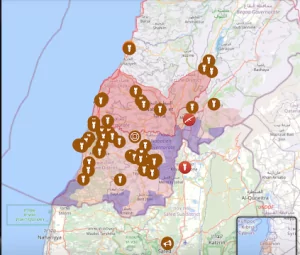
And I think what happened is a few months later, there was more intelligence, and Israel and the United States realized they hadn't really, the nuclear capability notwithstanding, maybe it's still buried in a mountain somewhere, and they just have to dig it out from the first bombing. But that notwithstanding, I think what they decided was, oh, we didn't actually deplete enough conventional missiles with conventional warheads in medium-range to eliminate the threat of Iran completely from Israel. Yeah, I mean, how do you think the war is going now? I mean, I'm glad that it slowed down, but it's given Israel an excuse to decimate southern Lebanon. And so there is somewhat of a ceasefire. You don't see as much happening these days. But the strait is still constricted.
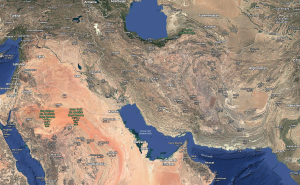
The flows are not going through there at the regular amounts. And I think Israel has used it as an excuse to make southern Lebanon look like Gaza. Yeah, because the way Fox presents the war is just totally unhinged from a lot of the military situation on the ground with Iran's capability. I mean, they say, oh, now they're saying, oh, he took out half the missiles. And they're saying we decimated it. Or the chief, the parliament speaker Ghalibaf, he says, oh, we've been decimated six times according to you. It's just completely unhinged. I mean, can you militarily reopen the straits if we want to? I mean, even if you got to a point where you could get 95% of the ships through the straits, with military assistance, and you were only going to lose every 20th ship, the insurance costs to get a ship through those straits would still probably be cost prohibitive.
You're losing your entire cargo, even if it's only 5% of the time, it's still too big of a risk. So I think it's going to be hard to do it without cooperation from Iran. I don't see how you do it without permission from Iran or without cooperation from Iran. I don't think you can force it to be opened, unless you literally bomb Iran back to the Stone Ages. You could get to 95%, maybe even 98% of the ships get through. But if one in 20 or one in 50 get blown up, you haven't really opened it safely. And the only way to do that is with an agreement with Iran, I think, or just completely obliterating the country. Wars are easier to start than they are to end, especially for a country like America, where to prevent the next war, you have to show that you dominated in this situation.
You have to come away with your integrity and at least convince some part of the world or most of the world that it was productive exercise for you, which is hard to do. And so that's why it's hard to get out of a war. What would winning look like? Winning would look like never having started. The second best thing would be to end it quickly. That might not be the best thing for the military contractors, but that would be the best thing for us. And I don't think you're going to get to peace without having the three people at war at the table at the same time. I see all of these bilateral meetings, but that's not going to work when you have a trilateral war. You can't have the vice president go meet with Iran and some other country and not have Israel there. So all the parties have to be in agreement to have a truce.
I think it's going to be hard to get Israel to agree to end this war because now the frequency of missiles from Iran has slowed down. I think Israel probably has calculated it's in their interest to keep this going. They've got carte blanche to attack Lebanon. People aren't paying attention to that now. The people have forgotten about what they're doing in Gaza. And much to the detriment of the American taxpayer, we are now taking the brunt of the cost of the war with Iran. And so we're grinding down the capability of Iran, but using our own equipment and depleting our own stockpiles to do it. And so it's a very asymmetric arrangement. And I'm concerned that Israel doesn't want the war to end, not completely. You're concerned about their messianic views of this world war or that this just keep going on and on with this?
Well, I don't think Netanyahu is particularly religious. So I don't think he's got any sort of... I'm sure he's Israel first. I'm sure for him that's Jewish domination of Israel and all of the land in and next to it. But I don't think he's particularly a religious fanatic. Do you think the Epstein files were a motivation for the US to start the Iran war? It's hard. I can tell you this. I don't think they sat over in the situation room at the White House and said that we're going to have to start a war to cover up these Epstein files. I don't think that's what's happened. Now, is it in the back of somebody's mind when they're making other wise calculated decisions? There's a human element to everything that's got a human involved.
And it has had the effect. I'm not saying they did it for this reason. They may have been influenced. I don't think they calculated it. But it has had the effect of taking attention away from the Epstein files. Can you describe your efforts to release the Epstein files? Has it been successful? The effort to release the Epstein files has been extremely successful. Honestly, it exceeded my expectations in at least one dimension. The volume of information that we've received and the things we've found out about are more than I could have imagined. But I wouldn't have hoped that we'd get to this point and not had any indictments or investigations. So it's been successful in the sense that it's released a lot of information. We've learned a lot of things. But it's not been successful yet in the sense that anybody in this country has been held accountable. We see some accountability in other countries.
I mean, the former prime minister of Norway, the British ambassador to the United States, Prince Andrew, French minister of culture, all of these folks haven't just lost their jobs or titles. They've been arrested or indicted or raided. And so there is accountability over there. There's not been accountability here. I think to get to the next step, you're going to need another FBI director and another attorney general. Will that happen during this administration? I hope so, but I'm not sure that it will. You see, Kash Patel has already told the Judiciary Committee in the Senate, and he's told me personally as a member of the Judiciary Committee in a hearing that he was sworn to tell the truth that there's no evidence whatsoever in these files of any co-conspirators beside Jeffrey Epstein and Ghislaine Maxwell. And so he's either got to claim ignorance when we start investigating and indicting the people who are implicated in these files, or he's committed perjury to Congress.
So I don't think you're going to get him to say either of those two outcomes. You'll probably need another FBI director to get to the next step and probably another attorney general because, yes, Pam Bondi is gone, but it was always Todd Blanche who was running the document production of the Epstein files anyway. So you're not going to get an answer there, but here's the good news. The way that the disclosure under the Epstein files was accomplished is unprecedented. It was done through law. Everything else that's been discovered, whether it's Bill Clinton's peccadillos or whether it's Iran Contra or whether it's Watergate, it wasn't done with a law. It was done with a subpoena or an investigation of a current Congress. Guess what? When this Congress expires, the Epstein files does not expire. When this oversight committee has another chairman, it doesn't matter.
The Epstein files still exist. The Epstein Files Transparency Act still exists. Why is that? Because it passed both chambers and was presented to the president and signed into law. So the Epstein Files Transparency Act is incumbent on attorney general years from now, a decade from now. I can't tell you who's going to be the attorney general 10 years from now, but I can tell you this. Unless the Epstein files Transparency Act is repealed, that attorney general could be criminally liable for not releasing anything in that department that he or she comes across that has anything to do with Epstein. So I do think you'll eventually get the full production. Yeah, I hope so. And have you received any threats over your work on the Epstein files? I haven't received any threats unless you count $15 million spent against me in the last few months to get me out of Congress.
Politically, only my political existence so far has been threatened for exposing these files. Okay. And yeah, how can you describe the battle you're in now for your seat? Or how is it tense? So I'm in the most expensive congressional primary in the United States right now, of the 435 seats. And no incumbent is being challenged like I am being challenged now. I've had, when it's all said and done, I think they will have spent $15 million against me. Now I'll raise and spend a lot of money myself trying to defend my seat. But here's what's interesting. The president would have you think that I'm being primaried because I voted against his signature spending bills. But the reality is over 95% of the money of that $15 million that's being spent against me has come through AIPAC, the Republican Jewish Coalition, or Christians United for Israel, which is basically a wing of the same bird of those organizations, or Miriam Adelson, who's a citizen of Israel who acquired American citizenship.
Paul Singer, who incidentally is not just a big fan of Israel. He owns Citgo now, bought it for pennies on the dollar. That was the formerly nationalized oil company, gasoline company of where? Venezuela. He bought it for pennies on the dollar and he wasn't even the highest bidder just weeks, a few couple weeks before we invaded Venezuela. So all of the money, 95% of it I estimate, which is practically all of the money being spent against me, is motivated by the Israeli lobby and or the portion that Paul Singer represents, which is Israeli and Venezuelan interests. So how would you characterize the U.S.-Israel relationship? I think Israel is using us. I think it's a very asymmetric relationship. I noticed that Israel has a lot of lobbyists here in Washington, D.C.
If they're our best ally, why do they need so many lobbyists? I've never met a lobbyist here from Great Britain. I've never met a lobbyist here from Canada. I've never met a lobbyist here from Australia. Why would one of your closest and strongest allies need to lobby every member of Congress and get involved in our congressional and Senate races if the relationship with them was bilateral and good for both? I think we get more harm than good from our involvement in the Middle East and that policy is driven more by Israel than any other country. Our relationship with Israel is kind of like a NATO with only two countries and one of the countries has less than 10 million people and the other country has over 350 million people.
They're not obligated to our defense, but we're obligated to their defense. It's like the worst form of NATO. It's the worst form of any kind of treaty. We have been giving them for the entire time I've been in Congress a baseline of $3.8 billion a year. When AIPAC used to lobby me about this, they would say, well, don't be concerned. We're spending it all on Lockheed Martin and Raytheon and your military-industrial complex, so you're getting all the money back. The problem is maybe some stockholders in those companies are getting a lot of it back, but the American people aren't getting it back. It's the tax dollars that are going to Israel. They may go through a military-industrial complex company here in the United States on the way and then it eventually ends up getting blown up. I think Israel is capable of defending itself without American backing, but it's a lot more expensive and dangerous to become the protagonist and to start wars.
It's clear, I think, to any observer that they couldn't have their aggressive posture toward a neighbor or near neighbor like Iran without the backing of the United States. Okay, great. Thank you. As the Ukraine-Russia conflict and the Israel conflict continue to fester, is the U.S. increasingly at risk of getting into a conflict with Russia and China? Every conflict we are in carries the risk of escalation. Whether it's in Ukraine, we're there, war by proxy, we're an co-belligerent partner in that. The same goes with the war in Iran, which you noticed initially almost immediately within minutes. The war engulfed three or four or five other countries there near Iran that had our bases there.
It escalated very quickly. It may have escalated more if we hadn't got into this lull. I'm not going to call it a complete ceasefire, but if we weren't at this point and if we were still pounding Iran, I think they would still be striking out and hitting our assets in the region and possibly even our allies, like even the allies' assets. Correct me if I'm wrong, but you were the first congressman to oppose the Ukraine War, weren't you? I opposed the Ukraine War before it started. You can go back and look. In 2014, there were resolutions from Congress condemning Russia, taking positions into Ukraine, sanctions against Russia for their behavior toward Ukraine. All of these things were happening and I was voting against it because I argued that it would lead to war. To rattle the sabers would only encourage them to reciprocate.
They have to keep their national pride. News is global. You can't ignore it. Their leaders, to stay popular, and be in power. You can't just take that sitting down. Since I've been observing Congress opining on Ukraine, I've been against the escalation, which eventually did lead to war. What's the risk this will escalate into a full-blown world war, drawing in China and Russia? If the risk in any given year during a conflict between Ukraine and Russia of having it escalate to thermonuclear war in other countries as well as those countries is 5%, let's say 1 in 20, that's a stupid risk to take, a 1 in 20 chance every year. And then if the war drags on for 20 years, it's a pretty good odd. It's sort of like floods. What's the probability we're going to have a flood this year?
Well, 1 in 500 sounds like pretty good odds. You're not going to have a flood unless it's that year you have the flood and then you're obliterated. Here's what I've observed since I've been in Congress. The executive branch, every time it gets away with something without being called out by the legislative branch in matters of war, it basically accumulates that power and never lets it go. So if you think back to the war in Afghanistan and both of the Iraq wars, Congress met, now we didn't have full-blown declarations of war, but Congress did meet and vote and authorized those military activities. We've drifted to the point now where the president can start a full-blown war with a sovereign country of 90 million people and Congress doesn't even blink an eye. I've drafted and introduced a war powers resolution that we voted on here in Congress.
And even though many Republicans voted on not starting another war or respecting the war powers of Congress over the executive branch, I only had one Republican colleague who voted with me on that resolution. Congress doesn't want to take accountability for anything. And if we had an up-or-down vote on whether to attack Iran or whether to be involved in a sustained war with Iran, then Congress would be accountable. But it's not true from that that Congress has clean hands because even if we've avoided accountability by having a transparent vote on the matter at hand, we're still funding these wars. And it is true that the war is going on because Congress wants it to. Now, it's a little bit harder to stop a war once it starts by withholding funding because then you get blamed for not supporting an effort and being unpatriotic. So we really should have the votes that are separate from the spending votes where we debate the objectives and not just the cost.
Does the U.S. risk sowing the seeds of its own downfall engaging in this many conflicts? I think America runs two risks by engaging in more wars. The first risk we run is financial collapse. You know, I wear a debt badge on my lapel here to remind my colleagues about how poorly we're doing with the budget. And the war, the war in Iran, they've already admitted it's cost $25 billion. Now, the reality is it's probably three times that. Maybe $75 billion has been the cost. If you count the bases and the equipment that's been destroyed, not the ongoing operations of it. And we also account for the missiles that we're going to replenish. We know we're eventually going to replenish all those for Israel at no cost. So the wars, constant wars, forever wars are unsustainable economically.
Even though you'll still find people who make arguments here, that war is good for the economy because we got to build more equipment. There's another hazard that we run and that is we're pissing off more and more of the world. We're losing the moral authority to basically be the superpower of the globe. In order to morally hold that authority, you have to be benevolent, you have to be fair, you have to be moral. And some of the things that we've done or threatened to do seem to cross that line. You know, when you go in and you bomb civilian infrastructure or threaten to do it. Or when you provide the military equipment to Israel to just completely flatten Gaza. And you see our leaders over there writing epitaphs on the bombs as if it's cute or cartoony.
I think you lose your moral authority. And the judge of that, you could say, well, there's going to be some World Court or some United Nations or whatever. No, honestly, it's the conscience of the rest of the world that's observing that. And I think we do well to follow our foreign policy. I say should be what I learned in Sunday school, which is do unto others as you would have them do unto you. And we're not doing that right now.
Never miss a show
New films, shows and articles by email – free, unsubscribe anytime.