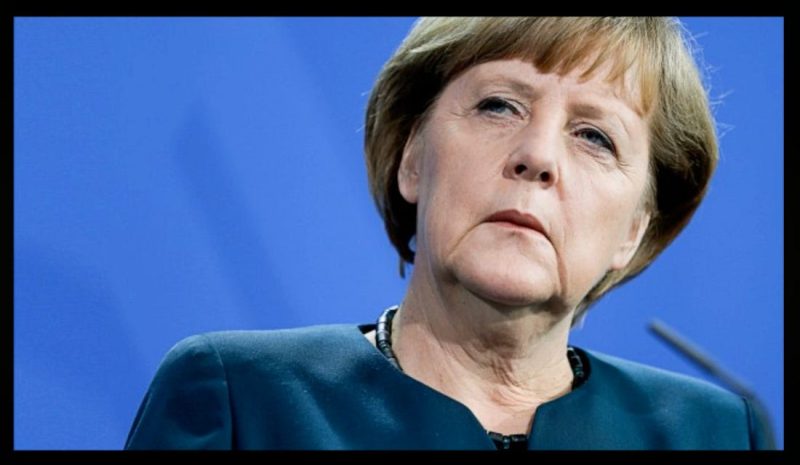
The Chancellor’s Cascades
From the Coalition Committee to the Federal-State Roundtable — how Angela Merkel has disempowered parliaments and citizens.
Many have wondered: how was the WHO able to seemingly rule unchallenged in Germany during the pandemic? After all, we have a federal system. Health is a matter for the states, and epidemic issues fall under the jurisdiction of the public health authorities. There are many answers to this. One not insignificant answer can be found in the 16-year tenure of “Perhaps I have an authoritarian streak in me.” — Angela Merkel.
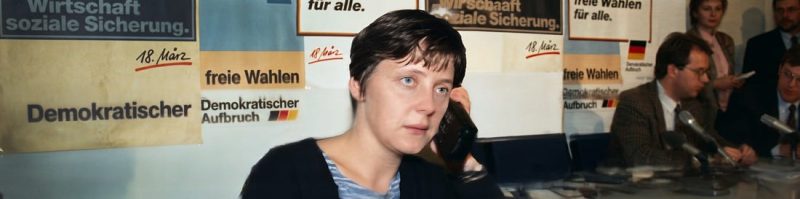
Through repetition, through habituation, through the slow consolidation of practices that initially presented themselves as pragmatic solutions and ultimately became the “new normal,” Merkel concentrated more and more power. Between Merkel’s inauguration on November 22, 2005, and her departure on December 8, 2021, the architecture of German democracy has shifted in a way that has hardly been communicated until now.
Decision-making power shifted from the bodies provided for by the constitution—the Bundestag, the Bundesrat, and the state parliaments—to informal preliminary rounds in which the leaders of the governing parties and, starting in 2020, the leaders of all state governments negotiated among themselves what would later be formally decided. The process that underpinned this shift was called the Coalition Committee until 2020 and the Federal-State Roundtable starting in March 2020. Neither body is enshrined in the Basic Law. Neither meets in public. Neither has rules of procedure in the legal sense. Both produce de facto binding decisions, entirely without minutes that anyone could use to challenge them in court. Some political scientists refer to Merkel’s style as “informal governance.” However, this describes a circumvention of the fundamental parliamentary order in such euphemistic terms that defenders of the Basic Law must feel sickened.
On November 11, 2005, the first Grand Coalition since 1969 signed the coalition agreement. The CDU, CSU, and SPD had agreed on Angela Merkel as chancellor in a difficult election, with a razor-thin majority of three votes over the red-red-green alternative. This coalition agreement contained a sentence that received little attention but became structurally defining: It stipulated that a coalition committee should meet “regularly, at least once a month” and resolve contentious issues within the coalition in advance. In the future, motions in the Bundestag were to be introduced only with the agreement of the coalition partners—“shifting majorities” were expressly ruled out.
Coalition rounds had already existed under Adenauer, Brandt, Schmidt, Kohl, and Schröder—as occasional forums for conflict resolution. But Merkel and her partners turned it into an informal institution in 2005. The coalition committee transformed from an emergency body into a routine mechanism, from an occasional meeting into a regular mandatory gathering, from a crisis resolution center into the main meeting of German politics. Precisely because the Basic Law does not provide for this meeting, precisely because it takes place behind closed doors without accountability, Merkel and her colleagues chose this type of decision-making. This way, elected representatives do not interfere when decisions need to be made. This is also how the mafia hatches its plans—far removed from the oversight of the rule of law.
According to the political science analysis by Wolfgang Rudzio, Germany’s leading coalition researcher, the coalition committee met once in 2005, eight times in 2006, and nine times in 2007—and those are only the documented meetings. While researching this article, it became clear that it is actually impossible to determine the exact number of coalition committee meetings held between 2005 and 2020. A request under the Freedom of Information Act to the Chancellery or to the CDU and SPD party headquarters could even be denied, citing the confidential nature of internal coalition deliberations. We can only infer the details of these meetings from federal press releases. Could it be any less transparent? OVALmedia has now submitted this request, and we will update this article with the corresponding response.
At the same time, coalition working groups met on tax policy, healthcare reform, and energy policy. As early as the coalition negotiations prior to the formation of the government in 2005, 15 specialized working groups were involved, drafting the agreement text in several thousand pages of detail—and thereby defining the Bundestag’s scope of action for the coming legislative period in advance.
Rudzio also documented the extent of the personalization: In the summer of 2006, around 20 politicians plus advisors sat together in the coalition committee—a number that became too large for those involved, leading to the formation of a “group of four” consisting of the party leaders and the vice chancellor, later dubbed the “Bayreuth format” following a coalition meeting at the Wagner Festival. It was here that key decisions on railway privatization, tax reform, and economic stimulus programs were negotiated—sometimes on hotel terraces during an opera festival. (Please forgive the filmmaker in me for the association with the “Friends of Italian Opera”—the Mafia group in the Billy Wilder film “Some Like It Hot.”)
Rudzio put it bluntly: “The actual decision-making center is thus a coalition committee; the informal side of decision-making processes appears to be decisive.” The Bundestag, the main legislative body provided for by the constitution, had structurally become a ratifying body. At least this was published in 2008 even by the Federal Agency for Civic Education, an authority subordinate to the Federal Ministry of the Interior.
This diagnosis is also made by people who experienced the system from the inside—and spoke out publicly about it at the end of their careers. Wolfgang Bosbach, a CDU member of the Bundestag for 23 years and chairman of the Committee on Internal Affairs, is one of the few voices who openly said what many were thinking. In 2015, he resigned from his committee chairmanship—in protest against the third “Greek bailout package.” In 2017, he left the Bundestag, stating that the CDU had “made policy shifts on important issues that I can no longer defend with the necessary conviction.” In interviews, he described how the system appeared from the perspective of a member of the governing majority: “The gap between voters and elected officials is wide. Far too wide. Depending on how you look at it, people either trust us career politicians to do anything—or nothing at all.” He publicly admitted to having “more or less rubber-stamped the most egregious political nonsense” in several of his own party’s bills.
Norbert Lammert spoke even more plainly in his farewell address on September 5, 2017, in the plenary session, after having served as President of the Bundestag for twelve years. Addressing both the departing and remaining members of parliament, he articulated what had preoccupied him most during his twelve years in office: the structural weakening of parliament through the routine of “informal” advance decisions. “It is time for debate to return to Parliament,” Lammert declared—and explicitly called on the members of Parliament to “take their oversight role vis-à-vis the government more seriously.” A remarkable statement from the mouth of the very person who, as President of the Bundestag, actually held the role of Parliament’s guardian himself. Lammert lamented that parliamentary debate was increasingly degenerating into a ritual, while the actual political debate was being conducted in small circles—a barely veiled indictment of the practice of deciding matters in the coalition committee that are then merely announced in the plenary session. (Read the full speech here).
The coalition committee is not unconstitutional in the strict legal sense. The Basic Law does not prohibit politicians from talking to one another before voting in the plenary session. What has shifted in the Merkel era, however, is the weight of this preliminary clarification relative to the parliamentary process. There is a difference between a coalition discussing contentious issues in advance and then holding an honest parliamentary debate in which arguments are explored in depth, alternatives examined, and corrections made if necessary—and the coalition leadership (!) passing a resolution that Parliament merely ratifies. In the first case, the parliamentary debate has substance. In the second, it has degenerated into a ritual.
Several key provisions of the Basic Law clearly stipulate the first option: Article 20, Paragraph 2 of the Basic Law expressly assigns the exercise of state authority to “special legislative bodies”—meaning solely the Bundestag and the Bundesrat, but not informal preliminary committees or backroom political meetings. Article 38, Paragraph 1 of the Basic Law guarantees that individual members of parliament are bound only by their conscience—a right that becomes a farce when the decisive course has long been set in meetings in which the member of parliament is not even involved (not to mention so-called “party discipline”) . The Federal Constitutional Court’s “theory of materiality,” developed since the Numerus Clausus ruling of 1972, requires that significant encroachments on fundamental rights be decided by the legislature itself—and by this it means the deliberative legislature, not the rubber-stamping one…
Merkel’s method not only resulted in a curtailment of domestic German democracy—from the citizen through the municipality, district, state, and Bundestag to the Chancellery. It simultaneously produced an international shift: the power concentrated in the federal-state roundtable was immediately transferred to supranational actors.
For example, during her tenure, Merkel transformed the European Commission from an administrative and advisory body into an independent political power center that effectively acts as a European government in key policy areas. The EU’s centralized vaccine procurement, based on Decision C(2020) 4192 of June 18, 2020, was led by Ursula von der Leyen—the former defense minister whom Merkel had, with some difficulty, elevated to the office of Commission President a year earlier, without her having been elected. Von der Leyen personally conducted negotiations with Pfizer via text message with CEO Albert Bourla—a process that EU Ombudsman Emily O’Reilly classified as “maladministration” and which the EU Court of Justice ruled unlawful on May 14, 2025. The contracts remain unpublished to this day.
On a global level, the World Health Organization assumed the power to define the pandemic. Based on the International Health Regulations of 2005, WHO Director-General Tedros Adhanom Ghebreyesus declared a “Public Health Emergency of International Concern” (PHEIC, pronounced “Fake”) on January 30, 2020. WHO case definitions, risk assessments, and situation assessments were directly incorporated into national health systems. Mike Ryan of the WHO told Lothar Wieler of the RKI what to do.
For decades, the WHO has not been primarily funded by mandatory contributions. In the 1970s, 75 percent of WHO revenue came from mandatory contributions; today, it is around 12 percent. The Bill & Melinda Gates Foundation became the largest single donor in the 2024–2025 biennial budget. An empirical study in BMJ Global Health evaluates all 640 Gates grants between 2000 and 2024 and notes a “mismatch between formal sovereign equality of its member states and informal power exercised by the main financial contributors.”
Under Merkel, Germany was one of the WHO’s three largest donors throughout the entire “planned pandemic” period, alongside the U.S. and the Gates Foundation. In April 2020, when the U.S. under Trump announced its withdrawal from the WHO, Merkel publicly announced an increase in German contributions. In doing so, Germany actively strengthened the position of a weakened organization during the PHEIC—and legitimized its recommendations, which subsequently found their way back into German policy, with German money. Thus, the “advice” provided by the WHO appears just as self-referential as the Chancellor’s Office Ethics Commission on nuclear power plants. Concentration of power through circular references.
This transnational architecture functioned so smoothly because it encountered a reception structure that had already been prepared within Germany. The “Merkel method” had systematically weakened parliamentary hurdles, constitutional checks and balances, and the federal division of powers even before 2020. What happened in 2020 was not a sudden undermining of democracy—it was the consequence of a process that had been rehearsed since 2005.
An event from the crisis year of 2020 perhaps illustrates the internal logic of this shift most clearly. In the Franco-German proposal of May 18, 2020, Merkel and Emmanuel Macron agreed on a 500-billion-euro recovery fund—which, following intensive negotiations in the European Council on July 21, 2020, was approved as NextGenerationEU with a volume of 750 billion euros. It was financed through the EU’s first-ever joint borrowing. This marked a historic break with the Maastricht principle that each member state is responsible for its own debts—a principle that German federal governments had defended for decades as non-negotiable. Merkel herself had emphasized on multiple occasions between 2010 and 2015 that a “transfer union” or Eurobonds were “out of the question with me.”
An Overview
- May 19, 2010 — Bundestag: Transfer union rejected
- March 11, 2011 — “There will be no transfer union with me”
- July 22, 2011 — Federal Press Conference: A transfer union “must not happen”
- September 7, 2011 — Bundestag: Rejection of Eurobonds
- June 26, 2012 — FDP parliamentary group: “Eurobonds — as long as I live, that won’t happen”
- December 14, 2011 — Bundestag: Eurobonds would be a “mistake”
- April 20, 2020 — CDU executive board: Eurobonds “the wrong path”
- May 18, 2020 — Franco-German initiative for a 500-billion-euro recovery fund with joint debt issuance
- July 21, 2020 — European Council: NextGenerationEU with 750 billion euros through joint EU debt issuance
Exactly four weeks elapsed between the CDU Executive Board meeting in April 2020, during which Merkel still described Eurobonds as “the wrong path,” and the German-French initiative for joint debt issuance in May 2020. These four weeks mark one of the most drastic political U-turns in post-war German history — and they were carried out with remarkable silence.
In 2020, she carried out the shift she had previously strictly rejected. She implemented this shift in a so-called “crisis situation,” without detailed parliamentary deliberation in the Bundestag, without a referendum, and without a broad public debate. The “Corona” state of emergency allowed her to permanently alter the EU’s architecture in the blink of an eye. Regulations (EU) 2020/2094 and (EU) 2021/241 are the result of this shift. The EU Commission may now attach conditions to the billions in payments from the Recovery Fund. The policies of EU member states can thus be enforced using the funds to which they are actually entitled.
Germany’s joint liability for EU debt—which many constitutional law experts view as exceeding its authority—is also a consequence of this shift. The Federal Constitutional Court approved the own-resources decision in December 2022, but with significant reservations and with reference to the Bundestag’s overall responsibility for budgetary policy.
Without the practice established since 2005 of making fundamental decisions in informal preliminary rounds and presenting them to parliament as a fait accompli, a structural decision of this magnitude—a historic break with the German principle of stability—would not have been possible without broad public debate. The “Merkel method” rendered this process superfluous.
Merkel faced little political accountability for this—on the contrary, her approval ratings during the “planned pandemic” remained very high for long stretches. The federal-state roundtable continues to exist—currently operating under the pre-pandemic routine of twice a year, but capable of being reactivated into pandemic mode at any time. The WHO Pandemic Agreement of May 20, 2025 permanently expands the WHO’s powers. NextGenerationEU continues to exist as a debt-raising mechanism. The “Merkel method” has become part of the German government’s routine.
What remains is the legacy of a chancellor who, in a series of historic decision-making situations, structurally circumvented the democratically prescribed procedure—by shifting substantive decisions to informal preliminary meetings. In doing so, she has brought about a systematic weakening of the separation of powers, which the Federal Constitutional Court has repeatedly cautioned against but has never fundamentally halted.
Incidentally, the appointment of judges to the Federal Constitutional Court is another example of what we have described as “informal governance.” The party-political allocation of constitutional court seats is determined through an informal agreement between the major parties. It is negotiated behind closed doors, prepared by an election committee bound by confidentiality, and waved through by the plenary without debate. The constitutional body, which is supposed to guarantee the separation of politics and the judiciary under constitutional law, is thus filled through a party-political process that is itself not regulated by constitutional law.
During the Merkel era from 2005 to 2021, approximately 24 new constitutional judges were elected—with a twelve-year term and 16 seats, that is more than the entire bench of the court. Virtually every constitutional judge currently in office was appointed with Merkel’s involvement. This has shaped the court in a way that is scarcely addressed in democratic reckoning.
This shift was a political style that intensified and accelerated during crises. The nuclear phase-out, conscription, the euro rescue, migration, defense spending, and finally the “planned pandemic” and the EU debt turnaround: the method remains the same. Preliminary agreement in an informal, non-publicly convening body → a unified public stance → implementation by the formal constitutional organs → disciplining of dissenting positions.
Anyone who wants to know what remained after the pandemic need not look primarily to Merkel. They must look for the structures she utilized and strengthened. These structures continue to exist. They were not established by a constitutional amendment. Nor can they be eliminated by a constitutional amendment. The rule of law can only be corrected through a conscious political return to what the Basic Law meant by “state power through special legislative bodies.” It is precisely this return to the roots that is the democratic task still to be fulfilled in the post-Merkel era.
Bibliography
OVALmedia
- All About Angela – Trailer for Documentary Series
- Collateral – “The Public Health Officer” with Dr. Friedrich Pürner
- “Lengsfeld’s Freedom” with Vera Lengsfeld – Narrative #191 by Robert Cibis
- “Merkel: Camouflage and Deception” with Gerold Keefer – Narrative #194 by Robert Cibis
Basic Law and Ordinary Law
- Basic Law for the Federal Republic of Germany — Federal Ministry of Justice
- Art. 2 GG — Personal Rights of Liberty
- Art. 4 GG — Freedom of Religion and Conscience
- Art. 6 GG — Marriage and Family
- Art. 8 GG — Freedom of Assembly
- Art. 11 GG — Freedom of Movement
- Art. 12 GG — Freedom of Occupation
- Art. 13 GG — Inviolability of the Home
- Art. 14 GG — Property
- Art. 20 GG — Constitutional Principles
- Art. 28 GG — Local Self-Government
- Art. 38 GG — Election of Members of Parliament
- Art. 83 GG — Enforcement of Federal Laws
- Infection Protection Act (IfSG)
- § 5 IfSG — Epidemic Situation of National Significance
- § 28b IfSG — Federal Emergency Brake
- § 47 VwGO — Judicial Review
Legislation During the Planned Pandemic
- First Civil Protection Act of March 27, 2020
- Fourth Civil Protection Act of April 22, 2021 (Federal Emergency Brake)
Case Law
- BVerfG, Numerus Clausus Ruling of July 18, 1972 (Materiality Theory)
- BVerfG, ESM ruling of March 18, 2014
- BVerfG, ruling on the own resources decision of December 6, 2022
- EuG, ruling of May 14, 2025 on Pfizer SMS
EU law
- Decision C(2020) 4192 of June 18, 2020 — EU Vaccine Strategy
- Regulation (EU) 2020/2094 — NextGenerationEU
- Regulation (EU) 2021/241 — Recovery and Resilience Facility
International Actors
Political Science and Constitutional Law Analyses
- Wolfgang Rudzio: “Informal Governance — Coalition Management in the Merkel Government”, From Politics and Contemporary History (APuZ), Federal Agency for Civic Education, 2008
- Scientific Service of the Bundestag: Statement on the Federal-State Roundtable
Insider Voices
- Norbert Lammert: Farewell Speech in the Bundestag, September 5, 2017 — the outgoing President of the Bundestag calls for greater parliamentary oversight
- Cicero: Full text of Lammert’s farewell speech, September 6, 2017 — “It is time for debate to return to Parliament”
- German Bundestag: Wolfgang Bosbach — I cannot change my mind so quickly — Interview on leaving the Bundestag
Academic studies
Federal Government and official sources
- Resolutions of the Federal-State Roundtables 2020–2022
- European Parliament: Election of Ursula von der Leyen on July 16, 2019
- German Bundestag: 13th Amendment to the Atomic Energy Act, June 30, 2011
Journalistic sources
- Robin Alexander: “The Driven — Merkel and Refugee Policy,” Siedler-Verlag, 2017
- Tagesspiegel: Fukushima and the Consequences — Angela Merkel, the pro-nuclear CDU, and the Energy Transition, 2012
- Tagesschau: Biden on Vaccine Patents, May 2021
- City of Tübingen: Pilot Project “Opening with Safety”
Classical Literature
- Ernst Fraenkel: “The Dual State — A Contribution to the Theory of Dictatorship,” Oxford University Press, 1941
Bibliography for the Merkel Transfer Union Chronology
Direct Primary Sources — Bundestag and Federal Government
- German Bundestag: “If the Euro Fails, Europe Fails” — Government Statement of May 19, 2010 Verifies the quote “There was a threat of a slide toward a transfer union” from the government statement on the euro rescue package.
- German Bundestag: “Angela Merkel clearly rejects Eurobonds” — General debate of September 7, 2011 Documentation of the Bundestag speech on the first reading of the 2012 Chancellor’s budget, in which Merkel explicitly rejected Eurobonds.
Documented Statements (chronological overview)
- Oliver Kaczmarek (SPD Member of the Bundestag): “An overview of Merkel and Schäuble’s statements on the euro crisis,” November 23, 2012 Chronological collection of important statements from the euro crisis; includes the quote “There will be no transfer union as long as I am here” from March 11, 2011.
Media coverage of the federal press conference on July 22, 2011
- EU-Info.de / dpa-Europaticker: “Merkel for a stronger EU — against a transfer union” Documents the exact quote “A transfer union would be an automatic financial equalization in Europe — and I am convinced that this must not happen” from the federal press conference on July 22, 2011.
Coverage of the FDP parliamentary group meeting on June 26, 2012
- Handelszeitung: “Merkel: No Eurobonds, ‘as long as I live’,” June 27, 2012 Reports based on Reuters and participant accounts from the FDP parliamentary group meeting.
- Tagesspiegel: “Merkel: No Eurobonds, ‘as long as I live’” Confirmation of the quote ahead of the EU summit in Brussels, including the detail of the FDP lawmakers’ response (“We wish you a long life”).
- taz: “Bond Chases Dr. Merkel — Reactions to the Chancellor’s Statement,” June 27, 2012 Coverage of reactions from the opposition, including Jürgen Trittin’s statement on ZDF’s Morgenmagazin.
Coverage of the December 2011 Bundestag speech
- Blitz Quotidiano (Italian): “Merkel: ‘Abbiamo evitato l’errore degli eurobond’”, December 14, 2011 Bundestag speech from December 14, 2011, in which Merkel defends the rejection of Eurobonds as a “mistake” at the EU summit.
- Blitz Quotidiano (Italian): Bundestag speech on the EU Commission’s call for Eurobonds Merkel in the Bundestag: “Eurobonds don’t work.”
- Blitz Quotidiano (Italian): CDU-CSU parliamentary group meeting in December 2011 on the rejection of Eurobonds Coverage of the parliamentary group meeting in which Merkel reaffirmed her position ahead of the EU summit in December 2011.
Coverage of the CDU executive board meeting on April 20, 2020
- Sputnik: “Merkel Reportedly Calls Eurobonds the ‘Wrong Path’ at CDU Leadership Meeting,” April 20, 2020 Reports, based on Reuters, on the CDU executive committee meeting in which Merkel described Eurobonds as “the wrong path”—four weeks before the historic U-turn.
Commentary
- Cicero: “Euro Crisis — Merkel Has Learned to Speak,” September 28, 2011 Commentary on the Bundestag vote on the EFSF expansion; includes a contemporary assessment of the transfer union debate from a liberal-conservative perspective.
Contractual follow-up sources (for the debt turnaround of May/July 2020)
- Regulation (EU) 2020/2094 — NextGenerationEU Legal basis of the Recovery Fund, which formalized the turnaround.
- Regulation (EU) 2021/241 — Recovery and Resilience Facility Operational implementing regulation for NextGenerationEU.
- Federal Constitutional Court (BVerfG), ruling on the own resources decision of December 6, 2022 Constitutional assessment of Germany’s joint liability for EU debt issuance.
Help make our documentary series “All About Angela” possible with your support:
PayPal to robert@oval.media
Bank transfer to Robert CIBIS
IBAN: DE31 100 50000 0191 5619 83, BIC: BELADEBEXXX