Ralph T. Niemeyer | NARRATIVE #97 by Robert Cibis
Kyiv Conformism
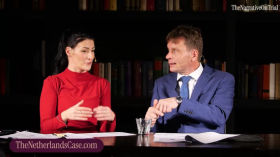
Robert CibisA warm welcome to the new show NARRATIVE. I am very proud and honoured to be sitting here with Ralph Niemeyer. Today we will understand a lot and gain new insights from a person who has met the powerful in person and, far beyond that, has done analyses with them as a journalist, and is nevertheless someone who is very socially engaged. And yes, we are here in a place of which you could say, well, this is perhaps what it might look like if war came to Germany. We are in Germany and there is no war here, but here in the studio where we are, there is some destruction. But that has more positive than negative to it. And before I dive into the conversation, I would like to point out once more, on our own behalf, that we make this show only for the viewers and perhaps also those who listen to us, but otherwise for no one. That there are no third-party clients, interests, sponsors, advertisers or whatever. And that's why we somehow have to be paid by you viewers, so that we have the space and the time to work.
I usually say this at the end of the show, but I'll say it now beforehand, because it's really interesting, there are many people who support us, many are also generous, but in relation to the viewers they are very few. It is roughly one viewer in a thousand. Yes, roughly. And I tell myself, goodness, if you simply gave a small amount every month, we could do so much. And we are again and again hindered in moving projects forward, in finishing them. Simply because, quite banally, we lack the money. And that's why I'm saying this. Making films in general, and also live shows like this, is relatively elaborate. More elaborate than writing articles, for example, because you always need a team that also has to be qualified. And many people may not be aware of that. That's why this appeal once more at the beginning of the show. Yes, but now to the really exciting other things that concern not only us but all of Europe and the rest of the world. How is it actually that you have met so many important people and through that gained a completely different insight or, above all, a completely different view of the prevailing narrative?
Ralph T. NiemeyerWell, I too, like you, worked as a journalist, and for over 30 years. And let me put it this way, a number of things came about where I perhaps didn't think beforehand that one day they would become important. On our topic now I can say that back in 1991 I asked Mr Gorbachev, when the Soviet Union was just, well, going down the drain, what about Crimea now? Well, he said, we will still settle that, we'll make a state treaty, it will all be settled somehow. But then the next question I asked was about the many millions of Soviet citizens who suddenly, on 25 December, would wake up in a different state from their own. And that was 15 million Russians, mostly Russians who were affected, who suddenly lived and had to live on foreign state territory, even though they had never moved. So I asked that back then, without really thinking that we would one day, 30 years later, have to think seriously about what happens to these people.
Robert CibisAnd I believe that is where the cause of our present conflicts is to be seen. Very interesting. So we are talking about migration without a change of place. Yes, exactly. Just as people say of the GDR, the people there suddenly woke up in a different country, but those in the West didn't,
Ralph T. Niemeyerthey were in the same one. Yes, although at the time I also had the feeling that the whole country had changed. Even if you can say that the FRG took over the GDR and made it very clear who was boss in the house, it was also for us West Germans. I was originally from the West, but I then went to the GDR. That was also something where I said, I notice that our country is suddenly becoming different, no longer the cosy, small Federal Republic that perhaps doesn't have such great influence in the world, but suddenly it became bigger, and not only in numbers, but its ambitions became bigger too.
Robert CibisThere was the claim to independence, at least in thought, so to speak, and that was eyed very suspiciously by the other countries in Europe. At that time I was already regularly in France, although I still lived in Germany, and then in 1992 I moved to France, and there it was still the case that the big topic was how much we have to fear
Ralph T. Niemeyerthe Germans. Yes, I can confirm that. I too was, from 1991 to 1994 I was France correspondent, Paris correspondent. Yes, actually, yes. And that was actually, back then it was still, they were even supposed to change their national anthem so that it sounded a bit more pro-European and no longer, no, the French, the Marseillaise was changed, and there were some passages in it about the bloodthirsty Germans, and such passages were then modified somewhat so that they no longer came
Robert Cibisacross as so aggressive. And that too was a result of reunification.
Ralph T. NiemeyerYes, and of European unification to the same degree, when the European Union, I think in 1995, was created, after it had previously been called the European Communities.
Robert CibisBut back to this question, how could you already ask so concretely about Crimea back then? Because I know for sure that I only heard about Crimea and this problem, the problem that the people there mostly see themselves as Russians but didn't live in Russia, many, many, many years later. Why was that so obvious back then,
Ralph T. Niemeyeror only obvious to insiders? Probably to insiders, and actually someone had tipped me off. Someone had clearly told me I should make enquiries in this direction. So apparently the fear that this would become an issue had existed for a long time. And then you have to see one thing. Gorbachev was so wounded at that point, I mean, he had nothing left in his hand. At the latest since the August days of 1991, when for four days or however many it was, in Crimea, he probably took himself prisoner. So he faked a coup, let me put it like that, and thereby saw how generals in Moscow suddenly came out of the woodwork. And he then wanted, let me say, not to have their heads cut off, he was not a Stalinist, or is not a Stalinist, but he saw who was on whose side. And in this situation he had totally lost power, so this plan didn't work out. And instead Mr Yeltsin stood on the tank and these pictures went around the world. And I remember, I had a conversation with him, that was in June, it must have been, at the G7 in London in 1991. And that was very clear. He came out of the negotiating room and said, this won't do, they are crazy, what they are demanding of me.
And I asked him straight away, Mr President, what did they demand? What was supposed to happen? And he said, we are supposed to open the Soviet market immediately and unconditionally. And then I said, well, if you do that, it's clear it will collapse the next day. The Soviet market will then no longer be there. And he said, yes, exactly, so I say, what did you answer then? And he says, yes, I told them that I will not do it. And thereupon they said they would then support Yeltsin. Oh, so that's how it was. That was the pressure. And so ultimately power had already been taken out of his hands in June 1991. And later, in the interview I conducted with him twelve days before the end of the Soviet Union, on 13 December 1991, it was in Moscow. He complained once more back then and said, I had no time left. I no longer had the opportunity to settle the things I actually still wanted to settle. But I had been prepared for it since June, which is why I could ask this question like that. What actually happens if everything now dissolves uncontrollably?
Robert CibisThat is very, very interesting. Of course that gives a completely different view, for example, of China's protectionism. They naturally tell themselves, no, you can't just open a company here, but if you do, then we are involved. And we can also set precise limits there and regulate it precisely. And we have our own market, which is self-sufficient. We are many people ourselves, many customers, many producers of products and services. It should be self-contained. Of course I understand that this is also a kind of protection at a political level,
Ralph T. Niemeyernot only economically. Well, they made the turnaround long ago, which perestroika and glasnost meant, the introduction of the market economy and so on. I mean, China did that, even if they still call themselves the Communist Party. In truth it is not a communist regime, although the mechanisms of oppression are, sure, they are Stalinist or even fascistoid, I would say. I wouldn't want to end up in a prison there or experience anything that could happen to me if I have a different opinion from the state leadership. Yes, but that has nothing to do with communism anymore. It is as far removed from communism as the Soviet Union then was under Russia, under Yeltsin. It was almost like, people jokingly called it the Wild East, people partly fought and shot each other on the street, and mafia gangs hollowed out the state. The state completely lost control. Yes, and Gorbachev didn't want that, and he definitely wanted to stop it, but he no longer had the power. You have to be honest enough to say that the West no longer left him the power, I mean, he approached everyone, he made German unity possible for us. He didn't have to do that. Yes, it was that he withdrew the troops from here. The Americans are still here today in Ramstein.
Yes, well, as friends. I mean, why aren't we just as friendly with the Russians, so that they too are still allowed to have their 250,000 men here or so. Yes, I don't want that. But I mean, this double standard is coming into play here, where you can also see now in the present crisis where it leads. Russia was humiliated, it collapsed in truth. Then there was this capitalism, which can only be called predatory capitalism. Oligarchs grabbed everything for themselves, and some even became so famous that they bought football clubs in England. Or, yes, some also later opposed Putin and challenged him politically too, like Khodorkovsky, for example. But in truth he did criminal business and perhaps used his political career to distract from it. But he then sat in prison for a long time, because he also became politically active against Putin.
Robert CibisSo sure, the question is always: do the rich have the upper hand or does the government? And I believe it is very different in different countries, but the tendency, I believe, historically, over the last 100 years I would say, the rich tend to win. Yes, here too. In the Federal Republic you can say that from my point of view, in the USA for a long time, perhaps for these 100 years too.
Ralph T. NiemeyerThere it is the programme,
Robert Cibislet me say. There it is the programme itself, and this US American model is now being transferred to the various societies, and Putin somehow fended it off.
Ralph T. NiemeyerWell, he made a deal. He had to deal with a real crisis twice. Once was after he took over from Yeltsin. That too was at first a shock for many oligarchs, because he suddenly laid down the law. They were all in the Kremlin, all in a big hall, and they heard him speak. That was completely public. He said, who is on my side now and who isn't. And he practically, Berezovsky and whatever they were all called, Abramovich and so on, practically showed them the door. They quickly took with them what they could take and, as I said, then turned up again in London. And as exiled Russians they bought themselves British passports and football clubs and other things. But with stolen money. They had hardly become rich in Russia through hard work. And that was the one crisis.
Robert CibisCan you tell us how they actually stole the money? Because of course, if someone suddenly becomes so rich, it won't be because he slowly develops a new product and slowly conquers the market. Something sudden must have happened.
Ralph T. NiemeyerYes, they actually divided up the state companies among themselves. Most of them had previously worked in high positions in these state enterprises. Then things were privatised. Or rather, in Russia there is a kind of pseudo-privatised state economy. So in principle they are conglomerates like our Deutsche Bahn. Yes, so the rail network still belongs to us. But the ICE routes, which can be sold expensively, are a public limited company. In which, however, the federal government again has a majority. In Russia the state then doesn't have the majority, but a certain share, but not the majority of shares. But they are then partly private companies. Gazprom is of course a state corporation, but with the many contracts it can make, oil and gas contracts to sell at Rotterdam spot prices. That is, at world market conditions. Mostly to subsidiaries somewhere abroad. Many of them were in Prague. And in Ukraine. And they then pocketed nice transfer-pricing deals for themselves. There was always 30 percent or so in discounts, especially for Ukraine. And then there was an intermediary. And this intermediary, as an offshore company, was then mostly run by someone like Khodorkovsky or by others.
And then pocketed the money, the 30 percent.
Robert CibisIntermediary of a state-owned one.
Ralph T. NiemeyerYes, people slipped themselves the contracts. That's actually cool,
Robert Cibisof course. So then you could, if I simply say, here, I am now the one who is very responsible for simply taking one euro at all the bridges in Berlin for every car that drives over. And the bridges still belong to the city, but I collect the money and keep 30 percent. That would be something similar. Exactly,
Ralph T. Niemeyerthat is the aim of the car toll. These are things that will probably be done here too at some point. People have been trying to push it through for a long time. It keeps failing, but that's how it works. It benefits nobody, but it withdraws money from the system, so to speak. So, and now we have the case, that's why I mentioned it, because we want to come to the crisis we are experiencing at the moment. In Ukraine it was of course like that too, because Ukraine, as a former Soviet republic, still gets a friendship price, as it were, to this day. I mean, you also have to say that Putin obviously had a lot of patience, that he still gave them this 30 percent discount until last year.
Robert CibisThat means Ukraine still gets, even today, we are in June 2022, oil and gas from Russia.
Ralph T. NiemeyerYes, well, I don't know whether at this hour still, but you can never know exactly. Two weeks ago it was still like that? Yes, of course. And of course the thing with Nord Stream 2 was, of course, an attack on the oligarch systems in Ukraine. The ones there, oh I see, that Ukraine has. Yes, they want to have the transit to us. I remember a conference, it was called a European Energy Conference, in Brussels, I was Brussels correspondent at the time, 2009. The prime minister of Ukraine, Yulia Tymoshenko, arrived. And Mr Barroso was Commission President, and in this short press conference that they both gave, I asked, first I asked Ms Tymoshenko what she thought of it if at some point Nord Stream 2 went online. Sure, she wasn't enthusiastic, but she also said she wants the intermediaries who skim off these 30 percent to be stopped in their tracks. It was somehow very sweet to hear that, because it sounded very open, honest and democratic. But later it came out that Oleksandr Tymoshenko, the husband of this prime minister, himself ran such a company in Prague, and it was actually about him then doing the
Robert Cibisbusiness. Oh, I see, so Ukraine was supposed to stop, but her husband in...
Ralph T. NiemeyerYes, he has meanwhile been on the run, but in the USA he apparently has, in California, a large estate, in Hollywood or somewhere he lives too, and of course he isn't prosecuted there, but there was an arrest warrant against him and it wasn't executed. An arrest warrant for what? For, well, among other things fraud and tax evasion on a grand scale, and Ms Tymoshenko herself then had to leave office and was then also put in prison in a kind of show trial for, I think, one and a half years. Oh. That, however, wasn't directly justified by this matter. So, and I asked Mr Barroso back then, because it seemed strange to me, I said, so it was 2009, as I said, I said, why do we have a European energy conference here now? I understand that we get a lot of gas through Ukraine, transit gas, but when the most important player in this matter, Russia, isn't sitting at the table at all. Yes, and Mr Barroso then quickly tried to send out signals and say, no, this is not directed against Russia, that we are now meeting here. And yes, but it was very clear who was actually missing and would have had the say in the matter.
How does that happen? I think they are blinded. And in Brussels, like our own politicians, they think they can simply do something that then has no consequences, or other consequences than reality.
Robert CibisSo there you meet the responsible ministers, right? Yes. So for the energy needs of the various nations of the European Union. Yes. Mr Barroso himself, the Commission President, is present, and the supplier countries are not there.
Ralph T. NiemeyerRight. Yes, well, the producers actually not.
Robert CibisBasically, well, I understand, but then theoretically Saudi Arabia would also have to sit at the table, right?
Ralph T. NiemeyerYes, well, they certainly hold such conferences too. But it was just strange and remarkable in this context that the Ukrainian politicians were always invited. Oh, now I understand. And they were there, and they were partly given nice gifts. They weren't even in the EU. No, firstly not that, and secondly they always all arrived, including Yushchenko, he was then the president, who, people said, had been poisoned by Yanukovych, who was president before and president again after him and then later in 2014 was chased out of office with the Maidan coup. But in between there was a Mr Yushchenko, and he arrived and said to me on camera back then that he expects to be admitted to NATO now, and that was, that was 2005 or 2006. That was just the Orange Revolution, they called it, because they all walked around Kyiv with orange scarves in the winter of 2004. And back then it was also already about softening the treaties with Russia. And as I said, they dream of being able to do business without Russia. Of course that doesn't work, because of course Russia can say at any time, we will no longer give you this nice 30% discount, and then they are all stuck and have to pay the world market price.
Those are simply the realities. But Putin didn't play this power card at all, he simply, quite simply kept delivering, delivering, delivering, but said he wanted to bind Ukraine somewhat more firmly to Russia with an agreement, with an economic agreement. And the agreement certainly made sense, in principle they had agreed on a customs union. And that was still with Yanukovych.
Robert CibisI'm a bit confused now. I am, maybe I'm also badly informed, that's why I'm simply asking the naive questions. Yes, so if I now, I put myself in Russia's position, purely in thought. And then there is Ukraine, and we have various relations, for example they buy oil and gas from us. And then of course there are other trade relations and so on. Before I send my soldiers to achieve my goals, who may risk their lives, and war, as is well known, is also expensive. It is also financially, so to speak, something very destructive in every respect, humanly and also for the economy and then also for one's reputation. It also destroys the reputation. All of a sudden you somehow look prone to violence and contemptuous of human rights or something. I would surely play the economic card first and say, now you have to freeze. Yes, now you're getting no gas and no oil, and we're imposing an embargo and so on. Then perhaps you could achieve political goals, this idea that on the one hand you do business with each other and are useful to the other, and on the other hand soldiers shoot at each other.
Ralph T. NiemeyerYes, well, that comes almost 20 years later, 18 years later.
Robert CibisI've just understood that Ukraine still gets gas from Russia now.
Ralph T. NiemeyerYes, yes, of course, also for its own needs, as before.
Robert CibisYou would actually do it the other way round. You would first turn off gas and oil and then...
Ralph T. NiemeyerYes, that's what the West is doing, for example. They are now turning off our gas and oil. Yes, it's the West. The Americans tell the German government to do it, not to put Nord Stream 2 online and preferably to buy expensive American gas, which they in turn also buy from Russia.
Robert CibisIn recent years we have repeatedly seen how words are turned on their heads, yes. You are supposed to be the moral block warden, and that is then called solidarity. Yes. And now it's the case that we say we are imposing sanctions, and in reality we are practising self-flagellation and self-sanctions. The sanction isn't against Russia if we don't put Nord Stream 2 online, but against Germany.
Ralph T. NiemeyerYes, of course. Because Germany paid for it. Yes. Germany is the customer. … can now sell the gas twice if we don't take it. Yes. I believe India has long been buying.
Robert CibisHe has that in the Narrative, but said, I can't believe it, but I'm not either, well, I also have, I have to say, I was so confused by it that I tried to research it again myself. And I didn't really find an answer. I didn't find any falsification. I didn't find out that what we said in the Narrative show with Marius Krüger is wrong. And I didn't find that it is certainly right. So what you are just hinting at, let me repeat it briefly, the hint is that the Federal Republic of Germany is still paying Russia today for oil and gas, because it says so in the contract. Yes, of course. And at the same time the federal government says, we would rather not take the oil and gas.
Ralph T. NiemeyerYes, they pump it back. And they pump it back. And at the moment it ends up in an intermediate storage facility in Poland. Oh, really? Yes, from Potsdam it goes back to Poland.
Robert CibisThat means the only sanction that has happened is against the Federal Republic of Germany. Yes. And Russia is in reality being subsidised, because the Federal Republic subsidises Russia because of the war against Ukraine, since Russia can sell the oil and gas twice. That means we taxpayers are financing Russia twice. Exactly, to please the Americans. To please the Americans, who then sell us the raw materials more expensively.
Ralph T. NiemeyerYes, so it's like this, a cubic metre of gas costs, I think, 3.80 dollars on the world market if you were to buy Russian gas. That's what we normally pay. And now the Americans have, that was in Bloomberg News, and I think WirtschaftsWoche or Handelsblatt, someone also took it over as news. Since the outbreak of war, that is, 24 February, that is called the outbreak of war, although the war has been going on for eight years. But okay, let's say since the cut-off date, 24 February 2022. Since then the Americans have increased their oil and gas imports from Russia by 46.8 percent. So increased them by almost half again. And they now sell us the gas for, I think, a cool 27 dollars per cubic metre, which, and oil too, if we buy it from them, then that's fine. But we could keep buying it from Putin, because they buy it from Putin too, that is, from Gazprom. Yes, and that is this madness they want to tell us. And I mean, when you then hear how they are still arguing about whether the pump should show 30 cents less or not. I mean, that is self-inflicted. Neither Mr Putin is responsible for it, nor the Ukraine war. It is down to ourselves, and our own politicians then pretend, now they tell the Federal Cartel Office to
control prices. The Cartel Office can do that, they can write it down everywhere. What is shown at the pumps, they are busy day and night and can compare, it goes up and down everywhere in a free market. The digital display can be changed everywhere every hour. We see that when we go to fill up. On some days, but then it is always more or less the same. You can suspect that there are price agreements, but if you can't prove them, the Cartel Office can do practically nothing. So that's actually a joke. But now, well, I do believe German politicians are capable of being relatively stupid. Yes, but not that stupid.
Robert CibisIt has nothing to do with stupidity. It can't have to do with stupidity. A ten-year-old child would undoubtedly not do it like that. You don't need any training or experience at all. It
Ralph T. Niemeyeris simply illogical. Yes, I mean, other countries like Portugal or wherever have also passed a price law and simply said, the price won't be raised. Yes,
Robert Cibisbut that's not the problem. The question is that our nation is being skimmed, skimmed off, that is, exploited by the US Americans and the Russians. And the economic winners are both Russia and the
Ralph T. NiemeyerUSA. Exactly, they will also continue to do business with each other. So my fear is that we are now smashing the china in Europe. Well, I believe Mr Scholz is braking a bit, I'll give him credit for that. That he is somehow delaying the arms deliveries, everyone notices that. And that we perhaps hope that by then they will no longer be needed, the weapons that may possibly be delivered by us. The Greens are pushing incredibly hard, they want to send as many weapons as possible, so that things really kick off again, you get the impression. And the war lasts as long as possible. But ultimately, in the end, when we have fallen out with everyone and above all fallen out with Russia, I mean, the Ukrainians don't want to talk to us anymore either. The remarks about Scholz being an offended liver sausage and so on, those are all affronts of some kind. Otherwise you would throw ambassadors out of the country and say, please, you are persona non grata. What is this? I don't want to defend Mr Scholz now, but on this matter, for once, he may actually be putting on the brakes so as not to fuel the war. You have to give him credit for that. And now comes the point, are they stupid, the question was, are they stupid, the politicians? No, they are all under control. I mean, Mr Scholz is just as much under control.
He'll be presented with the Cum-Ex scandal or the Wirecard affair again if he doesn't do what is expected of him. That's why, I also believe he actually doesn't want to deliver weapons, but then he says things like, we will lots of weapons, we are the biggest arms suppliers, said yesterday in Lithuania. Which wasn't true like that, people checked right away, important weapons or heavy weapons, as they always so nicely say, were not delivered anyway. And besides, compared to others, Germany has delivered practically nothing, we are apparently in 14th place. Yes, that is of course relative. But these are words he says because he has to say them.
Robert CibisYes, that is of course also rhetoric, because we, the Federal Republic of Germany, is by GDP the largest country in the eurozone. Yes, exactly. And so of course, even if we only invest a small share and so on, we may then still have the largest in absolute numbers.
Ralph T. NiemeyerYes, that's what he meant, and that is of course also correct. But it struck me again because everyone fell upon him. Because good form says you actually have to deliver faster, nicer and bigger weapons. Good form doesn't say, it's good that someone is thinking about whether it could lead to a nuclear war. I was already astonished, I was surprised when I read Mr Scholz in Der Spiegel saying he is afraid that otherwise a nuclear war will break out.
Robert CibisYes, but slowly. I have to put the brakes on here for a moment, and I also have to address the viewers, because I find this so incredible. If what we are now suspecting here is true, or perhaps you even know. I have now, I think I have now heard it ten times, but I don't know where the proof is. So when do I really have it, that, so to speak, these contracts continue and are paid by the government. I don't think I have seen any statement by the Federal Republic either saying, we are paying Russia. Still continuing, but sanctioning Russia by then not having the product, and they are allowed to
Ralph T. Niemeyerresell it elsewhere. The other way round, you can't terminate a contract running for 48 months, they are always concluded for 48 months. So it runs, then the contractual penalty is the remaining amount. Then it says, thank you, we won't take the goods, but we still pay the remaining amount as a contractual penalty. I do understand that contracts are made like that, but let's assume. The shortest contract is, I think, 24 months in such deals.
Robert CibisYes, but let's assume you're standing with a pistol, in front of me, that is a bad image. Let's assume a robber comes into the studio and wants to shoot us both. War. Yes, and he doesn't want to rob us at all, he wants to shoot us, he wants to get us in his power, and we have weapons too. So, in such a situation a 48-month contract, or even a contract of 500 pages, is pretty irrelevant. He says, we made a contract that he isn't allowed to shoot me. If he shoots, well, that's war. In war there are no rules anymore. In war people die. In war people aim at people. That is, so to speak, the highest level of escalation in the relationship between two countries. It can't be that you play at economic normality there. That is absolutely illogical. In my understanding it is the case that you of course first explore all means of pressure before you shoot other people or let yourself be shot.
Ralph T. NiemeyerWell, I believe Mr Putin honestly tried that too. The last attempts were still in November.
Robert CibisHow can the federal government, so to speak, respect the contract and at the same time deliver killing devices to soldiers so that they shoot at Russians? Yes, that's absurd. So, that can't be.
Ralph T. NiemeyerJust because the Americans ordered it. They all flew to Ramstein. They didn't even take the trouble to come to Berlin. Instead they summoned everyone to Ramstein. Ms Lambrecht had to fly there too. And there she was dictated what she had to do.
Robert CibisExactly, but then we arrive at the insane realisation that you actually have to repeat to yourself ten times in order to understand it, that Ukraine is not at war with Russia at all. And that Germany is not at all the opponent of the Russians. They aren't at war with each other either. Not even politically, I mean. Officially they aren't at war with each other at all. But the rhetoric in the media sounds as if that is the supreme enemy. But that in reality Russia is making common cause with the USA to flatten Germany. Yes, Germany is the target. So, and Germany's biggest opponent is the USA. Yes.
Ralph T. NiemeyerSo if that's true. I always try to make that clear
Robert Cibisto everyone. I mean, I am, it is totally absurd to hear, even when it is in my own mouth, because I love the USA. I have lots of US American friends. Yes, of course. And I even lived there. It's great, yes, a great country. And then knowing that you are actually at war with them is difficult,
Ralph T. Niemeyeryes. Yes, I always feel that way too. But I always distinguish between people and the ruling elite. I mean, I wouldn't even demonise every American politician for it, because ultimately they too only do what their elite, the ultra high net worth individuals, the ultra-rich, tell them. And that was the interesting thing now. Two weeks ago there was in the New York Times, which is always a bit the mouthpiece of the East Coast elite. Where the Trumps and even richer and more famous people have the say. And above all also a nomenklatura from Harvard, Yale and all the elite universities. And they practically had an appeal written. Please don't continue in Ukraine. We are getting bogged down there. And that was then even, by old Mr Kissinger, I think he is 97 or so, who was otherwise always such a war hawk. Wherever he went in, there were dead people afterwards. I also interviewed him once, 30 years ago. And it was always terrible. When he turned up, I knew, from now on there will be war. And even he then sounded similar, where I say, yes, he now wants appeasement, a rapprochement again. Yes, yes, that is also the turnaround that came now. They forgot to tell the Greens.
Robert CibisWhat was that? On Friday, I think. Yes, on the Friday before Whitsun, five days ago or so, Biden then announced it in a big way.
Ralph T. NiemeyerExactly. He suddenly does, he reads from the teleprompter what they tell him. We should set up the teleprompter for Ms Baerbock again somehow, perhaps in phonetic script. Because she hasn't understood it, it hasn't been translated for her yet, I get the impression. She still talks as if the war had to continue now. And to the last soldier, the fighting must go on. And she absolutely wants to, and Mr Habeck too and this whole Green gang, let me say, they want to carry on. But I believe Mr Scholz actually doesn't. He just doesn't know how to wriggle out of the affair, because his poll ratings immediately go down. When the media write, he doesn't want it, he's putting on the brakes. They've really put him under pressure with it. What is astonishing is that the journalists could write for peace. Why do they have to put on such pressure? I mean, not that I feel sorry for him, Mr Scholz, but I mean, they really have him somewhere, can they blackmail him or what do they do, that he does all this.
Robert CibisYes, but it is so, it is, how should I put it, it is a very bad constellation. Altogether. And that is perhaps also a reason why you have the feeling that here in Germany so much is going wrong and so much downhill. I'm saying it, I already said it, dear viewers, write to oval.media if you have proof that the payments to Russia continue even though the Federal Republic says it wants to sanction Russia.
Ralph T. NiemeyerAnd preferably to... I would like to see the proof. Maybe there is someone who works in the ministry. Well, maybe at Bloomberg News or so, they are usually quite good. But they would have to ask you for it. Yes, I research a lot with them, and perhaps that's also because they are Americans, they don't care what we think and what we make of it, but they write it as fact, just as they also wrote about Crimea. Exxon, the American oil company, started drilling there in 2010, test drilling, it has already invested 5 billion dollars off Crimea. Yes, and that's why it wasn't a conspiracy theory when people said the Americans want to get Crimea, yes, into NATO territory of course, so that they first secure it when they make an investment. At the same time, Exxon, that was also in Bloomberg News, works with Gazprom in six other Siberian and North Arctic oil projects. So they will work together again in the end, not with us Germans, yes. Instead it's Americans and Russians again working directly with each other, and it's in Bloomberg News completely unideologically. Here there's always ideological argument. The Greens do this, the Left that and Scholz that.
Yes, it is then presented in a dressed-up way, the Americans are business people. Yes, for them it's first about looking where I can do the business and how I can secure it militarily as well as possible in order to do the business. Yes, there, they do also say, we are fighting for freedom and democracy, Ronald Reagan always said that so nicely, and Bush and all of them, but we all also knew that when they say freedom and democracy, that wasn't what it was about. Here people still pretend that's what it's about. Yes, on top of that we are embarrassed when someone proves to us that we have an economic interest. And now we actually do have an economic interest for once, namely not to afford ourselves a pile of rubble with Russia if at all possible. The third time in 100 years. I mean, how is that supposed to end? I mean, we've already lost twice, we still have no peace treaty to this day. Before starting the third world war, you should perhaps think about ending the second one first. So, and then Mr Scholz comes and says, we are now delivering weapons. That is a direct confrontation. Let me say, with that he has ultimately dissolved the armistice treaty, the Potsdam Agreement. And now the Russians could, if they really took offence, but I know from internal sources that at most they turn up their noses a bit about it, they could actually assert sovereign rights again.
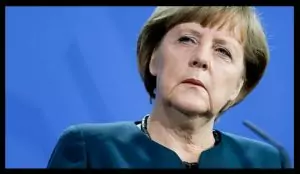
I don't even want to go so far as to say what that could mean for us. Then one day we may actually be sitting in a pile of rubble again. And I don't want that for our country. I mean, really, three times in 100 years you mustn't make the same mistake. And above all not listen to the Americans now. They are selling us down the river. I saw it very clearly once, seven years ago was the 70th anniversary of 9 May 1945. And I was in Moscow. And all the heads of state and government of the world came and congratulated. Or what do you do? Commemorate, congratulate. Well, they all arrived. The most important heads of state and government, well, the Americans in that case not. And the German Chancellor came on 10 May, not on 9 May. But she also laid a wreath. Then she stands at the press conference, I was standing there too, in the Kremlin, Mr Putin there and next to him Ms Merkel. And then she says the sentence, the criminal annexation of Crimea. She had to say that, that was the camera that had broadcast to Washington. She had to say this sentence, Putin stood next to her and only smiled mildly and generously let it pass and not as an affront ….
That shows again, firstly she wasn't brave enough to come on 9 May and say, we must keep the peace, we must always trust each other and get along, especially with Russia. That would be a great gesture, Willy Brandt would have done that. But Mr Scholz doesn't even want to know about that now. The best thing he has done is that he didn't go to Kyiv,
Robert Cibisseen that way. That was perhaps his Warsaw genuflection, not to travel in the sleeper car. I wouldn't dare commit myself on that, but I understand that criminal annexation, or annexation of Crimea at all, is of course a very clear, how should I put it, an attack with words. But you could also say it was a secession. There was also a referendum. It's a mixture, but no idea what it was.
Ralph T. NiemeyerBut I was in Crimea last year, and for that reason alone I'm no longer allowed into Ukraine now, that's clear. I was in Crimea twice last year, and let me say, the people I met there, incidentally also Tatars, they have their own radio stations, they have their schools in their own language and may pray as they wish. And there are mosques there, there are Orthodox Christian churches there. And there was such a relaxed atmosphere in Crimea that I don't believe any citizen there regrets belonging to Russia. If you now go to Saarland and say, which of you would actually like to belong to France again, nobody would vote for that either. It was in 1957, I think, that we did the same thing Mr Putin did in Crimea. Ah, really? Can you compare that? Yes, I told him, then give Saarland back, if Putin isn't allowed to keep Crimea, now after he held the referendum there, 2014. Yes,
Robert CibisI have to say, I mean, it is always bad, German history. Why,
Ralph T. Niemeyerhow exactly was it with Saarland? Well, after the Second World War it was unclear, it was, sure, still occupied by France, but there was a majority of the population, let me say, who thought and spoke more German, although many there, I think, grow up bilingual. Rather, that's why it wouldn't be a huge problem to live in France, in Alsace, …, and so on, that all works too. And they are like the Southern Wine Route, the houses look exactly the same, the people are similar, so it's like that, it works, but in Saarland at the time it was somehow politically charged, this matter, people said it has to come to Germany. And that was only possible with a popular vote, with a referendum. And that is the right of peoples to self-determination, it is in the United Nations, in the UN Charter it is in there as the highest good, and I find nothing undemocratic about it. Sure, Mr Putin certainly waved money around there too and said, if you come to me, you'll be better off. I think all states that want to gain influence somewhere do that. Helmut Kohl also practised chequebook diplomacy. We gave so much money to others, German settlements abroad, where there were still people who were once German, or supported them and so on. Yes, that's perhaps also how you secure a few postal voters again and so on. Every politician with power interests does that.
Robert CibisYes, well, I've digressed a bit, actually we wanted to discuss the various governments of Ukraine. But now in the conversation it of course strikes me that this is perhaps completely the wrong
Ralph T. Niemeyerquestion. I would like to come to one more thing, because I think it is important for understanding the Maidan. Why were there protests at the Maidan? I can say the following from my own observation. These changing presidents and prime ministers of Ukraine kept coming to us. They were also incredibly at odds with each other. In Yushchenko's time, Ms Tymoshenko was the prime minister, and she was basically at war with him. But there were oligarch gangs behind each of them. There was the Kolomoyskyi clan, for example, who now also again, well, they owned the steelworks, even if they were run-down, but industrial plants belonged to him. Since he privatised them for himself at the end of the Soviet Union, under President Kravchuk back then. And at the same time he was the father-in-law of Yushchenko. And they then brought Zelensky to power back then. This actor, who came across quite nicely somehow in his series. So, it wasn't difficult to bring him to power, because they had the money behind them. And now he is in this strange role where he himself perhaps didn't see through at first what he is really
supposed to do. Since he is an actor, he can of course play the roles. But I believe that at the very beginning he had a genuine interest in integrating these Azov gangs into the normal Ukrainian army. And there is also a video where, at the very beginning of his presidency, he went there and talked with them. And said straight away, you have to hand over your weapons now, because that would have been the case under the Minsk agreement. That they stop shelling Donetsk and Luhansk, which they did keep doing, even though it had been agreed. They no longer shoot, they kept shooting for eight years. And then Mr Zelensky comes and says, please hand over your weapons.
Robert CibisAnd they were quasi, do they belong to the army, the Ukrainian army?
Ralph T. NiemeyerLike irregulars or partisans, let's say. Like ISIS. Yes, something like that, yes. And they were relatively disorganised and actually took their own fate into their hands and, correspondingly brutally, without any rules, kept shelling. Against the Russian minority, so to speak? Yes, against the Russian minority. Well, whom else they killed I don't know. But it went on constantly. Tens of thousands, I think 15,000 people, civilians, there were no others there, had died in those eight years,
Robert Cibisdied in those eight years. In the Western media it said there were Russian soldiers there fighting without insignia. Yes,
Ralph T. Niemeyerwell, the so-called little green men. Yes, there were, in Crimea of course there were some at the beginning too. They were supposed to establish a certain security, yes. As in Russia, yes. Yes, well,
Robert Cibislike a police function. But they had no, they were without.
Ralph T. NiemeyerNo, of course they were not representatives of Russian sovereignty. They were sort of … Yes. Yes, I think they were even known. That they there, well, didn't direct the traffic, but that they were supposed to establish a certain kind of security in a time of insecurity. Yes. Then I have to imagine that, people, even if they are all from one nation, still quarrel among themselves. There is always some violence, that is quite normal in Germany too. If I imagine the city of Berlin now without police, after three days, I don't know how many dead we would have. Yes, perhaps, if everyone says, now I've used the time and I'll clean up. Oh, I see, if there were no sanctions at all. No, if there were no sanctions. And that was it. I mean, they, Luhansk and Donetsk broke away after they were forbidden to keep speaking their own language, namely Russian, in school, kindergarten and at work. Their school books were cancelled. There were reprisals reminiscent of apartheid, where I say, in South Africa people got so upset back then that certain languages of certain minorities were then no longer allowed to be state languages, or were not declared state languages at all, and they had to learn Afrikaans. And for the black population there that was of course an affront
too. And now the other way round, you really have to draw this comparison of what apartheid means. And that is what happened there. And then the first ones of course also defended themselves with weapons, when they said, now I can no longer send the children to school. And so it broke open very quickly. But you have to know why that in turn came about. Why did they want to declare themselves independent? There was a law that was passed very quickly by the Rada, by the parliament there, at the end of 2014, which basically placed the entire eastern hemisphere of Ukraine under … law. All references to Russian culture, and it wasn't only museums and music or anything and the language, everything was sanctioned in principle. And that was a law, you can read it. That is not a conspiracy theory. That people resist that is completely clear. If I now tell everyone, we have to learn Bavarian here in Berlin, or we are no longer allowed to speak Bavarian in Bavaria, where I live at the moment. I mean, I can't speak it, I'm a Berliner, but I simply imagine someone putting that kind of pressure on me. Of course I would resist too, probably not shoot straight away, but you come up with ideas about how to resist.
So, and that is what the people there did. And at the same time, as I said, these politicians who kept turning up at my place in Brussels were interested in NATO. Yushchenko said it quite openly, he expects to be admitted to NATO now. There was Jerzy Buzek, who was the President of the EU Parliament at the time. That was 2009. And interestingly he was a former Polish prime minister. And he made him all kinds of offers, you'll come into NATO, you'll come into the EU. European politicians, EU politicians, always gave that impression to the representatives from Kyiv. They had to believe it, they had to think, great, one day we too will be supplied with subsidies like Poland, get new motorways, get a decent rail system or something. Yes, they had that impression. So, and at the same time Mr Putin of course had interests. And you simply have to say it, for him it's not only about fighting fascists either. Of course economic interests are just as much at stake on the Russian side. And he had concluded a free trade agreement or a customs union, among others with Belarus, Ukraine and Abkhazia and … and so on.
So, that means goods could be transported without customs checks and also without customs duties, as in a single market, as we also have in the western EU, or in the EU in general. And we can see what is happening now that Great Britain has left through Brexit, what a problem we have in Ireland, that there is now an internal border again, but it is moved into the Irish Sea so that there isn't a hard border on one side. So, basically the same game that is now causing us trouble in Northern Ireland, that can also immediately lead to civil war again, yes, no illusions, it can flare up again very quickly there, that is what actually played the role in Ukraine, because there was the association, uh, not the association, the customs agreement, which was already in force at the same time, when the EU came and said, now we'll make an EU association agreement, the preliminary stage before eventually being allowed to become a full member. And you can't have both. Then, if you please, you would have had to sit down at a table with Russia and say, okay, then let's make Europe from Vladivostok to Lisbon, or the other way round, a customs union for the whole continent, Eurasia.
That might even be a dream. I wouldn't find it bad. I believe it would have advantages somewhere for everyone involved, that you would also have a security partnership through it. And Putin has indeed said again and again that he is ready. And Gorbachev started with it back then, he said we want to build the European house and the Russian windows are wide open. And only bandits climbed in through the Russian
Robert Cibiswindows. Yes, well, I mean, we know, most people know, that of course geopolitically that in turn is, represents, a threat to the other great powers, if you think of the USA, but also of China. Because such closeness, it doesn't have to be a real union, but even a friendly economic closeness, ideally combined with a security agreement, would of course threaten the supremacy of the USA. Of course, that's clear. We obviously have, exactly, we have a single market, would have, that is much bigger. Yes. Highly qualified people en masse, so to speak, who would work together, and raw materials and so on. And it is also, exactly, it is also quite simple, if you look at the world map, Eurasia is simply the largest continent.
Ralph T. NiemeyerYes, of course. And as I said, with a lot of technologisation, the size of a continent, you can see with Australia, doesn't play the role. The huge thing has only as many inhabitants as the former GDR. I mean, I think we could squeeze the GDR in there 60 times. But the question is with what quality things are produced where, and with what level of education and standard of living people live there. So, and here it should actually be noted, the Americans always come when we become a bit closer friends with Russia again and make agreements that we, for 150 years, it was, I think, the Siemens chief of …, he told me that at some point, we can't impose sanctions on Russia at all, we as Siemens have been active there for 150 years. But he also said that whenever Germany and Russia somehow come closer to each other, the Americans don't seem to like it. And then, while we have our foot in the door, let me say, they shoot at the lock. So, and then we're back where we were, and that's why my fear at the moment is that the train has left, that we can form Eurasia or this zone of mutual security and trade. Now that we have had Ukraine as a battlefield, where everyone has shown what they can do, or not.
And many thousands dead on both sides, and sure, most of them so-called innocent victims, sure, that afterwards we no longer have these doors open to talk to Russia again in such a way that we can still go down this path. I believe Russia has turned away now, and that is the turning point. Mr Scholz said we are living in a turning point, or the turning point is coming. But we haven't cut off the old pigtails. We Germans are still stuck somewhere in the 19th and 20th centuries, instead of finally going into the 21st century and taking this step. I once raised this with Lavrov, ages ago now, it wasn't about this war at all then. … Yes, and I said, actually we should be able to manage that now. And he was enthusiastic when I said, from Lisbon to Vladivostok, we must manage that now. And he was pleased that I had brought it into the conversation like that. And Sigmar Gabriel, who was just there, he was our foreign minister, complained to me incredibly afterwards, on the flight back. Yes, and said I shouldn't bring such unannounced things into play.
Oh, I see. But you were there as a journalist. Yes, I was only there as a journalist. You don't have to speak for Mr Gabriel. No, no, no, sure, but that's,
Robert Cibisyes, well. So there are hierarchies between ministers and journalists after all?
Ralph T. NiemeyerHe obviously didn't like it at all that the question was even asked in that direction, because of course he knows that too. And by the way, Platzeck was there, Matthias Platzeck. He was, or still is, I think, the chairman of the German- Russian society or something like that. Oh really, I didn't know that either. And of course he liked it too. We talked for a very long time afterwards, and he thought these ideas were great. And we also said we would combine it with a project, a cultural project about Catherine, who came from Zerbst in Saxony-Anhalt and then became Russian Tsarina, Catherine the Great. 300 years ago, and she has, I think it is in 2029, that would be the 300th anniversary. Back then, with Potemkin, Potemkin in German, the general, she detached Crimea from the Ottoman Empire. So it was Russian. You can add that. Crimea was always Russian. Well, then in 1991 it got a bit out of control. It was by Khrushchev, became, who was rather of Ukrainian descent, and as president of the Soviet Union practically gave it to himself as a gift. But neither a state act nor a state treaty came about on it.
So under international law Crimea never belonged to Ukraine. That is an old wives' tale that is constantly being told now. That it was taken back. It always belonged to Russia, for over 300 years.
Robert CibisYes, but it belongs, I mean, in, well, I don't want to dwell on it for long. It did belong, in the Russian Federation and before that in the Soviet Union, to Ukraine, so to speak.
Ralph T. NiemeyerNo, Ukraine didn't exist in the, there was, not as a separate state, but it existed after the Habsburgs, with the Habsburgs there was a stretch of land on the map called Ukraine. But then in 1918 that was over. And then there was the Soviet Union. And then, they actually had their own statehood in between, because people, before that there were, we were mainly active there, the Poles, the Swedes were also there at some point. So over the centuries, this stretch of land that is called Ukraine today actually only came into being as a state in 1991, with its own statehood. And that's why there could be no treaties under international law. There aren't any boundary stones either. Not only that they now, I mean, recently they shot such a funny video, the Ukrainian soldiers walked around a bit with a cardboard border post, set it up somewhere and said they were now at the Russian-Ukrainian border. But I mean, the historical boundary posts you see, large blocks, when I walk along the German-French border in Alsace, there's one every few hundred metres, and it says F for France and D for Germany on it, so that even the dumbest person in the forest still knows
where he is. That doesn't exist, for example, between Russia and Ukraine, because historically it was never an issue. It only became an issue in 1991, when everything dissolved. It was just regulated
Robert Cibisunfortunately. So we are, we have a kind of uprising that was stirred up from the West via NGOs and secret services, and probably also through a wave of the idea that the West brings good things, which some people in Ukraine also have as an idea. It is always a mixture like that. Then there was this coup, you could say, or this upheaval in 2014.
Ralph T. NiemeyerYes, that was quite clearly a coup. I was there, Steinmeier was there at the time with the French, I think, Wendran or whatever his name was, or was that the defence minister, I no longer know, in any case with the French foreign minister and the Polish one too. And they had been with Yanukovych, the elected president, there was no doubt that he was the elected president. And they basically demanded a note from him in which they said he should then, at some point, hold early new elections and so on. So he agreed to it so that he could keep governing. So, at the same time they said, and the EU association agreement, what they had on the table, he should just leave that lying for now, yes, so that it doesn't pour oil on the fire now. So, and then they left, and I then spoke with Klitschko, he had been there, and Klitschko, however you may think of him today, but I mean, back then he came across to me as a very naive but nice guy, yes, who certainly had no bad ideas, because he didn't have to steal anything, he was already rich enough from his sport and was somehow, he wanted to do good.
You could tell that about him, he was certainly not corrupt either, didn't have to be corrupted, as I said, because he was already doing well. And he was standing there, and I said to him, now you should go down and read out the paper, on the Maidan. And then he says, yes, do you think so? And how should I do that? And okay. What role did he have back then? He was actually just a leader of the Maidan protests. But because he was a prominent face, he was always surrounded by all the Western cameras, especially the German cameras, because he speaks some German. And he was there a bit as a popular figurehead. And then came Elmar Brok, the MEP from the CDU, that is, a member of the parliament in Brussels. He came up to the two of us and gave Mr Klitschko a paper, it was a fax, I didn't even know people still faxed there, but okay, it was a fax, it had the fax identifier of the Konrad Adenauer Foundation in Bonn on it. And on it was the text of the speech Mr Klitschko was to give on the Maidan. And Mr Brok did know me, but he had no idea what I was doing there, whether I was only working as a journalist or not.
So he didn't take it seriously. And then I withdrew with Klitschko, because Klitschko looked totally confused. And then I said, okay, come on, let's sit down, let's go through the text now. And then I saw that if he said it like that, proposed it like that, or gave the speech like that, he would immediately trigger a civil war. I said, if you do it like that now, we have to, there, there, and then we defused it somewhat. What kind of … was in it? Ultimately it was the call for a coup against Mr Yanukovych, against the elected president. And above all to make it clear right away that the Ukrainian language enjoys preference. And so these predetermined breaking points were immediately in it, from which you could assume that if it came like that, part of the country, part of the population would simply have to break away. That wasn't written out of stupidity, but it was, it was meant to lead to war, at least to civil war. And that was in order to destabilise Ukraine so that Putin would run aground with his plan for the customs union. So that he wouldn't get it
Robert Cibisthrough. Okay, so this is a textbook example of what is called a strategy of tension. That means you have a society and want power over the society. And to have power over the society, you create unrest. You say women must fight against men, old against young. Yes, of course. The establishment you have there, the old white men, you have to cancel them all. You have to bring the inexperienced to power. Yes, it's always, you bring the inexperienced to power, then your country will run better. Or best of all artists. Well, actors. Actors. And then you take a few radicals and make them especially powerful. A few punks or hooligans, who perhaps aren't so radical at all. But perhaps they would actually be peace-loving people, but then you give them a weapon, and then they look so dangerous. And then you have so much tension in this population that you have it better under control. You can also say, divide yourselves, unvaccinated against vaccinated. We know that. We're doing that right now too. Yes, but, and there in Ukraine there was then, but this is all totally fascinating, why does Klitschko get a fax from a foundation saying what he should say? I mean,
what kind of logic is
Ralph T. Niemeyerthat? Well, firstly, he wasn't a politician. Yes, but where does the relationship come from? That is a very good question. That is of course also a fax. Yes, I noticed that the German foreign policy people, especially the Böll Foundation, do a lot of Ukraine work and anti-Russian propaganda. That's the SPD, isn't it? No, that's the foundation of the Greens. The foundation on whose board Ms Baerbock supposedly sat, but she was only a supporting member. Ah, yes. Yes, let's leave that. But in any case, the Böll Foundation constantly wrote such papers too, and the Bertelsmann Foundation is in it too. By the way, Elmar Brok was quite officially a lobbyist for the Bertelsmann Foundation. He always paid tax on it too. He always declared to the President of Parliament in Brussels that he received, I think, 200,000 euros extra a year, more than the MEP salary, to note that in passing, from the Bertelsmann Foundation, quite officially. The Böll Foundation is close to the CDU? No, it is simply close to business, but it also has, let me say, think-tank qualities. Insofar as it... But a lot of money, right? Yes, and above all they have a lot of money, because all the media houses belong
to them. Let me say, the talk shows on German television are to a large extent co-cast by the Bertelsmann Foundation. So who sits on Anne Will or Maischberger now, they help choose
Robert Cibisthat. And they also have a lot of influence on the education system in Germany. Yes, of course. Or, for example, they calculated that Germany needs far fewer hospitals and so on.
Ralph T. NiemeyerYes, they come round the corner with such great studies.
Robert CibisGood, but just to close the bracket again. I just want to know why someone like Klitschko listens to such a fax?
Ralph T. NiemeyerWell, because he needed an adviser. And they of course said, because politically he was a completely blank slate. Except that he always said, I want to fight corruption. That's understandable. If you lived in Ukraine, I can imagine, I was only there now and then for a few days, but you can imagine that if you see any opportunity there to end corruption, you say, I'll do that. And at first he went into it as an idealist and said, okay, at least I no longer need to worry about my own life. I have enough money, earned with sport and so on. Yes, and that he has of course drifted off now, because he himself, he is now mayor of Kyiv, that he of course is now no longer the innocent naïf, that's clear. But I'm talking about a time eight years ago, when he was just starting to say or do anything political at all. And he was very susceptible to advice. And I noticed that if I had talked to him longer, we might have turned him around. I don't know.
Robert CibisIt is also right that a journalist from Germany then suddenly on a political
Ralph T. Niemeyerleader... We simply liked each other, and I wanted to protect him a bit from Elmar Brok, whom I had long known from Brussels, where I said, if he takes it in hand, the thing will go in the other direction.
Robert CibisWhy did he actually listen to you?
Ralph T. NiemeyerYes, I don't know either. As I said, we had a nice, friendly chat with each other, and somehow he looked helpless. And Brok was already gone again. He flew back with Steinmeier and all of them. And then I had time, then I first sat down with him. And then we spent two hours, we then defused the text. And then he read it out, and well, it was still...
Robert CibisWell, there was tension nevertheless, wasn't there?
Ralph T. NiemeyerYes, well, that wasn't down to him. And then later the conspiracy of course came in. That was that in the Verkhovna Rada, in the parliament, the vote on the no-confidence motion against President Yanukovych was manipulated. Firstly, the communist and some other deputies were no longer allowed to take part. That's like with Hitler too. He also had them arrested beforehand. There they were simply denied entry. They could no longer get into the voting chamber. And of those who were there, 72 percent or so voted for the removal of Mr Yanukovych. According to the constitution there, it would have had to be 75 percent, I think. But it didn't matter, he had to go. And now comes the point, if you took the constitution seriously. I mean, Ms Merkel said in her government statement afterwards, when Crimea was then up for debate, she said we must take the Ukrainian constitution seriously and defend it. The first thought would surely be to say, yes, why didn't you take it seriously back then? 72 percent is not 75 percent. Regardless of how many deputies were actually in the chamber and entitled to vote, it was not a qualified majority, which is in the constitution.
Robert CibisThat is surely unlawful and probably also unconstitutional if deputies
Ralph T. Niemeyerwere excluded. Yes, that's why there was shooting then. Then came these scenes, which German television reconstructed very well a year later. I think Report or Panorama, programmes like that, at least back then they didn't report so falsely. They did take the trouble to look at who had shot on the Maidan. And they also came to the conclusion, as the Russian side said right away, that these were snipers on the roofs of some hotel there, on the big square, shooting into the crowd there. And then it was spread that these were the Berkut people. Berkut is the special unit that President Yanukovych supposedly brought in, for his defence, as it were. But that wasn't true. The Berkut people weren't even there yet. There was shooting before that. And in the end the Berkut people couldn't, they couldn't do anything anymore. And then Yanukovych was on the run, and with that the coup was complete. And by the way, I experienced the same thing in Venezuela. There, however, the coup was then put down. It was the same tactic. There was a big demonstration on a bridge in front of the presidential palace. And you see on television pictures that then went around the world how some Chávez supporters, Chavistas as they were called then, aim with normal pistols at people below the bridge.
But they were more than two kilometres away. With a normal 9-millimetre gun you don't get much power there. Nevertheless people fell there, and there were over 40 dead then too. And later it was found out that it was from a high-rise behind this bridge, and they were apparently American diplomats. They had entered Venezuela with diplomatic passports and then started this shooting. And back then people immediately said the president is having his own people shot. It's always the same. Salvador Allende, Chile was the same story too. So, that is the script these operations follow. And once the news is out that the president is having his own people shot, that is the worst thing you can do. If a president does that, then you have to defend yourself, or rather foreign countries have to come and help. So, and that was then the actual beginning of the conflict. And many media in Germany have long stopped wanting to shed light on it. They say the war began with Putin's invasion. Let me say, for eight years he still tried relatively patiently to negotiate. I was in Minsk twice and saw them,
the negotiations. And it was, I was only a journalist, but they kept coming out. We spoke with all the presidents back then. And the mood was actually that people said, okay, now we have an agreement. They will become two autonomous republics within the state union of Ukraine. Like a Free State of Thuringia or Free State of Saxony or Free State of Bavaria or a Hanseatic city. Or, yes, you can find many terms for it, and say, and you do your own thing, and you can speak Russian, and you can, in school, you have educational sovereignty or something. Yes, federal, as with us. And that had actually been agreed. And it was constantly broken, but not by Russia.
Robert CibisYes, this is where these Azov gangs come into play, for example. So is it these who mainly fuelled the civil war from 2014 to 2022? Can you say that? Yes, it was them, yes. Because that is actually very interesting. I already made the comparison with ISIS. Yes. ISIS, or whatever it's called.
Ralph T. NiemeyerIt was IS once. IS. Yes, it started with IS in Iraq.
Robert CibisIn Syria it was ISIS. Because you, that is what you mean, you take the hooligans, …, yes, like that. It's like the mujahideen in Afghanistan, they all get an M16 or a...
Ralph T. NiemeyerYes, the M16 are the TOW missile systems, those are rocket launchers.
Robert CibisThat's, no, I wanted to say another word, but never mind. Some weapon in their hands, and actually they had Kalashnikovs, I don't even know where they got them from.
Ralph T. NiemeyerYes, well, probably from the darknet. By the way, you can now also buy German weapons on the darknet, but through Ukraine, right?
Robert CibisBut the logic in any case is that you build up extremist groups that already exist into a trouble-making group that plunges the region into chaos, so that you can more easily intervene and reshape it according to your will. It's a bit like, you have clay, and the clay is hard to shape, and if you add water, the clay is softer to shape. Yes, and the water dissolves society, so to speak, atomises it into different parts, and then what was a ball before can become a cuboid afterwards. Yes, exactly. That's how it is. And then you take, and these then tend to be Western forces, in these three examples we have mentioned, mujahideen, IS and Azov. Oh, sorry, Azov, what is it called? Azov, yes. Azov, that is a piece, so is there also real evidence
Ralph T. Niemeyerfor it? Yes, there is even proof now from the French colleagues who made documentaries there and are also allowed to publish them, that they say there are foreign mercenaries involved. They had instructors who were British and American citizens, also some French. True, I've seen it. And those who were actually in this steelworks were partly high-ranking military advisers from these nations. And that's why there was such fighting there, and probably that's also why Mr Macron flew to Russia again and again or was constantly on the phone with Putin, to tell him, come on, let's talk. Yes, he doesn't want it to become known what kind of high-ranking intelligence officers of French nationality may be involved there. And that is something else where Putin probably has him quite well in his hand at the moment. Yes, you have to think it through, Mr Putin too, he of course knows how to use something like that, he won't publish everything he knows now, but he will present it nicely slice by slice. When he needs it. When he needs it. And of course there was an interest that Macron must not lose the election.
With Ms Le Pen, everyone thought Mr Putin supports Ms Le Pen, or she borrowed money from him or from a Russian bank and so on. That was more to blacken her name than... Yes, but I have meanwhile noticed that Macron seems much more agreeable for the Kremlin, because firstly, he is accepted by the West. As French president, if we now had a Ms Trump, that is, Marine Le Pen, as president of France, we would have the same as with Trump. There would have been an international agreement: this president is not presentable at court, we won't let him get away with anything. Yes, almost a blockade, something like that. Trump experienced that constantly. Without my finding him particularly likeable, I don't want to highlight that now. But let me say, it is interesting in terms of power strategy when you consider that Putin now really has Macron in his hand. Because if that had come out before his re-election, the Azov steelworks was stormed three days before Macron's election, before Macron's re-election. They could still have scattered this information into the election campaign, and Ms Le Pen would have won. Yes, why didn't Putin do that? Because he is a strategist, he plays off the cushion, as in billiards. To get the ball in,
you have to play off the cushion. If you can't do that, you needn't start in politics. So he thought, I'd rather have Macron, I've brought him up now. And he is recognised in the West, and I will then negotiate with him. And with Scholz, he said quite openly that he is slowly not knowing when he will have a contact person in Germany again. He'd rather call Washington directly now. To which I said, he is welcome to have a contact person. We as sovereign Germans also want to talk to Russia. But that won't be the case at the moment. But at some point, I think, Germany will also have to consider with which chancellor or with which president it wants to take part again on the world stage. With Scholz and Baerbock and these people it doesn't work.
Robert CibisThere is no structure that represents all of Germany that isn't from the USA. Right,
Ralph T. Niemeyerthat's the problem. Yes, perhaps we should slowly terminate the contracts for Ramstein after all. Of course it's not so easy to throw the Americans out. But over 70 years after the war we are surely at a
Robert Cibispoint. I understand all that and can understand the demand very well. From my point of view, the fact that there is an important US military base in Germany irritates me less than the fact that the politicians don't speak for themselves. Yes, not a single one of them. If you simply say your opinion and then make demands and then decide, he actually says, I want close military cooperation with the USA, I can absolutely respect that position in a debate. And then you can argue about what is better or worse for Germany. But this argument doesn't take place.
Ralph T. NiemeyerNo, of course. It's even worse when Mr Scholz stands in the White House next to Mr Biden, and a colleague, I think she was from CNN or so, asked, what about Nord Stream 2? And Mr Scholz rolls his eyes and stares at the ceiling in embarrassment, doesn't dare say anything. And Mr Biden, oh, we will find ways to stop it, or so. Then you know what the orders are. That is embarrassing. That is not a chancellor. I mean, we were once the third-largest economy. How did we actually get there? I mean, as long as it was a divided country, you could still say, okay, there are still resentments, there are still two occupation zones, if you like, and so on. But now we have been reunified for 30 years. I did think that we would slowly emancipate ourselves a bit and above all be able to behave more neutrally in such a conflict, without becoming a party to the war. Because that's what we have now become. De facto this week it was quite clear, it was the TS-52 tanks that have now actually turned up there. And with them, with these weapons, fighting can be done. So that is actual proof that Germany really delivered something.
Up to now it was always, as I said earlier, he put on the brakes, and I would even give him credit for that one day at a tribunal, that he didn't accelerate it further, but obviously tried to slow it down. But it is de facto the case that we have thereby broken the armistice treaty or the agreement of 1945, and although we are not in a direct war with Russia, we are supporting a party to the war that is officially waging war against Russia. And you have to let that melt on your tongue, what that actually means. Theoretically, Allied rights over us could apply again, because we, we haven't violated the agreement with the Americans, British and French, but towards Russia. We are here in this city of Berlin, where you could say they could shut up shop here any day if they wanted.
Robert CibisAs successor to the Soviet Union.
Ralph T. NiemeyerYes, they are, successor to the Soviet Union and legal successor to the Soviet Union. They could give us orders, they don't. They don't want to pour oil on the fire now either, but that is what I think Mr Scholz is also aware of. He risks a big mouth in his press conferences and in the Bundestag. He's quite good at that and can even look contrite while doing it. But in Moscow my contacts there tell me that they don't take him particularly seriously. So they aren't afraid of him either.
Robert CibisYou just spoke of the meeting in Ramstein, where the foreign ministers of the European countries also had to go. I heard Ms Lambrecht in the interview afterwards, and it was really great. On the internet it was without, uncut, simply raw. You couldn't really hear the journalists' questions, the sound was bad. But because it was so raw, it seemed all the emptier. She kept repeating the same sentences, as it were. In substance she said, we are not going it alone. We coordinate with our allies. Because we discuss that with the allies, we are not going it alone. Those were the answers to
Ralph T. Niemeyerthe ten questions. Those are the standard answers that, as I said, have to come from every top politician.
Robert CibisOf course my first thought is that if I only heard one of these sentences, it would sound somehow likeable. She's diplomatic, she just coordinates with her friends. But if I now think after this conversation we've had, oh God, that means she makes no decision at all, nothing, nothing, no influence at all. She doesn't say what she wants. She doesn't say what she doesn't want.
Ralph T. NiemeyerThere is no such policy at all. No, there is the Chancellor Act. It is not a secret paper, it actually exists. The Chancellor Act is what they sign. If you were sworn in today in the Bundestag, you would have to sign it by tomorrow morning. What, if I were chancellor now? Yes. Then you would have to... We have to imagine it briefly, that needs another five seconds. Well, Willy Brandt didn't want to sign it back then. Inwardly I'm already there. So what's in it? Well, basically it says that they accept the SHAEF laws, that is, the Supreme Headquarters Allied Expeditionary Force laws of 1945, especially Law No. 52. And that is still complete subjugation. But that is, so to speak, a... And Willy Brandt didn't want that back then, but the next morning he signed it after all.
Robert CibisGood, so that is a contract that is not secret but public.
Ralph T. NiemeyerIt's public, you can even read them, these things, yes.
Robert CibisAnd which all German chancellors actually sign. Yes, to this day. And which isn't big in the press.
Ralph T. NiemeyerNo, of course not. But there are facsimiles of it that you can check, that they actually, from the Adenauer era,
Robert Cibisthat I already... And could I now see Mr Scholz's contract, since it is public? No. No, in the Chancellery. Then I would have to go to the Chancellery.
Ralph T. NiemeyerWell, it will probably also be with the Allies, yes.
Robert CibisAnd, but why are we sure that he has signed it now? Yes, because he's still there. Oh, I see. Otherwise he wouldn't be chancellor. Ah, yes. And what is the Allies' lever?
Ralph T. NiemeyerThe lever is the, the SHAEF laws, they come into, they are only suspended. So, the... I've signed contracts too. Well, they are suspended. The lever is always very important. Yes, the lever in this case is the Two Plus Four Treaty. Ah, yes. Of 23 September 1990. It was laid down there, it even says that the united Germany will be sovereign. It says so. As a single sentence it sounds wonderful. Then there are footnotes to it, and of course they are interesting. Yes, and then, among other things, under the Status of Forces Agreement of 1956, 1957, all these supplementary agreements, the protocols continue to apply. Yes, and it also says that the SHAEF laws, which had applied until then, continue to apply, but are only suspended in their effect. And that on condition that the united Germany commits itself to peaceful diplomacy, and exclusively to peaceful diplomacy. Yes, and that includes arms deliveries to parties to a war. That was always a taboo too. People always said, well, yes, we did deliver, what was it, Leopards or something, to Saudi Arabia again, but they are actually only suitable for taking action against insurgents.
Yes, along the lines of, well, if the sheikhs oppress their own people, we don't care. But in Yemen they probably wouldn't be so usable. That's how people always excuse themselves. Yes, as the world's third-largest arms supplier, you always found a way. But delivering weapons to one party directly with the announcement, we want to support your fight with them, that is the new quality in the matter. Yes, that's how I felt too. So there has now been a dam burst, and with it, in my reading, we have broken all the agreements we had to secure German unity. That's why I would even make the bold claim that if one of the Allies now said, we no longer want German unity. Well, nobody will do that, but purely theoretically, we have just gambled it away. German unity is in danger. And I wasn't exactly the biggest supporter back then of it coming at all. But I don't want to give it up now. I want Germany to remain united. But then we also have to become peaceful again and not act in the way we are currently acting towards Russia. No matter how bad their war is, I don't want to whitewash it either, what weapons are now being used by Russia.
These are really very insidious weapons. I wouldn't wish anyone to have to experience that. And I have been in war zones several times, this year too I was already in Yemen again. Everything that is conventional, you can somehow assess. A plane comes, a bomb falls, or it's a rocket launcher. You even see the thing somewhere across the sky. And then you know, okay, that will come down back there, and you take cover. With the new weapons the Russians are using at the moment, only for two weeks. Before that they first fired off only the old stuff. It works as follows. You sit in your bunker and say, yes, here I am safe. But oxygen has to get into the bunker somewhere. Then it comes through the cracks you leave there, and a few fans bring a bit of oxygen down into the cellar. And when it's inside, it explodes. That means it comes in with the gas. So it's a thermal bomb. And then you saw pictures. There were even female colleagues of mine who thought it was great to pass that around on the internet and show, look how great the Russian weapons are. Where then one bunker after another, where I say, with every explosion those are the human lives that had entrenched themselves in there. Even if they are fascists or Azov people or whatever. But hitting people like that also takes ….
That's why I don't whitewash the war either. I'm only saying one thing: we must not take part in it. And we have to do everything to end it. That is the obligation we should have had since 1945. And we have broken it. The promise of 1945 and that of 1990. And back then I stood next to Baker and Genscher. When they came out of their negotiations and said they would not, that was in New York, we were there, I think the United Nations or something. And that was two weeks before reunification. And they were often asked what would happen to the GDR now, whether NATO troops would be stationed there. Everyone knows it. Genscher immediately said, no, on the territory of the then former GDR there will be no NATO troops, nor beyond that. And Mr Baker stood next to him. Everything was translated into his ear. And he just grinned broadly. And today I know how I should understand his grin. We all know that soon they'll be standing in Putin's bedroom. As I said, that too is no justification for waging inhuman wars now. But as Germans we should do everything to make them stop. And earlier I explained what responsibility we have as the European Union, where we are not only the largest contributors, but also the biggest say in
Brussels. Yes, it's not as if the Italians and French push us to play the leading role in Brussels, we chose that ourselves. So the EU is very much dominated by Germany. But I can't be against the EU for that at all. We have the most influence. That's apparently why the British wanted out. But if we don't use our influence now to pacify things here, then we have harmed Germany, and in the long term. Because Russia, they have turned around, they are now going a different way with China. The train has left anyway. The only question is with what further consequences and damage for our own country, for our economy, for the people who live here. And who at the moment have to endure this terrible inflation. For poorer people it's a catastrophe. I mean, whether you can still fill up may still be a luxury you think about. But when it comes to food, and that is coming, completely unnecessarily.
Robert CibisYes, it's no fun, on the one hand to imagine this poverty, which exists anyway, but which of course is now driven further by inflation. And then this political uncertainty, because somewhere deep within us, because we've been told it millions of times, we have this idea of the big brother USA, who is the world policeman, who built us up, us Germans, West Germans, after the Second World War. And then it all breaks away, and you stand, you are suddenly on your own. And you have to speak for yourself, because you notice there is no support anymore. And I think that is basically the decisive thing, what I also take from the stories you have just set out so nicely, that is what I draw from it. We have to learn to speak for ourselves, as individuals, but also as citizens of the Federal Republic, as independent citizens, and of course also for each federal state and each government, when it comes, I actually find, for example, party-whip pressure undemocratic.
Because it's not for nothing that the Basic Law says, I believe, that every elected representative should decide according to his conscience and not under pressure from a parliamentary group. And then, when you say, but I have to submit to the group, to the majority of my party, that is already an attitude that doesn't really encourage debate, which must be the core of a living democracy, of joint decision-making.
Ralph T. NiemeyerYes, it already starts when you want to be nominated in your local or district association or whatever, that is, in the parties. Then you are already, that is ultimately already the preselection there. So I also think the parties simply have too much power here. And then the result is that at some point you only have people who obediently do it, because they also tie their career and their personal happiness to sitting in the Bundestag or a state parliament. And
Robert Cibisthen you always have this reversal we talked about earlier, the SPD, whose cliché above all is that it supports so-called employees, then pushing through Hartz IV. And then you have the Greens, who you know are actually the pacifists. Well, the sacred cows have to be slaughtered by those who fed them. That's the theory, right? Exactly, the theory is foreign ministers in the, how should I put it, war of aggression in breach of international law, aggression is wrong, war in Yugoslavia. Yes, yes. I don't know, there was no UN mandate or
Ralph T. Niemeyerso. No, no, firstly it was an absolute violation of international law back then. And above all it was the first, I think, in 56 years, the first combat deployment Germany took part in.
Robert CibisYes, now the Greens provide the foreign minister, the female foreign ministers, for another war in which Germany apparently has to take part more and more. And I ask myself, as distrustful as I have become in recent years,
Ralph T. Niemeyeris that really a coincidence? Yes, that is the programme. I mean, not only that of the World Economic Forum, which we all keep talking about, with which, incidentally, Putin also had a lot to do. So that's why everyone who says Putin wouldn't go along with it, well, I don't think that one... Why, was he there often? He was there every time, except for the last two times, or if, I think it was cancelled once. But of course he too is, he is not a left-wing politician. He is neither a socialist nor, I mean, he is also very neoliberal. And for me, if I were Russian, I would say, man, I wish I had a more social president. But well, that's not for me to decide, I'm not Russian, but if I lived there, I don't know if I would be so enthusiastic about his attempts to cut the already meagre pensions in Russia even further. There were many things where he flattered the oligarchs more, and those who stayed with him, as I said earlier, some left, one went to prison and the others to London. But he, let me say, well, he probably had to satisfy people there and that's why he did it like that. But he is part of neoliberalism, he is not a progressive left-wing president. That he acts like this now, so that you say, okay, you can understand it now, as I say here, I understand.
Perhaps the word Putin-understander isn't so bad after all, if you say you at least understand how the other side ticks. So that I, should I ever have to do something in Germany, can prepare for how I would talk to him. Should I now be foreign minister or president or anything of Germany. How would I approach him? I would have to understand him. And those who don't do that are making one mistake after another at the moment. And that's because they don't allow any analysis that departs from it, we say otherwise in English, you would say, think outside of the box. Thinking outside the usual framework. And they just don't allow themselves that. And that's why, when I say Putin and the WEF, the World Economic Forum, that was quite a fruitful relationship for many years. And now we come to the point where he imagines a different new world order, NWO, from the guys in Washington and in Davos. And that's where the
Robert Cibisbreak is. But ultimately he is now making his own world order too. Of course I can follow the logic of what you are just saying. But actually it also contradicts some of the information you gave today to say that there really is a break. There is a break in the rhetoric. And where I was a bit distrustful is that the Greens, the party of the pacifists, are then implementing or demanding this indirect and direct participation of Germany in the war. Anticipatory obedience.
They want to be loved again. Yes, but the question is, you already, I just quoted the defence minister. We have these, especially in such military questions Germany seems incredibly lacking in sovereignty. And if the Greens of all people sit there, then that is actually what you just described, playing off the cushion. You take, so to speak, the side that is actually the enemy and use it, the enemy of the policy. So I want to wage war now, then I take the pacifists and ask them to promote it.
Ralph T. NiemeyerYes, and they would have liked it best if it had been a left-wing foreign minister. Oh, really? Yes, I believe there were many, I was with the Left, there were many who subjected themselves to one kowtow after another to please the Americans. And in the end perhaps also the position that we don't do any foreign deployments or anything. Yes, sacrificing that position too, just in order perhaps to be a minister in a government at some point. Yes, and where actually the demand should be: out of NATO. That used to be the Greens.
Robert CibisI'm only trying to understand the thinkers, I'm trying, so to speak, to understand the thinkers looking at Germany from outside. Are there people who are influenced in such a way that they then act against the actual narrative of their own party?
Ralph T. NiemeyerYes, I think they are much more opportunistic, that they don't even take the trouble to learn the narrative by heart anymore, let me say. Yes, not the actual narrative. It's like with Klitschko. Yes, but with Ms Baerbock you notice it. And also with Mr Habeck, who can certainly write nice books. But he has just sacrificed his narrative again with the porpoises. Well, he perhaps still noticed himself, at least, what he was doing when the LNG terminals were being built. That he immediately offends all the environmental associations, including Fridays for Future, and says, don't even bother coming, it's now more important that we build the LNG terminals so that we can get gas independently of Russia. Ah, that's the liquefied gas. Yes, yes, this matter, that was of course a very arrogant appearance on his part. But he still noticed it, but I think Ms Baerbock no longer notices anything. But the trick is that the environmental associations, for example, would rather accept that from a Green than from a CDU politician, for example. Yes, of course, then the place would be on fire if Mr Merz announced it. Or we saw what was going on in the Hambach Forest in North Rhine-Westphalia. There was good resistance
there. But, yes, it's like this: if it's a CDU government you can protest against as a leftist or Green or whatever, yes, then that has something. And the moment you govern yourself, you suddenly have a problem. Let me say, the governments have the problem because they can no longer pursue their own narrative
Robert Cibiseven remotely. The people also have the problem, because they don't know whom they want to vote for, because the party determines the narrative and not the politicians. Yes. So it's the way you imagine it in China. The party says there, there, there, there, there. And if I want to be in the party, I have to parrot the narrative. Roughly like that.
Ralph T. NiemeyerSure. I hope I'm exaggerating. Here it's clear that if you, if you as a normal politician today don't use these terms, digitalisation, yes, that, well, everyone thinks, oh, now broadband expansion is finally coming to the countryside. I may then actually have broadband on my farm. See films faster too. Yes, but that's not what's meant, in truth they want control. So that's Stasi 2.0, or you know, or whatever. Yes, digitalisation is the keyword. If you don't have that down, the same goes for man-made climate change. It has to come in one sentence, in one word complex, man-made climate change. You mustn't just say climate change, or, best of all, climate crisis. But you have to put man-made in front. Whether that can be scientifically justified or not plays a completely different role. There are many opinions on that too. And of course in recent years we had, in the last two years we had solidarity with vulnerable groups or so. Not used these terms, then you're no longer in politics. That speaks volumes too. Everyone knows these keywords, they have to be used. And somehow it all hangs together. Because I do see that if you think it
from the end. Let me try to think the last two years from the end. Two years ago I spoke here at Whitsun, at a peace demonstration by the peace movement Stop Ramstein. Or Close Ramstein or something like that. And I gave a speech there, and we had just had two months of pandemic behind us. And I said back then, I believe we are being led into a big diversionary manoeuvre. That it will come to a war or to war preparations with Russia. Because our economic system has collapsed. Capitalism has collapsed. And I don't have to take back any of that. Today I see the following. Thinking from the end, we always used to say as Marxists, capitalism leads to fascism, fascism leads to war. That was a logic, in a certain dialectic you could follow it. So, today we see that the financial crisis of 2008, 2009 was in truth not solved. I was there in Brussels back then and also in London, when Ms Merkel kept saying at the conferences how they wanted to save the banks without getting us too much into debt.
I asked her questions about it again and again, you can still look all that up on various channels. And once she said something rather revealing, let me say, well, if we don't do this now, then we will get another crisis, and I don't want to imagine where that could lead. Then came the swine crisis, swine fever, what's it called, swine flu. Swine flu. Yes, that was also already a flu, wasn't it? Yes. So, 2009, it was briefly brandished as a club, and people were told, folks, if you don't save the banks, you'll get that. They had even already ordered the vaccine. And Söder was already, not yet minister-president back then, but he was already very enthusiastic that he could now vaccinate, yes, and wanted to vaccinate everyone straight away and so on. And then it was later found out, oh, there were two kinds of vaccine, one for government officials and higher circles, another for us normal people. That was already the case back then. Then it was all called off again, but 5 billion euros had already been spent on these vaccine doses, which were all thrown away, because Ms Merkel dutifully made the ESM, the European Stability Mechanism, the bank rescue fund, for not only Greek but also German and French banks.
These 5 billion euros refer to expenditure by the Federal Republic of Germany. Yes, only the Federal Republic of Germany spent it, threw it away. And now we did know one thing, at some point it was clear that it would come again. Not the flu, that surprised me too, that it would come again with the same attempt to create a moment of oppression. But it was clear to me that the financial crisis was not over. I wrote a book, published in 2003, and it was called Waiting for the new Führer. Yes, somewhat critical of the German role, with, among other things, financial dealings. And in the second chapter I clearly analysed that there would be the crash that came in 2008, 2009. I basically predicted it. Without my presenting myself now as a great economist, I was only a journalist, I just put two and
Robert Cibistwo together. Yes, well, I didn't see that at all, I didn't deal with it at the
Ralph T. Niemeyertime either. Yes, but then in 2019 everyone came out of their holes, and in every television programme, Dirk Müller too repeatedly warned, the big crash is still coming. And some even make money by warning and at the same time saying what things you should buy from them. Okay, I don't want to insinuate that about him now, not personally. But there are people who then also appear as advisers at the same time and then launch funds or something. But all the experts from Handelsblatt to the Financial Times wrote that 2020 would be a year of great crisis, of financial crisis. And now I'm thinking from the end. And then suddenly everything makes sense. Because we have the crisis of capitalism, we know that we will end up in war. Well-informed circles know such things. That means, because we have to let the air out of the bubbles, we have to stage a distraction for the people. So that they are busy with something completely different while we close the streets at night, and night-time curfews only served to let military trucks drive through the streets, some were indeed photographed by people who didn't stick to the curfews. It was reported now and then, oh, what's going on here, what is driving through Saxony now, what is driving through Augsburg now in long convoys, everything that has already been brought to the eastern front.
That went on for two years. At the same time Defender 2020 took place. And I see it in that context. That's why I don't get into this stupid discussion about whether it's R values or incidence values that I, if I enter this playground of the rulers, they will always find a way to prove to me that some virus really is dangerous. Of course. I'm not playing down that there are people who died of it, but that is the risk of life, we have that all the time. If they are now announcing again that they will chase the next virus waves through the country, then that means the war isn't over yet.
Robert CibisYes, I think many viewers can immediately follow that, and so can I. What I now understand again in the conversation is that in 2009 swine flu actually came shortly after this financial speculation crisis. Yes. It did. And I learned that for the financial system to work, money then has to get into the economy. Yes. Basically we have the problem itself, so to speak, that you keep making more debts, which I can't even pay back anyway. And that is a kind of credit. How should I put it, companies and governments and people didn't want to take out so many loans anymore so that the expansion of the money system could continue at this breakneck pace. Which then has the result that the economy stagnates and is in such a deflationary spiral. And for the money then to get into the economy, it can of course be an advantage if production and service processes are interrupted.
And it can also be an advantage if you pump money into the system, ideally bypassing the banks. And now, listening to you, it occurs to me that of course, for example, the …-vaccine purchase. It is now, I don't know if that's a lot or a little, it is, for such a crisis these billions are of course little, but it isn't nothing either. And it went much further too. In any case, these billions bypassed the banks and simply the taxpayer had, so to speak, even more debt, but that will never be
Ralph T. Niemeyerpaid back anyway. That's clear too, there have already been 300 state bankruptcies since ….
Robert CibisBut that's how the system of derivatives is stabilised. What I notice is that financial policy, or strictly speaking the financial industry, profits when states spend money. And in that respect swine flu was of course also valuable from the point of view of the people who try to keep the financial market stable when everything is actually collapsing.
Ralph T. NiemeyerYes, the system wants to save itself. And of course that's clear, but now there is something else that is completely new, that didn't exist like that before. The fact that Wall Street is no longer calling the shots. And that also began creeping in 2008, 2009, that certain, commodity futures exchanges partly decoupled from the financial markets on Wall Street. I still have to understand that a bit. Yes, well, they partly, there is, for example, the Iranian Oil Bourse, which is on a small island in the Arabian Sea or in the Persian Gulf, whatever, it's called differently by each side. Yes, they already handled a great many direct deals there outside the US dollar area. Yes, I understand. So, and now comes the fact that the US dollar will no longer be the reserve currency number one in the world. Reserve currencies are meanwhile others too, units of account. Added to that is the digitalisation of this area. We will be confronted with that soon too. We will then have a euro NUC somehow as a unit for... Euro NUC, what does that mean? NUC, that is a unit of account that airlines have partly been using for many years already.
You see on your ticket, if you look at the bottom, you see lots of numbers, and it says NUC after them. It's like a, it isn't a dollar or a euro, it's a unit of account. And that was basically the preliminary stage to digital currency, so that they can recognise each other differently. The passenger travels with a ticket from Scandinavian Airways and lands with Australian Airways, but has changed airline three times. And still they all get as much money as they should. Ah, so that's how they... It's a unit of account. So that's how they got around the exchange rate risk? Exactly, they got around it.
Robert CibisOf course, if the Australian dollar now falls by 10%, then you may have chaos in the settlement.
Ralph T. NiemeyerYes, and then they couldn't pay for the fuel anymore or something. And they did something like that back then right after 2008, 2009. There was also the danger that banks would do oil deals themselves. So they... In the past they only guaranteed that with a standby letter of credit or LC, letter of credit or something. Yes, if I conclude an oil contract for 24 or 48 months and say to Gazprom, I'd like to buy, they say, yes, now first show your proof of funds or letter of credit or so. And then I get this contract. Conversely, if I already have such a contract, I can immediately go with it to the next bank and say, hey, finance this for me, I'm making 30% or so of a billion... So, and the banks then did that. They went into this area. They themselves became traders for crude oil and gas and God knows what. In order to procure capital returns for themselves too. After the housing market in the USA crashed, which is what this subprime mortgage crisis in 2008 with Lehman Brothers ultimately brought down, it was that they from the, in the past heavy industry, the oil industry was the main business field of Wall Street.
Around the turn of the millennium, they grew by only about 2% a year. The Dow Jones index, yes. And Nasdaq, the electronics exchange, in the same period, I think around 2001, 2002, grew by 114%, within just one year. And there you saw a shift of capital into a virtual reality, a virtual world that produced nothing. That was roughly when there were the WorldCom scandals, then the big betting shops actually collapsed for once. Then the whole thing sloshed over into the US real estate market, sloshed. Everyone suddenly had three credit cards, and then every home builder was told, if you now take another loan from Fannie Mae and Freddie Mac, that's what the building societies are called, like Schwäbisch Hall, something like that, if you take that too, you have another credit line, you can pay off the second credit card with the debts of the third. And so, they basically privatised Keynesianism. It wasn't what you just said, that states invest in the economy again, that is Keynesianism. You know that, the state takes money in hand and boosts the economy.
That is the classic theory, which somehow always worked. Trump, by the way, also did that once, a few years ago. He did industrial policy again, in the classic sense. It certainly had its charm, let me say, because it actually opened production sites again. Even as a leftist I have to say, bravo, perhaps the state should do that more often again. But he didn't get very far with it, his second term didn't happen. But that was privatised Keynesianism, let me say: the citizen was no longer given money in the form of wages, social benefits, pension increases or whatever, but another credit card and then a loan on the house so that he could pay for it. And the bank makes its sums look nice with it. So, at some point I looked into it, because I thought, how much, this insane boom, first under the Clinton years the dotcom bubble arose. That was in the 90s. Al Gore and Bill Clinton, the dotcom bubble, practically invented the internet, they said. So, and that collapsed. Then it ultimately went into the real estate market. All bypassing actual industry. That means industry,
that's why deindustrialisation happened in the USA. That's why Pennsylvania and the Rust Belt, this iron belt, where people say Michigan, the car industry, it was all on the ground. When you walked through Detroit, you were scared. And that was in the real estate market. So then I thought, okay, they must be building an enormous amount, but they didn't buy any cement internationally. Then at the Bureau of Economic Analysis in Washington, D.C. I looked at the figures. That's like our Federal Statistical Office or Eurostat in Luxembourg, where you then see what was actually spent on what. And they actually did only one thing. They simply valued the houses that had been built in the 70s and 80s higher. Through the higher valuation they, seen that way, raised the consumer's credit line again so that he could pay his credit cards. And they could even report that as growth. 6%, 7% growth figures, the Americans always showed us that over the last 30 years. And in truth it was just hot air. It had to blow up. And that's why the financial crisis of 2008, 2009 didn't come from Europe, from the EU or anyone, and certainly not from Greece.
I mean, all the American banks were in it, also the Swiss UBS, Deutsche Bank, Lazard Frères from Paris and Rothschild. And all the big names were involved. They basically built Greece up into a player, gave loans there, not even to Greeks themselves, but to themselves. And then carried out high-yield trading programmes, derivatives trading and the like. And when it then had to crash, because it crashed in New York, it was clear that at some point this chain-letter system would be at an end. And then they said, so, the Greek state may now take them all over. And they did that because they had a stupid government. And then the financial crisis had arrived in Europe.
Robert CibisThey then relatively took it over. They haven't now paid back all the debts of the US Americans in Greece.
Ralph T. NiemeyerNo, not that. But they ruined themselves to that extent. I always said, the rescue packages, many from the AfD or so always railed against the Greeks, who supposedly weren't able to manage as well as we Germans. And such nonsense, yes, that was almost racist nonsense, simply. Ordinary Greeks didn't get their hands on it at all, the money. What the Alpha Bank in Athens did, okay, but that is still a small bank compared with Deutsche Bank or so. And at some point I asked Ms Merkel about it. She came out of a meeting in Brussels and said they now had Basel III, they had now redrafted a capital requirements directive. Okay, it was also three in the morning when I asked her that, I might not have been able to answer either. But she then said, yes, that means that now you can't just make off with the money so easily. I said, okay. That means they have to have eight percent equity capital lying in the basement. So let's say Deutsche Bank, it has eight percent of a balance sheet total of two trillion, 2,000 billion. It would have to have 180, 160 billion in cash lying in the basement in Frankfurt.
But they don't, instead they again have AAA-rated papers. Rated triple A by some rating agency that is itself also part of a banking system. So they also prettied everything up for themselves. And they were allowed to do that, and with it they ruined Greece. And then they said, Samaras, or I think whoever the prime minister was, you take this over now. He had no chance. He would have been thrown out of the eurozone again. Greece, well, it would have been better off. Back then I seriously said, if, to Schäuble, he was then finance minister, I said, why didn't we actually adopt the Icelandic model? That would actually have been the smartest. What did they do? They had only three banks in Iceland too. All three totally bankrupt, like Greece. What did they do? They simply said, we won't pay it back. Well, thereupon they practically landed on Britain's list of terrorist states. Iceland was suddenly a hostile state. Where can you do that? That actually existed, it could be read in some British publications, that they actually, yes, they had many, there actually were many small savers there who said, okay, I can make 20,000 pounds out of 10,000 pounds and so on. That's how the Icelandic banks advertised.
So, but they didn't do that in Greece. Simply say, don't pay back.
Robert CibisIt's interesting that in this conversation, if you look at it at first, we are connecting completely different topics with each other. Yes, but it all hangs together. You really can't understand the complexity of, for example, the Ukraine crisis without the banking crisis. Yes. I believe it all hangs together. And if you now see that the financial speculation crisis then became the so-called euro crisis, with the scapegoat Greece and then a bit of Portugal and Italy and
Ralph T. Niemeyerso on as well. Yes, we all took part, then Ireland too. I was living in Ireland back then,
Robert CibisI saw it live there. And then we demand so much of all people so that the big banks are propped up, which actually have no money in the basement themselves, but simply cheated in their accounting. And the entire wealth of these big banks is a fiction. Yes. Because they lend money they don't have.
Ralph T. NiemeyerYes, of course, that is the principle of the Fed, the Federal Reserve. And our fiat system stands on it too.
Robert CibisAnd the 8 percent they should have at least, according to Basel III, they don't have that either.
Ralph T. NiemeyerNo, not even that. They basically have, they actually have, they are only allowed, for every dollar they take in, they are actually only allowed to lend it out eightfold and then
Robert Cibisgrant it. Yes, because banks aren't just some institutions, they are companies. And these companies belong to people. But with these banks it is of course the case that there are thousands of people.
Ralph T. NiemeyerYes, but that is where I always say we have to be careful, because many say, they say, oh, that's the American East Coast. And when they say that, they mean, oh, Jews. Yes, where I always say right away, just a moment, folks, it is, firstly the banks are not always all Jews, and the banks aren't bad per se. Or the people who work in the bank. But it is the system that makes them, it is a real systemic flaw that forces them to act like that. We could unravel it further to see where the actual flaw lies, but then we would no longer have a financial system. Then we would probably really only have a direct economy. We would be better off if we had no interest, I think. Interest and compound interest effects alone are so ruinous, that's where we always are. In any case we run the risk of doing the same thing again and again. That's why there have already been state bankruptcies 300 times in the 300 years of capitalism again and again. And why shouldn't they go bankrupt? The states are still there. I know Argentina well, they went bankrupt several times and they are still there.
Robert CibisSome ethnic group or some people that plays some special role. I think that is completely irrelevant to me personally, all I see is which processes of power concentration have taken place in recent decades. And then there are many people who suffer from it and perhaps some who profit from it. And if we as citizens want to have our lives in our own hands, then we have to understand that. And if you don't understand it, you can't change it either.
Ralph T. NiemeyerNo, and that's what I meant earlier, everything is connected with everything. And at the moment we see ourselves, I mean, Mr Scholz does speak of a turning point, but he doesn't say what the turning point is. There's no content with him when he says it. It's a word. But the turning point is the one we are seeing at the moment, that for the third time in 100 years capitalism is failing totally, and that's why there is war. How that is glossed over with incidence values of some pandemics or whatever, we don't need to talk about. That's all nonsense. But the fact is that an economic system is collapsing, namely ours, not the Russian one. The Russian one is currently being stabilised. But why are you financing that? Because they can sell something. Why are you financing as well? Yes, they can sell something. I mean, whether they really have such a great economy, I don't believe yet. But that the raw materials economy works well, yes. With many things they otherwise produce, I always see a big shortcoming. I'm very often in Russia and see many businesses there where I say, the type of organisation, I don't know. That might really need reforming. But that's the task of the Russian state or Russian society, not ours. But at the moment they have a huge advantage. Their system is stabilising. And this one is going
down the drain. And that's why the air is being let out of the bubble here. You see that the Daimler A-Class was sold, Handelsblatt wrote. Steigenberger Group, hotel and restaurant groups and so on. In Handelsblatt the headline was, German SMEs are making themselves pretty for China. So now some things are being sold that we might otherwise have preferred to produce ourselves. And now we are entering the big confrontation with China, which of course, through its mass and through the great economic growth it can show, sheer mass, can crush us if we're not careful. So we now have to make sure that we finally break away from this financial fraud system of the Americans. And then not only say militarily, bye, we'll stay friends, but we'll do a transatlantic divorce, but let's stay friends. That's what I would always say. But I no longer want to wake up in one bed with them, I want us finally to be able to do our own thing. Because we have good industry in Germany. 80 percent of economic growth, of Germany's economic output, is SMEs. They won't all be taken over to China or by them now, but we produce, we make things.
Robert CibisBut now the important question is, how do we get out of this? You have just started to describe that. But perhaps describe more concretely what the first steps could be and where it should lead in
Ralph T. Niemeyerthe end? I think the first thing we have to do is end the war. And obviously Ms Baerbock can't do that, nor can Mr Scholz. And we have to sit down at a table with the Russians again very quickly. As I said, I don't hold any official office, but I have the contacts to hold many talks in Russia so that we go a different way from the one the current federal government is going. We also have to say, dear people, the government is the government, whether we want it or not. I mean, we haven't had such a weak government for decades. That may also be the chance for us to stand up as sovereign for once, as the democratic sovereign, we are the people, we shouted in 1989. And now you would have to say, we are the sovereign, and stand up and say, we are taking our fate into our own hands. I'm not calling for a coup, but let me say, Mr Scholz obviously no longer has free room for action. He seems to be under pressure, not only from the German media and the transatlantic politicians in his party or the Greens. That's all skirmishing. Rather, he is obviously being forced into things, perhaps he is being blackmailed with the Cum-Ex files,
still. It still hasn't been cleared up why his party, when he was chairman in Hamburg and senator or whatever, what do they call it there, first mayor, received 50,000 euros from the Warburg Bank. At the same time he doesn't let the tax investigators investigate there. Those are things, in the past, let me say, politicians resigned over things like that. We said, okay, my word of honour, and one even ended up in the bathtub then. I mean, let me say, you couldn't set up that many bathtubs at the moment for the way people lie. And that is something where we as citizens have to stand up and say, we don't believe you anymore. And no matter whether you do another pandemic now or whatever, it's over. We should actually stand up now and say, while we still can, we're taking it into our hands and we want to make peace with the Russians, so that they stop the war in Ukraine, so that Ukraine knows it also has to come to an agreement with Putin. And then perhaps there will finally be peace again. Now we have seen three months of war. And as I said, I never find war justifiable.
Robert CibisVery concretely, standing up, I do understand, you are democratic, you are for an open
Ralph T. Niemeyerdemocracy. Yes, without parties, please, because we see what we analysed earlier. Richard von Weizsäcker, the federal president, put that very nicely in a nutshell in 1987 in an interview with me. He said the parties have made the state their prey. And he himself was from the CDU, which is also a party known for quickly securing so much influence through offices that it sees the state as prey. In Bavaria the CSU is even worse, there you don't even need to have hope that something will change through such elections. We don't need to start with parties, we have to start with the citizens who say for themselves, as we have now seen with the walks, who said, I don't care now whether my local chairman or the mayor says I shouldn't go demonstrating, I'm going demonstrating. Yes, those were wonderful, big movements at the beginning of this year too, also at the end of last year, beginning of this year, where the citizens, and they weren't right-wingers, they weren't what are called lateral thinkers, but they were completely normal people who simply said, I'm going for a walk anyway. And that gave me courage, where I say, actually now we are at that point. Yes, and now it's about something even more important, not only our freedom, but about peace. I don't want to wake up in a war one day, I am sometimes in countries where there is unfortunately war,
I was in Syria too. I don't want to see something like that again, and certainly not in my own country. And what is more important than preserving peace? And there we have to stand up and tell our federal government, or whoever sits there, we're not going along with it anymore.
Robert CibisSo you want peaceful demonstrations, spontaneous or not spontaneous,
Ralph T. Niemeyerwhich right now in the summer... I think we have a short window of time at the moment...can be important. You believe that it could send a strong political signal and that it really changes something. And that will also be seen internationally if we do it. I know from Russia that they look very closely at how the population of Germany behaves. Are you currently involved in a party? No, not anymore. I was a member of dieBasis, I'm still a member. But actually only so that we have an instrument to have any structure at all. So that people don't drift apart and you don't know this or that person's phone number. It's important to have a structure. For that I would say parties, trade unions, churches. There is, we saw that in the GDR. Wonderful. People hadn't suddenly all become religious, but they were all sitting in church services and thinking new thoughts about their society, because it was no longer possible any other way. For that, for example, the party is quite good, yes. Sorry, yes. But that a party then comes out with 1.0%. We can't change anything within the current system through elections, through parties. I think it's predetermined, similar to how it was in the GDR with elections. People voted, there was a parliament called the People's Chamber, but all the parties in it were
for socialism. And today you have to be for American financial capitalism on German soil. Otherwise you're not in parliament. Well, the AfD may be an exception, the Left may be an exception. Some parts of them are wobbling worryingly in both parties, where I say it's no solution for me either. Neither one party nor the other, regardless of my political preferences. But I think parties won't solve it. We have to take it into our own hands. And we also have to stand up a bit more arrogantly and self-confidently and not simply let ourselves be told, you're lateral thinkers, because we don't follow a certain narrative. Because we want to see evidence. Besides, the word lateral thinker is a nice word. In the past I always actually enjoyed talking with people who don't have the same opinion as me, and we could debate laterally for once.
Robert CibisYes, actually I did. But at the same time it's not an innocent word, because given the narratives, I think, it's about simply thinking straight for once. Straight, yes. So that's actually what, if you say one thing and do the other, and you, people stand for something and then don't act for it at all, yes, that's what we have described today, then that is round the corner. Yes. They are round-the-corner actors. Yes. And then, you say, you think differently, yes, but above all you have to think straight for once.
Ralph T. NiemeyerYes, and I think it isn't wrong to have a strategy. And perhaps not to reveal the strategy to everyone right at the start when you're active in politics, yes. Part of politics must be that you approach things straightforwardly, but the bad thing is that there's tactical manoeuvring. And the tactical manoeuvring is ultimately what
Robert Cibisdestroys things. Yes, and I actually find this manoeuvring, when it is really very dominant, undemocratic. Because democratic for me means that the people can think along. Right. And that you know who stands for what. Yes. And if you are authentic and honest and straight, talk straight, act straight, think straight, that you can then, so to speak, receive rejection or approval, that it is an open playing field, and the one with the better arguments should win. Exactly. And of course I also believe that isolation stands in the way of any social force. You have to be networked to have the force. In that sense a party like dieBasis is certainly a great thing, because you simply get to know people. But the effect, the playing field is public opinion. Right. And not the ballot box. Exactly. The ballot box is almost an effect of public opinion. Right. And I can't imagine either, because then people say, yes, in the worst case there's electoral fraud or something. The system is so bad and so on. I'd like to see that, the polls say 20 percent would vote for party X and then the party only gets two
Ralph T. Niemeyerpercent. That wouldn't happen. That doesn't work either. No, I think formally that will... Maybe you can cheat there. I think formally elections here are still verifiably democratic. I wouldn't call that into question. Maybe there's some cheating somewhere now and then. I mean, here in Berlin the federal election was perhaps not a great example of that. No, I've seen other cheating too. But it was uncovered in the end. And there will probably now be a
Robert Cibisrepeat election. But I mean, cheating always has its limits. You can cheat a little bit. But you can't cheat totally, because then it comes out. And when public opinion moves, then something definitely moves in
Ralph T. Niemeyersociety. Exactly. And that's what I mean, that's why we have to, through the way we demonstrate, the way we demand our rights. Let me say, as Germans we would have to, well, that's a long debate, we don't need to open that topic now, but the fact that we have no constitution but a Basic Law, which is a provisional arrangement, still plays a role. So we are from the...
Robert CibisYes, you just pointed that out with the SHAEF treaty. That would have to do with it. I think, yes, it's important to discuss that. We have also done some Narrative shows on the Basic Law. But I have to say that I find that the second or third step. Yes,
Ralph T. Niemeyersure, it's not the first. I think what we have, the way the Basic Law is, is actually quite good. Yes, the content is good, if it were applied. Exactly, so actually I would... I'd find that too.
Robert CibisI'd like people to really stand on it now, on the Basic Law, and say, on that basis the federal government should act now, please. Yes, yes, yes. That is actually the demand, and I say this because I noticed that there was often confusion when people demonstrate with the Basic Law in their hands and then people stand up and say we have to renegotiate the Basic Law, then those are conflicting signals that simply don't fit together in your head, because either I am demonstrating for the law to be upheld or not.
Ralph T. NiemeyerSure, that's always my first thought too. I always say, I once founded a group, a civil rights group, called Basic Law Protection. Ah, yes. Yes, because I said, why do we leave it to the state to say it does constitutional protection? Yes, such things are only politically instrumentalised anyway. But I want serious Basic Law protection, because that is exactly what it was about for me. But you're immediately seen as an enemy of the constitution if you say you want Basic Law protection. You're immediately put in a corner.
Robert CibisThat is of course because the Office for the Protection of the Constitution sees itself more as protection of the government. Yes, of course. And that citizens like to stand in front of the constitution, because it is actually there to protect the citizens. Right, yes. Yes, exactly. That's the Basic Law, yes. So that's why, but you have, sure, standing up, raising your voice, demonstrating, and peace, those are already good ways, but that is not yet exactly the utopia, that is not yet a concrete model for the society we want to end up in.
Ralph T. NiemeyerWe have to talk about a new economic system. And there, let me say, from what I have read, there are many approaches that are bolder than saving capitalism for the umpteenth time and then ending up in the same story again. Now I'm
Robert Cibisvery curious. So what should the economic system ideally look like in the future?
Ralph T. NiemeyerWell, I go along with what Wagenknecht writes, I find it very convincing and good. Don't nationalise large corporations. That too is from the 20th century, we saw that it didn't lead to anything being efficient, it became over-bureaucratised. And I always say socialism collapsed because of centralisation, because of centralism.
Robert CibisBut centralism is the opposite of communism, because it means that the strings are in the hands of a few. Right. Whereas the communist idea for me means that it is totally decentralised, that the citizen decides himself, that the ordinary worker, as they say, has just as much say as anyone else.
Ralph T. NiemeyerYes, that is good, that is a utopia, of which we have also seen that at some point, with all love for democracy, it mostly couldn't be done very efficiently. But what speaks against it, and here I take up Sahra Wagenknecht's idea, that large corporations are not subjected to a share bonus or malus, but that you say there are criteria similar to those of a foundation. Then there is a foundation board, where, let me say, employees, staff, of course also managers. We always need managers in every company too. Even a socialist company would need a manager, and a good one, otherwise it goes wrong again. Yes, and that of course you also have a kind of structure in it where you make democratic decisions, a bit more than what we see now with employee rights, which the trade unions or works councils have, the Works Constitution Act and so on. You could imagine these large corporations, because I can't build cars with a small business, I do have to allow large units in the economy, which could then automatically have something like a monopoly or a dominant market position.
But what speaks against them still competing with each other? At least they have the advantage that no unnecessary money is thrown out for shareholder value, for shareholders who perhaps, simply because they were lucky, sit on a fat block of shares and guzzle champagne instead of putting it into innovation. And those would be the approaches, as I said, the new economic system should perhaps be structured in this direction. That would certainly also have the charm that we could behave competitively with several different other economic systems in the world. And that is, let me say, not the third way, it sometimes sounds like that, between capitalism and socialism, that's too simple for me. It is a kind of new way, where I see, if we can then also look at sustainability, so that we make the right things, long-lasting consumer goods and not just quick turnover, so that every mobile phone gives up the ghost after two years anyway because it is designed that way so that we have to buy new ones. These eternal growth rates are what has brought our planet to the end of its strength. There even Fridays for Future is right for once, because resources, the way we have dealt with them so far, can't go on like this.
Then we have to now...
Robert CibisAs Christian Kreiß explained, also in the Narrative show, it is the case that there has to be growth because there is interest on interest. Right. When debts rise, you have to have corresponding growth, so to speak. Yes. Because otherwise the system loses its balance.
Ralph T. NiemeyerRight, yes. And that's why it starts with the interest system. So if we first toppled the interest system, well, then all the East Coast American financial institutions, let me put it quite neutrally, they would of course all jump out of the windows on Wall Street again, but that would be what we would have to do. That there simply isn't the pressure to have to show a return on a stock exchange in order to attract capital
Robert Cibisagain. And that a company has to make a profit is in itself an
Ralph T. Niemeyerillogical concept. Yes, as long as it doesn't make a loss, it is a good company. It actually has to, as long as it can be innovative again. I mean, there is the so-called capital coefficient, if you imagine it mathematically. We have economic growth of two percent, if I may say so, on average per year. Yes, from the 80s to the 2000s we had, in those 20, almost 30 years we had about two percent per year. But we have wages at the level of the 80s, seen that way, in terms of purchasing power. Yes. And that is the imbalance. Yes, that's why people can no longer afford their rent, they
Robert Cibiscan't. That's because the people who are the owners of these companies get the profits paid out and profit from the growth, whereas the employees don't profit from it. That is basically the problem itself, that a company is there to make a profit instead of being there to have good services, good products and happy employees.
Ralph T. NiemeyerYes, of course. And that is, if, as I said, I have two percent that I could distribute each year, then the cake gets bigger. I mean, the social cake we all bake is constantly getting bigger. That means from 1980 until now it has grown by at least 80 percent. Yes, very exciting. And the only question is, if per capita incomes keep rising, then it actually doesn't matter whether a head is eight, 18 or 80 years old. As a society we are actually getting richer and richer. But then why not everyone? And that is the only question where I say we have to think a bit socialistically again. There Karl Marx was probably more right in his dialectic about how that should be calculated so that it runs fairly, than what we see now. And well, I mean, in the GDR Marx was unfortunately applied wrongly too, let me put it like that. At least it wasn't the way I would imagine it should be in the future.
Robert CibisWe have already spanned a great arc and talked for a long time, but I would still like to give the viewers the opportunity to ask questions. Because we have a live show and everything is real and everything is now. I need a phone. I hope someone is still watching. I don't know whether we have any viewers at all. Of course, that's the risk at this moment. Of course we talked for a long time. I'll turn around and see if someone can give me a phone. He'll be here in a moment. So I'm saying it into the camera, please ask questions now. I hope onlinequestions.org is in the description, and then on all the platforms we stream on, and that's quite a number, you can simply find the link and select questions you want asked, or ask them yourself. Yes, now we probably have to fill two more minutes until the device
Ralph T. Niemeyercomes. Yes, well, that's what I wanted to say about the capital coefficient. That is ultimately what you could set mathematically, how much of it should be spent on what, socially. And of course that would have to be decided democratically.
Robert CibisYes, here comes a really good question. The demos and walks were big enough to achieve something, but without mainstream media coverage there will be no open discourse and therefore no change, or will there? Perhaps a good question,
Ralph T. Niemeyeryes. That is a very, very good question. No, thank you for it, because I think about it constantly too, because as a former journalist I would of course also wish that we could position ourselves better in the media and network that better and show it better. But I also think it hasn't run out of steam yet. Let me say, perhaps at the moment we are not so visible with our demonstrations and walks. It's no longer the same intensity as at the beginning of the year. That's clear too. But we will reach it again, and it will then be even bigger and more powerful, and in the end we will actually manage that the mainstream media can't say the same thing again. I mean, they will provoke more and more people to come to us. And I always saw that in Munich. At the beginning we were 50 people every Wednesday at München steht auf, and I was there a few times too, and then suddenly we were 20,000, 30,000. It had become really big, and I was in Ravensburg too. There we were, I think, 2,500 people in a relatively small town on a huge square, it was really impressive what we then achieved everywhere, and I think the mainstream will at some point have to adapt to us, that is, to reality, and it will.
It was also like that in the GDR, at the beginning people were laughed at. It started mainly in '87 and they were, until '89, it went so fast that in the end, sure, it could no longer be ignored, and we have to manage that too, and then at some point we'll have the media, because every journalist is only human too, they do sit in the broadcasting houses and have to bite their tongues there, but they also notice what's going on in the country, and by the way there's a good initiative, I'd like to mention that again to the questioner, Leuchtturm ARD. It's a, perhaps we could show the link later, it is a campaign where, there are already over 300,000 people taking part, they have had themselves listed and are actively involved, where people want to put pressure on the broadcasting councils, democratically, in a friendly way, but with pressure, so that we are heard as citizens.
Robert CibisYes, I mean, in recent years I also had the impression more and more that the big media harm themselves tremendously when they exclude themselves from this discourse and thus submit to the prevailing narrative, that is not only not in the interest of the citizens, it is also not in the interest of the media. This massive censorship on YouTube, for example, also leads to other platforms becoming important, and it's surely the same with the television stations and so on.
Ralph T. NiemeyerI do have that hope, we are becoming more and more.
Robert CibisYes, here's another question about Germany's constitution. What should it ideally look like? Sure, we, you just mentioned it, those can be improved too. What do you think about it?
Ralph T. NiemeyerIn 1989 we had the chance back then in the GDR. I then went to the GDR and accompanied this process there. In 1989 you moved there, so to speak? I was fleeing from Kohl, but that's a long story. We really quarrelled back then, and it was the case that he accused me of treason, and I then, yes, I was really scared too. And of all places I had ended up in the GDR at a time when, well, there weren't terribly many immigrants. It was rather the movement the other way round. But I also saw that things were being dismantled rather than built up there, and I then said, well, how can we help shape that democratically, and I was very interested in it, I had contacts in the New Forum and right up to the Round Table. I followed it very closely, and then there was the first debate about a new constitution, at first for the GDR. That would have been, well, the GDR constitution, by the way, wasn't so bad either. If you read it, it reads very nicely too. The constitutional reality was a different one, everyone noticed that too. As now with us, the Basic Law reads very nicely but is not the constitutional reality, and then perhaps you have to say, what we wanted back then, which went under with unity, was to found a constituent assembly.
Article 146 of the Basic Law provides for that too, by the way, to this day. That you then, out of the right of peoples to self-determination, take this step as sovereign, that you write a constitution, well, it can be formulated similarly to the Basic Law. There are such beautiful sentences as human dignity is inviolable. This great sentence wasn't dictated by the Allies, it was written by people like Kurt Schumacher, or people who had also been in concentration camps, sat at the table, back then at the Round Table in Herren- chiemsee. Yes, and they chose such sentences with care, which sentences they wrote into it. And I would want to build on that, but we would then have to bring it into sovereignty, so that we don't just, as a sham constitution now, make the Basic Law the constitution and say, okay, that's it, folks, it can't be that simple. Then we would have done it long ago, we have to, we have to go a bit deeper there, I think.
Robert CibisYes, well, that opens a can of worms, I have to say, because of course I'm terribly afraid, firstly, that it will be misunderstood, yes, because, and secondly that it distracts from the actual problems, because, as you said, the GDR had a better constitution than its implementation was, and implementation is the real problem. It's similar with Ramstein, I have to say, if we could have an open debate about whether we have US soldiers, then I can also accept that it is so. I have no problem at all, I can't, I don't want to decide that off the cuff, what is right or wrong. That should, but the important thing is that you stick to what you have decided, that law and order as it is in the Basic Law is implemented in Germany, that is the very first thing, and then it would be no problem at all in a democratic society to have these processes. Right. The bad thing is when you can't talk about it. I recommend, we did a show with Ralf Böß and René Schlott, we argued together about the constitution, it was wonderful, and the two guests didn't have exactly the same perspective either, but knew the Basic Law well, and it was great fun to think about how it would really be a constructive process if you discuss it, and that it doesn't drain the energy and
the attention. But I'm saying, now I've said it three times, when it really matters to me, the important thing is not what is on paper, but what happens.
Ralph T. NiemeyerYes, sure, and that is, as I said, at the moment our main focus must actually be on ending the war, so that we don't get drawn in deeper, and that immediately opens the next question, yes, who is supposed to do it? That the vassals of Washington won't implement it is clear, I can beg Mr Scholz a hundred times to do it. As I said, I have to be grateful that he isn't sending the weapons faster, but that is, I don't need to negotiate with him, that is, I might as well nail a pudding to the wall. Yes, that's why we have to take that step first, and then we can also think about the constitution.
Robert CibisGood, I think we have spanned the arc and touched on all the topics that are important, probably not all, but most of those that are burning right now. Yes, what would you like to say in conclusion?
Ralph T. NiemeyerI would say to all viewers, please come to our demonstrations, walks, democratic, peaceful, and always on the basis of the Basic Law, of course, because that is the highest good for us at the moment, and we will always defend it. On 17 June here in Berlin, on the Platz der Republik, of course.
Robert CibisVery good, and I also have to say again, on our own behalf, what I said at the beginning of the session: we need the viewers, because we work exclusively for the viewers. There are different ways to support us. Money helps a lot, above all if it is regular. On our website there is a way to become a member. There you can set it so that you transfer, for example, some amount per month. You can choose it freely. Everyone should please give what they can, but everyone should give something. No matter what. This idea that few amounts, small amounts don't help is certainly wrong. Small amounts help too, because in the mass, as in political work in general, you can really achieve a lot together. And we can simply achieve media work that leads to us, OVALmedia and other new media groups or teams, really being the mainstream too. That we perhaps create space where the guard rails of thought are much further apart, where you can perhaps even simply say what you think.
That's what I wish for, anyway. And even more I wish that people think even more. And also think more about what has been said. I'll gladly join in with that.
Ralph T. NiemeyerBy the way, I must also say that I think I was able to speak absolutely freely here. I find that very nice as a format. Thank you.
Robert CibisSo thanks for watching. Next Wednesday is the next live show. I wish you a nice evening. Thank you. Bye. Bye.
Robert CibisHerzlich willkommen zu der neuen Sendung NARRATIVE. Ich bin ganz stolz und geehrt, hier mit Ralph Niemeyer zu sitzen. Wir werden heute viel verstehen, neue Einblicke von einem Menschen bekommen, der die Mächtigen persönlich getroffen hat und weit darüber hinaus mit ihnen Analysen gemacht hat als Journalist und auch trotzdem jemand ist, der gesellschaftlich sehr engagiert ist. Und ja, wir sind hier an einem Ort, von dem man sagen könnte, naja, so könnte es vielleicht aussehen, wenn der Krieg nach Deutschland käme. Wir sind ja in Deutschland und hier ist kein Krieg, aber hier in dem Studio, wo wir sind, gibt es etwas Zerstörung. Das hat aber eher Positives als Negatives. Und bevor ich jetzt in das Gespräch eintauche, möchte ich nochmal in eigener Sache darauf hinweisen, dass wir die Sendung nur für die Zuschauer machen und vielleicht auch die, die uns zuhören, aber sonst für niemanden. Dass es keine dritten Auftraggeber, Interessen, Sponsoren, Werbemenschen oder keine Ahnung was gibt. Und dass wir deswegen auch von euch Zuschauern irgendwie bezahlt werden müssen, damit wir den Raum und die Zeit haben zu arbeiten.
Ich sage das normalerweise am Ende der Sendung, aber ich sage es jetzt mal vorher, weil es wirklich interessant ist, es gibt viele Menschen, die uns unterstützen, viele sind auch großzügig, aber es sind im Verhältnis zu den Zuschauern doch sehr wenige. Es ist ungefähr ein Zuschauer von tausend. Ja, ungefähr. Und da sage ich mir, meine Güte, wenn ihr einfach eine kleine Summe monatlich gebt, dann könnten wir so viel machen. Und wir sind immer wieder behindert darin, die Projekte weiterzubringen, zu Ende zu bringen. Einfach nur, weil uns ganz banal das Geld fehlt. Und deswegen sage ich das. Also Filme machen im Allgemeinen und auch so Live-Sendungen ist doch auch relativ aufwendig. Aufwendiger als zum Beispiel Artikel zu schreiben, weil man immer ein Team braucht, das auch qualifiziert sein muss. Und vielen ist das vielleicht auch nicht so bewusst. Deswegen nochmal dieser Appell am Anfang der Sendung. Ja, aber jetzt mal zu den wirklich spannenden weiteren Sachen, die jetzt nicht nur uns betreffen, sondern auch ganz Europa und den Rest der Welt. Wie kommt es eigentlich, dass Sie so viele wichtige Menschen getroffen haben und darüber einen ganz anderen Einblick oder vor allen Dingen einen ganz anderen Blick auf das herrschende Narrativ bekommen haben?
Ralph T. NiemeyerNaja, ich habe ebenfalls, so wie Sie ja, auch als Journalist gearbeitet und das über 30 Jahre lang. Und ich sage mal so, es hat sich einiges dazu dann ergeben, wo ich vorher vielleicht nicht dachte, dass es eines Tages wichtig werden würde. Also bei unserem Thema jetzt kann ich sagen, ich habe damals Herrn Gorbatschow 1991 dazu befragt, als die Sowjetunion gerade, also den Bach unterging, was ist denn jetzt eigentlich mit der Krim? Gut, da sagt er, wir werden das noch regeln, wir machen Staatsvertrag, das wird alles irgendwie geregelt. Dann aber die nächste Frage, die ich gestellt hatte, war nach den vielen Millionen Sowjetbürgern, die plötzlich am 25.12. in einem anderen Staat aufwachen als in ihrem eigenen. Und das waren 15 Millionen Russen, zum Großteil halt Russen, die das betroffen hat, die auf fremdem Staatsgebiet plötzlich wohnten und wohnen mussten, obwohl sie niemals umgezogen sind. Also das habe ich damals gefragt, ohne wirklich zu denken, dass wir uns mal 30 Jahre später darüber ernsthaft Gedanken machen müssen, was mit diesen Menschen geschieht. Und ich glaube, da ist die Ursache zu sehen für unsere
Robert Cibisheutigen Konflikte. Sehr interessant. Also wir sprechen von einer Migration ohne Ortswechsel. Ja, genau. So wie man das von der DDR auch sagt, die Menschen dort sind plötzlich in einem anderen Land aufgewacht und die im Westen allerdings nicht, die waren im Gleichen.
Ralph T. NiemeyerJa, wobei gefühlt hatte ich damals auch den Eindruck, dass sich das ganze Land ja verändert hat. Also selbst wenn man sagen kann, die BRD hat die DDR übernommen und auch sehr deutlich gemacht, wer das Sagen im Haus hat, aber es war auch für uns Westbürger. Ich war ja ursprünglich aus dem Westen, bin aber in die DDR gegangen dann. War das auch etwas, wo ich gesagt habe, also ich merke schon, unser Land wird plötzlich anders und nicht mehr so das lauschige, kleine, bundesrepublikanische Land, was nicht so großen Einfluss vielleicht auf der Welt hat, sondern plötzlich wurde es größer und nicht nur zahlenmäßig, sondern auch der Anspruch wurde größer.
Robert CibisMan hat den Anspruch an die Eigenständigkeit, sozusagen gedanklich zumindest und der wurde ja von den anderen Ländern in Europa sehr misstrauisch beäugt. Ich war damals schon regelmäßig in Frankreich, obwohl ich noch in Deutschland gewohnt hatte und dann bin ich ja 1992 nach Frankreich gezogen und da war das immer noch so, dass das große Thema war, wie viel Angst müssen wir von den Deutschen haben.
Ralph T. NiemeyerJa, das kann ich bestätigen. Ich war so auch von 1991 bis 1994 war ich Frankreich-Korrespondent, Paris- Korrespondent. Ja, eigentlich ja. Und das war tatsächlich, damals war das noch, die haben doch sogar ihre Nationalhymne dann ändern sollen, damit sie ein bisschen pro-europäischer klingt und nicht mehr, nein, die Franzosen, die Marseillaise wurde geändert, und da waren doch einige Passagen drin, die also von den blutrünstigen Deutschen handelten und man hat dann solche Passagen etwas abgewandelt, damit sie nicht mehr so aggressiv rüberkommen.
Robert CibisUnd das war auch ein Ergebnis der Wiedervereinigung.
Ralph T. NiemeyerJa, und auch der europäischen Vereinigung in dem gleichen Maße, wo dann ja die Europäische Union, ich glaube 1995, ins Leben gerufen wurde, nachdem es vorher Europäische Gemeinschaften hieß.
Robert CibisAber zurück zu dieser Frage, wieso konnten Sie damals schon so konkret nach der Krim fragen? Weil ich weiß genau, dass ich von der Krim und diesem Problem, also Problem, dass dort eigentlich die Menschen sich selbst meist als Russen fühlen, aber dann doch nicht in Russland lebten, habe ich erst viele, viele, viele Jahre später gehört. Wieso war das damals so offensichtlich oder nur für Insider offensichtlich?
Ralph T. NiemeyerWahrscheinlich für Insider und man hatte es mir eigentlich auch so gesteckt. Man hatte mir klar gesagt, ich soll in diese Richtung mich erkundigen. Also man hatte wohl diese Befürchtung schon längst gehabt, dass das ein Thema wird. Und dann muss man ja eins sehen. Gorbatschow war zu einem Zeitpunkt so angeschossen, ich meine, er hatte nichts mehr in der Hand. Also es war spätestens seit den Augusttagen 1991, wo er vier Tage oder was waren es, auf der Krim wahrscheinlich sich selber gefangen genommen hatte. Also er hat einen Putsch vorgetäuscht, sage ich mal, und dann dadurch gesehen, wie Generäle in Moskau plötzlich aus der Ecke kamen. Und er wollte sie dann damit, ich sage mal, nicht den Kopf kürzer machen, er war kein Stalinist oder ist kein Stalinist, aber er hat so gesehen, wer auf wessen Seite steht. Und in dieser Situation hatte er die Macht total verloren, da ist also dieser Plan nicht aufgegangen. Und stattdessen stand Herr Jelzin auf dem Panzer und diese Bilder gingen um die Welt. Und ich erinnere mich daran, ich habe ein Gespräch mit ihm geführt, das war im Juni, muss das gewesen sein, beim G7 in London 1991. Und das war sehr deutlich. Er kam aus dem Verhandlungszimmer raus und sagte, also das geht nicht, die sind verrückt, was die von mir verlangen.
Und ich frage ihn gleich, Herr Präsident, was haben Sie denn verlangt? Was sollte denn geschehen? Und er sagte, wir sollen den sowjetischen Markt sofort und bedingungslos öffnen. Und dann habe ich gesagt, naja, wenn Sie das machen, ist wohl klar, der kollabiert am nächsten Tag. Der sowjetische Markt wird dann nicht mehr da sein. Und er sagte, ja genau, also sage ich, was haben Sie dann geantwortet? Und er sagt, ja, ich habe Ihnen gesagt, dass ich es nicht tun werde. Und daraufhin haben Sie gesagt, Sie wollen dann Jelzin unterstützen. Ach, so war das. So war der Druck. Und da war ihm letztlich die Macht schon im Juni 1991 so aus der Hand genommen worden. Und er hat sich dann später in dem Interview, was ich mit ihm zwölf Tage vor Untergang der Sowjetunion geführt hatte, 1991 am 13. Dezember in Moskau war es. Da hat er damals sich nochmal beschwert und sagte, ich hatte gar keine Zeit mehr. Ich hatte nicht mehr die Gelegenheit, die Dinge zu regeln, die ich eigentlich noch regeln wollte. Aber ich war seit dem Juni halt darauf gefasst gewesen, deshalb konnte ich diese Frage so stellen. Was passiert denn eigentlich, wenn jetzt alles unkontrolliert sich auflöst?
Robert CibisDas ist sehr, sehr interessant. Das gibt natürlich einen ganz anderen Blick zum Beispiel auf den Protektionismus von China. Die sich natürlich sagen, nee, ihr könnt jetzt nicht einfach bei uns ein Unternehmen aufmachen, sondern wenn, dann sind wir beteiligt. Und wir können auch da genaue Grenzen setzen und das genau regulieren. Und wir haben unseren eigenen Markt, der sich genügt. Wir sind ja auch selber viele Menschen, viele Kunden, viele Produzenten von Produkten und Dienstleistungen. Das soll in sich geschlossen sein. Ich verstehe natürlich, dass das auch eine Art Schutz ist auf einer politischen Ebene, jetzt nicht nur wirtschaftlich.
Ralph T. NiemeyerJa gut, Sie haben ja längst den Umschwung gemacht, der also Perestroika und Glasnost bedeutet haben, die Einführung der Marktwirtschaft und so. Ich meine, das hat China gemacht, selbst wenn sie sich noch kommunistische Partei nennen. Das ist in Wahrheit kein kommunistisches Regime, wobei die Unterdrückungsmechanismen, die sind, klar, die sind stalinistisch oder sogar faschistoid, würde ich sagen. Also ich möchte da nicht in ein Gefängnis kommen müssen oder irgendwas erleben müssen, was mir passieren kann, wenn ich anderer Auffassung bin als die Staatsführung. Ja, aber das hat nichts mehr mit Kommunismus zu tun. Das ist derartig weit weg vom Kommunismus, wie dann die Sowjetunion unter Russland, unter Jelzin war. Also das war dann fast wie, man hat ja wilder Osten scherzhaft dazu gesagt, also die Leute haben sich zum Teil auf der Straße bekriegt und erschossen und Mafiabanden haben den Staat ausgehöhlt. Der Staat hat völlig die Kontrolle verloren. Ja, und das wollte Gorbatschow zwar nicht und er wollte es auf jeden Fall aufhalten, aber er hatte die Macht nicht mehr. Da muss man so ehrlich sein und sagen, also wenn der Westen ihm die Macht nicht mehr gelassen hat, ich meine, er ist auf alle zugegangen, er hat die deutsche Einheit uns ermöglicht. Das hätte er nicht müssen. Ja, es war, dass er die Truppen hier abzieht. Die Amerikaner sind heute noch da in Ramstein.
Ja, gut, als Freunde. Ich meine, warum sind wir mit den Russen nicht genauso befreundet, dass die auch noch ihre 250.000 Mann hier haben dürfen oder so. Ja, will ich nicht. Aber ich meine, dieses zweierlei Maß, das kommt jetzt hier zum Tragen, wo man jetzt auch in der gegenwärtigen Krise ja sieht, wohin das führt. Also Russland wurde gedemütigt, ist zusammengebrochen in Wahrheit. Dann gab es diesen Kapitalismus, der, also Raubtierkapitalismus nur genannt werden kann. Oligarchen haben sich alles unter den Nagel gerissen und manche sind sogar so berühmt geworden, dass sie Footballclubs in England gekauft haben. Oder ja, manche sich auch gegen Putin später gestellt haben und ihn auch politisch herausgefordert haben, wie Chodorkowski zum Beispiel. Der aber in Wahrheit kriminelle Geschäfte gemacht hat und seine politische Karriere dafür benutzt hat, davon abzulenken vielleicht. Aber der saß ja dann lange im Gefängnis, weil er auch gegen Putin politisch tätig geworden ist. Also klar, es ist immer die Frage, haben die Reichen
Robert Cibisdie Oberhand oder hat es die Regierung? Und ich glaube, in den verschiedenen Ländern ist es sehr unterschiedlich, aber die Tendenz geht, ich glaube, historisch, die letzten 100 Jahre würde ich sagen, tendenziell gewinnen die Reichen. Ja, bei uns ja auch. In der Bundesrepublik kann man das aus meiner Sicht sagen, in den USA schon lange, vielleicht schon auch diese 100 Jahre.
Ralph T. NiemeyerDa ist es das Programm, sag ich mal.
Robert CibisDa ist es das Programm selbst und dieses US-amerikanische Modell überträgt sich jetzt auf die verschiedenen Gesellschaften und da Putin hat es irgendwie
Ralph T. Niemeyerabgewehrt. Naja, er hat einen Deal gemacht. Also er hat zweimal eine echte Krise zu bewältigen gehabt. Einmal war es, nachdem er von Jelzin dann übernommen hat. Das war auch erst mal ein Schock für viele Oligarchen, weil er plötzlich eine Ansage machte. Also waren alle im Kreml, alle in einem großen Saal und man hat ihn reden hören. Das war ganz öffentlich. Er hat gesagt, wer steht jetzt auf meiner Seite und wer nicht. Und hat quasi, also Beresowski und wie sie alle hießen, Abramowitsch und so, hat denen quasi die Tür gezeigt. Die haben noch schnell mitgenommen, was sie mitnehmen konnten und sind, wie gesagt, dann in London aufgetaucht wieder. Und haben sich als Exilrussen dann britische Pässe gekauft und Fußballclubs und sonstige Sachen. Aber mit gestohlenem Geld. Also die waren ja nun nicht gerade durch harte Arbeit reich geworden in Russland. Und das war die eine Krise.
Robert CibisKönnen Sie das sagen, also wie sie das Geld denn gestohlen haben? Weil natürlich, wenn jemand plötzlich so reich wird, dann wird es nicht dadurch sein, dass er ein neues Produkt langsam entwickelt und den Markt langsam erobert. Sondern da muss ja irgendwas Plötzliches passieren.
Ralph T. NiemeyerJa, sie haben sich eigentlich die Staatsfirmen aufgeteilt. Sie haben meistens früher schon in hoher Funktion in diesen Staatsunternehmen gearbeitet. Dann wurde privatisiert. Beziehungsweise es gibt in Russland eine Art von scheinprivatisierter Staatswirtschaft. Also es sind im Prinzip so Mischkonzerne wie bei uns die Deutsche Bahn. Ja, also das Schienennetz gehört uns noch. Aber die ICE-Strecken, die teuer verkauft werden können, sind eine Aktiengesellschaft. Wo aber der Bund wiederum eine Mehrheit hat. In Russland hat dann nicht der Staat die Mehrheit, sondern er hat einen gewissen Anteil, aber nicht die Aktienmehrheit. Aber es sind dann doch teilweise private Unternehmen. Also die Gazprom ist natürlich ein Staatskonzern, aber mit den vielen Verträgen, die sie machen kann, Erdöl- und Erdgasverträge nach Rotterdam-Platz zu verkaufen. Also zu den Weltmarktkonditionen. Meistens an Tochterfirmen, die irgendwo im Ausland sind. Meistens in Prag sind da viele gewesen. Und in der Ukraine. Und die haben dann sich schöne Transfer-Pricing-Geschäfte in die Tasche gewirtschaftet. Also es gab immer 30 Prozent oder was an Rabatt, gerade auch für die Ukraine. Und dann gab es einen Zwischenhändler. Und dieser Zwischenhändler als eine Offshore-Firma war dann meistens von jemandem wie Chodorkowski oder von anderen betrieben.
Und hat dann das Geld eingesackt, die 30 Prozent.
Robert CibisZwischenhändler eines staatseigenen.
Ralph T. NiemeyerJa, man hat sich die Verträge zugeschanzt. Das ist natürlich cool eigentlich.
Robert CibisAlso dann könnte man so, wenn ich einfach sage, hier, ich bin jetzt der, der sehr verantwortlich ist, bei allen Brücken von Berlin einfach einen Euro zu nehmen für jedes Auto, was fährt. Und die Brücken gehören zwar weiter der Stadt, aber ich sammle das Geld ein und behalte 30 Prozent. Das wäre sowas ähnlich. Genau, das ist das Ziel der Pkw-Maut.
Ralph T. NiemeyerDas sind solche Sachen, die werden bei uns auch irgendwann wahrscheinlich gemacht. Also man versucht es ja schon lange durchzusetzen. Es scheitert immer wieder, aber so funktioniert das. Es nützt niemandem, aber es entzieht dem System Geld, sozusagen. So, und jetzt haben wir den Fall, deshalb habe ich das erwähnt, weil wir auf die Krise kommen wollen, die wir im Moment erleben. In der Ukraine war das natürlich auch so, weil ja die Ukraine als ehemalige Sowjetrepublik einen Freundschaftspreis quasi bis heute noch bekommt. Also ich meine, da muss man auch mal sagen, Putin hat auch sehr viel Geduld offensichtlich gehabt, dass er ihnen noch bis ins letzte Jahr diese 30 Prozent Rabatt gegeben hat.
Robert CibisDas heißt, die Ukraine bezieht auch heute noch, wir sind im Juni 2022, Öl und Gas aus Russland. Ja, also ich weiß nicht, ob jetzt zu dieser Stunde
Ralph T. Niemeyernoch, aber das kann man nie genau wissen. Vor zwei Wochen war es noch so? Ja, natürlich. Und natürlich war auch das mit der Nord Stream 2, war natürlich ein Angriff auf die Oligarchensysteme in der Ukraine. Die, die da, ach so, die Ukraine haben. Ja, die wollen die Durchleitung ja zu uns haben. Also ich erinnere mich an eine Tagung, das war eine Europäische Energiekonferenz, hieß das in Brüssel, ich war damals Brüssel-Korrespondent, 2009. Da kam die Premierministerin aus der Ukraine, Julia Timoschenko an. Und Herr Barroso war Kommissionspräsident und ich fragte dann in dieser kurzen Pressekonferenz, die sie dann gegeben haben, beide, also erstens fragte ich Frau Timoschenko, was sie denn davon hält, wenn jetzt also irgendwann diese Nord Stream 2 da ans Netz geht. Klar, sie war nicht begeistert, aber sie sagte auch, sie möchte, dass den Zwischenhändlern, die also diese 30 Prozent abgreifen, dass denen das Handwerk gelegt wird. Es war sehr süß irgendwie das zu hören, weil das klang sehr offen, ehrlich und demokratisch. Aber später kam raus, dass Oleksandr Tymoschenko, der Ehemann dieser Ministerpräsidentin, selber in Prag eine solche Firma unterhielt und es eigentlich darum ging, dass er dann die Geschäfte macht.
Robert CibisAch so, das heißt, die Ukraine sollten aufhören, aber ihr Ehemann in...
Ralph T. NiemeyerJa, der ist inzwischen auf der Flucht gewesen, aber in den USA hat er wohl, in Kalifornien ein großes Anwesen, in Hollywood oder irgendwo wohnt er auch und wird da natürlich nicht strafrechtlich verfolgt, aber es gab einen Haftbefehl gegen ihn und der wurde nicht vollstreckt. Weswegen Haftbefehl? Wegen, ja, unter anderem also Betrug und Steuerhinterziehung im großen Stile und Frau Timoschenko selber musste ja dann das Amt räumen und wurde ja dann auch in einer Art Schauprozess für, ich glaube, anderthalb Jahre ins Gefängnis gesteckt. Ach. Das war allerdings nicht ganz direkt mit dieser Sache begründet. So, und Herrn Barroso fragte ich damals, weil mir das komisch vorkam, ich sagte, also 2009 war das, wie gesagt, ich sagte, warum haben wir denn hier jetzt eine europäische Energiekonferenz? Ich verstehe, dass wir viel Gas durch die Ukraine bekommen, also durchgeleitetes Gas bekommen, aber wenn der wichtigste Player in dieser Sache, Russland, überhaupt nicht mit am Tisch sitzt. Ja, und Herr Barroso hat dann schnell sich bemüht, Signale auszusenden und zu sagen, nein, das ist hier nicht dagegen Russland gerichtet, dass wir hier uns jetzt besprechen. Und ja, es war aber sehr deutlich, wer eigentlich fehlte und das Sagen in der Sache gehabt hätte.
Wie kommt das? Ich glaube, die sind verblendet. Und in Brüssel, wie auch unsere eigenen Politiker, sie denken, sie können einfach etwas machen, was dann keine Konsequenzen hat oder andere Konsequenzen als die Realität ist. Also da treffen Sie die zuständigen Minister, richtig?
Robert CibisJa. Also für den Energiebedarf der verschiedenen Nationen der Europäischen Union. Ja. Der Herr Barroso selbst, der Kommissionspräsident, ist anwesend und die Lieferländer sind nicht dabei.
Ralph T. NiemeyerRichtig. Ja, gut, die Produzenten eigentlich nicht.
Robert CibisIm Grunde müsste, na gut, ich verstehe, aber da müsste dann theoretisch ja Saudi-Arabien auch am Tisch sitzen oder?
Ralph T. NiemeyerJa, gut, man macht ja auch solche Konferenzen sicherlich. Aber es war halt komisch und bemerkenswert in dem Zusammenhang, dass immer die ukrainischen Politiker eingeladen wurden. Ach so, jetzt verstehe ich. Und die waren da und denen wurden also schöne Geschenke zum Teil gemacht. Die waren ja gar nicht in der EU. Nein, erstens das nicht und zweitens kamen alle immer an, also auch der Juschtschenko, der war ja dann der Präsident, der, also man sagte, er sei vergiftet worden von Janukowitsch, der vorher Präsident war und nach ihm auch nochmal Präsident war und später dann 2014 aus dem Amt gejagt wurde mit dem Maidan-Putsch. Aber dazwischen gab es einen Herrn Juschtschenko, und der kam an und der sagte mir in die Kamera damals, er erwartet, dass er jetzt in die NATO aufgenommen wird und das war, also das war 2005 oder 2006. Da war gerade die Orange Revolution, haben sie gesagt, weil sie alle mit dem orangenen Schal rumgelaufen sind durch Kiew 2004 im Winter. Und damals ging es auch schon eigentlich um eine Aufweichung der Verträge mit Russland. Und wie gesagt, da träumen die von, dass sie ohne Russland Geschäfte machen können. Das geht natürlich nicht, weil natürlich kann Russland jederzeit sagen, wir geben euch nicht mehr diese schönen 30% Rabatt und dann stehen die alle erstmal da und müssen den Weltmarktpreis zahlen.
Also das sind die Realitäten einfach. Aber Putin hat das gar nicht ausgespielt, diese Macht, sondern er hat einfach, ganz einfach weiter geliefert, geliefert, geliefert, hat aber gesagt, er möchte mit einem Abkommen, mit einem Wirtschaftsabkommen die Ukraine etwas fester an Russland binden. Und das Abkommen machte durchaus auch Sinn, sie haben im Prinzip eine Zollunion vereinbart gehabt. Und das war noch mit Janukowitsch gewesen.
Robert CibisAlso ich bin jetzt so ein bisschen verwirrt. Ich bin ja, vielleicht bin ich auch schlecht informiert, deswegen stelle ich einfach mal so die naiven Fragen. Ja, also wenn ich jetzt, ich bringe mich mal jetzt in die Position von Russland, rein so gedanklich. Und dann gibt es die Ukraine und wir haben verschiedene Beziehungen, zum Beispiel kaufen die Öl und Gas von uns. Und dann gibt es natürlich auch andere Handelsbeziehungen und so weiter. Bevor ich jetzt meine Soldaten schicke, um meine Ziele durchzusetzen, die unter Umständen ihr Leben riskieren und Krieg ist bekanntlich ja auch teuer. Es ist auch finanziell sozusagen etwas sehr Zerstörerisches in jeder Hinsicht, also menschlich und auch für die Wirtschaft und dann auch für den Ruf. Das zerstört auch den Ruf. Auf einmal steht man irgendwie da als gewaltbereit und menschenrechtsverachtend oder so. Da würde ich doch als allererstes die wirtschaftliche Karte ziehen und sagen, ihr müsst jetzt frieren. Ja, ihr kriegt jetzt kein Gas und kein Öl und wir machen ein Embargo und so weiter. Dann könnte man dann vielleicht politische Ziele umsetzen, diese Idee, dass man einerseits miteinander Wirtschaft treibt und den anderen so nützt und andererseits dann aber Soldaten aufeinander schießen.
Ralph T. NiemeyerJa gut, das kommt ja 20 Jahre später fast, also 18 Jahre später.
Robert CibisIch habe ja gerade verstanden, dass die Ukraine jetzt noch Gas von Russland
Ralph T. Niemeyerbezieht. Ja, ja klar, auch für einen Eigenbedarf nach wie vor.
Robert CibisMan würde doch eigentlich das umgekehrt machen. Man würde als erstes Gas und Öl abstellen und dann...
Ralph T. NiemeyerJa, das macht zum Beispiel der Westen. Die stellen uns jetzt Gas und Öl ab. Ja, ist der Westen. Also Amerikaner sagen der deutschen Regierung, sie soll das machen, die Nord Stream 2 nicht ans Netz nehmen und möglichst dann ein teures amerikanisches Gas kaufen, was die wiederum ja auch von
Robert CibisRussland kaufen. Wir haben in den letzten Jahren immer wieder erlebt, wie Wörter auf den Kopf gedreht werden, ja. Also da soll man der moralische Blockwart sein, und das wird aber dann Solidarität genannt. Ja. Und jetzt ist es so, dass wir sagen, wir machen Sanktionen und machen in Wirklichkeit Selbstgeißelung und Selbstsanktionen. Also die Sanktion ist ja nicht gegen Russland, wenn wir Nord Stream 2 nicht ans Netz bringen, sondern gegen Deutschland.
Ralph T. NiemeyerJa, natürlich. Weil Deutschland hat das bezahlt. Ja. Deutschland ist der Kunde. … kann das Gas jetzt zweimal verkaufen, wenn wir es nicht abnehmen. Ja. Also ich glaube, Indien kauft längst schon.
Robert CibisEr hat das in der Narrative, sondern hat gesagt, ich kann es nicht glauben, aber ich bin auch nicht, also ich habe auch, muss ich sagen, ich war so verwirrt dadurch, dass ich das versucht habe, selber nochmal zu recherchieren. Und ich habe nicht so richtig eine Antwort gefunden. Also ich habe keine Falsifizierung gefunden. Also ich habe nicht herausgefunden, was wir da in der Narrative-Sendung mit Marius Krüger gesagt haben, stimmt nicht. Und ich habe nicht gefunden, dass es sicher stimmt. Also was Sie gerade, worauf Sie andeuten, das wiederhole ich nochmal kurz, die Andeutung ist, die Bundesrepublik Deutschland bezahlt heute immer noch Öl und Gas an Russland, weil es so im Vertrag ist. Ja, klar. Und gleichzeitig sagt die Bundesregierung, wir nehmen das Öl und Gas aber lieber nicht.
Ralph T. NiemeyerJa, sie pumpen es zurück. Und sie pumpen es zurück. Und es landet in Polen im Moment in einem Zwischenspeicher. Ach, wirklich? Ja, also von Potsdam wird es nach Polen zurück.
Robert CibisDas heißt, die einzige Sanktion, die passiert ist, das ist gegen die Bundesrepublik Deutschland. Ja. Und Russland wird in Wirklichkeit subventioniert, weil die Bundesrepublik subventioniert Russland aufgrund des Krieges gegen die Ukraine, denn Russland kann das Öl und Gas zweimal verkaufen. Das heißt, wir Steuerzahler finanzieren Russland doppelt. Genau, um den Amerikanern zu gefallen. Um den Amerikanern zu gefallen, die dann uns die Rohstoffe teurer verkaufen.
Ralph T. NiemeyerJa, also es ist so, ein Kubikmeter Gas kostet, ich glaube, 3,80 Dollar auf dem Weltmarkt, wenn man russisches Gas kaufen würde. Das zahlen wir normalerweise. Und jetzt haben die Amerikaner, das war in Bloomberg News, und ich glaube, die WirtschaftsWoche oder Handelsblatt, jemand hat das auch übernommen als Nachricht. Sie haben seit Kriegsausbruch, also 24. Februar, das wird ja als Kriegsausbruch bezeichnet, obwohl der Krieg seit acht Jahren läuft. Aber okay, sagen wir jetzt mal, seit dem Stichtag, 24. Februar 2022. Seitdem haben die Amerikaner um 46,8 Prozent die Öl- und Gasimporte aus Russland erhöht. Also fast um die Hälfte nochmal erhöht. Und die verkaufen uns jetzt für, ich glaube, schlappe 27 Dollar pro Kubikmeter das Gas, was, und auch Öl, wenn wir es von ihnen kaufen, dann ist ja in Ordnung. Wir könnten es aber weiter von Putin kaufen, weil sie kaufen es auch von Putin, also von Gazprom. Ja, und das ist also dieser Wahnwitz, den die uns erzählen wollen. Und ich meine, wenn man sich dann anhört, wie sie sich darum noch streiten, ob an der Tanksäule 30 Cent weniger stehen müssten oder nicht. Ich meine, das ist selbst gemacht. Da ist weder jetzt Herr Putin für verantwortlich, noch der Ukraine-Krieg. Das liegt an uns selber und unsere eigenen Politiker tun dann noch so, jetzt sagen sie dem Kartellamt, sie sollen die Preise kontrollieren.
Das Kartellamt kann das machen, die können überall sich das aufschreiben. Was an den Zapfsäulen steht, da sind sie Tag und Nacht beschäftigt und können vergleichen, das geht überall in einem freien Markt, rauf und runter. Jede Stunde kann überall die digitale Anzeige geändert werden. Das sehen wir ja, wenn wir tanken fahren. An manchen Tagen, aber es ist dann immer mehr oder weniger gleich. Da kann man zwar vermuten, dass es Preisabsprachen gibt, aber wenn man die nicht nachweisen kann, kann das Kartellamt so gut wie nichts machen. Also das ist eigentlich ein Witz. Jetzt aber mal, also ich traue den deutschen Politikern ja zu, relativ dumm zu sein. Ja, aber so dumm auch nicht.
Robert CibisDas hat ja mit Dummheit nichts zu tun. Also das kann nicht mit Dummheit zu tun. Also ein zehnjähriges Kind würde das ohne Zweifel nicht so machen. Da muss man gar keine Ausbildung und Erfahrung haben.
Ralph T. NiemeyerDas ist einfach unlogisch. Ja, ich meine auch andere Länder wie Portugal oder was haben ja dann auch ein Preisgesetz gemacht und haben einfach gesagt, da wird der Preis nicht erhöht. Ja, aber das ist ja nicht das Problem.
Robert CibisDie Frage ist ja, dass unsere Nation so von den US-Amerikanern und den Russen geschöpft, also geschöpft wird, also ausgebeutet. Und die wirtschaftlichen Sieger sind eben sowohl Russland als auch die
Ralph T. NiemeyerUSA. Genau, die werden auch weiterhin Geschäfte miteinander machen. Also meine Befürchtung ist die, dass wir jetzt das Porzellan in Europa zerschlagen. Gut, ich glaube, Herr Scholz tritt etwas auf die Bremse, das will ich ihm mal zugute halten. Dass er die Waffenlieferungen irgendwie hinauszögert, merkt ja jeder. Und dass wir vielleicht darauf hoffen, dass bis dahin die gar nicht mehr gebraucht würden, die Waffen, die möglicherweise von uns geliefert werden könnten. Die Grünen drücken unglaublich aufs Gas, sie wollen möglichst ganz viel Waffen schicken, damit es nochmal so richtig losgeht, hat man den Eindruck. Und der Krieg möglichst lange dauert. Aber letztlich am Ende, wenn wir uns mit allen zerstritten haben und vor allem mit Russland zerstritten haben, ich meine, die Ukrainer wollen ja mit uns auch nicht mehr reden. Also die Sprüche von wegen Scholz sei beleidigte Leberwurst und sowas, das sind ja alles irgendwelche Affronts. Da würde man Botschafter sonst rausschmeißen aus dem Land und sagen, also bitteschön, Sie sind persona non grata. Was soll das? Also ich will nicht Herrn Scholz jetzt in Schutz nehmen, aber in der Sache ist es mal ausnahmsweise, dass er vielleicht tatsächlich auf die Bremse tritt, um den Krieg nicht anzuheizen. Das muss man ihm zugutehalten. Und jetzt kommt es aber, sind die dumm, die Frage war ja nun, sind die dumm, die Politiker? Nein, sie sind alle unter Kontrolle. Also ich meine, Herr Scholz ist genauso unter Kontrolle.
Dem wird der Cum-Ex-Skandal oder die Wirecard-Sache nochmal präsentiert, wenn er nicht das macht, was man von ihm erwartet. Deshalb, ich glaube auch, dass der eigentlich keine Waffen liefern will, aber er sagt dann so Sachen, wir werden ganz viel Waffen, wir sind die größten Waffenlieferanten, gestern in Litauen gesagt. Was so nicht stimmte, man hat gleich nachgeguckt, also wichtige Waffen oder schwere Waffen, wie man so immer schön sagt, die wurden sowieso nicht geliefert. Und außerdem hat Deutschland im Vergleich zu anderen so gut wie nichts, also auf Platz 14 sind wir wohl. Ja, das ist natürlich dann im Verhältnis. Aber es sind Worte, die er sagt, weil er das sagen muss.
Robert CibisJa, das ist natürlich auch Rhetorik, weil wir, die Bundesrepublik Deutschland ist vom BIP das größte Land der Eurozone. Ja, genau. Und damit haben wir natürlich, selbst wenn wir einen kleinen Anteil nur investieren und so weiter, haben wir dann vielleicht immer in absoluten Zahlen noch die größten.
Ralph T. NiemeyerJa, das hat er gemeint und das ist natürlich auch richtig. Aber mir ist dabei wieder aufgefallen, weil alle sind über ihn hergefallen. Weil der gute Ton heißt ja, du musst eigentlich schneller und schönere und größere Waffen liefern. Der gute Ton heißt ja nicht, ist ja gut, dass jemand mal darüber nachdenkt, kann es zu einem Atomkrieg führen. Ich habe mich ja schon erstaunt gewundert, also ich habe mich gewundert, als ich Herrn Scholz im Spiegel gelesen habe, wie er sagt, er hat Angst, dass ein Atomkrieg sonst ausbricht.
Robert CibisJa, aber langsam. Also ich muss mal kurz hier auf die Bremse drücken, und ich muss auch mich mal an die Zuschauer richten, weil ich das so unglaublich finde. Also wenn das stimmt, was wir jetzt hier vermuten oder vielleicht Sie sogar wissen. Ich habe es jetzt, ich habe es glaube ich jetzt zehnmal gehört, aber ich weiß nicht, wo ist der Beweis. Also wann habe ich das wirklich, dass sozusagen diese Verträge weiterlaufen und von der Regierung bezahlt werden. Ich habe glaube ich jetzt auch keine Erklärung der Bundesrepublik gesehen, wo steht, wir zahlen an Russland. Immer noch weiter, aber sanktionieren Russland, indem wir das Produkt dann nicht haben, und sie dürfen es anders weiterverkaufen.
Ralph T. NiemeyerUmgekehrt, Sie können einen 48 Monate laufenden Vertrag, die werden immer auf 48 Monate geschlossen, den können Sie nicht kündigen. Also der läuft, dann ist die Vertragsstrafe, ist dann der Restbetrag. Dann heißt es, danke, wir nehmen die Ware nicht, aber wir zahlen immer noch den Restbetrag als Vertragsstrafe. Ich verstehe schon, dass man so Verträge macht, aber nehmen wir mal an. Der kürzeste Vertrag ist glaube ich 24 Monate bei solchen Geschäften.
Robert CibisJa, aber nehmen wir mal an, Sie stehen mit der Pistole, also vor mir, das ist ein schlechtes Bild. Also nehmen wir mal an, es kommt ein Räuber ins Studio hinein und will uns beide erschießen. Krieg. Ja, und er will überhaupt nicht uns ausrauben, er will uns erschießen, er will uns in Gewalt machen und wir haben aber auch Waffen. So, in so einer Situation ist ein 48-Monats-Vertrag oder selbst ein Vertrag von 500 Seiten ziemlich egal. Er sagt, wir haben einen Vertrag gemacht, dass er mich nicht erschießen darf. Wenn er erschießt, also das ist halt Krieg. Im Krieg gibt es doch keine Regeln mehr. Im Krieg sterben Menschen. Im Krieg zielen Menschen auf Menschen. Das ist doch sozusagen die höchste Eskalationsstufe in der Beziehung zwischen zwei Ländern. Da kann es doch nicht sein, dass man wirtschaftliche Normalität spielt. Also das ist absolut unlogisch. In meinem Verständnis ist es so, dass man natürlich erst alle Druckmittel auslotet, bevor man andere Menschen erschießt oder sich erschießen lässt.
Ralph T. NiemeyerGut, ich glaube, dass Herr Putin das auch ehrlich versucht hat. Also die letzten Versuche waren ja noch im November.
Robert CibisWie kann da die Bundesregierung sozusagen den Vertrag respektieren und gleichzeitig Mordsgeräte an Soldaten liefern, damit die auf Russen schießen? Ja, das ist absurd. So, das kann doch nicht sein.
Ralph T. NiemeyerNur weil die Amerikaner es befohlen haben. Sie sind alle nach Ramstein geflogen. Sie haben ja noch nicht mal sich die Mühe gemacht, nach Berlin zu kommen. Sondern sie haben alle nach Ramstein bestellt. Frau Lambrecht musste auch hinfliegen. Und dort wurde ihr diktiert, was sie zu tun hatte.
Robert CibisGenau, aber dann sind wir doch bei der Wahnsinnserkenntnis, die man eigentlich sich zehnmal wiederholen muss, dass man sie versteht, dass die Ukraine überhaupt nicht im Krieg mit Russland ist. Und dass Deutschland überhaupt nicht der Gegner der Russen ist. Die sind auch nicht im Krieg miteinander. Also nicht mal politisch meine ich. Offiziell sind sie ja gar nicht im Krieg miteinander. Aber die Rhetorik in den Medien klingt so, als sei das der oberste Feind. Sondern dass in Wirklichkeit Russland mit den USA gemeinsame Sache macht, um Deutschland platt zu machen. Ja, Deutschland ist das Ziel. So, und der größte Gegner Deutschlands sind die USA. Ja. Also wenn das stimmt.
Ralph T. NiemeyerDas versuche ich immer allen klarzumachen.
Robert CibisIch meine, ich bin, das ist total absurd zu hören, wenn ich das auch in meinem eigenen Mund, weil ich liebe die USA. Ich habe total viele US-amerikanische Freunde. Ja, natürlich. Und ich habe da sogar gelebt. Das ist toll, ja, ein tolles Land. Und dann zu wissen, man ist ja eigentlich im Krieg mit denen, ist schwierig,
Ralph T. Niemeyerja. Ja, das geht mir auch immer so. Aber ich unterscheide halt immer auch Mensch und Herrschaftselite. Also ich meine, ich würde sogar nicht jeden amerikanischen Politiker dafür verteufeln, weil letztlich machen die auch nur das, was ihre Elite, die Ultra High Net Worth Individuals, also die Ultrareichen, die ihnen sagen. Und das war ja das Interessante jetzt. Vor zwei Wochen gab es in der New York Times, was ja so ein bisschen das Sprachrohr der Oststaaten-Elite immer ist. Also die Trumps und noch reichere und berühmtere Leute das Sagen haben. Und vor allen Dingen auch eine Nomenklatura aus Harvard, Yale und den ganzen Elite-Universitäten. Und die haben quasi einen Aufruf schreiben lassen. Bitte macht nicht weiter in der Ukraine. Wir verrennen uns da. Und das wurde dann sogar von dem alten Herrn Kissinger, ich glaube der ist 97 oder was, der sonst immer so ein Kriegsfalke war. Also der immer, wo der reingegangen ist, gab es danach Tote. Also ich habe ihn auch irgendwann mal interviewt vor 30 Jahren. Und das war immer furchtbar. Wenn der auftauchte, wusste ich, ab jetzt gibt es Krieg. Und selbst der hat dann so ähnlich geklungen, wo ich sage, ja, also der will jetzt Appeasement, also eine Annäherung wieder. Ja, ja, das ist ja auch die Wende, die jetzt kam. Das haben die vergessen, den Grünen zu sagen.
Robert CibisWas war denn das? Am Freitag, glaube ich. Ja, also am Freitag vor Pfingsten, vor fünf Tagen oder so, da hat Biden das dann groß erklärt. Genau.
Ralph T. NiemeyerDer macht plötzlich, der liest das vom Teleprompter ab, was sie ihm sagen. Wir sollten Teleprompter, sollten wir für Frau Baerbock nochmal irgendwie in Lautschrift vielleicht aufstellen. Weil die hat das nicht verstanden, das wurde ihr noch nicht übersetzt, habe ich den Eindruck. Also die redet ja immer noch so, als würde der Krieg jetzt weitergehen müssen. Und zwar bis zum letzten Soldaten muss gekämpft werden. Und die will unbedingt, und auch Herr Habeck und diese ganze grüne Bande, sage ich mal, die wollen weitermachen. Aber ich glaube, also Herr Scholz eigentlich nicht. Der weiß nur nicht, wie er sich aus der Affäre winden soll, weil seine Umfragewerte gehen sofort runter. Wenn die Medien schreiben, er will das nicht, er tritt auf die Bremse. Also die haben ihn ganz schön unter Druck gesetzt damit. Was erstaunlich ist, dass die Journalisten könnten doch für Frieden schreiben. Warum müssen die so einen Druck machen? Ich meine, nicht, dass der mir leid tut, Herr Scholz, aber ich meine, den haben sie wirklich irgendwo, können sie den erpressen oder was machen, dass er das alles macht. Ja, aber es ist doch so, das ist schon, wie
Robert Cibissoll ich sagen, das ist ja eine sehr schlimme Konstellation. Also insgesamt. Und das ist auch vielleicht ein Grund, warum man das Gefühl hat, hier in Deutschland geht so vieles schief und so viel bergab. Ich sage es doch eben, ich habe es eben schon gesagt, liebe Zuschauer, schreibt an oval.media, falls ihr einen Beweis habt dafür, dass die Zahlungen an Russland weitergehen, obwohl die Bundesrepublik sagt, sie will Russland sanktionieren. Und am besten bei...
Ralph T. NiemeyerDen Beweis würde ich gerne sehen. Vielleicht gibt es ja jemanden, der im Ministerium arbeitet. Na, vielleicht bei Bloomberg News oder so, die sind meistens recht gut. Die müssen das euch aber anfragen. Ja, also ich recherchiere viel bei denen und die sind vielleicht auch deshalb, weil sie Amerikaner sind, denen ist das egal, was wir denken und was wir daraus machen, sondern die schreiben das als Fakt, so wie sie auch über die Krim geschrieben haben. Also die Exxon, die amerikanische Ölfirma, hat da 2010 angefangen, Bohrungen zu machen, Probebohrungen, hat schon 5 Milliarden Dollar investiert vor der Krim. Ja, und deshalb war das keine Verschwörungstheorie, dass man gesagt hat, die Amerikaner wollen die Krim holen, ja, also im NATO-Gebiet natürlich, damit sie das erstmal absichern, wenn sie ein Investment machen. Gleichzeitig ist es so, Exxon, das stand auch in Bloomberg News, arbeitet mit Gazprom zusammen in sechs anderen sibirischen und nordarktischen Ölprojekten. Also die werden auch da wieder zusammenarbeiten am Ende, nicht mit uns Deutschen, ja. Sondern das sind wieder Amerikaner und Russen, die direkt miteinander arbeiten und das steht bei Bloomberg News völlig unideologisch. Bei uns wird immer ideologisch dann argumentiert. Die Grünen machen dies, die Linken das und der Scholz das.
Ja, das wird dann noch verbrämt dargestellt, die Amerikaner sind Businessleute. Ja, bei denen geht das erst darum zu gucken, wo kann ich das Business machen und wie kann ich es militärisch möglichst absichern, um das Business zu machen. Ja, da geht, sie sagen zwar auch, we are fighting for freedom and democracy, das hat immer schon Ronald Reagan so schön gesagt und Bush und alle, aber wir wussten auch alle, wenn die sagen freedom and democracy, dass das nicht darum ging. Also bei uns wird immer noch so getan, als ginge es darum. Ja, wir sind noch dazu peinlich berührt, wenn uns einer nachweist, dass wir ein ökonomisches Interesse haben. Und jetzt haben wir tatsächlich mal ein ökonomisches Interesse, nämlich uns möglichst nicht einen Scherbenhaufen mit Russland zu leisten. Das dritte Mal in 100 Jahren. Ich meine, wie soll denn das ausgehen? Ich meine, zweimal haben wir schon verloren, wir haben bis heute keinen Friedensvertrag. Da sollte man vielleicht, bevor man den dritten Weltkrieg anfängt, darüber nachdenken, dass man den zweiten erstmal noch beendet. So, und dann kommt Herr Scholz und sagt, wir machen jetzt Waffenlieferungen. Das ist eine direkte Konfrontation. Ich sage mal, der hat damit den Waffenstillstandsvertrag, das Potsdamer Abkommen, letztlich aufgelöst. Und jetzt könnten die Russen, wenn sie es wirklich krumm nehmen würden, aber ich weiß aus internen Quellen, dass sie darüber höchstens ein bisschen die Nase rümpfen, dass sie eigentlich wieder Hoheitsrechte geltend machen
könnten. Also ich will gar nicht so weit gehen, was das für uns bedeuten könnte. Dann sitzen wir tatsächlich vielleicht in einem Trümmerhaufen eines Tages wieder. Und das möchte ich nicht für unser Land. Also ich meine, wirklich dreimal in 100 Jahren darf man noch nicht den gleichen Fehler machen. Und vor allem jetzt nicht auf die Amerikaner hören. Die verladen uns. Also ich habe es einmal ganz deutlich gesehen, vor sieben Jahren war der 70. Jahrestag des 9. Mai 1945. Und ich war in Moskau. Und alle Staats- und Regierungschefs der Welt kamen und gratulierten. Oder was machen Sie? Erinnern, gratulieren. Na gut, sie kamen alle an. Also die wichtigsten Staats- und Regierungschefs, gut, die Amerikaner in dem Fall nicht. Und die deutsche Bundeskanzlerin kam am 10. Mai, nicht am 9. Mai. Hat aber auch einen Kranz niedergelegt. Dann steht sie in der Pressekonferenz, ich stand da auch, dann im Kreml, Herr Putin da und daneben Frau Merkel. Und dann sagt sie den Satz, die verbrecherische Annexion der Krim. Das musste sie sagen, das war die Kamera, die nach Washington übertragen hatte. Sie musste diesen Satz sagen, Putin stand daneben und hat nur milde gelächelt und das generös durchgehen lassen und das nicht als Affront ….
Das zeigt wieder, sie war erstens nicht mutig genug, am 9. Mai zu kommen und zu sagen, wir müssen Frieden halten, wir müssen uns immer vertrauen und uns vertragen, gerade mit Russland. Das wäre eine tolle Geste, das hätte Willy Brandt gemacht. Aber das will Herr Scholz jetzt auch noch nicht mal mehr wissen. Das Beste, was er getan hat, ist, dass er nicht nach Kiew gefahren ist,
Robert Cibisso gesehen. Das war vielleicht sein Kniefall von Warschau, nicht im Schlafwagen zu fahren. Ich würde mich nicht trauen, mich da festzulegen, aber ich verstehe, dass verbrecherische Annexion oder überhaupt Annexion der Krim natürlich eine ganz klare, wie soll ich sagen, ein Angriff mit Worten ist. Aber man könnte ja auch sagen, es ist eine Sezession gewesen. Es gab ja auch eine Volksabstimmung. Es ist eine Mischung, aber keine Ahnung, was es war.
Ralph T. NiemeyerAber ich war letztes Jahr auf der Krim und schon deshalb darf ich nicht mehr in die Ukraine jetzt, das ist klar. Ich war zweimal auf der Krim letztes Jahr und ich sage mal, die Menschen, die ich da getroffen habe, auch übrigens Tataren, die haben eigene Radiosender, sie haben ihre Schulen in ihrer eigenen Sprache und dürfen beten, wie sie wollen. Und es gibt dort Moscheen, es gibt dort orthodox-christliche Kirchen. Und es war eine derartig entspannte Atmosphäre auf der Krim, dass ich nicht glaube, dass irgendein Bürger es dort bereut, zu Russland zu gehören. Also wenn man jetzt ins Saarland fährt und sagt, wer von euch möchte jetzt eigentlich dann wieder zu Frankreich gehören, das würde auch keiner mehr dafür abstimmen. Also 1957 war es, glaube ich, haben wir das Gleiche getan, was Herr Putin auf der Krim getan hat. Ah, wirklich? Kann man das vergleichen? Ja, ich habe ihm gesagt, gib doch das Saarland wieder zurück, wenn der Putin nicht die Krim behalten darf, jetzt nachdem er die Volksabstimmung
Robert Cibisda gemacht hatte, 2014. Ja, ich muss sagen, ich meine, es ist immer schlecht die deutsche Geschichte. Wieso, wie war denn das genau mit dem Saarland?
Ralph T. NiemeyerNaja, es war nach dem Zweiten Weltkrieg unklar, es war ja, also klar, durch Frankreich besetzt noch, aber es war eine Bevölkerungsmehrheit, sage ich mal, die eher deutsch dachte und gesprochen hat, wobei viele dort, glaube ich, zweisprachig aufwachsen. Sondern, dass deshalb nicht das Riesenproblem wäre, in Frankreich zu leben, also im Elsass, …, und so weiter, das geht ja alles auch. Und die sind auch wie die südliche Weinstraße, die Häuser sehen genauso aus, die Menschen sind so ähnlich, also es ist so, das geht, aber da hat man halt im Saarland, das war irgendwie politisch aufgeladen damals, diese Sache, dass man gesagt hat, das muss zu Deutschland kommen. Und das ging nur mit einer Volksbefragung, mit einem Referendum. Und das ist doch das Selbstbestimmungsrecht der Völker, das steht in den Vereinten Nationen, in der UN-Charta steht das als größtes Gut drin und ich finde daran nichts undemokratisch. Also klar, Herr Putin hat sicherlich da auch mit Geld gewunken und gesagt, also wenn ihr zu mir kommt, dann wird es euch besser gehen. Das machen, glaube ich, alle Staaten, die irgendwo Einfluss gewinnen wollen. Also auch Helmut Kohl hat Scheckbuch-Diplomatie gemacht. Also wir haben so viel Gelder in andere, also deutsche Siedlungen im Ausland, wo es noch Menschen gab, die mal deutsch waren oder unterstützt und so. Ja, so sichert man sich vielleicht auch mal ein paar Briefwähler wieder und so. Also das macht jeder Politiker, der Machtinteressen hat.
Robert CibisJa, also ich bin mal ein bisschen abgeschweift, eigentlich wollten wir ja die verschiedenen Regierungen der Ukraine besprechen. Aber jetzt fällt mir in dem Gespräch natürlich auf, dass das vielleicht die völlig falsche Frage ist.
Ralph T. NiemeyerIch würde auf eins noch kommen wollen, weil ich denke, das ist wichtig, um den Maidan zu verstehen. Warum gab es beim Maidan Proteste? Also da kann ich aus eigener Anschauung Folgendes sagen. Es kamen ständig zu uns diese wechselnden Präsidenten und Premierminister der Ukraine. Die sich unglaublich auch untereinander befehdet hatten. Also es war zu Juschtschenkos Zeiten, war Frau Timoschenko die Premierministerin und die hatte einen Krieg mit ihm im Prinzip. Das waren aber Oligarchenbanden, die hinter denen jeweils standen. Das war also der Kolomojskyj-Clan zum Beispiel, der jetzt auch wieder, also denen gehörten die Stahlwerke, auch wenn sie marode waren, aber Industriebetriebe gehörten ihm. Seit er sich das selbst privatisiert hat am Ende der Sowjetunion, unter Präsident Krawtschuk damals. Und der war gleichzeitig also der Schwiegervater von Juschtschenko. Und die haben jetzt den Selenskyj damals an die Macht gebracht. Diesen Schauspieler, der ja ganz nett so irgendwo rüberkam in seinen Serien. So, das war nicht schwer, den an die Macht zu bringen, weil sie das Geld dahinter hatten. Und jetzt ist der halt in dieser komischen Rolle, dass er selber vielleicht es auch erst nicht durchschaut hat, was er wirklich
machen soll. Also da er Schauspieler ist, kann er die Rollen natürlich spielen. Aber ich glaube, der hatte ganz am Anfang ein echtes Interesse, diese Asow-Banden in die normale ukrainische Armee zu integrieren. Und da gibt es auch ein Video, wo er mal ganz am Anfang seiner Präsidentschaft da hingefahren ist, sich mit denen unterhalten hat. Und gleich gesagt hat, ihr müsst jetzt aber Waffen abgeben, weil das nämlich nach Minsker Abkommen so gewesen wäre. Dass sie aufhören, Donezk und Luhansk zu beschießen, was sie ja weiter gemacht haben, obwohl es vereinbart war. Sie schießen nicht mehr, sie haben acht Jahre weiter geschossen. Und dann kommt also Herr Selenskyj und sagt, bitte gebt die Waffen ab.
Robert CibisUnd das waren quasi, gehören die zur Armee, zur ukrainischen Armee?
Ralph T. NiemeyerSo wie Freischärler oder Partisanen, sagen wir mal. So wie die ISIS. Ja, so ähnlich, ja. Und die waren relativ unorganisiert und haben eigentlich ihr eigenes Schicksal in die Hand genommen und auch entsprechend brutal, ohne jegliche Regeln, weiter beschossen. Gegen die russische Minderheit sozusagen? Ja, gegen die russische Minderheit. Also gut, wen sie sonst noch getötet haben, weiß ich nicht. Aber das ging ständig. Da waren also zigtausend, ich glaube 15.000 Menschen, Zivilisten, waren ja sonst keine anderen dort, waren also gestorben in den acht Jahren, sind gestorben in den acht Jahren.
Robert CibisAlso in den Westmedien stand ja, dass dort russische Soldaten seien, die ohne Abzeichen kämpfen. Ja gut, die sogenannten grünen Männchen.
Ralph T. NiemeyerJa, da gab es, auf der Krim gab es natürlich die am Anfang auch. Die haben eine gewisse Sicherheit herstellen sollen, ja. Wie in Russland, ja. Ja, naja, wie eine Polizeifunktion.
Robert CibisAber die hatten keine, die waren ohne.
Ralph T. NiemeyerNee, die waren natürlich keine russischen Hoheitsvertreter. Die waren so … Ja. Ja, ich glaube, die waren sogar bekannt. Also, dass sie dort, also nicht den Verkehr geregelt haben, aber dass sie also eine gewisse Art von Sicherheit herstellen sollten in einer Zeit der Unsicherheit. Ja. Da muss ich mir das mal vorstellen, die Leute, selbst wenn sie alle von einer Nation sind, sie streiten sich trotzdem untereinander. Es gibt da immer irgendwelche Gewalt, das ist ganz normal in Deutschland auch. Also, wenn ich mir die Stadt Berlin jetzt ohne Polizei vorstelle, mal nach drei Tagen, weiß ich nicht, wie viele Tote wir haben. Ja, vielleicht, wenn jeder sagt, jetzt habe ich die Zeit mal genutzt und räume mal auf. Ach so, wenn es gar keine Sanktionen gäbe. Nee, wenn es keine Sanktionen gäbe. Und das war ja. Ich meine, die haben, Luhansk und Donezk hat sich abgespalten, nachdem ihnen verboten wurde, die eigene Sprache, nämlich Russisch, weiter in Schule, Kindergarten und auf der Arbeit zu sprechen. Es wurden ihnen die Schulbücher gestrichen. Also, es waren Repressalien, die an Apartheid erinnern, wo ich sage, also in Südafrika hat man sich damals auch so etwas aufgeregt, dass also bestimmte Sprachen von bestimmten Minderheiten dann nicht mehr Staatssprache sein durften oder überhaupt nicht zur Staatssprache erklärt wurden und die mussten Afrikaans lernen. Und das war nun für die schwarze Bevölkerung, dort war das natürlich auch ein Affront.
Und jetzt umgekehrt, man muss es mal diesen Vergleich wirklich ziehen, was Apartheid heißt. Und das ist das, was da passiert ist. Und da haben sich dann die Ersten natürlich mit Waffen dann auch gewehrt, als sie gesagt haben, jetzt kann ich die Kinder nicht mehr in die Schule schicken. Und so brach das sehr schnell auf. Aber man muss dazu wissen, wieso es dazu wiederum kam. Warum wollten die sich unabhängig erklären? Es gab ein Gesetz, was also durch die Rada, durch das dortige Parlament sehr schnell beschlossen wurde, Ende 2014 war das, was also die gesamte östliche Hemisphäre von der Ukraine im Prinzip unter … Gesetz gestellt hat. Also alle Bezugnahmen auf russische Kultur und das war ja nicht nur die Museen und die Musik oder irgendwas und die Sprache, alles wurde sanktioniert im Prinzip. Und das war ein Gesetz, das kann man nachlesen. Das ist nicht eine Verschwörungstheorie. Dass die Menschen sich dagegen wehren, ist völlig klar. Wenn ich jetzt allen sage, wir müssen hier in Berlin bayerisch lernen oder wir dürfen nicht mehr bayerisch in Bayern sprechen, wo ich im Moment wohne. Ich meine, ich kann es nicht, ich bin Berliner, aber ich stelle es mir einfach mal vor, mir würde einer da so einen Druck machen. Ich würde mich natürlich auch wehren, wahrscheinlich nicht gleich schießen, aber man kommt auf Ideen dann, wie man sich wehren kann.
So, und das haben die Menschen da gemacht. Und gleichzeitig waren, wie gesagt, diese Politiker, die bei mir in Brüssel dauernd ankamen, waren an der NATO interessiert. Das hat also der Juschtschenko ganz offen gesagt, er erwartet, dass er jetzt in die NATO aufgenommen wird. Da war Jerzy Buzek, war der Parlamentspräsident des EU-Parlamentes zu der Zeit. 2009 war das gewesen. Und der war ein früherer polnischer Premierminister, interessanterweise. Und der hat ihm jegliche Offerten gemacht, ihr kommt in die NATO, ihr kommt in die EU. Diesen Eindruck haben die europäischen Politiker, die EU-Politiker, immer gegenüber den Repräsentanten aus Kiew gemacht. Die mussten das glauben, die mussten denken, toll, wir werden mal irgendwann auch mit Subventionen so versorgt wie Polen, kriegen neue Autobahnen, kriegen ein ordentliches Schienensystem oder irgendwas. Ja, den Eindruck hatten die. So, und gleichzeitig hat Herr Putin natürlich Interessen gehabt. Und man muss das auch einfach mal so sagen, ihm geht es auch nicht nur darum, gegen Faschisten zu kämpfen. Natürlich sind auch auf russischer Seite genauso Wirtschaftsinteressen betroffen. Und er hatte ein Freihandelsabkommen oder eine Zollunion, unter anderem mit Weißrussland, Ukraine und Abchasien und … und so weiter auch geschlossen. So, das heißt, das waren ohne Zollkontrolle und auch
ohne Verzollung, wie in einem Binnenmarkt, wie wir das in der westlichen EU ja auch haben, oder überhaupt in der EU haben, transportiert werden können. Und wir sehen ja, was jetzt passiert, als Großbritannien durch den Brexit ausgeschieden ist, was wir in Irland für ein Problem haben, dass jetzt also wieder eine Binnenlandgrenze kommt, die aber in die irische See verlegt wird, damit man nicht eine harte Grenze auf der einen Seite hat. So, das gleiche Spiel im Prinzip, was dort in Nordirland uns jetzt zu schaffen macht, das kann auch sofort wieder zum Bürgerkrieg führen, ja, also keine Illusionen, das kann ganz schnell wieder aufflammen dort, das ist das, was eigentlich in der Ukraine die Rolle gespielt hat, weil das war das Assoziations-, äh, nicht das Assoziations-, das Zollabkommen, was zeitgleich schon in Kraft war, als die EU da und gesagt hat, jetzt machen wir ein EU-Assoziationsabkommen, die Vorstufe, um dann irgendwann mal voll Mitglied werden zu dürfen. Und es geht nicht beides. Also dann hätte man bitteschön sich mit Russland an einen Tisch setzen müssen und sagen müssen, okay, dann machen wir halt das Europa von Wladiwostok bis Lissabon oder umgekehrt, dass wir eine Zollunion für den gesamten Kontinent, Eurasien, machen. Wäre ja vielleicht auch ein Traum.
Ich fände es nicht schlecht. Ich glaube, dass es für alle Beteiligten irgendwo Vorteile hätte, dass man auch dadurch Sicherheitspartnerschaft hätte. Und das hat ja auch durchaus Putin immer wieder gesagt, er ist bereit. Und Gorbatschow fing damals damit an, er sagte, das europäische Haus wollen wir bauen und die russischen Fenster sind weit geöffnet. Und durch die russischen Fenster sind dann nur Banditen eingestiegen.
Robert CibisJa, naja gut, ich meine, wir wissen, die meisten wissen, dass es natürlich geopolitisch wiederum eine Bedrohung für die anderen großen Mächte sind, ist, also darstellt, wenn man jetzt an die USA denkt, aber auch an China. Denn in so einer Nähe, also es muss ja keine richtige Union sein, aber selbst eine freundschaftliche, wirtschaftliche Nähe, am besten noch mit einem Sicherheitsabkommen verbunden, würde natürlich die Vormachtstellung der USA bedrohen. Natürlich, das ist ja klar. Wir haben ja offensichtlich, genau, wir haben einen Binnenmarkt, hätten wir, der viel größer ist. Ja. Menschen hochqualifiziert en masse sozusagen, die zusammenwirken würden und Rohstoffe und so weiter. Und also es ist ja auch, genau, es ist auch ganz einfach, wenn man auf die Weltkarte schaut, ist Eurasien einfach der größte Kontinent.
Ralph T. NiemeyerJa, klar. Und wie gesagt, also mit viel Technologisierung, es ist die Größe eines Kontinentes, sieht man bei Australien, spielt ja nicht die Rolle. Das Riesige hat aber so viele Einwohner wie die frühere DDR. Also ich meine, da würden wir, glaube ich, 60 Mal die DDR rein quetschen können. Aber die Frage ist ja, mit welcher Qualität wird wo produziert und mit welchem Ausbildungsstand und Lebensstandard leben die Menschen dort. So, und hier wäre jetzt eigentlich anzumerken, die Amerikaner kommen immer dann, wenn wir mal mit Russland ein bisschen näher uns wieder befreunden und Vereinbarungen treffen, die wir, also seit 150 Jahren, das war, glaube ich, der Siemens-Chef von …, der hat mir das mal irgendwann gesagt, wir können gar keine Sanktionen machen mit Russland, wir sind als Siemens seit 150 Jahren da tätig. Aber der sagte auch, also immer dann, wenn Deutschland mit Russland irgendwie näher aneinander kommt, scheint es den Amerikanern nicht zu passen. Und dann, während wir den Fuß in der Tür haben, sage ich mal, schießen die auf das Schloss. So, und dann stehen wir wieder da und deshalb meine Angst im Moment ist, dass der Zug nämlich abgefahren ist, dass wir Eurasien oder diese Zone bilden können der gegenseitigen Sicherheit und des Handels. Nachdem wir jetzt die Ukraine als Schlachtfeld hatten, wo alle mal gezeigt haben, was sie können oder auch nicht.
Und viele tausend Tote auf beiden Seiten und klar, die meisten sogenannte unschuldige Opfer, klar, dass wir danach nicht mehr diese Türen offen haben, nochmal mit Russland so zu reden, dass wir diesen Weg noch gehen können. Ich glaube, dass Russland sich abgewandt hat jetzt und das ist die Zeitenwende. Herr Scholz hat gesagt, wir leben in einer Zeitenwende oder es kommt die Zeitenwende. Aber wir haben die alten Zöpfe nicht abgeschnitten. Also wir sind immer noch dann irgendwo im 19. und 20. Jahrhundert stehen geblieben, wir Deutschen, anstatt endlich ins 21. Jahrhundert zu gehen und diesen Schritt zu gehen. Also ich habe Lawrow mal darauf angesprochen, vor, ach, schon Jahre her, da ging es gar nicht um diesen Krieg jetzt. … Ja, und ich habe gesagt, eigentlich müssten wir das doch jetzt hinkriegen. Und er war begeistert, als ich sagte, von Lissabon bis Wladiwostok, wir müssen das doch schaffen jetzt. Und er freute sich, dass ich das so ins Gespräch gebracht habe. Und Sigmar Gabriel, der war gerade da, war unser Außenminister, der hat sich hinterher bei mir unglaublich beschwert, im Flug zurück. Ja, und sagte, solche unangemeldeten Dinge sollte ich nicht ins Spiel bringen.
Ach so. Aber Sie waren doch Journalist dabei. Ja, ich war nur als Journalist dabei. Sie müssen ja nicht für Herrn Gabriel reden. Nee, nee, nee, klar, aber das ist, ja, naja.
Robert CibisGibt es dann doch schon Hierarchien zwischen Ministern und Journalisten?
Ralph T. NiemeyerEs hat ihm offensichtlich gar nicht gefallen, dass überhaupt die Frage in die Richtung gestellt wird, weil er natürlich das auch weiß. Und übrigens Platzeck war dabei, Matthias Platzeck. Der war ja, oder ist, glaube ich, noch der Vorsitzende von der Deutsch- Russischen Gesellschaft oder so ähnlich. Ach wirklich, das wusste ich auch nicht. Und der hatte natürlich das auch gut gefunden. Wir haben uns danach sehr lange unterhalten und er fand das klasse, diese Ideen. Und wir haben auch gesagt, wir verbinden das mit einem Projekt, einem Kulturprojekt über Katharina, die ja hier aus Zerbst in Sachsen-Anhalt stammte und dann russische Zarin wurde, Katharina die Große. Vor 300 Jahren und sie hat, das ist, glaube ich, 2029, wäre das 300 Jahre Jubiläum. Damals hatte sie mit Potemkin, Potemkin auf Deutsch, dem General die Krim aus dem Osmanischen Reich rausgelöst. Sie war also russisch. Das kann man noch dazu sagen. Die Krim war immer russisch. Ja gut, dann war sie 1991 ein bisschen außer Kontrolle geraten. Sie war durch Chruschtschow, wurde, der eher ukrainischer Abstammung war und als Präsident der Sowjetunion sich die quasi selber geschenkt hat. Aber das war weder ein Staatsakt noch ein Staatsvertrag darüber entstanden.
Also die Krim gehörte auch völkerrechtlich niemals zur Ukraine. Das ist ein Ammenmärchen, was jetzt dauernd erzählt wird. Die sei zurückgeholt worden. Also die gehörte immer zu Russland, seit über 300 Jahren.
Robert CibisJa, aber sie gehört, ich meine, in, also, will ich mich gar nicht lange dran aufhalten. Also sie gehört ja schon in der russischen Föderation und vorher in der Sowjetunion zur Ukraine sozusagen.
Ralph T. NiemeyerNein, also die Ukraine gab es ja nicht in der, also es gab, also nicht als eigenen Staat, sondern sie gab es nach dem Habsburger, bei den Habsburgern auf der Landkarte gab es einen Landstrich, der hieß Ukraine. Das war aber dann 1918 war da Schluss mit. Und dann war ja Sowjetunion. Und dann, sie haben eigentlich eine eigene Staatlichkeit dazwischen, weil man, davor waren, wir waren da hauptsächlich tätig, die Polen, die Schweden waren auch mal irgendwann da. Also die Jahrhunderte ist, dieser Landstrich, der heute Ukraine heißt, der ist eigentlich als Staat erst 1991 entstanden, mit einer eigenen Staatlichkeit. Und deshalb konnte es auch keine völkerrechtlichen Verträge geben. Es gibt ja auch keine Grenzsteine. Also nicht nur, dass man die jetzt, ich meine, jetzt haben die neulich so ein witziges Video geschossen, die ukrainischen Soldaten sind mit so einem Pappgrenzpfahl mal ein bisschen rumgelaufen, haben den irgendwo aufgestellt und haben gesagt, sie seien jetzt an der russisch-ukrainischen Grenze. Aber ich meine, die historischen Grenzpflöcke, die man so sieht, große Quader, wenn ich die deutsch-französische Grenze im Elsass langlaufe, da steht alle paar hundert Meter so und da steht dann F für Frankreich und D für Deutschland drauf, und damit auch jeder Blöde im Wald noch weiß,
wo er ist. Das gibt es da zum Beispiel nicht zwischen Russland und der Ukraine, weil es historisch nie ein Thema war. Das war erst 1991 wurde es ein Thema, was sich alles aufgelöst hat. Das ist halt unglücklich geregelt gewesen.
Robert CibisAlso wir sind, wir haben eine Art Aufruhr, die angestachelt wurde aus dem Westen über NGOs und Geheimdienste und wahrscheinlich auch durch eine Woge der Idee, dass der Westen ein Gutes bringt, bei der sich ja auch bei einigen Menschen in der Ukraine als Vorstellung da ist. Das ist ja dann immer so eine Mischung. Man hat ja dann, gab es eben diesen Putsch, kann man sagen, oder diesen Umschwung 2014. Ja, das war ganz eindeutig, war das ein Putsch.
Ralph T. NiemeyerAlso ich war ja dabei, ist Steinmeier damals mit dem französischen, ich glaube, Wendran oder wie der hieß das, oder das war der Verteidigungsminister, weiß nicht mehr, auf jeden Fall mit dem französischen Außenminister und dem polnischen auch dort war. Und die waren bei Janukowitsch gewesen, dem gewählten Präsidenten, da gab es keinen Zweifel, dass der der gewählte Präsident war. Und dem haben sie im Prinzip eine Note abverlangt, in der sie gesagt haben, also er soll dann und dann soll er irgendwann neue Wahlen verfrüht machen und so. Also er hat sich darauf eingelassen, damit er halt weiter regieren kann. So, dann haben sie gleichzeitig gesagt, und das EU-Assoziierungsabkommen, was sie auf dem Tisch liegen hatten, das soll er dann halt erstmal liegen lassen, ja, damit sie jetzt nicht Öl ins Feuer gießt. So, und dann sind die abgereist und ich habe noch dann mit Klitschko gesprochen, der war ja da gewesen und der Klitschko, also wie auch immer man über den denken mag heute, aber ich meine, damals kam er mir als ein sehr naiver, aber netter Kerl rüber, ja, der garantiert keine schlechten Ideen hatte, weil er musste auch nichts klauen, der war schon reich genug durch seinen Sport und war irgendwo an, der wollte Gutes tun.
Das merkte man ihm an, er war garantiert auch nicht korrupt, musste auch nicht korrumpiert werden, wie gesagt, weil es ihm schon gut ging. Und der stand dann da und ich habe zu ihm gesagt, jetzt sollten Sie runtergehen und das Papier verlesen, auf dem Maidan. Und dann sagt er, ja, meinen Sie? Und wie soll ich das? Und okay. Welche Rolle hatte er denn damals? Er war eigentlich nur ein Anführer der Maidan-Proteste. Aber er war halt dadurch, dass er ein prominentes Gesicht war, war er von allen westlichen Kameras immer umgeben, besonders den deutschen Kameras, weil er etwas Deutsch spricht. Und er war als beliebtes Aushängeschild so ein bisschen da. Und dann kam Elmar Brok, der EU-Abgeordnete von der CDU, also Mitglied in Brüssel im Parlament. Der kam auf uns beide zu und gab Herrn Klitschko ein Papier, war ein Fax, ich wusste gar nicht, dass man da noch gefaxt hat, aber okay, es war ein Fax, war die Faxkennung von der Konrad-Adenauer-Stiftung in Bonn drauf. Und da war der Redetext, was Herr Klitschko auf dem Maidan reden sollte. Und Herr Brok kannte mich zwar, aber er hatte keine Ahnung, was ich da mache, ob ich da journalistisch nur tätig bin oder nicht.
Also er hat das nicht ernst genommen. Und dann habe ich mich mit Klitschko zurückgezogen, weil Klitschko guckte total verwirrt. Und dann habe ich gesagt, okay, kommen Sie, wir setzen uns hin, wir gehen jetzt mal den Text durch. Und da habe ich gesehen, wenn er das so sagen würde, so vorschlagen würde oder die Rede so halten würde, der würde sofort einen Bürgerkrieg auslösen. Ich habe gesagt, wenn Sie das jetzt so machen, wir müssen da, da und dann haben wir das noch entschärft etwas. Was stand denn da für …? Letztlich war es also der Aufruf zum Putsch gegen den Herrn Janukowitsch, gegen den gewählten Präsidenten. Und vor allen Dingen gleich klar zu machen, dass also die ukrainische Sprache einen Vorzug genießt. Und also es waren sofort diese Sollbruchstellen drin, von denen man ausgehen konnte, wenn das so kommt, dass ein Teil des Landes, ein Teil der Bevölkerung einfach wegbrechen muss. Das war nicht aus Dummheit geschrieben, sondern es war, es sollte zum Krieg, zum Bürgerkrieg zumindest kommen. Und das war, um die Ukraine so zu destabilisieren, damit eben Putin mit seinem Plan der Zollunion auf Grund läuft. Also den nicht durchbringt.
Robert CibisOkay, also das ist jetzt ein Lehrstück dessen, was man so Spannungspolitik nennt. Also das heißt, man hat eine Gesellschaft und will Macht über die Gesellschaft. Und um Macht über die Gesellschaft zu haben, macht man dort Unruhe. Man sagt, Frauen müssen gegen Männer kämpfen, Alte gegen Junge. Ja, klar. Das Establishment, was bei euch da ist, die alten weißen Männer, die muss man alle canceln. Ihr müsst die Unerfahrenen an die Macht bringen. Ja, das ist immer, ihr bringt die Unerfahrenen an die Macht, dann läuft euer Land besser. Oder am besten Künstler. Naja, Schauspieler. Schauspieler. Und dann nimmt man so ein paar Radikale und macht die besonders mächtig. So ein paar Punks oder Hooligans, die vielleicht gar nicht so radikal sind. Aber vielleicht wären das eigentlich friedliebende Menschen, aber dann gibt man ihnen doch eine Waffe und dann sehen sie so gefährlich aus. Und dann hat man so viel Spannung in dieser Bevölkerung, dass man sie besser im Griff hat. Man kann auch sagen, teilt euch auch gegen Ungeimpfte und Geimpfte. Wir kennen das ja. Machen wir ja auch gerade. Ja, aber und dort in der Ukraine gab es also dann, aber das ist alles total faszinierend, wieso kriegt denn der Klitschko ein Fax von einer Stiftung, in dem steht, was er sagen soll?
Ich meine, was ist denn das für eine Logik?
Ralph T. NiemeyerNaja, also erstens, er ist ja kein Politiker gewesen. Ja, aber woher kommt das Verhältnis? Das ist eine sehr gute Frage. Das ist natürlich auch ein Fax. Ja, ich habe mitgekriegt, dass also die deutschen Außenpolitiker, also besonders die Böll-Stiftung, hat sehr viel Ukraine-Arbeit und antirussische Propaganda. Ist ja die SPD. Ne, das ist die von den Grünen, die Stiftung. Die Stiftung, wo die Frau Baerbock angeblich im Vorstand säße, aber sie war nur Unterstützungsmitglied. Ah ja. Ja, lassen wir das besser. Aber auf jeden Fall, die Böll-Stiftung, die hat auch ständig solche Papiere geschrieben und also Bertelsmann-Stiftung ist da mit drin. Übrigens, Elmar Brok ist ganz offiziell ein Lobbyist von der Bertelsmann- Stiftung gewesen. Er hat das auch immer versteuert. Er hat es beim Parlamentspräsidenten in Brüssel immer angezeigt, dass er, ich glaube 200.000 Euro zusätzlich im Jahr, also mehr als das Abgeordnetensalär, bei der Gelegenheit mal anzumerken, bekommen hat von der Bertelsmann-Stiftung, ganz offiziell. Die Böll-Stiftung ist CDU-nah? Ne, die ist einfach nur wirtschaftsnah, hat aber auch, sag ich mal, Thinktank- Qualitäten. Insofern, dass sie... Aber viel Geld, ne? Ja, und vor allem haben sie viel Geld, weil ihnen die ganzen Medienhäuser ja gehören.
Also ich sag mal, die Talkshows, die bei uns im deutschen Fernsehen besetzt werden, werden zum Großteil von der Bertelsmann-Stiftung mit besetzt. Also wer jetzt bei Anne Will oder Maischberger sitzt, das suchen die mit
Robert Cibisaus. Und sie haben doch auch viel Einfluss auf das Bildungssystem in Deutschland. Ja, natürlich. Oder zum Beispiel haben sie ja errechnet, dass man viel weniger Krankenhäuser in Deutschland braucht und so weiter.
Ralph T. NiemeyerJa, mit solchen tollen Studien kommen die dann um die Ecke.
Robert CibisGut, aber nur noch mal Klammer zu. Also ich will ja nur wissen, warum hört so ein Klitschko auf so einen Fax?
Ralph T. NiemeyerNaja, weil er einen Berater brauchte. Und die haben natürlich gesagt, weil er politisch absolut unbeschriebenes Blatt ist. Außer dass er sagte immer, ich will Korruption bekämpfen. Das versteht man. Wenn man in der Ukraine lebte, kann ich mir vorstellen, ich war ja nur ein paar Tage immer mal da, aber kann man sich vorstellen, dass wenn man da irgendeine Gelegenheit sieht, die Korruption zu beenden, dass man dann sagt, das mache ich. Und der ist als Idealist eigentlich am Anfang da reingegangen und sagt, okay, ich brauche mir wenigstens um mein eigenes Leben keine Sorgen mehr machen. Ich habe genügend Geld oder mit dem Sport verdient und so weiter. Ja, und dass der dann natürlich jetzt abgedriftet ist, weil er selber, er ist jetzt ja Bürgermeister von Kiew, dass er natürlich dann jetzt auch nicht mehr der unschuldige Naivling ist, das ist klar. Aber ich spreche über eine Zeit von vor acht Jahren, wo er gerade anfing, überhaupt politisch was zu sagen oder zu machen. Und der war sehr anfällig für Beratung. Und ich habe gemerkt, wenn ich länger mit dem geredet hätte, hätten wir den vielleicht umgedreht.
Robert CibisIch weiß es nicht. Er ist auch richtig, dass ein Journalist so aus Deutschland dann plötzlich auf eine politische Führungspersönlichkeit...
Ralph T. NiemeyerWir fanden uns einfach nur nett und ich wollte den ein bisschen beschützen vor dem Elmar Brok, den ich lange aus Brüssel kannte, wo ich sagte, wenn der das in die Hand nimmt, dann geht das Ding in die andere Richtung.
Robert CibisWarum hat er eigentlich auf Sie gehört?
Ralph T. NiemeyerJa, weiß ich auch nicht. Also, wie gesagt, wir haben uns sympathisch nett unterhalten miteinander und irgendwie sah er hilflos aus. Und Brok war schon wieder weg. Der ist mit Steinmeier und allen dann zurückgeflogen. Und dann hatte ich ja Zeit, dann habe ich mich mit ihm erst hingesetzt. Und dann haben wir zwei Stunden, hatten wir den Text dann entschärft. Und dann hat er den vorgelesen und naja, das war halt immer noch...
Robert CibisGut, es gab trotzdem Spannung, ne?
Ralph T. NiemeyerJa gut, das lag ja nicht an ihm. Und dann später kam die Verschwörung natürlich rein. Das war, dass man dann in der Werchowna Rada, in dem Parlament, die Abstimmung über das Misstrauensvotum gegen Präsident Janukowitsch manipuliert hat. Also erstens, man hat die kommunistischen und einige andere Abgeordneten nicht mehr teilnehmen lassen. Das ist wie bei Hitler auch. Der hat die auch vorher verhaften lassen. Da hat man einfach nur den Zutritt verwehrt. Die sind nicht mehr in den Abstimmungssaal gekommen. Und die, die da waren, da haben dann 72 Prozent oder was, haben für die Abwahl von Herrn Janukowitsch gestimmt. Es hätte nach der dortigen Verfassung 75 Prozent, glaube ich, sein müssen. Es war aber egal, der musste gehen. Und jetzt kommt es, wenn man die Verfassung ernst nehmen würde. Also ich meine, Frau Merkel sagte ja in ihrer Regierungserklärung danach, als die Krim dann zur Debatte stand, sagte sie, wir müssen die ukrainische Verfassung ernst nehmen und verteidigen. Der erste Gedanke wäre doch zu sagen, ja, warum habt ihr sie denn damals nicht ernst genommen? Also 72 Prozent sind nicht 75 Prozent. Egal jetzt, wie viele Abgeordnete im Saal tatsächlich waren und stimmberechtigt waren, aber es war keine qualifizierte Mehrheit, die in der Verfassung
Robert Cibissteht. Das ist doch sicherlich rechtswidrig und wahrscheinlich auch verfassungswidrig, wenn Abgeordnete ausgeschlossen haben.
Ralph T. NiemeyerJa, deshalb wurde dann geschossen. Dann kamen also diese Szenen, die ja das deutsche Fernsehen dann ein Jahr später mal sehr gut nachgestellt hat. Ich glaube, Report oder Panorama, solche Sendungen, die haben damals noch zumindest nicht so falsch berichtet. Also sie haben dann sich doch mal die Mühe gemacht zu gucken, wer hat auf dem Maidan geschossen. Und sie sind dann auch zu dem Ergebnis gekommen, wie ja die russische Seite gleich gesagt hat, also das sind Scharfschützen, die sind auf den Dächern von irgendeinem Hotel da, auf dem großen Platz und schießen dort auf die Menge. Und das wurde dann kolportiert, das seien die Leute von Berkut. Berkut ist die Spezialeinheit, die Präsident Janukowitsch geholt hätte, zu seiner Verteidigung quasi. Das hat aber nicht gestimmt. Die Berkut-Leute waren noch gar nicht da. Es wurde vorher schon geschossen. Und Berkut-Leute haben dann auch am Ende nicht mehr, also da haben sie gar nichts mehr machen können. Und dann war aber auch Janukowitsch auf der Flucht und dann dadurch war der Putsch vollendet. Und übrigens das Gleiche habe ich in Venezuela erlebt. Da ist der Putsch allerdings dann niedergeschlagen worden. Da war die gleiche Taktik. Man hatte auf einer Brücke vor dem Präsidentenpalast eine große Demonstration. Und man sieht auf Fernsehbildern, die dann um die Welt gingen, wie einige Chávez-Anhänger, damals Chavistas, sagte man, mit normalen Pistolen auf Menschen unterhalb der Brücke zielen.
Die waren allerdings mehr als zwei Kilometer weit weg. Also mit einer normalen 9-Millimeter-Kanone kriegt man da nicht viel Macht. Trotzdem fielen dort Menschen rum und es waren über 40 Tote auch gewesen dann. Und später wurde herausgefunden, das war in einem Hochhaus hinter dieser Brücke und es waren offensichtlich amerikanische Diplomaten. Sie waren also mit Diplomatenpässen eingereist nach Venezuela, haben dann diese Schießerei angefangen. Und man hat damals sofort gesagt, der Präsident lässt es aufs eigene Volk schießen. Das ist immer das Gleiche. Salvador Allende, Chile war auch die gleiche Geschichte. So, das ist das Drehbuch, nach dem diese Aktionen laufen. Und wenn die Nachricht erstmal raus ist, dass der Präsident aufs eigene Volk schießen lässt, das ist das Schlimmste, was man machen kann. Also wenn ein Präsident das macht, dann muss man ja sich wehren, beziehungsweise das Ausland muss dann kommen und helfen. So, und das war dann der eigentliche Beginn dann des Konfliktes. Und den wollen viele Medien in Deutschland schon lange nicht mehr beleuchten. Sie sagen, der Krieg hätte mit der Invasion von Putin begonnen. Also ich sag mal, der hat acht Jahre lang relativ geduldig noch versucht zu verhandeln. Ich war zweimal in Minsk mit dabei gewesen und hab die gesehen, die Verhandlungen. Und das war, also ein Journalist nur, aber die kamen ja
immer wieder raus. Wir haben mit allen Präsidenten damals gesprochen. Und die Stimmung war eigentlich so, dass man sagt, okay, jetzt haben wir ein Agreement. Das werden zwei autonome Republiken innerhalb des Staatsverbundes der Ukraine. Also wie ein Freistaat Thüringen oder Freistaat Sachsen oder Freistaat Bayern oder Hansestadt. Oder, ja, man kann da viele Begriffe für finden und sagen, und ihr macht euer eigenes Ding und ihr könnt also Russisch sprechen und ihr könnt in der Schule, habt ihr Bildungshoheit oder so. Ja, wie bei uns ja auch föderal. Und das war eigentlich vereinbart worden. Und es wurde ständig gebrochen, aber nicht von Russland.
Robert CibisJa, da kommen jetzt diese Asow-Banden ins Spiel zum Beispiel. Also sind es denn diese, die hauptsächlich den Bürgerkrieg von 2014 bis 2022 angefeuert haben? Kann man das sagen? Ja, das waren die, ja. Weil das ist nämlich ganz interessant. Ich habe ja eben schon den Vergleich zu ISIS gemacht. Ja. ISIS oder wie man das auch nennt.
Ralph T. NiemeyerIS war es mal. IS. Ja, es fing mit IS an im Irak.
Robert CibisSyrien war ISIS. Weil man, also das ist ja das, was sie eben meint, man nimmt die Hooligans, …, ja, so. Das ist so wie die Mudschahedin in Afghanistan, die kriegen dann alle eine M16 oder eine... Ja, die M16 sind die TOW-Raketensysteme, das sind also
Ralph T. Niemeyerschon Raketenwerfer. Das ist ja, nee, ich wollte ein anderes Wort sagen,
Robert Cibisaber egal. Irgendeine Waffe in die Hand und eigentlich hatten die doch Kalaschnikows, ich weiß gar nicht, wo die die her hatten.
Ralph T. NiemeyerJa, naja, wahrscheinlich vom Darknet. Jetzt kann man übrigens auch deutsche Waffen im Darknet kaufen, aber durch die Ukraine, ne? Aber also die Logik jedenfalls ist, dass man extremistischen
Robert CibisGruppen, die es schon gibt, dass man die aufbaut zu einer unruhestiftenden Gruppe, die die Region ins Chaos stürzen, sodass man leichter intervenieren kann und das umbauen kann in seinem Willen. Das ist so ein bisschen, man hat einen Ton und der Ton ist hart verformbar und nimmt man Wasser dazu, dann ist der Ton weicher zu formen. Ja, und das Wasser löst sozusagen die Gesellschaft auf, atomisiert sie in verschiedene Teile und dann kann man, das, was vorher ein Ball war, kann dann hinterher ein Quader werden. Ja, genau. So ist das. Und dann nimmt man dann, und das sind dann tendenziell so westliche Kräfte, die dann in diesen drei Beispielen, die wir genannt haben, Mudschahedin, IS und Asow. Ach, sorry, Asow, wie heißt das? Asow, ja. Asow, das ist ein Stück, also gibt es auch da wirkliche Belege
Ralph T. Niemeyerfür? Ja, es gibt sogar die Beweise jetzt der französischen Kollegen, die ja Dokumentarfilme da gedreht haben und die auch veröffentlichen dürfen, dass sie sagen, es sind ausländische Söldner mit dabei. Also sie haben Instruktoren gehabt, die waren britische und amerikanische Staatsbürger, auch einige Franzosen. Stimmt, ich habe es gesehen. Und wer tatsächlich in diesem Stahlwerk war, das waren zum Teil hochrangige Militärberater aus diesen Nationen. Und deshalb wurde da so gekämpft und es wurde, wahrscheinlich ist auch Herr Macron deshalb immer wieder nach Russland geflogen oder hat dauernd mit Putin telefoniert, um ihm zu sagen, du lass uns reden. Ja, er will nicht, dass das bekannt wird, welche Art von hochrangigen Geheimdienstmitarbeitern französischer Nationalität da vielleicht involviert sind. Und das ist noch etwas, wo wahrscheinlich Putin im Moment ihn ganz gut in der Hand hat. Ja, man muss mal so rumdenken, auch Herr Putin, der weiß natürlich sowas zu nutzen, der wird jetzt nicht alles veröffentlichen, was er weiß, sondern er wird es schön scheibchenweise präsentieren. Wenn er es braucht. Wenn er es braucht. Und natürlich war ein Interesse, Macron darf die Wahl nicht verlieren.
Mit Frau Le Pen, jeder hat gedacht, Herr Putin unterstützt Frau Le Pen oder sie hat sich bei ihm Geld geliehen oder bei einer russischen Bank und so. Das war mehr, um sie anzuschwärzen als... Ja, aber ich habe inzwischen gemerkt, Macron scheint für den Kreml viel angenehmer, weil erstens, der wird vom Westen akzeptiert. Als französischer Präsident hätten wir jetzt eine Frau Trump, also Marine Le Pen, als Präsidentin Frankreichs hätten wir das Gleiche wie mit Trump. Es wäre eine internationale Verabredung gekommen, diesen Präsidenten, der ist nicht hoffähig, den lassen wir nicht mit irgendwas durchkommen. Ja, also fast eine Blockade, so ähnlich. Hat ja Trump dauernd erlebt. Ohne, dass ich den jetzt besonders sympathisch finde, möchte ich jetzt nicht damit herausstellen. Aber ich sage mal, das ist schon machtstrategisch interessant, wenn man überlegt, Putin hat jetzt natürlich Macron wirklich in der Hand. Weil er ihm die, wenn das vor seiner Wiederwahl rausgekommen wäre, das Asow-Stahlwerk war drei Tage vor der Wahl von Macron, von der Wiederwahl von Macron gestürmt. Die hätten also diese Informationen in den Wahlkampf noch einstreuen können, Frau Le Pen hätte gewonnen. Ja, warum hat Putin das nicht gemacht? Weil er Stratege ist, er spielt über Bande, wie bei Billard. Um die Kugel reinzukriegen, muss man über Bande spielen.
Wenn man das nicht kann, dann braucht man in der Politik nicht anfangen. Also hat er sich gedacht, ich habe lieber den Macron, den habe ich mir jetzt erzogen. Und der ist im Westen anerkannt und mit dem werde ich dann verhandeln. Und beim Scholz, da hat er ja ganz offen gesagt, also er weiß jetzt langsam nicht, wann er mal wieder einen Ansprechpartner in Deutschland hat. Er ruft jetzt lieber direkt in Washington an. Woraufhin ich gesagt habe, er kann gern einen Ansprechpartner haben. Wir wollen ja als souveräne Deutsche auch mit Russland reden. Aber das wird im Moment nicht der Fall sein. Aber irgendwann, denke ich, wird Deutschland sich auch überlegen müssen, mit welchem Bundeskanzler oder mit welchem Präsidenten sie wieder auf der Weltbühne mitmachen wollen. Also mit Scholz und Baerbock und diesen Leuten geht das nicht.
Robert CibisEs gibt ja keine Struktur, die ganz Deutschland repräsentiert, die jetzt nicht von den USA. Richtig, das ist das Problem.
Ralph T. NiemeyerJa, man muss da langsam mal die Verträge für Ramstein vielleicht doch kündigen. Es geht natürlich nicht so leicht, die Amerikaner rauszuschmeißen. Aber wir sind auch über 70 Jahre nach dem Krieg sind wir doch an einem
Robert CibisPunkt. Das verstehe ich alles und kann die Forderung sehr gut nachvollziehen. Aus meiner Sicht ist die Tatsache, dass es eine wichtige US-Militärbasis in Deutschland gibt, irritiert mich weniger, als dass die Politiker nicht für sich selber sprechen. Ja, kein Einziger von denen. Wenn man einfach seine Meinung sagt und dann Forderungen stellt und dann entscheidet sich, sagt er eigentlich, ich will eine enge militärische Zusammenarbeit mit den USA, den Standpunkt kann ich absolut respektieren in einer Debatte. Und dann kann man sich darüber streiten, was jetzt besser oder schlechter für Deutschland ist. Aber dieser Streit findet ja nicht statt. Nein, natürlich. Das ist ja noch schlimmer, wenn Herr Scholz im Weißen
Ralph T. NiemeyerHaus neben Herrn Biden steht und eine Kollegin, ich glaube von CNN oder so war die gewesen, die fragte dann, what about Nord Stream 2? Und Herr Scholz, der rollt die Augen und stiert zur Decke verlegen, wagt gar nichts zu sagen. Und Herr Biden, oh, we will find ways to stop it oder so. Dann weiß man schon Bescheid, wie die Ansagen sind. Das ist doch peinlich. Das ist doch kein Bundeskanzler. Also ich meine, wir sind auch mal die drittgrößte Wirtschaftsnation gewesen. Wie sind denn wir eigentlich da hingekommen? Ich meine, solange es ein geteiltes Land war, konnte man immer noch sagen, okay, da gibt es noch Ressentiments, da sind noch zwei Besatzungszonen meinetwegen und so. Aber jetzt sind wir doch mal 30 Jahre in der Wiedervereinigung gewesen. Da dachte ich doch, dass man langsam ein bisschen sich emanzipiert und dann vor allem auch neutraler in so einem Konflikt sich verhalten kann, ohne dass man Kriegspartei wird. Weil das sind wir jetzt geworden. De facto diese Woche wurden ganz klar, also es waren die TS-52-Panzer, die jetzt also tatsächlich aufgetaucht sind dort. Und die damit, mit diesen Waffen kann gekämpft werden. Also das sind tatsächlich Beweise dafür, dass Deutschland tatsächlich was
geliefert hat. Also bisher war das alles immer, ich habe ja vorhin gesagt, er ist auf die Bremse getreten und das würde ich ihm sogar mal in einem Tribunal eines Tages zugutehalten, dass er es nicht noch beschleunigt hat, sondern dass er versucht hat, es zu bremsen offensichtlich. Aber es ist de facto so, wir haben den Waffenstillstandsvertrag oder die Vereinbarung von 1945 damit gebrochen und sind zwar nicht in einem direkten Krieg mit Russland, aber wir haben eine Kriegspartei, die gegen Russland offiziell Krieg führt, unterstützt. Und das muss man sich mal auf der Zunge zergehen lassen, was das eigentlich bedeutet. Also theoretisch könnten alliierte Rechte über uns wieder greifen, weil wir, wir haben die Vereinbarung nicht verletzt mit den Amerikanern, Briten und Franzosen, aber gegenüber Russland. Wir sind hier in dieser Stadt Berlin, wo man sagen könnte, die könnten jeden Tag hier den Laden dicht machen, wenn sie wollten.
Robert CibisAls Nachfolgerin der Sowjetunion.
Ralph T. NiemeyerJa, sind sie, Nachfolger der Sowjetunion und Rechtsnachfolger der Sowjetunion. Sie könnten uns Ansagen machen, das machen sie nicht. Sie wollen ja auch irgendwie nicht Öl ins Feuer gießen jetzt, aber das ist das, was glaube ich auch Herrn Scholz klar ist. Der riskiert zwar eine große Lippe in seinen Pressekonferenzen und im Bundestag. Das kann er recht gut und kann auch noch zerknirscht wirken dabei. Aber in Moskau sagen meine Kontakte mir dort, dass sie ihn nicht besonders ernst nehmen. Also sie haben deshalb auch keine Angst vor ihm.
Robert CibisSie haben eben von dem Treffen in Ramstein gesprochen, wo dann auch die Außenminister der europäischen Länder hin mussten. Ich habe Frau Lambrecht im Interview danach gehört und das war ganz toll. Im Internet war das ohne, also ungeschnitten, einfach roh. Man hat die Fragen der Journalisten nicht so richtig gehört, der Ton war schlecht. Aber dadurch, dass es so roh war, wirkte es umso leerer. Also sie hat nämlich immer dieselben Sätze quasi wiederholt. Sie hat inhaltlich gesagt, wir machen da keinen Alleingang. Wir sprechen uns mit unseren Alliierten ab. Weil das besprechen wir mit den Alliierten, wir machen da keinen Alleingang. Das waren die Antworten auf die zehn Fragen.
Ralph T. NiemeyerDas sind die Standardantworten, die auch, wie gesagt, von jedem Spitzenpolitiker
Robert Cibiskommen müssen. Da denke ich natürlich im ersten Moment, wenn ich nur einen dieser Sätze hören würde, dann klingt das irgendwie sympathisch. Die ist diplomatisch, spricht sich halt mit den Freunden ab. Und wenn ich aber jetzt nach diesem Gespräch, was wir geführt haben, denke ich dann, oh Gott, das heißt, die trifft gar keine Entscheidung, gar nichts, nichts, gar keinen Einfluss. Sie sagt nicht, was sie will. Sie sagt nicht, was sie nicht will.
Ralph T. NiemeyerEs gibt überhaupt keine solche Politik. Nein, es gibt ja die Kanzlerakte. Also das ist kein Geheimpapier, sondern es gibt es tatsächlich. Die Kanzlerakte ist das, was sie unterschreiben. Wenn Sie heute im Bundestag vereidigt worden sind, müssen Sie das unterschreiben bis morgen früh. Was, wenn ich jetzt Kanzler wäre? Ja. Da müssten Sie... Müssen wir kurz vorstellen, da braucht es noch fünf Sekunden Zeit. Naja, also Willy Brandt hat es damals nicht unterschreiben wollen. Innerlich bin ich schon da. Also was steht da drin? Naja, da steht im Prinzip, dass sie die SHAEF- Gesetze, also die Supreme Headquarters Allied Expeditionary Force-Gesetze von 1945, besonders Gesetz Nummer 52, akzeptieren. Und das ist die komplette Unterwerfung nach wie vor. Aber das ist sozusagen ein... Und Willy Brandt wollte das damals nicht, hat es aber am nächsten Morgen dann doch unterschrieben.
Robert CibisGut, also das ist ein Vertrag, der jetzt nicht geheim, sondern öffentlich
Ralph T. Niemeyerist. Das ist öffentlich, also man kann die sogar lesen, die Sachen, ja.
Robert CibisUnd die, die tatsächlich alle deutschen Kanzler unterschreiben. Ja, bis heute. Und der aber nicht groß in der Presse ist.
Ralph T. NiemeyerNein, natürlich nicht. Aber da gibt es Faksimiles von, die man also überprüfen kann, dass sie tatsächlich, also aus der Adenauer-Zeit war, dass ich schon...
Robert CibisUnd könnte ich jetzt den Vertrag von Herrn Scholz sehen, weil er öffentlich ist? Nein. Nein, im Kanzleramt. Dann müsste ich ins Kanzleramt gehen.
Ralph T. NiemeyerNaja, gut, wahrscheinlich bei den Alliierten wird er auch liegen, ja.
Robert CibisUnd, aber wieso sind wir uns sicher, dass er das jetzt unterschrieben hat? Ja, weil er noch da ist. Ach so. Er wäre sonst nicht Bundeskanzler. Ah ja. Und was ist der Hebel der Alliierten?
Ralph T. NiemeyerDer Hebel sind die, also die SHAEF-Gesetze, die treten, die sind nur suspendiert. Also, die... Also ich habe ja auch schon mal Verträge unterschrieben. Naja, sie sind suspendiert. Der Hebel ist immer ganz wichtig. Ja, der Hebel ist in diesem Fall, also der Zwei-plus-Vier-Vertrag. Ah ja. Vom 23.09.1990. Da wurde festgelegt, da steht ja sogar drin, das vereinte Deutschland wird souverän sein. Steht da drin. Klingt als einzelner Satz, klingt das wunderbar. Dann gibt es Fußnoten dazu und die sind natürlich interessant. Ja, und da kommen dann unter anderem nach dem Truppenstatut von 1956, 1957, diese ganzen Zusatzvereinbarungen, die Protokolle gelten weiter. Ja, und es steht dann auch drin, dass die SHAEF-Gesetze, die bis dato ja gegolten haben, weiter gelten, aber nur in ihrer Wirksamkeit suspendiert sind. Und zwar unter der Voraussetzung, dass das vereinte Deutschland sich der friedlichen Diplomatie, und zwar ausschließlich der friedlichen Diplomatie, verpflichtet. Ja, und da sind also Waffenlieferungen an Kriegsparteien. Das war ja auch immer ein Tabu. Man hat ja immer gesagt, also, ja, wir haben zwar in Saudi-Arabien jetzt wieder, was war das, Leopards oder was geliefert, aber die sind ja eigentlich nur geeignet, um gegen Aufständische vorzugehen.
Ja, so nach dem Motto, gut, wenn die Scheichs ihre eigenen Leute unterdrücken, ist uns das egal. Aber im Jemen wären die wahrscheinlich gar nicht so einsetzbar. So entschuldigt man sich ja dann immer. Ja, als drittgrößter Waffenlieferant der Welt, da hat man immer einen Weg gefunden. Aber dass man eine Partei direkt mit der Ansage, wir wollen damit euren Kampf unterstützen, Waffen liefert, das ist die neue Qualität in der Sache. Ja, das ging mir auch so. Also, da ist jetzt also ein Dammbruch gewesen und damit ist, nach meiner Lesart haben wir damit, also sämtliche Abkommen, die wir hatten, um die deutsche Einheit abzusichern, haben wir gebrochen. Deshalb, ich würde sogar mal die kühne Behauptung aufstellen, wenn einer jetzt sagen würde von den Alliierten, wir wollen die deutsche Einheit nicht mehr. Gut, das wird auch keiner machen, aber jetzt mal ganz theoretisch, wir haben sie verspielt gerade. Die deutsche Einheit ist in Gefahr. Und ich war nun nicht der größte Anhänger damals, dass sie überhaupt kommt. Aber ich möchte sie jetzt nicht mehr hergeben. Ich möchte, dass Deutschland vereint bleibt. Aber dann müssen wir auch friedlich wieder werden und nicht in dieser Form handeln, wie wir das im Moment gegenüber Russland tun. Egal, wie schlimm deren Krieg ist, ich will es auch nicht schönreden, was jetzt für Waffen eingesetzt werden von Russland.
Das sind also wirklich sehr heimtückische Waffen. Also ich wünsche niemandem, so was erleben zu müssen. Und ich war mehrmals in Kriegsgebieten, auch dieses Jahr war ich schon im Jemen wieder gewesen. Das alles, was konventionell ist, das kann man irgendwie einschätzen. Da kommt also ein Flugzeug, da fällt eine Bombe oder es ist ein Raketenwerfer. Man sieht sogar das Ding irgendwo durch den Himmel. Und dann weiß man, okay, das wird da hinten runtergehen und man geht in Deckung. Bei den neuen Waffen, die die Russen im Moment einsetzen, seit zwei Wochen erst. Vorher haben sie auch nur das alte Zeug erst mal verballert. Das ist wie folgt. Sie sitzen in ihrem Bunker und sagen, ja, hier bin ich sicher. Aber irgendwo muss ja Sauerstoff reinkommen in den Bunker. Dann kommt das durch die Ritzen, die sie da lassen und ein paar Ventilatoren bringen ein bisschen Sauerstoff runter in den Keller. Und wenn das drin ist, dann explodiert es. Das heißt, es kommt mit dem Gas rein. Das ist also eine thermische Bombe. Und man hat dann Bilder gesehen. Es gab sogar Kolleginnen von mir, die meinten, das sei jetzt toll, das im Internet rumzugehen und zu zeigen, seht mal, wie toll die russischen Waffen sind. Wo dann ein Bunker nach dem anderen, wo ich sage, bei jeder Explosion sind das die Menschenleben, die sich da drin verschanzt haben. Selbst wenn das jetzt Faschisten sind oder Asow-Leute oder was. Aber die Menschen so zu treffen, da gehört auch schon … dazu.
Also deshalb, ich rede den Krieg auch nicht schön. Ich sage nur eins, wir dürfen daran nicht teilnehmen. Und wir müssen alles dafür tun, dass wir ihn beenden. Das ist die Verpflichtung, die wir seit 1945 haben sollten. Und das haben wir gebrochen. Das Versprechen von 1945 und das von 1990. Und ich stand damals neben Baker und Genscher. Als die rauskamen aus ihrer Verhandlung und haben gesagt, sie werden keine, das war in New York, waren wir da, ich glaube, Vereinte Nationen oder was. Und da zwei Wochen vor der Wiedervereinigung. Und da sagten die oft die Frage, was denn jetzt mit der DDR sein wird, ob da NATO-Truppen stationiert werden. Jeder kennt das ja. Der Genscher sagte gleich, nein, auf dem Gebiet der dann ehemaligen DDR wird es keine NATO-Truppen geben und auch nicht darüber hinaus. Und Herr Baker stand neben ihm. Ihm wurde alles ins Ohr übersetzt. Und der grinste nur breit. Und heute weiß ich, wie ich sein Grinsen zu verstehen habe. Wir wissen alle, jetzt stehen sie bald bei Putin im Schlafzimmer. Wie gesagt, auch das keine Rechtfertigung, um jetzt unmenschliche Kriege zu führen. Aber wir müssten alles als Deutsche dafür tun, dass sie aufhören. Und ich habe ja vorhin mal dargelegt, welche Verantwortung wir als Europäische Union, wo wir nicht nur die größten Beitragszahler sind, sondern auch das größte Sagen haben in Brüssel.
Ja, es ist ja nicht so, dass die Italiener und Franzosen uns dazu drängen, die Hauptrolle in Brüssel zu spielen, sondern das haben wir uns ja ausgesucht. Also ist die EU sehr deutsch dominiert. Ich kann das aber auch gar nicht gegen die EU sein. Wir haben den meisten Einfluss. Deshalb wollten die Briten offensichtlich raus. Aber wenn wir jetzt nicht unseren Einfluss nutzen, dass wir das befrieden hier, dann haben wir Deutschland geschadet und zwar langfristig. Denn Russland, die haben sich umgedreht, die gehen jetzt mit China einen anderen Weg. Der Zug ist sowieso schon abgefahren. Es ist nur noch die Frage, mit welchen weiteren Konsequenzen und Schäden für unser eigenes Land, für unsere Wirtschaft, für die Menschen, die hier leben. Und die im Moment diese furchtbare Inflation ertragen müssen. Für ärmere Menschen ist das eine Katastrophe. Also ich meine, ob man noch tanken kann, das ist vielleicht noch ein Luxus, den man sich überlegt. Aber wenn es an die Nahrungsmittel dann gehen wird und das kommt, völlig unnötig.
Robert CibisJa, das macht keinen Spaß, einerseits sich diese Armut vorzustellen, die es sowieso schon gibt, aber die natürlich jetzt noch durch Inflation angetrieben wird. Und dann diese politische Unsicherheit, weil wir haben irgendwo tief in uns, weil es uns auch millionenfach gesagt wurde, diese Idee des großen Bruder USA, der uns, der die Weltpolizei ist, uns aufgebaut hat, uns Deutsche, Westdeutsche, nach dem Zweiten Weltkrieg. Und dann bricht das alles weg und man steht, man ist plötzlich nur für sich selber. Und man muss für sich selber sprechen, weil man merkt, da ist gar kein Halt mehr. Und ich glaube, das ist im Grunde das Entscheidende, was ich auch aus den Erzählungen, die Sie gerade so schön ausgeführt haben, das ist das, was ich daraus ziehe. Wir müssen lernen, für uns selber zu sprechen, als einzelne Menschen, aber auch als Bürger der Bundesrepublik, als selbstständiger Bürger, und aber auch natürlich als für jedes Bundesland und jede Regierung, wenn es dann, ich finde ja eigentlich schon zum Beispiel Fraktionsdruck undemokratisch.
Weil es steht ja nicht umsonst im Grundgesetz, glaube ich, dass jeder Gewählte nach seinem Gewissen entscheiden soll und nicht auf Druck einer Fraktion. Und dann, wenn man sagt, ich muss mich aber der Fraktion, der Mehrheit meiner Partei unterwerfen, ist das ja auch schon so eine Haltung, die eigentlich gar nicht das Debattieren fördert, was so der Kern einer lebendigen Demokratie sein muss, einer gemeinsamen Entscheidungsfindung.
Ralph T. NiemeyerJa, es geht ja schon da los, wenn Sie in Ihrem Ortsverband oder Kreisverband oder wie auch immer, das heißt bei den Parteien, aufgestellt werden wollen. Dann sind Sie ja auch schon, das ist ja schon die Vorauslese letztlich da gewesen. Also ich denke auch, dass die Parteien einfach zu viel Macht haben bei uns. Und dann kommt halt so was raus, dass man irgendwann nur noch Leute hat, die brav das machen, weil sie auch ihre Karriere und ihr persönliches Glück damit verbinden, dass sie halt im Bundestag oder Landtag sitzen. Und dann hat
Robert Cibisman immer dieses Umdrehen, von dem wir eben schon sprachen, die SPD, die als Klischee vor allen Dingen das hat, dass sie sogenannte Arbeitnehmer unterstützt, dass die dann Hartz IV durchdrücken. Und dann hat man die Grünen, von denen man weiß, dass es eigentlich die Pazifisten sind. Naja, die heiligen Kühe müssen von denen geschlachtet werden, die sie genährt haben. So ist die Theorie, ne? Genau, die Theorie sind Außenminister im, wie soll ich sagen, völkerrechtswidrigen Angriff, Angriff ist falsch, Krieg in Jugoslawien. Ja, ja. Also ich weiß nicht, es gab kein UN-Mandat oder
Ralph T. Niemeyerso. Nein, nein, erstens war es eine absolute Verletzung des Völkerrechts gewesen damals. Und vor allen Dingen war es der erste, ich glaube, seit 56 Jahren der erste Kriegseinsatz, den Deutschland mitgemacht
Robert Cibishat. Ja, jetzt stellen die Grünen den Außenminister, also die Außenministerinnen, für wieder einen Krieg, an dem Deutschland scheinbar sich immer mehr beteiligen muss. Und da frage ich mich, so misstrauisch, wie ich jetzt geworden bin in den letzten Jahren, ist das wirklich Zufall?
Ralph T. NiemeyerJa, das ist das Programm. Ich meine, nicht nur das vom World Economic Forum, von dem wir alle auch immer reden, wo übrigens Putin auch sehr viel mit zu tun hatte. Also deshalb, alle, die sagen, Putin, der würde das nicht mitmachen, also ich glaube nicht, dass man... Wieso, war er oft da? Der war jedes Mal da, bis auf jetzt die letzten zwei Mal oder wenn, ich glaube, einmal war es ausgefallen. Aber natürlich, auch er ist, er ist ja kein linker Politiker. Also er ist weder Sozialist noch, ich meine, er ist auch sehr neoliberal. Und für mich, wenn ich Russe wäre, ich würde sagen, Mensch, ich wünschte mir einen mehr sozialeren Präsidenten. Aber gut, das habe ich nicht zu entscheiden, ich bin nicht Russe, aber wenn ich da leben würde, weiß ich nicht, ob ich so begeistert wäre über seine Versuche, Rentenkürzungen der sowieso mickrigen Rente in Russland noch vorzunehmen. Also da waren viele Dinge, wo er die Oligarchen mehr bauchpinselt hatte und die, die bei ihm geblieben sind, wie ich ja vorhin gesagt habe, die einen sind gegangen, einer ins Gefängnis und die anderen nach London. Aber er hat, sag ich mal, gut, er musste wahrscheinlich da Leute befriedigen und hat deshalb das so gemacht. Aber er ist Teil des Neoliberalismus, er ist nicht ein fortschrittlicher linker Präsident. Dass er jetzt so agiert, dass man sagt, okay, man kann jetzt verstehen, so wie ich hier sage, ich verstehe.
Vielleicht ist das Wort Putin-Versteher doch gar nicht so schlecht, wenn man sagt, man versteht wenigstens, wie die andere Seite tickt. Damit ich mich, sollte ich irgendwas in Deutschland machen müssen, darauf einstellen kann, wie würde ich mit ihm reden. Sollte ich jetzt Außenminister oder Präsident oder irgendwas von Deutschland sein. Wie würde ich denn an ihn rangehen? Ich müsste ihn verstehen. Und die, die das nicht tun, die machen im Moment einen Fehler nach dem anderen. Und deshalb, weil sie keine Analyse zulassen, die abseits dessen ist, wir sagen sonst auf Englisch, würde man sagen, think outside of the box. Also außerhalb des üblichen Rahmens zu denken. Und das leisten die sich halt nicht. Und deshalb, wenn ich sage Putin und WEF, World Economic Forum, das war durchaus eine fruchtbare Beziehung viele Jahre lang. Und jetzt kommen wir aber an den Punkt, wo er sich eine andere New World Order vorstellt, NWO, als die Typen in Washington und in Davos. Und deshalb ist der Bruch da drin.
Robert CibisAber letztlich macht er auch seine eigene World Order jetzt. Ich kann das natürlich in der Logik gut nachvollziehen, was Sie gerade sagen. Aber eigentlich widerspricht es auch einigen Informationen, die Sie heute gegeben haben, zu sagen, dass da wirklich ein Bruch ist. Also es gibt einen Bruch in der Rhetorik. Und wo ich eben so ein bisschen misstrauisch war, ist, dass die Grünen, die Partei der Pazifisten, dann diese indirekte und direkte Kriegsbeteiligung Deutschlands umsetzen oder einfordern. Vorauseilender Gehorsam. Sie wollen wieder geliebt werden.
Ja, aber die Frage ist doch, Sie haben ja eben schon auch, also ich habe eben die Verteidigungsministerin zitiert. Wir haben diese, gerade in solchen militärischen Fragen wirkt Deutschland unglaublich wenig souverän. Und wenn dann die Grünen ausgerechnet dort sitzen, dann ist doch das eigentlich das, was Sie eben beschreiben, über Bande spielen. Man nimmt sozusagen die Seite, die eigentlich der Feind ist und nutzt sie, also der Feind der Politik. Also ich möchte jetzt Krieg führen, dann nehme ich die Pazifisten und bitte sie, den zu promoten. Ja, und am liebsten wäre es ihnen gewesen, es wäre
Ralph T. Niemeyerein linker Außenminister. Ach, wirklich? Ja, ich glaube, da gab es viele, ich war ja nun mal bei den Linken, gab es viele, die sich also einen Kotau nach dem anderen zugemutet haben, um den Amerikanern zu gefallen. Und am Ende vielleicht noch die Position, dass wir keine Auslandseinsätze oder irgendwas machen. Ja, also die Position auch noch zu opfern, nur um dann vielleicht irgendwann mal Minister zu sein in einer Regierung. Ja, und wo doch eigentlich die Forderung sein müsste, raus aus der NATO. Das waren früher die Grünen.
Robert CibisIch versuche ja nur, die Denker, also ich versuche sozusagen, die Denker von außen auf Deutschland zu verstehen. Gibt es dann Leute, die so beeinflusst werden, dass sie dann gegen das eigentliche Narrativ ihrer eigenen Partei handeln?
Ralph T. NiemeyerJa, ich glaube, dass die viel opportunistischer sind, dass die das Narrativ selber gar nicht mehr sich die Mühe geben, auswendig zu lernen, sage ich mal. Ja, eigentliche Narrativ nicht. Das ist so wie mit Klitschko. Ja, aber bei der Frau Baerbock merkt man das doch. Und auch bei dem Herrn Habeck, der sicherlich schöne Bücher schreiben kann. Aber der hat sein Narrativ jetzt auch gerade mit den Schweinswalen wieder geopfert. Also hätte, der hat es vielleicht selber noch gemerkt, wenigstens, was er da macht, als die LNG-Terminals gebaut werden. Dass er also gleich die Umweltverbände alle, auch Fridays for Future, gleich vor den Kopf stößt und sagt, ihr braucht gar nicht ankommen, es ist jetzt wichtiger, dass wir die LNG-Terminals bauen, damit wir von Russland unabhängig Gas kriegen können. Ach, das ist das Flüssiggas. Ja, ja, diese Sache, das ist natürlich ein sehr arrogantes Auftreten seiner Seite gewesen. Aber der hat es noch gemerkt, aber ich glaube, Frau Baerbock merkt nichts mehr. Aber der Trick ist ja, dass dann die Umweltverbände zum Beispiel sich das eher von einem Grünen sagen lassen würden, als von einem CDU-Politiker zum Beispiel. Ja, natürlich, dann würde die Hütte brennen, wenn das jetzt also der Herr Merz verkünden würde. Oder wir haben ja gesehen, was im Hambacher Forst in Nordrhein-Westfalen los war. Da war ja ein guter Widerstand.
Aber halt, ja, es ist so, wenn das eine CDU-Regierung ist, gegen die man protestieren kann als Linker oder Grüner oder so, ja, dann hat das was. Und in dem Moment, wenn man selber regiert, hat man plötzlich ein Problem. Also ich sage mal, die Regierungen haben das Problem, weil sie ihr eigenes Narrativ nicht mehr auch nur ansatzweise verfolgen können.
Robert CibisDas Volk hat auch das Problem, weil sie nicht wissen, wen sie wählen wollen, weil die Partei das Narrativ bestimmt und nicht die Politiker. Ja. Also es ist so, wie man sich das in China vorstellt. Die Partei sagt da, da, da, da, da. Und wenn ich in der Partei sein möchte, muss ich das Narrativ nachbeten. So ungefähr, also. Klar. Ich hoffe, dass ich überspitze.
Ralph T. NiemeyerBei uns ist doch klar, wenn sie, wenn sie heute als normaler Politiker nicht diese Begriffe verwenden, Digitalisierung, ja, das, also da denkt jeder, oh, jetzt kommt der Breitbandausbau endlich auf dem Land. Ich habe bei mir auf meinem Hof vielleicht dann tatsächlich Breitband. Sehe auch die Filme schneller. Ja, das ist aber nicht gemeint, sondern in Wahrheit wollen sie die Kontrolle. Also das ist Stasi 2.0 oder weißt du, oder was. Ja, Digitalisierung ist das Stichwort. Wenn man das nicht drauf hat, ist das Gleiche mit menschengemachtem Klimawandel. Das muss in einem Satz, in einem Wortkomplex kommen, menschengemachter Klimawandel. Man darf nicht nur sagen Klimawandel, sondern oder am besten Klimakrise. Aber man muss menschengemacht voranstellen. Ob das jetzt wissenschaftlich begründbar ist oder nicht, das spielt eine völlig andere Rolle. Da gibt es ja viele Meinungen auch dazu. Und natürlich in den letzten Jahren hatten wir es, in den letzten zwei Jahren hatten wir es mit der Solidarität mit den verwundbaren Gruppen oder so. Diese Begriffe nicht verwendet, dann ist man nicht mehr in der Politik. Also das lässt auch tief blicken. Jeder kennt diese Stichworte, die müssen gebracht werden. Und irgendwie hängt das ja auch alles zusammen. Weil ich sehe das schon, wenn man es vom Ende her denkt.
Ich versuche jetzt mal, die letzten zwei Jahre vom Ende her zu denken. Ich habe vor zwei Jahren hier zu Pfingsten gesprochen, bei einer Friedensdemonstration von der Friedensbewegung Stoppt Ramstein. Oder Schließt Ramstein oder so was. Und da habe ich eine Rede gehalten und es war gerade zwei Monate Pandemie hinter uns. Und ich habe damals gesagt, ich glaube, dass wir in ein großes Ablenkungsmanöver geführt werden. Dass es zu einem Krieg oder zu Kriegsvorbereitungen kommt mit Russland. Weil unser Wirtschaftssystem zusammengebrochen ist. Der Kapitalismus ist zusammengebrochen. Und ich muss von dem nichts zurücknehmen. Ich sehe heute Folgendes. Vom Ende her gedacht, wir haben früher schon immer als Marxisten gesagt, Kapitalismus führt zu Faschismus, Faschismus führt zu Krieg. Das war eine Logik, in einer gewissen Dialektik konnte man das nachvollziehen. So, heute sehen wir, die Finanzkrise von 2008, 2009 ist in Wahrheit nicht gelöst worden. Ich war damals in Brüssel mit dabei und auch in London, als Frau Merkel auf den Konferenzen immer gesagt hat, wie sie die Banken retten wollen, ohne dass sie jetzt uns zu sehr verschulden.
Ich habe ihr immer wieder Fragen dazu gestellt, das kann man alles in den diversen Kanälen noch nachsehen. Und sie sagte einmal etwas verräterisch, sage ich mal, naja, wenn wir das jetzt nicht machen, dann werden wir eine andere Krise bekommen und ich möchte mir nicht ausmalen, wohin das führen kann. Dann kam die Schweine-Krise, Schweine-Pest, wie sagt man, Schweine-Grippe. Schweine-Grippe. Ja, war auch schon eine Grippe, ne? Ja. So, 2009, damit wurde mal kurz gewunken als Keule und man hat gesagt, Leute, wenn ihr die Banken nicht rettet, dann kriegt ihr die. Die haben sogar schon den Impfstoff bestellt. Und der Söder war damals schon, zwar noch nicht Ministerpräsident, aber der war schon ganz begeistert, dass er jetzt impfen darf, ja, und wollte schon gleich alle impfen und so weiter. Und dann hat man später herausgefunden, ach, es gab zweierlei Impfstoff, also für Regierungsbeamte und höhere Kreise anderen als für uns Normalos. Das war auch damals schon so. Dann hat man das alles wieder abgeblasen, hat aber schon 5 Milliarden Euro ausgegeben für diese Impfdosen, die man da alle weggeschmissen hat, weil Frau Merkel brav den ESM, den European Stability Mechanism, also den Bankenrettungsfonds, für die nicht nur griechischen, sondern auch deutschen und französischen
Banken gemacht hat. Diese 5 Milliarden Euro beziehen sich auf Ausgaben der Bundesrepublik Deutschland. Ja, nur die Bundesrepublik Deutschland hat es ausgegeben, hat es weggeschmissen. Und jetzt wussten wir doch eins, also irgendwann war es klar, das kommt nochmal. Also nicht die Grippe, das hat mich selber auch überrascht, dass es nochmal mit dem gleichen Versuch, einen Unterdrückungsmoment zu schaffen. Sondern mir war klar, dass die Finanzkrise nicht beendet ist. Ich habe ein Buch geschrieben, 2003 veröffentlicht, und das hieß Waiting for the new Führer. Ja, etwas kritisch über deutsche Rolle mit unter anderem Finanzgeschäften. Und da habe ich in dem zweiten Kapitel deutlich analysiert, es wird zu dem Crash kommen, der 2008, 2009 kam. Den habe ich im Prinzip vorhergesagt. Ohne, dass ich mich jetzt da als tollen Wirtschaftswissenschaftler, ich war nur Journalist, ich habe nur eins und eins zusammengezählt.
Robert CibisJa, also ich habe das überhaupt nicht gesehen, ich habe mich auch damit nicht beschäftigt zu der Zeit.
Ralph T. NiemeyerJa, aber jetzt kam ja 2019, kamen alle aus ihren Löchern und haben in jeder Fernsehsendung, auch Dirk Müller immer wieder hat gewarnt, es kommt noch der große Crash. Und manche verdienen sogar Geld damit, dass sie warnen und gleichzeitig sagen, was für Sachen man von ihnen kaufen soll. Okay, das will ich ihm jetzt nicht unterstellen, nicht persönlich. Aber es gibt Leute, die halt dann als Berater auch gleichzeitig auftreten und dann Fonds auflegen oder so. Aber alle Experten vom Handelsblatt bis Financial Times haben geschrieben, 2020 wird ein Jahr der großen Krise, der Finanzkrise. Und jetzt denke ich mal vom Ende her. Und dann macht plötzlich alles Sinn. Weil wir die Kapitalismuskrise haben, wissen wir, dass wir in den Krieg geraten werden. Also wohl informierte Kreise wissen sowas. Das heißt, weil wir die Luft aus den Blasen lassen müssen, müssen wir fürs Volk eine Ablenkung inszenieren. Damit die mit etwas völlig anderem beschäftigt sind, während wir die Straßen nachts sperren und nächtliche Ausgangssperren dienten nur dazu, damit Militärlaster durch die Straßen fahren können, wurden ja auch einige fotografiert von Leuten, die sich an die Ausgangssperren nicht gehalten haben. Wurde immer wieder mal ab und zu berichtet, oh was ist denn hier los, was fährt denn jetzt durch Sachsen, was fährt denn jetzt durch Augsburg an langen Konvois, was alles an die Ostfront schon gebracht wurde.
Das hat zwei Jahre gedauert. Gleichzeitig fand Defender 2020 statt. Und das sehe ich in dem Zusammenhang. Deshalb lasse ich mich nicht auf diese blöde Diskussion ein, sind es R- Werte oder Inzidenzwerte, die ich da, wenn ich mich auf diese Spielwiese der Herrschenden begebe, dann werden die immer einen Weg finden, wie sie mir nachweisen können, dass irgendein Virus tatsächlich gefährlich ist. Natürlich. Ich rede es auch nicht klein, dass es Menschen gibt, die daran gestorben sind, aber das ist das Lebensrisiko, das haben wir ständig. Wenn sie jetzt schon wieder ankündigen, die nächsten Virenwellen durchs Land zu jagen, dann heißt das, der Krieg ist noch nicht vorbei.
Robert CibisJa, das können, glaube ich, viele Zuschauer sofort nachvollziehen und ich auch. Was ich nur jetzt im Gespräch nochmal verstehe, ist, dass 2009 Schweinegrippe ja kurz tatsächlich nach dieser Finanzspekulationskrise. Ja. War. Und ich habe gelernt, damit das Finanzsystem funktioniert, muss dann Geld in die Wirtschaft kommen. Ja. Im Grunde haben wir das Problem selbst, ist sozusagen, dass man immer mehr Schulden macht, die ich sowieso nicht mal zurückzahlen kann. Und das ist eine Art Kredit. Also, wie soll ich sagen, die Unternehmen und Regierungen und Menschen wollten nicht mehr so viele Kredite aufnehmen, damit die Expansion des Geldsystems in dem rasenden Tempo weiter funktionieren kann. Was dann zur Folge hat, dass die Wirtschaft stagniert und in so einer Deflationsspirale ist. Und damit das Geld dann in die Wirtschaft kommt, kann es natürlich von Vorteil sein, wenn Produktions- und Dienstleistungsprozesse unterbrochen
sind. Und es kann aber auch von Vorteil sein, wenn man Geld in das System pumpt, am besten an den Banken vorbei. Und da fällt mir jetzt ein, wenn ich Ihnen zuhöre, dass natürlich zum Beispiel der …-Impfstoff-Kauf. Es ist jetzt, ich weiß nicht, ob das viel oder wenig ist, es ist schon, für so eine Krise sind diese Milliarden natürlich wenig, aber es ist auch nicht nichts. Und es ging ja auch viel weiter. Jedenfalls, diese Milliarden gingen ja an den Banken vorbei und einfach der Steuerzahler hat sozusagen noch mehr Schulden gehabt, aber das wird sowieso nie zurückgezahlt.
Ralph T. NiemeyerDas ist auch klar, es gibt ja schon 300 Staatsbankrotte seit ….
Robert CibisAber so wird das System der Derivate stabilisiert. Also was ich merke, ist, dass die Finanzpolitik, also die Finanzwirtschaft genau genommen, davon profitiert, wenn die Staaten Geld ausgeben. Und so in der Hinsicht war die Schweinegrippe natürlich auch wertvoll aus Sicht der Leute, die im Finanzmarkt versuchen, das stabil zu halten, wenn gerade eigentlich alles zusammenbricht.
Ralph T. NiemeyerJa, das System will sich selber retten. Und das ist natürlich klar, jetzt kommt aber noch eins dazu, was völlig neu ist, was es vorher so nicht gegeben hat. Die Tatsache, dass die Wall Street nicht mehr am Drücker ist. Und das ist nämlich auch 2008, 2009 schleichend erstmal passiert, dass halt bestimmte, also Rohstoffterminbörsen sich zum Teil schon abgekoppelt haben von den Finanzmärkten in der Wall Street. Das muss ich noch so ein bisschen verstehen. Ja, also sie haben zum Teil, also es gibt zum Beispiel die Iranian Oil Bourse, das ist auf einer kleinen Insel im Arabischen Meer oder im Persischen Golf, wie auch immer, von jeder Seite wird das anders genannt. Ja, die haben dort schon also sehr viele direkte Geschäfte abgewickelt außerhalb des US-Dollar-Bereichs. Ja, ich verstehe. So, und jetzt kommt, dass der US-Dollar nicht mehr die Reserve Currency Number One in der Welt sein wird. Also Reservewährungen sind inzwischen dann auch andere, also Verrechnungseinheiten. Dazu kommt die Digitalisierung dieses Bereiches. Also wir werden ja auch demnächst damit konfrontiert werden. Wir haben dann einen Euro-NUC irgendwie als Einheit für... Euro-NUC, was heißt das? NUC, das ist eine Verrechnungseinheit, die auch schon Fluggesellschaften zum Teil benutzen, schon seit vielen Jahren.
Man sieht auf seinem Ticket, wenn man das unten, dann sieht man da lauter Zahlen und da steht dann NUC dahinter. Das ist wie ein, das ist kein Dollar oder Euro, sondern es ist eine Verrechnungseinheit. Und das ist die Vorstufe zur digitalen Währung im Prinzip gewesen, damit die unterschiedlich sich anerkennen können. Der Passagier reist mit einem Ticket von der Scandinavian Airways und landet mit Australian Airways und hat aber dreimal die Fluggesellschaft gewechselt. Und trotzdem kriegen die alle so viel Geld, wie sie haben müssen. Ah, so haben sie das... Das ist eine Verrechnungseinheit. So haben sie das Wechselkursrisiko umgangen? Genau, sie haben es umgangen.
Robert CibisNatürlich, wenn jetzt der australische Dollar um 10% fällt, dann hat man vielleicht Chaos in der Verrechnung.
Ralph T. NiemeyerJa, und dann haben die den Treibstoff nicht mehr bezahlen können oder irgendwas. Und die haben jetzt sowas damals schon direkt nach 2008, 2009 gemacht. Da war auch die Gefahr, dass Banken selber Erdölgeschäfte machen. Also sie haben... Früher haben sie das nur mit dem Standby Letter of Credit oder LC, Letter of Credit oder sowas garantiert. Ja, wenn ich also für 24 oder 48 Monate einen Ölvertrag abschließe und sage, bei der Gazprom, ich möchte einkaufen, sagen die, ja, jetzt zeig erstmal deinen Proof of Funds oder Letter of Credit oder so. Und dann kriege ich diesen Vertrag. Umgekehrt, wenn ich schon so einen Vertrag habe, kann ich damit sofort zur nächsten Bank gehen und sagen, hey, finanziere mir das, ich mache hier 30% oder was von einem Milliarden... So, und das haben die Banken dann gemacht. Sie sind reingegangen in diesen Bereich. Sie wurden selbst Trader für Rohöl und Gas und weiß Gott was. Um sich auch eine Kapitalverwertung zu beschaffen. Nachdem also der Häusermarkt in den USA zusammengekracht ist, was ja diese Subprime Mortgage Crisis überhaupt 2008 mit Lehman Brothers am Ende dann zu Fall gebracht hat, war ja, dass sie aus dem, also früheren war das mal der, die Schwerindustrie, Ölindustrie war das Hauptgeschäftsfeld der Wall Street. Da haben die in den Jahren um den Jahrtausendwechsel rum,
haben die circa 2% pro Jahr nur zugelegt. Also der Dow Jones Index, ja. Und Nasdaq, die Elektronikbörse, hat im gleichen Zeitraum, ich glaube 2001, 2002 rum, 114% mal zugelegt, innerhalb eines Jahres nur. Und da sah man also eine Kapitalverschiebung in eine virtuelle Virtual Reality, also eine virtuelle Welt, die nichts produziert hat. Also das war in etwa, da waren die Worldcom-Skandale, dann die großen Wettbuden sind eigentlich zusammengebrochen mal. Dann ist das Ganze in den Real-Estate-Markt der USA reingeschwappt, geschwappt. Jeder hat dann plötzlich drei Kreditkarten gehabt, und dann hat man jedem Häuslebauer gesagt, also wenn du jetzt noch einen Kredit von Fannie Mae und Freddie Mac, so heißen doch die Bausparkassen, so Schwäbisch Hall, so ähnlich, wenn du das noch nimmst, dann hast du nochmal einen Kreditrahmen, kannst die zweite Kreditkarte mit den Schulden der dritten zurückzahlen. Und so, sie haben im Prinzip den Keynesianismus privatisiert. Das war eben nicht, was Sie eben ja gesagt hatten, dass die Staaten in die Wirtschaft wieder investieren, das ist Keynesianismus. Das kennt man, der Staat nimmt Geld in die Hand und kurbelt die Wirtschaft
an. Das ist die klassische Theorie, die ja auch irgendwie immer wieder funktioniert hat. Also Trump hat das übrigens jetzt auch mal gemacht, also vor ein paar Jahren. Der hat mal wieder Industriepolitik gemacht, im klassischen Sinne. Der hat durchaus auch Charme gehabt, sage ich mal, weil es auch tatsächlich wieder Produktionsstätten eröffnet hat. Also da muss ich sogar als Linker sagen, bravo, das sollte man öfters vielleicht wieder machen als Staat. Aber er ist nicht sehr weit damit gekommen, auf seine zweite Amtszeit fand ja nicht statt. Aber da war also der privatisierte Keynesianismus, sage ich mal, dem Bürger wurde nicht mehr Geld in Form von Löhnen, Sozialleistungen, Rentenerhöhungen oder sonst was gegeben, sondern noch eine Kreditkarte und dann einen Kredit auf das Haus, damit er die bezahlen kann. Und die Bank sich damit das schön rechnet. So, dann habe ich mir irgendwann mal angeguckt, weil ich gedacht habe, wie viel, also dieser Wahnsinns-Boom, erst mal unter den Clinton-Jahren ist also die Dotcom-Blase entstanden. Das war in den 90ern. Al Gore und Bill Clinton haben die Dotcom-Blase quasi das Internet erfunden, sagten sie ja. So, und das ist ja zusammengebrochen. Dann ist also ein Real Estate Market letztlich gegangen. Alles vorbei an der tatsächlichen Industrie. Das heißt, die Industrie, deshalb wurde auch deindustrialisiert in den
USA. Deshalb waren halt Pennsylvania und der Rust Belt, also dieser Eisengürtel, wo man sagt, also Michigan, Autoindustrie und das war alles am Boden. Wenn man durch Detroit gelaufen ist, hat man Angst gehabt. Und das war in dem Real Estate Market. Also dann habe ich gedacht, okay, die müssen ja enorm viel bauen, aber sie haben kein Zement gekauft international. Dann habe ich beim Bureau of Economic Analysis in Washington, D.C. mir die Zahlen angeguckt. Das ist wie bei uns das Statistische Bundesamt oder Eurostat in Luxemburg, wo man dann sieht, was ist tatsächlich wofür ausgegeben worden. Und sie haben eigentlich nur eins getan. Sie haben die Häuser, die in den 70er, 80er Jahren gebaut worden waren, einfach höher bewertet. Durch die höhere Bewertung haben sie, so gesehen, die Kreditlinie für den Konsumenten wieder, damit er seine Kreditkarten bezahlen kann, erhöht. Und sie haben das sogar als Wachstum ausweisen können. 6%, 7% Wachstumszahlen haben die Amerikaner uns die letzten 30 Jahre immer gezeigt. Und in Wahrheit war das nur heiße Luft. Das musste knallen. Und deshalb die Finanzkrise 2008, 2009, die war jetzt nicht aus Europa, von der EU oder jemandem und schon gar nicht aus Griechenland.
Ich meine, da sind alle amerikanischen Banken, auch die schweizerische UBS, die Deutsche Bank, Lazard Frères aus Paris und Rothschild. Und alle großen Namen waren dabei. Die haben Griechenland im Prinzip zum Player aufgebaut, haben dort Kredite vergeben, gar nicht mal an Griechen selber, sondern an sich selber. Und haben dann High-Yield-Trading-Programme, Derivatehandel und ähnliches alles abgewickelt. Und als es dann krachen musste, weil in New York das krachte, war ja klar, irgendwann ist dieses Kettenbriefsystem am Ende. Und dann haben sie gesagt, so, der griechische Staat darf jetzt die alle übernehmen. Und das haben die gemacht, weil sie eine dumme Regierung hatten. Und dann war die Finanzkrise in Europa angekommen.
Robert CibisSie haben das dann relativ übernommen. Sie haben jetzt in Griechenland nicht alle Schulden der US-Amerikaner zurückgezahlt.
Ralph T. NiemeyerNein, das nicht. Aber sie haben sich selbst so weit ruiniert. Ich habe immer gesagt, die Rettungspakete, also viele von der AfD oder was, die haben immer so auf die Griechen geschimpft, die gar nicht in der Lage wären, so gut zu wirtschaften wie wir Deutschen. Und also so ein Quatsch, ja, das ist schon fast rassistischer Quatsch einfach gewesen. Die normalen Griechen haben das überhaupt nicht in die Hände gekriegt, das Geld. Was jetzt die Alpha Bank in Athen gemacht hat, okay, aber das ist noch eine kleine Bank gegen die Deutsche Bank oder so. Und ich habe irgendwann mal Frau Merkel dazu gefragt. Die kam aus einer Sitzung in Brüssel raus und sie sagte, sie hätten jetzt die Basel 3, sie hätten jetzt eine Eigenkapitalrichtlinie neu gefasst. Okay, es war auch morgens um drei, als ich sie das gefragt habe, das hätte ich vielleicht auch nicht mehr antworten können. Aber sie hat dann gesagt, ja, das heißt, dass jetzt man sich nicht so vom Acker machen kann mit dem Geld. Ich sage, okay. Das heißt, sie müssen acht Prozent Eigenkapital im Keller liegen haben. Also jetzt sagen wir mal, die Deutsche Bank, die hat acht Prozent von einer Bilanzsumme von zwei Trillionen, 2000 Milliarden. Müsste sie also 180, 160 Milliarden in bar im Keller in Frankfurt liegen haben.
Haben sie aber nicht, sondern sie haben wieder AAA-gerated Papiere. Also dreimal Groß A wurden die bewertet von irgendeiner Bewertungsgesellschaft, die selbst auch Teil eines Banksystems ist. Also die haben sich auch selbst alles schöngelegt. Und die durften dann das machen und die haben damit Griechenland ruiniert. Und dann haben sie gesagt, also Samaras oder ich glaube, wer das war der Premierminister, du übernimmst das jetzt. Der hatte keine Chance. Der wäre aus der Eurozone wieder rausgeflogen. Griechenland, gut, ihnen wäre es besser gegangen. Ich habe damals ernsthaft gesagt, also wenn, zu Schäuble, der war ja dann Finanzminister, ich habe gesagt, warum haben wir eigentlich nicht das isländische Modell gemacht? Das wäre doch eigentlich das Schickste gewesen. Was haben die gemacht? Die hatten auch drei Banken gehabt in Island nur. Alle drei total pleite wie Griechenland. Was haben die gemacht? Sie haben einfach gesagt, wir zahlen nicht zurück. Gut, daraufhin landeten sie in Großbritannien quasi auf der Liste der Terrorstaaten. Also Island war ein feindlicher Staat plötzlich. Wo kann man das machen? Das gab es tatsächlich in einigen britischen Veröffentlichungen, war das zu lesen, dass sie eigentlich, ja, sie haben ja viele, da sind tatsächlich viele Kleinsparer hin und haben gesagt, okay, ich kann aus 10.000 Pfund 20.000 Pfund machen und so. So haben die isländischen Banken ja damit geworben.
So, und das haben die aber in Griechenland nicht gemacht. Einfach gesagt, zahl nicht zurück.
Robert CibisEs ist schon interessant, dass wir in dem Gespräch, wenn man erstmal so drauf schaut, völlig verschiedene Themen miteinander verbinden. Ja, das hängt aber alles zusammen. Man kann wirklich die Komplexität zum Beispiel der Ukraine -Krise nicht verstehen, ohne die Bankenkrise. Ja. Ich glaube, das hängt alles zusammen. Und wenn man jetzt sieht, dass dann aus der Finanzspekulationskrise die sogenannte Euro-Krise wurde, mit dem Sündenbock Griechenland und dann so ein bisschen auch Portugal und Italien und so weiter.
Ralph T. NiemeyerJa, wir haben alle mitgemacht, dann auch Irland. Ich habe ja damals in Irland gewohnt, ich habe es damals live dort gesehen.
Robert CibisUnd dann wir allen Menschen so viel abverlangen, damit die großen Banken gestützt werden, die eigentlich selber kein Geld im Keller haben, sondern einfach nur betrogen haben bei der Bilanzierung. Und der gesamte Reichtum dieser großen Banken ist eine Fiktion. Ja. Weil sie ja Geld verleihen, das sie nicht haben.
Ralph T. NiemeyerJa klar, das ist das Prinzip der Fed, also der Federal Reserve. Und unser Fiat-System steht auch drauf.
Robert CibisUnd die 8 Prozent, die sie mindestens haben müssten, laut Basel 3, auch die haben sie nicht. Nein, selbst die nicht.
Ralph T. NiemeyerSie haben im Prinzip, sie haben eigentlich, sie dürfen nur, für jeden Dollar, den sie einnehmen, dürfen sie eigentlich nur achtfach beleihen und dann
Robert Cibisvergeben. Ja, weil die Banken sind ja nicht irgendwelche Institutionen, das sind ja Unternehmen. Und diese Unternehmen gehören ja Menschen. Aber bei diesen Banken ist es natürlich so, dass es Tausende von Menschen
Ralph T. Niemeyersind. Ja, aber das ist ja, wo ich immer sage, wir müssen deshalb aufpassen, weil viele sagen, sagen so, oh, das ist die amerikanische Ostküste. Und wenn sie das sagen, dann meinen sie, oh, Juden. Ja, wo ich immer gleich sage, Moment Leute, es ist, erstens sind die Banken nicht alle immer Juden und die Banken sind per se ja nicht schlecht. Oder die Menschen, die in der Bank arbeiten. Aber es ist das System, was sie dazu, es ist ein echter systemischer Fehler, der sie dazu zwingt, so zu handeln. Also wir können das noch weiter mal aufdröseln, wo der eigentliche Fehler liegt, aber dann hätten wir kein Finanzsystem mehr. Also dann hätten wir wahrscheinlich wirklich nur direkte Ökonomie. Würde uns besser gehen, wenn wir keine Zinsen hätten, denke ich. Allein Zins und Zinseszinseffekt sind so ruinös, da sind wir also immer. Also auf jeden Fall laufen wir in die Gefahr, immer wieder das Gleiche zu machen. Deshalb gab es schon 300 Mal seit den 300 Jahren Kapitalismus auch immer wieder Staatspleiten. Und warum sollen die denn nicht pleite gehen? Die Staaten sind ja trotzdem da. Also Argentinien kenne ich gut, die sind mehrmals pleite gegangen und die sind immer noch da. Irgendeine Ethnie oder irgendein Volk, der irgendeine
Robert Cibisbesondere Rolle spielt. Ich glaube, das ist völlig für mich persönlich irrelevant, was ich ja nur sehe, ist, wo welche Machtkonzentrationsprozesse sind in den letzten Jahrzehnten abgelaufen. Und dann gibt es viele Menschen, die darunter leiden und vielleicht einige, die davon profitieren. Und wenn wir selber unser Leben in der Hand haben wollen als Bürger, dann müssen wir das verstehen. Und wenn man es nicht versteht, kann man es auch nicht ändern.
Ralph T. NiemeyerNein, und das meinte ich vorhin, das hängt doch alles mit allem zusammen. Und im Moment sehen wir uns, also ich meine, Herr Scholz spricht zwar von einer Zeitenwende, aber er sagt nicht, was die Zeitenwende ist. Da ist kein Inhalt bei ihm, wenn er das sagt. Das ist ein Wort. Aber die Zeitenwende ist doch die, die wir im Moment sehen, ist, dass zum dritten Mal in 100 Jahren der Kapitalismus total scheitert, es deshalb zum Krieg kommt. Wie das übertüncht wird mit Inzidenzwerten von irgendwelchen Pandemien oder was, brauchen wir uns nicht drüber unterhalten. Das ist alles Quatsch. Aber der Fakt ist, es bricht ein Wirtschaftssystem zusammen, nämlich unseres, nicht das russische. Das russische, das wird gerade stabilisiert. Aber wieso finanzieren Sie das? Weil die was verkaufen können. Wieso finanzieren Sie auch? Ja, die können was verkaufen. Ich meine, ob sie wirklich eine so tolle Wirtschaft haben, glaube ich mal noch nicht. Aber dass die Rohstoffwirtschaft gut funktioniert, ja. Viele Dinge, die sie sonst produzieren, sehe ich ein großes Manko immer. Ich bin sehr oft in Russland und sehe viele Betriebe dort, wo ich sage, die Art der Organisationsform, weiß nicht. Also das müsste man vielleicht wirklich mal reformieren. Aber das ist Aufgabe des russischen Staates oder der russischen Gesellschaft, nicht unsere. Aber sie haben im Moment einen Riesenvorteil. Ihr System stabilisiert sich. Und das geht gerade den Bach runter.
Und deshalb wird hier die Luft aus der Blase gelassen. Man sieht, dass die A-Klasse Daimler wurde verkauft, schrieb das Handelsblatt. Steigenberger Gruppe, Hotel- und Restaurantgruppen und so weiter. Also im Handelsblatt war die Überschrift, der deutsche Mittelstand macht sich hübsch für China. Also wird jetzt irgendwie zum Teil was verkauft, was wir sonst vielleicht doch lieber selber produziert hätten. Und jetzt kommen wir in die große Auseinandersetzung mit China, die natürlich durch ihre Masse und durch ihr großes Wirtschaftswachstum, was sie zeigen können, schier Masse, können sie uns erdrücken, wenn wir nicht aufpassen. Also wir müssen jetzt sehen, dass wir uns endlich von diesem Finanzbetrugssystem der Amerikaner lossagen. Und dann nicht nur militärisch sagen, Tschüss, wir bleiben Freunde, aber wir machen mal ein Transatlantic Divorce, aber lasst uns Freunde bleiben. So würde ich immer sagen. Aber ich möchte nicht mehr mit denen in einem Bett aufwachen, sondern ich möchte, dass wir endlich unser eigenes Ding machen können. Wir haben nämlich gute Industrie in Deutschland. 80 Prozent des Wirtschaftswachstums, der Wirtschaftsleistung Deutschlands ist Mittelstand. Die werden ja jetzt nicht alle nach China übernommen oder von denen übernommen, sondern wir produzieren, wir machen.
Robert CibisAber jetzt, die wichtige Frage ist ja, wie kommen wir jetzt da raus? Also das haben Sie ja gerade angefangen zu beschreiben. Aber beschreiben Sie vielleicht noch konkreter, was könnten die ersten Schritte sein und wohin soll es am Ende führen?
Ralph T. NiemeyerIch denke, wir müssen als erstes den Krieg beenden. Und das kann offensichtlich nicht Frau Baerbock und nicht Herr Scholz. Und wir müssen uns mit den Russen ganz schnell wieder an einen Tisch setzen. Wie gesagt, ich habe ja kein offizielles Amt, aber ich habe die Kontakte, um viele Gespräche zu führen in Russland, damit wir einen anderen Weg gehen, als das die gegenwärtige Bundesregierung tut. Also wir müssen auch sagen, liebe Leute, die Regierung ist die Regierung, ob wir so wollen oder nicht. Ich meine, so eine schwache Regierung hatten wir ja noch seit Jahrzehnten nicht. Das ist vielleicht auch die Chance für uns, mal als souverän aufzustehen, als demokratischer Souverän, wir sind das Volk, haben wir 1989 gerufen. Und jetzt müsste man sagen, wir sind der Souverän und sich hinstellen und sagen, wir nehmen unser Schicksal selbst in die Hand. Ich rufe nicht zu einem Staatsstreich auf, aber ich sage mal so, Herr Scholz hat offensichtlich nicht mehr die freien Handlungsmöglichkeiten. Also er scheint unter Druck zu sein, nicht nur von den deutschen Medien und den Transatlantik-Politikern seiner Partei oder der Grünen. Das ist alles Geplänkel. Sondern er wird offensichtlich zu Dingen gezwungen, vielleicht wird er erpresst mit den Cum-Ex-Akten nach wie vor.
Es ist immer noch nicht geklärt, warum seine Partei, als er Vorsitzender in Hamburg war und Senator oder was, wie sagt man dort, regierender Bürgermeister, 50.000 Euro von der Warburg-Bank bekommen haben. Gleichzeitig lässt er die Steuerfahnder nicht dort untersuchen. Das sind doch Sachen, früher, ich sage mal, sind Politiker wegen sowas zurückgetreten. Wir haben gesagt, okay, mein Ehrenwort und einer landete sogar mal in der Badewanne dann. Also es sind doch, ich sage mal, so viele Badewannen könnte man gar nicht mehr aufstellen im Moment, wie die Leute lügen. Und das ist doch etwas, wo wir als Bürger aufstehen müssen und sagen, wir glauben es euch nicht mehr. Und egal, ob ihr jetzt nochmal eine Pandemie macht oder was auch immer, es ist vorbei. Wir müssten eigentlich jetzt aufstehen und sagen, solange wir noch können, wir nehmen es in die Hand und wir möchten mit den Russen Frieden schaffen, damit sie aufhören mit dem Krieg in der Ukraine, damit die Ukraine weiß, sie muss sich auch mit Putin einigen. Und dann ist vielleicht endlich wieder Frieden. Jetzt haben wir drei Monate Krieg gesehen. Und wie gesagt, ich finde nie Krieg zu rechtfertigen.
Robert CibisGanz konkret, also aufstehen, ich verstehe schon, Sie sind demokratisch, Sie sind für eine offene Demokratie.
Ralph T. NiemeyerJa, also ohne Parteien bitte, weil wir sehen ja, was wir ja vorhin analysiert haben. Das hatte übrigens Richard von Weizsäcker, der Bundespräsident 1987 in einem Interview mit mir, sehr schön auf den Punkt gebracht. Er sagte, die Parteien haben sich den Staat zur Beute gemacht. Und er selber war ja selbst aus der CDU, die ja nun auch eine Partei ist, die dafür bekannt ist, dass sie sich schnell durch Ämter so viel Einfluss sichert, dass sie den Staat als Beute sieht. In Bayern die CSU noch schlimmer, also da braucht man gar nicht mehr Hoffnung haben, dass durch solche Wahlen sich was ändert. Also mit Parteien brauchen wir nicht anfangen, sondern wir müssen mit den Bürgerinnen und Bürgern anfangen, die selbst sagen, so wie wir jetzt bei den Spaziergängen gesehen haben, die gesagt haben, ist mir doch jetzt egal, ob mein Ortsvorsteher oder der Bürgermeister sagt, ich soll nicht demonstrieren gehen, ich gehe demonstrieren. Ja, das waren wunderbare, große Bewegungen Anfang dieses Jahres auch, auch Ende letzten Jahres, Anfang dieses Jahres, wo die Bürgerinnen und Bürger, und die waren nicht Rechte, die waren nicht, was man so als Querdenker bezeichnet, sondern das waren ganz normale Menschen, die einfach gesagt haben, ich gehe jetzt trotzdem spazieren. Und das hat mir Mut gemacht, wo ich sage, eigentlich jetzt sind wir an dem Punkt. Ja, und jetzt geht es um was noch Wichtigeres, nicht nur unsere Freiheit, sondern um den Frieden. Also ich will nicht in einem Krieg aufwachen eines Tages, ich bin manchmal in solchen Ländern, wo es leider Krieg gibt, Syrien war ich auch.
Ich möchte sowas nicht nochmal sehen und schon gar nicht im eigenen Land. Und was gibt es denn Wichtigeres, als den Frieden zu erhalten? Und da müssen wir aufstehen und unserer Bundesregierung oder wer auch immer da sitzt, sagen, wir machen nicht mehr mit.
Robert CibisAlso Sie wünschen friedliche Demonstrationen, die spontan oder auch nicht spontan sind und die jetzt gerade im Sommer...
Ralph T. NiemeyerIch denke, wir haben ein kurzes Zeitfenster im Moment...wichtig sein können. Sie glauben, dass das ein starkes politisches Signal senden könnte und dass das auch wirklich etwas bewegt. Und das wird international auch gesehen, wenn wir das tun. Also ich weiß aus Russland, dass man sich sehr genau anguckt, wie die Bevölkerung Deutschlands sich verhält. Sind Sie denn gerade in einer Partei engagiert? Nein, nicht mehr. Also ich war ja Mitglied bei dieBasis, bin auch Mitglied. Aber eigentlich nur, damit wir ein Instrument haben, um überhaupt eine Struktur zu haben. Dass man nicht so auseinanderläuft und man kennt die Telefonnummer von dem und dem nicht. Also es ist wichtig, eine Struktur zu haben. Dafür würde ich sagen, Parteien, Gewerkschaften, Kirchen. Es gibt doch, also in der DDR haben wir das doch gesehen. Wunderbar. Die Leute waren ja nicht plötzlich alle religiös geworden, aber sie waren alle im Gottesdienst gesessen und haben sich neue Gedanken um ihre Gesellschaft gemacht, weil es anders nicht mehr möglich war. Dafür ist zum Beispiel die Partei ganz gut, ja. Entschuldigung, ja. Aber dass eine Partei dann mit 1,0% dann rausgeht. Wir können innerhalb des jetzigen Systems nichts verändern durch Wahlen, durch Parteien. Ich denke, es ist vorgegeben, also ähnlich wie in der DDR, das mit der Wahl war. Man hat gewählt, es gab ein Parlament, das hieß Volkskammer, aber da waren alle Parteien, die da drin waren, waren für den Sozialismus.
Und heute muss man also für den amerikanischen Finanzkapitalismus auf deutschem Boden sein. Sonst ist man nicht im Parlament. Gut, die AfD mag eine Ausnahme sein, die Linke mag eine Ausnahme sein. Einige Teile von denen wackeln bedenklich in beiden Parteien, wo ich sage, es ist für mich auch keine Lösung. Weder die eine noch die andere Partei, ungeachtet meiner politischen Präferenzen. Aber ich denke, Parteien lösen es nicht. Wir müssen es selber in die Hand nehmen. Und wir müssen auch ein bisschen arroganter und selbstbewusster aufstehen und uns nicht einfach sagen lassen, ihr seid Querdenker, weil wir einem bestimmten Narrativ nicht folgen. Weil wir Beweise sehen wollen. Außerdem ist das Wort Querdenker ein schönes Wort. Ich habe es früher eigentlich immer genossen, mit Leuten zu sprechen, die auch nicht die gleiche Meinung wie ich haben, und wir aber mal quer debattieren
Robert Cibiskonnten. Ja, eigentlich schon. Aber gleichzeitig ist es auch kein unschuldiges Wort, weil angesichts der Narrative, finde ich, es geht hier darum, einfach mal geradeaus zu denken. Geradeaus, ja. Also das ist eigentlich das, was, wenn man das eine sagt und das andere tut, und man die Menschen für etwas stehen und dann aber gar nicht für das handeln, ja, das ist das, was wir heute beschrieben haben, dann ist das eben um die Ecke. Ja. Das sind Um-die-Ecke-Handler. Ja. Und dann, du sagst, man denkt anders, ja, aber vor allen Dingen muss man mal geradeaus denken.
Ralph T. NiemeyerJa, und ich denke, es ist ja nicht falsch, dass man eine Strategie hat. Und dass man vielleicht die Strategie auch nicht jedem immer gleich am Anfang verrät, wenn man in der Politik tätig ist, ja. Ein Teil der Politik muss sein, dass man zwar geradlinig rangeht, aber das Schlimme ist, es wird taktiert. Und die Taktiererei ist letztlich das, was was kaputt macht.
Robert CibisJa, und zwar finde ich dieses Taktieren, wenn es jetzt wirklich sehr dominant ist, eigentlich undemokratisch. Weil demokratisch heißt für mich, dass man, dass das Volk mitdenken kann. Richtig. Und dass man weiß, wer für was steht. Ja. Und wenn man dann authentisch und ehrlich und geradeaus ist, geradeaus redet, geradeaus handelt, geradeaus denkt, dass man dann sozusagen auch Ablehnung oder Zustimmung bekommen kann, dass es ein offenes Spielfeld ist und soll da gewinnen, der die besseren Argumente hat. Genau. Und ich glaube natürlich auch, dass die Vereinzelung jeder gesellschaftlichen Wucht entgegensteht. Also man muss vernetzt sein, um die Wucht zu haben. In dem Sinne ist so eine Partei, wie sicher dieBasis, eine tolle Sache, weil man einfach Leute kennenlernt. Aber also die Wirkung, das Spielfeld ist die öffentliche Meinung. Richtig. Und nicht die Wahlurne. Genau. Die Wahlurne ist fast ein Effekt der öffentlichen Meinung. Richtig. Und ich kann mir auch nicht vorstellen, weil man sagt dann, ja, im schlimmsten Fall ist ja Wahlbetrug oder so. Das System ist so schlimm und so. Das will ich mal sehen, dass die Umfragen sagen, 20 Prozent würden Partei X wählen und dann kriegt die Partei nur zwei Prozent.
Ralph T. NiemeyerDas würde nicht sein. Das geht ja auch nicht. Nein, ich denke formal wird das... Vielleicht kann man da tricksen. Ich denke formal sind die Wahlen bei uns nach wie vor überprüfbar demokratisch. Also ich würde das nicht in Zweifel ziehen. Also vielleicht gibt es irgendwo mal eine Schummelei. Ich meine hier in Berlin war jetzt vielleicht die Bundestagswahl gerade nicht ein tolles Beispiel dafür. Nein, ich habe auch andere Schummeleien gesehen. Aber es wurde ja aufgedeckt letztlich. Und es wird jetzt ja wahrscheinlich eine Wahlwiederholung.
Robert CibisAber ich meine, das Schummeln hat immer auch seine Grenzen. Man kann so ein bisschen schummeln. Man kann aber nicht total schummeln, weil dann kommt es raus. Und wenn die öffentliche Meinung sich bewegt, dann bewegt sich auf jeden Fall was in der Gesellschaft.
Ralph T. NiemeyerGenau. Und das meine ich, deshalb müssen wir durch die Art, wie wir demonstrieren, wie wir unsere Rechte einfordern. Also ich sage mal, als Deutscher müssten wir, gut, das ist eine lange Debatte, das müssen wir jetzt nicht aufmachen, das Thema, aber dass wir keine Verfassung haben, sondern ein Grundgesetz, was ein Provisorium ist, spielt nach wie vor eine Rolle. Also wir sind von dem...
Robert CibisJa, Sie haben ja da eben drauf hingewiesen mit dem SHAEF-Vertrag. Das hätte ja damit zu tun. Ich finde, ja, das ist wichtig, das zu besprechen. Wir haben ja auch einige narrative Sendungen zum Grundgesetz gemacht. Ich muss allerdings sagen, dass ich das den zweiten oder dritten Schritt
Ralph T. Niemeyerfinde. Ja, klar, das ist nicht das Erste. Ich finde, wir haben gerade, wie das Grundgesetz ist, eigentlich ganz gut. Ja, der Inhalt ist gut, wenn er angewandt würde. Genau, also eigentlich würde ich...
Robert CibisDas fände ich auch. Ich habe Lust, dass man sich jetzt mal so richtig darauf stellt, auf das Grundgesetz und sagt, auf der Basis soll jetzt mal die Bundesregierung handeln, bitte. Ja, ja, ja. Das ist eigentlich die Forderung und ich sage das deswegen, weil ich habe mitbekommen, dass es oft so Verwirrung gab, wenn dann die Leute mit dem Grundgesetz in der Hand demonstrieren und dann stellen sich da Leute hin und sagen, wir müssen das Grundgesetz neu verhandeln, dann sind das widerstrebende Signale, die man im Kopf einfach nicht zusammenpassen, weil entweder demonstriere ich jetzt dafür, dass das Recht eingehalten
Ralph T. Niemeyerwird oder nicht. Klar, das ist mein erster Gedanke auch immer. Ich sage ja auch immer, ich habe eine Gruppe mal gegründet, eine Bürgerrechtsgruppe, die hieß Grundgesetzschutz. Ah ja. Ja, weil ich sagte, warum überlassen wir das dem Staat, dass er sagt, er macht einen Verfassungsschutz? Ja, das wird sowieso nur politisch instrumentalisiert, solche Sachen. Aber ich möchte einen ernstzunehmenden Grundgesetzschutz, weil es mir nämlich genau darum auch ging. Aber da wird man sofort als Verfassungsfeind gesehen, wenn man sagt, man möchte einen Grundgesetzschutz. Man wird sofort in eine Ecke gestellt.
Robert CibisDas liegt aber natürlich daran, dass der Verfassungsschutz sich eher als Regierungsschutz versteht. Ja, klar. Und dass sich die Bürger gerne vor die Verfassung stellen, weil sie eigentlich dazu da ist, die Bürger zu schützen. Richtig, ja. Ja, genau. Das ist das Grundgesetz, ja. Also deswegen, aber Sie haben, klar, aufstehen, die Stimme erheben, demonstrieren, und Frieden, das sind schon mal gute Wege, aber das ist noch nicht gerade die Utopie, das ist noch nicht ein konkretes Modell für die Gesellschaft, in der wir landen wollen.
Ralph T. NiemeyerWir müssen uns über ein neues Wirtschaftssystem unterhalten. Und da, ich sage mal so, was ich gelesen habe, gibt es ja viele Ansätze, die mutiger rangehen, als jetzt den Kapitalismus noch zum x-ten Mal zu retten und dann wieder in der gleichen Geschichte zu landen.
Robert CibisDa bin ich jetzt sehr gespannt. Also wie soll das Wirtschaftssystem in der Zukunft am besten aussehen?
Ralph T. NiemeyerAlso ich halte es da mit dem, was Wagenknecht schreibt, finde ich sehr einleuchtend und gut. Also Großkonzerne nicht verstaatlichen. Also das ist auch vom 20. Jahrhundert, haben wir gesehen, das hat nicht dazu geführt, dass irgendwas effizient noch, sondern es wurde überbürokratisiert. Und ich sage immer, der Sozialismus, der ist an der Zentralisierung, am Zentralismus zusammengebrochen.
Robert CibisAber der Zentralismus ist im Gegenteil von Kommunismus, weil das heißt ja, dass die Fäden in der Hand weniger sind. Richtig. Wohingegen die kommunistische Idee für mich heißt, dass es total dezentral ist, dass der Bürger selbst entscheidet, also dass der einfache Arbeiter, so wie das heißt, auch genauso mitredet wie jemand anderes.
Ralph T. NiemeyerJa, das ist gut, das ist eine Utopie, von der wir auch gesehen haben, dass es irgendwann, also bei aller Liebe zur Demokratie, irgendwo meistens nicht sehr effizient gemacht werden konnte. Aber was spricht denn dagegen, und da greife ich das von Sahra Wagenknecht auf, dass man Großkonzerne nicht einem Aktienbonus oder Malus unterwirft, sondern dass man sagt, es gibt Kriterien, die einer Stiftung ähnlich sind. Da gibt es dann ein Stiftungskuratorium, wo dann, sage ich mal, auch Angestellte, Mitarbeiter, natürlich auch Manager. Wir brauchen auch immer Manager in jedem Unternehmen. Also selbst ein sozialistisches Unternehmen bräuchte einen Manager, und zwar einen guten, sonst geht es wieder schief. Ja, und dass man natürlich da auch eine Art von Struktur dann drin hat, wo man also demokratische Entscheidungen trifft, ein bisschen mehr als was wir jetzt sehen bei den Mitarbeiterrechten, die ja die Gewerkschaften oder die Betriebsräte haben, Betriebsverfassungsgesetz und so was. Also man könnte sich vorstellen, dass diese Großkonzerne, weil ich baue keine Autos mit einem kleinen Betrieb, also ich muss schon große Einheiten in der Wirtschaft zulassen, die dann aber automatisch auch wie ein Monopol oder eine marktbeherrschende Stellung haben könnten.
Aber was spricht denn dagegen, dass sich diese untereinander dann trotzdem Konkurrenz machen? Sie haben wenigstens einen Vorteil, dass kein unnötiges Geld für Shareholder-Value rausgeschmissen wird, für Aktionäre, die vielleicht einfach, weil sie Glück hatten, auf einem dicken Aktienpaket sitzen und Champagner saufen, statt das in die Innovation zu stecken. Und da wären so die Ansätze, wie gesagt, das neue Wirtschaftssystem sollte vielleicht in diese Richtung strukturiert werden. Das hätte sicherlich auch den Charme, dass wir mit mehreren unterschiedlichen anderen Wirtschaftssystemen auf der Welt konkurrenzfähig uns verhalten könnten. Und das ist, ich sage mal, nicht der dritte Weg, klingt das manchmal so, zwischen Kapitalismus, Sozialismus, also das ist mir zu einfach. Es ist eine Art neuer Weg, wo ich sehe, wenn wir dann auch auf Nachhaltigkeit gucken können, damit wir eben die richtigen Dinge, langfristige Gebrauchsgüter und nicht nur den schnellen Umsatz, also dass jedes Handy nach zwei Jahren sowieso den Geist aufgibt, weil es so konstruiert ist, damit wir Neues kaufen müssen. Diese ewigen Wachstumsraten sind doch das, was unseren Planeten ans Ende seiner Kraft gebracht hat. Da hat sogar Fridays for Future in dem Fall mal recht, weil die Ressourcen, wie wir mit denen bisher umgegangen sind, das geht so nicht weiter.
Dann müssen wir jetzt... Wie Christian Kreiß erklärte, auch in der Narrative-
Robert CibisSendung, ist es ja so, dass es das Wachstum geben muss, weil der Zins auf Zinsen ist. Richtig. Wenn die Schulden steigen, muss man quasi ein entsprechendes Wachstum haben. Ja. Weil sonst verliert das System die Balance.
Ralph T. NiemeyerRichtig, ja. Und deshalb fängt es an mit dem Zinssystem. Also wenn wir als erstes das Zinssystem kippen würden, gut, da würden jetzt wieder die ganzen ostküstenamerikanischen Finanzinstitute, sage ich jetzt mal ganz neutral, die würden natürlich alle wieder aus den Fenstern in der Wall Street springen, aber das wäre das, was wir machen müssten. Dass es eben gar nicht den Druck gibt, dass man an einer Börse eine Rendite ausweisen muss, um dann wieder Kapital anzuziehen.
Robert CibisUnd dass ein Unternehmen Profit machen muss, ist an sich ein unlogisches Konzept. Ja, solange es keine Miesen macht, ist es doch ein
Ralph T. Niemeyergutes Unternehmen. Es muss ja eigentlich, solange es wieder innovativ sein kann. Ich meine, es gibt den sogenannten Kapitalkoeffizient, wenn man das mathematisch sich vorstellt. Wir haben ein Wirtschaftswachstum, was zwei Prozent, so wenn ich mal, im Schnitt pro Jahr wächst. Ja, wir haben in den 80er bis 2000er Jahren hatten wir, also in den 20, fast 30 Jahren hatten wir so zwei Prozent pro Jahr. Aber wir haben die Löhne auf dem Stand der 80er Jahre so gesehen, von der Kaufkraft her. Ja. Und da ist die die Schieflage. Ja, deshalb können die Leute sich die Miete nicht mehr leisten, können
Robert Cibissie nicht. Das liegt daran, dass die Leute, die Eigentümer dieser Unternehmen sind, dass die Profite ausgezahlt bekommen und das Wachstum, vom Wachstum profitieren, wohingegen die Angestellten davon nicht profitieren. Das ist im Grunde das Problem selbst, dass ein Unternehmen dazu da ist, Profit zu machen, anstatt dazu da ist, gute Dienstleistungen, gute Produkte und glückliche Arbeitnehmer zu haben.
Ralph T. NiemeyerJa, klar. Und das ist, wenn ich, wie gesagt, zwei Prozent habe, die ich pro Jahr verteilen könnte, dann wird der Kuchen ja größer. Ich meine, der gesellschaftliche Kuchen, den wir alle backen, der wird ständig größer. Das heißt, seit 1980 bis jetzt ist er also um mindestens 80 Prozent gewachsen. Ja, sehr spannend. Und die Frage ist nur, wenn die Pro-Kopf-Einkommen ja auch ständig steigen, dann ist es doch eigentlich egal, ob ein Kopf acht, 18 oder 80 Jahre alt ist. Eigentlich werden wir als Gesellschaft immer reicher. Aber warum denn nicht dann alle? Und das ist die einzige Frage, wo ich sage, da müssen wir doch ein bisschen sozialistisch mal wieder denken. Da hat wahrscheinlich Karl Marx eher in seiner Dialektik recht gehabt, wie das zu berechnen wäre, dass es fair läuft, als wir jetzt sehen. Und gut, ich meine, in der DDR war Marx auch leider falsch angewandt, sage ich mal so. Das war zumindest nicht das, wie ich es mir vorstellen würde, was in der Zukunft sein sollte.
Robert CibisWir haben jetzt schon einen tollen Bogen gespannt und auch schon lange geredet, aber ich möchte den Zuschauern doch noch die Möglichkeit geben, Fragen zu stellen. Weil wir haben ja eine Live-Sendung und alles ist echt und alles ist jetzt. Ich brauche mal ein Handy. Ich hoffe, es ist noch jemand dabei. Ich weiß nicht, ob wir überhaupt Zuschauer haben. Natürlich, das ist natürlich das Risiko bei diesem Moment. Natürlich lange gesprochen. Ich drehe mich mal um und gucke, ob mir jemand ein Handy geben kann. Er bestimmt gleich. Also ich sage es in die Kamera, bitte stellt jetzt Fragen. Ich hoffe, in der Beschreibung ist onlinequestions.org und dann kann man auf allen Plattformen, auf denen wir streamen und das ist eine ganze Reihe, eben einfach den Link finden und Fragen anwählen, die man gestellt haben will oder auch selber stellen. Ja, jetzt müssen wir, bis das Gerät kommt, noch zwei Minuten füllen
Ralph T. Niemeyerwahrscheinlich. Ja, ja gut, aber das wollte ich sagen mit dem Kapitalkoeffizienten. Das ist letztlich das, was man mathematisch festlegen könnte, wie viel davon für was ausgegeben werden soll, gesellschaftlich. Und das müsste man natürlich demokratisch entscheiden.
Robert CibisJa, da kommt gleich eine ganz gute Frage. Die Demos und Spaziergänge waren groß genug, um etwas zu bewirken, doch ohne eine Mainstream-mediale Begleitung wird es keinen offenen Diskurs und damit Veränderung geben, oder nicht? Vielleicht eine gute Frage, ja.
Ralph T. NiemeyerDas ist eine sehr, sehr gute Frage. Nein, danke dafür, weil ich denke darüber auch dauernd nach, weil ich ja nun als ehemaliger Journalist natürlich mir auch das wünschen würde, dass wir uns noch medial besser aufstellen könnten und das besser vernetzen könnten und besser zeigen könnten. Aber ich denke auch, also es ist noch nicht die Luft raus. Ich sage mal, wir sind vielleicht im Moment nicht so sichtbar mit unseren Demonstrationen und Spaziergängen. Das ist nicht mehr die gleiche Intensität wie jetzt Anfang des Jahres. Das ist auch klar. Aber wir werden die wieder erreichen und die wird dann noch größer und schlagkräftiger und wir werden es am Ende tatsächlich schaffen, dass die Mainstream-Medien nicht noch einmal das Gleiche sagen können. Ich meine, sie werden immer mehr Menschen damit reizen, zu uns zu kommen. Und das habe ich also in München immer gesehen. Wir waren am Anfang 50 Leute jeden Mittwoch bei München steht auf und ich war auch ein paar Mal da und dann waren wir plötzlich mal 20.000, 30.000. Das war so richtig viel geworden und auch in Ravensburg war ich gewesen. Da waren wir, ich glaube, 2.500 Leute in so einer relativ kleinen Stadt auf so einem Riesenplatz war das, das war schon eindrucksvoll, was wir dann überall geschafft haben und ich denke, der Mainstream muss sich irgendwann uns, nämlich der Realität anpassen, und das wird er.
Also es war auch in der DDR so, dass am Anfang die Leute verlacht wurden. Das fing ja 87 hauptsächlich an und die waren bis 89, das ging dann so schnell, dass dann am Ende, klar, man konnte es nicht mehr ignorieren und das müssen wir auch schaffen und dann haben wir die Medien irgendwann, weil auch jeder Journalist ist nur ein Mensch, also die sitzen zwar in den Rundfunkhäusern und müssen sich auf die Zunge beißen dort, aber die merken ja auch, was im Land los ist und es gibt übrigens eine gute Initiative, das würde ich dem Fragesteller dazu gerne nochmal sagen, Leuchtturm ARD. Das ist ein, da könnte man vielleicht später den Link zu einblenden, das ist eine Aktion, wie man, also da sind schon über 300.000 Leute sind da mit, haben sich listen lassen und machen mit aktiv, wo man die Rundfunkräte unter Druck setzen möchte und zwar demokratisch, freundlich, aber mit Druck versehen, dass man uns hört als Bürgerinnen und Bürger.
Robert CibisJa, ich meine, ich hatte auch schon den Eindruck in den letzten Jahren immer mehr, dass die großen Medien sich selbst wahnsinnig schaden, wenn sie sich aus diesem Diskurs ausklammern und sich so dem herrschenden Narrativ unterwerfen, das ist ja nicht nur nicht im Interesse der Bürger, sondern es ist auch nicht im Interesse der Medien. Also es hat auch diese massive Zensur auf YouTube führt zum Beispiel dazu, dass andere Plattformen wichtig werden und so geht es sicher auch bei den Fernsehsendern und so weiter.
Ralph T. NiemeyerDie Hoffnung habe ich schon, also wir werden ja auch immer mehr.
Robert CibisJa, hier ist noch eine Frage zur Verfassung von Deutschland. Wie sollte sie am besten aussehen? Klar, also wir, Sie haben es eben angesprochen, auch die können verbessert werden. Was, was meinen Sie dazu?
Ralph T. NiemeyerAlso wir haben 1989 hatten wir die Chance damals gehabt in der DDR. Ich bin ja dann in die DDR gegangen und hatte diesen Prozess dann mit da begleitet. 1989 sind Sie da hingezogen sozusagen? Ich war auf der Flucht vor Kohl, aber das ist eine lange Geschichte. Wir haben uns wirklich gestritten damals und es war so, dass er mir Landesverrat vorwarf und ich bin dann, ja, ich hatte wirklich auch Angst. Und ich war ausgerechnet in der DDR dann gelandet zu einem Zeitpunkt, also da gab es ja nicht so schrecklich viele Einwanderer. Es war eher die umgekehrte Bewegung. Aber ich habe auch gesehen, dass da eher abgebaut als aufgebaut wird, und habe dann gesagt, naja, wie können wir das demokratisch mitgestalten und ich war sehr interessiert daran, also ich habe Kontakte im Neuen Forum gehabt dann und bis zum Runden Tisch. Ich habe das sehr eng begleitet und da gab es dann die erste Debatte um eine neue Verfassung, erst mal für die DDR. Das wäre ja, gut, die DDR-Verfassung übrigens, so schlecht war die nun auch nicht. Wenn man die liest, die liest sich auch sehr schön. Die Verfassungswirklichkeit war eine andere, das hat auch jeder gemerkt. Wie jetzt halt bei uns, das Grundgesetz liest sich sehr schön, ist aber nicht die Verfassungswirklichkeit und dann muss man vielleicht sagen, was wir damals wollten, das ging dann in der Einheit unter, war eine verfassungsgebende Versammlung zu gründen. Artikel 146 Grundgesetz ist das übrigens auch vorgesehen,
bis heute. Dass man dann aus dem Selbstbestimmungsrecht der Völker heraus diesen Schritt geht als Souverän, dass man eine Verfassung schreibt, gut, die kann ja so ähnlich formuliert sein wie das Grundgesetz ist. Es gibt so schöne Sätze wie die Würde des Menschen ist unantastbar. Also diesen tollen Satz, der wurde ja nicht jetzt von den Alliierten diktiert, sondern das wurde geschrieben von Leuten wie Kurt Schumacher oder Leuten, die auch im KZ waren, saßen mit am Tisch, damals am Runden Tisch in Herren- chiemsee. Ja, und die haben solche Sätze auch mit Bedacht gewählt, welche Sätze sie da reinschreiben. Und ich würde mich an das schon anlehnen wollen, aber wir müssten das dann in eine Souveränität auch bringen, dass wir eben uns nicht nur das als Scheinverfassung jetzt, also das Grundgesetz zur Verfassung zu machen und zu sagen, okay, das war's Leute, so einfach kann es nicht gehen. Dann hätten wir es längst gemacht, wir müssen, wir müssen da schon ein bisschen tiefer gehen, denke ich.
Robert CibisJa, also da machen wir ein Fass auf, muss ich sagen, weil ich habe natürlich höllische Angst, erstens, dass das missverstanden wird, ja, weil, also und zweitens, dass es ablenkt von den eigentlichen Problemen, weil wie Sie schon sagten, ist die DDR, hatte die DDR eine bessere Verfassung, als die dann die Umsetzung war und die Umsetzung ist das wirkliche Problem. Das ist so ähnlich wie mit Ramstein, da muss ich sagen, wenn wir eine offene Debatte darüber haben könnten, ob wir US-Soldaten haben, dann kann ich auch akzeptieren, dass es so ist. Ich habe ja gar kein Problem, ich kann das nicht, ich will das auch gar nicht so aus der Hüfte entscheiden wollen, was jetzt richtig oder falsch ist. Das soll, aber das Wichtige ist doch, dass man sich daran hält, was man entschieden hat, dass Recht und Ordnung so wie es im Grundgesetz steht in Deutschland umgesetzt wird, das ist doch das allererste und dann würde es in einer demokratischen Gesellschaft ja auch gar kein Problem sein, diese Prozesse zu haben. Richtig. Das Schlimme ist ja, wenn man nicht drüber reden kann. Ich empfehle, wir haben eine Sendung mit Ralf Böß gemacht und René Schlott, wir haben zusammen über die Verfassung gestritten, das war herrlich und die beiden Gäste hatten auch nicht genau die gleiche Perspektive, aber kannten sich gut mit dem Grundgesetz aus und es hat sehr viel Spaß gemacht auch zu überlegen, wie das eben wirklich ein konstruktiver Prozess wäre, wenn man das bespricht, und dass es aber auch nicht die Energie zieht und die Aufmerksamkeit. Aber ich sage, jetzt habe ich schon dreimal gesagt,
wenn es mir wirklich am Herzen liegt, das Wichtige ist ja nicht, was auf Papier steht, sondern das Wichtige ist, was passiert.
Ralph T. NiemeyerJa, klar und das ist wie gesagt der Moment ist, unser Hauptfokus muss eigentlich darauf liegen, den Krieg zu beenden, damit wir nicht tiefer mit reinkommen und das eröffnet sofort die nächste Frage, ja, wer soll das denn machen? Also, dass die Vasallen von Washington das nicht umsetzen werden, das ist klar, da kann ich den Herrn Scholz hundertmal beknien, dass er das macht. Da muss ich wie gesagt schon dankbar sein, dass er die Waffen nicht schneller schickt, aber das ist, mit dem brauche ich nicht verhandeln, das ist also, da kann ich einen Pudding an die Wand nageln. Ja, deshalb, wir müssen den Schritt erst gehen und dann kann man über die Verfassung auch nachdenken.
Robert CibisGut, ich glaube, wir haben den Bogen geschafft und alle Themen, die wichtig sind, angesprochen, wahrscheinlich alle nicht, aber die meisten, die gerade so brennen. Ja, was möchten Sie noch zum Abschluss sagen?
Ralph T. NiemeyerIch würde an alle Zuschauer gerichtet sagen, bitte kommt zu unseren Demonstrationen, Spaziergängen, demokratisch, friedlich, und immer auf Basis des Grundgesetzes selbstverständlich, denn das ist für uns im Moment das höchste Gut und wir werden das immer verteidigen. Am 17. 6. hier in Berlin, auf dem Platz der Republik natürlich.
Robert CibisSehr gut, und ich muss auch in eigener Sache noch mal das sagen, was ich am Anfang der Sitzung gesagt habe, wir brauchen die Zuschauer, denn wir arbeiten ausschließlich für die Zuschauer. Es gibt verschiedene Arten, uns zu unterstützen. Geld hilft sehr viel, vor allen Dingen, wenn es regelmäßig ist. Wir haben auf unserer Webseite so eine Möglichkeit, Mitglied zu werden. Da kann man dann einstellen, dass man pro Monat zum Beispiel irgendeine Summe überweist. Die kann man frei wählen. Jeder soll das bitte geben, was er kann, aber jeder soll irgendwas geben. Egal. Also diese Idee, dass wenige Summen, kleine Summen nicht helfen, ist sicher falsch. Auch kleine Summen helfen, denn in der Masse, so wie in der politischen Arbeit im Allgemeinen, kann man zusammen wirklich viel erreichen. Und wir können einfach auch eine Medienarbeit erreichen, die dazu führt, dass wir, OVALmedia und andere neue Mediengruppen oder Teams wirklich auch der Mainstream sind. Dass wir vielleicht Raum schaffen, wo die gedanklichen Leitplanken viel weiter auseinander sind, wo man einfach sogar vielleicht sagen kann, was man denkt. Das wünsche ich mir jedenfalls.
Und noch mehr wünsche ich mir, dass man noch mehr denkt. Und das Gesagte auch noch mehr bedenkt. Da schließe ich mich gerne an.
Ralph T. NiemeyerIch muss übrigens auch sagen, ich denke, dass ich hier absolut frei reden durfte. Das finde ich sehr schön als Format.
Robert CibisDankeschön. Also danke fürs Zuschauen. Nächsten Mittwoch ist die nächste Live-Sendung. Ich wünsche noch einen schönen Abend. Danke. Tschö. Tschö.
Robert CibisA warm welcome to the new show NARRATIVE. I am very proud and honoured to be sitting here with Ralph Niemeyer. Today we will understand a lot and gain new insights from a person who has met the powerful in person and, far beyond that, has done analyses with them as a journalist, and is nevertheless someone who is very socially engaged. And yes, we are here in a place of which you could say, well, this is perhaps what it might look like if war came to Germany. We are in Germany and there is no war here, but here in the studio where we are, there is some destruction. But that has more positive than negative to it. And before I dive into the conversation, I would like to point out once more, on our own behalf, that we make this show only for the viewers and perhaps also those who listen to us, but otherwise for no one. That there are no third-party clients, interests, sponsors, advertisers or whatever. And that's why we somehow have to be paid by you viewers, so that we have the space and the time to work.
Robert CibisHerzlich willkommen zu der neuen Sendung NARRATIVE. Ich bin ganz stolz und geehrt, hier mit Ralph Niemeyer zu sitzen. Wir werden heute viel verstehen, neue Einblicke von einem Menschen bekommen, der die Mächtigen persönlich getroffen hat und weit darüber hinaus mit ihnen Analysen gemacht hat als Journalist und auch trotzdem jemand ist, der gesellschaftlich sehr engagiert ist. Und ja, wir sind hier an einem Ort, von dem man sagen könnte, naja, so könnte es vielleicht aussehen, wenn der Krieg nach Deutschland käme. Wir sind ja in Deutschland und hier ist kein Krieg, aber hier in dem Studio, wo wir sind, gibt es etwas Zerstörung. Das hat aber eher Positives als Negatives. Und bevor ich jetzt in das Gespräch eintauche, möchte ich nochmal in eigener Sache darauf hinweisen, dass wir die Sendung nur für die Zuschauer machen und vielleicht auch die, die uns zuhören, aber sonst für niemanden. Dass es keine dritten Auftraggeber, Interessen, Sponsoren, Werbemenschen oder keine Ahnung was gibt. Und dass wir deswegen auch von euch Zuschauern irgendwie bezahlt werden müssen, damit wir den Raum und die Zeit haben zu arbeiten.
I usually say this at the end of the show, but I'll say it now beforehand, because it's really interesting, there are many people who support us, many are also generous, but in relation to the viewers they are very few. It is roughly one viewer in a thousand. Yes, roughly. And I tell myself, goodness, if you simply gave a small amount every month, we could do so much. And we are again and again hindered in moving projects forward, in finishing them. Simply because, quite banally, we lack the money. And that's why I'm saying this. Making films in general, and also live shows like this, is relatively elaborate. More elaborate than writing articles, for example, because you always need a team that also has to be qualified. And many people may not be aware of that. That's why this appeal once more at the beginning of the show. Yes, but now to the really exciting other things that concern not only us but all of Europe and the rest of the world. How is it actually that you have met so many important people and through that gained a completely different insight or, above all, a completely different view of the prevailing narrative?
Ich sage das normalerweise am Ende der Sendung, aber ich sage es jetzt mal vorher, weil es wirklich interessant ist, es gibt viele Menschen, die uns unterstützen, viele sind auch großzügig, aber es sind im Verhältnis zu den Zuschauern doch sehr wenige. Es ist ungefähr ein Zuschauer von tausend. Ja, ungefähr. Und da sage ich mir, meine Güte, wenn ihr einfach eine kleine Summe monatlich gebt, dann könnten wir so viel machen. Und wir sind immer wieder behindert darin, die Projekte weiterzubringen, zu Ende zu bringen. Einfach nur, weil uns ganz banal das Geld fehlt. Und deswegen sage ich das. Also Filme machen im Allgemeinen und auch so Live-Sendungen ist doch auch relativ aufwendig. Aufwendiger als zum Beispiel Artikel zu schreiben, weil man immer ein Team braucht, das auch qualifiziert sein muss. Und vielen ist das vielleicht auch nicht so bewusst. Deswegen nochmal dieser Appell am Anfang der Sendung. Ja, aber jetzt mal zu den wirklich spannenden weiteren Sachen, die jetzt nicht nur uns betreffen, sondern auch ganz Europa und den Rest der Welt. Wie kommt es eigentlich, dass Sie so viele wichtige Menschen getroffen haben und darüber einen ganz anderen Einblick oder vor allen Dingen einen ganz anderen Blick auf das herrschende Narrativ bekommen haben?
Ralph T. NiemeyerWell, I too, like you, worked as a journalist, and for over 30 years. And let me put it this way, a number of things came about where I perhaps didn't think beforehand that one day they would become important. On our topic now I can say that back in 1991 I asked Mr Gorbachev, when the Soviet Union was just, well, going down the drain, what about Crimea now? Well, he said, we will still settle that, we'll make a state treaty, it will all be settled somehow. But then the next question I asked was about the many millions of Soviet citizens who suddenly, on 25 December, would wake up in a different state from their own. And that was 15 million Russians, mostly Russians who were affected, who suddenly lived and had to live on foreign state territory, even though they had never moved. So I asked that back then, without really thinking that we would one day, 30 years later, have to think seriously about what happens to these people.
Ralph T. NiemeyerNaja, ich habe ebenfalls, so wie Sie ja, auch als Journalist gearbeitet und das über 30 Jahre lang. Und ich sage mal so, es hat sich einiges dazu dann ergeben, wo ich vorher vielleicht nicht dachte, dass es eines Tages wichtig werden würde. Also bei unserem Thema jetzt kann ich sagen, ich habe damals Herrn Gorbatschow 1991 dazu befragt, als die Sowjetunion gerade, also den Bach unterging, was ist denn jetzt eigentlich mit der Krim? Gut, da sagt er, wir werden das noch regeln, wir machen Staatsvertrag, das wird alles irgendwie geregelt. Dann aber die nächste Frage, die ich gestellt hatte, war nach den vielen Millionen Sowjetbürgern, die plötzlich am 25.12. in einem anderen Staat aufwachen als in ihrem eigenen. Und das waren 15 Millionen Russen, zum Großteil halt Russen, die das betroffen hat, die auf fremdem Staatsgebiet plötzlich wohnten und wohnen mussten, obwohl sie niemals umgezogen sind. Also das habe ich damals gefragt, ohne wirklich zu denken, dass wir uns mal 30 Jahre später darüber ernsthaft Gedanken machen müssen, was mit diesen Menschen geschieht. Und ich glaube, da ist die Ursache zu sehen für unsere
Robert CibisAnd I believe that is where the cause of our present conflicts is to be seen. Very interesting. So we are talking about migration without a change of place. Yes, exactly. Just as people say of the GDR, the people there suddenly woke up in a different country, but those in the West didn't,
Robert Cibisheutigen Konflikte. Sehr interessant. Also wir sprechen von einer Migration ohne Ortswechsel. Ja, genau. So wie man das von der DDR auch sagt, die Menschen dort sind plötzlich in einem anderen Land aufgewacht und die im Westen allerdings nicht, die waren im Gleichen.
Ralph T. Niemeyerthey were in the same one. Yes, although at the time I also had the feeling that the whole country had changed. Even if you can say that the FRG took over the GDR and made it very clear who was boss in the house, it was also for us West Germans. I was originally from the West, but I then went to the GDR. That was also something where I said, I notice that our country is suddenly becoming different, no longer the cosy, small Federal Republic that perhaps doesn't have such great influence in the world, but suddenly it became bigger, and not only in numbers, but its ambitions became bigger too.
Ralph T. NiemeyerJa, wobei gefühlt hatte ich damals auch den Eindruck, dass sich das ganze Land ja verändert hat. Also selbst wenn man sagen kann, die BRD hat die DDR übernommen und auch sehr deutlich gemacht, wer das Sagen im Haus hat, aber es war auch für uns Westbürger. Ich war ja ursprünglich aus dem Westen, bin aber in die DDR gegangen dann. War das auch etwas, wo ich gesagt habe, also ich merke schon, unser Land wird plötzlich anders und nicht mehr so das lauschige, kleine, bundesrepublikanische Land, was nicht so großen Einfluss vielleicht auf der Welt hat, sondern plötzlich wurde es größer und nicht nur zahlenmäßig, sondern auch der Anspruch wurde größer.
Robert CibisThere was the claim to independence, at least in thought, so to speak, and that was eyed very suspiciously by the other countries in Europe. At that time I was already regularly in France, although I still lived in Germany, and then in 1992 I moved to France, and there it was still the case that the big topic was how much we have to fear
Robert CibisMan hat den Anspruch an die Eigenständigkeit, sozusagen gedanklich zumindest und der wurde ja von den anderen Ländern in Europa sehr misstrauisch beäugt. Ich war damals schon regelmäßig in Frankreich, obwohl ich noch in Deutschland gewohnt hatte und dann bin ich ja 1992 nach Frankreich gezogen und da war das immer noch so, dass das große Thema war, wie viel Angst müssen wir von den Deutschen haben.
Ralph T. Niemeyerthe Germans. Yes, I can confirm that. I too was, from 1991 to 1994 I was France correspondent, Paris correspondent. Yes, actually, yes. And that was actually, back then it was still, they were even supposed to change their national anthem so that it sounded a bit more pro-European and no longer, no, the French, the Marseillaise was changed, and there were some passages in it about the bloodthirsty Germans, and such passages were then modified somewhat so that they no longer came
Ralph T. NiemeyerJa, das kann ich bestätigen. Ich war so auch von 1991 bis 1994 war ich Frankreich-Korrespondent, Paris- Korrespondent. Ja, eigentlich ja. Und das war tatsächlich, damals war das noch, die haben doch sogar ihre Nationalhymne dann ändern sollen, damit sie ein bisschen pro-europäischer klingt und nicht mehr, nein, die Franzosen, die Marseillaise wurde geändert, und da waren doch einige Passagen drin, die also von den blutrünstigen Deutschen handelten und man hat dann solche Passagen etwas abgewandelt, damit sie nicht mehr so aggressiv rüberkommen.
Robert Cibisacross as so aggressive. And that too was a result of reunification.
Robert CibisUnd das war auch ein Ergebnis der Wiedervereinigung.
Ralph T. NiemeyerYes, and of European unification to the same degree, when the European Union, I think in 1995, was created, after it had previously been called the European Communities.
Ralph T. NiemeyerJa, und auch der europäischen Vereinigung in dem gleichen Maße, wo dann ja die Europäische Union, ich glaube 1995, ins Leben gerufen wurde, nachdem es vorher Europäische Gemeinschaften hieß.
Robert CibisBut back to this question, how could you already ask so concretely about Crimea back then? Because I know for sure that I only heard about Crimea and this problem, the problem that the people there mostly see themselves as Russians but didn't live in Russia, many, many, many years later. Why was that so obvious back then,
Robert CibisAber zurück zu dieser Frage, wieso konnten Sie damals schon so konkret nach der Krim fragen? Weil ich weiß genau, dass ich von der Krim und diesem Problem, also Problem, dass dort eigentlich die Menschen sich selbst meist als Russen fühlen, aber dann doch nicht in Russland lebten, habe ich erst viele, viele, viele Jahre später gehört. Wieso war das damals so offensichtlich oder nur für Insider offensichtlich?
Ralph T. Niemeyeror only obvious to insiders? Probably to insiders, and actually someone had tipped me off. Someone had clearly told me I should make enquiries in this direction. So apparently the fear that this would become an issue had existed for a long time. And then you have to see one thing. Gorbachev was so wounded at that point, I mean, he had nothing left in his hand. At the latest since the August days of 1991, when for four days or however many it was, in Crimea, he probably took himself prisoner. So he faked a coup, let me put it like that, and thereby saw how generals in Moscow suddenly came out of the woodwork. And he then wanted, let me say, not to have their heads cut off, he was not a Stalinist, or is not a Stalinist, but he saw who was on whose side. And in this situation he had totally lost power, so this plan didn't work out. And instead Mr Yeltsin stood on the tank and these pictures went around the world. And I remember, I had a conversation with him, that was in June, it must have been, at the G7 in London in 1991. And that was very clear. He came out of the negotiating room and said, this won't do, they are crazy, what they are demanding of me.
Ralph T. NiemeyerWahrscheinlich für Insider und man hatte es mir eigentlich auch so gesteckt. Man hatte mir klar gesagt, ich soll in diese Richtung mich erkundigen. Also man hatte wohl diese Befürchtung schon längst gehabt, dass das ein Thema wird. Und dann muss man ja eins sehen. Gorbatschow war zu einem Zeitpunkt so angeschossen, ich meine, er hatte nichts mehr in der Hand. Also es war spätestens seit den Augusttagen 1991, wo er vier Tage oder was waren es, auf der Krim wahrscheinlich sich selber gefangen genommen hatte. Also er hat einen Putsch vorgetäuscht, sage ich mal, und dann dadurch gesehen, wie Generäle in Moskau plötzlich aus der Ecke kamen. Und er wollte sie dann damit, ich sage mal, nicht den Kopf kürzer machen, er war kein Stalinist oder ist kein Stalinist, aber er hat so gesehen, wer auf wessen Seite steht. Und in dieser Situation hatte er die Macht total verloren, da ist also dieser Plan nicht aufgegangen. Und stattdessen stand Herr Jelzin auf dem Panzer und diese Bilder gingen um die Welt. Und ich erinnere mich daran, ich habe ein Gespräch mit ihm geführt, das war im Juni, muss das gewesen sein, beim G7 in London 1991. Und das war sehr deutlich. Er kam aus dem Verhandlungszimmer raus und sagte, also das geht nicht, die sind verrückt, was die von mir verlangen.
And I asked him straight away, Mr President, what did they demand? What was supposed to happen? And he said, we are supposed to open the Soviet market immediately and unconditionally. And then I said, well, if you do that, it's clear it will collapse the next day. The Soviet market will then no longer be there. And he said, yes, exactly, so I say, what did you answer then? And he says, yes, I told them that I will not do it. And thereupon they said they would then support Yeltsin. Oh, so that's how it was. That was the pressure. And so ultimately power had already been taken out of his hands in June 1991. And later, in the interview I conducted with him twelve days before the end of the Soviet Union, on 13 December 1991, it was in Moscow. He complained once more back then and said, I had no time left. I no longer had the opportunity to settle the things I actually still wanted to settle. But I had been prepared for it since June, which is why I could ask this question like that. What actually happens if everything now dissolves uncontrollably?
Und ich frage ihn gleich, Herr Präsident, was haben Sie denn verlangt? Was sollte denn geschehen? Und er sagte, wir sollen den sowjetischen Markt sofort und bedingungslos öffnen. Und dann habe ich gesagt, naja, wenn Sie das machen, ist wohl klar, der kollabiert am nächsten Tag. Der sowjetische Markt wird dann nicht mehr da sein. Und er sagte, ja genau, also sage ich, was haben Sie dann geantwortet? Und er sagt, ja, ich habe Ihnen gesagt, dass ich es nicht tun werde. Und daraufhin haben Sie gesagt, Sie wollen dann Jelzin unterstützen. Ach, so war das. So war der Druck. Und da war ihm letztlich die Macht schon im Juni 1991 so aus der Hand genommen worden. Und er hat sich dann später in dem Interview, was ich mit ihm zwölf Tage vor Untergang der Sowjetunion geführt hatte, 1991 am 13. Dezember in Moskau war es. Da hat er damals sich nochmal beschwert und sagte, ich hatte gar keine Zeit mehr. Ich hatte nicht mehr die Gelegenheit, die Dinge zu regeln, die ich eigentlich noch regeln wollte. Aber ich war seit dem Juni halt darauf gefasst gewesen, deshalb konnte ich diese Frage so stellen. Was passiert denn eigentlich, wenn jetzt alles unkontrolliert sich auflöst?
Robert CibisThat is very, very interesting. Of course that gives a completely different view, for example, of China's protectionism. They naturally tell themselves, no, you can't just open a company here, but if you do, then we are involved. And we can also set precise limits there and regulate it precisely. And we have our own market, which is self-sufficient. We are many people ourselves, many customers, many producers of products and services. It should be self-contained. Of course I understand that this is also a kind of protection at a political level,
Robert CibisDas ist sehr, sehr interessant. Das gibt natürlich einen ganz anderen Blick zum Beispiel auf den Protektionismus von China. Die sich natürlich sagen, nee, ihr könnt jetzt nicht einfach bei uns ein Unternehmen aufmachen, sondern wenn, dann sind wir beteiligt. Und wir können auch da genaue Grenzen setzen und das genau regulieren. Und wir haben unseren eigenen Markt, der sich genügt. Wir sind ja auch selber viele Menschen, viele Kunden, viele Produzenten von Produkten und Dienstleistungen. Das soll in sich geschlossen sein. Ich verstehe natürlich, dass das auch eine Art Schutz ist auf einer politischen Ebene, jetzt nicht nur wirtschaftlich.
Ralph T. Niemeyernot only economically. Well, they made the turnaround long ago, which perestroika and glasnost meant, the introduction of the market economy and so on. I mean, China did that, even if they still call themselves the Communist Party. In truth it is not a communist regime, although the mechanisms of oppression are, sure, they are Stalinist or even fascistoid, I would say. I wouldn't want to end up in a prison there or experience anything that could happen to me if I have a different opinion from the state leadership. Yes, but that has nothing to do with communism anymore. It is as far removed from communism as the Soviet Union then was under Russia, under Yeltsin. It was almost like, people jokingly called it the Wild East, people partly fought and shot each other on the street, and mafia gangs hollowed out the state. The state completely lost control. Yes, and Gorbachev didn't want that, and he definitely wanted to stop it, but he no longer had the power. You have to be honest enough to say that the West no longer left him the power, I mean, he approached everyone, he made German unity possible for us. He didn't have to do that. Yes, it was that he withdrew the troops from here. The Americans are still here today in Ramstein.
Ralph T. NiemeyerJa gut, Sie haben ja längst den Umschwung gemacht, der also Perestroika und Glasnost bedeutet haben, die Einführung der Marktwirtschaft und so. Ich meine, das hat China gemacht, selbst wenn sie sich noch kommunistische Partei nennen. Das ist in Wahrheit kein kommunistisches Regime, wobei die Unterdrückungsmechanismen, die sind, klar, die sind stalinistisch oder sogar faschistoid, würde ich sagen. Also ich möchte da nicht in ein Gefängnis kommen müssen oder irgendwas erleben müssen, was mir passieren kann, wenn ich anderer Auffassung bin als die Staatsführung. Ja, aber das hat nichts mehr mit Kommunismus zu tun. Das ist derartig weit weg vom Kommunismus, wie dann die Sowjetunion unter Russland, unter Jelzin war. Also das war dann fast wie, man hat ja wilder Osten scherzhaft dazu gesagt, also die Leute haben sich zum Teil auf der Straße bekriegt und erschossen und Mafiabanden haben den Staat ausgehöhlt. Der Staat hat völlig die Kontrolle verloren. Ja, und das wollte Gorbatschow zwar nicht und er wollte es auf jeden Fall aufhalten, aber er hatte die Macht nicht mehr. Da muss man so ehrlich sein und sagen, also wenn der Westen ihm die Macht nicht mehr gelassen hat, ich meine, er ist auf alle zugegangen, er hat die deutsche Einheit uns ermöglicht. Das hätte er nicht müssen. Ja, es war, dass er die Truppen hier abzieht. Die Amerikaner sind heute noch da in Ramstein.
Yes, well, as friends. I mean, why aren't we just as friendly with the Russians, so that they too are still allowed to have their 250,000 men here or so. Yes, I don't want that. But I mean, this double standard is coming into play here, where you can also see now in the present crisis where it leads. Russia was humiliated, it collapsed in truth. Then there was this capitalism, which can only be called predatory capitalism. Oligarchs grabbed everything for themselves, and some even became so famous that they bought football clubs in England. Or, yes, some also later opposed Putin and challenged him politically too, like Khodorkovsky, for example. But in truth he did criminal business and perhaps used his political career to distract from it. But he then sat in prison for a long time, because he also became politically active against Putin.
Ja, gut, als Freunde. Ich meine, warum sind wir mit den Russen nicht genauso befreundet, dass die auch noch ihre 250.000 Mann hier haben dürfen oder so. Ja, will ich nicht. Aber ich meine, dieses zweierlei Maß, das kommt jetzt hier zum Tragen, wo man jetzt auch in der gegenwärtigen Krise ja sieht, wohin das führt. Also Russland wurde gedemütigt, ist zusammengebrochen in Wahrheit. Dann gab es diesen Kapitalismus, der, also Raubtierkapitalismus nur genannt werden kann. Oligarchen haben sich alles unter den Nagel gerissen und manche sind sogar so berühmt geworden, dass sie Footballclubs in England gekauft haben. Oder ja, manche sich auch gegen Putin später gestellt haben und ihn auch politisch herausgefordert haben, wie Chodorkowski zum Beispiel. Der aber in Wahrheit kriminelle Geschäfte gemacht hat und seine politische Karriere dafür benutzt hat, davon abzulenken vielleicht. Aber der saß ja dann lange im Gefängnis, weil er auch gegen Putin politisch tätig geworden ist. Also klar, es ist immer die Frage, haben die Reichen
Robert CibisSo sure, the question is always: do the rich have the upper hand or does the government? And I believe it is very different in different countries, but the tendency, I believe, historically, over the last 100 years I would say, the rich tend to win. Yes, here too. In the Federal Republic you can say that from my point of view, in the USA for a long time, perhaps for these 100 years too.
Robert Cibisdie Oberhand oder hat es die Regierung? Und ich glaube, in den verschiedenen Ländern ist es sehr unterschiedlich, aber die Tendenz geht, ich glaube, historisch, die letzten 100 Jahre würde ich sagen, tendenziell gewinnen die Reichen. Ja, bei uns ja auch. In der Bundesrepublik kann man das aus meiner Sicht sagen, in den USA schon lange, vielleicht schon auch diese 100 Jahre.
Ralph T. NiemeyerThere it is the programme,
Ralph T. NiemeyerDa ist es das Programm, sag ich mal.
Robert Cibislet me say. There it is the programme itself, and this US American model is now being transferred to the various societies, and Putin somehow fended it off.
Robert CibisDa ist es das Programm selbst und dieses US-amerikanische Modell überträgt sich jetzt auf die verschiedenen Gesellschaften und da Putin hat es irgendwie
Ralph T. NiemeyerWell, he made a deal. He had to deal with a real crisis twice. Once was after he took over from Yeltsin. That too was at first a shock for many oligarchs, because he suddenly laid down the law. They were all in the Kremlin, all in a big hall, and they heard him speak. That was completely public. He said, who is on my side now and who isn't. And he practically, Berezovsky and whatever they were all called, Abramovich and so on, practically showed them the door. They quickly took with them what they could take and, as I said, then turned up again in London. And as exiled Russians they bought themselves British passports and football clubs and other things. But with stolen money. They had hardly become rich in Russia through hard work. And that was the one crisis.
Ralph T. Niemeyerabgewehrt. Naja, er hat einen Deal gemacht. Also er hat zweimal eine echte Krise zu bewältigen gehabt. Einmal war es, nachdem er von Jelzin dann übernommen hat. Das war auch erst mal ein Schock für viele Oligarchen, weil er plötzlich eine Ansage machte. Also waren alle im Kreml, alle in einem großen Saal und man hat ihn reden hören. Das war ganz öffentlich. Er hat gesagt, wer steht jetzt auf meiner Seite und wer nicht. Und hat quasi, also Beresowski und wie sie alle hießen, Abramowitsch und so, hat denen quasi die Tür gezeigt. Die haben noch schnell mitgenommen, was sie mitnehmen konnten und sind, wie gesagt, dann in London aufgetaucht wieder. Und haben sich als Exilrussen dann britische Pässe gekauft und Fußballclubs und sonstige Sachen. Aber mit gestohlenem Geld. Also die waren ja nun nicht gerade durch harte Arbeit reich geworden in Russland. Und das war die eine Krise.
Robert CibisCan you tell us how they actually stole the money? Because of course, if someone suddenly becomes so rich, it won't be because he slowly develops a new product and slowly conquers the market. Something sudden must have happened.
Robert CibisKönnen Sie das sagen, also wie sie das Geld denn gestohlen haben? Weil natürlich, wenn jemand plötzlich so reich wird, dann wird es nicht dadurch sein, dass er ein neues Produkt langsam entwickelt und den Markt langsam erobert. Sondern da muss ja irgendwas Plötzliches passieren.
Ralph T. NiemeyerYes, they actually divided up the state companies among themselves. Most of them had previously worked in high positions in these state enterprises. Then things were privatised. Or rather, in Russia there is a kind of pseudo-privatised state economy. So in principle they are conglomerates like our Deutsche Bahn. Yes, so the rail network still belongs to us. But the ICE routes, which can be sold expensively, are a public limited company. In which, however, the federal government again has a majority. In Russia the state then doesn't have the majority, but a certain share, but not the majority of shares. But they are then partly private companies. Gazprom is of course a state corporation, but with the many contracts it can make, oil and gas contracts to sell at Rotterdam spot prices. That is, at world market conditions. Mostly to subsidiaries somewhere abroad. Many of them were in Prague. And in Ukraine. And they then pocketed nice transfer-pricing deals for themselves. There was always 30 percent or so in discounts, especially for Ukraine. And then there was an intermediary. And this intermediary, as an offshore company, was then mostly run by someone like Khodorkovsky or by others.
Ralph T. NiemeyerJa, sie haben sich eigentlich die Staatsfirmen aufgeteilt. Sie haben meistens früher schon in hoher Funktion in diesen Staatsunternehmen gearbeitet. Dann wurde privatisiert. Beziehungsweise es gibt in Russland eine Art von scheinprivatisierter Staatswirtschaft. Also es sind im Prinzip so Mischkonzerne wie bei uns die Deutsche Bahn. Ja, also das Schienennetz gehört uns noch. Aber die ICE-Strecken, die teuer verkauft werden können, sind eine Aktiengesellschaft. Wo aber der Bund wiederum eine Mehrheit hat. In Russland hat dann nicht der Staat die Mehrheit, sondern er hat einen gewissen Anteil, aber nicht die Aktienmehrheit. Aber es sind dann doch teilweise private Unternehmen. Also die Gazprom ist natürlich ein Staatskonzern, aber mit den vielen Verträgen, die sie machen kann, Erdöl- und Erdgasverträge nach Rotterdam-Platz zu verkaufen. Also zu den Weltmarktkonditionen. Meistens an Tochterfirmen, die irgendwo im Ausland sind. Meistens in Prag sind da viele gewesen. Und in der Ukraine. Und die haben dann sich schöne Transfer-Pricing-Geschäfte in die Tasche gewirtschaftet. Also es gab immer 30 Prozent oder was an Rabatt, gerade auch für die Ukraine. Und dann gab es einen Zwischenhändler. Und dieser Zwischenhändler als eine Offshore-Firma war dann meistens von jemandem wie Chodorkowski oder von anderen betrieben.
And then pocketed the money, the 30 percent.
Und hat dann das Geld eingesackt, die 30 Prozent.
Robert CibisIntermediary of a state-owned one.
Robert CibisZwischenhändler eines staatseigenen.
Ralph T. NiemeyerYes, people slipped themselves the contracts. That's actually cool,
Ralph T. NiemeyerJa, man hat sich die Verträge zugeschanzt. Das ist natürlich cool eigentlich.
Robert Cibisof course. So then you could, if I simply say, here, I am now the one who is very responsible for simply taking one euro at all the bridges in Berlin for every car that drives over. And the bridges still belong to the city, but I collect the money and keep 30 percent. That would be something similar. Exactly,
Robert CibisAlso dann könnte man so, wenn ich einfach sage, hier, ich bin jetzt der, der sehr verantwortlich ist, bei allen Brücken von Berlin einfach einen Euro zu nehmen für jedes Auto, was fährt. Und die Brücken gehören zwar weiter der Stadt, aber ich sammle das Geld ein und behalte 30 Prozent. Das wäre sowas ähnlich. Genau, das ist das Ziel der Pkw-Maut.
Ralph T. Niemeyerthat is the aim of the car toll. These are things that will probably be done here too at some point. People have been trying to push it through for a long time. It keeps failing, but that's how it works. It benefits nobody, but it withdraws money from the system, so to speak. So, and now we have the case, that's why I mentioned it, because we want to come to the crisis we are experiencing at the moment. In Ukraine it was of course like that too, because Ukraine, as a former Soviet republic, still gets a friendship price, as it were, to this day. I mean, you also have to say that Putin obviously had a lot of patience, that he still gave them this 30 percent discount until last year.
Ralph T. NiemeyerDas sind solche Sachen, die werden bei uns auch irgendwann wahrscheinlich gemacht. Also man versucht es ja schon lange durchzusetzen. Es scheitert immer wieder, aber so funktioniert das. Es nützt niemandem, aber es entzieht dem System Geld, sozusagen. So, und jetzt haben wir den Fall, deshalb habe ich das erwähnt, weil wir auf die Krise kommen wollen, die wir im Moment erleben. In der Ukraine war das natürlich auch so, weil ja die Ukraine als ehemalige Sowjetrepublik einen Freundschaftspreis quasi bis heute noch bekommt. Also ich meine, da muss man auch mal sagen, Putin hat auch sehr viel Geduld offensichtlich gehabt, dass er ihnen noch bis ins letzte Jahr diese 30 Prozent Rabatt gegeben hat.
Robert CibisThat means Ukraine still gets, even today, we are in June 2022, oil and gas from Russia.
Robert CibisDas heißt, die Ukraine bezieht auch heute noch, wir sind im Juni 2022, Öl und Gas aus Russland. Ja, also ich weiß nicht, ob jetzt zu dieser Stunde
Ralph T. NiemeyerYes, well, I don't know whether at this hour still, but you can never know exactly. Two weeks ago it was still like that? Yes, of course. And of course the thing with Nord Stream 2 was, of course, an attack on the oligarch systems in Ukraine. The ones there, oh I see, that Ukraine has. Yes, they want to have the transit to us. I remember a conference, it was called a European Energy Conference, in Brussels, I was Brussels correspondent at the time, 2009. The prime minister of Ukraine, Yulia Tymoshenko, arrived. And Mr Barroso was Commission President, and in this short press conference that they both gave, I asked, first I asked Ms Tymoshenko what she thought of it if at some point Nord Stream 2 went online. Sure, she wasn't enthusiastic, but she also said she wants the intermediaries who skim off these 30 percent to be stopped in their tracks. It was somehow very sweet to hear that, because it sounded very open, honest and democratic. But later it came out that Oleksandr Tymoshenko, the husband of this prime minister, himself ran such a company in Prague, and it was actually about him then doing the
Ralph T. Niemeyernoch, aber das kann man nie genau wissen. Vor zwei Wochen war es noch so? Ja, natürlich. Und natürlich war auch das mit der Nord Stream 2, war natürlich ein Angriff auf die Oligarchensysteme in der Ukraine. Die, die da, ach so, die Ukraine haben. Ja, die wollen die Durchleitung ja zu uns haben. Also ich erinnere mich an eine Tagung, das war eine Europäische Energiekonferenz, hieß das in Brüssel, ich war damals Brüssel-Korrespondent, 2009. Da kam die Premierministerin aus der Ukraine, Julia Timoschenko an. Und Herr Barroso war Kommissionspräsident und ich fragte dann in dieser kurzen Pressekonferenz, die sie dann gegeben haben, beide, also erstens fragte ich Frau Timoschenko, was sie denn davon hält, wenn jetzt also irgendwann diese Nord Stream 2 da ans Netz geht. Klar, sie war nicht begeistert, aber sie sagte auch, sie möchte, dass den Zwischenhändlern, die also diese 30 Prozent abgreifen, dass denen das Handwerk gelegt wird. Es war sehr süß irgendwie das zu hören, weil das klang sehr offen, ehrlich und demokratisch. Aber später kam raus, dass Oleksandr Tymoschenko, der Ehemann dieser Ministerpräsidentin, selber in Prag eine solche Firma unterhielt und es eigentlich darum ging, dass er dann die Geschäfte macht.
Robert Cibisbusiness. Oh, I see, so Ukraine was supposed to stop, but her husband in...
Robert CibisAch so, das heißt, die Ukraine sollten aufhören, aber ihr Ehemann in...
Ralph T. NiemeyerYes, he has meanwhile been on the run, but in the USA he apparently has, in California, a large estate, in Hollywood or somewhere he lives too, and of course he isn't prosecuted there, but there was an arrest warrant against him and it wasn't executed. An arrest warrant for what? For, well, among other things fraud and tax evasion on a grand scale, and Ms Tymoshenko herself then had to leave office and was then also put in prison in a kind of show trial for, I think, one and a half years. Oh. That, however, wasn't directly justified by this matter. So, and I asked Mr Barroso back then, because it seemed strange to me, I said, so it was 2009, as I said, I said, why do we have a European energy conference here now? I understand that we get a lot of gas through Ukraine, transit gas, but when the most important player in this matter, Russia, isn't sitting at the table at all. Yes, and Mr Barroso then quickly tried to send out signals and say, no, this is not directed against Russia, that we are now meeting here. And yes, but it was very clear who was actually missing and would have had the say in the matter.
Ralph T. NiemeyerJa, der ist inzwischen auf der Flucht gewesen, aber in den USA hat er wohl, in Kalifornien ein großes Anwesen, in Hollywood oder irgendwo wohnt er auch und wird da natürlich nicht strafrechtlich verfolgt, aber es gab einen Haftbefehl gegen ihn und der wurde nicht vollstreckt. Weswegen Haftbefehl? Wegen, ja, unter anderem also Betrug und Steuerhinterziehung im großen Stile und Frau Timoschenko selber musste ja dann das Amt räumen und wurde ja dann auch in einer Art Schauprozess für, ich glaube, anderthalb Jahre ins Gefängnis gesteckt. Ach. Das war allerdings nicht ganz direkt mit dieser Sache begründet. So, und Herrn Barroso fragte ich damals, weil mir das komisch vorkam, ich sagte, also 2009 war das, wie gesagt, ich sagte, warum haben wir denn hier jetzt eine europäische Energiekonferenz? Ich verstehe, dass wir viel Gas durch die Ukraine bekommen, also durchgeleitetes Gas bekommen, aber wenn der wichtigste Player in dieser Sache, Russland, überhaupt nicht mit am Tisch sitzt. Ja, und Herr Barroso hat dann schnell sich bemüht, Signale auszusenden und zu sagen, nein, das ist hier nicht dagegen Russland gerichtet, dass wir hier uns jetzt besprechen. Und ja, es war aber sehr deutlich, wer eigentlich fehlte und das Sagen in der Sache gehabt hätte.
How does that happen? I think they are blinded. And in Brussels, like our own politicians, they think they can simply do something that then has no consequences, or other consequences than reality.
Wie kommt das? Ich glaube, die sind verblendet. Und in Brüssel, wie auch unsere eigenen Politiker, sie denken, sie können einfach etwas machen, was dann keine Konsequenzen hat oder andere Konsequenzen als die Realität ist. Also da treffen Sie die zuständigen Minister, richtig?
Robert CibisSo there you meet the responsible ministers, right? Yes. So for the energy needs of the various nations of the European Union. Yes. Mr Barroso himself, the Commission President, is present, and the supplier countries are not there.
Robert CibisJa. Also für den Energiebedarf der verschiedenen Nationen der Europäischen Union. Ja. Der Herr Barroso selbst, der Kommissionspräsident, ist anwesend und die Lieferländer sind nicht dabei.
Ralph T. NiemeyerRight. Yes, well, the producers actually not.
Ralph T. NiemeyerRichtig. Ja, gut, die Produzenten eigentlich nicht.
Robert CibisBasically, well, I understand, but then theoretically Saudi Arabia would also have to sit at the table, right?
Robert CibisIm Grunde müsste, na gut, ich verstehe, aber da müsste dann theoretisch ja Saudi-Arabien auch am Tisch sitzen oder?
Ralph T. NiemeyerYes, well, they certainly hold such conferences too. But it was just strange and remarkable in this context that the Ukrainian politicians were always invited. Oh, now I understand. And they were there, and they were partly given nice gifts. They weren't even in the EU. No, firstly not that, and secondly they always all arrived, including Yushchenko, he was then the president, who, people said, had been poisoned by Yanukovych, who was president before and president again after him and then later in 2014 was chased out of office with the Maidan coup. But in between there was a Mr Yushchenko, and he arrived and said to me on camera back then that he expects to be admitted to NATO now, and that was, that was 2005 or 2006. That was just the Orange Revolution, they called it, because they all walked around Kyiv with orange scarves in the winter of 2004. And back then it was also already about softening the treaties with Russia. And as I said, they dream of being able to do business without Russia. Of course that doesn't work, because of course Russia can say at any time, we will no longer give you this nice 30% discount, and then they are all stuck and have to pay the world market price.
Ralph T. NiemeyerJa, gut, man macht ja auch solche Konferenzen sicherlich. Aber es war halt komisch und bemerkenswert in dem Zusammenhang, dass immer die ukrainischen Politiker eingeladen wurden. Ach so, jetzt verstehe ich. Und die waren da und denen wurden also schöne Geschenke zum Teil gemacht. Die waren ja gar nicht in der EU. Nein, erstens das nicht und zweitens kamen alle immer an, also auch der Juschtschenko, der war ja dann der Präsident, der, also man sagte, er sei vergiftet worden von Janukowitsch, der vorher Präsident war und nach ihm auch nochmal Präsident war und später dann 2014 aus dem Amt gejagt wurde mit dem Maidan-Putsch. Aber dazwischen gab es einen Herrn Juschtschenko, und der kam an und der sagte mir in die Kamera damals, er erwartet, dass er jetzt in die NATO aufgenommen wird und das war, also das war 2005 oder 2006. Da war gerade die Orange Revolution, haben sie gesagt, weil sie alle mit dem orangenen Schal rumgelaufen sind durch Kiew 2004 im Winter. Und damals ging es auch schon eigentlich um eine Aufweichung der Verträge mit Russland. Und wie gesagt, da träumen die von, dass sie ohne Russland Geschäfte machen können. Das geht natürlich nicht, weil natürlich kann Russland jederzeit sagen, wir geben euch nicht mehr diese schönen 30% Rabatt und dann stehen die alle erstmal da und müssen den Weltmarktpreis zahlen.
Those are simply the realities. But Putin didn't play this power card at all, he simply, quite simply kept delivering, delivering, delivering, but said he wanted to bind Ukraine somewhat more firmly to Russia with an agreement, with an economic agreement. And the agreement certainly made sense, in principle they had agreed on a customs union. And that was still with Yanukovych.
Also das sind die Realitäten einfach. Aber Putin hat das gar nicht ausgespielt, diese Macht, sondern er hat einfach, ganz einfach weiter geliefert, geliefert, geliefert, hat aber gesagt, er möchte mit einem Abkommen, mit einem Wirtschaftsabkommen die Ukraine etwas fester an Russland binden. Und das Abkommen machte durchaus auch Sinn, sie haben im Prinzip eine Zollunion vereinbart gehabt. Und das war noch mit Janukowitsch gewesen.
Robert CibisI'm a bit confused now. I am, maybe I'm also badly informed, that's why I'm simply asking the naive questions. Yes, so if I now, I put myself in Russia's position, purely in thought. And then there is Ukraine, and we have various relations, for example they buy oil and gas from us. And then of course there are other trade relations and so on. Before I send my soldiers to achieve my goals, who may risk their lives, and war, as is well known, is also expensive. It is also financially, so to speak, something very destructive in every respect, humanly and also for the economy and then also for one's reputation. It also destroys the reputation. All of a sudden you somehow look prone to violence and contemptuous of human rights or something. I would surely play the economic card first and say, now you have to freeze. Yes, now you're getting no gas and no oil, and we're imposing an embargo and so on. Then perhaps you could achieve political goals, this idea that on the one hand you do business with each other and are useful to the other, and on the other hand soldiers shoot at each other.
Robert CibisAlso ich bin jetzt so ein bisschen verwirrt. Ich bin ja, vielleicht bin ich auch schlecht informiert, deswegen stelle ich einfach mal so die naiven Fragen. Ja, also wenn ich jetzt, ich bringe mich mal jetzt in die Position von Russland, rein so gedanklich. Und dann gibt es die Ukraine und wir haben verschiedene Beziehungen, zum Beispiel kaufen die Öl und Gas von uns. Und dann gibt es natürlich auch andere Handelsbeziehungen und so weiter. Bevor ich jetzt meine Soldaten schicke, um meine Ziele durchzusetzen, die unter Umständen ihr Leben riskieren und Krieg ist bekanntlich ja auch teuer. Es ist auch finanziell sozusagen etwas sehr Zerstörerisches in jeder Hinsicht, also menschlich und auch für die Wirtschaft und dann auch für den Ruf. Das zerstört auch den Ruf. Auf einmal steht man irgendwie da als gewaltbereit und menschenrechtsverachtend oder so. Da würde ich doch als allererstes die wirtschaftliche Karte ziehen und sagen, ihr müsst jetzt frieren. Ja, ihr kriegt jetzt kein Gas und kein Öl und wir machen ein Embargo und so weiter. Dann könnte man dann vielleicht politische Ziele umsetzen, diese Idee, dass man einerseits miteinander Wirtschaft treibt und den anderen so nützt und andererseits dann aber Soldaten aufeinander schießen.
Ralph T. NiemeyerYes, well, that comes almost 20 years later, 18 years later.
Ralph T. NiemeyerJa gut, das kommt ja 20 Jahre später fast, also 18 Jahre später.
Robert CibisI've just understood that Ukraine still gets gas from Russia now.
Robert CibisIch habe ja gerade verstanden, dass die Ukraine jetzt noch Gas von Russland
Ralph T. NiemeyerYes, yes, of course, also for its own needs, as before.
Ralph T. Niemeyerbezieht. Ja, ja klar, auch für einen Eigenbedarf nach wie vor.
Robert CibisYou would actually do it the other way round. You would first turn off gas and oil and then...
Robert CibisMan würde doch eigentlich das umgekehrt machen. Man würde als erstes Gas und Öl abstellen und dann...
Ralph T. NiemeyerYes, that's what the West is doing, for example. They are now turning off our gas and oil. Yes, it's the West. The Americans tell the German government to do it, not to put Nord Stream 2 online and preferably to buy expensive American gas, which they in turn also buy from Russia.
Ralph T. NiemeyerJa, das macht zum Beispiel der Westen. Die stellen uns jetzt Gas und Öl ab. Ja, ist der Westen. Also Amerikaner sagen der deutschen Regierung, sie soll das machen, die Nord Stream 2 nicht ans Netz nehmen und möglichst dann ein teures amerikanisches Gas kaufen, was die wiederum ja auch von
Robert CibisIn recent years we have repeatedly seen how words are turned on their heads, yes. You are supposed to be the moral block warden, and that is then called solidarity. Yes. And now it's the case that we say we are imposing sanctions, and in reality we are practising self-flagellation and self-sanctions. The sanction isn't against Russia if we don't put Nord Stream 2 online, but against Germany.
Robert CibisRussland kaufen. Wir haben in den letzten Jahren immer wieder erlebt, wie Wörter auf den Kopf gedreht werden, ja. Also da soll man der moralische Blockwart sein, und das wird aber dann Solidarität genannt. Ja. Und jetzt ist es so, dass wir sagen, wir machen Sanktionen und machen in Wirklichkeit Selbstgeißelung und Selbstsanktionen. Also die Sanktion ist ja nicht gegen Russland, wenn wir Nord Stream 2 nicht ans Netz bringen, sondern gegen Deutschland.
Ralph T. NiemeyerYes, of course. Because Germany paid for it. Yes. Germany is the customer. … can now sell the gas twice if we don't take it. Yes. I believe India has long been buying.
Ralph T. NiemeyerJa, natürlich. Weil Deutschland hat das bezahlt. Ja. Deutschland ist der Kunde. … kann das Gas jetzt zweimal verkaufen, wenn wir es nicht abnehmen. Ja. Also ich glaube, Indien kauft längst schon.
Robert CibisHe has that in the Narrative, but said, I can't believe it, but I'm not either, well, I also have, I have to say, I was so confused by it that I tried to research it again myself. And I didn't really find an answer. I didn't find any falsification. I didn't find out that what we said in the Narrative show with Marius Krüger is wrong. And I didn't find that it is certainly right. So what you are just hinting at, let me repeat it briefly, the hint is that the Federal Republic of Germany is still paying Russia today for oil and gas, because it says so in the contract. Yes, of course. And at the same time the federal government says, we would rather not take the oil and gas.
Robert CibisEr hat das in der Narrative, sondern hat gesagt, ich kann es nicht glauben, aber ich bin auch nicht, also ich habe auch, muss ich sagen, ich war so verwirrt dadurch, dass ich das versucht habe, selber nochmal zu recherchieren. Und ich habe nicht so richtig eine Antwort gefunden. Also ich habe keine Falsifizierung gefunden. Also ich habe nicht herausgefunden, was wir da in der Narrative-Sendung mit Marius Krüger gesagt haben, stimmt nicht. Und ich habe nicht gefunden, dass es sicher stimmt. Also was Sie gerade, worauf Sie andeuten, das wiederhole ich nochmal kurz, die Andeutung ist, die Bundesrepublik Deutschland bezahlt heute immer noch Öl und Gas an Russland, weil es so im Vertrag ist. Ja, klar. Und gleichzeitig sagt die Bundesregierung, wir nehmen das Öl und Gas aber lieber nicht.
Ralph T. NiemeyerYes, they pump it back. And they pump it back. And at the moment it ends up in an intermediate storage facility in Poland. Oh, really? Yes, from Potsdam it goes back to Poland.
Ralph T. NiemeyerJa, sie pumpen es zurück. Und sie pumpen es zurück. Und es landet in Polen im Moment in einem Zwischenspeicher. Ach, wirklich? Ja, also von Potsdam wird es nach Polen zurück.
Robert CibisThat means the only sanction that has happened is against the Federal Republic of Germany. Yes. And Russia is in reality being subsidised, because the Federal Republic subsidises Russia because of the war against Ukraine, since Russia can sell the oil and gas twice. That means we taxpayers are financing Russia twice. Exactly, to please the Americans. To please the Americans, who then sell us the raw materials more expensively.
Robert CibisDas heißt, die einzige Sanktion, die passiert ist, das ist gegen die Bundesrepublik Deutschland. Ja. Und Russland wird in Wirklichkeit subventioniert, weil die Bundesrepublik subventioniert Russland aufgrund des Krieges gegen die Ukraine, denn Russland kann das Öl und Gas zweimal verkaufen. Das heißt, wir Steuerzahler finanzieren Russland doppelt. Genau, um den Amerikanern zu gefallen. Um den Amerikanern zu gefallen, die dann uns die Rohstoffe teurer verkaufen.
Ralph T. NiemeyerYes, so it's like this, a cubic metre of gas costs, I think, 3.80 dollars on the world market if you were to buy Russian gas. That's what we normally pay. And now the Americans have, that was in Bloomberg News, and I think WirtschaftsWoche or Handelsblatt, someone also took it over as news. Since the outbreak of war, that is, 24 February, that is called the outbreak of war, although the war has been going on for eight years. But okay, let's say since the cut-off date, 24 February 2022. Since then the Americans have increased their oil and gas imports from Russia by 46.8 percent. So increased them by almost half again. And they now sell us the gas for, I think, a cool 27 dollars per cubic metre, which, and oil too, if we buy it from them, then that's fine. But we could keep buying it from Putin, because they buy it from Putin too, that is, from Gazprom. Yes, and that is this madness they want to tell us. And I mean, when you then hear how they are still arguing about whether the pump should show 30 cents less or not. I mean, that is self-inflicted. Neither Mr Putin is responsible for it, nor the Ukraine war. It is down to ourselves, and our own politicians then pretend, now they tell the Federal Cartel Office to
Ralph T. NiemeyerJa, also es ist so, ein Kubikmeter Gas kostet, ich glaube, 3,80 Dollar auf dem Weltmarkt, wenn man russisches Gas kaufen würde. Das zahlen wir normalerweise. Und jetzt haben die Amerikaner, das war in Bloomberg News, und ich glaube, die WirtschaftsWoche oder Handelsblatt, jemand hat das auch übernommen als Nachricht. Sie haben seit Kriegsausbruch, also 24. Februar, das wird ja als Kriegsausbruch bezeichnet, obwohl der Krieg seit acht Jahren läuft. Aber okay, sagen wir jetzt mal, seit dem Stichtag, 24. Februar 2022. Seitdem haben die Amerikaner um 46,8 Prozent die Öl- und Gasimporte aus Russland erhöht. Also fast um die Hälfte nochmal erhöht. Und die verkaufen uns jetzt für, ich glaube, schlappe 27 Dollar pro Kubikmeter das Gas, was, und auch Öl, wenn wir es von ihnen kaufen, dann ist ja in Ordnung. Wir könnten es aber weiter von Putin kaufen, weil sie kaufen es auch von Putin, also von Gazprom. Ja, und das ist also dieser Wahnwitz, den die uns erzählen wollen. Und ich meine, wenn man sich dann anhört, wie sie sich darum noch streiten, ob an der Tanksäule 30 Cent weniger stehen müssten oder nicht. Ich meine, das ist selbst gemacht. Da ist weder jetzt Herr Putin für verantwortlich, noch der Ukraine-Krieg. Das liegt an uns selber und unsere eigenen Politiker tun dann noch so, jetzt sagen sie dem Kartellamt, sie sollen die Preise kontrollieren.
control prices. The Cartel Office can do that, they can write it down everywhere. What is shown at the pumps, they are busy day and night and can compare, it goes up and down everywhere in a free market. The digital display can be changed everywhere every hour. We see that when we go to fill up. On some days, but then it is always more or less the same. You can suspect that there are price agreements, but if you can't prove them, the Cartel Office can do practically nothing. So that's actually a joke. But now, well, I do believe German politicians are capable of being relatively stupid. Yes, but not that stupid.
Das Kartellamt kann das machen, die können überall sich das aufschreiben. Was an den Zapfsäulen steht, da sind sie Tag und Nacht beschäftigt und können vergleichen, das geht überall in einem freien Markt, rauf und runter. Jede Stunde kann überall die digitale Anzeige geändert werden. Das sehen wir ja, wenn wir tanken fahren. An manchen Tagen, aber es ist dann immer mehr oder weniger gleich. Da kann man zwar vermuten, dass es Preisabsprachen gibt, aber wenn man die nicht nachweisen kann, kann das Kartellamt so gut wie nichts machen. Also das ist eigentlich ein Witz. Jetzt aber mal, also ich traue den deutschen Politikern ja zu, relativ dumm zu sein. Ja, aber so dumm auch nicht.
Robert CibisIt has nothing to do with stupidity. It can't have to do with stupidity. A ten-year-old child would undoubtedly not do it like that. You don't need any training or experience at all. It
Robert CibisDas hat ja mit Dummheit nichts zu tun. Also das kann nicht mit Dummheit zu tun. Also ein zehnjähriges Kind würde das ohne Zweifel nicht so machen. Da muss man gar keine Ausbildung und Erfahrung haben.
Ralph T. Niemeyeris simply illogical. Yes, I mean, other countries like Portugal or wherever have also passed a price law and simply said, the price won't be raised. Yes,
Ralph T. NiemeyerDas ist einfach unlogisch. Ja, ich meine auch andere Länder wie Portugal oder was haben ja dann auch ein Preisgesetz gemacht und haben einfach gesagt, da wird der Preis nicht erhöht. Ja, aber das ist ja nicht das Problem.
Robert Cibisbut that's not the problem. The question is that our nation is being skimmed, skimmed off, that is, exploited by the US Americans and the Russians. And the economic winners are both Russia and the
Robert CibisDie Frage ist ja, dass unsere Nation so von den US-Amerikanern und den Russen geschöpft, also geschöpft wird, also ausgebeutet. Und die wirtschaftlichen Sieger sind eben sowohl Russland als auch die
Ralph T. NiemeyerUSA. Exactly, they will also continue to do business with each other. So my fear is that we are now smashing the china in Europe. Well, I believe Mr Scholz is braking a bit, I'll give him credit for that. That he is somehow delaying the arms deliveries, everyone notices that. And that we perhaps hope that by then they will no longer be needed, the weapons that may possibly be delivered by us. The Greens are pushing incredibly hard, they want to send as many weapons as possible, so that things really kick off again, you get the impression. And the war lasts as long as possible. But ultimately, in the end, when we have fallen out with everyone and above all fallen out with Russia, I mean, the Ukrainians don't want to talk to us anymore either. The remarks about Scholz being an offended liver sausage and so on, those are all affronts of some kind. Otherwise you would throw ambassadors out of the country and say, please, you are persona non grata. What is this? I don't want to defend Mr Scholz now, but on this matter, for once, he may actually be putting on the brakes so as not to fuel the war. You have to give him credit for that. And now comes the point, are they stupid, the question was, are they stupid, the politicians? No, they are all under control. I mean, Mr Scholz is just as much under control.
Ralph T. NiemeyerUSA. Genau, die werden auch weiterhin Geschäfte miteinander machen. Also meine Befürchtung ist die, dass wir jetzt das Porzellan in Europa zerschlagen. Gut, ich glaube, Herr Scholz tritt etwas auf die Bremse, das will ich ihm mal zugute halten. Dass er die Waffenlieferungen irgendwie hinauszögert, merkt ja jeder. Und dass wir vielleicht darauf hoffen, dass bis dahin die gar nicht mehr gebraucht würden, die Waffen, die möglicherweise von uns geliefert werden könnten. Die Grünen drücken unglaublich aufs Gas, sie wollen möglichst ganz viel Waffen schicken, damit es nochmal so richtig losgeht, hat man den Eindruck. Und der Krieg möglichst lange dauert. Aber letztlich am Ende, wenn wir uns mit allen zerstritten haben und vor allem mit Russland zerstritten haben, ich meine, die Ukrainer wollen ja mit uns auch nicht mehr reden. Also die Sprüche von wegen Scholz sei beleidigte Leberwurst und sowas, das sind ja alles irgendwelche Affronts. Da würde man Botschafter sonst rausschmeißen aus dem Land und sagen, also bitteschön, Sie sind persona non grata. Was soll das? Also ich will nicht Herrn Scholz jetzt in Schutz nehmen, aber in der Sache ist es mal ausnahmsweise, dass er vielleicht tatsächlich auf die Bremse tritt, um den Krieg nicht anzuheizen. Das muss man ihm zugutehalten. Und jetzt kommt es aber, sind die dumm, die Frage war ja nun, sind die dumm, die Politiker? Nein, sie sind alle unter Kontrolle. Also ich meine, Herr Scholz ist genauso unter Kontrolle.
He'll be presented with the Cum-Ex scandal or the Wirecard affair again if he doesn't do what is expected of him. That's why, I also believe he actually doesn't want to deliver weapons, but then he says things like, we will lots of weapons, we are the biggest arms suppliers, said yesterday in Lithuania. Which wasn't true like that, people checked right away, important weapons or heavy weapons, as they always so nicely say, were not delivered anyway. And besides, compared to others, Germany has delivered practically nothing, we are apparently in 14th place. Yes, that is of course relative. But these are words he says because he has to say them.
Dem wird der Cum-Ex-Skandal oder die Wirecard-Sache nochmal präsentiert, wenn er nicht das macht, was man von ihm erwartet. Deshalb, ich glaube auch, dass der eigentlich keine Waffen liefern will, aber er sagt dann so Sachen, wir werden ganz viel Waffen, wir sind die größten Waffenlieferanten, gestern in Litauen gesagt. Was so nicht stimmte, man hat gleich nachgeguckt, also wichtige Waffen oder schwere Waffen, wie man so immer schön sagt, die wurden sowieso nicht geliefert. Und außerdem hat Deutschland im Vergleich zu anderen so gut wie nichts, also auf Platz 14 sind wir wohl. Ja, das ist natürlich dann im Verhältnis. Aber es sind Worte, die er sagt, weil er das sagen muss.
Robert CibisYes, that is of course also rhetoric, because we, the Federal Republic of Germany, is by GDP the largest country in the eurozone. Yes, exactly. And so of course, even if we only invest a small share and so on, we may then still have the largest in absolute numbers.
Robert CibisJa, das ist natürlich auch Rhetorik, weil wir, die Bundesrepublik Deutschland ist vom BIP das größte Land der Eurozone. Ja, genau. Und damit haben wir natürlich, selbst wenn wir einen kleinen Anteil nur investieren und so weiter, haben wir dann vielleicht immer in absoluten Zahlen noch die größten.
Ralph T. NiemeyerYes, that's what he meant, and that is of course also correct. But it struck me again because everyone fell upon him. Because good form says you actually have to deliver faster, nicer and bigger weapons. Good form doesn't say, it's good that someone is thinking about whether it could lead to a nuclear war. I was already astonished, I was surprised when I read Mr Scholz in Der Spiegel saying he is afraid that otherwise a nuclear war will break out.
Ralph T. NiemeyerJa, das hat er gemeint und das ist natürlich auch richtig. Aber mir ist dabei wieder aufgefallen, weil alle sind über ihn hergefallen. Weil der gute Ton heißt ja, du musst eigentlich schneller und schönere und größere Waffen liefern. Der gute Ton heißt ja nicht, ist ja gut, dass jemand mal darüber nachdenkt, kann es zu einem Atomkrieg führen. Ich habe mich ja schon erstaunt gewundert, also ich habe mich gewundert, als ich Herrn Scholz im Spiegel gelesen habe, wie er sagt, er hat Angst, dass ein Atomkrieg sonst ausbricht.
Robert CibisYes, but slowly. I have to put the brakes on here for a moment, and I also have to address the viewers, because I find this so incredible. If what we are now suspecting here is true, or perhaps you even know. I have now, I think I have now heard it ten times, but I don't know where the proof is. So when do I really have it, that, so to speak, these contracts continue and are paid by the government. I don't think I have seen any statement by the Federal Republic either saying, we are paying Russia. Still continuing, but sanctioning Russia by then not having the product, and they are allowed to
Robert CibisJa, aber langsam. Also ich muss mal kurz hier auf die Bremse drücken, und ich muss auch mich mal an die Zuschauer richten, weil ich das so unglaublich finde. Also wenn das stimmt, was wir jetzt hier vermuten oder vielleicht Sie sogar wissen. Ich habe es jetzt, ich habe es glaube ich jetzt zehnmal gehört, aber ich weiß nicht, wo ist der Beweis. Also wann habe ich das wirklich, dass sozusagen diese Verträge weiterlaufen und von der Regierung bezahlt werden. Ich habe glaube ich jetzt auch keine Erklärung der Bundesrepublik gesehen, wo steht, wir zahlen an Russland. Immer noch weiter, aber sanktionieren Russland, indem wir das Produkt dann nicht haben, und sie dürfen es anders weiterverkaufen.
Ralph T. Niemeyerresell it elsewhere. The other way round, you can't terminate a contract running for 48 months, they are always concluded for 48 months. So it runs, then the contractual penalty is the remaining amount. Then it says, thank you, we won't take the goods, but we still pay the remaining amount as a contractual penalty. I do understand that contracts are made like that, but let's assume. The shortest contract is, I think, 24 months in such deals.
Ralph T. NiemeyerUmgekehrt, Sie können einen 48 Monate laufenden Vertrag, die werden immer auf 48 Monate geschlossen, den können Sie nicht kündigen. Also der läuft, dann ist die Vertragsstrafe, ist dann der Restbetrag. Dann heißt es, danke, wir nehmen die Ware nicht, aber wir zahlen immer noch den Restbetrag als Vertragsstrafe. Ich verstehe schon, dass man so Verträge macht, aber nehmen wir mal an. Der kürzeste Vertrag ist glaube ich 24 Monate bei solchen Geschäften.
Robert CibisYes, but let's assume you're standing with a pistol, in front of me, that is a bad image. Let's assume a robber comes into the studio and wants to shoot us both. War. Yes, and he doesn't want to rob us at all, he wants to shoot us, he wants to get us in his power, and we have weapons too. So, in such a situation a 48-month contract, or even a contract of 500 pages, is pretty irrelevant. He says, we made a contract that he isn't allowed to shoot me. If he shoots, well, that's war. In war there are no rules anymore. In war people die. In war people aim at people. That is, so to speak, the highest level of escalation in the relationship between two countries. It can't be that you play at economic normality there. That is absolutely illogical. In my understanding it is the case that you of course first explore all means of pressure before you shoot other people or let yourself be shot.
Robert CibisJa, aber nehmen wir mal an, Sie stehen mit der Pistole, also vor mir, das ist ein schlechtes Bild. Also nehmen wir mal an, es kommt ein Räuber ins Studio hinein und will uns beide erschießen. Krieg. Ja, und er will überhaupt nicht uns ausrauben, er will uns erschießen, er will uns in Gewalt machen und wir haben aber auch Waffen. So, in so einer Situation ist ein 48-Monats-Vertrag oder selbst ein Vertrag von 500 Seiten ziemlich egal. Er sagt, wir haben einen Vertrag gemacht, dass er mich nicht erschießen darf. Wenn er erschießt, also das ist halt Krieg. Im Krieg gibt es doch keine Regeln mehr. Im Krieg sterben Menschen. Im Krieg zielen Menschen auf Menschen. Das ist doch sozusagen die höchste Eskalationsstufe in der Beziehung zwischen zwei Ländern. Da kann es doch nicht sein, dass man wirtschaftliche Normalität spielt. Also das ist absolut unlogisch. In meinem Verständnis ist es so, dass man natürlich erst alle Druckmittel auslotet, bevor man andere Menschen erschießt oder sich erschießen lässt.
Ralph T. NiemeyerWell, I believe Mr Putin honestly tried that too. The last attempts were still in November.
Ralph T. NiemeyerGut, ich glaube, dass Herr Putin das auch ehrlich versucht hat. Also die letzten Versuche waren ja noch im November.
Robert CibisHow can the federal government, so to speak, respect the contract and at the same time deliver killing devices to soldiers so that they shoot at Russians? Yes, that's absurd. So, that can't be.
Robert CibisWie kann da die Bundesregierung sozusagen den Vertrag respektieren und gleichzeitig Mordsgeräte an Soldaten liefern, damit die auf Russen schießen? Ja, das ist absurd. So, das kann doch nicht sein.
Ralph T. NiemeyerJust because the Americans ordered it. They all flew to Ramstein. They didn't even take the trouble to come to Berlin. Instead they summoned everyone to Ramstein. Ms Lambrecht had to fly there too. And there she was dictated what she had to do.
Ralph T. NiemeyerNur weil die Amerikaner es befohlen haben. Sie sind alle nach Ramstein geflogen. Sie haben ja noch nicht mal sich die Mühe gemacht, nach Berlin zu kommen. Sondern sie haben alle nach Ramstein bestellt. Frau Lambrecht musste auch hinfliegen. Und dort wurde ihr diktiert, was sie zu tun hatte.
Robert CibisExactly, but then we arrive at the insane realisation that you actually have to repeat to yourself ten times in order to understand it, that Ukraine is not at war with Russia at all. And that Germany is not at all the opponent of the Russians. They aren't at war with each other either. Not even politically, I mean. Officially they aren't at war with each other at all. But the rhetoric in the media sounds as if that is the supreme enemy. But that in reality Russia is making common cause with the USA to flatten Germany. Yes, Germany is the target. So, and Germany's biggest opponent is the USA. Yes.
Robert CibisGenau, aber dann sind wir doch bei der Wahnsinnserkenntnis, die man eigentlich sich zehnmal wiederholen muss, dass man sie versteht, dass die Ukraine überhaupt nicht im Krieg mit Russland ist. Und dass Deutschland überhaupt nicht der Gegner der Russen ist. Die sind auch nicht im Krieg miteinander. Also nicht mal politisch meine ich. Offiziell sind sie ja gar nicht im Krieg miteinander. Aber die Rhetorik in den Medien klingt so, als sei das der oberste Feind. Sondern dass in Wirklichkeit Russland mit den USA gemeinsame Sache macht, um Deutschland platt zu machen. Ja, Deutschland ist das Ziel. So, und der größte Gegner Deutschlands sind die USA. Ja. Also wenn das stimmt.
Ralph T. NiemeyerSo if that's true. I always try to make that clear
Ralph T. NiemeyerDas versuche ich immer allen klarzumachen.
Robert Cibisto everyone. I mean, I am, it is totally absurd to hear, even when it is in my own mouth, because I love the USA. I have lots of US American friends. Yes, of course. And I even lived there. It's great, yes, a great country. And then knowing that you are actually at war with them is difficult,
Robert CibisIch meine, ich bin, das ist total absurd zu hören, wenn ich das auch in meinem eigenen Mund, weil ich liebe die USA. Ich habe total viele US-amerikanische Freunde. Ja, natürlich. Und ich habe da sogar gelebt. Das ist toll, ja, ein tolles Land. Und dann zu wissen, man ist ja eigentlich im Krieg mit denen, ist schwierig,
Ralph T. Niemeyeryes. Yes, I always feel that way too. But I always distinguish between people and the ruling elite. I mean, I wouldn't even demonise every American politician for it, because ultimately they too only do what their elite, the ultra high net worth individuals, the ultra-rich, tell them. And that was the interesting thing now. Two weeks ago there was in the New York Times, which is always a bit the mouthpiece of the East Coast elite. Where the Trumps and even richer and more famous people have the say. And above all also a nomenklatura from Harvard, Yale and all the elite universities. And they practically had an appeal written. Please don't continue in Ukraine. We are getting bogged down there. And that was then even, by old Mr Kissinger, I think he is 97 or so, who was otherwise always such a war hawk. Wherever he went in, there were dead people afterwards. I also interviewed him once, 30 years ago. And it was always terrible. When he turned up, I knew, from now on there will be war. And even he then sounded similar, where I say, yes, he now wants appeasement, a rapprochement again. Yes, yes, that is also the turnaround that came now. They forgot to tell the Greens.
Ralph T. Niemeyerja. Ja, das geht mir auch immer so. Aber ich unterscheide halt immer auch Mensch und Herrschaftselite. Also ich meine, ich würde sogar nicht jeden amerikanischen Politiker dafür verteufeln, weil letztlich machen die auch nur das, was ihre Elite, die Ultra High Net Worth Individuals, also die Ultrareichen, die ihnen sagen. Und das war ja das Interessante jetzt. Vor zwei Wochen gab es in der New York Times, was ja so ein bisschen das Sprachrohr der Oststaaten-Elite immer ist. Also die Trumps und noch reichere und berühmtere Leute das Sagen haben. Und vor allen Dingen auch eine Nomenklatura aus Harvard, Yale und den ganzen Elite-Universitäten. Und die haben quasi einen Aufruf schreiben lassen. Bitte macht nicht weiter in der Ukraine. Wir verrennen uns da. Und das wurde dann sogar von dem alten Herrn Kissinger, ich glaube der ist 97 oder was, der sonst immer so ein Kriegsfalke war. Also der immer, wo der reingegangen ist, gab es danach Tote. Also ich habe ihn auch irgendwann mal interviewt vor 30 Jahren. Und das war immer furchtbar. Wenn der auftauchte, wusste ich, ab jetzt gibt es Krieg. Und selbst der hat dann so ähnlich geklungen, wo ich sage, ja, also der will jetzt Appeasement, also eine Annäherung wieder. Ja, ja, das ist ja auch die Wende, die jetzt kam. Das haben die vergessen, den Grünen zu sagen.
Robert CibisWhat was that? On Friday, I think. Yes, on the Friday before Whitsun, five days ago or so, Biden then announced it in a big way.
Robert CibisWas war denn das? Am Freitag, glaube ich. Ja, also am Freitag vor Pfingsten, vor fünf Tagen oder so, da hat Biden das dann groß erklärt. Genau.
Ralph T. NiemeyerExactly. He suddenly does, he reads from the teleprompter what they tell him. We should set up the teleprompter for Ms Baerbock again somehow, perhaps in phonetic script. Because she hasn't understood it, it hasn't been translated for her yet, I get the impression. She still talks as if the war had to continue now. And to the last soldier, the fighting must go on. And she absolutely wants to, and Mr Habeck too and this whole Green gang, let me say, they want to carry on. But I believe Mr Scholz actually doesn't. He just doesn't know how to wriggle out of the affair, because his poll ratings immediately go down. When the media write, he doesn't want it, he's putting on the brakes. They've really put him under pressure with it. What is astonishing is that the journalists could write for peace. Why do they have to put on such pressure? I mean, not that I feel sorry for him, Mr Scholz, but I mean, they really have him somewhere, can they blackmail him or what do they do, that he does all this.
Ralph T. NiemeyerDer macht plötzlich, der liest das vom Teleprompter ab, was sie ihm sagen. Wir sollten Teleprompter, sollten wir für Frau Baerbock nochmal irgendwie in Lautschrift vielleicht aufstellen. Weil die hat das nicht verstanden, das wurde ihr noch nicht übersetzt, habe ich den Eindruck. Also die redet ja immer noch so, als würde der Krieg jetzt weitergehen müssen. Und zwar bis zum letzten Soldaten muss gekämpft werden. Und die will unbedingt, und auch Herr Habeck und diese ganze grüne Bande, sage ich mal, die wollen weitermachen. Aber ich glaube, also Herr Scholz eigentlich nicht. Der weiß nur nicht, wie er sich aus der Affäre winden soll, weil seine Umfragewerte gehen sofort runter. Wenn die Medien schreiben, er will das nicht, er tritt auf die Bremse. Also die haben ihn ganz schön unter Druck gesetzt damit. Was erstaunlich ist, dass die Journalisten könnten doch für Frieden schreiben. Warum müssen die so einen Druck machen? Ich meine, nicht, dass der mir leid tut, Herr Scholz, aber ich meine, den haben sie wirklich irgendwo, können sie den erpressen oder was machen, dass er das alles macht. Ja, aber es ist doch so, das ist schon, wie
Robert CibisYes, but it is so, it is, how should I put it, it is a very bad constellation. Altogether. And that is perhaps also a reason why you have the feeling that here in Germany so much is going wrong and so much downhill. I'm saying it, I already said it, dear viewers, write to oval.media if you have proof that the payments to Russia continue even though the Federal Republic says it wants to sanction Russia.
Robert Cibissoll ich sagen, das ist ja eine sehr schlimme Konstellation. Also insgesamt. Und das ist auch vielleicht ein Grund, warum man das Gefühl hat, hier in Deutschland geht so vieles schief und so viel bergab. Ich sage es doch eben, ich habe es eben schon gesagt, liebe Zuschauer, schreibt an oval.media, falls ihr einen Beweis habt dafür, dass die Zahlungen an Russland weitergehen, obwohl die Bundesrepublik sagt, sie will Russland sanktionieren. Und am besten bei...
Ralph T. NiemeyerAnd preferably to... I would like to see the proof. Maybe there is someone who works in the ministry. Well, maybe at Bloomberg News or so, they are usually quite good. But they would have to ask you for it. Yes, I research a lot with them, and perhaps that's also because they are Americans, they don't care what we think and what we make of it, but they write it as fact, just as they also wrote about Crimea. Exxon, the American oil company, started drilling there in 2010, test drilling, it has already invested 5 billion dollars off Crimea. Yes, and that's why it wasn't a conspiracy theory when people said the Americans want to get Crimea, yes, into NATO territory of course, so that they first secure it when they make an investment. At the same time, Exxon, that was also in Bloomberg News, works with Gazprom in six other Siberian and North Arctic oil projects. So they will work together again in the end, not with us Germans, yes. Instead it's Americans and Russians again working directly with each other, and it's in Bloomberg News completely unideologically. Here there's always ideological argument. The Greens do this, the Left that and Scholz that.
Ralph T. NiemeyerDen Beweis würde ich gerne sehen. Vielleicht gibt es ja jemanden, der im Ministerium arbeitet. Na, vielleicht bei Bloomberg News oder so, die sind meistens recht gut. Die müssen das euch aber anfragen. Ja, also ich recherchiere viel bei denen und die sind vielleicht auch deshalb, weil sie Amerikaner sind, denen ist das egal, was wir denken und was wir daraus machen, sondern die schreiben das als Fakt, so wie sie auch über die Krim geschrieben haben. Also die Exxon, die amerikanische Ölfirma, hat da 2010 angefangen, Bohrungen zu machen, Probebohrungen, hat schon 5 Milliarden Dollar investiert vor der Krim. Ja, und deshalb war das keine Verschwörungstheorie, dass man gesagt hat, die Amerikaner wollen die Krim holen, ja, also im NATO-Gebiet natürlich, damit sie das erstmal absichern, wenn sie ein Investment machen. Gleichzeitig ist es so, Exxon, das stand auch in Bloomberg News, arbeitet mit Gazprom zusammen in sechs anderen sibirischen und nordarktischen Ölprojekten. Also die werden auch da wieder zusammenarbeiten am Ende, nicht mit uns Deutschen, ja. Sondern das sind wieder Amerikaner und Russen, die direkt miteinander arbeiten und das steht bei Bloomberg News völlig unideologisch. Bei uns wird immer ideologisch dann argumentiert. Die Grünen machen dies, die Linken das und der Scholz das.
Yes, it is then presented in a dressed-up way, the Americans are business people. Yes, for them it's first about looking where I can do the business and how I can secure it militarily as well as possible in order to do the business. Yes, there, they do also say, we are fighting for freedom and democracy, Ronald Reagan always said that so nicely, and Bush and all of them, but we all also knew that when they say freedom and democracy, that wasn't what it was about. Here people still pretend that's what it's about. Yes, on top of that we are embarrassed when someone proves to us that we have an economic interest. And now we actually do have an economic interest for once, namely not to afford ourselves a pile of rubble with Russia if at all possible. The third time in 100 years. I mean, how is that supposed to end? I mean, we've already lost twice, we still have no peace treaty to this day. Before starting the third world war, you should perhaps think about ending the second one first. So, and then Mr Scholz comes and says, we are now delivering weapons. That is a direct confrontation. Let me say, with that he has ultimately dissolved the armistice treaty, the Potsdam Agreement. And now the Russians could, if they really took offence, but I know from internal sources that at most they turn up their noses a bit about it, they could actually assert sovereign rights again.
Ja, das wird dann noch verbrämt dargestellt, die Amerikaner sind Businessleute. Ja, bei denen geht das erst darum zu gucken, wo kann ich das Business machen und wie kann ich es militärisch möglichst absichern, um das Business zu machen. Ja, da geht, sie sagen zwar auch, we are fighting for freedom and democracy, das hat immer schon Ronald Reagan so schön gesagt und Bush und alle, aber wir wussten auch alle, wenn die sagen freedom and democracy, dass das nicht darum ging. Also bei uns wird immer noch so getan, als ginge es darum. Ja, wir sind noch dazu peinlich berührt, wenn uns einer nachweist, dass wir ein ökonomisches Interesse haben. Und jetzt haben wir tatsächlich mal ein ökonomisches Interesse, nämlich uns möglichst nicht einen Scherbenhaufen mit Russland zu leisten. Das dritte Mal in 100 Jahren. Ich meine, wie soll denn das ausgehen? Ich meine, zweimal haben wir schon verloren, wir haben bis heute keinen Friedensvertrag. Da sollte man vielleicht, bevor man den dritten Weltkrieg anfängt, darüber nachdenken, dass man den zweiten erstmal noch beendet. So, und dann kommt Herr Scholz und sagt, wir machen jetzt Waffenlieferungen. Das ist eine direkte Konfrontation. Ich sage mal, der hat damit den Waffenstillstandsvertrag, das Potsdamer Abkommen, letztlich aufgelöst. Und jetzt könnten die Russen, wenn sie es wirklich krumm nehmen würden, aber ich weiß aus internen Quellen, dass sie darüber höchstens ein bisschen die Nase rümpfen, dass sie eigentlich wieder Hoheitsrechte geltend machen
I don't even want to go so far as to say what that could mean for us. Then one day we may actually be sitting in a pile of rubble again. And I don't want that for our country. I mean, really, three times in 100 years you mustn't make the same mistake. And above all not listen to the Americans now. They are selling us down the river. I saw it very clearly once, seven years ago was the 70th anniversary of 9 May 1945. And I was in Moscow. And all the heads of state and government of the world came and congratulated. Or what do you do? Commemorate, congratulate. Well, they all arrived. The most important heads of state and government, well, the Americans in that case not. And the German Chancellor came on 10 May, not on 9 May. But she also laid a wreath. Then she stands at the press conference, I was standing there too, in the Kremlin, Mr Putin there and next to him Ms Merkel. And then she says the sentence, the criminal annexation of Crimea. She had to say that, that was the camera that had broadcast to Washington. She had to say this sentence, Putin stood next to her and only smiled mildly and generously let it pass and not as an affront ….
könnten. Also ich will gar nicht so weit gehen, was das für uns bedeuten könnte. Dann sitzen wir tatsächlich vielleicht in einem Trümmerhaufen eines Tages wieder. Und das möchte ich nicht für unser Land. Also ich meine, wirklich dreimal in 100 Jahren darf man noch nicht den gleichen Fehler machen. Und vor allem jetzt nicht auf die Amerikaner hören. Die verladen uns. Also ich habe es einmal ganz deutlich gesehen, vor sieben Jahren war der 70. Jahrestag des 9. Mai 1945. Und ich war in Moskau. Und alle Staats- und Regierungschefs der Welt kamen und gratulierten. Oder was machen Sie? Erinnern, gratulieren. Na gut, sie kamen alle an. Also die wichtigsten Staats- und Regierungschefs, gut, die Amerikaner in dem Fall nicht. Und die deutsche Bundeskanzlerin kam am 10. Mai, nicht am 9. Mai. Hat aber auch einen Kranz niedergelegt. Dann steht sie in der Pressekonferenz, ich stand da auch, dann im Kreml, Herr Putin da und daneben Frau Merkel. Und dann sagt sie den Satz, die verbrecherische Annexion der Krim. Das musste sie sagen, das war die Kamera, die nach Washington übertragen hatte. Sie musste diesen Satz sagen, Putin stand daneben und hat nur milde gelächelt und das generös durchgehen lassen und das nicht als Affront ….
That shows again, firstly she wasn't brave enough to come on 9 May and say, we must keep the peace, we must always trust each other and get along, especially with Russia. That would be a great gesture, Willy Brandt would have done that. But Mr Scholz doesn't even want to know about that now. The best thing he has done is that he didn't go to Kyiv,
Das zeigt wieder, sie war erstens nicht mutig genug, am 9. Mai zu kommen und zu sagen, wir müssen Frieden halten, wir müssen uns immer vertrauen und uns vertragen, gerade mit Russland. Das wäre eine tolle Geste, das hätte Willy Brandt gemacht. Aber das will Herr Scholz jetzt auch noch nicht mal mehr wissen. Das Beste, was er getan hat, ist, dass er nicht nach Kiew gefahren ist,
Robert Cibisseen that way. That was perhaps his Warsaw genuflection, not to travel in the sleeper car. I wouldn't dare commit myself on that, but I understand that criminal annexation, or annexation of Crimea at all, is of course a very clear, how should I put it, an attack with words. But you could also say it was a secession. There was also a referendum. It's a mixture, but no idea what it was.
Robert Cibisso gesehen. Das war vielleicht sein Kniefall von Warschau, nicht im Schlafwagen zu fahren. Ich würde mich nicht trauen, mich da festzulegen, aber ich verstehe, dass verbrecherische Annexion oder überhaupt Annexion der Krim natürlich eine ganz klare, wie soll ich sagen, ein Angriff mit Worten ist. Aber man könnte ja auch sagen, es ist eine Sezession gewesen. Es gab ja auch eine Volksabstimmung. Es ist eine Mischung, aber keine Ahnung, was es war.
Ralph T. NiemeyerBut I was in Crimea last year, and for that reason alone I'm no longer allowed into Ukraine now, that's clear. I was in Crimea twice last year, and let me say, the people I met there, incidentally also Tatars, they have their own radio stations, they have their schools in their own language and may pray as they wish. And there are mosques there, there are Orthodox Christian churches there. And there was such a relaxed atmosphere in Crimea that I don't believe any citizen there regrets belonging to Russia. If you now go to Saarland and say, which of you would actually like to belong to France again, nobody would vote for that either. It was in 1957, I think, that we did the same thing Mr Putin did in Crimea. Ah, really? Can you compare that? Yes, I told him, then give Saarland back, if Putin isn't allowed to keep Crimea, now after he held the referendum there, 2014. Yes,
Ralph T. NiemeyerAber ich war letztes Jahr auf der Krim und schon deshalb darf ich nicht mehr in die Ukraine jetzt, das ist klar. Ich war zweimal auf der Krim letztes Jahr und ich sage mal, die Menschen, die ich da getroffen habe, auch übrigens Tataren, die haben eigene Radiosender, sie haben ihre Schulen in ihrer eigenen Sprache und dürfen beten, wie sie wollen. Und es gibt dort Moscheen, es gibt dort orthodox-christliche Kirchen. Und es war eine derartig entspannte Atmosphäre auf der Krim, dass ich nicht glaube, dass irgendein Bürger es dort bereut, zu Russland zu gehören. Also wenn man jetzt ins Saarland fährt und sagt, wer von euch möchte jetzt eigentlich dann wieder zu Frankreich gehören, das würde auch keiner mehr dafür abstimmen. Also 1957 war es, glaube ich, haben wir das Gleiche getan, was Herr Putin auf der Krim getan hat. Ah, wirklich? Kann man das vergleichen? Ja, ich habe ihm gesagt, gib doch das Saarland wieder zurück, wenn der Putin nicht die Krim behalten darf, jetzt nachdem er die Volksabstimmung
Robert CibisI have to say, I mean, it is always bad, German history. Why,
Robert Cibisda gemacht hatte, 2014. Ja, ich muss sagen, ich meine, es ist immer schlecht die deutsche Geschichte. Wieso, wie war denn das genau mit dem Saarland?
Ralph T. Niemeyerhow exactly was it with Saarland? Well, after the Second World War it was unclear, it was, sure, still occupied by France, but there was a majority of the population, let me say, who thought and spoke more German, although many there, I think, grow up bilingual. Rather, that's why it wouldn't be a huge problem to live in France, in Alsace, …, and so on, that all works too. And they are like the Southern Wine Route, the houses look exactly the same, the people are similar, so it's like that, it works, but in Saarland at the time it was somehow politically charged, this matter, people said it has to come to Germany. And that was only possible with a popular vote, with a referendum. And that is the right of peoples to self-determination, it is in the United Nations, in the UN Charter it is in there as the highest good, and I find nothing undemocratic about it. Sure, Mr Putin certainly waved money around there too and said, if you come to me, you'll be better off. I think all states that want to gain influence somewhere do that. Helmut Kohl also practised chequebook diplomacy. We gave so much money to others, German settlements abroad, where there were still people who were once German, or supported them and so on. Yes, that's perhaps also how you secure a few postal voters again and so on. Every politician with power interests does that.
Ralph T. NiemeyerNaja, es war nach dem Zweiten Weltkrieg unklar, es war ja, also klar, durch Frankreich besetzt noch, aber es war eine Bevölkerungsmehrheit, sage ich mal, die eher deutsch dachte und gesprochen hat, wobei viele dort, glaube ich, zweisprachig aufwachsen. Sondern, dass deshalb nicht das Riesenproblem wäre, in Frankreich zu leben, also im Elsass, …, und so weiter, das geht ja alles auch. Und die sind auch wie die südliche Weinstraße, die Häuser sehen genauso aus, die Menschen sind so ähnlich, also es ist so, das geht, aber da hat man halt im Saarland, das war irgendwie politisch aufgeladen damals, diese Sache, dass man gesagt hat, das muss zu Deutschland kommen. Und das ging nur mit einer Volksbefragung, mit einem Referendum. Und das ist doch das Selbstbestimmungsrecht der Völker, das steht in den Vereinten Nationen, in der UN-Charta steht das als größtes Gut drin und ich finde daran nichts undemokratisch. Also klar, Herr Putin hat sicherlich da auch mit Geld gewunken und gesagt, also wenn ihr zu mir kommt, dann wird es euch besser gehen. Das machen, glaube ich, alle Staaten, die irgendwo Einfluss gewinnen wollen. Also auch Helmut Kohl hat Scheckbuch-Diplomatie gemacht. Also wir haben so viel Gelder in andere, also deutsche Siedlungen im Ausland, wo es noch Menschen gab, die mal deutsch waren oder unterstützt und so. Ja, so sichert man sich vielleicht auch mal ein paar Briefwähler wieder und so. Also das macht jeder Politiker, der Machtinteressen hat.
Robert CibisYes, well, I've digressed a bit, actually we wanted to discuss the various governments of Ukraine. But now in the conversation it of course strikes me that this is perhaps completely the wrong
Robert CibisJa, also ich bin mal ein bisschen abgeschweift, eigentlich wollten wir ja die verschiedenen Regierungen der Ukraine besprechen. Aber jetzt fällt mir in dem Gespräch natürlich auf, dass das vielleicht die völlig falsche Frage ist.
Ralph T. Niemeyerquestion. I would like to come to one more thing, because I think it is important for understanding the Maidan. Why were there protests at the Maidan? I can say the following from my own observation. These changing presidents and prime ministers of Ukraine kept coming to us. They were also incredibly at odds with each other. In Yushchenko's time, Ms Tymoshenko was the prime minister, and she was basically at war with him. But there were oligarch gangs behind each of them. There was the Kolomoyskyi clan, for example, who now also again, well, they owned the steelworks, even if they were run-down, but industrial plants belonged to him. Since he privatised them for himself at the end of the Soviet Union, under President Kravchuk back then. And at the same time he was the father-in-law of Yushchenko. And they then brought Zelensky to power back then. This actor, who came across quite nicely somehow in his series. So, it wasn't difficult to bring him to power, because they had the money behind them. And now he is in this strange role where he himself perhaps didn't see through at first what he is really
Ralph T. NiemeyerIch würde auf eins noch kommen wollen, weil ich denke, das ist wichtig, um den Maidan zu verstehen. Warum gab es beim Maidan Proteste? Also da kann ich aus eigener Anschauung Folgendes sagen. Es kamen ständig zu uns diese wechselnden Präsidenten und Premierminister der Ukraine. Die sich unglaublich auch untereinander befehdet hatten. Also es war zu Juschtschenkos Zeiten, war Frau Timoschenko die Premierministerin und die hatte einen Krieg mit ihm im Prinzip. Das waren aber Oligarchenbanden, die hinter denen jeweils standen. Das war also der Kolomojskyj-Clan zum Beispiel, der jetzt auch wieder, also denen gehörten die Stahlwerke, auch wenn sie marode waren, aber Industriebetriebe gehörten ihm. Seit er sich das selbst privatisiert hat am Ende der Sowjetunion, unter Präsident Krawtschuk damals. Und der war gleichzeitig also der Schwiegervater von Juschtschenko. Und die haben jetzt den Selenskyj damals an die Macht gebracht. Diesen Schauspieler, der ja ganz nett so irgendwo rüberkam in seinen Serien. So, das war nicht schwer, den an die Macht zu bringen, weil sie das Geld dahinter hatten. Und jetzt ist der halt in dieser komischen Rolle, dass er selber vielleicht es auch erst nicht durchschaut hat, was er wirklich
supposed to do. Since he is an actor, he can of course play the roles. But I believe that at the very beginning he had a genuine interest in integrating these Azov gangs into the normal Ukrainian army. And there is also a video where, at the very beginning of his presidency, he went there and talked with them. And said straight away, you have to hand over your weapons now, because that would have been the case under the Minsk agreement. That they stop shelling Donetsk and Luhansk, which they did keep doing, even though it had been agreed. They no longer shoot, they kept shooting for eight years. And then Mr Zelensky comes and says, please hand over your weapons.
machen soll. Also da er Schauspieler ist, kann er die Rollen natürlich spielen. Aber ich glaube, der hatte ganz am Anfang ein echtes Interesse, diese Asow-Banden in die normale ukrainische Armee zu integrieren. Und da gibt es auch ein Video, wo er mal ganz am Anfang seiner Präsidentschaft da hingefahren ist, sich mit denen unterhalten hat. Und gleich gesagt hat, ihr müsst jetzt aber Waffen abgeben, weil das nämlich nach Minsker Abkommen so gewesen wäre. Dass sie aufhören, Donezk und Luhansk zu beschießen, was sie ja weiter gemacht haben, obwohl es vereinbart war. Sie schießen nicht mehr, sie haben acht Jahre weiter geschossen. Und dann kommt also Herr Selenskyj und sagt, bitte gebt die Waffen ab.
Robert CibisAnd they were quasi, do they belong to the army, the Ukrainian army?
Robert CibisUnd das waren quasi, gehören die zur Armee, zur ukrainischen Armee?
Ralph T. NiemeyerLike irregulars or partisans, let's say. Like ISIS. Yes, something like that, yes. And they were relatively disorganised and actually took their own fate into their hands and, correspondingly brutally, without any rules, kept shelling. Against the Russian minority, so to speak? Yes, against the Russian minority. Well, whom else they killed I don't know. But it went on constantly. Tens of thousands, I think 15,000 people, civilians, there were no others there, had died in those eight years,
Ralph T. NiemeyerSo wie Freischärler oder Partisanen, sagen wir mal. So wie die ISIS. Ja, so ähnlich, ja. Und die waren relativ unorganisiert und haben eigentlich ihr eigenes Schicksal in die Hand genommen und auch entsprechend brutal, ohne jegliche Regeln, weiter beschossen. Gegen die russische Minderheit sozusagen? Ja, gegen die russische Minderheit. Also gut, wen sie sonst noch getötet haben, weiß ich nicht. Aber das ging ständig. Da waren also zigtausend, ich glaube 15.000 Menschen, Zivilisten, waren ja sonst keine anderen dort, waren also gestorben in den acht Jahren, sind gestorben in den acht Jahren.
Robert Cibisdied in those eight years. In the Western media it said there were Russian soldiers there fighting without insignia. Yes,
Robert CibisAlso in den Westmedien stand ja, dass dort russische Soldaten seien, die ohne Abzeichen kämpfen. Ja gut, die sogenannten grünen Männchen.
Ralph T. Niemeyerwell, the so-called little green men. Yes, there were, in Crimea of course there were some at the beginning too. They were supposed to establish a certain security, yes. As in Russia, yes. Yes, well,
Ralph T. NiemeyerJa, da gab es, auf der Krim gab es natürlich die am Anfang auch. Die haben eine gewisse Sicherheit herstellen sollen, ja. Wie in Russland, ja. Ja, naja, wie eine Polizeifunktion.
Robert Cibislike a police function. But they had no, they were without.
Robert CibisAber die hatten keine, die waren ohne.
Ralph T. NiemeyerNo, of course they were not representatives of Russian sovereignty. They were sort of … Yes. Yes, I think they were even known. That they there, well, didn't direct the traffic, but that they were supposed to establish a certain kind of security in a time of insecurity. Yes. Then I have to imagine that, people, even if they are all from one nation, still quarrel among themselves. There is always some violence, that is quite normal in Germany too. If I imagine the city of Berlin now without police, after three days, I don't know how many dead we would have. Yes, perhaps, if everyone says, now I've used the time and I'll clean up. Oh, I see, if there were no sanctions at all. No, if there were no sanctions. And that was it. I mean, they, Luhansk and Donetsk broke away after they were forbidden to keep speaking their own language, namely Russian, in school, kindergarten and at work. Their school books were cancelled. There were reprisals reminiscent of apartheid, where I say, in South Africa people got so upset back then that certain languages of certain minorities were then no longer allowed to be state languages, or were not declared state languages at all, and they had to learn Afrikaans. And for the black population there that was of course an affront
Ralph T. NiemeyerNee, die waren natürlich keine russischen Hoheitsvertreter. Die waren so … Ja. Ja, ich glaube, die waren sogar bekannt. Also, dass sie dort, also nicht den Verkehr geregelt haben, aber dass sie also eine gewisse Art von Sicherheit herstellen sollten in einer Zeit der Unsicherheit. Ja. Da muss ich mir das mal vorstellen, die Leute, selbst wenn sie alle von einer Nation sind, sie streiten sich trotzdem untereinander. Es gibt da immer irgendwelche Gewalt, das ist ganz normal in Deutschland auch. Also, wenn ich mir die Stadt Berlin jetzt ohne Polizei vorstelle, mal nach drei Tagen, weiß ich nicht, wie viele Tote wir haben. Ja, vielleicht, wenn jeder sagt, jetzt habe ich die Zeit mal genutzt und räume mal auf. Ach so, wenn es gar keine Sanktionen gäbe. Nee, wenn es keine Sanktionen gäbe. Und das war ja. Ich meine, die haben, Luhansk und Donezk hat sich abgespalten, nachdem ihnen verboten wurde, die eigene Sprache, nämlich Russisch, weiter in Schule, Kindergarten und auf der Arbeit zu sprechen. Es wurden ihnen die Schulbücher gestrichen. Also, es waren Repressalien, die an Apartheid erinnern, wo ich sage, also in Südafrika hat man sich damals auch so etwas aufgeregt, dass also bestimmte Sprachen von bestimmten Minderheiten dann nicht mehr Staatssprache sein durften oder überhaupt nicht zur Staatssprache erklärt wurden und die mussten Afrikaans lernen. Und das war nun für die schwarze Bevölkerung, dort war das natürlich auch ein Affront.
too. And now the other way round, you really have to draw this comparison of what apartheid means. And that is what happened there. And then the first ones of course also defended themselves with weapons, when they said, now I can no longer send the children to school. And so it broke open very quickly. But you have to know why that in turn came about. Why did they want to declare themselves independent? There was a law that was passed very quickly by the Rada, by the parliament there, at the end of 2014, which basically placed the entire eastern hemisphere of Ukraine under … law. All references to Russian culture, and it wasn't only museums and music or anything and the language, everything was sanctioned in principle. And that was a law, you can read it. That is not a conspiracy theory. That people resist that is completely clear. If I now tell everyone, we have to learn Bavarian here in Berlin, or we are no longer allowed to speak Bavarian in Bavaria, where I live at the moment. I mean, I can't speak it, I'm a Berliner, but I simply imagine someone putting that kind of pressure on me. Of course I would resist too, probably not shoot straight away, but you come up with ideas about how to resist.
Und jetzt umgekehrt, man muss es mal diesen Vergleich wirklich ziehen, was Apartheid heißt. Und das ist das, was da passiert ist. Und da haben sich dann die Ersten natürlich mit Waffen dann auch gewehrt, als sie gesagt haben, jetzt kann ich die Kinder nicht mehr in die Schule schicken. Und so brach das sehr schnell auf. Aber man muss dazu wissen, wieso es dazu wiederum kam. Warum wollten die sich unabhängig erklären? Es gab ein Gesetz, was also durch die Rada, durch das dortige Parlament sehr schnell beschlossen wurde, Ende 2014 war das, was also die gesamte östliche Hemisphäre von der Ukraine im Prinzip unter … Gesetz gestellt hat. Also alle Bezugnahmen auf russische Kultur und das war ja nicht nur die Museen und die Musik oder irgendwas und die Sprache, alles wurde sanktioniert im Prinzip. Und das war ein Gesetz, das kann man nachlesen. Das ist nicht eine Verschwörungstheorie. Dass die Menschen sich dagegen wehren, ist völlig klar. Wenn ich jetzt allen sage, wir müssen hier in Berlin bayerisch lernen oder wir dürfen nicht mehr bayerisch in Bayern sprechen, wo ich im Moment wohne. Ich meine, ich kann es nicht, ich bin Berliner, aber ich stelle es mir einfach mal vor, mir würde einer da so einen Druck machen. Ich würde mich natürlich auch wehren, wahrscheinlich nicht gleich schießen, aber man kommt auf Ideen dann, wie man sich wehren kann.
So, and that is what the people there did. And at the same time, as I said, these politicians who kept turning up at my place in Brussels were interested in NATO. Yushchenko said it quite openly, he expects to be admitted to NATO now. There was Jerzy Buzek, who was the President of the EU Parliament at the time. That was 2009. And interestingly he was a former Polish prime minister. And he made him all kinds of offers, you'll come into NATO, you'll come into the EU. European politicians, EU politicians, always gave that impression to the representatives from Kyiv. They had to believe it, they had to think, great, one day we too will be supplied with subsidies like Poland, get new motorways, get a decent rail system or something. Yes, they had that impression. So, and at the same time Mr Putin of course had interests. And you simply have to say it, for him it's not only about fighting fascists either. Of course economic interests are just as much at stake on the Russian side. And he had concluded a free trade agreement or a customs union, among others with Belarus, Ukraine and Abkhazia and … and so on.
So, und das haben die Menschen da gemacht. Und gleichzeitig waren, wie gesagt, diese Politiker, die bei mir in Brüssel dauernd ankamen, waren an der NATO interessiert. Das hat also der Juschtschenko ganz offen gesagt, er erwartet, dass er jetzt in die NATO aufgenommen wird. Da war Jerzy Buzek, war der Parlamentspräsident des EU-Parlamentes zu der Zeit. 2009 war das gewesen. Und der war ein früherer polnischer Premierminister, interessanterweise. Und der hat ihm jegliche Offerten gemacht, ihr kommt in die NATO, ihr kommt in die EU. Diesen Eindruck haben die europäischen Politiker, die EU-Politiker, immer gegenüber den Repräsentanten aus Kiew gemacht. Die mussten das glauben, die mussten denken, toll, wir werden mal irgendwann auch mit Subventionen so versorgt wie Polen, kriegen neue Autobahnen, kriegen ein ordentliches Schienensystem oder irgendwas. Ja, den Eindruck hatten die. So, und gleichzeitig hat Herr Putin natürlich Interessen gehabt. Und man muss das auch einfach mal so sagen, ihm geht es auch nicht nur darum, gegen Faschisten zu kämpfen. Natürlich sind auch auf russischer Seite genauso Wirtschaftsinteressen betroffen. Und er hatte ein Freihandelsabkommen oder eine Zollunion, unter anderem mit Weißrussland, Ukraine und Abchasien und … und so weiter auch geschlossen. So, das heißt, das waren ohne Zollkontrolle und auch
So, that means goods could be transported without customs checks and also without customs duties, as in a single market, as we also have in the western EU, or in the EU in general. And we can see what is happening now that Great Britain has left through Brexit, what a problem we have in Ireland, that there is now an internal border again, but it is moved into the Irish Sea so that there isn't a hard border on one side. So, basically the same game that is now causing us trouble in Northern Ireland, that can also immediately lead to civil war again, yes, no illusions, it can flare up again very quickly there, that is what actually played the role in Ukraine, because there was the association, uh, not the association, the customs agreement, which was already in force at the same time, when the EU came and said, now we'll make an EU association agreement, the preliminary stage before eventually being allowed to become a full member. And you can't have both. Then, if you please, you would have had to sit down at a table with Russia and say, okay, then let's make Europe from Vladivostok to Lisbon, or the other way round, a customs union for the whole continent, Eurasia.
ohne Verzollung, wie in einem Binnenmarkt, wie wir das in der westlichen EU ja auch haben, oder überhaupt in der EU haben, transportiert werden können. Und wir sehen ja, was jetzt passiert, als Großbritannien durch den Brexit ausgeschieden ist, was wir in Irland für ein Problem haben, dass jetzt also wieder eine Binnenlandgrenze kommt, die aber in die irische See verlegt wird, damit man nicht eine harte Grenze auf der einen Seite hat. So, das gleiche Spiel im Prinzip, was dort in Nordirland uns jetzt zu schaffen macht, das kann auch sofort wieder zum Bürgerkrieg führen, ja, also keine Illusionen, das kann ganz schnell wieder aufflammen dort, das ist das, was eigentlich in der Ukraine die Rolle gespielt hat, weil das war das Assoziations-, äh, nicht das Assoziations-, das Zollabkommen, was zeitgleich schon in Kraft war, als die EU da und gesagt hat, jetzt machen wir ein EU-Assoziationsabkommen, die Vorstufe, um dann irgendwann mal voll Mitglied werden zu dürfen. Und es geht nicht beides. Also dann hätte man bitteschön sich mit Russland an einen Tisch setzen müssen und sagen müssen, okay, dann machen wir halt das Europa von Wladiwostok bis Lissabon oder umgekehrt, dass wir eine Zollunion für den gesamten Kontinent, Eurasien, machen. Wäre ja vielleicht auch ein Traum.
That might even be a dream. I wouldn't find it bad. I believe it would have advantages somewhere for everyone involved, that you would also have a security partnership through it. And Putin has indeed said again and again that he is ready. And Gorbachev started with it back then, he said we want to build the European house and the Russian windows are wide open. And only bandits climbed in through the Russian
Ich fände es nicht schlecht. Ich glaube, dass es für alle Beteiligten irgendwo Vorteile hätte, dass man auch dadurch Sicherheitspartnerschaft hätte. Und das hat ja auch durchaus Putin immer wieder gesagt, er ist bereit. Und Gorbatschow fing damals damit an, er sagte, das europäische Haus wollen wir bauen und die russischen Fenster sind weit geöffnet. Und durch die russischen Fenster sind dann nur Banditen eingestiegen.
Robert Cibiswindows. Yes, well, I mean, we know, most people know, that of course geopolitically that in turn is, represents, a threat to the other great powers, if you think of the USA, but also of China. Because such closeness, it doesn't have to be a real union, but even a friendly economic closeness, ideally combined with a security agreement, would of course threaten the supremacy of the USA. Of course, that's clear. We obviously have, exactly, we have a single market, would have, that is much bigger. Yes. Highly qualified people en masse, so to speak, who would work together, and raw materials and so on. And it is also, exactly, it is also quite simple, if you look at the world map, Eurasia is simply the largest continent.
Robert CibisJa, naja gut, ich meine, wir wissen, die meisten wissen, dass es natürlich geopolitisch wiederum eine Bedrohung für die anderen großen Mächte sind, ist, also darstellt, wenn man jetzt an die USA denkt, aber auch an China. Denn in so einer Nähe, also es muss ja keine richtige Union sein, aber selbst eine freundschaftliche, wirtschaftliche Nähe, am besten noch mit einem Sicherheitsabkommen verbunden, würde natürlich die Vormachtstellung der USA bedrohen. Natürlich, das ist ja klar. Wir haben ja offensichtlich, genau, wir haben einen Binnenmarkt, hätten wir, der viel größer ist. Ja. Menschen hochqualifiziert en masse sozusagen, die zusammenwirken würden und Rohstoffe und so weiter. Und also es ist ja auch, genau, es ist auch ganz einfach, wenn man auf die Weltkarte schaut, ist Eurasien einfach der größte Kontinent.
Ralph T. NiemeyerYes, of course. And as I said, with a lot of technologisation, the size of a continent, you can see with Australia, doesn't play the role. The huge thing has only as many inhabitants as the former GDR. I mean, I think we could squeeze the GDR in there 60 times. But the question is with what quality things are produced where, and with what level of education and standard of living people live there. So, and here it should actually be noted, the Americans always come when we become a bit closer friends with Russia again and make agreements that we, for 150 years, it was, I think, the Siemens chief of …, he told me that at some point, we can't impose sanctions on Russia at all, we as Siemens have been active there for 150 years. But he also said that whenever Germany and Russia somehow come closer to each other, the Americans don't seem to like it. And then, while we have our foot in the door, let me say, they shoot at the lock. So, and then we're back where we were, and that's why my fear at the moment is that the train has left, that we can form Eurasia or this zone of mutual security and trade. Now that we have had Ukraine as a battlefield, where everyone has shown what they can do, or not.
Ralph T. NiemeyerJa, klar. Und wie gesagt, also mit viel Technologisierung, es ist die Größe eines Kontinentes, sieht man bei Australien, spielt ja nicht die Rolle. Das Riesige hat aber so viele Einwohner wie die frühere DDR. Also ich meine, da würden wir, glaube ich, 60 Mal die DDR rein quetschen können. Aber die Frage ist ja, mit welcher Qualität wird wo produziert und mit welchem Ausbildungsstand und Lebensstandard leben die Menschen dort. So, und hier wäre jetzt eigentlich anzumerken, die Amerikaner kommen immer dann, wenn wir mal mit Russland ein bisschen näher uns wieder befreunden und Vereinbarungen treffen, die wir, also seit 150 Jahren, das war, glaube ich, der Siemens-Chef von …, der hat mir das mal irgendwann gesagt, wir können gar keine Sanktionen machen mit Russland, wir sind als Siemens seit 150 Jahren da tätig. Aber der sagte auch, also immer dann, wenn Deutschland mit Russland irgendwie näher aneinander kommt, scheint es den Amerikanern nicht zu passen. Und dann, während wir den Fuß in der Tür haben, sage ich mal, schießen die auf das Schloss. So, und dann stehen wir wieder da und deshalb meine Angst im Moment ist, dass der Zug nämlich abgefahren ist, dass wir Eurasien oder diese Zone bilden können der gegenseitigen Sicherheit und des Handels. Nachdem wir jetzt die Ukraine als Schlachtfeld hatten, wo alle mal gezeigt haben, was sie können oder auch nicht.
And many thousands dead on both sides, and sure, most of them so-called innocent victims, sure, that afterwards we no longer have these doors open to talk to Russia again in such a way that we can still go down this path. I believe Russia has turned away now, and that is the turning point. Mr Scholz said we are living in a turning point, or the turning point is coming. But we haven't cut off the old pigtails. We Germans are still stuck somewhere in the 19th and 20th centuries, instead of finally going into the 21st century and taking this step. I once raised this with Lavrov, ages ago now, it wasn't about this war at all then. … Yes, and I said, actually we should be able to manage that now. And he was enthusiastic when I said, from Lisbon to Vladivostok, we must manage that now. And he was pleased that I had brought it into the conversation like that. And Sigmar Gabriel, who was just there, he was our foreign minister, complained to me incredibly afterwards, on the flight back. Yes, and said I shouldn't bring such unannounced things into play.
Und viele tausend Tote auf beiden Seiten und klar, die meisten sogenannte unschuldige Opfer, klar, dass wir danach nicht mehr diese Türen offen haben, nochmal mit Russland so zu reden, dass wir diesen Weg noch gehen können. Ich glaube, dass Russland sich abgewandt hat jetzt und das ist die Zeitenwende. Herr Scholz hat gesagt, wir leben in einer Zeitenwende oder es kommt die Zeitenwende. Aber wir haben die alten Zöpfe nicht abgeschnitten. Also wir sind immer noch dann irgendwo im 19. und 20. Jahrhundert stehen geblieben, wir Deutschen, anstatt endlich ins 21. Jahrhundert zu gehen und diesen Schritt zu gehen. Also ich habe Lawrow mal darauf angesprochen, vor, ach, schon Jahre her, da ging es gar nicht um diesen Krieg jetzt. … Ja, und ich habe gesagt, eigentlich müssten wir das doch jetzt hinkriegen. Und er war begeistert, als ich sagte, von Lissabon bis Wladiwostok, wir müssen das doch schaffen jetzt. Und er freute sich, dass ich das so ins Gespräch gebracht habe. Und Sigmar Gabriel, der war gerade da, war unser Außenminister, der hat sich hinterher bei mir unglaublich beschwert, im Flug zurück. Ja, und sagte, solche unangemeldeten Dinge sollte ich nicht ins Spiel bringen.
Oh, I see. But you were there as a journalist. Yes, I was only there as a journalist. You don't have to speak for Mr Gabriel. No, no, no, sure, but that's,
Ach so. Aber Sie waren doch Journalist dabei. Ja, ich war nur als Journalist dabei. Sie müssen ja nicht für Herrn Gabriel reden. Nee, nee, nee, klar, aber das ist, ja, naja.
Robert Cibisyes, well. So there are hierarchies between ministers and journalists after all?
Robert CibisGibt es dann doch schon Hierarchien zwischen Ministern und Journalisten?
Ralph T. NiemeyerHe obviously didn't like it at all that the question was even asked in that direction, because of course he knows that too. And by the way, Platzeck was there, Matthias Platzeck. He was, or still is, I think, the chairman of the German- Russian society or something like that. Oh really, I didn't know that either. And of course he liked it too. We talked for a very long time afterwards, and he thought these ideas were great. And we also said we would combine it with a project, a cultural project about Catherine, who came from Zerbst in Saxony-Anhalt and then became Russian Tsarina, Catherine the Great. 300 years ago, and she has, I think it is in 2029, that would be the 300th anniversary. Back then, with Potemkin, Potemkin in German, the general, she detached Crimea from the Ottoman Empire. So it was Russian. You can add that. Crimea was always Russian. Well, then in 1991 it got a bit out of control. It was by Khrushchev, became, who was rather of Ukrainian descent, and as president of the Soviet Union practically gave it to himself as a gift. But neither a state act nor a state treaty came about on it.
Ralph T. NiemeyerEs hat ihm offensichtlich gar nicht gefallen, dass überhaupt die Frage in die Richtung gestellt wird, weil er natürlich das auch weiß. Und übrigens Platzeck war dabei, Matthias Platzeck. Der war ja, oder ist, glaube ich, noch der Vorsitzende von der Deutsch- Russischen Gesellschaft oder so ähnlich. Ach wirklich, das wusste ich auch nicht. Und der hatte natürlich das auch gut gefunden. Wir haben uns danach sehr lange unterhalten und er fand das klasse, diese Ideen. Und wir haben auch gesagt, wir verbinden das mit einem Projekt, einem Kulturprojekt über Katharina, die ja hier aus Zerbst in Sachsen-Anhalt stammte und dann russische Zarin wurde, Katharina die Große. Vor 300 Jahren und sie hat, das ist, glaube ich, 2029, wäre das 300 Jahre Jubiläum. Damals hatte sie mit Potemkin, Potemkin auf Deutsch, dem General die Krim aus dem Osmanischen Reich rausgelöst. Sie war also russisch. Das kann man noch dazu sagen. Die Krim war immer russisch. Ja gut, dann war sie 1991 ein bisschen außer Kontrolle geraten. Sie war durch Chruschtschow, wurde, der eher ukrainischer Abstammung war und als Präsident der Sowjetunion sich die quasi selber geschenkt hat. Aber das war weder ein Staatsakt noch ein Staatsvertrag darüber entstanden.
So under international law Crimea never belonged to Ukraine. That is an old wives' tale that is constantly being told now. That it was taken back. It always belonged to Russia, for over 300 years.
Also die Krim gehörte auch völkerrechtlich niemals zur Ukraine. Das ist ein Ammenmärchen, was jetzt dauernd erzählt wird. Die sei zurückgeholt worden. Also die gehörte immer zu Russland, seit über 300 Jahren.
Robert CibisYes, but it belongs, I mean, in, well, I don't want to dwell on it for long. It did belong, in the Russian Federation and before that in the Soviet Union, to Ukraine, so to speak.
Robert CibisJa, aber sie gehört, ich meine, in, also, will ich mich gar nicht lange dran aufhalten. Also sie gehört ja schon in der russischen Föderation und vorher in der Sowjetunion zur Ukraine sozusagen.
Ralph T. NiemeyerNo, Ukraine didn't exist in the, there was, not as a separate state, but it existed after the Habsburgs, with the Habsburgs there was a stretch of land on the map called Ukraine. But then in 1918 that was over. And then there was the Soviet Union. And then, they actually had their own statehood in between, because people, before that there were, we were mainly active there, the Poles, the Swedes were also there at some point. So over the centuries, this stretch of land that is called Ukraine today actually only came into being as a state in 1991, with its own statehood. And that's why there could be no treaties under international law. There aren't any boundary stones either. Not only that they now, I mean, recently they shot such a funny video, the Ukrainian soldiers walked around a bit with a cardboard border post, set it up somewhere and said they were now at the Russian-Ukrainian border. But I mean, the historical boundary posts you see, large blocks, when I walk along the German-French border in Alsace, there's one every few hundred metres, and it says F for France and D for Germany on it, so that even the dumbest person in the forest still knows
Ralph T. NiemeyerNein, also die Ukraine gab es ja nicht in der, also es gab, also nicht als eigenen Staat, sondern sie gab es nach dem Habsburger, bei den Habsburgern auf der Landkarte gab es einen Landstrich, der hieß Ukraine. Das war aber dann 1918 war da Schluss mit. Und dann war ja Sowjetunion. Und dann, sie haben eigentlich eine eigene Staatlichkeit dazwischen, weil man, davor waren, wir waren da hauptsächlich tätig, die Polen, die Schweden waren auch mal irgendwann da. Also die Jahrhunderte ist, dieser Landstrich, der heute Ukraine heißt, der ist eigentlich als Staat erst 1991 entstanden, mit einer eigenen Staatlichkeit. Und deshalb konnte es auch keine völkerrechtlichen Verträge geben. Es gibt ja auch keine Grenzsteine. Also nicht nur, dass man die jetzt, ich meine, jetzt haben die neulich so ein witziges Video geschossen, die ukrainischen Soldaten sind mit so einem Pappgrenzpfahl mal ein bisschen rumgelaufen, haben den irgendwo aufgestellt und haben gesagt, sie seien jetzt an der russisch-ukrainischen Grenze. Aber ich meine, die historischen Grenzpflöcke, die man so sieht, große Quader, wenn ich die deutsch-französische Grenze im Elsass langlaufe, da steht alle paar hundert Meter so und da steht dann F für Frankreich und D für Deutschland drauf, und damit auch jeder Blöde im Wald noch weiß,
where he is. That doesn't exist, for example, between Russia and Ukraine, because historically it was never an issue. It only became an issue in 1991, when everything dissolved. It was just regulated
wo er ist. Das gibt es da zum Beispiel nicht zwischen Russland und der Ukraine, weil es historisch nie ein Thema war. Das war erst 1991 wurde es ein Thema, was sich alles aufgelöst hat. Das ist halt unglücklich geregelt gewesen.
Robert Cibisunfortunately. So we are, we have a kind of uprising that was stirred up from the West via NGOs and secret services, and probably also through a wave of the idea that the West brings good things, which some people in Ukraine also have as an idea. It is always a mixture like that. Then there was this coup, you could say, or this upheaval in 2014.
Robert CibisAlso wir sind, wir haben eine Art Aufruhr, die angestachelt wurde aus dem Westen über NGOs und Geheimdienste und wahrscheinlich auch durch eine Woge der Idee, dass der Westen ein Gutes bringt, bei der sich ja auch bei einigen Menschen in der Ukraine als Vorstellung da ist. Das ist ja dann immer so eine Mischung. Man hat ja dann, gab es eben diesen Putsch, kann man sagen, oder diesen Umschwung 2014. Ja, das war ganz eindeutig, war das ein Putsch.
Ralph T. NiemeyerYes, that was quite clearly a coup. I was there, Steinmeier was there at the time with the French, I think, Wendran or whatever his name was, or was that the defence minister, I no longer know, in any case with the French foreign minister and the Polish one too. And they had been with Yanukovych, the elected president, there was no doubt that he was the elected president. And they basically demanded a note from him in which they said he should then, at some point, hold early new elections and so on. So he agreed to it so that he could keep governing. So, at the same time they said, and the EU association agreement, what they had on the table, he should just leave that lying for now, yes, so that it doesn't pour oil on the fire now. So, and then they left, and I then spoke with Klitschko, he had been there, and Klitschko, however you may think of him today, but I mean, back then he came across to me as a very naive but nice guy, yes, who certainly had no bad ideas, because he didn't have to steal anything, he was already rich enough from his sport and was somehow, he wanted to do good.
Ralph T. NiemeyerAlso ich war ja dabei, ist Steinmeier damals mit dem französischen, ich glaube, Wendran oder wie der hieß das, oder das war der Verteidigungsminister, weiß nicht mehr, auf jeden Fall mit dem französischen Außenminister und dem polnischen auch dort war. Und die waren bei Janukowitsch gewesen, dem gewählten Präsidenten, da gab es keinen Zweifel, dass der der gewählte Präsident war. Und dem haben sie im Prinzip eine Note abverlangt, in der sie gesagt haben, also er soll dann und dann soll er irgendwann neue Wahlen verfrüht machen und so. Also er hat sich darauf eingelassen, damit er halt weiter regieren kann. So, dann haben sie gleichzeitig gesagt, und das EU-Assoziierungsabkommen, was sie auf dem Tisch liegen hatten, das soll er dann halt erstmal liegen lassen, ja, damit sie jetzt nicht Öl ins Feuer gießt. So, und dann sind die abgereist und ich habe noch dann mit Klitschko gesprochen, der war ja da gewesen und der Klitschko, also wie auch immer man über den denken mag heute, aber ich meine, damals kam er mir als ein sehr naiver, aber netter Kerl rüber, ja, der garantiert keine schlechten Ideen hatte, weil er musste auch nichts klauen, der war schon reich genug durch seinen Sport und war irgendwo an, der wollte Gutes tun.
You could tell that about him, he was certainly not corrupt either, didn't have to be corrupted, as I said, because he was already doing well. And he was standing there, and I said to him, now you should go down and read out the paper, on the Maidan. And then he says, yes, do you think so? And how should I do that? And okay. What role did he have back then? He was actually just a leader of the Maidan protests. But because he was a prominent face, he was always surrounded by all the Western cameras, especially the German cameras, because he speaks some German. And he was there a bit as a popular figurehead. And then came Elmar Brok, the MEP from the CDU, that is, a member of the parliament in Brussels. He came up to the two of us and gave Mr Klitschko a paper, it was a fax, I didn't even know people still faxed there, but okay, it was a fax, it had the fax identifier of the Konrad Adenauer Foundation in Bonn on it. And on it was the text of the speech Mr Klitschko was to give on the Maidan. And Mr Brok did know me, but he had no idea what I was doing there, whether I was only working as a journalist or not.
Das merkte man ihm an, er war garantiert auch nicht korrupt, musste auch nicht korrumpiert werden, wie gesagt, weil es ihm schon gut ging. Und der stand dann da und ich habe zu ihm gesagt, jetzt sollten Sie runtergehen und das Papier verlesen, auf dem Maidan. Und dann sagt er, ja, meinen Sie? Und wie soll ich das? Und okay. Welche Rolle hatte er denn damals? Er war eigentlich nur ein Anführer der Maidan-Proteste. Aber er war halt dadurch, dass er ein prominentes Gesicht war, war er von allen westlichen Kameras immer umgeben, besonders den deutschen Kameras, weil er etwas Deutsch spricht. Und er war als beliebtes Aushängeschild so ein bisschen da. Und dann kam Elmar Brok, der EU-Abgeordnete von der CDU, also Mitglied in Brüssel im Parlament. Der kam auf uns beide zu und gab Herrn Klitschko ein Papier, war ein Fax, ich wusste gar nicht, dass man da noch gefaxt hat, aber okay, es war ein Fax, war die Faxkennung von der Konrad-Adenauer-Stiftung in Bonn drauf. Und da war der Redetext, was Herr Klitschko auf dem Maidan reden sollte. Und Herr Brok kannte mich zwar, aber er hatte keine Ahnung, was ich da mache, ob ich da journalistisch nur tätig bin oder nicht.
So he didn't take it seriously. And then I withdrew with Klitschko, because Klitschko looked totally confused. And then I said, okay, come on, let's sit down, let's go through the text now. And then I saw that if he said it like that, proposed it like that, or gave the speech like that, he would immediately trigger a civil war. I said, if you do it like that now, we have to, there, there, and then we defused it somewhat. What kind of … was in it? Ultimately it was the call for a coup against Mr Yanukovych, against the elected president. And above all to make it clear right away that the Ukrainian language enjoys preference. And so these predetermined breaking points were immediately in it, from which you could assume that if it came like that, part of the country, part of the population would simply have to break away. That wasn't written out of stupidity, but it was, it was meant to lead to war, at least to civil war. And that was in order to destabilise Ukraine so that Putin would run aground with his plan for the customs union. So that he wouldn't get it
Also er hat das nicht ernst genommen. Und dann habe ich mich mit Klitschko zurückgezogen, weil Klitschko guckte total verwirrt. Und dann habe ich gesagt, okay, kommen Sie, wir setzen uns hin, wir gehen jetzt mal den Text durch. Und da habe ich gesehen, wenn er das so sagen würde, so vorschlagen würde oder die Rede so halten würde, der würde sofort einen Bürgerkrieg auslösen. Ich habe gesagt, wenn Sie das jetzt so machen, wir müssen da, da und dann haben wir das noch entschärft etwas. Was stand denn da für …? Letztlich war es also der Aufruf zum Putsch gegen den Herrn Janukowitsch, gegen den gewählten Präsidenten. Und vor allen Dingen gleich klar zu machen, dass also die ukrainische Sprache einen Vorzug genießt. Und also es waren sofort diese Sollbruchstellen drin, von denen man ausgehen konnte, wenn das so kommt, dass ein Teil des Landes, ein Teil der Bevölkerung einfach wegbrechen muss. Das war nicht aus Dummheit geschrieben, sondern es war, es sollte zum Krieg, zum Bürgerkrieg zumindest kommen. Und das war, um die Ukraine so zu destabilisieren, damit eben Putin mit seinem Plan der Zollunion auf Grund läuft. Also den nicht durchbringt.
Robert Cibisthrough. Okay, so this is a textbook example of what is called a strategy of tension. That means you have a society and want power over the society. And to have power over the society, you create unrest. You say women must fight against men, old against young. Yes, of course. The establishment you have there, the old white men, you have to cancel them all. You have to bring the inexperienced to power. Yes, it's always, you bring the inexperienced to power, then your country will run better. Or best of all artists. Well, actors. Actors. And then you take a few radicals and make them especially powerful. A few punks or hooligans, who perhaps aren't so radical at all. But perhaps they would actually be peace-loving people, but then you give them a weapon, and then they look so dangerous. And then you have so much tension in this population that you have it better under control. You can also say, divide yourselves, unvaccinated against vaccinated. We know that. We're doing that right now too. Yes, but, and there in Ukraine there was then, but this is all totally fascinating, why does Klitschko get a fax from a foundation saying what he should say? I mean,
Robert CibisOkay, also das ist jetzt ein Lehrstück dessen, was man so Spannungspolitik nennt. Also das heißt, man hat eine Gesellschaft und will Macht über die Gesellschaft. Und um Macht über die Gesellschaft zu haben, macht man dort Unruhe. Man sagt, Frauen müssen gegen Männer kämpfen, Alte gegen Junge. Ja, klar. Das Establishment, was bei euch da ist, die alten weißen Männer, die muss man alle canceln. Ihr müsst die Unerfahrenen an die Macht bringen. Ja, das ist immer, ihr bringt die Unerfahrenen an die Macht, dann läuft euer Land besser. Oder am besten Künstler. Naja, Schauspieler. Schauspieler. Und dann nimmt man so ein paar Radikale und macht die besonders mächtig. So ein paar Punks oder Hooligans, die vielleicht gar nicht so radikal sind. Aber vielleicht wären das eigentlich friedliebende Menschen, aber dann gibt man ihnen doch eine Waffe und dann sehen sie so gefährlich aus. Und dann hat man so viel Spannung in dieser Bevölkerung, dass man sie besser im Griff hat. Man kann auch sagen, teilt euch auch gegen Ungeimpfte und Geimpfte. Wir kennen das ja. Machen wir ja auch gerade. Ja, aber und dort in der Ukraine gab es also dann, aber das ist alles total faszinierend, wieso kriegt denn der Klitschko ein Fax von einer Stiftung, in dem steht, was er sagen soll?
what kind of logic is
Ich meine, was ist denn das für eine Logik?
Ralph T. Niemeyerthat? Well, firstly, he wasn't a politician. Yes, but where does the relationship come from? That is a very good question. That is of course also a fax. Yes, I noticed that the German foreign policy people, especially the Böll Foundation, do a lot of Ukraine work and anti-Russian propaganda. That's the SPD, isn't it? No, that's the foundation of the Greens. The foundation on whose board Ms Baerbock supposedly sat, but she was only a supporting member. Ah, yes. Yes, let's leave that. But in any case, the Böll Foundation constantly wrote such papers too, and the Bertelsmann Foundation is in it too. By the way, Elmar Brok was quite officially a lobbyist for the Bertelsmann Foundation. He always paid tax on it too. He always declared to the President of Parliament in Brussels that he received, I think, 200,000 euros extra a year, more than the MEP salary, to note that in passing, from the Bertelsmann Foundation, quite officially. The Böll Foundation is close to the CDU? No, it is simply close to business, but it also has, let me say, think-tank qualities. Insofar as it... But a lot of money, right? Yes, and above all they have a lot of money, because all the media houses belong
Ralph T. NiemeyerNaja, also erstens, er ist ja kein Politiker gewesen. Ja, aber woher kommt das Verhältnis? Das ist eine sehr gute Frage. Das ist natürlich auch ein Fax. Ja, ich habe mitgekriegt, dass also die deutschen Außenpolitiker, also besonders die Böll-Stiftung, hat sehr viel Ukraine-Arbeit und antirussische Propaganda. Ist ja die SPD. Ne, das ist die von den Grünen, die Stiftung. Die Stiftung, wo die Frau Baerbock angeblich im Vorstand säße, aber sie war nur Unterstützungsmitglied. Ah ja. Ja, lassen wir das besser. Aber auf jeden Fall, die Böll-Stiftung, die hat auch ständig solche Papiere geschrieben und also Bertelsmann-Stiftung ist da mit drin. Übrigens, Elmar Brok ist ganz offiziell ein Lobbyist von der Bertelsmann- Stiftung gewesen. Er hat das auch immer versteuert. Er hat es beim Parlamentspräsidenten in Brüssel immer angezeigt, dass er, ich glaube 200.000 Euro zusätzlich im Jahr, also mehr als das Abgeordnetensalär, bei der Gelegenheit mal anzumerken, bekommen hat von der Bertelsmann-Stiftung, ganz offiziell. Die Böll-Stiftung ist CDU-nah? Ne, die ist einfach nur wirtschaftsnah, hat aber auch, sag ich mal, Thinktank- Qualitäten. Insofern, dass sie... Aber viel Geld, ne? Ja, und vor allem haben sie viel Geld, weil ihnen die ganzen Medienhäuser ja gehören.
to them. Let me say, the talk shows on German television are to a large extent co-cast by the Bertelsmann Foundation. So who sits on Anne Will or Maischberger now, they help choose
Also ich sag mal, die Talkshows, die bei uns im deutschen Fernsehen besetzt werden, werden zum Großteil von der Bertelsmann-Stiftung mit besetzt. Also wer jetzt bei Anne Will oder Maischberger sitzt, das suchen die mit
Robert Cibisthat. And they also have a lot of influence on the education system in Germany. Yes, of course. Or, for example, they calculated that Germany needs far fewer hospitals and so on.
Robert Cibisaus. Und sie haben doch auch viel Einfluss auf das Bildungssystem in Deutschland. Ja, natürlich. Oder zum Beispiel haben sie ja errechnet, dass man viel weniger Krankenhäuser in Deutschland braucht und so weiter.
Ralph T. NiemeyerYes, they come round the corner with such great studies.
Ralph T. NiemeyerJa, mit solchen tollen Studien kommen die dann um die Ecke.
Robert CibisGood, but just to close the bracket again. I just want to know why someone like Klitschko listens to such a fax?
Robert CibisGut, aber nur noch mal Klammer zu. Also ich will ja nur wissen, warum hört so ein Klitschko auf so einen Fax?
Ralph T. NiemeyerWell, because he needed an adviser. And they of course said, because politically he was a completely blank slate. Except that he always said, I want to fight corruption. That's understandable. If you lived in Ukraine, I can imagine, I was only there now and then for a few days, but you can imagine that if you see any opportunity there to end corruption, you say, I'll do that. And at first he went into it as an idealist and said, okay, at least I no longer need to worry about my own life. I have enough money, earned with sport and so on. Yes, and that he has of course drifted off now, because he himself, he is now mayor of Kyiv, that he of course is now no longer the innocent naïf, that's clear. But I'm talking about a time eight years ago, when he was just starting to say or do anything political at all. And he was very susceptible to advice. And I noticed that if I had talked to him longer, we might have turned him around. I don't know.
Ralph T. NiemeyerNaja, weil er einen Berater brauchte. Und die haben natürlich gesagt, weil er politisch absolut unbeschriebenes Blatt ist. Außer dass er sagte immer, ich will Korruption bekämpfen. Das versteht man. Wenn man in der Ukraine lebte, kann ich mir vorstellen, ich war ja nur ein paar Tage immer mal da, aber kann man sich vorstellen, dass wenn man da irgendeine Gelegenheit sieht, die Korruption zu beenden, dass man dann sagt, das mache ich. Und der ist als Idealist eigentlich am Anfang da reingegangen und sagt, okay, ich brauche mir wenigstens um mein eigenes Leben keine Sorgen mehr machen. Ich habe genügend Geld oder mit dem Sport verdient und so weiter. Ja, und dass der dann natürlich jetzt abgedriftet ist, weil er selber, er ist jetzt ja Bürgermeister von Kiew, dass er natürlich dann jetzt auch nicht mehr der unschuldige Naivling ist, das ist klar. Aber ich spreche über eine Zeit von vor acht Jahren, wo er gerade anfing, überhaupt politisch was zu sagen oder zu machen. Und der war sehr anfällig für Beratung. Und ich habe gemerkt, wenn ich länger mit dem geredet hätte, hätten wir den vielleicht umgedreht.
Robert CibisIt is also right that a journalist from Germany then suddenly on a political
Robert CibisIch weiß es nicht. Er ist auch richtig, dass ein Journalist so aus Deutschland dann plötzlich auf eine politische Führungspersönlichkeit...
Ralph T. Niemeyerleader... We simply liked each other, and I wanted to protect him a bit from Elmar Brok, whom I had long known from Brussels, where I said, if he takes it in hand, the thing will go in the other direction.
Ralph T. NiemeyerWir fanden uns einfach nur nett und ich wollte den ein bisschen beschützen vor dem Elmar Brok, den ich lange aus Brüssel kannte, wo ich sagte, wenn der das in die Hand nimmt, dann geht das Ding in die andere Richtung.
Robert CibisWhy did he actually listen to you?
Robert CibisWarum hat er eigentlich auf Sie gehört?
Ralph T. NiemeyerYes, I don't know either. As I said, we had a nice, friendly chat with each other, and somehow he looked helpless. And Brok was already gone again. He flew back with Steinmeier and all of them. And then I had time, then I first sat down with him. And then we spent two hours, we then defused the text. And then he read it out, and well, it was still...
Ralph T. NiemeyerJa, weiß ich auch nicht. Also, wie gesagt, wir haben uns sympathisch nett unterhalten miteinander und irgendwie sah er hilflos aus. Und Brok war schon wieder weg. Der ist mit Steinmeier und allen dann zurückgeflogen. Und dann hatte ich ja Zeit, dann habe ich mich mit ihm erst hingesetzt. Und dann haben wir zwei Stunden, hatten wir den Text dann entschärft. Und dann hat er den vorgelesen und naja, das war halt immer noch...
Robert CibisWell, there was tension nevertheless, wasn't there?
Robert CibisGut, es gab trotzdem Spannung, ne?
Ralph T. NiemeyerYes, well, that wasn't down to him. And then later the conspiracy of course came in. That was that in the Verkhovna Rada, in the parliament, the vote on the no-confidence motion against President Yanukovych was manipulated. Firstly, the communist and some other deputies were no longer allowed to take part. That's like with Hitler too. He also had them arrested beforehand. There they were simply denied entry. They could no longer get into the voting chamber. And of those who were there, 72 percent or so voted for the removal of Mr Yanukovych. According to the constitution there, it would have had to be 75 percent, I think. But it didn't matter, he had to go. And now comes the point, if you took the constitution seriously. I mean, Ms Merkel said in her government statement afterwards, when Crimea was then up for debate, she said we must take the Ukrainian constitution seriously and defend it. The first thought would surely be to say, yes, why didn't you take it seriously back then? 72 percent is not 75 percent. Regardless of how many deputies were actually in the chamber and entitled to vote, it was not a qualified majority, which is in the constitution.
Ralph T. NiemeyerJa gut, das lag ja nicht an ihm. Und dann später kam die Verschwörung natürlich rein. Das war, dass man dann in der Werchowna Rada, in dem Parlament, die Abstimmung über das Misstrauensvotum gegen Präsident Janukowitsch manipuliert hat. Also erstens, man hat die kommunistischen und einige andere Abgeordneten nicht mehr teilnehmen lassen. Das ist wie bei Hitler auch. Der hat die auch vorher verhaften lassen. Da hat man einfach nur den Zutritt verwehrt. Die sind nicht mehr in den Abstimmungssaal gekommen. Und die, die da waren, da haben dann 72 Prozent oder was, haben für die Abwahl von Herrn Janukowitsch gestimmt. Es hätte nach der dortigen Verfassung 75 Prozent, glaube ich, sein müssen. Es war aber egal, der musste gehen. Und jetzt kommt es, wenn man die Verfassung ernst nehmen würde. Also ich meine, Frau Merkel sagte ja in ihrer Regierungserklärung danach, als die Krim dann zur Debatte stand, sagte sie, wir müssen die ukrainische Verfassung ernst nehmen und verteidigen. Der erste Gedanke wäre doch zu sagen, ja, warum habt ihr sie denn damals nicht ernst genommen? Also 72 Prozent sind nicht 75 Prozent. Egal jetzt, wie viele Abgeordnete im Saal tatsächlich waren und stimmberechtigt waren, aber es war keine qualifizierte Mehrheit, die in der Verfassung
Robert CibisThat is surely unlawful and probably also unconstitutional if deputies
Robert Cibissteht. Das ist doch sicherlich rechtswidrig und wahrscheinlich auch verfassungswidrig, wenn Abgeordnete ausgeschlossen haben.
Ralph T. Niemeyerwere excluded. Yes, that's why there was shooting then. Then came these scenes, which German television reconstructed very well a year later. I think Report or Panorama, programmes like that, at least back then they didn't report so falsely. They did take the trouble to look at who had shot on the Maidan. And they also came to the conclusion, as the Russian side said right away, that these were snipers on the roofs of some hotel there, on the big square, shooting into the crowd there. And then it was spread that these were the Berkut people. Berkut is the special unit that President Yanukovych supposedly brought in, for his defence, as it were. But that wasn't true. The Berkut people weren't even there yet. There was shooting before that. And in the end the Berkut people couldn't, they couldn't do anything anymore. And then Yanukovych was on the run, and with that the coup was complete. And by the way, I experienced the same thing in Venezuela. There, however, the coup was then put down. It was the same tactic. There was a big demonstration on a bridge in front of the presidential palace. And you see on television pictures that then went around the world how some Chávez supporters, Chavistas as they were called then, aim with normal pistols at people below the bridge.
Ralph T. NiemeyerJa, deshalb wurde dann geschossen. Dann kamen also diese Szenen, die ja das deutsche Fernsehen dann ein Jahr später mal sehr gut nachgestellt hat. Ich glaube, Report oder Panorama, solche Sendungen, die haben damals noch zumindest nicht so falsch berichtet. Also sie haben dann sich doch mal die Mühe gemacht zu gucken, wer hat auf dem Maidan geschossen. Und sie sind dann auch zu dem Ergebnis gekommen, wie ja die russische Seite gleich gesagt hat, also das sind Scharfschützen, die sind auf den Dächern von irgendeinem Hotel da, auf dem großen Platz und schießen dort auf die Menge. Und das wurde dann kolportiert, das seien die Leute von Berkut. Berkut ist die Spezialeinheit, die Präsident Janukowitsch geholt hätte, zu seiner Verteidigung quasi. Das hat aber nicht gestimmt. Die Berkut-Leute waren noch gar nicht da. Es wurde vorher schon geschossen. Und Berkut-Leute haben dann auch am Ende nicht mehr, also da haben sie gar nichts mehr machen können. Und dann war aber auch Janukowitsch auf der Flucht und dann dadurch war der Putsch vollendet. Und übrigens das Gleiche habe ich in Venezuela erlebt. Da ist der Putsch allerdings dann niedergeschlagen worden. Da war die gleiche Taktik. Man hatte auf einer Brücke vor dem Präsidentenpalast eine große Demonstration. Und man sieht auf Fernsehbildern, die dann um die Welt gingen, wie einige Chávez-Anhänger, damals Chavistas, sagte man, mit normalen Pistolen auf Menschen unterhalb der Brücke zielen.
But they were more than two kilometres away. With a normal 9-millimetre gun you don't get much power there. Nevertheless people fell there, and there were over 40 dead then too. And later it was found out that it was from a high-rise behind this bridge, and they were apparently American diplomats. They had entered Venezuela with diplomatic passports and then started this shooting. And back then people immediately said the president is having his own people shot. It's always the same. Salvador Allende, Chile was the same story too. So, that is the script these operations follow. And once the news is out that the president is having his own people shot, that is the worst thing you can do. If a president does that, then you have to defend yourself, or rather foreign countries have to come and help. So, and that was then the actual beginning of the conflict. And many media in Germany have long stopped wanting to shed light on it. They say the war began with Putin's invasion. Let me say, for eight years he still tried relatively patiently to negotiate. I was in Minsk twice and saw them,
Die waren allerdings mehr als zwei Kilometer weit weg. Also mit einer normalen 9-Millimeter-Kanone kriegt man da nicht viel Macht. Trotzdem fielen dort Menschen rum und es waren über 40 Tote auch gewesen dann. Und später wurde herausgefunden, das war in einem Hochhaus hinter dieser Brücke und es waren offensichtlich amerikanische Diplomaten. Sie waren also mit Diplomatenpässen eingereist nach Venezuela, haben dann diese Schießerei angefangen. Und man hat damals sofort gesagt, der Präsident lässt es aufs eigene Volk schießen. Das ist immer das Gleiche. Salvador Allende, Chile war auch die gleiche Geschichte. So, das ist das Drehbuch, nach dem diese Aktionen laufen. Und wenn die Nachricht erstmal raus ist, dass der Präsident aufs eigene Volk schießen lässt, das ist das Schlimmste, was man machen kann. Also wenn ein Präsident das macht, dann muss man ja sich wehren, beziehungsweise das Ausland muss dann kommen und helfen. So, und das war dann der eigentliche Beginn dann des Konfliktes. Und den wollen viele Medien in Deutschland schon lange nicht mehr beleuchten. Sie sagen, der Krieg hätte mit der Invasion von Putin begonnen. Also ich sag mal, der hat acht Jahre lang relativ geduldig noch versucht zu verhandeln. Ich war zweimal in Minsk mit dabei gewesen und hab die gesehen, die Verhandlungen. Und das war, also ein Journalist nur, aber die kamen ja
the negotiations. And it was, I was only a journalist, but they kept coming out. We spoke with all the presidents back then. And the mood was actually that people said, okay, now we have an agreement. They will become two autonomous republics within the state union of Ukraine. Like a Free State of Thuringia or Free State of Saxony or Free State of Bavaria or a Hanseatic city. Or, yes, you can find many terms for it, and say, and you do your own thing, and you can speak Russian, and you can, in school, you have educational sovereignty or something. Yes, federal, as with us. And that had actually been agreed. And it was constantly broken, but not by Russia.
immer wieder raus. Wir haben mit allen Präsidenten damals gesprochen. Und die Stimmung war eigentlich so, dass man sagt, okay, jetzt haben wir ein Agreement. Das werden zwei autonome Republiken innerhalb des Staatsverbundes der Ukraine. Also wie ein Freistaat Thüringen oder Freistaat Sachsen oder Freistaat Bayern oder Hansestadt. Oder, ja, man kann da viele Begriffe für finden und sagen, und ihr macht euer eigenes Ding und ihr könnt also Russisch sprechen und ihr könnt in der Schule, habt ihr Bildungshoheit oder so. Ja, wie bei uns ja auch föderal. Und das war eigentlich vereinbart worden. Und es wurde ständig gebrochen, aber nicht von Russland.
Robert CibisYes, this is where these Azov gangs come into play, for example. So is it these who mainly fuelled the civil war from 2014 to 2022? Can you say that? Yes, it was them, yes. Because that is actually very interesting. I already made the comparison with ISIS. Yes. ISIS, or whatever it's called.
Robert CibisJa, da kommen jetzt diese Asow-Banden ins Spiel zum Beispiel. Also sind es denn diese, die hauptsächlich den Bürgerkrieg von 2014 bis 2022 angefeuert haben? Kann man das sagen? Ja, das waren die, ja. Weil das ist nämlich ganz interessant. Ich habe ja eben schon den Vergleich zu ISIS gemacht. Ja. ISIS oder wie man das auch nennt.
Ralph T. NiemeyerIt was IS once. IS. Yes, it started with IS in Iraq.
Ralph T. NiemeyerIS war es mal. IS. Ja, es fing mit IS an im Irak.
Robert CibisIn Syria it was ISIS. Because you, that is what you mean, you take the hooligans, …, yes, like that. It's like the mujahideen in Afghanistan, they all get an M16 or a...
Robert CibisSyrien war ISIS. Weil man, also das ist ja das, was sie eben meint, man nimmt die Hooligans, …, ja, so. Das ist so wie die Mudschahedin in Afghanistan, die kriegen dann alle eine M16 oder eine... Ja, die M16 sind die TOW-Raketensysteme, das sind also
Ralph T. NiemeyerYes, the M16 are the TOW missile systems, those are rocket launchers.
Ralph T. Niemeyerschon Raketenwerfer. Das ist ja, nee, ich wollte ein anderes Wort sagen,
Robert CibisThat's, no, I wanted to say another word, but never mind. Some weapon in their hands, and actually they had Kalashnikovs, I don't even know where they got them from.
Robert Cibisaber egal. Irgendeine Waffe in die Hand und eigentlich hatten die doch Kalaschnikows, ich weiß gar nicht, wo die die her hatten.
Ralph T. NiemeyerYes, well, probably from the darknet. By the way, you can now also buy German weapons on the darknet, but through Ukraine, right?
Ralph T. NiemeyerJa, naja, wahrscheinlich vom Darknet. Jetzt kann man übrigens auch deutsche Waffen im Darknet kaufen, aber durch die Ukraine, ne? Aber also die Logik jedenfalls ist, dass man extremistischen
Robert CibisBut the logic in any case is that you build up extremist groups that already exist into a trouble-making group that plunges the region into chaos, so that you can more easily intervene and reshape it according to your will. It's a bit like, you have clay, and the clay is hard to shape, and if you add water, the clay is softer to shape. Yes, and the water dissolves society, so to speak, atomises it into different parts, and then what was a ball before can become a cuboid afterwards. Yes, exactly. That's how it is. And then you take, and these then tend to be Western forces, in these three examples we have mentioned, mujahideen, IS and Azov. Oh, sorry, Azov, what is it called? Azov, yes. Azov, that is a piece, so is there also real evidence
Robert CibisGruppen, die es schon gibt, dass man die aufbaut zu einer unruhestiftenden Gruppe, die die Region ins Chaos stürzen, sodass man leichter intervenieren kann und das umbauen kann in seinem Willen. Das ist so ein bisschen, man hat einen Ton und der Ton ist hart verformbar und nimmt man Wasser dazu, dann ist der Ton weicher zu formen. Ja, und das Wasser löst sozusagen die Gesellschaft auf, atomisiert sie in verschiedene Teile und dann kann man, das, was vorher ein Ball war, kann dann hinterher ein Quader werden. Ja, genau. So ist das. Und dann nimmt man dann, und das sind dann tendenziell so westliche Kräfte, die dann in diesen drei Beispielen, die wir genannt haben, Mudschahedin, IS und Asow. Ach, sorry, Asow, wie heißt das? Asow, ja. Asow, das ist ein Stück, also gibt es auch da wirkliche Belege
Ralph T. Niemeyerfor it? Yes, there is even proof now from the French colleagues who made documentaries there and are also allowed to publish them, that they say there are foreign mercenaries involved. They had instructors who were British and American citizens, also some French. True, I've seen it. And those who were actually in this steelworks were partly high-ranking military advisers from these nations. And that's why there was such fighting there, and probably that's also why Mr Macron flew to Russia again and again or was constantly on the phone with Putin, to tell him, come on, let's talk. Yes, he doesn't want it to become known what kind of high-ranking intelligence officers of French nationality may be involved there. And that is something else where Putin probably has him quite well in his hand at the moment. Yes, you have to think it through, Mr Putin too, he of course knows how to use something like that, he won't publish everything he knows now, but he will present it nicely slice by slice. When he needs it. When he needs it. And of course there was an interest that Macron must not lose the election.
Ralph T. Niemeyerfür? Ja, es gibt sogar die Beweise jetzt der französischen Kollegen, die ja Dokumentarfilme da gedreht haben und die auch veröffentlichen dürfen, dass sie sagen, es sind ausländische Söldner mit dabei. Also sie haben Instruktoren gehabt, die waren britische und amerikanische Staatsbürger, auch einige Franzosen. Stimmt, ich habe es gesehen. Und wer tatsächlich in diesem Stahlwerk war, das waren zum Teil hochrangige Militärberater aus diesen Nationen. Und deshalb wurde da so gekämpft und es wurde, wahrscheinlich ist auch Herr Macron deshalb immer wieder nach Russland geflogen oder hat dauernd mit Putin telefoniert, um ihm zu sagen, du lass uns reden. Ja, er will nicht, dass das bekannt wird, welche Art von hochrangigen Geheimdienstmitarbeitern französischer Nationalität da vielleicht involviert sind. Und das ist noch etwas, wo wahrscheinlich Putin im Moment ihn ganz gut in der Hand hat. Ja, man muss mal so rumdenken, auch Herr Putin, der weiß natürlich sowas zu nutzen, der wird jetzt nicht alles veröffentlichen, was er weiß, sondern er wird es schön scheibchenweise präsentieren. Wenn er es braucht. Wenn er es braucht. Und natürlich war ein Interesse, Macron darf die Wahl nicht verlieren.
With Ms Le Pen, everyone thought Mr Putin supports Ms Le Pen, or she borrowed money from him or from a Russian bank and so on. That was more to blacken her name than... Yes, but I have meanwhile noticed that Macron seems much more agreeable for the Kremlin, because firstly, he is accepted by the West. As French president, if we now had a Ms Trump, that is, Marine Le Pen, as president of France, we would have the same as with Trump. There would have been an international agreement: this president is not presentable at court, we won't let him get away with anything. Yes, almost a blockade, something like that. Trump experienced that constantly. Without my finding him particularly likeable, I don't want to highlight that now. But let me say, it is interesting in terms of power strategy when you consider that Putin now really has Macron in his hand. Because if that had come out before his re-election, the Azov steelworks was stormed three days before Macron's election, before Macron's re-election. They could still have scattered this information into the election campaign, and Ms Le Pen would have won. Yes, why didn't Putin do that? Because he is a strategist, he plays off the cushion, as in billiards. To get the ball in,
Mit Frau Le Pen, jeder hat gedacht, Herr Putin unterstützt Frau Le Pen oder sie hat sich bei ihm Geld geliehen oder bei einer russischen Bank und so. Das war mehr, um sie anzuschwärzen als... Ja, aber ich habe inzwischen gemerkt, Macron scheint für den Kreml viel angenehmer, weil erstens, der wird vom Westen akzeptiert. Als französischer Präsident hätten wir jetzt eine Frau Trump, also Marine Le Pen, als Präsidentin Frankreichs hätten wir das Gleiche wie mit Trump. Es wäre eine internationale Verabredung gekommen, diesen Präsidenten, der ist nicht hoffähig, den lassen wir nicht mit irgendwas durchkommen. Ja, also fast eine Blockade, so ähnlich. Hat ja Trump dauernd erlebt. Ohne, dass ich den jetzt besonders sympathisch finde, möchte ich jetzt nicht damit herausstellen. Aber ich sage mal, das ist schon machtstrategisch interessant, wenn man überlegt, Putin hat jetzt natürlich Macron wirklich in der Hand. Weil er ihm die, wenn das vor seiner Wiederwahl rausgekommen wäre, das Asow-Stahlwerk war drei Tage vor der Wahl von Macron, von der Wiederwahl von Macron gestürmt. Die hätten also diese Informationen in den Wahlkampf noch einstreuen können, Frau Le Pen hätte gewonnen. Ja, warum hat Putin das nicht gemacht? Weil er Stratege ist, er spielt über Bande, wie bei Billard. Um die Kugel reinzukriegen, muss man über Bande spielen.
you have to play off the cushion. If you can't do that, you needn't start in politics. So he thought, I'd rather have Macron, I've brought him up now. And he is recognised in the West, and I will then negotiate with him. And with Scholz, he said quite openly that he is slowly not knowing when he will have a contact person in Germany again. He'd rather call Washington directly now. To which I said, he is welcome to have a contact person. We as sovereign Germans also want to talk to Russia. But that won't be the case at the moment. But at some point, I think, Germany will also have to consider with which chancellor or with which president it wants to take part again on the world stage. With Scholz and Baerbock and these people it doesn't work.
Wenn man das nicht kann, dann braucht man in der Politik nicht anfangen. Also hat er sich gedacht, ich habe lieber den Macron, den habe ich mir jetzt erzogen. Und der ist im Westen anerkannt und mit dem werde ich dann verhandeln. Und beim Scholz, da hat er ja ganz offen gesagt, also er weiß jetzt langsam nicht, wann er mal wieder einen Ansprechpartner in Deutschland hat. Er ruft jetzt lieber direkt in Washington an. Woraufhin ich gesagt habe, er kann gern einen Ansprechpartner haben. Wir wollen ja als souveräne Deutsche auch mit Russland reden. Aber das wird im Moment nicht der Fall sein. Aber irgendwann, denke ich, wird Deutschland sich auch überlegen müssen, mit welchem Bundeskanzler oder mit welchem Präsidenten sie wieder auf der Weltbühne mitmachen wollen. Also mit Scholz und Baerbock und diesen Leuten geht das nicht.
Robert CibisThere is no structure that represents all of Germany that isn't from the USA. Right,
Robert CibisEs gibt ja keine Struktur, die ganz Deutschland repräsentiert, die jetzt nicht von den USA. Richtig, das ist das Problem.
Ralph T. Niemeyerthat's the problem. Yes, perhaps we should slowly terminate the contracts for Ramstein after all. Of course it's not so easy to throw the Americans out. But over 70 years after the war we are surely at a
Ralph T. NiemeyerJa, man muss da langsam mal die Verträge für Ramstein vielleicht doch kündigen. Es geht natürlich nicht so leicht, die Amerikaner rauszuschmeißen. Aber wir sind auch über 70 Jahre nach dem Krieg sind wir doch an einem
Robert Cibispoint. I understand all that and can understand the demand very well. From my point of view, the fact that there is an important US military base in Germany irritates me less than the fact that the politicians don't speak for themselves. Yes, not a single one of them. If you simply say your opinion and then make demands and then decide, he actually says, I want close military cooperation with the USA, I can absolutely respect that position in a debate. And then you can argue about what is better or worse for Germany. But this argument doesn't take place.
Robert CibisPunkt. Das verstehe ich alles und kann die Forderung sehr gut nachvollziehen. Aus meiner Sicht ist die Tatsache, dass es eine wichtige US-Militärbasis in Deutschland gibt, irritiert mich weniger, als dass die Politiker nicht für sich selber sprechen. Ja, kein Einziger von denen. Wenn man einfach seine Meinung sagt und dann Forderungen stellt und dann entscheidet sich, sagt er eigentlich, ich will eine enge militärische Zusammenarbeit mit den USA, den Standpunkt kann ich absolut respektieren in einer Debatte. Und dann kann man sich darüber streiten, was jetzt besser oder schlechter für Deutschland ist. Aber dieser Streit findet ja nicht statt. Nein, natürlich. Das ist ja noch schlimmer, wenn Herr Scholz im Weißen
Ralph T. NiemeyerNo, of course. It's even worse when Mr Scholz stands in the White House next to Mr Biden, and a colleague, I think she was from CNN or so, asked, what about Nord Stream 2? And Mr Scholz rolls his eyes and stares at the ceiling in embarrassment, doesn't dare say anything. And Mr Biden, oh, we will find ways to stop it, or so. Then you know what the orders are. That is embarrassing. That is not a chancellor. I mean, we were once the third-largest economy. How did we actually get there? I mean, as long as it was a divided country, you could still say, okay, there are still resentments, there are still two occupation zones, if you like, and so on. But now we have been reunified for 30 years. I did think that we would slowly emancipate ourselves a bit and above all be able to behave more neutrally in such a conflict, without becoming a party to the war. Because that's what we have now become. De facto this week it was quite clear, it was the TS-52 tanks that have now actually turned up there. And with them, with these weapons, fighting can be done. So that is actual proof that Germany really delivered something.
Ralph T. NiemeyerHaus neben Herrn Biden steht und eine Kollegin, ich glaube von CNN oder so war die gewesen, die fragte dann, what about Nord Stream 2? Und Herr Scholz, der rollt die Augen und stiert zur Decke verlegen, wagt gar nichts zu sagen. Und Herr Biden, oh, we will find ways to stop it oder so. Dann weiß man schon Bescheid, wie die Ansagen sind. Das ist doch peinlich. Das ist doch kein Bundeskanzler. Also ich meine, wir sind auch mal die drittgrößte Wirtschaftsnation gewesen. Wie sind denn wir eigentlich da hingekommen? Ich meine, solange es ein geteiltes Land war, konnte man immer noch sagen, okay, da gibt es noch Ressentiments, da sind noch zwei Besatzungszonen meinetwegen und so. Aber jetzt sind wir doch mal 30 Jahre in der Wiedervereinigung gewesen. Da dachte ich doch, dass man langsam ein bisschen sich emanzipiert und dann vor allem auch neutraler in so einem Konflikt sich verhalten kann, ohne dass man Kriegspartei wird. Weil das sind wir jetzt geworden. De facto diese Woche wurden ganz klar, also es waren die TS-52-Panzer, die jetzt also tatsächlich aufgetaucht sind dort. Und die damit, mit diesen Waffen kann gekämpft werden. Also das sind tatsächlich Beweise dafür, dass Deutschland tatsächlich was
Up to now it was always, as I said earlier, he put on the brakes, and I would even give him credit for that one day at a tribunal, that he didn't accelerate it further, but obviously tried to slow it down. But it is de facto the case that we have thereby broken the armistice treaty or the agreement of 1945, and although we are not in a direct war with Russia, we are supporting a party to the war that is officially waging war against Russia. And you have to let that melt on your tongue, what that actually means. Theoretically, Allied rights over us could apply again, because we, we haven't violated the agreement with the Americans, British and French, but towards Russia. We are here in this city of Berlin, where you could say they could shut up shop here any day if they wanted.
geliefert hat. Also bisher war das alles immer, ich habe ja vorhin gesagt, er ist auf die Bremse getreten und das würde ich ihm sogar mal in einem Tribunal eines Tages zugutehalten, dass er es nicht noch beschleunigt hat, sondern dass er versucht hat, es zu bremsen offensichtlich. Aber es ist de facto so, wir haben den Waffenstillstandsvertrag oder die Vereinbarung von 1945 damit gebrochen und sind zwar nicht in einem direkten Krieg mit Russland, aber wir haben eine Kriegspartei, die gegen Russland offiziell Krieg führt, unterstützt. Und das muss man sich mal auf der Zunge zergehen lassen, was das eigentlich bedeutet. Also theoretisch könnten alliierte Rechte über uns wieder greifen, weil wir, wir haben die Vereinbarung nicht verletzt mit den Amerikanern, Briten und Franzosen, aber gegenüber Russland. Wir sind hier in dieser Stadt Berlin, wo man sagen könnte, die könnten jeden Tag hier den Laden dicht machen, wenn sie wollten.
Robert CibisAs successor to the Soviet Union.
Robert CibisAls Nachfolgerin der Sowjetunion.
Ralph T. NiemeyerYes, they are, successor to the Soviet Union and legal successor to the Soviet Union. They could give us orders, they don't. They don't want to pour oil on the fire now either, but that is what I think Mr Scholz is also aware of. He risks a big mouth in his press conferences and in the Bundestag. He's quite good at that and can even look contrite while doing it. But in Moscow my contacts there tell me that they don't take him particularly seriously. So they aren't afraid of him either.
Ralph T. NiemeyerJa, sind sie, Nachfolger der Sowjetunion und Rechtsnachfolger der Sowjetunion. Sie könnten uns Ansagen machen, das machen sie nicht. Sie wollen ja auch irgendwie nicht Öl ins Feuer gießen jetzt, aber das ist das, was glaube ich auch Herrn Scholz klar ist. Der riskiert zwar eine große Lippe in seinen Pressekonferenzen und im Bundestag. Das kann er recht gut und kann auch noch zerknirscht wirken dabei. Aber in Moskau sagen meine Kontakte mir dort, dass sie ihn nicht besonders ernst nehmen. Also sie haben deshalb auch keine Angst vor ihm.
Robert CibisYou just spoke of the meeting in Ramstein, where the foreign ministers of the European countries also had to go. I heard Ms Lambrecht in the interview afterwards, and it was really great. On the internet it was without, uncut, simply raw. You couldn't really hear the journalists' questions, the sound was bad. But because it was so raw, it seemed all the emptier. She kept repeating the same sentences, as it were. In substance she said, we are not going it alone. We coordinate with our allies. Because we discuss that with the allies, we are not going it alone. Those were the answers to
Robert CibisSie haben eben von dem Treffen in Ramstein gesprochen, wo dann auch die Außenminister der europäischen Länder hin mussten. Ich habe Frau Lambrecht im Interview danach gehört und das war ganz toll. Im Internet war das ohne, also ungeschnitten, einfach roh. Man hat die Fragen der Journalisten nicht so richtig gehört, der Ton war schlecht. Aber dadurch, dass es so roh war, wirkte es umso leerer. Also sie hat nämlich immer dieselben Sätze quasi wiederholt. Sie hat inhaltlich gesagt, wir machen da keinen Alleingang. Wir sprechen uns mit unseren Alliierten ab. Weil das besprechen wir mit den Alliierten, wir machen da keinen Alleingang. Das waren die Antworten auf die zehn Fragen.
Ralph T. Niemeyerthe ten questions. Those are the standard answers that, as I said, have to come from every top politician.
Ralph T. NiemeyerDas sind die Standardantworten, die auch, wie gesagt, von jedem Spitzenpolitiker
Robert CibisOf course my first thought is that if I only heard one of these sentences, it would sound somehow likeable. She's diplomatic, she just coordinates with her friends. But if I now think after this conversation we've had, oh God, that means she makes no decision at all, nothing, nothing, no influence at all. She doesn't say what she wants. She doesn't say what she doesn't want.
Robert Cibiskommen müssen. Da denke ich natürlich im ersten Moment, wenn ich nur einen dieser Sätze hören würde, dann klingt das irgendwie sympathisch. Die ist diplomatisch, spricht sich halt mit den Freunden ab. Und wenn ich aber jetzt nach diesem Gespräch, was wir geführt haben, denke ich dann, oh Gott, das heißt, die trifft gar keine Entscheidung, gar nichts, nichts, gar keinen Einfluss. Sie sagt nicht, was sie will. Sie sagt nicht, was sie nicht will.
Ralph T. NiemeyerThere is no such policy at all. No, there is the Chancellor Act. It is not a secret paper, it actually exists. The Chancellor Act is what they sign. If you were sworn in today in the Bundestag, you would have to sign it by tomorrow morning. What, if I were chancellor now? Yes. Then you would have to... We have to imagine it briefly, that needs another five seconds. Well, Willy Brandt didn't want to sign it back then. Inwardly I'm already there. So what's in it? Well, basically it says that they accept the SHAEF laws, that is, the Supreme Headquarters Allied Expeditionary Force laws of 1945, especially Law No. 52. And that is still complete subjugation. But that is, so to speak, a... And Willy Brandt didn't want that back then, but the next morning he signed it after all.
Ralph T. NiemeyerEs gibt überhaupt keine solche Politik. Nein, es gibt ja die Kanzlerakte. Also das ist kein Geheimpapier, sondern es gibt es tatsächlich. Die Kanzlerakte ist das, was sie unterschreiben. Wenn Sie heute im Bundestag vereidigt worden sind, müssen Sie das unterschreiben bis morgen früh. Was, wenn ich jetzt Kanzler wäre? Ja. Da müssten Sie... Müssen wir kurz vorstellen, da braucht es noch fünf Sekunden Zeit. Naja, also Willy Brandt hat es damals nicht unterschreiben wollen. Innerlich bin ich schon da. Also was steht da drin? Naja, da steht im Prinzip, dass sie die SHAEF- Gesetze, also die Supreme Headquarters Allied Expeditionary Force-Gesetze von 1945, besonders Gesetz Nummer 52, akzeptieren. Und das ist die komplette Unterwerfung nach wie vor. Aber das ist sozusagen ein... Und Willy Brandt wollte das damals nicht, hat es aber am nächsten Morgen dann doch unterschrieben.
Robert CibisGood, so that is a contract that is not secret but public.
Robert CibisGut, also das ist ein Vertrag, der jetzt nicht geheim, sondern öffentlich
Ralph T. NiemeyerIt's public, you can even read them, these things, yes.
Ralph T. Niemeyerist. Das ist öffentlich, also man kann die sogar lesen, die Sachen, ja.
Robert CibisAnd which all German chancellors actually sign. Yes, to this day. And which isn't big in the press.
Robert CibisUnd die, die tatsächlich alle deutschen Kanzler unterschreiben. Ja, bis heute. Und der aber nicht groß in der Presse ist.
Ralph T. NiemeyerNo, of course not. But there are facsimiles of it that you can check, that they actually, from the Adenauer era,
Ralph T. NiemeyerNein, natürlich nicht. Aber da gibt es Faksimiles von, die man also überprüfen kann, dass sie tatsächlich, also aus der Adenauer-Zeit war, dass ich schon...
Robert Cibisthat I already... And could I now see Mr Scholz's contract, since it is public? No. No, in the Chancellery. Then I would have to go to the Chancellery.
Robert CibisUnd könnte ich jetzt den Vertrag von Herrn Scholz sehen, weil er öffentlich ist? Nein. Nein, im Kanzleramt. Dann müsste ich ins Kanzleramt gehen.
Ralph T. NiemeyerWell, it will probably also be with the Allies, yes.
Ralph T. NiemeyerNaja, gut, wahrscheinlich bei den Alliierten wird er auch liegen, ja.
Robert CibisAnd, but why are we sure that he has signed it now? Yes, because he's still there. Oh, I see. Otherwise he wouldn't be chancellor. Ah, yes. And what is the Allies' lever?
Robert CibisUnd, aber wieso sind wir uns sicher, dass er das jetzt unterschrieben hat? Ja, weil er noch da ist. Ach so. Er wäre sonst nicht Bundeskanzler. Ah ja. Und was ist der Hebel der Alliierten?
Ralph T. NiemeyerThe lever is the, the SHAEF laws, they come into, they are only suspended. So, the... I've signed contracts too. Well, they are suspended. The lever is always very important. Yes, the lever in this case is the Two Plus Four Treaty. Ah, yes. Of 23 September 1990. It was laid down there, it even says that the united Germany will be sovereign. It says so. As a single sentence it sounds wonderful. Then there are footnotes to it, and of course they are interesting. Yes, and then, among other things, under the Status of Forces Agreement of 1956, 1957, all these supplementary agreements, the protocols continue to apply. Yes, and it also says that the SHAEF laws, which had applied until then, continue to apply, but are only suspended in their effect. And that on condition that the united Germany commits itself to peaceful diplomacy, and exclusively to peaceful diplomacy. Yes, and that includes arms deliveries to parties to a war. That was always a taboo too. People always said, well, yes, we did deliver, what was it, Leopards or something, to Saudi Arabia again, but they are actually only suitable for taking action against insurgents.
Ralph T. NiemeyerDer Hebel sind die, also die SHAEF-Gesetze, die treten, die sind nur suspendiert. Also, die... Also ich habe ja auch schon mal Verträge unterschrieben. Naja, sie sind suspendiert. Der Hebel ist immer ganz wichtig. Ja, der Hebel ist in diesem Fall, also der Zwei-plus-Vier-Vertrag. Ah ja. Vom 23.09.1990. Da wurde festgelegt, da steht ja sogar drin, das vereinte Deutschland wird souverän sein. Steht da drin. Klingt als einzelner Satz, klingt das wunderbar. Dann gibt es Fußnoten dazu und die sind natürlich interessant. Ja, und da kommen dann unter anderem nach dem Truppenstatut von 1956, 1957, diese ganzen Zusatzvereinbarungen, die Protokolle gelten weiter. Ja, und es steht dann auch drin, dass die SHAEF-Gesetze, die bis dato ja gegolten haben, weiter gelten, aber nur in ihrer Wirksamkeit suspendiert sind. Und zwar unter der Voraussetzung, dass das vereinte Deutschland sich der friedlichen Diplomatie, und zwar ausschließlich der friedlichen Diplomatie, verpflichtet. Ja, und da sind also Waffenlieferungen an Kriegsparteien. Das war ja auch immer ein Tabu. Man hat ja immer gesagt, also, ja, wir haben zwar in Saudi-Arabien jetzt wieder, was war das, Leopards oder was geliefert, aber die sind ja eigentlich nur geeignet, um gegen Aufständische vorzugehen.
Yes, along the lines of, well, if the sheikhs oppress their own people, we don't care. But in Yemen they probably wouldn't be so usable. That's how people always excuse themselves. Yes, as the world's third-largest arms supplier, you always found a way. But delivering weapons to one party directly with the announcement, we want to support your fight with them, that is the new quality in the matter. Yes, that's how I felt too. So there has now been a dam burst, and with it, in my reading, we have broken all the agreements we had to secure German unity. That's why I would even make the bold claim that if one of the Allies now said, we no longer want German unity. Well, nobody will do that, but purely theoretically, we have just gambled it away. German unity is in danger. And I wasn't exactly the biggest supporter back then of it coming at all. But I don't want to give it up now. I want Germany to remain united. But then we also have to become peaceful again and not act in the way we are currently acting towards Russia. No matter how bad their war is, I don't want to whitewash it either, what weapons are now being used by Russia.
Ja, so nach dem Motto, gut, wenn die Scheichs ihre eigenen Leute unterdrücken, ist uns das egal. Aber im Jemen wären die wahrscheinlich gar nicht so einsetzbar. So entschuldigt man sich ja dann immer. Ja, als drittgrößter Waffenlieferant der Welt, da hat man immer einen Weg gefunden. Aber dass man eine Partei direkt mit der Ansage, wir wollen damit euren Kampf unterstützen, Waffen liefert, das ist die neue Qualität in der Sache. Ja, das ging mir auch so. Also, da ist jetzt also ein Dammbruch gewesen und damit ist, nach meiner Lesart haben wir damit, also sämtliche Abkommen, die wir hatten, um die deutsche Einheit abzusichern, haben wir gebrochen. Deshalb, ich würde sogar mal die kühne Behauptung aufstellen, wenn einer jetzt sagen würde von den Alliierten, wir wollen die deutsche Einheit nicht mehr. Gut, das wird auch keiner machen, aber jetzt mal ganz theoretisch, wir haben sie verspielt gerade. Die deutsche Einheit ist in Gefahr. Und ich war nun nicht der größte Anhänger damals, dass sie überhaupt kommt. Aber ich möchte sie jetzt nicht mehr hergeben. Ich möchte, dass Deutschland vereint bleibt. Aber dann müssen wir auch friedlich wieder werden und nicht in dieser Form handeln, wie wir das im Moment gegenüber Russland tun. Egal, wie schlimm deren Krieg ist, ich will es auch nicht schönreden, was jetzt für Waffen eingesetzt werden von Russland.
These are really very insidious weapons. I wouldn't wish anyone to have to experience that. And I have been in war zones several times, this year too I was already in Yemen again. Everything that is conventional, you can somehow assess. A plane comes, a bomb falls, or it's a rocket launcher. You even see the thing somewhere across the sky. And then you know, okay, that will come down back there, and you take cover. With the new weapons the Russians are using at the moment, only for two weeks. Before that they first fired off only the old stuff. It works as follows. You sit in your bunker and say, yes, here I am safe. But oxygen has to get into the bunker somewhere. Then it comes through the cracks you leave there, and a few fans bring a bit of oxygen down into the cellar. And when it's inside, it explodes. That means it comes in with the gas. So it's a thermal bomb. And then you saw pictures. There were even female colleagues of mine who thought it was great to pass that around on the internet and show, look how great the Russian weapons are. Where then one bunker after another, where I say, with every explosion those are the human lives that had entrenched themselves in there. Even if they are fascists or Azov people or whatever. But hitting people like that also takes ….
Das sind also wirklich sehr heimtückische Waffen. Also ich wünsche niemandem, so was erleben zu müssen. Und ich war mehrmals in Kriegsgebieten, auch dieses Jahr war ich schon im Jemen wieder gewesen. Das alles, was konventionell ist, das kann man irgendwie einschätzen. Da kommt also ein Flugzeug, da fällt eine Bombe oder es ist ein Raketenwerfer. Man sieht sogar das Ding irgendwo durch den Himmel. Und dann weiß man, okay, das wird da hinten runtergehen und man geht in Deckung. Bei den neuen Waffen, die die Russen im Moment einsetzen, seit zwei Wochen erst. Vorher haben sie auch nur das alte Zeug erst mal verballert. Das ist wie folgt. Sie sitzen in ihrem Bunker und sagen, ja, hier bin ich sicher. Aber irgendwo muss ja Sauerstoff reinkommen in den Bunker. Dann kommt das durch die Ritzen, die sie da lassen und ein paar Ventilatoren bringen ein bisschen Sauerstoff runter in den Keller. Und wenn das drin ist, dann explodiert es. Das heißt, es kommt mit dem Gas rein. Das ist also eine thermische Bombe. Und man hat dann Bilder gesehen. Es gab sogar Kolleginnen von mir, die meinten, das sei jetzt toll, das im Internet rumzugehen und zu zeigen, seht mal, wie toll die russischen Waffen sind. Wo dann ein Bunker nach dem anderen, wo ich sage, bei jeder Explosion sind das die Menschenleben, die sich da drin verschanzt haben. Selbst wenn das jetzt Faschisten sind oder Asow-Leute oder was. Aber die Menschen so zu treffen, da gehört auch schon … dazu.
That's why I don't whitewash the war either. I'm only saying one thing: we must not take part in it. And we have to do everything to end it. That is the obligation we should have had since 1945. And we have broken it. The promise of 1945 and that of 1990. And back then I stood next to Baker and Genscher. When they came out of their negotiations and said they would not, that was in New York, we were there, I think the United Nations or something. And that was two weeks before reunification. And they were often asked what would happen to the GDR now, whether NATO troops would be stationed there. Everyone knows it. Genscher immediately said, no, on the territory of the then former GDR there will be no NATO troops, nor beyond that. And Mr Baker stood next to him. Everything was translated into his ear. And he just grinned broadly. And today I know how I should understand his grin. We all know that soon they'll be standing in Putin's bedroom. As I said, that too is no justification for waging inhuman wars now. But as Germans we should do everything to make them stop. And earlier I explained what responsibility we have as the European Union, where we are not only the largest contributors, but also the biggest say in
Also deshalb, ich rede den Krieg auch nicht schön. Ich sage nur eins, wir dürfen daran nicht teilnehmen. Und wir müssen alles dafür tun, dass wir ihn beenden. Das ist die Verpflichtung, die wir seit 1945 haben sollten. Und das haben wir gebrochen. Das Versprechen von 1945 und das von 1990. Und ich stand damals neben Baker und Genscher. Als die rauskamen aus ihrer Verhandlung und haben gesagt, sie werden keine, das war in New York, waren wir da, ich glaube, Vereinte Nationen oder was. Und da zwei Wochen vor der Wiedervereinigung. Und da sagten die oft die Frage, was denn jetzt mit der DDR sein wird, ob da NATO-Truppen stationiert werden. Jeder kennt das ja. Der Genscher sagte gleich, nein, auf dem Gebiet der dann ehemaligen DDR wird es keine NATO-Truppen geben und auch nicht darüber hinaus. Und Herr Baker stand neben ihm. Ihm wurde alles ins Ohr übersetzt. Und der grinste nur breit. Und heute weiß ich, wie ich sein Grinsen zu verstehen habe. Wir wissen alle, jetzt stehen sie bald bei Putin im Schlafzimmer. Wie gesagt, auch das keine Rechtfertigung, um jetzt unmenschliche Kriege zu führen. Aber wir müssten alles als Deutsche dafür tun, dass sie aufhören. Und ich habe ja vorhin mal dargelegt, welche Verantwortung wir als Europäische Union, wo wir nicht nur die größten Beitragszahler sind, sondern auch das größte Sagen haben in Brüssel.
Brussels. Yes, it's not as if the Italians and French push us to play the leading role in Brussels, we chose that ourselves. So the EU is very much dominated by Germany. But I can't be against the EU for that at all. We have the most influence. That's apparently why the British wanted out. But if we don't use our influence now to pacify things here, then we have harmed Germany, and in the long term. Because Russia, they have turned around, they are now going a different way with China. The train has left anyway. The only question is with what further consequences and damage for our own country, for our economy, for the people who live here. And who at the moment have to endure this terrible inflation. For poorer people it's a catastrophe. I mean, whether you can still fill up may still be a luxury you think about. But when it comes to food, and that is coming, completely unnecessarily.
Ja, es ist ja nicht so, dass die Italiener und Franzosen uns dazu drängen, die Hauptrolle in Brüssel zu spielen, sondern das haben wir uns ja ausgesucht. Also ist die EU sehr deutsch dominiert. Ich kann das aber auch gar nicht gegen die EU sein. Wir haben den meisten Einfluss. Deshalb wollten die Briten offensichtlich raus. Aber wenn wir jetzt nicht unseren Einfluss nutzen, dass wir das befrieden hier, dann haben wir Deutschland geschadet und zwar langfristig. Denn Russland, die haben sich umgedreht, die gehen jetzt mit China einen anderen Weg. Der Zug ist sowieso schon abgefahren. Es ist nur noch die Frage, mit welchen weiteren Konsequenzen und Schäden für unser eigenes Land, für unsere Wirtschaft, für die Menschen, die hier leben. Und die im Moment diese furchtbare Inflation ertragen müssen. Für ärmere Menschen ist das eine Katastrophe. Also ich meine, ob man noch tanken kann, das ist vielleicht noch ein Luxus, den man sich überlegt. Aber wenn es an die Nahrungsmittel dann gehen wird und das kommt, völlig unnötig.
Robert CibisYes, it's no fun, on the one hand to imagine this poverty, which exists anyway, but which of course is now driven further by inflation. And then this political uncertainty, because somewhere deep within us, because we've been told it millions of times, we have this idea of the big brother USA, who is the world policeman, who built us up, us Germans, West Germans, after the Second World War. And then it all breaks away, and you stand, you are suddenly on your own. And you have to speak for yourself, because you notice there is no support anymore. And I think that is basically the decisive thing, what I also take from the stories you have just set out so nicely, that is what I draw from it. We have to learn to speak for ourselves, as individuals, but also as citizens of the Federal Republic, as independent citizens, and of course also for each federal state and each government, when it comes, I actually find, for example, party-whip pressure undemocratic.
Robert CibisJa, das macht keinen Spaß, einerseits sich diese Armut vorzustellen, die es sowieso schon gibt, aber die natürlich jetzt noch durch Inflation angetrieben wird. Und dann diese politische Unsicherheit, weil wir haben irgendwo tief in uns, weil es uns auch millionenfach gesagt wurde, diese Idee des großen Bruder USA, der uns, der die Weltpolizei ist, uns aufgebaut hat, uns Deutsche, Westdeutsche, nach dem Zweiten Weltkrieg. Und dann bricht das alles weg und man steht, man ist plötzlich nur für sich selber. Und man muss für sich selber sprechen, weil man merkt, da ist gar kein Halt mehr. Und ich glaube, das ist im Grunde das Entscheidende, was ich auch aus den Erzählungen, die Sie gerade so schön ausgeführt haben, das ist das, was ich daraus ziehe. Wir müssen lernen, für uns selber zu sprechen, als einzelne Menschen, aber auch als Bürger der Bundesrepublik, als selbstständiger Bürger, und aber auch natürlich als für jedes Bundesland und jede Regierung, wenn es dann, ich finde ja eigentlich schon zum Beispiel Fraktionsdruck undemokratisch.
Because it's not for nothing that the Basic Law says, I believe, that every elected representative should decide according to his conscience and not under pressure from a parliamentary group. And then, when you say, but I have to submit to the group, to the majority of my party, that is already an attitude that doesn't really encourage debate, which must be the core of a living democracy, of joint decision-making.
Weil es steht ja nicht umsonst im Grundgesetz, glaube ich, dass jeder Gewählte nach seinem Gewissen entscheiden soll und nicht auf Druck einer Fraktion. Und dann, wenn man sagt, ich muss mich aber der Fraktion, der Mehrheit meiner Partei unterwerfen, ist das ja auch schon so eine Haltung, die eigentlich gar nicht das Debattieren fördert, was so der Kern einer lebendigen Demokratie sein muss, einer gemeinsamen Entscheidungsfindung.
Ralph T. NiemeyerYes, it already starts when you want to be nominated in your local or district association or whatever, that is, in the parties. Then you are already, that is ultimately already the preselection there. So I also think the parties simply have too much power here. And then the result is that at some point you only have people who obediently do it, because they also tie their career and their personal happiness to sitting in the Bundestag or a state parliament. And
Ralph T. NiemeyerJa, es geht ja schon da los, wenn Sie in Ihrem Ortsverband oder Kreisverband oder wie auch immer, das heißt bei den Parteien, aufgestellt werden wollen. Dann sind Sie ja auch schon, das ist ja schon die Vorauslese letztlich da gewesen. Also ich denke auch, dass die Parteien einfach zu viel Macht haben bei uns. Und dann kommt halt so was raus, dass man irgendwann nur noch Leute hat, die brav das machen, weil sie auch ihre Karriere und ihr persönliches Glück damit verbinden, dass sie halt im Bundestag oder Landtag sitzen. Und dann hat
Robert Cibisthen you always have this reversal we talked about earlier, the SPD, whose cliché above all is that it supports so-called employees, then pushing through Hartz IV. And then you have the Greens, who you know are actually the pacifists. Well, the sacred cows have to be slaughtered by those who fed them. That's the theory, right? Exactly, the theory is foreign ministers in the, how should I put it, war of aggression in breach of international law, aggression is wrong, war in Yugoslavia. Yes, yes. I don't know, there was no UN mandate or
Robert Cibisman immer dieses Umdrehen, von dem wir eben schon sprachen, die SPD, die als Klischee vor allen Dingen das hat, dass sie sogenannte Arbeitnehmer unterstützt, dass die dann Hartz IV durchdrücken. Und dann hat man die Grünen, von denen man weiß, dass es eigentlich die Pazifisten sind. Naja, die heiligen Kühe müssen von denen geschlachtet werden, die sie genährt haben. So ist die Theorie, ne? Genau, die Theorie sind Außenminister im, wie soll ich sagen, völkerrechtswidrigen Angriff, Angriff ist falsch, Krieg in Jugoslawien. Ja, ja. Also ich weiß nicht, es gab kein UN-Mandat oder
Ralph T. Niemeyerso. No, no, firstly it was an absolute violation of international law back then. And above all it was the first, I think, in 56 years, the first combat deployment Germany took part in.
Ralph T. Niemeyerso. Nein, nein, erstens war es eine absolute Verletzung des Völkerrechts gewesen damals. Und vor allen Dingen war es der erste, ich glaube, seit 56 Jahren der erste Kriegseinsatz, den Deutschland mitgemacht
Robert CibisYes, now the Greens provide the foreign minister, the female foreign ministers, for another war in which Germany apparently has to take part more and more. And I ask myself, as distrustful as I have become in recent years,
Robert Cibishat. Ja, jetzt stellen die Grünen den Außenminister, also die Außenministerinnen, für wieder einen Krieg, an dem Deutschland scheinbar sich immer mehr beteiligen muss. Und da frage ich mich, so misstrauisch, wie ich jetzt geworden bin in den letzten Jahren, ist das wirklich Zufall?
Ralph T. Niemeyeris that really a coincidence? Yes, that is the programme. I mean, not only that of the World Economic Forum, which we all keep talking about, with which, incidentally, Putin also had a lot to do. So that's why everyone who says Putin wouldn't go along with it, well, I don't think that one... Why, was he there often? He was there every time, except for the last two times, or if, I think it was cancelled once. But of course he too is, he is not a left-wing politician. He is neither a socialist nor, I mean, he is also very neoliberal. And for me, if I were Russian, I would say, man, I wish I had a more social president. But well, that's not for me to decide, I'm not Russian, but if I lived there, I don't know if I would be so enthusiastic about his attempts to cut the already meagre pensions in Russia even further. There were many things where he flattered the oligarchs more, and those who stayed with him, as I said earlier, some left, one went to prison and the others to London. But he, let me say, well, he probably had to satisfy people there and that's why he did it like that. But he is part of neoliberalism, he is not a progressive left-wing president. That he acts like this now, so that you say, okay, you can understand it now, as I say here, I understand.
Ralph T. NiemeyerJa, das ist das Programm. Ich meine, nicht nur das vom World Economic Forum, von dem wir alle auch immer reden, wo übrigens Putin auch sehr viel mit zu tun hatte. Also deshalb, alle, die sagen, Putin, der würde das nicht mitmachen, also ich glaube nicht, dass man... Wieso, war er oft da? Der war jedes Mal da, bis auf jetzt die letzten zwei Mal oder wenn, ich glaube, einmal war es ausgefallen. Aber natürlich, auch er ist, er ist ja kein linker Politiker. Also er ist weder Sozialist noch, ich meine, er ist auch sehr neoliberal. Und für mich, wenn ich Russe wäre, ich würde sagen, Mensch, ich wünschte mir einen mehr sozialeren Präsidenten. Aber gut, das habe ich nicht zu entscheiden, ich bin nicht Russe, aber wenn ich da leben würde, weiß ich nicht, ob ich so begeistert wäre über seine Versuche, Rentenkürzungen der sowieso mickrigen Rente in Russland noch vorzunehmen. Also da waren viele Dinge, wo er die Oligarchen mehr bauchpinselt hatte und die, die bei ihm geblieben sind, wie ich ja vorhin gesagt habe, die einen sind gegangen, einer ins Gefängnis und die anderen nach London. Aber er hat, sag ich mal, gut, er musste wahrscheinlich da Leute befriedigen und hat deshalb das so gemacht. Aber er ist Teil des Neoliberalismus, er ist nicht ein fortschrittlicher linker Präsident. Dass er jetzt so agiert, dass man sagt, okay, man kann jetzt verstehen, so wie ich hier sage, ich verstehe.
Perhaps the word Putin-understander isn't so bad after all, if you say you at least understand how the other side ticks. So that I, should I ever have to do something in Germany, can prepare for how I would talk to him. Should I now be foreign minister or president or anything of Germany. How would I approach him? I would have to understand him. And those who don't do that are making one mistake after another at the moment. And that's because they don't allow any analysis that departs from it, we say otherwise in English, you would say, think outside of the box. Thinking outside the usual framework. And they just don't allow themselves that. And that's why, when I say Putin and the WEF, the World Economic Forum, that was quite a fruitful relationship for many years. And now we come to the point where he imagines a different new world order, NWO, from the guys in Washington and in Davos. And that's where the
Vielleicht ist das Wort Putin-Versteher doch gar nicht so schlecht, wenn man sagt, man versteht wenigstens, wie die andere Seite tickt. Damit ich mich, sollte ich irgendwas in Deutschland machen müssen, darauf einstellen kann, wie würde ich mit ihm reden. Sollte ich jetzt Außenminister oder Präsident oder irgendwas von Deutschland sein. Wie würde ich denn an ihn rangehen? Ich müsste ihn verstehen. Und die, die das nicht tun, die machen im Moment einen Fehler nach dem anderen. Und deshalb, weil sie keine Analyse zulassen, die abseits dessen ist, wir sagen sonst auf Englisch, würde man sagen, think outside of the box. Also außerhalb des üblichen Rahmens zu denken. Und das leisten die sich halt nicht. Und deshalb, wenn ich sage Putin und WEF, World Economic Forum, das war durchaus eine fruchtbare Beziehung viele Jahre lang. Und jetzt kommen wir aber an den Punkt, wo er sich eine andere New World Order vorstellt, NWO, als die Typen in Washington und in Davos. Und deshalb ist der Bruch da drin.
Robert Cibisbreak is. But ultimately he is now making his own world order too. Of course I can follow the logic of what you are just saying. But actually it also contradicts some of the information you gave today to say that there really is a break. There is a break in the rhetoric. And where I was a bit distrustful is that the Greens, the party of the pacifists, are then implementing or demanding this indirect and direct participation of Germany in the war. Anticipatory obedience.
Robert CibisAber letztlich macht er auch seine eigene World Order jetzt. Ich kann das natürlich in der Logik gut nachvollziehen, was Sie gerade sagen. Aber eigentlich widerspricht es auch einigen Informationen, die Sie heute gegeben haben, zu sagen, dass da wirklich ein Bruch ist. Also es gibt einen Bruch in der Rhetorik. Und wo ich eben so ein bisschen misstrauisch war, ist, dass die Grünen, die Partei der Pazifisten, dann diese indirekte und direkte Kriegsbeteiligung Deutschlands umsetzen oder einfordern. Vorauseilender Gehorsam. Sie wollen wieder geliebt werden.
They want to be loved again. Yes, but the question is, you already, I just quoted the defence minister. We have these, especially in such military questions Germany seems incredibly lacking in sovereignty. And if the Greens of all people sit there, then that is actually what you just described, playing off the cushion. You take, so to speak, the side that is actually the enemy and use it, the enemy of the policy. So I want to wage war now, then I take the pacifists and ask them to promote it.
Ja, aber die Frage ist doch, Sie haben ja eben schon auch, also ich habe eben die Verteidigungsministerin zitiert. Wir haben diese, gerade in solchen militärischen Fragen wirkt Deutschland unglaublich wenig souverän. Und wenn dann die Grünen ausgerechnet dort sitzen, dann ist doch das eigentlich das, was Sie eben beschreiben, über Bande spielen. Man nimmt sozusagen die Seite, die eigentlich der Feind ist und nutzt sie, also der Feind der Politik. Also ich möchte jetzt Krieg führen, dann nehme ich die Pazifisten und bitte sie, den zu promoten. Ja, und am liebsten wäre es ihnen gewesen, es wäre
Ralph T. NiemeyerYes, and they would have liked it best if it had been a left-wing foreign minister. Oh, really? Yes, I believe there were many, I was with the Left, there were many who subjected themselves to one kowtow after another to please the Americans. And in the end perhaps also the position that we don't do any foreign deployments or anything. Yes, sacrificing that position too, just in order perhaps to be a minister in a government at some point. Yes, and where actually the demand should be: out of NATO. That used to be the Greens.
Ralph T. Niemeyerein linker Außenminister. Ach, wirklich? Ja, ich glaube, da gab es viele, ich war ja nun mal bei den Linken, gab es viele, die sich also einen Kotau nach dem anderen zugemutet haben, um den Amerikanern zu gefallen. Und am Ende vielleicht noch die Position, dass wir keine Auslandseinsätze oder irgendwas machen. Ja, also die Position auch noch zu opfern, nur um dann vielleicht irgendwann mal Minister zu sein in einer Regierung. Ja, und wo doch eigentlich die Forderung sein müsste, raus aus der NATO. Das waren früher die Grünen.
Robert CibisI'm only trying to understand the thinkers, I'm trying, so to speak, to understand the thinkers looking at Germany from outside. Are there people who are influenced in such a way that they then act against the actual narrative of their own party?
Robert CibisIch versuche ja nur, die Denker, also ich versuche sozusagen, die Denker von außen auf Deutschland zu verstehen. Gibt es dann Leute, die so beeinflusst werden, dass sie dann gegen das eigentliche Narrativ ihrer eigenen Partei handeln?
Ralph T. NiemeyerYes, I think they are much more opportunistic, that they don't even take the trouble to learn the narrative by heart anymore, let me say. Yes, not the actual narrative. It's like with Klitschko. Yes, but with Ms Baerbock you notice it. And also with Mr Habeck, who can certainly write nice books. But he has just sacrificed his narrative again with the porpoises. Well, he perhaps still noticed himself, at least, what he was doing when the LNG terminals were being built. That he immediately offends all the environmental associations, including Fridays for Future, and says, don't even bother coming, it's now more important that we build the LNG terminals so that we can get gas independently of Russia. Ah, that's the liquefied gas. Yes, yes, this matter, that was of course a very arrogant appearance on his part. But he still noticed it, but I think Ms Baerbock no longer notices anything. But the trick is that the environmental associations, for example, would rather accept that from a Green than from a CDU politician, for example. Yes, of course, then the place would be on fire if Mr Merz announced it. Or we saw what was going on in the Hambach Forest in North Rhine-Westphalia. There was good resistance
Ralph T. NiemeyerJa, ich glaube, dass die viel opportunistischer sind, dass die das Narrativ selber gar nicht mehr sich die Mühe geben, auswendig zu lernen, sage ich mal. Ja, eigentliche Narrativ nicht. Das ist so wie mit Klitschko. Ja, aber bei der Frau Baerbock merkt man das doch. Und auch bei dem Herrn Habeck, der sicherlich schöne Bücher schreiben kann. Aber der hat sein Narrativ jetzt auch gerade mit den Schweinswalen wieder geopfert. Also hätte, der hat es vielleicht selber noch gemerkt, wenigstens, was er da macht, als die LNG-Terminals gebaut werden. Dass er also gleich die Umweltverbände alle, auch Fridays for Future, gleich vor den Kopf stößt und sagt, ihr braucht gar nicht ankommen, es ist jetzt wichtiger, dass wir die LNG-Terminals bauen, damit wir von Russland unabhängig Gas kriegen können. Ach, das ist das Flüssiggas. Ja, ja, diese Sache, das ist natürlich ein sehr arrogantes Auftreten seiner Seite gewesen. Aber der hat es noch gemerkt, aber ich glaube, Frau Baerbock merkt nichts mehr. Aber der Trick ist ja, dass dann die Umweltverbände zum Beispiel sich das eher von einem Grünen sagen lassen würden, als von einem CDU-Politiker zum Beispiel. Ja, natürlich, dann würde die Hütte brennen, wenn das jetzt also der Herr Merz verkünden würde. Oder wir haben ja gesehen, was im Hambacher Forst in Nordrhein-Westfalen los war. Da war ja ein guter Widerstand.
there. But, yes, it's like this: if it's a CDU government you can protest against as a leftist or Green or whatever, yes, then that has something. And the moment you govern yourself, you suddenly have a problem. Let me say, the governments have the problem because they can no longer pursue their own narrative
Aber halt, ja, es ist so, wenn das eine CDU-Regierung ist, gegen die man protestieren kann als Linker oder Grüner oder so, ja, dann hat das was. Und in dem Moment, wenn man selber regiert, hat man plötzlich ein Problem. Also ich sage mal, die Regierungen haben das Problem, weil sie ihr eigenes Narrativ nicht mehr auch nur ansatzweise verfolgen können.
Robert Cibiseven remotely. The people also have the problem, because they don't know whom they want to vote for, because the party determines the narrative and not the politicians. Yes. So it's the way you imagine it in China. The party says there, there, there, there, there. And if I want to be in the party, I have to parrot the narrative. Roughly like that.
Robert CibisDas Volk hat auch das Problem, weil sie nicht wissen, wen sie wählen wollen, weil die Partei das Narrativ bestimmt und nicht die Politiker. Ja. Also es ist so, wie man sich das in China vorstellt. Die Partei sagt da, da, da, da, da. Und wenn ich in der Partei sein möchte, muss ich das Narrativ nachbeten. So ungefähr, also. Klar. Ich hoffe, dass ich überspitze.
Ralph T. NiemeyerSure. I hope I'm exaggerating. Here it's clear that if you, if you as a normal politician today don't use these terms, digitalisation, yes, that, well, everyone thinks, oh, now broadband expansion is finally coming to the countryside. I may then actually have broadband on my farm. See films faster too. Yes, but that's not what's meant, in truth they want control. So that's Stasi 2.0, or you know, or whatever. Yes, digitalisation is the keyword. If you don't have that down, the same goes for man-made climate change. It has to come in one sentence, in one word complex, man-made climate change. You mustn't just say climate change, or, best of all, climate crisis. But you have to put man-made in front. Whether that can be scientifically justified or not plays a completely different role. There are many opinions on that too. And of course in recent years we had, in the last two years we had solidarity with vulnerable groups or so. Not used these terms, then you're no longer in politics. That speaks volumes too. Everyone knows these keywords, they have to be used. And somehow it all hangs together. Because I do see that if you think it
Ralph T. NiemeyerBei uns ist doch klar, wenn sie, wenn sie heute als normaler Politiker nicht diese Begriffe verwenden, Digitalisierung, ja, das, also da denkt jeder, oh, jetzt kommt der Breitbandausbau endlich auf dem Land. Ich habe bei mir auf meinem Hof vielleicht dann tatsächlich Breitband. Sehe auch die Filme schneller. Ja, das ist aber nicht gemeint, sondern in Wahrheit wollen sie die Kontrolle. Also das ist Stasi 2.0 oder weißt du, oder was. Ja, Digitalisierung ist das Stichwort. Wenn man das nicht drauf hat, ist das Gleiche mit menschengemachtem Klimawandel. Das muss in einem Satz, in einem Wortkomplex kommen, menschengemachter Klimawandel. Man darf nicht nur sagen Klimawandel, sondern oder am besten Klimakrise. Aber man muss menschengemacht voranstellen. Ob das jetzt wissenschaftlich begründbar ist oder nicht, das spielt eine völlig andere Rolle. Da gibt es ja viele Meinungen auch dazu. Und natürlich in den letzten Jahren hatten wir es, in den letzten zwei Jahren hatten wir es mit der Solidarität mit den verwundbaren Gruppen oder so. Diese Begriffe nicht verwendet, dann ist man nicht mehr in der Politik. Also das lässt auch tief blicken. Jeder kennt diese Stichworte, die müssen gebracht werden. Und irgendwie hängt das ja auch alles zusammen. Weil ich sehe das schon, wenn man es vom Ende her denkt.
from the end. Let me try to think the last two years from the end. Two years ago I spoke here at Whitsun, at a peace demonstration by the peace movement Stop Ramstein. Or Close Ramstein or something like that. And I gave a speech there, and we had just had two months of pandemic behind us. And I said back then, I believe we are being led into a big diversionary manoeuvre. That it will come to a war or to war preparations with Russia. Because our economic system has collapsed. Capitalism has collapsed. And I don't have to take back any of that. Today I see the following. Thinking from the end, we always used to say as Marxists, capitalism leads to fascism, fascism leads to war. That was a logic, in a certain dialectic you could follow it. So, today we see that the financial crisis of 2008, 2009 was in truth not solved. I was there in Brussels back then and also in London, when Ms Merkel kept saying at the conferences how they wanted to save the banks without getting us too much into debt.
Ich versuche jetzt mal, die letzten zwei Jahre vom Ende her zu denken. Ich habe vor zwei Jahren hier zu Pfingsten gesprochen, bei einer Friedensdemonstration von der Friedensbewegung Stoppt Ramstein. Oder Schließt Ramstein oder so was. Und da habe ich eine Rede gehalten und es war gerade zwei Monate Pandemie hinter uns. Und ich habe damals gesagt, ich glaube, dass wir in ein großes Ablenkungsmanöver geführt werden. Dass es zu einem Krieg oder zu Kriegsvorbereitungen kommt mit Russland. Weil unser Wirtschaftssystem zusammengebrochen ist. Der Kapitalismus ist zusammengebrochen. Und ich muss von dem nichts zurücknehmen. Ich sehe heute Folgendes. Vom Ende her gedacht, wir haben früher schon immer als Marxisten gesagt, Kapitalismus führt zu Faschismus, Faschismus führt zu Krieg. Das war eine Logik, in einer gewissen Dialektik konnte man das nachvollziehen. So, heute sehen wir, die Finanzkrise von 2008, 2009 ist in Wahrheit nicht gelöst worden. Ich war damals in Brüssel mit dabei und auch in London, als Frau Merkel auf den Konferenzen immer gesagt hat, wie sie die Banken retten wollen, ohne dass sie jetzt uns zu sehr verschulden.
I asked her questions about it again and again, you can still look all that up on various channels. And once she said something rather revealing, let me say, well, if we don't do this now, then we will get another crisis, and I don't want to imagine where that could lead. Then came the swine crisis, swine fever, what's it called, swine flu. Swine flu. Yes, that was also already a flu, wasn't it? Yes. So, 2009, it was briefly brandished as a club, and people were told, folks, if you don't save the banks, you'll get that. They had even already ordered the vaccine. And Söder was already, not yet minister-president back then, but he was already very enthusiastic that he could now vaccinate, yes, and wanted to vaccinate everyone straight away and so on. And then it was later found out, oh, there were two kinds of vaccine, one for government officials and higher circles, another for us normal people. That was already the case back then. Then it was all called off again, but 5 billion euros had already been spent on these vaccine doses, which were all thrown away, because Ms Merkel dutifully made the ESM, the European Stability Mechanism, the bank rescue fund, for not only Greek but also German and French banks.
Ich habe ihr immer wieder Fragen dazu gestellt, das kann man alles in den diversen Kanälen noch nachsehen. Und sie sagte einmal etwas verräterisch, sage ich mal, naja, wenn wir das jetzt nicht machen, dann werden wir eine andere Krise bekommen und ich möchte mir nicht ausmalen, wohin das führen kann. Dann kam die Schweine-Krise, Schweine-Pest, wie sagt man, Schweine-Grippe. Schweine-Grippe. Ja, war auch schon eine Grippe, ne? Ja. So, 2009, damit wurde mal kurz gewunken als Keule und man hat gesagt, Leute, wenn ihr die Banken nicht rettet, dann kriegt ihr die. Die haben sogar schon den Impfstoff bestellt. Und der Söder war damals schon, zwar noch nicht Ministerpräsident, aber der war schon ganz begeistert, dass er jetzt impfen darf, ja, und wollte schon gleich alle impfen und so weiter. Und dann hat man später herausgefunden, ach, es gab zweierlei Impfstoff, also für Regierungsbeamte und höhere Kreise anderen als für uns Normalos. Das war auch damals schon so. Dann hat man das alles wieder abgeblasen, hat aber schon 5 Milliarden Euro ausgegeben für diese Impfdosen, die man da alle weggeschmissen hat, weil Frau Merkel brav den ESM, den European Stability Mechanism, also den Bankenrettungsfonds, für die nicht nur griechischen, sondern auch deutschen und französischen
These 5 billion euros refer to expenditure by the Federal Republic of Germany. Yes, only the Federal Republic of Germany spent it, threw it away. And now we did know one thing, at some point it was clear that it would come again. Not the flu, that surprised me too, that it would come again with the same attempt to create a moment of oppression. But it was clear to me that the financial crisis was not over. I wrote a book, published in 2003, and it was called Waiting for the new Führer. Yes, somewhat critical of the German role, with, among other things, financial dealings. And in the second chapter I clearly analysed that there would be the crash that came in 2008, 2009. I basically predicted it. Without my presenting myself now as a great economist, I was only a journalist, I just put two and
Banken gemacht hat. Diese 5 Milliarden Euro beziehen sich auf Ausgaben der Bundesrepublik Deutschland. Ja, nur die Bundesrepublik Deutschland hat es ausgegeben, hat es weggeschmissen. Und jetzt wussten wir doch eins, also irgendwann war es klar, das kommt nochmal. Also nicht die Grippe, das hat mich selber auch überrascht, dass es nochmal mit dem gleichen Versuch, einen Unterdrückungsmoment zu schaffen. Sondern mir war klar, dass die Finanzkrise nicht beendet ist. Ich habe ein Buch geschrieben, 2003 veröffentlicht, und das hieß Waiting for the new Führer. Ja, etwas kritisch über deutsche Rolle mit unter anderem Finanzgeschäften. Und da habe ich in dem zweiten Kapitel deutlich analysiert, es wird zu dem Crash kommen, der 2008, 2009 kam. Den habe ich im Prinzip vorhergesagt. Ohne, dass ich mich jetzt da als tollen Wirtschaftswissenschaftler, ich war nur Journalist, ich habe nur eins und eins zusammengezählt.
Robert Cibistwo together. Yes, well, I didn't see that at all, I didn't deal with it at the
Robert CibisJa, also ich habe das überhaupt nicht gesehen, ich habe mich auch damit nicht beschäftigt zu der Zeit.
Ralph T. Niemeyertime either. Yes, but then in 2019 everyone came out of their holes, and in every television programme, Dirk Müller too repeatedly warned, the big crash is still coming. And some even make money by warning and at the same time saying what things you should buy from them. Okay, I don't want to insinuate that about him now, not personally. But there are people who then also appear as advisers at the same time and then launch funds or something. But all the experts from Handelsblatt to the Financial Times wrote that 2020 would be a year of great crisis, of financial crisis. And now I'm thinking from the end. And then suddenly everything makes sense. Because we have the crisis of capitalism, we know that we will end up in war. Well-informed circles know such things. That means, because we have to let the air out of the bubbles, we have to stage a distraction for the people. So that they are busy with something completely different while we close the streets at night, and night-time curfews only served to let military trucks drive through the streets, some were indeed photographed by people who didn't stick to the curfews. It was reported now and then, oh, what's going on here, what is driving through Saxony now, what is driving through Augsburg now in long convoys, everything that has already been brought to the eastern front.
Ralph T. NiemeyerJa, aber jetzt kam ja 2019, kamen alle aus ihren Löchern und haben in jeder Fernsehsendung, auch Dirk Müller immer wieder hat gewarnt, es kommt noch der große Crash. Und manche verdienen sogar Geld damit, dass sie warnen und gleichzeitig sagen, was für Sachen man von ihnen kaufen soll. Okay, das will ich ihm jetzt nicht unterstellen, nicht persönlich. Aber es gibt Leute, die halt dann als Berater auch gleichzeitig auftreten und dann Fonds auflegen oder so. Aber alle Experten vom Handelsblatt bis Financial Times haben geschrieben, 2020 wird ein Jahr der großen Krise, der Finanzkrise. Und jetzt denke ich mal vom Ende her. Und dann macht plötzlich alles Sinn. Weil wir die Kapitalismuskrise haben, wissen wir, dass wir in den Krieg geraten werden. Also wohl informierte Kreise wissen sowas. Das heißt, weil wir die Luft aus den Blasen lassen müssen, müssen wir fürs Volk eine Ablenkung inszenieren. Damit die mit etwas völlig anderem beschäftigt sind, während wir die Straßen nachts sperren und nächtliche Ausgangssperren dienten nur dazu, damit Militärlaster durch die Straßen fahren können, wurden ja auch einige fotografiert von Leuten, die sich an die Ausgangssperren nicht gehalten haben. Wurde immer wieder mal ab und zu berichtet, oh was ist denn hier los, was fährt denn jetzt durch Sachsen, was fährt denn jetzt durch Augsburg an langen Konvois, was alles an die Ostfront schon gebracht wurde.
That went on for two years. At the same time Defender 2020 took place. And I see it in that context. That's why I don't get into this stupid discussion about whether it's R values or incidence values that I, if I enter this playground of the rulers, they will always find a way to prove to me that some virus really is dangerous. Of course. I'm not playing down that there are people who died of it, but that is the risk of life, we have that all the time. If they are now announcing again that they will chase the next virus waves through the country, then that means the war isn't over yet.
Das hat zwei Jahre gedauert. Gleichzeitig fand Defender 2020 statt. Und das sehe ich in dem Zusammenhang. Deshalb lasse ich mich nicht auf diese blöde Diskussion ein, sind es R- Werte oder Inzidenzwerte, die ich da, wenn ich mich auf diese Spielwiese der Herrschenden begebe, dann werden die immer einen Weg finden, wie sie mir nachweisen können, dass irgendein Virus tatsächlich gefährlich ist. Natürlich. Ich rede es auch nicht klein, dass es Menschen gibt, die daran gestorben sind, aber das ist das Lebensrisiko, das haben wir ständig. Wenn sie jetzt schon wieder ankündigen, die nächsten Virenwellen durchs Land zu jagen, dann heißt das, der Krieg ist noch nicht vorbei.
Robert CibisYes, I think many viewers can immediately follow that, and so can I. What I now understand again in the conversation is that in 2009 swine flu actually came shortly after this financial speculation crisis. Yes. It did. And I learned that for the financial system to work, money then has to get into the economy. Yes. Basically we have the problem itself, so to speak, that you keep making more debts, which I can't even pay back anyway. And that is a kind of credit. How should I put it, companies and governments and people didn't want to take out so many loans anymore so that the expansion of the money system could continue at this breakneck pace. Which then has the result that the economy stagnates and is in such a deflationary spiral. And for the money then to get into the economy, it can of course be an advantage if production and service processes are interrupted.
Robert CibisJa, das können, glaube ich, viele Zuschauer sofort nachvollziehen und ich auch. Was ich nur jetzt im Gespräch nochmal verstehe, ist, dass 2009 Schweinegrippe ja kurz tatsächlich nach dieser Finanzspekulationskrise. Ja. War. Und ich habe gelernt, damit das Finanzsystem funktioniert, muss dann Geld in die Wirtschaft kommen. Ja. Im Grunde haben wir das Problem selbst, ist sozusagen, dass man immer mehr Schulden macht, die ich sowieso nicht mal zurückzahlen kann. Und das ist eine Art Kredit. Also, wie soll ich sagen, die Unternehmen und Regierungen und Menschen wollten nicht mehr so viele Kredite aufnehmen, damit die Expansion des Geldsystems in dem rasenden Tempo weiter funktionieren kann. Was dann zur Folge hat, dass die Wirtschaft stagniert und in so einer Deflationsspirale ist. Und damit das Geld dann in die Wirtschaft kommt, kann es natürlich von Vorteil sein, wenn Produktions- und Dienstleistungsprozesse unterbrochen
And it can also be an advantage if you pump money into the system, ideally bypassing the banks. And now, listening to you, it occurs to me that of course, for example, the …-vaccine purchase. It is now, I don't know if that's a lot or a little, it is, for such a crisis these billions are of course little, but it isn't nothing either. And it went much further too. In any case, these billions bypassed the banks and simply the taxpayer had, so to speak, even more debt, but that will never be
sind. Und es kann aber auch von Vorteil sein, wenn man Geld in das System pumpt, am besten an den Banken vorbei. Und da fällt mir jetzt ein, wenn ich Ihnen zuhöre, dass natürlich zum Beispiel der …-Impfstoff-Kauf. Es ist jetzt, ich weiß nicht, ob das viel oder wenig ist, es ist schon, für so eine Krise sind diese Milliarden natürlich wenig, aber es ist auch nicht nichts. Und es ging ja auch viel weiter. Jedenfalls, diese Milliarden gingen ja an den Banken vorbei und einfach der Steuerzahler hat sozusagen noch mehr Schulden gehabt, aber das wird sowieso nie zurückgezahlt.
Ralph T. Niemeyerpaid back anyway. That's clear too, there have already been 300 state bankruptcies since ….
Ralph T. NiemeyerDas ist auch klar, es gibt ja schon 300 Staatsbankrotte seit ….
Robert CibisBut that's how the system of derivatives is stabilised. What I notice is that financial policy, or strictly speaking the financial industry, profits when states spend money. And in that respect swine flu was of course also valuable from the point of view of the people who try to keep the financial market stable when everything is actually collapsing.
Robert CibisAber so wird das System der Derivate stabilisiert. Also was ich merke, ist, dass die Finanzpolitik, also die Finanzwirtschaft genau genommen, davon profitiert, wenn die Staaten Geld ausgeben. Und so in der Hinsicht war die Schweinegrippe natürlich auch wertvoll aus Sicht der Leute, die im Finanzmarkt versuchen, das stabil zu halten, wenn gerade eigentlich alles zusammenbricht.
Ralph T. NiemeyerYes, the system wants to save itself. And of course that's clear, but now there is something else that is completely new, that didn't exist like that before. The fact that Wall Street is no longer calling the shots. And that also began creeping in 2008, 2009, that certain, commodity futures exchanges partly decoupled from the financial markets on Wall Street. I still have to understand that a bit. Yes, well, they partly, there is, for example, the Iranian Oil Bourse, which is on a small island in the Arabian Sea or in the Persian Gulf, whatever, it's called differently by each side. Yes, they already handled a great many direct deals there outside the US dollar area. Yes, I understand. So, and now comes the fact that the US dollar will no longer be the reserve currency number one in the world. Reserve currencies are meanwhile others too, units of account. Added to that is the digitalisation of this area. We will be confronted with that soon too. We will then have a euro NUC somehow as a unit for... Euro NUC, what does that mean? NUC, that is a unit of account that airlines have partly been using for many years already.
Ralph T. NiemeyerJa, das System will sich selber retten. Und das ist natürlich klar, jetzt kommt aber noch eins dazu, was völlig neu ist, was es vorher so nicht gegeben hat. Die Tatsache, dass die Wall Street nicht mehr am Drücker ist. Und das ist nämlich auch 2008, 2009 schleichend erstmal passiert, dass halt bestimmte, also Rohstoffterminbörsen sich zum Teil schon abgekoppelt haben von den Finanzmärkten in der Wall Street. Das muss ich noch so ein bisschen verstehen. Ja, also sie haben zum Teil, also es gibt zum Beispiel die Iranian Oil Bourse, das ist auf einer kleinen Insel im Arabischen Meer oder im Persischen Golf, wie auch immer, von jeder Seite wird das anders genannt. Ja, die haben dort schon also sehr viele direkte Geschäfte abgewickelt außerhalb des US-Dollar-Bereichs. Ja, ich verstehe. So, und jetzt kommt, dass der US-Dollar nicht mehr die Reserve Currency Number One in der Welt sein wird. Also Reservewährungen sind inzwischen dann auch andere, also Verrechnungseinheiten. Dazu kommt die Digitalisierung dieses Bereiches. Also wir werden ja auch demnächst damit konfrontiert werden. Wir haben dann einen Euro-NUC irgendwie als Einheit für... Euro-NUC, was heißt das? NUC, das ist eine Verrechnungseinheit, die auch schon Fluggesellschaften zum Teil benutzen, schon seit vielen Jahren.
You see on your ticket, if you look at the bottom, you see lots of numbers, and it says NUC after them. It's like a, it isn't a dollar or a euro, it's a unit of account. And that was basically the preliminary stage to digital currency, so that they can recognise each other differently. The passenger travels with a ticket from Scandinavian Airways and lands with Australian Airways, but has changed airline three times. And still they all get as much money as they should. Ah, so that's how they... It's a unit of account. So that's how they got around the exchange rate risk? Exactly, they got around it.
Man sieht auf seinem Ticket, wenn man das unten, dann sieht man da lauter Zahlen und da steht dann NUC dahinter. Das ist wie ein, das ist kein Dollar oder Euro, sondern es ist eine Verrechnungseinheit. Und das ist die Vorstufe zur digitalen Währung im Prinzip gewesen, damit die unterschiedlich sich anerkennen können. Der Passagier reist mit einem Ticket von der Scandinavian Airways und landet mit Australian Airways und hat aber dreimal die Fluggesellschaft gewechselt. Und trotzdem kriegen die alle so viel Geld, wie sie haben müssen. Ah, so haben sie das... Das ist eine Verrechnungseinheit. So haben sie das Wechselkursrisiko umgangen? Genau, sie haben es umgangen.
Robert CibisOf course, if the Australian dollar now falls by 10%, then you may have chaos in the settlement.
Robert CibisNatürlich, wenn jetzt der australische Dollar um 10% fällt, dann hat man vielleicht Chaos in der Verrechnung.
Ralph T. NiemeyerYes, and then they couldn't pay for the fuel anymore or something. And they did something like that back then right after 2008, 2009. There was also the danger that banks would do oil deals themselves. So they... In the past they only guaranteed that with a standby letter of credit or LC, letter of credit or something. Yes, if I conclude an oil contract for 24 or 48 months and say to Gazprom, I'd like to buy, they say, yes, now first show your proof of funds or letter of credit or so. And then I get this contract. Conversely, if I already have such a contract, I can immediately go with it to the next bank and say, hey, finance this for me, I'm making 30% or so of a billion... So, and the banks then did that. They went into this area. They themselves became traders for crude oil and gas and God knows what. In order to procure capital returns for themselves too. After the housing market in the USA crashed, which is what this subprime mortgage crisis in 2008 with Lehman Brothers ultimately brought down, it was that they from the, in the past heavy industry, the oil industry was the main business field of Wall Street.
Ralph T. NiemeyerJa, und dann haben die den Treibstoff nicht mehr bezahlen können oder irgendwas. Und die haben jetzt sowas damals schon direkt nach 2008, 2009 gemacht. Da war auch die Gefahr, dass Banken selber Erdölgeschäfte machen. Also sie haben... Früher haben sie das nur mit dem Standby Letter of Credit oder LC, Letter of Credit oder sowas garantiert. Ja, wenn ich also für 24 oder 48 Monate einen Ölvertrag abschließe und sage, bei der Gazprom, ich möchte einkaufen, sagen die, ja, jetzt zeig erstmal deinen Proof of Funds oder Letter of Credit oder so. Und dann kriege ich diesen Vertrag. Umgekehrt, wenn ich schon so einen Vertrag habe, kann ich damit sofort zur nächsten Bank gehen und sagen, hey, finanziere mir das, ich mache hier 30% oder was von einem Milliarden... So, und das haben die Banken dann gemacht. Sie sind reingegangen in diesen Bereich. Sie wurden selbst Trader für Rohöl und Gas und weiß Gott was. Um sich auch eine Kapitalverwertung zu beschaffen. Nachdem also der Häusermarkt in den USA zusammengekracht ist, was ja diese Subprime Mortgage Crisis überhaupt 2008 mit Lehman Brothers am Ende dann zu Fall gebracht hat, war ja, dass sie aus dem, also früheren war das mal der, die Schwerindustrie, Ölindustrie war das Hauptgeschäftsfeld der Wall Street. Da haben die in den Jahren um den Jahrtausendwechsel rum,
Around the turn of the millennium, they grew by only about 2% a year. The Dow Jones index, yes. And Nasdaq, the electronics exchange, in the same period, I think around 2001, 2002, grew by 114%, within just one year. And there you saw a shift of capital into a virtual reality, a virtual world that produced nothing. That was roughly when there were the WorldCom scandals, then the big betting shops actually collapsed for once. Then the whole thing sloshed over into the US real estate market, sloshed. Everyone suddenly had three credit cards, and then every home builder was told, if you now take another loan from Fannie Mae and Freddie Mac, that's what the building societies are called, like Schwäbisch Hall, something like that, if you take that too, you have another credit line, you can pay off the second credit card with the debts of the third. And so, they basically privatised Keynesianism. It wasn't what you just said, that states invest in the economy again, that is Keynesianism. You know that, the state takes money in hand and boosts the economy.
haben die circa 2% pro Jahr nur zugelegt. Also der Dow Jones Index, ja. Und Nasdaq, die Elektronikbörse, hat im gleichen Zeitraum, ich glaube 2001, 2002 rum, 114% mal zugelegt, innerhalb eines Jahres nur. Und da sah man also eine Kapitalverschiebung in eine virtuelle Virtual Reality, also eine virtuelle Welt, die nichts produziert hat. Also das war in etwa, da waren die Worldcom-Skandale, dann die großen Wettbuden sind eigentlich zusammengebrochen mal. Dann ist das Ganze in den Real-Estate-Markt der USA reingeschwappt, geschwappt. Jeder hat dann plötzlich drei Kreditkarten gehabt, und dann hat man jedem Häuslebauer gesagt, also wenn du jetzt noch einen Kredit von Fannie Mae und Freddie Mac, so heißen doch die Bausparkassen, so Schwäbisch Hall, so ähnlich, wenn du das noch nimmst, dann hast du nochmal einen Kreditrahmen, kannst die zweite Kreditkarte mit den Schulden der dritten zurückzahlen. Und so, sie haben im Prinzip den Keynesianismus privatisiert. Das war eben nicht, was Sie eben ja gesagt hatten, dass die Staaten in die Wirtschaft wieder investieren, das ist Keynesianismus. Das kennt man, der Staat nimmt Geld in die Hand und kurbelt die Wirtschaft
That is the classic theory, which somehow always worked. Trump, by the way, also did that once, a few years ago. He did industrial policy again, in the classic sense. It certainly had its charm, let me say, because it actually opened production sites again. Even as a leftist I have to say, bravo, perhaps the state should do that more often again. But he didn't get very far with it, his second term didn't happen. But that was privatised Keynesianism, let me say: the citizen was no longer given money in the form of wages, social benefits, pension increases or whatever, but another credit card and then a loan on the house so that he could pay for it. And the bank makes its sums look nice with it. So, at some point I looked into it, because I thought, how much, this insane boom, first under the Clinton years the dotcom bubble arose. That was in the 90s. Al Gore and Bill Clinton, the dotcom bubble, practically invented the internet, they said. So, and that collapsed. Then it ultimately went into the real estate market. All bypassing actual industry. That means industry,
an. Das ist die klassische Theorie, die ja auch irgendwie immer wieder funktioniert hat. Also Trump hat das übrigens jetzt auch mal gemacht, also vor ein paar Jahren. Der hat mal wieder Industriepolitik gemacht, im klassischen Sinne. Der hat durchaus auch Charme gehabt, sage ich mal, weil es auch tatsächlich wieder Produktionsstätten eröffnet hat. Also da muss ich sogar als Linker sagen, bravo, das sollte man öfters vielleicht wieder machen als Staat. Aber er ist nicht sehr weit damit gekommen, auf seine zweite Amtszeit fand ja nicht statt. Aber da war also der privatisierte Keynesianismus, sage ich mal, dem Bürger wurde nicht mehr Geld in Form von Löhnen, Sozialleistungen, Rentenerhöhungen oder sonst was gegeben, sondern noch eine Kreditkarte und dann einen Kredit auf das Haus, damit er die bezahlen kann. Und die Bank sich damit das schön rechnet. So, dann habe ich mir irgendwann mal angeguckt, weil ich gedacht habe, wie viel, also dieser Wahnsinns-Boom, erst mal unter den Clinton-Jahren ist also die Dotcom-Blase entstanden. Das war in den 90ern. Al Gore und Bill Clinton haben die Dotcom-Blase quasi das Internet erfunden, sagten sie ja. So, und das ist ja zusammengebrochen. Dann ist also ein Real Estate Market letztlich gegangen. Alles vorbei an der tatsächlichen Industrie. Das heißt, die Industrie, deshalb wurde auch deindustrialisiert in den
that's why deindustrialisation happened in the USA. That's why Pennsylvania and the Rust Belt, this iron belt, where people say Michigan, the car industry, it was all on the ground. When you walked through Detroit, you were scared. And that was in the real estate market. So then I thought, okay, they must be building an enormous amount, but they didn't buy any cement internationally. Then at the Bureau of Economic Analysis in Washington, D.C. I looked at the figures. That's like our Federal Statistical Office or Eurostat in Luxembourg, where you then see what was actually spent on what. And they actually did only one thing. They simply valued the houses that had been built in the 70s and 80s higher. Through the higher valuation they, seen that way, raised the consumer's credit line again so that he could pay his credit cards. And they could even report that as growth. 6%, 7% growth figures, the Americans always showed us that over the last 30 years. And in truth it was just hot air. It had to blow up. And that's why the financial crisis of 2008, 2009 didn't come from Europe, from the EU or anyone, and certainly not from Greece.
USA. Deshalb waren halt Pennsylvania und der Rust Belt, also dieser Eisengürtel, wo man sagt, also Michigan, Autoindustrie und das war alles am Boden. Wenn man durch Detroit gelaufen ist, hat man Angst gehabt. Und das war in dem Real Estate Market. Also dann habe ich gedacht, okay, die müssen ja enorm viel bauen, aber sie haben kein Zement gekauft international. Dann habe ich beim Bureau of Economic Analysis in Washington, D.C. mir die Zahlen angeguckt. Das ist wie bei uns das Statistische Bundesamt oder Eurostat in Luxemburg, wo man dann sieht, was ist tatsächlich wofür ausgegeben worden. Und sie haben eigentlich nur eins getan. Sie haben die Häuser, die in den 70er, 80er Jahren gebaut worden waren, einfach höher bewertet. Durch die höhere Bewertung haben sie, so gesehen, die Kreditlinie für den Konsumenten wieder, damit er seine Kreditkarten bezahlen kann, erhöht. Und sie haben das sogar als Wachstum ausweisen können. 6%, 7% Wachstumszahlen haben die Amerikaner uns die letzten 30 Jahre immer gezeigt. Und in Wahrheit war das nur heiße Luft. Das musste knallen. Und deshalb die Finanzkrise 2008, 2009, die war jetzt nicht aus Europa, von der EU oder jemandem und schon gar nicht aus Griechenland.
I mean, all the American banks were in it, also the Swiss UBS, Deutsche Bank, Lazard Frères from Paris and Rothschild. And all the big names were involved. They basically built Greece up into a player, gave loans there, not even to Greeks themselves, but to themselves. And then carried out high-yield trading programmes, derivatives trading and the like. And when it then had to crash, because it crashed in New York, it was clear that at some point this chain-letter system would be at an end. And then they said, so, the Greek state may now take them all over. And they did that because they had a stupid government. And then the financial crisis had arrived in Europe.
Ich meine, da sind alle amerikanischen Banken, auch die schweizerische UBS, die Deutsche Bank, Lazard Frères aus Paris und Rothschild. Und alle großen Namen waren dabei. Die haben Griechenland im Prinzip zum Player aufgebaut, haben dort Kredite vergeben, gar nicht mal an Griechen selber, sondern an sich selber. Und haben dann High-Yield-Trading-Programme, Derivatehandel und ähnliches alles abgewickelt. Und als es dann krachen musste, weil in New York das krachte, war ja klar, irgendwann ist dieses Kettenbriefsystem am Ende. Und dann haben sie gesagt, so, der griechische Staat darf jetzt die alle übernehmen. Und das haben die gemacht, weil sie eine dumme Regierung hatten. Und dann war die Finanzkrise in Europa angekommen.
Robert CibisThey then relatively took it over. They haven't now paid back all the debts of the US Americans in Greece.
Robert CibisSie haben das dann relativ übernommen. Sie haben jetzt in Griechenland nicht alle Schulden der US-Amerikaner zurückgezahlt.
Ralph T. NiemeyerNo, not that. But they ruined themselves to that extent. I always said, the rescue packages, many from the AfD or so always railed against the Greeks, who supposedly weren't able to manage as well as we Germans. And such nonsense, yes, that was almost racist nonsense, simply. Ordinary Greeks didn't get their hands on it at all, the money. What the Alpha Bank in Athens did, okay, but that is still a small bank compared with Deutsche Bank or so. And at some point I asked Ms Merkel about it. She came out of a meeting in Brussels and said they now had Basel III, they had now redrafted a capital requirements directive. Okay, it was also three in the morning when I asked her that, I might not have been able to answer either. But she then said, yes, that means that now you can't just make off with the money so easily. I said, okay. That means they have to have eight percent equity capital lying in the basement. So let's say Deutsche Bank, it has eight percent of a balance sheet total of two trillion, 2,000 billion. It would have to have 180, 160 billion in cash lying in the basement in Frankfurt.
Ralph T. NiemeyerNein, das nicht. Aber sie haben sich selbst so weit ruiniert. Ich habe immer gesagt, die Rettungspakete, also viele von der AfD oder was, die haben immer so auf die Griechen geschimpft, die gar nicht in der Lage wären, so gut zu wirtschaften wie wir Deutschen. Und also so ein Quatsch, ja, das ist schon fast rassistischer Quatsch einfach gewesen. Die normalen Griechen haben das überhaupt nicht in die Hände gekriegt, das Geld. Was jetzt die Alpha Bank in Athen gemacht hat, okay, aber das ist noch eine kleine Bank gegen die Deutsche Bank oder so. Und ich habe irgendwann mal Frau Merkel dazu gefragt. Die kam aus einer Sitzung in Brüssel raus und sie sagte, sie hätten jetzt die Basel 3, sie hätten jetzt eine Eigenkapitalrichtlinie neu gefasst. Okay, es war auch morgens um drei, als ich sie das gefragt habe, das hätte ich vielleicht auch nicht mehr antworten können. Aber sie hat dann gesagt, ja, das heißt, dass jetzt man sich nicht so vom Acker machen kann mit dem Geld. Ich sage, okay. Das heißt, sie müssen acht Prozent Eigenkapital im Keller liegen haben. Also jetzt sagen wir mal, die Deutsche Bank, die hat acht Prozent von einer Bilanzsumme von zwei Trillionen, 2000 Milliarden. Müsste sie also 180, 160 Milliarden in bar im Keller in Frankfurt liegen haben.
But they don't, instead they again have AAA-rated papers. Rated triple A by some rating agency that is itself also part of a banking system. So they also prettied everything up for themselves. And they were allowed to do that, and with it they ruined Greece. And then they said, Samaras, or I think whoever the prime minister was, you take this over now. He had no chance. He would have been thrown out of the eurozone again. Greece, well, it would have been better off. Back then I seriously said, if, to Schäuble, he was then finance minister, I said, why didn't we actually adopt the Icelandic model? That would actually have been the smartest. What did they do? They had only three banks in Iceland too. All three totally bankrupt, like Greece. What did they do? They simply said, we won't pay it back. Well, thereupon they practically landed on Britain's list of terrorist states. Iceland was suddenly a hostile state. Where can you do that? That actually existed, it could be read in some British publications, that they actually, yes, they had many, there actually were many small savers there who said, okay, I can make 20,000 pounds out of 10,000 pounds and so on. That's how the Icelandic banks advertised.
Haben sie aber nicht, sondern sie haben wieder AAA-gerated Papiere. Also dreimal Groß A wurden die bewertet von irgendeiner Bewertungsgesellschaft, die selbst auch Teil eines Banksystems ist. Also die haben sich auch selbst alles schöngelegt. Und die durften dann das machen und die haben damit Griechenland ruiniert. Und dann haben sie gesagt, also Samaras oder ich glaube, wer das war der Premierminister, du übernimmst das jetzt. Der hatte keine Chance. Der wäre aus der Eurozone wieder rausgeflogen. Griechenland, gut, ihnen wäre es besser gegangen. Ich habe damals ernsthaft gesagt, also wenn, zu Schäuble, der war ja dann Finanzminister, ich habe gesagt, warum haben wir eigentlich nicht das isländische Modell gemacht? Das wäre doch eigentlich das Schickste gewesen. Was haben die gemacht? Die hatten auch drei Banken gehabt in Island nur. Alle drei total pleite wie Griechenland. Was haben die gemacht? Sie haben einfach gesagt, wir zahlen nicht zurück. Gut, daraufhin landeten sie in Großbritannien quasi auf der Liste der Terrorstaaten. Also Island war ein feindlicher Staat plötzlich. Wo kann man das machen? Das gab es tatsächlich in einigen britischen Veröffentlichungen, war das zu lesen, dass sie eigentlich, ja, sie haben ja viele, da sind tatsächlich viele Kleinsparer hin und haben gesagt, okay, ich kann aus 10.000 Pfund 20.000 Pfund machen und so. So haben die isländischen Banken ja damit geworben.
So, but they didn't do that in Greece. Simply say, don't pay back.
So, und das haben die aber in Griechenland nicht gemacht. Einfach gesagt, zahl nicht zurück.
Robert CibisIt's interesting that in this conversation, if you look at it at first, we are connecting completely different topics with each other. Yes, but it all hangs together. You really can't understand the complexity of, for example, the Ukraine crisis without the banking crisis. Yes. I believe it all hangs together. And if you now see that the financial speculation crisis then became the so-called euro crisis, with the scapegoat Greece and then a bit of Portugal and Italy and
Robert CibisEs ist schon interessant, dass wir in dem Gespräch, wenn man erstmal so drauf schaut, völlig verschiedene Themen miteinander verbinden. Ja, das hängt aber alles zusammen. Man kann wirklich die Komplexität zum Beispiel der Ukraine -Krise nicht verstehen, ohne die Bankenkrise. Ja. Ich glaube, das hängt alles zusammen. Und wenn man jetzt sieht, dass dann aus der Finanzspekulationskrise die sogenannte Euro-Krise wurde, mit dem Sündenbock Griechenland und dann so ein bisschen auch Portugal und Italien und so weiter.
Ralph T. Niemeyerso on as well. Yes, we all took part, then Ireland too. I was living in Ireland back then,
Ralph T. NiemeyerJa, wir haben alle mitgemacht, dann auch Irland. Ich habe ja damals in Irland gewohnt, ich habe es damals live dort gesehen.
Robert CibisI saw it live there. And then we demand so much of all people so that the big banks are propped up, which actually have no money in the basement themselves, but simply cheated in their accounting. And the entire wealth of these big banks is a fiction. Yes. Because they lend money they don't have.
Robert CibisUnd dann wir allen Menschen so viel abverlangen, damit die großen Banken gestützt werden, die eigentlich selber kein Geld im Keller haben, sondern einfach nur betrogen haben bei der Bilanzierung. Und der gesamte Reichtum dieser großen Banken ist eine Fiktion. Ja. Weil sie ja Geld verleihen, das sie nicht haben.
Ralph T. NiemeyerYes, of course, that is the principle of the Fed, the Federal Reserve. And our fiat system stands on it too.
Ralph T. NiemeyerJa klar, das ist das Prinzip der Fed, also der Federal Reserve. Und unser Fiat-System steht auch drauf.
Robert CibisAnd the 8 percent they should have at least, according to Basel III, they don't have that either.
Robert CibisUnd die 8 Prozent, die sie mindestens haben müssten, laut Basel 3, auch die haben sie nicht. Nein, selbst die nicht.
Ralph T. NiemeyerNo, not even that. They basically have, they actually have, they are only allowed, for every dollar they take in, they are actually only allowed to lend it out eightfold and then
Ralph T. NiemeyerSie haben im Prinzip, sie haben eigentlich, sie dürfen nur, für jeden Dollar, den sie einnehmen, dürfen sie eigentlich nur achtfach beleihen und dann
Robert Cibisgrant it. Yes, because banks aren't just some institutions, they are companies. And these companies belong to people. But with these banks it is of course the case that there are thousands of people.
Robert Cibisvergeben. Ja, weil die Banken sind ja nicht irgendwelche Institutionen, das sind ja Unternehmen. Und diese Unternehmen gehören ja Menschen. Aber bei diesen Banken ist es natürlich so, dass es Tausende von Menschen
Ralph T. NiemeyerYes, but that is where I always say we have to be careful, because many say, they say, oh, that's the American East Coast. And when they say that, they mean, oh, Jews. Yes, where I always say right away, just a moment, folks, it is, firstly the banks are not always all Jews, and the banks aren't bad per se. Or the people who work in the bank. But it is the system that makes them, it is a real systemic flaw that forces them to act like that. We could unravel it further to see where the actual flaw lies, but then we would no longer have a financial system. Then we would probably really only have a direct economy. We would be better off if we had no interest, I think. Interest and compound interest effects alone are so ruinous, that's where we always are. In any case we run the risk of doing the same thing again and again. That's why there have already been state bankruptcies 300 times in the 300 years of capitalism again and again. And why shouldn't they go bankrupt? The states are still there. I know Argentina well, they went bankrupt several times and they are still there.
Ralph T. Niemeyersind. Ja, aber das ist ja, wo ich immer sage, wir müssen deshalb aufpassen, weil viele sagen, sagen so, oh, das ist die amerikanische Ostküste. Und wenn sie das sagen, dann meinen sie, oh, Juden. Ja, wo ich immer gleich sage, Moment Leute, es ist, erstens sind die Banken nicht alle immer Juden und die Banken sind per se ja nicht schlecht. Oder die Menschen, die in der Bank arbeiten. Aber es ist das System, was sie dazu, es ist ein echter systemischer Fehler, der sie dazu zwingt, so zu handeln. Also wir können das noch weiter mal aufdröseln, wo der eigentliche Fehler liegt, aber dann hätten wir kein Finanzsystem mehr. Also dann hätten wir wahrscheinlich wirklich nur direkte Ökonomie. Würde uns besser gehen, wenn wir keine Zinsen hätten, denke ich. Allein Zins und Zinseszinseffekt sind so ruinös, da sind wir also immer. Also auf jeden Fall laufen wir in die Gefahr, immer wieder das Gleiche zu machen. Deshalb gab es schon 300 Mal seit den 300 Jahren Kapitalismus auch immer wieder Staatspleiten. Und warum sollen die denn nicht pleite gehen? Die Staaten sind ja trotzdem da. Also Argentinien kenne ich gut, die sind mehrmals pleite gegangen und die sind immer noch da. Irgendeine Ethnie oder irgendein Volk, der irgendeine
Robert CibisSome ethnic group or some people that plays some special role. I think that is completely irrelevant to me personally, all I see is which processes of power concentration have taken place in recent decades. And then there are many people who suffer from it and perhaps some who profit from it. And if we as citizens want to have our lives in our own hands, then we have to understand that. And if you don't understand it, you can't change it either.
Robert Cibisbesondere Rolle spielt. Ich glaube, das ist völlig für mich persönlich irrelevant, was ich ja nur sehe, ist, wo welche Machtkonzentrationsprozesse sind in den letzten Jahrzehnten abgelaufen. Und dann gibt es viele Menschen, die darunter leiden und vielleicht einige, die davon profitieren. Und wenn wir selber unser Leben in der Hand haben wollen als Bürger, dann müssen wir das verstehen. Und wenn man es nicht versteht, kann man es auch nicht ändern.
Ralph T. NiemeyerNo, and that's what I meant earlier, everything is connected with everything. And at the moment we see ourselves, I mean, Mr Scholz does speak of a turning point, but he doesn't say what the turning point is. There's no content with him when he says it. It's a word. But the turning point is the one we are seeing at the moment, that for the third time in 100 years capitalism is failing totally, and that's why there is war. How that is glossed over with incidence values of some pandemics or whatever, we don't need to talk about. That's all nonsense. But the fact is that an economic system is collapsing, namely ours, not the Russian one. The Russian one is currently being stabilised. But why are you financing that? Because they can sell something. Why are you financing as well? Yes, they can sell something. I mean, whether they really have such a great economy, I don't believe yet. But that the raw materials economy works well, yes. With many things they otherwise produce, I always see a big shortcoming. I'm very often in Russia and see many businesses there where I say, the type of organisation, I don't know. That might really need reforming. But that's the task of the Russian state or Russian society, not ours. But at the moment they have a huge advantage. Their system is stabilising. And this one is going
Ralph T. NiemeyerNein, und das meinte ich vorhin, das hängt doch alles mit allem zusammen. Und im Moment sehen wir uns, also ich meine, Herr Scholz spricht zwar von einer Zeitenwende, aber er sagt nicht, was die Zeitenwende ist. Da ist kein Inhalt bei ihm, wenn er das sagt. Das ist ein Wort. Aber die Zeitenwende ist doch die, die wir im Moment sehen, ist, dass zum dritten Mal in 100 Jahren der Kapitalismus total scheitert, es deshalb zum Krieg kommt. Wie das übertüncht wird mit Inzidenzwerten von irgendwelchen Pandemien oder was, brauchen wir uns nicht drüber unterhalten. Das ist alles Quatsch. Aber der Fakt ist, es bricht ein Wirtschaftssystem zusammen, nämlich unseres, nicht das russische. Das russische, das wird gerade stabilisiert. Aber wieso finanzieren Sie das? Weil die was verkaufen können. Wieso finanzieren Sie auch? Ja, die können was verkaufen. Ich meine, ob sie wirklich eine so tolle Wirtschaft haben, glaube ich mal noch nicht. Aber dass die Rohstoffwirtschaft gut funktioniert, ja. Viele Dinge, die sie sonst produzieren, sehe ich ein großes Manko immer. Ich bin sehr oft in Russland und sehe viele Betriebe dort, wo ich sage, die Art der Organisationsform, weiß nicht. Also das müsste man vielleicht wirklich mal reformieren. Aber das ist Aufgabe des russischen Staates oder der russischen Gesellschaft, nicht unsere. Aber sie haben im Moment einen Riesenvorteil. Ihr System stabilisiert sich. Und das geht gerade den Bach runter.
down the drain. And that's why the air is being let out of the bubble here. You see that the Daimler A-Class was sold, Handelsblatt wrote. Steigenberger Group, hotel and restaurant groups and so on. In Handelsblatt the headline was, German SMEs are making themselves pretty for China. So now some things are being sold that we might otherwise have preferred to produce ourselves. And now we are entering the big confrontation with China, which of course, through its mass and through the great economic growth it can show, sheer mass, can crush us if we're not careful. So we now have to make sure that we finally break away from this financial fraud system of the Americans. And then not only say militarily, bye, we'll stay friends, but we'll do a transatlantic divorce, but let's stay friends. That's what I would always say. But I no longer want to wake up in one bed with them, I want us finally to be able to do our own thing. Because we have good industry in Germany. 80 percent of economic growth, of Germany's economic output, is SMEs. They won't all be taken over to China or by them now, but we produce, we make things.
Und deshalb wird hier die Luft aus der Blase gelassen. Man sieht, dass die A-Klasse Daimler wurde verkauft, schrieb das Handelsblatt. Steigenberger Gruppe, Hotel- und Restaurantgruppen und so weiter. Also im Handelsblatt war die Überschrift, der deutsche Mittelstand macht sich hübsch für China. Also wird jetzt irgendwie zum Teil was verkauft, was wir sonst vielleicht doch lieber selber produziert hätten. Und jetzt kommen wir in die große Auseinandersetzung mit China, die natürlich durch ihre Masse und durch ihr großes Wirtschaftswachstum, was sie zeigen können, schier Masse, können sie uns erdrücken, wenn wir nicht aufpassen. Also wir müssen jetzt sehen, dass wir uns endlich von diesem Finanzbetrugssystem der Amerikaner lossagen. Und dann nicht nur militärisch sagen, Tschüss, wir bleiben Freunde, aber wir machen mal ein Transatlantic Divorce, aber lasst uns Freunde bleiben. So würde ich immer sagen. Aber ich möchte nicht mehr mit denen in einem Bett aufwachen, sondern ich möchte, dass wir endlich unser eigenes Ding machen können. Wir haben nämlich gute Industrie in Deutschland. 80 Prozent des Wirtschaftswachstums, der Wirtschaftsleistung Deutschlands ist Mittelstand. Die werden ja jetzt nicht alle nach China übernommen oder von denen übernommen, sondern wir produzieren, wir machen.
Robert CibisBut now the important question is, how do we get out of this? You have just started to describe that. But perhaps describe more concretely what the first steps could be and where it should lead in
Robert CibisAber jetzt, die wichtige Frage ist ja, wie kommen wir jetzt da raus? Also das haben Sie ja gerade angefangen zu beschreiben. Aber beschreiben Sie vielleicht noch konkreter, was könnten die ersten Schritte sein und wohin soll es am Ende führen?
Ralph T. Niemeyerthe end? I think the first thing we have to do is end the war. And obviously Ms Baerbock can't do that, nor can Mr Scholz. And we have to sit down at a table with the Russians again very quickly. As I said, I don't hold any official office, but I have the contacts to hold many talks in Russia so that we go a different way from the one the current federal government is going. We also have to say, dear people, the government is the government, whether we want it or not. I mean, we haven't had such a weak government for decades. That may also be the chance for us to stand up as sovereign for once, as the democratic sovereign, we are the people, we shouted in 1989. And now you would have to say, we are the sovereign, and stand up and say, we are taking our fate into our own hands. I'm not calling for a coup, but let me say, Mr Scholz obviously no longer has free room for action. He seems to be under pressure, not only from the German media and the transatlantic politicians in his party or the Greens. That's all skirmishing. Rather, he is obviously being forced into things, perhaps he is being blackmailed with the Cum-Ex files,
Ralph T. NiemeyerIch denke, wir müssen als erstes den Krieg beenden. Und das kann offensichtlich nicht Frau Baerbock und nicht Herr Scholz. Und wir müssen uns mit den Russen ganz schnell wieder an einen Tisch setzen. Wie gesagt, ich habe ja kein offizielles Amt, aber ich habe die Kontakte, um viele Gespräche zu führen in Russland, damit wir einen anderen Weg gehen, als das die gegenwärtige Bundesregierung tut. Also wir müssen auch sagen, liebe Leute, die Regierung ist die Regierung, ob wir so wollen oder nicht. Ich meine, so eine schwache Regierung hatten wir ja noch seit Jahrzehnten nicht. Das ist vielleicht auch die Chance für uns, mal als souverän aufzustehen, als demokratischer Souverän, wir sind das Volk, haben wir 1989 gerufen. Und jetzt müsste man sagen, wir sind der Souverän und sich hinstellen und sagen, wir nehmen unser Schicksal selbst in die Hand. Ich rufe nicht zu einem Staatsstreich auf, aber ich sage mal so, Herr Scholz hat offensichtlich nicht mehr die freien Handlungsmöglichkeiten. Also er scheint unter Druck zu sein, nicht nur von den deutschen Medien und den Transatlantik-Politikern seiner Partei oder der Grünen. Das ist alles Geplänkel. Sondern er wird offensichtlich zu Dingen gezwungen, vielleicht wird er erpresst mit den Cum-Ex-Akten nach wie vor.
still. It still hasn't been cleared up why his party, when he was chairman in Hamburg and senator or whatever, what do they call it there, first mayor, received 50,000 euros from the Warburg Bank. At the same time he doesn't let the tax investigators investigate there. Those are things, in the past, let me say, politicians resigned over things like that. We said, okay, my word of honour, and one even ended up in the bathtub then. I mean, let me say, you couldn't set up that many bathtubs at the moment for the way people lie. And that is something where we as citizens have to stand up and say, we don't believe you anymore. And no matter whether you do another pandemic now or whatever, it's over. We should actually stand up now and say, while we still can, we're taking it into our hands and we want to make peace with the Russians, so that they stop the war in Ukraine, so that Ukraine knows it also has to come to an agreement with Putin. And then perhaps there will finally be peace again. Now we have seen three months of war. And as I said, I never find war justifiable.
Es ist immer noch nicht geklärt, warum seine Partei, als er Vorsitzender in Hamburg war und Senator oder was, wie sagt man dort, regierender Bürgermeister, 50.000 Euro von der Warburg-Bank bekommen haben. Gleichzeitig lässt er die Steuerfahnder nicht dort untersuchen. Das sind doch Sachen, früher, ich sage mal, sind Politiker wegen sowas zurückgetreten. Wir haben gesagt, okay, mein Ehrenwort und einer landete sogar mal in der Badewanne dann. Also es sind doch, ich sage mal, so viele Badewannen könnte man gar nicht mehr aufstellen im Moment, wie die Leute lügen. Und das ist doch etwas, wo wir als Bürger aufstehen müssen und sagen, wir glauben es euch nicht mehr. Und egal, ob ihr jetzt nochmal eine Pandemie macht oder was auch immer, es ist vorbei. Wir müssten eigentlich jetzt aufstehen und sagen, solange wir noch können, wir nehmen es in die Hand und wir möchten mit den Russen Frieden schaffen, damit sie aufhören mit dem Krieg in der Ukraine, damit die Ukraine weiß, sie muss sich auch mit Putin einigen. Und dann ist vielleicht endlich wieder Frieden. Jetzt haben wir drei Monate Krieg gesehen. Und wie gesagt, ich finde nie Krieg zu rechtfertigen.
Robert CibisVery concretely, standing up, I do understand, you are democratic, you are for an open
Robert CibisGanz konkret, also aufstehen, ich verstehe schon, Sie sind demokratisch, Sie sind für eine offene Demokratie.
Ralph T. Niemeyerdemocracy. Yes, without parties, please, because we see what we analysed earlier. Richard von Weizsäcker, the federal president, put that very nicely in a nutshell in 1987 in an interview with me. He said the parties have made the state their prey. And he himself was from the CDU, which is also a party known for quickly securing so much influence through offices that it sees the state as prey. In Bavaria the CSU is even worse, there you don't even need to have hope that something will change through such elections. We don't need to start with parties, we have to start with the citizens who say for themselves, as we have now seen with the walks, who said, I don't care now whether my local chairman or the mayor says I shouldn't go demonstrating, I'm going demonstrating. Yes, those were wonderful, big movements at the beginning of this year too, also at the end of last year, beginning of this year, where the citizens, and they weren't right-wingers, they weren't what are called lateral thinkers, but they were completely normal people who simply said, I'm going for a walk anyway. And that gave me courage, where I say, actually now we are at that point. Yes, and now it's about something even more important, not only our freedom, but about peace. I don't want to wake up in a war one day, I am sometimes in countries where there is unfortunately war,
Ralph T. NiemeyerJa, also ohne Parteien bitte, weil wir sehen ja, was wir ja vorhin analysiert haben. Das hatte übrigens Richard von Weizsäcker, der Bundespräsident 1987 in einem Interview mit mir, sehr schön auf den Punkt gebracht. Er sagte, die Parteien haben sich den Staat zur Beute gemacht. Und er selber war ja selbst aus der CDU, die ja nun auch eine Partei ist, die dafür bekannt ist, dass sie sich schnell durch Ämter so viel Einfluss sichert, dass sie den Staat als Beute sieht. In Bayern die CSU noch schlimmer, also da braucht man gar nicht mehr Hoffnung haben, dass durch solche Wahlen sich was ändert. Also mit Parteien brauchen wir nicht anfangen, sondern wir müssen mit den Bürgerinnen und Bürgern anfangen, die selbst sagen, so wie wir jetzt bei den Spaziergängen gesehen haben, die gesagt haben, ist mir doch jetzt egal, ob mein Ortsvorsteher oder der Bürgermeister sagt, ich soll nicht demonstrieren gehen, ich gehe demonstrieren. Ja, das waren wunderbare, große Bewegungen Anfang dieses Jahres auch, auch Ende letzten Jahres, Anfang dieses Jahres, wo die Bürgerinnen und Bürger, und die waren nicht Rechte, die waren nicht, was man so als Querdenker bezeichnet, sondern das waren ganz normale Menschen, die einfach gesagt haben, ich gehe jetzt trotzdem spazieren. Und das hat mir Mut gemacht, wo ich sage, eigentlich jetzt sind wir an dem Punkt. Ja, und jetzt geht es um was noch Wichtigeres, nicht nur unsere Freiheit, sondern um den Frieden. Also ich will nicht in einem Krieg aufwachen eines Tages, ich bin manchmal in solchen Ländern, wo es leider Krieg gibt, Syrien war ich auch.
I was in Syria too. I don't want to see something like that again, and certainly not in my own country. And what is more important than preserving peace? And there we have to stand up and tell our federal government, or whoever sits there, we're not going along with it anymore.
Ich möchte sowas nicht nochmal sehen und schon gar nicht im eigenen Land. Und was gibt es denn Wichtigeres, als den Frieden zu erhalten? Und da müssen wir aufstehen und unserer Bundesregierung oder wer auch immer da sitzt, sagen, wir machen nicht mehr mit.
Robert CibisSo you want peaceful demonstrations, spontaneous or not spontaneous,
Robert CibisAlso Sie wünschen friedliche Demonstrationen, die spontan oder auch nicht spontan sind und die jetzt gerade im Sommer...
Ralph T. Niemeyerwhich right now in the summer... I think we have a short window of time at the moment...can be important. You believe that it could send a strong political signal and that it really changes something. And that will also be seen internationally if we do it. I know from Russia that they look very closely at how the population of Germany behaves. Are you currently involved in a party? No, not anymore. I was a member of dieBasis, I'm still a member. But actually only so that we have an instrument to have any structure at all. So that people don't drift apart and you don't know this or that person's phone number. It's important to have a structure. For that I would say parties, trade unions, churches. There is, we saw that in the GDR. Wonderful. People hadn't suddenly all become religious, but they were all sitting in church services and thinking new thoughts about their society, because it was no longer possible any other way. For that, for example, the party is quite good, yes. Sorry, yes. But that a party then comes out with 1.0%. We can't change anything within the current system through elections, through parties. I think it's predetermined, similar to how it was in the GDR with elections. People voted, there was a parliament called the People's Chamber, but all the parties in it were
Ralph T. NiemeyerIch denke, wir haben ein kurzes Zeitfenster im Moment...wichtig sein können. Sie glauben, dass das ein starkes politisches Signal senden könnte und dass das auch wirklich etwas bewegt. Und das wird international auch gesehen, wenn wir das tun. Also ich weiß aus Russland, dass man sich sehr genau anguckt, wie die Bevölkerung Deutschlands sich verhält. Sind Sie denn gerade in einer Partei engagiert? Nein, nicht mehr. Also ich war ja Mitglied bei dieBasis, bin auch Mitglied. Aber eigentlich nur, damit wir ein Instrument haben, um überhaupt eine Struktur zu haben. Dass man nicht so auseinanderläuft und man kennt die Telefonnummer von dem und dem nicht. Also es ist wichtig, eine Struktur zu haben. Dafür würde ich sagen, Parteien, Gewerkschaften, Kirchen. Es gibt doch, also in der DDR haben wir das doch gesehen. Wunderbar. Die Leute waren ja nicht plötzlich alle religiös geworden, aber sie waren alle im Gottesdienst gesessen und haben sich neue Gedanken um ihre Gesellschaft gemacht, weil es anders nicht mehr möglich war. Dafür ist zum Beispiel die Partei ganz gut, ja. Entschuldigung, ja. Aber dass eine Partei dann mit 1,0% dann rausgeht. Wir können innerhalb des jetzigen Systems nichts verändern durch Wahlen, durch Parteien. Ich denke, es ist vorgegeben, also ähnlich wie in der DDR, das mit der Wahl war. Man hat gewählt, es gab ein Parlament, das hieß Volkskammer, aber da waren alle Parteien, die da drin waren, waren für den Sozialismus.
for socialism. And today you have to be for American financial capitalism on German soil. Otherwise you're not in parliament. Well, the AfD may be an exception, the Left may be an exception. Some parts of them are wobbling worryingly in both parties, where I say it's no solution for me either. Neither one party nor the other, regardless of my political preferences. But I think parties won't solve it. We have to take it into our own hands. And we also have to stand up a bit more arrogantly and self-confidently and not simply let ourselves be told, you're lateral thinkers, because we don't follow a certain narrative. Because we want to see evidence. Besides, the word lateral thinker is a nice word. In the past I always actually enjoyed talking with people who don't have the same opinion as me, and we could debate laterally for once.
Und heute muss man also für den amerikanischen Finanzkapitalismus auf deutschem Boden sein. Sonst ist man nicht im Parlament. Gut, die AfD mag eine Ausnahme sein, die Linke mag eine Ausnahme sein. Einige Teile von denen wackeln bedenklich in beiden Parteien, wo ich sage, es ist für mich auch keine Lösung. Weder die eine noch die andere Partei, ungeachtet meiner politischen Präferenzen. Aber ich denke, Parteien lösen es nicht. Wir müssen es selber in die Hand nehmen. Und wir müssen auch ein bisschen arroganter und selbstbewusster aufstehen und uns nicht einfach sagen lassen, ihr seid Querdenker, weil wir einem bestimmten Narrativ nicht folgen. Weil wir Beweise sehen wollen. Außerdem ist das Wort Querdenker ein schönes Wort. Ich habe es früher eigentlich immer genossen, mit Leuten zu sprechen, die auch nicht die gleiche Meinung wie ich haben, und wir aber mal quer debattieren
Robert CibisYes, actually I did. But at the same time it's not an innocent word, because given the narratives, I think, it's about simply thinking straight for once. Straight, yes. So that's actually what, if you say one thing and do the other, and you, people stand for something and then don't act for it at all, yes, that's what we have described today, then that is round the corner. Yes. They are round-the-corner actors. Yes. And then, you say, you think differently, yes, but above all you have to think straight for once.
Robert Cibiskonnten. Ja, eigentlich schon. Aber gleichzeitig ist es auch kein unschuldiges Wort, weil angesichts der Narrative, finde ich, es geht hier darum, einfach mal geradeaus zu denken. Geradeaus, ja. Also das ist eigentlich das, was, wenn man das eine sagt und das andere tut, und man die Menschen für etwas stehen und dann aber gar nicht für das handeln, ja, das ist das, was wir heute beschrieben haben, dann ist das eben um die Ecke. Ja. Das sind Um-die-Ecke-Handler. Ja. Und dann, du sagst, man denkt anders, ja, aber vor allen Dingen muss man mal geradeaus denken.
Ralph T. NiemeyerYes, and I think it isn't wrong to have a strategy. And perhaps not to reveal the strategy to everyone right at the start when you're active in politics, yes. Part of politics must be that you approach things straightforwardly, but the bad thing is that there's tactical manoeuvring. And the tactical manoeuvring is ultimately what
Ralph T. NiemeyerJa, und ich denke, es ist ja nicht falsch, dass man eine Strategie hat. Und dass man vielleicht die Strategie auch nicht jedem immer gleich am Anfang verrät, wenn man in der Politik tätig ist, ja. Ein Teil der Politik muss sein, dass man zwar geradlinig rangeht, aber das Schlimme ist, es wird taktiert. Und die Taktiererei ist letztlich das, was was kaputt macht.
Robert Cibisdestroys things. Yes, and I actually find this manoeuvring, when it is really very dominant, undemocratic. Because democratic for me means that the people can think along. Right. And that you know who stands for what. Yes. And if you are authentic and honest and straight, talk straight, act straight, think straight, that you can then, so to speak, receive rejection or approval, that it is an open playing field, and the one with the better arguments should win. Exactly. And of course I also believe that isolation stands in the way of any social force. You have to be networked to have the force. In that sense a party like dieBasis is certainly a great thing, because you simply get to know people. But the effect, the playing field is public opinion. Right. And not the ballot box. Exactly. The ballot box is almost an effect of public opinion. Right. And I can't imagine either, because then people say, yes, in the worst case there's electoral fraud or something. The system is so bad and so on. I'd like to see that, the polls say 20 percent would vote for party X and then the party only gets two
Robert CibisJa, und zwar finde ich dieses Taktieren, wenn es jetzt wirklich sehr dominant ist, eigentlich undemokratisch. Weil demokratisch heißt für mich, dass man, dass das Volk mitdenken kann. Richtig. Und dass man weiß, wer für was steht. Ja. Und wenn man dann authentisch und ehrlich und geradeaus ist, geradeaus redet, geradeaus handelt, geradeaus denkt, dass man dann sozusagen auch Ablehnung oder Zustimmung bekommen kann, dass es ein offenes Spielfeld ist und soll da gewinnen, der die besseren Argumente hat. Genau. Und ich glaube natürlich auch, dass die Vereinzelung jeder gesellschaftlichen Wucht entgegensteht. Also man muss vernetzt sein, um die Wucht zu haben. In dem Sinne ist so eine Partei, wie sicher dieBasis, eine tolle Sache, weil man einfach Leute kennenlernt. Aber also die Wirkung, das Spielfeld ist die öffentliche Meinung. Richtig. Und nicht die Wahlurne. Genau. Die Wahlurne ist fast ein Effekt der öffentlichen Meinung. Richtig. Und ich kann mir auch nicht vorstellen, weil man sagt dann, ja, im schlimmsten Fall ist ja Wahlbetrug oder so. Das System ist so schlimm und so. Das will ich mal sehen, dass die Umfragen sagen, 20 Prozent würden Partei X wählen und dann kriegt die Partei nur zwei Prozent.
Ralph T. Niemeyerpercent. That wouldn't happen. That doesn't work either. No, I think formally that will... Maybe you can cheat there. I think formally elections here are still verifiably democratic. I wouldn't call that into question. Maybe there's some cheating somewhere now and then. I mean, here in Berlin the federal election was perhaps not a great example of that. No, I've seen other cheating too. But it was uncovered in the end. And there will probably now be a
Ralph T. NiemeyerDas würde nicht sein. Das geht ja auch nicht. Nein, ich denke formal wird das... Vielleicht kann man da tricksen. Ich denke formal sind die Wahlen bei uns nach wie vor überprüfbar demokratisch. Also ich würde das nicht in Zweifel ziehen. Also vielleicht gibt es irgendwo mal eine Schummelei. Ich meine hier in Berlin war jetzt vielleicht die Bundestagswahl gerade nicht ein tolles Beispiel dafür. Nein, ich habe auch andere Schummeleien gesehen. Aber es wurde ja aufgedeckt letztlich. Und es wird jetzt ja wahrscheinlich eine Wahlwiederholung.
Robert Cibisrepeat election. But I mean, cheating always has its limits. You can cheat a little bit. But you can't cheat totally, because then it comes out. And when public opinion moves, then something definitely moves in
Robert CibisAber ich meine, das Schummeln hat immer auch seine Grenzen. Man kann so ein bisschen schummeln. Man kann aber nicht total schummeln, weil dann kommt es raus. Und wenn die öffentliche Meinung sich bewegt, dann bewegt sich auf jeden Fall was in der Gesellschaft.
Ralph T. Niemeyersociety. Exactly. And that's what I mean, that's why we have to, through the way we demonstrate, the way we demand our rights. Let me say, as Germans we would have to, well, that's a long debate, we don't need to open that topic now, but the fact that we have no constitution but a Basic Law, which is a provisional arrangement, still plays a role. So we are from the...
Ralph T. NiemeyerGenau. Und das meine ich, deshalb müssen wir durch die Art, wie wir demonstrieren, wie wir unsere Rechte einfordern. Also ich sage mal, als Deutscher müssten wir, gut, das ist eine lange Debatte, das müssen wir jetzt nicht aufmachen, das Thema, aber dass wir keine Verfassung haben, sondern ein Grundgesetz, was ein Provisorium ist, spielt nach wie vor eine Rolle. Also wir sind von dem...
Robert CibisYes, you just pointed that out with the SHAEF treaty. That would have to do with it. I think, yes, it's important to discuss that. We have also done some Narrative shows on the Basic Law. But I have to say that I find that the second or third step. Yes,
Robert CibisJa, Sie haben ja da eben drauf hingewiesen mit dem SHAEF-Vertrag. Das hätte ja damit zu tun. Ich finde, ja, das ist wichtig, das zu besprechen. Wir haben ja auch einige narrative Sendungen zum Grundgesetz gemacht. Ich muss allerdings sagen, dass ich das den zweiten oder dritten Schritt
Ralph T. Niemeyersure, it's not the first. I think what we have, the way the Basic Law is, is actually quite good. Yes, the content is good, if it were applied. Exactly, so actually I would... I'd find that too.
Ralph T. Niemeyerfinde. Ja, klar, das ist nicht das Erste. Ich finde, wir haben gerade, wie das Grundgesetz ist, eigentlich ganz gut. Ja, der Inhalt ist gut, wenn er angewandt würde. Genau, also eigentlich würde ich...
Robert CibisI'd like people to really stand on it now, on the Basic Law, and say, on that basis the federal government should act now, please. Yes, yes, yes. That is actually the demand, and I say this because I noticed that there was often confusion when people demonstrate with the Basic Law in their hands and then people stand up and say we have to renegotiate the Basic Law, then those are conflicting signals that simply don't fit together in your head, because either I am demonstrating for the law to be upheld or not.
Robert CibisDas fände ich auch. Ich habe Lust, dass man sich jetzt mal so richtig darauf stellt, auf das Grundgesetz und sagt, auf der Basis soll jetzt mal die Bundesregierung handeln, bitte. Ja, ja, ja. Das ist eigentlich die Forderung und ich sage das deswegen, weil ich habe mitbekommen, dass es oft so Verwirrung gab, wenn dann die Leute mit dem Grundgesetz in der Hand demonstrieren und dann stellen sich da Leute hin und sagen, wir müssen das Grundgesetz neu verhandeln, dann sind das widerstrebende Signale, die man im Kopf einfach nicht zusammenpassen, weil entweder demonstriere ich jetzt dafür, dass das Recht eingehalten
Ralph T. NiemeyerSure, that's always my first thought too. I always say, I once founded a group, a civil rights group, called Basic Law Protection. Ah, yes. Yes, because I said, why do we leave it to the state to say it does constitutional protection? Yes, such things are only politically instrumentalised anyway. But I want serious Basic Law protection, because that is exactly what it was about for me. But you're immediately seen as an enemy of the constitution if you say you want Basic Law protection. You're immediately put in a corner.
Ralph T. Niemeyerwird oder nicht. Klar, das ist mein erster Gedanke auch immer. Ich sage ja auch immer, ich habe eine Gruppe mal gegründet, eine Bürgerrechtsgruppe, die hieß Grundgesetzschutz. Ah ja. Ja, weil ich sagte, warum überlassen wir das dem Staat, dass er sagt, er macht einen Verfassungsschutz? Ja, das wird sowieso nur politisch instrumentalisiert, solche Sachen. Aber ich möchte einen ernstzunehmenden Grundgesetzschutz, weil es mir nämlich genau darum auch ging. Aber da wird man sofort als Verfassungsfeind gesehen, wenn man sagt, man möchte einen Grundgesetzschutz. Man wird sofort in eine Ecke gestellt.
Robert CibisThat is of course because the Office for the Protection of the Constitution sees itself more as protection of the government. Yes, of course. And that citizens like to stand in front of the constitution, because it is actually there to protect the citizens. Right, yes. Yes, exactly. That's the Basic Law, yes. So that's why, but you have, sure, standing up, raising your voice, demonstrating, and peace, those are already good ways, but that is not yet exactly the utopia, that is not yet a concrete model for the society we want to end up in.
Robert CibisDas liegt aber natürlich daran, dass der Verfassungsschutz sich eher als Regierungsschutz versteht. Ja, klar. Und dass sich die Bürger gerne vor die Verfassung stellen, weil sie eigentlich dazu da ist, die Bürger zu schützen. Richtig, ja. Ja, genau. Das ist das Grundgesetz, ja. Also deswegen, aber Sie haben, klar, aufstehen, die Stimme erheben, demonstrieren, und Frieden, das sind schon mal gute Wege, aber das ist noch nicht gerade die Utopie, das ist noch nicht ein konkretes Modell für die Gesellschaft, in der wir landen wollen.
Ralph T. NiemeyerWe have to talk about a new economic system. And there, let me say, from what I have read, there are many approaches that are bolder than saving capitalism for the umpteenth time and then ending up in the same story again. Now I'm
Ralph T. NiemeyerWir müssen uns über ein neues Wirtschaftssystem unterhalten. Und da, ich sage mal so, was ich gelesen habe, gibt es ja viele Ansätze, die mutiger rangehen, als jetzt den Kapitalismus noch zum x-ten Mal zu retten und dann wieder in der gleichen Geschichte zu landen.
Robert Cibisvery curious. So what should the economic system ideally look like in the future?
Robert CibisDa bin ich jetzt sehr gespannt. Also wie soll das Wirtschaftssystem in der Zukunft am besten aussehen?
Ralph T. NiemeyerWell, I go along with what Wagenknecht writes, I find it very convincing and good. Don't nationalise large corporations. That too is from the 20th century, we saw that it didn't lead to anything being efficient, it became over-bureaucratised. And I always say socialism collapsed because of centralisation, because of centralism.
Ralph T. NiemeyerAlso ich halte es da mit dem, was Wagenknecht schreibt, finde ich sehr einleuchtend und gut. Also Großkonzerne nicht verstaatlichen. Also das ist auch vom 20. Jahrhundert, haben wir gesehen, das hat nicht dazu geführt, dass irgendwas effizient noch, sondern es wurde überbürokratisiert. Und ich sage immer, der Sozialismus, der ist an der Zentralisierung, am Zentralismus zusammengebrochen.
Robert CibisBut centralism is the opposite of communism, because it means that the strings are in the hands of a few. Right. Whereas the communist idea for me means that it is totally decentralised, that the citizen decides himself, that the ordinary worker, as they say, has just as much say as anyone else.
Robert CibisAber der Zentralismus ist im Gegenteil von Kommunismus, weil das heißt ja, dass die Fäden in der Hand weniger sind. Richtig. Wohingegen die kommunistische Idee für mich heißt, dass es total dezentral ist, dass der Bürger selbst entscheidet, also dass der einfache Arbeiter, so wie das heißt, auch genauso mitredet wie jemand anderes.
Ralph T. NiemeyerYes, that is good, that is a utopia, of which we have also seen that at some point, with all love for democracy, it mostly couldn't be done very efficiently. But what speaks against it, and here I take up Sahra Wagenknecht's idea, that large corporations are not subjected to a share bonus or malus, but that you say there are criteria similar to those of a foundation. Then there is a foundation board, where, let me say, employees, staff, of course also managers. We always need managers in every company too. Even a socialist company would need a manager, and a good one, otherwise it goes wrong again. Yes, and that of course you also have a kind of structure in it where you make democratic decisions, a bit more than what we see now with employee rights, which the trade unions or works councils have, the Works Constitution Act and so on. You could imagine these large corporations, because I can't build cars with a small business, I do have to allow large units in the economy, which could then automatically have something like a monopoly or a dominant market position.
Ralph T. NiemeyerJa, das ist gut, das ist eine Utopie, von der wir auch gesehen haben, dass es irgendwann, also bei aller Liebe zur Demokratie, irgendwo meistens nicht sehr effizient gemacht werden konnte. Aber was spricht denn dagegen, und da greife ich das von Sahra Wagenknecht auf, dass man Großkonzerne nicht einem Aktienbonus oder Malus unterwirft, sondern dass man sagt, es gibt Kriterien, die einer Stiftung ähnlich sind. Da gibt es dann ein Stiftungskuratorium, wo dann, sage ich mal, auch Angestellte, Mitarbeiter, natürlich auch Manager. Wir brauchen auch immer Manager in jedem Unternehmen. Also selbst ein sozialistisches Unternehmen bräuchte einen Manager, und zwar einen guten, sonst geht es wieder schief. Ja, und dass man natürlich da auch eine Art von Struktur dann drin hat, wo man also demokratische Entscheidungen trifft, ein bisschen mehr als was wir jetzt sehen bei den Mitarbeiterrechten, die ja die Gewerkschaften oder die Betriebsräte haben, Betriebsverfassungsgesetz und so was. Also man könnte sich vorstellen, dass diese Großkonzerne, weil ich baue keine Autos mit einem kleinen Betrieb, also ich muss schon große Einheiten in der Wirtschaft zulassen, die dann aber automatisch auch wie ein Monopol oder eine marktbeherrschende Stellung haben könnten.
But what speaks against them still competing with each other? At least they have the advantage that no unnecessary money is thrown out for shareholder value, for shareholders who perhaps, simply because they were lucky, sit on a fat block of shares and guzzle champagne instead of putting it into innovation. And those would be the approaches, as I said, the new economic system should perhaps be structured in this direction. That would certainly also have the charm that we could behave competitively with several different other economic systems in the world. And that is, let me say, not the third way, it sometimes sounds like that, between capitalism and socialism, that's too simple for me. It is a kind of new way, where I see, if we can then also look at sustainability, so that we make the right things, long-lasting consumer goods and not just quick turnover, so that every mobile phone gives up the ghost after two years anyway because it is designed that way so that we have to buy new ones. These eternal growth rates are what has brought our planet to the end of its strength. There even Fridays for Future is right for once, because resources, the way we have dealt with them so far, can't go on like this.
Aber was spricht denn dagegen, dass sich diese untereinander dann trotzdem Konkurrenz machen? Sie haben wenigstens einen Vorteil, dass kein unnötiges Geld für Shareholder-Value rausgeschmissen wird, für Aktionäre, die vielleicht einfach, weil sie Glück hatten, auf einem dicken Aktienpaket sitzen und Champagner saufen, statt das in die Innovation zu stecken. Und da wären so die Ansätze, wie gesagt, das neue Wirtschaftssystem sollte vielleicht in diese Richtung strukturiert werden. Das hätte sicherlich auch den Charme, dass wir mit mehreren unterschiedlichen anderen Wirtschaftssystemen auf der Welt konkurrenzfähig uns verhalten könnten. Und das ist, ich sage mal, nicht der dritte Weg, klingt das manchmal so, zwischen Kapitalismus, Sozialismus, also das ist mir zu einfach. Es ist eine Art neuer Weg, wo ich sehe, wenn wir dann auch auf Nachhaltigkeit gucken können, damit wir eben die richtigen Dinge, langfristige Gebrauchsgüter und nicht nur den schnellen Umsatz, also dass jedes Handy nach zwei Jahren sowieso den Geist aufgibt, weil es so konstruiert ist, damit wir Neues kaufen müssen. Diese ewigen Wachstumsraten sind doch das, was unseren Planeten ans Ende seiner Kraft gebracht hat. Da hat sogar Fridays for Future in dem Fall mal recht, weil die Ressourcen, wie wir mit denen bisher umgegangen sind, das geht so nicht weiter.
Then we have to now...
Dann müssen wir jetzt... Wie Christian Kreiß erklärte, auch in der Narrative-
Robert CibisAs Christian Kreiß explained, also in the Narrative show, it is the case that there has to be growth because there is interest on interest. Right. When debts rise, you have to have corresponding growth, so to speak. Yes. Because otherwise the system loses its balance.
Robert CibisSendung, ist es ja so, dass es das Wachstum geben muss, weil der Zins auf Zinsen ist. Richtig. Wenn die Schulden steigen, muss man quasi ein entsprechendes Wachstum haben. Ja. Weil sonst verliert das System die Balance.
Ralph T. NiemeyerRight, yes. And that's why it starts with the interest system. So if we first toppled the interest system, well, then all the East Coast American financial institutions, let me put it quite neutrally, they would of course all jump out of the windows on Wall Street again, but that would be what we would have to do. That there simply isn't the pressure to have to show a return on a stock exchange in order to attract capital
Ralph T. NiemeyerRichtig, ja. Und deshalb fängt es an mit dem Zinssystem. Also wenn wir als erstes das Zinssystem kippen würden, gut, da würden jetzt wieder die ganzen ostküstenamerikanischen Finanzinstitute, sage ich jetzt mal ganz neutral, die würden natürlich alle wieder aus den Fenstern in der Wall Street springen, aber das wäre das, was wir machen müssten. Dass es eben gar nicht den Druck gibt, dass man an einer Börse eine Rendite ausweisen muss, um dann wieder Kapital anzuziehen.
Robert Cibisagain. And that a company has to make a profit is in itself an
Robert CibisUnd dass ein Unternehmen Profit machen muss, ist an sich ein unlogisches Konzept. Ja, solange es keine Miesen macht, ist es doch ein
Ralph T. Niemeyerillogical concept. Yes, as long as it doesn't make a loss, it is a good company. It actually has to, as long as it can be innovative again. I mean, there is the so-called capital coefficient, if you imagine it mathematically. We have economic growth of two percent, if I may say so, on average per year. Yes, from the 80s to the 2000s we had, in those 20, almost 30 years we had about two percent per year. But we have wages at the level of the 80s, seen that way, in terms of purchasing power. Yes. And that is the imbalance. Yes, that's why people can no longer afford their rent, they
Ralph T. Niemeyergutes Unternehmen. Es muss ja eigentlich, solange es wieder innovativ sein kann. Ich meine, es gibt den sogenannten Kapitalkoeffizient, wenn man das mathematisch sich vorstellt. Wir haben ein Wirtschaftswachstum, was zwei Prozent, so wenn ich mal, im Schnitt pro Jahr wächst. Ja, wir haben in den 80er bis 2000er Jahren hatten wir, also in den 20, fast 30 Jahren hatten wir so zwei Prozent pro Jahr. Aber wir haben die Löhne auf dem Stand der 80er Jahre so gesehen, von der Kaufkraft her. Ja. Und da ist die die Schieflage. Ja, deshalb können die Leute sich die Miete nicht mehr leisten, können
Robert Cibiscan't. That's because the people who are the owners of these companies get the profits paid out and profit from the growth, whereas the employees don't profit from it. That is basically the problem itself, that a company is there to make a profit instead of being there to have good services, good products and happy employees.
Robert Cibissie nicht. Das liegt daran, dass die Leute, die Eigentümer dieser Unternehmen sind, dass die Profite ausgezahlt bekommen und das Wachstum, vom Wachstum profitieren, wohingegen die Angestellten davon nicht profitieren. Das ist im Grunde das Problem selbst, dass ein Unternehmen dazu da ist, Profit zu machen, anstatt dazu da ist, gute Dienstleistungen, gute Produkte und glückliche Arbeitnehmer zu haben.
Ralph T. NiemeyerYes, of course. And that is, if, as I said, I have two percent that I could distribute each year, then the cake gets bigger. I mean, the social cake we all bake is constantly getting bigger. That means from 1980 until now it has grown by at least 80 percent. Yes, very exciting. And the only question is, if per capita incomes keep rising, then it actually doesn't matter whether a head is eight, 18 or 80 years old. As a society we are actually getting richer and richer. But then why not everyone? And that is the only question where I say we have to think a bit socialistically again. There Karl Marx was probably more right in his dialectic about how that should be calculated so that it runs fairly, than what we see now. And well, I mean, in the GDR Marx was unfortunately applied wrongly too, let me put it like that. At least it wasn't the way I would imagine it should be in the future.
Ralph T. NiemeyerJa, klar. Und das ist, wenn ich, wie gesagt, zwei Prozent habe, die ich pro Jahr verteilen könnte, dann wird der Kuchen ja größer. Ich meine, der gesellschaftliche Kuchen, den wir alle backen, der wird ständig größer. Das heißt, seit 1980 bis jetzt ist er also um mindestens 80 Prozent gewachsen. Ja, sehr spannend. Und die Frage ist nur, wenn die Pro-Kopf-Einkommen ja auch ständig steigen, dann ist es doch eigentlich egal, ob ein Kopf acht, 18 oder 80 Jahre alt ist. Eigentlich werden wir als Gesellschaft immer reicher. Aber warum denn nicht dann alle? Und das ist die einzige Frage, wo ich sage, da müssen wir doch ein bisschen sozialistisch mal wieder denken. Da hat wahrscheinlich Karl Marx eher in seiner Dialektik recht gehabt, wie das zu berechnen wäre, dass es fair läuft, als wir jetzt sehen. Und gut, ich meine, in der DDR war Marx auch leider falsch angewandt, sage ich mal so. Das war zumindest nicht das, wie ich es mir vorstellen würde, was in der Zukunft sein sollte.
Robert CibisWe have already spanned a great arc and talked for a long time, but I would still like to give the viewers the opportunity to ask questions. Because we have a live show and everything is real and everything is now. I need a phone. I hope someone is still watching. I don't know whether we have any viewers at all. Of course, that's the risk at this moment. Of course we talked for a long time. I'll turn around and see if someone can give me a phone. He'll be here in a moment. So I'm saying it into the camera, please ask questions now. I hope onlinequestions.org is in the description, and then on all the platforms we stream on, and that's quite a number, you can simply find the link and select questions you want asked, or ask them yourself. Yes, now we probably have to fill two more minutes until the device
Robert CibisWir haben jetzt schon einen tollen Bogen gespannt und auch schon lange geredet, aber ich möchte den Zuschauern doch noch die Möglichkeit geben, Fragen zu stellen. Weil wir haben ja eine Live-Sendung und alles ist echt und alles ist jetzt. Ich brauche mal ein Handy. Ich hoffe, es ist noch jemand dabei. Ich weiß nicht, ob wir überhaupt Zuschauer haben. Natürlich, das ist natürlich das Risiko bei diesem Moment. Natürlich lange gesprochen. Ich drehe mich mal um und gucke, ob mir jemand ein Handy geben kann. Er bestimmt gleich. Also ich sage es in die Kamera, bitte stellt jetzt Fragen. Ich hoffe, in der Beschreibung ist onlinequestions.org und dann kann man auf allen Plattformen, auf denen wir streamen und das ist eine ganze Reihe, eben einfach den Link finden und Fragen anwählen, die man gestellt haben will oder auch selber stellen. Ja, jetzt müssen wir, bis das Gerät kommt, noch zwei Minuten füllen
Ralph T. Niemeyercomes. Yes, well, that's what I wanted to say about the capital coefficient. That is ultimately what you could set mathematically, how much of it should be spent on what, socially. And of course that would have to be decided democratically.
Ralph T. Niemeyerwahrscheinlich. Ja, ja gut, aber das wollte ich sagen mit dem Kapitalkoeffizienten. Das ist letztlich das, was man mathematisch festlegen könnte, wie viel davon für was ausgegeben werden soll, gesellschaftlich. Und das müsste man natürlich demokratisch entscheiden.
Robert CibisYes, here comes a really good question. The demos and walks were big enough to achieve something, but without mainstream media coverage there will be no open discourse and therefore no change, or will there? Perhaps a good question,
Robert CibisJa, da kommt gleich eine ganz gute Frage. Die Demos und Spaziergänge waren groß genug, um etwas zu bewirken, doch ohne eine Mainstream-mediale Begleitung wird es keinen offenen Diskurs und damit Veränderung geben, oder nicht? Vielleicht eine gute Frage, ja.
Ralph T. Niemeyeryes. That is a very, very good question. No, thank you for it, because I think about it constantly too, because as a former journalist I would of course also wish that we could position ourselves better in the media and network that better and show it better. But I also think it hasn't run out of steam yet. Let me say, perhaps at the moment we are not so visible with our demonstrations and walks. It's no longer the same intensity as at the beginning of the year. That's clear too. But we will reach it again, and it will then be even bigger and more powerful, and in the end we will actually manage that the mainstream media can't say the same thing again. I mean, they will provoke more and more people to come to us. And I always saw that in Munich. At the beginning we were 50 people every Wednesday at München steht auf, and I was there a few times too, and then suddenly we were 20,000, 30,000. It had become really big, and I was in Ravensburg too. There we were, I think, 2,500 people in a relatively small town on a huge square, it was really impressive what we then achieved everywhere, and I think the mainstream will at some point have to adapt to us, that is, to reality, and it will.
Ralph T. NiemeyerDas ist eine sehr, sehr gute Frage. Nein, danke dafür, weil ich denke darüber auch dauernd nach, weil ich ja nun als ehemaliger Journalist natürlich mir auch das wünschen würde, dass wir uns noch medial besser aufstellen könnten und das besser vernetzen könnten und besser zeigen könnten. Aber ich denke auch, also es ist noch nicht die Luft raus. Ich sage mal, wir sind vielleicht im Moment nicht so sichtbar mit unseren Demonstrationen und Spaziergängen. Das ist nicht mehr die gleiche Intensität wie jetzt Anfang des Jahres. Das ist auch klar. Aber wir werden die wieder erreichen und die wird dann noch größer und schlagkräftiger und wir werden es am Ende tatsächlich schaffen, dass die Mainstream-Medien nicht noch einmal das Gleiche sagen können. Ich meine, sie werden immer mehr Menschen damit reizen, zu uns zu kommen. Und das habe ich also in München immer gesehen. Wir waren am Anfang 50 Leute jeden Mittwoch bei München steht auf und ich war auch ein paar Mal da und dann waren wir plötzlich mal 20.000, 30.000. Das war so richtig viel geworden und auch in Ravensburg war ich gewesen. Da waren wir, ich glaube, 2.500 Leute in so einer relativ kleinen Stadt auf so einem Riesenplatz war das, das war schon eindrucksvoll, was wir dann überall geschafft haben und ich denke, der Mainstream muss sich irgendwann uns, nämlich der Realität anpassen, und das wird er.
It was also like that in the GDR, at the beginning people were laughed at. It started mainly in '87 and they were, until '89, it went so fast that in the end, sure, it could no longer be ignored, and we have to manage that too, and then at some point we'll have the media, because every journalist is only human too, they do sit in the broadcasting houses and have to bite their tongues there, but they also notice what's going on in the country, and by the way there's a good initiative, I'd like to mention that again to the questioner, Leuchtturm ARD. It's a, perhaps we could show the link later, it is a campaign where, there are already over 300,000 people taking part, they have had themselves listed and are actively involved, where people want to put pressure on the broadcasting councils, democratically, in a friendly way, but with pressure, so that we are heard as citizens.
Also es war auch in der DDR so, dass am Anfang die Leute verlacht wurden. Das fing ja 87 hauptsächlich an und die waren bis 89, das ging dann so schnell, dass dann am Ende, klar, man konnte es nicht mehr ignorieren und das müssen wir auch schaffen und dann haben wir die Medien irgendwann, weil auch jeder Journalist ist nur ein Mensch, also die sitzen zwar in den Rundfunkhäusern und müssen sich auf die Zunge beißen dort, aber die merken ja auch, was im Land los ist und es gibt übrigens eine gute Initiative, das würde ich dem Fragesteller dazu gerne nochmal sagen, Leuchtturm ARD. Das ist ein, da könnte man vielleicht später den Link zu einblenden, das ist eine Aktion, wie man, also da sind schon über 300.000 Leute sind da mit, haben sich listen lassen und machen mit aktiv, wo man die Rundfunkräte unter Druck setzen möchte und zwar demokratisch, freundlich, aber mit Druck versehen, dass man uns hört als Bürgerinnen und Bürger.
Robert CibisYes, I mean, in recent years I also had the impression more and more that the big media harm themselves tremendously when they exclude themselves from this discourse and thus submit to the prevailing narrative, that is not only not in the interest of the citizens, it is also not in the interest of the media. This massive censorship on YouTube, for example, also leads to other platforms becoming important, and it's surely the same with the television stations and so on.
Robert CibisJa, ich meine, ich hatte auch schon den Eindruck in den letzten Jahren immer mehr, dass die großen Medien sich selbst wahnsinnig schaden, wenn sie sich aus diesem Diskurs ausklammern und sich so dem herrschenden Narrativ unterwerfen, das ist ja nicht nur nicht im Interesse der Bürger, sondern es ist auch nicht im Interesse der Medien. Also es hat auch diese massive Zensur auf YouTube führt zum Beispiel dazu, dass andere Plattformen wichtig werden und so geht es sicher auch bei den Fernsehsendern und so weiter.
Ralph T. NiemeyerI do have that hope, we are becoming more and more.
Ralph T. NiemeyerDie Hoffnung habe ich schon, also wir werden ja auch immer mehr.
Robert CibisYes, here's another question about Germany's constitution. What should it ideally look like? Sure, we, you just mentioned it, those can be improved too. What do you think about it?
Robert CibisJa, hier ist noch eine Frage zur Verfassung von Deutschland. Wie sollte sie am besten aussehen? Klar, also wir, Sie haben es eben angesprochen, auch die können verbessert werden. Was, was meinen Sie dazu?
Ralph T. NiemeyerIn 1989 we had the chance back then in the GDR. I then went to the GDR and accompanied this process there. In 1989 you moved there, so to speak? I was fleeing from Kohl, but that's a long story. We really quarrelled back then, and it was the case that he accused me of treason, and I then, yes, I was really scared too. And of all places I had ended up in the GDR at a time when, well, there weren't terribly many immigrants. It was rather the movement the other way round. But I also saw that things were being dismantled rather than built up there, and I then said, well, how can we help shape that democratically, and I was very interested in it, I had contacts in the New Forum and right up to the Round Table. I followed it very closely, and then there was the first debate about a new constitution, at first for the GDR. That would have been, well, the GDR constitution, by the way, wasn't so bad either. If you read it, it reads very nicely too. The constitutional reality was a different one, everyone noticed that too. As now with us, the Basic Law reads very nicely but is not the constitutional reality, and then perhaps you have to say, what we wanted back then, which went under with unity, was to found a constituent assembly.
Ralph T. NiemeyerAlso wir haben 1989 hatten wir die Chance damals gehabt in der DDR. Ich bin ja dann in die DDR gegangen und hatte diesen Prozess dann mit da begleitet. 1989 sind Sie da hingezogen sozusagen? Ich war auf der Flucht vor Kohl, aber das ist eine lange Geschichte. Wir haben uns wirklich gestritten damals und es war so, dass er mir Landesverrat vorwarf und ich bin dann, ja, ich hatte wirklich auch Angst. Und ich war ausgerechnet in der DDR dann gelandet zu einem Zeitpunkt, also da gab es ja nicht so schrecklich viele Einwanderer. Es war eher die umgekehrte Bewegung. Aber ich habe auch gesehen, dass da eher abgebaut als aufgebaut wird, und habe dann gesagt, naja, wie können wir das demokratisch mitgestalten und ich war sehr interessiert daran, also ich habe Kontakte im Neuen Forum gehabt dann und bis zum Runden Tisch. Ich habe das sehr eng begleitet und da gab es dann die erste Debatte um eine neue Verfassung, erst mal für die DDR. Das wäre ja, gut, die DDR-Verfassung übrigens, so schlecht war die nun auch nicht. Wenn man die liest, die liest sich auch sehr schön. Die Verfassungswirklichkeit war eine andere, das hat auch jeder gemerkt. Wie jetzt halt bei uns, das Grundgesetz liest sich sehr schön, ist aber nicht die Verfassungswirklichkeit und dann muss man vielleicht sagen, was wir damals wollten, das ging dann in der Einheit unter, war eine verfassungsgebende Versammlung zu gründen. Artikel 146 Grundgesetz ist das übrigens auch vorgesehen,
Article 146 of the Basic Law provides for that too, by the way, to this day. That you then, out of the right of peoples to self-determination, take this step as sovereign, that you write a constitution, well, it can be formulated similarly to the Basic Law. There are such beautiful sentences as human dignity is inviolable. This great sentence wasn't dictated by the Allies, it was written by people like Kurt Schumacher, or people who had also been in concentration camps, sat at the table, back then at the Round Table in Herren- chiemsee. Yes, and they chose such sentences with care, which sentences they wrote into it. And I would want to build on that, but we would then have to bring it into sovereignty, so that we don't just, as a sham constitution now, make the Basic Law the constitution and say, okay, that's it, folks, it can't be that simple. Then we would have done it long ago, we have to, we have to go a bit deeper there, I think.
bis heute. Dass man dann aus dem Selbstbestimmungsrecht der Völker heraus diesen Schritt geht als Souverän, dass man eine Verfassung schreibt, gut, die kann ja so ähnlich formuliert sein wie das Grundgesetz ist. Es gibt so schöne Sätze wie die Würde des Menschen ist unantastbar. Also diesen tollen Satz, der wurde ja nicht jetzt von den Alliierten diktiert, sondern das wurde geschrieben von Leuten wie Kurt Schumacher oder Leuten, die auch im KZ waren, saßen mit am Tisch, damals am Runden Tisch in Herren- chiemsee. Ja, und die haben solche Sätze auch mit Bedacht gewählt, welche Sätze sie da reinschreiben. Und ich würde mich an das schon anlehnen wollen, aber wir müssten das dann in eine Souveränität auch bringen, dass wir eben uns nicht nur das als Scheinverfassung jetzt, also das Grundgesetz zur Verfassung zu machen und zu sagen, okay, das war's Leute, so einfach kann es nicht gehen. Dann hätten wir es längst gemacht, wir müssen, wir müssen da schon ein bisschen tiefer gehen, denke ich.
Robert CibisYes, well, that opens a can of worms, I have to say, because of course I'm terribly afraid, firstly, that it will be misunderstood, yes, because, and secondly that it distracts from the actual problems, because, as you said, the GDR had a better constitution than its implementation was, and implementation is the real problem. It's similar with Ramstein, I have to say, if we could have an open debate about whether we have US soldiers, then I can also accept that it is so. I have no problem at all, I can't, I don't want to decide that off the cuff, what is right or wrong. That should, but the important thing is that you stick to what you have decided, that law and order as it is in the Basic Law is implemented in Germany, that is the very first thing, and then it would be no problem at all in a democratic society to have these processes. Right. The bad thing is when you can't talk about it. I recommend, we did a show with Ralf Böß and René Schlott, we argued together about the constitution, it was wonderful, and the two guests didn't have exactly the same perspective either, but knew the Basic Law well, and it was great fun to think about how it would really be a constructive process if you discuss it, and that it doesn't drain the energy and
Robert CibisJa, also da machen wir ein Fass auf, muss ich sagen, weil ich habe natürlich höllische Angst, erstens, dass das missverstanden wird, ja, weil, also und zweitens, dass es ablenkt von den eigentlichen Problemen, weil wie Sie schon sagten, ist die DDR, hatte die DDR eine bessere Verfassung, als die dann die Umsetzung war und die Umsetzung ist das wirkliche Problem. Das ist so ähnlich wie mit Ramstein, da muss ich sagen, wenn wir eine offene Debatte darüber haben könnten, ob wir US-Soldaten haben, dann kann ich auch akzeptieren, dass es so ist. Ich habe ja gar kein Problem, ich kann das nicht, ich will das auch gar nicht so aus der Hüfte entscheiden wollen, was jetzt richtig oder falsch ist. Das soll, aber das Wichtige ist doch, dass man sich daran hält, was man entschieden hat, dass Recht und Ordnung so wie es im Grundgesetz steht in Deutschland umgesetzt wird, das ist doch das allererste und dann würde es in einer demokratischen Gesellschaft ja auch gar kein Problem sein, diese Prozesse zu haben. Richtig. Das Schlimme ist ja, wenn man nicht drüber reden kann. Ich empfehle, wir haben eine Sendung mit Ralf Böß gemacht und René Schlott, wir haben zusammen über die Verfassung gestritten, das war herrlich und die beiden Gäste hatten auch nicht genau die gleiche Perspektive, aber kannten sich gut mit dem Grundgesetz aus und es hat sehr viel Spaß gemacht auch zu überlegen, wie das eben wirklich ein konstruktiver Prozess wäre, wenn man das bespricht, und dass es aber auch nicht die Energie zieht und die Aufmerksamkeit. Aber ich sage, jetzt habe ich schon dreimal gesagt,
the attention. But I'm saying, now I've said it three times, when it really matters to me, the important thing is not what is on paper, but what happens.
wenn es mir wirklich am Herzen liegt, das Wichtige ist ja nicht, was auf Papier steht, sondern das Wichtige ist, was passiert.
Ralph T. NiemeyerYes, sure, and that is, as I said, at the moment our main focus must actually be on ending the war, so that we don't get drawn in deeper, and that immediately opens the next question, yes, who is supposed to do it? That the vassals of Washington won't implement it is clear, I can beg Mr Scholz a hundred times to do it. As I said, I have to be grateful that he isn't sending the weapons faster, but that is, I don't need to negotiate with him, that is, I might as well nail a pudding to the wall. Yes, that's why we have to take that step first, and then we can also think about the constitution.
Ralph T. NiemeyerJa, klar und das ist wie gesagt der Moment ist, unser Hauptfokus muss eigentlich darauf liegen, den Krieg zu beenden, damit wir nicht tiefer mit reinkommen und das eröffnet sofort die nächste Frage, ja, wer soll das denn machen? Also, dass die Vasallen von Washington das nicht umsetzen werden, das ist klar, da kann ich den Herrn Scholz hundertmal beknien, dass er das macht. Da muss ich wie gesagt schon dankbar sein, dass er die Waffen nicht schneller schickt, aber das ist, mit dem brauche ich nicht verhandeln, das ist also, da kann ich einen Pudding an die Wand nageln. Ja, deshalb, wir müssen den Schritt erst gehen und dann kann man über die Verfassung auch nachdenken.
Robert CibisGood, I think we have spanned the arc and touched on all the topics that are important, probably not all, but most of those that are burning right now. Yes, what would you like to say in conclusion?
Robert CibisGut, ich glaube, wir haben den Bogen geschafft und alle Themen, die wichtig sind, angesprochen, wahrscheinlich alle nicht, aber die meisten, die gerade so brennen. Ja, was möchten Sie noch zum Abschluss sagen?
Ralph T. NiemeyerI would say to all viewers, please come to our demonstrations, walks, democratic, peaceful, and always on the basis of the Basic Law, of course, because that is the highest good for us at the moment, and we will always defend it. On 17 June here in Berlin, on the Platz der Republik, of course.
Ralph T. NiemeyerIch würde an alle Zuschauer gerichtet sagen, bitte kommt zu unseren Demonstrationen, Spaziergängen, demokratisch, friedlich, und immer auf Basis des Grundgesetzes selbstverständlich, denn das ist für uns im Moment das höchste Gut und wir werden das immer verteidigen. Am 17. 6. hier in Berlin, auf dem Platz der Republik natürlich.
Robert CibisVery good, and I also have to say again, on our own behalf, what I said at the beginning of the session: we need the viewers, because we work exclusively for the viewers. There are different ways to support us. Money helps a lot, above all if it is regular. On our website there is a way to become a member. There you can set it so that you transfer, for example, some amount per month. You can choose it freely. Everyone should please give what they can, but everyone should give something. No matter what. This idea that few amounts, small amounts don't help is certainly wrong. Small amounts help too, because in the mass, as in political work in general, you can really achieve a lot together. And we can simply achieve media work that leads to us, OVALmedia and other new media groups or teams, really being the mainstream too. That we perhaps create space where the guard rails of thought are much further apart, where you can perhaps even simply say what you think.
Robert CibisSehr gut, und ich muss auch in eigener Sache noch mal das sagen, was ich am Anfang der Sitzung gesagt habe, wir brauchen die Zuschauer, denn wir arbeiten ausschließlich für die Zuschauer. Es gibt verschiedene Arten, uns zu unterstützen. Geld hilft sehr viel, vor allen Dingen, wenn es regelmäßig ist. Wir haben auf unserer Webseite so eine Möglichkeit, Mitglied zu werden. Da kann man dann einstellen, dass man pro Monat zum Beispiel irgendeine Summe überweist. Die kann man frei wählen. Jeder soll das bitte geben, was er kann, aber jeder soll irgendwas geben. Egal. Also diese Idee, dass wenige Summen, kleine Summen nicht helfen, ist sicher falsch. Auch kleine Summen helfen, denn in der Masse, so wie in der politischen Arbeit im Allgemeinen, kann man zusammen wirklich viel erreichen. Und wir können einfach auch eine Medienarbeit erreichen, die dazu führt, dass wir, OVALmedia und andere neue Mediengruppen oder Teams wirklich auch der Mainstream sind. Dass wir vielleicht Raum schaffen, wo die gedanklichen Leitplanken viel weiter auseinander sind, wo man einfach sogar vielleicht sagen kann, was man denkt. Das wünsche ich mir jedenfalls.
That's what I wish for, anyway. And even more I wish that people think even more. And also think more about what has been said. I'll gladly join in with that.
Und noch mehr wünsche ich mir, dass man noch mehr denkt. Und das Gesagte auch noch mehr bedenkt. Da schließe ich mich gerne an.
Ralph T. NiemeyerBy the way, I must also say that I think I was able to speak absolutely freely here. I find that very nice as a format. Thank you.
Ralph T. NiemeyerIch muss übrigens auch sagen, ich denke, dass ich hier absolut frei reden durfte. Das finde ich sehr schön als Format.
Robert CibisSo thanks for watching. Next Wednesday is the next live show. I wish you a nice evening. Thank you. Bye. Bye.
Robert CibisDankeschön. Also danke fürs Zuschauen. Nächsten Mittwoch ist die nächste Live-Sendung. Ich wünsche noch einen schönen Abend. Danke. Tschö. Tschö.
Never miss a show
New films, shows and articles by email – free, unsubscribe anytime.