Press Conference | KOLLATERAL
The first season of our 15-minute short documentaries is starting. “The Journalist”, “The Member of Parliament”, “The World Champion”, “The Headmistress” and others tell what happened during two years of corona. A new episode of KOLLATERAL goes out every fortnight.
We talk with the protagonists of the bestselling written series “Kollateralschaden” (collateral damage), which first appeared on reitschuster.de in 2020. The series, read by millions and answered by thousands of tearful, moving, disturbing letters, now goes online as a series of films on ten channels.
Politics remains merciless. The collateral damage remains. We give these fates a face.
What I am experiencing now, what is happening to the souls of the children, that really makes the children ill. For me that is no longer possible. And it is unbearable. For me it really is unbearable in my heart. Colleagues warned me: they are leading you onto thin ice, they want to trick you. I say, but he is my friend, I know him. He does not do things like that. This is the poison cabinet of history that is being opened here. They do not notice it themselves at all. That is really frightening. I come in there and think, yes, it is nice here. And I am glad to see the children. And I am glad to see my colleagues too. And I am glad to do something great there. And when that is no longer there, when children only walk around muffled up and go obediently through the building and are not even allowed in without a signature, then it no longer makes any sense.
Then it is no longer my task. At times I was really unstable, I had depression and so on. I was really in psychotherapy as well. I also had suicidal thoughts, I also cut myself. But then I made myself stronger, I gave myself a push. That is why I also want to help many people who have this problem too. Because many people really did become depressed because of corona. I absolutely want to help them. It is so pointless to cut yourself. You can do something better. Kollateral is a continuation of a series of articles that appeared on reitschuster.de.
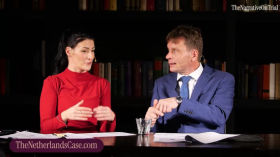
And these articles, "collateral damage", are something like a documentation of the leaden, sad, merciless corona years. Good evening, my name is Frank Wallich. I am a journalist. And two years ago my wife had these collateral damages, she invented them, Johanna Wallich. And we wrote them together. And now the whole thing is being filmed. But in a slightly different way. It was only possible to film it at all — you cannot do this with your iPhone, with your hobby camera. Instead it takes manpower, it takes experience, it takes technology, it simply takes craftsmanship and practical skill. Today we are presenting the first films, and this discussion along with them.
Next to me sits Robert Cibis, the head of Oval Media. He made the whole thing possible, so that it works like this at all. Next to him sits Marta Morvai, a very, very good violinist who in the corona crisis essentially lost her profession. And now has to do something else, because corona goes on. Next to me sits Sándor Horváth. During the corona period his son took his own life. He then wrote to us, and we wrote down this terrible story. And on the far right sits my wife, Johanna Wallich.
She wrote a great many of these corona stories and also had the idea that at some point it would have to take a new form, a new medium, namely that it would be filmed. Robert Cibis, with Oval Media you took on this undertaking. Why, in fact? Kollateral really is important. In the legacy media, and altogether in this mood of crisis, in the constant state of emergency, we have so much agitation, hardness, coldness, calculation. And sometimes you see — well, many people do not see the world around them. And I believe that if we really want to come out of the crisis as unharmed as possible, then humanity is what it takes.
And humanity means above all understanding how other people are doing, being able to feel with them and building up that connection. Because this isolation of people, this practical demotion of a formerly cultural being to a body has many, many effects on the interplay of the individual with others, but also with society as a whole. And far too little is told of that. I believe we can only understand what is happening right now if we are also able to convey this perspective as closely as possible, with as many examples as possible.
And that is why Kollateral is essential for me. Right at the beginning of the crisis I was already asking myself why this perspective was so underrepresented. And how good that you did this. How good that you wrote these articles and that together we managed to build on them. Yes, but in this crisis — I was with ARD for 30 years as a political correspondent. In this crisis it was not possible to get pieces like the ones we wrote, about people's suffering in this corona crisis, under this merciless policy, placed anywhere. And we then heard that from colleagues in the editorial offices too. Robert, one more question before we perhaps come to the content. How is something like this financed?
It is almost a … Well, we at Oval Media have always put the will first, a little bit. Our company has existed for over 20 years. And we have initiated every project without there being any money. Only with the aim of then telling it, because it has to be told. And then, in the course of the work, we look for partners. And in this case it is like this: we say, we work for the viewers. And the viewers can make it possible for us to go on working, simply by transferring money to us, for instance. And this attitude, I have to say, is very energy-giving for me.
Because I know I am working for viewers. And if they do not want it, then they do not have to transfer anything. Or then I do not have to go on working. If everybody transferred only a small sum, one euro, then I could probably work completely professionally. I do not know exactly how many viewers there are. But in essence it would not take so terribly much to be able to work, if only many people take part. I forgot earlier to say that Bianca Hölke has joined us via Zoom. A head teacher who lost her school in the crisis because she held on to something that many journalist colleagues did not hold on to, or did not dare to. Namely a healthy scepticism, to ask: does all this make sense?
What harm does it do? What does it do to the children? Volker, we will come a bit closer together later on. I wanted now to put the question to Johanna: what was the reaction to the corona articles that we published on reitschuster .de? And how did this further development then come about, that writing for the readership was no longer enough at some point, and that we said we needed something else? Yes, when in 2020 we published the first article, which we had acquired in a private circle, on reitschuster, every article was always accompanied by the note: dear readers, if you too have a case of collateral damage to report, then do get in touch. And from the first article on, the response was so great.
People were shut up at home. The children were at home, no longer going to school. There was collateral damage — as this series was called in written form — on all sides. And so we really did get — we had millions of readers, thousands of letters. And in essence we never ran out of material. And one subject that provoked a particular response was always the subject of the children. And that is why, in the first episodes of this film version, we have dealt a little more intensively with the subject of school teachers and head teachers. How did it then develop further, that you tried to put it into film? I had got to know Robert Cibis through journalist colleagues and then also learned a bit more about his work.
He has set up a chronicle on a very large scale, the Corona film, a documentary several hours long, which by now has been watched by 1.2 million viewers. And then I thought it was phenomenal that there really are so few people who put into film what actually moves people, what weighs on them and what they want to see. And so we came together and said: we could also, and that is then a new format, realise this essentially journalistic subject in the form of a series of portraits. And what was then important to us was: that at the end of these documentaries we have a positive outcome. So that one also shows that not everything is hopeless, but that one still has the possibility of finding new friends, new supporters, of joining together anew, or indeed of taking new paths.
And that was then also the ending of each of these short documentaries, which we are now launching from tomorrow. We really have to come to the content. I still remember that Sándor Horváth sent us an email, in response to a story about how badly the children are doing, and said: my son is no longer alive. And I did not write that story then, because I thought, I find that so terrible, I find that so terrible. That is why my wife mainly wrote it, and she also got in touch with Sándor. How did it come about that your son is no longer alive? If we had known, we could probably have prevented it; unfortunately we noticed nothing.
He probably became depressed, and such a thing does happen, that one notices nothing. Afterwards we were given a list like that by the school psychologist. There are ten points on it, on how to recognise depression. None of them was discernible. We are in contact with his circle of friends, his girlfriend; they are a tight-knit group. We are still in contact with each other, and they noticed nothing either. They had a really lovely celebration, they had parties, and nobody picked up on anything. Your son was indeed out of school for a long time and was shut out and taught online, and he was at an age that is a typical age of puberty.
Perhaps it is also hard for children to see that after 17 come 20, 25 and 30 as well. We also talked about his plans, which he feared he would not be able to carry out. He was in his final year; at that time he was also having lessons, now and then at school. But he was considering whether he wanted to study, so he would have chosen a subject for which, because of the numerus clausus, he would have had relatively little chance in Germany. So we said: you go to Budapest, you have Hungarian citizenship anyway, and there you can simply take a fee-paying place. That is not a problem. Then he considered going into the ordnance clearance service.
That was another one of his ideas. He somehow found that funny. He also often went into the woods with his mates with metal detectors, collecting bits of junk. In any case, we said, well, I do not think that is a good idea, but if you want to do it, then you just do it. And if you want to wait now, then you take a year out. That is not an issue either. But what he absolutely wanted to do first — and I believe that perhaps frustrated him most — he wanted to travel the world. First a kind of work and travel, for a year. But then the world was closed to you. The world was closed. We said to him, well, try Thailand. At that time he could have got there with 14 days of quarantine and then visited the region and stayed there.
Yes, so we tried to build him up. We tried to give him courage. And as I said, we also said: take a year out, that is not an issue either. In our collateral damage articles we had also written about the psychiatric clinics, about them overflowing with children, about children who suffer from it. Mrs Hölke, does that sound at all familiar from your work as a head teacher? How did your children react to it, to ever less facial expression, to ever less contact with their classmates? How did they suffer from it, how did they react? Yes, the children suffer from it.
And not only the little ones, but the adolescents in particular too. Because they have no contact, because they are singled out. And in the lockdown it was especially bad, but the hygiene measures are still in place. And keeping your distance, also doing without social contact. And especially with the little ones, who cannot touch one another. And they need that. We have a strong need for it. It does something to them. Then they were simply quieter. Then they were calmer. And for me it was like this: the cheerfulness is simply no longer there. Has the situation improved or changed at all for the children since there has been classroom teaching again, which now, with politics becoming more hysterical, is in fact being called into question once more?
How are the children reacting to that? That I cannot answer for you at all. Because since March I have no longer been at school. And I have a lot of contact with parents. And what parents report to me is that among the children there is a great fear that they will have to stay at home again. That they will have to go back to homeschooling. And that weighs on them. And that will have effects in the long run as well. If the children go along with these hygiene measures for two years, then that is a period that for them can no longer be bridged. For us adults it is two years. We know how it was before. But children do not. I would like to turn now to Marta Morvai.
A solo violinist who gave concerts and was very much in demand. On concert stages at home and abroad. Now Marta teaches children the violin. And since the big stage is not open at the moment. Marta, you have gone from the big stage to the little children, the little stages. How is that? At this point I would like to correct you once again. Briefly, Frank, excuse me. I do not teach violin, I teach music. In general, in large classes at school. And since we have now been talking about it, I am also very sensitive to it. I took the project on quite headlong.
Because I wanted to pass on culture and classical music to the children. What I can do and what I have done for a very, very long time in my life. And still do, but very, very rarely. And since we were just talking about the children: as a teacher, or as a person who wants to teach children something, you are very, very dismayed when you see all these little faces behind the mask, looking at you for hours on end. All I want to say with this is that in my view it does not have much to do with protecting health when small children sit there for hours with the same soaked mask, which they keep pulling away from their faces, which they keep moving, and then they touch their pencils.
And all we achieve with it is that they suffer an acute lack of oxygen and have a great many bacteria on the mask and on their fingers. And very, very many people are not clear about that, I believe. Because if it were clear to them that we are doing more harm than good, then we would not be doing it, would we, Frank? Oh yes, perhaps we would, because this mask is also an instrument of power. I once saw a couple with masks in our area, in Berlin-Mitte; they were pushing a pram with a screaming child in it, because it only saw its parents in masks, and the street was completely empty. So it not only has nothing to do with protecting health, it is also a signal, I say: I obey, I take this seriously, I am afraid. And those are above all young people as well. And they are also people from the cultural sector, who have worked their way into culture; in the first period of the corona crisis they fell over themselves in approval of all these corona measures that there were. Cancellation of concerts — wonderful, there is a bit of money for that.
Cancellation of productions, cancellations of performances. These are the people working in culture, and they were quite sweet and conformist. Except for you, one of the few. Yes, in fairness one has to say that such large events, of course, when the state media then assume such an incredibly great danger, also represent a very great responsibility for those concerned who run the events; they do not want to become a hotspot. And because there were very, very few studies at the beginning on how the illness spreads, they took everything onto their own shoulders, so to speak, and enforced it even more seriously and earnestly than the state measures and requirements were, because they thought they were doing something good. And the problem — I can understand these people — the problem is only that nothing is questioned, that de facto no studies are carried out in these concert halls.
And when one is carried out, then it is not made public. And that is also why people walk around the streets with masks, because nobody tells them that no infection takes place outdoors. There were various theatres that developed corona plans, which were examined and approved by all sorts of health experts, and that was not followed; instead artists performed on stage and the auditorium was empty. And anyone who knows a little about culture knows that these actors, these musicians, need eye contact and the contact of smell, simply the knowledge that an audience is there; otherwise they would be bad.
You need the audience in order to feel that vibe. And indeed — well, for me it is like this, I cannot speak for others — I play a little differently every time, depending on what I get back. If, for example, I have a lot of people in the audience who are very, very relaxed and, let us say, not immediately attentive, then I perhaps play a bit faster and then a bit louder, so that I then seize their attention. If I sense that the mood is very, very sensuous, then I can also allow myself to play a little more quietly and really work with the tone — that depends on what happens in that moment.
When you do not have this contact — I mean, all these cameras, they see, it is quite a cold atmosphere, we need — I am turning to you now, I am not speaking into the camera, perhaps that is a … Yes, there were cultural events where cardboard figures were put on the seats. I mean, for me that is the most dreadful thing one can imagine, that it is like an online teacher who, in order to be able to teach really well, sets up some dolls in front of her. What is it like for somebody who really lives for culture, lives through culture or through music in this case, to have all of that cancelled? And then? I had a nervous breakdown; I do not want to hide behind my little finger either, it was terrible.
I cried for months, and I started with it because the question came up earlier of why I did not swim with the mainstream. I wanted, so to speak, to get to know the enemy, I wanted to know exactly what was destroying my life, and I engaged very, very — well, for a musician, very, very much — with the various medical facts and data and studies. I read studies from Harvard, Yale, I read a great deal of the Lancet, Nature, so plenty of mainstream sources as well. You cannot really say that I informed myself elsewhere from some so-called crackpot magazines.
I acquired a very large, very broad knowledge of virology, immunology, and as soon as I then read something in the newspapers that differed from my knowledge at the time, I began to become sceptical and then started to question everything and to ask myself why such headlines are published in the newspaper when they are not true at all. And for me as, let us say, a foreigner who came to Germany, that was quite a collapse of my ideal, because I grew up believing that in Germany everyone is fair, everyone can handle the facts very well, and if everything is in order, then it is in Germany.
And then to notice this discrepancy, which grows larger every day, that tears me apart, because it is a completely different world view. And now I will be quiet. I would still like to ask Robert: do you believe that with these corona films, with the Kollateral films, which are now being released one after another every fortnight as 15-minute documentaries, are coming out, can you convince anyone, or is it a matter of saying: we have presented the period chronologically, we have produced, broadcast, written, but I cannot convince anybody any more, they can only inform themselves? Well, basically, for me, and I believe in general, it is not at all a matter for me of convincing anybody of anything. The problem is that among many people there is no thirst for knowledge at all, that there is no conviction, indeed that there is not even any matter-of-factness.
Basically we have, how shall I put it, we have manipulation, psychosis, fears, the collapse of a world view, defences, regression. Regression means, for example, that one says: you are angry — but only because one is angry oneself does one project it onto the other. So when you have these inverted logics, so people say, for example, you can see it written here too, the critics of the measures simplify everything, see everything only in black and white, and I say: huh, we do exactly the opposite; the dominant narrative of the legacy media is an absolute black-and-white story, incredibly simplified, as if the financial collapse, for example, were now due to the virus, as if one creates reality for oneself, and so on and so forth.
And it is this simplification we resist, and we say no, no, we have to look at reality again. And I only wanted to say one sentence: it is also no coincidence that the people working in culture are so easy to manipulate, because in this crisis there are people who are particularly trained in imagining things, in creating things and also in inventing things, and we who work in culture have the tendency to make the world the way we like it. Yes, so I sit here at the table and say, this is only a plain room, but I feel as if I were in a palace, here is a palace, we are not at a press conference at all, we really are in a palace, and if I tell myself that a thousand times more and all the others confirm it, then the wall already looks to me as if there were gold ornament on it. And actors have this ability, directors have it, but musicians have it too, who transport you into other worlds; that is their profession, just as academics can also convey incredibly complex ideas and can work themselves up into them; that is a wonderful ability that we humans have. And if somebody now gives me a two-hour lecture about it — this is an example a French psychologist gave, I think it is very good — and says it is good to water flowers with petrol, and she explains exactly the molecules, and I say, I cannot quite follow with these molecules, but it will probably be right, she has thought about it so much, she has written such a thick book about it, it will probably be right, as an academic I could do that, I could let myself in for it in my thinking. The person who says, that is too complicated for me,
but I know petrol is bad for flowers, that person is also not so easy to manipulate. We see that in our society too: the less academically educated the person is, the higher is the coefficient, the proportion of people who go along less with the manipulation. Yes, the tradespeople, for example. I know few tradesmen who wear a mask, just to say it now, because it simply strikes me as absurd, and they have also not yet seen a single death. No, what are you talking about, this is a deadly plague. Excuse me. Yes, yes, and that is just how it is, and then you either have to pull that study with the petrol and the flowers apart, refute it and find the mistake — some people can do that too, and they are very clever people, yes, and I would like to get to know them, I think that is good, or else one says, I simply rely on my common sense, and then, those are the two methods. But as I said, it is not a matter of convincing anybody of anything, it is a matter of first bringing the discourse onto an empathetic level, of seeing the human being as a human being and no longer as a medical object, and secondly of finding a factual level, of saying: all right, here is the study, I know there is certainly another study, show it to me, let us discuss it.
Yes, and then one can talk about it. And this cursing and this agitation, this excluding, is what dominates, and if somebody sits opposite me and only curses, then I cannot talk with that person either, then it is lost as well. And when people then say to me, but do talk to the other side — which one, then, the people who publish in Nature and sometimes have really exciting studies? And then one says: hey, we should discuss that. Or the thing that is now on the Tagesschau, for example — there I say that is not factual. But it is almost as it was when I talked with my colleagues who then say: yes, what you are doing is not bad at all, but with us that would not be possible. Johanna, what reactions did we get from the journalistic side to our articles, and which we basically hope to get back for the films as well? Among these many thousands of letters that we received there were also numerous ones from former or current colleagues who said, if they were employed in the mainstream: with what you are publishing you are right, and the stories you write are true, but we would never be allowed to run something like that. And at the beginning it really was the case, when we began our stories, that one was not allowed to report on this collateral damage at all, because what must not be could not be.
And by now — well, at the beginning, from the journalistic side, one was not allowed to report on these human tragedies, on this damage in society, in culture, one was not allowed to, because it must not be, because the supreme aim was indeed the fight against the virus by means of the measures, and anything about it that one questions or doubts was, so to speak, not PC. By now it was the case that in part the Bild newspaper had taken up our articles in its wake and then also reported on such damage.
Yes, but at the beginning it simply was not PC. And in those emails that we received there were also numerous journalists who still work at the public broadcasters or somewhere like that. Some said, well, we would never be allowed to run something like that, and the others said: how can you publish such stories on this portal? None of this is allowed to be true. Well, so the reactions were ambivalent. Yes, it was also the case that we then received information from colleagues who said: unfortunately we cannot do it. But what is it basically that leads — and I ask everyone here — to people being unable to write that against their better knowledge? It is not about the first two years: now we have a great many old people whose lives we saved, and that the damage was not looked at, but instead it was said, great online teaching, and everybody knew, as long as, or in so far as, they had children at all, that the opposite was true, that basically the children were treated incredibly badly, all the way to psychological deformations. Mrs Bianca, can you say something more about that?
The great problem is that the children cannot say no. We adults, we have the chance to be able to decide. We can say, yes, I read the mainstream media, and that is one truth, and I act accordingly; or I look for alternative media that perhaps give me different information, and can then decide afterwards. Children cannot do that. Children depend on what adults do with them, on what adults prescribe for them, and in this case the children cannot even say no, and with the very little ones that is dramatic, and with the adolescents too. What happens if an adolescent says no — and that is catastrophic. That is the subject of children's rights. Well, all right, but when the adults formulate children's rights and demand or sue for children's rights, the children again have nothing to say.
We received a few emails from our school saying that our son Xaver, he is ten years old, that he hangs his mask crookedly, that he walked around a stairwell without a mask; and at some point so many emails came that we said, we will not tell the child about them any more. It is simply a burden. Might it have something to do with the fact that very many of these important, acting politicians have no idea that sexual intercourse can have lifelong consequences, because very many of them are childless? Might a lack of understanding come from that? I cannot say, but what I see makes me sad. Today I heard about a mother whose 17-year-old daughter is unvaccinated, and such pressure was put on her at school that she, I believe, walked out of the lesson.
And then there was a conversation, and the teacher said: yes, I am terribly sorry, that is not what I wanted at all. I only wanted to inform. And then I asked myself: what is going on here, when apparently not only the politicians give it no thought, but not even the teachers reflect on what is actually happening and why somebody may be unvaccinated, and that this is perfectly all right too. I have only recently entered this profession, and I have tried to ask myself precisely this question: why do the teachers go at the children so very vehemently and reprimand everyone who does not have the mask properly over their nose, no matter how small, no matter how big.
So the six-year-olds are reprimanded just like the teenagers. And I think I have seen that they do not ask themselves all these questions at all. It is like a task the teachers are given, it apparently does not pass through the filters, because otherwise — I know no empathetic person who would do such a thing to a child. Excuse me, perhaps I am somewhat different in that, but I know nobody. And when one really stands there and takes the time to write emails to the parents: your son would please … and his brain needs oxygen, and that is why he takes the mask off — what kind of person am I then?
Empathy can have nothing whatever to do with it. A person who has broken the rules — with teachers in particular that is how it is. They are then also told on higher up the hierarchy, or reported, or denounced. Do you know what I do every day? I untie the knots in the children's masks at the back, because their ears are already sore behind, because the parents or the teachers pull the knots so tight that their ears are like that the whole time. They are sore. Then they come to me: wait, I have a headache. Then we open the window, they stand at the window, and then they sniff a little air. All right, how can one demand that?
How can one do that? I have no answer to that either. I only know that very few politicians say: this is a merciless state towards its citizens. And very many politicians hope for applause from their right side when they say, we will tighten it a bit more. We will have another lockdown. Mrs Hölke, you wanted to say something? Yes. Teachers are civil servants, and there is a reason why they became civil servants. Because they have a high need for security. And beyond that, most civil servants are also obedient. We took an oath, and that is why obedience is demanded of us too. That is one thing. And the other is that my colleagues are extremely afraid.
They are in the middle of the mass psychosis. And out of this fear, fear for their lives, they can no longer feel any empathy. So they are controlled from outside. They are right in the middle of their own feelings and then have no view of anything else. And unfortunately that is the great majority among the teachers. But there are also the others. I do have a large network of teachers and by now of school managements as well who have preserved it. But it is solely because they are not afraid. And perhaps they are also not quite so obedient, but simply want to do the right thing. Nowadays it seems one almost has to be able to afford not to be afraid; whoever can afford that and can also say it.
How do you experience it in your private surroundings, with masks, with obedience, with home office, no longer being able to go into offices at all? For bosses that is of course awfully easy, to be a real boss when all the staff can only be reached digitally. Well, that depends on the boss. I really cannot complain there. And I now also have home office, or mobile working, as it is called with us; that is a legal matter. And that way I gain two hours of free time every day, if you like, because I do not have to go to Berlin. But I also like going into the office; today, for example, I was at the office too, because there I can also deal with a few things that cannot be done online.
You meet colleagues; I was glad today as well, I met two colleagues, in person, three, in fact. Personal contacts are very important to me too. But I also experience what I have heard here from the previous speaker. When I have home office, then every day around midday I walk for an hour with the dog across a meadow and through the woods. And there I keep meeting people who walk on the meadow with a mask. And I ask myself, what is going on there? Well, perhaps they are civil servants. No, not necessarily. And with teachers I have had an experience too, without naming names. I have got to know teachers from the school of my children, or now only one child, unfortunately. They are completely relaxed.
They also once said — well, about my son, the one teacher — that in his lessons the masks were sometimes taken off. And then I also know a teacher who is panic-stricken about corona. And she told me how she conditioned the children at the beginning, when the whole corona business started. It reminded me of a documentary about a far-eastern country where very strict rules apply. There the children are also very strongly conditioned. We have just now been on the subject of fear, or of obedience. Johanna, how do we experience it that people we write about say: please only anonymously, do it in a way that cannot be traced back.
But this series of films that Oval Media is now broadcasting works on exactly the opposite principle. How was that achieved? Well, for one thing we experienced that many of these thousands of letters wrote their suffering and their worries off their souls. And that they did not even necessarily want it to be published. But there were also letters, and that is why the letter from the Horváth family has stayed so clearly in my memory; they said: if we can do anything to draw attention to the suffering of the pupils and to this unspeakable situation, then please publish our story, and we release the story, so to speak, so that they can write about it.
And that is why this story too became a Kollateral story, in which they show their faces — what then became of these people as things went on, how they went on dealing with their situation. And the point of turning the stories into film is precisely that we want to give a face to all these figures, to all these grievances, to these effects on society and on culture. So the one … and is betrayed by his friends. Then we have the head teacher Bianca, who loses her school.
We have the public health officer who asked the wrong questions and thereby put an end to his career. And we even have a football world champion who lost his job as a columnist at the biggest German tabloid because he asked the wrong questions. In the run-up to this press conference we did email links, if that is what it is called, sent them out today. And quite a number of people are connected, I can see that on the monitor. But I do not know whether the people can say anything to us. That is, can ask us anything. Let us simply try whether it works, technically so complicated, so simply, that one of those connected, if they have a question, can ask us something.
The wonderful technology. If it should be the case that somebody asks something or would like to ask something, of Marta, Robert, Sándor or Johanna, then please do. For that would also be a very clever way to begin a series, that one basically also comes into contact with an audience and can talk with one another and perhaps give further information. All right, then — I believe we have discussed things with one another. I have learned a great deal. I hope … Somebody? Yes, Olaf.
Yes, no, I only wanted to add something by way of comment. I agree with many things. I see it in yet another aspect, besides all the things that concern the children in the schools. It is also a question of: why is there no reporting on it — to quote Rudolf Augstein: to say what is? Because, firstly, many colleagues are afraid. They are afraid of losing their jobs, afraid of no longer getting on screen, afraid of no longer getting on air, of no longer being able to write stories. And what is frightening is this collective behaviour, that one conforms, that one switches off independent thinking.
Perhaps also against the background of this fear; the loss of a job is the other explanation. The second explanation is: many people are still doing too well. They do not trouble their heads. That is also why the teachers in the schools go along with it all. It is just that many people do not complain either, they put up with it, because they are still doing well. In the times before the iron curtain in eastern Europe, under dictatorships, that was different. There people were not doing well, and so they resisted. Here I am only quoting Karl Marx: revolutionary situations only arise when the proletariat, the citizens, have nothing to lose but their chains. That is how it is. And the other thing I find frightening, besides the journalists who appeared more as activists and not as journalists. In 30 years as a political correspondent from Bonn and Berlin I have never experienced such a thing. Not even in 1990, not even under Gerhard Schröder was there such a unison choir of so-called quality journalists, which protected those in power practically as a praetorian guard.
That is how I always described it: they were no longer the protection of democracy, but … of the federal government. They practically defended it against every attack or every question that voiced criticism. But thirdly, it is also frightening that art has completely failed to appear. Well, we experienced it. The artists' scene was simply pacified with subsidies, and those who did rebel once. And I found that very interesting. This picture that unfolded there reminded me of — I was a contemporary witness, or a fellow sufferer, of Wolf Biermann's expatriation, with Manfred Krug and Hilmar Thate, Angelica Domröse, all those actors who left the GDR. They had also signed.
It was similar here with #allesdichtmachen. A great many artists took part in that. Respectful, really wonderful pieces. But how quickly they all caved in. Heike Makatsch caved in. They cravenly slipped away from the screen. The only ones left at the end were Wotan Wilke Möhring, Jan Josef Liefers. But he then had to go, via the Bild newspaper, into production, onto a covid ward, in order to wash himself clean of having taken part in #allesdichtmachen. Nina Proll also stayed with it. But all the other artists caved in. And that is how it was in GDR times as well. They first signed the Biermann declaration, and then suddenly, so and so many artists were then published, then withdrew their signatures. And in a democracy I actually find it shattering that there is such a picture of cowardice and of fear about freedom, because one fears for one's job, for one's importance.
In this period I actually found that the most shattering thing, this cowardice, this fear. And above all: in the end your job and your money and your income are more important than democracy, freedom and reflection. Yes, and right now an actress is positively crying out for further film roles. That is the partner of our foreign minister, Natalia Wörner, who said, printed in various newspapers: I will not film with unvaccinated people. I am very, very sweet and nice and well behaved, and please book me. Is there anything else from the auditorium … Yes, yes, Marta. Dear Olaf, we do not know each other. In person, unfortunately; but I would briefly like to say something about #allesdichtmachen: we shot an episode — or rather, it is called "Alles auf den Tisch".
They are almost the same people: with Nina Proll, with Eva Herzig, with Wotan Wilke Möhring, with Jana Paraskiewa, with Dietrich Brüggemann, with me. And these are high-quality conversations, about half an hour long, with specialists, with scientists who have not been listened to in the mainstream until now. But these really are top-calibre people, and from the law, from medicine, from the press, from … well, what else is there? There are more than 60 videos; from politics: Sahra Wagenknecht has now taken part too.
And it is a series I would recommend to anybody who wants to inform themselves: allesaufdentisch.tv. Unfortunately, what also struck me about this campaign was how, after ten minutes, the headline in a magazine already read "a cauldron of crackpots". I personally spoke with Professor Hans-Joachim Maaz, from the GDR — if you still remember him, he is a psychiatrist of high, very high standing — for a journalist to allow himself such a thing, to utter the word "crackpot" about such a person, that makes you cringe for them. And what I would briefly like to add: after ten minutes this stigmatisation already came, with the best will in the world, there were 50 videos, 30 minutes each.
What sort of objective opinion can arise after ten minutes? Because what must not be cannot be. I particularly admire the actress Nina Proll, from "Vorstadtweiber", one of my favourite series. She too held a conversation with, I believe, a female professor, and there a Spiegel journalist then condescended to say that it was nothing at all, that it was not journalism, that they had only confirmed each other. Well, I mean, when I watch ARD or ZDF in the evening, who confirms whom there every evening — that is really scandalous, and the Spiegel says that about such conversations. And they had Relotius in their ranks, and they had Mr Leyendecker, who to this day does not know who the witness for his RAF murder is; he will take him to the grave, because he probably invented him.
And these are simply scandalous matters, but today it comes in a form which, as I said, I have not experienced since 1989, the way such media — they are not media watchdogs, not watchdogs at all, but praetorians and guardians of the defence of government policy. But we journalists can notice it, we can describe it, and we will not forget it either. Robert Cibis on that. I just wanted to add something briefly: firstly, that is what is said when you have no argument. One also has to — these campaigns that have just been mentioned are so impeccable that one practically has to switch registers to abuse in order to make anything negative shine through at all.
We at Oval Media will publish a book on #allesdichtmachen in a few weeks, edited by Professor Michael Meyen, and I wanted to mention that while I have the opportunity. To reflect on the whole thing once more: not only the making of these films, but above all their reception, and what that says about our society. What do you think about this Kollateral film — a superb documentary, I have seen the two pieces — about something like that perhaps also running on Servus TV? They are at least more courageous. Are there contacts there? I mean, something like that would also suit any regional channel; I will not even talk about the main channel, but it would also suit ARD very well: professionally made, interesting, controversial, and one could respond to it, and that is the best thing journalism can do, that people respond to solid, well-crafted work.
Yes, of course — well, we are a platform ourselves, Oval Media is a website that also streams the videos itself, on its own video servers, and we also offer it to other platforms. The Kollateral film will run on at least ten platforms and perhaps also on various broadcasters, and of course it can also run on Servus TV. We are building, we are running ahead, so to speak; with these projects we feel like pioneers for this stance. We are not alone in it, but still relatively few, and that is why these brands are to be continued and expanded, and gladly also on other broadcasters. Well, I am told via the monitor whether another of the colleagues connected would like to ask something.
If nobody asks, I will start a final round here. Johanna, what do you expect, how will this go on? This collateral damage and these Kollateral films at Oval Media are also something like a reassurance for ourselves that we are not the idiots and not alone. Yes, as Robert said earlier, it is not about convincing people or supplying viewers with new facts or new findings; it really is meant as a kind of chronicle, so that nobody can say afterwards — it says so in the opening titles too — we did not know that. So we want to document, to portray, the individual fates, the individual occupational groups, the parents, the teachers, so to speak, to present the people without their being open to attack anywhere.
We also do not comment on the films; we simply let those affected by these corona measures, by these political decisions, tell their story, and that really is more of a chronicler's ambition that we have than an ambition to enlighten people or supply them with new facts. That is not at all our intention. And when a new portrait goes online every fortnight, it does not have to be that right at the beginning millions of people want to watch this series, but rather that it simply also serves as a kind of reference work. So one can, for example, in six months' time, when one discovers this series, listen back to it, if one is interested in what was actually going on back then.
The director tells me that Tamara has a question — can Tamara be connected? Yes, I would also like to say something, namely, Frank — and I, I still work at SWR, and I would like to probe a little. Olaf, I do not know you personally, but I have seen that you come from Focus. Well, I am still wrestling with my bewilderment at the journalistic situation, and I would really like to know whether you have any idea what it is due to, because Bianca has just said what it is due to among teachers; among journalists, for me it is — well, I have it too, I have also been in it for 30 years, or even 35. I have never experienced anything like it either, and I stand before it like an ox before a mountain; I am now also in the situation of working for the features department, so no longer — I used to be at Report and at the news — but now I no longer have the chance to contribute politically there, because I work more in the cultural field. But do you, do you have any idea? Well, I am still in a state of shock, I must say; that is also why I am here, and why I called Frank last year too, that is why: I no longer understand anything at all.
Tamara, I have no answer to that, I only perceive it and notice how colleagues then try to say: perhaps he is an antisemite. A Nazi he is for certain, a Coronazi or something like that. And I listen to it and write it down and think to myself, I will not forget this, that is simply — what culture is like at the moment, and I will keep asking. Olaf? Well, I see it like this: the journalists who still have a job, and they still earn reasonably decent money, and there what always applies is: whose bread I eat, his song I sing. And that is, it is actually embittering, but it really is so: free journalism, free expression of opinion hardly exists in the editorial office any more; in the end it did not exist at all, at Focus in principle either, there one was really just … that was dreadful too, when one asked critical questions or made critical remarks, that was just one thing … that was all it was. It is a collective resignation and conforming and swimming along; that is why the mainstream really fits, and it is — if journalism had worked like that in the GDR, well, I believe the GDR would never have collapsed. There many people joined in out of fear and compulsion, but here you no longer need to force the majority at all, they do it voluntarily — and the people in the old eastern bloc would all have dreamed of that, if they had done it voluntarily.
But we do know that the GDR collapsed, so there is still hope here too. Bianca would like to add something. Yes, there is no jolt, because people all still have money, that is why. Yes, is it changing … Bianca, can I hear you? Yes, I wanted to add something to what Johanna said, namely: when the call from Oval Media came, asking whether I would like to show myself in front of the camera, I did not think for a second, yes, I will do it. When I had put the receiver down, I thought, oh God, this will have consequences, what will come of it — and it was clear, there are really two consequences. One is, for me: I can say what injustice is happening here, what is being done to me here, and to show that to the whole world and to show my colleagues that they are not alone; so many experience it, and they sit all alone at home and think there is nobody else who thinks and experiences the same. And to be an example for my colleagues, to give them courage and also to show them a way, that we can connect this up for ourselves, that we can telephone one another and that there are others — and through this I experience myself as effective.
I am no longer at the mercy of it all, something does not just come over me and they do something to me; rather, I have it in my own hands, and if I now go public, then I do it: I authorise myself to do it. All right. Chapeau. And yes, chapeau. Marta, a closing word: where do you see yourself? Let us say, in a few months' time on a stage again, with an audience that is not cut out of cardboard. Without a mask. I have forgotten one very important point from our discussion; perhaps we have not had the subject until now either: I struggle a great deal with the 2G rule, because I find it discriminatory and not at all medically justifiable, since the tested people are the safest.
It is only about what is politically justifiable. It is about politics. And at my concerts, which I still had back then, I said in September: no, we are not doing 2G, I do not want to exclude people. And when, as an artist, one takes a stand against it like that, then one swims very strongly against the current, and one is simply pushed aside. And I seriously ask myself why people do not ask themselves this question, that of making a medically unjustifiable political decision towards exclusion in Germany. Yes, the future …
People, the alarm bells are not ringing for anybody. Forgive me, Johanna, that earlier, with journalism, that I had that said once more — I could not believe my ears, what the journalists say. I really could not believe my ears, that in Germany one as I said, the image of the West that I had, that one has to go through all this nowadays. You also hear from the leader of the Green party, the future economics minister, when he says: lockdown for the unvaccinated. Perhaps they will be given a town of their own at some point. Yes, that would be — then you would see that it is not down to the unvaccinated. Well, all right, excuse me, I do not want to pack the broadcast full of science now. No, but for me it really is — it simply hurts me that art and culture, which, exactly as Olaf said, must always criticise and always hold up the mirror, now always swim along with everything too.
And my colleagues, with respect, all only say: yes, of course, we have to do this, we all have to swim along, otherwise we all bear some kind of responsibility. It is a statement of what is; in many areas we cannot yet explain why it is so, one can observe it, and we will do so. Each in his own field: we with films and with articles, Robert Cibis by producing the films, and perhaps the audience will also give the odd contribution, so that something like this remains possible. And sometimes I too stand before it dumbfounded; then it is quite good not to be alone and to be connected with people who think in a similar way. And sometimes I am — I am the optimist in our family and I say, we are becoming more, and we will win.
My wife is usually a little more pessimistic about it, but that does not stop us from carrying on. But we will only win if we become loud. We will only win if we say to everyone: no, not like this. No, I will not torment children. No, I will not discriminate against people. No, I want to travel by train without some certificate. Yes, I want to go to a restaurant with my own money and simply eat there. No matter what state of health I am in. We want to live. That too was a wonderful closing word. If I have not overlooked or failed to hear anybody now, then I say thank you. And it was fascinating for me, and I hope for those too who were connected. And gladly again some time.
And there certainly are subjects where we could, for example on the basis of these films that we have shot, and perhaps the articles, by linking them, create a platform. And then one could certainly hold such discussions for a larger audience as well, about particular subjects, about journalism, about children, about politics. If this government, the new government, lets us do it. I thank everybody who listened in and joined us from Holland and Berlin-Mitte, from southern Germany and northern Germany and from wherever else. Thank you very much. Thank you to you.
Was ich jetzt erlebe, was mit den Seelen der Kinder passiert, das macht die Kinder wirklich krank. Das geht für mich nicht mehr. Und das ist unerträglich. Das ist für mich wirklich in meinem Herzen unerträglich. Kollegen haben mich gewarnt: die führen dich aufs Eis, die wollen dich reinlegen. Ich sag, das ist doch mein Freund, den kenn ich. Das macht der nicht so. Das ist der Giftschrank der Geschichte, der hier aufgemacht wird. Die merken das selber überhaupt nicht. Das ist eigentlich erschreckend. Ich komm da rein und denke, ja, hier ist es schön. Und freue mich, die Kinder zu sehen. Und freue mich, auch die Kollegen zu sehen. Und freue mich, da was Tolles zu machen. Und wenn das nicht mehr da ist, wenn da nur noch Kinder vermummt rumlaufen und artig durchs Gebäude gehen und gar nicht mehr rein dürfen ohne Unterschrift, macht das keinen Sinn mehr.
Dann ist das nicht mehr meine Aufgabe. Teilweise war ich schon richtig labil, hatte Depressionen und so. War auch richtig in Psychotherapie. Hatte auch Suizidgedanken, hab mich auch geritzt. Aber dann hab ich mich gestärkt, hab mir einen Ruck gegeben. Deswegen möchte ich auch vielen Menschen helfen, die auch dieses Problem haben. Weil viele haben durch Corona richtig Depressionen bekommen. Ich will denen unbedingt helfen. Das ist so sinnlos, sich zu ritzen. Man kann was Besseres machen. Kollateral ist eine Fortsetzung von einer Artikelserie, die bei reitschuster.de erschienen ist.
Und diese Artikel, Kollateralschäden, sind so was wie eine Dokumentation der bleiernen, traurigen, unbarmherzigen Corona-Zeit. Guten Abend, mein Name ist Frank Wallich. Ich bin Journalist. Und meine Frau hat vor zwei Jahren diese Kollateralschäden, die hat sie erfunden, Johanna Wallich. Und wir haben sie zusammen geschrieben. Und jetzt wird das Ganze verfilmt. Aber auf eine bisschen andere Art und Weise. Das war ja nur möglich, das zu verfilmen. Das kann man nicht mit seinem iPhone machen, mit seiner Hobbykamera. Sondern da braucht es Manpower, da braucht es Erfahrung, da braucht es Technik, da braucht es einfach ein handwerkliches Geschick und handwerkliches Können. Wir stellen heute die ersten Filme vor, dazu diese Diskussion.
Neben mir sitzt Robert Cibis, Chef von Oval Media. Der hat das Ganze ermöglicht, dass es überhaupt so funktioniert. Neben ihm sitzt Marta Morvai, eine sehr, sehr gute Geigerin, die in der Corona-Krise im Grunde ihren Beruf verloren hat. Und jetzt was anderes machen muss, weil Corona geht weiter. Neben mir sitzt Sándor Horváth. In der Corona-Zeit hat sich sein Sohn das Leben genommen. Er hat uns dann geschrieben, und wir haben diese schlimme Geschichte aufgeschrieben. Und ganz rechts sitzt meine Frau Johanna Wallich.
Die hat sehr viele dieser Corona-Geschichten geschrieben und auch die Idee gehabt, dass es irgendwann ein neues Format haben muss, ein neues Medium, nämlich dass es verfilmt wird. Robert Cibis, Sie haben mit Oval Media dieses Unternehmen übernommen. Warum eigentlich? Kollateral ist schon wichtig. Wir haben in den Altmedien und insgesamt in dieser Krisenstimmung, dem ständigen Ausnahmezustand, so viel Hetze, Härte, Kühle, Berechnung. Und man sieht manchmal, also viele Menschen sehen nicht die Welt um sie herum. Und ich glaube, wenn wir wirklich möglichst heil aus der Krise kommen wollen, dann braucht es dazu die Menschlichkeit.
Und die Menschlichkeit heißt vor allen Dingen: verstehen, wie es anderen Menschen geht, da mitfühlen können und diese Verbindung aufzubauen. Denn diese Isolierung von Menschen, diese praktische Herabstufung zu einem Körper von einem vormals kulturellen Wesen hat viele, viele Effekte in dem Zusammenspiel des Einzelnen mit anderen, aber auch mit der gesamten Gesellschaft. Und das wird viel zu wenig erzählt. Ich glaube, wir können nur verstehen, was jetzt gerade passiert, wenn wir diese Perspektive auch möglichst nah an möglichst vielen Beispielen vermitteln können.
Und deswegen ist Kollateral für mich essentiell. Ich habe mich gleich am Anfang der Krise schon gefragt, wieso diese Perspektive so unterrepräsentiert war. Und toll, dass ihr das gemacht habt. Toll, dass ihr diese Artikel geschrieben habt und dass wir gemeinsam es geschafft haben, darauf aufzubauen. Ja, aber in dieser Krise — ich war ja 30 Jahre bei der ARD als politischer Korrespondent. In dieser Krise war es nicht möglich, solche Beiträge, wie wir geschrieben haben, über das Leiden der Menschen an dieser Corona-Krise, an dieser unbarmherzigen Politik, unterzubekommen. Und das hatten wir auch dann erfahren von Kollegen aus den Redaktionen. Robert, noch eine Frage, bevor wir vielleicht zu den Inhalten kommen. Wie finanziert sich so etwas?
Das ist ja fast ein … Also, wir von Oval Media haben schon immer so ein bisschen den Willen an erster Stelle. Unsere Firma gibt es ja seit über 20 Jahren. Und wir haben jedes Projekt initiiert, ohne dass Geld da war. Nur mit dem Ziel, das dann zu erzählen, weil es erzählt werden muss. Und dann, im Laufe der Arbeit, suchen wir Partner. Und in diesem Fall ist es so: wir sagen, wir arbeiten für die Zuschauer. Und die Zuschauer können ermöglichen, dass wir weiterarbeiten, indem sie uns einfach Geld überweisen, zum Beispiel. Und diese Haltung, muss ich sagen, ist sehr energiestiftend für mich.
Weil ich weiß, ich arbeite für Zuschauer. Und wenn sie es nicht wollen, dann müssen sie ja nicht überweisen. Oder dann muss ich ja nicht weiterarbeiten. Wenn jeder nur eine kleine Summe, einen Euro, überweisen würde, dann würde ich ganz professionell arbeiten können, wahrscheinlich. Ich weiß nicht genau, wie viele Zuschauer es sind. Aber im Grunde bräuchte es nicht so wahnsinnig viel, damit man arbeiten kann, wenn sich nur viele beteiligen. Ich habe vorhin noch vergessen, dass uns über Zoom Bianca Hölke zugeschaltet ist. Eine Schulleiterin, die in der Krise ihre Schule verloren hat, weil sie sich etwas bewahrt hat, was viele journalistische Kollegen sich nicht bewahrt haben oder sich nicht trauten. Nämlich eine gesunde Skepsis, zu fragen: macht das alles Sinn?
Was schadet das? Was macht das mit den Kindern? Volker, wir kommen nachher noch ein bisschen näher zusammen. Ich wollte jetzt an Johanna die Frage stellen: wie war denn die Reaktion auf die Corona-Artikel, die wir bei reitschuster .de veröffentlicht haben? Und wie kam es dann zu dieser Weiterentwicklung, dass das Schreiben für die Leserschaft mal nicht reichte, sondern wir sagten, wir brauchten was anderes? Ja, als wir 2020 den ersten Artikel, den wir so im privaten Kreis akquiriert hatten, bei reitschuster veröffentlicht hatten, war auch jeder Artikel immer versehen mit dem Hinweis: liebe Leser, wenn ihr auch einen Kollateralschaden zu vermelden habt, dann meldet euch gerne. Und ab dem ersten Artikel war die Resonanz derart groß.
Die Menschen waren zu Hause eingeschlossen. Die Kinder waren zu Hause, gingen nicht mehr zur Schule. Es gab Kollateralschäden, so wie diese Serie in Schriftform hieß, an allen Ecken und Enden. Und wir bekamen also wirklich — wir hatten Millionen Leser, Tausende von Zuschriften. Und der Stoff ging uns im Grunde genommen nicht aus. Und ein Thema, das besonders Resonanz hervorgerufen hatte, war jeweils das Kinderthema. Und deshalb haben wir uns jetzt auch in den ersten Folgen dieser Verfilmung ein bisschen intensiver mit dem Thema Schullehrer und Schulleiter befasst. Wie kam es dann zu einer Weiterentwicklung, dass du versuchtest, das filmisch umzusetzen? Ich hatte Robert Cibis über Journalistenkollegen kennengelernt und hab dann auch über seine Arbeit ein bisschen mehr erfahren.
Er hat ja eine ganz groß angelegte Chronik, den Corona-Film, eine mehrstündige Dokumentation angelegt, die mittlerweile von 1,2 Millionen Zuschauern angeschaut wurde. Und dann dachte ich, das ist ja phänomenal, dass es wirklich nur so wenige gibt, die filmisch umsetzen, was die Menschen eigentlich bewegt, was sie bedrückt und was sie sehen wollen. Und so kamen wir zusammen und haben gesagt, wir könnten auch, und das ist dann ein neues Format, dieses eigentlich journalistische Thema in Form einer Porträtreihe umsetzen. Und was uns eigentlich dann wichtig war: dass wir am Ende dieser Dokumentationen einen positiven Ausgang haben. Also dass man auch zeigt, es ist nicht alles ausweglos, sondern man hat immer noch die Möglichkeit, neue Freunde zu finden, neue Unterstützer, sich neu zusammenzuschließen oder halt auch neue Wege zu gehen.
Und das war dann auch jeweils der Ausgang dieser Kurz-Dokus, die wir jetzt ab morgen starten. Wir müssen mal auf Inhalte gehen. Ich weiß noch, dass Sándor Horváth uns eine Mail geschickt hat, auf eine Geschichte, wie schlecht es den Kindern geht, und hat gesagt: mein Sohn lebt nicht mehr. Und ich habe diese Geschichte dann nicht geschrieben, weil ich dachte, ich finde das so furchtbar, ich finde das so furchtbar. Deshalb, meine Frau hat das dann hauptsächlich geschrieben und ist auch mit Sándor in Kontakt getreten. Wie ist es dazu gekommen, dass Ihr Sohn jetzt nicht mehr lebt? Wenn wir das gewusst hätten, hätten wir es vermutlich verhindern können, wir haben leider nichts gemerkt.
Vermutlich hat er Depressionen bekommen, und so was gibt es, dass man nichts merkt. Von der Schulpsychologin haben wir anschließend so eine Liste bekommen. Da sind zehn Punkte drauf, wie man Depressionen erkennt. Nichts davon war erkennbar. Wir haben Kontakt zu seiner Clique, seiner Freundin, das ist eine eingeschworene Gruppe. Wir haben nach wie vor Kontakt miteinander, und sie haben auch nichts gemerkt. Sie haben eine richtig schöne Feier gehabt, Partys gefeiert, und niemand hat irgendetwas mitbekommen. Ihr Sohn war lange eben nicht in der Schule und war ausgesperrt und wurde online unterrichtet und war in einem Alter, das ist ein typisches Pubertätsalter.
Vielleicht fällt es Kindern auch schwer zu sehen, dass nach 17 auch 20, 25 und 30 kommt. Wir haben auch über seine Pläne gesprochen, die er befürchtet hat, dass er die nicht umsetzen kann. Er war ja in der Abschlussklasse, zu dem Zeitpunkt war er gerade auch im Unterricht, hin und wieder in der Schule. Aber er hat überlegt, will er studieren, also ein Studienfach hätte er sich ausgesucht, wofür er in Deutschland wegen des Numerus clausus relativ wenig Chance gehabt hätte. Da haben wir gesagt: du gehst nach Budapest, du hast ja eh die ungarische Staatsbürgerschaft, und da kann man halt einen Bezahlplatz nehmen. Das ist ja kein Problem. Dann hat er überlegt, zum Räumdienst zu gehen.
Das war auch so eine Idee von ihm. Das fand er irgendwie lustig. Der ist auch öfter mit seinen Kumpels mit den Metalldetektoren in den Wald gelaufen, hat sich irgendwelchen Müll zusammengesammelt. Jedenfalls, da haben wir gesagt, naja, die Idee finde ich nicht gut, aber wenn du das machen möchtest, dann machst du das halt. Und wenn du jetzt abwarten willst, dann machst du ein Jahr Pause. Das ist auch kein Thema. Und was er aber vorneweg unbedingt machen wollte, und ich glaube, vielleicht hat das ihn am meisten frustriert: er wollte die Welt bereisen. Erstmal so ein Work and Travel, ein Jahr lang. Die Welt war ja dann geschlossen für einen. Die Welt war geschlossen. Wir haben ihm gesagt, na probier mal mit Thailand. Zu dem Zeitpunkt hätte er mit 14 Tagen Quarantäne erst mal hinkommen können und da die Region besuchen können und da sich aufhalten können.
Ja, also wir haben versucht, ihn aufzubauen. Wir haben versucht, ihm Mut zu machen. Und wie gesagt, wir haben auch gesagt, mach mal ein Jahr Pause, das ist auch kein Thema. Wir hatten in unseren Kollateralschäden-Artikeln auch geschrieben über die Psychiatrien, über das Überlaufen mit Kindern, über Kinder, die darunter leiden. Frau Hölke, kommt Ihnen das irgendwie bekannt vor in Ihrer Arbeit als Schulleiterin? Wie haben Ihre Kinder darauf reagiert, auf immer weniger Gesichtsmimik, auf immer weniger Kontakt zu ihren Mitschülern? Wie haben die darunter gelitten, wie reagiert? Ja, die Kinder leiden darunter.
Und nicht nur die Kleinen, sondern gerade auch die Jugendlichen. Dadurch, dass sie keinen Kontakt haben, dadurch, dass sie vereinzelt werden. Und im Lockdown war es besonders schlimm, aber die Hygienemaßnahmen bestehen ja weiterhin. Und Abstand halten, auch auf soziale Kontakte zu verzichten. Und gerade bei den Kleinen, die sich nicht berühren können. Und das brauchen sie. Da haben wir ein starkes Bedürfnis nach. Das macht etwas mit ihnen. Dann waren sie einfach stiller. Dann waren sie ruhiger. Und für mich war es so: die Fröhlichkeit ist einfach nicht mehr da. Hat sich denn die Situation irgendwie verbessert oder verändert für die Kinder, seit es wieder Präsenzunterricht gibt, der jetzt ja im Grunde bei der hysterischer werdenden Politik ja auch wieder in Frage gestellt wird?
Wie reagieren die Kinder darauf? Das kann ich Ihnen gar nicht beantworten. Weil ich seit März nicht mehr in der Schule bin. Und ich habe viel Elternkontakt. Und das, was Eltern mir berichten, das ist eben, dass bei Kindern eine große Angst davor herrscht, dass sie eben wieder zu Hause bleiben müssen. Dass sie wieder in das Homeschooling müssen. Und das belastet sie. Und das wird sich auch auf Dauer auswirken. Wenn die Kinder zwei Jahre diese Hygienemaßnahmen mitmachen, dann ist das ein Zeitraum, der für sie nicht mehr überbrückbar ist. Für uns Erwachsene sind das zwei Jahre. Wir wissen, wie es vorher war. Aber für Kinder nicht. Ich möchte da jetzt mal zu Marta Morvai gehen.
Eine Sologeigerin, die Konzerte gegeben hat, die sehr gut nachgefragt war. Auf Konzertbühnen im Inland, im Ausland. Jetzt unterrichtet Marta Kinder auf der Violine. Und da die große Bühne im Augenblick nicht mehr offen steht. Marta, du machst jetzt von der großen Bühne die kleinen Kinder, die kleinen Bühnen. Wie ist das? An der Stelle möchte ich dich noch mal korrigieren. Kurz, Frank, entschuldigung. Ich unterrichte nicht Geige, ich unterrichte Musik. Generell, in großen Klassen in der Schule. Und da wir jetzt darüber gesprochen haben, bin ich auch sehr sensibilisiert. Ich habe das Projekt einfach Hals über Kopf übernommen.
Weil ich den Kindern Kultur und klassische Musik vermitteln wollte. Das, was ich kann und mein Leben lang sehr, sehr lange gemacht habe. Und immer noch mache, aber sehr, sehr selten. Und da wir gerade über die Kinder sprachen, ist man als Lehrer oder als Mensch, der den Kindern etwas beibringen möchte, sehr, sehr bestürzt, wenn man diese ganzen kleinen Gesichter hinter der Maske sieht, die einen dann über Stunden lang anschauen. Ich möchte damit jetzt nur sagen, dass es aus meiner Sicht nicht viel mit Gesundheitsschutz zu tun hat, wenn kleine Kinder stundenlang mit der gleichen durchnässten Maske da sitzen, die sie ständig aus dem Gesicht ziehen, die sie ständig bewegen, und dann die Stifte anfassen.
Und alles, was wir damit erreichen, ist, dass sie einen akuten Sauerstoffmangel haben und sehr viele Bakterien auf der Maske und auf den Fingern. Und das ist sehr, sehr vielen so nicht klar, glaube ich. Weil wenn es ihnen klar wäre, dass wir mehr Schaden anrichten als nützen, dann würden wir das ja nicht machen, oder, Frank? Ja doch, vielleicht doch, weil diese Maske ist ja auch ein Herrschaftsinstrument. Ich hatte einmal bei uns in Berlin-Mitte ein Pärchen mit Maske gesehen, die schoben einen Kinderwagen, da war ein schreiendes Kind drin, weil es nur seine Eltern mit Masken sah und die Straße war komplett leer. Also das hat nicht nur nichts mit dem Gesundheitsschutz zu tun, sondern das ist auch ein Signal, sage ich: ich gehorche, ich nehme das ernst, ich habe Angst. Und das sind vor allem auch junge Leute. Und das sind ja auch Leute aus der Kultur, die sich Kultur erarbeitet haben, die sich in der ersten Zeit der Corona-Krise, haben die sich ja überschlagen vor Zustimmung zu all diesen Corona-Maßnahmen, die es gab. Absage von Konzerten, wunderbar, da gibt es ein bisschen Geld dafür.
Absage von Produktionen, Absagen von Auftritten. Das sind ja diese Kulturschaffenden, die waren ja ziemlich lieb und angepasst. Bis auf dich, eine der wenigen. Ja, verständnishalber muss man dann sagen, dass solche großen Veranstaltungen natürlich, wenn die staatlichen Medien dann von so einer unglaublich großen Gefahr ausgehen, für die Betroffenen, die die Veranstaltungen dann leiten, auch eine sehr große Verantwortung darstellen; sie möchten dann nicht zum Hotspot werden. Und weil es sehr, sehr wenige Studien darüber gab am Anfang, wie sich die Krankheit verbreitet, dann haben sie sozusagen alles auf ihre eigenen Schultern genommen und das noch ernster und ernsthafter durchgesetzt, als die staatlichen Maßnahmen, Maßgaben waren, weil sie dachten, sie würden was Gutes tun. Und das Problem — ich kann diese Menschen ja auch verstehen — das Problem ist nur, dass nichts hinterfragt wird, dass keine Studien de facto in diesen Konzerthäusern gemacht werden.
Und wenn mal eine gemacht wird, dann wird sie nicht publik. Und deswegen laufen die Menschen auch mit Masken rum auf der Straße, weil keiner ihnen kommuniziert, dass draußen keine Ansteckung stattfindet. Es gab ja verschiedene Theater, die haben Corona-Konzepte entwickelt, die von allen möglichen Gesundheitsexperten geprüft und für gut befunden wurden, und dem wurde nicht gefolgt, sondern da sind Künstler auf der Bühne aufgetreten, und es war ein leerer Zuschauerraum. Und wer ein bisschen Ahnung von Kultur hat, weiß, dass eigentlich diese Schauspieler, diese Musiker, die brauchen den Sichtkontakt und den Geruchskontakt, einfach das Wissen, dass ein Publikum da ist, sonst wären die schlecht.
Man braucht das Publikum, um diesen Vibe dann auch zu spüren. Und tatsächlich, also bei mir ist das jetzt so, ich kann für andere nicht sprechen, ich spiele jedes Mal ein bisschen anders, je nachdem, was ich zurückbekomme. Wenn ich zum Beispiel lauter Menschen im Publikum habe, die sehr, sehr gelassen sind und, sagen wir mal, nicht sofort aufpassen, dann spiele ich vielleicht etwas schneller und dann etwas lauter, damit ich ihre Aufmerksamkeit dann ergreife. Wenn ich merke, die Stimmung ist sehr, sehr sinnlich, dann kann ich mir auch erlauben, etwas leiser zu spielen und auch wirklich mit dem Ton zu … das hängt dann davon ab, was in dem Augenblick dann passiert.
Wenn man diesen Kontakt nicht hat — ich meine, die ganzen Kameras, die sehen ja, das ist ja eine ziemlich kalte Atmosphäre, wir brauchen, ich drehe mich ja jetzt auch zu euch, ich spreche nicht in die Kamera, vielleicht ist das ein … Ja, es gab ja Kulturveranstaltungen, da wurden auf die Sitze Pappkameraden gestellt. Ich meine, das ist für mich das Schrecklichste, was man sich vorstellen kann, dass es ist wie eine Online-Lehrerin, die, damit sie richtig gut unterrichten kann, sich irgendwelche Puppen vor sich aufbaut. Wie ist das für jemanden, der eigentlich für Kultur lebt, durch Kultur oder durch Musik in diesem Fall lebt, das alles gestrichen zu bekommen? Aber dann? Ich hatte einen Nervenzusammenbruch, ich möchte mich auch nicht hinter dem kleinen Finger verstecken, das war furchtbar.
Ich habe monatelang geweint, und ich habe damit erst mal angefangen, weil die Frage jetzt vorhin fiel, wieso ich dann nicht mit dem Mainstream geschwommen bin. Ich wollte sozusagen den Feind kennenlernen, ich wollte wissen, was genau mein Leben kaputt macht, und ich habe mich sehr, sehr, also für einen Musiker, sehr, sehr viel mit den verschiedenen medizinischen Fakten und Daten und Studien auseinandergesetzt. Ich habe Studien aus Harvard, Yale gelesen, ich habe sehr viel Lancet gelesen, Nature, also lauter, also auch Mainstream-Quellen. Man kann eigentlich nicht sagen, dass ich mich anderweitig aus irgendwelchen sozusagen Schwurbler-Zeitschriften informiert habe.
Ich habe mir ein sehr großes, sehr breites Wissen in Virologie, Immunologie angeeignet, und sobald ich in den Zeitungen dann etwas anderes las, als mein Wissen war zu dem Zeitpunkt, fing ich dann an skeptisch zu werden und habe dann angefangen, alles in Frage zu stellen und mich zu fragen, wieso solche Headlines in der Zeitung dann publiziert werden, wenn sie überhaupt nicht stimmen. Und für mich als, sage ich mal, Ausländerin, die nach Deutschland gekommen ist, war das ein ziemlicher Zusammenbruch meines Ideals, weil ich bin so aufgewachsen, dass in Deutschland alle gerecht sind, alle sehr gut mit den Tatsachen umgehen können, und wenn alles in Ordnung ist, dann ist es in Deutschland.
Und diese Diskrepanz dann zu merken, und die tagtäglich größer wird, das reißt mich auseinander, weil das ist ein komplett anderes Weltbild. Und jetzt bin ich ruhig. Ich würde Robert noch fragen: glauben Sie denn, mit diesen Corona-Filmen, mit den Kollateralfilmen, die jetzt sukzessive alle 14 Tage als 15-Minuten-Dokumentation kommen, kann man jemanden überzeugen, oder ist das eine Geschichte, dass man sagt: wir haben die Zeit chronologisch dargestellt, wir haben produziert, gesendet, geschrieben, aber überzeugen kann ich niemanden mehr, die können sich nur noch informieren? Also im Grunde geht es für mich, und ich glaube im Allgemeinen, es geht mir ja überhaupt nicht darum, irgendjemanden von irgendetwas zu überzeugen. Das Problem ist, dass es gar keinen Wissensdurst gibt bei vielen Menschen, dass es gar keine Überzeugung, also dass es nicht mal eine Sachlichkeit gibt.
Wir haben im Grunde, wie soll ich sagen, wir haben eine Manipulation, Psychose, Ängste, Zusammenbruch des Weltbildes, Abwehren, Regression. Regression heißt, dass man zum Beispiel sagt, du bist wütend, aber nur weil man selber wütend ist, projiziert man es auf den anderen. Also wenn man diese Umkehrlogiken hat, also die Leute sagen zum Beispiel, das sieht man auch hier geschrieben, die Maßnahmenkritiker vereinfachen alles, sehen alles nur schwarz und weiß, und ich sage: hä, wir machen genau das Gegenteil, das dominierende Narrativ der Altmedien ist eine absolute Schwarz-Weiß-Erzählung, unglaublich vereinfacht, als ob jetzt der Finanzzusammenbruch zum Beispiel an dem Virus läge, als ob man sich die Realität schafft, und so weiter und so fort.
Und dieser Vereinfachung widersetzen wir uns und sagen nein, nein, wir müssen mal wieder in die Realität schauen. Und ich wollte nur einen Satz sagen: es ist auch kein Zufall, dass die Kulturschaffenden so manipulierbar sind, denn in dieser Krise gibt es halt Leute, die besonders darauf trainiert sind, sich Sachen vorzustellen, sich Sachen zu erschaffen und auch Sachen zu erfinden, und wir Kulturschaffenden haben die Tendenz, uns die Welt so zu machen, wie sie uns gefällt. Ja, dann sitze ich hier am Tisch und sage, das ist zwar nur ein einfacher Raum, aber ich fühle mich, als sei ich in einem Schloss, hier ist ein Schloss, wir sind gar nicht in der Pressekonferenz, wir sind wirklich in einem Schloss, und wenn ich mir das noch tausendmal sage und alle anderen das bestätigen, dann kommt mir die Wand auch schon so vor, als ob da Goldschmuck wäre. Und diese Fähigkeit, die haben Schauspieler, die haben Regisseure, die haben aber auch Musiker, die in andere Welten transportieren, das ist deren Beruf, genauso wie Akademiker auch unglaublich komplexe Ideen vermitteln können und sich da reinsteigern können; das ist eine ganz tolle Fähigkeit, die wir Menschen haben. Und wenn mir jetzt jemand einen zweistündigen Vortrag dazu hält — das ist ein Beispiel, das hat eine französische Psychologin genannt, das finde ich total gut — und sagt, es ist gut, die Blumen mit Benzin zu gießen, und sie erklärt genau die Moleküle, und ich sage, ich komme nicht ganz mit bei diesen Molekülen, aber es wird schon stimmen, die hat sich so viel Gedanken gemacht, die hat so ein dickes Buch dazu geschrieben, das wird schon stimmen, das könnte ich als Akademiker, da könnte ich mich darauf einlassen, gedanklich. Der Mensch, der sagt, das ist mir zu kompliziert,
aber ich weiß, Benzin ist schlecht für Blumen, der ist auch nicht so manipulierbar. Das sehen wir auch in unserer Gesellschaft: wenn man jetzt, also je weniger akademisch gebildet die Person ist, desto höher ist der Koeffizient, der Anteil der Menschen, die bei der Manipulation weniger mitmachen. Ja, die Handwerker zum Beispiel. Ich kenne wenig Handwerker, die eine Maske tragen, also um das jetzt mal, weil es mir jetzt einfach absurd vorkommt, und sie haben auch noch keinen Todesfall gesehen. Nein, was redest du da, das ist eine Todesseuche. Entschuldigung. Ja, ja, und so ist es eben, und da muss man entweder diese Studie mit dem Benzin und den Blumen, die muss man entweder auseinanderpflücken, widerlegen und den Fehler finden — das können auch einige, und das sind ganz kluge Leute, ja, und die möchte ich auch kennenlernen, das finde ich gut, aber oder man sagt, ich verlasse mich einfach auf meinen Hausverstand, und dann, das sind die beiden Methoden. Aber wie gesagt, es geht nicht darum, irgendjemanden von irgendwas zu überzeugen, es geht darum, dass man den Diskurs erst mal auf eine empathische Ebene bringt, dass man den Menschen als Menschen sieht und nicht mehr als medizinisches Objekt, und zweitens, dass man halt eine sachliche Ebene findet, dass man sagt: okay, hier ist die Studie, ich weiß, es gibt sicher eine andere Studie, zeig sie mir, wir besprechen das.
Ja, und dann kann man ja darüber reden. Und dieses Schimpfen und diese Hetze, dieses Ausgrenzen ist ja das, was dominiert, und wenn jemand mir gegenüber sitzt und der schimpft nur, dann kann ich mit dem auch nicht reden, dann ist es auch verloren. Und wenn mir dann Leute sagen, aber red doch mal mit der anderen Seite — mit welcher denn, denen, die in Nature veröffentlichen und teilweise wirklich spannende Studien haben? Und dann sagt man: hey, das muss man mal besprechen. Oder das, was jetzt zum Beispiel in der Tagesschau kommt, da sage ich, das ist unsachlich. Aber das ist fast so, wenn ich mich mit meinen Kollegen unterhalten habe, die dann sagen: ja, ist ja gar nicht so schlecht, was ihr macht, aber bei uns würde das nicht gehen. Johanna, welche Reaktionen haben wir denn erfahren von journalistischer Seite auf unsere Artikel, und was wir auch im Grunde hoffen, dass wir das auf die Filme zurückbekommen? Unter diesen vielen tausend Zuschriften, die wir bekommen haben, waren eben auch zahlreiche von ehemaligen oder aktuellen Kollegen, die sagten, wenn sie jetzt beim Mainstream beschäftigt waren: mit dem, was ihr veröffentlicht, habt ihr ja recht, und die Geschichten, die ihr schreibt, die sind zwar wahr, aber so was dürften wir nie bringen. Und es war anfangs wirklich so, als wir unsere Geschichten begannen, dass man über diese Kollateralschäden überhaupt nicht berichten durfte, weil nicht sein konnte, was nicht sein durfte.
Und mittlerweile — also man durfte anfangs von journalistischer Seite über diese menschlichen Tragödien, über diese Schäden in der Gesellschaft, in der Kultur, durfte man nicht berichten, weil es nicht sein durfte, weil es als oberstes Ziel eben die Bekämpfung des Virus durch die Maßnahmen gab, und alles daran, was man eben in Frage stellt oder bezweifelt, war sozusagen nicht PC. Mittlerweile war es dann so, dass teilweise die Bildzeitung unsere Artikel mit aufgenommen hatte in der Folge und dann eben auch über solche Schäden berichtet hat.
Ja, aber anfangs war es eben nicht PC. Und in diesen Mails, die wir bekommen haben, waren halt auch zahlreiche Journalisten, die noch bei den Öffentlich-Rechtlichen oder so arbeiten. Die einen sagten, also wir dürften so was nie bringen, und die anderen sagten: wie könnt ihr auf diesem Portal solche Geschichten veröffentlichen? Das darf doch alles gar nicht sein. Naja, also die Reaktionen waren ambivalent. Ja, es war auch so, dass wir dann Informationen von Kollegen bekamen, die dann sagten, wir können es leider nicht machen. Aber was führt denn im Grunde dazu — in die Runde gefragt —, dass Leute wider besseres Wissen das nicht schreiben können? Es geht ja nicht darum, die ersten zwei Jahre: jetzt haben wir ganz viele alte Leute, denen haben wir das Leben gerettet, und dass auf die Schäden nicht geschaut wurde, sondern es wurde gesagt, super Online-Unterricht, und alle wussten, so lange sie oder sofern sie überhaupt Kinder hatten, dass das Gegenteil richtig war, dass im Grunde den Kindern unglaublich übel mitgespielt wurde, bis hin zu psychischen Deformationen. Frau Bianca, können Sie dazu noch was sagen?
Das große Problem ist, dass die Kinder nicht nein sagen können. Wir Erwachsenen, wir haben die Chance, entscheiden zu können. Wir können sagen, ja, ich lese die Mainstream-Medien, und das ist eine Wahrheit, und danach handle ich, oder ich suche mir alternative Medien, die mir vielleicht andere Informationen geben, und kann dann danach entscheiden. Kinder können das nicht. Kinder sind davon abhängig, was Erwachsene mit ihnen machen, was Erwachsene ihnen vorgeben, und in diesem Fall können die Kinder nicht mal nein sagen, und das ist bei den ganz Kleinen dramatisch und auch bei den Jugendlichen. Was passiert denn, wenn ein Jugendlicher nein sagt — und das ist katastrophal. Das ist das Thema Kinderrechte. Ja gut, aber wenn die Erwachsenen die Kinderrechte formulieren und die Kinderrechte einfordern oder einklagen, haben die Kinder wiederum nichts zu sagen.
Wir haben von unserer Schule ein paar Mails bekommen, dass unser Sohn Xaver, der ist zehn Jahre alt, dass der seine Maske schief aufhängt, in einem Treppenhaus ohne Maske rumgelaufen ist, und irgendwann kamen so viele Mails, dass wir sagten, wir sagen dem Kind nichts mehr davon. Das ist einfach belastend. Mag das irgendwas damit zu tun haben, dass sehr viele dieser wichtigen, handelnden Politiker gar nicht wissen, dass Geschlechtsverkehr lebenslange Folgen haben kann, weil sehr viele kinderlos sind? Mag davon dann ein fehlendes Verständnis herkommen? Ich kann es nicht sagen, aber das, was ich sehe, das macht mich traurig. Ich habe heute von einer Mutter gehört, deren 17-jährige Tochter ungeimpft ist und in der Schule so ein Druck auf sie ausgeübt wurde, dass sie, meine ich, aus dem Unterricht gelaufen ist.
Und dann gab es ein Gespräch, und die Lehrerin hat gesagt: ja, es tut mir furchtbar leid, das wollte ich gar nicht. Ich wollte auch einfach nur aufklären. Und dann fragte ich mich, was ist da los, wenn nicht nur die Politiker sich keine Gedanken darüber machen scheinbar, sondern nicht mal die Lehrer reflektieren, was da eigentlich passiert und warum jemand vielleicht auch ungeimpft ist und dass es auch völlig in Ordnung ist. Ich bin ja neu in diesen Beruf eingestiegen, und ich habe versucht, mir genau diese Frage zu stellen: warum gehen die Lehrer so dermaßen vehement die Kinder an und maßregeln jeden, der die Maske nicht ordentlich auf der Nase hat, egal wie klein, egal wie groß.
Also die Sechsjährigen, die werden genauso gemaßregelt wie die Teenager. Und ich meine gesehen zu haben, dass sie sich diese ganzen Fragen gar nicht stellen. Es ist wie eine Aufgabe, die die Lehrer bekommen, das läuft nicht durch die Filter, scheinbar, weil sonst — ich kenne keinen empathischen Menschen, der einem Kind so etwas antun würde. Entschuldigung, also vielleicht bin ich da etwas anders, aber ich kenne keinen. Und wenn man tatsächlich dann so steht und sich die Zeit nimmt, Mails zu schreiben, den Eltern: euer Sohn möchte bitte … und sein Gehirn braucht Sauerstoff, und er zieht die Maske deswegen aus — was bin ich denn da für ein Mensch?
Da kann Empathie überhaupt nichts mit zu tun haben. Ein Mensch, der gegen Vorschriften verstoßen hat — gerade bei Lehrern ist das ja so. Die werden ja auch dann in der Hierarchie weiter oben noch verpetzt oder angezeigt oder denunziert. Weißt du, was ich täglich mache? Ich knote den Kindern die Knoten aus der Maske hinten raus, weil die Ohren schon wund sind hinten, weil die Eltern oder die Lehrer die Knoten so festziehen, dass die Ohren so sind die ganze Zeit. Die sind wund. Dann kommen sie zu mir: warte, ich habe Kopfschmerzen. Dann öffnen wir das Fenster, die stellen sich ans Fenster, und dann schnuppern sie ein wenig Luft. Okay, wie kann man denn das verlangen?
Wie kann man das machen? Ich weiß auch keine Antwort darauf. Ich weiß nur, dass ganz wenige Politiker sagen: das ist ein unbarmherziger Staat seinen Bürgern gegenüber. Und sehr viele Politiker erhoffen sich Beifall von ihrer richtigen Seite, wenn die sagen, wir ziehen das noch ein bisschen an. Wir machen noch mal einen Lockdown. Frau Hölke, Sie wollten was sagen? Ja. Lehrer sind Beamte, und das hat einen Grund, warum sie Beamte geworden sind. Weil sie ein hohes Bedürfnis nach Sicherheit haben. Und darüber hinaus sind die meisten Beamten auch gehorsam. Wir haben einen Eid geleistet, und deshalb verlangt man von uns auch Gehorsam. Das ist das eine. Und das andere ist, dass die Kollegen ganz große Angst haben.
Sie befinden sich mitten in der Massenpsychose. Und aus dieser Angst heraus, Angst um ihr Leben, können sie keine Empathie mehr empfinden. Also sie sind fremdgesteuert. Sie befinden sich mittendrin in ihren eigenen Gefühlen und haben dann keinen Blick mehr. Und das ist leider die große Mehrheit unter den Lehrern. Aber es gibt eben auch die anderen. Also ich habe ein großes Netzwerk an Lehrern und auch mittlerweile an Schulleitungen, die sich eben das bewahrt haben. Aber es liegt alleine daran, weil sie keine Angst haben. Und vielleicht sind sie auch nicht ganz so gehorsam, sondern wollen einfach das Richtige tun. Keine Angst zu haben scheint man sich heutzutage beinahe leisten können zu müssen; wer sich das leisten kann und das auch sagen kann.
Wie erleben Sie das denn in Ihrem privaten Umfeld, mit Masken, mit Gehorsam, mit Homeoffice, gar nicht mehr in Büros gehen können? Das ist für Chefs natürlich furchtbar einfach, dann richtig Chef sein zu können, wenn die ganzen Mitarbeiter nur noch digital erreichbar sind. Naja, das kommt auf den Chef an. Also da kann ich wirklich nicht klagen. Und ich habe jetzt auch Homeoffice oder mobiles Arbeiten, heißt das bei uns, das ist ja eine rechtliche Geschichte. Und ich gewinne dadurch jeden Tag zwei Stunden Freizeit, wenn man so will, weil ich nicht nach Berlin muss. Ich fahre aber auch mal gerne ins Büro, heute war ich zum Beispiel auch im Büro, weil ich da auch ein paar Sachen erledigen kann, die man nicht online machen kann.
Man trifft Kollegen, habe mich heute auch gefreut, habe mal zwei Kollegen getroffen, persönlich, drei sogar. Die persönlichen Kontakte sind mir auch ganz wichtig. Und dass ich aber auch erlebe, was ich hier vom Vorredner gehört habe. Wenn ich Homeoffice habe, dann gehe ich jeden Tag so in der Mittagszeit eine Stunde mit dem Hund auf einer Wiese und durch den Wald. Und da treffe ich immer wieder Leute, die auf der Wiese mit Maske laufen. Und da frage ich mich, was ist denn da los? Ja, vielleicht sind es Beamte. Nein, nicht unbedingt. Und bei Lehrern habe ich auch eine Erfahrung gemacht, ohne Namen zu nennen. Also ich habe Lehrer kennengelernt von der Schule meiner Kinder oder jetzt noch ein Kind leider. Die sind total locker drauf.
Sie haben auch mal erzählt, also von Sohnemann, der eine Lehrer, dass bei ihm im Unterricht auch mal die Masken abgenommen wurden. Und dann kenne ich auch eine Lehrerin, die hat panische Angst vor Corona. Und sie hat mir erzählt, wie sie die Kinder konditioniert hat am Anfang, so als die ganze Corona-Sache losging. Also da fiel mir eine Dokumentation ein über ein fernöstliches Land, wo sehr strenge Regeln gelten. Da werden die Kinder auch sehr stark konditioniert. Wir waren jetzt gerade so bei dem Thema Angst gewesen oder Gehorsam. Johanna, wie erleben wir es denn, dass Leute, über die wir schreiben, dass die sagen: bitte nur anonym, macht es so, dass es nicht zurückzuverfolgen ist.
Aber diese Filmreihe, die von Oval Media jetzt auf Sendung geht, die arbeitet genau mit dem anderen Prinzip. Wie ist das erreicht worden? Also zum einen haben wir eben erlebt, dass viele von diesen tausenden Zuschriften sich ihr Leid und ihre Sorgen von der Seele geschrieben haben. Und dass sie noch nicht mal unbedingt wollten, dass es veröffentlicht wird. Aber es gab eben auch Zuschriften, und deshalb ist mir die Zuschrift von der Familie Horváth auch gut in Erinnerung geblieben, die sagten: wenn wir irgendwas tun können, um auf das Leid der Schüler und auf diese unsägliche Situation hinzuweisen, dann veröffentlichen Sie bitte unsere Geschichte, und wir geben sozusagen die Geschichte frei, dass sie darüber schreiben.
Und deshalb ist auch aus dieser Geschichte eine Kollateralgeschichte geworden, in der sie ihr Gesicht zeigen, was aus den Leuten dann im Fortgang geworden ist, wie sie weiter mit ihrer Situation umgegangen sind. Und die filmische Umsetzung der Geschichten hat eben gerade den Sinn, dass wir diesen vielen Zahlen, diesen vielen Missständen, diesen Auswirkungen auf Gesellschaft und Kultur ein Gesicht geben wollen. Also die … und von seinen Freunden verraten wird. Dann haben wir die Schulleiterin Bianca, die ihre Schule verliert.
Wir haben den Amtsarzt, der die falschen Fragen gestellt hat und daraufhin seiner Karriere ein Ende setzte. Und wir haben sogar einen Fußballweltmeister, der seine Kommentatorenstelle bei der größten deutschen Boulevardzeitung verloren hat, weil er die falschen Fragen stellte. Wir haben ja im Vorfeld dieser Pressekonferenz Links ver-emailt, wenn das so heißt, heute verschickt. Und es sind eine ganze Reihe von Leuten zugeschaltet, das kann ich sehen am Monitor. Aber ich weiß nicht, ob die Leute uns was sagen können. Das heißt, uns was fragen können. Wir probieren einfach mal, ob das technisch so kompliziert, so einfach geht, dass uns einer der Zugeschalteten, wenn er eine Frage hat, uns was fragen kann.
Die wunderbare Technik. Wenn das der Fall sein sollte, dass jemand was fragt oder fragen möchte, an Marta, Robert, Sándor oder Johanna, soll er das bitte tun. Das wäre nämlich auch ein ganz kluges Beginnen einer Serie, dass man im Grunde auch mit einem Publikum in Kontakt kommt und miteinander sprechen kann und vielleicht weiterführende Informationen geben. Okay, dann, ich glaube, wir haben miteinander diskutiert. Ich habe sehr viel erfahren. Ich hoffe … Jemand? Ja, Olaf.
Ja, nein, ich wollte nur etwas kommentierend noch dazu sagen. Ich bin mit vielen Sachen einverstanden. Ich sehe es noch in einem anderen Aspekt, neben den ganzen Sachen, die die Kinder betreffen in den Schulen. Es geht ja auch darum: warum wird darüber nicht — um Rudolf Augstein zu zitieren: sagen, was ist — berichtet? Weil erstens viele Kollegen Angst haben. Sie haben Angst, ihren Job zu verlieren, Angst, nicht mehr auf den Bildschirm zu kommen, Angst, nicht mehr auf den Sender zu kommen, Geschichten nicht mehr schreiben zu können. Und erschreckend ist halt dieses kollektive Handeln, dass man sich anpasst, also dass man das selbstständige Denken ausschaltet.
Vielleicht auch vor dem Hintergrund dieser Angst; der Jobverlust ist die andere Erklärung. Die zweite Erklärung ist: es geht vielen Leuten noch zu gut. Die machen sich keinen Kopf. Deswegen machen auch die Lehrer in den Schulen das alles mit. Es geht halt, auch viele Menschen beschweren sich nicht, sie lassen das über sich ergehen, weil es ihnen noch gut geht. Das war in Zeiten vor dem eisernen Vorhang in Osteuropa, in Diktaturen, halt anders. Da ging es den Leuten nicht gut, und da haben sie sich halt gewehrt. Ich zitiere hier nur Karl Marx: revolutionäre Situationen entstehen immer erst dann, wenn das Proletariat, die Bürger nichts zu verlieren haben als ihre Ketten. Soweit ist das. Und das andere, was ich noch erschreckend finde, neben den Journalisten, die ja eher als Aktivisten aufgetreten sind und nicht als Journalisten. So was habe ich in 30 Jahren politischer Korrespondenz aus Bonn und Berlin noch nie erlebt. Also das hat es nicht mal 1990 oder nicht mal unter Gerhard Schröder gegeben, dass es so einen unisonen sogenannten Qualitätsjournalisten-Chor gab, der die Regierenden praktisch als Prätorianer geschützt hat.
Ich habe das immer so bezeichnet: sie sind nicht mehr der Schutz der Demokratie, sondern … der Bundesregierung gewesen. Sie haben sie praktisch verteidigt gegen jeden Angriff oder gegen jede Frage, die Kritik äußerte. Aber erschreckend ist auch drittens, dass die Kunst komplett ausgefallen ist. Also wir haben es ja erlebt. Die Künstlerszene ist halt eben ruhiggestellt worden durch Hilfen, und die, die mal rebelliert haben. Und das fand ich sehr interessant. Dieses Bild, was sich da abspielte, das hat mich erinnert an die — ich war ja Zeitzeuge oder Mitleidender der Wolf-Biermann-Ausbürgerung, mit Manfred Krug und Hilmar Thate, Angelica Domröse, die ganzen Schauspieler, die die DDR verließen. Die haben auch eine Unterschrift geleistet.
Ähnlich war es hier bei #allesdichtmachen. Da waren ja ganz viele Künstler dabei. Respektvoll, ganz tolle Sachen. Aber wie schnell sie alle umgefallen sind. Heike Makatsch ist umgefallen. Feige haben sie sich vom Schirm gedrückt. Die Einzigen, die am Ende übrig geblieben sind, waren Wotan Wilke Möhring, Jan Josef Liefers. Aber der musste dann auch via Bild-Zeitung in die Produktion, auf eine Corona-Station, um sich reinzuwaschen, dass er bei #allesdichtmachen mitgemacht hat. Nina Proll ist noch dabei geblieben. Aber alle anderen Künstler sind umgefallen. Und so war das zu DDR-Zeiten auch. Die haben erst die Biermann-Erklärung unterschrieben, und plötzlich haben dann, so und so viele Künstler wurden dann veröffentlicht, haben dann ihre Unterschriften zurückgenommen. Und ich finde das in der Demokratie eigentlich erschütternd, dass es so ein Bild von Feigheit und freiheitlicher Angst gibt, weil man Angst um seinen Job hat, um seine Wichtigkeit.
Das fand ich in dieser Zeit eigentlich das Erschütterndste, diese Feigheit, diese Angst. Und vor allen Dingen: am Ende ist ja dein Job und dein Geld und dein Einkommen wichtiger als Demokratie, Freiheit und Nachdenken. Ja, da ruft ja gerade eine Schauspielerin unbedingt nach weiteren Filmrollen. Das ist die Freundin unseres Außenministers, Natalia Wörner, die sagte, in verschiedenen Zeitungen abgedruckt: ich drehe nicht mit Ungeimpften. Ich bin ganz, ganz lieb und nett und brav, und bitte bucht mich. Gibt es aus dem Auditorium noch … Ja, ja, Marta. Lieber Olaf, wir kennen uns nicht. Persönlich leider, aber ich möchte kurz was zu #allesdichtmachen sagen: wir haben eine Folge gedreht, beziehungsweise die heißt „Alles auf den Tisch“.
Das sind fast die gleichen: mit Nina Proll, mit Eva Herzig, mit Wotan Wilke Möhring, mit Jana Paraskiewa, mit Dietrich Brüggemann, mit mir. Und das sind hochqualitative Gespräche, ungefähr eine halbe Stunde lang, mit Spezialisten, mit Wissenschaftlern, die bis jetzt nicht angehört wurden im Mainstream. Aber das sind wirklich hochkarätige Menschen, und aus dem Recht, aus der Medizin, aus der Presse, aus der … ja, was ist da noch? Es sind mehr als 60 Videos, aus der Politik: die Sahra Wagenknecht hat jetzt auch mitgemacht.
Und das ist eine Serie, die ich jedem empfehlen würde, der sich dann auch informieren möchte: allesaufdentisch.tv. Leider, was mir dann bei dieser Kampagne dann auch aufgefallen ist: wie nach zehn Minuten schon in einer Zeitschrift dann die Überschrift war, ein Kessel Schwurbler. Also ich persönlich habe mit Professor Hans-Joachim Maaz gesprochen, aus der DDR, wenn du dich noch an ihn erinnerst, der ist ein Psychiater von hohem, sehr hohem Rang, sich allein als Journalist so was zu erlauben, über so einen Menschen das Wort Schwurbler zu verlieren, das ist zum Fremdschämen. Und was ich dann noch kurz sagen möchte: nach zehn Minuten kam schon diese Stigmatisierung, beim besten Willen, es waren 50 Videos, 30 Minuten.
Was für eine objektive Meinung entsteht bitte nach zehn Minuten da? Weil nicht sein kann, was nicht sein darf. Ich schätze ja vor allem die Schauspielerin Nina Proll sehr, von „Vorstadtweiber“, eine meiner Lieblingsserien. Auch sie hat ja ein Gespräch mit einer, ich glaube, Professorin geführt, und da hatte sich dann ein Spiegel-Journalist dazu herabgelassen zu sagen, also das sei ja gar nichts, das sei ja kein Journalismus, die hätten sich nur gegenseitig bestätigt. Also ich meine, wenn ich dann abends ARD oder ZDF sehe, wer sich dann abends immer gegenseitig bestätigt, das ist eigentlich skandalös — und das sagt der Spiegel über solche Gespräche. Und die haben Relotius gehabt in ihren Reihen, und sie haben Herrn Leyendecker gehabt, der bis heute nicht weiß, wer der Zeuge für seinen RAF-Mord ist, den nimmt er mit ins Grab, weil er den wahrscheinlich erfunden hat.
Und das sind einfach skandalöse Sachen, aber das ist halt in einer Form heutzutage, die, wie gesagt, ich habe das seit 1989 nicht mehr erlebt, wie so Medien — das sind keine Medienwächter, keine Wachhunde, sondern das sind Prätorianer und Wächter der Verteidigung der Regierungspolitik. Aber uns Journalisten kann das auffallen, wir können das beschreiben, und wir werden das auch nicht vergessen. Robert Cibis dazu. Ich wollte kurz noch was sagen, also erstens, das wird halt gesagt, wenn man kein Argument hat. Man muss ja auch die — diese Aktionen, die gerade genannt sind, sind ja so einwandfrei, dass man da ja quasi das Register zum Pöbeln wechseln muss, um überhaupt noch irgendwas Negatives drüber scheinen zu lassen.
Wir von Oval Media werden in wenigen Wochen ein Buch zu #allesdichtmachen veröffentlichen, was herausgegeben ist von Professor Michael Meyen, und das wollte ich bei der Gelegenheit auch erwähnen. Das Ganze noch mal reflektieren, also nicht nur die Herstellung dieser Filme, sondern auch die Rezeption insbesondere und was das über unsere Gesellschaft sagt. Wie schauen Sie, dass so dieser Kollateralfilm — also eine Superdokumentation, ich habe die beiden Beiträge gesehen —, dass so was mal vielleicht auch auf Servus TV läuft? Zumindest sind die ja mutiger. Gibt es da Kontakte? Ich meine, so was würde auch in jedem dritten Programm, im ersten Programm will ich gar nicht von reden, es würde aber auch in der ARD würde das gut anstehen: professionell gemacht, interessant, kontrovers, und man könnte sich dazu verhalten, und das ist das Beste, was Journalismus machen kann, dass sich Menschen zu einer soliden handwerklichen Arbeit verhalten.
Ja, natürlich, also wir sind ja selber eine Plattform, Oval Media ist eine Webseite, die auch die Videos selber streamt, auf eigenen Videoservern, und wir bieten das aber auch anderen Plattformen an. Der Kollateralfilm wird auf mindestens zehn Plattformen laufen und vielleicht auch auf verschiedenen Sendern, und das kann auch auf Servus TV natürlich laufen. Wir bauen, wir rennen sozusagen voraus, wir fühlen uns mit diesen Projekten als Pionier für diese Haltung. Wir sind da zwar nicht alleine, aber trotzdem relativ wenige, und deswegen sollen diese Marken weitergeführt und ausgebaut werden, und gerne auch auf anderen Sendern. Also ich erfahre über den Monitor, ob noch einer der zugeschalteten Kollegen was fragen möchte.
Ich fange hier mal, wenn keiner fragt, mit einer Schlussrunde an. Johanna, was erwartest du dir, wie das weitergeht? Diese Kollateralschäden und diese Kollateralfilme bei Oval Media sind ja auch so was wie eine Selbstvergewisserung, dass wir nicht die Idioten und alleine sind. Ja, es geht, wie Robert vorher sagte, nicht darum, Leute zu überzeugen oder Zuschauer mit neuen Fakten oder mit neuen Erkenntnissen zu versorgen, sondern es ist wirklich gedacht als eine Art Chronik, damit hinterher keiner sagen kann — so steht es auch im Vorspann — das haben wir nicht gewusst. Also wir wollen die einzelnen Schicksale, die einzelnen Berufsgruppen, die Eltern, die Lehrer sozusagen dokumentieren, porträtieren, die Menschen darstellen, ohne dass sie irgendwo angreifbar sind.
Wir kommentieren die Filme auch nicht, sondern wir lassen einfach die Betroffenen dieser Corona-Maßnahmen, dieser politischen Entscheidungen ihre Geschichte erzählen, und das ist eigentlich mehr so ein chronistischer Anspruch, den wir haben, als ein Anspruch, Leute aufzuklären oder mit neuen Fakten zu versorgen. Das ist jetzt überhaupt nicht unsere Intention. Und wenn jetzt alle 14 Tage ein neues Porträt online geht, das muss ja nicht so sein, dass gleich am Anfang irgendwo Millionen Leute diese Serie sehen wollen, sondern dass es einfach als eine Art Nachschlagewerk dann auch ist. Also man kann dann zum Beispiel auch in einem halben Jahr, wenn man diese Serie entdeckt, die nachhören, wenn es einen interessiert, was war denn eigentlich damals los.
Die Regie sagt mir, dass Tamara eine Frage hat, kann man Tamara zuschalten? Ja, ich möchte auch gerne was sagen, und zwar, Frank — und ich, ich arbeite immer noch beim SWR, und ich möchte ein bisschen nachhaken. Olaf, Sie kenne ich nicht persönlich, aber ich habe gesehen, Sie kommen vom Focus. Also ich ringe immer noch mit meiner Fassungslosigkeit über die journalistische Situation, und ich wüsste ganz gerne, ob ihr halt eine Vermutung habt, woran es liegt, weil Bianca hat eben gesagt, woran es bei den Lehrern liegt; bei den Journalisten ist es mir, also ich habe es auch, ich bin auch seit 30 Jahren oder 35 sogar dabei. Ich habe auch so was noch nie erlebt und stehe davor wie der Ochs vorm Berg, bin jetzt auch in der Situation, dass ich fürs Feature arbeite, also nicht mehr — früher war ich bei Report und beim Aktuellen —, habe aber jetzt nicht mehr die Möglichkeit, mich da politisch einzubringen, weil ich eben mehr im Kulturbereich arbeite. Aber haben Sie, habt ihr eine Ahnung? Also ich bin immer noch in Schockstarre, muss ich sagen, deswegen bin ich auch hier, habe Frank letztes Jahr auch angerufen, deswegen: ich verstehe gar nichts mehr.
Tamara, ich habe keine Antwort darauf, ich nehme das nur wahr und merke, wie Kollegen dann probieren zu sagen: vielleicht ist es ein Antisemit. Ein Nazi ist es ganz sicher, ein Coronazi oder so was. Und ich höre mir das zu und schreibe mir das auf und denke mir, ich vergesse das nicht, das ist einfach, wie Kultur im Augenblick ist, und ich frage weiter nach. Olaf? Naja, ich sehe es so, dass die Journalisten, die jetzt noch einen Job haben, und die verdienen immer noch einigermaßen ordentlich Geld, und da gilt halt immer das: wessen Brot ich esse, dessen Lied ich singe. Und das ist, es ist eigentlich erbitternd, aber es ist tatsächlich so: freien Journalismus, freie Meinungsäußerung gibt es kaum noch in der Redaktion, das hat es auch am Ende, auch beim Focus im Prinzip, gar nicht gegeben, dort war man eigentlich einfach nur noch … das war auch schrecklich, wenn man kritische Fragen stellte oder kritische Anmerkungen machte, das war nur noch eins … mehr waren das nicht. Das ist ein kollektives Resignieren und Anpassen und Mitschwimmen; deswegen passt der Mainstream wirklich dazu, und es ist — wenn der Journalismus so funktioniert hätte in der DDR, also ich glaube, die DDR wäre nie untergegangen. Dort haben ja viele aus Angst und aus Zwang mitgemacht, aber du brauchst hier den Großteil gar nicht mehr zu zwingen, die machen es ja freiwillig, und davon hätten die Früheren im Ostblock alle geträumt, wenn die das freiwillig gemacht hätten.
Aber wir wissen ja, dass die DDR untergegangen ist, insofern besteht auch hier noch Hoffnung. Bianca möchte noch was dazu sagen. Ja, es gibt keinen Ruck, weil die Leute haben ja alle noch Geld, deswegen. Ja, ändert sich … Bianca, höre ich? Ja, ich wollte zu Johanna noch etwas sagen, und zwar: als der Anruf von Oval Media kam, ob ich mich vor der Kamera zeigen möchte, habe ich nicht eine Sekunde überlegt, ja, mache ich. Als ich den Telefonhörer aufgelegt habe, dachte ich, oh Gott, das wird Konsequenzen haben, welche Folgen ergibt das — und es war klar, es sind eigentlich zwei Folgen. Das eine ist, für mich: ich kann sagen, welches Unrecht hier gerade passiert, was man hier mit mir macht, und das der ganzen Welt zu zeigen und den Kollegen zu zeigen, dass sie nicht alleine sind; das erleben so viele, und sie sitzen ganz alleine zu Hause und denken, da gibt es keinen anderen, der das Gleiche denkt und erlebt. Und ein Beispiel zu sein für die Kollegen, ihnen Mut zu machen und ihnen ja auch einen Weg aufzuweisen, dass wir das für uns miteinander verknüpfen können, dass wir miteinander telefonieren können und dass es andere gibt — und dadurch erlebe ich mich selbst als wirksam.
Ich bin nicht mehr dem Ganzen ausgeliefert, es kommt nicht irgendwas über mich her und die machen irgendetwas mit mir, sondern ich habe es in der Hand, und wenn ich jetzt an die Öffentlichkeit gehe, dann tue ich das, ich ermächtige mich selbst dazu. Okay, Chapeau. Und ja, Chapeau. Marta, noch für ein Schlusswort: wo siehst du dich? Sagen wir, in ein paar Monaten mal wieder auf einer Bühne mit Publikum, das nicht aus Pappe ausgeschnitten ist. Ohne Maske. Ich habe einen ganz wichtigen Punkt vergessen aus unserer Diskussion, vielleicht hatten wir das Thema bis jetzt auch noch nicht: ich hadere mit der 2G-Regelung sehr, weil ich sie diskriminierend finde und medizinisch überhaupt nicht vertretbar, weil ja die Getesteten am sichersten sind.
Es geht nur ums politisch Vertretbare. Es geht um Politik. Und ich habe bei meinen Konzerten, die ich dann damals noch hatte, im September gesagt: nein, wir machen kein 2G, ich möchte die Menschen nicht ausschließen. Und wenn man sich dann so dagegen stellt als Künstler, dann schwimmt man sehr stark gegen den Strom, und man wird schlicht und einfach weggeschoben. Und ich frage mich ernsthaft, wieso sich die Menschen diese Frage nicht stellen, also eine medizinisch nicht vertretbare politische Entscheidung zur Ausgrenzung in Deutschland zu machen. Ja, der zukünftige …
Leute, da läuten die Alarmglocken bei keinem. Entschuldige bitte, Johanna, dass ich vorhin mit dem Journalismus, dass ich das noch mal habe sagen lassen — ich habe meinen Ohren nicht getraut, was die Journalisten sagen. Ich habe wirklich meinen Ohren nicht getraut, dass man in Deutschland, wie gesagt, das Bild des Westens, was ich hatte, dass man so was alles erleben muss heutzutage. Sie erleben auch von dem Parteichef der Grünen, dem zukünftigen Wirtschaftsminister, dass er sagt: Lockdown für Ungeimpfte. Vielleicht bekommen die irgendwann mal eine eigene Stadt geschenkt. Ja, das wäre doch — dann würden Sie ja sehen, dass es nicht an den Ungeimpften liegt. Na ja gut, Entschuldigung, ich will euch jetzt nicht mit Wissenschaft die Sendung vollpacken. Nein, aber es ist tatsächlich für mich — mir tut es schlicht und einfach weh, dass Kunst und Kultur, die, genau wie Olaf gesagt hat, immer Kritik üben und immer den Spiegel halten muss, jetzt dann auch immer mit allem mitschwimmt.
Und die Kollegen, mit Verlaub, alle nur sagen: ja, selbstverständlich, wir müssen das doch machen, wir müssen alle mitschwimmen, sonst tragen wir alle irgendeine Verantwortung. Es ist ein Feststellen, was ist; wir können noch gar nicht in vielen Bereichen erklären, warum es so ist, man kann das beobachten, und wir werden das tun. Jeder auf seinem Feld, wir mit Filmen und mit Artikeln, Robert Cibis, indem er die Filme produziert, und vielleicht gibt das Publikum auch den einen oder anderen Obolus, dass so was weiter möglich ist. Und manchmal stehe ich auch fassungslos davor; da ist es ganz gut, wenn man nicht alleine ist und verbunden ist mit Leuten, die ähnlich denken. Und manchmal bin ich — ich bin der Optimist bei uns in der Familie und ich sage, wir werden mehr, und wir werden gewinnen.
Meine Frau ist da meistens etwas pessimistischer, aber das hindert uns nicht daran weiterzumachen. Aber wir werden nur gewinnen, wenn wir laut werden. Wir werden nur gewinnen, wenn wir jedem sagen: nein, so nicht. Nein, ich quäle keine Kinder. Nein, ich diskriminiere keine Menschen. Nein, ich möchte Bahn fahren ohne irgendein Zertifikat. Ja, ich möchte von meinem Geld ins Restaurant gehen und da einfach essen. Egal, was für einen Gesundheitszustand ich habe. Wir wollen leben. Das war auch ein wunderbares Schlusswort. Wenn ich jetzt niemanden übersehen und überhört habe, dann bedanke ich mich. Und es war spannend für mich, und ich hoffe auch für die, die zugeschaltet waren. Und gerne mal wieder.
Und es gibt durchaus Themen, dass wir zum Beispiel anhand dieser Filme, die wir gedreht haben, vielleicht auch der Artikel, dass wir die verlinken, eine Plattform schaffen. Und dann kann man durchaus auch für ein größeres Publikum solche Diskussionen über bestimmte Themen, über Journalismus, über Kinder, über Politik durchaus führen. Wenn diese Regierung, die neue Regierung, uns das mal lässt. Ich bedanke mich bei allen, die aus Holland und Berlin-Mitte, aus Süddeutschland und Norddeutschland und sonst woher zugehört haben und sich eingeschaltet haben. Dankeschön. Danke an euch.
What I am experiencing now, what is happening to the souls of the children, that really makes the children ill. For me that is no longer possible. And it is unbearable. For me it really is unbearable in my heart. Colleagues warned me: they are leading you onto thin ice, they want to trick you. I say, but he is my friend, I know him. He does not do things like that. This is the poison cabinet of history that is being opened here. They do not notice it themselves at all. That is really frightening. I come in there and think, yes, it is nice here. And I am glad to see the children. And I am glad to see my colleagues too. And I am glad to do something great there. And when that is no longer there, when children only walk around muffled up and go obediently through the building and are not even allowed in without a signature, then it no longer makes any sense.
Was ich jetzt erlebe, was mit den Seelen der Kinder passiert, das macht die Kinder wirklich krank. Das geht für mich nicht mehr. Und das ist unerträglich. Das ist für mich wirklich in meinem Herzen unerträglich. Kollegen haben mich gewarnt: die führen dich aufs Eis, die wollen dich reinlegen. Ich sag, das ist doch mein Freund, den kenn ich. Das macht der nicht so. Das ist der Giftschrank der Geschichte, der hier aufgemacht wird. Die merken das selber überhaupt nicht. Das ist eigentlich erschreckend. Ich komm da rein und denke, ja, hier ist es schön. Und freue mich, die Kinder zu sehen. Und freue mich, auch die Kollegen zu sehen. Und freue mich, da was Tolles zu machen. Und wenn das nicht mehr da ist, wenn da nur noch Kinder vermummt rumlaufen und artig durchs Gebäude gehen und gar nicht mehr rein dürfen ohne Unterschrift, macht das keinen Sinn mehr.
Then it is no longer my task. At times I was really unstable, I had depression and so on. I was really in psychotherapy as well. I also had suicidal thoughts, I also cut myself. But then I made myself stronger, I gave myself a push. That is why I also want to help many people who have this problem too. Because many people really did become depressed because of corona. I absolutely want to help them. It is so pointless to cut yourself. You can do something better. Kollateral is a continuation of a series of articles that appeared on reitschuster.de.
Dann ist das nicht mehr meine Aufgabe. Teilweise war ich schon richtig labil, hatte Depressionen und so. War auch richtig in Psychotherapie. Hatte auch Suizidgedanken, hab mich auch geritzt. Aber dann hab ich mich gestärkt, hab mir einen Ruck gegeben. Deswegen möchte ich auch vielen Menschen helfen, die auch dieses Problem haben. Weil viele haben durch Corona richtig Depressionen bekommen. Ich will denen unbedingt helfen. Das ist so sinnlos, sich zu ritzen. Man kann was Besseres machen. Kollateral ist eine Fortsetzung von einer Artikelserie, die bei reitschuster.de erschienen ist.
And these articles, "collateral damage", are something like a documentation of the leaden, sad, merciless corona years. Good evening, my name is Frank Wallich. I am a journalist. And two years ago my wife had these collateral damages, she invented them, Johanna Wallich. And we wrote them together. And now the whole thing is being filmed. But in a slightly different way. It was only possible to film it at all — you cannot do this with your iPhone, with your hobby camera. Instead it takes manpower, it takes experience, it takes technology, it simply takes craftsmanship and practical skill. Today we are presenting the first films, and this discussion along with them.
Und diese Artikel, Kollateralschäden, sind so was wie eine Dokumentation der bleiernen, traurigen, unbarmherzigen Corona-Zeit. Guten Abend, mein Name ist Frank Wallich. Ich bin Journalist. Und meine Frau hat vor zwei Jahren diese Kollateralschäden, die hat sie erfunden, Johanna Wallich. Und wir haben sie zusammen geschrieben. Und jetzt wird das Ganze verfilmt. Aber auf eine bisschen andere Art und Weise. Das war ja nur möglich, das zu verfilmen. Das kann man nicht mit seinem iPhone machen, mit seiner Hobbykamera. Sondern da braucht es Manpower, da braucht es Erfahrung, da braucht es Technik, da braucht es einfach ein handwerkliches Geschick und handwerkliches Können. Wir stellen heute die ersten Filme vor, dazu diese Diskussion.
Next to me sits Robert Cibis, the head of Oval Media. He made the whole thing possible, so that it works like this at all. Next to him sits Marta Morvai, a very, very good violinist who in the corona crisis essentially lost her profession. And now has to do something else, because corona goes on. Next to me sits Sándor Horváth. During the corona period his son took his own life. He then wrote to us, and we wrote down this terrible story. And on the far right sits my wife, Johanna Wallich.
Neben mir sitzt Robert Cibis, Chef von Oval Media. Der hat das Ganze ermöglicht, dass es überhaupt so funktioniert. Neben ihm sitzt Marta Morvai, eine sehr, sehr gute Geigerin, die in der Corona-Krise im Grunde ihren Beruf verloren hat. Und jetzt was anderes machen muss, weil Corona geht weiter. Neben mir sitzt Sándor Horváth. In der Corona-Zeit hat sich sein Sohn das Leben genommen. Er hat uns dann geschrieben, und wir haben diese schlimme Geschichte aufgeschrieben. Und ganz rechts sitzt meine Frau Johanna Wallich.
She wrote a great many of these corona stories and also had the idea that at some point it would have to take a new form, a new medium, namely that it would be filmed. Robert Cibis, with Oval Media you took on this undertaking. Why, in fact? Kollateral really is important. In the legacy media, and altogether in this mood of crisis, in the constant state of emergency, we have so much agitation, hardness, coldness, calculation. And sometimes you see — well, many people do not see the world around them. And I believe that if we really want to come out of the crisis as unharmed as possible, then humanity is what it takes.
Die hat sehr viele dieser Corona-Geschichten geschrieben und auch die Idee gehabt, dass es irgendwann ein neues Format haben muss, ein neues Medium, nämlich dass es verfilmt wird. Robert Cibis, Sie haben mit Oval Media dieses Unternehmen übernommen. Warum eigentlich? Kollateral ist schon wichtig. Wir haben in den Altmedien und insgesamt in dieser Krisenstimmung, dem ständigen Ausnahmezustand, so viel Hetze, Härte, Kühle, Berechnung. Und man sieht manchmal, also viele Menschen sehen nicht die Welt um sie herum. Und ich glaube, wenn wir wirklich möglichst heil aus der Krise kommen wollen, dann braucht es dazu die Menschlichkeit.
And humanity means above all understanding how other people are doing, being able to feel with them and building up that connection. Because this isolation of people, this practical demotion of a formerly cultural being to a body has many, many effects on the interplay of the individual with others, but also with society as a whole. And far too little is told of that. I believe we can only understand what is happening right now if we are also able to convey this perspective as closely as possible, with as many examples as possible.
Und die Menschlichkeit heißt vor allen Dingen: verstehen, wie es anderen Menschen geht, da mitfühlen können und diese Verbindung aufzubauen. Denn diese Isolierung von Menschen, diese praktische Herabstufung zu einem Körper von einem vormals kulturellen Wesen hat viele, viele Effekte in dem Zusammenspiel des Einzelnen mit anderen, aber auch mit der gesamten Gesellschaft. Und das wird viel zu wenig erzählt. Ich glaube, wir können nur verstehen, was jetzt gerade passiert, wenn wir diese Perspektive auch möglichst nah an möglichst vielen Beispielen vermitteln können.
And that is why Kollateral is essential for me. Right at the beginning of the crisis I was already asking myself why this perspective was so underrepresented. And how good that you did this. How good that you wrote these articles and that together we managed to build on them. Yes, but in this crisis — I was with ARD for 30 years as a political correspondent. In this crisis it was not possible to get pieces like the ones we wrote, about people's suffering in this corona crisis, under this merciless policy, placed anywhere. And we then heard that from colleagues in the editorial offices too. Robert, one more question before we perhaps come to the content. How is something like this financed?
Und deswegen ist Kollateral für mich essentiell. Ich habe mich gleich am Anfang der Krise schon gefragt, wieso diese Perspektive so unterrepräsentiert war. Und toll, dass ihr das gemacht habt. Toll, dass ihr diese Artikel geschrieben habt und dass wir gemeinsam es geschafft haben, darauf aufzubauen. Ja, aber in dieser Krise — ich war ja 30 Jahre bei der ARD als politischer Korrespondent. In dieser Krise war es nicht möglich, solche Beiträge, wie wir geschrieben haben, über das Leiden der Menschen an dieser Corona-Krise, an dieser unbarmherzigen Politik, unterzubekommen. Und das hatten wir auch dann erfahren von Kollegen aus den Redaktionen. Robert, noch eine Frage, bevor wir vielleicht zu den Inhalten kommen. Wie finanziert sich so etwas?
It is almost a … Well, we at Oval Media have always put the will first, a little bit. Our company has existed for over 20 years. And we have initiated every project without there being any money. Only with the aim of then telling it, because it has to be told. And then, in the course of the work, we look for partners. And in this case it is like this: we say, we work for the viewers. And the viewers can make it possible for us to go on working, simply by transferring money to us, for instance. And this attitude, I have to say, is very energy-giving for me.
Das ist ja fast ein … Also, wir von Oval Media haben schon immer so ein bisschen den Willen an erster Stelle. Unsere Firma gibt es ja seit über 20 Jahren. Und wir haben jedes Projekt initiiert, ohne dass Geld da war. Nur mit dem Ziel, das dann zu erzählen, weil es erzählt werden muss. Und dann, im Laufe der Arbeit, suchen wir Partner. Und in diesem Fall ist es so: wir sagen, wir arbeiten für die Zuschauer. Und die Zuschauer können ermöglichen, dass wir weiterarbeiten, indem sie uns einfach Geld überweisen, zum Beispiel. Und diese Haltung, muss ich sagen, ist sehr energiestiftend für mich.
Because I know I am working for viewers. And if they do not want it, then they do not have to transfer anything. Or then I do not have to go on working. If everybody transferred only a small sum, one euro, then I could probably work completely professionally. I do not know exactly how many viewers there are. But in essence it would not take so terribly much to be able to work, if only many people take part. I forgot earlier to say that Bianca Hölke has joined us via Zoom. A head teacher who lost her school in the crisis because she held on to something that many journalist colleagues did not hold on to, or did not dare to. Namely a healthy scepticism, to ask: does all this make sense?
Weil ich weiß, ich arbeite für Zuschauer. Und wenn sie es nicht wollen, dann müssen sie ja nicht überweisen. Oder dann muss ich ja nicht weiterarbeiten. Wenn jeder nur eine kleine Summe, einen Euro, überweisen würde, dann würde ich ganz professionell arbeiten können, wahrscheinlich. Ich weiß nicht genau, wie viele Zuschauer es sind. Aber im Grunde bräuchte es nicht so wahnsinnig viel, damit man arbeiten kann, wenn sich nur viele beteiligen. Ich habe vorhin noch vergessen, dass uns über Zoom Bianca Hölke zugeschaltet ist. Eine Schulleiterin, die in der Krise ihre Schule verloren hat, weil sie sich etwas bewahrt hat, was viele journalistische Kollegen sich nicht bewahrt haben oder sich nicht trauten. Nämlich eine gesunde Skepsis, zu fragen: macht das alles Sinn?
What harm does it do? What does it do to the children? Volker, we will come a bit closer together later on. I wanted now to put the question to Johanna: what was the reaction to the corona articles that we published on reitschuster .de? And how did this further development then come about, that writing for the readership was no longer enough at some point, and that we said we needed something else? Yes, when in 2020 we published the first article, which we had acquired in a private circle, on reitschuster, every article was always accompanied by the note: dear readers, if you too have a case of collateral damage to report, then do get in touch. And from the first article on, the response was so great.
Was schadet das? Was macht das mit den Kindern? Volker, wir kommen nachher noch ein bisschen näher zusammen. Ich wollte jetzt an Johanna die Frage stellen: wie war denn die Reaktion auf die Corona-Artikel, die wir bei reitschuster .de veröffentlicht haben? Und wie kam es dann zu dieser Weiterentwicklung, dass das Schreiben für die Leserschaft mal nicht reichte, sondern wir sagten, wir brauchten was anderes? Ja, als wir 2020 den ersten Artikel, den wir so im privaten Kreis akquiriert hatten, bei reitschuster veröffentlicht hatten, war auch jeder Artikel immer versehen mit dem Hinweis: liebe Leser, wenn ihr auch einen Kollateralschaden zu vermelden habt, dann meldet euch gerne. Und ab dem ersten Artikel war die Resonanz derart groß.
People were shut up at home. The children were at home, no longer going to school. There was collateral damage — as this series was called in written form — on all sides. And so we really did get — we had millions of readers, thousands of letters. And in essence we never ran out of material. And one subject that provoked a particular response was always the subject of the children. And that is why, in the first episodes of this film version, we have dealt a little more intensively with the subject of school teachers and head teachers. How did it then develop further, that you tried to put it into film? I had got to know Robert Cibis through journalist colleagues and then also learned a bit more about his work.
Die Menschen waren zu Hause eingeschlossen. Die Kinder waren zu Hause, gingen nicht mehr zur Schule. Es gab Kollateralschäden, so wie diese Serie in Schriftform hieß, an allen Ecken und Enden. Und wir bekamen also wirklich — wir hatten Millionen Leser, Tausende von Zuschriften. Und der Stoff ging uns im Grunde genommen nicht aus. Und ein Thema, das besonders Resonanz hervorgerufen hatte, war jeweils das Kinderthema. Und deshalb haben wir uns jetzt auch in den ersten Folgen dieser Verfilmung ein bisschen intensiver mit dem Thema Schullehrer und Schulleiter befasst. Wie kam es dann zu einer Weiterentwicklung, dass du versuchtest, das filmisch umzusetzen? Ich hatte Robert Cibis über Journalistenkollegen kennengelernt und hab dann auch über seine Arbeit ein bisschen mehr erfahren.
He has set up a chronicle on a very large scale, the Corona film, a documentary several hours long, which by now has been watched by 1.2 million viewers. And then I thought it was phenomenal that there really are so few people who put into film what actually moves people, what weighs on them and what they want to see. And so we came together and said: we could also, and that is then a new format, realise this essentially journalistic subject in the form of a series of portraits. And what was then important to us was: that at the end of these documentaries we have a positive outcome. So that one also shows that not everything is hopeless, but that one still has the possibility of finding new friends, new supporters, of joining together anew, or indeed of taking new paths.
Er hat ja eine ganz groß angelegte Chronik, den Corona-Film, eine mehrstündige Dokumentation angelegt, die mittlerweile von 1,2 Millionen Zuschauern angeschaut wurde. Und dann dachte ich, das ist ja phänomenal, dass es wirklich nur so wenige gibt, die filmisch umsetzen, was die Menschen eigentlich bewegt, was sie bedrückt und was sie sehen wollen. Und so kamen wir zusammen und haben gesagt, wir könnten auch, und das ist dann ein neues Format, dieses eigentlich journalistische Thema in Form einer Porträtreihe umsetzen. Und was uns eigentlich dann wichtig war: dass wir am Ende dieser Dokumentationen einen positiven Ausgang haben. Also dass man auch zeigt, es ist nicht alles ausweglos, sondern man hat immer noch die Möglichkeit, neue Freunde zu finden, neue Unterstützer, sich neu zusammenzuschließen oder halt auch neue Wege zu gehen.
And that was then also the ending of each of these short documentaries, which we are now launching from tomorrow. We really have to come to the content. I still remember that Sándor Horváth sent us an email, in response to a story about how badly the children are doing, and said: my son is no longer alive. And I did not write that story then, because I thought, I find that so terrible, I find that so terrible. That is why my wife mainly wrote it, and she also got in touch with Sándor. How did it come about that your son is no longer alive? If we had known, we could probably have prevented it; unfortunately we noticed nothing.
Und das war dann auch jeweils der Ausgang dieser Kurz-Dokus, die wir jetzt ab morgen starten. Wir müssen mal auf Inhalte gehen. Ich weiß noch, dass Sándor Horváth uns eine Mail geschickt hat, auf eine Geschichte, wie schlecht es den Kindern geht, und hat gesagt: mein Sohn lebt nicht mehr. Und ich habe diese Geschichte dann nicht geschrieben, weil ich dachte, ich finde das so furchtbar, ich finde das so furchtbar. Deshalb, meine Frau hat das dann hauptsächlich geschrieben und ist auch mit Sándor in Kontakt getreten. Wie ist es dazu gekommen, dass Ihr Sohn jetzt nicht mehr lebt? Wenn wir das gewusst hätten, hätten wir es vermutlich verhindern können, wir haben leider nichts gemerkt.
He probably became depressed, and such a thing does happen, that one notices nothing. Afterwards we were given a list like that by the school psychologist. There are ten points on it, on how to recognise depression. None of them was discernible. We are in contact with his circle of friends, his girlfriend; they are a tight-knit group. We are still in contact with each other, and they noticed nothing either. They had a really lovely celebration, they had parties, and nobody picked up on anything. Your son was indeed out of school for a long time and was shut out and taught online, and he was at an age that is a typical age of puberty.
Vermutlich hat er Depressionen bekommen, und so was gibt es, dass man nichts merkt. Von der Schulpsychologin haben wir anschließend so eine Liste bekommen. Da sind zehn Punkte drauf, wie man Depressionen erkennt. Nichts davon war erkennbar. Wir haben Kontakt zu seiner Clique, seiner Freundin, das ist eine eingeschworene Gruppe. Wir haben nach wie vor Kontakt miteinander, und sie haben auch nichts gemerkt. Sie haben eine richtig schöne Feier gehabt, Partys gefeiert, und niemand hat irgendetwas mitbekommen. Ihr Sohn war lange eben nicht in der Schule und war ausgesperrt und wurde online unterrichtet und war in einem Alter, das ist ein typisches Pubertätsalter.
Perhaps it is also hard for children to see that after 17 come 20, 25 and 30 as well. We also talked about his plans, which he feared he would not be able to carry out. He was in his final year; at that time he was also having lessons, now and then at school. But he was considering whether he wanted to study, so he would have chosen a subject for which, because of the numerus clausus, he would have had relatively little chance in Germany. So we said: you go to Budapest, you have Hungarian citizenship anyway, and there you can simply take a fee-paying place. That is not a problem. Then he considered going into the ordnance clearance service.
Vielleicht fällt es Kindern auch schwer zu sehen, dass nach 17 auch 20, 25 und 30 kommt. Wir haben auch über seine Pläne gesprochen, die er befürchtet hat, dass er die nicht umsetzen kann. Er war ja in der Abschlussklasse, zu dem Zeitpunkt war er gerade auch im Unterricht, hin und wieder in der Schule. Aber er hat überlegt, will er studieren, also ein Studienfach hätte er sich ausgesucht, wofür er in Deutschland wegen des Numerus clausus relativ wenig Chance gehabt hätte. Da haben wir gesagt: du gehst nach Budapest, du hast ja eh die ungarische Staatsbürgerschaft, und da kann man halt einen Bezahlplatz nehmen. Das ist ja kein Problem. Dann hat er überlegt, zum Räumdienst zu gehen.
That was another one of his ideas. He somehow found that funny. He also often went into the woods with his mates with metal detectors, collecting bits of junk. In any case, we said, well, I do not think that is a good idea, but if you want to do it, then you just do it. And if you want to wait now, then you take a year out. That is not an issue either. But what he absolutely wanted to do first — and I believe that perhaps frustrated him most — he wanted to travel the world. First a kind of work and travel, for a year. But then the world was closed to you. The world was closed. We said to him, well, try Thailand. At that time he could have got there with 14 days of quarantine and then visited the region and stayed there.
Das war auch so eine Idee von ihm. Das fand er irgendwie lustig. Der ist auch öfter mit seinen Kumpels mit den Metalldetektoren in den Wald gelaufen, hat sich irgendwelchen Müll zusammengesammelt. Jedenfalls, da haben wir gesagt, naja, die Idee finde ich nicht gut, aber wenn du das machen möchtest, dann machst du das halt. Und wenn du jetzt abwarten willst, dann machst du ein Jahr Pause. Das ist auch kein Thema. Und was er aber vorneweg unbedingt machen wollte, und ich glaube, vielleicht hat das ihn am meisten frustriert: er wollte die Welt bereisen. Erstmal so ein Work and Travel, ein Jahr lang. Die Welt war ja dann geschlossen für einen. Die Welt war geschlossen. Wir haben ihm gesagt, na probier mal mit Thailand. Zu dem Zeitpunkt hätte er mit 14 Tagen Quarantäne erst mal hinkommen können und da die Region besuchen können und da sich aufhalten können.
Yes, so we tried to build him up. We tried to give him courage. And as I said, we also said: take a year out, that is not an issue either. In our collateral damage articles we had also written about the psychiatric clinics, about them overflowing with children, about children who suffer from it. Mrs Hölke, does that sound at all familiar from your work as a head teacher? How did your children react to it, to ever less facial expression, to ever less contact with their classmates? How did they suffer from it, how did they react? Yes, the children suffer from it.
Ja, also wir haben versucht, ihn aufzubauen. Wir haben versucht, ihm Mut zu machen. Und wie gesagt, wir haben auch gesagt, mach mal ein Jahr Pause, das ist auch kein Thema. Wir hatten in unseren Kollateralschäden-Artikeln auch geschrieben über die Psychiatrien, über das Überlaufen mit Kindern, über Kinder, die darunter leiden. Frau Hölke, kommt Ihnen das irgendwie bekannt vor in Ihrer Arbeit als Schulleiterin? Wie haben Ihre Kinder darauf reagiert, auf immer weniger Gesichtsmimik, auf immer weniger Kontakt zu ihren Mitschülern? Wie haben die darunter gelitten, wie reagiert? Ja, die Kinder leiden darunter.
And not only the little ones, but the adolescents in particular too. Because they have no contact, because they are singled out. And in the lockdown it was especially bad, but the hygiene measures are still in place. And keeping your distance, also doing without social contact. And especially with the little ones, who cannot touch one another. And they need that. We have a strong need for it. It does something to them. Then they were simply quieter. Then they were calmer. And for me it was like this: the cheerfulness is simply no longer there. Has the situation improved or changed at all for the children since there has been classroom teaching again, which now, with politics becoming more hysterical, is in fact being called into question once more?
Und nicht nur die Kleinen, sondern gerade auch die Jugendlichen. Dadurch, dass sie keinen Kontakt haben, dadurch, dass sie vereinzelt werden. Und im Lockdown war es besonders schlimm, aber die Hygienemaßnahmen bestehen ja weiterhin. Und Abstand halten, auch auf soziale Kontakte zu verzichten. Und gerade bei den Kleinen, die sich nicht berühren können. Und das brauchen sie. Da haben wir ein starkes Bedürfnis nach. Das macht etwas mit ihnen. Dann waren sie einfach stiller. Dann waren sie ruhiger. Und für mich war es so: die Fröhlichkeit ist einfach nicht mehr da. Hat sich denn die Situation irgendwie verbessert oder verändert für die Kinder, seit es wieder Präsenzunterricht gibt, der jetzt ja im Grunde bei der hysterischer werdenden Politik ja auch wieder in Frage gestellt wird?
How are the children reacting to that? That I cannot answer for you at all. Because since March I have no longer been at school. And I have a lot of contact with parents. And what parents report to me is that among the children there is a great fear that they will have to stay at home again. That they will have to go back to homeschooling. And that weighs on them. And that will have effects in the long run as well. If the children go along with these hygiene measures for two years, then that is a period that for them can no longer be bridged. For us adults it is two years. We know how it was before. But children do not. I would like to turn now to Marta Morvai.
Wie reagieren die Kinder darauf? Das kann ich Ihnen gar nicht beantworten. Weil ich seit März nicht mehr in der Schule bin. Und ich habe viel Elternkontakt. Und das, was Eltern mir berichten, das ist eben, dass bei Kindern eine große Angst davor herrscht, dass sie eben wieder zu Hause bleiben müssen. Dass sie wieder in das Homeschooling müssen. Und das belastet sie. Und das wird sich auch auf Dauer auswirken. Wenn die Kinder zwei Jahre diese Hygienemaßnahmen mitmachen, dann ist das ein Zeitraum, der für sie nicht mehr überbrückbar ist. Für uns Erwachsene sind das zwei Jahre. Wir wissen, wie es vorher war. Aber für Kinder nicht. Ich möchte da jetzt mal zu Marta Morvai gehen.
A solo violinist who gave concerts and was very much in demand. On concert stages at home and abroad. Now Marta teaches children the violin. And since the big stage is not open at the moment. Marta, you have gone from the big stage to the little children, the little stages. How is that? At this point I would like to correct you once again. Briefly, Frank, excuse me. I do not teach violin, I teach music. In general, in large classes at school. And since we have now been talking about it, I am also very sensitive to it. I took the project on quite headlong.
Eine Sologeigerin, die Konzerte gegeben hat, die sehr gut nachgefragt war. Auf Konzertbühnen im Inland, im Ausland. Jetzt unterrichtet Marta Kinder auf der Violine. Und da die große Bühne im Augenblick nicht mehr offen steht. Marta, du machst jetzt von der großen Bühne die kleinen Kinder, die kleinen Bühnen. Wie ist das? An der Stelle möchte ich dich noch mal korrigieren. Kurz, Frank, entschuldigung. Ich unterrichte nicht Geige, ich unterrichte Musik. Generell, in großen Klassen in der Schule. Und da wir jetzt darüber gesprochen haben, bin ich auch sehr sensibilisiert. Ich habe das Projekt einfach Hals über Kopf übernommen.
Because I wanted to pass on culture and classical music to the children. What I can do and what I have done for a very, very long time in my life. And still do, but very, very rarely. And since we were just talking about the children: as a teacher, or as a person who wants to teach children something, you are very, very dismayed when you see all these little faces behind the mask, looking at you for hours on end. All I want to say with this is that in my view it does not have much to do with protecting health when small children sit there for hours with the same soaked mask, which they keep pulling away from their faces, which they keep moving, and then they touch their pencils.
Weil ich den Kindern Kultur und klassische Musik vermitteln wollte. Das, was ich kann und mein Leben lang sehr, sehr lange gemacht habe. Und immer noch mache, aber sehr, sehr selten. Und da wir gerade über die Kinder sprachen, ist man als Lehrer oder als Mensch, der den Kindern etwas beibringen möchte, sehr, sehr bestürzt, wenn man diese ganzen kleinen Gesichter hinter der Maske sieht, die einen dann über Stunden lang anschauen. Ich möchte damit jetzt nur sagen, dass es aus meiner Sicht nicht viel mit Gesundheitsschutz zu tun hat, wenn kleine Kinder stundenlang mit der gleichen durchnässten Maske da sitzen, die sie ständig aus dem Gesicht ziehen, die sie ständig bewegen, und dann die Stifte anfassen.
And all we achieve with it is that they suffer an acute lack of oxygen and have a great many bacteria on the mask and on their fingers. And very, very many people are not clear about that, I believe. Because if it were clear to them that we are doing more harm than good, then we would not be doing it, would we, Frank? Oh yes, perhaps we would, because this mask is also an instrument of power. I once saw a couple with masks in our area, in Berlin-Mitte; they were pushing a pram with a screaming child in it, because it only saw its parents in masks, and the street was completely empty. So it not only has nothing to do with protecting health, it is also a signal, I say: I obey, I take this seriously, I am afraid. And those are above all young people as well. And they are also people from the cultural sector, who have worked their way into culture; in the first period of the corona crisis they fell over themselves in approval of all these corona measures that there were. Cancellation of concerts — wonderful, there is a bit of money for that.
Und alles, was wir damit erreichen, ist, dass sie einen akuten Sauerstoffmangel haben und sehr viele Bakterien auf der Maske und auf den Fingern. Und das ist sehr, sehr vielen so nicht klar, glaube ich. Weil wenn es ihnen klar wäre, dass wir mehr Schaden anrichten als nützen, dann würden wir das ja nicht machen, oder, Frank? Ja doch, vielleicht doch, weil diese Maske ist ja auch ein Herrschaftsinstrument. Ich hatte einmal bei uns in Berlin-Mitte ein Pärchen mit Maske gesehen, die schoben einen Kinderwagen, da war ein schreiendes Kind drin, weil es nur seine Eltern mit Masken sah und die Straße war komplett leer. Also das hat nicht nur nichts mit dem Gesundheitsschutz zu tun, sondern das ist auch ein Signal, sage ich: ich gehorche, ich nehme das ernst, ich habe Angst. Und das sind vor allem auch junge Leute. Und das sind ja auch Leute aus der Kultur, die sich Kultur erarbeitet haben, die sich in der ersten Zeit der Corona-Krise, haben die sich ja überschlagen vor Zustimmung zu all diesen Corona-Maßnahmen, die es gab. Absage von Konzerten, wunderbar, da gibt es ein bisschen Geld dafür.
Cancellation of productions, cancellations of performances. These are the people working in culture, and they were quite sweet and conformist. Except for you, one of the few. Yes, in fairness one has to say that such large events, of course, when the state media then assume such an incredibly great danger, also represent a very great responsibility for those concerned who run the events; they do not want to become a hotspot. And because there were very, very few studies at the beginning on how the illness spreads, they took everything onto their own shoulders, so to speak, and enforced it even more seriously and earnestly than the state measures and requirements were, because they thought they were doing something good. And the problem — I can understand these people — the problem is only that nothing is questioned, that de facto no studies are carried out in these concert halls.
Absage von Produktionen, Absagen von Auftritten. Das sind ja diese Kulturschaffenden, die waren ja ziemlich lieb und angepasst. Bis auf dich, eine der wenigen. Ja, verständnishalber muss man dann sagen, dass solche großen Veranstaltungen natürlich, wenn die staatlichen Medien dann von so einer unglaublich großen Gefahr ausgehen, für die Betroffenen, die die Veranstaltungen dann leiten, auch eine sehr große Verantwortung darstellen; sie möchten dann nicht zum Hotspot werden. Und weil es sehr, sehr wenige Studien darüber gab am Anfang, wie sich die Krankheit verbreitet, dann haben sie sozusagen alles auf ihre eigenen Schultern genommen und das noch ernster und ernsthafter durchgesetzt, als die staatlichen Maßnahmen, Maßgaben waren, weil sie dachten, sie würden was Gutes tun. Und das Problem — ich kann diese Menschen ja auch verstehen — das Problem ist nur, dass nichts hinterfragt wird, dass keine Studien de facto in diesen Konzerthäusern gemacht werden.
And when one is carried out, then it is not made public. And that is also why people walk around the streets with masks, because nobody tells them that no infection takes place outdoors. There were various theatres that developed corona plans, which were examined and approved by all sorts of health experts, and that was not followed; instead artists performed on stage and the auditorium was empty. And anyone who knows a little about culture knows that these actors, these musicians, need eye contact and the contact of smell, simply the knowledge that an audience is there; otherwise they would be bad.
Und wenn mal eine gemacht wird, dann wird sie nicht publik. Und deswegen laufen die Menschen auch mit Masken rum auf der Straße, weil keiner ihnen kommuniziert, dass draußen keine Ansteckung stattfindet. Es gab ja verschiedene Theater, die haben Corona-Konzepte entwickelt, die von allen möglichen Gesundheitsexperten geprüft und für gut befunden wurden, und dem wurde nicht gefolgt, sondern da sind Künstler auf der Bühne aufgetreten, und es war ein leerer Zuschauerraum. Und wer ein bisschen Ahnung von Kultur hat, weiß, dass eigentlich diese Schauspieler, diese Musiker, die brauchen den Sichtkontakt und den Geruchskontakt, einfach das Wissen, dass ein Publikum da ist, sonst wären die schlecht.
You need the audience in order to feel that vibe. And indeed — well, for me it is like this, I cannot speak for others — I play a little differently every time, depending on what I get back. If, for example, I have a lot of people in the audience who are very, very relaxed and, let us say, not immediately attentive, then I perhaps play a bit faster and then a bit louder, so that I then seize their attention. If I sense that the mood is very, very sensuous, then I can also allow myself to play a little more quietly and really work with the tone — that depends on what happens in that moment.
Man braucht das Publikum, um diesen Vibe dann auch zu spüren. Und tatsächlich, also bei mir ist das jetzt so, ich kann für andere nicht sprechen, ich spiele jedes Mal ein bisschen anders, je nachdem, was ich zurückbekomme. Wenn ich zum Beispiel lauter Menschen im Publikum habe, die sehr, sehr gelassen sind und, sagen wir mal, nicht sofort aufpassen, dann spiele ich vielleicht etwas schneller und dann etwas lauter, damit ich ihre Aufmerksamkeit dann ergreife. Wenn ich merke, die Stimmung ist sehr, sehr sinnlich, dann kann ich mir auch erlauben, etwas leiser zu spielen und auch wirklich mit dem Ton zu … das hängt dann davon ab, was in dem Augenblick dann passiert.
When you do not have this contact — I mean, all these cameras, they see, it is quite a cold atmosphere, we need — I am turning to you now, I am not speaking into the camera, perhaps that is a … Yes, there were cultural events where cardboard figures were put on the seats. I mean, for me that is the most dreadful thing one can imagine, that it is like an online teacher who, in order to be able to teach really well, sets up some dolls in front of her. What is it like for somebody who really lives for culture, lives through culture or through music in this case, to have all of that cancelled? And then? I had a nervous breakdown; I do not want to hide behind my little finger either, it was terrible.
Wenn man diesen Kontakt nicht hat — ich meine, die ganzen Kameras, die sehen ja, das ist ja eine ziemlich kalte Atmosphäre, wir brauchen, ich drehe mich ja jetzt auch zu euch, ich spreche nicht in die Kamera, vielleicht ist das ein … Ja, es gab ja Kulturveranstaltungen, da wurden auf die Sitze Pappkameraden gestellt. Ich meine, das ist für mich das Schrecklichste, was man sich vorstellen kann, dass es ist wie eine Online-Lehrerin, die, damit sie richtig gut unterrichten kann, sich irgendwelche Puppen vor sich aufbaut. Wie ist das für jemanden, der eigentlich für Kultur lebt, durch Kultur oder durch Musik in diesem Fall lebt, das alles gestrichen zu bekommen? Aber dann? Ich hatte einen Nervenzusammenbruch, ich möchte mich auch nicht hinter dem kleinen Finger verstecken, das war furchtbar.
I cried for months, and I started with it because the question came up earlier of why I did not swim with the mainstream. I wanted, so to speak, to get to know the enemy, I wanted to know exactly what was destroying my life, and I engaged very, very — well, for a musician, very, very much — with the various medical facts and data and studies. I read studies from Harvard, Yale, I read a great deal of the Lancet, Nature, so plenty of mainstream sources as well. You cannot really say that I informed myself elsewhere from some so-called crackpot magazines.
Ich habe monatelang geweint, und ich habe damit erst mal angefangen, weil die Frage jetzt vorhin fiel, wieso ich dann nicht mit dem Mainstream geschwommen bin. Ich wollte sozusagen den Feind kennenlernen, ich wollte wissen, was genau mein Leben kaputt macht, und ich habe mich sehr, sehr, also für einen Musiker, sehr, sehr viel mit den verschiedenen medizinischen Fakten und Daten und Studien auseinandergesetzt. Ich habe Studien aus Harvard, Yale gelesen, ich habe sehr viel Lancet gelesen, Nature, also lauter, also auch Mainstream-Quellen. Man kann eigentlich nicht sagen, dass ich mich anderweitig aus irgendwelchen sozusagen Schwurbler-Zeitschriften informiert habe.
I acquired a very large, very broad knowledge of virology, immunology, and as soon as I then read something in the newspapers that differed from my knowledge at the time, I began to become sceptical and then started to question everything and to ask myself why such headlines are published in the newspaper when they are not true at all. And for me as, let us say, a foreigner who came to Germany, that was quite a collapse of my ideal, because I grew up believing that in Germany everyone is fair, everyone can handle the facts very well, and if everything is in order, then it is in Germany.
Ich habe mir ein sehr großes, sehr breites Wissen in Virologie, Immunologie angeeignet, und sobald ich in den Zeitungen dann etwas anderes las, als mein Wissen war zu dem Zeitpunkt, fing ich dann an skeptisch zu werden und habe dann angefangen, alles in Frage zu stellen und mich zu fragen, wieso solche Headlines in der Zeitung dann publiziert werden, wenn sie überhaupt nicht stimmen. Und für mich als, sage ich mal, Ausländerin, die nach Deutschland gekommen ist, war das ein ziemlicher Zusammenbruch meines Ideals, weil ich bin so aufgewachsen, dass in Deutschland alle gerecht sind, alle sehr gut mit den Tatsachen umgehen können, und wenn alles in Ordnung ist, dann ist es in Deutschland.
And then to notice this discrepancy, which grows larger every day, that tears me apart, because it is a completely different world view. And now I will be quiet. I would still like to ask Robert: do you believe that with these corona films, with the Kollateral films, which are now being released one after another every fortnight as 15-minute documentaries, are coming out, can you convince anyone, or is it a matter of saying: we have presented the period chronologically, we have produced, broadcast, written, but I cannot convince anybody any more, they can only inform themselves? Well, basically, for me, and I believe in general, it is not at all a matter for me of convincing anybody of anything. The problem is that among many people there is no thirst for knowledge at all, that there is no conviction, indeed that there is not even any matter-of-factness.
Und diese Diskrepanz dann zu merken, und die tagtäglich größer wird, das reißt mich auseinander, weil das ist ein komplett anderes Weltbild. Und jetzt bin ich ruhig. Ich würde Robert noch fragen: glauben Sie denn, mit diesen Corona-Filmen, mit den Kollateralfilmen, die jetzt sukzessive alle 14 Tage als 15-Minuten-Dokumentation kommen, kann man jemanden überzeugen, oder ist das eine Geschichte, dass man sagt: wir haben die Zeit chronologisch dargestellt, wir haben produziert, gesendet, geschrieben, aber überzeugen kann ich niemanden mehr, die können sich nur noch informieren? Also im Grunde geht es für mich, und ich glaube im Allgemeinen, es geht mir ja überhaupt nicht darum, irgendjemanden von irgendetwas zu überzeugen. Das Problem ist, dass es gar keinen Wissensdurst gibt bei vielen Menschen, dass es gar keine Überzeugung, also dass es nicht mal eine Sachlichkeit gibt.
Basically we have, how shall I put it, we have manipulation, psychosis, fears, the collapse of a world view, defences, regression. Regression means, for example, that one says: you are angry — but only because one is angry oneself does one project it onto the other. So when you have these inverted logics, so people say, for example, you can see it written here too, the critics of the measures simplify everything, see everything only in black and white, and I say: huh, we do exactly the opposite; the dominant narrative of the legacy media is an absolute black-and-white story, incredibly simplified, as if the financial collapse, for example, were now due to the virus, as if one creates reality for oneself, and so on and so forth.
Wir haben im Grunde, wie soll ich sagen, wir haben eine Manipulation, Psychose, Ängste, Zusammenbruch des Weltbildes, Abwehren, Regression. Regression heißt, dass man zum Beispiel sagt, du bist wütend, aber nur weil man selber wütend ist, projiziert man es auf den anderen. Also wenn man diese Umkehrlogiken hat, also die Leute sagen zum Beispiel, das sieht man auch hier geschrieben, die Maßnahmenkritiker vereinfachen alles, sehen alles nur schwarz und weiß, und ich sage: hä, wir machen genau das Gegenteil, das dominierende Narrativ der Altmedien ist eine absolute Schwarz-Weiß-Erzählung, unglaublich vereinfacht, als ob jetzt der Finanzzusammenbruch zum Beispiel an dem Virus läge, als ob man sich die Realität schafft, und so weiter und so fort.
And it is this simplification we resist, and we say no, no, we have to look at reality again. And I only wanted to say one sentence: it is also no coincidence that the people working in culture are so easy to manipulate, because in this crisis there are people who are particularly trained in imagining things, in creating things and also in inventing things, and we who work in culture have the tendency to make the world the way we like it. Yes, so I sit here at the table and say, this is only a plain room, but I feel as if I were in a palace, here is a palace, we are not at a press conference at all, we really are in a palace, and if I tell myself that a thousand times more and all the others confirm it, then the wall already looks to me as if there were gold ornament on it. And actors have this ability, directors have it, but musicians have it too, who transport you into other worlds; that is their profession, just as academics can also convey incredibly complex ideas and can work themselves up into them; that is a wonderful ability that we humans have. And if somebody now gives me a two-hour lecture about it — this is an example a French psychologist gave, I think it is very good — and says it is good to water flowers with petrol, and she explains exactly the molecules, and I say, I cannot quite follow with these molecules, but it will probably be right, she has thought about it so much, she has written such a thick book about it, it will probably be right, as an academic I could do that, I could let myself in for it in my thinking. The person who says, that is too complicated for me,
Und dieser Vereinfachung widersetzen wir uns und sagen nein, nein, wir müssen mal wieder in die Realität schauen. Und ich wollte nur einen Satz sagen: es ist auch kein Zufall, dass die Kulturschaffenden so manipulierbar sind, denn in dieser Krise gibt es halt Leute, die besonders darauf trainiert sind, sich Sachen vorzustellen, sich Sachen zu erschaffen und auch Sachen zu erfinden, und wir Kulturschaffenden haben die Tendenz, uns die Welt so zu machen, wie sie uns gefällt. Ja, dann sitze ich hier am Tisch und sage, das ist zwar nur ein einfacher Raum, aber ich fühle mich, als sei ich in einem Schloss, hier ist ein Schloss, wir sind gar nicht in der Pressekonferenz, wir sind wirklich in einem Schloss, und wenn ich mir das noch tausendmal sage und alle anderen das bestätigen, dann kommt mir die Wand auch schon so vor, als ob da Goldschmuck wäre. Und diese Fähigkeit, die haben Schauspieler, die haben Regisseure, die haben aber auch Musiker, die in andere Welten transportieren, das ist deren Beruf, genauso wie Akademiker auch unglaublich komplexe Ideen vermitteln können und sich da reinsteigern können; das ist eine ganz tolle Fähigkeit, die wir Menschen haben. Und wenn mir jetzt jemand einen zweistündigen Vortrag dazu hält — das ist ein Beispiel, das hat eine französische Psychologin genannt, das finde ich total gut — und sagt, es ist gut, die Blumen mit Benzin zu gießen, und sie erklärt genau die Moleküle, und ich sage, ich komme nicht ganz mit bei diesen Molekülen, aber es wird schon stimmen, die hat sich so viel Gedanken gemacht, die hat so ein dickes Buch dazu geschrieben, das wird schon stimmen, das könnte ich als Akademiker, da könnte ich mich darauf einlassen, gedanklich. Der Mensch, der sagt, das ist mir zu kompliziert,
but I know petrol is bad for flowers, that person is also not so easy to manipulate. We see that in our society too: the less academically educated the person is, the higher is the coefficient, the proportion of people who go along less with the manipulation. Yes, the tradespeople, for example. I know few tradesmen who wear a mask, just to say it now, because it simply strikes me as absurd, and they have also not yet seen a single death. No, what are you talking about, this is a deadly plague. Excuse me. Yes, yes, and that is just how it is, and then you either have to pull that study with the petrol and the flowers apart, refute it and find the mistake — some people can do that too, and they are very clever people, yes, and I would like to get to know them, I think that is good, or else one says, I simply rely on my common sense, and then, those are the two methods. But as I said, it is not a matter of convincing anybody of anything, it is a matter of first bringing the discourse onto an empathetic level, of seeing the human being as a human being and no longer as a medical object, and secondly of finding a factual level, of saying: all right, here is the study, I know there is certainly another study, show it to me, let us discuss it.
aber ich weiß, Benzin ist schlecht für Blumen, der ist auch nicht so manipulierbar. Das sehen wir auch in unserer Gesellschaft: wenn man jetzt, also je weniger akademisch gebildet die Person ist, desto höher ist der Koeffizient, der Anteil der Menschen, die bei der Manipulation weniger mitmachen. Ja, die Handwerker zum Beispiel. Ich kenne wenig Handwerker, die eine Maske tragen, also um das jetzt mal, weil es mir jetzt einfach absurd vorkommt, und sie haben auch noch keinen Todesfall gesehen. Nein, was redest du da, das ist eine Todesseuche. Entschuldigung. Ja, ja, und so ist es eben, und da muss man entweder diese Studie mit dem Benzin und den Blumen, die muss man entweder auseinanderpflücken, widerlegen und den Fehler finden — das können auch einige, und das sind ganz kluge Leute, ja, und die möchte ich auch kennenlernen, das finde ich gut, aber oder man sagt, ich verlasse mich einfach auf meinen Hausverstand, und dann, das sind die beiden Methoden. Aber wie gesagt, es geht nicht darum, irgendjemanden von irgendwas zu überzeugen, es geht darum, dass man den Diskurs erst mal auf eine empathische Ebene bringt, dass man den Menschen als Menschen sieht und nicht mehr als medizinisches Objekt, und zweitens, dass man halt eine sachliche Ebene findet, dass man sagt: okay, hier ist die Studie, ich weiß, es gibt sicher eine andere Studie, zeig sie mir, wir besprechen das.
Yes, and then one can talk about it. And this cursing and this agitation, this excluding, is what dominates, and if somebody sits opposite me and only curses, then I cannot talk with that person either, then it is lost as well. And when people then say to me, but do talk to the other side — which one, then, the people who publish in Nature and sometimes have really exciting studies? And then one says: hey, we should discuss that. Or the thing that is now on the Tagesschau, for example — there I say that is not factual. But it is almost as it was when I talked with my colleagues who then say: yes, what you are doing is not bad at all, but with us that would not be possible. Johanna, what reactions did we get from the journalistic side to our articles, and which we basically hope to get back for the films as well? Among these many thousands of letters that we received there were also numerous ones from former or current colleagues who said, if they were employed in the mainstream: with what you are publishing you are right, and the stories you write are true, but we would never be allowed to run something like that. And at the beginning it really was the case, when we began our stories, that one was not allowed to report on this collateral damage at all, because what must not be could not be.
Ja, und dann kann man ja darüber reden. Und dieses Schimpfen und diese Hetze, dieses Ausgrenzen ist ja das, was dominiert, und wenn jemand mir gegenüber sitzt und der schimpft nur, dann kann ich mit dem auch nicht reden, dann ist es auch verloren. Und wenn mir dann Leute sagen, aber red doch mal mit der anderen Seite — mit welcher denn, denen, die in Nature veröffentlichen und teilweise wirklich spannende Studien haben? Und dann sagt man: hey, das muss man mal besprechen. Oder das, was jetzt zum Beispiel in der Tagesschau kommt, da sage ich, das ist unsachlich. Aber das ist fast so, wenn ich mich mit meinen Kollegen unterhalten habe, die dann sagen: ja, ist ja gar nicht so schlecht, was ihr macht, aber bei uns würde das nicht gehen. Johanna, welche Reaktionen haben wir denn erfahren von journalistischer Seite auf unsere Artikel, und was wir auch im Grunde hoffen, dass wir das auf die Filme zurückbekommen? Unter diesen vielen tausend Zuschriften, die wir bekommen haben, waren eben auch zahlreiche von ehemaligen oder aktuellen Kollegen, die sagten, wenn sie jetzt beim Mainstream beschäftigt waren: mit dem, was ihr veröffentlicht, habt ihr ja recht, und die Geschichten, die ihr schreibt, die sind zwar wahr, aber so was dürften wir nie bringen. Und es war anfangs wirklich so, als wir unsere Geschichten begannen, dass man über diese Kollateralschäden überhaupt nicht berichten durfte, weil nicht sein konnte, was nicht sein durfte.
And by now — well, at the beginning, from the journalistic side, one was not allowed to report on these human tragedies, on this damage in society, in culture, one was not allowed to, because it must not be, because the supreme aim was indeed the fight against the virus by means of the measures, and anything about it that one questions or doubts was, so to speak, not PC. By now it was the case that in part the Bild newspaper had taken up our articles in its wake and then also reported on such damage.
Und mittlerweile — also man durfte anfangs von journalistischer Seite über diese menschlichen Tragödien, über diese Schäden in der Gesellschaft, in der Kultur, durfte man nicht berichten, weil es nicht sein durfte, weil es als oberstes Ziel eben die Bekämpfung des Virus durch die Maßnahmen gab, und alles daran, was man eben in Frage stellt oder bezweifelt, war sozusagen nicht PC. Mittlerweile war es dann so, dass teilweise die Bildzeitung unsere Artikel mit aufgenommen hatte in der Folge und dann eben auch über solche Schäden berichtet hat.
Yes, but at the beginning it simply was not PC. And in those emails that we received there were also numerous journalists who still work at the public broadcasters or somewhere like that. Some said, well, we would never be allowed to run something like that, and the others said: how can you publish such stories on this portal? None of this is allowed to be true. Well, so the reactions were ambivalent. Yes, it was also the case that we then received information from colleagues who said: unfortunately we cannot do it. But what is it basically that leads — and I ask everyone here — to people being unable to write that against their better knowledge? It is not about the first two years: now we have a great many old people whose lives we saved, and that the damage was not looked at, but instead it was said, great online teaching, and everybody knew, as long as, or in so far as, they had children at all, that the opposite was true, that basically the children were treated incredibly badly, all the way to psychological deformations. Mrs Bianca, can you say something more about that?
Ja, aber anfangs war es eben nicht PC. Und in diesen Mails, die wir bekommen haben, waren halt auch zahlreiche Journalisten, die noch bei den Öffentlich-Rechtlichen oder so arbeiten. Die einen sagten, also wir dürften so was nie bringen, und die anderen sagten: wie könnt ihr auf diesem Portal solche Geschichten veröffentlichen? Das darf doch alles gar nicht sein. Naja, also die Reaktionen waren ambivalent. Ja, es war auch so, dass wir dann Informationen von Kollegen bekamen, die dann sagten, wir können es leider nicht machen. Aber was führt denn im Grunde dazu — in die Runde gefragt —, dass Leute wider besseres Wissen das nicht schreiben können? Es geht ja nicht darum, die ersten zwei Jahre: jetzt haben wir ganz viele alte Leute, denen haben wir das Leben gerettet, und dass auf die Schäden nicht geschaut wurde, sondern es wurde gesagt, super Online-Unterricht, und alle wussten, so lange sie oder sofern sie überhaupt Kinder hatten, dass das Gegenteil richtig war, dass im Grunde den Kindern unglaublich übel mitgespielt wurde, bis hin zu psychischen Deformationen. Frau Bianca, können Sie dazu noch was sagen?
The great problem is that the children cannot say no. We adults, we have the chance to be able to decide. We can say, yes, I read the mainstream media, and that is one truth, and I act accordingly; or I look for alternative media that perhaps give me different information, and can then decide afterwards. Children cannot do that. Children depend on what adults do with them, on what adults prescribe for them, and in this case the children cannot even say no, and with the very little ones that is dramatic, and with the adolescents too. What happens if an adolescent says no — and that is catastrophic. That is the subject of children's rights. Well, all right, but when the adults formulate children's rights and demand or sue for children's rights, the children again have nothing to say.
Das große Problem ist, dass die Kinder nicht nein sagen können. Wir Erwachsenen, wir haben die Chance, entscheiden zu können. Wir können sagen, ja, ich lese die Mainstream-Medien, und das ist eine Wahrheit, und danach handle ich, oder ich suche mir alternative Medien, die mir vielleicht andere Informationen geben, und kann dann danach entscheiden. Kinder können das nicht. Kinder sind davon abhängig, was Erwachsene mit ihnen machen, was Erwachsene ihnen vorgeben, und in diesem Fall können die Kinder nicht mal nein sagen, und das ist bei den ganz Kleinen dramatisch und auch bei den Jugendlichen. Was passiert denn, wenn ein Jugendlicher nein sagt — und das ist katastrophal. Das ist das Thema Kinderrechte. Ja gut, aber wenn die Erwachsenen die Kinderrechte formulieren und die Kinderrechte einfordern oder einklagen, haben die Kinder wiederum nichts zu sagen.
We received a few emails from our school saying that our son Xaver, he is ten years old, that he hangs his mask crookedly, that he walked around a stairwell without a mask; and at some point so many emails came that we said, we will not tell the child about them any more. It is simply a burden. Might it have something to do with the fact that very many of these important, acting politicians have no idea that sexual intercourse can have lifelong consequences, because very many of them are childless? Might a lack of understanding come from that? I cannot say, but what I see makes me sad. Today I heard about a mother whose 17-year-old daughter is unvaccinated, and such pressure was put on her at school that she, I believe, walked out of the lesson.
Wir haben von unserer Schule ein paar Mails bekommen, dass unser Sohn Xaver, der ist zehn Jahre alt, dass der seine Maske schief aufhängt, in einem Treppenhaus ohne Maske rumgelaufen ist, und irgendwann kamen so viele Mails, dass wir sagten, wir sagen dem Kind nichts mehr davon. Das ist einfach belastend. Mag das irgendwas damit zu tun haben, dass sehr viele dieser wichtigen, handelnden Politiker gar nicht wissen, dass Geschlechtsverkehr lebenslange Folgen haben kann, weil sehr viele kinderlos sind? Mag davon dann ein fehlendes Verständnis herkommen? Ich kann es nicht sagen, aber das, was ich sehe, das macht mich traurig. Ich habe heute von einer Mutter gehört, deren 17-jährige Tochter ungeimpft ist und in der Schule so ein Druck auf sie ausgeübt wurde, dass sie, meine ich, aus dem Unterricht gelaufen ist.
And then there was a conversation, and the teacher said: yes, I am terribly sorry, that is not what I wanted at all. I only wanted to inform. And then I asked myself: what is going on here, when apparently not only the politicians give it no thought, but not even the teachers reflect on what is actually happening and why somebody may be unvaccinated, and that this is perfectly all right too. I have only recently entered this profession, and I have tried to ask myself precisely this question: why do the teachers go at the children so very vehemently and reprimand everyone who does not have the mask properly over their nose, no matter how small, no matter how big.
Und dann gab es ein Gespräch, und die Lehrerin hat gesagt: ja, es tut mir furchtbar leid, das wollte ich gar nicht. Ich wollte auch einfach nur aufklären. Und dann fragte ich mich, was ist da los, wenn nicht nur die Politiker sich keine Gedanken darüber machen scheinbar, sondern nicht mal die Lehrer reflektieren, was da eigentlich passiert und warum jemand vielleicht auch ungeimpft ist und dass es auch völlig in Ordnung ist. Ich bin ja neu in diesen Beruf eingestiegen, und ich habe versucht, mir genau diese Frage zu stellen: warum gehen die Lehrer so dermaßen vehement die Kinder an und maßregeln jeden, der die Maske nicht ordentlich auf der Nase hat, egal wie klein, egal wie groß.
So the six-year-olds are reprimanded just like the teenagers. And I think I have seen that they do not ask themselves all these questions at all. It is like a task the teachers are given, it apparently does not pass through the filters, because otherwise — I know no empathetic person who would do such a thing to a child. Excuse me, perhaps I am somewhat different in that, but I know nobody. And when one really stands there and takes the time to write emails to the parents: your son would please … and his brain needs oxygen, and that is why he takes the mask off — what kind of person am I then?
Also die Sechsjährigen, die werden genauso gemaßregelt wie die Teenager. Und ich meine gesehen zu haben, dass sie sich diese ganzen Fragen gar nicht stellen. Es ist wie eine Aufgabe, die die Lehrer bekommen, das läuft nicht durch die Filter, scheinbar, weil sonst — ich kenne keinen empathischen Menschen, der einem Kind so etwas antun würde. Entschuldigung, also vielleicht bin ich da etwas anders, aber ich kenne keinen. Und wenn man tatsächlich dann so steht und sich die Zeit nimmt, Mails zu schreiben, den Eltern: euer Sohn möchte bitte … und sein Gehirn braucht Sauerstoff, und er zieht die Maske deswegen aus — was bin ich denn da für ein Mensch?
Empathy can have nothing whatever to do with it. A person who has broken the rules — with teachers in particular that is how it is. They are then also told on higher up the hierarchy, or reported, or denounced. Do you know what I do every day? I untie the knots in the children's masks at the back, because their ears are already sore behind, because the parents or the teachers pull the knots so tight that their ears are like that the whole time. They are sore. Then they come to me: wait, I have a headache. Then we open the window, they stand at the window, and then they sniff a little air. All right, how can one demand that?
Da kann Empathie überhaupt nichts mit zu tun haben. Ein Mensch, der gegen Vorschriften verstoßen hat — gerade bei Lehrern ist das ja so. Die werden ja auch dann in der Hierarchie weiter oben noch verpetzt oder angezeigt oder denunziert. Weißt du, was ich täglich mache? Ich knote den Kindern die Knoten aus der Maske hinten raus, weil die Ohren schon wund sind hinten, weil die Eltern oder die Lehrer die Knoten so festziehen, dass die Ohren so sind die ganze Zeit. Die sind wund. Dann kommen sie zu mir: warte, ich habe Kopfschmerzen. Dann öffnen wir das Fenster, die stellen sich ans Fenster, und dann schnuppern sie ein wenig Luft. Okay, wie kann man denn das verlangen?
How can one do that? I have no answer to that either. I only know that very few politicians say: this is a merciless state towards its citizens. And very many politicians hope for applause from their right side when they say, we will tighten it a bit more. We will have another lockdown. Mrs Hölke, you wanted to say something? Yes. Teachers are civil servants, and there is a reason why they became civil servants. Because they have a high need for security. And beyond that, most civil servants are also obedient. We took an oath, and that is why obedience is demanded of us too. That is one thing. And the other is that my colleagues are extremely afraid.
Wie kann man das machen? Ich weiß auch keine Antwort darauf. Ich weiß nur, dass ganz wenige Politiker sagen: das ist ein unbarmherziger Staat seinen Bürgern gegenüber. Und sehr viele Politiker erhoffen sich Beifall von ihrer richtigen Seite, wenn die sagen, wir ziehen das noch ein bisschen an. Wir machen noch mal einen Lockdown. Frau Hölke, Sie wollten was sagen? Ja. Lehrer sind Beamte, und das hat einen Grund, warum sie Beamte geworden sind. Weil sie ein hohes Bedürfnis nach Sicherheit haben. Und darüber hinaus sind die meisten Beamten auch gehorsam. Wir haben einen Eid geleistet, und deshalb verlangt man von uns auch Gehorsam. Das ist das eine. Und das andere ist, dass die Kollegen ganz große Angst haben.
They are in the middle of the mass psychosis. And out of this fear, fear for their lives, they can no longer feel any empathy. So they are controlled from outside. They are right in the middle of their own feelings and then have no view of anything else. And unfortunately that is the great majority among the teachers. But there are also the others. I do have a large network of teachers and by now of school managements as well who have preserved it. But it is solely because they are not afraid. And perhaps they are also not quite so obedient, but simply want to do the right thing. Nowadays it seems one almost has to be able to afford not to be afraid; whoever can afford that and can also say it.
Sie befinden sich mitten in der Massenpsychose. Und aus dieser Angst heraus, Angst um ihr Leben, können sie keine Empathie mehr empfinden. Also sie sind fremdgesteuert. Sie befinden sich mittendrin in ihren eigenen Gefühlen und haben dann keinen Blick mehr. Und das ist leider die große Mehrheit unter den Lehrern. Aber es gibt eben auch die anderen. Also ich habe ein großes Netzwerk an Lehrern und auch mittlerweile an Schulleitungen, die sich eben das bewahrt haben. Aber es liegt alleine daran, weil sie keine Angst haben. Und vielleicht sind sie auch nicht ganz so gehorsam, sondern wollen einfach das Richtige tun. Keine Angst zu haben scheint man sich heutzutage beinahe leisten können zu müssen; wer sich das leisten kann und das auch sagen kann.
How do you experience it in your private surroundings, with masks, with obedience, with home office, no longer being able to go into offices at all? For bosses that is of course awfully easy, to be a real boss when all the staff can only be reached digitally. Well, that depends on the boss. I really cannot complain there. And I now also have home office, or mobile working, as it is called with us; that is a legal matter. And that way I gain two hours of free time every day, if you like, because I do not have to go to Berlin. But I also like going into the office; today, for example, I was at the office too, because there I can also deal with a few things that cannot be done online.
Wie erleben Sie das denn in Ihrem privaten Umfeld, mit Masken, mit Gehorsam, mit Homeoffice, gar nicht mehr in Büros gehen können? Das ist für Chefs natürlich furchtbar einfach, dann richtig Chef sein zu können, wenn die ganzen Mitarbeiter nur noch digital erreichbar sind. Naja, das kommt auf den Chef an. Also da kann ich wirklich nicht klagen. Und ich habe jetzt auch Homeoffice oder mobiles Arbeiten, heißt das bei uns, das ist ja eine rechtliche Geschichte. Und ich gewinne dadurch jeden Tag zwei Stunden Freizeit, wenn man so will, weil ich nicht nach Berlin muss. Ich fahre aber auch mal gerne ins Büro, heute war ich zum Beispiel auch im Büro, weil ich da auch ein paar Sachen erledigen kann, die man nicht online machen kann.
You meet colleagues; I was glad today as well, I met two colleagues, in person, three, in fact. Personal contacts are very important to me too. But I also experience what I have heard here from the previous speaker. When I have home office, then every day around midday I walk for an hour with the dog across a meadow and through the woods. And there I keep meeting people who walk on the meadow with a mask. And I ask myself, what is going on there? Well, perhaps they are civil servants. No, not necessarily. And with teachers I have had an experience too, without naming names. I have got to know teachers from the school of my children, or now only one child, unfortunately. They are completely relaxed.
Man trifft Kollegen, habe mich heute auch gefreut, habe mal zwei Kollegen getroffen, persönlich, drei sogar. Die persönlichen Kontakte sind mir auch ganz wichtig. Und dass ich aber auch erlebe, was ich hier vom Vorredner gehört habe. Wenn ich Homeoffice habe, dann gehe ich jeden Tag so in der Mittagszeit eine Stunde mit dem Hund auf einer Wiese und durch den Wald. Und da treffe ich immer wieder Leute, die auf der Wiese mit Maske laufen. Und da frage ich mich, was ist denn da los? Ja, vielleicht sind es Beamte. Nein, nicht unbedingt. Und bei Lehrern habe ich auch eine Erfahrung gemacht, ohne Namen zu nennen. Also ich habe Lehrer kennengelernt von der Schule meiner Kinder oder jetzt noch ein Kind leider. Die sind total locker drauf.
They also once said — well, about my son, the one teacher — that in his lessons the masks were sometimes taken off. And then I also know a teacher who is panic-stricken about corona. And she told me how she conditioned the children at the beginning, when the whole corona business started. It reminded me of a documentary about a far-eastern country where very strict rules apply. There the children are also very strongly conditioned. We have just now been on the subject of fear, or of obedience. Johanna, how do we experience it that people we write about say: please only anonymously, do it in a way that cannot be traced back.
Sie haben auch mal erzählt, also von Sohnemann, der eine Lehrer, dass bei ihm im Unterricht auch mal die Masken abgenommen wurden. Und dann kenne ich auch eine Lehrerin, die hat panische Angst vor Corona. Und sie hat mir erzählt, wie sie die Kinder konditioniert hat am Anfang, so als die ganze Corona-Sache losging. Also da fiel mir eine Dokumentation ein über ein fernöstliches Land, wo sehr strenge Regeln gelten. Da werden die Kinder auch sehr stark konditioniert. Wir waren jetzt gerade so bei dem Thema Angst gewesen oder Gehorsam. Johanna, wie erleben wir es denn, dass Leute, über die wir schreiben, dass die sagen: bitte nur anonym, macht es so, dass es nicht zurückzuverfolgen ist.
But this series of films that Oval Media is now broadcasting works on exactly the opposite principle. How was that achieved? Well, for one thing we experienced that many of these thousands of letters wrote their suffering and their worries off their souls. And that they did not even necessarily want it to be published. But there were also letters, and that is why the letter from the Horváth family has stayed so clearly in my memory; they said: if we can do anything to draw attention to the suffering of the pupils and to this unspeakable situation, then please publish our story, and we release the story, so to speak, so that they can write about it.
Aber diese Filmreihe, die von Oval Media jetzt auf Sendung geht, die arbeitet genau mit dem anderen Prinzip. Wie ist das erreicht worden? Also zum einen haben wir eben erlebt, dass viele von diesen tausenden Zuschriften sich ihr Leid und ihre Sorgen von der Seele geschrieben haben. Und dass sie noch nicht mal unbedingt wollten, dass es veröffentlicht wird. Aber es gab eben auch Zuschriften, und deshalb ist mir die Zuschrift von der Familie Horváth auch gut in Erinnerung geblieben, die sagten: wenn wir irgendwas tun können, um auf das Leid der Schüler und auf diese unsägliche Situation hinzuweisen, dann veröffentlichen Sie bitte unsere Geschichte, und wir geben sozusagen die Geschichte frei, dass sie darüber schreiben.
And that is why this story too became a Kollateral story, in which they show their faces — what then became of these people as things went on, how they went on dealing with their situation. And the point of turning the stories into film is precisely that we want to give a face to all these figures, to all these grievances, to these effects on society and on culture. So the one … and is betrayed by his friends. Then we have the head teacher Bianca, who loses her school.
Und deshalb ist auch aus dieser Geschichte eine Kollateralgeschichte geworden, in der sie ihr Gesicht zeigen, was aus den Leuten dann im Fortgang geworden ist, wie sie weiter mit ihrer Situation umgegangen sind. Und die filmische Umsetzung der Geschichten hat eben gerade den Sinn, dass wir diesen vielen Zahlen, diesen vielen Missständen, diesen Auswirkungen auf Gesellschaft und Kultur ein Gesicht geben wollen. Also die … und von seinen Freunden verraten wird. Dann haben wir die Schulleiterin Bianca, die ihre Schule verliert.
We have the public health officer who asked the wrong questions and thereby put an end to his career. And we even have a football world champion who lost his job as a columnist at the biggest German tabloid because he asked the wrong questions. In the run-up to this press conference we did email links, if that is what it is called, sent them out today. And quite a number of people are connected, I can see that on the monitor. But I do not know whether the people can say anything to us. That is, can ask us anything. Let us simply try whether it works, technically so complicated, so simply, that one of those connected, if they have a question, can ask us something.
Wir haben den Amtsarzt, der die falschen Fragen gestellt hat und daraufhin seiner Karriere ein Ende setzte. Und wir haben sogar einen Fußballweltmeister, der seine Kommentatorenstelle bei der größten deutschen Boulevardzeitung verloren hat, weil er die falschen Fragen stellte. Wir haben ja im Vorfeld dieser Pressekonferenz Links ver-emailt, wenn das so heißt, heute verschickt. Und es sind eine ganze Reihe von Leuten zugeschaltet, das kann ich sehen am Monitor. Aber ich weiß nicht, ob die Leute uns was sagen können. Das heißt, uns was fragen können. Wir probieren einfach mal, ob das technisch so kompliziert, so einfach geht, dass uns einer der Zugeschalteten, wenn er eine Frage hat, uns was fragen kann.
The wonderful technology. If it should be the case that somebody asks something or would like to ask something, of Marta, Robert, Sándor or Johanna, then please do. For that would also be a very clever way to begin a series, that one basically also comes into contact with an audience and can talk with one another and perhaps give further information. All right, then — I believe we have discussed things with one another. I have learned a great deal. I hope … Somebody? Yes, Olaf.
Die wunderbare Technik. Wenn das der Fall sein sollte, dass jemand was fragt oder fragen möchte, an Marta, Robert, Sándor oder Johanna, soll er das bitte tun. Das wäre nämlich auch ein ganz kluges Beginnen einer Serie, dass man im Grunde auch mit einem Publikum in Kontakt kommt und miteinander sprechen kann und vielleicht weiterführende Informationen geben. Okay, dann, ich glaube, wir haben miteinander diskutiert. Ich habe sehr viel erfahren. Ich hoffe … Jemand? Ja, Olaf.
Yes, no, I only wanted to add something by way of comment. I agree with many things. I see it in yet another aspect, besides all the things that concern the children in the schools. It is also a question of: why is there no reporting on it — to quote Rudolf Augstein: to say what is? Because, firstly, many colleagues are afraid. They are afraid of losing their jobs, afraid of no longer getting on screen, afraid of no longer getting on air, of no longer being able to write stories. And what is frightening is this collective behaviour, that one conforms, that one switches off independent thinking.
Ja, nein, ich wollte nur etwas kommentierend noch dazu sagen. Ich bin mit vielen Sachen einverstanden. Ich sehe es noch in einem anderen Aspekt, neben den ganzen Sachen, die die Kinder betreffen in den Schulen. Es geht ja auch darum: warum wird darüber nicht — um Rudolf Augstein zu zitieren: sagen, was ist — berichtet? Weil erstens viele Kollegen Angst haben. Sie haben Angst, ihren Job zu verlieren, Angst, nicht mehr auf den Bildschirm zu kommen, Angst, nicht mehr auf den Sender zu kommen, Geschichten nicht mehr schreiben zu können. Und erschreckend ist halt dieses kollektive Handeln, dass man sich anpasst, also dass man das selbstständige Denken ausschaltet.
Perhaps also against the background of this fear; the loss of a job is the other explanation. The second explanation is: many people are still doing too well. They do not trouble their heads. That is also why the teachers in the schools go along with it all. It is just that many people do not complain either, they put up with it, because they are still doing well. In the times before the iron curtain in eastern Europe, under dictatorships, that was different. There people were not doing well, and so they resisted. Here I am only quoting Karl Marx: revolutionary situations only arise when the proletariat, the citizens, have nothing to lose but their chains. That is how it is. And the other thing I find frightening, besides the journalists who appeared more as activists and not as journalists. In 30 years as a political correspondent from Bonn and Berlin I have never experienced such a thing. Not even in 1990, not even under Gerhard Schröder was there such a unison choir of so-called quality journalists, which protected those in power practically as a praetorian guard.
Vielleicht auch vor dem Hintergrund dieser Angst; der Jobverlust ist die andere Erklärung. Die zweite Erklärung ist: es geht vielen Leuten noch zu gut. Die machen sich keinen Kopf. Deswegen machen auch die Lehrer in den Schulen das alles mit. Es geht halt, auch viele Menschen beschweren sich nicht, sie lassen das über sich ergehen, weil es ihnen noch gut geht. Das war in Zeiten vor dem eisernen Vorhang in Osteuropa, in Diktaturen, halt anders. Da ging es den Leuten nicht gut, und da haben sie sich halt gewehrt. Ich zitiere hier nur Karl Marx: revolutionäre Situationen entstehen immer erst dann, wenn das Proletariat, die Bürger nichts zu verlieren haben als ihre Ketten. Soweit ist das. Und das andere, was ich noch erschreckend finde, neben den Journalisten, die ja eher als Aktivisten aufgetreten sind und nicht als Journalisten. So was habe ich in 30 Jahren politischer Korrespondenz aus Bonn und Berlin noch nie erlebt. Also das hat es nicht mal 1990 oder nicht mal unter Gerhard Schröder gegeben, dass es so einen unisonen sogenannten Qualitätsjournalisten-Chor gab, der die Regierenden praktisch als Prätorianer geschützt hat.
That is how I always described it: they were no longer the protection of democracy, but … of the federal government. They practically defended it against every attack or every question that voiced criticism. But thirdly, it is also frightening that art has completely failed to appear. Well, we experienced it. The artists' scene was simply pacified with subsidies, and those who did rebel once. And I found that very interesting. This picture that unfolded there reminded me of — I was a contemporary witness, or a fellow sufferer, of Wolf Biermann's expatriation, with Manfred Krug and Hilmar Thate, Angelica Domröse, all those actors who left the GDR. They had also signed.
Ich habe das immer so bezeichnet: sie sind nicht mehr der Schutz der Demokratie, sondern … der Bundesregierung gewesen. Sie haben sie praktisch verteidigt gegen jeden Angriff oder gegen jede Frage, die Kritik äußerte. Aber erschreckend ist auch drittens, dass die Kunst komplett ausgefallen ist. Also wir haben es ja erlebt. Die Künstlerszene ist halt eben ruhiggestellt worden durch Hilfen, und die, die mal rebelliert haben. Und das fand ich sehr interessant. Dieses Bild, was sich da abspielte, das hat mich erinnert an die — ich war ja Zeitzeuge oder Mitleidender der Wolf-Biermann-Ausbürgerung, mit Manfred Krug und Hilmar Thate, Angelica Domröse, die ganzen Schauspieler, die die DDR verließen. Die haben auch eine Unterschrift geleistet.
It was similar here with #allesdichtmachen. A great many artists took part in that. Respectful, really wonderful pieces. But how quickly they all caved in. Heike Makatsch caved in. They cravenly slipped away from the screen. The only ones left at the end were Wotan Wilke Möhring, Jan Josef Liefers. But he then had to go, via the Bild newspaper, into production, onto a covid ward, in order to wash himself clean of having taken part in #allesdichtmachen. Nina Proll also stayed with it. But all the other artists caved in. And that is how it was in GDR times as well. They first signed the Biermann declaration, and then suddenly, so and so many artists were then published, then withdrew their signatures. And in a democracy I actually find it shattering that there is such a picture of cowardice and of fear about freedom, because one fears for one's job, for one's importance.
Ähnlich war es hier bei #allesdichtmachen. Da waren ja ganz viele Künstler dabei. Respektvoll, ganz tolle Sachen. Aber wie schnell sie alle umgefallen sind. Heike Makatsch ist umgefallen. Feige haben sie sich vom Schirm gedrückt. Die Einzigen, die am Ende übrig geblieben sind, waren Wotan Wilke Möhring, Jan Josef Liefers. Aber der musste dann auch via Bild-Zeitung in die Produktion, auf eine Corona-Station, um sich reinzuwaschen, dass er bei #allesdichtmachen mitgemacht hat. Nina Proll ist noch dabei geblieben. Aber alle anderen Künstler sind umgefallen. Und so war das zu DDR-Zeiten auch. Die haben erst die Biermann-Erklärung unterschrieben, und plötzlich haben dann, so und so viele Künstler wurden dann veröffentlicht, haben dann ihre Unterschriften zurückgenommen. Und ich finde das in der Demokratie eigentlich erschütternd, dass es so ein Bild von Feigheit und freiheitlicher Angst gibt, weil man Angst um seinen Job hat, um seine Wichtigkeit.
In this period I actually found that the most shattering thing, this cowardice, this fear. And above all: in the end your job and your money and your income are more important than democracy, freedom and reflection. Yes, and right now an actress is positively crying out for further film roles. That is the partner of our foreign minister, Natalia Wörner, who said, printed in various newspapers: I will not film with unvaccinated people. I am very, very sweet and nice and well behaved, and please book me. Is there anything else from the auditorium … Yes, yes, Marta. Dear Olaf, we do not know each other. In person, unfortunately; but I would briefly like to say something about #allesdichtmachen: we shot an episode — or rather, it is called "Alles auf den Tisch".
Das fand ich in dieser Zeit eigentlich das Erschütterndste, diese Feigheit, diese Angst. Und vor allen Dingen: am Ende ist ja dein Job und dein Geld und dein Einkommen wichtiger als Demokratie, Freiheit und Nachdenken. Ja, da ruft ja gerade eine Schauspielerin unbedingt nach weiteren Filmrollen. Das ist die Freundin unseres Außenministers, Natalia Wörner, die sagte, in verschiedenen Zeitungen abgedruckt: ich drehe nicht mit Ungeimpften. Ich bin ganz, ganz lieb und nett und brav, und bitte bucht mich. Gibt es aus dem Auditorium noch … Ja, ja, Marta. Lieber Olaf, wir kennen uns nicht. Persönlich leider, aber ich möchte kurz was zu #allesdichtmachen sagen: wir haben eine Folge gedreht, beziehungsweise die heißt „Alles auf den Tisch“.
They are almost the same people: with Nina Proll, with Eva Herzig, with Wotan Wilke Möhring, with Jana Paraskiewa, with Dietrich Brüggemann, with me. And these are high-quality conversations, about half an hour long, with specialists, with scientists who have not been listened to in the mainstream until now. But these really are top-calibre people, and from the law, from medicine, from the press, from … well, what else is there? There are more than 60 videos; from politics: Sahra Wagenknecht has now taken part too.
Das sind fast die gleichen: mit Nina Proll, mit Eva Herzig, mit Wotan Wilke Möhring, mit Jana Paraskiewa, mit Dietrich Brüggemann, mit mir. Und das sind hochqualitative Gespräche, ungefähr eine halbe Stunde lang, mit Spezialisten, mit Wissenschaftlern, die bis jetzt nicht angehört wurden im Mainstream. Aber das sind wirklich hochkarätige Menschen, und aus dem Recht, aus der Medizin, aus der Presse, aus der … ja, was ist da noch? Es sind mehr als 60 Videos, aus der Politik: die Sahra Wagenknecht hat jetzt auch mitgemacht.
And it is a series I would recommend to anybody who wants to inform themselves: allesaufdentisch.tv. Unfortunately, what also struck me about this campaign was how, after ten minutes, the headline in a magazine already read "a cauldron of crackpots". I personally spoke with Professor Hans-Joachim Maaz, from the GDR — if you still remember him, he is a psychiatrist of high, very high standing — for a journalist to allow himself such a thing, to utter the word "crackpot" about such a person, that makes you cringe for them. And what I would briefly like to add: after ten minutes this stigmatisation already came, with the best will in the world, there were 50 videos, 30 minutes each.
Und das ist eine Serie, die ich jedem empfehlen würde, der sich dann auch informieren möchte: allesaufdentisch.tv. Leider, was mir dann bei dieser Kampagne dann auch aufgefallen ist: wie nach zehn Minuten schon in einer Zeitschrift dann die Überschrift war, ein Kessel Schwurbler. Also ich persönlich habe mit Professor Hans-Joachim Maaz gesprochen, aus der DDR, wenn du dich noch an ihn erinnerst, der ist ein Psychiater von hohem, sehr hohem Rang, sich allein als Journalist so was zu erlauben, über so einen Menschen das Wort Schwurbler zu verlieren, das ist zum Fremdschämen. Und was ich dann noch kurz sagen möchte: nach zehn Minuten kam schon diese Stigmatisierung, beim besten Willen, es waren 50 Videos, 30 Minuten.
What sort of objective opinion can arise after ten minutes? Because what must not be cannot be. I particularly admire the actress Nina Proll, from "Vorstadtweiber", one of my favourite series. She too held a conversation with, I believe, a female professor, and there a Spiegel journalist then condescended to say that it was nothing at all, that it was not journalism, that they had only confirmed each other. Well, I mean, when I watch ARD or ZDF in the evening, who confirms whom there every evening — that is really scandalous, and the Spiegel says that about such conversations. And they had Relotius in their ranks, and they had Mr Leyendecker, who to this day does not know who the witness for his RAF murder is; he will take him to the grave, because he probably invented him.
Was für eine objektive Meinung entsteht bitte nach zehn Minuten da? Weil nicht sein kann, was nicht sein darf. Ich schätze ja vor allem die Schauspielerin Nina Proll sehr, von „Vorstadtweiber“, eine meiner Lieblingsserien. Auch sie hat ja ein Gespräch mit einer, ich glaube, Professorin geführt, und da hatte sich dann ein Spiegel-Journalist dazu herabgelassen zu sagen, also das sei ja gar nichts, das sei ja kein Journalismus, die hätten sich nur gegenseitig bestätigt. Also ich meine, wenn ich dann abends ARD oder ZDF sehe, wer sich dann abends immer gegenseitig bestätigt, das ist eigentlich skandalös — und das sagt der Spiegel über solche Gespräche. Und die haben Relotius gehabt in ihren Reihen, und sie haben Herrn Leyendecker gehabt, der bis heute nicht weiß, wer der Zeuge für seinen RAF-Mord ist, den nimmt er mit ins Grab, weil er den wahrscheinlich erfunden hat.
And these are simply scandalous matters, but today it comes in a form which, as I said, I have not experienced since 1989, the way such media — they are not media watchdogs, not watchdogs at all, but praetorians and guardians of the defence of government policy. But we journalists can notice it, we can describe it, and we will not forget it either. Robert Cibis on that. I just wanted to add something briefly: firstly, that is what is said when you have no argument. One also has to — these campaigns that have just been mentioned are so impeccable that one practically has to switch registers to abuse in order to make anything negative shine through at all.
Und das sind einfach skandalöse Sachen, aber das ist halt in einer Form heutzutage, die, wie gesagt, ich habe das seit 1989 nicht mehr erlebt, wie so Medien — das sind keine Medienwächter, keine Wachhunde, sondern das sind Prätorianer und Wächter der Verteidigung der Regierungspolitik. Aber uns Journalisten kann das auffallen, wir können das beschreiben, und wir werden das auch nicht vergessen. Robert Cibis dazu. Ich wollte kurz noch was sagen, also erstens, das wird halt gesagt, wenn man kein Argument hat. Man muss ja auch die — diese Aktionen, die gerade genannt sind, sind ja so einwandfrei, dass man da ja quasi das Register zum Pöbeln wechseln muss, um überhaupt noch irgendwas Negatives drüber scheinen zu lassen.
We at Oval Media will publish a book on #allesdichtmachen in a few weeks, edited by Professor Michael Meyen, and I wanted to mention that while I have the opportunity. To reflect on the whole thing once more: not only the making of these films, but above all their reception, and what that says about our society. What do you think about this Kollateral film — a superb documentary, I have seen the two pieces — about something like that perhaps also running on Servus TV? They are at least more courageous. Are there contacts there? I mean, something like that would also suit any regional channel; I will not even talk about the main channel, but it would also suit ARD very well: professionally made, interesting, controversial, and one could respond to it, and that is the best thing journalism can do, that people respond to solid, well-crafted work.
Wir von Oval Media werden in wenigen Wochen ein Buch zu #allesdichtmachen veröffentlichen, was herausgegeben ist von Professor Michael Meyen, und das wollte ich bei der Gelegenheit auch erwähnen. Das Ganze noch mal reflektieren, also nicht nur die Herstellung dieser Filme, sondern auch die Rezeption insbesondere und was das über unsere Gesellschaft sagt. Wie schauen Sie, dass so dieser Kollateralfilm — also eine Superdokumentation, ich habe die beiden Beiträge gesehen —, dass so was mal vielleicht auch auf Servus TV läuft? Zumindest sind die ja mutiger. Gibt es da Kontakte? Ich meine, so was würde auch in jedem dritten Programm, im ersten Programm will ich gar nicht von reden, es würde aber auch in der ARD würde das gut anstehen: professionell gemacht, interessant, kontrovers, und man könnte sich dazu verhalten, und das ist das Beste, was Journalismus machen kann, dass sich Menschen zu einer soliden handwerklichen Arbeit verhalten.
Yes, of course — well, we are a platform ourselves, Oval Media is a website that also streams the videos itself, on its own video servers, and we also offer it to other platforms. The Kollateral film will run on at least ten platforms and perhaps also on various broadcasters, and of course it can also run on Servus TV. We are building, we are running ahead, so to speak; with these projects we feel like pioneers for this stance. We are not alone in it, but still relatively few, and that is why these brands are to be continued and expanded, and gladly also on other broadcasters. Well, I am told via the monitor whether another of the colleagues connected would like to ask something.
Ja, natürlich, also wir sind ja selber eine Plattform, Oval Media ist eine Webseite, die auch die Videos selber streamt, auf eigenen Videoservern, und wir bieten das aber auch anderen Plattformen an. Der Kollateralfilm wird auf mindestens zehn Plattformen laufen und vielleicht auch auf verschiedenen Sendern, und das kann auch auf Servus TV natürlich laufen. Wir bauen, wir rennen sozusagen voraus, wir fühlen uns mit diesen Projekten als Pionier für diese Haltung. Wir sind da zwar nicht alleine, aber trotzdem relativ wenige, und deswegen sollen diese Marken weitergeführt und ausgebaut werden, und gerne auch auf anderen Sendern. Also ich erfahre über den Monitor, ob noch einer der zugeschalteten Kollegen was fragen möchte.
If nobody asks, I will start a final round here. Johanna, what do you expect, how will this go on? This collateral damage and these Kollateral films at Oval Media are also something like a reassurance for ourselves that we are not the idiots and not alone. Yes, as Robert said earlier, it is not about convincing people or supplying viewers with new facts or new findings; it really is meant as a kind of chronicle, so that nobody can say afterwards — it says so in the opening titles too — we did not know that. So we want to document, to portray, the individual fates, the individual occupational groups, the parents, the teachers, so to speak, to present the people without their being open to attack anywhere.
Ich fange hier mal, wenn keiner fragt, mit einer Schlussrunde an. Johanna, was erwartest du dir, wie das weitergeht? Diese Kollateralschäden und diese Kollateralfilme bei Oval Media sind ja auch so was wie eine Selbstvergewisserung, dass wir nicht die Idioten und alleine sind. Ja, es geht, wie Robert vorher sagte, nicht darum, Leute zu überzeugen oder Zuschauer mit neuen Fakten oder mit neuen Erkenntnissen zu versorgen, sondern es ist wirklich gedacht als eine Art Chronik, damit hinterher keiner sagen kann — so steht es auch im Vorspann — das haben wir nicht gewusst. Also wir wollen die einzelnen Schicksale, die einzelnen Berufsgruppen, die Eltern, die Lehrer sozusagen dokumentieren, porträtieren, die Menschen darstellen, ohne dass sie irgendwo angreifbar sind.
We also do not comment on the films; we simply let those affected by these corona measures, by these political decisions, tell their story, and that really is more of a chronicler's ambition that we have than an ambition to enlighten people or supply them with new facts. That is not at all our intention. And when a new portrait goes online every fortnight, it does not have to be that right at the beginning millions of people want to watch this series, but rather that it simply also serves as a kind of reference work. So one can, for example, in six months' time, when one discovers this series, listen back to it, if one is interested in what was actually going on back then.
Wir kommentieren die Filme auch nicht, sondern wir lassen einfach die Betroffenen dieser Corona-Maßnahmen, dieser politischen Entscheidungen ihre Geschichte erzählen, und das ist eigentlich mehr so ein chronistischer Anspruch, den wir haben, als ein Anspruch, Leute aufzuklären oder mit neuen Fakten zu versorgen. Das ist jetzt überhaupt nicht unsere Intention. Und wenn jetzt alle 14 Tage ein neues Porträt online geht, das muss ja nicht so sein, dass gleich am Anfang irgendwo Millionen Leute diese Serie sehen wollen, sondern dass es einfach als eine Art Nachschlagewerk dann auch ist. Also man kann dann zum Beispiel auch in einem halben Jahr, wenn man diese Serie entdeckt, die nachhören, wenn es einen interessiert, was war denn eigentlich damals los.
The director tells me that Tamara has a question — can Tamara be connected? Yes, I would also like to say something, namely, Frank — and I, I still work at SWR, and I would like to probe a little. Olaf, I do not know you personally, but I have seen that you come from Focus. Well, I am still wrestling with my bewilderment at the journalistic situation, and I would really like to know whether you have any idea what it is due to, because Bianca has just said what it is due to among teachers; among journalists, for me it is — well, I have it too, I have also been in it for 30 years, or even 35. I have never experienced anything like it either, and I stand before it like an ox before a mountain; I am now also in the situation of working for the features department, so no longer — I used to be at Report and at the news — but now I no longer have the chance to contribute politically there, because I work more in the cultural field. But do you, do you have any idea? Well, I am still in a state of shock, I must say; that is also why I am here, and why I called Frank last year too, that is why: I no longer understand anything at all.
Die Regie sagt mir, dass Tamara eine Frage hat, kann man Tamara zuschalten? Ja, ich möchte auch gerne was sagen, und zwar, Frank — und ich, ich arbeite immer noch beim SWR, und ich möchte ein bisschen nachhaken. Olaf, Sie kenne ich nicht persönlich, aber ich habe gesehen, Sie kommen vom Focus. Also ich ringe immer noch mit meiner Fassungslosigkeit über die journalistische Situation, und ich wüsste ganz gerne, ob ihr halt eine Vermutung habt, woran es liegt, weil Bianca hat eben gesagt, woran es bei den Lehrern liegt; bei den Journalisten ist es mir, also ich habe es auch, ich bin auch seit 30 Jahren oder 35 sogar dabei. Ich habe auch so was noch nie erlebt und stehe davor wie der Ochs vorm Berg, bin jetzt auch in der Situation, dass ich fürs Feature arbeite, also nicht mehr — früher war ich bei Report und beim Aktuellen —, habe aber jetzt nicht mehr die Möglichkeit, mich da politisch einzubringen, weil ich eben mehr im Kulturbereich arbeite. Aber haben Sie, habt ihr eine Ahnung? Also ich bin immer noch in Schockstarre, muss ich sagen, deswegen bin ich auch hier, habe Frank letztes Jahr auch angerufen, deswegen: ich verstehe gar nichts mehr.
Tamara, I have no answer to that, I only perceive it and notice how colleagues then try to say: perhaps he is an antisemite. A Nazi he is for certain, a Coronazi or something like that. And I listen to it and write it down and think to myself, I will not forget this, that is simply — what culture is like at the moment, and I will keep asking. Olaf? Well, I see it like this: the journalists who still have a job, and they still earn reasonably decent money, and there what always applies is: whose bread I eat, his song I sing. And that is, it is actually embittering, but it really is so: free journalism, free expression of opinion hardly exists in the editorial office any more; in the end it did not exist at all, at Focus in principle either, there one was really just … that was dreadful too, when one asked critical questions or made critical remarks, that was just one thing … that was all it was. It is a collective resignation and conforming and swimming along; that is why the mainstream really fits, and it is — if journalism had worked like that in the GDR, well, I believe the GDR would never have collapsed. There many people joined in out of fear and compulsion, but here you no longer need to force the majority at all, they do it voluntarily — and the people in the old eastern bloc would all have dreamed of that, if they had done it voluntarily.
Tamara, ich habe keine Antwort darauf, ich nehme das nur wahr und merke, wie Kollegen dann probieren zu sagen: vielleicht ist es ein Antisemit. Ein Nazi ist es ganz sicher, ein Coronazi oder so was. Und ich höre mir das zu und schreibe mir das auf und denke mir, ich vergesse das nicht, das ist einfach, wie Kultur im Augenblick ist, und ich frage weiter nach. Olaf? Naja, ich sehe es so, dass die Journalisten, die jetzt noch einen Job haben, und die verdienen immer noch einigermaßen ordentlich Geld, und da gilt halt immer das: wessen Brot ich esse, dessen Lied ich singe. Und das ist, es ist eigentlich erbitternd, aber es ist tatsächlich so: freien Journalismus, freie Meinungsäußerung gibt es kaum noch in der Redaktion, das hat es auch am Ende, auch beim Focus im Prinzip, gar nicht gegeben, dort war man eigentlich einfach nur noch … das war auch schrecklich, wenn man kritische Fragen stellte oder kritische Anmerkungen machte, das war nur noch eins … mehr waren das nicht. Das ist ein kollektives Resignieren und Anpassen und Mitschwimmen; deswegen passt der Mainstream wirklich dazu, und es ist — wenn der Journalismus so funktioniert hätte in der DDR, also ich glaube, die DDR wäre nie untergegangen. Dort haben ja viele aus Angst und aus Zwang mitgemacht, aber du brauchst hier den Großteil gar nicht mehr zu zwingen, die machen es ja freiwillig, und davon hätten die Früheren im Ostblock alle geträumt, wenn die das freiwillig gemacht hätten.
But we do know that the GDR collapsed, so there is still hope here too. Bianca would like to add something. Yes, there is no jolt, because people all still have money, that is why. Yes, is it changing … Bianca, can I hear you? Yes, I wanted to add something to what Johanna said, namely: when the call from Oval Media came, asking whether I would like to show myself in front of the camera, I did not think for a second, yes, I will do it. When I had put the receiver down, I thought, oh God, this will have consequences, what will come of it — and it was clear, there are really two consequences. One is, for me: I can say what injustice is happening here, what is being done to me here, and to show that to the whole world and to show my colleagues that they are not alone; so many experience it, and they sit all alone at home and think there is nobody else who thinks and experiences the same. And to be an example for my colleagues, to give them courage and also to show them a way, that we can connect this up for ourselves, that we can telephone one another and that there are others — and through this I experience myself as effective.
Aber wir wissen ja, dass die DDR untergegangen ist, insofern besteht auch hier noch Hoffnung. Bianca möchte noch was dazu sagen. Ja, es gibt keinen Ruck, weil die Leute haben ja alle noch Geld, deswegen. Ja, ändert sich … Bianca, höre ich? Ja, ich wollte zu Johanna noch etwas sagen, und zwar: als der Anruf von Oval Media kam, ob ich mich vor der Kamera zeigen möchte, habe ich nicht eine Sekunde überlegt, ja, mache ich. Als ich den Telefonhörer aufgelegt habe, dachte ich, oh Gott, das wird Konsequenzen haben, welche Folgen ergibt das — und es war klar, es sind eigentlich zwei Folgen. Das eine ist, für mich: ich kann sagen, welches Unrecht hier gerade passiert, was man hier mit mir macht, und das der ganzen Welt zu zeigen und den Kollegen zu zeigen, dass sie nicht alleine sind; das erleben so viele, und sie sitzen ganz alleine zu Hause und denken, da gibt es keinen anderen, der das Gleiche denkt und erlebt. Und ein Beispiel zu sein für die Kollegen, ihnen Mut zu machen und ihnen ja auch einen Weg aufzuweisen, dass wir das für uns miteinander verknüpfen können, dass wir miteinander telefonieren können und dass es andere gibt — und dadurch erlebe ich mich selbst als wirksam.
I am no longer at the mercy of it all, something does not just come over me and they do something to me; rather, I have it in my own hands, and if I now go public, then I do it: I authorise myself to do it. All right. Chapeau. And yes, chapeau. Marta, a closing word: where do you see yourself? Let us say, in a few months' time on a stage again, with an audience that is not cut out of cardboard. Without a mask. I have forgotten one very important point from our discussion; perhaps we have not had the subject until now either: I struggle a great deal with the 2G rule, because I find it discriminatory and not at all medically justifiable, since the tested people are the safest.
Ich bin nicht mehr dem Ganzen ausgeliefert, es kommt nicht irgendwas über mich her und die machen irgendetwas mit mir, sondern ich habe es in der Hand, und wenn ich jetzt an die Öffentlichkeit gehe, dann tue ich das, ich ermächtige mich selbst dazu. Okay, Chapeau. Und ja, Chapeau. Marta, noch für ein Schlusswort: wo siehst du dich? Sagen wir, in ein paar Monaten mal wieder auf einer Bühne mit Publikum, das nicht aus Pappe ausgeschnitten ist. Ohne Maske. Ich habe einen ganz wichtigen Punkt vergessen aus unserer Diskussion, vielleicht hatten wir das Thema bis jetzt auch noch nicht: ich hadere mit der 2G-Regelung sehr, weil ich sie diskriminierend finde und medizinisch überhaupt nicht vertretbar, weil ja die Getesteten am sichersten sind.
It is only about what is politically justifiable. It is about politics. And at my concerts, which I still had back then, I said in September: no, we are not doing 2G, I do not want to exclude people. And when, as an artist, one takes a stand against it like that, then one swims very strongly against the current, and one is simply pushed aside. And I seriously ask myself why people do not ask themselves this question, that of making a medically unjustifiable political decision towards exclusion in Germany. Yes, the future …
Es geht nur ums politisch Vertretbare. Es geht um Politik. Und ich habe bei meinen Konzerten, die ich dann damals noch hatte, im September gesagt: nein, wir machen kein 2G, ich möchte die Menschen nicht ausschließen. Und wenn man sich dann so dagegen stellt als Künstler, dann schwimmt man sehr stark gegen den Strom, und man wird schlicht und einfach weggeschoben. Und ich frage mich ernsthaft, wieso sich die Menschen diese Frage nicht stellen, also eine medizinisch nicht vertretbare politische Entscheidung zur Ausgrenzung in Deutschland zu machen. Ja, der zukünftige …
People, the alarm bells are not ringing for anybody. Forgive me, Johanna, that earlier, with journalism, that I had that said once more — I could not believe my ears, what the journalists say. I really could not believe my ears, that in Germany one as I said, the image of the West that I had, that one has to go through all this nowadays. You also hear from the leader of the Green party, the future economics minister, when he says: lockdown for the unvaccinated. Perhaps they will be given a town of their own at some point. Yes, that would be — then you would see that it is not down to the unvaccinated. Well, all right, excuse me, I do not want to pack the broadcast full of science now. No, but for me it really is — it simply hurts me that art and culture, which, exactly as Olaf said, must always criticise and always hold up the mirror, now always swim along with everything too.
Leute, da läuten die Alarmglocken bei keinem. Entschuldige bitte, Johanna, dass ich vorhin mit dem Journalismus, dass ich das noch mal habe sagen lassen — ich habe meinen Ohren nicht getraut, was die Journalisten sagen. Ich habe wirklich meinen Ohren nicht getraut, dass man in Deutschland, wie gesagt, das Bild des Westens, was ich hatte, dass man so was alles erleben muss heutzutage. Sie erleben auch von dem Parteichef der Grünen, dem zukünftigen Wirtschaftsminister, dass er sagt: Lockdown für Ungeimpfte. Vielleicht bekommen die irgendwann mal eine eigene Stadt geschenkt. Ja, das wäre doch — dann würden Sie ja sehen, dass es nicht an den Ungeimpften liegt. Na ja gut, Entschuldigung, ich will euch jetzt nicht mit Wissenschaft die Sendung vollpacken. Nein, aber es ist tatsächlich für mich — mir tut es schlicht und einfach weh, dass Kunst und Kultur, die, genau wie Olaf gesagt hat, immer Kritik üben und immer den Spiegel halten muss, jetzt dann auch immer mit allem mitschwimmt.
And my colleagues, with respect, all only say: yes, of course, we have to do this, we all have to swim along, otherwise we all bear some kind of responsibility. It is a statement of what is; in many areas we cannot yet explain why it is so, one can observe it, and we will do so. Each in his own field: we with films and with articles, Robert Cibis by producing the films, and perhaps the audience will also give the odd contribution, so that something like this remains possible. And sometimes I too stand before it dumbfounded; then it is quite good not to be alone and to be connected with people who think in a similar way. And sometimes I am — I am the optimist in our family and I say, we are becoming more, and we will win.
Und die Kollegen, mit Verlaub, alle nur sagen: ja, selbstverständlich, wir müssen das doch machen, wir müssen alle mitschwimmen, sonst tragen wir alle irgendeine Verantwortung. Es ist ein Feststellen, was ist; wir können noch gar nicht in vielen Bereichen erklären, warum es so ist, man kann das beobachten, und wir werden das tun. Jeder auf seinem Feld, wir mit Filmen und mit Artikeln, Robert Cibis, indem er die Filme produziert, und vielleicht gibt das Publikum auch den einen oder anderen Obolus, dass so was weiter möglich ist. Und manchmal stehe ich auch fassungslos davor; da ist es ganz gut, wenn man nicht alleine ist und verbunden ist mit Leuten, die ähnlich denken. Und manchmal bin ich — ich bin der Optimist bei uns in der Familie und ich sage, wir werden mehr, und wir werden gewinnen.
My wife is usually a little more pessimistic about it, but that does not stop us from carrying on. But we will only win if we become loud. We will only win if we say to everyone: no, not like this. No, I will not torment children. No, I will not discriminate against people. No, I want to travel by train without some certificate. Yes, I want to go to a restaurant with my own money and simply eat there. No matter what state of health I am in. We want to live. That too was a wonderful closing word. If I have not overlooked or failed to hear anybody now, then I say thank you. And it was fascinating for me, and I hope for those too who were connected. And gladly again some time.
Meine Frau ist da meistens etwas pessimistischer, aber das hindert uns nicht daran weiterzumachen. Aber wir werden nur gewinnen, wenn wir laut werden. Wir werden nur gewinnen, wenn wir jedem sagen: nein, so nicht. Nein, ich quäle keine Kinder. Nein, ich diskriminiere keine Menschen. Nein, ich möchte Bahn fahren ohne irgendein Zertifikat. Ja, ich möchte von meinem Geld ins Restaurant gehen und da einfach essen. Egal, was für einen Gesundheitszustand ich habe. Wir wollen leben. Das war auch ein wunderbares Schlusswort. Wenn ich jetzt niemanden übersehen und überhört habe, dann bedanke ich mich. Und es war spannend für mich, und ich hoffe auch für die, die zugeschaltet waren. Und gerne mal wieder.
And there certainly are subjects where we could, for example on the basis of these films that we have shot, and perhaps the articles, by linking them, create a platform. And then one could certainly hold such discussions for a larger audience as well, about particular subjects, about journalism, about children, about politics. If this government, the new government, lets us do it. I thank everybody who listened in and joined us from Holland and Berlin-Mitte, from southern Germany and northern Germany and from wherever else. Thank you very much. Thank you to you.
Und es gibt durchaus Themen, dass wir zum Beispiel anhand dieser Filme, die wir gedreht haben, vielleicht auch der Artikel, dass wir die verlinken, eine Plattform schaffen. Und dann kann man durchaus auch für ein größeres Publikum solche Diskussionen über bestimmte Themen, über Journalismus, über Kinder, über Politik durchaus führen. Wenn diese Regierung, die neue Regierung, uns das mal lässt. Ich bedanke mich bei allen, die aus Holland und Berlin-Mitte, aus Süddeutschland und Norddeutschland und sonst woher zugehört haben und sich eingeschaltet haben. Dankeschön. Danke an euch.
Never miss a show
New films, shows and articles by email – free, unsubscribe anytime.