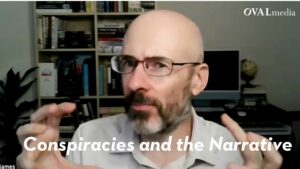
Peter Hahne | NARRATIVE #224 by Robert Cibis
Here is a version of about 30 minutes without restrictions – our OVALmedia subscribers can enjoy the full programme.
Watch the full episode with OVAL Abo
Above you can watch a short version.
from €7 / month · cancel anytime · this and all other films, shows and articles
Already a subscriber? Log in
Germany’s Defect
In a pointed conversation with filmmaker Robert Cibis, former ZDF presenter, head of the Berlin studio and bestselling author Peter Hahne presents the central, highly critical theses of his book “Warum macht ihr uns kaputt?” (“Why Are You Destroying Us?”). In it, Hahne paints the disturbing picture of a nation whose substance, economy and infrastructure – symbolised by 58 crumbling bridges in the capital Berlin alone – are being systematically run into the ground by the current political leadership. For the commentator, this unprecedented decline is neither coincidence nor mere incompetence, but the result of an era of complete irresponsibility.
Whereas in earlier democratic phases politicians still showed decency and resigned after misconduct, today people who have incurred guilt are left in office or even promoted. Instead of serving the well-being of citizens, the political elite increasingly acts in an aloof parallel society which, together with the leading media, has moved miles away from the reality of people’s lives.
A central theme of the dialogue is the dramatic change in the media landscape, which Hahne, drawing on 52 years of experience as a journalist and presenter, sharply condemns. Where in the past the iron principle “facts, facts, facts” applied, so that citizens could form their own independent and mature opinions, today a governess-like journalism of attitude and mission prevails. Editorial teams and presenters now want to tell the audience what to think, confusing reporting with political education.
Robert Cibis adds to this observation by pointing out that since 2007 so-called “impact producing” has been taught quite openly at journalism schools and through EU funding programmes – the deliberate creation of political effect, which at its core is nothing other than propaganda. Hahne illustrates this creeping ideologisation with concrete examples, such as the graphic manipulation of election results on television, through which unpopular parties such as the AfD are deliberately made to look smaller and marginalised. The once strict separation and distance between press and politics, he says, no longer exists; we live in an elite tangle in which politicians and editors-in-chief are often very closely interwoven.
Both speakers identify the Corona measures crisis as the ultimate catalyst and eye-opener for this loss of democratic integrity. In their view, this “plandemic” showed in a frightening way how quickly fundamental rights could be suspended and critical experts – such as Professor Sucharit Bhakdi or Dr Wolfgang Wodarg – banished from public discourse and socially ostracised. Hahne describes the state’s conduct at the time as an attempt by politicians to test how far the people could be domesticated. Cibis and Hahne particularly sharply condemn the political hypocrisy surrounding the pandemic: while politicians enriched themselves with impunity through mask deals, the population was put under massive pressure.
Both point out that it had long been known that the vaccinations did not protect third parties from infection, and yet the narrative of the “pandemic of the unvaccinated” was relentlessly pushed in order to exclude the unvaccinated from society. Politicians such as Markus Söder or Federal President Frank-Walter Steinmeier, they say, prepared the ground during this period for a social division with a totalitarian feel, with words such as “parasites” or “rats”, in which the state operated primarily with fear, agitation and hatred.
In his analysis of Germany’s decline, Peter Hahne assigns a decisive role to former Chancellor Angela Merkel, whom he characterises on the one hand as a genius at power politics and on the other as completely unemotional and calculating. He accuses her of hollowing out the CDU’s substance and coldly eliminating rivals such as Helmut Kohl or Wolfgang Schäuble. To secure her power, he says, Merkel deliberately surrounded herself in the Chancellery with a circle of dependent and mediocre followers who could not hold a candle to her intellectually and were unconditionally loyal to her. Hahne regards the installation of Ursula von der Leyen as President of the EU Commission as her ultimate strategic move, through which Merkel’s influence lives on in Brussels to this day.
Hahne also draws explosive historical parallels with the GDR and points to Merkel’s family background through her father Horst Kasner, who, he says, operated in church structures infiltrated by the Stasi and the KGB. For Hahne and Cibis, the suspicion increasingly arises that it was not the Federal Republic that absorbed the GDR, but rather that the structures, networks and mentality of the GDR gradually took over the whole of reunified Germany – so that today Honecker is the one laughing last in history.
In this context the role of the churches is also sharply criticised. Hahne, who himself sat on the Council of the Protestant Church in Germany for years, accuses today’s church representatives of submitting completely and unconditionally to the spirit of the times and to government policy. Instead of offering theological and moral orientation, he says, the Western churches have been infiltrated by the radical left-wing ideas of the 1968 movement and today celebrate rainbow ideology and state doctrines. The churches went along with the Corona measures without criticism, thus repeating the fatal mistake of adapting to totalitarian systems that they had already made in the Nazi era.
Hahne regards the fact that politicians today are trying to intimidate uncomfortable critics with instruments such as the demand to abolish anonymity on the internet (a real-name requirement) as nothing more than a campaign of revenge by those in power against those who have brought uncomfortable truths to light in recent years.
Because of this assessment, which seems almost apocalyptic, the conversation culminates in a determined call for civil-society resistance. Hahne urgently warns the middle class against continuing to remain silent and passive. For the individual, this means standing up against ideological excesses in their immediate regional and local environment – whether with teachers, in day-care centres or at local political level. The growing return to homeland and identity, he says, is a loud cry for help from people against the destructive excesses of transnational forces. Robert Cibis, too, argues for a new form of self-determination, a kind of liberal community that cuts itself loose from overbearing, centralised power structures and is based on mutual help. In the end both agree: the key to real change lies in the fearless and visible commitment of each individual, in acting outside the control grid…
(HIER das vollständige Transkript, zum runterladen als PDF)
[/swpm_protected]
Germany’s Defect
In a pointed conversation with filmmaker Robert Cibis, former ZDF presenter, head of the Berlin studio and bestselling author Peter Hahne presents the central, highly critical theses of his book “Warum macht ihr uns kaputt?” (“Why Are You Destroying Us?”). In it, Hahne paints the disturbing picture of a nation whose substance, economy and infrastructure – symbolised by 58 crumbling bridges in the capital Berlin alone – are being systematically run into the ground by the current political leadership. For the commentator, this unprecedented decline is neither coincidence nor mere incompetence, but the result of an era of complete irresponsibility.
Whereas in earlier democratic phases politicians still showed decency and resigned after misconduct, today people who have incurred guilt are left in office or even promoted. Instead of serving the well-being of citizens, the political elite increasingly acts in an aloof parallel society which, together with the leading media, has moved miles away from the reality of people’s lives.
A central theme of the dialogue is the dramatic change in the media landscape, which Hahne, drawing on 52 years of experience as a journalist and presenter, sharply condemns. Where in the past the iron principle “facts, facts, facts” applied, so that citizens could form their own independent and mature opinions, today a governess-like journalism of attitude and mission prevails. Editorial teams and presenters now want to tell the audience what to think, confusing reporting with political education.
Robert Cibis adds to this observation by pointing out that since 2007 so-called “impact producing” has been taught quite openly at journalism schools and through EU funding programmes – the deliberate creation of political effect, which at its core is nothing other than propaganda. Hahne illustrates this creeping ideologisation with concrete examples, such as the graphic manipulation of election results on television, through which unpopular parties such as the AfD are deliberately made to look smaller and marginalised. The once strict separation and distance between press and politics, he says, no longer exists; we live in an elite tangle in which politicians and editors-in-chief are often very closely interwoven.
Both speakers identify the Corona measures crisis as the ultimate catalyst and eye-opener for this loss of democratic integrity. In their view, this “plandemic” showed in a frightening way how quickly fundamental rights could be suspended and critical experts – such as Professor Sucharit Bhakdi or Dr Wolfgang Wodarg – banished from public discourse and socially ostracised. Hahne describes the state’s conduct at the time as an attempt by politicians to test how far the people could be domesticated. Cibis and Hahne particularly sharply condemn the political hypocrisy surrounding the pandemic: while politicians enriched themselves with impunity through mask deals, the population was put under massive pressure.
Both point out that it had long been known that the vaccinations did not protect third parties from infection, and yet the narrative of the “pandemic of the unvaccinated” was relentlessly pushed in order to exclude the unvaccinated from society. Politicians such as Markus Söder or Federal President Frank-Walter Steinmeier, they say, prepared the ground during this period for a social division with a totalitarian feel, with words such as “parasites” or “rats”, in which the state operated primarily with fear, agitation and hatred.
In his analysis of Germany’s decline, Peter Hahne assigns a decisive role to former Chancellor Angela Merkel, whom he characterises on the one hand as a genius at power politics and on the other as completely unemotional and calculating. He accuses her of hollowing out the CDU’s substance and coldly eliminating rivals such as Helmut Kohl or Wolfgang Schäuble. To secure her power, he says, Merkel deliberately surrounded herself in the Chancellery with a circle of dependent and mediocre followers who could not hold a candle to her intellectually and were unconditionally loyal to her. Hahne regards the installation of Ursula von der Leyen as President of the EU Commission as her ultimate strategic move, through which Merkel’s influence lives on in Brussels to this day.
Hahne also draws explosive historical parallels with the GDR and points to Merkel’s family background through her father Horst Kasner, who, he says, operated in church structures infiltrated by the Stasi and the KGB. For Hahne and Cibis, the suspicion increasingly arises that it was not the Federal Republic that absorbed the GDR, but rather that the structures, networks and mentality of the GDR gradually took over the whole of reunified Germany – so that today Honecker is the one laughing last in history.
In this context the role of the churches is also sharply criticised. Hahne, who himself sat on the Council of the Protestant Church in Germany for years, accuses today’s church representatives of submitting completely and unconditionally to the spirit of the times and to government policy. Instead of offering theological and moral orientation, he says, the Western churches have been infiltrated by the radical left-wing ideas of the 1968 movement and today celebrate rainbow ideology and state doctrines. The churches went along with the Corona measures without criticism, thus repeating the fatal mistake of adapting to totalitarian systems that they had already made in the Nazi era.
Hahne regards the fact that politicians today are trying to intimidate uncomfortable critics with instruments such as the demand to abolish anonymity on the internet (a real-name requirement) as nothing more than a campaign of revenge by those in power against those who have brought uncomfortable truths to light in recent years.
Because of this assessment, which seems almost apocalyptic, the conversation culminates in a determined call for civil-society resistance. Hahne urgently warns the middle class against continuing to remain silent and passive. For the individual, this means standing up against ideological excesses in their immediate regional and local environment – whether with teachers, in day-care centres or at local political level. The growing return to homeland and identity, he says, is a loud cry for help from people against the destructive excesses of transnational forces. Robert Cibis, too, argues for a new form of self-determination, a kind of liberal community that cuts itself loose from overbearing, centralised power structures and is based on mutual help. In the end both agree: the key to real change lies in the fearless and visible commitment of each individual, in acting outside the control grid…
Peter HahneThey are destroying the economy, they are destroying the infrastructure. In Berlin, 58 bridges are broken. Where are Putin's tanks supposed to roll then? This is all madness. We have a completely broken country. You just said you are breaking everything. Do you think this person is aware that you
Robert Cibisare doing that? Hello, and welcome to a new episode of NARRATIVE. My name is Robert Cibis. Our episodes are always available in full on our website, www.oval.media. And I am very proud and honored to be sitting here today with Peter Hahne. A face everyone knows, and a voice that probably everyone knows as well. And the occasion for our conversation is a new book. This one here: "Why Are You Destroying Us?" The title is of course telling, because we keep hearing this voice saying Germany must not become too strong. Germany must not be too big. Don't get ahead of yourselves. There is a kind of psycho-narrative that has burdened me and people of my generation the whole time. And then I came to England or France and always heard how proud they were of their flag and their country. And I always found that a bit ridiculous. I thought, what is all this nonsense? A country is just an illusion, after all. In the end, we are all human beings. And perhaps one is more of a European than
a German, which is also more likeable. Because then there's, well, I like Parma ham, and then maybe some cookies from Portugal and perhaps a good cheese from France. That's how I like to live. But I think I mixed things up there. There were also things I didn't understand. And I also didn't understand how power actually works. And I notice, you as someone who has dealt with power your whole life in the news work you have done, in a leading position, and not only outwardly, but also inwardly, which matters. I think that is an important emphasis, because sometimes with politicians or journalists you get the feeling that they speak in front of the camera like an actor,
and may be good at saying words, but actually they are not responsible for the content. And you notice that this used to be different, with politicians as well as with journalists like you. And that's where we get to the topic. For me, it is the case that Germany is being destroyed, also by destroying systems and fragmenting responsibilities, by saying, well, the program director decides and the editor really has no say anymore. It has to be told this way now. And the editor-in-chief as well. And basically, through the hierarchies and media work, what you say with your title can already be told. But before we open up the big picture, please first tell us why you wrote the book and what the core messages are for people who haven't read it yet. Well,
it is being snatched out of my hands. I find that quite interesting. Even some critical booksellers can't prevent that, because, A,
Peter Hahnepeople are used to plain speaking from me. A similar book comes out every two years. And I always have provocative titles. Like "Are you serious?" Or "Hands off our cash." That was a hit ten years ago, when they began to take our cash away. And then "Enough is enough" or "Away with your deceptive packaging." That means readers actually expect from me, and ten million copies sold speaks for itself, that Hahne doesn't go a bit lyrical with lots of subjunctives, would, might, could, and 100 footnotes or so. Instead, you have to have the courage to state the facts bluntly. And now we are exactly at what you just said. My journalistic understanding, as I learned it, I mean, that was in the last millennium already, when I started, 52 years ago, I started at 20, and was at the microphone right away,
that was due to my voice and some coincidences, I was right in big politics, in federal politics, back then in radio, Europawelle Saar, which was heard very far over medium wave, which nobody knows anymore today. And then came ZDF and so on. That means I was always involved with big politics. And the principle back then was always: deliver facts so viewers and listeners can form their own opinion. Of course there were commentaries, even to this day, on Tagesschau or on Heute-Journal, where I was, where things were put in context or opinions were stated, but that was always with the banner saying this is a commentary. Yes, today on an election night you don't even have to turn
on the sound on TV. You can see from the face how the election turned out, from the moderators' faces. In the past you only saw it in the politicians' faces. Some fainted, others cheered. Today you see it even with the news anchors, what I used to do, you can already recognize it, now they say, good news from Hungary, Orbán has lost.
Peter HahneI would have been fired for that by my director-general Dieter Stolte, a great figure, he would have summoned me immediately, he would have said, what business is it of yours whether that is good or bad? You are to say what the result was. And then we have this creeping ideologization and of course this chutzpah of the half-educated to feel
Peter Hahnethey must tell the people, in a schoolmarmish, governess-like way, how to think. To put it bluntly, after 30 years I wished people a good evening, 7 p.m., heute news or heute journal, I said, good evening, ladies and gentlemen, only to then tell them for 20 minutes that it is not a good evening at all, because the news is so terrible. But that was all. Today you could say, good evening, ladies and gentlemen, they don't say that anymore either, hello everyone, you 167 genders, and now I'll tell you what you are to think today. That is how you could open the news broadcasts today. And that is the cardinal difference. Facts, facts, facts, that is what I learned, information, news you can then use to guide your opinion-forming.
And today you know from the outset that the facts are no longer right. We are experiencing dramatic manipulation, just one example: on an election night a few weeks ago, my old broadcaster, ZDF, managed to show this pie chart, where the distribution of seats, where at a glance, and you know as a man of images, only pictures have an effect. You can say whatever you want. The picture overwhelms everything. So people see this pie chart and then you think the AfD is just a tiny little edge piece, and the others are the big ones. Yet you would have had to reserve a third of this pie for the AfD members, just to give an example, [so that] you see at a glance what the election result is. They do that three times in one evening, people, thank God, get upset on the internet, and then it's said it was a technical error. Is that true? I experienced a bit of this personally,
I also worked in co-production with television, and there was a phase, for example it was very strong in 2007, for me,
Robert Cibisyes, it started earlier, but then it started with impact, in English, impact producing. So you are supposed to achieve an effect with what you produce. And then there were, even funded by the EU, positions in the making of a documentary, called impact producers, meaning they were responsible for conveying the message, the message of the program, say, protect the whales, or something that is good, like prevent the AfD, and then there was not someone, there was a position that assumes you don't just make a good film somehow, but that you achieve that people change. That means we want to influence and change people with the film. And that is basically propaganda. Yes, I call that missionary journalism. Exactly. That is pure mission. And that this becomes standard,
and if you don't have it and don't think that way, it would be wrong,
Peter HahneI see that this was also promoted by the EU's MEDIA program,
Robert Cibisthat journalism schools teach it this way. That is quite interesting, because it doesn't come from nowhere. It is a new line, so to speak. And I ask myself whether society has somehow developed to the point where people suddenly like propaganda and suddenly like not having to think even, or whether someone really said, these European countries, because this phenomenon affects all countries in Europe. It happened the same way in France or Spain and so on, and probably even all Western countries, that they say it is all far too democratic, far too open, far too neutral. We must have a dictatorship. We must control opinion. The space for debate must be restricted altogether. They may argue, but only about trivial matters. So that this is a real
concept, I could imagine. Of course I don't know, but I saw how it came from the institutions. So to that extent it is already a concept, because it didn't come out of nowhere. And you also know, I didn't know it back then, but today I know that there are always such people, who speak for the government, the Drosten type, yes, he was paid by the government, but he presents himself in front of the camera as a direct government advisor and but he steps in front of the camera as a direct government advisor, and presents himself as a researcher, which of course was a lie. Exactly. And there are people like that in television too. In television, there are also people who actually work for the government and then say, yes, I'm a journalist, but I want XYZ. So,
Peter HahneCorona was
Robert Cibisan absolute turning point, and it has even intensified things. On the one hand,
Peter Hahneit's a parallel society in which journalists and politicians exist together, as far away from the people as possible. And that's how you picture it. A politician resides here, and one floor up sits the editor-in-chief of a broadcaster. And they're on first-name terms and live together. It's really that simple. In my day, all of that was cleanly separated. I never addressed a single
Peter Hahnepolitician informally, even though I knew many of them very closely, because the distance always remained, the separation of powers was always clear here too: I am the watchdog here, and you can't win me over with invitations or whatever else. It's all completely mixed up now, and they've made it even worse, so that it's not just politics being done this way, and in that sense today's media are nothing but ideological,
Peter Hahnepolitical instruments. Should science be too? Which, well, excuse me, we're in the city of Humboldt and others, although of course 99% of today's media people have no idea who Humboldt even was, it's a wasted effort to say all this, that science has always been instrumentalized. We know that from all dictatorships. Though one must always say, it was always dictatorships that instrumentalized science. And when you keep coming back, and you said this at the beginning, to the burden of German history, for which neither you nor I are to blame given our generations, but if you keep bringing that up, then one can say, that is the prime example of how everything was abused,
how the media were abused, how politics was brought into line, and science as well. And then it was "never again, never again." And ultimately, in terms of the phenomenon, we have exactly the same thing today. You just have to engage a little with history. I like to do that myself in novel form or similar. I recently read a novel about the Nuremberg trials, where the last of those responsible for the Nazi regime sat before the judges in Nuremberg. There was this, how shall I put it, the judges said, but now we would like to, it was almost astonishment, really know how they managed to bring an entire people, the Germans, into line, to win them over, so that they marched through the Brandenburg Gate with cheers and
torchlight parades. And the answer was, it was very simple: first hatred, then agitation, and then fear. Fear, fear, fear, fear. And everything you've just said can be traced back to this: you only have to frighten people. It's the fear of Corona, of some virus, the fear of swine flu and forest dieback and who knows what. It's the fear of right-wing extremists, that Adolf will return. It's the fear when someone says there are only two genders, but there are supposedly 167. That means, and in the end, and perhaps we're at that stage now, it's like in any behavioral research, Konrad Lorenz with the animals, if you simply take it at face value, when they finally realize they've been driven into a corner, the people no longer go along,
the people rise up, and right now they are rising up. And that's why I chose this title: Why Are You Destroying Us? When I registered the title a year ago, and I write about this quite openly in the first chapter, leading, sensible people and friends told me, drop this title, you're completely mistaken, the traffic-light coalition is gone, we now have Merz and Söder, everything will change now, now the economic experts are coming, now those with close ties to America are coming, and so on, don't do it, it'll be the biggest flop of all time. And so far I've always been lucky with all my titles and my statements; in the end they always turned out to be right. And at present we have a government that puts the traffic-light coalition far, far in the shade. And not
only with wrong policies, but with cluelessness, lack of education, a complete one, no one is in normal life anymore, in a normal profession. You have to ask how decisions can be made today that are to the absolute detriment of the people. At the gas station, as we speak, the future of Germany is being decided, the future of families, of anyone who has children today, who has a normal job, who has to commute and whatnot, who would like to go on vacation. That is being decided at the gas station right now. They are destroying us, currently through the price of gasoline, not through major world politics. And the background for me is this: we have an absolute lack of education, no more life experience. We have only mediocrity left,
and today's you even said that it's exactly the same in business. I devote an entire chapter to it, it's not just the incompetence of politics. Today we have this incompetence all the way up to the top of business, and let me put it plainly. You already hinted at it just now: we live in a time in which no one takes responsibility anymore. That didn't exist before. Well, under Hitler. Yes, of course, dictatorship. Completely clear. Under Honecker. Of course, but never in a democracy. In a democracy, Mr.
Robert CibisLothar Späth, a great,
Peter Hahnedistinguished man,
Robert Cibistook a trip with
Peter HahneDuscho Lutz and resigned. Mr. Möllemann promoted shopping chips of his brother-in-law and resigned. Mr. Seiters, I could name many cases, someone was shot by terrorists back then in Bad Kleinen, and he had nothing to do with it at all. He said, I am the one responsible, and resigned. And today you have the exact opposite, not even that it's leveled out like this, but the exact opposite. Those who, let me put it generally, have burdened themselves with guilt are not only not held accountable, they are promoted. We have them all in office today. Von der Leyen, Spahn, let's just take Corona. Lauterbach, they are still being honored today with posts, with positions, and then we have a gentleman at Schloss Bellevue
who naturally took care of the whales, now of the whale, he even traveled there specially at Christmas. They don't care about mass rape, not about how women are treated today, not about crime against streetcar ticket inspectors, or whatever, those are all peanuts. This parasitic publicity, attaching yourself to something like that, where you can then also award each other medals. And that infuriates me, and it destroys an entire nation, an entire people. They're destroying not only the economy, but every form of ethics, morality and responsibility. And if that's how it is in journalism, as we are experiencing now, well, what else can you do? All I can say is, if there are channels like yours, that is, if all these new media didn't exist,
I mean, thank God neither the dictatorship, the red one here in Berlin nor the brown one, had them. They didn't have these means. If they had had these means as well, God help us! Yes, you know that, I agree with everything you say, I think it's very well analyzed and to the point, and it also brings a
Robert Cibiscertain satisfaction when you name the problems so directly. I just have, and this was already so in my other remarks, the thing is, yes of course, these are, how shall I put it, prostitutes, these people who have burdened themselves with guilt, and then, just imagine, with this mask deal alone, which is by now a pseudo-investigation, where of course I say, of all the crimes of the Corona era it is still the least, but it's still about billions in taxpayers' money, where the two heirs of Strauß and, what's her name? Tandler, the daughter there, Strauß's daughter got three and, well, over 20, no, nonsense, over 20 million euros as a commission for
Peter Hahnepassing on a phone number of
Robert Cibissomeone from Switzerland. Just imagine, that's taxpayers' money. Yes, they were all in cahoots, and that is precisely this, this really absolutely terrible thing: across party lines,
Peter Hahnethey jointly said, now is the chance to rip people off. That had never happened before on such a scale. So you'd have to compare it with the gasoline prices, where someone says, now, because we're closely tied to Aral, now we can rip people off. That doesn't work at all. They tried it with masks, vaccines are even worse, we're still paying them off today. The only difference is, if I can no longer fill up cheaply, then I just can't drive anymore and I sit at home and ride a bike. This was about life and death. For me, the Corona affair was an absolute explosion and an eye-opener like no other, it was about life and death. That children are put behind those coffee filters at 35 degrees
on sports fields, I saw it with my own eyes here in Wilmersdorf in schools, and the parents even put up with it. That is brainwashing in its final stage. That has to be said, and you know, at that time I was in India, I spoke with people from Nepal, from Chile, Morocco, the USA,
Robert CibisCanada and all of Europe, I was also in Italy and France, it was the same madness everywhere. And even in Russia and in Iran, they had this vaccine mandate in Iran, facility-based. And every one, I spoke with at least 100 infectious disease epidemiologists, we made a total of 1,000 publications on Corona, I added it up again. Just imagine that. I always have the feeling I've already said everything. Of course that's not true. And of the 100 infectious disease epidemiologists, not a single one said, The measures make sense. They're completely pointless. And it's no coincidence that the people who appeared on television were never epidemiologists. Right. Because they can't do that, it's pretty exhausting when there's a lie in every sentence. Yes, absolutely. If you're a virologist, you can talk about the virus. Quite right. But when you talk about measures, then of course that's an epidemiological question.
So.
Peter HahneAnd now
Robert Cibisthe question is, why didn't Iran, why didn't Russia simply say, that's nonsense, we're not going along with it. And so on. With the swine flu, there was one country that stood up and said, we're not going along with all this crap. And that was Poland. And do you know what happened a few months later? No. So after the swine flu hype, the entire Polish
Peter Hahnegovernment had said, no measures,
Robert Cibisno vaccination recommendations, no masks, nothing, and the media didn't go along with it either.
Peter Hahne
Robert CibisThen the entire Polish government boarded that plane and crashed. True. And that was a few months later. And since then, everyone has toed the line. Yes, yes. Well, let's say I'm more the type who looks less into all these
Peter Hahnethings that then drift into conspiracy theory, although one has to say quite clearly that every conspiracy theory has by now been far overtaken and eclipsed by reality. You didn't even need that much conspiracy. But listen, I haven't said a single sentence that was a hypothesis. I've only described what happened. But just describing it makes one uneasy,
Robert CibisI get goosebumps myself, because I'm already afraid, since there would have to be a theory for this. Yes, you get goosebumps yourself, because it's apocalyptic, the whole thing is really already an Armageddon situation,
Peter Hahnea doomsday, so that you wonder what on earth is going on. I always say the consequences are so catastrophic that if one were of sound mind, as the two of us are, one would have to be startled and say, surely nobody can believe something like that, that it was all legal and right, if it has such consequences today. But in the small mosaic of Germany, and that was my playing field here in the political arena, you can see how, how shall I put it, the mechanisms worked. That is, you had Bergamo with the trucks of the dead, where everyone said, well, now we can't laugh about this anymore, the unvaccinated are no longer democrats, are no longer human beings. I mean, everything that was said, in the talk shows alone, by leading politicians and so-called scientists,
how those who didn't go along were disqualified. That was already the lowest of the low. Like when Söder called AfD supporters parasites, or Mr. Steinmeier called them rats. That means it's perfectly clear: rats and parasites must be exterminated. So with a clear conscience, one can exterminate them. You just always have to weigh every word carefully. And so those who didn't go along were shut out of society. On the principle that the fact they're even allowed to live is a mercy. Actually, they should be wiped out. You'd have to cut together again everything that was said over those years. And today it turns out, April Fools, even the Robert Koch Institute says it was all complete nonsense.
Peter HahneAnd I have a clipping from the Welt am Sonntag, I'll never forget it, I was on my way to a rally in Mecklenburg-Vorpommern and at a rest stop on a Sunday, I think, I saw the Welt am Sonntag, I think, three years ago, there's a news item that's half the size of this book, maybe even only a third, on one page. It
Peter Hahnesays, the sentences: Lauterbach declared that the lockdowns at schools and the masks for children shouldn't have happened either. Mr. Braun, Merkel's then Chief of Staff at the Chancellery, a doctor, says, yes, with the vaccination we created the false expectation that vaccination would protect against infection. Two sentences for which thousands of people died, whose victims are still there today with depression and health damage and, and so on. Two sentences, that should have been breaking news, special broadcasts from morning till night, prison vans should have pulled up in front of the ministries and locked them all up. Exactly. Nothing happened. Two sentences. Absolutely. Jens Spahn said the same in the Enquete Commission. We always knew this
Robert Cibisvaccination doesn't protect
Peter Hahneagainst infection. As far as
Robert Cibisprotection against infection after a vaccination goes, it was always clear, and it was also defined by the WHO, that the aim of vaccine research and procurement is to have a vaccine that protects against severe courses of the disease. It was never the aim, not even of the WHO, in vaccine development, to achieve protection against infection of third parties. Madness! The whole, what was it called again, pandemic of the unvaccinated. Yes!
Peter HahneAnd that's another thing that backs up what I
Robert Cibisjust told you. This term, pandemic of the unvaccinated, didn't come out of nowhere. Some advertising agency must have come up with it, and politicians in 150 countries said exactly the same, and the association heads too, Hermann Montgomery and the like recited it, in every country in the world, in the Netherlands and also in Ireland. You can't, the list is impossible to complete, because the wording is identical everywhere, and that brings me back to the topic, the hollowing out of hierarchies, no responsibility anymore, they're all just actors, they must be, because they all say the same lines. Yes, absolutely, but then there's one aspect you can't leave out. I actually lived there physically for quite a while
Peter Hahnewhen I was at the ZDF headquarters in Mainz, I lived a stone's throw from a street where BioNTech's headquarters is, and it's called "An der Goldgrube", At the Gold Mine. That's highly telling, too, the At the Gold Mine. And that makes it almost symbolically clear, it's about ideology, it's about, how shall I put it, the domestication of the people, it was nothing else. Let's test how stupid the people are, and if we say churches are closed at Easter, by the way, during the first lockdown I even made it onto the Tagesschau, I stood in front of the Ludwigskirche in Wilmersdorf and explained in an interview on the Mittagsmagazin, I was already, no, I wasn't retired yet, but the line was, Hahne is getting worked up here as a Christian that the churches are being closed. I said, at Easter the store can be open,
but the churches should be closed, by the way, that was good for my books back then, the bookstores were allowed to be open too, but all contradictory, all contradictory, and with that I even made it onto the Tagesschau, so, Hahne, committed Christian, and with a sentence like that, that was after biographical, the experience was shattering, in the first weeks they could still discuss, there were still, they weren't on the big talk shows, but at least back then Bild still had talk shows, opponents were on them too, I was on MDR, Riverboat, I'll never forget, Professor Kekulé was there, he was a mild critic,
completely harmless really, but he supported me in everything I brought up there as a fury. Yes, after a few weeks he was dead, meaning at the start of the Corona story there were still opposing voices, and there was a Bodak, well, an SPD member of parliament and so on, you can't immediately insinuate that he has far-right stuff, and then the screws were tightened, tightened. Absolutely, yes, there was a Frontal 21, still in early March, and I was also still on Welt TV,
Robert Cibiswhen
Peter Hahne
Robert Cibis
Peter Hahnethey all meet there and then it's also a group-dynamic effect, I'll put it mildly first, so what I do understand is that they then only, what upset me from the start was that it was always said, this is something new, we have no experience with it yet, well, excuse me, with that I can justify anything, then I can like, if I beat my wife half to death, we'll just try it out, there are ideologies that call themselves religions that do that, it's all madness, you only have to just when I had a D in school, so that I'd still get my Abitur,
I observed all this in terms of contemporary political history, but rather authoritative experts, a Professor Bhakdi, when he appeared in Mainz, everyone folded their hands, here comes the great, great Bhakdi, when he said the first sentence that all of this Corona business is fake, he fell out of favor in a second, and they crossed the street when he came, and not for scientific reasons but for ideological reasons. And he knew more than he's saying. Well, that's still to come. He worked with Sahin, and of course he knew all the studies on
Robert CibismRNA things and therefore
Peter Hahneknew in
Robert Cibisadvance which dangers and symptoms would occur and was very sure of his judgment. Yes, but you know, politically you can only see here in Berlin, I always say the Robert Koch Institute is a
Peter Hahnegovernment institute. That's why today we can draw the line and say, we know officially, from the government, that it was all a fake. Because the Robert Koch Institute wanted to warn, and then politicians said no, the people will only be unsettled and stop going along. And then came that fear paper, the famous one from the Seehofer ministry. It all belongs together. And now I'm telling you, I'm sitting here as someone who was a key figure in journalism. Of course I know, then the Chancellor comes and says, well, Mr. Hahne, I'm inviting you now, in private, well, we'll bring in ARD and RTL and so on too, so, a very small circle. And I always knew what was coming. And then, you know, your profession is so important,
with criticism and questioning and all sorts of things. Now it's about humanity. Now it's about preventing mass death. Now we have to stick together here for two days, and listen, stop your criticism. And that's what I've always had, the conservative wing in the CDU. The gentlemen should hold back for once. I experienced all of that. I experienced the calls. You said this and that in a live link-up on the midday magazine. Oh, come on, you surely won't repeat that on the 7 p.m. "heute" broadcast as well. Only with me it was always like this, and that can't be, it'll come back
up in our commentary blog. Johanne only became sensible once he retired. No, no. When something like that came up, I always doubled down. I'd say: Right, now in my next commentary I'll make the whole thing a bit sharper, and then they left me alone. And now we come to the crucial point: Today we lack those personalities who say: You know what, you can all get lost, I have my responsibility here and you have yours in politics, and I won't be told what to do. And once it becomes clear that he's immune to it, you're either left in peace or you're intimidated. So, was
he let go for being too harsh? Yes, certainly. But you have to keep saying,
Robert Cibisthank God, you always landed softly in public broadcasting. Only, you didn't get
Peter Hahneto do what you wanted. So nobody fell downward, rather they became a figurehead for something. That's the worst of all. And we have this mentality today, by the way, in all areas of society, in politics, in the media, in business. The most incompetent get promoted, but let's say, when they get exposed because they're truly incompetent, they get fired elsewhere and sit under the bridge, glad if someone throws 10 pfennigs into their hat. No, today they're even canonized. And this entanglement, that the separation of powers isn't you know, what better example do you want than Mrs. Merkel saying the Constitutional Court could come to
dinner at her place too. So let's have a nice dinner now and discuss the legal situation of the German people or European law regarding the OECD and the USA or something, some nice, grand-sounding title, and have a nice dinner. You couldn't even tell that to your 99-year-old mother, because who would believe to say: Right, and now I'd like to ask you, when it comes to banning the AfD or something like that, you're surely on board here, hopefully. It's often that simple. It's not the grand conspiracies, but the more mediocre they are, the more receptive they are to
"You can help me now." I can't stand that sentence anymore. It was a typical Merkel sentence: You have to help me now, take Corona, you have to get the mass dying under control, or I want to win this or that election, or whatever. That sentence "You have to help me" should set off alarm bells for every journalist. I have an incredible amount of things, because I Weizsäcker was an ideal example. I always say, that's why nothing happens to me, I always say, then I'll spill the beans. So I still hold to the ethos: What's confidential stays confidential. How often has that been settled, yes. So Weizsäcker, who of course, I was
practically his successor on the Council of the Protestant Church, would ask: "How are things going?" I always knew that was the preliminary question to the preliminary question to the preliminary question, and then comes the real one. Back then it was things like: Leave Mr. Stolpe alone, when he was being hounded as a Stasi man. That was always how it went, and the question is: Do you go along or not? And the more mediocre, in this case, a media representative is, the more I actually felt honored. Only I didn't feel honored; I didn't go to the second invitation, because I thought, I won't let myself be blackmailed there. That's a crucial point, it relates to the first thing I mentioned, this
Robert Cibismediocrity of people naturally makes them manipulable, because otherwise they wouldn't hold their position. They only have it because others put them there, not because they fought for it. And ruthless, I mean the disenchantment of Merz,
Peter Hahneit couldn't be more massive than what I wrote in this book. I have a whole chapter in it about here I happen to have flexibility yoga as posture training. There actually was once on YouTube, back then they thought it was funny, today I can live without a backbone. Wonderful, you sell that as flexibility, and in the end it's called stance. So the more flexible I am, and I train that, and then I simply call it framing, stance, and then I write here, you can buy that on Amazon and everywhere, you can buy a backbone. One's called Fred and the other Bruno, and funnily enough all male names. That you can buy a backbone, which sounds so absurd,
is the naked truth. They no longer have a backbone, they don't even buy one, they now call this bent posture "stance." Is Merz a child of Merkel? Yes. He played the keyboard of being a victim of Merkel, and that was also
Robert Cibissuccessful for a few years,
Peter Hahneuntil the first people saw through it and said he's no match for that woman. That's why and then came back. You need, how shall I put it, a trademark, a niche, where you are, how shall I say, without competition. And for a certain time you were without competition if you were a Merkel critic. There were few of those, and then you got invited to every talk show. But you always have to look at what's behind it, what kind of Merkel critic, above all, what kind. Mrs. Höhler here, who was a Merkel critic, and when she wrote her first book
Robert Cibison Merkel,
Peter Hahneshe was disinvited from all talk shows.
Robert CibisRight,
Peter Hahnebefore that
Robert Cibisshe was on the talk shows. I was everywhere until my retirement, but already with, how shall I say,
Peter Hahnerestrained charm. Although most talk shows that count as live are actually pre-recorded, and when you notice that certain things were cut out, you say something, I don't feel like going there anymore, I won't be made a fool of. That's why I say: That, that, you are the expert. Who would have thought of AI or the like ten, but especially 30 years ago, that you can do anything? Back then,
you have to consider, there was still the turning of a photo. So when I sat at my desk, news, and behind me they put a photo, head-sized, and he of course wasn't allowed to look away from me but had to look at me, the picture behind. Then it was turned, and the question was, are you allowed to do that? With archive footage it always said "Archive" superimposed. Now it's Trump went, that's, you can manipulate buildings in some way. We, or my generation, wouldn't even have dared to dream of that 30, 40 years ago.
Robert Cibis
Peter HahneToday you manipulate, and then you're in a current you can hardly get out of. Then you can say, I'll come back to that pie chart of the seat distribution in elections, then you say, let's just make the parties we don't like very small. The weather map gets manipulated. In my day the glowing red weather map was at must, you have to the color of the map, it's all that simple. And it's just like this
statistic, it was almost like stock prices. It was always about Corona, mortality and, what was that word again, incidence, it was a word. Even my 95-year-old mother said: "So, what's the incidence today?" I said: "Mama, I don't even know what that is, is it something to eat?" I always played dumb. People come up to you, in the, it was so crazy to me, the incidence rate has risen dramatically again. Madness, you just have to invent something like that, it's wonderful. But we've now come full circle, so bottom line: In the past there was
Robert Cibisstronger self-determined participation in structures, such as at the TV station, but probably in society in general. In the past, Germany was more democratic than today. Now an important person was Angela Merkel, who shaped the last 25 years as a minister and then of course 16 years as chancellor. How far do you think she stands with her résumé and her manner for that? Well, Merkel is a fascinating personality, quite apart from the negative things she brought
Peter Hahneabout and how one stands politically. She's the most successful female politician, politician I'd say, a type like Strauß or the like. But she does have something of these male personalities. In the sense that she never played the woman card, you must always see that. She even resisted when it was said "but as a woman" and "she brings other women along" or something. She never wanted to be reduced to that. She also didn't want the "woman from the East" label, no, she wanted to be an independent figure in her own right, which she was, with high intelligence, seeing everything from the end, looking at how to pull the strings so that in the end what comes out is what I want.
And one must say, she succeeded, I would say today, to the detriment of our country and its people. Name me an example of who else falls into that category. She put them all in her pocket. She could be a very cheerful, friendly, great woman if you were alone with her over dinner or when she invited a small circle to the Chancellery and had just come from Berlusconi, from a visit, then she'd imitate Berlusconi, imitate George Bush, she could have performed as a comedian. You don't know any of that if you weren't that close to her. But she always, and it was almost in the genes,
as if instilled, she always checked where the cameras were, always made sure she couldn't be photographed in a position that could be abused later. Remember Otto Schily, who once appeared with a helmet with the police, that would never have happened to her, because that picture can be abused. I don't need to tell you as a filmmaker what you can do with something like that if it's taken out of context. It would never have happened to her, she always looked very closely. Not that you're born with that, you know that from
You have to wonder, she was able to travel to the West, father a pastor. Now I know the church sphere very well, and I also know what Gauck told one in quiet hours, in confidence, with only two or three of us present. That it never became public is of course because people can blackmail each other. So I'm convinced that a Gauck, with his knowledge, could blow Merkel's cover. The Stasi files exist, so why are they sealed? They're still sealed. What does Gauck know? I say that, let's say, he didn't tell me those details, but again and again of course,
Robert Cibishe was a pastor himself,
Peter HahneGauck, that Merkel's father was anything but a classic pastor. He was the driving force of the Christian Peace Conference, CFK, which was directly tied to the KGB, they didn't even hand it over to the Stasi. That was, I was a theology student myself in those times, I such a church house, these encounters, I remember how the West students wanted to tell the East students how great socialism is. That was always the most German thing, they suffered there and were glad we brought them bananas and then heard from us:
At least you have Erich Honecker, we have Strauß and Kohl, more or less. Crazy, but this formation was of course a clearly communist one. It was given a slight Christian veneer, but you can't say now she was a communist, no, she was, you have to imagine, she says quite openly that ending up in the CDU was pure chance, could have been somewhere else. Her whole résumé is like that, she was press spokeswoman for de Maizière, then suddenly Kohl's girl, then she was the head of the CDU's Protestant Working Group, she always saw those gaps and kept advancing,
but she also had protectors to get there, or well, protectors. Well, that was unfortunately one of Kohl's great mistakes, whom I greatly admire,
Robert Cibiswho showed a lack of judgment of character.
Peter HahneHe was the key, really, who brought her so far forward, until he then and there you see this woman's cunning, until she toppled him, the famous FAZ article, during the whole donations affair. I indeed after the change of government, when Kohl was voted out, Schröder started here and Then came the donations scandal. Yes, Merkel was of course sitting in the background rubbing her hands, thinking: now the old man is gone too, the one who still stood behind it all as a father figure. He was suddenly dismantled. She was always the only one left. Then she had Schäuble. Schäuble was a settled politician,
a man with insight into people, with a power base and so on. They all went to their knees. Name me any politician who has achieved what Merkel achieved: she turned very prominent critics into the most loyal followers. Later on, Schäuble was the one who defended her to the bitter end. And how did she manage that? She managed it through, well, how shall I put it, in a certain way it is genius.
Robert CibisI wouldn't say
Peter Hahnesome powers or whatever; the woman was simply a genius. In that sense she was a physicist. A scientist, unemotional. She did all of that without emotion. Kohl also fell partly because of his emotions. He would always call all the district chairmen: How is your wife? Is the sick child healthy again yet, or whatever. Merkel never bothered with that kind of thing. It was pure power politics, pure power politics. And she only ever had a very tight circle. There was her chief of staff Beate Baumann, with whom she wrote and published this book, which is absurdly called "Freedom". She had Eva Christiansen, her head of media.
A real hot sport, Maria Böhmer, then Mr. Grütters from Berlin, Minister of State for Culture, and so on. She had a circle like that, when she then installed the Women's Union, the Senior Citizens' Union. That may all sound a bit silly, but that was all her power base. She created dependencies there. They were all dependent. Today you might say, well, if you don't want to, then I'll go somewhere else or something. Times have changed back in that direction, so that they say, fine, then we'll go into the media or who knows where. Back then, they only had these offices. And these people often came, those named, or look, Peter Altmaier,
or everyone she had in the Chancellery. She had fetched them from the deepest provinces too. They felt, then came Kramp-Karrenbauer. We just happen to think of all these names right now. They all come from the deepest provinces and insignificance. And in Merkel's orbit they were suddenly somebody. Then they got to go to the White House and meet the Pope or whatever. Everything was instrumentalized. So I have to say, it's genius. And then she had journalism on her side. With this absolute method, that sentence will never leave my mind: you have to help me. Yes, and who didn't want to help her? It was about the nation, it was about the world, it was about the people. You have to help me. And whoever lacked backbone,
a stance in the truest sense of the word, felt honored and suddenly became a satellite in this constellation. Yesterday I was at the State Church Archive in Berlin, and after a lot of wrangling back and forth over a year,
Robert CibisI was allowed to open the Kasner file. Oh, interesting. The father of... The Red Kasner. The Red Kasner. And it was like this: there is a third volume, a first one, and the second volume, which we weren't allowed to see. And for over a year, not at all. Now the third volume is about this thick, and then after a year of back and forth, Gerold Keefer made an effort to get it for me, and I went there for him, so to speak, and the file was only this thin. For the main period in the 70s, there was four times less paper than in the other years. And still it is impressive, of course, that he was in Italy twice, for example.
Yes, sure. And that he suddenly gets a loan of 9,000 euros, and then the church asks when he will pay it back. And he says, no, we had agreed otherwise, verbally? So it was only a pseudo-loan; in reality it was a subsidy. That was a year's salary back then. Did I say marks or euros? I don't remember. It was 9,000 marks back then, of course. East marks. And yes, you can tell, this isn't normal. This isn't the normal pastor you would imagine. No, that didn't go through with Stahlmann at all. And the life story isn't normal anyway, going from the West to the East as a Christian. So you might say he
Peter Hahnewas a convinced
Robert Cibiscommunist. But communism and Christianity actually rather excluded each other. But I mean, you have to look, these churches, I was in the Council of the Protestant Church long enough, which is the highest
Peter Hahnegoverning body, and it had only twelve people. I was in it for 18 years, in the seat where Weizsäcker had sat before, the conservative one, that was my label; then I was also the media man and was very young back then. That means I was the youngest in that whole circle. So I filled those quotas; today you have to be forcibly circumcised, transgender, and who knows what else. And so I was, in that normal era, young, media, conservative. I experienced this whole Stasi reappraisal, in quotation marks, up close, the whole Stolpe case and so on and so on. Kasner too, it was always kept completely sealed. There you could already see Merkel's power structure, how she prevented, by playing people off and instrumentalizing them, that
it stayed under wraps. But Weizsäcker used the same trick. Weizsäcker was the link between East and West. Weizsäcker made sure that nothing happened to Manfred Stolpe, who was a Stasi informant. That too, there too... As long as he knew Merkel. Yes, of course. And I can say that too, I was at the... back then it was Villa Hammerschmidt, I'll never forget it, in Bonn,
Robert Cibiswhere Weizsäcker said
Peter Hahneto me personally, leave Stolpe in peace. And why did he say that? Well, because of course he was tied up with prisoners, with the hanged, he is in the files just the same. Yes, what about Weizsäcker? There was a connection;
Robert CibisWeizsäcker was president of the Kirchentag,
Peter Hahnefor example, and was very close to the leadership bodies as a layman, in quotation marks, he was a politician, of the Protestant Church. Did he work for the Eastern Bloc too? Yes, sure. I mean, there was also Jürgen Schmude, who was Justice Minister for the SPD
Robert Cibisthe whole time
Peter Hahneand president of the Protestant Synod. All of them Eastern agents, one could say? Well, I'll hold back there, because I just want to live a bit freely here
Robert Cibisand enjoy my pension. But
Peter Hahneof course you have your thoughts, that it was not all coincidence. The terrible thing is, you always have to make that leap, we just talked about the same thing with Corona. That means all these connections come to light, and they are long since, how shall I put it, no longer a secret, that they met in East Berlin and so on and so forth. Who met there? Well, let's say Weizsäcker, Schmude and so on with the leftist East German bishops; I mean, there were a few in the resistance.
Robert CibisThey did exist,
Peter Hahnebut they also existed under Adolf. Only the mass of the Protestant Church marched in line, and the West was even worse than the East. But how many East German bishops and leading church staff were exposed as Stasi people. That means they were all still around, and they had, as in politics too, of course their old-boy networks. And those networks made sure that as much as possible stayed under wraps. The crazy thing is, it's just like with Corona. These networks did not drift off to the Bavarian Forest or the Uckermark or sit somewhere in Mecklenburg eating their bread of charity. They were all in positions. Crazy, all those named; one became Federal President. That is, all these entanglements were then rewarded with offices, in quotation marks. So they put themselves into those offices. Yes, there is also a nasty saying. There was always this narrative in the media that the FRG had annexed the GDR.
Robert CibisAnd since Corona I know: no, the GDR took over the FRG. Of course, of course. I mean, the winner is Erich. He's sitting wherever he's sitting and laughing himself silly. I mean, then we're back to Merkel. As in,
Peter HahneErich couldn't have done it any better. How do I wreck a country? Wreck the economy, wreck the reputation, wreck the competitiveness, and how do I manipulate people? Erich Honecker didn't manage that. But what came after him, for their lives, that is why I wrote this title, "Why are you destroying us?" By now they are, and this is no game anymore, destroying everything. Destroying it at its core. They are destroying the economy, destroying the infrastructure. I always wonder what Putin would even want here. He has a country without natural resources, without anything, and what is broken already. In Berlin, 58 bridges are broken. Where are Putin's tanks supposed to roll? That is all madness. We have a completely ruined country. And you can't really
make it any worse. You get horror reports, like the highest bankruptcy rate of all time. Then three weeks later, I write all this in my book, the next statistic: the highest wave of bankruptcies of all time. That means at some point the statistics run out. You just said they are destroying everything. Do you think this person is aware that they are doing this? Well, yes and no.
Robert CibisThere are some who, how shall I put it, are taking revenge. Take a completely different
Peter Hahneexample, this business with real names. That you are not supposed to be anonymous on the internet anymore. Söder and Merz are certainly rubbing their hands over that. They are the world champions at persecution. Why do you think these dreadful trials are taking place in Bamberg? Because there the CSU has the prosecutors on a leash. After all, it is a political office, public prosecutor. That means we always act as if this were left-wing. In my book I don't deal with the SPD, the Greens or the Left Party on a single page. They all fulfill their party platform. The only ones who fulfill their party platform one to one, are the Left. I don't need to bother with them at all. Only the others lie, the ones you voted for, because they supposedly want the good, the conservative, the preserving, or whatever it may be. And they break one election promise and one program item after another. That leads to destruction. That means it is often very personal things. The conservatives, the former ones, CDU and CSU, let the SPD, for all I care, play its game in the coalition, which is what they would prefer to do themselves. But they let them do it so they can say, it's a coalition, so we also have to make compromises. They are rubbing their hands in glee,
in favor of it too. And this real-name business, I mean all the opposition to and criticism of Corona, would not have been possible at all if it had always been under real names. We were there with our real names too. But many who supplied us with material, who said, I'm a nurse in a hospital, I'm a geriatric nurse and so on. It was only possible because it was anonymous. That, of course, harmed those in power. And that's why they are of course in favor and say, now, out of revenge, we want all of that to be exposed. And it's exactly the same with all these Stasi entanglements of the churches and everything. They want it all to stay under wraps. And the joke is, they can afford to. To this day we know the Stasi file that exists. That exists physically. It wasn't burned and they only have the ashes left. It does exist. They don't have it. You won't get it.
And you said Mr. Kassner worked for this KGB structure. Is it actually proven that it's the KGB? No, it's the Christian Peace Conference,
Robert Cibisand it was on the leash of the KGB. You'll read that in your documents there. Yes, that's exactly the problem.
Peter HahneThe church is responsible for the archive, and my hypothesis is, because there was four times less paper for the same period
Robert Cibisthan in the other decades, that they sorted things out there. That would confirm life experience. And they even told me I'm not allowed to copy anything and that they will destroy the file.
Peter HahneEven the ones I have seen, they want to destroy. Yes,
Robert Cibisand I have to say, you must have that much life experience, whoever does that has something to hide.
Peter HahneYou know, that's the hypocrisy in all of this. With the real-name business that is now looming, it really is a threat, if that comes out, then I don't want to know, you could build new prisons, given today's kind of jurisprudence, for all those who would be prosecuted. And right there they say, well, why? Whoever has something to hide has nothing to fear. It's like with the abolition of cash. Yes, how come? Why are you getting so upset? If you have nothing to hide, no black money and no drug money, you don't need to get upset. That applies there. With what you are saying now about the Stasi files, exactly the opposite applies. And the stupidity of the people is, which is why we have to educate,
educate, educate, not to grasp this. They don't grasp that it all contradicts itself. We live in a world where everything is contradictory. You can take entire news broadcasts apart and even the logic alone no longer holds up. On the one hand, a certain guideline applies. It should be the other way around: that we citizens have our privacy, but that those in power, who manage our money,
Robert Cibisour money, that of course massive transparency should be a matter of course, which really doesn't need explaining anymore. Yes, but just take the Verfassungsschutz, the domestic intelligence agency. The Verfassungsschutz is there to protect the people from the government. That is,
Peter Hahneto make sure the government abides by the constitution. That's what the Verfassungsschutz exists for. That is official, it's not something I invented. Today it is exactly the opposite. Today the Verfassungsschutz is there to protect the government from the people. Once you've taken that in, you notice what's going on. And that's why, of course, the former president of the Federal Constitutional Court, Papier, who has just stood out again with a really great, courageous interview about the current situation, even goes so far as to say that action must be taken against this special fund. I mean, why are you destroying us? That means the generation that comes after me, after you anyway, after me anyway, but after you too, has to pay for everything for us. He says that one must finally sue against it. And that can be done successfully. He says that, just imagine, a former
Federal Constitutional Court president. Yes, but he also wanted to say in passing that the majorities don't exist in the Bundestag, because they all stick together. But a federal state can also sue. To me that is a clear call to vote for the AfD in Saxony-Anhalt and in Mecklenburg. That he's saying, dear people, you have to realize that a federal state can do it. Bring everything down. They could even bring down ZDF and ARD. Absolutely. So, and when people like that are already saying it, who still had the lofty principles of law and the constitution, constitutional law experts, then it's five minutes to midnight. We're experiencing all along that responsibilities have moved from the smaller structures, from the municipality, the district and so on, via the federal
Robert Cibisstate to the federal government, even though health, for example, is a matter for the states. Education is a matter for the states. Most fundamental rights issues are also matters for the states, according to the law. And then there are bodies like the conference of minister-presidents, which doesn't exist. Yes, it doesn't exist. And now they are to be set up again. With the Zorgers, that doesn't exist either. And then the federal government says, we don't decide there, the European Commission decides everything. And the European Commission says, of course we do that in cooperation with our
Peter Hahneallies in the
Robert CibisUSA. Actually, the Commission is a kind of costume for NATO. Yes, that's how it seems when you listen to Ms. von der Leyen. Which is not, she is also very, as defense minister she was of course always tied in with the armies. Even before that she was in these various army contexts in the working groups. So there is a very close NATO connection in the decisions too. And to make a long story short, you simply have the feeling that something is being decided worldwide. For all I care, you need your real name on the internet. It's identical. Last week I spoke on the phone with someone from New Zealand, identical. That suddenly all the bridges are broken, identical. That the ferries are broken, identical. Yes, you talk to people from Canada or Italy or Portugal.
In every country it's the identical development, also as regards political appointments, this mediocrity and so on. You get the feeling that either the world is already global or these are global decisions or whatever. But that doesn't mean, and now I come to your point, that it can't be changed. Because it's easier to change on a small scale. I can't say in all countries how the bridges get repaired, but I can do it in my municipality. Right. And there I can go to the mayor and say, we have to spend this differently. But now we're back to, so that you see, the old geezer is still quite sharp. Now we're at the start of our conversation,
Peter Hahneat the end. Two things. First, once more briefly, the name von der Leyen. That is Merkel's most gigantic, strategic, successful masterstroke. When someone asks what is Merkel's greatest life achievement, it's the installation of Uschi in Brussels. Her friend Uschi in Brussels. Sometimes, because I knew your father very, very well, Ernst Albrecht was a really honorable man, that was still the CDU. Wasn't he some kind of criminal? Well, there are now a thousand things, like the Celle hole and who knows what else. No, no,
Robert Cibishe was
Peter Hahnestill a truly committed Christian. Also his wife Adele, who died so young, I knew them all well. And sometimes I've said a bit ironically, dementia, he later became demented, can also be a mercy. He didn't have to live through mentally what his daughter started in Brussels back then. It was really highly dramatic. That was the one great personnel decision that trumped all others. So the installation of Ursula von der Leyen is the most brilliant thing Merkel ever pulled off. And on top of that, which is always overlooked, she brought the CSU into her clutches too. Mr. Söder drove her in the carriage on Herrenchiemsee and hung the highest Bavarian order of all time around
her neck for her services to Bavaria. That means the CSU, today's Söder, opportunism on two legs, also went down on its knees. And she keeps this Mr. Weber of the CSU as chairman of the EPP group in Brussels. That means Germany is being destroyed by the CDU and CSU, and in Europe the same people, the same parties are sitting. Just imagine that. Merkel's genius. But what I actually wanted to say, you just said regionalization and how things can be changed. And you can change things best when it's on the smallest scale, that is in the village, the district or the federal state. You said at the beginning that we now actually feel like Europeans, and you no longer know, it's all globalist. You're not allowed to say German anymore and you have to hide the flag and the others are all proud. That is the only hope
I have politically, that people are increasingly withdrawing, in quotation marks, into their region. By now they're fighting for dialects, for identities. We are not Saxony, we are Brandenburg, we are Lusatia and even Upper Lusatia. And regionalization as an answer, as a cry for help, to me it is a cry for help, is growing ever bigger. That means people no longer want to be part of this big concept. They have long since noticed, UN, WHO, you can list them all, it all just leads us into misfortune. I sometimes imagine too, if Trump hadn't won the election, we probably wouldn't be sitting here like this anymore. Because that is still the last protective shield one has for such thoughts. That one can really say, we want to go back to of our identity. And Christianity, I would say, is part of my identity. And I see it being eradicated, every mosque being cheered, and the bishops even opening the mosques. You said that in the West, the churches fell in line even more than in the East. Yes, sure.
What did you base that on? I based it on the
Robert Cibis68er movement. Of course, the church was pure socialism back then. We had pure
Peter Hahnesocialism. Take Huber, Bishop Huber, who only in Berlin, I knew him well, I know him well, he has mellowed, mellowed, mellowed in the face of this city's realities, of all this madness here. Sodom and Gomorrah in the Old Testament is harmless compared to what we have here in Berlin. Every perversion becomes state doctrine here, and the state flag, the rainbow, was practically invented in Berlin. So you either go along with it or you resist. But it was the theologians. I studied in Heidelberg during the 68er era. That was the training ground and the focal point of the whole 68er movement in Germany, with violence and everything. They were mostly theologians and humanities scholars. The natural scientists didn't get involved in such nonsense; it was all these humanities scholars. And the march through the institutions, that all succeeded. That meant that eventually, in the pulpits, there were only, almost only, these
streamlined communists. That was pure communism. And that's why I get so worked up today, because now they stand in the pulpit and say, Adolf is standing right at the door because the harmless AfD is coming. By the way, that is a trivialization of National Socialism, a trivialization of the Holocaust, a trivialization of the
Peter Hahnecrimes against the Jews, when you present this harmless AfD, which represents the old CDU platform, in that light. It's all madness. It's just that the same people who say today that everything is right-wing were the most zealous marchers for Adolf. If you google it today, our viewers can try it, just search "church under the swastika" and see the photos, how the churches were full of swastikas, flags, raised arms, whole clergies saluting the Führer and who knows what else. That's how Adolf came to power: through the middle class, through business, the middle class and the churches, to put it very bluntly. And today we have the same thing again in the structures. How was Corona even possible?
Peter HahneBusiness went along, the churches went along. That is the decisive point. The middle class sleeps; the middle class is the real problem. Rebellion doesn't come from the middle class. Unless your name is Bonhoeffer. And by the way, Bonhoeffer was all alone here in Berlin. Today they all act as if they had all been in the resistance or had cheered Bonhoeffer on. He was all alone. And all I can say is, the words that shaped me, also for my book, are those of Dietrich Bonhoeffer, who said that if I see a reckless driver racing into a crowd on the Kurfürstendamm, it is not my job as a pastor, which he was, to bury the victims and comfort the relatives, but to grab the driver's steering wheel. And that's what I wish for today, from every single person watching us now, if necessary. I can't wait
for the great masses to follow, but wherever I have influence, whether with colleagues or neighbors or whoever, everywhere I have dealings, I can say it and encourage them: let's grab the reckless drivers' steering wheel. That doesn't necessarily mean Angela Merkel and Uschi and whatever their names are; the ordinary person can't get anywhere near them. But it can be the ballot paper, or it can be the teacher you call to order, who is leading our children astray. Absolutely. And today it's already in the daycare centers, and not just in Berlin, but out in the countryside too. When you hear what happened just a few days ago: in the most conservative, most conservative Catholic place ever,
in Görlitz, at an elite school invented by CDU education policy, all CDU, they are now showing porn, and non-binary young people come and put on a little show so that the children also realize what all you can do. And not just Dad and Mom; those are all trifles. But you can grab the steering wheel on that. And the whole Corona story. Why don't we stand behind the doctors who are still sitting in prison? For me it's the power of public conviction that you describe here, because it's often underestimated. Because many people say, well, what can I do? Can I donate something and so on?
Robert CibisYes, we alternative media, so to speak, have a big problem. We feel competent, and we have a great network. But what we don't have is money. Because it's also systematically taken away from us. Whether it's account closures, film funding, everything that is actually meant for media, we are cut off from it. That's right. But public conviction is even stronger. Absolutely. Because, and this is always appreciated, people say, yes, I'll do something, I'll support here or there. Public conviction, public conviction is powerful. And the bad thing is, sometimes I tell people I don't know that well, but who share my views, about some adventures I've experienced that are terrible.
And then they become even more intimidated and truly afraid. They're afraid, oh God, because the problem is, if you haven't, how should I put it, if you haven't taken the step toward speaking out, then you can't judge it. Then the ordinary, intelligent citizen may think he could really be physically attacked, for example, or end up in prison or something. No, speaking out sets you free. You create the prison yourself by not speaking. If you think something but don't say it, then you lock yourself up. And then you live, that's precisely what the government achieves. And that's what you meant when you said Erich is laughing. Erich is laughing because people lock themselves up. You don't even need Bautzen anymore. People sit at home,
lock themselves in,
Peter Hahneand they would only have to walk through this
Robert Cibisinvisible wall and speak out. That is the famous firewall. I call it the anti-democratic protective wall. It is a protective wall against democracy. And you are a filmmaker,
Peter Hahnea
Robert Cibis
Peter Hahnedirector. That means that under normal democratic conditions, you would have to say, we support everything across the board, including what we ourselves don't like. But the people who hold these views aren't idiots, whether it's criticism or whatever; they, too, deserve a platform. And that brings me back. I'm not romanticizing the old days. There was always corruption, criminals, ideology and who knows what else. But at the height of my career, I was already advocating what I've said here with you today. That's nothing new; I've always advocated it. You can read it all, and listen to it and watch it. You could research it if you wanted to. Correctiv has just proved me right and said that Peter Hahne is being completely misquoted and defamed on one particular point. Correctiv says that. So I can stand by everything I have said.
The joke is that what the two of us have just discussed was part of the general spectrum of opinion 10, or at least 15 or 20 years ago. You could have said they're idiots and conspiracy theorists or whatever, but we were part of it. No one would have thought of it; some would have criticized us, others would have cheered us on, but no one would have ignored us. The problem of the new era is that everything critical, in the sense of how we think or have spoken, is classified as dangerous and thus silenced, prevented. So, and then all I can say, maybe it's easier for me to say as a retiree than if I had children now or had to make sure that my livelihood isn't destroyed. All I can say is, these are all badges of honor. They are afraid of us. We would be completely irrelevant. Nobody would need to bother with us.
There would be no need for reporting centers or demands for real names if we were all idiots. The persecution only takes place because they are in a panic. They're in a panic, but deep down in the last corner of their brains they know that we are right, or at least that we could be right. That we have influence and that we influence others. That we are so convinced and burn so much for what we think that we come across as convincing. And we keep growing in number. You have to say that. It's an objective fact. You only have to look at the viewing figures for all the podcasts and who knows what else there is on the internet. We are growing. Yes, excuse me, I'm not afraid of ARD, ZDF, CDU and CSU. Demonstrably, they are only watched and voted for
by the senile. So I'm still youthful by comparison. That's crazy. It's a dying breed. ZDF is currently running a huge promotional show, saying we want to be really modern now. On YouTube and the internet and everywhere, a crazy advertising campaign. It costs millions upon millions. And when this spot is over, the Mainzelmännchen comes on, announces the commercials, and then comes Tena for Men, Voltaren, Lifta. And that means they suddenly address my generation, the senile, who are still the viewers. And with such ad spots, they want to lead them to some media libraries. It's all so ghastly, terrible. And that's why you need staying power. And staying power means that
Peter Hahnewhat endangers us today, what destroys us, I say, what destroys us today, namely the CDU, CSU with their sham conservatism, and the public broadcasters, is dying out. But I want to live to see it too, or else I'll die along with them. So it has to happen fast. My hypothesis is that they really do act against the interests of the citizens, because there are third-party interests,
Robert Cibisso they have to prevent the debate. Absolutely. They're forced to. Absolutely. And the fact that it's the same in all countries. If politicians decided on their own what's good for them and their careers, it wouldn't be the same in every country. Right. Then we wouldn't have this in Iran either. Then we wouldn't have the same regulations on every continent. And that's why, so to speak, we have to free ourselves from this, because from what you've just described, we can tell that they are acting against our interests. Absolutely. And as you bravely said yourself just now, it's not just about bridges. It's truly about life and death. It's not just about the German economy. It's about the most intimate infrastructure. It's not just about nuclear and lignite power plants,
but about power grids and AI. I have just one example. You quoted him earlier. Spahn said in the Bundestag that these shots don't prevent infection. So I searched for it, on Google and on YouTube. And do you think I found it?
Peter HahneI thought, huh?
Robert CibisWas that AI? Quite right. And then I search for it. Then I go to bundestag.de and manually search the website for the transcript. There I find it wasn't AI,
Peter Hahneit's in the
Robert CibisBundestag transcript. Where do I get the video? It was broadcast live on Phoenix. It can't be found. I tried three search engines. If I hadn't had Telegram and some channel, in this case it was Philipp Kruse who posted it once, I wouldn't have made the video. Absolutely.
Peter HahneBut that's
Robert Cibiswhy the internet and all these new media exist.
Peter HahneWhen I retired seven years ago, I said, that's it, I'll live off my slim public broadcasting pension, do nothing but travel the world, and at some point not care about anything anymore. Least of all about that junk, the new media. Until I suddenly realized, this is crazy, a, the power it has, and b, the internet forgets nothing. That means they can manipulate as much as they like. In the end you still find it, but who goes to the trouble, as you're describing. Today, when I enter a keyword for articles or for books I'm writing, whatever it is, say, does vaccination help, yes or no, back then I'd find Tichy, let's say NIUS or all the alternative outlets, and just as much Wodarg
and Bhakdi and so on on Google. You found everything there, and it was even shown on the first page, because the critics were the most discussed. It's all gone. It's all gone. Today you have to add names, like you did with Spahn, or some outlet. And you have to write, say, Achse des Guten or something like that, to find it at all. You can't find it. Yes, yes, but it's even more extreme, the Spahn clip can't be found anymore even with his name. Yes, yes, it's madness. It's really blatant,
Robert Cibisand of course it continues with AI, where you get the feeling that it knows everything. And the problem is
Peter Hahnethat people who don't have
Robert Cibisthat prior knowledge, or if I want to get into a topic myself and have no knowledge of it, then I'm back at square one. Absolutely. Then how am I supposed to work it out? Which book do I read? So I already have to read a book, because I know that if I google, I've said it all. Yes, but then you also have to check where you can still find the book. Exactly. Because even libraries are already purely ideological. I have,
Peter Hahneyes, it's unbelievable. Yes, but of course, I mean, I sometimes tell myself, if we didn't have the internet
Robert Cibisfor our
Peter Hahneconversation either, we could send a carrier pigeon or whatever. That's how it used to be. So thank God we at least still have the possibility. That's why I always say use it, use it, use it, as long as it isn't shut down too.
Robert CibisI've always said media,
Peter Hahneeverything to do with media, is at first something completely neutral. It's a technical means of transport, it has nothing to do with ideology. What matters is who makes it, who's behind it, who has power over it, who owns it and who can decide. And that's where the danger lies. And that's the manipulation we have. I mean, I wrote a book back in the 70s on how media manipulate, so, to all those who think I only just became reasonable. That was already a full-on attack on my employer before I'd even started working there in earnest. Because it was completely clear to me: people make media. In the end, it depends on which people, which political direction, which ideology, which worldview is behind it as a tool
of power. And of course that makes you anxious. And manipulation research gives a clear answer on who is easy to manipulate. It's people who have no roots in anything. They let themselves be carried from one thing to another. So the deeper the roots, the more energy and water I still have, who knows, in the worst drought. So when things get rough, I won't be uprooted, because I still have those strengths. And the deeper the roots, no wind, no storm, no poll, no criticism, none of it can move me. And what's always overlooked is that the deeper the roots, the less you can be repotted. No one can repot a German oak anymore. And because we have a mood-driven democracy today, Helmut Schmidt,
if you imagine such a man today, Schmidt, who's only been dead a few years, would be a Nazi to the power of 27 and an utter outsider. Just imagine it all. People who have only been dead a few years, that's how much society has changed. But he spoke of us being a mood democracy and a spectator democracy. And that's the devastating part. Mood: Angela Merkel dreams at night that we must abolish nuclear power plants because Fukushima shook, and that we must free the poor people in Hungary and open the borders, even though they... Do you believe those are the reasons? No, of course, sorry, of course not. She'd be a ridiculous physicist if she couldn't tell
Robert Cibisthat Fukushima had nothing at
Peter Hahneall to do with a nuclear accident. There was a tsunami. And the Japanese were too stupid not to build a nuclear plant on a fault line. That was all, that was the stupidity of Japanese structural engineering or whatever, if anything. And that business with opening the borders, sorry, there was neither hail nor snow nor ice, nor was it scorching heat. It was a perfectly normal
Peter Hahneautumn. And he declares, we now have to get these poor people out of there. It's all insane. And why did she do it? She did it... Why are you destroying us? Why are you destroying us? That was destruction.
Robert CibisIt was
Peter Hahnea wonderful strategy to destroy this country. I don't even want to discuss why. It's quite clearly the flooding back then through the opening of the borders, where you have to say very clearly, sorry, I love going to the North Sea more than anything. Everyone there tells you that a dike you've opened up even a little you can never close again. So, the idea that we'll close the border again after three days. Crazy. Everyone said it couldn't be done anymore. And then, as a new phenomenon, of course, you have Islamization. That didn't exist on German soil under previous dictatorships. Islamization isn't being taken into account at all. And all I can say is, dear people, get out there, when it's the big break, walk past the schoolyards and see what's going on. And you won't find a single German child anymore. Literally not a single one. And that's what Germany will look like in ten years.
I'm not foaming at the mouth, as you can see. I'm saying this very calmly. It's a fact. It's an absolute fact. It still isn't getting enough attention. On the other hand, with certain ethical attitudes I can already rub my hands. This whole rainbow idyll will be gone faster than you can imagine. The fun will be over with those Berlin dark rooms and Mr. Wegner with his rainbow stoles and CSD and the like. I'm saying this in all calm. Anyone with a bit of knowledge of what Islam means for us, and when the statistics are in, and they're official, that the majority of young Muslims are radicalized, then all I can say is,
enjoy. Dear Peter Hahne, thank you for the conversation. You've drawn such a fine arc. And you can see that everything is connected. And unfortunately it's a negative story,
Robert Cibisbut we've also raised a few points about resistance. I think, basically, if the structure itself is the problem, then you have to free yourself from it. And I would even say that being conservative means being anarchist. It's not like that. It sounds absurd, because it's presented a bit as opposites, but that's wrong. And that's also the crux of
Peter Hahnethe matter
Robert Cibisbetween right and left, because that is so confusing. No, there is authoritarian, centralized power, collectivism on the one side, and on the other side there is self-determination, self-responsibility, accountability before God, as you as a Christian would say, I would say, as an ethical and moral responsibility that the individual of course holds. And there you simply relate to other people and form groups voluntarily. If you want to help me, Help me, and I'll help you too. Mutual help is just as strong a weapon against dictatorial structures as confession of faith. Because mutual help catches up with the entire economic system, Amazon doesn't profit from it, no intermediary agency profits from it, and there are no taxes on it either, which would then be spent on possible war or on other
equally terrible, well, equally bad things like destroying infrastructure or the like. So we have the possibilities, and anarchy, we should reassess that term, I'd say in closing: contact with other people, and a net, I say network is a new word, but basically it's a community. A community that you form, of course you can agree on hierarchies there. You decide on this now, you're a plumber, you know what to do with it, you're good at it, you decide on it. That doesn't mean everyone is equal. It only means that everyone is in this community voluntarily. That's what anarchy means. And there's something liberal in the old sense, liberal in the old sense, which you, funnily enough, stand for as a conservative, because the terms get so confused. And I also take that from what you just told us,
that it's a kind of quintessence, so to speak. And when you speak of regionalization, don't you mean: take responsibility for what your life and your world are. And everything else is virtual, so to speak. And don't wait for others. Yes, that's the right idea. And don't wait until you're the great majority, but get stuck in,
Peter Hahneand whoever doesn't get stuck in has to
Robert Cibispack it
Peter Hahnein. Mr. Hahne, you sum it up wonderfully. I also thank the viewers for staying with us this far. Please,
Robert Cibisplease share this conversation so that it reaches many people. Because I believe we can also convey something positive. The diagnosis, however, is part of it. And do buy Mr. Hahne's book as well. And of course, subscribe to OVALmedia. I wish you a good day.
Peter HahneDeswegen habe ich ja diesen Titel geschrieben. “Warum macht ihr uns kaputt?” Sie machen inzwischen das ist ja keine Spielerei mehr. Sie machen alles kaputt. Substanziell kaputt. Sie machen die Wirtschaft kaputt, sie machen die Infrastruktur kaputt. In Berlin sind 58 Brücken kaputt. Wo sollen denn da die Panzer von Putin rollen? Das ist doch alles Wahnsinn! Wir haben ein völlig kaputtes Land.
Robert CibisSie haben gerade gesagt, Sie machen alles kaputt. Denken Sie, dass diesen Menschen das bewusst ist, Dass Sie das tun? Hallo, Herzlich willkommen zur neuen Sendung Narrative. Mein Name ist Robert Cibis und unsere Sendungen sind immer vollständig auf unserer Webseite www.oval.media. Und ich bin ganz stolz, ganz geehrt, heute mit Peter Hahne hier zu sitzen. Ein Gesicht, was jeder kennt und eine Stimme, die wahrscheinlich auch jeder kennt. Und Anlass unseres Gespräches ist ein neues Buch, das hier. “Warum macht ihr uns kaputt?”. Der Titel ist natürlich vielsagend, weil wir immer wieder dieses diese Stimme hören von Deutschland darf nicht zu stark werden. Deutschland darf nicht zu groß sein. Bildet man euch nicht so viel ein? Es gibt ja so eine Art Psychonarrativ, was mich und die Menschen meiner Generation die ganze Zeit belastet. Und dann kam ich nach England oder Frankreich und habe immer gehört, wie stolz sie auf ihre Fahne sein und auf ihr Land.
Und ich fand das immer so ein bisschen lächerlich, dachte, was soll der ganze Kram? So ein Land ist doch auch nur eine Illusion. Am Ende sind wir alles Menschen und vielleicht ist man doch eher Europäer als Deutscher. Ist auch sympathischer, weil dann gibt es mal, ich mag ja Parmaschinken und dann gibt es dazu vielleicht irgendwelche Kekse aus Portugal und vielleicht einen guten Käse aus Frankreich. So lebe ich doch ganz gerne. Aber ich glaube, da vermischt habe ich Sachen vermischt. Da habe ich Sachen noch nicht verstanden und da habe ich auch nicht verstanden, wie Macht eigentlich funktioniert. Und ich merke sie als jemand, der sich mit macht das ganze Leben lang beschäftigt hat in der Nachrichtenarbeit, die Sie gemacht haben, in leitender Funktion und nicht nur nach außen, sondern auch nach innen.
Wichtig, das, finde ich, ist auch eine wichtige Betonung, weil manchmal hat man das Gefühl bei Politikern oder Journalisten, die reden zwar vor der Kamera wie ein Schauspieler, können vielleicht auch gut Wörter sagen, aber eigentlich sind sie für die Inhalte nicht verantwortlich. Und da merkt man eben noch, dass das früher anders war. Sowohl bei den Politikern als auch bei Journalisten wie Ihnen. Und da sind wir schon beim Thema. Für mich ist es nämlich so, dass Deutschland kaputt gemacht wird, auch indem Systeme zerstört werden und Verantwortlichkeiten zerfleddert werden, indem man sagt Ja, der Programmdirektor entscheidet und die Redakteurin oder der Redakteur kann da eigentlich nicht mehr mitreden. Das muss jetzt so erzählt werden und der und der Chefredakteur ebenfalls. Und im Grunde werden über die Hierarchien und die Medienarbeit schon das erzählbar sein, was Sie mit Ihrem Titel aussagen.
Aber bevor wir jetzt den großen Bogen aufmachen, sagen Sie doch bitte erst mal Warum haben Sie dieses Buch geschrieben? Und was sind die Kernaussagen für die Leute, die es noch nicht gelesen haben?
Peter HahneAlso es wird mir aus den Händen gerissen. Das finde ich schon interessant. Auch mancher kritische Buchhandel kann das gar nicht verhindern, weil ja die Leute von mir Klartext gewöhnt sind. Es kommt ja jedes alle zwei Jahre so ein ähnliches Buch raus und ich habe immer provozierende Titel. Also ist das euer Ernst oder. Finger weg von unserem Bargeld! War ein Knüller vor zehn Jahren, als das anfing, uns das Bargeld zu nehmen. Und dann. Das Maß ist voll, oder? Weg mit euren Mogelpackungen. Das heißt, eigentlich erwarten die Leser von mir und ich meine, 10 Millionen Auflage spricht ja für sich das Erhabene nicht ein bisschen lyrisch mit vielen Konjunktiven hätte, möchte, könnte und noch 100 Fußnoten oder so, sondern man muss den Mut haben, knallhart die Fakten zu nennen. Und jetzt sind wir genau bei dem, was Sie eben gesagt haben mein journalistische Verständnis, so wie ich das auch gelernt habe.
Ich meine, das war ja im vorigen Jahrtausend schon als ich da anfing, also vor 52 Jahren, ich werde mit 20 schon angefangen und war sofort auch am Mikrophon. Das lag dann auch an meiner Stimme und an manchen Zufällen, war sofort in der großen Politik, in der Bundespolitik drin, damals beim Hörfunk Europa Welle sah, was sehr weit gehört wurde über die Mittelwelle. Die kennt man heute allerdings nicht mehr. So und dann kam es dann eben durchs ZDF usw. Das heißt, ich war immer mit der großen Politik beschäftigt und das Prinzip war damals immer Faktenliefern, damit die Zuschauer und Zuhörer sich selber eine Meinung bilden können. Natürlich gab es die Kommentare bis heute Tagesschau oder heute Journal, wo ich dann war, wo man eingeordnet hat oder auch Meinung gesagt hat.
Das war aber immer mit der Bauchbinde. Dieses ist ein Kommentar. Heute müssen Sie ja bei einem Wahlabend gar nicht mehr den Ton beim Fernsehen einstellen. Sie sehen ja am Gesicht, wie die Wahl ausgegangen ist, am Gesicht der Moderatoren. Früher sah man das nur am Gesicht der Politiker. Die einen fielen in Ohnmacht, die anderen haben gejubelt. Heute sehen sie das ja schon selbst bei den Nachrichtenmoderatoren.
Peter HahneDas, was ich gemacht habe, erkennen sie ja schon. Da wird jetzt gesagt Gute Nachricht aus Ungarn, Orban hat verloren. Da wäre ich früher entlassen worden von meinem Intendanten Dieter Stolte. Eine Größe, der hätte mich da sofort zitiert, der gesagt Was geht Sie das an, ob das gut ist oder schlecht. Sie haben zu sagen, was da für ein Ergebnis war.
Peter HahneUnd dann haben wir diese schleichende Ideologisierung und natürlich diese Chuzpe der Halbgebildeten, dem Volk quasi erzieherisch gouvernantenhaft sagen zu müssen, wie es zu denken hat. Also mal platt gesagt ich habe nach 30 Jahre den Leuten einen guten Abend gewünscht. 19:00 heute Nachrichten oder heute journal. Guten Abend, meine Damen und Herren, um denen dann 20 Minuten zu sagen, dass gar kein guter Abend ist, weil ja die Nachrichten so schrecklich sind. So, aber das war schon alles. Heute können Sie ja sagen Guten Abend, meine Damen und Herren, Sagt man ja auch nicht mehr Hallo y, wann? 467 Geschlechter. Und jetzt will ich euch mal sagen, was ihr heute zu denken habt. So könnten sie ja heute die Nachrichtensendungen einleiten. Und das ist der Kardinalunterschied. Fakten, Fakten, Fakten. Das war das, was ich gelernt habe.
Informationen. Nachrichten, nach denen man sich dann richten kann für seine Meinungsbildung. Und heute wissen Sie von vornherein Die Fakten stimmen nicht mehr. Wir erleben ja eine dramatische Manipulation. Nur ein Beispiel Das an einem Wahlabend jetzt vor wenigen Wochen mein alter Sender ZDF es fertiggebracht hat, diesen Kuchen, wo die Verteilung der Sitze, wo man auf einen Blick und Sie wissen doch als Mann des Bildes es wirken doch nur die Bilder, Sie können sagen, was Sie wollen, das Bild erschlägt alles. So, dann sehen die Leute diesen Kuchen, der sich da auf und dann denken sie auch die AfD ist da nur noch so ein kleines Randstückchen. Und das andere sind die großen. Dabei hätten sie 1/3 dieses Kuchens. Ich sage ja nur mit dem Beispiel für die Abgeordneten der AfD reservieren müssen, damit man mit einem Blick sieht, wie das Wahlergebnis ist.
Das machen die dann dreimal an einem Abend. Die Leute regen sich Gott sei Dank auf im Internet. Und dann heißt es War ein technischer Fehler.
Robert CibisIst das wahr? Also es ich habe ja das persönlich so ein bisschen mitbekommen. Ich habe ja auch in Koproduktion mit dem Fernsehen gearbeitet. Und dann gab es eine Phase, zum Beispiel war die ganz stark 2007 jetzt bei für mich war ging schon vorher los, aber dann ging es los mit Impact auf Englisch Impact Producing. Ja, also man soll eine eine Wirkung erzielen mit dem, was man herstellt. Und dann gab es sozusagen auch von der EU gefördert, Positionen in der Herstellung eines Dokumentarfilms, diesen Impact Producer, das heißt, die waren dafür zuständig, dass die Message, also die Botschaft der Sendung, vermittelt wird. Also meinetwegen schützt die Wale oder irgendwas, was gut ist. So verhindert die AfD ja, ja, und dann gab es nicht jemand? Gab es eine Position, die vermutet, dass man nicht nur irgendwie guten Film macht, sondern dass man erreicht, dass die Leute sich verändern.
Das heißt, wir wollen mit dem Film die Leute beeinflussen und verändern. Und das ist ja im Grunde Propaganda.
Peter HahneJa, das nenne ich Mission. Journalismus. Genau das ist reine Mission.
Robert CibisUnd das sozusagen, dass das STANDARD wird. Und wenn man das nicht hat und nicht so denkt, dass es dann falsch wäre, da sehe ich eben, dass das auch gefördert wurde von der von diesem Programm Media der EU, dass die Journalistenschulen das so unterrichten, das ist ja ganz interessant, weil das kommt ja nicht von irgendwoher, das ist ja sozusagen eine neue Linie. Und ich frag mich sozusagen, ob jetzt die Gesellschaft sich irgendwie dahin entwickelt hat, dass man auf einmal Propaganda so mag und dass man auf einmal merkt, dass man nicht mal denken muss oder oder ob wirklich irgendjemand gesagt hat, diese europäischen Länder, weil wir dieses Phänomen betrifft, alle Länder in Europa, das ist genauso in Frankreich passiert oder in Spanien oder so und wahrscheinlich sogar alle westlichen Länder, dass man sagt, das ist alles viel zu demokratisch, viel zu offen, viel zu neutral.
Wir müssen eine Diktatur haben, wir müssen da die die Meinung kontrollieren. Überhaupt der Debatten Raum muss eingeschränkt sein, die sollen sich streiten, aber nur über die Kleinigkeiten. Also dass das so ein richtiges Konzept ist, könnte ich mir vorstellen. Ich weiß es natürlich nicht, aber ich hab ja gesehen, wie das von den Institutionen kam. Also da so weit ist es schon Konzept, weil es kann ja nicht vom Nichts und man weiß ja auch das habe ich damals nicht gewusst. Aber heute weiß ich, dass es natürlich auch immer solche Leute gibt. Die sprechen zwar für die Regierung, so Genre Drosten ja, der war ja bezahlt von der Regierung. Aber er stellt sich als direkter Regierungsberater vor die Kamera und stellt sich als Forscher dar, was natürlich gelogen war.
Peter HahneGenau so ist.
Robert CibisEs. Und so solche Leute gibt es auch beim Fernsehen. Beim Fernsehen gibt es ja auch Leute, die eigentlich für die Regierung arbeiten und dann sagen Ja, ich bin jetzt Journalist und ich will aber.
Peter HahneAlso Sie haben das mit Korona, das war ja ein absoluter Einschnitt, jetzt sogar noch verschärft, Also auf der einen Seite ist es eine Parallelgesellschaft, in der Journalisten und Politiker gemeinsam existieren, möglichst weit vom Volk entfernt. Und so stellt man sich das vor Hier residiert irgendein Politiker, und ein Stock höher sitzt der Chefredakteur eines Senders, und die duzen sich und leben zusammen.
Peter HahneSo schlicht ist das Ganze. Das war alles zu meiner Zeit sauber getrennt. Ich habe keinen einzigen Politiker geduzt, obwohl ich viele ganz eng gekannt habe, weil immer noch die Distanz geblieben ist, die Gewaltenteilung auch hier immer klar war Ich bin hier die Kontrollinstanz und du kannst mich nicht einwickeln mit irgendwelchen Einladungen und wer weiß, was auch immer. Das ist ja alles völlig vermischt.
Peter HahneUnd Sie haben ja jetzt noch verschärft, dass nicht nur Politik so gemacht wird. Und in dem Sinne sind ja die heutigen Medien nichts anderes als ideologische politische Instrumente. Selbst die Wissenschaft, dass man sich doch. Also Entschuldigung, wir sind hier in der Stadt von Humboldt und und und anderen wobei natürlich 99 % der heutigen Medienschaffende gar nicht wissen, wer Humboldt überhaupt war. Man ist ja verlorene Liebesmüh, das alles zu sagen. Dass Wissenschaft immer instrumentalisiert wurde, das wissen wir aus allen Diktaturen. Wobei man immer sagen muss, es waren immer Diktaturen, die die Wissenschaft instrumentalisiert haben. Und wenn sie hier dauernd kommen und sie haben das ja zu Anfang gesagt, die Belastung der deutschen Geschichte, für die weder Sie noch ich von unseren Generationen her etwas können.
Aber wenn Sie das immer ins Feld führen, dann kann man sagen Das ist doch das Paradebeispiel, wie man alles missbraucht hat, wie man die Medien missbraucht hat, wie die Politik gleichgeschaltet worden ist und die Wissenschaft auch noch. Und dann hieß es Nie wieder, nie wieder! Und letztlich haben wir heute vom Phänomen her genau das Gleiche. Man muss sich nur ein wenig mit Geschichte beschäftigen. Ich will gut, ich mache das selber gerne in Romanform oder so, da habe ich jetzt einen Roman gelesen über die Nürnberger Prozesse, also wo die letzten Verantwortlichen des Naziregimes in Nürnberg vor den Richtern saßen, da war diese, wie soll ich sagen, da sagten die Richter Aber jetzt möcht mir. Es war fast ein Erstaunen, wirklich mal wissen, wie haben sie das geschafft?
Ein ganzes Volk, die Deutschen gleichzuschalten, auf ihre Seite zu ziehen, und dass die mit Hurra und den Fackelzügen hier durchs Brandenburger Tor marschiert sind. Und das sagen wir es war ganz einfach Erst Hass, dann Hetze und dann Angst. Angst, Angst, Angst, Angst und alles, was Sie jetzt gesagt haben, lässt sich zurückführen darauf. Man muss den Leuten nur Angst machen. Das ist die Angst vor Corona, vor irgendeinem Virus. Das ist die Angst vor Schweinegrippe und Waldsterben. Und wer weiß, was das ist. Die Angst vor Rechtsradikalen, dass Adolf wiederkommt, das ist die Angst. Wenn einer sagt, es gibt nur zwei Geschlechter, aber es soll doch 167 geben. Das heißt, und zum Schluss und vielleicht sind wir jetzt in diesem Stadium, ist es wie in jeder Verhaltensforschung.
Konrad Lorenz Mit den Tieren. Wenn man das nur einfach nimmt. Wenn sie zum Schluss merken, sie sind in die Enge getrieben, das Volk zieht nicht mehr mit, das Volk steht auf und das steht ja im Augenblick Auf Wiedersehen. Und deswegen habe ich ja diesen Titel gemacht. Warum macht ihr uns kaputt? Als ich den Titel angemeldet habe, vor einem Jahr, hat man mir schreibt das im ersten Kapitel ganz offen, haben mir führende Leute mit Verstand und Freunde gesagt Lass diesen Titel weg, Du irrst dich völlig. Die Ampel ist weg, Wir haben jetzt März und Söder, äh, das wird jetzt alles anders. Jetzt kommen die Wirtschaftsfachleute, jetzt kommen die, die mit Amerika enge Kontakte haben und und und. Mach das nicht. Das wird der größte Rohrkrepierer aller Zeiten. Und ich habe bisher immer Glück gehabt mit all meinen Titeln und meinen Aussagen. Zum Schluss. Hatte sich immer als richtig herausgestellt.
Und wir haben ja gegenwärtig eine Regierung, die ja die Ampel noch weit, weit in den Schatten stellt. Und zwar nicht nur in einer falschen Politik, sondern in einer Ahnungslosigkeit, Bildungslosigkeit in einer völligen. Kein Mensch ist mir im normalen Leben, im normalen Beruf. Man fragt sich ja wie können heute Entscheidungen getroffen werden, die zum absoluten Nachteil des Volkes sind? An der Tankstelle entscheidet sich heute, wo wir jetzt miteinander sprechen, die Zukunft Deutschlands, die Zukunft von Familien. Wer heute Kinder hat, wer eine normale Arbeitsstelle hat, wer pendeln muss und wer weiß das. Wer gerne mal in Urlaub fahren würde, das entscheidet sich gegenwärtig an der Tankstelle. Sie machen uns kaputt zurzeit über den Benzinpreis, nicht über die große Weltpolitik.
Und der Hintergrund ist für mich der Wir haben eine absolute Bindungslosigkeit, keine Lebenserfahrung mehr. Wir haben nur noch Mittelmaß. Und die heutige Sie haben ja sehr sogar noch gesagt, in der Wirtschaft ist es ganz genauso. Ich schreibt das ja ein ganzes Kapitel. Es ist ja nicht nur die Unfähigkeit der Politik. Wir haben heute bis in die Spitze der Wirtschaft diese Unfähigkeit und ich bringe es mal auf den Punkt, Sie haben es ja eben schon angedeutet Wir leben in einer Zeit, in der niemand mehr Verantwortung übernimmt. Das hat es vorher nicht gegeben.
Robert CibisDoch, unter Hitler.
Peter HahneJa, natürlich.
Robert CibisDiktatur unter Honecker.
Peter HahneNatürlich, Aber nie in einer Demokratie. In einer Demokratie sind Sie, Herr Lothar Späth, ein großer, verdienter Mann, der hat, damit du schon Lux, eine Reise gemacht, zurückgetreten. Herr Möllemann hat für Einkauf Chips seines Schwagers da geworben, zurückgetreten, Herr sei das. Ich kann viele Dinge nennen. Da wird einer erschossen von den Terroristen, damals in Bad Kleinen, da hatte der überhaupt nichts mehr zu tun, der sagt Ich bin der verantwortlich, trete zurück. Und heute haben sie das exakte Gegenteil. Also noch nicht mal mehr, dass das so nivelliert wird, sondern das exakte Gegenteil. Diejenigen, die ich sage mal allgemein Schuld auf sich geladen haben, werden nicht nur nicht belangt, sondern sie werden befördert. Sie werden wir. Wir haben, die wir heute alle in den Ämtern von der Leyen sparen. Die nehmen nur mal Korona Lauterbach.
Die werden doch heute noch gelabelt mit Posten, mit Positionen. Und dann haben wir noch einen Herrn im Schloss Bellevue, der natürlich sich um die Wale, jetzt um den Wal gekümmert hat. Das war ja ganz wie dieser Eckstein, der reißt, Die kümmert sich nicht um Massenvergewaltigungen, nicht wie heute Frauen behandelt werden, nicht um die Kriminalität gegenüber Straßenbahnen, Kontrolleure oder Wasser. Das sind alles Peanuts. Diese parasitäre Publizität, sich an irgend so was zu hängen, wo man dann noch sich gegenseitig Orden verleihen kann. Und das regt mich auf. Und das macht eine ganze Nation, ein ganzes Volk kaputt. Sie machen nicht nur die Wirtschaft kaputt, sondern jede Form von Ethik, Moral und Verantwortung. Und wenn das im Journalismus so ist, wie wir es ja jetzt erleben, ja was wollen Sie denn da noch machen?
Da kann ich nur sagen, wenn es Kanäle wie Sie den haben, das heißt, wenn es diese gesamten neuen Medien nicht gäbe, Ich meine, das hatte ja Gott sei Dank weder die Diktatur, die Rote hier in Berlin noch die braune. Sie hatten diese Mittel nicht. Wenn die die Mittel auch noch gehabt hätten. Ja, Gnade uns Gott!
Robert CibisJa, das wissen sie. Ich unterschreibe alles, was Sie sagen. Ich finde es sehr gut analysiert und auf den Punkt gebracht, hat auch eine gewisse Genugtuung mit sich, Wenn Sie die Probleme so direkt benennen. Ich habe nur und das war in meiner anderen Ausführung ja auch schon so, das Ding ist ja klar. Also das sind, wie soll ich sagen, Prostituierte, diese Menschen, die sie die Schuld auf sich geladen haben. Und dann, man muss sich das mal vorstellen, also da hat in HH mit diesem Masken die letzten 10 € Aufarbeitung ist wo ich das sage. Von allen Verbrechen der Kolonialzeit ist das noch das Geringste. Richtig, aber es geht immerhin um SteuerMilliarden, wo dann die beiden nach Erben von Strauß ja und.
Peter HahneTandler, die Tochter da.
Robert CibisJetzt schoss groß, aber Strauß hat drei null, also über 20, über 20 Millionen € gekriegt als Kommission dafür, dass sie eine Telefonnummer weitergegeben hat von einem aus der Schweiz. Er muss sich mal vorstellen, also Steuergelder.
Peter HahneJa, sie stehen alle unter einer Decke. Das ist eben dieses, dieses eigentlich, dieses absolut Schlimme. Sie haben gemeinschaftlich über Parteigrenzen hinweg gesagt Jetzt gibt es die Gelegenheit abzuzocken. Das gab es ja bisher in diesem großen Stil gar nicht. Also man müsste jetzt vergleichen mit den Benzinpreisen, dass einer sagt, jetzt haben wir, weil wir sind mit Aral ganz eng verbunden, jetzt können wir mal abzocken, das geht ja alles nicht. Da hat man es versucht mit Masken. Impfstoff ist ja noch viel schlimmer. Da haben wir ja heute noch bezahlen werde ab. Der Unterschied ist nur, wenn ich nicht mehr billig tanken kann, dann kann ich eben nicht mehr Auto fahren und sitze hier zu Hause und fahr Fahrrad. Da ging es um Leben und Tod. Die Corona Geschichte ist ja für mich die absolute Explosion und ein Aha Erlebnis sondergleichen gewesen.
Da ging es um Leben und Tod, Dass man Kinder hinter diese Kaffeefilter setzt bei 35 Grad auf den Sportplätzen. Ich habe es ja mit eigenen Augen hier in Wilmersdorf in Schulen gesehen und die Eltern sich das sogar noch gefallen lassen. Das ist doch Hirnwäsche im Endstadium.
Robert CibisDas muss man sagen. Und wissen Sie, ich war zu der Zeit in Indien. Ich habe mit Leuten aus Nepal gesprochen, aus Chile, aus Marokko, aus den USA, Kanada und ganz Europa. Ich war auch in Italien und Frankreich. Es war überall die gleiche Wahnsinn und sogar in Russland und im Iran. Sie haben im Iran diese Impfpflicht gehabt, einrichtungsbezogen und jeder. Ich habe mit mindestens 100 Infektionsepidemie gesprochen. Wir haben ja insgesamt 1000 Veröffentlichungen zu Corona gemacht, Habe ich noch mal überschlagen. Muss ich mir vorstellen. Ich habe immer das Gefühl, ich habe alles schon gesagt. Stimmt natürlich nicht. Und von den 100 Infektions epidemiologie hat kein einziger gesagt, Die Maßnahmen ergeben Sinn, die sind völlig sinnlos. Und es ist auch kein Zufall, dass die Leute, die im Fernsehen erschienen waren, nie Epidemiologe waren, weil die können nicht.
Das ist ziemlich anstrengend in jeder Satz eine Lüge.
Peter HahneJa, ja, selbst.
Robert CibisWenn man ein Virologe ist, kann man über den Virus reden. Aber wenn man jetzt über Maßnahmen redet, dann ist es natürlich epidemiologische Frage. So, und jetzt ist die Sache ja warum hat der Iran, warum hat Russland nicht einfach gesagt das ist doch Quatsch, wir machen da nicht mit so weh. Bei der Schweinegrippe gibt es ein Land, das aufgestanden ist und gesagt hat Wir machen bei dem ganzen Scheiß nicht mit. Und es war.
Peter HahnePolen.
Robert CibisUnd sie wissen, was ein paar Monate danach passiert ist?
Peter HahneNee.
Robert CibisAlso nachdem diese Schweinegrippe war, also die gesamte polnische Regierung hat gerade keine Maßnahmen, keine Empfehlung, keine Macht, nichts und auch keine, die Medien haben auch nicht mitgemacht, dass die gesamte polnische Regierung in dieses Flugzeug gestiegen und abgestürzt stimmt. Und das war ein paar Monate danach und seitdem sind alle auf Linie.
Peter HahneJa, also sagen wir mal, ich bin ja mehr vom Typ her, blicke also weniger in diese ganzen Dinge, die ja nachher ins Verschwörungstheoretische gehen. Wobei man ganz klar sagen muss, Jede Verschwörungstheorie ist inzwischen von der Realität ja bei weitem überholt und in den Schatten gestellt worden. So viel Verschwörung brauchen.
Robert CibisSie ja, aber seien Sie, Ich habe hier keinen einzigen Satz gesagt, der eine Hypothese war. Ich hab nur beschrieben, was passiert. Ja, aber wenn man nur das schon beschreibt, wird einem selber mulmig. Ich krieg selber Gänsehaut, weil ich schon Angst habe, weil da müsste es ja jetzt eine Theorie zu geben.
Peter HahneJa, man kriegt selber Gänsehaut, weil man weil man das ist ja apokalyptisch. Das Ganze ist ja wirklich schon eine Harmagedon Situation des Weltuntergangs, dass man sich fragt, was es eigentlich los. Ich sage nur immer, die Folgen daraus sind so katastrophal, dass man eigentlich, wenn man bei gesunden Menschenverstand wäre wie wir beiden ja sind, erschüttert aufschrecken muss und sagen das Es kann doch niemand an sowas glauben, dass das alles legal und richtig war, wenn es heute diese Folgen hat. Aber sie können auf dem kleinen Mosaik Deutschlands und das war ja mein Spielfeld hier im politischen Raum feststellen, wie. Wie soll ich sagen, die Mechanismen ja funktioniert haben. Das heißt, Sie hatten Bergamo mit den Lastwagen der Toten, wo alle sagten Also jetzt können wir hier nicht mehr drüber lachen über die Ungeimpften sind keine Demokraten mehr, sind keine Menschen mehr.
Ich meine, was alles gesagt worden ist. Alleine schon in den Talkshows von führenden Politikern, sogenannten Wissenschaftlern wie die, die nicht mitgemacht haben, disqualifiziert worden sind. Das war ja schon unterste Kanone. Also das war ja wie Söder, die die AfD Anhänger als Parasiten bezeichnet oder Herr Steinmeier als Ratten. Das heißt, das ist ja völlig klar, Ratten und Parasiten muss man vernichten. Also mit gutem Gewissen kann man die vernichten. Man muss ja nur immer die Worte auf die Goldwaage nehmen und so hat man die, die nicht mitgemacht haben, ausgesperrt aus der Gesellschaft. Nach dem Motto, dass die überhaupt noch leben dürfen, ist ja Gnade. Eigentlich müsste man die ja ausrotten. Man muss ja alles das noch mal zusammen schneiden, was in den Jahren gesagt worden ist.
Peter HahneSo, und heute stellt sich raus April, April. Selbst das Robert Koch Institut sagt Das ist ja alles völliger Blödsinn und ich habe einen Ausschnitt aus der Welt am Sonntag. Werde ich nie vergessen. War auf dem Weg zu einer Kundgebung in Mecklenburg Vorpommern und habe da an einer Raststätte am Sonntag denke ich Seit die Welt am Sonntag denke ich vor drei Jahren die braucht, nehme ich mal, blätterte so rum.
Peter HahneDa ist eine Meldung, die ist halb so groß wie dieses Buch, vielleicht sogar noch 1/3 nur auf einer Seite. Da steht drin die Sätze. Lauterbach hat erklärt Also das mit den Lockdowns an den Schulen und den Massen mit den Kindern hätte auch nicht sein dürfen. Herr Braun, der damalige Kanzleramtsminister von Merkel Arzt, sagt ja, wir haben da durch das Impfen die falsche Erwartung erweckt, als würde Impfen vor Ansteckung schützen. Zwei Sätze für die Tausende von Menschen gestorben sind, die Opfer bis heute noch da sind. Mit Depressionen und gesundheitlichen Schäden und und und. Mit zwei Sätzen ist das. Das hätte Breaking News geben müssen. Sondersendungen von morgens bis abends, die die Gefängniswagen hätten hier vor den Ministerien vorfahren müssen und die alle einsperren müssen.
Robert CibisGenau.
Peter HahneEs ist nichts geschehen.
Robert CibisZwei Sätze. Absolut. Jens Spahn hat ja in der Enquetekommission dasselbe gesagt. Wir wussten doch immer, dass diese Impfung nicht vor Ansteckung schützt. Was die Infektionsschutz angeht. Nach einer Impfung war immer klar, war übrigens auch von der WHO definiert, dass das Ziel der Impfstoffforschung und beschaffung ist, ein Impfstoff zu haben, der vor schweren Verläufen schützt. Es war nie Ziel, auch der WHO nicht. Bei der Impfstoffentwicklung.
Peter HahneDass es zu Infektionsschutz gegenüber Dritten kommt. Wahnsinn rannte.
Robert CibisWir waren, wie hieß das noch mal, Pandemie. Der Ungeimpfte Ja so und das ist jetzt wieder ein ein und ein Ding, was was meint, was ich gerade eben erzählt habe, untermauert dieser Begriff Pandemie der Ungeimpften, der wurde kamen nicht aus dem Nichts, muss sich irgendeine Werbeagentur ausgedacht haben und es haben Politiker 150 Ländern genau so gesagt und auch die Verbandschefs, Herr Montgomery und ähnliche, haben dies heruntergebetet, und zwar in jedem Land der Welt und auch in den Niederlanden und auch in ihrer. Man kann es, man kann die Liste gar nicht. Es ist unmöglich, die Liste zu vervollständigen, weil es überall identische Wort geben Und deswegen zurück zu dem Thema. Eben Aushöhlung der Hierarchien, keine Verantwortung mehr. Es sind alles nur noch Schauspieler. Müssen sie ja sein, weil sie alle denselben Text sagen.
Peter HahneJa, absolut. Und dann kann man aber einen Aspekt nicht außen vor lassen. Ich habe da ja sogar physisch gewohnt, eine ganze Zeit lang, als ich in Mainz in der ZDFzentrale war, da wohnte in Steinwurf entfernt von einer Straße, wo ja der Hauptsitz von Beyond IQ ist und das heißt an der Goldgrube ist ja auch hoch bezeichnen. Die haben also hier ihr Werk, als es ja noch gar nicht von Korona und so die Rede war an der Goldgrube. So, und dadurch wird doch schon fast symbolisch deutlich es geht um Ideologie, es geht um, wie soll ich sagen, die Domestizierung des Volkes. Es war ja nichts anderes. Wir wollen mal ausprobieren, wie blöd das Volk ist. Und wenn wir sagen Ostern sind die Kirchen zu. Übrigens bei dem ersten Lockdown bin ich ja sogar noch in die Tagesschau gekommen mit da stand ich hier vor der Ludwigkirche in Wilmersdorf und habe erklärt, im Mittagsmagazin in einem Interview war ich ja schon ne, war ich noch nicht pensioniert, aber da hieß es also, Hahne regt sich jetzt hier auf als Christ, dass die Kirchen geschlossen werden.
Da sage ich okay, dann müssen die Kirchen auch sein, denn gucken Sie mal, schwenken Sie mal mit der Kamera 3 Meter weiter, da ist der Getränkemarkt, der darf auf sein. Aber die Kirchen sollten so sein, dass das Gute für meine Bücher damals die Buchhandlungen durften auch auf sein, aber. Alles widersprüchlich, alles widersprüchlich. So, damit kam ich sogar noch in die Tagesschau. Also Hahne, engagierter Christ und mit so einem Satz, das wurde nach drei Wochen geradezu schon verboten und aus dem Archiv weggenommen. Denn das war für mich, ich sehe das ja immer ein bisschen biografisch das Erlebte erschütterte. In den ersten Wochen konnten Sie noch diskutieren, da waren auch noch die Waren nicht in den großen Talkshows. Aber zumindestens damals hatte Bild ja noch Talkshows, da waren auch Gegner drin.
Ich war dann beim MDR Riverboat, weil ich nie vergessen, da war der Professor Kekule, das war ein milder Kritiker. Also der war noch völlig harmlos, hat dann aber mich bei allem, was ich da als Furie gebracht habe, unterstützt. Ja, der war nach ein paar Wochen tot. Das heißt, zu Anfang der Koronar geschichte gab es noch die Gegenstellen und da war ein Wodak. Ja gut, SPD Abgeordneter und so, den kann man ja nicht gleich unterstellen, dass der da rechtsradikale Sachen hat. Und dann wurde die Schraube angezogen angezogen?
Robert CibisAbsolut. Ja, ja, Wodak war ein Frontal 21, ja noch im Anfang März. Ja, und ich war auch noch in Welt TV als er als WHO Experte eingeladen ist.
Peter HahneJa irre.
Robert Cibis Ja, das kann ich mir habe ich kann ich auch schon heute nicht mehr vorstellen.
Peter HahneJa nein, man kann sich das alles nicht mehr vorstellen. Ich sehe das ja immer alles ein bisschen menschlich und biografisch. Da treffen die sich nicht mehr. Jetzt mal nur an Davos, da treffen sich die alle und dann ist da so auch ein gruppendynamischer Effekt. Ich sage es erst mal harmlos. Also was ich durchaus verstehe, dass die dann nur was ich von Anfang an mich aufgeregt habe, dass es immer hieß das ist etwas Neues, damit haben wir ja noch gar keine Erfahrung. Also Entschuldigung, damit kann ich alles rechtfertigen. Da kann ich sagen, also wir haben noch gar keine Erfahrung, wie das ist, wenn ich meine Frau halbtot schlage und das Probieren dann einmal immer. Es gibt ja Ideologien, die sich Religionen nennen, die das machen. Das ist doch alles Wahnsinn. Man muss das nur auf den Punkt bringen und, äh, was? Es ist eben das Verbrechen und das sage ich, das Verbrechen, dass man jede Form von Kritik ausgeschlossen hat.
Und die Kritik kam ja nicht von mir, der ich in Naturwissenschaften gerade meine vier in der Schule hatte, damit ich mein Abitur noch kriegte. Ich habe das ja alles zeitgeschichtlich politisch beobachtet, sondern maßgebliche Experten, ein Professor Pack, die, wenn der in Mainz auftrat, faltete alle die Hände. Da kommt der ganz, ganz große Bhakti, als der den ersten Satz gesagt hat, dass das alles Fake ist. Mit dieser Korona Geschichte fiel der in einer Sekunde in Ungnade. Und die haben die Straßenseite gewechselt, wenn der kam. Und zwar nicht aus wissenschaftlichen Gründen, sondern aus ideologischen Gründen.
Robert CibisUnd er wusste mehr, als er sagt.
Peter HahneSo, das.
Robert CibisKam auf die hat mit dem Sein zusammengearbeitet. Und natürlich kannte er alle Studien zu Hannah Sachen und wusste deswegen vorher, welche Gefahren und Symptome auftreten können. Ja, das war er war sich sehr sicher seines Urteils.
Peter HahneJa, aber wissen Sie, Sie können doch politisch hier nur in Berlin sehen. Ich sage immer, das Robert Koch Institut ist ein regierungs amtliches Institut. Deswegen kann man heute den Schlussstrich ziehen und sagen Wir wissen regierungsamtlich, dass das alles ein Fake war. Denn das Robert Koch Institut wollte ja warnen. Und dann sagt die Politik nein, dann wird das Volk nur verunsichert und macht dann nicht mehr mit. Und dann kam dieses Angstpapier, dieses berühmte In dem Seehofer Ministerium, das gehört doch alles zusammen. Und nun sage ich jetzt Ihnen, ich sitze ja hier jetzt als einer der hier maßgeblich im Journalismus war. Natürlich weiß ich, dann kommt die Kanzlerin und sagt Also Herr Hahne, ich lade Sie jetzt mal hier unter vier Augen. Na ja, wir nehmen dann noch ARD und RTL und so was alles dazu.
Also mal auf einen ganz kleinen Kreis und dann weise wusste ich ja immer schon, was kommt. Und dann Also wissen Sie, Ihr Beruf ist so wichtig mit Kritik und Hinterfragen und alles Mögliche. Jetzt geht es um die Menschheit, jetzt geht es das kein Massensterben kommt. Jetzt müssen wir einmal für zwei Tage hier zusammenhalten und hören Sie mal auf mit Ihrer Kritik Und das habe ich oft genug auch zu anderen Themen gehört. Das war ich forderte doch immer das Konservative in der CDU halten sich doch mal ein, mal zurück und so, es habe ich doch alles erlebt. Ich habe doch die Anrufe erlebt, wenn es kam. Sie haben da in einem Schaltgespräch im Mittagsmagazin das und das gesagt. Also das werden Sie doch wohl um 19:00 in der heute Sendung nicht auch noch wiederholen.
Nur bei mir war es immer so und das kann ich nachweisen und deswegen lasse ich mir auch nicht sagen, von niemandem, auch in unserem Kommentarblock wird das wiederkommen. Jan ist erst vernünftig geworden, als er pensioniert ist. Nein, nein, ich habe, wenn so was kam, immer noch nachgetoppelt. Dann habe ich gesagt So, jetzt mache ich in meinem nächsten Kommentar das Ganze noch mal ein bisschen schärfer, und dann haben die mich in Ruhe gelassen. Und jetzt kommen wir zu dem entscheidenden Punkt Uns fehlen heute diese Persönlichkeiten, die, sagen wir mal was, ihr können wir doch ein paar Buckel runterrutschen. Ich habe hier meine Verantwortung und ihr habt da eure Verantwortung in der Politik und ich lasse mir nicht reinreden. Und wenn dann klar wird, der ist immun dagegen, dann wird man auch in Ruhe gelassen oder man wird eingesperrt.
Also eins von beiden oder gefeuert. Oh, Lagerfeuer, völlig richtig.
Robert CibisAber Sie werden ja Herr Herles hier. Er erzählt, dass er aus der Nachrichtensache rauskam, aber weil er zu harsch.
Peter HahneJa, sicher. Äh, nur muss man immer wieder sagen, man fiel ja Gott sei Dank beim öffentlich rechtlich immer weich. Nur man hatte eben das nicht, was man gerne machen wollte. Also es ist ja keiner nach unten gefallen, sondern Sie wurden ja Frühstücksdirektor für Ihren, was? Das ist ja das Allerschlimmste. Und diese Mentalität haben wir übrigens heute in allen Bereichen der Gesellschaft, in der Politik, in den Medien, in der Wirtschaft. Die unfähigsten werden befördert. Aber sagen wir mal, wenn sie dann auffliegen, weil sie wirklich unfähig sind, werden dann wo anders wäre, würden sie entlassen und und sitzen da unter der Brücke und sind froh, dass ihnen einer zehn Pfennig in Hut wirft. Nein, heute wären sie doch noch heilig gesprochen und in dieses verwoben sein, dass es die Gewaltenteilung nicht mehr gibt.
Wissen Sie, welches Beispiel wollen Sie denn noch haben, als dass Frau Merkel dann sagt, auch das Verfassungsgericht könnte doch mal bei mir zum Abendessen kommen. Da machen wir jetzt mal ein schönes Abendessen und besprechen, äh, die Rechtslage des deutschen Volkes oder das europäische Recht im Blick auf OECD und USA oder irgend so waren schöner, klangvoller Titel. Und machen wir ein schönes Abendessen. Das können Sie doch noch nicht mal Ihrer 99-jährigen Mutter erzählen, denn glauben Sie an Klapperstorch, dass der die Kinder bringt? Natürlich geht es darum zu sagen So, und jetzt möchte ich Sie aber mal bitten, wenn es jetzt um das AfD Verbot geht oder irgendsowas. Und da sind Sie doch aber wohl hoffentlich hier auf Linie. So schlicht ist das oft.
Es sind nicht die ganz großen Verschwörungen, sondern je mittelmäßiger sie sind, je empfänglicher sind Sie für. Sie können mir jetzt helfen. Ich kann diesen Satz nicht mehr. Es war ein typischer Merkel Satz. Sie müssen mir jetzt mal helfen. Nein Mama Corona, müssen die das Menschheit sterben äh wegkriegen oder ich will jetzt hier die und die Wahl gewinnen oder was auch immer. Dieser Saft. Sie müssen mir mal helfen. Da müssen für jeden Journalisten die Alarmglocken läuten. Ich habe unglaublich viele Dinge, weil ich immer an vorderster Front war in der Leitungsebene miterlebt. Da waren Sie beim Bund. Weizsäcker war ein Filialbeispiel. Ich sage ja immer, deswegen geschieht mir ja auch nichts. Ich sage immer, dann packe ich aus. Also ich halte immer noch an dem Ethos fest.
Was vertraulich ist, ist vertraulich. Wie oft hat man das erlebt? Ja, also Weizsäcker, der mir natürlich, Ich war ja quasi sein Nachfolger im Rat der Evangelischen Kirche, der kam ja wach. Wie geht's denn jetzt so? Da wusste ich immer schon, das ist die Vorfrage der Vorfrage, der Vorfrage und dann kommt das eigentliche. Also das waren damals so Sachen wie Lassen Sie mir Herrn Stolpe in Ruhe, als der als Stasi Mann verfolgt wurde. Das waren dann immer so, äh, so und da ist die Frage, lassen sich darauf ein oder nicht? Und je mittelmäßiger eben ein in dem Fall ein Medienvertreter ist, der fühlte, müsste ich mich da eigentlich geehrt. Ich fühlte mich nicht geehrt. Ich bin zur zweiten Einladung nicht mehr hingegangen, weil ich dachte, ich lass mich doch da nicht erpressen.
Robert CibisJa, genau, das ist ein ganz entscheidender Punkt. Das ist jetzt bezieht sich auch auf das erste, was ich angesprochen hatte. Diese Mittelmäßigkeit der Leute führt natürlich dazu, dass sie manipulierbarer sind, weil sie sonst ihre Position nicht hätten. Sie haben sie ja nur, weil andere sie da reingesetzt haben, nicht weil sie sie sich erkämpft haben. Und die, die mit Druck, die Menschen mit Rückgrat sind oft dann ganz raus aus dem System.
Peter HahneIch habe übrigens, weil ich ja auf der einen Seite da knallhart also ich habe ja hier die Entzauberung von Merz kann gar nicht massiver sein, Als ich das hier in diesem Buch geschrieben habe, habe ich hier ein ganzes Kapitel drin über, äh, hier habe ich zufällig Biegsamkeit, Yoga als Haltungstraining. Da gab es in der Tat mal bei YouTube. Damals meinten die das noch. Lustig. Heute kann ich sagen, ist, wie kann man ohne Rückgrat leben? Äh, ganz wunderbar. Das verkauft man dann als Biegsamkeit und zum Schluss ist es Haltung. Also je biegsamer ich bin und das trainiere ich dann und dann nenne ich das einfach Framing Haltung und dann schreibe ich hier, nicht wahr? Man kann das, kann man bei Amazon und überall kaufen, da kann man Rückgrat und Rückgrat kaufen.
Das eine heißt Fred und das andere heißt Bruno oder komischerweise alles Männernamen, das man sich in Rückgrat kaufen kann. Was so absurd klingt, ist die nackte Wahrheit. Sie haben kein Rückgrat mehr, Sie kaufen sich noch nicht mal eins, sondern nennen diese gebogene Haltung jetzt Haltung ist aus. Ja, die Sonne ist das, was man will.
Robert CibisIst in der mehr als ein Kind von Merkel.
Peter HahneJa, der hat auf der Klaviatur gespielt, ein Opfer von Merkel zu sein. Und das war auch erfolgreich. Ein paar Jahre, bis die ersten dahinterblickten und sagten Der ist der Frau ja gar nicht gewachsen. Deshalb ist er quasi dann auch hier aus der aktuellen aktiven Politik weggegangen. Er ist in die Wirtschaft und dann wieder zurückgekommen. Man braucht ja eine, eine wie soll ich sagen, ein Markenzeichen und eine Nische, wo man, wie soll ich sagen, konkurrenzlos ist. Und da war man in einer gewissen Zeit konkurrenzlos, wenn man Merkelkritiker war. Davon gab es eben wenige. Und dann wurde man auch in jede Talkshow eingeladen. Nur man muss ja immer gucken, was dahintersteckt.
Robert CibisWelche Art Merkel Kritiker vor.
Peter HahneAllem in welcher Art.
Robert CibisUnd auch.
Peter HahneMit welcher Wirkung.
Robert CibisFrau Höhler hier ja, die eine Merkelkritikerin war und als sie dann ihr erstes Buch zu Merkel geschrieben hat, wurde sie aus allen Talkshows ausgeladen. Richtig, vorher war sie in den Talkshows.
Peter Hahne Na ja, also ich bin ja noch bis zu meiner Pensionierung überall gewesen, aber auch schon mit mit, wie soll ich sagen, mit gebremstem Charme. Wobei die meisten Talkshows lila als live gelten, in Wahrheit aufgezeichnet sind. Und wenn sie dann merken, dass bestimmte Sachen rausgeschnitten worden sind, können ich also Bücher darüber schreiben. Ähm, äh, dann sagen Sie irgendwas. Habe ich keine Lust mehr, dahin zu gehen? Ich lass mich doch nicht verarschen. Deswegen sage ich ja auch jedem der Statements abgibt oder ein Interview macht, wonach herausgeschnitten wird. Sei hier mal, Ihr müsst so verschachtelte Sätze sagen, dass man sie nicht leiden kann, ohne dass man's merkt. Nur kann man das heute eben. Die Methoden ändern sich. Ja und wem sage ich denn das? Sie sind doch der Experte.
Wer hätte denn vor, vor zehn, aber vor allem vor 30 Jahren an KI oder so was gedacht, dass sie alles machen können? Da war ja noch das Ende. Sie müssen sich überlegen, Da war noch, äh, dass man ein Foto gedreht hat, also, äh, wenn ich da saß an meinem Tisch Nachrichten und hinten dahinter setze ein Foto und ein Kopf groß, und der durfte natürlich nicht weggucken von mir, sondern er musste mich angucken. Hinten das Bild, Ja, da wurde das gedreht, da war schon die Frage Darf man das machen? Es war immer, äh, bei Archivfilmen stand immer noch eingeblendet Archiv. Jetzt ist es beim ZDF erst bei der KI Geschichte. Nur deswegen aufgefallen, weil das Signet ja drin war, als es um Trump ging.
Robert CibisDas ist.
Peter HahneDoch. Sie können doch heute in einer Form manipulieren. Da haben wir oder meine Generation, da haben wir doch vor 30, 40 Jahren noch nicht mal zu träumen gewagt. Da haben wir heute manipulieren sie und dann sind sie in einem Fahrwasser, aus dem kommen Sie ja fast gar nicht mehr raus. Dann können Sie sagen Ich komme noch mal zu diesem Kuchen mit der Sitzverteilung bei den Wahlen. Dann sagen Sie Alter, machen wir die Parteien, die wir nicht so lieb haben, eben ganz klein. Die Wetterkarte wird doch manipuliert. Zu meiner Zeit war die glühendrote Wetterkarte bei über 35 Grad. Heute haben Sie das schon bei 25, weil Sie müssen den Leuten ja einreden, dass meinetwegen um Ostern rum, wo es ja überall ziemlich kalt war in Deutschland, dass das aber die Erderhitzung ist.
Also müssen sie die Farbe der Karte. So schlicht ist das alles. Und das ist genau so wie diese diese Statistik, das war ja fast wie diese Börsenkurse, wurde ja immer über Korona, Sterblichkeit und wie hieß dieses Wort noch mal? Inzidenz oder das war ja ein Wort. Also da sagte ja selbst meine 95-jährige Mutter schon Ja, wie ist denn heute die Inzidenz? Da sage ich ja, Mama, ich weiß gar nicht, was das ist. Ist das was zum Essen? Ich hab da ja immer ganz blöd getan, da kommen Leute auf einen zu in diese. Das war für mich so irre, die ins Hirn haben das mitgekriegt der die Inzidenz Rate ist ja wieder dramatisch gestiegen. Wahnsinn. Sie müssen nur so was erfinden.
Robert CibisJa, ja, das ist herrlich. Aber wir haben jetzt einen Bogen geschlagen. Also unterm Strich. Früher gab es stärkere, selbstbestimmte Mitsprache in den Strukturen, wie zum Beispiel beim Fernsehsender, aber wahrscheinlich im Allgemeinen in der Gesellschaft. Früher war Deutschland demokratischer als heute. Jetzt war eine wichtige Person eben Angela Merkel. Die hat die letzten 25 Jahre geprägt als Ministerin und dann natürlich 16 Jahre als Kanzlerin. Wie denken Sie, inwieweit steht sie mit Ihrem Lebenslauf und Ihrer Art dafür?
Peter HahneAlso äh, Merkel ist eine faszinierende Persönlichkeit, ganz abgesehen von dem, was sie an Negativen bewirkt hat und wie man politisch steht. Also sie ist die erfolgreichste Politikerin, äh, Politiker, würde ich jetzt sagen. So ein Typ wie Strauß oder so was. Aber die hat durchaus etwas, ähm, äh, von diesen männlichen Persönlichkeiten. Nach dem Motto sich, sie hat ja nie die Frauenkarte gespielt, das muss man auch immer sehen. Sie hat sich sogar gewehrt, wenn es dann hieß Aber als Frau und man zieht andere Frauen nach oder irgendsowas. Sie Darauf wollte sie nie reduziert werden, Sie wollte ja auch nie reduziert werden auf Ossi. Nach dem Motto Die Frau aus dem Osten. Nein, nein, nein. Sie wollte in sich eine selbstständige Größe sein, die sie auch war, mit einer hohen Intelligenz.
Äh, dieses alles vom Ende her sehen zu gucken, Wie kann ich die Strippen so ziehen, dass zum Schluss das rauskommt, was ich will. Und da muss man sagen, es ist ihr ja, ich würde jetzt heute sagen zum Nachteil unseres Landes und der Menschen. Gelungen. Nennen Sie mir ein Beispiel. Was sonst noch? Wer sonst noch in die Kategorie passt. Die hat sie alle in die Tasche gesteckt. Sie konnte eine ganz fröhliche, freundliche, tolle Frau sein, wenn man unter vier Augen mit ihr beim Essen war oder wenn sie im Kanzleramt in kleineren Kreis eingeladen hat. Und die kam gerade von Berlusconi von einem Besuch. Dann machte die Berlusconi nach. Die machte George Bush nach. Die hätte für Comedy auftreten können.
Das weiß man alles nicht, wenn man nicht so eng an ihr dran war. Sie hat aber immer, und das war schon fast wie in den Genen drin, wie eingeimpft. Sie hat immer geguckt, wo stehen die Kameras, immer geguckt, dass sie da nicht in einer Position aufgenommen werden konnte, was man nachher missbrauchen konnte. Also. Erinnern sich Otto Schily, der mal mit so einem Helm aufgetreten ist bei der Polizei? Das wäre der nie passiert, weil man dieses Bild ja missbrauchen kann. Muss ich Ihnen ja nicht sagen als Filmemacher, was man mit so was alles machen kann aus dem Zusammenhang, als wäre er nie passiert. Die hat immer ganz genau geguckt, jetzt. Nicht, dass sie als Schönheit rüberkam, sondern dass das alles nicht missbraucht werden kann. Und dahinter steckt natürlich ein bisschen Schulung.
Also ich sage mal sehr vorsichtig das hat man nicht angeboren, das weiß man aus ich. Man muss sich doch wundern. Sie konnte in den Westen reisen, der Vater Pfarrer. Nun kenne ich mich ja in dem kirchlichen Bereich sehr gut aus. Ich weiß auch, was Gauck in manchen stillen Stunden unter vier Augen oder sechs Augen einem erzählt hat. Dass das nie öffentlich wurde, liegt natürlich daran, dass man auch gegenseitig erpressbar ist. Also ich bin der Überzeugung, dass ein Gauck mit seinem Wissen Merkel auffliegen lassen könnte. Die Stasiakten gibt's ja, Wieso sind die denn verschlossen? Sie sind ja immer noch verschlossen.
Robert CibisWas weiß Gauck denn?
Peter HahneEr Das sage ich also sagen wir mal, das hat er mir in diesen Einzelheiten auch nicht gesagt. Nur immer wieder natürlich. Er war ja selber auch Pfarrer Gauck. Das der Vater von Merkel natürlich alles andere war als ein klassischer Pfarrer. Er war der Motor der christlichen Friedenskonferenz. DFK Die hing direkt am KGB, die haben sie noch nicht mal abgegeben. Mit der Stasi. Das wurde ich war ja selbst Theologiestudent in diesen Zeiten. Ich habe das sehr biografisch alles miterlebt bei dem Vater im, äh, wie da versucht wurde. Da gab es dann so Gruppenreisen von westlichen Theologiestudenten hier in den Osten war meist dann in dem da in der Auguststraße so ein kirchliches Haus. Diese Begegnungen weiß ich noch, wie die Weststudenten den Oststudenten sagen wollten, wie großartig der Sozialismus ist.
Das war ja immer das Allerneueste. Die litten da und und und waren froh, dass wir ihnen die Bananen mitbrachten und hörten dann aber von uns Ihr habt wenigstens Erich Honecker, wir haben Strauß und Kohl. So ungefähr, also irre. Aber diese Prägung, die sie von zu Hause hatte, war natürlich eine ganz klare kommunistische. Das wurde ein bisschen christlich verbrämt. Nur Jetzt kann man aber auch nicht sagen, sie war Kommunistin. Nein, sie war. Sie müssen sich vorstellen, die sagt ja ganz offen, dass ich in der CDU gelandet bin. War ja purer Zufall. Ich hätte auch irgendwo anders sein können. Der ganze Lebenslauf ist ja so, sie war da bei de Maiziere, Pressesprecherin. Dann war sie auch plötzlich Kohls Mädchen.
Dann war sie die Chefin des Evangelischen Arbeitskreises der CDU. Sie hat immer diese Lücken gesehen und kam damit immer weiter.
Robert CibisAber sie hatte auch Beschützer, um dahin zu kommen, oder?
Peter Hahne Ja, Beschützer. Gut, das war eben leider einer der großen Fehler von Kohl, den ich sehr verehre, der da mangelnde Menschenkenntnis bewiesen hat. Der war ja eigentlich der Schlüssel, der sie so weit nach vorne gebracht hat. Bis er dann und da sehen Sie doch die Raffinesse dieser Frau, bis sie ihn dann gestürzt hat, der berühmte Artikel in der FAZ, dann während der ganzen Spendenaffäre. Ich habe ja hier in Berlin, ich kam mir hier nach Berlin ins Hauptstadtstudio und habe das aufgebaut nach dem Regierungswechsel, also als Kohl abgewählt wurde. Schröder Hier anfing. Und dann kam die Spendenaffäre. Ja, da hatte Merkel natürlich händereibend im Hintergrund gesessen und sagt So, jetzt ist der Alte auch weg, der ja als Übervater da noch hinter stand. Der war dann plötzlich demontiert, sie blieb ja immer als Einzige übrig.
Dann hatte sie einen Schäuble. Schäuble war ja zu Anfang ein richtiges Widerlager, weil der ja angezettelt der Politiker war mit Menschenkenntnis, mit mit einer Hausmacht usw die sind ja alle in die Knie gegangen. Nennen Sie mir doch mal irgendeinen Politiker, der das erreicht hat, was Merkel erreicht hat. Aus ganz tollen Kritikern hat die die stramm Gefolgsleute gemacht. Nachher war Schäuble ja der, der sie verteidigt hat bis zum geht nicht mehr.
Robert CibisUnd wie ist das gelungen?
Peter HahneDas ist ihr gelungen. Durch eine ja wie soll ich sagen, das ist in gewisser Weise eine Genialität. Also ich würde jetzt nicht sagen, irgendwelche Mächte oder was auch immer, sondern die Frau war einfach genial. In dem Sinne war sie Physikerin, also Naturwissenschaftlerin, emotionslos. Das hat sie ja alles emotionslos gemacht. Kohl ist ja zum Teil auch über seine Emotionen gestürzt. Der hat dann alle Kreisvorsitzenden immer angerufen, wie geht es seiner Frau und ist das kranke Kind schon wieder gesund oder was auch immer? Mit so was hat sich Merkel überhaupt nicht abgegeben. Es war reine Machtpolitik, reine Machtpolitik. Und sie hatte immer nur einen ganz engen Kreis. Es war ihre Büroleiterin Beate Baumann, mit der sie zusammen ja, dieses Buch, was ihre witzigerweise Freiheit heißt, geschrieben und herausgegeben hat.
Sie hatte Eva Christiansen, das war ihre Medienchefin, ein ganz, ganz kleiner Kreis nur, auf die sie sich hundertProzentig verlassen konnte. Und dann hat sie sich da so ein Gestirn im Kanzleramt um sich versammelt, die alle hörig waren, weil und im Nachhinein muss ich das schon so sehen die alle ihr das Wasser nicht reichen konnten in ihrer Mittelmäßigkeit. Sie holte also damals die Migrationsbeauftragte Maria Böhmer, dann hier Grütters aus, aus Berlin, Kulturstaatsministerin usw Sie hatte da so einen Kreis, dann die als sie installierte dann die Frauen Union, Senioren Union. Das mag jetzt alles ein bisschen albern klingen, nur das war dann alles ihre Hausmacht. Sie hat dort Abhängigkeiten geschaffen, es waren die Waren alle abhängig. Heute würde man vielleicht sagen Also dann, wenn du nicht willst, dann gehe ich jetzt eben woanders hin oder so, Die Zeiten haben sich ja wieder dahin geändert, dass die sagen Ja, nein, dann gehen wir in die Medien oder wer weiß wohin.
Damals hatten die ja nur das diese Ämter und die kamen auf diese sogenannten oder gucken der Peter Altmaier oder alles was sie da im Kanzleramt hatte. Die hatte sie auch auf der tiefsten Provinz geholt. Die fühlten sich Kramp Karrenbauer Wir fallen jetzt nur zufällig diese Namen alle ein. Die kommen alle aus der tiefsten Provinz und Bedeutungslosigkeit und im Dunstkreis von Merkel waren sie ja plötzlich was. Dann durften sie mal ins Weiße Haus und durften mal zum Papst oder was auch immer. Es wurde ja alles instrumentalisiert. Also ich muss sagen, es ist genial. Und dann hatte sie eben den Journalismus, äh, mit dieser absoluten Methode. Der Satz geht ja mir überhaupt nicht aus dem Sinn. Sie müssen mir helfen. Interessant. Ja, und wer wollte ihr nicht gerne helfen?
Es ging doch um die Nation. Es ging doch um die Welt. Es ging doch um das Wohl. Sie müssen mir helfen. Und wer da nicht Rückgrat hat. Haltung im wahrsten Sinne des Wortes, fühlte sich geehrt und wurde plötzlich ein Satellit in diesem Sternbild.
Robert CibisIch war gestern im Landeskirchlichen Archiv in Berlin und habe dort nach Zerren und hin und Her über ein Jahr die Akte Kasner aufmachen will. Da war es. Das ist der Vater von der Rote da roter Tag. Und es war so, es gab, es gibt einen dritten Band und einen ersten. Und der zweite Band, den durfte man nicht einsehen. Und das jetzt über ein Jahr lang. Jetzt kommt und der dritte Band ist ungefähr so dick und dann geht nach sozusagen ein Jahr hin und her. Also es hat sich so gerollt. Käfer hat sich darum bemüht, dass man dass ich die bekomme und dann bin ich quasi dahin. Für ihn ist die Akte nur so dünn gewesen, also die von seiner Hauptzeit in den 70er Jahren war.
Die waren viermal weniger Papier als in den anderen. Und trotzdem ist natürlich beeindruckend, dass er zum Beispiel zweimal in Italien war, sich ja und? Und dass er dann plötzlich einen Kredit kriegt über 9.000 €. Und dann fragt die Kirche an Wann zahlen Sie denn zurück? Sagt er. Nein, hatten wir anders mündlich besprochen. Also das war das er die dann also das war also nicht nur ein Pseudokredit, das waren Wirklichkeiten, Zuschuss und das ist ja damals ein Jahresgehalt gewesen. Also ich hab mich da hab ich mag gesagt Euro ich weiß nicht mehr, 9000 Mark waren es damals natürlich Ostmark und ja, man merkt, Schande ist, das ist nicht normal, Das ist nicht nicht der normale Pfarrer.
Peter HahneNein, überhaupt nicht.
Robert CibisSo und ist natürlich. Der Lebenslauf ist natürlich sowieso nicht normal, dass man jetzt aus dem Westen in den Osten geht als Christ. Also wenn man jetzt erst mal sagt Ja, Kommunist, aber Kommunismus und Christentum hatte sich so ein bisschen ausgeschlossen, Ja.
Peter HahneAber ich meine, Sie müssen gucken, diese Kirchen, ich war ja auch lange genug im Rat der evangelischen Kirche. Das ist ja das oberste Leitungsgremium. Es waren ja nur zwölf Leute, da war ich 18 Jahre ja drin auf dem Platz, wo Weizsäcker vorher saß, quasi konservativ, also so vor zwei Jahren mein Label. Dann war ich noch Medienmann und war damals blutjung. Das heißt, er war der Jüngste in diesem ganzen Kreis. Ich hatte also diese Quoten. Heute müssen Sie ja zwangs beschnitten, Transgender und wer weiß was sein. Und so war ich noch in dieser normalen Zeit jung, Medien konservativ. Ich habe ja diese ganze Stasiaufarbeitung in Anführungszeichen hautnah miterlebt, den ganzen Fall Stolpe und und und auch Kasner, das wurde immer, äh, ganz versiegelt.
Da war schon die Machtstruktur von Merkel, wie sie verhindert hat, durch das Ausspielen und und Instrumentalisieren der Leute, dass das unter der Decke blieb. Die gleiche Masche hat aber Weizsäcker gemacht Weizsäcker war das Bindeglied zwischen Ost und West. Weizsäcker hat dafür gesorgt, dass einem Manfred Stolpe nicht passiert ist, der ja Stasi, ähm war. Auch das wurde auch da keine.
Robert CibisLange Bekanntschaft mit Merkel hat.
Peter HahneJa, natürlich. Und da kann ich auch sagen, da war ich ihm. Es war damals Villa Hammerschmidt, ich nie vergessen noch in Bonn, wo Weizsäcker dann auch die mir persönlich sagen Lassen Sie mir den Stolpe in Ruhe.
Robert CibisDas war oder hat er das gesagt?
Peter HahneJa, weil er natürlich mitgefangen, mitgehangen, der steckt auch in den Akten genauso drin. Ja, es gab eine Verbindungen. Weizsäcker war damals Kirchentagspräsident, zum Beispiel war ganz eng in den Führungsgremien. Als Laie in Anführungszeichen war er Politiker, der evangelischen.
Robert CibisKirche. Hat er auch für den Ostblock gearbeitet?
Peter HahneJa, sicher. Ich meine, da war auch Jürgen Schmude, der war ja Justizminister der ganzen Zeit von der SPD, war Präses der Evangelischen Synode.
Robert CibisAlles so Ost, kann man sagen.
Peter Hahne Agenten. Also ich halte mich da jetzt zurück, weil ich will ja nur noch ein bisschen frei leben und meine Rente genießen. Also natürlich macht man sich da seine Gedanken, dass das nicht alles zufällig war. Das Schlimme ist dann, da muss man immer wieder diesen Sprung machen. Das Gleiche haben wir eben über Corona gesprochen, das heißt, äh, dann fliegen diese ganzen Verbindungen auf, die sind ja, die sind ja längst, wie soll ich sagen, das ist ja kein Geheimnis mehr, dass die sich getroffen haben in Ostberlin und und und Soweit.
Robert CibisWer hat sich da getroffen?
Peter HahneJa, also sagen wir mal die Weizsäcker, Schmude usw mit den linken Ost Bischöfen da. Ich meine es gab ja ein paar im Widerstand gegeben, die hat es aber auch gegeben. Nur die Masse der evangelischen Kirche ist doch stramm marschiert und der Westen war ja noch viel schlimmer als der Osten. Aber wie viel Ost? Bischöfe und führende Kirche Mitarbeiter sind ja als Stasi Leute aufgeflogen, das heißt die gab es ja alle noch so und die haben es im Politischen auch, waren natürlich ihre Seilschaften gehabt und die Seilschaften haben dafür gesorgt, dass möglichst alles unter der Decke blieb. Das Irre ist nur, ist wie bei Korona Diese Seilschaften sind nicht irgendwo in bayerischen Wald oder in die Uckermark abgewandert oder saßen dann irgendwo in Mecklenburg und haben ihr Gnadenbrot gegessen. Sie waren alle in Positionen. Irre, diese ganzen Genannten. Der eine wurde Bundespräsident, also das heißt, diese ganzen Verstrickungen wurden dann mit Ämtern belohnt, in Anführungszeichen. Sie haben sich in dieselben Dinge.
Robert CibisJa, es gibt ja auch dann Strategien, diesen Satz es gab ja immer dieses dieses Narrativ in den Medien, die BRD hätte die DDR einverleibt. Ja, und seit Korona weiß ich nee, die DDR hat die BRD völlig natürlich.
Peter HahneIch meine, der Sieger ist Erich, der sitzt doch da, wo auch immer er sitzt und lacht sich kaputt. Immer Dann sind wir wieder bei Merkel, äh, nach dem Motto Bezahlt Erich Pauli schaffen können. Wie mache ich ein Land kaputt, Die Wirtschaft kaputt, das Renommee kaputt, die Wettbewerbsfähigkeit kaputt? Und wie manipuliere ich die Menschen? Erich Honecker ist das nicht gelungen, aber, äh, das, was nach ihm kam, ihr Leben. Deswegen habe ich ja diesen Titel geschrieben. Warum macht ihr uns kaputt? Sie machen inzwischen das ist ja keine Spielerei mehr, Sie machen alles kaputt, substanziell kaputt. Sie machen die Wirtschaft kaputt, sie machen die Infrastruktur kaputt. Ich frag mich ja immer, was soll Putin eigentlich hier? Der hat ein Land ohne, ohne Bodenschätze, ohne alles und was kaputt ist. In Berlin sind 58 Brücken kaputt.
Wo sollen denn da die Panzer von Putin rollen? Das heißt doch alles Wahnsinn. Wir haben ein völlig kaputtes Land und sie können es gar nicht mehr steigern eigentlich. Sie haben ja Horrormeldungen, also die höchste Pleiterate aller Zeiten. Da haben Sie aber drei Wochen später. Ich schreibe das ja alles in meinem Buch Die nächste Statistik, die höchste Pleitewelle aller Zeiten. Das heißt, irgendwann ist ja die Statistik beendet.
Robert CibisSie haben gerade gesagt, Sie machen alles kaputt. Denken Sie, dass diesen Menschen das bewusst ist, dass Sie das tun?
Peter HahneAlso Ja und nein. Also es gibt manche diese, wie soll ich sagen, die sich rächen. Das ist. Ich nehme ein ganz anderes Beispiel diese Nummer mit den Klarnamen, dass sie ja im Internet nicht mehr anonym sein sollen. Da reiben sich natürlich diese Söders und Merz, das sind ja die Weltmeister im Verfolgen. Nicht die, die. Warum finden denn diese entsetzlichen Prozesse in Bamberg statt? Weil da die CSU die Staatsanwälte am Gängelband hat. Es ist ja nur ein politisches Amt. Staatsanwalt Das heißt, wir tun ja immer so, als sei das links. In meinem Buch beschäftige ich mich auf keiner Seite mit ihm, mit SPD, CDU, Grünen oder Linkspartei. Die machen, die erfüllen alle ihr Parteiprogramm. Die einzigen, die ihr Parteiprogramm eins zu eins erfüllen, sind die Linken. Mit denen muss ich mich gar nicht beschäftigen. Lügen tun nur die anderen, die man gewählt hat, weil sie angeblich das Gute wollen und das konservative und das Bewahrende oder was auch immer und brechen ein Wahlversprechen und einen Programmpunkt nach dem anderen. Das führt zu Zerstörung, das heißt, es sind oft ganz persönliche Dinge, die im Konservativen die ehemaligen CDU und CSU lassen doch die SPD meinetwegen in der Koalition das Spiel machen, was sie am liebsten auch wollen.
Aber sie lassen die das machen, damit sie sagen können auch müssen sie. Das ist eine Koalition, da müssen wir auch Kompromisse schließen. Sie sind doch Hände reibend auch dafür und diese Klarnamengeschichte, ich meine die ganze Korona, Gegnerschaft und und Kritik wäre ja gar nicht möglich gewesen, wenn Sie immer den Klarnamen das haben. Wir haben ja auch, wir haben ja als wir waren mit Klarnamen da aber viele, die uns doch zu geliefert haben, die gesagt haben, Ich bin Pfleger im Krankenhaus, ich bin Altenpfleger und so, es war ja nur möglich, weil es anonym war. So, das hat natürlich den Herrschenden geschadet und deswegen sind die natürlich dafür und sagen ja, jetzt wollen wir aus Rache, dass das alles offengelegt wird. Und genau so ist es bei diesen ganzen Stasi Verstrickungen der Kirchen und allem gewesen. Sie wollen, dass das alles unter der Decke bleibt. Und der Witz ist, sie können sich das leisten. Bis heute kennen wir die Stasiakte, die es gibt.
Dieses Jahr haptisch gibt. Die ist ja nicht verbrannt worden und sie haben nur noch die Asche. Die gibt's ja. Haben sie nicht.
Robert CibisKriegen sie. Und Sie haben ja gesagt, Der Gassner hat für diese KGB Stoffe gearbeitet. Ist das ein Beleg, dass das KGB mehr.
Peter HahneDas ist kürzlich Friedenskonferenz. Und die war am Gängelband des KGB. Das werden Sie ja in Ihren Unterlagen da lesen.
Robert CibisJa, das ist eben das Problem. Die Kirche war es für das Archiv verantwortlich. Und meine Hypothese ist, weil es viermal weniger Papier war für den gleichen Zeitraum als die anderen Jahrzehnte, dass die da aussortiert haben.
Peter HahneDafür und also würden sie Lebenserfahrung bestätigen.
Robert CibisUnd sie haben mir sogar gesagt, ich darf nichts kopieren und sie werden die Akte vernichten. Selbst die, die ich gesehen habe, heißen sie Wahnsinn.
Peter HahneJa, es ist und da muss ich doch sagen und und so viel Lebenserfahrung muss man doch haben. Wer das tut, hat doch was zu verbergen. Also wissen Sie, das ist das Verlogene an allem bei der Klarnamen Geschichte, die jetzt ja droht. Das ist ja wirklich eine Drohung. Wenn das auffliegt, dann möchte ich nicht wissen, Können Sie neue Gefängnisse bauen? Nach der heutigen Art der Rechtsprechung? Wer da alles verfolgt, wird so genau da sagen Sie ja, wieso? Wer was zu verbergen hat, muss doch keine oder wenig zu verbergen. Er muss doch keine Angst haben. Das ist wie bei der Abschaffung des Bargeldes. Ja, wie? Was regt ihr euch denn auf, wenn ihr da nichts zu verbergen habt und kein Schwarzgeld habt und kein Drogengeld braucht, da öffentlich aufzuregen, da gilt dieses bei dem, was Sie jetzt sagen.
Mit den Stasiakten gilt genau das Gegenteil. Und die Dummheit des Volkes ist. Deswegen müssen wir aufklären, aufklären, aufklären, das nicht zu begreifen. Sie begreifen es nicht, dass sich das alles widerspricht. Wir leben ja in einem. Es ist ja alles widersprüchlich. Sie können ja ganze Nachrichtensendungen auseinandernehmen. Und da stimmt alleine schon die Logik nicht mehr. Auf der einen Seite gilt eben eine bestimmte Beschreibung.
Robert CibisKann sein, dass wir Bürger unser unsere Privatsphäre haben, dass aber die an der Macht sozusagen, die unser Geld, unser Geld verwalten, das dann natürlich massive Transparenz selbstverständlich sein müsste. Muss man ja.
Peter HahneAber nehmen Sie nur mal den Verfassungsschutz. Der Verfassungsschutz ist dafür da, das Volk vor der Regierung zu schützen. Das heißt das, dass das die Regierung die Verfassung einhält. Dafür gibt es den Verfassungsschutz, dass es amtlich keine Erfindung von mir. Heute ist es genau umgekehrt. Heute ist der Verfassungsschutz dafür da, die Regierung vor dem Volk zu schützen. Wer das einmal intus hat, merkt doch, was los ist. Und deswegen klar der der frühere Verfassungsgerichtspräsident Papier, der ja jetzt gerade wieder aufgefallen ist durch ein ganz tolles, mutiges Interview über die gegenwärtige Situation. Der geht ja sogar so weit und sagt, es muss gegen diese dieses Sondervermögen also das ist ja, warum macht die uns kaputt? Das heißt, dass die Generation, die nach mir nein sowieso in der nach mir sowieso aber nein auch kommt, die müssen uns ja alles bezahlen.
Da sagt der dagegen muss man endlich klagen und das kann man mit Erfolg machen. Das sagt der muss uns vorstellen im Bundesverfassungsgericht, ja. Er wollte aber mal nebenbei auch sagen die Mehrheiten gibt es ja im Bundestag nicht, weil sie alle zusammenhalten. Aber ein Bundesland kann auch klagen. Das ist für mich ein klarer Wahlaufruf für die AfD in Sachsen Anhalt und in Mecklenburg, dass der sagt Ihr lieben Leute, ihr müsst doch merken, es kann ein Bundesland alles zu Fall bringen. Die können ja sogar die, die ZDF und ARD zu Fall bringen. Absolut so, das muss man. Und wenn solche Leute das schon sagen, die wirklich noch die, die die hehren Rechts und Verfassungsgrundsätze Staatsrechtler hatten, dann ist doch äh, fünf nach zwölf.
Robert CibisWir erleben ja die ganze Zeit, dass die Zuständigkeiten von den kleineren Strukturen, von der Gemeinde, vom Bezirk usw über das Bundesland zur Bundesregierung gekommen sind. Obwohl zum Beispiel Gesundheit Ländersache ist, Erziehung Ländersache ist. Auch die meisten Grundrechtsfragen sind Ländersache, laut laut Gesetz. Und dann gibt es aber dann Gremien wie die Ministerpräsidentenkonferenz, die es nicht gibt. Ja, gibt es nicht und jetzt sollen die wieder eingerichtet.
Peter HahneKoalitionsausschuss gibt's auch nicht.
Robert CibisUnd dann ist es so, dass die Bundesregierung sagt mir wird das wir entscheiden, dann ist entscheidet. Als die Europäische Kommission und die Kommission sagt Nein, das machen natürlich schon in Zusammenarbeit mit unseren Verbündeten in den USA. Eigentlich ist die Kommission eine Art Kostüm für die NATO. Ja, also so kommt es einfach, wenn man Frau Frau von der Leyen zuhört, dass es nicht sie ist ja auch sehr. Sie war als Verteidigungsministerin natürlich mit der Armeen schon immer verbandelt. Auch schon vorher war sie ja in diesen. Verschiedenen Armeezusammenhängen in den Arbeitsgruppen, also da gibt es eine ganz enge NATO Verbindung, auch in den Entscheidungen. Lange Rede, kurzer Sinn Man hat eben das Gefühl, weltweit wird wird irgendwas entschieden, meinetwegen. Man braucht sie klar im Internet. Das ist identisch. Ich habe jetzt letzte Woche mit jemand aus Neuseeland telefoniert. Identisch, dass dort die Brücken plötzlich alle kaputt sind.
Identisch, dass die Fähren kaputt sind, Identisch. Ja, man redet mal mit Leuten aus Kanada oder aus Italien oder Portugal. Es ist alles in jedem Land die identische Entwicklung, auch was die politische Besetzung betrifft, diese Mittelmäßigkeit usw. Man hat ja das Gefühl, also entweder ist die Welt schon global oder es sind globale Entscheidungen oder irgendwas. Aber das heißt nicht Und da jetzt komme ich auf Ihren Punkt, dass man das nicht ändern kann, denn das ist eben leichter zu ändern im Kleinen, dass es ist, wir können jetzt nicht, ich kann jetzt nicht in allen Ländern sagen, wie die Brücken repariert werden, aber ich kann es in meiner Gemeinde tun. Richtig, Da kann ich auch zum Bürgermeister gehen und sagen das kann ich mir anders ausgeben. Und wir müssen auch.
Peter HahneAber jetzt sind wir wieder bei. Also damit Sie merken, der alte Sack ist noch ganz helle. Jetzt sind wir am Anfang unseres Gespräches. Zum Schluss zwei Sachen. Erstens noch mal kurz der Name von der Leyen. Das ist die gigantische strategische, gelungene Meisterleistung von Merkel, wenn irgendwo gesagt wird Was ist das? Äh, die größte Lebensleistung von Merkel ist es, die Installation von Uschi in der Freundin Uschi in Weiß will Ich habe manchmal war ich ihren Vater sehr, sehr gut kannte. Ernst Albrecht war ja ein ganz Honoriger. Das war noch CDU.
Robert CibisWar das nicht so ein Verbrecher?
Peter HahneNa ja, da gibt es jetzt auch 1000 mit Celler Loch und wer weiß was alles. Nein, nein, das war noch wirklich ein ganz entschiedener Christ. Auch seine Frau Adele, die ja so früh gestorben ist. Ich habe die alle gut gekannt, und da habe ich manchmal schon so ein bisschen ironisch gesagt Demenz. Er war ja denn dement kann auch eine Gnade sein. Er musste das, was seine Tochter in Brüssel angefangen hat, da damals nicht mehr geistig miterleben. Es war ja schon wirklich hochdramatisch. Das war die ganz große. Die die alles schlagende Personalentscheidung, also die Installation von Ursula von der Leyen ist das Genialste, was Merkel je fertig gebracht hat und hat dann noch, was ja immer übersehen wird, die CSU ja auch noch in ihre Fänge gebracht.
Herr Söder hat sie ja in der Kutsche auf dem Herrenchiemsee gefahren und hat ihr den höchsten bayerischen Orden aller Zeiten umgehängt für ihre Verdienste für Bayern, das heißt die CSU, der heutige Söder, Der Opportunismus auf zwei Beinen hat ja auch noch, ist auch noch in die Knie gegangen und sie hält sich diesen Herrn Weber von der CDU CSU als Fraktionsvorsitzende der EVP in Brüssel. Das heißt in Deutschland wird zerstört von CDU und CSU und Europa sitzen dieselben Leute, dieselben Parteien. Das sind Merkels Genialität. So aber was ich eigentlich sagen wollte Sie haben jetzt gesagt, die Regionalisierung und wie man was ändern kann. Und ändern kann man möglichst, wenn es im Kleinsten ist, also im Dorf, im Kreis oder im Bundesland. Sie haben ja zu Anfang gesagt, wir fühlen uns ja jetzt eigentlich als Europäer und man weiß gar nicht mehr, es ist ja alles globalistisch.
Deutsch darf man sowieso nicht mehr sagen und die Fahne muss man verstecken und die anderen sind alle stolz. Das ist die einzige Hoffnung, die politisch habe, dass die Leute immer mehr sich zurückziehen in Anführungszeichen in ihrer Region. Sie kämpfen inzwischen um Dialekte, äh, um um Identitäten. Wir sind eben nicht Sachsen, sondern Brandenburg. Wir sind die Lausitz und sogar die Oberlausitz und und die Regionalisierung als Antwort, als Hilfeschrei. Für mich ist das ein Hilfeschrei, wird immer größer. Das heißt, die Menschen wollen nicht mehr in diesem großen Konzept sein. Sie merken längst UNO, wo sie können das alles auflisten. Das führt uns alles nur ins Unglück. Äh, ich meine, stellen wir mancher vor, Trump hätte die Wahl nicht gewonnen, dann würden wir wahrscheinlich hier gar nicht mehr so sitzen, weil das ja noch das letzte Schutzschild ist, was man hat Für solche Gedanken, dass man wirklich sagen kann, wir wollen zurück zu unserer Identität und zu meiner Identität, sage ich mal, gehört das Christentum und ich sehe, wie das ausgerottet wird und wie jede Moschee bejubelt wird.
Und die Bischöfe noch die Moscheen eröffnen.
Robert CibisSie haben gesagt, im Westen sind die Kirchen noch strammer mitgelaufen als im Osten. Ja, sicher. Worauf haben Sie das bezogen?
Peter HahneJa, das habe ich darauf bezogen, dass durch die Achtundsechziger Bewegung natürlich, aber die Kirche war ja der pure Sozialismus. Wir hatten ja pur hier einen Huber, der sich ja Bischof Huber, der sich ja erst in Berlin, ich kannte ihn ja gut, kenne den gut, ist ja nachgedunkelt, nachgedunkelt, nachgedunkelt aus den Realitäten dieser Stadt, dieser ganzen, dieses Irrsinn, siehe, das ist ja Sodom und Gomorra ist ja Solar und Gomorra im Alten Testament noch harmlos, was wir hier in Berlin haben. Jede Perversität wird ja hier zur Staatsdoktrin und die Staatsflagge Regenbogen ist ja nun in Berlin erfunden worden, sozusagen. Also entweder man macht mit oder man leistet Widerstand. Aber die es waren nie Theologen. Ich habe ja während der Achtundsechziger Zeit in Heidelberg studiert, da war die Kaderschmiede und sozusagen der Focus der ganzen Achtundsechziger in Deutschland. Das war ja mit Gewalt und allem, das waren meist Theologen und alles Geistes Naturwissenschaftler, als sie mit Ein Quatsch nicht abgegeben, sondern es waren alles diese Geisteswissenschaftler hier und die Marsch durch die Institutionen.
Das ist ja alles gelungen. Das heißt, sie hatten dann auf den Kanzeln nachher nur noch fast nur noch diese stromlinienförmigen Kommunisten, das waren ja pure Kommunismus. Und deswegen rege ich mich ja heute auf, dass heute stellen Sie sich auf die Kanzel und sagen also alle steht unmittelbar vor der Tür, weil sie harmlose AfD kommt. Es ist ja eine.
Peter HahneÜbrigens, das ist eine Verniedlichung des Nationalsozialismus, eine Verniedlichung des Holocaust, eine Verniedlichung des Judenverbrechens, ein Verbrechen an den Juden. Wenn man heute diese harten AfD Krieger das alte CDU Programm vertritt in diese Richtung ist das alles Wahnsinn. Nur die selben Leute die heute sagen Freiheit, alles ist rechts waren die stramm stehen, marschieren für Adolf. Wenn man heute bei Google können ja unsere Zuschauer machen, nur guckt Kirche unter dem Hakenkreuz, was sie da alleine für Fotos sehen, wie die Kirchen voll waren mit Hakenkreuzen, mit Flaggen, mit die Arme hoch, ganze Fahrerschaften, die den Führer grüßen und wer weiß was so ist Adolf an die Macht gekommen durch das Bürgertum, durch die Wirtschaft, das Bürgertum und die
Peter HahneKirchen, um es mal ganz platt zu sagen. Und das gleiche haben wir heute wieder in den Strukturen. Wie ist Korona überhaupt möglich gewesen? Die Wirtschaft hat mitgemacht, die Kirchen haben mitgemacht. Das ist das Entscheidende. Das Bürgertum schläft, das Bürgertum ist dort das Schlimme. Die Rebellion kommt doch nicht aus dem Bürgertum, es sei denn, man hieße Bonhoeffer. Und ein Bonhoeffer ist übrigens hier in Berlin mutterseelenallein gewesen. Heute tun sie ja alle so, als wären sie alle im Widerstand gewesen und hätten Bonhoeffer zugejubelt. Der war mutterseelenallein, und ich kann nur sagen mein prägendes, auch für mein Buch, mein mich prägendes Wort ist Dietrich Bonhoeffer, der gesagt hat Wenn ich sehe, wie ein Amokfahrer auf dem Kurfürstendamm in eine Menschenmasse rast, ist es nicht meine Aufgabe als Pastor, der er ja war, die Opfer zu beerdigen und die Verwandten zu trösten, sondern dem Amokfahrer ins Lenkrad zu fallen?
Und das wünschte ich mir heute und notfalls von jedem einzelnen, der uns jetzt auch zuschaut. Ich kann nicht warten, dass die große Masse mitzieht, aber dass ich da, wo ich Einfluss habe oder ob das Kollegen sind oder oder Nachbarn oder irgend überall, womit ich zu tun habe, zu sage, die zu ermuntern Lasst uns den Amokfahrern ins Lenkrad fallen. Das muss nicht unbedingt Angela Merkel und Uschi und wie sie alle heißen, da kommt der normale Mensch ja gar nicht ran. Aber das kann entweder der Wahlzettel sein, aber das kann auch der Lehrer sein, den man mal zur Räson bringt, der unsere Kinder in die Irre führt. Absolut. Und wir sind ja heute in den Kitas bereits. Und das ist nicht nur in Berlin, sondern das bis auf dem Lande.
Wenn Sie heute hören, das war ja jetzt vor einigen Tagen, dass in dem konservativsten konservativen katholischen aller Zeiten in Görlitz an einer Eliteschule, die von der CDU Bildungspolitik erfunden worden ist, ja alle CDU, da werden jetzt Pornos gezeigt und da kommen Nonnen, binäre Jugendliche und machen da mal ein bisschen damit die Kinder auch merken, was man alles machen kann und nicht nur Papa und Mama. Das sind alles Kleinigkeiten, aber dem kann man doch ins Lenkrad fallen und die ganze Korona Geschichte. Warum stellen wir uns nicht hinter die Ärzte, die jetzt noch im Gefängnis sitzen?
Robert Cibis Es ist für mich die Macht der Bekenntnis, die Sie hier richtig, die Sie hier beschreiben, weil die auch oft unterschätzt wird, weil viele sagen Ja, was kann ich tun? Kann ich was spenden usw. Ja, wir alternativen Medien sozusagen, haben ein großes Problem. Wir fühlen uns kompetent, sie haben tolles Netzwerk, aber was wir nicht haben es Geld weil wir weil alleine schon weil es uns ist. Uns wird es auch systematisch weggenommen kann. Ob es jetzt Konto können sind Filmförderung alles was eigentlich für Medien da wäre, von dem sind wir abgeschnitten. Das ist richtig, aber noch kräftiger ist die Bekenntnis Absolut, weil ich und das wird auch immer wieder unterschätzt, Ja, ich tu dann was, unterstützt dann hier oder so die Bekenntnis. Die Bekenntnis ist mächtig.
Und das Schlimme ist manchmal erzähle ich irgendwelchen Leuten, die ich gar nicht so gut kenne, aber die meiner Meinung sind, von irgendwelchen Abenteuern nicht erlebt habe, die schrecklich sind. Und dann sind sie noch eingeschüchtert da und haben richtig Angst. Sie haben Angst. Oh Gott dann. Das Problem ist, wenn man das nicht vielleicht sagen, wenn man die Schritt zu Bekenntnis nicht gegangen ist, dann kann man das auch nicht einschätzen. Dann denkt der einfache, kluge Bürger vielleicht doch, er könnte wirklich körperlich angegriffen werden, zum Beispiel. Oder ins Gefängnis kommen oder so was. Nein, die Bekenntnis befreit das Gefängnis. Das schafft man sich, indem man nicht spricht. Wenn man etwas denkt, aber es nicht sagt, dann sperrt man sich ein. Und diese dann lernen lebt dann. Das ist nämlich das, was die Regierung erreicht.
Und das ist das, wo sie sagten Da lacht der.
Peter HahneErich fröhlich.
Robert CibisLacht, weil die Leute sich selbst einsperren. Man braucht Bautzen gar nicht mehr. Die Leute sitzen zu Hause, sperren sich ein, und sie müssten nur durch diese unsichtbare Wand schreiten und ihre Bekenntnis tun.
Peter HahneJa, das.
Robert CibisSage was sie denn.
Peter HahneBrandmauer, ich nenne sie antidemokratischer Schutzwall. Es ist ein Schutzwall gegen die Demokratie. Und sie sind Filmemacher, Regisseur, das heißt nach normalen demokratischen. Verhältnissen müsste man sagen Wir unterstützen alles in der Breite. Das heißt auch das, was uns selber nicht passt. Aber das sind ja keine Idioten, die diese Meinung vertreten. Die Kritik oder was auch immer, sondern auch denen muss man ein Sprachrohr geben. Und da komme ich zurück. Ich vergolden nicht die alten Zeiten, es gab immer Korruption, Verbrecherideologie und wer weiß was. Aber in der Hochblüte meiner Karriere, äh, wo ich immer schon das vertreten habe, was ich hier heute bei Ihnen gesagt habe, das ist ja nichts Neues, habe ich immer vertreten. Das kann man ja alles nachlesen und auch nachhören und nachsehen. Es ist, wenn man will. Correctiv hat mir doch gerade recht gegeben und hat gesagt Hahne wird in einem bestimmten Punkt völlig falsch zitiert und und und verunglimpft.
Correctiv sagt, dass das heißt ich kann mit allem, was ich gesagt habe, dafür geradestehen. Der Witz ist nur Das, was wir beiden jetzt miteinander diskutiert haben, gehörte vor zehn, zumindest 15, 20 Jahren zum allgemeinen Meinungsspektrum. Da hätte man zwar sagen können das sind Idioten und Verschwörungstheoretiker oder irgendwas, aber wir gehörten dazu. Keiner wäre auf die Idee gewesen, die einen hätten uns kritisiert, die hätten uns hochgejubelt, aber verschwiegen hätte uns keiner. Das Problem der neuen Zeit ist, dass alles, was kritisch ist in dem Sinne, wie wir meinetwegen denken oder gesprochen haben, als gefährlich eingestuft wird. Und damit tot gestellt wird, verhindert wird. So, und dann kann ich nur sagen, vielleicht kann ich das als Rentner einfacher sagen, als wenn ich jetzt Kinder hätte oder oder gucken müsste, dass meine Existenz nicht kaputt geht.
Kann ich nur eines sagen Sind alles Ritterschläge. Sie haben doch Angst vor uns, Wir wären doch völlig belanglos, es müsste sich doch uns gar keiner kümmern. Es müsste keine Meldestellen geben und keine Forderung nach Klarnamen. Wenn wir doch alles Idioten sind. Die Verfolgung findet doch nur statt, weil sie Panik haben. Sie haben Panik, weil sie schon wissen in der letzten Hirnrinde da, dass wir recht haben. Zumindest, dass wir recht haben könnten, dass wir Einfluss haben und dass wir andere beeinflussen. Dass wir selber so überzeugt sind und brennen von dem, was wir denken, dass wir überzeugend wirken. Und wir werden doch immer mehr. Also, das muss man sagen, das ist ja eine objektive Tatsache. Muss ich ja nur die Einschaltquoten all dem Podcast und wer weiß, was das im Internet gibt.
Wir werden doch mehr. Entschuldigung, ich habe doch keine Angst vor ARD, ZDF, CDU und CSU. Die sind doch nachweislich nur noch von senilen eingeschaltet und gewählt. Also ich ja noch jugendlich. Es ist doch irre Sie sich. Das ist doch eine aussterbende Geschichte. Sie ist ZDF, macht jetzt gerade eine riesen Werbeshow für Wir wollen jetzt der AM sein, also in YouTube und Internet und alles. So eine irre Werbekampagne kostet Millionen über Millionen. Und wenn dieser Spot zu Ende ist, kommt das Mainzelmännchen, kündigt die Werbung an, dann kommt Tela for Men. Ähm, Voltaren lief Paar und das heißt, da sprechen sie plötzlich meine Generation an, die senilen, die dann noch die Zuschauer sind. Und die wollen sie dann mit solchen Werbespots zu irgendwelchen Mediatheken führen?
Peter HahneIst Es ist doch alles so grauenhaft schrecklich. Und deswegen man muss einen langen Atem haben und der lange Atem heißt, äh, das, was heute uns gefährdet, uns kaputt macht. Ich sage das, was heute uns kaputt macht, nämlich CDU, CSU mit einem konservatismus. Und die öffentlich rechtlichen Medien sind aussterbende. Nur ich will das doch auch noch erleben. Ich ja mit denen mit, Also muss das schnell gehen.
Robert CibisMeine Hypothese ist, dass sie tatsächlich gegen die Interessen der Bürger handeln, weil es dritte Interessen gibt und deswegen die Debatte verhindern müssen. Gezwungenermaßen und dass diese die Tatsache, dass das in allen Ländern Gleiches es wäre, würden die Politiker alleine entscheiden, was für sie und ihre Karriere gut ist. Dann wäre es nicht in allen Ländern gleich richtig. Ja, dann hätten wir das auch nicht im Iran zu tun. Da hätten wir dieselben Regelungen auch nicht in jedem Kontinent. Und deswegen sozusagen muss man sich daraus befreien, weil wir können alleine an dem, was Sie gerade beschrieben haben, ablesen, dass Sie gegen unsere Interessen handeln. Absolut uns kaputt machen und wie Sie eben auch schon selber so mutig gesagt haben es geht nicht nur um Brücken, es geht wirklich um Leben und Tod.
Es geht nicht nur um die deutsche Wirtschaft, es geht um die intimste Infrastruktur. Es geht nicht nur um Kernkraftwerke und Braunkohlekraftwerke, sondern es geht um Stromnetze und KI. Ich habe nur ein Beispiel. Sie haben eben zitiert, Spahn hat erzählt und.
Peter HahneBraun.
Robert CibisUnd er sagt, dass diese Spritzen die Ansteckung nicht verhindern. Dann habe ich das gesucht und auf gegoogelt und auf YouTube. Und meinen Sie, das finde ich. Ich dachte, ich war der.
Peter HahneVöllig richtig.
Robert CibisUnd dann suche ich das. Dann gehe ich auf bundestag.de, suche auf der Webseite manuell das Transkript. Dort finde ich es war nicht klar, steht im Transkript des Bundestags wo kriege ich das Video? Es war auf Phoenix live übertragen. Es ist nicht zu finden. Ich habe drei Suchmaschinen ausprobiert. Hätte ich Telegram.
Peter HahneNicht das.
Robert CibisIrgendein Kanal in dem Fall was Phillip Kruse, der das mal gepostet hat, hätte ich das Video nicht.
Peter Hahne Absolut, aber das ist. Ich meine deswegen im Internet und diese ganzen neuen Medien. Als ich pensioniert wurde vor sieben Jahren, habe ich gesagt so, jetzt ist Sense. Ich werde jetzt meine schmale öffentlich rechtliche Pension, äh, benutzen und mache nur noch Weltreisen und kümmere mich um nichts mehr. Vor allem nicht um diesen Schrott der neuen Medien. Bis ich plötzlich festgestellt habe Das ist doch irre! Ah, welche Macht das hat und b das Internet vergisst nichts. Das heißt, Sie können jetzt manipulieren wie Sie wollen. Zum Schluss finden Sie es ja doch. Aber wer macht sich denn die Mühe, wie Sie das jetzt sagen? Wir haben heute die Situation, Wenn ich für Artikel oder für das Problem ja, die ich schreibe, eingegeben habe, meinetwegen irgendein Stichwort ist ja egal, nützt Impfen ja oder nein?
Und dann fand ich von Tichy über nehmen wir mal Neos oder alle Alternativen, dann fand ich genau so Wo ak und Bhakti usw bei Google. Alles fanden sie da und wurde ihnen sogar gleich auf der ersten Seite angegeben, weil die ja die Kritiker ja am meisten diskutiert waren. Das alles weg ist, alles weg. Sie müssen heute noch Namen dazu setzen, wie sie das über Spanien gesagt haben oder irgendein Medium und müssen schreiben, also Achse des Guten oder irgendsowas, damit sie das überhaupt noch finden. Sie finden es.
Robert CibisNicht? Na ja, und? Aber das es ist noch extremer. Das von Spahn findet man nicht mal mit Namen.
Peter HahneJa, ja, das ist Wahnsinn.
Robert CibisEs ist also wirklich krass. Und natürlich wird das fortgesetzt mit der Kuh. Was? Die weiß ja alles. Und das Problem ist, dass dann Leute, die nicht dieses Vorwissen haben und da bin ich auch mich in ein Thema einarbeiten will, überhaupt kein Wissen dazu. Da stehe ich da, absolut. Dann wie soll ich das dann erarbeiten? Welches Buch lese ich denn? Also ich muss ja schon ein Buch lesen, weil ich weiß, wenn ich Google.
Peter HahneNa ja, da müssen wir aber auch noch gucken, wo sie das Wohnen auf auffinden, denn die Buch, die Bibliotheken sind ja auch schon rein ideologisch.
Robert CibisIch habe immer heißt es unglaublich.
Peter HahneJa, aber das ist Land. Ich meine, dann sage ich mir manchmal, wenn wir jetzt auch mit unserem Gespräch das Internet nicht hätten. Meine Brieftaube schicken oder was auch immer.
Robert CibisSo war es früher.
Peter HahneDas heißt, Gott sei Dank haben wir ja wenigstens noch die Möglichkeit. Deswegen sage ich immer Nutzen, nutze, Nutzen, solange das nicht auch noch abgeschaltet wird. Ich habe immer gesagt Medien, also alles was mit Medien zu tun hat, ist erst mal was völlig Neutrales. Das ist ein Transportmittel technischer Art, das hat mit Ideologie und so gar nichts zu tun. Das Entscheidende ist wer macht das und wer steckt dahinter Und wer hat die Macht darüber? Wem gehört das und wer kann das bestimmen? So, und da liegt ja dann die Gefahr und das ist die Manipulation, die wir haben. Ich meine, ich habe ja schon in den 70er Jahren ein Buch geschrieben, die Macht der Manipulation, also alle zu denen, die denken, ich sei erst jetzt vernünftig geworden, das war ja schon ein Generalangriff auf meinen Arbeitgeber, bevor ich überhaupt angefangen bin, richtig groß da zu arbeiten, weil mir völlig klar war, Menschen machen Medien bis zum Schluss.
Kommt drauf an, welche Menschen, welche politische Richtung, welche Ideologie, welche Weltanschauung steckt dahinter als Machtmittel. Und da wird einem natürlich angst und Bange. Und dann gibt es in der Manipulationsforschung, die die klare Aussage Wer ist manipulativ leicht zu manipulieren. Äh, das sind eben Leute, die keine Wurzeln haben in nichts. Die, die lassen sich von einem zum anderen mitnehmen. Also je tiefer die Wurzeln sind. Und dann habe ich auch noch Energie und Wasser und wer weiß das in größter Trockenheit. Also wenn es mir an den Kragen geht. Ich lasse mich nicht entwurzeln, weil ich immer noch diese Kräfte habe. Und je tiefer die Wurzeln sind kein Wind, kein Sturm, keine Umfrage, keine Kritik. Das bringt nicht alles nicht weg und was immer übersehen wird, ist je tiefer die Wurzeln sind, desto weniger kannst du umgetopft werden.
Also eine deutsche Eiche kann keiner mehr umtopfen. Und dadurch, dass heute wir eine Stimmungsdemokratie haben, Helmut Schmidt sich solche Leute heute noch vorstellt. Schmidt, der würde doch heute, der ist ja nun erst ein paar Jahre tot, der würde doch der, der wäre ja natürlich auch 27 und wäre ein Fremdkörper sondergleichen. Man muss sich das alles mal vorstellen. Solche Leute, die erst ein paar Jahre tot sind, sind so weit hat sich die Gesellschaft geändert. Aber der sprach ja davon. Wir sind eine Stimmungsdemokratie und eine Zuschauerdemokratie. Und das ist das verheerende Stimmung. Angela Merkel träumt nachts Wir müssen die Kernkraftwerke abschaffen, weil Fukushima gebebt hat. Und wir müssen die armen, äh, da in Ungarn befreien und müssen die Grenzen öffnen. Obwohl die da.
Robert CibisGlauben Sie, dass das die Gründe sind?
Peter HahneNein, natürlich. Ja. Entschuldigung. Natürlich nicht. Die wäre ja eine lächerliche Physikerin, wenn sie nicht unterscheiden könnte, dass Fukushima mit dem Kernkraftunglück überhaupt nichts zu tun hat. War ein Tsunami. Und die waren zu blöd. Die Japaner, dass sie ein Kernkraftwerk nicht auf eine Erdspalte bauen, es waren, das war, das war alles, Das war die Dummheit japanischer. Statik oder was auch immer, wenn überhaupt.
Peter HahneUnd diese Nummer mit der Grenzöffnung, Entschuldigung, es war weder Hagel noch Schnee, noch Eis, noch es war brütende Hitze. Es war ein ganz normaler Herbst. Und da erklärt die Wir müssen jetzt diese armen Leute da wegholen. Das hat ja, es ist ja alles irre.
Robert CibisWarum hat sie das gemacht?
Peter HahneWas hat sie gemacht? Warum macht die uns kaputt? Warum macht er uns kaputt? Das war kaputt machen. Das war eine wunderbare Strategie, dieses Land kaputt zu machen. Warum, will ich gar nicht erörtern. Es ist die, die. Ganz klar die, die Flutung damals durch die Grenzöffnung, wo man ganz klar sagen muss Entschuldigung, ich war ja für mein Leben gerne an die Nordsee. Da sagt einem jeder ein Deich, den du einmal ein bisschen aufgemacht hast, nie wieder zu. Das heißt, nach dem Motto Wir schließen dann nach drei Tagen wieder die Grenze. Irre. Jeder hat gesagt, dass das dann nicht mehr geht. So, und dann haben Sie als neues Phänomen natürlich die Islamisierung. Das gab es in den Diktaturen bisher nicht. Auf deutschem Boden. Die Islamisierung, die wird ja überhaupt gar nicht berücksichtigt. Und da kann ich nur sagen Ihr lieben Leute, ihr macht euch auf, geht, wenn die große Pause ist, an den Schulhöfen vorbei und guckt euch an, was da los ist und dann findet ihr kein einziges deutsches Kind mehr in buchstäblich kein einziges.
Und so sieht Deutschland in zehn Jahren dann aus in allen Berufen. Ob das jetzt Polizei ist und wer weiß, was das ist. Deutschland in zehn, 15 Jahren. Das ist jetzt kein Ich habe keinen Schaum vorm Mund, wie Sie merken. Ich sage das ganz ruhig. Das ist die Tatsache, die absolute Tatsache. Das wird immer noch nicht genug beachtet, dass, äh, ich meine, auf der anderen Seite kann ich mir bei manchen ethischen Einstellungen schon die Hände reiben. Also diese ganze Regenbogenidylle, die wird schneller weg sein, als es sich vorstellen können. Da ist Schluss mit lustig mit diesen Berliner Darkrooms und Herrn Wegner mit seinen Regenbogens Dollars und CSD und so was alles. Ich sage das in aller Ruhe. Wer ein bisschen Ahnung hat, was durch den Islam auf uns zukommt und wenn dann die Statistiken da sind und die sind ja amtlich, dass die Mehrheit der jungen.
Muslime radikalisiert, ist, dann kann ich nur sagen Viel Vergnügen.
Robert CibisLieber Peter Hahne, vielen Dank für das Gespräch. Sie haben so einen schönen Bogen gemacht und man sieht, es hängt alles zusammen und es ist leider eine negative Geschichte. Aber wir haben auch ein paar Punkte zum Widerstand gemacht. Ich finde im Grunde, wenn die Struktur selbst das Problem ist, dann muss man sich von ihr befreien und ich würde sogar sagen, konservativ zu sein heißt, anarchistisch zu sein.
Peter HahneDa ich muss sein.
Robert CibisEs klingt absurd, weil man halt das so ein bisschen als Gegenüber, weil das ist aber falsch. Es gibt eben und da da ist auch der Punkt des Knacks aus zwischen rechts links, weil das verwirrend ist. Nein, es gibt autoritär zentralisierte Macht, Kollektivismus auf der einen Seite und auf der anderen Seite gibt es Selbstbestimmtheit. Die Selbstverantwortlichkeit, Verantwortlichkeit vor Gott. Würden Sie als Christ sagen, Ich würde sagen, als eine ethische und moralische Verantwortung eines Einzelnen, das durchhält und und da ist man einfach in Bezug zu anderen Menschen und bildet Gruppen auf Freiwilligkeit. Wenn du mir helfen willst, hilf mir dann helfe ich dir auch. Gegenseitiges Helfen ist eine genauso starke Waffe gegen diktatorisch diktatorische Strukturen wie Bekenntnis, weil die gegenseitige Hilfe das gesamte Wirtschaftssystem aufrollt.
Da verdient Amazon gar nicht mit. Da verdient keine Ermittlungsbehörde mit und da gibt es auch keine Steuern drauf, die dann eventuell Krieg ausgegeben werden oder für andere noch schlimmer, also genauso schlimme Sachen wie Zerstörung der Infrastruktur oder ähnlichem. Also wir haben, wir haben die Möglichkeiten, also Anarchie sollte man mal, den Begriff sollte man mal neu bewerten, sag ich abschließend. Kontakt zu anderen Menschen und Netznetzwerkes neues Wort. Aber im Grunde ist eine Gemeinschaft eine Gemeinschaft, die man bildet. Klar gibt kann man sich da Hierarchien? Sich auf Hierarchien einigen? Du entscheidest jetzt darüber. Du bist Klempner, Du weißt, was man damit machen soll. Du kannst das Gute, du entscheidest darüber. Das heißt nicht, dass alle gleich sind. Das heißt nur, dass man das alle freiwillig in dieser Gemeinschaft sind. Das heißt Anarchie. Und das da gibt es eben was, liberal im alten Sinne, liberal im alten Sinne.
Dafür stehen Sie witzigerweise als Konservativer um, weil die Begriffe werden ja so verwirrt und da das haben, das ziehe ich auch aus dem, was Sie gerade erzählt haben, dass das sozusagen eine Art Quintessenz ist. Und wenn Sie Regionalisierung meinen, meinen Sie nicht, nehmen die Verantwortung für das, was eurer Leben ist und eure Welt und das ganze andere ist ja quasi virtuell.
Peter Hahne Und wartet nicht auf andere.
Robert CibisJa, das ist das Recht.
Peter HahneUnd wartet nicht, dass ihr die große Mehrheit seid, sondern anpacken. Und wer nicht anpackt, muss einpacken.
Robert CibisHerr Hahne. Sie bringen es wunderbar auf den Punkt. Ich danke auch den Zuschauern, dass sie bisher dabei waren. Bitte, bitte teilen Sie dieses Gespräch so, dass es viele Leute erreicht. Denn ich glaube, wir können auch was Positives vermitteln. Die Diagnose allerdings gehört dazu. Und kaufen Sie auch das Buch von Herrn Hahne. Und natürlich abonnieren Sie Overall Media. Ich wünsche Ihnen guten Tag.
Peter HahneThey are destroying the economy, they are destroying the infrastructure. In Berlin, 58 bridges are broken. Where are Putin's tanks supposed to roll then? This is all madness. We have a completely broken country. You just said you are breaking everything. Do you think this person is aware that you
Peter HahneDeswegen habe ich ja diesen Titel geschrieben. “Warum macht ihr uns kaputt?” Sie machen inzwischen das ist ja keine Spielerei mehr. Sie machen alles kaputt. Substanziell kaputt. Sie machen die Wirtschaft kaputt, sie machen die Infrastruktur kaputt. In Berlin sind 58 Brücken kaputt. Wo sollen denn da die Panzer von Putin rollen? Das ist doch alles Wahnsinn! Wir haben ein völlig kaputtes Land.
Robert Cibisare doing that? Hello, and welcome to a new episode of NARRATIVE. My name is Robert Cibis. Our episodes are always available in full on our website, www.oval.media. And I am very proud and honored to be sitting here today with Peter Hahne. A face everyone knows, and a voice that probably everyone knows as well. And the occasion for our conversation is a new book. This one here: "Why Are You Destroying Us?" The title is of course telling, because we keep hearing this voice saying Germany must not become too strong. Germany must not be too big. Don't get ahead of yourselves. There is a kind of psycho-narrative that has burdened me and people of my generation the whole time. And then I came to England or France and always heard how proud they were of their flag and their country. And I always found that a bit ridiculous. I thought, what is all this nonsense? A country is just an illusion, after all. In the end, we are all human beings. And perhaps one is more of a European than
Robert CibisSie haben gerade gesagt, Sie machen alles kaputt. Denken Sie, dass diesen Menschen das bewusst ist, Dass Sie das tun? Hallo, Herzlich willkommen zur neuen Sendung Narrative. Mein Name ist Robert Cibis und unsere Sendungen sind immer vollständig auf unserer Webseite www.oval.media. Und ich bin ganz stolz, ganz geehrt, heute mit Peter Hahne hier zu sitzen. Ein Gesicht, was jeder kennt und eine Stimme, die wahrscheinlich auch jeder kennt. Und Anlass unseres Gespräches ist ein neues Buch, das hier. “Warum macht ihr uns kaputt?”. Der Titel ist natürlich vielsagend, weil wir immer wieder dieses diese Stimme hören von Deutschland darf nicht zu stark werden. Deutschland darf nicht zu groß sein. Bildet man euch nicht so viel ein? Es gibt ja so eine Art Psychonarrativ, was mich und die Menschen meiner Generation die ganze Zeit belastet. Und dann kam ich nach England oder Frankreich und habe immer gehört, wie stolz sie auf ihre Fahne sein und auf ihr Land.
a German, which is also more likeable. Because then there's, well, I like Parma ham, and then maybe some cookies from Portugal and perhaps a good cheese from France. That's how I like to live. But I think I mixed things up there. There were also things I didn't understand. And I also didn't understand how power actually works. And I notice, you as someone who has dealt with power your whole life in the news work you have done, in a leading position, and not only outwardly, but also inwardly, which matters. I think that is an important emphasis, because sometimes with politicians or journalists you get the feeling that they speak in front of the camera like an actor,
Und ich fand das immer so ein bisschen lächerlich, dachte, was soll der ganze Kram? So ein Land ist doch auch nur eine Illusion. Am Ende sind wir alles Menschen und vielleicht ist man doch eher Europäer als Deutscher. Ist auch sympathischer, weil dann gibt es mal, ich mag ja Parmaschinken und dann gibt es dazu vielleicht irgendwelche Kekse aus Portugal und vielleicht einen guten Käse aus Frankreich. So lebe ich doch ganz gerne. Aber ich glaube, da vermischt habe ich Sachen vermischt. Da habe ich Sachen noch nicht verstanden und da habe ich auch nicht verstanden, wie Macht eigentlich funktioniert. Und ich merke sie als jemand, der sich mit macht das ganze Leben lang beschäftigt hat in der Nachrichtenarbeit, die Sie gemacht haben, in leitender Funktion und nicht nur nach außen, sondern auch nach innen.
and may be good at saying words, but actually they are not responsible for the content. And you notice that this used to be different, with politicians as well as with journalists like you. And that's where we get to the topic. For me, it is the case that Germany is being destroyed, also by destroying systems and fragmenting responsibilities, by saying, well, the program director decides and the editor really has no say anymore. It has to be told this way now. And the editor-in-chief as well. And basically, through the hierarchies and media work, what you say with your title can already be told. But before we open up the big picture, please first tell us why you wrote the book and what the core messages are for people who haven't read it yet. Well,
Wichtig, das, finde ich, ist auch eine wichtige Betonung, weil manchmal hat man das Gefühl bei Politikern oder Journalisten, die reden zwar vor der Kamera wie ein Schauspieler, können vielleicht auch gut Wörter sagen, aber eigentlich sind sie für die Inhalte nicht verantwortlich. Und da merkt man eben noch, dass das früher anders war. Sowohl bei den Politikern als auch bei Journalisten wie Ihnen. Und da sind wir schon beim Thema. Für mich ist es nämlich so, dass Deutschland kaputt gemacht wird, auch indem Systeme zerstört werden und Verantwortlichkeiten zerfleddert werden, indem man sagt Ja, der Programmdirektor entscheidet und die Redakteurin oder der Redakteur kann da eigentlich nicht mehr mitreden. Das muss jetzt so erzählt werden und der und der Chefredakteur ebenfalls. Und im Grunde werden über die Hierarchien und die Medienarbeit schon das erzählbar sein, was Sie mit Ihrem Titel aussagen.
it is being snatched out of my hands. I find that quite interesting. Even some critical booksellers can't prevent that, because, A,
Aber bevor wir jetzt den großen Bogen aufmachen, sagen Sie doch bitte erst mal Warum haben Sie dieses Buch geschrieben? Und was sind die Kernaussagen für die Leute, die es noch nicht gelesen haben?
Peter Hahnepeople are used to plain speaking from me. A similar book comes out every two years. And I always have provocative titles. Like "Are you serious?" Or "Hands off our cash." That was a hit ten years ago, when they began to take our cash away. And then "Enough is enough" or "Away with your deceptive packaging." That means readers actually expect from me, and ten million copies sold speaks for itself, that Hahne doesn't go a bit lyrical with lots of subjunctives, would, might, could, and 100 footnotes or so. Instead, you have to have the courage to state the facts bluntly. And now we are exactly at what you just said. My journalistic understanding, as I learned it, I mean, that was in the last millennium already, when I started, 52 years ago, I started at 20, and was at the microphone right away,
Peter HahneAlso es wird mir aus den Händen gerissen. Das finde ich schon interessant. Auch mancher kritische Buchhandel kann das gar nicht verhindern, weil ja die Leute von mir Klartext gewöhnt sind. Es kommt ja jedes alle zwei Jahre so ein ähnliches Buch raus und ich habe immer provozierende Titel. Also ist das euer Ernst oder. Finger weg von unserem Bargeld! War ein Knüller vor zehn Jahren, als das anfing, uns das Bargeld zu nehmen. Und dann. Das Maß ist voll, oder? Weg mit euren Mogelpackungen. Das heißt, eigentlich erwarten die Leser von mir und ich meine, 10 Millionen Auflage spricht ja für sich das Erhabene nicht ein bisschen lyrisch mit vielen Konjunktiven hätte, möchte, könnte und noch 100 Fußnoten oder so, sondern man muss den Mut haben, knallhart die Fakten zu nennen. Und jetzt sind wir genau bei dem, was Sie eben gesagt haben mein journalistische Verständnis, so wie ich das auch gelernt habe.
that was due to my voice and some coincidences, I was right in big politics, in federal politics, back then in radio, Europawelle Saar, which was heard very far over medium wave, which nobody knows anymore today. And then came ZDF and so on. That means I was always involved with big politics. And the principle back then was always: deliver facts so viewers and listeners can form their own opinion. Of course there were commentaries, even to this day, on Tagesschau or on Heute-Journal, where I was, where things were put in context or opinions were stated, but that was always with the banner saying this is a commentary. Yes, today on an election night you don't even have to turn
Ich meine, das war ja im vorigen Jahrtausend schon als ich da anfing, also vor 52 Jahren, ich werde mit 20 schon angefangen und war sofort auch am Mikrophon. Das lag dann auch an meiner Stimme und an manchen Zufällen, war sofort in der großen Politik, in der Bundespolitik drin, damals beim Hörfunk Europa Welle sah, was sehr weit gehört wurde über die Mittelwelle. Die kennt man heute allerdings nicht mehr. So und dann kam es dann eben durchs ZDF usw. Das heißt, ich war immer mit der großen Politik beschäftigt und das Prinzip war damals immer Faktenliefern, damit die Zuschauer und Zuhörer sich selber eine Meinung bilden können. Natürlich gab es die Kommentare bis heute Tagesschau oder heute Journal, wo ich dann war, wo man eingeordnet hat oder auch Meinung gesagt hat.
on the sound on TV. You can see from the face how the election turned out, from the moderators' faces. In the past you only saw it in the politicians' faces. Some fainted, others cheered. Today you see it even with the news anchors, what I used to do, you can already recognize it, now they say, good news from Hungary, Orbán has lost.
Das war aber immer mit der Bauchbinde. Dieses ist ein Kommentar. Heute müssen Sie ja bei einem Wahlabend gar nicht mehr den Ton beim Fernsehen einstellen. Sie sehen ja am Gesicht, wie die Wahl ausgegangen ist, am Gesicht der Moderatoren. Früher sah man das nur am Gesicht der Politiker. Die einen fielen in Ohnmacht, die anderen haben gejubelt. Heute sehen sie das ja schon selbst bei den Nachrichtenmoderatoren.
Peter HahneI would have been fired for that by my director-general Dieter Stolte, a great figure, he would have summoned me immediately, he would have said, what business is it of yours whether that is good or bad? You are to say what the result was. And then we have this creeping ideologization and of course this chutzpah of the half-educated to feel
Peter HahneDas, was ich gemacht habe, erkennen sie ja schon. Da wird jetzt gesagt Gute Nachricht aus Ungarn, Orban hat verloren. Da wäre ich früher entlassen worden von meinem Intendanten Dieter Stolte. Eine Größe, der hätte mich da sofort zitiert, der gesagt Was geht Sie das an, ob das gut ist oder schlecht. Sie haben zu sagen, was da für ein Ergebnis war.
Peter Hahnethey must tell the people, in a schoolmarmish, governess-like way, how to think. To put it bluntly, after 30 years I wished people a good evening, 7 p.m., heute news or heute journal, I said, good evening, ladies and gentlemen, only to then tell them for 20 minutes that it is not a good evening at all, because the news is so terrible. But that was all. Today you could say, good evening, ladies and gentlemen, they don't say that anymore either, hello everyone, you 167 genders, and now I'll tell you what you are to think today. That is how you could open the news broadcasts today. And that is the cardinal difference. Facts, facts, facts, that is what I learned, information, news you can then use to guide your opinion-forming.
Peter HahneUnd dann haben wir diese schleichende Ideologisierung und natürlich diese Chuzpe der Halbgebildeten, dem Volk quasi erzieherisch gouvernantenhaft sagen zu müssen, wie es zu denken hat. Also mal platt gesagt ich habe nach 30 Jahre den Leuten einen guten Abend gewünscht. 19:00 heute Nachrichten oder heute journal. Guten Abend, meine Damen und Herren, um denen dann 20 Minuten zu sagen, dass gar kein guter Abend ist, weil ja die Nachrichten so schrecklich sind. So, aber das war schon alles. Heute können Sie ja sagen Guten Abend, meine Damen und Herren, Sagt man ja auch nicht mehr Hallo y, wann? 467 Geschlechter. Und jetzt will ich euch mal sagen, was ihr heute zu denken habt. So könnten sie ja heute die Nachrichtensendungen einleiten. Und das ist der Kardinalunterschied. Fakten, Fakten, Fakten. Das war das, was ich gelernt habe.
And today you know from the outset that the facts are no longer right. We are experiencing dramatic manipulation, just one example: on an election night a few weeks ago, my old broadcaster, ZDF, managed to show this pie chart, where the distribution of seats, where at a glance, and you know as a man of images, only pictures have an effect. You can say whatever you want. The picture overwhelms everything. So people see this pie chart and then you think the AfD is just a tiny little edge piece, and the others are the big ones. Yet you would have had to reserve a third of this pie for the AfD members, just to give an example, [so that] you see at a glance what the election result is. They do that three times in one evening, people, thank God, get upset on the internet, and then it's said it was a technical error. Is that true? I experienced a bit of this personally,
Informationen. Nachrichten, nach denen man sich dann richten kann für seine Meinungsbildung. Und heute wissen Sie von vornherein Die Fakten stimmen nicht mehr. Wir erleben ja eine dramatische Manipulation. Nur ein Beispiel Das an einem Wahlabend jetzt vor wenigen Wochen mein alter Sender ZDF es fertiggebracht hat, diesen Kuchen, wo die Verteilung der Sitze, wo man auf einen Blick und Sie wissen doch als Mann des Bildes es wirken doch nur die Bilder, Sie können sagen, was Sie wollen, das Bild erschlägt alles. So, dann sehen die Leute diesen Kuchen, der sich da auf und dann denken sie auch die AfD ist da nur noch so ein kleines Randstückchen. Und das andere sind die großen. Dabei hätten sie 1/3 dieses Kuchens. Ich sage ja nur mit dem Beispiel für die Abgeordneten der AfD reservieren müssen, damit man mit einem Blick sieht, wie das Wahlergebnis ist.
I also worked in co-production with television, and there was a phase, for example it was very strong in 2007, for me,
Das machen die dann dreimal an einem Abend. Die Leute regen sich Gott sei Dank auf im Internet. Und dann heißt es War ein technischer Fehler.
Robert Cibisyes, it started earlier, but then it started with impact, in English, impact producing. So you are supposed to achieve an effect with what you produce. And then there were, even funded by the EU, positions in the making of a documentary, called impact producers, meaning they were responsible for conveying the message, the message of the program, say, protect the whales, or something that is good, like prevent the AfD, and then there was not someone, there was a position that assumes you don't just make a good film somehow, but that you achieve that people change. That means we want to influence and change people with the film. And that is basically propaganda. Yes, I call that missionary journalism. Exactly. That is pure mission. And that this becomes standard,
Robert CibisIst das wahr? Also es ich habe ja das persönlich so ein bisschen mitbekommen. Ich habe ja auch in Koproduktion mit dem Fernsehen gearbeitet. Und dann gab es eine Phase, zum Beispiel war die ganz stark 2007 jetzt bei für mich war ging schon vorher los, aber dann ging es los mit Impact auf Englisch Impact Producing. Ja, also man soll eine eine Wirkung erzielen mit dem, was man herstellt. Und dann gab es sozusagen auch von der EU gefördert, Positionen in der Herstellung eines Dokumentarfilms, diesen Impact Producer, das heißt, die waren dafür zuständig, dass die Message, also die Botschaft der Sendung, vermittelt wird. Also meinetwegen schützt die Wale oder irgendwas, was gut ist. So verhindert die AfD ja, ja, und dann gab es nicht jemand? Gab es eine Position, die vermutet, dass man nicht nur irgendwie guten Film macht, sondern dass man erreicht, dass die Leute sich verändern.
and if you don't have it and don't think that way, it would be wrong,
Das heißt, wir wollen mit dem Film die Leute beeinflussen und verändern. Und das ist ja im Grunde Propaganda.
Peter HahneI see that this was also promoted by the EU's MEDIA program,
Peter HahneJa, das nenne ich Mission. Journalismus. Genau das ist reine Mission.
Robert Cibisthat journalism schools teach it this way. That is quite interesting, because it doesn't come from nowhere. It is a new line, so to speak. And I ask myself whether society has somehow developed to the point where people suddenly like propaganda and suddenly like not having to think even, or whether someone really said, these European countries, because this phenomenon affects all countries in Europe. It happened the same way in France or Spain and so on, and probably even all Western countries, that they say it is all far too democratic, far too open, far too neutral. We must have a dictatorship. We must control opinion. The space for debate must be restricted altogether. They may argue, but only about trivial matters. So that this is a real
Robert CibisUnd das sozusagen, dass das STANDARD wird. Und wenn man das nicht hat und nicht so denkt, dass es dann falsch wäre, da sehe ich eben, dass das auch gefördert wurde von der von diesem Programm Media der EU, dass die Journalistenschulen das so unterrichten, das ist ja ganz interessant, weil das kommt ja nicht von irgendwoher, das ist ja sozusagen eine neue Linie. Und ich frag mich sozusagen, ob jetzt die Gesellschaft sich irgendwie dahin entwickelt hat, dass man auf einmal Propaganda so mag und dass man auf einmal merkt, dass man nicht mal denken muss oder oder ob wirklich irgendjemand gesagt hat, diese europäischen Länder, weil wir dieses Phänomen betrifft, alle Länder in Europa, das ist genauso in Frankreich passiert oder in Spanien oder so und wahrscheinlich sogar alle westlichen Länder, dass man sagt, das ist alles viel zu demokratisch, viel zu offen, viel zu neutral.
concept, I could imagine. Of course I don't know, but I saw how it came from the institutions. So to that extent it is already a concept, because it didn't come out of nowhere. And you also know, I didn't know it back then, but today I know that there are always such people, who speak for the government, the Drosten type, yes, he was paid by the government, but he presents himself in front of the camera as a direct government advisor and but he steps in front of the camera as a direct government advisor, and presents himself as a researcher, which of course was a lie. Exactly. And there are people like that in television too. In television, there are also people who actually work for the government and then say, yes, I'm a journalist, but I want XYZ. So,
Wir müssen eine Diktatur haben, wir müssen da die die Meinung kontrollieren. Überhaupt der Debatten Raum muss eingeschränkt sein, die sollen sich streiten, aber nur über die Kleinigkeiten. Also dass das so ein richtiges Konzept ist, könnte ich mir vorstellen. Ich weiß es natürlich nicht, aber ich hab ja gesehen, wie das von den Institutionen kam. Also da so weit ist es schon Konzept, weil es kann ja nicht vom Nichts und man weiß ja auch das habe ich damals nicht gewusst. Aber heute weiß ich, dass es natürlich auch immer solche Leute gibt. Die sprechen zwar für die Regierung, so Genre Drosten ja, der war ja bezahlt von der Regierung. Aber er stellt sich als direkter Regierungsberater vor die Kamera und stellt sich als Forscher dar, was natürlich gelogen war.
Peter HahneCorona was
Peter HahneGenau so ist.
Robert Cibisan absolute turning point, and it has even intensified things. On the one hand,
Robert CibisEs. Und so solche Leute gibt es auch beim Fernsehen. Beim Fernsehen gibt es ja auch Leute, die eigentlich für die Regierung arbeiten und dann sagen Ja, ich bin jetzt Journalist und ich will aber.
Peter Hahneit's a parallel society in which journalists and politicians exist together, as far away from the people as possible. And that's how you picture it. A politician resides here, and one floor up sits the editor-in-chief of a broadcaster. And they're on first-name terms and live together. It's really that simple. In my day, all of that was cleanly separated. I never addressed a single
Peter HahneAlso Sie haben das mit Korona, das war ja ein absoluter Einschnitt, jetzt sogar noch verschärft, Also auf der einen Seite ist es eine Parallelgesellschaft, in der Journalisten und Politiker gemeinsam existieren, möglichst weit vom Volk entfernt. Und so stellt man sich das vor Hier residiert irgendein Politiker, und ein Stock höher sitzt der Chefredakteur eines Senders, und die duzen sich und leben zusammen.
Peter Hahnepolitician informally, even though I knew many of them very closely, because the distance always remained, the separation of powers was always clear here too: I am the watchdog here, and you can't win me over with invitations or whatever else. It's all completely mixed up now, and they've made it even worse, so that it's not just politics being done this way, and in that sense today's media are nothing but ideological,
Peter HahneSo schlicht ist das Ganze. Das war alles zu meiner Zeit sauber getrennt. Ich habe keinen einzigen Politiker geduzt, obwohl ich viele ganz eng gekannt habe, weil immer noch die Distanz geblieben ist, die Gewaltenteilung auch hier immer klar war Ich bin hier die Kontrollinstanz und du kannst mich nicht einwickeln mit irgendwelchen Einladungen und wer weiß, was auch immer. Das ist ja alles völlig vermischt.
Peter Hahnepolitical instruments. Should science be too? Which, well, excuse me, we're in the city of Humboldt and others, although of course 99% of today's media people have no idea who Humboldt even was, it's a wasted effort to say all this, that science has always been instrumentalized. We know that from all dictatorships. Though one must always say, it was always dictatorships that instrumentalized science. And when you keep coming back, and you said this at the beginning, to the burden of German history, for which neither you nor I are to blame given our generations, but if you keep bringing that up, then one can say, that is the prime example of how everything was abused,
Peter HahneUnd Sie haben ja jetzt noch verschärft, dass nicht nur Politik so gemacht wird. Und in dem Sinne sind ja die heutigen Medien nichts anderes als ideologische politische Instrumente. Selbst die Wissenschaft, dass man sich doch. Also Entschuldigung, wir sind hier in der Stadt von Humboldt und und und anderen wobei natürlich 99 % der heutigen Medienschaffende gar nicht wissen, wer Humboldt überhaupt war. Man ist ja verlorene Liebesmüh, das alles zu sagen. Dass Wissenschaft immer instrumentalisiert wurde, das wissen wir aus allen Diktaturen. Wobei man immer sagen muss, es waren immer Diktaturen, die die Wissenschaft instrumentalisiert haben. Und wenn sie hier dauernd kommen und sie haben das ja zu Anfang gesagt, die Belastung der deutschen Geschichte, für die weder Sie noch ich von unseren Generationen her etwas können.
how the media were abused, how politics was brought into line, and science as well. And then it was "never again, never again." And ultimately, in terms of the phenomenon, we have exactly the same thing today. You just have to engage a little with history. I like to do that myself in novel form or similar. I recently read a novel about the Nuremberg trials, where the last of those responsible for the Nazi regime sat before the judges in Nuremberg. There was this, how shall I put it, the judges said, but now we would like to, it was almost astonishment, really know how they managed to bring an entire people, the Germans, into line, to win them over, so that they marched through the Brandenburg Gate with cheers and
Aber wenn Sie das immer ins Feld führen, dann kann man sagen Das ist doch das Paradebeispiel, wie man alles missbraucht hat, wie man die Medien missbraucht hat, wie die Politik gleichgeschaltet worden ist und die Wissenschaft auch noch. Und dann hieß es Nie wieder, nie wieder! Und letztlich haben wir heute vom Phänomen her genau das Gleiche. Man muss sich nur ein wenig mit Geschichte beschäftigen. Ich will gut, ich mache das selber gerne in Romanform oder so, da habe ich jetzt einen Roman gelesen über die Nürnberger Prozesse, also wo die letzten Verantwortlichen des Naziregimes in Nürnberg vor den Richtern saßen, da war diese, wie soll ich sagen, da sagten die Richter Aber jetzt möcht mir. Es war fast ein Erstaunen, wirklich mal wissen, wie haben sie das geschafft?
torchlight parades. And the answer was, it was very simple: first hatred, then agitation, and then fear. Fear, fear, fear, fear. And everything you've just said can be traced back to this: you only have to frighten people. It's the fear of Corona, of some virus, the fear of swine flu and forest dieback and who knows what. It's the fear of right-wing extremists, that Adolf will return. It's the fear when someone says there are only two genders, but there are supposedly 167. That means, and in the end, and perhaps we're at that stage now, it's like in any behavioral research, Konrad Lorenz with the animals, if you simply take it at face value, when they finally realize they've been driven into a corner, the people no longer go along,
Ein ganzes Volk, die Deutschen gleichzuschalten, auf ihre Seite zu ziehen, und dass die mit Hurra und den Fackelzügen hier durchs Brandenburger Tor marschiert sind. Und das sagen wir es war ganz einfach Erst Hass, dann Hetze und dann Angst. Angst, Angst, Angst, Angst und alles, was Sie jetzt gesagt haben, lässt sich zurückführen darauf. Man muss den Leuten nur Angst machen. Das ist die Angst vor Corona, vor irgendeinem Virus. Das ist die Angst vor Schweinegrippe und Waldsterben. Und wer weiß, was das ist. Die Angst vor Rechtsradikalen, dass Adolf wiederkommt, das ist die Angst. Wenn einer sagt, es gibt nur zwei Geschlechter, aber es soll doch 167 geben. Das heißt, und zum Schluss und vielleicht sind wir jetzt in diesem Stadium, ist es wie in jeder Verhaltensforschung.
the people rise up, and right now they are rising up. And that's why I chose this title: Why Are You Destroying Us? When I registered the title a year ago, and I write about this quite openly in the first chapter, leading, sensible people and friends told me, drop this title, you're completely mistaken, the traffic-light coalition is gone, we now have Merz and Söder, everything will change now, now the economic experts are coming, now those with close ties to America are coming, and so on, don't do it, it'll be the biggest flop of all time. And so far I've always been lucky with all my titles and my statements; in the end they always turned out to be right. And at present we have a government that puts the traffic-light coalition far, far in the shade. And not
Konrad Lorenz Mit den Tieren. Wenn man das nur einfach nimmt. Wenn sie zum Schluss merken, sie sind in die Enge getrieben, das Volk zieht nicht mehr mit, das Volk steht auf und das steht ja im Augenblick Auf Wiedersehen. Und deswegen habe ich ja diesen Titel gemacht. Warum macht ihr uns kaputt? Als ich den Titel angemeldet habe, vor einem Jahr, hat man mir schreibt das im ersten Kapitel ganz offen, haben mir führende Leute mit Verstand und Freunde gesagt Lass diesen Titel weg, Du irrst dich völlig. Die Ampel ist weg, Wir haben jetzt März und Söder, äh, das wird jetzt alles anders. Jetzt kommen die Wirtschaftsfachleute, jetzt kommen die, die mit Amerika enge Kontakte haben und und und. Mach das nicht. Das wird der größte Rohrkrepierer aller Zeiten. Und ich habe bisher immer Glück gehabt mit all meinen Titeln und meinen Aussagen. Zum Schluss. Hatte sich immer als richtig herausgestellt.
only with wrong policies, but with cluelessness, lack of education, a complete one, no one is in normal life anymore, in a normal profession. You have to ask how decisions can be made today that are to the absolute detriment of the people. At the gas station, as we speak, the future of Germany is being decided, the future of families, of anyone who has children today, who has a normal job, who has to commute and whatnot, who would like to go on vacation. That is being decided at the gas station right now. They are destroying us, currently through the price of gasoline, not through major world politics. And the background for me is this: we have an absolute lack of education, no more life experience. We have only mediocrity left,
Und wir haben ja gegenwärtig eine Regierung, die ja die Ampel noch weit, weit in den Schatten stellt. Und zwar nicht nur in einer falschen Politik, sondern in einer Ahnungslosigkeit, Bildungslosigkeit in einer völligen. Kein Mensch ist mir im normalen Leben, im normalen Beruf. Man fragt sich ja wie können heute Entscheidungen getroffen werden, die zum absoluten Nachteil des Volkes sind? An der Tankstelle entscheidet sich heute, wo wir jetzt miteinander sprechen, die Zukunft Deutschlands, die Zukunft von Familien. Wer heute Kinder hat, wer eine normale Arbeitsstelle hat, wer pendeln muss und wer weiß das. Wer gerne mal in Urlaub fahren würde, das entscheidet sich gegenwärtig an der Tankstelle. Sie machen uns kaputt zurzeit über den Benzinpreis, nicht über die große Weltpolitik.
and today's you even said that it's exactly the same in business. I devote an entire chapter to it, it's not just the incompetence of politics. Today we have this incompetence all the way up to the top of business, and let me put it plainly. You already hinted at it just now: we live in a time in which no one takes responsibility anymore. That didn't exist before. Well, under Hitler. Yes, of course, dictatorship. Completely clear. Under Honecker. Of course, but never in a democracy. In a democracy, Mr.
Und der Hintergrund ist für mich der Wir haben eine absolute Bindungslosigkeit, keine Lebenserfahrung mehr. Wir haben nur noch Mittelmaß. Und die heutige Sie haben ja sehr sogar noch gesagt, in der Wirtschaft ist es ganz genauso. Ich schreibt das ja ein ganzes Kapitel. Es ist ja nicht nur die Unfähigkeit der Politik. Wir haben heute bis in die Spitze der Wirtschaft diese Unfähigkeit und ich bringe es mal auf den Punkt, Sie haben es ja eben schon angedeutet Wir leben in einer Zeit, in der niemand mehr Verantwortung übernimmt. Das hat es vorher nicht gegeben.
Robert CibisLothar Späth, a great,
Robert CibisDoch, unter Hitler.
Peter Hahnedistinguished man,
Peter HahneJa, natürlich.
Robert Cibistook a trip with
Robert CibisDiktatur unter Honecker.
Peter HahneDuscho Lutz and resigned. Mr. Möllemann promoted shopping chips of his brother-in-law and resigned. Mr. Seiters, I could name many cases, someone was shot by terrorists back then in Bad Kleinen, and he had nothing to do with it at all. He said, I am the one responsible, and resigned. And today you have the exact opposite, not even that it's leveled out like this, but the exact opposite. Those who, let me put it generally, have burdened themselves with guilt are not only not held accountable, they are promoted. We have them all in office today. Von der Leyen, Spahn, let's just take Corona. Lauterbach, they are still being honored today with posts, with positions, and then we have a gentleman at Schloss Bellevue
Peter HahneNatürlich, Aber nie in einer Demokratie. In einer Demokratie sind Sie, Herr Lothar Späth, ein großer, verdienter Mann, der hat, damit du schon Lux, eine Reise gemacht, zurückgetreten. Herr Möllemann hat für Einkauf Chips seines Schwagers da geworben, zurückgetreten, Herr sei das. Ich kann viele Dinge nennen. Da wird einer erschossen von den Terroristen, damals in Bad Kleinen, da hatte der überhaupt nichts mehr zu tun, der sagt Ich bin der verantwortlich, trete zurück. Und heute haben sie das exakte Gegenteil. Also noch nicht mal mehr, dass das so nivelliert wird, sondern das exakte Gegenteil. Diejenigen, die ich sage mal allgemein Schuld auf sich geladen haben, werden nicht nur nicht belangt, sondern sie werden befördert. Sie werden wir. Wir haben, die wir heute alle in den Ämtern von der Leyen sparen. Die nehmen nur mal Korona Lauterbach.
who naturally took care of the whales, now of the whale, he even traveled there specially at Christmas. They don't care about mass rape, not about how women are treated today, not about crime against streetcar ticket inspectors, or whatever, those are all peanuts. This parasitic publicity, attaching yourself to something like that, where you can then also award each other medals. And that infuriates me, and it destroys an entire nation, an entire people. They're destroying not only the economy, but every form of ethics, morality and responsibility. And if that's how it is in journalism, as we are experiencing now, well, what else can you do? All I can say is, if there are channels like yours, that is, if all these new media didn't exist,
Die werden doch heute noch gelabelt mit Posten, mit Positionen. Und dann haben wir noch einen Herrn im Schloss Bellevue, der natürlich sich um die Wale, jetzt um den Wal gekümmert hat. Das war ja ganz wie dieser Eckstein, der reißt, Die kümmert sich nicht um Massenvergewaltigungen, nicht wie heute Frauen behandelt werden, nicht um die Kriminalität gegenüber Straßenbahnen, Kontrolleure oder Wasser. Das sind alles Peanuts. Diese parasitäre Publizität, sich an irgend so was zu hängen, wo man dann noch sich gegenseitig Orden verleihen kann. Und das regt mich auf. Und das macht eine ganze Nation, ein ganzes Volk kaputt. Sie machen nicht nur die Wirtschaft kaputt, sondern jede Form von Ethik, Moral und Verantwortung. Und wenn das im Journalismus so ist, wie wir es ja jetzt erleben, ja was wollen Sie denn da noch machen?
I mean, thank God neither the dictatorship, the red one here in Berlin nor the brown one, had them. They didn't have these means. If they had had these means as well, God help us! Yes, you know that, I agree with everything you say, I think it's very well analyzed and to the point, and it also brings a
Da kann ich nur sagen, wenn es Kanäle wie Sie den haben, das heißt, wenn es diese gesamten neuen Medien nicht gäbe, Ich meine, das hatte ja Gott sei Dank weder die Diktatur, die Rote hier in Berlin noch die braune. Sie hatten diese Mittel nicht. Wenn die die Mittel auch noch gehabt hätten. Ja, Gnade uns Gott!
Robert Cibiscertain satisfaction when you name the problems so directly. I just have, and this was already so in my other remarks, the thing is, yes of course, these are, how shall I put it, prostitutes, these people who have burdened themselves with guilt, and then, just imagine, with this mask deal alone, which is by now a pseudo-investigation, where of course I say, of all the crimes of the Corona era it is still the least, but it's still about billions in taxpayers' money, where the two heirs of Strauß and, what's her name? Tandler, the daughter there, Strauß's daughter got three and, well, over 20, no, nonsense, over 20 million euros as a commission for
Robert CibisJa, das wissen sie. Ich unterschreibe alles, was Sie sagen. Ich finde es sehr gut analysiert und auf den Punkt gebracht, hat auch eine gewisse Genugtuung mit sich, Wenn Sie die Probleme so direkt benennen. Ich habe nur und das war in meiner anderen Ausführung ja auch schon so, das Ding ist ja klar. Also das sind, wie soll ich sagen, Prostituierte, diese Menschen, die sie die Schuld auf sich geladen haben. Und dann, man muss sich das mal vorstellen, also da hat in HH mit diesem Masken die letzten 10 € Aufarbeitung ist wo ich das sage. Von allen Verbrechen der Kolonialzeit ist das noch das Geringste. Richtig, aber es geht immerhin um SteuerMilliarden, wo dann die beiden nach Erben von Strauß ja und.
Peter Hahnepassing on a phone number of
Peter HahneTandler, die Tochter da.
Robert Cibissomeone from Switzerland. Just imagine, that's taxpayers' money. Yes, they were all in cahoots, and that is precisely this, this really absolutely terrible thing: across party lines,
Robert CibisJetzt schoss groß, aber Strauß hat drei null, also über 20, über 20 Millionen € gekriegt als Kommission dafür, dass sie eine Telefonnummer weitergegeben hat von einem aus der Schweiz. Er muss sich mal vorstellen, also Steuergelder.
Peter Hahnethey jointly said, now is the chance to rip people off. That had never happened before on such a scale. So you'd have to compare it with the gasoline prices, where someone says, now, because we're closely tied to Aral, now we can rip people off. That doesn't work at all. They tried it with masks, vaccines are even worse, we're still paying them off today. The only difference is, if I can no longer fill up cheaply, then I just can't drive anymore and I sit at home and ride a bike. This was about life and death. For me, the Corona affair was an absolute explosion and an eye-opener like no other, it was about life and death. That children are put behind those coffee filters at 35 degrees
Peter HahneJa, sie stehen alle unter einer Decke. Das ist eben dieses, dieses eigentlich, dieses absolut Schlimme. Sie haben gemeinschaftlich über Parteigrenzen hinweg gesagt Jetzt gibt es die Gelegenheit abzuzocken. Das gab es ja bisher in diesem großen Stil gar nicht. Also man müsste jetzt vergleichen mit den Benzinpreisen, dass einer sagt, jetzt haben wir, weil wir sind mit Aral ganz eng verbunden, jetzt können wir mal abzocken, das geht ja alles nicht. Da hat man es versucht mit Masken. Impfstoff ist ja noch viel schlimmer. Da haben wir ja heute noch bezahlen werde ab. Der Unterschied ist nur, wenn ich nicht mehr billig tanken kann, dann kann ich eben nicht mehr Auto fahren und sitze hier zu Hause und fahr Fahrrad. Da ging es um Leben und Tod. Die Corona Geschichte ist ja für mich die absolute Explosion und ein Aha Erlebnis sondergleichen gewesen.
on sports fields, I saw it with my own eyes here in Wilmersdorf in schools, and the parents even put up with it. That is brainwashing in its final stage. That has to be said, and you know, at that time I was in India, I spoke with people from Nepal, from Chile, Morocco, the USA,
Da ging es um Leben und Tod, Dass man Kinder hinter diese Kaffeefilter setzt bei 35 Grad auf den Sportplätzen. Ich habe es ja mit eigenen Augen hier in Wilmersdorf in Schulen gesehen und die Eltern sich das sogar noch gefallen lassen. Das ist doch Hirnwäsche im Endstadium.
Robert CibisCanada and all of Europe, I was also in Italy and France, it was the same madness everywhere. And even in Russia and in Iran, they had this vaccine mandate in Iran, facility-based. And every one, I spoke with at least 100 infectious disease epidemiologists, we made a total of 1,000 publications on Corona, I added it up again. Just imagine that. I always have the feeling I've already said everything. Of course that's not true. And of the 100 infectious disease epidemiologists, not a single one said, The measures make sense. They're completely pointless. And it's no coincidence that the people who appeared on television were never epidemiologists. Right. Because they can't do that, it's pretty exhausting when there's a lie in every sentence. Yes, absolutely. If you're a virologist, you can talk about the virus. Quite right. But when you talk about measures, then of course that's an epidemiological question.
Robert CibisDas muss man sagen. Und wissen Sie, ich war zu der Zeit in Indien. Ich habe mit Leuten aus Nepal gesprochen, aus Chile, aus Marokko, aus den USA, Kanada und ganz Europa. Ich war auch in Italien und Frankreich. Es war überall die gleiche Wahnsinn und sogar in Russland und im Iran. Sie haben im Iran diese Impfpflicht gehabt, einrichtungsbezogen und jeder. Ich habe mit mindestens 100 Infektionsepidemie gesprochen. Wir haben ja insgesamt 1000 Veröffentlichungen zu Corona gemacht, Habe ich noch mal überschlagen. Muss ich mir vorstellen. Ich habe immer das Gefühl, ich habe alles schon gesagt. Stimmt natürlich nicht. Und von den 100 Infektions epidemiologie hat kein einziger gesagt, Die Maßnahmen ergeben Sinn, die sind völlig sinnlos. Und es ist auch kein Zufall, dass die Leute, die im Fernsehen erschienen waren, nie Epidemiologe waren, weil die können nicht.
So.
Das ist ziemlich anstrengend in jeder Satz eine Lüge.
Peter HahneAnd now
Peter HahneJa, ja, selbst.
Robert Cibisthe question is, why didn't Iran, why didn't Russia simply say, that's nonsense, we're not going along with it. And so on. With the swine flu, there was one country that stood up and said, we're not going along with all this crap. And that was Poland. And do you know what happened a few months later? No. So after the swine flu hype, the entire Polish
Robert CibisWenn man ein Virologe ist, kann man über den Virus reden. Aber wenn man jetzt über Maßnahmen redet, dann ist es natürlich epidemiologische Frage. So, und jetzt ist die Sache ja warum hat der Iran, warum hat Russland nicht einfach gesagt das ist doch Quatsch, wir machen da nicht mit so weh. Bei der Schweinegrippe gibt es ein Land, das aufgestanden ist und gesagt hat Wir machen bei dem ganzen Scheiß nicht mit. Und es war.
Peter Hahnegovernment had said, no measures,
Peter HahnePolen.
Robert Cibisno vaccination recommendations, no masks, nothing, and the media didn't go along with it either.
Robert CibisUnd sie wissen, was ein paar Monate danach passiert ist?
Peter Hahne
Peter HahneNee.
Robert CibisThen the entire Polish government boarded that plane and crashed. True. And that was a few months later. And since then, everyone has toed the line. Yes, yes. Well, let's say I'm more the type who looks less into all these
Robert CibisAlso nachdem diese Schweinegrippe war, also die gesamte polnische Regierung hat gerade keine Maßnahmen, keine Empfehlung, keine Macht, nichts und auch keine, die Medien haben auch nicht mitgemacht, dass die gesamte polnische Regierung in dieses Flugzeug gestiegen und abgestürzt stimmt. Und das war ein paar Monate danach und seitdem sind alle auf Linie.
Peter Hahnethings that then drift into conspiracy theory, although one has to say quite clearly that every conspiracy theory has by now been far overtaken and eclipsed by reality. You didn't even need that much conspiracy. But listen, I haven't said a single sentence that was a hypothesis. I've only described what happened. But just describing it makes one uneasy,
Peter HahneJa, also sagen wir mal, ich bin ja mehr vom Typ her, blicke also weniger in diese ganzen Dinge, die ja nachher ins Verschwörungstheoretische gehen. Wobei man ganz klar sagen muss, Jede Verschwörungstheorie ist inzwischen von der Realität ja bei weitem überholt und in den Schatten gestellt worden. So viel Verschwörung brauchen.
Robert CibisI get goosebumps myself, because I'm already afraid, since there would have to be a theory for this. Yes, you get goosebumps yourself, because it's apocalyptic, the whole thing is really already an Armageddon situation,
Robert CibisSie ja, aber seien Sie, Ich habe hier keinen einzigen Satz gesagt, der eine Hypothese war. Ich hab nur beschrieben, was passiert. Ja, aber wenn man nur das schon beschreibt, wird einem selber mulmig. Ich krieg selber Gänsehaut, weil ich schon Angst habe, weil da müsste es ja jetzt eine Theorie zu geben.
Peter Hahnea doomsday, so that you wonder what on earth is going on. I always say the consequences are so catastrophic that if one were of sound mind, as the two of us are, one would have to be startled and say, surely nobody can believe something like that, that it was all legal and right, if it has such consequences today. But in the small mosaic of Germany, and that was my playing field here in the political arena, you can see how, how shall I put it, the mechanisms worked. That is, you had Bergamo with the trucks of the dead, where everyone said, well, now we can't laugh about this anymore, the unvaccinated are no longer democrats, are no longer human beings. I mean, everything that was said, in the talk shows alone, by leading politicians and so-called scientists,
Peter HahneJa, man kriegt selber Gänsehaut, weil man weil man das ist ja apokalyptisch. Das Ganze ist ja wirklich schon eine Harmagedon Situation des Weltuntergangs, dass man sich fragt, was es eigentlich los. Ich sage nur immer, die Folgen daraus sind so katastrophal, dass man eigentlich, wenn man bei gesunden Menschenverstand wäre wie wir beiden ja sind, erschüttert aufschrecken muss und sagen das Es kann doch niemand an sowas glauben, dass das alles legal und richtig war, wenn es heute diese Folgen hat. Aber sie können auf dem kleinen Mosaik Deutschlands und das war ja mein Spielfeld hier im politischen Raum feststellen, wie. Wie soll ich sagen, die Mechanismen ja funktioniert haben. Das heißt, Sie hatten Bergamo mit den Lastwagen der Toten, wo alle sagten Also jetzt können wir hier nicht mehr drüber lachen über die Ungeimpften sind keine Demokraten mehr, sind keine Menschen mehr.
how those who didn't go along were disqualified. That was already the lowest of the low. Like when Söder called AfD supporters parasites, or Mr. Steinmeier called them rats. That means it's perfectly clear: rats and parasites must be exterminated. So with a clear conscience, one can exterminate them. You just always have to weigh every word carefully. And so those who didn't go along were shut out of society. On the principle that the fact they're even allowed to live is a mercy. Actually, they should be wiped out. You'd have to cut together again everything that was said over those years. And today it turns out, April Fools, even the Robert Koch Institute says it was all complete nonsense.
Ich meine, was alles gesagt worden ist. Alleine schon in den Talkshows von führenden Politikern, sogenannten Wissenschaftlern wie die, die nicht mitgemacht haben, disqualifiziert worden sind. Das war ja schon unterste Kanone. Also das war ja wie Söder, die die AfD Anhänger als Parasiten bezeichnet oder Herr Steinmeier als Ratten. Das heißt, das ist ja völlig klar, Ratten und Parasiten muss man vernichten. Also mit gutem Gewissen kann man die vernichten. Man muss ja nur immer die Worte auf die Goldwaage nehmen und so hat man die, die nicht mitgemacht haben, ausgesperrt aus der Gesellschaft. Nach dem Motto, dass die überhaupt noch leben dürfen, ist ja Gnade. Eigentlich müsste man die ja ausrotten. Man muss ja alles das noch mal zusammen schneiden, was in den Jahren gesagt worden ist.
Peter HahneAnd I have a clipping from the Welt am Sonntag, I'll never forget it, I was on my way to a rally in Mecklenburg-Vorpommern and at a rest stop on a Sunday, I think, I saw the Welt am Sonntag, I think, three years ago, there's a news item that's half the size of this book, maybe even only a third, on one page. It
Peter HahneSo, und heute stellt sich raus April, April. Selbst das Robert Koch Institut sagt Das ist ja alles völliger Blödsinn und ich habe einen Ausschnitt aus der Welt am Sonntag. Werde ich nie vergessen. War auf dem Weg zu einer Kundgebung in Mecklenburg Vorpommern und habe da an einer Raststätte am Sonntag denke ich Seit die Welt am Sonntag denke ich vor drei Jahren die braucht, nehme ich mal, blätterte so rum.
Peter Hahnesays, the sentences: Lauterbach declared that the lockdowns at schools and the masks for children shouldn't have happened either. Mr. Braun, Merkel's then Chief of Staff at the Chancellery, a doctor, says, yes, with the vaccination we created the false expectation that vaccination would protect against infection. Two sentences for which thousands of people died, whose victims are still there today with depression and health damage and, and so on. Two sentences, that should have been breaking news, special broadcasts from morning till night, prison vans should have pulled up in front of the ministries and locked them all up. Exactly. Nothing happened. Two sentences. Absolutely. Jens Spahn said the same in the Enquete Commission. We always knew this
Peter HahneDa ist eine Meldung, die ist halb so groß wie dieses Buch, vielleicht sogar noch 1/3 nur auf einer Seite. Da steht drin die Sätze. Lauterbach hat erklärt Also das mit den Lockdowns an den Schulen und den Massen mit den Kindern hätte auch nicht sein dürfen. Herr Braun, der damalige Kanzleramtsminister von Merkel Arzt, sagt ja, wir haben da durch das Impfen die falsche Erwartung erweckt, als würde Impfen vor Ansteckung schützen. Zwei Sätze für die Tausende von Menschen gestorben sind, die Opfer bis heute noch da sind. Mit Depressionen und gesundheitlichen Schäden und und und. Mit zwei Sätzen ist das. Das hätte Breaking News geben müssen. Sondersendungen von morgens bis abends, die die Gefängniswagen hätten hier vor den Ministerien vorfahren müssen und die alle einsperren müssen.
Robert Cibisvaccination doesn't protect
Robert CibisGenau.
Peter Hahneagainst infection. As far as
Peter HahneEs ist nichts geschehen.
Robert Cibisprotection against infection after a vaccination goes, it was always clear, and it was also defined by the WHO, that the aim of vaccine research and procurement is to have a vaccine that protects against severe courses of the disease. It was never the aim, not even of the WHO, in vaccine development, to achieve protection against infection of third parties. Madness! The whole, what was it called again, pandemic of the unvaccinated. Yes!
Robert CibisZwei Sätze. Absolut. Jens Spahn hat ja in der Enquetekommission dasselbe gesagt. Wir wussten doch immer, dass diese Impfung nicht vor Ansteckung schützt. Was die Infektionsschutz angeht. Nach einer Impfung war immer klar, war übrigens auch von der WHO definiert, dass das Ziel der Impfstoffforschung und beschaffung ist, ein Impfstoff zu haben, der vor schweren Verläufen schützt. Es war nie Ziel, auch der WHO nicht. Bei der Impfstoffentwicklung.
Peter HahneAnd that's another thing that backs up what I
Peter HahneDass es zu Infektionsschutz gegenüber Dritten kommt. Wahnsinn rannte.
Robert Cibisjust told you. This term, pandemic of the unvaccinated, didn't come out of nowhere. Some advertising agency must have come up with it, and politicians in 150 countries said exactly the same, and the association heads too, Hermann Montgomery and the like recited it, in every country in the world, in the Netherlands and also in Ireland. You can't, the list is impossible to complete, because the wording is identical everywhere, and that brings me back to the topic, the hollowing out of hierarchies, no responsibility anymore, they're all just actors, they must be, because they all say the same lines. Yes, absolutely, but then there's one aspect you can't leave out. I actually lived there physically for quite a while
Robert CibisWir waren, wie hieß das noch mal, Pandemie. Der Ungeimpfte Ja so und das ist jetzt wieder ein ein und ein Ding, was was meint, was ich gerade eben erzählt habe, untermauert dieser Begriff Pandemie der Ungeimpften, der wurde kamen nicht aus dem Nichts, muss sich irgendeine Werbeagentur ausgedacht haben und es haben Politiker 150 Ländern genau so gesagt und auch die Verbandschefs, Herr Montgomery und ähnliche, haben dies heruntergebetet, und zwar in jedem Land der Welt und auch in den Niederlanden und auch in ihrer. Man kann es, man kann die Liste gar nicht. Es ist unmöglich, die Liste zu vervollständigen, weil es überall identische Wort geben Und deswegen zurück zu dem Thema. Eben Aushöhlung der Hierarchien, keine Verantwortung mehr. Es sind alles nur noch Schauspieler. Müssen sie ja sein, weil sie alle denselben Text sagen.
Peter Hahnewhen I was at the ZDF headquarters in Mainz, I lived a stone's throw from a street where BioNTech's headquarters is, and it's called "An der Goldgrube", At the Gold Mine. That's highly telling, too, the At the Gold Mine. And that makes it almost symbolically clear, it's about ideology, it's about, how shall I put it, the domestication of the people, it was nothing else. Let's test how stupid the people are, and if we say churches are closed at Easter, by the way, during the first lockdown I even made it onto the Tagesschau, I stood in front of the Ludwigskirche in Wilmersdorf and explained in an interview on the Mittagsmagazin, I was already, no, I wasn't retired yet, but the line was, Hahne is getting worked up here as a Christian that the churches are being closed. I said, at Easter the store can be open,
Peter HahneJa, absolut. Und dann kann man aber einen Aspekt nicht außen vor lassen. Ich habe da ja sogar physisch gewohnt, eine ganze Zeit lang, als ich in Mainz in der ZDFzentrale war, da wohnte in Steinwurf entfernt von einer Straße, wo ja der Hauptsitz von Beyond IQ ist und das heißt an der Goldgrube ist ja auch hoch bezeichnen. Die haben also hier ihr Werk, als es ja noch gar nicht von Korona und so die Rede war an der Goldgrube. So, und dadurch wird doch schon fast symbolisch deutlich es geht um Ideologie, es geht um, wie soll ich sagen, die Domestizierung des Volkes. Es war ja nichts anderes. Wir wollen mal ausprobieren, wie blöd das Volk ist. Und wenn wir sagen Ostern sind die Kirchen zu. Übrigens bei dem ersten Lockdown bin ich ja sogar noch in die Tagesschau gekommen mit da stand ich hier vor der Ludwigkirche in Wilmersdorf und habe erklärt, im Mittagsmagazin in einem Interview war ich ja schon ne, war ich noch nicht pensioniert, aber da hieß es also, Hahne regt sich jetzt hier auf als Christ, dass die Kirchen geschlossen werden.
but the churches should be closed, by the way, that was good for my books back then, the bookstores were allowed to be open too, but all contradictory, all contradictory, and with that I even made it onto the Tagesschau, so, Hahne, committed Christian, and with a sentence like that, that was after biographical, the experience was shattering, in the first weeks they could still discuss, there were still, they weren't on the big talk shows, but at least back then Bild still had talk shows, opponents were on them too, I was on MDR, Riverboat, I'll never forget, Professor Kekulé was there, he was a mild critic,
Da sage ich okay, dann müssen die Kirchen auch sein, denn gucken Sie mal, schwenken Sie mal mit der Kamera 3 Meter weiter, da ist der Getränkemarkt, der darf auf sein. Aber die Kirchen sollten so sein, dass das Gute für meine Bücher damals die Buchhandlungen durften auch auf sein, aber. Alles widersprüchlich, alles widersprüchlich. So, damit kam ich sogar noch in die Tagesschau. Also Hahne, engagierter Christ und mit so einem Satz, das wurde nach drei Wochen geradezu schon verboten und aus dem Archiv weggenommen. Denn das war für mich, ich sehe das ja immer ein bisschen biografisch das Erlebte erschütterte. In den ersten Wochen konnten Sie noch diskutieren, da waren auch noch die Waren nicht in den großen Talkshows. Aber zumindestens damals hatte Bild ja noch Talkshows, da waren auch Gegner drin.
completely harmless really, but he supported me in everything I brought up there as a fury. Yes, after a few weeks he was dead, meaning at the start of the Corona story there were still opposing voices, and there was a Bodak, well, an SPD member of parliament and so on, you can't immediately insinuate that he has far-right stuff, and then the screws were tightened, tightened. Absolutely, yes, there was a Frontal 21, still in early March, and I was also still on Welt TV,
Ich war dann beim MDR Riverboat, weil ich nie vergessen, da war der Professor Kekule, das war ein milder Kritiker. Also der war noch völlig harmlos, hat dann aber mich bei allem, was ich da als Furie gebracht habe, unterstützt. Ja, der war nach ein paar Wochen tot. Das heißt, zu Anfang der Koronar geschichte gab es noch die Gegenstellen und da war ein Wodak. Ja gut, SPD Abgeordneter und so, den kann man ja nicht gleich unterstellen, dass der da rechtsradikale Sachen hat. Und dann wurde die Schraube angezogen angezogen?
Robert Cibiswhen
Robert CibisAbsolut. Ja, ja, Wodak war ein Frontal 21, ja noch im Anfang März. Ja, und ich war auch noch in Welt TV als er als WHO Experte eingeladen ist.
Peter Hahne
Peter HahneJa irre.
Robert Cibis
Robert Cibis Ja, das kann ich mir habe ich kann ich auch schon heute nicht mehr vorstellen.
Peter Hahnethey all meet there and then it's also a group-dynamic effect, I'll put it mildly first, so what I do understand is that they then only, what upset me from the start was that it was always said, this is something new, we have no experience with it yet, well, excuse me, with that I can justify anything, then I can like, if I beat my wife half to death, we'll just try it out, there are ideologies that call themselves religions that do that, it's all madness, you only have to just when I had a D in school, so that I'd still get my Abitur,
Peter HahneJa nein, man kann sich das alles nicht mehr vorstellen. Ich sehe das ja immer alles ein bisschen menschlich und biografisch. Da treffen die sich nicht mehr. Jetzt mal nur an Davos, da treffen sich die alle und dann ist da so auch ein gruppendynamischer Effekt. Ich sage es erst mal harmlos. Also was ich durchaus verstehe, dass die dann nur was ich von Anfang an mich aufgeregt habe, dass es immer hieß das ist etwas Neues, damit haben wir ja noch gar keine Erfahrung. Also Entschuldigung, damit kann ich alles rechtfertigen. Da kann ich sagen, also wir haben noch gar keine Erfahrung, wie das ist, wenn ich meine Frau halbtot schlage und das Probieren dann einmal immer. Es gibt ja Ideologien, die sich Religionen nennen, die das machen. Das ist doch alles Wahnsinn. Man muss das nur auf den Punkt bringen und, äh, was? Es ist eben das Verbrechen und das sage ich, das Verbrechen, dass man jede Form von Kritik ausgeschlossen hat.
I observed all this in terms of contemporary political history, but rather authoritative experts, a Professor Bhakdi, when he appeared in Mainz, everyone folded their hands, here comes the great, great Bhakdi, when he said the first sentence that all of this Corona business is fake, he fell out of favor in a second, and they crossed the street when he came, and not for scientific reasons but for ideological reasons. And he knew more than he's saying. Well, that's still to come. He worked with Sahin, and of course he knew all the studies on
Und die Kritik kam ja nicht von mir, der ich in Naturwissenschaften gerade meine vier in der Schule hatte, damit ich mein Abitur noch kriegte. Ich habe das ja alles zeitgeschichtlich politisch beobachtet, sondern maßgebliche Experten, ein Professor Pack, die, wenn der in Mainz auftrat, faltete alle die Hände. Da kommt der ganz, ganz große Bhakti, als der den ersten Satz gesagt hat, dass das alles Fake ist. Mit dieser Korona Geschichte fiel der in einer Sekunde in Ungnade. Und die haben die Straßenseite gewechselt, wenn der kam. Und zwar nicht aus wissenschaftlichen Gründen, sondern aus ideologischen Gründen.
Robert CibismRNA things and therefore
Robert CibisUnd er wusste mehr, als er sagt.
Peter Hahneknew in
Peter HahneSo, das.
Robert Cibisadvance which dangers and symptoms would occur and was very sure of his judgment. Yes, but you know, politically you can only see here in Berlin, I always say the Robert Koch Institute is a
Robert CibisKam auf die hat mit dem Sein zusammengearbeitet. Und natürlich kannte er alle Studien zu Hannah Sachen und wusste deswegen vorher, welche Gefahren und Symptome auftreten können. Ja, das war er war sich sehr sicher seines Urteils.
Peter Hahnegovernment institute. That's why today we can draw the line and say, we know officially, from the government, that it was all a fake. Because the Robert Koch Institute wanted to warn, and then politicians said no, the people will only be unsettled and stop going along. And then came that fear paper, the famous one from the Seehofer ministry. It all belongs together. And now I'm telling you, I'm sitting here as someone who was a key figure in journalism. Of course I know, then the Chancellor comes and says, well, Mr. Hahne, I'm inviting you now, in private, well, we'll bring in ARD and RTL and so on too, so, a very small circle. And I always knew what was coming. And then, you know, your profession is so important,
Peter HahneJa, aber wissen Sie, Sie können doch politisch hier nur in Berlin sehen. Ich sage immer, das Robert Koch Institut ist ein regierungs amtliches Institut. Deswegen kann man heute den Schlussstrich ziehen und sagen Wir wissen regierungsamtlich, dass das alles ein Fake war. Denn das Robert Koch Institut wollte ja warnen. Und dann sagt die Politik nein, dann wird das Volk nur verunsichert und macht dann nicht mehr mit. Und dann kam dieses Angstpapier, dieses berühmte In dem Seehofer Ministerium, das gehört doch alles zusammen. Und nun sage ich jetzt Ihnen, ich sitze ja hier jetzt als einer der hier maßgeblich im Journalismus war. Natürlich weiß ich, dann kommt die Kanzlerin und sagt Also Herr Hahne, ich lade Sie jetzt mal hier unter vier Augen. Na ja, wir nehmen dann noch ARD und RTL und so was alles dazu.
with criticism and questioning and all sorts of things. Now it's about humanity. Now it's about preventing mass death. Now we have to stick together here for two days, and listen, stop your criticism. And that's what I've always had, the conservative wing in the CDU. The gentlemen should hold back for once. I experienced all of that. I experienced the calls. You said this and that in a live link-up on the midday magazine. Oh, come on, you surely won't repeat that on the 7 p.m. "heute" broadcast as well. Only with me it was always like this, and that can't be, it'll come back
Also mal auf einen ganz kleinen Kreis und dann weise wusste ich ja immer schon, was kommt. Und dann Also wissen Sie, Ihr Beruf ist so wichtig mit Kritik und Hinterfragen und alles Mögliche. Jetzt geht es um die Menschheit, jetzt geht es das kein Massensterben kommt. Jetzt müssen wir einmal für zwei Tage hier zusammenhalten und hören Sie mal auf mit Ihrer Kritik Und das habe ich oft genug auch zu anderen Themen gehört. Das war ich forderte doch immer das Konservative in der CDU halten sich doch mal ein, mal zurück und so, es habe ich doch alles erlebt. Ich habe doch die Anrufe erlebt, wenn es kam. Sie haben da in einem Schaltgespräch im Mittagsmagazin das und das gesagt. Also das werden Sie doch wohl um 19:00 in der heute Sendung nicht auch noch wiederholen.
up in our commentary blog. Johanne only became sensible once he retired. No, no. When something like that came up, I always doubled down. I'd say: Right, now in my next commentary I'll make the whole thing a bit sharper, and then they left me alone. And now we come to the crucial point: Today we lack those personalities who say: You know what, you can all get lost, I have my responsibility here and you have yours in politics, and I won't be told what to do. And once it becomes clear that he's immune to it, you're either left in peace or you're intimidated. So, was
Nur bei mir war es immer so und das kann ich nachweisen und deswegen lasse ich mir auch nicht sagen, von niemandem, auch in unserem Kommentarblock wird das wiederkommen. Jan ist erst vernünftig geworden, als er pensioniert ist. Nein, nein, ich habe, wenn so was kam, immer noch nachgetoppelt. Dann habe ich gesagt So, jetzt mache ich in meinem nächsten Kommentar das Ganze noch mal ein bisschen schärfer, und dann haben die mich in Ruhe gelassen. Und jetzt kommen wir zu dem entscheidenden Punkt Uns fehlen heute diese Persönlichkeiten, die, sagen wir mal was, ihr können wir doch ein paar Buckel runterrutschen. Ich habe hier meine Verantwortung und ihr habt da eure Verantwortung in der Politik und ich lasse mir nicht reinreden. Und wenn dann klar wird, der ist immun dagegen, dann wird man auch in Ruhe gelassen oder man wird eingesperrt.
he let go for being too harsh? Yes, certainly. But you have to keep saying,
Also eins von beiden oder gefeuert. Oh, Lagerfeuer, völlig richtig.
Robert Cibisthank God, you always landed softly in public broadcasting. Only, you didn't get
Robert CibisAber Sie werden ja Herr Herles hier. Er erzählt, dass er aus der Nachrichtensache rauskam, aber weil er zu harsch.
Peter Hahneto do what you wanted. So nobody fell downward, rather they became a figurehead for something. That's the worst of all. And we have this mentality today, by the way, in all areas of society, in politics, in the media, in business. The most incompetent get promoted, but let's say, when they get exposed because they're truly incompetent, they get fired elsewhere and sit under the bridge, glad if someone throws 10 pfennigs into their hat. No, today they're even canonized. And this entanglement, that the separation of powers isn't you know, what better example do you want than Mrs. Merkel saying the Constitutional Court could come to
Peter HahneJa, sicher. Äh, nur muss man immer wieder sagen, man fiel ja Gott sei Dank beim öffentlich rechtlich immer weich. Nur man hatte eben das nicht, was man gerne machen wollte. Also es ist ja keiner nach unten gefallen, sondern Sie wurden ja Frühstücksdirektor für Ihren, was? Das ist ja das Allerschlimmste. Und diese Mentalität haben wir übrigens heute in allen Bereichen der Gesellschaft, in der Politik, in den Medien, in der Wirtschaft. Die unfähigsten werden befördert. Aber sagen wir mal, wenn sie dann auffliegen, weil sie wirklich unfähig sind, werden dann wo anders wäre, würden sie entlassen und und sitzen da unter der Brücke und sind froh, dass ihnen einer zehn Pfennig in Hut wirft. Nein, heute wären sie doch noch heilig gesprochen und in dieses verwoben sein, dass es die Gewaltenteilung nicht mehr gibt.
dinner at her place too. So let's have a nice dinner now and discuss the legal situation of the German people or European law regarding the OECD and the USA or something, some nice, grand-sounding title, and have a nice dinner. You couldn't even tell that to your 99-year-old mother, because who would believe to say: Right, and now I'd like to ask you, when it comes to banning the AfD or something like that, you're surely on board here, hopefully. It's often that simple. It's not the grand conspiracies, but the more mediocre they are, the more receptive they are to
Wissen Sie, welches Beispiel wollen Sie denn noch haben, als dass Frau Merkel dann sagt, auch das Verfassungsgericht könnte doch mal bei mir zum Abendessen kommen. Da machen wir jetzt mal ein schönes Abendessen und besprechen, äh, die Rechtslage des deutschen Volkes oder das europäische Recht im Blick auf OECD und USA oder irgend so waren schöner, klangvoller Titel. Und machen wir ein schönes Abendessen. Das können Sie doch noch nicht mal Ihrer 99-jährigen Mutter erzählen, denn glauben Sie an Klapperstorch, dass der die Kinder bringt? Natürlich geht es darum zu sagen So, und jetzt möchte ich Sie aber mal bitten, wenn es jetzt um das AfD Verbot geht oder irgendsowas. Und da sind Sie doch aber wohl hoffentlich hier auf Linie. So schlicht ist das oft.
"You can help me now." I can't stand that sentence anymore. It was a typical Merkel sentence: You have to help me now, take Corona, you have to get the mass dying under control, or I want to win this or that election, or whatever. That sentence "You have to help me" should set off alarm bells for every journalist. I have an incredible amount of things, because I Weizsäcker was an ideal example. I always say, that's why nothing happens to me, I always say, then I'll spill the beans. So I still hold to the ethos: What's confidential stays confidential. How often has that been settled, yes. So Weizsäcker, who of course, I was
Es sind nicht die ganz großen Verschwörungen, sondern je mittelmäßiger sie sind, je empfänglicher sind Sie für. Sie können mir jetzt helfen. Ich kann diesen Satz nicht mehr. Es war ein typischer Merkel Satz. Sie müssen mir jetzt mal helfen. Nein Mama Corona, müssen die das Menschheit sterben äh wegkriegen oder ich will jetzt hier die und die Wahl gewinnen oder was auch immer. Dieser Saft. Sie müssen mir mal helfen. Da müssen für jeden Journalisten die Alarmglocken läuten. Ich habe unglaublich viele Dinge, weil ich immer an vorderster Front war in der Leitungsebene miterlebt. Da waren Sie beim Bund. Weizsäcker war ein Filialbeispiel. Ich sage ja immer, deswegen geschieht mir ja auch nichts. Ich sage immer, dann packe ich aus. Also ich halte immer noch an dem Ethos fest.
practically his successor on the Council of the Protestant Church, would ask: "How are things going?" I always knew that was the preliminary question to the preliminary question to the preliminary question, and then comes the real one. Back then it was things like: Leave Mr. Stolpe alone, when he was being hounded as a Stasi man. That was always how it went, and the question is: Do you go along or not? And the more mediocre, in this case, a media representative is, the more I actually felt honored. Only I didn't feel honored; I didn't go to the second invitation, because I thought, I won't let myself be blackmailed there. That's a crucial point, it relates to the first thing I mentioned, this
Was vertraulich ist, ist vertraulich. Wie oft hat man das erlebt? Ja, also Weizsäcker, der mir natürlich, Ich war ja quasi sein Nachfolger im Rat der Evangelischen Kirche, der kam ja wach. Wie geht's denn jetzt so? Da wusste ich immer schon, das ist die Vorfrage der Vorfrage, der Vorfrage und dann kommt das eigentliche. Also das waren damals so Sachen wie Lassen Sie mir Herrn Stolpe in Ruhe, als der als Stasi Mann verfolgt wurde. Das waren dann immer so, äh, so und da ist die Frage, lassen sich darauf ein oder nicht? Und je mittelmäßiger eben ein in dem Fall ein Medienvertreter ist, der fühlte, müsste ich mich da eigentlich geehrt. Ich fühlte mich nicht geehrt. Ich bin zur zweiten Einladung nicht mehr hingegangen, weil ich dachte, ich lass mich doch da nicht erpressen.
Robert Cibismediocrity of people naturally makes them manipulable, because otherwise they wouldn't hold their position. They only have it because others put them there, not because they fought for it. And ruthless, I mean the disenchantment of Merz,
Robert CibisJa, genau, das ist ein ganz entscheidender Punkt. Das ist jetzt bezieht sich auch auf das erste, was ich angesprochen hatte. Diese Mittelmäßigkeit der Leute führt natürlich dazu, dass sie manipulierbarer sind, weil sie sonst ihre Position nicht hätten. Sie haben sie ja nur, weil andere sie da reingesetzt haben, nicht weil sie sie sich erkämpft haben. Und die, die mit Druck, die Menschen mit Rückgrat sind oft dann ganz raus aus dem System.
Peter Hahneit couldn't be more massive than what I wrote in this book. I have a whole chapter in it about here I happen to have flexibility yoga as posture training. There actually was once on YouTube, back then they thought it was funny, today I can live without a backbone. Wonderful, you sell that as flexibility, and in the end it's called stance. So the more flexible I am, and I train that, and then I simply call it framing, stance, and then I write here, you can buy that on Amazon and everywhere, you can buy a backbone. One's called Fred and the other Bruno, and funnily enough all male names. That you can buy a backbone, which sounds so absurd,
Peter HahneIch habe übrigens, weil ich ja auf der einen Seite da knallhart also ich habe ja hier die Entzauberung von Merz kann gar nicht massiver sein, Als ich das hier in diesem Buch geschrieben habe, habe ich hier ein ganzes Kapitel drin über, äh, hier habe ich zufällig Biegsamkeit, Yoga als Haltungstraining. Da gab es in der Tat mal bei YouTube. Damals meinten die das noch. Lustig. Heute kann ich sagen, ist, wie kann man ohne Rückgrat leben? Äh, ganz wunderbar. Das verkauft man dann als Biegsamkeit und zum Schluss ist es Haltung. Also je biegsamer ich bin und das trainiere ich dann und dann nenne ich das einfach Framing Haltung und dann schreibe ich hier, nicht wahr? Man kann das, kann man bei Amazon und überall kaufen, da kann man Rückgrat und Rückgrat kaufen.
is the naked truth. They no longer have a backbone, they don't even buy one, they now call this bent posture "stance." Is Merz a child of Merkel? Yes. He played the keyboard of being a victim of Merkel, and that was also
Das eine heißt Fred und das andere heißt Bruno oder komischerweise alles Männernamen, das man sich in Rückgrat kaufen kann. Was so absurd klingt, ist die nackte Wahrheit. Sie haben kein Rückgrat mehr, Sie kaufen sich noch nicht mal eins, sondern nennen diese gebogene Haltung jetzt Haltung ist aus. Ja, die Sonne ist das, was man will.
Robert Cibissuccessful for a few years,
Robert CibisIst in der mehr als ein Kind von Merkel.
Peter Hahneuntil the first people saw through it and said he's no match for that woman. That's why and then came back. You need, how shall I put it, a trademark, a niche, where you are, how shall I say, without competition. And for a certain time you were without competition if you were a Merkel critic. There were few of those, and then you got invited to every talk show. But you always have to look at what's behind it, what kind of Merkel critic, above all, what kind. Mrs. Höhler here, who was a Merkel critic, and when she wrote her first book
Peter HahneJa, der hat auf der Klaviatur gespielt, ein Opfer von Merkel zu sein. Und das war auch erfolgreich. Ein paar Jahre, bis die ersten dahinterblickten und sagten Der ist der Frau ja gar nicht gewachsen. Deshalb ist er quasi dann auch hier aus der aktuellen aktiven Politik weggegangen. Er ist in die Wirtschaft und dann wieder zurückgekommen. Man braucht ja eine, eine wie soll ich sagen, ein Markenzeichen und eine Nische, wo man, wie soll ich sagen, konkurrenzlos ist. Und da war man in einer gewissen Zeit konkurrenzlos, wenn man Merkelkritiker war. Davon gab es eben wenige. Und dann wurde man auch in jede Talkshow eingeladen. Nur man muss ja immer gucken, was dahintersteckt.
Robert Cibison Merkel,
Robert CibisWelche Art Merkel Kritiker vor.
Peter Hahneshe was disinvited from all talk shows.
Peter HahneAllem in welcher Art.
Robert CibisRight,
Robert CibisUnd auch.
Peter Hahnebefore that
Peter HahneMit welcher Wirkung.
Robert Cibisshe was on the talk shows. I was everywhere until my retirement, but already with, how shall I say,
Robert CibisFrau Höhler hier ja, die eine Merkelkritikerin war und als sie dann ihr erstes Buch zu Merkel geschrieben hat, wurde sie aus allen Talkshows ausgeladen. Richtig, vorher war sie in den Talkshows.
Peter Hahnerestrained charm. Although most talk shows that count as live are actually pre-recorded, and when you notice that certain things were cut out, you say something, I don't feel like going there anymore, I won't be made a fool of. That's why I say: That, that, you are the expert. Who would have thought of AI or the like ten, but especially 30 years ago, that you can do anything? Back then,
Peter Hahne Na ja, also ich bin ja noch bis zu meiner Pensionierung überall gewesen, aber auch schon mit mit, wie soll ich sagen, mit gebremstem Charme. Wobei die meisten Talkshows lila als live gelten, in Wahrheit aufgezeichnet sind. Und wenn sie dann merken, dass bestimmte Sachen rausgeschnitten worden sind, können ich also Bücher darüber schreiben. Ähm, äh, dann sagen Sie irgendwas. Habe ich keine Lust mehr, dahin zu gehen? Ich lass mich doch nicht verarschen. Deswegen sage ich ja auch jedem der Statements abgibt oder ein Interview macht, wonach herausgeschnitten wird. Sei hier mal, Ihr müsst so verschachtelte Sätze sagen, dass man sie nicht leiden kann, ohne dass man's merkt. Nur kann man das heute eben. Die Methoden ändern sich. Ja und wem sage ich denn das? Sie sind doch der Experte.
you have to consider, there was still the turning of a photo. So when I sat at my desk, news, and behind me they put a photo, head-sized, and he of course wasn't allowed to look away from me but had to look at me, the picture behind. Then it was turned, and the question was, are you allowed to do that? With archive footage it always said "Archive" superimposed. Now it's Trump went, that's, you can manipulate buildings in some way. We, or my generation, wouldn't even have dared to dream of that 30, 40 years ago.
Wer hätte denn vor, vor zehn, aber vor allem vor 30 Jahren an KI oder so was gedacht, dass sie alles machen können? Da war ja noch das Ende. Sie müssen sich überlegen, Da war noch, äh, dass man ein Foto gedreht hat, also, äh, wenn ich da saß an meinem Tisch Nachrichten und hinten dahinter setze ein Foto und ein Kopf groß, und der durfte natürlich nicht weggucken von mir, sondern er musste mich angucken. Hinten das Bild, Ja, da wurde das gedreht, da war schon die Frage Darf man das machen? Es war immer, äh, bei Archivfilmen stand immer noch eingeblendet Archiv. Jetzt ist es beim ZDF erst bei der KI Geschichte. Nur deswegen aufgefallen, weil das Signet ja drin war, als es um Trump ging.
Robert Cibis
Robert CibisDas ist.
Peter HahneToday you manipulate, and then you're in a current you can hardly get out of. Then you can say, I'll come back to that pie chart of the seat distribution in elections, then you say, let's just make the parties we don't like very small. The weather map gets manipulated. In my day the glowing red weather map was at must, you have to the color of the map, it's all that simple. And it's just like this
Peter HahneDoch. Sie können doch heute in einer Form manipulieren. Da haben wir oder meine Generation, da haben wir doch vor 30, 40 Jahren noch nicht mal zu träumen gewagt. Da haben wir heute manipulieren sie und dann sind sie in einem Fahrwasser, aus dem kommen Sie ja fast gar nicht mehr raus. Dann können Sie sagen Ich komme noch mal zu diesem Kuchen mit der Sitzverteilung bei den Wahlen. Dann sagen Sie Alter, machen wir die Parteien, die wir nicht so lieb haben, eben ganz klein. Die Wetterkarte wird doch manipuliert. Zu meiner Zeit war die glühendrote Wetterkarte bei über 35 Grad. Heute haben Sie das schon bei 25, weil Sie müssen den Leuten ja einreden, dass meinetwegen um Ostern rum, wo es ja überall ziemlich kalt war in Deutschland, dass das aber die Erderhitzung ist.
statistic, it was almost like stock prices. It was always about Corona, mortality and, what was that word again, incidence, it was a word. Even my 95-year-old mother said: "So, what's the incidence today?" I said: "Mama, I don't even know what that is, is it something to eat?" I always played dumb. People come up to you, in the, it was so crazy to me, the incidence rate has risen dramatically again. Madness, you just have to invent something like that, it's wonderful. But we've now come full circle, so bottom line: In the past there was
Also müssen sie die Farbe der Karte. So schlicht ist das alles. Und das ist genau so wie diese diese Statistik, das war ja fast wie diese Börsenkurse, wurde ja immer über Korona, Sterblichkeit und wie hieß dieses Wort noch mal? Inzidenz oder das war ja ein Wort. Also da sagte ja selbst meine 95-jährige Mutter schon Ja, wie ist denn heute die Inzidenz? Da sage ich ja, Mama, ich weiß gar nicht, was das ist. Ist das was zum Essen? Ich hab da ja immer ganz blöd getan, da kommen Leute auf einen zu in diese. Das war für mich so irre, die ins Hirn haben das mitgekriegt der die Inzidenz Rate ist ja wieder dramatisch gestiegen. Wahnsinn. Sie müssen nur so was erfinden.
Robert Cibisstronger self-determined participation in structures, such as at the TV station, but probably in society in general. In the past, Germany was more democratic than today. Now an important person was Angela Merkel, who shaped the last 25 years as a minister and then of course 16 years as chancellor. How far do you think she stands with her résumé and her manner for that? Well, Merkel is a fascinating personality, quite apart from the negative things she brought
Robert CibisJa, ja, das ist herrlich. Aber wir haben jetzt einen Bogen geschlagen. Also unterm Strich. Früher gab es stärkere, selbstbestimmte Mitsprache in den Strukturen, wie zum Beispiel beim Fernsehsender, aber wahrscheinlich im Allgemeinen in der Gesellschaft. Früher war Deutschland demokratischer als heute. Jetzt war eine wichtige Person eben Angela Merkel. Die hat die letzten 25 Jahre geprägt als Ministerin und dann natürlich 16 Jahre als Kanzlerin. Wie denken Sie, inwieweit steht sie mit Ihrem Lebenslauf und Ihrer Art dafür?
Peter Hahneabout and how one stands politically. She's the most successful female politician, politician I'd say, a type like Strauß or the like. But she does have something of these male personalities. In the sense that she never played the woman card, you must always see that. She even resisted when it was said "but as a woman" and "she brings other women along" or something. She never wanted to be reduced to that. She also didn't want the "woman from the East" label, no, she wanted to be an independent figure in her own right, which she was, with high intelligence, seeing everything from the end, looking at how to pull the strings so that in the end what comes out is what I want.
Peter HahneAlso äh, Merkel ist eine faszinierende Persönlichkeit, ganz abgesehen von dem, was sie an Negativen bewirkt hat und wie man politisch steht. Also sie ist die erfolgreichste Politikerin, äh, Politiker, würde ich jetzt sagen. So ein Typ wie Strauß oder so was. Aber die hat durchaus etwas, ähm, äh, von diesen männlichen Persönlichkeiten. Nach dem Motto sich, sie hat ja nie die Frauenkarte gespielt, das muss man auch immer sehen. Sie hat sich sogar gewehrt, wenn es dann hieß Aber als Frau und man zieht andere Frauen nach oder irgendsowas. Sie Darauf wollte sie nie reduziert werden, Sie wollte ja auch nie reduziert werden auf Ossi. Nach dem Motto Die Frau aus dem Osten. Nein, nein, nein. Sie wollte in sich eine selbstständige Größe sein, die sie auch war, mit einer hohen Intelligenz.
And one must say, she succeeded, I would say today, to the detriment of our country and its people. Name me an example of who else falls into that category. She put them all in her pocket. She could be a very cheerful, friendly, great woman if you were alone with her over dinner or when she invited a small circle to the Chancellery and had just come from Berlusconi, from a visit, then she'd imitate Berlusconi, imitate George Bush, she could have performed as a comedian. You don't know any of that if you weren't that close to her. But she always, and it was almost in the genes,
Äh, dieses alles vom Ende her sehen zu gucken, Wie kann ich die Strippen so ziehen, dass zum Schluss das rauskommt, was ich will. Und da muss man sagen, es ist ihr ja, ich würde jetzt heute sagen zum Nachteil unseres Landes und der Menschen. Gelungen. Nennen Sie mir ein Beispiel. Was sonst noch? Wer sonst noch in die Kategorie passt. Die hat sie alle in die Tasche gesteckt. Sie konnte eine ganz fröhliche, freundliche, tolle Frau sein, wenn man unter vier Augen mit ihr beim Essen war oder wenn sie im Kanzleramt in kleineren Kreis eingeladen hat. Und die kam gerade von Berlusconi von einem Besuch. Dann machte die Berlusconi nach. Die machte George Bush nach. Die hätte für Comedy auftreten können.
as if instilled, she always checked where the cameras were, always made sure she couldn't be photographed in a position that could be abused later. Remember Otto Schily, who once appeared with a helmet with the police, that would never have happened to her, because that picture can be abused. I don't need to tell you as a filmmaker what you can do with something like that if it's taken out of context. It would never have happened to her, she always looked very closely. Not that you're born with that, you know that from
Das weiß man alles nicht, wenn man nicht so eng an ihr dran war. Sie hat aber immer, und das war schon fast wie in den Genen drin, wie eingeimpft. Sie hat immer geguckt, wo stehen die Kameras, immer geguckt, dass sie da nicht in einer Position aufgenommen werden konnte, was man nachher missbrauchen konnte. Also. Erinnern sich Otto Schily, der mal mit so einem Helm aufgetreten ist bei der Polizei? Das wäre der nie passiert, weil man dieses Bild ja missbrauchen kann. Muss ich Ihnen ja nicht sagen als Filmemacher, was man mit so was alles machen kann aus dem Zusammenhang, als wäre er nie passiert. Die hat immer ganz genau geguckt, jetzt. Nicht, dass sie als Schönheit rüberkam, sondern dass das alles nicht missbraucht werden kann. Und dahinter steckt natürlich ein bisschen Schulung.
You have to wonder, she was able to travel to the West, father a pastor. Now I know the church sphere very well, and I also know what Gauck told one in quiet hours, in confidence, with only two or three of us present. That it never became public is of course because people can blackmail each other. So I'm convinced that a Gauck, with his knowledge, could blow Merkel's cover. The Stasi files exist, so why are they sealed? They're still sealed. What does Gauck know? I say that, let's say, he didn't tell me those details, but again and again of course,
Also ich sage mal sehr vorsichtig das hat man nicht angeboren, das weiß man aus ich. Man muss sich doch wundern. Sie konnte in den Westen reisen, der Vater Pfarrer. Nun kenne ich mich ja in dem kirchlichen Bereich sehr gut aus. Ich weiß auch, was Gauck in manchen stillen Stunden unter vier Augen oder sechs Augen einem erzählt hat. Dass das nie öffentlich wurde, liegt natürlich daran, dass man auch gegenseitig erpressbar ist. Also ich bin der Überzeugung, dass ein Gauck mit seinem Wissen Merkel auffliegen lassen könnte. Die Stasiakten gibt's ja, Wieso sind die denn verschlossen? Sie sind ja immer noch verschlossen.
Robert Cibishe was a pastor himself,
Robert CibisWas weiß Gauck denn?
Peter HahneGauck, that Merkel's father was anything but a classic pastor. He was the driving force of the Christian Peace Conference, CFK, which was directly tied to the KGB, they didn't even hand it over to the Stasi. That was, I was a theology student myself in those times, I such a church house, these encounters, I remember how the West students wanted to tell the East students how great socialism is. That was always the most German thing, they suffered there and were glad we brought them bananas and then heard from us:
Peter HahneEr Das sage ich also sagen wir mal, das hat er mir in diesen Einzelheiten auch nicht gesagt. Nur immer wieder natürlich. Er war ja selber auch Pfarrer Gauck. Das der Vater von Merkel natürlich alles andere war als ein klassischer Pfarrer. Er war der Motor der christlichen Friedenskonferenz. DFK Die hing direkt am KGB, die haben sie noch nicht mal abgegeben. Mit der Stasi. Das wurde ich war ja selbst Theologiestudent in diesen Zeiten. Ich habe das sehr biografisch alles miterlebt bei dem Vater im, äh, wie da versucht wurde. Da gab es dann so Gruppenreisen von westlichen Theologiestudenten hier in den Osten war meist dann in dem da in der Auguststraße so ein kirchliches Haus. Diese Begegnungen weiß ich noch, wie die Weststudenten den Oststudenten sagen wollten, wie großartig der Sozialismus ist.
At least you have Erich Honecker, we have Strauß and Kohl, more or less. Crazy, but this formation was of course a clearly communist one. It was given a slight Christian veneer, but you can't say now she was a communist, no, she was, you have to imagine, she says quite openly that ending up in the CDU was pure chance, could have been somewhere else. Her whole résumé is like that, she was press spokeswoman for de Maizière, then suddenly Kohl's girl, then she was the head of the CDU's Protestant Working Group, she always saw those gaps and kept advancing,
Das war ja immer das Allerneueste. Die litten da und und und waren froh, dass wir ihnen die Bananen mitbrachten und hörten dann aber von uns Ihr habt wenigstens Erich Honecker, wir haben Strauß und Kohl. So ungefähr, also irre. Aber diese Prägung, die sie von zu Hause hatte, war natürlich eine ganz klare kommunistische. Das wurde ein bisschen christlich verbrämt. Nur Jetzt kann man aber auch nicht sagen, sie war Kommunistin. Nein, sie war. Sie müssen sich vorstellen, die sagt ja ganz offen, dass ich in der CDU gelandet bin. War ja purer Zufall. Ich hätte auch irgendwo anders sein können. Der ganze Lebenslauf ist ja so, sie war da bei de Maiziere, Pressesprecherin. Dann war sie auch plötzlich Kohls Mädchen.
but she also had protectors to get there, or well, protectors. Well, that was unfortunately one of Kohl's great mistakes, whom I greatly admire,
Dann war sie die Chefin des Evangelischen Arbeitskreises der CDU. Sie hat immer diese Lücken gesehen und kam damit immer weiter.
Robert Cibiswho showed a lack of judgment of character.
Robert CibisAber sie hatte auch Beschützer, um dahin zu kommen, oder?
Peter HahneHe was the key, really, who brought her so far forward, until he then and there you see this woman's cunning, until she toppled him, the famous FAZ article, during the whole donations affair. I indeed after the change of government, when Kohl was voted out, Schröder started here and Then came the donations scandal. Yes, Merkel was of course sitting in the background rubbing her hands, thinking: now the old man is gone too, the one who still stood behind it all as a father figure. He was suddenly dismantled. She was always the only one left. Then she had Schäuble. Schäuble was a settled politician,
Peter Hahne Ja, Beschützer. Gut, das war eben leider einer der großen Fehler von Kohl, den ich sehr verehre, der da mangelnde Menschenkenntnis bewiesen hat. Der war ja eigentlich der Schlüssel, der sie so weit nach vorne gebracht hat. Bis er dann und da sehen Sie doch die Raffinesse dieser Frau, bis sie ihn dann gestürzt hat, der berühmte Artikel in der FAZ, dann während der ganzen Spendenaffäre. Ich habe ja hier in Berlin, ich kam mir hier nach Berlin ins Hauptstadtstudio und habe das aufgebaut nach dem Regierungswechsel, also als Kohl abgewählt wurde. Schröder Hier anfing. Und dann kam die Spendenaffäre. Ja, da hatte Merkel natürlich händereibend im Hintergrund gesessen und sagt So, jetzt ist der Alte auch weg, der ja als Übervater da noch hinter stand. Der war dann plötzlich demontiert, sie blieb ja immer als Einzige übrig.
a man with insight into people, with a power base and so on. They all went to their knees. Name me any politician who has achieved what Merkel achieved: she turned very prominent critics into the most loyal followers. Later on, Schäuble was the one who defended her to the bitter end. And how did she manage that? She managed it through, well, how shall I put it, in a certain way it is genius.
Dann hatte sie einen Schäuble. Schäuble war ja zu Anfang ein richtiges Widerlager, weil der ja angezettelt der Politiker war mit Menschenkenntnis, mit mit einer Hausmacht usw die sind ja alle in die Knie gegangen. Nennen Sie mir doch mal irgendeinen Politiker, der das erreicht hat, was Merkel erreicht hat. Aus ganz tollen Kritikern hat die die stramm Gefolgsleute gemacht. Nachher war Schäuble ja der, der sie verteidigt hat bis zum geht nicht mehr.
Robert CibisI wouldn't say
Robert CibisUnd wie ist das gelungen?
Peter Hahnesome powers or whatever; the woman was simply a genius. In that sense she was a physicist. A scientist, unemotional. She did all of that without emotion. Kohl also fell partly because of his emotions. He would always call all the district chairmen: How is your wife? Is the sick child healthy again yet, or whatever. Merkel never bothered with that kind of thing. It was pure power politics, pure power politics. And she only ever had a very tight circle. There was her chief of staff Beate Baumann, with whom she wrote and published this book, which is absurdly called "Freedom". She had Eva Christiansen, her head of media.
Peter HahneDas ist ihr gelungen. Durch eine ja wie soll ich sagen, das ist in gewisser Weise eine Genialität. Also ich würde jetzt nicht sagen, irgendwelche Mächte oder was auch immer, sondern die Frau war einfach genial. In dem Sinne war sie Physikerin, also Naturwissenschaftlerin, emotionslos. Das hat sie ja alles emotionslos gemacht. Kohl ist ja zum Teil auch über seine Emotionen gestürzt. Der hat dann alle Kreisvorsitzenden immer angerufen, wie geht es seiner Frau und ist das kranke Kind schon wieder gesund oder was auch immer? Mit so was hat sich Merkel überhaupt nicht abgegeben. Es war reine Machtpolitik, reine Machtpolitik. Und sie hatte immer nur einen ganz engen Kreis. Es war ihre Büroleiterin Beate Baumann, mit der sie zusammen ja, dieses Buch, was ihre witzigerweise Freiheit heißt, geschrieben und herausgegeben hat.
A real hot sport, Maria Böhmer, then Mr. Grütters from Berlin, Minister of State for Culture, and so on. She had a circle like that, when she then installed the Women's Union, the Senior Citizens' Union. That may all sound a bit silly, but that was all her power base. She created dependencies there. They were all dependent. Today you might say, well, if you don't want to, then I'll go somewhere else or something. Times have changed back in that direction, so that they say, fine, then we'll go into the media or who knows where. Back then, they only had these offices. And these people often came, those named, or look, Peter Altmaier,
Sie hatte Eva Christiansen, das war ihre Medienchefin, ein ganz, ganz kleiner Kreis nur, auf die sie sich hundertProzentig verlassen konnte. Und dann hat sie sich da so ein Gestirn im Kanzleramt um sich versammelt, die alle hörig waren, weil und im Nachhinein muss ich das schon so sehen die alle ihr das Wasser nicht reichen konnten in ihrer Mittelmäßigkeit. Sie holte also damals die Migrationsbeauftragte Maria Böhmer, dann hier Grütters aus, aus Berlin, Kulturstaatsministerin usw Sie hatte da so einen Kreis, dann die als sie installierte dann die Frauen Union, Senioren Union. Das mag jetzt alles ein bisschen albern klingen, nur das war dann alles ihre Hausmacht. Sie hat dort Abhängigkeiten geschaffen, es waren die Waren alle abhängig. Heute würde man vielleicht sagen Also dann, wenn du nicht willst, dann gehe ich jetzt eben woanders hin oder so, Die Zeiten haben sich ja wieder dahin geändert, dass die sagen Ja, nein, dann gehen wir in die Medien oder wer weiß wohin.
or everyone she had in the Chancellery. She had fetched them from the deepest provinces too. They felt, then came Kramp-Karrenbauer. We just happen to think of all these names right now. They all come from the deepest provinces and insignificance. And in Merkel's orbit they were suddenly somebody. Then they got to go to the White House and meet the Pope or whatever. Everything was instrumentalized. So I have to say, it's genius. And then she had journalism on her side. With this absolute method, that sentence will never leave my mind: you have to help me. Yes, and who didn't want to help her? It was about the nation, it was about the world, it was about the people. You have to help me. And whoever lacked backbone,
Damals hatten die ja nur das diese Ämter und die kamen auf diese sogenannten oder gucken der Peter Altmaier oder alles was sie da im Kanzleramt hatte. Die hatte sie auch auf der tiefsten Provinz geholt. Die fühlten sich Kramp Karrenbauer Wir fallen jetzt nur zufällig diese Namen alle ein. Die kommen alle aus der tiefsten Provinz und Bedeutungslosigkeit und im Dunstkreis von Merkel waren sie ja plötzlich was. Dann durften sie mal ins Weiße Haus und durften mal zum Papst oder was auch immer. Es wurde ja alles instrumentalisiert. Also ich muss sagen, es ist genial. Und dann hatte sie eben den Journalismus, äh, mit dieser absoluten Methode. Der Satz geht ja mir überhaupt nicht aus dem Sinn. Sie müssen mir helfen. Interessant. Ja, und wer wollte ihr nicht gerne helfen?
a stance in the truest sense of the word, felt honored and suddenly became a satellite in this constellation. Yesterday I was at the State Church Archive in Berlin, and after a lot of wrangling back and forth over a year,
Es ging doch um die Nation. Es ging doch um die Welt. Es ging doch um das Wohl. Sie müssen mir helfen. Und wer da nicht Rückgrat hat. Haltung im wahrsten Sinne des Wortes, fühlte sich geehrt und wurde plötzlich ein Satellit in diesem Sternbild.
Robert CibisI was allowed to open the Kasner file. Oh, interesting. The father of... The Red Kasner. The Red Kasner. And it was like this: there is a third volume, a first one, and the second volume, which we weren't allowed to see. And for over a year, not at all. Now the third volume is about this thick, and then after a year of back and forth, Gerold Keefer made an effort to get it for me, and I went there for him, so to speak, and the file was only this thin. For the main period in the 70s, there was four times less paper than in the other years. And still it is impressive, of course, that he was in Italy twice, for example.
Robert CibisIch war gestern im Landeskirchlichen Archiv in Berlin und habe dort nach Zerren und hin und Her über ein Jahr die Akte Kasner aufmachen will. Da war es. Das ist der Vater von der Rote da roter Tag. Und es war so, es gab, es gibt einen dritten Band und einen ersten. Und der zweite Band, den durfte man nicht einsehen. Und das jetzt über ein Jahr lang. Jetzt kommt und der dritte Band ist ungefähr so dick und dann geht nach sozusagen ein Jahr hin und her. Also es hat sich so gerollt. Käfer hat sich darum bemüht, dass man dass ich die bekomme und dann bin ich quasi dahin. Für ihn ist die Akte nur so dünn gewesen, also die von seiner Hauptzeit in den 70er Jahren war.
Yes, sure. And that he suddenly gets a loan of 9,000 euros, and then the church asks when he will pay it back. And he says, no, we had agreed otherwise, verbally? So it was only a pseudo-loan; in reality it was a subsidy. That was a year's salary back then. Did I say marks or euros? I don't remember. It was 9,000 marks back then, of course. East marks. And yes, you can tell, this isn't normal. This isn't the normal pastor you would imagine. No, that didn't go through with Stahlmann at all. And the life story isn't normal anyway, going from the West to the East as a Christian. So you might say he
Die waren viermal weniger Papier als in den anderen. Und trotzdem ist natürlich beeindruckend, dass er zum Beispiel zweimal in Italien war, sich ja und? Und dass er dann plötzlich einen Kredit kriegt über 9.000 €. Und dann fragt die Kirche an Wann zahlen Sie denn zurück? Sagt er. Nein, hatten wir anders mündlich besprochen. Also das war das er die dann also das war also nicht nur ein Pseudokredit, das waren Wirklichkeiten, Zuschuss und das ist ja damals ein Jahresgehalt gewesen. Also ich hab mich da hab ich mag gesagt Euro ich weiß nicht mehr, 9000 Mark waren es damals natürlich Ostmark und ja, man merkt, Schande ist, das ist nicht normal, Das ist nicht nicht der normale Pfarrer.
Peter Hahnewas a convinced
Peter HahneNein, überhaupt nicht.
Robert Cibiscommunist. But communism and Christianity actually rather excluded each other. But I mean, you have to look, these churches, I was in the Council of the Protestant Church long enough, which is the highest
Robert CibisSo und ist natürlich. Der Lebenslauf ist natürlich sowieso nicht normal, dass man jetzt aus dem Westen in den Osten geht als Christ. Also wenn man jetzt erst mal sagt Ja, Kommunist, aber Kommunismus und Christentum hatte sich so ein bisschen ausgeschlossen, Ja.
Peter Hahnegoverning body, and it had only twelve people. I was in it for 18 years, in the seat where Weizsäcker had sat before, the conservative one, that was my label; then I was also the media man and was very young back then. That means I was the youngest in that whole circle. So I filled those quotas; today you have to be forcibly circumcised, transgender, and who knows what else. And so I was, in that normal era, young, media, conservative. I experienced this whole Stasi reappraisal, in quotation marks, up close, the whole Stolpe case and so on and so on. Kasner too, it was always kept completely sealed. There you could already see Merkel's power structure, how she prevented, by playing people off and instrumentalizing them, that
Peter HahneAber ich meine, Sie müssen gucken, diese Kirchen, ich war ja auch lange genug im Rat der evangelischen Kirche. Das ist ja das oberste Leitungsgremium. Es waren ja nur zwölf Leute, da war ich 18 Jahre ja drin auf dem Platz, wo Weizsäcker vorher saß, quasi konservativ, also so vor zwei Jahren mein Label. Dann war ich noch Medienmann und war damals blutjung. Das heißt, er war der Jüngste in diesem ganzen Kreis. Ich hatte also diese Quoten. Heute müssen Sie ja zwangs beschnitten, Transgender und wer weiß was sein. Und so war ich noch in dieser normalen Zeit jung, Medien konservativ. Ich habe ja diese ganze Stasiaufarbeitung in Anführungszeichen hautnah miterlebt, den ganzen Fall Stolpe und und und auch Kasner, das wurde immer, äh, ganz versiegelt.
it stayed under wraps. But Weizsäcker used the same trick. Weizsäcker was the link between East and West. Weizsäcker made sure that nothing happened to Manfred Stolpe, who was a Stasi informant. That too, there too... As long as he knew Merkel. Yes, of course. And I can say that too, I was at the... back then it was Villa Hammerschmidt, I'll never forget it, in Bonn,
Da war schon die Machtstruktur von Merkel, wie sie verhindert hat, durch das Ausspielen und und Instrumentalisieren der Leute, dass das unter der Decke blieb. Die gleiche Masche hat aber Weizsäcker gemacht Weizsäcker war das Bindeglied zwischen Ost und West. Weizsäcker hat dafür gesorgt, dass einem Manfred Stolpe nicht passiert ist, der ja Stasi, ähm war. Auch das wurde auch da keine.
Robert Cibiswhere Weizsäcker said
Robert CibisLange Bekanntschaft mit Merkel hat.
Peter Hahneto me personally, leave Stolpe in peace. And why did he say that? Well, because of course he was tied up with prisoners, with the hanged, he is in the files just the same. Yes, what about Weizsäcker? There was a connection;
Peter HahneJa, natürlich. Und da kann ich auch sagen, da war ich ihm. Es war damals Villa Hammerschmidt, ich nie vergessen noch in Bonn, wo Weizsäcker dann auch die mir persönlich sagen Lassen Sie mir den Stolpe in Ruhe.
Robert CibisWeizsäcker was president of the Kirchentag,
Robert CibisDas war oder hat er das gesagt?
Peter Hahnefor example, and was very close to the leadership bodies as a layman, in quotation marks, he was a politician, of the Protestant Church. Did he work for the Eastern Bloc too? Yes, sure. I mean, there was also Jürgen Schmude, who was Justice Minister for the SPD
Peter HahneJa, weil er natürlich mitgefangen, mitgehangen, der steckt auch in den Akten genauso drin. Ja, es gab eine Verbindungen. Weizsäcker war damals Kirchentagspräsident, zum Beispiel war ganz eng in den Führungsgremien. Als Laie in Anführungszeichen war er Politiker, der evangelischen.
Robert Cibisthe whole time
Robert CibisKirche. Hat er auch für den Ostblock gearbeitet?
Peter Hahneand president of the Protestant Synod. All of them Eastern agents, one could say? Well, I'll hold back there, because I just want to live a bit freely here
Peter HahneJa, sicher. Ich meine, da war auch Jürgen Schmude, der war ja Justizminister der ganzen Zeit von der SPD, war Präses der Evangelischen Synode.
Robert Cibisand enjoy my pension. But
Robert CibisAlles so Ost, kann man sagen.
Peter Hahneof course you have your thoughts, that it was not all coincidence. The terrible thing is, you always have to make that leap, we just talked about the same thing with Corona. That means all these connections come to light, and they are long since, how shall I put it, no longer a secret, that they met in East Berlin and so on and so forth. Who met there? Well, let's say Weizsäcker, Schmude and so on with the leftist East German bishops; I mean, there were a few in the resistance.
Peter Hahne Agenten. Also ich halte mich da jetzt zurück, weil ich will ja nur noch ein bisschen frei leben und meine Rente genießen. Also natürlich macht man sich da seine Gedanken, dass das nicht alles zufällig war. Das Schlimme ist dann, da muss man immer wieder diesen Sprung machen. Das Gleiche haben wir eben über Corona gesprochen, das heißt, äh, dann fliegen diese ganzen Verbindungen auf, die sind ja, die sind ja längst, wie soll ich sagen, das ist ja kein Geheimnis mehr, dass die sich getroffen haben in Ostberlin und und und Soweit.
Robert CibisThey did exist,
Robert CibisWer hat sich da getroffen?
Peter Hahnebut they also existed under Adolf. Only the mass of the Protestant Church marched in line, and the West was even worse than the East. But how many East German bishops and leading church staff were exposed as Stasi people. That means they were all still around, and they had, as in politics too, of course their old-boy networks. And those networks made sure that as much as possible stayed under wraps. The crazy thing is, it's just like with Corona. These networks did not drift off to the Bavarian Forest or the Uckermark or sit somewhere in Mecklenburg eating their bread of charity. They were all in positions. Crazy, all those named; one became Federal President. That is, all these entanglements were then rewarded with offices, in quotation marks. So they put themselves into those offices. Yes, there is also a nasty saying. There was always this narrative in the media that the FRG had annexed the GDR.
Peter HahneJa, also sagen wir mal die Weizsäcker, Schmude usw mit den linken Ost Bischöfen da. Ich meine es gab ja ein paar im Widerstand gegeben, die hat es aber auch gegeben. Nur die Masse der evangelischen Kirche ist doch stramm marschiert und der Westen war ja noch viel schlimmer als der Osten. Aber wie viel Ost? Bischöfe und führende Kirche Mitarbeiter sind ja als Stasi Leute aufgeflogen, das heißt die gab es ja alle noch so und die haben es im Politischen auch, waren natürlich ihre Seilschaften gehabt und die Seilschaften haben dafür gesorgt, dass möglichst alles unter der Decke blieb. Das Irre ist nur, ist wie bei Korona Diese Seilschaften sind nicht irgendwo in bayerischen Wald oder in die Uckermark abgewandert oder saßen dann irgendwo in Mecklenburg und haben ihr Gnadenbrot gegessen. Sie waren alle in Positionen. Irre, diese ganzen Genannten. Der eine wurde Bundespräsident, also das heißt, diese ganzen Verstrickungen wurden dann mit Ämtern belohnt, in Anführungszeichen. Sie haben sich in dieselben Dinge.
Robert CibisAnd since Corona I know: no, the GDR took over the FRG. Of course, of course. I mean, the winner is Erich. He's sitting wherever he's sitting and laughing himself silly. I mean, then we're back to Merkel. As in,
Robert CibisJa, es gibt ja auch dann Strategien, diesen Satz es gab ja immer dieses dieses Narrativ in den Medien, die BRD hätte die DDR einverleibt. Ja, und seit Korona weiß ich nee, die DDR hat die BRD völlig natürlich.
Peter HahneErich couldn't have done it any better. How do I wreck a country? Wreck the economy, wreck the reputation, wreck the competitiveness, and how do I manipulate people? Erich Honecker didn't manage that. But what came after him, for their lives, that is why I wrote this title, "Why are you destroying us?" By now they are, and this is no game anymore, destroying everything. Destroying it at its core. They are destroying the economy, destroying the infrastructure. I always wonder what Putin would even want here. He has a country without natural resources, without anything, and what is broken already. In Berlin, 58 bridges are broken. Where are Putin's tanks supposed to roll? That is all madness. We have a completely ruined country. And you can't really
Peter HahneIch meine, der Sieger ist Erich, der sitzt doch da, wo auch immer er sitzt und lacht sich kaputt. Immer Dann sind wir wieder bei Merkel, äh, nach dem Motto Bezahlt Erich Pauli schaffen können. Wie mache ich ein Land kaputt, Die Wirtschaft kaputt, das Renommee kaputt, die Wettbewerbsfähigkeit kaputt? Und wie manipuliere ich die Menschen? Erich Honecker ist das nicht gelungen, aber, äh, das, was nach ihm kam, ihr Leben. Deswegen habe ich ja diesen Titel geschrieben. Warum macht ihr uns kaputt? Sie machen inzwischen das ist ja keine Spielerei mehr, Sie machen alles kaputt, substanziell kaputt. Sie machen die Wirtschaft kaputt, sie machen die Infrastruktur kaputt. Ich frag mich ja immer, was soll Putin eigentlich hier? Der hat ein Land ohne, ohne Bodenschätze, ohne alles und was kaputt ist. In Berlin sind 58 Brücken kaputt.
make it any worse. You get horror reports, like the highest bankruptcy rate of all time. Then three weeks later, I write all this in my book, the next statistic: the highest wave of bankruptcies of all time. That means at some point the statistics run out. You just said they are destroying everything. Do you think this person is aware that they are doing this? Well, yes and no.
Wo sollen denn da die Panzer von Putin rollen? Das heißt doch alles Wahnsinn. Wir haben ein völlig kaputtes Land und sie können es gar nicht mehr steigern eigentlich. Sie haben ja Horrormeldungen, also die höchste Pleiterate aller Zeiten. Da haben Sie aber drei Wochen später. Ich schreibe das ja alles in meinem Buch Die nächste Statistik, die höchste Pleitewelle aller Zeiten. Das heißt, irgendwann ist ja die Statistik beendet.
Robert CibisThere are some who, how shall I put it, are taking revenge. Take a completely different
Robert CibisSie haben gerade gesagt, Sie machen alles kaputt. Denken Sie, dass diesen Menschen das bewusst ist, dass Sie das tun?
Peter Hahneexample, this business with real names. That you are not supposed to be anonymous on the internet anymore. Söder and Merz are certainly rubbing their hands over that. They are the world champions at persecution. Why do you think these dreadful trials are taking place in Bamberg? Because there the CSU has the prosecutors on a leash. After all, it is a political office, public prosecutor. That means we always act as if this were left-wing. In my book I don't deal with the SPD, the Greens or the Left Party on a single page. They all fulfill their party platform. The only ones who fulfill their party platform one to one, are the Left. I don't need to bother with them at all. Only the others lie, the ones you voted for, because they supposedly want the good, the conservative, the preserving, or whatever it may be. And they break one election promise and one program item after another. That leads to destruction. That means it is often very personal things. The conservatives, the former ones, CDU and CSU, let the SPD, for all I care, play its game in the coalition, which is what they would prefer to do themselves. But they let them do it so they can say, it's a coalition, so we also have to make compromises. They are rubbing their hands in glee,
Peter HahneAlso Ja und nein. Also es gibt manche diese, wie soll ich sagen, die sich rächen. Das ist. Ich nehme ein ganz anderes Beispiel diese Nummer mit den Klarnamen, dass sie ja im Internet nicht mehr anonym sein sollen. Da reiben sich natürlich diese Söders und Merz, das sind ja die Weltmeister im Verfolgen. Nicht die, die. Warum finden denn diese entsetzlichen Prozesse in Bamberg statt? Weil da die CSU die Staatsanwälte am Gängelband hat. Es ist ja nur ein politisches Amt. Staatsanwalt Das heißt, wir tun ja immer so, als sei das links. In meinem Buch beschäftige ich mich auf keiner Seite mit ihm, mit SPD, CDU, Grünen oder Linkspartei. Die machen, die erfüllen alle ihr Parteiprogramm. Die einzigen, die ihr Parteiprogramm eins zu eins erfüllen, sind die Linken. Mit denen muss ich mich gar nicht beschäftigen. Lügen tun nur die anderen, die man gewählt hat, weil sie angeblich das Gute wollen und das konservative und das Bewahrende oder was auch immer und brechen ein Wahlversprechen und einen Programmpunkt nach dem anderen. Das führt zu Zerstörung, das heißt, es sind oft ganz persönliche Dinge, die im Konservativen die ehemaligen CDU und CSU lassen doch die SPD meinetwegen in der Koalition das Spiel machen, was sie am liebsten auch wollen.
in favor of it too. And this real-name business, I mean all the opposition to and criticism of Corona, would not have been possible at all if it had always been under real names. We were there with our real names too. But many who supplied us with material, who said, I'm a nurse in a hospital, I'm a geriatric nurse and so on. It was only possible because it was anonymous. That, of course, harmed those in power. And that's why they are of course in favor and say, now, out of revenge, we want all of that to be exposed. And it's exactly the same with all these Stasi entanglements of the churches and everything. They want it all to stay under wraps. And the joke is, they can afford to. To this day we know the Stasi file that exists. That exists physically. It wasn't burned and they only have the ashes left. It does exist. They don't have it. You won't get it.
Aber sie lassen die das machen, damit sie sagen können auch müssen sie. Das ist eine Koalition, da müssen wir auch Kompromisse schließen. Sie sind doch Hände reibend auch dafür und diese Klarnamengeschichte, ich meine die ganze Korona, Gegnerschaft und und Kritik wäre ja gar nicht möglich gewesen, wenn Sie immer den Klarnamen das haben. Wir haben ja auch, wir haben ja als wir waren mit Klarnamen da aber viele, die uns doch zu geliefert haben, die gesagt haben, Ich bin Pfleger im Krankenhaus, ich bin Altenpfleger und so, es war ja nur möglich, weil es anonym war. So, das hat natürlich den Herrschenden geschadet und deswegen sind die natürlich dafür und sagen ja, jetzt wollen wir aus Rache, dass das alles offengelegt wird. Und genau so ist es bei diesen ganzen Stasi Verstrickungen der Kirchen und allem gewesen. Sie wollen, dass das alles unter der Decke bleibt. Und der Witz ist, sie können sich das leisten. Bis heute kennen wir die Stasiakte, die es gibt.
And you said Mr. Kassner worked for this KGB structure. Is it actually proven that it's the KGB? No, it's the Christian Peace Conference,
Dieses Jahr haptisch gibt. Die ist ja nicht verbrannt worden und sie haben nur noch die Asche. Die gibt's ja. Haben sie nicht.
Robert Cibisand it was on the leash of the KGB. You'll read that in your documents there. Yes, that's exactly the problem.
Robert CibisKriegen sie. Und Sie haben ja gesagt, Der Gassner hat für diese KGB Stoffe gearbeitet. Ist das ein Beleg, dass das KGB mehr.
Peter HahneThe church is responsible for the archive, and my hypothesis is, because there was four times less paper for the same period
Peter HahneDas ist kürzlich Friedenskonferenz. Und die war am Gängelband des KGB. Das werden Sie ja in Ihren Unterlagen da lesen.
Robert Cibisthan in the other decades, that they sorted things out there. That would confirm life experience. And they even told me I'm not allowed to copy anything and that they will destroy the file.
Robert CibisJa, das ist eben das Problem. Die Kirche war es für das Archiv verantwortlich. Und meine Hypothese ist, weil es viermal weniger Papier war für den gleichen Zeitraum als die anderen Jahrzehnte, dass die da aussortiert haben.
Peter HahneEven the ones I have seen, they want to destroy. Yes,
Peter HahneDafür und also würden sie Lebenserfahrung bestätigen.
Robert Cibisand I have to say, you must have that much life experience, whoever does that has something to hide.
Robert CibisUnd sie haben mir sogar gesagt, ich darf nichts kopieren und sie werden die Akte vernichten. Selbst die, die ich gesehen habe, heißen sie Wahnsinn.
Peter HahneYou know, that's the hypocrisy in all of this. With the real-name business that is now looming, it really is a threat, if that comes out, then I don't want to know, you could build new prisons, given today's kind of jurisprudence, for all those who would be prosecuted. And right there they say, well, why? Whoever has something to hide has nothing to fear. It's like with the abolition of cash. Yes, how come? Why are you getting so upset? If you have nothing to hide, no black money and no drug money, you don't need to get upset. That applies there. With what you are saying now about the Stasi files, exactly the opposite applies. And the stupidity of the people is, which is why we have to educate,
Peter HahneJa, es ist und da muss ich doch sagen und und so viel Lebenserfahrung muss man doch haben. Wer das tut, hat doch was zu verbergen. Also wissen Sie, das ist das Verlogene an allem bei der Klarnamen Geschichte, die jetzt ja droht. Das ist ja wirklich eine Drohung. Wenn das auffliegt, dann möchte ich nicht wissen, Können Sie neue Gefängnisse bauen? Nach der heutigen Art der Rechtsprechung? Wer da alles verfolgt, wird so genau da sagen Sie ja, wieso? Wer was zu verbergen hat, muss doch keine oder wenig zu verbergen. Er muss doch keine Angst haben. Das ist wie bei der Abschaffung des Bargeldes. Ja, wie? Was regt ihr euch denn auf, wenn ihr da nichts zu verbergen habt und kein Schwarzgeld habt und kein Drogengeld braucht, da öffentlich aufzuregen, da gilt dieses bei dem, was Sie jetzt sagen.
educate, educate, not to grasp this. They don't grasp that it all contradicts itself. We live in a world where everything is contradictory. You can take entire news broadcasts apart and even the logic alone no longer holds up. On the one hand, a certain guideline applies. It should be the other way around: that we citizens have our privacy, but that those in power, who manage our money,
Mit den Stasiakten gilt genau das Gegenteil. Und die Dummheit des Volkes ist. Deswegen müssen wir aufklären, aufklären, aufklären, das nicht zu begreifen. Sie begreifen es nicht, dass sich das alles widerspricht. Wir leben ja in einem. Es ist ja alles widersprüchlich. Sie können ja ganze Nachrichtensendungen auseinandernehmen. Und da stimmt alleine schon die Logik nicht mehr. Auf der einen Seite gilt eben eine bestimmte Beschreibung.
Robert Cibisour money, that of course massive transparency should be a matter of course, which really doesn't need explaining anymore. Yes, but just take the Verfassungsschutz, the domestic intelligence agency. The Verfassungsschutz is there to protect the people from the government. That is,
Robert CibisKann sein, dass wir Bürger unser unsere Privatsphäre haben, dass aber die an der Macht sozusagen, die unser Geld, unser Geld verwalten, das dann natürlich massive Transparenz selbstverständlich sein müsste. Muss man ja.
Peter Hahneto make sure the government abides by the constitution. That's what the Verfassungsschutz exists for. That is official, it's not something I invented. Today it is exactly the opposite. Today the Verfassungsschutz is there to protect the government from the people. Once you've taken that in, you notice what's going on. And that's why, of course, the former president of the Federal Constitutional Court, Papier, who has just stood out again with a really great, courageous interview about the current situation, even goes so far as to say that action must be taken against this special fund. I mean, why are you destroying us? That means the generation that comes after me, after you anyway, after me anyway, but after you too, has to pay for everything for us. He says that one must finally sue against it. And that can be done successfully. He says that, just imagine, a former
Peter HahneAber nehmen Sie nur mal den Verfassungsschutz. Der Verfassungsschutz ist dafür da, das Volk vor der Regierung zu schützen. Das heißt das, dass das die Regierung die Verfassung einhält. Dafür gibt es den Verfassungsschutz, dass es amtlich keine Erfindung von mir. Heute ist es genau umgekehrt. Heute ist der Verfassungsschutz dafür da, die Regierung vor dem Volk zu schützen. Wer das einmal intus hat, merkt doch, was los ist. Und deswegen klar der der frühere Verfassungsgerichtspräsident Papier, der ja jetzt gerade wieder aufgefallen ist durch ein ganz tolles, mutiges Interview über die gegenwärtige Situation. Der geht ja sogar so weit und sagt, es muss gegen diese dieses Sondervermögen also das ist ja, warum macht die uns kaputt? Das heißt, dass die Generation, die nach mir nein sowieso in der nach mir sowieso aber nein auch kommt, die müssen uns ja alles bezahlen.
Federal Constitutional Court president. Yes, but he also wanted to say in passing that the majorities don't exist in the Bundestag, because they all stick together. But a federal state can also sue. To me that is a clear call to vote for the AfD in Saxony-Anhalt and in Mecklenburg. That he's saying, dear people, you have to realize that a federal state can do it. Bring everything down. They could even bring down ZDF and ARD. Absolutely. So, and when people like that are already saying it, who still had the lofty principles of law and the constitution, constitutional law experts, then it's five minutes to midnight. We're experiencing all along that responsibilities have moved from the smaller structures, from the municipality, the district and so on, via the federal
Da sagt der dagegen muss man endlich klagen und das kann man mit Erfolg machen. Das sagt der muss uns vorstellen im Bundesverfassungsgericht, ja. Er wollte aber mal nebenbei auch sagen die Mehrheiten gibt es ja im Bundestag nicht, weil sie alle zusammenhalten. Aber ein Bundesland kann auch klagen. Das ist für mich ein klarer Wahlaufruf für die AfD in Sachsen Anhalt und in Mecklenburg, dass der sagt Ihr lieben Leute, ihr müsst doch merken, es kann ein Bundesland alles zu Fall bringen. Die können ja sogar die, die ZDF und ARD zu Fall bringen. Absolut so, das muss man. Und wenn solche Leute das schon sagen, die wirklich noch die, die die hehren Rechts und Verfassungsgrundsätze Staatsrechtler hatten, dann ist doch äh, fünf nach zwölf.
Robert Cibisstate to the federal government, even though health, for example, is a matter for the states. Education is a matter for the states. Most fundamental rights issues are also matters for the states, according to the law. And then there are bodies like the conference of minister-presidents, which doesn't exist. Yes, it doesn't exist. And now they are to be set up again. With the Zorgers, that doesn't exist either. And then the federal government says, we don't decide there, the European Commission decides everything. And the European Commission says, of course we do that in cooperation with our
Robert CibisWir erleben ja die ganze Zeit, dass die Zuständigkeiten von den kleineren Strukturen, von der Gemeinde, vom Bezirk usw über das Bundesland zur Bundesregierung gekommen sind. Obwohl zum Beispiel Gesundheit Ländersache ist, Erziehung Ländersache ist. Auch die meisten Grundrechtsfragen sind Ländersache, laut laut Gesetz. Und dann gibt es aber dann Gremien wie die Ministerpräsidentenkonferenz, die es nicht gibt. Ja, gibt es nicht und jetzt sollen die wieder eingerichtet.
Peter Hahneallies in the
Peter HahneKoalitionsausschuss gibt's auch nicht.
Robert CibisUSA. Actually, the Commission is a kind of costume for NATO. Yes, that's how it seems when you listen to Ms. von der Leyen. Which is not, she is also very, as defense minister she was of course always tied in with the armies. Even before that she was in these various army contexts in the working groups. So there is a very close NATO connection in the decisions too. And to make a long story short, you simply have the feeling that something is being decided worldwide. For all I care, you need your real name on the internet. It's identical. Last week I spoke on the phone with someone from New Zealand, identical. That suddenly all the bridges are broken, identical. That the ferries are broken, identical. Yes, you talk to people from Canada or Italy or Portugal.
Robert CibisUnd dann ist es so, dass die Bundesregierung sagt mir wird das wir entscheiden, dann ist entscheidet. Als die Europäische Kommission und die Kommission sagt Nein, das machen natürlich schon in Zusammenarbeit mit unseren Verbündeten in den USA. Eigentlich ist die Kommission eine Art Kostüm für die NATO. Ja, also so kommt es einfach, wenn man Frau Frau von der Leyen zuhört, dass es nicht sie ist ja auch sehr. Sie war als Verteidigungsministerin natürlich mit der Armeen schon immer verbandelt. Auch schon vorher war sie ja in diesen. Verschiedenen Armeezusammenhängen in den Arbeitsgruppen, also da gibt es eine ganz enge NATO Verbindung, auch in den Entscheidungen. Lange Rede, kurzer Sinn Man hat eben das Gefühl, weltweit wird wird irgendwas entschieden, meinetwegen. Man braucht sie klar im Internet. Das ist identisch. Ich habe jetzt letzte Woche mit jemand aus Neuseeland telefoniert. Identisch, dass dort die Brücken plötzlich alle kaputt sind.
In every country it's the identical development, also as regards political appointments, this mediocrity and so on. You get the feeling that either the world is already global or these are global decisions or whatever. But that doesn't mean, and now I come to your point, that it can't be changed. Because it's easier to change on a small scale. I can't say in all countries how the bridges get repaired, but I can do it in my municipality. Right. And there I can go to the mayor and say, we have to spend this differently. But now we're back to, so that you see, the old geezer is still quite sharp. Now we're at the start of our conversation,
Identisch, dass die Fähren kaputt sind, Identisch. Ja, man redet mal mit Leuten aus Kanada oder aus Italien oder Portugal. Es ist alles in jedem Land die identische Entwicklung, auch was die politische Besetzung betrifft, diese Mittelmäßigkeit usw. Man hat ja das Gefühl, also entweder ist die Welt schon global oder es sind globale Entscheidungen oder irgendwas. Aber das heißt nicht Und da jetzt komme ich auf Ihren Punkt, dass man das nicht ändern kann, denn das ist eben leichter zu ändern im Kleinen, dass es ist, wir können jetzt nicht, ich kann jetzt nicht in allen Ländern sagen, wie die Brücken repariert werden, aber ich kann es in meiner Gemeinde tun. Richtig, Da kann ich auch zum Bürgermeister gehen und sagen das kann ich mir anders ausgeben. Und wir müssen auch.
Peter Hahneat the end. Two things. First, once more briefly, the name von der Leyen. That is Merkel's most gigantic, strategic, successful masterstroke. When someone asks what is Merkel's greatest life achievement, it's the installation of Uschi in Brussels. Her friend Uschi in Brussels. Sometimes, because I knew your father very, very well, Ernst Albrecht was a really honorable man, that was still the CDU. Wasn't he some kind of criminal? Well, there are now a thousand things, like the Celle hole and who knows what else. No, no,
Peter HahneAber jetzt sind wir wieder bei. Also damit Sie merken, der alte Sack ist noch ganz helle. Jetzt sind wir am Anfang unseres Gespräches. Zum Schluss zwei Sachen. Erstens noch mal kurz der Name von der Leyen. Das ist die gigantische strategische, gelungene Meisterleistung von Merkel, wenn irgendwo gesagt wird Was ist das? Äh, die größte Lebensleistung von Merkel ist es, die Installation von Uschi in der Freundin Uschi in Weiß will Ich habe manchmal war ich ihren Vater sehr, sehr gut kannte. Ernst Albrecht war ja ein ganz Honoriger. Das war noch CDU.
Robert Cibishe was
Robert CibisWar das nicht so ein Verbrecher?
Peter Hahnestill a truly committed Christian. Also his wife Adele, who died so young, I knew them all well. And sometimes I've said a bit ironically, dementia, he later became demented, can also be a mercy. He didn't have to live through mentally what his daughter started in Brussels back then. It was really highly dramatic. That was the one great personnel decision that trumped all others. So the installation of Ursula von der Leyen is the most brilliant thing Merkel ever pulled off. And on top of that, which is always overlooked, she brought the CSU into her clutches too. Mr. Söder drove her in the carriage on Herrenchiemsee and hung the highest Bavarian order of all time around
Peter HahneNa ja, da gibt es jetzt auch 1000 mit Celler Loch und wer weiß was alles. Nein, nein, das war noch wirklich ein ganz entschiedener Christ. Auch seine Frau Adele, die ja so früh gestorben ist. Ich habe die alle gut gekannt, und da habe ich manchmal schon so ein bisschen ironisch gesagt Demenz. Er war ja denn dement kann auch eine Gnade sein. Er musste das, was seine Tochter in Brüssel angefangen hat, da damals nicht mehr geistig miterleben. Es war ja schon wirklich hochdramatisch. Das war die ganz große. Die die alles schlagende Personalentscheidung, also die Installation von Ursula von der Leyen ist das Genialste, was Merkel je fertig gebracht hat und hat dann noch, was ja immer übersehen wird, die CSU ja auch noch in ihre Fänge gebracht.
her neck for her services to Bavaria. That means the CSU, today's Söder, opportunism on two legs, also went down on its knees. And she keeps this Mr. Weber of the CSU as chairman of the EPP group in Brussels. That means Germany is being destroyed by the CDU and CSU, and in Europe the same people, the same parties are sitting. Just imagine that. Merkel's genius. But what I actually wanted to say, you just said regionalization and how things can be changed. And you can change things best when it's on the smallest scale, that is in the village, the district or the federal state. You said at the beginning that we now actually feel like Europeans, and you no longer know, it's all globalist. You're not allowed to say German anymore and you have to hide the flag and the others are all proud. That is the only hope
Herr Söder hat sie ja in der Kutsche auf dem Herrenchiemsee gefahren und hat ihr den höchsten bayerischen Orden aller Zeiten umgehängt für ihre Verdienste für Bayern, das heißt die CSU, der heutige Söder, Der Opportunismus auf zwei Beinen hat ja auch noch, ist auch noch in die Knie gegangen und sie hält sich diesen Herrn Weber von der CDU CSU als Fraktionsvorsitzende der EVP in Brüssel. Das heißt in Deutschland wird zerstört von CDU und CSU und Europa sitzen dieselben Leute, dieselben Parteien. Das sind Merkels Genialität. So aber was ich eigentlich sagen wollte Sie haben jetzt gesagt, die Regionalisierung und wie man was ändern kann. Und ändern kann man möglichst, wenn es im Kleinsten ist, also im Dorf, im Kreis oder im Bundesland. Sie haben ja zu Anfang gesagt, wir fühlen uns ja jetzt eigentlich als Europäer und man weiß gar nicht mehr, es ist ja alles globalistisch.
I have politically, that people are increasingly withdrawing, in quotation marks, into their region. By now they're fighting for dialects, for identities. We are not Saxony, we are Brandenburg, we are Lusatia and even Upper Lusatia. And regionalization as an answer, as a cry for help, to me it is a cry for help, is growing ever bigger. That means people no longer want to be part of this big concept. They have long since noticed, UN, WHO, you can list them all, it all just leads us into misfortune. I sometimes imagine too, if Trump hadn't won the election, we probably wouldn't be sitting here like this anymore. Because that is still the last protective shield one has for such thoughts. That one can really say, we want to go back to of our identity. And Christianity, I would say, is part of my identity. And I see it being eradicated, every mosque being cheered, and the bishops even opening the mosques. You said that in the West, the churches fell in line even more than in the East. Yes, sure.
Deutsch darf man sowieso nicht mehr sagen und die Fahne muss man verstecken und die anderen sind alle stolz. Das ist die einzige Hoffnung, die politisch habe, dass die Leute immer mehr sich zurückziehen in Anführungszeichen in ihrer Region. Sie kämpfen inzwischen um Dialekte, äh, um um Identitäten. Wir sind eben nicht Sachsen, sondern Brandenburg. Wir sind die Lausitz und sogar die Oberlausitz und und die Regionalisierung als Antwort, als Hilfeschrei. Für mich ist das ein Hilfeschrei, wird immer größer. Das heißt, die Menschen wollen nicht mehr in diesem großen Konzept sein. Sie merken längst UNO, wo sie können das alles auflisten. Das führt uns alles nur ins Unglück. Äh, ich meine, stellen wir mancher vor, Trump hätte die Wahl nicht gewonnen, dann würden wir wahrscheinlich hier gar nicht mehr so sitzen, weil das ja noch das letzte Schutzschild ist, was man hat Für solche Gedanken, dass man wirklich sagen kann, wir wollen zurück zu unserer Identität und zu meiner Identität, sage ich mal, gehört das Christentum und ich sehe, wie das ausgerottet wird und wie jede Moschee bejubelt wird.
What did you base that on? I based it on the
Und die Bischöfe noch die Moscheen eröffnen.
Robert Cibis68er movement. Of course, the church was pure socialism back then. We had pure
Robert CibisSie haben gesagt, im Westen sind die Kirchen noch strammer mitgelaufen als im Osten. Ja, sicher. Worauf haben Sie das bezogen?
Peter Hahnesocialism. Take Huber, Bishop Huber, who only in Berlin, I knew him well, I know him well, he has mellowed, mellowed, mellowed in the face of this city's realities, of all this madness here. Sodom and Gomorrah in the Old Testament is harmless compared to what we have here in Berlin. Every perversion becomes state doctrine here, and the state flag, the rainbow, was practically invented in Berlin. So you either go along with it or you resist. But it was the theologians. I studied in Heidelberg during the 68er era. That was the training ground and the focal point of the whole 68er movement in Germany, with violence and everything. They were mostly theologians and humanities scholars. The natural scientists didn't get involved in such nonsense; it was all these humanities scholars. And the march through the institutions, that all succeeded. That meant that eventually, in the pulpits, there were only, almost only, these
Peter HahneJa, das habe ich darauf bezogen, dass durch die Achtundsechziger Bewegung natürlich, aber die Kirche war ja der pure Sozialismus. Wir hatten ja pur hier einen Huber, der sich ja Bischof Huber, der sich ja erst in Berlin, ich kannte ihn ja gut, kenne den gut, ist ja nachgedunkelt, nachgedunkelt, nachgedunkelt aus den Realitäten dieser Stadt, dieser ganzen, dieses Irrsinn, siehe, das ist ja Sodom und Gomorra ist ja Solar und Gomorra im Alten Testament noch harmlos, was wir hier in Berlin haben. Jede Perversität wird ja hier zur Staatsdoktrin und die Staatsflagge Regenbogen ist ja nun in Berlin erfunden worden, sozusagen. Also entweder man macht mit oder man leistet Widerstand. Aber die es waren nie Theologen. Ich habe ja während der Achtundsechziger Zeit in Heidelberg studiert, da war die Kaderschmiede und sozusagen der Focus der ganzen Achtundsechziger in Deutschland. Das war ja mit Gewalt und allem, das waren meist Theologen und alles Geistes Naturwissenschaftler, als sie mit Ein Quatsch nicht abgegeben, sondern es waren alles diese Geisteswissenschaftler hier und die Marsch durch die Institutionen.
streamlined communists. That was pure communism. And that's why I get so worked up today, because now they stand in the pulpit and say, Adolf is standing right at the door because the harmless AfD is coming. By the way, that is a trivialization of National Socialism, a trivialization of the Holocaust, a trivialization of the
Das ist ja alles gelungen. Das heißt, sie hatten dann auf den Kanzeln nachher nur noch fast nur noch diese stromlinienförmigen Kommunisten, das waren ja pure Kommunismus. Und deswegen rege ich mich ja heute auf, dass heute stellen Sie sich auf die Kanzel und sagen also alle steht unmittelbar vor der Tür, weil sie harmlose AfD kommt. Es ist ja eine.
Peter Hahnecrimes against the Jews, when you present this harmless AfD, which represents the old CDU platform, in that light. It's all madness. It's just that the same people who say today that everything is right-wing were the most zealous marchers for Adolf. If you google it today, our viewers can try it, just search "church under the swastika" and see the photos, how the churches were full of swastikas, flags, raised arms, whole clergies saluting the Führer and who knows what else. That's how Adolf came to power: through the middle class, through business, the middle class and the churches, to put it very bluntly. And today we have the same thing again in the structures. How was Corona even possible?
Peter HahneÜbrigens, das ist eine Verniedlichung des Nationalsozialismus, eine Verniedlichung des Holocaust, eine Verniedlichung des Judenverbrechens, ein Verbrechen an den Juden. Wenn man heute diese harten AfD Krieger das alte CDU Programm vertritt in diese Richtung ist das alles Wahnsinn. Nur die selben Leute die heute sagen Freiheit, alles ist rechts waren die stramm stehen, marschieren für Adolf. Wenn man heute bei Google können ja unsere Zuschauer machen, nur guckt Kirche unter dem Hakenkreuz, was sie da alleine für Fotos sehen, wie die Kirchen voll waren mit Hakenkreuzen, mit Flaggen, mit die Arme hoch, ganze Fahrerschaften, die den Führer grüßen und wer weiß was so ist Adolf an die Macht gekommen durch das Bürgertum, durch die Wirtschaft, das Bürgertum und die
Peter HahneBusiness went along, the churches went along. That is the decisive point. The middle class sleeps; the middle class is the real problem. Rebellion doesn't come from the middle class. Unless your name is Bonhoeffer. And by the way, Bonhoeffer was all alone here in Berlin. Today they all act as if they had all been in the resistance or had cheered Bonhoeffer on. He was all alone. And all I can say is, the words that shaped me, also for my book, are those of Dietrich Bonhoeffer, who said that if I see a reckless driver racing into a crowd on the Kurfürstendamm, it is not my job as a pastor, which he was, to bury the victims and comfort the relatives, but to grab the driver's steering wheel. And that's what I wish for today, from every single person watching us now, if necessary. I can't wait
Peter HahneKirchen, um es mal ganz platt zu sagen. Und das gleiche haben wir heute wieder in den Strukturen. Wie ist Korona überhaupt möglich gewesen? Die Wirtschaft hat mitgemacht, die Kirchen haben mitgemacht. Das ist das Entscheidende. Das Bürgertum schläft, das Bürgertum ist dort das Schlimme. Die Rebellion kommt doch nicht aus dem Bürgertum, es sei denn, man hieße Bonhoeffer. Und ein Bonhoeffer ist übrigens hier in Berlin mutterseelenallein gewesen. Heute tun sie ja alle so, als wären sie alle im Widerstand gewesen und hätten Bonhoeffer zugejubelt. Der war mutterseelenallein, und ich kann nur sagen mein prägendes, auch für mein Buch, mein mich prägendes Wort ist Dietrich Bonhoeffer, der gesagt hat Wenn ich sehe, wie ein Amokfahrer auf dem Kurfürstendamm in eine Menschenmasse rast, ist es nicht meine Aufgabe als Pastor, der er ja war, die Opfer zu beerdigen und die Verwandten zu trösten, sondern dem Amokfahrer ins Lenkrad zu fallen?
for the great masses to follow, but wherever I have influence, whether with colleagues or neighbors or whoever, everywhere I have dealings, I can say it and encourage them: let's grab the reckless drivers' steering wheel. That doesn't necessarily mean Angela Merkel and Uschi and whatever their names are; the ordinary person can't get anywhere near them. But it can be the ballot paper, or it can be the teacher you call to order, who is leading our children astray. Absolutely. And today it's already in the daycare centers, and not just in Berlin, but out in the countryside too. When you hear what happened just a few days ago: in the most conservative, most conservative Catholic place ever,
Und das wünschte ich mir heute und notfalls von jedem einzelnen, der uns jetzt auch zuschaut. Ich kann nicht warten, dass die große Masse mitzieht, aber dass ich da, wo ich Einfluss habe oder ob das Kollegen sind oder oder Nachbarn oder irgend überall, womit ich zu tun habe, zu sage, die zu ermuntern Lasst uns den Amokfahrern ins Lenkrad fallen. Das muss nicht unbedingt Angela Merkel und Uschi und wie sie alle heißen, da kommt der normale Mensch ja gar nicht ran. Aber das kann entweder der Wahlzettel sein, aber das kann auch der Lehrer sein, den man mal zur Räson bringt, der unsere Kinder in die Irre führt. Absolut. Und wir sind ja heute in den Kitas bereits. Und das ist nicht nur in Berlin, sondern das bis auf dem Lande.
in Görlitz, at an elite school invented by CDU education policy, all CDU, they are now showing porn, and non-binary young people come and put on a little show so that the children also realize what all you can do. And not just Dad and Mom; those are all trifles. But you can grab the steering wheel on that. And the whole Corona story. Why don't we stand behind the doctors who are still sitting in prison? For me it's the power of public conviction that you describe here, because it's often underestimated. Because many people say, well, what can I do? Can I donate something and so on?
Wenn Sie heute hören, das war ja jetzt vor einigen Tagen, dass in dem konservativsten konservativen katholischen aller Zeiten in Görlitz an einer Eliteschule, die von der CDU Bildungspolitik erfunden worden ist, ja alle CDU, da werden jetzt Pornos gezeigt und da kommen Nonnen, binäre Jugendliche und machen da mal ein bisschen damit die Kinder auch merken, was man alles machen kann und nicht nur Papa und Mama. Das sind alles Kleinigkeiten, aber dem kann man doch ins Lenkrad fallen und die ganze Korona Geschichte. Warum stellen wir uns nicht hinter die Ärzte, die jetzt noch im Gefängnis sitzen?
Robert CibisYes, we alternative media, so to speak, have a big problem. We feel competent, and we have a great network. But what we don't have is money. Because it's also systematically taken away from us. Whether it's account closures, film funding, everything that is actually meant for media, we are cut off from it. That's right. But public conviction is even stronger. Absolutely. Because, and this is always appreciated, people say, yes, I'll do something, I'll support here or there. Public conviction, public conviction is powerful. And the bad thing is, sometimes I tell people I don't know that well, but who share my views, about some adventures I've experienced that are terrible.
Robert Cibis Es ist für mich die Macht der Bekenntnis, die Sie hier richtig, die Sie hier beschreiben, weil die auch oft unterschätzt wird, weil viele sagen Ja, was kann ich tun? Kann ich was spenden usw. Ja, wir alternativen Medien sozusagen, haben ein großes Problem. Wir fühlen uns kompetent, sie haben tolles Netzwerk, aber was wir nicht haben es Geld weil wir weil alleine schon weil es uns ist. Uns wird es auch systematisch weggenommen kann. Ob es jetzt Konto können sind Filmförderung alles was eigentlich für Medien da wäre, von dem sind wir abgeschnitten. Das ist richtig, aber noch kräftiger ist die Bekenntnis Absolut, weil ich und das wird auch immer wieder unterschätzt, Ja, ich tu dann was, unterstützt dann hier oder so die Bekenntnis. Die Bekenntnis ist mächtig.
And then they become even more intimidated and truly afraid. They're afraid, oh God, because the problem is, if you haven't, how should I put it, if you haven't taken the step toward speaking out, then you can't judge it. Then the ordinary, intelligent citizen may think he could really be physically attacked, for example, or end up in prison or something. No, speaking out sets you free. You create the prison yourself by not speaking. If you think something but don't say it, then you lock yourself up. And then you live, that's precisely what the government achieves. And that's what you meant when you said Erich is laughing. Erich is laughing because people lock themselves up. You don't even need Bautzen anymore. People sit at home,
Und das Schlimme ist manchmal erzähle ich irgendwelchen Leuten, die ich gar nicht so gut kenne, aber die meiner Meinung sind, von irgendwelchen Abenteuern nicht erlebt habe, die schrecklich sind. Und dann sind sie noch eingeschüchtert da und haben richtig Angst. Sie haben Angst. Oh Gott dann. Das Problem ist, wenn man das nicht vielleicht sagen, wenn man die Schritt zu Bekenntnis nicht gegangen ist, dann kann man das auch nicht einschätzen. Dann denkt der einfache, kluge Bürger vielleicht doch, er könnte wirklich körperlich angegriffen werden, zum Beispiel. Oder ins Gefängnis kommen oder so was. Nein, die Bekenntnis befreit das Gefängnis. Das schafft man sich, indem man nicht spricht. Wenn man etwas denkt, aber es nicht sagt, dann sperrt man sich ein. Und diese dann lernen lebt dann. Das ist nämlich das, was die Regierung erreicht.
lock themselves in,
Und das ist das, wo sie sagten Da lacht der.
Peter Hahneand they would only have to walk through this
Peter HahneErich fröhlich.
Robert Cibisinvisible wall and speak out. That is the famous firewall. I call it the anti-democratic protective wall. It is a protective wall against democracy. And you are a filmmaker,
Robert CibisLacht, weil die Leute sich selbst einsperren. Man braucht Bautzen gar nicht mehr. Die Leute sitzen zu Hause, sperren sich ein, und sie müssten nur durch diese unsichtbare Wand schreiten und ihre Bekenntnis tun.
Peter Hahnea
Peter HahneJa, das.
Robert Cibis
Robert CibisSage was sie denn.
Peter Hahnedirector. That means that under normal democratic conditions, you would have to say, we support everything across the board, including what we ourselves don't like. But the people who hold these views aren't idiots, whether it's criticism or whatever; they, too, deserve a platform. And that brings me back. I'm not romanticizing the old days. There was always corruption, criminals, ideology and who knows what else. But at the height of my career, I was already advocating what I've said here with you today. That's nothing new; I've always advocated it. You can read it all, and listen to it and watch it. You could research it if you wanted to. Correctiv has just proved me right and said that Peter Hahne is being completely misquoted and defamed on one particular point. Correctiv says that. So I can stand by everything I have said.
Peter HahneBrandmauer, ich nenne sie antidemokratischer Schutzwall. Es ist ein Schutzwall gegen die Demokratie. Und sie sind Filmemacher, Regisseur, das heißt nach normalen demokratischen. Verhältnissen müsste man sagen Wir unterstützen alles in der Breite. Das heißt auch das, was uns selber nicht passt. Aber das sind ja keine Idioten, die diese Meinung vertreten. Die Kritik oder was auch immer, sondern auch denen muss man ein Sprachrohr geben. Und da komme ich zurück. Ich vergolden nicht die alten Zeiten, es gab immer Korruption, Verbrecherideologie und wer weiß was. Aber in der Hochblüte meiner Karriere, äh, wo ich immer schon das vertreten habe, was ich hier heute bei Ihnen gesagt habe, das ist ja nichts Neues, habe ich immer vertreten. Das kann man ja alles nachlesen und auch nachhören und nachsehen. Es ist, wenn man will. Correctiv hat mir doch gerade recht gegeben und hat gesagt Hahne wird in einem bestimmten Punkt völlig falsch zitiert und und und verunglimpft.
The joke is that what the two of us have just discussed was part of the general spectrum of opinion 10, or at least 15 or 20 years ago. You could have said they're idiots and conspiracy theorists or whatever, but we were part of it. No one would have thought of it; some would have criticized us, others would have cheered us on, but no one would have ignored us. The problem of the new era is that everything critical, in the sense of how we think or have spoken, is classified as dangerous and thus silenced, prevented. So, and then all I can say, maybe it's easier for me to say as a retiree than if I had children now or had to make sure that my livelihood isn't destroyed. All I can say is, these are all badges of honor. They are afraid of us. We would be completely irrelevant. Nobody would need to bother with us.
Correctiv sagt, dass das heißt ich kann mit allem, was ich gesagt habe, dafür geradestehen. Der Witz ist nur Das, was wir beiden jetzt miteinander diskutiert haben, gehörte vor zehn, zumindest 15, 20 Jahren zum allgemeinen Meinungsspektrum. Da hätte man zwar sagen können das sind Idioten und Verschwörungstheoretiker oder irgendwas, aber wir gehörten dazu. Keiner wäre auf die Idee gewesen, die einen hätten uns kritisiert, die hätten uns hochgejubelt, aber verschwiegen hätte uns keiner. Das Problem der neuen Zeit ist, dass alles, was kritisch ist in dem Sinne, wie wir meinetwegen denken oder gesprochen haben, als gefährlich eingestuft wird. Und damit tot gestellt wird, verhindert wird. So, und dann kann ich nur sagen, vielleicht kann ich das als Rentner einfacher sagen, als wenn ich jetzt Kinder hätte oder oder gucken müsste, dass meine Existenz nicht kaputt geht.
There would be no need for reporting centers or demands for real names if we were all idiots. The persecution only takes place because they are in a panic. They're in a panic, but deep down in the last corner of their brains they know that we are right, or at least that we could be right. That we have influence and that we influence others. That we are so convinced and burn so much for what we think that we come across as convincing. And we keep growing in number. You have to say that. It's an objective fact. You only have to look at the viewing figures for all the podcasts and who knows what else there is on the internet. We are growing. Yes, excuse me, I'm not afraid of ARD, ZDF, CDU and CSU. Demonstrably, they are only watched and voted for
Kann ich nur eines sagen Sind alles Ritterschläge. Sie haben doch Angst vor uns, Wir wären doch völlig belanglos, es müsste sich doch uns gar keiner kümmern. Es müsste keine Meldestellen geben und keine Forderung nach Klarnamen. Wenn wir doch alles Idioten sind. Die Verfolgung findet doch nur statt, weil sie Panik haben. Sie haben Panik, weil sie schon wissen in der letzten Hirnrinde da, dass wir recht haben. Zumindest, dass wir recht haben könnten, dass wir Einfluss haben und dass wir andere beeinflussen. Dass wir selber so überzeugt sind und brennen von dem, was wir denken, dass wir überzeugend wirken. Und wir werden doch immer mehr. Also, das muss man sagen, das ist ja eine objektive Tatsache. Muss ich ja nur die Einschaltquoten all dem Podcast und wer weiß, was das im Internet gibt.
by the senile. So I'm still youthful by comparison. That's crazy. It's a dying breed. ZDF is currently running a huge promotional show, saying we want to be really modern now. On YouTube and the internet and everywhere, a crazy advertising campaign. It costs millions upon millions. And when this spot is over, the Mainzelmännchen comes on, announces the commercials, and then comes Tena for Men, Voltaren, Lifta. And that means they suddenly address my generation, the senile, who are still the viewers. And with such ad spots, they want to lead them to some media libraries. It's all so ghastly, terrible. And that's why you need staying power. And staying power means that
Wir werden doch mehr. Entschuldigung, ich habe doch keine Angst vor ARD, ZDF, CDU und CSU. Die sind doch nachweislich nur noch von senilen eingeschaltet und gewählt. Also ich ja noch jugendlich. Es ist doch irre Sie sich. Das ist doch eine aussterbende Geschichte. Sie ist ZDF, macht jetzt gerade eine riesen Werbeshow für Wir wollen jetzt der AM sein, also in YouTube und Internet und alles. So eine irre Werbekampagne kostet Millionen über Millionen. Und wenn dieser Spot zu Ende ist, kommt das Mainzelmännchen, kündigt die Werbung an, dann kommt Tela for Men. Ähm, Voltaren lief Paar und das heißt, da sprechen sie plötzlich meine Generation an, die senilen, die dann noch die Zuschauer sind. Und die wollen sie dann mit solchen Werbespots zu irgendwelchen Mediatheken führen?
Peter Hahnewhat endangers us today, what destroys us, I say, what destroys us today, namely the CDU, CSU with their sham conservatism, and the public broadcasters, is dying out. But I want to live to see it too, or else I'll die along with them. So it has to happen fast. My hypothesis is that they really do act against the interests of the citizens, because there are third-party interests,
Peter HahneIst Es ist doch alles so grauenhaft schrecklich. Und deswegen man muss einen langen Atem haben und der lange Atem heißt, äh, das, was heute uns gefährdet, uns kaputt macht. Ich sage das, was heute uns kaputt macht, nämlich CDU, CSU mit einem konservatismus. Und die öffentlich rechtlichen Medien sind aussterbende. Nur ich will das doch auch noch erleben. Ich ja mit denen mit, Also muss das schnell gehen.
Robert Cibisso they have to prevent the debate. Absolutely. They're forced to. Absolutely. And the fact that it's the same in all countries. If politicians decided on their own what's good for them and their careers, it wouldn't be the same in every country. Right. Then we wouldn't have this in Iran either. Then we wouldn't have the same regulations on every continent. And that's why, so to speak, we have to free ourselves from this, because from what you've just described, we can tell that they are acting against our interests. Absolutely. And as you bravely said yourself just now, it's not just about bridges. It's truly about life and death. It's not just about the German economy. It's about the most intimate infrastructure. It's not just about nuclear and lignite power plants,
Robert CibisMeine Hypothese ist, dass sie tatsächlich gegen die Interessen der Bürger handeln, weil es dritte Interessen gibt und deswegen die Debatte verhindern müssen. Gezwungenermaßen und dass diese die Tatsache, dass das in allen Ländern Gleiches es wäre, würden die Politiker alleine entscheiden, was für sie und ihre Karriere gut ist. Dann wäre es nicht in allen Ländern gleich richtig. Ja, dann hätten wir das auch nicht im Iran zu tun. Da hätten wir dieselben Regelungen auch nicht in jedem Kontinent. Und deswegen sozusagen muss man sich daraus befreien, weil wir können alleine an dem, was Sie gerade beschrieben haben, ablesen, dass Sie gegen unsere Interessen handeln. Absolut uns kaputt machen und wie Sie eben auch schon selber so mutig gesagt haben es geht nicht nur um Brücken, es geht wirklich um Leben und Tod.
but about power grids and AI. I have just one example. You quoted him earlier. Spahn said in the Bundestag that these shots don't prevent infection. So I searched for it, on Google and on YouTube. And do you think I found it?
Es geht nicht nur um die deutsche Wirtschaft, es geht um die intimste Infrastruktur. Es geht nicht nur um Kernkraftwerke und Braunkohlekraftwerke, sondern es geht um Stromnetze und KI. Ich habe nur ein Beispiel. Sie haben eben zitiert, Spahn hat erzählt und.
Peter HahneI thought, huh?
Peter HahneBraun.
Robert CibisWas that AI? Quite right. And then I search for it. Then I go to bundestag.de and manually search the website for the transcript. There I find it wasn't AI,
Robert CibisUnd er sagt, dass diese Spritzen die Ansteckung nicht verhindern. Dann habe ich das gesucht und auf gegoogelt und auf YouTube. Und meinen Sie, das finde ich. Ich dachte, ich war der.
Peter Hahneit's in the
Peter HahneVöllig richtig.
Robert CibisBundestag transcript. Where do I get the video? It was broadcast live on Phoenix. It can't be found. I tried three search engines. If I hadn't had Telegram and some channel, in this case it was Philipp Kruse who posted it once, I wouldn't have made the video. Absolutely.
Robert CibisUnd dann suche ich das. Dann gehe ich auf bundestag.de, suche auf der Webseite manuell das Transkript. Dort finde ich es war nicht klar, steht im Transkript des Bundestags wo kriege ich das Video? Es war auf Phoenix live übertragen. Es ist nicht zu finden. Ich habe drei Suchmaschinen ausprobiert. Hätte ich Telegram.
Peter HahneBut that's
Peter HahneNicht das.
Robert Cibiswhy the internet and all these new media exist.
Robert CibisIrgendein Kanal in dem Fall was Phillip Kruse, der das mal gepostet hat, hätte ich das Video nicht.
Peter HahneWhen I retired seven years ago, I said, that's it, I'll live off my slim public broadcasting pension, do nothing but travel the world, and at some point not care about anything anymore. Least of all about that junk, the new media. Until I suddenly realized, this is crazy, a, the power it has, and b, the internet forgets nothing. That means they can manipulate as much as they like. In the end you still find it, but who goes to the trouble, as you're describing. Today, when I enter a keyword for articles or for books I'm writing, whatever it is, say, does vaccination help, yes or no, back then I'd find Tichy, let's say NIUS or all the alternative outlets, and just as much Wodarg
Peter Hahne Absolut, aber das ist. Ich meine deswegen im Internet und diese ganzen neuen Medien. Als ich pensioniert wurde vor sieben Jahren, habe ich gesagt so, jetzt ist Sense. Ich werde jetzt meine schmale öffentlich rechtliche Pension, äh, benutzen und mache nur noch Weltreisen und kümmere mich um nichts mehr. Vor allem nicht um diesen Schrott der neuen Medien. Bis ich plötzlich festgestellt habe Das ist doch irre! Ah, welche Macht das hat und b das Internet vergisst nichts. Das heißt, Sie können jetzt manipulieren wie Sie wollen. Zum Schluss finden Sie es ja doch. Aber wer macht sich denn die Mühe, wie Sie das jetzt sagen? Wir haben heute die Situation, Wenn ich für Artikel oder für das Problem ja, die ich schreibe, eingegeben habe, meinetwegen irgendein Stichwort ist ja egal, nützt Impfen ja oder nein?
and Bhakdi and so on on Google. You found everything there, and it was even shown on the first page, because the critics were the most discussed. It's all gone. It's all gone. Today you have to add names, like you did with Spahn, or some outlet. And you have to write, say, Achse des Guten or something like that, to find it at all. You can't find it. Yes, yes, but it's even more extreme, the Spahn clip can't be found anymore even with his name. Yes, yes, it's madness. It's really blatant,
Und dann fand ich von Tichy über nehmen wir mal Neos oder alle Alternativen, dann fand ich genau so Wo ak und Bhakti usw bei Google. Alles fanden sie da und wurde ihnen sogar gleich auf der ersten Seite angegeben, weil die ja die Kritiker ja am meisten diskutiert waren. Das alles weg ist, alles weg. Sie müssen heute noch Namen dazu setzen, wie sie das über Spanien gesagt haben oder irgendein Medium und müssen schreiben, also Achse des Guten oder irgendsowas, damit sie das überhaupt noch finden. Sie finden es.
Robert Cibisand of course it continues with AI, where you get the feeling that it knows everything. And the problem is
Robert CibisNicht? Na ja, und? Aber das es ist noch extremer. Das von Spahn findet man nicht mal mit Namen.
Peter Hahnethat people who don't have
Peter HahneJa, ja, das ist Wahnsinn.
Robert Cibisthat prior knowledge, or if I want to get into a topic myself and have no knowledge of it, then I'm back at square one. Absolutely. Then how am I supposed to work it out? Which book do I read? So I already have to read a book, because I know that if I google, I've said it all. Yes, but then you also have to check where you can still find the book. Exactly. Because even libraries are already purely ideological. I have,
Robert CibisEs ist also wirklich krass. Und natürlich wird das fortgesetzt mit der Kuh. Was? Die weiß ja alles. Und das Problem ist, dass dann Leute, die nicht dieses Vorwissen haben und da bin ich auch mich in ein Thema einarbeiten will, überhaupt kein Wissen dazu. Da stehe ich da, absolut. Dann wie soll ich das dann erarbeiten? Welches Buch lese ich denn? Also ich muss ja schon ein Buch lesen, weil ich weiß, wenn ich Google.
Peter Hahneyes, it's unbelievable. Yes, but of course, I mean, I sometimes tell myself, if we didn't have the internet
Peter HahneNa ja, da müssen wir aber auch noch gucken, wo sie das Wohnen auf auffinden, denn die Buch, die Bibliotheken sind ja auch schon rein ideologisch.
Robert Cibisfor our
Robert CibisIch habe immer heißt es unglaublich.
Peter Hahneconversation either, we could send a carrier pigeon or whatever. That's how it used to be. So thank God we at least still have the possibility. That's why I always say use it, use it, use it, as long as it isn't shut down too.
Peter HahneJa, aber das ist Land. Ich meine, dann sage ich mir manchmal, wenn wir jetzt auch mit unserem Gespräch das Internet nicht hätten. Meine Brieftaube schicken oder was auch immer.
Robert CibisI've always said media,
Robert CibisSo war es früher.
Peter Hahneeverything to do with media, is at first something completely neutral. It's a technical means of transport, it has nothing to do with ideology. What matters is who makes it, who's behind it, who has power over it, who owns it and who can decide. And that's where the danger lies. And that's the manipulation we have. I mean, I wrote a book back in the 70s on how media manipulate, so, to all those who think I only just became reasonable. That was already a full-on attack on my employer before I'd even started working there in earnest. Because it was completely clear to me: people make media. In the end, it depends on which people, which political direction, which ideology, which worldview is behind it as a tool
Peter HahneDas heißt, Gott sei Dank haben wir ja wenigstens noch die Möglichkeit. Deswegen sage ich immer Nutzen, nutze, Nutzen, solange das nicht auch noch abgeschaltet wird. Ich habe immer gesagt Medien, also alles was mit Medien zu tun hat, ist erst mal was völlig Neutrales. Das ist ein Transportmittel technischer Art, das hat mit Ideologie und so gar nichts zu tun. Das Entscheidende ist wer macht das und wer steckt dahinter Und wer hat die Macht darüber? Wem gehört das und wer kann das bestimmen? So, und da liegt ja dann die Gefahr und das ist die Manipulation, die wir haben. Ich meine, ich habe ja schon in den 70er Jahren ein Buch geschrieben, die Macht der Manipulation, also alle zu denen, die denken, ich sei erst jetzt vernünftig geworden, das war ja schon ein Generalangriff auf meinen Arbeitgeber, bevor ich überhaupt angefangen bin, richtig groß da zu arbeiten, weil mir völlig klar war, Menschen machen Medien bis zum Schluss.
of power. And of course that makes you anxious. And manipulation research gives a clear answer on who is easy to manipulate. It's people who have no roots in anything. They let themselves be carried from one thing to another. So the deeper the roots, the more energy and water I still have, who knows, in the worst drought. So when things get rough, I won't be uprooted, because I still have those strengths. And the deeper the roots, no wind, no storm, no poll, no criticism, none of it can move me. And what's always overlooked is that the deeper the roots, the less you can be repotted. No one can repot a German oak anymore. And because we have a mood-driven democracy today, Helmut Schmidt,
Kommt drauf an, welche Menschen, welche politische Richtung, welche Ideologie, welche Weltanschauung steckt dahinter als Machtmittel. Und da wird einem natürlich angst und Bange. Und dann gibt es in der Manipulationsforschung, die die klare Aussage Wer ist manipulativ leicht zu manipulieren. Äh, das sind eben Leute, die keine Wurzeln haben in nichts. Die, die lassen sich von einem zum anderen mitnehmen. Also je tiefer die Wurzeln sind. Und dann habe ich auch noch Energie und Wasser und wer weiß das in größter Trockenheit. Also wenn es mir an den Kragen geht. Ich lasse mich nicht entwurzeln, weil ich immer noch diese Kräfte habe. Und je tiefer die Wurzeln sind kein Wind, kein Sturm, keine Umfrage, keine Kritik. Das bringt nicht alles nicht weg und was immer übersehen wird, ist je tiefer die Wurzeln sind, desto weniger kannst du umgetopft werden.
if you imagine such a man today, Schmidt, who's only been dead a few years, would be a Nazi to the power of 27 and an utter outsider. Just imagine it all. People who have only been dead a few years, that's how much society has changed. But he spoke of us being a mood democracy and a spectator democracy. And that's the devastating part. Mood: Angela Merkel dreams at night that we must abolish nuclear power plants because Fukushima shook, and that we must free the poor people in Hungary and open the borders, even though they... Do you believe those are the reasons? No, of course, sorry, of course not. She'd be a ridiculous physicist if she couldn't tell
Also eine deutsche Eiche kann keiner mehr umtopfen. Und dadurch, dass heute wir eine Stimmungsdemokratie haben, Helmut Schmidt sich solche Leute heute noch vorstellt. Schmidt, der würde doch heute, der ist ja nun erst ein paar Jahre tot, der würde doch der, der wäre ja natürlich auch 27 und wäre ein Fremdkörper sondergleichen. Man muss sich das alles mal vorstellen. Solche Leute, die erst ein paar Jahre tot sind, sind so weit hat sich die Gesellschaft geändert. Aber der sprach ja davon. Wir sind eine Stimmungsdemokratie und eine Zuschauerdemokratie. Und das ist das verheerende Stimmung. Angela Merkel träumt nachts Wir müssen die Kernkraftwerke abschaffen, weil Fukushima gebebt hat. Und wir müssen die armen, äh, da in Ungarn befreien und müssen die Grenzen öffnen. Obwohl die da.
Robert Cibisthat Fukushima had nothing at
Robert CibisGlauben Sie, dass das die Gründe sind?
Peter Hahneall to do with a nuclear accident. There was a tsunami. And the Japanese were too stupid not to build a nuclear plant on a fault line. That was all, that was the stupidity of Japanese structural engineering or whatever, if anything. And that business with opening the borders, sorry, there was neither hail nor snow nor ice, nor was it scorching heat. It was a perfectly normal
Peter HahneNein, natürlich. Ja. Entschuldigung. Natürlich nicht. Die wäre ja eine lächerliche Physikerin, wenn sie nicht unterscheiden könnte, dass Fukushima mit dem Kernkraftunglück überhaupt nichts zu tun hat. War ein Tsunami. Und die waren zu blöd. Die Japaner, dass sie ein Kernkraftwerk nicht auf eine Erdspalte bauen, es waren, das war, das war alles, Das war die Dummheit japanischer. Statik oder was auch immer, wenn überhaupt.
Peter Hahneautumn. And he declares, we now have to get these poor people out of there. It's all insane. And why did she do it? She did it... Why are you destroying us? Why are you destroying us? That was destruction.
Peter HahneUnd diese Nummer mit der Grenzöffnung, Entschuldigung, es war weder Hagel noch Schnee, noch Eis, noch es war brütende Hitze. Es war ein ganz normaler Herbst. Und da erklärt die Wir müssen jetzt diese armen Leute da wegholen. Das hat ja, es ist ja alles irre.
Robert CibisIt was
Robert CibisWarum hat sie das gemacht?
Peter Hahnea wonderful strategy to destroy this country. I don't even want to discuss why. It's quite clearly the flooding back then through the opening of the borders, where you have to say very clearly, sorry, I love going to the North Sea more than anything. Everyone there tells you that a dike you've opened up even a little you can never close again. So, the idea that we'll close the border again after three days. Crazy. Everyone said it couldn't be done anymore. And then, as a new phenomenon, of course, you have Islamization. That didn't exist on German soil under previous dictatorships. Islamization isn't being taken into account at all. And all I can say is, dear people, get out there, when it's the big break, walk past the schoolyards and see what's going on. And you won't find a single German child anymore. Literally not a single one. And that's what Germany will look like in ten years.
Peter HahneWas hat sie gemacht? Warum macht die uns kaputt? Warum macht er uns kaputt? Das war kaputt machen. Das war eine wunderbare Strategie, dieses Land kaputt zu machen. Warum, will ich gar nicht erörtern. Es ist die, die. Ganz klar die, die Flutung damals durch die Grenzöffnung, wo man ganz klar sagen muss Entschuldigung, ich war ja für mein Leben gerne an die Nordsee. Da sagt einem jeder ein Deich, den du einmal ein bisschen aufgemacht hast, nie wieder zu. Das heißt, nach dem Motto Wir schließen dann nach drei Tagen wieder die Grenze. Irre. Jeder hat gesagt, dass das dann nicht mehr geht. So, und dann haben Sie als neues Phänomen natürlich die Islamisierung. Das gab es in den Diktaturen bisher nicht. Auf deutschem Boden. Die Islamisierung, die wird ja überhaupt gar nicht berücksichtigt. Und da kann ich nur sagen Ihr lieben Leute, ihr macht euch auf, geht, wenn die große Pause ist, an den Schulhöfen vorbei und guckt euch an, was da los ist und dann findet ihr kein einziges deutsches Kind mehr in buchstäblich kein einziges.
I'm not foaming at the mouth, as you can see. I'm saying this very calmly. It's a fact. It's an absolute fact. It still isn't getting enough attention. On the other hand, with certain ethical attitudes I can already rub my hands. This whole rainbow idyll will be gone faster than you can imagine. The fun will be over with those Berlin dark rooms and Mr. Wegner with his rainbow stoles and CSD and the like. I'm saying this in all calm. Anyone with a bit of knowledge of what Islam means for us, and when the statistics are in, and they're official, that the majority of young Muslims are radicalized, then all I can say is,
Und so sieht Deutschland in zehn Jahren dann aus in allen Berufen. Ob das jetzt Polizei ist und wer weiß, was das ist. Deutschland in zehn, 15 Jahren. Das ist jetzt kein Ich habe keinen Schaum vorm Mund, wie Sie merken. Ich sage das ganz ruhig. Das ist die Tatsache, die absolute Tatsache. Das wird immer noch nicht genug beachtet, dass, äh, ich meine, auf der anderen Seite kann ich mir bei manchen ethischen Einstellungen schon die Hände reiben. Also diese ganze Regenbogenidylle, die wird schneller weg sein, als es sich vorstellen können. Da ist Schluss mit lustig mit diesen Berliner Darkrooms und Herrn Wegner mit seinen Regenbogens Dollars und CSD und so was alles. Ich sage das in aller Ruhe. Wer ein bisschen Ahnung hat, was durch den Islam auf uns zukommt und wenn dann die Statistiken da sind und die sind ja amtlich, dass die Mehrheit der jungen.
enjoy. Dear Peter Hahne, thank you for the conversation. You've drawn such a fine arc. And you can see that everything is connected. And unfortunately it's a negative story,
Muslime radikalisiert, ist, dann kann ich nur sagen Viel Vergnügen.
Robert Cibisbut we've also raised a few points about resistance. I think, basically, if the structure itself is the problem, then you have to free yourself from it. And I would even say that being conservative means being anarchist. It's not like that. It sounds absurd, because it's presented a bit as opposites, but that's wrong. And that's also the crux of
Robert CibisLieber Peter Hahne, vielen Dank für das Gespräch. Sie haben so einen schönen Bogen gemacht und man sieht, es hängt alles zusammen und es ist leider eine negative Geschichte. Aber wir haben auch ein paar Punkte zum Widerstand gemacht. Ich finde im Grunde, wenn die Struktur selbst das Problem ist, dann muss man sich von ihr befreien und ich würde sogar sagen, konservativ zu sein heißt, anarchistisch zu sein.
Peter Hahnethe matter
Peter HahneDa ich muss sein.
Robert Cibisbetween right and left, because that is so confusing. No, there is authoritarian, centralized power, collectivism on the one side, and on the other side there is self-determination, self-responsibility, accountability before God, as you as a Christian would say, I would say, as an ethical and moral responsibility that the individual of course holds. And there you simply relate to other people and form groups voluntarily. If you want to help me, Help me, and I'll help you too. Mutual help is just as strong a weapon against dictatorial structures as confession of faith. Because mutual help catches up with the entire economic system, Amazon doesn't profit from it, no intermediary agency profits from it, and there are no taxes on it either, which would then be spent on possible war or on other
Robert CibisEs klingt absurd, weil man halt das so ein bisschen als Gegenüber, weil das ist aber falsch. Es gibt eben und da da ist auch der Punkt des Knacks aus zwischen rechts links, weil das verwirrend ist. Nein, es gibt autoritär zentralisierte Macht, Kollektivismus auf der einen Seite und auf der anderen Seite gibt es Selbstbestimmtheit. Die Selbstverantwortlichkeit, Verantwortlichkeit vor Gott. Würden Sie als Christ sagen, Ich würde sagen, als eine ethische und moralische Verantwortung eines Einzelnen, das durchhält und und da ist man einfach in Bezug zu anderen Menschen und bildet Gruppen auf Freiwilligkeit. Wenn du mir helfen willst, hilf mir dann helfe ich dir auch. Gegenseitiges Helfen ist eine genauso starke Waffe gegen diktatorisch diktatorische Strukturen wie Bekenntnis, weil die gegenseitige Hilfe das gesamte Wirtschaftssystem aufrollt.
equally terrible, well, equally bad things like destroying infrastructure or the like. So we have the possibilities, and anarchy, we should reassess that term, I'd say in closing: contact with other people, and a net, I say network is a new word, but basically it's a community. A community that you form, of course you can agree on hierarchies there. You decide on this now, you're a plumber, you know what to do with it, you're good at it, you decide on it. That doesn't mean everyone is equal. It only means that everyone is in this community voluntarily. That's what anarchy means. And there's something liberal in the old sense, liberal in the old sense, which you, funnily enough, stand for as a conservative, because the terms get so confused. And I also take that from what you just told us,
Da verdient Amazon gar nicht mit. Da verdient keine Ermittlungsbehörde mit und da gibt es auch keine Steuern drauf, die dann eventuell Krieg ausgegeben werden oder für andere noch schlimmer, also genauso schlimme Sachen wie Zerstörung der Infrastruktur oder ähnlichem. Also wir haben, wir haben die Möglichkeiten, also Anarchie sollte man mal, den Begriff sollte man mal neu bewerten, sag ich abschließend. Kontakt zu anderen Menschen und Netznetzwerkes neues Wort. Aber im Grunde ist eine Gemeinschaft eine Gemeinschaft, die man bildet. Klar gibt kann man sich da Hierarchien? Sich auf Hierarchien einigen? Du entscheidest jetzt darüber. Du bist Klempner, Du weißt, was man damit machen soll. Du kannst das Gute, du entscheidest darüber. Das heißt nicht, dass alle gleich sind. Das heißt nur, dass man das alle freiwillig in dieser Gemeinschaft sind. Das heißt Anarchie. Und das da gibt es eben was, liberal im alten Sinne, liberal im alten Sinne.
that it's a kind of quintessence, so to speak. And when you speak of regionalization, don't you mean: take responsibility for what your life and your world are. And everything else is virtual, so to speak. And don't wait for others. Yes, that's the right idea. And don't wait until you're the great majority, but get stuck in,
Dafür stehen Sie witzigerweise als Konservativer um, weil die Begriffe werden ja so verwirrt und da das haben, das ziehe ich auch aus dem, was Sie gerade erzählt haben, dass das sozusagen eine Art Quintessenz ist. Und wenn Sie Regionalisierung meinen, meinen Sie nicht, nehmen die Verantwortung für das, was eurer Leben ist und eure Welt und das ganze andere ist ja quasi virtuell.
Peter Hahneand whoever doesn't get stuck in has to
Peter Hahne Und wartet nicht auf andere.
Robert Cibispack it
Robert CibisJa, das ist das Recht.
Peter Hahnein. Mr. Hahne, you sum it up wonderfully. I also thank the viewers for staying with us this far. Please,
Peter HahneUnd wartet nicht, dass ihr die große Mehrheit seid, sondern anpacken. Und wer nicht anpackt, muss einpacken.
Robert Cibisplease share this conversation so that it reaches many people. Because I believe we can also convey something positive. The diagnosis, however, is part of it. And do buy Mr. Hahne's book as well. And of course, subscribe to OVALmedia. I wish you a good day.
Robert CibisHerr Hahne. Sie bringen es wunderbar auf den Punkt. Ich danke auch den Zuschauern, dass sie bisher dabei waren. Bitte, bitte teilen Sie dieses Gespräch so, dass es viele Leute erreicht. Denn ich glaube, wir können auch was Positives vermitteln. Die Diagnose allerdings gehört dazu. Und kaufen Sie auch das Buch von Herrn Hahne. Und natürlich abonnieren Sie Overall Media. Ich wünsche Ihnen guten Tag.
Never miss a show
New films, shows and articles by email – free, unsubscribe anytime.