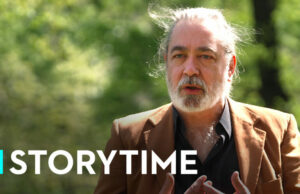
Jeannette Fischer | NARRATIVE #213 by Robert Cibis
Here is a version of about 25 minutes without restrictions – our OVALmedia subscribers can enjoy the full programme.
Watch the full episode with OVAL Abo
Above you can watch a short version.
from €7 / month · cancel anytime · this and all other films, shows and articles
Already a subscriber? Log in
War Is the Absence of Relationship
In a world that seems ruled by crises, division and fear, filmmaker Robert Cibis meets the psychoanalyst Jeannette Fischer. What begins as an analysis of society’s “darkness” develops into a surprising plea for zest for life as a political weapon. A conversation that exposes the mechanisms of power and shows why we are afraid of freedom.
It feels as though the world has come apart at the seams. Corona measures, the war in Ukraine, economic uncertainty – for many people everyday life has become a diffuse threat scenario. In the new edition of Narrative, Robert Cibis sits down with the renowned psychoanalyst and author Jeannette Fischer to understand what is really going on behind the scenes of our psyche – and of the centres of power.
Cibis opens the conversation with an observation many viewers are likely to share: the feeling that “evil” has become more tangible. He reports on letters suspecting satanist circles behind world events and asks about the almost sadistic pleasure with which, during the pandemic, some cashiers or police officers exercised their newly gained power over their fellow citizens. Are we witnessing a global conspiracy of malice, or is something deeply human manifesting itself here?
The sadist as a prisoner of his fear
Jeannette Fischer’s answer is as sober as it is surprising. What we perceive as sadism is often nothing more than the logical defence against powerlessness: “To get out of powerlessness there is one possibility, namely to go into omnipotence,” Fischer explains. Whoever oppresses others, whoever enforces rules with iron severity, does not necessarily do so out of pleasure in the other’s suffering, but so as no longer to feel small and helpless. The moment I have power over someone, I am no longer the victim.
Cibis recognises in this the structures of large bureaucratic apparatuses and times of crisis: war and the state of emergency are gigantic machines of hierarchy that give the individual the feeling of being part of something “bigger” while at the same time taking away his autonomy.
The trap of “good and evil”
But the conversation goes deeper. Fischer and Cibis deconstruct the narratives that drive societies into war. The most dangerous tool of power is the division into “good” and “evil”. Fischer warns: “Evil exists only as the antagonist of good.”
As soon as we accept this separation, guilt arises. And guilt, Fischer says, is purely an instrument of rule: “Whoever has the power to define guilt has the power.” Whether it is Putin, Trump or the unvaccinated neighbour – the search for a scapegoat always serves to distract from one’s own responsibility and to steer the masses. Psychoanalytically, this is an ancient rite: you load a goat with sins and send it into the desert to wash yourself clean.
Relationship instead of symbiosis: the way out
So if division and abuse of power are the symptoms of our time, what is the cure? Here the conversation offers a radical alternative to the usual “we must all stick together” rhetoric.
Fischer argues that real democracy and freedom are only possible through recognising difference. The modern misunderstanding of relationship, she says, is the search for symbiosis – the wish that the other thinks and feels exactly as one does oneself. But that, according to Fischer, is the death of freedom. “Symbiosis always means a degree of self-abandonment.”
True relationship – and thus a peaceful society – means bearing the fact that the other is not me. It is this friction that makes life exciting in the first place. Cibis adds that totalitarian narratives seek to destroy precisely this individuality by placing party discipline above conscience, as shown by a statement by Frauke Brosius-Gersdorf in the debate about the election of judges to the Federal Constitutional Court.
Zest for life as political resistance
Perhaps the most provocative part of the interview revolves around “desire”. At a time when renunciation is preached (“tighten your belts”) and closeness is considered dangerous, sheer zest for life becomes a revolutionary act.
“War always begins where desire is hijacked,” says Fischer. When the other is seen only as a virus spreader or an enemy, the libido, the life force, dies. The answer to war is therefore not counter-hatred, but a return to one’s own desire and sovereignty. Here Cibis draws a fascinating parallel with Goebbels’ Sportpalast speech (1943): totalitarian systems forbid dancing and celebrating because joy cannot be controlled.
Fischer’s advice sounds almost too simple to be true, but in the context of the conversation it unfolds enormous force: “Imagine there’s a war and nobody goes.” Whoever sees through the mechanisms of fear and refuses to feel powerless deprives the system of its energy. That means setting boundaries and not dismissing one’s own “phallicity” – in the sense of creative power and aggression in the service of the self – as something bad, but understanding it as a vital part of life.
Courage
In this hour, Robert Cibis and Jeannette Fischer offer no simple answers to the question of who exactly is steering the world. Fischer insists that the solution does not lie in playing detective, but in one’s own psychological resilience.
The video ends with a hopeful vision: a new civilisation based not on power and submission but on real relationships between sovereign subjects. This conversation is an invitation to lose the fear of freedom and, as Fischer puts it, not to let “cheerfulness fade”.
See also:
Jeannette Fischer | NARRATIVE #138 – Die Libido-Lösung
Robert CibisGood day, my name is Robert Cibis. Welcome to the new programme Narrative. You can always watch them in full length on our website www.oval.media. I'm very proud and very honoured to be sitting here with Jeannette Fischer. She is a psychoanalyst and author and already known to some of you through a programme we published a long time ago; I'm just checking how long ago that was, at any rate at least over a year ago. Well, psychoanalysis isn't so much in the foreground today, if you simply look, at least I think so, at everything that's going on, because I have the feeling people feel threatened, they feel affected. There are conversations about power, who has the power, and of course about evil. I remember a viewer of our programme who had sent me a letter but had enclosed a very large brick with the letter, meaning so that I would really read it.
And the letter said: Mr Cibis, remember, it's the Satanists. Yes, and you always have the feeling, also with this corona story, with the war now in Ukraine, that what is happening is so evil. These must be people who are really bad, who don't just want to be happy, like perhaps most of us, but who really also want to do harm. Want to do harm perhaps for their own advantage, but you sometimes wonder whether this wanting to do harm has gained a kind of momentum of its own. Yes, that it's almost sadistic, the joy in the suffering of others. And when you see how the cashier in the supermarket bossed people around in the corona crisis, because they either hadn't kept their distance or didn't have their mask on, how the police were suddenly in such a special position of power, in which I had never seen them before this corona crisis, that they could, so to speak, really tell people where to move and where not, and really had to intervene in this everyday life, and not just clean up the dirt or deal with crime, but really almost everything had become criminal, or quickly criminal, so that many people came into such a position of power from which, I believe, they profited in a certain way, that it built up their ego and that it also gave energy to the engine of oppression.
How could it be that power was concentrated so globally as in the so-called corona crisis? It means a lot when almost 200 countries implement completely senseless measures across the structure of society. You have the feeling you've drifted off into irrationality and we are at the end of a global civilisation. A new global civilisation is coming, there is so much damage. And then there are those who say: yes, yes, it's the very, very, very rich, who turn everything to their own advantage.
That also sounds very plausible to me. But on the other hand there are the others who say they don't necessarily only want money. These are all people who have developed a kind of religion of their own, which is satanist, who somehow sacrifice people, and it all has a ritual meaning. And then when you see the Kennedy murder, the attacks of 11 September 2001, and even the RNA of the coronavirus has at the end 33 times A. And of the four letters there are, it is always just the one. Repetition: the probability of that being so at all is several trillions to one. And that sounds like a message. You could, if you wanted, basically see a religion of evil everywhere, so to speak, when you describe these powers. At the same time, as I said, it's entirely possible to push aside all this religion stuff, this evil and good, and say: no, no, these are very few who simply want everything. And there's no religion at all.
But I believe, so to speak, we are in a complex world and it's all at the same time. Still, I don't understand most of it. I don't understand, first, how one can be sadistic at all, what one's own gain from it is at all, and I also don't understand why Satanism can work, or perhaps I've defined it wrongly. For me, Satanism means wanting to achieve something evil, or being close to it, making a kind of pact with the devil, to somehow be powerful. And is all of that just hidden narcissism? So what are all these assumptions based on at all? I'm saying all this because I think, before we go into a psychoanalytic discussion and only talk about psychology, we have to, so to speak, briefly name the narratives that are floating around in the world.
And then you can say: that has nothing to do with psychology, that is perhaps an economic question. Or that is exactly what I work on. That's also a bit helpful for us. You never know how many smoke screens are being set off. That is, how many narratives are being spread that are actually nonsense. But because they are spread, people are bound up in their thinking. And those are also methods of war. In war, that's what you do: you spread false narratives. That's clear when you want to subjugate people. And to talk about methods of war now is, I think, reasonable. In short: what is actually going on here? And is it worth thinking about relationships at all, when I often honestly have the feeling that society has become a mass and the individual an atomised piece of disposable mass.
So you have the feeling that part of society has already become the livestock that the most evil people could, so to speak, have made their target. And in such a drama, what meaning do relationships still have at all? And how can you explain evil?
Jeannette FischerYes, in psychoanalysis we always start from the relationship. Without relationship nothing is actually possible; without relationship life is not possible either, because the I depends on the you. We need the you to constitute the I. So it is always attachment. And we also assume that actually between two people an intersubjective discourse should always work. That is, one subject recognises the other subject as equal, even if there are differences of sex, of age, of class, but the recognition of difference, that the other is not me, is the basic precondition of relationship. And if relationship can no longer take place, and by that I don't mean we all have to love each other and be peaceful and so on, or tolerate, but I mean we have to enter into this engagement with difference.
That is always, always a source of friction. But it always remains within attachment, because for us attachment is existential. For human beings attachment is existential. So that means war rhetoric first of all tries to cut this attachment. And you can do that in different ways, for example by saying there are good people and there are evil people. That is actually only a construction that we keep falling for, that we believe there is this separation. Evil only exists as the antagonist of good. But that's absurd.
Robert CibisWhat you're saying is totally logical. And now I also understand that every religion is war. Because that's exactly what they do. They form a group and say: we are the good ones, that is, those of God, by God's grace. And it really is, I don't know all the religions of the world, but I have made many films about religious people, both about Jewish people and about Christians; I made four films about radical Christians. And it's always the same: we are the good ones and the others are the bad ones. It fascinates me, because it has an incredible power. It forms a group of people who are often in this group precisely because they somehow feel weak outside the group, because, for example, they have professional or private problems or health problems. Such people were especially committed, often; I'm not saying it's always like that, but it's a typical career path for people.
Jeannette FischerYes, but I wonder, when you say religion, I wonder whether that isn't institutionalised religion. I think we have to distinguish there, because in Christianity, for example, I actually assume, well, I don't know it well, I only know it a little from a distance. I never studied theology, I only know the scriptures very partially. But actually I always assume that Christ is an anarchist, or was an anarchist, and fights a discourse of domination.
Robert CibisAbsolutely, it's always the same. It's like the anarchist parables; words were used in communism to build a totalitarian, or at least dictatorial, structure of society. Yes, always fascinating how it then gets turned into its opposite.
Jeannette FischerExactly, exactly. And then you can make a discourse of power out of anything and create a hierarchy by splitting, splitting good from evil, and saying: this is good, this is evil. And then comes, namely, what can newly be created there: guilt. Because guilt only comes about, actually, as a secondary phenomenon, as a link between good and evil. That produces guilt. Because guilt as such doesn't exist. There is only, well, I have to take responsibility if I run someone over or if I commit a crime, then I have to take responsibility for it. But that has nothing to do with guilt. I have to take responsibility, and I may have to go to prison. There is a legal system that says this crime must be atoned for.
But ultimately I have to take responsibility for it and also ask for forgiveness. But in my opinion that is absolutely outside a discourse of guilt, because the discourse of guilt is a discourse of domination. I say again and again: whoever has the power to interpret guilt has the power. And power and guilt, we know, guilt is traded. Then he's to blame, and Putin is to blame, and Trump is to blame, and he is to blame, and they are guilty. That has wonderful variables. You can do anything there, you can make anyone a scapegoat, but psychoanalytically the scapegoat is just like this billy goat; originally it comes from this billy goat that was sent into the desert hung with sins and perished there, that is, took my sins with it into death.
Robert CibisExactly this story of the billy goat that perishes with my sins is the story of Jesus. That's the son, they say of God, who let himself be killed only to take all our sins with him. It's the same rite. That's basically, if the father, his father, dear God, allows that, then that's nothing other than a ritual infanticide. As it is attributed to all sorts of groups. I recently heard a historian in a lecture who said that in Carthage there were lots of little boxes at the temple, and then it was clear: babies lie in them. And there in the temple they always sacrificed the firstborn children so that the family would somehow be happy and grow. A terrible crime from my perspective, but a similar logic to the scapegoat.
Through suffering comes the great, comes the beautiful, comes the good.
Jeannette FischerAnd that is of course sadistic again.
Robert CibisNow you have to explain it to me; that it's sadistic, I understand immediately. But why do people do that? Why is there this sadistic tendency? What is the gain for people if they are sadists?
Jeannette FischerI don't think it's a sadistic tendency; rather, I think, psychoanalytically speaking, it is actually a logical form of defence against powerlessness: to get out of powerlessness there is one possibility, namely to go into omnipotence; then you're out of powerlessness, because the other is then in powerlessness, and I have power over him. So you simply try to get hold of the other side of the scales. And then you are in the same sadomasochistic structure. So you stay in it; you are then simply a prison guard or a police officer, simply holding the longer lever, but you yourself get out of this powerlessness. And in this sense, psychoanalytically speaking, it's actually reasonable, isn't it? If we leave morality out of it.
Robert CibisOf course. Yes, that's fascinating. I understand that of course, the more people miss having an effect in life. So the more they feel powerlessness, the more likely they are to become sadists, because that is exactly what it gives them. And that's why you know it, that in very large companies, but above all of course in public authorities, some petty officials particularly like to somehow mistreat and coerce some petitioners, applicants, people forced into forms, and have to say: come back tomorrow, the photocopier is broken, and so on. I've experienced that, for example. So that's exactly when the feeling arises; yes, then it's very important to notice that they are bigger than me. Yes, I understand. And then of course, when there is a general mood of war, something like that naturally happens more often. Because war is a machine, a social machine with an extremely strong hierarchy.
Hierarchisation is, I believe, almost; you could almost say, at least it sometimes seems so to me,
Jeannette Fischerthe purpose of war.
Robert CibisHierarchisation of what? Of the whole of society. Mrs Rosius-Gersdorf said on the programme with Lanz, let me play it in briefly: What was the reason? Why is it so catastrophic? I think, who is responsible for it?
Speaker 3I think many different sides are responsible for it. There are also journalists and think tanks who have analysed the judicial election quite well afterwards. And it was a powerful interplay of various campaigns and various circles. For example, the … worked out that attempts were made from various sides to prevent my election even before the names were made public at all. They tested my academic topics, looked at which topic catches on best. First they tried it with the AfD party ban, then with abortion. And you simply have to say that the Union MPs, or the Union parliamentary group, did not succeed. And there were efforts, that must be said very clearly, both from the parliamentary group leadership and from the Federal Chancellery.
But they didn't manage to close their ranks. And in such a situation, in such a judicial election, you simply have to exercise party discipline. It's not about decisions of conscience there. And that was in some way also an attack on our liberal democracy, to which there is no alternative and which we don't have enough, against which we don't have enough to counter it.
Robert CibisBecause with the Federal Constitutional Court the member of parliament must stick to the party and not simply judge according to his conscience. I have to laugh a little about that, because it says exactly the opposite in the Basic Law. At the Federal Constitutional Court she would have been responsible precisely for upholding the Basic Law. And that, for example, is a sentence I find so incredible. If someone had no idea at all, it would already be strange; why does the person speak out if she hasn't even read the Basic Law? But she, as a potential judge at the Federal Constitutional Court, says that the party should decide, not the member of parliament. The party isn't even provided for in the Basic Law. So that is, so to speak, a perfect example of dictatorial narratives. That really, it completely blew me away. Of course she says it's very important to obey the party for the sake of liberal democracy.
And for me that is of course also a bit, how shall I put it, evil. For me it's evil when you use terms in exactly the opposite way to their actual meaning. Because democracy doesn't mean obeying the party, but putting conscience first and deciding personally how you want to live, and the people decide and not, say, the government.
And liberal means precisely free, emancipatory.
Jeannette FischerYes, of course with that she has abolished the right to heterogeneity, to difference between individual people, that is, that we are heterogeneous. That means she actually destroys, psychoanalytically speaking, she destroys the independence of an individual. That is war. That is war, this very fine-meshed, between two people, this very fine-meshed war. But it already starts there. She dissolves the subjectivity and sovereignty of an individual human being. That means, in this heterogeneity, heterogeneity is more or less the basis of democracy. It doesn't work at all without this heterogeneity. That is destroyed. I say, for example, in this sadomasochistic hierarchy, where there is above and below, that is a war narrative. And I say, as long as this sadomasochism, I mean now this social one, is not a
psychiatric diagnosis as a perversion, as a perversion, for that long we have no democracy.
Robert CibisAnd how should we deal with that? How can we protect ourselves there? How can we remain emancipated? And how can one possibly work against war?
Jeannette FischerYes, I believe, I am a psychoanalyst, we can always protect ourselves through insight. When we recognise something, we are already a little impregnated, a little protected. We have a certain distance from the object of insight, and we can never go back behind this insight. So that gives protection. And an insight is always the beginning of a change, and that is then more or less left to these people, or to this community, or to whatever the circumstances are, and so on. And that's why I can't give advice, as it were, but simply this attention, to recognise it. And I also believe that when we recognise this sadomasochistic discourse, this discourse of war, then we are already a little outside, but that doesn't mean it's fun out there, because then we're also alone, because the other, even though they are sadistic connections, gives a kind of security, because we're used to it, that's how it is, and then there's a strange kind of hold, combined with torment, but there is one, and it was always like that; well, it can't be so bad.
So that means getting out of this discourse actually through the insight that it is a discourse of domination; that also brings us into a certain loneliness. That also brings us into greater vulnerability. We no longer belong, even if it brings suffering, a greater vulnerability. And I assume that we, there may also be powerlessness, but of a different kind. Simply because you see: yes, yes, that is simply superior power. So why should I bother with superior power? Why should I pick a fight with someone who has power over me? So there is in this powerlessness, it's then like a new form of powerlessness that doesn't make me passive but allows me to endure it. It sounds a bit strange, but it's also about enduring this powerlessness and this insight. Because then the strength comes back.
Robert CibisPlease tell us more about the strength that comes back, because that wasn't a good sales pitch, to say: get out of the power machine to be yourself, and see that these relationships are toxic. Better be lonely and endure it. The arguments you, well, that sounded a bit... Masochistic. Yes, exactly.
Jeannette FischerI don't mean that at all. No, no, I don't mean that at all. But perhaps I need to change the terminology. When I go back, when I get out of this sadomasochistic stuff, that also means I go back into my boundaries. I no longer have to participate in this discourse where I have power over the other or the other has power over me. That is, the intersubjective is destroyed. And when I take myself out of that through recognition, then I find my way back to an intersubjective discourse in which I see my boundaries. And I mean that only positively, because within these boundaries, when I see that, then I'm not in the sadistic position nor in the masochistic one, but within my boundaries and my subjectivity and my sovereignty.
And in my opinion that means freedom. That's where the energy comes from; then self-determination comes back, because it gets lost in this sadomasochistic machinery. It gets spent, burnt up, as it were; but when you set these boundaries again, which get blurred in sadomasochism, then freedom comes back, and self-determination. Then you are, I have to correct that, then you are alone, but not lonely. And you find like-minded people.
Robert CibisThat was my next question. What does that mean for the relationship or relationships you have?
Jeannette FischerIt means entering new terrain in terms of relationships. That it is no longer this narrative of above and below, power and powerlessness, but establishing a new form of relationship, trying it out, and again and again enduring that the other is not me. In sadomasochism there is this game, this tormenting game. But in the other, in this intersubjective discourse, it's about me enduring that you are always, always different from me. Even if we have the same opinion on certain things, or whatever. But in principle we have tiny overlaps, and otherwise we are always different. That is actually the gain. Because then the pleasure in this difference can also take place. There is this friction, and it is within; the relationship isn't lost at all, because I anyway; the relationship is only the recognition that you are different,
Robert Cibisor it isn't so little; that is a relationship, that is so much, and it's so much to endure, because then everything has room; we can argue and have it out, but the relationship remains, and only in this way is desire possible too; otherwise desire is somehow contaminated with torment and above-and-below, power-and-powerlessness stories, or else with this differentiation that the other is null.
Jeannette FischerThe recognition of difference: that's where the friction of desire arises too.
Robert CibisWhy is desire so important?
Jeannette FischerYes, I actually think desire is the elixir of life, it is the zest for life. In my opinion, in these war narratives, in this war rhetoric, desire is always the first thing switched off. Desire is bad: if I go to bed with the other I have to wear a mask, or if I'm not vaccinated then I'm his or her murderer. So the other is positioned as harmful, and then desire can no longer take place. That is also something the women's movement caused; besides a lot of good, this women's movement as I know it, socialised in the 70s, said: the man is a potential rapist and patriarch and we have to fight against him. But that is what I mean, it's so absurd, because if I am heterosexual, then with that I destroy my desired subject, more or less.
War always begins where desire is cut. And by desire I don't only mean sexual desire; that too, but that is a small part. I mean desire in the sense of this life force and this longing for abundance. And for that you simply need attachment; otherwise we might just as well go into the jungle and play jungle baby a bit.
Robert CibisI find what you just said very, very important, and fascinating, how antagonistically it fits together with the discourse, with the current discourse of power. We have to tighten our belts. Parties and dancing are no longer possible now. Those were the words of Goebbels in the famous speech in the Sportpalast, where he then also said he wanted total war. And these sentences are coming now with the war economy that has been introduced. These sentences came with the state of emergency of the so-called corona crisis. These are all sentences hostile to pleasure, and nothing is more provocative than saying: we want joy and vitality. And I understand that psychoanalytically you then say that this is desire and that it is abundance. And I also understand the recipe, so to speak.
Basically you are suggesting, as resistance against war and against dictatorship, to say: we emancipate ourselves and simply don't take part.
Jeannette FischerExactly. We recognise it. Imagine there's a war and nobody goes, right? And we form this intersubjective, with this engagement in attachment, with the recognition that the other is not me. That also means work: I have to endure that the other is not me, because it's so tempting to think: yes, we mean the same thing and so on, and those over there mean the same thing too, and then we all belong together. That's completely absurd, right? Getting into this symbiotic mess, that's very tempting, this symbiosis, but symbiosis always means, symbiosis always means a part of self-abandonment, and this self-abandonment isn't needed. For that we have to do the work, if I don't want to give up parts of myself, which isn't needed at all. It's always said: yes, the relationship needs compromises and that sort of stuff, right?
If one wants to go to Alaska for the holidays and the other to the Sahara, then we meet in the Swiss mountains, or it needs compromises. That's so completely absurd; then go to Alaska, and I'll perhaps go to the cinema or something like that. So it needs this; we always say, well, we always assume that relationship also means symbiosis, because we don't want to do this work of difference, to endure that the other is always different from me, and that I always enter this togetherness anew, as it were, anew. I'm just talking about togetherness for two now because I'm an analyst; so that there is always a boundary between I and you.
Robert CibisWhat you're telling now, also socially, makes me think about how many people who actually stand up and want to stand up for freedom then still let themselves be seduced into such a good-evil scheme and then fight something that bothers them, and this fight can then in turn lead to them being less emancipated as persons. Well, of course there are things that bother me. EU regulations bother me. It bothers me that the cattle on farms in France are now being slaughtered. And I'd like to, so to speak, help out myself, like the farmers, simply dumping the manure in front of politicians' houses. That's basically a fight, or war. The question is whether that is, so to speak, anti-emancipatory, or whether it's something else; can you not say it like that?
Jeannette FischerYes, I wouldn't generalise and say the fight should not take place at all, or resistance should not take place at all. I wouldn't put it that way. But I think resistance must not become an own goal. It must not become a self-firing trap. Or if I rise up against a superior power, then my rebellion must not be destructive. That is, not work against me. Rather, it must also stay within this discourse of pleasure. It has to be fun. It has to be fun.
Robert CibisThat sounds strange now. No, it's not so strange at all. I was talking about it just recently. Sometimes there's a really big difference between women and men. We men, for example, like playing poker. I don't know any woman who likes playing it. But the special thing about poker is that you may risk everything, or risk a lot, and can lose everything. It's a little death when you lose, or a big win when you pull it off. And it's always against each other. I believe war and fighting really are inside us and also bring a joy with them. You can get young men more enthusiastic about war than young women. Just the idea that they then fight against others and kill others with a knife and so on has something pleasurable for them.
Yes, I'm talking about ideas now. I believe everyday life at the front is not pleasurable but the exact opposite. But we know that already just from seeing what computer games there are, or what films there are, how many people are killed in films or how many wars take place in films. That's not exactly everyday life, it doesn't exactly reflect everyday life; rather, it's this fight again and again that people like to watch, but above all men and boys. How many women play these ego-shooter games on the computer? Far fewer than men. I think it's perhaps 1 in 20 or so. And that's something male, and there's also a pleasure in it, I would say, and it also gets instrumentalised. Of course you can also use it so as not to give up desire in resistance. That was just the bridge I was building. Or I think what you say, the difference between men and women in this sense, I'd simply like to add, and I'm a woman, I'd like to add that our aggressiveness is much more effective because it's much more underhanded.
Jeannette FischerWe can bring even the strongest men to the ground with this underhandedness and this nastiness, and I think I'm allowed to say that because I'm a woman myself. And the other is the obvious. But if we now start from this poker and these war games, it's the case that this energy is then channelled into the fight. But I don't experience poker as a fight; we played it for nights on end as students, and that is also fun, and you were drunk and so on, so it's also nice in the sense of togetherness, even if you play against each other. But what I, I assume that in psychoanalysis we distinguish between aggression in the service of the ego, that is, this force to be ambitious, to win and to be first, and for men to penetrate.
This, we say, is a constructive force in the service of the ego. And then there is the destructive force, that is, war or this force of wanting to destroy. And I assume, because we, we have, for many years it has been coming to a head, that this aggression in the service of the ego is mirrored back as harmful. So if I hold you by the shoulder or so, then I'm already being transgressive. I mean it the other way round too, above all when men then hug a woman or something, or go to bed, they first have to ask and so on. So always, always, this aggression in the service of the ego, this force in the service of life or of desire, is always mirrored back negatively. So then it can only be felt as negative and then it can only flow into these war games. Because there is
this template that is set, and the other is harmful.
Robert CibisThat at least sounds like a discourse of power, that it is occupied negatively.
Jeannette FischerI would certainly, that is a discourse of domination.
Robert CibisAnd do you believe this discourse of domination is deliberately used by people who do it professionally, that is, use discourses of domination?
Jeannette FischerYes, then we're back in the split between good and evil. Then there are the good and the evil, and I'm on the good side because I recognise there is an evil one. I want to get out of this narrative.
Robert CibisOh, so you don't want to voice any conspiracy hypotheses at all? But then we won't get any further today. There has to be a bit; I can agree that we say, but only today, we don't name the guilty. But we can't say we won't name those responsible. Somebody is responsible for these discourses, after all. And if you always just think the whole time that it comes about by itself, that's also unreasonable. When it's about a lot of money and a lot of power, then the people who have the power also have the means to ask someone who knows. And my experience is, I once met two or three really rich people; they can simply get an expert opinion. They say, snap, and then the professor or the psychoanalyst comes along and explains everything to them. They don't have to be cleverer than me or you or anyone else, but they can make much better decisions because they can obtain all of it, this expertise.
And that is of course something that is forgotten or repressed again and again when you think: oh, they're so incompetent, or they're so psychologically unstable, this president or that company boss. He's got some ego thing going on. No, they haven't. They have expert opinions. They know how to; I find this incompetence theory mostly absurd in such contexts. And you do have to name responsibility, especially, I think, when you look at it from the psychoanalytic side. Sorry for being so demanding now, but I find this not naming responsibility simply foolish. Or searching for those responsible. I can't claim that one knows exactly how everything is. But wanting to find out how everything is exactly and who bears responsibility here, I find that a duty for every citizen who wants to have a say in what this society should look like.
Jeannette FischerYes, I understand well what you're saying and what you're asking. It's a kind of, I notice I can't think in this way. Not, I believe, because I'm pretty stupid, but it's a structure of thought I can't think, because it disgusts me then, and I think, well, I don't want to have anything to do with it, and not in the sense of resignation or ignorance. But I want to keep my pleasure.
Robert CibisI see, but isn't it precisely also, can't you also try to make it a bit of fun? A bit of what? There are crime stories, and if in the crime story the murderer wasn't just someone who wanted to steal a purse, but somehow a secret service agent, then the crime story becomes much more exciting straight away. Doesn't it? Even with Dürrematt it was like that. I remember one where suddenly, in a novel, all of a sudden this secret service business came in, and then I think: wow, now it's getting even more exciting. And it can be fun to uncover secrets like that.
Jeannette FischerYes, of course, I'm not denying that at all. I'm only talking about me. Pretty much crime films and so on, also the old Hitchcock ones and so on. After ten minutes I don't understand it any more. I don't know, with me it simply goes, I watch, I think Humphrey Boger is great and Ingrid Bergmann is great and so on, these old films. And then I'm simply glad when it turns out well at the end. But in between, somehow it doesn't interest me; I don't know why. So far I haven't experienced it as a deficiency either. With me it really is, for me personally, it's top priority that I remain able to work, think and act. That is top priority, and that pleasure doesn't fade, that my cheerfulness doesn't fade.
And I believe, and I don't do it deliberately, saying I'll ignore that now or something, but it falls out of my area of interest. And then, though, what I do consciously: I say I won't go, I won't bring powerlessness upon myself. I simply don't do that, on principle. I don't do something that puts me into powerlessness. And perhaps that would put me into powerlessness,
Robert CibisI don't know, that I... It may be, I understand that. I do understand that. Recently an acquaintance sent me war images. I was supposed to look at them; I didn't. So I understand that one simply doesn't want to see things. Yes, and I understand that some people say: that's too disgusting for me. I don't even want to ask myself the question. But of course someone has to do it. It's like with doctors. There are people who have had a traffic accident. And it's simply terrible to look at when the body is so broken and the person is still alive. But it has to be done. Someone just has to do it. But then you need specialists for everything and have to assess it accordingly.
I'm just saying, and I've already said it just now, but I'll say it again: it's unreasonable to believe that society is structured only by reacting or by desire. There really are people who try, in great detail, with all the knowledge available, to shape society the way they want. And I strongly assume to their own advantage.
Jeannette FischerYes, I believe that too. I mean, war rhetoric makes use of psychoanalysis. Free of charge, as in the supermarket, and incorporates it. I absolutely agree with you there. I'm also tremendously glad there are people like you, who then, as it were, go to the accident and look at it and analyse it, and so on; that is absolutely necessary, right? I, for my part, then do, as it were, the convalescence. I really want to keep the strength to become active there, that is, outside this sadomasochistic narrative. And I don't mean that judgementally. I believe that really is also the difference. Everyone works in their own place, where their pleasure is too, where they feel strong and where they want to do this work.
And I find all of that tremendously important. I wouldn't put it in a hierarchy.
Robert CibisI think, you said that very nicely. I think we've come full circle, and I didn't want to … I meant, I have the feeling, yes, that's of course typical of women and men: wanting to understand this power and also wanting to have an effect. I have the feeling that's like a drive in most men. And putting relationship in the foreground and promoting what is healthy or constructive in it, that I know especially from women, and correspondingly from us in a certain way. Yes, but note, in any case, greetings to Gunnar Kaiser, it is important to say: I simply won't take part. I simply don't have to. And whether it's the law or not, if it's really harmful, then you simply have to protect yourself.
And if only enough people do that, then it also protects others when you protect yourself. And I notice again that what has been happening here in recent decades, and in the last five years in particular, is that you only have one big level of conflict. Emancipation on the one side and submission on the other. We've just named various mechanisms, various institutions, and nothing subjugates more than war, and similar to war are various attacks, states of emergency and so on. That's basically a kind of simulation of war, in a certain way. And nothing prevents war more than emancipation and living one's own pleasure. I can sign up to that too. Thank you for presenting that from your perspective. Would you like to say anything else at the end? May I say something more about that? Please do.
Jeannette FischerJust what you said, this male phallicity you described.
Robert CibisI don't use these terms, but yes.
Jeannette FischerYes, but in psychoanalysis that is everyday language, this male, and we mean it in a positive sense; this male phallicity is not a female one; we can't do that at all, certainly not anatomically. Of course it is also used in a destructive sense. Actually this phallicity is also an expression of this aggression in the service of the ego, that is, of this zest for life and this joy of life, and also, in sexuality, of desire. And then it needs, as it were, the other pole, that is, those who need this phallicity. In heterosexual discourse that is the woman. So the phallic is for us, we desire it, or, put very simply, we desire it.
So it needs these two, the phallic and the desire for the phallic, because the woman doesn't have it but takes the phallic into herself; I'm getting very anatomical now, but I find that tremendously important on the symbolic level too, and that's why the engagement there is absolutely necessary. Also in our discourse now, when you say you go to an accident site and I do the afterwards, as it were. That's exactly what I find: that's how we can go into a new future together. We have to experiment with it, outside of the idea that being phallic is harmful. And we then go along with the whole thing as non-phallic subjects.
I also believe that the new civilisation that will emerge won't look the way those responsible are now planning. I am firmly convinced that in future the relationship will be even more at the centre of social structures than in past centuries. … the new centre of a civilisation that will then probably again last several hundred years, because that is emerging as the next stage of
Robert Cibisdevelopment of society.
Jeannette FischerYes, and indeed, I mean, sadomasochism is also a form of relationship, isn't it? Many work like that and call it a relationship or a love relationship. I mean, we mean the same thing here: this relationship between two subjects who recognise each other as subjects. I think so too: if we dare this experiment, that this kind of relationship takes up space, and that actually has to be protected, then there's no room at all for war. Because that is outside this narrative.
Robert CibisQuite simple. Quite simple. Dear Jeannette, thank you very much for the conversation. Dear viewers, thank you for being with us for a while, and recommend the programme and pass it on.
Jeannette FischerThank you. I thank you, Robert, for the trust.
Robert CibisGuten Tag. Mein Name ist Robert Cibis. Herzlich willkommen zur neuen Sendung Narrative. Sie sind immer in voller Länge auf unserer Webseite www.oval.media zu sehen. Ich bin ganz stolz, ganz geehrt, hier mit Jeannette Fischer zu sitzen. Sie ist Psychoanalytikerin und Autorin und auch schon einigen von ihnen bekannt. Durch eine Sendung, die wir vor längerer Zeit im Verlag Wie viel Zeit das war vor jedenfalls über einem Jahr mindestens veröffentlicht haben. Also Psychoanalyse ist ja heute gar nicht mehr so im Vordergrund, wenn man einfach schaut, finde ich zumindest, was alles so los ist, weil man. Ich habe das Gefühl, Leute fühlen sich bedroht. Sie fühlen sich betroffen. Es gibt Gespräche über die Macht. Wer hat die Macht? Und natürlich über das Böse. Ich erinnere mich an einen Zuschauer unserer Sendung. Der hat mir einen Brief geschickt und er hat den Brief, aber eigentlich einen ganz großen Ziegelstein beigefügt.
Er meinte damit ich, auch wenn ich lese. Und in dem Brief stand Herr Zebes, denken Sie daran, es sind die Satanisten. Ja, und? Und? Jein. Man hat immer das Gefühl, auch bei dieser Korona Geschichte, bei dem Krieg jetzt in der Ukraine. Das ist so böse, was da passiert. Das müssen ja Leute sein, die richtig schlecht sind, die nicht nur glücklich sein wollen, wie vielleicht die meisten von uns, sondern die wirklich auch schaden wollen, schaden wollen. Vielleicht zum eigenen Vorteil. Aber man fragt sich manchmal, ob dieses Schaden wollen so eine Art Eigendynamik gewonnen hat. Ja, das ist schon fast sadistisch ist die Freude an dem Leid des anderen. Und wenn man jetzt sieht, wie die Kassiererin im Supermarkt die Leute gegängelt hat mit der Korona Krise, weil sie entweder den Abstand nicht gehalten hatten oder die Maske nicht aufhat, wie die Polizisten auf einmal so einer besonderen Machtposition waren, in der ich sie vor dieser großen Krise nie gesehen habe, dass sie sozusagen den Leuten nicht sagen konnten, wo sie sich hinbewegen soll und wo nicht und und also wirklich in dieses diesen Alltag eingreifen mussten und nicht nur den Dreck aufräumen oder das Kriminelle
abarbeiten. Und es war ja wirklich alles fast kriminell oder schnell kriminell geworden, so dass viele Leute in so einer Machtposition kamen, von der ich glaube sie in gewisser Weise profitierten. Dass das ihr Ego aufbaute und dass das auch Energie gab für den Motor der Unterdrückung. Wie konnte das sein, dass so global die Macht konzentriert war wie in der sogenannten Koronakrise? Das heißt ja viel, Wenn fast 200 Länder völlig unsinnige Maßnahmen umsetzen über. Über die Struktur der Gesellschaft. Man hat das Gefühl, man ist in einer Irrationalität abgedriftet, abgedriftet, und wir sind am Ende einer globalen Zivilisation und es kommt eine neue globale Zivilisation. Es gibt so viel Schaden. Und dann gibt es eben die einen, die sagen Ja, ja, das sind die ganz, ganz, ganz Reichen, die alles zu ihrem eigenen Vorteil machen.
Klingt für mich auch sehr plausibel. Aber auf der anderen Seite gibt es Anlagen. Ja, das ist die wollen gar nicht unbedingt nur Geld. Das sind alles Leute, die eher so eine Art eigene Religion entwickelt haben, die so eben satanistisch ist. Die irgendwie Leute opfern und es hat alles eine rituelle Bedeutung. Und wenn man dann sieht, der Kennedymord, die Attentate vom 11. September 2001 und selbst selbst die RNA des Corona Virus hat am Ende 33 mal a. Und also von den vier Buchstaben, die es gibt, ist immer nur eine Wiederholung. Die Wahrscheinlichkeit ist mehrere Millionen, dass es überhaupt so ist. Und das klingt so nach einem in einer Nachricht und man könnte überall, wenn man wollte, sozusagen im Grunde Art eine Religion des Bösen sehen, wenn man diese Mächte beschreibt. Gleichzeitig wie gesagt, ist es völlig möglich, diese ganzen Religionen und Kram, dieses Böse und Gute wegzudrängen und sagen Nee, nee, das sind ganz wenige, die einfach alles wollen und und da gibt es gar keine Religion.
Aber ich glaube sozusagen, wir sind eben in komplexen Welt und es ist alles gleichzeitig. Trotzdem verstehe ich das meiste davon nicht. Ich verstehe nicht, erstens, wie man überhaupt sadistisch sein kann, was das, was überhaupt der eigene Gewinn dabei ist. Und ich verstehe auch nicht, warum Satanismus funktionieren kann. Oder vielleicht ist das auch falsch definiert von mir dann Ismus heißt für mich, man will etwas Böses erreichen oder man hat oder man ist sich ein Mana. Man macht so ein Pakt mit dem Teufel, um irgendwie mächtig zu sein. Und ist das alles nur man ein versteckter Narzissmus? Also was sind. Worauf basiert überhaupt dieser die ganzen anderen? Weil ich sage das alles, weil ich finde, bevor wir jetzt in eine psychiatrische Diskussion gehen und nur über Psychologie reden, müssen wir sozusagen die Narrative, die so herumschwirren, in der Welt, auch mal kurz nennen.
Und da kannst du sagen, das hat mit Psychologie nichts zu tun. Das ist vielleicht die wirtschaftliche Frage, weil das hat mit. Das ist genau das, was ich bearbeite. Das ist auch so ein bisschen hilfreich für uns. Also ich weiß ja auch nie, wie viel Nebelkerzen gesetzt werden, also wie viele Narrative gestreut werden, die aber an sich Quatsch sind. Ja, aber. Aber dadurch, dass sie gestreut werden, sind die Leute gedanklich gebunden. Und das sind ja auch sind ja Kriegsmethoden. Im Krieg macht man das, dass man falsche Narrative streut. Das ist ja sehr klar, wenn man Leute unter Druck unterwerfen will. Und jetzt von Kriegsmethoden zu reden ist, glaube ich, vernünftig. Kurz gesagt Was ist hier eigentlich los? Und lohnt es sich überhaupt, über Beziehungen nachzudenken, wo ich oft ehrlich das Gefühl habe, aus der Gesellschaft ist eine Masse geworden und aus dem Einzelnen ein atomisiertes Stück Verfügungsmasse.
Ja, also man hat das Gefühl, ein Teil der Gesellschaft ist schon zu dem Nutzvieh geworden, was sich die bösesten Menschen sozusagen zum Ziel gemacht haben könnten. Und da in so ein Drama, welche, welche Bedeutung haben überhaupt noch Beziehung und wie kannst du das Böse erklären?
Jeannette FischerJa, in der Psychoanalyse gehen wir immer von der Beziehung aus. Also ohne Beziehung ist eigentlich nichts möglich. Auch ohne Beziehung ist Leben nicht möglich, weil das Ich ist vom Du abhängig. Wir brauchen das Du, um ich konstant zu konstituieren. Also es ist immer Bindung und wir gehen auch davon aus, dass eigentlich zwischen zwei Menschen immer ein intersubjektiv Diskurs funktionieren müsste. Also das heißt das eine Subjekt anerkennt das andere Subjekt als gleichwertig, auch wenn die, also die Geschlechtsunterschied, all diese Unterschiede Schicht Unterschiede aber die Anerkennung der Differenz, dass der andere nicht Ich ist, das ist die Grundvoraussetzung von Beziehung. Und wenn Beziehung nicht mehr stattfinden kann. Und damit meine ich nicht, wir müssen uns alle lieben und friedfertig sein und so oder tolerieren, sondern ich meine, wir müssen uns in diese Auseinandersetzung der Differenz begeben.
Das ist ja immer, immer Reibungsfläche, aber es bleibt immer innerhalb von Bindung, weil für uns ist Bindung existenziell. Für den Menschen ist Bindung existenziell. Also das heißt, eine Kriegsrhetorik versucht als erstes, diese Bindung zu kappen. Und das kann man auf unterschiedliche Art und Weise. Zum Beispiel indem man sagt, es gibt gute und es gibt böse. Das ist eigentlich nur eine Konstruktion, auf die wir immer wieder reinfallen, dass wir glauben, es gibt diese Trennung. Also da gibt es das Böse, gibt es nur als Antagonist des Guten. Aber das ist das Ich. Absurd.
Robert Cibis Es ist total logisch, was du sagst. Und jetzt verstehe ich auch, dass jede Religion Krieg ist. Weil das ist ja genau, was sie tun. Sie machen eine Gruppe sagen Wir sind die Guten, die alle, also die von Gott, Gottes Gnade. Und es ist ja ist es wirklich. Ich kann mich kenne es nicht alle Religionen der Welt, aber ich habe viele Filme über religiöse Menschen gemacht und mit denen also sowohl über jüdische Menschen als auch über christliche radikale Christen, habe ich vier Filme gemacht und und es ist immer das gleiche Wir sind die Guten und die anderen sind die Bösen. Also mich hat mich fasziniert das, weil es eine unglaubliche Kraft hat. Also es bildet eine Gruppe von Leuten, die oft auch gerade in dieser Gruppe sind, weil sie irgendwie sich schwach fühlen außerhalb der Gruppe, weil zum Beispiel berufliche oder private Probleme haben oder gesundheitliche Probleme. Solche Leute waren besonders engagiert oft. Also das sage ich jetzt nicht, dass das immer so ist, aber es ist so ein typisches, so eine typische Laufbahn von Menschen.
Jeannette FischerJa, ich. Ja, ich frage mich aber, wenn du sagst Religion. Ich frage mich, ob das nicht die institutionalisierte Religion ist, dass also da, da denke ich, müssen wir unterscheiden, weil ich zum Beispiel im Christentum eigentlich davon ausgehe. Also ich kenne das nicht gut, ich kenn das nur ein bisschen aus der Ferne. Ich habe nie Theologie studiert, ich kenne die Schriften nur absolut partiell, Aber eigentlich gehe ich immer davon aus, dass Christus ein Anarchist ist oder Anarchist war und einen Herrschaftsdiskurs bekämpft.
Robert CibisAbsolut. Das ist immer das Gleiche. Das ist ja wie die anarchistischen Parabel Wörter wurden verwandt, verwendet im Kommunismus, um eine totalitäre oder zumindest diktatorische Struktur der Gesellschaft aufzubauen. Ja, faszinierend, wie das dann ins Gegenteil umgedreht wird.
Jeannette FischerUnd dann kann man aus allem kann man einen Macht Diskurs machen und ein Gefälle herstellen, indem man spaltet, sagt. Es gibt also das Gute vom Bösen spaltet und sagt Das ist gut, das ist böse. Und dann kommt nämlich Was neu kreiert werden kann, ist die Schuld, weil die Schuld kommt nur so zustande, eigentlich als Sekundärerscheinung zwischen auf, also wie als Bindungsglied, zwischen Gut und Böse. Das gibt die Schuld, weil die Schuld an sich gibt es nicht. Es gibt nur also ich, ich muss die Verantwortung übernehmen. Wenn ich jemanden überfordere oder wenn ich ein Verbrechen begehe, dann muss ich dafür die Verantwortung übernehmen. Aber das hat nichts mit Schuld zu tun. Ich muss die Verantwortung übernehmen und ich muss vielleicht ins Gefängnis. Also, da gibt es eine Rechtsprechung, die sagt, dass dieses Verbrechen gesühnt werden muss.
Aber ich muss letztendlich die Verantwortung dafür übernehmen und mich auch ach, um Verzeihung bitten. Aber das ist Meines Erachtens ist es absolut außerhalb von einem Schulddiskurs. Weil der Schuld ist, gut geht, ist ein Herrschaftsdiskurs. Ich sage immer wieder, wer die Deutungshoheit über die Schuld hat, der hat die Macht und und die Macht und die Schuld. Wir wissen ja, es wird mit der Schuld gehandelt, dann ist der schuld und der Putin ist schuld. Unter Trump ist schuld und der ist schuld und die sind schuldig. Also es wird das ist das wunderschöne Variablen man kann da alles, man kann jeden zum Sündenbock machen, aber psychoanalytisch gesehen ist der Sündenbock genau wie dieser Schafsbock, also ursprünglich kommt ja das von diesem Schafsbock, der mit den Sünden behangen in die Wüste geschickt wurde und da veränderte, also meine Sünden mit in den Tod nahm.
Robert CibisGenau diese Geschichte mit dem verändert, mit meinen Sünden ist ja die Jesusgeschichte, Das ist ja der Sohn. Man sagt von Gott, der sich selbst hat umbringen lassen, nur um unser aller Sünden mit sich zu nehmen. Es ist ja derselbe Ritus. Das ist ja im Grunde, wenn der Vater, also sein Vater, der liebe Gott, das zulässt, dann ist das ja nichts anderes als ein ritueller Kindsmord, wie wir das auch, also wie man das allen möglichen Gruppen zuspricht. Ich hatte vor kurzem einen Historiker gehört im Vortrag, der erzählte, dass in Karthago so ein Kästchen da im Tempel war und dann war klar, da liegen halt Babys drin. Und die haben dort im Tempel immer die erstgeborenen Kinder geopfert, damit die Familie das mal für die Familie irgendwie glücklich wird und wächst. Also. Schreckliches Verbrechen aus meiner Perspektive. Aber ähnliche Logik wie mit dem Sündenbock.
Also über das Leid kommt das Große kommt, das Schöne kommt das Gute.
Jeannette FischerUnd das ist das ist natürlich wieder sadistisch.
Robert CibisJetzt, jetzt, das sind genau jetzt musst du mir das mal erklären. Wieso also dann? Dass das sadistisch ist, verstehe ich sofort. Aber wieso macht man das? Wieso gibt es diese sadistische Neigung? Was ist der Gewinn für die Menschen, wenn sie Sadist sind?
Jeannette Fischer Ich glaube nicht, dass das eine sadistische Neigung ist, sondern ich finde eigentlich, also psychoanalytisch gesehen ist das eine eigentlich eine logische Abwehrform von Ohnmacht, also die Ohnmacht. Um aus einer Ohnmacht zu kommen, gibt es eine Möglichkeit, nämlich in die Allmacht zu gehen. Also dann ist man auch Ohnmacht, weil der andere ist ja dann in der Ohnmacht. Und über den habe ich Macht. Also man versucht einfach die andere Seite der Waage zu erwischen und dann ist man in derselben sadomasochistischen Struktur, also man bleibt drin und ist einfach dann Gefängniswärter oder Polizist, einfach am längeren Hebel. Aber man, man kommt, man kommt selbst auf diese Ohnmacht raus. Und in diesem Sinne ist es psychoanalytisch gesehen eigentlich vernünftig, aber wenn wir die Moral draußen lassen, natürlich.
Robert CibisJa, das ist faszinierend. Ich verstehe das natürlich, wenn je wie soll ich sagen, je mehr die Menschen. Vermissen, dass sie etwas bewirken im Leben, Also je mehr sie die Ohnmacht spüren, desto eher können sie Sadist werden, weil ihnen das dann genau gibt. Und deswegen kennt man das. Das sind ganz große Unternehmen, vor allen Dingen aber natürlich in Behörden, dann irgendwelche kleinen Beamten, besonders gerne irgendwelche Bittsteller, Antragsteller, formularötigte. Irgendwie misshandeln, zwingen und sagen muss Morgen haben wir schon, der Fotokopierer ist kaputt und so, Das habe ich zum Beispiel erlebt, also dass da da gerade dann das Gefühl wird, ja, da ist es dann ganz wichtig, dass man merkt, sie sind größer als ich. Ja, verstehe, ich hasse das. Aber. Und dann ist es natürlich so, dass wenn insgesamt Kriegsstimmung ist, dass natürlich so was öfter vorkommt, denn Krieg ist eine Maschine, also eine gesellschaftliche Maschine mit extrem starker Hierarchie.
Die Hierarchisierung ist, glaube ich fast, also man könnte schon fast sagen, manchmal, so erscheint es zumindest mir, der Zweck des Krieges.
Jeannette FischerHierarchisierung von war.
Robert CibisDer gesamten Gesellschaft. Also Frau Brosius Gersdorf hatte in der Sendung bei Lanz gesagt Ich spielte mal kurz ein, Woran lag es, warum ist das so katastrophal schief? Ging es dafür verantwortlich?
Speaker 3Ich glaube, da sind sehr viele verschiedene Seiten für verantwortlich. Es gibt ja auch Journalisten und Thinktanks, die die Richter mal im Nachhinein ziemlich gut aufgearbeitet haben. Und das war halt ein Zug mächtiges Zusammenwirken verschiedener Kampagnen verschiedener Kreise, also zum Beispiel das Thinktank Polis wir herausgearbeitet, dass man schon versucht hat, von verschiedener Seite um eine Wahl zu verhindern, noch bevor die Namen überhaupt publik waren. Ja, da hat man meine wissenschaftlichen Themen getestet, hat geschaut, welches Thema verfängt am besten? Erst hat man es mit einem AfD Parteiverbot versucht, dann mit dem Schwangerschaftsabbruch und man muss einfach sagen, das ist Unionsabgeordneten oder da ist der Unionsfraktion nicht gelungen ist und es gab Bemühungen darum, das muss man ganz klar sagen, sowohl von der Fraktionsführung als auch aus dem Bundeskanzleramt.
Aber sie haben es nicht geschafft, ihre Reihen geschlossen zu bekommen. Und in so einer Situation, bei so einer Richterwahl, da muss man einfach Fraktionsdisziplin ausüben, Da geht es nicht um Gewissensentscheidung. Und das war schon irgendwo auch ein Angriff auf unsere liberale Demokratie, zu der es keine Alternative gibt und der wir nicht genug, dem wir nicht genug entgegenzusetzen.
Robert CibisHaben, weil beim Bundesverfassungsgericht da muss dann sich der Abgeordnete auch an die Partei halten und nicht einfach nach seinem Gewissen urteilen, was? Ich muss aber ein bisschen lachen, weil es genau andersherum im Grundgesetz steht. Sie wäre ja beim Bundesverfassungsgericht für die Wahrung des Grundgesetzes genau verantwortlich gewesen. Und das ist zum Beispiel ein Satz nicht so unglaublich. Finde also, wenn jemand gar keine Ahnung hätte, wäre er schon komisch. Warum äußert sich die Person, wenn sie nicht mal das Grundgesetz gelesen hat? Aber sie als potenzielle Richterin am Bundesverfassungsgericht, die sagt, dass die Partei entscheiden solle, nicht der Abgeordnete. Die Partei ist ja gar nicht vorgesehen im Grundgesetz. Also das ist ja sozusagen perfekte Beispiel von diktatorischen Narrativen. Also das ist ja. Also mich hat das völlig umgehauen. Und natürlich sagt sie, dass das ganz wichtig sei, dass man der Partei gehorche.
Für die liberale Demokratie. Und das ist natürlich auch für mich so ein bisschen, wie soll ich sagen böse. Für mich ist es böse, wenn man die Begriffe genau gegenteilig verwendet. Als sie als die eigentliche Bedeutung ist. Weil Demokratie heißt ja nicht, dass man der Partei gehorcht, sondern dass man das Gewissen an erster Stelle hat und dass man persönlich entscheidet, wie man leben will und das Volk entscheidet und nicht etwa die Regierung.
Robert Cibis Und liberal heißt ja auch freiheitlich emanzipatorisch.
Jeannette FischerJa, ja, sie hat natürlich mit dem hat sie die das Anrecht auf Heterogenität, auf Differenz zwischen den einzelnen Menschen, also dass wir heterogen sind, hat sie aufgehoben, also das heißt, sie vernichtet eigentlich psychoanalytisch gesehen vernichtet sie die Eigenständigkeit eines Individuums. Also das ist Krieg, das ist Krieg, hat diese ganz feinmaschige zwischen zwei Personen die ganz feinmaschige Krieg, aber der beginnt da schon, also sie löst die Subjektivität und Souveränität eines einzelnen Menschen auf. Also das heißt, und in dieser Heterogenität, die Heterogenität ist ja quasi die Basis der Demokratie, also das geht gar nicht ohne dieses heterogene, also das wird vernichtet. Ich sage zum Beispiel im in diesem masochistischen Gefälle, da, wo es oben und unten gibt, das ist ein Kriegsnarrativ. Und ich sage solange, solange diese Sorte Masochismus nicht also ist diese gesellschaftliche nicht eine aus Perversion.
Eine psychiatrische Diagnose ist als eine Perversion. Solange haben wir keine Demokratie.
Robert CibisUnd was, wie sollen wir damit umgehen? Also wie können wir uns schützen, Wie können wir emanzipiert bleiben und wie kann man eventuell gegen den Krieg arbeiten?
Jeannette FischerJa, ich glaube ich bin Psychoanalytikerin. Schützen können wir uns immer über Erkenntnis. Also wenn wir etwas erkennen, sind wir schon ein bisschen imprägniert, ein bisschen geschützt. Wir haben ein eine gewisse Distanz zum Objekt der Erkenntnis, und wir können nie mehr hinter diese Erkenntnis zurück als das. Das gibt Schutz. Und eine Erkenntnis ist immer der Anfang einer Veränderung. Und der bleibt dann quasi Diese Menschen überlassen oder diese Community oder wie man wie die Umstände noch sind usw Und darum kann ich nicht quasi Ratschläge geben, sondern einfach diese Aufmerksamkeit, das zu erkennen und ich glaube auch wenn wir diesen sadomasochistischen Diskurs, diese Kriegsdiskurs erkennen, dann sind wir schon ein bisschen draußen. Und das heißt aber nicht, dass es dann lustig ist, da draußen, weil dann sind wir auch alleine, weil das andere gibt, obwohl sadistische Verbindungen sind, gibt eine Art Sicherheit, weil das sind wir uns ja gewohnt, dass ich es aber und dann gibt es halt ein bisschen einen komischen Halt mit Qual verbunden. Aber es gibt halt und das war schon immer so, also gut, das kann ja nicht so schlimm sein.
Also es heißt aus diesem Diskurs rank rausgehen eigentlich über die Erkenntnis, dass das ein Herrschaftsdiskurs ist. Das bringt uns auch in eine gewisse Einsamkeit. Das bringt uns auch in eine größere Verwundbarkeit. Wir gehören dann nicht mehr dazu, auch wenn es Leiden bringt, eine für eine größere Verwundbarkeit. Und ich gehe davon aus, dass wir es gibt vielleicht auch Ohnmacht, aber auf eine andere Art, einfach weil man sieht ja, also das ist einfach die Übermacht. Also was soll ich mich mit Übermacht, soll ich mich mit jemandem anlegen, der Macht über mich hat? Also es gibt in dieser Ohnmacht, es ist wie eine neue Form der Ohnmacht, die mich nicht passiv werden lässt, sondern die mich die mich, die mir ermöglicht, das auszuhalten. Also es tönt ein bisschen komisch, aber es geht auch darum, diese Ohnmacht und diese Erkenntnis auszuhalten, weil dann kommen die Kräfte zurück.
Robert CibisBitte erzählen noch mehr von den Kräften, die zurückkommen, weil das jetzt kein guter, gutes Verkaufsargument dafür zu sagen Steig aus aus der Machtmaschine, um du selbst zu sein. Und siehe, dass diese Beziehungen toxisch sind. Sei lieber einsam und halte es ach was, dann sind die Argumente, die du da. Also das klang so ein bisschen masochistisch. Ja, ja, genau.
Jeannette FischerAlso müssen wissen Überhaupt nicht. Nein, nein, das meine ich überhaupt nicht. Aber ich muss vielleicht die Terminologie ändern. Wenn. Wenn ich zurückgehe, wenn ich ausgehe aus diesem sadomasochistischen Zeugs. Das heißt ja auch, ich gehe in meine Grenzen zurück, also ich, ich muss nicht mehr partizipieren an diesem Diskurs, wo ich Macht über den anderen habe oder der andere hat Macht über mich. Also das ist ja das, das wird, das Intersubjektive wird zerstört und wenn ich mich da rausnehme über das Erkennen, dann findet also finde ich zurück zu einem intersubjektiv intersubjektiven Diskurs, in dem ich meine Grenzen sehe. Und ich meine das nur positiv, weil innerhalb von diesen Grenzen. Wenn ich das sehe, dann bin ich nicht in der sadistischen und auch nicht in der masochistischen Position, sondern innerhalb von meinen Grenzen und von meiner Subjektivität und von meiner Souveränität.
Und das, das bedeutet meines Erachtens Freiheit. Also da, da kommt die Energie raus, dann kommt die Eigenmächtigkeit wieder zurück, weil die geht in diesem sadomasochistischen Getriebe verloren, die wir wie im Rausch gab Freiheit Aber da und wenn man diese Grenzen wieder setzt, die verwischt werden in zarte Masochismus, dann kommt die Freiheit zurück und die Eigenmächtigkeit. Dann ist man zwar ich muss das korrigieren, dann ist man zwar alleine, aber nicht einsam und man findet Gleichgesinnte.
Robert CibisDas war meine nächste Frage Wie ist das? Was bedeutet das denn für die Beziehungen oder Beziehungen, die man hat?
Jeannette FischerWeil das bedeutet, beziehungsmäßig ein neues Terrain zu betreten oder das nicht mehr diese dieses Narrativ oben und unten Macht und Ohnmacht ist, sondern eine neue Form der Beziehung herzustellen, auszuprobieren und immer wieder auszuhalten, dass der andere nicht Ich ist oder im Sadomasochismus gibt es ja dieses Spiel, also dieses qualvolle Spiel oder aber im anderen, in diesem intersubjektiven Diskurs geht es ja darum, das ich aushalte, das wo immer du immer aufspießt sich auch wenn wir gewisse Sachen das dieselbe Meinung haben oder was auch immer oder aber prinzipiell haben wir ganz winzige flächen und sonst sind wir immer anders. Also das, das ist eigentlich der Gewinn und weil dann kam auch die Lust an dieser Differenz stattfinden, es gibt diese Reibungsfläche und die ist innerhalb, die Beziehung geht gar nicht verloren, weil ich sie ja sowieso die Beziehung ist nur die Anerkennung, dass du anders bist oder es gibt.
Robert CibisNicht so wenig ist eine Beziehung.
Jeannette FischerDas ist so viel und es ist so viel, das auszuhalten. Weiter hat dann alles Platz, da können wir streiten und uns auseinandersetzen, aber die Beziehung bleibt bestehen und das nur so ist das Begehren auch möglich. Sonst ist das Begehren irgendwie kontaminiert mit Qual und oben und Unten, Macht und Ohnmacht Geschichten oder aber mit dieser Differenzierung, dass der andere nichtig ist, die Anerkennung der Differenz da, da entsteht auch die Reibungsfläche, das Begehren.
Robert CibisUnd warum ist Begehren so wichtig?
Jeannette FischerJa, ich finde eigentlich, das Begehren ist das Lebenselixier, ist die, die die Lebenslust. Meines Erachtens geht das in ihn auch in diesen Kriegsnarrativ. In dieser Kriegsrhetorik wird ja immer zuerst das Begehren ausgeschaltet. Also das Begehren ist schlecht, also wenn ich mit dem andern ins Bett gehen, muss er eine Maske tragen, oder wenn ich nicht mehr im Spielen, dann bin ich Mörderin an ihm oder ihr. Also dieser das der andere wird als schädlich positioniert und dann kann das Begehren gar nicht mehr stattfinden. Das ist ja auch etwas, was die, die Frauenbewegung da verursacht hat. Also nebst viel Gutem. Also diese Frauenbewegung, die ich so kenne, sozialisiert in den 70er Jahren, hat gesagt also der Mann, der ist ein potenzieller Vergewaltiger und Patriarch, und wir müssen gegen diesen kämpfen, also aber das Nein, nicht, das ist so absurd, weil wenn ich heterosexuell bin, dann mache ich damit mein Mann begehrt das Subjekt kaputt.
Also quasi Krieg beginnt immer da, wo das Begehren gekapert wird. Und ich meine mit Begehren nicht nur sexuelles Begehren. Das auch, Aber das ist ein kleiner Teil. Ich meine das Begehren im Sinne dieser Lebenskraft und diese Lust nach Fülle. Und das gibt, da braucht es einfach die Bindung dazu, sonst können wir gar zu gut in den Dschungel gehen und ein bisschen Dschungel Baby spielen.
Robert CibisIch finde es sehr, sehr wichtig, was du gerade gesagt hast und faszinierend, wie sehr das mit dem Diskurs, mit dem Machtdiskurs aktuell anti antagonistisch zusammenpasst. Wir müssen den Gürtel enger schnallen. Partys und Tanzen gehen jetzt nicht mehr. Das waren Worte von Goebbels in der berühmten Rede im Sportpalast, wo er dann auch gesagt hat Wollt ihr den totalen Krieg? Und dieses diese Sätze kommen jetzt mit der Kriegswirtschaft, die eingeführt wurde. Diese Sätze kamen mit dem Ausnahmezustand, mit dem der sogenannten Koronarkrise. Das sind alles lustfeindliche Sätze, und nichts ist provokativer, als zu sagen. Wir wollen Freude und Lebenskraft. Und ich verstehe, dass man dann psychoanalytisch sagt, dass das eben Begehren ist und dass es die Fülle ist. Und ich verstehe sozusagen auch das Rezept.
Also im Grunde schlägst du vor, als Widerstand gegen den Krieg und gegen Diktatur zu sagen Wir emanzipieren uns und machen da einfach nicht mit.
Jeannette FischerGenau. Wir erkennen das. Stell dir vor, es ist Krieg und keiner geht hin. Und wir? Wir bilden dieses intersubjektive mit diesem Auseinandersetzung in Bindung, mit der Anerkennung, dass der andere nicht Ich ist. Das heißt nämlich auch Arbeit. Ich muss aushalten, dass der andere nicht ich ist, weil. Weil es ist so verführerisch zu denken Ja, wir machen jetzt das selbe und so und die da meinen auch dasselbe und dann hören wir alle zusammen, das ist völlig absurd, oder? Also in diesen symbiotischen Knatsch da, da begeben das sich sehr verführerisch oder diese Symbiose aber das bedeutet immer Symbiose bedeutet immer ein Teil der Selbstaufgabe und diese Selbstaufgabe braucht es nicht. Dafür müssen wir die Arbeit leisten. Wenn ich nicht Teile von mir selbst aufgeben will, was es gar nicht braucht. Es heißt immer ja, die Beziehung braucht Kompromisse und so Zeugs.
Oder wenn der eine nach Alaska in die Ferien will und der andere in die Sahara, dann treffen wir uns in den Schweizer Bergen. Oder es braucht Kompromisse. Das ist völlig absurd. Dann soll er doch nach Alaska keine, oder? Und ich geh vielleicht ins Kino oder irgend so was. Also ich brauch diese. Es. Wir sagen immer also die wir gehen immer davon aus. Beziehung heißt auch Symbiose, weil wir diese Arbeit der Differenz nicht leisten wollen. Das Aushalten, dass der andere immer anders ist als ich und dass ich immer wieder neu, also quasi neu in diese Zweisamkeit gehe als ich. Ich rede jetzt einfach von Zweisamkeit, weil ich Analytikerin bin. Aber das ist immer eine Grenze gibt zwischen Ich und Du.
Robert CibisAlso was du jetzt erzählst, auch gesellschaftlich, bringt mich eben darüber nachzudenken, wie viele doch die eigentlich für die Freiheit einstehen und einstehen wollen, dann doch sich verführen lassen in so eine Gut Böse Schema. Und dann irgendwas bekämpfen, was sie stört. Und dieser Kampf kann aber dann wiederum dazu führen, dass sie weniger emanzipiert als Person sind. Also natürlich gibt es Sachen, die mich stören, mich an EU Verordnung. Mich stört, dass jetzt die Rinder bei den Bauernhöfen in Frankreich abgeschlachtet werden und ich hätte Lust zu sagen, so wie die Bauern selbst mitzuhelfen, einfach den Mist vor den Häusern der Politiker abzuladen. Das ist ja im Grunde Kampf oder Krieg. Es ist eben die Frage ist das jetzt sozusagen anti emanzipatorisch oder ist das eine andere? Da kann man das so nicht sagen.
Jeannette FischerIch würde das eben nicht pauschalisieren und sagen, also der Kampf soll überhaupt nicht oder der Widerstand soll überhaupt nicht stattfinden. Das würde ich nicht so sagen, aber ich denke, der Widerstand darf kein Eigentum werden, also der darf nicht zu Selbstschussanlagen werden. Da bin ich, Wenn ich mich gegen eine Übermacht auflehne, dann darfs. Da darf meine Auflehnung nicht destruktiv sein, also nicht gegen mich wirken, sondern es muss in diesem Diskurs der Lust auch bleiben. Also es muss Spaß machen, Aber es tönt jetzt komisch.
Robert CibisNein, das ist es gar nicht so komisch. Ich habe mich noch neulich darüber unterhalten. Manchmal gibt es auch einen ganz großen Unterschied zwischen Frauen und Männern. Wir Männer spielen zum Beispiel gerne Poker. Ich kenne keine Frau, die das gerne spielt. Aber das Besondere am Poker ist, dass man halt alles riskiert, unter Umständen oder viel riskiert und alles verlieren kann. Es ist ja kleiner Tod, wenn man verliert, da ein großer Gewinn, wenn man das macht und das ist immer gegeneinander. Ich glaube, dass Krieg und Kampf, also in uns, wirklich drin ist und auch eine Freude mit sich bringt. Und man kann ja auch junge Männer für den Krieg besser begeistern als junge Frauen. Allein die Vorstellung, dass die dann gegen andere kämpfen und andere mit einem Messer töten usw hat für sie was lustvolles.
Ja, also ich rede jetzt von Vorstellungen. Ich glaube, dass der Alltag an der Front nicht lustvoll ist und das genaue Gegenteil davon. Aber wir wissen das ja allein deswegen schon. Wenn man sieht, welche Computerspiele es gibt oder welche Filme es gibt, wie viele Leute im Film umgebracht werden oder wie viel Kriege in Filmen stattfinden, das ist ja nicht gerade alltags, also spiegelt nicht gerade den Alltag wieder, sondern es ist immer wieder dieser Kampf, den sich den sich und den sich Leute gerne ansehen, aber vor allen Dingen Männer und Jungs. Wie viel Frauen machen diese Egoshooter Spiele am Computer? Viel weniger als Männer. Also ich glaube, das ist eins zu 20 oder so und das ist eben was männliches und da gibt es auch eine Lust würde ich sagen. Die wird auch instrumentalisiert. Die kann man natürlich auch nutzen, um im Widerstand das Begehren nicht aufzugeben. Das war jetzt nur die Brücke, dich geschlagen oder?
Jeannette FischerIch denke die was du sagst. Der Unterschied zwischen Männern und Frauen jetzt in diesem Sinne ist einfach, möchte ich dazu sagen. Und ich bin Frau, möchte ich dazu sagen, dass unsere Aggressivität viel wirksamer ist, weil sie viel hinterhältiger ist. Wir können auch die stärksten Männer zu Boden bringen mit dieser Hinterhältigkeit und mit dieser Fähigkeit. Und ich glaube, ich darf das sagen, weil ich selber eine Frau bin also, Und das andere, das ist das Offensichtliche. Wenn wir jetzt aber davon ausgehen, von diesem Pokern und von diesem Kriegsspiel, ist es ja so, da wird diese, diese Energie, die wird ja dann im Kampf kanalisiert, aber Poker empfehle ich nicht auskommt. Wir haben das während der Studentenzeit nächtelang gespielt und und das ist auch lustig und man war besoffen usw das ist auch schön im Sinne diese Gemeinsamkeit, auch wenn man gegeneinander spielt, aber was weiß ich da. Ich gehe davon aus, wir unterscheiden in der Psychoanalyse zwischen Aggression im Dienste des Ich. Das heißt, diese, diese Kraft, ehrgeizig zu sein, zu gewinnen und die ersten zu sein und für die Menge zu penetrieren.
Also diese, das sagen wir, ist eine konstruktive Kraft, die diente, das Ich. Und dann gibt es die destruktive Kraft, also Krieg oder die, die diese Kraft zerstören zu wollen. Und ich gehe davon aus, weil wir. Wir haben wir. Seit vielen Jahren spitzte sich zu, dass diese Aggression im Dienste des Ich, dass die aus schädlich gespiegelt wird. Also wenn ich dich an der Schulter halte oder so, dann dann bin ich schon übergriffig. Also ich meine jetzt auch umgekehrt, vor allem, wenn die Männer eine Frau umarmen oder irgendwas oder ins Bett gehen müssen sie zu fragen und so also immer, immer diese es wird immer diese Aggression im Dienste des Ich, also diese Kraft im Dienste des Lebens oder des Begehren wird negativ gespiegelt. Also dann kann sie nur noch negativ empfunden werden und dann kann sie nur noch in diese Kriegsspiele fließen, weil es gibt ja es.
Diese Schablone wird ja vorgegeben und das andere ist schädlich.
Robert CibisDas ist also klingt zumindest so wie ein Machtdiskurs, dass man das negativ.
Jeannette FischerDas würde ich auf jeden Fall. Das ist Herrschaft.
Robert CibisUnd glaubst du, dass dieser Herrschaftsdiskurs bewusst eingesetzt ist von Leuten, die das beruflich machen, also Herrschaftdiskurse einsetzen?
Jeannette FischerJa, dann sind, dann sind wir wieder in der Spaltung zwischen Gut und Böse. Dann gibt es die Guten und die Bösen. Und ich bin auf der guten Seite, weil ich erkenne, es gibt einen Bösen. Ich will aus diesem Narrativ.
Robert CibisAch, du willst gar keine Verschwörungshypothesen aussprechen, Aber da kommen wir nicht weiter. Also man muss halt ein bisschen. Ich kann mich darauf einigen, dass wir sagen aber nur heute, wir benennen nicht die Schuldigen. Wir können aber nicht sagen, wir benennen nicht die Verantwortlichen. Also irgendjemand ist für diese Diskurse doch verantwortlich. Und wenn man das, wenn man die ganze Zeit immer nur denkt, das kommt so von alleine, dann ist das ja auch unvernünftig, Wenn es um ganz viel Geld geht und um ganz viel Macht, dann haben die Leute die Macht, sind auch die Mittel, jemanden zu fragen, der Ahnung hat und meine. Meine Erfahrung ist, ich habe mal zwei, drei richtig reiche Leute getroffen, die können einfach ein Gutachten holen, die haben einfach, die sagen Zack, da kommt der Professor oder die Psychoanalytikerin hin und erklärt ihnen mal alles. Sie müssen nicht klüger sein als ich oder du oder sonstwer, kann aber viel bessere Entscheidungen fällen, weil sie eben das alles diese Expertise einholen können.
Und das ist natürlich 111 Ding, was immer wieder vergessen wird oder verdrängt wird, wenn man denkt ach, die sind so inkompetent oder sind so psychologisch psychisch labil. Dieser Präsident oder diese Konzernchefs, die haben da so ein Ego Ding am Laufen, ne, haben die nicht, die haben Gutachten, ja, die wissen wie man. Also diese Inkompetenz Theorie finde ich meist bei solchen in solchen Zusammenhängen absurd und da muss man schon Verantwortung benennen. Gerade finde ich, wenn man das in Analysen sagt Entschuldigung, dass ich jetzt so fordernd bin, aber ich finde dieses nicht Verantwortung benennen einfach töricht, weil nach Verantwortlichkeiten suchen. Also ich will nicht behaupten, dass ich das man weiß wie alles genau ist, aber herausfinden wollen, wie jetzt alles genau ist und wer hier Verantwortung trägt, finde ich Pflicht für jeden Bürger, der mitbestimmen will, wie diese Gesellschaft aussehen soll.
Jeannette FischerJa, das. Ich verstehe gut, was du sagst und was du fragst. Es ist eine Art Ich merke, ich komm. Ich kann auf diese Art nicht denken, also nicht. Ich glaube nicht, weil ich ziemlich blöd bin, sondern ich. Es ist eine Denkstruktur, die ich nicht denken kann, weil mich ekelt das dann. Und ich denke also, ich will damit nichts zu tun haben und nicht im Sinne einer Resignation oder einer Ignoranz. Aber ich will, ich will meine Lust behalten.
Robert CibisAch so, das Aber ist das denn nicht gerade auch? Kann das nicht, Also kann man nicht auch versuchen das das so ein bisschen Fun ist, also ein bisschen was Spaß macht? Also es gibt doch auch Krimis und wenn dann im Krimi der Mörder nicht nur irgendwie jemand war, der eine Geldbörse rauben wollte, sondern irgendwie ein Geheimdienstagent, dann wird der Krimi doch gleich viel spannender. Also, oder nicht? Ist das nicht böse? Jetzt bei Dürrenmatt war das so, ich erinnere mich an ein wo dann auf einmal mit einem Roman auf einmal so Geheimdienstnummer da reinkam, denke Wow, jetzt, jetzt sogar noch spannender. Ja, das kann aber auch Spaß machen, also Geheimnisse aufzudecken.
Jeannette FischerJa natürlich, das spreche ich dir ja gar nicht ab. Ich Ich rede nur von mir. Also ziemlich Kriminalfälle mehr oder so Ach, die alten Hitchcock und so, Also ich glaub, nach zehn Minuten verstehe ich es nicht mehr. Ich weiß nicht, es geht bei mir einfach. Also ich schaue zu. Ich finde Humphrey Bogart toll und Ingrid Bergman toll und so, also diese alten Filme. Und dann bin ich einfach nur froh, wenn es am Schluss gut rauskommt. Aber dazwischen. Irgendwie interessiert mich das nicht. Ich weiß nicht warum. Also ich habe das bis jetzt auch nicht aus einen Mangel empfunden. Bei mir ist es wirklich. Für mich persönlich ist es oberste Priorität, dass ich arbeits, denk und handlungsfähig bleibe. Das ist oberste Priorität und dass die Lust nicht vergeht, also dass meine Heiterkeit nicht vergeht.
Und ich glaube, und das mache ich nicht absichtlich, dass ich sage, dass das das ignoriere ich jetzt oder so, sondern es fällt aus meinem Interessensgebiet raus. Und dann aber was ich bewusst mache, sage ich Ich gehe nicht, Ich ich hole mir keine Ohnmacht ein. Das mache ich einfach prinzipiell nicht. Ich mache nicht etwas, das mich in Ohnmacht bringt. Und vielleicht würde mich das in und ich weiß es nicht. Das Sehen.
Robert CibisDas kann sein. Ich verstehe das. Also ich verstehe das. Neulich hat mir eine Bekannte Kriegsbilder geschickt. Ich sollte mir das ansehen. Ich habe es nicht getan. Also ich verstehe das, dass man Sachen einfach nicht sehen will. Ja, und ich verstehe, dass man gewisse. Das man das einige sagen. Das ist mir zu ekelhaft. Ich will mir nicht mal die Frage stellen. Aber natürlich muss es irgendjemand machen. Das ist so wie bei bei den Medizinern. Da gibt es Leute, die haben einen Verkehrsunfall gehabt und das ist einfach nur schrecklich anzusehen. Wenn der Körper so kaputt ist und die Person noch lebt. Aber man muss es halt machen, irgendjemand muss das ja machen. Also das aber dann braucht man halt Spezialisten für alles und dieses Wertschätzen.
Ich sage nur, das habe ich zwar schon gesagt, ja, ich sage es noch mal es ist unvernünftig zu glauben, dass die Gesellschaft nur durch Reagieren oder Begehren strukturiert wird. Es gibt eben tatsächlich Leute, die versuchen, ganz im Detail mit allem Wissen, was zur Verfügung steht, die Gesellschaft so zu formen, wie sie es wie sie es möchten. Und ich nehme mal stark an zu ihrem eigenen Vorteil.
Jeannette FischerJa, ja, das glaube ich auch. Ich meine, die Kriegsrhetorik bedient sich der Psychoanalyse, also gratis wie im Supermarkt und bindet das ein. Also da bin ich absolut mit dir einverstanden. Ich bin auch wahnsinnig froh, dass es Leute gibt wie dich. Also, die dann quasi an den Unfug gehen und sich das anschauen und das analysieren usw das ist unbedingt notwendig, oder? Ich, ich für meine Person, ich mache dann die Deckung alles seins. Also ich möchte die, die die Kräfte wirklich behalten um da dann aktiv zu werden. Also außerhalb von diesem sadomasochistischen Narrativ und ich meine das nicht wertend. Ich glaube, das ist wirklich auch die Differenz. Also jeder arbeitet dann an seinem Platz, wo auch seine Lust ist, wo er sich kräftig fühlt und wo er sich, wo er diese Arbeit auch leisten will.
Und ich finde das alles wahnsinnig wichtig. Ich würde das nicht hierarchisieren.
Robert CibisIch finde das sehr schön gesagt. Ich finde, wir haben einen Bogen geschlossen und wollte gar keinen Arbeitsplatz. Ich meine, ich meinte, ich habe das Gefühl, ja, das ist natürlich typisch Frau und Mann, diese Macht zu verstehen zu wollen und auch wirken zu wollen. Ich habe das Gefühl, das ist wie ein Trieb bei den meisten Männern. Und diese Beziehung in den Vordergrund zu stellen und die Gesundheit, weil die Kunst konstruktive darin zu fördern. Das kenne ich insbesondere von Frauen und dem entsprechen wir, dem entsprechen wir in gewisser Weise ja und merke aber in jedem Fall ein guter Kaiser ist es zu sagen. Es ist wichtig zu sagen, ich mache da einfach nicht mit, ich muss da, ich muss das einfach nicht. Und ob es dann Gesetz ist oder nicht, Wenn es richtig schädlich ist, dann muss man sich halt schützen.
Und wenn das nur genug Leute tun, dann ist das es schützt es auch andere, wenn man sich schützt. Und ich merke wieder, was hier die letzten Jahrzehnte passiert und die letzten fünf Jahre insbesondere ist, dass man halt nur eine große Konfliktebene hat. Die Emanzipation auf der einen Seite und die Unterwerfung auf der anderen. Wir haben gerade verschiedene Mechanismen benannt, verschiedene Institutionen und nichts unterwirft mehr als Krieg und kriegsähnlich sind irgendwelche Attentate, Ausnahmezustände und. Das ist ja im Grunde eine Art Simulation von Krieg. In gewisser Weise und ja, und nichts hindert mehr den Krieg als die Emanzipation und die Leben das Leben der eigenen Lust. Das. Das kann ich auch unterschreiben. Danke, dass du das mal aus einer Perspektive dargestellt, dass man sozusagen sagt etwas dazu. Ich bitte darum.
Jeannette FischerIch eben, was du gesagt hast, diese männliche Fatalität, die du bist, dieser welche.
Robert CibisBegriffe verwende ich nicht? Aber ja.
Jeannette FischerJa, aber wir in der Psychoanalyse ist das Alltagssprache, dieser männliche, und das meinen wir im positiven Sinne. Also diese männliche Validität ist keine weibliche, das können wir ja gar nicht, anatomisch gesehen schon gar nicht. Also die wird natürlich auch genutzt in in destruktiven Sinne. Also diese eigentlich ist diese Frau auch ein Ausdruck dieser Aggression uns dass ich oder also diese Lebenslust und dieser Lebensfreude und auch in der Sexualität des Begehrens und es braucht ein quasi den anderen Pol, diese also derjenigen, die diese Phallizität nur brauchen, also das quasi im heterosexuellen Diskurs ist das die Frau, also das ist ja das Phallische ist ja für uns das Begehren wir ja ganz einfach gesagt, das begehren wir
dieses also es braucht diese beiden, das Phallische und das Begehren des Phallischen, weil die Frau ja das nicht hat, sondern das Phallische in sich aufnimmt. Ich werde jetzt ganz anatomisch, aber ich finde das auch auf der symbolischen Ebene wahnsinnig wichtig, und darum ist die Auseinandersetzung da unbedingt notwendig, auch in unserem Diskurs jetzt, wenn du sagst, du gehst am anderen Unfallort oder und ich mache quasi das nachher, also das Ich, das finde ich eben, also das finde ich so können wir doch zusammen in eine neue Zukunft gehen. Wir müssen damit experimentieren, außerhalb von dem, was es heißt, phallisch zu sein, ist schädlich. Und wir machen dann das Ganze noch mit aus. Nicht phallische Subjekte.
Robert Cibis Ich glaube auch, dass die neue Zivilisation, die entstehen wird, nicht so aussehen wird, wie es jetzt Verantwortliche planen. Ich bin fest davon überzeugt, dass die Beziehung in Zukunft noch mehr im Mittelpunkt der Gesellschaftsstrukturen ist als in den vergangenen Jahrhunderten. Ich glaube, dass das wirklich das neue, das neue Zentrum einer Zivilisation sein wird, die wahrscheinlich dann wieder auch mehrere 100 Jahre besteht, weil das sich andeutet als nächste Entwicklungsstufe.
Robert CibisDer Gesellschaft.
Jeannette FischerJa, und zwar. Ich meine, Sadomasochismus ist auch eine Beziehungsform und also vielleicht funktionieren ja so, die nennen das Beziehung oder Liebesbeziehung. Ich meine, ich glaube, wir meinen dasselbe hier diese diese Beziehung zwischen zwei Subjekten, die sich als Subjekte anerkennen. Ja, das denke ich auch wenn diese, wenn wir diese, dieses Experiment wagen, dass diese Art von Beziehung Raum einnimmt und das eigentlich geschützt werden muss, dann dann gibt es gar kein Raum für Krieg, weil das ist außerhalb von diesem Narrativ und so einfach.
Robert CibisGanz einfach Liebe sein. Vielen Dank für das Gespräch, liebe Zuschauer. Danke, dass Sie bisschen dabei waren und empfehlen Sie diesen weiter und leiten Sie sie weiter. Dankeschön.
Jeannette FischerIch danke dir für das Vertrauen.
Robert CibisGood day, my name is Robert Cibis. Welcome to the new programme Narrative. You can always watch them in full length on our website www.oval.media. I'm very proud and very honoured to be sitting here with Jeannette Fischer. She is a psychoanalyst and author and already known to some of you through a programme we published a long time ago; I'm just checking how long ago that was, at any rate at least over a year ago. Well, psychoanalysis isn't so much in the foreground today, if you simply look, at least I think so, at everything that's going on, because I have the feeling people feel threatened, they feel affected. There are conversations about power, who has the power, and of course about evil. I remember a viewer of our programme who had sent me a letter but had enclosed a very large brick with the letter, meaning so that I would really read it.
Robert CibisGuten Tag. Mein Name ist Robert Cibis. Herzlich willkommen zur neuen Sendung Narrative. Sie sind immer in voller Länge auf unserer Webseite www.oval.media zu sehen. Ich bin ganz stolz, ganz geehrt, hier mit Jeannette Fischer zu sitzen. Sie ist Psychoanalytikerin und Autorin und auch schon einigen von ihnen bekannt. Durch eine Sendung, die wir vor längerer Zeit im Verlag Wie viel Zeit das war vor jedenfalls über einem Jahr mindestens veröffentlicht haben. Also Psychoanalyse ist ja heute gar nicht mehr so im Vordergrund, wenn man einfach schaut, finde ich zumindest, was alles so los ist, weil man. Ich habe das Gefühl, Leute fühlen sich bedroht. Sie fühlen sich betroffen. Es gibt Gespräche über die Macht. Wer hat die Macht? Und natürlich über das Böse. Ich erinnere mich an einen Zuschauer unserer Sendung. Der hat mir einen Brief geschickt und er hat den Brief, aber eigentlich einen ganz großen Ziegelstein beigefügt.
And the letter said: Mr Cibis, remember, it's the Satanists. Yes, and you always have the feeling, also with this corona story, with the war now in Ukraine, that what is happening is so evil. These must be people who are really bad, who don't just want to be happy, like perhaps most of us, but who really also want to do harm. Want to do harm perhaps for their own advantage, but you sometimes wonder whether this wanting to do harm has gained a kind of momentum of its own. Yes, that it's almost sadistic, the joy in the suffering of others. And when you see how the cashier in the supermarket bossed people around in the corona crisis, because they either hadn't kept their distance or didn't have their mask on, how the police were suddenly in such a special position of power, in which I had never seen them before this corona crisis, that they could, so to speak, really tell people where to move and where not, and really had to intervene in this everyday life, and not just clean up the dirt or deal with crime, but really almost everything had become criminal, or quickly criminal, so that many people came into such a position of power from which, I believe, they profited in a certain way, that it built up their ego and that it also gave energy to the engine of oppression.
Er meinte damit ich, auch wenn ich lese. Und in dem Brief stand Herr Zebes, denken Sie daran, es sind die Satanisten. Ja, und? Und? Jein. Man hat immer das Gefühl, auch bei dieser Korona Geschichte, bei dem Krieg jetzt in der Ukraine. Das ist so böse, was da passiert. Das müssen ja Leute sein, die richtig schlecht sind, die nicht nur glücklich sein wollen, wie vielleicht die meisten von uns, sondern die wirklich auch schaden wollen, schaden wollen. Vielleicht zum eigenen Vorteil. Aber man fragt sich manchmal, ob dieses Schaden wollen so eine Art Eigendynamik gewonnen hat. Ja, das ist schon fast sadistisch ist die Freude an dem Leid des anderen. Und wenn man jetzt sieht, wie die Kassiererin im Supermarkt die Leute gegängelt hat mit der Korona Krise, weil sie entweder den Abstand nicht gehalten hatten oder die Maske nicht aufhat, wie die Polizisten auf einmal so einer besonderen Machtposition waren, in der ich sie vor dieser großen Krise nie gesehen habe, dass sie sozusagen den Leuten nicht sagen konnten, wo sie sich hinbewegen soll und wo nicht und und also wirklich in dieses diesen Alltag eingreifen mussten und nicht nur den Dreck aufräumen oder das Kriminelle
How could it be that power was concentrated so globally as in the so-called corona crisis? It means a lot when almost 200 countries implement completely senseless measures across the structure of society. You have the feeling you've drifted off into irrationality and we are at the end of a global civilisation. A new global civilisation is coming, there is so much damage. And then there are those who say: yes, yes, it's the very, very, very rich, who turn everything to their own advantage.
abarbeiten. Und es war ja wirklich alles fast kriminell oder schnell kriminell geworden, so dass viele Leute in so einer Machtposition kamen, von der ich glaube sie in gewisser Weise profitierten. Dass das ihr Ego aufbaute und dass das auch Energie gab für den Motor der Unterdrückung. Wie konnte das sein, dass so global die Macht konzentriert war wie in der sogenannten Koronakrise? Das heißt ja viel, Wenn fast 200 Länder völlig unsinnige Maßnahmen umsetzen über. Über die Struktur der Gesellschaft. Man hat das Gefühl, man ist in einer Irrationalität abgedriftet, abgedriftet, und wir sind am Ende einer globalen Zivilisation und es kommt eine neue globale Zivilisation. Es gibt so viel Schaden. Und dann gibt es eben die einen, die sagen Ja, ja, das sind die ganz, ganz, ganz Reichen, die alles zu ihrem eigenen Vorteil machen.
That also sounds very plausible to me. But on the other hand there are the others who say they don't necessarily only want money. These are all people who have developed a kind of religion of their own, which is satanist, who somehow sacrifice people, and it all has a ritual meaning. And then when you see the Kennedy murder, the attacks of 11 September 2001, and even the RNA of the coronavirus has at the end 33 times A. And of the four letters there are, it is always just the one. Repetition: the probability of that being so at all is several trillions to one. And that sounds like a message. You could, if you wanted, basically see a religion of evil everywhere, so to speak, when you describe these powers. At the same time, as I said, it's entirely possible to push aside all this religion stuff, this evil and good, and say: no, no, these are very few who simply want everything. And there's no religion at all.
Klingt für mich auch sehr plausibel. Aber auf der anderen Seite gibt es Anlagen. Ja, das ist die wollen gar nicht unbedingt nur Geld. Das sind alles Leute, die eher so eine Art eigene Religion entwickelt haben, die so eben satanistisch ist. Die irgendwie Leute opfern und es hat alles eine rituelle Bedeutung. Und wenn man dann sieht, der Kennedymord, die Attentate vom 11. September 2001 und selbst selbst die RNA des Corona Virus hat am Ende 33 mal a. Und also von den vier Buchstaben, die es gibt, ist immer nur eine Wiederholung. Die Wahrscheinlichkeit ist mehrere Millionen, dass es überhaupt so ist. Und das klingt so nach einem in einer Nachricht und man könnte überall, wenn man wollte, sozusagen im Grunde Art eine Religion des Bösen sehen, wenn man diese Mächte beschreibt. Gleichzeitig wie gesagt, ist es völlig möglich, diese ganzen Religionen und Kram, dieses Böse und Gute wegzudrängen und sagen Nee, nee, das sind ganz wenige, die einfach alles wollen und und da gibt es gar keine Religion.
But I believe, so to speak, we are in a complex world and it's all at the same time. Still, I don't understand most of it. I don't understand, first, how one can be sadistic at all, what one's own gain from it is at all, and I also don't understand why Satanism can work, or perhaps I've defined it wrongly. For me, Satanism means wanting to achieve something evil, or being close to it, making a kind of pact with the devil, to somehow be powerful. And is all of that just hidden narcissism? So what are all these assumptions based on at all? I'm saying all this because I think, before we go into a psychoanalytic discussion and only talk about psychology, we have to, so to speak, briefly name the narratives that are floating around in the world.
Aber ich glaube sozusagen, wir sind eben in komplexen Welt und es ist alles gleichzeitig. Trotzdem verstehe ich das meiste davon nicht. Ich verstehe nicht, erstens, wie man überhaupt sadistisch sein kann, was das, was überhaupt der eigene Gewinn dabei ist. Und ich verstehe auch nicht, warum Satanismus funktionieren kann. Oder vielleicht ist das auch falsch definiert von mir dann Ismus heißt für mich, man will etwas Böses erreichen oder man hat oder man ist sich ein Mana. Man macht so ein Pakt mit dem Teufel, um irgendwie mächtig zu sein. Und ist das alles nur man ein versteckter Narzissmus? Also was sind. Worauf basiert überhaupt dieser die ganzen anderen? Weil ich sage das alles, weil ich finde, bevor wir jetzt in eine psychiatrische Diskussion gehen und nur über Psychologie reden, müssen wir sozusagen die Narrative, die so herumschwirren, in der Welt, auch mal kurz nennen.
And then you can say: that has nothing to do with psychology, that is perhaps an economic question. Or that is exactly what I work on. That's also a bit helpful for us. You never know how many smoke screens are being set off. That is, how many narratives are being spread that are actually nonsense. But because they are spread, people are bound up in their thinking. And those are also methods of war. In war, that's what you do: you spread false narratives. That's clear when you want to subjugate people. And to talk about methods of war now is, I think, reasonable. In short: what is actually going on here? And is it worth thinking about relationships at all, when I often honestly have the feeling that society has become a mass and the individual an atomised piece of disposable mass.
Und da kannst du sagen, das hat mit Psychologie nichts zu tun. Das ist vielleicht die wirtschaftliche Frage, weil das hat mit. Das ist genau das, was ich bearbeite. Das ist auch so ein bisschen hilfreich für uns. Also ich weiß ja auch nie, wie viel Nebelkerzen gesetzt werden, also wie viele Narrative gestreut werden, die aber an sich Quatsch sind. Ja, aber. Aber dadurch, dass sie gestreut werden, sind die Leute gedanklich gebunden. Und das sind ja auch sind ja Kriegsmethoden. Im Krieg macht man das, dass man falsche Narrative streut. Das ist ja sehr klar, wenn man Leute unter Druck unterwerfen will. Und jetzt von Kriegsmethoden zu reden ist, glaube ich, vernünftig. Kurz gesagt Was ist hier eigentlich los? Und lohnt es sich überhaupt, über Beziehungen nachzudenken, wo ich oft ehrlich das Gefühl habe, aus der Gesellschaft ist eine Masse geworden und aus dem Einzelnen ein atomisiertes Stück Verfügungsmasse.
So you have the feeling that part of society has already become the livestock that the most evil people could, so to speak, have made their target. And in such a drama, what meaning do relationships still have at all? And how can you explain evil?
Ja, also man hat das Gefühl, ein Teil der Gesellschaft ist schon zu dem Nutzvieh geworden, was sich die bösesten Menschen sozusagen zum Ziel gemacht haben könnten. Und da in so ein Drama, welche, welche Bedeutung haben überhaupt noch Beziehung und wie kannst du das Böse erklären?
Jeannette FischerYes, in psychoanalysis we always start from the relationship. Without relationship nothing is actually possible; without relationship life is not possible either, because the I depends on the you. We need the you to constitute the I. So it is always attachment. And we also assume that actually between two people an intersubjective discourse should always work. That is, one subject recognises the other subject as equal, even if there are differences of sex, of age, of class, but the recognition of difference, that the other is not me, is the basic precondition of relationship. And if relationship can no longer take place, and by that I don't mean we all have to love each other and be peaceful and so on, or tolerate, but I mean we have to enter into this engagement with difference.
Jeannette FischerJa, in der Psychoanalyse gehen wir immer von der Beziehung aus. Also ohne Beziehung ist eigentlich nichts möglich. Auch ohne Beziehung ist Leben nicht möglich, weil das Ich ist vom Du abhängig. Wir brauchen das Du, um ich konstant zu konstituieren. Also es ist immer Bindung und wir gehen auch davon aus, dass eigentlich zwischen zwei Menschen immer ein intersubjektiv Diskurs funktionieren müsste. Also das heißt das eine Subjekt anerkennt das andere Subjekt als gleichwertig, auch wenn die, also die Geschlechtsunterschied, all diese Unterschiede Schicht Unterschiede aber die Anerkennung der Differenz, dass der andere nicht Ich ist, das ist die Grundvoraussetzung von Beziehung. Und wenn Beziehung nicht mehr stattfinden kann. Und damit meine ich nicht, wir müssen uns alle lieben und friedfertig sein und so oder tolerieren, sondern ich meine, wir müssen uns in diese Auseinandersetzung der Differenz begeben.
That is always, always a source of friction. But it always remains within attachment, because for us attachment is existential. For human beings attachment is existential. So that means war rhetoric first of all tries to cut this attachment. And you can do that in different ways, for example by saying there are good people and there are evil people. That is actually only a construction that we keep falling for, that we believe there is this separation. Evil only exists as the antagonist of good. But that's absurd.
Das ist ja immer, immer Reibungsfläche, aber es bleibt immer innerhalb von Bindung, weil für uns ist Bindung existenziell. Für den Menschen ist Bindung existenziell. Also das heißt, eine Kriegsrhetorik versucht als erstes, diese Bindung zu kappen. Und das kann man auf unterschiedliche Art und Weise. Zum Beispiel indem man sagt, es gibt gute und es gibt böse. Das ist eigentlich nur eine Konstruktion, auf die wir immer wieder reinfallen, dass wir glauben, es gibt diese Trennung. Also da gibt es das Böse, gibt es nur als Antagonist des Guten. Aber das ist das Ich. Absurd.
Robert CibisWhat you're saying is totally logical. And now I also understand that every religion is war. Because that's exactly what they do. They form a group and say: we are the good ones, that is, those of God, by God's grace. And it really is, I don't know all the religions of the world, but I have made many films about religious people, both about Jewish people and about Christians; I made four films about radical Christians. And it's always the same: we are the good ones and the others are the bad ones. It fascinates me, because it has an incredible power. It forms a group of people who are often in this group precisely because they somehow feel weak outside the group, because, for example, they have professional or private problems or health problems. Such people were especially committed, often; I'm not saying it's always like that, but it's a typical career path for people.
Robert Cibis Es ist total logisch, was du sagst. Und jetzt verstehe ich auch, dass jede Religion Krieg ist. Weil das ist ja genau, was sie tun. Sie machen eine Gruppe sagen Wir sind die Guten, die alle, also die von Gott, Gottes Gnade. Und es ist ja ist es wirklich. Ich kann mich kenne es nicht alle Religionen der Welt, aber ich habe viele Filme über religiöse Menschen gemacht und mit denen also sowohl über jüdische Menschen als auch über christliche radikale Christen, habe ich vier Filme gemacht und und es ist immer das gleiche Wir sind die Guten und die anderen sind die Bösen. Also mich hat mich fasziniert das, weil es eine unglaubliche Kraft hat. Also es bildet eine Gruppe von Leuten, die oft auch gerade in dieser Gruppe sind, weil sie irgendwie sich schwach fühlen außerhalb der Gruppe, weil zum Beispiel berufliche oder private Probleme haben oder gesundheitliche Probleme. Solche Leute waren besonders engagiert oft. Also das sage ich jetzt nicht, dass das immer so ist, aber es ist so ein typisches, so eine typische Laufbahn von Menschen.
Jeannette FischerYes, but I wonder, when you say religion, I wonder whether that isn't institutionalised religion. I think we have to distinguish there, because in Christianity, for example, I actually assume, well, I don't know it well, I only know it a little from a distance. I never studied theology, I only know the scriptures very partially. But actually I always assume that Christ is an anarchist, or was an anarchist, and fights a discourse of domination.
Jeannette FischerJa, ich. Ja, ich frage mich aber, wenn du sagst Religion. Ich frage mich, ob das nicht die institutionalisierte Religion ist, dass also da, da denke ich, müssen wir unterscheiden, weil ich zum Beispiel im Christentum eigentlich davon ausgehe. Also ich kenne das nicht gut, ich kenn das nur ein bisschen aus der Ferne. Ich habe nie Theologie studiert, ich kenne die Schriften nur absolut partiell, Aber eigentlich gehe ich immer davon aus, dass Christus ein Anarchist ist oder Anarchist war und einen Herrschaftsdiskurs bekämpft.
Robert CibisAbsolutely, it's always the same. It's like the anarchist parables; words were used in communism to build a totalitarian, or at least dictatorial, structure of society. Yes, always fascinating how it then gets turned into its opposite.
Robert CibisAbsolut. Das ist immer das Gleiche. Das ist ja wie die anarchistischen Parabel Wörter wurden verwandt, verwendet im Kommunismus, um eine totalitäre oder zumindest diktatorische Struktur der Gesellschaft aufzubauen. Ja, faszinierend, wie das dann ins Gegenteil umgedreht wird.
Jeannette FischerExactly, exactly. And then you can make a discourse of power out of anything and create a hierarchy by splitting, splitting good from evil, and saying: this is good, this is evil. And then comes, namely, what can newly be created there: guilt. Because guilt only comes about, actually, as a secondary phenomenon, as a link between good and evil. That produces guilt. Because guilt as such doesn't exist. There is only, well, I have to take responsibility if I run someone over or if I commit a crime, then I have to take responsibility for it. But that has nothing to do with guilt. I have to take responsibility, and I may have to go to prison. There is a legal system that says this crime must be atoned for.
Jeannette FischerUnd dann kann man aus allem kann man einen Macht Diskurs machen und ein Gefälle herstellen, indem man spaltet, sagt. Es gibt also das Gute vom Bösen spaltet und sagt Das ist gut, das ist böse. Und dann kommt nämlich Was neu kreiert werden kann, ist die Schuld, weil die Schuld kommt nur so zustande, eigentlich als Sekundärerscheinung zwischen auf, also wie als Bindungsglied, zwischen Gut und Böse. Das gibt die Schuld, weil die Schuld an sich gibt es nicht. Es gibt nur also ich, ich muss die Verantwortung übernehmen. Wenn ich jemanden überfordere oder wenn ich ein Verbrechen begehe, dann muss ich dafür die Verantwortung übernehmen. Aber das hat nichts mit Schuld zu tun. Ich muss die Verantwortung übernehmen und ich muss vielleicht ins Gefängnis. Also, da gibt es eine Rechtsprechung, die sagt, dass dieses Verbrechen gesühnt werden muss.
But ultimately I have to take responsibility for it and also ask for forgiveness. But in my opinion that is absolutely outside a discourse of guilt, because the discourse of guilt is a discourse of domination. I say again and again: whoever has the power to interpret guilt has the power. And power and guilt, we know, guilt is traded. Then he's to blame, and Putin is to blame, and Trump is to blame, and he is to blame, and they are guilty. That has wonderful variables. You can do anything there, you can make anyone a scapegoat, but psychoanalytically the scapegoat is just like this billy goat; originally it comes from this billy goat that was sent into the desert hung with sins and perished there, that is, took my sins with it into death.
Aber ich muss letztendlich die Verantwortung dafür übernehmen und mich auch ach, um Verzeihung bitten. Aber das ist Meines Erachtens ist es absolut außerhalb von einem Schulddiskurs. Weil der Schuld ist, gut geht, ist ein Herrschaftsdiskurs. Ich sage immer wieder, wer die Deutungshoheit über die Schuld hat, der hat die Macht und und die Macht und die Schuld. Wir wissen ja, es wird mit der Schuld gehandelt, dann ist der schuld und der Putin ist schuld. Unter Trump ist schuld und der ist schuld und die sind schuldig. Also es wird das ist das wunderschöne Variablen man kann da alles, man kann jeden zum Sündenbock machen, aber psychoanalytisch gesehen ist der Sündenbock genau wie dieser Schafsbock, also ursprünglich kommt ja das von diesem Schafsbock, der mit den Sünden behangen in die Wüste geschickt wurde und da veränderte, also meine Sünden mit in den Tod nahm.
Robert CibisExactly this story of the billy goat that perishes with my sins is the story of Jesus. That's the son, they say of God, who let himself be killed only to take all our sins with him. It's the same rite. That's basically, if the father, his father, dear God, allows that, then that's nothing other than a ritual infanticide. As it is attributed to all sorts of groups. I recently heard a historian in a lecture who said that in Carthage there were lots of little boxes at the temple, and then it was clear: babies lie in them. And there in the temple they always sacrificed the firstborn children so that the family would somehow be happy and grow. A terrible crime from my perspective, but a similar logic to the scapegoat.
Robert CibisGenau diese Geschichte mit dem verändert, mit meinen Sünden ist ja die Jesusgeschichte, Das ist ja der Sohn. Man sagt von Gott, der sich selbst hat umbringen lassen, nur um unser aller Sünden mit sich zu nehmen. Es ist ja derselbe Ritus. Das ist ja im Grunde, wenn der Vater, also sein Vater, der liebe Gott, das zulässt, dann ist das ja nichts anderes als ein ritueller Kindsmord, wie wir das auch, also wie man das allen möglichen Gruppen zuspricht. Ich hatte vor kurzem einen Historiker gehört im Vortrag, der erzählte, dass in Karthago so ein Kästchen da im Tempel war und dann war klar, da liegen halt Babys drin. Und die haben dort im Tempel immer die erstgeborenen Kinder geopfert, damit die Familie das mal für die Familie irgendwie glücklich wird und wächst. Also. Schreckliches Verbrechen aus meiner Perspektive. Aber ähnliche Logik wie mit dem Sündenbock.
Through suffering comes the great, comes the beautiful, comes the good.
Also über das Leid kommt das Große kommt, das Schöne kommt das Gute.
Jeannette FischerAnd that is of course sadistic again.
Jeannette FischerUnd das ist das ist natürlich wieder sadistisch.
Robert CibisNow you have to explain it to me; that it's sadistic, I understand immediately. But why do people do that? Why is there this sadistic tendency? What is the gain for people if they are sadists?
Robert CibisJetzt, jetzt, das sind genau jetzt musst du mir das mal erklären. Wieso also dann? Dass das sadistisch ist, verstehe ich sofort. Aber wieso macht man das? Wieso gibt es diese sadistische Neigung? Was ist der Gewinn für die Menschen, wenn sie Sadist sind?
Jeannette FischerI don't think it's a sadistic tendency; rather, I think, psychoanalytically speaking, it is actually a logical form of defence against powerlessness: to get out of powerlessness there is one possibility, namely to go into omnipotence; then you're out of powerlessness, because the other is then in powerlessness, and I have power over him. So you simply try to get hold of the other side of the scales. And then you are in the same sadomasochistic structure. So you stay in it; you are then simply a prison guard or a police officer, simply holding the longer lever, but you yourself get out of this powerlessness. And in this sense, psychoanalytically speaking, it's actually reasonable, isn't it? If we leave morality out of it.
Jeannette Fischer Ich glaube nicht, dass das eine sadistische Neigung ist, sondern ich finde eigentlich, also psychoanalytisch gesehen ist das eine eigentlich eine logische Abwehrform von Ohnmacht, also die Ohnmacht. Um aus einer Ohnmacht zu kommen, gibt es eine Möglichkeit, nämlich in die Allmacht zu gehen. Also dann ist man auch Ohnmacht, weil der andere ist ja dann in der Ohnmacht. Und über den habe ich Macht. Also man versucht einfach die andere Seite der Waage zu erwischen und dann ist man in derselben sadomasochistischen Struktur, also man bleibt drin und ist einfach dann Gefängniswärter oder Polizist, einfach am längeren Hebel. Aber man, man kommt, man kommt selbst auf diese Ohnmacht raus. Und in diesem Sinne ist es psychoanalytisch gesehen eigentlich vernünftig, aber wenn wir die Moral draußen lassen, natürlich.
Robert CibisOf course. Yes, that's fascinating. I understand that of course, the more people miss having an effect in life. So the more they feel powerlessness, the more likely they are to become sadists, because that is exactly what it gives them. And that's why you know it, that in very large companies, but above all of course in public authorities, some petty officials particularly like to somehow mistreat and coerce some petitioners, applicants, people forced into forms, and have to say: come back tomorrow, the photocopier is broken, and so on. I've experienced that, for example. So that's exactly when the feeling arises; yes, then it's very important to notice that they are bigger than me. Yes, I understand. And then of course, when there is a general mood of war, something like that naturally happens more often. Because war is a machine, a social machine with an extremely strong hierarchy.
Robert CibisJa, das ist faszinierend. Ich verstehe das natürlich, wenn je wie soll ich sagen, je mehr die Menschen. Vermissen, dass sie etwas bewirken im Leben, Also je mehr sie die Ohnmacht spüren, desto eher können sie Sadist werden, weil ihnen das dann genau gibt. Und deswegen kennt man das. Das sind ganz große Unternehmen, vor allen Dingen aber natürlich in Behörden, dann irgendwelche kleinen Beamten, besonders gerne irgendwelche Bittsteller, Antragsteller, formularötigte. Irgendwie misshandeln, zwingen und sagen muss Morgen haben wir schon, der Fotokopierer ist kaputt und so, Das habe ich zum Beispiel erlebt, also dass da da gerade dann das Gefühl wird, ja, da ist es dann ganz wichtig, dass man merkt, sie sind größer als ich. Ja, verstehe, ich hasse das. Aber. Und dann ist es natürlich so, dass wenn insgesamt Kriegsstimmung ist, dass natürlich so was öfter vorkommt, denn Krieg ist eine Maschine, also eine gesellschaftliche Maschine mit extrem starker Hierarchie.
Hierarchisation is, I believe, almost; you could almost say, at least it sometimes seems so to me,
Die Hierarchisierung ist, glaube ich fast, also man könnte schon fast sagen, manchmal, so erscheint es zumindest mir, der Zweck des Krieges.
Jeannette Fischerthe purpose of war.
Jeannette FischerHierarchisierung von war.
Robert CibisHierarchisation of what? Of the whole of society. Mrs Rosius-Gersdorf said on the programme with Lanz, let me play it in briefly: What was the reason? Why is it so catastrophic? I think, who is responsible for it?
Robert CibisDer gesamten Gesellschaft. Also Frau Brosius Gersdorf hatte in der Sendung bei Lanz gesagt Ich spielte mal kurz ein, Woran lag es, warum ist das so katastrophal schief? Ging es dafür verantwortlich?
Speaker 3I think many different sides are responsible for it. There are also journalists and think tanks who have analysed the judicial election quite well afterwards. And it was a powerful interplay of various campaigns and various circles. For example, the … worked out that attempts were made from various sides to prevent my election even before the names were made public at all. They tested my academic topics, looked at which topic catches on best. First they tried it with the AfD party ban, then with abortion. And you simply have to say that the Union MPs, or the Union parliamentary group, did not succeed. And there were efforts, that must be said very clearly, both from the parliamentary group leadership and from the Federal Chancellery.
Speaker 3Ich glaube, da sind sehr viele verschiedene Seiten für verantwortlich. Es gibt ja auch Journalisten und Thinktanks, die die Richter mal im Nachhinein ziemlich gut aufgearbeitet haben. Und das war halt ein Zug mächtiges Zusammenwirken verschiedener Kampagnen verschiedener Kreise, also zum Beispiel das Thinktank Polis wir herausgearbeitet, dass man schon versucht hat, von verschiedener Seite um eine Wahl zu verhindern, noch bevor die Namen überhaupt publik waren. Ja, da hat man meine wissenschaftlichen Themen getestet, hat geschaut, welches Thema verfängt am besten? Erst hat man es mit einem AfD Parteiverbot versucht, dann mit dem Schwangerschaftsabbruch und man muss einfach sagen, das ist Unionsabgeordneten oder da ist der Unionsfraktion nicht gelungen ist und es gab Bemühungen darum, das muss man ganz klar sagen, sowohl von der Fraktionsführung als auch aus dem Bundeskanzleramt.
But they didn't manage to close their ranks. And in such a situation, in such a judicial election, you simply have to exercise party discipline. It's not about decisions of conscience there. And that was in some way also an attack on our liberal democracy, to which there is no alternative and which we don't have enough, against which we don't have enough to counter it.
Aber sie haben es nicht geschafft, ihre Reihen geschlossen zu bekommen. Und in so einer Situation, bei so einer Richterwahl, da muss man einfach Fraktionsdisziplin ausüben, Da geht es nicht um Gewissensentscheidung. Und das war schon irgendwo auch ein Angriff auf unsere liberale Demokratie, zu der es keine Alternative gibt und der wir nicht genug, dem wir nicht genug entgegenzusetzen.
Robert CibisBecause with the Federal Constitutional Court the member of parliament must stick to the party and not simply judge according to his conscience. I have to laugh a little about that, because it says exactly the opposite in the Basic Law. At the Federal Constitutional Court she would have been responsible precisely for upholding the Basic Law. And that, for example, is a sentence I find so incredible. If someone had no idea at all, it would already be strange; why does the person speak out if she hasn't even read the Basic Law? But she, as a potential judge at the Federal Constitutional Court, says that the party should decide, not the member of parliament. The party isn't even provided for in the Basic Law. So that is, so to speak, a perfect example of dictatorial narratives. That really, it completely blew me away. Of course she says it's very important to obey the party for the sake of liberal democracy.
Robert CibisHaben, weil beim Bundesverfassungsgericht da muss dann sich der Abgeordnete auch an die Partei halten und nicht einfach nach seinem Gewissen urteilen, was? Ich muss aber ein bisschen lachen, weil es genau andersherum im Grundgesetz steht. Sie wäre ja beim Bundesverfassungsgericht für die Wahrung des Grundgesetzes genau verantwortlich gewesen. Und das ist zum Beispiel ein Satz nicht so unglaublich. Finde also, wenn jemand gar keine Ahnung hätte, wäre er schon komisch. Warum äußert sich die Person, wenn sie nicht mal das Grundgesetz gelesen hat? Aber sie als potenzielle Richterin am Bundesverfassungsgericht, die sagt, dass die Partei entscheiden solle, nicht der Abgeordnete. Die Partei ist ja gar nicht vorgesehen im Grundgesetz. Also das ist ja sozusagen perfekte Beispiel von diktatorischen Narrativen. Also das ist ja. Also mich hat das völlig umgehauen. Und natürlich sagt sie, dass das ganz wichtig sei, dass man der Partei gehorche.
And for me that is of course also a bit, how shall I put it, evil. For me it's evil when you use terms in exactly the opposite way to their actual meaning. Because democracy doesn't mean obeying the party, but putting conscience first and deciding personally how you want to live, and the people decide and not, say, the government.
Für die liberale Demokratie. Und das ist natürlich auch für mich so ein bisschen, wie soll ich sagen böse. Für mich ist es böse, wenn man die Begriffe genau gegenteilig verwendet. Als sie als die eigentliche Bedeutung ist. Weil Demokratie heißt ja nicht, dass man der Partei gehorcht, sondern dass man das Gewissen an erster Stelle hat und dass man persönlich entscheidet, wie man leben will und das Volk entscheidet und nicht etwa die Regierung.
And liberal means precisely free, emancipatory.
Robert Cibis Und liberal heißt ja auch freiheitlich emanzipatorisch.
Jeannette FischerYes, of course with that she has abolished the right to heterogeneity, to difference between individual people, that is, that we are heterogeneous. That means she actually destroys, psychoanalytically speaking, she destroys the independence of an individual. That is war. That is war, this very fine-meshed, between two people, this very fine-meshed war. But it already starts there. She dissolves the subjectivity and sovereignty of an individual human being. That means, in this heterogeneity, heterogeneity is more or less the basis of democracy. It doesn't work at all without this heterogeneity. That is destroyed. I say, for example, in this sadomasochistic hierarchy, where there is above and below, that is a war narrative. And I say, as long as this sadomasochism, I mean now this social one, is not a
Jeannette FischerJa, ja, sie hat natürlich mit dem hat sie die das Anrecht auf Heterogenität, auf Differenz zwischen den einzelnen Menschen, also dass wir heterogen sind, hat sie aufgehoben, also das heißt, sie vernichtet eigentlich psychoanalytisch gesehen vernichtet sie die Eigenständigkeit eines Individuums. Also das ist Krieg, das ist Krieg, hat diese ganz feinmaschige zwischen zwei Personen die ganz feinmaschige Krieg, aber der beginnt da schon, also sie löst die Subjektivität und Souveränität eines einzelnen Menschen auf. Also das heißt, und in dieser Heterogenität, die Heterogenität ist ja quasi die Basis der Demokratie, also das geht gar nicht ohne dieses heterogene, also das wird vernichtet. Ich sage zum Beispiel im in diesem masochistischen Gefälle, da, wo es oben und unten gibt, das ist ein Kriegsnarrativ. Und ich sage solange, solange diese Sorte Masochismus nicht also ist diese gesellschaftliche nicht eine aus Perversion.
psychiatric diagnosis as a perversion, as a perversion, for that long we have no democracy.
Eine psychiatrische Diagnose ist als eine Perversion. Solange haben wir keine Demokratie.
Robert CibisAnd how should we deal with that? How can we protect ourselves there? How can we remain emancipated? And how can one possibly work against war?
Robert CibisUnd was, wie sollen wir damit umgehen? Also wie können wir uns schützen, Wie können wir emanzipiert bleiben und wie kann man eventuell gegen den Krieg arbeiten?
Jeannette FischerYes, I believe, I am a psychoanalyst, we can always protect ourselves through insight. When we recognise something, we are already a little impregnated, a little protected. We have a certain distance from the object of insight, and we can never go back behind this insight. So that gives protection. And an insight is always the beginning of a change, and that is then more or less left to these people, or to this community, or to whatever the circumstances are, and so on. And that's why I can't give advice, as it were, but simply this attention, to recognise it. And I also believe that when we recognise this sadomasochistic discourse, this discourse of war, then we are already a little outside, but that doesn't mean it's fun out there, because then we're also alone, because the other, even though they are sadistic connections, gives a kind of security, because we're used to it, that's how it is, and then there's a strange kind of hold, combined with torment, but there is one, and it was always like that; well, it can't be so bad.
Jeannette FischerJa, ich glaube ich bin Psychoanalytikerin. Schützen können wir uns immer über Erkenntnis. Also wenn wir etwas erkennen, sind wir schon ein bisschen imprägniert, ein bisschen geschützt. Wir haben ein eine gewisse Distanz zum Objekt der Erkenntnis, und wir können nie mehr hinter diese Erkenntnis zurück als das. Das gibt Schutz. Und eine Erkenntnis ist immer der Anfang einer Veränderung. Und der bleibt dann quasi Diese Menschen überlassen oder diese Community oder wie man wie die Umstände noch sind usw Und darum kann ich nicht quasi Ratschläge geben, sondern einfach diese Aufmerksamkeit, das zu erkennen und ich glaube auch wenn wir diesen sadomasochistischen Diskurs, diese Kriegsdiskurs erkennen, dann sind wir schon ein bisschen draußen. Und das heißt aber nicht, dass es dann lustig ist, da draußen, weil dann sind wir auch alleine, weil das andere gibt, obwohl sadistische Verbindungen sind, gibt eine Art Sicherheit, weil das sind wir uns ja gewohnt, dass ich es aber und dann gibt es halt ein bisschen einen komischen Halt mit Qual verbunden. Aber es gibt halt und das war schon immer so, also gut, das kann ja nicht so schlimm sein.
So that means getting out of this discourse actually through the insight that it is a discourse of domination; that also brings us into a certain loneliness. That also brings us into greater vulnerability. We no longer belong, even if it brings suffering, a greater vulnerability. And I assume that we, there may also be powerlessness, but of a different kind. Simply because you see: yes, yes, that is simply superior power. So why should I bother with superior power? Why should I pick a fight with someone who has power over me? So there is in this powerlessness, it's then like a new form of powerlessness that doesn't make me passive but allows me to endure it. It sounds a bit strange, but it's also about enduring this powerlessness and this insight. Because then the strength comes back.
Also es heißt aus diesem Diskurs rank rausgehen eigentlich über die Erkenntnis, dass das ein Herrschaftsdiskurs ist. Das bringt uns auch in eine gewisse Einsamkeit. Das bringt uns auch in eine größere Verwundbarkeit. Wir gehören dann nicht mehr dazu, auch wenn es Leiden bringt, eine für eine größere Verwundbarkeit. Und ich gehe davon aus, dass wir es gibt vielleicht auch Ohnmacht, aber auf eine andere Art, einfach weil man sieht ja, also das ist einfach die Übermacht. Also was soll ich mich mit Übermacht, soll ich mich mit jemandem anlegen, der Macht über mich hat? Also es gibt in dieser Ohnmacht, es ist wie eine neue Form der Ohnmacht, die mich nicht passiv werden lässt, sondern die mich die mich, die mir ermöglicht, das auszuhalten. Also es tönt ein bisschen komisch, aber es geht auch darum, diese Ohnmacht und diese Erkenntnis auszuhalten, weil dann kommen die Kräfte zurück.
Robert CibisPlease tell us more about the strength that comes back, because that wasn't a good sales pitch, to say: get out of the power machine to be yourself, and see that these relationships are toxic. Better be lonely and endure it. The arguments you, well, that sounded a bit... Masochistic. Yes, exactly.
Robert CibisBitte erzählen noch mehr von den Kräften, die zurückkommen, weil das jetzt kein guter, gutes Verkaufsargument dafür zu sagen Steig aus aus der Machtmaschine, um du selbst zu sein. Und siehe, dass diese Beziehungen toxisch sind. Sei lieber einsam und halte es ach was, dann sind die Argumente, die du da. Also das klang so ein bisschen masochistisch. Ja, ja, genau.
Jeannette FischerI don't mean that at all. No, no, I don't mean that at all. But perhaps I need to change the terminology. When I go back, when I get out of this sadomasochistic stuff, that also means I go back into my boundaries. I no longer have to participate in this discourse where I have power over the other or the other has power over me. That is, the intersubjective is destroyed. And when I take myself out of that through recognition, then I find my way back to an intersubjective discourse in which I see my boundaries. And I mean that only positively, because within these boundaries, when I see that, then I'm not in the sadistic position nor in the masochistic one, but within my boundaries and my subjectivity and my sovereignty.
Jeannette FischerAlso müssen wissen Überhaupt nicht. Nein, nein, das meine ich überhaupt nicht. Aber ich muss vielleicht die Terminologie ändern. Wenn. Wenn ich zurückgehe, wenn ich ausgehe aus diesem sadomasochistischen Zeugs. Das heißt ja auch, ich gehe in meine Grenzen zurück, also ich, ich muss nicht mehr partizipieren an diesem Diskurs, wo ich Macht über den anderen habe oder der andere hat Macht über mich. Also das ist ja das, das wird, das Intersubjektive wird zerstört und wenn ich mich da rausnehme über das Erkennen, dann findet also finde ich zurück zu einem intersubjektiv intersubjektiven Diskurs, in dem ich meine Grenzen sehe. Und ich meine das nur positiv, weil innerhalb von diesen Grenzen. Wenn ich das sehe, dann bin ich nicht in der sadistischen und auch nicht in der masochistischen Position, sondern innerhalb von meinen Grenzen und von meiner Subjektivität und von meiner Souveränität.
And in my opinion that means freedom. That's where the energy comes from; then self-determination comes back, because it gets lost in this sadomasochistic machinery. It gets spent, burnt up, as it were; but when you set these boundaries again, which get blurred in sadomasochism, then freedom comes back, and self-determination. Then you are, I have to correct that, then you are alone, but not lonely. And you find like-minded people.
Und das, das bedeutet meines Erachtens Freiheit. Also da, da kommt die Energie raus, dann kommt die Eigenmächtigkeit wieder zurück, weil die geht in diesem sadomasochistischen Getriebe verloren, die wir wie im Rausch gab Freiheit Aber da und wenn man diese Grenzen wieder setzt, die verwischt werden in zarte Masochismus, dann kommt die Freiheit zurück und die Eigenmächtigkeit. Dann ist man zwar ich muss das korrigieren, dann ist man zwar alleine, aber nicht einsam und man findet Gleichgesinnte.
Robert CibisThat was my next question. What does that mean for the relationship or relationships you have?
Robert CibisDas war meine nächste Frage Wie ist das? Was bedeutet das denn für die Beziehungen oder Beziehungen, die man hat?
Jeannette FischerIt means entering new terrain in terms of relationships. That it is no longer this narrative of above and below, power and powerlessness, but establishing a new form of relationship, trying it out, and again and again enduring that the other is not me. In sadomasochism there is this game, this tormenting game. But in the other, in this intersubjective discourse, it's about me enduring that you are always, always different from me. Even if we have the same opinion on certain things, or whatever. But in principle we have tiny overlaps, and otherwise we are always different. That is actually the gain. Because then the pleasure in this difference can also take place. There is this friction, and it is within; the relationship isn't lost at all, because I anyway; the relationship is only the recognition that you are different,
Jeannette FischerWeil das bedeutet, beziehungsmäßig ein neues Terrain zu betreten oder das nicht mehr diese dieses Narrativ oben und unten Macht und Ohnmacht ist, sondern eine neue Form der Beziehung herzustellen, auszuprobieren und immer wieder auszuhalten, dass der andere nicht Ich ist oder im Sadomasochismus gibt es ja dieses Spiel, also dieses qualvolle Spiel oder aber im anderen, in diesem intersubjektiven Diskurs geht es ja darum, das ich aushalte, das wo immer du immer aufspießt sich auch wenn wir gewisse Sachen das dieselbe Meinung haben oder was auch immer oder aber prinzipiell haben wir ganz winzige flächen und sonst sind wir immer anders. Also das, das ist eigentlich der Gewinn und weil dann kam auch die Lust an dieser Differenz stattfinden, es gibt diese Reibungsfläche und die ist innerhalb, die Beziehung geht gar nicht verloren, weil ich sie ja sowieso die Beziehung ist nur die Anerkennung, dass du anders bist oder es gibt.
Robert Cibisor it isn't so little; that is a relationship, that is so much, and it's so much to endure, because then everything has room; we can argue and have it out, but the relationship remains, and only in this way is desire possible too; otherwise desire is somehow contaminated with torment and above-and-below, power-and-powerlessness stories, or else with this differentiation that the other is null.
Robert CibisNicht so wenig ist eine Beziehung.
Jeannette FischerThe recognition of difference: that's where the friction of desire arises too.
Jeannette FischerDas ist so viel und es ist so viel, das auszuhalten. Weiter hat dann alles Platz, da können wir streiten und uns auseinandersetzen, aber die Beziehung bleibt bestehen und das nur so ist das Begehren auch möglich. Sonst ist das Begehren irgendwie kontaminiert mit Qual und oben und Unten, Macht und Ohnmacht Geschichten oder aber mit dieser Differenzierung, dass der andere nichtig ist, die Anerkennung der Differenz da, da entsteht auch die Reibungsfläche, das Begehren.
Robert CibisWhy is desire so important?
Robert CibisUnd warum ist Begehren so wichtig?
Jeannette FischerYes, I actually think desire is the elixir of life, it is the zest for life. In my opinion, in these war narratives, in this war rhetoric, desire is always the first thing switched off. Desire is bad: if I go to bed with the other I have to wear a mask, or if I'm not vaccinated then I'm his or her murderer. So the other is positioned as harmful, and then desire can no longer take place. That is also something the women's movement caused; besides a lot of good, this women's movement as I know it, socialised in the 70s, said: the man is a potential rapist and patriarch and we have to fight against him. But that is what I mean, it's so absurd, because if I am heterosexual, then with that I destroy my desired subject, more or less.
Jeannette FischerJa, ich finde eigentlich, das Begehren ist das Lebenselixier, ist die, die die Lebenslust. Meines Erachtens geht das in ihn auch in diesen Kriegsnarrativ. In dieser Kriegsrhetorik wird ja immer zuerst das Begehren ausgeschaltet. Also das Begehren ist schlecht, also wenn ich mit dem andern ins Bett gehen, muss er eine Maske tragen, oder wenn ich nicht mehr im Spielen, dann bin ich Mörderin an ihm oder ihr. Also dieser das der andere wird als schädlich positioniert und dann kann das Begehren gar nicht mehr stattfinden. Das ist ja auch etwas, was die, die Frauenbewegung da verursacht hat. Also nebst viel Gutem. Also diese Frauenbewegung, die ich so kenne, sozialisiert in den 70er Jahren, hat gesagt also der Mann, der ist ein potenzieller Vergewaltiger und Patriarch, und wir müssen gegen diesen kämpfen, also aber das Nein, nicht, das ist so absurd, weil wenn ich heterosexuell bin, dann mache ich damit mein Mann begehrt das Subjekt kaputt.
War always begins where desire is cut. And by desire I don't only mean sexual desire; that too, but that is a small part. I mean desire in the sense of this life force and this longing for abundance. And for that you simply need attachment; otherwise we might just as well go into the jungle and play jungle baby a bit.
Also quasi Krieg beginnt immer da, wo das Begehren gekapert wird. Und ich meine mit Begehren nicht nur sexuelles Begehren. Das auch, Aber das ist ein kleiner Teil. Ich meine das Begehren im Sinne dieser Lebenskraft und diese Lust nach Fülle. Und das gibt, da braucht es einfach die Bindung dazu, sonst können wir gar zu gut in den Dschungel gehen und ein bisschen Dschungel Baby spielen.
Robert CibisI find what you just said very, very important, and fascinating, how antagonistically it fits together with the discourse, with the current discourse of power. We have to tighten our belts. Parties and dancing are no longer possible now. Those were the words of Goebbels in the famous speech in the Sportpalast, where he then also said he wanted total war. And these sentences are coming now with the war economy that has been introduced. These sentences came with the state of emergency of the so-called corona crisis. These are all sentences hostile to pleasure, and nothing is more provocative than saying: we want joy and vitality. And I understand that psychoanalytically you then say that this is desire and that it is abundance. And I also understand the recipe, so to speak.
Robert CibisIch finde es sehr, sehr wichtig, was du gerade gesagt hast und faszinierend, wie sehr das mit dem Diskurs, mit dem Machtdiskurs aktuell anti antagonistisch zusammenpasst. Wir müssen den Gürtel enger schnallen. Partys und Tanzen gehen jetzt nicht mehr. Das waren Worte von Goebbels in der berühmten Rede im Sportpalast, wo er dann auch gesagt hat Wollt ihr den totalen Krieg? Und dieses diese Sätze kommen jetzt mit der Kriegswirtschaft, die eingeführt wurde. Diese Sätze kamen mit dem Ausnahmezustand, mit dem der sogenannten Koronarkrise. Das sind alles lustfeindliche Sätze, und nichts ist provokativer, als zu sagen. Wir wollen Freude und Lebenskraft. Und ich verstehe, dass man dann psychoanalytisch sagt, dass das eben Begehren ist und dass es die Fülle ist. Und ich verstehe sozusagen auch das Rezept.
Basically you are suggesting, as resistance against war and against dictatorship, to say: we emancipate ourselves and simply don't take part.
Also im Grunde schlägst du vor, als Widerstand gegen den Krieg und gegen Diktatur zu sagen Wir emanzipieren uns und machen da einfach nicht mit.
Jeannette FischerExactly. We recognise it. Imagine there's a war and nobody goes, right? And we form this intersubjective, with this engagement in attachment, with the recognition that the other is not me. That also means work: I have to endure that the other is not me, because it's so tempting to think: yes, we mean the same thing and so on, and those over there mean the same thing too, and then we all belong together. That's completely absurd, right? Getting into this symbiotic mess, that's very tempting, this symbiosis, but symbiosis always means, symbiosis always means a part of self-abandonment, and this self-abandonment isn't needed. For that we have to do the work, if I don't want to give up parts of myself, which isn't needed at all. It's always said: yes, the relationship needs compromises and that sort of stuff, right?
Jeannette FischerGenau. Wir erkennen das. Stell dir vor, es ist Krieg und keiner geht hin. Und wir? Wir bilden dieses intersubjektive mit diesem Auseinandersetzung in Bindung, mit der Anerkennung, dass der andere nicht Ich ist. Das heißt nämlich auch Arbeit. Ich muss aushalten, dass der andere nicht ich ist, weil. Weil es ist so verführerisch zu denken Ja, wir machen jetzt das selbe und so und die da meinen auch dasselbe und dann hören wir alle zusammen, das ist völlig absurd, oder? Also in diesen symbiotischen Knatsch da, da begeben das sich sehr verführerisch oder diese Symbiose aber das bedeutet immer Symbiose bedeutet immer ein Teil der Selbstaufgabe und diese Selbstaufgabe braucht es nicht. Dafür müssen wir die Arbeit leisten. Wenn ich nicht Teile von mir selbst aufgeben will, was es gar nicht braucht. Es heißt immer ja, die Beziehung braucht Kompromisse und so Zeugs.
If one wants to go to Alaska for the holidays and the other to the Sahara, then we meet in the Swiss mountains, or it needs compromises. That's so completely absurd; then go to Alaska, and I'll perhaps go to the cinema or something like that. So it needs this; we always say, well, we always assume that relationship also means symbiosis, because we don't want to do this work of difference, to endure that the other is always different from me, and that I always enter this togetherness anew, as it were, anew. I'm just talking about togetherness for two now because I'm an analyst; so that there is always a boundary between I and you.
Oder wenn der eine nach Alaska in die Ferien will und der andere in die Sahara, dann treffen wir uns in den Schweizer Bergen. Oder es braucht Kompromisse. Das ist völlig absurd. Dann soll er doch nach Alaska keine, oder? Und ich geh vielleicht ins Kino oder irgend so was. Also ich brauch diese. Es. Wir sagen immer also die wir gehen immer davon aus. Beziehung heißt auch Symbiose, weil wir diese Arbeit der Differenz nicht leisten wollen. Das Aushalten, dass der andere immer anders ist als ich und dass ich immer wieder neu, also quasi neu in diese Zweisamkeit gehe als ich. Ich rede jetzt einfach von Zweisamkeit, weil ich Analytikerin bin. Aber das ist immer eine Grenze gibt zwischen Ich und Du.
Robert CibisWhat you're telling now, also socially, makes me think about how many people who actually stand up and want to stand up for freedom then still let themselves be seduced into such a good-evil scheme and then fight something that bothers them, and this fight can then in turn lead to them being less emancipated as persons. Well, of course there are things that bother me. EU regulations bother me. It bothers me that the cattle on farms in France are now being slaughtered. And I'd like to, so to speak, help out myself, like the farmers, simply dumping the manure in front of politicians' houses. That's basically a fight, or war. The question is whether that is, so to speak, anti-emancipatory, or whether it's something else; can you not say it like that?
Robert CibisAlso was du jetzt erzählst, auch gesellschaftlich, bringt mich eben darüber nachzudenken, wie viele doch die eigentlich für die Freiheit einstehen und einstehen wollen, dann doch sich verführen lassen in so eine Gut Böse Schema. Und dann irgendwas bekämpfen, was sie stört. Und dieser Kampf kann aber dann wiederum dazu führen, dass sie weniger emanzipiert als Person sind. Also natürlich gibt es Sachen, die mich stören, mich an EU Verordnung. Mich stört, dass jetzt die Rinder bei den Bauernhöfen in Frankreich abgeschlachtet werden und ich hätte Lust zu sagen, so wie die Bauern selbst mitzuhelfen, einfach den Mist vor den Häusern der Politiker abzuladen. Das ist ja im Grunde Kampf oder Krieg. Es ist eben die Frage ist das jetzt sozusagen anti emanzipatorisch oder ist das eine andere? Da kann man das so nicht sagen.
Jeannette FischerYes, I wouldn't generalise and say the fight should not take place at all, or resistance should not take place at all. I wouldn't put it that way. But I think resistance must not become an own goal. It must not become a self-firing trap. Or if I rise up against a superior power, then my rebellion must not be destructive. That is, not work against me. Rather, it must also stay within this discourse of pleasure. It has to be fun. It has to be fun.
Jeannette FischerIch würde das eben nicht pauschalisieren und sagen, also der Kampf soll überhaupt nicht oder der Widerstand soll überhaupt nicht stattfinden. Das würde ich nicht so sagen, aber ich denke, der Widerstand darf kein Eigentum werden, also der darf nicht zu Selbstschussanlagen werden. Da bin ich, Wenn ich mich gegen eine Übermacht auflehne, dann darfs. Da darf meine Auflehnung nicht destruktiv sein, also nicht gegen mich wirken, sondern es muss in diesem Diskurs der Lust auch bleiben. Also es muss Spaß machen, Aber es tönt jetzt komisch.
Robert CibisThat sounds strange now. No, it's not so strange at all. I was talking about it just recently. Sometimes there's a really big difference between women and men. We men, for example, like playing poker. I don't know any woman who likes playing it. But the special thing about poker is that you may risk everything, or risk a lot, and can lose everything. It's a little death when you lose, or a big win when you pull it off. And it's always against each other. I believe war and fighting really are inside us and also bring a joy with them. You can get young men more enthusiastic about war than young women. Just the idea that they then fight against others and kill others with a knife and so on has something pleasurable for them.
Robert CibisNein, das ist es gar nicht so komisch. Ich habe mich noch neulich darüber unterhalten. Manchmal gibt es auch einen ganz großen Unterschied zwischen Frauen und Männern. Wir Männer spielen zum Beispiel gerne Poker. Ich kenne keine Frau, die das gerne spielt. Aber das Besondere am Poker ist, dass man halt alles riskiert, unter Umständen oder viel riskiert und alles verlieren kann. Es ist ja kleiner Tod, wenn man verliert, da ein großer Gewinn, wenn man das macht und das ist immer gegeneinander. Ich glaube, dass Krieg und Kampf, also in uns, wirklich drin ist und auch eine Freude mit sich bringt. Und man kann ja auch junge Männer für den Krieg besser begeistern als junge Frauen. Allein die Vorstellung, dass die dann gegen andere kämpfen und andere mit einem Messer töten usw hat für sie was lustvolles.
Yes, I'm talking about ideas now. I believe everyday life at the front is not pleasurable but the exact opposite. But we know that already just from seeing what computer games there are, or what films there are, how many people are killed in films or how many wars take place in films. That's not exactly everyday life, it doesn't exactly reflect everyday life; rather, it's this fight again and again that people like to watch, but above all men and boys. How many women play these ego-shooter games on the computer? Far fewer than men. I think it's perhaps 1 in 20 or so. And that's something male, and there's also a pleasure in it, I would say, and it also gets instrumentalised. Of course you can also use it so as not to give up desire in resistance. That was just the bridge I was building. Or I think what you say, the difference between men and women in this sense, I'd simply like to add, and I'm a woman, I'd like to add that our aggressiveness is much more effective because it's much more underhanded.
Ja, also ich rede jetzt von Vorstellungen. Ich glaube, dass der Alltag an der Front nicht lustvoll ist und das genaue Gegenteil davon. Aber wir wissen das ja allein deswegen schon. Wenn man sieht, welche Computerspiele es gibt oder welche Filme es gibt, wie viele Leute im Film umgebracht werden oder wie viel Kriege in Filmen stattfinden, das ist ja nicht gerade alltags, also spiegelt nicht gerade den Alltag wieder, sondern es ist immer wieder dieser Kampf, den sich den sich und den sich Leute gerne ansehen, aber vor allen Dingen Männer und Jungs. Wie viel Frauen machen diese Egoshooter Spiele am Computer? Viel weniger als Männer. Also ich glaube, das ist eins zu 20 oder so und das ist eben was männliches und da gibt es auch eine Lust würde ich sagen. Die wird auch instrumentalisiert. Die kann man natürlich auch nutzen, um im Widerstand das Begehren nicht aufzugeben. Das war jetzt nur die Brücke, dich geschlagen oder?
Jeannette FischerWe can bring even the strongest men to the ground with this underhandedness and this nastiness, and I think I'm allowed to say that because I'm a woman myself. And the other is the obvious. But if we now start from this poker and these war games, it's the case that this energy is then channelled into the fight. But I don't experience poker as a fight; we played it for nights on end as students, and that is also fun, and you were drunk and so on, so it's also nice in the sense of togetherness, even if you play against each other. But what I, I assume that in psychoanalysis we distinguish between aggression in the service of the ego, that is, this force to be ambitious, to win and to be first, and for men to penetrate.
Jeannette FischerIch denke die was du sagst. Der Unterschied zwischen Männern und Frauen jetzt in diesem Sinne ist einfach, möchte ich dazu sagen. Und ich bin Frau, möchte ich dazu sagen, dass unsere Aggressivität viel wirksamer ist, weil sie viel hinterhältiger ist. Wir können auch die stärksten Männer zu Boden bringen mit dieser Hinterhältigkeit und mit dieser Fähigkeit. Und ich glaube, ich darf das sagen, weil ich selber eine Frau bin also, Und das andere, das ist das Offensichtliche. Wenn wir jetzt aber davon ausgehen, von diesem Pokern und von diesem Kriegsspiel, ist es ja so, da wird diese, diese Energie, die wird ja dann im Kampf kanalisiert, aber Poker empfehle ich nicht auskommt. Wir haben das während der Studentenzeit nächtelang gespielt und und das ist auch lustig und man war besoffen usw das ist auch schön im Sinne diese Gemeinsamkeit, auch wenn man gegeneinander spielt, aber was weiß ich da. Ich gehe davon aus, wir unterscheiden in der Psychoanalyse zwischen Aggression im Dienste des Ich. Das heißt, diese, diese Kraft, ehrgeizig zu sein, zu gewinnen und die ersten zu sein und für die Menge zu penetrieren.
This, we say, is a constructive force in the service of the ego. And then there is the destructive force, that is, war or this force of wanting to destroy. And I assume, because we, we have, for many years it has been coming to a head, that this aggression in the service of the ego is mirrored back as harmful. So if I hold you by the shoulder or so, then I'm already being transgressive. I mean it the other way round too, above all when men then hug a woman or something, or go to bed, they first have to ask and so on. So always, always, this aggression in the service of the ego, this force in the service of life or of desire, is always mirrored back negatively. So then it can only be felt as negative and then it can only flow into these war games. Because there is
Also diese, das sagen wir, ist eine konstruktive Kraft, die diente, das Ich. Und dann gibt es die destruktive Kraft, also Krieg oder die, die diese Kraft zerstören zu wollen. Und ich gehe davon aus, weil wir. Wir haben wir. Seit vielen Jahren spitzte sich zu, dass diese Aggression im Dienste des Ich, dass die aus schädlich gespiegelt wird. Also wenn ich dich an der Schulter halte oder so, dann dann bin ich schon übergriffig. Also ich meine jetzt auch umgekehrt, vor allem, wenn die Männer eine Frau umarmen oder irgendwas oder ins Bett gehen müssen sie zu fragen und so also immer, immer diese es wird immer diese Aggression im Dienste des Ich, also diese Kraft im Dienste des Lebens oder des Begehren wird negativ gespiegelt. Also dann kann sie nur noch negativ empfunden werden und dann kann sie nur noch in diese Kriegsspiele fließen, weil es gibt ja es.
this template that is set, and the other is harmful.
Diese Schablone wird ja vorgegeben und das andere ist schädlich.
Robert CibisThat at least sounds like a discourse of power, that it is occupied negatively.
Robert CibisDas ist also klingt zumindest so wie ein Machtdiskurs, dass man das negativ.
Jeannette FischerI would certainly, that is a discourse of domination.
Jeannette FischerDas würde ich auf jeden Fall. Das ist Herrschaft.
Robert CibisAnd do you believe this discourse of domination is deliberately used by people who do it professionally, that is, use discourses of domination?
Robert CibisUnd glaubst du, dass dieser Herrschaftsdiskurs bewusst eingesetzt ist von Leuten, die das beruflich machen, also Herrschaftdiskurse einsetzen?
Jeannette FischerYes, then we're back in the split between good and evil. Then there are the good and the evil, and I'm on the good side because I recognise there is an evil one. I want to get out of this narrative.
Jeannette FischerJa, dann sind, dann sind wir wieder in der Spaltung zwischen Gut und Böse. Dann gibt es die Guten und die Bösen. Und ich bin auf der guten Seite, weil ich erkenne, es gibt einen Bösen. Ich will aus diesem Narrativ.
Robert CibisOh, so you don't want to voice any conspiracy hypotheses at all? But then we won't get any further today. There has to be a bit; I can agree that we say, but only today, we don't name the guilty. But we can't say we won't name those responsible. Somebody is responsible for these discourses, after all. And if you always just think the whole time that it comes about by itself, that's also unreasonable. When it's about a lot of money and a lot of power, then the people who have the power also have the means to ask someone who knows. And my experience is, I once met two or three really rich people; they can simply get an expert opinion. They say, snap, and then the professor or the psychoanalyst comes along and explains everything to them. They don't have to be cleverer than me or you or anyone else, but they can make much better decisions because they can obtain all of it, this expertise.
Robert CibisAch, du willst gar keine Verschwörungshypothesen aussprechen, Aber da kommen wir nicht weiter. Also man muss halt ein bisschen. Ich kann mich darauf einigen, dass wir sagen aber nur heute, wir benennen nicht die Schuldigen. Wir können aber nicht sagen, wir benennen nicht die Verantwortlichen. Also irgendjemand ist für diese Diskurse doch verantwortlich. Und wenn man das, wenn man die ganze Zeit immer nur denkt, das kommt so von alleine, dann ist das ja auch unvernünftig, Wenn es um ganz viel Geld geht und um ganz viel Macht, dann haben die Leute die Macht, sind auch die Mittel, jemanden zu fragen, der Ahnung hat und meine. Meine Erfahrung ist, ich habe mal zwei, drei richtig reiche Leute getroffen, die können einfach ein Gutachten holen, die haben einfach, die sagen Zack, da kommt der Professor oder die Psychoanalytikerin hin und erklärt ihnen mal alles. Sie müssen nicht klüger sein als ich oder du oder sonstwer, kann aber viel bessere Entscheidungen fällen, weil sie eben das alles diese Expertise einholen können.
And that is of course something that is forgotten or repressed again and again when you think: oh, they're so incompetent, or they're so psychologically unstable, this president or that company boss. He's got some ego thing going on. No, they haven't. They have expert opinions. They know how to; I find this incompetence theory mostly absurd in such contexts. And you do have to name responsibility, especially, I think, when you look at it from the psychoanalytic side. Sorry for being so demanding now, but I find this not naming responsibility simply foolish. Or searching for those responsible. I can't claim that one knows exactly how everything is. But wanting to find out how everything is exactly and who bears responsibility here, I find that a duty for every citizen who wants to have a say in what this society should look like.
Und das ist natürlich 111 Ding, was immer wieder vergessen wird oder verdrängt wird, wenn man denkt ach, die sind so inkompetent oder sind so psychologisch psychisch labil. Dieser Präsident oder diese Konzernchefs, die haben da so ein Ego Ding am Laufen, ne, haben die nicht, die haben Gutachten, ja, die wissen wie man. Also diese Inkompetenz Theorie finde ich meist bei solchen in solchen Zusammenhängen absurd und da muss man schon Verantwortung benennen. Gerade finde ich, wenn man das in Analysen sagt Entschuldigung, dass ich jetzt so fordernd bin, aber ich finde dieses nicht Verantwortung benennen einfach töricht, weil nach Verantwortlichkeiten suchen. Also ich will nicht behaupten, dass ich das man weiß wie alles genau ist, aber herausfinden wollen, wie jetzt alles genau ist und wer hier Verantwortung trägt, finde ich Pflicht für jeden Bürger, der mitbestimmen will, wie diese Gesellschaft aussehen soll.
Jeannette FischerYes, I understand well what you're saying and what you're asking. It's a kind of, I notice I can't think in this way. Not, I believe, because I'm pretty stupid, but it's a structure of thought I can't think, because it disgusts me then, and I think, well, I don't want to have anything to do with it, and not in the sense of resignation or ignorance. But I want to keep my pleasure.
Jeannette FischerJa, das. Ich verstehe gut, was du sagst und was du fragst. Es ist eine Art Ich merke, ich komm. Ich kann auf diese Art nicht denken, also nicht. Ich glaube nicht, weil ich ziemlich blöd bin, sondern ich. Es ist eine Denkstruktur, die ich nicht denken kann, weil mich ekelt das dann. Und ich denke also, ich will damit nichts zu tun haben und nicht im Sinne einer Resignation oder einer Ignoranz. Aber ich will, ich will meine Lust behalten.
Robert CibisI see, but isn't it precisely also, can't you also try to make it a bit of fun? A bit of what? There are crime stories, and if in the crime story the murderer wasn't just someone who wanted to steal a purse, but somehow a secret service agent, then the crime story becomes much more exciting straight away. Doesn't it? Even with Dürrematt it was like that. I remember one where suddenly, in a novel, all of a sudden this secret service business came in, and then I think: wow, now it's getting even more exciting. And it can be fun to uncover secrets like that.
Robert CibisAch so, das Aber ist das denn nicht gerade auch? Kann das nicht, Also kann man nicht auch versuchen das das so ein bisschen Fun ist, also ein bisschen was Spaß macht? Also es gibt doch auch Krimis und wenn dann im Krimi der Mörder nicht nur irgendwie jemand war, der eine Geldbörse rauben wollte, sondern irgendwie ein Geheimdienstagent, dann wird der Krimi doch gleich viel spannender. Also, oder nicht? Ist das nicht böse? Jetzt bei Dürrenmatt war das so, ich erinnere mich an ein wo dann auf einmal mit einem Roman auf einmal so Geheimdienstnummer da reinkam, denke Wow, jetzt, jetzt sogar noch spannender. Ja, das kann aber auch Spaß machen, also Geheimnisse aufzudecken.
Jeannette FischerYes, of course, I'm not denying that at all. I'm only talking about me. Pretty much crime films and so on, also the old Hitchcock ones and so on. After ten minutes I don't understand it any more. I don't know, with me it simply goes, I watch, I think Humphrey Boger is great and Ingrid Bergmann is great and so on, these old films. And then I'm simply glad when it turns out well at the end. But in between, somehow it doesn't interest me; I don't know why. So far I haven't experienced it as a deficiency either. With me it really is, for me personally, it's top priority that I remain able to work, think and act. That is top priority, and that pleasure doesn't fade, that my cheerfulness doesn't fade.
Jeannette FischerJa natürlich, das spreche ich dir ja gar nicht ab. Ich Ich rede nur von mir. Also ziemlich Kriminalfälle mehr oder so Ach, die alten Hitchcock und so, Also ich glaub, nach zehn Minuten verstehe ich es nicht mehr. Ich weiß nicht, es geht bei mir einfach. Also ich schaue zu. Ich finde Humphrey Bogart toll und Ingrid Bergman toll und so, also diese alten Filme. Und dann bin ich einfach nur froh, wenn es am Schluss gut rauskommt. Aber dazwischen. Irgendwie interessiert mich das nicht. Ich weiß nicht warum. Also ich habe das bis jetzt auch nicht aus einen Mangel empfunden. Bei mir ist es wirklich. Für mich persönlich ist es oberste Priorität, dass ich arbeits, denk und handlungsfähig bleibe. Das ist oberste Priorität und dass die Lust nicht vergeht, also dass meine Heiterkeit nicht vergeht.
And I believe, and I don't do it deliberately, saying I'll ignore that now or something, but it falls out of my area of interest. And then, though, what I do consciously: I say I won't go, I won't bring powerlessness upon myself. I simply don't do that, on principle. I don't do something that puts me into powerlessness. And perhaps that would put me into powerlessness,
Und ich glaube, und das mache ich nicht absichtlich, dass ich sage, dass das das ignoriere ich jetzt oder so, sondern es fällt aus meinem Interessensgebiet raus. Und dann aber was ich bewusst mache, sage ich Ich gehe nicht, Ich ich hole mir keine Ohnmacht ein. Das mache ich einfach prinzipiell nicht. Ich mache nicht etwas, das mich in Ohnmacht bringt. Und vielleicht würde mich das in und ich weiß es nicht. Das Sehen.
Robert CibisI don't know, that I... It may be, I understand that. I do understand that. Recently an acquaintance sent me war images. I was supposed to look at them; I didn't. So I understand that one simply doesn't want to see things. Yes, and I understand that some people say: that's too disgusting for me. I don't even want to ask myself the question. But of course someone has to do it. It's like with doctors. There are people who have had a traffic accident. And it's simply terrible to look at when the body is so broken and the person is still alive. But it has to be done. Someone just has to do it. But then you need specialists for everything and have to assess it accordingly.
Robert CibisDas kann sein. Ich verstehe das. Also ich verstehe das. Neulich hat mir eine Bekannte Kriegsbilder geschickt. Ich sollte mir das ansehen. Ich habe es nicht getan. Also ich verstehe das, dass man Sachen einfach nicht sehen will. Ja, und ich verstehe, dass man gewisse. Das man das einige sagen. Das ist mir zu ekelhaft. Ich will mir nicht mal die Frage stellen. Aber natürlich muss es irgendjemand machen. Das ist so wie bei bei den Medizinern. Da gibt es Leute, die haben einen Verkehrsunfall gehabt und das ist einfach nur schrecklich anzusehen. Wenn der Körper so kaputt ist und die Person noch lebt. Aber man muss es halt machen, irgendjemand muss das ja machen. Also das aber dann braucht man halt Spezialisten für alles und dieses Wertschätzen.
I'm just saying, and I've already said it just now, but I'll say it again: it's unreasonable to believe that society is structured only by reacting or by desire. There really are people who try, in great detail, with all the knowledge available, to shape society the way they want. And I strongly assume to their own advantage.
Ich sage nur, das habe ich zwar schon gesagt, ja, ich sage es noch mal es ist unvernünftig zu glauben, dass die Gesellschaft nur durch Reagieren oder Begehren strukturiert wird. Es gibt eben tatsächlich Leute, die versuchen, ganz im Detail mit allem Wissen, was zur Verfügung steht, die Gesellschaft so zu formen, wie sie es wie sie es möchten. Und ich nehme mal stark an zu ihrem eigenen Vorteil.
Jeannette FischerYes, I believe that too. I mean, war rhetoric makes use of psychoanalysis. Free of charge, as in the supermarket, and incorporates it. I absolutely agree with you there. I'm also tremendously glad there are people like you, who then, as it were, go to the accident and look at it and analyse it, and so on; that is absolutely necessary, right? I, for my part, then do, as it were, the convalescence. I really want to keep the strength to become active there, that is, outside this sadomasochistic narrative. And I don't mean that judgementally. I believe that really is also the difference. Everyone works in their own place, where their pleasure is too, where they feel strong and where they want to do this work.
Jeannette FischerJa, ja, das glaube ich auch. Ich meine, die Kriegsrhetorik bedient sich der Psychoanalyse, also gratis wie im Supermarkt und bindet das ein. Also da bin ich absolut mit dir einverstanden. Ich bin auch wahnsinnig froh, dass es Leute gibt wie dich. Also, die dann quasi an den Unfug gehen und sich das anschauen und das analysieren usw das ist unbedingt notwendig, oder? Ich, ich für meine Person, ich mache dann die Deckung alles seins. Also ich möchte die, die die Kräfte wirklich behalten um da dann aktiv zu werden. Also außerhalb von diesem sadomasochistischen Narrativ und ich meine das nicht wertend. Ich glaube, das ist wirklich auch die Differenz. Also jeder arbeitet dann an seinem Platz, wo auch seine Lust ist, wo er sich kräftig fühlt und wo er sich, wo er diese Arbeit auch leisten will.
And I find all of that tremendously important. I wouldn't put it in a hierarchy.
Und ich finde das alles wahnsinnig wichtig. Ich würde das nicht hierarchisieren.
Robert CibisI think, you said that very nicely. I think we've come full circle, and I didn't want to … I meant, I have the feeling, yes, that's of course typical of women and men: wanting to understand this power and also wanting to have an effect. I have the feeling that's like a drive in most men. And putting relationship in the foreground and promoting what is healthy or constructive in it, that I know especially from women, and correspondingly from us in a certain way. Yes, but note, in any case, greetings to Gunnar Kaiser, it is important to say: I simply won't take part. I simply don't have to. And whether it's the law or not, if it's really harmful, then you simply have to protect yourself.
Robert CibisIch finde das sehr schön gesagt. Ich finde, wir haben einen Bogen geschlossen und wollte gar keinen Arbeitsplatz. Ich meine, ich meinte, ich habe das Gefühl, ja, das ist natürlich typisch Frau und Mann, diese Macht zu verstehen zu wollen und auch wirken zu wollen. Ich habe das Gefühl, das ist wie ein Trieb bei den meisten Männern. Und diese Beziehung in den Vordergrund zu stellen und die Gesundheit, weil die Kunst konstruktive darin zu fördern. Das kenne ich insbesondere von Frauen und dem entsprechen wir, dem entsprechen wir in gewisser Weise ja und merke aber in jedem Fall ein guter Kaiser ist es zu sagen. Es ist wichtig zu sagen, ich mache da einfach nicht mit, ich muss da, ich muss das einfach nicht. Und ob es dann Gesetz ist oder nicht, Wenn es richtig schädlich ist, dann muss man sich halt schützen.
And if only enough people do that, then it also protects others when you protect yourself. And I notice again that what has been happening here in recent decades, and in the last five years in particular, is that you only have one big level of conflict. Emancipation on the one side and submission on the other. We've just named various mechanisms, various institutions, and nothing subjugates more than war, and similar to war are various attacks, states of emergency and so on. That's basically a kind of simulation of war, in a certain way. And nothing prevents war more than emancipation and living one's own pleasure. I can sign up to that too. Thank you for presenting that from your perspective. Would you like to say anything else at the end? May I say something more about that? Please do.
Und wenn das nur genug Leute tun, dann ist das es schützt es auch andere, wenn man sich schützt. Und ich merke wieder, was hier die letzten Jahrzehnte passiert und die letzten fünf Jahre insbesondere ist, dass man halt nur eine große Konfliktebene hat. Die Emanzipation auf der einen Seite und die Unterwerfung auf der anderen. Wir haben gerade verschiedene Mechanismen benannt, verschiedene Institutionen und nichts unterwirft mehr als Krieg und kriegsähnlich sind irgendwelche Attentate, Ausnahmezustände und. Das ist ja im Grunde eine Art Simulation von Krieg. In gewisser Weise und ja, und nichts hindert mehr den Krieg als die Emanzipation und die Leben das Leben der eigenen Lust. Das. Das kann ich auch unterschreiben. Danke, dass du das mal aus einer Perspektive dargestellt, dass man sozusagen sagt etwas dazu. Ich bitte darum.
Jeannette FischerJust what you said, this male phallicity you described.
Jeannette FischerIch eben, was du gesagt hast, diese männliche Fatalität, die du bist, dieser welche.
Robert CibisI don't use these terms, but yes.
Robert CibisBegriffe verwende ich nicht? Aber ja.
Jeannette FischerYes, but in psychoanalysis that is everyday language, this male, and we mean it in a positive sense; this male phallicity is not a female one; we can't do that at all, certainly not anatomically. Of course it is also used in a destructive sense. Actually this phallicity is also an expression of this aggression in the service of the ego, that is, of this zest for life and this joy of life, and also, in sexuality, of desire. And then it needs, as it were, the other pole, that is, those who need this phallicity. In heterosexual discourse that is the woman. So the phallic is for us, we desire it, or, put very simply, we desire it.
Jeannette FischerJa, aber wir in der Psychoanalyse ist das Alltagssprache, dieser männliche, und das meinen wir im positiven Sinne. Also diese männliche Validität ist keine weibliche, das können wir ja gar nicht, anatomisch gesehen schon gar nicht. Also die wird natürlich auch genutzt in in destruktiven Sinne. Also diese eigentlich ist diese Frau auch ein Ausdruck dieser Aggression uns dass ich oder also diese Lebenslust und dieser Lebensfreude und auch in der Sexualität des Begehrens und es braucht ein quasi den anderen Pol, diese also derjenigen, die diese Phallizität nur brauchen, also das quasi im heterosexuellen Diskurs ist das die Frau, also das ist ja das Phallische ist ja für uns das Begehren wir ja ganz einfach gesagt, das begehren wir
So it needs these two, the phallic and the desire for the phallic, because the woman doesn't have it but takes the phallic into herself; I'm getting very anatomical now, but I find that tremendously important on the symbolic level too, and that's why the engagement there is absolutely necessary. Also in our discourse now, when you say you go to an accident site and I do the afterwards, as it were. That's exactly what I find: that's how we can go into a new future together. We have to experiment with it, outside of the idea that being phallic is harmful. And we then go along with the whole thing as non-phallic subjects.
dieses also es braucht diese beiden, das Phallische und das Begehren des Phallischen, weil die Frau ja das nicht hat, sondern das Phallische in sich aufnimmt. Ich werde jetzt ganz anatomisch, aber ich finde das auch auf der symbolischen Ebene wahnsinnig wichtig, und darum ist die Auseinandersetzung da unbedingt notwendig, auch in unserem Diskurs jetzt, wenn du sagst, du gehst am anderen Unfallort oder und ich mache quasi das nachher, also das Ich, das finde ich eben, also das finde ich so können wir doch zusammen in eine neue Zukunft gehen. Wir müssen damit experimentieren, außerhalb von dem, was es heißt, phallisch zu sein, ist schädlich. Und wir machen dann das Ganze noch mit aus. Nicht phallische Subjekte.
I also believe that the new civilisation that will emerge won't look the way those responsible are now planning. I am firmly convinced that in future the relationship will be even more at the centre of social structures than in past centuries. … the new centre of a civilisation that will then probably again last several hundred years, because that is emerging as the next stage of
Robert Cibis Ich glaube auch, dass die neue Zivilisation, die entstehen wird, nicht so aussehen wird, wie es jetzt Verantwortliche planen. Ich bin fest davon überzeugt, dass die Beziehung in Zukunft noch mehr im Mittelpunkt der Gesellschaftsstrukturen ist als in den vergangenen Jahrhunderten. Ich glaube, dass das wirklich das neue, das neue Zentrum einer Zivilisation sein wird, die wahrscheinlich dann wieder auch mehrere 100 Jahre besteht, weil das sich andeutet als nächste Entwicklungsstufe.
Robert Cibisdevelopment of society.
Robert CibisDer Gesellschaft.
Jeannette FischerYes, and indeed, I mean, sadomasochism is also a form of relationship, isn't it? Many work like that and call it a relationship or a love relationship. I mean, we mean the same thing here: this relationship between two subjects who recognise each other as subjects. I think so too: if we dare this experiment, that this kind of relationship takes up space, and that actually has to be protected, then there's no room at all for war. Because that is outside this narrative.
Jeannette FischerJa, und zwar. Ich meine, Sadomasochismus ist auch eine Beziehungsform und also vielleicht funktionieren ja so, die nennen das Beziehung oder Liebesbeziehung. Ich meine, ich glaube, wir meinen dasselbe hier diese diese Beziehung zwischen zwei Subjekten, die sich als Subjekte anerkennen. Ja, das denke ich auch wenn diese, wenn wir diese, dieses Experiment wagen, dass diese Art von Beziehung Raum einnimmt und das eigentlich geschützt werden muss, dann dann gibt es gar kein Raum für Krieg, weil das ist außerhalb von diesem Narrativ und so einfach.
Robert CibisQuite simple. Quite simple. Dear Jeannette, thank you very much for the conversation. Dear viewers, thank you for being with us for a while, and recommend the programme and pass it on.
Robert CibisGanz einfach Liebe sein. Vielen Dank für das Gespräch, liebe Zuschauer. Danke, dass Sie bisschen dabei waren und empfehlen Sie diesen weiter und leiten Sie sie weiter. Dankeschön.
Jeannette FischerThank you. I thank you, Robert, for the trust.
Jeannette FischerIch danke dir für das Vertrauen.
Never miss a show
New films, shows and articles by email – free, unsubscribe anytime.