James Patrick | NARRATIVE #220 by Robert Cibis
Aquí tiene una versión de unos 30 minutos sin restricciones; nuestros suscriptores de OVALmedia pueden disfrutar del programa completo.
Vea el programa completo con OVAL Abo
Arriba puede ver una versión corta.
desde 7 € / mes · cancelable en cualquier momento · esta y todas las demás películas, programas y artículos
¿Ya es suscriptor? Iniciar sesión
La sombra de la Tercera Guerra Mundial
La advertencia de un cineasta
El cineasta, economista y antiguo conocedor de los entresijos de Washington James Patrick dibuja un panorama sombrío de la situación geopolítica actual y sostiene que la Tercera Guerra Mundial ya ha comenzado. En una reveladora conversación con el presentador Robert Cibis, Patrick explica que el mundo está siendo arrastrado a conflictos catastróficos por élites y oligarcas desconectados de la realidad, para quienes el control global importa más que el bienestar de los ciudadanos.
Patrick califica la guerra de Ucrania de conflicto imposible de ganar para Kiev, que solo sacrifica vidas ucranianas al servicio de objetivos geopolíticos occidentales. Sostiene que las potencias occidentales llevan más de una década interviniendo en Ucrania y sitúa el origen de la escalada actual en las protestas del Euromaidán de 2014. Según Patrick, en aquellos hechos se emplearon tácticas al estilo de las operaciones secretas «Gladio» (falsa bandera): disparos selectivos y atrocidades para manipular a la opinión pública y justificar el derrocamiento del gobierno. Advierte de que apoyar esta guerra va en contra de los intereses europeos, pero que los políticos siguen avivándola a ciegas.
Una de las revelaciones más llamativas del próximo documental de Patrick procede de sus entrevistas con tres generales alemanes retirados. Estos veteranos consideran la actitud agresiva hacia Rusia una «misión suicida» y subrayan que contradice los intereses estratégicos de Europa occidental. Tanto Patrick como Cibis destacan la escandalosa ausencia de cualquier diplomacia: en los últimos tres años, los gobiernos de Europa occidental no han hecho ningún esfuerzo diplomático para negociar con Rusia. En cambio, países como Alemania se han desconectado del gas ruso barato, la base de su industria, lo que ha provocado una explosión de los precios y un descenso del nivel de vida.
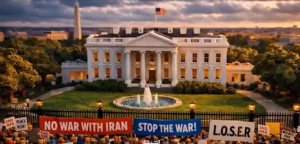
El conflicto no se limita a Europa del Este. Patrick señala Oriente Próximo como otro foco de crisis y constata que Israel actúa de forma agresiva contra varios países vecinos, entre ellos Yemen, Líbano, Siria e Irán. Expresa su profunda preocupación de que estas acciones puedan arrastrar fácilmente a Estados Unidos a una guerra directa con Irán. Debido a las alianzas existentes, esto podría desembocar de inmediato en una confrontación de gran alcance con Rusia y China.
En el fondo de estas crisis escenificadas, Patrick ve el declive cíclico de la civilización occidental, mientras el poder económico y político se desplaza hacia Asia. Describe de forma demoledora a los políticos occidentales actuales como meros «actores» que leen guiones y firman proyectos de ley de mil páginas redactados por lobistas de la industria. Mientras la confianza pública en los gobiernos se desmorona, Patrick advierte de que los oligarcas aprovechan el caos de la guerra para introducir un nuevo orden geopolítico, entre otras cosas mediante identidades digitales y monedas digitales de bancos centrales (CBDC) como herramientas de control de la población.
Pese a las sombrías perspectivas geopolíticas, Patrick termina con un llamamiento urgente. Aconseja mantener una actitud positiva y no permitir que divisiones políticas artificiales destruyan las relaciones personales. En una época en la que las sociedades se desestabilizan a propósito, cuidar los lazos fuertes con la familia y los amigos sería la mejor protección frente a la locura de la política mundial.
Vea los programas PLANET LOCKDOWN de James Patrick AQUÍ
Lea también: Análisis de la guerra contra Irán (en alemán)
Y el apoyo de la opinión pública estadounidense a una guerra con Irán es muy bajo. Es extremadamente bajo. Así que Trump está en una situación muy delicada al respaldar a Israel en sus operaciones, que siguen escalando, frente a sus vecinos en Irán. ¿Y de eso trata su película? Es una parte, sí. Y luego también cómo...
Hola, me llamo Robert Cibis. Estoy muy orgulloso y muy contento de estar aquí con James Patrick. Es cineasta, economista y conoce la política global desde dentro. Creció en Washington y conocía a gente importante. Y hasta hoy sigue pensando en ello, reuniéndose con gente al respecto. Es conocido por la serie Planet Lockdown y conoció a mucha gente que nosotros también conocimos a través de los medios. Y hay que subrayarlo: Planet Lockdown está en nuestra web, www.oval.media. Ahí también pueden ver esta conversación. Si solo ven un fragmento, todo está siempre en esa web. Y no sabemos si otras plataformas, que quizá no nos apoyan tanto, mantendrán siempre nuestros
contenidos. Y sí, hoy tenemos, diría yo, una conversación de actualidad, pero con un alcance más amplio. Porque hablamos precisamente de la Tercera Guerra Mundial, que vemos empezar en todo el mundo. Y vamos más allá, porque entramos en la mentalidad de las personas que podrían ser los autores, que podrían ser las víctimas, y para ver, ya sabe, cómo podríamos quizá afrontarlo. Así que, como un buen médico, primero hacemos un diagnóstico. Y lo bueno es que James no solo es un experto, sino que también está haciendo una película sobre este tema. Y ya ha conocido a una larga lista de generales que alzaron la voz y dijeron que este tipo de política va contra el sentido común. Debo añadir algo que es, ya sabe, realmente la razón por la que estoy tan seguro al decir que la Tercera Guerra Mundial ya ha empezado.
Y es que James investigó, claro, el tema de las tensiones actuales, pero también la crisis del COVID con Planet Lockdown, que acabo de mencionar. Y yo hice lo mismo. Y ambos dijimos, ya sabe, tenemos que describir la guerra que está ocurriendo ahora mismo. Y ambos la llamamos Tercera Guerra Mundial. Y él hará un largometraje. Yo estoy a punto de producir y codirigir la serie, que muestra los distintos aspectos de esta guerra, en la que todas las facetas de la vida se instrumentalizan en este conflicto. Ya sabe, le agradezco de verdad que haga una especie de desglose de los distintos temas relacionados con el escenario de la Tercera Guerra Mundial. Yo solo estoy haciendo un largometraje de 90 minutos sobre ello y publicando las más de 20 entrevistas como parte de eso, solo para que la gente tenga
un poco... ¿Y dónde pueden encontrarlo? Está en WorldWarIIIDocumentary.com. Es WorldWarIIIDocumentary.com. Y luego también BigPicture.watch. Hay algunos enlaces a eso. Pero sí, usted profundiza más en los entresijos de los distintos temas. Y lo mío es de verdad una película de 90 minutos y luego publicar todas las entrevistas. Así que lo valoro, ya sabe, somos mentes afines haciendo el mismo trabajo. Y valoro de verdad lo que hace. Y, ya sabe, muy contento de que haya otra persona en Europa, ya sabe, haciendo el trabajo duro. Y porque es una tarea ingrata. Quizá pueda empezar hablando de esos generales. Porque me parece asombroso, porque mi tópico es, claro, lo contrario. Porque los generales, ya sabe,
son maestros de la guerra. Así que piensan en términos de guerra. Y los políticos son maestros de la diplomacia. Así que piensan en términos de negociación. Entonces, ¿por qué un general diría que necesitamos diplomacia y un político que necesitamos una maquinaria de guerra? Ya sabe, es de verdad una locura, ¿no? Sí. No, bueno, sí, yo, crecí en Washington, en una familia de alto nivel o, ya sabe, una familia acomodada. Y creo que, o sea, crecí rodeado de todos esos actores, ya sabe. Mi familia estaba metida en política o cosas así. Pero es como que crecí rodeado de esas cosas. ¿A quién conoció? Denos algunos nombres. Bueno, quiero decir, distintos políticos y gente de inteligencia, o amigos de la familia, ya sabe, que, ya sabe, veías a algunos, tienes algún amigo
de la familia. Te dicen: oh, ya sabes, yo no soy de la CIA. Pero luego aparecen en esos países conflictivos. Y, ya sabe, cuando hay algún golpe o algo, piensas: oh, este tipo está ahí, pero su currículum no encaja para nada con el motivo por el que se suponía que estaba ahí. Así que, con los años, ya sabe, entendí cómo funcionan estas cosas. Esto demuestra que usted es un iniciado de Washington, porque precisamente no ha dado los nombres. Eso es lo que se hace cuando se está en la familia de la inteligencia. Simplemente uno tiene cuidado. Simplemente tiene cuidado porque, ya sabe, a veces uno puede equivocarse. A veces puede hacer daño a alguien o puede, ya sabe, volverse contra uno. Así que, pero aun así, hay una forma de decir las cosas. Bueno, lo dices, como la gente se queda un poco
en su propio ámbito. Se cuentan cosas entre ellos, pero cuando no estás dentro, no te cuentan esas cosas. Así que, pero quiero decir, cuando conoces a gente de inteligencia, con los años acabas sabiendo que lo son, porque lo que hacen es sospechoso, ¿sabe? Quiero decir, acaba de mencionar que a veces se puede ver en las trayectorias o en los currículums. Si alguien hace cosas, si su currículum no se corresponde con el currículum de una persona normal, ¿verdad? Si es como: oh, yo era, ya sabe, como una persona normal, te metes en un tipo de negocio y luego vas subiendo. Y luego, ya sabe, pero si alguien, como, salta de un sector a otro sin ningún sentido, si el currículum no tiene ningún sentido, si la contratación, ya sabe, si los de recursos humanos no contratarían a esa gente para hacer eso, entonces, ya sabe,
es un espía. Y si están siempre en países conflictivos, si aparecen en todos esos sitios donde hay revoluciones respaldadas por la CIA, sabe que ese tipo... ¿Hay algún otro indicio que pueda darnos como ayuda? ¿De qué? No, de si una persona quizá tiene un currículum inventado, como... Bueno, la maldita cosa no tiene ningún sentido. Si es, como, ese negro... Sí, si es lógico... ¿O simplemente escriben trabajo con el ejército o algo así, también pasa eso, o...? Bueno, tenían un pasado en los marines, y luego si están, si su currículum no tiene sentido lógico, como que la gente no los contrataría para hacer esas cosas. Ya veo. O sea, si hay un tipo que es directivo en una empresa de telecomunicaciones, y luego trabaja, no sé, en una empresa de presas hidrológicas,
y luego otra cosa... Pero siempre en países conflictivos donde EE. UU. está derrocando a sus Gobiernos, entonces eso es sospechoso. Vale, ya veo. Ya sabe, entonces es como: ¿qué demonios hace este tipo aquí y allá? Sí. Y entonces, quiero decir, en mi introducción me referí a la Tercera Guerra Mundial.
Así que, como decía, es obvio, no ha empezado. ¿De verdad diría usted eso? Quiero decir, quizá he dicho demasiado, ¿no? No, yo sostendría que la Tercera Guerra Mundial ya ha empezado. Quiero decir, el ministro de Exteriores de Rusia, Lavrov, dijo hace dos o tres meses que la Tercera Guerra Mundial ha empezado. Creo que los países de Europa occidental están adoptando una posición muy agresiva contra Rusia. No soy un propagandista ruso ni en modo alguno un defensor de Putin o de su Gobierno, o, como, su portavoz. Ya sabe, no estoy en contra de él, pero no estoy a favor de él. Ya sabe, soy un periodista neutral en el tema. Pero creo que los rusos han sido, ya sabe, aunque la invasión de Ucrania fue un poco precipitada e injustificada, veo que se produjo en el contexto de 11 años de golpes e intervenciones en Ucrania. Visité Ucrania, creo que en 2016 y 17, o 17 y 18, dos veces, y visité el lugar del Maidán.
Y siempre me han interesado mucho esas operaciones de falsa bandera, Gladio. Ya sabe, cuando estaba en el instituto, mi madre era periodista del New York Times. Y cuando estaba en el instituto, esa periodista, Valeska von Rauch, una amiga de mi madre, me contrató para buscar terroristas de Gladio en las bases de datos de GW y de la Universidad de Georgetown. Así que tuve pronto una introducción a eso en el instituto, a ese asunto de Gladio. Y más tarde, en la universidad, leí un poco sobre las operaciones Gladio. Eran esos ejércitos de retaguardia, una especie de terroristas de falsa bandera. Básicamente eran esos, en la época nazi, crearon esas unidades en países de Europa occidental diciendo: si los soviéticos invaden, tendremos operaciones paramilitares de retaguardia, no oficiales, para librar una guerra de guerrillas contra los rusos cuando invadan Europa
occidental. Y luego la CIA, después de la guerra, cuando se hicieron con Alemania, dijo: bueno, creo que James Jesus Angleton y otros jefes de espías de ese tipo pensaron: mantengamos esto, mantengamos estas operaciones. Y luego más tarde, a mediados de los 50, y sobre todo en los 60, empezaron a activarlas. Pero bastante pronto, quiero decir, creo que hubo unos cinco intentos de asesinato contra Charles de Gaulle. De Gaulle en los 50, y De Gaulle de verdad le dijo a la OTAN que se largara de París. Quiero decir, la OTAN se trasladó de París a Bruselas por los intentos de asesinato de EE. UU. contra De Gaulle. No lo sabía. Es impresionante. Sí, hubo algunos intentos de disparos contra coches y atentados con bomba, y él de verdad se hartó de los estadounidenses. Así que es ese tipo de uso solapado del terrorismo y de manipulación de la opinión pública mediante ese tipo de acontecimientos teatrales y
dramáticos. Y esas cosas continuaron hasta la caída de la Unión Soviética, y luego después en lo que llamaron Gladiator 2, o los documentos del FBI los llaman Gladiator 2, en términos de terrorismo árabe o terrorismo interno. Y entonces esto también se refiere a Ucrania. Sí, la cuestión de Ucrania, creo. En fin, ahora hay esta escalada hacia una auténtica guerra mundial. Y creo que debemos tener cuidado con pensar que esto sea algo beneficioso para nuestra sociedad. ¿Pero por qué cree que estamos en la Tercera Guerra Mundial? Bueno, porque la Tercera Guerra Mundial, sí, es una especie de frase icónica, un poco graciosa de decir, como: estamos en la Tercera Guerra Mundial. Pero es de verdad algo serio. Quiero decir, ahora Occidente agrede a Rusia, provoca a Rusia por Ucrania,
en Ucrania. En 2014 hubo ese asunto del Euromaidán, en el que Occidente presionó mucho a Ucrania para que entrara en la UE. Tenían un presidente más bien simpatizante de Rusia, Yanukóvich. Y EE. UU. básicamente azuzó a esos partidos de derecha para disparar a la gente en la plaza del Maidán. Mataron, como, creo, de 5 a 10 en enero, febrero de 2015. Y luego, de hecho, para marzo, los diplomáticos de EE. UU. dijeron: no, necesitamos 100 muertos para cambiar la opinión pública. Y luego hubo ese tiroteo que mató a unos 60. Pero inflaron un poco las cifras para decir que fueron 100. Pero, quiero decir, ahora todo esto se basa de verdad en ese asunto del Maidán de 2014. Hubo un golpe anterior, en 2004, que promovía Soros, y en cierto modo Soros y la CIA promovían ese incidente
de 2014. Y entrevisté a Ivan Katchanovski en Ottawa sobre esto. Escribió una tesis doctoral realmente definitiva sobre todo el asunto del Euromaidán. Oh, qué interesante. Sí, un trabajo muy experto. Y Patrik Baab, al que acabo de entrevistar, habló de que había ocho equipos de francotiradores. Pero en fin, es un poco al estilo Gladio. Cometes una atrocidad, disparas a la gente, matas a gente en un lugar común y luego los galvanizas para que sean favorables, para que se sumen a un golpe, a una guerra, y a un cambio de opinión política. Así que las operaciones Gladio se hacían normalmente en Occidente en torno a las elecciones. Así que era justo antes de unas elecciones, ya sabe, en la época de la Guerra Fría, se hacían pasar por grupos
de izquierda, ya sabe, si les preocupaba que un partido comunista fuera a tomar el poder, cometían una atrocidad justo antes de las elecciones para asegurarse de que el partido de izquierda no saliera elegido. Y contrataban a ese tipo de fascistas, una especie de fascistas, ya sabe, gente dispuesta a disparar a la gente, ya sabe. Así que es muy parecido en Ucrania. Ya sabe, tienes esa, quiero decir, de verdad buena parte de los dirigentes de Ucrania es judía y proisraelí y cosas así. Pero en cierto modo han financiado esos partidos nazis, esos extraños 20 partidos nazis distintos, y hay tres principales. Sí, así que es esa extraña confluencia de intereses. Pero consiguieron que todos esos partidos de derecha básicamente llevaran a cabo esas matanzas en la plaza del Maidán. Y eso se ha usado como justificación para luego derrocar al Gobierno e instalar ese Gobierno respaldado
por Occidente. Así que Zelenski, visité Ucrania durante las elecciones de Zelenski y vi en YouTube su programa, Servidor del pueblo. Así que fue presidente en un programa de televisión y luego de hecho lo instalaron como presidente en la realidad. ¿No es una locura? Sí. Quiero decir, quizá me desvío demasiado, pero ¿cree que se decidió que quizá debía ser presidente antes de que empezara el programa de televisión? Sí, parece un gran espectáculo teatral. Y creo que es así en todos los países occidentales. Así que vayamos a la pregunta principal. ¿Por qué la Tercera Guerra Mundial? ¿No es una guerra en un solo país, si hay guerra en Ucrania? Bueno, creo que hay una especie de impulso escatológico hacia un conflicto mundial. Y eso no beneficiará a ninguno
de nosotros. ¿Y por qué? Quiero decir, por otro lado, sí, quiero decir, para hacer una serie de televisión, evidentemente, es teatro en cierto modo. Pero es una guerra real. ¿Describiría esa guerra real, en la que muere gente de verdad, como teatro? Sí, hay gente real, hay facciones reales, hay divisiones reales sobre el terreno, hay divisiones étnicas, partidistas reales. Ucrania en el Este es muy rusa. Antes era Rusia. Y el Oeste antes formaba parte del Imperio de los Habsburgo y son más occidentales. Pero quiero decir, esos conflictos se avivan y se agravan con la financiación de esos partidos militantes. Y luego, pero parece que el conflicto de Ucrania se está usando para crear un conflicto más amplio entre Europa occidental y
Rusia. Y eso no beneficiará ni a Europa occidental ni a Rusia. Todos van a perder. La gente corriente va a perder. Me recuerda mucho a la declaración de Göring en los juicios de Núremberg, donde está, ya sabe, Göring, ya sabe, antes de que lo ejecutaran o de que tomara el cianuro. Dice algo como: mire, ya sabe, el hombre corriente en cualquier país no quiere la guerra, ya sabe, pero, pero se le puede fácilmente, ya sabe, llevar a la guerra diciéndole: bueno, mire, le atacan, y aquí está el enemigo, y luego, ya sabe, hay que ir a la guerra. Pero es como que todos salen perjudicados. Quiero decir, todos pierden. Nadie gana en la guerra salvo unos pocos oligarcas que ganan dinero con las armas y la banca. Pero esto es de verdad una estafa y no deberíamos volver a caer.
Quiero decir, tuvimos esas guerras catastróficas, la Primera Guerra Mundial, la Segunda. Destruyeron las potencias continentales de Europa. Remodelaron el panorama político. Trajeron una tragedia, un sufrimiento y una muerte incalculables, y, ya sabe, en particular Alemania, Rusia y Ucrania perdieron, perdieron enormemente en esa guerra. Así que creo, creo que los ucranianos, los alemanes y los rusos están todos en una situación común. Entonces, ¿por qué vuelve a ocurrir? ¿Por qué? Quiero decir, sí, porque alguien quiere matar a mucha gente. Creo que por eso. ¿Así que ve esta guerra en Ucrania como parte de un plan mayor para matar a mucha gente? Básicamente, sí. ¿Cuáles son, tiene alguna prueba de ello? Me parece, en cierto modo, como, ya sabe, en política se mira cuál es
el resultado. Lo que pasa sobre el terreno como resultado de la política. Ya sabe, porque esos idiotas del Gobierno te cuentan todo tipo de historias estúpidas. Oh, hicimos esto por tal o cual razón. Estamos aquí para ayudarte. Les importas un bledo. Quiero decir, son, son de verdad, el resultado sobre el terreno es cuál era el propósito de la política. Eso es en general lo que se puede hacer: decir, mire, ¿cuáles fueron los resultados de la política? Esa era la agenda. Por eso se hizo. No lo que, no las justificaciones que te dieron de por qué se hizo. ¿Sabe? Entonces, si le entiendo bien, el teatro en Ucrania, que es una guerra real, pero, ya sabe, y se cuentan muchas historias en torno a esta guerra real, es en realidad una especie de, cómo decirlo, forma de desviar la atención del objetivo de asesinar...
Bueno, creo que probablemente son dos cosas. Probablemente el resultado es que están matando a muchos ucranianos. Así que toda esa gente que pone banderas ucranianas delante de su casa está apoyando que Occidente dé armas a Ucrania, ¿verdad? Sí. Para propagar una guerra contra Rusia. Sí. Pero seamos claros. Quiero decir, Ucrania es un país infinitamente más pequeño que Rusia. Nunca ganaría una guerra contra Rusia. Militarmente, logísticamente, es imposible. Así que, así que apoyar una guerra contra, dado el contexto del trasfondo de que, mediante la intervención occidental en los últimos 11, 12 años, y más, en realidad, ese derrocamiento del Gobierno de Ucrania, la promoción de un Gobierno hostil en Ucrania justo en
su flanco. Quiero decir, es como si, es como si, si Rusia, ya sabe, derrocara al Gobierno de México y dijera: vamos a poner un montón de misiles justo en la frontera de México para disparar contra Estados Unidos. Ya sabe, y luego uno dijera: vale, bueno, nos parece bien. No vamos a, ya sabe, pero quiero decir, EE. UU. intervendría para impedirlo, ya sabe. Así que, así que, … creo que la política que se aplica ahora en Ucrania apoya esta guerra. Es una guerra imposible de ganar. Básicamente ya la han perdido. Me sorprendió que todo eso durara siquiera más de unos meses. Ya sabe, y amigos míos de allí estaban... Entonces, ¿qué significa tener esa bandera en la ventana? Que de verdad apoyas el conflicto en curso
en Ucrania, que está matando a ucranianos y haciendo daño al pueblo ucraniano. Así que no ayudas a los ucranianos mostrando tu apoyo al Gobierno alemán y al Gobierno estadounidense y al Gobierno francés que envían armas a Ucrania para ganar una guerra imposible de ganar, para apoyar a un Gobierno corrupto que no tiene en el corazón los intereses del pueblo ucraniano. Y eso es, eso es, eso es enfermizo. Es, es enfermizo. Es enfermizo matar a toda esa gente. Es enfermizo, quiero decir, el país tenía antes 15 millones de habitantes. Ahora probablemente hay menos de 15 millones de personas en Ucrania. El país se ha vaciado, ya sabe. ¿Y qué le dijeron sobre esto los generales que conoció? Sí, bueno, ahora estoy aquí en Alemania entrevistando a tres altos generales, generales alemanes retirados que hablan desde su experiencia y su sentido común para decir que esto no tiene sentido y que no es de interés alemán ni de interés de Europa occidental, y de verdad han dicho que esto es una misión suicida, que no deberíamos entrar en guerra
con Rusia. Creo que hay serios, los medios ahora solo dicen que la guerra contra Rusia es lo mejor que podríamos hacer. Que es inevitable que nos ataquen. Pero de verdad, políticamente, en los últimos tres años, ni un solo Gobierno de Europa occidental ha hecho un solo esfuerzo, una carta, una llamada, nada hacia Rusia para buscar una solución diplomática a este conflicto. Y, ya sabe, para esta entrevista, y yo crecí rodeado de embajadores y, quiero decir, es mejor hablar de los problemas que pelear, ¿verdad? Todos lo sabemos en nuestras relaciones personales, ¿verdad? Puedes seguir enfadado y pelear todo lo que quieras, pero el asunto hay que resolverlo igualmente. Igualmente hay que hablarlo mañana o pasado o
cuando sea. Lo mismo pasa con la diplomacia, y hay cero diplomacia entre Europa occidental y Rusia. Y eso es una locura, ¿sabe? Rusia es un país enorme. Va desde toda la frontera, básicamente, quiero decir, Bielorrusia es un país aliado, pero hasta China. Quiero decir, llega hasta la frontera, ya sabe, cerca de Japón. Así que es el país más grande de la Tierra y es el socio comercial natural de Alemania. Quiero decir, Alemania compraba su gas a Rusia, y toda la base de la economía alemana se basaba en el gas de Rusia. Así que hacer la guerra a Rusia, adoptar posiciones hostiles con Rusia, va contra los intereses alemanes, contra los intereses europeos, y ahora los países de la Unión Europea se están pegando un tiro en el pie. Se están metiendo en esas políticas verdes, políticas ecológicas, sin querer comprar gas alemán, y eso lleva a, vemos precios cada vez más altos, la gente es cada vez más pobre,
el nivel de vida está cayendo. Quiero decir, los Gobiernos de Occidente no, y creo que, de forma más amplia, en todo el mundo, no están promoviendo sus intereses nacionales ni los intereses de su gente. Mucha gente aquí piensa que los grandes ganadores son los Estados Unidos. Entonces, ¿cómo es para la gente en los Estados Unidos? Creo que es cierto que el Gobierno de Estados Unidos es la principal maquinaria o actor que impulsa los problemas en el mundo. En eso le daría la razón. No lo he dicho yo. No, lo sé, pero yo lo diría. Pero nuestro Gobierno está cautivo de los mismos intereses globales de oligarcas y élites que no tienen en el corazón
nuestros intereses. Velan por sus propios intereses. Así que estamos de verdad en una situación extraña en la que el Gobierno estadounidense no ayuda al pueblo estadounidense. El Gobierno alemán no ayuda al pueblo alemán. El Gobierno italiano no apoya los intereses del pueblo italiano. Así que de verdad estamos viendo un colapso del concepto de gobierno, del concepto de creencia y fe en el Gobierno. Y mi preocupación es que creo que se derrumbará. Vamos hacia un colapso de la creencia en el Estado, de la creencia en el... Porque están destruyendo por completo nuestra fe en lo que hacen. Así que al final se derrumbará. Así que creo que tenemos que ser prudentes y estar atentos, porque cuando eso ocurra, esos cabrones quizá tengan una propuesta todavía peor para la siguiente forma de
gobierno. ¿Entiende lo que digo? Así que el escenario de… es que vamos hacia... Y una guerra es una forma estupenda de precipitar ese tipo de situación. Una población enfadada con sus propios Gobiernos, con miedo de otros Gobiernos, y el ambiente de tensión y el derrocamiento que podría... O, más bien, el colapso que podría seguir a esto, es en realidad parte de un plan, porque se podría instaurar el nuevo sistema. Creo que está claro, sí, que se ejerce una presión constante sobre el entorno político, el entorno geopolítico, para llevarnos a una guerra cataclísmica y luego a un guerra prolongada como la Primera, la Segunda Guerra Mundial, una guerra de cuatro
a cinco años. Y luego, al final de ese conflicto devastador, habrá propuestas para crear algún otro orden geopolítico. Y eso, sobre todo, no estará a nuestro favor. Así que tenemos que ser críticos con lo que nos venden ahora y decir de verdad que esto es absurdo, porque mire, ¿qué gana Alemania o Estados Unidos?, bueno, sobre todo Alemania, hablemos de Rusia: deberíais comprarle el gas a Rusia. No tenéis por qué estar de acuerdo en que son tipos estupendos ni en que Putin es un tipo genial, ¿qué más da? Pero estáis comprando el maldito gas; toda la estructura industrial de Alemania se basa en el precio de ese gas. Comprarlo en otro sitio cuesta el triple. Os vais a empobrecer todavía más por eso. Es ridículo. Así que no hace falta que te guste un Gobierno para tener un
acuerdo con él. No tengo que ser tu amigo para que cerremos un trato. Así que seamos realistas en lo diplomático en el mundo. Y todavía no estoy del todo satisfecho con el relato de la guerra mundial. Entonces, ¿por qué es una guerra mundial? O sea, ¿EE. UU. apoya, como, muy emocionalmente a Israel en sus correrías? Más que emocionalmente, ¿no? Quiero decir, hay apoyo financiero. Es irracional. Lo es un poco. Oh, usted ve la motivación del apoyo como más bien emocional. Bueno, más bien son intereses creados detrás, pero no es de interés para Estados Unidos en sentido amplio. Así que hay muchos donantes ricos y gente influyente que, en AIPAC y demás, moldean el apoyo de EE. UU. a Israel. Ese interés, desde los dos últimos años del asunto de Gaza, está bajando rápidamente. La opinión pública está cayendo rápidamente.
Recientemente Israel propuso un contrato de apoyo de 20 años, porque ve caer la opinión pública, así que dicen: eh, consigamos un acuerdo a 20 años. ¿A quién se lo propuso Israel? A EE. UU., al Congreso. Sí. Firmemos un acuerdo a 20 años, porque ven caer la opinión pública de EE. UU., así que les preocupa no poder conseguirlo más tarde. Así que ahora intentan que se firme el contrato para conseguir el dinero. Y esto afecta a
la pero ahora Israel invade, bombardea muchas veces seis países en pocos días, al mismo tiempo. ¿De verdad tantos países? Yemen, Líbano, Siria, quiero decir, no para, Irán, quiero decir, es de verdad su especie de derecha la que se impone, y luego Yahoo se enfrenta a ese juicio por corrupción, así que se ha aliado en cierto modo con esos grupos más mesiánicos que son muy agresivos, y así está cumpliendo esa profecía del Gran Israel, pero eso le crea enemigos con todos en es chocante lo sometidos que están los líderes árabes; muestra lo débiles que son, quiero decir, de verdad no hay ningún liderazgo árabe en toda la zona; el único que de verdad se oponía algo a Israel era Asad, y a través de Turquía y EE. UU. derrocaron a Asad; en la guerra de 12 días atacaron preventivamente a Irán, lo cual es una acción muy agresiva, e Irán tiene acuerdos militares y económicos con Rusia, vende el 80 % de su petróleo a China, y así, muy rápido, el respaldo de EE. UU. a Israel en una guerra con Irán puede arrastrarnos rápidamente a una guerra con Irán y China, porque estamos especialmente, perdón, Rusia y China, porque especialmente, ya sabe,
es muy preocupante; así que en EE. UU. el apoyo público a una guerra con Irán es extremadamente bajo, así que Trump está en una situación muy delicada al respaldar a Israel en sus operaciones, que siguen escalando, frente a sus vecinos en Irán. ¿Y de eso trata su película? Es una parte, sí, y luego también cómo esos cómo históricamente los países, las civilizaciones surgen y caen, y cómo son los imperios los que de verdad surgen y caen, y hay como un periodo en el que las cosas van bien, la gente gana dinero, le va bien, y luego se instalan los oligarcas y la burocracia, y luego hay corrupción, nepotismo y despilfarro, y luego se entra en una especie de declive económico, y luego las élites buscan, en cierto modo, el poder para mantener el control, y empiezan a meterse en guerras;
eso pasó con Atenas y las guerras del Peloponeso, y lo que vino después, bueno, Atenas invadió Sicilia para hacerse con el control y luego tener más poder contra Esparta, pero los mayores opositores decían: mirad, ahora nos va bien, ¿por qué necesitamos invadir Sicilia? Lo que estamos viviendo hoy con este estallido actual de una guerra mundial tiene enormes paralelismos históricos, y de verdad es parte de esa repetición cíclica de la arrogancia y la hybris humanas, y los antiguos griegos lo llamaban el ciclo trágico de la hybris: los líderes, básicamente los líderes de un país, son dominados por la arrogancia, y, y luego empiezan a emprender acciones irracionales, agresivas, agresivas, y luego los dioses envían a Ate sobre el líder para, básicamente, empezar a nublarle la mente, para fomentar una especie de demonios que se apoderan de la mente de la persona y
luego la animan a hacer más y si empieza una nueva civilización, hay un enorme empuje de irracionalidad, ya sabe, el mundo se vuelve irracional, la gente simplemente enloquece, y él enumera unas 10 civilizaciones distintas, algunas duraron mil años, y luego, ya sabe, hay un, ¿qué decía?, que son irracionales, irracionales, sí, por qué el y eso es como un indicador de que se desmorona y se transforma en algo nuevo, y esa fase de transición puede durar 50 años o más; hay como ciclos en la vida y en la naturaleza, como envejecemos: somos jóvenes y luego llegamos a la mediana edad y envejecemos, luego morimos, y hay ciclos de comportamiento y ciclos de vida, y luego hay ciclos de civilizaciones; ellos
y luego el poder y la economía se desplazan a otros lugares, así que hoy de verdad vemos que Occidente tuvo su apogeo en los últimos 200 años, y ahora es como si el dinero y el poder económico y el poder político se desplazaran a Asia, a China y al sur de Asia, y ahora Occidente está en declive, y estamos en el, estamos como en el pico de ese duro periodo de declive, y nuestras élites son ridículas, son retrasadas, quiero decir, esa gente es idiota, como Starmer, Macron, Merz, tienen como un 6 % de opinión favorable, nadie quiere a esa gente, son unos perdedores totales y unos idiotas totales, quiero decir, no tienen ningún, no se puede tener una conversación filosófica y razonada con ellos sobre la historia en el contexto de lo que hacen; no son más que prostitutas, de verdad, pagadas para hacer, decir lo que sea, quiero decir, es de verdad como, no sé, perdón por usar este lenguaje, pero quiero decir, en Washington he estado rodeado de esa gente, y son como muchos políticos, son simplemente como gente que contratas para hablar en un plató de cine, ya sabe; así que es como si hablaras con algunos de ellos, he hablado con algunos, y les dices: eh, no estoy de acuerdo, o ¿alguna vez ha pensado en esta política, en cómo afecta a la persona media?, y ellos simplemente te miran como diciendo: eh, tío, me contrataron para venir al plató,
¿me estás diciendo que la película es una película estúpida?, y como que qué, es lo más molesto de oír ahora mismo, da igual el tema, como, soy un actor contratado para venir y tú criticas la película. ¿Esa es la sensación que tenía al hablar con políticos de verdad? Sí, así son, sí, les importa un bledo lo que diablos lean, es simplemente, es increíble, quiero decir, y esos proyectos de ley, quiero decir, esos proyectos de ley los escriben las industrias, a veces son proyectos de mil páginas, los políticos ni los leen, se los pasan al personal, los convierten en ley, los firman, quiero decir, nadie siquiera, no hay debate en la sala del Congreso, quiero decir, es de verdad increíble lo que pasa, quiero decir, de verdad están
algunos países van mal por lo que sea, por la evolución general en esa zona o algo así, pero está en todas partes; ya sabe, en los 80, en Alemania, había debates maravillosos en el Parlamento, ¿verdad?, ya sabe, era divertido escucharlos, porque la gente de verdad debatía, ya sabe, y a veces, en los momentos más bonitos, ese debate no era entre partidos políticos, sino que
más difícil para personas de verdad llegar a ser representantes políticos, llegar a ser congresistas, senadores o presidentes, y, y sobrevivir a ese proceso para entrar; a nadie le importa, nadie debate nada, es como que de verdad la peor gente entra en ese trabajo, ya sabe; creo que de niño les dije a mis padres: oh, me gustaría ser congresista, y me dijeron: oh, James, mira, eso no es algo respetable que hacer, no deberías hacerlo, ¿sabes?; así que es simplemente esa gente de muy baja calidad a la que no le importa, de verdad no estamos representados, y es una tendencia insostenible, y necesariamente se derrumbará y llevará a otra cosa; así que solo quiero que la gente, el público, esté atenta en ese proceso, que
empujar, empujar, empujar un sistema que no estaría a nuestro favor, y que estarán ahí, quiero decir, ahora mismo hice una película sobre las CBDC y los orígenes del Bitcoin, las identidades digitales, sí, ha habido recientemente un gran impulso a las identidades digitales en todo el mundo, Starmer,
yo para controlarnos, y el escenario de la guerra mundial es un entorno de crisis perfecto para luego impulsar esas cosas, y el Gobierno ucraniano ha sido completamente corrupto, yo gracias, ya sabe, y eso no tiene nada que ver con su esfuerzo bélico ni con toda la otra porquería que pasa allí, que ellos
esto es inevitable, no ganarán esta guerra; el apoyo de EE. UU. a la guerra de Ucrania solo llevará a más muertes, Ucrania pierde territorio cada día, es muy lento lo que está pasando, pero creo que tenemos que pensar racionalmente; así que en mis entrevistas con el general Kujat, él expuso que esta no es una guerra que se pueda ganar, que hay un desapego de la realidad en la forma en que los políticos y los medios occidentales hablan de esta guerra; no deberíamos, no quieres financiar a alguien que va a perder, y deberían salir ahora y cerrar un acuerdo con Rusia y conservar todo el territorio que puedan, esa sería la solución más racional, la que más reduciría las matanzas. Quiero decir, hablé con un amigo, un amigo alemán, hace unos días, y me dijo: no tengo la sensación de que estemos en guerra;
¿por qué se lo dirías?, ¿por qué se lo dirías? Sí, no lo estamos, no lo estamos, quiero decir, quiero decir, eso también es un problema en EE. UU., es como que nos metemos en todas esas guerras en el extranjero y luego nadie siente de verdad, siente, así que es como, y estamos muy lejos de todo, allí en EE. UU., pero es como que no sentimos las guerras, ya sabe, pero quiero decir, ¿hay una tensión general que aumenta
también? Caracas está en ese valle, no se puede meter ningún avión, es completamente impenetrable, pueden tomar esa base costera, pero no pueden, sería un desastre si intentáramos entrar en Caracas, y luego eso de Ucrania y eso de Israel, y luego, cada vez más, lo que oigo en Washington es: vale, cerremos lo de Ucrania, que lo asuman los europeos, que se maten en Rusia, y luego EE. UU. se enfrentará a China, y luego vamos a ser cada vez más agresivos con China, pero eso es tan estúpido como que los alemanes intenten ser enemigos de los rusos; vosotros necesitáis el gas, nosotros necesitamos la
en, en uno, no sé, creo que simplemente parece que, sí, alguna gente tiene la convicción de que hay que empezar una guerra mundial. Vaya, ¿cree que es irracional o racional? Irracional, de verdad. Yo, yo no estoy tan seguro, pero creo que es importante investigarlo; creo que, como usted también mencionó, algunos oligarcas se benefician de la
es racional, supongo, pero ¿por qué querrías convertir el mundo en un retrete, como, simplemente estropearlo todo porque dicen que después será mejor, ya sabe?; seguro que será peor, pero quizá en la estimación de alguien sería mejor. ¿Así que cree que están de verdad locos, o cree que es de verdad irracional? como un sistema de creencias irracional que está en la cúspide; quiero decir, sinceramente, creo que a veces, ya sabe, las historias irracionales las usan personas racionales, ya sabe, como usted acaba de mencionar, se lo acaba de decir a sí mismo, ya sabe, que a veces la gente se inventa historias y luego no tienen sentido, pero lo que de verdad
las profecías de una guerra mundial, de la guerra de Gog y Magog; muchos sionistas cristianos creen en esto, y las profecías hebraicas de una guerra devoradora entre Oriente y Occidente llamada la guerra de Gog y Magog, y eso sí parece concordar con
Magog sería el eje Rusia, China, Irán, Turquía, y que nos están enfrentando unos contra otros para meternos en una guerra devoradora, y que Israel es el punto de ignición, es donde empieza, y el apoyo de EE. UU. a una guerra con Irán es muy bajo; quiero decir, el estadounidense medio no tiene ningún interés en luchar contra los iraníes, ¿qué demonios tienen que ver con Estados Unidos?, ya sabe, e Israel, como acabamos de ver, con Yahoo ahora parece muy empeñado en la guerra con ellos; eso podría estallar en cualquier momento, y entonces EE. UU. se verá arrastrado a eso, y luego, por esas alianzas con Irán y Rusia y China, así que sí, pasan muchas cosas ahí, es una conversación larga, pero sí, claro, yo
después, después, lo cual ha tenido distintos nombres, pero siempre el mismo principio: tienes una política de la tensión, tienes atrocidades que ocurren y luego la población está en tensión, y la tensión también hace que la población sea controlable; así que uno podría pensar que incluso esto es una forma de controlar la opinión pública, ya sabe. Sí, exacto, pero si tienes la religión también puede ser un medio de control, ya sabe, simplemente impones los relatos de cualquier religión, como los Hermanos Musulmanes o, ya sabe, los movimientos religiosos más
extremos, simplemente los usas para crear tensión entre la población, pero solo quieres que se peleen para poder dominar, ya sabe, esa persona que haría eso, ya sabe, que aplica la estrategia de divide y vencerás, quiero decir, usted ve la religión
como un gente, de hecho la gente de arriba ya se lo cree, eso es interesante, creen en el cumplimiento de esas profecías; creo que me gustaría averiguarlo, me gustaría hacer esta pregunta a sus pruebas; o sea, usted cree que va contra nuestros intereses; quiero decir, en la práctica va contra nuestros intereses, yo
que, supongo, tienen mucho poder, porque puedes comprar un ejército, puedes comprar lo que sea, tienen tanto poder, ¿qué es lo que les interesa? Es algo subjetivo, ya sabe; yo vengo, en cierto modo, de la escuela austriaca de economía, dicen que lo que uno valora, lo que cualquiera valora, es subjetivo; no hay un valor objetivo de este vaso o de esta mesa o de un lingote de oro, es lo que otras personas den a cambio; así que no tratamos con cosas racionales, como, ya sabe, lo que a usted le parece, creo, quizá racional, a otra persona no; así que creo que vivimos en un mundo de valoración subjetiva, así que usted y yo pensamos que es una locura que se quiera un conflicto, una guerra, gente muerta, yo
estos, estos son simplemente psicópatas, es una forma de decirlo, pero entonces uno no está como, yo también tengo experiencia en, como, investigaciones y en entender mentes criminales, y no se puede, no se pueden juzgar las cosas según como uno quiere verlas; es como las ve el criminal, es como las ve el autor,
juzgarlos; se les puede juzgar legalmente, o deberían ser juzgados legalmente según el derecho natural, espero, pero o esos sistemas jurídicos de porquería que tenemos, que en realidad no son justos, pero, pero quiero decir, hay que mirarlo desde su punto de vista si estás tratando con
por qué hacen lo que hacen, y y y y y creo que cuando haces eso, te libera de malinterpretar las cosas; así que no se trata de qué es la justicia: por qué lo hacen claro, claro, y usted cree que tienen emociones y
medios para cumplir esa profecía, o esos vastos objetivos comerciales, esos vastos objetivos de control; tienes una creencia, pero la creencia también te sirve, porque obtienes más control sobre las cosas; los cristianos evangélicos siempre citan el Apocalipsis, dicen: oh, van a poner el chip en la mano derecha, en el sistema de la Bestia; quiero decir, eso es lo que está pasando; creo que malinterpretan el, o probablemente los manipularon psicológicamente en contra o a favor, ya sabe; estaría de acuerdo con lo que dicen, haría otra interpretación a partir de la historia religiosa de cómo se propagó; eso es largo, se podría hacer todo un programa sobre eso; así que, pero tengo mucho análisis sobre eso, pero solo diría, pero vamos claramente hacia ese tipo de lo que llaman un sistema de la Bestia, o el anticristo cristiano es en realidad el mesías hebraico, y que mezclan los dos para crear una especie de orden mundial distópico,
pero eso es una auténtica locura, en mi opinión; es como si toda esa gente estuviera loca sin excepción; así que creo que tienen que imponerse mentes más sensatas y decir: eh, mirad, no queremos matarnos unos a otros, no queremos estar en guerra, no, queremos
vamos, vamos, se descarriló, e incluso es contradictorio con lo que dice el sistema de creencias; cuando pienso en el cristianismo, pienso en amor y paz, porque esa es la imagen de Jesús, pero es cierto que se pueden encontrar en todos los relatos, porque también son contradictorios y complejos, distintas formas de ver, y esto sin duda también afecta a la religión musulmana, la judía y a cualquier religión, pero es como si ahora hubiera una especie de proceso de aceleración en el que los relatos van cada vez más rápido, ya sabe, creen, sienten que hay que hacer todo esto, ¿verdad?,
esto de verdad no tiene ningún sentido, y y como que es un montón de chorradas lo que nos cuentan, y por eso tengo la esperanza de que esos planes tontos no salgan bien; son tan locos, tan disparatados y tan destructivos, y creo que mentes más sensatas
quizá deseen, así que, pero por eso es importante hablar de estos temas oscuros y de estas ideas malintencionadas, porque, sí, desde luego no es un tema para una cita, ya sabe, no es un tema para una primera cita, pero es importante sacar los trapos sucios y, en cierto modo, hablar de estas cosas para que no se materialicen, ya sabe, porque creo que con la Primera y la Segunda Guerra Mundial era de verdad una época distinta, ya sabe, y la gente era patriota con su país, estaba dispuesta a servir a su país, estaba dispuesta a promover sus intereses, eran bastante homogéneos entonces; ahora nuestras sociedades son menos homogéneas, hay menos interés en luchar por el Gobierno del país, si
cosa, es como que no veo cómo Europa o EE. UU. podrían librar una guerra, una guerra mundial, con toda esa gente, con todos esos reclutas; no existe esa opinión pública, no existe esa buena voluntad hacia el país, ni siquiera con operaciones de falsa bandera muy brutales del tipo Gladio, quizá. Bueno, sí, sospecho que esto podría pasar cualquier día, pero creo que simplemente hay mucho más debate sobre esos temas en internet, hay mucha más gente que critica esas cosas, el ciclo de la información es mucho más rápido hoy, así que en cuanto ocurren esas cosas hay como cien personas con cámaras de móvil en todas partes; no es como, Douglas Macgregor, al que entrevisté, que es un amigo, al que entrevisté para la película, dijo: ya sabe, esas cosas se hacen mucho mejor en el mar, en un barco donde no hay nadie alrededor, no hay nadie con cámaras alrededor, solo tienes personal militar en el barco; así que simplemente no lo veo; así que esa es una preocupación que tengo con ese buque Nimitz cerca de Irán ahora, que pronto será dado de baja, podrían volarlo: sí, fue Irán; he oído hablar de ello, así que podría ser una falsa bandera muy bonita; deberíamos estar muy atentos a las falsas banderas, porque desde luego hay alguna en preparación; leí una historia de que Israel intentó hacer una diciendo que había sido Irán; Irán se enteró por otro servicio de inteligencia y
llamó a EE. UU. y dijo: mirad, esta no la hemos hecho nosotros, no os enfadéis con nosotros; así que sí, quiero decir, desde luego; en fin, no quiero liar el asunto. No, veamos, son al menos tiempos muy interesantes, y estamos al borde de algo; tenemos las mismas fuerzas que en el pasado, pero la situación sigue siendo distinta, y los medios de opresión también pueden ser medios de emancipación; creo que esto también es lo que usted dijo al decir: mire, el flujo de información es más rápido, ellos quieren controlarlo, pero es rápido, puedo grabar en todas partes, a todo el mundo, y así la realidad puede documentarse mucho mejor que en el pasado. El poder político es algo frágil; si lo fuerzas demasiado, la gente se enfada y entonces se rompe, y siempre estamos en esos ciclos, ciclos civilizatorios, así que, por muy opresivo que parezca hoy, nunca funciona, así que. Así que quizá terminemos con esto y digamos: mire,
las cosas se desmoronan; es triste por lo que se pierde, pero también es una oportunidad increíble de moldearse a uno mismo, ya sabe, cada persona probablemente puede hacer más que un sistema en crecimiento que tiene sus propias reglas y en el que todo es estable; ahora las reglas son, es completamente inestable, y al mismo tiempo las fuerzas también son más difíciles de centralizar, porque cada uno de nosotros puede tener su propia mentalidad, dijo. Muchas gracias por esta conversación, ¿quiere añadir algo? Sí, creo que la clave es mantenerse positivo, ya sabe, y toda esta porquería negativa de la que hablamos, y luego entender de verdad que, como, ya sabe, todas estas cosas negativas, y entramos en una época negativa o tumultuosa, una época de desestabilización e incertidumbre, pero mire, son esos pequeños momentos de la vida que tienes con tu mujer, tus hijos, tu novia, tus seres queridos, tus amigos, y que nadie te puede quitar,
tus relaciones, que son de verdad todo; todos estamos en el mismo barco, queremos una vida tranquila, queremos una vida feliz, queremos, ya sabe, tener tiempo con nuestra familia y amigos y compartir nuestras experiencias, y las relaciones más importantes son nuestra familia y nuestros amigos; así que es como: nunca dejes que todas estas chorradas políticas se interpongan, ya sabe, da igual lo que pienses de estos
son tonterías, como que tenemos los mismos intereses, y así creo, y también se puede prosperar en tiempos tumultuosos, pero sí, quizá sea buena idea comprar algo de oro, ya sabe, en este momento. Muchas gracias. Gracias también al público, y por favor sigan visitando nuestra
And the U.S. public support for a war with Iran is very low. It's extremely low. So Trump is in a very delicate situation backing Israel with their continuing escalating operations vis-à-vis their neighbors in Iran. And this is what your film is about? That's a part of it, yeah. And then also how...
Hello, my name is Robert Cibis. I'm very proud and very pleased to be here with James Patrick. He's a filmmaker, an economist, and he is an insider into global politics. And he grew up in D.C. and knew important people. And till today, he's thinking about it, meeting people about it. He's known for the series called Planet Lockdown and met a lot of people we also met over the media. And we should stress this, Planet Lockdown is on our website, www.oval.media. This is also where you can see this discussion. If you just see a chunk of it, everything is always on that website. And we don't know for other platforms that might not be that supportive, that they always keep our content. And yes, and today we have, I would say, a current affairs discussion, but with a broader scope.
Because we just talk about the third world war, which we observe starting around the globe. And we go beyond this because we go into the mindset of the people who might be the perpetrators, who might be the victims, and to see, you know, maybe how we can cope with this. So, as a good doctor, we make a diagnosis first. And the good thing is that James is not just an expert, but he is also making a film about this topic. And he already met a long list of generals who spoke out and said, this kind of politics is against common sense. I should add something which is, you know, really why I'm so confident saying that World War III already started. That is, James researched the topic, of course, of the current tension, but also the COVID crisis with planet lockdown, which I just mentioned. And I did the same.
And we both said, you know, we have to describe the war which is happening right now. And we both called it World War III. And he will do a feature film. I'm about to produce and co-direct the series, which shows the various aspects of this war, which has all facets of life being instrumentalized in this conflict. You know, I'm really grateful you're doing a kind of breakdown on the different topics related to the World War III scenario. So, I'm really making just a feature 90-minute film on it and releasing the 20-plus interviews as a part of that, just for people to get a little... And where can they find it? It's at WorldWarIIIDocumentary.com. It's WorldWarIIIDocumentary.com. And then, and also BigPicture.watch.
There's some links to that. But, yeah, so you're doing a deeper dive into the machinations of the different topics. And mine's really a 90-minute film and then releasing all the interviews. So, I appreciate, you know, we're like minds doing the same work. And I really appreciate what you're doing. And, you know, happy, happy there's another person in Europe, you know, doing the hard work. And because it's an unforgiving task. Maybe you can start just telling about these generals. Because I think it's amazing because my cliche is, of course, the opposite. Because generals, you know, they're masters of war. So, they think in terms of war. And politicians are masters of diplomacy. So, they think in terms of negotiations.
So, why would a general say we need diplomacy and a politician say we need a war machine? You know, it's really crazy, isn't it? Yeah. No, well, yeah, I did, I grew up in Washington and from a high-level family or, you know, prosperous family. And I think it's, so I grew up around all these actors, you know. My family was involved with politics or things. But it's like, I grew up around these things. Who did you meet? Give us some names. Well, I mean, different politicians and intelligence people or family friends, you know, that, you know, you'd see some, you have some family friend. They're like, oh, you know, I'm not CIA. But then they're like, then they show up in these hotspot countries. And, you know, when there's some coup or something, they're like, oh, this guy's there, but his resume doesn't match what the fuck he was there to be there for that reason.
So, just over the years, you know, I got an understanding of how these things work. This is proof of you being a DC insider because you just didn't give the names. This is what you do if you are in the intelligence family. You just pay attention. You just pay attention because, you know, sometimes you might be wrong. Sometimes it might hurt somebody or it might, you know, come back to you. So, but still, there's a way of saying things. Well, you tell them as people kind of stay in their own realm. They tell each other things, but when you're not in it, they don't, like, tell you those things. So, but, I mean, when you know intelligence people, you kind of, over the years, you know they're doing that because it's suspicious of the stuff they're doing, you know?
I mean, you just mentioned you can see sometimes in courances or in the CVs. If someone's, like, doing things, if their resume doesn't match a normal person's resume, right? If they're like, oh, I was, you know, like a normal person, they get involved with one kind of business and then they work their way up. And then, you know, but if someone's, like, jumping around in different industries that don't make any sense, that the resume doesn't make any sense, that the job hiring, you know, the HR people would hire these people to do, then, you know, they're a spook. And if they're, like, always in hotspot countries, they're showing up in all these places where there's CIA-backed revolutions, you know, that this guy's...
Are there any other indicators you can give us as a hand? Of what? No, or whether a person has maybe a made-up CV, like... Well, the fucking thing doesn't make any sense. If it's, like, this black... Yeah, if it's logical... Or do they just write work with the military or so, does this also happen, or...? Well, they had a marine background, and then if they're in, if their resume doesn't make logical sense, like, people wouldn't hire them to do those things. I see. So if there's a guy who's an executive at a telecom company, and then he's working in, I don't know, some hydrological dam company, and then another thing... But always in hotspot countries where the U.S. is overthrowing their governments, then that's suspicious.
Okay, I see. You know, then it's, like, why the hell is this guy over here and there? Yeah. And so, I mean, in my introduction, I was referring to World War III. So, as I was saying, like, it's obvious, it didn't start. Would you really say this? I mean, maybe I just said too much, did I? No, I would argue World War III has already started. I mean, Foreign Minister of Russia, Lavrov, said two or three months ago that World War III has started. I think the Western European countries are taking a very aggressive position against Russia. I'm not a Russian propagandist or in any way in favor of an advocate of Putin or his government or, like, a mouthpiece for him. You know, I'm not against him, but I'm not for him.
You know, I'm a neutral journalist on the subject. But I think the Russians have been, you know, while the invasion of Ukraine was a bit rash and unwarranted, I do see that it was within the context of 11 years of coups and intervention in Ukraine. I did visit Ukraine, I think, in 2016 and 17 or 17 and 18, twice, and did visit the site of the Maidan. And I've always been very interested in these false flag operations, Gladio. You know, when I was in high school, my mom was a New York Times journalist. And when I was in high school, this journalist, Valeska von Rauch, a friend of my mom's, she hired me to look up Gladio terrorists in the GW and Georgetown University databases. So I got an early introduction to that in high school, into this Gladio thing. And later on in college, I kind of read up on the Gladio operations.
They were these stay-behind army kind of false flag terrorists. They were basically these, in the Nazi period, they set up these units in Western European countries that said if the Soviets invade, we'll have a stay-behind non-official officer paramilitary operations to wage a guerrilla war against the Russians when they invade Western Europe. And then the CIA, after the war, when they took over Germany, and they said, okay, I think James Jesus Angleton and other type spy masters are like, let's keep this in place, let's keep these operations in place. And then later in the mid-50s, and really in the 60s, they started to activate them. But quite early on, I mean, I think there was like five assassination attempts on Charles de Gaulle. De Gaulle in the 50s, and de Gaulle really told NATO to get the fuck out of Paris.
I mean, so NATO moved from Paris to Brussels because of assassination attempts of the U.S. against De Gaulle. I didn't know that. That's impressive. Yeah, they had some shooting attempts on some cars and bombings, and he just really had enough of the Americans. So it's this kind of underhanded use of terrorism and manipulating the public opinion through these sort of theatrical, dramatic events. And these things have continued through to the fall of the Soviet Union, and then afterwards into what they've called Gladiator 2, or FBI documents call them Gladiator 2, in terms of Arab terrorism or domestic terrorism. And so this also refers to Ukraine. Yeah, the Ukraine issue, I think. Anyway, so now there's this roll-up for really a world war.
And I think we need to be cautious that this is a beneficial thing for our society. But why do you think we are in World War III? Well, because World War III, yeah, it's kind of an iconic, kind of funny thing to say, like, over in World War III. But it's really a serious thing. I mean, now the West is aggressing Russia, antagonizing Russia over the Ukraine, in Ukraine. In 2014, there was this Euro-Maidan affair where the West put a lot of pressure on Ukraine to join the EU. They had a more Russian-sympathetic kind of president, Yanukovych. And the U.S. basically egged on these right-wing parties to shoot people in the Maidan Square. They shot, like, I think, 5 to 10 in January, February 2015. And then, really, by March, the U.S.
diplomats said, no, we need 100 dead to shift public opinion. And then there was this shooting that killed about 60. But they kind of ginned up the numbers to say it was 100. But, I mean, now this is all resting, really, on this 2014 Maidan affair. There was an earlier 2004 coup that Soros was promoting, and kind of Soros and CIA were promoting this 2014 incident. And I interviewed Ivan Katchanovski in Ottawa about this. He wrote this really definitive PhD thesis on the whole Euro-Maidan affair. Oh, that's interesting. Yeah, very expert work. And Patrik Baab, who I just interviewed, he talked about how there's eight sniper teams. But anyway, it's just kind of Gladio-style. You commit an atrocity, you shoot people, you kill people in a common area, and then you galvanize them to be sympathetic, to engage in a coup, in a war, and a shift of political opinions.
So the Gladio operations were typically done in the West around elections. So it would be just before an election, you know, back in the Cold War period, they'd pretend they were leftist groups, you know, before if they were worried a Communist Party was going to take power, they would do an atrocity just before the election to make sure the leftist party wasn't elected. And they'd hire these kind of like fascist, kind of fascist, you know, people that were willing to shoot people, you know. So it's very similar in Ukraine. You know, you have this, I mean, really a lot of the leadership in Ukraine is Jewish and pro-Israeli and stuff like that. But they've kind of funded these Nazi parties, these weird 20 different Nazi parties, and there's three main ones.
Yeah, so it's this kind of weird confluence of interest. But they've got all these right-wing parties to basically propagate this killing in the Maidan Square. And that's been used as the rationalization to then overthrow the government and then put in this Western-backed government. So Zelensky, I visited Ukraine like during Zelensky's election and I watched his YouTube, on YouTube, his show that he did, Servant of the People. So he was run as the president on a TV show and then actually installed as the president in reality. Isn't that crazy? Yeah. I mean, I'm diverting maybe a bit too much, but do you think that it was decided that he should maybe become president before he started the TV show? Yeah, it looks like a big theater show.
And I think it's like that in all of the Western countries. So let's go to the main question. Why World War III? Isn't it war in just one country, if there's war in Ukraine? Well, I think there's kind of an eschatological drive towards a world conflict. And this will not benefit any of us. And why? I mean, on the other hand, yes, I mean, to make a TV series, obviously, it's theater in a way. But it's real war. Would you describe that real war with really people dying as theater? Yeah, there's real people, there's real factions, there's real divisions on the ground, there's real ethnic, partisan divisions. Ukraine in the East is very Russian. It was previously Russia before. And then the West, it was previously in the Habsburg Empire and they're more Western. But I mean, these conflicts get ginned up and aggravated through the funding of these militant parties.
And then, but it looks like the Ukraine conflict is being used to create a broader conflict between Western Europe and Russia. And this will not benefit Western Europe nor Russia. Everyone's going to lose. The common person is going to lose. It really reminds me of the Goring statement of the Nuremberg trials where he's at, you know, Goring, you know, before they executed him or he put the cyanide thing. He says like, look, you know, the common man in any country doesn't want war, you know, but, but they can be easily, you know, driven to war by telling them, well, look, you're attacked and then here's the enemy and then, you know, you got to go to war. But it's like, everyone gets screwed. I mean, everyone loses. No one wins in war except for a few oligarchs that make the money in the arms and banking.
But this is really a scam and we shouldn't fall for this again. I mean, we had these catastrophic wars in World War I, World War II. They destroyed the mainland powers of Europe. They reshaped the political landscape. They brought in like untold tragedy and suffering and death and, you know, particularly Germany and Russia and Ukraine lost, lost tremendously over that war. So I think, I think the Ukrainians and the Germans and the Russians are all in a common place here. So why is this happening again? Why? I mean, yeah, because somebody wants to kill a lot of people. I think that's why. So you see this war in Ukraine as part of a bigger plan to kill many people? Basically, yeah. What are, do you have any proof for it?
It sounds, for me in a way, it's like, you know, in politics you look at what's the result. What happens on the ground as a result of the policy. You know, because these idiots in government, they'll tell you all kinds of stupid stories. Oh, we did this for this reason or that reason. We're here to help you. They don't give a shit about you. I mean, they're, they're really, what's the result on the ground is what was the purpose of the policy. That's generally what you can do is say, look, what were the results of the policy? That was the agenda. That's why it was done. Not what, not the rationalizations they told you why it was done. You know? So, if I understand you correctly, the theater in Ukraine, which is a real war, but, you know, and a lot of stories are told around this real war, is in fact a kind of, how would I say, way to deviate the attention from the aim of murdering...
Well, I think it's probably two things. It's probably that the result is they're killing a lot of Ukrainians. So, all these people that put these Ukrainian flags in front of their house, they're supporting the West giving arms to Ukraine, right? Yes. To propagate a war against Russia. Yes. But let's be clear. I mean, Ukraine is an infinitely smaller country than Russia. It would never win a war against Russia. Militarily, logistically, it's impossible. So, so, to support a war against, given the context of the background that, through Western intervention over the last 11, 12 years, and more, really, that, that overthrowing the government of Ukraine, promoting a hostile government in Ukraine that is right on the underbelly.
I mean, it's like, it's like if, it's like if, if Russia, you know, overthrew the government to Mexico and it's like, we're going to put a bunch of missiles right on the border of Mexico to shoot it in America. You know, and then you're like, okay, well, we're just cool with that. We're not going to, you know, but I mean, U.S. would intervene to stop that, you know. So, so, Bolida, I think that the policy going on in Ukraine now is supporting this war. It's an unwinnable war. They basically lost the thing. I was shocked the whole thing would even go more than a few months. You know, and friends of mine there were... So, what does it mean if you have this flag in the window? That it's, that you're really supporting the ongoing conflict in Ukraine that that's killing Ukrainians and it's hurting the Ukrainian people.
So, you're not helping Ukrainians by showing support for the German government and the American government and the French government sending arms to Ukraine to win an unwinnable war to support a corrupt government that doesn't have the best interests of the Ukrainian people at heart. And that's, that's, that's sick. It's, it's sick. It's sick to kill all these people. It's sick to, I mean, the country used to have 15 million people. Now it's like probably less than 15 million people now in Ukraine. The place is cleared out, you know. And what did the generals you met tell about this? Yeah, so, now I'm here in Germany interviewing three top generals from retired generals in Germany who, who are speaking from their experience and their common sense to say that, that this doesn't make sense and this is not in German interest or Western European interest and they've really said that, that this is, this is a suicide mission that we should not get into a war with Russia.
I think there's serious, the media now is just saying that the war against Russia is the best thing we could ever do. It's inevitable that they're going to attack us. But really, politically, in the last three years, not one Western European government has made one effort, one letter, phone call, anything to Russia to have any diplomatic solution to this conflict. And, you know, for this interview and I've grown up around ambassadors and, I mean, it's better to talk through your problems than to fight, right? We all know that in our personal relationships, right? You can stay angry and fight all you want but the shit still has to be dealt with. You still have to talk it over tomorrow or the next day or whatever.
So the same thing goes with diplomacy and there's zero diplomacy between Western Europe and Russia. And that's crazy, you know? Russia is a massive country. It goes from all the border, basically, I mean, Belarus is an allied country but all the way to China. I mean, it goes to the border, you know, near Japan. So this is the largest country on earth and it's the natural trading partner of Germany. I mean, Germany was buying its gas from Russia and this is the whole basis of the German economy was based on the gas from Russia. So making war with Russia, antagonizing positions with Russia is against German interests, it's against European interests and now the European Union countries are shooting themselves in the foot.
They're going into this green policies, eco policies, not wanting to buy German gas and it's going, we're seeing higher and higher prices, people are getting poorer and poorer, the standard of living is dropping. I mean, governments in the West are not, and I think more broadly around the world, but are not forwarding their national interests and the interests of their people. A lot of people here think that the big winners are the United States. So how is it for people in the United States? I think it's true that the United States government is the main machine or actor forwarding the problems in the world. I would agree with you on that. I didn't say it. No, I know, but I would say that. But our government is held captive of the same global interests of oligarchs and elites that don't have our interests at heart.
They're looking out for their own interests. So we're really in a strange position now where the American government isn't helping the American people. The German government isn't helping the German people. The Italian government isn't supporting the Italian people's interests. So we're really seeing a breakdown in the concept of government, the concept of belief and faith in the government. And my concern is that I think it will collapse. We're headed towards a breakdown. in belief in the state, in the belief in the... Because they're totally destroying our faith in what they're doing. So it will eventually collapse. So I think we need to be prudent and vigilant because when that happens, these assholes may have an even worse proposition for the next form of government. You see what I'm saying?
So the scenario of Fathom is that we are heading towards... And a war is a great way to precipitate that kind of situation. A population which is angry against their own governments, afraid of other governments, and the atmosphere of tension and the overthrow which might... Or the collapse, rather, which might be following to this, is in fact part of a plan because the new system might be established. I think that's clear, yeah, that there's a constant pressure being put on the political environment, the geopolitical environment, and to bring us into a cataclysmic war and then a prolonged war like World War I, World War II, four to five-year war. And then at the end of that devastating conflict, there'll be proposals to create some other geopolitical order.
And that will especially not be in our interest. So that we need to be critical of what we're being sold now and really say this is absurd because look, what does Germany or America benefit, well really Germany, let's say talk about Russia, you guys should be buying your gas from Russia. You don't have to agree with that they're great guys or agree with Putin's awesome guy, like what does it matter? But you're buying the damn gas, the whole industrial framework of Germany is based on the price of that gas. The cost to buy it elsewhere is three times the cost. You guys are going to get even more poor over that. That's ridiculous. So you don't have to like a government to have an agreement with them. I don't have to be your friend for us to do a deal.
So let's be realistic diplomatically in the world. And I still am not completely satisfied about the world war narrative. So why is it a world war? So US is like very emotionally supporting Israel in its escapades? More than emotionally, isn't it? I mean, there's financial support. It's irrational. It's a little bit. Oh, you see the motivation for the support is rather emotional. Well, it's rather vested interest or behind it, but it's not in the broader American interest. So there's a lot of rich donors and influential people that in AIPAC and stuff that shape US support for Israel. That interest since the last two years of the Gaza affair is rapidly declining. Public opinion is rapidly dropping. Recently Israel's proposed a 20-year support contract because they see the public opinion dropping so they're like, hey, let's get a 20-year deal.
To whom did Israel propose to? US to have the Congress. Yeah. Let's sign a 20-year deal because they see US public opinion dropping so they're worried they could get that later. So now they're like trying to get ink on the contract to get the money. And this concerns the
but now Israel's invading bombing many times six countries within a few days in the same time. So really so many countries? Yemen, Lebanon, Syria, I mean it's on and on Iran I mean it's really their kind of right wing is taking over and then Yahoo is facing this corruption trial so he's kind of aligned with these more messianic groups that are being very aggressive and so he's sort of fulfilling this greater Israel prophecy but that makes enemies with everyone in it's shocking how subdued the Arab leaders it just shows you how weak they are I mean there's really no Arab leadership in the whole area the only one that was really opposing Israel at all was Assad and through Turkey and US they overthrew Assad in the 12 day war they preemptively struck Iran which is a very aggressive action and Iran has military and economic agreements with Russia they sell 80% of their oil to China and so very quickly US backing Israel in a war with Iran can quickly tie us into a war with Iran and China because we're particularly sorry Russia and China because particularly you know it's very concerning so in the US public support for war with Iran
extremely low so Trump is in a very delicate situation backing Israel with their continuing escalating operations vis-à-vis their neighbors in Iran and this is what your film is about that's a part of it yeah and then also how these how historically countries civilizations rise and fall and and how this is empires really rise and fall and there's like a period where things are going well people are making money they're doing well and then there's kind of oligarchs and the bureaucracy set in and then there's corruption and nepotism and waste and then you enter kind of an economic decline and then the elites sort of like are looking for power to keep control of it and they started engaging in wars so this happened with Athens and the Peloponnesian wars and what came after that well Athens invaded Sicily to get control of things to then have more power against Sparta but the greatest opponents were like look we're doing well now why do we need to invade Sicily there's this what we're experiencing today with this current outbreak of a world war is has tremendous historical parallels and really it's a part of this cyclical repetition of human arrogance and hubris and the ancient Greeks called it the tragic cycle of hubris that you that the leaders basically are leaders of a country get overcome with arrogance and and and then start to make irrational like aggressive aggressive actions and then the godsend
atis upon upon the leader to basically start to cloud his mind to encourage kind of like demons taking over the person's mind and then encouraging them to make more and if there's a new civilization starting there's a huge push in irrationality you know the world becomes irrational people just become crazy and he lists like 10 different civilizations some of them lasted for a thousand years and then you know there's a what was you're saying that they're irrational irrational yes why the and this is like an indicator of it falling apart and morphing into something new and this phase of transition can be 50 years long or longer there's kind of like cycles in life and in nature like we get old we're young and then we get middle age and we get old then we die and there's like cycles of behavior and life cycles and then there's cycles of civilizations they
and then the power and the economics move over to other places so today we're really seeing the west had its heyday the last 200 years and now it's like the money and the economic power and political power moving to Asia to China and South Asia and now the west is in decline and we're in the we're kind of in the like peak this heavy period of decline and our elites are ridiculous they're retarded I mean these people are idiots like like Starmer Macron Merz they've like 6% public opinion nobody likes these people they're total losers and they're total idiots I mean they have no you can't have a philosophical reason conversation with them about history in the context of what they're doing they're just prostitutes really just paid to do say whatever I mean it's really like I don't know I'm sorry to use this language but I mean in Washington I've been around these people and they're like a lot of politicians they're just like people you hire to talk on a movie set you know so it's like you talk to some of these I've talked to some of them and you're like hey I disagree or have you ever thought about this policy what it affects with the average person and they just look at you like hey guy I was hired to show up on the set you're telling me that the movie is a stupid movie and like what like it's the most annoying thing to hear right now it doesn't matter what the issue is like I'm an actor to show up and you're criticizing the movie this is like the feeling you had
in conversation with real politicians yeah that's how they are it's yeah you couldn't give a shit what the hell they're reading it's just it's unbelievable I mean and these bills I mean these bills are written by the industries there's sometimes thousand page bills the politicians don't even read them they get they get given to the staff they put them in law sign them I mean no one even there's no debate in the in the congressional hall I mean it's really unbelievable what goes on I mean they're really
some countries going bad because whatever because of the general development in that area or so but it's everywhere you know in the 80s in Germany you had wonderful debates in the parliament right you know it was fun to listen to them because people really had a debate you know and sometimes in the most beautiful moments this debate wasn't between political parties but it
harder for real people to become political representatives to become congressmen senators or presidents and to and to survive that process to get in there nobody cares nobody's debating anything it's like really the shittiest people go into that work you know I think I told my parents as a kid I was like oh I'd like to be a congressman and they told me oh James like look that's not a respectable thing to do you shouldn't do that you know so it's just like these very low quality people that don't care it's really we're not being representative and this is an unsustainable trend and it necessarily will collapse and lead to something else so I just want people the public to be vigilant in that process that
push push push system that would not be in our benefit and that they'll be there I mean right now I did a film on CBDCs and the origins of Bitcoin digital IDs yeah there's been a big push recently for the digital IDs around the world Starmer
I to control us and the world war scenario is a perfect crisis environment to then forward these things and the Ukrainian government has been completely corrupt I thanks you know and it has nothing to do with their war effort or all the other shit going on in there that they
this thing is inevitable they will not win this war the US supporting the Ukraine war will only lead to more death Ukraine is losing more territory by the day it's very slow what's going on but I think we need to think rationally so in my interviews with General Kujat he outlined that that this is not a winnable war that there's a detachment of reality with the way the Western politicians and media are discussing this war we should we you don't want to fund someone who's going to be a loser and they should get out now and strike a deal with Russia and preserve as much territory as they can that would be the most rational solution that would reduce the most killing I mean I spoke to a friend German friend some days ago and he told me I don't feel we are in war why would you tell them why would you tell them yeah we're not we're not I mean I mean this is a problem in the US too it's like we engage in all these foreign wars and then no one really feels feels so it's like and we're very far away from anything right over in the US but it's like we don't feel the wars you know but I mean is there a general tension rising in
too Caracas is in this valley you can't get any planes in it it's completely impenetrable they can take over this coastal base but they can't that would be a disaster if we try to go into Caracas and then this Ukraine thing and the Israel thing and then increasingly what I'm hearing in Washington is that okay let's tie up this Ukraine thing let's get the Europeans to take it on they can kill themselves in Russia and then the US is going to take on China and then we're going to be increasingly aggressive towards China but that is as stupid as the Germans trying to be enemies with the Russians you guys need the gas we need the
on on one I don't know I think it just seems like yeah some people have a conviction to start a world war wow do you think it's irrational or is it rational irrational really I I'm not so sure of it but I think it's important to investigate I think that as you also mentioned some oligarchs are profiting from the
is rational I guess but why would you want to make the world a toilet like just screw it up because they say afterwards it'll be better you know it'll be definitely be worse but maybe in someone's estimation it would be better so you think they're really crazy or you think it's really irrational like a irrational belief system which is at the top of it I mean honestly I think sometimes you know irrational stories are used by rational people you know as you just mentioned too you just said it to yourself you know said that sometimes people make up stories and then they don't make sense but what really
prophecies of a world war of the war of Gog and Magog a lot of Christian Zionists believe in this and the Hebraic prophecies of an all consuming war of east and west called the war of Gog and Magog and so that does seem to be congruent with
Magog would be Russia China Iran Turkey Axis and that we're being played against one another to get into an all consuming war and that Israel is the flashpoint it's where it starts and US support for Iran war is very low I mean the average American has no interest in fighting Iranians the hell do they have to do with America you know and Israel just seen with Yahoo now seems very dead set on the war with them that thing could break out at any moment and then US will be drawn into that thing and then because of these alliances with Iran and Russia and China so yeah there's a lot going on there it's a long conversation but yeah sure I
after afterwards which has had different names but still the same principle where you have politics of tension you have atrocities happening and then the population is under tension and tension also makes the population controllable so one could think that even this it's a way to control public opinion you know yeah exactly but if you have religion can also be a means of control you know you just force any religion narratives like the Muslim Brotherhood or you know the more extreme
religious movements you just use them to create tension between the population but you just want them fighting so that you can be dominating you know that person who would do that you know who does divide and conquer strategy I mean you're seeing religion as a
people actually the people on the top believe it already that's an interesting they believe in the fulfillment of these prophecies I think I would like to find those out I would like to ask this question to your evidence so you think it's against our interest I mean practically it's against our interest I
who I assume have a lot of power because you can buy an army you can buy whatever they have so much power what is in their interest it's a subjective thing you know I kind of I'm come from the school of Austrian economics they say what you value what anyone value is subjective there's not an objective value of this glass or this table or a bar of gold it's whatever other people will trade for it so we're not dealing in rational things like you know what you are I think may be rational so another person doesn't so I think we live in a world of subjective valuation so you and I think think it's crazy that you'd won conflict war people getting killed I
these these are just psychopaths it's one way to put it but then you're kind of not like I have a background in also like investigations and understanding criminal minds and you can't put you can't judge things by way you want to see it it's the way the criminal sees it it's the way the perpetrator sees it
judge them you can judge them legally or they should be legally judged by natural law I would hope but or these shitty legal systems we have that aren't really just but but I mean like you have to look at it from their point of view if you're dealing with
why are they doing what they do and and and and and I think when you do that it frees you from from misinterpreting things so it's not about what is justice why are they doing sure sure and you think they have emotions and they
means of fulfillment of this prophecy or these vast commercial objectives these vast controlling objectives you have a belief but the belief also serves you because you get more control of things the evangelical Christians they always cite the revelations they're like oh they're going to put the chip in the right hand in the B system I mean that's what's happening I think they're misinterpreting the or they were probably psyoped into against or for it you know I would agree with what they're saying I would take a different interpretation over the religious history of how that was propagated so that's a long you could do a whole show on that so but I have a lot of analysis on that but I would just but we're definitely headed towards that kind of what they're calling a B system or the Christian antichrist is really the Hebraic messiah and that they're conflating the two to create a sort of dystopic world order but this is really crazy shit in my opinion it's like these people are all crazy across the board so I think we need to have sounder minds prevail and say hey look we don't want to kill each other we don't want to be at war we don't we want to
let's go go go to got derailed and even it's contradictory to what they say the belief system is saying when I think of Christianity I think of love and peace because this is what the image of Jesus is but it's true that you can find in all narratives because also they're contradicting and they're complex different ways of seeing and also this certainly concerns the Muslim and Jewish and whatever religion but it's like now there's this kind of quickening process where the narratives are getting quicker and quicker you know they think they feel it's like we need to get all this done right
this is really not making any sense and and like this is a lot of bullshit that we're being told and so I'm hopeful that these sort of silly schemes won't work out they're so crazy and so crackpot and so destructive and I think sounder minds will
maybe wish for so but that's why it's important to talk about these dark topics and mischievous ideas because yeah it's definitely not a date night topic you know it's not like the first date night topic but it's important to air the dirty laundry and to kind of discuss these things and so that they don't manifest you know because I think with the first and second world war it was really like a different time you know and people were patriotic to their countries they were willing to serve their countries they were willing to forward their interests they were quite homogenous at the time now our societies are less homogenous there's less interest in fighting for the government of the country if
thing it's like I don't see how Europe or US could fight a war a world war with all these people all these conscripting people there's not the public opinion there there's not this goodwill to the country even with very brutal false flag Gladio-type perfections maybe well yeah I think I'm suspicious that this could happen any day but I think that there's just a lot more discussion of those issues online there's a lot more people criticizing these things the information cycle is much quicker today so the minute these things happen there's like a hundred people phone cameras everywhere it's not like Douglas Macgregor who I interviewed who's a friend who I interviewed for the film he said you know these things are much better done at sea in a boat where there's nobody around there's no one with cameras around you just have military personnel on the boat so I just don't see so that's that's one concern I have with this Nimitz ship near Iran now it's soon to be decommissioned they might blow that one up yes Iran did it I heard about it so it could be a very nice false flag we should be very vigilant about false flags because that's definitely in the pipeline I did read one story that Israel tried to do one saying Iran did it Iran picked up on it from another intelligence service and called the US and said look we didn't do this one don't get angry with us so yeah I mean definitely anyway I don't want to confuse the matter no let's see it's at
least very interesting times and we are on the verge of something you have the same forces than we had in the past but the situation is still different and means of oppression can also be means of emancipation I think this is also what you said when you say look information flow is faster they want to control it but it's fast I can film everywhere everybody and so reality can be documented much better than in the past political power is a fragile thing if you push it too hard people get angry and then it breaks and we're always in these cycles civilizational cycles so even as oppressive as it seems today it never works so like so let's maybe just finish with this and say look things are breaking apart it's sad for what is lost but it's also an incredible opportunity to shape yourself you know each person can probably make more than a growing system which has its own rules and everything is stable now rules are it's completely unstable and it's also the forces are harder to centralize at the same time because each of us can have his own mindset said thank you very much for this conversation do you want to add something to this yeah I think the key is stay positive you know and all this negative crap we're talking about and then just to really understand that like you know all this negative stuff and we're going into a negative or tumultuous time a time of destabilization and uncertainty but look it's these little
moments in life you have with your wife your kids your girlfriend your loved ones your friends and that no one can take that from you your relationships that they're really all we're all in the same boat we want a peaceful life we want a happy life we want to you know have time with our family and friends and share our experiences and the most important relationships are our family and our friends and so it's like don't ever let all this political bullshit get in the way of that you know no matter what you think these
it's nonsense like we have the same interests and so I think and you can prosper also in tumultuous times but yeah it may be a good idea to buy some gold you know at this time thank you very much thank you also to the audience and please continue to go on our
Y el apoyo de la opinión pública estadounidense a una guerra con Irán es muy bajo. Es extremadamente bajo. Así que Trump está en una situación muy delicada al respaldar a Israel en sus operaciones, que siguen escalando, frente a sus vecinos en Irán. ¿Y de eso trata su película? Es una parte, sí. Y luego también cómo...
And the U.S. public support for a war with Iran is very low. It's extremely low. So Trump is in a very delicate situation backing Israel with their continuing escalating operations vis-à-vis their neighbors in Iran. And this is what your film is about? That's a part of it, yeah. And then also how...
Hola, me llamo Robert Cibis. Estoy muy orgulloso y muy contento de estar aquí con James Patrick. Es cineasta, economista y conoce la política global desde dentro. Creció en Washington y conocía a gente importante. Y hasta hoy sigue pensando en ello, reuniéndose con gente al respecto. Es conocido por la serie Planet Lockdown y conoció a mucha gente que nosotros también conocimos a través de los medios. Y hay que subrayarlo: Planet Lockdown está en nuestra web, www.oval.media. Ahí también pueden ver esta conversación. Si solo ven un fragmento, todo está siempre en esa web. Y no sabemos si otras plataformas, que quizá no nos apoyan tanto, mantendrán siempre nuestros
Hello, my name is Robert Cibis. I'm very proud and very pleased to be here with James Patrick. He's a filmmaker, an economist, and he is an insider into global politics. And he grew up in D.C. and knew important people. And till today, he's thinking about it, meeting people about it. He's known for the series called Planet Lockdown and met a lot of people we also met over the media. And we should stress this, Planet Lockdown is on our website, www.oval.media. This is also where you can see this discussion. If you just see a chunk of it, everything is always on that website. And we don't know for other platforms that might not be that supportive, that they always keep our content. And yes, and today we have, I would say, a current affairs discussion, but with a broader scope.
contenidos. Y sí, hoy tenemos, diría yo, una conversación de actualidad, pero con un alcance más amplio. Porque hablamos precisamente de la Tercera Guerra Mundial, que vemos empezar en todo el mundo. Y vamos más allá, porque entramos en la mentalidad de las personas que podrían ser los autores, que podrían ser las víctimas, y para ver, ya sabe, cómo podríamos quizá afrontarlo. Así que, como un buen médico, primero hacemos un diagnóstico. Y lo bueno es que James no solo es un experto, sino que también está haciendo una película sobre este tema. Y ya ha conocido a una larga lista de generales que alzaron la voz y dijeron que este tipo de política va contra el sentido común. Debo añadir algo que es, ya sabe, realmente la razón por la que estoy tan seguro al decir que la Tercera Guerra Mundial ya ha empezado.
Because we just talk about the third world war, which we observe starting around the globe. And we go beyond this because we go into the mindset of the people who might be the perpetrators, who might be the victims, and to see, you know, maybe how we can cope with this. So, as a good doctor, we make a diagnosis first. And the good thing is that James is not just an expert, but he is also making a film about this topic. And he already met a long list of generals who spoke out and said, this kind of politics is against common sense. I should add something which is, you know, really why I'm so confident saying that World War III already started. That is, James researched the topic, of course, of the current tension, but also the COVID crisis with planet lockdown, which I just mentioned. And I did the same.
Y es que James investigó, claro, el tema de las tensiones actuales, pero también la crisis del COVID con Planet Lockdown, que acabo de mencionar. Y yo hice lo mismo. Y ambos dijimos, ya sabe, tenemos que describir la guerra que está ocurriendo ahora mismo. Y ambos la llamamos Tercera Guerra Mundial. Y él hará un largometraje. Yo estoy a punto de producir y codirigir la serie, que muestra los distintos aspectos de esta guerra, en la que todas las facetas de la vida se instrumentalizan en este conflicto. Ya sabe, le agradezco de verdad que haga una especie de desglose de los distintos temas relacionados con el escenario de la Tercera Guerra Mundial. Yo solo estoy haciendo un largometraje de 90 minutos sobre ello y publicando las más de 20 entrevistas como parte de eso, solo para que la gente tenga
And we both said, you know, we have to describe the war which is happening right now. And we both called it World War III. And he will do a feature film. I'm about to produce and co-direct the series, which shows the various aspects of this war, which has all facets of life being instrumentalized in this conflict. You know, I'm really grateful you're doing a kind of breakdown on the different topics related to the World War III scenario. So, I'm really making just a feature 90-minute film on it and releasing the 20-plus interviews as a part of that, just for people to get a little... And where can they find it? It's at WorldWarIIIDocumentary.com. It's WorldWarIIIDocumentary.com. And then, and also BigPicture.watch.
un poco... ¿Y dónde pueden encontrarlo? Está en WorldWarIIIDocumentary.com. Es WorldWarIIIDocumentary.com. Y luego también BigPicture.watch. Hay algunos enlaces a eso. Pero sí, usted profundiza más en los entresijos de los distintos temas. Y lo mío es de verdad una película de 90 minutos y luego publicar todas las entrevistas. Así que lo valoro, ya sabe, somos mentes afines haciendo el mismo trabajo. Y valoro de verdad lo que hace. Y, ya sabe, muy contento de que haya otra persona en Europa, ya sabe, haciendo el trabajo duro. Y porque es una tarea ingrata. Quizá pueda empezar hablando de esos generales. Porque me parece asombroso, porque mi tópico es, claro, lo contrario. Porque los generales, ya sabe,
There's some links to that. But, yeah, so you're doing a deeper dive into the machinations of the different topics. And mine's really a 90-minute film and then releasing all the interviews. So, I appreciate, you know, we're like minds doing the same work. And I really appreciate what you're doing. And, you know, happy, happy there's another person in Europe, you know, doing the hard work. And because it's an unforgiving task. Maybe you can start just telling about these generals. Because I think it's amazing because my cliche is, of course, the opposite. Because generals, you know, they're masters of war. So, they think in terms of war. And politicians are masters of diplomacy. So, they think in terms of negotiations.
son maestros de la guerra. Así que piensan en términos de guerra. Y los políticos son maestros de la diplomacia. Así que piensan en términos de negociación. Entonces, ¿por qué un general diría que necesitamos diplomacia y un político que necesitamos una maquinaria de guerra? Ya sabe, es de verdad una locura, ¿no? Sí. No, bueno, sí, yo, crecí en Washington, en una familia de alto nivel o, ya sabe, una familia acomodada. Y creo que, o sea, crecí rodeado de todos esos actores, ya sabe. Mi familia estaba metida en política o cosas así. Pero es como que crecí rodeado de esas cosas. ¿A quién conoció? Denos algunos nombres. Bueno, quiero decir, distintos políticos y gente de inteligencia, o amigos de la familia, ya sabe, que, ya sabe, veías a algunos, tienes algún amigo
So, why would a general say we need diplomacy and a politician say we need a war machine? You know, it's really crazy, isn't it? Yeah. No, well, yeah, I did, I grew up in Washington and from a high-level family or, you know, prosperous family. And I think it's, so I grew up around all these actors, you know. My family was involved with politics or things. But it's like, I grew up around these things. Who did you meet? Give us some names. Well, I mean, different politicians and intelligence people or family friends, you know, that, you know, you'd see some, you have some family friend. They're like, oh, you know, I'm not CIA. But then they're like, then they show up in these hotspot countries. And, you know, when there's some coup or something, they're like, oh, this guy's there, but his resume doesn't match what the fuck he was there to be there for that reason.
de la familia. Te dicen: oh, ya sabes, yo no soy de la CIA. Pero luego aparecen en esos países conflictivos. Y, ya sabe, cuando hay algún golpe o algo, piensas: oh, este tipo está ahí, pero su currículum no encaja para nada con el motivo por el que se suponía que estaba ahí. Así que, con los años, ya sabe, entendí cómo funcionan estas cosas. Esto demuestra que usted es un iniciado de Washington, porque precisamente no ha dado los nombres. Eso es lo que se hace cuando se está en la familia de la inteligencia. Simplemente uno tiene cuidado. Simplemente tiene cuidado porque, ya sabe, a veces uno puede equivocarse. A veces puede hacer daño a alguien o puede, ya sabe, volverse contra uno. Así que, pero aun así, hay una forma de decir las cosas. Bueno, lo dices, como la gente se queda un poco
So, just over the years, you know, I got an understanding of how these things work. This is proof of you being a DC insider because you just didn't give the names. This is what you do if you are in the intelligence family. You just pay attention. You just pay attention because, you know, sometimes you might be wrong. Sometimes it might hurt somebody or it might, you know, come back to you. So, but still, there's a way of saying things. Well, you tell them as people kind of stay in their own realm. They tell each other things, but when you're not in it, they don't, like, tell you those things. So, but, I mean, when you know intelligence people, you kind of, over the years, you know they're doing that because it's suspicious of the stuff they're doing, you know?
en su propio ámbito. Se cuentan cosas entre ellos, pero cuando no estás dentro, no te cuentan esas cosas. Así que, pero quiero decir, cuando conoces a gente de inteligencia, con los años acabas sabiendo que lo son, porque lo que hacen es sospechoso, ¿sabe? Quiero decir, acaba de mencionar que a veces se puede ver en las trayectorias o en los currículums. Si alguien hace cosas, si su currículum no se corresponde con el currículum de una persona normal, ¿verdad? Si es como: oh, yo era, ya sabe, como una persona normal, te metes en un tipo de negocio y luego vas subiendo. Y luego, ya sabe, pero si alguien, como, salta de un sector a otro sin ningún sentido, si el currículum no tiene ningún sentido, si la contratación, ya sabe, si los de recursos humanos no contratarían a esa gente para hacer eso, entonces, ya sabe,
I mean, you just mentioned you can see sometimes in courances or in the CVs. If someone's, like, doing things, if their resume doesn't match a normal person's resume, right? If they're like, oh, I was, you know, like a normal person, they get involved with one kind of business and then they work their way up. And then, you know, but if someone's, like, jumping around in different industries that don't make any sense, that the resume doesn't make any sense, that the job hiring, you know, the HR people would hire these people to do, then, you know, they're a spook. And if they're, like, always in hotspot countries, they're showing up in all these places where there's CIA-backed revolutions, you know, that this guy's...
es un espía. Y si están siempre en países conflictivos, si aparecen en todos esos sitios donde hay revoluciones respaldadas por la CIA, sabe que ese tipo... ¿Hay algún otro indicio que pueda darnos como ayuda? ¿De qué? No, de si una persona quizá tiene un currículum inventado, como... Bueno, la maldita cosa no tiene ningún sentido. Si es, como, ese negro... Sí, si es lógico... ¿O simplemente escriben trabajo con el ejército o algo así, también pasa eso, o...? Bueno, tenían un pasado en los marines, y luego si están, si su currículum no tiene sentido lógico, como que la gente no los contrataría para hacer esas cosas. Ya veo. O sea, si hay un tipo que es directivo en una empresa de telecomunicaciones, y luego trabaja, no sé, en una empresa de presas hidrológicas,
Are there any other indicators you can give us as a hand? Of what? No, or whether a person has maybe a made-up CV, like... Well, the fucking thing doesn't make any sense. If it's, like, this black... Yeah, if it's logical... Or do they just write work with the military or so, does this also happen, or...? Well, they had a marine background, and then if they're in, if their resume doesn't make logical sense, like, people wouldn't hire them to do those things. I see. So if there's a guy who's an executive at a telecom company, and then he's working in, I don't know, some hydrological dam company, and then another thing... But always in hotspot countries where the U.S. is overthrowing their governments, then that's suspicious.
y luego otra cosa... Pero siempre en países conflictivos donde EE. UU. está derrocando a sus Gobiernos, entonces eso es sospechoso. Vale, ya veo. Ya sabe, entonces es como: ¿qué demonios hace este tipo aquí y allá? Sí. Y entonces, quiero decir, en mi introducción me referí a la Tercera Guerra Mundial.
Okay, I see. You know, then it's, like, why the hell is this guy over here and there? Yeah. And so, I mean, in my introduction, I was referring to World War III. So, as I was saying, like, it's obvious, it didn't start. Would you really say this? I mean, maybe I just said too much, did I? No, I would argue World War III has already started. I mean, Foreign Minister of Russia, Lavrov, said two or three months ago that World War III has started. I think the Western European countries are taking a very aggressive position against Russia. I'm not a Russian propagandist or in any way in favor of an advocate of Putin or his government or, like, a mouthpiece for him. You know, I'm not against him, but I'm not for him.
Así que, como decía, es obvio, no ha empezado. ¿De verdad diría usted eso? Quiero decir, quizá he dicho demasiado, ¿no? No, yo sostendría que la Tercera Guerra Mundial ya ha empezado. Quiero decir, el ministro de Exteriores de Rusia, Lavrov, dijo hace dos o tres meses que la Tercera Guerra Mundial ha empezado. Creo que los países de Europa occidental están adoptando una posición muy agresiva contra Rusia. No soy un propagandista ruso ni en modo alguno un defensor de Putin o de su Gobierno, o, como, su portavoz. Ya sabe, no estoy en contra de él, pero no estoy a favor de él. Ya sabe, soy un periodista neutral en el tema. Pero creo que los rusos han sido, ya sabe, aunque la invasión de Ucrania fue un poco precipitada e injustificada, veo que se produjo en el contexto de 11 años de golpes e intervenciones en Ucrania. Visité Ucrania, creo que en 2016 y 17, o 17 y 18, dos veces, y visité el lugar del Maidán.
You know, I'm a neutral journalist on the subject. But I think the Russians have been, you know, while the invasion of Ukraine was a bit rash and unwarranted, I do see that it was within the context of 11 years of coups and intervention in Ukraine. I did visit Ukraine, I think, in 2016 and 17 or 17 and 18, twice, and did visit the site of the Maidan. And I've always been very interested in these false flag operations, Gladio. You know, when I was in high school, my mom was a New York Times journalist. And when I was in high school, this journalist, Valeska von Rauch, a friend of my mom's, she hired me to look up Gladio terrorists in the GW and Georgetown University databases. So I got an early introduction to that in high school, into this Gladio thing. And later on in college, I kind of read up on the Gladio operations.
Y siempre me han interesado mucho esas operaciones de falsa bandera, Gladio. Ya sabe, cuando estaba en el instituto, mi madre era periodista del New York Times. Y cuando estaba en el instituto, esa periodista, Valeska von Rauch, una amiga de mi madre, me contrató para buscar terroristas de Gladio en las bases de datos de GW y de la Universidad de Georgetown. Así que tuve pronto una introducción a eso en el instituto, a ese asunto de Gladio. Y más tarde, en la universidad, leí un poco sobre las operaciones Gladio. Eran esos ejércitos de retaguardia, una especie de terroristas de falsa bandera. Básicamente eran esos, en la época nazi, crearon esas unidades en países de Europa occidental diciendo: si los soviéticos invaden, tendremos operaciones paramilitares de retaguardia, no oficiales, para librar una guerra de guerrillas contra los rusos cuando invadan Europa
They were these stay-behind army kind of false flag terrorists. They were basically these, in the Nazi period, they set up these units in Western European countries that said if the Soviets invade, we'll have a stay-behind non-official officer paramilitary operations to wage a guerrilla war against the Russians when they invade Western Europe. And then the CIA, after the war, when they took over Germany, and they said, okay, I think James Jesus Angleton and other type spy masters are like, let's keep this in place, let's keep these operations in place. And then later in the mid-50s, and really in the 60s, they started to activate them. But quite early on, I mean, I think there was like five assassination attempts on Charles de Gaulle. De Gaulle in the 50s, and de Gaulle really told NATO to get the fuck out of Paris.
occidental. Y luego la CIA, después de la guerra, cuando se hicieron con Alemania, dijo: bueno, creo que James Jesus Angleton y otros jefes de espías de ese tipo pensaron: mantengamos esto, mantengamos estas operaciones. Y luego más tarde, a mediados de los 50, y sobre todo en los 60, empezaron a activarlas. Pero bastante pronto, quiero decir, creo que hubo unos cinco intentos de asesinato contra Charles de Gaulle. De Gaulle en los 50, y De Gaulle de verdad le dijo a la OTAN que se largara de París. Quiero decir, la OTAN se trasladó de París a Bruselas por los intentos de asesinato de EE. UU. contra De Gaulle. No lo sabía. Es impresionante. Sí, hubo algunos intentos de disparos contra coches y atentados con bomba, y él de verdad se hartó de los estadounidenses. Así que es ese tipo de uso solapado del terrorismo y de manipulación de la opinión pública mediante ese tipo de acontecimientos teatrales y
I mean, so NATO moved from Paris to Brussels because of assassination attempts of the U.S. against De Gaulle. I didn't know that. That's impressive. Yeah, they had some shooting attempts on some cars and bombings, and he just really had enough of the Americans. So it's this kind of underhanded use of terrorism and manipulating the public opinion through these sort of theatrical, dramatic events. And these things have continued through to the fall of the Soviet Union, and then afterwards into what they've called Gladiator 2, or FBI documents call them Gladiator 2, in terms of Arab terrorism or domestic terrorism. And so this also refers to Ukraine. Yeah, the Ukraine issue, I think. Anyway, so now there's this roll-up for really a world war.
dramáticos. Y esas cosas continuaron hasta la caída de la Unión Soviética, y luego después en lo que llamaron Gladiator 2, o los documentos del FBI los llaman Gladiator 2, en términos de terrorismo árabe o terrorismo interno. Y entonces esto también se refiere a Ucrania. Sí, la cuestión de Ucrania, creo. En fin, ahora hay esta escalada hacia una auténtica guerra mundial. Y creo que debemos tener cuidado con pensar que esto sea algo beneficioso para nuestra sociedad. ¿Pero por qué cree que estamos en la Tercera Guerra Mundial? Bueno, porque la Tercera Guerra Mundial, sí, es una especie de frase icónica, un poco graciosa de decir, como: estamos en la Tercera Guerra Mundial. Pero es de verdad algo serio. Quiero decir, ahora Occidente agrede a Rusia, provoca a Rusia por Ucrania,
And I think we need to be cautious that this is a beneficial thing for our society. But why do you think we are in World War III? Well, because World War III, yeah, it's kind of an iconic, kind of funny thing to say, like, over in World War III. But it's really a serious thing. I mean, now the West is aggressing Russia, antagonizing Russia over the Ukraine, in Ukraine. In 2014, there was this Euro-Maidan affair where the West put a lot of pressure on Ukraine to join the EU. They had a more Russian-sympathetic kind of president, Yanukovych. And the U.S. basically egged on these right-wing parties to shoot people in the Maidan Square. They shot, like, I think, 5 to 10 in January, February 2015. And then, really, by March, the U.S.
en Ucrania. En 2014 hubo ese asunto del Euromaidán, en el que Occidente presionó mucho a Ucrania para que entrara en la UE. Tenían un presidente más bien simpatizante de Rusia, Yanukóvich. Y EE. UU. básicamente azuzó a esos partidos de derecha para disparar a la gente en la plaza del Maidán. Mataron, como, creo, de 5 a 10 en enero, febrero de 2015. Y luego, de hecho, para marzo, los diplomáticos de EE. UU. dijeron: no, necesitamos 100 muertos para cambiar la opinión pública. Y luego hubo ese tiroteo que mató a unos 60. Pero inflaron un poco las cifras para decir que fueron 100. Pero, quiero decir, ahora todo esto se basa de verdad en ese asunto del Maidán de 2014. Hubo un golpe anterior, en 2004, que promovía Soros, y en cierto modo Soros y la CIA promovían ese incidente
diplomats said, no, we need 100 dead to shift public opinion. And then there was this shooting that killed about 60. But they kind of ginned up the numbers to say it was 100. But, I mean, now this is all resting, really, on this 2014 Maidan affair. There was an earlier 2004 coup that Soros was promoting, and kind of Soros and CIA were promoting this 2014 incident. And I interviewed Ivan Katchanovski in Ottawa about this. He wrote this really definitive PhD thesis on the whole Euro-Maidan affair. Oh, that's interesting. Yeah, very expert work. And Patrik Baab, who I just interviewed, he talked about how there's eight sniper teams. But anyway, it's just kind of Gladio-style. You commit an atrocity, you shoot people, you kill people in a common area, and then you galvanize them to be sympathetic, to engage in a coup, in a war, and a shift of political opinions.
de 2014. Y entrevisté a Ivan Katchanovski en Ottawa sobre esto. Escribió una tesis doctoral realmente definitiva sobre todo el asunto del Euromaidán. Oh, qué interesante. Sí, un trabajo muy experto. Y Patrik Baab, al que acabo de entrevistar, habló de que había ocho equipos de francotiradores. Pero en fin, es un poco al estilo Gladio. Cometes una atrocidad, disparas a la gente, matas a gente en un lugar común y luego los galvanizas para que sean favorables, para que se sumen a un golpe, a una guerra, y a un cambio de opinión política. Así que las operaciones Gladio se hacían normalmente en Occidente en torno a las elecciones. Así que era justo antes de unas elecciones, ya sabe, en la época de la Guerra Fría, se hacían pasar por grupos
So the Gladio operations were typically done in the West around elections. So it would be just before an election, you know, back in the Cold War period, they'd pretend they were leftist groups, you know, before if they were worried a Communist Party was going to take power, they would do an atrocity just before the election to make sure the leftist party wasn't elected. And they'd hire these kind of like fascist, kind of fascist, you know, people that were willing to shoot people, you know. So it's very similar in Ukraine. You know, you have this, I mean, really a lot of the leadership in Ukraine is Jewish and pro-Israeli and stuff like that. But they've kind of funded these Nazi parties, these weird 20 different Nazi parties, and there's three main ones.
de izquierda, ya sabe, si les preocupaba que un partido comunista fuera a tomar el poder, cometían una atrocidad justo antes de las elecciones para asegurarse de que el partido de izquierda no saliera elegido. Y contrataban a ese tipo de fascistas, una especie de fascistas, ya sabe, gente dispuesta a disparar a la gente, ya sabe. Así que es muy parecido en Ucrania. Ya sabe, tienes esa, quiero decir, de verdad buena parte de los dirigentes de Ucrania es judía y proisraelí y cosas así. Pero en cierto modo han financiado esos partidos nazis, esos extraños 20 partidos nazis distintos, y hay tres principales. Sí, así que es esa extraña confluencia de intereses. Pero consiguieron que todos esos partidos de derecha básicamente llevaran a cabo esas matanzas en la plaza del Maidán. Y eso se ha usado como justificación para luego derrocar al Gobierno e instalar ese Gobierno respaldado
Yeah, so it's this kind of weird confluence of interest. But they've got all these right-wing parties to basically propagate this killing in the Maidan Square. And that's been used as the rationalization to then overthrow the government and then put in this Western-backed government. So Zelensky, I visited Ukraine like during Zelensky's election and I watched his YouTube, on YouTube, his show that he did, Servant of the People. So he was run as the president on a TV show and then actually installed as the president in reality. Isn't that crazy? Yeah. I mean, I'm diverting maybe a bit too much, but do you think that it was decided that he should maybe become president before he started the TV show? Yeah, it looks like a big theater show.
por Occidente. Así que Zelenski, visité Ucrania durante las elecciones de Zelenski y vi en YouTube su programa, Servidor del pueblo. Así que fue presidente en un programa de televisión y luego de hecho lo instalaron como presidente en la realidad. ¿No es una locura? Sí. Quiero decir, quizá me desvío demasiado, pero ¿cree que se decidió que quizá debía ser presidente antes de que empezara el programa de televisión? Sí, parece un gran espectáculo teatral. Y creo que es así en todos los países occidentales. Así que vayamos a la pregunta principal. ¿Por qué la Tercera Guerra Mundial? ¿No es una guerra en un solo país, si hay guerra en Ucrania? Bueno, creo que hay una especie de impulso escatológico hacia un conflicto mundial. Y eso no beneficiará a ninguno
And I think it's like that in all of the Western countries. So let's go to the main question. Why World War III? Isn't it war in just one country, if there's war in Ukraine? Well, I think there's kind of an eschatological drive towards a world conflict. And this will not benefit any of us. And why? I mean, on the other hand, yes, I mean, to make a TV series, obviously, it's theater in a way. But it's real war. Would you describe that real war with really people dying as theater? Yeah, there's real people, there's real factions, there's real divisions on the ground, there's real ethnic, partisan divisions. Ukraine in the East is very Russian. It was previously Russia before. And then the West, it was previously in the Habsburg Empire and they're more Western. But I mean, these conflicts get ginned up and aggravated through the funding of these militant parties.
de nosotros. ¿Y por qué? Quiero decir, por otro lado, sí, quiero decir, para hacer una serie de televisión, evidentemente, es teatro en cierto modo. Pero es una guerra real. ¿Describiría esa guerra real, en la que muere gente de verdad, como teatro? Sí, hay gente real, hay facciones reales, hay divisiones reales sobre el terreno, hay divisiones étnicas, partidistas reales. Ucrania en el Este es muy rusa. Antes era Rusia. Y el Oeste antes formaba parte del Imperio de los Habsburgo y son más occidentales. Pero quiero decir, esos conflictos se avivan y se agravan con la financiación de esos partidos militantes. Y luego, pero parece que el conflicto de Ucrania se está usando para crear un conflicto más amplio entre Europa occidental y
And then, but it looks like the Ukraine conflict is being used to create a broader conflict between Western Europe and Russia. And this will not benefit Western Europe nor Russia. Everyone's going to lose. The common person is going to lose. It really reminds me of the Goring statement of the Nuremberg trials where he's at, you know, Goring, you know, before they executed him or he put the cyanide thing. He says like, look, you know, the common man in any country doesn't want war, you know, but, but they can be easily, you know, driven to war by telling them, well, look, you're attacked and then here's the enemy and then, you know, you got to go to war. But it's like, everyone gets screwed. I mean, everyone loses. No one wins in war except for a few oligarchs that make the money in the arms and banking.
Rusia. Y eso no beneficiará ni a Europa occidental ni a Rusia. Todos van a perder. La gente corriente va a perder. Me recuerda mucho a la declaración de Göring en los juicios de Núremberg, donde está, ya sabe, Göring, ya sabe, antes de que lo ejecutaran o de que tomara el cianuro. Dice algo como: mire, ya sabe, el hombre corriente en cualquier país no quiere la guerra, ya sabe, pero, pero se le puede fácilmente, ya sabe, llevar a la guerra diciéndole: bueno, mire, le atacan, y aquí está el enemigo, y luego, ya sabe, hay que ir a la guerra. Pero es como que todos salen perjudicados. Quiero decir, todos pierden. Nadie gana en la guerra salvo unos pocos oligarcas que ganan dinero con las armas y la banca. Pero esto es de verdad una estafa y no deberíamos volver a caer.
But this is really a scam and we shouldn't fall for this again. I mean, we had these catastrophic wars in World War I, World War II. They destroyed the mainland powers of Europe. They reshaped the political landscape. They brought in like untold tragedy and suffering and death and, you know, particularly Germany and Russia and Ukraine lost, lost tremendously over that war. So I think, I think the Ukrainians and the Germans and the Russians are all in a common place here. So why is this happening again? Why? I mean, yeah, because somebody wants to kill a lot of people. I think that's why. So you see this war in Ukraine as part of a bigger plan to kill many people? Basically, yeah. What are, do you have any proof for it?
Quiero decir, tuvimos esas guerras catastróficas, la Primera Guerra Mundial, la Segunda. Destruyeron las potencias continentales de Europa. Remodelaron el panorama político. Trajeron una tragedia, un sufrimiento y una muerte incalculables, y, ya sabe, en particular Alemania, Rusia y Ucrania perdieron, perdieron enormemente en esa guerra. Así que creo, creo que los ucranianos, los alemanes y los rusos están todos en una situación común. Entonces, ¿por qué vuelve a ocurrir? ¿Por qué? Quiero decir, sí, porque alguien quiere matar a mucha gente. Creo que por eso. ¿Así que ve esta guerra en Ucrania como parte de un plan mayor para matar a mucha gente? Básicamente, sí. ¿Cuáles son, tiene alguna prueba de ello? Me parece, en cierto modo, como, ya sabe, en política se mira cuál es
It sounds, for me in a way, it's like, you know, in politics you look at what's the result. What happens on the ground as a result of the policy. You know, because these idiots in government, they'll tell you all kinds of stupid stories. Oh, we did this for this reason or that reason. We're here to help you. They don't give a shit about you. I mean, they're, they're really, what's the result on the ground is what was the purpose of the policy. That's generally what you can do is say, look, what were the results of the policy? That was the agenda. That's why it was done. Not what, not the rationalizations they told you why it was done. You know? So, if I understand you correctly, the theater in Ukraine, which is a real war, but, you know, and a lot of stories are told around this real war, is in fact a kind of, how would I say, way to deviate the attention from the aim of murdering...
el resultado. Lo que pasa sobre el terreno como resultado de la política. Ya sabe, porque esos idiotas del Gobierno te cuentan todo tipo de historias estúpidas. Oh, hicimos esto por tal o cual razón. Estamos aquí para ayudarte. Les importas un bledo. Quiero decir, son, son de verdad, el resultado sobre el terreno es cuál era el propósito de la política. Eso es en general lo que se puede hacer: decir, mire, ¿cuáles fueron los resultados de la política? Esa era la agenda. Por eso se hizo. No lo que, no las justificaciones que te dieron de por qué se hizo. ¿Sabe? Entonces, si le entiendo bien, el teatro en Ucrania, que es una guerra real, pero, ya sabe, y se cuentan muchas historias en torno a esta guerra real, es en realidad una especie de, cómo decirlo, forma de desviar la atención del objetivo de asesinar...
Bueno, creo que probablemente son dos cosas. Probablemente el resultado es que están matando a muchos ucranianos. Así que toda esa gente que pone banderas ucranianas delante de su casa está apoyando que Occidente dé armas a Ucrania, ¿verdad? Sí. Para propagar una guerra contra Rusia. Sí. Pero seamos claros. Quiero decir, Ucrania es un país infinitamente más pequeño que Rusia. Nunca ganaría una guerra contra Rusia. Militarmente, logísticamente, es imposible. Así que, así que apoyar una guerra contra, dado el contexto del trasfondo de que, mediante la intervención occidental en los últimos 11, 12 años, y más, en realidad, ese derrocamiento del Gobierno de Ucrania, la promoción de un Gobierno hostil en Ucrania justo en
Well, I think it's probably two things. It's probably that the result is they're killing a lot of Ukrainians. So, all these people that put these Ukrainian flags in front of their house, they're supporting the West giving arms to Ukraine, right? Yes. To propagate a war against Russia. Yes. But let's be clear. I mean, Ukraine is an infinitely smaller country than Russia. It would never win a war against Russia. Militarily, logistically, it's impossible. So, so, to support a war against, given the context of the background that, through Western intervention over the last 11, 12 years, and more, really, that, that overthrowing the government of Ukraine, promoting a hostile government in Ukraine that is right on the underbelly.
su flanco. Quiero decir, es como si, es como si, si Rusia, ya sabe, derrocara al Gobierno de México y dijera: vamos a poner un montón de misiles justo en la frontera de México para disparar contra Estados Unidos. Ya sabe, y luego uno dijera: vale, bueno, nos parece bien. No vamos a, ya sabe, pero quiero decir, EE. UU. intervendría para impedirlo, ya sabe. Así que, así que, … creo que la política que se aplica ahora en Ucrania apoya esta guerra. Es una guerra imposible de ganar. Básicamente ya la han perdido. Me sorprendió que todo eso durara siquiera más de unos meses. Ya sabe, y amigos míos de allí estaban... Entonces, ¿qué significa tener esa bandera en la ventana? Que de verdad apoyas el conflicto en curso
I mean, it's like, it's like if, it's like if, if Russia, you know, overthrew the government to Mexico and it's like, we're going to put a bunch of missiles right on the border of Mexico to shoot it in America. You know, and then you're like, okay, well, we're just cool with that. We're not going to, you know, but I mean, U.S. would intervene to stop that, you know. So, so, Bolida, I think that the policy going on in Ukraine now is supporting this war. It's an unwinnable war. They basically lost the thing. I was shocked the whole thing would even go more than a few months. You know, and friends of mine there were... So, what does it mean if you have this flag in the window? That it's, that you're really supporting the ongoing conflict in Ukraine that that's killing Ukrainians and it's hurting the Ukrainian people.
en Ucrania, que está matando a ucranianos y haciendo daño al pueblo ucraniano. Así que no ayudas a los ucranianos mostrando tu apoyo al Gobierno alemán y al Gobierno estadounidense y al Gobierno francés que envían armas a Ucrania para ganar una guerra imposible de ganar, para apoyar a un Gobierno corrupto que no tiene en el corazón los intereses del pueblo ucraniano. Y eso es, eso es, eso es enfermizo. Es, es enfermizo. Es enfermizo matar a toda esa gente. Es enfermizo, quiero decir, el país tenía antes 15 millones de habitantes. Ahora probablemente hay menos de 15 millones de personas en Ucrania. El país se ha vaciado, ya sabe. ¿Y qué le dijeron sobre esto los generales que conoció? Sí, bueno, ahora estoy aquí en Alemania entrevistando a tres altos generales, generales alemanes retirados que hablan desde su experiencia y su sentido común para decir que esto no tiene sentido y que no es de interés alemán ni de interés de Europa occidental, y de verdad han dicho que esto es una misión suicida, que no deberíamos entrar en guerra
So, you're not helping Ukrainians by showing support for the German government and the American government and the French government sending arms to Ukraine to win an unwinnable war to support a corrupt government that doesn't have the best interests of the Ukrainian people at heart. And that's, that's, that's sick. It's, it's sick. It's sick to kill all these people. It's sick to, I mean, the country used to have 15 million people. Now it's like probably less than 15 million people now in Ukraine. The place is cleared out, you know. And what did the generals you met tell about this? Yeah, so, now I'm here in Germany interviewing three top generals from retired generals in Germany who, who are speaking from their experience and their common sense to say that, that this doesn't make sense and this is not in German interest or Western European interest and they've really said that, that this is, this is a suicide mission that we should not get into a war with Russia.
con Rusia. Creo que hay serios, los medios ahora solo dicen que la guerra contra Rusia es lo mejor que podríamos hacer. Que es inevitable que nos ataquen. Pero de verdad, políticamente, en los últimos tres años, ni un solo Gobierno de Europa occidental ha hecho un solo esfuerzo, una carta, una llamada, nada hacia Rusia para buscar una solución diplomática a este conflicto. Y, ya sabe, para esta entrevista, y yo crecí rodeado de embajadores y, quiero decir, es mejor hablar de los problemas que pelear, ¿verdad? Todos lo sabemos en nuestras relaciones personales, ¿verdad? Puedes seguir enfadado y pelear todo lo que quieras, pero el asunto hay que resolverlo igualmente. Igualmente hay que hablarlo mañana o pasado o
I think there's serious, the media now is just saying that the war against Russia is the best thing we could ever do. It's inevitable that they're going to attack us. But really, politically, in the last three years, not one Western European government has made one effort, one letter, phone call, anything to Russia to have any diplomatic solution to this conflict. And, you know, for this interview and I've grown up around ambassadors and, I mean, it's better to talk through your problems than to fight, right? We all know that in our personal relationships, right? You can stay angry and fight all you want but the shit still has to be dealt with. You still have to talk it over tomorrow or the next day or whatever.
cuando sea. Lo mismo pasa con la diplomacia, y hay cero diplomacia entre Europa occidental y Rusia. Y eso es una locura, ¿sabe? Rusia es un país enorme. Va desde toda la frontera, básicamente, quiero decir, Bielorrusia es un país aliado, pero hasta China. Quiero decir, llega hasta la frontera, ya sabe, cerca de Japón. Así que es el país más grande de la Tierra y es el socio comercial natural de Alemania. Quiero decir, Alemania compraba su gas a Rusia, y toda la base de la economía alemana se basaba en el gas de Rusia. Así que hacer la guerra a Rusia, adoptar posiciones hostiles con Rusia, va contra los intereses alemanes, contra los intereses europeos, y ahora los países de la Unión Europea se están pegando un tiro en el pie. Se están metiendo en esas políticas verdes, políticas ecológicas, sin querer comprar gas alemán, y eso lleva a, vemos precios cada vez más altos, la gente es cada vez más pobre,
So the same thing goes with diplomacy and there's zero diplomacy between Western Europe and Russia. And that's crazy, you know? Russia is a massive country. It goes from all the border, basically, I mean, Belarus is an allied country but all the way to China. I mean, it goes to the border, you know, near Japan. So this is the largest country on earth and it's the natural trading partner of Germany. I mean, Germany was buying its gas from Russia and this is the whole basis of the German economy was based on the gas from Russia. So making war with Russia, antagonizing positions with Russia is against German interests, it's against European interests and now the European Union countries are shooting themselves in the foot. They're going into this green policies, eco policies, not wanting to buy German gas and it's going, we're seeing higher and higher prices, people are getting poorer and poorer, the standard of living is dropping. I mean, governments in the West are not, and I think more broadly around the world, but are not forwarding their national interests and the interests of their people. A lot of people here think that the big winners are the United States. So how is it for people in the United States? I think it's true that the United States government is the main machine or actor forwarding the problems in the world. I would agree with you on that. I didn't say it. No, I know, but I would say that. But our government is held captive of the same global interests of oligarchs and elites that don't have our interests at heart.
el nivel de vida está cayendo. Quiero decir, los Gobiernos de Occidente no, y creo que, de forma más amplia, en todo el mundo, no están promoviendo sus intereses nacionales ni los intereses de su gente. Mucha gente aquí piensa que los grandes ganadores son los Estados Unidos. Entonces, ¿cómo es para la gente en los Estados Unidos? Creo que es cierto que el Gobierno de Estados Unidos es la principal maquinaria o actor que impulsa los problemas en el mundo. En eso le daría la razón. No lo he dicho yo. No, lo sé, pero yo lo diría. Pero nuestro Gobierno está cautivo de los mismos intereses globales de oligarcas y élites que no tienen en el corazón
nuestros intereses. Velan por sus propios intereses. Así que estamos de verdad en una situación extraña en la que el Gobierno estadounidense no ayuda al pueblo estadounidense. El Gobierno alemán no ayuda al pueblo alemán. El Gobierno italiano no apoya los intereses del pueblo italiano. Así que de verdad estamos viendo un colapso del concepto de gobierno, del concepto de creencia y fe en el Gobierno. Y mi preocupación es que creo que se derrumbará. Vamos hacia un colapso de la creencia en el Estado, de la creencia en el... Porque están destruyendo por completo nuestra fe en lo que hacen. Así que al final se derrumbará. Así que creo que tenemos que ser prudentes y estar atentos, porque cuando eso ocurra, esos cabrones quizá tengan una propuesta todavía peor para la siguiente forma de
They're looking out for their own interests. So we're really in a strange position now where the American government isn't helping the American people. The German government isn't helping the German people. The Italian government isn't supporting the Italian people's interests. So we're really seeing a breakdown in the concept of government, the concept of belief and faith in the government. And my concern is that I think it will collapse. We're headed towards a breakdown. in belief in the state, in the belief in the... Because they're totally destroying our faith in what they're doing. So it will eventually collapse. So I think we need to be prudent and vigilant because when that happens, these assholes may have an even worse proposition for the next form of government. You see what I'm saying?
gobierno. ¿Entiende lo que digo? Así que el escenario de… es que vamos hacia... Y una guerra es una forma estupenda de precipitar ese tipo de situación. Una población enfadada con sus propios Gobiernos, con miedo de otros Gobiernos, y el ambiente de tensión y el derrocamiento que podría... O, más bien, el colapso que podría seguir a esto, es en realidad parte de un plan, porque se podría instaurar el nuevo sistema. Creo que está claro, sí, que se ejerce una presión constante sobre el entorno político, el entorno geopolítico, para llevarnos a una guerra cataclísmica y luego a un guerra prolongada como la Primera, la Segunda Guerra Mundial, una guerra de cuatro
So the scenario of Fathom is that we are heading towards... And a war is a great way to precipitate that kind of situation. A population which is angry against their own governments, afraid of other governments, and the atmosphere of tension and the overthrow which might... Or the collapse, rather, which might be following to this, is in fact part of a plan because the new system might be established. I think that's clear, yeah, that there's a constant pressure being put on the political environment, the geopolitical environment, and to bring us into a cataclysmic war and then a prolonged war like World War I, World War II, four to five-year war. And then at the end of that devastating conflict, there'll be proposals to create some other geopolitical order.
a cinco años. Y luego, al final de ese conflicto devastador, habrá propuestas para crear algún otro orden geopolítico. Y eso, sobre todo, no estará a nuestro favor. Así que tenemos que ser críticos con lo que nos venden ahora y decir de verdad que esto es absurdo, porque mire, ¿qué gana Alemania o Estados Unidos?, bueno, sobre todo Alemania, hablemos de Rusia: deberíais comprarle el gas a Rusia. No tenéis por qué estar de acuerdo en que son tipos estupendos ni en que Putin es un tipo genial, ¿qué más da? Pero estáis comprando el maldito gas; toda la estructura industrial de Alemania se basa en el precio de ese gas. Comprarlo en otro sitio cuesta el triple. Os vais a empobrecer todavía más por eso. Es ridículo. Así que no hace falta que te guste un Gobierno para tener un
And that will especially not be in our interest. So that we need to be critical of what we're being sold now and really say this is absurd because look, what does Germany or America benefit, well really Germany, let's say talk about Russia, you guys should be buying your gas from Russia. You don't have to agree with that they're great guys or agree with Putin's awesome guy, like what does it matter? But you're buying the damn gas, the whole industrial framework of Germany is based on the price of that gas. The cost to buy it elsewhere is three times the cost. You guys are going to get even more poor over that. That's ridiculous. So you don't have to like a government to have an agreement with them. I don't have to be your friend for us to do a deal.
acuerdo con él. No tengo que ser tu amigo para que cerremos un trato. Así que seamos realistas en lo diplomático en el mundo. Y todavía no estoy del todo satisfecho con el relato de la guerra mundial. Entonces, ¿por qué es una guerra mundial? O sea, ¿EE. UU. apoya, como, muy emocionalmente a Israel en sus correrías? Más que emocionalmente, ¿no? Quiero decir, hay apoyo financiero. Es irracional. Lo es un poco. Oh, usted ve la motivación del apoyo como más bien emocional. Bueno, más bien son intereses creados detrás, pero no es de interés para Estados Unidos en sentido amplio. Así que hay muchos donantes ricos y gente influyente que, en AIPAC y demás, moldean el apoyo de EE. UU. a Israel. Ese interés, desde los dos últimos años del asunto de Gaza, está bajando rápidamente. La opinión pública está cayendo rápidamente.
So let's be realistic diplomatically in the world. And I still am not completely satisfied about the world war narrative. So why is it a world war? So US is like very emotionally supporting Israel in its escapades? More than emotionally, isn't it? I mean, there's financial support. It's irrational. It's a little bit. Oh, you see the motivation for the support is rather emotional. Well, it's rather vested interest or behind it, but it's not in the broader American interest. So there's a lot of rich donors and influential people that in AIPAC and stuff that shape US support for Israel. That interest since the last two years of the Gaza affair is rapidly declining. Public opinion is rapidly dropping. Recently Israel's proposed a 20-year support contract because they see the public opinion dropping so they're like, hey, let's get a 20-year deal.
Recientemente Israel propuso un contrato de apoyo de 20 años, porque ve caer la opinión pública, así que dicen: eh, consigamos un acuerdo a 20 años. ¿A quién se lo propuso Israel? A EE. UU., al Congreso. Sí. Firmemos un acuerdo a 20 años, porque ven caer la opinión pública de EE. UU., así que les preocupa no poder conseguirlo más tarde. Así que ahora intentan que se firme el contrato para conseguir el dinero. Y esto afecta a
To whom did Israel propose to? US to have the Congress. Yeah. Let's sign a 20-year deal because they see US public opinion dropping so they're worried they could get that later. So now they're like trying to get ink on the contract to get the money. And this concerns the
la pero ahora Israel invade, bombardea muchas veces seis países en pocos días, al mismo tiempo. ¿De verdad tantos países? Yemen, Líbano, Siria, quiero decir, no para, Irán, quiero decir, es de verdad su especie de derecha la que se impone, y luego Yahoo se enfrenta a ese juicio por corrupción, así que se ha aliado en cierto modo con esos grupos más mesiánicos que son muy agresivos, y así está cumpliendo esa profecía del Gran Israel, pero eso le crea enemigos con todos en es chocante lo sometidos que están los líderes árabes; muestra lo débiles que son, quiero decir, de verdad no hay ningún liderazgo árabe en toda la zona; el único que de verdad se oponía algo a Israel era Asad, y a través de Turquía y EE. UU. derrocaron a Asad; en la guerra de 12 días atacaron preventivamente a Irán, lo cual es una acción muy agresiva, e Irán tiene acuerdos militares y económicos con Rusia, vende el 80 % de su petróleo a China, y así, muy rápido, el respaldo de EE. UU. a Israel en una guerra con Irán puede arrastrarnos rápidamente a una guerra con Irán y China, porque estamos especialmente, perdón, Rusia y China, porque especialmente, ya sabe,
but now Israel's invading bombing many times six countries within a few days in the same time. So really so many countries? Yemen, Lebanon, Syria, I mean it's on and on Iran I mean it's really their kind of right wing is taking over and then Yahoo is facing this corruption trial so he's kind of aligned with these more messianic groups that are being very aggressive and so he's sort of fulfilling this greater Israel prophecy but that makes enemies with everyone in it's shocking how subdued the Arab leaders it just shows you how weak they are I mean there's really no Arab leadership in the whole area the only one that was really opposing Israel at all was Assad and through Turkey and US they overthrew Assad in the 12 day war they preemptively struck Iran which is a very aggressive action and Iran has military and economic agreements with Russia they sell 80% of their oil to China and so very quickly US backing Israel in a war with Iran can quickly tie us into a war with Iran and China because we're particularly sorry Russia and China because particularly you know it's very concerning so in the US public support for war with Iran
es muy preocupante; así que en EE. UU. el apoyo público a una guerra con Irán es extremadamente bajo, así que Trump está en una situación muy delicada al respaldar a Israel en sus operaciones, que siguen escalando, frente a sus vecinos en Irán. ¿Y de eso trata su película? Es una parte, sí, y luego también cómo esos cómo históricamente los países, las civilizaciones surgen y caen, y cómo son los imperios los que de verdad surgen y caen, y hay como un periodo en el que las cosas van bien, la gente gana dinero, le va bien, y luego se instalan los oligarcas y la burocracia, y luego hay corrupción, nepotismo y despilfarro, y luego se entra en una especie de declive económico, y luego las élites buscan, en cierto modo, el poder para mantener el control, y empiezan a meterse en guerras;
extremely low so Trump is in a very delicate situation backing Israel with their continuing escalating operations vis-à-vis their neighbors in Iran and this is what your film is about that's a part of it yeah and then also how these how historically countries civilizations rise and fall and and how this is empires really rise and fall and there's like a period where things are going well people are making money they're doing well and then there's kind of oligarchs and the bureaucracy set in and then there's corruption and nepotism and waste and then you enter kind of an economic decline and then the elites sort of like are looking for power to keep control of it and they started engaging in wars so this happened with Athens and the Peloponnesian wars and what came after that well Athens invaded Sicily to get control of things to then have more power against Sparta but the greatest opponents were like look we're doing well now why do we need to invade Sicily there's this what we're experiencing today with this current outbreak of a world war is has tremendous historical parallels and really it's a part of this cyclical repetition of human arrogance and hubris and the ancient Greeks called it the tragic cycle of hubris that you that the leaders basically are leaders of a country get overcome with arrogance and and and then start to make irrational like aggressive aggressive actions and then the godsend
eso pasó con Atenas y las guerras del Peloponeso, y lo que vino después, bueno, Atenas invadió Sicilia para hacerse con el control y luego tener más poder contra Esparta, pero los mayores opositores decían: mirad, ahora nos va bien, ¿por qué necesitamos invadir Sicilia? Lo que estamos viviendo hoy con este estallido actual de una guerra mundial tiene enormes paralelismos históricos, y de verdad es parte de esa repetición cíclica de la arrogancia y la hybris humanas, y los antiguos griegos lo llamaban el ciclo trágico de la hybris: los líderes, básicamente los líderes de un país, son dominados por la arrogancia, y, y luego empiezan a emprender acciones irracionales, agresivas, agresivas, y luego los dioses envían a Ate sobre el líder para, básicamente, empezar a nublarle la mente, para fomentar una especie de demonios que se apoderan de la mente de la persona y
atis upon upon the leader to basically start to cloud his mind to encourage kind of like demons taking over the person's mind and then encouraging them to make more and if there's a new civilization starting there's a huge push in irrationality you know the world becomes irrational people just become crazy and he lists like 10 different civilizations some of them lasted for a thousand years and then you know there's a what was you're saying that they're irrational irrational yes why the and this is like an indicator of it falling apart and morphing into something new and this phase of transition can be 50 years long or longer there's kind of like cycles in life and in nature like we get old we're young and then we get middle age and we get old then we die and there's like cycles of behavior and life cycles and then there's cycles of civilizations they
luego la animan a hacer más y si empieza una nueva civilización, hay un enorme empuje de irracionalidad, ya sabe, el mundo se vuelve irracional, la gente simplemente enloquece, y él enumera unas 10 civilizaciones distintas, algunas duraron mil años, y luego, ya sabe, hay un, ¿qué decía?, que son irracionales, irracionales, sí, por qué el y eso es como un indicador de que se desmorona y se transforma en algo nuevo, y esa fase de transición puede durar 50 años o más; hay como ciclos en la vida y en la naturaleza, como envejecemos: somos jóvenes y luego llegamos a la mediana edad y envejecemos, luego morimos, y hay ciclos de comportamiento y ciclos de vida, y luego hay ciclos de civilizaciones; ellos
y luego el poder y la economía se desplazan a otros lugares, así que hoy de verdad vemos que Occidente tuvo su apogeo en los últimos 200 años, y ahora es como si el dinero y el poder económico y el poder político se desplazaran a Asia, a China y al sur de Asia, y ahora Occidente está en declive, y estamos en el, estamos como en el pico de ese duro periodo de declive, y nuestras élites son ridículas, son retrasadas, quiero decir, esa gente es idiota, como Starmer, Macron, Merz, tienen como un 6 % de opinión favorable, nadie quiere a esa gente, son unos perdedores totales y unos idiotas totales, quiero decir, no tienen ningún, no se puede tener una conversación filosófica y razonada con ellos sobre la historia en el contexto de lo que hacen; no son más que prostitutas, de verdad, pagadas para hacer, decir lo que sea, quiero decir, es de verdad como, no sé, perdón por usar este lenguaje, pero quiero decir, en Washington he estado rodeado de esa gente, y son como muchos políticos, son simplemente como gente que contratas para hablar en un plató de cine, ya sabe; así que es como si hablaras con algunos de ellos, he hablado con algunos, y les dices: eh, no estoy de acuerdo, o ¿alguna vez ha pensado en esta política, en cómo afecta a la persona media?, y ellos simplemente te miran como diciendo: eh, tío, me contrataron para venir al plató,
and then the power and the economics move over to other places so today we're really seeing the west had its heyday the last 200 years and now it's like the money and the economic power and political power moving to Asia to China and South Asia and now the west is in decline and we're in the we're kind of in the like peak this heavy period of decline and our elites are ridiculous they're retarded I mean these people are idiots like like Starmer Macron Merz they've like 6% public opinion nobody likes these people they're total losers and they're total idiots I mean they have no you can't have a philosophical reason conversation with them about history in the context of what they're doing they're just prostitutes really just paid to do say whatever I mean it's really like I don't know I'm sorry to use this language but I mean in Washington I've been around these people and they're like a lot of politicians they're just like people you hire to talk on a movie set you know so it's like you talk to some of these I've talked to some of them and you're like hey I disagree or have you ever thought about this policy what it affects with the average person and they just look at you like hey guy I was hired to show up on the set you're telling me that the movie is a stupid movie and like what like it's the most annoying thing to hear right now it doesn't matter what the issue is like I'm an actor to show up and you're criticizing the movie this is like the feeling you had
¿me estás diciendo que la película es una película estúpida?, y como que qué, es lo más molesto de oír ahora mismo, da igual el tema, como, soy un actor contratado para venir y tú criticas la película. ¿Esa es la sensación que tenía al hablar con políticos de verdad? Sí, así son, sí, les importa un bledo lo que diablos lean, es simplemente, es increíble, quiero decir, y esos proyectos de ley, quiero decir, esos proyectos de ley los escriben las industrias, a veces son proyectos de mil páginas, los políticos ni los leen, se los pasan al personal, los convierten en ley, los firman, quiero decir, nadie siquiera, no hay debate en la sala del Congreso, quiero decir, es de verdad increíble lo que pasa, quiero decir, de verdad están
in conversation with real politicians yeah that's how they are it's yeah you couldn't give a shit what the hell they're reading it's just it's unbelievable I mean and these bills I mean these bills are written by the industries there's sometimes thousand page bills the politicians don't even read them they get they get given to the staff they put them in law sign them I mean no one even there's no debate in the in the congressional hall I mean it's really unbelievable what goes on I mean they're really
algunos países van mal por lo que sea, por la evolución general en esa zona o algo así, pero está en todas partes; ya sabe, en los 80, en Alemania, había debates maravillosos en el Parlamento, ¿verdad?, ya sabe, era divertido escucharlos, porque la gente de verdad debatía, ya sabe, y a veces, en los momentos más bonitos, ese debate no era entre partidos políticos, sino que
some countries going bad because whatever because of the general development in that area or so but it's everywhere you know in the 80s in Germany you had wonderful debates in the parliament right you know it was fun to listen to them because people really had a debate you know and sometimes in the most beautiful moments this debate wasn't between political parties but it
más difícil para personas de verdad llegar a ser representantes políticos, llegar a ser congresistas, senadores o presidentes, y, y sobrevivir a ese proceso para entrar; a nadie le importa, nadie debate nada, es como que de verdad la peor gente entra en ese trabajo, ya sabe; creo que de niño les dije a mis padres: oh, me gustaría ser congresista, y me dijeron: oh, James, mira, eso no es algo respetable que hacer, no deberías hacerlo, ¿sabes?; así que es simplemente esa gente de muy baja calidad a la que no le importa, de verdad no estamos representados, y es una tendencia insostenible, y necesariamente se derrumbará y llevará a otra cosa; así que solo quiero que la gente, el público, esté atenta en ese proceso, que
harder for real people to become political representatives to become congressmen senators or presidents and to and to survive that process to get in there nobody cares nobody's debating anything it's like really the shittiest people go into that work you know I think I told my parents as a kid I was like oh I'd like to be a congressman and they told me oh James like look that's not a respectable thing to do you shouldn't do that you know so it's just like these very low quality people that don't care it's really we're not being representative and this is an unsustainable trend and it necessarily will collapse and lead to something else so I just want people the public to be vigilant in that process that
empujar, empujar, empujar un sistema que no estaría a nuestro favor, y que estarán ahí, quiero decir, ahora mismo hice una película sobre las CBDC y los orígenes del Bitcoin, las identidades digitales, sí, ha habido recientemente un gran impulso a las identidades digitales en todo el mundo, Starmer,
push push push system that would not be in our benefit and that they'll be there I mean right now I did a film on CBDCs and the origins of Bitcoin digital IDs yeah there's been a big push recently for the digital IDs around the world Starmer
yo para controlarnos, y el escenario de la guerra mundial es un entorno de crisis perfecto para luego impulsar esas cosas, y el Gobierno ucraniano ha sido completamente corrupto, yo gracias, ya sabe, y eso no tiene nada que ver con su esfuerzo bélico ni con toda la otra porquería que pasa allí, que ellos
I to control us and the world war scenario is a perfect crisis environment to then forward these things and the Ukrainian government has been completely corrupt I thanks you know and it has nothing to do with their war effort or all the other shit going on in there that they
esto es inevitable, no ganarán esta guerra; el apoyo de EE. UU. a la guerra de Ucrania solo llevará a más muertes, Ucrania pierde territorio cada día, es muy lento lo que está pasando, pero creo que tenemos que pensar racionalmente; así que en mis entrevistas con el general Kujat, él expuso que esta no es una guerra que se pueda ganar, que hay un desapego de la realidad en la forma en que los políticos y los medios occidentales hablan de esta guerra; no deberíamos, no quieres financiar a alguien que va a perder, y deberían salir ahora y cerrar un acuerdo con Rusia y conservar todo el territorio que puedan, esa sería la solución más racional, la que más reduciría las matanzas. Quiero decir, hablé con un amigo, un amigo alemán, hace unos días, y me dijo: no tengo la sensación de que estemos en guerra;
this thing is inevitable they will not win this war the US supporting the Ukraine war will only lead to more death Ukraine is losing more territory by the day it's very slow what's going on but I think we need to think rationally so in my interviews with General Kujat he outlined that that this is not a winnable war that there's a detachment of reality with the way the Western politicians and media are discussing this war we should we you don't want to fund someone who's going to be a loser and they should get out now and strike a deal with Russia and preserve as much territory as they can that would be the most rational solution that would reduce the most killing I mean I spoke to a friend German friend some days ago and he told me I don't feel we are in war why would you tell them why would you tell them yeah we're not we're not I mean I mean this is a problem in the US too it's like we engage in all these foreign wars and then no one really feels feels so it's like and we're very far away from anything right over in the US but it's like we don't feel the wars you know but I mean is there a general tension rising in
¿por qué se lo dirías?, ¿por qué se lo dirías? Sí, no lo estamos, no lo estamos, quiero decir, quiero decir, eso también es un problema en EE. UU., es como que nos metemos en todas esas guerras en el extranjero y luego nadie siente de verdad, siente, así que es como, y estamos muy lejos de todo, allí en EE. UU., pero es como que no sentimos las guerras, ya sabe, pero quiero decir, ¿hay una tensión general que aumenta
también? Caracas está en ese valle, no se puede meter ningún avión, es completamente impenetrable, pueden tomar esa base costera, pero no pueden, sería un desastre si intentáramos entrar en Caracas, y luego eso de Ucrania y eso de Israel, y luego, cada vez más, lo que oigo en Washington es: vale, cerremos lo de Ucrania, que lo asuman los europeos, que se maten en Rusia, y luego EE. UU. se enfrentará a China, y luego vamos a ser cada vez más agresivos con China, pero eso es tan estúpido como que los alemanes intenten ser enemigos de los rusos; vosotros necesitáis el gas, nosotros necesitamos la
too Caracas is in this valley you can't get any planes in it it's completely impenetrable they can take over this coastal base but they can't that would be a disaster if we try to go into Caracas and then this Ukraine thing and the Israel thing and then increasingly what I'm hearing in Washington is that okay let's tie up this Ukraine thing let's get the Europeans to take it on they can kill themselves in Russia and then the US is going to take on China and then we're going to be increasingly aggressive towards China but that is as stupid as the Germans trying to be enemies with the Russians you guys need the gas we need the
en, en uno, no sé, creo que simplemente parece que, sí, alguna gente tiene la convicción de que hay que empezar una guerra mundial. Vaya, ¿cree que es irracional o racional? Irracional, de verdad. Yo, yo no estoy tan seguro, pero creo que es importante investigarlo; creo que, como usted también mencionó, algunos oligarcas se benefician de la
on on one I don't know I think it just seems like yeah some people have a conviction to start a world war wow do you think it's irrational or is it rational irrational really I I'm not so sure of it but I think it's important to investigate I think that as you also mentioned some oligarchs are profiting from the
es racional, supongo, pero ¿por qué querrías convertir el mundo en un retrete, como, simplemente estropearlo todo porque dicen que después será mejor, ya sabe?; seguro que será peor, pero quizá en la estimación de alguien sería mejor. ¿Así que cree que están de verdad locos, o cree que es de verdad irracional? como un sistema de creencias irracional que está en la cúspide; quiero decir, sinceramente, creo que a veces, ya sabe, las historias irracionales las usan personas racionales, ya sabe, como usted acaba de mencionar, se lo acaba de decir a sí mismo, ya sabe, que a veces la gente se inventa historias y luego no tienen sentido, pero lo que de verdad
is rational I guess but why would you want to make the world a toilet like just screw it up because they say afterwards it'll be better you know it'll be definitely be worse but maybe in someone's estimation it would be better so you think they're really crazy or you think it's really irrational like a irrational belief system which is at the top of it I mean honestly I think sometimes you know irrational stories are used by rational people you know as you just mentioned too you just said it to yourself you know said that sometimes people make up stories and then they don't make sense but what really
las profecías de una guerra mundial, de la guerra de Gog y Magog; muchos sionistas cristianos creen en esto, y las profecías hebraicas de una guerra devoradora entre Oriente y Occidente llamada la guerra de Gog y Magog, y eso sí parece concordar con
prophecies of a world war of the war of Gog and Magog a lot of Christian Zionists believe in this and the Hebraic prophecies of an all consuming war of east and west called the war of Gog and Magog and so that does seem to be congruent with
Magog sería el eje Rusia, China, Irán, Turquía, y que nos están enfrentando unos contra otros para meternos en una guerra devoradora, y que Israel es el punto de ignición, es donde empieza, y el apoyo de EE. UU. a una guerra con Irán es muy bajo; quiero decir, el estadounidense medio no tiene ningún interés en luchar contra los iraníes, ¿qué demonios tienen que ver con Estados Unidos?, ya sabe, e Israel, como acabamos de ver, con Yahoo ahora parece muy empeñado en la guerra con ellos; eso podría estallar en cualquier momento, y entonces EE. UU. se verá arrastrado a eso, y luego, por esas alianzas con Irán y Rusia y China, así que sí, pasan muchas cosas ahí, es una conversación larga, pero sí, claro, yo
Magog would be Russia China Iran Turkey Axis and that we're being played against one another to get into an all consuming war and that Israel is the flashpoint it's where it starts and US support for Iran war is very low I mean the average American has no interest in fighting Iranians the hell do they have to do with America you know and Israel just seen with Yahoo now seems very dead set on the war with them that thing could break out at any moment and then US will be drawn into that thing and then because of these alliances with Iran and Russia and China so yeah there's a lot going on there it's a long conversation but yeah sure I
después, después, lo cual ha tenido distintos nombres, pero siempre el mismo principio: tienes una política de la tensión, tienes atrocidades que ocurren y luego la población está en tensión, y la tensión también hace que la población sea controlable; así que uno podría pensar que incluso esto es una forma de controlar la opinión pública, ya sabe. Sí, exacto, pero si tienes la religión también puede ser un medio de control, ya sabe, simplemente impones los relatos de cualquier religión, como los Hermanos Musulmanes o, ya sabe, los movimientos religiosos más
after afterwards which has had different names but still the same principle where you have politics of tension you have atrocities happening and then the population is under tension and tension also makes the population controllable so one could think that even this it's a way to control public opinion you know yeah exactly but if you have religion can also be a means of control you know you just force any religion narratives like the Muslim Brotherhood or you know the more extreme
extremos, simplemente los usas para crear tensión entre la población, pero solo quieres que se peleen para poder dominar, ya sabe, esa persona que haría eso, ya sabe, que aplica la estrategia de divide y vencerás, quiero decir, usted ve la religión
religious movements you just use them to create tension between the population but you just want them fighting so that you can be dominating you know that person who would do that you know who does divide and conquer strategy I mean you're seeing religion as a
como un gente, de hecho la gente de arriba ya se lo cree, eso es interesante, creen en el cumplimiento de esas profecías; creo que me gustaría averiguarlo, me gustaría hacer esta pregunta a sus pruebas; o sea, usted cree que va contra nuestros intereses; quiero decir, en la práctica va contra nuestros intereses, yo
people actually the people on the top believe it already that's an interesting they believe in the fulfillment of these prophecies I think I would like to find those out I would like to ask this question to your evidence so you think it's against our interest I mean practically it's against our interest I
que, supongo, tienen mucho poder, porque puedes comprar un ejército, puedes comprar lo que sea, tienen tanto poder, ¿qué es lo que les interesa? Es algo subjetivo, ya sabe; yo vengo, en cierto modo, de la escuela austriaca de economía, dicen que lo que uno valora, lo que cualquiera valora, es subjetivo; no hay un valor objetivo de este vaso o de esta mesa o de un lingote de oro, es lo que otras personas den a cambio; así que no tratamos con cosas racionales, como, ya sabe, lo que a usted le parece, creo, quizá racional, a otra persona no; así que creo que vivimos en un mundo de valoración subjetiva, así que usted y yo pensamos que es una locura que se quiera un conflicto, una guerra, gente muerta, yo
who I assume have a lot of power because you can buy an army you can buy whatever they have so much power what is in their interest it's a subjective thing you know I kind of I'm come from the school of Austrian economics they say what you value what anyone value is subjective there's not an objective value of this glass or this table or a bar of gold it's whatever other people will trade for it so we're not dealing in rational things like you know what you are I think may be rational so another person doesn't so I think we live in a world of subjective valuation so you and I think think it's crazy that you'd won conflict war people getting killed I
estos, estos son simplemente psicópatas, es una forma de decirlo, pero entonces uno no está como, yo también tengo experiencia en, como, investigaciones y en entender mentes criminales, y no se puede, no se pueden juzgar las cosas según como uno quiere verlas; es como las ve el criminal, es como las ve el autor,
these these are just psychopaths it's one way to put it but then you're kind of not like I have a background in also like investigations and understanding criminal minds and you can't put you can't judge things by way you want to see it it's the way the criminal sees it it's the way the perpetrator sees it
juzgarlos; se les puede juzgar legalmente, o deberían ser juzgados legalmente según el derecho natural, espero, pero o esos sistemas jurídicos de porquería que tenemos, que en realidad no son justos, pero, pero quiero decir, hay que mirarlo desde su punto de vista si estás tratando con
judge them you can judge them legally or they should be legally judged by natural law I would hope but or these shitty legal systems we have that aren't really just but but I mean like you have to look at it from their point of view if you're dealing with
por qué hacen lo que hacen, y y y y y creo que cuando haces eso, te libera de malinterpretar las cosas; así que no se trata de qué es la justicia: por qué lo hacen claro, claro, y usted cree que tienen emociones y
why are they doing what they do and and and and and I think when you do that it frees you from from misinterpreting things so it's not about what is justice why are they doing sure sure and you think they have emotions and they
medios para cumplir esa profecía, o esos vastos objetivos comerciales, esos vastos objetivos de control; tienes una creencia, pero la creencia también te sirve, porque obtienes más control sobre las cosas; los cristianos evangélicos siempre citan el Apocalipsis, dicen: oh, van a poner el chip en la mano derecha, en el sistema de la Bestia; quiero decir, eso es lo que está pasando; creo que malinterpretan el, o probablemente los manipularon psicológicamente en contra o a favor, ya sabe; estaría de acuerdo con lo que dicen, haría otra interpretación a partir de la historia religiosa de cómo se propagó; eso es largo, se podría hacer todo un programa sobre eso; así que, pero tengo mucho análisis sobre eso, pero solo diría, pero vamos claramente hacia ese tipo de lo que llaman un sistema de la Bestia, o el anticristo cristiano es en realidad el mesías hebraico, y que mezclan los dos para crear una especie de orden mundial distópico,
means of fulfillment of this prophecy or these vast commercial objectives these vast controlling objectives you have a belief but the belief also serves you because you get more control of things the evangelical Christians they always cite the revelations they're like oh they're going to put the chip in the right hand in the B system I mean that's what's happening I think they're misinterpreting the or they were probably psyoped into against or for it you know I would agree with what they're saying I would take a different interpretation over the religious history of how that was propagated so that's a long you could do a whole show on that so but I have a lot of analysis on that but I would just but we're definitely headed towards that kind of what they're calling a B system or the Christian antichrist is really the Hebraic messiah and that they're conflating the two to create a sort of dystopic world order but this is really crazy shit in my opinion it's like these people are all crazy across the board so I think we need to have sounder minds prevail and say hey look we don't want to kill each other we don't want to be at war we don't we want to
pero eso es una auténtica locura, en mi opinión; es como si toda esa gente estuviera loca sin excepción; así que creo que tienen que imponerse mentes más sensatas y decir: eh, mirad, no queremos matarnos unos a otros, no queremos estar en guerra, no, queremos
vamos, vamos, se descarriló, e incluso es contradictorio con lo que dice el sistema de creencias; cuando pienso en el cristianismo, pienso en amor y paz, porque esa es la imagen de Jesús, pero es cierto que se pueden encontrar en todos los relatos, porque también son contradictorios y complejos, distintas formas de ver, y esto sin duda también afecta a la religión musulmana, la judía y a cualquier religión, pero es como si ahora hubiera una especie de proceso de aceleración en el que los relatos van cada vez más rápido, ya sabe, creen, sienten que hay que hacer todo esto, ¿verdad?,
let's go go go to got derailed and even it's contradictory to what they say the belief system is saying when I think of Christianity I think of love and peace because this is what the image of Jesus is but it's true that you can find in all narratives because also they're contradicting and they're complex different ways of seeing and also this certainly concerns the Muslim and Jewish and whatever religion but it's like now there's this kind of quickening process where the narratives are getting quicker and quicker you know they think they feel it's like we need to get all this done right
esto de verdad no tiene ningún sentido, y y como que es un montón de chorradas lo que nos cuentan, y por eso tengo la esperanza de que esos planes tontos no salgan bien; son tan locos, tan disparatados y tan destructivos, y creo que mentes más sensatas
this is really not making any sense and and like this is a lot of bullshit that we're being told and so I'm hopeful that these sort of silly schemes won't work out they're so crazy and so crackpot and so destructive and I think sounder minds will
quizá deseen, así que, pero por eso es importante hablar de estos temas oscuros y de estas ideas malintencionadas, porque, sí, desde luego no es un tema para una cita, ya sabe, no es un tema para una primera cita, pero es importante sacar los trapos sucios y, en cierto modo, hablar de estas cosas para que no se materialicen, ya sabe, porque creo que con la Primera y la Segunda Guerra Mundial era de verdad una época distinta, ya sabe, y la gente era patriota con su país, estaba dispuesta a servir a su país, estaba dispuesta a promover sus intereses, eran bastante homogéneos entonces; ahora nuestras sociedades son menos homogéneas, hay menos interés en luchar por el Gobierno del país, si
maybe wish for so but that's why it's important to talk about these dark topics and mischievous ideas because yeah it's definitely not a date night topic you know it's not like the first date night topic but it's important to air the dirty laundry and to kind of discuss these things and so that they don't manifest you know because I think with the first and second world war it was really like a different time you know and people were patriotic to their countries they were willing to serve their countries they were willing to forward their interests they were quite homogenous at the time now our societies are less homogenous there's less interest in fighting for the government of the country if
cosa, es como que no veo cómo Europa o EE. UU. podrían librar una guerra, una guerra mundial, con toda esa gente, con todos esos reclutas; no existe esa opinión pública, no existe esa buena voluntad hacia el país, ni siquiera con operaciones de falsa bandera muy brutales del tipo Gladio, quizá. Bueno, sí, sospecho que esto podría pasar cualquier día, pero creo que simplemente hay mucho más debate sobre esos temas en internet, hay mucha más gente que critica esas cosas, el ciclo de la información es mucho más rápido hoy, así que en cuanto ocurren esas cosas hay como cien personas con cámaras de móvil en todas partes; no es como, Douglas Macgregor, al que entrevisté, que es un amigo, al que entrevisté para la película, dijo: ya sabe, esas cosas se hacen mucho mejor en el mar, en un barco donde no hay nadie alrededor, no hay nadie con cámaras alrededor, solo tienes personal militar en el barco; así que simplemente no lo veo; así que esa es una preocupación que tengo con ese buque Nimitz cerca de Irán ahora, que pronto será dado de baja, podrían volarlo: sí, fue Irán; he oído hablar de ello, así que podría ser una falsa bandera muy bonita; deberíamos estar muy atentos a las falsas banderas, porque desde luego hay alguna en preparación; leí una historia de que Israel intentó hacer una diciendo que había sido Irán; Irán se enteró por otro servicio de inteligencia y
thing it's like I don't see how Europe or US could fight a war a world war with all these people all these conscripting people there's not the public opinion there there's not this goodwill to the country even with very brutal false flag Gladio-type perfections maybe well yeah I think I'm suspicious that this could happen any day but I think that there's just a lot more discussion of those issues online there's a lot more people criticizing these things the information cycle is much quicker today so the minute these things happen there's like a hundred people phone cameras everywhere it's not like Douglas Macgregor who I interviewed who's a friend who I interviewed for the film he said you know these things are much better done at sea in a boat where there's nobody around there's no one with cameras around you just have military personnel on the boat so I just don't see so that's that's one concern I have with this Nimitz ship near Iran now it's soon to be decommissioned they might blow that one up yes Iran did it I heard about it so it could be a very nice false flag we should be very vigilant about false flags because that's definitely in the pipeline I did read one story that Israel tried to do one saying Iran did it Iran picked up on it from another intelligence service and called the US and said look we didn't do this one don't get angry with us so yeah I mean definitely anyway I don't want to confuse the matter no let's see it's at
llamó a EE. UU. y dijo: mirad, esta no la hemos hecho nosotros, no os enfadéis con nosotros; así que sí, quiero decir, desde luego; en fin, no quiero liar el asunto. No, veamos, son al menos tiempos muy interesantes, y estamos al borde de algo; tenemos las mismas fuerzas que en el pasado, pero la situación sigue siendo distinta, y los medios de opresión también pueden ser medios de emancipación; creo que esto también es lo que usted dijo al decir: mire, el flujo de información es más rápido, ellos quieren controlarlo, pero es rápido, puedo grabar en todas partes, a todo el mundo, y así la realidad puede documentarse mucho mejor que en el pasado. El poder político es algo frágil; si lo fuerzas demasiado, la gente se enfada y entonces se rompe, y siempre estamos en esos ciclos, ciclos civilizatorios, así que, por muy opresivo que parezca hoy, nunca funciona, así que. Así que quizá terminemos con esto y digamos: mire,
least very interesting times and we are on the verge of something you have the same forces than we had in the past but the situation is still different and means of oppression can also be means of emancipation I think this is also what you said when you say look information flow is faster they want to control it but it's fast I can film everywhere everybody and so reality can be documented much better than in the past political power is a fragile thing if you push it too hard people get angry and then it breaks and we're always in these cycles civilizational cycles so even as oppressive as it seems today it never works so like so let's maybe just finish with this and say look things are breaking apart it's sad for what is lost but it's also an incredible opportunity to shape yourself you know each person can probably make more than a growing system which has its own rules and everything is stable now rules are it's completely unstable and it's also the forces are harder to centralize at the same time because each of us can have his own mindset said thank you very much for this conversation do you want to add something to this yeah I think the key is stay positive you know and all this negative crap we're talking about and then just to really understand that like you know all this negative stuff and we're going into a negative or tumultuous time a time of destabilization and uncertainty but look it's these little
las cosas se desmoronan; es triste por lo que se pierde, pero también es una oportunidad increíble de moldearse a uno mismo, ya sabe, cada persona probablemente puede hacer más que un sistema en crecimiento que tiene sus propias reglas y en el que todo es estable; ahora las reglas son, es completamente inestable, y al mismo tiempo las fuerzas también son más difíciles de centralizar, porque cada uno de nosotros puede tener su propia mentalidad, dijo. Muchas gracias por esta conversación, ¿quiere añadir algo? Sí, creo que la clave es mantenerse positivo, ya sabe, y toda esta porquería negativa de la que hablamos, y luego entender de verdad que, como, ya sabe, todas estas cosas negativas, y entramos en una época negativa o tumultuosa, una época de desestabilización e incertidumbre, pero mire, son esos pequeños momentos de la vida que tienes con tu mujer, tus hijos, tu novia, tus seres queridos, tus amigos, y que nadie te puede quitar,
moments in life you have with your wife your kids your girlfriend your loved ones your friends and that no one can take that from you your relationships that they're really all we're all in the same boat we want a peaceful life we want a happy life we want to you know have time with our family and friends and share our experiences and the most important relationships are our family and our friends and so it's like don't ever let all this political bullshit get in the way of that you know no matter what you think these
tus relaciones, que son de verdad todo; todos estamos en el mismo barco, queremos una vida tranquila, queremos una vida feliz, queremos, ya sabe, tener tiempo con nuestra familia y amigos y compartir nuestras experiencias, y las relaciones más importantes son nuestra familia y nuestros amigos; así que es como: nunca dejes que todas estas chorradas políticas se interpongan, ya sabe, da igual lo que pienses de estos
son tonterías, como que tenemos los mismos intereses, y así creo, y también se puede prosperar en tiempos tumultuosos, pero sí, quizá sea buena idea comprar algo de oro, ya sabe, en este momento. Muchas gracias. Gracias también al público, y por favor sigan visitando nuestra
it's nonsense like we have the same interests and so I think and you can prosper also in tumultuous times but yeah it may be a good idea to buy some gold you know at this time thank you very much thank you also to the audience and please continue to go on our
No se pierda ningún programa
Nuevas películas, programas y artículos por correo: gratis, puede darse de baja en cualquier momento.