Dr. Robyn Cosford and Dr. Wolfgang Wodarg | NARRATIVE #146 by Robert Cibis (Englisch)
La disobbedienza dei medici
Come far obbedire i medici? La dott.ssa Robyn Cosford, ricercatrice, docente e clinica nel campo della medicina nutrizionale e ambientale, e il dott. Wolfgang Wodarg, internista, medico sociale e ambientale e politico, traggono conclusioni da politiche sanitarie globali dannose. Insieme a Robert Cibis, queste due menti brillanti collegano politica, industria e assistenza medica. Unendo le prospettive dell’Australia e della Germania, si chiedono come rimettere il paziente al centro delle cure…
➤ Libro di Wolfgang Wodarg: False pandemie. Argomenti contro il dominio della paura
La conversazione si è svolta in inglese.
Robert CibisSalve, mi chiamo Robert Cibis. Sono molto orgoglioso e molto felice di essere qui con due esperti, posso dire, nel campo della salute in generale, salute mondiale o salute personale, tutto ciò che riguarda la salute. E ciò che è così affascinante negli ultimi anni è che la salute è diventata, di fatto, un tema politico, sociale, psicologico, sa, finanziario. E di fatto, attraverso questo fattore, che è così vicino a tutti noi, si può di fatto capire l'intera società. Ed è ciò che cerchiamo di fare con NARRATIVE. E quindi sono qui con Robyn Cosford e Wolfgang Wodarg. Ciò che abbiamo scoperto è che una grande parte del sistema medico è di fatto così immersa in una logica economica che ci si chiede se l'obiettivo di curare e aiutare i pazienti sia ancora al centro.
Allora, come direbbe che questo si manifesta nella sua vita?
Dr. Robyn CosfordSì, è un ottimo punto. Ed è davvero esattamente questa la domanda. Mentre i singoli medici, la maggior parte di sicuro, in fondo credono ancora che il loro compito sia cercare di aiutare le persone e i pazienti, la realtà è diventata molto evidente. Il sistema non ha niente a che fare con questo. In Australia questo è stato esemplificato molto chiaramente. Nel marzo 2021 tutti i professionisti, medici e professionisti sanitari affini, hanno ricevuto una lettera che chiamiamo affettuosamente l'ordine bavaglio, in cui ci veniva di fatto comandato, ci veniva ordinato di conformarci totalmente alle direttive sanitarie del governo e che, oltre a conformarci, dovevamo promuoverle attivamente. Era un'istruzione, non un suggerimento. E ci è stato detto che, se non ci fossimo conformati, se si fosse scoperto che in qualche modo diffondevamo un messaggio diverso, saremmo stati indagati e forse radiati. E di fatto è quello che è successo.
Io ero già, perché sono una medica di medicina integrativa, mi occupo di nutrizione, naturopatia, omeopatia oltre alla medicina, ero già stata indagata dal sistema in tre occasioni. Ah, davvero? Ero già, conosco il sistema. Ci ero già passata. E quando dico indagata, la gente non si rende conto di ciò che fa il sistema: l'ultima volta hanno letteralmente preso delle mie cartelle cliniche senza il permesso dei pazienti. Il permesso dei pazienti non gli interessava. La riservatezza dei pazienti non gli interessava. Era irrilevante. Hanno semplicemente preso le cartelle e le hanno passate al setaccio per cercare di trovare qualsiasi cosa per cui radiarmi, per cui sospendermi. Non hanno potuto, non hanno trovato niente. Ero una brava medica e documento accuratamente tutto ciò che faccio. Quindi non hanno trovato niente. Ma hanno detto: torneremo fra 12 mesi a dare un'altra occhiata. Ah, davvero? E in quei 12 mesi è arrivato il COVID. E come molti bravi medici scrivevo esenzioni dalla mascherina, ricette di ivermectina, esenzioni dal vaccino. Quindi sapevo che quando sarebbero tornati sarei stata spacciata.
Sarebbe stata davvero la mia fine. Così ho scelto invece di batterli sul tempo. Ho rinunciato alla mia licenza e ho potuto uscire allo scoperto e parlare. Ed è l'unico modo in cui ho potuto uscire allo scoperto e parlare. In Australia, ogni altro medico che ha accennato a qualsiasi cosa al di fuori del sistema, che fosse su Facebook, che fosse con pazienti che poi l'hanno segnalato, in qualunque modo, è finito sotto indagine. Abbiamo dei numeri, un numero piuttosto consistente. In realtà non sappiamo quanti. Non troviamo un modo per scoprire quanti. Numeri di medici in Australia che sono stati sospesi, un numero minore che sono stati completamente radiati, ma anche medici bloccati nel sistema giudiziario a combattere contro tutto questo. È una situazione folle in cui, è molto evidente. Non ha niente a che fare. Se il sistema avesse davvero a cuore la salute dei pazienti, ai medici sarebbe permesso valutare individualmente se fosse nell'interesse della salute di quel paziente portare la mascherina, essere vaccinato, ricevere queste iniezioni.
Nell'interesse della salute di quel paziente, un tempo potevamo fare quella che si chiama prescrizione off-label, cioè una volta che un farmaco era approvato dalla TGA, come lo era l'ivermectina, usata in Australia da molti anni, avremmo dovuto poter prescrivere l'ivermectina off-label sotto nostra responsabilità, perché era un farmaco approvato. Quindi hanno chiuso anche questo. Il sistema medico in Australia è stato quindi totalmente controllato, chiaramente non nell'interesse della salute e del benessere. Altri programmi, molto chiaramente.
Robert CibisHa esperienze personali con questo, come dire, con istruzioni date ai medici?
Dr. Wolfgang WodargNo, non personalmente, ma ho visto all'Istituto Robert Koch il signor Wieler dirci che non si doveva mettere in discussione ciò che il governo ci diceva. Questo è un, se lui è, dice di essere uno scienziato, quindi questo non torna. È qualcosa, non so, se un prete dicesse questo, va bene.
Robert CibisEd è, voglio dire, il nostro pubblico sa che ci sono aziende farmaceutiche e altre aziende che vogliono promuovere trattamenti e farmaci, tutte queste cose. Ma è così estremo quello che racconta. Mi chiedo se sia davvero solo una questione economica. Come lo descriverebbe?
Dr. Wolfgang WodargVoglio dire… Com'è possibile che i medici seguano? Com'è possibile che migliaia di medici si lascino all'improvviso mettere sotto pressione? Com'è possibile? Ricordo che quando ero nella politica sanitaria al Bundestag, quando si voleva fare qualcosa che non era così facile per loro, scendevano in piazza. Scendevano in piazza. Dicevano: no. Ma no. Ci sono manifestazioni di medici? Ce ne sono pochi che alzano la voce?
Dr. Robyn CosfordÈ davvero un'ottima domanda. Quando è iniziato in Australia, ero una dei pochissimi. Ma ora sono state fondate diverse organizzazioni. Sempre più medici in Australia hanno preso coscienza. O non hanno voluto fare l'iniezione loro stessi, perché hanno anche reso obbligatoria l'iniezione per tutti i professionisti sanitari in Australia. Quindi non potevamo vedere pazienti se non eravamo iniettati. Ora non possiamo nemmeno fare telemedicina se non siamo iniettati. O almeno si è arrivati a quel punto. E così in Australia abbiamo molti medici che hanno scelto di non farsi iniettare e che sono poi stati cacciati dai loro posti. Un caso famoso finito sui media è quello del dottor Luke McLindon, che era il principale specialista della riproduzione in Australia. E ha scelto di non farsi iniettare. Vedeva cosa succedeva con le iniezioni nelle donne incinte. È stato cacciato. Il capo che abbiamo… Quindi non può più lavorare? Non può esercitare la medicina. Non gli è permesso. È folle. E uno dei responsabili di una nuova organizzazione chiamata AMPS, Australian Medical Professionals' Society, un mio collega, il dottor Chris Neil, era cardiologo.
Anche lui ha scelto di non farsi iniettare. È stato cacciato da… Un cardiologo di punta. È stato cacciato dal suo posto di cardiologo. Pensi allo spreco per la comunità e ai finanziamenti per questi medici che ora non possono esercitare. Quindi ora è a capo di questa organizzazione, l'AMPS. Quindi in Australia i medici cominciano a prendere posizione. Cominciano ad alzarsi nelle manifestazioni. Sta cominciando ora, ed è meraviglioso da vedere.
Dr. Wolfgang WodargSì, in questa pandemia, cosiddetta pandemia, abbiamo visto che le persone venivano testate negli ospedali e nelle strutture per anziani. Venivano testate. Se erano positive, i medici, il personale venivano mandati in quarantena. Sì. Anche se c'è bisogno di ognuno di loro. Sì. Se c'è una pandemia, ci sarebbe stato bisogno di ognuno di loro. Ma fanno il contrario. Li mandano semplicemente a casa e producono così un'emergenza. Esatto. Nelle case di riposo, le persone erano… Non c'era personale, e dicevano: oh, meglio mandarli in ospedale. Gli anziani, di 80 anni e più, li mandavano in ospedale. E questo… Ora loro… Ora loro… Ora, quando loro… Quando è iniziato con… Con le… Con le punture, con questo… Punture sperimentali. Loro… Ci sono molte persone tra gli infermieri, infermieri e medici, che non le vogliono. Esatto. E loro… C'era un grosso problema. E c'era una soluzione del genere… Una soluzione politica per cui potevano… Mandarli… Per cui potevano… Sopprimere i posti.
Sì. Ma… Dipendeva… Da loro. E dipendeva dall'ufficio di sanità pubblica della regione. Capisco. Va bene. Hmm. Se ci tenevano o no. Hmm. E quando ci sono buoni rapporti tra l'ospedale e il medico di sanità pubblica, loro… Trovavano una soluzione. Va bene. Wow. Quindi… Loro… Loro… Non ne parlavano o che… Quindi era molto, molto diverso da regione a regione. In alcune regioni erano molto rigidi. E loro… Davvero… E… In quelle regioni mancava personale. Ed è solo che… Una discussione pubblica in Germania era… E negli ultimi due o tre mesi io… Si poteva leggere ovunque che… Non c'è… Che devono… Cambiare il sistema perché non hanno abbastanza medici. Non hanno abbastanza infermieri. Questa è la cosa più importante. Sì. Non abbastanza infermieri. E… Per questo loro… Ora cercano di allentare quelle regole. Perché… Hanno chiuso molti ospedali. Hmm. In tempo di cosiddetta pandemia. Hanno chiuso ospedali. E… È una… Era… Era… Era una grande… Concentrazione di ospedali.
Hanno chiuso piccoli ospedali. C'è stata una… Grande… Monopolizzazione… Concentrazione.
Robert CibisAbbiamo i numeri dalla Germania. Pensa che sia una tendenza generale? Sono stati chiusi ospedali in Australia?
Dr. Robyn CosfordIn Australia abbiamo sicuramente avuto centinaia di… Credo che fossero circa centomila infermieri… Che sono stati cacciati perché non volevano vaccinarsi. Abbiamo avuto un numero considerevole di medici, e questo ha creato una crisi ospedaliera altamente artificiale. Mm-hmm. La crisi ospedaliera che viene promossa e di cui si parla nei media, e che viene attribuita all'eccesso di casi in arrivo per il COVID, non ha niente a che fare con il COVID. Ha a che fare con il fatto che gli ospedali… Beh, non dovrei dire niente. È un'affermazione troppo generale. Ma non è principalmente perché siamo sommersi di casi di COVID. È perché abbiamo una disperata carenza di personale che è stata provocata. È stata provocata deliberatamente. E così abbiamo diversi reparti che sono stati chiusi, diverse unità di terapia intensiva che sono state chiuse mentre si diceva che avevamo un sovraccarico delle terapie intensive. Beh, abbiamo un sovraccarico per le poche che sono aperte, ma non se avessimo tutto il personale e tutto il necessario. L'Australia ha avuto anche un problema in più, e non so quanto questo valesse per la Germania. Avevamo solo 985 morti, credo fosse il numero esatto, per COVID fino a luglio 2021.
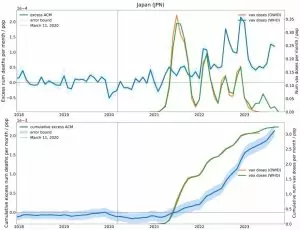
Un numero piccolo. Andavamo bene e ci davamo pacche sulla spalla, no? Che bravi. Abbiamo solo questo numero di morti. Poi abbiamo distribuito le iniezioni, e l'Australia ha raggiunto uno dei tassi di vaccinazione più alti del mondo. Siamo stati in ritardo nell'introdurla, ma poi è arrivata forte e veloce. E sulla scia di questo, le nostre statistiche di casi e morti per COVID sono improvvisamente schizzate alle stelle. E di fatto abbiamo avuto un caso un paio di mesi fa. Il picco ora sta scendendo; un paio di mesi fa abbiamo avuto una situazione in cui il nostro tasso pro capite era, credo, a un certo punto il più alto del mondo. Avevamo sicuramente uno dei tassi pro capite più alti di casi di COVID e poi di morti per COVID. Questo ha quindi creato una pressione aggiuntiva a breve termine sul sistema. E naturalmente gli informatori ce lo dicono, e miei colleghi ce lo dicono, e io lo vedevo prima di mettermi un po' in disparte: livelli molto alti di effetti collaterali del vaccino che arrivano al pronto soccorso. I pronto soccorso, livelli molto, molto alti. Vedono, sì, che il pronto soccorso è inondato, ma da effetti collaterali del vaccino, soprattutto cardiaci.
Dr. Wolfgang WodargEra così ovvio: quando hanno iniziato con tutta questa storia delle punture, quando hanno voluto introdurla nel dicembre 2020, credo, o all'inizio del 2021, hanno iniziato e non l'hanno fatto fare ai medici, ai medici normali che fornivano l'assistenza sanitaria. Ma hanno pagato bene squadre di medici reclutati tramite annunci o simili, e li pagavano 170, 150 euro all'ora, che è molto. E li mandavano nelle strutture e nei luoghi pubblici e montavano tende. E il medico stava seduto in una tenda, era orribile da vedere. E hanno aggirato i medici critici, cosa che avevano imparato dall'influenza suina. Con l'influenza suina avevano avuto anche questa pandemia.
Lo Stato ha comprato, in Germania, 50 milioni di dosi. Ma i medici ne hanno somministrate solo 4 milioni, perché i medici non si fidavano. E non ricevevano soldi in più, i medici. Ora, quando hanno iniziato a introdurre questa cosiddetta vaccinazione con queste squadre, hanno pagato bene, li hanno corrotti perché lo facessero, e avevano l'esercito per sorvegliare il vaccino, la roba, e per trasportarla. L'esercito. Sì. E poi, dopo un po', discutevano con i medici, e dicevano: no, non ne abbiamo abbastanza. Ne avrete più tardi. Ma hanno introdotto un sistema per corrompere quei medici di base. Davano loro 25 euro per ogni puntura. Esatto. E se un medico ha 40 pazienti al giorno, sono molti soldi. È quasi, si può sempre raddoppiare il proprio reddito con questo.
Dr. Robyn CosfordEsatto. Sì. È successa esattamente la stessa cosa in Australia, dove hanno aggirato i medici di famiglia con spirito critico e hanno creato centri indipendenti, pagati molto bene. E solo dopo averlo fatto per la prima fase della campagna hanno cominciato a introdurlo negli ambulatori medici. Ma comunque i medici che gestivano centri dedicati hanno guadagnato molto bene con questo. Bisognava, sa, bisognava essere approvati dal sistema, e così via. Quindi c'era ancora una separazione tra la somministrazione delle iniezioni e il normale medico di famiglia. Era ancora separata e resa molto commerciale per loro, così che quelli per cui il denaro parlava più forte, diciamo.
Dr. Wolfgang WodargCosì tanti incentivi anche per gli ospedali. Sì. Ricevevano di più per il personale. Se hanno una diagnosi di COVID-19, ricevono di più. Sì. È così. Quindi avevano interesse ad avere diagnosi di COVID-19. Testavano ogni paziente. Sì. E più volte. Anche se arrivavano per un infarto o per l'asma. Facevano test, e molti test erano positivi. Sì. E per ogni paziente positivo al test si ricevono soldi in più. Ricevevano 100 euro in più al giorno in terapia intensiva, per esempio. Sì. Sì. E così sono stati inventati questi codici.
Robert CibisIn ogni paese. E poi la scarsità, naturalmente: se si dice, oh, non ne abbiamo abbastanza per i suoi medici, questo dà valore alla cosa. Ma soprattutto c'è un'altra cosa. Se si mettono questi medici nelle tende e poi ci sono soldati a sorvegliare il farmaco, sa, questo dà valore al farmaco, perché deve essere sorvegliato dai soldati. Nemmeno dalla polizia. Dai soldati. Sì. E poi c'è la scarsità, e quanto è prezioso. Quindi, se si ha la possibilità di averlo, si deve davvero venire. E soprattutto, credo che la cosa più importante sia che sostiene la narrazione dello stato di emergenza. Sì. Sì. Quindi ciò di cui avevamo bisogno… Si è stabilita questa emergenza. Esatto. Le cose sono straordinarie. È così. Quindi il suo medico normale non può aiutarla. È così, la malattia è così speciale. Serve un'operazione militare speciale per salvarla. E in un certo senso è un po' divertente, sa. Mi piace, è come, ho sempre voluto stare in un film distopico, e poi ci sono questi soldati che corrono in giro, e tende montate, e roba congelata a meno 70 gradi Celsius, sa.
Sembra un'operazione alla James Bond, sa. È così. E se non fosse dannoso per la salute, in un certo senso mi piacciono le emergenze. È un po' di dramma, no? Un po' di divertimento. La vita era un po' noiosa, sa, per molte persone. Avevano questa routine quotidiana, e alla maggior parte delle persone non piace il proprio lavoro. Quindi, se c'è un'emergenza e possono davvero salvare vite… Si diventa importanti. Esatto. Quando si è uno degli attori di questa emergenza. Esatto. Molto importante. Ti rende importante. E si è anche disposti a fare un piccolo sacrificio, sa. Sa… La gente muore in guerra, è la guerra. Io ero pompiere nel mio paese. Ero… Si ha… Volontario. Bisogna aiutare. Quando c'è un incendio, si ha l'uniforme a casa, quando suona, ci si mette l'uniforme, ci si mettono gli stivali e si corre dove c'è il fuoco. E così… E sappiamo che c'erano persone che davano fuoco alle case.
Sì, per viverlo. Per essere importanti come pompieri. Sì. Sì. Quindi, in un certo senso, per i medici dev'essere simile. Si esce dalla routine. Sa, si combatte la più grande crisi sanitaria. Una tale avventura. E il virus estremamente mortale. Quindi dà… Sì. Dà importanza a tutti i coinvolti.
Dr. Robyn CosfordImportanza. E questo è… Credo… E l'altra grande questione con i medici è che dobbiamo ricordare che quasi tutti i medici arrivano direttamente dalle superiori, dove ci si dice: farò medicina. Ho i voti migliori. Sa, questo è… Questo è ciò che devo fare. Farò… E così entrano in medicina. E fin dall'inizio la formazione appartiene all'industria farmaceutica. Quindi i messaggi che arrivano riguardano tutti come… Non come pensare a ciò che ha creato quella malattia. Questo non viene affatto insegnato. Si insegna… Ti si insegna a riconoscere i sintomi che rientrano in una certa casella. Come si chiama quella casella? Come si chiama la malattia? Sì, i dettagli. Parlare dei dettagli. Come si chiama la casella? Qual è il farmaco che corrisponde a quella casella? Non ti si insegna a pensare: beh, che cosa sta dicendo o facendo il corpo che ha creato quei sintomi? Quali sono i fattori predisponenti? Che cosa sono… Non ti si insegna nemmeno a pensarci, a guardarlo. No, si tratta di: come si chiama questa casella? Qual è il farmaco per questa casella? Quindi sono stati indottrinati in questo sistema. Tutto… Ogni informazione in più che ricevono dopo sono informatori farmaceutici che vengono in ambulatorio e danno gli ultimi aggiornamenti sugli ultimi farmaci. E se… La maggior parte dei medici purtroppo non legge le riviste, non legge gli articoli completi, a meno che non si occupi di ricerca.
Non lo fanno. Leggono i titoli delle nostre newsletter mediche, se vogliamo. Ne abbiamo due in Australia, Ausdoc e Medical Observer, che sono come piccole storie, sa, come il giornale di qualcun altro. È la nostra versione del giornale. E leggono quelle. E naturalmente ciò che arriva lì è la versione molto… Sono di proprietà, ancora una volta, dell'industria farmaceutica, che le pubblica e le finanzia. Quindi è la versione, diciamo, molto «ritoccata» che arriva lì. Ed è ciò che leggono quasi tutti i medici. Quindi la loro mente è totalmente plasmata dall'industria farmaceutica, a credere a tutto ciò che arriva loro dall'industria farmaceutica e da queste riviste mediche. Quindi, quando i cosiddetti esperti sanitari si alzano e dicono: beh, è questo, questo, questo e questo, la maggior parte dei medici dice: oh, dev'essere vero. Viene dai nostri esperti sanitari. E guardo, le mie newsletter mediche dicono la stessa cosa. Dev'essere giusto. Sa, finché alcuni di loro, e sempre di più, cominciano a dire: evidentemente non è così. Guarda, che cosa sta succedendo ai miei pazienti? Che cosa sta succedendo qui? Quindi si stanno svegliando lentamente e progressivamente.
Dr. Wolfgang WodargSono rimasto molto stupito quando ho scoperto che ai medici era stato detto di non aspirare prima di iniettare. Questo era, non avevo, non avevo notato che ci fosse questa raccomandazione. Non l'avevo notato. Ma quando l'ho notato era la primavera 2021. E ho subito, ho subito pensato: ah sì, ecco perché hanno i problemi cardiaci, acuti, problemi acuti. Lo vogliono intravascolare. E questo, si ha, e quando non si aspira, si può stimare che in circa l'uno-cinque per cento dei casi le iniezioni vadano in vena. E sono i giovani, i giovani uomini con i muscoli forti. Hmm. Sono loro le vittime. Sì. Sì, è così. Se sei un vecchio e hai solo pelle e ossa, non c'è muscolo. Non è così pericoloso. Non si ha la miocardite, o non si ha, non c'è l'endocardite, che provoca il disturbo del ritmo, che provoca queste, tutte queste cose acute improvvise.
Dr. Robyn CosfordSì. E così è stato. E di nuovo, con quella storia dei giovani adulti, i vostri atleti hanno naturalmente una buona muscolatura, hanno una buona vascolarizzazione. Quindi hanno, sa, buoni vasi grandi. Si vedono questi giovani uomini con, sa, le vene in rilievo. Hanno buoni, buoni vasi sanguigni. Quindi è molto facile farlo entrare in un vaso sanguigno. E ciò che sappiamo, naturalmente, è che con l'esercizio fisico c'è un'attivazione massiccia del sistema nervoso simpatico. Sì. Va bene. E c'è questa condizione di fondo che conoscevamo, la chiamavamo cuore spezzato, la cardiomiopatia di Takotsubo. Cioè una cardiomiopatia indotta dalle catecolamine, indotta dallo stress, il che significa che in una situazione di moltissimo stress, con un rilascio di ormoni dello stress, la forma del cuore cambia davvero, il muscolo cardiaco cambia, la forma del cuore cambia. È come se ci fosse una fascia intorno al centro del cuore. E i primi casi che ne conoscevamo erano la sindrome del cuore spezzato. Sa, si sentiva di quando qualcuno era sposato da 50 anni, il partner moriva. E poi, qualche giorno o settimana dopo, moriva anche l'altro. E si è imparato che lo stress acuto per un tale grado di perdita compromette la funzione cardiaca.
Come se, era quasi come un'insufficienza cardiaca acuta, e morivano. Ma una volta imparato questo, abbiamo imparato a sorvegliare queste persone. E se le accompagnavamo attraverso i primi cinque giorni, tipicamente, di questa reazione, allora stavano bene. Ciò che si pensa ora è che in questi giovani atleti, che hanno questa massiccia attivazione del sistema nervoso simpatico per l'esercizio, sullo sfondo di ciò che è stato loro iniettato, con l'iniezione. Quindi la proteina spike che causa infiammazione, che causa risposte di stress nel corpo, che causa risposte immunitarie anomale, sviluppano improvvisamente un Takotsubo, sviluppano improvvisamente una funzione cardiaca anomala indotta dalle catecolamine, dallo stress, che poi scatena aritmie che li fanno semplicemente crollare. Quindi è questo fenomenale accumulo di cose. Mentre normalmente, naturalmente, si penserebbe che questi giovani atleti in forma siano invulnerabili. Sa, come diavolo possono improvvisamente cadere morti? E così cominciamo a vedere questi meccanismi.
Dr. Wolfgang WodargSappiamo che quando si ha un'infezione virale, sa, un virus respiratorio, con febbre, con febbre, anche se è un caso più grave, non bisogna mai sforzarsi. Sì. Non bisogna mai fare esercizio. Bisogna stare attenti. Ed è ben noto che ci sono complicazioni al cuore. Sì. Sì. Quindi restare a letto, aspettare e stare attenti. Ma quegli atleti non avevano alcuna infezione. È così. Erano sani. Si stavano solo allenando. Hanno ricevuto una puntura e sono morti improvvisamente. Sì. E la Danimarca è stato l'unico Stato, nel marzo 2021, le autorità sanitarie hanno detto: per favore, aspirate. Non iniettate senza aspirazione.
Robert CibisE l'hanno pubblicato.
Dr. Wolfgang WodargA che cosa serve l'aspirazione? Voglio dire, a non entrare nei vasi. È così. È più, non è sicuro al 100 %, ma è più sicuro, perché quando si aspira e non arriva sangue e non ci si muove più e il paziente non si muove più, si può essere abbastanza sicuri di essere da qualche parte tra le cellule, e si inietta lì dove si è, dove si trova l'ago, la punta dell'ago. Di sicuro si tagliano alcuni capillari, si tagliano sempre alcuni vasi molto piccoli. Ma non è tanto quanto se si ha una vena più grande o un vaso sanguigno più grande.
Robert CibisE perché sarebbe stata data questa raccomandazione di non aspirare?
Dr. Wolfgang WodargHanno detto che era l'OMS. Ma perché? Hanno detto che la gente si fa vaccinare volentieri, perché, sa, quando si vaccinano i bambini, hanno detto che è molto meno stress di quell'ago. Basta fare in fretta, e così è più veloce. Sì. Fa meno male, questo è ciò che hanno detto, perché l'ago non resta così a lungo nel tessuto. Avevano tali argomenti di accettazione.
Robert CibisAh, argomenti di accettazione da parte della popolazione. Capisco. Perché vogliono vaccinare i bambini, vogliono vaccinare le persone, perché vaccinare è una cosa buona, quindi come ci arriviamo? Non ci serve l'aspirazione, perché così è più facile e verranno più persone.
Dr. Robyn CosfordPiù facile e più veloce, ricordando che avevano code in quelle tende, e persone vaccinate sedute in macchina, quindi volevano semplicemente poter fare: pam, il prossimo, pam, il prossimo. Non volevano dover fare: pam, c'è sangue? Sì, oh va bene, non va. Sa, non volevano farlo. Volevano solo fare: pam, pam, pam, persona dopo persona dopo persona, veloce, facile, non è un disturbo per lei, può restare in macchina, si tiri su la manica.
Robert CibisE poi ci si può sentire come in una mandria, sa. Si è solo un altro fra tutta quella carne, ci si unisce a tutti gli altri. Finalmente sono una pecora.
Dr. Wolfgang WodargMi unisco a tutti gli altri. Quelli sono i veterinari, sono abituati a fare così. Esatto. E hanno una macchina del genere, dove arriva il bestiame, e diventa sempre più stretta, sempre più stretta, e c'è una macchina, e il bestiame è in questa macchina, l'ago entra automaticamente, e ne hanno migliaia. Lo fanno persino con i pesci piccoli. Ma questo è, ricevono l'ormone della crescita, i piccoli, l'allevamento, l'allevamento di pesci. Tutti gli impianti di allevamento ittico appartengono ora a Bill Gates, in Grecia. Ah, davvero? Sì. Quindi hanno queste macchine, dove hanno tanti pesci piccoli, e iniettano loro semplicemente l'ormone della crescita.
Robert CibisMolto velocemente. Voglio dire, sinceramente, anch'io ho scoperto di recente che solo da qualche anno tutti i cani avevano bisogno di un passaporto vaccinale e di vaccinazioni obbligatorie in tutto il mondo. Sì. Hanno un chip. È così. Hanno tutti il chip. Non si può, non si può andare con il cane in un altro paese se non gli si è messo il chip. Sì. Sono tutti vaccinati e con il chip. Quindi sembra che ciò che è stato fatto sugli esseri umani sia stato fatto prima sugli animali, e forse per questo ci sono così tanti veterinari nelle posizioni decisive, sia nell'Organizzazione mondiale della sanità sia in vari organismi nazionali.
Dr. Wolfgang WodargSì. Come nei Paesi Bassi. Sono sempre veterinari, veterinari. I virologi, la maggior parte, vengono dalla veterinaria.
Robert CibisSì. E ci sono altri motivi per cui i veterinari sono così importanti adesso?
Dr. Robyn CosfordHmm. Beh, voglio dire, sicuramente gran parte della scienza viene sperimentata prima sugli animali. Hmm. Sì. Molti agenti farmaceutici, ne vediamo di buoni, e molti buoni li vediamo prima negli animali.
Dr. Wolfgang WodargE quelle tecnologie, con cui sono abituati alla vaccinazione di massa e all'uso massiccio di farmaci, mescolati al cibo, o iniettati, o altro, tutte queste tecniche le sperimentano. Hanno lì persino questa tecnologia del vaccino autodiffondente. Sì. Se ne discuteva lì, nella veterinaria, già da molti anni. E ora lo sperimentano sugli esseri umani. Ci pensano, e lo sperimenteranno. Quindi comincia prima con gli, con gli, con gli animali, e il successo non è stato così buono, perché dopo un po', dopo un po' il virus si adatta, e il virus pericoloso, pericoloso non ha alcuna possibilità. Quindi, sa, questo usa ciò che, come lo chiamavamo? Lo shedding (escrezione). Sì.
Usano l'escrezione per vaccinare le popolazioni. Sì. Sa, sono molto, molto interessato a questa faccenda di AstraZeneca. Sì. E ai casi di epatite in bambini piccoli non vaccinati. Sì. Hanno tutti adenovirus. Sì. Sì. E hanno una malattia autoimmune. Sì. E a nessuno importa se i genitori sono stati vaccinati con questo, con questo, con questo virus di AstraZeneca, che si dice non si diffonda. Sì.
Robert CibisGli adenovirus hanno senso. Che cosa, che cos'è, quanti casi ci sono e qual è la storia?
Dr. Wolfgang WodargOh, non lo so. C'erano 500 casi in Europa due mesi fa.
Dr. Robyn CosfordCapisco. I numeri, i numeri sembravano raggiungere un picco, poi è calato il silenzio. Non se ne sente più parlare ora, perché di nuovo sono passati da AstraZeneca a Pfizer. È così. Quindi ora non abbiamo gli stessi numeri che sembrava avremmo avuto all'inizio di persone con AstraZeneca. Ma questo porta a questa domanda, sia dell'escrezione sia della trasmissione transgenerazionale. E, per tornare a ciò che diceva Wolfgang sul vaccino, i vaccini che si diffondono. Su questo sono state fatte ricerche proprio in Australia. È stato fatto proprio in Australia, è stato sviluppato per il controllo della popolazione di ratti in Australia. E hanno scoperto che potevano dare un vaccino alle gravide, alle madri, alle, alle femmine di ratto, alle madri. E passava entrambe le cose, passava attraverso la placenta al piccolo, ma anche, quando le femmine tornavano nel nido e nella tana con tutti gli altri, lo espellevano e passava anche a quelli della tana.
Quindi hanno ottenuto due meccanismi, due vie di diffusione. E ha funzionato per due generazioni.
Dr. Wolfgang WodargChe buffo, ma lei, lei è molto esperta di medicina ambientale, di queste cose. E io osservavo l'uso veterinario, veterinario, veterinario dei farmaci, degli antibiotici. Hmm. E c'è un'analisi ecologica di come si diffonde la resistenza a certi antibiotici. Sì. Era così, era così bello. Sa, quando usano certi antibiotici per il loro, per il bestiame. Sì. La si trovava nel, nel, nel, nel gatto. La si trovava nel topo della fattoria. La si trovava nel contadino. Sì. La si trovava in tutto l'ecosistema. Quindi, come si diffonde? Sì. Come si diffonde? È genetico, è una cosa genetica. È, è, è il microbioma. Quindi persino gli antibiotici. Beh, la, la resistenza contro di essi. La resistenza contro di essi.
Dr. Robyn CosfordSì. Sì. Quindi sospetto che, in contesti del genere, molto di ciò arrivi attraverso il suolo, perché in un essere umano sano che è in connessione con il pianeta, il nostro microbiota intestinale riflette strettamente il suolo del nostro ambiente. [incerto] Mantiene il quorum. Sì. Esatto. Ma la maggior parte di noi ne è scollegata e, e, e non ce l'ha. Ma gli agricoltori sono ancora abbastanza in connessione con la loro terra, no? Hanno le mani nella terra. E loro, sa, non si vedono agricoltori lavorare con i guanti. Quindi gli agricoltori sono ancora abbastanza in connessione con il suolo e con la loro terra. Quindi quel meccanismo d'azione potrebbe certamente valere nel contesto agricolo. Per noi che siamo scollegati, avviene sicuramente nel senso che sappiamo che gli antibiotici si diffondono attraverso i cibi che mangiamo, e avviene naturalmente anche attraverso la rete idrica: questi antibiotici arrivano, stanno arrivando attraverso l'acqua. Le analisi dell'acqua del rubinetto mostrano farmaci parzialmente, parzialmente metabolizzati.
Quindi antibiotici, ormoni, estrogeni, tutto questo, e perfino i vostri farmaci chemioterapici, parzialmente metabolizzati. È folle. Composti farmaceutici arrivano nella rete idrica. E questo poi altera i nostri batteri intestinali, perché la beviamo e altera i nostri batteri intestinali e ha effetti su di essi. E così questi effetti sono molto presenti nell'ambiente. E se non correggiamo il nostro ambiente, non correggiamo la nostra rete idrica, non ci riconnettiamo con un buon suolo, riceviamo anche questo. Quindi è, è, è, è un quadro molto più ampio. Si può dire. È, è un quadro molto più ampio con cui abbiamo a che fare. Sì. Il micro, il microbioma, o i, i membri del microbioma, ovunque cercano di sopravvivere, e si adattano, e ci sono processi di selezione, e, e loro, sono i migliori, quelli che sopravvivono, che troviamo, e prendono il posto di altri, e viviamo con loro, e li mangiamo, noi…
Robert CibisNe facciamo parte, no? Esatto. Ma ci sono indicazioni chiare che le punture anti-COVID causino escrezione? Sì. Sì. Sì. Me lo chiedevo perché una volta l'ho sentito personalmente, sa, ho incontrato una persona e poi ho detto: mi sento come se stessi male, ma non è così, come, ma ho pensato che forse fosse, sa, bisogna distinguere, e io, ce l'ho, ce l'ho nel mio libro, ho aggiunto questo piccolo capitolo.
Dr. Wolfgang WodargSì. Alla fine. False pandemie. Sì. E lì, lì c'è, lì io, dobbiamo distinguere ciò che lei, ciò di cui lei parla, che cos'è l'escrezione. Sì. Quindi, quando si ricevono le, quando si ricevono le nanoparticelle con l'mRNA, sono ovunque. E le si può ricevere, le si può portare ovunque, e penetrano nelle cellule. Quindi, quando si hanno quelle, il vaccino, le si ha da qualche parte, sulla mucosa, possono cominciare a entrare nelle cellule, possono cominciare a produrre spike. Questo è possibile. Se si, se si riceve una trasfusione di sangue, o si prende siero da quelle persone e poi se ne ricavano alcuni prodotti farmaceutici. Può darsi che, può darsi che il processo uccida, distrugga l'mRNA. Perché non, non vive così, non vive così a lungo. Ma quando gli spike, si può anche, arrivano con il latte, per esempio.
Sono nei liquidi corporei, li si trova anche nei liquidi corporei. E li si trova in tutti i tessuti. Sì. E di sicuro li si trova nelle mucose. Ma quando si, quando si tossisce, e così via, e si, si, si tocca qualcuno così. Il suo sistema immunitario riconosce alcune proteine. Le proteine, sa come trattarle. Il suo sistema immunitario la protegge dalla proteina spike quando arriva solo sulla pelle, o quando ce l'ha in bocca, nel naso. Nessun problema, credo. Credo che non sia un problema. Se lui forse riceve gli spike. Sì. Ma non diventerà una fabbrica di spike. È così. Come lo si è se si è punti. Esatto. Quindi è una grande differenza, potrebbe esserci un piccolo effetto tossico. Sì. Ma nemmeno quello. Quel grande rischio neurologico che si può avere se, se si è punti. È così. Nemmeno quello. Nemmeno un effetto tossico, perché sono tossici solo quando entrano nei vasi. Va bene.
Dr. Robyn CosfordLa proteina spike. Sì. Sì, sicuramente. È un effetto breve, sarà un effetto a breve termine. E quindi l'escrezione, l'altro meccanismo di escrezione che sta avvenendo, è che il nostro corpo, le nostre cellule hanno un meccanismo per cui, se c'è un danno interno e il DNA è stato alterato, o il materiale genetico è stato alterato, la cellula lo impacchetta in un liposoma. Produciamo i nostri liposomi e lo esprimiamo sulla superficie della cellula, come segnale al resto del sistema immunitario, che dice: ho bisogno di aiuto, sono nei guai, questa cosa è dentro di me, aiutatemi. E, e così questi esosomi, eso, esterno, quindi una, sa, piccola struttura circolare di tipo liposomiale, vengono poi espulsi. E così non solo avremo proteina spike sulle mucose, ma uscirà di fatto anche dalla pelle. È così. E quindi può uscire spike. Quindi il problema dello spike indotto dall'iniezione è che l'hanno, l'hanno modificato rispetto allo spike originale, e contiene diversi componenti che lo rendono molto difficile da degradare.
Quindi il corpo deve cercare di espellerlo, visto che non riesce davvero a degradarlo efficacemente. Ma una persona non vaccinata, una persona non iniettata, che avrà ancora mucose funzionanti, si spera funzionanti, che non ha avuto troppi altri vaccini e la cui immunità mucosale funziona, lo respingerà rapidamente, come dice Wolfgang, a livello delle mucose. E non entrerà nel sistema né causerà altri problemi. Ma anche se lo fa, quella proteina spike di per sé non può replicarsi.
Dr. Wolfgang WodargQuindi il, il, il ruolo degli esosomi è molto importante, perché si trovano, negli esosomi si sono trovati spike, proteina, e si trovano nanoparticelle con mRNA. Sì. Ed è una cosa diversa, perché non so che cosa succede. No, non lo sappiamo. Per quanto tempo sono in grado di, di, di andare da qualche parte. Sì. Sì. Non sappiamo che cosa stia facendo l'mRNA.
Dr. Robyn CosfordE il micro, quindi c'è l'RNA messaggero, ma più piccolo di quello c'è il micro-RNA. E non sappiamo che cosa stiano facendo tutti i micro-RNA.
Robert CibisSì. Wow. Io, è tutto un viaggio, ehm, nella sensazione che ora dobbiamo tutti avere basi mediche solo per cavarcela nella vita. Perché, a quanto pare, non possiamo fidarci, ehm, dobbiamo prenderci cura di noi stessi. Sì. Quindi quali sono i passi che più rafforzano che potrebbe fare una persona senza formazione medica?
Dr. Wolfgang WodargNon avere paura. Sì. Non fidarsi, ma non avere paura.
Robert CibisSì. Sì. Suona, suona bene.
Dr. Robyn CosfordSì, sì. E quindi si tratta sicuramente di passare da quel paradigma della paura a scegliere, ed è una questione di scelta. Sì. Scegliere di arrivare in un luogo di amore, di pace e di gioia. Ehm, ho un concetto con cui lavoro, chiamato la ruota della vita, che è una ruota a sette raggi; perché una ruota giri bene, i raggi devono essere uguali. Quindi propongo a tutti i miei pazienti di guardare ciascuno, o che guardino ciascuno di quei componenti. Ci sono le fonti di energia esterne, l'aria, la luce, quindi si guarda la domanda: che aria respira? Come respira? Guardiamo la questione della luce, che fa parte dello spettro elettromagnetico, tutte le diverse questioni intorno agli spettri elettromagnetici, il che significa guardare anche le questioni delle radiazioni elettromagnetiche. L'acqua: siamo all'80, fino all'80 %, circa al 70 % acqua, siamo un, un microcosmo del pianeta in questo senso, sa, siamo di fatto una sacca di liquido con dentro minerali, quindi assicurarsi di essere idratati, che tipo di acqua beviamo, e così via, tenere d'occhio l'acqua. Poi c'è il movimento: noi, tutti gli esseri viventi si muovono in qualche forma, qualche tipo di movimento, quindi dobbiamo guardare le questioni del movimento. Poi, poi il sonno, il riposo, la ricreazione, e la parola ricreazione è interessante, in realtà è ri-creare: non possiamo lavorare tutto il tempo, dobbiamo avere un giorno di riposo per poterci ri-creare, quindi ricreazione, sonno, poi i cibi, e i cibi, nel, nel mio, mio libro, se vogliamo, devono essere cibi che riconosciamo come cibi veri, cibi fatti da Dio, non, non roba artificiale fatta dall'uomo, cibo vero, cibo, e c'è tutta una storia intorno a tutto questo, cibi colorati, cibi arcobaleno, si potrebbe parlare a lungo dei cibi, ma cibi tradizionali, quindi il cibo, e poi i nutrienti, perché purtroppo, nel nostro mondo moderno, per quanto bene mangiamo, per il livello di tossicità, per il livello di tutto ciò che c'è ovunque, il cibo non contiene più ciò che conteneva, e dobbiamo guardare, e, e il livello delle tossine è come mai prima, dobbiamo guardare all'integrazione nutrizionale, quindi questa è, questa è la mia visione di tutto: abbiamo questo asse centrale di amore, gioia, pace, è ciò che tiene tutto insieme, poi guardiamo tutte quelle altre cose, le teniamo in equilibrio, e allora possiamo continuare a girare bene.
Dr. Wolfgang WodargSa, gli, gli indiani del, del nord, del nord America avevano anche loro ruote del genere, avevano, avevano, ma avevano settori diversi, avevano altri, ma, si trattava anche della luce, e si trattava dell'acqua e della terra, e avevano anche un tale, un tale schema, in cui, in cui badavano a restare sani, dovevano restare sani. Sì. La vita moderna ha bisogno di qualche nuovo…
Robert CibisSì. Sì. Sì, ed è, è interessante, perché sì, ed è che abbiamo bisogno di integratori, è, è un peccato, ma è, è, è bene che lei lo sottolinei, perché, perché io, io ho saputo che c'è stata una guerra contro la vitamina D, sa, una guerra contro altre vitamine, nel senso che l'industria farmaceutica diceva: per favore, non promuovete questo tipo di prodotto, perché è, è così, perché è, perché costa troppo poco, sa, non perché non sia utile. È così. Sì. Quindi sono molto felice di aver potuto fare questa conversazione con tutti e due voi, e sono sicuro che anche il pubblico è stato felice di ascoltare, e di ascoltarvi, e di vedervi. Ehm, vorrei chiedere al pubblico di condividere questo contenuto, di guardare altre pubblicazioni che avete, ehm, fatto. Wolfgang sta per pubblicare un libro intitolato False Pandemics (False pandemie) in inglese. Ehm, c'è un link nella descrizione.
E, ehm, viviamo anche del sostegno degli spettatori e degli ascoltatori. Ehm, quindi, per favore, sosteneteci anche finanziariamente, ulteriori informazioni sotto, anche.
Dr. Robyn CosfordVi auguro una buona giornata. Ciao ciao. Meraviglioso. Grazie mille. È stato fantastico.
Robert CibisHello, my name is Robert Cibis. I'm very proud and very glad to be here with two experts, I can say, in the field of health in general, world health or personal health, whatever concerns health. And what is so fascinating in the last years is that health became, in fact, a topic which became political, social, psychological, you know, financial. And, in fact, through this factor, which is so close to all of us, you can, in fact, understand the whole of society. And this is what we try to do with NARRATIVE. And so I'm here with Robyn Cosford and Wolfgang Wodarg. So what we discovered is that a big part of the medical system is, in fact, so much in a logic of economics that you wonder whether the aim of healing and helping patients is still at the
core of it. So how would you say this is
Dr. Robyn Cosfordmanifested in your life? Yeah, that's a great point. And that's exactly really what the question is. While individual doctors, most of them certainly, at their core still believe that what they're about is trying to help people and help patients, the reality is that it's become very apparent. The system has got nothing to do with that. So in Australia, this got exemplified very clearly. March 21, we got all practitioners, medical and allied health practitioners, got sent a letter that we affectionately call the gag order, where we were effectively commanded, we were instructed, that we had to totally comply with the government health care directives and that we had to, beyond comply, we had to actively promote them. It was an instruction, not a suggestion. And we were told that if we did not comply with that, if we were found to be in any way putting a different message, that we would be investigated and possibly deregistered. And in fact,
that's what happened. So I had already, because I'm into an integrative medical practitioner, I do nutrition, naturopathy, homeopathy, in addition to medicine, I'd been investigated by the system on three occasions already. Oh, really? I'd already been, I know the system. I'd already been through it. And when I say investigated, people don't realise that what the system will do, and on the last occasion they did this, they literally took 30 of my patient files without patient permission. They didn't care about patient permission. They didn't care about patient confidentiality. That was irrelevant. They simply took the files and poured through them to try and find anything they could that they could deregister me on, that they could suspend me on. They couldn't, they couldn't find anything. I was a good doctor and I carefully document everything I do. So they couldn't find anything. But what they said is we're going to come back in 12 months time and have another look. Oh, really? So in that 12 months, COVID happened. And like many good doctors, I was writing mask exemptions, ivermectin scripts, vaccine exemptions. So I knew that when they were going to come back that I'd be cooked. My goose would be well and
surely cooked. So what I chose instead to do was to beat them to it. I retired my license and have been able to come out and speak. And that's the only way I have been able to come out and speak. In Australia, every other doctor who has hinted at anything outside of the system, whether it's been on Facebook, whether it's been to some patients who have then reported, however it's been, have ended up being investigated. We have numbers, quite a significant number. We actually don't know how many. We can't find a way to find out how many. Numbers of doctors in Australia who've been suspended, a smaller number who've been fully deregistered, but numbers who were locked in the court system trying to fight that. It's a crazy situation where it has, it's very apparent. It has nothing to do. If the system was genuinely concerned about patient health, then doctors would be allowed to individually assess whether it was in the interest of that patient's health, to be wearing a mask, to be vaccinated, injected with these injections.
In the interest of that patient's health, we used to be able to do what's called off-label prescribing, which meant that once a drug was approved by the TGA, which Ivermectin had been, had been used in Australia for many years, we should have been able to prescribe Ivermectin off-label-y on our own say-so because it was an approved drug. So they shut that as well. So the medical system in Australia has been totally controlled, clearly not in the interest of health and wellbeing. Other agendas,
Robert Cibisvery clearly. Do you have personal experiences with this, how would I say,
Dr. Wolfgang Wodarginstructions given to the physicians? No, not personally, but I just watched the Robert Koch Institute, Mr. Wieler, how he told us it should not be questioned what the government was telling us. This is a, if he is, he says he's a scientist, so this doesn't fit. This is some, I don't know,
Robert Cibisif a priest would say this, okay. And is this, I mean, our audience knows that there are pharmaceutical companies and other companies who want to promote treatments and medication, all of the things. But this is so extreme, what you're telling. I wonder whether this is really just an economic issue. How would you describe
Dr. Wolfgang Wodargit? I mean... How is it possible that the doctors follow? How is it possible that thousands of doctors suddenly let them be under pressure? How is it possible? I remember when I was in health politics in Bundestag, when you wanted to do something which was not so easy for them to do. They were on the street. They were on the street. They said, no. But no. Are there any doctors' demonstrations? Are there few of them to
Dr. Robyn Cosfordspeak up? That's a really good question. When it first started in Australia, I was one of very few. But now we have a number of organisations that have been set up. More and more doctors have become aware in Australia. They've either not wanted to take the injection themselves because they also mandated that all health practitioners in Australia had to be injected. So we were not allowed to see patients if we weren't injected. Now we're also not even allowed to do telehealth if we're not injected. So, or at least it did reach that point. And so in Australia, we've got many doctors who chose not to be injected themselves and were then thrown out of their positions. One famous one who has made it into the media is Dr. Luke McLindon, who was Australia's top reproductive specialist. And he chose not to be injected. He was seeing what was happening with injections in pregnant women. He's been thrown out. The head we have... So he cannot work anymore? He can't practise medicine. Not allowed to. That's crazy. And one of the head of a new organisation called AMPS, Australian Medical Professional Society, who's a colleague of mine,
who's a Dr. Chris Neil, he was a cardiologist. He also chose not to be injected. He got thrown out of... Top cardiologist. Got thrown out of his position as a cardiologist. Think of the waste to the community and funding of these doctors who are now not allowed to practise. So he's now the head of this organisation, the AMPS. So in Australia now, the doctors are starting to take a stand. They're starting to stand up at rallies. It is now starting, which is wonderful to see.
Dr. Wolfgang WodargYeah, we had in this pandemic, so-called pandemic, we experienced that people were tested in hospitals and in old people care institutions. They were tested. If they were positive, the doctors, the staff, they were sent into quarantine. Yes. Although they need each of them. Yes. If there is a pandemic, they would have needed each of them. But they do the opposite. They just send them home and they produce some emergency like that. Exactly. In the care homes, the people were... There was no stuff and they said, oh, better I send them to a hospital. The old people, 80 years and older, they send them to a hospital. And this... Now they... Now they... Now when they... When it started with... With the... With the jabs, with this... Experimental jabs. They... There are lots of people in nurses, nurses and doctors who don't want it. Exactly. And they... There was a big problem. And there was such a solution... Political solution that they could... Send them... That they... Could cancel the jobs.
Yeah. But... It was up to... Up to them. And it was up to the public health office in the region. I see. Okay. Hmm. Whether they were after it or not. Hmm. And when there are good connections between the hospital and the public health doctor, They... They found a solution. Okay. Wow. So... They... They... They didn't speak about it or that... So it was very, very different in the regions. In some regions, they were very rigid. And they... They really... And... In those regions, they had a lack of staff. And it's just... A public discussion in Germany was... And for the last two or three months, I... You could read it everywhere that... There's no... That they have to... To change the system because they don't have enough doctors. They don't have enough nurses. This is the most important thing. Yes. Don't have enough nurses. And... This is why they... They try now to loosen those regulations. Because... They closed many hospitals. Hmm. In a time of so-called pandemic. They closed hospitals. And... It's a... It... It... It was a big... Concentration
of hospitals. They closed small hospitals. There was a... Big... Monopolisation... Concentration. We have the numbers out of
Robert CibisGermany. Do you think this is a general tendency? Have there been hospitals
Dr. Robyn Cosfordclosed in Australia? Certainly in Australia, we had hundreds of... I think it was about a hundred thousand nurses... Who were thrown out because they would not vaccinate. We've had a significant number of doctors and it has created a highly artificial hospital crisis. Mm-hmm. The hospital crisis that is being promoted and spoken about in the media that is being blamed on excess cases coming in from COVID has nothing to do with the COVID. It has to do with the fact that the hospitals... Well, I shouldn't say nothing. That's a broad statement. But it's not primarily because we're being flooded with COVID cases. It is because we have a desperate staffing shortage that has been engineered. It has been deliberately engineered. And so we have multiple wards that have been closed down, multiple ICU units that were closed down in the face of saying we have an ICU overload. Well, we have an ICU overload for the few that are open, but not if we were fully staffed and we had everything there. Australia also has had the added issue, and I'm not sure how much this applied to Germany. We only had 985, I think, was the exact number of deaths from COVID up until July
21. Small number. We were doing well and we're patting ourselves on the back, aren't we? Clever. We've only got this number of deaths. Then we rolled out the injections and Australia has hit one of the highest vaccination rates in the world. We were late in instituting it, but then it came hard and fast. And on the back of that, our stats for COVID cases and deaths suddenly skyrocketed. And we actually did have a case a couple of months ago. The peak is now coming down that we did have a situation a couple of months ago where our per capita rate was, I think at one point we were the highest in the world. We were certainly one of the highest per capita rate for COVID incidents and then COVID deaths. So that did create a short-term extra pressure on the system. And, of course, the whistleblowers are telling us and colleagues of mine are telling us, and I was seeing it before I moved a little more aside, very high levels of rates of vax side effects appearing to ED. The emergency departments, very, very high levels. They're seeing, yeah, it is flooding ED, but it's vax side effects,
Dr. Wolfgang Wodarglargely cardiac. It was so obvious that when they started the whole giving the jabs, when they wanted to install this in December 2020, I think, or beginning of 2021, they started and they didn't let it be done by the doctors, the normal doctors, who were providing health for this. But they paid well teams of doctors they recruited via advertising or so, and they paid them 170, 150 euros an hour, which is a lot. And they sent them to institutions and sent them to public places and built tents. And the doctor was sitting in a tent, and it was horrible to see. And they bypassed the critical doctors, which they learned from the swine flu. The swine flu, they had also this pandemic.
The state bought, in Germany, bought 50 million dollars. But the doctors only gave 4 million, because the doctors didn't trust those. And they didn't get extra money, the doctors. Now, when they started to install this so-called vaccination with those teams, they paid well, they bribed them to do it, and they had the military to guard for the vaccine, for the stuff, and to transport it. Military. Yes. And then, after some time, they were discussing with the doctors, and they said, no, we don't have enough. You will later. But they installed a system of bribing those ambulance doctors. They gave them 25 euros for one jab. Exactly. And if a doctor has 40 patients a day, that's a lot of money. It's almost,
Dr. Robyn Cosfordyou can always double your income with this. Exactly. Yeah. We had exactly that same thing happen in Australia, where they bypassed your critical thinking family doctors, and set up the independent clinics, which they paid very well. And only after they'd done that for the initial roller, did they start introducing it to doctors clinics. But still, the doctors, those doctors who ran dedicated clinics, made very good money from that. You had to go, you know, you had to be improved by the system, and so on and so on. So there still was a separation of the administration of the injections from the normal family general practitioner. It was still separated and made highly commercial for them so that those for whom money spoke the most,
Dr. Wolfgang Wodarglet's say. So much incentive also for hospitals. Yes. They got more for the staff. If they have a COVID-19 diagnosis, they get more. Yes. That's right. So they were interested in having COVID-19 diagnosis. They tested each patient. Yes. And multiple times. Although they came by heart attack or asthma. They made tests, and many tests were positive. Yes. And for each patient being tested positive, you get extra money. They got extra 100 euros per day extra in the intensive care, for instance. Yes. Yes. And so there were such
Robert Cibiscodes invented. In every country. And then the scarcity, of course, if you say, oh, we don't have enough for your doctors, it gives value to the thing. But foremost, there's another thing. If you put these doctors into tents, and then there's soldiers guarding the medication, you know, it gives value to the medication because it has to be guarded by soldiers. It's not even the police. It's soldiers. Yes. And then there's the scarcity, and it's how precious it is. So you really have, if you have the chance to get it, you really have to come. And foremost, I think what is most important, this is that it is supporting the narrative of the state of emergency. Yes. Yes. So what we needed is... You established this emergency. Exactly. Things are extraordinary. That's right. So your normal doctor cannot help you. It's so, the disease is so special. You need a special military operation to rescue you. And in a way, it's a bit fun, you know. I like, it's like, I always wanted to be in a dystopian movie, and then you have these soldiers running around, and you have tents built up, and you have frozen things minus 70 degrees Celsius,
you know. It feels like it's a James Bond operation, you know. That's right. And if it wouldn't be bad for health, in a way, I like emergencies. It's a bit of drama, isn't it? A bit of fun. Life was a bit annoying, you know, for a lot of people. They had this regular everyday thing, and most people don't like their job. So if there's an emergency, and like they can really save people's lives... You become important. Exactly. When you are one actor of this emergency. Exactly. Very important. It makes you important. And you're also willing to give a bit of sacrifice, you know. You know this... People die in a war, it's war. I was a firefighter in my village. I was... You have... Voluntary. You have to help. When there's a fire, you get your uniform at home, when it rings, you put on your uniform, you put on your boots, and you run to where the fire is. And so... And we know that there were people who set
houses on fire. Yes, to experience that. To be important as a fire. Yeah. Yes. So in a way, it must be similar for doctors. Like, it's out of the routine. You know, you're fighting the biggest health crisis. Such an adventure. And the extreme deadly virus. So it gives... Yeah. It gives importance to everybody involved.
Dr. Robyn CosfordImportance. And this is... I think... And the other big thing we have with the doctors is that we need to remember that for almost all doctors, they've come straight from high school, where it's like, I'm going to go and do medicine. I've got top marks. You know, this is... This is what I have to do. I'm going to go do... And so they go into medicine. And right from the word go, the training is owned by the pharmaceutical industry. So the messages that come through are all about how to... Not how to think about what's going on that's created that disease. That's not taught at all. It's taught... You are taught how to recognise the symptoms that fit a particular box. What's the name of that box? What's the disease name? Yes, the details. Speak about the details. What's the box name? What's the drug that fits that box? You're not taught to think about, well, what's the body saying or doing that created those symptoms? What are the predisposing things? What are they... You're not taught to even think about that, to look at that. No, it's about, what's the name of this box? What's the drug for this box? So they've been indoctrinated in this system. The whole... Every bit of extra information they receive after is medical reps coming into the surgery, given the latest updates on the latest pharmaceutical drugs. And if... Most doctors don't read journals, unfortunately, they don't read full papers unless they happen to
be research-oriented themselves. They don't. They will read the headlines in our medical newsletters, if you like. We have two in Australia, Ausdoc and Medical Observer, which are like little story, you know, like someone else's newspaper. It's our version of the newspaper. And they'll read those. And of course, what comes in that is the highly... They're owned, again, published and financed by the pharmaceutical industry. So it's the highly, let's say, doctored version that comes in there. And that's what almost doctors are reading. So their minds are totally framed by the pharmaceutical industry and to believe everything that comes to them from the pharmaceutical industry and through these medical journals. So when the so-called medical health experts stand up and say, well, it's this, this and this and this, most doctors go, oh, must be true. It's coming from our medical health experts. And I'll look, my medical newsletters are saying the same thing. It must be right. You know, until a few of them and more and more of them start saying, that's obviously not the case. Look, what's happening to my patients? What's happening here? So more slowly and progressively waking
Dr. Wolfgang Wodargup. I was very much astonished when I discovered that the doctors were told not to aspirate before they inject. This was, I didn't, I didn't notice it that there was this recommendation. I didn't notice it. But when I, when I noticed it, it was that I am spring 2021. And I immediately, I immediately thought, ah, yes, this is why they have the, the heart problems, acute, acute problems. They want it intravascular. And this, you have, and when you don't aspirate, you may guess, it's about one to five percent, which is, the injections go intravascular. And it's, it's with the young, with the young men with the strong muscles. Hmm. They are the victims of this. Yes. Yeah, that's right. If you're, if you're an old guy and you have only some skin and bones, there is no muscle in it. It's not so dangerous. You don't have myocarditis or you don't have, there isn't, the endocarditis, which makes the rhythm failure, which makes this, all this sudden
Dr. Robyn Cosfordacute things. Yep. And so it was. And so again, in that young adult story, going on with that, your athletes, of course, they've, they've got good musculature, they've got good vasculature. So they have, you know, good large vessels. You can see these young men with the, you know, the bulging veins. They've got good, good blood vessels. So it's very easy to get it into a blood vessel. And what we know, is of course, with exercise, you've got massive activation of the sympathetic nervous system. Yes. Okay. So, and there's this underlying condition that we used to know, we used to call it broken heart, the Takotsubo cardiomyopathy. So catecholamine induced, stress induced cardiomyopathy, which means that under a situation of a great deal of stress with outpouring of stress hormones, the heart shape actually alters, the heart muscle alters, the heart shape alters. It's like there's a band around the middle of the heart. And it, the first cases we knew of this was broken heart syndrome. You know, you'd hear of, of when someone had been married for 50 years, their partner would die. And then a few days or weeks later, their partner would die. And it came to be learned that the acute stress from that degree of, of loss would affect their heart function.
Like they'd go, it was almost like an acute heart failure and they'd die. But once we learned about that, we learned to watch these people. And if we carried them through the first five days, typically of that reaction, then they'd be okay. So what it's now thought is that in these young athletes who have got this massive activation of the sympathetic nervous system to do with the exercise on the background of what's been injected with, with the injection. So you spike protein that is causing inflammation, that is causing stress responses in the body, that is causing abnormal immune responses, that we're suddenly developing a Takotsubo, we're suddenly developing a catecholamine, stress-induced abnormal heart function that then will trigger arrhythmias that will just drop them. So, so it's this phenomenal accumulation of things. Whereas normally, of course, you would think that these young fit athletes are impervious. You know, how the heck can they be suddenly dropping dead? And so we,
Dr. Wolfgang Wodargwe're starting to see these mechanisms. We know when you have a viral infection, you know, respiratory virus, which fever, with fever, even if it's a more severe case, then you should never stress yourself. Yes. You should never do exercises. You should be careful. And this is well known that there are complications with the heart. Yes. Yeah. So stay in bed, wait, and be careful. But, those athletes, they didn't have an infection. That's right. They were healthy. They were just training. They got a jab, and suddenly died. Yes. And, the Denmark was the only state, in March 21, it said, the health, the health officials, they said, please aspirate. Don't inject
Robert Cibiswithout aspiration. And they published it.
Dr. Wolfgang WodargWhat is the aspiration good for? I mean, so, that you don't go into vessels. That's right. It's more, it doesn't, it's not 100% safer, but it is safer, because when you, when you aspirate, there's no blood coming, and you don't move anymore, and the patient doesn't move anymore, you may be right sure that you are somewhere between some cells, and you inject, inject it, where you are, where the needle, where the top of the needle is. For sure you, you cut some capillaries, and you always cut some, some very small vessels. But, this is not so much, as if you, you have a bigger vein, or if you have,
Robert Cibisa bigger blood vessel. And, and why would this recommendation, of not aspiration, be given?
Dr. Wolfgang WodargThey said, it was WHO. But why? They said, that, people like to be, get, get vaccinated, because they, you know, when you vaccinate children, they said, it's much less stress, than this needle. Just, make it fast, and, and then it's faster. Yeah. It doesn't hurt so much, this is what they said, because the needle doesn't stay so long, and, and the tissue. They had such, acceptance, arguments.
Robert CibisOh, population acceptance arguments. I see. Because they want to vaccinate children, they want to vaccinate the people, because vaccination is a good thing, so, how can we reach it? So, we don't need aspiration, because, then it's easier,
Dr. Robyn Cosfordand more people will go. Easier and quicker, remembering that they had queues lined up, in these tents, and people being vaccinated, sitting in cars, so they wanted just to be able to go, bang, next one, bang, next one. They didn't want to have to go, bang, have we got blood? We have, oh okay, no good. You know, they didn't want to do that. They just wanted to go, bang, bang, bang, person after person after person, quick, easy, it's not an inconvenience for you, you can stay in your car,
Robert Cibisjust roll up your sleeve. And then you can feel like being in a herd, you know. You're just another one of all the meaty, join all the everybody else's. Finally, I'm a sheep.
Dr. Wolfgang WodargJoin all the everybody else's. Those are the veterinaries, they are used to do it like that. Exactly. And they have such a machine, where the cattle comes, and it gets tighter, and tighter, and tighter, and tighter, and there is a machine, and the cattle is, in this machine, the needle goes, automatically, and they have a thousand of those. They do it with, even with small fishes. But this is, they get growth hormone, the small, the breeding, breeding the fish. All the fish breeding institutions, now belong to Bill Gates in Greece. Oh really? Yeah. So they, they have these machines, where they have the, lots of small fish, and they, just inject them,
Robert Cibisgrowth hormone. Like, very fast. I mean this, also honestly, I, recently learned that, only some years ago, all dogs needed a vaccination passport, and needed, and they were obligated, vaccinations all over the world. Yes. They have a chip. That's right. You all have chips. You cannot, you cannot go with your dog, to a different country, and you don't have chipped it. Yep. They're all vaccinated and chipped. So it's, so it feels that, what is, has been done on, human beings, has been done before, on animals, and maybe that's, why there are so many veterinaries, in the, in the decisive positions, in both the World Health Organization, and various national
Dr. Wolfgang Wodargboards. Yes. Like in the Netherlands. It's always veterinaries, veterinaries. The virologists, most of them,
Robert Cibiscome from veterinary. Yeah. And, are there any other reasons,
Dr. Robyn Cosfordwhy veterinaries are so important now? Hmm. Well, I mean, certainly a lot of the, the science gets tried, in the animals first. Hmm. Yeah. A lot of the pharmaceutical agents, we see good ones, and lots
Dr. Wolfgang Wodargof good, we see in the animals first. And those technologies, they use to have, a mass vaccination, and a mass, mass use of, of, of, pharmaceutics, mixed with the food, or, or injected, or there, all those techniques, they try out. They even have, this technology there, with the self-spreading, vaccine, Yes. It was discussed there, with the veterinary, for many years already. And now they try it, with the, with human beings. They, they think of it, and they will try it out. So they, it first starts with the, with the, with the animals, and they, the, the success was not so good, because after some, or after some, some time, the virus adopts, and the dangerous, dangerous virus is not, has no chance. So you know, it's, this, this, this is using, what we, what we called, how is it? Shedding. Yes. They use the shedding, for,
vaccinating the populations. Yes. You know, I'm, I'm very, I'm very much, interested, in, in this, AstraZeneca thing. Yes. And the hepatitis cases, in young, unvaccinated children. Yes. They all have, adenoviruses. Yes. Yes. And they have, an autoimmune disease. Yes. And no one cares, whether the parents, were vaccinated, with this, with this, with this, AstraZeneca virus, which is said not to spread. Yes.
Robert CibisThe adenoviruses make sense. what, what is, how many cases are there,
Dr. Wolfgang Wodargand what is the story? Oh, I don't. There were 500 cases in Europe,
Dr. Robyn Cosfordtwo months ago. I see. The numbers, the numbers, it, it seemed to peak, it's gone quiet. Hearing about it has gone quiet now, because again, they've, they've shifted away from, AstraZeneca to, to Pfizer. That's right. So we now don't have the same numbers, like it looked like we were originally going to have, of people having the AstraZeneca. But this, this comes to this question, both of, of shedding, but also transgenerational transfer. And, and so harking back to, to what Wolfgang was saying about the, the vaccine, the spreading vaccines. This was actually research done on Australia. This was actually done in Australia on, it was developed for rat population control in Australia. And they discovered that they could give a vaccine to the pregnant, the, to the dams, to the, the women, women, female rats, to the dams. And it passed through both, both passed placentally through to the, the infant, but also as their females went back into the nest and back into the, the warren with all of the others that it, they shed it and it passed across to those also in
the warren. So, so they achieved two mechanisms of, of two routes of spread. And it was,
Dr. Wolfgang Wodargit worked for two generations. So, so funny, but you, you're very, you are very skilled with environmental medicine, such things. And I was observing the veterinary, veterinary, veterinary use of, of pharmaceutics, of antibiotics. Hmm. And there is some analysis of, ecology, ecological analysis of, how this, how resistance against certain antibiotics spread. Yes. It was so, it was so great. You know, when they use some antibiotics for their, for the cattle. Yeah. It was found in the, in the, in the, in the cat. It was found in the mouse in the farm. It was found in the farmer. Yes. It was found in the whole ecosystem. So, how does it spread? Yeah. How does it spread? This is genetic, this is a genetic thing. This is, this is, this is microbiome. So, even the antibiotics. Well, the, the resistance against it. The
Dr. Robyn Cosfordresistance against it. Yeah. Yeah. So, so I suspect that in those kinds of contexts, a lot of that's coming through the soil that, that we're getting, because in, in a healthy human being who is in connection with the planet, our gut microbiota closely reflects the soil of our environment. [uncertain] It keeps the quorum. Yeah. That's it. But most of us are disconnected from that and, and, and don't have that. So, but farmers are still quite in connection with their land, right? So they've got their hands in the soil. And they're, you know, you don't see farmers doing stuff with gloves on. So, so farmers are still quite in connection with the soil and in their land. So that, that mechanism of action could apply certainly in, in the farming context. For, for us who are disconnected, it certainly does happen in the sense that through the foods that we eat, we know that antibiotics spread, and it's happening through the water supply too, of course, that the, these antibiotics come, are coming through the water. Analysis of, of town waters is showing that you're partially, partially metabolized pharmaceutical agents.
So antibiotics, hormones, estrogens, all of these, and even your, your chemo drugs, you're partially metabolized. That's crazy. Pharmaceutical compounds are coming through into the water supply. And that then alters our gut bacteria, because we drink it and it alters and has effects on our gut bacteria. And so these effects are very much in the environment. And unless we correct our environment, correct our, our water supply, get ourselves back in connection with good soil, we're getting this as well. So it's, it's, it's, it's a far bigger picture. That's what can say. It's, it's a much bigger picture that we're dealing with. Yes. The micro, the microbiome, or the, the members of the microbiome, anywhere, they try to survive, and they adopt, and there's a selection processes, and, and they, they are the best ones, those who survive, we find, and they take the place of others, and we live with them, and we eat them, we,
Robert CibisWe're part of it, aren't we? Exactly. But, are there, any clear indications, that, the COVID jabs, have shedding? Yes. Yes. Yes. I was wondering, because I felt it once personally, you know, I met a person, then I said, I feel like being ill, but I'm not, like, but I, thought maybe it's, you know, you have to differentiate, and
Dr. Wolfgang WodargI, I have it, I have this in my book, I, I adopted this small chapter. Yeah. At the end. False pandemics. Yes. And there, there is, there I, I, we have to distinguish, what you, what you are speaking, what is shedding. Yes. So, when you get the, when you get the nanoparticles, with the mRNA, they are everywhere. And you can get them, you can take them everywhere, and they penetrate the cells. So, when you have those, the vaccine, you, you have them somewhere, on your mucosa, they may, start, entering cells, they may, produce, start producing spikes. This is possible. If you, if you have a transfusion of blood, or take serum from those people, and then you may produce some, pharmaceutic products, of it. it, it may be that, it may be that, the process, kills, destroys the mRNA. Because, it doesn't, it doesn't live so, doesn't live so long. But, when the spikes, you can also, they come with the milk,
for instance. They are in body liquids, you find them in body liquids too. And you find them on all tissues. Yeah. And for sure, you find them in mucosa. But, when you, when you cough, and so, and you, you, you touch someone like this. Your immune system, recognizes some proteins. Proteins, they know how to deal with proteins. Your immune system, will protect you against spike protein, when they just come on your skin, or you have them in your mouth, on your nose. No problem, I think. I think this is not a problem. if, he might get the spikes. Yes. But, will not be a spike factory. That's right. As you are, if you are jabbed. Exactly. So that's a big difference, so there might be a, small toxin effect. Yeah. But, not even that. This big, neurological risk, which you can get, if you, if you're jabbed. That's right. Not even that. Not even toxic effect, because, they are only toxic, when they go into the vessels. Okay.
Dr. Robyn CosfordThe spike protein. Yeah. Yeah, definitely. It's a short, it'll be a short term effect. And so, the shedding, the other mechanism of shedding, that is happening, is that our body, our cells have a mechanism, where, whereby, if there's some internal damage, and DNA has been altered, or genetic materials altered, the cell will package that up, into a liposome. We make our own liposomes, and express that out, on the surface of the cell, as a signal to the rest of the immune system, saying, if I'm having help, I'm in trouble, this thing is, is in me, give me some help. And, and so, these exosomes, exo, external, so it's a, you know, little circular liposomal type, the structure, will then, get excreted out. And so, not only do we get, will we be having spike protein, on the mucosal membranes, but it'll actually be coming out, the skin as well. That's right. And so, there can be, spike coming out. So, the problem with the injection induced spike, is they, they've altered it from the original spike, and it's got several components in it, that make it very difficult
to break down. So, the body has to try and expel it, seeing it really can't effectively break it down. But, an unvaccinated person, uninjected person, who will still have functional, hopefully functional mucosal membranes, who hasn't had too many other vaccines, and their mucosal immunity is working, will quickly, as Wolfgang says, stave it off, at the mucosal level. And it won't, come in and into the system, and cause other problems. But even if it does, that spike protein itself, cannot replicate.
Dr. Wolfgang WodargSo, the, the, the role of, of exosomes is very important, because you find, in the exosomes, you found spikes, protein, and you find, nanoparticles, with mRNA. Yeah. And this is a different thing, because I don't know, what happens. No, we don't. How long they are, they are able to, to, to go somewhere. Yes. Yeah. We don't know what the
Dr. Robyn CosfordmRNA is doing. And the micro, so there's messenger RNA, but smaller than that, is the micro RNA. And we don't know,
Robert Cibiswhat all the micro RNAs are doing. Yes. Wow. I'm, it's a whole journey, um, into, feeling, we all have to, have medical basics now, to just, get along in life. Because as we cannot trust, seemingly, um, we have to, take care of ourselves. Yes. so what are the, most empowering, steps, a non-medical person,
Dr. Wolfgang Wodargcould take? Not to be afraid. Yes. Don't trust, but, don't be afraid.
Robert CibisYeah. Yeah. That sounds,
Dr. Robyn Cosfordsounds good. Yeah, yeah. And so certainly, it's about shifting, from that fear paradigm, across into choosing, and it's a matter of choice. Yes. Choosing to come into a place of love, and peace, and joy. Um, I have a concept, that I work with, called a wheel of life, which is a seven spoke wheel, a wheel to roll well, the spokes have to be even. So I suggest, for all my patients, that we look at each, or they look at, each of those components. So it's, the external energy sources, is air, light, so you look at the question of, what's the air you're breathing? How do you breathe? We're looking at the question of, light is part of the electromagnetic spectrum, all the different issues, around the electromagnetic spectrums, that means looking at, electromagnetic radiation, issues as well. Water, that we are, 80, up to 80%, around 70% water, we're a, a microcosm of the planet, in that sense, you know, we're actually a bag of fluid, with minerals in, so looking at, making sure we're hydrated, what sort of water are we drinking, and so on, keep the water. Then there's about movement, that we, all living things move, in some form, some way of movement, so we need to be looking, at the questions of movement. Then, then, sleep, rest, recreation, and the word recreation, is interesting, it's actually recreate, we cannot keep working all the time, we must have a day of rest, so that we can recreate, so recreation, sleep, then foods, and foods, in, in my, my book, if you like, need to be foods, that we recognize as real foods, foods that God made, not, not man-made artificial stuff, real food, food, and there's a whole story, around all of that, coloured foods, rainbow foods, you can go on for a lot about, about foods, but traditional foods, so food, and then nutrients, because sadly, in our modern world, no matter how well we eat, because of the level of toxicity, because of, the level of everything, that's everywhere, food no longer contains, what it used to contain, and we do need to be looking at, and, and the toxin level is like, has never been before, we do need to be looking at, supplemental nutrition, so that's, that's my, take on it all, that we have this central axle of love, joy, peace, that's what holds it all together, then we look at all of those other things, keep them in balance, and then we can, keep
Dr. Wolfgang Wodargrolling well. You know, the, the Indians, in the, in northern, in northern America, they had such wheels too, they had, they had, but they had different sectors, they had different, but they, it was also about light, and it was all water, and earth, and they also had such, such a scheme, where they, where they were, watching, that they keep healthy, they should stay healthy. Yeah. Modern life, needs some new,
Robert CibisYes. Yeah. Yes, and it's, it's interesting, because yeah, and it's, that we need supplements, is, is a pity, but it's, it's, it's good you're stressing this, because, because I, I learned that, there has been a war against vitamin D, you know, a war against other vitamins, in a way that, the pharmaceutical industry was, saying, please don't, promote this kind of, drug, because it's, that's right, because it's, because it's too cheap, you know, not because it's not useful. That's right. Yeah. So, I'm very glad, I could have this discussion, with both of you, and, I'm, sure the audience also, has been happy, to listen, and, to you, and to see you. Um, I, would like to, ask the audience, to, share this content, to look, at, um, other publications, you've been, um, doing. Wolfgang is, about to publish a book, called, False Pandemics, in English language. Um, there's a link,
in the description. And, um, we also live from the support, of the viewers, and listeners. Um, so, please, support us, also financially, more information is below too.
Dr. Robyn CosfordI wish you a good day. Bye bye. Wonderful. Thank you so much. It was amazing.
Robert CibisSalve, mi chiamo Robert Cibis. Sono molto orgoglioso e molto felice di essere qui con due esperti, posso dire, nel campo della salute in generale, salute mondiale o salute personale, tutto ciò che riguarda la salute. E ciò che è così affascinante negli ultimi anni è che la salute è diventata, di fatto, un tema politico, sociale, psicologico, sa, finanziario. E di fatto, attraverso questo fattore, che è così vicino a tutti noi, si può di fatto capire l'intera società. Ed è ciò che cerchiamo di fare con NARRATIVE. E quindi sono qui con Robyn Cosford e Wolfgang Wodarg. Ciò che abbiamo scoperto è che una grande parte del sistema medico è di fatto così immersa in una logica economica che ci si chiede se l'obiettivo di curare e aiutare i pazienti sia ancora al centro.
Robert CibisHello, my name is Robert Cibis. I'm very proud and very glad to be here with two experts, I can say, in the field of health in general, world health or personal health, whatever concerns health. And what is so fascinating in the last years is that health became, in fact, a topic which became political, social, psychological, you know, financial. And, in fact, through this factor, which is so close to all of us, you can, in fact, understand the whole of society. And this is what we try to do with NARRATIVE. And so I'm here with Robyn Cosford and Wolfgang Wodarg. So what we discovered is that a big part of the medical system is, in fact, so much in a logic of economics that you wonder whether the aim of healing and helping patients is still at the
Allora, come direbbe che questo si manifesta nella sua vita?
core of it. So how would you say this is
Dr. Robyn CosfordSì, è un ottimo punto. Ed è davvero esattamente questa la domanda. Mentre i singoli medici, la maggior parte di sicuro, in fondo credono ancora che il loro compito sia cercare di aiutare le persone e i pazienti, la realtà è diventata molto evidente. Il sistema non ha niente a che fare con questo. In Australia questo è stato esemplificato molto chiaramente. Nel marzo 2021 tutti i professionisti, medici e professionisti sanitari affini, hanno ricevuto una lettera che chiamiamo affettuosamente l'ordine bavaglio, in cui ci veniva di fatto comandato, ci veniva ordinato di conformarci totalmente alle direttive sanitarie del governo e che, oltre a conformarci, dovevamo promuoverle attivamente. Era un'istruzione, non un suggerimento. E ci è stato detto che, se non ci fossimo conformati, se si fosse scoperto che in qualche modo diffondevamo un messaggio diverso, saremmo stati indagati e forse radiati. E di fatto è quello che è successo.
Dr. Robyn Cosfordmanifested in your life? Yeah, that's a great point. And that's exactly really what the question is. While individual doctors, most of them certainly, at their core still believe that what they're about is trying to help people and help patients, the reality is that it's become very apparent. The system has got nothing to do with that. So in Australia, this got exemplified very clearly. March 21, we got all practitioners, medical and allied health practitioners, got sent a letter that we affectionately call the gag order, where we were effectively commanded, we were instructed, that we had to totally comply with the government health care directives and that we had to, beyond comply, we had to actively promote them. It was an instruction, not a suggestion. And we were told that if we did not comply with that, if we were found to be in any way putting a different message, that we would be investigated and possibly deregistered. And in fact,
Io ero già, perché sono una medica di medicina integrativa, mi occupo di nutrizione, naturopatia, omeopatia oltre alla medicina, ero già stata indagata dal sistema in tre occasioni. Ah, davvero? Ero già, conosco il sistema. Ci ero già passata. E quando dico indagata, la gente non si rende conto di ciò che fa il sistema: l'ultima volta hanno letteralmente preso delle mie cartelle cliniche senza il permesso dei pazienti. Il permesso dei pazienti non gli interessava. La riservatezza dei pazienti non gli interessava. Era irrilevante. Hanno semplicemente preso le cartelle e le hanno passate al setaccio per cercare di trovare qualsiasi cosa per cui radiarmi, per cui sospendermi. Non hanno potuto, non hanno trovato niente. Ero una brava medica e documento accuratamente tutto ciò che faccio. Quindi non hanno trovato niente. Ma hanno detto: torneremo fra 12 mesi a dare un'altra occhiata. Ah, davvero? E in quei 12 mesi è arrivato il COVID. E come molti bravi medici scrivevo esenzioni dalla mascherina, ricette di ivermectina, esenzioni dal vaccino. Quindi sapevo che quando sarebbero tornati sarei stata spacciata.
that's what happened. So I had already, because I'm into an integrative medical practitioner, I do nutrition, naturopathy, homeopathy, in addition to medicine, I'd been investigated by the system on three occasions already. Oh, really? I'd already been, I know the system. I'd already been through it. And when I say investigated, people don't realise that what the system will do, and on the last occasion they did this, they literally took 30 of my patient files without patient permission. They didn't care about patient permission. They didn't care about patient confidentiality. That was irrelevant. They simply took the files and poured through them to try and find anything they could that they could deregister me on, that they could suspend me on. They couldn't, they couldn't find anything. I was a good doctor and I carefully document everything I do. So they couldn't find anything. But what they said is we're going to come back in 12 months time and have another look. Oh, really? So in that 12 months, COVID happened. And like many good doctors, I was writing mask exemptions, ivermectin scripts, vaccine exemptions. So I knew that when they were going to come back that I'd be cooked. My goose would be well and
Sarebbe stata davvero la mia fine. Così ho scelto invece di batterli sul tempo. Ho rinunciato alla mia licenza e ho potuto uscire allo scoperto e parlare. Ed è l'unico modo in cui ho potuto uscire allo scoperto e parlare. In Australia, ogni altro medico che ha accennato a qualsiasi cosa al di fuori del sistema, che fosse su Facebook, che fosse con pazienti che poi l'hanno segnalato, in qualunque modo, è finito sotto indagine. Abbiamo dei numeri, un numero piuttosto consistente. In realtà non sappiamo quanti. Non troviamo un modo per scoprire quanti. Numeri di medici in Australia che sono stati sospesi, un numero minore che sono stati completamente radiati, ma anche medici bloccati nel sistema giudiziario a combattere contro tutto questo. È una situazione folle in cui, è molto evidente. Non ha niente a che fare. Se il sistema avesse davvero a cuore la salute dei pazienti, ai medici sarebbe permesso valutare individualmente se fosse nell'interesse della salute di quel paziente portare la mascherina, essere vaccinato, ricevere queste iniezioni.
surely cooked. So what I chose instead to do was to beat them to it. I retired my license and have been able to come out and speak. And that's the only way I have been able to come out and speak. In Australia, every other doctor who has hinted at anything outside of the system, whether it's been on Facebook, whether it's been to some patients who have then reported, however it's been, have ended up being investigated. We have numbers, quite a significant number. We actually don't know how many. We can't find a way to find out how many. Numbers of doctors in Australia who've been suspended, a smaller number who've been fully deregistered, but numbers who were locked in the court system trying to fight that. It's a crazy situation where it has, it's very apparent. It has nothing to do. If the system was genuinely concerned about patient health, then doctors would be allowed to individually assess whether it was in the interest of that patient's health, to be wearing a mask, to be vaccinated, injected with these injections.
Nell'interesse della salute di quel paziente, un tempo potevamo fare quella che si chiama prescrizione off-label, cioè una volta che un farmaco era approvato dalla TGA, come lo era l'ivermectina, usata in Australia da molti anni, avremmo dovuto poter prescrivere l'ivermectina off-label sotto nostra responsabilità, perché era un farmaco approvato. Quindi hanno chiuso anche questo. Il sistema medico in Australia è stato quindi totalmente controllato, chiaramente non nell'interesse della salute e del benessere. Altri programmi, molto chiaramente.
In the interest of that patient's health, we used to be able to do what's called off-label prescribing, which meant that once a drug was approved by the TGA, which Ivermectin had been, had been used in Australia for many years, we should have been able to prescribe Ivermectin off-label-y on our own say-so because it was an approved drug. So they shut that as well. So the medical system in Australia has been totally controlled, clearly not in the interest of health and wellbeing. Other agendas,
Robert CibisHa esperienze personali con questo, come dire, con istruzioni date ai medici?
Robert Cibisvery clearly. Do you have personal experiences with this, how would I say,
Dr. Wolfgang WodargNo, non personalmente, ma ho visto all'Istituto Robert Koch il signor Wieler dirci che non si doveva mettere in discussione ciò che il governo ci diceva. Questo è un, se lui è, dice di essere uno scienziato, quindi questo non torna. È qualcosa, non so, se un prete dicesse questo, va bene.
Dr. Wolfgang Wodarginstructions given to the physicians? No, not personally, but I just watched the Robert Koch Institute, Mr. Wieler, how he told us it should not be questioned what the government was telling us. This is a, if he is, he says he's a scientist, so this doesn't fit. This is some, I don't know,
Robert CibisEd è, voglio dire, il nostro pubblico sa che ci sono aziende farmaceutiche e altre aziende che vogliono promuovere trattamenti e farmaci, tutte queste cose. Ma è così estremo quello che racconta. Mi chiedo se sia davvero solo una questione economica. Come lo descriverebbe?
Robert Cibisif a priest would say this, okay. And is this, I mean, our audience knows that there are pharmaceutical companies and other companies who want to promote treatments and medication, all of the things. But this is so extreme, what you're telling. I wonder whether this is really just an economic issue. How would you describe
Dr. Wolfgang WodargVoglio dire… Com'è possibile che i medici seguano? Com'è possibile che migliaia di medici si lascino all'improvviso mettere sotto pressione? Com'è possibile? Ricordo che quando ero nella politica sanitaria al Bundestag, quando si voleva fare qualcosa che non era così facile per loro, scendevano in piazza. Scendevano in piazza. Dicevano: no. Ma no. Ci sono manifestazioni di medici? Ce ne sono pochi che alzano la voce?
Dr. Wolfgang Wodargit? I mean... How is it possible that the doctors follow? How is it possible that thousands of doctors suddenly let them be under pressure? How is it possible? I remember when I was in health politics in Bundestag, when you wanted to do something which was not so easy for them to do. They were on the street. They were on the street. They said, no. But no. Are there any doctors' demonstrations? Are there few of them to
Dr. Robyn CosfordÈ davvero un'ottima domanda. Quando è iniziato in Australia, ero una dei pochissimi. Ma ora sono state fondate diverse organizzazioni. Sempre più medici in Australia hanno preso coscienza. O non hanno voluto fare l'iniezione loro stessi, perché hanno anche reso obbligatoria l'iniezione per tutti i professionisti sanitari in Australia. Quindi non potevamo vedere pazienti se non eravamo iniettati. Ora non possiamo nemmeno fare telemedicina se non siamo iniettati. O almeno si è arrivati a quel punto. E così in Australia abbiamo molti medici che hanno scelto di non farsi iniettare e che sono poi stati cacciati dai loro posti. Un caso famoso finito sui media è quello del dottor Luke McLindon, che era il principale specialista della riproduzione in Australia. E ha scelto di non farsi iniettare. Vedeva cosa succedeva con le iniezioni nelle donne incinte. È stato cacciato. Il capo che abbiamo… Quindi non può più lavorare? Non può esercitare la medicina. Non gli è permesso. È folle. E uno dei responsabili di una nuova organizzazione chiamata AMPS, Australian Medical Professionals' Society, un mio collega, il dottor Chris Neil, era cardiologo.
Dr. Robyn Cosfordspeak up? That's a really good question. When it first started in Australia, I was one of very few. But now we have a number of organisations that have been set up. More and more doctors have become aware in Australia. They've either not wanted to take the injection themselves because they also mandated that all health practitioners in Australia had to be injected. So we were not allowed to see patients if we weren't injected. Now we're also not even allowed to do telehealth if we're not injected. So, or at least it did reach that point. And so in Australia, we've got many doctors who chose not to be injected themselves and were then thrown out of their positions. One famous one who has made it into the media is Dr. Luke McLindon, who was Australia's top reproductive specialist. And he chose not to be injected. He was seeing what was happening with injections in pregnant women. He's been thrown out. The head we have... So he cannot work anymore? He can't practise medicine. Not allowed to. That's crazy. And one of the head of a new organisation called AMPS, Australian Medical Professional Society, who's a colleague of mine,
Anche lui ha scelto di non farsi iniettare. È stato cacciato da… Un cardiologo di punta. È stato cacciato dal suo posto di cardiologo. Pensi allo spreco per la comunità e ai finanziamenti per questi medici che ora non possono esercitare. Quindi ora è a capo di questa organizzazione, l'AMPS. Quindi in Australia i medici cominciano a prendere posizione. Cominciano ad alzarsi nelle manifestazioni. Sta cominciando ora, ed è meraviglioso da vedere.
who's a Dr. Chris Neil, he was a cardiologist. He also chose not to be injected. He got thrown out of... Top cardiologist. Got thrown out of his position as a cardiologist. Think of the waste to the community and funding of these doctors who are now not allowed to practise. So he's now the head of this organisation, the AMPS. So in Australia now, the doctors are starting to take a stand. They're starting to stand up at rallies. It is now starting, which is wonderful to see.
Dr. Wolfgang WodargSì, in questa pandemia, cosiddetta pandemia, abbiamo visto che le persone venivano testate negli ospedali e nelle strutture per anziani. Venivano testate. Se erano positive, i medici, il personale venivano mandati in quarantena. Sì. Anche se c'è bisogno di ognuno di loro. Sì. Se c'è una pandemia, ci sarebbe stato bisogno di ognuno di loro. Ma fanno il contrario. Li mandano semplicemente a casa e producono così un'emergenza. Esatto. Nelle case di riposo, le persone erano… Non c'era personale, e dicevano: oh, meglio mandarli in ospedale. Gli anziani, di 80 anni e più, li mandavano in ospedale. E questo… Ora loro… Ora loro… Ora, quando loro… Quando è iniziato con… Con le… Con le punture, con questo… Punture sperimentali. Loro… Ci sono molte persone tra gli infermieri, infermieri e medici, che non le vogliono. Esatto. E loro… C'era un grosso problema. E c'era una soluzione del genere… Una soluzione politica per cui potevano… Mandarli… Per cui potevano… Sopprimere i posti.
Dr. Wolfgang WodargYeah, we had in this pandemic, so-called pandemic, we experienced that people were tested in hospitals and in old people care institutions. They were tested. If they were positive, the doctors, the staff, they were sent into quarantine. Yes. Although they need each of them. Yes. If there is a pandemic, they would have needed each of them. But they do the opposite. They just send them home and they produce some emergency like that. Exactly. In the care homes, the people were... There was no stuff and they said, oh, better I send them to a hospital. The old people, 80 years and older, they send them to a hospital. And this... Now they... Now they... Now when they... When it started with... With the... With the jabs, with this... Experimental jabs. They... There are lots of people in nurses, nurses and doctors who don't want it. Exactly. And they... There was a big problem. And there was such a solution... Political solution that they could... Send them... That they... Could cancel the jobs.
Sì. Ma… Dipendeva… Da loro. E dipendeva dall'ufficio di sanità pubblica della regione. Capisco. Va bene. Hmm. Se ci tenevano o no. Hmm. E quando ci sono buoni rapporti tra l'ospedale e il medico di sanità pubblica, loro… Trovavano una soluzione. Va bene. Wow. Quindi… Loro… Loro… Non ne parlavano o che… Quindi era molto, molto diverso da regione a regione. In alcune regioni erano molto rigidi. E loro… Davvero… E… In quelle regioni mancava personale. Ed è solo che… Una discussione pubblica in Germania era… E negli ultimi due o tre mesi io… Si poteva leggere ovunque che… Non c'è… Che devono… Cambiare il sistema perché non hanno abbastanza medici. Non hanno abbastanza infermieri. Questa è la cosa più importante. Sì. Non abbastanza infermieri. E… Per questo loro… Ora cercano di allentare quelle regole. Perché… Hanno chiuso molti ospedali. Hmm. In tempo di cosiddetta pandemia. Hanno chiuso ospedali. E… È una… Era… Era… Era una grande… Concentrazione di ospedali.
Yeah. But... It was up to... Up to them. And it was up to the public health office in the region. I see. Okay. Hmm. Whether they were after it or not. Hmm. And when there are good connections between the hospital and the public health doctor, They... They found a solution. Okay. Wow. So... They... They... They didn't speak about it or that... So it was very, very different in the regions. In some regions, they were very rigid. And they... They really... And... In those regions, they had a lack of staff. And it's just... A public discussion in Germany was... And for the last two or three months, I... You could read it everywhere that... There's no... That they have to... To change the system because they don't have enough doctors. They don't have enough nurses. This is the most important thing. Yes. Don't have enough nurses. And... This is why they... They try now to loosen those regulations. Because... They closed many hospitals. Hmm. In a time of so-called pandemic. They closed hospitals. And... It's a... It... It... It was a big... Concentration
Hanno chiuso piccoli ospedali. C'è stata una… Grande… Monopolizzazione… Concentrazione.
of hospitals. They closed small hospitals. There was a... Big... Monopolisation... Concentration. We have the numbers out of
Robert CibisAbbiamo i numeri dalla Germania. Pensa che sia una tendenza generale? Sono stati chiusi ospedali in Australia?
Robert CibisGermany. Do you think this is a general tendency? Have there been hospitals
Dr. Robyn CosfordIn Australia abbiamo sicuramente avuto centinaia di… Credo che fossero circa centomila infermieri… Che sono stati cacciati perché non volevano vaccinarsi. Abbiamo avuto un numero considerevole di medici, e questo ha creato una crisi ospedaliera altamente artificiale. Mm-hmm. La crisi ospedaliera che viene promossa e di cui si parla nei media, e che viene attribuita all'eccesso di casi in arrivo per il COVID, non ha niente a che fare con il COVID. Ha a che fare con il fatto che gli ospedali… Beh, non dovrei dire niente. È un'affermazione troppo generale. Ma non è principalmente perché siamo sommersi di casi di COVID. È perché abbiamo una disperata carenza di personale che è stata provocata. È stata provocata deliberatamente. E così abbiamo diversi reparti che sono stati chiusi, diverse unità di terapia intensiva che sono state chiuse mentre si diceva che avevamo un sovraccarico delle terapie intensive. Beh, abbiamo un sovraccarico per le poche che sono aperte, ma non se avessimo tutto il personale e tutto il necessario. L'Australia ha avuto anche un problema in più, e non so quanto questo valesse per la Germania. Avevamo solo 985 morti, credo fosse il numero esatto, per COVID fino a luglio 2021.
Dr. Robyn Cosfordclosed in Australia? Certainly in Australia, we had hundreds of... I think it was about a hundred thousand nurses... Who were thrown out because they would not vaccinate. We've had a significant number of doctors and it has created a highly artificial hospital crisis. Mm-hmm. The hospital crisis that is being promoted and spoken about in the media that is being blamed on excess cases coming in from COVID has nothing to do with the COVID. It has to do with the fact that the hospitals... Well, I shouldn't say nothing. That's a broad statement. But it's not primarily because we're being flooded with COVID cases. It is because we have a desperate staffing shortage that has been engineered. It has been deliberately engineered. And so we have multiple wards that have been closed down, multiple ICU units that were closed down in the face of saying we have an ICU overload. Well, we have an ICU overload for the few that are open, but not if we were fully staffed and we had everything there. Australia also has had the added issue, and I'm not sure how much this applied to Germany. We only had 985, I think, was the exact number of deaths from COVID up until July
Un numero piccolo. Andavamo bene e ci davamo pacche sulla spalla, no? Che bravi. Abbiamo solo questo numero di morti. Poi abbiamo distribuito le iniezioni, e l'Australia ha raggiunto uno dei tassi di vaccinazione più alti del mondo. Siamo stati in ritardo nell'introdurla, ma poi è arrivata forte e veloce. E sulla scia di questo, le nostre statistiche di casi e morti per COVID sono improvvisamente schizzate alle stelle. E di fatto abbiamo avuto un caso un paio di mesi fa. Il picco ora sta scendendo; un paio di mesi fa abbiamo avuto una situazione in cui il nostro tasso pro capite era, credo, a un certo punto il più alto del mondo. Avevamo sicuramente uno dei tassi pro capite più alti di casi di COVID e poi di morti per COVID. Questo ha quindi creato una pressione aggiuntiva a breve termine sul sistema. E naturalmente gli informatori ce lo dicono, e miei colleghi ce lo dicono, e io lo vedevo prima di mettermi un po' in disparte: livelli molto alti di effetti collaterali del vaccino che arrivano al pronto soccorso. I pronto soccorso, livelli molto, molto alti. Vedono, sì, che il pronto soccorso è inondato, ma da effetti collaterali del vaccino, soprattutto cardiaci.
21. Small number. We were doing well and we're patting ourselves on the back, aren't we? Clever. We've only got this number of deaths. Then we rolled out the injections and Australia has hit one of the highest vaccination rates in the world. We were late in instituting it, but then it came hard and fast. And on the back of that, our stats for COVID cases and deaths suddenly skyrocketed. And we actually did have a case a couple of months ago. The peak is now coming down that we did have a situation a couple of months ago where our per capita rate was, I think at one point we were the highest in the world. We were certainly one of the highest per capita rate for COVID incidents and then COVID deaths. So that did create a short-term extra pressure on the system. And, of course, the whistleblowers are telling us and colleagues of mine are telling us, and I was seeing it before I moved a little more aside, very high levels of rates of vax side effects appearing to ED. The emergency departments, very, very high levels. They're seeing, yeah, it is flooding ED, but it's vax side effects,
Dr. Wolfgang WodargEra così ovvio: quando hanno iniziato con tutta questa storia delle punture, quando hanno voluto introdurla nel dicembre 2020, credo, o all'inizio del 2021, hanno iniziato e non l'hanno fatto fare ai medici, ai medici normali che fornivano l'assistenza sanitaria. Ma hanno pagato bene squadre di medici reclutati tramite annunci o simili, e li pagavano 170, 150 euro all'ora, che è molto. E li mandavano nelle strutture e nei luoghi pubblici e montavano tende. E il medico stava seduto in una tenda, era orribile da vedere. E hanno aggirato i medici critici, cosa che avevano imparato dall'influenza suina. Con l'influenza suina avevano avuto anche questa pandemia.
Dr. Wolfgang Wodarglargely cardiac. It was so obvious that when they started the whole giving the jabs, when they wanted to install this in December 2020, I think, or beginning of 2021, they started and they didn't let it be done by the doctors, the normal doctors, who were providing health for this. But they paid well teams of doctors they recruited via advertising or so, and they paid them 170, 150 euros an hour, which is a lot. And they sent them to institutions and sent them to public places and built tents. And the doctor was sitting in a tent, and it was horrible to see. And they bypassed the critical doctors, which they learned from the swine flu. The swine flu, they had also this pandemic.
Lo Stato ha comprato, in Germania, 50 milioni di dosi. Ma i medici ne hanno somministrate solo 4 milioni, perché i medici non si fidavano. E non ricevevano soldi in più, i medici. Ora, quando hanno iniziato a introdurre questa cosiddetta vaccinazione con queste squadre, hanno pagato bene, li hanno corrotti perché lo facessero, e avevano l'esercito per sorvegliare il vaccino, la roba, e per trasportarla. L'esercito. Sì. E poi, dopo un po', discutevano con i medici, e dicevano: no, non ne abbiamo abbastanza. Ne avrete più tardi. Ma hanno introdotto un sistema per corrompere quei medici di base. Davano loro 25 euro per ogni puntura. Esatto. E se un medico ha 40 pazienti al giorno, sono molti soldi. È quasi, si può sempre raddoppiare il proprio reddito con questo.
The state bought, in Germany, bought 50 million dollars. But the doctors only gave 4 million, because the doctors didn't trust those. And they didn't get extra money, the doctors. Now, when they started to install this so-called vaccination with those teams, they paid well, they bribed them to do it, and they had the military to guard for the vaccine, for the stuff, and to transport it. Military. Yes. And then, after some time, they were discussing with the doctors, and they said, no, we don't have enough. You will later. But they installed a system of bribing those ambulance doctors. They gave them 25 euros for one jab. Exactly. And if a doctor has 40 patients a day, that's a lot of money. It's almost,
Dr. Robyn CosfordEsatto. Sì. È successa esattamente la stessa cosa in Australia, dove hanno aggirato i medici di famiglia con spirito critico e hanno creato centri indipendenti, pagati molto bene. E solo dopo averlo fatto per la prima fase della campagna hanno cominciato a introdurlo negli ambulatori medici. Ma comunque i medici che gestivano centri dedicati hanno guadagnato molto bene con questo. Bisognava, sa, bisognava essere approvati dal sistema, e così via. Quindi c'era ancora una separazione tra la somministrazione delle iniezioni e il normale medico di famiglia. Era ancora separata e resa molto commerciale per loro, così che quelli per cui il denaro parlava più forte, diciamo.
Dr. Robyn Cosfordyou can always double your income with this. Exactly. Yeah. We had exactly that same thing happen in Australia, where they bypassed your critical thinking family doctors, and set up the independent clinics, which they paid very well. And only after they'd done that for the initial roller, did they start introducing it to doctors clinics. But still, the doctors, those doctors who ran dedicated clinics, made very good money from that. You had to go, you know, you had to be improved by the system, and so on and so on. So there still was a separation of the administration of the injections from the normal family general practitioner. It was still separated and made highly commercial for them so that those for whom money spoke the most,
Dr. Wolfgang WodargCosì tanti incentivi anche per gli ospedali. Sì. Ricevevano di più per il personale. Se hanno una diagnosi di COVID-19, ricevono di più. Sì. È così. Quindi avevano interesse ad avere diagnosi di COVID-19. Testavano ogni paziente. Sì. E più volte. Anche se arrivavano per un infarto o per l'asma. Facevano test, e molti test erano positivi. Sì. E per ogni paziente positivo al test si ricevono soldi in più. Ricevevano 100 euro in più al giorno in terapia intensiva, per esempio. Sì. Sì. E così sono stati inventati questi codici.
Dr. Wolfgang Wodarglet's say. So much incentive also for hospitals. Yes. They got more for the staff. If they have a COVID-19 diagnosis, they get more. Yes. That's right. So they were interested in having COVID-19 diagnosis. They tested each patient. Yes. And multiple times. Although they came by heart attack or asthma. They made tests, and many tests were positive. Yes. And for each patient being tested positive, you get extra money. They got extra 100 euros per day extra in the intensive care, for instance. Yes. Yes. And so there were such
Robert CibisIn ogni paese. E poi la scarsità, naturalmente: se si dice, oh, non ne abbiamo abbastanza per i suoi medici, questo dà valore alla cosa. Ma soprattutto c'è un'altra cosa. Se si mettono questi medici nelle tende e poi ci sono soldati a sorvegliare il farmaco, sa, questo dà valore al farmaco, perché deve essere sorvegliato dai soldati. Nemmeno dalla polizia. Dai soldati. Sì. E poi c'è la scarsità, e quanto è prezioso. Quindi, se si ha la possibilità di averlo, si deve davvero venire. E soprattutto, credo che la cosa più importante sia che sostiene la narrazione dello stato di emergenza. Sì. Sì. Quindi ciò di cui avevamo bisogno… Si è stabilita questa emergenza. Esatto. Le cose sono straordinarie. È così. Quindi il suo medico normale non può aiutarla. È così, la malattia è così speciale. Serve un'operazione militare speciale per salvarla. E in un certo senso è un po' divertente, sa. Mi piace, è come, ho sempre voluto stare in un film distopico, e poi ci sono questi soldati che corrono in giro, e tende montate, e roba congelata a meno 70 gradi Celsius, sa.
Robert Cibiscodes invented. In every country. And then the scarcity, of course, if you say, oh, we don't have enough for your doctors, it gives value to the thing. But foremost, there's another thing. If you put these doctors into tents, and then there's soldiers guarding the medication, you know, it gives value to the medication because it has to be guarded by soldiers. It's not even the police. It's soldiers. Yes. And then there's the scarcity, and it's how precious it is. So you really have, if you have the chance to get it, you really have to come. And foremost, I think what is most important, this is that it is supporting the narrative of the state of emergency. Yes. Yes. So what we needed is... You established this emergency. Exactly. Things are extraordinary. That's right. So your normal doctor cannot help you. It's so, the disease is so special. You need a special military operation to rescue you. And in a way, it's a bit fun, you know. I like, it's like, I always wanted to be in a dystopian movie, and then you have these soldiers running around, and you have tents built up, and you have frozen things minus 70 degrees Celsius,
Sembra un'operazione alla James Bond, sa. È così. E se non fosse dannoso per la salute, in un certo senso mi piacciono le emergenze. È un po' di dramma, no? Un po' di divertimento. La vita era un po' noiosa, sa, per molte persone. Avevano questa routine quotidiana, e alla maggior parte delle persone non piace il proprio lavoro. Quindi, se c'è un'emergenza e possono davvero salvare vite… Si diventa importanti. Esatto. Quando si è uno degli attori di questa emergenza. Esatto. Molto importante. Ti rende importante. E si è anche disposti a fare un piccolo sacrificio, sa. Sa… La gente muore in guerra, è la guerra. Io ero pompiere nel mio paese. Ero… Si ha… Volontario. Bisogna aiutare. Quando c'è un incendio, si ha l'uniforme a casa, quando suona, ci si mette l'uniforme, ci si mettono gli stivali e si corre dove c'è il fuoco. E così… E sappiamo che c'erano persone che davano fuoco alle case.
you know. It feels like it's a James Bond operation, you know. That's right. And if it wouldn't be bad for health, in a way, I like emergencies. It's a bit of drama, isn't it? A bit of fun. Life was a bit annoying, you know, for a lot of people. They had this regular everyday thing, and most people don't like their job. So if there's an emergency, and like they can really save people's lives... You become important. Exactly. When you are one actor of this emergency. Exactly. Very important. It makes you important. And you're also willing to give a bit of sacrifice, you know. You know this... People die in a war, it's war. I was a firefighter in my village. I was... You have... Voluntary. You have to help. When there's a fire, you get your uniform at home, when it rings, you put on your uniform, you put on your boots, and you run to where the fire is. And so... And we know that there were people who set
Sì, per viverlo. Per essere importanti come pompieri. Sì. Sì. Quindi, in un certo senso, per i medici dev'essere simile. Si esce dalla routine. Sa, si combatte la più grande crisi sanitaria. Una tale avventura. E il virus estremamente mortale. Quindi dà… Sì. Dà importanza a tutti i coinvolti.
houses on fire. Yes, to experience that. To be important as a fire. Yeah. Yes. So in a way, it must be similar for doctors. Like, it's out of the routine. You know, you're fighting the biggest health crisis. Such an adventure. And the extreme deadly virus. So it gives... Yeah. It gives importance to everybody involved.
Dr. Robyn CosfordImportanza. E questo è… Credo… E l'altra grande questione con i medici è che dobbiamo ricordare che quasi tutti i medici arrivano direttamente dalle superiori, dove ci si dice: farò medicina. Ho i voti migliori. Sa, questo è… Questo è ciò che devo fare. Farò… E così entrano in medicina. E fin dall'inizio la formazione appartiene all'industria farmaceutica. Quindi i messaggi che arrivano riguardano tutti come… Non come pensare a ciò che ha creato quella malattia. Questo non viene affatto insegnato. Si insegna… Ti si insegna a riconoscere i sintomi che rientrano in una certa casella. Come si chiama quella casella? Come si chiama la malattia? Sì, i dettagli. Parlare dei dettagli. Come si chiama la casella? Qual è il farmaco che corrisponde a quella casella? Non ti si insegna a pensare: beh, che cosa sta dicendo o facendo il corpo che ha creato quei sintomi? Quali sono i fattori predisponenti? Che cosa sono… Non ti si insegna nemmeno a pensarci, a guardarlo. No, si tratta di: come si chiama questa casella? Qual è il farmaco per questa casella? Quindi sono stati indottrinati in questo sistema. Tutto… Ogni informazione in più che ricevono dopo sono informatori farmaceutici che vengono in ambulatorio e danno gli ultimi aggiornamenti sugli ultimi farmaci. E se… La maggior parte dei medici purtroppo non legge le riviste, non legge gli articoli completi, a meno che non si occupi di ricerca.
Dr. Robyn CosfordImportance. And this is... I think... And the other big thing we have with the doctors is that we need to remember that for almost all doctors, they've come straight from high school, where it's like, I'm going to go and do medicine. I've got top marks. You know, this is... This is what I have to do. I'm going to go do... And so they go into medicine. And right from the word go, the training is owned by the pharmaceutical industry. So the messages that come through are all about how to... Not how to think about what's going on that's created that disease. That's not taught at all. It's taught... You are taught how to recognise the symptoms that fit a particular box. What's the name of that box? What's the disease name? Yes, the details. Speak about the details. What's the box name? What's the drug that fits that box? You're not taught to think about, well, what's the body saying or doing that created those symptoms? What are the predisposing things? What are they... You're not taught to even think about that, to look at that. No, it's about, what's the name of this box? What's the drug for this box? So they've been indoctrinated in this system. The whole... Every bit of extra information they receive after is medical reps coming into the surgery, given the latest updates on the latest pharmaceutical drugs. And if... Most doctors don't read journals, unfortunately, they don't read full papers unless they happen to
Non lo fanno. Leggono i titoli delle nostre newsletter mediche, se vogliamo. Ne abbiamo due in Australia, Ausdoc e Medical Observer, che sono come piccole storie, sa, come il giornale di qualcun altro. È la nostra versione del giornale. E leggono quelle. E naturalmente ciò che arriva lì è la versione molto… Sono di proprietà, ancora una volta, dell'industria farmaceutica, che le pubblica e le finanzia. Quindi è la versione, diciamo, molto «ritoccata» che arriva lì. Ed è ciò che leggono quasi tutti i medici. Quindi la loro mente è totalmente plasmata dall'industria farmaceutica, a credere a tutto ciò che arriva loro dall'industria farmaceutica e da queste riviste mediche. Quindi, quando i cosiddetti esperti sanitari si alzano e dicono: beh, è questo, questo, questo e questo, la maggior parte dei medici dice: oh, dev'essere vero. Viene dai nostri esperti sanitari. E guardo, le mie newsletter mediche dicono la stessa cosa. Dev'essere giusto. Sa, finché alcuni di loro, e sempre di più, cominciano a dire: evidentemente non è così. Guarda, che cosa sta succedendo ai miei pazienti? Che cosa sta succedendo qui? Quindi si stanno svegliando lentamente e progressivamente.
be research-oriented themselves. They don't. They will read the headlines in our medical newsletters, if you like. We have two in Australia, Ausdoc and Medical Observer, which are like little story, you know, like someone else's newspaper. It's our version of the newspaper. And they'll read those. And of course, what comes in that is the highly... They're owned, again, published and financed by the pharmaceutical industry. So it's the highly, let's say, doctored version that comes in there. And that's what almost doctors are reading. So their minds are totally framed by the pharmaceutical industry and to believe everything that comes to them from the pharmaceutical industry and through these medical journals. So when the so-called medical health experts stand up and say, well, it's this, this and this and this, most doctors go, oh, must be true. It's coming from our medical health experts. And I'll look, my medical newsletters are saying the same thing. It must be right. You know, until a few of them and more and more of them start saying, that's obviously not the case. Look, what's happening to my patients? What's happening here? So more slowly and progressively waking
Dr. Wolfgang WodargSono rimasto molto stupito quando ho scoperto che ai medici era stato detto di non aspirare prima di iniettare. Questo era, non avevo, non avevo notato che ci fosse questa raccomandazione. Non l'avevo notato. Ma quando l'ho notato era la primavera 2021. E ho subito, ho subito pensato: ah sì, ecco perché hanno i problemi cardiaci, acuti, problemi acuti. Lo vogliono intravascolare. E questo, si ha, e quando non si aspira, si può stimare che in circa l'uno-cinque per cento dei casi le iniezioni vadano in vena. E sono i giovani, i giovani uomini con i muscoli forti. Hmm. Sono loro le vittime. Sì. Sì, è così. Se sei un vecchio e hai solo pelle e ossa, non c'è muscolo. Non è così pericoloso. Non si ha la miocardite, o non si ha, non c'è l'endocardite, che provoca il disturbo del ritmo, che provoca queste, tutte queste cose acute improvvise.
Dr. Wolfgang Wodargup. I was very much astonished when I discovered that the doctors were told not to aspirate before they inject. This was, I didn't, I didn't notice it that there was this recommendation. I didn't notice it. But when I, when I noticed it, it was that I am spring 2021. And I immediately, I immediately thought, ah, yes, this is why they have the, the heart problems, acute, acute problems. They want it intravascular. And this, you have, and when you don't aspirate, you may guess, it's about one to five percent, which is, the injections go intravascular. And it's, it's with the young, with the young men with the strong muscles. Hmm. They are the victims of this. Yes. Yeah, that's right. If you're, if you're an old guy and you have only some skin and bones, there is no muscle in it. It's not so dangerous. You don't have myocarditis or you don't have, there isn't, the endocarditis, which makes the rhythm failure, which makes this, all this sudden
Dr. Robyn CosfordSì. E così è stato. E di nuovo, con quella storia dei giovani adulti, i vostri atleti hanno naturalmente una buona muscolatura, hanno una buona vascolarizzazione. Quindi hanno, sa, buoni vasi grandi. Si vedono questi giovani uomini con, sa, le vene in rilievo. Hanno buoni, buoni vasi sanguigni. Quindi è molto facile farlo entrare in un vaso sanguigno. E ciò che sappiamo, naturalmente, è che con l'esercizio fisico c'è un'attivazione massiccia del sistema nervoso simpatico. Sì. Va bene. E c'è questa condizione di fondo che conoscevamo, la chiamavamo cuore spezzato, la cardiomiopatia di Takotsubo. Cioè una cardiomiopatia indotta dalle catecolamine, indotta dallo stress, il che significa che in una situazione di moltissimo stress, con un rilascio di ormoni dello stress, la forma del cuore cambia davvero, il muscolo cardiaco cambia, la forma del cuore cambia. È come se ci fosse una fascia intorno al centro del cuore. E i primi casi che ne conoscevamo erano la sindrome del cuore spezzato. Sa, si sentiva di quando qualcuno era sposato da 50 anni, il partner moriva. E poi, qualche giorno o settimana dopo, moriva anche l'altro. E si è imparato che lo stress acuto per un tale grado di perdita compromette la funzione cardiaca.
Dr. Robyn Cosfordacute things. Yep. And so it was. And so again, in that young adult story, going on with that, your athletes, of course, they've, they've got good musculature, they've got good vasculature. So they have, you know, good large vessels. You can see these young men with the, you know, the bulging veins. They've got good, good blood vessels. So it's very easy to get it into a blood vessel. And what we know, is of course, with exercise, you've got massive activation of the sympathetic nervous system. Yes. Okay. So, and there's this underlying condition that we used to know, we used to call it broken heart, the Takotsubo cardiomyopathy. So catecholamine induced, stress induced cardiomyopathy, which means that under a situation of a great deal of stress with outpouring of stress hormones, the heart shape actually alters, the heart muscle alters, the heart shape alters. It's like there's a band around the middle of the heart. And it, the first cases we knew of this was broken heart syndrome. You know, you'd hear of, of when someone had been married for 50 years, their partner would die. And then a few days or weeks later, their partner would die. And it came to be learned that the acute stress from that degree of, of loss would affect their heart function.
Come se, era quasi come un'insufficienza cardiaca acuta, e morivano. Ma una volta imparato questo, abbiamo imparato a sorvegliare queste persone. E se le accompagnavamo attraverso i primi cinque giorni, tipicamente, di questa reazione, allora stavano bene. Ciò che si pensa ora è che in questi giovani atleti, che hanno questa massiccia attivazione del sistema nervoso simpatico per l'esercizio, sullo sfondo di ciò che è stato loro iniettato, con l'iniezione. Quindi la proteina spike che causa infiammazione, che causa risposte di stress nel corpo, che causa risposte immunitarie anomale, sviluppano improvvisamente un Takotsubo, sviluppano improvvisamente una funzione cardiaca anomala indotta dalle catecolamine, dallo stress, che poi scatena aritmie che li fanno semplicemente crollare. Quindi è questo fenomenale accumulo di cose. Mentre normalmente, naturalmente, si penserebbe che questi giovani atleti in forma siano invulnerabili. Sa, come diavolo possono improvvisamente cadere morti? E così cominciamo a vedere questi meccanismi.
Like they'd go, it was almost like an acute heart failure and they'd die. But once we learned about that, we learned to watch these people. And if we carried them through the first five days, typically of that reaction, then they'd be okay. So what it's now thought is that in these young athletes who have got this massive activation of the sympathetic nervous system to do with the exercise on the background of what's been injected with, with the injection. So you spike protein that is causing inflammation, that is causing stress responses in the body, that is causing abnormal immune responses, that we're suddenly developing a Takotsubo, we're suddenly developing a catecholamine, stress-induced abnormal heart function that then will trigger arrhythmias that will just drop them. So, so it's this phenomenal accumulation of things. Whereas normally, of course, you would think that these young fit athletes are impervious. You know, how the heck can they be suddenly dropping dead? And so we,
Dr. Wolfgang WodargSappiamo che quando si ha un'infezione virale, sa, un virus respiratorio, con febbre, con febbre, anche se è un caso più grave, non bisogna mai sforzarsi. Sì. Non bisogna mai fare esercizio. Bisogna stare attenti. Ed è ben noto che ci sono complicazioni al cuore. Sì. Sì. Quindi restare a letto, aspettare e stare attenti. Ma quegli atleti non avevano alcuna infezione. È così. Erano sani. Si stavano solo allenando. Hanno ricevuto una puntura e sono morti improvvisamente. Sì. E la Danimarca è stato l'unico Stato, nel marzo 2021, le autorità sanitarie hanno detto: per favore, aspirate. Non iniettate senza aspirazione.
Dr. Wolfgang Wodargwe're starting to see these mechanisms. We know when you have a viral infection, you know, respiratory virus, which fever, with fever, even if it's a more severe case, then you should never stress yourself. Yes. You should never do exercises. You should be careful. And this is well known that there are complications with the heart. Yes. Yeah. So stay in bed, wait, and be careful. But, those athletes, they didn't have an infection. That's right. They were healthy. They were just training. They got a jab, and suddenly died. Yes. And, the Denmark was the only state, in March 21, it said, the health, the health officials, they said, please aspirate. Don't inject
Robert CibisE l'hanno pubblicato.
Robert Cibiswithout aspiration. And they published it.
Dr. Wolfgang WodargA che cosa serve l'aspirazione? Voglio dire, a non entrare nei vasi. È così. È più, non è sicuro al 100 %, ma è più sicuro, perché quando si aspira e non arriva sangue e non ci si muove più e il paziente non si muove più, si può essere abbastanza sicuri di essere da qualche parte tra le cellule, e si inietta lì dove si è, dove si trova l'ago, la punta dell'ago. Di sicuro si tagliano alcuni capillari, si tagliano sempre alcuni vasi molto piccoli. Ma non è tanto quanto se si ha una vena più grande o un vaso sanguigno più grande.
Dr. Wolfgang WodargWhat is the aspiration good for? I mean, so, that you don't go into vessels. That's right. It's more, it doesn't, it's not 100% safer, but it is safer, because when you, when you aspirate, there's no blood coming, and you don't move anymore, and the patient doesn't move anymore, you may be right sure that you are somewhere between some cells, and you inject, inject it, where you are, where the needle, where the top of the needle is. For sure you, you cut some capillaries, and you always cut some, some very small vessels. But, this is not so much, as if you, you have a bigger vein, or if you have,
Robert CibisE perché sarebbe stata data questa raccomandazione di non aspirare?
Robert Cibisa bigger blood vessel. And, and why would this recommendation, of not aspiration, be given?
Dr. Wolfgang WodargHanno detto che era l'OMS. Ma perché? Hanno detto che la gente si fa vaccinare volentieri, perché, sa, quando si vaccinano i bambini, hanno detto che è molto meno stress di quell'ago. Basta fare in fretta, e così è più veloce. Sì. Fa meno male, questo è ciò che hanno detto, perché l'ago non resta così a lungo nel tessuto. Avevano tali argomenti di accettazione.
Dr. Wolfgang WodargThey said, it was WHO. But why? They said, that, people like to be, get, get vaccinated, because they, you know, when you vaccinate children, they said, it's much less stress, than this needle. Just, make it fast, and, and then it's faster. Yeah. It doesn't hurt so much, this is what they said, because the needle doesn't stay so long, and, and the tissue. They had such, acceptance, arguments.
Robert CibisAh, argomenti di accettazione da parte della popolazione. Capisco. Perché vogliono vaccinare i bambini, vogliono vaccinare le persone, perché vaccinare è una cosa buona, quindi come ci arriviamo? Non ci serve l'aspirazione, perché così è più facile e verranno più persone.
Robert CibisOh, population acceptance arguments. I see. Because they want to vaccinate children, they want to vaccinate the people, because vaccination is a good thing, so, how can we reach it? So, we don't need aspiration, because, then it's easier,
Dr. Robyn CosfordPiù facile e più veloce, ricordando che avevano code in quelle tende, e persone vaccinate sedute in macchina, quindi volevano semplicemente poter fare: pam, il prossimo, pam, il prossimo. Non volevano dover fare: pam, c'è sangue? Sì, oh va bene, non va. Sa, non volevano farlo. Volevano solo fare: pam, pam, pam, persona dopo persona dopo persona, veloce, facile, non è un disturbo per lei, può restare in macchina, si tiri su la manica.
Dr. Robyn Cosfordand more people will go. Easier and quicker, remembering that they had queues lined up, in these tents, and people being vaccinated, sitting in cars, so they wanted just to be able to go, bang, next one, bang, next one. They didn't want to have to go, bang, have we got blood? We have, oh okay, no good. You know, they didn't want to do that. They just wanted to go, bang, bang, bang, person after person after person, quick, easy, it's not an inconvenience for you, you can stay in your car,
Robert CibisE poi ci si può sentire come in una mandria, sa. Si è solo un altro fra tutta quella carne, ci si unisce a tutti gli altri. Finalmente sono una pecora.
Robert Cibisjust roll up your sleeve. And then you can feel like being in a herd, you know. You're just another one of all the meaty, join all the everybody else's. Finally, I'm a sheep.
Dr. Wolfgang WodargMi unisco a tutti gli altri. Quelli sono i veterinari, sono abituati a fare così. Esatto. E hanno una macchina del genere, dove arriva il bestiame, e diventa sempre più stretta, sempre più stretta, e c'è una macchina, e il bestiame è in questa macchina, l'ago entra automaticamente, e ne hanno migliaia. Lo fanno persino con i pesci piccoli. Ma questo è, ricevono l'ormone della crescita, i piccoli, l'allevamento, l'allevamento di pesci. Tutti gli impianti di allevamento ittico appartengono ora a Bill Gates, in Grecia. Ah, davvero? Sì. Quindi hanno queste macchine, dove hanno tanti pesci piccoli, e iniettano loro semplicemente l'ormone della crescita.
Dr. Wolfgang WodargJoin all the everybody else's. Those are the veterinaries, they are used to do it like that. Exactly. And they have such a machine, where the cattle comes, and it gets tighter, and tighter, and tighter, and tighter, and there is a machine, and the cattle is, in this machine, the needle goes, automatically, and they have a thousand of those. They do it with, even with small fishes. But this is, they get growth hormone, the small, the breeding, breeding the fish. All the fish breeding institutions, now belong to Bill Gates in Greece. Oh really? Yeah. So they, they have these machines, where they have the, lots of small fish, and they, just inject them,
Robert CibisMolto velocemente. Voglio dire, sinceramente, anch'io ho scoperto di recente che solo da qualche anno tutti i cani avevano bisogno di un passaporto vaccinale e di vaccinazioni obbligatorie in tutto il mondo. Sì. Hanno un chip. È così. Hanno tutti il chip. Non si può, non si può andare con il cane in un altro paese se non gli si è messo il chip. Sì. Sono tutti vaccinati e con il chip. Quindi sembra che ciò che è stato fatto sugli esseri umani sia stato fatto prima sugli animali, e forse per questo ci sono così tanti veterinari nelle posizioni decisive, sia nell'Organizzazione mondiale della sanità sia in vari organismi nazionali.
Robert Cibisgrowth hormone. Like, very fast. I mean this, also honestly, I, recently learned that, only some years ago, all dogs needed a vaccination passport, and needed, and they were obligated, vaccinations all over the world. Yes. They have a chip. That's right. You all have chips. You cannot, you cannot go with your dog, to a different country, and you don't have chipped it. Yep. They're all vaccinated and chipped. So it's, so it feels that, what is, has been done on, human beings, has been done before, on animals, and maybe that's, why there are so many veterinaries, in the, in the decisive positions, in both the World Health Organization, and various national
Dr. Wolfgang WodargSì. Come nei Paesi Bassi. Sono sempre veterinari, veterinari. I virologi, la maggior parte, vengono dalla veterinaria.
Dr. Wolfgang Wodargboards. Yes. Like in the Netherlands. It's always veterinaries, veterinaries. The virologists, most of them,
Robert CibisSì. E ci sono altri motivi per cui i veterinari sono così importanti adesso?
Robert Cibiscome from veterinary. Yeah. And, are there any other reasons,
Dr. Robyn CosfordHmm. Beh, voglio dire, sicuramente gran parte della scienza viene sperimentata prima sugli animali. Hmm. Sì. Molti agenti farmaceutici, ne vediamo di buoni, e molti buoni li vediamo prima negli animali.
Dr. Robyn Cosfordwhy veterinaries are so important now? Hmm. Well, I mean, certainly a lot of the, the science gets tried, in the animals first. Hmm. Yeah. A lot of the pharmaceutical agents, we see good ones, and lots
Dr. Wolfgang WodargE quelle tecnologie, con cui sono abituati alla vaccinazione di massa e all'uso massiccio di farmaci, mescolati al cibo, o iniettati, o altro, tutte queste tecniche le sperimentano. Hanno lì persino questa tecnologia del vaccino autodiffondente. Sì. Se ne discuteva lì, nella veterinaria, già da molti anni. E ora lo sperimentano sugli esseri umani. Ci pensano, e lo sperimenteranno. Quindi comincia prima con gli, con gli, con gli animali, e il successo non è stato così buono, perché dopo un po', dopo un po' il virus si adatta, e il virus pericoloso, pericoloso non ha alcuna possibilità. Quindi, sa, questo usa ciò che, come lo chiamavamo? Lo shedding (escrezione). Sì.
Dr. Wolfgang Wodargof good, we see in the animals first. And those technologies, they use to have, a mass vaccination, and a mass, mass use of, of, of, pharmaceutics, mixed with the food, or, or injected, or there, all those techniques, they try out. They even have, this technology there, with the self-spreading, vaccine, Yes. It was discussed there, with the veterinary, for many years already. And now they try it, with the, with human beings. They, they think of it, and they will try it out. So they, it first starts with the, with the, with the animals, and they, the, the success was not so good, because after some, or after some, some time, the virus adopts, and the dangerous, dangerous virus is not, has no chance. So you know, it's, this, this, this is using, what we, what we called, how is it? Shedding. Yes. They use the shedding, for,
Usano l'escrezione per vaccinare le popolazioni. Sì. Sa, sono molto, molto interessato a questa faccenda di AstraZeneca. Sì. E ai casi di epatite in bambini piccoli non vaccinati. Sì. Hanno tutti adenovirus. Sì. Sì. E hanno una malattia autoimmune. Sì. E a nessuno importa se i genitori sono stati vaccinati con questo, con questo, con questo virus di AstraZeneca, che si dice non si diffonda. Sì.
vaccinating the populations. Yes. You know, I'm, I'm very, I'm very much, interested, in, in this, AstraZeneca thing. Yes. And the hepatitis cases, in young, unvaccinated children. Yes. They all have, adenoviruses. Yes. Yes. And they have, an autoimmune disease. Yes. And no one cares, whether the parents, were vaccinated, with this, with this, with this, AstraZeneca virus, which is said not to spread. Yes.
Robert CibisGli adenovirus hanno senso. Che cosa, che cos'è, quanti casi ci sono e qual è la storia?
Robert CibisThe adenoviruses make sense. what, what is, how many cases are there,
Dr. Wolfgang WodargOh, non lo so. C'erano 500 casi in Europa due mesi fa.
Dr. Wolfgang Wodargand what is the story? Oh, I don't. There were 500 cases in Europe,
Dr. Robyn CosfordCapisco. I numeri, i numeri sembravano raggiungere un picco, poi è calato il silenzio. Non se ne sente più parlare ora, perché di nuovo sono passati da AstraZeneca a Pfizer. È così. Quindi ora non abbiamo gli stessi numeri che sembrava avremmo avuto all'inizio di persone con AstraZeneca. Ma questo porta a questa domanda, sia dell'escrezione sia della trasmissione transgenerazionale. E, per tornare a ciò che diceva Wolfgang sul vaccino, i vaccini che si diffondono. Su questo sono state fatte ricerche proprio in Australia. È stato fatto proprio in Australia, è stato sviluppato per il controllo della popolazione di ratti in Australia. E hanno scoperto che potevano dare un vaccino alle gravide, alle madri, alle, alle femmine di ratto, alle madri. E passava entrambe le cose, passava attraverso la placenta al piccolo, ma anche, quando le femmine tornavano nel nido e nella tana con tutti gli altri, lo espellevano e passava anche a quelli della tana.
Dr. Robyn Cosfordtwo months ago. I see. The numbers, the numbers, it, it seemed to peak, it's gone quiet. Hearing about it has gone quiet now, because again, they've, they've shifted away from, AstraZeneca to, to Pfizer. That's right. So we now don't have the same numbers, like it looked like we were originally going to have, of people having the AstraZeneca. But this, this comes to this question, both of, of shedding, but also transgenerational transfer. And, and so harking back to, to what Wolfgang was saying about the, the vaccine, the spreading vaccines. This was actually research done on Australia. This was actually done in Australia on, it was developed for rat population control in Australia. And they discovered that they could give a vaccine to the pregnant, the, to the dams, to the, the women, women, female rats, to the dams. And it passed through both, both passed placentally through to the, the infant, but also as their females went back into the nest and back into the, the warren with all of the others that it, they shed it and it passed across to those also in
Quindi hanno ottenuto due meccanismi, due vie di diffusione. E ha funzionato per due generazioni.
the warren. So, so they achieved two mechanisms of, of two routes of spread. And it was,
Dr. Wolfgang WodargChe buffo, ma lei, lei è molto esperta di medicina ambientale, di queste cose. E io osservavo l'uso veterinario, veterinario, veterinario dei farmaci, degli antibiotici. Hmm. E c'è un'analisi ecologica di come si diffonde la resistenza a certi antibiotici. Sì. Era così, era così bello. Sa, quando usano certi antibiotici per il loro, per il bestiame. Sì. La si trovava nel, nel, nel, nel gatto. La si trovava nel topo della fattoria. La si trovava nel contadino. Sì. La si trovava in tutto l'ecosistema. Quindi, come si diffonde? Sì. Come si diffonde? È genetico, è una cosa genetica. È, è, è il microbioma. Quindi persino gli antibiotici. Beh, la, la resistenza contro di essi. La resistenza contro di essi.
Dr. Wolfgang Wodargit worked for two generations. So, so funny, but you, you're very, you are very skilled with environmental medicine, such things. And I was observing the veterinary, veterinary, veterinary use of, of pharmaceutics, of antibiotics. Hmm. And there is some analysis of, ecology, ecological analysis of, how this, how resistance against certain antibiotics spread. Yes. It was so, it was so great. You know, when they use some antibiotics for their, for the cattle. Yeah. It was found in the, in the, in the, in the cat. It was found in the mouse in the farm. It was found in the farmer. Yes. It was found in the whole ecosystem. So, how does it spread? Yeah. How does it spread? This is genetic, this is a genetic thing. This is, this is, this is microbiome. So, even the antibiotics. Well, the, the resistance against it. The
Dr. Robyn CosfordSì. Sì. Quindi sospetto che, in contesti del genere, molto di ciò arrivi attraverso il suolo, perché in un essere umano sano che è in connessione con il pianeta, il nostro microbiota intestinale riflette strettamente il suolo del nostro ambiente. [incerto] Mantiene il quorum. Sì. Esatto. Ma la maggior parte di noi ne è scollegata e, e, e non ce l'ha. Ma gli agricoltori sono ancora abbastanza in connessione con la loro terra, no? Hanno le mani nella terra. E loro, sa, non si vedono agricoltori lavorare con i guanti. Quindi gli agricoltori sono ancora abbastanza in connessione con il suolo e con la loro terra. Quindi quel meccanismo d'azione potrebbe certamente valere nel contesto agricolo. Per noi che siamo scollegati, avviene sicuramente nel senso che sappiamo che gli antibiotici si diffondono attraverso i cibi che mangiamo, e avviene naturalmente anche attraverso la rete idrica: questi antibiotici arrivano, stanno arrivando attraverso l'acqua. Le analisi dell'acqua del rubinetto mostrano farmaci parzialmente, parzialmente metabolizzati.
Dr. Robyn Cosfordresistance against it. Yeah. Yeah. So, so I suspect that in those kinds of contexts, a lot of that's coming through the soil that, that we're getting, because in, in a healthy human being who is in connection with the planet, our gut microbiota closely reflects the soil of our environment. [uncertain] It keeps the quorum. Yeah. That's it. But most of us are disconnected from that and, and, and don't have that. So, but farmers are still quite in connection with their land, right? So they've got their hands in the soil. And they're, you know, you don't see farmers doing stuff with gloves on. So, so farmers are still quite in connection with the soil and in their land. So that, that mechanism of action could apply certainly in, in the farming context. For, for us who are disconnected, it certainly does happen in the sense that through the foods that we eat, we know that antibiotics spread, and it's happening through the water supply too, of course, that the, these antibiotics come, are coming through the water. Analysis of, of town waters is showing that you're partially, partially metabolized pharmaceutical agents.
Quindi antibiotici, ormoni, estrogeni, tutto questo, e perfino i vostri farmaci chemioterapici, parzialmente metabolizzati. È folle. Composti farmaceutici arrivano nella rete idrica. E questo poi altera i nostri batteri intestinali, perché la beviamo e altera i nostri batteri intestinali e ha effetti su di essi. E così questi effetti sono molto presenti nell'ambiente. E se non correggiamo il nostro ambiente, non correggiamo la nostra rete idrica, non ci riconnettiamo con un buon suolo, riceviamo anche questo. Quindi è, è, è, è un quadro molto più ampio. Si può dire. È, è un quadro molto più ampio con cui abbiamo a che fare. Sì. Il micro, il microbioma, o i, i membri del microbioma, ovunque cercano di sopravvivere, e si adattano, e ci sono processi di selezione, e, e loro, sono i migliori, quelli che sopravvivono, che troviamo, e prendono il posto di altri, e viviamo con loro, e li mangiamo, noi…
So antibiotics, hormones, estrogens, all of these, and even your, your chemo drugs, you're partially metabolized. That's crazy. Pharmaceutical compounds are coming through into the water supply. And that then alters our gut bacteria, because we drink it and it alters and has effects on our gut bacteria. And so these effects are very much in the environment. And unless we correct our environment, correct our, our water supply, get ourselves back in connection with good soil, we're getting this as well. So it's, it's, it's, it's a far bigger picture. That's what can say. It's, it's a much bigger picture that we're dealing with. Yes. The micro, the microbiome, or the, the members of the microbiome, anywhere, they try to survive, and they adopt, and there's a selection processes, and, and they, they are the best ones, those who survive, we find, and they take the place of others, and we live with them, and we eat them, we,
Robert CibisNe facciamo parte, no? Esatto. Ma ci sono indicazioni chiare che le punture anti-COVID causino escrezione? Sì. Sì. Sì. Me lo chiedevo perché una volta l'ho sentito personalmente, sa, ho incontrato una persona e poi ho detto: mi sento come se stessi male, ma non è così, come, ma ho pensato che forse fosse, sa, bisogna distinguere, e io, ce l'ho, ce l'ho nel mio libro, ho aggiunto questo piccolo capitolo.
Robert CibisWe're part of it, aren't we? Exactly. But, are there, any clear indications, that, the COVID jabs, have shedding? Yes. Yes. Yes. I was wondering, because I felt it once personally, you know, I met a person, then I said, I feel like being ill, but I'm not, like, but I, thought maybe it's, you know, you have to differentiate, and
Dr. Wolfgang WodargSì. Alla fine. False pandemie. Sì. E lì, lì c'è, lì io, dobbiamo distinguere ciò che lei, ciò di cui lei parla, che cos'è l'escrezione. Sì. Quindi, quando si ricevono le, quando si ricevono le nanoparticelle con l'mRNA, sono ovunque. E le si può ricevere, le si può portare ovunque, e penetrano nelle cellule. Quindi, quando si hanno quelle, il vaccino, le si ha da qualche parte, sulla mucosa, possono cominciare a entrare nelle cellule, possono cominciare a produrre spike. Questo è possibile. Se si, se si riceve una trasfusione di sangue, o si prende siero da quelle persone e poi se ne ricavano alcuni prodotti farmaceutici. Può darsi che, può darsi che il processo uccida, distrugga l'mRNA. Perché non, non vive così, non vive così a lungo. Ma quando gli spike, si può anche, arrivano con il latte, per esempio.
Dr. Wolfgang WodargI, I have it, I have this in my book, I, I adopted this small chapter. Yeah. At the end. False pandemics. Yes. And there, there is, there I, I, we have to distinguish, what you, what you are speaking, what is shedding. Yes. So, when you get the, when you get the nanoparticles, with the mRNA, they are everywhere. And you can get them, you can take them everywhere, and they penetrate the cells. So, when you have those, the vaccine, you, you have them somewhere, on your mucosa, they may, start, entering cells, they may, produce, start producing spikes. This is possible. If you, if you have a transfusion of blood, or take serum from those people, and then you may produce some, pharmaceutic products, of it. it, it may be that, it may be that, the process, kills, destroys the mRNA. Because, it doesn't, it doesn't live so, doesn't live so long. But, when the spikes, you can also, they come with the milk,
Sono nei liquidi corporei, li si trova anche nei liquidi corporei. E li si trova in tutti i tessuti. Sì. E di sicuro li si trova nelle mucose. Ma quando si, quando si tossisce, e così via, e si, si, si tocca qualcuno così. Il suo sistema immunitario riconosce alcune proteine. Le proteine, sa come trattarle. Il suo sistema immunitario la protegge dalla proteina spike quando arriva solo sulla pelle, o quando ce l'ha in bocca, nel naso. Nessun problema, credo. Credo che non sia un problema. Se lui forse riceve gli spike. Sì. Ma non diventerà una fabbrica di spike. È così. Come lo si è se si è punti. Esatto. Quindi è una grande differenza, potrebbe esserci un piccolo effetto tossico. Sì. Ma nemmeno quello. Quel grande rischio neurologico che si può avere se, se si è punti. È così. Nemmeno quello. Nemmeno un effetto tossico, perché sono tossici solo quando entrano nei vasi. Va bene.
for instance. They are in body liquids, you find them in body liquids too. And you find them on all tissues. Yeah. And for sure, you find them in mucosa. But, when you, when you cough, and so, and you, you, you touch someone like this. Your immune system, recognizes some proteins. Proteins, they know how to deal with proteins. Your immune system, will protect you against spike protein, when they just come on your skin, or you have them in your mouth, on your nose. No problem, I think. I think this is not a problem. if, he might get the spikes. Yes. But, will not be a spike factory. That's right. As you are, if you are jabbed. Exactly. So that's a big difference, so there might be a, small toxin effect. Yeah. But, not even that. This big, neurological risk, which you can get, if you, if you're jabbed. That's right. Not even that. Not even toxic effect, because, they are only toxic, when they go into the vessels. Okay.
Dr. Robyn CosfordLa proteina spike. Sì. Sì, sicuramente. È un effetto breve, sarà un effetto a breve termine. E quindi l'escrezione, l'altro meccanismo di escrezione che sta avvenendo, è che il nostro corpo, le nostre cellule hanno un meccanismo per cui, se c'è un danno interno e il DNA è stato alterato, o il materiale genetico è stato alterato, la cellula lo impacchetta in un liposoma. Produciamo i nostri liposomi e lo esprimiamo sulla superficie della cellula, come segnale al resto del sistema immunitario, che dice: ho bisogno di aiuto, sono nei guai, questa cosa è dentro di me, aiutatemi. E, e così questi esosomi, eso, esterno, quindi una, sa, piccola struttura circolare di tipo liposomiale, vengono poi espulsi. E così non solo avremo proteina spike sulle mucose, ma uscirà di fatto anche dalla pelle. È così. E quindi può uscire spike. Quindi il problema dello spike indotto dall'iniezione è che l'hanno, l'hanno modificato rispetto allo spike originale, e contiene diversi componenti che lo rendono molto difficile da degradare.
Dr. Robyn CosfordThe spike protein. Yeah. Yeah, definitely. It's a short, it'll be a short term effect. And so, the shedding, the other mechanism of shedding, that is happening, is that our body, our cells have a mechanism, where, whereby, if there's some internal damage, and DNA has been altered, or genetic materials altered, the cell will package that up, into a liposome. We make our own liposomes, and express that out, on the surface of the cell, as a signal to the rest of the immune system, saying, if I'm having help, I'm in trouble, this thing is, is in me, give me some help. And, and so, these exosomes, exo, external, so it's a, you know, little circular liposomal type, the structure, will then, get excreted out. And so, not only do we get, will we be having spike protein, on the mucosal membranes, but it'll actually be coming out, the skin as well. That's right. And so, there can be, spike coming out. So, the problem with the injection induced spike, is they, they've altered it from the original spike, and it's got several components in it, that make it very difficult
Quindi il corpo deve cercare di espellerlo, visto che non riesce davvero a degradarlo efficacemente. Ma una persona non vaccinata, una persona non iniettata, che avrà ancora mucose funzionanti, si spera funzionanti, che non ha avuto troppi altri vaccini e la cui immunità mucosale funziona, lo respingerà rapidamente, come dice Wolfgang, a livello delle mucose. E non entrerà nel sistema né causerà altri problemi. Ma anche se lo fa, quella proteina spike di per sé non può replicarsi.
to break down. So, the body has to try and expel it, seeing it really can't effectively break it down. But, an unvaccinated person, uninjected person, who will still have functional, hopefully functional mucosal membranes, who hasn't had too many other vaccines, and their mucosal immunity is working, will quickly, as Wolfgang says, stave it off, at the mucosal level. And it won't, come in and into the system, and cause other problems. But even if it does, that spike protein itself, cannot replicate.
Dr. Wolfgang WodargQuindi il, il, il ruolo degli esosomi è molto importante, perché si trovano, negli esosomi si sono trovati spike, proteina, e si trovano nanoparticelle con mRNA. Sì. Ed è una cosa diversa, perché non so che cosa succede. No, non lo sappiamo. Per quanto tempo sono in grado di, di, di andare da qualche parte. Sì. Sì. Non sappiamo che cosa stia facendo l'mRNA.
Dr. Wolfgang WodargSo, the, the, the role of, of exosomes is very important, because you find, in the exosomes, you found spikes, protein, and you find, nanoparticles, with mRNA. Yeah. And this is a different thing, because I don't know, what happens. No, we don't. How long they are, they are able to, to, to go somewhere. Yes. Yeah. We don't know what the
Dr. Robyn CosfordE il micro, quindi c'è l'RNA messaggero, ma più piccolo di quello c'è il micro-RNA. E non sappiamo che cosa stiano facendo tutti i micro-RNA.
Dr. Robyn CosfordmRNA is doing. And the micro, so there's messenger RNA, but smaller than that, is the micro RNA. And we don't know,
Robert CibisSì. Wow. Io, è tutto un viaggio, ehm, nella sensazione che ora dobbiamo tutti avere basi mediche solo per cavarcela nella vita. Perché, a quanto pare, non possiamo fidarci, ehm, dobbiamo prenderci cura di noi stessi. Sì. Quindi quali sono i passi che più rafforzano che potrebbe fare una persona senza formazione medica?
Robert Cibiswhat all the micro RNAs are doing. Yes. Wow. I'm, it's a whole journey, um, into, feeling, we all have to, have medical basics now, to just, get along in life. Because as we cannot trust, seemingly, um, we have to, take care of ourselves. Yes. so what are the, most empowering, steps, a non-medical person,
Dr. Wolfgang WodargNon avere paura. Sì. Non fidarsi, ma non avere paura.
Dr. Wolfgang Wodargcould take? Not to be afraid. Yes. Don't trust, but, don't be afraid.
Robert CibisSì. Sì. Suona, suona bene.
Robert CibisYeah. Yeah. That sounds,
Dr. Robyn CosfordSì, sì. E quindi si tratta sicuramente di passare da quel paradigma della paura a scegliere, ed è una questione di scelta. Sì. Scegliere di arrivare in un luogo di amore, di pace e di gioia. Ehm, ho un concetto con cui lavoro, chiamato la ruota della vita, che è una ruota a sette raggi; perché una ruota giri bene, i raggi devono essere uguali. Quindi propongo a tutti i miei pazienti di guardare ciascuno, o che guardino ciascuno di quei componenti. Ci sono le fonti di energia esterne, l'aria, la luce, quindi si guarda la domanda: che aria respira? Come respira? Guardiamo la questione della luce, che fa parte dello spettro elettromagnetico, tutte le diverse questioni intorno agli spettri elettromagnetici, il che significa guardare anche le questioni delle radiazioni elettromagnetiche. L'acqua: siamo all'80, fino all'80 %, circa al 70 % acqua, siamo un, un microcosmo del pianeta in questo senso, sa, siamo di fatto una sacca di liquido con dentro minerali, quindi assicurarsi di essere idratati, che tipo di acqua beviamo, e così via, tenere d'occhio l'acqua. Poi c'è il movimento: noi, tutti gli esseri viventi si muovono in qualche forma, qualche tipo di movimento, quindi dobbiamo guardare le questioni del movimento. Poi, poi il sonno, il riposo, la ricreazione, e la parola ricreazione è interessante, in realtà è ri-creare: non possiamo lavorare tutto il tempo, dobbiamo avere un giorno di riposo per poterci ri-creare, quindi ricreazione, sonno, poi i cibi, e i cibi, nel, nel mio, mio libro, se vogliamo, devono essere cibi che riconosciamo come cibi veri, cibi fatti da Dio, non, non roba artificiale fatta dall'uomo, cibo vero, cibo, e c'è tutta una storia intorno a tutto questo, cibi colorati, cibi arcobaleno, si potrebbe parlare a lungo dei cibi, ma cibi tradizionali, quindi il cibo, e poi i nutrienti, perché purtroppo, nel nostro mondo moderno, per quanto bene mangiamo, per il livello di tossicità, per il livello di tutto ciò che c'è ovunque, il cibo non contiene più ciò che conteneva, e dobbiamo guardare, e, e il livello delle tossine è come mai prima, dobbiamo guardare all'integrazione nutrizionale, quindi questa è, questa è la mia visione di tutto: abbiamo questo asse centrale di amore, gioia, pace, è ciò che tiene tutto insieme, poi guardiamo tutte quelle altre cose, le teniamo in equilibrio, e allora possiamo continuare a girare bene.
Dr. Robyn Cosfordsounds good. Yeah, yeah. And so certainly, it's about shifting, from that fear paradigm, across into choosing, and it's a matter of choice. Yes. Choosing to come into a place of love, and peace, and joy. Um, I have a concept, that I work with, called a wheel of life, which is a seven spoke wheel, a wheel to roll well, the spokes have to be even. So I suggest, for all my patients, that we look at each, or they look at, each of those components. So it's, the external energy sources, is air, light, so you look at the question of, what's the air you're breathing? How do you breathe? We're looking at the question of, light is part of the electromagnetic spectrum, all the different issues, around the electromagnetic spectrums, that means looking at, electromagnetic radiation, issues as well. Water, that we are, 80, up to 80%, around 70% water, we're a, a microcosm of the planet, in that sense, you know, we're actually a bag of fluid, with minerals in, so looking at, making sure we're hydrated, what sort of water are we drinking, and so on, keep the water. Then there's about movement, that we, all living things move, in some form, some way of movement, so we need to be looking, at the questions of movement. Then, then, sleep, rest, recreation, and the word recreation, is interesting, it's actually recreate, we cannot keep working all the time, we must have a day of rest, so that we can recreate, so recreation, sleep, then foods, and foods, in, in my, my book, if you like, need to be foods, that we recognize as real foods, foods that God made, not, not man-made artificial stuff, real food, food, and there's a whole story, around all of that, coloured foods, rainbow foods, you can go on for a lot about, about foods, but traditional foods, so food, and then nutrients, because sadly, in our modern world, no matter how well we eat, because of the level of toxicity, because of, the level of everything, that's everywhere, food no longer contains, what it used to contain, and we do need to be looking at, and, and the toxin level is like, has never been before, we do need to be looking at, supplemental nutrition, so that's, that's my, take on it all, that we have this central axle of love, joy, peace, that's what holds it all together, then we look at all of those other things, keep them in balance, and then we can, keep
Dr. Wolfgang WodargSa, gli, gli indiani del, del nord, del nord America avevano anche loro ruote del genere, avevano, avevano, ma avevano settori diversi, avevano altri, ma, si trattava anche della luce, e si trattava dell'acqua e della terra, e avevano anche un tale, un tale schema, in cui, in cui badavano a restare sani, dovevano restare sani. Sì. La vita moderna ha bisogno di qualche nuovo…
Dr. Wolfgang Wodargrolling well. You know, the, the Indians, in the, in northern, in northern America, they had such wheels too, they had, they had, but they had different sectors, they had different, but they, it was also about light, and it was all water, and earth, and they also had such, such a scheme, where they, where they were, watching, that they keep healthy, they should stay healthy. Yeah. Modern life, needs some new,
Robert CibisSì. Sì. Sì, ed è, è interessante, perché sì, ed è che abbiamo bisogno di integratori, è, è un peccato, ma è, è, è bene che lei lo sottolinei, perché, perché io, io ho saputo che c'è stata una guerra contro la vitamina D, sa, una guerra contro altre vitamine, nel senso che l'industria farmaceutica diceva: per favore, non promuovete questo tipo di prodotto, perché è, è così, perché è, perché costa troppo poco, sa, non perché non sia utile. È così. Sì. Quindi sono molto felice di aver potuto fare questa conversazione con tutti e due voi, e sono sicuro che anche il pubblico è stato felice di ascoltare, e di ascoltarvi, e di vedervi. Ehm, vorrei chiedere al pubblico di condividere questo contenuto, di guardare altre pubblicazioni che avete, ehm, fatto. Wolfgang sta per pubblicare un libro intitolato False Pandemics (False pandemie) in inglese. Ehm, c'è un link nella descrizione.
Robert CibisYes. Yeah. Yes, and it's, it's interesting, because yeah, and it's, that we need supplements, is, is a pity, but it's, it's, it's good you're stressing this, because, because I, I learned that, there has been a war against vitamin D, you know, a war against other vitamins, in a way that, the pharmaceutical industry was, saying, please don't, promote this kind of, drug, because it's, that's right, because it's, because it's too cheap, you know, not because it's not useful. That's right. Yeah. So, I'm very glad, I could have this discussion, with both of you, and, I'm, sure the audience also, has been happy, to listen, and, to you, and to see you. Um, I, would like to, ask the audience, to, share this content, to look, at, um, other publications, you've been, um, doing. Wolfgang is, about to publish a book, called, False Pandemics, in English language. Um, there's a link,
E, ehm, viviamo anche del sostegno degli spettatori e degli ascoltatori. Ehm, quindi, per favore, sosteneteci anche finanziariamente, ulteriori informazioni sotto, anche.
in the description. And, um, we also live from the support, of the viewers, and listeners. Um, so, please, support us, also financially, more information is below too.
Dr. Robyn CosfordVi auguro una buona giornata. Ciao ciao. Meraviglioso. Grazie mille. È stato fantastico.
Dr. Robyn CosfordI wish you a good day. Bye bye. Wonderful. Thank you so much. It was amazing.
Non perdere nessun programma
Nuovi film, programmi e articoli via e-mail – gratis, disdici quando vuoi.