Jessica Rose | NARRATIVE #122 by Robert Cibis
Surfare con i piedi per terra
In quanto ricercatrice, matematica e biologa canadese, la Dr.ssa Jessica Rose dispone di una solida base per studiare i rapporti VAERS (Vaccine Adverse Events Reporting System) e per elaborare analisi dei dati sul profilo degli effetti avversi degli attuali preparati iniettabili. Il secondo pilastro delle sue ricerche è la sua attività di surfista, che le serve a sviluppare intuito e buon senso per poter fare previsioni.
Robert CibisSalve, mi chiamo Robert Cibis. Sono molto fiero e contento di essere qui con Jessica Rose, e parleremo dello stato del mondo, in particolare dello stato del sistema sanitario del mondo, e attraverso questo probabilmente di più di questo. E forse è bene che io possa semplicemente capire come lei sia arrivata alla posizione di sentirsi in resistenza, anche se mi ha appena raccontato che era in un periodo della vita in cui aveva semplicemente progetti di vacanza quando è cominciata la cosiddetta pandemia.
Jessica RoseSì, il momento è stato notevole. Vengo, prima di tutto, dall'immunologia e dalla matematica. Studiare i virus è dunque sempre stata una passione per me. Voglio dire, ero piuttosto insignificante. Nessuno sa chi io sia. Sono una surfista. Avevo appena concluso il mio secondo postdottorato in biochimica e, come le ho detto fuori dalla telecamera, mi ero progettato un viaggio come premio in Australia, per andare a fare surf senza condizioni. Ero perfino iscritta a una gara, alla quale alla fine non sono potuta andare. Ho dovuto annullare i miei progetti, perché era il marzo del 2020. E tutti sappiamo che cosa è successo poi. Dovevo dunque trovare qualcosa da fare, per essere costruttiva. Non ero pronta a cominciare di nuovo un nuovo progetto di ricerca. Così mi sono presa l'impegno di imparare da sola un po' il linguaggio di programmazione statistica R. E il modo migliore per imparare da sé è con un esempio. Ho quindi scelto un insieme di dati per farlo. E per tutto quello che avevo visto, e per il mio intuito e soprattutto per il mio buon senso, mi sono detta che, appena avessero cominciato a distribuire queste nuove iniezioni, che non avevano avuto tempo sufficiente per essere studiate come si deve per sicurezza ed efficacia, mi sono detta che i sistemi di raccolta dei dati sugli eventi avversi avrebbero cominciato a riempirsi abbastanza in fretta.
Ed è andata così. Quindi, in fondo, è così che lo poteva prevedere. Si poteva. — Da quale momento lo poteva prevedere? Non sono sicura di aver previsto l'entità del danno che si rivela col passare del tempo. Ma la menzogna l'ho prevista molto in fretta, probabilmente entro due settimane, per la natura del mio lavoro. Studio agenti patogeni zoonotici. Studio virus infettivi e batteri pericolosi. È questo il mio mestiere. Nel farlo, che si sia in laboratorio o no, ci sono cose e precauzioni che si devono prendere per proteggersi. Per esempio, se si lavora con l'HIV, come ho fatto io per la laurea magistrale, si lavora in una struttura determinata, di livello di contenimento tre. Sapevo dunque, sapevo che cosa significasse un agente patogeno zoonotico pericoloso.
Quindi, quando hanno cominciato a usare quel linguaggio, il virus di Wuhan, ero preoccupata, come tutti gli altri. Guardavo i numeri. Guardavo quanto in fretta si diffondeva. Stavo attenta a chi avrebbe cominciato a fare modelli epidemiologici, e così via. Ma sul posto niente coincideva con la storia di un agente patogeno pericoloso in tutto il mondo. Allo stesso tempo cominciamo a vedere o a sentire la parola lockdown. Cominciavamo a sentirci, sa, chiusi dentro, controllati. Alcune delle restrizioni le posso quasi capire, per esempio tenere le distanze da persone malate, che hanno sintomi. Lavatevi le mani. Bene, questo è buon senso. Ma imporre a popolazioni intere che non si può andare al mare sotto la minaccia di elicotteri con uomini a bordo: questa è la realtà davanti a cui ci troviamo. Non potersi allontanare più di
Robert Cibis100 metri da casa per andare a correre. Questo non è avvenuto negli Stati Uniti? Israele: è là che è avvenuto. — Ah, davvero? Sì, sono stata là per tutto quel tempo.
Jessica RoseE io sono una surfista. E a noi, come intera comunità, non è stato permesso di andare al mare per un certo periodo. C'è una storia di alcuni miei amici a Tel Aviv che sono stati avvicinati, in modo molto brutale, se posso aggiungerlo, da persone armate. E sono state tutte quelle cose a cominciare a rivelarsi da sole a me: che questo non aveva assolutamente niente a che fare con il fermare la diffusione di un virus infettivo e contagioso. Si trattava di controllare le persone. E quei piccoli indizi l'hanno reso semplicemente irrefutabile. Non c'è nessuna ragione perché una persona che siede da sola accanto a un albero, legge un libro o prende un caffè, venga avvicinata da tre poliziotti armati, né da alcun agente. L'ho visto, sa, c'è un video: atterrato e colpito con la pistola elettrica per non aver voluto dare dati personali. Cose di questo genere. Era come: bene, è chiaro che non hanno paura di ammalarsi. Perché se pensavano che quell'uomo fosse malato, e se non agivano semplicemente su istruzione di una qualche autorità per fare questo alla gente e far male alla gente, o, sa, indipendentemente dal fatto che resistano o no, sa, semplicemente non aveva alcun senso.
Non c'era dunque nessuna mascherina; sa, si potrebbe… Ha dei sintomi?, per esempio: se io fossi qualcuno preoccupato di non diffondere un agente patogeno, la prima domanda che farei sarebbe: ha dei sintomi? Perché se la persona dice no e si sente bene, allora probabilmente non è un pericolo. Ma niente di tutto questo c'era. È curioso. Bisogna dirlo. Esatto. È un po' assurdo, no? Esatto. È proprio questo. Ma è più di questo, perché è una violazione così grande dei diritti fondamentali dell'essere, dei diritti inalienabili, del diritto di essere, del diritto di muoversi, del diritto semplicemente di prendersi cura di sé alle proprie condizioni. Tutto questo è stato violato. E l'ho visto in circa due settimane. Mi sono detta: bene, questo non ha niente, niente a che fare con un virus terribile. Può esserci un virus terribile, ma non è per questo che ci viene imposto tutto questo adesso. C'è qualcos'altro in corso. E poi questo parlare dell'unica soluzione, questo parlare di quel vaccino, e tutta la faccenda dell'ivermectina e dell'idrossiclorochina e di tutti gli altri farmaci riutilizzati, con medici straordinari che venivano fuori e dicevano davvero: l'abbiamo provato in terapia intensiva e ha funzionato — soppresso.
Questo non ha alcun senso, se si ha a cuore il bene della specie. Non ha proprio alcun senso. Non sono dunque una vaccinologa, ma ne so abbastanza, perché sono immunologa, per sapere che servono tra i cinque e i 15 anni perché l'idea di un farmaco biologico passi da un'idea a un braccio. Si deve attraversare un tempo lungo e complesso di prove di sicurezza e di efficacia, fase uno, due, tre, prima di questo gli animali, e poi l'autorizzazione della FDA. E queste richiedono un tempo determinato, e non possono sovrapporsi. E questo non è stato fatto. Si vede chiaramente, se le persone… il fatto è che le persone non lo sanno. È sicura che non sia stato fatto? Non è stato fatto perché, sa: è stato fatto, ma è stato fatto in quella minuscola finestra.
Robert CibisIo sono diventato un pensatore malvagio. Ero un buon credente. Ero un cittadino ubbidiente, anche se ho fatto alcune ricerche, per esempio all'Organizzazione mondiale della sanità, come ho detto prima. Ma in fondo credevo comunque nel sistema, nel senso che ci sono persone rette, e che ci possono essere alcuni incapaci o una certa corruzione personale. Ma non vedevo la portata della corruzione sistemica e del conflitto sistemico di interessi, come abbiamo potuto vedere tutti quando è cominciata la crisi. Voglio dire, è cominciata ufficialmente, nel 2020. Dico ufficialmente, perché la crisi, naturalmente, doveva esserci già prima. È solo che qui tutto è venuto allo scoperto. E alcuni dicevano che forse, sa, c'è quel brevetto su una parte del virus per Moderna nel 2019. E poi c'è quel vaccino prodotto in modo estremamente rapido. E questo, in realtà, non ha senso, come ha appena spiegato.
E mi chiedo se questo, forse — dato che oggi sappiamo che il virus viene dal laboratorio — se forse il vaccino e il virus siano stati sviluppati nello stesso momento.
Jessica RoseÈ questo che mi chiedo. — Beh, il vaccino è stato sviluppato in un fine settimana o qualcosa del genere, no? — Esatto.
Robert CibisQuindi forse hanno impiegato alcuni anni per sviluppare questo, anche se probabilmente non era una prova. O non lo so. Voglio dire, semplicemente non possiamo… Dobbiamo — voglio dire, ho imparato che dobbiamo mettere in discussione ogni premessa. Io non so nemmeno se questa sia una sedia. Parliamone, semplicemente. E forse dopo il discorso sarò d'accordo che la mia prima impressione era quella giusta. Ma metto davvero in discussione fondamenti molto grandi, soprattutto se si tratta delle industrie farmaceutiche o della politica in generale.
Jessica RoseSì, non potrei essere più d'accordo con quell'affermazione. Sa, di nuovo: non sono una vaccinologa, ma se volessi fare l'avvocato del diavolo e cercare di spiegarmi perché quelle persone facevano ricerca di guadagno di funzione — la facevano. Questo lo sappiamo. È appunto, sa, modificare qualcosa che esiste già perché diventi diverso. È ricerca su armi biologiche. È finanziata dai militari. È un loro braccio. Quindi potrebbe esserci una buona ragione. Abbia pazienza con me. Io non lo credo, ma sono anche come lei: mi piace fare l'avvocato del diavolo. Potrebbe esserci una buona ragione per farlo se si… beh, in realtà no, non credo che ci sia una buona ragione per farlo. Ma potrebbero giustificarlo dicendo: beh, cercavamo di sviluppare un vaccino contro quello, nel caso i cattivi là lo sviluppassero. Sa, usano spesso quella strana catena di ragionamenti. Rovineremo tutto per bene perché loro potrebbero farlo, e poi lo renderemo ancora peggiore per impedire che lo facciano. E poi, sa cosa voglio dire? È come quel cerchio strano. Non ho nessun dubbio che questo sia stato creato. Trovo molto sensato pensare che la cura e la malattia siano state fatte nello stesso momento.
Ha senso. Sì. Ma nonostante questo, voglio dire, la cosa a cui penso molto — perché la sola ragione per cui faccio questo sono i danneggiati, perché per natura sono molto empatica, e mi stanno davvero, davvero a cuore. E vengono completamente ignorati. Vengono messi ai margini. Si fa loro credere di essere pazzi. Vengono maltrattati dopo essere stati maltrattati. Sa cosa voglio dire? E anche quando trovano quei gruppi, vengono censurati. Faccio dunque questo per loro. Ma non credo che nemmeno il più grande scienziato pazzo e malvagio avrebbe potuto prevedere la misura. Potrei sbagliarmi completamente qui, ma mi sembra che potrebbero non aver previsto il grado del danno, perché il danno che vediamo — come foglie che fremono nel vento — nei dati del VAERS, i dati del sistema di segnalazione degli eventi avversi dei vaccini, è una follia. Milioni di segnalazioni. E queste sono solo quelle di cui sappiamo. Qui non è compreso il fattore di sotto-segnalazione, cioè la frazione delle persone che segnalano il proprio evento avverso rispetto alla popolazione molto più grande che davvero soffre.
— Qual è dunque la situazione? Le faccio un esempio concreto. Il VAERS esiste da tempo. È la banca dati degli Stati Uniti. E la ragione per cui studio questa è che si possono scaricare i dati dal loro sito. Esiste dunque da 30 anni. Appartiene alla FDA e al CDC. Dovrebbe essere uno strumento di farmacovigilanza, cioè lo usano come un modo per rilevare segnali di sicurezza sotto forma di segnalazioni di eventi avversi, per poter fare da freno tra, diciamo, un prodotto cattivo in cui certi eventi avversi sono sfuggiti al rilevamento perché il gruppo dello studio era troppo piccolo, e la popolazione generale a cui questo potrebbe essere iniettato, nell'ordine dei miliardi. Tradizionalmente, in apparenza, l'hanno fatto bene. Il vaccino contro il rotavirus nel 1999 è un buon esempio di questo. Ci fu una manciata di casi di invaginazione intestinale rilevati nel VAERS. E la cosa giusta da fare è allora una valutazione di causalità, che è quello che l'OMS farebbe normalmente. Si devono soddisfare un certo numero di criteri.
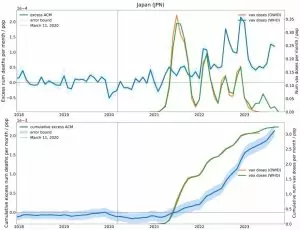
E se si può, e si ottiene come esito «causalità probabile», allora si agisce, per esempio ritirando un prodotto. Perché non ci siano altri bambini con un'invaginazione. È così che funziona, dunque. E ha funzionato. Quindi, per gli ultimi 30 anni: se si contano tutti gli eventi avversi insieme per tutti i vaccini che sono stati somministrati in quell'anno, si arriva — senza il fattore di sotto-segnalazione — a circa 39.000. È piuttosto costante negli ultimi 33 anni. E di quelli, ci sono circa 155 morti. Questo è all'anno, per gli ultimi 30 anni. Se si va solo al 2021 e si contano solo le tre iniezioni Covid che sono state distribuite all'inizio negli Stati Uniti, Moderna, Pfizer e Janssen, allora si ottiene qualcosa che somiglia a un grattacielo in mezzo a dei bungalow. È così che chiamo quel grafico. Se si riportano tutti gli eventi avversi, unendo i dati nazionali con quelli esteri, sono qualcosa come 1,3 milioni di segnalazioni. E se si guardano solo i dati nazionali, cioè le segnalazioni all'interno degli Stati Uniti, sono adesso circa 900.000. Si parla dunque di una differenza tra 900.000 e 39.000. E se si guardano i morti, si ha una differenza tra 155 negli ultimi 30 anni e 15 o 16.000 adesso, per i soli dati nazionali.
Ma questa non è la sola cosa. Quelle sono le cifre assolute, del tutto atipiche. Si può guardare anche la gamma degli eventi avversi segnalati, e nemmeno quella è paragonabile agli ultimi 30 anni. Si arriva a qualcosa come, non so, circa 5.500 tipi diversi di eventi avversi segnalati per tutti i vaccini insieme. E là si parla di moltissimi prodotti diversi con moltissimi effetti collaterali diversi. E adesso, nel solo contesto di tre prodotti, due dei quali a mRNA, abbiamo oltre 14.000 tipi diversi di eventi avversi segnalati. E non solo: vediamo quei raggruppamenti di disturbi neurologici, molto gravi, che finiscono per mettere le persone in sedia a rotelle e così via. Cardiovascolari: sa, le persone cadono morte per infarto. Persone giovani. Vediamo tumori rari. Vediamo che vengono segnalati più tumori. E questo conferma anche quello che dicono gli oncologi sul campo, se sono sinceri su ciò che vedono nei loro ambulatori.
Vedono un aumento di persone che escono dalla remissione, e vedono un aumento di persone con nuovi tumori. Vedono un aumento di persone in cui compaiono tumori rari, come il tumore al seno negli uomini, la LLA in persone anziane, semplicemente cose che prima non vedevamo. Abbiamo il Creutzfeldt-Jakob, che negli Stati Uniti è già molto al di sopra del livello abituale. Era già al di sopra del livello abituale mesi fa. È una malattia da prioni. Non è una cosa con cui si vuole scherzare. Vediamo disturbi patologici, tutto quello che si può immaginare. Supera ogni scala.
Robert Cibis— Sì, certo, questo è terribile. Ed è un bene che lei faccia questo riassunto, perché credo che siano fatti da ripetere spesso, bisogna semplicemente ripeterli. È come, che dire? Voglio dire, si preferirebbe pensare a qualcos'altro. Ma lo sappiamo: mentre siamo qui seduti oggi, potrebbero morire persone che forse non avrebbero dovuto morire. E sono probabilmente migliaia, non lo so, perché dobbiamo — come lei ha appena detto, ci deve essere una sotto-segnalazione, tanto più che conosco casi dalla Germania. Conosco casi in Germania: i medici ricevono telefonate, o dall' ordine o da altre istituzioni, se segnalano troppo. E in alcuni ospedali i medici subiscono pressioni per non segnalare. Così alcuni grandi ospedali hanno zero segnalazioni. E anche se da noi in Germania è come negli Stati Uniti, abbiamo numeri che schizzano in alto.
Jessica RoseE questi numeri esistono mentre sui medici si fa pressione perché non segnalino. Immagini quali sarebbero questi numeri se non ci fosse.
Robert CibisEsattamente. E i medici non vengono pagati per questo. La maggior parte dei medici non vuole vedere questo perché hanno fatto loro stessi l'iniezione. E ricevono invece un forte incentivo economico per fare le iniezioni. C'è dunque un chiaro conflitto di interessi. Da una parte c'è la salute del paziente. Dall'altra parte c'è restare lucidi. E dall'altra parte c'è naturalmente anche lo scopo economico, perché, sa, che cosa vuol dire? Guadagnano meno di una volta. I medici hanno spesso dovuto pagare molto per avere il loro posto e il diritto di fare quello che fanno, e per avere le apparecchiature e tutto il resto. Sono dunque di fatto imprenditori. Abbiamo dunque — e in un certo senso questo è grave, perché potrebbe spiegare anche perché da una parte si hanno questi fatti incredibili e dall'altra questa incredibile inazione. Entrambe le cose, per me, colpiscono molto.
Jessica RoseSono d'accordo con lei. E, sa, già mesi fa lo dicevo. Non c'è nemmeno bisogno di tenere conto del fattore di sotto-segnalazione per sostenerlo, almeno per sostenere che questo è straordinariamente atipico, e ciò costituisce un segnale di sicurezza. Va dunque indagato. E non lo fanno. La FDA e il CDC hanno qui un compito: valutare i dati. Sostengono che questa sia un'informazione nuova, uscita di recente. Sostengono di farlo. Ma ogni volta che viene inviata una richiesta di accesso agli atti e arriva la risposta, risulta che non lo stanno facendo. Riguardo al PRR, che è un calcolo semplice, o a qualsiasi statistica bayesiana che sostengono di aver fatto. No, non lo fanno. Non fanno nessuna valutazione di causalità con i criteri di Bradford Hill, come ho spiegato che hanno sempre fatto. Lo so con certezza, perché lo faccio io stessa. E a me risultavano 10 criteri su 10 soddisfatti. E per portare avanti questo punto: tocca a loro dimostrarci che il profilo di sicurezza è buono. Non tocca a noi dimostrare che non lo è. Ma lo stiamo facendo noi.
È semplicemente straordinario. So esattamente che cosa dice lei sulle due facce della medaglia.
Robert CibisE poi c'è la questione dei lotti. Diciamo che si fidano: c'è una ragione, che non conosciamo, per cui si fidano del farmaco. Ma poi ci sono alcuni lotti, alcune serie di prodotti, che hanno effetti orribili. E credo che ci sia una differenza di mille volte tra i lotti a basso rischio e quelli ad alto rischio, per esempio nelle iniezioni della Pfizer. E sarebbe normale dire: insomma, sono sicuro che il farmaco sia buono, ma almeno i lotti orribili dovrebbero essere tolti dalla circolazione, perché evidentemente qualcosa è andato storto nella produzione.
Jessica RoseSì. E voglio dire, non farlo è un'altra ragione per vedere che il racconto si contraddice molto. Beh, in realtà credo che… sono una ferma sostenitrice del fatto che questa tecnica dell'mRNA abbia bisogno di moltissima più ricerca. È una cosa assolutamente criminale che questo sia stato iniettato a quasi sei miliardi di persone, probabilmente, senza che sappiamo quali possano essere gli effetti a lungo termine, soprattutto quando ci troviamo davanti ad alcuni dei lavori che vengono pubblicati, con revisione tra pari e pubblicati, e che raccontano una storia molto inquietante sugli effetti sulla fertilità sia negli uomini sia nelle donne. Ce ne parli, per favore, perché sono sicuro che molte persone non lo sanno. Bene. Dunque. Va bene. Comincerò da due dei punti più importanti, credo, con cui le persone riescono a collegarsi, perché credo che due cose le abbiano sentite tutti. Forse no. Darò per scontato che sì. Primo: ci è stato detto che questi prodotti, una volta iniettati… beh, prima di tutto, per quelli di voi che ascoltano e non lo sanno: questa è una cosa completamente nuova, sono due nuovi tipi di tecnica.
Abbiamo a che fare con nanoparticelle lipidiche, che sono il materiale di imballaggio per consegnare il carico, che è un mRNA modificato. Quello è lo stampo di codifica per una proteina, e la proteina in questione è la proteina spike. Quindi, quando questo è stato iniettato in una soluzione, ci è stato detto in modo categorico che sarebbe rimasto soprattutto nel punto dell'iniezione e vicino al linfonodo di drenaggio locale. I dati a cui abbiamo accesso adesso, grazie a una richiesta di accesso agli atti del meraviglioso Byram Bridle, mostrano chiaramente — e mostravano già allora, quando fecero gli studi su ratti Wistar e topi — che queste nanoparticelle lipidiche, proprio quelle che loro usano, il PEG, il polietilenglicole, e l'ALC-0315 cationico, o come si chiami, nel prodotto della Pfizer, non solo si biodistribuiscono, il che vuol dire che vanno in ogni parte del corpo… in ogni parte, e voglio dire in ogni parte: nel cervello, negli organi riproduttivi, nella milza, nel fegato. Si accumulano davvero nel fegato. Amano il fegato. Non solo si biodistribuiscono, ma si bioaccumulano fino a concentrazioni che in realtà non conosciamo, perché hanno soppresso gli animali alla 48esima ora.
E le curve che misuravano la concentrazione stavano ancora salendo in modo esponenziale quando hanno soppresso gli animali. È una follia. — È una follia. Quando è stato fatto lo studio, e quando hanno pubblicato questo? Oh cielo. Lo era? L'anno esatto non glielo posso dire. Capisco. — Non ne sono sicura. Ma era nel momento in cui loro dovevano saperlo. Era molto prima che cominciassero a dire le parole «sicuro ed efficace». E nessuno può dirmi che non lo sapevano, perché sono i dati della Pfizer. Capisco. Ma questo posso verificarlo. Questa è una cosa. E fa paura per due ragioni, per più di due ragioni. Ma le due ragioni principali che mi vengono in mente e che le persone capiranno molto chiaramente sono: primo, che non conosciamo l'effetto di queste nanoparticelle lipidiche che si infilano e scivolano in ogni direzione. La distruzione delle membrane cellulari, per esempio. E la parte che fa più paura è: il loro modo di agire consiste nello scaricare il loro carico, che è questo stampo modificato della proteina spike. E qui arrivo a un altro punto. Non sappiamo se sia uno stampo di lunghezza intera o solo piccoli pezzi. E ci sono molti indizi che sostengono — come quello di cui parlava lei adesso, la variabilità tra i lotti — che molte persone non ricevono uno stampo di lunghezza intera.
E varia anche da flacone a flacone, per questioni di manipolazione. Ma ci tornerò, se vuole. Non conosciamo dunque l'effetto, anche se supponiamo che tutti ricevano uno stampo spike di lunghezza intera: l'effetto del fatto che venga tradotto in massa in proteine e poi si distribuisca in ogni parte, dovunque arrivino, nelle ovaie. Che cosa succederà là? Non lo sappiamo. Non ne abbiamo idea. E adesso che sappiamo che la proteina spike è citotossica: provoca un'infiammazione enorme dove si trova, rompendo epiteli. Comunque, fa molti danni. Voglio dire, l'iniezione fa di noi la fabbrica delle proteine spike.
Robert CibisQuesto è proprio il punto. Questo è quando tutto va bene. Siamo noi a produrre la tossina. Voglio dire, nel racconto di queste aziende… perfino il racconto di queste aziende è strano. È questo che dico. Voglio dire, non stiamo nemmeno ancora parlando di quello che sappiamo delle nanoparticelle. Se si prende solo il loro racconto, loro dicono: facciamo di te la fabbrica. Tu sarai la fabbrica. Noi produrremo la tossina, e poi tu te la sbrigherai, e poi sarai immune contro di essa.
Jessica RoseSì, l'hanno reso normale, proprio come stanno rendendo normale tutto. Credo che faccia tutto parte della brillante strategia. Sì, a me sono suonati subito i campanelli d'allarme. E c'è un'altra parte che fa paura, di cui possiamo parlare. Ma la seconda cosa che fa davvero paura, che probabilmente tutti hanno sentito — capiscano o no che cosa vuol dire, proverò a spiegarlo —, è che ci è stato detto che questo va bene. Prima di tutto: il principio centrale, o il dogma della biochimica, immagino, è che il DNA viene convertito in RNA, che viene convertito in proteina. Bene, è un processo in tre passaggi. E quel passaggio centrale, l'mRNA, è dove abbiamo — prima di tutto, l'mRNA è semplicemente, sa, noi siamo pieni di mRNA. È una cosa normale. La differenza qui è il modo in cui lo usano, nella modifica. Ci è stato dunque detto che la trascrizione inversa, cioè che l'mRNA torni a uno stato di DNA, non può avvenire. Non avverrà. Non lo farà. No, non si preoccupi. E la ragione per cui lo dicevano… credo che sapessero che la possibilità c'era senz'altro, se non sapevano addirittura con certezza che avveniva.
Il pericolo, là, è che se viene trascritto all'indietro in DNA, potrebbe integrarsi nel nostro genoma. Per questo l'HIV è brutto, perché porta con sé la propria trascrittasi inversa, che è un enzima che lo riconverte in DNA. E ha anche una componente integrasi che lo inserisce nel nostro genoma. In ogni caso: questo ci è stato detto esplicitamente, e non è vero. Oggi, nella mia relazione, ho presentato un lavoro che mostra che la trascrizione inversa avviene senz'altro — è stato dimostrato che avviene — in cellule epatiche umane. E questo fa paura dal punto di vista della fertilità. Ne parlavamo, perché la trascrittasi inversa che viene usata qui è una cosa propria dell'organismo chiamata LINE-1, che è coinvolta nell'embriogenesi umana. E funziona così — e questo è indipendente dal Covid, è già stato mostrato in un lavoro su Nature Genetics —: il livello di espressione di LINE-1 deve essere a una certa altezza in certe fasi dell'embriogenesi perché l'embriogenesi continui. Quindi, se ci sono modifiche del livello di espressione durante il processo dell'embriogenesi, il processo può interrompersi. Quello che avviene nel contesto di questi prodotti: abbiamo variabilità.
Sospettiamo, da questi dati, che ci sia variabilità nell'espressione di LINE-1. E questo fa paura, perché le foglie che fremono nel vento nel VAERS, e anche le segnalazioni che arrivano da tutto il mondo, indicano che i tassi di natimortalità e di aborto spontaneo sono molto più alti di quanto siano stati, solo nel contesto dei vaccini che abbiamo usato storicamente. Ci sono dunque tutti questi indizi che si accumulano, ed è terribile che stiamo scoprendo, sa, che Eric Rubin aveva ragione. È quell'uomo che è il direttore del New England Journal of Medicine, e siede in quel comitato VRBPAC della FDA. Io ero a una di quelle riunioni, a tenere una relazione, una volta, per cercare di impedire che si lasciasse somministrare questi prodotti a bambini dai cinque agli undici anni. E lui se ne esce semplicemente dicendo, come un dato di fatto: non scopriremo quanto siano sicure queste cose finché non cominceremo a metterle nelle persone. È così che funziona. Queste furono le parole che uscirono dalla sua bocca. Era così sconcertante. Ha semplicemente infranto l' integrità che dovrebbe accompagnare queste prestigiose riviste accademiche, perché non è così che funziona. Assolutamente no. — Ma in realtà è così, è questo che sta succedendo.
Robert CibisCari spettatori, OVALmedia cresce e abbiamo ancora molti progetti. Per voi questo video è gratuito. Ma a noi la produzione costa denaro. Il nostro progetto dipende dal vostro sostegno. Un modo per sostenerci è una donazione, anche mensile: diventate membri su oval.media, così potremo continuare a produrre interviste e video come questo. Offriamo anche libri e molto altro, come vedete qui sullo schermo.
Jessica RoseÈ arroganza al di là dell'arroganza. Va al di là di questo. E quei signori votano all'unanimità, regolarmente. Parlo di qualcosa come 16 a zero con un'astensione. Parlo di 21 a zero, per votare la somministrazione di questo a bambini da zero a quattro anni. Proprio di recente. Come può essere? Non è nemmeno statisticamente probabile. Che cosa sta succedendo qui? Capisce che cosa voglio dire? — Sì, abbiamo trasformato la scienza in una religione. Precisamente.
Robert CibisÈ questo che è. Sapevo perché ero atea. Atea? È inglese questo? — Sì. Mi scusi. Sto perdendo il mio inglese ad ascoltarla, perché mi viene la pelle d'oca, perché vedo la portata di quello che sta dicendo. Voglio dire, perché il negare questi fatti che lei indica fa sembrare pazzi, agli orecchi degli altri, quelli che li vedono. — Esattamente. E davvero non è più un dibattito. È per questo che credo che la società sia così divisa, perché non c'è assolutamente niente da dibattere. No. Su che cosa si può dibattere se ogni settimana muoiono migliaia di persone?
Jessica RoseBeh, si può sempre renderlo normale e chiamarlo SADS. SADS? — Ne ha sentito parlare, vero? No, no. — Oh cielo. La novità, la nuova moda adesso, è chiamarlo sindrome della morte improvvisa dell'adulto. È questo che spiega che adulti sani e fatti cadano cadano morti all'improvviso. Ha sentito parlare del SADS, vero? O della SIDS? La sindrome della morte improvvisa del lattante? Quindi adesso è per gli adulti.
Robert Cibis— Ho sentito che quella sindrome dei lattanti ha avuto numeri più bassi nel 2020. — Sì, è così. Sa perché? — Me lo dica. Sono sicura che lo sa. — Ho sentito che potrebbe essere perché hanno ricevuto meno vaccini.
Jessica RoseEsatto. È quello che molti di noi credono. E tutto quello che possiamo dire è: beh, i dati mostrano questo. Mostrano che sono stati segnalati meno casi di morte improvvisa del lattante. E da questo lato, a meno bambini sono stati iniettati vaccini. Senta, queste due cose sono collegate? È questo che facciamo. Guardiamo i dati e le prove che abbiamo davanti. Come quello che faccio io: riferisco soltanto quello che la maggioranza, o altre persone, pubblicano. Pubblico anche i miei lavori. Ma basta leggere un po'. È questo che mi sbalordisce nei medici. Perché è così: a lei pagano tantissimi soldi per essere un guaritore e per aiutare i suoi pazienti. E ha un gruppo di pazienti che si fida di lei. È dunque il suo dovere. La pagano per essere aggiornato. Non con la scienza religiosa, ma intendo la scienza vera. Per esempio leggere gli articoli con revisione tra pari delle riviste di cardiologia, se è cardiologo. E questo vuol dire leggere cose che forse le è scomodo leggere. Voglio dire, Pierre Kory ha sottolineato che anche queste riviste mediche potrebbero non essere affidabili. Non lo sono. Ma questa è un'altra rivelazione in tutto questo.
Voglio dire, avrà sentito parlare del fiasco del Lancet. Sì. Quello è… quello è uno dei miei eroi caduti in tutto questo. Voglio dire, lo racconti comunque, in una sola frase. The Lancet è una delle riviste più prestigiose che ci siano. È il punto di riferimento per tutti, non solo per i medici. E hanno letteralmente pubblicato uno studio fraudolento sull'idrossiclorochina. E l'unica cosa che si può concludere da tutto quel fiasco è che qualcuno cercava di convincere le masse, i professionisti della medicina, che l'idrossiclorochina — un farmaco approvato dalla FDA, usato da decenni — non sia più sicura. Che non si possa usare fuori indicazione nel contesto del Covid o della SARS, perché le farà del male o la ucciderà. Era completamente fraudolento, e fu mostrato molto presto che lo era. E questo mette davvero subito quella rivista nella linea di fuoco delle domande. Tipo: che cosa è successo là? Come è potuto succedere? Perché chiunque lavori nella ricerca, nella scienza, nel pubblicare nel sistema della revisione tra pari, sa quanto sia difficile pubblicare.
Si deve passare per un processo di valutazione davvero difficile, ed è un andirivieni, e ci vuole molto tempo. Non è una cosa che succede in fretta e facilmente, o in fretta e male. E allora come è potuto succedere? Non era un po' fraudolento. No, era completamente spazzatura. Quindi sì, c'è quello. Ed è per me come uno degli angeli caduti. Mi spezza il cuore. Il New England Journal of Medicine non è migliore. Voglio dire, sono loro che hanno pubblicato — sono tra i primi a pubblicare — che questa roba era sicura per le donne incinte. Sa, questo non si può dire se non è passato tempo sufficiente per fare quell'affermazione. E non parlo soltanto di migliaia di donne che hanno attraversato un'intera gravidanza senza problemi. Parlo di un seguito nel corso delle generazioni. È là che dovevamo arrivare con questo, perché adesso che sappiamo che questa cosa si trascrive all'indietro, e che la possibilità di un'integrazione c'è, non sappiamo se questo a essere trasmesso nel corso delle generazioni. Voglio dire, fa molta paura. — E crede che questo possa anche cambiare le personalità? Non lo so. Credo che la possibilità ci sia, dal punto di vista neurologico.
Non sono neurologa.
Robert CibisDel cervello non so praticamente niente, solo che forse ne ho uno. I patologi hanno scoperto che le spike provenienti dal vaccino si trovavano nel cervello. Questo deve dunque cambiare una persona.
Jessica RoseFisiologicamente, senza dubbio. Ma gli effetti a valle… il cervello è così complesso, e dipenderà da dove si produce il danno. E dipenderà dal fatto che si avessero già dei disturbi prima. È dunque davvero difficile dirlo in modo definitivo, ma riesco davvero a immaginare che, nel contesto di questi prodotti, possa andare storto quasi tutto nell'essere umano. La questione della patologia: sarebbe magnifico se potesse dare informazioni più precise.
Robert CibisPerché le persone chiedono: quanto è grave? Adesso capiamo che in linea di principio c'è un rischio. Ma, in pratica, c'è un rischio più alto di natimortalità. Bene, ma credo che sia davvero importante — come ho presentato oggi: questo ha due facce che sono completamente intrecciate.
Jessica RoseC'è l'aspetto della gravidanza e l'aspetto del feto. E poi c'è l'aspetto mestruale, che nelle donne riguarda sia gli ormoni sia le ovaie. Una percentuale così enorme delle donne della popolazione, nemmeno necessariamente iniettate, segnala irregolarità mestruali. Parlo di mestruazioni più abbondanti, o della loro scomparsa. Bambine, donne anziane: parlo di donne di 90 anni che segnalano nel VAERS che i loro cicli ricominciano, o che sanguinano. Il che potrebbe voler dire che è un problema di sanguinamento e non di fertilità, ma in qualche modo è collegato. Il numero delle segnalazioni di disturbi mestruali nel VAERS è dunque in questo momento molto alto. E quando lo si rapporta ai dati del CDC e si tiene conto del fattore di sotto-segnalazione, risulta che circa 1 donna su 47 segnala un' irregolarità mestruale. E chiunque sappia qualcosa delle ovaie: è tutto collegato, non è vero? Non sappiamo dunque assolutamente quali saranno gli effetti a lungo termine. Vuol dire che quella donna sarà adesso meno fertile?
Vuol dire che la proteina spike interagisce con i suoi ovuli e ne riduce forse il numero? Perché le donne hanno solo un certo numero di ovuli. Non conosciamo le risposte a queste domande, e fanno paura, soprattutto alle donne che davvero vogliono avere figli un giorno. Allora, sì, in particolare, un saluto ad Avital Livny. È una donna in Israele che ha realizzato un video di testimonianze di israeliani che raccontano le loro storie personali, cosa che amo davvero molto, perché l'esperienza personale di qualcuno non si può smentire. Sentirli è dunque molto forte. E una di queste persone — sono tutte persone che hanno sofferto davvero gravemente: ictus, sedie a rotelle, perdita di bambini, cose di questo genere —, questa donna fa un'impressione molto profonda con la sua esperienza dei problemi di sanguinamento come donna. Raccomando dunque davvero caldamente che tutti guardino quello, o fatelo guardare ai vostri cari che non credono che ci sia un problema. Questa è probabilmente la cosa più importante. Il punto è che questa è una roulette russa.
Lo è letteralmente. Non si può sapere. E questo è un fatto. Non si può sapere se quella roba nell'ago che entra nel suo braccio vada bene, o se le farà del male in modo molto grave. Qui non abbiamo nessuna prevedibilità. Ed è questa la cosa che fa più paura di tutte, perché tutto quello che si dovrebbe fare in materia di prove di sicurezza, il seguire i segnali di sicurezza, non viene fatto. Lo stanno seppellendo. Tutto il lavoro di laboratorio che bisognerebbe fare adesso per scoprire perché il 15 per cento delle persone subisce eventi avversi. Perché, tra loro, c'è questa enorme varietà? Alcune persone stanno bene dopo un po'. Alcune persone muoiono. Voglio dire, quello è un caso piuttosto grave. Perché non facciamo quella ricerca? La censura. Non devono scoprire che sono pericolosi, perché allora questo darebbe una piccola punzecchiata al loro prodotto. Non solo al prodotto.
Robert CibisCredo che ci sia molto di più dietro. Lei che ne pensa? — Credo che sia complicato. Ma credo anche che il semplice fatto che più di 190 paesi promuovano idee completamente assurde mostri che quei paesi forse non comandano più. Il che vuol dire allora… perché tutti dovrebbero avere bisogno di quelle iniezioni? Voglio dire, perché una cosa dipende dall'altra? In qualche modo deve essere così. E allora mi dico: bene, allora deve comandare qualcun altro. Siamo logici. Forse non è una persona. Forse è un gruppo di persone. Forse non è un gruppo di persone, ma un gruppo di grandi aziende, o un gruppo di servizi segreti, o un gruppo di banchieri centrali, o tutti insieme. O un gruppo di aziende e piattaforme digitali.
Jessica RoseO un'intelligenza artificiale. — O è un'intelligenza artificiale. L'ho perfino pensato: è, curiosamente, la prima cosa che ho pensato nel 2020: ah, adesso l'intelligenza artificiale ha preso il comando. Finalmente. Beh, non è solo, amico mio. Sì. Ma sinceramente. — Com'è che nessuno lo dice? È una follia. — Una persona lo dice. Se hanno preso il comando, come diavolo potremmo mai saperlo? Che cosa succederebbe? — Beh, potrebbero volerci distruggere. Che cosa sta succedendo? Ci stanno distruggendo. Ci sto. Sono contenta che metta questo sul tavolo.
Robert CibisCredo che sia la spiegazione più sottovalutata di tutte. Ma credo, sa, non ci credo più. È tutto troppo umano. Ma in realtà questo è un bene per me. Sì. All'inizio pensavo che potesse essere, perché leggevo di questo. Leggevo di tutte queste cose. Sa, che cosa succede se sono tanto più potenti. E tutto questo esponenziale. Non si riesce dunque a cogliere quando si supera il punto in cui sono tanto più intelligenti di qualsiasi essere umano. Ma credo che anche questo sia un racconto che ha favorito molte cose. E non sono così sicuro che sia vero. Spero di no. E credo che sia una specie di racconto della fine del mondo, simile al racconto della guerra nucleare degli anni Settanta, solo che oggi la guerra nucleare sarebbe forse più… Devastante? — No. Probabile. Ah. — Che allora. Ma, nonostante tutto, non credo che sia probabile.
Sinceramente, credo che la spiegazione facile sia sempre la migliore, come facciamo nella scienza. Nella scienza si fa un elenco delle nostre teorie, e poi si dice: qual è la via più facile? E allora mi dico: bene, la via più facile per avere così tanto potere da poter dire a 190 governi che cosa devono fare, o almeno fare una proposta che tutti adottano, è avere un mezzo di pressione su di loro. Come si ha un mezzo di pressione su un governo? Bene, il militare: si possono uccidere tutti. O il debito, naturalmente, perché hanno tutti debiti. Allora ho detto: ma come può un'azienda o una persona essere così ricca con un prodotto che tutti vogliono? No. Credo che se si ha la licenza di stampare denaro, unita alla licenza di uccidere, allora lo si può diventare — nel corso di alcuni decenni. Questo suona come una buona trama di film. Sì. Allora, dopo alcuni decenni, si può essere piuttosto potenti. Voglio dire, non credo che si faccia in una settimana, ma dopo un po' di tempo si può avere una grande rete di influenza e restare piuttosto segreti. E credo che sia questo che è successo. Ed è così facile. Ci vuole tempo, ma lei ha ragione. Perché questo è un modo di ingannare il sistema. Perché se si fa così — chi è il migliore, vinca l'azienda migliore —, allora non si avrebbe quel potere.
E questa cosa predatoria, usare l'umanità delle persone e certe parti delle debolezze umane contro di loro, è davvero, davvero malvagia.
Jessica RoseNon c'è altro modo di descriverlo. Ed è questo che hanno fatto tutto il tempo. Voglio dire, la Chiesa cattolica, quello l'ho capito. Prima non l'avrei mai tentato. Ma la questione della colpa, sa: si nasce colpevoli e si è colpevoli comunque.
Robert CibisSì, esatto, si va all'inferno. Pensa alla tua colpa. Naturalmente questo è un mezzo per guidare le persone. È un mezzo per far loro imparare quanto poco potere hanno. E quanto poco valgono come individui. Esattamente. E la Chiesa cattolica non è più una storia così buona. Fanno questa cosa della sanità. E non è la prima volta. Ho appena letto un articolo su come la vaccinazione sia stata il primo progetto di propaganda dei nazisti in Germania. Ed era forse prima della guerra e di tutto il resto. Ed era anche un mezzo per dire a un gruppo di persone: ah, lei non è con noi, non è nemmeno vaccinato. E allora, dove andrà questo — voglio dire, che cosa farà adesso, in futuro? Che cosa voglio fare? Pensavo che forse avrebbe salvato il pianeta. E aveva un piano?
Jessica RoseNo, non ho un piano. Come disse una volta Phoebe Buffay: non ho nemmeno un «pia». Grazie. Non me ne prendo il merito. Voglio molto bene alla mia amica Siwa. È la mia migliore amica, a casa. A lei e a me piace tanto «Friends». Comunque, non lo so.
Robert CibisTutto quello che posso dire è che sono in questo momento in un luogo molto doloroso, perché è la fase della curva di crescita e della curva di apprendimento in cui la mia testa è spalancata, squarciata.
Jessica RoseLe cose a cui mi tenevo stretta come studiosa e scienziata e scettica e tutto il resto, solo due anni e mezzo fa, molte di esse si sono semplicemente del tutto rovesciate. È duro. È come un processo in cui si combatte con la propria dissonanza cognitiva e, tipo, dicendo: no, no, non può essere vero, per molto tempo. E poi si deve semplicemente dire: oh mio Dio, è vero. Ed è davvero penoso. E devo guardare in faccia la realtà. Quindi sì, è là che sono in questo momento. Ma non vorrei essere in nessun altro posto, perché se voglio crescere devo attraversare la paura e tutto quello che accompagna i dolori della crescita. È come se si dovesse sentirlo per poterlo superare. Le comprensioni che ha e l'atteggiamento che ha significano un grande rafforzamento. Deve usare quella forza. Non c'è altra scelta. È curioso. Ho sentito gente chiamarmi coraggiosa, o cose così.
E io non lo sento così. Sento semplicemente che non c'è altro da fare. È come se in questo momento non stessi nemmeno giudicando nessun altro. Forse lo farò in futuro. Ma è come se capissi che ognuno è la propria persona, e che è sul proprio cammino, e che è alla propria fase di quel cammino. E forse sono pronti. Forse non lo sono, per arrivare al loro livello successivo di crescita, o quello che sia. Ma per me, in questo momento, a questo punto della mia vita, credo che il momento fosse semplicemente perfetto per dire: sa, buttiamo il cappotto per terra e, semplicemente, bla, bla, quanto più posso. E dove porterà, non ne ho idea. Mi piacerebbe semplicemente ritrovarmi su una spiaggia isolata a fare surf tutto il giorno. E tutto questo in un mondo in cui alle persone è permesso lavorare e giocare e godere l'una dell'altra e unirsi alla natura. Lei è a Vienna, sta stringendo legami con altri, e credo che stia per costruire una società migliore.
Robert CibisE la cosa buona in questo è che i danni stanno diventando così evidenti. — Sì. Ma non si possono negare ancora per molto, molto tempo, credo. Al cento per cento. — E sono sicuro che fa male. Fa molto male, a molte persone. Ma non credo che la quota di persone che vedono — e quelle che non vedono — o che criticano le iniezioni e il sistema che c'è dietro possa diminuire. Voglio dire, è evidente che le menzogne costano molto e richiedono molta fatica. E la verità è molto facile ed è là comunque. Ma naturalmente c'è un progetto più grande, e non c'è un solo racconto contro cui dobbiamo lottare. E lei mi ha chiesto che cosa credo ci sia dietro tutto questo. Non abbiamo davvero risposto a tutta la domanda, perché credo che, in un certo senso, sia molto semplice. Credo che il passaporto sia altrettanto importante per la gente, il passaporto vaccinale. È importante quanto l'iniezione stessa.
Jessica RoseAh, credo che sia per questo. Credo che sia soltanto un passaggio sciocco verso il passaporto digitale. Crede che anche gli effetti collaterali e tutta questa tecnica… Credo che siano danni collaterali che non avevano previsto — o che avevano previsto e che semplicemente non gli importa. E comunque non conterà, perché non c'è nessuna responsabilità.
Robert CibisCrede dunque che il passaporto sia un progetto vero? Ah, sì, sì, certo. Abbiamo dunque una specie di… — Punteggio di credito sociale. Abbiamo una specie di mafia potente che dice: ah, siamo noi a governare il mondo. Ma nel mio orgoglio interiore, mi piacerebbe avere un nome per il nostro paese mondiale, e un passaporto valido in tutto il mondo, e la polizia e i servizi segreti e tutto quello che ha un paese. Ed è per questo che cominciano con queste cose. Crede che sia questo? Sì. Ma sa una cosa? Io amo i singoli paesi. Sa, solo per ricordare a tutti quello che stiamo per perdere. Culturalmente parlando, possiamo ancora avere il prosciutto di Parma o il parmigiano, o quelle cose forse resteranno. Non lo so.
Jessica RoseNel 1999 ho fatto un lungo viaggio in Europa con lo zaino. È l'ultima volta che sono stata qui. E, sa, la questione è un po' questa. Ho la sensazione che le persone forse non se ne rendano conto, ma tutta quella visione romantica di viaggiare per l'Europa e per il mondo e di vedere tutte queste belle culture distinte e queste lingue e questi cibi e tutte queste cose meravigliose che ci rendono diversi, e che però siamo tutti uguali: perderemo tutto questo se questa cosa va avanti. E l'infrastruttura è già pronta. È per questo che è così importante che tutti parlino ogni singolo giorno, e il più forte che possono, perché ci servono le masse. Ci serve che le persone dicano: so che cosa state facendo, e non lo voglio per la mia vita, e non lo voglio per la vita di mio figlio. Tutto quello che dobbiamo fare è dire no, e questa cosa sparisce. Punto. Questa è la buona notizia. — Sì. Ci servono i numeri. Ci serve che le persone sappiano quanto sono potenti. Precisamente. Alle persone è stato fatto il lavaggio del cervello perché dimenticassero il proprio potere, il proprio valore come individui. Le persone davvero, sinceramente, non credono più di contare.
È d'accordo con questo?
Robert Cibis— Sì. Sì. È una specie di suicidio collettivo, direi, sul piano sociale. Sì. Non è un suicidio nel senso di uccidersi, ma è piuttosto: io non conto. Io non valgo. Lei è un consumatore. — Sì, esatto. Un consumatore. La parola cittadino è sparita, in un certo senso. Siamo umani. Umano è una parola biologica. E naturalmente siamo umani, ma non è questo il punto. Il punto è che nella società siamo cittadini.
Jessica RoseSì. E ognuno ha qualcosa da dare alla propria società. L'ho detto due volte oggi. Se ognuno fosse nel proprio vero stato creativo e amasse davvero quello che fa ogni giorno, e facesse solo quello che ama, riesce a immaginare che aspetto avrebbe il nostro mondo? Perché oggi tutti odiano il proprio lavoro, no? Voglio dire, io no, lei no, e nemmeno voi. Ma alla maggior parte delle persone con cui si parla il proprio lavoro non piace per niente. E si trascinano nel traffico, ed è tutta questa robaccia senza senso che non conta nulla. È come: perché non semplicemente… Va bene, lo capisco. È difficile. Butti via quella vita divisa e guidata, anche solo per un giorno alla settimana. E provi semplicemente a trovare un po' di quiete. Penso sempre alla quiete quando penso a qualcosa come una buona soluzione, una prima soluzione, qualcosa che si può fare oggi. Perché tutti vogliono la pillola veloce, e quella non arriverà. Ma quello che si può fare è semplicemente prendersi del tempo. Mi piace molto quella proposta. E molte persone come noi hanno la tendenza a dire: devi svegliarti, svegliati. Guarda questo. — Questo non significa niente. Che cosa vuol dire?
Robert Cibis— Esattamente. E io dico adesso: il problema è che siamo inondati di informazioni e le persone semplicemente non vedono i fondamenti. E non mettono in dubbio la premessa, per la semplice ragione che sono sempre occupate. Sì. Esattamente. Ed è così: beh, sa, ho sentito che nel Corano è scritto che se si vogliono guidare le persone, è meglio che siano povere e abbiano paura.
Jessica RoseE se sono povere, devono lavorare. Non hanno quella libertà che lei si è presa per fare quella ricerca, e per dire: ah, volevo comunque avere del tempo libero. Nemmeno a me dispiace essere povera. In questo sono una specie di tipo strano. Sì. Con me è certamente lo stesso. È esattamente questo.
Robert CibisPerché non siamo… sì, ma lei non è povera nel senso vero, perché è molto qualificata. Se la cava bene nella società e non morirà di fame. È impossibile che le succeda. Qualunque cosa faccia, anche se non lavora affatto e anche se non chiama i suoi amici, è perché è così ricca di capitale sociale. Sa, questo mi piace molto. Ecco dunque come stanno le cose. Altri, invece, sono così poveri. Lei conosce… conosce Catherine Austin Fitts. Sì. — Sì. In effetti, sto per pubblicare una serie in quattro parti con lei e con CJ Hopkins. Ed è magnifica. — Sì, è davvero magnifica. E si chiama «Mr. Global». Meraviglioso. — Sì.
Jessica RoseQuello che ha appena detto mi ha molto ricordato una cosa che lei disse, che lei… che cosa disse? Che quello che apprezza di più è il valore della persona. E, sa, non si tratta di denaro. Si tratta del suo valore nella società. E si può essere la persona più preziosa di tutte e non avere denaro. Qualcosa in questo senso.
Robert CibisCerto. Quello che volevo sottolineare — voglio dire, sono completamente d'accordo con questo — è che questo valore si traduce davvero nel non avere paura della povertà. — Precisamente. Perché lei… la cosa del vicinato. Se si aggiunge valore alla società, si verrà sempre sostenuti. È questo che succede a me. È di questo che hanno tanta paura. Sì, esatto. In questo momento è il peggiore incubo per quei signori. Ho perso il 100 per cento dei miei clienti per aver criticato il governo sulle misure. E oggi facciamo più film, e la nostra squadra è diventata più grande. Non l'avevo previsto. Ma è successo perché abbiamo aggiunto valore alla società.
Jessica RoseSì. È dunque questo di cui possiamo fidarci. Nemmeno quel nucleo si può scuotere, perché è davvero costruito sull'autenticità e sulla benevolenza. Quello non si può scuotere. È stabile. E allora, semplicemente, non si sta al gioco. Sì. Credo che stasera abbiamo trovato la soluzione. Bene. Ne sono contenta.
Robert Cibis— Per me è la prima volta. Bene. Grazie mille per questa conversazione. È stato un piacere. Sono molto contenta. E ringrazio anche il pubblico per aver seguito questa conversazione. Sì, lavoriamo per voi, il pubblico, e ci servono il tempo e lo spazio per farlo. Sarei estremamente contento se ci sosteneste come volete. Per favore, condividete questi contenuti. Aiutateci con denaro per i film che vogliamo e le conversazioni che dovremmo continuare a fare. E guardate anche, per favore, sul nostro sito, oval.media, perché la maggior parte delle nostre altre piattaforme cancella i nostri contenuti. Allora: buona giornata. Ciao a tutti, se mi state guardando. Sì. È stato magnifico.
Robert CibisHello, my name is Robert Cibis. I'm very proud and pleased to be here with Jessica Rose, and we will discuss the state of the world, especially the state of the world's health care system, and through that probably more than that. And maybe it's good if I can just understand how you came to be in the position of feeling resistant, even though you just told me that you were in a period of life where you simply had holiday plans when the so-called pandemic started.
Jessica RoseYeah, the timing was remarkable. So I have a background, first of all, in immunology and mathematics. So studying viruses has always been, you know, a passion of mine. I mean, I was pretty nondescript. Nobody knows who I am. I'm a surfer. I had just completed my second postdoc in biochemistry, and, like I mentioned to you off camera, I had planned a rewarding trip for myself to Australia, to go surfing unconditionally. I was even entered into a competition, which eventually I didn't get to go to. I had to cancel my plans, because that was in March 2020. And we all know what happened then. So I needed to find something to do, to be constructive. I wasn't ready to start a new research project again. So I took it upon myself to teach myself a little bit of the R statistical programming language. And the best way to teach yourself is by example. So I picked a data set to do that. And because of everything I'd witnessed, and because of my intuition and
mostly my common sense, I figured that once they started rolling out these new injections, which hadn't had long enough time to be investigated for safety and efficacy properly, I figured the adverse event data collection systems were going to start filling up pretty fast. And they did. So that's basically how you could foresee this. You could. — At what point could you foresee this? I'm not sure I foresaw the extent of the damage that's revealing itself as time goes on. But I foresaw the lie very quickly, probably within two weeks, because of the nature of what I do. I study zoonotic pathogens. I study infectious viruses and dangerous bacteria. That's what I do for a living. As part of doing that, whether you're in the lab or not, there are things and precautions that you have to take to protect yourself. Like if you're working with HIV, as I did for my master's degree, you work in a certain facility, containment level three. So I knew, I knew what a dangerous zoonotic pathogen meant.
So when they first started using that language, the Wuhan virus, I was concerned, just like everybody else. I was watching the numbers. I was watching how fast it spread. I was looking out for people who were going to start doing epidemiological modelling, and so on. But on the ground, nothing was aligning with the story of a dangerous pathogen all over the world. Simultaneously, we're starting to see or hear the word lockdown. We were starting to feel, you know, contained, controlled. I can almost understand some of the restrictions, like perhaps keeping your distance from people who are sick, who have symptoms. Wash your hands. Okay, that's common sense. But dictating to entire populations that you can't go to the sea under threat of manned helicopters — that's the reality that we face. Not being able to go farther than 100 metres from your house to do a run.
Robert CibisThis wasn't in the United States? Israel — this happened. — Oh, really? So yeah, I was there through all that.
Jessica RoseAnd I am a surfer. And we were not allowed, as an entire community, to go to the sea for a certain amount of time. There's a story about some friends of mine in Tel Aviv who were actually accosted very brutally, might I add, by armed people. And so it was all those things that started revealing themselves all by themselves to me, that this absolutely had nothing to do with stopping the spread of an infectious, contagious virus. This was about controlling people. And these little bits of evidence — it just made it irrefutable. There's no reason why a person sitting by a tree alone, reading a book or having a coffee, should be accosted by three armed police officers, or officers at all. I saw this, you know, there's a video of this: wrestled to the ground and tasered for not wanting to give out personal information and details. This kind of thing. It was like: okay, clearly they're not concerned about getting sick. Because if they thought this guy was sick, and they weren't just acting on instructions
from some kind of authority to do this to the people and hurt the people, or, you know, regardless of whether they resist or not — you know, it just didn't make any sense. So there was no mask — you know, you might… Are you symptomatic, for example: if I were someone and I was concerned about not spreading a pathogen around, the first question I would ask is, do you have symptoms? Because if the person says no and they feel okay, then they're probably not a threat. But there was nothing like that. It's funny. We have to say this. Exactly. It's a bit absurd, isn't it? Exactly. It's precisely that. But it's more than that, because it's such a violation of the basic, fundamental rights of the being, the inalienable rights, the right to be, the right to move, the right to just take care of yourself on your own terms. All of it was violated. And I saw it in about two weeks. I'm like: okay, this has nothing, nothing to do with a terrible virus. There might be a terrible virus, but that's not why this is being imposed on us right now. There's something else going on. And then this talk of this only solution, this talk of this vaccine, and
all the stuff about ivermectin and hydroxychloroquine and all the other repurposed drugs that amazing doctors were coming out and actually saying: we tried this in the ICU and it worked — suppressed. That doesn't make any sense if you're concerned about the species' well-being. It doesn't make any sense at all. And so I'm not a vaccinologist, but I know enough about it, because I'm an immunologist, to know that it takes between five and 15 years for the idea of a biologic to go from an idea to an arm. You have to go through a long, involved time of safety and efficacy testing, testing phase one, two, three, animal prior to that, FDA approval. And these take a specific amount of time, and they can't overlap. And that wasn't done. It's clear to see, if people… the thing is, people don't know. Are you sure it wasn't done? It wasn't done, because, you know — it was done, but it was done in this little tiny window.
Robert CibisI became an evil thinker. I was a good believer. I was a brave citizen, even though I did some investigations, like in the World Health Organization, as I mentioned earlier. But still, I believed fundamentally in the system, in the way that there are righteous people, and there might be some incompetent people or some personal corruption. But I didn't see the scale of the systemic corruption and the systemic conflict of interests, as we could all see when the crisis started. I mean, starting officially in 2020. I say officially, because the crisis, of course, must have been there before. It's just that here everything got out into the open. And some people said that maybe, you know, there's this patent on a part of the virus for Moderna in 2019. And then there's this extremely fast produced vaccine. And this kind of makes no sense, as you just explained.
And I wonder whether this maybe — as we know today that the virus comes out of the lab — maybe that the vaccine and the virus have been developed at the same time.
Jessica RoseThat is what I wonder. — Well, the vaccine was developed over a weekend or something like that, right? — Exactly.
Robert CibisSo maybe they took some years to develop this one, even though it wasn't a test, probably. Or I don't know. I mean, we simply cannot… We have — I mean, I learned that we have to question every premise. I just, I don't even know whether this is a chair. Let's just discuss it. And maybe after the discussion I agree that my first impression was the right one. But I really, I really question very big fundamentals, especially if it's about the pharmaceutical industries or politics in general.
Jessica RoseYeah, I couldn't agree more with that statement. You know, again, I'm not a vaccinologist, but if I were to play devil's advocate and try to explain to myself why these people were doing gain of function research — they were. We know that. That's just, you know, modifying something that already exists to make it different. It's bio-weapon research. It's funded by the military. That is an arm of it. So there could be a good reason. Bear with me. I don't believe this, but I'm also like you: I like to play devil's advocate. There could be a good reason to do that if you're… well, actually, no, I don't think there is a good reason to do it. But they might justify doing it by saying: well, we were trying to develop a vaccine for it in case the bad guys over there developed it. You know, they often use that weird line of reasoning. We're going to screw things up royally because they might do it, and then we're going to make it even worse to prevent them doing it. And then, you know what I mean? It's like this weird circle. I have no doubt that this was created. I think it makes a lot of sense to think that the cure and the disease were made at the same time. It makes sense.
Yeah. But nonetheless, I mean, the thing I think about a lot — because the only reason I'm doing this is for the injured people, because by default I'm very empathetic, and I really, really do care about them. And they're being completely ignored. They're being marginalized. They're being gaslit. They're being abused after being abused. You know what I mean? And even when they find these groups, they're being censored. So I'm doing this for them. But I don't think even the greatest mastermind evil mad scientist could have anticipated the degree. I could be completely wrong here, but it seems to me they might not have anticipated the degree of damage, because the damage that we're seeing — like leaves rustling in the wind — in the VAERS data, vaccine adverse event reporting system data, it's crazy. Millions of reports. And these are just the ones that we know about. This is not including the underreporting factor, which is just the fraction of people that are reporting their adverse event in terms of the greater population that's actually
suffering. — So what is the situation? I'll give you a specific example. VAERS has been on the go. This is the US database. And the reason I study this one is because you can download the data from their website. So it's been on the go for 30 years. It's owned by the FDA and CDC. It's meant to be a pharmacovigilance tool, which means that they use this as a way to detect safety signals in the form of adverse event reports, so that they can be a stopgap between, say, a bad product that maybe evaded detection of certain adverse events because the population was too small in the trial, and the population at large that this might be injected into, like in the billions. So they've traditionally, seemingly, done a good job doing that. The rotavirus vaccine in 1999 is a good example of this. There was a handful of cases of intussusception detected in VAERS. And so the proper thing to do is to do a causality assessment, which is what the WHO would typically do. You have to satisfy a certain number of criteria.
And if you can, and get an outcome of causation likely, then you act by, say, pulling a product. So you don't have more kids getting intussusception. So that's how it works. And it has worked. So for the last 30 years, if you count all the adverse events combined for all the vaccines that were given out that year, you get about — without the underreporting factor — you get about 39,000. It's pretty even over the last 33 years. And of those, there are about 155 deaths. That's per year, for the last 30 years. If you go to just 2021 and you count only the three COVID shots that were initially rolled out in the States, Moderna, the Pfizer and the Janssen, then you get something that looks like a skyscraper with bungalows. That's what I call the plot. If you plot all of the adverse events, you combine the domestic data with the foreign data, it's something like 1.3 million reports. And if you only look at the domestic data, which are the reports within the United States, it's something like 900,000 now. So you're talking about a difference between 900,000 and 39,000. And when you're looking at deaths, you have a difference between 155 over the past
30 years and 15 or 16,000 now, for the domestic data alone. So that's not the only thing, though. Those are the absolute counts, completely atypical. You can also look at the range of adverse events that are being reported, and they're not comparable either to the past 30 years. You get something like, I don't know, something like 5,500 different types of adverse events reported in the context of all the vaccines combined. And you're talking about a lot of different products with a lot of different side effects. And so now, just in the context of three products, two of them being mRNA, we have over 14,000 different types of adverse events being reported. And not only that, but we're seeing these clusters of neurological disorders, very serious ones, that are ending people up in wheelchairs and so on. Cardiovascular — you know, people are just dropping dead from heart attacks. Young people. We're seeing rare cancers. We're seeing more cancers reported. And this confirms what the oncologists on the ground are saying as well, if they're being honest about what they're seeing in their practices.
They're seeing an uptick in people coming out of remissions, and they're seeing an uptick of people with new cancers. They're seeing an uptick of people with rare cancers coming about, like male breast cancer, ALL in old people, just stuff that we didn't see before. We have Creutzfeldt-Jakob, which is way above the baseline for the United States already. It was already above the baseline like months ago. This is a prion disease. This is not something you want to mess with. We're seeing pathological disorders, everything you can think of.
Robert CibisIt's off the charts. — Yeah, of course, this is horrific. And it's great you're doing this summary, because I think these are facts to be repeated often, because you need to repeat it. It's like, what do you say? I mean, you would wish to think about something else. But knowing, we're sitting here today, people might die who wouldn't have needed to die, maybe. And these are probably thousands, I don't know, because we have to — as you just mentioned, there must be underreporting, especially as I know cases from Germany. I know cases in Germany: doctors are getting calls from either the chamber or some other institutions if they report too much. And in some hospitals, the doctors get pressure for not reporting. So some big hospitals have zero reports. And even though we have the same in Germany as in the United States, we have skyrocketing numbers. And these numbers exist while there's pressure on the doctors for not reporting.
Jessica RoseImagine, if there wasn't, what those numbers would be.
Robert CibisExactly. And the doctors don't get paid for it. Most doctors don't want to see this because they gave the shot themselves. And they get, however, a strong incentive financially for doing the shots. So you have a clear conflict of interest. On the one side, there's the health of the patient. On the other side, it's staying sane. And on the other side, there's also, of course, the financial aim because, you know, what does it mean? They're earning less than they did in the past. So doctors often had to pay a lot to get their place and the right to do what they're doing, and to get the equipment and all of this. So they are entrepreneurs, in fact. So we have — and this is, in a way, it's bad, because this might explain also why you have these incredible facts on one side and then this incredible inaction on the other side. Both are, to me, very impressive.
Jessica RoseI agree with you. And, you know, even months ago I was saying this. You don't even need to consider the underreporting factor to make the case, at least to make the case that this is extraordinarily atypical, which comprises a safety signal. So it needs to be investigated. And they're not. The FDA and the CDC have one job here: to assess the data. They claim this is a new bit of information that came out recently. They claim to be doing this. But every time a FOIA request gets sent and the answer comes back, it turns out that they're not. In reference to the PRR, which is a simple calculation, or any Bayesian statistics that they claim to have been doing. No, they're not doing that. They're not doing any causality assessment using Bradford Hill criteria, like I explained that they've always done. I know that for a fact, because I'm doing it. And I got like 10 out of 10 satisfied. And just to put that point further: the onus is on them to prove to us that the safety profile is good. It's not on us to prove that it's not.
But we are doing that. It's just extraordinary. I know exactly what you're saying about the two sides of the coin. And then there's the issue with the batches.
Robert CibisLet's say they trust — there's some reason, which we don't know, why they trust the medication. But then there are some batches, some series of products, that have extremely horrible effects. And I think there's a thousand-fold difference between the low-risk batches and the high-risk batches in the Pfizer shots, for instance. And it would be normal to say: I mean, I'm sure the medication is good, but at least the horrible batches should be taken out of circulation, because obviously
Jessica Rosesomething went wrong in the production. Yeah. And I mean, not doing this is another reason to see that there's a very contradicting narrative. Well, actually, I think that — I'm a firm advocate that this mRNA tech needs a hell of a lot more research done. It's an absolute criminal thing that this was injected into close to probably six billion people now, without us knowing what the long-term effects might be, especially when we're confronted with some of the papers that are being published, peer reviewed and published, telling a very scary story about the effects on fertility in both males and females. Tell about this, please, because I'm sure many people don't know. Right. So. All right. I'll start with two of the most important points, I think, that people can relate to, because I think everybody's heard two things. Maybe not. I'll assume that they have. One: we were told that these products, once they're injected — well, first of all, for those of you who don't know, listening,
this is a completely new — two new types of technology. We're dealing with lipid nanoparticles, which are the packaging material to deliver the payload, which is a modified mRNA. That's the coding template for a protein, the protein in question being the spike protein. So when this is injected in a solution, we were told definitively that this was going to primarily stay at the injection site and near the local draining lymph node. The data that we have access to now, due to a FOIA request by the wonderful Byram Bridle, clearly shows — and showed back then, when they did the studies on Wistar rats and mice — that these lipid nanoparticles, the specific ones that they use, the PEG, the polyethylene glycol, and the cation-equipped ALC-0315, or whatever it is, in the Pfizer product, not only bio-distribute, which means they go everywhere in the body — everywhere, I mean everywhere: the brain, the reproductive organs, the spleen, the liver. They really accumulate in the liver. They like the liver. They not only bio-distribute, but they bio-accumulate to concentrations that we don't
really know, because they terminated the animals at hour 48. And the curves measuring the concentration were still exponentially increasing when they terminated the animals. That's crazy. — It is crazy. When did the study happen, and when did they publish this one? Oh gosh. Was it? I can't tell you the exact year. I see. — I'm not sure. But it was when they would have known. It was long before they started saying the words "safe and effective". And nobody can tell me they didn't know, because this is Pfizer's data. I see. So I can check that, though. So that's one thing. And it's scary for two reasons, for more than two reasons. But the two primary reasons I can think of that people will understand very clearly is that we don't, first of all, know the effect of these lipid nanoparticles slipping and sliding their way into everywhere. The disruption of cell membranes, for example. And the scarier part is: their mechanism of action is to dump their payload, which is this modified spike protein template. And I'll get to another point here. We don't know if this is full-length template or little bits. And there's a lot of evidence to support — like what you were just talking about, variability
in batches — that supports that we're not getting full-length template for many people. And it's variable across even vials, because of handling issues. But I'll get back to that if you want. So we don't know the effect, even if we assume that everyone's getting full-length spike template, of that being translated en masse into proteins and then distributing all over, wherever they are, the ovaries. What's going to happen there? We don't know. We have no idea. And now that we know that the spike protein is cytotoxic, it causes massive inflammation wherever it is, rupturing epithelia. Anyway, it does a lot of damage. I mean, the shot makes us the factory of the spike proteins.
Robert CibisThis is the whole point. This is when it's all fine. We produce the toxin. I mean, in the narrative of these companies — even the narrative of these companies is weird. So this is what I'm saying. I mean, we're not even talking about what we know about the nanoparticles. If you just take their narrative, they say: we make you the factory. You will be the factory. We will produce the toxin, and then you will deal with it, and then you will be immune against it.
Jessica RoseYeah, they normalized it, just like they're normalizing everything. I think it's all a part of the brilliant strategy. Yeah, my alarm bells went off immediately. And there's another scary part about that we can talk about. But the second thing that's really scary, that everyone has probably heard — maybe they understand what it means or not, I'll try and explain it — is that we were told this is okay. First of all, the central tenet, or the dogma of biochemistry, I suppose, is that DNA gets converted to RNA, gets converted to protein. Okay, there's a three-step process. And so that middle step, the mRNA, is where we have — first of all, mRNA is just, you know, we are full of mRNA. It's a normal thing. The difference here is the way that they're using it, in the modification. So we were told that reverse transcription, which is mRNA going back to a DNA state, can't happen. Won't happen. It won't do that. No, don't worry about it. And the reason they were saying that — I think they knew that the potential was absolutely there, if not absolutely knew that it happened.
The danger there is that if it gets reverse transcribed to DNA, that it could integrate into our genome. That's why HIV is bad, because it carries its own reverse transcriptase, which is an enzyme that converts it back to DNA. And it also has an integrase component that inserts it into our genome. Anyway, we were told that explicitly, and it's not true. I presented a paper in my talk today that shows that reverse transcription absolutely does — has been shown to — occur in human liver cells. And this is, it's scary from a fertility point of view. We were talking about that, because the reverse transcriptase that it uses is an endogenous thing called LINE-1, which is implicated in human embryogenesis. And so the way that it goes — which is aside from COVID, this has already been shown in a Nature Genetics paper — is that the LINE-1 expression level has to be at a certain level at certain stages of embryogenesis in order for embryogenesis to continue. So if you have modifications in expression level during the embryogenesis process, you can have the termination of the process. What happens in the context of these products: we have variability.
We're suspecting we have variability, from this data, of expression of LINE-1. And that's scary, because the leaves rustling in the wind in VAERS, and also reports coming in from all over the world, are indicating that stillbirth rates and spontaneous abortion rates are much higher than they have been, just in the context of the vaccines that we've been using historically. So there are all these pieces of evidence that are mounting, which is — it's horrific that we're finding out, you know, Eric Rubin was right. He's this guy who is the editor in chief of the New England Journal of Medicine, and he sits on this FDA VRBPAC panel. I was in one of these meetings, giving a talk one time, trying to prevent them from letting these products be put into five- to eleven-year-olds. And he just comes out and says, as a matter of fact: we won't find out how safe these things are until we start putting them into people. That's just the way it goes. Those were the words that came out of his mouth. It was so staggering. It just shattered the integrity that's supposed to ride with these prestigious academic journals, because that's not the way that it goes. Absolutely not. — But that's actually how — that's what's going on.
Robert CibisDear viewers, OVALmedia is growing, and we still have a lot planned. For you this video is free of charge. But the production costs us money. Our concept stands or falls with your support. One way to support us is a donation or a monthly donation: become a member at oval.media, so that we can keep producing interviews and videos like this one. But we also offer books and much more, as you can see on screen here. It's arrogance beyond arrogance.
Jessica RoseIt's beyond that. And these guys vote unanimously, regularly. I'm talking like 16 to zero with one abstention. I'm talking 21 to zero, to vote to put these into zero-year-olds to four-year-olds. Most recently. How can that be? That's not even statistically probable. What's going on here? You know what I mean? — Yeah, we transformed science into a religion. Precisely. That's what this is.
Robert CibisI knew why I was an atheist. Atheist? Is this English? — Yeah. I'm sorry. I'm losing my English listening to you, because I get these goosebumps, because I see the scope of what you've been saying. I mean, because the denial of these facts you're pointing towards makes people sound crazy to the people who see them. — Exactly. And it's really not a debate anymore. This is why I think society is so divided, because there's nothing to debate at all. No. What can you debate if you have thousands of people dying each week?
Jessica RoseWell, you can always normalize it and call it SADS. SADS? — You've heard this, right? No, no. — Oh dear. So the new thing, the new rage now, is to call it sudden adult death syndrome. That's what explains grown, healthy adult humans dropping dead suddenly. You've heard of SADS, right? Or SIDS? Sudden infant death syndrome? So now it's for adults. — I heard that this infant syndrome had
Robert Cibislower rates in 2020. — Yes, it did. You know why? — Tell me. I'm sure you know why. — I heard that it might be because they got less vaccine.
Jessica RoseThat's right. That's what a lot of us believe. And all we can say is: well, the data is showing this. It shows that fewer SIDS cases were reported. And on this side, fewer babies were injected with vaccines. Hey, are those two things related? That's what we do. We look at the data and the evidence in front of us. Like what I'm doing: I'm just reporting what most people, or other people, are publishing. I'm publishing my own work too. But you just have to do some reading. That's what blows my mind about the medical doctors. Because it's like: you're paid so much money to be a healer and to help your patients. And you have a patient base that trusts you. And so it's your duty. You're getting paid to be up to date. Not with the religious science, but I mean the actual science. Like reading the peer reviewed articles from cardiology journals if you're a cardiologist. And that means reading things that maybe you might be uncomfortable reading. I mean, Pierre Kory stressed that these medical journals might not be reliable either. They're not. But this is another revelation in all of this.
I mean, you heard about the Lancet debacle. Yes. This is — this is one of my fallen heroes in all of this. I mean, maybe you just tell it anyway, in just one sentence. The Lancet is one of the most prestigious journals there is. It's a go-to for anyone, not just medical doctors. And they literally published a fraudulent study about hydroxychloroquine. And the only thing that you can kind of conclude from that whole debacle is that someone was trying to convince the masses, the medical professionals, that hydroxychloroquine — a drug that's FDA approved, that's been used for decades — is not safe anymore. You can't use it as an off-label drug in the context of COVID or SARS, because it's going to damage you or kill you. It was completely fraudulent, and it was shown very quickly that it was. And so that really instantly puts that journal into the line of fire of questioning. Like: what happened there? How did that happen? Because anybody who's in the business of doing research, science, publishing in the peer review system, knows how difficult it is to publish. You've got to go through a really difficult review process,
and it's a back and forth, and it takes a long time. This is not something that happens quick and easy, or quick and dirty. So how did that happen? It wasn't a little bit fraudulent. No, it was completely garbage. So yeah, there's that. And so this is kind of one of the fallen angels for me. I'm very heartbroken by that. The New England Journal of Medicine is no better. I mean, they're the ones that have published — they're one of the first to publish — that this stuff was safe for pregnant women. You know, you can't say that if enough time hasn't passed in order for you to make that statement. And I'm not just talking about thousands of women who passed through an entire pregnancy safely. I'm talking about follow-up generationally. That's where we needed to go with this, because now that we know that this thing reverse transcribes, and the potential for integration is there, we don't know if this is going to get passed on generationally. I mean, it's very scary. — And do you think this can also alter personalities? I don't know. I think the potential is there, from a neurological point of view.
I'm not a neurologist. I know basically nothing about the brain,
Robert Cibisjust that I might have one. The pathologists found out that the spikes from the vaccine have been in the brain. So this must change a person.
Jessica RosePhysiologically, absolutely. But the downstream effects — the brain is so complex, and it's going to depend on where the damage is done. And it's going to depend on whether or not you had some issues before. So it's really hard to say conclusively, but I really can visualize just about everything going wrong with the human being in the context of these products now. The pathology thing: it would be amazing if you could give more specific information.
Robert CibisBecause people are saying, how bad is it? We understand now that, in principle, there is a risk. But practically speaking, there's a higher risk for stillbirth.
Jessica RoseOK, I think it's really important, though — like I presented today, there are two facets to this that are completely intertwined. There's the pregnancy aspect and the fetal aspect. And then there's the menstrual aspect, which involves both the hormones and the ovaries for the women. Such an enormous percentage of the women in the human population, not necessarily even injected, are reporting menstrual irregularities. I'm talking heavier, or losing it. Little girls, older women — I'm talking 90-year-old women in VAERS are reporting starting their cycles again, or bleeding. Which could mean it's a bleeding issue and not a fertility issue, but it's linked somehow. So the numbers of reports of menstrual disorders in VAERS are very high right now. And when you normalize it to the CDC data and account for the underreporting factor, it's something like 1 in 47 women are reporting a menstrual irregularity. Now, anyone who knows anything about the ovaries: it's all connected, right? So we absolutely don't know what the long-term effects are going to be. Does that mean that woman is going to be less fertile now?
Does that mean the spike protein is interacting with her eggs and maybe reducing the number? Because women only have a certain number of eggs. We don't know the answers to these questions, and they're frightening, especially for women who actually want to have kids one day. So, yeah, specifically, a shout-out to Avital Livny. She's a woman in Israel who created a video of testimonials of Israeli people who are reporting their own personal stories, which I absolutely adore, because you can't debunk somebody's personal experience. So hearing them is very potent. And one of these people — these are all people who suffered really badly, like strokes, wheelchairs, loss of babies, that type of thing. This one woman makes a very deep impression with her experience of the bleeding issues as a female. So I really highly recommend everybody watch that, or make your loved one watch it who doesn't believe that there's a problem. That's probably the most important thing. So the thing is: this is Russian roulette.
It literally is. You can't know. And this is a fact. You can't know if that stuff in the needle going into your arm is going to be fine, or if it's going to hurt you in a very bad way. We have no predictability right here. And that's the scariest thing of all, because all of the stuff that should be being done with regard to safety testing, having followed up the safety signals, is not being done. They're burying this. All the bench work that needs to be done right now in order to find out why 15 percent of the people are suffering adverse events. Why, within them, is there this huge range? Some people are OK after a while. Some people die. I mean, that's a pretty bad one. Why aren't we doing that research? Censorship. They can't find out that they're dangerous, because then that's going to put a little pin in their product. Not just the product. I think there's far more behind it.
Robert CibisWhat do you think? — I think it's complex. But I also think that the pure fact that more than 190 countries promote completely absurd ideas shows that these countries might not be in charge anymore. So which means then — so why would everybody then need those jabs? I mean, why is it interdependent? It must be somehow. And then I say to myself: OK, somebody else must be in charge. Let's be logical. Maybe it's not a person. Maybe it's a group of people. Maybe it's not a group of people, but a group of big corporations, or a group of secret services, or a group of central bankers, or all of them together. Or a group of digital corporations and platforms.
Jessica RoseOr an AI. — Or it's AI. I even thought — this is what, funnily, was the first thing I thought in 2020: oh, now the AI took over. Finally. Well, you're not alone, my friend. Yeah. But honestly. — How come no one's saying that, though? That's crazy. — One person says that. If they have taken over, how the hell would we ever know? What would happen? — Well, they might want to destroy us. What's happening? They're destroying us. I'm here. I'm happy you're putting this on the table.
Robert CibisI think it's the single most underrated theory. But I think, you know, I don't believe it anymore. It's all too human. But that's good for me, actually. Yeah. Initially, I thought it could, because I was reading about it. I was reading about all these things. You know, what happens if they're so much more powerful. And all this exponential. So you cannot grasp when the point is passed where they're so much smarter than any human being. But I think this is also a narrative which has been promoting a lot of things. And I'm not so sure it's true. I hope not. And I think it's a kind of doomsday narrative, which is similar to the nuclear war narrative from the 70s, only that today the nuclear war might be more… Devastating? — No. Probable. Ah. — Than at the time. But still, I don't think it's probable.
Honestly, I think the easy explanation is always the best, as we do in science. In science, you make a list of our theories, and then you say: what is the easiest way? And then I say to myself: OK, the easiest way to have so much power that you can tell 190 governments what to do, or at least make a proposition which they all adopt, is that you might have leverage over them. How do you have leverage over government? OK, military: you can kill everybody. Or debt, of course, because they all have debt. So I said: but how can a company or a person be so rich, having a product everybody wants? No. I think if you have the license to print money, combined with the license to kill, then you can be — over some decades. That sounds like a good movie plot. Yeah. Then you can be quite powerful after some decades. I mean, I don't think it's done in a week, but after some time you can have a big network of influence and be quite secret. And I think that's what's happened. And that's so easy. It takes time, but you're right. Because this is a way of tricking the system. Because if you make the — who's the best, let the best company win —
then you wouldn't have that power. And this predatory thing, using people's humanity and certain parts
Jessica Roseof the weaknesses of humanity against them, is really, really evil. There's no other way to describe it. And this is what they did all the time. I mean, the Catholic Church, I understood. I never would have tried it before. But the guilt thing, you know: you're born guilty and you're guilty anyway.
Robert CibisYeah, right, going to hell. Think of your guilt. Of course, this is a means to control people. It's a means of making them learn how little power they have. And how non-valuable an individual they are. Exactly. And the Catholic Church isn't that good a story anymore. They make this healthcare thing. And it's not the first time. I just read an article about how vaccine was the first propaganda project of the Nazis in Germany. And it was maybe before the war and everything. And it was also a means to say to a group of people: oh, you're not with us, you're not even vaccinated. So where will this — I mean, what will you do in the future now? What do I want to do? I was thinking you would maybe save the planet. And you had a plan?
Jessica RoseNo, I don't have a plan. As Phoebe Buffay once said, I don't even have a "pla". Thanks. I don't take credit. I love my friend Siwa. She's my best friend back home. She and I love "Friends". Anyway, I don't know.
Robert CibisAll I can say is: I'm in a place right now that's
Jessica Rosevery painful, because it's the phase of the growing curve and the learning curve where my mind is ripped wide open. The things that I held fast to as an academic and a scientist and a skeptic and all that stuff, like just two and a half years ago, a lot of them have just completely flipped. That's hard. That's like a process of battling your own cognitive dissonance and, like, saying: no, no, it can't be true, for a long time. And then you just have to say: oh my God, it's true. And it really sucks. And I have to face reality. So yeah, that's like where I am right now. But I wouldn't be anywhere else, because if I'm going to grow, I have to move through the fear and all that stuff that comes with growing pains. It's like you have to feel that to get past it. The insights you have and the attitude you have mean a big empowerment. You have to use that power. There's no other choice. It's funny. I've heard people call me brave or things like that.
And I don't feel that way. I just feel like there's nothing else to do. It's like I'm not even judging anyone else at this point. Maybe I will in the future. But it's like I get that everybody is their own person, and they're on their own journey, and they're at their own phase in that journey. And maybe they're ready. Maybe they're not — to get to their next level of growing, or whatever. But for me right now, at this point in my life, I guess the timing was just perfect for me to just say: you know, let's throw the coat on the floor and just blah, blah, as much as I can. And so where it's going to lead, I have no idea. I'd love to just find myself on a secluded beach surfing all day long. And all of this in a world where people are allowed to work and play and enjoy each other and combine with nature. You're in Vienna, you're connecting to others, and I think you are about to
Robert Cibisbuild up a better society. And the good thing in this is that the harms are getting that obvious. — Yes. But you cannot deny them for much, much longer, I think. 100 percent. — And I'm sure it hurts. It hurts a lot, to a lot of people. But I don't think that the percentage of people seeing — and those who are not seeing — or criticizing the jabs and the system behind it can decrease. I mean, it's obvious that lies are very costly and take a lot of effort. And the truth is very easy and is there anyway. But of course, there's a bigger project, and there's not just one narrative which we have to fight. And you asked me what I think is behind all that. We didn't really respond to the whole point, because I think that it's very simple, in a way. I think that the passport is as important to the people — the vaccination pass. It's as important as the jab itself.
Jessica RoseOh, I think that's why. I think it's just a stupid segue to the digital passport. You think that even the side effects and all this technology… I think it's collateral damage that they didn't anticipate — or they did anticipate and they just don't care. And it won't matter anyway, because there's no liability.
Robert CibisSo you think the passport is a real project? Oh, yeah, yeah, of course. So we have a kind of… — Social credit score. We have a kind of powerful mafia saying: oh, we run the world. But in my inner pride, I would like to have a name for our world country, and a passport which is global, and the police and the secret service and everything the country has. And so they start with these things. Do you think that's what it is? Yep. But you know what? I love the individual countries. You know, just to remind everyone what we're going to lose. Culturally speaking, we still can have parma ham or parmesan cheese, or these things might stay. I don't know.
Jessica RoseI did an extensive European backpacking trip in 1999. It's the last time I was here. And, you know, it's kind of the thing. I feel like people might not be aware of this, but all that romantic vision of travelling across Europe and the world and seeing all these beautiful, distinct cultures and languages and foods and all this amazing stuff that makes us different, but we're all the same — we're going to lose that if this rolls ahead. And the infrastructure is already in place. So that's why it's so important for everyone to just talk every single day, and as loudly as they can, because we need masses. We need the people to say: I know what you're doing, and I don't want that for my life, and I don't want that for my kid's life. All we have to do is say no, and this goes away. Period. That's the good news. — Yeah. We need the numbers. We need people to know how powerful they are. Precisely. People have been brainwashed into forgetting their power, their value as an individual. People actually genuinely don't believe they matter anymore.
Do you agree with that? — Yes.
Robert CibisYes. It's a kind of collective, I would say, suicide on a social level. Yeah. It's not a suicide like killing you, but it's like: I don't matter. I don't count. You are a consumer. — Yeah, exactly. A consumer. The word citizen disappeared, in a way. We are humans. Humans is a biological word. And of course we are humans, but that's not the point. The point is that in society we are citizens.
Jessica RoseYeah. And everyone has something to give to their society. I said this twice today. If everyone was in their true creative mode and was truly loving what they do every day, and only did what they love — can you imagine what our world would look like? Because everyone hates their job now, don't they? I mean, I don't, you don't, and you guys don't. But most people you talk to really don't like their job. And they're slugging through traffic, and it's like all this pointless crap that doesn't matter. It's like: why don't you just — it's okay, I get it. It's hard. Throw away that divisive, controlled life, even for one day out of the week. And just try and find some quiet. I always think of quiet when I think of, like, a good solution, an initial, something-you-can-do-today solution. Because everyone wants the fast pill fix, and it ain't going to happen. But what you can do is just take some time. I love that proposition. And a lot of people like us have the tendency to say: you have to wake up, wake up. Look at this. — That's meaningless. What does it mean? — Exactly.
Robert CibisAnd I am saying now, the problem is that we are flooded with information and people just don't see the fundamentals. And they don't question the premise, for this pure reason that they're always occupied. Yes. Exactly. And it's like — so, you know, I heard the Quran is written that if you want to control people, it's best if they're poor and afraid.
Jessica RoseAnd if they're poor, they have to work. They don't have that freedom you took to do that research, say, oh, I wanted to have free time anyway. I just don't mind being poor, too. I'm kind of a weirdo that way. Yeah. Same with me, certainly. It's exactly that.
Robert CibisBecause we're not — yeah, but you're not poor in the real sense, because you're highly qualified. You get along well in society and you will not die from hunger. It's impossible that you do that. Whatever you do, even if you don't work at all and even if you don't call your friends, it's because you're that rich in social capital. You know, I love that. So that's it. Others, however, are that poor. You know — you know Catherine Austin Fitts. Yeah. — Yes. In fact, I'm just about to be publishing a four-part series with her and CJ Hopkins. And she's great. — Yeah, she's really great. And it's called Mr. Global. Amazing. — Yeah. What you just said really reminded me of something she said, that
Jessica Roseshe — what did she say? She values the most the value of the person. And, you know, it's not about money. It's about your value in society. And you can be the most valuable person of all and have no money. It's something to that effect.
Robert CibisSure. What I wanted to stress — I mean, I completely agree with this — is that this value really translates into not being afraid of poverty. — Precisely. Because you will — the neighbourly thing. If you add value to society, you will always be supported. This is what happens to me. They are so afraid of that. Yeah, exactly. That's the worst nightmare for these guys right now. I lost 100 percent of my clients criticizing the government regarding the policies. And we're doing more films today, and our team got bigger. So I didn't anticipate this. But it happened because we added value to society.
Jessica RoseYeah. So this is what we can trust in. You can't shake that core either, because it's really built on authenticity and benevolence. You can't shake that. It's stable. And then you just don't play the game. Yeah. I think we found the solution tonight. All right. I'm glad. — It's the first time for me.
Robert CibisGood. Thank you so much for this discussion. My pleasure. I'm so pleased. And I also thank the audience for joining this conversation. Yes, we are working for you, the audience, and we need the time and the space to do it. I'd be extremely pleased if you support us how you want. Please share this content. Help us with money for the films we want and the conversations we should continue to do. And please also look on our website, oval.media, because most of our other platforms cancel our content. So have a good day. Bye, everyone, if you're watching me. Yes. That was great.
Robert CibisSalve, mi chiamo Robert Cibis. Sono molto fiero e contento di essere qui con Jessica Rose, e parleremo dello stato del mondo, in particolare dello stato del sistema sanitario del mondo, e attraverso questo probabilmente di più di questo. E forse è bene che io possa semplicemente capire come lei sia arrivata alla posizione di sentirsi in resistenza, anche se mi ha appena raccontato che era in un periodo della vita in cui aveva semplicemente progetti di vacanza quando è cominciata la cosiddetta pandemia.
Robert CibisHello, my name is Robert Cibis. I'm very proud and pleased to be here with Jessica Rose, and we will discuss the state of the world, especially the state of the world's health care system, and through that probably more than that. And maybe it's good if I can just understand how you came to be in the position of feeling resistant, even though you just told me that you were in a period of life where you simply had holiday plans when the so-called pandemic started.
Jessica RoseSì, il momento è stato notevole. Vengo, prima di tutto, dall'immunologia e dalla matematica. Studiare i virus è dunque sempre stata una passione per me. Voglio dire, ero piuttosto insignificante. Nessuno sa chi io sia. Sono una surfista. Avevo appena concluso il mio secondo postdottorato in biochimica e, come le ho detto fuori dalla telecamera, mi ero progettato un viaggio come premio in Australia, per andare a fare surf senza condizioni. Ero perfino iscritta a una gara, alla quale alla fine non sono potuta andare. Ho dovuto annullare i miei progetti, perché era il marzo del 2020. E tutti sappiamo che cosa è successo poi. Dovevo dunque trovare qualcosa da fare, per essere costruttiva. Non ero pronta a cominciare di nuovo un nuovo progetto di ricerca. Così mi sono presa l'impegno di imparare da sola un po' il linguaggio di programmazione statistica R. E il modo migliore per imparare da sé è con un esempio. Ho quindi scelto un insieme di dati per farlo. E per tutto quello che avevo visto, e per il mio intuito e soprattutto per il mio buon senso, mi sono detta che, appena avessero cominciato a distribuire queste nuove iniezioni, che non avevano avuto tempo sufficiente per essere studiate come si deve per sicurezza ed efficacia, mi sono detta che i sistemi di raccolta dei dati sugli eventi avversi avrebbero cominciato a riempirsi abbastanza in fretta.
Jessica RoseYeah, the timing was remarkable. So I have a background, first of all, in immunology and mathematics. So studying viruses has always been, you know, a passion of mine. I mean, I was pretty nondescript. Nobody knows who I am. I'm a surfer. I had just completed my second postdoc in biochemistry, and, like I mentioned to you off camera, I had planned a rewarding trip for myself to Australia, to go surfing unconditionally. I was even entered into a competition, which eventually I didn't get to go to. I had to cancel my plans, because that was in March 2020. And we all know what happened then. So I needed to find something to do, to be constructive. I wasn't ready to start a new research project again. So I took it upon myself to teach myself a little bit of the R statistical programming language. And the best way to teach yourself is by example. So I picked a data set to do that. And because of everything I'd witnessed, and because of my intuition and
Ed è andata così. Quindi, in fondo, è così che lo poteva prevedere. Si poteva. — Da quale momento lo poteva prevedere? Non sono sicura di aver previsto l'entità del danno che si rivela col passare del tempo. Ma la menzogna l'ho prevista molto in fretta, probabilmente entro due settimane, per la natura del mio lavoro. Studio agenti patogeni zoonotici. Studio virus infettivi e batteri pericolosi. È questo il mio mestiere. Nel farlo, che si sia in laboratorio o no, ci sono cose e precauzioni che si devono prendere per proteggersi. Per esempio, se si lavora con l'HIV, come ho fatto io per la laurea magistrale, si lavora in una struttura determinata, di livello di contenimento tre. Sapevo dunque, sapevo che cosa significasse un agente patogeno zoonotico pericoloso.
mostly my common sense, I figured that once they started rolling out these new injections, which hadn't had long enough time to be investigated for safety and efficacy properly, I figured the adverse event data collection systems were going to start filling up pretty fast. And they did. So that's basically how you could foresee this. You could. — At what point could you foresee this? I'm not sure I foresaw the extent of the damage that's revealing itself as time goes on. But I foresaw the lie very quickly, probably within two weeks, because of the nature of what I do. I study zoonotic pathogens. I study infectious viruses and dangerous bacteria. That's what I do for a living. As part of doing that, whether you're in the lab or not, there are things and precautions that you have to take to protect yourself. Like if you're working with HIV, as I did for my master's degree, you work in a certain facility, containment level three. So I knew, I knew what a dangerous zoonotic pathogen meant.
Quindi, quando hanno cominciato a usare quel linguaggio, il virus di Wuhan, ero preoccupata, come tutti gli altri. Guardavo i numeri. Guardavo quanto in fretta si diffondeva. Stavo attenta a chi avrebbe cominciato a fare modelli epidemiologici, e così via. Ma sul posto niente coincideva con la storia di un agente patogeno pericoloso in tutto il mondo. Allo stesso tempo cominciamo a vedere o a sentire la parola lockdown. Cominciavamo a sentirci, sa, chiusi dentro, controllati. Alcune delle restrizioni le posso quasi capire, per esempio tenere le distanze da persone malate, che hanno sintomi. Lavatevi le mani. Bene, questo è buon senso. Ma imporre a popolazioni intere che non si può andare al mare sotto la minaccia di elicotteri con uomini a bordo: questa è la realtà davanti a cui ci troviamo. Non potersi allontanare più di
So when they first started using that language, the Wuhan virus, I was concerned, just like everybody else. I was watching the numbers. I was watching how fast it spread. I was looking out for people who were going to start doing epidemiological modelling, and so on. But on the ground, nothing was aligning with the story of a dangerous pathogen all over the world. Simultaneously, we're starting to see or hear the word lockdown. We were starting to feel, you know, contained, controlled. I can almost understand some of the restrictions, like perhaps keeping your distance from people who are sick, who have symptoms. Wash your hands. Okay, that's common sense. But dictating to entire populations that you can't go to the sea under threat of manned helicopters — that's the reality that we face. Not being able to go farther than 100 metres from your house to do a run.
Robert Cibis100 metri da casa per andare a correre. Questo non è avvenuto negli Stati Uniti? Israele: è là che è avvenuto. — Ah, davvero? Sì, sono stata là per tutto quel tempo.
Robert CibisThis wasn't in the United States? Israel — this happened. — Oh, really? So yeah, I was there through all that.
Jessica RoseE io sono una surfista. E a noi, come intera comunità, non è stato permesso di andare al mare per un certo periodo. C'è una storia di alcuni miei amici a Tel Aviv che sono stati avvicinati, in modo molto brutale, se posso aggiungerlo, da persone armate. E sono state tutte quelle cose a cominciare a rivelarsi da sole a me: che questo non aveva assolutamente niente a che fare con il fermare la diffusione di un virus infettivo e contagioso. Si trattava di controllare le persone. E quei piccoli indizi l'hanno reso semplicemente irrefutabile. Non c'è nessuna ragione perché una persona che siede da sola accanto a un albero, legge un libro o prende un caffè, venga avvicinata da tre poliziotti armati, né da alcun agente. L'ho visto, sa, c'è un video: atterrato e colpito con la pistola elettrica per non aver voluto dare dati personali. Cose di questo genere. Era come: bene, è chiaro che non hanno paura di ammalarsi. Perché se pensavano che quell'uomo fosse malato, e se non agivano semplicemente su istruzione di una qualche autorità per fare questo alla gente e far male alla gente, o, sa, indipendentemente dal fatto che resistano o no, sa, semplicemente non aveva alcun senso.
Jessica RoseAnd I am a surfer. And we were not allowed, as an entire community, to go to the sea for a certain amount of time. There's a story about some friends of mine in Tel Aviv who were actually accosted very brutally, might I add, by armed people. And so it was all those things that started revealing themselves all by themselves to me, that this absolutely had nothing to do with stopping the spread of an infectious, contagious virus. This was about controlling people. And these little bits of evidence — it just made it irrefutable. There's no reason why a person sitting by a tree alone, reading a book or having a coffee, should be accosted by three armed police officers, or officers at all. I saw this, you know, there's a video of this: wrestled to the ground and tasered for not wanting to give out personal information and details. This kind of thing. It was like: okay, clearly they're not concerned about getting sick. Because if they thought this guy was sick, and they weren't just acting on instructions
Non c'era dunque nessuna mascherina; sa, si potrebbe… Ha dei sintomi?, per esempio: se io fossi qualcuno preoccupato di non diffondere un agente patogeno, la prima domanda che farei sarebbe: ha dei sintomi? Perché se la persona dice no e si sente bene, allora probabilmente non è un pericolo. Ma niente di tutto questo c'era. È curioso. Bisogna dirlo. Esatto. È un po' assurdo, no? Esatto. È proprio questo. Ma è più di questo, perché è una violazione così grande dei diritti fondamentali dell'essere, dei diritti inalienabili, del diritto di essere, del diritto di muoversi, del diritto semplicemente di prendersi cura di sé alle proprie condizioni. Tutto questo è stato violato. E l'ho visto in circa due settimane. Mi sono detta: bene, questo non ha niente, niente a che fare con un virus terribile. Può esserci un virus terribile, ma non è per questo che ci viene imposto tutto questo adesso. C'è qualcos'altro in corso. E poi questo parlare dell'unica soluzione, questo parlare di quel vaccino, e tutta la faccenda dell'ivermectina e dell'idrossiclorochina e di tutti gli altri farmaci riutilizzati, con medici straordinari che venivano fuori e dicevano davvero: l'abbiamo provato in terapia intensiva e ha funzionato — soppresso.
from some kind of authority to do this to the people and hurt the people, or, you know, regardless of whether they resist or not — you know, it just didn't make any sense. So there was no mask — you know, you might… Are you symptomatic, for example: if I were someone and I was concerned about not spreading a pathogen around, the first question I would ask is, do you have symptoms? Because if the person says no and they feel okay, then they're probably not a threat. But there was nothing like that. It's funny. We have to say this. Exactly. It's a bit absurd, isn't it? Exactly. It's precisely that. But it's more than that, because it's such a violation of the basic, fundamental rights of the being, the inalienable rights, the right to be, the right to move, the right to just take care of yourself on your own terms. All of it was violated. And I saw it in about two weeks. I'm like: okay, this has nothing, nothing to do with a terrible virus. There might be a terrible virus, but that's not why this is being imposed on us right now. There's something else going on. And then this talk of this only solution, this talk of this vaccine, and
Questo non ha alcun senso, se si ha a cuore il bene della specie. Non ha proprio alcun senso. Non sono dunque una vaccinologa, ma ne so abbastanza, perché sono immunologa, per sapere che servono tra i cinque e i 15 anni perché l'idea di un farmaco biologico passi da un'idea a un braccio. Si deve attraversare un tempo lungo e complesso di prove di sicurezza e di efficacia, fase uno, due, tre, prima di questo gli animali, e poi l'autorizzazione della FDA. E queste richiedono un tempo determinato, e non possono sovrapporsi. E questo non è stato fatto. Si vede chiaramente, se le persone… il fatto è che le persone non lo sanno. È sicura che non sia stato fatto? Non è stato fatto perché, sa: è stato fatto, ma è stato fatto in quella minuscola finestra.
all the stuff about ivermectin and hydroxychloroquine and all the other repurposed drugs that amazing doctors were coming out and actually saying: we tried this in the ICU and it worked — suppressed. That doesn't make any sense if you're concerned about the species' well-being. It doesn't make any sense at all. And so I'm not a vaccinologist, but I know enough about it, because I'm an immunologist, to know that it takes between five and 15 years for the idea of a biologic to go from an idea to an arm. You have to go through a long, involved time of safety and efficacy testing, testing phase one, two, three, animal prior to that, FDA approval. And these take a specific amount of time, and they can't overlap. And that wasn't done. It's clear to see, if people… the thing is, people don't know. Are you sure it wasn't done? It wasn't done, because, you know — it was done, but it was done in this little tiny window.
Robert CibisIo sono diventato un pensatore malvagio. Ero un buon credente. Ero un cittadino ubbidiente, anche se ho fatto alcune ricerche, per esempio all'Organizzazione mondiale della sanità, come ho detto prima. Ma in fondo credevo comunque nel sistema, nel senso che ci sono persone rette, e che ci possono essere alcuni incapaci o una certa corruzione personale. Ma non vedevo la portata della corruzione sistemica e del conflitto sistemico di interessi, come abbiamo potuto vedere tutti quando è cominciata la crisi. Voglio dire, è cominciata ufficialmente, nel 2020. Dico ufficialmente, perché la crisi, naturalmente, doveva esserci già prima. È solo che qui tutto è venuto allo scoperto. E alcuni dicevano che forse, sa, c'è quel brevetto su una parte del virus per Moderna nel 2019. E poi c'è quel vaccino prodotto in modo estremamente rapido. E questo, in realtà, non ha senso, come ha appena spiegato.
Robert CibisI became an evil thinker. I was a good believer. I was a brave citizen, even though I did some investigations, like in the World Health Organization, as I mentioned earlier. But still, I believed fundamentally in the system, in the way that there are righteous people, and there might be some incompetent people or some personal corruption. But I didn't see the scale of the systemic corruption and the systemic conflict of interests, as we could all see when the crisis started. I mean, starting officially in 2020. I say officially, because the crisis, of course, must have been there before. It's just that here everything got out into the open. And some people said that maybe, you know, there's this patent on a part of the virus for Moderna in 2019. And then there's this extremely fast produced vaccine. And this kind of makes no sense, as you just explained.
E mi chiedo se questo, forse — dato che oggi sappiamo che il virus viene dal laboratorio — se forse il vaccino e il virus siano stati sviluppati nello stesso momento.
And I wonder whether this maybe — as we know today that the virus comes out of the lab — maybe that the vaccine and the virus have been developed at the same time.
Jessica RoseÈ questo che mi chiedo. — Beh, il vaccino è stato sviluppato in un fine settimana o qualcosa del genere, no? — Esatto.
Jessica RoseThat is what I wonder. — Well, the vaccine was developed over a weekend or something like that, right? — Exactly.
Robert CibisQuindi forse hanno impiegato alcuni anni per sviluppare questo, anche se probabilmente non era una prova. O non lo so. Voglio dire, semplicemente non possiamo… Dobbiamo — voglio dire, ho imparato che dobbiamo mettere in discussione ogni premessa. Io non so nemmeno se questa sia una sedia. Parliamone, semplicemente. E forse dopo il discorso sarò d'accordo che la mia prima impressione era quella giusta. Ma metto davvero in discussione fondamenti molto grandi, soprattutto se si tratta delle industrie farmaceutiche o della politica in generale.
Robert CibisSo maybe they took some years to develop this one, even though it wasn't a test, probably. Or I don't know. I mean, we simply cannot… We have — I mean, I learned that we have to question every premise. I just, I don't even know whether this is a chair. Let's just discuss it. And maybe after the discussion I agree that my first impression was the right one. But I really, I really question very big fundamentals, especially if it's about the pharmaceutical industries or politics in general.
Jessica RoseSì, non potrei essere più d'accordo con quell'affermazione. Sa, di nuovo: non sono una vaccinologa, ma se volessi fare l'avvocato del diavolo e cercare di spiegarmi perché quelle persone facevano ricerca di guadagno di funzione — la facevano. Questo lo sappiamo. È appunto, sa, modificare qualcosa che esiste già perché diventi diverso. È ricerca su armi biologiche. È finanziata dai militari. È un loro braccio. Quindi potrebbe esserci una buona ragione. Abbia pazienza con me. Io non lo credo, ma sono anche come lei: mi piace fare l'avvocato del diavolo. Potrebbe esserci una buona ragione per farlo se si… beh, in realtà no, non credo che ci sia una buona ragione per farlo. Ma potrebbero giustificarlo dicendo: beh, cercavamo di sviluppare un vaccino contro quello, nel caso i cattivi là lo sviluppassero. Sa, usano spesso quella strana catena di ragionamenti. Rovineremo tutto per bene perché loro potrebbero farlo, e poi lo renderemo ancora peggiore per impedire che lo facciano. E poi, sa cosa voglio dire? È come quel cerchio strano. Non ho nessun dubbio che questo sia stato creato. Trovo molto sensato pensare che la cura e la malattia siano state fatte nello stesso momento.
Jessica RoseYeah, I couldn't agree more with that statement. You know, again, I'm not a vaccinologist, but if I were to play devil's advocate and try to explain to myself why these people were doing gain of function research — they were. We know that. That's just, you know, modifying something that already exists to make it different. It's bio-weapon research. It's funded by the military. That is an arm of it. So there could be a good reason. Bear with me. I don't believe this, but I'm also like you: I like to play devil's advocate. There could be a good reason to do that if you're… well, actually, no, I don't think there is a good reason to do it. But they might justify doing it by saying: well, we were trying to develop a vaccine for it in case the bad guys over there developed it. You know, they often use that weird line of reasoning. We're going to screw things up royally because they might do it, and then we're going to make it even worse to prevent them doing it. And then, you know what I mean? It's like this weird circle. I have no doubt that this was created. I think it makes a lot of sense to think that the cure and the disease were made at the same time. It makes sense.
Ha senso. Sì. Ma nonostante questo, voglio dire, la cosa a cui penso molto — perché la sola ragione per cui faccio questo sono i danneggiati, perché per natura sono molto empatica, e mi stanno davvero, davvero a cuore. E vengono completamente ignorati. Vengono messi ai margini. Si fa loro credere di essere pazzi. Vengono maltrattati dopo essere stati maltrattati. Sa cosa voglio dire? E anche quando trovano quei gruppi, vengono censurati. Faccio dunque questo per loro. Ma non credo che nemmeno il più grande scienziato pazzo e malvagio avrebbe potuto prevedere la misura. Potrei sbagliarmi completamente qui, ma mi sembra che potrebbero non aver previsto il grado del danno, perché il danno che vediamo — come foglie che fremono nel vento — nei dati del VAERS, i dati del sistema di segnalazione degli eventi avversi dei vaccini, è una follia. Milioni di segnalazioni. E queste sono solo quelle di cui sappiamo. Qui non è compreso il fattore di sotto-segnalazione, cioè la frazione delle persone che segnalano il proprio evento avverso rispetto alla popolazione molto più grande che davvero soffre.
Yeah. But nonetheless, I mean, the thing I think about a lot — because the only reason I'm doing this is for the injured people, because by default I'm very empathetic, and I really, really do care about them. And they're being completely ignored. They're being marginalized. They're being gaslit. They're being abused after being abused. You know what I mean? And even when they find these groups, they're being censored. So I'm doing this for them. But I don't think even the greatest mastermind evil mad scientist could have anticipated the degree. I could be completely wrong here, but it seems to me they might not have anticipated the degree of damage, because the damage that we're seeing — like leaves rustling in the wind — in the VAERS data, vaccine adverse event reporting system data, it's crazy. Millions of reports. And these are just the ones that we know about. This is not including the underreporting factor, which is just the fraction of people that are reporting their adverse event in terms of the greater population that's actually
— Qual è dunque la situazione? Le faccio un esempio concreto. Il VAERS esiste da tempo. È la banca dati degli Stati Uniti. E la ragione per cui studio questa è che si possono scaricare i dati dal loro sito. Esiste dunque da 30 anni. Appartiene alla FDA e al CDC. Dovrebbe essere uno strumento di farmacovigilanza, cioè lo usano come un modo per rilevare segnali di sicurezza sotto forma di segnalazioni di eventi avversi, per poter fare da freno tra, diciamo, un prodotto cattivo in cui certi eventi avversi sono sfuggiti al rilevamento perché il gruppo dello studio era troppo piccolo, e la popolazione generale a cui questo potrebbe essere iniettato, nell'ordine dei miliardi. Tradizionalmente, in apparenza, l'hanno fatto bene. Il vaccino contro il rotavirus nel 1999 è un buon esempio di questo. Ci fu una manciata di casi di invaginazione intestinale rilevati nel VAERS. E la cosa giusta da fare è allora una valutazione di causalità, che è quello che l'OMS farebbe normalmente. Si devono soddisfare un certo numero di criteri.
suffering. — So what is the situation? I'll give you a specific example. VAERS has been on the go. This is the US database. And the reason I study this one is because you can download the data from their website. So it's been on the go for 30 years. It's owned by the FDA and CDC. It's meant to be a pharmacovigilance tool, which means that they use this as a way to detect safety signals in the form of adverse event reports, so that they can be a stopgap between, say, a bad product that maybe evaded detection of certain adverse events because the population was too small in the trial, and the population at large that this might be injected into, like in the billions. So they've traditionally, seemingly, done a good job doing that. The rotavirus vaccine in 1999 is a good example of this. There was a handful of cases of intussusception detected in VAERS. And so the proper thing to do is to do a causality assessment, which is what the WHO would typically do. You have to satisfy a certain number of criteria.
E se si può, e si ottiene come esito «causalità probabile», allora si agisce, per esempio ritirando un prodotto. Perché non ci siano altri bambini con un'invaginazione. È così che funziona, dunque. E ha funzionato. Quindi, per gli ultimi 30 anni: se si contano tutti gli eventi avversi insieme per tutti i vaccini che sono stati somministrati in quell'anno, si arriva — senza il fattore di sotto-segnalazione — a circa 39.000. È piuttosto costante negli ultimi 33 anni. E di quelli, ci sono circa 155 morti. Questo è all'anno, per gli ultimi 30 anni. Se si va solo al 2021 e si contano solo le tre iniezioni Covid che sono state distribuite all'inizio negli Stati Uniti, Moderna, Pfizer e Janssen, allora si ottiene qualcosa che somiglia a un grattacielo in mezzo a dei bungalow. È così che chiamo quel grafico. Se si riportano tutti gli eventi avversi, unendo i dati nazionali con quelli esteri, sono qualcosa come 1,3 milioni di segnalazioni. E se si guardano solo i dati nazionali, cioè le segnalazioni all'interno degli Stati Uniti, sono adesso circa 900.000. Si parla dunque di una differenza tra 900.000 e 39.000. E se si guardano i morti, si ha una differenza tra 155 negli ultimi 30 anni e 15 o 16.000 adesso, per i soli dati nazionali.
And if you can, and get an outcome of causation likely, then you act by, say, pulling a product. So you don't have more kids getting intussusception. So that's how it works. And it has worked. So for the last 30 years, if you count all the adverse events combined for all the vaccines that were given out that year, you get about — without the underreporting factor — you get about 39,000. It's pretty even over the last 33 years. And of those, there are about 155 deaths. That's per year, for the last 30 years. If you go to just 2021 and you count only the three COVID shots that were initially rolled out in the States, Moderna, the Pfizer and the Janssen, then you get something that looks like a skyscraper with bungalows. That's what I call the plot. If you plot all of the adverse events, you combine the domestic data with the foreign data, it's something like 1.3 million reports. And if you only look at the domestic data, which are the reports within the United States, it's something like 900,000 now. So you're talking about a difference between 900,000 and 39,000. And when you're looking at deaths, you have a difference between 155 over the past
Ma questa non è la sola cosa. Quelle sono le cifre assolute, del tutto atipiche. Si può guardare anche la gamma degli eventi avversi segnalati, e nemmeno quella è paragonabile agli ultimi 30 anni. Si arriva a qualcosa come, non so, circa 5.500 tipi diversi di eventi avversi segnalati per tutti i vaccini insieme. E là si parla di moltissimi prodotti diversi con moltissimi effetti collaterali diversi. E adesso, nel solo contesto di tre prodotti, due dei quali a mRNA, abbiamo oltre 14.000 tipi diversi di eventi avversi segnalati. E non solo: vediamo quei raggruppamenti di disturbi neurologici, molto gravi, che finiscono per mettere le persone in sedia a rotelle e così via. Cardiovascolari: sa, le persone cadono morte per infarto. Persone giovani. Vediamo tumori rari. Vediamo che vengono segnalati più tumori. E questo conferma anche quello che dicono gli oncologi sul campo, se sono sinceri su ciò che vedono nei loro ambulatori.
30 years and 15 or 16,000 now, for the domestic data alone. So that's not the only thing, though. Those are the absolute counts, completely atypical. You can also look at the range of adverse events that are being reported, and they're not comparable either to the past 30 years. You get something like, I don't know, something like 5,500 different types of adverse events reported in the context of all the vaccines combined. And you're talking about a lot of different products with a lot of different side effects. And so now, just in the context of three products, two of them being mRNA, we have over 14,000 different types of adverse events being reported. And not only that, but we're seeing these clusters of neurological disorders, very serious ones, that are ending people up in wheelchairs and so on. Cardiovascular — you know, people are just dropping dead from heart attacks. Young people. We're seeing rare cancers. We're seeing more cancers reported. And this confirms what the oncologists on the ground are saying as well, if they're being honest about what they're seeing in their practices.
Vedono un aumento di persone che escono dalla remissione, e vedono un aumento di persone con nuovi tumori. Vedono un aumento di persone in cui compaiono tumori rari, come il tumore al seno negli uomini, la LLA in persone anziane, semplicemente cose che prima non vedevamo. Abbiamo il Creutzfeldt-Jakob, che negli Stati Uniti è già molto al di sopra del livello abituale. Era già al di sopra del livello abituale mesi fa. È una malattia da prioni. Non è una cosa con cui si vuole scherzare. Vediamo disturbi patologici, tutto quello che si può immaginare. Supera ogni scala.
They're seeing an uptick in people coming out of remissions, and they're seeing an uptick of people with new cancers. They're seeing an uptick of people with rare cancers coming about, like male breast cancer, ALL in old people, just stuff that we didn't see before. We have Creutzfeldt-Jakob, which is way above the baseline for the United States already. It was already above the baseline like months ago. This is a prion disease. This is not something you want to mess with. We're seeing pathological disorders, everything you can think of.
Robert Cibis— Sì, certo, questo è terribile. Ed è un bene che lei faccia questo riassunto, perché credo che siano fatti da ripetere spesso, bisogna semplicemente ripeterli. È come, che dire? Voglio dire, si preferirebbe pensare a qualcos'altro. Ma lo sappiamo: mentre siamo qui seduti oggi, potrebbero morire persone che forse non avrebbero dovuto morire. E sono probabilmente migliaia, non lo so, perché dobbiamo — come lei ha appena detto, ci deve essere una sotto-segnalazione, tanto più che conosco casi dalla Germania. Conosco casi in Germania: i medici ricevono telefonate, o dall' ordine o da altre istituzioni, se segnalano troppo. E in alcuni ospedali i medici subiscono pressioni per non segnalare. Così alcuni grandi ospedali hanno zero segnalazioni. E anche se da noi in Germania è come negli Stati Uniti, abbiamo numeri che schizzano in alto.
Robert CibisIt's off the charts. — Yeah, of course, this is horrific. And it's great you're doing this summary, because I think these are facts to be repeated often, because you need to repeat it. It's like, what do you say? I mean, you would wish to think about something else. But knowing, we're sitting here today, people might die who wouldn't have needed to die, maybe. And these are probably thousands, I don't know, because we have to — as you just mentioned, there must be underreporting, especially as I know cases from Germany. I know cases in Germany: doctors are getting calls from either the chamber or some other institutions if they report too much. And in some hospitals, the doctors get pressure for not reporting. So some big hospitals have zero reports. And even though we have the same in Germany as in the United States, we have skyrocketing numbers. And these numbers exist while there's pressure on the doctors for not reporting.
Jessica RoseE questi numeri esistono mentre sui medici si fa pressione perché non segnalino. Immagini quali sarebbero questi numeri se non ci fosse.
Jessica RoseImagine, if there wasn't, what those numbers would be.
Robert CibisEsattamente. E i medici non vengono pagati per questo. La maggior parte dei medici non vuole vedere questo perché hanno fatto loro stessi l'iniezione. E ricevono invece un forte incentivo economico per fare le iniezioni. C'è dunque un chiaro conflitto di interessi. Da una parte c'è la salute del paziente. Dall'altra parte c'è restare lucidi. E dall'altra parte c'è naturalmente anche lo scopo economico, perché, sa, che cosa vuol dire? Guadagnano meno di una volta. I medici hanno spesso dovuto pagare molto per avere il loro posto e il diritto di fare quello che fanno, e per avere le apparecchiature e tutto il resto. Sono dunque di fatto imprenditori. Abbiamo dunque — e in un certo senso questo è grave, perché potrebbe spiegare anche perché da una parte si hanno questi fatti incredibili e dall'altra questa incredibile inazione. Entrambe le cose, per me, colpiscono molto.
Robert CibisExactly. And the doctors don't get paid for it. Most doctors don't want to see this because they gave the shot themselves. And they get, however, a strong incentive financially for doing the shots. So you have a clear conflict of interest. On the one side, there's the health of the patient. On the other side, it's staying sane. And on the other side, there's also, of course, the financial aim because, you know, what does it mean? They're earning less than they did in the past. So doctors often had to pay a lot to get their place and the right to do what they're doing, and to get the equipment and all of this. So they are entrepreneurs, in fact. So we have — and this is, in a way, it's bad, because this might explain also why you have these incredible facts on one side and then this incredible inaction on the other side. Both are, to me, very impressive.
Jessica RoseSono d'accordo con lei. E, sa, già mesi fa lo dicevo. Non c'è nemmeno bisogno di tenere conto del fattore di sotto-segnalazione per sostenerlo, almeno per sostenere che questo è straordinariamente atipico, e ciò costituisce un segnale di sicurezza. Va dunque indagato. E non lo fanno. La FDA e il CDC hanno qui un compito: valutare i dati. Sostengono che questa sia un'informazione nuova, uscita di recente. Sostengono di farlo. Ma ogni volta che viene inviata una richiesta di accesso agli atti e arriva la risposta, risulta che non lo stanno facendo. Riguardo al PRR, che è un calcolo semplice, o a qualsiasi statistica bayesiana che sostengono di aver fatto. No, non lo fanno. Non fanno nessuna valutazione di causalità con i criteri di Bradford Hill, come ho spiegato che hanno sempre fatto. Lo so con certezza, perché lo faccio io stessa. E a me risultavano 10 criteri su 10 soddisfatti. E per portare avanti questo punto: tocca a loro dimostrarci che il profilo di sicurezza è buono. Non tocca a noi dimostrare che non lo è. Ma lo stiamo facendo noi.
Jessica RoseI agree with you. And, you know, even months ago I was saying this. You don't even need to consider the underreporting factor to make the case, at least to make the case that this is extraordinarily atypical, which comprises a safety signal. So it needs to be investigated. And they're not. The FDA and the CDC have one job here: to assess the data. They claim this is a new bit of information that came out recently. They claim to be doing this. But every time a FOIA request gets sent and the answer comes back, it turns out that they're not. In reference to the PRR, which is a simple calculation, or any Bayesian statistics that they claim to have been doing. No, they're not doing that. They're not doing any causality assessment using Bradford Hill criteria, like I explained that they've always done. I know that for a fact, because I'm doing it. And I got like 10 out of 10 satisfied. And just to put that point further: the onus is on them to prove to us that the safety profile is good. It's not on us to prove that it's not.
È semplicemente straordinario. So esattamente che cosa dice lei sulle due facce della medaglia.
But we are doing that. It's just extraordinary. I know exactly what you're saying about the two sides of the coin. And then there's the issue with the batches.
Robert CibisE poi c'è la questione dei lotti. Diciamo che si fidano: c'è una ragione, che non conosciamo, per cui si fidano del farmaco. Ma poi ci sono alcuni lotti, alcune serie di prodotti, che hanno effetti orribili. E credo che ci sia una differenza di mille volte tra i lotti a basso rischio e quelli ad alto rischio, per esempio nelle iniezioni della Pfizer. E sarebbe normale dire: insomma, sono sicuro che il farmaco sia buono, ma almeno i lotti orribili dovrebbero essere tolti dalla circolazione, perché evidentemente qualcosa è andato storto nella produzione.
Robert CibisLet's say they trust — there's some reason, which we don't know, why they trust the medication. But then there are some batches, some series of products, that have extremely horrible effects. And I think there's a thousand-fold difference between the low-risk batches and the high-risk batches in the Pfizer shots, for instance. And it would be normal to say: I mean, I'm sure the medication is good, but at least the horrible batches should be taken out of circulation, because obviously
Jessica RoseSì. E voglio dire, non farlo è un'altra ragione per vedere che il racconto si contraddice molto. Beh, in realtà credo che… sono una ferma sostenitrice del fatto che questa tecnica dell'mRNA abbia bisogno di moltissima più ricerca. È una cosa assolutamente criminale che questo sia stato iniettato a quasi sei miliardi di persone, probabilmente, senza che sappiamo quali possano essere gli effetti a lungo termine, soprattutto quando ci troviamo davanti ad alcuni dei lavori che vengono pubblicati, con revisione tra pari e pubblicati, e che raccontano una storia molto inquietante sugli effetti sulla fertilità sia negli uomini sia nelle donne. Ce ne parli, per favore, perché sono sicuro che molte persone non lo sanno. Bene. Dunque. Va bene. Comincerò da due dei punti più importanti, credo, con cui le persone riescono a collegarsi, perché credo che due cose le abbiano sentite tutti. Forse no. Darò per scontato che sì. Primo: ci è stato detto che questi prodotti, una volta iniettati… beh, prima di tutto, per quelli di voi che ascoltano e non lo sanno: questa è una cosa completamente nuova, sono due nuovi tipi di tecnica.
Jessica Rosesomething went wrong in the production. Yeah. And I mean, not doing this is another reason to see that there's a very contradicting narrative. Well, actually, I think that — I'm a firm advocate that this mRNA tech needs a hell of a lot more research done. It's an absolute criminal thing that this was injected into close to probably six billion people now, without us knowing what the long-term effects might be, especially when we're confronted with some of the papers that are being published, peer reviewed and published, telling a very scary story about the effects on fertility in both males and females. Tell about this, please, because I'm sure many people don't know. Right. So. All right. I'll start with two of the most important points, I think, that people can relate to, because I think everybody's heard two things. Maybe not. I'll assume that they have. One: we were told that these products, once they're injected — well, first of all, for those of you who don't know, listening,
Abbiamo a che fare con nanoparticelle lipidiche, che sono il materiale di imballaggio per consegnare il carico, che è un mRNA modificato. Quello è lo stampo di codifica per una proteina, e la proteina in questione è la proteina spike. Quindi, quando questo è stato iniettato in una soluzione, ci è stato detto in modo categorico che sarebbe rimasto soprattutto nel punto dell'iniezione e vicino al linfonodo di drenaggio locale. I dati a cui abbiamo accesso adesso, grazie a una richiesta di accesso agli atti del meraviglioso Byram Bridle, mostrano chiaramente — e mostravano già allora, quando fecero gli studi su ratti Wistar e topi — che queste nanoparticelle lipidiche, proprio quelle che loro usano, il PEG, il polietilenglicole, e l'ALC-0315 cationico, o come si chiami, nel prodotto della Pfizer, non solo si biodistribuiscono, il che vuol dire che vanno in ogni parte del corpo… in ogni parte, e voglio dire in ogni parte: nel cervello, negli organi riproduttivi, nella milza, nel fegato. Si accumulano davvero nel fegato. Amano il fegato. Non solo si biodistribuiscono, ma si bioaccumulano fino a concentrazioni che in realtà non conosciamo, perché hanno soppresso gli animali alla 48esima ora.
this is a completely new — two new types of technology. We're dealing with lipid nanoparticles, which are the packaging material to deliver the payload, which is a modified mRNA. That's the coding template for a protein, the protein in question being the spike protein. So when this is injected in a solution, we were told definitively that this was going to primarily stay at the injection site and near the local draining lymph node. The data that we have access to now, due to a FOIA request by the wonderful Byram Bridle, clearly shows — and showed back then, when they did the studies on Wistar rats and mice — that these lipid nanoparticles, the specific ones that they use, the PEG, the polyethylene glycol, and the cation-equipped ALC-0315, or whatever it is, in the Pfizer product, not only bio-distribute, which means they go everywhere in the body — everywhere, I mean everywhere: the brain, the reproductive organs, the spleen, the liver. They really accumulate in the liver. They like the liver. They not only bio-distribute, but they bio-accumulate to concentrations that we don't
E le curve che misuravano la concentrazione stavano ancora salendo in modo esponenziale quando hanno soppresso gli animali. È una follia. — È una follia. Quando è stato fatto lo studio, e quando hanno pubblicato questo? Oh cielo. Lo era? L'anno esatto non glielo posso dire. Capisco. — Non ne sono sicura. Ma era nel momento in cui loro dovevano saperlo. Era molto prima che cominciassero a dire le parole «sicuro ed efficace». E nessuno può dirmi che non lo sapevano, perché sono i dati della Pfizer. Capisco. Ma questo posso verificarlo. Questa è una cosa. E fa paura per due ragioni, per più di due ragioni. Ma le due ragioni principali che mi vengono in mente e che le persone capiranno molto chiaramente sono: primo, che non conosciamo l'effetto di queste nanoparticelle lipidiche che si infilano e scivolano in ogni direzione. La distruzione delle membrane cellulari, per esempio. E la parte che fa più paura è: il loro modo di agire consiste nello scaricare il loro carico, che è questo stampo modificato della proteina spike. E qui arrivo a un altro punto. Non sappiamo se sia uno stampo di lunghezza intera o solo piccoli pezzi. E ci sono molti indizi che sostengono — come quello di cui parlava lei adesso, la variabilità tra i lotti — che molte persone non ricevono uno stampo di lunghezza intera.
really know, because they terminated the animals at hour 48. And the curves measuring the concentration were still exponentially increasing when they terminated the animals. That's crazy. — It is crazy. When did the study happen, and when did they publish this one? Oh gosh. Was it? I can't tell you the exact year. I see. — I'm not sure. But it was when they would have known. It was long before they started saying the words "safe and effective". And nobody can tell me they didn't know, because this is Pfizer's data. I see. So I can check that, though. So that's one thing. And it's scary for two reasons, for more than two reasons. But the two primary reasons I can think of that people will understand very clearly is that we don't, first of all, know the effect of these lipid nanoparticles slipping and sliding their way into everywhere. The disruption of cell membranes, for example. And the scarier part is: their mechanism of action is to dump their payload, which is this modified spike protein template. And I'll get to another point here. We don't know if this is full-length template or little bits. And there's a lot of evidence to support — like what you were just talking about, variability
E varia anche da flacone a flacone, per questioni di manipolazione. Ma ci tornerò, se vuole. Non conosciamo dunque l'effetto, anche se supponiamo che tutti ricevano uno stampo spike di lunghezza intera: l'effetto del fatto che venga tradotto in massa in proteine e poi si distribuisca in ogni parte, dovunque arrivino, nelle ovaie. Che cosa succederà là? Non lo sappiamo. Non ne abbiamo idea. E adesso che sappiamo che la proteina spike è citotossica: provoca un'infiammazione enorme dove si trova, rompendo epiteli. Comunque, fa molti danni. Voglio dire, l'iniezione fa di noi la fabbrica delle proteine spike.
in batches — that supports that we're not getting full-length template for many people. And it's variable across even vials, because of handling issues. But I'll get back to that if you want. So we don't know the effect, even if we assume that everyone's getting full-length spike template, of that being translated en masse into proteins and then distributing all over, wherever they are, the ovaries. What's going to happen there? We don't know. We have no idea. And now that we know that the spike protein is cytotoxic, it causes massive inflammation wherever it is, rupturing epithelia. Anyway, it does a lot of damage. I mean, the shot makes us the factory of the spike proteins.
Robert CibisQuesto è proprio il punto. Questo è quando tutto va bene. Siamo noi a produrre la tossina. Voglio dire, nel racconto di queste aziende… perfino il racconto di queste aziende è strano. È questo che dico. Voglio dire, non stiamo nemmeno ancora parlando di quello che sappiamo delle nanoparticelle. Se si prende solo il loro racconto, loro dicono: facciamo di te la fabbrica. Tu sarai la fabbrica. Noi produrremo la tossina, e poi tu te la sbrigherai, e poi sarai immune contro di essa.
Robert CibisThis is the whole point. This is when it's all fine. We produce the toxin. I mean, in the narrative of these companies — even the narrative of these companies is weird. So this is what I'm saying. I mean, we're not even talking about what we know about the nanoparticles. If you just take their narrative, they say: we make you the factory. You will be the factory. We will produce the toxin, and then you will deal with it, and then you will be immune against it.
Jessica RoseSì, l'hanno reso normale, proprio come stanno rendendo normale tutto. Credo che faccia tutto parte della brillante strategia. Sì, a me sono suonati subito i campanelli d'allarme. E c'è un'altra parte che fa paura, di cui possiamo parlare. Ma la seconda cosa che fa davvero paura, che probabilmente tutti hanno sentito — capiscano o no che cosa vuol dire, proverò a spiegarlo —, è che ci è stato detto che questo va bene. Prima di tutto: il principio centrale, o il dogma della biochimica, immagino, è che il DNA viene convertito in RNA, che viene convertito in proteina. Bene, è un processo in tre passaggi. E quel passaggio centrale, l'mRNA, è dove abbiamo — prima di tutto, l'mRNA è semplicemente, sa, noi siamo pieni di mRNA. È una cosa normale. La differenza qui è il modo in cui lo usano, nella modifica. Ci è stato dunque detto che la trascrizione inversa, cioè che l'mRNA torni a uno stato di DNA, non può avvenire. Non avverrà. Non lo farà. No, non si preoccupi. E la ragione per cui lo dicevano… credo che sapessero che la possibilità c'era senz'altro, se non sapevano addirittura con certezza che avveniva.
Jessica RoseYeah, they normalized it, just like they're normalizing everything. I think it's all a part of the brilliant strategy. Yeah, my alarm bells went off immediately. And there's another scary part about that we can talk about. But the second thing that's really scary, that everyone has probably heard — maybe they understand what it means or not, I'll try and explain it — is that we were told this is okay. First of all, the central tenet, or the dogma of biochemistry, I suppose, is that DNA gets converted to RNA, gets converted to protein. Okay, there's a three-step process. And so that middle step, the mRNA, is where we have — first of all, mRNA is just, you know, we are full of mRNA. It's a normal thing. The difference here is the way that they're using it, in the modification. So we were told that reverse transcription, which is mRNA going back to a DNA state, can't happen. Won't happen. It won't do that. No, don't worry about it. And the reason they were saying that — I think they knew that the potential was absolutely there, if not absolutely knew that it happened.
Il pericolo, là, è che se viene trascritto all'indietro in DNA, potrebbe integrarsi nel nostro genoma. Per questo l'HIV è brutto, perché porta con sé la propria trascrittasi inversa, che è un enzima che lo riconverte in DNA. E ha anche una componente integrasi che lo inserisce nel nostro genoma. In ogni caso: questo ci è stato detto esplicitamente, e non è vero. Oggi, nella mia relazione, ho presentato un lavoro che mostra che la trascrizione inversa avviene senz'altro — è stato dimostrato che avviene — in cellule epatiche umane. E questo fa paura dal punto di vista della fertilità. Ne parlavamo, perché la trascrittasi inversa che viene usata qui è una cosa propria dell'organismo chiamata LINE-1, che è coinvolta nell'embriogenesi umana. E funziona così — e questo è indipendente dal Covid, è già stato mostrato in un lavoro su Nature Genetics —: il livello di espressione di LINE-1 deve essere a una certa altezza in certe fasi dell'embriogenesi perché l'embriogenesi continui. Quindi, se ci sono modifiche del livello di espressione durante il processo dell'embriogenesi, il processo può interrompersi. Quello che avviene nel contesto di questi prodotti: abbiamo variabilità.
The danger there is that if it gets reverse transcribed to DNA, that it could integrate into our genome. That's why HIV is bad, because it carries its own reverse transcriptase, which is an enzyme that converts it back to DNA. And it also has an integrase component that inserts it into our genome. Anyway, we were told that explicitly, and it's not true. I presented a paper in my talk today that shows that reverse transcription absolutely does — has been shown to — occur in human liver cells. And this is, it's scary from a fertility point of view. We were talking about that, because the reverse transcriptase that it uses is an endogenous thing called LINE-1, which is implicated in human embryogenesis. And so the way that it goes — which is aside from COVID, this has already been shown in a Nature Genetics paper — is that the LINE-1 expression level has to be at a certain level at certain stages of embryogenesis in order for embryogenesis to continue. So if you have modifications in expression level during the embryogenesis process, you can have the termination of the process. What happens in the context of these products: we have variability.
Sospettiamo, da questi dati, che ci sia variabilità nell'espressione di LINE-1. E questo fa paura, perché le foglie che fremono nel vento nel VAERS, e anche le segnalazioni che arrivano da tutto il mondo, indicano che i tassi di natimortalità e di aborto spontaneo sono molto più alti di quanto siano stati, solo nel contesto dei vaccini che abbiamo usato storicamente. Ci sono dunque tutti questi indizi che si accumulano, ed è terribile che stiamo scoprendo, sa, che Eric Rubin aveva ragione. È quell'uomo che è il direttore del New England Journal of Medicine, e siede in quel comitato VRBPAC della FDA. Io ero a una di quelle riunioni, a tenere una relazione, una volta, per cercare di impedire che si lasciasse somministrare questi prodotti a bambini dai cinque agli undici anni. E lui se ne esce semplicemente dicendo, come un dato di fatto: non scopriremo quanto siano sicure queste cose finché non cominceremo a metterle nelle persone. È così che funziona. Queste furono le parole che uscirono dalla sua bocca. Era così sconcertante. Ha semplicemente infranto l' integrità che dovrebbe accompagnare queste prestigiose riviste accademiche, perché non è così che funziona. Assolutamente no. — Ma in realtà è così, è questo che sta succedendo.
We're suspecting we have variability, from this data, of expression of LINE-1. And that's scary, because the leaves rustling in the wind in VAERS, and also reports coming in from all over the world, are indicating that stillbirth rates and spontaneous abortion rates are much higher than they have been, just in the context of the vaccines that we've been using historically. So there are all these pieces of evidence that are mounting, which is — it's horrific that we're finding out, you know, Eric Rubin was right. He's this guy who is the editor in chief of the New England Journal of Medicine, and he sits on this FDA VRBPAC panel. I was in one of these meetings, giving a talk one time, trying to prevent them from letting these products be put into five- to eleven-year-olds. And he just comes out and says, as a matter of fact: we won't find out how safe these things are until we start putting them into people. That's just the way it goes. Those were the words that came out of his mouth. It was so staggering. It just shattered the integrity that's supposed to ride with these prestigious academic journals, because that's not the way that it goes. Absolutely not. — But that's actually how — that's what's going on.
Robert CibisCari spettatori, OVALmedia cresce e abbiamo ancora molti progetti. Per voi questo video è gratuito. Ma a noi la produzione costa denaro. Il nostro progetto dipende dal vostro sostegno. Un modo per sostenerci è una donazione, anche mensile: diventate membri su oval.media, così potremo continuare a produrre interviste e video come questo. Offriamo anche libri e molto altro, come vedete qui sullo schermo.
Robert CibisDear viewers, OVALmedia is growing, and we still have a lot planned. For you this video is free of charge. But the production costs us money. Our concept stands or falls with your support. One way to support us is a donation or a monthly donation: become a member at oval.media, so that we can keep producing interviews and videos like this one. But we also offer books and much more, as you can see on screen here. It's arrogance beyond arrogance.
Jessica RoseÈ arroganza al di là dell'arroganza. Va al di là di questo. E quei signori votano all'unanimità, regolarmente. Parlo di qualcosa come 16 a zero con un'astensione. Parlo di 21 a zero, per votare la somministrazione di questo a bambini da zero a quattro anni. Proprio di recente. Come può essere? Non è nemmeno statisticamente probabile. Che cosa sta succedendo qui? Capisce che cosa voglio dire? — Sì, abbiamo trasformato la scienza in una religione. Precisamente.
Jessica RoseIt's beyond that. And these guys vote unanimously, regularly. I'm talking like 16 to zero with one abstention. I'm talking 21 to zero, to vote to put these into zero-year-olds to four-year-olds. Most recently. How can that be? That's not even statistically probable. What's going on here? You know what I mean? — Yeah, we transformed science into a religion. Precisely. That's what this is.
Robert CibisÈ questo che è. Sapevo perché ero atea. Atea? È inglese questo? — Sì. Mi scusi. Sto perdendo il mio inglese ad ascoltarla, perché mi viene la pelle d'oca, perché vedo la portata di quello che sta dicendo. Voglio dire, perché il negare questi fatti che lei indica fa sembrare pazzi, agli orecchi degli altri, quelli che li vedono. — Esattamente. E davvero non è più un dibattito. È per questo che credo che la società sia così divisa, perché non c'è assolutamente niente da dibattere. No. Su che cosa si può dibattere se ogni settimana muoiono migliaia di persone?
Robert CibisI knew why I was an atheist. Atheist? Is this English? — Yeah. I'm sorry. I'm losing my English listening to you, because I get these goosebumps, because I see the scope of what you've been saying. I mean, because the denial of these facts you're pointing towards makes people sound crazy to the people who see them. — Exactly. And it's really not a debate anymore. This is why I think society is so divided, because there's nothing to debate at all. No. What can you debate if you have thousands of people dying each week?
Jessica RoseBeh, si può sempre renderlo normale e chiamarlo SADS. SADS? — Ne ha sentito parlare, vero? No, no. — Oh cielo. La novità, la nuova moda adesso, è chiamarlo sindrome della morte improvvisa dell'adulto. È questo che spiega che adulti sani e fatti cadano cadano morti all'improvviso. Ha sentito parlare del SADS, vero? O della SIDS? La sindrome della morte improvvisa del lattante? Quindi adesso è per gli adulti.
Jessica RoseWell, you can always normalize it and call it SADS. SADS? — You've heard this, right? No, no. — Oh dear. So the new thing, the new rage now, is to call it sudden adult death syndrome. That's what explains grown, healthy adult humans dropping dead suddenly. You've heard of SADS, right? Or SIDS? Sudden infant death syndrome? So now it's for adults. — I heard that this infant syndrome had
Robert Cibis— Ho sentito che quella sindrome dei lattanti ha avuto numeri più bassi nel 2020. — Sì, è così. Sa perché? — Me lo dica. Sono sicura che lo sa. — Ho sentito che potrebbe essere perché hanno ricevuto meno vaccini.
Robert Cibislower rates in 2020. — Yes, it did. You know why? — Tell me. I'm sure you know why. — I heard that it might be because they got less vaccine.
Jessica RoseEsatto. È quello che molti di noi credono. E tutto quello che possiamo dire è: beh, i dati mostrano questo. Mostrano che sono stati segnalati meno casi di morte improvvisa del lattante. E da questo lato, a meno bambini sono stati iniettati vaccini. Senta, queste due cose sono collegate? È questo che facciamo. Guardiamo i dati e le prove che abbiamo davanti. Come quello che faccio io: riferisco soltanto quello che la maggioranza, o altre persone, pubblicano. Pubblico anche i miei lavori. Ma basta leggere un po'. È questo che mi sbalordisce nei medici. Perché è così: a lei pagano tantissimi soldi per essere un guaritore e per aiutare i suoi pazienti. E ha un gruppo di pazienti che si fida di lei. È dunque il suo dovere. La pagano per essere aggiornato. Non con la scienza religiosa, ma intendo la scienza vera. Per esempio leggere gli articoli con revisione tra pari delle riviste di cardiologia, se è cardiologo. E questo vuol dire leggere cose che forse le è scomodo leggere. Voglio dire, Pierre Kory ha sottolineato che anche queste riviste mediche potrebbero non essere affidabili. Non lo sono. Ma questa è un'altra rivelazione in tutto questo.
Jessica RoseThat's right. That's what a lot of us believe. And all we can say is: well, the data is showing this. It shows that fewer SIDS cases were reported. And on this side, fewer babies were injected with vaccines. Hey, are those two things related? That's what we do. We look at the data and the evidence in front of us. Like what I'm doing: I'm just reporting what most people, or other people, are publishing. I'm publishing my own work too. But you just have to do some reading. That's what blows my mind about the medical doctors. Because it's like: you're paid so much money to be a healer and to help your patients. And you have a patient base that trusts you. And so it's your duty. You're getting paid to be up to date. Not with the religious science, but I mean the actual science. Like reading the peer reviewed articles from cardiology journals if you're a cardiologist. And that means reading things that maybe you might be uncomfortable reading. I mean, Pierre Kory stressed that these medical journals might not be reliable either. They're not. But this is another revelation in all of this.
Voglio dire, avrà sentito parlare del fiasco del Lancet. Sì. Quello è… quello è uno dei miei eroi caduti in tutto questo. Voglio dire, lo racconti comunque, in una sola frase. The Lancet è una delle riviste più prestigiose che ci siano. È il punto di riferimento per tutti, non solo per i medici. E hanno letteralmente pubblicato uno studio fraudolento sull'idrossiclorochina. E l'unica cosa che si può concludere da tutto quel fiasco è che qualcuno cercava di convincere le masse, i professionisti della medicina, che l'idrossiclorochina — un farmaco approvato dalla FDA, usato da decenni — non sia più sicura. Che non si possa usare fuori indicazione nel contesto del Covid o della SARS, perché le farà del male o la ucciderà. Era completamente fraudolento, e fu mostrato molto presto che lo era. E questo mette davvero subito quella rivista nella linea di fuoco delle domande. Tipo: che cosa è successo là? Come è potuto succedere? Perché chiunque lavori nella ricerca, nella scienza, nel pubblicare nel sistema della revisione tra pari, sa quanto sia difficile pubblicare.
I mean, you heard about the Lancet debacle. Yes. This is — this is one of my fallen heroes in all of this. I mean, maybe you just tell it anyway, in just one sentence. The Lancet is one of the most prestigious journals there is. It's a go-to for anyone, not just medical doctors. And they literally published a fraudulent study about hydroxychloroquine. And the only thing that you can kind of conclude from that whole debacle is that someone was trying to convince the masses, the medical professionals, that hydroxychloroquine — a drug that's FDA approved, that's been used for decades — is not safe anymore. You can't use it as an off-label drug in the context of COVID or SARS, because it's going to damage you or kill you. It was completely fraudulent, and it was shown very quickly that it was. And so that really instantly puts that journal into the line of fire of questioning. Like: what happened there? How did that happen? Because anybody who's in the business of doing research, science, publishing in the peer review system, knows how difficult it is to publish. You've got to go through a really difficult review process,
Si deve passare per un processo di valutazione davvero difficile, ed è un andirivieni, e ci vuole molto tempo. Non è una cosa che succede in fretta e facilmente, o in fretta e male. E allora come è potuto succedere? Non era un po' fraudolento. No, era completamente spazzatura. Quindi sì, c'è quello. Ed è per me come uno degli angeli caduti. Mi spezza il cuore. Il New England Journal of Medicine non è migliore. Voglio dire, sono loro che hanno pubblicato — sono tra i primi a pubblicare — che questa roba era sicura per le donne incinte. Sa, questo non si può dire se non è passato tempo sufficiente per fare quell'affermazione. E non parlo soltanto di migliaia di donne che hanno attraversato un'intera gravidanza senza problemi. Parlo di un seguito nel corso delle generazioni. È là che dovevamo arrivare con questo, perché adesso che sappiamo che questa cosa si trascrive all'indietro, e che la possibilità di un'integrazione c'è, non sappiamo se questo a essere trasmesso nel corso delle generazioni. Voglio dire, fa molta paura. — E crede che questo possa anche cambiare le personalità? Non lo so. Credo che la possibilità ci sia, dal punto di vista neurologico.
and it's a back and forth, and it takes a long time. This is not something that happens quick and easy, or quick and dirty. So how did that happen? It wasn't a little bit fraudulent. No, it was completely garbage. So yeah, there's that. And so this is kind of one of the fallen angels for me. I'm very heartbroken by that. The New England Journal of Medicine is no better. I mean, they're the ones that have published — they're one of the first to publish — that this stuff was safe for pregnant women. You know, you can't say that if enough time hasn't passed in order for you to make that statement. And I'm not just talking about thousands of women who passed through an entire pregnancy safely. I'm talking about follow-up generationally. That's where we needed to go with this, because now that we know that this thing reverse transcribes, and the potential for integration is there, we don't know if this is going to get passed on generationally. I mean, it's very scary. — And do you think this can also alter personalities? I don't know. I think the potential is there, from a neurological point of view.
Non sono neurologa.
I'm not a neurologist. I know basically nothing about the brain,
Robert CibisDel cervello non so praticamente niente, solo che forse ne ho uno. I patologi hanno scoperto che le spike provenienti dal vaccino si trovavano nel cervello. Questo deve dunque cambiare una persona.
Robert Cibisjust that I might have one. The pathologists found out that the spikes from the vaccine have been in the brain. So this must change a person.
Jessica RoseFisiologicamente, senza dubbio. Ma gli effetti a valle… il cervello è così complesso, e dipenderà da dove si produce il danno. E dipenderà dal fatto che si avessero già dei disturbi prima. È dunque davvero difficile dirlo in modo definitivo, ma riesco davvero a immaginare che, nel contesto di questi prodotti, possa andare storto quasi tutto nell'essere umano. La questione della patologia: sarebbe magnifico se potesse dare informazioni più precise.
Jessica RosePhysiologically, absolutely. But the downstream effects — the brain is so complex, and it's going to depend on where the damage is done. And it's going to depend on whether or not you had some issues before. So it's really hard to say conclusively, but I really can visualize just about everything going wrong with the human being in the context of these products now. The pathology thing: it would be amazing if you could give more specific information.
Robert CibisPerché le persone chiedono: quanto è grave? Adesso capiamo che in linea di principio c'è un rischio. Ma, in pratica, c'è un rischio più alto di natimortalità. Bene, ma credo che sia davvero importante — come ho presentato oggi: questo ha due facce che sono completamente intrecciate.
Robert CibisBecause people are saying, how bad is it? We understand now that, in principle, there is a risk. But practically speaking, there's a higher risk for stillbirth.
Jessica RoseC'è l'aspetto della gravidanza e l'aspetto del feto. E poi c'è l'aspetto mestruale, che nelle donne riguarda sia gli ormoni sia le ovaie. Una percentuale così enorme delle donne della popolazione, nemmeno necessariamente iniettate, segnala irregolarità mestruali. Parlo di mestruazioni più abbondanti, o della loro scomparsa. Bambine, donne anziane: parlo di donne di 90 anni che segnalano nel VAERS che i loro cicli ricominciano, o che sanguinano. Il che potrebbe voler dire che è un problema di sanguinamento e non di fertilità, ma in qualche modo è collegato. Il numero delle segnalazioni di disturbi mestruali nel VAERS è dunque in questo momento molto alto. E quando lo si rapporta ai dati del CDC e si tiene conto del fattore di sotto-segnalazione, risulta che circa 1 donna su 47 segnala un' irregolarità mestruale. E chiunque sappia qualcosa delle ovaie: è tutto collegato, non è vero? Non sappiamo dunque assolutamente quali saranno gli effetti a lungo termine. Vuol dire che quella donna sarà adesso meno fertile?
Jessica RoseOK, I think it's really important, though — like I presented today, there are two facets to this that are completely intertwined. There's the pregnancy aspect and the fetal aspect. And then there's the menstrual aspect, which involves both the hormones and the ovaries for the women. Such an enormous percentage of the women in the human population, not necessarily even injected, are reporting menstrual irregularities. I'm talking heavier, or losing it. Little girls, older women — I'm talking 90-year-old women in VAERS are reporting starting their cycles again, or bleeding. Which could mean it's a bleeding issue and not a fertility issue, but it's linked somehow. So the numbers of reports of menstrual disorders in VAERS are very high right now. And when you normalize it to the CDC data and account for the underreporting factor, it's something like 1 in 47 women are reporting a menstrual irregularity. Now, anyone who knows anything about the ovaries: it's all connected, right? So we absolutely don't know what the long-term effects are going to be. Does that mean that woman is going to be less fertile now?
Vuol dire che la proteina spike interagisce con i suoi ovuli e ne riduce forse il numero? Perché le donne hanno solo un certo numero di ovuli. Non conosciamo le risposte a queste domande, e fanno paura, soprattutto alle donne che davvero vogliono avere figli un giorno. Allora, sì, in particolare, un saluto ad Avital Livny. È una donna in Israele che ha realizzato un video di testimonianze di israeliani che raccontano le loro storie personali, cosa che amo davvero molto, perché l'esperienza personale di qualcuno non si può smentire. Sentirli è dunque molto forte. E una di queste persone — sono tutte persone che hanno sofferto davvero gravemente: ictus, sedie a rotelle, perdita di bambini, cose di questo genere —, questa donna fa un'impressione molto profonda con la sua esperienza dei problemi di sanguinamento come donna. Raccomando dunque davvero caldamente che tutti guardino quello, o fatelo guardare ai vostri cari che non credono che ci sia un problema. Questa è probabilmente la cosa più importante. Il punto è che questa è una roulette russa.
Does that mean the spike protein is interacting with her eggs and maybe reducing the number? Because women only have a certain number of eggs. We don't know the answers to these questions, and they're frightening, especially for women who actually want to have kids one day. So, yeah, specifically, a shout-out to Avital Livny. She's a woman in Israel who created a video of testimonials of Israeli people who are reporting their own personal stories, which I absolutely adore, because you can't debunk somebody's personal experience. So hearing them is very potent. And one of these people — these are all people who suffered really badly, like strokes, wheelchairs, loss of babies, that type of thing. This one woman makes a very deep impression with her experience of the bleeding issues as a female. So I really highly recommend everybody watch that, or make your loved one watch it who doesn't believe that there's a problem. That's probably the most important thing. So the thing is: this is Russian roulette.
Lo è letteralmente. Non si può sapere. E questo è un fatto. Non si può sapere se quella roba nell'ago che entra nel suo braccio vada bene, o se le farà del male in modo molto grave. Qui non abbiamo nessuna prevedibilità. Ed è questa la cosa che fa più paura di tutte, perché tutto quello che si dovrebbe fare in materia di prove di sicurezza, il seguire i segnali di sicurezza, non viene fatto. Lo stanno seppellendo. Tutto il lavoro di laboratorio che bisognerebbe fare adesso per scoprire perché il 15 per cento delle persone subisce eventi avversi. Perché, tra loro, c'è questa enorme varietà? Alcune persone stanno bene dopo un po'. Alcune persone muoiono. Voglio dire, quello è un caso piuttosto grave. Perché non facciamo quella ricerca? La censura. Non devono scoprire che sono pericolosi, perché allora questo darebbe una piccola punzecchiata al loro prodotto. Non solo al prodotto.
It literally is. You can't know. And this is a fact. You can't know if that stuff in the needle going into your arm is going to be fine, or if it's going to hurt you in a very bad way. We have no predictability right here. And that's the scariest thing of all, because all of the stuff that should be being done with regard to safety testing, having followed up the safety signals, is not being done. They're burying this. All the bench work that needs to be done right now in order to find out why 15 percent of the people are suffering adverse events. Why, within them, is there this huge range? Some people are OK after a while. Some people die. I mean, that's a pretty bad one. Why aren't we doing that research? Censorship. They can't find out that they're dangerous, because then that's going to put a little pin in their product. Not just the product. I think there's far more behind it.
Robert CibisCredo che ci sia molto di più dietro. Lei che ne pensa? — Credo che sia complicato. Ma credo anche che il semplice fatto che più di 190 paesi promuovano idee completamente assurde mostri che quei paesi forse non comandano più. Il che vuol dire allora… perché tutti dovrebbero avere bisogno di quelle iniezioni? Voglio dire, perché una cosa dipende dall'altra? In qualche modo deve essere così. E allora mi dico: bene, allora deve comandare qualcun altro. Siamo logici. Forse non è una persona. Forse è un gruppo di persone. Forse non è un gruppo di persone, ma un gruppo di grandi aziende, o un gruppo di servizi segreti, o un gruppo di banchieri centrali, o tutti insieme. O un gruppo di aziende e piattaforme digitali.
Robert CibisWhat do you think? — I think it's complex. But I also think that the pure fact that more than 190 countries promote completely absurd ideas shows that these countries might not be in charge anymore. So which means then — so why would everybody then need those jabs? I mean, why is it interdependent? It must be somehow. And then I say to myself: OK, somebody else must be in charge. Let's be logical. Maybe it's not a person. Maybe it's a group of people. Maybe it's not a group of people, but a group of big corporations, or a group of secret services, or a group of central bankers, or all of them together. Or a group of digital corporations and platforms.
Jessica RoseO un'intelligenza artificiale. — O è un'intelligenza artificiale. L'ho perfino pensato: è, curiosamente, la prima cosa che ho pensato nel 2020: ah, adesso l'intelligenza artificiale ha preso il comando. Finalmente. Beh, non è solo, amico mio. Sì. Ma sinceramente. — Com'è che nessuno lo dice? È una follia. — Una persona lo dice. Se hanno preso il comando, come diavolo potremmo mai saperlo? Che cosa succederebbe? — Beh, potrebbero volerci distruggere. Che cosa sta succedendo? Ci stanno distruggendo. Ci sto. Sono contenta che metta questo sul tavolo.
Jessica RoseOr an AI. — Or it's AI. I even thought — this is what, funnily, was the first thing I thought in 2020: oh, now the AI took over. Finally. Well, you're not alone, my friend. Yeah. But honestly. — How come no one's saying that, though? That's crazy. — One person says that. If they have taken over, how the hell would we ever know? What would happen? — Well, they might want to destroy us. What's happening? They're destroying us. I'm here. I'm happy you're putting this on the table.
Robert CibisCredo che sia la spiegazione più sottovalutata di tutte. Ma credo, sa, non ci credo più. È tutto troppo umano. Ma in realtà questo è un bene per me. Sì. All'inizio pensavo che potesse essere, perché leggevo di questo. Leggevo di tutte queste cose. Sa, che cosa succede se sono tanto più potenti. E tutto questo esponenziale. Non si riesce dunque a cogliere quando si supera il punto in cui sono tanto più intelligenti di qualsiasi essere umano. Ma credo che anche questo sia un racconto che ha favorito molte cose. E non sono così sicuro che sia vero. Spero di no. E credo che sia una specie di racconto della fine del mondo, simile al racconto della guerra nucleare degli anni Settanta, solo che oggi la guerra nucleare sarebbe forse più… Devastante? — No. Probabile. Ah. — Che allora. Ma, nonostante tutto, non credo che sia probabile.
Robert CibisI think it's the single most underrated theory. But I think, you know, I don't believe it anymore. It's all too human. But that's good for me, actually. Yeah. Initially, I thought it could, because I was reading about it. I was reading about all these things. You know, what happens if they're so much more powerful. And all this exponential. So you cannot grasp when the point is passed where they're so much smarter than any human being. But I think this is also a narrative which has been promoting a lot of things. And I'm not so sure it's true. I hope not. And I think it's a kind of doomsday narrative, which is similar to the nuclear war narrative from the 70s, only that today the nuclear war might be more… Devastating? — No. Probable. Ah. — Than at the time. But still, I don't think it's probable.
Sinceramente, credo che la spiegazione facile sia sempre la migliore, come facciamo nella scienza. Nella scienza si fa un elenco delle nostre teorie, e poi si dice: qual è la via più facile? E allora mi dico: bene, la via più facile per avere così tanto potere da poter dire a 190 governi che cosa devono fare, o almeno fare una proposta che tutti adottano, è avere un mezzo di pressione su di loro. Come si ha un mezzo di pressione su un governo? Bene, il militare: si possono uccidere tutti. O il debito, naturalmente, perché hanno tutti debiti. Allora ho detto: ma come può un'azienda o una persona essere così ricca con un prodotto che tutti vogliono? No. Credo che se si ha la licenza di stampare denaro, unita alla licenza di uccidere, allora lo si può diventare — nel corso di alcuni decenni. Questo suona come una buona trama di film. Sì. Allora, dopo alcuni decenni, si può essere piuttosto potenti. Voglio dire, non credo che si faccia in una settimana, ma dopo un po' di tempo si può avere una grande rete di influenza e restare piuttosto segreti. E credo che sia questo che è successo. Ed è così facile. Ci vuole tempo, ma lei ha ragione. Perché questo è un modo di ingannare il sistema. Perché se si fa così — chi è il migliore, vinca l'azienda migliore —, allora non si avrebbe quel potere.
Honestly, I think the easy explanation is always the best, as we do in science. In science, you make a list of our theories, and then you say: what is the easiest way? And then I say to myself: OK, the easiest way to have so much power that you can tell 190 governments what to do, or at least make a proposition which they all adopt, is that you might have leverage over them. How do you have leverage over government? OK, military: you can kill everybody. Or debt, of course, because they all have debt. So I said: but how can a company or a person be so rich, having a product everybody wants? No. I think if you have the license to print money, combined with the license to kill, then you can be — over some decades. That sounds like a good movie plot. Yeah. Then you can be quite powerful after some decades. I mean, I don't think it's done in a week, but after some time you can have a big network of influence and be quite secret. And I think that's what's happened. And that's so easy. It takes time, but you're right. Because this is a way of tricking the system. Because if you make the — who's the best, let the best company win —
E questa cosa predatoria, usare l'umanità delle persone e certe parti delle debolezze umane contro di loro, è davvero, davvero malvagia.
then you wouldn't have that power. And this predatory thing, using people's humanity and certain parts
Jessica RoseNon c'è altro modo di descriverlo. Ed è questo che hanno fatto tutto il tempo. Voglio dire, la Chiesa cattolica, quello l'ho capito. Prima non l'avrei mai tentato. Ma la questione della colpa, sa: si nasce colpevoli e si è colpevoli comunque.
Jessica Roseof the weaknesses of humanity against them, is really, really evil. There's no other way to describe it. And this is what they did all the time. I mean, the Catholic Church, I understood. I never would have tried it before. But the guilt thing, you know: you're born guilty and you're guilty anyway.
Robert CibisSì, esatto, si va all'inferno. Pensa alla tua colpa. Naturalmente questo è un mezzo per guidare le persone. È un mezzo per far loro imparare quanto poco potere hanno. E quanto poco valgono come individui. Esattamente. E la Chiesa cattolica non è più una storia così buona. Fanno questa cosa della sanità. E non è la prima volta. Ho appena letto un articolo su come la vaccinazione sia stata il primo progetto di propaganda dei nazisti in Germania. Ed era forse prima della guerra e di tutto il resto. Ed era anche un mezzo per dire a un gruppo di persone: ah, lei non è con noi, non è nemmeno vaccinato. E allora, dove andrà questo — voglio dire, che cosa farà adesso, in futuro? Che cosa voglio fare? Pensavo che forse avrebbe salvato il pianeta. E aveva un piano?
Robert CibisYeah, right, going to hell. Think of your guilt. Of course, this is a means to control people. It's a means of making them learn how little power they have. And how non-valuable an individual they are. Exactly. And the Catholic Church isn't that good a story anymore. They make this healthcare thing. And it's not the first time. I just read an article about how vaccine was the first propaganda project of the Nazis in Germany. And it was maybe before the war and everything. And it was also a means to say to a group of people: oh, you're not with us, you're not even vaccinated. So where will this — I mean, what will you do in the future now? What do I want to do? I was thinking you would maybe save the planet. And you had a plan?
Jessica RoseNo, non ho un piano. Come disse una volta Phoebe Buffay: non ho nemmeno un «pia». Grazie. Non me ne prendo il merito. Voglio molto bene alla mia amica Siwa. È la mia migliore amica, a casa. A lei e a me piace tanto «Friends». Comunque, non lo so.
Jessica RoseNo, I don't have a plan. As Phoebe Buffay once said, I don't even have a "pla". Thanks. I don't take credit. I love my friend Siwa. She's my best friend back home. She and I love "Friends". Anyway, I don't know.
Robert CibisTutto quello che posso dire è che sono in questo momento in un luogo molto doloroso, perché è la fase della curva di crescita e della curva di apprendimento in cui la mia testa è spalancata, squarciata.
Robert CibisAll I can say is: I'm in a place right now that's
Jessica RoseLe cose a cui mi tenevo stretta come studiosa e scienziata e scettica e tutto il resto, solo due anni e mezzo fa, molte di esse si sono semplicemente del tutto rovesciate. È duro. È come un processo in cui si combatte con la propria dissonanza cognitiva e, tipo, dicendo: no, no, non può essere vero, per molto tempo. E poi si deve semplicemente dire: oh mio Dio, è vero. Ed è davvero penoso. E devo guardare in faccia la realtà. Quindi sì, è là che sono in questo momento. Ma non vorrei essere in nessun altro posto, perché se voglio crescere devo attraversare la paura e tutto quello che accompagna i dolori della crescita. È come se si dovesse sentirlo per poterlo superare. Le comprensioni che ha e l'atteggiamento che ha significano un grande rafforzamento. Deve usare quella forza. Non c'è altra scelta. È curioso. Ho sentito gente chiamarmi coraggiosa, o cose così.
Jessica Rosevery painful, because it's the phase of the growing curve and the learning curve where my mind is ripped wide open. The things that I held fast to as an academic and a scientist and a skeptic and all that stuff, like just two and a half years ago, a lot of them have just completely flipped. That's hard. That's like a process of battling your own cognitive dissonance and, like, saying: no, no, it can't be true, for a long time. And then you just have to say: oh my God, it's true. And it really sucks. And I have to face reality. So yeah, that's like where I am right now. But I wouldn't be anywhere else, because if I'm going to grow, I have to move through the fear and all that stuff that comes with growing pains. It's like you have to feel that to get past it. The insights you have and the attitude you have mean a big empowerment. You have to use that power. There's no other choice. It's funny. I've heard people call me brave or things like that.
E io non lo sento così. Sento semplicemente che non c'è altro da fare. È come se in questo momento non stessi nemmeno giudicando nessun altro. Forse lo farò in futuro. Ma è come se capissi che ognuno è la propria persona, e che è sul proprio cammino, e che è alla propria fase di quel cammino. E forse sono pronti. Forse non lo sono, per arrivare al loro livello successivo di crescita, o quello che sia. Ma per me, in questo momento, a questo punto della mia vita, credo che il momento fosse semplicemente perfetto per dire: sa, buttiamo il cappotto per terra e, semplicemente, bla, bla, quanto più posso. E dove porterà, non ne ho idea. Mi piacerebbe semplicemente ritrovarmi su una spiaggia isolata a fare surf tutto il giorno. E tutto questo in un mondo in cui alle persone è permesso lavorare e giocare e godere l'una dell'altra e unirsi alla natura. Lei è a Vienna, sta stringendo legami con altri, e credo che stia per costruire una società migliore.
And I don't feel that way. I just feel like there's nothing else to do. It's like I'm not even judging anyone else at this point. Maybe I will in the future. But it's like I get that everybody is their own person, and they're on their own journey, and they're at their own phase in that journey. And maybe they're ready. Maybe they're not — to get to their next level of growing, or whatever. But for me right now, at this point in my life, I guess the timing was just perfect for me to just say: you know, let's throw the coat on the floor and just blah, blah, as much as I can. And so where it's going to lead, I have no idea. I'd love to just find myself on a secluded beach surfing all day long. And all of this in a world where people are allowed to work and play and enjoy each other and combine with nature. You're in Vienna, you're connecting to others, and I think you are about to
Robert CibisE la cosa buona in questo è che i danni stanno diventando così evidenti. — Sì. Ma non si possono negare ancora per molto, molto tempo, credo. Al cento per cento. — E sono sicuro che fa male. Fa molto male, a molte persone. Ma non credo che la quota di persone che vedono — e quelle che non vedono — o che criticano le iniezioni e il sistema che c'è dietro possa diminuire. Voglio dire, è evidente che le menzogne costano molto e richiedono molta fatica. E la verità è molto facile ed è là comunque. Ma naturalmente c'è un progetto più grande, e non c'è un solo racconto contro cui dobbiamo lottare. E lei mi ha chiesto che cosa credo ci sia dietro tutto questo. Non abbiamo davvero risposto a tutta la domanda, perché credo che, in un certo senso, sia molto semplice. Credo che il passaporto sia altrettanto importante per la gente, il passaporto vaccinale. È importante quanto l'iniezione stessa.
Robert Cibisbuild up a better society. And the good thing in this is that the harms are getting that obvious. — Yes. But you cannot deny them for much, much longer, I think. 100 percent. — And I'm sure it hurts. It hurts a lot, to a lot of people. But I don't think that the percentage of people seeing — and those who are not seeing — or criticizing the jabs and the system behind it can decrease. I mean, it's obvious that lies are very costly and take a lot of effort. And the truth is very easy and is there anyway. But of course, there's a bigger project, and there's not just one narrative which we have to fight. And you asked me what I think is behind all that. We didn't really respond to the whole point, because I think that it's very simple, in a way. I think that the passport is as important to the people — the vaccination pass. It's as important as the jab itself.
Jessica RoseAh, credo che sia per questo. Credo che sia soltanto un passaggio sciocco verso il passaporto digitale. Crede che anche gli effetti collaterali e tutta questa tecnica… Credo che siano danni collaterali che non avevano previsto — o che avevano previsto e che semplicemente non gli importa. E comunque non conterà, perché non c'è nessuna responsabilità.
Jessica RoseOh, I think that's why. I think it's just a stupid segue to the digital passport. You think that even the side effects and all this technology… I think it's collateral damage that they didn't anticipate — or they did anticipate and they just don't care. And it won't matter anyway, because there's no liability.
Robert CibisCrede dunque che il passaporto sia un progetto vero? Ah, sì, sì, certo. Abbiamo dunque una specie di… — Punteggio di credito sociale. Abbiamo una specie di mafia potente che dice: ah, siamo noi a governare il mondo. Ma nel mio orgoglio interiore, mi piacerebbe avere un nome per il nostro paese mondiale, e un passaporto valido in tutto il mondo, e la polizia e i servizi segreti e tutto quello che ha un paese. Ed è per questo che cominciano con queste cose. Crede che sia questo? Sì. Ma sa una cosa? Io amo i singoli paesi. Sa, solo per ricordare a tutti quello che stiamo per perdere. Culturalmente parlando, possiamo ancora avere il prosciutto di Parma o il parmigiano, o quelle cose forse resteranno. Non lo so.
Robert CibisSo you think the passport is a real project? Oh, yeah, yeah, of course. So we have a kind of… — Social credit score. We have a kind of powerful mafia saying: oh, we run the world. But in my inner pride, I would like to have a name for our world country, and a passport which is global, and the police and the secret service and everything the country has. And so they start with these things. Do you think that's what it is? Yep. But you know what? I love the individual countries. You know, just to remind everyone what we're going to lose. Culturally speaking, we still can have parma ham or parmesan cheese, or these things might stay. I don't know.
Jessica RoseNel 1999 ho fatto un lungo viaggio in Europa con lo zaino. È l'ultima volta che sono stata qui. E, sa, la questione è un po' questa. Ho la sensazione che le persone forse non se ne rendano conto, ma tutta quella visione romantica di viaggiare per l'Europa e per il mondo e di vedere tutte queste belle culture distinte e queste lingue e questi cibi e tutte queste cose meravigliose che ci rendono diversi, e che però siamo tutti uguali: perderemo tutto questo se questa cosa va avanti. E l'infrastruttura è già pronta. È per questo che è così importante che tutti parlino ogni singolo giorno, e il più forte che possono, perché ci servono le masse. Ci serve che le persone dicano: so che cosa state facendo, e non lo voglio per la mia vita, e non lo voglio per la vita di mio figlio. Tutto quello che dobbiamo fare è dire no, e questa cosa sparisce. Punto. Questa è la buona notizia. — Sì. Ci servono i numeri. Ci serve che le persone sappiano quanto sono potenti. Precisamente. Alle persone è stato fatto il lavaggio del cervello perché dimenticassero il proprio potere, il proprio valore come individui. Le persone davvero, sinceramente, non credono più di contare.
Jessica RoseI did an extensive European backpacking trip in 1999. It's the last time I was here. And, you know, it's kind of the thing. I feel like people might not be aware of this, but all that romantic vision of travelling across Europe and the world and seeing all these beautiful, distinct cultures and languages and foods and all this amazing stuff that makes us different, but we're all the same — we're going to lose that if this rolls ahead. And the infrastructure is already in place. So that's why it's so important for everyone to just talk every single day, and as loudly as they can, because we need masses. We need the people to say: I know what you're doing, and I don't want that for my life, and I don't want that for my kid's life. All we have to do is say no, and this goes away. Period. That's the good news. — Yeah. We need the numbers. We need people to know how powerful they are. Precisely. People have been brainwashed into forgetting their power, their value as an individual. People actually genuinely don't believe they matter anymore.
È d'accordo con questo?
Do you agree with that? — Yes.
Robert Cibis— Sì. Sì. È una specie di suicidio collettivo, direi, sul piano sociale. Sì. Non è un suicidio nel senso di uccidersi, ma è piuttosto: io non conto. Io non valgo. Lei è un consumatore. — Sì, esatto. Un consumatore. La parola cittadino è sparita, in un certo senso. Siamo umani. Umano è una parola biologica. E naturalmente siamo umani, ma non è questo il punto. Il punto è che nella società siamo cittadini.
Robert CibisYes. It's a kind of collective, I would say, suicide on a social level. Yeah. It's not a suicide like killing you, but it's like: I don't matter. I don't count. You are a consumer. — Yeah, exactly. A consumer. The word citizen disappeared, in a way. We are humans. Humans is a biological word. And of course we are humans, but that's not the point. The point is that in society we are citizens.
Jessica RoseSì. E ognuno ha qualcosa da dare alla propria società. L'ho detto due volte oggi. Se ognuno fosse nel proprio vero stato creativo e amasse davvero quello che fa ogni giorno, e facesse solo quello che ama, riesce a immaginare che aspetto avrebbe il nostro mondo? Perché oggi tutti odiano il proprio lavoro, no? Voglio dire, io no, lei no, e nemmeno voi. Ma alla maggior parte delle persone con cui si parla il proprio lavoro non piace per niente. E si trascinano nel traffico, ed è tutta questa robaccia senza senso che non conta nulla. È come: perché non semplicemente… Va bene, lo capisco. È difficile. Butti via quella vita divisa e guidata, anche solo per un giorno alla settimana. E provi semplicemente a trovare un po' di quiete. Penso sempre alla quiete quando penso a qualcosa come una buona soluzione, una prima soluzione, qualcosa che si può fare oggi. Perché tutti vogliono la pillola veloce, e quella non arriverà. Ma quello che si può fare è semplicemente prendersi del tempo. Mi piace molto quella proposta. E molte persone come noi hanno la tendenza a dire: devi svegliarti, svegliati. Guarda questo. — Questo non significa niente. Che cosa vuol dire?
Jessica RoseYeah. And everyone has something to give to their society. I said this twice today. If everyone was in their true creative mode and was truly loving what they do every day, and only did what they love — can you imagine what our world would look like? Because everyone hates their job now, don't they? I mean, I don't, you don't, and you guys don't. But most people you talk to really don't like their job. And they're slugging through traffic, and it's like all this pointless crap that doesn't matter. It's like: why don't you just — it's okay, I get it. It's hard. Throw away that divisive, controlled life, even for one day out of the week. And just try and find some quiet. I always think of quiet when I think of, like, a good solution, an initial, something-you-can-do-today solution. Because everyone wants the fast pill fix, and it ain't going to happen. But what you can do is just take some time. I love that proposition. And a lot of people like us have the tendency to say: you have to wake up, wake up. Look at this. — That's meaningless. What does it mean? — Exactly.
Robert Cibis— Esattamente. E io dico adesso: il problema è che siamo inondati di informazioni e le persone semplicemente non vedono i fondamenti. E non mettono in dubbio la premessa, per la semplice ragione che sono sempre occupate. Sì. Esattamente. Ed è così: beh, sa, ho sentito che nel Corano è scritto che se si vogliono guidare le persone, è meglio che siano povere e abbiano paura.
Robert CibisAnd I am saying now, the problem is that we are flooded with information and people just don't see the fundamentals. And they don't question the premise, for this pure reason that they're always occupied. Yes. Exactly. And it's like — so, you know, I heard the Quran is written that if you want to control people, it's best if they're poor and afraid.
Jessica RoseE se sono povere, devono lavorare. Non hanno quella libertà che lei si è presa per fare quella ricerca, e per dire: ah, volevo comunque avere del tempo libero. Nemmeno a me dispiace essere povera. In questo sono una specie di tipo strano. Sì. Con me è certamente lo stesso. È esattamente questo.
Jessica RoseAnd if they're poor, they have to work. They don't have that freedom you took to do that research, say, oh, I wanted to have free time anyway. I just don't mind being poor, too. I'm kind of a weirdo that way. Yeah. Same with me, certainly. It's exactly that.
Robert CibisPerché non siamo… sì, ma lei non è povera nel senso vero, perché è molto qualificata. Se la cava bene nella società e non morirà di fame. È impossibile che le succeda. Qualunque cosa faccia, anche se non lavora affatto e anche se non chiama i suoi amici, è perché è così ricca di capitale sociale. Sa, questo mi piace molto. Ecco dunque come stanno le cose. Altri, invece, sono così poveri. Lei conosce… conosce Catherine Austin Fitts. Sì. — Sì. In effetti, sto per pubblicare una serie in quattro parti con lei e con CJ Hopkins. Ed è magnifica. — Sì, è davvero magnifica. E si chiama «Mr. Global». Meraviglioso. — Sì.
Robert CibisBecause we're not — yeah, but you're not poor in the real sense, because you're highly qualified. You get along well in society and you will not die from hunger. It's impossible that you do that. Whatever you do, even if you don't work at all and even if you don't call your friends, it's because you're that rich in social capital. You know, I love that. So that's it. Others, however, are that poor. You know — you know Catherine Austin Fitts. Yeah. — Yes. In fact, I'm just about to be publishing a four-part series with her and CJ Hopkins. And she's great. — Yeah, she's really great. And it's called Mr. Global. Amazing. — Yeah. What you just said really reminded me of something she said, that
Jessica RoseQuello che ha appena detto mi ha molto ricordato una cosa che lei disse, che lei… che cosa disse? Che quello che apprezza di più è il valore della persona. E, sa, non si tratta di denaro. Si tratta del suo valore nella società. E si può essere la persona più preziosa di tutte e non avere denaro. Qualcosa in questo senso.
Jessica Roseshe — what did she say? She values the most the value of the person. And, you know, it's not about money. It's about your value in society. And you can be the most valuable person of all and have no money. It's something to that effect.
Robert CibisCerto. Quello che volevo sottolineare — voglio dire, sono completamente d'accordo con questo — è che questo valore si traduce davvero nel non avere paura della povertà. — Precisamente. Perché lei… la cosa del vicinato. Se si aggiunge valore alla società, si verrà sempre sostenuti. È questo che succede a me. È di questo che hanno tanta paura. Sì, esatto. In questo momento è il peggiore incubo per quei signori. Ho perso il 100 per cento dei miei clienti per aver criticato il governo sulle misure. E oggi facciamo più film, e la nostra squadra è diventata più grande. Non l'avevo previsto. Ma è successo perché abbiamo aggiunto valore alla società.
Robert CibisSure. What I wanted to stress — I mean, I completely agree with this — is that this value really translates into not being afraid of poverty. — Precisely. Because you will — the neighbourly thing. If you add value to society, you will always be supported. This is what happens to me. They are so afraid of that. Yeah, exactly. That's the worst nightmare for these guys right now. I lost 100 percent of my clients criticizing the government regarding the policies. And we're doing more films today, and our team got bigger. So I didn't anticipate this. But it happened because we added value to society.
Jessica RoseSì. È dunque questo di cui possiamo fidarci. Nemmeno quel nucleo si può scuotere, perché è davvero costruito sull'autenticità e sulla benevolenza. Quello non si può scuotere. È stabile. E allora, semplicemente, non si sta al gioco. Sì. Credo che stasera abbiamo trovato la soluzione. Bene. Ne sono contenta.
Jessica RoseYeah. So this is what we can trust in. You can't shake that core either, because it's really built on authenticity and benevolence. You can't shake that. It's stable. And then you just don't play the game. Yeah. I think we found the solution tonight. All right. I'm glad. — It's the first time for me.
Robert Cibis— Per me è la prima volta. Bene. Grazie mille per questa conversazione. È stato un piacere. Sono molto contenta. E ringrazio anche il pubblico per aver seguito questa conversazione. Sì, lavoriamo per voi, il pubblico, e ci servono il tempo e lo spazio per farlo. Sarei estremamente contento se ci sosteneste come volete. Per favore, condividete questi contenuti. Aiutateci con denaro per i film che vogliamo e le conversazioni che dovremmo continuare a fare. E guardate anche, per favore, sul nostro sito, oval.media, perché la maggior parte delle nostre altre piattaforme cancella i nostri contenuti. Allora: buona giornata. Ciao a tutti, se mi state guardando. Sì. È stato magnifico.
Robert CibisGood. Thank you so much for this discussion. My pleasure. I'm so pleased. And I also thank the audience for joining this conversation. Yes, we are working for you, the audience, and we need the time and the space to do it. I'd be extremely pleased if you support us how you want. Please share this content. Help us with money for the films we want and the conversations we should continue to do. And please also look on our website, oval.media, because most of our other platforms cancel our content. So have a good day. Bye, everyone, if you're watching me. Yes. That was great.
Non perdere nessun programma
Nuovi film, programmi e articoli via e-mail – gratis, disdici quando vuoi.