Prof. Dr. Christoph Lütge | NARRATIVE #211 by Robert Cibis
Here is a version of about 30 minutes without restrictions – our OVALmedia subscribers can enjoy the full programme.
Watch the full episode with OVAL Abo
Above you can watch a short version.
from €7 / month · cancel anytime · this and all other films, shows and articles
Already a subscriber? Log in
Ethics Knocked Out?
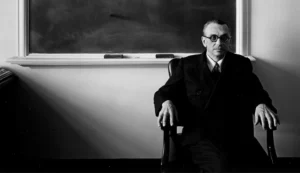
Robert Cibis meets Professor Dr. Christoph Lütge, professor of business ethics and director of the Institute for Ethics in Artificial Intelligence. Where do the economy and society stand since the measures crisis of 2020–22, and also in view of the disruptive role of artificial intelligence (AI)? Cibis stresses that recent events have caused massive cognitive dissonance, which makes it necessary to ask fundamental questions, especially in view of widespread dysfunction in German society.
AI regulation as a weapon
Prof. Lütge sees clear evidence that lobbying was carried out in Europe by actors from the USA to push AI regulation forward. As the “best example” he names Sam Altman of OpenAI, who gave talks in which he basically called for regulation, although he knew that this would not happen in the same way in the USA. Cibis asks whether this is a subversive attack on European competitiveness, which Prof. Lütge confirms and calls “impossible to deny”.
Europe, he says, lags massively behind in AI: only 5% of AI computing power is generated in Europe, while 85% takes place in the USA. The European tendency towards an “orgy of regulation” (such as the AI Act, the Digital Markets Act and the Digital Services Act) harms European companies, especially small and medium-sized businesses and start-ups, as they cannot afford their own compliance departments, which are a matter of course for large platforms. This over-regulation is counterproductive, he says, since hardly anyone in the world apart from Europe supports such tough regulation. Last year the Draghi report on Europe’s competitiveness acknowledged this problem, saying in effect: “We are killing our own companies”.
Ethics in AI
Instead of rigid regulation, Prof. Lütge favours so-called soft governance – guidelines and principles that offer orientation but do not have to be laid down in every last detail. The best-case scenario, he says, is to have functioning ethical principles that are also in the interest of companies and organisations, since users only use systems if they trust them. Trust is crucial, for example in autonomous vehicles or in healthcare, where AI can save lives. Trust-building measures could include quality seals or external services to monitor data use.
The discussion also touches on the use of data: Lütge sees hurdles in Germany that are too high for using patient data to train AI models. Those who do not do this, he says, get the data from abroad (China, the USA). He stresses that attention must be paid to the possible emergence of surveillance scenarios. Asked about the concern whether AI itself led to insidious concentrations of power (as during the measures crisis of 2020–22), Lütge says no, since generative AI (GenAI) only really took off at the end of 2022. He distinguishes GenAI (e.g. ChatGPT, which generates texts, images and films) from artificial general intelligence (AGI), which could replicate human abilities in all essential respects. He expresses doubt whether current progress already represents a fundamental step towards AGI, i.e. the singularity, or even towards systems with consciousness.
The Bavarian Ethics Council and a “witch hunt”
Robert Cibis pays tribute to Lütge for his steadfastness, since he holds critical positions despite the disadvantages. Prof. Lütge reports on his experiences, particularly in connection with his removal from the Bavarian Ethics Council. He had spoken out controversially there about the lockdowns and other measures. This led to a “veritable media witch hunt” in the Süddeutsche Zeitung, in which he was accused of wanting old people to die, although he had merely pointed out that the average age of “Corona deaths” was above the normal average age at death. Shortly afterwards he was removed from the body without any reason being given. He suspects political interests in the background that would not tolerate critical voices, especially as this happened at a time when candidacies for chancellor were also at stake. This critical stance led to disadvantages, including the loss of research funding and the breakdown of professional relationships.
Coming to terms with it as a society
Lütge stresses that he considers a social reappraisal of the measures crisis a priority in order to bridge the divides in society. He criticises that hardly anything has happened in Germany in this respect, while in other countries (e.g. the USA) political events or elections have already forced more of a reappraisal.
Lütge and Cibis criticise the way the measures were implemented politically and sold by the media. Lütge points out that politicians liked to rely on “the science”, which seemed to tell them something unambiguous, but which “had, so to speak, been ordered” (e.g. statements by the Leopoldina). The length of time the measures lasted was disproportionate, he says, especially the second lockdown from November 2020, whose coordination must also be investigated. Unlike Germany, where the debates hardly took place in parliament, Lütge sees a sharper parliamentary debate in other countries (such as England). During this time, he says, the ethics councils often served to justify ethically, after the fact, measures that had already been decided politically.
As a strong argument that the measures were excessive, Lütge cites the absence of influenza during the crisis, which was also observed in Sweden – a country without lockdowns, 3G or 2G rules. He criticises politicians’ growing “mania for control” and the far-reaching powers of the EU institutions, which lack critical checks. As an alarming example he names the EU-wide obligation to install control systems in new cars that warn against speeding and even intervene in the steering.
Recommendation
Prof. Lütge advises viewers to inform themselves impartially and independently, to maintain a healthy mistrust, but not to be fundamentally negative about innovation. He stresses that digitalisation is a tool that offers opportunities and can have an emancipatory effect. The decisive thing is to keep the debates going and to raise one’s voice in order to strengthen a democratic and open society. He is optimistic that plurality among AI providers will continue to develop despite concentration.
See also:
AI – No Salvation – NARRATIVE #155 with Dr. Martin Braake
Elon Musk’s Wrong Turn – NARRATIVE #132 with Dr. Jobst Landgrebe
Prof. Dr. Christoph LütgeThere's clear evidence for it. Lobbying was carried out here in Europe by people from the USA. The best example I experienced myself: Sam Altman of OpenAI. He came here, to my university too, by the way, and gave talks in which he basically called for regulation of AI. But of course he knows that won't happen like that in the USA. Even before Trump. Both governments basically only had a slightly graded, somewhat stricter attitude to AI, but not really.
Robert CibisWas that a subversive attack on European competitiveness? You have to put it that way.
Prof. Dr. Christoph LütgeIt can't be denied at all. And that's harder for medium-sized companies. At least that was acknowledged last year at European level with the report by Mario Draghi. Something has shifted a bit there. Let's see how much impact
Robert Cibisthat will have. But with the Draghi report on Europe's competitiveness last year, he did say: we are killing our own companies. Hello, my name is Robert Cibis, I'm very proud and very honoured to be sitting here with Prof. Dr. Christoph Lütge. And he's one of those people who fit wonderfully into Narrative, because he's a philosopher. That's an area, an area of work and thought, an area of discourse, in which of course, which I always found interesting, but since the corona crisis it's been the case for me that you really have to ask many fundamental questions. Others may have felt that way much longer. Perhaps I'm a bit slower on that question.
Prof. Dr. Christoph LütgeBut I find that much of what's happening today, what has happened in recent years, is so fundamentally surprising to me. It has caused such massive cognitive dissonance in me that you have to ask the fundamental questions.
Robert CibisThat is, the fundamental social questions: how do we organise ourselves at all, what still works at all? Because you saw dysfunctionality at every turn, if you only looked and didn't behave in yes-everything's-fine-after-all mode. And what I particularly like about Professor Lütge is that he doesn't just talk and work theoretically; there's an absolutely practical relevance in his research. And that's the area of business. He's professor of business ethics and, of course, also specialises in artificial intelligence. He heads the Institute for Ethics in Artificial Intelligence. And there we have another disruptive technology that every one of us knows by now. If you're watching this programme on your computer or mobile phone, then I don't need to explain it to you. There may still be some who get a USB stick slipped to them by their grandchild. To them I'll say briefly once more that AI now influences all our lives most massively. And yes, it's disruptive, just as, for example, the Otto engine, the possibility of moving with engines, was disruptive too. Suddenly the next town was much closer, and space acquired a completely different function and role.
And at the same time there are narratives about artificial intelligence where you have to ask yourself: isn't this fiction? Because, of course, when everything is different, you can tell everyone all sorts of things. Yes, then at first you believe everything. If someone says: I'm an expert, I have no idea about it, I haven't been working with AI for 20 years; then at first I believe it. And that's of course also a trap. It's a trap to think everything is different just because there are new tools. And we've already made several programmes about that, discussing these traps, pointing them out. But the nice thing is that Professor Lütge also works in the area of business. And as we see, it really is all very strongly connected. Now it went through the press that a new data centre is going to be built in the Munich area by Telekom and Nvidia. A budget of well over a billion euros. Where you say: wow, yes, something is happening for once. In the same article I read it said that 5% of AI computing power happens in Europe and 85% in the USA. So you think: yes, there's already a kind of arms race; there's already an imbalance.
So we have a very clear economic, but beyond that also political, force connected with AI. And Donald Trump, I'd like to play this in briefly before we even begin the conversation, recently declared in a discussion with Zelensky that what it's actually about, in Ukraine,
Prof. Dr. Christoph Lütgeis the rare earths. Because the USA needs them not only for the military but also very much for computers. Precious raw materials from Ukraine. Both sides have agreed on a corresponding agreement. Kyiv confirmed this in the morning. And it's above all about the USA getting access to so-called rare earths, which are extremely important, among other things, for building high-tech products. It could be a trillion-dollar deal or whatever. But it's about rare earths and other things. Mining them, however, is extremely laborious and expensive. About 80 percent of rare earths are mined in China. But there are also deposits in Ukraine, which Trump is now targeting.
Robert CibisYes, so you're in the crossfire of everything, so to speak; and has that actually always been the case, or was this unfortunate experience with the Ethics Council really a kind of turning point for you, in the way you live, in the course of things? Well, not entirely. I had already spoken critically in the past.
Prof. Dr. Christoph LütgeIn particular I remember that in 2014 I published a book, Ethics of Competition. And it was about how competition is good for morality. And that was also received very controversially, because people always think ethics and competition actually exclude each other, are opposites. And I showed with many examples that it doesn't necessarily have to be so. That was just one example, which I then also had to defend in various interviews and radio programmes and others. So in that respect, that's one example. And at the time I also spoke on the refugee crisis, I'd still say, cautiously critically, but also back then in 2015, that is, I wrote publicly about it. And in that respect it isn't completely foreign to me. What headwind did you face back then? You mean with the refugee crisis?
Robert CibisYes, exactly. It was red-hot. Back then, it has to be said, there was a completely different kind of public sphere. It wasn't really with social media like today. The statements I published at the time were in the Huffington
Prof. Dr. Christoph LütgePost. The Huffington Post, there was no filter in it, as with other classic media that had been around for a long time. So I published various articles. There were, however, also counter-articles, of course. What I find interesting is that a few years later this whole medium was deleted in Germany. The Huffington Post hasn't existed in Germany for several years now. Already before corona, while it continues to exist in other countries. Why, I don't know. That's interesting. That means the articles from that time really are all gone. They're archived somewhere, but gone for now. And so there were these controversies; I experienced those too. But not as directly as you experience it today via X, via other social media. And how did you experience it in the Ethics Council? It was about the Bavarian Ethics Council. I was nominated for the Bavarian Ethics Council and was then on it. It was new; it hadn't existed before. I continued to speak controversially about the lockdowns. I criticised lockdowns and many other measures. And then evidently for the Bavarian state government, which obviously didn't like it, and in particular for Mr Söder, it then became too much and too controversial for him, so that I was then removed from this Ethics Council, at first in a way that wasn't very public at all; rather, I suddenly received a letter without any reasons: you are no longer on
this Ethics Council. And for me that actually wasn't anything spectacular. I don't have to be on it. And so one committee fewer. And then various other media picked it up, the Bild newspaper and others. And then it became really big, and various politicians too. I'd say it's an experience one should have at some point. That with the topics you see as controversial in theory and also write about, you also live it that way and stand by it in practice. I think that's important. How did the Bild newspaper get onto it? I still don't know to this day. The editor told me he had found on the homepage of the Bavarian State Chancellery that I was no longer listed among the members of the Ethics Council. That may be so. But the causality is obvious to you, that you were the more critical voice in this group? It was preceded by a veritable media witch-hunt, I can't describe it any other way, which took place in the Süddeutsche Zeitung, where I was attacked from various corners: that I would let the old die, that I would want old people to die.
And I had only pointed out that the average age of corona deaths was even above the average age of normal deaths, which by now is no longer disputed at all and was also generally known back then. That was a fact. Well, and that was then used by politicians, but also by the media, as I said, the Süddeutsche Zeitung, as well as by some colleagues from academia, to, so to speak, portray me as someone who is impossible, an impossible person, so to speak. And shortly after that came this dismissal from the Ethics Council.
Robert CibisYou come across so likeably that you can't even imagine that there's such a nasty witch-hunt against you. And then you even present this witch-hunt almost likeably. It's incredible. To me it seems coordinated. How was it for you? Do you have the feeling it was coordinated? That is, was it the case that the Süddeutsche already knew that it was in the interest of someone we work with that negative things are written about you?
Prof. Dr. Christoph LütgeYes, well, I mean, you don't do something like that without a political interest in the background. That has to be said. Because there was actually no reason for it. Then this Ethics Council doesn't meet for a while. Or it was only virtual anyway. Then you ignore what someone says there. But I also said publicly that I considered the lockdowns wrong. And it was also a time when it was about candidacies for chancellor. And quite a lot was going on back then. And I think they didn't want critical voices around. Did that change anything in your life in general? That's a good question. I would say yes. Afterwards, some, especially professional relationships with colleagues, broke down. I wouldn't deny that, with those who didn't see it that way. On the other hand, others approached me and thanked me for saying it. Doctors too, well-known doctors in fact, who said: thank you very much for saying that. I don't necessarily have to name names now. And why didn't they say it? Yes, it's also the case that some said it later, and that's all well and good, but of course in that phase it was really hot.
That was the time of this long, this endless lockdown. And yes, at that time you actually had to stand up and say what's happening here is disproportionate. And if you say it later, it's okay; it's better than not saying it.
Robert CibisNo, but what do you say is the reason these doctors simply didn't say it themselves, if they did think it?
Prof. Dr. Christoph LütgeYes, I think they had in mind perhaps negative experiences. There were other examples of others who were also removed from committees or similar. The cases are always a bit different. Opportunistic reasons, you're saying? Yes, I don't think you can describe it any other way. And since you asked me what has changed for me, I can say that I also suffered disadvantages as a result.
Robert CibisAnd you can really only get over that and basically ignore it. Tell us, if it's not a secret: what disadvantages?
Prof. Dr. Christoph LütgeWell, it's no secret that research funding is also allocated politically. And a lot of this research funding has passed me by. And that can't always be proven. But I would say that you get pigeonholed in a certain direction, and, as I said, that many relationships with colleagues who might otherwise have seen much in a rather neutral or benevolent light broke down. Also, for example, with people who then started to block you on X, although you hadn't done anything, however much that would actually have done, for example my colleague Büx. Oh, did you know her personally before the corona period? Yes. And what was your relationship like? At least neutral, because she also works on ethics, more strongly in medical ethics, but yes, the relationship was there, and it wasn't negative at least. And are you still in contact now? I wouldn't put it that way. As I said, she's also been active on X, at least until recently. I think she still is. But what I found interesting is that we perhaps avoided each other a bit there for a few years, and many blocked each other straight away, so to speak.
And only when, in 2024, when the whole thing was already years ago, I did ask directly once, when the RKI files had come out: Ms Böck, do you really see no need for action there? Would you really still see everything exactly as you did then? And for that I was blocked. And that is, yes, well, that's how it is; every man may and every woman may block, but that you still do it after such a long time and, so to speak, refuse the discourse now, I do find strange.
Robert CibisWhat is actually the state of the reappraisal of this whole affair? Yes, that's an interesting question. Back in 2023, pretty much at the end of the last measures, in spring 2023, I published a three-part series of articles in Zitzhof, where I let it all pass in review once more, so to speak, and also said a bit about what would actually have to happen now for there to be a corresponding reconciliation, so that we can perhaps fill in the social divides, if possible, to fill it in again to some extent. I would say that most of it hasn't actually happened since, at least in Germany. There
Prof. Dr. Christoph Lütgeis now this corona Enquete commission. Many have said it's basically too little, that it's toothless. I had the impression right from the start, though, that it could at least be a first step, in which people at least start talking about it again, or talking about it together, even if it may sometimes be very painful. And I think that's getting going a bit now. In other countries we see it much more strongly. In other countries the reappraisal has often been forced, also by political events and especially by elections. It has of course already happened to a much greater extent. Which countries are ahead of us? Well, the very first that comes to mind, of course, is the USA, whatever one may think of Trump. But it's quite clear that it has now of course completely turned around, and that things have also come out since the Trump administration has been governing there that weren't known before. Be it data on the vaccinations, data on the measures too, and in particular someone I hold in high regard, Jay Bhattacharya, who was one of the authors of that Great Barrington Declaration back then, who has now become head of this large health authority.
And with that, of course, a lot is changing fundamentally, and I suspect a lot more will come out
Robert Cibistoo. Good question. I'd of course have further questions about that. But before we perhaps go into that now, let's stay in Germany for a moment. I'm a bit more critical, because I think it's similar to Germany. There Trump would basically have to criticise himself if he wants to go the whole way. And many publications were also a bit of a pseudo-reappraisal in my view, because they didn't discuss fundamental questions, or also. And of course I also have that fear in Germany. That it's a kind of appeasement strategy, where things are now conceded in order to simulate a reappraisal. But the really blatant question: did we have a global epidemic, for example? Was there any moment at which any scientist seriously thought that these jabs would be beneficial? Did the approval check anything? Was there any aspect of an approval study that seemed in any way beneficial? Was it fraud by a single company, since a different product was in the approval study than was injected afterwards?
How much malice and how much incompetence was there? We know this from crimes in general. When you can't even deny things any more, you say it was just incompetence. Why? Because criminal energy is punishable. If I now accidentally wreck someone's car, that is, his car, my insurance still pays. But if I were to wreck his car deliberately, then my insurance doesn't pay. And it's not only like that with insurance; it's like that in court too. It's like that throughout life, and people don't want to go to prison. So, long story short. That's the thing; that's the level it's at. That's why it's very important to spread the narrative of incompetence.
Prof. Dr. Christoph LütgeYes, and I mean, that's one of the reasons why at the moment I'm still somewhat cautious about saying we need a legal reappraisal. Perhaps we'll have one at some point. I have nothing against it at all. But I think at the moment it's not the priority. First we need a kind of social reappraisal. We have to try to somehow talk to each other again. You can see that now in the Enquete commission too; to some extent that's at least already happening, forced, in a sense. Tell us, what's happening there? Well, just in the last few days there were discussions there too. Alina Büx spoke there, that is, she was summoned to this commission and was of course also questioned there about the various things, especially about her statements when it came to the safety of the vaccines. And now she's backpedalling in many respects and saying: well, that was only my assessment, that I said it that way, that this was completely free of side effects, as it were, and breaks down very quickly and so on. And all these statements, and so she, so to speak, no longer wants to know anything about it, that she said it back then very convincingly, with the full conviction of her voice, on the very big stage in the talk shows.
And I mean, that is something; I think you can't simply move on to business as usual. As I said, it doesn't have to mean that in a legal sense, but I do have to ask: was what was said there not true? Shouldn't one then, especially if one comes from the field of ethics, if that's one's specialist area, shouldn't one always add: I may be wrong, perhaps this isn't right, these are assumptions?
Robert CibisAnd there were already data at the time that pointed to something else. You're such a nice guy, Professor Lütge. I really have to talk differently there. It's simply, if you look at it from a distance, as I said, we have made hundreds, if not over a thousand, publications on corona. We've talked a great deal about all sorts of people and persons and studies and so on. Professor Büx is herself a scientist. She's not stupid. She knows what she doesn't know. Yes, and of course nobody in the world knew whether these jabs were safe, to take your example. She couldn't have known that at all. You didn't even have to read studies to know that you don't know. You simply needed completely normal, healthy common sense. And the woman seemed sporty, was totally present in the media. I remember some women's magazines that said such a beautiful, clever; that was roughly the title, I'm quoting the gist now. I don't even know exactly what the title was. So she became, as it were, like a star. I remember articles about Tony Blair, who was such a young prime minister. There were similar articles. Such a young man, prime minister. It was similar with her. A kind of dream life. She was really placed in the media, and you don't get into these big talk shows purely by chance, because some editor had the idea that people could have an argument about it; there too there's a certain coordination, as I find more and more; I wasn't at all aware of that; even five years ago I didn't really understand it.
But now that I deal with it a great deal, I see it. So, if you're honest with yourself, you have to assume that she was quite deliberately placed as the saleswoman of the measures, to distract from the fact that there was no debate about it at all in the Bundestag. The bad thing about the whole affair is, yes, that the parliamentary debate, because there's nothing, nothing is more of a reason, as you say, to argue in parliament than a state of emergency, than implementing measures that have never been taken before. And in no situation is it more important that competent people the whole time, excuse me, I'm getting a bit emotional, but I'm getting a bit worked up about having to say such banal things. When you do something you've never done before, nothing is more important than for an evaluation to take place, with the most competent people and across all areas. Then you obviously need an evaluation. What psychological consequences does that have for old people, for children, for whatever? What economic consequences does it have? How many more dead and sick are there if we have so and so many thousand euros, or millions or billions of euros less available? That's not exactly an obscure question. You don't have to be particularly clever for that. Everyone knows that. And the people in the ministries have whole departments that do nothing else.
They evaluate, they do impact assessments of political decisions. They have whole offices, and they can just do this, then three professors, great scientists, come along and calculate it. And when the woman is in the media all the time and says things that no scientist would say, nobody would say: we know, it's safe. That's unscientific. Then something's rotten. So, sorry, that's how I see it. And that's a bit... Well,
Prof. Dr. Christoph LütgeI think there are also other things that should have been presented more cautiously. I am of the opinion that one should have, especially in such a situation, where there was indeed so much uncertainty, then one must also express oneself correspondingly more cautiously. And politicians always liked to rely on science, which seemingly told them unambiguous things, which, of course, had been ordered beforehand, as it were. That also goes for the Leopoldina, the academy of natural sciences, which back then also delivered this statement exactly on time for the start of the lockdown and said everything must be done like this and like that. And so everyone points at everyone
Robert Cibiselse. And there I would also have wished that at least some others had said more strongly: hold on, we can't sign up to that. We won't go along with this. Yes, of course. You put that very well and rightly. And you can phrase the matter one way or another. Clarity is always important to me, because we have, how shall I put it, you have to keep stating the malice of what actually happened, against the interests of citizens, that …, again and again. Otherwise we argue about the wrong question. It was nasty. What happened was nasty.
Prof. Dr. Christoph LütgeYes, it was something we had never done like that before. And above all, it wasn't just one thing; it happened over a longer period of about three years in total. And that's also something, if you compare internationally again, and of course you can talk about that at length now, but in Germany it happened with particular intensity, and in other countries, there were some in which hardly anything was done, but there were others in which harsh measures were taken, but there too it has to be said that in many they weren't kept up for so long. Or this 2G, for example, we had that almost only in Germany and
Robert CibisAustria. And one could now point to a number of things that in Germany really, in a special way... Excuse me for pushing back a bit there, but I don't know. Yes, it was a bit different in every country, but the fundamental questions were tremendously similar in every country. It's fascinating. I filmed in India, for example, I was in Italy, I was in the Netherlands, I was in France, I was in Belgium, I talked with Spaniards, in Poland, and we also made a film about Sweden. In every one of these countries the population was lied to. In every one of these countries there were Ms Büchsens. Some likeable young women or young men who passed themselves off as scientists and said things that their own authorities didn't say. You just mentioned the RKI protocols, because they're also a certain turning point. I think it's good that you mention them. Not that there's anything in them that OVALmedia viewers wouldn't know. Everything in them, without exception, we published too. And at the same time, I'm a bit proud of that, as the scientists there also established in their protocols. Only that the health minister always stood up and said: our scientists say XY, and that wasn't the case at all.
If he hadn't lied, he would have had to say: our scientists are saying the same as OVALmedia. Then he would have told the truth. And that's simply lying. And the Swedish politicians lied too. And if you now look at the figures, what actually happened where? In Italy we analysed the case figures of 2,000 municipalities. I worked together with an Italian woman; they looked at all the death figures. In Nembro there was massive excess mortality, a place with somehow over 1,000 inhabitants, well, I can say now, perhaps 10,000 inhabitants, because many people in an old people's home suddenly died. And that was used as a reference study, so to speak; I could now, you know all of this better than I do, I just mean it was lies and fraud in every one of these countries.
Prof. Dr. Christoph LütgeYes, but in some countries it couldn't have such far-reaching consequences. In Sweden, for instance, this health authority was independent. It wasn't; you couldn't give it instructions.
Robert CibisYou're right there, you had a blockage in a certain way, but the vaccination, through psychological propaganda, is even higher in Sweden than in Germany.
Prof. Dr. Christoph LütgeThe vaccination rate there too, yes, it was relatively high back then too. So was I mistaken, isn't it higher there than in Germany? In terms of order of magnitude; I don't want to commit to individual figures now, but in terms of order of magnitude, that's right. And only, what matters to me is that you voluntarily, whoever informs themselves and wants to be vaccinated voluntarily should do so. And that's clearly how it was done there. But above all they didn't have all the other measures, and the lockdowns and the mask mandates and everything else. And recently I had a discussion on X, because I said something critical again in hindsight, years later. Hold on, let's remember again what happened back then, what went wrong. And then someone came along and said: but we had many measures in Sweden too. And I said: hold on, but you had no lockdowns, you had no 3G, no 2G, no mask and so on. Yes, he then had to admit that. Basically they were recommendations. They were recommendations to keep your distance and that sort of thing. And they got through well with that and now have the lowest excess mortality.
Robert CibisYes, that is, I notice that we're a bit, how shall I put it, describing the same thing from two perspectives. Do you believe there was a
Prof. Dr. Christoph Lütgepandemic? Yes, that's a question of definition. Pandemic is a term that is defined. Back then there was also this redefined definition. And whether it was one or not. A global epidemic, let's say. Well, it's not something you can establish so easily. As a philosopher I have to say that. I am, so to speak, a nominalist who would say it's just a term that can be defined this way or that. For me it doesn't hinge on that. You can call it this or that. But definitely too much happened. We did too much. We had similar crises in the past that basically passed us by. What do you mean? Yes, the terms Hong Kong flu and Asian flu, for example, were practically unknown in Germany. And they existed too. The Hong Kong flu, around the time I was born, there was the Hong Kong flu. And people died then too, on a comparable scale. Of a virus, a novel one, which then passed into the general virus pool. And is still there. And it took place practically at the time of Woodstock. The Woodstock festival.
Robert CibisI mean, let's get down to brass tacks. I mean, that's why we're talking, I think; there are the life tables from the Federal Statistical Office. You don't have to; if you're now 83 years old, the average age of those who died with and of corona, and you had a time machine, and you could choose which year to live in, because at that age you die more readily than when you're younger, logically. I think about 5% of 83-year-olds die on average at the moment. Yes, but that's different every year. And the nice thing is that it has got better and better since the end of the war. In every year the probability of dying, if you're already 83, was lower. And if you had a time machine and simply said: I want to live in the year in which I'm least likely to die, at exactly the main age of death for corona, then you'd have landed in the year 2020. So we can't exactly speak of a medical emergency, a special epidemic in 2020 in Germany, and if you now look at the other countries, it's actually exactly the same. There are only individual old people's homes that actually, and individual hospitals, produced many deaths,
to put it so brazenly. And there you can of course ask: was there wrong treatment there, was there misconduct there, what's going on? Really a lot. I shot a … in Bergamo, I was in a hospital, I interviewed a great many doctors there. I've done 1,000 publications on corona. I'm a veteran here. Something happened there. It was really, all hell broke loose there. For three, four weeks people died there massively. But in no other city in Italy. In no other city in Italy. In Rome, in Sicily, in Venice, Naples or wherever, not even a wave. There isn't even a flu wave. Nothing. And there the epidemiologist has to prick up his ears, establish and say: whatever happened, it was in any case not a national, let alone an international, epidemic.
Prof. Dr. Christoph LütgeThere's another current example where that, I think, has played a role even now, today: take New York. There were these figures there too, wherever they came from; I can't really judge, I didn't look at it that closely. You probably looked at it closely too. I looked at it very closely, yes. It's just that we've just had the election of the new mayor of New York, and Mamdani was elected there. Whom many view critically, and I view him very critically too. I think those are socialist ideas he represents. But the opposing candidate Cuomo was the one who stood for that policy back then and for those lockdowns, and who was even supported across party lines. As far as I know, the Republicans supported him too. But that wasn't enough, because people no longer vote for someone like that. When an alternative is available; and there are a number of examples. So in that respect I think many people don't want that any more. In other countries too they voted for a change of policy.
Robert CibisI'd just like to add my comment briefly, even if perhaps now, we can then also go to the topic of what is more ethical, but purely from the epidemiological side. We have the death figures in New York; in the last week of March and the first three weeks of April they were monstrous. If you picture it visually, it was exactly like Bergamo. In Bergamo it was, I think, shifted by one week by comparison. I'll just compare it with the years before. And then at the end of March, bang, I think a total of 25,000 more deaths than normal within three weeks. That's a lot even for New York. And then there's, bang, a peak. And then for the next three years there's no flu wave, nothing, zero. To this day. There isn't even any anomaly, but there were the measures for another two and a half years. And if you then look closely, there are hospitals in which there wasn't a single death more than usual in New York. And other hospitals that produced the dead as if industrially. So something went wrong there, so to speak, but it is certainly not an epidemic.
And an epidemic in New York is not over in three weeks either.
Prof. Dr. Christoph LütgeYes, and what you just mentioned, the absence of influenza, is also a very strong argument for me. I've said it on X again and again. The other side basically has no argument against it. Where did influenza go? And where did it go in Sweden in particular? Where they didn't have the measures. Because then you can't say: we did the measures, and that's why influenza is gone. But there were no measures there. And the other side then usually tries to dispute that. I've met people, even top-class biologists, men and women, who then say: in Sweden they wear masks too. At the moment, go there, have a look.
Robert CibisYes, exactly. Well, I'm just telling you it's all totally weird, and you probably have to, in my opinion, even when you talk about it, even if you only have to reappraise it socially, approach it with a criminologist's eye, from my point of view, because otherwise you move away from the truth. I don't think it's intelligent not to ask yourself these questions. By now I even find, and I've changed my discourse on this somewhat, I find it unserious to rule out criminal energy. And many people I know simply do that per se. They say: ah, that a criminal might be sitting at the table now, I don't even want to consider that for now. Do you understand what I mean? Isn't that ethically fatal? I'm asking you as a philosopher. Isn't it fatal to exclude evil from your thinking when you're trying to understand reality?
Prof. Dr. Christoph LütgeYes, one of my philosophy teachers always said: with something like that, when it's about such things, you mustn't ask philosophers but magicians. Magicians know where things were faked and what the tricks are that are used. So I do believe you have to consider who had an interest, where there were interests. Without interests it can't happen. And what I just want to say, without my, I don't have the grand theory for it, but I don't think it would be enough to say it was purely economic interests that tipped the balance somewhere. There must have been something else. Some political interests must also have been in play. It doesn't work without that. Otherwise you can't get something like that, such a worldwide affair, going like that.
Robert CibisYes, I completely agree with you there. That was also one of my great insights. An acquaintance said to me, that was already in spring 2020: Robert, what is this now? Perhaps AI has now taken over. What do you say to that as an expert? That corona comes into force through AI. She suspected the whole thing was so perfidious, so massive, such a psychological operation on so many levels at the same time. We have an interweaving here of the judiciary, of placed persons like Ms Büx, of whom you can see that she is, so to speak, an actress by profession. All these other heads of state and ministers. I mean, how can it be that thousands of journalists aren't outraged that Jens Spahn founded a company that does lobbying for pharmaceutical companies, and then became federal health minister in the corona crisis and promoted pharmaceutical products as minister. That in itself is absurd; if I were a journalist and worked at the Süddeutsche or at whatever newspaper, I would surely have just at least one percent of ethics somewhere to say: one should take a critical look at that. So the question was about artificial intelligence. Exactly, it was so perfidious, I mean, that these journalists themselves were manipulated or bribed or who knows what.
There must, it is so, it seems so excessive, it must be a new kind of power. But at that time AI wasn't that far along yet. We didn't yet have generative AI, for example. That only came at the end of 2022. Are you sure?
Prof. Dr. Christoph LütgeYes, there were forms of it, of course. Is it secret, what exists? Well, things were already being worked on, but in the end they weren't used. The connection can't really be made, I think. Tell me why she's wrong. No, no, one would have to, well, whoever claims that an event took place has to provide evidence for it. Not the other person, who says: that didn't exist, that doesn't work. So artificial intelligence came later; it is, I believe, for once innocent in the matter, and even if someone claimed it, it would have had to have some goal; you'd have to say that too. Concentration of power? Well, that's not enough. I think human interests are enough there. Aha. And do you have potential answers or hypotheses there too? Or is that too far from your field? No, as I said, I don't have the grand theory for it. I would just say one thing, because one always does... Well, for me it's a bit: where do you put the emphasis? And there are actually two points in the crisis on which you can put your emphasis.
One is the beginning. You also just said it again, March, April 2020. And a lot happened then that was simply unthinkable. That's right. But I consider the beginning of the second lockdown at least as important.
Robert CibisWhat then happened from November 2020. Because by then things had actually calmed down a
Prof. Dr. Christoph Lütgebit again. And many measures, less in Germany than elsewhere, but in many countries they had already been scaled back considerably. Almost nobody was talking about vaccination yet, and not about 2G, 3G or compulsory vaccination and such things. And how did we get into this second lockdown, and so coordinated too? And there, I believe, you should look at it at least as closely again. And I sometimes have the impression that there too attempts are made, that some parts of politics try to distract a bit from it.
Robert CibisYou're of course right that although a lot of lies were told during the first lockdown, the narrative under no circumstances still made sense. By the second we were already at the stage of total confusion. The rules were, so to speak, constantly changed, the measured values were constantly changed; to make the whole thing sound scientific, there were always some values that the ordinary mortal citizen perhaps didn't necessarily understand. First there were the death figures, then there were the infection figures, then there was the R value. The R value, yes, which was then no longer used, because it suddenly hardly changed and was too low. All those figures were always too low. Then there were the incidence figures and who knows what else. And those too were, yes, you don't need to repeat everything, but it was such confusion.
Prof. Dr. Christoph LütgeYes, yes, and I mean, Ms Böx's predecessor in office, the former chair of the Ethics Council, who was still there during the first lockdown, went along with a lot too, but he did point out once that children and young people were being very, very heavily burdened here. But his term of office then ran out, and he was replaced by Ms Böx. Well, that might have happened anyway, but it has to be said: you have to look again at what happened after that.
Robert CibisBy the way, I find it a very interesting piece of information that this Bavarian Ethics Council didn't exist before. And I've already voiced the hypothesis just now, I'll just say it again, that these ethics councils, or the commission, distracted from the fact that the actual parliamentary debate didn't take place. Because, once more for little children: health, the health system, is the responsibility of the federal states and not the responsibility of the federal government. Jens Spahn actually had no say at all. Even all the measures during swine flu, for example, were organised by the federal states. They also bought medicines, for example, Tamiflu back then and those jabs, and with that also wasted billions of taxpayers' money on products that were all thrown away. And of course with such decisions it's always parliament that's called upon, and in this case the Bavarian one too. And there it's the case that you actually, excuse me, I'm in such a provocative phase today, I hope you hit back a bit too.
Prof. Dr. Christoph LütgeYou make yourself a useful idiot, because you replace parliament, because the Ethics Council has no bite at all. It can't say stop at all, but parliament can do that. They could actually take tough action. Yes, I mean, in other countries the debates in parliament were conducted more sharply. In England in particular, back then, there was actually sharp debate throughout the corona period. In Germany that basically hardly happened. From my point of view an ethicist could certainly have had a voice and could have done that. But of course you also have to have the will to do it. And I mean, later there were, at least on the German Ethics Council, individual members who did submit dissenting votes and expressed other views and said so publicly too. From my point of view it's also not enough to say: but I said it internally. I do think you have to be able to say it publicly too.
Robert CibisWhat does something like that say about such a kind of group of preachers? A group of preachers, that is, such a council of the wise. And people say: they now provide the ethical justification for this or that political decision.
Prof. Dr. Christoph LütgeYes, I had that impression especially with the Bavarian Ethics Council, but with the German one you can certainly say that in some respects too. Basically something that had already been decided politically was to be justified once more after the fact. And I have to say, that can't, I also said it in the interviews, it can't be my ambition to belong to such a committee. I think that's very good.
Robert CibisI find your sincerity and directness wonderful and would like to congratulate you once more on having the steadfastness. Because, as you yourself described, it did lead to disadvantages. It really is heroic to open your mouth, which is fascinating. It shouldn't be the case in a democracy that you have to be a hero for that. Yes, it's fascinating. And now it's great that you, and it's certainly no coincidence, that you are now also connected with business and artificial intelligence, that is, that that's actually where the focus of your work lies. What's the connection there? Is there, so to speak, was corona an engine or catalyst for the digitalisation of Germany and also of digitalisation in the wider sense? Yes, I mean, if you look at it purely technically,
Prof. Dr. Christoph Lütgecertainly. What we've had since then in digital meetings; there was some of it before, there was Skype for example, but it was done rather rarely, that people now regularly meet in this way. Personally, though, I then said for myself: I don't want to do digital teaching, or only in exceptional cases. That is, elsewhere it's done more. I don't see it as, that a, that's not what university studies should look like, in my view. I think it has to take place in the lecture hall and in the seminar room. That doesn't mean, of course, that for certain things, for example when certain collaborations already exist, you don't also regularly meet digitally with colleagues from more distant countries, with whom you can then coordinate better. That's very helpful, for example, and also supportive.
Robert CibisBut as I said, for university teaching, I think that's, I believe, not helpful. I see, yes, my teaching digitally; yes, that has spread much more widely. I believe, for example, I know that patient protection, that is, the data of patients, for example, has now also been broken open. I know it already began before corona, that the patient file was, so to speak, to be kept digitally by doctors. But through various regulations the data are now even more transparent. Back then there was first the tracing app and other things, which were then also a kind of narrative stirrup, a leg-up. We're currently creating a society in which every person, every human being has a digital twin that is fed, that is, whose portrait is fed with data from all areas. Be it which products I clicked on at Amazon, be it the patient file, be it the pattern of movement. And one has to suspect, given that several federal states now also operate on the basis of Palantir's software to search for their criminals, that this is actually happening in secret.
My detective mind tells me that one has to suspect something like that. Because Palantir's core competence is merging databases. And it's not only this company; many of these big digital corporations say publicly that this must be the goal of the coming years: that data sets have to be, so to speak, connected. And what do you say to that,
Prof. Dr. Christoph Lütgewhat does it mean for society? Yes, that really is a complex question. And I've also dealt with it in terms of research, for quite a number of years. You have to consider various aspects, I think. One is that there are indeed, I believe, a few hurdles in Germany that are too high for actually being able to use data for further research. Especially also for training models, AI models. Because if you don't do that, you get the data from elsewhere, where it's easier to get. For example from China, or also in the USA, or even in England it's considerably easier. But those aren't necessarily the data you always want. Because when we develop such models, we actually want, especially in the medical field, to train them with the patient data that are from here. So in that respect I am actually of the opinion that we should use the data. But it's right that you have to be careful in which direction you develop it and where, so to speak, you also build in safeguards with something like that. And I see that, for example, somewhat more critically now than before corona. These aspects: possible surveillance scenarios can also arise and grow without that perhaps having been planned originally, or at any rate not explicitly planned.
That is a danger. Perhaps I'll just give one example. I was on an ethics council for a certain European project, in which it was about the use of AI in all sorts of areas of the police, the judiciary, border control. And what just struck me, there were very many people from the technical side on it, it was a very large consortium, and what surprised me, the biggest problem for me as an ethicist was even making it clear that there is an ethical dimension to this problem. Rather, it's mostly like: oh, it just runs like that. We've now developed something, basically like a machine, in this case AI models and tools and software and also devices that use them. And now we're deploying them. And simply raising your hand and saying: at the moment there may still be something one should pay attention to as well. That's actually the most important thing an ethicist can do. Once again, hold on, to pause once more, to practise reflection, so to speak. And that's what one should do. And then you can still talk about what you do with it. So what's the best-case scenario?
Yes, well, that too isn't so easy to say, because one, I've been working on the ethics of AI for a long time, for at least seven, eight, nine years. And we developed ethics, that is, principles, ethical principles for AI, also concrete catalogues for certain systems, and also tools, and co-developed software. And in recent years a tendency has emerged, especially in Europe, to now also legalise this more strongly and to make really hard regulations. And there I'm a bit cautious, because that can also be counterproductive. Especially when you do it in one region and not elsewhere. And that's exactly the situation we have now, the one we're facing. Because apart from Europe, basically nobody worldwide is going along with it. Now I've lost the thread. What exactly does... The right regulation of AI. Ah, now I understand. We came from ethics to the regulation of AI. Yes, I understand. And so, so to speak, the best-case scenario is, from my point of view, that we have functioning ethical principles that are also in the interest of companies and also of the organisations that use it. Because I mean, I'll only use a system if I trust it.
And if I don't trust the system, then I won't use it either. Whether it's an autonomous vehicle, whether it's a particular system in the health sector, whether it's some software that somehow uses my data, then I won't do it. And you have to create this trust, I think. That's what ethics is important for.
Robert CibisAnd that's also in the interest of companies, of organisations that use it. Now I'm very surprised. Do you know what I thought I would say if I were sitting in your place? Of course I don't have the expertise, but I would have said: we have to learn to distrust more. And when a company wants my data, when I'm on some website and so on, the worst thing we have is far too much trust. We have far too
Prof. Dr. Christoph Lütgelittle distrust. And we as ethicists are actually there to promote distrust. Yes, that too, what you're now mentioning, is certainly right in many areas too. Especially in Germany, I think, there was too little distrust for a long time. I think it has grown a bit more now. Above all, in particular, towards the state as well. Towards companies we in Germany always had a certain distrust. But towards state bodies there was great trust for a long time, and that has eroded strongly in recent years. That can also be shown empirically. But I mean, it's in the interest of companies, but also of us, of course, as a society, when we say we want to have certain systems here, whether they're self-driving vehicles, for example. Or in many areas AI is, I believe, something that can really be very helpful. As an ethicist I always point that out too. It can save lives, it can prevent accidents, it can help doctors be better in many areas. It can help in agriculture, in many areas. Only for that the users of course have to trust it. And that can mean introducing certain rules too, where you say:
we don't do this and that. With the system: it doesn't do that. Here are the limits; it has to be transparent. Which data are collected?
Robert CibisSo now quite, we were at the best-case scenario. Your answer makes me even more curious now. Europe-wide regulations basically already exist a bit, or exist strongly; globally they don't. And this discrepancy is problematic, because AI has no national borders in the first place. Data are, in theory, everywhere, thanks to the internet or for other reasons. What is the best-case scenario? Do you want a kind of world regulatory authority? No, absolutely not. So what is the best-case scenario?
Prof. Dr. Christoph LütgeNo, but those representatives who, especially in Europe, pushed this regulation strongly, and we have had this AI Act since last year, which has been passed but isn't yet fully in force, so to speak; but those who pushed it always said we'll end up with worldwide regulation somewhere. And I always said: I don't believe that; the others won't go along with it. That's exactly how it turned out. That means if you take regions, just as an example Japan, India, the USA, England too, that is, the UK, actually, so to speak, almost all the others say: we take this very seriously, we take the ethics of AI very seriously, trustworthy AI, but that doesn't mean that we can regulate it. That's the devil; it's in the detail.
Robert CibisIf we could do it that easily and implement it that easily in AI, and without side effects, so to speak, then we'd already have it. If I now had really malicious intentions and were, for example, the Chinese or American or Indian government, then I would pay people who sit in the European Parliament and get them to regulate precisely the new industries, which include the AI industry, in such a way that it's not competitive, that it would be over-regulated. That would be a malicious slowing-down of the potentially biggest opponent, because let's not forget, we also have to be a bit self-confident. Here in Europe there are a great many well-educated people, there are a great many computers with a power supply. There's the potential for a digital economy to actually arise here. And yet in fact it does not. And then you really do have to ask:
Prof. Dr. Christoph Lütgewhy not? Yes, well, I'd just put it slightly more weakly in degree, but in principle yes. There's clear evidence for it. Lobbying was carried out here in Europe by people from the USA. The best example I experienced myself: Sam Altman of OpenAI; he came here, to my university too, by the way, and gave talks in which he basically called for regulation of AI. But of course he knows that won't happen like that in the USA. Even before Trump. Both governments basically only had a slightly graded, somewhat stricter attitude to AI, but not really. Was that a subversive attack on European competitiveness? You have to put it that way. It can't be denied at all. They try, so to speak, to push the Europeans in this direction in order then to be able to say: well, we're not doing that at home now. And it's not only the AI Act; it's also the Digital Markets Act and
Robert Cibisthe Digital Services Act. Our viewers and I had never seen it that way, because of course we know these terms, have heard of these acts, these decrees. But we know that it's misused for censorship, although the official narrative is: we want to get the big platforms under control.
Prof. Dr. Christoph LütgeNot that they dance on our table, but that we, the government, in this case the European Commission, have the say. Yes, and what happens is basically the opposite of that. Because with AI in particular, we do the most damage with it to our own companies, especially the medium-sized ones and the start-ups. Because it's much harder for them to afford a compliance department that then works through all of that. The big platforms have all of that. The big companies here tend to as well; they have a compliance department that then, so to speak, does box-ticking, ticks things off. Yes, that's fulfilled now. Here we have another piece of software, we'll buy that too. And that's harder for medium-sized companies. At least that was acknowledged last year at European level with the report by Mario Draghi. Something has shifted a bit there. Let's see how much impact that will have. But with the Draghi report on Europe's competitiveness last year, he did say:
Robert Cibiswe are killing our own companies. Yes, that's very interesting. That's of course a fundamental economic perspective that many people aren't aware of at all. I had Professor André Schmidt as a guest on Narrative, where that was exactly one topic. Basically, regulations are more strenuous, more problematic for smaller companies than for larger companies, logically. There is of course a threshold matter; taking formal procedures into account is so and so much work. Whether you do it for 5,000 units of product X or for 5 units of product X, it's then the same. And there's a threshold effect. And we've also seen that the VAT rules became more complicated, more demanding, when you sell products within Europe, that is, in the EU. Where I notice: wow, probably the Amazon lobbyists were behind that again, so that they can't get any competition. Because if I now, OVALmedia also has a bookshop, that's why I know this so well. It also sells books, like Amazon. You can partly buy the same books there, partly others that aren't available there. And if we want to send them to Austria or to Switzerland, it's always complicated. Yes, that's very interesting, this perspective. But basically I don't really have the answer yet. As regards the best-case scenario for AI, I've understood that if everyone does what they want, that's good for a start, and regulation is difficult for companies too,
at first. But no regulation, is that the answer? So you're saying that's the best-case scenario?
Prof. Dr. Christoph LütgeYes, well, I didn't mean it in the sense of no regulation, that you do nothing at all, but in the sense that you do, for example as the Japanese do it, what they've called soft governance, soft governance rules, guidance. That's not simply self-regulation; rather, you do say: these are the guidelines we set, but not in the sense that we now check hard, so to speak, whether they're being complied with; rather, they're something one should orient oneself by. The point is that, as in the example of those systems for the police earlier, when developing AI systems you come up against many problems that aren't purely technical, but where it's about: should I develop the system a bit more in this direction, a bit more in that direction? There are, we have the example from our work, where we worked on autonomous driving. There's the question: how should an autonomous vehicle drive? That isn't clearly given by law; there's leeway. Should it go more over there? There's a bicycle. Should it drive closer to a bicycle or a bit further away? On the right there's a lorry. Should it be closer to a lorry
or further away? Those are so many small trade-offs. They are, so to speak, not prescribed by law. But they should be designed, in terms of ethics and risk assessment, so that they inspire trust, so that they also don't violate users' legitimate expectations. That, I think, is what ethics can achieve. And such guidelines aren't toothless; they actually help companies to orient themselves. But if you now try to pour that into a law, so to speak, where I ultimately have to spell it all out, then some courts have to come along and really pin it down to the last detail. That, I think, is counterproductive. I understand.
Robert CibisSo basically, if a company offers users, customers, this and that control and transparency, then that would be a step towards building trust. I see that, so to speak, as the only scenario. Only I also have to say: how can one ever control that? How can I check, whether the company is big or small, how can I check what they do with my data? The special thing about data is that they can be reproduced infinitely. If they now store a gold bar for me, it's something completely different; I can go and look whether it's still there. But if they now store my data, I can't look whether they're still there. I notice, so to speak, that we have a great many dilemmas right in front of us. And because the answer, as you yourself said, is somewhat complicated and you have to go back a bit, I notice that perhaps you do justice to the complexity best by allowing freedom. Because, let's assume, I as an individual customer can't check company XY when I buy something there or have a service.
My emails, for example: do they manage them, do they pass them on, do I know? But I can ask a service company to check the company for me with AI. And if they then have 10,000 customers, they may also have the means to see whether the emails turn up somewhere else again. And these people who have this email address, whether there are spam emails, for example, from this or that address, and whether there's a correlation. You can simply find out by cross-referencing data sets, for example, what happened or didn't happen. Those are services that would build trust
Prof. Dr. Christoph Lütgeif they're external. Yes, and in the past we already had such institutions as quality seals, for example. Something like that is absolutely conceivable and has already existed,
Robert Cibisin the digital sphere too. Yes, and I'm a bit, my impression is that we're going in a different direction, as you yourself just described, where you have the feeling rules and laws throttle competitiveness and throttle the market. Yesterday I heard a debate among farmers, just to take the example, that also has to do with AI. Every day the fields are photographed by satellites and compared with AI to see whether they're growing exactly what they're allowed to grow by law, and even when they fertilise is prescribed. And there, theoretically, a villain can turn the dial and set the fertiliser so that the harvest brings 10, 20, 30 percent less yield, and then, because it affects a great many farmers, even help steer the development of the whole of society and the economy. That's total madness. To my mind that's over-control. And you ask yourself why the means for it exist, when if all farmers simply did what they wanted, if they grow something badly, then they don't have good products, and it will come back on them.
Prof. Dr. Christoph LütgeYes, let a functioning market decide. That would be my wish too, indeed. And I believe that, especially in Europe, we have in some respects actually moved away from that, and basically switched off the market economy to some extent. That really is a problem. Perhaps we had it before too, but it has increased. For me the perspective is no longer so much that there are possibilities of manipulation. Those exist too. There may always be some. But rather the question is whether we want the whole thing as a system. Does it really do what we want? That is, what you've now mentioned in the agricultural sector and in others too. With autonomous vehicles, too, the question isn't so much that they could be manipulated. It is, it's dealt with in some films too, but in my view those are rather minor phenomena. Rather: do we want the whole thing, also socially, where it gets us, do we want it this way or that way? And more freedom too is, I believe, actually a factor that was neglected for a long time and has now perhaps come back in a bit more after all. Also with the developments in the USA, I think, you can't deny that. There too platforms, for example, have now allowed more freedoms again.
That's certainly a longer topic. But I believe we need these freedoms more. And during the corona period, I believe, a strong distrust on the part of politicians towards the population arose. And they wanted more and more control. And that is, I think,
Robert Cibisyou saw that in Europe in particular. Oh yes, you put it so well. I'd be much nastier in my choice of words, though not in my actions. But now I have a question. The highly mediatised Elon Musk repeats and repeats and repeats publicly that AI is more dangerous than atomic bombs, that the world could end because of it. Now, thanks to our conversation, I finally know why. I now believe, although as an engineer he has no idea of complex systems for that reason, that perhaps he may even be lying after all. I always thought he was telling the truth, but perhaps he's lying after all. Namely because of what you said. Perhaps, just like Sam Altmann, he's someone who subversively simply cries out for regulation because it favours the big companies. Do you believe that? In that case I don't really see it that way. I mean, others say that; this thesis that AI will become dangerous is in some cases stated much more clearly by others.
Prof. Dr. Christoph LütgeA few months ago I had a discussion with an American AI researcher who was also recently on Joe Rogan and other podcasts, who also comes forward with this thesis that no matter what we do, AI will overtake us and we will be ruled by AI. That will come anyway, no matter what we do. And that's basically formulated much more drastically. By the way, he says it in a very nice way too. But I'm considerably more cautious there. In my view you really first have to show that you have an AI here that also develops consciousness.
Robert CibisYou just used the important term generative AI and mean it has existed for three years or so, you said? Pretty much exactly, for three years. And could you briefly explain for little children, first, what it is and what it means? Yes, well, until November 2022 AI was still considerably further away for many people. I mean, of course people already had it; anyone who had a smartphone had it on it in various systems, AI, and in other systems.
Prof. Dr. Christoph LütgeBut suddenly it arrived in reality much more for many. Because there were suddenly generative systems, in particular the well-known ChatGPT, that generated texts.
Robert CibisAt first it was mainly texts, then images were generated; there had been rudiments of that before too, but now more strongly, which were generated with certain specifications, and now also films, for example, and even more in other areas. But that means this AI that, in this way, yes, many would say, even more strongly imitates this intelligence, that is, certain processes of intelligence, is more strongly present. You can put complex queries to these systems, and they answer them. That's what we know. Many know this ChatGPT and similar things. Generative basically means: I have a machine there, and now I can ask it about the last football match, but also have it read me the instructions for the vacuum cleaner. But much more besides. But also generate texts. Yes, for example a summary of a book and so on. For example, yes, exactly. That's also a problem of understanding for me, because I'd read articles on AI now and then, earlier too. And there was always this big term generative AI, and I always understood it to mean that AI would be as clever as humans.
No, no. That's not what it means at all. That's basically what general means. Yes, I mean, that would be AGI, artificial general intelligence.
Prof. Dr. Christoph LütgeGenerative isn't general. No, no, no. That would actually be this general artificial intelligence that could replicate human abilities in almost all or all essential respects. We don't have that. There are people who say we'll have it next year now with generative AI. But there's also a big debate among AI researchers too about whether what generative AI does, these systems like ChatGPT or Grok or others, really are steps in that direction. And there are two factions. And I'm not entirely decided there. But I'm not of the opinion that you can really say we have, in that time, we're moving towards systems with consciousness. That, I believe, you can't say. But then the other side says: yes, but for this artificial general intelligence, for this general AI, you don't need consciousness. So I'm not sure there.
Robert CibisSo roughly that. Ah, interesting. Well. And what do they say; there's one, highly mediatised, Ray Kurz, because he founded the Singularity Institute, I believe, and always has this term, where now the computers will replace humans; I believe he has kept pushing his forecasts further back. Actually 2025 was the year. That may be. And now it's 2035, I think. Yes, and others again say we'll have something like that soon. Next year, I think, some have said. It's again a question of definition. I can redefine it. What are the essential features?
Prof. Dr. Christoph LütgeIf you went back in time now, ten years in any case, perhaps even five years, and showed what systems we have today, generative AI, then people back then would probably say, from their point of view: yes, that's it already. But whether that's already what this singularity denotes, like that moment in Terminator where the system gains consciousness, suddenly consciousness, and then of course also formulates its own goals and has control over many other systems too. That, I think, isn't really connected with it yet. Can that potentially come at all at some point? At some point. In 500 years, for example. You can never rule that out. From my point of view it's now really relevant to say what, for the next decades, is realistic. And, as I said, I don't see anything arising there without this step of consciousness. But I would also admit that even in the last few months the new generative AIs, the new Grok, the new ChatGPT, have made considerable progress. That's true. They have fewer of these so-called hallucinations, where they really invent things. That really has got better. But whether that really is this fundamental step towards a singularity, I have doubts.
Robert CibisOne problem is also that in artificial intelligence a very great concentration has taken place. That means there are very few companies at the forefront in this area. There's only a handful of large generative AI machines. Most are American or Chinese. How can one, is there a chance that more plurality will exist there? Because if you now do a bit of research, especially on politically hot topics, topics we cover, I have to say, since I've researched a lot on some topics myself, I know: wow, that's basically propaganda and not information. How do you see the development and above all the future? Well, propaganda of course existed before too.
Prof. Dr. Christoph LütgeAnd in the past you sometimes even had fewer methods of defence, so to speak. I basically believe that with digital systems it's easier to be critical and to develop alternatives, because the barriers to entry are lower. That there are only a few providers in this area, I would say, I wouldn't quite sign up to that. Generative, or AI models in general, actually, can also be offered and trained by others. There's, for example, this platform Hugging Face, where a great many models for certain purposes are available. Oh, interesting, what's it called? Hugging Face. Ah yes. Yes, this training is also done in many places around the world, especially for local systems that, for example, aren't ultimately based on the English language. That's also something that's a big topic in many parts of the world. Even if afterwards you could later translate some things into another language, you may sometimes really want to have it trained in the original language. In Japan too, where I travel now and then, that's a topic, for example. So basically it's possible. Or in Germany too; there are a whole series of small companies, many start-ups in particular, we have a lot of them in Munich too, also from my university, by the way, that emerged from it, that train such models with data, but who say: we now have to make sure that we're allowed to do it and that we're not so strongly hindered by regulation.
Because otherwise what we'll have, indeed, is that ultimately we only have a few providers, because they can then also provide everything regulation demands. And you're basically saying we can have hope that there will be plurality, also with these search engines. And that it will even increase? Or what do you mean? Well, I'm actually quite optimistic there. Basically, ever since digitalisation has existed, people have repeatedly said: now there's only one provider left, now the monopolies are here. It was actually almost never like that. Something always developed again. The last one, for example, was Google; for a long time it was the search engine, everyone used it. But now, through the possibility of putting queries directly via generative AI, Google will basically suddenly get big competition. And all of a sudden you can also get information in other ways, and possibly much faster. So there too, even if you say there are only a few of these big platforms, they compete with each other. Meta against Google, against Microsoft, against Musk and Grok and X. They do, even if they don't offer exactly the same thing, but in the AI area they, or OpenAI, compete with each other.
Robert CibisOf course I realise that, and I also believe that the competition is real. At the same time, though, these corporations are almost congruent on the important narratives. I experienced that in detail with the corona crisis, but there are other topics, for example elections in the USA or NATO topics. For example, I asked Perplexity: can you cite me non-NATO sources on the Ukraine war? I didn't, my question wasn't partisan; I just said: which non-NATO sources, that is, from countries of NATO, can you not cite on the Ukraine war, about what's going on there? And it said: no, in principle I cannot cite non-NATO sources on the Ukraine war. I believe it's the same with the other search engines we've just cited, to be
Prof. Dr. Christoph Lütgehonest. Well, yes, I would make at least one exception a bit, where some things were different: when Elon Musk bought Twitter, that too was around that time, the end of 2022; that was a very drastic event. Because that changed something. Our world, I believe, would look different today if that hadn't happened. Because there too you can say again that some things then came back into what's done. But Musk quite clearly set out certain principles for his platform that worked against this censorship. And otherwise we wouldn't have this possibility of free speech today in many respects at all any more, or much, much less. And I believe that this also subsequently led other platforms and they adopted it, at least in part, and said: we won't go along with certain forms of control like that. And of course we now have to see how it develops further. We have to wait and see.
Robert CibisBut I'm not so pessimistic there that everything really just comes down to such control from one side. There have been a whole series of deviations from that now. Very interesting. Yes, I'm not so pessimistic either, but I must stress that we're also deleted and … on Twitter, even now. For us it hasn't improved anything. And if, for example, I now post a tweet about this matter of the figures from New York, it would be pushed into the background. And when I, about 11 September, we posted a documentary film there, it had disappeared for everyone else. But I myself didn't see that it had been deleted. So they don't call it censorship, but content filtering, and they also say so openly, that they moderate there. And I'm somewhat more critical than you as far as this platform is concerned. But overall I'm entirely on your line, because I believe that, fundamentally, digitalisation has an emancipatory effect on balance, because everyone can make use of it, much more easily than otherwise. And that's the only reason our programme here and today is possible at all.
Without this digitalisation it wouldn't exist at all. That's how it is. We've now discussed various topics: AI and the mania for regulation, regulation as a brake on the economy. And then we also talked about the corona crisis and a kind of centralisation of governmental power that was connected with it, measures that were enforced. And I keep asking myself now and then: is all of that necessarily connected? Is there such a, is there actually perhaps this mania for control, for example over farmers or over others, also thanks to AI, where people say: we can control this now, so we do it. And is there perhaps also a kind of brake on the free economy, because people say: we're so productive now, it's not about making the best possible economic decision at all. It's enough if we have one, two, three, four machines that take care of the essentials. We no longer need satisfied employees, and we don't even need employees who think along with every little
Prof. Dr. Christoph Lütgething. Yes, those are now different questions. One is the question of work. Are we running out of work? Or will we then have fewer employees, and will work be taken over by AI and robots? Because that's foreseeable. I believe that too. So basically my question is
Robert Cibisabout causality. Can one perhaps draw causalities between all these important upheavals in our society? Do governments act like this because AI exists, because the machines are the way they are?
Prof. Dr. Christoph LütgeOr is it? Well, there are connections between some of these points. I do believe that; I already mentioned it earlier, that I see that politicians liked to seize on this moment, especially in the corona crisis: the public is partly switched off, at any rate, or people don't look so closely. And one gets, in the EU, I think, you can really say this, into a kind of regulatory orgy with the various things that were issued back then. That was clearly during this time, and people tried with it, with the regulation of AI, to somehow get ahead in global competition against those who regulate less. That's actually madness. However, perhaps people thought back then: well, the others will regulate too, which then wasn't the case.
Robert CibisYou did see what Ms von der Leyen did with the deal with Trump regarding military support for Ukraine. I don't want to talk about that now, about that topic. I just wanted to say the deal was economically very expensive for the European countries. Yes, the many hundreds of billions we're paying now, which we, we taxpayers, are paying, which we didn't have to pay before. And one has to, that's why I'm just saying, perhaps it was just the same here, yes, where you say it's a kind of deal in which the European countries are the
Prof. Dr. Christoph Lütgelosers. You need critical, you need critical bodies in general. You need a critical public, which at European level we actually still have very little of to this day. Which is also an argument, I believe, against these far-reaching powers of the organs of the EU. Because in the national framework it's quite different. There you have much, much more of it; it balances out much more, actually to this day. In that respect I consider that very worrying. We see it again in these processes, in various of these EU processes that I mentioned. Everything then ran in one direction. Just as was said with corona. It was Markus Söder back then at the beginning of the crisis in 2020 who said everything must run in one direction. And there, for the first time, I immediately thought: hold on, I consider that very dangerous. There has to be …
Robert Cibissomewhere. I interrupted you a bit, I think. Exactly, because basically I stupidly cut in there now, because basically the hypothesis, or the question I ask myself, was: are these interdependent? Let's put it this way: there are pessimists among the critics of the government. And they say what they want, they, meaning those who, for example, decided that these corona measures should exist, what they want is for the countries in Europe to be structured like China. That means very centralised, the citizen very much controlled by the government through various methods, and the economy likewise; there's a kind of market economy, but it's likewise very, very, very regulated. So it's a kind of state capitalism. Do you see that as somehow connected with these questions?
Prof. Dr. Christoph LütgeWell, I believe people, especially in the EU, and people have, I believe, partly taken certain other systems as a model. Whether they really were and are like that, I sometimes have doubts whether it really is implemented there in that way at all. But let's say that some of it may be so. What has happened in the EU, I believe, can no longer be explained otherwise. Also, why are all new cars, have we fitted them with this beeping system? What kind of beeping systems do they have? When you drive too fast, even by one km/h. That's been complete madness since last, how anyone can come up with something like that. And what does it achieve? I've already said I'll never buy that, …. Yes, you have, I'm deeply shocked; is that compulsory now? In the EU it's compulsory, yes. Oh God, it's a good thing I'm sitting down.
Robert CibisIt's terrible. I was on holiday and had a hire car that had it. Yes, yes, you see. And I can't tell you how terrible it is. It was, I was unlucky, so to speak; I arrived late and had to take a more expensive hire car than the one I actually wanted, because I'd booked it too late. And it was one of those things with lots of such digital functions. And the crazy thing is, you couldn't switch it off. That is, you could switch it off for periods. But if you switched the engine off just once, everything was back on hyper-control. And it didn't only beep when I was that fast; I couldn't even cross the, when I drove over the dashed line, if I may say so, it also beeped and grabbed the steering
Prof. Dr. Christoph Lütgewheel. And I got a shock every time. A catastrophe. Yes, and with this kind of system you really have to be careful. And the critical bodies were missing in the EU. Everything simply ran in one direction, and no really decisive headwind came any more, although many are now dissatisfied with it, as with other regulations. That's the problem. One thinks there has to be a much faster feedback mechanism. You've already noticed, someone who is curious, who likes to get involved for some good causes. I didn't know that at all. The problem is that I don't know it. If that had been discussed in a purely German framework, people would have known it much more quickly, I think, and discussed it publicly. And here it just happened like that.
Robert CibisIt's, I mean, it's not only that people are stupid. Excuse my language. I have such a direct manner today. I don't have it every day. Rather, it's also simply that people are always occupied with the wrong topics, mentally. I think that's also such a hysterical, affect-driven media landscape, which then, so to speak, prevents democracy, prevents participation, because people argue about the wrong questions. What would you perhaps recommend to viewers in conclusion? They are confronted with artificial intelligence. How can they help make their lives better and, above all, help society as a whole develop in the right direction?
Prof. Dr. Christoph LütgeWith regard to the topic of artificial intelligence, I believe, it's, I would recommend informing yourself without prejudice, informing yourself independently, having healthy distrust. That, I think, is important. But also not to face innovations only negatively from the outset. That, I think, is also a point. Thank you for that point. I find it very good and right. Because that is, I think, a certain problem especially in Germany. More than elsewhere. You also can't be of the opinion that everything was always as right as it was 30 or 20 years ago. A lot has changed, and much of it is also very helpful and good. But also, so to speak, to get involved, also within the framework of the systems that exist. And today you can certainly do more. Raising your voice and being part of it is certainly easier today through social media. Even ten years ago it wasn't that easy. There too, I think, I don't have the current statistics, but in Germany there tend to be too few people active in
these areas. That's much, much stronger in other countries. Yes, so there too I'm somewhat more optimistic, so to speak, that you can certainly take part there.
Robert CibisYes, and otherwise too, I think, it's
Prof. Dr. Christoph Lütgeimportant, also, so to speak, in your own environment, I think, also to see a bit how the discourses run, also in your own private environment, that you continue to make discourse possible, that you don't let the debates break off. That's something that, especially in recent years, I think many have experienced. And that's a great pity, I think. A piece of society is lost there too. And I actually don't like this term social cohesion, because it can also be negative and also encompasses much that's problematic, but by and large, and what makes up society, what makes up our, yes, also the parts, the individual parts of society, that, I think, you can help strengthen a bit, also by keeping the debates going.
Robert CibisVery nicely said. I recently said publicly, and I'll repeat it again: it's crazy when the majority of people in Germany, and that's what the statistics say, think that they themselves have already been in situations where they couldn't say what they think. Then everyone would only have to say what they think. And suddenly the world would already be much, how shall I put it, the country would already be more democratic, and these hurdles would be gone. And problems that they had because they said what they thought would then disappear, because many others, including the ones they had just mentioned, would then have said it too. I believe that if only 10 percent of people open their mouths, you already have a completely different situation than if it's more like one percent or 0.1 percent. It's simple; that's exactly where the difference lies. And the other point is, and I find it, I more or less supported you there again, interrupted you, many of our viewers are simply, how shall I put it, enemies of digitalisation.
Which I also find right and good, and respect. And they say: all these measures mean we have to do everything digitally; I simply want to still get my train ticket printed out and show it. And there are a great many examples of that. I don't want to be forced to deal with these machines. I respect that as a standpoint. But that doesn't mean these things are instruments of oppression, say. Digitalisation is a tool. Full stop. And of course you can oppress with it. And of course, for whoever has it in their hands, it is basically emancipating at first. That means I have more power through it, more strength, because I have it. And what's happening right now is that, because Google, for example, or the other AI machines and so on, no longer work properly, that makes them weaker. They only give part of the possible search results, which are always very, very filtered. But that's because the machine is being slowed down in the interests of the rulers. And what we're experiencing right now, you also have to put yourself in the position of the powerful, that is, the governments that want to collect taxes, for example.
Let's stay with the simple example. But even with the big corporations. A completely ordinary self-employed person on a normal income can, via a Limited in Hong Kong, simply save massive amounts of tax. Without digital centralisation he's gone for tax purposes, even if he stays in Germany. That's a possibility that wasn't as easy 20 years ago as it is today, because of the internet and everything that can happen through it. And this control over the citizen through digitalisation; and that can also be seen, if you like, as a counter-reaction to the emancipatory force of digitalisation itself. I just mean it like this: it's simply a tool, and it can do harm and it can be useful. Yes, right? That's how it is with most tools. They can be used in this and that respect, but in themselves they are neutral at first and also offer a lot of opportunities. Prof. Lütge, I'm very pleased that you engaged in this conversation and the debate and aren't too affronted by me. You're still smiling. And I also thank the viewers who have followed the discussion this far, and I'd like to ask you to share it
too. We'll also link other publications by our guest below, and of course also by those I mentioned in the conversation just now. We've already made a lot of programmes not only on corona but also on artificial intelligence, which I'll also link below. Take a look at those too. I think it's very important to stay cool, even if we live in disruptive times. I wish you a nice day.
Prof. Dr. Christoph LütgeEs gibt die klaren Belege dafür. Es wurde hier Lobbyarbeit getrieben in Europa von Leuten aus den USA. Bestes Beispiel habe ich selbst erlebt, Sam Altman von OpenAI. Der kam hierher, auch an meinen Uni übrigens, und hat Vorträge gehalten, wo im Grunde nach Regulierung von KI ruft. Aber weiß natürlich, dass das in den USA so nicht passieren wird. Also auch schon vor Trump. Auch die beiden Regierungen hatte im Grunde nur so eine leicht abstufende, etwas schärfere Haltung zur KI, aber nicht wirklich.
Robert CibisWar das ein subversiver Angriff auf die europäische Wettbewerbsfähigkeit? Das muss man so sagen. Das ist gar nicht zu bestreiten.
Prof. Dr. Christoph LütgeUnd das ist halt für die Mittelständischen schwieriger. Das immerhin ist ja letztes Jahr mit dem Report von Mario Draghi auf europäischer Ebene zumindest jetzt mal gewürdigt worden. Da hat sich ein bisschen was gedreht. Mal sehen, wie viele Auswirkungen das haben wird.
Robert CibisAber mit dem Draghi -Report zur Wettbewerbsfähigkeit Europas letztes Jahr, da hat ja gesagt, we are killing our own companies. Hallo, mein Name ist Robert Cibis, ich bin ganz stolz, ganz geehrt, hier mit Prof. Dr. Christoph Lüttke zu sitzen. Und gehört zu diesen Menschen, die wunderbar zu der Narrativerei Denn ist Philosoph. Das ist nämlich so ein Bereich, ein Arbeits - und Denkbereich, ein Redebereich, in dem man natürlich, den ich immer interessant fand, aber seit der Corona -Krise ist es für mich so, dass man wirklich viele Grundsatzfragen stellen muss. Das geht vielleicht anderen schon viel länger so. Ich bin vielleicht etwas langsamer in der Frage.
Prof. Dr. Christoph LütgeAber ich finde, vieles, was heute passiert, was in den letzten Jahren passiert ist, ist so fundamental überraschend für mich. So hat eine so massive kognitive Dissonanz in mir hervorgerufen, dass man die Grundsatzfragen stellen muss.
Robert CibisAlso die gesellschaftlichen Grundsatzfragen, wie organisieren wir uns überhaupt, was funktioniert überhaupt noch? Weil man hat ja Dysfunktionalität an allen Ecken und Enden gesehen, wenn man nur hingeschaut hat und sich nicht im Jahr ist ja doch alles gut Modus verhalten hat. Und was mir besonders an Professor Lübcke gefällt, ist, dass nicht nur rumredet und theoretisch arbeitet, sondern es gibt einen absolut praktischen Bezug in seiner Forschung. Und das ist der Bereich Wirtschaft. ist eben Professor für Wirtschaftsethik und natürlich noch spezialisiert auf künstliche Intelligenz. Sie leitet das Institut für Ethik in der Künstlichen Intelligenz. Und da haben wir also eine weitere disruptive Technologie, die jeder von uns mittlerweile kennt. Also wenn Sie jetzt diese Sendung mit Ihrem Computer oder Handy schauen, dann muss ich Ihnen das nicht erklären. Es gibt vielleicht noch einige, die kriegen einen USB -Stick vom Enkel zugesteckt. Denen sage ich nochmal kurz, dass KI unser aller Leben mittlerweile massivst beeinflusst. Und ja, das ist disruptiv, so wie zum Beispiel der Otto -Motor, die Möglichkeit, sich mit Motoren zu bewegen, auch disruptiv. Auf einmal war die nächste Stadt viel näher und der Raum hat eine ganz andere Funktion und Rolle bekommen. Und gleichzeitig gibt es aber Narrative
über die künstliche Intelligenz, wo man sich eben fragen muss, ist das nicht Fiktion? Weil man kann natürlich, wenn alles anders ist, allen Leuten alles Mögliche erzählen. Ja, also dann glaubt man erst mal alles. Wenn jemand sagt, ich bin Experte, ich habe damit keine Ahnung, ich arbeite nicht mit KI seit 20 Jahren, dann glaube ich das jetzt erst mal. Und das ist natürlich auch eine Falle. Das ist eine Falle zu denken, alles sei anders, nur weil es neue Werkzeuge gibt. Und da haben wir schon einige Sendungen zu gemacht, die diese Fallen besprechen, die darauf hinweisen. Aber das Schöne ist, Professor Lüttke arbeitet ja auch im Bereich Wirtschaft. Und wie wir sehen, hängt das ja nun wirklich alles sehr stark zusammen. Jetzt ging durch die Presse, dass im Raum München ein neues Rechenzentrum von der Telekom und Nvidia gebaut werden wird. Budget weit über eine Milliarde Euro. Wo man sagt, wow, ja, da passiert jetzt auch mal was. In dem selben Artikel, den ich gelesen habe, stand drin, 5 % der Rechenleistung im Bereich KI in Europa passiert und 85 % in den USA. Also man denkt, ja, da ist schon so eine Art Waffenwettlauf, gibt es da schon ein Ungleichgewicht. Also wir haben da eine ganz klare wirtschaftliche,
aber auch darüber hinaus politische Wucht, die mit der KI verbunden ist. Und Donald Trump, das will ich mal kurz einspielen, bevor wir überhaupt das Gespräch beginnen, hat in einer Diskussion mit Zelenskyj noch vor kurzem verlautbart, dass das, worum es eigentlich geht, der Ukraine, die seltenen Erden sein.
Prof. Dr. Christoph LütgeDenn das brauchen die USA nicht nur für das Militär, sondern auch ganz besonders für die Computer. Kostbare Rohstoffe aus der Ukraine. Beide Seiten haben sich auf ein entsprechendes Abkommen geeinigt. Das hat Kiew am Morgen bestätigt. Und dabei geht es vor allem darum, dass die USA Zugang zu sogenannten seltenen Erden bekommen, die unter anderem für den Bau von Hightech -Produkten extrem wichtig sind. Es könnte ein Billionendeal sein oder was auch immer. Aber es geht seltene Erden und andere Dinge. Der Abbau ist aber extrem aufwendig und teuer. Etwa 80 Prozent der seltenen Erden werden in China gefördert. Aber auch in der Ukraine gibt es Vorkommen, die Trump eben jetzt ins Visier nimmt.
Robert CibisJa, also Sie sind sozusagen im Kreuzfeuer von allem und ist das eigentlich schon immer so gewesen oder war tatsächlich diese leidige Erfahrung mit dem Ethikrat so eine Art Wendepunkt bei Ihnen in Ihrer Lebensführung, in dem Lauf? Also nicht ganz. Ich habe mich früher auch schon kritisch geäußert.
Prof. Dr. Christoph LütgeInsbesondere erinnere ich mich, dass ich 2014 ein Buch veröffentlicht habe, Ethik des Wettbewerbs. Und da ging es darum, wie Konkurrenz gut ist für die Moral. Und das wurde auch viel kontrovers rezipiert, weil man immer denkt, also Ethik und Wettbewerb schließen sich einander aus eigentlich, sind Gegensätze. Und ich habe an vielen Beispielen gezeigt, dass das nicht unbedingt so sein muss. Also das war nur ein Beispiel, was ich in verschiedenen Interviews auch dann verteidigen musste und Radiosendungen und anderen. Also insofern, das ist ein Beispiel. Und ich habe mich auch seinerzeit zur Flüchtlingskrise auch, ich würde mal noch sagen, verhaltenkritisch geäußert, aber auch damals 2015, also publizistisch dazu geäußert. Und insofern ist mir das nicht völlig fremd. Welchen Gegenwart hatten Sie denn damals? Sie meinen bei der Flüchtlingskrise?
Robert CibisJa, genau. Also es war ja hochheiß. Also es war damals, muss man sagen, noch eine ganz andere Art von Öffentlichkeit. Das war damals noch nicht wirklich mit den Social Media wie heute. Die Stellungnahmen, die ich veröffentlicht habe, waren damals in der Huffington
Prof. Dr. Christoph LütgePost. Die Huffington Post, da war ja keine Filter drin wie bei anderen klassischen Medien, die ja schon lange da waren. Insofern habe ich verschiedene Artikel veröffentlicht. Da waren allerdings auch Kontraartikel natürlich. Was ich interessant finde, ist einige Jahre später, dass dieses ganze Medium ja gelöscht wurde in Deutschland. Die Huffington Post gibt es in Deutschland seit einigen Jahren schon nicht mehr. Also schon vor Corona nicht mehr, während es in anderen Ländern weiterhin existiert. Warum, ist mir nicht klar. Das ist interessant. Das heißt, die Artikel aus der Zeit sind tatsächlich alle weg. Sie sind irgendwo archiviert, aber erst mal weg. Und insofern, da gab es diese Kontroversen, die habe ich auch erfahren. Allerdings nicht so direkt, wie man es heute über Ex, über andere soziale Medien erlebt. Und wie haben Sie das erlebt in dem Ethikrat? Es ging den Bayerischen Ethikrat. Ich wurde also nominiert für den Bayerischen Ethikrat und war dann dort drin. Der war neu, den gab es vorher nicht. Also ich habe mich weiterhin kontrovers geäußert zu den Lockdowns. Ich habe Lockdowns kritisiert und viele andere Maßnahmen. Und das wurde dann offensichtlich der bayerischen Landesregierung, der das nicht passte offensichtlich und insbesondere Herrn Söder, wurde das dann zu viel und war dem dann zu kontrovers, sodass ich dann entfernt wurde aus diesem Ethikrat, zunächst in einer Weise, die gar nicht so öffentlich war, sondern ich bekam ein Schreiben plötzlich ohne Begründung, sie sind nicht mehr in diesem Ethikrat. Und das war eigentlich für mich gar nichts
Spektakuläres. Ich muss ja nicht da drin sein. Und durch das Eingremium weniger. Und dann haben es verschiedene andere Medien aufgegriffen, die Bild -Zeitung und andere. Und dann wurde es richtig groß und auch verschiedene Politiker. Ich würde sagen, es ist eine Erfahrung, die man auch mal machen sollte. Also auch die Themen, die man theoretisch kontrovers sieht und auch darüber schreibt, dass man das auch so lebt und das auch in der Praxis durchhält. Ich glaube, das ist schon wichtig. Wie kam denn die Bild -Zeitung darauf? Das weiß ich bis heute nicht. Der Redakteur sagte mir, hätte auf der Homepage der Bayerischen Staatskanzlei gefunden, dass ich da nicht mehr bei den Mitgliedern des Ethikrats stünde. Das mag so sein. Und die Kausalität ist Ihnen aber offensichtlich, dass Sie die kritischere Stimme in dieser Gruppe waren? Es ging dem voraus eine regelrechte mediale Hetzjagd, das kann ich nicht anders bezeichnen, die in der Süddeutschen Zeitung stattfand, wo man aus verschiedenen Ecken mich angriff, ich würde die Alten sterben, ich würde wollen, dass die alten Menschen sterben.
Und ich habe nur darauf hingewiesen, dass das Durchschnittsalter der Corona -Toten sogar über dem Durchschnittsalter der normalen Toten lag, was mittlerweile auch überhaupt nicht mehr bestritten wird und auch damals bekannt war allgemein. Das war ein Fakt. Naja, und das wurde dann von Seiten der Politik, aber auch von Seiten Medien, eben wie gesagt, Süddeutsche Zeitung, als auch von einigen Kollegen aus der Wissenschaft, wurde das genutzt, sozusagen mich so darzustellen als jemand, der ist unmöglich, unmögliche Person sozusagen. Und daraufhin kurz danach kam diese Entlassung aus dem Hedikrat.
Robert CibisSie wirken so sympathisch, dass man sich das gar nicht vorstellen kann, dass es so eine miese Hetzjagd gegen Sie gibt. Und dann selbst diese Hetzjagd stellen Sie noch fast sympathisch dar. Es ist unglaublich. Also auf mich wirkt das koordiniert. Wie war das bei Ihnen? Haben Sie das Gefühl, das ist koordiniert gewesen? Also es war jetzt so, dass die Süddeutsche schon wusste, dass es im Interesse von irgendjemandem, mit dem wir zusammenarbeiten, ist, ist, dass man negativ über sich
Prof. Dr. Christoph Lütgeschreibt? Ja, also ich meine, so etwas macht man nicht ohne ein politisches Interesse im Hintergrund. Das muss man schon sagen. Denn es gab eigentlich keinen Grund dazu. Dann tritt dieser Ethikrat erstmal nicht zusammen. Oder der war ja sowieso nur virtuell. Dann ignoriert man, was da jemand sagt. Aber ich habe das halt auch öffentlich gesagt, dass ich die Lockdowns für falsch halte. Und es war damals auch eine Zeit, da ging es Kanzlerkandidaturen. Und es tat sich damals so einiges. Und ich glaube, da wollte man kritische Stimmen nicht so gern dabei haben. Hat sich dadurch was in Ihrem Leben allgemein verändert? Das ist eine gute Frage. Ich würde schon sagen ja. Es sind auch danach durchaus einige, also gerade professionelle Beziehungen zu Kollegen sind in die Brüche gegangen. Das würde ich nicht bestreiten, die das so nicht sahen. Dafür sind andere auch auf mich zugekommen und haben mir gedankt, dass ich das gesagt habe. Auch Mediziner, bekannte Mediziner durchaus, die gesagt haben, vielen Dank, dass sie das gesagt haben. Ich muss den Namen jetzt nicht unbedingt nennen. Und warum haben Sie es nicht gesagt? Ja, es ist auch so, manche haben es dann später gesagt und das ist zwar alles gut und schön, aber es ist natürlich, in dieser Phase war es wirklich heiß.
Das war die Zeit dieses Lange, dieses Endlose -Lockdowns. Und ja, in der Zeit musste man eigentlich aufstehen und sagen, das ist unverhältnismäßig, was hier passiert. Und wenn man später sagt, es ist okay, es ist besser, als wenn man es nicht sagt.
Robert CibisNein, aber was sagen Sie, ist der Grund, dass diese Mediziner es einfach nicht selbst gesagt haben, wenn sie es doch gedacht haben?
Prof. Dr. Christoph LütgeJa, ich glaube, die haben vor Augen sich geführt, vielleicht negative Erfahrungen. Es gab andere Beispiele von anderen, die auch entfernt wurden aus Gremien oder aus Ähnlichem. Die Fälle sind immer ein bisschen unterschiedlich. Opportunistische Gründe, sagen Sie? Ja, also anders kann man es glaube ich nicht bezeichnen. Und weil sie mich gefragt haben, was sich für mich verändert hat, ich kann schon sagen, dass ich auch dadurch Nachteile gehabt habe.
Robert CibisUnd darüber kann man eigentlich nur drüber weggehen und das ignorieren im Grunde. Sagen Sie es, wenn es nicht geheim ist, welche Nachteile? Naja, es ist ja kein Geheimnis, dass durchaus
Prof. Dr. Christoph LütgeForschungsgelder auch politisch vergeben werden. Und viele dieser Forschungsgelder sind auch an mir vorbeigegangen. Und das lässt sich ja nicht immer so nachweisen. Aber ich würde schon sagen, dass man in eine bestimmte Richtung eingeordnet wird und wie gesagt, dass auch viele Beziehungen zu Kollegen, die sonst vielleicht vieles eher neutral oder wohlwollend gesehen hätten, die sind in die Brüche gegangen. Auch zum Beispiel zu Leuten, die einen dann anfingen zu blocken auf Ex, obwohl man gar nichts, wie viel das eigentlich getan hätte, zum Beispiel die Kollegin Büx. Ach, kannten Sie sie vor der Corona -Zeit schon persönlich? Ja. Und wie war Ihr Verhältnis? Also mindestens neutral, denn sie arbeitet ja auch über Ethik, zwar stärker in Medizinethik, aber ja, das Verhältnis war da und es war nicht negativ zumindest. Und sind Sie jetzt noch in Kontakt? Das würde ich so nicht sagen. Also wie gesagt, sie ist ja auch auf Ex zumindest bis vor kurzem aktiv gewesen. Ich glaube, sie ist es noch. Nur was ich interessant fand, ist, dass wir uns da vielleicht ein bisschen aus dem Weg gegangen sind einige Jahre und viele haben sich ja gleich geblockt sozusagen.
Und erst dann, als ich 2024, als das Ganze schon Jahre her war, dann doch sich mal direkt fragte, als die RKI -Falls nämlich rausgekommen waren, Frau Böck, sehen Sie denn wirklich da keinen Handlungsbedarf? Würden Sie wirklich alles genau noch so sehen wie damals? Und dafür wurde ich geblockt. Und das ist, ja, dann ist das halt so, jeder Mann darf und jede Frau darf blocken, aber dass man das nach so langer Zeit dann noch tut und sich sozusagen dem Diskurs jetzt verweigert, das finde ich schon seltsam. Was ist eigentlich der Stand mit der Aufarbeitung
Robert Cibisdieser ganzen Geschose? Ja, das ist eine interessante Frage. Ich habe damals 2023, ziemlich zum Ende der letzten Maßnahmen, im Frühjahr 2023, habe ich eine dreiteilige Artikelserie im Zitzhof veröffentlicht, wo ich nochmal im Revue sozusagen das alles passieren lassen und ein bisschen auch gesagt habe, was müsste jetzt eigentlich passieren, damit es auch zu einer Versöhnung entsprechend kommt, damit wir die gesellschaftlichen Gräben vielleicht, wenn es möglich ist, auch wieder ein Stück weit zuschütten. Ich würde sagen, das meiste ist eigentlich seitdem, zumindest in Deutschland, nicht passiert. Es gibt ja jetzt diese Corona -Enquete
Prof. Dr. Christoph Lütge-Kommission. Da haben viele gesagt, das ist im Grunde zu wenig, das sei zahnlos. Ich hatte schon den Eindruck auch von Anfang an, das könnte aber zumindest ein erster Schritt sein, bei dem man erstmal überhaupt darüber wieder redet oder gemeinsam darüber redet, auch wenn es manchmal sehr schmerzhaft sein mag. Und ich glaube, das kommt jetzt ein bisschen in Gang. In anderen Ländern sehen wir es ja viel stärker. In anderen Ländern sind ja also die Aufarbeitung häufig eben erzwungen worden, auch durch politische Ereignisse und insbesondere durch Wahlen. Es ist natürlich in viel stärkerem Maße schon passiert. Welche Länder sind uns voraus? Naja, das allererste, was mir natürlich einfällt, ist die USA und was immer man von Trump halten mag. Aber es ist ganz klar, dass sich das natürlich jetzt völlig gedreht hat und dass Sachen auch herausgekommen sind, seit die Trump -Administration dort regiert, von denen man vorher nicht wusste. Also seines Daten zu den Impfungen, Daten auch zu den Maßnahmen und insbesondere auch jemand, den ich sehr schätze, der Jay Bhattacharya, der ja einer der Verfasser dieser Great Barrington Declaration damals war, dass jetzt Chef dieser großen Gesundheitsbehörde geworden ist.
Und dadurch ändert sich natürlich vieles grundlegend und ich vermute auch, da wird auch noch viel mehr rauskommen.
Robert CibisGute Frage. Da hätte ich natürlich weitere Fragen zu. Aber bevor wir da jetzt vielleicht reingehen, bleiben wir doch mal in Deutschland. Also ich bin ein bisschen kritischer, weil ich finde, das ist so ähnlich wie in Deutschland. Da muss sich im Grunde Trump selber kritisieren, wenn den Weg bis zum Ende gehen will. und viele Veröffentlichungen waren auch so ein bisschen so eine Pseudo -Aufarbeitung aus meiner Sicht, weil es nicht Grundsatzfragen besprach oder auch. Und da habe ich natürlich auch in Deutschland vor Angst. Also, dass es so eine Art Beschwichtigungsstrategie ist, wo man jetzt Sachen einräumt, eine Aufarbeitung zu simulieren. Aber die wirklich krasse Frage, hatten wir eine globale Epidemie zum Beispiel? Gab es irgendeinen Moment, an dem irgendein Wissenschaftler ernsthaft dachte, dass diese Spritzen von Vorteil wären? Hat die Zulassung irgendwas geprüft? Gab es irgendeinen Aspekt bei einer Zulassungsstudie, der irgendwie von Vorteil wirkte? War es Betrug nur durch ein Unternehmen, das ein anderes Produkt in der Zulassungsstudie war, als hinterher verspritzt wurde?
Wie viel Boshaftigkeit und wie viel Inkompetenz war da? Wir kennen das ja bei Verbrechen im Allgemeinen. Wenn man dann Sachen nicht mal leugnen kann, dann sagt man, das war halt Inkompetenz. Warum? Weil kriminelle Energie strafbar ist. Wenn ich jetzt aus Versehen jemanden, also sein Auto kaputt fahre, zahlt noch meine Versicherung. Wenn ich aber jetzt absichtlich ihm sein Auto kaputt fahren sollte, dann zahlt es meine Versicherung nicht. Und das ist nicht nur bei Versicherungen so, das ist auch vor Gericht so. Das ist auch im ganzen Lebenslauf so und die Leute wollen ja nicht ins Gefängnis. Also lange Rede, kurzer Sinn. Das ist ja die Sache, so auf dem Niveau geht es ja. Also deswegen ist es sehr wichtig, das Narrativ der Inkompetenz zu streuen. Ja, und ich meine, das ist einer der Gründe,
Prof. Dr. Christoph Lütgeweswegen ich im Moment noch etwas vorsichtig bin, auch zu sagen, wir müssen eine juristische Aufarbeitung haben. Vielleicht haben wir die irgendwann. Also habe ich überhaupt nichts dagegen. Aber ich glaube, es ist im Moment nicht das Vorrangige. Wir brauchen erstmal so eine Art gesellschaftliche Aufarbeitung. Wir müssen versuchen, irgendwie wieder miteinander zu reden. Also man sieht das jetzt auch in der Enquete -Kommission, zum Teil passiert das immerhin schon, gewissermaßen erzwungen. Erzählen Sie mal, was passiert denn da? Naja, gerade in den letzten Tagen gab es ja auch dort Diskussionen. Alina Büx hat dort gesprochen, also war geladen zu dieser Kommission und wurde dort natürlich auch befragt zu den verschiedenen Dingen, insbesondere zu ihren Stellungnahmen, wenn es zur Sicherheit der Impfstoffe ging. Und jetzt rudert sie in vieler Hinsicht zurück und sagt, naja, das war nur meine Einschätzung, dass ich das so gesagt habe, dass dies also völlig nebenwirkungsfrei ist gewissermaßen und sich ganz schnell abbaut und so weiter. Und alles diese Stellungnahmen und will also sozusagen nichts mehr davon wissen, dass sie es damals aber doch sehr überzeugend im Brustton der Überzeugung gesagt hat, auf der ganz großen Bühne in den Talkshows.
Und ich meine, das ist schon etwas, ich finde, darüber kann man nicht einfach zur Tagesordnung übergehen. Also das muss gar nicht, wie gesagt, im juristischen Sinne das heißen, aber das muss ich schon fragen, also stimmte das nicht, was dort gesagt wurde? Hätte man es dann nicht, gerade wenn man aus dem Bereich der Ethik kommt, wenn das das Fachgebiet ist, sollte man dann nicht immer auch dazu sagen, ich kann mich irren, vielleicht stimmt das hier so nicht, das sind Vermutungen. Und man hatte durchaus ja auch damals schon Daten,
Robert Cibisdie auf anderes hinwiesen zu der Zeit. Sie sind so ein netter Typ, Professor Lüttke. Ich muss wirklich da anders reden. Es ist einfach, also wenn man das jetzt vom Weiten sieht, wie gesagt, wir haben Hunderte, wenn nicht sogar über tausend Veröffentlichungen zu Corona gemacht. Wir haben ganz viel über alle möglichen Leute und Personen und Studien und so weiter geredet. Frau Professor Büx ist ja selber Wissenschaftlerin. Die ist ja nicht bescheuert. Sie weiß doch auch, was sie nicht weiß. Ja, und natürlich wusste niemand auf der Welt, ob diese Spritzen sicher sind, ihr Beispiel zu nehmen. Das konnte sie gar nicht wissen. Dazu musste man nicht mal Studien lesen, zu wissen, dass man es nicht weiß. Man brauchte einfach nur ganz normalen, gesunden Menschenverstand. Und die Frau wirkte sportlich, war total medial präsent. Ich erinnere mich an irgendwelche Frauenzeitschriften, die meinten so eine schöne, kluge, also das war so ein bisschen der Titel, also ich zitiere jetzt sinngemäß. Ich weiß nicht mal genau, wie der Titel war. Also die wurde quasi wie so ein Star. Ich erinnere mich an so Artikel über Tony Blair, der so jungen Premierminister war. Da gab es so ähnliche Artikel. So ein junger Mann Premierminister. So ähnlich war das mit ihr. So eine Art Traumleben. Sie wurde richtig medial platziert und man kommt auch in diese großen Talkshows auch nicht rein zufällig, weil irgendein Redakteur die Idee hätte, dass man sich ja mal darüber streiten könnte, sondern auch da gibt es eine gewisse Koordination, wie ich mir immer mehr feststelle, das war mir überhaupt nicht bewusst, noch vor fünf Jahren habe ich das gar nicht so richtig verstanden.
Aber jetzt, wo ich mich ganz viel damit beschäftige, sehe ich das. Also, wenn man ehrlich ist mit sich selbst, muss man noch davon ausgehen, dass sie ganz bewusst als Verkäuferin der Maßnahmen platziert war, davon abzulenken, dass im Bundestag darüber gar nicht debattiert wird. Wenn das Schlimme an der ganzen Schose ist, ja, dass die parlamentarische Debatte, weil das nichts Nichts ist mehr, wie Sie sagen, Grund im Parlament sich zu streiten als Ausnahmezustand, als Maßnahmen umzusetzen, die man noch nie gemacht hat. Und in keiner Situation ist es wichtiger, dass kompetente Leute die ganze Zeit, Entschuldigen Sie, ich werde so ein bisschen emotional, aber ich rege mich halt so ein bisschen darüber auf, dass man so ganz banale Sachen sagen muss. Wenn man etwas macht, was man noch nie gemacht hat, dann ist es nichts wichtiger, als dass eine Evolution stattfindet, zwar mit den kompetentesten Leuten und über alle Bereiche. Man braucht dann selbstverständliche Evolution. Was hat das für psychische Folgen für die alten Leute, für die Kinder, für die Dings? Was hat das für wirtschaftliche Folgen? Wie viel mehr Tote und Kranke gibt es, wenn wir so und so viele Tausend Euro oder Millionen oder Milliarden Euro weniger zur Verfügung haben? Das ist ja nicht eine offensichtliche Frage. Dazu muss man auch nicht besonders klug sein. Das weiß jeder. Und die Leute, die in den Ministerien haben, die haben da ganze Abteilung, die nur das machen. Die evaluieren, die machen Folgeabschätzungen von
politischen Entscheidungen. Die haben ganze Büros und die können so machen, dann kommen drei Professoren, tolle Wissenschaftler und rechnen das aus. Und wenn die Frau die ganze Zeit in den Medien ist und Sachen sagt, die kein Wissenschaftler sagen würde, keiner würde sagen, wir wissen, das ist sicher. Das ist unwissenschaftlich. Dann ist da was faul. Also Entschuldigung, so sehe ich das. Und das ist so ein bisschen... Also ich denke, es gibt auch weitere
Prof. Dr. Christoph LütgeDinge, die man hätte eben vorsichtiger darstellen müssen. Also ich bin schon der Meinung, dass man da hätte, also gerade in einer solchen Situation, wo so viel Unsicherheit ja auch da war durchaus, dann muss man sich auch entsprechend vorsichtiger äußern. Und die Politik hat sich dann immer gern verlassen auf die Wissenschaft, die ihnen scheinbar Eindeutiges gesagt hat, was aber vorher natürlich so gewissermaßen bestellt worden war. Das geht auch für die Leopoldina, die Naturwissenschaftlerakademie, die ja damals auch diese Stellungnahme genau pünktlich zum Beginn des Lockdowns geliefert hat und sagt, es muss alles so und so gemacht werden. Und so zeigt dann jeder auf den anderen.
Robert CibisUnd da hätte ich mir auch gewünscht, dass zumindest einige andere noch stärker gesagt hätten, Moment, das können wir so nicht unterschreiben. Hier machen wir nicht mit. Ja, natürlich. Das sagen Sie sehr gut und richtig. Und man kann die Sache so oder so formulieren. Mir ist immer die Klarheit wichtig, denn wir haben, wie soll ich sagen, man muss die Boshaftigkeit dessen, was da eigentlich passiert ist, gegen die Interessen der Bürger, dass sie in Ehre geführt hat, auch immer wieder aussprechen. Sonst streiten wir uns über die falsche Frage. Also das war ja schon mies. Das war ja schon mies, was passiert ist.
Prof. Dr. Christoph LütgeJa, es war etwas, das haben wir so noch nie gemacht. Und vor allem auch, es war ja nicht nur eine Sache, sondern es passiert ja über einen längeren Zeitraum von insgesamt etwa drei Jahren. Und das ist auch etwas, wenn man nochmal international vergleicht und das kann man jetzt natürlich lange drüber reden, aber das ist in Deutschland schon in besonderer Intensität auch passiert und in anderen Ländern, es gab welche, in denen man kaum was gemacht hat, es gab aber andere, denen auch scharfe Maßnahmen waren, aber auch da muss man sagen, in vielen sind die aber nicht so lange hinweg durchgehalten worden. Oder dieses 2G zum Beispiel, das hatten wir fast nur in Deutschland und Österreich.
Robert CibisUnd man könnte jetzt auf eine Reihe von Sachen hinweisen, die in Deutschland wirklich in besonderem Weise... Entschuldigen Sie, dass ich da so ein bisschen kontragegebe, aber ich weiß ja nicht. Ja, es war in jedem Land ein bisschen anders, aber die Grundsatzfragen waren in jedem Land wahnsinnig ähnlich. Also es ist faszinierend. Ich habe gedreht in Indien zum Beispiel, ich war in Italien, ich war in den Niederlanden, ich war in Frankreich, ich war in Belgien, ich habe mit Spaniern gesprochen, in Polen und wir haben auch einen Film gemacht über Schweden. In jedem dieser Länder wurde die Bevölkerung belogen. In jedem dieser Länder gab es Frau Büchsen. Irgendwelche sympathische junge Frauen oder junge Männer, die sich als Wissenschaftler ausgaben und Sachen sagten, die die eigenen Behörden nicht sagten. Sie haben eben die RKI -Protokolle angesprochen, weil es auch ein gewisser Wendepunkt ist. Ich finde es gut, dass Sie das ansprechen. Nicht, dass da etwas drin stünde, was die Oval -Media -Zuschauer nicht wüssten. Alles, was da drin steht, ausnahmslos, haben wir auch veröffentlicht. Und zwar gleichzeitig, da bin ich ein bisschen stolz drauf, wie es dort die Wissenschaftler auch festgestellt haben in ihren Protokollen. Nur, dass sich der Gesundheitsminister immer hingestellt hat und gesagt, unsere Wissenschaftler sagen XY und das war aber gar nicht der Fall.
Die hätten, wenn nicht gelogen hätte, sagen, unsere Wissenschaftler sagen das Gleiche wie Ovalmedia. Dann hätte die Wahrheit gesagt. Und das ist ja einfach Lügen. Und die schwedischen Politiker haben auch gelogen. Und wenn man jetzt auf die Zahlen schaut, was ist denn wo passiert? In Italien, wir haben die Fallzahlen von 2000 Gemeinden analysiert. Ich habe eine italienische Frau zusammengearbeitet, die haben die ganzen Sterbezahlen angeschaut. Es gab in Nembro eine massive Übersterblichkeit, einem Ort mit irgendwie über 1000 Einwohnern, also ich kann mich jetzt sagen, vielleicht 10.000 Einwohnern, weil in einem Altenheim viele Leute plötzlich gestorben sind. Und das wurde als Referenzstudie sozusagen, also ich könnte jetzt, Sie wissen das ja alles besser als ich, ich meine nur, es war Lug und Betrug in jedem dieser Länder. Ja, aber in manchen Ländern konnte das nicht so
Prof. Dr. Christoph Lütgeweitreichende Folgen haben. Also in Schweden war es ja so, dass diese Gesundheitsbehörde unabhängig war. Die war nicht, denen konnte man keine Weisung geben.
Robert CibisDa haben Sie recht, da hatten Sie gewisserweise einen Block, aber die durch Impfung, durch die psychische Propaganda ist in Schweden sogar höher als in Deutschland.
Prof. Dr. Christoph LütgeAlso die Impfquote ist auch da, ja, die ist auch relativ hoch gewesen damals. So habe ich mich vertan, ist die dort nicht höher als in Deutschland? Also in der Größenordnung, ich will mir jetzt nicht auf einzelnen, aber in der Größenordnung, das ist schon richtig. Und nur, also mir geht es darum, dass man sich ja freiwillig, wer sich informiert, freiwillig impfen lassen will, der soll das tun. Und da hat man das eindeutig so gemacht. Aber man hat vor allem die ganzen anderen Maßnahmen ja nicht gehabt und die Lockdowns und die Maskenpflichten und alles andere. Und ich hatte neulich auf Ex eine Diskussion, weil ich auch noch mal was Kritisches noch mal im Nachhinein, das Jahr später noch mal gesagt habe. Moment, noch mal erinnern, was war damals, ist falsch gelaufen. Und dann kam jemand an und sagte, aber wir hatten in Schweden auch viele Maßnahmen. Und sagte, Moment, ihr hattet aber keine Lockdowns, ihr hattet kein 3G, kein 2G, keine Waske und so. Ja, das musste dann zugeben. Im Grunde waren so Empfehlungen. Es waren Empfehlungen zum Abstand halten und so etwas. Und damit ist man gut durchgekommen und hat jetzt die geringste Übersterblichkeit.
Robert CibisJa, das ist, ich merke, dass wir so ein bisschen da, wie soll ich sagen, dasselbe beschreiben aus zwei Perspektiven. Glauben Sie, dass es eine Pandemie gab?
Prof. Dr. Christoph LütgeJa, das ist eine Definitionsfrage. Pandemie ist ein Begriff, der ist definiert. Es gab ja damals auch diese umdefinierte Definition. Und ob das nun eine war oder nicht. Also eine globale Epidemie, sage ich mal. Naja, es ist nicht etwas, was man so einfach feststellen kann. Also als Philosoph muss ich das sagen. Ich bin sozusagen, das ist ein Nominalist, der sagen würde, das ist halt ein Begriff, den man so und so definieren kann. Also für mich hängt es nicht da dran. Man kann das so und so bezeichnen. Aber es ist definitiv zu viel passiert. Wir haben zu viel gemacht. Wir hatten durchaus ähnliche Krisen in der Vergangenheit schon, die im Grunde an uns vorbeigegangen sind. Was meinen Sie? Ja, und also die Begriffe Hongkong -Grippe und Asien -Grippe zum Beispiel, die waren in Deutschland ja praktisch gar nicht bekannt. Und die gab es ja auch. Die Hongkong -Grippe, etwa zu der Zeit, als ich geboren wurde, gab es die Hongkong -Grippe. Und da sind auch in der vergleichbaren Größenordnung Menschen gestorben. An einem Virus, an einem Neuartigen, was dann in den allgemeinen Virenpool übergegangen ist. Und auch immer noch da ist. Und hat praktisch in der Zeit von Woodstock statt. Das Festival von Woodstock. Ich meine, jetzt mal Butter bei die Fische.
Robert CibisIch meine, deswegen reden wir, glaube ich, also es gibt ja die Sterbetafeln vom Statistischen Bundesamt. Da muss man ja nicht, wenn Sie jetzt 83 Jahre alt sind, das Durchschnittsalter von mit und an Corona gestorben, und Sie hätten eine Zeitmaschine. Und Sie könnten sich aussuchen, in welchem Jahr Sie leben, denn in dem Alter steht man schon eher, als wenn man junger ist, logischerweise. Ich glaube, ca. 5 % der 83 -Jährigen sterben dann durchschnittlich so jetzt im Moment. Ja, und das ist aber jedes Jahr anders. Und das Schöne ist, es wurde seit dem Kriegsende immer besser. In jedem Jahr war die Wahrscheinlichkeit zum Sterben, wenn man schon 83 ist, geringer. Und wenn Sie eine Zeitmaschine hätten und würden einfach sagen, ich will in dem Jahr leben, in dem ich am wenigsten sterben kann, mit dem exakt Hauptsterbealter für Corona, dann wären sie im Jahr 2020 gelandet. Wir können also nicht gerade von einem medizinischen Notstand, einer besonderen Epidemie im Jahr 2020 in Deutschland reden und wenn man jetzt auf die anderen Länder schaut, ist es eigentlich genauso. Es gibt nur einzelne Altenheime, die tatsächlich und einzelne Krankenhäuser viele Tote produziert haben, es mal so frech zu formulieren.
Und da Da kann man sich natürlich fragen, gab es dort Fehlbehandlungen, gab es dort Fehlverhalten, was ist da los? Also wirklich viel. Ich habe einen Playboy in Bergamo gedreht, ich war in einem Krankenhaus, ich habe da ganz viele Ärzte interviewt. Ich war ja 1000 Veröffentlichungen zu Corona. Ich bin hier schon Veteran. Da ist was passiert. Also da war wirklich, da war die Hölle los. Für drei, vier Wochen sind dort massiv Leute gestorben. Aber in keiner anderen Stadt Italiens. In keiner anderen Stadt Italiens. In Rom, in Sizilien, in Venedig, Neapel oder sonst was, nicht mal eine Welle. Es gibt nicht mal eine Grippewelle. Nichts. Und da muss der Epidologe aufhorchen und feststellen und sagen, egal was passiert ist, es war auf jeden Fall keine nationale und erst recht keine internationale Epidemie. Es gibt ja ein aktuelles Beispiel noch,
Prof. Dr. Christoph Lütgewo das auch, glaube ich, sogar jetzt, heute noch eine Rolle gespielt hat, Nehmen Sie New York. Da gab es ja auch dann diese Zahlen, woher auch immer die, ich kann es nicht wirklich beurteilen, so genau habe ich mir das nicht angesagt. Sie haben es wahrscheinlich auch das genau angesehen. Ich habe es ganz genau angesehen, ja. Es ist nur so, dass wir hatten jetzt gerade die Wahl des neuen Bürgermeisters von New York und der Mamdani ist ja dort gewählt worden. Den viele ja kritisch sehen und ich sehe ihn auch sehr kritisch. Ich glaube, das sind sozialistische Ideen, die da vertritt. Aber der Gegenkandidat Cuomo war ja der, der für diese Politik damals stand und für diese Lockdowns und der ja sogar parteiübergreifend unterstützt wurde. Soweit ich weiß, haben ja auch die Republikaner ihn unterstützt. Aber das hat nicht gereicht, weil man so jemanden nicht mehr wählt. Also wenn eine Alternative zur Verfügung steht und da gibt es eine Reihe von Beispielen. Also insofern glaube ich, viele Leute wollen das nicht mehr. Sie haben gewählt auch in anderen Ländern Politikwechsel.
Robert CibisIch möchte nur kurz meinen Kommentar anzulassen, auch wenn es vielleicht jetzt, wir können dann auch zu dem Thema gehen, was jetzt ethischer ist, aber nur rein von der Epidemiologie her. Also wir haben die Todeszahlen in New York, waren in der letzten Märzwoche und den ersten drei Aprilwochen ungeheuerlich. Man hatte, also wenn man das visuell sich vorstellt, war das genauso wie in Bergamo. Also in Bergamo war es, glaube ich, eine Woche verschoben im Vergleich. Also ich zahle es einfach so die Jahre davor. Und dann gibt es Ende März, zack, ich glaube insgesamt 25.000 Tote mehr als normal innerhalb von drei Wochen. Das ist auch für New York sehr viel. Und dann gibt es so, zack, also eine Spitze. Und dann geht es die nächsten drei Jahre ohne Grippewelle, nichts, zero. Bis heute. Es gibt nicht mal irgendeine Auffälligkeit, aber es gab die Maßnahmen noch zweieinhalb Jahre. Und wenn man dann genau schaut, gibt es Krankenhäuser, in denen es nicht einen Toten mehr gab als sonst in New York. Und andere Krankenhäuser, die haben die Tote wie industriell hergestellt. Also da ist sozusagen irgendwas schief gelaufen, was aber garantiert keine Epidemie
ist. Eine Epidemie ist in New York auch nicht in drei Wochen vorbei.
Prof. Dr. Christoph LütgeJa, und das, was Sie gerade angesprochen haben, das Fehlen der Influencer, das ist auch für mich ein sehr starkes Argument. Ich habe das auch immer mal wieder auf Ex gesagt. Die andere Seite hat dagegen im Grunde kein Argument. Wo ist die Influencer geblieben? Und wo ist sie insbesondere in Schweden geblieben? Wo man die Maßnahmen ja nicht hatte. Denn dann kann man nicht sagen, wir haben ja die Maßnahmen gemacht und das ist die Influencer weg. Da waren aber die Maßnahmen nicht. Und das versucht dann meistens die andere Seite zu bestreiten. Also ich bin zu Leuten begegnet, auch hochkarätige Biologen und Biologinnen, die dann sagen, in Schweden tragen die auch eine Maske. Im Moment fahren sie hin, schauen sie sich an.
Robert CibisJa, genau. Naja, also ich sage Ihnen nur, das ist alles total schräg und man muss wahrscheinlich, ist meiner Meinung nach, auch wenn man darüber spricht, auch wenn man es einfach nur gesellschaftlich aufarbeiten muss, mit einem kriminalistischen Blick draufgehen aus meiner Sicht, weil man sonst der Wahrheit sich entfernt. Ich glaube nicht, dass es intelligent ist, sich diese Fragen nicht zu stellen. Ich finde sogar mittlerweile, ich habe meinen Diskurs darüber auch etwas geändert, ich finde es unseriös, kriminelle Energie auszuschließen. Und viele Leute, die ich kenne, machen das einfach per se. Sie sagen, ah, also dass da jetzt ein Verbrecher am Tisch säßen, das will ich jetzt gar nicht erst mal überlegen. Verstehen Sie, was ich meine? Ist das nicht ethisch fatal? Also da frage ich Sie mal als Philosophen. Ist es nicht fatal, das Böse gedanklich auszuklammern, wenn man versucht, die Wirklichkeit zu verstehen? Ja, also einer meiner philosophischen Lehrer hat
Prof. Dr. Christoph Lütgeimmer gesagt, bei so etwas, wenn es sowas geht, darf man keine Philosophen fragen, sondern Zauberkünstler. Die Zauberkünstler wissen, wo wurde gefaked und was sind die Tricks, die man anwendet. Also ich glaube schon, dass man überlegen muss, wer hatte ein Interesse, wo gab es Interessen. Also ohne Interessen kann es ja nicht passieren. Und was ich nur sagen will, ohne dass ich, ich habe dafür nicht die große Theorie, aber ich glaube nicht, dass es reichen würde, zu sagen, es sind rein wirtschaftliche Interessen gewesen, die irgendwo einen Ausschlag geben. Es muss noch etwas anderes gewesen sein. Es müssen irgendwelche politischen Interessen auch gewesen sein im Spiel. Also ohne das geht es nicht. Sonst kann man nicht so etwas, so eine weltweite Geschichte so in Gang bringen.
Robert CibisJa, da bin ich ganz Ihrer Meinung. Das war auch eine meiner großen Erkenntnisse. Eine Bekannte sagte zu mir, das war auch im Frühjahr 2020 schon, Robert, was ist das jetzt? Vielleicht hätte ich jetzt die KI übernommen. Was sagen Sie dazu als Experte? Dass das Corona durch KI in Kraft kommt. Also sie hat vermutet, das Ganze sei so perfide, so massiv, so eine psychologische Operation auf so vielen Ebenen gleichzeitig. Wir haben ja hier eine Verschränkung von judikative, platzierten Personen wie Frau Büx, von der man sieht, dass sie sozusagen Schauspielerin von einem Beruf ist. Diese ganzen anderen Staatsführer und Minister. Ich meine, wie kann es sein, dass Tausende von Journalisten sich nicht empören, dass Jens Spahn ein Unternehmen gegründet hat, das Lobbyarbeit für Pharmafirmen macht, dann Bundesgesundheitsminister in der Corona -Krise zu werden und Pharma -Produkte zu bewerben als Minister. Also das ist doch per se schon absurd, wenn ich jetzt Journalist wäre und bei der Süddeutschen arbeiten würde oder bei egal welcher Zeitung, hätte ich doch nur mindestens ein Prozent Ethik irgendwo, zu sagen, da müsste man mal kritisch drauf schauen. Also die Frage war ja jetzt die künstliche Intelligenz. Genau, es war so perfide, meine ich, dass diese Journalisten selbst manipuliert worden sind oder bestochen oder keine Ahnung was.
Da muss doch, das ist so, wirkt so übermäßig, das muss eine neue Art von Macht sein. Aber die KI war zu dem Zeitpunkt noch nicht so weit. Wir hatten noch nicht die generative KI zum Beispiel. Die kam ja erst Ende 2022. Sind Sie sicher?
Prof. Dr. Christoph LütgeJa, man hatte natürlich Formen. Ist das Geheim, was es so gibt? Naja, es wurden an Dingen schon gearbeitet, aber die hat man letztlich nicht verwendet. Der Zusammenhang ist, glaube ich, nicht so wirklich herstellbar. Sagen Sie mir, warum Sie Unrecht hat. Nee, nee, also das müsste man, naja, derjenige, der behauptet, dass ein Ereignis stattgefunden hat, der muss Beleg dafür liefern. Nicht der andere, der sagt, das gab es nicht, das geht nicht. Also die künstliche Intelligenz, die kam später, also die ist, glaube ich, an der Sache ausnahmsweise unschuldig und hätte ja auch, selbst wenn man das behaupten würde, irgendein Ziel haben müssen, da müsste man ja auch sagen. Machtkonzentration? Naja, also das reicht nicht. Also ich glaube, da reichen auch menschliche Interessen aus. Aha. Und haben Sie da auch potenzielle Antworten oder Hypothesen? Oder ist das zu weit von Ihrem Fach? Nein, also wie gesagt, ich habe dafür nicht die große Theorie. Ich würde nur eine Sache doch sagen, weil man immer doch... Doch, für mich ist ein bisschen, worauf legt man den Schwerpunkt? Und es gibt eigentlich zwei Punkte in der Krise, auf die man seinen Schwerpunkt richten kann.
Das eine ist der Anfang. Sie haben es auch eben gerade nochmal gesagt, März, April 2020. Und da ist ja viel passiert, was einfach undenkbar war. Das ist richtig. Aber mindestens genauso wichtig halte ich den Beginn des zweiten Lockdowns.
Robert CibisDieses, was dann ab November 2020 passierte. Denn bis dahin hatte man sich schon wieder ein bisschen beruhigt eigentlich.
Prof. Dr. Christoph LütgeUnd viele Maßnahmen, in Deutschland weniger als anderswo, aber in vielen Ländern waren die schon ziemlich zurückgefahren. Von Impfung sprach fast noch keiner und von 2G, 3G oder Impfpflicht und sowas nicht. Und wieso kamen wir in diesen zweiten Lockdown hinein und auch so koordiniert? Und da, glaube ich, da sollte man noch mal mindestens genauso drauf schauen. Und ich habe auch manchmal den Eindruck, dass auch da versucht, manche Teile der Politik versuchen, das ein bisschen davon abzulenken.
Robert CibisSie haben natürlich recht, dass wo schon zwar viel gelogen wurde beim ersten Lockdown, das Narrativ unter gar keinen Umständen her noch Sinn ergab. Beim zweiten waren wir schon im Stadium der totalen Verwirrung. Also man hat sozusagen andauernd die Regeln geändert, man hat andauernd die Messwerte verändert, weil damit das Ganze wissenschaftlich klingt, gab es ja dann immer irgendwelche Werte, die der normalsterbliche Bürger vielleicht gar nicht unbedingt verstand. Es gab zuerst die Todeszahlen, dann gab es die Infektionszahlen, dann gab es den R -Wert. Den R -Wert, ja, den man dann nicht mehr verwendet hat, weil der hat sich plötzlich kaum verändert und war zu niedrig. Das waren alle Zahlen, waren immer zu niedrig. Dann gab es die Inzidenzzahlen und was weiß ich nicht alles. Also, und auch die waren, ja, da braucht man nicht alles wiederholen, aber es war aber so eine Verwirrung.
Prof. Dr. Christoph LütgeJa, ja, und ich meine, der Vorgänger von Frau Böx im Amt, der frühere Ethikratsvorsitzende, der bei dem ersten Lockdown noch da war, der hat zwar auch vieles mitgemacht, aber hat auch mal darauf hingewiesen, dass Kinder und Jugendliche doch hier sehr, sehr stark belastet werden. Dessen Amtszeit lief aber dann aus und dann wurde ersetzt durch Frau Böx. Gut, das wäre vielleicht sowieso passiert, aber man muss schon sagen, man muss nochmal gucken, was ist danach passiert?
Robert CibisApropos, ich finde übrigens, das ist eine ganz interessante Information, dass dieser Bayerische Ethikrat gar nicht existierte vorher. Und ich habe ja schon die Hypothese eben ausgesprochen, ich sage es nur nochmal, dass diese Ethikrate oder die Kommission abgelenkt haben von der Tatsache, dass die eigentlich parlamentarische Debatte nicht stattfand. Weil, noch mal für kleine Kinder, die Gesundheit, das Gesundheitswesen ist in Verantwortung der Bundesländer und nicht in der Verantwortung der Bundesregierung. Jens Spahn hatte eigentlich gar nichts zu sagen. Selbst alle Maßnahmen bei der Schweinegrippe zum Beispiel wurden von den Bundesländern organisiert. Die haben auch zum Beispiel Medikamente eingekauft, damals Tamiflu und diese Spritzen und haben auch damit Milliarden Steuergelder verschwendet, Produkte, die alle weggeschmissen wurden. Und natürlich ist bei solchen Entscheidungen immer das Parlament gefragt und in dem Fall auch das Bayerische. Und da ist es so, dass man tatsächlich, entschuldigen Sie, ich habe heute so eine provokative Phase, gerade ich hoffe, Sie schlagen auch ein bisschen zurück.
Prof. Dr. Christoph LütgeMan macht sich als nützlichen Idioten, weil man das Parlament ersetzt, weil das Integrat hat ja gar keinen Biss. Wer kann ja gar nicht sagen, stopp, aber das Parlament kann das tun. Die könnten eigentlich durchgreifen. Ja, ich meine, in anderen Ländern wurden die Debatten im Parlament schärfer geführt. Also damals in England insbesondere, da wurde eigentlich durchweg in der Corona -Zeit scharf debattiert. In Deutschland ist das kaum im Grunde passiert. Also aus meiner Sicht hätte ein Ethiker durchaus eine Stimme haben können und hätte das machen können. Aber das muss man natürlich den Willen dazu auch haben. Und ich meine, es gab später ja auch, zumindest beim Deutschen Ethikrat, Einzelmitglieder, die ja auch Sondervoten auch abgegeben haben und sich anders und das auch gesagt haben öffentlich. Also es reicht auch aus meiner Sicht nicht zu sagen, ich habe intern das aber gesagt. Ich finde schon, man muss es auch öffentlich sagen können.
Robert CibisWas sagt sowas von so einer Art Predigergruppe? Also eine Predigergruppe, also so ein Waisenrat. Und man sagt, die geben jetzt die ethische Rechtfertigung für diese oder jene politische Entscheidung.
Prof. Dr. Christoph LütgeJa, den Eindruck hatte ich insbesondere beim Bayerischen Ethikrat, aber beim Deutschen kann man das sicherlich in mancher Hinsicht auch sagen. Es sollte im Grunde etwas, was politisch bereits beschlossen worden war, nochmal nachträglich gerechtfertigt werden. Und das muss ich sagen, das kann nicht, da habe ich es auch gesagt in den Interviews, das kann nicht mein Ehrgeiz sein, einem solchen Gremium anzugehören. Ich finde das sehr gut. Ich finde Ihre Aufrichtigkeit und Direktheit wunderbar und
Robert Cibismöchte Sie auch noch mal dazu beglückwünschen, die Standhaftigkeit zu haben. Denn wie Sie selber beschrieben haben, hat es ja zu Nachteilen geführt. Also es ist ja tatsächlich heldenhaft, den Mund aufzumachen, was ja faszinierend ist. Das dürfte in einer Demokratie nicht sein, dass man dazu ein Held sein muss. Ja, es ist faszinierend. Und jetzt ist es ja toll, dass Sie, es ist auch sicher kein Zufall, dass Sie jetzt auch mit Wirtschaft und Künstliche Intelligenz dann auch sich verbunden, also eigentlich Ihr Arbeitsplanpunkt liegt. Wie ist denn da die Verbindung? Gibt es sozusagen, war Corona ein Motor oder Katalysator für die Digitalisierung Deutschlands und auch im weiteren Sinne der Digitalisierung? Ja, ich meine, wenn man das rein technisch sieht, sicherlich.
Prof. Dr. Christoph LütgeAlso was wir seitdem an digitalen Meetings haben, es gab es zwar schon vorher einiges, es gab Skype zum Beispiel, aber hat man eher selten gemacht, dass man jetzt regelmäßig durchaus sich auf diese Weise trifft. Ich persönlich habe für mich dann aber gesagt, ich möchte keine digitale Lehre machen oder nur in Ausnahmefällen. Das ist, woanders ist, wird das stärker gemacht. Ich sehe das nicht als, dass ein, also so sollte Studium nicht aussehen aus meiner Sicht. Ich glaube, das muss stattfinden im Hörsaal und im Seminarraum. Es heißt natürlich nicht, dass man für bestimmte, also wenn zum Beispiel bestimmte Kooperationen schon existieren, dass man sich dann auch mal regelmäßig digital trifft mit Kollegen aus gerade weiter entfernten Ländern, mit denen man sich dann besser koordinieren kann. Das ist zum Beispiel sehr hilfreich und auch unterstützend zu handeln. Aber wie gesagt, also für die universitäre Lehre,
Robert Cibisdenke ich, das ist, glaube ich, nicht hilfreich. Ach so, ja, mein Unterricht digital, ja, das hat da viel weitere Kreise genommen. Ich glaube zum Beispiel, ich weiß, dass der Patientenschutz, also die Daten des Patienten zum Beispiel auch jetzt aufgebrochen wurde. Ich weiß, es fing ja schon vor Corona an, dass sozusagen die Patientenakte digital geführt werden sollte von den Ärzten. Aber die Daten sind durch verschiedene Verordnungen jetzt noch transparenter. Damals gab es als erstes die Tracing -App und andere Sachen, die dann auch so eine Art Narrativ -Bügel, Steigbügel waren. Wir schaffen uns ja gerade eine Gesellschaft, in der jede Person, jeder Mensch einen digitalen Zwilling hat, der gefüttert wird, also dessen Porträt gefüttert wird mit Daten aus allen Bereichen. Sei es, welche Produkte ich bei Amazon angeklickt habe, sei es die Patientenakte, sei es das Bewegungsmuster. Und man muss ja vermuten, dadurch, dass jetzt auch mehrere Bundesländer auf die Software von Palantir basiert handeln, ihre Kriminellen zu suchen, dass das halt tatsächlich im Versteckten geschieht.
Also mein detektivischer Geist sagt mir, dass man da sowas vermuten muss. Denn die Kernkompetenz von Palantir ist es, Datenbank zusammenzuführen. Und es ist nicht nur dieses Unternehmen, viele dieser großen digitalen Konzerne tragen nach außen, dass das das Ziel der nächsten Jahre sein muss, dass Datensätze sozusagen verbunden werden müssen. Und was sagen Sie dazu, was bedeutet das gesellschaftlich?
Prof. Dr. Christoph LütgeJa, das ist tatsächlich eine komplexe Frage. Und mit der habe ich mich aber auch forschungstechnisch beschäftigt, eine ganze Reihe von Jahren. Also man muss verschiedene Aspekte, glaube ich, betrachten. Das eine ist, dass es in der Tat, glaube ich, ein paar Hürden gibt in Deutschland, die zu hoch sind, Daten tatsächlich nutzen zu können für weitere Forschung. Also insbesondere für das Training auch von Modellen, von KI -Modellen. Denn wenn man das nämlich nicht macht, dann holt man sich die Daten von woanders, wo es einfacher zu holen ist. Also zum Beispiel aus China oder auch in den USA oder selbst in England ist es deutlich einfacher. Was aber nicht unbedingt die Daten sind, die man immer haben will. Wir wollen ja eigentlich auch, wenn wir solche Modelle entwickeln, gerade im medizinischen Bereich, ja eigentlich die mit den Patientendaten, die von hier sind, auch trainieren. Also insofern bin ich durchaus eigentlich der Meinung, wir sollten die Daten nutzen. Aber es ist richtig, dass man aufpassen muss, in welche Richtung man das entwickelt und wo man sozusagen auch Safeguards einbaut bei so etwas. Und das sehe ich zum Beispiel jetzt auch etwas kritischer noch als vor Corona. Also diese Aspekte, auch mögliche Überwachungsszenarien entstehen und größer werden können, ohne dass man das ursprünglich vielleicht geplant hat oder nicht ausdrücklich geplant hat jedenfalls.
Das ist eine Gefahr. Ich will vielleicht nur ein Beispiel geben. Ich war in einem Ethikrat für ein bestimmtes Europaprojekt, in dem es den Einsatz von KI in allen möglichen Bereichen der Polizei, Justiz, Grenzkontrolle ging. und was mich nur so, das waren sehr viele Leute von der technischen Seite, die dort drin waren, das ist ein sehr großes Konsortium war das und was mich überrascht hat, nur das größte Problem für mich als Ethiker war überhaupt deutlich zu machen, dass es eine ethische Dimension gibt, dieses Problems. Sondern meistens ist es so, ach, das läuft einfach so ab. Wir haben jetzt etwas entwickelt, wie eine Maschine im Grunde, in dem Fall KI -Modelle und Tools und Software und auch Geräte, die das verwenden. Und die setzen wir jetzt ein. Und einfach nur die Hand zu heben und zu sagen, im Moment gibt es vielleicht noch etwas, auf das man achten sollte, auch noch. Das ist eigentlich das Wichtigste, was ein Ethiker machen kann. Nochmal, Moment, nochmal innezuhalten, nochmal Reflexion zu üben sozusagen. Und das sollte man tun. Und dann kann man immer noch darüber reden, was man damit macht. Was ist denn das Best -Case -Szenario?
Ja, also und auch das ist nicht so einfach zu sagen, weil man, also ich habe mich ja mit der Ethik der KI lange Zeit beschäftigt, seit mindestens sieben, acht, neun Jahren. Und wir haben Ethik, also Prinzipien, ethische Prinzipien für KI entwickelt, auch konkrete Kortaloge für bestimmte Systeme und auch Tools, Software auch mitentwickelt. Und in den letzten Jahren ist so eine Tendenz, insbesondere in Europa, dazu gekommen, jetzt das auch stärker zu verrechtlichen und zu wirklich harte Regulierungen zu machen. Und da bin ich ein bisschen vorsichtig, weil das auch kontraproduktiv sein kann. Insbesondere dann, wenn man das in einer Region macht und woanders eben nicht. Und genau die Situation haben wir jetzt, vor der stehen wir. Denn außer Europa macht das im Grunde niemand mit weltweit. Jetzt habe ich den Faden verloren. Was genau macht... Die richtige Regulierung von KI. Ah, jetzt verstehe ich. Wir kamen von der Ethik zur Regulierung der KI. Ja, ich verstehe. Und sozusagen deswegen das Best -Case -Szenario ist aus meiner Sicht schon, dass wir funktionierende Ethik -Prinzipien haben, die auch im Interesse der Unternehmen sind und auch der Organisationen, die das verwenden. Weil ich meine, ich werde ein System nur nutzen, wenn ich dem vertraue. Und wenn ich dem System nicht vertraue,
dann werde ich es auch nicht nutzen. Ob das ein autonom fahrendes Fahrzeug ist, ob das ein bestimmtes System im Gesundheitsbereich ist, ob das irgendeine Software ist, die meine Daten irgendwie verwendet, dann werde ich das nicht tun. Und dieses Vertrauen muss man herstellen, glaube ich. Dafür ist die Ethik wichtig. Und das ist auch im Interesse von Unternehmen,
Robert CibisOrganisationen, die das verwenden. Da bin ich jetzt sehr überrascht. Wissen Sie, was ich dachte, dass ich sagen würde, wenn ich Eurer Stelle säße? Ich habe natürlich nicht die Kompetenzen, aber ich hätte gesagt, wir müssen lernen, mehr zu misstrauen. Und wenn ein Unternehmen meine Daten haben will, wenn ich auf irgendeiner Webseite sind und weiter, ist das Schlimmste, was wir haben, ist viel zu viel Vertrauen. Wir haben viel zu wenig Misstrauen.
Prof. Dr. Christoph LütgeUnd wir als Ethiker sind eigentlich dazu da, das Misstrauen zu fördern. Ja, das ist auch, was Sie jetzt ansprechen, ist sicherlich auch in vielen Bereichen auch richtig. Gerade in Deutschland, glaube ich, ist zu wenig Misstrauen lange Zeit da gewesen. Ich glaube, das ist jetzt ein bisschen mehr gewachsen. Also gegenüber vor allem, insbesondere auch gegenüber dem Staat. Also gegenüber Unternehmen hatten wir in Deutschland immer schon durchaus Misstrauen. Aber dieses gegenüber staatlichen Stellen, da war lange Zeit ein großes Vertrauen da und das ist stark erodiert in den letzten Jahren. Das kann man ja auch empirisch zeigen. Aber ich meine, es ist im Interesse von Unternehmen, aber auch von uns natürlich als Gesellschaft, wenn wir sagen, wir wollen bestimmte Systeme haben bei uns, ob das selbstfahrende Fahrzeuge zum Beispiel sind. Oder in vielen Bereichen ist KI, glaube ich, etwas, das wirklich sehr hilfreich sein kann. Darauf weise ich auch als Ethiker immer hin. Es kann Leben retten, es kann die Unfälle vermeiden, es kann Ärzten helfen, in vielen Bereichen besser zu sein. Es kann in der Landwirtschaft helfen, in vielen Bereichen. Also nur dafür müssen die Nutzer natürlich dem auch vertrauen. Und das kann heißen, dass man auch bestimmte Regeln einführt, bei denen man sagt, das und das machen wir nicht.
Mit dem System, das macht es nicht. Hier sind die Grenzen, es muss transparent sein. Welche Daten werden erhoben? Also jetzt ganz, wir waren im Best -Case -Szenario.
Robert CibisIhre Antwort macht mich jetzt noch neugieriger. Also europaweite Regulierungen gibt es im Prinzip schon ein bisschen oder gibt es stark, global nicht. Und diese Diskrepanz ist problematisch, weil die KI ja keine nationalen Grenzen erstmal hat. Daten sind ja erstmal theoretisch dank Internet oder aus anderen Gründen überall. Was ist das Best -Case -Szenario? Wollen Sie eine Art Weltregulierungsbehörde? Nein, auf gar keinen Fall. Was ist also das Best -Case -Szenario?
Prof. Dr. Christoph LütgeNein, aber diejenigen Vertreter, die insbesondere in Europa diese Regulierung stark gepusht haben, Und wir haben ja diesen AI -Act seit letztem Jahr, der ist zwar beschlossen und ist noch nicht voll in Kraft sozusagen, aber die das gepusht haben, die haben immer gesagt, wir werden am Ende irgendwo eine weltweite Regulierung kriegen. Und da habe ich immer gesagt, also das glaube ich nicht, da werden die anderen das nicht mitmachen. Genau so ist es gekommen. Das heißt, wenn Sie Regionen nehmen, nur als Beispiel Japan, Indien, USA, auch England, also UK, eigentlich sozusagen fast alle anderen sagen, wir nehmen das sehr ernst, wir nehmen Ethik der KI sehr ernst, vertrauenswürdige KI, aber das heißt nicht, dass wir das regulieren können. Das ist halt der Teufel, der steckt im Detail.
Robert CibisWenn wir das so einfach machen könnten und das so einfach umsetzen könnten in der KI und ohne Nebenwirkungen sozusagen, dann hätten wir es schon. Also wenn ich jetzt ganz böshafte Absichten hätte und ich wäre zum Beispiel die chinesische oder amerikanische oder indische Regierung, Dann würde ich Leute, die bezahlen, die im Europäischen Parlament sitzen und die dazu veranlassen, gerade die neuen Industrie, dazu gehört ja die KI -Industrie, so zu regulieren, dass sie nicht wettbewerbsfähig ist, dass sie überreguliert wäre. Das wäre also eine boshafte Ausbremsung des potenziell größten Gegners, denn vergessen wir es nicht, wir müssen auch ein bisschen selbstbewusst sein. Hier in Europa sind sehr viele gut ausgebildete Menschen, gibt es sehr viele Computer mit Stromanschluss. Es gibt das Potenzial, dass es tatsächlich eine digitale Wirtschaft hier entstehen könnte. Und tatsächlich tut es das aber nicht. Und da muss man sich schon fragen, warum nicht?
Prof. Dr. Christoph LütgeJa, also ich würde es nur graduell etwas schwächer sagen, aber im Prinzip ja. Also es gibt die klaren Belege dafür. Es wurde hier Lobbyarbeit getrieben in Europa von Leuten aus den USA. Bestes Beispiel habe ich selbst erlebt, Sam Altman von OpenAI, der kam hierher, auch an meinen Uni übrigens, und hat Vorträge gehalten, wo im Grunde nach Regulierung von KI ruft. Aber weiß natürlich, dass das in den USA so nicht passieren wird. Also auch schon vor Trump. Auch die beiden Regierungen hatte im Grunde nur so eine leicht abstufende, etwas schärfere Haltung zur KI, aber nicht wirklich. War das ein subversiver Angriff auf die europäische Wettbewerbsfähigkeit? Das muss man so sagen. Das ist gar nicht zu bestreiten. Man versucht sozusagen die Europäer in diese Richtung zu drängen, dann sagen zu können, ja gut, wir machen das bei uns jetzt nicht. Und das ist ja nicht nur der KI -Act und das ist auch der Digital Markets Act und der Digital Services Act. So haben unsere Zuschauer und ich das auch noch nie
Robert Cibisgesehen, weil wir kennen natürlich diese Begriffe von diesen Acts, also diesen Erlassen gehört. Aber wir wissen, dass missbraucht wird zur Zensur, obwohl das Narrativ das Offizielle ist. wir wollen die großen Plattformen in den Griff
Prof. Dr. Christoph Lütgebekommen. Nicht, dass die uns auf dem Tisch rumtanzen, sondern dass wir die Regierung, also in dem Fall die Europäische Kommission, das Sagen haben. Ja, und das, was passiert, ist im Grunde das Gegenteil davon. Denn gerade bei der KI ist es so, dass wir dann damit am stärksten schaden den eigenen Unternehmen, insbesondere den mittelständischen und den Start -ups. Weil für die es viel schwieriger ist, sich eine Compliance -Abteilung zu leisten, die das alles dann so abarbeitet. Die großen Plattformen, die haben das alles. Auch die großen Unternehmen bei uns tendenziell, die haben ja eine Compliance -Abteilung, die dann sozusagen Box -Ticking machen, also abhaken. Ja, das ist jetzt erfüllt. Hier haben wir noch eine Software, kaufen wir die noch. Und das ist halt für die Mittelständischen schwieriger. Das immerhin ist ja letztes Jahr mit dem Report von Mario Draghi auf europäischer Ebene zumindest jetzt mal gewürdigt worden. Da hat sich ein bisschen was gedreht. Mal sehen, wie viele Auswirkungen das haben wird. Aber mit dem Draghi -Report zur Wettbewerbsfähigkeit Europas letztes Jahr, da hat ja gesagt, we are killing our own companies.
Robert CibisJa, das ist sehr interessant. Das ist natürlich eine grundsätzliche wirtschaftliche Perspektive, die auch vielen Menschen gar nicht bewusst sind. Ich habe als Narrative Gast Professor André Schmidt gehabt, wo auch ein Thema genau das war. Grundsätzlich ist es so, dass Regulierungen anstrengender, problematischer sind für kleinere Unternehmen als für größere Unternehmen, logischerweise. Es gibt natürlich eine Schwellensache, also formelle Vorgänge zu berücksichtigen ist so und so viel Arbeit. Ob man das für 5000 Mal Produkt X macht oder für 5 Mal Produkt X, ist dann das Gleiche. Und da gibt es eine Schwellenwirkung. Und wir haben ja auch gesehen, dass die Mehrwertsteuerregelungen komplizierter, anspruchsvoller wurden, wenn man Produkte innerhalb Europas, also in der EU verkauft. Wo ich merke, wow, da waren wahrscheinlich auch wieder die Amazon -Lobbyisten hinter, sodass die keine Konkurrenz bekommen können. Weil wenn ich jetzt meine, Ovalmedia hat auch ein Buchladen, deswegen weiß ich das so gut. Die verkaufen auch Bücher so wie Amazon. Man kann dort auch zum Teil dieselben Bücher kaufen, zum Teil andere, die es dort nicht gibt. Und wir, wenn wir das aber nach Österreich oder in die Schweiz schicken wollen, ist es immer kompliziert. Ja, also das ist sehr interessant, diese Perspektive. Aber im Grunde habe ich noch nicht so richtig die Antwort. Also was jetzt das Best -Case -Szenario zur KI betrifft, ich habe verstehen, wenn jeder macht, was will, dann ist es schon mal gut und Regulierung ist erstmal auch schwierig für Unternehmen.
Aber keine Regulierung, ist das die Antwort? Also die Sie sagen, das ist das Best -Case -Szenario?
Prof. Dr. Christoph LütgeJa, also ich meinte nicht im Sinne von keine Regulierung, dass man gar nichts macht, sondern in dem Sinne, dass man schon, also zum Beispiel wie die Japaner das machen, hat man was ja als Soft Governance bezeichnet, Soft Governance Rules, Guidance. Also das ist nicht einfach nur Selbstregulierung, sondern dass man schon sagt, das sind die Leitlinien, an die wir vorgeben, aber nicht in dem Sinne, dass wir die jetzt sozusagen hart überprüfen, ob die jetzt eingehalten werden, sondern an denen man sich orientieren sollte. Der Punkt ist ja, dass ich auch wie in dem Beispiel mit diesen Systemen vorhin für die Polizei, man wird auf viele Probleme stößt man bei der Entwicklung von KI -Systemen, die keine rein technischen sind, sondern bei denen es darum geht, soll ich das System ein bisschen mehr in diese Richtung, ein bisschen mehr in diese Richtung entwickeln. Da gibt es, wir haben das Beispiel bei uns, da haben wir gearbeitet, autonomes Fahren. Da gibt es, wie soll ein autonomes Fahrzeug fahren? Das ist vom Gesetz nicht klar gegeben, sondern es gibt einen Spielraum. Sollte es mehr nach da? Da ist ein Fahrrad. Sollte es näher an einem Fahrrad fahren oder ein bisschen weiter weg? Rechts ist ein LKW. Sollte es näher an einem LKW sein oder weiter weg?
Das sind so viele kleine Abwägen. Die sind sozusagen, die sind nicht vom Gesetz vorgegeben. Aber die sollen so gestaltet werden im Sinne von Ethik und Risikoabwägung, dass sie Vertrauen erwecken, dass sie die Nutzer in ihren berechtigten Erwartungen auch nicht verletzen. Das ist, glaube ich, das, was Ethik leisten kann. Und solche Richtlinien, die sind nicht zahnlos, sondern die helfen tatsächlich Unternehmen, sich zu orientieren. Aber wenn man das jetzt versucht sozusagen in ein Gesetz zu gießen, wo ich das letztlich bis ausbuchstabieren muss, dann müssen irgendwelche Gerichte kommen und das wirklich bis ins letzte Detail festzurren. Das ist, glaube ich, kontraproduktiv. Ich verstehe. Also im Grunde, wenn ein Unternehmen den
Robert CibisNutzern, den Kunden anbietet, diese und jene Kontrolle und Transparenz zu haben, dann wäre das ein Schritt zur Vertrauensbildung. Das sehe ich sozusagen als einziges Szenario. Also nur muss ich dabei auch sagen, wie kann man das je kontrollieren? Wie kann ich kontrollieren, ob ein, egal ob das Unternehmen groß oder klein ist, wie kann ich kontrollieren, was die mit meinen Daten machen? Das Besondere an Daten ist ja, dass sie unendlich reproduzierbar sind. Das ist ja, wenn die jetzt von mir einen Goldbarren lagern, ist es ja was ganz anderes. da kann ich ja gucken, ob da noch ist. Aber wenn die jetzt meine Daten lagern, kann ich nicht gucken, ob die da noch sind. Ich merke sozusagen, dass wir ganz viele Dilemma gerade aufweisen. Und dadurch, dass die Antwort, wie Sie schon selber sagten, etwas kompliziert ist und man soll etwas ausholen müssen, merke ich, dass man vielleicht auch der Komplizität am besten gerecht wird, indem man Freiheit erlaubt. Weil, nehmen wir mal an, ich als einzelner Kunde kann Unternehmen XY nicht kontrollieren, wenn ich dort was kaufe oder eine Dienstleistung
habe. Meine E -Mails zum Beispiel, verwalten die, geben die die weiter, weiß ich das? Aber ich kann ein Dienstleisterunternehmen bitten, das Unternehmen für mich mit KI zu kontrollieren. Und wenn die dann 10.000 Kunden haben, dann haben sie vielleicht auch die Mittel zu sehen, ob die E -Mails irgendwo anders wieder auftauchen. Und diese Leute, die diese E -Mail -Adresse haben, zum Beispiel Spam -Mails von jener oder jener Adresse gibt, und ob es da eine Korrelation gibt. Man kann ja einfach über Kreuzen von Datensätzen zum Beispiel dann herausfinden, was da passiert ist oder nicht passiert ist. Das sind ja Dienstleistungen, die würden vertrauensbildend sein, wenn die extern sind. Ja, und wir hatten früher ja auch schon solche Einrichtungen
Prof. Dr. Christoph Lütgewie Gütesiegel zum Beispiel. Sowas ist absolut denkbar und hat es durchaus auch schon gegeben, auch im digitalen Bereich.
Robert CibisJa, und ich bin so ein bisschen, mein Eindruck ist, dass wir aber in eine andere Richtung gehen, also wie Sie eben auch selber beschreiben, wo man das Gefühl hat, Regeln und Gesetze drosseln die Wettbewerbsfähigkeit und drosseln den Markt. Ich habe gestern eine Debatte gehört von Bauern, nur das Beispiel zu nehmen, auch mit KI zu tun hat. Täglich werden die Felder fotografiert von Satelliten und mit KI abgeglichen, ob sie dort auch genau das anbauen, was sie laut Gesetz anbauen dürfen und sogar wann sie düngen, ist vorgeschrieben. Und da kann theoretisch ein Bösewicht am Rädchen drehen und den Dünger so einstellen, dass die Ernte 10, 20, 30 Prozent weniger Ertrag bringt und dann, weil es dann ganz viele Bauern betrifft, sogar gesamtgesellschaftliche, wirtschaftliche Entwicklung mitsteuern. Das ist ja totaler Wahnsinn. Also das ist eine Überkontrolle aus meiner Sicht. Und man sich fragt, wieso gibt es die Mittel dafür, wenn alle Bauern einfach nur machen würden, was sie wollen, wenn sie etwas schlecht anbauen, dann keine guten Produkte haben, dann wird es schon auf sie zurückfallen.
Prof. Dr. Christoph LütgeJa, einen funktionierenden Markt entscheiden lassen. Das wäre auch mein Wunsch, in der Tat. Und ich glaube, da haben wir uns tatsächlich gerade auch in Europa in mancher Hinsicht davon entfernt und im Grunde auch Marktwirtschaft ein Stück weit ausgeschaltet. Das ist wirklich ein Problem. Hatten wir vielleicht vorher auch schon, aber ist mehr geworden. Für mich ist die Perspektive gar nicht mehr so sehr dieses, dass es Möglichkeiten zu Manipulationen gibt. Die gibt es auch. Das mag immer mal geben. Aber eher ist die Frage, ob wir das Ganze als System wollen. Leistet denn das wirklich das, was wir wollen? Also das, was Sie auch genannt haben jetzt im landwirtschaftlichen Bereich und in anderen auch. Bei autonomen Fahrzeugen ist auch nicht so sehr die Frage, die könnten manipuliert werden. Es ist zwar, es wird an manchen Filmen auch aufgearbeitet, aber aus meiner Sicht sind das eher kleinere Phänomene. Aber eher will man das Ganze, auch gesellschaftlich, womit man damit hinkommt, will man das so und so haben. Und auch mehr Freiheit ist, glaube ich, tatsächlich ein Faktor, der lange Zeit vernachlässigt wurde, jetzt vielleicht doch wieder ein bisschen mehr reingekommen ist. Auch mit den Entwicklungen in den USA, glaube ich, kann man nicht bestreiten. Auch bei denen auch jetzt Plattformen zum Beispiel mehr Freiheiten auch wieder gelassen haben.
Das ist sicher ein längeres Thema. Aber ich glaube, wir brauchen diese Freiheiten mehr. Und während der Corona -Zeit, glaube ich, da ist ein starkes Misstrauen seitens der Politiker gegenüber der Bevölkerung entstanden. Und man wollte immer mehr Kontrolle haben. Und das ist, glaube ich, gerade in Europa hat man das gesehen.
Robert CibisAch ja, Sie formulieren das so gut. Ich wäre da viel böser in den Wortwahlen, nicht als in meinen Handlungen. Aber jetzt habe ich eine Frage. Der hochmediatisierte Elon Musk wiederholt und wiederholt und wiederholt öffentlich, dass die KI gefährlicher sei als Atombomben, dass dadurch die Welt untergehen könne. Jetzt, aufgrund unseres Gespräches, weiß ich endlich warum. Ich glaube mittlerweile, obwohl der Ingenieur ja so keine Ahnung von komplexen Systemen deswegen hat, dass vielleicht sogar eventuell doch lügt. Ich dachte immer, sagt die Wahrheit, aber vielleicht lügt doch. Und zwar aufgrund dessen, was sie gesagt haben. Vielleicht ist genau wie Sam Altmann jemand, jemand, der subversiv einfach nach Regulierung schreit, weil es die großen Unternehmen fördert. Glauben Sie das? Also in dem Fall sehe ich das nicht so richtig. Ich meine, das sagen ja andere, also diese These, dass die KI gefährlich wird, das wird von anderen zum Teil noch viel deutlicher gesagt.
Prof. Dr. Christoph LütgeIch hatte vor einigen Monaten eine Diskussion mit einem amerikanischen KI -Forscher, der auch kürzlich danach bei Joe Rogan und anderen Podcasts war, der mit dieser These auch auftritt, dass es sowieso egal, was wir machen, die KI wird uns überholen und wir werden von der KI regiert werden. Das wird sowieso kommen, egal, was wir machen. Und das ist im Grunde noch viel drastischer formuliert. sagt das übrigens auch auf so eine sehr nette Art. Aber ich bin da deutlich vorsichtiger. Das muss man aus meiner Sicht wirklich erst mal zeigen, dass man hier eine KI hat, die auch ein Bewusstsein entwickelt.
Robert CibisSie haben eben das wichtige Wort generative KI verwendet und meinen, die gäbe es jetzt schon seit drei Jahren oder so, haben Sie gesagt? Ziemlich genau, seit drei Jahren. Und können Sie mal kurz für kleine Kinder erklären, erstens, was das ist und was das bedeutet? Ja, also bis zum November 2022 war eigentlich für viele Menschen KI noch deutlich weiter weg. Ich meine, man hatte es natürlich auch schon, jeder, der ein Smartphone hatte, der hat es in verschiedenen Systemen darauf gehabt, KI und bei anderen Systemen.
Prof. Dr. Christoph LütgeAber plötzlich ist es für viele in der Realität viel mehr angekommen. Dadurch, dass man generative Systeme, insbesondere das bekannte eben JetGPT, plötzlich gab, die Texte generierten.
Robert CibisErst waren es hauptsächlich Texte, dann Bilder generierte, gab es in Ansätzen zwar auch sowas vorher schon, aber jetzt stärker, die man mit bestimmten Vorgaben generierten und jetzt auch Filme etwa und in anderen Bereichen noch mehr. Aber das heißt, diese KI, die in dieser Weise, ja, viele würden sagen, noch stärker diese Intelligenz, also bestimmte Intelligenzprozesse nachahmt, die ist stärker da. Man kann diesen System komplexe Anfragen stellen und die beantworten. Das, was wir kennen. Viele kennen ja diese CTVD und ähnliches. Das Generative heißt im Grunde, ich habe da so eine Maschine und die kann ich jetzt zum letzten Fußballspiel fragen, aber auch eine Bedienungsanleitung vom Staubsauger mir vorlesen lassen. Aber noch viel mehr. Aber auch Texte generieren. Ja, zum Beispiel eine Zusammenfassung vom Buch und sowas. Zum Beispiel, ja genau. Das ist für mich auch so ein Verständnisproblem, weil ich hatte auch immer mal wieder Artikel zu KI gelesen, auch früher schon. Und dann stand immer dieser große Begriff der generativen KI und damit habe ich immer verstanden, dass die KI so schlau wäre wie der Mensch.
Nein, nein. Das heißt das gar nicht. Das Allgemeine heißt das im Grunde. Ja, ich meine, das wäre dann diese AGI, also Artificial General Intelligence.
Prof. Dr. Christoph LütgeGenerativ ist nicht General. Nein, Nein, nein. Das wäre tatsächlich diese allgemeine künstliche Intelligenz, die menschliche Fähigkeiten in nahezu allen oder allen wesentlichen Aspekten nachbilden könnte. Die haben wir nicht. Es gibt Leute, die sagen, das haben wir nächstes Jahr jetzt mit der generativen KI. Es gibt aber auch eine große Debatte auch unter KI -Forschern darüber, ob das, was die generative KI macht, diese Systeme, also wie JGPD oder Grock oder andere, ob die wirklich Schritte in diese Richtung sind. Und da gibt es zwei Fraktionen. Und da bin ich nicht so ganz entschlossen. Ich bin aber nicht der Meinung, dass man wirklich sagen kann, wir haben in der Zeit, wir bewegen uns in Richtung von Systemen mit Bewusstsein. Das, glaube ich, kann man nicht sagen. Dann sagt aber die andere Seite, ja, aber für diese Artificial General Intelligence, für diese allgemeine KI, braucht man kein Bewusstsein. Also da bin ich mir nicht sicher.
Robert CibisAlso so ungefähr. Ah, interessant. halt. Und was sagen denn die, also da gibt es ja mal, hochmediatisiert ist mal Ray Kurz, weil der auch das Institut für Singularität, glaube ich, gegründet hat und immer diesen Begriff hat, wo jetzt dann die Computer den Menschen ablösen werden, was, ich glaube, hat seine Prognosen immer noch nach hinten geschoben. Eigentlich war es 2025 das Jahr. Das kann sein. Und jetzt ist es, glaube ich, 2035. Ja, und andere sagen aber wieder, sowas werden wir in der nächsten Zeit haben. Also nächstes Jahr, glaube ich, haben einige gesagt. Es ist dann wieder eine Definitionsfrage. Ich kann das umdefinieren. Was sind die wesentlichen Merkmale?
Prof. Dr. Christoph LütgeAlso wenn man jetzt in die Zeit zurückgehen würde, zehn Jahre auf jeden Fall, vielleicht sogar fünf Jahre und zeigen würde, was wir heute für Systeme haben, generative KI, dann würde man damals aus damaliger Sicht wahrscheinlich sagen, ja, das ist das schon. Aber ob das jetzt schon das ist, was diese Singularität bezeichnet, so wie dieser Moment in dem Terminator, wo dann das System aber Bewusstsein gewinnt, plötzlich Bewusstsein und dann natürlich auch eigene Ziele formuliert und die Kontrolle über viele andere Systeme auch hat. Also das, meine ich, ist damit noch nicht wirklich verbunden. Kann das überhaupt Potenzial irgendwann kommen? Irgendwann. In 500 Jahren zum Beispiel. Also das kann man nie ausschließen. Aus meiner Sicht ist es jetzt wirklich relevant zu sagen, was ist für die nächsten Jahrzehnte, was ist realistisch. Und ich sehe, wie gesagt, nicht ohne diesen Schritt Bewusstsein dort etwas entstehen. Und ich würde aber auch zugeben, dass selbst in den letzten Monaten die neuen generativen KIs, das neue GROG, das neue JTB, die haben deutliche Fortschritte gemacht. Das ist schon wahr. Sie haben weniger dieser sogenannten Halluzination, dass sie Sachen wirklich erfinden. Das ist tatsächlich besser geworden. Aber ob das wirklich diesen grundsätzlichen Schritt hin zu einer Singularität ist, da habe ich Zweifel. Ein Problem ist ja auch, dass in der künstlichen Intelligenz
Robert Cibiseine ganz große Konzentration stattgefunden hat. Das heißt, es gibt sehr wenig Unternehmen, die in dem Bereich im Vordergrund stehen. Es gibt nur eine Handvoll großer generativen KI -Maschinen. Die meisten sind US -amerikanisch oder chinesisch. Wie kann man denn da, also gibt es eine Chance, dass dort mehr Pluralität existieren wird? Weil wenn man jetzt ein bisschen recherchiert, gerade bei politisch heißen Themen, Themen, die wir behandeln, muss ich sagen, da ich ja selber zu einigen Themen viel recherchiert habe, weiß ich, wow, das ist im Grunde Propaganda und nicht Information. Wie sehen Sie die Entwicklung und die Zukunft vor allen Dingen? Also Propaganda hat es natürlich vorher auch schon gegeben.
Prof. Dr. Christoph LütgeUnd hatte man manchmal nicht früher sogar noch weniger Methoden der Gegenwehr sozusagen. Also ich glaube grundsätzlich, dass es bei digitalen Systemen einfacher ist, kritischer zu sein und Alternativen zu entwickeln, weil die Hürden niedriger sind für den Einstieg. Also dass es nur wenige Anbieter gibt in dem Bereich, würde ich sagen, würde ich nicht ganz so unterschreiben. Also gerade generative oder insgesamt KI -Modelle eigentlich, die können auch von anderen angeboten und trainiert werden. Es gibt zum Beispiel diese Plattform Hugging Face etwa, wo ja ganz viele Modelle für bestimmte Zwecke verfügbar sind. Ach interessant, wie heißt die genannt? Hugging Face. Ah ja. Ja, dieses Training wird in vielen Orten auf der Welt auch gemacht, auch gerade für lokale Systeme, die zum Beispiel nicht auf der Sprache Englisch basieren letztlich. Das ist auch etwas, was in vielen Bereichen der Welt ein großes Thema ist. Auch wenn man hinterher später manches übersetzen könnte in eine andere Sprache, aber will man doch vielleicht manchmal das wirklich in der Originalsprache trainiert haben. Auch in Japan, wo ich ab und zu unterwegs bin, ist das ein Thema etwa. Also grundsätzlich ist das möglich. Oder auch in Deutschland eben, es gibt ja eine ganze Reihe von kleinen Unternehmen, auch gerade viele Startups, haben wir bei uns in München auch viel, auch von meiner Uni übrigens, die daraus entstanden sind, die solche Modelle trainieren mit Daten und die aber sagen, wir müssen jetzt sehen, dass wir das auch machen dürfen und dass wir nicht von der Regulierung so stark
behindert werden. Denn sonst, was wir haben, in der Tat sind, dass wir letztlich nur wenige Anbieter haben, weil die das Ganze, was verlangt wird von der Regulierung, dann auch leisten können. Und Sie sagen im Grunde, wir können Hoffnung haben, dass es eine Pluralität gibt, auch bei diesen Suchmaschinen. Und dass die sogar noch steigen wird? Oder was meinen Sie? Also da bin ich eigentlich ganz optimistisch. Man hat schon im Grunde, seit es die Digitalisierung gibt, immer wieder davon gesprochen, jetzt ist aber nur noch ein Anbieter da, jetzt sind die Monopole da. Es war eigentlich fast nie so. Es hat sich immer wieder was entwickelt. Das letzte zum Beispiel war ja Google, war ja lange Zeit die Suchmaschine, jeder hat sie benutzt. Aber jetzt wird durch die Möglichkeit, über generative KI die Anfragen direkt zu stellen, wird im Grunde Google halt eine große Konkurrenz plötzlich bekommen. Und man kann auf einmal auch auf andere Weise an Informationen kommen und möglicherweise viel schneller. Also auch da, es gibt, selbst wenn man sagt, bei diesen großen Plattformen, es sind nur wenige, aber die machen sich gegenseitiger Konkurrenz. Meta gegen Google, gegen Microsoft, gegen Musk und Grog und X. Also das sind schon, auch wenn die nicht exakt genau das Gleiche anbieten, aber im KI -Bereich machen die sich oder OpenAI machen die sich Konkurrenz. Das ist mir natürlich klar und ich glaube auch,
Robert Cibisdass die Konkurrenz echt ist. Gleichzeitig ist es aber so, dass diese Konzerne in den wichtigen Narrativen fast bedeckungsgleich sind. Also ich habe das ja im Detail mit der Corona -Krise erlebt, aber es gibt andere Themen, zum Beispiel Wahlen in den USA oder NATO -Themen. Also ich habe zum Beispiel Perplexity gefragt, kannst du mir Nicht -NATO -Quellen zum Ukraine -Krieg zitieren? Also ich habe nicht, die war nicht parteiisch, meine Frage, sondern ich habe nur gesagt, welche Nicht -NATO -Quellen, also aus Ländern der NATO, kannst du zum Ukraine -Krieg nicht zitieren, was da los ist? Und da meinte sie, nein, ich kann im Prinzip nicht Nicht -NATO -Quellen zum Ukraine -Krieg zitieren. Also ich glaube, dass es bei den anderen Suchmaschinen, die wir sie gerade zitiert haben, auch so ist, ehrlich gesagt.
Prof. Dr. Christoph LütgeAlso ja, ich würde also eine Ausnahme zumindest doch ein bisschen machen, wo manches anders war, als Elon Musk Twitter gekauft hat, auch das war etwa zu der Zeit, Ende 2022, das war ein ganz einschneidendes Ereignis. Denn dadurch hat sich was verändert. Also unsere Welt, glaube ich, sehe heute anders aus, wenn das nicht passiert wäre. Denn auch da kann man wieder sagen, da sind dann auch irgendwelche Sachen wieder reingekommen in dem, was man macht. Aber Musk hat ganz eindeutig bestimmte Grundsätze für seine Plattform aufgestellt, die ja gegen diese Zensur gearbeitet haben. Und sonst hätten wir diese Möglichkeit der freien Rede in vieler Hinsicht heute schon gar nicht mehr oder viel, viel weniger. Und ich glaube, das hat auch andere Plattformen anschließend beeinflusst und haben das auch in Teilen zumindest übernommen und haben gesagt, wir machen bestimmte Formen der Kontrolle so nicht mit. Und klar, muss man jetzt sehen, wie das sich weiterentwickelt. Das müssen wir abwarten. Aber ich bin da nicht so pessimistisch,
Robert Cibisdass es alles wirklich nur noch auf so eine Kontrolle von einer Seite hinausläuft. Dazu hat es doch jetzt auch eine ganze Reihe von Abweichungen gegeben. Sehr interessant. Ja, ich bin auch nicht so pessimistisch, muss aber betonen, dass wir auf Twitter auch gelöscht und gestaltet werden, auch jetzt. Also für uns hat das nichts verbessert. Und wenn man jetzt zum Beispiel, wenn ich jetzt zu dieser Sache mit den Zahlen von New York einen Tweet mache, dann würde der in den Hintergrund kommen. Und wenn ich was zum 11. September, wir haben einen Dokumentarfilm da gepostet, der war verschwunden für alle anderen. Aber ich selber habe nicht gesehen, dass gelöscht war. Also das sind, die nennen das dann nicht Zensur, sondern Content -Filtering und sagen das auch offen, also dass sie da moderieren. Und ich bin da schon etwas kritischer als Sie, was diese Plattform betrifft. Aber ich bin insgesamt ganz auf Ihrer Linie, weil ich glaube, dass fundamental die Digitalisierung emanzipatorisch wirkt unterm Strich, weil jeder kann sie sich zunutze machen, viel leichter als sonst. Und deswegen ist ja auch unsere Sendung hier und heute jetzt nur möglich.
Ohne diese Digitalisierung gäbe es sie gar nicht. So ist es. Wir haben jetzt verschiedene Themen besprochen, KI und Regulierungswut, Regulierung als Bremse in der Wirtschaft. Und dann haben wir auch über die Corona -Krise gesprochen und eine Art Zentralisierung von Regierungsgewalt, die damit verbunden war, Maßnahmen, die durchgesetzt wurden. Und ich frage mich so immer wieder mal, ist das alles zwingend miteinander verbunden? Gibt es da so eine, also gibt es tatsächlich vielleicht diese Kontrollwut, zum Beispiel über die Bauern oder über andere, auch dank der KI, wo man sagt, wir können das jetzt kontrollieren, deswegen machen wir das. Und gibt es vielleicht auch so eine Art Bremsen der freien Wirtschaft, weil man sagt, wir sind jetzt so produktiv, Es geht gar nicht darum, die bestmögliche wirtschaftliche Entscheidung zu fällen. Es reicht, wenn wir ein, zwei, drei, vier Maschinen haben, die für das Wesentliche sorgen. Wir brauchen gar nicht mehr zufriedene Mitarbeiter und wir brauchen nicht mal Mitarbeiter, die bei jeder Kleinigkeit mitdenken.
Prof. Dr. Christoph LütgeJa, das sind jetzt verschiedene Fragen. Also die eine ist die Frage nach der Arbeit. Geht uns die Arbeit aus? Oder haben wir dann weniger Mitarbeiter und werden Arbeiten übernommen von KI und Robotern? Denn das ist absehbar. Das glaube ich auch. Also im Grunde meine Frage ist Kausalität.
Robert CibisKann man eventuell zwischen all diesen wichtigen Umbrüchen in unserer Gesellschaft Kausalitäten herziehen? Handeln die Regierungen so, weil es die KI gibt, weil die Maschinen so sind?
Prof. Dr. Christoph LütgeOder ist das? Also es gibt Zusammenhänge zwischen einigen dieser Punkte. Das glaube ich schon, ich habe es vorhin auch schon mal angesprochen, dass ich sehe, dass von der Politik gerne aufgegriffen wurde, dieses Moment, gerade in der Corona -Krise, die Öffentlichkeit ist zum Teil jedenfalls ausgeschaltet oder man guckt nicht so genau hin. Und man gerät, in der EU, glaube ich, kann man das wirklich sagen, in eine Art Regulierungsorgie mit den verschiedenen Dingen, die damals entlassen wurden. Das war eindeutig in dieser Zeit und man damit versucht hat, mit der Regulierung von KI irgendwie im Wettbewerb global dann weiterzukommen gegenüber denen, die weniger regulieren. Das ist eigentlich Irrsinn. Allerdings hat man vielleicht damals gedacht, naja, die anderen werden auch regulieren, was aber dann nicht der Fall war.
Robert CibisSie haben doch gesehen, was Frau von der Leyen von Deal mit Trump gemacht hat bezüglich der militärischen Unterstützung der Ukraine. Also da will ich jetzt gar nicht drüber reden, über das Thema. Ich wollte nur sagen, der Deal war wirtschaftlich sehr teuer für die europäischen Länder. Ja, also die viele hunderte von Milliarden zahlen wir jetzt, die wir vorher, also wir Steuerzahler, zahlen wir, die wir vorher nicht zahlen mussten. Und man muss sich, deswegen sage ich nur, war es hier vielleicht genauso, ja, also wo man sagt, das ist eine Art Deal, wo die europäischen Länder der
Prof. Dr. Christoph LütgeVerlierer sind. Man braucht eine kritische, man braucht kritische Instanzen generell. Man braucht eine kritische Öffentlichkeit, die wir auch auf europäischer Ebene eigentlich bis heute nur wenig haben. Was auch ein Argument ist, glaube ich, gegen diese weitreichenden Befugnisse der Organe der EU. Denn das ist im nationalen Rahmen ganz anders. Denn da hat man das viel, viel mehr, es tariert sich viel mehr aus, bis heute eigentlich. Insofern, das halte ich für sehr bedenklich. Das sehen wir auch bei diesen Prozessen, bei verschiedenen dieser EU -Prozessen, die ich angesprochen habe, wieder. Alles lief dann in eine Richtung. So wie es bei Corona auch gesagt wurde. Markus Söder war es damals am Anfang der Krise 2020, sagt es muss alles in eine Richtung laufen. Und da habe ich eigentlich gleich zum ersten Mal gedacht, Moment, das halte ich für sehr gefährlich. Also es muss irgendwo stolper sein.
Robert CibisIch habe Sie so ein bisschen unterbrochen, glaube ich. Genau, weil im Grunde habe ich dummerweise jetzt da so reingekriezt, weil im Grunde war halt die Hypothese oder die Frage, die ich mir stelle, bedingt sich das. Also sagen wir mal so, es gibt ja Schwarzmaler unter den Regierungskritikern. Und die sagen, was die wollen, die, heißt die, die zum Beispiel entschieden haben, dass es diese Corona -Maßnahmen gibt, dass die wollen, das ist, dass die Länder in Europa so strukturiert sind wie China. Also das heißt sehr zentralistisch, der Bürger ist sehr kontrolliert durch die Regierung über verschiedene Methoden. und die Wirtschaft ist ebenfalls, es gibt so eine Art Marktwirtschaft, die aber ebenfalls sehr, sehr, sehr reglementiert ist. Also es ist eine Art Staatskapitalismus. Sehen Sie das da irgendwie mit verbunden, mit diesen Fragen?
Prof. Dr. Christoph LütgeAlso man hat sich, glaube ich, speziell in der EU und hat man sich, glaube ich, bestimmte andere Systeme in Teilen zum Vorbild genommen. Ob die wirklich so waren und so sind, da habe ich manchmal Zweifel daran, ob das wirklich überhaupt so in der Weise dort umgesetzt ist. Aber sagen wir mal, dass manches so sein mag. Also das, was in der EU passiert ist, glaube ich, das lässt sich nicht mehr anders erklären. Auch wieso sind alle Neuwagen, haben wir es mit diesem Pieps -System ausgestattet? Was haben die für Pieps -Systems? Wenn man zu schnell fährt, auch schon ein kmh. Das ist ja seit letztem ein völliger Irrsinn, wie man auf sowas kommen kann. Und was bringt das? Also ich habe schon gesagt, ich werde das niemals kaufen, dann notfalls du noch holt. Ja, da haben Sie, ich bin zutiefst schockiert, ist das jetzt Pflicht? In der EU ist das Pflicht, ja. Oh Gott, es ist gut, dass ich sitze.
Robert CibisEs ist schrecklich. Ich war im Urlaub und hatte einen Mietwagen, der hatte das. Ja, ja, sehen Sie. Und ich kann Ihnen nicht sagen, wie schrecklich das ist. Es war, das war dann, ich hatte sozusagen Pech, ich kam spät an und musste einen teureren Mietwagen nehmen, als den ich eigentlich wollte, weil ich den zu spät reserviert hatte. Und das war dann so ein Teil mit lauter solchen digitalen Funktionen. Und das Verrückte ist, man konnte es nicht abschalten. Das heißt, man konnte es phasenweiter abschalten. Aber wenn man den Motor nur einmal ausmacht, war wieder alles auf Hyperkontrolle. Und es hat nicht nur gepiepst, wenn ich so schnell war, sondern ich konnte sogar nicht an den, wenn ich über die gestrichelte Linie fuhr, wenn ich sage, der hat es auch gepiepst und ins Lenkrad gegriffen.
Prof. Dr. Christoph LütgeUnd ich habe jedes Mal einen Schock gekriegt. Also eine Katastrophe. Ja, und also diese Art von System, da muss man wirklich aufpassen. Und da fehlten die kritischen Instanzen in der EU. Da ist alles einfach nur in eine Richtung gelaufen und es ist nicht mehr entscheidend wirklich mal Gegenwind gekommen, obwohl jetzt viele damit unzufrieden sind, so wie mit anderen Regulierungen. Das ist das Problem. Man findet, es muss ein viel schnellerer Rückkopplungsmechanismus sein. Sie haben es schon gemerkt, der neugierig ist, der sich gerne für irgendwelche guten Sachen engagiert. Ich wusste das gar nicht. Das Problem ist doch, dass ich es nicht weiß. Das hätte man, wenn das jetzt im reinen deutschen Rahmen diskutiert worden wäre, hätte man das viel schneller gewusst, denke ich, und öffentlich diskutiert. Und hier ist das mal so passiert.
Robert CibisDas ist ja, ich meine, das ist nicht nur, dass die Leute bescheuert sind. Entschuldigen Sie meine Sprache. Ich habe heute so eine direkte Art. Das habe ich nicht jeden Tag. Sondern es ist ja einfach auch, dass man immer mit den falschen Themen beschäftigt ist, gedanklich. Also ich finde, das ist auch so eine hysterisch affektgetriebene Medienlandschaft, die dann sozusagen die Demokratie verhindert, die Mitsprache verhindert, weil man über die falschen Fragen streitet. Was würden Sie den Zuschauern vielleicht zum Abschluss empfehlen? Sie sind ja konfrontiert mit künstlerischer Intelligenz. Wie können Sie dazu beitragen, dass Ihr Leben besser wird und vor allen Dingen auch, dass die Gesellschaft insgesamt sich in die richtige Entwicklung?
Prof. Dr. Christoph LütgeAlso in Bezug auf das Thema künstliche Intelligenz, glaube ich, ist es, ich würde empfehlen, sich unvoreingenommen zu informieren, unabhängig zu informieren, gesundes Misstrauen zu haben. Das ist, glaube ich, wichtig. Aber auch nicht Neuerungen grundsätzlich erstmal nur negativ gegenüber zu stehen. Das ist, glaube ich, auch ein Punkt. Danke für den Hinweis. Den finde ich sehr gut und richtig. Denn das ist, glaube ich, gerade in Deutschland ein gewisses Problem. Mehr als woanders. Man kann auch nicht der Meinung sein, das war alles immer so richtig, wie es vor 30 Jahren oder 20 war. Es hat sich schon vieles verändert und vieles davon ist auch sehr hilfreich und gut. Aber sozusagen sich auch einzubringen und auch im Rahmen der Systeme Und die es gibt. Und man kann durchaus heute mehr machen. Also seine Stimme zu erheben und mit dabei zu sein, das ist durchaus heute einfacher durch die sozialen Medien. Das ging selbst vor zehn Jahren noch nicht so einfach. Also auch da, glaube ich, ich habe die Statistiken jetzt nicht aktuell, aber in Deutschland sind tendenziell in den Bereichen zu wenig Leute unterwegs.
Das ist in anderen Ländern schon viel, viel stärker. Ja, also auch da bin ich etwas optimistischer sozusagen, dass man durchaus dort mittun kann.
Robert CibisJa, und ansonsten auch, glaube ich, ist es
Prof. Dr. Christoph Lütgewichtig, auch sozusagen in seinem eigenen Umfeld, glaube ich, Auch ein bisschen zu sehen, wie laufen die Diskurse, auch in seinem eigenen privaten Umfeld, dass man die Diskurse weiterhin ermöglicht, dass man die Debatten nicht abreißen lässt. Das ist etwas, was wir jetzt in den letzten Jahren besonders, glaube ich, viele erlebt haben. Und das ist sehr schade, glaube ich. Da geht ein Stück Gesellschaft auch verloren. Und ich mag eigentlich dieses Wort gesellschaftlicher Zusammenhalt nicht, weil es auch negativ sein kann und auch vieles Problematische umfasst, aber im Großen und Ganzen und das, was Gesellschaft ausmacht, was unsere, ja auch die Teile, die einzelnen Teile der Gesellschaft ausmacht, das glaube ich kann man helfen ein bisschen zu stärken, auch indem man die Debatten aufrechterhält. Sehr schön gesagt.
Robert CibisIch habe vor kurzem öffentlich gesagt, ich wiederhole es nochmal, es ist doch verrückt, wenn die Mehrheit der Menschen in Deutschland, und das sagt ja die Statistik, denkt, dass sie selber schon in Situationen waren, wo sie nicht sagen konnten, was sie denken. Und dann müssten ja alle nur sagen, was sie denken. Und plötzlich wäre die Welt schon viel, wie soll ich sagen, wäre das Land schon demokratischer und diese Hürden wären weg. Und Probleme, die sie hatten, weil sie gesagt haben, was sie dachten, die würden dann nämlich verschwinden, weil viele andere, auch die, die sie eben erwähnt hätten, hätten es ja dann auch gesagt. Ich glaube, wenn nur 10 Prozent der Leute schon den Mund aufmachen, dann hat man schon eine völlig andere Situation, als wenn es eher so ein Prozent oder 0,1 Prozent sind. Das ist einfach, genau da liegt der Unterschied. Und der andere Punkt ist, und den finde ich, das habe ich Sie ja quasi nochmal unterstützt, unterbrochen, viele unserer Zuschauer sind einfach, wie soll ich sagen, Digitalisierungsfeinde. Was ich auch richtig und gut finde und respektiere.
Und Sie sagen, die ganzen Maßnahmen, die sind, dass wir alles digital machen müssen, Ich will einfach mein Zugticket noch ausgedrückt bekommen und zeigen. Und es gibt ganz viele Beispiele dafür. Ich will nicht gezwungen sein, mich mit diesen Maschinen auseinandersetzen. Das respektiere ich als Standpunkt. Aber das heißt nicht, dass diese Sachen etwa Unterdrückungswerkzeuge seien. Die Digitalisierung ist ein Werkzeug. Punkt. Und selbstverständlich kann man damit unterdrücken. und selbstverständlich ist es grundsätzlich für den, der es in der Hand hat, erstmal emanzipierend. Das heißt, ich habe dadurch mehr Gewalt, mehr Kraft, weil ich das habe. Und was jetzt gerade passiert, ist, dass man dadurch, dass Google nicht mehr zum Beispiel oder die anderen KI -Maschinen und so weiter, dass die nicht mehr richtig arbeiten. Das macht sie ja schwächer. Sie ergeben ja nur einen Teil der möglichen Recherchergebnisse, die immer sehr, sehr gefiltert sind. Aber es liegt daran, dass die Maschine gebremst wird im Sinne der Herrschenden. Und was wir gerade erleben, man muss sich auch mal in die Situation der Mächtigen geben, also der Regierungen, die Steuern einnehmen wollen zum Beispiel.
Bleiben wir bei dem einfachen Beispiel. Aber selbst bei den großen Konzernen. Ein ganz einfacher, normalverdienender Selbstständiger kann über eine Limited in Hongkong einfach mal massiv Steuern sparen. Ohne digitale Zentralisierung ist der steuerlich weg, selbst wenn sich in Deutschland aufhält. Das ist eine Möglichkeit, die es so einfach noch nicht vor 20 Jahren war, wie es heute einfach ist, wegen des Internets und alles, was darüber passieren kann. Und diese Kontrolle über den Bürger durch die Digitalisierung Und das kann man auch, wenn man will, als Gegenreaktion auf die emanzipatorische Wucht der Digitalisierung selbst sehen. Also das meine ich jetzt nur so, das ist einfach ein Werkzeug und es kann schaden und es kann nützen. Ja, oder? So ist das bei den meisten Werkzeugen. Die können in dieser und jeder Hinsicht verwendet werden, aber sie sind an sich erstmal neutral und bieten eben auch eine Menge Chancen. Prof. Löttger, ich bin sehr erfreut, dass Sie sich auf dieses Gespräch und die Debatte eingelassen haben und nicht zu sehr bruskiert sind durch mich. Sie sind immer noch lächelnd. Und ich danke auch den Zuschauern, die bis hierhin der Diskussion beigewohnt haben und möchte Sie bitten, sie auch zu teilen.
Wir verlinken unten auch andere Veröffentlichungen von unserem Gast und natürlich auch von den, die ich erwähnt habe im Gespräch gerade. Wir haben schon eine Menge Sendungen zum Thema nicht nur Corona, sondern auch künstliche Intelligenz gemacht, die ich auch unten verlinke. Schauen Sie da auch mal rein. Ich finde, dass es ganz wichtig ist, cool zu bleiben, auch wenn wir in disruptiven Zeiten leben. Ich wünsche euch einen schönen Tag.
Prof. Dr. Christoph LütgeThere's clear evidence for it. Lobbying was carried out here in Europe by people from the USA. The best example I experienced myself: Sam Altman of OpenAI. He came here, to my university too, by the way, and gave talks in which he basically called for regulation of AI. But of course he knows that won't happen like that in the USA. Even before Trump. Both governments basically only had a slightly graded, somewhat stricter attitude to AI, but not really.
Prof. Dr. Christoph LütgeEs gibt die klaren Belege dafür. Es wurde hier Lobbyarbeit getrieben in Europa von Leuten aus den USA. Bestes Beispiel habe ich selbst erlebt, Sam Altman von OpenAI. Der kam hierher, auch an meinen Uni übrigens, und hat Vorträge gehalten, wo im Grunde nach Regulierung von KI ruft. Aber weiß natürlich, dass das in den USA so nicht passieren wird. Also auch schon vor Trump. Auch die beiden Regierungen hatte im Grunde nur so eine leicht abstufende, etwas schärfere Haltung zur KI, aber nicht wirklich.
Robert CibisWas that a subversive attack on European competitiveness? You have to put it that way.
Robert CibisWar das ein subversiver Angriff auf die europäische Wettbewerbsfähigkeit? Das muss man so sagen. Das ist gar nicht zu bestreiten.
Prof. Dr. Christoph LütgeIt can't be denied at all. And that's harder for medium-sized companies. At least that was acknowledged last year at European level with the report by Mario Draghi. Something has shifted a bit there. Let's see how much impact
Prof. Dr. Christoph LütgeUnd das ist halt für die Mittelständischen schwieriger. Das immerhin ist ja letztes Jahr mit dem Report von Mario Draghi auf europäischer Ebene zumindest jetzt mal gewürdigt worden. Da hat sich ein bisschen was gedreht. Mal sehen, wie viele Auswirkungen das haben wird.
Robert Cibisthat will have. But with the Draghi report on Europe's competitiveness last year, he did say: we are killing our own companies. Hello, my name is Robert Cibis, I'm very proud and very honoured to be sitting here with Prof. Dr. Christoph Lütge. And he's one of those people who fit wonderfully into Narrative, because he's a philosopher. That's an area, an area of work and thought, an area of discourse, in which of course, which I always found interesting, but since the corona crisis it's been the case for me that you really have to ask many fundamental questions. Others may have felt that way much longer. Perhaps I'm a bit slower on that question.
Robert CibisAber mit dem Draghi -Report zur Wettbewerbsfähigkeit Europas letztes Jahr, da hat ja gesagt, we are killing our own companies. Hallo, mein Name ist Robert Cibis, ich bin ganz stolz, ganz geehrt, hier mit Prof. Dr. Christoph Lüttke zu sitzen. Und gehört zu diesen Menschen, die wunderbar zu der Narrativerei Denn ist Philosoph. Das ist nämlich so ein Bereich, ein Arbeits - und Denkbereich, ein Redebereich, in dem man natürlich, den ich immer interessant fand, aber seit der Corona -Krise ist es für mich so, dass man wirklich viele Grundsatzfragen stellen muss. Das geht vielleicht anderen schon viel länger so. Ich bin vielleicht etwas langsamer in der Frage.
Prof. Dr. Christoph LütgeBut I find that much of what's happening today, what has happened in recent years, is so fundamentally surprising to me. It has caused such massive cognitive dissonance in me that you have to ask the fundamental questions.
Prof. Dr. Christoph LütgeAber ich finde, vieles, was heute passiert, was in den letzten Jahren passiert ist, ist so fundamental überraschend für mich. So hat eine so massive kognitive Dissonanz in mir hervorgerufen, dass man die Grundsatzfragen stellen muss.
Robert CibisThat is, the fundamental social questions: how do we organise ourselves at all, what still works at all? Because you saw dysfunctionality at every turn, if you only looked and didn't behave in yes-everything's-fine-after-all mode. And what I particularly like about Professor Lütge is that he doesn't just talk and work theoretically; there's an absolutely practical relevance in his research. And that's the area of business. He's professor of business ethics and, of course, also specialises in artificial intelligence. He heads the Institute for Ethics in Artificial Intelligence. And there we have another disruptive technology that every one of us knows by now. If you're watching this programme on your computer or mobile phone, then I don't need to explain it to you. There may still be some who get a USB stick slipped to them by their grandchild. To them I'll say briefly once more that AI now influences all our lives most massively. And yes, it's disruptive, just as, for example, the Otto engine, the possibility of moving with engines, was disruptive too. Suddenly the next town was much closer, and space acquired a completely different function and role.
Robert CibisAlso die gesellschaftlichen Grundsatzfragen, wie organisieren wir uns überhaupt, was funktioniert überhaupt noch? Weil man hat ja Dysfunktionalität an allen Ecken und Enden gesehen, wenn man nur hingeschaut hat und sich nicht im Jahr ist ja doch alles gut Modus verhalten hat. Und was mir besonders an Professor Lübcke gefällt, ist, dass nicht nur rumredet und theoretisch arbeitet, sondern es gibt einen absolut praktischen Bezug in seiner Forschung. Und das ist der Bereich Wirtschaft. ist eben Professor für Wirtschaftsethik und natürlich noch spezialisiert auf künstliche Intelligenz. Sie leitet das Institut für Ethik in der Künstlichen Intelligenz. Und da haben wir also eine weitere disruptive Technologie, die jeder von uns mittlerweile kennt. Also wenn Sie jetzt diese Sendung mit Ihrem Computer oder Handy schauen, dann muss ich Ihnen das nicht erklären. Es gibt vielleicht noch einige, die kriegen einen USB -Stick vom Enkel zugesteckt. Denen sage ich nochmal kurz, dass KI unser aller Leben mittlerweile massivst beeinflusst. Und ja, das ist disruptiv, so wie zum Beispiel der Otto -Motor, die Möglichkeit, sich mit Motoren zu bewegen, auch disruptiv. Auf einmal war die nächste Stadt viel näher und der Raum hat eine ganz andere Funktion und Rolle bekommen. Und gleichzeitig gibt es aber Narrative
And at the same time there are narratives about artificial intelligence where you have to ask yourself: isn't this fiction? Because, of course, when everything is different, you can tell everyone all sorts of things. Yes, then at first you believe everything. If someone says: I'm an expert, I have no idea about it, I haven't been working with AI for 20 years; then at first I believe it. And that's of course also a trap. It's a trap to think everything is different just because there are new tools. And we've already made several programmes about that, discussing these traps, pointing them out. But the nice thing is that Professor Lütge also works in the area of business. And as we see, it really is all very strongly connected. Now it went through the press that a new data centre is going to be built in the Munich area by Telekom and Nvidia. A budget of well over a billion euros. Where you say: wow, yes, something is happening for once. In the same article I read it said that 5% of AI computing power happens in Europe and 85% in the USA. So you think: yes, there's already a kind of arms race; there's already an imbalance.
über die künstliche Intelligenz, wo man sich eben fragen muss, ist das nicht Fiktion? Weil man kann natürlich, wenn alles anders ist, allen Leuten alles Mögliche erzählen. Ja, also dann glaubt man erst mal alles. Wenn jemand sagt, ich bin Experte, ich habe damit keine Ahnung, ich arbeite nicht mit KI seit 20 Jahren, dann glaube ich das jetzt erst mal. Und das ist natürlich auch eine Falle. Das ist eine Falle zu denken, alles sei anders, nur weil es neue Werkzeuge gibt. Und da haben wir schon einige Sendungen zu gemacht, die diese Fallen besprechen, die darauf hinweisen. Aber das Schöne ist, Professor Lüttke arbeitet ja auch im Bereich Wirtschaft. Und wie wir sehen, hängt das ja nun wirklich alles sehr stark zusammen. Jetzt ging durch die Presse, dass im Raum München ein neues Rechenzentrum von der Telekom und Nvidia gebaut werden wird. Budget weit über eine Milliarde Euro. Wo man sagt, wow, ja, da passiert jetzt auch mal was. In dem selben Artikel, den ich gelesen habe, stand drin, 5 % der Rechenleistung im Bereich KI in Europa passiert und 85 % in den USA. Also man denkt, ja, da ist schon so eine Art Waffenwettlauf, gibt es da schon ein Ungleichgewicht. Also wir haben da eine ganz klare wirtschaftliche,
So we have a very clear economic, but beyond that also political, force connected with AI. And Donald Trump, I'd like to play this in briefly before we even begin the conversation, recently declared in a discussion with Zelensky that what it's actually about, in Ukraine,
aber auch darüber hinaus politische Wucht, die mit der KI verbunden ist. Und Donald Trump, das will ich mal kurz einspielen, bevor wir überhaupt das Gespräch beginnen, hat in einer Diskussion mit Zelenskyj noch vor kurzem verlautbart, dass das, worum es eigentlich geht, der Ukraine, die seltenen Erden sein.
Prof. Dr. Christoph Lütgeis the rare earths. Because the USA needs them not only for the military but also very much for computers. Precious raw materials from Ukraine. Both sides have agreed on a corresponding agreement. Kyiv confirmed this in the morning. And it's above all about the USA getting access to so-called rare earths, which are extremely important, among other things, for building high-tech products. It could be a trillion-dollar deal or whatever. But it's about rare earths and other things. Mining them, however, is extremely laborious and expensive. About 80 percent of rare earths are mined in China. But there are also deposits in Ukraine, which Trump is now targeting.
Prof. Dr. Christoph LütgeDenn das brauchen die USA nicht nur für das Militär, sondern auch ganz besonders für die Computer. Kostbare Rohstoffe aus der Ukraine. Beide Seiten haben sich auf ein entsprechendes Abkommen geeinigt. Das hat Kiew am Morgen bestätigt. Und dabei geht es vor allem darum, dass die USA Zugang zu sogenannten seltenen Erden bekommen, die unter anderem für den Bau von Hightech -Produkten extrem wichtig sind. Es könnte ein Billionendeal sein oder was auch immer. Aber es geht seltene Erden und andere Dinge. Der Abbau ist aber extrem aufwendig und teuer. Etwa 80 Prozent der seltenen Erden werden in China gefördert. Aber auch in der Ukraine gibt es Vorkommen, die Trump eben jetzt ins Visier nimmt.
Robert CibisYes, so you're in the crossfire of everything, so to speak; and has that actually always been the case, or was this unfortunate experience with the Ethics Council really a kind of turning point for you, in the way you live, in the course of things? Well, not entirely. I had already spoken critically in the past.
Robert CibisJa, also Sie sind sozusagen im Kreuzfeuer von allem und ist das eigentlich schon immer so gewesen oder war tatsächlich diese leidige Erfahrung mit dem Ethikrat so eine Art Wendepunkt bei Ihnen in Ihrer Lebensführung, in dem Lauf? Also nicht ganz. Ich habe mich früher auch schon kritisch geäußert.
Prof. Dr. Christoph LütgeIn particular I remember that in 2014 I published a book, Ethics of Competition. And it was about how competition is good for morality. And that was also received very controversially, because people always think ethics and competition actually exclude each other, are opposites. And I showed with many examples that it doesn't necessarily have to be so. That was just one example, which I then also had to defend in various interviews and radio programmes and others. So in that respect, that's one example. And at the time I also spoke on the refugee crisis, I'd still say, cautiously critically, but also back then in 2015, that is, I wrote publicly about it. And in that respect it isn't completely foreign to me. What headwind did you face back then? You mean with the refugee crisis?
Prof. Dr. Christoph LütgeInsbesondere erinnere ich mich, dass ich 2014 ein Buch veröffentlicht habe, Ethik des Wettbewerbs. Und da ging es darum, wie Konkurrenz gut ist für die Moral. Und das wurde auch viel kontrovers rezipiert, weil man immer denkt, also Ethik und Wettbewerb schließen sich einander aus eigentlich, sind Gegensätze. Und ich habe an vielen Beispielen gezeigt, dass das nicht unbedingt so sein muss. Also das war nur ein Beispiel, was ich in verschiedenen Interviews auch dann verteidigen musste und Radiosendungen und anderen. Also insofern, das ist ein Beispiel. Und ich habe mich auch seinerzeit zur Flüchtlingskrise auch, ich würde mal noch sagen, verhaltenkritisch geäußert, aber auch damals 2015, also publizistisch dazu geäußert. Und insofern ist mir das nicht völlig fremd. Welchen Gegenwart hatten Sie denn damals? Sie meinen bei der Flüchtlingskrise?
Robert CibisYes, exactly. It was red-hot. Back then, it has to be said, there was a completely different kind of public sphere. It wasn't really with social media like today. The statements I published at the time were in the Huffington
Robert CibisJa, genau. Also es war ja hochheiß. Also es war damals, muss man sagen, noch eine ganz andere Art von Öffentlichkeit. Das war damals noch nicht wirklich mit den Social Media wie heute. Die Stellungnahmen, die ich veröffentlicht habe, waren damals in der Huffington
Prof. Dr. Christoph LütgePost. The Huffington Post, there was no filter in it, as with other classic media that had been around for a long time. So I published various articles. There were, however, also counter-articles, of course. What I find interesting is that a few years later this whole medium was deleted in Germany. The Huffington Post hasn't existed in Germany for several years now. Already before corona, while it continues to exist in other countries. Why, I don't know. That's interesting. That means the articles from that time really are all gone. They're archived somewhere, but gone for now. And so there were these controversies; I experienced those too. But not as directly as you experience it today via X, via other social media. And how did you experience it in the Ethics Council? It was about the Bavarian Ethics Council. I was nominated for the Bavarian Ethics Council and was then on it. It was new; it hadn't existed before. I continued to speak controversially about the lockdowns. I criticised lockdowns and many other measures. And then evidently for the Bavarian state government, which obviously didn't like it, and in particular for Mr Söder, it then became too much and too controversial for him, so that I was then removed from this Ethics Council, at first in a way that wasn't very public at all; rather, I suddenly received a letter without any reasons: you are no longer on
Prof. Dr. Christoph LütgePost. Die Huffington Post, da war ja keine Filter drin wie bei anderen klassischen Medien, die ja schon lange da waren. Insofern habe ich verschiedene Artikel veröffentlicht. Da waren allerdings auch Kontraartikel natürlich. Was ich interessant finde, ist einige Jahre später, dass dieses ganze Medium ja gelöscht wurde in Deutschland. Die Huffington Post gibt es in Deutschland seit einigen Jahren schon nicht mehr. Also schon vor Corona nicht mehr, während es in anderen Ländern weiterhin existiert. Warum, ist mir nicht klar. Das ist interessant. Das heißt, die Artikel aus der Zeit sind tatsächlich alle weg. Sie sind irgendwo archiviert, aber erst mal weg. Und insofern, da gab es diese Kontroversen, die habe ich auch erfahren. Allerdings nicht so direkt, wie man es heute über Ex, über andere soziale Medien erlebt. Und wie haben Sie das erlebt in dem Ethikrat? Es ging den Bayerischen Ethikrat. Ich wurde also nominiert für den Bayerischen Ethikrat und war dann dort drin. Der war neu, den gab es vorher nicht. Also ich habe mich weiterhin kontrovers geäußert zu den Lockdowns. Ich habe Lockdowns kritisiert und viele andere Maßnahmen. Und das wurde dann offensichtlich der bayerischen Landesregierung, der das nicht passte offensichtlich und insbesondere Herrn Söder, wurde das dann zu viel und war dem dann zu kontrovers, sodass ich dann entfernt wurde aus diesem Ethikrat, zunächst in einer Weise, die gar nicht so öffentlich war, sondern ich bekam ein Schreiben plötzlich ohne Begründung, sie sind nicht mehr in diesem Ethikrat. Und das war eigentlich für mich gar nichts
this Ethics Council. And for me that actually wasn't anything spectacular. I don't have to be on it. And so one committee fewer. And then various other media picked it up, the Bild newspaper and others. And then it became really big, and various politicians too. I'd say it's an experience one should have at some point. That with the topics you see as controversial in theory and also write about, you also live it that way and stand by it in practice. I think that's important. How did the Bild newspaper get onto it? I still don't know to this day. The editor told me he had found on the homepage of the Bavarian State Chancellery that I was no longer listed among the members of the Ethics Council. That may be so. But the causality is obvious to you, that you were the more critical voice in this group? It was preceded by a veritable media witch-hunt, I can't describe it any other way, which took place in the Süddeutsche Zeitung, where I was attacked from various corners: that I would let the old die, that I would want old people to die.
Spektakuläres. Ich muss ja nicht da drin sein. Und durch das Eingremium weniger. Und dann haben es verschiedene andere Medien aufgegriffen, die Bild -Zeitung und andere. Und dann wurde es richtig groß und auch verschiedene Politiker. Ich würde sagen, es ist eine Erfahrung, die man auch mal machen sollte. Also auch die Themen, die man theoretisch kontrovers sieht und auch darüber schreibt, dass man das auch so lebt und das auch in der Praxis durchhält. Ich glaube, das ist schon wichtig. Wie kam denn die Bild -Zeitung darauf? Das weiß ich bis heute nicht. Der Redakteur sagte mir, hätte auf der Homepage der Bayerischen Staatskanzlei gefunden, dass ich da nicht mehr bei den Mitgliedern des Ethikrats stünde. Das mag so sein. Und die Kausalität ist Ihnen aber offensichtlich, dass Sie die kritischere Stimme in dieser Gruppe waren? Es ging dem voraus eine regelrechte mediale Hetzjagd, das kann ich nicht anders bezeichnen, die in der Süddeutschen Zeitung stattfand, wo man aus verschiedenen Ecken mich angriff, ich würde die Alten sterben, ich würde wollen, dass die alten Menschen sterben.
And I had only pointed out that the average age of corona deaths was even above the average age of normal deaths, which by now is no longer disputed at all and was also generally known back then. That was a fact. Well, and that was then used by politicians, but also by the media, as I said, the Süddeutsche Zeitung, as well as by some colleagues from academia, to, so to speak, portray me as someone who is impossible, an impossible person, so to speak. And shortly after that came this dismissal from the Ethics Council.
Und ich habe nur darauf hingewiesen, dass das Durchschnittsalter der Corona -Toten sogar über dem Durchschnittsalter der normalen Toten lag, was mittlerweile auch überhaupt nicht mehr bestritten wird und auch damals bekannt war allgemein. Das war ein Fakt. Naja, und das wurde dann von Seiten der Politik, aber auch von Seiten Medien, eben wie gesagt, Süddeutsche Zeitung, als auch von einigen Kollegen aus der Wissenschaft, wurde das genutzt, sozusagen mich so darzustellen als jemand, der ist unmöglich, unmögliche Person sozusagen. Und daraufhin kurz danach kam diese Entlassung aus dem Hedikrat.
Robert CibisYou come across so likeably that you can't even imagine that there's such a nasty witch-hunt against you. And then you even present this witch-hunt almost likeably. It's incredible. To me it seems coordinated. How was it for you? Do you have the feeling it was coordinated? That is, was it the case that the Süddeutsche already knew that it was in the interest of someone we work with that negative things are written about you?
Robert CibisSie wirken so sympathisch, dass man sich das gar nicht vorstellen kann, dass es so eine miese Hetzjagd gegen Sie gibt. Und dann selbst diese Hetzjagd stellen Sie noch fast sympathisch dar. Es ist unglaublich. Also auf mich wirkt das koordiniert. Wie war das bei Ihnen? Haben Sie das Gefühl, das ist koordiniert gewesen? Also es war jetzt so, dass die Süddeutsche schon wusste, dass es im Interesse von irgendjemandem, mit dem wir zusammenarbeiten, ist, ist, dass man negativ über sich
Prof. Dr. Christoph LütgeYes, well, I mean, you don't do something like that without a political interest in the background. That has to be said. Because there was actually no reason for it. Then this Ethics Council doesn't meet for a while. Or it was only virtual anyway. Then you ignore what someone says there. But I also said publicly that I considered the lockdowns wrong. And it was also a time when it was about candidacies for chancellor. And quite a lot was going on back then. And I think they didn't want critical voices around. Did that change anything in your life in general? That's a good question. I would say yes. Afterwards, some, especially professional relationships with colleagues, broke down. I wouldn't deny that, with those who didn't see it that way. On the other hand, others approached me and thanked me for saying it. Doctors too, well-known doctors in fact, who said: thank you very much for saying that. I don't necessarily have to name names now. And why didn't they say it? Yes, it's also the case that some said it later, and that's all well and good, but of course in that phase it was really hot.
Prof. Dr. Christoph Lütgeschreibt? Ja, also ich meine, so etwas macht man nicht ohne ein politisches Interesse im Hintergrund. Das muss man schon sagen. Denn es gab eigentlich keinen Grund dazu. Dann tritt dieser Ethikrat erstmal nicht zusammen. Oder der war ja sowieso nur virtuell. Dann ignoriert man, was da jemand sagt. Aber ich habe das halt auch öffentlich gesagt, dass ich die Lockdowns für falsch halte. Und es war damals auch eine Zeit, da ging es Kanzlerkandidaturen. Und es tat sich damals so einiges. Und ich glaube, da wollte man kritische Stimmen nicht so gern dabei haben. Hat sich dadurch was in Ihrem Leben allgemein verändert? Das ist eine gute Frage. Ich würde schon sagen ja. Es sind auch danach durchaus einige, also gerade professionelle Beziehungen zu Kollegen sind in die Brüche gegangen. Das würde ich nicht bestreiten, die das so nicht sahen. Dafür sind andere auch auf mich zugekommen und haben mir gedankt, dass ich das gesagt habe. Auch Mediziner, bekannte Mediziner durchaus, die gesagt haben, vielen Dank, dass sie das gesagt haben. Ich muss den Namen jetzt nicht unbedingt nennen. Und warum haben Sie es nicht gesagt? Ja, es ist auch so, manche haben es dann später gesagt und das ist zwar alles gut und schön, aber es ist natürlich, in dieser Phase war es wirklich heiß.
That was the time of this long, this endless lockdown. And yes, at that time you actually had to stand up and say what's happening here is disproportionate. And if you say it later, it's okay; it's better than not saying it.
Das war die Zeit dieses Lange, dieses Endlose -Lockdowns. Und ja, in der Zeit musste man eigentlich aufstehen und sagen, das ist unverhältnismäßig, was hier passiert. Und wenn man später sagt, es ist okay, es ist besser, als wenn man es nicht sagt.
Robert CibisNo, but what do you say is the reason these doctors simply didn't say it themselves, if they did think it?
Robert CibisNein, aber was sagen Sie, ist der Grund, dass diese Mediziner es einfach nicht selbst gesagt haben, wenn sie es doch gedacht haben?
Prof. Dr. Christoph LütgeYes, I think they had in mind perhaps negative experiences. There were other examples of others who were also removed from committees or similar. The cases are always a bit different. Opportunistic reasons, you're saying? Yes, I don't think you can describe it any other way. And since you asked me what has changed for me, I can say that I also suffered disadvantages as a result.
Prof. Dr. Christoph LütgeJa, ich glaube, die haben vor Augen sich geführt, vielleicht negative Erfahrungen. Es gab andere Beispiele von anderen, die auch entfernt wurden aus Gremien oder aus Ähnlichem. Die Fälle sind immer ein bisschen unterschiedlich. Opportunistische Gründe, sagen Sie? Ja, also anders kann man es glaube ich nicht bezeichnen. Und weil sie mich gefragt haben, was sich für mich verändert hat, ich kann schon sagen, dass ich auch dadurch Nachteile gehabt habe.
Robert CibisAnd you can really only get over that and basically ignore it. Tell us, if it's not a secret: what disadvantages?
Robert CibisUnd darüber kann man eigentlich nur drüber weggehen und das ignorieren im Grunde. Sagen Sie es, wenn es nicht geheim ist, welche Nachteile? Naja, es ist ja kein Geheimnis, dass durchaus
Prof. Dr. Christoph LütgeWell, it's no secret that research funding is also allocated politically. And a lot of this research funding has passed me by. And that can't always be proven. But I would say that you get pigeonholed in a certain direction, and, as I said, that many relationships with colleagues who might otherwise have seen much in a rather neutral or benevolent light broke down. Also, for example, with people who then started to block you on X, although you hadn't done anything, however much that would actually have done, for example my colleague Büx. Oh, did you know her personally before the corona period? Yes. And what was your relationship like? At least neutral, because she also works on ethics, more strongly in medical ethics, but yes, the relationship was there, and it wasn't negative at least. And are you still in contact now? I wouldn't put it that way. As I said, she's also been active on X, at least until recently. I think she still is. But what I found interesting is that we perhaps avoided each other a bit there for a few years, and many blocked each other straight away, so to speak.
Prof. Dr. Christoph LütgeForschungsgelder auch politisch vergeben werden. Und viele dieser Forschungsgelder sind auch an mir vorbeigegangen. Und das lässt sich ja nicht immer so nachweisen. Aber ich würde schon sagen, dass man in eine bestimmte Richtung eingeordnet wird und wie gesagt, dass auch viele Beziehungen zu Kollegen, die sonst vielleicht vieles eher neutral oder wohlwollend gesehen hätten, die sind in die Brüche gegangen. Auch zum Beispiel zu Leuten, die einen dann anfingen zu blocken auf Ex, obwohl man gar nichts, wie viel das eigentlich getan hätte, zum Beispiel die Kollegin Büx. Ach, kannten Sie sie vor der Corona -Zeit schon persönlich? Ja. Und wie war Ihr Verhältnis? Also mindestens neutral, denn sie arbeitet ja auch über Ethik, zwar stärker in Medizinethik, aber ja, das Verhältnis war da und es war nicht negativ zumindest. Und sind Sie jetzt noch in Kontakt? Das würde ich so nicht sagen. Also wie gesagt, sie ist ja auch auf Ex zumindest bis vor kurzem aktiv gewesen. Ich glaube, sie ist es noch. Nur was ich interessant fand, ist, dass wir uns da vielleicht ein bisschen aus dem Weg gegangen sind einige Jahre und viele haben sich ja gleich geblockt sozusagen.
And only when, in 2024, when the whole thing was already years ago, I did ask directly once, when the RKI files had come out: Ms Böck, do you really see no need for action there? Would you really still see everything exactly as you did then? And for that I was blocked. And that is, yes, well, that's how it is; every man may and every woman may block, but that you still do it after such a long time and, so to speak, refuse the discourse now, I do find strange.
Und erst dann, als ich 2024, als das Ganze schon Jahre her war, dann doch sich mal direkt fragte, als die RKI -Falls nämlich rausgekommen waren, Frau Böck, sehen Sie denn wirklich da keinen Handlungsbedarf? Würden Sie wirklich alles genau noch so sehen wie damals? Und dafür wurde ich geblockt. Und das ist, ja, dann ist das halt so, jeder Mann darf und jede Frau darf blocken, aber dass man das nach so langer Zeit dann noch tut und sich sozusagen dem Diskurs jetzt verweigert, das finde ich schon seltsam. Was ist eigentlich der Stand mit der Aufarbeitung
Robert CibisWhat is actually the state of the reappraisal of this whole affair? Yes, that's an interesting question. Back in 2023, pretty much at the end of the last measures, in spring 2023, I published a three-part series of articles in Zitzhof, where I let it all pass in review once more, so to speak, and also said a bit about what would actually have to happen now for there to be a corresponding reconciliation, so that we can perhaps fill in the social divides, if possible, to fill it in again to some extent. I would say that most of it hasn't actually happened since, at least in Germany. There
Robert Cibisdieser ganzen Geschose? Ja, das ist eine interessante Frage. Ich habe damals 2023, ziemlich zum Ende der letzten Maßnahmen, im Frühjahr 2023, habe ich eine dreiteilige Artikelserie im Zitzhof veröffentlicht, wo ich nochmal im Revue sozusagen das alles passieren lassen und ein bisschen auch gesagt habe, was müsste jetzt eigentlich passieren, damit es auch zu einer Versöhnung entsprechend kommt, damit wir die gesellschaftlichen Gräben vielleicht, wenn es möglich ist, auch wieder ein Stück weit zuschütten. Ich würde sagen, das meiste ist eigentlich seitdem, zumindest in Deutschland, nicht passiert. Es gibt ja jetzt diese Corona -Enquete
Prof. Dr. Christoph Lütgeis now this corona Enquete commission. Many have said it's basically too little, that it's toothless. I had the impression right from the start, though, that it could at least be a first step, in which people at least start talking about it again, or talking about it together, even if it may sometimes be very painful. And I think that's getting going a bit now. In other countries we see it much more strongly. In other countries the reappraisal has often been forced, also by political events and especially by elections. It has of course already happened to a much greater extent. Which countries are ahead of us? Well, the very first that comes to mind, of course, is the USA, whatever one may think of Trump. But it's quite clear that it has now of course completely turned around, and that things have also come out since the Trump administration has been governing there that weren't known before. Be it data on the vaccinations, data on the measures too, and in particular someone I hold in high regard, Jay Bhattacharya, who was one of the authors of that Great Barrington Declaration back then, who has now become head of this large health authority.
Prof. Dr. Christoph Lütge-Kommission. Da haben viele gesagt, das ist im Grunde zu wenig, das sei zahnlos. Ich hatte schon den Eindruck auch von Anfang an, das könnte aber zumindest ein erster Schritt sein, bei dem man erstmal überhaupt darüber wieder redet oder gemeinsam darüber redet, auch wenn es manchmal sehr schmerzhaft sein mag. Und ich glaube, das kommt jetzt ein bisschen in Gang. In anderen Ländern sehen wir es ja viel stärker. In anderen Ländern sind ja also die Aufarbeitung häufig eben erzwungen worden, auch durch politische Ereignisse und insbesondere durch Wahlen. Es ist natürlich in viel stärkerem Maße schon passiert. Welche Länder sind uns voraus? Naja, das allererste, was mir natürlich einfällt, ist die USA und was immer man von Trump halten mag. Aber es ist ganz klar, dass sich das natürlich jetzt völlig gedreht hat und dass Sachen auch herausgekommen sind, seit die Trump -Administration dort regiert, von denen man vorher nicht wusste. Also seines Daten zu den Impfungen, Daten auch zu den Maßnahmen und insbesondere auch jemand, den ich sehr schätze, der Jay Bhattacharya, der ja einer der Verfasser dieser Great Barrington Declaration damals war, dass jetzt Chef dieser großen Gesundheitsbehörde geworden ist.
And with that, of course, a lot is changing fundamentally, and I suspect a lot more will come out
Und dadurch ändert sich natürlich vieles grundlegend und ich vermute auch, da wird auch noch viel mehr rauskommen.
Robert Cibistoo. Good question. I'd of course have further questions about that. But before we perhaps go into that now, let's stay in Germany for a moment. I'm a bit more critical, because I think it's similar to Germany. There Trump would basically have to criticise himself if he wants to go the whole way. And many publications were also a bit of a pseudo-reappraisal in my view, because they didn't discuss fundamental questions, or also. And of course I also have that fear in Germany. That it's a kind of appeasement strategy, where things are now conceded in order to simulate a reappraisal. But the really blatant question: did we have a global epidemic, for example? Was there any moment at which any scientist seriously thought that these jabs would be beneficial? Did the approval check anything? Was there any aspect of an approval study that seemed in any way beneficial? Was it fraud by a single company, since a different product was in the approval study than was injected afterwards?
Robert CibisGute Frage. Da hätte ich natürlich weitere Fragen zu. Aber bevor wir da jetzt vielleicht reingehen, bleiben wir doch mal in Deutschland. Also ich bin ein bisschen kritischer, weil ich finde, das ist so ähnlich wie in Deutschland. Da muss sich im Grunde Trump selber kritisieren, wenn den Weg bis zum Ende gehen will. und viele Veröffentlichungen waren auch so ein bisschen so eine Pseudo -Aufarbeitung aus meiner Sicht, weil es nicht Grundsatzfragen besprach oder auch. Und da habe ich natürlich auch in Deutschland vor Angst. Also, dass es so eine Art Beschwichtigungsstrategie ist, wo man jetzt Sachen einräumt, eine Aufarbeitung zu simulieren. Aber die wirklich krasse Frage, hatten wir eine globale Epidemie zum Beispiel? Gab es irgendeinen Moment, an dem irgendein Wissenschaftler ernsthaft dachte, dass diese Spritzen von Vorteil wären? Hat die Zulassung irgendwas geprüft? Gab es irgendeinen Aspekt bei einer Zulassungsstudie, der irgendwie von Vorteil wirkte? War es Betrug nur durch ein Unternehmen, das ein anderes Produkt in der Zulassungsstudie war, als hinterher verspritzt wurde?
How much malice and how much incompetence was there? We know this from crimes in general. When you can't even deny things any more, you say it was just incompetence. Why? Because criminal energy is punishable. If I now accidentally wreck someone's car, that is, his car, my insurance still pays. But if I were to wreck his car deliberately, then my insurance doesn't pay. And it's not only like that with insurance; it's like that in court too. It's like that throughout life, and people don't want to go to prison. So, long story short. That's the thing; that's the level it's at. That's why it's very important to spread the narrative of incompetence.
Wie viel Boshaftigkeit und wie viel Inkompetenz war da? Wir kennen das ja bei Verbrechen im Allgemeinen. Wenn man dann Sachen nicht mal leugnen kann, dann sagt man, das war halt Inkompetenz. Warum? Weil kriminelle Energie strafbar ist. Wenn ich jetzt aus Versehen jemanden, also sein Auto kaputt fahre, zahlt noch meine Versicherung. Wenn ich aber jetzt absichtlich ihm sein Auto kaputt fahren sollte, dann zahlt es meine Versicherung nicht. Und das ist nicht nur bei Versicherungen so, das ist auch vor Gericht so. Das ist auch im ganzen Lebenslauf so und die Leute wollen ja nicht ins Gefängnis. Also lange Rede, kurzer Sinn. Das ist ja die Sache, so auf dem Niveau geht es ja. Also deswegen ist es sehr wichtig, das Narrativ der Inkompetenz zu streuen. Ja, und ich meine, das ist einer der Gründe,
Prof. Dr. Christoph LütgeYes, and I mean, that's one of the reasons why at the moment I'm still somewhat cautious about saying we need a legal reappraisal. Perhaps we'll have one at some point. I have nothing against it at all. But I think at the moment it's not the priority. First we need a kind of social reappraisal. We have to try to somehow talk to each other again. You can see that now in the Enquete commission too; to some extent that's at least already happening, forced, in a sense. Tell us, what's happening there? Well, just in the last few days there were discussions there too. Alina Büx spoke there, that is, she was summoned to this commission and was of course also questioned there about the various things, especially about her statements when it came to the safety of the vaccines. And now she's backpedalling in many respects and saying: well, that was only my assessment, that I said it that way, that this was completely free of side effects, as it were, and breaks down very quickly and so on. And all these statements, and so she, so to speak, no longer wants to know anything about it, that she said it back then very convincingly, with the full conviction of her voice, on the very big stage in the talk shows.
Prof. Dr. Christoph Lütgeweswegen ich im Moment noch etwas vorsichtig bin, auch zu sagen, wir müssen eine juristische Aufarbeitung haben. Vielleicht haben wir die irgendwann. Also habe ich überhaupt nichts dagegen. Aber ich glaube, es ist im Moment nicht das Vorrangige. Wir brauchen erstmal so eine Art gesellschaftliche Aufarbeitung. Wir müssen versuchen, irgendwie wieder miteinander zu reden. Also man sieht das jetzt auch in der Enquete -Kommission, zum Teil passiert das immerhin schon, gewissermaßen erzwungen. Erzählen Sie mal, was passiert denn da? Naja, gerade in den letzten Tagen gab es ja auch dort Diskussionen. Alina Büx hat dort gesprochen, also war geladen zu dieser Kommission und wurde dort natürlich auch befragt zu den verschiedenen Dingen, insbesondere zu ihren Stellungnahmen, wenn es zur Sicherheit der Impfstoffe ging. Und jetzt rudert sie in vieler Hinsicht zurück und sagt, naja, das war nur meine Einschätzung, dass ich das so gesagt habe, dass dies also völlig nebenwirkungsfrei ist gewissermaßen und sich ganz schnell abbaut und so weiter. Und alles diese Stellungnahmen und will also sozusagen nichts mehr davon wissen, dass sie es damals aber doch sehr überzeugend im Brustton der Überzeugung gesagt hat, auf der ganz großen Bühne in den Talkshows.
And I mean, that is something; I think you can't simply move on to business as usual. As I said, it doesn't have to mean that in a legal sense, but I do have to ask: was what was said there not true? Shouldn't one then, especially if one comes from the field of ethics, if that's one's specialist area, shouldn't one always add: I may be wrong, perhaps this isn't right, these are assumptions?
Und ich meine, das ist schon etwas, ich finde, darüber kann man nicht einfach zur Tagesordnung übergehen. Also das muss gar nicht, wie gesagt, im juristischen Sinne das heißen, aber das muss ich schon fragen, also stimmte das nicht, was dort gesagt wurde? Hätte man es dann nicht, gerade wenn man aus dem Bereich der Ethik kommt, wenn das das Fachgebiet ist, sollte man dann nicht immer auch dazu sagen, ich kann mich irren, vielleicht stimmt das hier so nicht, das sind Vermutungen. Und man hatte durchaus ja auch damals schon Daten,
Robert CibisAnd there were already data at the time that pointed to something else. You're such a nice guy, Professor Lütge. I really have to talk differently there. It's simply, if you look at it from a distance, as I said, we have made hundreds, if not over a thousand, publications on corona. We've talked a great deal about all sorts of people and persons and studies and so on. Professor Büx is herself a scientist. She's not stupid. She knows what she doesn't know. Yes, and of course nobody in the world knew whether these jabs were safe, to take your example. She couldn't have known that at all. You didn't even have to read studies to know that you don't know. You simply needed completely normal, healthy common sense. And the woman seemed sporty, was totally present in the media. I remember some women's magazines that said such a beautiful, clever; that was roughly the title, I'm quoting the gist now. I don't even know exactly what the title was. So she became, as it were, like a star. I remember articles about Tony Blair, who was such a young prime minister. There were similar articles. Such a young man, prime minister. It was similar with her. A kind of dream life. She was really placed in the media, and you don't get into these big talk shows purely by chance, because some editor had the idea that people could have an argument about it; there too there's a certain coordination, as I find more and more; I wasn't at all aware of that; even five years ago I didn't really understand it.
Robert Cibisdie auf anderes hinwiesen zu der Zeit. Sie sind so ein netter Typ, Professor Lüttke. Ich muss wirklich da anders reden. Es ist einfach, also wenn man das jetzt vom Weiten sieht, wie gesagt, wir haben Hunderte, wenn nicht sogar über tausend Veröffentlichungen zu Corona gemacht. Wir haben ganz viel über alle möglichen Leute und Personen und Studien und so weiter geredet. Frau Professor Büx ist ja selber Wissenschaftlerin. Die ist ja nicht bescheuert. Sie weiß doch auch, was sie nicht weiß. Ja, und natürlich wusste niemand auf der Welt, ob diese Spritzen sicher sind, ihr Beispiel zu nehmen. Das konnte sie gar nicht wissen. Dazu musste man nicht mal Studien lesen, zu wissen, dass man es nicht weiß. Man brauchte einfach nur ganz normalen, gesunden Menschenverstand. Und die Frau wirkte sportlich, war total medial präsent. Ich erinnere mich an irgendwelche Frauenzeitschriften, die meinten so eine schöne, kluge, also das war so ein bisschen der Titel, also ich zitiere jetzt sinngemäß. Ich weiß nicht mal genau, wie der Titel war. Also die wurde quasi wie so ein Star. Ich erinnere mich an so Artikel über Tony Blair, der so jungen Premierminister war. Da gab es so ähnliche Artikel. So ein junger Mann Premierminister. So ähnlich war das mit ihr. So eine Art Traumleben. Sie wurde richtig medial platziert und man kommt auch in diese großen Talkshows auch nicht rein zufällig, weil irgendein Redakteur die Idee hätte, dass man sich ja mal darüber streiten könnte, sondern auch da gibt es eine gewisse Koordination, wie ich mir immer mehr feststelle, das war mir überhaupt nicht bewusst, noch vor fünf Jahren habe ich das gar nicht so richtig verstanden.
But now that I deal with it a great deal, I see it. So, if you're honest with yourself, you have to assume that she was quite deliberately placed as the saleswoman of the measures, to distract from the fact that there was no debate about it at all in the Bundestag. The bad thing about the whole affair is, yes, that the parliamentary debate, because there's nothing, nothing is more of a reason, as you say, to argue in parliament than a state of emergency, than implementing measures that have never been taken before. And in no situation is it more important that competent people the whole time, excuse me, I'm getting a bit emotional, but I'm getting a bit worked up about having to say such banal things. When you do something you've never done before, nothing is more important than for an evaluation to take place, with the most competent people and across all areas. Then you obviously need an evaluation. What psychological consequences does that have for old people, for children, for whatever? What economic consequences does it have? How many more dead and sick are there if we have so and so many thousand euros, or millions or billions of euros less available? That's not exactly an obscure question. You don't have to be particularly clever for that. Everyone knows that. And the people in the ministries have whole departments that do nothing else.
Aber jetzt, wo ich mich ganz viel damit beschäftige, sehe ich das. Also, wenn man ehrlich ist mit sich selbst, muss man noch davon ausgehen, dass sie ganz bewusst als Verkäuferin der Maßnahmen platziert war, davon abzulenken, dass im Bundestag darüber gar nicht debattiert wird. Wenn das Schlimme an der ganzen Schose ist, ja, dass die parlamentarische Debatte, weil das nichts Nichts ist mehr, wie Sie sagen, Grund im Parlament sich zu streiten als Ausnahmezustand, als Maßnahmen umzusetzen, die man noch nie gemacht hat. Und in keiner Situation ist es wichtiger, dass kompetente Leute die ganze Zeit, Entschuldigen Sie, ich werde so ein bisschen emotional, aber ich rege mich halt so ein bisschen darüber auf, dass man so ganz banale Sachen sagen muss. Wenn man etwas macht, was man noch nie gemacht hat, dann ist es nichts wichtiger, als dass eine Evolution stattfindet, zwar mit den kompetentesten Leuten und über alle Bereiche. Man braucht dann selbstverständliche Evolution. Was hat das für psychische Folgen für die alten Leute, für die Kinder, für die Dings? Was hat das für wirtschaftliche Folgen? Wie viel mehr Tote und Kranke gibt es, wenn wir so und so viele Tausend Euro oder Millionen oder Milliarden Euro weniger zur Verfügung haben? Das ist ja nicht eine offensichtliche Frage. Dazu muss man auch nicht besonders klug sein. Das weiß jeder. Und die Leute, die in den Ministerien haben, die haben da ganze Abteilung, die nur das machen. Die evaluieren, die machen Folgeabschätzungen von
They evaluate, they do impact assessments of political decisions. They have whole offices, and they can just do this, then three professors, great scientists, come along and calculate it. And when the woman is in the media all the time and says things that no scientist would say, nobody would say: we know, it's safe. That's unscientific. Then something's rotten. So, sorry, that's how I see it. And that's a bit... Well,
politischen Entscheidungen. Die haben ganze Büros und die können so machen, dann kommen drei Professoren, tolle Wissenschaftler und rechnen das aus. Und wenn die Frau die ganze Zeit in den Medien ist und Sachen sagt, die kein Wissenschaftler sagen würde, keiner würde sagen, wir wissen, das ist sicher. Das ist unwissenschaftlich. Dann ist da was faul. Also Entschuldigung, so sehe ich das. Und das ist so ein bisschen... Also ich denke, es gibt auch weitere
Prof. Dr. Christoph LütgeI think there are also other things that should have been presented more cautiously. I am of the opinion that one should have, especially in such a situation, where there was indeed so much uncertainty, then one must also express oneself correspondingly more cautiously. And politicians always liked to rely on science, which seemingly told them unambiguous things, which, of course, had been ordered beforehand, as it were. That also goes for the Leopoldina, the academy of natural sciences, which back then also delivered this statement exactly on time for the start of the lockdown and said everything must be done like this and like that. And so everyone points at everyone
Prof. Dr. Christoph LütgeDinge, die man hätte eben vorsichtiger darstellen müssen. Also ich bin schon der Meinung, dass man da hätte, also gerade in einer solchen Situation, wo so viel Unsicherheit ja auch da war durchaus, dann muss man sich auch entsprechend vorsichtiger äußern. Und die Politik hat sich dann immer gern verlassen auf die Wissenschaft, die ihnen scheinbar Eindeutiges gesagt hat, was aber vorher natürlich so gewissermaßen bestellt worden war. Das geht auch für die Leopoldina, die Naturwissenschaftlerakademie, die ja damals auch diese Stellungnahme genau pünktlich zum Beginn des Lockdowns geliefert hat und sagt, es muss alles so und so gemacht werden. Und so zeigt dann jeder auf den anderen.
Robert Cibiselse. And there I would also have wished that at least some others had said more strongly: hold on, we can't sign up to that. We won't go along with this. Yes, of course. You put that very well and rightly. And you can phrase the matter one way or another. Clarity is always important to me, because we have, how shall I put it, you have to keep stating the malice of what actually happened, against the interests of citizens, that …, again and again. Otherwise we argue about the wrong question. It was nasty. What happened was nasty.
Robert CibisUnd da hätte ich mir auch gewünscht, dass zumindest einige andere noch stärker gesagt hätten, Moment, das können wir so nicht unterschreiben. Hier machen wir nicht mit. Ja, natürlich. Das sagen Sie sehr gut und richtig. Und man kann die Sache so oder so formulieren. Mir ist immer die Klarheit wichtig, denn wir haben, wie soll ich sagen, man muss die Boshaftigkeit dessen, was da eigentlich passiert ist, gegen die Interessen der Bürger, dass sie in Ehre geführt hat, auch immer wieder aussprechen. Sonst streiten wir uns über die falsche Frage. Also das war ja schon mies. Das war ja schon mies, was passiert ist.
Prof. Dr. Christoph LütgeYes, it was something we had never done like that before. And above all, it wasn't just one thing; it happened over a longer period of about three years in total. And that's also something, if you compare internationally again, and of course you can talk about that at length now, but in Germany it happened with particular intensity, and in other countries, there were some in which hardly anything was done, but there were others in which harsh measures were taken, but there too it has to be said that in many they weren't kept up for so long. Or this 2G, for example, we had that almost only in Germany and
Prof. Dr. Christoph LütgeJa, es war etwas, das haben wir so noch nie gemacht. Und vor allem auch, es war ja nicht nur eine Sache, sondern es passiert ja über einen längeren Zeitraum von insgesamt etwa drei Jahren. Und das ist auch etwas, wenn man nochmal international vergleicht und das kann man jetzt natürlich lange drüber reden, aber das ist in Deutschland schon in besonderer Intensität auch passiert und in anderen Ländern, es gab welche, in denen man kaum was gemacht hat, es gab aber andere, denen auch scharfe Maßnahmen waren, aber auch da muss man sagen, in vielen sind die aber nicht so lange hinweg durchgehalten worden. Oder dieses 2G zum Beispiel, das hatten wir fast nur in Deutschland und Österreich.
Robert CibisAustria. And one could now point to a number of things that in Germany really, in a special way... Excuse me for pushing back a bit there, but I don't know. Yes, it was a bit different in every country, but the fundamental questions were tremendously similar in every country. It's fascinating. I filmed in India, for example, I was in Italy, I was in the Netherlands, I was in France, I was in Belgium, I talked with Spaniards, in Poland, and we also made a film about Sweden. In every one of these countries the population was lied to. In every one of these countries there were Ms Büchsens. Some likeable young women or young men who passed themselves off as scientists and said things that their own authorities didn't say. You just mentioned the RKI protocols, because they're also a certain turning point. I think it's good that you mention them. Not that there's anything in them that OVALmedia viewers wouldn't know. Everything in them, without exception, we published too. And at the same time, I'm a bit proud of that, as the scientists there also established in their protocols. Only that the health minister always stood up and said: our scientists say XY, and that wasn't the case at all.
Robert CibisUnd man könnte jetzt auf eine Reihe von Sachen hinweisen, die in Deutschland wirklich in besonderem Weise... Entschuldigen Sie, dass ich da so ein bisschen kontragegebe, aber ich weiß ja nicht. Ja, es war in jedem Land ein bisschen anders, aber die Grundsatzfragen waren in jedem Land wahnsinnig ähnlich. Also es ist faszinierend. Ich habe gedreht in Indien zum Beispiel, ich war in Italien, ich war in den Niederlanden, ich war in Frankreich, ich war in Belgien, ich habe mit Spaniern gesprochen, in Polen und wir haben auch einen Film gemacht über Schweden. In jedem dieser Länder wurde die Bevölkerung belogen. In jedem dieser Länder gab es Frau Büchsen. Irgendwelche sympathische junge Frauen oder junge Männer, die sich als Wissenschaftler ausgaben und Sachen sagten, die die eigenen Behörden nicht sagten. Sie haben eben die RKI -Protokolle angesprochen, weil es auch ein gewisser Wendepunkt ist. Ich finde es gut, dass Sie das ansprechen. Nicht, dass da etwas drin stünde, was die Oval -Media -Zuschauer nicht wüssten. Alles, was da drin steht, ausnahmslos, haben wir auch veröffentlicht. Und zwar gleichzeitig, da bin ich ein bisschen stolz drauf, wie es dort die Wissenschaftler auch festgestellt haben in ihren Protokollen. Nur, dass sich der Gesundheitsminister immer hingestellt hat und gesagt, unsere Wissenschaftler sagen XY und das war aber gar nicht der Fall.
If he hadn't lied, he would have had to say: our scientists are saying the same as OVALmedia. Then he would have told the truth. And that's simply lying. And the Swedish politicians lied too. And if you now look at the figures, what actually happened where? In Italy we analysed the case figures of 2,000 municipalities. I worked together with an Italian woman; they looked at all the death figures. In Nembro there was massive excess mortality, a place with somehow over 1,000 inhabitants, well, I can say now, perhaps 10,000 inhabitants, because many people in an old people's home suddenly died. And that was used as a reference study, so to speak; I could now, you know all of this better than I do, I just mean it was lies and fraud in every one of these countries.
Die hätten, wenn nicht gelogen hätte, sagen, unsere Wissenschaftler sagen das Gleiche wie Ovalmedia. Dann hätte die Wahrheit gesagt. Und das ist ja einfach Lügen. Und die schwedischen Politiker haben auch gelogen. Und wenn man jetzt auf die Zahlen schaut, was ist denn wo passiert? In Italien, wir haben die Fallzahlen von 2000 Gemeinden analysiert. Ich habe eine italienische Frau zusammengearbeitet, die haben die ganzen Sterbezahlen angeschaut. Es gab in Nembro eine massive Übersterblichkeit, einem Ort mit irgendwie über 1000 Einwohnern, also ich kann mich jetzt sagen, vielleicht 10.000 Einwohnern, weil in einem Altenheim viele Leute plötzlich gestorben sind. Und das wurde als Referenzstudie sozusagen, also ich könnte jetzt, Sie wissen das ja alles besser als ich, ich meine nur, es war Lug und Betrug in jedem dieser Länder. Ja, aber in manchen Ländern konnte das nicht so
Prof. Dr. Christoph LütgeYes, but in some countries it couldn't have such far-reaching consequences. In Sweden, for instance, this health authority was independent. It wasn't; you couldn't give it instructions.
Prof. Dr. Christoph Lütgeweitreichende Folgen haben. Also in Schweden war es ja so, dass diese Gesundheitsbehörde unabhängig war. Die war nicht, denen konnte man keine Weisung geben.
Robert CibisYou're right there, you had a blockage in a certain way, but the vaccination, through psychological propaganda, is even higher in Sweden than in Germany.
Robert CibisDa haben Sie recht, da hatten Sie gewisserweise einen Block, aber die durch Impfung, durch die psychische Propaganda ist in Schweden sogar höher als in Deutschland.
Prof. Dr. Christoph LütgeThe vaccination rate there too, yes, it was relatively high back then too. So was I mistaken, isn't it higher there than in Germany? In terms of order of magnitude; I don't want to commit to individual figures now, but in terms of order of magnitude, that's right. And only, what matters to me is that you voluntarily, whoever informs themselves and wants to be vaccinated voluntarily should do so. And that's clearly how it was done there. But above all they didn't have all the other measures, and the lockdowns and the mask mandates and everything else. And recently I had a discussion on X, because I said something critical again in hindsight, years later. Hold on, let's remember again what happened back then, what went wrong. And then someone came along and said: but we had many measures in Sweden too. And I said: hold on, but you had no lockdowns, you had no 3G, no 2G, no mask and so on. Yes, he then had to admit that. Basically they were recommendations. They were recommendations to keep your distance and that sort of thing. And they got through well with that and now have the lowest excess mortality.
Prof. Dr. Christoph LütgeAlso die Impfquote ist auch da, ja, die ist auch relativ hoch gewesen damals. So habe ich mich vertan, ist die dort nicht höher als in Deutschland? Also in der Größenordnung, ich will mir jetzt nicht auf einzelnen, aber in der Größenordnung, das ist schon richtig. Und nur, also mir geht es darum, dass man sich ja freiwillig, wer sich informiert, freiwillig impfen lassen will, der soll das tun. Und da hat man das eindeutig so gemacht. Aber man hat vor allem die ganzen anderen Maßnahmen ja nicht gehabt und die Lockdowns und die Maskenpflichten und alles andere. Und ich hatte neulich auf Ex eine Diskussion, weil ich auch noch mal was Kritisches noch mal im Nachhinein, das Jahr später noch mal gesagt habe. Moment, noch mal erinnern, was war damals, ist falsch gelaufen. Und dann kam jemand an und sagte, aber wir hatten in Schweden auch viele Maßnahmen. Und sagte, Moment, ihr hattet aber keine Lockdowns, ihr hattet kein 3G, kein 2G, keine Waske und so. Ja, das musste dann zugeben. Im Grunde waren so Empfehlungen. Es waren Empfehlungen zum Abstand halten und so etwas. Und damit ist man gut durchgekommen und hat jetzt die geringste Übersterblichkeit.
Robert CibisYes, that is, I notice that we're a bit, how shall I put it, describing the same thing from two perspectives. Do you believe there was a
Robert CibisJa, das ist, ich merke, dass wir so ein bisschen da, wie soll ich sagen, dasselbe beschreiben aus zwei Perspektiven. Glauben Sie, dass es eine Pandemie gab?
Prof. Dr. Christoph Lütgepandemic? Yes, that's a question of definition. Pandemic is a term that is defined. Back then there was also this redefined definition. And whether it was one or not. A global epidemic, let's say. Well, it's not something you can establish so easily. As a philosopher I have to say that. I am, so to speak, a nominalist who would say it's just a term that can be defined this way or that. For me it doesn't hinge on that. You can call it this or that. But definitely too much happened. We did too much. We had similar crises in the past that basically passed us by. What do you mean? Yes, the terms Hong Kong flu and Asian flu, for example, were practically unknown in Germany. And they existed too. The Hong Kong flu, around the time I was born, there was the Hong Kong flu. And people died then too, on a comparable scale. Of a virus, a novel one, which then passed into the general virus pool. And is still there. And it took place practically at the time of Woodstock. The Woodstock festival.
Prof. Dr. Christoph LütgeJa, das ist eine Definitionsfrage. Pandemie ist ein Begriff, der ist definiert. Es gab ja damals auch diese umdefinierte Definition. Und ob das nun eine war oder nicht. Also eine globale Epidemie, sage ich mal. Naja, es ist nicht etwas, was man so einfach feststellen kann. Also als Philosoph muss ich das sagen. Ich bin sozusagen, das ist ein Nominalist, der sagen würde, das ist halt ein Begriff, den man so und so definieren kann. Also für mich hängt es nicht da dran. Man kann das so und so bezeichnen. Aber es ist definitiv zu viel passiert. Wir haben zu viel gemacht. Wir hatten durchaus ähnliche Krisen in der Vergangenheit schon, die im Grunde an uns vorbeigegangen sind. Was meinen Sie? Ja, und also die Begriffe Hongkong -Grippe und Asien -Grippe zum Beispiel, die waren in Deutschland ja praktisch gar nicht bekannt. Und die gab es ja auch. Die Hongkong -Grippe, etwa zu der Zeit, als ich geboren wurde, gab es die Hongkong -Grippe. Und da sind auch in der vergleichbaren Größenordnung Menschen gestorben. An einem Virus, an einem Neuartigen, was dann in den allgemeinen Virenpool übergegangen ist. Und auch immer noch da ist. Und hat praktisch in der Zeit von Woodstock statt. Das Festival von Woodstock. Ich meine, jetzt mal Butter bei die Fische.
Robert CibisI mean, let's get down to brass tacks. I mean, that's why we're talking, I think; there are the life tables from the Federal Statistical Office. You don't have to; if you're now 83 years old, the average age of those who died with and of corona, and you had a time machine, and you could choose which year to live in, because at that age you die more readily than when you're younger, logically. I think about 5% of 83-year-olds die on average at the moment. Yes, but that's different every year. And the nice thing is that it has got better and better since the end of the war. In every year the probability of dying, if you're already 83, was lower. And if you had a time machine and simply said: I want to live in the year in which I'm least likely to die, at exactly the main age of death for corona, then you'd have landed in the year 2020. So we can't exactly speak of a medical emergency, a special epidemic in 2020 in Germany, and if you now look at the other countries, it's actually exactly the same. There are only individual old people's homes that actually, and individual hospitals, produced many deaths,
Robert CibisIch meine, deswegen reden wir, glaube ich, also es gibt ja die Sterbetafeln vom Statistischen Bundesamt. Da muss man ja nicht, wenn Sie jetzt 83 Jahre alt sind, das Durchschnittsalter von mit und an Corona gestorben, und Sie hätten eine Zeitmaschine. Und Sie könnten sich aussuchen, in welchem Jahr Sie leben, denn in dem Alter steht man schon eher, als wenn man junger ist, logischerweise. Ich glaube, ca. 5 % der 83 -Jährigen sterben dann durchschnittlich so jetzt im Moment. Ja, und das ist aber jedes Jahr anders. Und das Schöne ist, es wurde seit dem Kriegsende immer besser. In jedem Jahr war die Wahrscheinlichkeit zum Sterben, wenn man schon 83 ist, geringer. Und wenn Sie eine Zeitmaschine hätten und würden einfach sagen, ich will in dem Jahr leben, in dem ich am wenigsten sterben kann, mit dem exakt Hauptsterbealter für Corona, dann wären sie im Jahr 2020 gelandet. Wir können also nicht gerade von einem medizinischen Notstand, einer besonderen Epidemie im Jahr 2020 in Deutschland reden und wenn man jetzt auf die anderen Länder schaut, ist es eigentlich genauso. Es gibt nur einzelne Altenheime, die tatsächlich und einzelne Krankenhäuser viele Tote produziert haben, es mal so frech zu formulieren.
to put it so brazenly. And there you can of course ask: was there wrong treatment there, was there misconduct there, what's going on? Really a lot. I shot a … in Bergamo, I was in a hospital, I interviewed a great many doctors there. I've done 1,000 publications on corona. I'm a veteran here. Something happened there. It was really, all hell broke loose there. For three, four weeks people died there massively. But in no other city in Italy. In no other city in Italy. In Rome, in Sicily, in Venice, Naples or wherever, not even a wave. There isn't even a flu wave. Nothing. And there the epidemiologist has to prick up his ears, establish and say: whatever happened, it was in any case not a national, let alone an international, epidemic.
Und da Da kann man sich natürlich fragen, gab es dort Fehlbehandlungen, gab es dort Fehlverhalten, was ist da los? Also wirklich viel. Ich habe einen Playboy in Bergamo gedreht, ich war in einem Krankenhaus, ich habe da ganz viele Ärzte interviewt. Ich war ja 1000 Veröffentlichungen zu Corona. Ich bin hier schon Veteran. Da ist was passiert. Also da war wirklich, da war die Hölle los. Für drei, vier Wochen sind dort massiv Leute gestorben. Aber in keiner anderen Stadt Italiens. In keiner anderen Stadt Italiens. In Rom, in Sizilien, in Venedig, Neapel oder sonst was, nicht mal eine Welle. Es gibt nicht mal eine Grippewelle. Nichts. Und da muss der Epidologe aufhorchen und feststellen und sagen, egal was passiert ist, es war auf jeden Fall keine nationale und erst recht keine internationale Epidemie. Es gibt ja ein aktuelles Beispiel noch,
Prof. Dr. Christoph LütgeThere's another current example where that, I think, has played a role even now, today: take New York. There were these figures there too, wherever they came from; I can't really judge, I didn't look at it that closely. You probably looked at it closely too. I looked at it very closely, yes. It's just that we've just had the election of the new mayor of New York, and Mamdani was elected there. Whom many view critically, and I view him very critically too. I think those are socialist ideas he represents. But the opposing candidate Cuomo was the one who stood for that policy back then and for those lockdowns, and who was even supported across party lines. As far as I know, the Republicans supported him too. But that wasn't enough, because people no longer vote for someone like that. When an alternative is available; and there are a number of examples. So in that respect I think many people don't want that any more. In other countries too they voted for a change of policy.
Prof. Dr. Christoph Lütgewo das auch, glaube ich, sogar jetzt, heute noch eine Rolle gespielt hat, Nehmen Sie New York. Da gab es ja auch dann diese Zahlen, woher auch immer die, ich kann es nicht wirklich beurteilen, so genau habe ich mir das nicht angesagt. Sie haben es wahrscheinlich auch das genau angesehen. Ich habe es ganz genau angesehen, ja. Es ist nur so, dass wir hatten jetzt gerade die Wahl des neuen Bürgermeisters von New York und der Mamdani ist ja dort gewählt worden. Den viele ja kritisch sehen und ich sehe ihn auch sehr kritisch. Ich glaube, das sind sozialistische Ideen, die da vertritt. Aber der Gegenkandidat Cuomo war ja der, der für diese Politik damals stand und für diese Lockdowns und der ja sogar parteiübergreifend unterstützt wurde. Soweit ich weiß, haben ja auch die Republikaner ihn unterstützt. Aber das hat nicht gereicht, weil man so jemanden nicht mehr wählt. Also wenn eine Alternative zur Verfügung steht und da gibt es eine Reihe von Beispielen. Also insofern glaube ich, viele Leute wollen das nicht mehr. Sie haben gewählt auch in anderen Ländern Politikwechsel.
Robert CibisI'd just like to add my comment briefly, even if perhaps now, we can then also go to the topic of what is more ethical, but purely from the epidemiological side. We have the death figures in New York; in the last week of March and the first three weeks of April they were monstrous. If you picture it visually, it was exactly like Bergamo. In Bergamo it was, I think, shifted by one week by comparison. I'll just compare it with the years before. And then at the end of March, bang, I think a total of 25,000 more deaths than normal within three weeks. That's a lot even for New York. And then there's, bang, a peak. And then for the next three years there's no flu wave, nothing, zero. To this day. There isn't even any anomaly, but there were the measures for another two and a half years. And if you then look closely, there are hospitals in which there wasn't a single death more than usual in New York. And other hospitals that produced the dead as if industrially. So something went wrong there, so to speak, but it is certainly not an epidemic.
Robert CibisIch möchte nur kurz meinen Kommentar anzulassen, auch wenn es vielleicht jetzt, wir können dann auch zu dem Thema gehen, was jetzt ethischer ist, aber nur rein von der Epidemiologie her. Also wir haben die Todeszahlen in New York, waren in der letzten Märzwoche und den ersten drei Aprilwochen ungeheuerlich. Man hatte, also wenn man das visuell sich vorstellt, war das genauso wie in Bergamo. Also in Bergamo war es, glaube ich, eine Woche verschoben im Vergleich. Also ich zahle es einfach so die Jahre davor. Und dann gibt es Ende März, zack, ich glaube insgesamt 25.000 Tote mehr als normal innerhalb von drei Wochen. Das ist auch für New York sehr viel. Und dann gibt es so, zack, also eine Spitze. Und dann geht es die nächsten drei Jahre ohne Grippewelle, nichts, zero. Bis heute. Es gibt nicht mal irgendeine Auffälligkeit, aber es gab die Maßnahmen noch zweieinhalb Jahre. Und wenn man dann genau schaut, gibt es Krankenhäuser, in denen es nicht einen Toten mehr gab als sonst in New York. Und andere Krankenhäuser, die haben die Tote wie industriell hergestellt. Also da ist sozusagen irgendwas schief gelaufen, was aber garantiert keine Epidemie
And an epidemic in New York is not over in three weeks either.
ist. Eine Epidemie ist in New York auch nicht in drei Wochen vorbei.
Prof. Dr. Christoph LütgeYes, and what you just mentioned, the absence of influenza, is also a very strong argument for me. I've said it on X again and again. The other side basically has no argument against it. Where did influenza go? And where did it go in Sweden in particular? Where they didn't have the measures. Because then you can't say: we did the measures, and that's why influenza is gone. But there were no measures there. And the other side then usually tries to dispute that. I've met people, even top-class biologists, men and women, who then say: in Sweden they wear masks too. At the moment, go there, have a look.
Prof. Dr. Christoph LütgeJa, und das, was Sie gerade angesprochen haben, das Fehlen der Influencer, das ist auch für mich ein sehr starkes Argument. Ich habe das auch immer mal wieder auf Ex gesagt. Die andere Seite hat dagegen im Grunde kein Argument. Wo ist die Influencer geblieben? Und wo ist sie insbesondere in Schweden geblieben? Wo man die Maßnahmen ja nicht hatte. Denn dann kann man nicht sagen, wir haben ja die Maßnahmen gemacht und das ist die Influencer weg. Da waren aber die Maßnahmen nicht. Und das versucht dann meistens die andere Seite zu bestreiten. Also ich bin zu Leuten begegnet, auch hochkarätige Biologen und Biologinnen, die dann sagen, in Schweden tragen die auch eine Maske. Im Moment fahren sie hin, schauen sie sich an.
Robert CibisYes, exactly. Well, I'm just telling you it's all totally weird, and you probably have to, in my opinion, even when you talk about it, even if you only have to reappraise it socially, approach it with a criminologist's eye, from my point of view, because otherwise you move away from the truth. I don't think it's intelligent not to ask yourself these questions. By now I even find, and I've changed my discourse on this somewhat, I find it unserious to rule out criminal energy. And many people I know simply do that per se. They say: ah, that a criminal might be sitting at the table now, I don't even want to consider that for now. Do you understand what I mean? Isn't that ethically fatal? I'm asking you as a philosopher. Isn't it fatal to exclude evil from your thinking when you're trying to understand reality?
Robert CibisJa, genau. Naja, also ich sage Ihnen nur, das ist alles total schräg und man muss wahrscheinlich, ist meiner Meinung nach, auch wenn man darüber spricht, auch wenn man es einfach nur gesellschaftlich aufarbeiten muss, mit einem kriminalistischen Blick draufgehen aus meiner Sicht, weil man sonst der Wahrheit sich entfernt. Ich glaube nicht, dass es intelligent ist, sich diese Fragen nicht zu stellen. Ich finde sogar mittlerweile, ich habe meinen Diskurs darüber auch etwas geändert, ich finde es unseriös, kriminelle Energie auszuschließen. Und viele Leute, die ich kenne, machen das einfach per se. Sie sagen, ah, also dass da jetzt ein Verbrecher am Tisch säßen, das will ich jetzt gar nicht erst mal überlegen. Verstehen Sie, was ich meine? Ist das nicht ethisch fatal? Also da frage ich Sie mal als Philosophen. Ist es nicht fatal, das Böse gedanklich auszuklammern, wenn man versucht, die Wirklichkeit zu verstehen? Ja, also einer meiner philosophischen Lehrer hat
Prof. Dr. Christoph LütgeYes, one of my philosophy teachers always said: with something like that, when it's about such things, you mustn't ask philosophers but magicians. Magicians know where things were faked and what the tricks are that are used. So I do believe you have to consider who had an interest, where there were interests. Without interests it can't happen. And what I just want to say, without my, I don't have the grand theory for it, but I don't think it would be enough to say it was purely economic interests that tipped the balance somewhere. There must have been something else. Some political interests must also have been in play. It doesn't work without that. Otherwise you can't get something like that, such a worldwide affair, going like that.
Prof. Dr. Christoph Lütgeimmer gesagt, bei so etwas, wenn es sowas geht, darf man keine Philosophen fragen, sondern Zauberkünstler. Die Zauberkünstler wissen, wo wurde gefaked und was sind die Tricks, die man anwendet. Also ich glaube schon, dass man überlegen muss, wer hatte ein Interesse, wo gab es Interessen. Also ohne Interessen kann es ja nicht passieren. Und was ich nur sagen will, ohne dass ich, ich habe dafür nicht die große Theorie, aber ich glaube nicht, dass es reichen würde, zu sagen, es sind rein wirtschaftliche Interessen gewesen, die irgendwo einen Ausschlag geben. Es muss noch etwas anderes gewesen sein. Es müssen irgendwelche politischen Interessen auch gewesen sein im Spiel. Also ohne das geht es nicht. Sonst kann man nicht so etwas, so eine weltweite Geschichte so in Gang bringen.
Robert CibisYes, I completely agree with you there. That was also one of my great insights. An acquaintance said to me, that was already in spring 2020: Robert, what is this now? Perhaps AI has now taken over. What do you say to that as an expert? That corona comes into force through AI. She suspected the whole thing was so perfidious, so massive, such a psychological operation on so many levels at the same time. We have an interweaving here of the judiciary, of placed persons like Ms Büx, of whom you can see that she is, so to speak, an actress by profession. All these other heads of state and ministers. I mean, how can it be that thousands of journalists aren't outraged that Jens Spahn founded a company that does lobbying for pharmaceutical companies, and then became federal health minister in the corona crisis and promoted pharmaceutical products as minister. That in itself is absurd; if I were a journalist and worked at the Süddeutsche or at whatever newspaper, I would surely have just at least one percent of ethics somewhere to say: one should take a critical look at that. So the question was about artificial intelligence. Exactly, it was so perfidious, I mean, that these journalists themselves were manipulated or bribed or who knows what.
Robert CibisJa, da bin ich ganz Ihrer Meinung. Das war auch eine meiner großen Erkenntnisse. Eine Bekannte sagte zu mir, das war auch im Frühjahr 2020 schon, Robert, was ist das jetzt? Vielleicht hätte ich jetzt die KI übernommen. Was sagen Sie dazu als Experte? Dass das Corona durch KI in Kraft kommt. Also sie hat vermutet, das Ganze sei so perfide, so massiv, so eine psychologische Operation auf so vielen Ebenen gleichzeitig. Wir haben ja hier eine Verschränkung von judikative, platzierten Personen wie Frau Büx, von der man sieht, dass sie sozusagen Schauspielerin von einem Beruf ist. Diese ganzen anderen Staatsführer und Minister. Ich meine, wie kann es sein, dass Tausende von Journalisten sich nicht empören, dass Jens Spahn ein Unternehmen gegründet hat, das Lobbyarbeit für Pharmafirmen macht, dann Bundesgesundheitsminister in der Corona -Krise zu werden und Pharma -Produkte zu bewerben als Minister. Also das ist doch per se schon absurd, wenn ich jetzt Journalist wäre und bei der Süddeutschen arbeiten würde oder bei egal welcher Zeitung, hätte ich doch nur mindestens ein Prozent Ethik irgendwo, zu sagen, da müsste man mal kritisch drauf schauen. Also die Frage war ja jetzt die künstliche Intelligenz. Genau, es war so perfide, meine ich, dass diese Journalisten selbst manipuliert worden sind oder bestochen oder keine Ahnung was.
There must, it is so, it seems so excessive, it must be a new kind of power. But at that time AI wasn't that far along yet. We didn't yet have generative AI, for example. That only came at the end of 2022. Are you sure?
Da muss doch, das ist so, wirkt so übermäßig, das muss eine neue Art von Macht sein. Aber die KI war zu dem Zeitpunkt noch nicht so weit. Wir hatten noch nicht die generative KI zum Beispiel. Die kam ja erst Ende 2022. Sind Sie sicher?
Prof. Dr. Christoph LütgeYes, there were forms of it, of course. Is it secret, what exists? Well, things were already being worked on, but in the end they weren't used. The connection can't really be made, I think. Tell me why she's wrong. No, no, one would have to, well, whoever claims that an event took place has to provide evidence for it. Not the other person, who says: that didn't exist, that doesn't work. So artificial intelligence came later; it is, I believe, for once innocent in the matter, and even if someone claimed it, it would have had to have some goal; you'd have to say that too. Concentration of power? Well, that's not enough. I think human interests are enough there. Aha. And do you have potential answers or hypotheses there too? Or is that too far from your field? No, as I said, I don't have the grand theory for it. I would just say one thing, because one always does... Well, for me it's a bit: where do you put the emphasis? And there are actually two points in the crisis on which you can put your emphasis.
Prof. Dr. Christoph LütgeJa, man hatte natürlich Formen. Ist das Geheim, was es so gibt? Naja, es wurden an Dingen schon gearbeitet, aber die hat man letztlich nicht verwendet. Der Zusammenhang ist, glaube ich, nicht so wirklich herstellbar. Sagen Sie mir, warum Sie Unrecht hat. Nee, nee, also das müsste man, naja, derjenige, der behauptet, dass ein Ereignis stattgefunden hat, der muss Beleg dafür liefern. Nicht der andere, der sagt, das gab es nicht, das geht nicht. Also die künstliche Intelligenz, die kam später, also die ist, glaube ich, an der Sache ausnahmsweise unschuldig und hätte ja auch, selbst wenn man das behaupten würde, irgendein Ziel haben müssen, da müsste man ja auch sagen. Machtkonzentration? Naja, also das reicht nicht. Also ich glaube, da reichen auch menschliche Interessen aus. Aha. Und haben Sie da auch potenzielle Antworten oder Hypothesen? Oder ist das zu weit von Ihrem Fach? Nein, also wie gesagt, ich habe dafür nicht die große Theorie. Ich würde nur eine Sache doch sagen, weil man immer doch... Doch, für mich ist ein bisschen, worauf legt man den Schwerpunkt? Und es gibt eigentlich zwei Punkte in der Krise, auf die man seinen Schwerpunkt richten kann.
One is the beginning. You also just said it again, March, April 2020. And a lot happened then that was simply unthinkable. That's right. But I consider the beginning of the second lockdown at least as important.
Das eine ist der Anfang. Sie haben es auch eben gerade nochmal gesagt, März, April 2020. Und da ist ja viel passiert, was einfach undenkbar war. Das ist richtig. Aber mindestens genauso wichtig halte ich den Beginn des zweiten Lockdowns.
Robert CibisWhat then happened from November 2020. Because by then things had actually calmed down a
Robert CibisDieses, was dann ab November 2020 passierte. Denn bis dahin hatte man sich schon wieder ein bisschen beruhigt eigentlich.
Prof. Dr. Christoph Lütgebit again. And many measures, less in Germany than elsewhere, but in many countries they had already been scaled back considerably. Almost nobody was talking about vaccination yet, and not about 2G, 3G or compulsory vaccination and such things. And how did we get into this second lockdown, and so coordinated too? And there, I believe, you should look at it at least as closely again. And I sometimes have the impression that there too attempts are made, that some parts of politics try to distract a bit from it.
Prof. Dr. Christoph LütgeUnd viele Maßnahmen, in Deutschland weniger als anderswo, aber in vielen Ländern waren die schon ziemlich zurückgefahren. Von Impfung sprach fast noch keiner und von 2G, 3G oder Impfpflicht und sowas nicht. Und wieso kamen wir in diesen zweiten Lockdown hinein und auch so koordiniert? Und da, glaube ich, da sollte man noch mal mindestens genauso drauf schauen. Und ich habe auch manchmal den Eindruck, dass auch da versucht, manche Teile der Politik versuchen, das ein bisschen davon abzulenken.
Robert CibisYou're of course right that although a lot of lies were told during the first lockdown, the narrative under no circumstances still made sense. By the second we were already at the stage of total confusion. The rules were, so to speak, constantly changed, the measured values were constantly changed; to make the whole thing sound scientific, there were always some values that the ordinary mortal citizen perhaps didn't necessarily understand. First there were the death figures, then there were the infection figures, then there was the R value. The R value, yes, which was then no longer used, because it suddenly hardly changed and was too low. All those figures were always too low. Then there were the incidence figures and who knows what else. And those too were, yes, you don't need to repeat everything, but it was such confusion.
Robert CibisSie haben natürlich recht, dass wo schon zwar viel gelogen wurde beim ersten Lockdown, das Narrativ unter gar keinen Umständen her noch Sinn ergab. Beim zweiten waren wir schon im Stadium der totalen Verwirrung. Also man hat sozusagen andauernd die Regeln geändert, man hat andauernd die Messwerte verändert, weil damit das Ganze wissenschaftlich klingt, gab es ja dann immer irgendwelche Werte, die der normalsterbliche Bürger vielleicht gar nicht unbedingt verstand. Es gab zuerst die Todeszahlen, dann gab es die Infektionszahlen, dann gab es den R -Wert. Den R -Wert, ja, den man dann nicht mehr verwendet hat, weil der hat sich plötzlich kaum verändert und war zu niedrig. Das waren alle Zahlen, waren immer zu niedrig. Dann gab es die Inzidenzzahlen und was weiß ich nicht alles. Also, und auch die waren, ja, da braucht man nicht alles wiederholen, aber es war aber so eine Verwirrung.
Prof. Dr. Christoph LütgeYes, yes, and I mean, Ms Böx's predecessor in office, the former chair of the Ethics Council, who was still there during the first lockdown, went along with a lot too, but he did point out once that children and young people were being very, very heavily burdened here. But his term of office then ran out, and he was replaced by Ms Böx. Well, that might have happened anyway, but it has to be said: you have to look again at what happened after that.
Prof. Dr. Christoph LütgeJa, ja, und ich meine, der Vorgänger von Frau Böx im Amt, der frühere Ethikratsvorsitzende, der bei dem ersten Lockdown noch da war, der hat zwar auch vieles mitgemacht, aber hat auch mal darauf hingewiesen, dass Kinder und Jugendliche doch hier sehr, sehr stark belastet werden. Dessen Amtszeit lief aber dann aus und dann wurde ersetzt durch Frau Böx. Gut, das wäre vielleicht sowieso passiert, aber man muss schon sagen, man muss nochmal gucken, was ist danach passiert?
Robert CibisBy the way, I find it a very interesting piece of information that this Bavarian Ethics Council didn't exist before. And I've already voiced the hypothesis just now, I'll just say it again, that these ethics councils, or the commission, distracted from the fact that the actual parliamentary debate didn't take place. Because, once more for little children: health, the health system, is the responsibility of the federal states and not the responsibility of the federal government. Jens Spahn actually had no say at all. Even all the measures during swine flu, for example, were organised by the federal states. They also bought medicines, for example, Tamiflu back then and those jabs, and with that also wasted billions of taxpayers' money on products that were all thrown away. And of course with such decisions it's always parliament that's called upon, and in this case the Bavarian one too. And there it's the case that you actually, excuse me, I'm in such a provocative phase today, I hope you hit back a bit too.
Robert CibisApropos, ich finde übrigens, das ist eine ganz interessante Information, dass dieser Bayerische Ethikrat gar nicht existierte vorher. Und ich habe ja schon die Hypothese eben ausgesprochen, ich sage es nur nochmal, dass diese Ethikrate oder die Kommission abgelenkt haben von der Tatsache, dass die eigentlich parlamentarische Debatte nicht stattfand. Weil, noch mal für kleine Kinder, die Gesundheit, das Gesundheitswesen ist in Verantwortung der Bundesländer und nicht in der Verantwortung der Bundesregierung. Jens Spahn hatte eigentlich gar nichts zu sagen. Selbst alle Maßnahmen bei der Schweinegrippe zum Beispiel wurden von den Bundesländern organisiert. Die haben auch zum Beispiel Medikamente eingekauft, damals Tamiflu und diese Spritzen und haben auch damit Milliarden Steuergelder verschwendet, Produkte, die alle weggeschmissen wurden. Und natürlich ist bei solchen Entscheidungen immer das Parlament gefragt und in dem Fall auch das Bayerische. Und da ist es so, dass man tatsächlich, entschuldigen Sie, ich habe heute so eine provokative Phase, gerade ich hoffe, Sie schlagen auch ein bisschen zurück.
Prof. Dr. Christoph LütgeYou make yourself a useful idiot, because you replace parliament, because the Ethics Council has no bite at all. It can't say stop at all, but parliament can do that. They could actually take tough action. Yes, I mean, in other countries the debates in parliament were conducted more sharply. In England in particular, back then, there was actually sharp debate throughout the corona period. In Germany that basically hardly happened. From my point of view an ethicist could certainly have had a voice and could have done that. But of course you also have to have the will to do it. And I mean, later there were, at least on the German Ethics Council, individual members who did submit dissenting votes and expressed other views and said so publicly too. From my point of view it's also not enough to say: but I said it internally. I do think you have to be able to say it publicly too.
Prof. Dr. Christoph LütgeMan macht sich als nützlichen Idioten, weil man das Parlament ersetzt, weil das Integrat hat ja gar keinen Biss. Wer kann ja gar nicht sagen, stopp, aber das Parlament kann das tun. Die könnten eigentlich durchgreifen. Ja, ich meine, in anderen Ländern wurden die Debatten im Parlament schärfer geführt. Also damals in England insbesondere, da wurde eigentlich durchweg in der Corona -Zeit scharf debattiert. In Deutschland ist das kaum im Grunde passiert. Also aus meiner Sicht hätte ein Ethiker durchaus eine Stimme haben können und hätte das machen können. Aber das muss man natürlich den Willen dazu auch haben. Und ich meine, es gab später ja auch, zumindest beim Deutschen Ethikrat, Einzelmitglieder, die ja auch Sondervoten auch abgegeben haben und sich anders und das auch gesagt haben öffentlich. Also es reicht auch aus meiner Sicht nicht zu sagen, ich habe intern das aber gesagt. Ich finde schon, man muss es auch öffentlich sagen können.
Robert CibisWhat does something like that say about such a kind of group of preachers? A group of preachers, that is, such a council of the wise. And people say: they now provide the ethical justification for this or that political decision.
Robert CibisWas sagt sowas von so einer Art Predigergruppe? Also eine Predigergruppe, also so ein Waisenrat. Und man sagt, die geben jetzt die ethische Rechtfertigung für diese oder jene politische Entscheidung.
Prof. Dr. Christoph LütgeYes, I had that impression especially with the Bavarian Ethics Council, but with the German one you can certainly say that in some respects too. Basically something that had already been decided politically was to be justified once more after the fact. And I have to say, that can't, I also said it in the interviews, it can't be my ambition to belong to such a committee. I think that's very good.
Prof. Dr. Christoph LütgeJa, den Eindruck hatte ich insbesondere beim Bayerischen Ethikrat, aber beim Deutschen kann man das sicherlich in mancher Hinsicht auch sagen. Es sollte im Grunde etwas, was politisch bereits beschlossen worden war, nochmal nachträglich gerechtfertigt werden. Und das muss ich sagen, das kann nicht, da habe ich es auch gesagt in den Interviews, das kann nicht mein Ehrgeiz sein, einem solchen Gremium anzugehören. Ich finde das sehr gut. Ich finde Ihre Aufrichtigkeit und Direktheit wunderbar und
Robert CibisI find your sincerity and directness wonderful and would like to congratulate you once more on having the steadfastness. Because, as you yourself described, it did lead to disadvantages. It really is heroic to open your mouth, which is fascinating. It shouldn't be the case in a democracy that you have to be a hero for that. Yes, it's fascinating. And now it's great that you, and it's certainly no coincidence, that you are now also connected with business and artificial intelligence, that is, that that's actually where the focus of your work lies. What's the connection there? Is there, so to speak, was corona an engine or catalyst for the digitalisation of Germany and also of digitalisation in the wider sense? Yes, I mean, if you look at it purely technically,
Robert Cibismöchte Sie auch noch mal dazu beglückwünschen, die Standhaftigkeit zu haben. Denn wie Sie selber beschrieben haben, hat es ja zu Nachteilen geführt. Also es ist ja tatsächlich heldenhaft, den Mund aufzumachen, was ja faszinierend ist. Das dürfte in einer Demokratie nicht sein, dass man dazu ein Held sein muss. Ja, es ist faszinierend. Und jetzt ist es ja toll, dass Sie, es ist auch sicher kein Zufall, dass Sie jetzt auch mit Wirtschaft und Künstliche Intelligenz dann auch sich verbunden, also eigentlich Ihr Arbeitsplanpunkt liegt. Wie ist denn da die Verbindung? Gibt es sozusagen, war Corona ein Motor oder Katalysator für die Digitalisierung Deutschlands und auch im weiteren Sinne der Digitalisierung? Ja, ich meine, wenn man das rein technisch sieht, sicherlich.
Prof. Dr. Christoph Lütgecertainly. What we've had since then in digital meetings; there was some of it before, there was Skype for example, but it was done rather rarely, that people now regularly meet in this way. Personally, though, I then said for myself: I don't want to do digital teaching, or only in exceptional cases. That is, elsewhere it's done more. I don't see it as, that a, that's not what university studies should look like, in my view. I think it has to take place in the lecture hall and in the seminar room. That doesn't mean, of course, that for certain things, for example when certain collaborations already exist, you don't also regularly meet digitally with colleagues from more distant countries, with whom you can then coordinate better. That's very helpful, for example, and also supportive.
Prof. Dr. Christoph LütgeAlso was wir seitdem an digitalen Meetings haben, es gab es zwar schon vorher einiges, es gab Skype zum Beispiel, aber hat man eher selten gemacht, dass man jetzt regelmäßig durchaus sich auf diese Weise trifft. Ich persönlich habe für mich dann aber gesagt, ich möchte keine digitale Lehre machen oder nur in Ausnahmefällen. Das ist, woanders ist, wird das stärker gemacht. Ich sehe das nicht als, dass ein, also so sollte Studium nicht aussehen aus meiner Sicht. Ich glaube, das muss stattfinden im Hörsaal und im Seminarraum. Es heißt natürlich nicht, dass man für bestimmte, also wenn zum Beispiel bestimmte Kooperationen schon existieren, dass man sich dann auch mal regelmäßig digital trifft mit Kollegen aus gerade weiter entfernten Ländern, mit denen man sich dann besser koordinieren kann. Das ist zum Beispiel sehr hilfreich und auch unterstützend zu handeln. Aber wie gesagt, also für die universitäre Lehre,
Robert CibisBut as I said, for university teaching, I think that's, I believe, not helpful. I see, yes, my teaching digitally; yes, that has spread much more widely. I believe, for example, I know that patient protection, that is, the data of patients, for example, has now also been broken open. I know it already began before corona, that the patient file was, so to speak, to be kept digitally by doctors. But through various regulations the data are now even more transparent. Back then there was first the tracing app and other things, which were then also a kind of narrative stirrup, a leg-up. We're currently creating a society in which every person, every human being has a digital twin that is fed, that is, whose portrait is fed with data from all areas. Be it which products I clicked on at Amazon, be it the patient file, be it the pattern of movement. And one has to suspect, given that several federal states now also operate on the basis of Palantir's software to search for their criminals, that this is actually happening in secret.
Robert Cibisdenke ich, das ist, glaube ich, nicht hilfreich. Ach so, ja, mein Unterricht digital, ja, das hat da viel weitere Kreise genommen. Ich glaube zum Beispiel, ich weiß, dass der Patientenschutz, also die Daten des Patienten zum Beispiel auch jetzt aufgebrochen wurde. Ich weiß, es fing ja schon vor Corona an, dass sozusagen die Patientenakte digital geführt werden sollte von den Ärzten. Aber die Daten sind durch verschiedene Verordnungen jetzt noch transparenter. Damals gab es als erstes die Tracing -App und andere Sachen, die dann auch so eine Art Narrativ -Bügel, Steigbügel waren. Wir schaffen uns ja gerade eine Gesellschaft, in der jede Person, jeder Mensch einen digitalen Zwilling hat, der gefüttert wird, also dessen Porträt gefüttert wird mit Daten aus allen Bereichen. Sei es, welche Produkte ich bei Amazon angeklickt habe, sei es die Patientenakte, sei es das Bewegungsmuster. Und man muss ja vermuten, dadurch, dass jetzt auch mehrere Bundesländer auf die Software von Palantir basiert handeln, ihre Kriminellen zu suchen, dass das halt tatsächlich im Versteckten geschieht.
My detective mind tells me that one has to suspect something like that. Because Palantir's core competence is merging databases. And it's not only this company; many of these big digital corporations say publicly that this must be the goal of the coming years: that data sets have to be, so to speak, connected. And what do you say to that,
Also mein detektivischer Geist sagt mir, dass man da sowas vermuten muss. Denn die Kernkompetenz von Palantir ist es, Datenbank zusammenzuführen. Und es ist nicht nur dieses Unternehmen, viele dieser großen digitalen Konzerne tragen nach außen, dass das das Ziel der nächsten Jahre sein muss, dass Datensätze sozusagen verbunden werden müssen. Und was sagen Sie dazu, was bedeutet das gesellschaftlich?
Prof. Dr. Christoph Lütgewhat does it mean for society? Yes, that really is a complex question. And I've also dealt with it in terms of research, for quite a number of years. You have to consider various aspects, I think. One is that there are indeed, I believe, a few hurdles in Germany that are too high for actually being able to use data for further research. Especially also for training models, AI models. Because if you don't do that, you get the data from elsewhere, where it's easier to get. For example from China, or also in the USA, or even in England it's considerably easier. But those aren't necessarily the data you always want. Because when we develop such models, we actually want, especially in the medical field, to train them with the patient data that are from here. So in that respect I am actually of the opinion that we should use the data. But it's right that you have to be careful in which direction you develop it and where, so to speak, you also build in safeguards with something like that. And I see that, for example, somewhat more critically now than before corona. These aspects: possible surveillance scenarios can also arise and grow without that perhaps having been planned originally, or at any rate not explicitly planned.
Prof. Dr. Christoph LütgeJa, das ist tatsächlich eine komplexe Frage. Und mit der habe ich mich aber auch forschungstechnisch beschäftigt, eine ganze Reihe von Jahren. Also man muss verschiedene Aspekte, glaube ich, betrachten. Das eine ist, dass es in der Tat, glaube ich, ein paar Hürden gibt in Deutschland, die zu hoch sind, Daten tatsächlich nutzen zu können für weitere Forschung. Also insbesondere für das Training auch von Modellen, von KI -Modellen. Denn wenn man das nämlich nicht macht, dann holt man sich die Daten von woanders, wo es einfacher zu holen ist. Also zum Beispiel aus China oder auch in den USA oder selbst in England ist es deutlich einfacher. Was aber nicht unbedingt die Daten sind, die man immer haben will. Wir wollen ja eigentlich auch, wenn wir solche Modelle entwickeln, gerade im medizinischen Bereich, ja eigentlich die mit den Patientendaten, die von hier sind, auch trainieren. Also insofern bin ich durchaus eigentlich der Meinung, wir sollten die Daten nutzen. Aber es ist richtig, dass man aufpassen muss, in welche Richtung man das entwickelt und wo man sozusagen auch Safeguards einbaut bei so etwas. Und das sehe ich zum Beispiel jetzt auch etwas kritischer noch als vor Corona. Also diese Aspekte, auch mögliche Überwachungsszenarien entstehen und größer werden können, ohne dass man das ursprünglich vielleicht geplant hat oder nicht ausdrücklich geplant hat jedenfalls.
That is a danger. Perhaps I'll just give one example. I was on an ethics council for a certain European project, in which it was about the use of AI in all sorts of areas of the police, the judiciary, border control. And what just struck me, there were very many people from the technical side on it, it was a very large consortium, and what surprised me, the biggest problem for me as an ethicist was even making it clear that there is an ethical dimension to this problem. Rather, it's mostly like: oh, it just runs like that. We've now developed something, basically like a machine, in this case AI models and tools and software and also devices that use them. And now we're deploying them. And simply raising your hand and saying: at the moment there may still be something one should pay attention to as well. That's actually the most important thing an ethicist can do. Once again, hold on, to pause once more, to practise reflection, so to speak. And that's what one should do. And then you can still talk about what you do with it. So what's the best-case scenario?
Das ist eine Gefahr. Ich will vielleicht nur ein Beispiel geben. Ich war in einem Ethikrat für ein bestimmtes Europaprojekt, in dem es den Einsatz von KI in allen möglichen Bereichen der Polizei, Justiz, Grenzkontrolle ging. und was mich nur so, das waren sehr viele Leute von der technischen Seite, die dort drin waren, das ist ein sehr großes Konsortium war das und was mich überrascht hat, nur das größte Problem für mich als Ethiker war überhaupt deutlich zu machen, dass es eine ethische Dimension gibt, dieses Problems. Sondern meistens ist es so, ach, das läuft einfach so ab. Wir haben jetzt etwas entwickelt, wie eine Maschine im Grunde, in dem Fall KI -Modelle und Tools und Software und auch Geräte, die das verwenden. Und die setzen wir jetzt ein. Und einfach nur die Hand zu heben und zu sagen, im Moment gibt es vielleicht noch etwas, auf das man achten sollte, auch noch. Das ist eigentlich das Wichtigste, was ein Ethiker machen kann. Nochmal, Moment, nochmal innezuhalten, nochmal Reflexion zu üben sozusagen. Und das sollte man tun. Und dann kann man immer noch darüber reden, was man damit macht. Was ist denn das Best -Case -Szenario?
Yes, well, that too isn't so easy to say, because one, I've been working on the ethics of AI for a long time, for at least seven, eight, nine years. And we developed ethics, that is, principles, ethical principles for AI, also concrete catalogues for certain systems, and also tools, and co-developed software. And in recent years a tendency has emerged, especially in Europe, to now also legalise this more strongly and to make really hard regulations. And there I'm a bit cautious, because that can also be counterproductive. Especially when you do it in one region and not elsewhere. And that's exactly the situation we have now, the one we're facing. Because apart from Europe, basically nobody worldwide is going along with it. Now I've lost the thread. What exactly does... The right regulation of AI. Ah, now I understand. We came from ethics to the regulation of AI. Yes, I understand. And so, so to speak, the best-case scenario is, from my point of view, that we have functioning ethical principles that are also in the interest of companies and also of the organisations that use it. Because I mean, I'll only use a system if I trust it.
Ja, also und auch das ist nicht so einfach zu sagen, weil man, also ich habe mich ja mit der Ethik der KI lange Zeit beschäftigt, seit mindestens sieben, acht, neun Jahren. Und wir haben Ethik, also Prinzipien, ethische Prinzipien für KI entwickelt, auch konkrete Kortaloge für bestimmte Systeme und auch Tools, Software auch mitentwickelt. Und in den letzten Jahren ist so eine Tendenz, insbesondere in Europa, dazu gekommen, jetzt das auch stärker zu verrechtlichen und zu wirklich harte Regulierungen zu machen. Und da bin ich ein bisschen vorsichtig, weil das auch kontraproduktiv sein kann. Insbesondere dann, wenn man das in einer Region macht und woanders eben nicht. Und genau die Situation haben wir jetzt, vor der stehen wir. Denn außer Europa macht das im Grunde niemand mit weltweit. Jetzt habe ich den Faden verloren. Was genau macht... Die richtige Regulierung von KI. Ah, jetzt verstehe ich. Wir kamen von der Ethik zur Regulierung der KI. Ja, ich verstehe. Und sozusagen deswegen das Best -Case -Szenario ist aus meiner Sicht schon, dass wir funktionierende Ethik -Prinzipien haben, die auch im Interesse der Unternehmen sind und auch der Organisationen, die das verwenden. Weil ich meine, ich werde ein System nur nutzen, wenn ich dem vertraue. Und wenn ich dem System nicht vertraue,
And if I don't trust the system, then I won't use it either. Whether it's an autonomous vehicle, whether it's a particular system in the health sector, whether it's some software that somehow uses my data, then I won't do it. And you have to create this trust, I think. That's what ethics is important for.
dann werde ich es auch nicht nutzen. Ob das ein autonom fahrendes Fahrzeug ist, ob das ein bestimmtes System im Gesundheitsbereich ist, ob das irgendeine Software ist, die meine Daten irgendwie verwendet, dann werde ich das nicht tun. Und dieses Vertrauen muss man herstellen, glaube ich. Dafür ist die Ethik wichtig. Und das ist auch im Interesse von Unternehmen,
Robert CibisAnd that's also in the interest of companies, of organisations that use it. Now I'm very surprised. Do you know what I thought I would say if I were sitting in your place? Of course I don't have the expertise, but I would have said: we have to learn to distrust more. And when a company wants my data, when I'm on some website and so on, the worst thing we have is far too much trust. We have far too
Robert CibisOrganisationen, die das verwenden. Da bin ich jetzt sehr überrascht. Wissen Sie, was ich dachte, dass ich sagen würde, wenn ich Eurer Stelle säße? Ich habe natürlich nicht die Kompetenzen, aber ich hätte gesagt, wir müssen lernen, mehr zu misstrauen. Und wenn ein Unternehmen meine Daten haben will, wenn ich auf irgendeiner Webseite sind und weiter, ist das Schlimmste, was wir haben, ist viel zu viel Vertrauen. Wir haben viel zu wenig Misstrauen.
Prof. Dr. Christoph Lütgelittle distrust. And we as ethicists are actually there to promote distrust. Yes, that too, what you're now mentioning, is certainly right in many areas too. Especially in Germany, I think, there was too little distrust for a long time. I think it has grown a bit more now. Above all, in particular, towards the state as well. Towards companies we in Germany always had a certain distrust. But towards state bodies there was great trust for a long time, and that has eroded strongly in recent years. That can also be shown empirically. But I mean, it's in the interest of companies, but also of us, of course, as a society, when we say we want to have certain systems here, whether they're self-driving vehicles, for example. Or in many areas AI is, I believe, something that can really be very helpful. As an ethicist I always point that out too. It can save lives, it can prevent accidents, it can help doctors be better in many areas. It can help in agriculture, in many areas. Only for that the users of course have to trust it. And that can mean introducing certain rules too, where you say:
Prof. Dr. Christoph LütgeUnd wir als Ethiker sind eigentlich dazu da, das Misstrauen zu fördern. Ja, das ist auch, was Sie jetzt ansprechen, ist sicherlich auch in vielen Bereichen auch richtig. Gerade in Deutschland, glaube ich, ist zu wenig Misstrauen lange Zeit da gewesen. Ich glaube, das ist jetzt ein bisschen mehr gewachsen. Also gegenüber vor allem, insbesondere auch gegenüber dem Staat. Also gegenüber Unternehmen hatten wir in Deutschland immer schon durchaus Misstrauen. Aber dieses gegenüber staatlichen Stellen, da war lange Zeit ein großes Vertrauen da und das ist stark erodiert in den letzten Jahren. Das kann man ja auch empirisch zeigen. Aber ich meine, es ist im Interesse von Unternehmen, aber auch von uns natürlich als Gesellschaft, wenn wir sagen, wir wollen bestimmte Systeme haben bei uns, ob das selbstfahrende Fahrzeuge zum Beispiel sind. Oder in vielen Bereichen ist KI, glaube ich, etwas, das wirklich sehr hilfreich sein kann. Darauf weise ich auch als Ethiker immer hin. Es kann Leben retten, es kann die Unfälle vermeiden, es kann Ärzten helfen, in vielen Bereichen besser zu sein. Es kann in der Landwirtschaft helfen, in vielen Bereichen. Also nur dafür müssen die Nutzer natürlich dem auch vertrauen. Und das kann heißen, dass man auch bestimmte Regeln einführt, bei denen man sagt, das und das machen wir nicht.
we don't do this and that. With the system: it doesn't do that. Here are the limits; it has to be transparent. Which data are collected?
Mit dem System, das macht es nicht. Hier sind die Grenzen, es muss transparent sein. Welche Daten werden erhoben? Also jetzt ganz, wir waren im Best -Case -Szenario.
Robert CibisSo now quite, we were at the best-case scenario. Your answer makes me even more curious now. Europe-wide regulations basically already exist a bit, or exist strongly; globally they don't. And this discrepancy is problematic, because AI has no national borders in the first place. Data are, in theory, everywhere, thanks to the internet or for other reasons. What is the best-case scenario? Do you want a kind of world regulatory authority? No, absolutely not. So what is the best-case scenario?
Robert CibisIhre Antwort macht mich jetzt noch neugieriger. Also europaweite Regulierungen gibt es im Prinzip schon ein bisschen oder gibt es stark, global nicht. Und diese Diskrepanz ist problematisch, weil die KI ja keine nationalen Grenzen erstmal hat. Daten sind ja erstmal theoretisch dank Internet oder aus anderen Gründen überall. Was ist das Best -Case -Szenario? Wollen Sie eine Art Weltregulierungsbehörde? Nein, auf gar keinen Fall. Was ist also das Best -Case -Szenario?
Prof. Dr. Christoph LütgeNo, but those representatives who, especially in Europe, pushed this regulation strongly, and we have had this AI Act since last year, which has been passed but isn't yet fully in force, so to speak; but those who pushed it always said we'll end up with worldwide regulation somewhere. And I always said: I don't believe that; the others won't go along with it. That's exactly how it turned out. That means if you take regions, just as an example Japan, India, the USA, England too, that is, the UK, actually, so to speak, almost all the others say: we take this very seriously, we take the ethics of AI very seriously, trustworthy AI, but that doesn't mean that we can regulate it. That's the devil; it's in the detail.
Prof. Dr. Christoph LütgeNein, aber diejenigen Vertreter, die insbesondere in Europa diese Regulierung stark gepusht haben, Und wir haben ja diesen AI -Act seit letztem Jahr, der ist zwar beschlossen und ist noch nicht voll in Kraft sozusagen, aber die das gepusht haben, die haben immer gesagt, wir werden am Ende irgendwo eine weltweite Regulierung kriegen. Und da habe ich immer gesagt, also das glaube ich nicht, da werden die anderen das nicht mitmachen. Genau so ist es gekommen. Das heißt, wenn Sie Regionen nehmen, nur als Beispiel Japan, Indien, USA, auch England, also UK, eigentlich sozusagen fast alle anderen sagen, wir nehmen das sehr ernst, wir nehmen Ethik der KI sehr ernst, vertrauenswürdige KI, aber das heißt nicht, dass wir das regulieren können. Das ist halt der Teufel, der steckt im Detail.
Robert CibisIf we could do it that easily and implement it that easily in AI, and without side effects, so to speak, then we'd already have it. If I now had really malicious intentions and were, for example, the Chinese or American or Indian government, then I would pay people who sit in the European Parliament and get them to regulate precisely the new industries, which include the AI industry, in such a way that it's not competitive, that it would be over-regulated. That would be a malicious slowing-down of the potentially biggest opponent, because let's not forget, we also have to be a bit self-confident. Here in Europe there are a great many well-educated people, there are a great many computers with a power supply. There's the potential for a digital economy to actually arise here. And yet in fact it does not. And then you really do have to ask:
Robert CibisWenn wir das so einfach machen könnten und das so einfach umsetzen könnten in der KI und ohne Nebenwirkungen sozusagen, dann hätten wir es schon. Also wenn ich jetzt ganz böshafte Absichten hätte und ich wäre zum Beispiel die chinesische oder amerikanische oder indische Regierung, Dann würde ich Leute, die bezahlen, die im Europäischen Parlament sitzen und die dazu veranlassen, gerade die neuen Industrie, dazu gehört ja die KI -Industrie, so zu regulieren, dass sie nicht wettbewerbsfähig ist, dass sie überreguliert wäre. Das wäre also eine boshafte Ausbremsung des potenziell größten Gegners, denn vergessen wir es nicht, wir müssen auch ein bisschen selbstbewusst sein. Hier in Europa sind sehr viele gut ausgebildete Menschen, gibt es sehr viele Computer mit Stromanschluss. Es gibt das Potenzial, dass es tatsächlich eine digitale Wirtschaft hier entstehen könnte. Und tatsächlich tut es das aber nicht. Und da muss man sich schon fragen, warum nicht?
Prof. Dr. Christoph Lütgewhy not? Yes, well, I'd just put it slightly more weakly in degree, but in principle yes. There's clear evidence for it. Lobbying was carried out here in Europe by people from the USA. The best example I experienced myself: Sam Altman of OpenAI; he came here, to my university too, by the way, and gave talks in which he basically called for regulation of AI. But of course he knows that won't happen like that in the USA. Even before Trump. Both governments basically only had a slightly graded, somewhat stricter attitude to AI, but not really. Was that a subversive attack on European competitiveness? You have to put it that way. It can't be denied at all. They try, so to speak, to push the Europeans in this direction in order then to be able to say: well, we're not doing that at home now. And it's not only the AI Act; it's also the Digital Markets Act and
Prof. Dr. Christoph LütgeJa, also ich würde es nur graduell etwas schwächer sagen, aber im Prinzip ja. Also es gibt die klaren Belege dafür. Es wurde hier Lobbyarbeit getrieben in Europa von Leuten aus den USA. Bestes Beispiel habe ich selbst erlebt, Sam Altman von OpenAI, der kam hierher, auch an meinen Uni übrigens, und hat Vorträge gehalten, wo im Grunde nach Regulierung von KI ruft. Aber weiß natürlich, dass das in den USA so nicht passieren wird. Also auch schon vor Trump. Auch die beiden Regierungen hatte im Grunde nur so eine leicht abstufende, etwas schärfere Haltung zur KI, aber nicht wirklich. War das ein subversiver Angriff auf die europäische Wettbewerbsfähigkeit? Das muss man so sagen. Das ist gar nicht zu bestreiten. Man versucht sozusagen die Europäer in diese Richtung zu drängen, dann sagen zu können, ja gut, wir machen das bei uns jetzt nicht. Und das ist ja nicht nur der KI -Act und das ist auch der Digital Markets Act und der Digital Services Act. So haben unsere Zuschauer und ich das auch noch nie
Robert Cibisthe Digital Services Act. Our viewers and I had never seen it that way, because of course we know these terms, have heard of these acts, these decrees. But we know that it's misused for censorship, although the official narrative is: we want to get the big platforms under control.
Robert Cibisgesehen, weil wir kennen natürlich diese Begriffe von diesen Acts, also diesen Erlassen gehört. Aber wir wissen, dass missbraucht wird zur Zensur, obwohl das Narrativ das Offizielle ist. wir wollen die großen Plattformen in den Griff
Prof. Dr. Christoph LütgeNot that they dance on our table, but that we, the government, in this case the European Commission, have the say. Yes, and what happens is basically the opposite of that. Because with AI in particular, we do the most damage with it to our own companies, especially the medium-sized ones and the start-ups. Because it's much harder for them to afford a compliance department that then works through all of that. The big platforms have all of that. The big companies here tend to as well; they have a compliance department that then, so to speak, does box-ticking, ticks things off. Yes, that's fulfilled now. Here we have another piece of software, we'll buy that too. And that's harder for medium-sized companies. At least that was acknowledged last year at European level with the report by Mario Draghi. Something has shifted a bit there. Let's see how much impact that will have. But with the Draghi report on Europe's competitiveness last year, he did say:
Prof. Dr. Christoph Lütgebekommen. Nicht, dass die uns auf dem Tisch rumtanzen, sondern dass wir die Regierung, also in dem Fall die Europäische Kommission, das Sagen haben. Ja, und das, was passiert, ist im Grunde das Gegenteil davon. Denn gerade bei der KI ist es so, dass wir dann damit am stärksten schaden den eigenen Unternehmen, insbesondere den mittelständischen und den Start -ups. Weil für die es viel schwieriger ist, sich eine Compliance -Abteilung zu leisten, die das alles dann so abarbeitet. Die großen Plattformen, die haben das alles. Auch die großen Unternehmen bei uns tendenziell, die haben ja eine Compliance -Abteilung, die dann sozusagen Box -Ticking machen, also abhaken. Ja, das ist jetzt erfüllt. Hier haben wir noch eine Software, kaufen wir die noch. Und das ist halt für die Mittelständischen schwieriger. Das immerhin ist ja letztes Jahr mit dem Report von Mario Draghi auf europäischer Ebene zumindest jetzt mal gewürdigt worden. Da hat sich ein bisschen was gedreht. Mal sehen, wie viele Auswirkungen das haben wird. Aber mit dem Draghi -Report zur Wettbewerbsfähigkeit Europas letztes Jahr, da hat ja gesagt, we are killing our own companies.
Robert Cibiswe are killing our own companies. Yes, that's very interesting. That's of course a fundamental economic perspective that many people aren't aware of at all. I had Professor André Schmidt as a guest on Narrative, where that was exactly one topic. Basically, regulations are more strenuous, more problematic for smaller companies than for larger companies, logically. There is of course a threshold matter; taking formal procedures into account is so and so much work. Whether you do it for 5,000 units of product X or for 5 units of product X, it's then the same. And there's a threshold effect. And we've also seen that the VAT rules became more complicated, more demanding, when you sell products within Europe, that is, in the EU. Where I notice: wow, probably the Amazon lobbyists were behind that again, so that they can't get any competition. Because if I now, OVALmedia also has a bookshop, that's why I know this so well. It also sells books, like Amazon. You can partly buy the same books there, partly others that aren't available there. And if we want to send them to Austria or to Switzerland, it's always complicated. Yes, that's very interesting, this perspective. But basically I don't really have the answer yet. As regards the best-case scenario for AI, I've understood that if everyone does what they want, that's good for a start, and regulation is difficult for companies too,
Robert CibisJa, das ist sehr interessant. Das ist natürlich eine grundsätzliche wirtschaftliche Perspektive, die auch vielen Menschen gar nicht bewusst sind. Ich habe als Narrative Gast Professor André Schmidt gehabt, wo auch ein Thema genau das war. Grundsätzlich ist es so, dass Regulierungen anstrengender, problematischer sind für kleinere Unternehmen als für größere Unternehmen, logischerweise. Es gibt natürlich eine Schwellensache, also formelle Vorgänge zu berücksichtigen ist so und so viel Arbeit. Ob man das für 5000 Mal Produkt X macht oder für 5 Mal Produkt X, ist dann das Gleiche. Und da gibt es eine Schwellenwirkung. Und wir haben ja auch gesehen, dass die Mehrwertsteuerregelungen komplizierter, anspruchsvoller wurden, wenn man Produkte innerhalb Europas, also in der EU verkauft. Wo ich merke, wow, da waren wahrscheinlich auch wieder die Amazon -Lobbyisten hinter, sodass die keine Konkurrenz bekommen können. Weil wenn ich jetzt meine, Ovalmedia hat auch ein Buchladen, deswegen weiß ich das so gut. Die verkaufen auch Bücher so wie Amazon. Man kann dort auch zum Teil dieselben Bücher kaufen, zum Teil andere, die es dort nicht gibt. Und wir, wenn wir das aber nach Österreich oder in die Schweiz schicken wollen, ist es immer kompliziert. Ja, also das ist sehr interessant, diese Perspektive. Aber im Grunde habe ich noch nicht so richtig die Antwort. Also was jetzt das Best -Case -Szenario zur KI betrifft, ich habe verstehen, wenn jeder macht, was will, dann ist es schon mal gut und Regulierung ist erstmal auch schwierig für Unternehmen.
at first. But no regulation, is that the answer? So you're saying that's the best-case scenario?
Aber keine Regulierung, ist das die Antwort? Also die Sie sagen, das ist das Best -Case -Szenario?
Prof. Dr. Christoph LütgeYes, well, I didn't mean it in the sense of no regulation, that you do nothing at all, but in the sense that you do, for example as the Japanese do it, what they've called soft governance, soft governance rules, guidance. That's not simply self-regulation; rather, you do say: these are the guidelines we set, but not in the sense that we now check hard, so to speak, whether they're being complied with; rather, they're something one should orient oneself by. The point is that, as in the example of those systems for the police earlier, when developing AI systems you come up against many problems that aren't purely technical, but where it's about: should I develop the system a bit more in this direction, a bit more in that direction? There are, we have the example from our work, where we worked on autonomous driving. There's the question: how should an autonomous vehicle drive? That isn't clearly given by law; there's leeway. Should it go more over there? There's a bicycle. Should it drive closer to a bicycle or a bit further away? On the right there's a lorry. Should it be closer to a lorry
Prof. Dr. Christoph LütgeJa, also ich meinte nicht im Sinne von keine Regulierung, dass man gar nichts macht, sondern in dem Sinne, dass man schon, also zum Beispiel wie die Japaner das machen, hat man was ja als Soft Governance bezeichnet, Soft Governance Rules, Guidance. Also das ist nicht einfach nur Selbstregulierung, sondern dass man schon sagt, das sind die Leitlinien, an die wir vorgeben, aber nicht in dem Sinne, dass wir die jetzt sozusagen hart überprüfen, ob die jetzt eingehalten werden, sondern an denen man sich orientieren sollte. Der Punkt ist ja, dass ich auch wie in dem Beispiel mit diesen Systemen vorhin für die Polizei, man wird auf viele Probleme stößt man bei der Entwicklung von KI -Systemen, die keine rein technischen sind, sondern bei denen es darum geht, soll ich das System ein bisschen mehr in diese Richtung, ein bisschen mehr in diese Richtung entwickeln. Da gibt es, wir haben das Beispiel bei uns, da haben wir gearbeitet, autonomes Fahren. Da gibt es, wie soll ein autonomes Fahrzeug fahren? Das ist vom Gesetz nicht klar gegeben, sondern es gibt einen Spielraum. Sollte es mehr nach da? Da ist ein Fahrrad. Sollte es näher an einem Fahrrad fahren oder ein bisschen weiter weg? Rechts ist ein LKW. Sollte es näher an einem LKW sein oder weiter weg?
or further away? Those are so many small trade-offs. They are, so to speak, not prescribed by law. But they should be designed, in terms of ethics and risk assessment, so that they inspire trust, so that they also don't violate users' legitimate expectations. That, I think, is what ethics can achieve. And such guidelines aren't toothless; they actually help companies to orient themselves. But if you now try to pour that into a law, so to speak, where I ultimately have to spell it all out, then some courts have to come along and really pin it down to the last detail. That, I think, is counterproductive. I understand.
Das sind so viele kleine Abwägen. Die sind sozusagen, die sind nicht vom Gesetz vorgegeben. Aber die sollen so gestaltet werden im Sinne von Ethik und Risikoabwägung, dass sie Vertrauen erwecken, dass sie die Nutzer in ihren berechtigten Erwartungen auch nicht verletzen. Das ist, glaube ich, das, was Ethik leisten kann. Und solche Richtlinien, die sind nicht zahnlos, sondern die helfen tatsächlich Unternehmen, sich zu orientieren. Aber wenn man das jetzt versucht sozusagen in ein Gesetz zu gießen, wo ich das letztlich bis ausbuchstabieren muss, dann müssen irgendwelche Gerichte kommen und das wirklich bis ins letzte Detail festzurren. Das ist, glaube ich, kontraproduktiv. Ich verstehe. Also im Grunde, wenn ein Unternehmen den
Robert CibisSo basically, if a company offers users, customers, this and that control and transparency, then that would be a step towards building trust. I see that, so to speak, as the only scenario. Only I also have to say: how can one ever control that? How can I check, whether the company is big or small, how can I check what they do with my data? The special thing about data is that they can be reproduced infinitely. If they now store a gold bar for me, it's something completely different; I can go and look whether it's still there. But if they now store my data, I can't look whether they're still there. I notice, so to speak, that we have a great many dilemmas right in front of us. And because the answer, as you yourself said, is somewhat complicated and you have to go back a bit, I notice that perhaps you do justice to the complexity best by allowing freedom. Because, let's assume, I as an individual customer can't check company XY when I buy something there or have a service.
Robert CibisNutzern, den Kunden anbietet, diese und jene Kontrolle und Transparenz zu haben, dann wäre das ein Schritt zur Vertrauensbildung. Das sehe ich sozusagen als einziges Szenario. Also nur muss ich dabei auch sagen, wie kann man das je kontrollieren? Wie kann ich kontrollieren, ob ein, egal ob das Unternehmen groß oder klein ist, wie kann ich kontrollieren, was die mit meinen Daten machen? Das Besondere an Daten ist ja, dass sie unendlich reproduzierbar sind. Das ist ja, wenn die jetzt von mir einen Goldbarren lagern, ist es ja was ganz anderes. da kann ich ja gucken, ob da noch ist. Aber wenn die jetzt meine Daten lagern, kann ich nicht gucken, ob die da noch sind. Ich merke sozusagen, dass wir ganz viele Dilemma gerade aufweisen. Und dadurch, dass die Antwort, wie Sie schon selber sagten, etwas kompliziert ist und man soll etwas ausholen müssen, merke ich, dass man vielleicht auch der Komplizität am besten gerecht wird, indem man Freiheit erlaubt. Weil, nehmen wir mal an, ich als einzelner Kunde kann Unternehmen XY nicht kontrollieren, wenn ich dort was kaufe oder eine Dienstleistung
My emails, for example: do they manage them, do they pass them on, do I know? But I can ask a service company to check the company for me with AI. And if they then have 10,000 customers, they may also have the means to see whether the emails turn up somewhere else again. And these people who have this email address, whether there are spam emails, for example, from this or that address, and whether there's a correlation. You can simply find out by cross-referencing data sets, for example, what happened or didn't happen. Those are services that would build trust
habe. Meine E -Mails zum Beispiel, verwalten die, geben die die weiter, weiß ich das? Aber ich kann ein Dienstleisterunternehmen bitten, das Unternehmen für mich mit KI zu kontrollieren. Und wenn die dann 10.000 Kunden haben, dann haben sie vielleicht auch die Mittel zu sehen, ob die E -Mails irgendwo anders wieder auftauchen. Und diese Leute, die diese E -Mail -Adresse haben, zum Beispiel Spam -Mails von jener oder jener Adresse gibt, und ob es da eine Korrelation gibt. Man kann ja einfach über Kreuzen von Datensätzen zum Beispiel dann herausfinden, was da passiert ist oder nicht passiert ist. Das sind ja Dienstleistungen, die würden vertrauensbildend sein, wenn die extern sind. Ja, und wir hatten früher ja auch schon solche Einrichtungen
Prof. Dr. Christoph Lütgeif they're external. Yes, and in the past we already had such institutions as quality seals, for example. Something like that is absolutely conceivable and has already existed,
Prof. Dr. Christoph Lütgewie Gütesiegel zum Beispiel. Sowas ist absolut denkbar und hat es durchaus auch schon gegeben, auch im digitalen Bereich.
Robert Cibisin the digital sphere too. Yes, and I'm a bit, my impression is that we're going in a different direction, as you yourself just described, where you have the feeling rules and laws throttle competitiveness and throttle the market. Yesterday I heard a debate among farmers, just to take the example, that also has to do with AI. Every day the fields are photographed by satellites and compared with AI to see whether they're growing exactly what they're allowed to grow by law, and even when they fertilise is prescribed. And there, theoretically, a villain can turn the dial and set the fertiliser so that the harvest brings 10, 20, 30 percent less yield, and then, because it affects a great many farmers, even help steer the development of the whole of society and the economy. That's total madness. To my mind that's over-control. And you ask yourself why the means for it exist, when if all farmers simply did what they wanted, if they grow something badly, then they don't have good products, and it will come back on them.
Robert CibisJa, und ich bin so ein bisschen, mein Eindruck ist, dass wir aber in eine andere Richtung gehen, also wie Sie eben auch selber beschreiben, wo man das Gefühl hat, Regeln und Gesetze drosseln die Wettbewerbsfähigkeit und drosseln den Markt. Ich habe gestern eine Debatte gehört von Bauern, nur das Beispiel zu nehmen, auch mit KI zu tun hat. Täglich werden die Felder fotografiert von Satelliten und mit KI abgeglichen, ob sie dort auch genau das anbauen, was sie laut Gesetz anbauen dürfen und sogar wann sie düngen, ist vorgeschrieben. Und da kann theoretisch ein Bösewicht am Rädchen drehen und den Dünger so einstellen, dass die Ernte 10, 20, 30 Prozent weniger Ertrag bringt und dann, weil es dann ganz viele Bauern betrifft, sogar gesamtgesellschaftliche, wirtschaftliche Entwicklung mitsteuern. Das ist ja totaler Wahnsinn. Also das ist eine Überkontrolle aus meiner Sicht. Und man sich fragt, wieso gibt es die Mittel dafür, wenn alle Bauern einfach nur machen würden, was sie wollen, wenn sie etwas schlecht anbauen, dann keine guten Produkte haben, dann wird es schon auf sie zurückfallen.
Prof. Dr. Christoph LütgeYes, let a functioning market decide. That would be my wish too, indeed. And I believe that, especially in Europe, we have in some respects actually moved away from that, and basically switched off the market economy to some extent. That really is a problem. Perhaps we had it before too, but it has increased. For me the perspective is no longer so much that there are possibilities of manipulation. Those exist too. There may always be some. But rather the question is whether we want the whole thing as a system. Does it really do what we want? That is, what you've now mentioned in the agricultural sector and in others too. With autonomous vehicles, too, the question isn't so much that they could be manipulated. It is, it's dealt with in some films too, but in my view those are rather minor phenomena. Rather: do we want the whole thing, also socially, where it gets us, do we want it this way or that way? And more freedom too is, I believe, actually a factor that was neglected for a long time and has now perhaps come back in a bit more after all. Also with the developments in the USA, I think, you can't deny that. There too platforms, for example, have now allowed more freedoms again.
Prof. Dr. Christoph LütgeJa, einen funktionierenden Markt entscheiden lassen. Das wäre auch mein Wunsch, in der Tat. Und ich glaube, da haben wir uns tatsächlich gerade auch in Europa in mancher Hinsicht davon entfernt und im Grunde auch Marktwirtschaft ein Stück weit ausgeschaltet. Das ist wirklich ein Problem. Hatten wir vielleicht vorher auch schon, aber ist mehr geworden. Für mich ist die Perspektive gar nicht mehr so sehr dieses, dass es Möglichkeiten zu Manipulationen gibt. Die gibt es auch. Das mag immer mal geben. Aber eher ist die Frage, ob wir das Ganze als System wollen. Leistet denn das wirklich das, was wir wollen? Also das, was Sie auch genannt haben jetzt im landwirtschaftlichen Bereich und in anderen auch. Bei autonomen Fahrzeugen ist auch nicht so sehr die Frage, die könnten manipuliert werden. Es ist zwar, es wird an manchen Filmen auch aufgearbeitet, aber aus meiner Sicht sind das eher kleinere Phänomene. Aber eher will man das Ganze, auch gesellschaftlich, womit man damit hinkommt, will man das so und so haben. Und auch mehr Freiheit ist, glaube ich, tatsächlich ein Faktor, der lange Zeit vernachlässigt wurde, jetzt vielleicht doch wieder ein bisschen mehr reingekommen ist. Auch mit den Entwicklungen in den USA, glaube ich, kann man nicht bestreiten. Auch bei denen auch jetzt Plattformen zum Beispiel mehr Freiheiten auch wieder gelassen haben.
That's certainly a longer topic. But I believe we need these freedoms more. And during the corona period, I believe, a strong distrust on the part of politicians towards the population arose. And they wanted more and more control. And that is, I think,
Das ist sicher ein längeres Thema. Aber ich glaube, wir brauchen diese Freiheiten mehr. Und während der Corona -Zeit, glaube ich, da ist ein starkes Misstrauen seitens der Politiker gegenüber der Bevölkerung entstanden. Und man wollte immer mehr Kontrolle haben. Und das ist, glaube ich, gerade in Europa hat man das gesehen.
Robert Cibisyou saw that in Europe in particular. Oh yes, you put it so well. I'd be much nastier in my choice of words, though not in my actions. But now I have a question. The highly mediatised Elon Musk repeats and repeats and repeats publicly that AI is more dangerous than atomic bombs, that the world could end because of it. Now, thanks to our conversation, I finally know why. I now believe, although as an engineer he has no idea of complex systems for that reason, that perhaps he may even be lying after all. I always thought he was telling the truth, but perhaps he's lying after all. Namely because of what you said. Perhaps, just like Sam Altmann, he's someone who subversively simply cries out for regulation because it favours the big companies. Do you believe that? In that case I don't really see it that way. I mean, others say that; this thesis that AI will become dangerous is in some cases stated much more clearly by others.
Robert CibisAch ja, Sie formulieren das so gut. Ich wäre da viel böser in den Wortwahlen, nicht als in meinen Handlungen. Aber jetzt habe ich eine Frage. Der hochmediatisierte Elon Musk wiederholt und wiederholt und wiederholt öffentlich, dass die KI gefährlicher sei als Atombomben, dass dadurch die Welt untergehen könne. Jetzt, aufgrund unseres Gespräches, weiß ich endlich warum. Ich glaube mittlerweile, obwohl der Ingenieur ja so keine Ahnung von komplexen Systemen deswegen hat, dass vielleicht sogar eventuell doch lügt. Ich dachte immer, sagt die Wahrheit, aber vielleicht lügt doch. Und zwar aufgrund dessen, was sie gesagt haben. Vielleicht ist genau wie Sam Altmann jemand, jemand, der subversiv einfach nach Regulierung schreit, weil es die großen Unternehmen fördert. Glauben Sie das? Also in dem Fall sehe ich das nicht so richtig. Ich meine, das sagen ja andere, also diese These, dass die KI gefährlich wird, das wird von anderen zum Teil noch viel deutlicher gesagt.
Prof. Dr. Christoph LütgeA few months ago I had a discussion with an American AI researcher who was also recently on Joe Rogan and other podcasts, who also comes forward with this thesis that no matter what we do, AI will overtake us and we will be ruled by AI. That will come anyway, no matter what we do. And that's basically formulated much more drastically. By the way, he says it in a very nice way too. But I'm considerably more cautious there. In my view you really first have to show that you have an AI here that also develops consciousness.
Prof. Dr. Christoph LütgeIch hatte vor einigen Monaten eine Diskussion mit einem amerikanischen KI -Forscher, der auch kürzlich danach bei Joe Rogan und anderen Podcasts war, der mit dieser These auch auftritt, dass es sowieso egal, was wir machen, die KI wird uns überholen und wir werden von der KI regiert werden. Das wird sowieso kommen, egal, was wir machen. Und das ist im Grunde noch viel drastischer formuliert. sagt das übrigens auch auf so eine sehr nette Art. Aber ich bin da deutlich vorsichtiger. Das muss man aus meiner Sicht wirklich erst mal zeigen, dass man hier eine KI hat, die auch ein Bewusstsein entwickelt.
Robert CibisYou just used the important term generative AI and mean it has existed for three years or so, you said? Pretty much exactly, for three years. And could you briefly explain for little children, first, what it is and what it means? Yes, well, until November 2022 AI was still considerably further away for many people. I mean, of course people already had it; anyone who had a smartphone had it on it in various systems, AI, and in other systems.
Robert CibisSie haben eben das wichtige Wort generative KI verwendet und meinen, die gäbe es jetzt schon seit drei Jahren oder so, haben Sie gesagt? Ziemlich genau, seit drei Jahren. Und können Sie mal kurz für kleine Kinder erklären, erstens, was das ist und was das bedeutet? Ja, also bis zum November 2022 war eigentlich für viele Menschen KI noch deutlich weiter weg. Ich meine, man hatte es natürlich auch schon, jeder, der ein Smartphone hatte, der hat es in verschiedenen Systemen darauf gehabt, KI und bei anderen Systemen.
Prof. Dr. Christoph LütgeBut suddenly it arrived in reality much more for many. Because there were suddenly generative systems, in particular the well-known ChatGPT, that generated texts.
Prof. Dr. Christoph LütgeAber plötzlich ist es für viele in der Realität viel mehr angekommen. Dadurch, dass man generative Systeme, insbesondere das bekannte eben JetGPT, plötzlich gab, die Texte generierten.
Robert CibisAt first it was mainly texts, then images were generated; there had been rudiments of that before too, but now more strongly, which were generated with certain specifications, and now also films, for example, and even more in other areas. But that means this AI that, in this way, yes, many would say, even more strongly imitates this intelligence, that is, certain processes of intelligence, is more strongly present. You can put complex queries to these systems, and they answer them. That's what we know. Many know this ChatGPT and similar things. Generative basically means: I have a machine there, and now I can ask it about the last football match, but also have it read me the instructions for the vacuum cleaner. But much more besides. But also generate texts. Yes, for example a summary of a book and so on. For example, yes, exactly. That's also a problem of understanding for me, because I'd read articles on AI now and then, earlier too. And there was always this big term generative AI, and I always understood it to mean that AI would be as clever as humans.
Robert CibisErst waren es hauptsächlich Texte, dann Bilder generierte, gab es in Ansätzen zwar auch sowas vorher schon, aber jetzt stärker, die man mit bestimmten Vorgaben generierten und jetzt auch Filme etwa und in anderen Bereichen noch mehr. Aber das heißt, diese KI, die in dieser Weise, ja, viele würden sagen, noch stärker diese Intelligenz, also bestimmte Intelligenzprozesse nachahmt, die ist stärker da. Man kann diesen System komplexe Anfragen stellen und die beantworten. Das, was wir kennen. Viele kennen ja diese CTVD und ähnliches. Das Generative heißt im Grunde, ich habe da so eine Maschine und die kann ich jetzt zum letzten Fußballspiel fragen, aber auch eine Bedienungsanleitung vom Staubsauger mir vorlesen lassen. Aber noch viel mehr. Aber auch Texte generieren. Ja, zum Beispiel eine Zusammenfassung vom Buch und sowas. Zum Beispiel, ja genau. Das ist für mich auch so ein Verständnisproblem, weil ich hatte auch immer mal wieder Artikel zu KI gelesen, auch früher schon. Und dann stand immer dieser große Begriff der generativen KI und damit habe ich immer verstanden, dass die KI so schlau wäre wie der Mensch.
No, no. That's not what it means at all. That's basically what general means. Yes, I mean, that would be AGI, artificial general intelligence.
Nein, nein. Das heißt das gar nicht. Das Allgemeine heißt das im Grunde. Ja, ich meine, das wäre dann diese AGI, also Artificial General Intelligence.
Prof. Dr. Christoph LütgeGenerative isn't general. No, no, no. That would actually be this general artificial intelligence that could replicate human abilities in almost all or all essential respects. We don't have that. There are people who say we'll have it next year now with generative AI. But there's also a big debate among AI researchers too about whether what generative AI does, these systems like ChatGPT or Grok or others, really are steps in that direction. And there are two factions. And I'm not entirely decided there. But I'm not of the opinion that you can really say we have, in that time, we're moving towards systems with consciousness. That, I believe, you can't say. But then the other side says: yes, but for this artificial general intelligence, for this general AI, you don't need consciousness. So I'm not sure there.
Prof. Dr. Christoph LütgeGenerativ ist nicht General. Nein, Nein, nein. Das wäre tatsächlich diese allgemeine künstliche Intelligenz, die menschliche Fähigkeiten in nahezu allen oder allen wesentlichen Aspekten nachbilden könnte. Die haben wir nicht. Es gibt Leute, die sagen, das haben wir nächstes Jahr jetzt mit der generativen KI. Es gibt aber auch eine große Debatte auch unter KI -Forschern darüber, ob das, was die generative KI macht, diese Systeme, also wie JGPD oder Grock oder andere, ob die wirklich Schritte in diese Richtung sind. Und da gibt es zwei Fraktionen. Und da bin ich nicht so ganz entschlossen. Ich bin aber nicht der Meinung, dass man wirklich sagen kann, wir haben in der Zeit, wir bewegen uns in Richtung von Systemen mit Bewusstsein. Das, glaube ich, kann man nicht sagen. Dann sagt aber die andere Seite, ja, aber für diese Artificial General Intelligence, für diese allgemeine KI, braucht man kein Bewusstsein. Also da bin ich mir nicht sicher.
Robert CibisSo roughly that. Ah, interesting. Well. And what do they say; there's one, highly mediatised, Ray Kurz, because he founded the Singularity Institute, I believe, and always has this term, where now the computers will replace humans; I believe he has kept pushing his forecasts further back. Actually 2025 was the year. That may be. And now it's 2035, I think. Yes, and others again say we'll have something like that soon. Next year, I think, some have said. It's again a question of definition. I can redefine it. What are the essential features?
Robert CibisAlso so ungefähr. Ah, interessant. halt. Und was sagen denn die, also da gibt es ja mal, hochmediatisiert ist mal Ray Kurz, weil der auch das Institut für Singularität, glaube ich, gegründet hat und immer diesen Begriff hat, wo jetzt dann die Computer den Menschen ablösen werden, was, ich glaube, hat seine Prognosen immer noch nach hinten geschoben. Eigentlich war es 2025 das Jahr. Das kann sein. Und jetzt ist es, glaube ich, 2035. Ja, und andere sagen aber wieder, sowas werden wir in der nächsten Zeit haben. Also nächstes Jahr, glaube ich, haben einige gesagt. Es ist dann wieder eine Definitionsfrage. Ich kann das umdefinieren. Was sind die wesentlichen Merkmale?
Prof. Dr. Christoph LütgeIf you went back in time now, ten years in any case, perhaps even five years, and showed what systems we have today, generative AI, then people back then would probably say, from their point of view: yes, that's it already. But whether that's already what this singularity denotes, like that moment in Terminator where the system gains consciousness, suddenly consciousness, and then of course also formulates its own goals and has control over many other systems too. That, I think, isn't really connected with it yet. Can that potentially come at all at some point? At some point. In 500 years, for example. You can never rule that out. From my point of view it's now really relevant to say what, for the next decades, is realistic. And, as I said, I don't see anything arising there without this step of consciousness. But I would also admit that even in the last few months the new generative AIs, the new Grok, the new ChatGPT, have made considerable progress. That's true. They have fewer of these so-called hallucinations, where they really invent things. That really has got better. But whether that really is this fundamental step towards a singularity, I have doubts.
Prof. Dr. Christoph LütgeAlso wenn man jetzt in die Zeit zurückgehen würde, zehn Jahre auf jeden Fall, vielleicht sogar fünf Jahre und zeigen würde, was wir heute für Systeme haben, generative KI, dann würde man damals aus damaliger Sicht wahrscheinlich sagen, ja, das ist das schon. Aber ob das jetzt schon das ist, was diese Singularität bezeichnet, so wie dieser Moment in dem Terminator, wo dann das System aber Bewusstsein gewinnt, plötzlich Bewusstsein und dann natürlich auch eigene Ziele formuliert und die Kontrolle über viele andere Systeme auch hat. Also das, meine ich, ist damit noch nicht wirklich verbunden. Kann das überhaupt Potenzial irgendwann kommen? Irgendwann. In 500 Jahren zum Beispiel. Also das kann man nie ausschließen. Aus meiner Sicht ist es jetzt wirklich relevant zu sagen, was ist für die nächsten Jahrzehnte, was ist realistisch. Und ich sehe, wie gesagt, nicht ohne diesen Schritt Bewusstsein dort etwas entstehen. Und ich würde aber auch zugeben, dass selbst in den letzten Monaten die neuen generativen KIs, das neue GROG, das neue JTB, die haben deutliche Fortschritte gemacht. Das ist schon wahr. Sie haben weniger dieser sogenannten Halluzination, dass sie Sachen wirklich erfinden. Das ist tatsächlich besser geworden. Aber ob das wirklich diesen grundsätzlichen Schritt hin zu einer Singularität ist, da habe ich Zweifel. Ein Problem ist ja auch, dass in der künstlichen Intelligenz
Robert CibisOne problem is also that in artificial intelligence a very great concentration has taken place. That means there are very few companies at the forefront in this area. There's only a handful of large generative AI machines. Most are American or Chinese. How can one, is there a chance that more plurality will exist there? Because if you now do a bit of research, especially on politically hot topics, topics we cover, I have to say, since I've researched a lot on some topics myself, I know: wow, that's basically propaganda and not information. How do you see the development and above all the future? Well, propaganda of course existed before too.
Robert Cibiseine ganz große Konzentration stattgefunden hat. Das heißt, es gibt sehr wenig Unternehmen, die in dem Bereich im Vordergrund stehen. Es gibt nur eine Handvoll großer generativen KI -Maschinen. Die meisten sind US -amerikanisch oder chinesisch. Wie kann man denn da, also gibt es eine Chance, dass dort mehr Pluralität existieren wird? Weil wenn man jetzt ein bisschen recherchiert, gerade bei politisch heißen Themen, Themen, die wir behandeln, muss ich sagen, da ich ja selber zu einigen Themen viel recherchiert habe, weiß ich, wow, das ist im Grunde Propaganda und nicht Information. Wie sehen Sie die Entwicklung und die Zukunft vor allen Dingen? Also Propaganda hat es natürlich vorher auch schon gegeben.
Prof. Dr. Christoph LütgeAnd in the past you sometimes even had fewer methods of defence, so to speak. I basically believe that with digital systems it's easier to be critical and to develop alternatives, because the barriers to entry are lower. That there are only a few providers in this area, I would say, I wouldn't quite sign up to that. Generative, or AI models in general, actually, can also be offered and trained by others. There's, for example, this platform Hugging Face, where a great many models for certain purposes are available. Oh, interesting, what's it called? Hugging Face. Ah yes. Yes, this training is also done in many places around the world, especially for local systems that, for example, aren't ultimately based on the English language. That's also something that's a big topic in many parts of the world. Even if afterwards you could later translate some things into another language, you may sometimes really want to have it trained in the original language. In Japan too, where I travel now and then, that's a topic, for example. So basically it's possible. Or in Germany too; there are a whole series of small companies, many start-ups in particular, we have a lot of them in Munich too, also from my university, by the way, that emerged from it, that train such models with data, but who say: we now have to make sure that we're allowed to do it and that we're not so strongly hindered by regulation.
Prof. Dr. Christoph LütgeUnd hatte man manchmal nicht früher sogar noch weniger Methoden der Gegenwehr sozusagen. Also ich glaube grundsätzlich, dass es bei digitalen Systemen einfacher ist, kritischer zu sein und Alternativen zu entwickeln, weil die Hürden niedriger sind für den Einstieg. Also dass es nur wenige Anbieter gibt in dem Bereich, würde ich sagen, würde ich nicht ganz so unterschreiben. Also gerade generative oder insgesamt KI -Modelle eigentlich, die können auch von anderen angeboten und trainiert werden. Es gibt zum Beispiel diese Plattform Hugging Face etwa, wo ja ganz viele Modelle für bestimmte Zwecke verfügbar sind. Ach interessant, wie heißt die genannt? Hugging Face. Ah ja. Ja, dieses Training wird in vielen Orten auf der Welt auch gemacht, auch gerade für lokale Systeme, die zum Beispiel nicht auf der Sprache Englisch basieren letztlich. Das ist auch etwas, was in vielen Bereichen der Welt ein großes Thema ist. Auch wenn man hinterher später manches übersetzen könnte in eine andere Sprache, aber will man doch vielleicht manchmal das wirklich in der Originalsprache trainiert haben. Auch in Japan, wo ich ab und zu unterwegs bin, ist das ein Thema etwa. Also grundsätzlich ist das möglich. Oder auch in Deutschland eben, es gibt ja eine ganze Reihe von kleinen Unternehmen, auch gerade viele Startups, haben wir bei uns in München auch viel, auch von meiner Uni übrigens, die daraus entstanden sind, die solche Modelle trainieren mit Daten und die aber sagen, wir müssen jetzt sehen, dass wir das auch machen dürfen und dass wir nicht von der Regulierung so stark
Because otherwise what we'll have, indeed, is that ultimately we only have a few providers, because they can then also provide everything regulation demands. And you're basically saying we can have hope that there will be plurality, also with these search engines. And that it will even increase? Or what do you mean? Well, I'm actually quite optimistic there. Basically, ever since digitalisation has existed, people have repeatedly said: now there's only one provider left, now the monopolies are here. It was actually almost never like that. Something always developed again. The last one, for example, was Google; for a long time it was the search engine, everyone used it. But now, through the possibility of putting queries directly via generative AI, Google will basically suddenly get big competition. And all of a sudden you can also get information in other ways, and possibly much faster. So there too, even if you say there are only a few of these big platforms, they compete with each other. Meta against Google, against Microsoft, against Musk and Grok and X. They do, even if they don't offer exactly the same thing, but in the AI area they, or OpenAI, compete with each other.
behindert werden. Denn sonst, was wir haben, in der Tat sind, dass wir letztlich nur wenige Anbieter haben, weil die das Ganze, was verlangt wird von der Regulierung, dann auch leisten können. Und Sie sagen im Grunde, wir können Hoffnung haben, dass es eine Pluralität gibt, auch bei diesen Suchmaschinen. Und dass die sogar noch steigen wird? Oder was meinen Sie? Also da bin ich eigentlich ganz optimistisch. Man hat schon im Grunde, seit es die Digitalisierung gibt, immer wieder davon gesprochen, jetzt ist aber nur noch ein Anbieter da, jetzt sind die Monopole da. Es war eigentlich fast nie so. Es hat sich immer wieder was entwickelt. Das letzte zum Beispiel war ja Google, war ja lange Zeit die Suchmaschine, jeder hat sie benutzt. Aber jetzt wird durch die Möglichkeit, über generative KI die Anfragen direkt zu stellen, wird im Grunde Google halt eine große Konkurrenz plötzlich bekommen. Und man kann auf einmal auch auf andere Weise an Informationen kommen und möglicherweise viel schneller. Also auch da, es gibt, selbst wenn man sagt, bei diesen großen Plattformen, es sind nur wenige, aber die machen sich gegenseitiger Konkurrenz. Meta gegen Google, gegen Microsoft, gegen Musk und Grog und X. Also das sind schon, auch wenn die nicht exakt genau das Gleiche anbieten, aber im KI -Bereich machen die sich oder OpenAI machen die sich Konkurrenz. Das ist mir natürlich klar und ich glaube auch,
Robert CibisOf course I realise that, and I also believe that the competition is real. At the same time, though, these corporations are almost congruent on the important narratives. I experienced that in detail with the corona crisis, but there are other topics, for example elections in the USA or NATO topics. For example, I asked Perplexity: can you cite me non-NATO sources on the Ukraine war? I didn't, my question wasn't partisan; I just said: which non-NATO sources, that is, from countries of NATO, can you not cite on the Ukraine war, about what's going on there? And it said: no, in principle I cannot cite non-NATO sources on the Ukraine war. I believe it's the same with the other search engines we've just cited, to be
Robert Cibisdass die Konkurrenz echt ist. Gleichzeitig ist es aber so, dass diese Konzerne in den wichtigen Narrativen fast bedeckungsgleich sind. Also ich habe das ja im Detail mit der Corona -Krise erlebt, aber es gibt andere Themen, zum Beispiel Wahlen in den USA oder NATO -Themen. Also ich habe zum Beispiel Perplexity gefragt, kannst du mir Nicht -NATO -Quellen zum Ukraine -Krieg zitieren? Also ich habe nicht, die war nicht parteiisch, meine Frage, sondern ich habe nur gesagt, welche Nicht -NATO -Quellen, also aus Ländern der NATO, kannst du zum Ukraine -Krieg nicht zitieren, was da los ist? Und da meinte sie, nein, ich kann im Prinzip nicht Nicht -NATO -Quellen zum Ukraine -Krieg zitieren. Also ich glaube, dass es bei den anderen Suchmaschinen, die wir sie gerade zitiert haben, auch so ist, ehrlich gesagt.
Prof. Dr. Christoph Lütgehonest. Well, yes, I would make at least one exception a bit, where some things were different: when Elon Musk bought Twitter, that too was around that time, the end of 2022; that was a very drastic event. Because that changed something. Our world, I believe, would look different today if that hadn't happened. Because there too you can say again that some things then came back into what's done. But Musk quite clearly set out certain principles for his platform that worked against this censorship. And otherwise we wouldn't have this possibility of free speech today in many respects at all any more, or much, much less. And I believe that this also subsequently led other platforms and they adopted it, at least in part, and said: we won't go along with certain forms of control like that. And of course we now have to see how it develops further. We have to wait and see.
Prof. Dr. Christoph LütgeAlso ja, ich würde also eine Ausnahme zumindest doch ein bisschen machen, wo manches anders war, als Elon Musk Twitter gekauft hat, auch das war etwa zu der Zeit, Ende 2022, das war ein ganz einschneidendes Ereignis. Denn dadurch hat sich was verändert. Also unsere Welt, glaube ich, sehe heute anders aus, wenn das nicht passiert wäre. Denn auch da kann man wieder sagen, da sind dann auch irgendwelche Sachen wieder reingekommen in dem, was man macht. Aber Musk hat ganz eindeutig bestimmte Grundsätze für seine Plattform aufgestellt, die ja gegen diese Zensur gearbeitet haben. Und sonst hätten wir diese Möglichkeit der freien Rede in vieler Hinsicht heute schon gar nicht mehr oder viel, viel weniger. Und ich glaube, das hat auch andere Plattformen anschließend beeinflusst und haben das auch in Teilen zumindest übernommen und haben gesagt, wir machen bestimmte Formen der Kontrolle so nicht mit. Und klar, muss man jetzt sehen, wie das sich weiterentwickelt. Das müssen wir abwarten. Aber ich bin da nicht so pessimistisch,
Robert CibisBut I'm not so pessimistic there that everything really just comes down to such control from one side. There have been a whole series of deviations from that now. Very interesting. Yes, I'm not so pessimistic either, but I must stress that we're also deleted and … on Twitter, even now. For us it hasn't improved anything. And if, for example, I now post a tweet about this matter of the figures from New York, it would be pushed into the background. And when I, about 11 September, we posted a documentary film there, it had disappeared for everyone else. But I myself didn't see that it had been deleted. So they don't call it censorship, but content filtering, and they also say so openly, that they moderate there. And I'm somewhat more critical than you as far as this platform is concerned. But overall I'm entirely on your line, because I believe that, fundamentally, digitalisation has an emancipatory effect on balance, because everyone can make use of it, much more easily than otherwise. And that's the only reason our programme here and today is possible at all.
Robert Cibisdass es alles wirklich nur noch auf so eine Kontrolle von einer Seite hinausläuft. Dazu hat es doch jetzt auch eine ganze Reihe von Abweichungen gegeben. Sehr interessant. Ja, ich bin auch nicht so pessimistisch, muss aber betonen, dass wir auf Twitter auch gelöscht und gestaltet werden, auch jetzt. Also für uns hat das nichts verbessert. Und wenn man jetzt zum Beispiel, wenn ich jetzt zu dieser Sache mit den Zahlen von New York einen Tweet mache, dann würde der in den Hintergrund kommen. Und wenn ich was zum 11. September, wir haben einen Dokumentarfilm da gepostet, der war verschwunden für alle anderen. Aber ich selber habe nicht gesehen, dass gelöscht war. Also das sind, die nennen das dann nicht Zensur, sondern Content -Filtering und sagen das auch offen, also dass sie da moderieren. Und ich bin da schon etwas kritischer als Sie, was diese Plattform betrifft. Aber ich bin insgesamt ganz auf Ihrer Linie, weil ich glaube, dass fundamental die Digitalisierung emanzipatorisch wirkt unterm Strich, weil jeder kann sie sich zunutze machen, viel leichter als sonst. Und deswegen ist ja auch unsere Sendung hier und heute jetzt nur möglich.
Without this digitalisation it wouldn't exist at all. That's how it is. We've now discussed various topics: AI and the mania for regulation, regulation as a brake on the economy. And then we also talked about the corona crisis and a kind of centralisation of governmental power that was connected with it, measures that were enforced. And I keep asking myself now and then: is all of that necessarily connected? Is there such a, is there actually perhaps this mania for control, for example over farmers or over others, also thanks to AI, where people say: we can control this now, so we do it. And is there perhaps also a kind of brake on the free economy, because people say: we're so productive now, it's not about making the best possible economic decision at all. It's enough if we have one, two, three, four machines that take care of the essentials. We no longer need satisfied employees, and we don't even need employees who think along with every little
Ohne diese Digitalisierung gäbe es sie gar nicht. So ist es. Wir haben jetzt verschiedene Themen besprochen, KI und Regulierungswut, Regulierung als Bremse in der Wirtschaft. Und dann haben wir auch über die Corona -Krise gesprochen und eine Art Zentralisierung von Regierungsgewalt, die damit verbunden war, Maßnahmen, die durchgesetzt wurden. Und ich frage mich so immer wieder mal, ist das alles zwingend miteinander verbunden? Gibt es da so eine, also gibt es tatsächlich vielleicht diese Kontrollwut, zum Beispiel über die Bauern oder über andere, auch dank der KI, wo man sagt, wir können das jetzt kontrollieren, deswegen machen wir das. Und gibt es vielleicht auch so eine Art Bremsen der freien Wirtschaft, weil man sagt, wir sind jetzt so produktiv, Es geht gar nicht darum, die bestmögliche wirtschaftliche Entscheidung zu fällen. Es reicht, wenn wir ein, zwei, drei, vier Maschinen haben, die für das Wesentliche sorgen. Wir brauchen gar nicht mehr zufriedene Mitarbeiter und wir brauchen nicht mal Mitarbeiter, die bei jeder Kleinigkeit mitdenken.
Prof. Dr. Christoph Lütgething. Yes, those are now different questions. One is the question of work. Are we running out of work? Or will we then have fewer employees, and will work be taken over by AI and robots? Because that's foreseeable. I believe that too. So basically my question is
Prof. Dr. Christoph LütgeJa, das sind jetzt verschiedene Fragen. Also die eine ist die Frage nach der Arbeit. Geht uns die Arbeit aus? Oder haben wir dann weniger Mitarbeiter und werden Arbeiten übernommen von KI und Robotern? Denn das ist absehbar. Das glaube ich auch. Also im Grunde meine Frage ist Kausalität.
Robert Cibisabout causality. Can one perhaps draw causalities between all these important upheavals in our society? Do governments act like this because AI exists, because the machines are the way they are?
Robert CibisKann man eventuell zwischen all diesen wichtigen Umbrüchen in unserer Gesellschaft Kausalitäten herziehen? Handeln die Regierungen so, weil es die KI gibt, weil die Maschinen so sind?
Prof. Dr. Christoph LütgeOr is it? Well, there are connections between some of these points. I do believe that; I already mentioned it earlier, that I see that politicians liked to seize on this moment, especially in the corona crisis: the public is partly switched off, at any rate, or people don't look so closely. And one gets, in the EU, I think, you can really say this, into a kind of regulatory orgy with the various things that were issued back then. That was clearly during this time, and people tried with it, with the regulation of AI, to somehow get ahead in global competition against those who regulate less. That's actually madness. However, perhaps people thought back then: well, the others will regulate too, which then wasn't the case.
Prof. Dr. Christoph LütgeOder ist das? Also es gibt Zusammenhänge zwischen einigen dieser Punkte. Das glaube ich schon, ich habe es vorhin auch schon mal angesprochen, dass ich sehe, dass von der Politik gerne aufgegriffen wurde, dieses Moment, gerade in der Corona -Krise, die Öffentlichkeit ist zum Teil jedenfalls ausgeschaltet oder man guckt nicht so genau hin. Und man gerät, in der EU, glaube ich, kann man das wirklich sagen, in eine Art Regulierungsorgie mit den verschiedenen Dingen, die damals entlassen wurden. Das war eindeutig in dieser Zeit und man damit versucht hat, mit der Regulierung von KI irgendwie im Wettbewerb global dann weiterzukommen gegenüber denen, die weniger regulieren. Das ist eigentlich Irrsinn. Allerdings hat man vielleicht damals gedacht, naja, die anderen werden auch regulieren, was aber dann nicht der Fall war.
Robert CibisYou did see what Ms von der Leyen did with the deal with Trump regarding military support for Ukraine. I don't want to talk about that now, about that topic. I just wanted to say the deal was economically very expensive for the European countries. Yes, the many hundreds of billions we're paying now, which we, we taxpayers, are paying, which we didn't have to pay before. And one has to, that's why I'm just saying, perhaps it was just the same here, yes, where you say it's a kind of deal in which the European countries are the
Robert CibisSie haben doch gesehen, was Frau von der Leyen von Deal mit Trump gemacht hat bezüglich der militärischen Unterstützung der Ukraine. Also da will ich jetzt gar nicht drüber reden, über das Thema. Ich wollte nur sagen, der Deal war wirtschaftlich sehr teuer für die europäischen Länder. Ja, also die viele hunderte von Milliarden zahlen wir jetzt, die wir vorher, also wir Steuerzahler, zahlen wir, die wir vorher nicht zahlen mussten. Und man muss sich, deswegen sage ich nur, war es hier vielleicht genauso, ja, also wo man sagt, das ist eine Art Deal, wo die europäischen Länder der
Prof. Dr. Christoph Lütgelosers. You need critical, you need critical bodies in general. You need a critical public, which at European level we actually still have very little of to this day. Which is also an argument, I believe, against these far-reaching powers of the organs of the EU. Because in the national framework it's quite different. There you have much, much more of it; it balances out much more, actually to this day. In that respect I consider that very worrying. We see it again in these processes, in various of these EU processes that I mentioned. Everything then ran in one direction. Just as was said with corona. It was Markus Söder back then at the beginning of the crisis in 2020 who said everything must run in one direction. And there, for the first time, I immediately thought: hold on, I consider that very dangerous. There has to be …
Prof. Dr. Christoph LütgeVerlierer sind. Man braucht eine kritische, man braucht kritische Instanzen generell. Man braucht eine kritische Öffentlichkeit, die wir auch auf europäischer Ebene eigentlich bis heute nur wenig haben. Was auch ein Argument ist, glaube ich, gegen diese weitreichenden Befugnisse der Organe der EU. Denn das ist im nationalen Rahmen ganz anders. Denn da hat man das viel, viel mehr, es tariert sich viel mehr aus, bis heute eigentlich. Insofern, das halte ich für sehr bedenklich. Das sehen wir auch bei diesen Prozessen, bei verschiedenen dieser EU -Prozessen, die ich angesprochen habe, wieder. Alles lief dann in eine Richtung. So wie es bei Corona auch gesagt wurde. Markus Söder war es damals am Anfang der Krise 2020, sagt es muss alles in eine Richtung laufen. Und da habe ich eigentlich gleich zum ersten Mal gedacht, Moment, das halte ich für sehr gefährlich. Also es muss irgendwo stolper sein.
Robert Cibissomewhere. I interrupted you a bit, I think. Exactly, because basically I stupidly cut in there now, because basically the hypothesis, or the question I ask myself, was: are these interdependent? Let's put it this way: there are pessimists among the critics of the government. And they say what they want, they, meaning those who, for example, decided that these corona measures should exist, what they want is for the countries in Europe to be structured like China. That means very centralised, the citizen very much controlled by the government through various methods, and the economy likewise; there's a kind of market economy, but it's likewise very, very, very regulated. So it's a kind of state capitalism. Do you see that as somehow connected with these questions?
Robert CibisIch habe Sie so ein bisschen unterbrochen, glaube ich. Genau, weil im Grunde habe ich dummerweise jetzt da so reingekriezt, weil im Grunde war halt die Hypothese oder die Frage, die ich mir stelle, bedingt sich das. Also sagen wir mal so, es gibt ja Schwarzmaler unter den Regierungskritikern. Und die sagen, was die wollen, die, heißt die, die zum Beispiel entschieden haben, dass es diese Corona -Maßnahmen gibt, dass die wollen, das ist, dass die Länder in Europa so strukturiert sind wie China. Also das heißt sehr zentralistisch, der Bürger ist sehr kontrolliert durch die Regierung über verschiedene Methoden. und die Wirtschaft ist ebenfalls, es gibt so eine Art Marktwirtschaft, die aber ebenfalls sehr, sehr, sehr reglementiert ist. Also es ist eine Art Staatskapitalismus. Sehen Sie das da irgendwie mit verbunden, mit diesen Fragen?
Prof. Dr. Christoph LütgeWell, I believe people, especially in the EU, and people have, I believe, partly taken certain other systems as a model. Whether they really were and are like that, I sometimes have doubts whether it really is implemented there in that way at all. But let's say that some of it may be so. What has happened in the EU, I believe, can no longer be explained otherwise. Also, why are all new cars, have we fitted them with this beeping system? What kind of beeping systems do they have? When you drive too fast, even by one km/h. That's been complete madness since last, how anyone can come up with something like that. And what does it achieve? I've already said I'll never buy that, …. Yes, you have, I'm deeply shocked; is that compulsory now? In the EU it's compulsory, yes. Oh God, it's a good thing I'm sitting down.
Prof. Dr. Christoph LütgeAlso man hat sich, glaube ich, speziell in der EU und hat man sich, glaube ich, bestimmte andere Systeme in Teilen zum Vorbild genommen. Ob die wirklich so waren und so sind, da habe ich manchmal Zweifel daran, ob das wirklich überhaupt so in der Weise dort umgesetzt ist. Aber sagen wir mal, dass manches so sein mag. Also das, was in der EU passiert ist, glaube ich, das lässt sich nicht mehr anders erklären. Auch wieso sind alle Neuwagen, haben wir es mit diesem Pieps -System ausgestattet? Was haben die für Pieps -Systems? Wenn man zu schnell fährt, auch schon ein kmh. Das ist ja seit letztem ein völliger Irrsinn, wie man auf sowas kommen kann. Und was bringt das? Also ich habe schon gesagt, ich werde das niemals kaufen, dann notfalls du noch holt. Ja, da haben Sie, ich bin zutiefst schockiert, ist das jetzt Pflicht? In der EU ist das Pflicht, ja. Oh Gott, es ist gut, dass ich sitze.
Robert CibisIt's terrible. I was on holiday and had a hire car that had it. Yes, yes, you see. And I can't tell you how terrible it is. It was, I was unlucky, so to speak; I arrived late and had to take a more expensive hire car than the one I actually wanted, because I'd booked it too late. And it was one of those things with lots of such digital functions. And the crazy thing is, you couldn't switch it off. That is, you could switch it off for periods. But if you switched the engine off just once, everything was back on hyper-control. And it didn't only beep when I was that fast; I couldn't even cross the, when I drove over the dashed line, if I may say so, it also beeped and grabbed the steering
Robert CibisEs ist schrecklich. Ich war im Urlaub und hatte einen Mietwagen, der hatte das. Ja, ja, sehen Sie. Und ich kann Ihnen nicht sagen, wie schrecklich das ist. Es war, das war dann, ich hatte sozusagen Pech, ich kam spät an und musste einen teureren Mietwagen nehmen, als den ich eigentlich wollte, weil ich den zu spät reserviert hatte. Und das war dann so ein Teil mit lauter solchen digitalen Funktionen. Und das Verrückte ist, man konnte es nicht abschalten. Das heißt, man konnte es phasenweiter abschalten. Aber wenn man den Motor nur einmal ausmacht, war wieder alles auf Hyperkontrolle. Und es hat nicht nur gepiepst, wenn ich so schnell war, sondern ich konnte sogar nicht an den, wenn ich über die gestrichelte Linie fuhr, wenn ich sage, der hat es auch gepiepst und ins Lenkrad gegriffen.
Prof. Dr. Christoph Lütgewheel. And I got a shock every time. A catastrophe. Yes, and with this kind of system you really have to be careful. And the critical bodies were missing in the EU. Everything simply ran in one direction, and no really decisive headwind came any more, although many are now dissatisfied with it, as with other regulations. That's the problem. One thinks there has to be a much faster feedback mechanism. You've already noticed, someone who is curious, who likes to get involved for some good causes. I didn't know that at all. The problem is that I don't know it. If that had been discussed in a purely German framework, people would have known it much more quickly, I think, and discussed it publicly. And here it just happened like that.
Prof. Dr. Christoph LütgeUnd ich habe jedes Mal einen Schock gekriegt. Also eine Katastrophe. Ja, und also diese Art von System, da muss man wirklich aufpassen. Und da fehlten die kritischen Instanzen in der EU. Da ist alles einfach nur in eine Richtung gelaufen und es ist nicht mehr entscheidend wirklich mal Gegenwind gekommen, obwohl jetzt viele damit unzufrieden sind, so wie mit anderen Regulierungen. Das ist das Problem. Man findet, es muss ein viel schnellerer Rückkopplungsmechanismus sein. Sie haben es schon gemerkt, der neugierig ist, der sich gerne für irgendwelche guten Sachen engagiert. Ich wusste das gar nicht. Das Problem ist doch, dass ich es nicht weiß. Das hätte man, wenn das jetzt im reinen deutschen Rahmen diskutiert worden wäre, hätte man das viel schneller gewusst, denke ich, und öffentlich diskutiert. Und hier ist das mal so passiert.
Robert CibisIt's, I mean, it's not only that people are stupid. Excuse my language. I have such a direct manner today. I don't have it every day. Rather, it's also simply that people are always occupied with the wrong topics, mentally. I think that's also such a hysterical, affect-driven media landscape, which then, so to speak, prevents democracy, prevents participation, because people argue about the wrong questions. What would you perhaps recommend to viewers in conclusion? They are confronted with artificial intelligence. How can they help make their lives better and, above all, help society as a whole develop in the right direction?
Robert CibisDas ist ja, ich meine, das ist nicht nur, dass die Leute bescheuert sind. Entschuldigen Sie meine Sprache. Ich habe heute so eine direkte Art. Das habe ich nicht jeden Tag. Sondern es ist ja einfach auch, dass man immer mit den falschen Themen beschäftigt ist, gedanklich. Also ich finde, das ist auch so eine hysterisch affektgetriebene Medienlandschaft, die dann sozusagen die Demokratie verhindert, die Mitsprache verhindert, weil man über die falschen Fragen streitet. Was würden Sie den Zuschauern vielleicht zum Abschluss empfehlen? Sie sind ja konfrontiert mit künstlerischer Intelligenz. Wie können Sie dazu beitragen, dass Ihr Leben besser wird und vor allen Dingen auch, dass die Gesellschaft insgesamt sich in die richtige Entwicklung?
Prof. Dr. Christoph LütgeWith regard to the topic of artificial intelligence, I believe, it's, I would recommend informing yourself without prejudice, informing yourself independently, having healthy distrust. That, I think, is important. But also not to face innovations only negatively from the outset. That, I think, is also a point. Thank you for that point. I find it very good and right. Because that is, I think, a certain problem especially in Germany. More than elsewhere. You also can't be of the opinion that everything was always as right as it was 30 or 20 years ago. A lot has changed, and much of it is also very helpful and good. But also, so to speak, to get involved, also within the framework of the systems that exist. And today you can certainly do more. Raising your voice and being part of it is certainly easier today through social media. Even ten years ago it wasn't that easy. There too, I think, I don't have the current statistics, but in Germany there tend to be too few people active in
Prof. Dr. Christoph LütgeAlso in Bezug auf das Thema künstliche Intelligenz, glaube ich, ist es, ich würde empfehlen, sich unvoreingenommen zu informieren, unabhängig zu informieren, gesundes Misstrauen zu haben. Das ist, glaube ich, wichtig. Aber auch nicht Neuerungen grundsätzlich erstmal nur negativ gegenüber zu stehen. Das ist, glaube ich, auch ein Punkt. Danke für den Hinweis. Den finde ich sehr gut und richtig. Denn das ist, glaube ich, gerade in Deutschland ein gewisses Problem. Mehr als woanders. Man kann auch nicht der Meinung sein, das war alles immer so richtig, wie es vor 30 Jahren oder 20 war. Es hat sich schon vieles verändert und vieles davon ist auch sehr hilfreich und gut. Aber sozusagen sich auch einzubringen und auch im Rahmen der Systeme Und die es gibt. Und man kann durchaus heute mehr machen. Also seine Stimme zu erheben und mit dabei zu sein, das ist durchaus heute einfacher durch die sozialen Medien. Das ging selbst vor zehn Jahren noch nicht so einfach. Also auch da, glaube ich, ich habe die Statistiken jetzt nicht aktuell, aber in Deutschland sind tendenziell in den Bereichen zu wenig Leute unterwegs.
these areas. That's much, much stronger in other countries. Yes, so there too I'm somewhat more optimistic, so to speak, that you can certainly take part there.
Das ist in anderen Ländern schon viel, viel stärker. Ja, also auch da bin ich etwas optimistischer sozusagen, dass man durchaus dort mittun kann.
Robert CibisYes, and otherwise too, I think, it's
Robert CibisJa, und ansonsten auch, glaube ich, ist es
Prof. Dr. Christoph Lütgeimportant, also, so to speak, in your own environment, I think, also to see a bit how the discourses run, also in your own private environment, that you continue to make discourse possible, that you don't let the debates break off. That's something that, especially in recent years, I think many have experienced. And that's a great pity, I think. A piece of society is lost there too. And I actually don't like this term social cohesion, because it can also be negative and also encompasses much that's problematic, but by and large, and what makes up society, what makes up our, yes, also the parts, the individual parts of society, that, I think, you can help strengthen a bit, also by keeping the debates going.
Prof. Dr. Christoph Lütgewichtig, auch sozusagen in seinem eigenen Umfeld, glaube ich, Auch ein bisschen zu sehen, wie laufen die Diskurse, auch in seinem eigenen privaten Umfeld, dass man die Diskurse weiterhin ermöglicht, dass man die Debatten nicht abreißen lässt. Das ist etwas, was wir jetzt in den letzten Jahren besonders, glaube ich, viele erlebt haben. Und das ist sehr schade, glaube ich. Da geht ein Stück Gesellschaft auch verloren. Und ich mag eigentlich dieses Wort gesellschaftlicher Zusammenhalt nicht, weil es auch negativ sein kann und auch vieles Problematische umfasst, aber im Großen und Ganzen und das, was Gesellschaft ausmacht, was unsere, ja auch die Teile, die einzelnen Teile der Gesellschaft ausmacht, das glaube ich kann man helfen ein bisschen zu stärken, auch indem man die Debatten aufrechterhält. Sehr schön gesagt.
Robert CibisVery nicely said. I recently said publicly, and I'll repeat it again: it's crazy when the majority of people in Germany, and that's what the statistics say, think that they themselves have already been in situations where they couldn't say what they think. Then everyone would only have to say what they think. And suddenly the world would already be much, how shall I put it, the country would already be more democratic, and these hurdles would be gone. And problems that they had because they said what they thought would then disappear, because many others, including the ones they had just mentioned, would then have said it too. I believe that if only 10 percent of people open their mouths, you already have a completely different situation than if it's more like one percent or 0.1 percent. It's simple; that's exactly where the difference lies. And the other point is, and I find it, I more or less supported you there again, interrupted you, many of our viewers are simply, how shall I put it, enemies of digitalisation.
Robert CibisIch habe vor kurzem öffentlich gesagt, ich wiederhole es nochmal, es ist doch verrückt, wenn die Mehrheit der Menschen in Deutschland, und das sagt ja die Statistik, denkt, dass sie selber schon in Situationen waren, wo sie nicht sagen konnten, was sie denken. Und dann müssten ja alle nur sagen, was sie denken. Und plötzlich wäre die Welt schon viel, wie soll ich sagen, wäre das Land schon demokratischer und diese Hürden wären weg. Und Probleme, die sie hatten, weil sie gesagt haben, was sie dachten, die würden dann nämlich verschwinden, weil viele andere, auch die, die sie eben erwähnt hätten, hätten es ja dann auch gesagt. Ich glaube, wenn nur 10 Prozent der Leute schon den Mund aufmachen, dann hat man schon eine völlig andere Situation, als wenn es eher so ein Prozent oder 0,1 Prozent sind. Das ist einfach, genau da liegt der Unterschied. Und der andere Punkt ist, und den finde ich, das habe ich Sie ja quasi nochmal unterstützt, unterbrochen, viele unserer Zuschauer sind einfach, wie soll ich sagen, Digitalisierungsfeinde. Was ich auch richtig und gut finde und respektiere.
Which I also find right and good, and respect. And they say: all these measures mean we have to do everything digitally; I simply want to still get my train ticket printed out and show it. And there are a great many examples of that. I don't want to be forced to deal with these machines. I respect that as a standpoint. But that doesn't mean these things are instruments of oppression, say. Digitalisation is a tool. Full stop. And of course you can oppress with it. And of course, for whoever has it in their hands, it is basically emancipating at first. That means I have more power through it, more strength, because I have it. And what's happening right now is that, because Google, for example, or the other AI machines and so on, no longer work properly, that makes them weaker. They only give part of the possible search results, which are always very, very filtered. But that's because the machine is being slowed down in the interests of the rulers. And what we're experiencing right now, you also have to put yourself in the position of the powerful, that is, the governments that want to collect taxes, for example.
Und Sie sagen, die ganzen Maßnahmen, die sind, dass wir alles digital machen müssen, Ich will einfach mein Zugticket noch ausgedrückt bekommen und zeigen. Und es gibt ganz viele Beispiele dafür. Ich will nicht gezwungen sein, mich mit diesen Maschinen auseinandersetzen. Das respektiere ich als Standpunkt. Aber das heißt nicht, dass diese Sachen etwa Unterdrückungswerkzeuge seien. Die Digitalisierung ist ein Werkzeug. Punkt. Und selbstverständlich kann man damit unterdrücken. und selbstverständlich ist es grundsätzlich für den, der es in der Hand hat, erstmal emanzipierend. Das heißt, ich habe dadurch mehr Gewalt, mehr Kraft, weil ich das habe. Und was jetzt gerade passiert, ist, dass man dadurch, dass Google nicht mehr zum Beispiel oder die anderen KI -Maschinen und so weiter, dass die nicht mehr richtig arbeiten. Das macht sie ja schwächer. Sie ergeben ja nur einen Teil der möglichen Recherchergebnisse, die immer sehr, sehr gefiltert sind. Aber es liegt daran, dass die Maschine gebremst wird im Sinne der Herrschenden. Und was wir gerade erleben, man muss sich auch mal in die Situation der Mächtigen geben, also der Regierungen, die Steuern einnehmen wollen zum Beispiel.
Let's stay with the simple example. But even with the big corporations. A completely ordinary self-employed person on a normal income can, via a Limited in Hong Kong, simply save massive amounts of tax. Without digital centralisation he's gone for tax purposes, even if he stays in Germany. That's a possibility that wasn't as easy 20 years ago as it is today, because of the internet and everything that can happen through it. And this control over the citizen through digitalisation; and that can also be seen, if you like, as a counter-reaction to the emancipatory force of digitalisation itself. I just mean it like this: it's simply a tool, and it can do harm and it can be useful. Yes, right? That's how it is with most tools. They can be used in this and that respect, but in themselves they are neutral at first and also offer a lot of opportunities. Prof. Lütge, I'm very pleased that you engaged in this conversation and the debate and aren't too affronted by me. You're still smiling. And I also thank the viewers who have followed the discussion this far, and I'd like to ask you to share it
Bleiben wir bei dem einfachen Beispiel. Aber selbst bei den großen Konzernen. Ein ganz einfacher, normalverdienender Selbstständiger kann über eine Limited in Hongkong einfach mal massiv Steuern sparen. Ohne digitale Zentralisierung ist der steuerlich weg, selbst wenn sich in Deutschland aufhält. Das ist eine Möglichkeit, die es so einfach noch nicht vor 20 Jahren war, wie es heute einfach ist, wegen des Internets und alles, was darüber passieren kann. Und diese Kontrolle über den Bürger durch die Digitalisierung Und das kann man auch, wenn man will, als Gegenreaktion auf die emanzipatorische Wucht der Digitalisierung selbst sehen. Also das meine ich jetzt nur so, das ist einfach ein Werkzeug und es kann schaden und es kann nützen. Ja, oder? So ist das bei den meisten Werkzeugen. Die können in dieser und jeder Hinsicht verwendet werden, aber sie sind an sich erstmal neutral und bieten eben auch eine Menge Chancen. Prof. Löttger, ich bin sehr erfreut, dass Sie sich auf dieses Gespräch und die Debatte eingelassen haben und nicht zu sehr bruskiert sind durch mich. Sie sind immer noch lächelnd. Und ich danke auch den Zuschauern, die bis hierhin der Diskussion beigewohnt haben und möchte Sie bitten, sie auch zu teilen.
too. We'll also link other publications by our guest below, and of course also by those I mentioned in the conversation just now. We've already made a lot of programmes not only on corona but also on artificial intelligence, which I'll also link below. Take a look at those too. I think it's very important to stay cool, even if we live in disruptive times. I wish you a nice day.
Wir verlinken unten auch andere Veröffentlichungen von unserem Gast und natürlich auch von den, die ich erwähnt habe im Gespräch gerade. Wir haben schon eine Menge Sendungen zum Thema nicht nur Corona, sondern auch künstliche Intelligenz gemacht, die ich auch unten verlinke. Schauen Sie da auch mal rein. Ich finde, dass es ganz wichtig ist, cool zu bleiben, auch wenn wir in disruptiven Zeiten leben. Ich wünsche euch einen schönen Tag.
Never miss a show
New films, shows and articles by email – free, unsubscribe anytime.