Prof. Dr. Christian Kreiß | NARRATIVE #170 by Robert Cibis
Here is a version of about 34 minutes without restrictions – our OVALmedia subscribers can enjoy the full programme.
Watch the full episode with OVAL Abo
Above you can watch a short version.
from €7 / month · cancel anytime · this and all other films, shows and articles
Already a subscriber? Log in
Bloody Debt Cuts
A situation like today’s has never existed before in economic history: Prof. Dr. Christian Kreiß explains to Robert Cibis how an unprecedented gap between the super-rich and the rest of the world and an unprecedented amount of money (and thus also of debt) combine with unprecedented overproduction and a lack of mass purchasing power.
For many years this combination has been crying out for a “clean-up”. A similar global economic situation existed before the First and Second World Wars. The worldwide destruction of production facilities and the dissolution of the financial systems of the defeated states had massively improved the previously catastrophic Anglo-Saxon economic situation and brought it into an expansive equilibrium, which brought corresponding political power with it…
Only on one point does the comparison show a catch that should make us sit up and take notice: the current wars in Ukraine, Israel and Yemen are far too small to bring about a similar economic clean-up…
See also (in German):
Kriegsobjekt Europa – Prof. Dr. Christian Kreiß | NARRATIVE #88
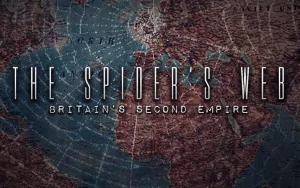
The Spider’s Web: Das Zweite Britische Empire
Robert CibisHello, my name is Robert Cibis. Welcome to a new episode of Narrative. I'm very glad, very proud, very honoured to sit here with Professor Dr. Christian Kreiß. We live in very exciting times, in times in which a lot seems to be changing, and really fundamental things. And Christian Kreiß was an investment banker and is an economist today. And these practical and theoretical, also holistic analyses, for which Christian Kreiß is known, can certainly help us understand more of what is happening right now. And to perhaps put what we observe in many media, of whatever colour, into a larger context. Because that's of course what matters to me too with the Narrative programme and with these conversations. Now I'll come straight to the point. So what view does an economist have of the current world, of what's going on in the media? Can one already read there that we're in the Third World War, or that it's just beginning or
coming? Well, we're not in the Third World War. In Germany we suffered through the Second World War with unbelievable atrocities and misery. We're still far from that, at least as far as Central Europe, Western Europe is concerned. But I see certain similarities between the situation in 1914 and today. Because in 1914 we had a situation of overproduction; mass demand hadn't kept pace, and the situation was economically extremely tense and then discharged in the First World War. And today we're facing a similar situation.
Prof. Dr. Christian KreißCapacities worldwide are much higher than mass demand,
Robert Cibisdemand. Because for about 40 years the gap has been widening in almost all industrialised countries, in many developing countries. That means mass incomes are lagging behind, mass production is going up, and to balance that out more and more debt is being taken on. For 40 years we've seen a dramatic rise in debt. In the 1970s there was still, per 1 dollar of national product, about 1.20 dollars, 1 dollar of debt. Today we're at 2.50 dollars of debt. When the financial crisis came in 2007, we had 2 dollars of debt per dollar of national product, 1.95. The debts that were too high back then have been solved today with even more debt. Briefly, just on the words. What does national product mean? That's the sum of all goods and services a nation produces, right? Exactly, I'm referring to GDP, gross domestic product, national product.
Prof. Dr. Christian KreißThat is, economic strength as it's conventionally measured. And there for 40 years we've seen a fascinating trend: that wages are lagging behind, mass wages are lagging behind, and growing economic strength is flowing more and more to the top.
Robert CibisSo we're seeing a kind of oligarchisation of the economy. And to close this gap, more and more debt has now been taken on. Both private and business debt, and above all state debt. That means we had ever, ever larger debts, and ultimately we have a situation of overproduction, and that's precisely the parallel to 1914. It's also, incidentally, the parallel to 1929, when we also had a crisis of overproduction. Really. In 1929 the… In Germany too. In Germany too. 1929 started strongly from the USA, but also in Germany. Production had risen sharply, wages had lagged behind.
Prof. Dr. Christian KreißThere was a big gap, and it was then resolved through the Great Depression, which then gave us the NSDAP, which was horrific for our country. So we had situations similar to today in 1914, 1929, and the crisis of the 1930s, that terrible depression, was then resolved through war. The Americans were in depression for ten years, from 1929 to 1939.
Robert CibisAnd through the outbreak of the Second World War the US economy was finally out of this misery, this mass unemployment. So what I want to say is that crises of overproduction can be resolved through wars. Namely, best of all by torching things in third countries, carrying out processes of destruction, which, from the point of view of the USA or Great Britain, was the case in the First and Second World Wars. So wars can be solutions for such situations. Economically speaking – people also say, you asked him briefly in between – because the First and Second World Wars, interestingly, I've been talking about them a lot in recent weeks and months. You have the feeling that you have to discuss it again and again: what actually happened there, can we learn something from it, because of course you want to know what's happening now and what parallels exist, or perhaps of course also what differences. But can one also see it economically in such a way that the First and Second World Wars are like one cycle? Because many say you understand it more easily if you take it as one narrative, so to speak.
Prof. Dr. Christian KreißYes, I would underline that very strongly.
Robert CibisIn 1914 we had a situation of overproduction, which we then had in the First World War. I'm not saying that the economy is the cause of wars. I believe wars have quite different causes than economic ones. But it was an approach to a solution through processes of destruction. But the First World War wasn't enough in terms of destruction. Because what was destroyed in Central Europe was built up as capacity overseas. Central Europe was horrific in 1919, 1920. In Central Europe, in Germany, more people died than during the whole First World War, because the Entente Cordiale let very little food into Germany and confiscated many freight wagons, confiscated ships. So the population in Germany was dramatically decimated in 1919, 1920. That means the war went on. It didn't end in 1918 at all. Letting a country starve is an act of war. So Germany was left to starve, and then the Spanish flu came on an emaciated population, a gaunt, starving population, and it then raged. Ultimately this malnutrition, this undersupply, was the reason for this dramatic mortality in Germany in 1920. So purely in terms of mortality, the war wasn't over in 1918.
So the First World War – this overproduction situation – it wasn't enough, because large capacities were built up in Australia, Japan, even the USA, Canada. Then in 1929 we had the
Prof. Dr. Christian Kreißsituation again. There are far too many production facilities, too little mass consumption; the Great Depression came, from which the USA didn't emerge until 1939.
Robert CibisAnd the entry into the war then, or rather the outbreak of war on 1 September 1939, was a kind of valve for the USA, finally to get the economy back on its feet through exports and arms spending. So once again, I'm not saying that the economy is the cause of the war,
Prof. Dr. Christian Kreißbut it was a solution. And then came Pearl Harbor, and unemployment was eliminated in the USA, and hegemony was worked out in a way, in a grandiose way. So that also had huge advantages from the point of view of domination.
Robert CibisBut what I want to say is that this cycle from '14 to '45 is actually, economically speaking, they virtually belong together. That means the problem of 1914 was actually solved in 1945, through nights of bombing in Central Europe, Hiroshima and Nagasaki. Production had in large part been flattened, and supply and demand were back in balance. So we keep trying to understand what's happening now, and of course we also look at these periods of upheaval of the First and Second World Wars. And again and again I hear: yes, you also have to see it as a cycle, historically. Of course everything is connected anyway, but what about economically? Can one say that the First and Second World Wars were one economic cycle? Well, economically I'd say yes, they belong together. Because the basic problem arose in 1914, 1910, 1900: that production had grown faster than mass wages, than demand. That a kind of cancerous growth had already begun there, namely tension in the air. Who can still sell the products, and where?
Prof. Dr. Christian KreißThis tension then suddenly of course became completely different through the First World War, through this whole war machinery.
Robert CibisBut the basic problem of overproduction wasn't ultimately solved by the First World War, because what was destroyed in Central Europe was built up as capacity overseas. And in Central Europe, purely economically, in terms of mortality, the war in 1918,
Prof. Dr. Christian Kreißin November, wasn't over. Because in 1919, 1920 more people died in the German Reich than during the whole First World War, because the Entente Cordiale had cordoned off Germany, let in little food, withdrew freight trains, withdrew ships, and the German population was tremendously starved.
Robert CibisAnd then this virus settled on top, this Spanish flu, because the population was so dramatically weakened.
Prof. Dr. Christian KreißSo from the German point of view, the war was over with weapons in November 1918, but in terms of mortality there was afterwards an even higher total mortality than
Robert Cibisbefore. And that was obviously a deliberate course of action. That means it's an aggression if you don't let food into the country. That was no coincidence. Those were deliberate political decisions by people who wanted it that way. So the problem of 1914 wasn't solved by the First World War.
Prof. Dr. Christian KreißThen came the Roaring Twenties; again production raced far ahead of mass wages. And then came the Great Depression from 1929 to 1932. And this Great Depression didn't end in 1932 for the USA either. Until 1939 they were permanently in well over double-digit unemployment. So the USA was dramatic.
Robert CibisThere are also interesting books from that time, the 1930s, The Grapes of Wrath by John Steinbeck, where he describes how the Americans fared, how the farmers from the Midwest move to California and are met with shotguns because of stealing food. Terrible conditions in the USA. And then finally, 1
Prof. Dr. Christian KreißSeptember 1939, the Wehrmacht marches into Poland, and from the US point of view exports shoot up, they rose by a third from September 1939 to September 1940. The war industry starts up, then comes Pearl Harbor, and finally unemployment is dealt with in the USA. I'm not saying that the war had that as its cause, the economy, but it was a solution to the economic problems. And that's why in 1945 Hiroshima, Nagasaki, the nights of bombing, Central Europe were the economic solution. Production had been flattened in many parts of the earth, and finally supply and demand were back in balance.
Robert CibisAnd so in 1945, 1948 we could start again with a balanced economic situation. And over 70 years we've now built up a development similar again to the one we had in 1914. So the situation is very explosive at the moment.
Now, in principle, the very simple things for small children. Overproduction sounds like a great thing, doesn't it. I'd like to have lots of things. It doesn't bother me at all to have three bicycles and two cars and two
Prof. Dr. Christian Kreißhouses. I'd like a house in the country, one by the sea and one in the city.
Robert CibisI like having lots of things. Yes, that's certainly not the most important thing in my life. But what's the problem? You can simply lower the price.
Prof. Dr. Christian KreißThe problem is that mass wages, mass purchasing power, have risen little in the last 40 years, for example in the USA, and capacity, production, has risen very,
Robert Cibisvery much more. One example: according to US government figures, the wages of American men who work full time all year round have not risen from 1975 to today in real, inflation-adjusted terms – not a cent. They've now had a wage freeze for 50 years, the American men working full time. The women have earned extra, good for them; because of the gender gap it has
Prof. Dr. Christian Kreißnarrowed. But if for 50 years the wages of median workers don't increase – that is, the workers who are exactly in the middle – it means I don't have more money for more mobile phones, more screens, more cars.
Robert CibisI can't afford more than 50 years ago. But today there are many more mobile phones, more cars, more restaurants and so on, more computers. And the difference has been financed through debt. But the super-rich would have the money for it, theoretically. But the super-rich can't keep a whole economy running. They can just have 500 cars, can't they. We can't – with Rolexes and yachts and luxury cars you can't keep an economy running. You see that in South America, where we have very strong oligarchic systems. When the mass of people are in great poverty, the economy doesn't work. No mass production, no mass prosperity. So that's – I mean, that's a very, very, very important observation. And even if I perhaps haven't heard it for the very first time now, I still have to keep reflecting and saying: yes, but I did learn about supply and demand, and the price regulates itself. Why doesn't it regulate itself on its own? Why does it take such brutal events as war for something like this to be cleared up? Well, it does regulate itself through the price. Markets are always cleared, only in the background. In the background tensions build up that are dramatic, through the widening income gap. Because the top 1%, the top 10% receive a large part of the additional returns and a large part of the population has hardly any growth, tensions build up in the background.
Markets are always cleared, at every price. Prices form in such a way that markets are cleared. But in the background these tensions are running. But that sounds like a social problem, like a fundamentally societal problem, but not at all like an economic one. Why is that an
Prof. Dr. Christian Kreißeconomic problem? Then the super-rich just need good security. They need bodyguards and fences so that the poor don't come for them.
Robert CibisBut purely economically everything should then just keep running. Yes, bodyguards, fences – we have that in South America, in South Africa, that's how it is there. Economically they can regulate all that. These really are social problems we have. This widening gap in our country too, in Germany too: unequal distribution is increasing dramatically. Today we have two million people at the food banks. Twenty years ago, I think, they didn't even exist. But because this gap is opening up, at some point we also get into economic problems, because mass production of lots of nice smartphones, lots of nice cars, of houses only works if mass demand is there. And mass demand has been lagging behind for 40 years, in our country too. And that forms a tension, what I said earlier, that supply races ahead of mass demand. And this tension – that actually can't work at all. It's bridged by debt. And if we look at the development of debt over the last 40 years, it turns out that debt has increased dramatically; it has more than doubled per dollar, per euro of national product; per euro of GDP, per euro of economic strength, debt has more than doubled. That means today we have a situation in which we've piled up a gigantic mountain of debt, because many ordinary people can no longer afford the products.
It went via household debt, via corporate debt, via state debt; this gap was closed with more and more debt. Then came the financial crisis of 2008, 2009; the debts were too high then. They were just under two dollars per dollar of national product worldwide. The debts were too high. There was a dramatic global economic crisis, the Great Recession. And the excessive debts of 2008 were solved with even more debt. Up to today. Today we have 237 percent debt. During the financial crisis we had only 195. So the excessive debts that couldn't be repaid were solved with even higher debts. And the layman is amazed, the professional wonders: how can you solve excessive debt with even more debt? It was solved via central bank policy, zero interest rate policy, money printing on a scale never seen before in history. The US central bank almost increased the money supply, the central bank money supply, tenfold in these 15 years. So today we have the situation: we have a gigantic mountain of debt, we have a huge mountain of money like never before in history. And somehow that will have to be cleared up. The system, the economic system, is as far out of balance as I've ever seen it. I'm an economic historian by background, I've dealt a lot with economic history.
A situation like today's – 15 years of almost zero interest rates, printing money – has never existed in history, and it's not in any textbook either. The textbooks say this situation doesn't exist. So the situation is unique, to put it positively, but it presses for a clearing-up. Something is coming, something has to come, because this mountain of debt, this mountain of money has to be burned off somehow. And one solution could be that the worst of all works: war, burning off. Now, I'm just saying it, although you've basically already said it: if you then destroy the services and the goods, do you also destroy the mountain of debt? That's actually illogical. I'd say that precisely the debts remain; they're just no longer secured. Well, the destruction is less about goods and services; it's about the production facilities. The production facilities are flattened.
Prof. Dr. Christian KreißAnd if we look at the end of the First World War, after the Second World War, in Central Europe, in the countries affected by war, devastated by war, the debts were gone, because the German Reich collapsed. Austria,
Robert CibisHungary – it couldn't be repaid. The debts were gone, inflated away. From 1945 to 1948, the Reichsmarks were dissolved. So the debt problem for Germany was solved through destruction. The state was bankrupt. So basically the financial system was also destroyed by the destruction of the state. And through this mega-inflation, which many know from stories – the grandpa or great-grandpa who with suitcases of money could sell his foal. That's still fascinating, that it apparently took such material destruction for the clearing-up, so to speak, to take place. One could also say: worldwide there's no more debt, there's a write-off according to some coefficient, and the money isn't worth anything any more either, and owners are redistributed. That would work. Let me come back very briefly to 1945, '50, '55.
Prof. Dr. Christian KreißIn the destroyed countries the currencies were bankrupt. A new currency was
Robert Cibisset up. The debts were gone through the destruction of war. But in the victorious countries too, the USA too, debts were dramatically reduced, because they had a burst of inflation from 1948 to 1953. And through the price rises about a third of the debt simply disappeared, similarly in Great Britain. So both for the victorious powers and for the defeated countries the debts were largely dealt with. So I want to say, economically too, war works for reducing debt.
Prof. Dr. Christian KreißBut what you've just said, a debt cut, would of course be much, much smarter and not connected with suffering; a debt cut would actually be the very,
Robert Cibisvery best thing we could do. Even the World Bank, I think a few years ago, recommended that we'd need a debt cut of 10 percent, and Boston Consulting, this hard-nosed consulting company, proposed a debt cut of 25, 30 percent. That was already after the financial crisis. So a debt cut would be a sensational solution. So all the debts of the world, so to speak. No, it would mean – let's talk here about the industrialised countries. Developing countries, it looks even worse in places. I'll limit myself now to roughly the OECD countries, the industrialised countries, also without China. So the Western world, the so-called Western world. There you could make a debt cut of 10 to 30 percent, which very conservative institutions have proposed. That would be a blessing. Then the debt burden would be either 10 or 30 percent lower. But what does a debt cut mean?
Prof. Dr. Christian KreißA debt cut means a wealth cut for those to whom the debts are owed. Who owns the wealth? Who holds the bonds, the securities, the savings
Robert Cibisbooks? That's the top 1%, the top 10%. That's a very small stratum. Wealth, monetary wealth, is very, very highly concentrated all over the earth. That means a debt cut would benefit a large part of the population, 90, 95%. But 1 to 5 percent would have wealth taken away. And they resist. And keyword lobbyism.
Prof. Dr. Christian KreißAt the moment no politics dares to take on this group of very, very rich
Robert Cibispeople. That means a debt cut is, purely politically, a no-go. I need to understand that a bit more concretely. So who would be relieved of debt? Me, who has a loan from the bank now, for example, or only the federal government or the district?
Prof. Dr. Christian KreißYou could do it for everyone. Let's assume Macron and Scholz stand up
Robert Cibison 1 January and say: as of yesterday all debts are reduced by 30 percent, or 20 percent, because as of yesterday, New Year's Eve, 31 December, the accounts can no longer be plundered and shifted to Luxembourg. So as of yesterday all debts are reduced by 30 percent. Homeowners, farmers, companies – that is, private households, companies and the state. In return, all those who hold the bonds, all those who hold debt securities, are also 30 percent expropriated, and they can't move to Luxembourg any more either. So it would be a simple political decision in the EU, possibly even Germany alone, to say: debt cut. But of course, as I said, that would mean that the bondholders, the asset holders, are partly expropriated. And then massive resistance comes immediately. These are government bonds now; there are of course also private individuals who hold government bonds, and of course that would also feel a bit unfair, because one person bought government bonds and the other, for example, has shares in a company, and the company would then be relieved, because it would have less debt, for example, and the government bonds would then be burdened,
because they'd be worth less. Right. A debt cut is of course unfair, because the different asset classes – if you have a property with debt on it, then 30% of the debt is gone as a homebuilder, or if you have 10 houses, if you're heavily invested in property, then you cheer, and someone who's heavily invested in bonds, in money securities, is hit fully by the 30%. Of course that would be unfair. Yes, yes, I understand, but that's clear. I mean, so why is – why does it benefit – who benefits from war? War – if we look again at the outbreak of the Second World War. The USA has dramatic unemployment, has had high state deficits for ten years. The economy doesn't get back on its feet, then this war breaks out in Europe, and the arms industry goes up, exports go up. And then with the expansion of the war in 1940–41 comes a huge flow. Suddenly the production facilities are all expanded, fully utilised. Suddenly there's no more overcapacity; suddenly they have undercapacity. They have to produce ammunition and tanks and all sorts of things. So suddenly overproduction is completely eliminated. So war is a valve. War is a valve that suddenly creates a surge in demand, and you can, for example, your old weapons – what we see now in Ukraine: many weapons are basically burned off and tried out, but even in Palestine you can also get rid of weapons, ammunition, and produce new
ones. That's a small valve where such a new surge, a new surge in demand comes, to utilise production. But Ukraine is too small. Ukraine and Russia – the war is too small. To reduce the imbalances worldwide, the war would have to be expanded dramatically. The same applies to Palestine. Iran would have to be drawn in there, many Islamic countries would have to be drawn in, to really trigger a big surge in demand, so that capacities are utilised without debt. So the wars are too small. That's why there are massive forces. You only need to read the newspaper, the Wall Street Journal. For a long time it said there: truce, ceasefire, Ukraine – impossible. That's a disaster. So ceasefire – on the contrary, if it takes hold and expands, arms exports go up. So at the moment there are certain forces working very massively towards expanding these wars. And in particular to plunge Germany and Russia into a conflict again, as we've already seen twice. In the Second World War, I believe, we killed over 20 million Russians. The German Wehrmacht, all the consequential damage. As the German people we've built up an enormous guilt towards Russia.
Prof. Dr. Christian KreißToday we'd have the very great task of bringing about peace with the Russian people, bringing about reconciliation, and not war rhetoric, not weapons, not delivering weapons or even missiles. I mean, some politicians, I have the impression, struggle with a rule of three. First, we deliver missiles to Ukraine. Second, Ukraine fires the missiles at Russian cities, perhaps Moscow. Third, Moscow perhaps fires missiles at Munich, Hamburg and Cologne. I mean, if German missiles hit Moscow, then it's very possible that Russia simply fires back. And that's why this counting to three – if today we send missiles with a greater range, I consider that tremendously dangerous and also tremendously unwise after the history we have behind us. I mean, Germany seems to be a very special case. This First World War already started with
Robert CibisGermany too. Germany was at war on the first day, and I was also taught at school that Germany was the cause of the First World War. There was certainly a complex situation. Looking back today I say: no idea, I don't understand it yet. I can't judge it at all. And now we have a very strange politics in Germany, where a lot is conveyed about: we're guilty, we have to step back, we also have to tighten our
Prof. Dr. Christian Kreißbelts. And at the same time we somehow have to stand side by side, like one body,
Robert Cibislike a national body. That kept coming up in the conversations about these corona measures. There you have the feeling we have to perform a kind of rite to be in the group of the national community. And then also be addicted to war. It says in the newspapers that the hospitals are already preparing for the wounded of a potential war, and not only the Bundeswehr hospitals but the others too, that it's all becoming, so to speak, a new medical care system. And above all, the base of NATO for the war in Ukraine is apparently in Wiesbaden. There are other German cities that are very important militarily there.
Prof. Dr. Christian KreißSo that already … years ago.
Robert CibisTwo and a half years ago General Breuer said he wants Germany to be ready for war in five years. And in many places I've read in newspapers that people are preparing for ten years of conflict. That corresponds a bit to these scenarios you describe. I have no scenarios.
Prof. Dr. Christian KreißI only see how tensions are building up and only see, as an economist, that wars can be solutions. Before the First World War, German politics was of an ignorance and stupidity that's really almost unique. The state secretary in the Foreign Office said in spring 1914, in early summer 1914: we've never had such good, friendly relations with Russia and England.
Robert CibisPeace is secured for good. That was the German state secretary in the Foreign Office, shortly before the outbreak of the First World War. Complete blindness. In the course of the centenary, a very good book on the First World War appeared by British economic historians. It's called, I think, The Sleepwalkers, how the nations went into it, and the question of war guilt is handled by these Brits quite neutrally: according to this book, Clark, they were all basically equally guilty. So – to come to Germany – a politics of ignorance and stupidity that can hardly be surpassed. Wilhelm II anyway, but also the political class under Wilhelm II, sensationally ignorant. And when I look at what our politicians are doing today, how they drive the war forward and even say we're already at war with Russia, and also provoke Russia in a way, verbally, instead of somehow making attempts at peace. No, it just keeps going on with aggression. Incidentally, also our foreign minister, who keeps treating China extremely undiplomatically too. The main task of a foreign minister should be diplomacy. And my impression is that diplomacy is very, very weak.
Also some intellectual achievements: countries that are 100,000 kilometres away. Or: we need a 360-degree turn. So our foreign policy and our economic policy are marked by an ignorance and a monstrous lack of knowledge. Or ignorance. That strongly reminds me of the time before the First World War. And if you deal like that with great nations, it can become very, very dangerous. How could that – how can that be today, how could it be back then? I mean, Great Britain is such a special case, actually an island state with the largest empire in the world, and they can't have had that many soldiers. I don't know the figures exactly, I don't know, I only know that more people live in India than in Great Britain, and what I do know is that if you then add all the other colonies, it was an unbelievable disproportion. How can you explain that from an economic point of view? You can hardly explain that economically. This small island in the north-west of Europe with today 60, 66 million people.
Prof. Dr. Christian KreißAt the First World War there were, I think, somewhat fewer. This small island managed in 1914 to rule a quarter of the earth's surface. That's sensational. Of a brilliance, a hegemonic strength, a superiority that's sensational. And of course Great Britain was the cradle of industrialisation, with the Spinning Jenny, with the spinning machines, looms, with the Newcomen steam engine. The cradle of industrialisation comes from Great Britain, but in 1900 Germany began to overtake Great Britain. That was also one of the reasons why this wasn't liked at all, and why people were very,
Robert Cibisvery favourably disposed towards a war. In many British circles it had been said since 1871: this competition is becoming too powerful. So that's an intellectual brilliance; you can't explain it economically. It's a strategic, far-sighted policy that was pursued with such cleverness that it's sensational. And if you set against that the German state secretary for foreign affairs, for the exterior, in 1914, of grandiose stupidity, then it's clear how the war will end and how the balance of power will turn out. And that reminds me of today.
Prof. Dr. Christian KreißOur top politicians today in the red-green, red-green-yellow coalition are in part of an ignorance, of an undiplomacy, of an ignorance. Yes, but how is that possible?
Robert CibisWe have so many clever people in Germany, don't we. Why do they get into these positions?
Prof. Dr. Christian KreißIt doesn't seem to be the selection of the most capable that rises in this system as a politician. You need very specific qualities to be flushed upwards in the system, inner qualities. That also applies to top management, that we have to be extremely assertive, to put it cautiously. The other side would be having to be unempathetic and ruthless to rise. So in this system we don't have the selection of the best and most capable in Germany;
Robert Cibison the contrary. And are the British or the Anglo-Saxons really meddling in there, or did they already do it in the First World War? Because of course that's a theory for which there are good arguments. And just practically, because we of course know these many transatlantic structures, think tanks, networks and so on, whether it's the Council on Foreign Relations or the Commission, or of course NATO itself is also a structure that doesn't only organise military actions, but is also a network. And in this network the Anglo-Saxons, especially the USA now, have the say; that's no secret either. And or the British – one sometimes had the feeling they work as if from one hand. And then the question is: was it like that in 1914, and is it perhaps also like that today, that they actually position people, that this minister isn't so stupid at all, but simply says what she's supposed to say?
Prof. Dr. Christian KreißOr likewise with the person responsible in 1914, that he too was perhaps a kind of double agent? I wouldn't want to say that; I have no idea.
Robert CibisI only know that from the Anglo-Saxon point of view a war between Germany and Russia is the greatest possible stroke of luck. I have two huge competitors and enemies who bash each other's heads in. When two quarrel,
Prof. Dr. Christian Kreißthe third rejoices. That's old, old politics, already with the Romans, but the British Empire too
Robert Cibisgrew very strongly that way. When two quarrel, the third rejoices. Trying to create quarrel and discord. There's a funny BBC series that says so too, that British politics has been really grandiosely good in that field for 400 years. So there are massive interests in plunging Germany and Russia into enmity again, because if you see it the other way round, the Eurasian plate from Novosibirsk to Lisbon – almost two thirds of humanity live there, 60 percent of economic strength is there. If we were united like brothers with Russia, or even with China, with Asia, then the USA would suddenly be a whole league lower. That's simply not acceptable from the point of view of hegemony. That means it's US policy – it's been open for many decades – to absolutely push a partition between Western Europe, Central Europe and Eastern Europe and Asia, to split them. There are massive interests on the Anglo-Saxon side – there are many documents on this – in plunging these nations into conflict, and that's exactly what's being done now.
Prof. Dr. Christian KreißAnd via the media empires, via the exertion of influence – what you just said – these institutions try to push forward, with gentle pressure or also stronger pressure, such politicians who don't act against this Anglo-Saxon agenda. And in principle one sometimes has the impression that Germany isn't pursuing a really very independent policy there, but actually does what the USA tells it. Yes, sure. I mean, it sounds so simple, pushing a wedge in there and so on, or manipulating.
Robert CibisBut it really is a real craft, getting people to do something they don't want to do at all. Because if you did a survey in Russia or in Germany – do you want war? Nobody wants war. Nobody in the whole world. So that's nonsense. Or do you want a war? And what it's about, this piece of land or that piece of land, isn't that important to most people either. And ultimately the question is also whether a national border is the actual question. We're just now in a process in which the European Union has more and more responsibility, more and more power, and the individual nations less and less. And NATO is tied up with that. It's no coincidence either that its headquarters is in Brussels.
Prof. Dr. Christian KreißAnd then the same European Union says: we want to protect the national sovereignty of Ukraine, and actually bring it into the EU, so that national sovereignty is dissolved in the EU. So that's a bit contradictory too.
Robert CibisSo there's obviously a lot of deception and cunning involved. And in history it's often the case that minorities are put into leadership positions in order to maintain tension. I researched a film in Cyprus that hasn't been fully produced yet. There, when it was a British colony, the Turkish minority – and that was about 10, 15 percent of the population – for example, the entire police was only Turkish during the colonial period. That means the majority felt, so to speak, pressured by the minority. As we know it from Iraq, where it's the Sunnis who rule over the Shiites, and in other countries it was done in exactly the same way. And that's also a legacy of this British colonial period. And are there parallels that one could draw with Germany today? Well, I have the impression that British-US policy is still very, very clever. British policy was sensationally clever up to 1914. And I have the impression it's still very, very clever today.
And German policy is still tremendously unwise, to put it
Prof. Dr. Christian Kreißcautiously. So I have the impression that similar processes are still going on in the background as we've already seen in the past.
Robert CibisMy question was implying the tension we have.
Prof. Dr. Christian KreißFor example, men are stupid, or rare sexual practices are supposed to become the norm, or something like that. That this of course meets with resistance is somehow logical.
Robert CibisBut it's also logical that it distracts from the big social questions. Because of course these are things you can argue about wonderfully for years. And you can split into groups: ah, they're stupid, or they're stupid. And whoever takes part in this quarrel has basically already lost. I mean, even with the vaccinated versus the unvaccinated and vice versa, that's in principle ultimately a pointless quarrel. And saying: ah, how could you, are you stupid, you did after all, or you're inciting, or something. I wonder whether that's colonial policy. Whether it's colonial policy I can hardly judge, but I see that a great many such tensions are being built up dramatically or are increasing dramatically in very different areas of society. With corona it was particularly strong. Now there's this topic of trans, this Self-Determination Act that was passed in the Bundestag on 12 April. There Germany is actually pretty much driving the wrong way worldwide. But the nations that have already been through it, these self-determination laws – that the hormone preparations for children, for adolescents aged 12, 13, 14 are extremely harmful, serve no purpose, aren't evidence-based – very many nations have basically long since banned them by now.
England, above all Sweden, many nations; only Germany and Scotland are still driving the wrong way
Prof. Dr. Christian Kreißin that direction. There too a very strange German policy is being made, which is supposed to be particularly upright and moral, and which is completely ideologised, no longer fact-based at all. Because when I look at other countries – since you mentioned trans, gender – at what happened there with the children, and at what the German law brings about today, it's actually a catastrophe for women.
Robert CibisEvery man can redeclare himself a woman and may then, as a woman, go into toilets, women's changing rooms, women's sport. The other countries long since abolished that again, by unilateral declaration of intent. In Spain there are currently six men who beat their wives. Now they say: we're women, and now we want to get into the women's shelter too, where our beaten wives and children are. And the legislator has to allow it, because that's the law. The law has now been passed in Germany in such a way that parents can simply rename children up to six. This is now a boy instead of a girl. This is a girl instead of a boy. What's happening there in disorientating children, taking away role models from them, is monstrous. And that sexuality is now being brought to these small innocent beings from before the age of six, who don't even know what sexuality is. So what's happening there has a completely different dimension. That has many, many reasons. On the one hand, far away from economic, from war problems. People are fighting, and someone told us, in the kindergarten where we live, a four-year-old child said: you know, don't you, that I could also be a boy – a little girl said that, a four-year-old girl. It has already arrived in Germany that small children are sexualised and disorientated in such a way, that … to a monstrous extent, and then at twelve they get freely prescribed hormone preparations that were never approved for children, that were actually approved for
adults. So what the German federal government is doing there again – this so-called Self-Determination Act from the beginning of April 2024 – is a fiasco; in its lack of evidence it can't be surpassed, in denying facts it can't be surpassed; it's carried by an ideology that is also almost unique worldwide. And if you have such a policy that causes such a fiasco here in Germany, it of course distracts from war, from the economy; there this division, this antagonism, this heated mood arises, so that there's no longer any discourse, but people only insult each other and put each other down, so that facts no longer count. Then there are the so-called fact-checkers, who are actually pretty much the opposite. So it's a sovereignty of interpretation. Whoever contradicts the sovereignty of interpretation of the big media and the government is no longer discussed, but simply defamed. So there's a heated mood in this country. It really is unbelievable, and one purpose can be precisely to distract from bigger conflicts, to distract from bigger problems. That's perhaps already war. Isn't that exactly it – a psychological operation, for example, that is part of a war?
Wars always begin with first the newspapers shooting and then the tanks. You see that with the Iraq war, you see it with very many wars. First the newspapers shoot, build up an enemy image, and then the tanks shoot. People always have to be prepared. What we see in Germany today is of course not war in the sense of the Second World War, nights of bombing, mass rape. All this suffering that we endured is unimaginable. What the Poles endured, what the Russians endured – this suffering is unimaginable.
Prof. Dr. Christian KreißWe're far from that. But I have the impression that now the points are starting to be set in this direction, also slowly breaking apart the social consensus, more and more driving people into quarrel and discord. In 2019 I published a book, The Mephisto Principle in the Economy.
Robert CibisAnd it pursues the question: if Mephistopheles from Goethe's Faust were allowed to make our economic laws, what would he do? Well, he'd do pretty much exactly what we're doing today. But it's not only about economics. If Mephistopheles were allowed to make our trans laws, our self-determination laws – well, he wants to disorientate people as much as possible. At one point he says: just despise reason and science, then I'll certainly have you. And I have the impression that more and more is being done in our country according to that motto, not only in our country, in other countries too, but here I have the impression it's even worse, even more strongly idiotised. Just despise reason and science – none of that counts any more. Only certain scientists are selected, and they get to speak. Whoever contradicts is a troublemaker, has no idea, is defamed or removed from his position. So when I look at politics, economic policy, through the spectacles of Mephistopheles, it was very, very illuminating for me what comes out. But if I now transfer that to other areas of society too, then we're very much in that territory.
Prof. Dr. Christian KreißAnd that can no longer be connected with reason, nor with good will,
Robert Cibisnor with constructive forces; it's really about degrading forces, destructive forces. How far has it already gone in Germany? How far has economic destruction, and perhaps also social destruction, progressed? Well, if I start with the economic: Germany currently has the red lantern in Europe, in the Western world; we're the country with the weakest economic growth. Recently it said in the Wall Street Journal: since 1919 Germany has grown 0.3%, the USA 7%, even Italy 4%. Since 2019. 2020, I mean. From '20 – sorry – from 2019, up to the last five years or so, Germany is the nation lagging behind. We now have about five quarters, six quarters of economic stagnation behind us, and at least three more are forecast for us. So Germany is increasingly becoming the sick man of Europe again, as we already were after the introduction of the euro. So the economic policy of red-green is already bearing fruit. This economic policy can hardly be surpassed in its hostility to the economy, because one has an economics minister who's not from the field, who has very little idea of economics. He can, I think, write children's books well, but in economics you can, I think, tell him anything.
This increase in energy prices – that we've now replaced this gas from Russia with liquefied gas – is an ecological disaster and an economic disaster. This liquefied gas, ideally fracking from the USA, that's quite an ecological mess one is making. It's shipped halfway round the globe, it costs three or five times as much. So we're thereby strangling our economy, we're burdening households with huge energy bills. These are all home-made things. One could change that very easily. Then comes the CO2 tax, then comes the heating – well, downright dictatorship – renovation. So this policy is a frontal attack on the German economy, which Mr Habeck is making here as deputy – economy, that is, in the economy. Those are also the main reasons, you say. Those are the main reasons for this stagnating economy now. So why Germany is now standing out downwards in performance, I'd say, is overwhelmingly due to home-made reasons of a completely incompetent economic policy. That's precisely the big question I ask myself too, because I've now also – I mean, it's not that complicated, and even if he had no idea of economics, he could ask an expert.
It's not as if – they're allowed to, they have experts galore and they can choose them too. He can ask even more experts than I can, because that makes it – so I wonder whether this incompetence theory really explains it, or whether one has to suspect a deliberate decision there after all. Well, I'd call it ideology. Ideology – you can get experts for everything. You get the CO2 tax and against the CO2 tax. You get pro-organic farming, contra-organic farming. You get experts for everything. For every expert you can always get the opposite position. And then ideology – green ideology, above all SPD and Greens, red-green ideology – is a very specific thing, and experts are picked out in a certain direction, and they tell you: this is how you have to do it. But let me take an example. Why I'm asking the question. Of course I understand that.
Prof. Dr. Christian KreißOne has one's – in new German one says bias – one's prejudice, and selects accordingly.
Robert CibisI do that too. If someone now says green economic policy is counterproductive, I think: clever man. If I came from somewhere else, from the other camp, I might see it
Prof. Dr. Christian Kreißthe other way round. But now one has to consider, apart from this question, one first has to get to that point. For me, for example, the Greens stand for environmental protection.
Robert CibisOnly quite differently. I'm a great friend of environmental protection. I think it's really great and I'm also prepared to have less myself if there's a flourishing nature in return, because I benefit from that too. And not only me. I'm also glad when others benefit from it. Only I don't see much environmental protection in green politics. I see this CO2 tax, I see the heating law, which again means new buildings.
Prof. Dr. Christian KreißWhen you build these wind turbines, that first means letting concrete flow deep into the forest, cutting swathes into nature, organising the access roads, infrasound exposure.
Robert CibisWe recently made a whole Narrative programme on that with Ms Bellot. So there are many environmental burdens connected with many decisions. Whenever you change something, change the energy system, there are additional environmental burdens. And then I think: this isn't environmental protection at all, all this CO2 stuff. And if you really engage with it, it's something else too. It also comes – when you see who the drivers are behind this CO2
Prof. Dr. Christian Kreißharnessing – it also comes from the USA, from Silicon Valley, and from the oil industry; so these are things that aren't so green at all in
Robert Cibistheir origin. And then comes the moment when I say: is it really only ideology, or how do they come up with this CO2? Mr Habeck's ministry isn't called the Ministry of Economics; it's called the Ministry for Economic Affairs and Climate Action. That already says it
Prof. Dr. Christian Kreißall. It doesn't say nature conservation there; it says what they mean, which is that we emit less CO2. I used to be an activist with Greenpeace, gave over 100 talks in the forest group, for fewer cars, for more environment. I was also briefly a member of the Greens, and today I have the impression they've downright betrayed their foundations. Now this wind turbine policy – Baden-Württemberg, for example, entrepreneurs told me recently – is now being forced to really cut swathes into ancient forests and then put up wind turbines, which is an ecological disaster, cutting down old forests, because Württemberg is so densely populated. And also these wind turbines, which only turn when there's wind. And when we have a dark doldrums, this whole policy is complete nonsense. At the same time I have to maintain the infrastructure with gas, coal, perhaps even nuclear power stations, if there still are any. I have to maintain that at the
Robert Cibissame time. In my opinion it's not a thought-through concept, and in many respects I have the impression they've really betrayed their foundations. Isn't it sabotage – that's the question. Actually my question is: is it sabotage, or is it really just stupidity? Well, either stupidity – I find it downright betraying the foundations. We now have a Green agriculture minister; in 2022 a study by the federal government with excellent experts on German agriculture was published, which says we have external effects, that is, harmful effects beyond agriculture, of 93 billion euros per year, without factoring in damage to health. A gigantic
Prof. Dr. Christian Kreißamount. One would have to immediately – for example, one could change VAT: organic farming with zero VAT and non-organic farming with higher VAT. You could change it immediately.
Robert CibisYou could impose a levy on fertilisers, on pesticides, on herbicides and so on. You could slowly, slowly tax away all this damage. What does red-green policy do? It doesn't do it. Yes, but that's a good example. Cem Özdemir is an alumnus of the German Marshall Fund; even as a young politician he had close ties to the USA. And we don't have to answer it. I'm only asking the question. Of course I don't know either. I don't know what goes on in these people. I found he always seemed so likeable when I saw him on talk shows, back then, ten years ago or so. Today I have a different picture, but there's definitely a very big transatlantic connection there. And when I now think of 1914, the stupid Germans, and this British empire and all the know-how that obviously, with the USA, that is interwoven with the USA, I ask myself: how can that come about? How can people act so against the interests of their voters?
Prof. Dr. Christian KreißThat really is a puzzle. Politicians in Germany act to an extent – the female politicians above all – against the people here in our country. That's really monstrous. I don't know what agenda they follow, where the agenda comes from, whether it's ideology. But the fact is that this agricultural policy, which we've had for decades, is massively harmful, and that with a Green environment minister, agriculture minister, one could finally change it immediately. And it isn't changed.
Robert CibisAnd a great many measures, this wind turbine policy, this CO2 policy – I think three or five percent of global CO2 emissions are anthropogenic. And then to say that this is the only criterion for global warming – that's very questionable; there are certainly many components. So either it's ideology, an agenda, or it's stupidity, or I don't know what. But it's damaging our country in a way. And I also have the impression again and again: everything that is bio-German – that's an expression from a colleague – that there's a shame there, a worry, an aversion perhaps growing out of historical guilt, an aversion to the country, to the people. I sometimes can't explain it, downright as hatred of this country, as aversion to this country. It's very strange how much it's damaging our economy at the moment, how much it's damaging our ecology, how much it's damaging our children, how much it's damaging our women through insecurity from these new laws. So it really is a red-green policy, and I have the impression it comes very strongly from the Greens, or from red-green.
It's simply a terrible damage to our country. And why, I can't answer. I only see that it's so; whether some forces are at work in the background, or whether it's ideology, I can't say. It can also be a mixture; we live in a complex world, and it's of course the case that one probably doesn't work without the other anyway. You can't manipulate millions of people by bribing them individually. Nor can you, so to speak –
an ideological, self- reinforcing movement that is perhaps completely detached from reality – that too would be exploited by people who say: I can use that to sell my product, or to harm this population, or out of some other malicious intentions that see their own advantage. So it's clear that stupidity is instrumentalised, or ideological pig-headedness is instrumentalised. And which came first is actually an idle question, which one may never be able to answer, because of course it will and must all always be simultaneous. But nevertheless it's important to name it, I think. I mean, I did a Narrative programme with William Toel, who – I never quite know where he knows that from, but he's also an economist – and he just said: yes, after the Second World War experts with lots of means met in Great Britain in a villa for weeks and worked out a plan for how to prevent Germany from ever becoming strong again. And repeatedly putting the Germans' own guilt before their eyes was one means, he said.
So that plays into it too. I can well imagine that. That's also a kind of psychological warfare, saying: you're weak, you're guilty. Now I'm the tough guy, I have the say, I take the reins, follow me. And that this works at the same time with economic or military and so on – yes, that doesn't seem illogical now either. The historiography we have is very, very one-sided and is very strongly driven or shaped by the victorious powers, very strongly. And if you look at history after the Second World War – Dirk Müller once called it: the Moor has done his duty, Dirk Müller, that stock market expert – Germany was basically, West Germany was needed as a buffer against the Soviet Union, against the Soviet empire, against the eastern empire, as a buffer, as a showcase country too: look, capitalism is better. Up to 1989, 1990 there was certainly, from the point of view of hegemony, this ideological war too, the confrontation then with Khrushchev and so on; it was convenient, one had to show that capitalism is good, especially in divided
Germany. And Dirk Müller named it: the Moor has done his duty. The division is over, the Soviet Union has collapsed. So, now we don't need that any more. Now we don't need Germany any more either. Now it's the front-line state together with Poland against Russia. Now we no longer need to promote Germany. And Poland may now take on this role too. Poland is now the front-line state, and perhaps it's then more the showcase of the West than Germany is today. So you see certain endeavours in the post-war period: what is useful, what is useless from the point of view of hegemony. And that turned dramatically in 1990 with the collapse of the Soviet Union. Now one no longer needs a flourishing Germany; now one can weaken Germany. And I mean investment bankers, the Americans, the private equity funds are sitting on gigantic millions, they're sitting on trillions; investments are looking for capital on Wall Street, but also beyond Wall Street, and if a German economy, a German Mittelstand is now weakened and has to give up and goes down in price, those are very, very cheap buying opportunities. After the Nord Stream 2 blast, the American secretary of state said: that's a great opportunity.
Nord Stream, great. Now the German economy is being weakened, wow, we can buy up nicely there. One keyword is land grabbing, that's well known. And you can also do company grabbing. If you weaken a country economically, properly, through high energy prices, through conflicts, then you can buy up wonderfully. So great opportunity, Nord Stream 2, wonderful. The American secretary of state, Blinken. When did he say that? I think a week after Nord Stream was blown up. I think it was a few days afterwards. So there certainly are interests that say: wonderful. Germany is doing badly; so that was articulated from the highest political level, and one sometimes has the impression: we don't need Germany any more, and certainly not as an economically strong force; on the contrary, now we can slowly try to buy up. I mean, also if you look at who owns the DAX companies – I think the DAX companies are 11% in German ownership; I think the DAX companies are mostly in Anglo-Saxon hands. That's the German stock exchange, so that's of course a bad figure. So I mean, that is, the model has actually long been that east of the Rhine, or somewhere east of Europe, one has a people of helots, or nations of helots, where one does land grabbing, company – helots means dependent people who work for you.
The profits are then shovelled to the owners who own the companies, who own the land. Zelensky once rang the opening bell of Wall Street, virtually on screen, and said: hey, buy us – 300, 400 billion dollars after the war – buy us, buy our land, buy our companies and we belong to you. And everything that's earned as profit then flows to the owners. Yes, he said it openly, Zelensky. And the model is brilliant. So if you own the German companies – but these stupid Mittelstand firms, they don't sell. In Germany very little is publicly listed, yes, investment banks; if in Germany we only have a few hundred listed companies, the private ones, you can't buy any of them. Aldi, Lidl, Bosch – you can't buy any of them. There are many, many hidden champions; every second hidden champion on earth comes from Germany. And if you get them, if you buy them up, wow, that really is big business, it's a great opportunity, to speak with Blinken, yes. So weaken Germany economically and then do company grabbing and land grabbing too. Vonovia too was very strongly driven by Anglo-Saxon investors, so land grabbing too. Great, one buys up. That applies to Germany, applies to Poland, applies later to Ukraine.
It was planned for Russia too, until Putin came along back then and said: stop, I don't want that. And Mr Yeltsin, he said – he buys us.
Prof. Dr. Christian KreißPutin then said no; as far as I know, the Americans didn't like that
Robert Cibisat all, that land grabbing suddenly no longer worked. And Zelensky, a willing henchman. So the policy is actually old; it's also reasonably well documented. That sounds like a power struggle of the super-rich, an oligarchic system. But somehow of course it also sounds, like the other narrative already, as if the market economy has been dissolved to a certain extent, because, because, because people are in such powerful positions that they have politics in hand, or the hand has the people in hand – so who knows, independent, they work together and do all this, which harms whole nations, harms the whole population. Just as food for thought: I recently saw an interview with Yanis Varoufakis, and he said: yes, he sees that there's a very big fundamental change; the economic system is no longer the same; capitalism as we know it no longer exists even now, because the platforms, especially the digital platforms, have acquired such great importance that they already have a feudal character because of their size, and through networking; and the system is also quite different from when people, for example, own land or own houses, because it always draws something out of the system, no matter how big or
small the system is. I gave the example: if you rent a shop and then want to sell products, the landlord doesn't normally have a share of turnover, but simply has the rental income. And that depends on the size of the shop, so also on his effort to a certain extent. And a platform like that is something else. There everything is always exponential. So you get – the App Store simply gets 30 percent of the app's revenue. YouTube gets around 70 percent of the advertising revenue. And those are simply large sums that are always drawn out of the system by these platforms. And these platforms also have public- law, that is, state support. So the US ones are supported a lot by the state, and vice versa. So do you see it that way too? Do you also see that there's a change of system? We're moving more and more away from a market economy towards a power economy, more and more away from a democratic, social capitalism such as we had, a social market economy, towards an ever more antisocial, aristocracy-driven power economy. The concentration of power is increasing. All kinds of studies in the most diverse sectors show that too, whether agriculture, big industry, agricultural machinery manufacturers, or Pfizer and co., the pharmaceutical industry; the concentration in the individual sectors
is rising. It's especially strong with the IT platforms. There individual companies have an almost monopoly-like position worldwide. So you see generally that we've had a strong process of concentration for some years. There are also very good studies on this, by Oxfam for example. The Wall Street Journal too muses: strange, why does the profit ratio keep going up? The profit margin today is clearly higher than in 2019 for the big companies, for all companies, but driven by the big companies.
Prof. Dr. Christian KreißSo the concentration of power is rising, and if we then have, for example, companies like KKR, BlackRock, Vanguard, which in turn are all invested in the airlines, in the big companies, they say: well, maybe one does a bit less competition, one pushes the profits up
Robert Cibisa bit more. So the owners behind it – it's not in their interest to have very strong competition.
Prof. Dr. Christian KreißAs I said, the Wall Street Journal puzzles over why profits keep
Robert Cibisgoing up. So the profit ratios rising ever more strongly, more strongly than in 2019 for example. So we see processes of concentration of power there, and what I said at the beginning: that the gap is widening, that more and more prosperity is moving upwards to an ever smaller aristocracy.
Prof. Dr. Christian KreißThat's a very great worry for me, that we're heading in that direction, that we're heading into a South Americanisation, where a small elite in principle has an ever larger share of land, of means of production, but of IT technology, of wealth – that we're running more and more into such an aristocratisation, on the South American model, which is also undermining democracy more and more. Because people like Bill Gates or all the billionaires who appear publicly in public broadcasting – nobody ever elected them. It's completely undemocratic that people with such enormous financial power suddenly get forums and are allowed to proclaim their opinion.
Robert CibisAnd through lobbying, hundreds of millions – George Soros, for example, has a fund with 100 million and has been promoting the trans scene for many, many years in a brilliant way – that individual people who were never elected by anyone determine social processes to such an extent. It's outrageous that politicians then only lag behind, because all the expertise has long since been prepared over decades. These are profoundly anti-democratic developments that we've seen over the last 40 years, which have intensified dramatically once again with corona, which have intensified dramatically once again through AI, through this IT technology, this aristocratisation, this concentration of power. And I fear that slowly, slowly democracy is being undermined further and further. Especially in the media the concentration is dramatically great. There are perhaps ten big media corporations that control
Prof. Dr. Christian Kreißalmost everything. Almost all in the hands of multimillionaires or billionaires, or in the hands of the state, of states, so that actually nobody can contradict the billionaires' and the state's opinion any more. So we see dramatic processes there which in my opinion are very dangerous for democracy. And I believe that's also the plot behind it. Few people taking more and more power for themselves – keyword Davos too – taking more and more power for themselves.
Robert CibisAnd if we don't wake up there, if we don't change that, then we'll perhaps wake up, and our fine democracy, which worked quite well, at least reasonably in Germany after the Second World War, will then hardly exist any more, because these processes of concentration of power have become so dramatically strong. I understand that. And if very few people are so rich that they have so much influence, then it's of course undemocratic per se, no matter what they want, no matter what they don't want, even no matter whether one votes or not, and so on. But I see still other developments that make me ask what system we actually are. Because the system with the super-rich wouldn't be democratic, but it would still be capitalist.
Prof. Dr. Christian KreißCapitalist in the sense that whoever has capital gets more and more capital.
Robert CibisAnd this logic of accumulation goes on and on, on and on. And that's just the system. We have a situation in which these platforms, for example, sometimes have a quasi-public character and also act against their own interests. For example criticism of the government on YouTube – we know that very well today since 2020, mainly with corona, but now today very much with the war with Russia too, and back then also with the questions of election manipulation in the USA. Those were three big topics where an unbelievable amount was censored in the Western nations. And this censorship was directed above all at criticism of the government that went viral. So if a video, for example, got more views very quickly, then it was censored. If you now make a video and it has no more than 5, 000, 10,000 views, and it's only very slow, perhaps in the number of rising views, then it wouldn't be censored either. I observed that precisely, with our projects too. And incidentally that's how it works in China too, I was told – that the speed at which the video spreads is a big factor in censorship, not only the
content. That's against the interests of the platform. The platform would precisely want videos to go viral, lots of traffic to come, lots of users to come, for them to leave their data there, so that it can increase advertising revenue because many videos are watched a lot. Of course it would also have been in the interest of ARD and ZDF to hold these famous debates, to invite the biggest critics. It's clear that they'd have had even higher ratings and also more publicity, so also more prestige. So they all acted against their own interests. And yet one attributes so much power to these platforms. That doesn't really fit together in my head. Well, when it's about economics or power or hegemonic interests, economics has always taken a back seat. There are higher goals than economics. Economics is actually only the stirrup-holder for the interests of power that stand behind it. You can see that in history too, in the USA or England too. When it came to military deployments, economics always had to take a back seat. They had to accept price freezes and all sorts of
Prof. Dr. Christian Kreißthings too. So there are higher things than economics, and therefore business – that has always been so, it's long been so in many cases – that it's only about profits and enrichment as long as that works politically and in terms of hegemonic politics, but when the – hegemonic politics always stands higher. Who is that, then? Because we'd say, we'd wish, the sovereign is the people and it has the say, and the politicians speak for the population. And what we're describing contradicts that totally. Well, it's a bit more reminiscent of China. China is the CCP; the party says which way to go, and economic interests have to subordinate themselves. And I increasingly have the impression, in Europe too, when I look at the Davos agenda, that it says something a bit similar. We want the good for everyone; you'll own nothing, but you'll be fine, you'll be happy. Then I ask myself: who owns things then? Who is the owner? So you only need to look at the Davos statements. There
you see it's not about
Robert Cibiseconomics. Economics is always only the stirrup. What kind of system does China have anyway? Is that a market economy? Is that capitalism? So again, I didn't actually say just now what Varoufakis says: he says techno-feudalism, that's his word. That's a good one.
Prof. Dr. Christian KreißTechno-feudalism, so in the West; in China it would be CP capitalism, that is, state capitalism; I find that very good too.
Robert CibisI mean, the agenda has existed in principle since Karl Marx and Engels – Stamokap, state monopoly capitalism. That was already a discussion in the Empire, that one says: we don't want the social contradictions
Prof. Dr. Christian Kreißto be bridged. We want the system of capitalism to go really turbo.
Robert CibisThen the big corporations will buy each other up more and more, monopolise more and more. And in the end we'll have just a few very big monopolists; we have to nationalise them, then we have everything. So this Stamokap, this state monopoly capitalism – then we have it in our hands. And then we have the say. We means the population. We means: in the name of the workers we then make a policy like the one Stalin made.
Prof. Dr. Christian KreißThat one man, with the cruellest dictatorship against his people and against everyone else's will, simply pushed it through.
Robert CibisSo the Soviet Union was anything but even a breath of democracy. But that's clear to me. But was that really Marxist, though? Was Stalin really Marxist? I know too little about Marx for that, I know too little about Marx, because the Chinese too still invoke Marxism, but at the same time they've allowed a dramatic capitalism: enrichissez-vous, enrich yourselves, build up capital. So China is a very strange construct.
Prof. Dr. Christian KreißI only know this pretext – and then we'll look after what's best for you – we've already had that once in the
Robert CibisSoviet Union. Basically it's, so to speak, a logic from above, that is, a top-down logic, where one says: the logic of concentration, the logic of accumulation, we take to the extreme and take on the role of the state. Basically it's like this: that the super-hyper big capitalists have built up in state structures and then are the government themselves. That's how it seems. Well, I'm – my colleagues told me: Robert, do post something on Twitter now and then. It's called X now. Now we'll do that again in a few weeks.
Prof. Dr. Christian KreißEarlier I thought the platform was so mean, so to speak, so senseless in its censorship logic, that I took a break there for a few years.
Robert CibisAnd what surprises me very much and impresses me very much is that I always get the posts of Elon Musk. But I haven't subscribed to him at all. And, and he comments on politics quite regularly. So what he says is sometimes totally interesting, I find, and sometimes I don't – so that isn't what I want to discuss at all now, but the interesting thing is that he appears to me as a political voice, and that it's as if – as when I hear a speech by Olaf Scholz or Alice Weidel or Sahra Wagenknecht or I don't know whom, that's how I then always get – I then always get that voice. It's – and he really speaks as someone socially responsible and not as an entrepreneur. I never get the voice of: yes, we're now making so and so much profit or loss this quarter, or we now want to expand this area so that these products get better. He never writes that. He only says: is this law good, then, that they want to push through in Austria? Is this measure in Great Britain really sensible? So these are social questions.
Prof. Dr. Christian KreißSo we see how a billionaire who was never democratically elected by anyone can exert massive political influence. But that doesn't apply only to Elon Musk; it applies to almost all billionaires. In the 2022 election campaign, in the US midterm campaign, one billion euros of campaign donations from billionaires flowed into politics. So there are these one billion dollars of campaign donations in the USA, which came overwhelmingly from billionaires. So it's very hard to govern against these billionaires any more, because they sponsored you in the campaign, and if you don't do what they say, then you won't be sponsored any more. … In Germany too, the party donations are very, very large, and if suddenly the tap is turned off – or with media, the donations to Spiegel or such from big altruistic, seemingly altruistic donors – well, those are pretty much Trojan gifts. So, but I think that's where it's heading: that relatively few very, very powerful, economically powerful people increasingly instrumentalise the state, the state institutions, and one still calls it democracy and also lets people vote between A and B, but both are multimillionaires and ultimately aren't that far apart in their opinions.
One has the impression that really, from behind, out of this oligarchic structure, slowly but surely the media are made the same, the big corporations are made similar, that it's all nicely shaped in a certain direction, and that one then says with a raised index finger: yes, we still have opinions A and B here; the Chinese don't, the evil Russians don't either – but how far apart are the opinions still that are permitted? Where does the defamation already begin? That goes very, very quickly. So with us there's a kind of velvet glove over it, but behind it there's a pretty hard fist that hits you immediately if you shake the other velvet glove a little. Whereas in other nations it's more obvious. I'm not saying now that Turkey or China, Russia would somehow be better in human rights and press freedom. Not at all. But to believe that we have great press freedom and freedom of opinion is a great illusion. The defamation begins very quickly
Robert Cibisthere. And scientific discourse has declined to an extent that I wouldn't have thought possible even five years ago, seven years ago. And is it getting worse and worse? That's also the question. We already know that the crisis of 2021 had serious consequences. But now we're only in 2024. Has it got even worse since then, or has it stagnated, as far as the crisis of science goes? Well, in science we see a homogenisation,
Prof. Dr. Christian Kreißto put it cautiously. So a cutting away of other opinions; that has been extremely accentuated again since 2020.
Robert CibisBut not only in the field of health, not only because of corona, how can I put it about corona. Whoever now has a different opinion on Putin, on the Russia war, immediately gets problems. More. I don't want to politicise. And Palestine: whoever has a dissenting opinion – it's no longer discussed, it's immediately defamed. With trans, it's not discussed, it's immediately defamed. So scientific discussion too has,
I find – I switched into the field of science 21 years ago – has changed dramatically over the last 21 years, and above all in the last five years changed dramatically, narrowed dramatically. Really plural research is greatly reduced, also economically, also through third-party funding, through funders. So free research in the sense of: what do I want from my heart, what do I want as a researcher, what do I consider important for society – it's much, much harder today than ten, twenty years ago, because the financial flows also go massively into science, go to the universities; there are also such – That's incidentally also a way of thinking; it's also the economisation of the whole picture of thought, which I only recently learned, although I'd already researched so much on it. For example – unfortunately I don't know for every country in the world, but in the USA the figures are, as so often, clearest – when a hospital had prescribed this drug Remdesivir, it got 20 percent of the expenditure for the drug – and one treatment there cost 3,000 dollars – additionally from the state, that is, gifted by the taxpayer, as additional bonuses, only if they took this drug and not the other. Yet that was the expensive one, and the one that hadn't worked so well. And so on. That's with these gifts of money, steering things everywhere.
That has become a kind of logic that apparently affects all areas by now. In Austria they're now discussing that, instead of compulsory vaccination, people are simply transferred 100 euros if they get vaccinated, for this one vaccination.
Prof. Dr. Christian KreißThat's also – that's actually the same thing, which is also against debate.
Robert CibisAnd then of course I ask myself: who doesn't want to debate this? Why don't people want to argue? Is it perhaps because they have no arguments, or are doing something that's against people's
Prof. Dr. Christian Kreißinterests? Well, if you have the model that there are a few oligarchs
Robert Cibiswho slowly, slowly want to establish an oligarchic system, then that's pretty clear. That's the opinion of the oligarchs; they don't always get on with each other either. Elon Musk, for example, says of George Soros: there is no good, he hates mankind. So he says of Soros: hates mankind. There's nothing good behind it, behind his funds.
Prof. Dr. Christian KreißSo among the oligarchs, among the billionaires, there are often contrary opinions too, yes, in various fields.
Robert CibisBut I have the impression the plot really runs via Davos, where that also keeps coming up: that this concentration of power towards very, very few people who gain dramatic influence – that all in all they then still allow a certain range, especially if they should ever quarrel among themselves. But in principle: we're the good guys, we're rich, we've built things up, and we know what's good for mankind. That's a bit the world view that comes through there and is also being dramatically implemented. Yes, I mean, you can also see that in the fact that politics is no longer national but international. I mean, I can't hear Mr Biden on German politics now, the president of the USA, but Elon Musk comments on it. He feels responsible for the whole world. Or the WHO. There are many supranational organisations by now that then also try to weaken or dissolve national rights, at EU level too. So of course it's a wonderful mechanism if I think oligarchically – a small, well, aristocratic group,
Prof. Dr. Christian Kreißa moneyed-aristocracy group. Such supranational organisations are of course brilliant for that. You donate dozens or hundreds of millions to them, staff the researchers too, select the researchers who are especially friendly to big industry,
Robert Cibisto capital. And the other researchers, unfortunately, unfortunately, don't get a word in; some of them don't even get their doctorate, against certain basic assumptions – I can only speak about economics – if you violate certain basic assumptions, profit maximisation, …, then you won't even become a doctor, let alone get your habilitation, let alone become a professor. The selection mechanisms are brilliant, so that only a certain mainstream opinion works. I don't even have to pay much for science. They're pretty cheap. Will this system hold in the long term?
Prof. Dr. Christian KreißI have the impression that China is pretty stable. I think it's possible that a system can certainly hold. Yes, that's quite a nightmare for me, but I don't believe that the systems are unstable. A wonderful example of that is the Mafia. It's inhuman, corrupt, horrific and extremely stable. There are systems that are contemptuous of human beings and extremely stable. The Mafia has existed for centuries. And it's possible that we'll get an absolutely antisocial system that is nevertheless enormously stable.
Robert CibisThe Roman Empire at the end, over many centuries too, was decadent and morally run-down, rotten in that way. In the Circus Maximus they burned hundreds, thousands of people, massacred them, and the audience cheered. They were glad that people bled to death before their eyes, burned. So the Roman Empire was tremendously decadent. This Colosseum is a blot on humanity. But it remains stable for centuries. So a system that is antisocial and contemptuous of human beings by no means means that it couldn't be stable. That's hard to hear, but it's logical. Now of course the question is whether the only argument that speaks against it, against this stability, is that those who are ruled are very many, and those who rule are very few. And that this difference in the mass, in the number of people, also brings with it a difference in power. And what is property anyway? Property is only property if everyone accepts it. If the majority doesn't accept that this super-rich man has this house and this house, and says: no, he mustn't have more than three houses, he can't have 300 houses, then that would certainly be changed, because the majority of people would then demand it.
I believe it's very much a process of consciousness. I believe that we humans today have to recognise things, see through them, and then transform.
Prof. Dr. Christian KreißSo I actually see the time more as a challenge. I'm not that pessimistic either.
Robert CibisI believe that we can grow from it, that we can learn from it, see through the processes and say: wait a moment – and that we then concentrate back on the real values: what really matters in life in terms of forces of the heart, love of one's neighbour, family, basic values; that this is now downright an attack on many, many values, and also, for example, on finding the truth – so much fake news, you no longer know what to believe or not; it's a challenge to find out what's really true, with common sense and great awareness to find out what's really true, what this or that broadcaster perhaps wants to make me believe, and then also a return to these
Prof. Dr. Christian Kreißvalues. So I see it positively in that we can grow
Robert Cibisfrom it, that we can wake up from it, and if we recognise that and really then say: but I want to do it better – then we can also transform the system from within, because we all feed the system with our energy, not only with money, with our purchasing power for this and that product; we also feed it with our strength, with the strength of our hearts, with our strength of spirit, with our power of thought; we feed it on many levels. And if we become aware of that – wait, this is going in the wrong direction, I want to go in the human direction – then we can take part of the strength out of the system, and then it can also collapse. Because it lives from our strengths, from the strengths of our hearts, from the strengths of our spirit. And I see that as the great opportunity: that hopefully it won't come to this process of oligarchisation and the dissolution of democracy, but that people wake up to it and say: no. I mean, this process has already taken place. The oligarchs exist; the concentration of capital is enormous, as great as never before – you set that out very well at the beginning. But of course, if you have so much distraction, so much …, and nevertheless know – you do have to know what's real – and then really manage that too, then of course you've grown and are also armed.
That's also a protection, if you can deal with it. And the means – the individual also has more means. I can research better today than 20 years ago, because I have much more access to information, and I can ask people I perhaps don't even know, but at my end of the world: is that true or isn't it? And what do you know about it? And form a research group, as has actually often happened for me in recent years. That's great, of course; those are possibilities that didn't exist to that extent before this digital world. They did exist, of course, but only for the privileged. But today almost all people in our country have that – let's say, the Third World, in our country very many people. And if we go through this deception, through these many false reports, but also go through pain, through pain, through suffering – one can grow from pain and suffering. Real insight ultimately comes from a process of suffering; real insight has to do with strength and courage.
Prof. Dr. Christian KreißAnd that's why in this field too I see it as a challenge; I see it – it doesn't look very good, I find, how it's all bunching together, these forces, this capital, these high debts, this high mountain of money, what's going on in Ukraine, what's going on in Palestine. I have the impression it's concentrating, and it may be that somehow a blow will come; I don't know what's coming. But we can grow from these things – in insight, in courage, in strength – look, not look away, and also learn from this suffering, and then first transform ourselves, or slowly, slowly purify ourselves. And then, starting from that, we can also transform society. And then we have the great opportunity to really build this society the way we really want it, so that it can really come from the heart and be human.
Robert CibisThank you very much for these beautiful words and these valuable thoughts, and for the great arc, which I'll now sum up for myself in one sentence to close. Yes, there will be a third world war. At least everything looks that way. How it will then be carried out, whether there really will be bombs or so, is completely unclear. But it's conceivable.
Prof. Dr. Christian KreißThe energies are going in that direction. There are other kinds of destruction
Robert Cibistoo. And we've seen that; the last three, four years were destruction. We've seen it, we discussed it, we discussed it using the example of the German economy: how one can destroy without bombs falling on private houses. But it's going in that direction, so to speak; there's further destruction.
Prof. Dr. Christian KreißAnd the power of course lies with those who carry the system, and all citizens carry it. Because only through the added value they create, through work and development of projects and products and so on, do all the others live. The Mafia lives that way too.
Robert CibisAnd to work out this self-confidence, to maintain it, to defend it, is no luxury, but it's, so to speak, the condition for an evenly balanced life. That's how I understand what you're saying. I didn't say that it will come to a world war. Yes, that's right. I said that. I said that. For me that's correct. I say we can wake up from these processes and recognise that.
Prof. Dr. Christian KreißEven if we go through pain and suffering, one can grow from it. And then transform, transform from within, from the heart. Right.
Robert CibisThat's clear to me. I said something else.
Prof. Dr. Christian KreißYes, well, with these reflections I also wish the viewers a good day. Thank you for being part of the discussion. And of course I'd be grateful for comments and thoughts on it too, gladly also on our website below in the chat.
Robert CibisAnd I simply also want to know from people whether they really feel that they're changing something, or that they have themselves under control, or whether they experience the opposite, namely that they're being used and somehow can't get out of it. I know both moments, but I don't know so well how it is for most people. So thanks again and have a nice day.
Robert CibisHallo, mein Name ist Robert Cibis. Herzlich willkommen zu einer neuen Sendung Narrative. Ich bin ganz froh, ganz stolz, ganz geehrt, hier mit Professor Dr. Christian Kreis zu sitzen. Wir leben in sehr aufregenden Zeiten, in Zeiten, in denen sich viel zu verändern scheint, und zwar wirklich Grundlegendes. Und Christian Kreis war Investmentbanker und ist Wirtschaftswissenschaftler heute. Und diese praktischen und theoretischen, auch ganzheitlichen Analysen, für die Christian Kreis bekannt sind, können uns sicher dabei helfen, mehr zu verstehen von dem, was gerade passiert. Und das, was wir in vielen Medien, egal welcher Couleur, beobachten, vielleicht in einen größeren Zusammenhang zu setzen. Denn darum geht es natürlich auch mir mit der Sendung Narrative und mit diesen Gesprächen. Jetzt will ich mal mit der Tür ins Haus fallen. Also, wie ist jetzt der Blick eines Wirtschaftswissenschaftlers auf die aktuelle Welt, auf dieses Mediengeschehen gibt? Kann man dort schon lesen, dass wir im Dritten Weltkrieg sind oder dass der gerade beginnt oder kommt?
Also im Dritten Weltkrieg sind wir nicht. Wir haben in Deutschland den Zweiten Weltkrieg durchlitten mit unglaublichem Gräuel und Elend. Da sind wir noch weit davon entfernt, jedenfalls was so Mitteleuropa, Westeuropa anlangt. Aber ich sehe gewisse Ähnlichkeiten zwischen der Situation 1914 und heute. Denn 1914 hatten wir eine Situation der Überproduktion, die Massennachfrage hatte nicht Schritt gehalten und die Situation war ökonomisch extrem angespannt und hat sich dann im Ersten Weltkrieg entladen. Und wir stehen heute vor einer ähnlichen Situation.
Prof. Dr. Christian KreißDie Kapazitäten weltweit sind sehr viel höher als die Massennachfrage,
Robert CibisNachfrage. Denn seit ungefähr 40 Jahren geht die Schere auf in fast allen Industrieländern, in vielen Entwicklungsländern. Das heißt, die Masseneinkommen bleiben zurück, die Massenproduktion geht nach oben und das ins Lot zu bringen, werden immer mehr Schulden gemacht. Wir sehen seit 40 Jahren einen dramatischen Anstieg der Schulden. In den 70er Jahren waren noch pro 1 Dollar Sozialprodukt, ungefähr 1,20 Dollar, 1 Dollar Schulden. Heute sind wir bei 2,50 Dollar Schulden. Als die Finanzkrise kam, 2007, hatten wir pro Dollar Sozialprodukt 2 Dollar Schulden, 1,95. Man hat die damals zu hohen Schulden mit noch mehr Schulden heute gelöst. Kurz rein von den Wörtern. Was heißt Sozialprodukt? Das ist die Summe aller Güter und Dienstleistungen, die eine Nation produziert, richtig? Genau, ich nehme da Bezug auf das BIP, Bruttoinlandsprodukt, Sozialprodukt.
Prof. Dr. Christian KreißAlso die Wirtschaftskraft, wie man sie konventionell misst. Und wir sehen da eben seit 40 Jahren einen faszinierenden Trend, dass eben die Löhne zurückbleiben, die Massenlöhne zurückbleiben, die zunehmende Wirtschaftskraft immer mehr nach oben fließt.
Robert CibisAlso wir sehen da eine Art Oligarchisierung der Ökonomie. Und diese Lücke zu schließen, hat man jetzt immer mehr Schulden gemacht. Sowohl private wie Business -Schulden, wie vor allem Staatsschulden. Das heißt, wir hatten immer, immer größere Schulden und letztlich haben wir eine Überproduktionssituation und das ist eben die Parallele zu 1914. Ist übrigens auch die Parallele zu 1929, wo wir auch eine Überproduktionskrise hatten. Tatsächlich. 1929 waren die... Auch in Deutschland. Auch in Deutschland. Also 1929 ging stark von den USA aus, aber auch in Deutschland. Die Produktion war stark gestiegen, die Löhne waren zurückgeblieben.
Prof. Dr. Christian KreißEs war eine große Lücke und die hat sich dann gelöst durch die große Depression, die uns dann die NSDAP beschert hat, was grauenvoll für unser Land war. Also wir hatten ähnliche Situationen wie heute 1914, 1929 und die Krise der 30er Jahre, diese schlimme Depression, die ist dann durch Krieg gelöst worden. Die Amerikaner waren zehn Jahre in Depressionen, von 1929 bis 1939.
Robert CibisUnd durch den Ausbruch des Zweiten Weltkriegs war die US -Ökonomie endlich aus dieser Misere raus, dieser Massenarbeitslosigkeit. Also was ich damit sagen will, Überproduktionskrisen können über Kriege gelöst werden. Nämlich am besten, indem man in Drittländern abfackelt, Zerstörungsprozesse ausübt, was aus Sicht der USA oder Großbritannien eben im Ersten und Zweiten Weltkrieg der Fall war. Also Kriege können Lösungen sein für solche Situationen. Wirtschaftlich gesehen, man sagt ja auch, du hast ihn kurz dazwischen gefragt, weil der Erste und Zweite Weltkrieg, über den rede ich interessanterweise viel in den letzten Wochen und Monaten. Man hat das Gefühl, man muss das immer wieder nochmal besprechen, was ist da eigentlich passiert, können wir daraus was lernen, weil man will ja wissen, was natürlich jetzt passiert und welche Parallelen existieren oder vielleicht natürlich auch welche Unterschiede. Aber kann man das auch wirtschaftlich so sehen, dass der Erste und Zweite Weltkrieg wie ein Zyklus sind? Weil viele sagen, man versteht ihn leichter, wenn man das quasi als eine Erzählung nimmt.
Prof. Dr. Christian KreißJa, würde ich ganz stark unterstreichen.
Robert CibisWir hatten 1914 eine Situation der Überproduktion, die haben wir dann im Ersten Weltkrieg. Ich sage nicht, dass die Ökonomie die Ursache für die Kriege ist. Ich glaube, Kriege haben ganz andere Ursachen als ökonomische. Aber es war ein Lösungsansatz über Zerstörungsprozesse. Aber der Erste Weltkrieg hat nicht gereicht an Zerstörung. Weil was in Mitteleuropa zerstört worden ist, ist in Übersee an Kapazitäten aufgebaut worden. Also Mitteleuropa war grauenvoll 1919, 1920. sind in Mitteleuropa in Deutschland mehr Menschen gestorben als während des gesamten Ersten Weltkrieges, weil die Entente Cordiale hat sehr wenig Lebensmittel nach Deutschland reingelassen und viele Güterwägen konfisziert, Schiffe konfisziert. Also die Bevölkerung in Deutschland ist 19, 20 dramatisch dezimiert worden. Das heißt, der Krieg ging weiter. Der hat gar nicht 1918 sein Ende gefunden. Das ist ja, ein Land aushungern zu lassen, ist ja ein Kriegsakt. Also man hat Deutschland aushungern lassen, dann kam dann die spanische Grippe auf eine ausgezehrte Bevölkerung, auf eine ausgemergelte, hungernde Bevölkerung und die hat dann eben gewütet. Letztlich war diese Unterernährung, Unterversorgung der Grund für diese 1920, für diese dramatische Sterblichkeit in Deutschland. Also rein von der Mortalität her war der Krieg 1918 nicht beendet.
Also Erster Weltkrieg, diese Überproduktionssituation hat nicht gereicht, weil in Australien, Japan, selbst USA, Kanada große Kapazitäten aufgebaut worden sind. Dann hatten wir 1929 wieder die Situation.
Prof. Dr. Christian KreißEs sind viel zu viele Produktionsanlagen da, zu wenig Massenkonsum, kam die große Depression, aus denen die USA nicht rauskamen bis 1939.
Robert CibisUnd der Kriegseintritt dann, beziehungsweise der Kriegsausbruch am 1. September 1939, war für die USA so ein Ventil, endlich über Exporte und über Rüstungsausgaben die Ökonomie wieder auf die Beine zu bringen. Also nochmal, ich sage nicht, dass die Ökonomie die Ursache des Krieges ist, aber sie war eine Lösung. Und dann kam Pearl Harbor und die Arbeitslosigkeit war
Prof. Dr. Christian Kreißbeseitigt in den USA und die Hegemonie war in einer Art und Weise rausgearbeitet, in grandioser Art und Weise. Also das hat ja auch unter Herrschaftsgesichtspunkt riesige Vorteile.
Robert CibisAber was ich sagen will, dieser Zyklus von 14 bis 45 ist eigentlich, ökonomisch gesehen, gehören die quasi zusammen. Das heißt, das Problem von 1914 eigentlich 1945 gelöst war, über Bombennächte Mitteleuropa, Hiroshima und Nagasaki. Die Produktion war in guten Teilen platt gemacht und Angebote und Nachfrage waren wieder im Lot. Also wir versuchen immer wieder zu verstehen, was jetzt passiert und schauen uns natürlich auch diese Umbruchphasen des Ersten und Zweiten Weltkrieges an. Und immer wieder höre ich auch, ja, man muss das auch als einen Zyklus sehen, geschichtlich. Natürlich hängt alles sowieso miteinander zusammen, aber wie ist das denn wirtschaftlich? Kann man sagen, dass der Erste und Zweite Weltkrieg ein Wirtschaftszyklus war? Also ökonomisch würde ich sagen, ja, die gehören zusammen. Denn das Grundproblem war 1914, 1910, 1900 aufgetreten, dass die Produktion schneller gewachsen war als die Massenlöhne, als die Nachfrage. Dass da schon angefangen hat, eine Art krebsartiges Geschwür und zwar Spannung in der Luft. Wer kann noch wohin die Produkte absetzen?
Prof. Dr. Christian KreißDiese Spannung ist dann über den Ersten Weltkrieg plötzlich natürlich vollkommen anders geworden durch diese ganze Kriegsmaschinerie.
Robert CibisAber das Grundproblem der Überproduktion ist letztlich durch den Ersten Weltkrieg nicht gelöst worden, weil was in Mitteleuropa zerstört worden ist, ist in Übersehernkapazität aufgebaut worden. Und in Mitteleuropa war rein ökonomisch von der Sterblichkeit her der Krieg 1918.
Prof. Dr. Christian KreißNovember nicht zu Ende, Denn 1919, 1920 sind im Deutschen Reich mehr Menschen gestorben, als während des gesamten Ersten Weltkrieges, weil die Entente Cordial hatte ein Cordon Deutschland, hat wenig Lebensmittel reingelassen, Güterzüge abgezogen, Schiffe abgezogen und die deutsche Bevölkerung ist ungeheuer
Robert Cibisausgehungert. Und dann hat sich dieser Virus drauf gesetzt, diese spanische Grippe, weil die Bevölkerung so dramatisch geschwächt war.
Prof. Dr. Christian KreißAlso der Krieg war aus deutscher Sicht zwar mit Waffen zu Ende im November 1918, aber von der Sterblichkeit her kam nachher noch eine höhere Gesamtsterblichkeit als
Robert Cibisdavor. Und das war offensichtlich bewusstes Vorgehen. Das heißt, das ist ja eine Aggression, wenn man Nahrungsmittel nicht in das Land hineinlässt. Das war kein Zufall. Das waren ja bewusste politische Entscheidungen, die das so wollten. Also, das Problem von 1914 ist durch den Ersten Weltkrieg nicht gelöst worden.
Prof. Dr. Christian KreißDann kamen die Roaring Twenties, wieder ist die Produktion weit vorausgeeilt den Massenlöhnen. Und dann kam die Große Depression 1929 bis 1932. Und diese Große Depression hat auch für die USA nicht 1932 geendet. Die waren bis 1939 permanent in weit zweistelliger Arbeitslosigkeit. Also die USA war dramatisch. Es gibt da auch interessante Bücher zu der Zeit,
Robert Cibisder 30er Jahre, The Grapes of Wrath von John Steinbeck, wo schildert, wie es den Amerikanern gegangen ist, dass die Farmer aus dem Midwesten nach Kalifornien ziehen und mit Schrotflinten erwartet werden, wegen Mundraub. Schlimme Zustände in den USA. Und dann endlich, der 1.
Prof. Dr. Christian KreißSeptember 1939, Die Wehrmacht marschiert in Polen ein und aus US -Sicht, die Exporte springen hoch, haben sich ein Drittel erhöht, von September 1939 bis September 1940. Die Kriegsindustrie läuft an, dann kommt Pearl Harbor und endlich ist die Arbeitslosigkeit erledigt in den USA. Ich sage nicht, dass der Krieg die als Ursache hatte, die Ökonomie, aber es war eine Lösung für die ökonomischen Probleme. Und deswegen war dann 1945 Hiroshima, Nagasaki, Bombennächte, Mitteleuropa, die ökonomische Lösung. Die Produktion war in vielen Teilen der Erde platt gemacht und endlich war Angebot und Nachfrage wieder im Lot. Und wir konnten also 1945, 1948 wieder mit einer
Robert Cibisausgewogenen ökonomischen Situation beginnen. und haben jetzt über 70 Jahre wieder eine ähnliche Entwicklung aufgebaut, wie wir sie 1914 hatten. Also die Situation ist momentan sehr brisant.
Jetzt mal so grundsätzlich die ganz einfachen Sachen für kleine Kinder. Überproduktion klingt doch nach einer tollen Sache. Ich hätte doch gerne viele Dinge. Mich stört es überhaupt nicht, drei Fahrräder und zwei Autos und zwei Häuser zu
Prof. Dr. Christian Kreißhaben. Ich habe gerne ein Haus im Land, eins am Meer und eins in der Stadt.
Robert CibisIch habe gerne viele Dinge. Ja, das ist sicher nicht das Wichtigste in meinem Leben. Aber was ist das Problem? Man kann doch einfach den Preis senken.
Prof. Dr. Christian KreißDas Problem ist, dass die Massenlöhne, die Massenkaufkraft in den letzten 40 Jahren, zum Beispiel in den USA, wenig gestiegen sind und die Kapazität, die Produktion sehr, sehr viel stärker gestiegen ist.
Robert CibisEin Beispiel nach US -Regierungsangaben sind die Löhne von amerikanischen Männern, die das ganze Jahr über Vollzeit arbeiten, von 1975 bis heute real inflationsbereinigt nicht gestiegen, keinen Cent. Die hatten jetzt 50 Jahre lang Lohnstopp, die amerikanischen Vollzeit arbeitenden Männer. Die Frauen haben dazu verdient, das hat ihnen gegönnt, wegen Gender Gap hat es sich verringert.
Prof. Dr. Christian KreißAber wenn sich 50 Jahre lang die Löhne der Medianarbeiter nicht erhöhen, also die Arbeiter, die genau in der Mitte sind, heißt es, ich habe nicht mehr Geld für mehr Handys, für mehr Bildschirme, für mehr Autos.
Robert CibisIch kann mir nicht mehr leisten als vor 50 Jahren. Aber es gibt heute sehr viel mehr Handys, mehr Autos, mehr Restaurants und so weiter, mehr Computer. Und die Differenz ist über Schulden finanziert worden. Die Superreichen hätten aber das Geld dazu, theoretisch. Aber die Superreichen können nicht eine ganze Ökonomie am Laufen halten. Die können doch einfach dann 500 Autos haben. Wir können nicht mit Rolex und Yachts und Luxusautos, kann man keine Ökonomie am Laufen haben. Das sieht man in Südamerika, wo wir ganz starke Oligarchiesysteme haben. Wenn die Masse der Menschen in großer Armut ist, dann funktioniert die Ökonomie nicht. Nicht Massenproduktion, nicht Massenwohlstand. Also das ist ja, ich meine, das ist eine ganz, ganz, ganz wichtige Feststellung. Und auch wenn ich sie jetzt vielleicht gar nicht so zum allerersten Mal gehört habe, muss ich doch immer wieder in mich gehen und sagen, ja, aber ich habe das doch gelernt mit Angebot und Nachfrage und der Preis reguliert sich. Wieso reguliert sich das nicht von alleine? Warum braucht es so brutale Ereignisse wie Krieg, damit sowas bereinigt ist? Also es reguliert sich sehr wohl über den Preis. Die Märkte sind immer bereinigt, nur im Hintergrund. Im Hintergrund bauen sich Spannungen auf, die dramatisch sind, durch die aufgehende Einkommensschere. Dadurch, dass die oberen 1%, die oberen 10 % ein Großteil der Zusatzerträgnisse bekommen und ein Großteil der Bevölkerung kaum Zuwächs hat, bauen sich im Hintergrund Spannungen auf. Die Märkte sind immer bereinigt, bei jedem Preis.
Die Preise bilden sich so, dass die Märkte bereinigt sind. Aber im Hintergrund laufen diese Spannungen. Aber das klingt nach einem sozialen Problem, nach einem grundsätzlich gesellschaftlichen Problem, aber überhaupt nicht nach einem wirtschaftlichen. Wieso ist das ein wirtschaftliches Problem?
Prof. Dr. Christian KreißDa brauchen halt die Superreichen gute Bewachung. Da brauchen die Bodyguards und Zäune, damit ihnen die Armen nicht kommen.
Robert CibisAber rein wirtschaftlich müsste es doch dann einfach alles weiterlaufen. Ja, Bodyguards, Zäune, das haben wir ja in Südamerika, in Südafrika, da ist es ja so. Ökonomisch können sie das alles regeln. Das sind soziale Probleme tatsächlich, die wir haben. Also diese aufgehende Schere auch in unserem Land, auch in Deutschland, die nimmt die Ungleichverteilung dramatisch zu. Wir haben heute zwei Millionen Menschen an den Tafeln. Vor 20 Jahren gab es die, glaube ich, noch gar nicht. Aber dadurch, dass sich diese Schere aufhört, kommen wir irgendwann mal auch in ökonomische Probleme, weil Massenproduktion von vielen schönen Smartphones, von vielen schönen Autos, von Häusern funktioniert nur, wenn die Massennachfrage da ist. Und die Massennachfrage bleibt seit 40 Jahren zurück, auch in unserem Land. Und das bildet eine Spannung, was ich vorhin gesagt habe, dass das Angebot der Massennachfrage vorauseilt. Und diese Spannung, das geht ja eigentlich gar nicht. Es wird überbrückt über Schulden. Und wenn wir eben die Schuldenentwicklung der letzten 40 Jahre ansehen, dann zeigt sich, dass die Schulden dramatisch zugenommen haben, die haben sich mehr als verdoppelt pro Dollar, pro Euro Sozialprodukt, pro Euro BIP, pro Euro Wirtschaftskraft haben sich die Schulden mehr als verdoppelt. Das heißt, wir haben heute eine Situation, dass wir einen gigantischen Schuldenberg aufgehäuft haben, weil viele Normalleute sich die Produkte nicht mehr leisten können. Ging es über Haushaltsschulden, über
Unternehmensschulden, über Staatsschulden, hat man diese Lücke geschlossen über immer mehr Schulden. Dann kam die Finanzkrise 2008, 2009, da waren die Schulden zu hoch. Da waren sie knapp zwei Dollar pro Dollar Sozialprodukt weltweit. Die Schulden waren zu hoch. Es gab eine dramatische Weltwirtschaftskrise, die Great Recession. Und die zu hohen Schulden von 2008 hat man gelöst mit noch mehr Schulden. Bis heute. Heute haben wir 237 Prozent Schulden. Während der Finanzkrise hatten wir nur 195. Also man hat die zu hohen Schulden, die nicht rückzahlbar waren, mit noch höheren Schulden gelöst. Und der Laie staunt, der Profi wundert sich, wie kann man zu hohe Schulden mit noch mehr Schulden lösen? Man hat es gelöst über Notenbankpolitik, Nullzinspolitik, Gelddrucken in einem Umfang wie noch nie in der Geschichte. Die US -Notenbank hat die Geldmenge, die Zentralbankgeldmenge fast verzehnfacht in diesen 15 Jahren. Also wir haben heute die Situation, Wir haben einen gigantischen Schuldenberg, wir haben einen riesigen Geldberg wie noch nie in der Geschichte. Und irgendwie wird das bereinigt werden müssen. Das System, das ökonomische System ist so stark aus dem Lot, wie ich es noch nie gesehen habe. Ich bin Wirtschaftshistoriker von der Herkunft her, viel mit Wirtschaftsgeschichte beschäftigt.
So eine Situation wie heute, 15 Jahre, fast Nullzinspolitik, Geld drucken, das gab es noch nie in der Geschichte, steht auch in keinem Lehrbuch. In den Lehrbüchen steht, die Situation gibt es nicht. Also die Situation ist einzigartig, positiv ausgedrückt, aber es drängt nach einer Bereinigung. Irgendwas kommt, irgendwas muss kommen, denn dieser Schuldenberg, dieser Geldberg muss irgendwie abgefackelt werden. Und eine Lösung könnte sein, dass die schlimmste von allen, Krieg, Abfackeln, funktioniert. Jetzt, ich sage es nur, obwohl du es ja im Prinzip schon gesagt hast, wenn man dann die Dienstleistungen und die Güter zerstört, zerstört man damit auch den Schuldenberg? Also das ist ja eigentlich unlogisch. Ich würde ja sagen, dann bleiben ja gerade die Schulden, dann sind die nur nicht besichert. Also es geht bei der Zerstörung weniger Güter und Dienstleistungen, es geht die Produktionsanlagen. Die Produktionsanlagen werden platt gemacht.
Prof. Dr. Christian KreißUnd wenn wir Ende Erstes Weltkrieg, nach dem Zweiten Weltkrieg anschauen, in Mitteleuropa, in den kriegsbetroffenen, in den kriegsverwüsteten Ländern waren die Schulden weg, weil das Deutsche Reich ist zusammengebrochen. Österreich, Ungarn, es konnte nicht zurückbezahlt werden.
Robert CibisDie Schulden waren weg, weginflationiert. In 1945 bis 1948, die Reichsmärkte sind aufgelöst worden. Also das Schuldenproblem für Deutschland war gelöst über Zerstörung. Der Staat war pleite. Also im Grunde wurde das Finanzsystem ja durch die Zerstörung des Staates auch zerstört. Und durch diese Mega -Inflation, die viele aus den Erzählungen kennen, der Opa oder Uropa, der mit Koffern von Geld seinen Fohlen verkaufen konnte. Das ist aber immer noch faszinierend, dass es scheinbar so eine materielle Zerstörung brauchte, damit sozusagen die Bereinigung stattfindet. Also man könnte ja auch sagen, es gibt weltweit keine Schulden mehr, es gibt Erlass nach irgendeinem Koeffizienten und das Geld ist auch nicht mehr wert und Eigentümer werden umverteilt. Also das würde gehen. Ich komme noch mal ganz kurz zurück nach 1945, 50, 55.
Prof. Dr. Christian KreißIn den zerstörten Ländern waren die Währungen pleite. Das ist eine neue Währung aufgesetzt worden.
Robert CibisDie Schulden waren weg über die Kriegszerstörung. Aber auch in den Siegerländern, auch die USA, haben ihre Schulden dramatisch reduziert, denn sie hatten einen Inflationsschub von 1948 bis 1953. Und durch die Preisanstiege ist etwa ein Drittel der Schulden einfach weggefallen, in Großbritannien ähnlich. Also sowohl für die Siegermächte wie für die unterlegenen Länder waren die Schulden weitgehend erledigt. Also ich will auch ökonomisch, Krieg funktioniert zum Schuldenabbau.
Prof. Dr. Christian KreißAber was du jetzt gesagt hast, ein Schuldenschnitt wäre natürlich viel, viel klüger und mit nicht Leid verbunden, sondern ein Schuldenschnitt wäre eigentlich das aller, aller Beste, was wir machen können.
Robert CibisAlso es hat sogar die Weltbank, ich glaube vor ein paar Jahren, empfohlen, wir bräuchten einen Schuldenschnitt von 10 Prozent und Boston Consulting, diese knallharte Consulting -Gesellschaft, hat vorgeschlagen, Schuldenschnitt 25, 30 Prozent. Also schon nach der Finanzkrise. Also Schuldenschnitt wäre eine sensationelle Lösung. Also alle Schulden der Welt sozusagen. Nein, es würde heißen, also wir sprechen jetzt hier mal von den Industrieländern. Entwicklungsländer, das sieht teilweise noch schlimmer aus. Ich beschränke mich jetzt mal auf die, etwa die OECD -Länder, auf die Industrieländer, auch ohne China. Also die westliche Welt, die sogenannte westliche Welt. Da könnte man einen Schuldenschnitt von 10 bis 30 Prozent machen, was sehr konservative Institutionen vorgeschlagen haben. Das wäre ein Segen. Dann wäre nämlich die Schuldenlast entweder 10 oder 30 Prozent niedriger. Aber was heißt Schuldenschnitt?
Prof. Dr. Christian KreißSchuldenschnitt heißt Vermögensschnitt, denjenigen, denen die Schulden gehören. Wem gehören die Vermögen? Wer hat die Bonds, die Anleihen, die Sparbücher in der
Robert CibisHand? Das sind die oberen 1%, die oberen 10%. Das ist eine sehr kleine Schicht. Die Vermögen, die Geldvermögen sind sehr, sehr hoch konzentriert auf der ganzen Erde. Das heißt, Schuldenschnitt käme einem Großteil der Bevölkerung zugute, 90, 95%. Aber es würde 1 bis 5 Prozent Vermögen weggenommen. Und die wehren sich. Und Stichwort Lobbyismus.
Prof. Dr. Christian KreißGegen diese Gruppe von sehr, sehr reichen Menschen traut sich momentan keine Politik vorgehen. Das heißt, Schuldenschnitt ist rein politisch gesehen No -Go.
Robert CibisDas muss ich noch mal kurz noch konkreter verstehen. Also wer würde denn Schulden entlastet werden? Den ich, der jetzt einen Kredit bei der Bank hat zum Beispiel, oder nur jetzt die Bundesregierung oder der Stadtkreis?
Prof. Dr. Christian KreißMan könnte es alle machen. Nehmen wir an, Macron und Scholz stellen sich am 1.
Robert CibisJanuar hin und sagen, per gestern sind alle Schulden 30 Prozent reduziert oder 20 Prozent, weil per gestern, Silvester, 31. Dezember, können die Konten nicht mehr geplündert werden und nach Luxemburg verlagert werden. Also per gestern sind alle Schulden 30 Prozent reduziert. Häusler, Bauer, Unternehmen, also private Haushalte, Unternehmen und Staat. Im Gegenzug sind alle die, die die Bonds innehaben, alle die, die Schuldpapiere innehaben, auch 30 Prozent enteignet und die können dann auch nicht mehr nach Luxemburg. Also es wäre ein einfacher politischer Beschluss in der EU, möglicherweise auch Deutschland alleine, zu sagen Schuldenschnitt. Aber das würde natürlich, wie gesagt, heißen, dass die Bond -Inhaber, die Vermögensinhaber, dass die Teile enteignet werden. Und da kommen sofort massive Widerstände. Das sind jetzt Staatsanleihen, es gibt natürlich auch Privatleute, die Staatsanleihen haben und das würde sich natürlich auch ein bisschen unfair einfühlen, weil der eine hat Staatsanleihen gekauft und der andere hat zum Beispiel Aktien vom Unternehmen und das Unternehmen wäre dann entlastet, weil es weniger Schulden hätte zum Beispiel und die Staatsanleihen werden dann belastet, weil sie weniger wert wären.
Richtig. Schuldenschnitt ist selbstverständlich ungerecht, weil Sie die verschiedenen Assetklassen, wenn Sie eine Immobilie haben und dann noch Schulden drauf haben, dann sind 30 % der Schulden weg als Häuslebauer oder wenn Sie auch 10 Häuser haben, wenn Sie stark in Immobilien investiert sind, dann jubeln Sie und jemand, der eben sehr stark in Anleihen investiert, weil in Geldpapieren, den treffen die 30 % voll. Selbstverständlich wäre das ungerecht. Ja, ja, ich verstehe, aber das ist ja klar. Ich meine, so und warum ist jetzt, warum nützt, also wem nützt denn der Krieg? Krieg, also wenn wir uns nochmal den Ausbruch des Zweiten Weltkriegs anschauen. Die USA haben dramatische Arbeitslosigkeit, haben zehn Jahre lang hohe Staatsdefizite. Die Ökonomie kommt nicht auf die Beine, dann bricht dieser Krieg in Europa aus und die Rüstungsindustrie geht hoch, die Exporte gehen hoch. Und dann kommt mit Ausweitung des Krieges 4041 ein riesiger Fluss. Plötzlich sind die Produktionsanlagen alle ausgeweitet, ausgelastet. Plötzlich ist keine Überkapazität mehr, sondern plötzlich haben sie Unterkapazität. Sie müssen Munition und Panzer und alles Mögliche produzieren. Also plötzlich ist die Überproduktion komplett beseitigt. Also Krieg ist ein Ventil. Krieg ist ein Ventil, das schafft plötzlich einen Nachfrageschub und Sie können zum Beispiel Ihre alten Waffen, was wir jetzt in der Ukraine sehen, werden viele Waffen im Prinzip abgefackelt und ausprobiert, aber selbst in Palästina, Sie können da auch Waffen, Munition wegbringen und neu
produzieren. Das ist ein kleines Ventil, wo so ein neuer Schub, ein neuer Nachfrageschub kommt, die Produktion auszulasten. Aber Ukraine ist zu klein. Ukraine und Russland, der Krieg ist zu klein. weltweit die Ungleichgewichte zu reduzieren, müsste der Krieg dramatisch ausgeweitet werden. Das gleiche gilt für Palästina. Da müsste Iran, da müssten viele islamische Länder reingezogen werden, wirklich einen großen Nachfrageschub auszulösen, sondern damit die Kapazitäten ausgelastet sind ohne Schulden. Also die Kriege sind zu klein. Deswegen gibt es massive Kräfte. Sie brauchen nur Zeitung zu lesen, Wall Street Journal. Da hieß es lange Zeit, Truth, Waffenstillstand, Ukraine, geht gar nicht. Das ist ein Desaster. Also Waffenstillstand, im Gegenteil, wenn das sich greift und ausweitet, gehen die Rüstungsexporte hoch. Also es gibt momentan bestimmte Kräfte, die ganz massiv dahin wirken, diese Kriege auszuweiten. Und insbesondere Deutschland und Russland wieder in einen Konflikt zu stürzen, wie wir schon zweimal gesehen haben. Wir haben im Zweiten Weltkrieg, glaube ich, über 20 Millionen Russen umgebracht. Die deutsche Wehrmacht, die ganzen Folgeschäden. Wir haben eine ungeheure Schuld gegenüber Russland aufgebaut als deutsches Volk.
Prof. Dr. Christian KreißWir hätten heute die ganz große Aufgabe, Frieden mit dem russischen Volk herbeizubringen, Versöhnung herbeizubringen und nicht Kriegsrhetorik, nicht Waffen, nicht Waffen liefern oder gar Raketen liefern. Ich meine, manche Politiker, habe ich den Eindruck, tun sich schwer mit einem Dreisatz. Erstens, wir liefern Raketen nach Ukraine. Zweitens, Ukraine schießt die Raketen auf russische Städte, vielleicht Moskau. Drittens, Moskau schießt vielleicht Raketen auf München, Hamburg und Köln. Ich meine, wenn deutsche Raketen in Moskau einschlagen, dann ist es sehr gut möglich, dass Russland einfach zurückschießt. Und deswegen dieses Bis -3 -Zählen, wenn wir heute Raketen mit einem größeren Radius schicken, halte ich für ungeheuer gefährlich und auch für ungeheuer unklug nach der Geschichte, die wir hinter uns haben. Ich meine, Deutschland scheint ein ganz besonderer Fall zu sein. Also dieser Erste Weltkrieg ging ja auch schon Deutschland
Robert Cibislos. Also Deutschland war am ersten Tag im Krieg und es wurde mir auch in der Schule vermittelt, dass Deutschland ursächlich ist für den Ersten Weltkrieg. Es gab sicher eine komplexe Situation. Heute rückblickend sage ich, keine Ahnung, ich verstehe es noch nicht. Ich kann das gar nicht beurteilen. Und jetzt haben wir eben eine ganz komische Politik in Deutschland, wo viel vermittelt wird über wir sind schuld, wir müssen zurücktreten, wir müssen auch mal den Gürtel enger
Prof. Dr. Christian Kreißschnallen. Und gleichzeitig müssen wir irgendwie Seite an Seite stehen, wie ein Körper, wie ein Volkskörper.
Robert CibisSo kam das dann schon immer wieder in den Gesprächen zu diesen Corona -Maßnahmen. Da hat man das Gefühl, wir müssen eine Art Ritus vollziehen, in der Gruppe der Volksgemeinschaft zu sein. Und dann eben auch kriegssüchtig sein. Also es steht in den Zeitungen, dass die Krankenhäuser sich jetzt schon auf die Verletzten von einem potenziellen Krieg vorbereiten und auch nicht nur die Bundeswehr -Krankenhäuser, sondern auch die anderen, dass das quasi alles zu einem neuen medizinischen Versorgungssystem wird. Und vor allen Dingen die Basis für der NATO, für den Krieg in der Ukraine ist es ja wohl in Wiesbaden. Es gibt andere deutsche Städte, die militärisch da ganz wichtig sind.
Prof. Dr. Christian KreißAlso das wirkte schon vor Jahren für die Ewigkeit.
Robert CibisVor zweieinhalb Jahren hat General Breuer gesagt, dass will, dass in Deutschland in fünf Jahren kriegsbereit sei. Und auch viele Orte habe ich in Zeitungen gelesen, dass man sich so auf zehn Jahre Konflikt einrichtet. Das entspricht so ein bisschen diesen Szenarien, die Sie beschreiben. Ich habe keine Szenarien. Ich sehe nur, wie sich Spannungen aufbauen und sehe nur
Prof. Dr. Christian Kreißals Ökonom, dass Kriege Lösungen sein können. Vor dem Ersten Weltkrieg war die deutsche Politik von einer Ignoranz und Dummheit, die wirklich fast einzigartig ist, Das Staatssekretär im Außenministerium hat im Frühjahr 2014, im Frühsommer 2014 noch gesagt, wir hatten noch nie so gute freundschaftliche Beziehungen zu Russland und zu England.
Robert CibisDer Friede ist auf Dauer gesichert. Das war deutsches Staatssekretär im Außenministerium, kurz vor Ausbruch des Ersten Weltkriegs. Vollkommene Blindheit. Es ist zum Ersten Weltkrieg im Zuge der 100 -Jahres -Geschichte ein sehr gutes Buch von den britischen Wirtschaftshistorikern erschienen. Das heißt, glaube ich, die Schlafwandler, wie die Nationen rein sind und die Kriegsschuldfrage wird von diesen Briten, also ganz neutral, waren alle im Prinzip gleich schuld nach diesem Buch, Clark. Also eine, was ich, auf Deutschland zu kommen, eine Politik der Ignoranz und der Dummheit, die kaum zu überbieten ist. Wilhelm II. sowieso, aber auch die politische Kasse unter Wilhelm II. sensationell ignorant. Und wenn ich mir das heute anschaue, was unsere Politiker machen, wie die den Krieg vorantreiben und gerade zu sagen, wir sind schon im Krieg mit Russland und auch Russland eine Art und Weise provozieren, verbal, statt irgendwie Friedensversuche zu machen. Nein, es wird dauernd mit Aggressionen weitergemacht. Im Übrigen auch unsere Außenministerin, die auch China ständig extrem undiplomatisch behandelt. Also die Hauptaufgabe eines Außenministers, einer Außenministerin sollte ja Diplomatie sein. Und mein Eindruck ist, Diplomatie ist sehr,
sehr schwach. Auch manche intellektuelle Leistungen, Länder, die 100.000 Kilometer entfernt sind. Oder wir brauchen eine Wende 360 Grad. Also unsere Außenpolitik und unsere Wirtschaftspolitik ist von einer Ignoranz und von einer ungeheuerlichen Nichtwissen geprägt. Oder Ignoranz. Das erinnert mich schwer an die Zeit vor dem Ersten Weltkrieg. Und wenn man so umgeht mit großen Nationen, das kann sehr, sehr gefährlich werden. wie konnte das also wie kann das heute sein wie konnte das damals sein ich meine großbritannien ist ja so ein spezieller fall eigentlich ein inselstaat mit dem größten imperium der welt und so viele soldaten können die ja gar nicht gehabt haben ich weiß gar nicht genau die zahlen ich weiß nicht ich weiß nur dass in indien mehr menschen wohnen als in großbritannien und ich weiß ist, dass wenn man dann noch all die anderen Kolonien hinzuzählt, dass ein unglaubliches Unverhältnis gewesen ist. Wie kann man das aus wirtschaftlicher Sicht erklären? Das können Sie schwer wirtschaftlich erklären. Also diese kleine Insel im Nordwesten von Europa mit heute 60,
Prof. Dr. Christian Kreiß66 Millionen Menschen. Vom Ersten Weltkrieg waren es, glaube ich, ein paar weniger. Diese kleine Insel hat es geschafft, 1914 ein Viertel der Erdoberfläche zu beherrschen. Das ist sensationell. Von einer Brillanz, von einer Hegemonialstärke, von einer Überlegenheit, die ist sensationell. Und natürlich war Großbritannien die Wiege der Industrialisierung mit der Spinning Jenny, mit den Spinnmaschinen, Webmaschinen, mit der Newcom -Dampfmaschine. Die Wiege der Industrialisierung kommt aus Großbritannien, aber 1900 hat Deutschland begonnen, Großbritannien zu überflügeln. Das war auch einer der Gründe, weshalb man das gar nicht gern gesehen hat und bei einem Krieg sehr, sehr wohlwollend gegenüberstand.
Robert CibisIn vielen britischen Kreisen ist schon seit 1871 gesagt worden, diese Konkurrenz wird zu mächtig. Also das ist eine intellektuelle Brillanz, das kann man nicht ökonomisch erklären. Das ist eine strategische, weitsichtige Politik, die gemacht worden ist von einer solchen Klugheit, die sensationell ist. Und wenn man da dagegen setzt, den deutschen Staatssekretär fürs Außen, fürs Äußere 1914 von einer grandiosen Dummheit, dann ist klar, wie der Krieg ausgehen wird und wie die Kräfteverhältnisse ausgehen. Und das erinnert mich an heute.
Prof. Dr. Christian KreißUnsere heutigen Spitzenpolitiker in der rot -grünen, rot -grünen -gelben Koalition sind teilweise von einer Unwissenheit, von einer Undiplomatie, von einer Ignoranz. Ja, aber wie ist das denn möglich?
Robert CibisAlso wir haben doch so viele kluge Menschen in Deutschland. Wieso werden die denn in diese Position kommen?
Prof. Dr. Christian KreißAlso es scheint nicht die Selektion der Tüchtigsten zu sein, in diesem System hochzukommen als Politiker. Da brauchen Sie ganz bestimmte Qualitäten, sich in dem System hochsprühen zu lassen, innere Qualitäten. Das gilt ja auch für Spitzenmanagement, dass wir da extrem durchsetzungsstark sein müssen, vorsichtig ausgedrückt. Die Gegenseite wäre unempathisch und rücksichtslos sein müssen, hochzukommen. Also in dem System haben wir nicht die Auswahl der besten und tüchtigsten in Deutschland, im Gegenteil.
Robert CibisUnd fuschen da die Briten oder die Angelsachsen wirklich hinein oder haben die das auch schon beim Ersten Weltkrieg? Weil natürlich ist das eine Theorie, für die es gute Argumente gibt. Und also einmal rein praktisch, weil wir kennen natürlich diese vielen transatlantischen Strukturen, Thinktanks, Netzwerke und so weiter, ob es jetzt Council of Foreign Relations ist oder die Kommission oder natürlich die NATO selbst ist ja auch eine Struktur, die nicht nur militärische Aktionen organisiert, sondern das ist ja auch ein Netzwerk. Und in diesem Netzwerk haben die Angelsachsen, insbesondere jetzt die USA, das Sagen, das ist ja auch kein Geheimnis. Und oder die Briten, also die hatten manchmal das Gefühl, die arbeiten so aus einer Hand. Und da ist dann die Frage, war das 1914 so und ist es vielleicht auch heute so, dass die tatsächlich Leute positionieren, dass diese Ministerin gar nicht so dumm ist, sondern dass die einfach nur das sagt, was sie sagen soll? Oder genauso mit dem Zuständigen
Prof. Dr. Christian Kreiß1914, dass der auch vielleicht eine Art Doppelagent war? Das möchte ich nicht sagen, da habe ich keine Ahnung.
Robert CibisIch weiß nur, dass aus angesächsischer Sicht ein Krieg zwischen Deutschland und Russland der größtmögliche Glücksfall ist. Ich habe zwei riesige Konkurrenten und Feinde, die sich gegenseitig Köpfe einschlagen. Wenn sich zwei streiten, freut sich der Dritte.
Prof. Dr. Christian KreißDas ist alte, alte Politik schon bei den Römern, aber auch das britische Empire ist sehr stark so gewachsen. Wenn sich zwei streiten, freut sich der Dritte.
Robert CibisVersuch, Streit und Hade zu erzeugen. Da gibt es eine witzige BBC -Serie, die das auch sagt, dass die britische Politik seit 400 Jahren auf dem Gebiet wirklich grandios gut ist. Also es gibt massive Interessen, dass Deutschland und Russland wieder in Feindschaft gestürzt werden, weil wenn man andersrum sieht, die Eurasische Platte von Novosibirsk bis Lissabon, da leben fast zwei Drittel der Erdmenschheit, da ist 60 Prozent der Wirtschaftskraft. Wenn wir brüderlich vereint wären mit Russland oder gar mit China, mit Asien, dann wären die USA plötzlich eine ganze Lige tiefer. Also das geht ja gar nicht aus Hegemonialgesichtspunkten. Das heißt, es ist US -Politik, das ist ja offen seit vielen Jahrzehnten, unbedingt eine Trennwand reinzuschieben zwischen Westeuropa, Mitteleuropa und Osteuropa und Asien, die zu zerspalten. Es gibt massive Interessen von angelsächsischer Seite, da gibt es viele Dokumente dazu, diese Nationen in Konflikt zu stürzen und genau das wird jetzt gemacht.
Prof. Dr. Christian KreißUnd über die Medienimperien, über die Einflussnahmen, was du gerade gesagt hast, diese Institutionen werden solche Politiker versucht voranzutreiben mit sanftem Druck oder auch stärkerem Druck, die nicht gegen diese angelsächsische Agenda agieren. Und im Prinzip hat man manchmal den Eindruck, dass Deutschland da keine wirklich sehr selbstständige Politik macht, sondern eigentlich das tut, was die USA ihnen sagt. Ja, klar. Ich meine, das klingt so einfach, einen Keil da reinschieben und so weiter oder zu manipulieren.
Robert CibisAber es ist ja tatsächlich ein richtiges Handwerk, so Menschen zu etwas zu bringen, was sie gar nicht tun wollen. Denn wenn man eine Umfrage machen würde in Russland oder in Deutschland, wollen sie den Krieg? Niemand will den Krieg. Niemand auf der ganzen Welt nicht. Also das ist ja Quatsch. Oder wollen sie einen Krieg? Und worum es geht, dieses Stück Land oder das Stück Land, das ist den meisten Leuten auch nicht so wichtig. Und letztendlich ist auch die Frage, ob eine nationale Grenze die eigentliche Frage ist. Also wir haben jetzt gerade einen Prozess, wo die Europäische Union immer mehr Verantwortung, immer mehr Macht hat und die Einzelnationen immer weniger. Und die NATO ist ja damit verbandelt. Das ist ja auch kein Zufall, dass der Hauptsitz in Brüssel ist.
Prof. Dr. Christian KreißUnd dann sagt aber dieselbe Europäische Union, wir wollen die nationale Souveränität von der Ukraine schützen und eigentlich es in die EU holen, damit die nationale Souveränität aufgelöst wird in der EU. Also das ist ja auch so ein bisschen widersprüchlich.
Robert CibisAlso das ist also offensichtlich viel Täuschung und List dabei. Und in der Geschichte ist es dann auch oft so, dass Minderheiten in Führungspositionen gebracht werden, die Spannung zu halten. Ich habe einen Film in Zypern recherchiert, der noch nicht zu Ende produziert ist. Dort war es so, dass als es eine britische Kolonie war, die türkische Minderheit, und das waren so 10, 15 Prozent der Bevölkerung, die zum Beispiel, die gesamte Polizei war nur türkisch während der Kolonialzeit. Das heißt, die Mehrheit fühlte sich sozusagen unter Druck gesetzt von der Minderheit. So wie man das kennt vom Irak, sind es ja auch die Sunniten, die über die Schieten herrschen. und in anderen Ländern ist es genauso gemacht. Und das ist ja auch ein Erbe dieser britischen Kolonialzeit. Und gibt es Parallelen, die man zu Deutschland heute ziehen könnte? Also ich habe den Eindruck, die britische US -Politik ist immer noch sehr, sehr klug. Also die britische war ja bis 1914 sensationell klug. Und ich habe den Eindruck, sie ist heute immer noch sehr, sehr klug.
Und die deutsche Politik ist immer noch ungeheuer unklug, vorsichtig ausgedrückt. Also ich habe den Eindruck, das läuft immer noch im Hintergrund
Prof. Dr. Christian Kreißweiter ähnliche Prozesse, wie wir sie früher schon gesehen haben.
Robert CibisAlso meine Frage implizierte jetzt die Spannung, die wir haben.
Prof. Dr. Christian KreißZum Beispiel, Männer sind blöd oder seltene sexuelle Praktiken sollen zur Norm werden oder sowas. Dass das natürlich auf Widerstand stößt, ist irgendwie logisch.
Robert CibisAber es ist auch logisch, dass es ablenkt von den großen gesellschaftlichen Fragen. Weil das sind natürlich Sachen, über die kann man sich wunderbar streiten, jahrelang. Und man kann sich in Gruppen, ah, die sind blöd oder die sind blöd. Und wer da mitmacht, bei diesem Streit, hat im Grunde schon verloren. Ich meine, selbst bei den Geimpften versus die Ungeimpften und umgekehrt, das ist ja im Prinzip letztendlich ein sinnloser Streit. Und sagen, ah, wie hast du denn, bist du blöd, hast du doch oder hetzt dich doch oder so. Ich frage mich, ob das Kolonialpolitik ist. Ob es Kolonialpolitik ist, kann ich schwer beurteilen, aber ich sehe, dass ganz viele so Spannungen dramatisch aufgebaut werden oder dramatisch zunehmen auf ganz verschiedenen gesellschaftlichen Gebieten. Bei Corona war es besonders stark. Jetzt ist dieses Thema Trans, dieses Selbstbestimmungsgesetz, das da am 12. April im Bundestag beschlossen wurde. Da ist Deutschland eigentlich weltweit so ziemlich Geisterfahrer. Aber die Nationen, die das schon hinter sich haben, diese Selbstbestimmungsgesetze, dass die Hormonpräparate für Kinder, für Jugendliche mit 12, 13, 14, dass die extrem schädlich sind, keine Zwecke erfüllen, nicht evidenzbasiert sind, haben ganz viele Nationen schon längst die im Prinzip mittlerweile verboten.
Also England, vor allem Schweden, viele Nationen, nur Deutschland und Schottland sind dann noch Geisterfahrer in der Richtung.
Prof. Dr. Christian KreißAuch da wird wieder eine ganz merkwürdige deutsche Politik gemacht, die ganz besonders integer und moralisch sein soll und die vollkommen ideologisiert ist, die gar nicht mehr faktenbasiert ist. Denn wenn ich mir anschaue in anderen Ländern, weil du trans angesprochen hast, Gender, was dort geschehen ist mit den Kindern und was das deutsche Gesetz heute bewirkt, das ist eigentlich eine Katastrophe für Frauen.
Robert CibisDas kann jeder Mann sich umdeklarieren in eine Frau, darf denn eine Frau in Toiletten, Frauen umkleiden, in Frau im Sport. Das haben die anderen Länder schon längst wieder abgeschafft auf einseitige Willenserklärung. In Spanien gibt es jetzt momentan sechs Männer, die haben ihre Frauen geprügelt. Jetzt sagen sie, wir sind Frauen und jetzt wollen wir auch ins Frauenhaus rein, wo unsere geprügelten Frauen und Kinder sind. Und der Gesetzgeber muss das zulassen, weil das Gesetz so ist. Das Gesetz ist jetzt in Deutschland so verabschiedet worden, dass man Kinder bis sechs die Eltern einfach umbenennen können. Das ist jetzt ein Junge statt ein Mädchen. Das ist ein Mädchen statt ein Junge. Was da geschieht an Desorientierung der Kinder, dass man Leitbilder innen nimmt, das ist ungeheuerlich. Und dass man Sexualität jetzt ranträgt an diese kleinen unschuldigen Wesen ab vor dem sechsten Lebensjahr, die noch gar nicht wissen, was Sexualität ist. Also was da geschieht, das hat eine vollkommen andere Dimension. Das hat viele, viele Gründe. Zum einen längst ab von ökonomischen, von Kriegsproblemen. Leute schlagen sich rum und uns hat jemand gesagt im Kindergarten, wo wir wohnen, ein vierjähriges Hund, du weißt schon, dass ich auch ein Junge sein könnte, hat ein kleines Mädchen, vierjähriges Mädchen gesagt. Das ist schon in Deutschland angekommen, dass die kleinen Kinder in einer Art und Weise eben sexualisiert und desorientiert werden, dass die Schwächenwerte in ungeheurem Ausmaß und dann kriegen sie mit zwölf frei verschrieben Hormonpräparate, die nie für Kinder zugelassen wurden, die eigentlich für Erwachsene zugelassen waren.
Also was da die deutsche Bundesregierung wieder macht, ist dieses sogenannte Selbstbestimmungsgesetz von Anfang April 2024, ist ein Fiasko, ist auch an Inevidenz nicht zu überbieten, an Fakten leugnen, nicht zu überbieten, also von einer Ideologie getragen, die auch weltweit fast einzigartig ist. Und wenn man so eine Politik hat, die jetzt hier solches Fiasko anrichtet in Deutschland, das lenkt natürlich ab von Krieg, von Ökonomie, da wird diese Spaltung, dieses Gegeneinander, diese aufgeheizte Stimmung, dass man nicht mehr im Diskurs ist, sondern sich nur noch beschimpft und gegenseitig niedermacht, dass Fakten nicht mehr zählen. Dann gibt es die sogenannten Faktenchecker, die eigentlich ziemlich genau das Gegenteil sind. Also das ist eine Deutungshoheit. Wer gegen die Deutungshoheit der großen Medien und der Regierung widerspricht, der wird nicht mehr diskutiert, sondern wird einfach diffamiert. Also hier ist eine aufgeheizte Stimmung in diesem Land. Das ist schon unglaublich und ein Zweck kann sein, eben von größeren Konflikten abzulenken, von größeren Problemen abzulenken. Das ist eben vielleicht schon Krieg. Ist das nicht genau das, eine zum Beispiel psychologische Operation, die Teil eines Krieges ist?
Also Kriege beginnen ja immer, indem erst die Zeitungen schießen und dann die Panzer. Das sieht man bei dem Irakkrieg, sieht man bei ganz vielen Kriegen. Erst schießen die Zeitungen, bauen ein Feindbild auf und dann schießen die Panzer. Die Menschen müssen immer präpariert werden. Also, was wir heute in Deutschland sehen, ist natürlich nicht Krieg im Sinne Zweiter Weltkrieg, Bombennächte, Massenvergewaltigung. Dieses ganze Leid, was wir erlitten haben, ist ja unvorstellbar. Was die Polen erlitten haben, was die Russen erlitten haben, dieses Leid ist ja unvorstellbar. Da sind wir weit davon entfernt.
Prof. Dr. Christian KreißAber ich habe den Eindruck, jetzt beginnt man Weichen in diese Richtung zu stellen, auch den sozialen Konsens langsam auseinanderzubringen, die Leute immer mehr in Streit und Hader zu treiben. Ich habe 2019 ein Buch veröffentlicht, das Mephisto -Prinzip in der Wirtschaft.
Robert CibisUnd das geht der Frage nach, wenn Mephistopheles aus Goethes Faust, wenn der unsere Wirtschaftsgesetze machen dürfte, was würde denn dann machen? Naja, dann würde ziemlich genau das machen, was wir heute machen. Es geht aber nicht nur Ökonomie. Wenn Mephistopheles unsere Transgesetze machen dürfte, unsere Selbstbestimmungsgesetze, naja, will den Menschen so viel wie möglich desorientieren. sagt an einer Stelle, verachte nur Vernunft und Wissenschaft, dann habe ich dich schon ganz gewiss. Und ich habe den Eindruck, nach dem Motto wird in unserem Land immer mehr gehandelt, nicht nur in unserem Land, in anderen Ländern auch, aber bei uns habe ich den Eindruck, es ist noch schlimmer, noch stärker idiotisiert. Verachte nur Vernunft und Wissenschaft, das zählt alles nicht mehr. Es werden nur noch bestimmte Wissenschaftler selektiert, die kommen zu Wort. Wer dagegen widerspricht, der ist ein Querulant, hat keine Ahnung, wird diffamiert oder seiner Position entsorgt. Also, wenn ich unter der Brille des Mephistopheles die Politik anschaue, die Wirtschaftspolitik, war für mich sehr, sehr erhellend, was da rauskommt. Aber wenn ich das jetzt auch auf andere Gesellschaftsgebiete übertrage, dann sind wir sehr stark in dem Gebiet.
Prof. Dr. Christian KreißUnd das kann man nicht mehr mit Vernunft und kann man nicht mehr mit gutem Willen
Robert Cibisund kann man auch nicht mehr mit aufbauenden Kräften verbinden, sondern es geht wirklich abbauende Kräfte, zerstörende Kräfte. Wie weit ist es denn schon gekommen in Deutschland? Wie weit ist die wirtschaftliche Zerstörung und vielleicht auch die gesellschaftliche Zerstörung vorangeschritten? Also wenn ich mit dem ökonomischen Beginn, Deutschland hat momentan so die rote Laterne in Europa, in der westlichen Welt, wir sind so das Land mit dem schwächsten Wirtschaftswachstum. Vor kurzem stand im Wall Street Journal, seit 1919 ist Deutschland 0,3 % gewachsen, USA 7%, selbst Italien 4%. Seit 2019. 2020 meine ich. Von 20, Entschuldigung, von 2019, bis so in den letzten fünf Jahren, ist Deutschland so die nachhinkende Nation. Wir haben jetzt etwa fünf Quartale, sechs Quartale Wirtschaftsstagnationen hinter uns und sind uns noch mindestens drei weitere prognostiziert. Also Deutschland wird zunehmend wieder der kranke Mann von Europa, wie wir es nach Einführung des Euros schon waren. Also die Wirtschaftspolitik von Rot -Grün zeigt jetzt schon Früchte. Diese Wirtschaftspolitik ist ja an Wirtschaftsfeindlichkeit schwer zu überbieten, weil man ein Wirtschaftsminister, der fachfremd ist, der von Ökonomie sehr wenig Ahnung hat. kann, glaube ich, gut Kinderbücher schreiben, aber Ökonomie kann man ihm, glaube ich, alles erzählen.
Also diese Energiepreisverteuerung, dass wir dieses Gas aus Russland jetzt ersetzt haben durch Flüssiggas, das ist ökologisch ein Desaster, ist ökonomisch ein Desaster. Dieses Flüssiggas, idealerweise Fracking aus den USA, das ist eine ziemliche Ökosauerei, die man dann macht. Es wird halb den halben Globus verschippert, kostet es drei - oder fünffache. Also wir wirken damit unsere Ökonomie ab, wir belasten die Haushalte mit riesigen Energierechnungen. Das sind alles hausgemachte Dinge. Dann könnte das sehr leicht ändern. Dann kommt die CO2 -Steuer, dann kommt die Heizungs-, naja, Diktatur geradezu, Renovierung. Also diese Politik, die ist ein Frontalangriff auf die deutsche Wirtschaft, die Herr Habeck hier macht als stellvertretende Wirtschaft, also in der Ökonomie. Das sind auch die Hauptgründe, sagst du. Das sind die Hauptgründe für jetzt dieses stagnierende Wirtschaftswesen. Also warum Deutschland jetzt als herausragt nach unten an der Performance, das würde ich sagen, sind zum allergrößten Teil hausgemachte Gründe von einer vollkommen inkompetenten Wirtschaftspolitik. Das ist eben auch die große Frage, die ich mir stelle, weil ich habe das jetzt auch, ich meine, es ist ja nicht so kompliziert und selbst wenn keine Ahnung von Wirtschaft hätte, kann ja einen Experten fragen.
Das ist ja nicht so, die dürfen ja, die haben ja Experten zuhauf und sie können sich die auch aussuchen. Das ist ja, der kann ja noch mehr Experten fragen als ich, weil das macht es, also da frage ich mich eben, ob diese Inkompetenztheorie das wirklich erklärt oder ob man doch da auch eine bewusste Entscheidung vermuten muss. Also ich würde das Ideologie benennen. Ideologie, Experten kriegst du zu allem. Du kriegst die CO2 -Steuer und gegen die CO2 -Steuer. Du kriegst die Pro -Öko -Landwirtschaft, Kontra -Öko -Landwirtschaft. Du kriegst zu allem Experten. Du kannst zu allem Experten immer die Gegenposition. Und dann ist Ideologie, grüne Ideologie, vor allem SPD und grüne, rot -grüne Ideologie, ist eben ein ganz bestimmtes und da werden Experten in einer bestimmten Richtung rausgesucht und die sagen dir, so musst du es machen. Aber ich nehme jetzt mal ein Beispiel. Also, warum ich die Frage stelle. Ich verstehe das natürlich. Man hat seine, auf Neudeutsch, sagt man ja,
Prof. Dr. Christian KreißBall ist, also seine Voreingenommenheit und sucht danach aus.
Robert CibisDas suche ich ja auch. Also, wenn jetzt jemand sagt, grüne Wirtschaftspolitik ist kontraproduktiv, denke ich ja, kluger Mann. Wenn ich jetzt wo andere aus dem anderen Feld käme, würde ich das vielleicht andersrum sehen. Aber jetzt muss man ja überlegen, abgesehen von dieser
Prof. Dr. Christian KreißFrage, muss man ja auch erstmal darauf kommen. Für mich stehen zum Beispiel die Grünen für Umweltschutz.
Robert CibisNur als ganz anders. Ich bin ein großer Freund von Umweltschutz. Ich finde das richtig toll und bin auch bereit, weniger selber zu haben, wenn es dafür auch eine blühende Natur gibt, weil davon profitiere ich ja auch. Und nicht nur ich. Ich freue mich auch, wenn andere davon profitieren. Nur sehe ich in der grünen Politik keinen großen Umweltschutz. Ich sehe diese CO2 -Steuer, ich sehe das Heizungsgesetz, was wieder neue Bauten
Prof. Dr. Christian Kreißbedeutet. Also es sind ja, wenn man diese Windräder baut, das heißt ja erstmal Beton tief in den Wald reinfließen lassen, schneisen, in die Natur schneiden, die Zufahrtswege zu organisieren,
Robert CibisInfraschallbelastung. Dazu haben wir eine ganze Narrative -Sendung gemacht mit Frau Bellot vor kurzem. Also es sind ja viele Umweltbelastungen, die mit vielen Entscheidungen verbunden sind. Immer wenn man etwas ändert, das Energiesystem ändert, sind es zusätzliche Umweltbelastungen. Und dann denke ich mir, das ist doch gar nicht Umweltschutz, dieses ganze CO2 -Zeug. Und wenn man sich damit auch wirklich auseinandersetzt, das ist ja auch was anderes. Das kommt ja auch, wenn man sieht, wer sind denn die Motoren bei diesem CO2 -Einspannen. Das kommt ja auch aus den USA, kommt ja auch von Silicon Valley.
Prof. Dr. Christian Kreißund von der Ölindustrie, also das sind ja Sachen, die sind gar nicht so grün von der Herkunft her.
Robert CibisUnd da kommt eben der Moment, wo ich sage, ist es wirklich nur Ideologie oder wie kommen die auf dieses CO2? Also das Ministerium von Herrn Habeck heißt ja nicht Wirtschaftsministerium, das heißt ja Ministerium für Wirtschaft und Klimaschutz. Also das ist ja schon, das sagt ja alles.
Prof. Dr. Christian KreißDa steht ja nicht Naturschutz, da steht ja, was die ja meinen, ist, wir weniger CO2 ausstoßen. Also ich war früher bei Greenpeace als Aktivist, habe über 100 Vorträge gemacht in der Waldgruppe für weniger Auto, für mehr Umwelt. Ich war auch mal kurz Mitglied bei den Grünen und ich habe heute den Eindruck, die haben ihre Grundlagen gerade zu verraten. Jetzt diese Windradpolitik wird jetzt zum Beispiel Baden -Württemberg, haben mir neulich Unternehmer erzählt, wird jetzt gezwungen, wirklich Schneisen in uralte Wälder zu schneiden, dann Windräder hinzustellen, was ein ökologisches Desaster ist, alte Wälder abzuholzen, weil Württemberg so dicht besiedelt ist. Und auch diese Windräder, die ja nur dann drehen, wenn Wind ist. Und wenn wir Dunkelflaute haben, ist diese ganze Politik ja kompletter Nonsens. Ich muss ja gleichzeitig die Infrastruktur mit dem Gas, Kohle, vielleicht sogar Kernkraftwerken aufrechterhalten, wenn es noch Kernkraftwerke gibt. Ich muss das ja gleichzeitig aufrechterhalten.
Robert CibisEs ist meiner Meinung nach ein nicht durchdachtes Konzept und in vieler Hinsicht habe ich den Eindruck, die haben wirklich die Grundlagen verraten. Es ist nicht Sabotage, das ist die Frage. Eigentlich meine Frage ist, ist es Sabotage oder ist es wirklich nur Dummheit? Also entweder Dummheit, ich finde an den Grundlagen gerade zu verraten, wir haben jetzt einen grünen Landwirtschaftsminister, uns wurde 2022 eine Studie der Bundesregierung veröffentlicht mit ausgezeichneten Experten zur deutschen Landwirtschaft, die sagt, wir haben externe Effekte, also schädliche Effekte über die Landwirtschaft hinaus von 93 Milliarden Euro pro Jahr ohne Gesundheitsschäden einzukalkulieren. Ein gigantischer Betrag.
Prof. Dr. Christian KreißMan müsste sofort zum Beispiel, könnte man die Mehrwertsteuer ändern, ökologische Landwirtschaft mit Mehrwertsteuer null und nicht ökologische Landwirtschaft mit höherer Mehrwertsteuer. Man könnte es sofort ändern. Man könnte eine Abgabe machen auf Düngemittel,
Robert Cibisauf Pestizide, auf Herbizide und so weiter. Man könnte das alles langsam, langsam diese ganzen Schäden wegbesteuern. Was macht die rot -grüne Politik? Sie macht es nicht. Ja, aber das ist ein gutes Beispiel. Tim Özdemir ist Absolvent des German Marshall Fund, hat schon seiner jungen Politiker ja enge Beziehungen zu den USA. Und wir müssen es ja nicht beantworten. Ich stelle nur die Frage. Ich weiß es natürlich auch nicht. Ich weiß ja nicht, was in diesen Menschen vorgeht. Ich fand, der wirkte immer so sympathisch, wenn ich den so in Talkshows gesehen habe, früher, also vor zehn Jahren oder so. Heute habe ich ein anderes Bild, aber da ist auf jeden Fall eine ganz große transatlantische Beziehung vorhanden. Und wenn ich jetzt denke an 1914, die dummen Deutschen und an dieses britische Imperium und das ganze Know -how, was offensichtlich mit dem USA, der dem USA verfälscht ist, da frage ich mich, wie kann das kommen? Wie können die Leute so gegen die Interessen ihrer Wähler handeln? Das ist wirklich ein Rätsel.
Prof. Dr. Christian KreißDie Politiker handeln in einem Ausmaß in Deutschland, die Politikerinnen vor allem, gegen die Menschen hier in unserem Land. Das ist wirklich ungeheuerlich. Ich weiß nicht, welcher Agenda sie folgen, woher die Agenda kommt, ob es Ideologie ist. Aber Tatsache ist, dass diese Landwirtschaftspolitik, die wir ja seit Jahrzehnten haben, massiv schädlich ist. und dass man sie endlich mit einem grünen Umweltminister, Landwirtschaftsminister, sofort ändern könnte. Und sie wird nicht geändert.
Robert CibisUnd ganz viele Maßnahmen, diese Windradpolitik, diese CO2 -Politik, ich glaube drei oder fünf Prozent des weltweiten CO2 -Ausstoßes, ist anthropogen. Und dann zu sagen, das ist das einzige Kriterium für Klimaerwärmung, das ist schon sehr fragwürdig, ja, da gibt es sicher viele Komponenten. Also entweder es ist Ideologie, Agenda oder es ist Dummheit oder ich weiß es nicht was. Aber es ist in einer Art und Weise schädigend unser Land. Und den Eindruck habe ich ja auch immer wieder mal, alles was biodeutsch ist, also das ist so ein Ausdruck von einem Kollegen, dass eine Scham da, eine Sorge, eine Abneigung aus der historischen Schuld vielleicht daraus erwachsen, eine Abneigung gegenüber dem Land, gegenüber den Menschen. Also ich kann mir das teilweise nicht erklären, geradezu als Hass auf dieses Land, als Abneigung gegen dieses Land. Es ist ganz merkwürdig, wie sehr das unsere Ökonomie schädigt momentan, wie sehr das unsere Ökologie schädigt, Wie sehr es unsere Kinder schädigt, wie sehr es unsere Frauen schädigt an Unsicherheit durch diese neuen Gesetze. Also es ist wirklich eine rot -grüne Politik und ich habe den Eindruck, sie geht sehr stark von den Grünen aus oder eben von Rot -Grün.
Die ist wirklich einfach ein schlimmer Schaden für unser Land. Und warum, kann ich nicht beantworten. Ich sehe nur, es ist so, ob jetzt irgendwelche Kräfte im Hintergrund wirken oder ob es Ideologie ist, ich kann es nicht sagen. Das kann ja auch eine Mischung, wir leben in einer komplexen Welt und es ist natürlich so, dass das eine ohne das andere wahrscheinlich sowieso nicht geht. Also man kann ja nicht Millionen von Menschen manipulieren, indem man sie einzeln besticht. Man kann auch nicht sozusagen
eine ideologische, selbst sich verstärkende Bewegung, die vielleicht ganz abgehoben von der Wirklichkeit ist, Auch die würde ausgenutzt werden von Leuten, die sagen, das kann ich nutzen, mein Produkt zu verkaufen oder dieser Bevölkerung zu schaden oder aus irgendwelchen anderen böswilligen Absichten, die den eigenen Vorteil sehen. Also dass Dummheit instrumentalisiert wird oder ideologische Verbremtheit instrumentalisiert wird, ist ja klar. Und was zuerst war, ist eigentlich auch eine müßige Frage, die man vielleicht nie beantworten kann, weil das natürlich alles immer gleichzeitig sein wird und sein muss. Aber trotzdem ist es wichtig, das zu benennen, finde ich. Ich meine, ich hatte eine narrative Sendung gemacht mit William Toll, der, ich weiß immer nicht genau, woher das weiß, aber ist auch Ökonom und sagte nur, ja, nach dem Zweiten Weltkrieg hätten sich Experten mit vielen Mitteln zusammengesetzt in Großbritannien in einer Villa für Wochen getroffen und haben einen Plan überlegt, wie man verhindern könne, dass Deutschland je wieder stark würde. Und den Deutschen ihre eigene Schuld immer wieder vor Augen zu führen, sei ein Mittel gewesen, hat ja erzählt.
Also das spielt sich ja da auch mit rein. Das kann ich mir gut vorstellen. Das ist ja auch eine Art psychologische Kriegsführung zu sagen, du bist schwach, du bist schuldig. Ich bin jetzt jeder Macker, ich habe das Sagen, ich nehme die Zügel in die Hand, folge mir. Und dass das gleichzeitig mit wirtschaftlichen oder militärischen und so weiter wirkt, ja, es wirkt jetzt ja auch nicht unlogisch. Also die Geschichtsschreibung ist sehr, sehr einseitig, die wir haben und ist sehr stark von den Siegermächten getrieben oder geprägt, sehr stark. Und wenn man in die Geschichte schaut nach dem Zweiten Weltkrieg, Dirk Müller hat es mal genannt, der Moor hat seine Schuldigkeit erfüllt, Dirk Müller, dieser Börsenexperte, Deutschland hat man im Prinzip, das Westdeutschland hat man gebraucht als Prellburg gegen die Sowjetunion, gegen das Sowjetimperium, gegen das Ostimperium, als Prellburg, als Vorzeigeland auch, schaut her, Kapitalismus ist besser. Bis 1989, 1990 war da durchaus unter Hegemonialgesichtspunkten dieser ideologische Krieg auch, die Auseinandersetzung dann mit Khrushchev und so weiter, war es günstig, musste man zeigen, dass Kapitalismus gut ist, gerade bei dem gespaltenen Deutschland.
Und Dirk Müller hat es benannt, der Mord seine Schuldigkeit getan. Die Spaltung ist vorbei, Sowjetunion ist zerbrochen. So, jetzt brauchen wir das nicht mehr. Jetzt brauchen wir Deutschland auch nicht mehr. Jetzt ist das Frontstaat zusammen mit Polen gegen Russland. Jetzt brauchen wir Deutschland nicht mehr zu fördern. Und Polen wird vielleicht jetzt auch diese Rolle einnehmen. Polen ist ja jetzt der Frontstaat und vielleicht ist das auch dann mehr die Vitrine des Westens, als das Deutschland heute ist. Also da sieht man so in der Nachkriegszeit bestimmte Bestrebungen, was ist nützlich, was ist unnützlich unter Hegemonialgesichtspunkten. Und das hat sich 1990 dramatisch gewendet mit dem Zusammenbruch der Sowjetunion. Jetzt braucht man kein florierendes Deutschland mehr, jetzt kann man Deutschland schwächen und ich meine Investmentbanker, die Amerikaner, die Private Equity Fonds sitzen auf gigantischen Millionen, die sitzen auf Billionenbeträgen, Investitionen suchen das Kapital an Wall Street, aber auch jenseits von Wall Street und wenn jetzt eine deutsche Wirtschaft, ein deutscher Mittelstand geschwächt wird und aufgeben muss und im Preis runter geht, sind das sehr, sehr günstige Einkaufsgelegenheiten. Der amerikanische Außenminister hat nach Nord Stream 2 Sprengung gesagt, that's a great opportunity.
Nord Stream, great. Jetzt wird die deutsche Wirtschaft geschwächt, wow, da können wir gut aufkaufen. Ein Stichwort, das ist ja Landgrabbing, ist ja bekannt. Und du kannst ja auch Companygrabbing machen. Wenn du ein Land ordentlich über hohe Energiepreise, über Konflikte ökonomisch schwächst, dann kannst du wunderbar aufkaufen. Also great opportunity, Nord Stream 2, wundervoll. Der amerikanische Außenminister Blinken. Wann hat das gesagt? Ich glaube eine Woche nach der Sprengung von Nord Stream. Ich glaube, das war wenige Tage danach. Also da gibt es schon Interesse, die sagen, wunderbar. Deutschland geht schlecht, also da wurde das ja artikuliert von höchster politischer Stelle und man hat manchmal den Eindruck, wir brauchen Deutschland nicht mehr und schon gar nicht mehr als wirtschaftlich starke Kraft, im Gegenteil, jetzt können wir langsam versuchen aufzukaufen, ich meine auch wenn Sie anschauen, wem gehören die DAX -Unternehmen, ich glaube die DAX -Unternehmen sind zu 11 % in deutschem Eigentum, ich glaube die DAX -Unternehmen sind mehrheitlich in angesichtsischer Hand. Das ist ja die deutsche Börse, dann ist das natürlich eine schlechte Zahl. Also ich meine, das heißt, das Modell ist eigentlich schon lange, dass man so östlich des Rheins oder irgendwo östlich von Europa so ein Volk von Heloten hat oder Nationen von Heloten, wo man Landgrapping Company, Heloten heißt abhängige Menschen, die für einen arbeiten.
Die Gewinne werden dann zu den Eigentümern geschaufelt, denen die Companies gehören, denen der Boden gehört. Silensky hat ja mal die Eröffnungsglocke von Wall Street geläutet, virtuell am Bildschirm und gesagt, ey, kauft uns 300, 400 Milliarden Dollar nach dem Krieg, kauft uns, kauft unser Land, kauft unsere Companies und wir gehören euch. Und alles, was ein Gewinn erwirtschaftet wird, fließt dann zu den Eigentümern. Ja, der hat es ja offen ausgesprochen, Silensky. Und das Modell ist genial. Also wenn dir die deutschen Companies gehören, aber diese dummen Mittelständler, die verkaufen nicht. In Deutschland gibt es sehr wenig börsengängig, ja, Investmentbänke, wenn wir in Deutschland nur ein paar hundert börsennotierte Unternehmen, die privaten, die kannst du alle nicht kaufen. Aldi, Lidl, Bosch, die kann man alle nicht kaufen. Da gibt es ja viele, viele Hidden Champions, jeder zweite Hidden Champion auf der Erde kommt aus Deutschland. Und wenn man die kriegt, wenn man die aufkauft, wow, das ist wirklich big business, it's a great opportunity, mit Blinken zu sprechen, ja. Also Deutschland ökonomisch schwächen und dann Company Grabbing machen und auch Land Grabbing. Auch Vonovia war sehr stark von angelsächsischen Investoren getrieben, also auch Land Grabbing. Great, man kauft auf. Das gilt für Deutschland, gilt für Polen, gilt später für Ukraine.
Für Russland war das auch geplant, bis dann Putin kam damals und gesagt hat, stopp, ich will das nicht. Und Herr Yeltsin, der hat gesagt, der kauft uns.
Prof. Dr. Christian KreißPutin hat dann gesagt, nein, das hat den Amerikanern, soviel ich weiß, gar nicht gefallen. Das Landgrabbing plötzlich nicht mehr ging.
Robert CibisUnd Zelensky, ein williger Erfüllungsgehilfe. Also die Politik ist eigentlich alt, die ist auch einigermaßen dokumentiert. Das klingt nach so einem Machtkampf der Superreichen, ein oligarchisches System. aber irgendwie klingt es eben natürlich auch so wie auch die anderen erzählung schon als ob die marktwirtschaft aufgelöst ist in gewissem maße weil weil weil leute in so mächtiger position sind dass sie die politik mit der hand haben oder die hand hat die leute in der hand also so weiß man unabhängige sie arbeiten zusammen und machen das alles was gleich gleich ganzen nationen schadet ganzen bevölkerung schadet jetzt nur mal so als denkanstoß ich habe vor kurzem interview mit janis warjofakis gesehen und hat erzählt ja sieht dass es eine ganz große fundamentale veränderung gibt das wirtschaftssystem ist nicht mehr das gleiche wir den kapitalismus wie wir ihn kennen der in den gibt es schon jetzt nicht mehr denn die Die Plattformen, insbesondere die digitalen Plattformen, haben so eine große Bedeutung bekommen, dass sie schon einen feudalen Charakter aufgrund ihrer Größe haben und über Vernetzung und das System ist auch ganz anders, als wenn Leute zum Beispiel Land besitzen oder Häuser besitzen, weil es immer was aus dem System zieht, egal wie groß oder klein das System ist. Ich hatte das Beispiel angeführt, wenn man jetzt einen Laden
mietet und dann Produkte verkaufen will, dann hat ja der Vermieter nicht normalerweise eine Umsatzbeteiligung, sondern hat einfach die Mieteinnahmen. Und die hängen vom Größe des Ladens ab, also auch von seinem Aufwand in gewissem Maße. Und so eine Plattform, das ist was anderes. Da ist alles immer exponentiell. Also man kriegt, der App Store kriegt einfach 30 Prozent der Einnahmen von der App. YouTube kriegt bei den Werbeeinnahmen rund 70 Prozent. Und das sind einfach große Summen, die immer aus dem System gezogen werden durch diese Plattformen. Und diese Plattformen haben ja auch eine öffentlich -rechtliche, also eine staatliche Unterstützung. Also die US -Amerikanischen werden ja viel vom Staat unterstützt und umgekehrt. Also siehst du das auch so? Siehst du auch, dass es da einen Systemwechsel gibt? Wir bewegen uns immer stärker weg von einer Marktwirtschaft zu einer Machtwirtschaft. immer mehr weg von einem demokratischen, sozialen Kapitalismus, wie wir ihn hatten, eine soziale Marktwirtschaft hin zu einer immer mehr asozialen, aristokratiegetriebenen Machtwirtschaft. Die Vermachtung nimmt zu. Das zeigen auch alle möglichen Studien in den verschiedensten Branchen, sei es Landwirtschafts-, große Industrie, sei es landwirtschaftliche Gerätehersteller, sei es Pfizer und Co., die Pharmaindustrie, die Konzentration in den einzelnen Branchen
steigt. Besonders stark ist es bei den IT -Plattformen. Da haben ja einzelne Unternehmen gerade fast schon monopolartige Stellung weltweit. Also man sieht allgemein, dass wir einen starken Konzentrationsprozess haben seit einigen Jahren. Es gibt auch sehr gute Studien dazu, von Oxfam zum Beispiel. Auch Wall Street Journal siniert, merkwürdig, warum geht die Profitquote immer weiter hoch? Die Gewinnmarge ist heute deutlich höher als 2019 von den großen Companies, von allen Companies, aber getrieben durch die großen Companies.
Prof. Dr. Christian KreißAlso die Vermachtung steigt und wenn wir dann zum Beispiel zwei Gesellschaften haben, wie KKR, BlackRock, Vanguard, die alle wiederum investiert sind in den Luftlinien, in den großen Companies, die sagen, naja, macht man vielleicht ein bisschen weniger Wettbewerbe, macht man ein bisschen mehr auf die Gewinne hoch.
Robert CibisAlso die Eigentümer dahinter, in deren Sinne ist es nicht, dass man da sehr starke
Prof. Dr. Christian KreißWettbewerbe hat. Wie gesagt, Wurst & Journal rätselt, warum gehen die Gewinne immer
Robert Cibismehr hoch? Also die Gewinnquoten immer stärker hoch, stärker als 2019 zum Beispiel. Also wir sehen da Vermachtungsprozesse und das, was ich eingangs gesagt habe, dass die Schere aufgeht, dass immer mehr Wohlstand nach oben wandert, zu einer immer kleiner werdenden Aristokratie.
Prof. Dr. Christian KreißDas ist mir eine ganz große Sorge, dass wir in die Richtung laufen, dass wir in eine Südamerikanisierung laufen, wo eine kleine Elite im Prinzip einen immer größeren Teil hat an Boden, an Produktionsgeräten, aber an IT -Technologie, an Vermögen, dass wir immer mehr in eine solche Aristokratisierung reinlaufen, nach südamerikanischem Vorbild, was auch die Demokratie immer mehr unterwandert. Denn Menschen wie Bill Gates oder die ganzen Milliardäre, die öffentlich auftreten in öffentlich -rechten Medien, die hat nie jemand gewählt. Das ist vollkommen undemokratisch, dass Menschen mit solcher gewaltigen Vermögensmacht plötzlich Foren bekommen und ihre Meinung kundtun dürfen.
Robert CibisUnd über Lobbyismus, hunderte Millionen, George Soros zum Beispiel hat einen Fonds mit 100 Millionen und fördert die Transszene seit vielen, vielen Jahren auf brillante Art und Weise, dass da einzelne Menschen, die nie von jemand gewählt wurden, gesellschaftliche Prozesse bestimmt in einem Ausmaß. Es ist ungeheuerlich, dass die Politiker dann nur hinterher hinken, weil die ganze Expertise schon längst über Jahrzehnte vorbereitet ist. Das sind zutiefst antidemokratische Entwicklungen, die wir die letzten 40 Jahre sehen, die sich mit Corona noch mal dramatisch verschärft haben, die über AI, die über diese IT -Technologie sich noch mal dramatisch verstärkt haben, diese Aristokratisierung, diese Vermachtung. Und ich fürchte, dass langsam, langsam eben die Demokratie immer weiter ausgehebelt wird. Insbesondere bei Medien ist die Konzentration ganz dramatisch groß. Es gibt vielleicht zehn große Medienkonzerne, die fast alles kontrollieren.
Prof. Dr. Christian KreißFast alle in Hand von Multimillionären oder Milliardären oder in Hand von Staat, von Staaten, sodass niemand mehr widersprechen kann eigentlich der Milliardärs und der Staatsmeinung. Also da sehen wir dramatische Prozesse, die meiner Meinung nach sehr demokratiegefährdend sind. Und ich glaube, das ist auch der Plot dahinter. Wenige Menschen, die immer mehr Macht an sich nehmen, Stichwort auch Davos, immer mehr Macht an sich nehmen.
Robert CibisUnd wenn wir da nicht aufwachen, wenn wir das nicht ändern, dann werden wir vielleicht aufwachen und mit unserer schönen Demokratie, die ja recht gut funktioniert hat, zumindest einigermaßen in Deutschland nach dem Zweiten Weltkrieg, dass die dann fast nicht mehr existiert, weil diese Vermachtungsprozesse so dramatisch stark geworden sind. Das verstehe ich. Und wenn ganz wenige Leute so reich sind, dass sie so viel Einfluss haben, dann ist es natürlich per se undemokratisch, egal was sie wollen, egal was sie nicht wollen, selbst egal, ob man wählt oder nicht und so weiter. Aber ich sehe eben noch andere Entwicklungen, die mich fragen, welches System sind wir eigentlich. Weil das System wäre zwar nicht demokratisch mit den Superreichen, aber es wäre noch kapitalistisch.
Prof. Dr. Christian KreißAlso kapitalistisch im Sinne von, wer Kapital hat, kriegt immer mehr Kapital.
Robert CibisUnd diese Akkumulationslogik passiert immer weiter, immer weiter, immer weiter. Und das ist halt das System. Wir haben ja eine Situation, in der diese Plattformen zum Beispiel manchmal quasi öffentlichen Charakter haben und auch gegen ihre eigenen Interessen handeln. Zum Beispiel die Regierungskritik auf YouTube wissen wir heute sehr gut seit 2020, hauptsächlich mit Corona, aber jetzt heute auch sehr mit dem Krieg Russland und damals auch mit den Fragen die Wahlmanipulation in den USA. Das waren so drei große Themen, wo unglaublich viel in den westlichen Nationen zensiert wurde. Und diese Zensur richtete sich vor allen Dingen auf Regierungskritik, die viral wurde. Also wenn ein Video zum Beispiel ganz schnell mehr Views hatte, dann wurde es zensiert. Wenn man jetzt ein Video macht und es hat nicht mehr als 5.000, 10.000 Views und das ist so ganz langsam nur, vielleicht in der Anzahl der steigenden Views, dann würde das auch nicht zensiert werden. Das habe ich genau beobachtet, auch bei unseren Projekten. Und so läuft es auch übrigens in China, wurde mir berichtet, dass die Schnelligkeit der Ausbreitung des Videos ein großer Faktor ist in der Zensur, nicht nur der Inhalt.
Das ist ja gegen die Interessen der Plattform. Die Plattform würde ja gerade wollen, dass die Videos viral werden, dass viel Traffic kommt, dass viele Nutzer kommen, dass sie ihre Daten dort lassen, dass sie Werbeeinnahmen steigern können, weil viele Videos viel gesehen werden. Natürlich wäre es auch im Interesse von ARD und ZDF gewesen, diese berühmten Debatten zu führen, die größten Kritiker einzuladen. Das ist doch klar, dass die da noch mehr Quote gehabt hätten und auch mehr Öffentlichkeit, also auch mehr Ansehen. Also die haben alle gegen ihre eigenen Interessen gehandelt. Und trotzdem schreibt man in diesen Plattformen so viel Macht zu. Das passt in meinem Kopf nicht so richtig zusammen. Also wenn es darum geht, Ökonomie oder Macht oder Hegemonialinteressen, da hat die Ökonomie schon immer zurückgesteckt. Es gibt höhere Ziele als die Ökonomie. Die Ökonomie ist eigentlich nur Steigbügelhalter für Machtinteressen, die dahinterstehen. Das kann man auch in der Geschichte sehen, auch in den USA oder England. Wenn es Kriegseinsätze ging, da musste immer die Ökonomie zurückstecken. Da mussten die auch Preisstopps und alles mögliche hinnehmen.
Prof. Dr. Christian KreißAlso es gibt Höheres als Ökonomie und deswegen Wirtschaft, das war schon immer so, das ist schon lange in vielen Fällen so, dass es nur solange Gewinne geht und Bereicherungen, solange das politisch und hegemonialpolitisch funktioniert, aber wenn die Hegemonialpolitik steht immer höher. Wer ist denn das? Weil wir würden ja sagen, wir würden uns ja wünschen, der Souverän ist das Volk und der hat das Sagen und die Politiker sprechen ja für die Bevölkerung. Und da, was wir beschreiben, widerspricht denen aber total. Naja, es erinnert ein bisschen stärker an China. China ist die KPCH, die Partei sagt, wo es lang geht und ökonomische Interessen müssen sich unterordnen. Und ich habe zunehmend den Eindruck, auch in Europa, wenn ich mir die Davos -Agenda anschaue, die sagt ein bisschen was ähnliches. Wir wollen das Gute für alle, ihr werdet nichts mehr haben, aber es wird euch gut gehen, ihr werdet glücklich sein. Da frage ich mich, wer hat denn dann die Dinge? Wer ist denn Eigentümer? Also Sie brauchen ja nur die Davos -Aussagen
anschauen. Da sehen Sie, es geht nicht Ökonomie.
Robert CibisÖkonomie ist immer nur der Steigbügel. Was hat denn überhaupt China für ein System? Ist das Marktwirtschaft? Ist das Kapitalismus? Also nochmal, ich habe es gar nicht eben gesagt, was der Varoufakis sagt, sagt Technofeudalismus, das ist sein Wort. Der ist gut.
Prof. Dr. Christian KreißTechnofeudalismus, also im Westen, in China wäre es KP -Kapitalismus, also Staatskapitalismus, das finde ich auch sehr gut. Ich meine, die Agenda gibt es ja im Prinzip seit Karl
Robert CibisMarx und Engels, den Stamokap, den staatsmonopolistischen Kapitalismus. Das war ja Diskussion schon im Kaiserreich, dass man sagt, wir wollen nicht die sozialen Gegensätze überbrücken.
Prof. Dr. Christian KreißWir wollen, dass das System der Kapitalismus richtig turbo wird.
Robert CibisDann werden die großen Konzerne immer mehr sich gegenseitig aufkaufen, immer mehr monopolisieren. Und am Schluss haben wir noch ein paar wenige ganz große Monopolisten, die müssen wir verstaatlichen, dann haben wir alles. Also dieser Stamokap, dieser staatsmonopolistische Kapitalismus, dann haben wir es in der Hand. Und dann haben wir das Sagen. Wir heißt die Bevölkerung. Wir heißt im Namen der Arbeiter machen wir dann eine Politik, wie sie Stalin gemacht hat.
Prof. Dr. Christian KreißDass ein Mann mit grausamster Diktatur gegen sein Volk und gegen alle anderen Willen das einfach durchgesetzt hat. Also die Sowjetunion war ja alles andere,
Robert Cibisauch nur ein Hauch von Demokratischen. Aber das ist mir klar. Aber nur, war das denn marxistisch? War Stalin wirklich marxistisch? Dazu kenne ich Marx zu wenig, dazu kenne ich Marx zu wenig, denn auch die Chinesen berufen sich ja immer noch auf Marxismus und haben aber gleichzeitig einen dramatischen Kapitalismus zugelassen, enregistez -vous, bereichert euch, baut Kapitalien auf, also China ist ein ganz merkwürdiges Konstrukt.
Prof. Dr. Christian KreißIch weiß nur, dieser Vorwand und dann sorgen wir für euers Beste, das haben wir schon mal in der Sowjetunion gehabt.
Robert CibisIm Grunde ist es sozusagen eine von oben herab Logik, also eine Top -Down -Logik, wo man sagt, die Konzentrationslogik, die Akkumulationslogik bringen wir ins Extrem und nehmen die Rolle Staates ein. Im Grunde ist es so, dass die Super -Hyper -Großkapitalisten in Staatsstrukturen aufgebaut haben und selber dann die Regierung sind. So wirkt es. Also ich bin, meine Kollegen haben mir gesagt, Robert, poste doch hin und mal wieder was auf Twitter. Es heißt ja jetzt nix. Jetzt machen wir das in ein paar Wochen wieder.
Prof. Dr. Christian KreißFrüher dachte ich ja, die Plattform war so gemein, sozusagen so sinnbefreit in ihren Zensurlogiken, dass ich da mal auch ein paar Jahre Pause gemacht hatte.
Robert CibisUnd was mich sehr wundert und sehr beeindruckt ist, ich kriege immer die Posts von Elon Musk. Ich habe den aber gar nicht abonniert. und und äußert sich ganz regelmäßig zu politik also was sagt ist manchmal total interessant finde ich auch finde ich nicht also das ist jetzt gar nicht will ich gar nicht besprechen aber das interessante ist dass als politische stimme mir erscheint und dass ich da als ob also wie ich auch eine rede von oder scholz oder alice weidel oder sarah wagenknecht oder was weiß ich nicht wem höre, so komme ich dann immer, kriege ich dann immer die Stimme. Das ist, und redet auch wirklich als gesellschaftlich Verantwortlicher und nicht als Unternehmer. Ich habe da nie die Stimme von, ja, wir machen jetzt so und so viel Gewinn oder Verlust dieses Quartal oder wir wollen jetzt diesen Bereich ausbauen, damit diese Produkte besser werden. Das schreibt nie. Der sagt nur, ist dieses Gesetz denn gut, was die in Österreich durchsetzen wollen? Ist denn diese Maßnahme in Großbritannien wirklich sinnvoll? Also das sind gesellschaftliche Fragen.
Prof. Dr. Christian KreißAlso das sehen wir wie ein Milliardär, der nie von irgendjemand demokratisch gewählt wurde, eine massive politische Einflussnahme machen kann. Das gilt aber nicht nur für Elon Musk, das gilt für fast alle Milliardäre. In dem Wahlkampf 2022, in dem Zwischenwahlkampf USA, sind eine Milliarde Euro Wahlkampfspenden von den Milliardären geflossen in die Politik. Also es gibt diese in den USA eine Milliarde Dollar Wahlkampfspenden, die ganz überwiegend von Milliardären kamen. Also man kann gegen diese Milliardäre ganz schwer noch regieren, weil die haben einen gesponsert im Wahlkampf und wenn man das nicht macht, was sie sagen, dann wird man nicht mehr gesponsert. Das ist mir nicht mehr so nahe Repräsentanten aus. Auch in Deutschland, die Parteispenden sind sehr, sehr groß und wenn da plötzlich der Hahn abgedreht wird oder bei Medien, die spenden an Spiegel oder so von großen altruistisch, scheinbar altruistischen Geldgebern, naja, das sind ziemliche Trojanergeschenke. Also, aber ich glaube, da geht es hin, dass relativ wenige sehr, sehr mächtige, ökonomisch mächtige Menschen immer mehr den Staat, die staatliche Institutionen instrumentalisieren und man nennt es dann noch Demokratie und lässt auch zwischen A und B abstimmen, aber beide sind Multimillionäre und sind so weit letztlich gar nicht auseinander in den Meinungen.
Man hat den Eindruck, dass also wirklich da von hinten raus aus dieser Oligarchiestruktur langsam, aber sicher, also Medien gleich gestaltet werden, die großen Konzerne ähnlich gestaltet werden, dass das alles schön so geschapt wird in eine bestimmte Richtung und dass man dann mit erhobenen Zeigefingern sagt, ja, wir haben ja hier noch Meinungen A und B, die Chinesen nicht, die bösen Russen auch nicht, aber wie weit sind die Meinungen noch auseinander, die zugelassen werden? Wo beginnt denn die Diffamierung bereits? Das geht ganz, ganz schnell. Also bei uns hat es so einen Samthandschuh drüber, aber dahinter ist ziemlich eine ziemlich harte Faust, die einen sofort schlägt, wenn man da den anderen Samthandschuh mal ein bisschen rüttelt. Während in anderen Nationen ist es offensichtlicher. Ich sage jetzt nicht, dass Türkei oder China, Russland irgendwie besser wären in Menschenrechten und Pressefreiheit. Überhaupt nicht. Aber zu glauben, dass wir große Pressefreiheit und Meinungsfreiheit hätten, das ist eine große Illusion. Da beginnt ganz schnell die Diffamierung.
Robert CibisUnd der wissenschaftliche Diskurs hat in einem Ausmaß abgenommen, wie ich das noch vor fünf Jahren, vor sieben Jahren nicht für möglich gehalten hätte. Und wird es immer schlimmer? Das ist ja auch die Frage. Wir wissen ja schon, dass die Krise 2021 schwere Folgen hatte. Aber jetzt sind wir ja nur 2024. Ist es seitdem noch schlimmer geworden oder ist es stagniert es von der Wissenschaftskrise her? Also in der Wissenschaft sehen wir eine Homogenisierung, jetzt vorsichtig ausgedrückt.
Prof. Dr. Christian KreißAlso ein Wegschneiden von anderen Meinungen, das hat sich nochmal extrem akzentuiert seit 2020. Aber nicht nur auf dem Gesundheitsgebiet,
Robert Cibisnicht nur wegen Corona, wie kann ich es zu Corona sagen. Auch wer jetzt zu Putin, zu dem Russlandkrieg eine andere Meinung hat, kriegt sofort Probleme. mehr. Ich will nicht politisieren. Und Palästina, wer abweichende Meinung hat, das wird nicht mehr diskutiert, das wird sofort diffamiert. Bei Trans, es wird nicht diskutiert, es wird sofort diffamiert. Also auch die wissenschaftliche Diskussion hat sich,
finde ich, ich bin jetzt seit 21 Jahren in den Wissenschaftsbereich gewechselt, hat sich die letzten 21 Jahre dramatisch verändert und vor allem in den letzten fünf Jahren dramatisch verändert, dramatisch verengt eine wirkliche plurale forschung ist stark reduziert auch ökonomisch auch über drittmittel über geldgeber also freie forschung im sinne von was will ich aus meinem herzen raus was will ich als forscher was will was halte ich für wichtig für die gesellschaft es wird ist heute viel viel schwerer als noch vor zehn zwanzig jahren weil die finanzströme massiv auch in die wissenschaft gehen an die universitäten gehen da gibt es auch so Das ist übrigens auch eine Denke, das ist ja auch die Ökonomisierung des gesamten Gedankensbildes, was ich jetzt auch vor kurzem erst erfahren habe, obwohl ich dazu ja schon so viel recherchiert hatte. Zum Beispiel wurden, ich weiß leider nicht für jedes Land der Welt, aber in den USA sind die Zahlen wie oft am klarsten, wenn ein Krankenhaus dieses Medikament Remdesivir verschrieben hatte, hat es 20 Prozent der Ausgaben für das Medikament und eine Behandlung hat dort 3000 Dollar gekostet, zusätzlich vom Staat, also vom Steuerzahler geschenkt bekommen, Als zusätzliche Prämien, nur wenn sie dieses Medikament nehmen und nicht das andere. Dabei war das das Teure und was nicht so gut gewirkt hatte. Und so weiter. Das ist mit diesen Geldgeschenken, überall Sachen hinlenken.
Das ist so eine Art Logik geworden, die scheinbar alle Bereiche mittlerweile betrifft. In Österreich diskutiert man jetzt, dass statt einer Impfpflicht, dass man den Leuten einfach 100 Euro überweist, wenn sie sich impfen für diese eine Impfung.
Prof. Dr. Christian KreißDas ist ja auch, das ist ja dasselbe eigentlich, was auch gegen
Robert Cibisdie Debatte ist. Und da frage ich mich natürlich, wer will denn das nicht debattieren? Warum wollen die Leute nicht streiten? Liegt es vielleicht daran, dass sie keine Argumente haben oder etwas machen, was gegen die Interessen der Leute ist?
Prof. Dr. Christian KreißAlso wenn man das Modell hat, dass es einige wenige Oligarchen gibt,
Robert Cibisdie langsam, langsam ein oligarchisches System etablieren wollen, dann ist das ziemlich klar. Das ist die Meinung von den Oligarchen, die sind sich auch nicht immer grün. Elon Musk sagt ja zum Beispiel zu George Soros, there is no good, he hates mankind. Also sagt zu Soros, hasst die Menschheit. Da ist nichts Gutes dahinter, hinter seinen Fonds.
Prof. Dr. Christian KreißAlso auch zwischen den Oligaren, zwischen den Milliardären gibt es ja auch oft konträre Meinungen, ja, auf verschiedenen Gebieten.
Robert CibisAber ich habe den Eindruck, der Plot ist tatsächlich über Davos, wo das ja immer wieder auch vorkommt, dass diese Vermachtung in Richtung sehr, sehr wenige Menschen, die dramatischen Einfluss gewinnen, dass die alles in allem dann noch eine gewisse Bandbreite zulassen, vor allem wenn sie sich mal untereinander streiten sollten. Aber im Prinzip, wir sind die Guten, wir sind reich, wir haben aufgebaut und wir wissen schon, was gut ist für die Menschheit. Das ist so ein bisschen das Weltbild, was da kommt und was da auch dramatisch umgesetzt wird. Ja, ich meine, das sieht man auch daran, dass die Politik nicht mehr national, sondern international ist. Also ich kann ja jetzt zur deutschen Politik nicht Herrn Biden hören, den Präsidenten der USA, aber der Elon Musk äußert sich dazu. Der fühlt sich für die ganze Welt verantwortlich. Oder die WHO. Es gibt viele supranationale Organisationen mittlerweile, die dann die nationalen Rechte auch versuchen zu schwächen oder aufzulösen, auch auf EU -Ebene. Also es ist natürlich ein wunderbarer Mechanismus, wenn ich jetzt oligarchisch denke, eine kleine, naja, Adelsgruppe, Geldadelsgruppe. Das sind solche supranationalen Organisationen natürlich genial.
Prof. Dr. Christian KreißDen stiftet man dann Dutzende oder Hunderte Millionen, bestückt auch die Forscher, wählt die Forscher aus, die besonders freundlich sind zur großen Industrie,
Robert Cibiszu Kapital. Und die anderen Forscher, die werden leider, leider eben, kommen nicht zu Worte, die kriegen zum Teil nicht mal ihre Doktorarbeit, gegen bestimmte Grundannahmen, ich kann nur von Ökonomie sprechen, wenn man gegen bestimmte Grundannahmen verstößt, Gewinnmaximierung, Zinssistenz, dann wirst du nicht mal Doktor, geschweige denn habilitiert, geschweige denn Professor. Die Selektionsmechanismen sind grandios, dass nur eine bestimmte Mainstream -Meinung funktioniert. Ich muss noch nicht mal viel zahlen für die Wissenschaft. Die sind ziemlich billig. Wird sich dieses System langfristig halten?
Prof. Dr. Christian KreißIch habe den Eindruck, dass China ziemlich stabil ist. Ich halte es für möglich, dass sich ein System durchaus hält. Ja, das ist mir zwar ein ziemlicher Albtraum, aber ich glaube nicht, dass die Systeme instabil sind. Ein wunderbares Beispiel dafür ist die Mafia. Es ist unmenschlich, korrupt, grauenvoll und extrem stabil. Es gibt Systeme, die sind menschenverachtend und extrem stabil. Über Jahrhunderte gibt es die Mafia. Und es ist möglich, dass wir ein absolut asoziales System bekommen, das aber enorm stabil ist. Das Römische Reich war ja am Schluss,
Robert Cibisauch über viele Jahrhunderte, in der Art und Weise dekadent und moralisch runtergekommen, verrottet. Die haben in dem Circus Maximus hunderte, tausende Menschen abgefackelt, massakriert und das Publikum hat gejohlt. Sie haben sich gefreut, dass da Menschen vor ihren Augen verbluten, verbrennen. Also das Römische Reich war ungeheuer dekadent. Dieses Kolosseum ist ein Schandfleck der Menschheit. Aber es wird über Jahrhunderte stabil. Also ein System, das asozial menschenverachtend ist, heißt noch längst nicht, dass es deswegen nicht stabil sein könnte. Das ist hart zu hören, ist aber logisch. Jetzt ist natürlich die Frage, ob das einzige Argument, was dagegen spricht, gegen diese Stabilität, ist ja, dass die, die beherrscht werden, ganz viele sind. und die, die beherrschen, ganz wenige sind. Und dass dieser Unterschied in der Masse der Anzahl der Menschen ja auch einen Machtunterschied mit sich bringt. Und was ist schon Besitz? Besitz ist ja auch nur dann Besitz, wenn alle das akzeptieren. Wenn es die Mehrheit nicht akzeptiert, dass dieser Superreiche dieses Haus und dieses Haus hat und sagt, nee, der darf nicht mehr als drei Häuser haben, der kann nicht 300 Häuser haben, dann würde das auch sicher geändert werden, weil das ja die Mehrheit der Menschen dann einfordern würde. Ich glaube, das ist sehr stark ein Bewusstseinsprozess.
Ich glaube, dass wir Menschen heute Dinge erkennen müssen, durchschauen müssen und dann transformieren. Also ich sehe die Zeit eigentlich mehr als eine
Prof. Dr. Christian KreißHerausforderung. Ich bin auch nicht so pessimistisch.
Robert Cibisich glaube, dass wir daran wachsen können, dass wir daran lernen können, die Prozesse durchschauen und sagen, Moment, und dass wir uns dann auf die wirklichen Werte zurück konzentrieren, was ist denn wirklich wichtig im Leben an Herzenskräften, an Nächstenliebe, an Familie, an Grundwerten, dass das jetzt geradezu ein Angriff auf viele, viele Werte ist und auch auf zum Beispiel Wahrheitsfindung, so viel an Fake News, man weiß ja gar nicht mehr, was man glaubt oder nicht, das ist eine Herausforderung rauszukriegen, was stimmt wirklich, mit gesundem Menschenverstand und großer Bewusstheit rauszukriegen, was stimmt wirklich, was will vielleicht der und der Sender mich glauben lassen und dann auch eine Rückbesinnung auf diese Werte.
Prof. Dr. Christian KreißAlso ich sehe es insofern positiv, dass wir daran wachsen können,
Robert Cibisdass wir daran aufwachen können und wenn wir das erkennen und wirklich dann sagen, ich will das aber besser machen, dann können wir auch das System von innen raus transformieren, denn wir alle speisen das System mit unserer Energie, nicht nur mit dem Geld, dass wir Kaufkraft, diese und jene Produkte, wir speisen es auch mit unserer Kraft, mit unserer Herzenskraft, mit unserer Geisteskraft, mit unserer Gedankenkraft, wir speisen es auf vielen Ebenen. Und wenn wir uns dessen bewusst werden, Moment, das geht in die falsche Richtung, ich will in die menschliche Richtung gehen, dann können wir einen Teil der Kraft rausnehmen aus dem System und dann kann es auch kollabieren. Weil das lebt von unseren Kräften, von unseren Herzenskräften, von unseren Geisteskräften. Und das sehe ich als die große Chance, dass es hoffentlich nicht zu diesem Prozess der Oligarchisierung kommt und das Ante der Auflösung der Demokratie, sondern dass die Menschen dran aufwachen und sagen, nein. Ich meine, dieser Prozess hat ja schon stattgefunden. Die Euligarchen gibt es, die Konzentration des Kapitals ist enorm, so wie groß wie noch nie, hast du am Anfang sehr gut exponiert. Aber natürlich, wenn man so viel Ablenkung hat, so viel Labelkext und trotzdem aber weiß, man muss doch wissen, was echt ist und das dann wirklich auch noch schafft, dann ist man natürlich gewachsen und auch gewappnet.
Das ist ja auch ein Schutz, wenn man damit umgehen kann. Und die Mittel sind ja, wie der Einzelne, hat ja auch mehr Mittel. Ich kann ja heute besser recherchieren als vor 20 Jahren, weil ich viel mehr Zugang zu Informationen habe und ich kann irgendwelche Leute, die ich vielleicht nicht mal kenne, aber auf meinem Ende der Welt fragen, stimmt das oder stimmt das nicht? Und was wisst ihr dazu? Und eine Recherchegruppe bilden, wie sich das in den letzten Jahren tatsächlich auch für mich oft gegeben hat. Das ist natürlich toll, das sind Möglichkeiten, die gab es vor dieser digitalen Welt noch gar nicht in dem Maße. Die gab es natürlich schon, aber nur für Privilegierte. Aber heute haben das fast alle Menschen in unserem Land, sagen wir mal, die dritte Welt, in unserem Land ganz viele Menschen. Und wenn wir eben durch diese, durch diesen Trug durchgeht, durch diese vielen Falschnachrichten, aber auch durch Schmerz durchgeht, durch Schmerz, durch Leid, an Schmerz und Leid kann man wachsen. Wirkliche Erkenntnis kommt letztlich aus einem Leidensprozess, wirkliche Erkenntnis, hat was mit Kraft und Mut zu tun.
Prof. Dr. Christian KreißUnd deswegen auch auf dem Gebiet, ich sehe das als eine Herausforderung, ich sehe es, es schaut nicht sehr gut aus, finde ich, wie sich das zusammenschoppt, diese Kräfte, diese Kapitalien, diese hohen Schulden, dieser hohe Geldberg, was in der Ukraine läuft, in der Palästina läuft. Ich habe den Eindruck, es konzentriert sich und es kann sein, dass irgendwie ein Schlag kommt, ich weiß nicht, was kommt. Aber an diesen Dingen können wir wachsen, an Erkenntnis, an Mut, an Kraft hinschauen, nicht wegschauen und an diesem Leid auch lernen und dann erst sich selber transformieren oder langsam, langsam läutern. Und dann können wir auch davon ausgehend auch die Gesellschaft transformieren. Und dann haben wir die große Chance, dass wir wirklich diese Gesellschaft dann so aufbauen, wie wir sie wirklich wollen, dass sie wirklich aus dem Herzen und menschlich dann sein kann.
Robert CibisVielen Dank für diese schönen Worte und diese wertvollen Gedanken und für den großen Bogen, den ich jetzt für mich in einem Satz zusammenfasse abschließend. Ja, es wird den Dritten Weltkrieg geben. Das sieht zumindest alles danach aus. Wie dann umgesetzt wird, ob es wirklich Bomben gibt oder so, völlig unklar. Aber es ist denkmöglich. Also die Energien gehen in die Richtung.
Prof. Dr. Christian KreißEs gibt ja auch andere Arten der Zerstörung.
Robert Cibisund wir haben ja das ja gesehen, die letzten drei, vier Jahre waren ja Zerstörung. Wir haben es ja gesehen, das haben wir ja besprochen, wir haben es ja an einem Beispiel der deutschen Wirtschaft besprochen, wie man zerstören kann, ohne dass Bomben auf Privathäuser fallen. Aber in die Richtung geht es sozusagen, es gibt Weiterzerstörung.
Prof. Dr. Christian KreißUnd die Macht liegt natürlich bei denen, die das System tragen und das tragen alle Bürger. Denn nur durch ihren Mehrwert, den sie schaffen, durch Arbeit und Entwicklung von Projekten und Produkten und so weiter, leben alle anderen. Lebt die Mafia ja auch.
Robert CibisUnd dieses Selbstbewusstsein zu erarbeiten, zu erhalten, zu verteidigen, ist kein Luxus. sondern es ist sozusagen die Bedingung für ein gleich ausgewogenes Leben. So verstehe ich, was du sagst. Ich habe nicht gesagt, dass es in den Weltkrieg kommt. Ja, das stimmt. Das habe ich ja gesagt. Das habe ich gesagt. Für mich ist das richtig. Ich sage, wir können an diesen Prozessen aufwachen und das erkennen.
Prof. Dr. Christian KreißAuch wenn wir durch Schmerz und Leid gehen, kann man daran wachsen. Und dann transformieren, von innen raus aus dem Herzen aus transformieren.
Robert CibisRichtig. Das ist mir klar. Ich habe etwas anderes gesagt.
Prof. Dr. Christian KreißJa, also mit diesen Überlegungen wünsche ich auch den Zuschauern noch einen guten Tag. Danke, dass Sie bei der Diskussion dabei waren. Und ich wäre natürlich dankbar auch für Kommentare und Gedanken dazu. gerne auch auf unserer Webseite unten im Chat.
Robert CibisUnd ich will einfach auch wissen von den Menschen, ob sie wirklich spüren, dass sie etwas verändern oder dass sie sich selbst im Griff haben oder ob sie das Gegenteil erleben, dass sie nämlich benutzt werden und da irgendwie nicht rauskommen. Also ich kenne beide Momente und ich weiß aber nicht so gut, wie es für die meisten ist. Deswegen Danke nochmal und einen schönen Tag.
Robert CibisHello, my name is Robert Cibis. Welcome to a new episode of Narrative. I'm very glad, very proud, very honoured to sit here with Professor Dr. Christian Kreiß. We live in very exciting times, in times in which a lot seems to be changing, and really fundamental things. And Christian Kreiß was an investment banker and is an economist today. And these practical and theoretical, also holistic analyses, for which Christian Kreiß is known, can certainly help us understand more of what is happening right now. And to perhaps put what we observe in many media, of whatever colour, into a larger context. Because that's of course what matters to me too with the Narrative programme and with these conversations. Now I'll come straight to the point. So what view does an economist have of the current world, of what's going on in the media? Can one already read there that we're in the Third World War, or that it's just beginning or
Robert CibisHallo, mein Name ist Robert Cibis. Herzlich willkommen zu einer neuen Sendung Narrative. Ich bin ganz froh, ganz stolz, ganz geehrt, hier mit Professor Dr. Christian Kreis zu sitzen. Wir leben in sehr aufregenden Zeiten, in Zeiten, in denen sich viel zu verändern scheint, und zwar wirklich Grundlegendes. Und Christian Kreis war Investmentbanker und ist Wirtschaftswissenschaftler heute. Und diese praktischen und theoretischen, auch ganzheitlichen Analysen, für die Christian Kreis bekannt sind, können uns sicher dabei helfen, mehr zu verstehen von dem, was gerade passiert. Und das, was wir in vielen Medien, egal welcher Couleur, beobachten, vielleicht in einen größeren Zusammenhang zu setzen. Denn darum geht es natürlich auch mir mit der Sendung Narrative und mit diesen Gesprächen. Jetzt will ich mal mit der Tür ins Haus fallen. Also, wie ist jetzt der Blick eines Wirtschaftswissenschaftlers auf die aktuelle Welt, auf dieses Mediengeschehen gibt? Kann man dort schon lesen, dass wir im Dritten Weltkrieg sind oder dass der gerade beginnt oder kommt?
coming? Well, we're not in the Third World War. In Germany we suffered through the Second World War with unbelievable atrocities and misery. We're still far from that, at least as far as Central Europe, Western Europe is concerned. But I see certain similarities between the situation in 1914 and today. Because in 1914 we had a situation of overproduction; mass demand hadn't kept pace, and the situation was economically extremely tense and then discharged in the First World War. And today we're facing a similar situation.
Also im Dritten Weltkrieg sind wir nicht. Wir haben in Deutschland den Zweiten Weltkrieg durchlitten mit unglaublichem Gräuel und Elend. Da sind wir noch weit davon entfernt, jedenfalls was so Mitteleuropa, Westeuropa anlangt. Aber ich sehe gewisse Ähnlichkeiten zwischen der Situation 1914 und heute. Denn 1914 hatten wir eine Situation der Überproduktion, die Massennachfrage hatte nicht Schritt gehalten und die Situation war ökonomisch extrem angespannt und hat sich dann im Ersten Weltkrieg entladen. Und wir stehen heute vor einer ähnlichen Situation.
Prof. Dr. Christian KreißCapacities worldwide are much higher than mass demand,
Prof. Dr. Christian KreißDie Kapazitäten weltweit sind sehr viel höher als die Massennachfrage,
Robert Cibisdemand. Because for about 40 years the gap has been widening in almost all industrialised countries, in many developing countries. That means mass incomes are lagging behind, mass production is going up, and to balance that out more and more debt is being taken on. For 40 years we've seen a dramatic rise in debt. In the 1970s there was still, per 1 dollar of national product, about 1.20 dollars, 1 dollar of debt. Today we're at 2.50 dollars of debt. When the financial crisis came in 2007, we had 2 dollars of debt per dollar of national product, 1.95. The debts that were too high back then have been solved today with even more debt. Briefly, just on the words. What does national product mean? That's the sum of all goods and services a nation produces, right? Exactly, I'm referring to GDP, gross domestic product, national product.
Robert CibisNachfrage. Denn seit ungefähr 40 Jahren geht die Schere auf in fast allen Industrieländern, in vielen Entwicklungsländern. Das heißt, die Masseneinkommen bleiben zurück, die Massenproduktion geht nach oben und das ins Lot zu bringen, werden immer mehr Schulden gemacht. Wir sehen seit 40 Jahren einen dramatischen Anstieg der Schulden. In den 70er Jahren waren noch pro 1 Dollar Sozialprodukt, ungefähr 1,20 Dollar, 1 Dollar Schulden. Heute sind wir bei 2,50 Dollar Schulden. Als die Finanzkrise kam, 2007, hatten wir pro Dollar Sozialprodukt 2 Dollar Schulden, 1,95. Man hat die damals zu hohen Schulden mit noch mehr Schulden heute gelöst. Kurz rein von den Wörtern. Was heißt Sozialprodukt? Das ist die Summe aller Güter und Dienstleistungen, die eine Nation produziert, richtig? Genau, ich nehme da Bezug auf das BIP, Bruttoinlandsprodukt, Sozialprodukt.
Prof. Dr. Christian KreißThat is, economic strength as it's conventionally measured. And there for 40 years we've seen a fascinating trend: that wages are lagging behind, mass wages are lagging behind, and growing economic strength is flowing more and more to the top.
Prof. Dr. Christian KreißAlso die Wirtschaftskraft, wie man sie konventionell misst. Und wir sehen da eben seit 40 Jahren einen faszinierenden Trend, dass eben die Löhne zurückbleiben, die Massenlöhne zurückbleiben, die zunehmende Wirtschaftskraft immer mehr nach oben fließt.
Robert CibisSo we're seeing a kind of oligarchisation of the economy. And to close this gap, more and more debt has now been taken on. Both private and business debt, and above all state debt. That means we had ever, ever larger debts, and ultimately we have a situation of overproduction, and that's precisely the parallel to 1914. It's also, incidentally, the parallel to 1929, when we also had a crisis of overproduction. Really. In 1929 the… In Germany too. In Germany too. 1929 started strongly from the USA, but also in Germany. Production had risen sharply, wages had lagged behind.
Robert CibisAlso wir sehen da eine Art Oligarchisierung der Ökonomie. Und diese Lücke zu schließen, hat man jetzt immer mehr Schulden gemacht. Sowohl private wie Business -Schulden, wie vor allem Staatsschulden. Das heißt, wir hatten immer, immer größere Schulden und letztlich haben wir eine Überproduktionssituation und das ist eben die Parallele zu 1914. Ist übrigens auch die Parallele zu 1929, wo wir auch eine Überproduktionskrise hatten. Tatsächlich. 1929 waren die... Auch in Deutschland. Auch in Deutschland. Also 1929 ging stark von den USA aus, aber auch in Deutschland. Die Produktion war stark gestiegen, die Löhne waren zurückgeblieben.
Prof. Dr. Christian KreißThere was a big gap, and it was then resolved through the Great Depression, which then gave us the NSDAP, which was horrific for our country. So we had situations similar to today in 1914, 1929, and the crisis of the 1930s, that terrible depression, was then resolved through war. The Americans were in depression for ten years, from 1929 to 1939.
Prof. Dr. Christian KreißEs war eine große Lücke und die hat sich dann gelöst durch die große Depression, die uns dann die NSDAP beschert hat, was grauenvoll für unser Land war. Also wir hatten ähnliche Situationen wie heute 1914, 1929 und die Krise der 30er Jahre, diese schlimme Depression, die ist dann durch Krieg gelöst worden. Die Amerikaner waren zehn Jahre in Depressionen, von 1929 bis 1939.
Robert CibisAnd through the outbreak of the Second World War the US economy was finally out of this misery, this mass unemployment. So what I want to say is that crises of overproduction can be resolved through wars. Namely, best of all by torching things in third countries, carrying out processes of destruction, which, from the point of view of the USA or Great Britain, was the case in the First and Second World Wars. So wars can be solutions for such situations. Economically speaking – people also say, you asked him briefly in between – because the First and Second World Wars, interestingly, I've been talking about them a lot in recent weeks and months. You have the feeling that you have to discuss it again and again: what actually happened there, can we learn something from it, because of course you want to know what's happening now and what parallels exist, or perhaps of course also what differences. But can one also see it economically in such a way that the First and Second World Wars are like one cycle? Because many say you understand it more easily if you take it as one narrative, so to speak.
Robert CibisUnd durch den Ausbruch des Zweiten Weltkriegs war die US -Ökonomie endlich aus dieser Misere raus, dieser Massenarbeitslosigkeit. Also was ich damit sagen will, Überproduktionskrisen können über Kriege gelöst werden. Nämlich am besten, indem man in Drittländern abfackelt, Zerstörungsprozesse ausübt, was aus Sicht der USA oder Großbritannien eben im Ersten und Zweiten Weltkrieg der Fall war. Also Kriege können Lösungen sein für solche Situationen. Wirtschaftlich gesehen, man sagt ja auch, du hast ihn kurz dazwischen gefragt, weil der Erste und Zweite Weltkrieg, über den rede ich interessanterweise viel in den letzten Wochen und Monaten. Man hat das Gefühl, man muss das immer wieder nochmal besprechen, was ist da eigentlich passiert, können wir daraus was lernen, weil man will ja wissen, was natürlich jetzt passiert und welche Parallelen existieren oder vielleicht natürlich auch welche Unterschiede. Aber kann man das auch wirtschaftlich so sehen, dass der Erste und Zweite Weltkrieg wie ein Zyklus sind? Weil viele sagen, man versteht ihn leichter, wenn man das quasi als eine Erzählung nimmt.
Prof. Dr. Christian KreißYes, I would underline that very strongly.
Prof. Dr. Christian KreißJa, würde ich ganz stark unterstreichen.
Robert CibisIn 1914 we had a situation of overproduction, which we then had in the First World War. I'm not saying that the economy is the cause of wars. I believe wars have quite different causes than economic ones. But it was an approach to a solution through processes of destruction. But the First World War wasn't enough in terms of destruction. Because what was destroyed in Central Europe was built up as capacity overseas. Central Europe was horrific in 1919, 1920. In Central Europe, in Germany, more people died than during the whole First World War, because the Entente Cordiale let very little food into Germany and confiscated many freight wagons, confiscated ships. So the population in Germany was dramatically decimated in 1919, 1920. That means the war went on. It didn't end in 1918 at all. Letting a country starve is an act of war. So Germany was left to starve, and then the Spanish flu came on an emaciated population, a gaunt, starving population, and it then raged. Ultimately this malnutrition, this undersupply, was the reason for this dramatic mortality in Germany in 1920. So purely in terms of mortality, the war wasn't over in 1918.
Robert CibisWir hatten 1914 eine Situation der Überproduktion, die haben wir dann im Ersten Weltkrieg. Ich sage nicht, dass die Ökonomie die Ursache für die Kriege ist. Ich glaube, Kriege haben ganz andere Ursachen als ökonomische. Aber es war ein Lösungsansatz über Zerstörungsprozesse. Aber der Erste Weltkrieg hat nicht gereicht an Zerstörung. Weil was in Mitteleuropa zerstört worden ist, ist in Übersee an Kapazitäten aufgebaut worden. Also Mitteleuropa war grauenvoll 1919, 1920. sind in Mitteleuropa in Deutschland mehr Menschen gestorben als während des gesamten Ersten Weltkrieges, weil die Entente Cordiale hat sehr wenig Lebensmittel nach Deutschland reingelassen und viele Güterwägen konfisziert, Schiffe konfisziert. Also die Bevölkerung in Deutschland ist 19, 20 dramatisch dezimiert worden. Das heißt, der Krieg ging weiter. Der hat gar nicht 1918 sein Ende gefunden. Das ist ja, ein Land aushungern zu lassen, ist ja ein Kriegsakt. Also man hat Deutschland aushungern lassen, dann kam dann die spanische Grippe auf eine ausgezehrte Bevölkerung, auf eine ausgemergelte, hungernde Bevölkerung und die hat dann eben gewütet. Letztlich war diese Unterernährung, Unterversorgung der Grund für diese 1920, für diese dramatische Sterblichkeit in Deutschland. Also rein von der Mortalität her war der Krieg 1918 nicht beendet.
So the First World War – this overproduction situation – it wasn't enough, because large capacities were built up in Australia, Japan, even the USA, Canada. Then in 1929 we had the
Also Erster Weltkrieg, diese Überproduktionssituation hat nicht gereicht, weil in Australien, Japan, selbst USA, Kanada große Kapazitäten aufgebaut worden sind. Dann hatten wir 1929 wieder die Situation.
Prof. Dr. Christian Kreißsituation again. There are far too many production facilities, too little mass consumption; the Great Depression came, from which the USA didn't emerge until 1939.
Prof. Dr. Christian KreißEs sind viel zu viele Produktionsanlagen da, zu wenig Massenkonsum, kam die große Depression, aus denen die USA nicht rauskamen bis 1939.
Robert CibisAnd the entry into the war then, or rather the outbreak of war on 1 September 1939, was a kind of valve for the USA, finally to get the economy back on its feet through exports and arms spending. So once again, I'm not saying that the economy is the cause of the war,
Robert CibisUnd der Kriegseintritt dann, beziehungsweise der Kriegsausbruch am 1. September 1939, war für die USA so ein Ventil, endlich über Exporte und über Rüstungsausgaben die Ökonomie wieder auf die Beine zu bringen. Also nochmal, ich sage nicht, dass die Ökonomie die Ursache des Krieges ist, aber sie war eine Lösung. Und dann kam Pearl Harbor und die Arbeitslosigkeit war
Prof. Dr. Christian Kreißbut it was a solution. And then came Pearl Harbor, and unemployment was eliminated in the USA, and hegemony was worked out in a way, in a grandiose way. So that also had huge advantages from the point of view of domination.
Prof. Dr. Christian Kreißbeseitigt in den USA und die Hegemonie war in einer Art und Weise rausgearbeitet, in grandioser Art und Weise. Also das hat ja auch unter Herrschaftsgesichtspunkt riesige Vorteile.
Robert CibisBut what I want to say is that this cycle from '14 to '45 is actually, economically speaking, they virtually belong together. That means the problem of 1914 was actually solved in 1945, through nights of bombing in Central Europe, Hiroshima and Nagasaki. Production had in large part been flattened, and supply and demand were back in balance. So we keep trying to understand what's happening now, and of course we also look at these periods of upheaval of the First and Second World Wars. And again and again I hear: yes, you also have to see it as a cycle, historically. Of course everything is connected anyway, but what about economically? Can one say that the First and Second World Wars were one economic cycle? Well, economically I'd say yes, they belong together. Because the basic problem arose in 1914, 1910, 1900: that production had grown faster than mass wages, than demand. That a kind of cancerous growth had already begun there, namely tension in the air. Who can still sell the products, and where?
Robert CibisAber was ich sagen will, dieser Zyklus von 14 bis 45 ist eigentlich, ökonomisch gesehen, gehören die quasi zusammen. Das heißt, das Problem von 1914 eigentlich 1945 gelöst war, über Bombennächte Mitteleuropa, Hiroshima und Nagasaki. Die Produktion war in guten Teilen platt gemacht und Angebote und Nachfrage waren wieder im Lot. Also wir versuchen immer wieder zu verstehen, was jetzt passiert und schauen uns natürlich auch diese Umbruchphasen des Ersten und Zweiten Weltkrieges an. Und immer wieder höre ich auch, ja, man muss das auch als einen Zyklus sehen, geschichtlich. Natürlich hängt alles sowieso miteinander zusammen, aber wie ist das denn wirtschaftlich? Kann man sagen, dass der Erste und Zweite Weltkrieg ein Wirtschaftszyklus war? Also ökonomisch würde ich sagen, ja, die gehören zusammen. Denn das Grundproblem war 1914, 1910, 1900 aufgetreten, dass die Produktion schneller gewachsen war als die Massenlöhne, als die Nachfrage. Dass da schon angefangen hat, eine Art krebsartiges Geschwür und zwar Spannung in der Luft. Wer kann noch wohin die Produkte absetzen?
Prof. Dr. Christian KreißThis tension then suddenly of course became completely different through the First World War, through this whole war machinery.
Prof. Dr. Christian KreißDiese Spannung ist dann über den Ersten Weltkrieg plötzlich natürlich vollkommen anders geworden durch diese ganze Kriegsmaschinerie.
Robert CibisBut the basic problem of overproduction wasn't ultimately solved by the First World War, because what was destroyed in Central Europe was built up as capacity overseas. And in Central Europe, purely economically, in terms of mortality, the war in 1918,
Robert CibisAber das Grundproblem der Überproduktion ist letztlich durch den Ersten Weltkrieg nicht gelöst worden, weil was in Mitteleuropa zerstört worden ist, ist in Übersehernkapazität aufgebaut worden. Und in Mitteleuropa war rein ökonomisch von der Sterblichkeit her der Krieg 1918.
Prof. Dr. Christian Kreißin November, wasn't over. Because in 1919, 1920 more people died in the German Reich than during the whole First World War, because the Entente Cordiale had cordoned off Germany, let in little food, withdrew freight trains, withdrew ships, and the German population was tremendously starved.
Prof. Dr. Christian KreißNovember nicht zu Ende, Denn 1919, 1920 sind im Deutschen Reich mehr Menschen gestorben, als während des gesamten Ersten Weltkrieges, weil die Entente Cordial hatte ein Cordon Deutschland, hat wenig Lebensmittel reingelassen, Güterzüge abgezogen, Schiffe abgezogen und die deutsche Bevölkerung ist ungeheuer
Robert CibisAnd then this virus settled on top, this Spanish flu, because the population was so dramatically weakened.
Robert Cibisausgehungert. Und dann hat sich dieser Virus drauf gesetzt, diese spanische Grippe, weil die Bevölkerung so dramatisch geschwächt war.
Prof. Dr. Christian KreißSo from the German point of view, the war was over with weapons in November 1918, but in terms of mortality there was afterwards an even higher total mortality than
Prof. Dr. Christian KreißAlso der Krieg war aus deutscher Sicht zwar mit Waffen zu Ende im November 1918, aber von der Sterblichkeit her kam nachher noch eine höhere Gesamtsterblichkeit als
Robert Cibisbefore. And that was obviously a deliberate course of action. That means it's an aggression if you don't let food into the country. That was no coincidence. Those were deliberate political decisions by people who wanted it that way. So the problem of 1914 wasn't solved by the First World War.
Robert Cibisdavor. Und das war offensichtlich bewusstes Vorgehen. Das heißt, das ist ja eine Aggression, wenn man Nahrungsmittel nicht in das Land hineinlässt. Das war kein Zufall. Das waren ja bewusste politische Entscheidungen, die das so wollten. Also, das Problem von 1914 ist durch den Ersten Weltkrieg nicht gelöst worden.
Prof. Dr. Christian KreißThen came the Roaring Twenties; again production raced far ahead of mass wages. And then came the Great Depression from 1929 to 1932. And this Great Depression didn't end in 1932 for the USA either. Until 1939 they were permanently in well over double-digit unemployment. So the USA was dramatic.
Prof. Dr. Christian KreißDann kamen die Roaring Twenties, wieder ist die Produktion weit vorausgeeilt den Massenlöhnen. Und dann kam die Große Depression 1929 bis 1932. Und diese Große Depression hat auch für die USA nicht 1932 geendet. Die waren bis 1939 permanent in weit zweistelliger Arbeitslosigkeit. Also die USA war dramatisch. Es gibt da auch interessante Bücher zu der Zeit,
Robert CibisThere are also interesting books from that time, the 1930s, The Grapes of Wrath by John Steinbeck, where he describes how the Americans fared, how the farmers from the Midwest move to California and are met with shotguns because of stealing food. Terrible conditions in the USA. And then finally, 1
Robert Cibisder 30er Jahre, The Grapes of Wrath von John Steinbeck, wo schildert, wie es den Amerikanern gegangen ist, dass die Farmer aus dem Midwesten nach Kalifornien ziehen und mit Schrotflinten erwartet werden, wegen Mundraub. Schlimme Zustände in den USA. Und dann endlich, der 1.
Prof. Dr. Christian KreißSeptember 1939, the Wehrmacht marches into Poland, and from the US point of view exports shoot up, they rose by a third from September 1939 to September 1940. The war industry starts up, then comes Pearl Harbor, and finally unemployment is dealt with in the USA. I'm not saying that the war had that as its cause, the economy, but it was a solution to the economic problems. And that's why in 1945 Hiroshima, Nagasaki, the nights of bombing, Central Europe were the economic solution. Production had been flattened in many parts of the earth, and finally supply and demand were back in balance.
Prof. Dr. Christian KreißSeptember 1939, Die Wehrmacht marschiert in Polen ein und aus US -Sicht, die Exporte springen hoch, haben sich ein Drittel erhöht, von September 1939 bis September 1940. Die Kriegsindustrie läuft an, dann kommt Pearl Harbor und endlich ist die Arbeitslosigkeit erledigt in den USA. Ich sage nicht, dass der Krieg die als Ursache hatte, die Ökonomie, aber es war eine Lösung für die ökonomischen Probleme. Und deswegen war dann 1945 Hiroshima, Nagasaki, Bombennächte, Mitteleuropa, die ökonomische Lösung. Die Produktion war in vielen Teilen der Erde platt gemacht und endlich war Angebot und Nachfrage wieder im Lot. Und wir konnten also 1945, 1948 wieder mit einer
Robert CibisAnd so in 1945, 1948 we could start again with a balanced economic situation. And over 70 years we've now built up a development similar again to the one we had in 1914. So the situation is very explosive at the moment.
Robert Cibisausgewogenen ökonomischen Situation beginnen. und haben jetzt über 70 Jahre wieder eine ähnliche Entwicklung aufgebaut, wie wir sie 1914 hatten. Also die Situation ist momentan sehr brisant.
Now, in principle, the very simple things for small children. Overproduction sounds like a great thing, doesn't it. I'd like to have lots of things. It doesn't bother me at all to have three bicycles and two cars and two
Jetzt mal so grundsätzlich die ganz einfachen Sachen für kleine Kinder. Überproduktion klingt doch nach einer tollen Sache. Ich hätte doch gerne viele Dinge. Mich stört es überhaupt nicht, drei Fahrräder und zwei Autos und zwei Häuser zu
Prof. Dr. Christian Kreißhouses. I'd like a house in the country, one by the sea and one in the city.
Prof. Dr. Christian Kreißhaben. Ich habe gerne ein Haus im Land, eins am Meer und eins in der Stadt.
Robert CibisI like having lots of things. Yes, that's certainly not the most important thing in my life. But what's the problem? You can simply lower the price.
Robert CibisIch habe gerne viele Dinge. Ja, das ist sicher nicht das Wichtigste in meinem Leben. Aber was ist das Problem? Man kann doch einfach den Preis senken.
Prof. Dr. Christian KreißThe problem is that mass wages, mass purchasing power, have risen little in the last 40 years, for example in the USA, and capacity, production, has risen very,
Prof. Dr. Christian KreißDas Problem ist, dass die Massenlöhne, die Massenkaufkraft in den letzten 40 Jahren, zum Beispiel in den USA, wenig gestiegen sind und die Kapazität, die Produktion sehr, sehr viel stärker gestiegen ist.
Robert Cibisvery much more. One example: according to US government figures, the wages of American men who work full time all year round have not risen from 1975 to today in real, inflation-adjusted terms – not a cent. They've now had a wage freeze for 50 years, the American men working full time. The women have earned extra, good for them; because of the gender gap it has
Robert CibisEin Beispiel nach US -Regierungsangaben sind die Löhne von amerikanischen Männern, die das ganze Jahr über Vollzeit arbeiten, von 1975 bis heute real inflationsbereinigt nicht gestiegen, keinen Cent. Die hatten jetzt 50 Jahre lang Lohnstopp, die amerikanischen Vollzeit arbeitenden Männer. Die Frauen haben dazu verdient, das hat ihnen gegönnt, wegen Gender Gap hat es sich verringert.
Prof. Dr. Christian Kreißnarrowed. But if for 50 years the wages of median workers don't increase – that is, the workers who are exactly in the middle – it means I don't have more money for more mobile phones, more screens, more cars.
Prof. Dr. Christian KreißAber wenn sich 50 Jahre lang die Löhne der Medianarbeiter nicht erhöhen, also die Arbeiter, die genau in der Mitte sind, heißt es, ich habe nicht mehr Geld für mehr Handys, für mehr Bildschirme, für mehr Autos.
Robert CibisI can't afford more than 50 years ago. But today there are many more mobile phones, more cars, more restaurants and so on, more computers. And the difference has been financed through debt. But the super-rich would have the money for it, theoretically. But the super-rich can't keep a whole economy running. They can just have 500 cars, can't they. We can't – with Rolexes and yachts and luxury cars you can't keep an economy running. You see that in South America, where we have very strong oligarchic systems. When the mass of people are in great poverty, the economy doesn't work. No mass production, no mass prosperity. So that's – I mean, that's a very, very, very important observation. And even if I perhaps haven't heard it for the very first time now, I still have to keep reflecting and saying: yes, but I did learn about supply and demand, and the price regulates itself. Why doesn't it regulate itself on its own? Why does it take such brutal events as war for something like this to be cleared up? Well, it does regulate itself through the price. Markets are always cleared, only in the background. In the background tensions build up that are dramatic, through the widening income gap. Because the top 1%, the top 10% receive a large part of the additional returns and a large part of the population has hardly any growth, tensions build up in the background.
Robert CibisIch kann mir nicht mehr leisten als vor 50 Jahren. Aber es gibt heute sehr viel mehr Handys, mehr Autos, mehr Restaurants und so weiter, mehr Computer. Und die Differenz ist über Schulden finanziert worden. Die Superreichen hätten aber das Geld dazu, theoretisch. Aber die Superreichen können nicht eine ganze Ökonomie am Laufen halten. Die können doch einfach dann 500 Autos haben. Wir können nicht mit Rolex und Yachts und Luxusautos, kann man keine Ökonomie am Laufen haben. Das sieht man in Südamerika, wo wir ganz starke Oligarchiesysteme haben. Wenn die Masse der Menschen in großer Armut ist, dann funktioniert die Ökonomie nicht. Nicht Massenproduktion, nicht Massenwohlstand. Also das ist ja, ich meine, das ist eine ganz, ganz, ganz wichtige Feststellung. Und auch wenn ich sie jetzt vielleicht gar nicht so zum allerersten Mal gehört habe, muss ich doch immer wieder in mich gehen und sagen, ja, aber ich habe das doch gelernt mit Angebot und Nachfrage und der Preis reguliert sich. Wieso reguliert sich das nicht von alleine? Warum braucht es so brutale Ereignisse wie Krieg, damit sowas bereinigt ist? Also es reguliert sich sehr wohl über den Preis. Die Märkte sind immer bereinigt, nur im Hintergrund. Im Hintergrund bauen sich Spannungen auf, die dramatisch sind, durch die aufgehende Einkommensschere. Dadurch, dass die oberen 1%, die oberen 10 % ein Großteil der Zusatzerträgnisse bekommen und ein Großteil der Bevölkerung kaum Zuwächs hat, bauen sich im Hintergrund Spannungen auf. Die Märkte sind immer bereinigt, bei jedem Preis.
Markets are always cleared, at every price. Prices form in such a way that markets are cleared. But in the background these tensions are running. But that sounds like a social problem, like a fundamentally societal problem, but not at all like an economic one. Why is that an
Die Preise bilden sich so, dass die Märkte bereinigt sind. Aber im Hintergrund laufen diese Spannungen. Aber das klingt nach einem sozialen Problem, nach einem grundsätzlich gesellschaftlichen Problem, aber überhaupt nicht nach einem wirtschaftlichen. Wieso ist das ein wirtschaftliches Problem?
Prof. Dr. Christian Kreißeconomic problem? Then the super-rich just need good security. They need bodyguards and fences so that the poor don't come for them.
Prof. Dr. Christian KreißDa brauchen halt die Superreichen gute Bewachung. Da brauchen die Bodyguards und Zäune, damit ihnen die Armen nicht kommen.
Robert CibisBut purely economically everything should then just keep running. Yes, bodyguards, fences – we have that in South America, in South Africa, that's how it is there. Economically they can regulate all that. These really are social problems we have. This widening gap in our country too, in Germany too: unequal distribution is increasing dramatically. Today we have two million people at the food banks. Twenty years ago, I think, they didn't even exist. But because this gap is opening up, at some point we also get into economic problems, because mass production of lots of nice smartphones, lots of nice cars, of houses only works if mass demand is there. And mass demand has been lagging behind for 40 years, in our country too. And that forms a tension, what I said earlier, that supply races ahead of mass demand. And this tension – that actually can't work at all. It's bridged by debt. And if we look at the development of debt over the last 40 years, it turns out that debt has increased dramatically; it has more than doubled per dollar, per euro of national product; per euro of GDP, per euro of economic strength, debt has more than doubled. That means today we have a situation in which we've piled up a gigantic mountain of debt, because many ordinary people can no longer afford the products.
Robert CibisAber rein wirtschaftlich müsste es doch dann einfach alles weiterlaufen. Ja, Bodyguards, Zäune, das haben wir ja in Südamerika, in Südafrika, da ist es ja so. Ökonomisch können sie das alles regeln. Das sind soziale Probleme tatsächlich, die wir haben. Also diese aufgehende Schere auch in unserem Land, auch in Deutschland, die nimmt die Ungleichverteilung dramatisch zu. Wir haben heute zwei Millionen Menschen an den Tafeln. Vor 20 Jahren gab es die, glaube ich, noch gar nicht. Aber dadurch, dass sich diese Schere aufhört, kommen wir irgendwann mal auch in ökonomische Probleme, weil Massenproduktion von vielen schönen Smartphones, von vielen schönen Autos, von Häusern funktioniert nur, wenn die Massennachfrage da ist. Und die Massennachfrage bleibt seit 40 Jahren zurück, auch in unserem Land. Und das bildet eine Spannung, was ich vorhin gesagt habe, dass das Angebot der Massennachfrage vorauseilt. Und diese Spannung, das geht ja eigentlich gar nicht. Es wird überbrückt über Schulden. Und wenn wir eben die Schuldenentwicklung der letzten 40 Jahre ansehen, dann zeigt sich, dass die Schulden dramatisch zugenommen haben, die haben sich mehr als verdoppelt pro Dollar, pro Euro Sozialprodukt, pro Euro BIP, pro Euro Wirtschaftskraft haben sich die Schulden mehr als verdoppelt. Das heißt, wir haben heute eine Situation, dass wir einen gigantischen Schuldenberg aufgehäuft haben, weil viele Normalleute sich die Produkte nicht mehr leisten können. Ging es über Haushaltsschulden, über
It went via household debt, via corporate debt, via state debt; this gap was closed with more and more debt. Then came the financial crisis of 2008, 2009; the debts were too high then. They were just under two dollars per dollar of national product worldwide. The debts were too high. There was a dramatic global economic crisis, the Great Recession. And the excessive debts of 2008 were solved with even more debt. Up to today. Today we have 237 percent debt. During the financial crisis we had only 195. So the excessive debts that couldn't be repaid were solved with even higher debts. And the layman is amazed, the professional wonders: how can you solve excessive debt with even more debt? It was solved via central bank policy, zero interest rate policy, money printing on a scale never seen before in history. The US central bank almost increased the money supply, the central bank money supply, tenfold in these 15 years. So today we have the situation: we have a gigantic mountain of debt, we have a huge mountain of money like never before in history. And somehow that will have to be cleared up. The system, the economic system, is as far out of balance as I've ever seen it. I'm an economic historian by background, I've dealt a lot with economic history.
Unternehmensschulden, über Staatsschulden, hat man diese Lücke geschlossen über immer mehr Schulden. Dann kam die Finanzkrise 2008, 2009, da waren die Schulden zu hoch. Da waren sie knapp zwei Dollar pro Dollar Sozialprodukt weltweit. Die Schulden waren zu hoch. Es gab eine dramatische Weltwirtschaftskrise, die Great Recession. Und die zu hohen Schulden von 2008 hat man gelöst mit noch mehr Schulden. Bis heute. Heute haben wir 237 Prozent Schulden. Während der Finanzkrise hatten wir nur 195. Also man hat die zu hohen Schulden, die nicht rückzahlbar waren, mit noch höheren Schulden gelöst. Und der Laie staunt, der Profi wundert sich, wie kann man zu hohe Schulden mit noch mehr Schulden lösen? Man hat es gelöst über Notenbankpolitik, Nullzinspolitik, Gelddrucken in einem Umfang wie noch nie in der Geschichte. Die US -Notenbank hat die Geldmenge, die Zentralbankgeldmenge fast verzehnfacht in diesen 15 Jahren. Also wir haben heute die Situation, Wir haben einen gigantischen Schuldenberg, wir haben einen riesigen Geldberg wie noch nie in der Geschichte. Und irgendwie wird das bereinigt werden müssen. Das System, das ökonomische System ist so stark aus dem Lot, wie ich es noch nie gesehen habe. Ich bin Wirtschaftshistoriker von der Herkunft her, viel mit Wirtschaftsgeschichte beschäftigt.
A situation like today's – 15 years of almost zero interest rates, printing money – has never existed in history, and it's not in any textbook either. The textbooks say this situation doesn't exist. So the situation is unique, to put it positively, but it presses for a clearing-up. Something is coming, something has to come, because this mountain of debt, this mountain of money has to be burned off somehow. And one solution could be that the worst of all works: war, burning off. Now, I'm just saying it, although you've basically already said it: if you then destroy the services and the goods, do you also destroy the mountain of debt? That's actually illogical. I'd say that precisely the debts remain; they're just no longer secured. Well, the destruction is less about goods and services; it's about the production facilities. The production facilities are flattened.
So eine Situation wie heute, 15 Jahre, fast Nullzinspolitik, Geld drucken, das gab es noch nie in der Geschichte, steht auch in keinem Lehrbuch. In den Lehrbüchen steht, die Situation gibt es nicht. Also die Situation ist einzigartig, positiv ausgedrückt, aber es drängt nach einer Bereinigung. Irgendwas kommt, irgendwas muss kommen, denn dieser Schuldenberg, dieser Geldberg muss irgendwie abgefackelt werden. Und eine Lösung könnte sein, dass die schlimmste von allen, Krieg, Abfackeln, funktioniert. Jetzt, ich sage es nur, obwohl du es ja im Prinzip schon gesagt hast, wenn man dann die Dienstleistungen und die Güter zerstört, zerstört man damit auch den Schuldenberg? Also das ist ja eigentlich unlogisch. Ich würde ja sagen, dann bleiben ja gerade die Schulden, dann sind die nur nicht besichert. Also es geht bei der Zerstörung weniger Güter und Dienstleistungen, es geht die Produktionsanlagen. Die Produktionsanlagen werden platt gemacht.
Prof. Dr. Christian KreißAnd if we look at the end of the First World War, after the Second World War, in Central Europe, in the countries affected by war, devastated by war, the debts were gone, because the German Reich collapsed. Austria,
Prof. Dr. Christian KreißUnd wenn wir Ende Erstes Weltkrieg, nach dem Zweiten Weltkrieg anschauen, in Mitteleuropa, in den kriegsbetroffenen, in den kriegsverwüsteten Ländern waren die Schulden weg, weil das Deutsche Reich ist zusammengebrochen. Österreich, Ungarn, es konnte nicht zurückbezahlt werden.
Robert CibisHungary – it couldn't be repaid. The debts were gone, inflated away. From 1945 to 1948, the Reichsmarks were dissolved. So the debt problem for Germany was solved through destruction. The state was bankrupt. So basically the financial system was also destroyed by the destruction of the state. And through this mega-inflation, which many know from stories – the grandpa or great-grandpa who with suitcases of money could sell his foal. That's still fascinating, that it apparently took such material destruction for the clearing-up, so to speak, to take place. One could also say: worldwide there's no more debt, there's a write-off according to some coefficient, and the money isn't worth anything any more either, and owners are redistributed. That would work. Let me come back very briefly to 1945, '50, '55.
Robert CibisDie Schulden waren weg, weginflationiert. In 1945 bis 1948, die Reichsmärkte sind aufgelöst worden. Also das Schuldenproblem für Deutschland war gelöst über Zerstörung. Der Staat war pleite. Also im Grunde wurde das Finanzsystem ja durch die Zerstörung des Staates auch zerstört. Und durch diese Mega -Inflation, die viele aus den Erzählungen kennen, der Opa oder Uropa, der mit Koffern von Geld seinen Fohlen verkaufen konnte. Das ist aber immer noch faszinierend, dass es scheinbar so eine materielle Zerstörung brauchte, damit sozusagen die Bereinigung stattfindet. Also man könnte ja auch sagen, es gibt weltweit keine Schulden mehr, es gibt Erlass nach irgendeinem Koeffizienten und das Geld ist auch nicht mehr wert und Eigentümer werden umverteilt. Also das würde gehen. Ich komme noch mal ganz kurz zurück nach 1945, 50, 55.
Prof. Dr. Christian KreißIn the destroyed countries the currencies were bankrupt. A new currency was
Prof. Dr. Christian KreißIn den zerstörten Ländern waren die Währungen pleite. Das ist eine neue Währung aufgesetzt worden.
Robert Cibisset up. The debts were gone through the destruction of war. But in the victorious countries too, the USA too, debts were dramatically reduced, because they had a burst of inflation from 1948 to 1953. And through the price rises about a third of the debt simply disappeared, similarly in Great Britain. So both for the victorious powers and for the defeated countries the debts were largely dealt with. So I want to say, economically too, war works for reducing debt.
Robert CibisDie Schulden waren weg über die Kriegszerstörung. Aber auch in den Siegerländern, auch die USA, haben ihre Schulden dramatisch reduziert, denn sie hatten einen Inflationsschub von 1948 bis 1953. Und durch die Preisanstiege ist etwa ein Drittel der Schulden einfach weggefallen, in Großbritannien ähnlich. Also sowohl für die Siegermächte wie für die unterlegenen Länder waren die Schulden weitgehend erledigt. Also ich will auch ökonomisch, Krieg funktioniert zum Schuldenabbau.
Prof. Dr. Christian KreißBut what you've just said, a debt cut, would of course be much, much smarter and not connected with suffering; a debt cut would actually be the very,
Prof. Dr. Christian KreißAber was du jetzt gesagt hast, ein Schuldenschnitt wäre natürlich viel, viel klüger und mit nicht Leid verbunden, sondern ein Schuldenschnitt wäre eigentlich das aller, aller Beste, was wir machen können.
Robert Cibisvery best thing we could do. Even the World Bank, I think a few years ago, recommended that we'd need a debt cut of 10 percent, and Boston Consulting, this hard-nosed consulting company, proposed a debt cut of 25, 30 percent. That was already after the financial crisis. So a debt cut would be a sensational solution. So all the debts of the world, so to speak. No, it would mean – let's talk here about the industrialised countries. Developing countries, it looks even worse in places. I'll limit myself now to roughly the OECD countries, the industrialised countries, also without China. So the Western world, the so-called Western world. There you could make a debt cut of 10 to 30 percent, which very conservative institutions have proposed. That would be a blessing. Then the debt burden would be either 10 or 30 percent lower. But what does a debt cut mean?
Robert CibisAlso es hat sogar die Weltbank, ich glaube vor ein paar Jahren, empfohlen, wir bräuchten einen Schuldenschnitt von 10 Prozent und Boston Consulting, diese knallharte Consulting -Gesellschaft, hat vorgeschlagen, Schuldenschnitt 25, 30 Prozent. Also schon nach der Finanzkrise. Also Schuldenschnitt wäre eine sensationelle Lösung. Also alle Schulden der Welt sozusagen. Nein, es würde heißen, also wir sprechen jetzt hier mal von den Industrieländern. Entwicklungsländer, das sieht teilweise noch schlimmer aus. Ich beschränke mich jetzt mal auf die, etwa die OECD -Länder, auf die Industrieländer, auch ohne China. Also die westliche Welt, die sogenannte westliche Welt. Da könnte man einen Schuldenschnitt von 10 bis 30 Prozent machen, was sehr konservative Institutionen vorgeschlagen haben. Das wäre ein Segen. Dann wäre nämlich die Schuldenlast entweder 10 oder 30 Prozent niedriger. Aber was heißt Schuldenschnitt?
Prof. Dr. Christian KreißA debt cut means a wealth cut for those to whom the debts are owed. Who owns the wealth? Who holds the bonds, the securities, the savings
Prof. Dr. Christian KreißSchuldenschnitt heißt Vermögensschnitt, denjenigen, denen die Schulden gehören. Wem gehören die Vermögen? Wer hat die Bonds, die Anleihen, die Sparbücher in der
Robert Cibisbooks? That's the top 1%, the top 10%. That's a very small stratum. Wealth, monetary wealth, is very, very highly concentrated all over the earth. That means a debt cut would benefit a large part of the population, 90, 95%. But 1 to 5 percent would have wealth taken away. And they resist. And keyword lobbyism.
Robert CibisHand? Das sind die oberen 1%, die oberen 10%. Das ist eine sehr kleine Schicht. Die Vermögen, die Geldvermögen sind sehr, sehr hoch konzentriert auf der ganzen Erde. Das heißt, Schuldenschnitt käme einem Großteil der Bevölkerung zugute, 90, 95%. Aber es würde 1 bis 5 Prozent Vermögen weggenommen. Und die wehren sich. Und Stichwort Lobbyismus.
Prof. Dr. Christian KreißAt the moment no politics dares to take on this group of very, very rich
Prof. Dr. Christian KreißGegen diese Gruppe von sehr, sehr reichen Menschen traut sich momentan keine Politik vorgehen. Das heißt, Schuldenschnitt ist rein politisch gesehen No -Go.
Robert Cibispeople. That means a debt cut is, purely politically, a no-go. I need to understand that a bit more concretely. So who would be relieved of debt? Me, who has a loan from the bank now, for example, or only the federal government or the district?
Robert CibisDas muss ich noch mal kurz noch konkreter verstehen. Also wer würde denn Schulden entlastet werden? Den ich, der jetzt einen Kredit bei der Bank hat zum Beispiel, oder nur jetzt die Bundesregierung oder der Stadtkreis?
Prof. Dr. Christian KreißYou could do it for everyone. Let's assume Macron and Scholz stand up
Prof. Dr. Christian KreißMan könnte es alle machen. Nehmen wir an, Macron und Scholz stellen sich am 1.
Robert Cibison 1 January and say: as of yesterday all debts are reduced by 30 percent, or 20 percent, because as of yesterday, New Year's Eve, 31 December, the accounts can no longer be plundered and shifted to Luxembourg. So as of yesterday all debts are reduced by 30 percent. Homeowners, farmers, companies – that is, private households, companies and the state. In return, all those who hold the bonds, all those who hold debt securities, are also 30 percent expropriated, and they can't move to Luxembourg any more either. So it would be a simple political decision in the EU, possibly even Germany alone, to say: debt cut. But of course, as I said, that would mean that the bondholders, the asset holders, are partly expropriated. And then massive resistance comes immediately. These are government bonds now; there are of course also private individuals who hold government bonds, and of course that would also feel a bit unfair, because one person bought government bonds and the other, for example, has shares in a company, and the company would then be relieved, because it would have less debt, for example, and the government bonds would then be burdened,
Robert CibisJanuar hin und sagen, per gestern sind alle Schulden 30 Prozent reduziert oder 20 Prozent, weil per gestern, Silvester, 31. Dezember, können die Konten nicht mehr geplündert werden und nach Luxemburg verlagert werden. Also per gestern sind alle Schulden 30 Prozent reduziert. Häusler, Bauer, Unternehmen, also private Haushalte, Unternehmen und Staat. Im Gegenzug sind alle die, die die Bonds innehaben, alle die, die Schuldpapiere innehaben, auch 30 Prozent enteignet und die können dann auch nicht mehr nach Luxemburg. Also es wäre ein einfacher politischer Beschluss in der EU, möglicherweise auch Deutschland alleine, zu sagen Schuldenschnitt. Aber das würde natürlich, wie gesagt, heißen, dass die Bond -Inhaber, die Vermögensinhaber, dass die Teile enteignet werden. Und da kommen sofort massive Widerstände. Das sind jetzt Staatsanleihen, es gibt natürlich auch Privatleute, die Staatsanleihen haben und das würde sich natürlich auch ein bisschen unfair einfühlen, weil der eine hat Staatsanleihen gekauft und der andere hat zum Beispiel Aktien vom Unternehmen und das Unternehmen wäre dann entlastet, weil es weniger Schulden hätte zum Beispiel und die Staatsanleihen werden dann belastet, weil sie weniger wert wären.
because they'd be worth less. Right. A debt cut is of course unfair, because the different asset classes – if you have a property with debt on it, then 30% of the debt is gone as a homebuilder, or if you have 10 houses, if you're heavily invested in property, then you cheer, and someone who's heavily invested in bonds, in money securities, is hit fully by the 30%. Of course that would be unfair. Yes, yes, I understand, but that's clear. I mean, so why is – why does it benefit – who benefits from war? War – if we look again at the outbreak of the Second World War. The USA has dramatic unemployment, has had high state deficits for ten years. The economy doesn't get back on its feet, then this war breaks out in Europe, and the arms industry goes up, exports go up. And then with the expansion of the war in 1940–41 comes a huge flow. Suddenly the production facilities are all expanded, fully utilised. Suddenly there's no more overcapacity; suddenly they have undercapacity. They have to produce ammunition and tanks and all sorts of things. So suddenly overproduction is completely eliminated. So war is a valve. War is a valve that suddenly creates a surge in demand, and you can, for example, your old weapons – what we see now in Ukraine: many weapons are basically burned off and tried out, but even in Palestine you can also get rid of weapons, ammunition, and produce new
Richtig. Schuldenschnitt ist selbstverständlich ungerecht, weil Sie die verschiedenen Assetklassen, wenn Sie eine Immobilie haben und dann noch Schulden drauf haben, dann sind 30 % der Schulden weg als Häuslebauer oder wenn Sie auch 10 Häuser haben, wenn Sie stark in Immobilien investiert sind, dann jubeln Sie und jemand, der eben sehr stark in Anleihen investiert, weil in Geldpapieren, den treffen die 30 % voll. Selbstverständlich wäre das ungerecht. Ja, ja, ich verstehe, aber das ist ja klar. Ich meine, so und warum ist jetzt, warum nützt, also wem nützt denn der Krieg? Krieg, also wenn wir uns nochmal den Ausbruch des Zweiten Weltkriegs anschauen. Die USA haben dramatische Arbeitslosigkeit, haben zehn Jahre lang hohe Staatsdefizite. Die Ökonomie kommt nicht auf die Beine, dann bricht dieser Krieg in Europa aus und die Rüstungsindustrie geht hoch, die Exporte gehen hoch. Und dann kommt mit Ausweitung des Krieges 4041 ein riesiger Fluss. Plötzlich sind die Produktionsanlagen alle ausgeweitet, ausgelastet. Plötzlich ist keine Überkapazität mehr, sondern plötzlich haben sie Unterkapazität. Sie müssen Munition und Panzer und alles Mögliche produzieren. Also plötzlich ist die Überproduktion komplett beseitigt. Also Krieg ist ein Ventil. Krieg ist ein Ventil, das schafft plötzlich einen Nachfrageschub und Sie können zum Beispiel Ihre alten Waffen, was wir jetzt in der Ukraine sehen, werden viele Waffen im Prinzip abgefackelt und ausprobiert, aber selbst in Palästina, Sie können da auch Waffen, Munition wegbringen und neu
ones. That's a small valve where such a new surge, a new surge in demand comes, to utilise production. But Ukraine is too small. Ukraine and Russia – the war is too small. To reduce the imbalances worldwide, the war would have to be expanded dramatically. The same applies to Palestine. Iran would have to be drawn in there, many Islamic countries would have to be drawn in, to really trigger a big surge in demand, so that capacities are utilised without debt. So the wars are too small. That's why there are massive forces. You only need to read the newspaper, the Wall Street Journal. For a long time it said there: truce, ceasefire, Ukraine – impossible. That's a disaster. So ceasefire – on the contrary, if it takes hold and expands, arms exports go up. So at the moment there are certain forces working very massively towards expanding these wars. And in particular to plunge Germany and Russia into a conflict again, as we've already seen twice. In the Second World War, I believe, we killed over 20 million Russians. The German Wehrmacht, all the consequential damage. As the German people we've built up an enormous guilt towards Russia.
produzieren. Das ist ein kleines Ventil, wo so ein neuer Schub, ein neuer Nachfrageschub kommt, die Produktion auszulasten. Aber Ukraine ist zu klein. Ukraine und Russland, der Krieg ist zu klein. weltweit die Ungleichgewichte zu reduzieren, müsste der Krieg dramatisch ausgeweitet werden. Das gleiche gilt für Palästina. Da müsste Iran, da müssten viele islamische Länder reingezogen werden, wirklich einen großen Nachfrageschub auszulösen, sondern damit die Kapazitäten ausgelastet sind ohne Schulden. Also die Kriege sind zu klein. Deswegen gibt es massive Kräfte. Sie brauchen nur Zeitung zu lesen, Wall Street Journal. Da hieß es lange Zeit, Truth, Waffenstillstand, Ukraine, geht gar nicht. Das ist ein Desaster. Also Waffenstillstand, im Gegenteil, wenn das sich greift und ausweitet, gehen die Rüstungsexporte hoch. Also es gibt momentan bestimmte Kräfte, die ganz massiv dahin wirken, diese Kriege auszuweiten. Und insbesondere Deutschland und Russland wieder in einen Konflikt zu stürzen, wie wir schon zweimal gesehen haben. Wir haben im Zweiten Weltkrieg, glaube ich, über 20 Millionen Russen umgebracht. Die deutsche Wehrmacht, die ganzen Folgeschäden. Wir haben eine ungeheure Schuld gegenüber Russland aufgebaut als deutsches Volk.
Prof. Dr. Christian KreißToday we'd have the very great task of bringing about peace with the Russian people, bringing about reconciliation, and not war rhetoric, not weapons, not delivering weapons or even missiles. I mean, some politicians, I have the impression, struggle with a rule of three. First, we deliver missiles to Ukraine. Second, Ukraine fires the missiles at Russian cities, perhaps Moscow. Third, Moscow perhaps fires missiles at Munich, Hamburg and Cologne. I mean, if German missiles hit Moscow, then it's very possible that Russia simply fires back. And that's why this counting to three – if today we send missiles with a greater range, I consider that tremendously dangerous and also tremendously unwise after the history we have behind us. I mean, Germany seems to be a very special case. This First World War already started with
Prof. Dr. Christian KreißWir hätten heute die ganz große Aufgabe, Frieden mit dem russischen Volk herbeizubringen, Versöhnung herbeizubringen und nicht Kriegsrhetorik, nicht Waffen, nicht Waffen liefern oder gar Raketen liefern. Ich meine, manche Politiker, habe ich den Eindruck, tun sich schwer mit einem Dreisatz. Erstens, wir liefern Raketen nach Ukraine. Zweitens, Ukraine schießt die Raketen auf russische Städte, vielleicht Moskau. Drittens, Moskau schießt vielleicht Raketen auf München, Hamburg und Köln. Ich meine, wenn deutsche Raketen in Moskau einschlagen, dann ist es sehr gut möglich, dass Russland einfach zurückschießt. Und deswegen dieses Bis -3 -Zählen, wenn wir heute Raketen mit einem größeren Radius schicken, halte ich für ungeheuer gefährlich und auch für ungeheuer unklug nach der Geschichte, die wir hinter uns haben. Ich meine, Deutschland scheint ein ganz besonderer Fall zu sein. Also dieser Erste Weltkrieg ging ja auch schon Deutschland
Robert CibisGermany too. Germany was at war on the first day, and I was also taught at school that Germany was the cause of the First World War. There was certainly a complex situation. Looking back today I say: no idea, I don't understand it yet. I can't judge it at all. And now we have a very strange politics in Germany, where a lot is conveyed about: we're guilty, we have to step back, we also have to tighten our
Robert Cibislos. Also Deutschland war am ersten Tag im Krieg und es wurde mir auch in der Schule vermittelt, dass Deutschland ursächlich ist für den Ersten Weltkrieg. Es gab sicher eine komplexe Situation. Heute rückblickend sage ich, keine Ahnung, ich verstehe es noch nicht. Ich kann das gar nicht beurteilen. Und jetzt haben wir eben eine ganz komische Politik in Deutschland, wo viel vermittelt wird über wir sind schuld, wir müssen zurücktreten, wir müssen auch mal den Gürtel enger
Prof. Dr. Christian Kreißbelts. And at the same time we somehow have to stand side by side, like one body,
Prof. Dr. Christian Kreißschnallen. Und gleichzeitig müssen wir irgendwie Seite an Seite stehen, wie ein Körper, wie ein Volkskörper.
Robert Cibislike a national body. That kept coming up in the conversations about these corona measures. There you have the feeling we have to perform a kind of rite to be in the group of the national community. And then also be addicted to war. It says in the newspapers that the hospitals are already preparing for the wounded of a potential war, and not only the Bundeswehr hospitals but the others too, that it's all becoming, so to speak, a new medical care system. And above all, the base of NATO for the war in Ukraine is apparently in Wiesbaden. There are other German cities that are very important militarily there.
Robert CibisSo kam das dann schon immer wieder in den Gesprächen zu diesen Corona -Maßnahmen. Da hat man das Gefühl, wir müssen eine Art Ritus vollziehen, in der Gruppe der Volksgemeinschaft zu sein. Und dann eben auch kriegssüchtig sein. Also es steht in den Zeitungen, dass die Krankenhäuser sich jetzt schon auf die Verletzten von einem potenziellen Krieg vorbereiten und auch nicht nur die Bundeswehr -Krankenhäuser, sondern auch die anderen, dass das quasi alles zu einem neuen medizinischen Versorgungssystem wird. Und vor allen Dingen die Basis für der NATO, für den Krieg in der Ukraine ist es ja wohl in Wiesbaden. Es gibt andere deutsche Städte, die militärisch da ganz wichtig sind.
Prof. Dr. Christian KreißSo that already … years ago.
Prof. Dr. Christian KreißAlso das wirkte schon vor Jahren für die Ewigkeit.
Robert CibisTwo and a half years ago General Breuer said he wants Germany to be ready for war in five years. And in many places I've read in newspapers that people are preparing for ten years of conflict. That corresponds a bit to these scenarios you describe. I have no scenarios.
Robert CibisVor zweieinhalb Jahren hat General Breuer gesagt, dass will, dass in Deutschland in fünf Jahren kriegsbereit sei. Und auch viele Orte habe ich in Zeitungen gelesen, dass man sich so auf zehn Jahre Konflikt einrichtet. Das entspricht so ein bisschen diesen Szenarien, die Sie beschreiben. Ich habe keine Szenarien. Ich sehe nur, wie sich Spannungen aufbauen und sehe nur
Prof. Dr. Christian KreißI only see how tensions are building up and only see, as an economist, that wars can be solutions. Before the First World War, German politics was of an ignorance and stupidity that's really almost unique. The state secretary in the Foreign Office said in spring 1914, in early summer 1914: we've never had such good, friendly relations with Russia and England.
Prof. Dr. Christian Kreißals Ökonom, dass Kriege Lösungen sein können. Vor dem Ersten Weltkrieg war die deutsche Politik von einer Ignoranz und Dummheit, die wirklich fast einzigartig ist, Das Staatssekretär im Außenministerium hat im Frühjahr 2014, im Frühsommer 2014 noch gesagt, wir hatten noch nie so gute freundschaftliche Beziehungen zu Russland und zu England.
Robert CibisPeace is secured for good. That was the German state secretary in the Foreign Office, shortly before the outbreak of the First World War. Complete blindness. In the course of the centenary, a very good book on the First World War appeared by British economic historians. It's called, I think, The Sleepwalkers, how the nations went into it, and the question of war guilt is handled by these Brits quite neutrally: according to this book, Clark, they were all basically equally guilty. So – to come to Germany – a politics of ignorance and stupidity that can hardly be surpassed. Wilhelm II anyway, but also the political class under Wilhelm II, sensationally ignorant. And when I look at what our politicians are doing today, how they drive the war forward and even say we're already at war with Russia, and also provoke Russia in a way, verbally, instead of somehow making attempts at peace. No, it just keeps going on with aggression. Incidentally, also our foreign minister, who keeps treating China extremely undiplomatically too. The main task of a foreign minister should be diplomacy. And my impression is that diplomacy is very, very weak.
Robert CibisDer Friede ist auf Dauer gesichert. Das war deutsches Staatssekretär im Außenministerium, kurz vor Ausbruch des Ersten Weltkriegs. Vollkommene Blindheit. Es ist zum Ersten Weltkrieg im Zuge der 100 -Jahres -Geschichte ein sehr gutes Buch von den britischen Wirtschaftshistorikern erschienen. Das heißt, glaube ich, die Schlafwandler, wie die Nationen rein sind und die Kriegsschuldfrage wird von diesen Briten, also ganz neutral, waren alle im Prinzip gleich schuld nach diesem Buch, Clark. Also eine, was ich, auf Deutschland zu kommen, eine Politik der Ignoranz und der Dummheit, die kaum zu überbieten ist. Wilhelm II. sowieso, aber auch die politische Kasse unter Wilhelm II. sensationell ignorant. Und wenn ich mir das heute anschaue, was unsere Politiker machen, wie die den Krieg vorantreiben und gerade zu sagen, wir sind schon im Krieg mit Russland und auch Russland eine Art und Weise provozieren, verbal, statt irgendwie Friedensversuche zu machen. Nein, es wird dauernd mit Aggressionen weitergemacht. Im Übrigen auch unsere Außenministerin, die auch China ständig extrem undiplomatisch behandelt. Also die Hauptaufgabe eines Außenministers, einer Außenministerin sollte ja Diplomatie sein. Und mein Eindruck ist, Diplomatie ist sehr,
Also some intellectual achievements: countries that are 100,000 kilometres away. Or: we need a 360-degree turn. So our foreign policy and our economic policy are marked by an ignorance and a monstrous lack of knowledge. Or ignorance. That strongly reminds me of the time before the First World War. And if you deal like that with great nations, it can become very, very dangerous. How could that – how can that be today, how could it be back then? I mean, Great Britain is such a special case, actually an island state with the largest empire in the world, and they can't have had that many soldiers. I don't know the figures exactly, I don't know, I only know that more people live in India than in Great Britain, and what I do know is that if you then add all the other colonies, it was an unbelievable disproportion. How can you explain that from an economic point of view? You can hardly explain that economically. This small island in the north-west of Europe with today 60, 66 million people.
sehr schwach. Auch manche intellektuelle Leistungen, Länder, die 100.000 Kilometer entfernt sind. Oder wir brauchen eine Wende 360 Grad. Also unsere Außenpolitik und unsere Wirtschaftspolitik ist von einer Ignoranz und von einer ungeheuerlichen Nichtwissen geprägt. Oder Ignoranz. Das erinnert mich schwer an die Zeit vor dem Ersten Weltkrieg. Und wenn man so umgeht mit großen Nationen, das kann sehr, sehr gefährlich werden. wie konnte das also wie kann das heute sein wie konnte das damals sein ich meine großbritannien ist ja so ein spezieller fall eigentlich ein inselstaat mit dem größten imperium der welt und so viele soldaten können die ja gar nicht gehabt haben ich weiß gar nicht genau die zahlen ich weiß nicht ich weiß nur dass in indien mehr menschen wohnen als in großbritannien und ich weiß ist, dass wenn man dann noch all die anderen Kolonien hinzuzählt, dass ein unglaubliches Unverhältnis gewesen ist. Wie kann man das aus wirtschaftlicher Sicht erklären? Das können Sie schwer wirtschaftlich erklären. Also diese kleine Insel im Nordwesten von Europa mit heute 60,
Prof. Dr. Christian KreißAt the First World War there were, I think, somewhat fewer. This small island managed in 1914 to rule a quarter of the earth's surface. That's sensational. Of a brilliance, a hegemonic strength, a superiority that's sensational. And of course Great Britain was the cradle of industrialisation, with the Spinning Jenny, with the spinning machines, looms, with the Newcomen steam engine. The cradle of industrialisation comes from Great Britain, but in 1900 Germany began to overtake Great Britain. That was also one of the reasons why this wasn't liked at all, and why people were very,
Prof. Dr. Christian Kreiß66 Millionen Menschen. Vom Ersten Weltkrieg waren es, glaube ich, ein paar weniger. Diese kleine Insel hat es geschafft, 1914 ein Viertel der Erdoberfläche zu beherrschen. Das ist sensationell. Von einer Brillanz, von einer Hegemonialstärke, von einer Überlegenheit, die ist sensationell. Und natürlich war Großbritannien die Wiege der Industrialisierung mit der Spinning Jenny, mit den Spinnmaschinen, Webmaschinen, mit der Newcom -Dampfmaschine. Die Wiege der Industrialisierung kommt aus Großbritannien, aber 1900 hat Deutschland begonnen, Großbritannien zu überflügeln. Das war auch einer der Gründe, weshalb man das gar nicht gern gesehen hat und bei einem Krieg sehr, sehr wohlwollend gegenüberstand.
Robert Cibisvery favourably disposed towards a war. In many British circles it had been said since 1871: this competition is becoming too powerful. So that's an intellectual brilliance; you can't explain it economically. It's a strategic, far-sighted policy that was pursued with such cleverness that it's sensational. And if you set against that the German state secretary for foreign affairs, for the exterior, in 1914, of grandiose stupidity, then it's clear how the war will end and how the balance of power will turn out. And that reminds me of today.
Robert CibisIn vielen britischen Kreisen ist schon seit 1871 gesagt worden, diese Konkurrenz wird zu mächtig. Also das ist eine intellektuelle Brillanz, das kann man nicht ökonomisch erklären. Das ist eine strategische, weitsichtige Politik, die gemacht worden ist von einer solchen Klugheit, die sensationell ist. Und wenn man da dagegen setzt, den deutschen Staatssekretär fürs Außen, fürs Äußere 1914 von einer grandiosen Dummheit, dann ist klar, wie der Krieg ausgehen wird und wie die Kräfteverhältnisse ausgehen. Und das erinnert mich an heute.
Prof. Dr. Christian KreißOur top politicians today in the red-green, red-green-yellow coalition are in part of an ignorance, of an undiplomacy, of an ignorance. Yes, but how is that possible?
Prof. Dr. Christian KreißUnsere heutigen Spitzenpolitiker in der rot -grünen, rot -grünen -gelben Koalition sind teilweise von einer Unwissenheit, von einer Undiplomatie, von einer Ignoranz. Ja, aber wie ist das denn möglich?
Robert CibisWe have so many clever people in Germany, don't we. Why do they get into these positions?
Robert CibisAlso wir haben doch so viele kluge Menschen in Deutschland. Wieso werden die denn in diese Position kommen?
Prof. Dr. Christian KreißIt doesn't seem to be the selection of the most capable that rises in this system as a politician. You need very specific qualities to be flushed upwards in the system, inner qualities. That also applies to top management, that we have to be extremely assertive, to put it cautiously. The other side would be having to be unempathetic and ruthless to rise. So in this system we don't have the selection of the best and most capable in Germany;
Prof. Dr. Christian KreißAlso es scheint nicht die Selektion der Tüchtigsten zu sein, in diesem System hochzukommen als Politiker. Da brauchen Sie ganz bestimmte Qualitäten, sich in dem System hochsprühen zu lassen, innere Qualitäten. Das gilt ja auch für Spitzenmanagement, dass wir da extrem durchsetzungsstark sein müssen, vorsichtig ausgedrückt. Die Gegenseite wäre unempathisch und rücksichtslos sein müssen, hochzukommen. Also in dem System haben wir nicht die Auswahl der besten und tüchtigsten in Deutschland, im Gegenteil.
Robert Cibison the contrary. And are the British or the Anglo-Saxons really meddling in there, or did they already do it in the First World War? Because of course that's a theory for which there are good arguments. And just practically, because we of course know these many transatlantic structures, think tanks, networks and so on, whether it's the Council on Foreign Relations or the Commission, or of course NATO itself is also a structure that doesn't only organise military actions, but is also a network. And in this network the Anglo-Saxons, especially the USA now, have the say; that's no secret either. And or the British – one sometimes had the feeling they work as if from one hand. And then the question is: was it like that in 1914, and is it perhaps also like that today, that they actually position people, that this minister isn't so stupid at all, but simply says what she's supposed to say?
Robert CibisUnd fuschen da die Briten oder die Angelsachsen wirklich hinein oder haben die das auch schon beim Ersten Weltkrieg? Weil natürlich ist das eine Theorie, für die es gute Argumente gibt. Und also einmal rein praktisch, weil wir kennen natürlich diese vielen transatlantischen Strukturen, Thinktanks, Netzwerke und so weiter, ob es jetzt Council of Foreign Relations ist oder die Kommission oder natürlich die NATO selbst ist ja auch eine Struktur, die nicht nur militärische Aktionen organisiert, sondern das ist ja auch ein Netzwerk. Und in diesem Netzwerk haben die Angelsachsen, insbesondere jetzt die USA, das Sagen, das ist ja auch kein Geheimnis. Und oder die Briten, also die hatten manchmal das Gefühl, die arbeiten so aus einer Hand. Und da ist dann die Frage, war das 1914 so und ist es vielleicht auch heute so, dass die tatsächlich Leute positionieren, dass diese Ministerin gar nicht so dumm ist, sondern dass die einfach nur das sagt, was sie sagen soll? Oder genauso mit dem Zuständigen
Prof. Dr. Christian KreißOr likewise with the person responsible in 1914, that he too was perhaps a kind of double agent? I wouldn't want to say that; I have no idea.
Prof. Dr. Christian Kreiß1914, dass der auch vielleicht eine Art Doppelagent war? Das möchte ich nicht sagen, da habe ich keine Ahnung.
Robert CibisI only know that from the Anglo-Saxon point of view a war between Germany and Russia is the greatest possible stroke of luck. I have two huge competitors and enemies who bash each other's heads in. When two quarrel,
Robert CibisIch weiß nur, dass aus angesächsischer Sicht ein Krieg zwischen Deutschland und Russland der größtmögliche Glücksfall ist. Ich habe zwei riesige Konkurrenten und Feinde, die sich gegenseitig Köpfe einschlagen. Wenn sich zwei streiten, freut sich der Dritte.
Prof. Dr. Christian Kreißthe third rejoices. That's old, old politics, already with the Romans, but the British Empire too
Prof. Dr. Christian KreißDas ist alte, alte Politik schon bei den Römern, aber auch das britische Empire ist sehr stark so gewachsen. Wenn sich zwei streiten, freut sich der Dritte.
Robert Cibisgrew very strongly that way. When two quarrel, the third rejoices. Trying to create quarrel and discord. There's a funny BBC series that says so too, that British politics has been really grandiosely good in that field for 400 years. So there are massive interests in plunging Germany and Russia into enmity again, because if you see it the other way round, the Eurasian plate from Novosibirsk to Lisbon – almost two thirds of humanity live there, 60 percent of economic strength is there. If we were united like brothers with Russia, or even with China, with Asia, then the USA would suddenly be a whole league lower. That's simply not acceptable from the point of view of hegemony. That means it's US policy – it's been open for many decades – to absolutely push a partition between Western Europe, Central Europe and Eastern Europe and Asia, to split them. There are massive interests on the Anglo-Saxon side – there are many documents on this – in plunging these nations into conflict, and that's exactly what's being done now.
Robert CibisVersuch, Streit und Hade zu erzeugen. Da gibt es eine witzige BBC -Serie, die das auch sagt, dass die britische Politik seit 400 Jahren auf dem Gebiet wirklich grandios gut ist. Also es gibt massive Interessen, dass Deutschland und Russland wieder in Feindschaft gestürzt werden, weil wenn man andersrum sieht, die Eurasische Platte von Novosibirsk bis Lissabon, da leben fast zwei Drittel der Erdmenschheit, da ist 60 Prozent der Wirtschaftskraft. Wenn wir brüderlich vereint wären mit Russland oder gar mit China, mit Asien, dann wären die USA plötzlich eine ganze Lige tiefer. Also das geht ja gar nicht aus Hegemonialgesichtspunkten. Das heißt, es ist US -Politik, das ist ja offen seit vielen Jahrzehnten, unbedingt eine Trennwand reinzuschieben zwischen Westeuropa, Mitteleuropa und Osteuropa und Asien, die zu zerspalten. Es gibt massive Interessen von angelsächsischer Seite, da gibt es viele Dokumente dazu, diese Nationen in Konflikt zu stürzen und genau das wird jetzt gemacht.
Prof. Dr. Christian KreißAnd via the media empires, via the exertion of influence – what you just said – these institutions try to push forward, with gentle pressure or also stronger pressure, such politicians who don't act against this Anglo-Saxon agenda. And in principle one sometimes has the impression that Germany isn't pursuing a really very independent policy there, but actually does what the USA tells it. Yes, sure. I mean, it sounds so simple, pushing a wedge in there and so on, or manipulating.
Prof. Dr. Christian KreißUnd über die Medienimperien, über die Einflussnahmen, was du gerade gesagt hast, diese Institutionen werden solche Politiker versucht voranzutreiben mit sanftem Druck oder auch stärkerem Druck, die nicht gegen diese angelsächsische Agenda agieren. Und im Prinzip hat man manchmal den Eindruck, dass Deutschland da keine wirklich sehr selbstständige Politik macht, sondern eigentlich das tut, was die USA ihnen sagt. Ja, klar. Ich meine, das klingt so einfach, einen Keil da reinschieben und so weiter oder zu manipulieren.
Robert CibisBut it really is a real craft, getting people to do something they don't want to do at all. Because if you did a survey in Russia or in Germany – do you want war? Nobody wants war. Nobody in the whole world. So that's nonsense. Or do you want a war? And what it's about, this piece of land or that piece of land, isn't that important to most people either. And ultimately the question is also whether a national border is the actual question. We're just now in a process in which the European Union has more and more responsibility, more and more power, and the individual nations less and less. And NATO is tied up with that. It's no coincidence either that its headquarters is in Brussels.
Robert CibisAber es ist ja tatsächlich ein richtiges Handwerk, so Menschen zu etwas zu bringen, was sie gar nicht tun wollen. Denn wenn man eine Umfrage machen würde in Russland oder in Deutschland, wollen sie den Krieg? Niemand will den Krieg. Niemand auf der ganzen Welt nicht. Also das ist ja Quatsch. Oder wollen sie einen Krieg? Und worum es geht, dieses Stück Land oder das Stück Land, das ist den meisten Leuten auch nicht so wichtig. Und letztendlich ist auch die Frage, ob eine nationale Grenze die eigentliche Frage ist. Also wir haben jetzt gerade einen Prozess, wo die Europäische Union immer mehr Verantwortung, immer mehr Macht hat und die Einzelnationen immer weniger. Und die NATO ist ja damit verbandelt. Das ist ja auch kein Zufall, dass der Hauptsitz in Brüssel ist.
Prof. Dr. Christian KreißAnd then the same European Union says: we want to protect the national sovereignty of Ukraine, and actually bring it into the EU, so that national sovereignty is dissolved in the EU. So that's a bit contradictory too.
Prof. Dr. Christian KreißUnd dann sagt aber dieselbe Europäische Union, wir wollen die nationale Souveränität von der Ukraine schützen und eigentlich es in die EU holen, damit die nationale Souveränität aufgelöst wird in der EU. Also das ist ja auch so ein bisschen widersprüchlich.
Robert CibisSo there's obviously a lot of deception and cunning involved. And in history it's often the case that minorities are put into leadership positions in order to maintain tension. I researched a film in Cyprus that hasn't been fully produced yet. There, when it was a British colony, the Turkish minority – and that was about 10, 15 percent of the population – for example, the entire police was only Turkish during the colonial period. That means the majority felt, so to speak, pressured by the minority. As we know it from Iraq, where it's the Sunnis who rule over the Shiites, and in other countries it was done in exactly the same way. And that's also a legacy of this British colonial period. And are there parallels that one could draw with Germany today? Well, I have the impression that British-US policy is still very, very clever. British policy was sensationally clever up to 1914. And I have the impression it's still very, very clever today.
Robert CibisAlso das ist also offensichtlich viel Täuschung und List dabei. Und in der Geschichte ist es dann auch oft so, dass Minderheiten in Führungspositionen gebracht werden, die Spannung zu halten. Ich habe einen Film in Zypern recherchiert, der noch nicht zu Ende produziert ist. Dort war es so, dass als es eine britische Kolonie war, die türkische Minderheit, und das waren so 10, 15 Prozent der Bevölkerung, die zum Beispiel, die gesamte Polizei war nur türkisch während der Kolonialzeit. Das heißt, die Mehrheit fühlte sich sozusagen unter Druck gesetzt von der Minderheit. So wie man das kennt vom Irak, sind es ja auch die Sunniten, die über die Schieten herrschen. und in anderen Ländern ist es genauso gemacht. Und das ist ja auch ein Erbe dieser britischen Kolonialzeit. Und gibt es Parallelen, die man zu Deutschland heute ziehen könnte? Also ich habe den Eindruck, die britische US -Politik ist immer noch sehr, sehr klug. Also die britische war ja bis 1914 sensationell klug. Und ich habe den Eindruck, sie ist heute immer noch sehr, sehr klug.
And German policy is still tremendously unwise, to put it
Und die deutsche Politik ist immer noch ungeheuer unklug, vorsichtig ausgedrückt. Also ich habe den Eindruck, das läuft immer noch im Hintergrund
Prof. Dr. Christian Kreißcautiously. So I have the impression that similar processes are still going on in the background as we've already seen in the past.
Prof. Dr. Christian Kreißweiter ähnliche Prozesse, wie wir sie früher schon gesehen haben.
Robert CibisMy question was implying the tension we have.
Robert CibisAlso meine Frage implizierte jetzt die Spannung, die wir haben.
Prof. Dr. Christian KreißFor example, men are stupid, or rare sexual practices are supposed to become the norm, or something like that. That this of course meets with resistance is somehow logical.
Prof. Dr. Christian KreißZum Beispiel, Männer sind blöd oder seltene sexuelle Praktiken sollen zur Norm werden oder sowas. Dass das natürlich auf Widerstand stößt, ist irgendwie logisch.
Robert CibisBut it's also logical that it distracts from the big social questions. Because of course these are things you can argue about wonderfully for years. And you can split into groups: ah, they're stupid, or they're stupid. And whoever takes part in this quarrel has basically already lost. I mean, even with the vaccinated versus the unvaccinated and vice versa, that's in principle ultimately a pointless quarrel. And saying: ah, how could you, are you stupid, you did after all, or you're inciting, or something. I wonder whether that's colonial policy. Whether it's colonial policy I can hardly judge, but I see that a great many such tensions are being built up dramatically or are increasing dramatically in very different areas of society. With corona it was particularly strong. Now there's this topic of trans, this Self-Determination Act that was passed in the Bundestag on 12 April. There Germany is actually pretty much driving the wrong way worldwide. But the nations that have already been through it, these self-determination laws – that the hormone preparations for children, for adolescents aged 12, 13, 14 are extremely harmful, serve no purpose, aren't evidence-based – very many nations have basically long since banned them by now.
Robert CibisAber es ist auch logisch, dass es ablenkt von den großen gesellschaftlichen Fragen. Weil das sind natürlich Sachen, über die kann man sich wunderbar streiten, jahrelang. Und man kann sich in Gruppen, ah, die sind blöd oder die sind blöd. Und wer da mitmacht, bei diesem Streit, hat im Grunde schon verloren. Ich meine, selbst bei den Geimpften versus die Ungeimpften und umgekehrt, das ist ja im Prinzip letztendlich ein sinnloser Streit. Und sagen, ah, wie hast du denn, bist du blöd, hast du doch oder hetzt dich doch oder so. Ich frage mich, ob das Kolonialpolitik ist. Ob es Kolonialpolitik ist, kann ich schwer beurteilen, aber ich sehe, dass ganz viele so Spannungen dramatisch aufgebaut werden oder dramatisch zunehmen auf ganz verschiedenen gesellschaftlichen Gebieten. Bei Corona war es besonders stark. Jetzt ist dieses Thema Trans, dieses Selbstbestimmungsgesetz, das da am 12. April im Bundestag beschlossen wurde. Da ist Deutschland eigentlich weltweit so ziemlich Geisterfahrer. Aber die Nationen, die das schon hinter sich haben, diese Selbstbestimmungsgesetze, dass die Hormonpräparate für Kinder, für Jugendliche mit 12, 13, 14, dass die extrem schädlich sind, keine Zwecke erfüllen, nicht evidenzbasiert sind, haben ganz viele Nationen schon längst die im Prinzip mittlerweile verboten.
England, above all Sweden, many nations; only Germany and Scotland are still driving the wrong way
Also England, vor allem Schweden, viele Nationen, nur Deutschland und Schottland sind dann noch Geisterfahrer in der Richtung.
Prof. Dr. Christian Kreißin that direction. There too a very strange German policy is being made, which is supposed to be particularly upright and moral, and which is completely ideologised, no longer fact-based at all. Because when I look at other countries – since you mentioned trans, gender – at what happened there with the children, and at what the German law brings about today, it's actually a catastrophe for women.
Prof. Dr. Christian KreißAuch da wird wieder eine ganz merkwürdige deutsche Politik gemacht, die ganz besonders integer und moralisch sein soll und die vollkommen ideologisiert ist, die gar nicht mehr faktenbasiert ist. Denn wenn ich mir anschaue in anderen Ländern, weil du trans angesprochen hast, Gender, was dort geschehen ist mit den Kindern und was das deutsche Gesetz heute bewirkt, das ist eigentlich eine Katastrophe für Frauen.
Robert CibisEvery man can redeclare himself a woman and may then, as a woman, go into toilets, women's changing rooms, women's sport. The other countries long since abolished that again, by unilateral declaration of intent. In Spain there are currently six men who beat their wives. Now they say: we're women, and now we want to get into the women's shelter too, where our beaten wives and children are. And the legislator has to allow it, because that's the law. The law has now been passed in Germany in such a way that parents can simply rename children up to six. This is now a boy instead of a girl. This is a girl instead of a boy. What's happening there in disorientating children, taking away role models from them, is monstrous. And that sexuality is now being brought to these small innocent beings from before the age of six, who don't even know what sexuality is. So what's happening there has a completely different dimension. That has many, many reasons. On the one hand, far away from economic, from war problems. People are fighting, and someone told us, in the kindergarten where we live, a four-year-old child said: you know, don't you, that I could also be a boy – a little girl said that, a four-year-old girl. It has already arrived in Germany that small children are sexualised and disorientated in such a way, that … to a monstrous extent, and then at twelve they get freely prescribed hormone preparations that were never approved for children, that were actually approved for
Robert CibisDas kann jeder Mann sich umdeklarieren in eine Frau, darf denn eine Frau in Toiletten, Frauen umkleiden, in Frau im Sport. Das haben die anderen Länder schon längst wieder abgeschafft auf einseitige Willenserklärung. In Spanien gibt es jetzt momentan sechs Männer, die haben ihre Frauen geprügelt. Jetzt sagen sie, wir sind Frauen und jetzt wollen wir auch ins Frauenhaus rein, wo unsere geprügelten Frauen und Kinder sind. Und der Gesetzgeber muss das zulassen, weil das Gesetz so ist. Das Gesetz ist jetzt in Deutschland so verabschiedet worden, dass man Kinder bis sechs die Eltern einfach umbenennen können. Das ist jetzt ein Junge statt ein Mädchen. Das ist ein Mädchen statt ein Junge. Was da geschieht an Desorientierung der Kinder, dass man Leitbilder innen nimmt, das ist ungeheuerlich. Und dass man Sexualität jetzt ranträgt an diese kleinen unschuldigen Wesen ab vor dem sechsten Lebensjahr, die noch gar nicht wissen, was Sexualität ist. Also was da geschieht, das hat eine vollkommen andere Dimension. Das hat viele, viele Gründe. Zum einen längst ab von ökonomischen, von Kriegsproblemen. Leute schlagen sich rum und uns hat jemand gesagt im Kindergarten, wo wir wohnen, ein vierjähriges Hund, du weißt schon, dass ich auch ein Junge sein könnte, hat ein kleines Mädchen, vierjähriges Mädchen gesagt. Das ist schon in Deutschland angekommen, dass die kleinen Kinder in einer Art und Weise eben sexualisiert und desorientiert werden, dass die Schwächenwerte in ungeheurem Ausmaß und dann kriegen sie mit zwölf frei verschrieben Hormonpräparate, die nie für Kinder zugelassen wurden, die eigentlich für Erwachsene zugelassen waren.
adults. So what the German federal government is doing there again – this so-called Self-Determination Act from the beginning of April 2024 – is a fiasco; in its lack of evidence it can't be surpassed, in denying facts it can't be surpassed; it's carried by an ideology that is also almost unique worldwide. And if you have such a policy that causes such a fiasco here in Germany, it of course distracts from war, from the economy; there this division, this antagonism, this heated mood arises, so that there's no longer any discourse, but people only insult each other and put each other down, so that facts no longer count. Then there are the so-called fact-checkers, who are actually pretty much the opposite. So it's a sovereignty of interpretation. Whoever contradicts the sovereignty of interpretation of the big media and the government is no longer discussed, but simply defamed. So there's a heated mood in this country. It really is unbelievable, and one purpose can be precisely to distract from bigger conflicts, to distract from bigger problems. That's perhaps already war. Isn't that exactly it – a psychological operation, for example, that is part of a war?
Also was da die deutsche Bundesregierung wieder macht, ist dieses sogenannte Selbstbestimmungsgesetz von Anfang April 2024, ist ein Fiasko, ist auch an Inevidenz nicht zu überbieten, an Fakten leugnen, nicht zu überbieten, also von einer Ideologie getragen, die auch weltweit fast einzigartig ist. Und wenn man so eine Politik hat, die jetzt hier solches Fiasko anrichtet in Deutschland, das lenkt natürlich ab von Krieg, von Ökonomie, da wird diese Spaltung, dieses Gegeneinander, diese aufgeheizte Stimmung, dass man nicht mehr im Diskurs ist, sondern sich nur noch beschimpft und gegenseitig niedermacht, dass Fakten nicht mehr zählen. Dann gibt es die sogenannten Faktenchecker, die eigentlich ziemlich genau das Gegenteil sind. Also das ist eine Deutungshoheit. Wer gegen die Deutungshoheit der großen Medien und der Regierung widerspricht, der wird nicht mehr diskutiert, sondern wird einfach diffamiert. Also hier ist eine aufgeheizte Stimmung in diesem Land. Das ist schon unglaublich und ein Zweck kann sein, eben von größeren Konflikten abzulenken, von größeren Problemen abzulenken. Das ist eben vielleicht schon Krieg. Ist das nicht genau das, eine zum Beispiel psychologische Operation, die Teil eines Krieges ist?
Wars always begin with first the newspapers shooting and then the tanks. You see that with the Iraq war, you see it with very many wars. First the newspapers shoot, build up an enemy image, and then the tanks shoot. People always have to be prepared. What we see in Germany today is of course not war in the sense of the Second World War, nights of bombing, mass rape. All this suffering that we endured is unimaginable. What the Poles endured, what the Russians endured – this suffering is unimaginable.
Also Kriege beginnen ja immer, indem erst die Zeitungen schießen und dann die Panzer. Das sieht man bei dem Irakkrieg, sieht man bei ganz vielen Kriegen. Erst schießen die Zeitungen, bauen ein Feindbild auf und dann schießen die Panzer. Die Menschen müssen immer präpariert werden. Also, was wir heute in Deutschland sehen, ist natürlich nicht Krieg im Sinne Zweiter Weltkrieg, Bombennächte, Massenvergewaltigung. Dieses ganze Leid, was wir erlitten haben, ist ja unvorstellbar. Was die Polen erlitten haben, was die Russen erlitten haben, dieses Leid ist ja unvorstellbar. Da sind wir weit davon entfernt.
Prof. Dr. Christian KreißWe're far from that. But I have the impression that now the points are starting to be set in this direction, also slowly breaking apart the social consensus, more and more driving people into quarrel and discord. In 2019 I published a book, The Mephisto Principle in the Economy.
Prof. Dr. Christian KreißAber ich habe den Eindruck, jetzt beginnt man Weichen in diese Richtung zu stellen, auch den sozialen Konsens langsam auseinanderzubringen, die Leute immer mehr in Streit und Hader zu treiben. Ich habe 2019 ein Buch veröffentlicht, das Mephisto -Prinzip in der Wirtschaft.
Robert CibisAnd it pursues the question: if Mephistopheles from Goethe's Faust were allowed to make our economic laws, what would he do? Well, he'd do pretty much exactly what we're doing today. But it's not only about economics. If Mephistopheles were allowed to make our trans laws, our self-determination laws – well, he wants to disorientate people as much as possible. At one point he says: just despise reason and science, then I'll certainly have you. And I have the impression that more and more is being done in our country according to that motto, not only in our country, in other countries too, but here I have the impression it's even worse, even more strongly idiotised. Just despise reason and science – none of that counts any more. Only certain scientists are selected, and they get to speak. Whoever contradicts is a troublemaker, has no idea, is defamed or removed from his position. So when I look at politics, economic policy, through the spectacles of Mephistopheles, it was very, very illuminating for me what comes out. But if I now transfer that to other areas of society too, then we're very much in that territory.
Robert CibisUnd das geht der Frage nach, wenn Mephistopheles aus Goethes Faust, wenn der unsere Wirtschaftsgesetze machen dürfte, was würde denn dann machen? Naja, dann würde ziemlich genau das machen, was wir heute machen. Es geht aber nicht nur Ökonomie. Wenn Mephistopheles unsere Transgesetze machen dürfte, unsere Selbstbestimmungsgesetze, naja, will den Menschen so viel wie möglich desorientieren. sagt an einer Stelle, verachte nur Vernunft und Wissenschaft, dann habe ich dich schon ganz gewiss. Und ich habe den Eindruck, nach dem Motto wird in unserem Land immer mehr gehandelt, nicht nur in unserem Land, in anderen Ländern auch, aber bei uns habe ich den Eindruck, es ist noch schlimmer, noch stärker idiotisiert. Verachte nur Vernunft und Wissenschaft, das zählt alles nicht mehr. Es werden nur noch bestimmte Wissenschaftler selektiert, die kommen zu Wort. Wer dagegen widerspricht, der ist ein Querulant, hat keine Ahnung, wird diffamiert oder seiner Position entsorgt. Also, wenn ich unter der Brille des Mephistopheles die Politik anschaue, die Wirtschaftspolitik, war für mich sehr, sehr erhellend, was da rauskommt. Aber wenn ich das jetzt auch auf andere Gesellschaftsgebiete übertrage, dann sind wir sehr stark in dem Gebiet.
Prof. Dr. Christian KreißAnd that can no longer be connected with reason, nor with good will,
Prof. Dr. Christian KreißUnd das kann man nicht mehr mit Vernunft und kann man nicht mehr mit gutem Willen
Robert Cibisnor with constructive forces; it's really about degrading forces, destructive forces. How far has it already gone in Germany? How far has economic destruction, and perhaps also social destruction, progressed? Well, if I start with the economic: Germany currently has the red lantern in Europe, in the Western world; we're the country with the weakest economic growth. Recently it said in the Wall Street Journal: since 1919 Germany has grown 0.3%, the USA 7%, even Italy 4%. Since 2019. 2020, I mean. From '20 – sorry – from 2019, up to the last five years or so, Germany is the nation lagging behind. We now have about five quarters, six quarters of economic stagnation behind us, and at least three more are forecast for us. So Germany is increasingly becoming the sick man of Europe again, as we already were after the introduction of the euro. So the economic policy of red-green is already bearing fruit. This economic policy can hardly be surpassed in its hostility to the economy, because one has an economics minister who's not from the field, who has very little idea of economics. He can, I think, write children's books well, but in economics you can, I think, tell him anything.
Robert Cibisund kann man auch nicht mehr mit aufbauenden Kräften verbinden, sondern es geht wirklich abbauende Kräfte, zerstörende Kräfte. Wie weit ist es denn schon gekommen in Deutschland? Wie weit ist die wirtschaftliche Zerstörung und vielleicht auch die gesellschaftliche Zerstörung vorangeschritten? Also wenn ich mit dem ökonomischen Beginn, Deutschland hat momentan so die rote Laterne in Europa, in der westlichen Welt, wir sind so das Land mit dem schwächsten Wirtschaftswachstum. Vor kurzem stand im Wall Street Journal, seit 1919 ist Deutschland 0,3 % gewachsen, USA 7%, selbst Italien 4%. Seit 2019. 2020 meine ich. Von 20, Entschuldigung, von 2019, bis so in den letzten fünf Jahren, ist Deutschland so die nachhinkende Nation. Wir haben jetzt etwa fünf Quartale, sechs Quartale Wirtschaftsstagnationen hinter uns und sind uns noch mindestens drei weitere prognostiziert. Also Deutschland wird zunehmend wieder der kranke Mann von Europa, wie wir es nach Einführung des Euros schon waren. Also die Wirtschaftspolitik von Rot -Grün zeigt jetzt schon Früchte. Diese Wirtschaftspolitik ist ja an Wirtschaftsfeindlichkeit schwer zu überbieten, weil man ein Wirtschaftsminister, der fachfremd ist, der von Ökonomie sehr wenig Ahnung hat. kann, glaube ich, gut Kinderbücher schreiben, aber Ökonomie kann man ihm, glaube ich, alles erzählen.
This increase in energy prices – that we've now replaced this gas from Russia with liquefied gas – is an ecological disaster and an economic disaster. This liquefied gas, ideally fracking from the USA, that's quite an ecological mess one is making. It's shipped halfway round the globe, it costs three or five times as much. So we're thereby strangling our economy, we're burdening households with huge energy bills. These are all home-made things. One could change that very easily. Then comes the CO2 tax, then comes the heating – well, downright dictatorship – renovation. So this policy is a frontal attack on the German economy, which Mr Habeck is making here as deputy – economy, that is, in the economy. Those are also the main reasons, you say. Those are the main reasons for this stagnating economy now. So why Germany is now standing out downwards in performance, I'd say, is overwhelmingly due to home-made reasons of a completely incompetent economic policy. That's precisely the big question I ask myself too, because I've now also – I mean, it's not that complicated, and even if he had no idea of economics, he could ask an expert.
Also diese Energiepreisverteuerung, dass wir dieses Gas aus Russland jetzt ersetzt haben durch Flüssiggas, das ist ökologisch ein Desaster, ist ökonomisch ein Desaster. Dieses Flüssiggas, idealerweise Fracking aus den USA, das ist eine ziemliche Ökosauerei, die man dann macht. Es wird halb den halben Globus verschippert, kostet es drei - oder fünffache. Also wir wirken damit unsere Ökonomie ab, wir belasten die Haushalte mit riesigen Energierechnungen. Das sind alles hausgemachte Dinge. Dann könnte das sehr leicht ändern. Dann kommt die CO2 -Steuer, dann kommt die Heizungs-, naja, Diktatur geradezu, Renovierung. Also diese Politik, die ist ein Frontalangriff auf die deutsche Wirtschaft, die Herr Habeck hier macht als stellvertretende Wirtschaft, also in der Ökonomie. Das sind auch die Hauptgründe, sagst du. Das sind die Hauptgründe für jetzt dieses stagnierende Wirtschaftswesen. Also warum Deutschland jetzt als herausragt nach unten an der Performance, das würde ich sagen, sind zum allergrößten Teil hausgemachte Gründe von einer vollkommen inkompetenten Wirtschaftspolitik. Das ist eben auch die große Frage, die ich mir stelle, weil ich habe das jetzt auch, ich meine, es ist ja nicht so kompliziert und selbst wenn keine Ahnung von Wirtschaft hätte, kann ja einen Experten fragen.
It's not as if – they're allowed to, they have experts galore and they can choose them too. He can ask even more experts than I can, because that makes it – so I wonder whether this incompetence theory really explains it, or whether one has to suspect a deliberate decision there after all. Well, I'd call it ideology. Ideology – you can get experts for everything. You get the CO2 tax and against the CO2 tax. You get pro-organic farming, contra-organic farming. You get experts for everything. For every expert you can always get the opposite position. And then ideology – green ideology, above all SPD and Greens, red-green ideology – is a very specific thing, and experts are picked out in a certain direction, and they tell you: this is how you have to do it. But let me take an example. Why I'm asking the question. Of course I understand that.
Das ist ja nicht so, die dürfen ja, die haben ja Experten zuhauf und sie können sich die auch aussuchen. Das ist ja, der kann ja noch mehr Experten fragen als ich, weil das macht es, also da frage ich mich eben, ob diese Inkompetenztheorie das wirklich erklärt oder ob man doch da auch eine bewusste Entscheidung vermuten muss. Also ich würde das Ideologie benennen. Ideologie, Experten kriegst du zu allem. Du kriegst die CO2 -Steuer und gegen die CO2 -Steuer. Du kriegst die Pro -Öko -Landwirtschaft, Kontra -Öko -Landwirtschaft. Du kriegst zu allem Experten. Du kannst zu allem Experten immer die Gegenposition. Und dann ist Ideologie, grüne Ideologie, vor allem SPD und grüne, rot -grüne Ideologie, ist eben ein ganz bestimmtes und da werden Experten in einer bestimmten Richtung rausgesucht und die sagen dir, so musst du es machen. Aber ich nehme jetzt mal ein Beispiel. Also, warum ich die Frage stelle. Ich verstehe das natürlich. Man hat seine, auf Neudeutsch, sagt man ja,
Prof. Dr. Christian KreißOne has one's – in new German one says bias – one's prejudice, and selects accordingly.
Prof. Dr. Christian KreißBall ist, also seine Voreingenommenheit und sucht danach aus.
Robert CibisI do that too. If someone now says green economic policy is counterproductive, I think: clever man. If I came from somewhere else, from the other camp, I might see it
Robert CibisDas suche ich ja auch. Also, wenn jetzt jemand sagt, grüne Wirtschaftspolitik ist kontraproduktiv, denke ich ja, kluger Mann. Wenn ich jetzt wo andere aus dem anderen Feld käme, würde ich das vielleicht andersrum sehen. Aber jetzt muss man ja überlegen, abgesehen von dieser
Prof. Dr. Christian Kreißthe other way round. But now one has to consider, apart from this question, one first has to get to that point. For me, for example, the Greens stand for environmental protection.
Prof. Dr. Christian KreißFrage, muss man ja auch erstmal darauf kommen. Für mich stehen zum Beispiel die Grünen für Umweltschutz.
Robert CibisOnly quite differently. I'm a great friend of environmental protection. I think it's really great and I'm also prepared to have less myself if there's a flourishing nature in return, because I benefit from that too. And not only me. I'm also glad when others benefit from it. Only I don't see much environmental protection in green politics. I see this CO2 tax, I see the heating law, which again means new buildings.
Robert CibisNur als ganz anders. Ich bin ein großer Freund von Umweltschutz. Ich finde das richtig toll und bin auch bereit, weniger selber zu haben, wenn es dafür auch eine blühende Natur gibt, weil davon profitiere ich ja auch. Und nicht nur ich. Ich freue mich auch, wenn andere davon profitieren. Nur sehe ich in der grünen Politik keinen großen Umweltschutz. Ich sehe diese CO2 -Steuer, ich sehe das Heizungsgesetz, was wieder neue Bauten
Prof. Dr. Christian KreißWhen you build these wind turbines, that first means letting concrete flow deep into the forest, cutting swathes into nature, organising the access roads, infrasound exposure.
Prof. Dr. Christian Kreißbedeutet. Also es sind ja, wenn man diese Windräder baut, das heißt ja erstmal Beton tief in den Wald reinfließen lassen, schneisen, in die Natur schneiden, die Zufahrtswege zu organisieren,
Robert CibisWe recently made a whole Narrative programme on that with Ms Bellot. So there are many environmental burdens connected with many decisions. Whenever you change something, change the energy system, there are additional environmental burdens. And then I think: this isn't environmental protection at all, all this CO2 stuff. And if you really engage with it, it's something else too. It also comes – when you see who the drivers are behind this CO2
Robert CibisInfraschallbelastung. Dazu haben wir eine ganze Narrative -Sendung gemacht mit Frau Bellot vor kurzem. Also es sind ja viele Umweltbelastungen, die mit vielen Entscheidungen verbunden sind. Immer wenn man etwas ändert, das Energiesystem ändert, sind es zusätzliche Umweltbelastungen. Und dann denke ich mir, das ist doch gar nicht Umweltschutz, dieses ganze CO2 -Zeug. Und wenn man sich damit auch wirklich auseinandersetzt, das ist ja auch was anderes. Das kommt ja auch, wenn man sieht, wer sind denn die Motoren bei diesem CO2 -Einspannen. Das kommt ja auch aus den USA, kommt ja auch von Silicon Valley.
Prof. Dr. Christian Kreißharnessing – it also comes from the USA, from Silicon Valley, and from the oil industry; so these are things that aren't so green at all in
Prof. Dr. Christian Kreißund von der Ölindustrie, also das sind ja Sachen, die sind gar nicht so grün von der Herkunft her.
Robert Cibistheir origin. And then comes the moment when I say: is it really only ideology, or how do they come up with this CO2? Mr Habeck's ministry isn't called the Ministry of Economics; it's called the Ministry for Economic Affairs and Climate Action. That already says it
Robert CibisUnd da kommt eben der Moment, wo ich sage, ist es wirklich nur Ideologie oder wie kommen die auf dieses CO2? Also das Ministerium von Herrn Habeck heißt ja nicht Wirtschaftsministerium, das heißt ja Ministerium für Wirtschaft und Klimaschutz. Also das ist ja schon, das sagt ja alles.
Prof. Dr. Christian Kreißall. It doesn't say nature conservation there; it says what they mean, which is that we emit less CO2. I used to be an activist with Greenpeace, gave over 100 talks in the forest group, for fewer cars, for more environment. I was also briefly a member of the Greens, and today I have the impression they've downright betrayed their foundations. Now this wind turbine policy – Baden-Württemberg, for example, entrepreneurs told me recently – is now being forced to really cut swathes into ancient forests and then put up wind turbines, which is an ecological disaster, cutting down old forests, because Württemberg is so densely populated. And also these wind turbines, which only turn when there's wind. And when we have a dark doldrums, this whole policy is complete nonsense. At the same time I have to maintain the infrastructure with gas, coal, perhaps even nuclear power stations, if there still are any. I have to maintain that at the
Prof. Dr. Christian KreißDa steht ja nicht Naturschutz, da steht ja, was die ja meinen, ist, wir weniger CO2 ausstoßen. Also ich war früher bei Greenpeace als Aktivist, habe über 100 Vorträge gemacht in der Waldgruppe für weniger Auto, für mehr Umwelt. Ich war auch mal kurz Mitglied bei den Grünen und ich habe heute den Eindruck, die haben ihre Grundlagen gerade zu verraten. Jetzt diese Windradpolitik wird jetzt zum Beispiel Baden -Württemberg, haben mir neulich Unternehmer erzählt, wird jetzt gezwungen, wirklich Schneisen in uralte Wälder zu schneiden, dann Windräder hinzustellen, was ein ökologisches Desaster ist, alte Wälder abzuholzen, weil Württemberg so dicht besiedelt ist. Und auch diese Windräder, die ja nur dann drehen, wenn Wind ist. Und wenn wir Dunkelflaute haben, ist diese ganze Politik ja kompletter Nonsens. Ich muss ja gleichzeitig die Infrastruktur mit dem Gas, Kohle, vielleicht sogar Kernkraftwerken aufrechterhalten, wenn es noch Kernkraftwerke gibt. Ich muss das ja gleichzeitig aufrechterhalten.
Robert Cibissame time. In my opinion it's not a thought-through concept, and in many respects I have the impression they've really betrayed their foundations. Isn't it sabotage – that's the question. Actually my question is: is it sabotage, or is it really just stupidity? Well, either stupidity – I find it downright betraying the foundations. We now have a Green agriculture minister; in 2022 a study by the federal government with excellent experts on German agriculture was published, which says we have external effects, that is, harmful effects beyond agriculture, of 93 billion euros per year, without factoring in damage to health. A gigantic
Robert CibisEs ist meiner Meinung nach ein nicht durchdachtes Konzept und in vieler Hinsicht habe ich den Eindruck, die haben wirklich die Grundlagen verraten. Es ist nicht Sabotage, das ist die Frage. Eigentlich meine Frage ist, ist es Sabotage oder ist es wirklich nur Dummheit? Also entweder Dummheit, ich finde an den Grundlagen gerade zu verraten, wir haben jetzt einen grünen Landwirtschaftsminister, uns wurde 2022 eine Studie der Bundesregierung veröffentlicht mit ausgezeichneten Experten zur deutschen Landwirtschaft, die sagt, wir haben externe Effekte, also schädliche Effekte über die Landwirtschaft hinaus von 93 Milliarden Euro pro Jahr ohne Gesundheitsschäden einzukalkulieren. Ein gigantischer Betrag.
Prof. Dr. Christian Kreißamount. One would have to immediately – for example, one could change VAT: organic farming with zero VAT and non-organic farming with higher VAT. You could change it immediately.
Prof. Dr. Christian KreißMan müsste sofort zum Beispiel, könnte man die Mehrwertsteuer ändern, ökologische Landwirtschaft mit Mehrwertsteuer null und nicht ökologische Landwirtschaft mit höherer Mehrwertsteuer. Man könnte es sofort ändern. Man könnte eine Abgabe machen auf Düngemittel,
Robert CibisYou could impose a levy on fertilisers, on pesticides, on herbicides and so on. You could slowly, slowly tax away all this damage. What does red-green policy do? It doesn't do it. Yes, but that's a good example. Cem Özdemir is an alumnus of the German Marshall Fund; even as a young politician he had close ties to the USA. And we don't have to answer it. I'm only asking the question. Of course I don't know either. I don't know what goes on in these people. I found he always seemed so likeable when I saw him on talk shows, back then, ten years ago or so. Today I have a different picture, but there's definitely a very big transatlantic connection there. And when I now think of 1914, the stupid Germans, and this British empire and all the know-how that obviously, with the USA, that is interwoven with the USA, I ask myself: how can that come about? How can people act so against the interests of their voters?
Robert Cibisauf Pestizide, auf Herbizide und so weiter. Man könnte das alles langsam, langsam diese ganzen Schäden wegbesteuern. Was macht die rot -grüne Politik? Sie macht es nicht. Ja, aber das ist ein gutes Beispiel. Tim Özdemir ist Absolvent des German Marshall Fund, hat schon seiner jungen Politiker ja enge Beziehungen zu den USA. Und wir müssen es ja nicht beantworten. Ich stelle nur die Frage. Ich weiß es natürlich auch nicht. Ich weiß ja nicht, was in diesen Menschen vorgeht. Ich fand, der wirkte immer so sympathisch, wenn ich den so in Talkshows gesehen habe, früher, also vor zehn Jahren oder so. Heute habe ich ein anderes Bild, aber da ist auf jeden Fall eine ganz große transatlantische Beziehung vorhanden. Und wenn ich jetzt denke an 1914, die dummen Deutschen und an dieses britische Imperium und das ganze Know -how, was offensichtlich mit dem USA, der dem USA verfälscht ist, da frage ich mich, wie kann das kommen? Wie können die Leute so gegen die Interessen ihrer Wähler handeln? Das ist wirklich ein Rätsel.
Prof. Dr. Christian KreißThat really is a puzzle. Politicians in Germany act to an extent – the female politicians above all – against the people here in our country. That's really monstrous. I don't know what agenda they follow, where the agenda comes from, whether it's ideology. But the fact is that this agricultural policy, which we've had for decades, is massively harmful, and that with a Green environment minister, agriculture minister, one could finally change it immediately. And it isn't changed.
Prof. Dr. Christian KreißDie Politiker handeln in einem Ausmaß in Deutschland, die Politikerinnen vor allem, gegen die Menschen hier in unserem Land. Das ist wirklich ungeheuerlich. Ich weiß nicht, welcher Agenda sie folgen, woher die Agenda kommt, ob es Ideologie ist. Aber Tatsache ist, dass diese Landwirtschaftspolitik, die wir ja seit Jahrzehnten haben, massiv schädlich ist. und dass man sie endlich mit einem grünen Umweltminister, Landwirtschaftsminister, sofort ändern könnte. Und sie wird nicht geändert.
Robert CibisAnd a great many measures, this wind turbine policy, this CO2 policy – I think three or five percent of global CO2 emissions are anthropogenic. And then to say that this is the only criterion for global warming – that's very questionable; there are certainly many components. So either it's ideology, an agenda, or it's stupidity, or I don't know what. But it's damaging our country in a way. And I also have the impression again and again: everything that is bio-German – that's an expression from a colleague – that there's a shame there, a worry, an aversion perhaps growing out of historical guilt, an aversion to the country, to the people. I sometimes can't explain it, downright as hatred of this country, as aversion to this country. It's very strange how much it's damaging our economy at the moment, how much it's damaging our ecology, how much it's damaging our children, how much it's damaging our women through insecurity from these new laws. So it really is a red-green policy, and I have the impression it comes very strongly from the Greens, or from red-green.
Robert CibisUnd ganz viele Maßnahmen, diese Windradpolitik, diese CO2 -Politik, ich glaube drei oder fünf Prozent des weltweiten CO2 -Ausstoßes, ist anthropogen. Und dann zu sagen, das ist das einzige Kriterium für Klimaerwärmung, das ist schon sehr fragwürdig, ja, da gibt es sicher viele Komponenten. Also entweder es ist Ideologie, Agenda oder es ist Dummheit oder ich weiß es nicht was. Aber es ist in einer Art und Weise schädigend unser Land. Und den Eindruck habe ich ja auch immer wieder mal, alles was biodeutsch ist, also das ist so ein Ausdruck von einem Kollegen, dass eine Scham da, eine Sorge, eine Abneigung aus der historischen Schuld vielleicht daraus erwachsen, eine Abneigung gegenüber dem Land, gegenüber den Menschen. Also ich kann mir das teilweise nicht erklären, geradezu als Hass auf dieses Land, als Abneigung gegen dieses Land. Es ist ganz merkwürdig, wie sehr das unsere Ökonomie schädigt momentan, wie sehr das unsere Ökologie schädigt, Wie sehr es unsere Kinder schädigt, wie sehr es unsere Frauen schädigt an Unsicherheit durch diese neuen Gesetze. Also es ist wirklich eine rot -grüne Politik und ich habe den Eindruck, sie geht sehr stark von den Grünen aus oder eben von Rot -Grün.
It's simply a terrible damage to our country. And why, I can't answer. I only see that it's so; whether some forces are at work in the background, or whether it's ideology, I can't say. It can also be a mixture; we live in a complex world, and it's of course the case that one probably doesn't work without the other anyway. You can't manipulate millions of people by bribing them individually. Nor can you, so to speak –
Die ist wirklich einfach ein schlimmer Schaden für unser Land. Und warum, kann ich nicht beantworten. Ich sehe nur, es ist so, ob jetzt irgendwelche Kräfte im Hintergrund wirken oder ob es Ideologie ist, ich kann es nicht sagen. Das kann ja auch eine Mischung, wir leben in einer komplexen Welt und es ist natürlich so, dass das eine ohne das andere wahrscheinlich sowieso nicht geht. Also man kann ja nicht Millionen von Menschen manipulieren, indem man sie einzeln besticht. Man kann auch nicht sozusagen
an ideological, self- reinforcing movement that is perhaps completely detached from reality – that too would be exploited by people who say: I can use that to sell my product, or to harm this population, or out of some other malicious intentions that see their own advantage. So it's clear that stupidity is instrumentalised, or ideological pig-headedness is instrumentalised. And which came first is actually an idle question, which one may never be able to answer, because of course it will and must all always be simultaneous. But nevertheless it's important to name it, I think. I mean, I did a Narrative programme with William Toel, who – I never quite know where he knows that from, but he's also an economist – and he just said: yes, after the Second World War experts with lots of means met in Great Britain in a villa for weeks and worked out a plan for how to prevent Germany from ever becoming strong again. And repeatedly putting the Germans' own guilt before their eyes was one means, he said.
eine ideologische, selbst sich verstärkende Bewegung, die vielleicht ganz abgehoben von der Wirklichkeit ist, Auch die würde ausgenutzt werden von Leuten, die sagen, das kann ich nutzen, mein Produkt zu verkaufen oder dieser Bevölkerung zu schaden oder aus irgendwelchen anderen böswilligen Absichten, die den eigenen Vorteil sehen. Also dass Dummheit instrumentalisiert wird oder ideologische Verbremtheit instrumentalisiert wird, ist ja klar. Und was zuerst war, ist eigentlich auch eine müßige Frage, die man vielleicht nie beantworten kann, weil das natürlich alles immer gleichzeitig sein wird und sein muss. Aber trotzdem ist es wichtig, das zu benennen, finde ich. Ich meine, ich hatte eine narrative Sendung gemacht mit William Toll, der, ich weiß immer nicht genau, woher das weiß, aber ist auch Ökonom und sagte nur, ja, nach dem Zweiten Weltkrieg hätten sich Experten mit vielen Mitteln zusammengesetzt in Großbritannien in einer Villa für Wochen getroffen und haben einen Plan überlegt, wie man verhindern könne, dass Deutschland je wieder stark würde. Und den Deutschen ihre eigene Schuld immer wieder vor Augen zu führen, sei ein Mittel gewesen, hat ja erzählt.
So that plays into it too. I can well imagine that. That's also a kind of psychological warfare, saying: you're weak, you're guilty. Now I'm the tough guy, I have the say, I take the reins, follow me. And that this works at the same time with economic or military and so on – yes, that doesn't seem illogical now either. The historiography we have is very, very one-sided and is very strongly driven or shaped by the victorious powers, very strongly. And if you look at history after the Second World War – Dirk Müller once called it: the Moor has done his duty, Dirk Müller, that stock market expert – Germany was basically, West Germany was needed as a buffer against the Soviet Union, against the Soviet empire, against the eastern empire, as a buffer, as a showcase country too: look, capitalism is better. Up to 1989, 1990 there was certainly, from the point of view of hegemony, this ideological war too, the confrontation then with Khrushchev and so on; it was convenient, one had to show that capitalism is good, especially in divided
Also das spielt sich ja da auch mit rein. Das kann ich mir gut vorstellen. Das ist ja auch eine Art psychologische Kriegsführung zu sagen, du bist schwach, du bist schuldig. Ich bin jetzt jeder Macker, ich habe das Sagen, ich nehme die Zügel in die Hand, folge mir. Und dass das gleichzeitig mit wirtschaftlichen oder militärischen und so weiter wirkt, ja, es wirkt jetzt ja auch nicht unlogisch. Also die Geschichtsschreibung ist sehr, sehr einseitig, die wir haben und ist sehr stark von den Siegermächten getrieben oder geprägt, sehr stark. Und wenn man in die Geschichte schaut nach dem Zweiten Weltkrieg, Dirk Müller hat es mal genannt, der Moor hat seine Schuldigkeit erfüllt, Dirk Müller, dieser Börsenexperte, Deutschland hat man im Prinzip, das Westdeutschland hat man gebraucht als Prellburg gegen die Sowjetunion, gegen das Sowjetimperium, gegen das Ostimperium, als Prellburg, als Vorzeigeland auch, schaut her, Kapitalismus ist besser. Bis 1989, 1990 war da durchaus unter Hegemonialgesichtspunkten dieser ideologische Krieg auch, die Auseinandersetzung dann mit Khrushchev und so weiter, war es günstig, musste man zeigen, dass Kapitalismus gut ist, gerade bei dem gespaltenen Deutschland.
Germany. And Dirk Müller named it: the Moor has done his duty. The division is over, the Soviet Union has collapsed. So, now we don't need that any more. Now we don't need Germany any more either. Now it's the front-line state together with Poland against Russia. Now we no longer need to promote Germany. And Poland may now take on this role too. Poland is now the front-line state, and perhaps it's then more the showcase of the West than Germany is today. So you see certain endeavours in the post-war period: what is useful, what is useless from the point of view of hegemony. And that turned dramatically in 1990 with the collapse of the Soviet Union. Now one no longer needs a flourishing Germany; now one can weaken Germany. And I mean investment bankers, the Americans, the private equity funds are sitting on gigantic millions, they're sitting on trillions; investments are looking for capital on Wall Street, but also beyond Wall Street, and if a German economy, a German Mittelstand is now weakened and has to give up and goes down in price, those are very, very cheap buying opportunities. After the Nord Stream 2 blast, the American secretary of state said: that's a great opportunity.
Und Dirk Müller hat es benannt, der Mord seine Schuldigkeit getan. Die Spaltung ist vorbei, Sowjetunion ist zerbrochen. So, jetzt brauchen wir das nicht mehr. Jetzt brauchen wir Deutschland auch nicht mehr. Jetzt ist das Frontstaat zusammen mit Polen gegen Russland. Jetzt brauchen wir Deutschland nicht mehr zu fördern. Und Polen wird vielleicht jetzt auch diese Rolle einnehmen. Polen ist ja jetzt der Frontstaat und vielleicht ist das auch dann mehr die Vitrine des Westens, als das Deutschland heute ist. Also da sieht man so in der Nachkriegszeit bestimmte Bestrebungen, was ist nützlich, was ist unnützlich unter Hegemonialgesichtspunkten. Und das hat sich 1990 dramatisch gewendet mit dem Zusammenbruch der Sowjetunion. Jetzt braucht man kein florierendes Deutschland mehr, jetzt kann man Deutschland schwächen und ich meine Investmentbanker, die Amerikaner, die Private Equity Fonds sitzen auf gigantischen Millionen, die sitzen auf Billionenbeträgen, Investitionen suchen das Kapital an Wall Street, aber auch jenseits von Wall Street und wenn jetzt eine deutsche Wirtschaft, ein deutscher Mittelstand geschwächt wird und aufgeben muss und im Preis runter geht, sind das sehr, sehr günstige Einkaufsgelegenheiten. Der amerikanische Außenminister hat nach Nord Stream 2 Sprengung gesagt, that's a great opportunity.
Nord Stream, great. Now the German economy is being weakened, wow, we can buy up nicely there. One keyword is land grabbing, that's well known. And you can also do company grabbing. If you weaken a country economically, properly, through high energy prices, through conflicts, then you can buy up wonderfully. So great opportunity, Nord Stream 2, wonderful. The American secretary of state, Blinken. When did he say that? I think a week after Nord Stream was blown up. I think it was a few days afterwards. So there certainly are interests that say: wonderful. Germany is doing badly; so that was articulated from the highest political level, and one sometimes has the impression: we don't need Germany any more, and certainly not as an economically strong force; on the contrary, now we can slowly try to buy up. I mean, also if you look at who owns the DAX companies – I think the DAX companies are 11% in German ownership; I think the DAX companies are mostly in Anglo-Saxon hands. That's the German stock exchange, so that's of course a bad figure. So I mean, that is, the model has actually long been that east of the Rhine, or somewhere east of Europe, one has a people of helots, or nations of helots, where one does land grabbing, company – helots means dependent people who work for you.
Nord Stream, great. Jetzt wird die deutsche Wirtschaft geschwächt, wow, da können wir gut aufkaufen. Ein Stichwort, das ist ja Landgrabbing, ist ja bekannt. Und du kannst ja auch Companygrabbing machen. Wenn du ein Land ordentlich über hohe Energiepreise, über Konflikte ökonomisch schwächst, dann kannst du wunderbar aufkaufen. Also great opportunity, Nord Stream 2, wundervoll. Der amerikanische Außenminister Blinken. Wann hat das gesagt? Ich glaube eine Woche nach der Sprengung von Nord Stream. Ich glaube, das war wenige Tage danach. Also da gibt es schon Interesse, die sagen, wunderbar. Deutschland geht schlecht, also da wurde das ja artikuliert von höchster politischer Stelle und man hat manchmal den Eindruck, wir brauchen Deutschland nicht mehr und schon gar nicht mehr als wirtschaftlich starke Kraft, im Gegenteil, jetzt können wir langsam versuchen aufzukaufen, ich meine auch wenn Sie anschauen, wem gehören die DAX -Unternehmen, ich glaube die DAX -Unternehmen sind zu 11 % in deutschem Eigentum, ich glaube die DAX -Unternehmen sind mehrheitlich in angesichtsischer Hand. Das ist ja die deutsche Börse, dann ist das natürlich eine schlechte Zahl. Also ich meine, das heißt, das Modell ist eigentlich schon lange, dass man so östlich des Rheins oder irgendwo östlich von Europa so ein Volk von Heloten hat oder Nationen von Heloten, wo man Landgrapping Company, Heloten heißt abhängige Menschen, die für einen arbeiten.
The profits are then shovelled to the owners who own the companies, who own the land. Zelensky once rang the opening bell of Wall Street, virtually on screen, and said: hey, buy us – 300, 400 billion dollars after the war – buy us, buy our land, buy our companies and we belong to you. And everything that's earned as profit then flows to the owners. Yes, he said it openly, Zelensky. And the model is brilliant. So if you own the German companies – but these stupid Mittelstand firms, they don't sell. In Germany very little is publicly listed, yes, investment banks; if in Germany we only have a few hundred listed companies, the private ones, you can't buy any of them. Aldi, Lidl, Bosch – you can't buy any of them. There are many, many hidden champions; every second hidden champion on earth comes from Germany. And if you get them, if you buy them up, wow, that really is big business, it's a great opportunity, to speak with Blinken, yes. So weaken Germany economically and then do company grabbing and land grabbing too. Vonovia too was very strongly driven by Anglo-Saxon investors, so land grabbing too. Great, one buys up. That applies to Germany, applies to Poland, applies later to Ukraine.
Die Gewinne werden dann zu den Eigentümern geschaufelt, denen die Companies gehören, denen der Boden gehört. Silensky hat ja mal die Eröffnungsglocke von Wall Street geläutet, virtuell am Bildschirm und gesagt, ey, kauft uns 300, 400 Milliarden Dollar nach dem Krieg, kauft uns, kauft unser Land, kauft unsere Companies und wir gehören euch. Und alles, was ein Gewinn erwirtschaftet wird, fließt dann zu den Eigentümern. Ja, der hat es ja offen ausgesprochen, Silensky. Und das Modell ist genial. Also wenn dir die deutschen Companies gehören, aber diese dummen Mittelständler, die verkaufen nicht. In Deutschland gibt es sehr wenig börsengängig, ja, Investmentbänke, wenn wir in Deutschland nur ein paar hundert börsennotierte Unternehmen, die privaten, die kannst du alle nicht kaufen. Aldi, Lidl, Bosch, die kann man alle nicht kaufen. Da gibt es ja viele, viele Hidden Champions, jeder zweite Hidden Champion auf der Erde kommt aus Deutschland. Und wenn man die kriegt, wenn man die aufkauft, wow, das ist wirklich big business, it's a great opportunity, mit Blinken zu sprechen, ja. Also Deutschland ökonomisch schwächen und dann Company Grabbing machen und auch Land Grabbing. Auch Vonovia war sehr stark von angelsächsischen Investoren getrieben, also auch Land Grabbing. Great, man kauft auf. Das gilt für Deutschland, gilt für Polen, gilt später für Ukraine.
It was planned for Russia too, until Putin came along back then and said: stop, I don't want that. And Mr Yeltsin, he said – he buys us.
Für Russland war das auch geplant, bis dann Putin kam damals und gesagt hat, stopp, ich will das nicht. Und Herr Yeltsin, der hat gesagt, der kauft uns.
Prof. Dr. Christian KreißPutin then said no; as far as I know, the Americans didn't like that
Prof. Dr. Christian KreißPutin hat dann gesagt, nein, das hat den Amerikanern, soviel ich weiß, gar nicht gefallen. Das Landgrabbing plötzlich nicht mehr ging.
Robert Cibisat all, that land grabbing suddenly no longer worked. And Zelensky, a willing henchman. So the policy is actually old; it's also reasonably well documented. That sounds like a power struggle of the super-rich, an oligarchic system. But somehow of course it also sounds, like the other narrative already, as if the market economy has been dissolved to a certain extent, because, because, because people are in such powerful positions that they have politics in hand, or the hand has the people in hand – so who knows, independent, they work together and do all this, which harms whole nations, harms the whole population. Just as food for thought: I recently saw an interview with Yanis Varoufakis, and he said: yes, he sees that there's a very big fundamental change; the economic system is no longer the same; capitalism as we know it no longer exists even now, because the platforms, especially the digital platforms, have acquired such great importance that they already have a feudal character because of their size, and through networking; and the system is also quite different from when people, for example, own land or own houses, because it always draws something out of the system, no matter how big or
Robert CibisUnd Zelensky, ein williger Erfüllungsgehilfe. Also die Politik ist eigentlich alt, die ist auch einigermaßen dokumentiert. Das klingt nach so einem Machtkampf der Superreichen, ein oligarchisches System. aber irgendwie klingt es eben natürlich auch so wie auch die anderen erzählung schon als ob die marktwirtschaft aufgelöst ist in gewissem maße weil weil weil leute in so mächtiger position sind dass sie die politik mit der hand haben oder die hand hat die leute in der hand also so weiß man unabhängige sie arbeiten zusammen und machen das alles was gleich gleich ganzen nationen schadet ganzen bevölkerung schadet jetzt nur mal so als denkanstoß ich habe vor kurzem interview mit janis warjofakis gesehen und hat erzählt ja sieht dass es eine ganz große fundamentale veränderung gibt das wirtschaftssystem ist nicht mehr das gleiche wir den kapitalismus wie wir ihn kennen der in den gibt es schon jetzt nicht mehr denn die Die Plattformen, insbesondere die digitalen Plattformen, haben so eine große Bedeutung bekommen, dass sie schon einen feudalen Charakter aufgrund ihrer Größe haben und über Vernetzung und das System ist auch ganz anders, als wenn Leute zum Beispiel Land besitzen oder Häuser besitzen, weil es immer was aus dem System zieht, egal wie groß oder klein das System ist. Ich hatte das Beispiel angeführt, wenn man jetzt einen Laden
small the system is. I gave the example: if you rent a shop and then want to sell products, the landlord doesn't normally have a share of turnover, but simply has the rental income. And that depends on the size of the shop, so also on his effort to a certain extent. And a platform like that is something else. There everything is always exponential. So you get – the App Store simply gets 30 percent of the app's revenue. YouTube gets around 70 percent of the advertising revenue. And those are simply large sums that are always drawn out of the system by these platforms. And these platforms also have public- law, that is, state support. So the US ones are supported a lot by the state, and vice versa. So do you see it that way too? Do you also see that there's a change of system? We're moving more and more away from a market economy towards a power economy, more and more away from a democratic, social capitalism such as we had, a social market economy, towards an ever more antisocial, aristocracy-driven power economy. The concentration of power is increasing. All kinds of studies in the most diverse sectors show that too, whether agriculture, big industry, agricultural machinery manufacturers, or Pfizer and co., the pharmaceutical industry; the concentration in the individual sectors
mietet und dann Produkte verkaufen will, dann hat ja der Vermieter nicht normalerweise eine Umsatzbeteiligung, sondern hat einfach die Mieteinnahmen. Und die hängen vom Größe des Ladens ab, also auch von seinem Aufwand in gewissem Maße. Und so eine Plattform, das ist was anderes. Da ist alles immer exponentiell. Also man kriegt, der App Store kriegt einfach 30 Prozent der Einnahmen von der App. YouTube kriegt bei den Werbeeinnahmen rund 70 Prozent. Und das sind einfach große Summen, die immer aus dem System gezogen werden durch diese Plattformen. Und diese Plattformen haben ja auch eine öffentlich -rechtliche, also eine staatliche Unterstützung. Also die US -Amerikanischen werden ja viel vom Staat unterstützt und umgekehrt. Also siehst du das auch so? Siehst du auch, dass es da einen Systemwechsel gibt? Wir bewegen uns immer stärker weg von einer Marktwirtschaft zu einer Machtwirtschaft. immer mehr weg von einem demokratischen, sozialen Kapitalismus, wie wir ihn hatten, eine soziale Marktwirtschaft hin zu einer immer mehr asozialen, aristokratiegetriebenen Machtwirtschaft. Die Vermachtung nimmt zu. Das zeigen auch alle möglichen Studien in den verschiedensten Branchen, sei es Landwirtschafts-, große Industrie, sei es landwirtschaftliche Gerätehersteller, sei es Pfizer und Co., die Pharmaindustrie, die Konzentration in den einzelnen Branchen
is rising. It's especially strong with the IT platforms. There individual companies have an almost monopoly-like position worldwide. So you see generally that we've had a strong process of concentration for some years. There are also very good studies on this, by Oxfam for example. The Wall Street Journal too muses: strange, why does the profit ratio keep going up? The profit margin today is clearly higher than in 2019 for the big companies, for all companies, but driven by the big companies.
steigt. Besonders stark ist es bei den IT -Plattformen. Da haben ja einzelne Unternehmen gerade fast schon monopolartige Stellung weltweit. Also man sieht allgemein, dass wir einen starken Konzentrationsprozess haben seit einigen Jahren. Es gibt auch sehr gute Studien dazu, von Oxfam zum Beispiel. Auch Wall Street Journal siniert, merkwürdig, warum geht die Profitquote immer weiter hoch? Die Gewinnmarge ist heute deutlich höher als 2019 von den großen Companies, von allen Companies, aber getrieben durch die großen Companies.
Prof. Dr. Christian KreißSo the concentration of power is rising, and if we then have, for example, companies like KKR, BlackRock, Vanguard, which in turn are all invested in the airlines, in the big companies, they say: well, maybe one does a bit less competition, one pushes the profits up
Prof. Dr. Christian KreißAlso die Vermachtung steigt und wenn wir dann zum Beispiel zwei Gesellschaften haben, wie KKR, BlackRock, Vanguard, die alle wiederum investiert sind in den Luftlinien, in den großen Companies, die sagen, naja, macht man vielleicht ein bisschen weniger Wettbewerbe, macht man ein bisschen mehr auf die Gewinne hoch.
Robert Cibisa bit more. So the owners behind it – it's not in their interest to have very strong competition.
Robert CibisAlso die Eigentümer dahinter, in deren Sinne ist es nicht, dass man da sehr starke
Prof. Dr. Christian KreißAs I said, the Wall Street Journal puzzles over why profits keep
Prof. Dr. Christian KreißWettbewerbe hat. Wie gesagt, Wurst & Journal rätselt, warum gehen die Gewinne immer
Robert Cibisgoing up. So the profit ratios rising ever more strongly, more strongly than in 2019 for example. So we see processes of concentration of power there, and what I said at the beginning: that the gap is widening, that more and more prosperity is moving upwards to an ever smaller aristocracy.
Robert Cibismehr hoch? Also die Gewinnquoten immer stärker hoch, stärker als 2019 zum Beispiel. Also wir sehen da Vermachtungsprozesse und das, was ich eingangs gesagt habe, dass die Schere aufgeht, dass immer mehr Wohlstand nach oben wandert, zu einer immer kleiner werdenden Aristokratie.
Prof. Dr. Christian KreißThat's a very great worry for me, that we're heading in that direction, that we're heading into a South Americanisation, where a small elite in principle has an ever larger share of land, of means of production, but of IT technology, of wealth – that we're running more and more into such an aristocratisation, on the South American model, which is also undermining democracy more and more. Because people like Bill Gates or all the billionaires who appear publicly in public broadcasting – nobody ever elected them. It's completely undemocratic that people with such enormous financial power suddenly get forums and are allowed to proclaim their opinion.
Prof. Dr. Christian KreißDas ist mir eine ganz große Sorge, dass wir in die Richtung laufen, dass wir in eine Südamerikanisierung laufen, wo eine kleine Elite im Prinzip einen immer größeren Teil hat an Boden, an Produktionsgeräten, aber an IT -Technologie, an Vermögen, dass wir immer mehr in eine solche Aristokratisierung reinlaufen, nach südamerikanischem Vorbild, was auch die Demokratie immer mehr unterwandert. Denn Menschen wie Bill Gates oder die ganzen Milliardäre, die öffentlich auftreten in öffentlich -rechten Medien, die hat nie jemand gewählt. Das ist vollkommen undemokratisch, dass Menschen mit solcher gewaltigen Vermögensmacht plötzlich Foren bekommen und ihre Meinung kundtun dürfen.
Robert CibisAnd through lobbying, hundreds of millions – George Soros, for example, has a fund with 100 million and has been promoting the trans scene for many, many years in a brilliant way – that individual people who were never elected by anyone determine social processes to such an extent. It's outrageous that politicians then only lag behind, because all the expertise has long since been prepared over decades. These are profoundly anti-democratic developments that we've seen over the last 40 years, which have intensified dramatically once again with corona, which have intensified dramatically once again through AI, through this IT technology, this aristocratisation, this concentration of power. And I fear that slowly, slowly democracy is being undermined further and further. Especially in the media the concentration is dramatically great. There are perhaps ten big media corporations that control
Robert CibisUnd über Lobbyismus, hunderte Millionen, George Soros zum Beispiel hat einen Fonds mit 100 Millionen und fördert die Transszene seit vielen, vielen Jahren auf brillante Art und Weise, dass da einzelne Menschen, die nie von jemand gewählt wurden, gesellschaftliche Prozesse bestimmt in einem Ausmaß. Es ist ungeheuerlich, dass die Politiker dann nur hinterher hinken, weil die ganze Expertise schon längst über Jahrzehnte vorbereitet ist. Das sind zutiefst antidemokratische Entwicklungen, die wir die letzten 40 Jahre sehen, die sich mit Corona noch mal dramatisch verschärft haben, die über AI, die über diese IT -Technologie sich noch mal dramatisch verstärkt haben, diese Aristokratisierung, diese Vermachtung. Und ich fürchte, dass langsam, langsam eben die Demokratie immer weiter ausgehebelt wird. Insbesondere bei Medien ist die Konzentration ganz dramatisch groß. Es gibt vielleicht zehn große Medienkonzerne, die fast alles kontrollieren.
Prof. Dr. Christian Kreißalmost everything. Almost all in the hands of multimillionaires or billionaires, or in the hands of the state, of states, so that actually nobody can contradict the billionaires' and the state's opinion any more. So we see dramatic processes there which in my opinion are very dangerous for democracy. And I believe that's also the plot behind it. Few people taking more and more power for themselves – keyword Davos too – taking more and more power for themselves.
Prof. Dr. Christian KreißFast alle in Hand von Multimillionären oder Milliardären oder in Hand von Staat, von Staaten, sodass niemand mehr widersprechen kann eigentlich der Milliardärs und der Staatsmeinung. Also da sehen wir dramatische Prozesse, die meiner Meinung nach sehr demokratiegefährdend sind. Und ich glaube, das ist auch der Plot dahinter. Wenige Menschen, die immer mehr Macht an sich nehmen, Stichwort auch Davos, immer mehr Macht an sich nehmen.
Robert CibisAnd if we don't wake up there, if we don't change that, then we'll perhaps wake up, and our fine democracy, which worked quite well, at least reasonably in Germany after the Second World War, will then hardly exist any more, because these processes of concentration of power have become so dramatically strong. I understand that. And if very few people are so rich that they have so much influence, then it's of course undemocratic per se, no matter what they want, no matter what they don't want, even no matter whether one votes or not, and so on. But I see still other developments that make me ask what system we actually are. Because the system with the super-rich wouldn't be democratic, but it would still be capitalist.
Robert CibisUnd wenn wir da nicht aufwachen, wenn wir das nicht ändern, dann werden wir vielleicht aufwachen und mit unserer schönen Demokratie, die ja recht gut funktioniert hat, zumindest einigermaßen in Deutschland nach dem Zweiten Weltkrieg, dass die dann fast nicht mehr existiert, weil diese Vermachtungsprozesse so dramatisch stark geworden sind. Das verstehe ich. Und wenn ganz wenige Leute so reich sind, dass sie so viel Einfluss haben, dann ist es natürlich per se undemokratisch, egal was sie wollen, egal was sie nicht wollen, selbst egal, ob man wählt oder nicht und so weiter. Aber ich sehe eben noch andere Entwicklungen, die mich fragen, welches System sind wir eigentlich. Weil das System wäre zwar nicht demokratisch mit den Superreichen, aber es wäre noch kapitalistisch.
Prof. Dr. Christian KreißCapitalist in the sense that whoever has capital gets more and more capital.
Prof. Dr. Christian KreißAlso kapitalistisch im Sinne von, wer Kapital hat, kriegt immer mehr Kapital.
Robert CibisAnd this logic of accumulation goes on and on, on and on. And that's just the system. We have a situation in which these platforms, for example, sometimes have a quasi-public character and also act against their own interests. For example criticism of the government on YouTube – we know that very well today since 2020, mainly with corona, but now today very much with the war with Russia too, and back then also with the questions of election manipulation in the USA. Those were three big topics where an unbelievable amount was censored in the Western nations. And this censorship was directed above all at criticism of the government that went viral. So if a video, for example, got more views very quickly, then it was censored. If you now make a video and it has no more than 5, 000, 10,000 views, and it's only very slow, perhaps in the number of rising views, then it wouldn't be censored either. I observed that precisely, with our projects too. And incidentally that's how it works in China too, I was told – that the speed at which the video spreads is a big factor in censorship, not only the
Robert CibisUnd diese Akkumulationslogik passiert immer weiter, immer weiter, immer weiter. Und das ist halt das System. Wir haben ja eine Situation, in der diese Plattformen zum Beispiel manchmal quasi öffentlichen Charakter haben und auch gegen ihre eigenen Interessen handeln. Zum Beispiel die Regierungskritik auf YouTube wissen wir heute sehr gut seit 2020, hauptsächlich mit Corona, aber jetzt heute auch sehr mit dem Krieg Russland und damals auch mit den Fragen die Wahlmanipulation in den USA. Das waren so drei große Themen, wo unglaublich viel in den westlichen Nationen zensiert wurde. Und diese Zensur richtete sich vor allen Dingen auf Regierungskritik, die viral wurde. Also wenn ein Video zum Beispiel ganz schnell mehr Views hatte, dann wurde es zensiert. Wenn man jetzt ein Video macht und es hat nicht mehr als 5.000, 10.000 Views und das ist so ganz langsam nur, vielleicht in der Anzahl der steigenden Views, dann würde das auch nicht zensiert werden. Das habe ich genau beobachtet, auch bei unseren Projekten. Und so läuft es auch übrigens in China, wurde mir berichtet, dass die Schnelligkeit der Ausbreitung des Videos ein großer Faktor ist in der Zensur, nicht nur der Inhalt.
content. That's against the interests of the platform. The platform would precisely want videos to go viral, lots of traffic to come, lots of users to come, for them to leave their data there, so that it can increase advertising revenue because many videos are watched a lot. Of course it would also have been in the interest of ARD and ZDF to hold these famous debates, to invite the biggest critics. It's clear that they'd have had even higher ratings and also more publicity, so also more prestige. So they all acted against their own interests. And yet one attributes so much power to these platforms. That doesn't really fit together in my head. Well, when it's about economics or power or hegemonic interests, economics has always taken a back seat. There are higher goals than economics. Economics is actually only the stirrup-holder for the interests of power that stand behind it. You can see that in history too, in the USA or England too. When it came to military deployments, economics always had to take a back seat. They had to accept price freezes and all sorts of
Das ist ja gegen die Interessen der Plattform. Die Plattform würde ja gerade wollen, dass die Videos viral werden, dass viel Traffic kommt, dass viele Nutzer kommen, dass sie ihre Daten dort lassen, dass sie Werbeeinnahmen steigern können, weil viele Videos viel gesehen werden. Natürlich wäre es auch im Interesse von ARD und ZDF gewesen, diese berühmten Debatten zu führen, die größten Kritiker einzuladen. Das ist doch klar, dass die da noch mehr Quote gehabt hätten und auch mehr Öffentlichkeit, also auch mehr Ansehen. Also die haben alle gegen ihre eigenen Interessen gehandelt. Und trotzdem schreibt man in diesen Plattformen so viel Macht zu. Das passt in meinem Kopf nicht so richtig zusammen. Also wenn es darum geht, Ökonomie oder Macht oder Hegemonialinteressen, da hat die Ökonomie schon immer zurückgesteckt. Es gibt höhere Ziele als die Ökonomie. Die Ökonomie ist eigentlich nur Steigbügelhalter für Machtinteressen, die dahinterstehen. Das kann man auch in der Geschichte sehen, auch in den USA oder England. Wenn es Kriegseinsätze ging, da musste immer die Ökonomie zurückstecken. Da mussten die auch Preisstopps und alles mögliche hinnehmen.
Prof. Dr. Christian Kreißthings too. So there are higher things than economics, and therefore business – that has always been so, it's long been so in many cases – that it's only about profits and enrichment as long as that works politically and in terms of hegemonic politics, but when the – hegemonic politics always stands higher. Who is that, then? Because we'd say, we'd wish, the sovereign is the people and it has the say, and the politicians speak for the population. And what we're describing contradicts that totally. Well, it's a bit more reminiscent of China. China is the CCP; the party says which way to go, and economic interests have to subordinate themselves. And I increasingly have the impression, in Europe too, when I look at the Davos agenda, that it says something a bit similar. We want the good for everyone; you'll own nothing, but you'll be fine, you'll be happy. Then I ask myself: who owns things then? Who is the owner? So you only need to look at the Davos statements. There
Prof. Dr. Christian KreißAlso es gibt Höheres als Ökonomie und deswegen Wirtschaft, das war schon immer so, das ist schon lange in vielen Fällen so, dass es nur solange Gewinne geht und Bereicherungen, solange das politisch und hegemonialpolitisch funktioniert, aber wenn die Hegemonialpolitik steht immer höher. Wer ist denn das? Weil wir würden ja sagen, wir würden uns ja wünschen, der Souverän ist das Volk und der hat das Sagen und die Politiker sprechen ja für die Bevölkerung. Und da, was wir beschreiben, widerspricht denen aber total. Naja, es erinnert ein bisschen stärker an China. China ist die KPCH, die Partei sagt, wo es lang geht und ökonomische Interessen müssen sich unterordnen. Und ich habe zunehmend den Eindruck, auch in Europa, wenn ich mir die Davos -Agenda anschaue, die sagt ein bisschen was ähnliches. Wir wollen das Gute für alle, ihr werdet nichts mehr haben, aber es wird euch gut gehen, ihr werdet glücklich sein. Da frage ich mich, wer hat denn dann die Dinge? Wer ist denn Eigentümer? Also Sie brauchen ja nur die Davos -Aussagen
you see it's not about
anschauen. Da sehen Sie, es geht nicht Ökonomie.
Robert Cibiseconomics. Economics is always only the stirrup. What kind of system does China have anyway? Is that a market economy? Is that capitalism? So again, I didn't actually say just now what Varoufakis says: he says techno-feudalism, that's his word. That's a good one.
Robert CibisÖkonomie ist immer nur der Steigbügel. Was hat denn überhaupt China für ein System? Ist das Marktwirtschaft? Ist das Kapitalismus? Also nochmal, ich habe es gar nicht eben gesagt, was der Varoufakis sagt, sagt Technofeudalismus, das ist sein Wort. Der ist gut.
Prof. Dr. Christian KreißTechno-feudalism, so in the West; in China it would be CP capitalism, that is, state capitalism; I find that very good too.
Prof. Dr. Christian KreißTechnofeudalismus, also im Westen, in China wäre es KP -Kapitalismus, also Staatskapitalismus, das finde ich auch sehr gut. Ich meine, die Agenda gibt es ja im Prinzip seit Karl
Robert CibisI mean, the agenda has existed in principle since Karl Marx and Engels – Stamokap, state monopoly capitalism. That was already a discussion in the Empire, that one says: we don't want the social contradictions
Robert CibisMarx und Engels, den Stamokap, den staatsmonopolistischen Kapitalismus. Das war ja Diskussion schon im Kaiserreich, dass man sagt, wir wollen nicht die sozialen Gegensätze überbrücken.
Prof. Dr. Christian Kreißto be bridged. We want the system of capitalism to go really turbo.
Prof. Dr. Christian KreißWir wollen, dass das System der Kapitalismus richtig turbo wird.
Robert CibisThen the big corporations will buy each other up more and more, monopolise more and more. And in the end we'll have just a few very big monopolists; we have to nationalise them, then we have everything. So this Stamokap, this state monopoly capitalism – then we have it in our hands. And then we have the say. We means the population. We means: in the name of the workers we then make a policy like the one Stalin made.
Robert CibisDann werden die großen Konzerne immer mehr sich gegenseitig aufkaufen, immer mehr monopolisieren. Und am Schluss haben wir noch ein paar wenige ganz große Monopolisten, die müssen wir verstaatlichen, dann haben wir alles. Also dieser Stamokap, dieser staatsmonopolistische Kapitalismus, dann haben wir es in der Hand. Und dann haben wir das Sagen. Wir heißt die Bevölkerung. Wir heißt im Namen der Arbeiter machen wir dann eine Politik, wie sie Stalin gemacht hat.
Prof. Dr. Christian KreißThat one man, with the cruellest dictatorship against his people and against everyone else's will, simply pushed it through.
Prof. Dr. Christian KreißDass ein Mann mit grausamster Diktatur gegen sein Volk und gegen alle anderen Willen das einfach durchgesetzt hat. Also die Sowjetunion war ja alles andere,
Robert CibisSo the Soviet Union was anything but even a breath of democracy. But that's clear to me. But was that really Marxist, though? Was Stalin really Marxist? I know too little about Marx for that, I know too little about Marx, because the Chinese too still invoke Marxism, but at the same time they've allowed a dramatic capitalism: enrichissez-vous, enrich yourselves, build up capital. So China is a very strange construct.
Robert Cibisauch nur ein Hauch von Demokratischen. Aber das ist mir klar. Aber nur, war das denn marxistisch? War Stalin wirklich marxistisch? Dazu kenne ich Marx zu wenig, dazu kenne ich Marx zu wenig, denn auch die Chinesen berufen sich ja immer noch auf Marxismus und haben aber gleichzeitig einen dramatischen Kapitalismus zugelassen, enregistez -vous, bereichert euch, baut Kapitalien auf, also China ist ein ganz merkwürdiges Konstrukt.
Prof. Dr. Christian KreißI only know this pretext – and then we'll look after what's best for you – we've already had that once in the
Prof. Dr. Christian KreißIch weiß nur, dieser Vorwand und dann sorgen wir für euers Beste, das haben wir schon mal in der Sowjetunion gehabt.
Robert CibisSoviet Union. Basically it's, so to speak, a logic from above, that is, a top-down logic, where one says: the logic of concentration, the logic of accumulation, we take to the extreme and take on the role of the state. Basically it's like this: that the super-hyper big capitalists have built up in state structures and then are the government themselves. That's how it seems. Well, I'm – my colleagues told me: Robert, do post something on Twitter now and then. It's called X now. Now we'll do that again in a few weeks.
Robert CibisIm Grunde ist es sozusagen eine von oben herab Logik, also eine Top -Down -Logik, wo man sagt, die Konzentrationslogik, die Akkumulationslogik bringen wir ins Extrem und nehmen die Rolle Staates ein. Im Grunde ist es so, dass die Super -Hyper -Großkapitalisten in Staatsstrukturen aufgebaut haben und selber dann die Regierung sind. So wirkt es. Also ich bin, meine Kollegen haben mir gesagt, Robert, poste doch hin und mal wieder was auf Twitter. Es heißt ja jetzt nix. Jetzt machen wir das in ein paar Wochen wieder.
Prof. Dr. Christian KreißEarlier I thought the platform was so mean, so to speak, so senseless in its censorship logic, that I took a break there for a few years.
Prof. Dr. Christian KreißFrüher dachte ich ja, die Plattform war so gemein, sozusagen so sinnbefreit in ihren Zensurlogiken, dass ich da mal auch ein paar Jahre Pause gemacht hatte.
Robert CibisAnd what surprises me very much and impresses me very much is that I always get the posts of Elon Musk. But I haven't subscribed to him at all. And, and he comments on politics quite regularly. So what he says is sometimes totally interesting, I find, and sometimes I don't – so that isn't what I want to discuss at all now, but the interesting thing is that he appears to me as a political voice, and that it's as if – as when I hear a speech by Olaf Scholz or Alice Weidel or Sahra Wagenknecht or I don't know whom, that's how I then always get – I then always get that voice. It's – and he really speaks as someone socially responsible and not as an entrepreneur. I never get the voice of: yes, we're now making so and so much profit or loss this quarter, or we now want to expand this area so that these products get better. He never writes that. He only says: is this law good, then, that they want to push through in Austria? Is this measure in Great Britain really sensible? So these are social questions.
Robert CibisUnd was mich sehr wundert und sehr beeindruckt ist, ich kriege immer die Posts von Elon Musk. Ich habe den aber gar nicht abonniert. und und äußert sich ganz regelmäßig zu politik also was sagt ist manchmal total interessant finde ich auch finde ich nicht also das ist jetzt gar nicht will ich gar nicht besprechen aber das interessante ist dass als politische stimme mir erscheint und dass ich da als ob also wie ich auch eine rede von oder scholz oder alice weidel oder sarah wagenknecht oder was weiß ich nicht wem höre, so komme ich dann immer, kriege ich dann immer die Stimme. Das ist, und redet auch wirklich als gesellschaftlich Verantwortlicher und nicht als Unternehmer. Ich habe da nie die Stimme von, ja, wir machen jetzt so und so viel Gewinn oder Verlust dieses Quartal oder wir wollen jetzt diesen Bereich ausbauen, damit diese Produkte besser werden. Das schreibt nie. Der sagt nur, ist dieses Gesetz denn gut, was die in Österreich durchsetzen wollen? Ist denn diese Maßnahme in Großbritannien wirklich sinnvoll? Also das sind gesellschaftliche Fragen.
Prof. Dr. Christian KreißSo we see how a billionaire who was never democratically elected by anyone can exert massive political influence. But that doesn't apply only to Elon Musk; it applies to almost all billionaires. In the 2022 election campaign, in the US midterm campaign, one billion euros of campaign donations from billionaires flowed into politics. So there are these one billion dollars of campaign donations in the USA, which came overwhelmingly from billionaires. So it's very hard to govern against these billionaires any more, because they sponsored you in the campaign, and if you don't do what they say, then you won't be sponsored any more. … In Germany too, the party donations are very, very large, and if suddenly the tap is turned off – or with media, the donations to Spiegel or such from big altruistic, seemingly altruistic donors – well, those are pretty much Trojan gifts. So, but I think that's where it's heading: that relatively few very, very powerful, economically powerful people increasingly instrumentalise the state, the state institutions, and one still calls it democracy and also lets people vote between A and B, but both are multimillionaires and ultimately aren't that far apart in their opinions.
Prof. Dr. Christian KreißAlso das sehen wir wie ein Milliardär, der nie von irgendjemand demokratisch gewählt wurde, eine massive politische Einflussnahme machen kann. Das gilt aber nicht nur für Elon Musk, das gilt für fast alle Milliardäre. In dem Wahlkampf 2022, in dem Zwischenwahlkampf USA, sind eine Milliarde Euro Wahlkampfspenden von den Milliardären geflossen in die Politik. Also es gibt diese in den USA eine Milliarde Dollar Wahlkampfspenden, die ganz überwiegend von Milliardären kamen. Also man kann gegen diese Milliardäre ganz schwer noch regieren, weil die haben einen gesponsert im Wahlkampf und wenn man das nicht macht, was sie sagen, dann wird man nicht mehr gesponsert. Das ist mir nicht mehr so nahe Repräsentanten aus. Auch in Deutschland, die Parteispenden sind sehr, sehr groß und wenn da plötzlich der Hahn abgedreht wird oder bei Medien, die spenden an Spiegel oder so von großen altruistisch, scheinbar altruistischen Geldgebern, naja, das sind ziemliche Trojanergeschenke. Also, aber ich glaube, da geht es hin, dass relativ wenige sehr, sehr mächtige, ökonomisch mächtige Menschen immer mehr den Staat, die staatliche Institutionen instrumentalisieren und man nennt es dann noch Demokratie und lässt auch zwischen A und B abstimmen, aber beide sind Multimillionäre und sind so weit letztlich gar nicht auseinander in den Meinungen.
One has the impression that really, from behind, out of this oligarchic structure, slowly but surely the media are made the same, the big corporations are made similar, that it's all nicely shaped in a certain direction, and that one then says with a raised index finger: yes, we still have opinions A and B here; the Chinese don't, the evil Russians don't either – but how far apart are the opinions still that are permitted? Where does the defamation already begin? That goes very, very quickly. So with us there's a kind of velvet glove over it, but behind it there's a pretty hard fist that hits you immediately if you shake the other velvet glove a little. Whereas in other nations it's more obvious. I'm not saying now that Turkey or China, Russia would somehow be better in human rights and press freedom. Not at all. But to believe that we have great press freedom and freedom of opinion is a great illusion. The defamation begins very quickly
Man hat den Eindruck, dass also wirklich da von hinten raus aus dieser Oligarchiestruktur langsam, aber sicher, also Medien gleich gestaltet werden, die großen Konzerne ähnlich gestaltet werden, dass das alles schön so geschapt wird in eine bestimmte Richtung und dass man dann mit erhobenen Zeigefingern sagt, ja, wir haben ja hier noch Meinungen A und B, die Chinesen nicht, die bösen Russen auch nicht, aber wie weit sind die Meinungen noch auseinander, die zugelassen werden? Wo beginnt denn die Diffamierung bereits? Das geht ganz, ganz schnell. Also bei uns hat es so einen Samthandschuh drüber, aber dahinter ist ziemlich eine ziemlich harte Faust, die einen sofort schlägt, wenn man da den anderen Samthandschuh mal ein bisschen rüttelt. Während in anderen Nationen ist es offensichtlicher. Ich sage jetzt nicht, dass Türkei oder China, Russland irgendwie besser wären in Menschenrechten und Pressefreiheit. Überhaupt nicht. Aber zu glauben, dass wir große Pressefreiheit und Meinungsfreiheit hätten, das ist eine große Illusion. Da beginnt ganz schnell die Diffamierung.
Robert Cibisthere. And scientific discourse has declined to an extent that I wouldn't have thought possible even five years ago, seven years ago. And is it getting worse and worse? That's also the question. We already know that the crisis of 2021 had serious consequences. But now we're only in 2024. Has it got even worse since then, or has it stagnated, as far as the crisis of science goes? Well, in science we see a homogenisation,
Robert CibisUnd der wissenschaftliche Diskurs hat in einem Ausmaß abgenommen, wie ich das noch vor fünf Jahren, vor sieben Jahren nicht für möglich gehalten hätte. Und wird es immer schlimmer? Das ist ja auch die Frage. Wir wissen ja schon, dass die Krise 2021 schwere Folgen hatte. Aber jetzt sind wir ja nur 2024. Ist es seitdem noch schlimmer geworden oder ist es stagniert es von der Wissenschaftskrise her? Also in der Wissenschaft sehen wir eine Homogenisierung, jetzt vorsichtig ausgedrückt.
Prof. Dr. Christian Kreißto put it cautiously. So a cutting away of other opinions; that has been extremely accentuated again since 2020.
Prof. Dr. Christian KreißAlso ein Wegschneiden von anderen Meinungen, das hat sich nochmal extrem akzentuiert seit 2020. Aber nicht nur auf dem Gesundheitsgebiet,
Robert CibisBut not only in the field of health, not only because of corona, how can I put it about corona. Whoever now has a different opinion on Putin, on the Russia war, immediately gets problems. More. I don't want to politicise. And Palestine: whoever has a dissenting opinion – it's no longer discussed, it's immediately defamed. With trans, it's not discussed, it's immediately defamed. So scientific discussion too has,
Robert Cibisnicht nur wegen Corona, wie kann ich es zu Corona sagen. Auch wer jetzt zu Putin, zu dem Russlandkrieg eine andere Meinung hat, kriegt sofort Probleme. mehr. Ich will nicht politisieren. Und Palästina, wer abweichende Meinung hat, das wird nicht mehr diskutiert, das wird sofort diffamiert. Bei Trans, es wird nicht diskutiert, es wird sofort diffamiert. Also auch die wissenschaftliche Diskussion hat sich,
I find – I switched into the field of science 21 years ago – has changed dramatically over the last 21 years, and above all in the last five years changed dramatically, narrowed dramatically. Really plural research is greatly reduced, also economically, also through third-party funding, through funders. So free research in the sense of: what do I want from my heart, what do I want as a researcher, what do I consider important for society – it's much, much harder today than ten, twenty years ago, because the financial flows also go massively into science, go to the universities; there are also such – That's incidentally also a way of thinking; it's also the economisation of the whole picture of thought, which I only recently learned, although I'd already researched so much on it. For example – unfortunately I don't know for every country in the world, but in the USA the figures are, as so often, clearest – when a hospital had prescribed this drug Remdesivir, it got 20 percent of the expenditure for the drug – and one treatment there cost 3,000 dollars – additionally from the state, that is, gifted by the taxpayer, as additional bonuses, only if they took this drug and not the other. Yet that was the expensive one, and the one that hadn't worked so well. And so on. That's with these gifts of money, steering things everywhere.
finde ich, ich bin jetzt seit 21 Jahren in den Wissenschaftsbereich gewechselt, hat sich die letzten 21 Jahre dramatisch verändert und vor allem in den letzten fünf Jahren dramatisch verändert, dramatisch verengt eine wirkliche plurale forschung ist stark reduziert auch ökonomisch auch über drittmittel über geldgeber also freie forschung im sinne von was will ich aus meinem herzen raus was will ich als forscher was will was halte ich für wichtig für die gesellschaft es wird ist heute viel viel schwerer als noch vor zehn zwanzig jahren weil die finanzströme massiv auch in die wissenschaft gehen an die universitäten gehen da gibt es auch so Das ist übrigens auch eine Denke, das ist ja auch die Ökonomisierung des gesamten Gedankensbildes, was ich jetzt auch vor kurzem erst erfahren habe, obwohl ich dazu ja schon so viel recherchiert hatte. Zum Beispiel wurden, ich weiß leider nicht für jedes Land der Welt, aber in den USA sind die Zahlen wie oft am klarsten, wenn ein Krankenhaus dieses Medikament Remdesivir verschrieben hatte, hat es 20 Prozent der Ausgaben für das Medikament und eine Behandlung hat dort 3000 Dollar gekostet, zusätzlich vom Staat, also vom Steuerzahler geschenkt bekommen, Als zusätzliche Prämien, nur wenn sie dieses Medikament nehmen und nicht das andere. Dabei war das das Teure und was nicht so gut gewirkt hatte. Und so weiter. Das ist mit diesen Geldgeschenken, überall Sachen hinlenken.
That has become a kind of logic that apparently affects all areas by now. In Austria they're now discussing that, instead of compulsory vaccination, people are simply transferred 100 euros if they get vaccinated, for this one vaccination.
Das ist so eine Art Logik geworden, die scheinbar alle Bereiche mittlerweile betrifft. In Österreich diskutiert man jetzt, dass statt einer Impfpflicht, dass man den Leuten einfach 100 Euro überweist, wenn sie sich impfen für diese eine Impfung.
Prof. Dr. Christian KreißThat's also – that's actually the same thing, which is also against debate.
Prof. Dr. Christian KreißDas ist ja auch, das ist ja dasselbe eigentlich, was auch gegen
Robert CibisAnd then of course I ask myself: who doesn't want to debate this? Why don't people want to argue? Is it perhaps because they have no arguments, or are doing something that's against people's
Robert Cibisdie Debatte ist. Und da frage ich mich natürlich, wer will denn das nicht debattieren? Warum wollen die Leute nicht streiten? Liegt es vielleicht daran, dass sie keine Argumente haben oder etwas machen, was gegen die Interessen der Leute ist?
Prof. Dr. Christian Kreißinterests? Well, if you have the model that there are a few oligarchs
Prof. Dr. Christian KreißAlso wenn man das Modell hat, dass es einige wenige Oligarchen gibt,
Robert Cibiswho slowly, slowly want to establish an oligarchic system, then that's pretty clear. That's the opinion of the oligarchs; they don't always get on with each other either. Elon Musk, for example, says of George Soros: there is no good, he hates mankind. So he says of Soros: hates mankind. There's nothing good behind it, behind his funds.
Robert Cibisdie langsam, langsam ein oligarchisches System etablieren wollen, dann ist das ziemlich klar. Das ist die Meinung von den Oligarchen, die sind sich auch nicht immer grün. Elon Musk sagt ja zum Beispiel zu George Soros, there is no good, he hates mankind. Also sagt zu Soros, hasst die Menschheit. Da ist nichts Gutes dahinter, hinter seinen Fonds.
Prof. Dr. Christian KreißSo among the oligarchs, among the billionaires, there are often contrary opinions too, yes, in various fields.
Prof. Dr. Christian KreißAlso auch zwischen den Oligaren, zwischen den Milliardären gibt es ja auch oft konträre Meinungen, ja, auf verschiedenen Gebieten.
Robert CibisBut I have the impression the plot really runs via Davos, where that also keeps coming up: that this concentration of power towards very, very few people who gain dramatic influence – that all in all they then still allow a certain range, especially if they should ever quarrel among themselves. But in principle: we're the good guys, we're rich, we've built things up, and we know what's good for mankind. That's a bit the world view that comes through there and is also being dramatically implemented. Yes, I mean, you can also see that in the fact that politics is no longer national but international. I mean, I can't hear Mr Biden on German politics now, the president of the USA, but Elon Musk comments on it. He feels responsible for the whole world. Or the WHO. There are many supranational organisations by now that then also try to weaken or dissolve national rights, at EU level too. So of course it's a wonderful mechanism if I think oligarchically – a small, well, aristocratic group,
Robert CibisAber ich habe den Eindruck, der Plot ist tatsächlich über Davos, wo das ja immer wieder auch vorkommt, dass diese Vermachtung in Richtung sehr, sehr wenige Menschen, die dramatischen Einfluss gewinnen, dass die alles in allem dann noch eine gewisse Bandbreite zulassen, vor allem wenn sie sich mal untereinander streiten sollten. Aber im Prinzip, wir sind die Guten, wir sind reich, wir haben aufgebaut und wir wissen schon, was gut ist für die Menschheit. Das ist so ein bisschen das Weltbild, was da kommt und was da auch dramatisch umgesetzt wird. Ja, ich meine, das sieht man auch daran, dass die Politik nicht mehr national, sondern international ist. Also ich kann ja jetzt zur deutschen Politik nicht Herrn Biden hören, den Präsidenten der USA, aber der Elon Musk äußert sich dazu. Der fühlt sich für die ganze Welt verantwortlich. Oder die WHO. Es gibt viele supranationale Organisationen mittlerweile, die dann die nationalen Rechte auch versuchen zu schwächen oder aufzulösen, auch auf EU -Ebene. Also es ist natürlich ein wunderbarer Mechanismus, wenn ich jetzt oligarchisch denke, eine kleine, naja, Adelsgruppe, Geldadelsgruppe. Das sind solche supranationalen Organisationen natürlich genial.
Prof. Dr. Christian Kreißa moneyed-aristocracy group. Such supranational organisations are of course brilliant for that. You donate dozens or hundreds of millions to them, staff the researchers too, select the researchers who are especially friendly to big industry,
Prof. Dr. Christian KreißDen stiftet man dann Dutzende oder Hunderte Millionen, bestückt auch die Forscher, wählt die Forscher aus, die besonders freundlich sind zur großen Industrie,
Robert Cibisto capital. And the other researchers, unfortunately, unfortunately, don't get a word in; some of them don't even get their doctorate, against certain basic assumptions – I can only speak about economics – if you violate certain basic assumptions, profit maximisation, …, then you won't even become a doctor, let alone get your habilitation, let alone become a professor. The selection mechanisms are brilliant, so that only a certain mainstream opinion works. I don't even have to pay much for science. They're pretty cheap. Will this system hold in the long term?
Robert Cibiszu Kapital. Und die anderen Forscher, die werden leider, leider eben, kommen nicht zu Worte, die kriegen zum Teil nicht mal ihre Doktorarbeit, gegen bestimmte Grundannahmen, ich kann nur von Ökonomie sprechen, wenn man gegen bestimmte Grundannahmen verstößt, Gewinnmaximierung, Zinssistenz, dann wirst du nicht mal Doktor, geschweige denn habilitiert, geschweige denn Professor. Die Selektionsmechanismen sind grandios, dass nur eine bestimmte Mainstream -Meinung funktioniert. Ich muss noch nicht mal viel zahlen für die Wissenschaft. Die sind ziemlich billig. Wird sich dieses System langfristig halten?
Prof. Dr. Christian KreißI have the impression that China is pretty stable. I think it's possible that a system can certainly hold. Yes, that's quite a nightmare for me, but I don't believe that the systems are unstable. A wonderful example of that is the Mafia. It's inhuman, corrupt, horrific and extremely stable. There are systems that are contemptuous of human beings and extremely stable. The Mafia has existed for centuries. And it's possible that we'll get an absolutely antisocial system that is nevertheless enormously stable.
Prof. Dr. Christian KreißIch habe den Eindruck, dass China ziemlich stabil ist. Ich halte es für möglich, dass sich ein System durchaus hält. Ja, das ist mir zwar ein ziemlicher Albtraum, aber ich glaube nicht, dass die Systeme instabil sind. Ein wunderbares Beispiel dafür ist die Mafia. Es ist unmenschlich, korrupt, grauenvoll und extrem stabil. Es gibt Systeme, die sind menschenverachtend und extrem stabil. Über Jahrhunderte gibt es die Mafia. Und es ist möglich, dass wir ein absolut asoziales System bekommen, das aber enorm stabil ist. Das Römische Reich war ja am Schluss,
Robert CibisThe Roman Empire at the end, over many centuries too, was decadent and morally run-down, rotten in that way. In the Circus Maximus they burned hundreds, thousands of people, massacred them, and the audience cheered. They were glad that people bled to death before their eyes, burned. So the Roman Empire was tremendously decadent. This Colosseum is a blot on humanity. But it remains stable for centuries. So a system that is antisocial and contemptuous of human beings by no means means that it couldn't be stable. That's hard to hear, but it's logical. Now of course the question is whether the only argument that speaks against it, against this stability, is that those who are ruled are very many, and those who rule are very few. And that this difference in the mass, in the number of people, also brings with it a difference in power. And what is property anyway? Property is only property if everyone accepts it. If the majority doesn't accept that this super-rich man has this house and this house, and says: no, he mustn't have more than three houses, he can't have 300 houses, then that would certainly be changed, because the majority of people would then demand it.
Robert Cibisauch über viele Jahrhunderte, in der Art und Weise dekadent und moralisch runtergekommen, verrottet. Die haben in dem Circus Maximus hunderte, tausende Menschen abgefackelt, massakriert und das Publikum hat gejohlt. Sie haben sich gefreut, dass da Menschen vor ihren Augen verbluten, verbrennen. Also das Römische Reich war ungeheuer dekadent. Dieses Kolosseum ist ein Schandfleck der Menschheit. Aber es wird über Jahrhunderte stabil. Also ein System, das asozial menschenverachtend ist, heißt noch längst nicht, dass es deswegen nicht stabil sein könnte. Das ist hart zu hören, ist aber logisch. Jetzt ist natürlich die Frage, ob das einzige Argument, was dagegen spricht, gegen diese Stabilität, ist ja, dass die, die beherrscht werden, ganz viele sind. und die, die beherrschen, ganz wenige sind. Und dass dieser Unterschied in der Masse der Anzahl der Menschen ja auch einen Machtunterschied mit sich bringt. Und was ist schon Besitz? Besitz ist ja auch nur dann Besitz, wenn alle das akzeptieren. Wenn es die Mehrheit nicht akzeptiert, dass dieser Superreiche dieses Haus und dieses Haus hat und sagt, nee, der darf nicht mehr als drei Häuser haben, der kann nicht 300 Häuser haben, dann würde das auch sicher geändert werden, weil das ja die Mehrheit der Menschen dann einfordern würde. Ich glaube, das ist sehr stark ein Bewusstseinsprozess.
I believe it's very much a process of consciousness. I believe that we humans today have to recognise things, see through them, and then transform.
Ich glaube, dass wir Menschen heute Dinge erkennen müssen, durchschauen müssen und dann transformieren. Also ich sehe die Zeit eigentlich mehr als eine
Prof. Dr. Christian KreißSo I actually see the time more as a challenge. I'm not that pessimistic either.
Prof. Dr. Christian KreißHerausforderung. Ich bin auch nicht so pessimistisch.
Robert CibisI believe that we can grow from it, that we can learn from it, see through the processes and say: wait a moment – and that we then concentrate back on the real values: what really matters in life in terms of forces of the heart, love of one's neighbour, family, basic values; that this is now downright an attack on many, many values, and also, for example, on finding the truth – so much fake news, you no longer know what to believe or not; it's a challenge to find out what's really true, with common sense and great awareness to find out what's really true, what this or that broadcaster perhaps wants to make me believe, and then also a return to these
Robert Cibisich glaube, dass wir daran wachsen können, dass wir daran lernen können, die Prozesse durchschauen und sagen, Moment, und dass wir uns dann auf die wirklichen Werte zurück konzentrieren, was ist denn wirklich wichtig im Leben an Herzenskräften, an Nächstenliebe, an Familie, an Grundwerten, dass das jetzt geradezu ein Angriff auf viele, viele Werte ist und auch auf zum Beispiel Wahrheitsfindung, so viel an Fake News, man weiß ja gar nicht mehr, was man glaubt oder nicht, das ist eine Herausforderung rauszukriegen, was stimmt wirklich, mit gesundem Menschenverstand und großer Bewusstheit rauszukriegen, was stimmt wirklich, was will vielleicht der und der Sender mich glauben lassen und dann auch eine Rückbesinnung auf diese Werte.
Prof. Dr. Christian Kreißvalues. So I see it positively in that we can grow
Prof. Dr. Christian KreißAlso ich sehe es insofern positiv, dass wir daran wachsen können,
Robert Cibisfrom it, that we can wake up from it, and if we recognise that and really then say: but I want to do it better – then we can also transform the system from within, because we all feed the system with our energy, not only with money, with our purchasing power for this and that product; we also feed it with our strength, with the strength of our hearts, with our strength of spirit, with our power of thought; we feed it on many levels. And if we become aware of that – wait, this is going in the wrong direction, I want to go in the human direction – then we can take part of the strength out of the system, and then it can also collapse. Because it lives from our strengths, from the strengths of our hearts, from the strengths of our spirit. And I see that as the great opportunity: that hopefully it won't come to this process of oligarchisation and the dissolution of democracy, but that people wake up to it and say: no. I mean, this process has already taken place. The oligarchs exist; the concentration of capital is enormous, as great as never before – you set that out very well at the beginning. But of course, if you have so much distraction, so much …, and nevertheless know – you do have to know what's real – and then really manage that too, then of course you've grown and are also armed.
Robert Cibisdass wir daran aufwachen können und wenn wir das erkennen und wirklich dann sagen, ich will das aber besser machen, dann können wir auch das System von innen raus transformieren, denn wir alle speisen das System mit unserer Energie, nicht nur mit dem Geld, dass wir Kaufkraft, diese und jene Produkte, wir speisen es auch mit unserer Kraft, mit unserer Herzenskraft, mit unserer Geisteskraft, mit unserer Gedankenkraft, wir speisen es auf vielen Ebenen. Und wenn wir uns dessen bewusst werden, Moment, das geht in die falsche Richtung, ich will in die menschliche Richtung gehen, dann können wir einen Teil der Kraft rausnehmen aus dem System und dann kann es auch kollabieren. Weil das lebt von unseren Kräften, von unseren Herzenskräften, von unseren Geisteskräften. Und das sehe ich als die große Chance, dass es hoffentlich nicht zu diesem Prozess der Oligarchisierung kommt und das Ante der Auflösung der Demokratie, sondern dass die Menschen dran aufwachen und sagen, nein. Ich meine, dieser Prozess hat ja schon stattgefunden. Die Euligarchen gibt es, die Konzentration des Kapitals ist enorm, so wie groß wie noch nie, hast du am Anfang sehr gut exponiert. Aber natürlich, wenn man so viel Ablenkung hat, so viel Labelkext und trotzdem aber weiß, man muss doch wissen, was echt ist und das dann wirklich auch noch schafft, dann ist man natürlich gewachsen und auch gewappnet.
That's also a protection, if you can deal with it. And the means – the individual also has more means. I can research better today than 20 years ago, because I have much more access to information, and I can ask people I perhaps don't even know, but at my end of the world: is that true or isn't it? And what do you know about it? And form a research group, as has actually often happened for me in recent years. That's great, of course; those are possibilities that didn't exist to that extent before this digital world. They did exist, of course, but only for the privileged. But today almost all people in our country have that – let's say, the Third World, in our country very many people. And if we go through this deception, through these many false reports, but also go through pain, through pain, through suffering – one can grow from pain and suffering. Real insight ultimately comes from a process of suffering; real insight has to do with strength and courage.
Das ist ja auch ein Schutz, wenn man damit umgehen kann. Und die Mittel sind ja, wie der Einzelne, hat ja auch mehr Mittel. Ich kann ja heute besser recherchieren als vor 20 Jahren, weil ich viel mehr Zugang zu Informationen habe und ich kann irgendwelche Leute, die ich vielleicht nicht mal kenne, aber auf meinem Ende der Welt fragen, stimmt das oder stimmt das nicht? Und was wisst ihr dazu? Und eine Recherchegruppe bilden, wie sich das in den letzten Jahren tatsächlich auch für mich oft gegeben hat. Das ist natürlich toll, das sind Möglichkeiten, die gab es vor dieser digitalen Welt noch gar nicht in dem Maße. Die gab es natürlich schon, aber nur für Privilegierte. Aber heute haben das fast alle Menschen in unserem Land, sagen wir mal, die dritte Welt, in unserem Land ganz viele Menschen. Und wenn wir eben durch diese, durch diesen Trug durchgeht, durch diese vielen Falschnachrichten, aber auch durch Schmerz durchgeht, durch Schmerz, durch Leid, an Schmerz und Leid kann man wachsen. Wirkliche Erkenntnis kommt letztlich aus einem Leidensprozess, wirkliche Erkenntnis, hat was mit Kraft und Mut zu tun.
Prof. Dr. Christian KreißAnd that's why in this field too I see it as a challenge; I see it – it doesn't look very good, I find, how it's all bunching together, these forces, this capital, these high debts, this high mountain of money, what's going on in Ukraine, what's going on in Palestine. I have the impression it's concentrating, and it may be that somehow a blow will come; I don't know what's coming. But we can grow from these things – in insight, in courage, in strength – look, not look away, and also learn from this suffering, and then first transform ourselves, or slowly, slowly purify ourselves. And then, starting from that, we can also transform society. And then we have the great opportunity to really build this society the way we really want it, so that it can really come from the heart and be human.
Prof. Dr. Christian KreißUnd deswegen auch auf dem Gebiet, ich sehe das als eine Herausforderung, ich sehe es, es schaut nicht sehr gut aus, finde ich, wie sich das zusammenschoppt, diese Kräfte, diese Kapitalien, diese hohen Schulden, dieser hohe Geldberg, was in der Ukraine läuft, in der Palästina läuft. Ich habe den Eindruck, es konzentriert sich und es kann sein, dass irgendwie ein Schlag kommt, ich weiß nicht, was kommt. Aber an diesen Dingen können wir wachsen, an Erkenntnis, an Mut, an Kraft hinschauen, nicht wegschauen und an diesem Leid auch lernen und dann erst sich selber transformieren oder langsam, langsam läutern. Und dann können wir auch davon ausgehend auch die Gesellschaft transformieren. Und dann haben wir die große Chance, dass wir wirklich diese Gesellschaft dann so aufbauen, wie wir sie wirklich wollen, dass sie wirklich aus dem Herzen und menschlich dann sein kann.
Robert CibisThank you very much for these beautiful words and these valuable thoughts, and for the great arc, which I'll now sum up for myself in one sentence to close. Yes, there will be a third world war. At least everything looks that way. How it will then be carried out, whether there really will be bombs or so, is completely unclear. But it's conceivable.
Robert CibisVielen Dank für diese schönen Worte und diese wertvollen Gedanken und für den großen Bogen, den ich jetzt für mich in einem Satz zusammenfasse abschließend. Ja, es wird den Dritten Weltkrieg geben. Das sieht zumindest alles danach aus. Wie dann umgesetzt wird, ob es wirklich Bomben gibt oder so, völlig unklar. Aber es ist denkmöglich. Also die Energien gehen in die Richtung.
Prof. Dr. Christian KreißThe energies are going in that direction. There are other kinds of destruction
Prof. Dr. Christian KreißEs gibt ja auch andere Arten der Zerstörung.
Robert Cibistoo. And we've seen that; the last three, four years were destruction. We've seen it, we discussed it, we discussed it using the example of the German economy: how one can destroy without bombs falling on private houses. But it's going in that direction, so to speak; there's further destruction.
Robert Cibisund wir haben ja das ja gesehen, die letzten drei, vier Jahre waren ja Zerstörung. Wir haben es ja gesehen, das haben wir ja besprochen, wir haben es ja an einem Beispiel der deutschen Wirtschaft besprochen, wie man zerstören kann, ohne dass Bomben auf Privathäuser fallen. Aber in die Richtung geht es sozusagen, es gibt Weiterzerstörung.
Prof. Dr. Christian KreißAnd the power of course lies with those who carry the system, and all citizens carry it. Because only through the added value they create, through work and development of projects and products and so on, do all the others live. The Mafia lives that way too.
Prof. Dr. Christian KreißUnd die Macht liegt natürlich bei denen, die das System tragen und das tragen alle Bürger. Denn nur durch ihren Mehrwert, den sie schaffen, durch Arbeit und Entwicklung von Projekten und Produkten und so weiter, leben alle anderen. Lebt die Mafia ja auch.
Robert CibisAnd to work out this self-confidence, to maintain it, to defend it, is no luxury, but it's, so to speak, the condition for an evenly balanced life. That's how I understand what you're saying. I didn't say that it will come to a world war. Yes, that's right. I said that. I said that. For me that's correct. I say we can wake up from these processes and recognise that.
Robert CibisUnd dieses Selbstbewusstsein zu erarbeiten, zu erhalten, zu verteidigen, ist kein Luxus. sondern es ist sozusagen die Bedingung für ein gleich ausgewogenes Leben. So verstehe ich, was du sagst. Ich habe nicht gesagt, dass es in den Weltkrieg kommt. Ja, das stimmt. Das habe ich ja gesagt. Das habe ich gesagt. Für mich ist das richtig. Ich sage, wir können an diesen Prozessen aufwachen und das erkennen.
Prof. Dr. Christian KreißEven if we go through pain and suffering, one can grow from it. And then transform, transform from within, from the heart. Right.
Prof. Dr. Christian KreißAuch wenn wir durch Schmerz und Leid gehen, kann man daran wachsen. Und dann transformieren, von innen raus aus dem Herzen aus transformieren.
Robert CibisThat's clear to me. I said something else.
Robert CibisRichtig. Das ist mir klar. Ich habe etwas anderes gesagt.
Prof. Dr. Christian KreißYes, well, with these reflections I also wish the viewers a good day. Thank you for being part of the discussion. And of course I'd be grateful for comments and thoughts on it too, gladly also on our website below in the chat.
Prof. Dr. Christian KreißJa, also mit diesen Überlegungen wünsche ich auch den Zuschauern noch einen guten Tag. Danke, dass Sie bei der Diskussion dabei waren. Und ich wäre natürlich dankbar auch für Kommentare und Gedanken dazu. gerne auch auf unserer Webseite unten im Chat.
Robert CibisAnd I simply also want to know from people whether they really feel that they're changing something, or that they have themselves under control, or whether they experience the opposite, namely that they're being used and somehow can't get out of it. I know both moments, but I don't know so well how it is for most people. So thanks again and have a nice day.
Robert CibisUnd ich will einfach auch wissen von den Menschen, ob sie wirklich spüren, dass sie etwas verändern oder dass sie sich selbst im Griff haben oder ob sie das Gegenteil erleben, dass sie nämlich benutzt werden und da irgendwie nicht rauskommen. Also ich kenne beide Momente und ich weiß aber nicht so gut, wie es für die meisten ist. Deswegen Danke nochmal und einen schönen Tag.
Never miss a show
New films, shows and articles by email – free, unsubscribe anytime.