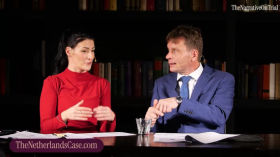
Dr. Predrag Slijepcevic | NARRATIVE #140 by Robert Cibis (DE)
Biociviltà – Dr. Predrag Slijepcevic
(Conversazione in inglese)
Quando l’uomo si considera la corona della creazione, secondo il bioscienziato Predrag Slijepcevic trascura l’essenziale: la vita esiste da circa quattro miliardi di anni, l’Homo sapiens invece solo da due-trecentomila anni. In una conversazione con Robert Cibis, Slijepcevic, autore del libro appena uscito «Biociviltà – Un nuovo sguardo sulla scienza della vita», delinea un’immagine della natura che capovolge la gerarchia consueta. Linguaggio, ingegneria, scienza, arte, medicina e agricoltura, tutte quelle conquiste che l’uomo rivendica per sé, esistevano nel mondo naturale milioni, talvolta miliardi di anni prima della nostra civiltà.
Slijepcevic si richiama alla teoria di Gaia formulata negli anni ’70 da James Lovelock e Lynn Margulis, secondo cui la biosfera è un sistema coerente, organizzato in modo decentrato e dotato di una propria mente. A lungo liquidata come non scientifica, questa visione oggi guadagna terreno. Secondo il biologo, l’uomo non controlla la natura, anzi è vero il contrario. Ritiene fuorviante il concetto di Antropocene, divenuto popolare di recente, che dichiara l’uomo padrone e proprietario della Terra, perché dal punto di vista evolutivo siamo principianti.
In cifre suona così: del peso totale della biosfera, circa 550 gigatonnellate di carbonio, circa il 70% spetta alle piante, il 25% ai batteri e solo il 2% circa all’intero regno animale, uomo compreso. I batteri vivono non solo al suolo, ma fino a 70 chilometri di altezza nell’atmosfera e a 20-30 chilometri di profondità nella crosta terrestre. Secondo Slijepcevic sono stati loro a creare la biosfera. Senza di loro la vita non sarebbe concepibile: modelli matematici mostrano che, se i microbi scomparissero, tutti gli altri organismi morirebbero entro due o tre mesi. Il microbioma umano comprende circa 400.000 miliardi di batteri contro solo 37.000 miliardi di cellule del corpo, e anche lo sviluppo del cervello umano non sarebbe possibile senza l’influenza batterica.
Slijepcevic descrive in modo particolarmente efficace le strutture sociali degli insetti. Formiche, termiti e api vivono in vere e proprie città, con vie di comunicazione, opere di difesa, un’agricoltura in cui si coltivano funghi come piante utili e becchini che riconoscono i compagni morti dal loro odore caratteristico. I ricercatori hanno inoltre osservato che le formiche riportano al nido le compagne ferite sul campo di battaglia, ne disinfettano le ferite con secrezioni antimicrobiche e all’occorrenza amputano le zampe. Il giorno dopo le curate tornano spesso a combattere. Notevole è che le formiche compiano simili imprese pur disponendo di cervelli quasi inesistenti.
Proprio qui Slijepcevic fa leva contro un dogma centrale della biologia moderna. La visione meccanicistica del mondo, che concepisce la vita come una macchina smontabile e rimontabile e riduce tutto a geni e informazione, sarebbe finita in un vicolo cieco. Insieme ad alcuni colleghi sostiene nel volume «The Sentient Cell» la tesi che ogni singolo organismo, dal batterio all’uomo, sia senziente e dotato di un senso soggettivo di sé. Già Cartesio si sarebbe sbagliato negando agli animali la capacità di provare dolore. Anche le formiche avrebbero qualcosa come una personalità. La coscienza, sottolinea il biologo, non è la stessa cosa della razionalità: molte nostre decisioni sono emotive, segnate da esperienze, storie e metafore.
Slijepcevic non descrive i batteri come organismi unicellulari, come fanno i libri di testo, ma come società di migliaia di miliardi di individui che comunicano tra loro con messaggi chimici e, su distanze maggiori, con impulsi elettrici. Già circa tre miliardi di anni fa sarebbe nato qualcosa di simile a un internet batterico, un sistema collegato a livello globale che spiegherebbe anche perché le resistenze agli antibiotici si diffondano così rapidamente da un continente all’altro, trasportate da sistemi di venti planetari in cui i batteri percorrono lunghe distanze sotto forma di spore.
Nel colloquio Cibis richiama il filosofo tedesco Jochen Kirchhoff, che interpreta il cosmo stesso come un organismo vivente, e si interroga sulla plausibilità di un tale pensiero. Slijepcevic ricorda Alfred North Whitehead, che già considerava atomi ed elettroni esseri viventi, il biologo Jakob von Uexküll, nato nell’attuale Estonia e fondatore della biosemiotica, e il celebre saggio di Martin Heidegger sulla tecnica, in cui già nel 1954 metteva in guardia dal ridurre la natura a mera risorsa. Uno studio di due fisici italiani del 2020 ha inoltre mostrato una sorprendente somiglianza strutturale tra la rete delle galassie e il cervello umano. Anche Roger Penrose, recente premio Nobel per la fisica, ritiene la coscienza qualcosa che non si può spiegare con il calcolo, il che a sua volta significa che la vita non è una macchina.
Alla domanda di Cibis sulle conseguenze sociali di questa visione, Slijepcevic risponde con cautela. Ci saranno sempre conflitti, è nella natura umana. Vie d’uscita dalla visione meccanicistica del mondo si potranno aprire solo con un dialogo serio tra finanziatori, politici, semplici cittadini, giovani e leader religiosi, e non solo nell’Europa occidentale, ma coinvolgendo l’Africa e l’Asia. Cibis esprime a questo proposito il suo scetticismo verso la strumentalizzazione politica del tema del clima in Germania e distingue espressamente tra cambiamento climatico e innegabile perdita di biodiversità. Slijepcevic concorda che le due cose non vadano messe nello stesso calderone, ma sottolinea che l’«annientamento biologico» degli ultimi 100-150 anni, il fenomeno che gli scienziati chiamano sesta estinzione di massa, è chiaramente dovuto alle tecnologie umane.
Alla fine Slijepcevic invita all’umiltà. L’uomo è l’ultima aggiunta al caleidoscopio dell’evoluzione e farebbe bene a imparare da chi vive su questo pianeta da miliardi di anni. Cita Lynn Margulis: in fondo non saremmo altro che comunità ecologiche di microbi. Cibis conclude osservando che anche fare film è per lui qualcosa a cui contribuisce senza controllarlo del tutto, un sapere decentrato che agisce attraverso di lui. Forse è così per tutti i progetti riusciti?
La casa editrice Neue Erde ha pubblicato «Biozivilisationen» in tedesco.
Salve, mi chiamo Robert Cibis. Sono estremamente orgoglioso e felice di essere qui con il dottor Predrag Slijepčević, un bioscienziato che scopre, svela e mette insieme la scienza, cosa davvero inaudita, almeno per me e, credo, per la maggior parte delle persone. Perché la raffinatezza degli organismi viventi va oltre l'immaginazione, e abbiamo sempre questo punto di vista su quanto siano complicate le nostre vite, e in effetti persino la vita delle termiti potrebbe essere complicata. In un certo senso mi rassicura, perché, ok, la nostra vita è complessa, sa, è ciò che ho imparato da quello che lei ha spiegato ad altri prima, oggi, nella presentazione. Allora, come si è interessato, da bioscienziato, alla biociviltà? Giusto. Penso che tutti i bioscienziati sappiano che la vita è cominciata più o meno quattro miliardi di anni fa, e noi esseri umani come specie abbiamo solo circa 200, forse 300 000 anni.
Quindi in questo periodo di circa quattro miliardi di anni la vita è esistita senza di noi, e alcuni esempi di vita esistita prima degli esseri umani sono così raffinati che la nostra civiltà in realtà non riesce a eguagliarli. Ciò che trovo nella mia ricerca è che ogni tipo di capacità della civiltà, diciamo le lingue, l'ingegneria, la scienza, l'arte, la medicina, l'agricoltura, esiste nel mondo naturale e in realtà precede la nostra civiltà di milioni o persino miliardi di mondi. Quindi il mondo naturale è, voglio dire, l'unica parola giusta che descrive il mondo naturale è complessità. È quindi estremamente complesso, anche se pensiamo che la nostra civiltà sia la più complessa; là fuori ci sono cose più complesse di noi. Ah, davvero? Voglio dire, ok, che siano complesse, in qualche modo riesco a coglierlo, perché non lo
capisco. Ma come può essere più complesso della società umana? Voglio dire, lei non – lo so, so perché lo dice. Sì. Il vero motivo per cui lo dice è che non conosce il sistema tecnico tedesco. Può ripetere? Scusi, è una battuta. La tecnica tedesca. La tecnica. Ah sì. Perché, sa, ci sono cose che sembrano così complicate e assurde nella nostra civiltà che, credo, nessun mondo naturale avrebbe questo, sa, al di fuori delle nostre vite. Ma perché lo dice? Beh, voglio dire, se si guarda il quadro generale, sa, la vita è una cosa complessa che coinvolge ogni tipo di organismo, batteri, virus, piante, animali. Ma c'è un'unità, qualcosa che unisce la vita. Ed è nota come teoria di Gaia. È l'intera biosfera. E gli autori della teoria di Gaia sono James Lovelock e Lynn Margulis, entrambi purtroppo
scomparsi. Sa, hanno sviluppato questa teoria negli anni Settanta. Quando la teoria fu menzionata e pubblicata per la prima volta, gli scienziati in realtà la attaccarono come non scientifica. E Margulis e Lovelock faticarono a convincere tutti di avere ragione, e in effetti hanno ragione. Quindi la vita come la conosciamo, sa, esiste come un fenomeno su scala planetaria che abbraccia tutto. Questa ipotesi di Gaia significa che in realtà il mondo naturale ha una propria mente, completamente decentrata. E noi, che ne facciamo parte, sa, esseri umani, piante, animali, batteri, siamo in sostanza parte del sistema. Possiamo controllare il sistema. È il contrario. È il sistema a controllare noi. Se pensiamo di poterlo fare, credo che probabilmente
sbagliamo. Ma dobbiamo convincerci che c'è una, sa, strada diversa rispetto, diciamo, a questo concetto di Antropocene, che è stato inventato circa 20 anni fa. Antropocene significa in sostanza che gli esseri umani sono per così dire i padroni e i controllori della natura. Non può essere vero perché, sa, siamo molto inesperti dal punto di vista evolutivo. Ci sono organismi come i batteri che hanno miliardi di anni più di noi. Le piante sono più antiche di noi, gli animali ecc. Voglio dire, gli argomenti a favore di questa idea che l'essere umano sia il centro del pianeta Terra e degli organismi viventi sono in un certo senso comprensibili se si è esseri umani. Perché allora si vede: se si contano i grandi animali del pianeta, la maggior parte vive per essere uccisa dagli
esseri umani. Sa, il mondo animale libero diventa sempre più piccolo. E questo dà quella sensazione di dominio, solo per fare un esempio. Un altro esempio sarebbe, sa, come noi, sa, abbiamo strade e infrastrutture ovunque. E questo naturalmente spinge via i confini di altri organismi viventi, e gli animali devono adattarsi alle nostre città e così via. Si ha quindi questa sensazione di un'umanità che si espande e di un resto della natura che si riduce. Voglio dire, e penso però che lei abbia buone ragioni per contraddire questa prospettiva. Ce le dica, per favore. Beh, penso che fino a un certo punto sia vero. Voglio dire, sa, la ricerca scientifica mostra che negli ultimi cento anni c'è stata davvero una decimazione delle specie animali. Voglio dire, il termine che usano gli scienziati è annientamento biologico, cioè, sa, la cancellazione, sa,
di migliaia di specie diverse. Muoiono semplicemente a causa delle nostre tecnologie. Ma penso che bisogna guardare le cose da un'altra prospettiva. Se si guarda l'intera biosfera, gli animali, il regno animale, sono una percentuale molto piccola della biosfera, forse il 2 %. Ah, davvero? Ciò che costituisce la biosfera sono le piante, circa il 70 %, e i batteri, credo, circa il 25 %. Piante e batteri sono quindi le specie dominanti nella biosfera. Gli animali, sa, una percentuale minuscola, noi compresi. E, sa, la biosfera è – abbiamo l'impressione che la natura sia bella, amabile, sa, che sia un sistema stabile. Ma in realtà, se guardiamo al passato evolutivo, la natura era violenta. Voglio dire, tre, quattro miliardi di anni fa, quando sul pianeta Terra esistevano solo batteri. Si uccidevano a vicenda perché, sa, i batteri alla fine in realtà – quelli che sono sopravvissuti – hanno prodotto l'ossigeno e prodotto l'atmosfera, e sono per così dire entrati in simbiosi con le piante per produrre ossigeno per gli animali. Voglio dire, la biosfera attraversa quindi sempre periodi di stabilità seguiti da instabilità. Conosciamo le cosiddette estinzioni di massa.
Solo negli ultimi 600 anni abbiamo avuto circa cinque o sei estinzioni di massa. E l'ultima è quella attuale, quella in corso. È quindi causata dagli esseri umani. Quindi… Quale? Si chiama la sesta estinzione di massa. Chi si estingue? L'estinzione, sa, di animali, piante, che avviene negli ultimi… E non è continua, dice, piuttosto a ondate? Beh, è periodica. Non è continua. Quindi la più recente estinzione di massa di specie è causata da noi, esseri umani. Ok. È piuttosto recente. Solo negli ultimi… È molto recente. È la rivoluzione industriale. Ok. Gli ultimi forse… Voglio dire, se si vuole essere precisi e indagare la scienza esatta che c'è dietro, si dice che siano gli ultimi 100, 150 anni, in cui si vede chiaramente nei modelli il numero di specie animali che si estinguono a causa dello sviluppo
tecnologico umano. E alcuni, sa, c'è un giovane sociologo e biologo americano, si chiama Justin McBrien. Lo chiama Necrocene. Necrocene significa, sa, quel tessuto. Necrocene significa, sa, che noi esseri umani abbiamo questo effetto di causare ciò in altri organismi con le nostre tecnologie. E lei parla dell'estinzione di specie animali. E le piante e i batteri? Penso che i batteri siano probabilmente l'unico organismo che non può estinguersi. Lo sappiamo perché circa 60 milioni di anni fa c'è stato il grande impatto di un asteroide sul pianeta Terra che ha ucciso i dinosauri e molte specie animali. E l'energia liberata quando quell'asteroide ha colpito il pianeta era circa un miliardo di volte più forte, più grande di tutte le armi atomiche che abbiamo. Immagini,
un miliardo di volte di più. E, sa, molte specie animali sono morte, specie vegetali sono morte, ma molti organismi, probabilmente i microbi, sono sopravvissuti. E poi, dopo, la vita, sa, è rifiorita nelle nuove condizioni. La biosfera è quindi in sostanza qualcosa che non si può distruggere. Quindi sempre, anche, sa, quando succede qualcosa di grande, sopravvivrà e troverà nuove nicchie e nuove vie. Se dice che circa il 70 % della vita sono piante, come lo misura? In centimetri cubi di vita o in numero di organismi viventi? Penso che gli scienziati usino misure diverse. Lo misurano quindi in unità di peso. Ah, davvero? Dicono che il peso totale della biosfera sia, credo, di circa 550 gigatonnellate di carbonio. Lo misurano così perché il carbonio è l'elemento chiave della materia
organica. Quindi 550 gigatonnellate – una gigatonnellata è un'enorme quantità di carbonio. E di queste 550 gigatonnellate, piante e batteri sono il 95 %. Voglio dire, le piante le capisco, naturalmente, ma i batteri? Voglio dire, so che ce ne sono molti, ma so anche che sono piccoli. Come possono quindi essere così pesanti? In sostanza, perché loro, sa, dove vivono i batteri, non – sa, non è solo sul suolo. Vivono nell'aria, fino a 70 chilometri di altezza. L'aria è piena di batteri. E questi sono, sa, abbiamo l'idea sbagliata che i batteri siano cattivi. Ci sono batteri patogeni che causano malattie umane, ma sono solo poche centinaia di specie. Esistono migliaia di specie di batteri, e vivono fino a 70 chilometri nell'atmosfera, sul suolo, e a circa 20, 30
chilometri sottoterra. Cosa? Sì. Quindi, sa, loro… I batteri sono a circa 30 chilometri sottoterra? È pazzesco. Voglio dire, si può dire che i batteri abbiano fondato la biosfera. È impressionante. Quindi è, voglio dire, è un fatto scientifico, perché sono organismi che esistono da 4 miliardi di anni, e non possiamo vivere senza batteri. Voglio dire, i modelli mostrano – sono modelli teorici. Ovviamente non si possono fare questi esperimenti. Immagini, sa, una biosfera, un pianeta vivente, e poi si inserisce nei modelli una descrizione di esseri umani, piante, animali, e si chiede al modello – sono modelli matematici, ma basati su algoritmi molto sofisticati – si chiede al modello cosa succederebbe se in teoria eliminassimo gli esseri umani dalla
biosfera. E, sa, i modelli macinano numeri, algoritmi, e dicono: niente. La biosfera continuerà semplicemente, sa, sulla sua traiettoria. Ma se si chiede al modello cosa succederebbe se si tolgono i batteri? Il modello dice in modo molto convincente che dopo circa due o tre mesi, sa, tutti gli organismi comincerebbero a morire. Noi esseri umani non possiamo vivere senza microbioma. Il nostro microbioma umano, cioè batteri, alcuni altri microbi, tra cui virus, lieviti, funghi ecc. E ora c'è una parola molto popolare: psicobioma. Lo psicobioma sono batteri che influenzano lo sviluppo del nostro cervello durante lo sviluppo embrionale. E, sa, non possiamo nemmeno pensare senza batteri. È una scoperta,
sa, sorprendente. Sì, ho imparato che abbiamo più batteri nel nostro corpo che cellule. Sì, i numeri esatti sono: se si guarda il corpo umano in termini di numero di cellule, abbiamo circa 37 mila miliardi di cellule nel nostro corpo. Ma il nostro microbioma conta 400 mila miliardi di batteri. Quindi è circa – per numero; i batteri sono più piccoli, sa, piuttosto piccoli, ma… È comunque un chilo, ho imparato. Sì. È impressionante. Ecco quindi da dove viene il carbonio. Voglio dire, wow. Ma lei ha detto nell'introduzione che questi organismi viventi hanno una società, una civiltà, forse più raffinata di quella umana. Come può dirlo? Beh, voglio dire, per cominciare, ci sono alcuni organismi che sono sociali, come noi esseri umani. Uno scimpanzé?
Non necessariamente. Sono meno sociali di noi. Voglio dire, gli organismi più vicini agli esseri umani in termini di socialità sono gli insetti. Cioè formiche, termiti e api. E hanno la capacità di – sa, vivono come società. Le società umane, diciamo, Parigi. Sì. Quindi hanno… È una grande città. Una grande città, sì. Le formiche hanno quindi le loro città che, quando le si analizza nel dettaglio, hanno ogni sorta di cose che esistono nelle nostre città. Hanno, sa, autostrade. Hanno edifici in cui coltivano, sa, le formiche praticano l'agricoltura. Coltivano, sa, funghi e, sa, li usano come cibo. Prendono foglie, le mangiano. Non possono digerirle, ma danno questa poltiglia, sa, ai funghi perché la elaborino, e poi i funghi producono
cibo. Ed è in effetti l'agricoltura delle formiche. Wow. Quindi nelle loro città hanno qualcosa come delle caserme. Voglio dire, sa, le società delle formiche sono divise per competenze. Ci sono formiche che difendono le città. Ci sono persino stazioni di polizia. Ci sono, voglio dire, è sorprendente, si trovano persino pompe funebri. Sa, gli scienziati, sa, se loro, sa, gli scienziati in effetti, gli entomologi che studiano gli insetti, usano dei trucchi. Se si mette, per così dire, una gocciolina d'olio d'oliva su una formica, le altre formiche la prendono e, sa, la presenza dell' olio d'oliva sul corpo di una formica segnala alle altre formiche che quella formica, quella formica è morta. Perché, sa, quando il corpo di una formica comincia a decomporsi, produce qualcosa che imita l'olio d'oliva. Gli scienziati imparano quindi questi trucchi e, quando, sa, mettono qualche goccia d'olio sul corpo di una formica, arrivano formiche a raccoglierla e a seppellirla perché pensano che
sia morta. Quindi, sa, ogni sorta di cose che esistono nelle società umane esistono nelle società delle formiche, non esattamente nella stessa forma, ma in una forma simile. Wow. E come – voglio dire, cosa fa la formica poliziotto? Voglio dire, creano forse una sorta di ordine, ma quello, penso, sa, le stazioni di polizia nelle città delle formiche, è ancora un po' esagerato. Ma le caserme sicuramente, perché, sa, ci sono, sa, devono difendere la città, la città delle formiche, dagli attacchi di altri insetti. E poi ci sono alcune formiche guerriere e così via. Un vero esercito esiste quindi, sa, nelle società delle formiche. E hanno, diciamo, un ospedale? Di recente ho letto, sa, una serie di articoli di un gruppo di scienziati, credo che uno fosse tedesco. Ecco cosa hanno scoperto: ci sono le cosiddette formiche guerriere che attaccano continuamente le termiti. Si formano quindi, sa, queste colonne, come vere colonne di un esercito, e
sono molto ordinate. In queste colonne ci sono formiche piccole e formiche grandi. Le formiche piccole entrano nel, no, le formiche grandi in realtà entrano nel nido delle termiti e ci fanno dei buchi. E poi formiche più piccole entrano, uccidono le termiti e le portano fuori. E poi, in sostanza, i corpi di quelle termiti vengono riportati al nido delle formiche come cibo. E nel frattempo, mentre uccidono le termiti, è in sostanza una guerra. Le termiti si difendono e alcune formiche restano ferite. E le riportano al nido, nel loro ospedale, diciamo, sa, se hanno… Quello che a volte succede è che le termiti strappano davvero le zampe alle formiche. Le formiche hanno sei zampe. Le formiche possono quindi sopravvivere con tre o quattro zampe. Due zampe in meno quindi non sono niente. Ma qualcuno, le formiche nel, sa, nido devono operare, togliere quelle, sa,
zampe ferite. E il giorno dopo si vedono gli, sa, animali curati, le formiche curate sul campo di battaglia. È quello che hanno scoperto gli scienziati. Le formiche chirurghe sono quindi in realtà piuttosto brave. Tolgono quindi i resti, o, sa, se c'è qualcuno ferito, come, cosa fanno? Voglio dire, la prima cosa che fanno quando una formica è ferita e non può muoversi è che un'altra formica la riporta al nido. E poi si radunano delle formiche, forse un piccolo ospedale mobile. Le formiche hanno sul corpo ghiandole che secernono un liquido antimicrobico. E prima trattano le ferite con questi liquidi, quindi le disinfettano. Arrivano quindi, c'è una formica ferita, e poi ne arriva una seconda e dà questo liquido dalla… Sì, non solo una, diverse. È quindi
come un vero ospedale. E poi, se serve un'operazione, un intervento chirurgico, devono, diciamo, sa, una zampa ferita, o, sa, la tolgono a regola d'arte, sterilizzano. Ah, davvero? E possono muoversi con cinque zampe, sa. Per loro quindi non è un problema, perché hanno sei zampe. La nuova amputazione. Sì, amputazione, esatto. È naturalmente un grado incredibile di raffinatezza. E cosa si può imparare da questo? Sì, penso che forse la prima cosa da considerare sia il fatto che siamo troppo concentrati sul nostro, sa, su noi stessi. Sa, pensiamo di essere la specie più raffinata mai esistita nella storia della vita. Penso che dobbiamo cambiare questa posizione e passare a una posizione meno aggressiva e confrontare noi e le nostre conquiste con il
resto della natura. E speriamo che ne venga fuori qualcosa di produttivo. Ma non è facile cambiarci. Voglio dire, la nostra civiltà dipende da molte cose. Sembra così morale. Oh sì. Sì, lo capisco. Credo che esista il termine bioetica. Sì, è etico. Sì. È una questione etica. Ma prima devo capire questo in qualche modo. Voglio dire, la formica non ha davvero un cervello degno di questo nome. Sì. Com'è possibile? Beh, è un'ottima domanda. Ho un gruppo di colleghi che di recente hanno scritto un libro. E quel libro, che uscirà probabilmente fra qualche mese, si intitola The Sentient Cell. La nuova teoria in biologia dice in sostanza che ogni singolo organismo è senziente e cosciente. Senzienza significa la capacità di percepire il mondo esterno, di avere sentimenti. Coscienza significa un sé soggettivo del
proprio corpo. Tutti gli organismi sono quindi senzienti e coscienti. Davvero? Batteri compresi. È la nuova posizione. Non è la posizione dominante. Ma penso che la biologia, forse fra 50 anni, andrà in quella direzione. Wow. E dobbiamo quindi, in sostanza, ammettere… Penso, sa, che lo sviluppo della cultura europea e della civiltà sia stato in qualche modo influenzato dai grandi eventi di tre, quattrocento anni fa. Il Rinascimento e l'Illuminismo. E giustamente quei pensatori pensavano che fossimo davvero furbi e intelligenti. Ma penso che questo sia stato sopravvalutato fino a un certo punto. Cartesio, sa, il matematico e filosofo francese, nel XVII secolo, sosteneva che gli unici organismi dotati di mente fossero gli esseri umani. Gli animali non avrebbero sensazione di dolore,
sarebbero incoscienti, ma non è vero. Quando si studiano le formiche, anche se il loro cervello è molto piccolo, sembra che abbiano un senso soggettivo di sé, sa. Ah, davvero? Sì. Perché sembrano avere delle personalità. Questa è, di nuovo, sa, ricerca più recente. Beh, è una rivoluzione del pensiero. Lo è. In sostanza, quindi, la vita non riguarda i geni. Sa, il dogma scientifico attuale è che tutto sia regolato dai geni e dai codici dell'informazione. Questo dogma si chiama neodarwinismo. Sembra che il dogma sia arrivato a un vicolo cieco. Il nuovo modo di pensare in biologia: la vita non riguarda i geni, riguarda la senzienza, riguarda la coscienza. Naturalmente non possiamo imitarlo, non possiamo entrare nel mondo delle formiche e verificare se loro,
che tipo di coscienza hanno. Ma, sa, hanno una sensazione di dolore, devono avere una sensazione di dolore. E tutti, sa, gli animali hanno una sensazione di dolore, hanno il senso del loro corpo, sono coscienti ecc. Questo, voglio dire, contraddice completamente la visione meccanicistica del mondo, con cui mi sento spesso confrontato in tutti i contesti. Che si tratti di come si possa prevedere il comportamento umano, perché tutti noi, in realtà, la nostra coscienza è in realtà un inganno. Sa, le faccio solo l'esempio più tipico, che lei conosce certamente, ma solo per mostrare l'altro punto di vista. La coscienza è un'illusione che ci diamo da soli, perché è meglio per noi vivere così, ma in realtà non esiste, perché prendiamo le nostre decisioni inconsciamente. La coscienza è lì solo per vendercele, così che abbiamo una certa riflessione al riguardo,
ma il processo decisionale in sé è inconscio. Per esempio, la prova di questa teoria in neurobiologia è che voglio afferrare questa tazza, e in effetti si può vedere nel mio cervello che voglio afferrarla ancora prima di esserne cosciente, ancora prima di accorgermene. E questo dimostra davvero qualcosa? Voglio dire, dimostra che la coscienza non è un granché? Sono contento che prima lei abbia usato il termine meccanicistico. Voglio dire, le scienze della vita si basano su una sorta di approccio meccanicistico adatto alla fisica. Nella scienza c'è una gerarchia in cui, sa, la fisica è la scienza più fondamentale, poi la chimica e poi la biologia. Chimica e biologia si possono quindi derivare
dalla fisica. E tutti i biologi dicono, sa, che la vita si può ridurre a, sa, principi della fisica. Ma in realtà non è vero. La vita quindi non è una macchina. Penso che la scienza, la scienza dominante, la biologia dominante, intenda in un certo senso la vita in termini meccanicistici. In altre parole, sa, la teoria è che la vita sia una macchina. Possiamo prendere una macchina, smontarla e poi ricostruirla. Ma non è, sa, funziona nel caso delle automobili o, sa, delle lavatrici. Ma non funziona nel caso di batteri, piante o animali. Quindi quello che lei, sa, la coscienza e il processo decisionale sono in sostanza processi completamente diversi. Voglio dire, il processo decisionale è un processo cosciente. Ma la coscienza è qualcosa di più grande. La coscienza non è la stessa cosa della razionalità. Voglio dire,
molte decisioni che prendiamo sono completamente razionali. In sostanza non ci affidiamo poi tanto al cervello razionale. Sa, molte decisioni le prendiamo emotivamente, con l'aiuto di metafore, sa, esperienze che nonni, genitori ci hanno raccontato o che abbiamo sentito da, sa, qualche, sa, parente di 200 anni fa, sa, storie ecc. Penso quindi che la scienza interpreti la coscienza in modo troppo razionale. Coscienza e razionalità sono due cose diverse. Cos'è quindi la coscienza? È un senso soggettivo di sé. Quindi è, voglio dire, è molto difficile da definire. E i miei colleghi che hanno scritto questo libro intitolato The Sentient Cell cercano di evitare di definire la coscienza. Perché se si cerca di definire qualcosa di cui non si sa abbastanza, è sbagliato. Si può quindi presupporre qualcosa di molto semplice finché non si costruisce un quadro più ampio. Quello che possiamo dire, quindi, è che la coscienza è semplicemente un senso soggettivo di sé. Quindi i batteri, è una sola cellula, quindi un solo corpo, i batteri, quel batterio ha il senso del proprio
corpo. E se si guarda a cosa lo causa a livello molecolare, di nuovo, il gruppo di scienziati che pubblica questo libro, The Sentient Cell, dice che ci sono tre cose che determinano quella coscienza a livello cellulare e molecolare. Una membrana cellulare, perché è eccitabile, poi alcune strutture all'interno della cellula chiamate citoscheletro, e proteine che si ripiegano per così dire in tre dimensioni e poi definiscono quello che chiamiamo il codice genetico. Anche i batteri sono più complessi di quanto pensiamo? Sì, in un certo senso. Se si guardano i batteri, penso che ci sia un approccio sbagliato nel modo in cui vediamo i batteri. Se si prende un manuale di medicina o di biologia, dice che i batteri sono organismi unicellulari. Semplicemente non è vero. I batteri sono società. Ciò che dà loro l'intelligenza non è quindi un singolo batterio, ma una società di migliaia di
miliardi di batteri. E l'intero pianeta si chiama batteriosfera. In realtà i batteri hanno una loro sorta di costruzione planetaria, un superorganismo, se vuole, che comunica. E, sa, ho scritto un articolo in cui sostenevo che la prima forma di internet esistita sul nostro pianeta fosse l'internet batterico, il sistema di comunicazione batterico formatosi forse tre miliardi di anni fa. I batteri parlano quindi scambiandosi messaggi chimici o impulsi elettrici, e l'intera popolazione di batteri del pianeta Terra si chiama batteriosfera, e tutti comunicano tra loro. Quando si guardano i batteri, sono quindi in sostanza società complesse pluricellulari. Sono quindi le forme di vita più numerose, se si guarda a livello cellulare, le forme biogene più numerose del nostro pianeta.
Wow. E se parlano tra loro, cosa si dicono? Anche questo possiamo solo immaginarlo. Sa, ci sono scienziati che decifrano il loro linguaggio. Voglio dire, loro, sa, analizzano quelle sostanze chimiche che fungono, diciamo, da parole o frasi nel loro linguaggio. Non sono solo sostanze chimiche. In realtà, sa, un gruppo di batteri può comunicare, diciamo, con città batteriche lontane. Sa, la distanza è diversa nel mondo dei batteri. Comunicano tramite impulsi elettrici, simile a, sa, sa, una rete telefonica fra New York. Quindi, sa, come internet, sì. Ma, voglio dire, si può persino semplificare e dire: torniamo al XIX secolo, quando fu inventato il telefono, la comunicazione fra New York e, sa, città europee o, sa, si può quindi dire che quegli impulsi nelle città batteriche, sa, i singoli batteri parlano tramite messaggi chimici,
la comunicazione fra città avviene tramite impulsi elettrici. E, come oggi, anche la rete dei batteri è globale. Lo è. Voglio dire, è tutto connesso. Può quindi darsi, diciamo, che alcuni batteri in qualche posto in Danimarca siano stressati. Può darsi che i batteri in Australia se ne accorgano? Penso che sarebbe entrare troppo nei dettagli, ma certamente, sa, quello che sappiamo è che i batteri in effetti comunicano su scala globale. Come lo sappiamo? La pratica medica ha mostrato che, quando usiamo troppi antibiotici, i batteri diventano resistenti. E quella resistenza naturalmente, sa, passa molto in fretta a, sa, un grande territorio. Ah, questa era la prova. In una certa misura, ma penso… Se si è sicuri che non ci sia, diciamo, un batterio trasmesso in un altro posto. Cosa succede quindi quando diamo antibiotici per curare, diciamo, un'infezione batterica nel nostro corpo?
Forse gli antibiotici uccideranno il 99 % dei batteri. Ci sarà un 1 % che sopravvive. E quell'1 % che sopravvive ha alcuni geni resistenti agli antibiotici. Continueranno quindi a dividersi. Forse viaggeranno. Quindi i batteri che vanno nell'atmosfera, i batteri vivono nell'aria. Possono percorrere lunghe distanze con il sistema dei venti, il sistema planetario dei venti. Ci sono quindi prove che batteri o virus possano viaggiare sulle autostrade del cielo, sa, da un continente all'altro. Perché i batteri possono sopravvivere a lungo nell'atmosfera. Voglio dire, l'atmosfera ha un po' di cibo per loro, sa, un po', sa, di carbonio ecc. Ma possono certamente percorrere lunghe distanze. I batteri formano anche spore, cioè, quando non c'è cibo, passano semplicemente in, sa, una modalità che non è un
seme di vita. Ma quando ritrovano il cibo, rivivono. Wow. E quindi lei sta scrivendo un libro su questo. In effetti lei ha scritto un libro, vero? Sì, in effetti ho scritto un libro. Che è disponibile… Il libro si intitola quindi Biocivilisations, e il sottotitolo è A New Look at the Science of Life. È quindi pubblicato in Gran Bretagna e negli Stati Uniti. La data di pubblicazione è il 18 maggio di quest'anno. E qual è quindi l'ipotesi di questo libro? Voglio dire, cosa dice? Voglio dire, il messaggio di fondo è che, sa, noi esseri umani siamo, sa, l'aggiunta più recente a questo caleidoscopio di organismi evolutivi, sa. Siamo molto giovani. Voglio dire, esistiamo solo da 200, 300 000 anni. E dobbiamo imparare da organismi che hanno molta più esperienza evolutiva di noi. Voglio dire, i batteri hanno 4 miliardi
di anni. Le piante hanno forse 600, 700 milioni di anni. Voglio dire, ci sono altri organismi come le amebe, che stanno in sostanza fra i batteri e le piante, forse un miliardo e mezzo. E tutti questi funghi, per esempio. E tutti hanno prodotto nel mondo naturale qualcosa che, sa, ha contribuito a questa complessità, e dobbiamo imparare da questo. Questo è quindi, sa, il messaggio più semplice. Voglio dire, il concetto di Gaia è piuttosto impressionante. Se si suppone, sa, che tutto sia molto più interconnesso di quanto pensiamo. E presuppone anche che esista una coscienza planetaria, che fa sì che tutto sia interdipendente. Quindi io sarei, per così dire, parte di quell'essere vivente che è il pianeta Terra, di cui fanno parte tutti gli altri animali, piante, batteri e funghi. Voglio dire,
sembra in un certo senso logico, perché in un periodo così lungo sembra esserci in qualche modo un equilibrio. Che persino una catastrofe come quella che lei ha citato, sa, quell'asteroide che si abbatte sul pianeta Terra, possa essere superata. Ma ho ancora difficoltà a immaginare davvero questo concetto. Come funziona davvero l'interconnessione? Sì. Può aiutarmi? Sì. Penso che abbiamo un problema come esseri umani e forse come parte del regno animale, perché tutti gli animali hanno un cervello. E i cervelli sono in realtà unità centrali di elaborazione. Non sono come i computer, ma, sa, il cervello serve, sa, agli animali che si muovono per valutare un ambiente in costante movimento. Se si guardano le piante, non hanno cervello perché non, non si muovono. Sono sessili, immobili.
I batteri non hanno cervello. Penso quindi che proiettiamo questo, il cervello, voglio dire, c'è un tale, un botanico, che ha chiamato questa posizione sciovinismo del cervello. Proiettiamo questa immagine della comprensione del mondo secondo cui tutto dipende dal cervello. In realtà il cervello esiste in natura solo in tracce. Se si guardano gli animali, sono meno del, circa il 2 %, forse al massimo, dell' intera biosfera. Quindi, sa, gli organismi con un cervello non sono così importanti. Questa idea di una coscienza di Gaia è quindi, penso, molto difficile da afferrare per noi. Non mi spingerei fin lì, non la chiamerei coscienza. Ciò che sappiamo è che Gaia ha una propria mente, ma la mente è qualcosa di completamente diverso. C'era un cibernetico, Gregory Bateson, biologo di formazione, che però collaborò con un fisico e matematico per fondare la cibernetica come disciplina negli
anni Quaranta e Cinquanta. Aveva quindi l'idea della mente della natura. La mente della natura è completamente diversa dal cervello. È completamente decentrata. Decentrata significa che le forme viventi sono interconnesse. E ciò che le interconnette è la comunicazione tra loro. E non siamo consapevoli della nostra comunicazione con i batteri. Perché i batteri vivono nel nostro intestino e comunicano con le nostre cellule cerebrali, non ne siamo consapevoli. Quindi, sa, ciò che lei chiama coscienza a quel livello è qualcosa di completamente diverso. E non possiamo farne esperienza, ma la scienza può rilevarlo fino a un certo punto. Impressionante. E, voglio dire, corrisponde in qualche modo a ciò che ho imparato quando ho girato un documentario sull'agopuntura, che, sa, stimola il sistema nervoso del nostro corpo umano
in diversi punti. E si può, l'idea dell'agopuntura è che si mette un ago da qualche parte nella mano e questo ha un effetto sul fegato, per esempio. Che sia vero o no, voglio dire, alcune connessioni sono state dimostrate perché a volte c'è semplicemente una connessione neurologica. E stimola davvero quell'organo. E si vede che viene stimolato. Quindi sì, c'è un'interconnessione nel nostro corpo. E ciò che ho imparato in quel contesto è che l'effetto del cervello non è il cervello. Che il sistema nervoso del nostro corpo è in effetti indistinguibile dal cervello. Che il tronco encefalico e tutto questo ne fanno parte. Non sono due cose. Se quindi mi taglio un dito, in effetti anche il mio cervello sente un po' di dolore,
perché anche nel dito ci sono neuroni e fanno parte del cervello. Anche questo, penso, ci dà un' idea di quanto sia varia la realtà della vita nel nostro corpo, e dell'idea che il cervello sia lì e decida tutto, sa. E per allargare questo modo di pensare, volevo solo presentarle qualcuno che forse non conosce. Si chiama Jochen Kirchhoff. È un filosofo tedesco. E ha scritto un libro, Kosmos, che abbiamo pubblicato noi. E dice che il cosmo nel suo insieme potrebbe essere inteso come un organismo vivente. E che questo risolverebbe molti problemi, anche in fisica, perché, sa, gran parte di ciò che osserviamo per il momento non è spiegata. E all'inizio ho pensato: oh, è un approccio un po' sorprendente. Ma ascoltando lei, sa, posso farci amicizia. E molte persone lo fanno. E lui è arrivato a questa conclusione studiando la fisica.
Voglio dire, per lungo tempo la storia della fisica, soprattutto la storia degli ultimi 500 anni. E quindi mi chiedo se questa sia anche una chiave per capire perché il modo di trattare gli esseri umani in generale sia diventato o sia sempre così crudele, perché, sa, se si considera che siamo piuttosto potenti, nel senso che per noi è facile sopravvivere in questo mondo. Sa, potremmo produrre il doppio di quanto l'intera umanità possa mangiare. Sa, è facile costruire, sa, una casa, avere buone condizioni di vita. Eppure ci sono molti conflitti. Eppure le persone sono, sa, invidiose o cercano di dominare gli altri. E, sa, tutta la vita è molto meno piacevole di quanto potrebbe essere. E mi chiedo se questo sia in qualche modo legato a un fraintendimento di cosa sia la vita,
di quanto sia meccanica, e del fatto che ognuno di noi sia solo per sé, o che stiamo con la nostra comunità e dobbiamo difenderla ed essere contro l'altra. E se capissimo meglio che l'intera biosfera è come un grande sistema, forse vivremmo anche meno violenza. Questa è una domanda che mi pongo. Lei lo pensa? In un mondo ideale, sì. Ma, voglio dire, la natura umana è tale che avremo sempre, sa, conflitti. Ma questo è meno importante. Voglio tornare a ciò che ha detto sul cosmo vivente. Voglio dire, quest'idea non è nuova. Credo che ci fosse un filosofo e matematico inglese, Alfred North Whitehead, nato nel XIX secolo. Visse, morì forse quasi 100 anni fa. Insegnava in sostanza che gli atomi sono esseri viventi, che gli elettroni sono esseri viventi, sa.
Ma nessuno lo prese sul serio. E quella posizione in filosofia è nota come panpsichismo. Ma se si guarda a ciò che fanno i fisici, c'è stato uno studio piuttosto recente di due fisici italiani. Hanno analizzato, voglio dire, abbiamo una tecnologia potente, possiamo quindi osservare l'universo con telescopi molto potenti e produrre immagini e modelli straordinari dell'universo. Quello che hanno fatto è stato analizzare le galassie, una rete di galassie, e cercare di vedere se vi fosse una qualche struttura coerente. E una volta costruita quell'immagine, l'hanno confrontata con la struttura del cervello umano. E il modello matematico ha mostrato che c'è un alto grado di somiglianza. Ah, davvero? Questo è stato pubblicato nel 2020. Questo concorda quindi, sa,
con l'idea del cosmo vivente. Ma penso che la scienza sia, sa, è troppo presto perché la scienza si addentri in quei territori. Ma sono sicuro che ci sono scienziati che pensano, sa, quando Alfred North Whitehead insegnava, sa, sa, che gli elettroni sono esseri viventi. Sa, è… È impressionante. Come concetto è davvero impressionante. E voglio anche citare due tedeschi influenti, un filosofo e un biologo. Voglio dire, l'idea che il mondo vivente sia cosciente e abbia una propria intelligenza. Il primo a proporre quest'idea fu un biologo che visse… Era di origine tedesca, ma visse nell'attuale Estonia. Jakob von Uexküll. E creò quella che si chiama biosemiotica. Biosemiotica significa capire come avviene la comunicazione nel mondo naturale. E oggi esiste un intero campo della
biologia chiamato biosemiotica. E il filosofo tedesco Heidegger, controverso perché sosteneva il nazismo, fu in realtà uno dei filosofi più originali nel modo in cui interpretò il significato della tecnica. Ah, davvero? E il suo saggio sul significato della tecnica, in realtà la parola tedesca è, credo, Technik più che tecnologia. Tecnologia è, sa, più inglese. Ma è uno dei saggi più potenti mai scritti sul conflitto fra il modo in cui noi esseri umani vediamo il mondo in termini meccanicistici e il modo in cui la natura funziona davvero. Credo che abbia pubblicato quel saggio nel 1954, più o meno. E cosa… disse quindi che c'è un forte conflitto, e cosa era… Voglio dire, il messaggio di fondo è che, sa, vediamo la natura come risorse, risorse infinite che vogliamo usare. Ma la natura è più di questo, non è una risorsa. Ed è la nostra visione sbagliata della natura a creare problemi.
Capisco, capisco. E quindi… pensa che gli elettroni abbiano una coscienza? Penso che sia… per qualsiasi scienziato porre questa domanda non ha alcun senso. Penso che dobbiamo… Posso in qualche modo simpatizzare con la visione di… e condivido certamente la visione dei miei colleghi che le cellule siano coscienti. Sa, le cellule sono coscienti. Su questo non c'è quindi alcun dubbio. E la galassia? È un territorio completamente diverso. E vorrei citare uno dei più grandi scienziati viventi, Sir Roger Penrose. Ha ricevuto di recente il premio Nobel per la fisica. Ha in sostanza indagato il significato della coscienza con il suo collaboratore, anestesista di formazione. E hanno in effetti individuato strutture nelle cellule chiamate microtubuli, che secondo loro rappresentano semi di coscienza, e i cambiamenti degli
stati quantistici. Voglio dire, Roger Penrose è un fisico. E dice chiaramente: qualunque cosa sia la coscienza, non è calcolo. Questo significa quindi, sa, che la vita non è una macchina. Sa, la vita è qualcosa di completamente diverso da un meccanismo. È… Quindi cosa pensa che scopriremo in futuro? Perché questo… lei cita molti studi recenti. Ed è certamente una rivoluzione del pensiero e un cambio di paradigma. Immagini che questa diventi la narrazione dominante. Voglio dire, sinceramente, per me sarebbe un sollievo. Perché sento che siamo al punto in cui gli esseri umani non solo pensano di poter dominare la natura, ma pensano di poter dominare anche tutti gli esseri umani. Non solo i loro schiavi o, sa, i dipendenti o simili, ma se stessi e tutte le persone intorno. E sento che in passato questo non ha dato buoni risultati.
E ho molta paura che possa portare su una strada sbagliata. Ed è per questo che mi chiedo se ci sarà questo cambio di paradigma e se questa narrazione dominerà in futuro. Voglio dire, sa, le previsioni sono in sostanza inutili. Possiamo dire quello che vogliamo. Ma una cosa è abbastanza chiara. Ci sono scienziati che pensano che la strada che stiamo prendendo sia sbagliata. Esempio tipico: nel 2019 è uscito un libro di una professoressa americana di nome Shoshana Zuboff. Il libro si intitolava Il capitalismo della sorveglianza. Nel libro lo dice quindi chiaramente. Voglio dire, dominio non significa solo dominio degli esseri umani sulla natura, ma dominio di esseri umani su altri esseri umani. E ciò che propone nel libro è che dobbiamo avere una visione molto chiara di cosa sia l'intelligenza artificiale e di cosa significhi usare le tecnologie
digitali. È preoccupata per il futuro dei suoi figli e nipoti. E dice che tutti i governi dovrebbero istituire zone protette in cui non c'è tecnologia, così che le persone possano almeno vivere libere e progettare il futuro. Ma sembrava uno scenario molto improbabile nelle condizioni in cui viviamo. Quindi, sa, è… Voglio dire, la posizione attuale della biologia è che, sa, questo concetto di macchina domina ancora, ma ci sono persone che pensano il contrario. Voglio dire, sì, e poi ci sono mescolate, sa, narrazioni dell'industria. Ho parlato con il medico che lavora con Luc Montagnier, che spiegava come le cellule possano comunicare fra loro tramite segnali elettromagnetici, e diceva che potrebbe esserci un rischio se intorno a noi ci sono molti campi elettromagnetici che potrebbero influenzare o stressare queste cellule, e che i rischi per la salute
non vengono nemmeno valutati. Si fanno pochi studi, c'è poco denaro pubblico per questo, e questo è davvero irresponsabile. E lo capivo perfettamente, perché sembra un cambiamento così fondamentale che ora viviamo in un mondo circondato dalla tecnologia, che può avere un impatto sui nostri corpi, ma anche un impatto sul nostro benessere psicologico e così via. Giocare a fare Dio è quindi un gioco pericoloso, no? Lo è. Voglio dire, il filosofo che ho citato, Heidegger. Voglio dire, lo diceva molto tempo fa, e voglio dire, l'intervista che ha rilasciato prima della sua morte, ed è stata pubblicata postuma. La sua frase famosa, voglio dire: ormai solo un dio ci può salvare. Come filosofo aveva ragione fino a un certo punto, ma, voglio dire, le domande che lei mi pone sono
domande pratiche. Nessuno ha la risposta. Penso che sia difficile. Penso che dobbiamo capire la nostra posizione come civiltà. È molto difficile spostarsi, diciamo, in un altro ambito, perché se si vuole produrre, diciamo, energia pulita o qualcosa del genere, bisogna, che so, licenziare 100 000 persone. Poi, sa, perdono i loro mezzi di sostentamento e così via. Quindi, sa, andare in un'altra direzione comporta cambiare il percorso economico. Questo quindi, voglio dire, si può ottenere solo attraverso un dialogo molto ragionevole tra quelli che chiamano portatori di interesse. Tra questi, sa, persone che hanno soldi, politici, persone comuni, giovani, sa, leader religiosi. E non sono solo persone dell'Europa occidentale. Sa, bisogna pensare alle persone in Africa. Bisogna pensare alle persone in, sa, Asia e così via. È quindi un mondo duro, durissimo, e un futuro difficile quello che
ci aspetta. Cosa intende con licenziare persone? Voglio dire, è semplice. Solo per fare un esempio. Qualche anno fa, quella giovane svedese, Greta Thunberg. Sì. Lei si batteva quindi, sa, sa, per dei cambiamenti per ottenere un pianeta, sa, più vivibile. E aveva un criterio, dice: faremo progressi solo quando le emissioni cominceranno, sa, a calare. Emissione significa produrre CO2. E ha avuto una conversazione con il presidente francese Macron. Voglio dire, questo è scritto in un libro, sa, di un mio collega, appena uscito. E in effetti Macron è stato molto onesto. Ha detto: la Francia non può farlo. Perché se cerchiamo di ridurre le emissioni, la nostra economia andrà giù. È stato quindi abbastanza onesto da dire: ok, dobbiamo trovare soluzioni più sofisticate. Quindi,
sa, è una cosa difficile. E non dimentichi che ci sono scienziati molto seri, persone molto intelligenti che pensano che, sa, il cambiamento climatico sia davvero qualcosa che avveniva molto tempo fa, 10 000 anni fa, senza alcuna influenza umana. Sono quindi per così dire cambiamenti periodici. Per caso ho incontrato una persona che ha tenuto una presentazione, uno scienziato che stimo davvero sotto altri aspetti. E ha spiegato un approccio simile, dicendo che persino al Polo Nord la quantità di neve negli ultimi anni sta piuttosto aumentando che diminuendo. Sono quindi confuso da ciò che lei ha detto sull'estinzione delle specie, però, penso…
È completamente diverso dal cambiamento climatico. Del tutto. No, no, penso che cambiamento climatico ed estinzione delle specie siano cose completamente diverse. È quello che volevo dire. E penso che non ci sia dubbio che negli ultimi 120 anni abbiamo avuto una forte perdita di biodiversità. Nessun dubbio. Ma il cambiamento climatico è qualcosa di completamente diverso. Quindi questi sono davvero cambiamenti. Sì. Io, sa, negli ultimi 10 anni sono diventato estremamente sospettoso quando un tema che suona bene, sa, come «proteggiamo il nostro pianeta», suona bene, diventa una questione politica così in primo piano e non è ammesso alcun dissenso. E viene spinto; in Germania il ministro dell' Economia si definisce ministro dell'Economia e della Protezione del clima. Ed è scritto
così sull'edificio. È quindi in effetti piuttosto impressionante quanto questo obiettivo sia diventato politico. E il mio sospetto, ed è per questo che lo cito soltanto, è che forse venga strumentalizzato per un altro obiettivo politico che non capisco davvero. Ma è solo che, sa, sembra che venga spinto. E, e, e, e per questo penso che dobbiamo capire noi stessi, e, e cercherò certamente anche di leggere più studi su questo tema. Ma tornando a lei: la civiltà è complessa. E ciò che pensiamo semplice, la vita semplice, è anch'essa molto complessa. E forse quello che facciamo, la nostra, la nostra civiltà, non viene poi tanto da noi. Forse c'è anche un sapere decentrato di cui non siamo nemmeno
consapevoli. E questo mi fa impazzire. E penso, non ho fatto io questo film, è solo una coscienza che non sono nemmeno io. Sa, fare un film è qualcosa di complicato a cui mi piace contribuire. E mi mette in un'altra posizione, che ha anche dei vantaggi. Ma penso che forse sia una cosa buona, forse ci rende più umili. Sì, penso, penso di sì. Sì. Voglio dire, c'era una donna, Lynn Margulis, che ha in qualche modo contribuito a questa teoria di Gaia. Diceva: guardateci. Voglio dire, siamo in sostanza comunità ecologiche di microbi. Ecco. Grazie mille per questi spunti. È estremamente impressionante. E, e sento una passione per la comprensione e per il suo approccio alla scienza biologica. E spero che questo ispiri anche altri.
C'è qualcosa che vuole aggiungere? Solo dire grazie mille. E, sa, spero che la gente vedrà questo libro, Biocivilisations, quando uscirà. Sì. Daremo il riferimento, è sotto nella descrizione. E spero che lo avremo nella nostra libreria, oval.media. Voglio ringraziare questo pubblico per aver assistito a questa conversazione. E naturalmente voglio sottolineare che facciamo queste riprese per voi, per il pubblico. E che mi piacerebbe molto una collaborazione che vada in entrambe le direzioni. Quindi sosteneteci, per favore, abbonatevi a Oval Plus, o fate qualsiasi altra cosa che ci aiuti ad andare avanti, a proseguire, condividete questi contenuti. E comprate questo libro, penso che ci illuminerà e ci farà capire dove ci troviamo nell'universo e
su questo pianeta. Vi auguro una buona giornata. Vi auguro una buona giornata. Vi auguro una buona giornata. Arrivederci.
Hello, my name is Robert Cibis. I'm extremely proud and happy to be here with Dr. Predrag Slijepcevic, a bioscientist, discovering, uncovering, putting science together, which is really unheard of, at least to me and I think to most people, because the sophistication of living organisms is beyond imagination and we always have this point of view of how complicated our lives are. And in fact, even the life of termites might be complicated. So, in a way, it gives ease to me. He says, okay, all life is complex. This is what I learned from this, what you explained to others in a presentation earlier today. So, how, as a bioscientist, you were interested in biocivilization? Right. I think all bioscientists know that the life started roughly 4 billion years ago. And we humans, we are only about 200, maybe 300,000 years old as a species.
So, this period of about 4 billion years, life existed without us. And some examples of life that existed before humans are so sophisticated that actually our civilization cannot match them. So, what I find in my own research is that all types of civilizational skills, say languages, engineering, science, art, medicine, agriculture, these all exist in the natural world and actually precede our own civilization by millions or even billions of years. So, the natural world is, I mean, the right single word that describes natural world is complexity. So, it's extremely complex. Even if we think that our civilization is the most complex one, there are more complex things out there than us. Oh, really? I mean, okay, that there are complex, I somehow can grasp it because I don't understand it.
However, how can it be more complex than human society? I mean, you don't, I know why you're saying this. The real reason you're saying it is that you don't know the German tax system. Say that again. Sorry, it's a joke. German tax. Tax. Oh, yeah. Because, you know, there are things that seem so complicated and absurd in our civilization that I think no natural world could have this, you know, outside of our lives. So, why do you say this? Well, I mean, if you look at the bigger picture, you know, life is a complex thing that involves all sorts of organisms, bacteria, viruses, plants, animals. But there is a unity, something that unifies life, and that's known as the Gaia theory. That's the entire biosphere, and the authors of the Gaia theory are James Lovelock and Lynn Margulis, both unfortunately deceased.
You know, they developed this theory in 1970s. When the theory was first mentioned and published, actually scientists attacked it as unscientific. And Margulis and Lovelock had trouble convincing everyone that they are right, and actually they are right. So, life as we know it, you know, exists as a planetary scale phenomenon encompassing everything. This Gaia hypothesis means that actually the natural world has its own mind, which is completely decentralized. And we as part of that, you know, humans, plants, animals, bacteria, we are basically part of the system. We can control the system. It's the other way around. The system controls us. If we think that we can do that, I think we're probably wrong. But we have to convince ourselves that there is a, you know, different way forward than, say, this concept of Anthropocene, which was invented about 20 years ago.
Anthropocene essentially means that the humans are almost the owners and controllers of nature. That cannot be true. Because, you know, we are very inexperienced evolutionarily. There are organisms like bacteria that are billions of years older than us. Plants are older than us. Animals, etc. I mean, the arguments for this understanding that the human is the center of the planet Earth and the living organisms is in a way understandable if you are a human yourself. Because then you see, look, if you count the big animals on the planet, most of them are living to be killed by humans. You know, the free animal world is getting smaller and smaller. And this gives this feeling of domination, just to give one example.
Another example would be, you know, how we, you know, have streets and infrastructure everywhere. And this, of course, pushes away boundaries of other living organisms. And animals need to adapt to our urban cities and so on and so forth. So, you have this feeling of expanding humanity and decreasing rest of the nature. I mean, and I think, however, you have good reasons to contradict this perspective. Please tell them. Well, I think to some extent that's true. I mean, you know, scientific research shows that the last hundred years, really, there was a decimation of animal species. I mean, the term that scientists use is biological annihilation, meaning, you know, wiping out, you know, thousands of different species.
They simply die because of our technologies. But I think you have to look at the things from a different perspective. If you look at the entire biosphere, animals, the animal kingdom is a very small percentage of the biosphere, maybe 2%. Oh, really? What makes the biosphere are plants, about 70%, and bacteria, I think, about 25%. So, plants and bacteria are the most dominant species in the biosphere. Animals, you know, very tiny percentage, including us. And, you know, the biosphere is, we have this impression that the nature is beautiful, lovely, you know, that it's a stable system. But actually, if we look at the evolutionary past, nature was violent. I mean, three, four billion years ago, when only bacteria existed on the planet Earth.
They were killing each other because, you know, bacteria actually, eventually those who survive produce the oxygen and produce the atmosphere for, and they sort of got into symbiosis with plants to produce oxygen for animals. So, I mean, the biosphere always passes through periods of stability followed by instability. We know so-called mass extinctions. Only the last 600 years, we had about five or six mass extinctions. And the last one is the current one, living one. So, it's caused by the humans. So, which one? It's called the sixth mass extinction. Who is extinct? Extinction of, you know, animals, plants that occur in the last... And it's not continuous, you're saying, like waves? Well, it's periodic, it's not continuous.
So, the most recent mass extinction of species is caused by us, humans. Okay. That is quite recent, only the last... It's very recent. It's the industrial revolution. So, the last maybe... Okay. I mean, if you want to be precise and investigate exact science behind it, people say it's about the last 100, 150 years, when you see clearly on the models, the numbers of animal species getting extinct as a result of human technological development. And some, you know, there is a young American sociologist and biologist, his name is Justin McBrien. He calls this Necrocene. Necrocene means that, you know, that tissue. Necrocene means, you know, humans have this effect to cause that of all the organisms through our technologies. And you're talking about extinction of animal species.
What about plants and bacteria? I think bacteria are probably the only organism that cannot get extinct. We know this because about 60 million years ago, there was a big hit of an asteroid on planet Earth that killed dinosaurs and many animal species. And the energy released when that asteroid hit the planet was about a billion times stronger, greater than all the atomic weapons that we have. Imagine, a billion times more. And, you know, many animal species died, plant species died, but many organisms, probably microbes survived. And then, after that, life, you know, blossomed in the new conditions. So, basically, biosphere is something that you can't destroy. So, it will always even, you know, when something big happens, it will survive and find the new niches and pathways.
So, if you say, like, 70% of life are plants, how do you measure it? In cubic centimeters of life, or in number of living organisms, or...? I think scientists use sort of different terms, so they measure that in weight units. Oh, really? They say the total weight of the biosphere is, I think it's about 550 gigatons of carbon. So, they measure that because carbon is the key element of the organic matter. So, 550 gigatons, gigatons is a huge amount of carbon. And in that 550 gigatons, plants and bacteria, 95%. I mean, I understand plants, of course, but bacteria? I mean, I know there are many, but I also know they are small. So, how can they be so heavy? Basically, because they, you know, where bacteria live.
They don't, you know, it's not only on the ground. They live in the air, up to 70 kilometers in the air. Air is full of bacteria. And these are, you know, we have misconceptions that bacteria are bad. There are pathogenic bacteria that cause human diseases, but it's only a few hundred species. Thousands of species of bacteria exist, and they live up to 70 kilometers into the atmosphere, on the ground, and about 20, 30 kilometers underground. What? So, yeah. So, you know, they... So, bacteria are like 30 kilometers underground. That's crazy. So, I mean, you can say that bacteria founded the biosphere. That's impressive. So, that's, I mean, that's a scientific fact, because these are organisms that exist for four billion years, and we cannot live without bacteria.
I mean, the models show that these are theoretical models. You can't obviously do these experiments. Imagine, you know, a biosphere, a living planet, and then input into the models description of humans, plants, animals, and ask the model. These are mathematical models, but based on very sophisticated algorithms. Ask the model, what would happen if we eliminate, in theory, humans from the biosphere? And, you know, models crunch some numbers, algorithms, and say nothing. So, the biosphere will simply continue, you know, into its trajectory. But, if you ask the model, what would happen if you take bacteria out? The model says, very convincingly, after about two to three months, you know, all organisms would start dying.
We humans cannot live without microbiome. Our human microbiome, so these are bacteria, some other microbes, including viruses, yeast, fungi, et cetera. And there is now a very popular word, psychobiome. Psychobiome, these are bacteria that influence development of our brain during embryonic development. And, you know, we can't even think without bacteria. That's an amazing, you know, discovery. Yes, I learned we have more bacteria in our bodies than cells. Yeah, the exact numbers are, if you look at the human body in terms of cell numbers, we have about 37 trillion cells in our bodies. But our microbiome is 400 trillion bacteria. So, it's about, in number. Bacteria are smaller, you know, quite small, but... It's still a kilo, I learned.
Yes. It's impressive. So, there comes the carbon. I mean, wow. So, but you said in your introduction that these living organisms have a society, a civilization, which might be more sophisticated than the human one. How can you say this? Yes. Well, I mean, to start with, there are some organisms that are social, like we are, humans. Chimpanzee? Not necessarily. They are less social than us. I mean, the closest organisms in terms of sociality to humans are insects. So, these are ants, termites, and honeybees. And they have the capacity to, you know, they live as societies. Human societies, say Paris. Yes. So, they have... It's a big town. Millions of people. Big city, yes. So, ants have their own cities that, when you analyze them in detail, they have all sorts of things that exist in our cities. They have, you know, highways.
They have buildings in which they grow, you know, ants do agriculture. They grow some, you know, fungi and, you know, use them as food. They take some leaves, eat them. They cannot digest them, but give this mulch to, you know, fungi to process them, and then fungi produce food. And that's actually ant agriculture. Wow. So, inside their cities, they have something like military barracks. I mean, you know, ant societies are divided by expertise. There are ants that defend cities. There are even police stations. There are, I mean, it's amazing that you can find even funeral powers there. You know, scientists, you know, if they, you know, scientists actually, those entomologists who investigate insects, they use tricks. If you sort of put a small drop of olive oil on an ant, the other ants would take this and, you know, the presence of the olive oil on an ant body would signal to the other ants that ant, that ant is dead.
Because, you know, when an ant's body starts to disintegrate, it produces something that mimics olive oil. So, you know, scientists learn those tricks and when they, you know, put a few drops of oil on an ant's body, ants come to collect it and to bury that because they think it's dead. So it's, you know, all sorts of things that exist in human societies exist in ant societies, not exactly in the same form, but in a similar format. Wow. And how do you, I mean, what does the police officer ant do? I mean, they create some sort of order, perhaps, but that's, I think, you know, police stations in the ant cities, that's still a bit exaggerated, but definitely army barracks, because, you know, there are, you know, you have to defend the city against ant city, against attacks by other insects.
And then there are some warrior ants, etc. So proper military, you know, exist in ant societies. And like, do they have a hospital? No. I was recently reading, you know, a series of papers by a group of scientists. I think one was from Germany. So what they found, there are so-called warrior ants that constantly attack termites. So, you know, these columns, like proper army columns, form, and they're very orderly. So there are small ants and big ants in those columns. Small ants go into the, no, big ants actually go into the termite nest and make holes in that. And then smaller ants get inside and kill termites and take them out. And then, basically, bodies of that termites are taken back to the ant nest as food. And in the process, when they're killing termites, it's a war, basically. Termites defend, and then some ants get injured, and they take them back to the ant nest in their hospital to say, you know, if they have, so what happens sometimes, termites actually take ants' legs.
So ants have six legs. So ants can survive with three legs or four legs. So two legs missing is nothing. But someone, ants in the, you know, ant nest have to operate on that, remove those, you know, injured legs. And next day, the, you know, treated animals, treated ants are seen on the battlefield. This is what scientists have discovered. So ant surgeons are actually quite talented. So they take away rests or, you know, so if there's a, somebody got hurt, how do they, what do they do? I mean, the first thing they do when an ant gets injured and cannot move, a fellow ant carries that ant back to the nest. And then there will be a gathering of ants, maybe a small mobile hospital. Ants have on their bodies glands that secrete some antimicrobial liquid.
And first they treat wounds with those liquids, so disinfect them. So they come, there's an ant wounded, and then there comes a second and giving this liquid from the... Yeah, it's not only one, several, so it's like a proper hospital. And then if an operation, if a surgery procedure is required, they have to say, you know, do, you know, a leg that's injured, either, you know, they take it away properly, sterilize that. Oh really? And can move with five legs, you know, so it's no problem for them because they have six legs. The new amputation. Yes, amputation, exactly. That is an incredible degree of sophistication, of course. And what can you learn from this? Yeah, I think perhaps the first thing to take into consideration is the fact that we are too heavily centered on our, you know, on us. You know, we think that we are the most sophisticated species that existed in the history of life.
I think we have to change that position. And move into a sort of less aggressive position and compare us and our achievements with the rest of nature. And hopefully there will be something productive from that. But it's not easy to change us. I mean, our civilization depends on many things. This sounds so moral. Oh yeah. Yeah, I understand this. I think there is a term bioethics. Yeah, it's ethical. Yeah. It's an ethical issue. But first of all, I need to understand this somehow. I mean, the ant doesn't really have a decent brain. Yeah. How is this possible? Well, that's an excellent question. I have a group of colleagues who have recently written a book. And that book will be published in probably a few months.
It's called The Sentient Cell. The new theory in biology is basically that every single organism is sentient and conscious. Sentience means the capacity to sense the external world, to have feelings. Consciousness means subjective self of its own body. So all organisms are sentient and conscious. Really? Including bacteria. This is the new position. It's not the mainstream position. But I think biology, maybe 50 years from now, will move into that direction. Wow. So, and we have to admit basically, I think, you know, the development of the European culture and civilization was sort of somehow influenced by the big events three, four hundred years ago. Renaissance and the Enlightenment. And rightly, those thinkers thought we are really clever and intelligent.
But I think this has been overestimated to a degree. Descartes, you know, French mathematician and philosopher, in the 17th century he argued that the only organisms that have mentality are humans. Animals don't have sense of pain. They are subconscious, but that's not true. When you investigate ants, even though their brain is very small, it seems that they have subjective sense of self. Oh, really? Yeah. Because they seem to have personalities. That's, again, you know, more modern research. Well, that's a revolution in thinking. It is. So, essentially, life is not about genes. I mean, you know, the current scientific dogma is that everything is regulated by the genes and information codes. That dogma is called neo-Darwinism.
It seems that the dogma has reached a dead end. The new sort of thinking in biology that life is not about genes. It's about sentience. It's about consciousness. Of course, we can't mimic, we can't get into the ant world and see, check whether they, what sort of consciousness they have. But, you know, they have sense of pain. They must have sense of pain. And all, you know, animals have sense of pain. They have sense of their own body, their conscious, et cetera. This, I mean, it completely contradicts the mechanistic worldview, which I feel often confronted with in all contexts, whether it's about how you can predict human behavior, because it's how we all, in fact, our consciousness is, in fact, a delusion. You know, I just give you the most typical example, which you certainly know of, but it's just to show the other point of view.
It's, consciousness is an illusion given to ourselves because it's better for us to live with this, but it doesn't really exist because we make our decisions unconsciously. The conscious is just there to sell it to ourselves, so that we have some reflection into it. But the decision-making process in itself is unconscious. Like, the proof for this theory in neurobiology is that I want to grab this cup and, in fact, you can see in my brain that I want to grab it even before I'm conscious of it, even though before I'm aware of it. And this, in fact, does it prove anything? I mean, does it prove that consciousness isn't that much? I think I'm glad that you used this term mechanistic earlier. So, I mean, the life sciences are based on a kind of mechanistic approach that's suitable for physics.
In science, you have a hierarchy in which, you know, physics is the most fundamental science, then chemistry and then biology. So, chemistry and biology can be derived from physics. And all biologists say, you know, life can be reduced to, you know, principles of physics. But actually, that's not true. So, life is not a machine. I think science, mainstream science, mainstream biology, sort of understands life in mechanistic terms. In other words, you know, the theory is life is a machine. We can take a machine, dismantle that machine, and then regenerate it again. But that's not, you know, that works in the case of cars or, you know, washing machines. But it does not work in the case of bacteria or plants or animals.
So, what you, you know, consciousness basically and decision making are Completely different processes. I mean, decision making is a conscious process. But consciousness is something bigger. Consciousness is not the same as rationality. I mean, many decisions we make are completely rational. We basically do not rely on the rational brain that much. You know, many decisions we make emotionally, using metaphors, you know, experience that sort of grandparents, parents told us or we heard from, you know, some, you know, relatives from 200 years that, you know, stories, etc. So, I think consciousness, science interprets as too rational. Consciousness and rationality are two different things. So, what is consciousness?
It's subjective sense of self. So, that's, I mean, it's very difficult to define it. And my colleagues who have written this book called The Sentient Self, they try to avoid defining consciousness. Because if you try to define something that you don't know enough about, it's a wrong thing. So, you can assume something very simple until you build a bigger picture. So, what we can say, consciousness is simply a subjective sense of self. So, bacteria, so that's one single cell, so one single body. Bacteria, that bacterium has a sense of its own body. And if you look at what causes that at the molecular level, again, the group of scientists that are publishing this book, The Sentient Cell, they say there are three things that determine that consciousness at the cell and molecular level.
This is a cell membrane because it's excitable, then some structures inside the cell called cytoskeleton, and proteins that sort of fold in three dimensions and then define what we call the genetic code. And are bacteria also more complex than we think they are? Yes, in some sense. If you look at bacteria, I think there is a wrong approach in the way how we see bacteria. If you take a medical or biology textbook, it says that bacteria are single cell organisms. Simply not true. Bacteria are societies. So, what gives them the intelligence is not one bacteria, but a society of trillions of bacteria. And the entire planet is called the bacteriosphere. Actually, bacteria have their own sort of planetary construction, superorganism, if you wish, that communicate.
And, you know, I've written an article in which I argued that the first form of internet that existed on our planet was the bacterial internet, the bacterial communication system that was formed perhaps three billion years ago. So, bacteria talk through exchanging chemical messages or electrical impulses, and the entire population of bacteria on the planet Earth is called the bacteriosphere, and all of them communicate with each other. So, when you look at the bacteria, these are basically multicellular complex societies. So, these are the most numerous form of life, if you look at the cell level, the most numerous biogenic forms on our planet.
Wow. And so, what if they talk to each other, what do they say? Again, this is something that we can only guess. You know, there are scientists who decode their language. I mean, they, you know, analyze those chemicals that act as, say, words or sentences in their language. It's not only chemicals. Actually, they, you know, a group of bacteria can communicate, say, bacterial cities that are distant. You know, distance is different in the bacterial world. They communicate through electrical impulses, similar in, you know, like, you know, telephone network between New York. Like the internet. Yes. But I mean, you can even simplify it and say, when, go back to the 19th century, when the telephone was invented, communication between New York and, you know, European cities or, you know, so you can say that those impulses in bacterial cities, you know, individual bacteria talk through chemical messages, intercity communication occurs through electrical impulses.
And like today, the network of bacteria is also global. It is. I mean, it's all connected. So it can be, let's say, some bacteria in some place in Denmark are stressed. It can be that the bacteria in Australia notice this. I think that that would be too much to go into detail, but certainly, you know, what we know is that bacteria actually communicate on the global scale. How do we know this? Medical practice showed that when we use too much antibiotics, bacteria get resistant to it. And that resistant, resistant, of course, you know, very quickly goes into, you know, big territory. Ah, this was the proof of it. To some extent, but I think... If you are sure that there's no, like, one bacteria transmitted to another place.
So what happens when we give antibiotics to treat, say, bacterial infection in our body, maybe antibiotics will kill 99% of bacteria. There will be 1% that survive. And that 1% that survives has some genes that are resistant to antibiotics. So they will continue to divide. Maybe they will travel. So bacteria that go into the atmosphere, bacteria live in the air. They can move long distances by the wind system, planetary wind system. So there is evidence that bacteria or viruses can travel on the highways in the sky, you know, from one continent to another. Because bacteria can survive in the atmosphere long time. I mean, atmosphere has some food for them, you know, some, you know, carbon, etc. But they can certainly distance, travel long distances.
Bacteria also get into spores, meaning that when there is no food, they will just go into, you know, a mode that's not a life seed. But when they get into food again, they will revive. Wow. And so you're writing a book about this. In fact, you wrote a book, right? Actually, yes, I wrote a book. Which is available. So the book is called The Biocivilizations. And subtitle is A New Look at the Science of Life. So it's published in Great Britain and the United States. The publication date is 18th of May this year. And so what is the hypothesis in this book? I mean, what does it say? I mean, the take home message is that, you know, we humans are, you know, the most recent addition to this kaleidoscope of evolutionary, you know, organisms. We are very young.
I mean, we are only 200, 300,000 years ago. And we have to learn from organisms that are much more experienced than us evolutionarily. I mean, bacteria are 4 billion years old. Plants are maybe 600, 700 million years old. I mean, there are other organisms like amoebas who are basically in between bacteria and plants, maybe a billion and a half. And all these fungi, for example, and all these produced something in the natural world that, you know, contributed to this complexity and we have to learn from it. So that's, you know, the simplest message. I mean, the Gaia concept is quite impressive, seeing, you know, supposing that everything is much more interconnected than we think it is. And it also supposes that there is a planetary consciousness, which makes that everything is interdependent.
So, like, I would be part of that living thing, which is planet Earth, of which all the other animals and plants and bacteria and fungus are part of. I mean, it sounds in a way logical, because through such a long period, there seemed to be a balance somehow that even such a catastrophe, as you mentioned, you know, this asteroid coming on the planet Earth can be overcome. But I still have problems really visualizing this concept. Now, how does the interconnection really work? Can you help me with this? Yeah, I think we have a problem as human beings and perhaps as part of the animal kingdom, because all animals have brains. And brains actually are central processing units. They're not like computers, but, you know, brain serves for, you know, moving animals to assess constantly moving environment.
If you look at plants, they don't have brain, because they don't move. They are sessile, immobile. Bacteria don't have brain. So I think we project this, the brain, I mean, there is a guy who, a botanist, who called this position brain chauvinism. We project this picture of understanding of the world that everything depends on the brain. Actually, brain exists in nature only in traces. If you look at the animals, it's less than one, about 2%, maybe maximum, of the entire biosphere. So, you know, organisms with brains are not that important. So this idea of consciousness of Gaia, I think this is very difficult for us to grasp. I wouldn't go there. I wouldn't call it consciousness. What we know is that Gaia has its own mind, but mind is something completely different.
There was a cyberneticist, Gregory Bateson, who was a biologist by primary education, but collaborated with a physicist and mathematician, to establish cybernetics as a field in 1940s, 1950s. So he had the idea of the mind of nature. Mind of nature is completely different from brain. It's completely decentralized. So decentralized means the living forms are interconnected. And what makes them interconnected is the communication between them. And we are not aware, we're not conscious of our communication with bacteria, because bacteria live in our guts and communicate with our brain cells. We are not conscious of that. So, you know, this kind of what you call consciousness on that level is something completely different. And we can't experience it, but science can detect it to some extent.
Impressive. And, I mean, this somehow corresponds to what I learned when I made a documentary about acupuncture, which, you know, stimulates the neurological system of our human body on different points. The idea of acupuncture is you put a needle somewhere in your hand and it has an effect on the leather, for instance. So, whether it's true or not, I mean, some connections have been proven because there is a neurological connection sometimes, simply. And it really triggers that organ. And you can see that it's stimulated. So, yes, there is an interconnection within our body. And what I learned in that context is that the brain, in fact, is not the brain. That the neurological system of our body is, in fact, undistinguishable to the brain.
That the brain stem and all of this is part of it. It's not like two things. So, if I cut myself in the finger, in fact, my brain is hurt a little bit too. Because there are also some neurons in the finger and they are part of the brain. So, this is also, I think, this gives us the idea how diverse the reality of life is within our body. And the idea that the brain is there and decides everything, you know. And to expand this way of thinking, I just wanted to introduce you to somebody who you might not know. He's called Jochen Kirchhoff. He's a philosopher from Germany. And he wrote a book, Cosmos, which we published. And he's saying that the cosmos as a whole could be understood as a living organism. And that this would solve a lot of problems also in physics.
Because, you know, a big chunk of what we observe is not explained for the moment. And I thought initially, oh, this is a bit surprising as an approach. But listening to you, you know, I can become friends with this. And a lot of people are. And he came to that conclusion in studying physics. I mean, over a long time in the history of physics. Especially the history of the last 500 years. And so I wonder whether this is also a key of understanding why the approach to humans in general became or is always that cruel. Because, you know, considering that we are quite powerful in the sense that it's easy for us to survive in this world. You know, we could be produced twice as much as the whole humanity can eat.
You know, we, it's easy to build, you know, a home to have a nice living condition. And still, there's a lot of conflict. Still, people are, you know, envious or trying to dominate others. And, you know, the whole life is much less fun than it could be. And I wonder whether this is somehow connected to a misunderstanding of what life is. How mechanical it is. And that we are each and one of us alone for ourselves. Or we are with our community and have to defend this one and be against the other one. And if we would more understand that the whole biosphere is like one big system, maybe then we would also live less violence. This is a question I have. Do you think so? In an ideal world, yes. But, I mean, the human nature is such that we will always have, you know, conflicts.
But that's less important. I want to go back to what you said about the living cosmos. I mean, that idea is not new. I think there was an English philosopher and mathematician, Alfred North Whitehead, who sort of was born in the 19th century. He lived, he died maybe around almost 100 years ago. So, he taught basically that atoms are living beings, electrons are living beings, you know. But no one took him seriously. And that position in philosophy is known as panpsychism. But if you look at what physicists do, there was quite a recent study by two Italian physicists. So, they analyzed, I mean, we have powerful technology. So, we can basically look at the universe using very powerful telescopes and produce amazing pictures and models of the universe.
So, what they've done, they analyzed galaxies, a network of galaxies, and try to see whether there is any sort of consistent structure there. And once they build that picture, they compare that with the structure of the human brain. And the mathematical model showed that there is a great degree of similarity. Oh, really? So, this was published in 2020. So, this tallies with, you know, this idea of the living cosmos. But I think science is, you know, it's too early for science to go into those territories. But I'm sure that there are scientists who think, you know, when Alfred North Whitehead taught, you know, electrons are living beings. You know, it's... It's impressive. It's really impressive as a concept.
And I also want to mention two sort of German influential... One philosopher, one biologist. I mean, the idea, actually, that the living world is conscious, and it has its own intelligence. For the first guy who proposed that idea was a biologist who lived... He was German origin, but lived in what's Estonia today. Jakob von Uexküll. Mm-hmm. And he created something that's called biosemiotics. Biosemiotics means understanding how communication occurs in the natural world. And there is now an entire field of biology called biosemiotics. And the German philosopher, Heidegger, who's controversial because he was supporting Nazism, he actually was one of the most original philosophers in the way he interpreted the meaning of technology. Oh, really?
And his essay on the meaning of technology... Actually, the German word, I think, is technique rather than technology. Technology is, you know, a more English word. But this is one of the most powerful essays ever written on the conflict between how we humans see the world in mechanistic terms, and actually how nature operates. So I think he published that, I say, in 1954, something like that. And what...so he said there's a strong conflict, and what was... I mean, the take-home message is that, you know, we see nature as resources, endless resources, which we want to use. But nature is more than that, is not a resource, and it's our wrong vision of nature that creates problems. I see, I see.
And...so... Do you think that electrons have consciousness? I think that's...for any scientist, asking that question does not have any meaning. I think we have to...I can sort of sympathize with the view of...and I certainly agree with the view of my colleagues that cells are conscious. You know, cells are conscious, so there is no doubt about it. And the galaxy? That's a completely different territory. And I would like to mention one of the sort of greatest living scientists, Sir Roger Penrose. He got the Nobel Prize recently for physics. He basically investigated the meaning of consciousness with his collaborator, who was an anesthesiologist by training. And they actually identified structures in the cells called microtubules that they think represent seeds of consciousness, and the changes in the quantum states.
I mean, Roger Penrose is a physicist, and he clearly says, whatever consciousness is, is not computation. So that's saying that, you know, life is not a machine. You know, life is something completely different from mechanism.
It's...so...what do you think we will find out in the future? Because this...you are mentioning a lot of recent studies, and it's certainly a revolution in thinking and a change of paradigm. Imagine this becomes the dominating narrative. I mean, honestly, for me it would be a relief, because I feel we are at the stage where not only humans think they can dominate nature, but they think they can dominate all humans too. Not just their slaves or, you know, employed people or so, but like themselves and all the people around. And I feel this didn't give good results in the past. And I'm very afraid this could lead to a wrong path. And this is why I wonder whether there will be the change of paradigm and this narrative will be dominating in the future.
I mean, you know, predictions are useless, basically. We can say whatever we want, but one thing is quite clear. There are scientists who think that the path we're taking is wrong. Typical example, there was a book published in 2019 by an American professor called Shoshana Zuboff. The book was called Surveillance Capitalism. So in the books she clearly says that. I mean, domination means not only domination of humans over nature, but domination of humans over other humans. And what she proposes in the book is that we have to take a very clear view of what artificial intelligence is and what it means using digital technologies. She's concerned for the future of her children and grandchildren. And she's saying that all the governments should establish safe areas in which there is no technology so that people could live free at least and plan for the future.
But that seemed to be a very unlikely scenario in the conditions in which we live. So, you know, it's, I mean, the current position of biology is that, you know, this machine concept still dominates, but there are people who think opposite. And, I mean, yes, and then you have an intermingled, you know, industry narratives. I spoke to the doctor working with Luc Montagnier explaining how cells can communicate in between with cells through electromagnetic signals and saying that there might be a risk if there's a lot of electromagnetic field around us, which might influence or stress these cells, and the health risks are not even assessed. There are few studies undertaken, little public money for this, and that this is really irresponsible.
And I could completely understand it because it seems such a fundamental change that we now live in a world surrounded with technology which can have an impact on our bodies, but which can also have an impact on our psychological well-being and so on and so forth. So, playing God is a dangerous game, isn't it? It is. I mean, the philosopher I mentioned Heidegger. I mean, he was saying that a long time ago, and, I mean, the interview he has given before his death, and it was published posthumously, his famous saying, I mean, only a god can save us. He was right to an extent as a philosopher, but, I mean, the questions you are asking me are practical questions. No one has the answer. I think it's difficult.
I think we have to understand our position as a civilization. It's very difficult to move, say, into a different area because if you want to make, say, clean energy or something like that, you have to make, I don't know, 100,000 people redundant, then, you know, they use livelihood, et cetera. So, you know, moving into a different direction involves changing the economical pathway. So, this is, I mean, this can only be achieved through a very reasonable dialogue between what they call stakeholders. These include, you know, people who have money, politicians, ordinary people, young people, you know, religious leaders. And it's not only people from Western Europe, you know, you have to think about people in Africa, you have to think about people in, you know, Asia, et cetera. So, it's a tough, tough world and tough future that we're facing.
What do you mean by make people redundant? I mean, it's a simple thing. Just to give you an illustration. A few years ago, this young Swedish lady, Greta Thunberg. Yes. So, she was arguing for, you know, changes to sort of accommodate, to get a better, you know, living planet. And she had a test that she says, we will make progress only when the emissions start, you know, falling. Emission means producing CO2. And she had a conversation with French President Macron. I mean, this was written in a book, you know, of my colleague just published. And actually, Macron was very honest. He said, France cannot do that because if we try to reduce the emission, our economy will go down. So, he was honest enough to say, okay, we have to find more sophisticated solutions.
So, you know, it's a tough thing. And don't forget that there are some very serious scientists, very clever people who think that, you know, the climate change really is something that was happening a long time ago, 10,000 years ago, without any human influence. So, these are sort of periodic changes. By coincidence, I met someone who made a presentation, a scientist I really respect in other regards. And he explained a similar approach, saying that even on the North Pole, the quantity of snow is rather increasing these last years than decreasing. So, I am confused by what you said about the extinction of species. However, I think… That's completely different from the climate change. This is not disputed at all.
No, no, I think the climate change and species extinction are completely different things. This is what I wanted to say. Yeah. And I think there is no doubt about this, that we have a strong loss in biodiversity the last 120 years. No doubt about it. But the climate change is something completely different. So, this is changes indeed. I am, you know, I became in the last 10 years extremely suspicious if a topic which sounds good, you know, like, let's protect our planet, sounds good, becomes a political thing so much in the foreground and no dissent allowed. And it's pushed towards. In Germany, the Minister for Economy calls himself Minister for Economy and Climate Protection. And it's written on the building this way. So, it is in fact quite impressive how political this aim became.
And my suspicion is, and this is why I'm just mentioning it, is that maybe it's instrumentalized for some other political aim, which I don't really understand. But it's just, you know, it feels like it's pushed. And this is why I think we have to understand ourselves. And I will certainly also try to read more studies about this topic. But coming back to you is, civilization is complex. And what we think are simple, simple life is very complex too. And maybe what we are doing, our civilization, isn't so much coming from us neither. Maybe there's also decentralized knowledge, which we are not even aware of. And this is making me crazy. And I think, I didn't do this film. It's just a consciousness, which isn't even me.
You know, to make a film is something complicated. I'd like to contribute to. It puts me into another position, which has also advantages. But I think maybe it's a good thing. Maybe it makes us more humble. Yeah. I think so. Yeah. I mean, there was a lady, Lynn Margulis, who sort of helped this Gaia theory. She was saying, look at us. I mean, we are basically ecological communities of microbes. That's it. Thank you so much for these insights. It's extremely impressive. And I feel a passion for understanding and your approach to biological science. And I hope that this is also inspiring others. Is there anything you want to add to this? Just to say thank you very much. And, you know, I hope people will see this book, Biocivilization, when it's out.
Yes. We'll give the reference. It's down in the description. And I hope we'll have it in our bookshop, oval.media. I want to thank this audience for assisting to this conversation. And of course, I want to stress that we do this filming for you, for the audience. And that I would love to have a partnership which goes both ways. So please support us, subscribe to OVAL Abo or do any other action which helps us to come forward, to go forward, share this content. And by this book, I think it will enlighten us and understand where we are in the universe and on this planet. I wish you a good day.
Salve, mi chiamo Robert Cibis. Sono estremamente orgoglioso e felice di essere qui con il dottor Predrag Slijepčević, un bioscienziato che scopre, svela e mette insieme la scienza, cosa davvero inaudita, almeno per me e, credo, per la maggior parte delle persone. Perché la raffinatezza degli organismi viventi va oltre l'immaginazione, e abbiamo sempre questo punto di vista su quanto siano complicate le nostre vite, e in effetti persino la vita delle termiti potrebbe essere complicata. In un certo senso mi rassicura, perché, ok, la nostra vita è complessa, sa, è ciò che ho imparato da quello che lei ha spiegato ad altri prima, oggi, nella presentazione. Allora, come si è interessato, da bioscienziato, alla biociviltà? Giusto. Penso che tutti i bioscienziati sappiano che la vita è cominciata più o meno quattro miliardi di anni fa, e noi esseri umani come specie abbiamo solo circa 200, forse 300 000 anni.
Hello, my name is Robert Cibis. I'm extremely proud and happy to be here with Dr. Predrag Slijepcevic, a bioscientist, discovering, uncovering, putting science together, which is really unheard of, at least to me and I think to most people, because the sophistication of living organisms is beyond imagination and we always have this point of view of how complicated our lives are. And in fact, even the life of termites might be complicated. So, in a way, it gives ease to me. He says, okay, all life is complex. This is what I learned from this, what you explained to others in a presentation earlier today. So, how, as a bioscientist, you were interested in biocivilization? Right. I think all bioscientists know that the life started roughly 4 billion years ago. And we humans, we are only about 200, maybe 300,000 years old as a species.
Quindi in questo periodo di circa quattro miliardi di anni la vita è esistita senza di noi, e alcuni esempi di vita esistita prima degli esseri umani sono così raffinati che la nostra civiltà in realtà non riesce a eguagliarli. Ciò che trovo nella mia ricerca è che ogni tipo di capacità della civiltà, diciamo le lingue, l'ingegneria, la scienza, l'arte, la medicina, l'agricoltura, esiste nel mondo naturale e in realtà precede la nostra civiltà di milioni o persino miliardi di mondi. Quindi il mondo naturale è, voglio dire, l'unica parola giusta che descrive il mondo naturale è complessità. È quindi estremamente complesso, anche se pensiamo che la nostra civiltà sia la più complessa; là fuori ci sono cose più complesse di noi. Ah, davvero? Voglio dire, ok, che siano complesse, in qualche modo riesco a coglierlo, perché non lo
So, this period of about 4 billion years, life existed without us. And some examples of life that existed before humans are so sophisticated that actually our civilization cannot match them. So, what I find in my own research is that all types of civilizational skills, say languages, engineering, science, art, medicine, agriculture, these all exist in the natural world and actually precede our own civilization by millions or even billions of years. So, the natural world is, I mean, the right single word that describes natural world is complexity. So, it's extremely complex. Even if we think that our civilization is the most complex one, there are more complex things out there than us. Oh, really? I mean, okay, that there are complex, I somehow can grasp it because I don't understand it.
capisco. Ma come può essere più complesso della società umana? Voglio dire, lei non – lo so, so perché lo dice. Sì. Il vero motivo per cui lo dice è che non conosce il sistema tecnico tedesco. Può ripetere? Scusi, è una battuta. La tecnica tedesca. La tecnica. Ah sì. Perché, sa, ci sono cose che sembrano così complicate e assurde nella nostra civiltà che, credo, nessun mondo naturale avrebbe questo, sa, al di fuori delle nostre vite. Ma perché lo dice? Beh, voglio dire, se si guarda il quadro generale, sa, la vita è una cosa complessa che coinvolge ogni tipo di organismo, batteri, virus, piante, animali. Ma c'è un'unità, qualcosa che unisce la vita. Ed è nota come teoria di Gaia. È l'intera biosfera. E gli autori della teoria di Gaia sono James Lovelock e Lynn Margulis, entrambi purtroppo
However, how can it be more complex than human society? I mean, you don't, I know why you're saying this. The real reason you're saying it is that you don't know the German tax system. Say that again. Sorry, it's a joke. German tax. Tax. Oh, yeah. Because, you know, there are things that seem so complicated and absurd in our civilization that I think no natural world could have this, you know, outside of our lives. So, why do you say this? Well, I mean, if you look at the bigger picture, you know, life is a complex thing that involves all sorts of organisms, bacteria, viruses, plants, animals. But there is a unity, something that unifies life, and that's known as the Gaia theory. That's the entire biosphere, and the authors of the Gaia theory are James Lovelock and Lynn Margulis, both unfortunately deceased.
scomparsi. Sa, hanno sviluppato questa teoria negli anni Settanta. Quando la teoria fu menzionata e pubblicata per la prima volta, gli scienziati in realtà la attaccarono come non scientifica. E Margulis e Lovelock faticarono a convincere tutti di avere ragione, e in effetti hanno ragione. Quindi la vita come la conosciamo, sa, esiste come un fenomeno su scala planetaria che abbraccia tutto. Questa ipotesi di Gaia significa che in realtà il mondo naturale ha una propria mente, completamente decentrata. E noi, che ne facciamo parte, sa, esseri umani, piante, animali, batteri, siamo in sostanza parte del sistema. Possiamo controllare il sistema. È il contrario. È il sistema a controllare noi. Se pensiamo di poterlo fare, credo che probabilmente
You know, they developed this theory in 1970s. When the theory was first mentioned and published, actually scientists attacked it as unscientific. And Margulis and Lovelock had trouble convincing everyone that they are right, and actually they are right. So, life as we know it, you know, exists as a planetary scale phenomenon encompassing everything. This Gaia hypothesis means that actually the natural world has its own mind, which is completely decentralized. And we as part of that, you know, humans, plants, animals, bacteria, we are basically part of the system. We can control the system. It's the other way around. The system controls us. If we think that we can do that, I think we're probably wrong. But we have to convince ourselves that there is a, you know, different way forward than, say, this concept of Anthropocene, which was invented about 20 years ago.
sbagliamo. Ma dobbiamo convincerci che c'è una, sa, strada diversa rispetto, diciamo, a questo concetto di Antropocene, che è stato inventato circa 20 anni fa. Antropocene significa in sostanza che gli esseri umani sono per così dire i padroni e i controllori della natura. Non può essere vero perché, sa, siamo molto inesperti dal punto di vista evolutivo. Ci sono organismi come i batteri che hanno miliardi di anni più di noi. Le piante sono più antiche di noi, gli animali ecc. Voglio dire, gli argomenti a favore di questa idea che l'essere umano sia il centro del pianeta Terra e degli organismi viventi sono in un certo senso comprensibili se si è esseri umani. Perché allora si vede: se si contano i grandi animali del pianeta, la maggior parte vive per essere uccisa dagli
Anthropocene essentially means that the humans are almost the owners and controllers of nature. That cannot be true. Because, you know, we are very inexperienced evolutionarily. There are organisms like bacteria that are billions of years older than us. Plants are older than us. Animals, etc. I mean, the arguments for this understanding that the human is the center of the planet Earth and the living organisms is in a way understandable if you are a human yourself. Because then you see, look, if you count the big animals on the planet, most of them are living to be killed by humans. You know, the free animal world is getting smaller and smaller. And this gives this feeling of domination, just to give one example.
esseri umani. Sa, il mondo animale libero diventa sempre più piccolo. E questo dà quella sensazione di dominio, solo per fare un esempio. Un altro esempio sarebbe, sa, come noi, sa, abbiamo strade e infrastrutture ovunque. E questo naturalmente spinge via i confini di altri organismi viventi, e gli animali devono adattarsi alle nostre città e così via. Si ha quindi questa sensazione di un'umanità che si espande e di un resto della natura che si riduce. Voglio dire, e penso però che lei abbia buone ragioni per contraddire questa prospettiva. Ce le dica, per favore. Beh, penso che fino a un certo punto sia vero. Voglio dire, sa, la ricerca scientifica mostra che negli ultimi cento anni c'è stata davvero una decimazione delle specie animali. Voglio dire, il termine che usano gli scienziati è annientamento biologico, cioè, sa, la cancellazione, sa,
Another example would be, you know, how we, you know, have streets and infrastructure everywhere. And this, of course, pushes away boundaries of other living organisms. And animals need to adapt to our urban cities and so on and so forth. So, you have this feeling of expanding humanity and decreasing rest of the nature. I mean, and I think, however, you have good reasons to contradict this perspective. Please tell them. Well, I think to some extent that's true. I mean, you know, scientific research shows that the last hundred years, really, there was a decimation of animal species. I mean, the term that scientists use is biological annihilation, meaning, you know, wiping out, you know, thousands of different species.
di migliaia di specie diverse. Muoiono semplicemente a causa delle nostre tecnologie. Ma penso che bisogna guardare le cose da un'altra prospettiva. Se si guarda l'intera biosfera, gli animali, il regno animale, sono una percentuale molto piccola della biosfera, forse il 2 %. Ah, davvero? Ciò che costituisce la biosfera sono le piante, circa il 70 %, e i batteri, credo, circa il 25 %. Piante e batteri sono quindi le specie dominanti nella biosfera. Gli animali, sa, una percentuale minuscola, noi compresi. E, sa, la biosfera è – abbiamo l'impressione che la natura sia bella, amabile, sa, che sia un sistema stabile. Ma in realtà, se guardiamo al passato evolutivo, la natura era violenta. Voglio dire, tre, quattro miliardi di anni fa, quando sul pianeta Terra esistevano solo batteri. Si uccidevano a vicenda perché, sa, i batteri alla fine in realtà – quelli che sono sopravvissuti – hanno prodotto l'ossigeno e prodotto l'atmosfera, e sono per così dire entrati in simbiosi con le piante per produrre ossigeno per gli animali. Voglio dire, la biosfera attraversa quindi sempre periodi di stabilità seguiti da instabilità. Conosciamo le cosiddette estinzioni di massa.
They simply die because of our technologies. But I think you have to look at the things from a different perspective. If you look at the entire biosphere, animals, the animal kingdom is a very small percentage of the biosphere, maybe 2%. Oh, really? What makes the biosphere are plants, about 70%, and bacteria, I think, about 25%. So, plants and bacteria are the most dominant species in the biosphere. Animals, you know, very tiny percentage, including us. And, you know, the biosphere is, we have this impression that the nature is beautiful, lovely, you know, that it's a stable system. But actually, if we look at the evolutionary past, nature was violent. I mean, three, four billion years ago, when only bacteria existed on the planet Earth. They were killing each other because, you know, bacteria actually, eventually those who survive produce the oxygen and produce the atmosphere for, and they sort of got into symbiosis with plants to produce oxygen for animals. So, I mean, the biosphere always passes through periods of stability followed by instability. We know so-called mass extinctions. Only the last 600 years, we had about five or six mass extinctions. And the last one is the current one, living one. So, it's caused by the humans. So, which one? It's called the sixth mass extinction. Who is extinct? Extinction of, you know, animals, plants that occur in the last... And it's not continuous, you're saying, like waves? Well, it's periodic, it's not continuous.
Solo negli ultimi 600 anni abbiamo avuto circa cinque o sei estinzioni di massa. E l'ultima è quella attuale, quella in corso. È quindi causata dagli esseri umani. Quindi… Quale? Si chiama la sesta estinzione di massa. Chi si estingue? L'estinzione, sa, di animali, piante, che avviene negli ultimi… E non è continua, dice, piuttosto a ondate? Beh, è periodica. Non è continua. Quindi la più recente estinzione di massa di specie è causata da noi, esseri umani. Ok. È piuttosto recente. Solo negli ultimi… È molto recente. È la rivoluzione industriale. Ok. Gli ultimi forse… Voglio dire, se si vuole essere precisi e indagare la scienza esatta che c'è dietro, si dice che siano gli ultimi 100, 150 anni, in cui si vede chiaramente nei modelli il numero di specie animali che si estinguono a causa dello sviluppo
So, the most recent mass extinction of species is caused by us, humans. Okay. That is quite recent, only the last... It's very recent. It's the industrial revolution. So, the last maybe... Okay. I mean, if you want to be precise and investigate exact science behind it, people say it's about the last 100, 150 years, when you see clearly on the models, the numbers of animal species getting extinct as a result of human technological development. And some, you know, there is a young American sociologist and biologist, his name is Justin McBrien. He calls this Necrocene. Necrocene means that, you know, that tissue. Necrocene means, you know, humans have this effect to cause that of all the organisms through our technologies. And you're talking about extinction of animal species.
tecnologico umano. E alcuni, sa, c'è un giovane sociologo e biologo americano, si chiama Justin McBrien. Lo chiama Necrocene. Necrocene significa, sa, quel tessuto. Necrocene significa, sa, che noi esseri umani abbiamo questo effetto di causare ciò in altri organismi con le nostre tecnologie. E lei parla dell'estinzione di specie animali. E le piante e i batteri? Penso che i batteri siano probabilmente l'unico organismo che non può estinguersi. Lo sappiamo perché circa 60 milioni di anni fa c'è stato il grande impatto di un asteroide sul pianeta Terra che ha ucciso i dinosauri e molte specie animali. E l'energia liberata quando quell'asteroide ha colpito il pianeta era circa un miliardo di volte più forte, più grande di tutte le armi atomiche che abbiamo. Immagini,
What about plants and bacteria? I think bacteria are probably the only organism that cannot get extinct. We know this because about 60 million years ago, there was a big hit of an asteroid on planet Earth that killed dinosaurs and many animal species. And the energy released when that asteroid hit the planet was about a billion times stronger, greater than all the atomic weapons that we have. Imagine, a billion times more. And, you know, many animal species died, plant species died, but many organisms, probably microbes survived. And then, after that, life, you know, blossomed in the new conditions. So, basically, biosphere is something that you can't destroy. So, it will always even, you know, when something big happens, it will survive and find the new niches and pathways.
un miliardo di volte di più. E, sa, molte specie animali sono morte, specie vegetali sono morte, ma molti organismi, probabilmente i microbi, sono sopravvissuti. E poi, dopo, la vita, sa, è rifiorita nelle nuove condizioni. La biosfera è quindi in sostanza qualcosa che non si può distruggere. Quindi sempre, anche, sa, quando succede qualcosa di grande, sopravvivrà e troverà nuove nicchie e nuove vie. Se dice che circa il 70 % della vita sono piante, come lo misura? In centimetri cubi di vita o in numero di organismi viventi? Penso che gli scienziati usino misure diverse. Lo misurano quindi in unità di peso. Ah, davvero? Dicono che il peso totale della biosfera sia, credo, di circa 550 gigatonnellate di carbonio. Lo misurano così perché il carbonio è l'elemento chiave della materia
So, if you say, like, 70% of life are plants, how do you measure it? In cubic centimeters of life, or in number of living organisms, or...? I think scientists use sort of different terms, so they measure that in weight units. Oh, really? They say the total weight of the biosphere is, I think it's about 550 gigatons of carbon. So, they measure that because carbon is the key element of the organic matter. So, 550 gigatons, gigatons is a huge amount of carbon. And in that 550 gigatons, plants and bacteria, 95%. I mean, I understand plants, of course, but bacteria? I mean, I know there are many, but I also know they are small. So, how can they be so heavy? Basically, because they, you know, where bacteria live.
organica. Quindi 550 gigatonnellate – una gigatonnellata è un'enorme quantità di carbonio. E di queste 550 gigatonnellate, piante e batteri sono il 95 %. Voglio dire, le piante le capisco, naturalmente, ma i batteri? Voglio dire, so che ce ne sono molti, ma so anche che sono piccoli. Come possono quindi essere così pesanti? In sostanza, perché loro, sa, dove vivono i batteri, non – sa, non è solo sul suolo. Vivono nell'aria, fino a 70 chilometri di altezza. L'aria è piena di batteri. E questi sono, sa, abbiamo l'idea sbagliata che i batteri siano cattivi. Ci sono batteri patogeni che causano malattie umane, ma sono solo poche centinaia di specie. Esistono migliaia di specie di batteri, e vivono fino a 70 chilometri nell'atmosfera, sul suolo, e a circa 20, 30
They don't, you know, it's not only on the ground. They live in the air, up to 70 kilometers in the air. Air is full of bacteria. And these are, you know, we have misconceptions that bacteria are bad. There are pathogenic bacteria that cause human diseases, but it's only a few hundred species. Thousands of species of bacteria exist, and they live up to 70 kilometers into the atmosphere, on the ground, and about 20, 30 kilometers underground. What? So, yeah. So, you know, they... So, bacteria are like 30 kilometers underground. That's crazy. So, I mean, you can say that bacteria founded the biosphere. That's impressive. So, that's, I mean, that's a scientific fact, because these are organisms that exist for four billion years, and we cannot live without bacteria.
chilometri sottoterra. Cosa? Sì. Quindi, sa, loro… I batteri sono a circa 30 chilometri sottoterra? È pazzesco. Voglio dire, si può dire che i batteri abbiano fondato la biosfera. È impressionante. Quindi è, voglio dire, è un fatto scientifico, perché sono organismi che esistono da 4 miliardi di anni, e non possiamo vivere senza batteri. Voglio dire, i modelli mostrano – sono modelli teorici. Ovviamente non si possono fare questi esperimenti. Immagini, sa, una biosfera, un pianeta vivente, e poi si inserisce nei modelli una descrizione di esseri umani, piante, animali, e si chiede al modello – sono modelli matematici, ma basati su algoritmi molto sofisticati – si chiede al modello cosa succederebbe se in teoria eliminassimo gli esseri umani dalla
I mean, the models show that these are theoretical models. You can't obviously do these experiments. Imagine, you know, a biosphere, a living planet, and then input into the models description of humans, plants, animals, and ask the model. These are mathematical models, but based on very sophisticated algorithms. Ask the model, what would happen if we eliminate, in theory, humans from the biosphere? And, you know, models crunch some numbers, algorithms, and say nothing. So, the biosphere will simply continue, you know, into its trajectory. But, if you ask the model, what would happen if you take bacteria out? The model says, very convincingly, after about two to three months, you know, all organisms would start dying.
biosfera. E, sa, i modelli macinano numeri, algoritmi, e dicono: niente. La biosfera continuerà semplicemente, sa, sulla sua traiettoria. Ma se si chiede al modello cosa succederebbe se si tolgono i batteri? Il modello dice in modo molto convincente che dopo circa due o tre mesi, sa, tutti gli organismi comincerebbero a morire. Noi esseri umani non possiamo vivere senza microbioma. Il nostro microbioma umano, cioè batteri, alcuni altri microbi, tra cui virus, lieviti, funghi ecc. E ora c'è una parola molto popolare: psicobioma. Lo psicobioma sono batteri che influenzano lo sviluppo del nostro cervello durante lo sviluppo embrionale. E, sa, non possiamo nemmeno pensare senza batteri. È una scoperta,
We humans cannot live without microbiome. Our human microbiome, so these are bacteria, some other microbes, including viruses, yeast, fungi, et cetera. And there is now a very popular word, psychobiome. Psychobiome, these are bacteria that influence development of our brain during embryonic development. And, you know, we can't even think without bacteria. That's an amazing, you know, discovery. Yes, I learned we have more bacteria in our bodies than cells. Yeah, the exact numbers are, if you look at the human body in terms of cell numbers, we have about 37 trillion cells in our bodies. But our microbiome is 400 trillion bacteria. So, it's about, in number. Bacteria are smaller, you know, quite small, but... It's still a kilo, I learned.
sa, sorprendente. Sì, ho imparato che abbiamo più batteri nel nostro corpo che cellule. Sì, i numeri esatti sono: se si guarda il corpo umano in termini di numero di cellule, abbiamo circa 37 mila miliardi di cellule nel nostro corpo. Ma il nostro microbioma conta 400 mila miliardi di batteri. Quindi è circa – per numero; i batteri sono più piccoli, sa, piuttosto piccoli, ma… È comunque un chilo, ho imparato. Sì. È impressionante. Ecco quindi da dove viene il carbonio. Voglio dire, wow. Ma lei ha detto nell'introduzione che questi organismi viventi hanno una società, una civiltà, forse più raffinata di quella umana. Come può dirlo? Beh, voglio dire, per cominciare, ci sono alcuni organismi che sono sociali, come noi esseri umani. Uno scimpanzé?
Yes. It's impressive. So, there comes the carbon. I mean, wow. So, but you said in your introduction that these living organisms have a society, a civilization, which might be more sophisticated than the human one. How can you say this? Yes. Well, I mean, to start with, there are some organisms that are social, like we are, humans. Chimpanzee? Not necessarily. They are less social than us. I mean, the closest organisms in terms of sociality to humans are insects. So, these are ants, termites, and honeybees. And they have the capacity to, you know, they live as societies. Human societies, say Paris. Yes. So, they have... It's a big town. Millions of people. Big city, yes. So, ants have their own cities that, when you analyze them in detail, they have all sorts of things that exist in our cities. They have, you know, highways.
Non necessariamente. Sono meno sociali di noi. Voglio dire, gli organismi più vicini agli esseri umani in termini di socialità sono gli insetti. Cioè formiche, termiti e api. E hanno la capacità di – sa, vivono come società. Le società umane, diciamo, Parigi. Sì. Quindi hanno… È una grande città. Una grande città, sì. Le formiche hanno quindi le loro città che, quando le si analizza nel dettaglio, hanno ogni sorta di cose che esistono nelle nostre città. Hanno, sa, autostrade. Hanno edifici in cui coltivano, sa, le formiche praticano l'agricoltura. Coltivano, sa, funghi e, sa, li usano come cibo. Prendono foglie, le mangiano. Non possono digerirle, ma danno questa poltiglia, sa, ai funghi perché la elaborino, e poi i funghi producono
They have buildings in which they grow, you know, ants do agriculture. They grow some, you know, fungi and, you know, use them as food. They take some leaves, eat them. They cannot digest them, but give this mulch to, you know, fungi to process them, and then fungi produce food. And that's actually ant agriculture. Wow. So, inside their cities, they have something like military barracks. I mean, you know, ant societies are divided by expertise. There are ants that defend cities. There are even police stations. There are, I mean, it's amazing that you can find even funeral powers there. You know, scientists, you know, if they, you know, scientists actually, those entomologists who investigate insects, they use tricks. If you sort of put a small drop of olive oil on an ant, the other ants would take this and, you know, the presence of the olive oil on an ant body would signal to the other ants that ant, that ant is dead.
cibo. Ed è in effetti l'agricoltura delle formiche. Wow. Quindi nelle loro città hanno qualcosa come delle caserme. Voglio dire, sa, le società delle formiche sono divise per competenze. Ci sono formiche che difendono le città. Ci sono persino stazioni di polizia. Ci sono, voglio dire, è sorprendente, si trovano persino pompe funebri. Sa, gli scienziati, sa, se loro, sa, gli scienziati in effetti, gli entomologi che studiano gli insetti, usano dei trucchi. Se si mette, per così dire, una gocciolina d'olio d'oliva su una formica, le altre formiche la prendono e, sa, la presenza dell' olio d'oliva sul corpo di una formica segnala alle altre formiche che quella formica, quella formica è morta. Perché, sa, quando il corpo di una formica comincia a decomporsi, produce qualcosa che imita l'olio d'oliva. Gli scienziati imparano quindi questi trucchi e, quando, sa, mettono qualche goccia d'olio sul corpo di una formica, arrivano formiche a raccoglierla e a seppellirla perché pensano che
Because, you know, when an ant's body starts to disintegrate, it produces something that mimics olive oil. So, you know, scientists learn those tricks and when they, you know, put a few drops of oil on an ant's body, ants come to collect it and to bury that because they think it's dead. So it's, you know, all sorts of things that exist in human societies exist in ant societies, not exactly in the same form, but in a similar format. Wow. And how do you, I mean, what does the police officer ant do? I mean, they create some sort of order, perhaps, but that's, I think, you know, police stations in the ant cities, that's still a bit exaggerated, but definitely army barracks, because, you know, there are, you know, you have to defend the city against ant city, against attacks by other insects.
sia morta. Quindi, sa, ogni sorta di cose che esistono nelle società umane esistono nelle società delle formiche, non esattamente nella stessa forma, ma in una forma simile. Wow. E come – voglio dire, cosa fa la formica poliziotto? Voglio dire, creano forse una sorta di ordine, ma quello, penso, sa, le stazioni di polizia nelle città delle formiche, è ancora un po' esagerato. Ma le caserme sicuramente, perché, sa, ci sono, sa, devono difendere la città, la città delle formiche, dagli attacchi di altri insetti. E poi ci sono alcune formiche guerriere e così via. Un vero esercito esiste quindi, sa, nelle società delle formiche. E hanno, diciamo, un ospedale? Di recente ho letto, sa, una serie di articoli di un gruppo di scienziati, credo che uno fosse tedesco. Ecco cosa hanno scoperto: ci sono le cosiddette formiche guerriere che attaccano continuamente le termiti. Si formano quindi, sa, queste colonne, come vere colonne di un esercito, e
And then there are some warrior ants, etc. So proper military, you know, exist in ant societies. And like, do they have a hospital? No. I was recently reading, you know, a series of papers by a group of scientists. I think one was from Germany. So what they found, there are so-called warrior ants that constantly attack termites. So, you know, these columns, like proper army columns, form, and they're very orderly. So there are small ants and big ants in those columns. Small ants go into the, no, big ants actually go into the termite nest and make holes in that. And then smaller ants get inside and kill termites and take them out. And then, basically, bodies of that termites are taken back to the ant nest as food. And in the process, when they're killing termites, it's a war, basically. Termites defend, and then some ants get injured, and they take them back to the ant nest in their hospital to say, you know, if they have, so what happens sometimes, termites actually take ants' legs.
sono molto ordinate. In queste colonne ci sono formiche piccole e formiche grandi. Le formiche piccole entrano nel, no, le formiche grandi in realtà entrano nel nido delle termiti e ci fanno dei buchi. E poi formiche più piccole entrano, uccidono le termiti e le portano fuori. E poi, in sostanza, i corpi di quelle termiti vengono riportati al nido delle formiche come cibo. E nel frattempo, mentre uccidono le termiti, è in sostanza una guerra. Le termiti si difendono e alcune formiche restano ferite. E le riportano al nido, nel loro ospedale, diciamo, sa, se hanno… Quello che a volte succede è che le termiti strappano davvero le zampe alle formiche. Le formiche hanno sei zampe. Le formiche possono quindi sopravvivere con tre o quattro zampe. Due zampe in meno quindi non sono niente. Ma qualcuno, le formiche nel, sa, nido devono operare, togliere quelle, sa,
So ants have six legs. So ants can survive with three legs or four legs. So two legs missing is nothing. But someone, ants in the, you know, ant nest have to operate on that, remove those, you know, injured legs. And next day, the, you know, treated animals, treated ants are seen on the battlefield. This is what scientists have discovered. So ant surgeons are actually quite talented. So they take away rests or, you know, so if there's a, somebody got hurt, how do they, what do they do? I mean, the first thing they do when an ant gets injured and cannot move, a fellow ant carries that ant back to the nest. And then there will be a gathering of ants, maybe a small mobile hospital. Ants have on their bodies glands that secrete some antimicrobial liquid.
zampe ferite. E il giorno dopo si vedono gli, sa, animali curati, le formiche curate sul campo di battaglia. È quello che hanno scoperto gli scienziati. Le formiche chirurghe sono quindi in realtà piuttosto brave. Tolgono quindi i resti, o, sa, se c'è qualcuno ferito, come, cosa fanno? Voglio dire, la prima cosa che fanno quando una formica è ferita e non può muoversi è che un'altra formica la riporta al nido. E poi si radunano delle formiche, forse un piccolo ospedale mobile. Le formiche hanno sul corpo ghiandole che secernono un liquido antimicrobico. E prima trattano le ferite con questi liquidi, quindi le disinfettano. Arrivano quindi, c'è una formica ferita, e poi ne arriva una seconda e dà questo liquido dalla… Sì, non solo una, diverse. È quindi
And first they treat wounds with those liquids, so disinfect them. So they come, there's an ant wounded, and then there comes a second and giving this liquid from the... Yeah, it's not only one, several, so it's like a proper hospital. And then if an operation, if a surgery procedure is required, they have to say, you know, do, you know, a leg that's injured, either, you know, they take it away properly, sterilize that. Oh really? And can move with five legs, you know, so it's no problem for them because they have six legs. The new amputation. Yes, amputation, exactly. That is an incredible degree of sophistication, of course. And what can you learn from this? Yeah, I think perhaps the first thing to take into consideration is the fact that we are too heavily centered on our, you know, on us. You know, we think that we are the most sophisticated species that existed in the history of life.
come un vero ospedale. E poi, se serve un'operazione, un intervento chirurgico, devono, diciamo, sa, una zampa ferita, o, sa, la tolgono a regola d'arte, sterilizzano. Ah, davvero? E possono muoversi con cinque zampe, sa. Per loro quindi non è un problema, perché hanno sei zampe. La nuova amputazione. Sì, amputazione, esatto. È naturalmente un grado incredibile di raffinatezza. E cosa si può imparare da questo? Sì, penso che forse la prima cosa da considerare sia il fatto che siamo troppo concentrati sul nostro, sa, su noi stessi. Sa, pensiamo di essere la specie più raffinata mai esistita nella storia della vita. Penso che dobbiamo cambiare questa posizione e passare a una posizione meno aggressiva e confrontare noi e le nostre conquiste con il
I think we have to change that position. And move into a sort of less aggressive position and compare us and our achievements with the rest of nature. And hopefully there will be something productive from that. But it's not easy to change us. I mean, our civilization depends on many things. This sounds so moral. Oh yeah. Yeah, I understand this. I think there is a term bioethics. Yeah, it's ethical. Yeah. It's an ethical issue. But first of all, I need to understand this somehow. I mean, the ant doesn't really have a decent brain. Yeah. How is this possible? Well, that's an excellent question. I have a group of colleagues who have recently written a book. And that book will be published in probably a few months.
resto della natura. E speriamo che ne venga fuori qualcosa di produttivo. Ma non è facile cambiarci. Voglio dire, la nostra civiltà dipende da molte cose. Sembra così morale. Oh sì. Sì, lo capisco. Credo che esista il termine bioetica. Sì, è etico. Sì. È una questione etica. Ma prima devo capire questo in qualche modo. Voglio dire, la formica non ha davvero un cervello degno di questo nome. Sì. Com'è possibile? Beh, è un'ottima domanda. Ho un gruppo di colleghi che di recente hanno scritto un libro. E quel libro, che uscirà probabilmente fra qualche mese, si intitola The Sentient Cell. La nuova teoria in biologia dice in sostanza che ogni singolo organismo è senziente e cosciente. Senzienza significa la capacità di percepire il mondo esterno, di avere sentimenti. Coscienza significa un sé soggettivo del
It's called The Sentient Cell. The new theory in biology is basically that every single organism is sentient and conscious. Sentience means the capacity to sense the external world, to have feelings. Consciousness means subjective self of its own body. So all organisms are sentient and conscious. Really? Including bacteria. This is the new position. It's not the mainstream position. But I think biology, maybe 50 years from now, will move into that direction. Wow. So, and we have to admit basically, I think, you know, the development of the European culture and civilization was sort of somehow influenced by the big events three, four hundred years ago. Renaissance and the Enlightenment. And rightly, those thinkers thought we are really clever and intelligent.
proprio corpo. Tutti gli organismi sono quindi senzienti e coscienti. Davvero? Batteri compresi. È la nuova posizione. Non è la posizione dominante. Ma penso che la biologia, forse fra 50 anni, andrà in quella direzione. Wow. E dobbiamo quindi, in sostanza, ammettere… Penso, sa, che lo sviluppo della cultura europea e della civiltà sia stato in qualche modo influenzato dai grandi eventi di tre, quattrocento anni fa. Il Rinascimento e l'Illuminismo. E giustamente quei pensatori pensavano che fossimo davvero furbi e intelligenti. Ma penso che questo sia stato sopravvalutato fino a un certo punto. Cartesio, sa, il matematico e filosofo francese, nel XVII secolo, sosteneva che gli unici organismi dotati di mente fossero gli esseri umani. Gli animali non avrebbero sensazione di dolore,
But I think this has been overestimated to a degree. Descartes, you know, French mathematician and philosopher, in the 17th century he argued that the only organisms that have mentality are humans. Animals don't have sense of pain. They are subconscious, but that's not true. When you investigate ants, even though their brain is very small, it seems that they have subjective sense of self. Oh, really? Yeah. Because they seem to have personalities. That's, again, you know, more modern research. Well, that's a revolution in thinking. It is. So, essentially, life is not about genes. I mean, you know, the current scientific dogma is that everything is regulated by the genes and information codes. That dogma is called neo-Darwinism.
sarebbero incoscienti, ma non è vero. Quando si studiano le formiche, anche se il loro cervello è molto piccolo, sembra che abbiano un senso soggettivo di sé, sa. Ah, davvero? Sì. Perché sembrano avere delle personalità. Questa è, di nuovo, sa, ricerca più recente. Beh, è una rivoluzione del pensiero. Lo è. In sostanza, quindi, la vita non riguarda i geni. Sa, il dogma scientifico attuale è che tutto sia regolato dai geni e dai codici dell'informazione. Questo dogma si chiama neodarwinismo. Sembra che il dogma sia arrivato a un vicolo cieco. Il nuovo modo di pensare in biologia: la vita non riguarda i geni, riguarda la senzienza, riguarda la coscienza. Naturalmente non possiamo imitarlo, non possiamo entrare nel mondo delle formiche e verificare se loro,
It seems that the dogma has reached a dead end. The new sort of thinking in biology that life is not about genes. It's about sentience. It's about consciousness. Of course, we can't mimic, we can't get into the ant world and see, check whether they, what sort of consciousness they have. But, you know, they have sense of pain. They must have sense of pain. And all, you know, animals have sense of pain. They have sense of their own body, their conscious, et cetera. This, I mean, it completely contradicts the mechanistic worldview, which I feel often confronted with in all contexts, whether it's about how you can predict human behavior, because it's how we all, in fact, our consciousness is, in fact, a delusion. You know, I just give you the most typical example, which you certainly know of, but it's just to show the other point of view.
che tipo di coscienza hanno. Ma, sa, hanno una sensazione di dolore, devono avere una sensazione di dolore. E tutti, sa, gli animali hanno una sensazione di dolore, hanno il senso del loro corpo, sono coscienti ecc. Questo, voglio dire, contraddice completamente la visione meccanicistica del mondo, con cui mi sento spesso confrontato in tutti i contesti. Che si tratti di come si possa prevedere il comportamento umano, perché tutti noi, in realtà, la nostra coscienza è in realtà un inganno. Sa, le faccio solo l'esempio più tipico, che lei conosce certamente, ma solo per mostrare l'altro punto di vista. La coscienza è un'illusione che ci diamo da soli, perché è meglio per noi vivere così, ma in realtà non esiste, perché prendiamo le nostre decisioni inconsciamente. La coscienza è lì solo per vendercele, così che abbiamo una certa riflessione al riguardo,
It's, consciousness is an illusion given to ourselves because it's better for us to live with this, but it doesn't really exist because we make our decisions unconsciously. The conscious is just there to sell it to ourselves, so that we have some reflection into it. But the decision-making process in itself is unconscious. Like, the proof for this theory in neurobiology is that I want to grab this cup and, in fact, you can see in my brain that I want to grab it even before I'm conscious of it, even though before I'm aware of it. And this, in fact, does it prove anything? I mean, does it prove that consciousness isn't that much? I think I'm glad that you used this term mechanistic earlier. So, I mean, the life sciences are based on a kind of mechanistic approach that's suitable for physics.
ma il processo decisionale in sé è inconscio. Per esempio, la prova di questa teoria in neurobiologia è che voglio afferrare questa tazza, e in effetti si può vedere nel mio cervello che voglio afferrarla ancora prima di esserne cosciente, ancora prima di accorgermene. E questo dimostra davvero qualcosa? Voglio dire, dimostra che la coscienza non è un granché? Sono contento che prima lei abbia usato il termine meccanicistico. Voglio dire, le scienze della vita si basano su una sorta di approccio meccanicistico adatto alla fisica. Nella scienza c'è una gerarchia in cui, sa, la fisica è la scienza più fondamentale, poi la chimica e poi la biologia. Chimica e biologia si possono quindi derivare
In science, you have a hierarchy in which, you know, physics is the most fundamental science, then chemistry and then biology. So, chemistry and biology can be derived from physics. And all biologists say, you know, life can be reduced to, you know, principles of physics. But actually, that's not true. So, life is not a machine. I think science, mainstream science, mainstream biology, sort of understands life in mechanistic terms. In other words, you know, the theory is life is a machine. We can take a machine, dismantle that machine, and then regenerate it again. But that's not, you know, that works in the case of cars or, you know, washing machines. But it does not work in the case of bacteria or plants or animals.
dalla fisica. E tutti i biologi dicono, sa, che la vita si può ridurre a, sa, principi della fisica. Ma in realtà non è vero. La vita quindi non è una macchina. Penso che la scienza, la scienza dominante, la biologia dominante, intenda in un certo senso la vita in termini meccanicistici. In altre parole, sa, la teoria è che la vita sia una macchina. Possiamo prendere una macchina, smontarla e poi ricostruirla. Ma non è, sa, funziona nel caso delle automobili o, sa, delle lavatrici. Ma non funziona nel caso di batteri, piante o animali. Quindi quello che lei, sa, la coscienza e il processo decisionale sono in sostanza processi completamente diversi. Voglio dire, il processo decisionale è un processo cosciente. Ma la coscienza è qualcosa di più grande. La coscienza non è la stessa cosa della razionalità. Voglio dire,
So, what you, you know, consciousness basically and decision making are Completely different processes. I mean, decision making is a conscious process. But consciousness is something bigger. Consciousness is not the same as rationality. I mean, many decisions we make are completely rational. We basically do not rely on the rational brain that much. You know, many decisions we make emotionally, using metaphors, you know, experience that sort of grandparents, parents told us or we heard from, you know, some, you know, relatives from 200 years that, you know, stories, etc. So, I think consciousness, science interprets as too rational. Consciousness and rationality are two different things. So, what is consciousness?
molte decisioni che prendiamo sono completamente razionali. In sostanza non ci affidiamo poi tanto al cervello razionale. Sa, molte decisioni le prendiamo emotivamente, con l'aiuto di metafore, sa, esperienze che nonni, genitori ci hanno raccontato o che abbiamo sentito da, sa, qualche, sa, parente di 200 anni fa, sa, storie ecc. Penso quindi che la scienza interpreti la coscienza in modo troppo razionale. Coscienza e razionalità sono due cose diverse. Cos'è quindi la coscienza? È un senso soggettivo di sé. Quindi è, voglio dire, è molto difficile da definire. E i miei colleghi che hanno scritto questo libro intitolato The Sentient Cell cercano di evitare di definire la coscienza. Perché se si cerca di definire qualcosa di cui non si sa abbastanza, è sbagliato. Si può quindi presupporre qualcosa di molto semplice finché non si costruisce un quadro più ampio. Quello che possiamo dire, quindi, è che la coscienza è semplicemente un senso soggettivo di sé. Quindi i batteri, è una sola cellula, quindi un solo corpo, i batteri, quel batterio ha il senso del proprio
It's subjective sense of self. So, that's, I mean, it's very difficult to define it. And my colleagues who have written this book called The Sentient Self, they try to avoid defining consciousness. Because if you try to define something that you don't know enough about, it's a wrong thing. So, you can assume something very simple until you build a bigger picture. So, what we can say, consciousness is simply a subjective sense of self. So, bacteria, so that's one single cell, so one single body. Bacteria, that bacterium has a sense of its own body. And if you look at what causes that at the molecular level, again, the group of scientists that are publishing this book, The Sentient Cell, they say there are three things that determine that consciousness at the cell and molecular level.
corpo. E se si guarda a cosa lo causa a livello molecolare, di nuovo, il gruppo di scienziati che pubblica questo libro, The Sentient Cell, dice che ci sono tre cose che determinano quella coscienza a livello cellulare e molecolare. Una membrana cellulare, perché è eccitabile, poi alcune strutture all'interno della cellula chiamate citoscheletro, e proteine che si ripiegano per così dire in tre dimensioni e poi definiscono quello che chiamiamo il codice genetico. Anche i batteri sono più complessi di quanto pensiamo? Sì, in un certo senso. Se si guardano i batteri, penso che ci sia un approccio sbagliato nel modo in cui vediamo i batteri. Se si prende un manuale di medicina o di biologia, dice che i batteri sono organismi unicellulari. Semplicemente non è vero. I batteri sono società. Ciò che dà loro l'intelligenza non è quindi un singolo batterio, ma una società di migliaia di
This is a cell membrane because it's excitable, then some structures inside the cell called cytoskeleton, and proteins that sort of fold in three dimensions and then define what we call the genetic code. And are bacteria also more complex than we think they are? Yes, in some sense. If you look at bacteria, I think there is a wrong approach in the way how we see bacteria. If you take a medical or biology textbook, it says that bacteria are single cell organisms. Simply not true. Bacteria are societies. So, what gives them the intelligence is not one bacteria, but a society of trillions of bacteria. And the entire planet is called the bacteriosphere. Actually, bacteria have their own sort of planetary construction, superorganism, if you wish, that communicate.
miliardi di batteri. E l'intero pianeta si chiama batteriosfera. In realtà i batteri hanno una loro sorta di costruzione planetaria, un superorganismo, se vuole, che comunica. E, sa, ho scritto un articolo in cui sostenevo che la prima forma di internet esistita sul nostro pianeta fosse l'internet batterico, il sistema di comunicazione batterico formatosi forse tre miliardi di anni fa. I batteri parlano quindi scambiandosi messaggi chimici o impulsi elettrici, e l'intera popolazione di batteri del pianeta Terra si chiama batteriosfera, e tutti comunicano tra loro. Quando si guardano i batteri, sono quindi in sostanza società complesse pluricellulari. Sono quindi le forme di vita più numerose, se si guarda a livello cellulare, le forme biogene più numerose del nostro pianeta.
And, you know, I've written an article in which I argued that the first form of internet that existed on our planet was the bacterial internet, the bacterial communication system that was formed perhaps three billion years ago. So, bacteria talk through exchanging chemical messages or electrical impulses, and the entire population of bacteria on the planet Earth is called the bacteriosphere, and all of them communicate with each other. So, when you look at the bacteria, these are basically multicellular complex societies. So, these are the most numerous form of life, if you look at the cell level, the most numerous biogenic forms on our planet.
Wow. E se parlano tra loro, cosa si dicono? Anche questo possiamo solo immaginarlo. Sa, ci sono scienziati che decifrano il loro linguaggio. Voglio dire, loro, sa, analizzano quelle sostanze chimiche che fungono, diciamo, da parole o frasi nel loro linguaggio. Non sono solo sostanze chimiche. In realtà, sa, un gruppo di batteri può comunicare, diciamo, con città batteriche lontane. Sa, la distanza è diversa nel mondo dei batteri. Comunicano tramite impulsi elettrici, simile a, sa, sa, una rete telefonica fra New York. Quindi, sa, come internet, sì. Ma, voglio dire, si può persino semplificare e dire: torniamo al XIX secolo, quando fu inventato il telefono, la comunicazione fra New York e, sa, città europee o, sa, si può quindi dire che quegli impulsi nelle città batteriche, sa, i singoli batteri parlano tramite messaggi chimici,
Wow. And so, what if they talk to each other, what do they say? Again, this is something that we can only guess. You know, there are scientists who decode their language. I mean, they, you know, analyze those chemicals that act as, say, words or sentences in their language. It's not only chemicals. Actually, they, you know, a group of bacteria can communicate, say, bacterial cities that are distant. You know, distance is different in the bacterial world. They communicate through electrical impulses, similar in, you know, like, you know, telephone network between New York. Like the internet. Yes. But I mean, you can even simplify it and say, when, go back to the 19th century, when the telephone was invented, communication between New York and, you know, European cities or, you know, so you can say that those impulses in bacterial cities, you know, individual bacteria talk through chemical messages, intercity communication occurs through electrical impulses.
la comunicazione fra città avviene tramite impulsi elettrici. E, come oggi, anche la rete dei batteri è globale. Lo è. Voglio dire, è tutto connesso. Può quindi darsi, diciamo, che alcuni batteri in qualche posto in Danimarca siano stressati. Può darsi che i batteri in Australia se ne accorgano? Penso che sarebbe entrare troppo nei dettagli, ma certamente, sa, quello che sappiamo è che i batteri in effetti comunicano su scala globale. Come lo sappiamo? La pratica medica ha mostrato che, quando usiamo troppi antibiotici, i batteri diventano resistenti. E quella resistenza naturalmente, sa, passa molto in fretta a, sa, un grande territorio. Ah, questa era la prova. In una certa misura, ma penso… Se si è sicuri che non ci sia, diciamo, un batterio trasmesso in un altro posto. Cosa succede quindi quando diamo antibiotici per curare, diciamo, un'infezione batterica nel nostro corpo?
And like today, the network of bacteria is also global. It is. I mean, it's all connected. So it can be, let's say, some bacteria in some place in Denmark are stressed. It can be that the bacteria in Australia notice this. I think that that would be too much to go into detail, but certainly, you know, what we know is that bacteria actually communicate on the global scale. How do we know this? Medical practice showed that when we use too much antibiotics, bacteria get resistant to it. And that resistant, resistant, of course, you know, very quickly goes into, you know, big territory. Ah, this was the proof of it. To some extent, but I think... If you are sure that there's no, like, one bacteria transmitted to another place. So what happens when we give antibiotics to treat, say, bacterial infection in our body, maybe antibiotics will kill 99% of bacteria. There will be 1% that survive. And that 1% that survives has some genes that are resistant to antibiotics. So they will continue to divide. Maybe they will travel. So bacteria that go into the atmosphere, bacteria live in the air. They can move long distances by the wind system, planetary wind system. So there is evidence that bacteria or viruses can travel on the highways in the sky, you know, from one continent to another. Because bacteria can survive in the atmosphere long time. I mean, atmosphere has some food for them, you know, some, you know, carbon, etc. But they can certainly distance, travel long distances.
Forse gli antibiotici uccideranno il 99 % dei batteri. Ci sarà un 1 % che sopravvive. E quell'1 % che sopravvive ha alcuni geni resistenti agli antibiotici. Continueranno quindi a dividersi. Forse viaggeranno. Quindi i batteri che vanno nell'atmosfera, i batteri vivono nell'aria. Possono percorrere lunghe distanze con il sistema dei venti, il sistema planetario dei venti. Ci sono quindi prove che batteri o virus possano viaggiare sulle autostrade del cielo, sa, da un continente all'altro. Perché i batteri possono sopravvivere a lungo nell'atmosfera. Voglio dire, l'atmosfera ha un po' di cibo per loro, sa, un po', sa, di carbonio ecc. Ma possono certamente percorrere lunghe distanze. I batteri formano anche spore, cioè, quando non c'è cibo, passano semplicemente in, sa, una modalità che non è un
Bacteria also get into spores, meaning that when there is no food, they will just go into, you know, a mode that's not a life seed. But when they get into food again, they will revive. Wow. And so you're writing a book about this. In fact, you wrote a book, right? Actually, yes, I wrote a book. Which is available. So the book is called The Biocivilizations. And subtitle is A New Look at the Science of Life. So it's published in Great Britain and the United States. The publication date is 18th of May this year. And so what is the hypothesis in this book? I mean, what does it say? I mean, the take home message is that, you know, we humans are, you know, the most recent addition to this kaleidoscope of evolutionary, you know, organisms. We are very young.
seme di vita. Ma quando ritrovano il cibo, rivivono. Wow. E quindi lei sta scrivendo un libro su questo. In effetti lei ha scritto un libro, vero? Sì, in effetti ho scritto un libro. Che è disponibile… Il libro si intitola quindi Biocivilisations, e il sottotitolo è A New Look at the Science of Life. È quindi pubblicato in Gran Bretagna e negli Stati Uniti. La data di pubblicazione è il 18 maggio di quest'anno. E qual è quindi l'ipotesi di questo libro? Voglio dire, cosa dice? Voglio dire, il messaggio di fondo è che, sa, noi esseri umani siamo, sa, l'aggiunta più recente a questo caleidoscopio di organismi evolutivi, sa. Siamo molto giovani. Voglio dire, esistiamo solo da 200, 300 000 anni. E dobbiamo imparare da organismi che hanno molta più esperienza evolutiva di noi. Voglio dire, i batteri hanno 4 miliardi
I mean, we are only 200, 300,000 years ago. And we have to learn from organisms that are much more experienced than us evolutionarily. I mean, bacteria are 4 billion years old. Plants are maybe 600, 700 million years old. I mean, there are other organisms like amoebas who are basically in between bacteria and plants, maybe a billion and a half. And all these fungi, for example, and all these produced something in the natural world that, you know, contributed to this complexity and we have to learn from it. So that's, you know, the simplest message. I mean, the Gaia concept is quite impressive, seeing, you know, supposing that everything is much more interconnected than we think it is. And it also supposes that there is a planetary consciousness, which makes that everything is interdependent.
di anni. Le piante hanno forse 600, 700 milioni di anni. Voglio dire, ci sono altri organismi come le amebe, che stanno in sostanza fra i batteri e le piante, forse un miliardo e mezzo. E tutti questi funghi, per esempio. E tutti hanno prodotto nel mondo naturale qualcosa che, sa, ha contribuito a questa complessità, e dobbiamo imparare da questo. Questo è quindi, sa, il messaggio più semplice. Voglio dire, il concetto di Gaia è piuttosto impressionante. Se si suppone, sa, che tutto sia molto più interconnesso di quanto pensiamo. E presuppone anche che esista una coscienza planetaria, che fa sì che tutto sia interdipendente. Quindi io sarei, per così dire, parte di quell'essere vivente che è il pianeta Terra, di cui fanno parte tutti gli altri animali, piante, batteri e funghi. Voglio dire,
So, like, I would be part of that living thing, which is planet Earth, of which all the other animals and plants and bacteria and fungus are part of. I mean, it sounds in a way logical, because through such a long period, there seemed to be a balance somehow that even such a catastrophe, as you mentioned, you know, this asteroid coming on the planet Earth can be overcome. But I still have problems really visualizing this concept. Now, how does the interconnection really work? Can you help me with this? Yeah, I think we have a problem as human beings and perhaps as part of the animal kingdom, because all animals have brains. And brains actually are central processing units. They're not like computers, but, you know, brain serves for, you know, moving animals to assess constantly moving environment.
sembra in un certo senso logico, perché in un periodo così lungo sembra esserci in qualche modo un equilibrio. Che persino una catastrofe come quella che lei ha citato, sa, quell'asteroide che si abbatte sul pianeta Terra, possa essere superata. Ma ho ancora difficoltà a immaginare davvero questo concetto. Come funziona davvero l'interconnessione? Sì. Può aiutarmi? Sì. Penso che abbiamo un problema come esseri umani e forse come parte del regno animale, perché tutti gli animali hanno un cervello. E i cervelli sono in realtà unità centrali di elaborazione. Non sono come i computer, ma, sa, il cervello serve, sa, agli animali che si muovono per valutare un ambiente in costante movimento. Se si guardano le piante, non hanno cervello perché non, non si muovono. Sono sessili, immobili.
If you look at plants, they don't have brain, because they don't move. They are sessile, immobile. Bacteria don't have brain. So I think we project this, the brain, I mean, there is a guy who, a botanist, who called this position brain chauvinism. We project this picture of understanding of the world that everything depends on the brain. Actually, brain exists in nature only in traces. If you look at the animals, it's less than one, about 2%, maybe maximum, of the entire biosphere. So, you know, organisms with brains are not that important. So this idea of consciousness of Gaia, I think this is very difficult for us to grasp. I wouldn't go there. I wouldn't call it consciousness. What we know is that Gaia has its own mind, but mind is something completely different.
I batteri non hanno cervello. Penso quindi che proiettiamo questo, il cervello, voglio dire, c'è un tale, un botanico, che ha chiamato questa posizione sciovinismo del cervello. Proiettiamo questa immagine della comprensione del mondo secondo cui tutto dipende dal cervello. In realtà il cervello esiste in natura solo in tracce. Se si guardano gli animali, sono meno del, circa il 2 %, forse al massimo, dell' intera biosfera. Quindi, sa, gli organismi con un cervello non sono così importanti. Questa idea di una coscienza di Gaia è quindi, penso, molto difficile da afferrare per noi. Non mi spingerei fin lì, non la chiamerei coscienza. Ciò che sappiamo è che Gaia ha una propria mente, ma la mente è qualcosa di completamente diverso. C'era un cibernetico, Gregory Bateson, biologo di formazione, che però collaborò con un fisico e matematico per fondare la cibernetica come disciplina negli
There was a cyberneticist, Gregory Bateson, who was a biologist by primary education, but collaborated with a physicist and mathematician, to establish cybernetics as a field in 1940s, 1950s. So he had the idea of the mind of nature. Mind of nature is completely different from brain. It's completely decentralized. So decentralized means the living forms are interconnected. And what makes them interconnected is the communication between them. And we are not aware, we're not conscious of our communication with bacteria, because bacteria live in our guts and communicate with our brain cells. We are not conscious of that. So, you know, this kind of what you call consciousness on that level is something completely different. And we can't experience it, but science can detect it to some extent.
anni Quaranta e Cinquanta. Aveva quindi l'idea della mente della natura. La mente della natura è completamente diversa dal cervello. È completamente decentrata. Decentrata significa che le forme viventi sono interconnesse. E ciò che le interconnette è la comunicazione tra loro. E non siamo consapevoli della nostra comunicazione con i batteri. Perché i batteri vivono nel nostro intestino e comunicano con le nostre cellule cerebrali, non ne siamo consapevoli. Quindi, sa, ciò che lei chiama coscienza a quel livello è qualcosa di completamente diverso. E non possiamo farne esperienza, ma la scienza può rilevarlo fino a un certo punto. Impressionante. E, voglio dire, corrisponde in qualche modo a ciò che ho imparato quando ho girato un documentario sull'agopuntura, che, sa, stimola il sistema nervoso del nostro corpo umano
Impressive. And, I mean, this somehow corresponds to what I learned when I made a documentary about acupuncture, which, you know, stimulates the neurological system of our human body on different points. The idea of acupuncture is you put a needle somewhere in your hand and it has an effect on the leather, for instance. So, whether it's true or not, I mean, some connections have been proven because there is a neurological connection sometimes, simply. And it really triggers that organ. And you can see that it's stimulated. So, yes, there is an interconnection within our body. And what I learned in that context is that the brain, in fact, is not the brain. That the neurological system of our body is, in fact, undistinguishable to the brain.
in diversi punti. E si può, l'idea dell'agopuntura è che si mette un ago da qualche parte nella mano e questo ha un effetto sul fegato, per esempio. Che sia vero o no, voglio dire, alcune connessioni sono state dimostrate perché a volte c'è semplicemente una connessione neurologica. E stimola davvero quell'organo. E si vede che viene stimolato. Quindi sì, c'è un'interconnessione nel nostro corpo. E ciò che ho imparato in quel contesto è che l'effetto del cervello non è il cervello. Che il sistema nervoso del nostro corpo è in effetti indistinguibile dal cervello. Che il tronco encefalico e tutto questo ne fanno parte. Non sono due cose. Se quindi mi taglio un dito, in effetti anche il mio cervello sente un po' di dolore,
That the brain stem and all of this is part of it. It's not like two things. So, if I cut myself in the finger, in fact, my brain is hurt a little bit too. Because there are also some neurons in the finger and they are part of the brain. So, this is also, I think, this gives us the idea how diverse the reality of life is within our body. And the idea that the brain is there and decides everything, you know. And to expand this way of thinking, I just wanted to introduce you to somebody who you might not know. He's called Jochen Kirchhoff. He's a philosopher from Germany. And he wrote a book, Cosmos, which we published. And he's saying that the cosmos as a whole could be understood as a living organism. And that this would solve a lot of problems also in physics.
perché anche nel dito ci sono neuroni e fanno parte del cervello. Anche questo, penso, ci dà un' idea di quanto sia varia la realtà della vita nel nostro corpo, e dell'idea che il cervello sia lì e decida tutto, sa. E per allargare questo modo di pensare, volevo solo presentarle qualcuno che forse non conosce. Si chiama Jochen Kirchhoff. È un filosofo tedesco. E ha scritto un libro, Kosmos, che abbiamo pubblicato noi. E dice che il cosmo nel suo insieme potrebbe essere inteso come un organismo vivente. E che questo risolverebbe molti problemi, anche in fisica, perché, sa, gran parte di ciò che osserviamo per il momento non è spiegata. E all'inizio ho pensato: oh, è un approccio un po' sorprendente. Ma ascoltando lei, sa, posso farci amicizia. E molte persone lo fanno. E lui è arrivato a questa conclusione studiando la fisica.
Because, you know, a big chunk of what we observe is not explained for the moment. And I thought initially, oh, this is a bit surprising as an approach. But listening to you, you know, I can become friends with this. And a lot of people are. And he came to that conclusion in studying physics. I mean, over a long time in the history of physics. Especially the history of the last 500 years. And so I wonder whether this is also a key of understanding why the approach to humans in general became or is always that cruel. Because, you know, considering that we are quite powerful in the sense that it's easy for us to survive in this world. You know, we could be produced twice as much as the whole humanity can eat.
Voglio dire, per lungo tempo la storia della fisica, soprattutto la storia degli ultimi 500 anni. E quindi mi chiedo se questa sia anche una chiave per capire perché il modo di trattare gli esseri umani in generale sia diventato o sia sempre così crudele, perché, sa, se si considera che siamo piuttosto potenti, nel senso che per noi è facile sopravvivere in questo mondo. Sa, potremmo produrre il doppio di quanto l'intera umanità possa mangiare. Sa, è facile costruire, sa, una casa, avere buone condizioni di vita. Eppure ci sono molti conflitti. Eppure le persone sono, sa, invidiose o cercano di dominare gli altri. E, sa, tutta la vita è molto meno piacevole di quanto potrebbe essere. E mi chiedo se questo sia in qualche modo legato a un fraintendimento di cosa sia la vita,
You know, we, it's easy to build, you know, a home to have a nice living condition. And still, there's a lot of conflict. Still, people are, you know, envious or trying to dominate others. And, you know, the whole life is much less fun than it could be. And I wonder whether this is somehow connected to a misunderstanding of what life is. How mechanical it is. And that we are each and one of us alone for ourselves. Or we are with our community and have to defend this one and be against the other one. And if we would more understand that the whole biosphere is like one big system, maybe then we would also live less violence. This is a question I have. Do you think so? In an ideal world, yes. But, I mean, the human nature is such that we will always have, you know, conflicts.
di quanto sia meccanica, e del fatto che ognuno di noi sia solo per sé, o che stiamo con la nostra comunità e dobbiamo difenderla ed essere contro l'altra. E se capissimo meglio che l'intera biosfera è come un grande sistema, forse vivremmo anche meno violenza. Questa è una domanda che mi pongo. Lei lo pensa? In un mondo ideale, sì. Ma, voglio dire, la natura umana è tale che avremo sempre, sa, conflitti. Ma questo è meno importante. Voglio tornare a ciò che ha detto sul cosmo vivente. Voglio dire, quest'idea non è nuova. Credo che ci fosse un filosofo e matematico inglese, Alfred North Whitehead, nato nel XIX secolo. Visse, morì forse quasi 100 anni fa. Insegnava in sostanza che gli atomi sono esseri viventi, che gli elettroni sono esseri viventi, sa.
But that's less important. I want to go back to what you said about the living cosmos. I mean, that idea is not new. I think there was an English philosopher and mathematician, Alfred North Whitehead, who sort of was born in the 19th century. He lived, he died maybe around almost 100 years ago. So, he taught basically that atoms are living beings, electrons are living beings, you know. But no one took him seriously. And that position in philosophy is known as panpsychism. But if you look at what physicists do, there was quite a recent study by two Italian physicists. So, they analyzed, I mean, we have powerful technology. So, we can basically look at the universe using very powerful telescopes and produce amazing pictures and models of the universe.
Ma nessuno lo prese sul serio. E quella posizione in filosofia è nota come panpsichismo. Ma se si guarda a ciò che fanno i fisici, c'è stato uno studio piuttosto recente di due fisici italiani. Hanno analizzato, voglio dire, abbiamo una tecnologia potente, possiamo quindi osservare l'universo con telescopi molto potenti e produrre immagini e modelli straordinari dell'universo. Quello che hanno fatto è stato analizzare le galassie, una rete di galassie, e cercare di vedere se vi fosse una qualche struttura coerente. E una volta costruita quell'immagine, l'hanno confrontata con la struttura del cervello umano. E il modello matematico ha mostrato che c'è un alto grado di somiglianza. Ah, davvero? Questo è stato pubblicato nel 2020. Questo concorda quindi, sa,
So, what they've done, they analyzed galaxies, a network of galaxies, and try to see whether there is any sort of consistent structure there. And once they build that picture, they compare that with the structure of the human brain. And the mathematical model showed that there is a great degree of similarity. Oh, really? So, this was published in 2020. So, this tallies with, you know, this idea of the living cosmos. But I think science is, you know, it's too early for science to go into those territories. But I'm sure that there are scientists who think, you know, when Alfred North Whitehead taught, you know, electrons are living beings. You know, it's... It's impressive. It's really impressive as a concept.
con l'idea del cosmo vivente. Ma penso che la scienza sia, sa, è troppo presto perché la scienza si addentri in quei territori. Ma sono sicuro che ci sono scienziati che pensano, sa, quando Alfred North Whitehead insegnava, sa, sa, che gli elettroni sono esseri viventi. Sa, è… È impressionante. Come concetto è davvero impressionante. E voglio anche citare due tedeschi influenti, un filosofo e un biologo. Voglio dire, l'idea che il mondo vivente sia cosciente e abbia una propria intelligenza. Il primo a proporre quest'idea fu un biologo che visse… Era di origine tedesca, ma visse nell'attuale Estonia. Jakob von Uexküll. E creò quella che si chiama biosemiotica. Biosemiotica significa capire come avviene la comunicazione nel mondo naturale. E oggi esiste un intero campo della
And I also want to mention two sort of German influential... One philosopher, one biologist. I mean, the idea, actually, that the living world is conscious, and it has its own intelligence. For the first guy who proposed that idea was a biologist who lived... He was German origin, but lived in what's Estonia today. Jakob von Uexküll. Mm-hmm. And he created something that's called biosemiotics. Biosemiotics means understanding how communication occurs in the natural world. And there is now an entire field of biology called biosemiotics. And the German philosopher, Heidegger, who's controversial because he was supporting Nazism, he actually was one of the most original philosophers in the way he interpreted the meaning of technology. Oh, really?
biologia chiamato biosemiotica. E il filosofo tedesco Heidegger, controverso perché sosteneva il nazismo, fu in realtà uno dei filosofi più originali nel modo in cui interpretò il significato della tecnica. Ah, davvero? E il suo saggio sul significato della tecnica, in realtà la parola tedesca è, credo, Technik più che tecnologia. Tecnologia è, sa, più inglese. Ma è uno dei saggi più potenti mai scritti sul conflitto fra il modo in cui noi esseri umani vediamo il mondo in termini meccanicistici e il modo in cui la natura funziona davvero. Credo che abbia pubblicato quel saggio nel 1954, più o meno. E cosa… disse quindi che c'è un forte conflitto, e cosa era… Voglio dire, il messaggio di fondo è che, sa, vediamo la natura come risorse, risorse infinite che vogliamo usare. Ma la natura è più di questo, non è una risorsa. Ed è la nostra visione sbagliata della natura a creare problemi.
And his essay on the meaning of technology... Actually, the German word, I think, is technique rather than technology. Technology is, you know, a more English word. But this is one of the most powerful essays ever written on the conflict between how we humans see the world in mechanistic terms, and actually how nature operates. So I think he published that, I say, in 1954, something like that. And what...so he said there's a strong conflict, and what was... I mean, the take-home message is that, you know, we see nature as resources, endless resources, which we want to use. But nature is more than that, is not a resource, and it's our wrong vision of nature that creates problems. I see, I see.
Capisco, capisco. E quindi… pensa che gli elettroni abbiano una coscienza? Penso che sia… per qualsiasi scienziato porre questa domanda non ha alcun senso. Penso che dobbiamo… Posso in qualche modo simpatizzare con la visione di… e condivido certamente la visione dei miei colleghi che le cellule siano coscienti. Sa, le cellule sono coscienti. Su questo non c'è quindi alcun dubbio. E la galassia? È un territorio completamente diverso. E vorrei citare uno dei più grandi scienziati viventi, Sir Roger Penrose. Ha ricevuto di recente il premio Nobel per la fisica. Ha in sostanza indagato il significato della coscienza con il suo collaboratore, anestesista di formazione. E hanno in effetti individuato strutture nelle cellule chiamate microtubuli, che secondo loro rappresentano semi di coscienza, e i cambiamenti degli
And...so... Do you think that electrons have consciousness? I think that's...for any scientist, asking that question does not have any meaning. I think we have to...I can sort of sympathize with the view of...and I certainly agree with the view of my colleagues that cells are conscious. You know, cells are conscious, so there is no doubt about it. And the galaxy? That's a completely different territory. And I would like to mention one of the sort of greatest living scientists, Sir Roger Penrose. He got the Nobel Prize recently for physics. He basically investigated the meaning of consciousness with his collaborator, who was an anesthesiologist by training. And they actually identified structures in the cells called microtubules that they think represent seeds of consciousness, and the changes in the quantum states.
stati quantistici. Voglio dire, Roger Penrose è un fisico. E dice chiaramente: qualunque cosa sia la coscienza, non è calcolo. Questo significa quindi, sa, che la vita non è una macchina. Sa, la vita è qualcosa di completamente diverso da un meccanismo. È… Quindi cosa pensa che scopriremo in futuro? Perché questo… lei cita molti studi recenti. Ed è certamente una rivoluzione del pensiero e un cambio di paradigma. Immagini che questa diventi la narrazione dominante. Voglio dire, sinceramente, per me sarebbe un sollievo. Perché sento che siamo al punto in cui gli esseri umani non solo pensano di poter dominare la natura, ma pensano di poter dominare anche tutti gli esseri umani. Non solo i loro schiavi o, sa, i dipendenti o simili, ma se stessi e tutte le persone intorno. E sento che in passato questo non ha dato buoni risultati.
I mean, Roger Penrose is a physicist, and he clearly says, whatever consciousness is, is not computation. So that's saying that, you know, life is not a machine. You know, life is something completely different from mechanism. It's...so...what do you think we will find out in the future? Because this...you are mentioning a lot of recent studies, and it's certainly a revolution in thinking and a change of paradigm. Imagine this becomes the dominating narrative. I mean, honestly, for me it would be a relief, because I feel we are at the stage where not only humans think they can dominate nature, but they think they can dominate all humans too. Not just their slaves or, you know, employed people or so, but like themselves and all the people around. And I feel this didn't give good results in the past. And I'm very afraid this could lead to a wrong path. And this is why I wonder whether there will be the change of paradigm and this narrative will be dominating in the future.
E ho molta paura che possa portare su una strada sbagliata. Ed è per questo che mi chiedo se ci sarà questo cambio di paradigma e se questa narrazione dominerà in futuro. Voglio dire, sa, le previsioni sono in sostanza inutili. Possiamo dire quello che vogliamo. Ma una cosa è abbastanza chiara. Ci sono scienziati che pensano che la strada che stiamo prendendo sia sbagliata. Esempio tipico: nel 2019 è uscito un libro di una professoressa americana di nome Shoshana Zuboff. Il libro si intitolava Il capitalismo della sorveglianza. Nel libro lo dice quindi chiaramente. Voglio dire, dominio non significa solo dominio degli esseri umani sulla natura, ma dominio di esseri umani su altri esseri umani. E ciò che propone nel libro è che dobbiamo avere una visione molto chiara di cosa sia l'intelligenza artificiale e di cosa significhi usare le tecnologie
I mean, you know, predictions are useless, basically. We can say whatever we want, but one thing is quite clear. There are scientists who think that the path we're taking is wrong. Typical example, there was a book published in 2019 by an American professor called Shoshana Zuboff. The book was called Surveillance Capitalism. So in the books she clearly says that. I mean, domination means not only domination of humans over nature, but domination of humans over other humans. And what she proposes in the book is that we have to take a very clear view of what artificial intelligence is and what it means using digital technologies. She's concerned for the future of her children and grandchildren. And she's saying that all the governments should establish safe areas in which there is no technology so that people could live free at least and plan for the future.
digitali. È preoccupata per il futuro dei suoi figli e nipoti. E dice che tutti i governi dovrebbero istituire zone protette in cui non c'è tecnologia, così che le persone possano almeno vivere libere e progettare il futuro. Ma sembrava uno scenario molto improbabile nelle condizioni in cui viviamo. Quindi, sa, è… Voglio dire, la posizione attuale della biologia è che, sa, questo concetto di macchina domina ancora, ma ci sono persone che pensano il contrario. Voglio dire, sì, e poi ci sono mescolate, sa, narrazioni dell'industria. Ho parlato con il medico che lavora con Luc Montagnier, che spiegava come le cellule possano comunicare fra loro tramite segnali elettromagnetici, e diceva che potrebbe esserci un rischio se intorno a noi ci sono molti campi elettromagnetici che potrebbero influenzare o stressare queste cellule, e che i rischi per la salute
But that seemed to be a very unlikely scenario in the conditions in which we live. So, you know, it's, I mean, the current position of biology is that, you know, this machine concept still dominates, but there are people who think opposite. And, I mean, yes, and then you have an intermingled, you know, industry narratives. I spoke to the doctor working with Luc Montagnier explaining how cells can communicate in between with cells through electromagnetic signals and saying that there might be a risk if there's a lot of electromagnetic field around us, which might influence or stress these cells, and the health risks are not even assessed. There are few studies undertaken, little public money for this, and that this is really irresponsible.
non vengono nemmeno valutati. Si fanno pochi studi, c'è poco denaro pubblico per questo, e questo è davvero irresponsabile. E lo capivo perfettamente, perché sembra un cambiamento così fondamentale che ora viviamo in un mondo circondato dalla tecnologia, che può avere un impatto sui nostri corpi, ma anche un impatto sul nostro benessere psicologico e così via. Giocare a fare Dio è quindi un gioco pericoloso, no? Lo è. Voglio dire, il filosofo che ho citato, Heidegger. Voglio dire, lo diceva molto tempo fa, e voglio dire, l'intervista che ha rilasciato prima della sua morte, ed è stata pubblicata postuma. La sua frase famosa, voglio dire: ormai solo un dio ci può salvare. Come filosofo aveva ragione fino a un certo punto, ma, voglio dire, le domande che lei mi pone sono
And I could completely understand it because it seems such a fundamental change that we now live in a world surrounded with technology which can have an impact on our bodies, but which can also have an impact on our psychological well-being and so on and so forth. So, playing God is a dangerous game, isn't it? It is. I mean, the philosopher I mentioned Heidegger. I mean, he was saying that a long time ago, and, I mean, the interview he has given before his death, and it was published posthumously, his famous saying, I mean, only a god can save us. He was right to an extent as a philosopher, but, I mean, the questions you are asking me are practical questions. No one has the answer. I think it's difficult.
domande pratiche. Nessuno ha la risposta. Penso che sia difficile. Penso che dobbiamo capire la nostra posizione come civiltà. È molto difficile spostarsi, diciamo, in un altro ambito, perché se si vuole produrre, diciamo, energia pulita o qualcosa del genere, bisogna, che so, licenziare 100 000 persone. Poi, sa, perdono i loro mezzi di sostentamento e così via. Quindi, sa, andare in un'altra direzione comporta cambiare il percorso economico. Questo quindi, voglio dire, si può ottenere solo attraverso un dialogo molto ragionevole tra quelli che chiamano portatori di interesse. Tra questi, sa, persone che hanno soldi, politici, persone comuni, giovani, sa, leader religiosi. E non sono solo persone dell'Europa occidentale. Sa, bisogna pensare alle persone in Africa. Bisogna pensare alle persone in, sa, Asia e così via. È quindi un mondo duro, durissimo, e un futuro difficile quello che
I think we have to understand our position as a civilization. It's very difficult to move, say, into a different area because if you want to make, say, clean energy or something like that, you have to make, I don't know, 100,000 people redundant, then, you know, they use livelihood, et cetera. So, you know, moving into a different direction involves changing the economical pathway. So, this is, I mean, this can only be achieved through a very reasonable dialogue between what they call stakeholders. These include, you know, people who have money, politicians, ordinary people, young people, you know, religious leaders. And it's not only people from Western Europe, you know, you have to think about people in Africa, you have to think about people in, you know, Asia, et cetera. So, it's a tough, tough world and tough future that we're facing.
ci aspetta. Cosa intende con licenziare persone? Voglio dire, è semplice. Solo per fare un esempio. Qualche anno fa, quella giovane svedese, Greta Thunberg. Sì. Lei si batteva quindi, sa, sa, per dei cambiamenti per ottenere un pianeta, sa, più vivibile. E aveva un criterio, dice: faremo progressi solo quando le emissioni cominceranno, sa, a calare. Emissione significa produrre CO2. E ha avuto una conversazione con il presidente francese Macron. Voglio dire, questo è scritto in un libro, sa, di un mio collega, appena uscito. E in effetti Macron è stato molto onesto. Ha detto: la Francia non può farlo. Perché se cerchiamo di ridurre le emissioni, la nostra economia andrà giù. È stato quindi abbastanza onesto da dire: ok, dobbiamo trovare soluzioni più sofisticate. Quindi,
What do you mean by make people redundant? I mean, it's a simple thing. Just to give you an illustration. A few years ago, this young Swedish lady, Greta Thunberg. Yes. So, she was arguing for, you know, changes to sort of accommodate, to get a better, you know, living planet. And she had a test that she says, we will make progress only when the emissions start, you know, falling. Emission means producing CO2. And she had a conversation with French President Macron. I mean, this was written in a book, you know, of my colleague just published. And actually, Macron was very honest. He said, France cannot do that because if we try to reduce the emission, our economy will go down. So, he was honest enough to say, okay, we have to find more sophisticated solutions.
sa, è una cosa difficile. E non dimentichi che ci sono scienziati molto seri, persone molto intelligenti che pensano che, sa, il cambiamento climatico sia davvero qualcosa che avveniva molto tempo fa, 10 000 anni fa, senza alcuna influenza umana. Sono quindi per così dire cambiamenti periodici. Per caso ho incontrato una persona che ha tenuto una presentazione, uno scienziato che stimo davvero sotto altri aspetti. E ha spiegato un approccio simile, dicendo che persino al Polo Nord la quantità di neve negli ultimi anni sta piuttosto aumentando che diminuendo. Sono quindi confuso da ciò che lei ha detto sull'estinzione delle specie, però, penso…
So, you know, it's a tough thing. And don't forget that there are some very serious scientists, very clever people who think that, you know, the climate change really is something that was happening a long time ago, 10,000 years ago, without any human influence. So, these are sort of periodic changes. By coincidence, I met someone who made a presentation, a scientist I really respect in other regards. And he explained a similar approach, saying that even on the North Pole, the quantity of snow is rather increasing these last years than decreasing. So, I am confused by what you said about the extinction of species. However, I think… That's completely different from the climate change. This is not disputed at all.
È completamente diverso dal cambiamento climatico. Del tutto. No, no, penso che cambiamento climatico ed estinzione delle specie siano cose completamente diverse. È quello che volevo dire. E penso che non ci sia dubbio che negli ultimi 120 anni abbiamo avuto una forte perdita di biodiversità. Nessun dubbio. Ma il cambiamento climatico è qualcosa di completamente diverso. Quindi questi sono davvero cambiamenti. Sì. Io, sa, negli ultimi 10 anni sono diventato estremamente sospettoso quando un tema che suona bene, sa, come «proteggiamo il nostro pianeta», suona bene, diventa una questione politica così in primo piano e non è ammesso alcun dissenso. E viene spinto; in Germania il ministro dell' Economia si definisce ministro dell'Economia e della Protezione del clima. Ed è scritto
No, no, I think the climate change and species extinction are completely different things. This is what I wanted to say. Yeah. And I think there is no doubt about this, that we have a strong loss in biodiversity the last 120 years. No doubt about it. But the climate change is something completely different. So, this is changes indeed. I am, you know, I became in the last 10 years extremely suspicious if a topic which sounds good, you know, like, let's protect our planet, sounds good, becomes a political thing so much in the foreground and no dissent allowed. And it's pushed towards. In Germany, the Minister for Economy calls himself Minister for Economy and Climate Protection. And it's written on the building this way. So, it is in fact quite impressive how political this aim became.
così sull'edificio. È quindi in effetti piuttosto impressionante quanto questo obiettivo sia diventato politico. E il mio sospetto, ed è per questo che lo cito soltanto, è che forse venga strumentalizzato per un altro obiettivo politico che non capisco davvero. Ma è solo che, sa, sembra che venga spinto. E, e, e, e per questo penso che dobbiamo capire noi stessi, e, e cercherò certamente anche di leggere più studi su questo tema. Ma tornando a lei: la civiltà è complessa. E ciò che pensiamo semplice, la vita semplice, è anch'essa molto complessa. E forse quello che facciamo, la nostra, la nostra civiltà, non viene poi tanto da noi. Forse c'è anche un sapere decentrato di cui non siamo nemmeno
And my suspicion is, and this is why I'm just mentioning it, is that maybe it's instrumentalized for some other political aim, which I don't really understand. But it's just, you know, it feels like it's pushed. And this is why I think we have to understand ourselves. And I will certainly also try to read more studies about this topic. But coming back to you is, civilization is complex. And what we think are simple, simple life is very complex too. And maybe what we are doing, our civilization, isn't so much coming from us neither. Maybe there's also decentralized knowledge, which we are not even aware of. And this is making me crazy. And I think, I didn't do this film. It's just a consciousness, which isn't even me.
consapevoli. E questo mi fa impazzire. E penso, non ho fatto io questo film, è solo una coscienza che non sono nemmeno io. Sa, fare un film è qualcosa di complicato a cui mi piace contribuire. E mi mette in un'altra posizione, che ha anche dei vantaggi. Ma penso che forse sia una cosa buona, forse ci rende più umili. Sì, penso, penso di sì. Sì. Voglio dire, c'era una donna, Lynn Margulis, che ha in qualche modo contribuito a questa teoria di Gaia. Diceva: guardateci. Voglio dire, siamo in sostanza comunità ecologiche di microbi. Ecco. Grazie mille per questi spunti. È estremamente impressionante. E, e sento una passione per la comprensione e per il suo approccio alla scienza biologica. E spero che questo ispiri anche altri.
You know, to make a film is something complicated. I'd like to contribute to. It puts me into another position, which has also advantages. But I think maybe it's a good thing. Maybe it makes us more humble. Yeah. I think so. Yeah. I mean, there was a lady, Lynn Margulis, who sort of helped this Gaia theory. She was saying, look at us. I mean, we are basically ecological communities of microbes. That's it. Thank you so much for these insights. It's extremely impressive. And I feel a passion for understanding and your approach to biological science. And I hope that this is also inspiring others. Is there anything you want to add to this? Just to say thank you very much. And, you know, I hope people will see this book, Biocivilization, when it's out.
C'è qualcosa che vuole aggiungere? Solo dire grazie mille. E, sa, spero che la gente vedrà questo libro, Biocivilisations, quando uscirà. Sì. Daremo il riferimento, è sotto nella descrizione. E spero che lo avremo nella nostra libreria, oval.media. Voglio ringraziare questo pubblico per aver assistito a questa conversazione. E naturalmente voglio sottolineare che facciamo queste riprese per voi, per il pubblico. E che mi piacerebbe molto una collaborazione che vada in entrambe le direzioni. Quindi sosteneteci, per favore, abbonatevi a Oval Plus, o fate qualsiasi altra cosa che ci aiuti ad andare avanti, a proseguire, condividete questi contenuti. E comprate questo libro, penso che ci illuminerà e ci farà capire dove ci troviamo nell'universo e
Yes. We'll give the reference. It's down in the description. And I hope we'll have it in our bookshop, oval.media. I want to thank this audience for assisting to this conversation. And of course, I want to stress that we do this filming for you, for the audience. And that I would love to have a partnership which goes both ways. So please support us, subscribe to OVAL Abo or do any other action which helps us to come forward, to go forward, share this content. And by this book, I think it will enlighten us and understand where we are in the universe and on this planet. I wish you a good day.
su questo pianeta. Vi auguro una buona giornata. Vi auguro una buona giornata. Vi auguro una buona giornata. Arrivederci.
Non perdere nessun programma
Nuovi film, programmi e articoli via e-mail – gratis, disdici quando vuoi.