

We Need to Talk About Mr. Global – Teil Eins
WIE SIND WIR HIERHER GEKOMMEN?
Was ist die Neue Normalität? Wie sind wir hierher gekommen? Wer oder was steckt dahinter? Wir müssen über MR GLOBAL reden.
In einer 4-teiligen Gesprächsreihe, tritfft die Finanzexpertin Catherine Austin Fitts auf den politischen Satiriker C.J. Hopkins. Sie erörten die zunehmend totalitären Formen unserer schönen, neuen, pathologisierten und globalisierten Welt.
Nachtrag: Freispruch für CJ Hopkins (24.01.24)
Die ganze Serie: We Need to Talk About Mr. Global
ArchivaufnahmenDie Weltgesundheitsorganisation sagt jetzt, dass Europa sich im Epizentrum der Pandemie befindet. Ich erkläre hiermit den offiziellen Notstand. Wir werden die Einreise nach Kanada verbieten für alle Leute, die keine Kanadier sind oder ständig hier wohnen. Wir sind im Krieg. Wir sind im Krieg. Von heute Abend an können Sie Ihr Haus nur aus besonderen Gründen verlassen. Das Leben und die Freiheit, so wie wir es kennen, hat sich verändert. Und die Befürchtung ist, dass die Märkte in den freien Fall geraten, hier in den USA, wie sie das auf anderen Stellen der Welt schon gemacht haben. Das ist keine Finanzkrise. Das ist nur eine temporäre Krise, die wir gemeinsam überwinden werden als Nation und als Welt.
Ist das nicht wunderschön? Du musst zugeben, die Pandemie war ein Riesenerfolg. Ja, richtig. Bis jetzt zumindest. Ja.
C.J. HopkinsWas haben wir jetzt? Den 5. August? Ja, 5. August. 2021. 2021. Und wir sind, was, 17, 18, 19 Monate im neuen Normal? Die Soldaten patrouillieren die Straßen von Sydney, um strikte Einhaltung der Corona-Maßnahmen zu kontrollieren?
Catherine Austin FittsDas ist unmöglich. Also ich meine, Australien ist ja das glückliche Land.
C.J. HopkinsDas kann nicht passieren. Ein globales Trennungssystem wird eingeführt in Frankreich, in Italien und bis zu einem gewissen Grad in Deutschland.
Catherine Austin FittsAlso ich denke, das ist mehr als ein Separationssystem, das ist ein Steuersystem. Bei der Separation geht es nur darum, alle da reinzutreiben. Alle, die sich wehren, werden einfach zusammengetrieben. Man bedroht sie mit Isolation. Sie können ansonsten nur bei Gott gehen oder verhungern.
C.J. HopkinsAlso ansonsten... Ganz offensichtlich. Wir haben den Gouverneur von New York gehört, der gesagt hat, man muss sich impfen lassen oder man wird von der Gesellschaft
Catherine Austin Fittsausgeschlossen. Naja, wenn der den Laden schmeißt, dann bin ich gerne ausgeschlossen.
C.J. HopkinsOkay. Ich versuche das zu begreifen, was das hier eigentlich passiert. Ich denke, dass wir in Frankreich nicht nur die Ungeimpften ins Gefängnis stecken, wenn sie Ungeimpfte bedienen.
Catherine Austin FittsWas ist da noch los? Naja, was man jetzt erlebt, ist die ultimative Zentralisierung der Macht. Jetzt haben wir eine weltweite Macht, die 190 Nationen so steuern kann, dass diese überhaupt keine Souveränität mehr haben. Das heißt, der Einzelne hat hier überhaupt keine Souveränität mehr, die einzelnen Nationen. Und das ist ganz einfach die weltweite Ausstrahlung von Macht durch, naja, egal wie man es nennt, organisiertes Verbrechen oder Syndikat. Es ist auf jeden Fall die ultimative zentrale Kontrolle und die Zerstörung des Rechtsstaats.
C.J. HopkinsWir nennen ihn Mr. Global, ich nenne ihn Globo Cup. Das sind Begriffe, die uns dazu eingefallen sind, um zu versuchen zu beschreiben, wo die Macht eigentlich sitzt.
Catherine Austin FittsAlso, ich habe angefangen, Mr. Global als Begriff zu nutzen, weil klar ist, wir haben ein geheimes Regierungssystem. Ich meine, ich habe einfach einen Namen für ein geheimes Regierungssystem entwickelt, wo keiner weiß, wie es funktioniert. Eine geheime Regierungsstruktur, das ist es ja.
C.J. HopkinsUnd es ist der gleiche Grund, warum ich den Begriff Globo Cup entwickelt habe. Die meisten Menschen haben immer noch das Gefühl, sie leben in einer Welt souveräner Nationen, die irgendwie im Wettbewerb miteinander stehen und wo die Macht verteilt ist. Aber das ist gar nicht so. Das ist die Welt, in der wir aufgewachsen sind. Das ist die Welt, die uns verkauft wurde, die uns projiziert wurde. Aber es ist nicht die Welt, in der wir aktuell leben. Wir leben in einer Welt, wo die Macht ganz woanders ist. Es ist nicht nur, dass wir nicht wissen, wer die Macht hat, sondern wir versuchen auszudrücken, was dieses Etwas ist, was diese Regierungsstruktur ist. Und ich glaube, die Menschen fangen gerade an,
Catherine Austin Fittsdas zu erkennen. Da gibt es ja auch eine Fantasie, dass der Präsident eines Landes das Land leitet. Aber das ist eine Vereinfachung. Obwohl es Beweise gibt, dass der Präsident die überhaupt nichts leitet in den USA. Das könnte ja auch nicht deutlicher sein. Also es ist einfach eine vereinfachende, beruhigende Vorstellung. Es ist klar, dass hier jahrzehntelang ein Finanzcoup stattgefunden hat. Ein finanzieller Staatsstreich, das ist eine grundlegende Veränderung bei der Verwaltung des Regierungssystems. Das heißt, wir haben jetzt einen Austausch des Management-Systems auf radikale Art
C.J. Hopkinsund Weise. Ja, ich glaube, das ist genau das, was hier passiert. Und es ist ein weiterer radikaler Schritt in die Richtung, die Macht in diese hintergründige Struktur zu verlegen. Sehr viel zentralisiertere Steuern. Genau, zentralisiert. Und dieses globale Regierungssystem, das wir gar nicht ganz verstehen können, weil es nicht Transparenz ist.
Catherine Austin FittsJetzt gibt es operativ und finanziell Veränderungen, die dazu geführt haben. Und das fand in den letzten 30 Jahren statt. Das wurde kontinuierlich umgesetzt, war ganz klar,
C.J. Hopkinswo das hinführt. Hierbei war aber so bemerkenswert, dass sehr vieles unsichtbar im Alltagsleben ablief. Aber jetzt geht die Falle zu. Und die Leute wissen überhaupt nicht, dass sie hier in die Falle laufen. Ja, und deswegen wollte ich gerne auch mit Ihnen darüber sprechen, wie... Wir kommen natürlich von unterschiedlichen Hintergründen, buchstäblich, aus anderen Orten. Aber was Sie beschreiben haben, ist genau dasselbe Drama, was ich seit Jahren schon beschreibe. Sie haben die letzten 30 Jahre erwähnt. Ich habe das in meiner Arbeit verfolgt. Und es ist diese neue Welt, die ich hier entstehen habe, sehen. Die entsteht dann, als die Sowjetunion kollabiert ist und dann dieser ideologische Konflikt aufgelöst wurde. Dadurch sind wir zu einer globalen kapitalistischen Struktur geworden. Und was wir beobachtet haben, ist eine komplett logische
Catherine Austin FittsEntwicklung. Ja, das ist die Zentralisierung der politischen und wirtschaftlichen Macht. Und das fand kontinuierlich statt. George W. Bush hat das Titan Writer Hands genannt, also die Zügel enger in der Hand halten und nicht mehr loslassen und in den richtigeren Händen. Also, gehen wir mal in der Geschichte zurück. Da sehen wir, die Regierung macht was und dann merken die, oh, wir sind damit durchgekommen. Und dann werden sie immer dreister. Und wir erleben hier, dass alle in der Regierungsstruktur immer dreister werden.
C.J. HopkinsDie denken, damit kommen wir durch. Ich glaube, was jetzt genau passiert, ist genau der Beweis dafür. Genau. Ganz offensichtlich hat Mr. Global hier die Macht an sich gerissen und hat das Gefühl, ah, wir können das machen. Wir können den Übergang machen von dieser bestehenden Welt und der Simulation einer Demokratie. Wir können jetzt übergehen, wo wir offen totalitär sind und entsprechende Strukturen einrichten mit den Impfungen und diesen ganzen Dingen. Wir können das einfach durchsetzen. Und B, nicht nur, dass sie das Gefühl haben, dass sie es machen können. Es ist interessant zu beobachten, dass sie das Gefühl haben,
Catherine Austin Fittssie müssen es tun. Das noch mehr. Also, die haben eine Vision der Zukunft und das, denken sie, ist unweigerlich. Also, ich war im Aspen-Institut zum Beispiel und habe eine Rede gehalten und auf einem der Podien war ein Milliardär und wir haben uns hinterher unterhalten und er hat gesagt, man kann jeden Menschen durch Software und AI ersetzen. Und da hatte er diesen Ausdruck im Gesicht, Mensch, ich war im Weltall und weiß, wie es läuft. Und das ist so, als hätte er aufgegeben, vor langer Zeit aufgegeben im Zusammenhang mit der Zukunft. Er hatte dieses Bild vor Augen und das war für ihn unvorstellbar, dass das Bild nicht eintreten würde. Das heißt, wir haben ein emotionales, energetisches Engagement am Werk
C.J. Hopkinshier, das verstörend ist. Ja, die Tatsache, dass es jetzt passiert, lässt mich fragen, aus welchem Bedürfnis? Warum jetzt? Warum ist jetzt die Zeit, wo Mr. Global diesen Übergang zu einem offen totalitären System macht? Macht, das ist ja nicht mehr versteckt. Es ist ganz klar die Botschaft, ja, wir müssen totalitär werden.
Catherine Austin FittsIch glaube, wir wissen nicht warum. Aber das Währungssystem schafft Druck. Wir brauchen eine neue Struktur. Was wir auch erleben, ist Folgendes. Das amerikanische Dollarsystem, das war eine Partnerschaft der fiskalischen Infrastruktur und mit der Wählerschaft. Also ich meine, die Wähler haben gewählt und der Haushalt hat reagiert. Und jetzt haben wir aber eine Entkopplung dieser Bilanz oder dieses Gleichgewichts. Jetzt haben die Zentralbanken übernommen, nicht nur in den USA, sondern überall. Hier ist es zu einer Entkopplung zwischen Infrastruktur und der Wählerschaft gekommen. Also die Infrastruktur unterliegt jetzt der globalen Kontrolle. Der Dollar verlässt die USA und auch das Militär. Wir erleben jetzt, dass die Steuerung des Militärs verlegt wird, auch der Betrieb des öffentlichen Dienstes und dann die fiskalische und Haushaltsmacht. Das Ganze wird ausgekoppelt, entkoppelt.
C.J. HopkinsDaran arbeiten Sie seit Jahren. Genau. Und was wir jetzt sehen, ist ein Quantensprung. Aber als Ergebnis eines Prozesses, der schon länger läuft. Ich möchte jetzt nicht mehr so sehr darauf eingehen. Ich versuche es nur zu verstehen hier. Ich weiß natürlich nicht so viel wie Sie über die ganzen Details. Aber um es einfach zu sagen, ist die Übertragung der Macht,
Catherine Austin Fittsdie eigentlich uns gehören sollte, in dieses Netzwerk von supernationalen Einheiten, die nicht kontrollierbar sind. Was so bemerkenswert ist an deiner Arbeit und deswegen liebe ich diese Arbeit so sehr. Also wo Sie herkommen und wo ich herkomme, ich verfolge Transaktionen und Geld. Ich schaue einfach nur, wo kommt das Geld her. Und Sie kommen aus der Kulturbranche. Sie verfolgen die Kultur als roten Faden. Und wir treffen uns irgendwo in der Mitte.
C.J. HopkinsDas ist wie zwei Seiten einer Medaille. Das ist schon sehr erstaunlich. Wir sitzen jetzt hier und sind im Grunde ein Beispiel von etwas Positiven, Gutem, was gerade passiert. Denn während all diese schrecklichen Dinge passieren, bilden sich neue Verbindungen. Wenn man mal guckt, wir überlegen uns gerade, wie sind wir zu diesem Punkt gekommen in den letzten 30 Jahren. Aber wie sind wir beide hierher gekommen? Ich komme aus dem Kulturzentrum New York City, Downtown und habe verrückte Schaustücke und Theatervorführungen gemacht. Und ich habe das in Edinburgh gemacht. Ich bin um die Welt getourt in den Theatern. Ja, jetzt bist du wirklich ganz berühmt geworden. Ja, aber das kam erst später. Es ist immer so wie zwei Leute gleichzeitig. Und da komme ich her. Und okay, ich habe dann meine politischen Satiren gemacht. Ich habe mehr und mehr Menschen einbezogen. Also, wir kommen aus komplett anderen Hintergründen.
Sie sind eher konservativ. Ich bin eher liberal. Was auch immer das jetzt bedeuten mag. Und jetzt sitzen wir hier zusammen und versuchen, auszusprechen oder zu erfassen, was hier passiert ist. Ich werde viel angegriffen von linken Kollegen. Auch das ist so ein Begriff, von dem ich nicht mehr wirklich glaube, was er heißt. Indem ich mich mit den richtigen oder falschen Leuten zusammentue. Dafür werde ich angegriffen und über diese Dinge sprechen, die mich sehr, sehr beängstigen, muss ich sagen. Ein Teil davon, der aber sehr spannend ist, ist, dass ich sehe, dass mehr und mehr Menschen diese... Übermäßig vereinfachten... Ja, dieses Weltbild fallen lassen und anfangen, sich einfach als Menschen miteinander zu verbinden und nicht mehr wie
Catherine Austin FittsSchafe. Ein Journalist hat mir mal in der Schweiz gesagt, auf einmal kriechen überall Freunde aus ihren Löchern.
C.J. HopkinsGenau das ist es ja. Ja, genau. Wenn ich mir meine Zuhörer angucke, es ist genau eine Mischung von Menschen aus allen verschiedenen gesellschaftlichen Ebenen, politischen Meinungen, die zusammenkommen und versuchen zu verstehen, was hier läuft und was wir tun können.
Ja, es ist ein neues, großes Feld. Ja, worauf ich hinaus will ist, was ist es eigentlich, was uns bis zu diesem Punkt geführt hat? Was hat Sie auf Ihre Reise geführt, die jetzt hier endet? Was war das... Ja, wie sind wir hier hingekommen? Was Sie dazu gebracht hat, die Entscheidungen zu treffen, die Sie getroffen haben. Ja, was hat uns hier hingebracht?
Catherine Austin FittsWir haben beide Nein gesagt. Ich habe gesagt, nein, ich muss nicht mitmachen. Ich habe eine Wahl. Ich kann Freiheit wählen. Ich kann die Fülle wählen. Das machen wir ja beide. Und es geht um die Macht des Menschen, des menschlichen Geistes. Und das macht man ja auch im Theater. Man schafft Welten aus dem Nichts. Fülle. Ich versuche es zu finanzieren. Also das heißt, Sie sind im Geschäft der Kreation von Welten. Und das ist Fülle. Also wann war das erste Mal, dass Sie es gefühlt haben, dass irgendwas nicht stimmt, dass Sie ein Bauchgefühl haben?
C.J. HopkinsNee, ich mache nicht mit. Wenn ich ehrlich bin, 1961, da habe ich Krieg im Fernsehen gesehen. Ich habe die Kennedy-Ermordung gesehen. Ich habe die Luther-King-Ermordung gesehen. Als ich dann alt genug wurde, habe ich einfach einen Konflikt mit der Autorität, mit der Macht gehabt. Und diesen Mythos. Ich habe immer gedacht, schon dann, damals, dass die Geschichte, die Sie uns erzählen, ist eine Geschichte. Und dass diejenigen, die diese Geschichte uns vorspielen, das nach eigenen Regeln machen, und denen bin ich total egal. Jemand hat mich das neulich gefragt. Wann bist du skeptisch geworden? Und da habe ich gesagt, ich kann mich gar nicht daran erinnern, dass ich jemals nicht skeptisch war. Sie sprechen hier von Reichtum und Wohlstand und Fülle. Ich versuche einfach, mehr Macht in den Menschen zu schaffen. Das ist das, was wichtig ist. Und der Preis, den man dafür bezahlt, diesen Kampf zu kämpfen, ist, ich kann das nicht in Worte fassen.
Catherine Austin FittsAber das kommt aus einem Verständnis. Das entspringt der Seele. Also wer man selbst ist, jetzt wer die eigene Seele ist. Und wenn die Seele unsterblich ist, was ist der Barwert des Ausverkaufs im Vergleich zur Unendlichkeit? Dass es ganz einfach ein Co-Handeln, egal was in der physischen Welt angeboten wird, es lohnt sich nicht. Denn die Unendlichkeit hat einen sehr viel längeren Cashflow, um jetzt die Zins-Zins-Terminologie zu nutzen.
C.J. HopkinsJa, zu der Frage, was hat sich an diesen Punkt gebracht?
Catherine Austin FittsAlso ich habe mich mit dem Establishment angelegt.
C.J. HopkinsVielleicht können Sie die Geschichte ein bisschen erklären.
Catherine Austin FittsAlso ich war sehr erfolgreich an der Wall Street und dann wurde ich berufen als Staatssekretärin im Ministerium für Wohnungsbau. Und dann habe ich mich gefragt, ja, wie funktioniert das denn jetzt mit dem Geld? Es war lustig. Als Kind hatten wir ganz viele Schilder in unserer Umgebung. Vier Häuser waren unter der Anordnung der Räumung. Und da stand dann ganz offiziell durch die Anweisung des Staatssekretärs für Wohnungsbau. Und ich dachte, wer ist denn die Dumpfbacke? Mensch, diese Dumpfbacke, dass diese vier Häuser auf einmal jahrelang leer stehen müssen. Ich meine, bei uns gegenüber lebte eine ganze Familie in einer Einzimmerwohnung. Und ich weiß noch, wie ich eingeschworen wurde. Und dann wurde gesagt, ja, du bist jetzt oder sie sind jetzt Staatssekretärin oder Staatssekretärin. Und dann bin ich nach unten gegangen und dann habe ich gesagt, Mensch, verdammt, jetzt bin ich die Dumpfbacke, aber ich werde nicht zulassen, dass diese Räumungen weiter anhalten. Und nachdem ich aus der Regierung Bush ausgetreten bin,
habe ich gesagt, Mensch, die bösen Jungs,
C.J. Hopkinsdie werden ihre Finger in die Technologie oder die werden die Technologie in die
Catherine Austin FittsFinger kriegen. Welche Technologie? Also Telekommunikation und so weiter. Und meine Theorie damals war, dass man zeigen sollte, wie dezentralisierte Wirtschaftsmacht sehr viel mehr bringen kann.
C.J. HopkinsAlso, dass das sehr viel mehr bringt als ein zentralisiertes Modell.
Catherine Austin FittsDeswegen habe ich meine Investitionsbank gegründet mit meinem eigenen Geld und wir wollten darlegen, wie das Geld funktioniert. Wir wollten das Finanzsystem reorganisieren, also schauen, wie man das reorganisieren kann, damit sich das mit der Lebenswirklichkeit deckt. Zum Beispiel, wenn man in eine Gesellschaft kommt, dann hat man ein Finanzwesen und aber auch ein lebendes System. Pflanzen, Menschen, Tiere, also lebende Intelligenz und finanzielle Assets und Intelligenz. Und diese normalerweise haben eine Beziehung, die durch Gewinner und Verlierer geprägt ist. Einer der Begriffe, den ich gegründet habe unter der Regierung Bush, war zum Beispiel ein Messwert für die Bemessung des Lebenswertes, der sogenannte Lollipop-Index. Der Lollipop-Index beschreibt, wie viele Leute davon ausgehen, dass ein Kind sich einen Lutscher kaufen kann, über die Straße und sich ja sicheren Fußes zurück nach Hause kommt.
C.J. HopkinsAls ich ein Mädchen war, war dieser Lutscher-Index,
Catherine Austin Fittsdieser Popsicle-Index 100 Prozent. Und der Dow Jones betrug 150. Der Dow Jones hat sich mittlerweile vertausendfacht und der Lutscher-Index ist runtergegangen. Das ist eine Beziehung, die durch Gewinner und Verlierer geprägt ist. Das heißt, die Hypotheken-Banker etc. sind alle zur Lobbyarbeit, zur Regierung gekommen, als ich Staatssekretärin war und haben gesagt, das müssen sie machen, damit unsere Aktien hochgehen. Aber die haben niemals Lobbyarbeit für den Lutscher-Index, für den Popsicle-Index gemacht. Wenn wir alle kleinen Geschäfte in einer Gesellschaft finanzieren, dann geht der Lutscher-Index hoch und auch die Aktien. Das heißt, das wird jetzt so eine Win-win-Beziehung, wenn man das Ganze dezentralisiert, diese Kapitalfinanzierung. Und das, was passiert ist, und das war einer der wichtigsten Momente in meinem Leben. Also dieses absolute Genie hat für mich gearbeitet. Ich habe ihn frisch von der Uni MIT eingestellt. Und seine Freunde wurden auf dem Tiananmen Square umgebracht.
Er war damals krank, deswegen war er nicht selber dabei. Er hat am MIT studiert, seinen Doktor gemacht. Und wir haben eine Datenbank erstellt, wie das Bundesgeld, also Regierungsgeld, genutzt wurde, wie es gearbeitet hat. Und das war eine ganze Datenbank über die Infrastruktur. Und dann haben wir gesagt, okay, wie können wir die Geldströme optimieren, damit wir jetzt nicht einfach nur Vetternwirtschaft betreiben, also Lobbyarbeit, sondern dass das Ganze auch wirklich etwas für die Gesellschaft bringt. Wie würde es funktionieren? Wie würde es sich rentieren? Und er hat mir dann die Berechnung vorgelegt. Ich habe gesagt, Mensch, du musst dich verrechnet haben. Das ist einfach exorbitant. Wie hoch war die Zahl? Also ich würde es jetzt so ausdrücken. Also der bestehende Wohlstand könnte sich verhundertfachen, wenn wir das Ganze optimieren könnten.
C.J. HopkinsIm Sinne eines Win-win-Szenarios.
Catherine Austin FittsJa, genau. Ich habe ihm dauernd gesagt, du musst dich verrechnet haben. Und er hat gesagt, nee, überprüf es gerne mal. Ich habe es nachgerechnet und habe gesagt, okay, das ist der Preis der Unterdrückung, der Tyrannei. Zentrale Kontrolle. Wenn das Leben und die Intelligenz sich wirklich mit dem Geld ausrichten könnten, dann wäre es ein Riesengewinn für uns alle. Und da habe ich also wirklich angefangen zu lachen. Mir wurde klar, egal was auf diesem Planeten vor sich geht, das liegt nicht an der Knappheit. Das war sogar noch, bevor ich angefangen habe, die neuen Technologien zu verstehen. Im Sommer 2000 wurde ich von einem Gesundheitsmitarbeiter gebeten, eine Rede auf einer Veranstaltung zu High Spiritual Frontiers zu halten. Das war eine internationale Konferenz. Ich habe Materialien veröffentlicht. Das wurde später relativ berühmt. Drogendollar für Anfänger, wie Geld funktioniert. Es ging um die Schnittmenge zwischen der Wall Street und dem organisierten
Verbrechen. Die Geldströme. Ich habe gesagt, okay, stellen wir mal vor, es gibt einen großen roten Knopf und wenn man den drückt, dann kann man das harte Drogengeld, den Handel beenden in seinem eigenen Dorf, in der Stadt, in dem Landkreis etc. Das sind Billionen von Dollar, also 500 Milliarden bis eine Milliarde, Billiarde Dollar. Rat mal, wie viele haben gedrückt? Von 100? Nee, einer. Einer. Also wenn ich gedrückt hätte, dann wären es zwei gewesen. Und dann habe ich gefragt, warum haben Sie den Knopf nicht gedrückt, die fehlenden 99? Und die haben gesagt, nee, wir wollen nicht, dass unsere Renten sinken. Wir wollen nicht, dass die Regierungschecks nicht mehr ausgezahlt werden, dass die Nachbarn kein Geld von der Regierung kriegen und wir wollen keine Steuererhöhung. Und das, was mir klar wurde, war nicht das Problem, dass sie nicht den roten Knopf drücken würden, sondern dass sie gar nicht bereit waren, sich ehrlich darüber zu unterhalten, wie können wir den roten Knopf zum grünen Knopf machen, damit das Geld anders funktioniert. Denn wenn das Geld und das Leben in dieselbe Richtung arbeiten, dann würde sich der Wohlstand verhundertfachen.
Man kann den roten Knopf dann drücken, aber man muss dafür sorgen, dass das Ganze zusammen funktioniert. Das ist ja wie ein Konzert. Man muss gemeinsam die Noten verändern. Man kann das nicht im Alleingang machen. Und ich denke, da muss man einfach fragen, wie macht man den roten Knopf grün?
C.J. HopkinsUnd das ist aber genau das, was passieren muss, bevor irgendwelche grundlegenden Dinge sich ändern. Die Menschen müssen zusammenkommen und verstehen, wie sie diesen roten Knopf grün machen können. Aber um auf Ihre Geschichte zurückzukommen, Sie haben den roten Knopf gedrückt und machen das auch immer wieder.
Das meine ich, Sie treten den Leuten auf die Füße. Sie haben eigentlich immer alle roten Knöpfe gedrückt,
Catherine Austin Fittsdie Sie gefunden haben. Also als ich in der Regierung gearbeitet habe, habe ich gedacht, dass das Establishment hinter mir steht. Die wollten ja, dass Modelle geprüft wurden. Und ich habe gedacht, ich bin jetzt vollkommen auf Kurs. Und wenn Nick Brady und die Jungs damals mir gesagt hätten, nee, hallo, tritt man Schritt kürzer, etc. Ich war der Typ, die typische Beraterin. Ich hätte mich total dran gehalten. Aber es ist so lustig, als sie das taten, was sie taten. Die haben viele Gesetze gebrochen. Die haben versucht, uns reinzulegen. Die haben Beweismaterial gefälscht, etc. Dann habe ich gesagt, Mensch, der Plan stinkt. Es wird nicht funktionieren. Ich will nicht dazugehören. Also Psychopathie kann einfach kein Planeten regieren.
Nein. Und wenn man sagen, dass sie sie verfolgt haben und Hamilton... Ja, das war nicht nur die Verfolgung von mir und Hamilton. Also ich meine, das ist ja einfach nur ein Kampf. Sondern sie sind dann auch eingefallen in arme Gegenden und haben die Leute da dann hinter Gittern gebracht. Und das war ja eigentlich Sklavenarbeit. Da ging es einfach nur, die Drogen reinzubringen und in diese Viertel, diese benachteiligten Viertel. Und das ist einfach Genozid. Und ich denke, Genozid und Sklavenarbeit in Amerika, wenn das an der Tagesordnung steht, dann ist es nur eine Frage der Zeit, bis sie hinter uns allen hier sind. Das gibt eine rote Linie, die man nicht überschreiten darf.
C.J. HopkinsUnd für mich ist das Völkermord. Also ich kriege jetzt keinen Kick daraus,
Catherine Austin Fittsdass es Völkermord gibt, etc. sondern indem ich Wohlstand generiere. Das klingt wirklich, als ob sie einige rote Knöpfe gedrückt hätten, als sie noch dabei waren, sozusagen. Ja, und wenn man sich anschaut, was meine alten Partner in Wall Street machten, die mich rausgekickt haben, dann denke ich, das war ein Verstoß gegen unsere offiziellen und inoffiziellen Gesetze. Und ich denke, sie machen einen schrecklichen Fehler. Ich wollte kein Teil davon sein. Ich ging davon aus, dass es was Besseres gab. Und ich konnte von innerhalb des Systems keinen besseren Weg finden. Und deswegen musste ich raus. Ich musste in die sogenannte Wildnis, um einen besseren Weg zu finden. Ich will jetzt nicht aus der Versklavung anderer Menschen Geld schlagen. Und das habe ich erlebt. Also ich habe gesehen, wie eine Sklavenmaschine aufgebaut wurde. Und meine Frage ist ja folgende, man muss das ja nicht machen. Ich persönlich muss nicht mitmachen. Und wenn ich eine Sklavenmaschine baue, dann wird das früher oder später mich auch einverleiben.
C.J. HopkinsUnd das ist die Botschaft, die ich verbreite.
Catherine Austin FittsAlso hört alle auf, an dieser Sklavenmaschine mitzuarbeiten. Früher oder später werdet ihr alle selbst zu Sklaven werden. Und vor allen Dingen habe ich dem System nicht mehr vertraut. Ich habe mich immer gefragt, wie kann ich Kinder in die Welt setzen, wenn ich nicht weiß, wie ich sie schützen kann, körperlich schützen. Und dann war es für mich klar, also wenn ich selbst mich nicht traue, Kinder in die Welt zu setzen, muss ich dafür sorgen, dass andere Leute wenigstens die Gelegenheit haben, ihre Kinder in einer Welt aufzuziehen, in der der Popsicle-Index hoch ist.
C.J. HopkinsIch fühle mich sehr wohl mit Kindern.
Catherine Austin FittsIch habe kein Problem, ihnen in die Augen zu blicken,
C.J. Hopkinsaber das hätte ich nicht aufrechterhalten können, wenn ich anders gehandelt hätte. Menschen schreiben mir und sagen, du bist so mutig und die Arbeit ist so gut und ich freue mich natürlich auch drüber. Aber ich sage immer wieder, ich muss das tun. Ich möchte mich selbst im Spiegel angucken können. Ja, das ist eine Frage der Integrität. Im Grunde genommen ist es sehr selbstsüchtig. Ja, sehr selbstsüchtig. damit ich nicht selbst im Spiegel in die Augen gucken kann und dass ich ruhig schlafen kann. Selbstsüchtiger kann man eigentlich gar nicht handeln.
Catherine Austin FittsJa, selbstsüchtig. Und die sagen mir auch nach, ich wäre größenwahnsinnig, dass ich denke, ich kann das Mächteverhältnis neu austarieren. Aber ich denke, okay, ja, wenn ich es nicht mache, wer macht das dann sonst?
C.J. HopkinsEine ganz ehrliche Frage. Wie viele Ihrer früheren Begleiter in der Wall Street haben sich über den Lutscher-Index überhaupt Gedanken gemacht?
Catherine Austin FittsAlso viele von Ihnen haben sich Gedanken darüber gemacht, aber Sie hatten das Gefühl, dass Ihnen die Hände gebunden waren. Sie hatten Angst. Denn das war gefährlich, wenn man sich zu sehr ausgewagt hat. Mir ist Folgendes passiert. Also ich wurde rausgekickt. Ich wollte eigentlich gar nicht aussteigen, aber ich wurde rausgekickt. Aber ich hatte gedacht, okay, schauen wir mal an die Leute, die Kathedralen gebaut haben. Die haben ja einen Plan angefangen und die wussten, das dauert länger als mein eigenes Leben. Und als ich diese Reise mit dem Lutscher-Index angefangen habe, dann wusste ich, dass es wahrscheinlich länger dauern wird als mein Leben,
C.J. Hopkinsum etwas zu bewirken. Andere würden die aber weitermachen. Ja, aber obwohl Sie hier die Fähigkeit haben, das zu machen, diesen Plan zu entwickeln, gibt es immer noch die Wahl. Ist das das, was ich tun möchte? Oder will ich einfach nur meine Taschen voll machen und mich um es selber kümmern?
Catherine Austin FittsNee, ich finde, das ist keine Welt, die ich spannend finde. Sagen wir mal so. Ja, das zeichnet Sie aus. Naja, ich möchte in so einer Welt nicht leben.
C.J. HopkinsIch kann mit so Leuten nicht umgehen. Worauf ich hinaus will, ist, wir beide aus zwei komplett konträren Ausgangspunkten mit unterschiedlichen Reisen, durch unterschiedliche Begriffe. Wir sagen beide entweder so oder gar nicht.
Um das zusammenzufassen, können Sie vielleicht noch ein bisschen was zur Zukunft sagen. Worüber ich noch reden möchte, ist, ich möchte gerne verstehen, wir sprechen über Mr. Global. Ich nenne es Global Cup. Ein Thema, was ich besprechen möchte, das haben wir heute schon angesprochen, ich möchte das einfach darstellen, so dass Menschen wie ich die Menschen wie Ihnen nicht wirklich folgen können. Ich möchte das gerne einfach darstellen und ich möchte gerne erklären, wie diese Maschine funktioniert und ich möchte über diese Übertragung von Geld und Macht aus den gewachsenen Strukturen heraus, die Sie eigentlich, die für uns da sein sollten, die Übertragung der Macht und des Geldes an Mr.
Catherine Austin FittsGlobal. Wie funktioniert das? Also, ich möchte über das Geld einer Person oder Familie sprechen und wie das dann in die Maschine einfließt, die das Ganze dann in Macht übersetzt,
C.J. Hopkinsist, so dass Mr. Global uns mit unserem eigenen Geld kontrollieren kann. Genau, genau das möchte ich gerne wissen. Warum müssen wir als diejenigen, die sich eigentlich nicht für Finanzen interessieren, dafür interessieren und welche Schritte können wir machen? Ja, wie werden wir in die Falle gelockt? Wie kommen wir wieder raus?
Catherine Austin FittsJa, und die Gelegenheit, Mr. Global nimmt uns ja irgendwo hin mit und ich möchte gerne nochmal
C.J. HopkinsIch denke, alle sollte man unterrichten oder allen sollte man beibringen, wie jeder von uns den ganzen Prozess mit so viel Sand aufschlagen kann wie möglich im Getriebe. Genau, genau. Das möchte ich zunächst mal angucken und zu sehen, wo es hingeht. Ich möchte das genau betrachten. Wo geht es hin? Genau, denn die meisten haben noch nicht mal eine Vorstellung,
Catherine Austin Fittswie düster das eigentlich ist.
ArchivaufnahmenDie australische Regierung hat einen neuen Lockdown, der sich nur auf Ungeimpfte bezieht, ausgesprochen. Das Schlimmste liegt noch vor uns. Die Energiekosten sind angestiegen. Alles geht in die falsche Richtung. In nur zwei Jahren haben sich die Zahl der Menschen, die nicht genug zu essen haben, verdoppelt. Die Möglichkeit eines Nuklearkrieges ist in die Nähe gerückt. Die Untertitelung des ZDF, 2020
Archive footageThe World Health Organization says Europe is now the epicenter of the global coronavirus pandemic. I am officially declaring a national emergency. We will be denying entry to Canada to people who are not Canadian citizens or permanent residents. Nous sommes en guerre. We're at war. In a true sense, we're at war. From tonight, you can only leave your home for very specific reasons. Life and frankly freedom as we know it are both going to change. And the expectation and fear is that we will see markets in free fall this morning here in the U.S. as they have done in the global markets already today. This is not a financial crisis. This is just a temporary moment that we will overcome together as a nation and as a world.
Isn't that beautiful? You have to admit the pandemic's been wildly successful. Yeah. Yep. So far. Yep.
C.J. HopkinsWhat is it? It's August 5th. It's August 5th. 2021. 2021. And we are, what, 17, 18 months into the new normal? Soldiers are patrolling the streets of Sydney to enforce, you know, strict compliance with corona measures.
Catherine Austin FittsWhich is impossible. This is, Australia is the lucky country.
C.J. HopkinsThat can't happen. You know, a global segregation system is being rolled out in which countries? In France? In Italy? You know, it's happening to some degree in Germany.
Catherine Austin FittsIt's coming. Well, and I think it's more than a segregation, it's a control system, and the segregation is designed to herd everyone into it. So anybody resisting the control system is being herded and you're being threatened with isolation and essentially now bankruptcy and starvation if you don't agree to be herded into the control system.
C.J. HopkinsWell, and blatantly, and blatantly so, you know, who was the governor of New York, Cuomo just came out and said, you know, you've got to get vaccinated or you're going to be shut out of society.
Catherine Austin FittsYou know, well, if he's leading it, I'm happy to get shut out.
C.J. HopkinsBut really, I mean, I try to get my mind around that this is actually happening in France. They're not only going to put the unvaccinated in prison if they try to go into a restaurant, but they're also going to put the restaurateurs and business owners in prison if they serve the unvaccinated. You know, so this is being rolled out across the world.
Catherine Austin FittsWhat else is happening? Well, what you're watching is the ultimate centralization of power because you now have global power that can project and force 190 plus nations to behave in a way which strips them completely of sovereignty. So it strips the nations of sovereignty, but it strips the individuals within the nation of sovereignty. And it's literally the global projection of power by, you know, call it what you want, an organized crime syndicate or tyranny or whatever. But it's the ultimate central control and the destruction of the rule of law.
C.J. HopkinsWell, you've been calling it Mr. Global. Right. I've been calling it GloboCap, and, you know, these are both, you know, just terms that we've come up with to try to describe, you know, where power is actually located.
Catherine Austin FittsSo the reason I started using the expression Mr. Global is it's clear we have a secret governance system, which is ridiculous. Think about it. Think about living on a planet and you're not allowed to know, you know, how the governance structure works. So I just created a name for it because it's a complex phenomena, but I needed a simple term to describe a secret governance structure.
C.J. HopkinsAnd that's all it is. And it's kind of the same. It's a little different, but the same reason that I came up with my term, you know, GloboCap that I'm talking about. Most people, the majority of people still kind of feel like we're living in a world, you know, of sovereign nations competing with sovereign nations. Right. You know, and that that is the structure of power. And naturally, it's not because they're stupid. You know, that's the world that you and I grew up in. Right. That's the world that was sold to us. That's the world that is projected to us. But it's not actually the world we're living in. The world we're living in is where power is located is what you just described. It's not only that we don't know, you know, who they are, you know, just trying to articulate what it is. Right. What this governance structure is, you know, I think people are just beginning to do that.
Catherine Austin FittsWell, there's a fantasy, for example, that the president of a country runs the country. Right. And that's very simplifying and it's very comforting because you know who who's running it. And it, despite every piece of evidence to suggest that that person is a marketing front and is clearly, I mean, it's clear that the current president of the United States is not running anything. It couldn't be clearer. Right. But, but it's a, you know, it's sort of the face of Oz. Yeah. It's a comforting, simplifying expression, but it is very clear, and this is the result of decades of financial coup. It's very clear that we are experiencing a global coup d'état. Yeah. This is a fundamental change in how the governance system will manage. So the governance layer is there, but now they're changing the management system in a very radical way. Right.
C.J. HopkinsI think that's exactly, you know, what is happening. This is another radical step in transferring power out of, you know, at least nominally democratic institutions into this, you know. Much more centralized control. Exactly. And, and into this governance, this global governance system that, you know, we can't really understand completely because it's not transparent.
Catherine Austin FittsSo the, the changes operationally and financially and legally that needed to occur for this to happen have been rolled out over the last three decades. Yeah. And it's been happening steadily. It's been clear this is where it's leading.
C.J. HopkinsWe see many people who've warned and written about this is where it's leading, but what was remarkable about it, a lot of it was very invisible in the day-to-day life, and it's only now that they're throwing the trap. And if you look at the real trap they're going to throw, they haven't begun to show their hands of the trap that they're, they're about, they're working into. So, yeah, yeah, yeah, exactly. And this is part of why I wanted to come in and, and, and talk to you because, you know, we, we come from different places and looking, you know, really different places and, and looking at different perspectives. But what you just described is the same drum that I've been beating for years and years and years, you know, you, you talked about the last three decades, you know, and what I've been tracking, you know, in my work is this new world that we're in. And, and, and it really is about 30 years old, you know, when the, when the Soviet Union collapsed and that last really, you know, a real ideological conflict disappeared, we, we became this, you know, global capitalist, Mr. Globo, you know, Mr. Global world. And what we've been watching for the last 30 years is actually a, a, a completely logical development.
Catherine Austin FittsIt's, it's, it's, it's the centralization of political and economic power. And it's been, it's been going on steadily. It's what George H.W. Bush used to call tighter and righter hands. We're pulling control into tighter and righter hands. Yeah, absolutely. Absolutely. And, you know, I have to say one thing. If you go back and you study the history of financial fraud and assassination in the United States, what you'll hear is they do. If you do something, they get away with it and they're like, wow, we got away with it. And, and, but it emboldens them, you know, and, and what we're watching is the emboldening of that, of that governance structure as to what they can get away with.
C.J. HopkinsI think what is happening right now is, you know, is just really testament to that. Obviously, you know, GloboCap, Mr. Globo, the powers that be, you know, however you want to describe them. They feel that, you know, A, we can do this. We can, we can transition from, you know, this old, you know, simulation of, you know, democracy and everybody's free and that. We can now transition to a more openly totalitarian structure where we order you to, you know, inject yourself with, you know, vaccines and, and do all of these things. And B, and B, and the thing that, not only do they feel that they can do this now, it's interesting to me that they feel that they need to do this now.
Catherine Austin FittsWell, it's more than that. They believe that this is inevitable. In other words, they have a vision of the future, which they consider inevitable. And it was funny, I was at the Aspen Institute at a conference and some billionaire shows up for the, one of the panels and he stays afterwards to talk with me. And he's talking about how they can replace every human being in the labor force with software and AI and run everything with AI and robots. They don't need people. And he had this look in his eyes like, honey, I've been up in the spaceship and I'm telling you, this is how it's going to go. You know, and it was almost like long ago he'd given up. He'd given up hope for a human future. But he had this complete picture and, and he was literally, it was inconceivable to him that this picture wouldn't happen. So there, there's an emotional and, and, and energetic commitment there, which is frightening. Yeah. Right.
C.J. HopkinsThe, the fact that, that it is happening now, it, it just makes me ask, okay, what is the need? You know, why now? Why is, why is this the time for, you know, Mr. Global to make the transition to a more openly totalitarian structure? Because they're, you know, it's, it's, it's, it's not being hidden. They're clearly broadcasting the message, yes, we're going more totalitarian.
Catherine Austin FittsSo we don't, I don't think we know why, but clearly the currency system is creating a need for a new structure. And, and one of the things we're seeing is the U.S. dollar system, which was really a partnership of the fiscal infrastructure with the electorate, basically voting and representatives who determined where the tax money went and the private banking owners with monetary policies through the central banks. That balance of power is over and the central bank is taking over the treasury and the fiscal function, not just in the United States, but everywhere. But when they do that, they are de-linking the entire infrastructure from the electorate and shifting it into global, global control. Yeah. So, so the, the dollar system is leaving the U.S. and with it, the military. So if you look incrementally, they're shifting the control of the military, they're shifting control of the civil service operations, and they're shifting control of the treasury and fiscal power. And they're literally, it's like a surgery, it's almost like neurosurgery. They're just de-linking it step by step, and they've been working on it for years.
C.J. HopkinsRight. Right. And what we're seeing is, you know, is a quantum leap right now. But this is a process that has been ongoing, and I want to talk much more about this and try to get it, you know, to a level where I can get my head around it, because I'm nowhere near as knowledgeable as you are about all the details of this. But it can be pretty simple.
Catherine Austin FittsWhat it's talking about is transferring the power that was supposed to be ours, you know, into this network of unaccountable, you know, supranational entities that we can't look at or monitor or check at all. One of the things that's so remarkable about your work and why I love your work so much is if you look at how you came to this and you look at how I'm just following transactions and money. I'm just following money, money, money, money, money, money. And you're doing culture, culture, culture, and yet we're coming to the same place. It's like a coin, two sides of a coin.
C.J. HopkinsWell, it's pretty amazing, and I think that you and I, I mean, just sitting here talking are an example of something good and something positive that is happening, you know, because I think that while all of this horrific stuff is happening, there are new connections that are, you know, that are being established. I mean, if you look at us, I mean, we're talking right now about, you know, how did we get here? How did the world get here over the last 30 years, you know, but how did, how did you and I get here? You know, I come from, you know, the downtown experimental theater world is where I got started. You know, 15 years in New York City, producing, you know, weird plays in converted garages, you know, and then got lucky with one of them, you know, and broke through in Edinburgh and then toured and, you know, this, whatever fame I have, that's, that's it. Now your essays make you very famous. And that's later, but, you know, you're talking about, you know, the theater, it's like 200 people at a time, you know, is this is, and that's, and, and that's where, where I was coming from, you know, and then, yeah, I started writing my political satire and, you know, I wrote my novel and sure people, you know, some more people are, are reading, but the point is we, we just, we come from completely different worlds.
Right. You know, and you come from the conservative side. I used to be a liberal, whatever the hell that even means anymore. And here we are, you know, sitting together trying to, you know, articulate what this is. And, and to me, that's hopeful. You know, we get, I get attacked a lot, you know, by my leftist colleagues and what have you. I don't know what these terms even mean anymore, but I, I get attacked a lot and accused of, you know, aligning with the right. Part of what's exciting to me is, is, is, you know, because we're talking about a lot of stuff that's just really scary to me and, and really dark. Right. But part of what's exciting to me is that I am seeing people, more and more people dropping, you know, these, these. Oversimplified. Exactly. And, and reaching across lines. Right. And starting to unite as, as just human beings. One journalist said to me. Who don't want to live like slaves, you know.
Catherine Austin FittsRight. One journalist said to me, in Switzerland at Christmas time, he said, friends are turning up everywhere.
C.J. HopkinsThat's it. You know, if I look at my audience, um, you know, it is really this mixture, you know, of, of, of people from all different backgrounds, different, you know, political orientations, all united together, sitting down, trying to figure out what is going on. It's a new field. And what can we do about it?
Catherine Austin FittsIt's a new powerful field.
C.J. HopkinsYeah, yeah. Yeah. And what I'm getting at is, you know, what it is that brought us here. You know, what it is that took you on your journey. What brought us here is. That thing, that thing in you that made you make the decisions that you've made. That's what brought us here. I'll scribble it.
Catherine Austin FittsWhat we both said is, no, I don't have to go along with this. That's right. I don't have to go along. I don't have to go along. I have an option to choose freedom. I have an option to choose liberty. I have an option to choose, because what we're both choosing is abundance. And you understand the power of the human mind and intelligence to create abundance. That's what the theater is. You're creating worlds out of nothing, right? Yeah. I'm trying to finance them, right? But that's, you're in the business of creating new worlds, right? Yeah. And that's abundant, because there's no shortage. You know, it's infinite. Okay, so when was the first time you felt it? Because you feel it in your gut. You feel it in your stomach. No, I don't have to go along with this.
C.J. HopkinsI'll tell you the truth. I was born in 1961, so I was, you know, in school in the 70s. I grew up watching the Vietnam War on television, watching Watergate, watching the Kennedys be assassinated, watching Martin Luther King be assassinated. You know, by the time I came of age, I felt in conflict with power. Right. I felt like, okay, the myth, the story they're telling me is a story, you know? You know, and these people are, you know, operating, you know, according to rules of their own, and they don't really care about me and my friends and my family. Right. Somebody asked me this the other day, you know, when did you become skeptical? When did you start, it's like, I can't remember a time when I wasn't. Wasn't. You talk about it in terms of, you know, creating abundance, creating wealth. You know, I think I'm trying to create more power, you know, in people, you know. You know, that's the stuff that's important, and the price that you pay for fighting that fight, you know, in that lifetime is, I can't quite put it into words.
Catherine Austin FittsRight, but it comes from an understanding from a soul of who and what you are in terms of your immortal soul. I mean, the way I would say, this is back to investment banking, you know, if your soul is immortal, what is the present value of selling out for infinity? You know, it doesn't, it's not worth the trade. Whatever they offer you in the material world, it's not worth the trade, because infinity is a much longer cash flow, you know, to be, to put it into the expression of compound interest.
C.J. HopkinsDo you know what, how did you get here? What brought you to this point, you know?
Catherine Austin FittsWell, I got in a huge squabble with the establishment and got booted out.
C.J. HopkinsYeah. Tell me, I know some of it, but, you know, tell me the story.
Catherine Austin FittsSo, I'd had a very successful career in Wall Street, then I went to, to be Assistant Secretary of Housing in the Bush Administration. Yeah. And one of the reasons I ended up there was I had watched HUD fraud destroy my neighborhood. Right. And then it set me on a journey of, well, how does the money work and why is this going on? And, you know, and it's funny because I remember as a little girl, I would walk by this big sign of four, there were four homes, catty cornered to our house that were foreclosed on. And there was this big sign by order of the Assistant Secretary of Housing, Federal Housing Commissioner. It's one of the longest titles in the U.S. government. And I would think, who is that idiot? Who is that idiot that they would leave these four homes empty for years while there were, you know, we had a family living across from us that was a whole family in a one-bedroom apartment. I was like, this is crazy. And so when I'm sitting there with my hand in the Bible and the secretary says, by order of the president, I now declare you're the Assistant Secretary of Housing, I thought, oh, God, I'm the idiot. Now I'm the idiot. Now I'm the idiot. And I went downstairs and the first thing I did was I said, we are cleaning out the foreclosure pipeline. This will not happen on my watch, of course. So, of course, that was very upsetting to the spooky guys, but that's another story. But anyway, so when I left the Bush Administration, I said, you know, the bad guys are going to get control of this technology.
I understood how powerful the technology was. They're going to get control of the technology.
C.J. HopkinsWhat technology? Digital technology.
Catherine Austin FittsOkay, yeah. Digital and telecommunications. They're going to get a hold of this technology. They're going to use decentralized power. We're going to face tyranny. I've got to do something. Right. And my theory at the time was if I could show them how to decentralize economic power in a way that would make, create much more wealth. Right. That I might be able to encourage them to come more to a more decentralized model.
C.J. HopkinsSo, I created an investment bank.
Catherine Austin FittsI financed it with my own money. And the goal of the investment bank was to map out how money works and design a way of reorganizing the financial system in a way that aligned with life. So, let me give you an example. If you come into a community, you have a financial system going on, but then you have a living system. You know, plants, people, life. Dogs, cats. Cats. All life, all intelligence in that place. So, you have living intelligence and you have financial assets and intelligence. And they have a win-lose relationship. Okay. So, let me give you an example. One of the terms I created when I worked in the Bush administration to express the health of a living system within a place was the Popsicle Index. Okay. The Popsicle Index is the percent of people who believe a child can leave their home, go to the nearest place to buy a Popsicle, and come home alone safely. Right. So, when I was a little girl, I could run up to Spruce Street, buy a Popsicle, play the pins, come back, totally safe, free to roam, okay?
C.J. HopkinsWhen I was a little girl, the Popsicle Index in West Philadelphia was 100%.
Catherine Austin FittsThe Dow Jones was 150, okay? The Dow Jones has increased by thousands of multiples, and the Popsicle Index has gone down. Exactly. Okay. That's a win-lose relationship. And one of the things I watched in Washington, the home builders, the realtors, the mortgage bankers would all come lobby me to do something that would make their Dow Jones Index go up. But they would never lobby me to do something that would make the Popsicle Index go up. And, in fact, many of the things that would make their Dow Jones Index go up would hurt the Popsicle Index. And I kept trying to persuade them, and I thought, well, if we finance all the small business in a community with equity, then if you get the Popsicle Index to go up, the stocks will go up. They'll go up and down together. So we'll go from a win-lose relationship to a win-win by decentralizing, essentially, the private and public equity markets. Anyway. So what happened, and this is one of the most important things that happened to me in my life. I had this genius working for me who I had hired from, we had a program with MIT, and he had been in Tiananmen Square and had left. He was sick the day that his friends got killed.
C.J. HopkinsHe left and came to MIT, got his PhD.
Catherine Austin FittsI hired him. And I asked him, we put together databases of how all the federal dollars worked. It's called Community Wizard. And we mapped out how all the money worked. And so I gave the whole database infrastructure to him, and I said, I want you to go figure out if we could re-optimize all the money so that instead of generating fees for our friends and giving us political control, we just made the economy as healthy as possible. What would it look like? I want you to simulate success. He came back, and the number was so big, I said, it has to be wrong. It has to be wrong. It can't be, you know, it's too big. I mean, he was saying- What number? My way of saying it, existing wealth could be increased a hundredfold. That's what I thought you meant, yeah. Right. If we just ran the government money to optimize total living health and wealth. Exactly.
C.J. HopkinsIn the win-win scenario. Right.
Catherine Austin FittsIn the win-win. So if we went from win-lose to win-win, the wealth was- I kept saying to him, it has to be wrong. And finally he said, look, you have to pay attention. I want you to take the weekend off and just do this. And I went through all those numbers and I said, oh my God, that's the price of oppression. That's the price of tyranny. Central control is so waste. If life and intelligence could align with money, you know, there's no- that's why I say there's no reason for poverty that I know of. Anyway, so that's when I started to laugh because I realized, you know, whatever was going on in this planet, it was not because there was scarcity. And that's before I began to understand the new technology that was available. So in the summer of 2000, I was asked by a health care practitioner to give a speech at a conference called Spiritual Frontiers Foundation. Okay. International. And I had just been publishing a series of materials and this later became a very famous article called Narco-Dollars for Beginners. And it was meant to be a light and funny introduction to the intersection of Wall Street and organized crime in Washington.
You know, how does dirty money flow in? So I said, okay, well, let's pretend there's a big red button up here on the lectern. And if you push that button, you can stop all hard narcotics trafficking in your city, your county, your town, your state, thus offending the people who control $500 billion to a trillion dollars and the accumulated capital thereon. Who here will push the button? And out of 100 people dedicated to evolving our society spiritually, guess how many would push the button? Ten? One. One. One. So I wouldn't let him talk. If I had voted, it would be two. And I said to everyone, okay, why would you not push the button? And they said, we don't want our IRAs to go down, so our retirement accounts. We don't want our government checks to stop. We don't want our neighbor's government's checks to stop. And we don't want our taxes to go up. And what I discovered that day is the problem was not that they would not push the red button. The problem is that they would not have an honest conversation about how do we turn the red button green? How do we make money pushing the red button? Right. Because, in fact, if realigning life and money on a positive note will increase wealth 100 times fold, you can push the red button.
Right. But you have to figure out how to do it together. You know, it's like a symphony orchestra. You know, you have to change the score together. You can't do it separate. And they were not willing to go into the invention room and say, okay, how can we turn the red button green? They were frozen. They were afraid.
C.J. HopkinsAnd this is exactly what has to happen before anything major will change, is people getting together and conceiving the way to turn that red button green. Right. Green, you know. But getting back to your story. My story. Basically, you're a red button pusher.
Catherine Austin FittsI've been pushing the red button.
C.J. HopkinsYou've been, this is what I meant by you're stepping on people's toes. You've been pushing that red button throughout your whole life.
Catherine Austin FittsWhen I was doing Hamilton Securities Group, I thought I had full support of the establishment to do what I was doing. They wanted models tested. They wanted models prototyped. I thought I was totally on the page. And if Nick Brady and the boys had sent someone and said, look, you're off the line. Get back here. I would have done exactly what I was the, I was the, the typical good soldier. I was not looking. And what was funny is when they did what they did, and they broke many laws, they tried to frame us, they falsified evidence, they lied, blah, blah, blah, blah, blah. I finally got my back up. I thought, your plan stinks. It won't work. I don't want to be part of it. But it's a, you know, it's a, you know, we, we, psych, psychopathy cannot lead a planet.
C.J. HopkinsNo. And when, and when you say when they did what they did,
Catherine Austin Fittsyou're talking about when they came after you and Hamilton, right? Right, but it wasn't, it wasn't that they came after me. Yeah. You know, that's just a fight. Okay. What they were doing was, they were dropping SWAT teams into poor neighborhoods, rounding up innocent people and stuffing them into prison to make the prison stocks go up. Yeah. It was slave labor. Yeah. It was absolutely slave labor. And it was part of bringing drugs in, in a way that was making the money, which is genocide. Right. And what I said is, as Americans, if we allow slave labor camps and genocide, then it's simply a matter of time before they come for all of us. Right. So you can't, this is a line that can't be crossed. You can't do this. It's genocide. And, and, you know, I get a kick out of making money from building wealth.
C.J. HopkinsI don't get a kick out of making money from genociding people. Right. Or turning them into slaves.
Catherine Austin FittsYeah. By rounding these people up and putting them in the private prisons, it's slavery. It certainly sounds like you pushed some red button while you were, you know, in town. And if you look at what my old partners on Wall Street were up to, that sort of got me booted out, I thought what they were doing was in violation of the law, was in violation of our informal laws. And I thought they were making a terrible mistake. And I didn't want to be a part of it because I thought we needed a better way. And there was no way that I could invent a better way inside. Right. They weren't going to permit me to, which meant I had to leave. I had to go out in the wilderness if I was going to create a better way. Right. I don't want to be a slave. And I don't want to make money making other people slaves. I mean, that's what I watch. I watch most people I know go into work every day and help build a slavery machine. And, you know, my question is, you don't have to do that. You know, I think I don't have to do that. Right. And I think if I'm building a slavery machine, ultimately it's going to come around and get me. And that is, of course, the message that everybody's getting.
C.J. HopkinsNow that you've helped them build a slavery machine, they're coming around and they're going to make you a slave.
Catherine Austin FittsSo maybe you should stop building the slavery machine. Right. But the other thing is, you know, I did not trust the system. That's why I could never. I tried very hard to figure out how to have children. Yeah. And I could never figure out how to keep them safe. And from the moment I decided I can't have a child because I can't protect that child physically. Yeah. Then I thought, you know, as a matter of integrity, I have to do something about this. I have to do something that will make it possible for other people to grow up in a high popsicle index world. If I can't do it, then at least have the integrity. And it's really interesting because, you know, I always feel comfortable around children.
C.J. HopkinsI feel I have no problem looking in the face.
Catherine Austin FittsIf I hadn't done that, I couldn't look them in the face.
C.J. HopkinsI couldn't. But, you know, some people write to me and, you know, say, you know, you know, C. J., you're so brave. And so thank you for what you're doing. You're so brave. You know, and I appreciate it, and I appreciate their thanks and everything. But I tell them it really isn't bravery. I just want to be able to look myself in the face in the morning. Well, it's about integrity. It's selfish. Right. It's very selfish. The way I see it is I want to be able to look myself in the face in the mirror. I want to be able to sleep at night. Right. You know, and I don't think it gets any more selfish than that.
Catherine Austin FittsRight. I completely agree it is selfish. Yeah. And they would say I'm a megalomaniac that I think I can realign the Dow Jones or the popsicle index. And my attitude is fine. If I don't do it, who will? Right. And I'm just honest, just honest, honest question, Catherine.
C.J. HopkinsYeah. How many, how many of your, you know, former compatriots, you know, on Wall Street and in that world were really thinking about the popsicle index?
Catherine Austin FittsA lot of them thought about the popsicle index, but a lot of them felt constrained and afraid because it was dangerous to try and go too far out. And what happened to me, you have to understand, I got booted out. I wasn't looking to get out. I got booted out. I know. But I really believed I could do it. I really believed, you know, if you look at the people who built the cathedrals, they would begin a plan that was going to take longer than their lifetime. Yeah, exactly. And when I started this journey with the popsicle index, I assumed that it was going to take longer than my lifetime to figure it out, let alone do anything. But that other people would come.
C.J. HopkinsRight. And the only point that I was trying to make is, you know, even though you have the ability to do that, right, there is still the choice. Right. You know, is that what I want to do? Absolutely. Right. Or do I just want to line my pockets and take care of myself?
Catherine Austin FittsIt's not a world that I find of interest. And that's the answer to it. That's the answer to the question. I can't hang out with people like that in that world. I can't, you know, you're here.
C.J. HopkinsI think what I'm getting at is, you know, us from our completely different, you know, starting points. Yeah. You know, and our completely different journeys through different territories. You know, at the core of it, it's you're either that way or you aren't.
Catherine Austin FittsRight.
C.J. HopkinsYou know what I'd like to do to wrap up this session is talk a little bit about what we're going to talk about. Okay. What I want to talk about, you know, is I want to understand, you know, we're talking about Mr. Global. Right. Right. We're talking about, you know, I write, I talk about Globocap. I'm talking about Mr. Global. One thing that I want to get into with you, we got into a lot of it today already, but I want to try to make it simple so that people like me who can't quite, you know, follow people like you, I want to try to get it simple. And I want to talk about how this machine works, and I want to talk about that transfer, that transfer of money and power out of the structures, the institutions and structures that should belong to us, the transfer of that power and money to Mr. Global and Globocap. Right.
Catherine Austin FittsSo I want to talk about a person's or a family's money and how it flows into this machinery that then translates into power through which Mr. Global can control us with our own money.
C.J. HopkinsThere you go. Yeah. I want to get into this with you. Right. I want to talk about why, you know, people like me who don't follow financial matters, why we should be paying attention to this. Right. You know, and taking steps, taking the steps that we can to stop it. How we've been tricked and how we get untricked. Yes. Yes. Yes. Yes. You know, I don't know what the window is.
Catherine Austin FittsIt's short. Yeah, but Mr. Global is taking us somewhere.
C.J. HopkinsRight. Right. And I want to, you know, again, try to get that. You want to teach everyone about how each one of us can infuse the whole process with maximum friction. Absolutely. Right. And first, I want to take, you know, a cold, hard look at where we're going and not look away from it and not sugarcoat it and take a cold, hard look at where this is headed.
Catherine Austin FittsRight. Right. Because most people cannot fathom how dark this is.
Archive footageAustria's government has approved a new lockdown, which will only apply to unvaccinated people. First is yet to come. Gas prices in the US have soared to a new record high. The price of wheat has doubled. Energy costs have risen. All the arrows are pointing in the wrong direction. Global hunger levels are at a new high. In just two years, the number of severely food insecure people has doubled. The prospect of nuclear conflict, once unthinkable, is now back within the realm of possibility.
ArchivaufnahmenDie Weltgesundheitsorganisation sagt jetzt, dass Europa sich im Epizentrum der Pandemie befindet. Ich erkläre hiermit den offiziellen Notstand. Wir werden die Einreise nach Kanada verbieten für alle Leute, die keine Kanadier sind oder ständig hier wohnen. Wir sind im Krieg. Wir sind im Krieg. Von heute Abend an können Sie Ihr Haus nur aus besonderen Gründen verlassen. Das Leben und die Freiheit, so wie wir es kennen, hat sich verändert. Und die Befürchtung ist, dass die Märkte in den freien Fall geraten, hier in den USA, wie sie das auf anderen Stellen der Welt schon gemacht haben. Das ist keine Finanzkrise. Das ist nur eine temporäre Krise, die wir gemeinsam überwinden werden als Nation und als Welt.
Archive footageThe World Health Organization says Europe is now the epicenter of the global coronavirus pandemic. I am officially declaring a national emergency. We will be denying entry to Canada to people who are not Canadian citizens or permanent residents. Nous sommes en guerre. We're at war. In a true sense, we're at war. From tonight, you can only leave your home for very specific reasons. Life and frankly freedom as we know it are both going to change. And the expectation and fear is that we will see markets in free fall this morning here in the U.S. as they have done in the global markets already today. This is not a financial crisis. This is just a temporary moment that we will overcome together as a nation and as a world.
Ist das nicht wunderschön? Du musst zugeben, die Pandemie war ein Riesenerfolg. Ja, richtig. Bis jetzt zumindest. Ja.
Isn't that beautiful? You have to admit the pandemic's been wildly successful. Yeah. Yep. So far. Yep.
C.J. HopkinsWas haben wir jetzt? Den 5. August? Ja, 5. August. 2021. 2021. Und wir sind, was, 17, 18, 19 Monate im neuen Normal? Die Soldaten patrouillieren die Straßen von Sydney, um strikte Einhaltung der Corona-Maßnahmen zu kontrollieren?
C.J. HopkinsWhat is it? It's August 5th. It's August 5th. 2021. 2021. And we are, what, 17, 18 months into the new normal? Soldiers are patrolling the streets of Sydney to enforce, you know, strict compliance with corona measures.
Catherine Austin FittsDas ist unmöglich. Also ich meine, Australien ist ja das glückliche Land.
Catherine Austin FittsWhich is impossible. This is, Australia is the lucky country.
C.J. HopkinsDas kann nicht passieren. Ein globales Trennungssystem wird eingeführt in Frankreich, in Italien und bis zu einem gewissen Grad in Deutschland.
C.J. HopkinsThat can't happen. You know, a global segregation system is being rolled out in which countries? In France? In Italy? You know, it's happening to some degree in Germany.
Catherine Austin FittsAlso ich denke, das ist mehr als ein Separationssystem, das ist ein Steuersystem. Bei der Separation geht es nur darum, alle da reinzutreiben. Alle, die sich wehren, werden einfach zusammengetrieben. Man bedroht sie mit Isolation. Sie können ansonsten nur bei Gott gehen oder verhungern.
Catherine Austin FittsIt's coming. Well, and I think it's more than a segregation, it's a control system, and the segregation is designed to herd everyone into it. So anybody resisting the control system is being herded and you're being threatened with isolation and essentially now bankruptcy and starvation if you don't agree to be herded into the control system.
C.J. HopkinsAlso ansonsten... Ganz offensichtlich. Wir haben den Gouverneur von New York gehört, der gesagt hat, man muss sich impfen lassen oder man wird von der Gesellschaft
C.J. HopkinsWell, and blatantly, and blatantly so, you know, who was the governor of New York, Cuomo just came out and said, you know, you've got to get vaccinated or you're going to be shut out of society.
Catherine Austin Fittsausgeschlossen. Naja, wenn der den Laden schmeißt, dann bin ich gerne ausgeschlossen.
Catherine Austin FittsYou know, well, if he's leading it, I'm happy to get shut out.
C.J. HopkinsOkay. Ich versuche das zu begreifen, was das hier eigentlich passiert. Ich denke, dass wir in Frankreich nicht nur die Ungeimpften ins Gefängnis stecken, wenn sie Ungeimpfte bedienen.
C.J. HopkinsBut really, I mean, I try to get my mind around that this is actually happening in France. They're not only going to put the unvaccinated in prison if they try to go into a restaurant, but they're also going to put the restaurateurs and business owners in prison if they serve the unvaccinated. You know, so this is being rolled out across the world.
Catherine Austin FittsWas ist da noch los? Naja, was man jetzt erlebt, ist die ultimative Zentralisierung der Macht. Jetzt haben wir eine weltweite Macht, die 190 Nationen so steuern kann, dass diese überhaupt keine Souveränität mehr haben. Das heißt, der Einzelne hat hier überhaupt keine Souveränität mehr, die einzelnen Nationen. Und das ist ganz einfach die weltweite Ausstrahlung von Macht durch, naja, egal wie man es nennt, organisiertes Verbrechen oder Syndikat. Es ist auf jeden Fall die ultimative zentrale Kontrolle und die Zerstörung des Rechtsstaats.
Catherine Austin FittsWhat else is happening? Well, what you're watching is the ultimate centralization of power because you now have global power that can project and force 190 plus nations to behave in a way which strips them completely of sovereignty. So it strips the nations of sovereignty, but it strips the individuals within the nation of sovereignty. And it's literally the global projection of power by, you know, call it what you want, an organized crime syndicate or tyranny or whatever. But it's the ultimate central control and the destruction of the rule of law.
C.J. HopkinsWir nennen ihn Mr. Global, ich nenne ihn Globo Cup. Das sind Begriffe, die uns dazu eingefallen sind, um zu versuchen zu beschreiben, wo die Macht eigentlich sitzt.
C.J. HopkinsWell, you've been calling it Mr. Global. Right. I've been calling it GloboCap, and, you know, these are both, you know, just terms that we've come up with to try to describe, you know, where power is actually located.
Catherine Austin FittsAlso, ich habe angefangen, Mr. Global als Begriff zu nutzen, weil klar ist, wir haben ein geheimes Regierungssystem. Ich meine, ich habe einfach einen Namen für ein geheimes Regierungssystem entwickelt, wo keiner weiß, wie es funktioniert. Eine geheime Regierungsstruktur, das ist es ja.
Catherine Austin FittsSo the reason I started using the expression Mr. Global is it's clear we have a secret governance system, which is ridiculous. Think about it. Think about living on a planet and you're not allowed to know, you know, how the governance structure works. So I just created a name for it because it's a complex phenomena, but I needed a simple term to describe a secret governance structure.
C.J. HopkinsUnd es ist der gleiche Grund, warum ich den Begriff Globo Cup entwickelt habe. Die meisten Menschen haben immer noch das Gefühl, sie leben in einer Welt souveräner Nationen, die irgendwie im Wettbewerb miteinander stehen und wo die Macht verteilt ist. Aber das ist gar nicht so. Das ist die Welt, in der wir aufgewachsen sind. Das ist die Welt, die uns verkauft wurde, die uns projiziert wurde. Aber es ist nicht die Welt, in der wir aktuell leben. Wir leben in einer Welt, wo die Macht ganz woanders ist. Es ist nicht nur, dass wir nicht wissen, wer die Macht hat, sondern wir versuchen auszudrücken, was dieses Etwas ist, was diese Regierungsstruktur ist. Und ich glaube, die Menschen fangen gerade an,
C.J. HopkinsAnd that's all it is. And it's kind of the same. It's a little different, but the same reason that I came up with my term, you know, GloboCap that I'm talking about. Most people, the majority of people still kind of feel like we're living in a world, you know, of sovereign nations competing with sovereign nations. Right. You know, and that that is the structure of power. And naturally, it's not because they're stupid. You know, that's the world that you and I grew up in. Right. That's the world that was sold to us. That's the world that is projected to us. But it's not actually the world we're living in. The world we're living in is where power is located is what you just described. It's not only that we don't know, you know, who they are, you know, just trying to articulate what it is. Right. What this governance structure is, you know, I think people are just beginning to do that.
Catherine Austin Fittsdas zu erkennen. Da gibt es ja auch eine Fantasie, dass der Präsident eines Landes das Land leitet. Aber das ist eine Vereinfachung. Obwohl es Beweise gibt, dass der Präsident die überhaupt nichts leitet in den USA. Das könnte ja auch nicht deutlicher sein. Also es ist einfach eine vereinfachende, beruhigende Vorstellung. Es ist klar, dass hier jahrzehntelang ein Finanzcoup stattgefunden hat. Ein finanzieller Staatsstreich, das ist eine grundlegende Veränderung bei der Verwaltung des Regierungssystems. Das heißt, wir haben jetzt einen Austausch des Management-Systems auf radikale Art
Catherine Austin FittsWell, there's a fantasy, for example, that the president of a country runs the country. Right. And that's very simplifying and it's very comforting because you know who who's running it. And it, despite every piece of evidence to suggest that that person is a marketing front and is clearly, I mean, it's clear that the current president of the United States is not running anything. It couldn't be clearer. Right. But, but it's a, you know, it's sort of the face of Oz. Yeah. It's a comforting, simplifying expression, but it is very clear, and this is the result of decades of financial coup. It's very clear that we are experiencing a global coup d'état. Yeah. This is a fundamental change in how the governance system will manage. So the governance layer is there, but now they're changing the management system in a very radical way. Right.
C.J. Hopkinsund Weise. Ja, ich glaube, das ist genau das, was hier passiert. Und es ist ein weiterer radikaler Schritt in die Richtung, die Macht in diese hintergründige Struktur zu verlegen. Sehr viel zentralisiertere Steuern. Genau, zentralisiert. Und dieses globale Regierungssystem, das wir gar nicht ganz verstehen können, weil es nicht Transparenz ist.
C.J. HopkinsI think that's exactly, you know, what is happening. This is another radical step in transferring power out of, you know, at least nominally democratic institutions into this, you know. Much more centralized control. Exactly. And, and into this governance, this global governance system that, you know, we can't really understand completely because it's not transparent.
Catherine Austin FittsJetzt gibt es operativ und finanziell Veränderungen, die dazu geführt haben. Und das fand in den letzten 30 Jahren statt. Das wurde kontinuierlich umgesetzt, war ganz klar,
Catherine Austin FittsSo the, the changes operationally and financially and legally that needed to occur for this to happen have been rolled out over the last three decades. Yeah. And it's been happening steadily. It's been clear this is where it's leading.
C.J. Hopkinswo das hinführt. Hierbei war aber so bemerkenswert, dass sehr vieles unsichtbar im Alltagsleben ablief. Aber jetzt geht die Falle zu. Und die Leute wissen überhaupt nicht, dass sie hier in die Falle laufen. Ja, und deswegen wollte ich gerne auch mit Ihnen darüber sprechen, wie... Wir kommen natürlich von unterschiedlichen Hintergründen, buchstäblich, aus anderen Orten. Aber was Sie beschreiben haben, ist genau dasselbe Drama, was ich seit Jahren schon beschreibe. Sie haben die letzten 30 Jahre erwähnt. Ich habe das in meiner Arbeit verfolgt. Und es ist diese neue Welt, die ich hier entstehen habe, sehen. Die entsteht dann, als die Sowjetunion kollabiert ist und dann dieser ideologische Konflikt aufgelöst wurde. Dadurch sind wir zu einer globalen kapitalistischen Struktur geworden. Und was wir beobachtet haben, ist eine komplett logische
C.J. HopkinsWe see many people who've warned and written about this is where it's leading, but what was remarkable about it, a lot of it was very invisible in the day-to-day life, and it's only now that they're throwing the trap. And if you look at the real trap they're going to throw, they haven't begun to show their hands of the trap that they're, they're about, they're working into. So, yeah, yeah, yeah, exactly. And this is part of why I wanted to come in and, and, and talk to you because, you know, we, we come from different places and looking, you know, really different places and, and looking at different perspectives. But what you just described is the same drum that I've been beating for years and years and years, you know, you, you talked about the last three decades, you know, and what I've been tracking, you know, in my work is this new world that we're in. And, and, and it really is about 30 years old, you know, when the, when the Soviet Union collapsed and that last really, you know, a real ideological conflict disappeared, we, we became this, you know, global capitalist, Mr. Globo, you know, Mr. Global world. And what we've been watching for the last 30 years is actually a, a, a completely logical development.
Catherine Austin FittsEntwicklung. Ja, das ist die Zentralisierung der politischen und wirtschaftlichen Macht. Und das fand kontinuierlich statt. George W. Bush hat das Titan Writer Hands genannt, also die Zügel enger in der Hand halten und nicht mehr loslassen und in den richtigeren Händen. Also, gehen wir mal in der Geschichte zurück. Da sehen wir, die Regierung macht was und dann merken die, oh, wir sind damit durchgekommen. Und dann werden sie immer dreister. Und wir erleben hier, dass alle in der Regierungsstruktur immer dreister werden.
Catherine Austin FittsIt's, it's, it's, it's the centralization of political and economic power. And it's been, it's been going on steadily. It's what George H.W. Bush used to call tighter and righter hands. We're pulling control into tighter and righter hands. Yeah, absolutely. Absolutely. And, you know, I have to say one thing. If you go back and you study the history of financial fraud and assassination in the United States, what you'll hear is they do. If you do something, they get away with it and they're like, wow, we got away with it. And, and, but it emboldens them, you know, and, and what we're watching is the emboldening of that, of that governance structure as to what they can get away with.
C.J. HopkinsDie denken, damit kommen wir durch. Ich glaube, was jetzt genau passiert, ist genau der Beweis dafür. Genau. Ganz offensichtlich hat Mr. Global hier die Macht an sich gerissen und hat das Gefühl, ah, wir können das machen. Wir können den Übergang machen von dieser bestehenden Welt und der Simulation einer Demokratie. Wir können jetzt übergehen, wo wir offen totalitär sind und entsprechende Strukturen einrichten mit den Impfungen und diesen ganzen Dingen. Wir können das einfach durchsetzen. Und B, nicht nur, dass sie das Gefühl haben, dass sie es machen können. Es ist interessant zu beobachten, dass sie das Gefühl haben,
C.J. HopkinsI think what is happening right now is, you know, is just really testament to that. Obviously, you know, GloboCap, Mr. Globo, the powers that be, you know, however you want to describe them. They feel that, you know, A, we can do this. We can, we can transition from, you know, this old, you know, simulation of, you know, democracy and everybody's free and that. We can now transition to a more openly totalitarian structure where we order you to, you know, inject yourself with, you know, vaccines and, and do all of these things. And B, and B, and the thing that, not only do they feel that they can do this now, it's interesting to me that they feel that they need to do this now.
Catherine Austin Fittssie müssen es tun. Das noch mehr. Also, die haben eine Vision der Zukunft und das, denken sie, ist unweigerlich. Also, ich war im Aspen-Institut zum Beispiel und habe eine Rede gehalten und auf einem der Podien war ein Milliardär und wir haben uns hinterher unterhalten und er hat gesagt, man kann jeden Menschen durch Software und AI ersetzen. Und da hatte er diesen Ausdruck im Gesicht, Mensch, ich war im Weltall und weiß, wie es läuft. Und das ist so, als hätte er aufgegeben, vor langer Zeit aufgegeben im Zusammenhang mit der Zukunft. Er hatte dieses Bild vor Augen und das war für ihn unvorstellbar, dass das Bild nicht eintreten würde. Das heißt, wir haben ein emotionales, energetisches Engagement am Werk
Catherine Austin FittsWell, it's more than that. They believe that this is inevitable. In other words, they have a vision of the future, which they consider inevitable. And it was funny, I was at the Aspen Institute at a conference and some billionaire shows up for the, one of the panels and he stays afterwards to talk with me. And he's talking about how they can replace every human being in the labor force with software and AI and run everything with AI and robots. They don't need people. And he had this look in his eyes like, honey, I've been up in the spaceship and I'm telling you, this is how it's going to go. You know, and it was almost like long ago he'd given up. He'd given up hope for a human future. But he had this complete picture and, and he was literally, it was inconceivable to him that this picture wouldn't happen. So there, there's an emotional and, and, and energetic commitment there, which is frightening. Yeah. Right.
C.J. Hopkinshier, das verstörend ist. Ja, die Tatsache, dass es jetzt passiert, lässt mich fragen, aus welchem Bedürfnis? Warum jetzt? Warum ist jetzt die Zeit, wo Mr. Global diesen Übergang zu einem offen totalitären System macht? Macht, das ist ja nicht mehr versteckt. Es ist ganz klar die Botschaft, ja, wir müssen totalitär werden.
C.J. HopkinsThe, the fact that, that it is happening now, it, it just makes me ask, okay, what is the need? You know, why now? Why is, why is this the time for, you know, Mr. Global to make the transition to a more openly totalitarian structure? Because they're, you know, it's, it's, it's, it's not being hidden. They're clearly broadcasting the message, yes, we're going more totalitarian.
Catherine Austin FittsIch glaube, wir wissen nicht warum. Aber das Währungssystem schafft Druck. Wir brauchen eine neue Struktur. Was wir auch erleben, ist Folgendes. Das amerikanische Dollarsystem, das war eine Partnerschaft der fiskalischen Infrastruktur und mit der Wählerschaft. Also ich meine, die Wähler haben gewählt und der Haushalt hat reagiert. Und jetzt haben wir aber eine Entkopplung dieser Bilanz oder dieses Gleichgewichts. Jetzt haben die Zentralbanken übernommen, nicht nur in den USA, sondern überall. Hier ist es zu einer Entkopplung zwischen Infrastruktur und der Wählerschaft gekommen. Also die Infrastruktur unterliegt jetzt der globalen Kontrolle. Der Dollar verlässt die USA und auch das Militär. Wir erleben jetzt, dass die Steuerung des Militärs verlegt wird, auch der Betrieb des öffentlichen Dienstes und dann die fiskalische und Haushaltsmacht. Das Ganze wird ausgekoppelt, entkoppelt.
Catherine Austin FittsSo we don't, I don't think we know why, but clearly the currency system is creating a need for a new structure. And, and one of the things we're seeing is the U.S. dollar system, which was really a partnership of the fiscal infrastructure with the electorate, basically voting and representatives who determined where the tax money went and the private banking owners with monetary policies through the central banks. That balance of power is over and the central bank is taking over the treasury and the fiscal function, not just in the United States, but everywhere. But when they do that, they are de-linking the entire infrastructure from the electorate and shifting it into global, global control. Yeah. So, so the, the dollar system is leaving the U.S. and with it, the military. So if you look incrementally, they're shifting the control of the military, they're shifting control of the civil service operations, and they're shifting control of the treasury and fiscal power. And they're literally, it's like a surgery, it's almost like neurosurgery. They're just de-linking it step by step, and they've been working on it for years.
C.J. HopkinsDaran arbeiten Sie seit Jahren. Genau. Und was wir jetzt sehen, ist ein Quantensprung. Aber als Ergebnis eines Prozesses, der schon länger läuft. Ich möchte jetzt nicht mehr so sehr darauf eingehen. Ich versuche es nur zu verstehen hier. Ich weiß natürlich nicht so viel wie Sie über die ganzen Details. Aber um es einfach zu sagen, ist die Übertragung der Macht,
C.J. HopkinsRight. Right. And what we're seeing is, you know, is a quantum leap right now. But this is a process that has been ongoing, and I want to talk much more about this and try to get it, you know, to a level where I can get my head around it, because I'm nowhere near as knowledgeable as you are about all the details of this. But it can be pretty simple.
Catherine Austin Fittsdie eigentlich uns gehören sollte, in dieses Netzwerk von supernationalen Einheiten, die nicht kontrollierbar sind. Was so bemerkenswert ist an deiner Arbeit und deswegen liebe ich diese Arbeit so sehr. Also wo Sie herkommen und wo ich herkomme, ich verfolge Transaktionen und Geld. Ich schaue einfach nur, wo kommt das Geld her. Und Sie kommen aus der Kulturbranche. Sie verfolgen die Kultur als roten Faden. Und wir treffen uns irgendwo in der Mitte.
Catherine Austin FittsWhat it's talking about is transferring the power that was supposed to be ours, you know, into this network of unaccountable, you know, supranational entities that we can't look at or monitor or check at all. One of the things that's so remarkable about your work and why I love your work so much is if you look at how you came to this and you look at how I'm just following transactions and money. I'm just following money, money, money, money, money, money. And you're doing culture, culture, culture, and yet we're coming to the same place. It's like a coin, two sides of a coin.
C.J. HopkinsDas ist wie zwei Seiten einer Medaille. Das ist schon sehr erstaunlich. Wir sitzen jetzt hier und sind im Grunde ein Beispiel von etwas Positiven, Gutem, was gerade passiert. Denn während all diese schrecklichen Dinge passieren, bilden sich neue Verbindungen. Wenn man mal guckt, wir überlegen uns gerade, wie sind wir zu diesem Punkt gekommen in den letzten 30 Jahren. Aber wie sind wir beide hierher gekommen? Ich komme aus dem Kulturzentrum New York City, Downtown und habe verrückte Schaustücke und Theatervorführungen gemacht. Und ich habe das in Edinburgh gemacht. Ich bin um die Welt getourt in den Theatern. Ja, jetzt bist du wirklich ganz berühmt geworden. Ja, aber das kam erst später. Es ist immer so wie zwei Leute gleichzeitig. Und da komme ich her. Und okay, ich habe dann meine politischen Satiren gemacht. Ich habe mehr und mehr Menschen einbezogen. Also, wir kommen aus komplett anderen Hintergründen.
C.J. HopkinsWell, it's pretty amazing, and I think that you and I, I mean, just sitting here talking are an example of something good and something positive that is happening, you know, because I think that while all of this horrific stuff is happening, there are new connections that are, you know, that are being established. I mean, if you look at us, I mean, we're talking right now about, you know, how did we get here? How did the world get here over the last 30 years, you know, but how did, how did you and I get here? You know, I come from, you know, the downtown experimental theater world is where I got started. You know, 15 years in New York City, producing, you know, weird plays in converted garages, you know, and then got lucky with one of them, you know, and broke through in Edinburgh and then toured and, you know, this, whatever fame I have, that's, that's it. Now your essays make you very famous. And that's later, but, you know, you're talking about, you know, the theater, it's like 200 people at a time, you know, is this is, and that's, and, and that's where, where I was coming from, you know, and then, yeah, I started writing my political satire and, you know, I wrote my novel and sure people, you know, some more people are, are reading, but the point is we, we just, we come from completely different worlds.
Sie sind eher konservativ. Ich bin eher liberal. Was auch immer das jetzt bedeuten mag. Und jetzt sitzen wir hier zusammen und versuchen, auszusprechen oder zu erfassen, was hier passiert ist. Ich werde viel angegriffen von linken Kollegen. Auch das ist so ein Begriff, von dem ich nicht mehr wirklich glaube, was er heißt. Indem ich mich mit den richtigen oder falschen Leuten zusammentue. Dafür werde ich angegriffen und über diese Dinge sprechen, die mich sehr, sehr beängstigen, muss ich sagen. Ein Teil davon, der aber sehr spannend ist, ist, dass ich sehe, dass mehr und mehr Menschen diese... Übermäßig vereinfachten... Ja, dieses Weltbild fallen lassen und anfangen, sich einfach als Menschen miteinander zu verbinden und nicht mehr wie
Right. You know, and you come from the conservative side. I used to be a liberal, whatever the hell that even means anymore. And here we are, you know, sitting together trying to, you know, articulate what this is. And, and to me, that's hopeful. You know, we get, I get attacked a lot, you know, by my leftist colleagues and what have you. I don't know what these terms even mean anymore, but I, I get attacked a lot and accused of, you know, aligning with the right. Part of what's exciting to me is, is, is, you know, because we're talking about a lot of stuff that's just really scary to me and, and really dark. Right. But part of what's exciting to me is that I am seeing people, more and more people dropping, you know, these, these. Oversimplified. Exactly. And, and reaching across lines. Right. And starting to unite as, as just human beings. One journalist said to me. Who don't want to live like slaves, you know.
Catherine Austin FittsSchafe. Ein Journalist hat mir mal in der Schweiz gesagt, auf einmal kriechen überall Freunde aus ihren Löchern.
Catherine Austin FittsRight. One journalist said to me, in Switzerland at Christmas time, he said, friends are turning up everywhere.
C.J. HopkinsGenau das ist es ja. Ja, genau. Wenn ich mir meine Zuhörer angucke, es ist genau eine Mischung von Menschen aus allen verschiedenen gesellschaftlichen Ebenen, politischen Meinungen, die zusammenkommen und versuchen zu verstehen, was hier läuft und was wir tun können.
C.J. HopkinsThat's it. You know, if I look at my audience, um, you know, it is really this mixture, you know, of, of, of people from all different backgrounds, different, you know, political orientations, all united together, sitting down, trying to figure out what is going on. It's a new field. And what can we do about it? It's a new powerful field.
Ja, es ist ein neues, großes Feld. Ja, worauf ich hinaus will ist, was ist es eigentlich, was uns bis zu diesem Punkt geführt hat? Was hat Sie auf Ihre Reise geführt, die jetzt hier endet? Was war das... Ja, wie sind wir hier hingekommen? Was Sie dazu gebracht hat, die Entscheidungen zu treffen, die Sie getroffen haben. Ja, was hat uns hier hingebracht?
Yeah, yeah. Yeah. And what I'm getting at is, you know, what it is that brought us here. You know, what it is that took you on your journey. What brought us here is. That thing, that thing in you that made you make the decisions that you've made. That's what brought us here. I'll scribble it.
Catherine Austin FittsWir haben beide Nein gesagt. Ich habe gesagt, nein, ich muss nicht mitmachen. Ich habe eine Wahl. Ich kann Freiheit wählen. Ich kann die Fülle wählen. Das machen wir ja beide. Und es geht um die Macht des Menschen, des menschlichen Geistes. Und das macht man ja auch im Theater. Man schafft Welten aus dem Nichts. Fülle. Ich versuche es zu finanzieren. Also das heißt, Sie sind im Geschäft der Kreation von Welten. Und das ist Fülle. Also wann war das erste Mal, dass Sie es gefühlt haben, dass irgendwas nicht stimmt, dass Sie ein Bauchgefühl haben?
Catherine Austin FittsWhat we both said is, no, I don't have to go along with this. That's right. I don't have to go along. I don't have to go along. I have an option to choose freedom. I have an option to choose liberty. I have an option to choose, because what we're both choosing is abundance. And you understand the power of the human mind and intelligence to create abundance. That's what the theater is. You're creating worlds out of nothing, right? Yeah. I'm trying to finance them, right? But that's, you're in the business of creating new worlds, right? Yeah. And that's abundant, because there's no shortage. You know, it's infinite. Okay, so when was the first time you felt it? Because you feel it in your gut. You feel it in your stomach. No, I don't have to go along with this.
C.J. HopkinsNee, ich mache nicht mit. Wenn ich ehrlich bin, 1961, da habe ich Krieg im Fernsehen gesehen. Ich habe die Kennedy-Ermordung gesehen. Ich habe die Luther-King-Ermordung gesehen. Als ich dann alt genug wurde, habe ich einfach einen Konflikt mit der Autorität, mit der Macht gehabt. Und diesen Mythos. Ich habe immer gedacht, schon dann, damals, dass die Geschichte, die Sie uns erzählen, ist eine Geschichte. Und dass diejenigen, die diese Geschichte uns vorspielen, das nach eigenen Regeln machen, und denen bin ich total egal. Jemand hat mich das neulich gefragt. Wann bist du skeptisch geworden? Und da habe ich gesagt, ich kann mich gar nicht daran erinnern, dass ich jemals nicht skeptisch war. Sie sprechen hier von Reichtum und Wohlstand und Fülle. Ich versuche einfach, mehr Macht in den Menschen zu schaffen. Das ist das, was wichtig ist. Und der Preis, den man dafür bezahlt, diesen Kampf zu kämpfen, ist, ich kann das nicht in Worte fassen.
C.J. HopkinsI'll tell you the truth. I was born in 1961, so I was, you know, in school in the 70s. I grew up watching the Vietnam War on television, watching Watergate, watching the Kennedys be assassinated, watching Martin Luther King be assassinated. You know, by the time I came of age, I felt in conflict with power. Right. I felt like, okay, the myth, the story they're telling me is a story, you know? You know, and these people are, you know, operating, you know, according to rules of their own, and they don't really care about me and my friends and my family. Right. Somebody asked me this the other day, you know, when did you become skeptical? When did you start, it's like, I can't remember a time when I wasn't. Wasn't. You talk about it in terms of, you know, creating abundance, creating wealth. You know, I think I'm trying to create more power, you know, in people, you know. You know, that's the stuff that's important, and the price that you pay for fighting that fight, you know, in that lifetime is, I can't quite put it into words.
Catherine Austin FittsAber das kommt aus einem Verständnis. Das entspringt der Seele. Also wer man selbst ist, jetzt wer die eigene Seele ist. Und wenn die Seele unsterblich ist, was ist der Barwert des Ausverkaufs im Vergleich zur Unendlichkeit? Dass es ganz einfach ein Co-Handeln, egal was in der physischen Welt angeboten wird, es lohnt sich nicht. Denn die Unendlichkeit hat einen sehr viel längeren Cashflow, um jetzt die Zins-Zins-Terminologie zu nutzen.
Catherine Austin FittsRight, but it comes from an understanding from a soul of who and what you are in terms of your immortal soul. I mean, the way I would say, this is back to investment banking, you know, if your soul is immortal, what is the present value of selling out for infinity? You know, it doesn't, it's not worth the trade. Whatever they offer you in the material world, it's not worth the trade, because infinity is a much longer cash flow, you know, to be, to put it into the expression of compound interest.
C.J. HopkinsJa, zu der Frage, was hat sich an diesen Punkt gebracht?
C.J. HopkinsDo you know what, how did you get here? What brought you to this point, you know?
Catherine Austin FittsAlso ich habe mich mit dem Establishment angelegt.
Catherine Austin FittsWell, I got in a huge squabble with the establishment and got booted out.
C.J. HopkinsVielleicht können Sie die Geschichte ein bisschen erklären.
C.J. HopkinsYeah. Tell me, I know some of it, but, you know, tell me the story.
Catherine Austin FittsAlso ich war sehr erfolgreich an der Wall Street und dann wurde ich berufen als Staatssekretärin im Ministerium für Wohnungsbau. Und dann habe ich mich gefragt, ja, wie funktioniert das denn jetzt mit dem Geld? Es war lustig. Als Kind hatten wir ganz viele Schilder in unserer Umgebung. Vier Häuser waren unter der Anordnung der Räumung. Und da stand dann ganz offiziell durch die Anweisung des Staatssekretärs für Wohnungsbau. Und ich dachte, wer ist denn die Dumpfbacke? Mensch, diese Dumpfbacke, dass diese vier Häuser auf einmal jahrelang leer stehen müssen. Ich meine, bei uns gegenüber lebte eine ganze Familie in einer Einzimmerwohnung. Und ich weiß noch, wie ich eingeschworen wurde. Und dann wurde gesagt, ja, du bist jetzt oder sie sind jetzt Staatssekretärin oder Staatssekretärin. Und dann bin ich nach unten gegangen und dann habe ich gesagt, Mensch, verdammt, jetzt bin ich die Dumpfbacke, aber ich werde nicht zulassen, dass diese Räumungen weiter anhalten. Und nachdem ich aus der Regierung Bush ausgetreten bin,
Catherine Austin FittsSo, I'd had a very successful career in Wall Street, then I went to, to be Assistant Secretary of Housing in the Bush Administration. Yeah. And one of the reasons I ended up there was I had watched HUD fraud destroy my neighborhood. Right. And then it set me on a journey of, well, how does the money work and why is this going on? And, you know, and it's funny because I remember as a little girl, I would walk by this big sign of four, there were four homes, catty cornered to our house that were foreclosed on. And there was this big sign by order of the Assistant Secretary of Housing, Federal Housing Commissioner. It's one of the longest titles in the U.S. government. And I would think, who is that idiot? Who is that idiot that they would leave these four homes empty for years while there were, you know, we had a family living across from us that was a whole family in a one-bedroom apartment. I was like, this is crazy. And so when I'm sitting there with my hand in the Bible and the secretary says, by order of the president, I now declare you're the Assistant Secretary of Housing, I thought, oh, God, I'm the idiot. Now I'm the idiot. Now I'm the idiot. And I went downstairs and the first thing I did was I said, we are cleaning out the foreclosure pipeline. This will not happen on my watch, of course. So, of course, that was very upsetting to the spooky guys, but that's another story. But anyway, so when I left the Bush Administration, I said, you know, the bad guys are going to get control of this technology.
habe ich gesagt, Mensch, die bösen Jungs,
I understood how powerful the technology was. They're going to get control of the technology.
C.J. Hopkinsdie werden ihre Finger in die Technologie oder die werden die Technologie in die
C.J. HopkinsWhat technology? Digital technology.
Catherine Austin FittsFinger kriegen. Welche Technologie? Also Telekommunikation und so weiter. Und meine Theorie damals war, dass man zeigen sollte, wie dezentralisierte Wirtschaftsmacht sehr viel mehr bringen kann.
Catherine Austin FittsOkay, yeah. Digital and telecommunications. They're going to get a hold of this technology. They're going to use decentralized power. We're going to face tyranny. I've got to do something. Right. And my theory at the time was if I could show them how to decentralize economic power in a way that would make, create much more wealth. Right. That I might be able to encourage them to come more to a more decentralized model.
C.J. HopkinsAlso, dass das sehr viel mehr bringt als ein zentralisiertes Modell.
C.J. HopkinsSo, I created an investment bank.
Catherine Austin FittsDeswegen habe ich meine Investitionsbank gegründet mit meinem eigenen Geld und wir wollten darlegen, wie das Geld funktioniert. Wir wollten das Finanzsystem reorganisieren, also schauen, wie man das reorganisieren kann, damit sich das mit der Lebenswirklichkeit deckt. Zum Beispiel, wenn man in eine Gesellschaft kommt, dann hat man ein Finanzwesen und aber auch ein lebendes System. Pflanzen, Menschen, Tiere, also lebende Intelligenz und finanzielle Assets und Intelligenz. Und diese normalerweise haben eine Beziehung, die durch Gewinner und Verlierer geprägt ist. Einer der Begriffe, den ich gegründet habe unter der Regierung Bush, war zum Beispiel ein Messwert für die Bemessung des Lebenswertes, der sogenannte Lollipop-Index. Der Lollipop-Index beschreibt, wie viele Leute davon ausgehen, dass ein Kind sich einen Lutscher kaufen kann, über die Straße und sich ja sicheren Fußes zurück nach Hause kommt.
Catherine Austin FittsI financed it with my own money. And the goal of the investment bank was to map out how money works and design a way of reorganizing the financial system in a way that aligned with life. So, let me give you an example. If you come into a community, you have a financial system going on, but then you have a living system. You know, plants, people, life. Dogs, cats. Cats. All life, all intelligence in that place. So, you have living intelligence and you have financial assets and intelligence. And they have a win-lose relationship. Okay. So, let me give you an example. One of the terms I created when I worked in the Bush administration to express the health of a living system within a place was the Popsicle Index. Okay. The Popsicle Index is the percent of people who believe a child can leave their home, go to the nearest place to buy a Popsicle, and come home alone safely. Right. So, when I was a little girl, I could run up to Spruce Street, buy a Popsicle, play the pins, come back, totally safe, free to roam, okay?
C.J. HopkinsAls ich ein Mädchen war, war dieser Lutscher-Index,
C.J. HopkinsWhen I was a little girl, the Popsicle Index in West Philadelphia was 100%.
Catherine Austin Fittsdieser Popsicle-Index 100 Prozent. Und der Dow Jones betrug 150. Der Dow Jones hat sich mittlerweile vertausendfacht und der Lutscher-Index ist runtergegangen. Das ist eine Beziehung, die durch Gewinner und Verlierer geprägt ist. Das heißt, die Hypotheken-Banker etc. sind alle zur Lobbyarbeit, zur Regierung gekommen, als ich Staatssekretärin war und haben gesagt, das müssen sie machen, damit unsere Aktien hochgehen. Aber die haben niemals Lobbyarbeit für den Lutscher-Index, für den Popsicle-Index gemacht. Wenn wir alle kleinen Geschäfte in einer Gesellschaft finanzieren, dann geht der Lutscher-Index hoch und auch die Aktien. Das heißt, das wird jetzt so eine Win-win-Beziehung, wenn man das Ganze dezentralisiert, diese Kapitalfinanzierung. Und das, was passiert ist, und das war einer der wichtigsten Momente in meinem Leben. Also dieses absolute Genie hat für mich gearbeitet. Ich habe ihn frisch von der Uni MIT eingestellt. Und seine Freunde wurden auf dem Tiananmen Square umgebracht.
Catherine Austin FittsThe Dow Jones was 150, okay? The Dow Jones has increased by thousands of multiples, and the Popsicle Index has gone down. Exactly. Okay. That's a win-lose relationship. And one of the things I watched in Washington, the home builders, the realtors, the mortgage bankers would all come lobby me to do something that would make their Dow Jones Index go up. But they would never lobby me to do something that would make the Popsicle Index go up. And, in fact, many of the things that would make their Dow Jones Index go up would hurt the Popsicle Index. And I kept trying to persuade them, and I thought, well, if we finance all the small business in a community with equity, then if you get the Popsicle Index to go up, the stocks will go up. They'll go up and down together. So we'll go from a win-lose relationship to a win-win by decentralizing, essentially, the private and public equity markets. Anyway. So what happened, and this is one of the most important things that happened to me in my life. I had this genius working for me who I had hired from, we had a program with MIT, and he had been in Tiananmen Square and had left. He was sick the day that his friends got killed. He left and came to MIT, got his PhD.
Er war damals krank, deswegen war er nicht selber dabei. Er hat am MIT studiert, seinen Doktor gemacht. Und wir haben eine Datenbank erstellt, wie das Bundesgeld, also Regierungsgeld, genutzt wurde, wie es gearbeitet hat. Und das war eine ganze Datenbank über die Infrastruktur. Und dann haben wir gesagt, okay, wie können wir die Geldströme optimieren, damit wir jetzt nicht einfach nur Vetternwirtschaft betreiben, also Lobbyarbeit, sondern dass das Ganze auch wirklich etwas für die Gesellschaft bringt. Wie würde es funktionieren? Wie würde es sich rentieren? Und er hat mir dann die Berechnung vorgelegt. Ich habe gesagt, Mensch, du musst dich verrechnet haben. Das ist einfach exorbitant. Wie hoch war die Zahl? Also ich würde es jetzt so ausdrücken. Also der bestehende Wohlstand könnte sich verhundertfachen, wenn wir das Ganze optimieren könnten.
I hired him. And I asked him, we put together databases of how all the federal dollars worked. It's called Community Wizard. And we mapped out how all the money worked. And so I gave the whole database infrastructure to him, and I said, I want you to go figure out if we could re-optimize all the money so that instead of generating fees for our friends and giving us political control, we just made the economy as healthy as possible. What would it look like? I want you to simulate success. He came back, and the number was so big, I said, it has to be wrong. It has to be wrong. It can't be, you know, it's too big. I mean, he was saying- What number? My way of saying it, existing wealth could be increased a hundredfold. That's what I thought you meant, yeah. Right. If we just ran the government money to optimize total living health and wealth. Exactly.
C.J. HopkinsIm Sinne eines Win-win-Szenarios.
C.J. HopkinsIn the win-win scenario. Right.
Catherine Austin FittsJa, genau. Ich habe ihm dauernd gesagt, du musst dich verrechnet haben. Und er hat gesagt, nee, überprüf es gerne mal. Ich habe es nachgerechnet und habe gesagt, okay, das ist der Preis der Unterdrückung, der Tyrannei. Zentrale Kontrolle. Wenn das Leben und die Intelligenz sich wirklich mit dem Geld ausrichten könnten, dann wäre es ein Riesengewinn für uns alle. Und da habe ich also wirklich angefangen zu lachen. Mir wurde klar, egal was auf diesem Planeten vor sich geht, das liegt nicht an der Knappheit. Das war sogar noch, bevor ich angefangen habe, die neuen Technologien zu verstehen. Im Sommer 2000 wurde ich von einem Gesundheitsmitarbeiter gebeten, eine Rede auf einer Veranstaltung zu High Spiritual Frontiers zu halten. Das war eine internationale Konferenz. Ich habe Materialien veröffentlicht. Das wurde später relativ berühmt. Drogendollar für Anfänger, wie Geld funktioniert. Es ging um die Schnittmenge zwischen der Wall Street und dem organisierten
Catherine Austin FittsIn the win-win. So if we went from win-lose to win-win, the wealth was- I kept saying to him, it has to be wrong. And finally he said, look, you have to pay attention. I want you to take the weekend off and just do this. And I went through all those numbers and I said, oh my God, that's the price of oppression. That's the price of tyranny. Central control is so waste. If life and intelligence could align with money, you know, there's no- that's why I say there's no reason for poverty that I know of. Anyway, so that's when I started to laugh because I realized, you know, whatever was going on in this planet, it was not because there was scarcity. And that's before I began to understand the new technology that was available. So in the summer of 2000, I was asked by a health care practitioner to give a speech at a conference called Spiritual Frontiers Foundation. Okay. International. And I had just been publishing a series of materials and this later became a very famous article called Narco-Dollars for Beginners. And it was meant to be a light and funny introduction to the intersection of Wall Street and organized crime in Washington.
Verbrechen. Die Geldströme. Ich habe gesagt, okay, stellen wir mal vor, es gibt einen großen roten Knopf und wenn man den drückt, dann kann man das harte Drogengeld, den Handel beenden in seinem eigenen Dorf, in der Stadt, in dem Landkreis etc. Das sind Billionen von Dollar, also 500 Milliarden bis eine Milliarde, Billiarde Dollar. Rat mal, wie viele haben gedrückt? Von 100? Nee, einer. Einer. Also wenn ich gedrückt hätte, dann wären es zwei gewesen. Und dann habe ich gefragt, warum haben Sie den Knopf nicht gedrückt, die fehlenden 99? Und die haben gesagt, nee, wir wollen nicht, dass unsere Renten sinken. Wir wollen nicht, dass die Regierungschecks nicht mehr ausgezahlt werden, dass die Nachbarn kein Geld von der Regierung kriegen und wir wollen keine Steuererhöhung. Und das, was mir klar wurde, war nicht das Problem, dass sie nicht den roten Knopf drücken würden, sondern dass sie gar nicht bereit waren, sich ehrlich darüber zu unterhalten, wie können wir den roten Knopf zum grünen Knopf machen, damit das Geld anders funktioniert. Denn wenn das Geld und das Leben in dieselbe Richtung arbeiten, dann würde sich der Wohlstand verhundertfachen.
You know, how does dirty money flow in? So I said, okay, well, let's pretend there's a big red button up here on the lectern. And if you push that button, you can stop all hard narcotics trafficking in your city, your county, your town, your state, thus offending the people who control $500 billion to a trillion dollars and the accumulated capital thereon. Who here will push the button? And out of 100 people dedicated to evolving our society spiritually, guess how many would push the button? Ten? One. One. One. So I wouldn't let him talk. If I had voted, it would be two. And I said to everyone, okay, why would you not push the button? And they said, we don't want our IRAs to go down, so our retirement accounts. We don't want our government checks to stop. We don't want our neighbor's government's checks to stop. And we don't want our taxes to go up. And what I discovered that day is the problem was not that they would not push the red button. The problem is that they would not have an honest conversation about how do we turn the red button green? How do we make money pushing the red button? Right. Because, in fact, if realigning life and money on a positive note will increase wealth 100 times fold, you can push the red button.
Man kann den roten Knopf dann drücken, aber man muss dafür sorgen, dass das Ganze zusammen funktioniert. Das ist ja wie ein Konzert. Man muss gemeinsam die Noten verändern. Man kann das nicht im Alleingang machen. Und ich denke, da muss man einfach fragen, wie macht man den roten Knopf grün?
Right. But you have to figure out how to do it together. You know, it's like a symphony orchestra. You know, you have to change the score together. You can't do it separate. And they were not willing to go into the invention room and say, okay, how can we turn the red button green? They were frozen. They were afraid.
C.J. HopkinsUnd das ist aber genau das, was passieren muss, bevor irgendwelche grundlegenden Dinge sich ändern. Die Menschen müssen zusammenkommen und verstehen, wie sie diesen roten Knopf grün machen können. Aber um auf Ihre Geschichte zurückzukommen, Sie haben den roten Knopf gedrückt und machen das auch immer wieder.
C.J. HopkinsAnd this is exactly what has to happen before anything major will change, is people getting together and conceiving the way to turn that red button green. Right. Green, you know. But getting back to your story. My story. Basically, you're a red button pusher. I've been pushing the red button.
Das meine ich, Sie treten den Leuten auf die Füße. Sie haben eigentlich immer alle roten Knöpfe gedrückt,
You've been, this is what I meant by you're stepping on people's toes. You've been pushing that red button throughout your whole life.
Catherine Austin Fittsdie Sie gefunden haben. Also als ich in der Regierung gearbeitet habe, habe ich gedacht, dass das Establishment hinter mir steht. Die wollten ja, dass Modelle geprüft wurden. Und ich habe gedacht, ich bin jetzt vollkommen auf Kurs. Und wenn Nick Brady und die Jungs damals mir gesagt hätten, nee, hallo, tritt man Schritt kürzer, etc. Ich war der Typ, die typische Beraterin. Ich hätte mich total dran gehalten. Aber es ist so lustig, als sie das taten, was sie taten. Die haben viele Gesetze gebrochen. Die haben versucht, uns reinzulegen. Die haben Beweismaterial gefälscht, etc. Dann habe ich gesagt, Mensch, der Plan stinkt. Es wird nicht funktionieren. Ich will nicht dazugehören. Also Psychopathie kann einfach kein Planeten regieren.
Catherine Austin FittsWhen I was doing Hamilton Securities Group, I thought I had full support of the establishment to do what I was doing. They wanted models tested. They wanted models prototyped. I thought I was totally on the page. And if Nick Brady and the boys had sent someone and said, look, you're off the line. Get back here. I would have done exactly what I was the, I was the, the typical good soldier. I was not looking. And what was funny is when they did what they did, and they broke many laws, they tried to frame us, they falsified evidence, they lied, blah, blah, blah, blah, blah. I finally got my back up. I thought, your plan stinks. It won't work. I don't want to be part of it. But it's a, you know, it's a, you know, we, we, psych, psychopathy cannot lead a planet. No. And when, and when you say when they did what they did,
Nein. Und wenn man sagen, dass sie sie verfolgt haben und Hamilton... Ja, das war nicht nur die Verfolgung von mir und Hamilton. Also ich meine, das ist ja einfach nur ein Kampf. Sondern sie sind dann auch eingefallen in arme Gegenden und haben die Leute da dann hinter Gittern gebracht. Und das war ja eigentlich Sklavenarbeit. Da ging es einfach nur, die Drogen reinzubringen und in diese Viertel, diese benachteiligten Viertel. Und das ist einfach Genozid. Und ich denke, Genozid und Sklavenarbeit in Amerika, wenn das an der Tagesordnung steht, dann ist es nur eine Frage der Zeit, bis sie hinter uns allen hier sind. Das gibt eine rote Linie, die man nicht überschreiten darf.
you're talking about when they came after you and Hamilton, right? Right, but it wasn't, it wasn't that they came after me. Yeah. You know, that's just a fight. Okay. What they were doing was, they were dropping SWAT teams into poor neighborhoods, rounding up innocent people and stuffing them into prison to make the prison stocks go up. Yeah. It was slave labor. Yeah. It was absolutely slave labor. And it was part of bringing drugs in, in a way that was making the money, which is genocide. Right. And what I said is, as Americans, if we allow slave labor camps and genocide, then it's simply a matter of time before they come for all of us. Right. So you can't, this is a line that can't be crossed. You can't do this. It's genocide. And, and, you know, I get a kick out of making money from building wealth.
C.J. HopkinsUnd für mich ist das Völkermord. Also ich kriege jetzt keinen Kick daraus,
C.J. HopkinsI don't get a kick out of making money from genociding people. Right. Or turning them into slaves.
Catherine Austin Fittsdass es Völkermord gibt, etc. sondern indem ich Wohlstand generiere. Das klingt wirklich, als ob sie einige rote Knöpfe gedrückt hätten, als sie noch dabei waren, sozusagen. Ja, und wenn man sich anschaut, was meine alten Partner in Wall Street machten, die mich rausgekickt haben, dann denke ich, das war ein Verstoß gegen unsere offiziellen und inoffiziellen Gesetze. Und ich denke, sie machen einen schrecklichen Fehler. Ich wollte kein Teil davon sein. Ich ging davon aus, dass es was Besseres gab. Und ich konnte von innerhalb des Systems keinen besseren Weg finden. Und deswegen musste ich raus. Ich musste in die sogenannte Wildnis, um einen besseren Weg zu finden. Ich will jetzt nicht aus der Versklavung anderer Menschen Geld schlagen. Und das habe ich erlebt. Also ich habe gesehen, wie eine Sklavenmaschine aufgebaut wurde. Und meine Frage ist ja folgende, man muss das ja nicht machen. Ich persönlich muss nicht mitmachen. Und wenn ich eine Sklavenmaschine baue, dann wird das früher oder später mich auch einverleiben.
Catherine Austin FittsYeah. By rounding these people up and putting them in the private prisons, it's slavery. It certainly sounds like you pushed some red button while you were, you know, in town. And if you look at what my old partners on Wall Street were up to, that sort of got me booted out, I thought what they were doing was in violation of the law, was in violation of our informal laws. And I thought they were making a terrible mistake. And I didn't want to be a part of it because I thought we needed a better way. And there was no way that I could invent a better way inside. Right. They weren't going to permit me to, which meant I had to leave. I had to go out in the wilderness if I was going to create a better way. Right. I don't want to be a slave. And I don't want to make money making other people slaves. I mean, that's what I watch. I watch most people I know go into work every day and help build a slavery machine. And, you know, my question is, you don't have to do that. You know, I think I don't have to do that. Right. And I think if I'm building a slavery machine, ultimately it's going to come around and get me. And that is, of course, the message that everybody's getting.
C.J. HopkinsUnd das ist die Botschaft, die ich verbreite.
C.J. HopkinsNow that you've helped them build a slavery machine, they're coming around and they're going to make you a slave.
Catherine Austin FittsAlso hört alle auf, an dieser Sklavenmaschine mitzuarbeiten. Früher oder später werdet ihr alle selbst zu Sklaven werden. Und vor allen Dingen habe ich dem System nicht mehr vertraut. Ich habe mich immer gefragt, wie kann ich Kinder in die Welt setzen, wenn ich nicht weiß, wie ich sie schützen kann, körperlich schützen. Und dann war es für mich klar, also wenn ich selbst mich nicht traue, Kinder in die Welt zu setzen, muss ich dafür sorgen, dass andere Leute wenigstens die Gelegenheit haben, ihre Kinder in einer Welt aufzuziehen, in der der Popsicle-Index hoch ist.
Catherine Austin FittsSo maybe you should stop building the slavery machine. Right. But the other thing is, you know, I did not trust the system. That's why I could never. I tried very hard to figure out how to have children. Yeah. And I could never figure out how to keep them safe. And from the moment I decided I can't have a child because I can't protect that child physically. Yeah. Then I thought, you know, as a matter of integrity, I have to do something about this. I have to do something that will make it possible for other people to grow up in a high popsicle index world. If I can't do it, then at least have the integrity. And it's really interesting because, you know, I always feel comfortable around children.
C.J. HopkinsIch fühle mich sehr wohl mit Kindern.
C.J. HopkinsI feel I have no problem looking in the face.
Catherine Austin FittsIch habe kein Problem, ihnen in die Augen zu blicken,
Catherine Austin FittsIf I hadn't done that, I couldn't look them in the face.
C.J. Hopkinsaber das hätte ich nicht aufrechterhalten können, wenn ich anders gehandelt hätte. Menschen schreiben mir und sagen, du bist so mutig und die Arbeit ist so gut und ich freue mich natürlich auch drüber. Aber ich sage immer wieder, ich muss das tun. Ich möchte mich selbst im Spiegel angucken können. Ja, das ist eine Frage der Integrität. Im Grunde genommen ist es sehr selbstsüchtig. Ja, sehr selbstsüchtig. damit ich nicht selbst im Spiegel in die Augen gucken kann und dass ich ruhig schlafen kann. Selbstsüchtiger kann man eigentlich gar nicht handeln.
C.J. HopkinsI couldn't. But, you know, some people write to me and, you know, say, you know, you know, C. J., you're so brave. And so thank you for what you're doing. You're so brave. You know, and I appreciate it, and I appreciate their thanks and everything. But I tell them it really isn't bravery. I just want to be able to look myself in the face in the morning. Well, it's about integrity. It's selfish. Right. It's very selfish. The way I see it is I want to be able to look myself in the face in the mirror. I want to be able to sleep at night. Right. You know, and I don't think it gets any more selfish than that.
Catherine Austin FittsJa, selbstsüchtig. Und die sagen mir auch nach, ich wäre größenwahnsinnig, dass ich denke, ich kann das Mächteverhältnis neu austarieren. Aber ich denke, okay, ja, wenn ich es nicht mache, wer macht das dann sonst?
Catherine Austin FittsRight. I completely agree it is selfish. Yeah. And they would say I'm a megalomaniac that I think I can realign the Dow Jones or the popsicle index. And my attitude is fine. If I don't do it, who will? Right. And I'm just honest, just honest, honest question, Catherine.
C.J. HopkinsEine ganz ehrliche Frage. Wie viele Ihrer früheren Begleiter in der Wall Street haben sich über den Lutscher-Index überhaupt Gedanken gemacht?
C.J. HopkinsYeah. How many, how many of your, you know, former compatriots, you know, on Wall Street and in that world were really thinking about the popsicle index?
Catherine Austin FittsAlso viele von Ihnen haben sich Gedanken darüber gemacht, aber Sie hatten das Gefühl, dass Ihnen die Hände gebunden waren. Sie hatten Angst. Denn das war gefährlich, wenn man sich zu sehr ausgewagt hat. Mir ist Folgendes passiert. Also ich wurde rausgekickt. Ich wollte eigentlich gar nicht aussteigen, aber ich wurde rausgekickt. Aber ich hatte gedacht, okay, schauen wir mal an die Leute, die Kathedralen gebaut haben. Die haben ja einen Plan angefangen und die wussten, das dauert länger als mein eigenes Leben. Und als ich diese Reise mit dem Lutscher-Index angefangen habe, dann wusste ich, dass es wahrscheinlich länger dauern wird als mein Leben,
Catherine Austin FittsA lot of them thought about the popsicle index, but a lot of them felt constrained and afraid because it was dangerous to try and go too far out. And what happened to me, you have to understand, I got booted out. I wasn't looking to get out. I got booted out. I know. But I really believed I could do it. I really believed, you know, if you look at the people who built the cathedrals, they would begin a plan that was going to take longer than their lifetime. Yeah, exactly. And when I started this journey with the popsicle index, I assumed that it was going to take longer than my lifetime to figure it out, let alone do anything. But that other people would come.
C.J. Hopkinsum etwas zu bewirken. Andere würden die aber weitermachen. Ja, aber obwohl Sie hier die Fähigkeit haben, das zu machen, diesen Plan zu entwickeln, gibt es immer noch die Wahl. Ist das das, was ich tun möchte? Oder will ich einfach nur meine Taschen voll machen und mich um es selber kümmern?
C.J. HopkinsRight. And the only point that I was trying to make is, you know, even though you have the ability to do that, right, there is still the choice. Right. You know, is that what I want to do? Absolutely. Right. Or do I just want to line my pockets and take care of myself?
Catherine Austin FittsNee, ich finde, das ist keine Welt, die ich spannend finde. Sagen wir mal so. Ja, das zeichnet Sie aus. Naja, ich möchte in so einer Welt nicht leben.
Catherine Austin FittsIt's not a world that I find of interest. And that's the answer to it. That's the answer to the question. I can't hang out with people like that in that world. I can't, you know, you're here.
C.J. HopkinsIch kann mit so Leuten nicht umgehen. Worauf ich hinaus will, ist, wir beide aus zwei komplett konträren Ausgangspunkten mit unterschiedlichen Reisen, durch unterschiedliche Begriffe. Wir sagen beide entweder so oder gar nicht.
C.J. HopkinsI think what I'm getting at is, you know, us from our completely different, you know, starting points. Yeah. You know, and our completely different journeys through different territories. You know, at the core of it, it's you're either that way or you aren't. Right.
Um das zusammenzufassen, können Sie vielleicht noch ein bisschen was zur Zukunft sagen. Worüber ich noch reden möchte, ist, ich möchte gerne verstehen, wir sprechen über Mr. Global. Ich nenne es Global Cup. Ein Thema, was ich besprechen möchte, das haben wir heute schon angesprochen, ich möchte das einfach darstellen, so dass Menschen wie ich die Menschen wie Ihnen nicht wirklich folgen können. Ich möchte das gerne einfach darstellen und ich möchte gerne erklären, wie diese Maschine funktioniert und ich möchte über diese Übertragung von Geld und Macht aus den gewachsenen Strukturen heraus, die Sie eigentlich, die für uns da sein sollten, die Übertragung der Macht und des Geldes an Mr.
You know what I'd like to do to wrap up this session is talk a little bit about what we're going to talk about. Okay. What I want to talk about, you know, is I want to understand, you know, we're talking about Mr. Global. Right. Right. We're talking about, you know, I write, I talk about Globocap. I'm talking about Mr. Global. One thing that I want to get into with you, we got into a lot of it today already, but I want to try to make it simple so that people like me who can't quite, you know, follow people like you, I want to try to get it simple. And I want to talk about how this machine works, and I want to talk about that transfer, that transfer of money and power out of the structures, the institutions and structures that should belong to us, the transfer of that power and money to Mr. Global and Globocap. Right.
Catherine Austin FittsGlobal. Wie funktioniert das? Also, ich möchte über das Geld einer Person oder Familie sprechen und wie das dann in die Maschine einfließt, die das Ganze dann in Macht übersetzt,
Catherine Austin FittsSo I want to talk about a person's or a family's money and how it flows into this machinery that then translates into power through which Mr. Global can control us with our own money.
C.J. Hopkinsist, so dass Mr. Global uns mit unserem eigenen Geld kontrollieren kann. Genau, genau das möchte ich gerne wissen. Warum müssen wir als diejenigen, die sich eigentlich nicht für Finanzen interessieren, dafür interessieren und welche Schritte können wir machen? Ja, wie werden wir in die Falle gelockt? Wie kommen wir wieder raus?
C.J. HopkinsThere you go. Yeah. I want to get into this with you. Right. I want to talk about why, you know, people like me who don't follow financial matters, why we should be paying attention to this. Right. You know, and taking steps, taking the steps that we can to stop it. How we've been tricked and how we get untricked. Yes. Yes. Yes. Yes. You know, I don't know what the window is.
Catherine Austin FittsJa, und die Gelegenheit, Mr. Global nimmt uns ja irgendwo hin mit und ich möchte gerne nochmal
Catherine Austin FittsIt's short. Yeah, but Mr. Global is taking us somewhere.
C.J. HopkinsIch denke, alle sollte man unterrichten oder allen sollte man beibringen, wie jeder von uns den ganzen Prozess mit so viel Sand aufschlagen kann wie möglich im Getriebe. Genau, genau. Das möchte ich zunächst mal angucken und zu sehen, wo es hingeht. Ich möchte das genau betrachten. Wo geht es hin? Genau, denn die meisten haben noch nicht mal eine Vorstellung,
C.J. HopkinsRight. Right. And I want to, you know, again, try to get that. You want to teach everyone about how each one of us can infuse the whole process with maximum friction. Absolutely. Right. And first, I want to take, you know, a cold, hard look at where we're going and not look away from it and not sugarcoat it and take a cold, hard look at where this is headed.
Catherine Austin Fittswie düster das eigentlich ist.
Catherine Austin FittsRight. Right. Because most people cannot fathom how dark this is.
ArchivaufnahmenDie australische Regierung hat einen neuen Lockdown, der sich nur auf Ungeimpfte bezieht, ausgesprochen. Das Schlimmste liegt noch vor uns. Die Energiekosten sind angestiegen. Alles geht in die falsche Richtung. In nur zwei Jahren haben sich die Zahl der Menschen, die nicht genug zu essen haben, verdoppelt. Die Möglichkeit eines Nuklearkrieges ist in die Nähe gerückt. Die Untertitelung des ZDF, 2020
Archive footageAustria's government has approved a new lockdown, which will only apply to unvaccinated people. First is yet to come. Gas prices in the US have soared to a new record high. The price of wheat has doubled. Energy costs have risen. All the arrows are pointing in the wrong direction. Global hunger levels are at a new high. In just two years, the number of severely food insecure people has doubled. The prospect of nuclear conflict, once unthinkable, is now back within the realm of possibility.
Quelle: OVALmedia, „We Need to Talk About Mr. Global – Teil 1“. Transkript und Übersetzungen: OVALmedia.
Keine Sendung verpassen
Neue Filme, Sendungen und Artikel per E-Mail – kostenlos, jederzeit abbestellbar.
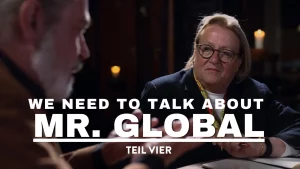







Echt unangenehm beide Sprachen gleichzeitig zu hören, den Zweck davon habe ich noch nie verstanden.