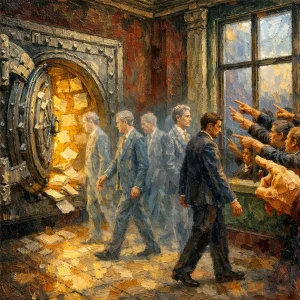
Hans-Joachim Maaz | NARRATIVE #53 by Robert Cibis
The collective grandiose-small disorder
Narcissism, corruption and fear shape our society: the psychiatrist and psychoanalyst Dr. Hans-Joachim Maaz is convinced that aberrations in mass psychology can only be prevented if the roots of human social behaviour are made visible. In this interview he explains how everyone has to begin with themselves. He also describes possible causes of what is currently unsettling an entire world population as a supposed fear of a virus, and explains why the best solution to a collective mass psychosis can be a great “dance of humanity”.
“I switched back to the GDR inside myself long ago,” is how Dr. Hans-Joachim Maaz describes what
probably lies somewhere between a state of mind and a social survival strategy.
For many people his description could hardly be less concrete. Someone who did not experience the GDR era personally can at first only guess at what Dr. Maaz then explains in more detail in this interview: from his childhood, which left him without many answers, through his training as a psychiatrist and psychoanalyst in the 1960s, to his vocation of wanting to understand and explain mass-psychological behaviour. Similarities between the unfree times back then and the handling of the corona crisis today are no coincidence. They are made and intended – at least according to those who profit from uncertainty and obedience. But to see the big picture, one has to begin on a small scale. Dr. Maaz explains how society can shape and alienate a person so that a pathology of society of its own arises. He explains what, from a psychiatric point of view, is going on in our society right now (28:18), and what roles narcissistic problems and the dynamic interplay between dominance and submission play in it. Fundamentally it is about the question: how could self-knowledge save the world, if a god complex cannot?…
Robert CibisMy name is Robert Cibis, I'm very pleased and honoured to be here with Hans-Joachim Maaz. Today we're going to see how, so to speak, one can assess the psychological state of our society, where it comes from, where it's heading, what one can compare it with, and in general how we can perhaps also work on being in a better position as a society as a whole. Welcome to the programme. And we're here with you in Halle, so to speak. And you've already experienced a lot and also know various regimes in Germany, so to speak. Tell us how you felt and experienced the GDR.
Dr. Hans-Joachim MaazI was born in 1943, that is, still under National Socialism. And we were then, so, expelled to Saxony, alive. My parents never recovered from that. And when growing up, in puberty, you start asking what was with your parents, were they Nazis or not? And they never really gave an answer. And then life in the GDR. Of course I was interested in how National Socialism could, that is, how people could enthusiastically go to war or want to exterminate a whole people. How does something like that happen? How abnormal is that? And then the GDR, again authoritarian, repressive, informers, injustice, lies, hypocrisy, and again mass behaviour. When you think of the demonstrations, and whoever isn't for us is against us. So basically something had arisen in me, a search, wanting to understand this mass-psychological behaviour.
And that then carried me into today's society, where there are again similarities. And in the GDR, since you ask, of course that wasn't welcome. The GDR stood for peace and socialism. There were no Nazis any more; they were all in the West. That was the official narrative. But what you experienced had similarities again in behaviour and in the authoritarian, repressive structures. And now I found it hard to really feel comfortable in this system, because no answers came. And when I then studied medicine, it wasn't so easy either, because I wasn't a child of workers and peasants; I first had to be an auxiliary nurse for a year, in order then to be delegated by the workplace, so to speak, as being worthy of studying in this state.
And then I ended up in psychiatry. And for me that was the specialty where it isn't only biological, physical, but where the social and also the spiritual, if you like, always play a role. And I was in a group of young neurologists, and we suffered from the conditions: authoritarian psychiatry, no freedom for patients, mainly drug treatment, electroshock treatment; social and psychotherapeutic approaches hardly existed at the time, that was in the 60s. And so we actually thought about what could be improved, made a proposal for improvement, and the result was that we were visited by the Stasi, that we were suddenly suspected of being a conspiracy against the socialist leadership.
You weren't really allowed to criticise, and that was when it first became clear to me that medicine, psychiatry too, is only a reflection of the system. And it just wasn't welcome to make proposals for improvement in the sense of dealing with people differently, releasing them from repression and looking for other forms of therapy; social psychiatry and psychotherapy were difficult. And with this experience that psychiatry too is a reflection of social conditions, that has become, so to speak, my further essential theme in my professional life. Again and again looking at how a society shapes and also alienates people, becomes alienated, and how such alienated people in turn shape a pathology of society. This interplay has fascinated me and again and again irritated me, above all because I really see a serious danger in it of ever new social aberrations.
I have one more sentence: I once came up with the term normopathy, that is, that the pathological, the disturbed, is taken as normal simply because a majority decides so, or thinks and acts so; then you no longer notice that it is actually abnormal. And that then was the explanation for me of how it can be. There are normopathic developments of society: National Socialism, GDR socialism, and today I again see a normopathy in a narcissistic society, and what's special for me is that the superstructure is of course very different, but the base, the psychosocial behaviour, the psychodynamics, the group behaviour, is comparable, and that's why it has always fascinated me that it isn't enough to say: we don't want that any more, never again, all over, if you don't understand from which roots of human behaviour, of social behaviour, such a thing arises.
Robert CibisYes, I think that already outlines the topic. I'm just very curious to know: the Stasi came, then what happens? How does it block such a process?
Dr. Hans-Joachim MaazWell, first you're suspected. We're now a conspiracy. We are, as it is, an anti-state group that wants rebellion, that doesn't agree with the socialist leadership of the clinic or hospital. That any ideas or proposals for improvement came from below just wasn't usual. That wasn't supposed to happen. It was always dangerous for those at the top. And, well, we then had weeks of conversations, interrogations, explaining what we actually wanted and why we wanted it. They always investigated whether what we were aiming for wasn't political.
Robert CibisI see. So you and your colleagues were treated more or less like criminals or suspects.
Dr. Hans-Joachim MaazLike suspects. Treated, ah yes.
Robert CibisAnd in the end, though, at least you didn't go to prison, did you?
Dr. Hans-Joachim MaazNo, my decision then was: I left. I can't live with this psychiatry any more if it's basically handled like that. And that was practically the beginning of my next professional, my development as a second specialist, namely training as a specialist in psychotherapy. And that existed in the GDR even earlier than in the Federal Republic. But the Stasi still pursued me there too. Basically, I had left, had a position in a polyclinic and wanted to do the specialist training there. And the district doctor said I wasn't worthy. That I wasn't a cadre worthy of support who was allowed to pursue a further career. It was difficult, but somehow I managed it after all. I find it very interesting how you describe it.
Robert CibisBecause what has always impressed me too, I've also met Chinese dissidents or others, is how little it takes to be judged subversive or anti-state. And you also notice how a system like the one in the GDR must have worked, namely from the top down. And perhaps also, it's a sign of insecurity. If, so to speak, a manager in a company is very insecure and is supposed to have highly complex processes under control and then notices that others in the team are much more competent than he is, there is sometimes the unproductive behaviour of wanting to suppress precisely the good proposals from subordinate staff, so that their position, so to speak, isn't endangered. And that's what it sounds like in the GDR. One has the feeling, because it's actually in the interest of every nation that the population is as healthy as possible.
And if proposals now come from as many clever people as possible, no matter where they are in the hierarchy, it would first of all be, on balance, an advantage, whatever the nation's goal is. So it works against its own interests so that the structure is preserved. Which points to a weakness of the structure. That's all I mean. Basically, that can certainly also be transferred to National Socialism as a mechanism. As I learned at school, how extreme the brain drain was, how from the beginning of National Socialism the cleverest minds of the country continuously emigrated, and that Germany was really sabotaged because all the clever people left. Not all, but many. And that is very similar, similar self-sabotage in a certain respect. But of course it also has a certain power as a system, because through this strong centralisation one can also carry out more extreme actions.
Which otherwise perhaps wouldn't be possible by consensus. Yes, that's how it is. Now I've put in my two cents. Basically we now want to divide the conversation into three large sections: anamnesis of the German population, diagnosis and healing. But then of course not only of the German population, but of the whole world. But I think it's also important to see that this psychiatric, psychological view of all of us is of course always only one perspective. And then there are other perspectives, which we then keep trying, where I'll then perhaps rather bring in, as devil's advocate, no, the other way round, devil's advocate. So, to the first point, anamnesis. What's actually going on from a psychiatric point of view?
Dr. Hans-Joachim MaazYou've already pointed out a central problem, namely that one can't sensibly, that power elites, one can't assume that they are sensible. And that they actually often experience competition or envy, jealousy, when others, subordinates, are somehow cleverer or simply have better ideas. And seeing that as a weakness of a leadership, yes, or of a society. Under the Nazis many clever, sensible people emigrated, thank God. That happened in the GDR too. Many, many fled the GDR. And today it's already starting again that people ask themselves: you can't live in this Germany any more. Where can one still emigrate to? It has a lot to do with the fact that now, very noticeably, all critical voices, all who have something to say against government action, whether it was about migration, about financial security, now above all about corona, are at least not admitted.
You no longer hear their voices in the public, in the big media. Or they are even persecuted, defamed, intimidated, suffer disadvantages. So there are similarities again. So when I look at it, anamnesis, how can that be? Then, from my field, above all psychotherapy, psychoanalysis, I'm of course always at the topic of how people develop. Or how they are allowed to develop, or can, or must. And today, with the knowledge of developmental psychology, of child and infant research, of brain research, we assume that we should no longer speak of upbringing. Upbringing always has rather negative connotations, because with upbringing one assumes there are parents, experts, who know what is right and who have to teach children the right behaviour.
And that is always authoritarian, and in the worst case we know it as black pedagogy. We assume that children's development should be relationship. It's an interplay. Children influence their parents; they actually first turn man and woman into mother and father. And the quality of this web of relationships decides personality development. That is, healthy, free personality development, or else constricted, deficient, wounded, traumatised. And today that can be captured and described very well. That is a central task of my psychotherapeutic work. And as a result, now, how can it be that there are such mass-psychologically effective social aberrations? One has to look at whether a large number of children didn't have similarly bad relationships, that is, bad conditions for development.
And that is indeed essentially the case with insufficient attachment. There's the question of separating mother and child too early. That was a huge problem at the time, and it is again today, that outside childcare is favoured and family care is disadvantaged or even defamed. Yes, as if there were no longer mother and father, but a parent one and parent two. So it's becoming highly pathological again. And when I look at it, I tried in my work to examine in a very differentiated way which paternal and maternal relationship disorders are offered to children. And the most common is what I mean by lack of love, lack of mothering, lack of affirmation: that most children are not acknowledged, loved and affirmed for their own sake, but that the parents, who are then often the representatives of social values, have an idea of how their children should be. And these expectations are brought to bear on the children, so that from the start the child has to find out how to behave well so that it has the grace, or even the recognition, of its parents.
And that's where alienation begins. Then the children, then people, are no longer with themselves, but have become the way they're supposed to be. And many no longer know at all how they could have been if they had been able to grow up under freer conditions, better circumstances. And this deficiency syndrome of affirmation, of love ultimately, of good empathy, of the parents' empathy, is the source of what we call narcissistic disorder. And that always means that in this way children learn, when they don't feel loved, don't feel really understood, to find out what the parents want. And to become ever more, ever better, ever bigger, to delight the parents. And since these aren't genuine developmental needs, but the sensed ones, how they're supposed to be, it's a screw that turns endlessly. Because you're never satisfied, because you think it still wasn't enough. And that is basically the source of a narcissistic, endless, addictive escalation of presenting oneself, of being good, as good as possible, of always getting better.
And what struck me in this work is that there's also the opposite of this grandiose-self development, namely when children learn: well, if I'm particularly weak or don't know or feel sickly, of course that triggers concern. And then people turn to the child. So the child experiences: aha, if I'm weak now, stay small, that is, am not so strong, then I finally get attention. And in this way something narcissistic, a narcissistic disorder, is bred too, only it doesn't go into the grandiose self; I call that the grandiose- small. You keep yourself particularly small in order to almost provoke attention and recognition. And in the process of German reunification I came to the realisation that in the West people live out their narcissistic problems much more in the grandiose self: competition, being strong, always being better, having to present oneself well.
And in the GDR, in the East, the grandiose-small was cultivated more. Namely, in the GDR you were well advised to say: oh, I can't right now, I don't really know, so as not to have to do something politically and ideologically that you didn't want. You always kind of: well, I can't right now. You inhibited yourself so as not to be misused.
Robert CibisSo East and West were a good couple, then. Narcissists often find each other, don't they? No wonder there was a reunification.
Dr. Hans-Joachim MaazWhat we then understand by collusion, the pot-and-lid or lock-and-key system, was also East-West. Back then I already called it a domination-submission collusion. The dominant grandiose self in the West and the more subordinate grandiose-small in the East, as domination and submission. And I see a similar split again today.
Robert CibisThere are for these terms, I once, others have written, female narcissism, male narcissism, for the dominant, so to speak, that, I mean, there are also often couples where you see the woman or the man is particularly dominant and the other likes submission, him or her. And what they have in common is that they don't really meet each other person to person, as equals. That's this difficulty of really responding to the other as he or she is. And there you probably see the crux of the problems you've pointed out.
Dr. Hans-Joachim MaazA partnership as equals would of course be the best. But for that you have to be pretty mature, in the sense of knowing well: I'm okay, I know my qualities, but also my limits and my weaknesses, I don't have to hide them. And that's rather rare, so it's more common that there's a collusion there too between one in the partnership who is dominant and the other who then submits or simply stays passive. And this interplay, like lock and key in the partnership, is quite good at first. But then both inhibit each other in their development. Quite simply: if one is more the active, dominant one, and the other always the passive, or the subordinate or follower, then both hold on to this role.
But the dominant one would also like to be weak or passive or be looked after sometimes. And the one in the grandiose-small, or the passive one, would also like to call the tune sometimes, and so on. And that doesn't happen. Or if it happens, if one of them does therapy, for example, then this partnership collusion no longer works. And then it gets difficult, so that basically it's actually always about understanding one's own problems better from the start, so that one doesn't enter into a collusive partnership.
Robert CibisYes, I mean, this term of the narcissistic society, you've written a book about it, but it's of course a word I've often heard, in other contexts too. And it's also a bit of a fashion to call many people narcissists. I thought to myself: all these fascist societies, for example, or these kingdoms that existed in the past, they're basically like that too. There were these few dominant people there too; the family, too, for example, the classic family of 100 years ago, for example, was also relatively narcissistically structured. You had, so to speak, dominant fathers who stood above the rest of the family. And there was a clear hierarchy, in responsibilities too. It was even anchored in law. Women, for example, couldn't vote or decide on buying a flat. And the question is: was society ever anything other than narcissistic?
Dr. Hans-Joachim MaazWell, at least in the way narcissism is shaped. Then we're more at the perspective of authoritarian societies or democratic societies. And that in a democracy too the narcissistic disorder principle could dominate, I didn't believe that at first either. I thought that in totalitarian or authoritarian conditions it's clear: the rulers are the strongest, biggest grandiose-self narcissists, who assert themselves, prevail.
Robert CibisGood that you say that, because it isn't a matter of course. I've had discussions in recent years where this US American-tinged mania for self-optimisation, from aerobics to new clothes every year and so on, was judged to be narcissistic.
Dr. Hans-Joachim MaazYes, I also find that authoritarian regimes are of course particularly narcissistic, above all if you see these two poles, submission and dominance. And that is basically exactly what shocks me, that democratic conditions, I introduced the term, the distinction between outer and inner, or inner-psychic, democracy, that in a merely outer democracy it's quite possible to establish a narcissistic rule again. At first in various variants, yes, whether it's now, it doesn't have to be in politics or in business, that's what you describe. It can also be in sport or in people's self-optimisation and so on. But you always recognise the narcissistic by the addictive. There is then no natural limit.
The natural thing: when I accomplish something, then I do it, it's good, I'm satisfied and can relax again. The narcissist can't do that. He goes: ah, that has to be even better, even better, even better; he actually puts himself under constant stress. And that's also how I explain, let's say, the development of this Western democracy, which is a capitalist one, a finance-capitalist one, with the constant increase in performance and the growth mania. There was no end any more, ever more growth, ever more profit, yes. And then it became clear to me: aha, narcissistic problems play a role here too. And again in the collusion between those who are the leaders in politics, in business, but also in culture, yes. And those who like to be fans or enthusiastic followers, voters, and who have all their stars, whether in politics or in culture, and worship them.
And in this context I understood from my perspective that an outer democracy isn't enough to reduce human aberrations. There has to be something like an inner-psychic democracy. And that, when I come to these developmental-psychological connections, is always a development of the person who then knows exactly who he is or can be and where his limits are, what suits him and what doesn't. He then no longer depends on the mainstream, on fashion, but on his inner perception. And that also means he then accepts what doesn't suit him, his weaknesses, his limits. And whoever doesn't, who is always in the narcissistic drive and goes beyond his possibilities, will always be envious, will always be jealous of others, never comes to rest, and then tends to disparage, defame, project and fight in others what he himself wasn't allowed to or couldn't develop well.
Robert CibisAnd what, as I now think, also belongs to it is of course that both sides may exist in the same person. You're then, for example, totally submissive at work and extremely dominant in private, because you understand these hierarchical systems, but not this person to person, as equals.
Dr. Hans-Joachim MaazThat does indeed often exist, but the tragedy is that both are rather sick, that is, disturbed. You can be particularly strong at work, or particularly subordinate, and then, on the contrary, particularly dominant at home or so, but precisely particularly, that is, no longer normal. You have to create the balance, unfortunately.
Robert CibisI've now asked myself, a bit provocatively. We've just established that in Western democracies these narcissistic tendencies are even very strong. And then they also exist in all totalitarian systems. Can one perhaps conclude from this that they exist everywhere, that actually every society is narcissistic? Take Germany, for example: it has 83 million inhabitants. That's simply quite a lot of people. And the question is: how can one organise oneself, if not through dominance and submission? Can one say 83 million people are organised among themselves as a commune where everyone is equal, in a flat hierarchy? Yes, that will never exist. But the critical question, of course: hasn't it always been like this? Isn't it like this everywhere, in totalitarian as in democratic conditions?
Dr. Hans-Joachim MaazYes, and for as long as, if I now take my developmental-psychological perspective, for as long as children are treated badly. That is, as long as children aren't recognised and affirmed for their own sake. As long as they remain in a lack of affirmation, a lack of love. That is, so to speak, what drives the narcissistic drive now. I'll prove it to you. I am somebody, aren't I? I am lovable, aren't I? Or I make myself small so that you'll look after me. I've now got to know two systems. The GDR system and now unified Germany, the democratic system. And I have to say that the effect of narcissism in the authoritarian, totalitarian GDR system was easier to recognise and to bear than today. Today it's more hidden, today it's more manipulative, more hypocritical, more false. And in fact, if I now, I've been here for 30 years, when was it?
89? At the beginning it was a real enrichment to experience diversity of opinion, freedom of opinion, pluralism. And then in my work I soon noticed: wonderful, but everyone who goes his own way can also have his own quirk. But it isn't so bad, because there are millions of people with quirks; I call that private logic. Everyone who is afflicted with a narcissistic problem now tries his private one, the balance, the compensation, the substitute. And that's quite possible in a pluralist society. Everyone has his opportunity there, his little game that he can play. And even crazy private logics relativise each other there, because this one is like this and the other is different.
And then it relativises itself again. It only becomes problematic when the orientation, the development, the values of a society are no longer the same for everyone. That was perhaps the case at the beginning, after the Second World War in Germany too: reconstruction, consumer opportunities, growth. And I think that was halfway true for many people too. But over time it narrowed. There were more and more of those who were better off, who had advantages, and those who were disadvantaged. And with that, basically, the success of private logics, of private compensation, how do I cope with my insecurity or inferiority or whatever, becomes weaker when you no longer have the pluralist possibilities to live it out like that. And I think that we now increasingly have dictatorial, authoritarian conditions again, where all critics are persecuted, defamed, where freedom of opinion no longer exists as it did, has to do with the fact that this form of narcissistic growth, profit, has reached a critical limit.
You notice it: environment, climate, migration, injustices, all that are also the consequences of this development. And that leads to most people now of course also being unsettled in their previous compensation, or it no longer works out. The success of the compensation no longer functions. And I believe that's one reason why we have such heightened conditions at the moment. It drives people mad. And if we come to the virus, then that would be my main statement at the moment: the virus has made it possible for people to develop a delusion, a delusion of threat towards a virus. And that was evidently wanted politically. But they have quite different reasons to be worried, namely about the future.
How will things go on when this system is at its end? How can we live then? And it evidently seems that the battle is raging between, a narcissistic battle again, between those who are in power, politically and economically. They're now trying to save everything and get it into their hands. And the others, the people, the population, more steeped in the grandiose-small, are supposed to obey, to be compliant, not to rebel. And that evidently works with the narrative that the virus is a great danger. I would never have thought it possible how people, actually educated people, people who in themselves live democratically, let themselves be so intimidated, so deceived. Yes, but evidently, if you hear every day: danger, danger, danger, that really is a great source of insecurity for many people. When it's about life and death, when that's said, yes. Or also when people sense that there really is a danger for living on, but socially, politically, economically, yes, then it's much better.
One is afraid of a virus. Aha, you can protect yourself against this danger. We have to dutifully put on masks, keep our distance, get vaccinated, then everything will be fine again, yes. And in my eyes that is basically a mass delusion, a mass-psychotic, normopathic aberration, which I can only explain by this inner-psychic democracy or inner-psychic stability, the knowledge of one's own narcissistic lability, not being recognised, not grasped.
Robert CibisSo basically you've now contrasted two narratives. On the one hand a kind of self-optimising, megalomaniac growth mania that has reached its limits and basically leads to a massive depression, psychologically and economically.
Dr. Hans-Joachim MaazAnd fear. And fear, exactly.
Robert CibisYes, because of course, when you, how shall I put it, when you build the Tower of Babel, then you're also afraid of your own work. I can relate to that: when I'm shooting a film and I spend x thousand euros a day to pay my whole team, I think: oh God, what if there's no good scene on this shooting day? The bigger the project, the bigger this question. And when it's such a giant and you spend, I've met people, it didn't happen to me, but they spent a million euros a day on a huge team of 200 people and so on, then of course you get scared, because it's simply such a huge apparatus. And it's similar now for society as a whole. That also seems to be the case with the pharmaceutical industry, which has invested billions in vaccination programmes. Now that has to be brought to the people, so to speak. Yes, and here we come, that's, so to speak, the pharmaceutical industry, a bit of the transition to the other narrative. You've described it for the population. And then there's also the other narrative, which, how shall I put it, isn't about a mania of self-optimisation, but a kind of megalomania combined with self-optimisation, where people say: we can, so to speak, organise a better world.
Because we're now doing it by digitalising everything, by building platinum arms into people so that they can lift more strongly. Those are these transhumanist ideas. That's evidently found there, I'd say. So basically, when people keep asking, is there a plan, is there a world conspiracy, your pathologising answer would be: well, there are these sick people and those sick people, and they've just found each other to build a sick world. Would you put it like that, yes?
Dr. Hans-Joachim MaazWell, in any case I would say there's also no doubt that this form of living and economy, so to speak, has reached a critical limit. Yes, we know that from the consequences for the environment, species extinction, poisoning of the seas and the air and the soils and so on and so on. And that's what I call, so to speak, a narcissistic normopathy, in the material sense a megalomaniac one: ever more material gain at the expense of human relationships. And what is happening now I consider to be the last attempt to save this narcissistic aberration once more, by the powerful, who have the most to lose, yes? So it is, let me say, the culmination of the pathology. Very interesting.
Which otherwise leads into war. And now an attempt is being made to solve it, so to speak, by way of a pandemic.
Robert CibisIt's interesting, because the initial analysis corresponds to that of the so-called Great Reset, where people say: yes, we're at a limit, the environment is too burdened, or blah, blah, blah. That's why we now have to organise everything differently and give machines more weight, abolish property, centralise power, modernise everything. I don't know what else belongs to it. I think basic income belongs to it. But your consequences, your conclusion, so the diagnosis would be the same, the problem would be described in the same way from your side, only the conclusion from it would be a different one, you say.
Dr. Hans-Joachim MaazSo now it seems that there is the culmination of the collusion, yes? The few thousand people who have the money and are in power are now trying to arrange everything so that they definitely stay in power, yes?
Robert CibisAnd their possessions, right? And I sometimes think: when someone like Bill Gates has so much money that he can no longer count it, what does that do to a person?
Dr. Hans-Joachim MaazThat he gets the idea: well, perhaps it can be used really for the good of humanity, and I want to save people or something like that. That would be, so to speak, what Horst-Eberhard Richter once called the god complex. The culmination of the delusion, yes? And I believe we're right in exactly this problem. It's splitting into this large, into this elite, not the large one, but those who have power, and the large mass of people who are now supposed to believe all this and so on. To save the world, this idea is right, yes? Something has to be saved somehow. But now the question is how. And as it looks, it will be from above, that is, through control, through determination, through totalitarian conditions and so on, in favour of those who are already in power anyway. And my hope, my perspective would be, even if it probably remains utopian: it can only come from below, it can only come from the grassroots, it can only come from grassroots-democratic conditions. And to achieve those, human development, the child's development, social care, must be improved.
So that we actually get people who are able to live well in relationships. Not seeing the other as a competitor or then as an enemy, but as an enrichment. And that has to do with: if I'm halfway clear about myself, if I know who I am and what I can and can't do, I don't have to see the other as an opponent, but: oh, you're different, that's interesting, can I learn something from you? Yes, I'm still content with myself. But the one who isn't content with himself will want to fight everyone else who could be better, or compete in order to become even better. So that would be the starting point for me: if it's about saving humanity, that is, changing this crisis, then it has to be saved, changed, improved from the grassroots.
Robert CibisThat's really interesting, because just recently, a few weeks ago, I saw a three-hour documentary, which was made in the 70s, I think, about Adolf Hitler. And it was a psychoanalytical approach, describing that this man really had a delusion of saving. Because he really thought, well, he had problems with contact, as one can now, I think, understand without studying psychology. He simply didn't find it easy to get in contact with people, and that's why he placed himself above others. But what I also found so interesting is that he felt called to save Germany or even the world and to eradicate evil. And we know today that this led to very great crimes. And yes, and I find this parallel, one has to compare in order to understand; the dangers are of course enormous. I mean, the question is, now of course there are also those who rebel against it, that is, against the attempt at the current rescue, and who feel themselves to be rescuers. And the question is how one gets out of this logic at all. Because the counter-force, in the worst case, does it then resemble this dominating force now?
At the moment the dominating force is: we're using the virus to rebuild the world. And the opposing one is: no, but I want to protect humanity, and you're evil, you who want to rebuild the world, and we're good and must save the world by stopping you. And then both opposing forces have a delusion of saving and, in the worst case, even narcissistic traits.
Dr. Hans-Joachim MaazAnd because that's so, I don't believe there really is a solution for reasons of reason, of negotiation, of insight. In any case, history has so far always shown us otherwise, namely it always ends in war or revolution, that is, first of all in the chaos of human relationships. I fear that too. We don't yet know what's coming our way with the consequences of vaccination, or with the changes now in the economic field and so on. So I'm no longer one of those who, even if I criticise, think there's a possibility of saving the world. We won't be able to prevent the chaos. But of course there have to be answers, and answers that I look for for myself and in contact with people who are seeking help.
And for me that's always the effort to be at peace with oneself, to be in dignity. And being in dignity means knowing myself so well that I reconcile what is important and right to me with the demands that come from the environment. That's always full of conflict. And now I have to find out how much subordination, obedience is necessary so that I'm not, I don't know, murdered, put in prison, defamed, which one can no longer bear. But how much resistance, how much insight, how much information do I need to behave in such a way that I don't just stupidly obey, but also preserve my dignity: okay, here I have to say no, I won't go along with this, I have to refuse.
And then there is, I switched back to the GDR inside myself long ago, subversive behaviour. When I notice there's an authority that's no longer okay, that's rotten, that makes decisions that aren't okay, I have to see how I can undermine that, how I can outwit them, without going to prison. This subversive behaviour, and then of course always seeking retreat sometimes, meditating or hiking or dancing. And the most important thing is staying honest in small groups, partnership, friendship. No matter what is demanded, religiously, morally, politically, not caring about it, but asking what is humanly right.
Of course I don't always know that either, but in exchange, when I can communicate in such a way that I no longer need a mask, not this rag, but also no social mask, can make myself honest, have the feeling that I'm understood and can offer that to the other too, then that is basically the most human thing for me, what most calms and satisfies: being understood, having been understood, and being able to understand others, even if you're of different opinions. You don't have to agree; you can understand each other, and you can also understand why someone else thinks differently from me, because he has a different history or a different inner constitution. That's where I stand at the moment. The chaos, however it will come, can't be prevented. A rescue of the world isn't conceivable; how could it be? It can be attempted in a totalitarian way; that's how it's going at the moment, I think, yes.
So we'll have to go through a crash, unfortunately. But in this time, and all the more afterwards, the effort, so to speak, for basic human contact, honest relationships, is the best, the most important, the most human thing one can do.
Robert CibisWe've almost come full circle there. I'll try once more to bring in a slightly different perspective, because what we now, what I understand is that psychologists say: see the person, accept him; even a murderer is a human being, yes, like that. And one can even like him, one can do that well. And because such destructive behaviour is always also an expression of one's own weakness. But now we have the difficulty that we're experiencing a power struggle. And it's a bit absurd when, in this beautiful Germany, the sun is shining, here where we are it's also very peaceful and picturesque. And then, like Sven Böttcher, you have to ask yourself: what are we doing this autumn? Is it civil war in autumn, or autumn holidays?
Yes, where do we park the cars when the barricades are burning? You simply have to ask yourself, quite pragmatically, what's going on now? You sense something is going on, it could tip over, but perhaps not, yes. Or you have various scenarios that you can't bring together, yes. Can I now book next year's summer holiday? Completely, of course it sounds absolutely weird as a question, but people actually ask themselves such questions. Yes, it's quite right. And we don't only have such strange collisions of thought patterns, of narratives, because I actually never asked my grandparents whether they still went on holiday during the war. I could have asked. So you have these narratives that don't fit together. And it's similar with: I understand people, I want to be empathetic, I want to be balanced, on the one hand, and on the other hand: I want an important position in society, I don't want to be beaten down, I want to protect my family, I want to protect my country, because we quite clearly, I believe you don't need to have studied politics to see that we're experiencing power struggles here. There are various forces, political, economic, which of course always fight each other anyway and want to expand their dominance. But in a crisis like this that's of course always particularly great. No matter where the crisis comes from, whether it's planned or arose naturally, in any case such a phase of upheaval is always a phase of an extreme amount of jostling. And my question is: these psychologists, they don't really go in for power struggles.
For them it's rather something negative. They say: people who spend all day defending their positions or fighting to get ahead are actually disturbed people. The truly happy don't care about such things at all. And then it may be that precisely these psychologists are the first to be swept away. They're the ones who are then inferior to the perhaps much more primitive, more feudal structures. And sometimes I have the feeling that Germany as a nation, as a group of people, so to speak, is particularly at a disadvantage there. Because others don't think that far at all. They don't want to be empathetic at all. They simply want to win. And they say: great, if you do more for the environment, then you'll lack the resources for war equipment. Then we'll have the war equipment. And that means we can tell you what to do. Because you're spending it on the environment. I'm exaggerating a bit now. But I believe this research on the corona crisis that I've done in recent months has shown me that we can only understand it if I grasp how this power thinking works.
Dr. Hans-Joachim MaazSo what you now say of us psychologists, I'm not a psychologist, I'm a doctor, but a psychotherapist, but the same applies. Someone like me will be swept away under the growing power relations. That's how it is. I needn't kid myself about that. But one also has to take note that there are evidently psychologists too who advise this power elite. Because one can't be more psychologically sophisticated than building up a virus like that. Because evidently fearmongering is a huge problem for all people. The question of life and death or the question of illness and so on, that concerns everyone. And it's done in such a psychologically sophisticated way. That's why I also say we never actually had an epidemic of national scope.
That's a fallacy. But from the start we've had a collective anxiety disorder of national scope. And that was generated. And if at the beginning you thought: well, okay, it could be that it really is very dangerous, by now it's clear that whoever still claims that is pursuing other interests. It really is about power. And even if the narcissist can't admit it, that would be the healthiest thing: people, Federal Chancellor and Schmidt, unfortunately, we were wrong. We're stepping down now. It has to be others. Now you ask what will happen in autumn. Yes, as it looks now, it's completely clear: the next mutation is coming, the next, everything goes on. The lockdown is coming back. And there's no going back any more. So, now we have an election. And there are already changes in the world.
States in the USA that abolished the mask requirement long ago and so on. Or no longer the lockdown. Or if you look at Sweden. So there are other ways. And the question is whether a new government elected in September will be able to create a corrective there. Or is it in danger of making everything even harsher, even worse? That's where it will be decided first. If we managed to get a government that says: okay, now we have to clean up a bit. That was all quite good, but a lot was done wrong too. And so on, it could end peacefully, or go peacefully. But if it escalates with authoritarian measures and further lockdowns and bans and distance and so on, then I believe it will become ever more dangerous.
Ever more dangerous that it turns into violence, that people can no longer stand it. I say: whoever has been as constricted as in this last year, in every respect keeping distance, no longer being able to breathe properly, constantly having to be afraid, that takes a certain time, then you become ill or evil, I say. We already have a great deal to do with illness, just as a consequence of this constriction, if you consider what is also being done to the children who have to wear a mask. It's criminal. Basically, those who order it must go before a court, because it's a violation of human rights, of children's welfare and so on.
Well, and that's the question, yes. It could be that there are now points somewhere in the world that say: no, it can't go on like this. And Germany has the chance in September. And if not, my answer is: ill or evil. That's the consequence. More and more people who become ill or become evil, in the sense of violent. Or at first it looks as if evil goes into the split. The one who doesn't wear a mask is the endangerer. Or whoever doesn't get vaccinated is then, so to speak, lacking in solidarity and to blame for things not moving on. So evil is first carried into this split. And that's an old psychological recipe that already applies in families. When the parents aren't good, the children are supposed to quarrel and fight. They don't stand up together against the parents.
That didn't work in communism either. Workers of all countries, unite. Doesn't work. And at the moment it seems again that the elite saves itself by dividing and inciting the people. That such thoughts even arise, that a person who doesn't get vaccinated could be a bad person, an endangerer, lacking in solidarity. In my opinion that's so sick, so absurd. I'm lost for words. And I can then only understand that in psychopathological terms. Then I can say: okay, that's simply sick, and I have to understand the illness and see whether it can be cured or not.
Robert CibisYes, there are of course two aspects. On a personal and societal level, someone who gets vaccinated or wears the mask and all that has of course invested an incredible amount. And for the investment to pay off, the narrative has to be right. Otherwise, well, that's of course a trap in which one, once is inside. If I now, if I give my girlfriend such an expensive ring, then I have to love her too.
Dr. Hans-Joachim MaazThat's logical. I can only say one more thing, because when I speak like this, I've been vaccinated many times, just not with this vaccine. So not that, I have nothing, I know that vaccination really is medically valuable or can be. But that in this context there's no more discussion about a vaccine that isn't one, that hasn't even been, so to speak, approved, and people aren't told the plain truth, that for a personal decision clear information about the completely unknown risks isn't given, that's basically the criminal thing about this story. So what now, you said two things that are also totally exciting.
Robert CibisWe have, you meant that it was psychologically clever that this virus exists. Basically you mean the people who exploit this crisis or the epidemic through the virus for political purposes. And it's in the air, and we're not the first to talk about it, that the people who, one has to say, orchestrate the communication, because when all media say the same thing on the same day, then perhaps it means, it doesn't mean that all media are remote-controlled, but at least there's clear herd behaviour. And then there are a few bellwethers who are either remote-controlled or have chosen to report on it, and then all the others copy them. It's also the case that the media get less and less money from readers and viewers; instead the money comes from elsewhere, from the people who place adverts, for example, or from the public side, so that there's a concentration of customers there too. So the customers are no longer the readers or the viewers; the customers are those who give the money, economically speaking.
And because you have a concentration of customers, you have a concentration of discourse, a narrowing of the narrative anyway. That's been the case for the last 20 years. And to cut a long story short, it may of course be that psychologists don't only do therapy. I once met a woman from the Bundeswehr who said yes, she studied psychology, but not for therapy, but for influencing the enemy. You can study that too, you can, I didn't know that, you can even study it. The Stasi already did that. Yes. And then the question is how much perhaps these large societies are even only possible through this kind of psychological influence, and how much those who are now exploiting this crisis perhaps also feel threatened. Because I tell myself, my common sense tells me, people who are very aggressive, like the police in Germany now, for example, which is more aggressive than it used to be, than it was five years ago, let's say, they feel threatened too.
So I ask myself, where do they feel threatened? We've already touched on it, there's a kind of overkill, it's ever bigger, ever further, which just doesn't work any more, the system is too inflated. You notice it's backfiring. But of course there's also an empowerment of a structural, technical kind. I, for example, can simply get together with a few mates and say, we'll make a TV station now and broadcast something all day on some video platforms. Of course I can't, because it may be censored on the platforms, but before the corona crisis I could simply have done that and could have broadcast something on YouTube all the time, like this conversation. And I hopefully can today too, but you don't know whether it'll still be there tomorrow. In any case that's a tremendous empowerment, which could also of course lead to a decentralised power structure in the media, where you simply see: I can no longer control the flow of information just because I now have these three broadcasters and these five newspaper publishers.
And perhaps, and you notice that too, you don't only need this financial power, you don't only need censorship, you also have to combine it with manipulation. And today these brainwashing experiments of MKUltra have been published. That's from the 1970s, how the secret services managed to completely influence people, to turn them, they were communists before, afterwards they're capitalists, or the other way round. And that's, so to speak, proven and documented. But what the tendency of the last 20, 30 years is, is that one not only analyses these psychological mechanisms at the level of the whole society, but tries them out. And that's the interesting thing, because you have patients and treat them and know them, but basically you talk about the whole society as if it were a patient. The question is what the difference is between talking about a whole society or about a single person.
And what's the difference between treating it and manipulating it?
Dr. Hans-Joachim MaazWell, one can't apply what one has recognised about a person or come to know to society. But if one combines that with group-dynamic herd instinct or mass-psychological mechanisms, then there are certainly possibilities that personal, individual behaviour, if it then occurs frequently, and that's possible through upbringing or possible through manipulation, that it then also has a comparable societal, that is, mass-psychological effect. That's what has always interested me or also worried me. If we start from the narcissistic narrative, it's always the case that changes through elections or through revolutions mean that some narcissists are swept away and replaced by other narcissists. So nobody gets into this position who doesn't have such a thorn, having to prove that he is somebody after all.
Or else, if that goes well for a while in a society, and we know that from the parties too, one party says narcissistically: we are the best, we know it and the others are bad, and they say in turn: we are the best, then it balances out. So either like that, if power and money and so on are distributed fairly equally, or if it gets bad, then through revolution or war. But now something is added. Narcissism is now also supported predominantly by money, that is, by corruption, by bribery. So those who are now, so to speak, at the top of financial power have so much money that they can actually bribe politics, the media above all, scientific institutes in such a way that they now obediently, basically, deliver the results wanted by the people who paid. That's the new danger, this interplay of corruption and narcissism.
And that, one can't understand it, well, I think, coming from the GDR, how I valued this media diversity and so on. And when I look at it now, if there weren't alternative internet media, it's worse than the GDR, worse, the daily fake news we get to hear and see on television and in the big media. It's unimaginable. How is that possible? How is such a forced conformity possible under democratic conditions? Only through narcissism, corruption and fear. Yes, when I ask myself how it can be that the Bundestag is now still confirming an epidemic of national scope when there's no evidence for it at all any more, then I can only think that some are perhaps really bribed, but most perhaps don't even need that, they're indirectly corrupt.
If they voted against it now, they would lose their seat or wouldn't be nominated again, now before the next election. And for many that means a great existential threat. So they agree. So if you take this complex, narcissistic problems, corruption and fear, then I have an explanation for myself for this unspeakable development that we're witnessing right now. And now to the subject of manipulation.
Robert CibisThrough money too. Through money, oh, yes. But anyway, I think you also hinted that there are psychological manipulations and that it's perhaps even so elaborated that it's a profession just like psychological therapy or psychotherapeutic therapy. Well, the basis of what one can manipulate psychologically is an essential basic social need of human beings.
Dr. Hans-Joachim MaazI want to be socially recognised. I want to belong. I don't want to be cast out. I don't want to be ostracised, not threatened. And that's really a strong basic need. And if you now manipulate in such a way that anyone who is now critical has something said about him that offends him, hurts him or hurts his dignity or so, then that's a massive way of bringing this person into line, so that he only functions as he's supposed to. Following the motto: punish one, educate a hundred.
Robert CibisYes. By the way, to the viewers, I'll go to my phone. Yes. You can ask questions. They then appear here on my great device. And one, one, there. And the other, now is, I think, the moment when we can start with that. Perhaps I wanted, before I go into the first question, there's already another one, and we've now, you have already listed how one can help oneself, what does one good, how one can protect oneself, where one can say no, where one has to draw a line, where one then still submits so as not to be harmed too much oneself. And I've basically understood all that. We've touched on how, why we as a people are so manipulable.
And you've shown the systemic aspect of narcissism, corruption and fear. Now we all know, well, all central powers work with it. And if you're completely honest and look at the Federal Republic of Germany after the Second World War, up to reunification if you like, you can find it there too. Professor Mausfeld has already shown that. He took examples there. I can't list them so well. But of course there was already a leash, the threat from the so-called Eastern Bloc. I know, I was at school, and when the sirens went off or any loud noise at all, all the children shouted, half jokingly, the Russians are coming. And that was simply omnipresent. So in the Federal Republic, the West, we were practically on the dangerous border. And the atomic bombs were aimed at us and vice versa.
And that's just one example of fear. And that's why there was a kind of leadership crisis after the collapse of the Soviet Union, because the threats fell away. And this whole fuss alone, the talk of the new threat that we need, which I still remember from back then, also shows how important fear is for structuring a society. So evidently that's how herds are kept in check. And that's something quite different from when we had climate fear or Pershing or nuclear weapons or the Cold War or so; these fears were there, but they're comparatively harmless compared with the virus fear, where everyone thinks I could be affected; with an atomic bomb you say: yes, it won't be that bad, or so.
Dr. Hans-Joachim MaazYes, a tumour can also strike anyone.
Robert CibisBut I think the difference is that everyone is an endangerer there. Even the vaccinated person can still infect others. Which one is increasingly learning now to be the case.
Dr. Hans-Joachim MaazThe poor people.
Robert CibisThat's really very perfidious. But if you now see how, in the GDR too, particularly, but also through capitalism, there you perhaps see the parallels, families are separated and people isolated. So you just pointed out that children who are separated from their parents early have greater tendencies to develop narcissistic disorders. Overall it's about how much love, how much they are seen as people and feel experienced. And if you then, and these children who are practically torn out, that also happened under the Nazis, that happened in all fascist systems. That seems to be very important, this isolation, the atomisation of society. And basically we now have the situation where this has been pushed to the extreme. Perhaps it's so extreme that it can't last, I ask myself.
Or is it so extreme precisely so that it's possible after all, although the people are actually more powerful than anyone. Because not only can everyone somehow make a live video stream with relatively few means, but everyone can also, for example, get much more information than they could before. The question really is how this frightening and intimidation can be kept up. It's already happening now. Every mutant; we know there are already thousands of mutants anyway. That's the nature of viruses. But it's always pushed up so much. And how long does that work? How long can you keep intimidating people with new, terrible messages like that? That's the question. I believe until the day when a large part of the population sees the system behind it, that fear is used in all social constellations of government as a vector of power.
And even in the so-called democracies, which then also have something very undemocratic in this; then one would be free of fear, one would also have more say and shape things more, and the structures would be less controllable. It would logically be more chaotic. If everyone has a say, it's of course more chaotic. And I also understand that the Stasi was then afraid that every doctor or therapist would say what he thinks. But basically we have exactly, I think one perhaps can't even see it so negatively and catastrophically. We now have such an epochal break, where the world has shrunk so much that there's a great longing, not only from the powerful, who have so much to lose, but also from everyone else, for a clearer global structure. And the new world government is what many people point to as an absolute horror scenario. But basically there are perhaps also people who quite secretly, and would never admit it, but quite secretly would be glad if it existed, because they wouldn't cope in this chaos.
That's what I think. Yes. And if we all, people in the world are also much more educated, and so they also have much more potential to shape things themselves. And that also disempowers the powerful. And how can you very quickly make a people uneducated, that's also the question. Those aren't such simple projects. So I don't know what else you can say about that from a therapeutic perspective.
Dr. Hans-Joachim MaazWell, what has become clear to me, that's why I speak of a collective anxiety disorder, is that the behaviour, which is often so absurd, yes, how people behave or wear masks or accept all that, is so fear-triggered. And in my work I've found that basically individual fears that were hidden until then, but are there, have now been torn open as well, yes. And then there are the real fears, about the future, about what will happen to our environment and so on. And all of that is projected onto the virus. That means basically every person is unsettled about his life: has he lived it wrongly so far, or well enough? How will he be able to go on living? How has he got by with his compensations?
And what will happen politically, economically? So that's a tremendous insecurity that plays a role on a mass scale at the moment. And that's why it seems to work at the moment that many people actually long for strong leadership, yes. So that it's now said: if he does that, then everything will be fine. That's how it goes: if you nicely wear a mask, if you keep your distance, if you get vaccinated, everything will be fine, yes. That this works like that and isn't questioned, I can only explain by the individually stirred-up but not overcome fears and the fears of the future now producing this abnormal behaviour, this uncritical, this most obedient behaviour. And at some point, I think, we'll get to where that no longer works.
So either truly totalitarian police and military force will then have to be used, or else the critical questions practically break through. The search for variants other than totalitarian ones breaks through. And that too can of course become chaotic at first. Then everyone wants to say what they think. So leading that back into something good, so good, making it democratic, that will be the great task.
Robert CibisAnd how many years do you estimate?
Dr. Hans-Joachim MaazWell, hard to say. I think first of all the autumn will be a new dimension, a new dimension of conformity, of obedience and of civil war, it needn't be war yet, but of hostility among citizens, the good ones and the bad ones. That will probably carry on for quite a while. And then, in the end, it will depend on how people are supplied. If the supermarkets can no longer guarantee that, then I think it will get serious.
Robert CibisAnd what, psychologically speaking, what actually is war? Is war a psychological illness?
Dr. Hans-Joachim MaazDefinitely. Of course, for me the background is always psychological. A megalomania, or a megalomania and then the fear that the megalomania can't be sustained, can't be achieved, can't be realised. And that there are enemies preventing it. That's the classic projection mechanism. If I can't cope with myself, as a rule I don't look inside myself; rather, it's your fault. The neighbour is to blame. Circumstances are to blame. So the projection: now the virus is to blame. And that's basically when a society is in such crisis, or is in such crisis in its megalomania because of its leadership ideology. And it can no longer be sustained. It becomes clear that it isn't true. An enemy is needed. Yes, and when that builds up again, then people go enthusiastically into war.
And this enthusiasm is again what's striking. So it's not only obedience and command; evidently it's then at first also a need in many people to project their own insecurity. That's the enemy. That's the Russian. The arch-enemy. The communists. The capitalists. The virus. Yes, of course. So war is a pathological attitude. Basically always rooted in psychodynamics. Of course then there are political, economic, I don't know.
Robert CibisFine, so these power games have something sick about them, but they've still somehow always been part of humanity. And in the sense of development, of progressive personal development, it's of course obviously wiser to free oneself from them. But at the same time I believe that clever people today, like you, must also have learned again and again to say stop, or: not here, not now, right now I don't understand, I need to protect myself for a moment. Because how often have I been told: yes, you also have to understand the other side. Yes, of course. Yes, but it's just difficult to live day in, day out with someone who calls you, I don't know what, a crank, where you, where you just notice there simply is no conversation.
Dr. Hans-Joachim MaazMy profession is understanding, my profession is listening, is wanting to understand. And there are always people I can't understand because they're so different. But then my ambition is: can't I after all, isn't it down to me or so. But there are also always people who don't want to be understood. For whom the threat is that I could understand them. That I could see connections, backgrounds. Then they would build contact, and they're afraid of contact. And then you flee from contact by submitting or by placing yourself above. Yes, yes, that's it.
Robert CibisThat's it. I think, right, now I'll turn to the viewers. I have, the first question is of a technical kind, funnily enough, about DLive, whether there's a chat there or not; unfortunately I can't answer that at all now, because I'm not responsible for it. The important thing is, we now have this stream on lots of platforms, but for a few days now there's also the one from Oval Media. It's called tube.ovalmedia. It would of course be great if many of you had a look there to see whether it works or whether it works well. It's all still a beta version. There will soon be films to watch there too. There may already be a few now that you can watch for free, or that you have to pay something for, and so on. We're trying, so to speak, to become somewhat technically independent. But now to the first question on content. Oh, I wanted to say something in between about the books, on our own account. We want to publish even more books, because we notice there are simply such great thinkers who are read too little, and we need help for that. I'm looking for people who have good English and are good communicators and can get excited about books, who help us publish them.
That's currently the big new project in our team. So I've now placed an advert. So now I'll go back to the first question. Right. The crisis can't be solved on the level on which it arose. That is: it arose on the level of the intellect, it can only be solved on the level of consciousness. Can you please take that up? I don't understand it. I said I don't understand the question. Do you understand it? I don't know exactly what's meant either, but what it stirs in me: as a rule you can't solve a crisis on the level of consciousness alone, because it's always carried emotionally and always fed by the unconscious as well.
Dr. Hans-Joachim MaazThat means you can only react consciously and rationally and sensibly again once the emotional and the unconscious have also been recognised. Because that's where the real source of the misconduct, or also of the aberration of the conscious, lies. That's actually my constant work: helping people who consciously imagine something and notice it doesn't work or doesn't match their innermost self, then helping them to recognise the unconscious sources of the seemingly, that is, of the conscious, but which only seemingly exists as conscious, that is, learning to differentiate that.
Robert CibisYes, I think that reminds me now of the conversation I had ten days ago with Franz Allerberger. He's the head of AGES, the Austrian Robert Koch Institute. He spoke relatively openly about his scientific views, and as a result he was actually sent straight into early retirement, straight away because of our interview; now I have a bad conscience, I hope he perhaps finds it good too, I don't know, it was only a few months that he then worked less because of it, but despite his criticism of the hysteria he spoke out in favour of vaccination. And interestingly he says in a conversation, yes, I'll summarise it in my own words, yes, there's no really medical reason for vaccination, but he thinks it's good as a social rite to free oneself from fear. And I ask myself whether he isn't to some extent right there, at least in this assumption that such a rite helps to overcome something so deep within oneself, especially when it's so diffuse.
And if it weren't vaccination, what could it be then?
Dr. Hans-Joachim MaazA rite helps, something that really restores and connects the community, that's what it's about, to prevent chaos, but to use vaccination for that, I consider irresponsible, because we don't yet know what this vaccination even does and what consequences this, the whole vaccination mechanism of this, this unknown vaccination, many say it's not a vaccination but a gene experiment, and there's something to it, yes; so I'd say, if it were about a normal vaccination, I could say okay, yes, but in this case, this vaccination, which presumably or probably will still cause huge problems in the, in the consequences, in the complications, in the long-term effects, that I can't, couldn't say.
Robert CibisSo what can we do to heal ourselves of fear?
Dr. Hans-Joachim MaazYes, um, on the personal level you've already described it. The thing with the ritual leads me to, I have to think about what kind of ritual there would be; religions live from that, don't they, that our religions, let's say the Christian ones, um, no longer, er, practise it in such a way that it could help as, er, building community, yes, but it's an interesting question, I, I'm digressing a bit now, but I watched the football matches, yes, it's astonishing, that's also something like, er, er, people were, were so tremendously, er, er, happy about, about victories, or suffered so tremendously from defeats, er, that can't have to do with football, it's basically a nice, silly game, that you, er, er, er, run after a ball or so, yes, but it's also projected, and that was like a liberation from this previous, er, er, constriction, oppression, distance, er, that was impressive, er, that, such a game also seems to have such a ritual, er, er, er, er, er. I'm thinking about it, yes, er, er, from my point of view, er, basically it's only, but that, that, um, isn't effective for the masses, I can only say to the individual, um: keep in contact, keep people close, er, be open in conversation, even if it's only two, three people you have available for that, or, yes, so, er, um, but, yes.
Robert CibisI, in the French hit by the critics of the measures, with the refrain translated into German, er: we still want to be able to dance. Wonderful. And I found that so apt too, um, because dancing in itself is on the one hand, on the one hand, um, a rite of contact, yes, and also of physicality; you feel your own body, the other's too, of course, it has something communal. As a couple of course, but also as a group, and, um, and then with this music it also has something sensual, so I, um, that's also, that's still forbidden, the, um, I don't know, I think dance halls are still closed, clubs and, er, yes, that's a good idea, I liked it straight away too, it has something, yes, it brings people back together, er, and is also critical enough, we want to go dancing again, er, and so on, yes, and that's what it's about, it's about something like that, so, er, I think the idea with the ritual is very, I'll have to keep thinking about it, yes.
Dr. Hans-Joachim MaazUm, the different, every narrative has its rituals, yes, and vaccination or the mask are rituals too, aren't they; that belongs as a sign of belonging, also as a sign of submission, but creating distance, and that's why I can't accept it, yes, um, er, it's about community, so not, er, community in distance, yes, but closeness must also be possible, yes, so connectedness.
Robert CibisIf you say yes, the power of manipulation comes from contradiction: if I say, ah, this injection is totally dangerous, by the way, before you three people already died from it, and I have to give it to you now, because you have to do it now, otherwise you can't travel, and then you give the injection, then you've submitted even more than if you're told: don't worry, it's all completely safe, the injection is no problem, we've had lots of patients already, and everything went well, yes, so that's also, um, something that can have an effect in both directions; the vaccine, that is, the critics of the Covid-19 vaccination can, so to speak, help the population's submission by carrying their criticism outward, because they, the contradictory message; I also found that the fright was even greater because the same people who had proclaimed the panic in March 2020, yes, they were the ones who in February 2020 had still said: don't worry, the Chinese are exaggerating, they're crazy, and then you suddenly say: no, it's very bad after all, although the data hadn't changed, yes, but, yes, and yes, but one could, if I were malicious now, I think, one could of course also think they learned from MKUltra: manipulation is stronger when it's contradictory, and the narcissistic relationship of dominant and dominated is also stronger through contradiction, so that's what many people aren't aware of when they push back: that they're playing along there too. That's why, yes, the thing with dancing, yes, we have to find a, a great dance of humanity, because there the small-grandiose and the grandiose self can come together, yes, and the same: they dance together, but still, they still stay in their roles, that's how it is. Well, we'll keep working on that; now I'll go into a few more questions, because I know that here, that that's also the great thing about being live; the next question is, how, oh, we've basically already discussed that, but perhaps I'll repeat it anyway: how can we work towards a societal awakening, which communication strategy do you consider promising?
Dr. Hans-Joachim MaazYes, what we do; I talk to whoever I can, I answer questions, give interviews; what someone who perhaps doesn't have this opportunity to get into the public eye, I'd always say: information, information, not letting yourself be informed, but getting information for yourself, that is very important, and I also know, I now know some who of course informed themselves, but then became so unsettled in this conflict between what they hear officially when they turn on the television and then what they otherwise, that she says: I don't want that any more, I can't stand it any more; that's of course a pity, because one has to endure this conflict; one has to establish, one has to hear both sides, and I always say: on both sides there's right and wrong; it's not just black and white, but precisely this debate must be conducted at the moment; that is what one can actually expect of everyone, and what's helpful is then again the small group, the conversation about it: I've heard or read this and that here and there, I have to process that, I have to talk about it, what do you think about it, or so; again and again being open, not running the risk of following only one narrative. Yes, sure, that's of course, but that's also a question; I believe you need a kind of inner calm there; intelligence helps too, but not only, but you need to say a bit: there are these contradictions, and perhaps both are true, there's not just one reason but several reasons, it's not that everyone is being manipulated, people also want to be manipulated; we discussed that today, that it all belongs together.
Robert CibisI have to now, I have to admit that I'm overwhelmed right now, because there are so many questions here, that is pretty complicated, so let's do a second programme where we start from the questions. I mean, that's valuable for me too, because I speak from my perspective, and how does that come across to people who live in other contexts or so; that's helpful or important to me too, so I'd be happy to, if we simply collect, say, 20 questions then, and then we can still go into it now and then happily continue. Isn't Mr Maaz himself full of fear and projecting it subconsciously onto others?
Dr. Hans-Joachim MaazOf course I'm full of fear; a lot of my early issues have been stirred up, the powerlessness, the helplessness against authority; that begins with the parents, school and then society, and it's part of my life, of my understanding of life and of my understanding of my profession, to perceive my own fear as well as I can and discharge it; I have my means, I lie down on the mat now and then to curse, to rage, to cry there, in order to understand; that's a main concern: what in my present fear is justified fear? And what is also fear projected now from deep layers? Yes, that's how it is, one is never pure there, yes, I consider that a very important task: perceiving one's own fear and learning to differentiate it.
So there is, there's a stoked fear, but there's also a real fear, yes, and there are the fears slumbering in us that are reactivated precisely when one gets into such stressful situations. That's important work at the moment that I also have to do with myself and on myself. Yes, sure, as you said in the preliminary talk, if you feel somewhat mentally ill, you're already on the road to recovery. Well, yes, because you, because you begin to see yourself as the bearer of the problem and not just the others, not: it's your fault, yes, the bad partner, the boss or bad politics, yes, it can all be true, can't it, the partner can be bad, evil, the circumstances and so on, but that's always only a part. I'm always involved in such a system and also part of the problem, and that's where one has to start.
That's also the basis of any sensible therapy.
Robert CibisYes. Here's another very practical suggestion. Would it be possible for you to work towards all free media joining forces, awakening to awareness and perceiving what's most important now, what needs to be done now?
Dr. Hans-Joachim MaazYes, that's a good thought, it impresses me immediately, but then it starts again: how does that work? Also the idea, like you, like us, alternative media have their personal, also narcissistic reasons; it starts again, if you merge that, who is then dominant and so on; I stay with, it would be nice, yes, but I'd rather stay with real plurality, where one, where everyone can shed light on it and present it in his own way.
Robert CibisYes, and I'd add that there's more and more exchange there, I've noticed that now; before, when the crisis began, it was much, much less than it is today, and I've got to know the other media makers of the new media, and you also sense that the old media are losing trust, and with that comes a tremendous responsibility. I feel a responsibility, to have a responsibility that two years ago I'd never have imagined having, and that's also nice, I like it, but of course I like it when you feel you can move something, but I, it's of course also exhausting, and that's not at all, appearing as one medium isn't the goal at all; the goal is only to protect pluralism, that there can be different voices at the same time, that this multi-causality is possible in discourse, that there's also friction, that there's dissent; that is important, yes, that's why we exist in the first place, and dissent is the core of good media work, it's the core of science, it's the core of politics, and that's the reason why precisely these three areas of our society are, I think, so challenged now.
Now comes the practical question; we'll do two more questions, if that's all right. How do you assess the psychological constitution of Karl Lauterbach? I'll hold back there, but you don't have to be a psychiatrist
Dr. Hans-Joachim Maazto see what's wrong with him.
Robert CibisAha, that means the audience can see for itself, yes.
Dr. Hans-Joachim MaazOne can put it differently, say it indirectly. As long as Karl Lauterbach is allowed to appear in the public broadcasting media, the public broadcasting media are not okay.
Robert CibisYes, I'll add to that too, as a media maker: it seems as if he is being instrumentalised, lets himself be instrumentalised for power struggles that are far removed from the population. And that's what shocks me most; that he says it is one thing; that he is instrumentalised like that and so present in the media is the structural problem. And the structural problems are what this crisis has brought to light, and for which we can also be grateful to this crisis.
Dr. Hans-Joachim MaazIf I could advise the media, these public media, I'd say: stop asking this man, so that you keep your credibility. And if Mr Lauterbach came to me for advice, I'd advise him: then stop going public. Let's start with you.
Robert CibisSo here are, my goodness. So I wanted one last question; now I'll go in order, they're always woven in here. Oh, I see. It's a similar question, because that was also the core of our conversation. Perhaps one can answer it formulated differently once more. Which psychological strategies would be possible to break through the pandemic narrative of the dangerous virus and to reach the manipulated again on the level of reason?
Dr. Hans-Joachim MaazFirst, enlightenment. That is, what everyone actually already knows. It's not a killer virus. The real dangers associated with this virus concern old people and people with pre-existing conditions. In no way does it concern children, for example. But those are all things that are already known. That should be spread further in the media, because the main goal, the main psychological goal, can only be de-escalating fear. So stop the fearmongering. That would also mean that these figures, which are basically false or present erroneous dangers. So stop the panic. And that would be the political demand. One hopes that a new government will finally stop throwing the people into panic, also with false information.
And the personal side is what we've discussed: how destabilised am I by my fears, that is, of my life. What concerns me: how do I live, how will I go on living, what unsettles me, what has gone wrong in my life, what frightens me, or so. That I deal with that and find answers, which can mostly be found in exchange, so that I'm not so much a victim of outside fearmongering. That's what everyone can really do. He can do that in partnership, in friendships, of course also in therapy, if that's possible.
Robert CibisYes, sure, you certainly also say: see the other as a human being and not only in his function. I also believe few people want to be converted. They'd rather be seen as human beings. That's sometimes so difficult for me too, because I notice I'm of a different opinion, and then you talk, you give all the facts or arguments you've collected, and basically I notice you get further if you engage with the other's psychological constitution and see what fears this camp membership or this fundamental behaviour is based on. Yes, well, thank you very much for the conversation. We've come full circle nicely, I think, and it wasn't only about analysis, diagnosis and therapy; we also showed systemic things, on a personal and a societal level. And I believe one can't work on that enough.
And everyone who treats himself can thereby improve society. And interestingly, that's the great insight of the day for me, self-therapy is also democratisation. That means: the more balanced I myself am, the more I do for democracy, because then I can help shape things and get out of this logic of submission or of being pressed down.
Dr. Hans-Joachim MaazThat's actually one of the best insights. I can't change the world, but I can change myself. And then one can also say: and if I change, the world changes too. Yes, and as has often been said, the example moves the most. Even more than lecturing.
Robert CibisNow the bells are ringing to confirm us. So we've hopefully said something wise. I thank the viewers for staying with us until the bells rang. And of course Mr Maaz for the conversation and the insights and the pool of experience we've now been able to benefit from. I also thank you for every kind of support for our work at Oval Media. I'd also point out further publications. For example, we're doing a new series that has been here for a while, but that many don't know yet. It's called Commentary. And, I think tomorrow or the day after, a programme is coming out where Professor Bhakdi explains why the vast majority of people are already immune not only to the coronavirus, but also to the new variants. And so please support us, as explained below in the description. Please join us next time. There'll certainly be a programme next Wednesday and, who knows, perhaps some before that too. Have a nice day.
Robert CibisMein Name ist Robert Cibis, ich bin sehr erfreut und geehrt, hier mit Hans-Joachim Maaz zu sein. Wir werden heute mal sehen, wie man sozusagen den psychischen Zustand unserer Gesellschaft beurteilen kann, wo das herkommt, wo das hinkommt, womit man das vergleichen kann und überhaupt, wie wir vielleicht auch daran arbeiten können, gesamtgesellschaftlich besser dazustehen zu können. Herzlich willkommen hier in der Sendung. Und wir sind hier bei Ihnen in Halle sozusagen. Und Sie haben ja schon viel erlebt und kennen auch schon verschiedene Regime sozusagen in Deutschland. Erzählen Sie doch mal, wie Sie die DDR gespürt und erlebt haben.
Dr. Hans-Joachim MaazIch bin ja 1943 geboren, also noch Nationalsozialismus. Und wir wurden dann, so die dann, lebend nach Sachsen vertrieben. Davon haben sich die Eltern nie erholt. Und beim Heranwachsen, so pubertär, fängt man an, was war mit den Eltern, waren die Nazis oder nicht? Und sie gaben eigentlich nie wirklich Antwort. Und dann das Leben der DDR. Ich habe mich natürlich interessiert, wie konnte ein Nationalsozialismus, also wie konnten Menschen begeistert in den Krieg ziehen oder halt ein ganzes Volk vernichten wollen. Wie geht so was? Wie abnorm ist denn das? Und dann DDR wieder autoritär, repressiv, Denunzianten, Ungerechtigkeit, Lügen, Heuchelei und wieder ein Massenverhalten. Wenn man so denkt an die Demonstrationen und wer nicht für uns ist, ist gegen uns. Also da war im Grunde genommen etwas in mir entstanden, eine Suche, dieses massenpsychologische Verhalten verstehen zu wollen.
Und das hat mich dann getragen bis in die heutige Gesellschaft, wo es wieder Ähnlichkeiten gibt. Und in der DDR, wenn Sie danach fragen, war das natürlich nicht gewünscht. Also die DDR war ja für Frieden und Sozialismus. Nazis gab es nicht mehr, die waren alle im Westen. So war ja das offizielle Narrativ. Aber was man erlebt hat, hatte eben wieder Ähnlichkeiten im Verhalten und in den autoritären, repressiven Strukturen. Und jetzt hatte ich es schwer, mich in diesem System wirklich wohlfühlen zu können, weil es kamen keine Antworten. Und als ich dann Medizin studiert hatte, es war auch nicht so einfach, weil ich kein Arbeiter- und Bauernkind war, musste ich erst ein Jahr Hilfspfleger sein, um dann vom Betrieb sozusagen delegiert zu werden, dass ich würdig bin, in diesem Staat zu studieren.
Und dann bin ich in der Psychiatrie gelandet. Und das war für mich eben das Fachgebiet, wo es eben nicht nur biologisch, körperlich ist, sondern immer auch Soziales, auch Spirituelles, wenn man so will, eine Rolle spielen. Und ich war in einer Gruppe junger Nervenärzte und wir litten an den Verhältnissen, autoritär in der Psychiatrie, keine Freiräume der Patienten, überwiegend medikamentöse Behandlung, Elektroschocksbehandlung, also Soziales, Psychotherapeutisches gab es damals, das war in den 60er Jahren, kaum. Und so haben wir uns eigentlich Gedanken gemacht, was ist zu verbessern, haben einen Verbesserungsvorschlag gemacht und das Ergebnis war, dass wir von der Stasi besucht wurden, dass wir plötzlich verdächtigt wurden, das sei eine Verschwörung gegen die sozialistische Leitung.
Also man durfte nicht wirklich kritisieren und da war mir zum ersten Mal klar, auch die Medizin, die Psychiatrie ist auch nur das Abbild des Systems. Und es war halt nicht erwünscht, da Verbesserungsvorschläge zu machen im Sinne, anders umzugehen mit den Menschen, sie also aus der Repression zu entlassen und nach anderen auch Therapieformen zu suchen, also Sozialpsychiatrisches, Psychotherapeutisches war schwierig. Und auch mit dieser Erfahrung, dass auch die Psychiatrie ein Abbild der gesellschaftlichen Verhältnisse ist, das ist sozusagen mein weiteres wesentliches Thema meines Berufslebens geworden. Immer wieder zu gucken, wie eine Gesellschaft Menschen prägt und auch entfremdet, sich entfremdet und wie solche Art entfremdete Menschen wieder eine Gesellschaftspathologie prägen. Also dieses Wechselspiel, das hat mich fasziniert und immer wieder irritiert, vor allen Dingen, weil ich da wirklich eine schlimme Gefahr sehe für immer wieder neue gesellschaftliche Fehlentwicklungen.
Ich habe einen Satz noch, ich habe ja mal den Begriff der Normopathie dann gefunden, also dass das Pathische, das Gestörte für normal gehalten wird, nur weil eine Mehrheit sich so entscheidet oder so denkt und so handelt, dann kriegt man nicht mehr mit, dass es eigentlich abnorm ist. Und das war dann für mich die Erklärung, dass es sein kann, Es gibt normopathische Gesellschaftsentwicklung, Nationalsozialismus, DDR-Sozialismus und heute sehe ich wieder in einer narzisstischen Gesellschaft wieder eine Normopathie und das Besondere für mich ist, dass der Überbau natürlich sehr verschieden ist, aber der Unterbau, das psychosoziale Verhalten, die Psychodynamik, das Gruppenverhalten, das ist vergleichbar und deshalb hat mich das immer so fasziniert, dass es eben nicht ausreicht zu sagen, wir wollen das nicht mehr, nie wieder, alles vorbei, wenn man nicht begreift, aus welchen Wurzeln des Verhaltens der Menschen, des Sozialverhaltens sowas entsteht.
Robert CibisJa, ich glaube, damit haben wir das Thema schon umrissen. Ganz neugierig bin ich nur noch zu erfahren, die Stasi kam dann, was passiert dann? Also wie blockiert sie dann so einen Prozess?
Dr. Hans-Joachim MaazNaja, man wird dann erstmal verdächtigt. Wir sind jetzt eine Verschwörung. Wir sind, wie sie ist, eine staatsfeindliche Gruppe, die also will Rebellion, die ist mit der sozialistischen Führung der Klinik oder des Krankenhauses nicht einverstanden. Also, dass von unten irgendwelche Ideen oder Verbesserungsvorschläge kamen, das war eben nicht üblich. Das sollte nicht sein. Das war immer gefährlich für die Oberen. Und, naja, wir hatten dann wochenlang zu tun, Gespräche, Verhöre, erklären, was wir eigentlich wollten und warum wir das wollten. Immer wurde danach geforscht, ob das nicht politisch ist, was wir da eigentlich
Robert CibisAnstreben. Ich verstehe. Also wurden Sie und Ihre Kollegen quasi wie Kriminelle oder Verdächtige behandelt.
Dr. Hans-Joachim MaazWie Verdächtige. Behandelt, ah ja.
Robert CibisUnd dann am Schluss sind Sie aber zumindest nicht ins Gefängnis gekommen,
Dr. Hans-Joachim MaazOder? Nein, meine Entscheidung war dann, ich bin weggegangen. Also aus dieser Psychiatrie kann ich nicht mehr leben, wenn das dann im Grunde genommen so behandelt wird. Und das war dann praktisch der Beginn meiner, meines nächsten fachlichen, meiner Entwicklung als Zweitfacharzt, nämlich den Facharzt für Psychotherapie zu machen. Und den gab es also in der DDR noch eher als in der Bundesrepublik. Aber auch da hat mich dann die Stasi noch verfolgt. Im Grunde genommen, also ich war dort weg, hatte in einer Polyklinik eine Stelle und wollte dort die Facharztausbildung machen. Und da hat der Bezirksarzt gesagt, ich sei nicht würdig. Ich sei kein förderungswürdiger Kader, der jetzt noch eine weitere Laufbahn anstreben dürfe. Aber es war schwierig, aber irgendwie hat man es dann doch hingekriegt. Ich finde das sehr interessant, wie Sie das beschreiben.
Robert CibisDenn was mich auch immer wieder beeindruckt hat, auch ich hatte jetzt so chinesische Dissidenten getroffen oder andere, wie wenig es braucht, um als subversiv oder als staatsfeindlich beurteilt zu werden. Und da merkt man eben auch, wie so ein System wie das in der DDR funktioniert haben muss, nämlich von oben nach unten. Und vielleicht auch, es ist ein Zeichen von Unsicherheit. Wenn jetzt sozusagen eine Führungskraft in einem Unternehmen sich sehr unsicher ist und eigentlich hochkomplexe Prozesse im Griff haben soll und dann aber merkt, im Team sind andere viel kompetenter als ich, gibt es ja manchmal das unproduktive Verhalten, dass sie dann gerade die guten Vorschläge unterbinden möchten von den untergebenen Mitarbeitern, damit sozusagen ihre Position nicht gefährdet ist. Und so klingt das in der DDR. Also dass man das Gefühl hat, weil es ist ja eigentlich im Sinne jeder Nation, dass die Bevölkerung möglichst gesund ist.
Und wenn jetzt Vorschläge kommen von möglichst vielen klugen Leuten, auch egal, wo sie in der Hierarchie sind, wäre es ja erstmal unterm Strich zum Vorteil, auch wenn die, also was immer das Ziel ist der Nation. So arbeitet sie ja gegen die eigenen Interessen, damit die Struktur erhalten bleibt. Was eben auf eine Schwäche der Struktur hindeutet. Also das meine ich ja nur. Das ist im Grunde, kann man das sicher auch auf den Nationalsozialismus übertragen als Mechanismus. Wie ich habe in der Schule gelernt, wie krass das Braindrain war, also wie mit Beginn des Nationalsozialismus immer kontinuierlich die klügsten Köpfe des Landes emigrierten und dass Deutschland wirklich sabotiert wurde, weil die ganzen klugen Leute weggereist sind. Also nicht alle, aber viele halt. Und das ist sehr ähnlich, ähnliche Selbstsabotage in gewisser Hinsicht. Aber es hat dann natürlich auch so eine gewisse Wirkmacht als System, weil durch diese starke Zentralisierung hat man eben auch, kann man Aktionen machen, die extremer sind.
Die sonst vielleicht im Konsens nicht möglich wären. Ja, ist das so. Jetzt habe ich meinen Senf dazu gegeben. Im Grunde wollen wir jetzt das Gespräch in drei große Abschnitte gliedern. Anamnese der deutschen Bevölkerung, Diagnose und Heilung. Aber dann natürlich nicht nur der deutschen Bevölkerung, sondern gleich der Welt. Ich finde aber, dass es auch wichtig ist zu sehen, dass diese psychiatrische, psychologische Sicht auf uns alle natürlich immer nur eine Perspektive ist. Und dann gibt es eben andere Perspektiven, die wir dann immer wieder versuchen, wo ich dann vielleicht als Advokatsteufel, ne umgekehrt, Teufelsadvokat, dann lieber reinbringen werde. Also zum ersten Punkt, Anamnese. Was ist jetzt eigentlich los aus psychiatrischer Sicht?
Dr. Hans-Joachim MaazSie haben eben schon eine zentrale Problematik aufgewiesen, nämlich die, dass man nicht vernünftig, also dass Machteliten, man kann nicht davon ausgehen, dass sie vernünftig. Und dass sie tatsächlich oft Konkurrenz oder Neid, Eifersucht erleben, wenn andere Unterstellte, Untergebene irgendwie klüger sind oder halt bessere Ideen haben. Und das als Schwäche einer Führung anzusehen, ja, oder auch einer Gesellschaft. Also bei den Nazis sind viele kluge, vernünftige Leute Gott sei Dank emigriert. Das gab es in der DDR auch. Viele, viele sind abgehauen aus der DDR. Und heute beginnt es schon wieder, dass sich Menschen fragen, hier kann man in diesem Deutschland nicht mehr leben. Wohin kann man noch emigrieren? Hat ja auch sehr viel damit zu tun, dass auch jetzt sehr spürbar alle kritischen Stimmen, alle, die etwas gegen das Regierungshandeln vorzubringen haben, ob das um die Migration ging, um die Finanzsicherung, jetzt vor allen Dingen um Corona, werden zumindest nicht zugelassen.
Man hört ihre Stimmen nicht mehr in den öffentlichen, in großen Medien. Oder sie werden eben sogar verfolgt, diffamiert, eingeschüchtert, haben Nachteile. Also da gibt es wieder Ähnlichkeiten. Also wenn ich mir das anschaue, Anamnese, wie kann das sein? Dann bin ich natürlich aus meinem Fach, vor allen Dingen der Psychotherapie, der Psychoanalyse, immer bei dem Thema, wie sich Menschen entwickeln. Oder wie sie sich entwickeln dürfen oder können oder müssen. Und da gehen wir heutzutage mit den Kenntnissen der Entwicklungspsychologie, der Kinder- und Kleinkindforschung, der Hirnforschung davon aus, dass wir nicht mehr von Erziehung sprechen sollten. Also Erziehung wäre immer eher negativ behaftet, weil bei Erziehung man davon ausgeht, es gibt Eltern, Experten, die wissen, was richtig ist und die müssen das richtige Verhalten den Kindern beibringen.
Und das ist immer autoritär und im schlimmsten Fall eben kennen wir als schwarze Pädagogik. Wir gehen davon aus, dass die Entwicklung von Kindern Beziehung sein sollte. Also es ist ein Wechselspiel. Kinder beeinflussen ihre Eltern, machen ja eigentlich erst aus Mann und Frau, Mutter und Vater. Und die Qualität dieses Beziehungsgefüges entscheidet über die Persönlichkeitsentwicklung. Also gesunde, freie Persönlichkeitsentwicklung oder eben eingeengte, defizitäre, verletzte, traumatisierte. Und das kann man heute sehr gut erfassen und beschreiben. Das ist eine zentrale Aufgabe meiner psychotherapeutischen Arbeit. Und im Ergebnis jetzt, wie kann es sein, dass es solche massenpsychologisch wirksamen gesellschaftlichen Fehlentwicklungen gibt, muss man dahinschauen, ob nicht eine große Zahl der Kinder in ähnlicher Weise schlechte Beziehungen, also schlechte Entwicklungsbedingungen hatten.
Und das ist tatsächlich der Fall im Wesentlichen eben bei einer ungenügenden Bindung. Es kommt die Frage der zu frühen Trennung von Mutter und Kind. Das war zu der Zeit ein Riesenproblem und ist es heute aber auch schon wieder, dass die Fremdbetreuung favorisiert wird und die Familienbetreuung benachteiligt wird oder sogar diffamiert wird. Ja, als gäbe es nicht mehr Mutter und Vater, sondern ein Eltern und zwei Eltern. Also es wird hochpathologisch wieder. Und wenn ich mir das anschaue, das habe ich in meiner Arbeit ja versucht, sehr differenziert zu untersuchen, welche väterlichen und mütterlichen Beziehungsstörungen Kindern angeboten werden. Und das Häufigste ist das, was ich mit Liebesmangel, Muttermangel, Bestätigungsmangel meine, dass die meisten Kinder nicht um ihrer Selbstwillen anerkannt, geliebt, bestätigt werden, sondern dass die Eltern, und die sind dann oft die Vertreter gesellschaftlicher Werte, eine Vorstellung haben, wie ihre Kinder sein sollen. Und diese Erwartungen werden an die Kinder herangetragen, so dass das Kind von Anfang an herausfinden muss, wie es sich gut verhält, dass es die Gnade oder sogar die Anerkennung von den Eltern hat. Und da beginnt eine Entfremdung.
Dann sind die Kinder, dann die Menschen nicht mehr bei sich selbst, sondern so geworden, wie sie sein sollen. Und viele wissen gar nicht mehr, wie sie hätten sein können, wenn sie also unter freierer Bedingungen, besseren Verhältnissen hätten heranwachsen können. Und dieses Mangelsyndrom an Bestätigung, an Liebe letztlich, an guter Einfühlung, Empathie der Eltern, ist die Quelle dessen, was wir narzisstische Störung nennen. Und das heißt dann immer, dass Kinder auf diese Weise lernen, wenn sie sich nicht geliebt fühlen, nicht wirklich verstanden fühlen, das herauszufinden, was die Eltern haben wollen. Und das immer mehr, immer besser, immer größer werden, um die Eltern zu begeistern. Und da es eben keine echten Entwicklungsbedürfnisse sind, sondern eben die Abgespürten, wie sie sein sollen, ist das eine Schraube, die unendlich ist. Weil man nie zufrieden ist, weil man denkt, es war immer noch nicht genug. Und das ist im Grunde genommen die Quelle einer narzisstischen, unendlichen, süchtigen Steigerung, sich darzustellen, gut, möglichst gut zu sein, immer besser zu werden.
Und das, was ich bei dieser Arbeit, was mir aufgefallen ist, es gibt auch das Gegenteil zu dieser Größen-Selbstentwicklung, nämlich, wenn Kinder lernen, naja, wenn ich jetzt besonders schwach bin oder nicht Bescheid weiß oder mich kränklich fühle, dass das natürlich Sorge auslöst. Und dann wendet man sich dem Kind zu. So erlebt das Kind, aha, wenn ich jetzt schwach bin, klein bleibe, also nicht so stark bin, dann bekomme ich endlich Zuwendung. Und so wird auch etwas narzisstische, eine narzisstische Störung gezüchtet, die nur nicht ins Größen-Selbst geht, sondern das nenne ich dann das Größen -Klein. Also man hält sich besonders klein, um dadurch Zuwendung, Anerkennung fast zu provozieren. Und ich habe im Vereinigungsprozess Deutschlands die Erkenntnis gewonnen, dass im Westen die Menschen sehr viel mehr ihre narzisstische Problematik im Größen-Selbst ausleben, Konkurrenz, stark sein, immer besser sein, sich gut darstellen müssen.
Und in der DDR im Osten mehr das Größen-Klein kultiviert wurde. Nämlich man war in der DDR gut beraten, wenn man, ach, kann ich jetzt nicht, weiß ich nicht so, um nicht politisch-ideologisch etwas tun zu müssen, was man nicht wollte. Da hat man sich immer so ein bisschen, naja, ich kann jetzt gerade nicht. Also man hat sich selbst gehemmt, um nicht missbraucht
Robert CibisZu werden. Dann war Osten und Westen ja ein gutes Paar. Die Narzissen finden sich ja oft, oder? Kein Wunder, dass es eine Vereinigung gab.
Dr. Hans-Joachim MaazAlso das, was wir dann unter Kollusion verstehen, also das Topfdeckel- oder Schloss-Schlüssel-System war eben auch Ost-West. Also ich habe das damals schon mal als Herrschaftsunterwerfungs-Kollusion bezeichnet. Also das dominante Größen-Selbst im Westen und das mehr untergebene Größen-Klein im Osten als Herrschaftsunterwerfung. Und eine ähnliche Spaltung sehe ich heute auch wieder.
Robert CibisEs gibt ja für diese Begriffe, ich habe mal, andere haben geschrieben, weiblicher Narzissmus, männlicher Narzissmus, für das Dominante sozusagen, das, ich meine, es gibt ja auch oft Paare, wo man sieht, die Frau oder der Mann ist jetzt besonders dominant und der andere mag die Unterwerfung oder die andere. Und was sie halt gemein haben, ist, dass man nicht so von Mensch Mensch auf Augenhöhe zueinander kommt. Das ist halt diese Schwierigkeit, auf den anderen einzugehen, wirklich als wir oder sie ist. Und da sehen
Dr. Hans-Joachim MaazSie wahrscheinlich jetzt auch den Knackpunkt für die Probleme, die Sie aufgezeigt haben. Also eine Partnerschaft auf Augenhöhe wäre natürlich das Beste. Aber da muss man ziemlich reif sein im Sinne von gut zu wissen, ich bin okay, ich kenne meine Qualitäten, aber auch meine Grenzen und meine Schwächen, muss das also nicht verbergen. Und das ist eher selten, sodass es häufiger ist, dass es auch da eine Kollusion gibt zwischen einem in der Partnerschaft, der dominant ist und der andere, der dann sich unterwirft oder halt passiv bleibt. Und dieses Zusammenspiel wie der Schlossschlüssel in der Partnerschaft ist am Anfang ganz gut. Aber beide hemmen sich dann in der Entwicklung. Ganz einfach, wenn einer eher der Aktive, der Dominante ist und der andere immer der Passive oder eben der Untergeben oder Mitläufer, dann halten sich beide in dieser Rolle fest.
Aber der Dominante möchte auch mal schwach sein oder passiv sein oder gepflegt werden. Und der eher im Größen-Kleinen oder der Passive möchte auch mal Ton angeben und so weiter. Und das geschieht dann nicht. Oder wenn es geschieht, wenn einer zum Beispiel Therapie macht, dann funktioniert diese Partnerschaftskollusion nicht mehr. Und dann wird es schwierig, sodass es im Grunde genommen eigentlich immer darum geht, von Anfang an diese eigene Problematik besser zu verstehen, damit man nicht eine kollusive Partnerschaft eingeht.
Robert CibisJa, ich meine, dass ich diesen Begriff der narzisstischen Gesellschaft, Sie haben ein Buch darüber geschrieben, aber es ist natürlich ein Wort, was ich schon oft gehört habe, auch in anderen Zusammenhängen. Und es ist auch so ein bisschen Mode, dass man viele Menschen als Narzissen bezeichnet. Ich habe mir gedacht, diese ganzen faschistischen Gesellschaften zum Beispiel oder auch diese Königreiche, die es früher gab, die sind doch im Grunde auch so. Da gab es doch auch diese wenigen dominanten Menschen, auch die Familie zum Beispiel, die war ja viel, also die klassische Familie von vor 100 Jahren zum Beispiel, die war doch auch relativ narzisstisch strukturiert. Man hatte sozusagen dominante Väter, die über den Rest der Familie standen. Und es gab eine klare Hierarchie und auch von den Zuständigkeiten. Das war ja sogar im Gesetz verankert. Die Frauen konnten ja zum Beispiel nicht wählen oder über den Wohnungskauf entscheiden. Und die Frage ist, war die Gesellschaft jemals
Dr. Hans-Joachim MaazAnders als narzisstisch? Naja, zumindest in der Art und Weise, wie Narzissmus ausgestaltet ist. Also dann sind wir ja dann mehr bei der Perspektive von autoritären Gesellschaften oder eben demokratischen Gesellschaften. Und dass in einer Demokratie auch das narzisstische Störungsprinzip dominieren könnte, das habe ich zunächst auch nicht geglaubt. Ich dachte eben, dass in totalitären oder autoritären Verhältnissen ist es klar, die Machthaber sind eben die stärksten, größten Selbstnarzissen, die sich behaupten, durchsetzen.
Robert CibisGut, dass Sie das sagen, weil das ist nicht selbstverständlich. Ich habe Diskussionen geführt in den letzten Jahren, wo eben dieser US -amerikanisch angehauchte Selbstoptimierungswahn von Aerobik bis jedes Jahr neue Kleider und so weiter, was als narzisstisch beurteilt wurde.
Dr. Hans-Joachim MaazJa, ich finde auch, dass die autoritären Regime natürlich besonders narzisstisch sind, vor allem wenn man diese zwei Pole sieht, die Unterwerfung und die Dominanz. Und genau das ist im Grunde genommen mein Erschrecken, dass demokratische Verhältnisse, also mal jetzt, ich habe ja den Begriff, die Unterscheidung zwischen äußerer und innerer, oder innerseelischer Demokratie gemacht, dass es in nur äußerer Demokratie durchaus möglich ist, wieder eine narzisstische Herrschaft herzustellen. Dann zunächst erstmal in verschiedenen Varianten, ja, ob das jetzt, es muss nicht in der Politik sein oder in der Wirtschaft sein, das ist das, was Sie beschreiben. Es kann auch im Sport sein oder in der Selbstoptimierung des Menschen und so weiter. Man erkennt aber immer das Narzisstische an dem Süchtigen. Also es gibt dann keine natürliche Grenze.
Das Natürliche, wenn ich eine Leistung vollbringe, dann mache ich das, ist gut, bin zufrieden und kann mich wieder entspannen. Der Narzisst kann das nicht. Der, ah, das muss noch besser, noch besser, noch besser, der setzt sich eigentlich ständig in Stress. Und so erkläre ich mir auch, sagen wir mal, die Entwicklung dieser westlichen Demokratie, die ja eine kapitalistische ist, eine finanzkapitalistische ist, mit dem ständigen Leistungssteigerung und Wachstumswahn. Also es gab kein Ende mehr, immer mehr Wachstum, immer mehr Profit, ja. Und dann war mir dann deutlich, aha, hier spielen auch narzisstische Probleme eine Rolle. Und auch wieder in der Kollision zwischen denen, die dann die Anführer sind in der Politik, in der Wirtschaft, aber eben auch in der Kultur, ja. Und denen, die dann gerne Fans sind oder begeisterte Mitläufer sind, Wähler sind, und die eben ihre, alle ihre Stars haben, ob nun in der Politik oder in der Kultur und die verehren.
Und in dem Zusammenhang habe ich aus meiner Perspektive begriffen, eine äußere Demokratie reicht nicht aus, um menschliche Fehlentwicklung zu vermindern. Es muss also so etwas wie eine innerseelische Demokratie geben. Und die ist, wenn ich auf diese entwicklungspsychologischen Zusammenhänge zu sprechen komme, ist immer eine Entwicklung des Menschen, der dann genau weiß, wer er ist oder sein kann und wo seine Grenzen sind, also was zu ihm passt und was nicht passt. Der ist also nicht mehr abhängig vom Mainstream, von der Mode, sondern von seiner inneren Wahrnehmung. Und das heißt auch, dass er dann das, was nicht zu ihm passt, auch seine Schwächen, seine Grenzen, akzeptiert. Und wer das nicht tut, wer also immer wieder im narzisstischen Drive ist und über seine Möglichkeiten geht, wird immer neidisch sein, wird immer eifersüchtig sein auf andere, kommt nie zur Ruhe und neigt dann dazu, das, was er selbst nicht gut entwickeln darf oder konnte, zu verunglimpfen, zu diffamieren, zu projizieren, bei anderen zu bekämpfen.
Robert CibisUnd was, wie ich mir jetzt denke, dazugehört, ist natürlich auch, dass es bei derselben Person eventuell beide Seiten gibt. Man ist dann zum Beispiel im Beruf total unterworfen und im Privaten extrem dominant, weil man diese hierarchischen Systeme versteht, aber nicht dieses von Mensch zu Mensch auf Augenhöhe.
Dr. Hans-Joachim MaazDas gibt es tatsächlich häufig, aber auch die Tragik ist ja, dass beides eher krank ist, also gestört ist. Man kann im Beruf besonders stark sein oder besonders untergeben sein und dann im Gegenteil zu Hause eben besonders dominant oder so, aber eben besonders, also nicht mehr normal. Man muss den Ausgleich herstellen, dummerweise.
Robert CibisIch habe mich jetzt mal so ein bisschen provokativ gefragt. Wir haben jetzt gerade schon festgehalten, in den westlichen Demokratien gibt es diese narzisstischen Tendenzen sogar sehr stark. Und dann gibt es die außerdem in allen totalitären Systemen. Kann man vielleicht daraus schließen, dass es die überall gibt, dass eigentlich jede Gesellschaft narzisstisch ist. Jetzt mal Deutschland zum Beispiel hat 83 Millionen Einwohner. Da sind einfach ganz schön viele Leute. Und die Frage ist, wie kann man sich organisieren, wenn nicht über Dominanz und Unterwerfung? Kann man sagen, es sind 83 Millionen Menschen organisiert unter sich als Kommune, wo alle gleich sind und in der flachen Hierarchie? Ja, das wird es nie geben. Aber die kritische Frage natürlich, ist das nicht schon immer so? Ist das überall in totalitären wie in demokratischen Verhältnissen?
Dr. Hans-Joachim MaazJa, und zwar solange, wenn ich jetzt meine entwicklungspsychologische Perspektive nehme, solange Kinder schlecht behandelt werden. Also solange Kinder nicht um ihrer Selbstwillen erkannt, bestätigt werden. Solange sie im Bestätigungs-, im Liebesmangel bleiben. Das ist ja sozusagen der Antreiber für jetzt den narzisstischen Trieb. Ich beweise es euch. Ich bin doch wer? Ich bin doch liebenswert. Oder ich mache mich klein, damit ihr mich versorgt. Ich habe ja nun zwei Systeme kennengelernt. Das DDR-System und jetzt das vereinte Deutschland, das demokratische System. Und ich muss sagen, dass die Auswirkung des Narzissmus im autoritären, totalitären DDR-System einfacher zu erkennen und auszuhalten war als heute. Heute ist es versteckter, heute ist es manipulierender, ist es geheuchelter, ist es falscher. Und zwar, wenn ich jetzt auch, ich bin jetzt seit 30 Jahren, wann waren wir? 89?
War am Anfang, dass eine echte Bereicherung, Meinungsvielfalt, Meinungsfreiheit, Pluralismus zu erleben. Und dann habe ich in meiner Arbeit sehr bald gemerkt, wunderbar, aber jeder, der so seinen eigenen Weg geht, kann auch seinen eigenen Spleen haben. Aber es ist nicht weiter schlimm, weil es ja Millionen Menschen mit Spleen gibt, ich nenne das dann Privatlogik. Also jeder, der mit einer narzisstischen Problematik behaftet ist, versucht jetzt seine private, den Ausgleich, die Kompensation, den Ersatz. Und das ist in einer pluralen Gesellschaft gut möglich. Da hat jeder seine Möglichkeit, sein Spielchen, was er machen kann. Und da relativieren sich sogar verrückte Privatlogiken, weil der ist so und der andere ist eben anders.
Und dann relativiert sich das wieder. Das wird erst dann problematisch, wenn die Orientierung, die Entwicklung, die Werte einer Gesellschaft nicht mehr für alle gleich sind. Also das war ja vielleicht am Anfang, auch nach dem Zweiten Weltkrieg in Deutschland, Wiederaufbau, Konsummöglichkeiten, Wachstum. Und ich denke, dass das für viele auch halbwegs gestimmt hat. Aber im Laufe der Zeit hat sich das eingeengt. Also gab es immer mehr die, die besser dran waren, die Vorteile hatten und die, die benachteiligt waren. Und damit fällt im Grunde genommen der Erfolg der privaten Logiken, der privaten Kompensation, wie werde ich denn mit meiner Unsicherheit oder Minderwertigkeit oder so fertig, wird schwächer, wenn man nicht mehr die pluralen Möglichkeiten hat, sich so auszuleben. Und ich denke, dass wir jetzt so zunehmend wieder diktatorische, autoritäre Verhältnisse, wo alle Kritiker verfolgt werden, diffamiert werden, wo es die Meinungsfreiheit so nicht mehr gibt, hat damit zu tun, dass diese Form des narzisstischen Wachstums, Profit, hat eine kritische Grenze erreicht.
Da merkt man ja Umwelt, Klima, Migration, Ungerechtigkeiten, all das, was eben die Folgen auch dieser Entwicklung ist. Und das führt dazu, dass natürlich die meisten Menschen jetzt auch in ihrer bisherigen Kompensation verunsichert sind oder es geht nicht mehr auf. Der Erfolg der Kompensationsleistung funktioniert nicht mehr. Und ich glaube, das ist ein Grund, weshalb wir im Moment solche zugespitzten Verhältnisse haben. Das macht die Menschen verrückt. Und wenn wir auf das Virus noch zu sprechen kommen, dann wäre das im Moment meine Hauptaussage. Das Virus hat es möglich gemacht, dass die Menschen ein Wahn entwickeln, ein Bedrohungswahn gegenüber einem Virus. Und das ist politisch offensichtlich gewollt worden. Aber sie haben ganz andere Gründe besorgt zu sein, nämlich für die Zukunft.
Wie geht es weiter, wenn dieses System am Ende ist? Wie können wir denn dann leben? Und offensichtlich scheint es so zu sein, dass der Kampf tobt zwischen narzisstischer Kampf wieder, zwischen denen, die an der Macht sind, politisch und ökonomisch. Die versuchen jetzt alles zu retten und in die Hände zu kriegen. Und die anderen, das Volk, die Bevölkerung eher ins Größen-Klein getränkt, sollen gehorchen, sollen folgsam sein, sollen ja nicht aufbegehren. Und das funktioniert offensichtlich mit dem Narrativ, das Virus ist eine große Gefahr. Ich habe das nie für möglich gehalten, wie Menschen sich, eigentlich gebildete Menschen, an und für sich demokratisch lebende Menschen, so ins Bockshorn jagen lassen, sich so täuschen lassen. Ja, offensichtlich ist aber, wenn man nur jeden Tag hört, Gefahr, Gefahr, Gefahr, dass das wirklich für viele Menschen eine große Verunsicherung ist. Also wenn es um Leben und Tod geht, wenn das gesagt wird, ja. Oder aber auch, wenn gespürt wird, es ist wirklich eine Gefahr für das Weiterleben, aber sozial, politisch, ökonomisch, ja, dann ist es viel besser.
Man hat Angst vor einem Virus. Aha, gegen diese Gefahr kann man sich ja schützen. Da müssen wir brav Maske aufsetzen, Abstand halten, uns impfen lassen, dann ist alles wieder gut, ja. Und das ist in meinen Augen im Grunde genommen ein Massenwahn, eine massenpsychotische, normopathische Verirrung, die ich mir nur so erklären kann, dass diese innerseelische Demokratie oder die innerseelische Stabilität, das Wissen um die eigene narzisstische Labilität ist nicht
Robert CibisErkannt, nicht erfasst. Also im Grunde haben Sie jetzt zwei Narrative gegenübergestellt. Einmal eine Art Selbstoptimierungsgrößenwahnsinnigen Wachstumswahn, der an seine Grenzen gekommen ist und im Grunde zu einer massiven Depression führt, also psychologisch und wirtschaftlich.
Dr. Hans-Joachim MaazUnd Angst. Und Angst, genau.
Robert CibisJa, weil natürlich, wenn man, wie soll ich sagen, wenn man den Turm von Babel baut, dann hat man auch Angst vor dem eigenen Werk. Also das ist so, kann ich nachempfinden, wenn ich gerade einen Film drehe und ich gebe am Tag x-tausend Euro aus, um mein ganzes Team zu bezahlen, denke ich, oh Gott, was ist es für ein Drehtag jetzt keine gute Szene gibt. Je größer das Projekt ist, desto größer ist diese Frage. Und wenn es so ein Riese ist und man gibt, ich habe Menschen kennengelernt, das ist mir nicht passiert, die haben aber pro Tag eine Million Euro ausgegeben für ein riesiges Team von 200 Leuten und so weiter, dann kriegt man natürlich Angst, weil das einfach so ein Riesenapparat ist. Und so ähnlich ist es jetzt gesamtgesellschaftlich. Das scheint aber auch mit der Pharmaindustrie so zu sein, die Milliarden investiert haben in Impfprogramme. Das muss jetzt sozusagen an die Leute gebracht werden. Ja, so und da kommen wir, das ist sozusagen Pharmaindustrie, so ein bisschen der Übergang zu dem anderen Narrativ. Sie haben das von der Bevölkerung beschrieben. Und dann gibt es aber auch das andere Narrativ, was, wie soll ich sagen, da geht es nicht um Selbstoptimierungswahn, sondern um so einen Größenwahn verbunden mit Selbstoptimierung, wo man sagt, wir können sozusagen eine bessere Welt organisieren.
Denn wir machen das jetzt, indem wir alles digitalisieren, indem wir den Menschen noch Arme aus Platin einbauen, damit sie kräftiger heben können. Also das sind diese transhumanistischen Ideen. Das findet sich da offensichtlich, sage ich mal. Also im Grunde, wenn dann immer wieder Leute fragen, gibt es denn einen Plan, gibt es eine Weltverschwörung, dann wäre Ihre pathologisierende Antwort, naja, es gibt halt diese Kranken und diese Kranken und die haben sich halt gefunden, um eine kranke Welt zu bauen. Würden Sie das so sagen, ja?
Dr. Hans-Joachim MaazNaja, also auf jeden Fall würde ich sagen, es gibt auch keinen Zweifel, dass sozusagen diese Lebenswirtschaftsform eine kritische Grenze erreicht hat. Ja, also wissen wir an den Folgen Umwelt, Artensterben, Vergiftung der Meere und der Luft und der Böden und so weiter und so weiter. Und das nenne ich ja sozusagen eine narzisstische Normopathie, also im materiellen Sinne eine größenwahnsinnige, immer mehr materieller Gewinn auf Kosten menschlicher Beziehungen. Und das, was jetzt geschieht, halte ich für den letzten Versuch, diese narzisstische Fehlentwicklung noch mal zu retten, durch die Mächtigen, die ja am meisten verlieren, ja? Also es ist, sage ich mal, die Zuspitzung der Pathologie. Sehr interessant. Wo er andererseits in den Krieg führt.
Und das wird jetzt sozusagen auf die Pandemieweise versucht zu lösen.
Robert CibisAlso es ist interessant, weil die Ausgangsanalyse entspricht ja der von dem sogenannten Great Reset, wo man sagt, ja, wir sind an einer Grenze, die Umwelt ist zu belastet oder da, da, da, da. Deswegen müssen wir jetzt alles nochmal anders organisieren und den Maschinen mehr Gewicht geben, Besitz abschaffen, Macht zentralisieren, alles modernisieren. Ich weiß nicht, was da noch alles zugehört. Ich glaube, Grundeinkommen gehört dazu. Aber Ihre Folgen, Ihre Schlussfolgerung, also die Diagnose wäre gleich, also das Problem wäre gleich beschrieben von Ihrer Seite, nur die Schlussfolgerung daraus wäre eine andere, die Sie sagen.
Dr. Hans-Joachim MaazAlso jetzt scheint es so zu sein, dass es die Zuspitzung der Kollusion gibt, ja? Die paar tausend Menschen, die das Geld haben und an der Macht sind, die versuchen jetzt alles so zu regeln, dass sie auf jeden Fall an der Macht bleiben, ja?
Robert CibisUnd ihren Besitz, ne? Und ich denke mir manchmal so, wenn
Dr. Hans-Joachim MaazEiner wie Bill Gates so viel Geld hat, dass man es nicht mehr zählen kann, was macht das mit einem Menschen? Dass der auf die Idee kommt, naja, das kann man doch vielleicht irgendwie wirklich menschheitsgemäß verwenden und ich will die Menschen halt retten oder sowas. Das wäre sozusagen das, was Horst-Eberhard Richter schon mal den Gotteskomplex genannt hat. Also die Zuspitzung des Wahnes, ja? Und ich glaube, in genau dieser Problematik sind wir. Also es spaltet sich in diese große, in diese Elite, nicht die große, sondern die, die Macht haben und die große Menge der Menschen, die das jetzt alles glauben sollen und so. Um die Welt zu retten, dieser Gedanke ist richtig, ja? Irgendwie muss etwas gerettet werden. Aber jetzt ist die Frage, wie. Und so wie es aussieht, wird es von oben, also durch Kontrolle, durch Bestimmung, durch totalitäre Verhältnisse und so weiter, zugunsten der, die sowieso schon an der Macht sind. Und meine Hoffnung, meine Perspektive wäre, auch wenn sie vermutlich utopisch bleibt, es kann nur von unten, es kann nur von der Basis, es kann nur von basisdemokratischen Verhältnissen. Und um die zu erreichen, muss die Entwicklung des Menschen, des Kindes, die soziale Betreuung verbessert werden.
Also dass wir tatsächlich Menschen kriegen, die in der Lage sind, gut in Beziehungen zu leben. Also nicht den anderen als Konkurrenten oder dann als Feind zu sehen, sondern als Bereicherung. Und das hat damit zu tun, wenn ich mit mir halbwegs klar bin, wenn ich weiß, wer ich bin und was ich kann und was nicht, muss ich den anderen doch nicht als Gegner sehen, sondern, ach, du bist anders, das ist interessant, kann ich was von dir lernen? Ja, ich bin noch mit mir zufrieden. Aber der, der mit sich nicht zufrieden ist, wird jeden anderen bekämpfen wollen, der besser sein könnte oder konkurrieren, um noch besser zu werden. Also dort wäre für mich der Ansatz, wenn es darum geht, die Menschheit zu retten, also diese Krise zu verändern, dann muss sie von der Basis her gerettet werden oder verändert werden, verbessert werden.
Robert CibisDas ist wirklich interessant, weil ich habe also vor kurzem erst, vor ein paar Wochen, so einen Dokumentarfilm gesehen von drei Stunden, der wurde in den 70ern, glaube ich, gemacht, über Adolf Hitler. Und das war so eben so ein psychoanalytischer Ansatz, wo beschrieben wurde, dass dieser Mann tatsächlich so einen Rettungswahn hatte. Weil er dachte wirklich, also er hatte Kontaktprobleme, wie man jetzt natürlich, ich glaube, ohne Psychologie studieren kann, verstehen kann. Er hat eben einfach, dass er nicht so leicht in Kontakt mit Menschen kam und deswegen sich über die anderen gesetzt hat. Aber eben, was ich eben auch so interessant fand, ist, er fand sich berufen, Deutschland oder sogar die Welt zu retten und das Übel auszumerzen. Und wir wissen ja, dass das zu ganz großen Verbrechen geführt hat, heute. Und ja, und ich finde diese Parallele, man muss vergleichen, um zu verstehen, die Gefahren sind natürlich enorm. Ich meine, die Frage ist, jetzt gibt es natürlich auch die, die sich dagegen auflehnen, also gegen den Versuch der aktuellen Rettung und fühlen sich selber als Retter. Und die Frage ist, wie man aus dieser Logik überhaupt rauskommt. Also das, weil die Gegenkraft ist ja dann im schlimmsten Fall, ähnelt die dann dieser dominierenden Kraft jetzt?
Also im Moment ist die dominierende Kraft, wir nutzen den Virus, die Welt umzubauen. Und die der Gegenseite ist, nein, ich will die Menschheit aber schützen und ihr seid böse, ihr, die die Welt umbauen wollt, und wir sind aber gut und müssen die Welt retten, indem wir euch verhindern. Und dann haben beide sich gegenüberliegenden Kräfte Rettungswahn und im schlimmsten Fall sogar narzisstische Züge.
Dr. Hans-Joachim MaazUnd weil das so ist, glaube ich nicht, dass es wirklich eine Lösung gibt aus Vernunftsgründen, aus Verhandlungsgründen, aus Einsichtsgründen. Jedenfalls hat es die Geschichte bisher immer anders uns gezeigt, nämlich es endet immer in Krieg oder Revolution, also erst mal im Chaos der menschlichen Beziehungen. Das fürchte ich auch. Wir wissen ja noch nicht, was mit den Impffolgen auf uns zukommt oder überhaupt mit den Veränderungen jetzt auf wirtschaftlichem Gebiet und so. Also ich gehöre nicht mehr zu denen, auch wenn ich kritisiere, dass ich meine, es gibt eine Möglichkeit, die Welt zu retten. Wir werden das Chaos nicht verhindern können. Aber natürlich muss es Antworten geben und Antworten, die ich für mich suche und die ich im Kontakt mit Menschen, die Hilfe suchen.
Und das ist für mich immer das Bemühen, mit sich selbst im Reinen zu sein, in Würde zu sein. Und in Würde zu sein heißt ja, mich so gut zu kennen, dass ich mit dem, was mir wichtig ist und richtig ist, das mit den Anforderungen, die aus der Umwelt kommen, abgleiche. Das ist ja immer konflikthaft. Und jetzt muss ich herausfinden, wie viel Unterordnung, Gehorsam muss sein, damit ich nicht, weiß ich, ermordet werde, ins Gefängnis komme, diffamiert werde, was uns nicht mehr aushält. Aber wie viel Widerstand, wie viel Erkenntnis, wie viel Information brauche ich, um mich so zu verhalten, dass ich nicht nur dumm gehorche, sondern auch eben meine Würde wahrend, okay, hier muss ich Nein sagen, das mache ich nicht mit, muss mich verweigern.
Und dann gibt es, ich bin schon längst wieder innerlich auf DDR umgestellt, das subversive Verhalten. Also wenn ich merke, da ist eine Obrigkeit, die ist nicht mehr in Ordnung, die ist faul, die macht, trifft Entscheidungen, die nicht in Ordnung sind, muss ich sehen, wie kann ich das unterlaufen, wie kann ich sie austricksen, ohne ins Gefängnis zu gehen. Also so dieses subversive Verhalten und dann natürlich immer auch den Rückzug mal suchen, meditieren oder wandern oder tanzen. Und das Wichtigste ist, in kleinen Gruppen, Partnerschaft, Freundschaft, ehrlich bleiben. Also egal, was gefordert wird, religiös, moralisch, politisch, mich nicht drum zu scheren, sondern was ist menschlich richtig.
Das weiß ich natürlich auch nicht immer, aber im Austausch, wenn ich mich so mitteilen kann, dass ich keine Maske mehr brauche, also nicht diesen Lappen, sondern auch keine Sozialmaske, mich ehrlich machen kann, das Gefühl habe, ich werde verstanden und kann das dem anderen auch bieten, dann ist das im Grunde genommen für mich das Menschlichste, was am meisten beruhigt und befriedigt, verstanden werden, verstanden sein und andere verstehen können, auch wenn man unterschiedlicher Meinung ist. Man muss ja nicht übereinstimmen, sondern man kann sich verstehen und man kann auch verstehen, warum ein anderer anders denkt als ich, weil er eine andere Geschichte hat oder eine andere innere Verfassung hat. Das ist für mich im Moment der Stand. Man kann das Chaos, wie auch immer es kommen wird, nicht verhindern. Eine Weltrettung ist nicht denkbar, wie auch, sie kann totalitär versucht werden, so läuft es im Moment, glaube ich, ja.
Also man wird ein Crash mitmachen müssen, leider. Und aber in dieser Zeit und danach erst recht ist sozusagen das Bemühen um basale menschliche Kontakte, ehrliche Beziehungen, das Beste, das Wichtigste, das Menschlichste, was man machen kann.
Robert CibisDa haben wir schon fast den Bogen geschlagen. Ich versuche nochmal so ein bisschen eine andere Perspektive reinzubringen, weil was wir nämlich jetzt, was ich verstehe, ist, dass Psychologen sagen, sieh den Menschen, akzeptiere ihn, selbst ein Mörder ist ein Mensch, ja, so. Und selbst den kann man sogar mögen, kann man auch gut. Und weil so destruktives Verhalten ist immer auch Ausdruck der eigenen Schwäche. Und jetzt haben wir aber die Schwierigkeit, dass wir einen Machtkampf erleben. Und das ist so ein bisschen absurd, wenn man in diesem schönen Deutschland, die Sonne scheint, hier wo wir sind, ist es auch sehr friedlich und pittoresk. Und dann muss man sich wie Sven Böttcher die Frage stellen, was machen wir jetzt im Herbst? Im Herbst ist der Bürgerkrieg oder Herbstferien?
Ja, wo parken wir die Autos, wenn die Barrikaden brennen? Man muss sich einfach ganz, sich ganz pragmatisch fragen, wie, was ist denn jetzt los? Also man spürt, irgendwas ist los, das könnte kippen, aber vielleicht auch nicht, ja. Oder man hat so verschiedene Szenarien, man kann das nicht zusammenbringen, ja. Kann ich jetzt den Sommerurlaub für nächstes Jahr buchen? Völlig, also es ist natürlich, es klingt absolut schräg als Frage, aber tatsächlich stellen sich Leute solche Fragen. Ja, die ist ja richtig. Und wir haben eben nicht nur solche komischen Kollisionen der Denkmuster, der Narrative, weil ich habe auch tatsächlich meine Großeltern nie gefragt, ob sie im Krieg noch im Urlaub waren. Hätte ich ja mal fragen können. Man hat also diese Narrative, die nicht zusammenpassen. Und so ähnlich ist das auch mit dem, ich verstehe den Menschen, ich möchte empathisch sein, ich möchte ausgeglichen sein, auf der einen Seite, auf der anderen Seite, ich möchte eine wichtige Position in der Gesellschaft, ich möchte mich nicht unterkriegen lassen, ich möchte meine Familie schützen, ich möchte mein Land schützen, weil wir haben ganz eindeutig, ich glaube, da muss man auch nicht Politik studiert haben, um zu sehen, dass wir hier Machtkämpfe erleben. Es gibt verschiedene Kräfte, politische, wirtschaftliche, die kämpfen natürlich sowieso immer gegeneinander und wollen ihre Dominanz ausbauen. Aber das ist jetzt in so einer Krise natürlich immer besonders groß. Egal, woher die Krise kommt, ob sie geplant ist oder natürlich aufgekommen ist, in jedem Fall ist so eine Umbruchphase immer eine Phase, wo extrem viel Gerangel ist. Und was meine Frage ist, diese Psychologen, die haben es ja nicht so mit Machtkampf.
Für die ist das ja eher was Negatives. Die sagen ja, Leute, die den ganzen Tag nur ihre Positionen verteidigen oder für den Aufstieg kämpfen, das sind ja eigentlich gestörte Leute. Die richtig Glücklichen scheren sich um sowas gar nicht. Und dann kann es aber sein, dass gerade diese Psychologen am ehesten weggefegt werden. Das ist die, die dann den vielleicht viel primitiveren, feudaleren Strukturen unterlegen sind. Und manchmal habe ich das Gefühl, dass Deutschland als Nation, als Gruppe von Menschen sozusagen, da besonders im Nachteil ist. Weil andere denken gar nicht so weit. Die wollen gar nicht empathisch sein. Sie wollen einfach nur gewinnen. Und sagen, super, wenn ihr mehr für die Umwelt tut, dann fehlt euch die Ressource für die Kriegsgeräte. Die Kriegsgeräte haben wir dann. Und das heißt, wir können sagen, was ihr machen sollt. Weil ihr gebt es für die Umwelt aus. Also ich überspitze das jetzt so ein bisschen. Aber ich glaube, diese Recherche zu der Corona-Krise, die ich die letzten Monate gemacht habe, hat mir gezeigt, dass doch wir, die nur verstehen können, wenn ich kapiere, wie dieses Machtdenken funktioniert.
Dr. Hans-Joachim MaazAlso was Sie jetzt von uns Psychologen, ich bin ja kein Psychologe, ich bin Arzt, aber Psychotherapeut, aber es trifft dasselbe. So einer wie ich werde unter den wachsenden Machtverhältnissen weggefegt. Das ist so. Da muss ich mir nichts vormachen. Es muss aber auch zur Kenntnis nehmen, dass es offensichtlich auch Psychologen gibt, die diese Machtelite berät. Denn raffinierter als ein Virus so aufzubauen, kann man psychologisch nicht sein. Also weil offensichtlich die Angstmache ist für alle Menschen ein Riesenproblem. Also die Frage nach Leben und Tod oder die Frage nach Krankheit und so, das betrifft alle. Und das ist psychologisch so raffiniert gemacht. Deshalb sage ich auch, wir haben ja eigentlich noch nie eine Epidemie von nationaler Tragweite. Das ist ein Trugschluss.
Aber wir haben von Anfang an eine kollektive Angststörung von nationaler Tragweite. Und das ist erzeugt worden. Und wenn man am Anfang denkt, naja, gut, konnte ja sein, dass das wirklich ganz gefährlich ist, ist es aber mittlerweile klar, wer das nach wie vor behauptet, verfolgt andere Interessen. Da geht es tatsächlich um Macht. Und auch wenn der Narzisst nicht einsehen kann, das wäre ja die gesündeste. Leute, Bundeskanzler und Schmidt, leider, wir haben uns geirrt. Wir treten jetzt zurück. Das müssen andere sein. Jetzt fragen Sie, was im Herbst wird. Ja, so wie es jetzt aussieht, ist völlig klar, es kommt die nächste Mutation, die nächste, es geht alles weiter. Der Lockdown kommt wieder. Und also ein Zurück gibt es nicht mehr. So, jetzt haben wir eine Wahl. Und es gibt ja auch schon Veränderungen in der Welt.
Also Staaten in den USA, die längst die Maskenpflicht abgeschafft haben und so weiter. Oder den Lockdown nicht mehr. Oder wenn man nach Schweden guckt. Also es gibt andere Wege. Und es ist die Frage, ist eine neue Regierung, die gewählt wird im September, in der Lage ist, da ein Korrektiv herzustellen? Oder ist sie in Gefahr, alles noch härter, noch schlimmer zu machen? Dort entscheidet sich erst mal. Wenn es gelänge, eine Regierung zu kriegen, die sagt, okay, jetzt müssen wir mal ein bisschen aufräumen. Das war alles ganz gut, aber es ist auch vieles falsch gemacht worden. Und so weiter, könnte es friedlich ausgehen oder friedlich hergehen. Wenn es aber sich zuspitzt mit, also autoritären Maßnahmen und weiteren Lockdowns und Verboten und Distanz und so weiter, dann glaube ich, wird es immer gefährlicher.
Immer gefährlicher, dass das in Gewalt, dass die Leute es nicht mehr aushalten. Also ich sage, wer so eingeengt wurde wie jetzt dieses letzte Jahr, in jeder Hinsicht Distanz halten, nicht mehr richtig atmen können, ständig Angst haben zu müssen, das braucht eine gewisse Zeit, dann wird man krank oder böse, sage ich. Also mit Krankheit haben wir schon jede Menge zu tun, nur als Folge eben dieser Einengung, wenn man überlegt, was auch den Kindern angetan wird, die eine Maske tragen müssen. Also es ist kriminell. Also im Grunde genommen müssen die, die das verordnen, müssen vor ein Gericht, weil das ist Verletzung des Menschenrechts, des Kinderwohls und so weiter.
Gut, und das ist die Frage, ja. Es könnte sein, dass es doch irgendwo auf der Welt jetzt Punkte gibt, die sagen, nee, so geht es nicht weiter. Und Deutschland hat im September die Chance. Und wenn nicht, ist meine Antwort krank oder böse. Das ist die Folge. Also immer mehr Leute, die krank werden oder die böse werden im Sinne von gewalttätig. Oder zunächst sieht es ja erst mal so aus, dass das Böse in die Spaltung geht. Also derjenige, der keine Maske trägt, ist der Gefährder. Oder wer sich nicht impfen lässt, ist dann sozusagen unsolidarisch und schuld, dass es nicht weitergeht. Also das Böse wird erst mal in diese Spaltung getragen. Und das ist ein altes psychologisches Rezept, das schon in den Familien gilt. Also wenn die Eltern nicht gut sind, sollen sich die Kinder streiten und schlagen. Die treten nicht gemeinsam gegen die Eltern auf.
Das hat ja im Kommunismus schon nicht geklappt. Proletarier aller Länder, vereinigt euch. Geht nicht. Und im Moment scheint es wieder so zu sein, dass die Elite sich rettet, indem das Volk gespalten und aufgehetzt wird. Also dass überhaupt solche Gedanken kommen, dass ein Mensch, der sich nicht impfen lässt, ein Böser sein könnte, ein Gefährder, unsolidarisch. Also das ist in meiner Meinung nach so krank, so absurd. Also da fehlen mir die Worte. Und das kann ich dann nur noch auf der psychopathologischen Strecke verstehen. Dann kann ich, okay, das ist einfach krank und ich muss die Krankheit verstehen und gucken, ist sie zu kurieren oder nicht.
Robert CibisJa, also da gibt es natürlich zwei Aspekte. Auf persönlicher und gesamtgesellschaftlicher Ebene hat jemand, der sich impfen lässt oder die Maske trägt und all das natürlich wahnsinnig viel investiert. Und damit sich die Investition lohnt, muss das Narrativ stimmen. Sonst, so, das ist natürlich eine Falle, in der man einmal drinnen ist. Wenn ich jetzt, wenn ich so einen teuren Ring meiner Freundin schenke, dann muss ich sie auch lieben.
Dr. Hans-Joachim MaazIst ja logisch. Ich kann nur noch eins sagen, weil wenn ich so spreche, ich bin vielfach geimpft, nur nicht mit diesem Impfstoff. Also nicht, dass, ich habe nichts, ich weiß, dass Impfen medizinisch wirklich wertvoll ist oder sein kann. Aber dass in dem Zusammenhang über einen Impfstoff, der keiner ist, der noch nicht mal sozusagen bestätigt ist, nicht mehr diskutiert wird und den Menschen nicht reiner Wein gesagt wird, dass das also zur persönlichen Entscheidung eine klare Aufklärung über die völlig unbekannten Risiken noch, dass das nicht geschieht, das ist im Grunde genommen das Kriminelle an dieser Geschichte. Also was jetzt, Sie haben ja zwei Sachen gesagt,
Robert CibisDie auch total spannend sind. Wir haben, Sie meinten ja, psychologischer ist ja geschickt gewesen, dass dieser Virus existiert. Im Grunde meinen Sie von den Leuten, die diese Krise oder die Epidemie durch das Virus ausnutzen für politische Zwecke. Und es steht ja im Raum, und wir sind auch nicht die Ersten, die darüber reden, dass sich die Leute, die die Kommunikation, man muss schon sagen, orchestrieren, weil wenn alle Medien das gleich am selben Tag sagen, dann heißt es vielleicht, heißt es zwar nicht, dass alle Medien ferngesteuert sind, aber zumindest gibt es ein klares Herdenverhalten. Und dann gibt es ein paar Leithammel, die entweder ferngesteuert sind oder sich ausgesucht haben, darüber zu berichten und dann schreiben alle anderen ab. Es ist ja auch so, dass die Medien immer weniger Geld von den Lesern bekommen und von den Zuschauern, sondern das Geld woanders herkommt, von den Leuten, die Anzeigen aufgeben zum Beispiel oder von öffentlicher Seite, sodass auch da eine Konzentration der Kunden ist. Also die Kunden sind nicht mehr die Leser oder die Zuschauer, sondern die Kunden sind eben die, die das Geld geben, wirtschaftlich gesehen.
Und dadurch, dass man eine Konzentration der Kunden hat, hat man eine Konzentration des Diskurs, eine Verengung des Narrativs sowieso. Das war auch schon die letzten 20 Jahre so. Und lange Rede, kurzer Sinn, da kann es natürlich sein, dass Psychologen nicht nur therapieren. Ich habe eine Frau mal getroffen von der Bundeswehr, die meinte, ja, sie hat Psychologie studiert, aber nicht zur Therapie, sondern eben zur Beeinflussung des Feindes. Kann man auch studieren, kann man schon, wusste ich gar nicht, kann man sogar studieren. Hat die Stasi schon gemacht. Ja. Und da ist dann eben die Frage, wie sehr vielleicht diese großen Gesellschaften, also wie als auch nur möglich sind durch diese Art psychologischer Beeinflussung und wie sehr die, die diese Krise jetzt ausnutzen, vielleicht sich auch bedroht fühlen. Denn ich sage mir, mein Hausverstand sagt mir, Leute, die ganz aggressiv sind, wie jetzt zum Beispiel die Polizei in Deutschland, aggressiver ist, als sie früher war, also als sie vor fünf Jahren war, sage ich mal, sie fühlen sich auch bedroht.
Also da frage ich mich, wo fühlen sie sich bedroht? Wir haben es eben schon angesprochen, es gibt so eine Art Overkill, das ist immer größer, immer weiter, was halt nicht mehr geht, das System ist zu aufgeblasen. Man merkt, es geht nach hinten los. Aber es gibt natürlich auch eine Ermächtigung strukturell technischer Art. Also ich zum Beispiel kann einfach mich mit ein paar Kumpels zusammentun und sagen, wir machen jetzt einen Fernsehsender und senden den ganzen Tag was auf irgendwelchen Videoplattformen. Kann ich natürlich nicht, weil das eventuell zensiert wird auf den Plattformen, aber noch vor der Corona-Krise hätte ich das einfach mal so machen können und hätte auf YouTube die ganze Zeit was senden können, so wie dieses Gespräch. Und kann ich heute hoffentlich auch, aber man weiß nicht, ob es morgen noch da ist. Jedenfalls ist das eine wahnsinnige Ermächtigung, die auch natürlich zu einer dezentralen Machtstruktur in den Medien führen könnte, wo man halt sieht, ich kann den Informationsfluss nicht mehr im Griff haben, nur weil ich jetzt diese drei Sender und diese fünf Zeitungsverleger habe.
Und vielleicht, und da merkt man auch, man braucht nicht nur diese finanzielle Macht, man braucht nicht nur die Zensur, sondern man muss das auch noch kombinieren mit Manipulationen. Und heute sind ja diese Gehirnwäsche-Experimente von MKUltra veröffentlicht. Das ist aus den 1970er Jahren, wie die Geheimdienste geschafft haben, Leute völlig zu beeinflussen, umzudrehen für, die waren vorher Kommunisten, hinterher sind sie Kapitalisten oder andersrum. Und das ist sozusagen belegt und dokumentiert. Aber was ja so die Tendenz der letzten 20, 30 Jahre ist, ist, dass man diese psychologischen Mechanismen auf gesamtgesellschaftlicher Ebene nicht nur analysiert, sondern probiert. Und da ist eben das Interessante, weil Sie haben ja Patienten und behandeln Sie und kennen Sie, aber im Grunde reden Sie über die gesamte Gesellschaft, als ob es ein Patient wäre. Die Frage ist eben, was ist da der Unterschied, ob man über eine gesamte Gesellschaft redet oder über eine einzelne Person?
Und was ist da der Unterschied, ob man sie therapiert oder manipuliert?
Dr. Hans-Joachim MaazAlso, man kann nicht das, was man über eine Person erkannt hat oder zur Kenntnis bekommt, auf die Gesellschaft anwenden. Aber wenn man das kombiniert mit gruppendynamischen Herdentrieb oder massenpsychologischen Mechanismen, dann gibt es durchaus Möglichkeiten, dass persönliche, individuelle Verhalten, wenn es denn dann gehäuft vorkommt und über Erziehung ist das möglich oder Manipulation ist das möglich, dass es dann auch vergleichbare gesellschaftliche, also massenpsychologische Wirkung hat. Das ist das, was mich immer interessiert hat oder auch beunruhigt hat. Wenn wir vom narzisstischen Narrativ ausgehen, ist es immer so, dass Veränderungen durch Wahlen oder durch Revolutionen bedeuten, die einen Narzissten werden hinweggefegt und durch andere Narzissten ersetzt. Also, es kommt keiner in diese Position, der nicht so einen Stachel hat, beweisen zu müssen, dass er doch wer ist.
Oder aber, wenn das eine Weile in einer Gesellschaft gut geht und das kennen wir ja auch bei den Parteien, sagt eine Partei narzisstisch, wir sind die Besten, wir wissen es und die anderen sind schlecht und die sagen wieder, wir sind die Besten, dann reguliert sich das aus. Also, entweder so, wenn das halbwegs gleich verteilt ist an Macht und Geld und so weiter oder wenn es schlimm wird, eben dann durch Revolution oder Krieg. Aber jetzt kommt eins dazu. Der Narzissmus wird jetzt vorwiegend auch durch Geld, also durch Korruption, durch Bestechung unterstützt. Also die, die jetzt sozusagen auch an der obersten finanziellen Macht sind, haben so viel Geld, dass die tatsächlich Politik, Medien vor allen Dingen, wissenschaftliche Institute so bestechen können, dass die folgsam im Grunde genommen jetzt auch die Ergebnisse liefern, die von den Menschen, die bezahlt haben. Das ist die neue Gefahr, dieses Zusammenspiel von Korruption und Narzissmus.
Und das, man kann es ja nicht verstehen, also ich denke mal, aus der DDR kommen, was habe ich geschätzt, diese mediale Vielfalt oder so. Und wenn ich mir das jetzt angucke, also wenn es nicht alternative Internetmedien gäbe, das ist ja schlimmer als DDR, schlimmer, was wir an täglichen Fake News im Fernsehen und in den großen Medien zu hören und zu sehen bekommen. Es ist unvorstellbar. Wie ist das möglich? Wie ist eine solche Gleichschaltung unter demokratischen Verhältnissen möglich? Nur durch Narzissmus, Korruption und Angst. Ja, wenn ich mich frage, wie kann es sein, dass der Bundestag jetzt noch eine Epidemie von nationaler Tragweite bestätigt, wo es überhaupt keine Belege mehr dafür gibt, dann kann ich mir nur denken, also manche sind vielleicht wirklich bestochen, aber die meisten brauchen das vielleicht gar nicht, die sind indirekt korrupt.
Wenn sie jetzt dagegen stimmen würden, würden sie ihr Mandat verlieren oder würden nicht wieder aufgestellt werden, jetzt vor der nächsten Wahl. Und das bedeutet für viele eine große existenzielle Bedrohung. Also stimmen sie zu. Also wenn man diesen Komplex nimmt, narzisstische Problematik, Korruption und Angst, dann habe ich für mich eine Erklärung für diese unsägliche Entwicklung, die wir gerade miterleben. Und jetzt zum Thema Manipulation.
Robert CibisDurch Geld auch. Durch Geld, ach so, ja. Aber nun gut, ich glaube, Sie haben auch angedeutet, dass es psychologische Manipulationen gibt und dass das vielleicht sogar so ausgearbeitet, dass das genau so ein Beruf ist wie psychologische Therapie oder psychotherapeutische Therapie. Naja, die Basis dessen, was man psychologisch manipulieren
Dr. Hans-Joachim MaazKann, ist ein wesentliches soziales Grundbedürfnis des Menschen. Ich will sozial anerkannt sein. Ich will dazugehören. Ich will nicht ausgestoßen sein. Ich will nicht verfemt sein, nicht bedroht sein. Und das ist wirklich ein starkes Grundbedürfnis. Und wenn man jetzt so manipuliert, dass jeder, der praktisch jetzt kritisch ist, dem irgendwas nachsagt, was ihn kränkt, verletzt oder die Würde verletzt oder so, dann ist das eine massive Möglichkeit, diesen Menschen auf Linie zu bringen, dass er so nur noch funktioniert, wie er sein soll. Ich nach dem Motto bestrafe einen, erziehe 100.
Robert CibisJa. Übrigens an die Zuschauer, ich gehe mal zu meinem Telefon. Ja. Sie können Fragen stellen. Die erscheinen dann hier auf meinem tollen Gerät. Und eins, eins, so. Und die andere, jetzt ist, glaube ich, der Moment, wo wir damit schon anfangen können. Ich wollte jetzt vielleicht, bevor ich auf die erste Frage eingehe, da gibt es schon wieder, und wir haben jetzt, sie haben eben schon aufgeführt, wie man sich selbst helfen kann, was einem selbst gut tut, wie man sich schützen kann, wo man Nein sagen kann, wo man eine Grenze ziehen muss, wo man dann sich noch unterwirft, um nicht selber zu sehr geschädigt zu werden. Und das habe ich alles im Grunde verstanden. Wir haben angerissen, wie man, warum wir als Volk so manipulierbar sind.
Und sie haben das Systemische aufgezeigt von Narzissmus, Korruption und Angst. Jetzt wissen wir ja alle, also alle zentralen Mächte arbeiten damit. Und wenn man jetzt ganz ehrlich ist, schaut man sich die Bundesrepublik Deutschland nach dem Zweiten Weltkrieg an, bis zur Wiedervereinigung von mir aus, und kann das dort auch finden. Also das hat ja Professor Mausfeld schon aufgezeigt. Der hatte da Beispiele genommen. Ich kann sie nicht so gut aufführen. Aber natürlich gab es schon mal eine Leine, die Bedrohung durch den sogenannten Ostblock. Ich weiß, ich war in der Schule und wenn die Sirenen losgingen oder überhaupt ein lautes Geräusch, haben alle Kinder so halb im Scherz geschrien, die Russen kommen. Und das war halt allgegenwärtig. Also wir waren ja quasi in der Bundesrepublik West an der gefährlichen Grenze. Und die Atombomben waren auf uns gerichtet und umgekehrt.
Und das ist ja nur ein Beispiel für die Angst. Und deswegen gab es ja so eine Art Führungskrise nach dem Zusammenbruch der Sowjetunion, weil die Bedrohungen wegfielen. Und alleine schon dieses ganze Getue, die Rede über die neue Bedrohung, die wir brauchen, die ich mich noch erinnere damals, zeigt ja auch, wie wichtig die Angst ist, um eine Gesellschaft zu strukturieren. Also offensichtlich werden so Herden auch im Zaum gehalten. Und das ist was ganz anderes, als wenn wir Klimaangst oder Pershing oder Atomwaffen oder eben der Kalte Krieg oder so, diese Ängste waren da, aber sie sind vergleichsweise harmlos gegen die Virusangst, wo jeder denkt, ich könnte betroffen sein bei einer Atombombe sagen, ja, es wird schon nicht so schlimm kommen oder so.
Dr. Hans-Joachim MaazJa, bei Tumor kann auch jeden treffen.
Robert CibisAber ich finde, der Unterschied ist, dass jeder da Gefährder ist. Selbst der Geimpfte kann ja noch andere anstecken. Was man zunehmend erfährt jetzt, dass es so ist.
Dr. Hans-Joachim MaazDie armen Menschen. Das ist schon sehr perfide.
Robert CibisAber wenn man jetzt sieht, wie auch in der DDR, also besonders, aber auch durch den Kapitalismus, da sieht man vielleicht die Parallelen, die Familien separiert sind und die Menschen vereinzelt. Also, Sie haben eben darauf hingedeutet, die Kinder, die früh von den Eltern getrennt sind, haben größere Tendenzen, narzisstische Störungen zu entwickeln. Insgesamt geht es darum, wie viel Liebe, wie viel sie als Mensch gesehen werden und sich erlebt fühlen. Und wenn man dann, und diese Kinder, die quasi rausgerissen werden, das gab es ja auch bei den Nazis, das gab es ja bei allen faschistischen Systemen. Das scheint eben sehr wichtig zu sein, diese Vereinzelung, die Atomisierung der Gesellschaft. Und wir haben im Grunde eben jetzt die Situation, wo das in das Extreme gepusht ist. Vielleicht ist das eben so extrem, dass es sich nicht hält, frage ich mich.
Oder ist es gerade so extrem, dass es dann eben doch möglich ist, obwohl eigentlich das Volk mächtiger ist denn jeder. Denn nicht nur jeder kann irgendwie mit relativ wenig Mitteln einen Videolivestream machen, aber jeder kann zum Beispiel auch viel mehr Informationen bekommen, als er früher bekommen konnte. Die Frage ist tatsächlich, wie kann diese Ängstigung und Einschüchterung aufrechterhalten werden? Es läuft ja jetzt schon. Jede Mutante, wir wissen, es gibt sowieso schon Tausende von Mutanten. Das ist Virusart. Aber es wird immer so hochgepusht. Und wie lange funktioniert das? Wie lange kann man immer wieder mit neuen, schlimmen Botschaften die Menschen so einschüchtern? Das ist die Frage. Ich glaube, bis zu dem Tag, wo ein Großteil der Bevölkerung das System dahinter sieht, wird, dass die Angst in allen gesellschaftlichen Regierungskonstellationen als Vektor der Macht benutzt wird.
Und selbst in den sogenannten Demokratien, die dann aber auch darin etwas sehr Undemokratisches haben, dann würde man angstfrei sein, würde man auch mehr mitbestimmen und mehr mitgestalten und die Strukturen wären weniger kontrollierbar. Es wäre logischerweise chaotischer. Wenn jeder mitredet, ist es natürlich chaotischer. Und ich verstehe auch, dass dann die Stasi Angst hatte, dass dann jeder Arzt oder Therapeut seine Meinung sagt. Aber im Grunde haben wir genau, ich glaube, man kann das auch vielleicht gar nicht so negativ und katastrophal sehen. Wir haben jetzt so einen Epochenbruch, wo die Welt so geschrumpft ist, dass man das ein großes Verlangen nicht nur von den Mächtigen, die so viel zu verlieren haben, sondern auch von allen anderen gibt, nach einer klareren globalen Struktur. Und die neue Weltregierung ist ja das, was viele Leute aufzeigen als absolutes Schreckensgebild. Aber im Grunde gibt es vielleicht auch Leute, die ganz heimlich, und das nie zugeben würden, aber ganz heimlich sich freuen würden, wenn es das gäbe, weil sie in diesem Chaos nicht würden.
Das denke ich. Ja. Und wenn wir alle, die Menschen auf der Welt sind ja auch viel gebildeter, und damit haben sie ja auch viel mehr Potenzial, selber mitzugestalten. Und das entmachtet ja auch die Mächtigen. Und wie kann man halt ganz schnell ein Volk ungebildet machen, das ist ja auch die Frage. Das sind ja nicht so einfache Projekte. Also ich weiß nicht, was Sie dazu noch so sagen können, aus therapeutischer
Dr. Hans-Joachim MaazSicht. Naja, was mir klar geworden ist, deswegen spreche ich ja von einer kollektiven Angststörung, dass das Verhalten, was oft so absurd ist, ja, mit wie sich Menschen verhalten oder Maske tragen oder das alles akzeptieren, eben so angstgetriggert ist. Und in meiner Arbeit habe ich herausgefunden, dass im Grunde genommen individuelle Ängste, die bis dahin verborgen waren, aber da sind, sind jetzt mit aufgerissen worden, ja. Und dann gibt es die realen Ängste, die um die Zukunft, um was wird denn nun mit unserer Umwelt und so. Und das ist alles auf das Virus projiziert. Das heißt, im Grunde genommen hat jeder Mensch, ist verunsichert, über sein Leben hat er bisher falsch gelebt oder gut genug gelebt. Wie wird er weiterleben können? Wie ist er zurechtgekommen mit seinen Kompensationen?
Und was wird politisch, ökonomisch sein? Also, das ist eine unheimliche Verunsicherung, die massenhaft im Moment eine Rolle spielt. Und deshalb scheint es im Moment zu funktionieren, dass viele Menschen tatsächlich Sehnsucht haben nach einer starken Führung, ja. Also, dass jetzt gesagt wird, wenn er das macht, dann wird es alles gut. Das läuft ja, wenn ihr schön Maske tragt, wenn ihr Abstand haltet, wenn ihr euch impfen lasst, wird alles gut, ja. Dass das so funktioniert und nicht hinterfragt wird, kann ich mir nur so erklären, dass die individuell aufgescheuchten, aber nicht bewältigten Ängste und die Ängste vor der Zukunft jetzt dieses abnorme Verhalten, dieses unkritische, dieses gehorsamste Verhalten, so. Und irgendwann, denke ich, laufen wir dahin, dass das nicht mehr funktioniert.
Also entweder muss dann tatsächlich totalitäre Polizei und Militärgewalt eingesetzt werden, oder aber es bricht dann praktisch die kritischen Fragen. Die Suche nach anderen Varianten als totalitär bricht durch. Und das ist natürlich auch erstmal, kann chaotisch werden. Da will jeder dann seine Meinung sagen. Also, um das wieder in eine gute, so gut zu führen, demokratisch zu machen, das wird die große Aufgabe sein.
Robert CibisUnd was schätzen Sie, wie viele Jahre?
Dr. Hans-Joachim MaazTja, schwer zu sagen. Ich denke, erstmal der Herbst wird schon eine neue Dimension, eine neue Dimension der Anpassung des Gehorsams und des Bürgerkriegs, also muss noch nicht Krieg sein, aber der Feindseligkeit unter den Bürgern, also die Guten und die Schlechten. Das trägt vermutlich eine ganze Weile. Und dann wird es, am Ende wird es davon abhängen, wie die Versorgung der Menschen ist. Also wenn die Supermärkte das nicht mehr garantieren, dann glaube ich, wird es ernst.
Robert CibisUnd was ist jetzt so, psychologisch gesehen, was ist eigentlich Krieg? Also, ist Krieg eine psychologische Krankheit?
Dr. Hans-Joachim MaazAuf jeden Fall. Also natürlich, der Hintergrund ist für mich immer psychologisch. Also ein Größenwahn oder ein Größenwahn und dann die Angst, dass der Größenwahn nicht zu halten ist, nicht zu erreichen ist, nicht zu realisieren ist. Und dass es eben Feinde gibt, die das verhindern. Das ist der klassische Projektionsmechanismus. Wenn ich mit mir nicht zurechtkomme, suche ich doch nicht in mir in der Regel, sondern du bist schuld. Der Nachbar ist schuld. Die Verhältnisse sind schuld. Also die Projektion, das Virus ist jetzt schuld. Und das ist im Grunde genommen, wenn eine Gesellschaft so in der Krise ist oder von ihrer Führungsideologie so in der Krise im Größenwahn ist. Und das ist nicht mehr zu halten. Es wird deutlich, das stimmt nicht. Muss ein Feind her. Ja, und wenn sich das wieder hochzieht, dann zieht man eben begeistert in den Krieg.
Und diese Begeisterung ist doch wieder das Auffällige. Also es ist nicht nur Gehorsam und Befehl, sondern ist dann offensichtlich auch zunächst bei vielen Menschen ein Bedürfnis, ihre eigene Verunsicherung zu projizieren. Das ist der Feind. Das ist der Russe. Der Erzfeind. Die Kommunisten. Die Kapitalisten. Das Virus. Ja, klar. Krieg ist also eine pathologische Haltung. Vom Grund her immer psychodynamisch begründet. Natürlich gibt es dann politische, ökonomische, weiß ich.
Robert CibisGut, also diese Machtspiele haben was Krankhaftes, aber sie sind trotzdem irgendwie auch Teil der Menschheit schon immer gewesen. Und im Sinne einer Entwicklung, einer voranschreitenden Persönlichkeitsentwicklung ist es natürlich offensichtlich weiser, sich davon zu lösen. Aber gleichzeitig glaube ich, dass kluge Leute wie Sie dann auch immer wieder auch gelernt haben müssen, Stopp zu sagen oder hier jetzt nicht, jetzt verstehe ich mal gerade nicht, ich muss mich mal kurz schützen. Also dass man da diese, weil wie oft hat man mir gesagt, ja, man muss auch die andere Seite verstehen. Ja, klar. Ja, aber es ist halt schwierig mit jemandem Tag ein, Tag out zu leben, der einen als, keine Ahnung was, als Spinner bezeichnet, wo man, wo man aber nur merkt, es gibt einfach kein Gespräch.
Dr. Hans-Joachim MaazMein Beruf ist Verstehen, mein Beruf ist Zuhören, ist Verstehen Wollen. Und es gibt immer Leute, die ich nicht verstehen kann, weil sie so anders sind. Aber das ist dann, mein Ehrgeiz, kann ich es nicht doch, liegt es nicht an mir oder so. Aber es gibt immer auch Leute, die nicht verstanden sein wollen. Dass die Bedrohung für sie ist, ich könnte sie verstehen. Also ich könnte Zusammenhänge, Hintergründe. Dann würden sie ja Kontakt aufbauen und sie haben Angst vor dem Kontakt. Und dann flieht man vor dem Kontakt, indem man sich unterwirft oder darüber stellt. Ja, ja, das ist es.
Robert CibisDas ist es. Ich glaube, so, jetzt gehe ich mal auf die Zuschauer ein. Mir gibt es, die erste Frage ist, technischer Art, witzigerweise, das mit DLive, ob es da einen Chat gibt oder nicht, kann ich leider jetzt gar nicht beantworten, weil ich gar nicht dafür zuständig bin. Das Wichtige dazu ist, wir haben ja jetzt diesen Stream auf ganz vielen Plattformen, aber es gibt eben seit ein paar Tagen auch den von Ovalmedia. Der heißt tube.ovalmedia. Da wäre es natürlich toll, wenn viele von euch mal da gucken, ob das funktioniert oder ob es gut funktioniert. Das ist alles noch Beta-Version. Da gibt es dann bald auch Filme zu sehen. Gibt es vielleicht auch jetzt schon ein paar, die man frei sehen kann oder wo man auch was für bezahlen muss und so. Wir versuchen sozusagen, etwas technisch unabhängig zu werden. Jetzt aber zur ersten inhaltlichen Frage. Ach so, ich wollte noch was dazwischen sagen zu den Büchern in eigener Sache. Wir wollen noch mehr Bücher herausbringen, weil wir merken, es gibt einfach so tolle Denker, die zu wenig gelesen werden und brauchen dafür Hilfe. Ich suche Leute, die gut Englisch können und gut kommunikativ sind und für Bücher sich begeistern können, die uns helfen, die zu verlegen.
Das ist gerade das große neue Projekt in unserem Team. Also eine Anzeige habe ich jetzt aufgegeben. Also jetzt gehe ich zurück zur ersten Frage. So. Die Krise kann nicht auf der Ebene gelöst werden, auf der sie entstanden ist. Sprich, entstanden auf der Verstandesebene, lösbar nur auf der Bewusstseinsebene. Könnt ihr das bitte auffassen? Ich verstehe es nicht. Ich habe gesagt, ich verstehe die Frage nicht. Verstehen Sie das? Ich weiß auch nicht genau, was gemeint ist, aber was
Dr. Hans-Joachim MaazIn mir angeregt wird, eine Krise kann man in der Regel nicht auf der Bewusstseinsebene alleine, weil sie immer emotional getragen ist und immer vom Unbewussten mit gespeist wird. Das heißt, man kann erst dann wieder bewusst und rational und vernünftig reagieren, wenn auch das Emotionale und das Unbewusste erkannt worden ist. Denn dort liegt die eigentliche Quelle des Fehlverhaltens oder auch der Verirrung des Bewussten. Das ist eigentlich meine ständige Arbeit, Menschen zu helfen, die sich bewusst irgendetwas vorstellen und merken, es funktioniert nicht oder es stimmt nicht mit ihrem Innersten überein, dann ihnen zu helfen, die unbewussten Quellen des scheinbar, also des Bewussten, aber das scheinbar nur als Bewussten bestehen würde, also das differenzieren zu lernen.
Robert CibisJa, ich finde, das erinnert mich jetzt an das Gespräch, was ich vor zehn Tagen mit Franz Allerberger geführt hatte. Das ist ja der Leiter, der AGES, des österreichischen Robert-Koch-Instituts. Der hatte relativ offen über seine wissenschaftlichen Ansichten gesprochen und daraufhin wurde er tatsächlich gleich in den vorzeitigen Ruhestand geschickt, also gleich wegen unseres Interviews, jetzt habe ich schlechtes Gewissen, ich hoffe, er findet es vielleicht auch gut, ich weiß es nicht, es waren nur ein paar Monate, die er dadurch dann weniger arbeitete, aber er hat eben trotz seiner Kritik an der Hysterie sich für das Impfen ausgesprochen. Und interessanterweise erzählt er ja in einem Gespräch, ja, also ich fasse das in mein Wort zusammen, ja, es gibt zwar keinen wirklich medizinischen Grund für das Impfen, aber er findet es gut als gesellschaftlichen Ritus, um sich von der Angst zu lösen. Und da frage ich mich, ob er da nicht auch so ein Stück weit Recht hat, zumindest in dieser Annahme, dass so ein Ritus hilft, so was ganz Tiefes in sich, vor allem, wenn es so diffus ist, zu überwinden.
Und wenn es nicht das Impfen wäre, was kann es dann sein?
Dr. Hans-Joachim MaazAlso ein Ritus hilft, also etwas, was wirklich die Gemeinschaft wieder herstellt und verbindet, darum geht es, also um das Chaos zu verhindern, aber die Impfung dafür zu nehmen, halte ich für unverantwortlich, weil wir noch nicht wissen, was diese Impfung überhaupt bewirkt bewirkt und welche Folgen dieser, der ganze Impfmechanismus dieser, dieser unbekannten Impfung, wird ja von vielen gesagt, ist keine Impfung, sondern ein Genexperiment und da ist was dran, ja, also, ich würde sagen, wenn es um eine normale Impfung ginge, könnte ich sagen, okay, ja, aber in dem Falle, diese Impfung, die vermutlich oder wahrscheinlich noch riesen Probleme machen wird in den, in den Folgen, in den Komplikationen, in den Langzeitfolgen, das kann ich nicht, könnte ich nicht sagen.
Robert CibisAlso was können wir denn machen, um uns vor der Angst zu heilen?
Dr. Hans-Joachim MaazJa, ähm, auf persönlicher Ebene haben Sie es ja schon beschrieben. Das mit dem Ritual bringt mich auf eine, also muss ich nachdenken, was gäbe es denn für ein Ritual, also die Religionen leben ja davon, ne, also, dass unsere Religionen, also, sagen wir mal, die Christlichen, ähm, das nicht mehr äh, so praktizieren, dass, dass es helfen könnte als, äh, Gemeinschaftsbilden, ja, aber es ist eine interessante Frage, ich, ich, weiche jetzt mal ein bisschen ab, aber ich habe mir die Fußballspiele angeguckt, ja, das ist ja erstaunlich, das ist auch so was wie, äh, äh, die Menschen sind, haben sich so wahnsinnig, äh, äh, gefreut für, für Siege, oder so wahnsinnig gelitten an Niederlagen, äh, das kann auch nicht mit dem Fußball zu tun haben, also es ist doch im Grunde ein schönes, albernes Spiel, dass man da, äh, äh, äh, einen Ball hinterher rennt oder so, ja, aber es wird auch projiziert und das war wie eine Befreiung aus diesem bisherigen, äh, äh, Einengung, Unterdrückung, Abstand, äh, das war beeindruckend, äh, das, so ein Spiel scheint auch eine solche rituelle, äh, äh, äh, äh, äh, Ich denke drüber nach, ja, äh, äh, aus meiner Sicht ist, äh, im Grunde genommen nur, aber das, das, ähm, ist nicht massenwirksam, kann ich nur dem Einzelnen sagen, ähm, halte Kontakt, halte Menschen in Nähe, äh, sei offen im Gespräch und wenn es nur zwei, drei Menschen sind, die du dafür zur Verfügung hast, oder, ja, so, äh, ähm, aber, ja,
Robert CibisIch, im französischen Hit, der Maßnahmenkritiker mit dem Refrain auf Deutsch übersetzt, äh, wir wollen noch tanzen können. wunderbar. Und das fand ich so treffend auch, ähm, weil Tanzen an sich so einerseits, einerseits ein, ähm, ein Ritus des Kontaktes ist, ja, und auch eben der Körperlichkeit, man spürt so den eigenen Körper, den anderen natürlich auch, was Gemeinschaftliches hat. Zu zweit natürlich, aber auch als Gruppe und, ähm, und dann mit dieser Musik hat es auch was Sinnliches, also ich, ähm, das ist ja auch, das ist ja immer noch verboten, die, ähm, also ich weiß nicht, ich glaub, Tanzlokale
Dr. Hans-Joachim MaazSind noch geschlossen, Clubs und, äh, ja, das ist eine gute Idee, die hat mir auch sofort gefallen, das hat was, ja, das bringt die Menschen wieder zusammen, äh, und ist ja auch mit, kritisch genug, wir wollen wieder tanzen, äh, gehen und so weiter, ja, und darum geht's, um sowas geht's, also, äh, ich halte die Idee mit dem Ritual für sehr, muss ich mal mich weiter beschäftigen damit, ja. ähm, die verschiedenen, jedes Narrativ hat seine Rituale, ja, und das Impfen, oder die Maske sind ja auch Rituale, ne, das gehört ja auch als Zeichen der Zugehörigkeit, als Zeichen auch der Unterwerfung, aber eben Distanz schaffend, und das kann ich deshalb nicht akzeptieren, ja, ähm, äh, es geht um Gemeinschaft, also nicht, äh, Gemeinschaft in der Distanz, ja, sondern es muss, es muss auch Nähe möglich sein, ja, also Verbundenheit,
Robert CibisWenn man sagt ja, die Kraft der Manipulation kommt durch die Widersprüchlichkeit, wenn ich sage, ah, diese Spritze ist übrigens total gefährlich, vor Ihnen sind schon drei Leute daran gestorben, und ich muss es Ihnen jetzt geben, weil das müssen Sie jetzt machen, sonst können Sie nicht reisen, und dann gibt man die Spritze, dann hat man sich ja noch mehr unterworfen, als wenn man sagt, machen sich keine Sorgen, ist alles ganz sicher, die Spritze ist kein Problem, haben schon ganz viele Patienten gehabt, und alles ist gut gegangen, ja, also das ist ja auch, ähm, was wirkung haben kann, nach beiden Richtungen, die Impf-, also die Kritiker der Covid-19-Impfung können sozusagen der Unterwerfung der Bevölkerung helfen, indem sie ihre Kritik nach außen tragen, weil sie die widersprüchliche Nachricht, also ich fand ja auch, dass der Schrecken noch größer war, weil dieselben Leute, die die Panik ausgerufen hatten im März 2020, ja, die waren, die im Februar 2020 noch gesagt hatten, machen Sie sich keine Sorgen, die Chinesen übertreiben, sie spinnen, und dann sagen Sie plötzlich, nein, es ist doch ganz schlimm, die Datenlage hatte sich zwar nicht geändert, ja, aber, ja, und ja, aber man könnte, also, wenn ich jetzt böse glaube ich wäre, könnte man natürlich auch meinen, die haben von MKUltra gelernt, die Manipulation ist stärker, wenn sie widersprüchlich ist, und man, das narzisstische Verhältnis von dominant und dominiert ist auch stärker durch die Widersprüchlichkeit, also das ist ja, was auch vielen Leuten nicht bewusst ist, wenn sie dagegen halten, dass sie auch da mitspielen, deswegen, ja, also das mit dem Tanzen, ja, wir müssen einen, einen großen Menschheitstanz finden, da kann nämlich auch Größenklein und Größenselbst zusammenkommen, ja, und dasselbe, sie tanzen zusammen, aber sind doch, bleiben doch in ihren Rollen, also das ist so. Na gut, da arbeiten wir weiter dran, jetzt gehe ich noch ein paar Fragen an, weil ich weiß, dass hier, dass das ja auch das Tolle daran ist, wenn wir live sind, die nächste Frage ist, wie, ach so, das haben wir im Grunde schon besprochen, aber vielleicht wiederhole ich es trotzdem, wie können wir auf ein gesellschaftliches Erwachen hinwirken, welche Kommunikationsstrategie halten Sie für erfolgversprechend?
Dr. Hans-Joachim MaazJa, das, was wir tun, also ich spreche mit wem ich kann, ich beantworte Fragen, gebe Interviews, was jetzt jemand, der vielleicht nicht diese Möglichkeit hat, in die Öffentlichkeit zu kommen, würde ich immer sagen, Information, Information, also nicht informieren lassen, sondern sich Informationen holen, das ist ganz wichtig, und ich weiß auch, ich kenne mittlerweile einige, die sich natürlich informiert haben, aber dann so verunsichert wurden, in diesem Konflikt, was sie offiziell hören, wenn sie das Fernsehen anmachen, und dann was sie sonst, dass sie sagt, das will ich nicht mehr, halte ich nicht mehr aus, das ist natürlich schade, weil diesen Konflikt muss man aushalten, also man muss feststellen, man muss beide Seiten hören, und ich sage immer, auf beiden Seiten gibt es Recht und Unrecht, also es ist nicht nur schwarz -weiß, aber genau diese Auseinandersetzung muss man im Moment führen, das ist das, was man eigentlich jedem zumuten kann, und hilfreich ist dann auch wieder die kleine Gruppe, das Gespräch darüber, ich habe dort und dort das und das gehört oder gelesen, das muss ich mal verarbeiten, das muss ich mal erzählen, wie denkst du darüber oder so, immer wieder offen sein, nicht in die Gefahr geraten, nur einem Narrativ zu folgen. Ja
Robert CibisKlar, das ist natürlich, aber das ist auch eine Frage, ich glaube, da braucht man eine Art innere Ruhe, Intelligenz nutzt auch, aber nicht nur, aber braucht halt, so ein bisschen zu sagen, es gibt diese Widersprüche und die sind vielleicht beide wahr, es gibt nicht nur einen Grund, sondern mehrere Gründe, es ist nicht so, dass alle manipuliert werden, die Leute wollen auch manipuliert werden, also das haben wir heute ja besprochen, dass das alles zusammen gehört, das muss ich jetzt mal, ich muss zugeben, dass ich jetzt gerade überfordert bin, weil hier so viele Fragen sind, das ist ja ganz schön kompliziert, also machen wir eine zweite Sendung, dass wir von den Fragen ausgehen, ich meine, das ist für mich auch wertvoll, weil ich rede aus meiner Perspektive und wie kommt das bei Menschen an, die in einer anderen Zusammenhänge leben oder so, das ist mir auch hilfreich oder wichtig, also da wäre ich gerne bereit, wenn wir einfach mal dann sammeln, so 20 Fragen, und dann können wir trotzdem jetzt schon mal darauf eingehen und dann gerne weiter, ist Herr Maaz nicht selbst voller Angst und projiziert diese unterbewusst
Dr. Hans-Joachim MaazAuf andere? Natürlich bin ich voller Angst, ich habe eine Menge von meinen frühen Themen, sind aufgescheucht, also die Ohnmacht, die Hilflosigkeit gegen eine Obrigkeit, das beginnt bei den Eltern, Schule und dann Gesellschaft und es gehört zu meinem Leben, zu meinem Lebensverständnis und zu meinem Berufsverständnis, meine eigene Angst, so gut ich kann, wahrzunehmen und abzuführen, also ich habe ja meine Möglichkeiten, ich lege mich hin und wieder mal auf die Matte, um dort zu fluchen, zu toben, zu weinen, um zu verstehen, also das ist ein Hauptanliegen, was an meiner heutigen Angst ist berechtigte Angst? Und was ist eben auch aus tiefen Schichten jetzt projizierte Angst? Ja, das ist so, also da ist man nie rein, ja, das halte ich für eine ganz wichtige Aufgabe, also die eigene Angst wahrzunehmen und differenzieren zu lernen.
Also es gibt auch, es gibt eine geschürte Angst, es gibt aber auch eine Realangst, ja, und es gibt eben die Ängste, die in uns schlummern, die gerade, wenn man in solche Stresssituationen kommt, wieder aktiviert werden. Das ist im Moment eine wichtige Arbeit, die ich auch mit mir und an mir selbst machen muss. Ja, klar, wie Sie sagten eben im Vorgespräch, wenn man sich, wenn man sich psychisch etwas krank fühlt, ist man schon auf dem Weg der Gesundung. Naja, ja, weil man, weil man anfängt, sich selbst als Problemträger und nicht mehr nur die anderen, nicht, du bist schuld, ja, der böse Partner, der Chef oder die schlechte Politik, ja, es kann alles stimmen, ne, der Partner kann schlecht sein, böse sein, die Verhältnisse und so, aber das ist immer nur ein Teil. Ich bin immer beteiligt in einem solchen System und auch ein Teil des Problems und dort muss man anfangen.
Das ist auch die Grundlage jeder vernünftigen Therapie.
Robert CibisJa. Hier ist auch noch so ein ganz praktischer Vorschlag. Wäre es möglich, dass Sie sich dafür einsetzen, dass sich alle freien Medien zusammentun, zu Bewusstsein erwachen und wahrnehmen, was jetzt das Wichtigste ist, was jetzt zu tun ist?
Dr. Hans-Joachim MaazJa, das ist ein guter Gedanke, der imponiert mir sofort, aber das beginnt wieder, wie funktioniert das? Also auch die Idee, wie Sie, wie wir, alternative Medien haben, ihre persönlichen, auch narzisstischen Gründe, da beginnt es wieder, wenn man das zusammenschließt, wer ist dann dominant und also da bleibe ich, das wäre schön, ja, aber ich bleibe eher bei wirklich der Pluralität, wo man, also, wo jeder auf seine Art das beleuchten und darstellen kann.
Robert CibisJa, und ich würde dazu noch sagen, es gibt da immer mehr Austausch, das habe ich jetzt gemerkt, also vor, als es, als die Krise begann, war der viel, viel geringer, als er heute ist, und ich habe die anderen Medienschaffenden der neuen Medien kennengelernt und man spürt ja auch, dass die alten Medien an Vertrauen verlieren und damit kommt eine wahnsinnige Verantwortung. ich fühle mich einer Verantwortung, also eine Verantwortung zu haben, die ich noch vor zwei Jahren nie geahnt hätte, je zu haben und das ist auch schön, also ich mag das, aber ich mag natürlich, wenn man das spürt, man kann was bewegen, aber ich, es ist natürlich auch anstrengend und das ist gar nicht, dass man als ein Medium auftritt, ist gar nicht das Ziel, das Ziel ist ja nur, dass man Pluralismus schützt, dass es eben verschiedene Stimmen gleichzeitig geben kann, dass eben diese, die Multikausalität möglich ist im Diskurs, dass es auch Reibungen gibt, dass es Dissens gibt, das ist wichtig, ja, dafür gibt es uns ja erst mal und Dissens ist der Kern von guter Medienarbeit, das ist der Kern von Wissenschaft, das ist der Kern von Politik und also das ist der Grund und warum auch gerade diese drei Bereiche unserer Gesellschaft jetzt, finde ich, so gefordert sind.
Jetzt kommt die praktische Frage, wir machen noch zwei Fragen, wenn das in Ordnung ist. Wie beurteilen Sie die psychologische Verfasstheit von Karl Lauterbach? Da halte ich mich zurück, aber man muss nicht Psychiater
Dr. Hans-Joachim MaazSein, um zu sehen, was mit dem los ist.
Robert CibisAha, das heißt, das Publikum kann selber sehen, ja.
Dr. Hans-Joachim MaazAlso man kann es anders sagen, indirekt das sagen. Solange Karl Lauterbach in den öffentlich-rechtlichen Medien auftreten darf, sind die öffentlich-rechtlichen Medien nicht in Ordnung.
Robert CibisJa, also auch da füge ich da noch hinzu, als Medienschaffender, es wirkt, als wird er instrumentalisiert, lässt sich instrumentalisieren für Machtkämpfe, die fern der Bevölkerung sind. Und das ist, was mich am meisten schockiert, dass er das sagt, ist das eine, dass er so instrumentalisiert wird und so medienpräsent ist, ist das strukturelle Problem. Und die strukturellen Probleme sind das, was diese Krise zutagebracht hat und wofür wir dieser Krise auch dankbar sein können.
Dr. Hans-Joachim MaazAlso wenn ich die Medien, diese öffentlichen Medien beraten könnte, würde ich sagen, hört auf, diesen Mann zu fragen, damit ihr eure Glaubwürdigkeit behaltet. Und wenn Herr Lauterbach zu mir käme, um sich beraten zu lassen, würde ich ihm raten, dann hör auf, in die Öffentlichkeit zu gehen. Fangen wir an bei dir.
Robert CibisAlso hier sind, meine Güte. Also ich wollte noch eine letzte Frage, jetzt gehe ich auch der Reihe nach, die sind hier immer gewebt. Ach so. Es ist so eine ähnliche Frage, weil das ist ja auch der Kern unseres Gesprächs gewesen. Vielleicht kann man es auch noch mal anders formuliert beantworten. Welche psychologischen Strategien wären möglich, um das Pandemie-Narrativ des gefährlichen Virus zu durchbrechen und die Manipulierten wieder auf die Vernunft-Ebene zu erreichen?
Dr. Hans-Joachim MaazEinmal die Aufklärung. Also das, was eigentlich alle schon wissen. Es ist kein Killer-Virus. Also die realen Gefahren, die mit diesem Virus verbunden sind, das betrifft die alten Menschen und die vorerkrankten Menschen. Das betrifft auf keinen Fall die Kinder zum Beispiel. Das sind aber alles Dinge, die man schon kennt. Das wäre weiter medial zu verbreiten, weil das Hauptziel, das psychologische Hauptziel kann nur sein Entängstigung. Also aufhören mit der Panikmache. Das würde auch bedeuten, dass man diese Zahlen, die ja im Grunde genommen falsch sind oder irrtümliche Gefahren darstellen. Also aufhören mit der Panik. Und das wäre die politische Forderung. Da hofft man, dass eine neue Regierung endlich aufhört, das Volk in Panik zu bringen mit auch falschen Informationen.
Und das Persönliche ist, das, was wir besprochen haben, wie sehr bin ich labilisiert mit meinen Ängsten, also meines Lebens. Was mich betrifft, wie lebe ich, wie werde ich weiterleben, was verunsichert mich, was ist in meinem Leben schief gelaufen, was ängstigt mich oder so. Dass ich mich damit auseinandersetze und Antworten finde, die meistens im Austausch gefunden werden können, damit ich nicht so sehr Opfer von äußerer Panikmache bin. Also das ist das, was jeder wirklich machen kann. Das kann er in der Partnerschaft, in Freundschaften, kann er natürlich auch in der Therapie, wenn das möglich ist.
Robert CibisJa, klar, Sie sagen sicher auch, sehe den anderen als Menschen und nicht nur in seiner Funktion. Ich glaube auch, wenig Menschen wollen bekehrt werden. Sie wollen eher gesehen werden als Mensch. Das ist auch für mich manchmal so schwierig, weil ich merke, ich bin einer anderen Meinung und dann redet man, gibt man die ganzen Fakten oder Argumente, die man so gesammelt hat und im Grunde merke ich, man kommt weiter, wenn man sich auf die psychologische Verfasstheit des anderen einlässt und sieht, auf welchen Ängsten diese Lagerzugehörigkeit oder dieses grundsätzliche Verhalten beruhen. Ja, also ich danke Ihnen sehr für das Gespräch. Wir haben einen schönen Bogen geschlagen, finde ich, und es ging eben nicht nur um Analyse, Diagnose und Therapie, sondern wir haben auch Systemisches aufgezeigt, auf persönlicher und gesellschaftlicher Ebene. Und ich glaube, daran kann man gar nicht genug arbeiten.
Und jeder, der sich selbst therapiert, kann damit die Gesellschaft verbessern. Und interessanterweise, das ist für mich die große Erkenntnis des Tages, ist Selbsttherapie auch eine Demokratisierung. Das heißt, je ausgeglichener ich selber bin, desto mehr tue ich für die Demokratie, denn dann kann ich mitgestalten und komme aus dieser Unterwerfungs - oder Drückungslogik heraus.
Dr. Hans-Joachim MaazDas ist eigentlich der besten Erkenntnisse. Ich kann die Welt nicht ändern, aber ich kann mich ändern. Und dann kann man noch sagen, und wenn ich mich ändere, verändert sich damit auch die Welt. Ja, und wie es schon oft gesagt, das Vorbild bewegt am meisten. Noch mehr als die Belehrung.
Robert CibisJetzt läuten die Glocken, um uns zu bestätigen. Wir haben also Kluges hoffentlich gesagt. Ich danke den Zuschauern, bis zum Glockenklang dabei gewesen zu sein. Und natürlich Herrn Maaz für das Gespräch und die Einsichten und den Pool an Erfahrungen, von dem wir jetzt profitieren konnten. Ich danke auch für jede Art Unterstützung unserer Arbeit von Ovalmedia. Ich weise auch auf weitere Veröffentlichungen hin. Zum Beispiel machen wir eine neue Reihe, die es hier schon länger gibt, aber viele noch nicht kennen. Die heißt Commentary, Kommentar. Und da kommt, ich glaube, morgen oder übermorgen eine Sendung raus, wo Professor Bhakdi erklärt, warum die allermeisten Menschen schon immun gegen nicht nur das Coronavirus sind, sondern auch gegen die neuen Varianten. Und also bitte unterstützt uns, wie es unten in der Beschreibung erklärt. Bitte seid beim nächsten Mal dabei. Es gibt sicher eine Sendung nächsten Mittwoch und wer weiß, vielleicht auch noch vorher welche. Schönen Tag noch.
Robert CibisMy name is Robert Cibis, I'm very pleased and honoured to be here with Hans-Joachim Maaz. Today we're going to see how, so to speak, one can assess the psychological state of our society, where it comes from, where it's heading, what one can compare it with, and in general how we can perhaps also work on being in a better position as a society as a whole. Welcome to the programme. And we're here with you in Halle, so to speak. And you've already experienced a lot and also know various regimes in Germany, so to speak. Tell us how you felt and experienced the GDR.
Robert CibisMein Name ist Robert Cibis, ich bin sehr erfreut und geehrt, hier mit Hans-Joachim Maaz zu sein. Wir werden heute mal sehen, wie man sozusagen den psychischen Zustand unserer Gesellschaft beurteilen kann, wo das herkommt, wo das hinkommt, womit man das vergleichen kann und überhaupt, wie wir vielleicht auch daran arbeiten können, gesamtgesellschaftlich besser dazustehen zu können. Herzlich willkommen hier in der Sendung. Und wir sind hier bei Ihnen in Halle sozusagen. Und Sie haben ja schon viel erlebt und kennen auch schon verschiedene Regime sozusagen in Deutschland. Erzählen Sie doch mal, wie Sie die DDR gespürt und erlebt haben.
Dr. Hans-Joachim MaazI was born in 1943, that is, still under National Socialism. And we were then, so, expelled to Saxony, alive. My parents never recovered from that. And when growing up, in puberty, you start asking what was with your parents, were they Nazis or not? And they never really gave an answer. And then life in the GDR. Of course I was interested in how National Socialism could, that is, how people could enthusiastically go to war or want to exterminate a whole people. How does something like that happen? How abnormal is that? And then the GDR, again authoritarian, repressive, informers, injustice, lies, hypocrisy, and again mass behaviour. When you think of the demonstrations, and whoever isn't for us is against us. So basically something had arisen in me, a search, wanting to understand this mass-psychological behaviour.
Dr. Hans-Joachim MaazIch bin ja 1943 geboren, also noch Nationalsozialismus. Und wir wurden dann, so die dann, lebend nach Sachsen vertrieben. Davon haben sich die Eltern nie erholt. Und beim Heranwachsen, so pubertär, fängt man an, was war mit den Eltern, waren die Nazis oder nicht? Und sie gaben eigentlich nie wirklich Antwort. Und dann das Leben der DDR. Ich habe mich natürlich interessiert, wie konnte ein Nationalsozialismus, also wie konnten Menschen begeistert in den Krieg ziehen oder halt ein ganzes Volk vernichten wollen. Wie geht so was? Wie abnorm ist denn das? Und dann DDR wieder autoritär, repressiv, Denunzianten, Ungerechtigkeit, Lügen, Heuchelei und wieder ein Massenverhalten. Wenn man so denkt an die Demonstrationen und wer nicht für uns ist, ist gegen uns. Also da war im Grunde genommen etwas in mir entstanden, eine Suche, dieses massenpsychologische Verhalten verstehen zu wollen.
And that then carried me into today's society, where there are again similarities. And in the GDR, since you ask, of course that wasn't welcome. The GDR stood for peace and socialism. There were no Nazis any more; they were all in the West. That was the official narrative. But what you experienced had similarities again in behaviour and in the authoritarian, repressive structures. And now I found it hard to really feel comfortable in this system, because no answers came. And when I then studied medicine, it wasn't so easy either, because I wasn't a child of workers and peasants; I first had to be an auxiliary nurse for a year, in order then to be delegated by the workplace, so to speak, as being worthy of studying in this state.
Und das hat mich dann getragen bis in die heutige Gesellschaft, wo es wieder Ähnlichkeiten gibt. Und in der DDR, wenn Sie danach fragen, war das natürlich nicht gewünscht. Also die DDR war ja für Frieden und Sozialismus. Nazis gab es nicht mehr, die waren alle im Westen. So war ja das offizielle Narrativ. Aber was man erlebt hat, hatte eben wieder Ähnlichkeiten im Verhalten und in den autoritären, repressiven Strukturen. Und jetzt hatte ich es schwer, mich in diesem System wirklich wohlfühlen zu können, weil es kamen keine Antworten. Und als ich dann Medizin studiert hatte, es war auch nicht so einfach, weil ich kein Arbeiter- und Bauernkind war, musste ich erst ein Jahr Hilfspfleger sein, um dann vom Betrieb sozusagen delegiert zu werden, dass ich würdig bin, in diesem Staat zu studieren.
And then I ended up in psychiatry. And for me that was the specialty where it isn't only biological, physical, but where the social and also the spiritual, if you like, always play a role. And I was in a group of young neurologists, and we suffered from the conditions: authoritarian psychiatry, no freedom for patients, mainly drug treatment, electroshock treatment; social and psychotherapeutic approaches hardly existed at the time, that was in the 60s. And so we actually thought about what could be improved, made a proposal for improvement, and the result was that we were visited by the Stasi, that we were suddenly suspected of being a conspiracy against the socialist leadership.
Und dann bin ich in der Psychiatrie gelandet. Und das war für mich eben das Fachgebiet, wo es eben nicht nur biologisch, körperlich ist, sondern immer auch Soziales, auch Spirituelles, wenn man so will, eine Rolle spielen. Und ich war in einer Gruppe junger Nervenärzte und wir litten an den Verhältnissen, autoritär in der Psychiatrie, keine Freiräume der Patienten, überwiegend medikamentöse Behandlung, Elektroschocksbehandlung, also Soziales, Psychotherapeutisches gab es damals, das war in den 60er Jahren, kaum. Und so haben wir uns eigentlich Gedanken gemacht, was ist zu verbessern, haben einen Verbesserungsvorschlag gemacht und das Ergebnis war, dass wir von der Stasi besucht wurden, dass wir plötzlich verdächtigt wurden, das sei eine Verschwörung gegen die sozialistische Leitung.
You weren't really allowed to criticise, and that was when it first became clear to me that medicine, psychiatry too, is only a reflection of the system. And it just wasn't welcome to make proposals for improvement in the sense of dealing with people differently, releasing them from repression and looking for other forms of therapy; social psychiatry and psychotherapy were difficult. And with this experience that psychiatry too is a reflection of social conditions, that has become, so to speak, my further essential theme in my professional life. Again and again looking at how a society shapes and also alienates people, becomes alienated, and how such alienated people in turn shape a pathology of society. This interplay has fascinated me and again and again irritated me, above all because I really see a serious danger in it of ever new social aberrations.
Also man durfte nicht wirklich kritisieren und da war mir zum ersten Mal klar, auch die Medizin, die Psychiatrie ist auch nur das Abbild des Systems. Und es war halt nicht erwünscht, da Verbesserungsvorschläge zu machen im Sinne, anders umzugehen mit den Menschen, sie also aus der Repression zu entlassen und nach anderen auch Therapieformen zu suchen, also Sozialpsychiatrisches, Psychotherapeutisches war schwierig. Und auch mit dieser Erfahrung, dass auch die Psychiatrie ein Abbild der gesellschaftlichen Verhältnisse ist, das ist sozusagen mein weiteres wesentliches Thema meines Berufslebens geworden. Immer wieder zu gucken, wie eine Gesellschaft Menschen prägt und auch entfremdet, sich entfremdet und wie solche Art entfremdete Menschen wieder eine Gesellschaftspathologie prägen. Also dieses Wechselspiel, das hat mich fasziniert und immer wieder irritiert, vor allen Dingen, weil ich da wirklich eine schlimme Gefahr sehe für immer wieder neue gesellschaftliche Fehlentwicklungen.
I have one more sentence: I once came up with the term normopathy, that is, that the pathological, the disturbed, is taken as normal simply because a majority decides so, or thinks and acts so; then you no longer notice that it is actually abnormal. And that then was the explanation for me of how it can be. There are normopathic developments of society: National Socialism, GDR socialism, and today I again see a normopathy in a narcissistic society, and what's special for me is that the superstructure is of course very different, but the base, the psychosocial behaviour, the psychodynamics, the group behaviour, is comparable, and that's why it has always fascinated me that it isn't enough to say: we don't want that any more, never again, all over, if you don't understand from which roots of human behaviour, of social behaviour, such a thing arises.
Ich habe einen Satz noch, ich habe ja mal den Begriff der Normopathie dann gefunden, also dass das Pathische, das Gestörte für normal gehalten wird, nur weil eine Mehrheit sich so entscheidet oder so denkt und so handelt, dann kriegt man nicht mehr mit, dass es eigentlich abnorm ist. Und das war dann für mich die Erklärung, dass es sein kann, Es gibt normopathische Gesellschaftsentwicklung, Nationalsozialismus, DDR-Sozialismus und heute sehe ich wieder in einer narzisstischen Gesellschaft wieder eine Normopathie und das Besondere für mich ist, dass der Überbau natürlich sehr verschieden ist, aber der Unterbau, das psychosoziale Verhalten, die Psychodynamik, das Gruppenverhalten, das ist vergleichbar und deshalb hat mich das immer so fasziniert, dass es eben nicht ausreicht zu sagen, wir wollen das nicht mehr, nie wieder, alles vorbei, wenn man nicht begreift, aus welchen Wurzeln des Verhaltens der Menschen, des Sozialverhaltens sowas entsteht.
Robert CibisYes, I think that already outlines the topic. I'm just very curious to know: the Stasi came, then what happens? How does it block such a process?
Robert CibisJa, ich glaube, damit haben wir das Thema schon umrissen. Ganz neugierig bin ich nur noch zu erfahren, die Stasi kam dann, was passiert dann? Also wie blockiert sie dann so einen Prozess?
Dr. Hans-Joachim MaazWell, first you're suspected. We're now a conspiracy. We are, as it is, an anti-state group that wants rebellion, that doesn't agree with the socialist leadership of the clinic or hospital. That any ideas or proposals for improvement came from below just wasn't usual. That wasn't supposed to happen. It was always dangerous for those at the top. And, well, we then had weeks of conversations, interrogations, explaining what we actually wanted and why we wanted it. They always investigated whether what we were aiming for wasn't political.
Dr. Hans-Joachim MaazNaja, man wird dann erstmal verdächtigt. Wir sind jetzt eine Verschwörung. Wir sind, wie sie ist, eine staatsfeindliche Gruppe, die also will Rebellion, die ist mit der sozialistischen Führung der Klinik oder des Krankenhauses nicht einverstanden. Also, dass von unten irgendwelche Ideen oder Verbesserungsvorschläge kamen, das war eben nicht üblich. Das sollte nicht sein. Das war immer gefährlich für die Oberen. Und, naja, wir hatten dann wochenlang zu tun, Gespräche, Verhöre, erklären, was wir eigentlich wollten und warum wir das wollten. Immer wurde danach geforscht, ob das nicht politisch ist, was wir da eigentlich
Robert CibisI see. So you and your colleagues were treated more or less like criminals or suspects.
Robert CibisAnstreben. Ich verstehe. Also wurden Sie und Ihre Kollegen quasi wie Kriminelle oder Verdächtige behandelt.
Dr. Hans-Joachim MaazLike suspects. Treated, ah yes.
Dr. Hans-Joachim MaazWie Verdächtige. Behandelt, ah ja.
Robert CibisAnd in the end, though, at least you didn't go to prison, did you?
Robert CibisUnd dann am Schluss sind Sie aber zumindest nicht ins Gefängnis gekommen,
Dr. Hans-Joachim MaazNo, my decision then was: I left. I can't live with this psychiatry any more if it's basically handled like that. And that was practically the beginning of my next professional, my development as a second specialist, namely training as a specialist in psychotherapy. And that existed in the GDR even earlier than in the Federal Republic. But the Stasi still pursued me there too. Basically, I had left, had a position in a polyclinic and wanted to do the specialist training there. And the district doctor said I wasn't worthy. That I wasn't a cadre worthy of support who was allowed to pursue a further career. It was difficult, but somehow I managed it after all. I find it very interesting how you describe it.
Dr. Hans-Joachim MaazOder? Nein, meine Entscheidung war dann, ich bin weggegangen. Also aus dieser Psychiatrie kann ich nicht mehr leben, wenn das dann im Grunde genommen so behandelt wird. Und das war dann praktisch der Beginn meiner, meines nächsten fachlichen, meiner Entwicklung als Zweitfacharzt, nämlich den Facharzt für Psychotherapie zu machen. Und den gab es also in der DDR noch eher als in der Bundesrepublik. Aber auch da hat mich dann die Stasi noch verfolgt. Im Grunde genommen, also ich war dort weg, hatte in einer Polyklinik eine Stelle und wollte dort die Facharztausbildung machen. Und da hat der Bezirksarzt gesagt, ich sei nicht würdig. Ich sei kein förderungswürdiger Kader, der jetzt noch eine weitere Laufbahn anstreben dürfe. Aber es war schwierig, aber irgendwie hat man es dann doch hingekriegt. Ich finde das sehr interessant, wie Sie das beschreiben.
Robert CibisBecause what has always impressed me too, I've also met Chinese dissidents or others, is how little it takes to be judged subversive or anti-state. And you also notice how a system like the one in the GDR must have worked, namely from the top down. And perhaps also, it's a sign of insecurity. If, so to speak, a manager in a company is very insecure and is supposed to have highly complex processes under control and then notices that others in the team are much more competent than he is, there is sometimes the unproductive behaviour of wanting to suppress precisely the good proposals from subordinate staff, so that their position, so to speak, isn't endangered. And that's what it sounds like in the GDR. One has the feeling, because it's actually in the interest of every nation that the population is as healthy as possible.
Robert CibisDenn was mich auch immer wieder beeindruckt hat, auch ich hatte jetzt so chinesische Dissidenten getroffen oder andere, wie wenig es braucht, um als subversiv oder als staatsfeindlich beurteilt zu werden. Und da merkt man eben auch, wie so ein System wie das in der DDR funktioniert haben muss, nämlich von oben nach unten. Und vielleicht auch, es ist ein Zeichen von Unsicherheit. Wenn jetzt sozusagen eine Führungskraft in einem Unternehmen sich sehr unsicher ist und eigentlich hochkomplexe Prozesse im Griff haben soll und dann aber merkt, im Team sind andere viel kompetenter als ich, gibt es ja manchmal das unproduktive Verhalten, dass sie dann gerade die guten Vorschläge unterbinden möchten von den untergebenen Mitarbeitern, damit sozusagen ihre Position nicht gefährdet ist. Und so klingt das in der DDR. Also dass man das Gefühl hat, weil es ist ja eigentlich im Sinne jeder Nation, dass die Bevölkerung möglichst gesund ist.
And if proposals now come from as many clever people as possible, no matter where they are in the hierarchy, it would first of all be, on balance, an advantage, whatever the nation's goal is. So it works against its own interests so that the structure is preserved. Which points to a weakness of the structure. That's all I mean. Basically, that can certainly also be transferred to National Socialism as a mechanism. As I learned at school, how extreme the brain drain was, how from the beginning of National Socialism the cleverest minds of the country continuously emigrated, and that Germany was really sabotaged because all the clever people left. Not all, but many. And that is very similar, similar self-sabotage in a certain respect. But of course it also has a certain power as a system, because through this strong centralisation one can also carry out more extreme actions.
Und wenn jetzt Vorschläge kommen von möglichst vielen klugen Leuten, auch egal, wo sie in der Hierarchie sind, wäre es ja erstmal unterm Strich zum Vorteil, auch wenn die, also was immer das Ziel ist der Nation. So arbeitet sie ja gegen die eigenen Interessen, damit die Struktur erhalten bleibt. Was eben auf eine Schwäche der Struktur hindeutet. Also das meine ich ja nur. Das ist im Grunde, kann man das sicher auch auf den Nationalsozialismus übertragen als Mechanismus. Wie ich habe in der Schule gelernt, wie krass das Braindrain war, also wie mit Beginn des Nationalsozialismus immer kontinuierlich die klügsten Köpfe des Landes emigrierten und dass Deutschland wirklich sabotiert wurde, weil die ganzen klugen Leute weggereist sind. Also nicht alle, aber viele halt. Und das ist sehr ähnlich, ähnliche Selbstsabotage in gewisser Hinsicht. Aber es hat dann natürlich auch so eine gewisse Wirkmacht als System, weil durch diese starke Zentralisierung hat man eben auch, kann man Aktionen machen, die extremer sind.
Which otherwise perhaps wouldn't be possible by consensus. Yes, that's how it is. Now I've put in my two cents. Basically we now want to divide the conversation into three large sections: anamnesis of the German population, diagnosis and healing. But then of course not only of the German population, but of the whole world. But I think it's also important to see that this psychiatric, psychological view of all of us is of course always only one perspective. And then there are other perspectives, which we then keep trying, where I'll then perhaps rather bring in, as devil's advocate, no, the other way round, devil's advocate. So, to the first point, anamnesis. What's actually going on from a psychiatric point of view?
Die sonst vielleicht im Konsens nicht möglich wären. Ja, ist das so. Jetzt habe ich meinen Senf dazu gegeben. Im Grunde wollen wir jetzt das Gespräch in drei große Abschnitte gliedern. Anamnese der deutschen Bevölkerung, Diagnose und Heilung. Aber dann natürlich nicht nur der deutschen Bevölkerung, sondern gleich der Welt. Ich finde aber, dass es auch wichtig ist zu sehen, dass diese psychiatrische, psychologische Sicht auf uns alle natürlich immer nur eine Perspektive ist. Und dann gibt es eben andere Perspektiven, die wir dann immer wieder versuchen, wo ich dann vielleicht als Advokatsteufel, ne umgekehrt, Teufelsadvokat, dann lieber reinbringen werde. Also zum ersten Punkt, Anamnese. Was ist jetzt eigentlich los aus psychiatrischer Sicht?
Dr. Hans-Joachim MaazYou've already pointed out a central problem, namely that one can't sensibly, that power elites, one can't assume that they are sensible. And that they actually often experience competition or envy, jealousy, when others, subordinates, are somehow cleverer or simply have better ideas. And seeing that as a weakness of a leadership, yes, or of a society. Under the Nazis many clever, sensible people emigrated, thank God. That happened in the GDR too. Many, many fled the GDR. And today it's already starting again that people ask themselves: you can't live in this Germany any more. Where can one still emigrate to? It has a lot to do with the fact that now, very noticeably, all critical voices, all who have something to say against government action, whether it was about migration, about financial security, now above all about corona, are at least not admitted.
Dr. Hans-Joachim MaazSie haben eben schon eine zentrale Problematik aufgewiesen, nämlich die, dass man nicht vernünftig, also dass Machteliten, man kann nicht davon ausgehen, dass sie vernünftig. Und dass sie tatsächlich oft Konkurrenz oder Neid, Eifersucht erleben, wenn andere Unterstellte, Untergebene irgendwie klüger sind oder halt bessere Ideen haben. Und das als Schwäche einer Führung anzusehen, ja, oder auch einer Gesellschaft. Also bei den Nazis sind viele kluge, vernünftige Leute Gott sei Dank emigriert. Das gab es in der DDR auch. Viele, viele sind abgehauen aus der DDR. Und heute beginnt es schon wieder, dass sich Menschen fragen, hier kann man in diesem Deutschland nicht mehr leben. Wohin kann man noch emigrieren? Hat ja auch sehr viel damit zu tun, dass auch jetzt sehr spürbar alle kritischen Stimmen, alle, die etwas gegen das Regierungshandeln vorzubringen haben, ob das um die Migration ging, um die Finanzsicherung, jetzt vor allen Dingen um Corona, werden zumindest nicht zugelassen.
You no longer hear their voices in the public, in the big media. Or they are even persecuted, defamed, intimidated, suffer disadvantages. So there are similarities again. So when I look at it, anamnesis, how can that be? Then, from my field, above all psychotherapy, psychoanalysis, I'm of course always at the topic of how people develop. Or how they are allowed to develop, or can, or must. And today, with the knowledge of developmental psychology, of child and infant research, of brain research, we assume that we should no longer speak of upbringing. Upbringing always has rather negative connotations, because with upbringing one assumes there are parents, experts, who know what is right and who have to teach children the right behaviour.
Man hört ihre Stimmen nicht mehr in den öffentlichen, in großen Medien. Oder sie werden eben sogar verfolgt, diffamiert, eingeschüchtert, haben Nachteile. Also da gibt es wieder Ähnlichkeiten. Also wenn ich mir das anschaue, Anamnese, wie kann das sein? Dann bin ich natürlich aus meinem Fach, vor allen Dingen der Psychotherapie, der Psychoanalyse, immer bei dem Thema, wie sich Menschen entwickeln. Oder wie sie sich entwickeln dürfen oder können oder müssen. Und da gehen wir heutzutage mit den Kenntnissen der Entwicklungspsychologie, der Kinder- und Kleinkindforschung, der Hirnforschung davon aus, dass wir nicht mehr von Erziehung sprechen sollten. Also Erziehung wäre immer eher negativ behaftet, weil bei Erziehung man davon ausgeht, es gibt Eltern, Experten, die wissen, was richtig ist und die müssen das richtige Verhalten den Kindern beibringen.
And that is always authoritarian, and in the worst case we know it as black pedagogy. We assume that children's development should be relationship. It's an interplay. Children influence their parents; they actually first turn man and woman into mother and father. And the quality of this web of relationships decides personality development. That is, healthy, free personality development, or else constricted, deficient, wounded, traumatised. And today that can be captured and described very well. That is a central task of my psychotherapeutic work. And as a result, now, how can it be that there are such mass-psychologically effective social aberrations? One has to look at whether a large number of children didn't have similarly bad relationships, that is, bad conditions for development.
Und das ist immer autoritär und im schlimmsten Fall eben kennen wir als schwarze Pädagogik. Wir gehen davon aus, dass die Entwicklung von Kindern Beziehung sein sollte. Also es ist ein Wechselspiel. Kinder beeinflussen ihre Eltern, machen ja eigentlich erst aus Mann und Frau, Mutter und Vater. Und die Qualität dieses Beziehungsgefüges entscheidet über die Persönlichkeitsentwicklung. Also gesunde, freie Persönlichkeitsentwicklung oder eben eingeengte, defizitäre, verletzte, traumatisierte. Und das kann man heute sehr gut erfassen und beschreiben. Das ist eine zentrale Aufgabe meiner psychotherapeutischen Arbeit. Und im Ergebnis jetzt, wie kann es sein, dass es solche massenpsychologisch wirksamen gesellschaftlichen Fehlentwicklungen gibt, muss man dahinschauen, ob nicht eine große Zahl der Kinder in ähnlicher Weise schlechte Beziehungen, also schlechte Entwicklungsbedingungen hatten.
And that is indeed essentially the case with insufficient attachment. There's the question of separating mother and child too early. That was a huge problem at the time, and it is again today, that outside childcare is favoured and family care is disadvantaged or even defamed. Yes, as if there were no longer mother and father, but a parent one and parent two. So it's becoming highly pathological again. And when I look at it, I tried in my work to examine in a very differentiated way which paternal and maternal relationship disorders are offered to children. And the most common is what I mean by lack of love, lack of mothering, lack of affirmation: that most children are not acknowledged, loved and affirmed for their own sake, but that the parents, who are then often the representatives of social values, have an idea of how their children should be. And these expectations are brought to bear on the children, so that from the start the child has to find out how to behave well so that it has the grace, or even the recognition, of its parents.
Und das ist tatsächlich der Fall im Wesentlichen eben bei einer ungenügenden Bindung. Es kommt die Frage der zu frühen Trennung von Mutter und Kind. Das war zu der Zeit ein Riesenproblem und ist es heute aber auch schon wieder, dass die Fremdbetreuung favorisiert wird und die Familienbetreuung benachteiligt wird oder sogar diffamiert wird. Ja, als gäbe es nicht mehr Mutter und Vater, sondern ein Eltern und zwei Eltern. Also es wird hochpathologisch wieder. Und wenn ich mir das anschaue, das habe ich in meiner Arbeit ja versucht, sehr differenziert zu untersuchen, welche väterlichen und mütterlichen Beziehungsstörungen Kindern angeboten werden. Und das Häufigste ist das, was ich mit Liebesmangel, Muttermangel, Bestätigungsmangel meine, dass die meisten Kinder nicht um ihrer Selbstwillen anerkannt, geliebt, bestätigt werden, sondern dass die Eltern, und die sind dann oft die Vertreter gesellschaftlicher Werte, eine Vorstellung haben, wie ihre Kinder sein sollen. Und diese Erwartungen werden an die Kinder herangetragen, so dass das Kind von Anfang an herausfinden muss, wie es sich gut verhält, dass es die Gnade oder sogar die Anerkennung von den Eltern hat. Und da beginnt eine Entfremdung.
And that's where alienation begins. Then the children, then people, are no longer with themselves, but have become the way they're supposed to be. And many no longer know at all how they could have been if they had been able to grow up under freer conditions, better circumstances. And this deficiency syndrome of affirmation, of love ultimately, of good empathy, of the parents' empathy, is the source of what we call narcissistic disorder. And that always means that in this way children learn, when they don't feel loved, don't feel really understood, to find out what the parents want. And to become ever more, ever better, ever bigger, to delight the parents. And since these aren't genuine developmental needs, but the sensed ones, how they're supposed to be, it's a screw that turns endlessly. Because you're never satisfied, because you think it still wasn't enough. And that is basically the source of a narcissistic, endless, addictive escalation of presenting oneself, of being good, as good as possible, of always getting better.
Dann sind die Kinder, dann die Menschen nicht mehr bei sich selbst, sondern so geworden, wie sie sein sollen. Und viele wissen gar nicht mehr, wie sie hätten sein können, wenn sie also unter freierer Bedingungen, besseren Verhältnissen hätten heranwachsen können. Und dieses Mangelsyndrom an Bestätigung, an Liebe letztlich, an guter Einfühlung, Empathie der Eltern, ist die Quelle dessen, was wir narzisstische Störung nennen. Und das heißt dann immer, dass Kinder auf diese Weise lernen, wenn sie sich nicht geliebt fühlen, nicht wirklich verstanden fühlen, das herauszufinden, was die Eltern haben wollen. Und das immer mehr, immer besser, immer größer werden, um die Eltern zu begeistern. Und da es eben keine echten Entwicklungsbedürfnisse sind, sondern eben die Abgespürten, wie sie sein sollen, ist das eine Schraube, die unendlich ist. Weil man nie zufrieden ist, weil man denkt, es war immer noch nicht genug. Und das ist im Grunde genommen die Quelle einer narzisstischen, unendlichen, süchtigen Steigerung, sich darzustellen, gut, möglichst gut zu sein, immer besser zu werden.
And what struck me in this work is that there's also the opposite of this grandiose-self development, namely when children learn: well, if I'm particularly weak or don't know or feel sickly, of course that triggers concern. And then people turn to the child. So the child experiences: aha, if I'm weak now, stay small, that is, am not so strong, then I finally get attention. And in this way something narcissistic, a narcissistic disorder, is bred too, only it doesn't go into the grandiose self; I call that the grandiose- small. You keep yourself particularly small in order to almost provoke attention and recognition. And in the process of German reunification I came to the realisation that in the West people live out their narcissistic problems much more in the grandiose self: competition, being strong, always being better, having to present oneself well.
Und das, was ich bei dieser Arbeit, was mir aufgefallen ist, es gibt auch das Gegenteil zu dieser Größen-Selbstentwicklung, nämlich, wenn Kinder lernen, naja, wenn ich jetzt besonders schwach bin oder nicht Bescheid weiß oder mich kränklich fühle, dass das natürlich Sorge auslöst. Und dann wendet man sich dem Kind zu. So erlebt das Kind, aha, wenn ich jetzt schwach bin, klein bleibe, also nicht so stark bin, dann bekomme ich endlich Zuwendung. Und so wird auch etwas narzisstische, eine narzisstische Störung gezüchtet, die nur nicht ins Größen-Selbst geht, sondern das nenne ich dann das Größen -Klein. Also man hält sich besonders klein, um dadurch Zuwendung, Anerkennung fast zu provozieren. Und ich habe im Vereinigungsprozess Deutschlands die Erkenntnis gewonnen, dass im Westen die Menschen sehr viel mehr ihre narzisstische Problematik im Größen-Selbst ausleben, Konkurrenz, stark sein, immer besser sein, sich gut darstellen müssen.
And in the GDR, in the East, the grandiose-small was cultivated more. Namely, in the GDR you were well advised to say: oh, I can't right now, I don't really know, so as not to have to do something politically and ideologically that you didn't want. You always kind of: well, I can't right now. You inhibited yourself so as not to be misused.
Und in der DDR im Osten mehr das Größen-Klein kultiviert wurde. Nämlich man war in der DDR gut beraten, wenn man, ach, kann ich jetzt nicht, weiß ich nicht so, um nicht politisch-ideologisch etwas tun zu müssen, was man nicht wollte. Da hat man sich immer so ein bisschen, naja, ich kann jetzt gerade nicht. Also man hat sich selbst gehemmt, um nicht missbraucht
Robert CibisSo East and West were a good couple, then. Narcissists often find each other, don't they? No wonder there was a reunification.
Robert CibisZu werden. Dann war Osten und Westen ja ein gutes Paar. Die Narzissen finden sich ja oft, oder? Kein Wunder, dass es eine Vereinigung gab.
Dr. Hans-Joachim MaazWhat we then understand by collusion, the pot-and-lid or lock-and-key system, was also East-West. Back then I already called it a domination-submission collusion. The dominant grandiose self in the West and the more subordinate grandiose-small in the East, as domination and submission. And I see a similar split again today.
Dr. Hans-Joachim MaazAlso das, was wir dann unter Kollusion verstehen, also das Topfdeckel- oder Schloss-Schlüssel-System war eben auch Ost-West. Also ich habe das damals schon mal als Herrschaftsunterwerfungs-Kollusion bezeichnet. Also das dominante Größen-Selbst im Westen und das mehr untergebene Größen-Klein im Osten als Herrschaftsunterwerfung. Und eine ähnliche Spaltung sehe ich heute auch wieder.
Robert CibisThere are for these terms, I once, others have written, female narcissism, male narcissism, for the dominant, so to speak, that, I mean, there are also often couples where you see the woman or the man is particularly dominant and the other likes submission, him or her. And what they have in common is that they don't really meet each other person to person, as equals. That's this difficulty of really responding to the other as he or she is. And there you probably see the crux of the problems you've pointed out.
Robert CibisEs gibt ja für diese Begriffe, ich habe mal, andere haben geschrieben, weiblicher Narzissmus, männlicher Narzissmus, für das Dominante sozusagen, das, ich meine, es gibt ja auch oft Paare, wo man sieht, die Frau oder der Mann ist jetzt besonders dominant und der andere mag die Unterwerfung oder die andere. Und was sie halt gemein haben, ist, dass man nicht so von Mensch Mensch auf Augenhöhe zueinander kommt. Das ist halt diese Schwierigkeit, auf den anderen einzugehen, wirklich als wir oder sie ist. Und da sehen
Dr. Hans-Joachim MaazA partnership as equals would of course be the best. But for that you have to be pretty mature, in the sense of knowing well: I'm okay, I know my qualities, but also my limits and my weaknesses, I don't have to hide them. And that's rather rare, so it's more common that there's a collusion there too between one in the partnership who is dominant and the other who then submits or simply stays passive. And this interplay, like lock and key in the partnership, is quite good at first. But then both inhibit each other in their development. Quite simply: if one is more the active, dominant one, and the other always the passive, or the subordinate or follower, then both hold on to this role.
Dr. Hans-Joachim MaazSie wahrscheinlich jetzt auch den Knackpunkt für die Probleme, die Sie aufgezeigt haben. Also eine Partnerschaft auf Augenhöhe wäre natürlich das Beste. Aber da muss man ziemlich reif sein im Sinne von gut zu wissen, ich bin okay, ich kenne meine Qualitäten, aber auch meine Grenzen und meine Schwächen, muss das also nicht verbergen. Und das ist eher selten, sodass es häufiger ist, dass es auch da eine Kollusion gibt zwischen einem in der Partnerschaft, der dominant ist und der andere, der dann sich unterwirft oder halt passiv bleibt. Und dieses Zusammenspiel wie der Schlossschlüssel in der Partnerschaft ist am Anfang ganz gut. Aber beide hemmen sich dann in der Entwicklung. Ganz einfach, wenn einer eher der Aktive, der Dominante ist und der andere immer der Passive oder eben der Untergeben oder Mitläufer, dann halten sich beide in dieser Rolle fest.
But the dominant one would also like to be weak or passive or be looked after sometimes. And the one in the grandiose-small, or the passive one, would also like to call the tune sometimes, and so on. And that doesn't happen. Or if it happens, if one of them does therapy, for example, then this partnership collusion no longer works. And then it gets difficult, so that basically it's actually always about understanding one's own problems better from the start, so that one doesn't enter into a collusive partnership.
Aber der Dominante möchte auch mal schwach sein oder passiv sein oder gepflegt werden. Und der eher im Größen-Kleinen oder der Passive möchte auch mal Ton angeben und so weiter. Und das geschieht dann nicht. Oder wenn es geschieht, wenn einer zum Beispiel Therapie macht, dann funktioniert diese Partnerschaftskollusion nicht mehr. Und dann wird es schwierig, sodass es im Grunde genommen eigentlich immer darum geht, von Anfang an diese eigene Problematik besser zu verstehen, damit man nicht eine kollusive Partnerschaft eingeht.
Robert CibisYes, I mean, this term of the narcissistic society, you've written a book about it, but it's of course a word I've often heard, in other contexts too. And it's also a bit of a fashion to call many people narcissists. I thought to myself: all these fascist societies, for example, or these kingdoms that existed in the past, they're basically like that too. There were these few dominant people there too; the family, too, for example, the classic family of 100 years ago, for example, was also relatively narcissistically structured. You had, so to speak, dominant fathers who stood above the rest of the family. And there was a clear hierarchy, in responsibilities too. It was even anchored in law. Women, for example, couldn't vote or decide on buying a flat. And the question is: was society ever anything other than narcissistic?
Robert CibisJa, ich meine, dass ich diesen Begriff der narzisstischen Gesellschaft, Sie haben ein Buch darüber geschrieben, aber es ist natürlich ein Wort, was ich schon oft gehört habe, auch in anderen Zusammenhängen. Und es ist auch so ein bisschen Mode, dass man viele Menschen als Narzissen bezeichnet. Ich habe mir gedacht, diese ganzen faschistischen Gesellschaften zum Beispiel oder auch diese Königreiche, die es früher gab, die sind doch im Grunde auch so. Da gab es doch auch diese wenigen dominanten Menschen, auch die Familie zum Beispiel, die war ja viel, also die klassische Familie von vor 100 Jahren zum Beispiel, die war doch auch relativ narzisstisch strukturiert. Man hatte sozusagen dominante Väter, die über den Rest der Familie standen. Und es gab eine klare Hierarchie und auch von den Zuständigkeiten. Das war ja sogar im Gesetz verankert. Die Frauen konnten ja zum Beispiel nicht wählen oder über den Wohnungskauf entscheiden. Und die Frage ist, war die Gesellschaft jemals
Dr. Hans-Joachim MaazWell, at least in the way narcissism is shaped. Then we're more at the perspective of authoritarian societies or democratic societies. And that in a democracy too the narcissistic disorder principle could dominate, I didn't believe that at first either. I thought that in totalitarian or authoritarian conditions it's clear: the rulers are the strongest, biggest grandiose-self narcissists, who assert themselves, prevail.
Dr. Hans-Joachim MaazAnders als narzisstisch? Naja, zumindest in der Art und Weise, wie Narzissmus ausgestaltet ist. Also dann sind wir ja dann mehr bei der Perspektive von autoritären Gesellschaften oder eben demokratischen Gesellschaften. Und dass in einer Demokratie auch das narzisstische Störungsprinzip dominieren könnte, das habe ich zunächst auch nicht geglaubt. Ich dachte eben, dass in totalitären oder autoritären Verhältnissen ist es klar, die Machthaber sind eben die stärksten, größten Selbstnarzissen, die sich behaupten, durchsetzen.
Robert CibisGood that you say that, because it isn't a matter of course. I've had discussions in recent years where this US American-tinged mania for self-optimisation, from aerobics to new clothes every year and so on, was judged to be narcissistic.
Robert CibisGut, dass Sie das sagen, weil das ist nicht selbstverständlich. Ich habe Diskussionen geführt in den letzten Jahren, wo eben dieser US -amerikanisch angehauchte Selbstoptimierungswahn von Aerobik bis jedes Jahr neue Kleider und so weiter, was als narzisstisch beurteilt wurde.
Dr. Hans-Joachim MaazYes, I also find that authoritarian regimes are of course particularly narcissistic, above all if you see these two poles, submission and dominance. And that is basically exactly what shocks me, that democratic conditions, I introduced the term, the distinction between outer and inner, or inner-psychic, democracy, that in a merely outer democracy it's quite possible to establish a narcissistic rule again. At first in various variants, yes, whether it's now, it doesn't have to be in politics or in business, that's what you describe. It can also be in sport or in people's self-optimisation and so on. But you always recognise the narcissistic by the addictive. There is then no natural limit.
Dr. Hans-Joachim MaazJa, ich finde auch, dass die autoritären Regime natürlich besonders narzisstisch sind, vor allem wenn man diese zwei Pole sieht, die Unterwerfung und die Dominanz. Und genau das ist im Grunde genommen mein Erschrecken, dass demokratische Verhältnisse, also mal jetzt, ich habe ja den Begriff, die Unterscheidung zwischen äußerer und innerer, oder innerseelischer Demokratie gemacht, dass es in nur äußerer Demokratie durchaus möglich ist, wieder eine narzisstische Herrschaft herzustellen. Dann zunächst erstmal in verschiedenen Varianten, ja, ob das jetzt, es muss nicht in der Politik sein oder in der Wirtschaft sein, das ist das, was Sie beschreiben. Es kann auch im Sport sein oder in der Selbstoptimierung des Menschen und so weiter. Man erkennt aber immer das Narzisstische an dem Süchtigen. Also es gibt dann keine natürliche Grenze.
The natural thing: when I accomplish something, then I do it, it's good, I'm satisfied and can relax again. The narcissist can't do that. He goes: ah, that has to be even better, even better, even better; he actually puts himself under constant stress. And that's also how I explain, let's say, the development of this Western democracy, which is a capitalist one, a finance-capitalist one, with the constant increase in performance and the growth mania. There was no end any more, ever more growth, ever more profit, yes. And then it became clear to me: aha, narcissistic problems play a role here too. And again in the collusion between those who are the leaders in politics, in business, but also in culture, yes. And those who like to be fans or enthusiastic followers, voters, and who have all their stars, whether in politics or in culture, and worship them.
Das Natürliche, wenn ich eine Leistung vollbringe, dann mache ich das, ist gut, bin zufrieden und kann mich wieder entspannen. Der Narzisst kann das nicht. Der, ah, das muss noch besser, noch besser, noch besser, der setzt sich eigentlich ständig in Stress. Und so erkläre ich mir auch, sagen wir mal, die Entwicklung dieser westlichen Demokratie, die ja eine kapitalistische ist, eine finanzkapitalistische ist, mit dem ständigen Leistungssteigerung und Wachstumswahn. Also es gab kein Ende mehr, immer mehr Wachstum, immer mehr Profit, ja. Und dann war mir dann deutlich, aha, hier spielen auch narzisstische Probleme eine Rolle. Und auch wieder in der Kollision zwischen denen, die dann die Anführer sind in der Politik, in der Wirtschaft, aber eben auch in der Kultur, ja. Und denen, die dann gerne Fans sind oder begeisterte Mitläufer sind, Wähler sind, und die eben ihre, alle ihre Stars haben, ob nun in der Politik oder in der Kultur und die verehren.
And in this context I understood from my perspective that an outer democracy isn't enough to reduce human aberrations. There has to be something like an inner-psychic democracy. And that, when I come to these developmental-psychological connections, is always a development of the person who then knows exactly who he is or can be and where his limits are, what suits him and what doesn't. He then no longer depends on the mainstream, on fashion, but on his inner perception. And that also means he then accepts what doesn't suit him, his weaknesses, his limits. And whoever doesn't, who is always in the narcissistic drive and goes beyond his possibilities, will always be envious, will always be jealous of others, never comes to rest, and then tends to disparage, defame, project and fight in others what he himself wasn't allowed to or couldn't develop well.
Und in dem Zusammenhang habe ich aus meiner Perspektive begriffen, eine äußere Demokratie reicht nicht aus, um menschliche Fehlentwicklung zu vermindern. Es muss also so etwas wie eine innerseelische Demokratie geben. Und die ist, wenn ich auf diese entwicklungspsychologischen Zusammenhänge zu sprechen komme, ist immer eine Entwicklung des Menschen, der dann genau weiß, wer er ist oder sein kann und wo seine Grenzen sind, also was zu ihm passt und was nicht passt. Der ist also nicht mehr abhängig vom Mainstream, von der Mode, sondern von seiner inneren Wahrnehmung. Und das heißt auch, dass er dann das, was nicht zu ihm passt, auch seine Schwächen, seine Grenzen, akzeptiert. Und wer das nicht tut, wer also immer wieder im narzisstischen Drive ist und über seine Möglichkeiten geht, wird immer neidisch sein, wird immer eifersüchtig sein auf andere, kommt nie zur Ruhe und neigt dann dazu, das, was er selbst nicht gut entwickeln darf oder konnte, zu verunglimpfen, zu diffamieren, zu projizieren, bei anderen zu bekämpfen.
Robert CibisAnd what, as I now think, also belongs to it is of course that both sides may exist in the same person. You're then, for example, totally submissive at work and extremely dominant in private, because you understand these hierarchical systems, but not this person to person, as equals.
Robert CibisUnd was, wie ich mir jetzt denke, dazugehört, ist natürlich auch, dass es bei derselben Person eventuell beide Seiten gibt. Man ist dann zum Beispiel im Beruf total unterworfen und im Privaten extrem dominant, weil man diese hierarchischen Systeme versteht, aber nicht dieses von Mensch zu Mensch auf Augenhöhe.
Dr. Hans-Joachim MaazThat does indeed often exist, but the tragedy is that both are rather sick, that is, disturbed. You can be particularly strong at work, or particularly subordinate, and then, on the contrary, particularly dominant at home or so, but precisely particularly, that is, no longer normal. You have to create the balance, unfortunately.
Dr. Hans-Joachim MaazDas gibt es tatsächlich häufig, aber auch die Tragik ist ja, dass beides eher krank ist, also gestört ist. Man kann im Beruf besonders stark sein oder besonders untergeben sein und dann im Gegenteil zu Hause eben besonders dominant oder so, aber eben besonders, also nicht mehr normal. Man muss den Ausgleich herstellen, dummerweise.
Robert CibisI've now asked myself, a bit provocatively. We've just established that in Western democracies these narcissistic tendencies are even very strong. And then they also exist in all totalitarian systems. Can one perhaps conclude from this that they exist everywhere, that actually every society is narcissistic? Take Germany, for example: it has 83 million inhabitants. That's simply quite a lot of people. And the question is: how can one organise oneself, if not through dominance and submission? Can one say 83 million people are organised among themselves as a commune where everyone is equal, in a flat hierarchy? Yes, that will never exist. But the critical question, of course: hasn't it always been like this? Isn't it like this everywhere, in totalitarian as in democratic conditions?
Robert CibisIch habe mich jetzt mal so ein bisschen provokativ gefragt. Wir haben jetzt gerade schon festgehalten, in den westlichen Demokratien gibt es diese narzisstischen Tendenzen sogar sehr stark. Und dann gibt es die außerdem in allen totalitären Systemen. Kann man vielleicht daraus schließen, dass es die überall gibt, dass eigentlich jede Gesellschaft narzisstisch ist. Jetzt mal Deutschland zum Beispiel hat 83 Millionen Einwohner. Da sind einfach ganz schön viele Leute. Und die Frage ist, wie kann man sich organisieren, wenn nicht über Dominanz und Unterwerfung? Kann man sagen, es sind 83 Millionen Menschen organisiert unter sich als Kommune, wo alle gleich sind und in der flachen Hierarchie? Ja, das wird es nie geben. Aber die kritische Frage natürlich, ist das nicht schon immer so? Ist das überall in totalitären wie in demokratischen Verhältnissen?
Dr. Hans-Joachim MaazYes, and for as long as, if I now take my developmental-psychological perspective, for as long as children are treated badly. That is, as long as children aren't recognised and affirmed for their own sake. As long as they remain in a lack of affirmation, a lack of love. That is, so to speak, what drives the narcissistic drive now. I'll prove it to you. I am somebody, aren't I? I am lovable, aren't I? Or I make myself small so that you'll look after me. I've now got to know two systems. The GDR system and now unified Germany, the democratic system. And I have to say that the effect of narcissism in the authoritarian, totalitarian GDR system was easier to recognise and to bear than today. Today it's more hidden, today it's more manipulative, more hypocritical, more false. And in fact, if I now, I've been here for 30 years, when was it?
Dr. Hans-Joachim MaazJa, und zwar solange, wenn ich jetzt meine entwicklungspsychologische Perspektive nehme, solange Kinder schlecht behandelt werden. Also solange Kinder nicht um ihrer Selbstwillen erkannt, bestätigt werden. Solange sie im Bestätigungs-, im Liebesmangel bleiben. Das ist ja sozusagen der Antreiber für jetzt den narzisstischen Trieb. Ich beweise es euch. Ich bin doch wer? Ich bin doch liebenswert. Oder ich mache mich klein, damit ihr mich versorgt. Ich habe ja nun zwei Systeme kennengelernt. Das DDR-System und jetzt das vereinte Deutschland, das demokratische System. Und ich muss sagen, dass die Auswirkung des Narzissmus im autoritären, totalitären DDR-System einfacher zu erkennen und auszuhalten war als heute. Heute ist es versteckter, heute ist es manipulierender, ist es geheuchelter, ist es falscher. Und zwar, wenn ich jetzt auch, ich bin jetzt seit 30 Jahren, wann waren wir? 89?
89? At the beginning it was a real enrichment to experience diversity of opinion, freedom of opinion, pluralism. And then in my work I soon noticed: wonderful, but everyone who goes his own way can also have his own quirk. But it isn't so bad, because there are millions of people with quirks; I call that private logic. Everyone who is afflicted with a narcissistic problem now tries his private one, the balance, the compensation, the substitute. And that's quite possible in a pluralist society. Everyone has his opportunity there, his little game that he can play. And even crazy private logics relativise each other there, because this one is like this and the other is different.
War am Anfang, dass eine echte Bereicherung, Meinungsvielfalt, Meinungsfreiheit, Pluralismus zu erleben. Und dann habe ich in meiner Arbeit sehr bald gemerkt, wunderbar, aber jeder, der so seinen eigenen Weg geht, kann auch seinen eigenen Spleen haben. Aber es ist nicht weiter schlimm, weil es ja Millionen Menschen mit Spleen gibt, ich nenne das dann Privatlogik. Also jeder, der mit einer narzisstischen Problematik behaftet ist, versucht jetzt seine private, den Ausgleich, die Kompensation, den Ersatz. Und das ist in einer pluralen Gesellschaft gut möglich. Da hat jeder seine Möglichkeit, sein Spielchen, was er machen kann. Und da relativieren sich sogar verrückte Privatlogiken, weil der ist so und der andere ist eben anders.
And then it relativises itself again. It only becomes problematic when the orientation, the development, the values of a society are no longer the same for everyone. That was perhaps the case at the beginning, after the Second World War in Germany too: reconstruction, consumer opportunities, growth. And I think that was halfway true for many people too. But over time it narrowed. There were more and more of those who were better off, who had advantages, and those who were disadvantaged. And with that, basically, the success of private logics, of private compensation, how do I cope with my insecurity or inferiority or whatever, becomes weaker when you no longer have the pluralist possibilities to live it out like that. And I think that we now increasingly have dictatorial, authoritarian conditions again, where all critics are persecuted, defamed, where freedom of opinion no longer exists as it did, has to do with the fact that this form of narcissistic growth, profit, has reached a critical limit.
Und dann relativiert sich das wieder. Das wird erst dann problematisch, wenn die Orientierung, die Entwicklung, die Werte einer Gesellschaft nicht mehr für alle gleich sind. Also das war ja vielleicht am Anfang, auch nach dem Zweiten Weltkrieg in Deutschland, Wiederaufbau, Konsummöglichkeiten, Wachstum. Und ich denke, dass das für viele auch halbwegs gestimmt hat. Aber im Laufe der Zeit hat sich das eingeengt. Also gab es immer mehr die, die besser dran waren, die Vorteile hatten und die, die benachteiligt waren. Und damit fällt im Grunde genommen der Erfolg der privaten Logiken, der privaten Kompensation, wie werde ich denn mit meiner Unsicherheit oder Minderwertigkeit oder so fertig, wird schwächer, wenn man nicht mehr die pluralen Möglichkeiten hat, sich so auszuleben. Und ich denke, dass wir jetzt so zunehmend wieder diktatorische, autoritäre Verhältnisse, wo alle Kritiker verfolgt werden, diffamiert werden, wo es die Meinungsfreiheit so nicht mehr gibt, hat damit zu tun, dass diese Form des narzisstischen Wachstums, Profit, hat eine kritische Grenze erreicht.
You notice it: environment, climate, migration, injustices, all that are also the consequences of this development. And that leads to most people now of course also being unsettled in their previous compensation, or it no longer works out. The success of the compensation no longer functions. And I believe that's one reason why we have such heightened conditions at the moment. It drives people mad. And if we come to the virus, then that would be my main statement at the moment: the virus has made it possible for people to develop a delusion, a delusion of threat towards a virus. And that was evidently wanted politically. But they have quite different reasons to be worried, namely about the future.
Da merkt man ja Umwelt, Klima, Migration, Ungerechtigkeiten, all das, was eben die Folgen auch dieser Entwicklung ist. Und das führt dazu, dass natürlich die meisten Menschen jetzt auch in ihrer bisherigen Kompensation verunsichert sind oder es geht nicht mehr auf. Der Erfolg der Kompensationsleistung funktioniert nicht mehr. Und ich glaube, das ist ein Grund, weshalb wir im Moment solche zugespitzten Verhältnisse haben. Das macht die Menschen verrückt. Und wenn wir auf das Virus noch zu sprechen kommen, dann wäre das im Moment meine Hauptaussage. Das Virus hat es möglich gemacht, dass die Menschen ein Wahn entwickeln, ein Bedrohungswahn gegenüber einem Virus. Und das ist politisch offensichtlich gewollt worden. Aber sie haben ganz andere Gründe besorgt zu sein, nämlich für die Zukunft.
How will things go on when this system is at its end? How can we live then? And it evidently seems that the battle is raging between, a narcissistic battle again, between those who are in power, politically and economically. They're now trying to save everything and get it into their hands. And the others, the people, the population, more steeped in the grandiose-small, are supposed to obey, to be compliant, not to rebel. And that evidently works with the narrative that the virus is a great danger. I would never have thought it possible how people, actually educated people, people who in themselves live democratically, let themselves be so intimidated, so deceived. Yes, but evidently, if you hear every day: danger, danger, danger, that really is a great source of insecurity for many people. When it's about life and death, when that's said, yes. Or also when people sense that there really is a danger for living on, but socially, politically, economically, yes, then it's much better.
Wie geht es weiter, wenn dieses System am Ende ist? Wie können wir denn dann leben? Und offensichtlich scheint es so zu sein, dass der Kampf tobt zwischen narzisstischer Kampf wieder, zwischen denen, die an der Macht sind, politisch und ökonomisch. Die versuchen jetzt alles zu retten und in die Hände zu kriegen. Und die anderen, das Volk, die Bevölkerung eher ins Größen-Klein getränkt, sollen gehorchen, sollen folgsam sein, sollen ja nicht aufbegehren. Und das funktioniert offensichtlich mit dem Narrativ, das Virus ist eine große Gefahr. Ich habe das nie für möglich gehalten, wie Menschen sich, eigentlich gebildete Menschen, an und für sich demokratisch lebende Menschen, so ins Bockshorn jagen lassen, sich so täuschen lassen. Ja, offensichtlich ist aber, wenn man nur jeden Tag hört, Gefahr, Gefahr, Gefahr, dass das wirklich für viele Menschen eine große Verunsicherung ist. Also wenn es um Leben und Tod geht, wenn das gesagt wird, ja. Oder aber auch, wenn gespürt wird, es ist wirklich eine Gefahr für das Weiterleben, aber sozial, politisch, ökonomisch, ja, dann ist es viel besser.
One is afraid of a virus. Aha, you can protect yourself against this danger. We have to dutifully put on masks, keep our distance, get vaccinated, then everything will be fine again, yes. And in my eyes that is basically a mass delusion, a mass-psychotic, normopathic aberration, which I can only explain by this inner-psychic democracy or inner-psychic stability, the knowledge of one's own narcissistic lability, not being recognised, not grasped.
Man hat Angst vor einem Virus. Aha, gegen diese Gefahr kann man sich ja schützen. Da müssen wir brav Maske aufsetzen, Abstand halten, uns impfen lassen, dann ist alles wieder gut, ja. Und das ist in meinen Augen im Grunde genommen ein Massenwahn, eine massenpsychotische, normopathische Verirrung, die ich mir nur so erklären kann, dass diese innerseelische Demokratie oder die innerseelische Stabilität, das Wissen um die eigene narzisstische Labilität ist nicht
Robert CibisSo basically you've now contrasted two narratives. On the one hand a kind of self-optimising, megalomaniac growth mania that has reached its limits and basically leads to a massive depression, psychologically and economically.
Robert CibisErkannt, nicht erfasst. Also im Grunde haben Sie jetzt zwei Narrative gegenübergestellt. Einmal eine Art Selbstoptimierungsgrößenwahnsinnigen Wachstumswahn, der an seine Grenzen gekommen ist und im Grunde zu einer massiven Depression führt, also psychologisch und wirtschaftlich.
Dr. Hans-Joachim MaazAnd fear. And fear, exactly.
Dr. Hans-Joachim MaazUnd Angst. Und Angst, genau.
Robert CibisYes, because of course, when you, how shall I put it, when you build the Tower of Babel, then you're also afraid of your own work. I can relate to that: when I'm shooting a film and I spend x thousand euros a day to pay my whole team, I think: oh God, what if there's no good scene on this shooting day? The bigger the project, the bigger this question. And when it's such a giant and you spend, I've met people, it didn't happen to me, but they spent a million euros a day on a huge team of 200 people and so on, then of course you get scared, because it's simply such a huge apparatus. And it's similar now for society as a whole. That also seems to be the case with the pharmaceutical industry, which has invested billions in vaccination programmes. Now that has to be brought to the people, so to speak. Yes, and here we come, that's, so to speak, the pharmaceutical industry, a bit of the transition to the other narrative. You've described it for the population. And then there's also the other narrative, which, how shall I put it, isn't about a mania of self-optimisation, but a kind of megalomania combined with self-optimisation, where people say: we can, so to speak, organise a better world.
Robert CibisJa, weil natürlich, wenn man, wie soll ich sagen, wenn man den Turm von Babel baut, dann hat man auch Angst vor dem eigenen Werk. Also das ist so, kann ich nachempfinden, wenn ich gerade einen Film drehe und ich gebe am Tag x-tausend Euro aus, um mein ganzes Team zu bezahlen, denke ich, oh Gott, was ist es für ein Drehtag jetzt keine gute Szene gibt. Je größer das Projekt ist, desto größer ist diese Frage. Und wenn es so ein Riese ist und man gibt, ich habe Menschen kennengelernt, das ist mir nicht passiert, die haben aber pro Tag eine Million Euro ausgegeben für ein riesiges Team von 200 Leuten und so weiter, dann kriegt man natürlich Angst, weil das einfach so ein Riesenapparat ist. Und so ähnlich ist es jetzt gesamtgesellschaftlich. Das scheint aber auch mit der Pharmaindustrie so zu sein, die Milliarden investiert haben in Impfprogramme. Das muss jetzt sozusagen an die Leute gebracht werden. Ja, so und da kommen wir, das ist sozusagen Pharmaindustrie, so ein bisschen der Übergang zu dem anderen Narrativ. Sie haben das von der Bevölkerung beschrieben. Und dann gibt es aber auch das andere Narrativ, was, wie soll ich sagen, da geht es nicht um Selbstoptimierungswahn, sondern um so einen Größenwahn verbunden mit Selbstoptimierung, wo man sagt, wir können sozusagen eine bessere Welt organisieren.
Because we're now doing it by digitalising everything, by building platinum arms into people so that they can lift more strongly. Those are these transhumanist ideas. That's evidently found there, I'd say. So basically, when people keep asking, is there a plan, is there a world conspiracy, your pathologising answer would be: well, there are these sick people and those sick people, and they've just found each other to build a sick world. Would you put it like that, yes?
Denn wir machen das jetzt, indem wir alles digitalisieren, indem wir den Menschen noch Arme aus Platin einbauen, damit sie kräftiger heben können. Also das sind diese transhumanistischen Ideen. Das findet sich da offensichtlich, sage ich mal. Also im Grunde, wenn dann immer wieder Leute fragen, gibt es denn einen Plan, gibt es eine Weltverschwörung, dann wäre Ihre pathologisierende Antwort, naja, es gibt halt diese Kranken und diese Kranken und die haben sich halt gefunden, um eine kranke Welt zu bauen. Würden Sie das so sagen, ja?
Dr. Hans-Joachim MaazWell, in any case I would say there's also no doubt that this form of living and economy, so to speak, has reached a critical limit. Yes, we know that from the consequences for the environment, species extinction, poisoning of the seas and the air and the soils and so on and so on. And that's what I call, so to speak, a narcissistic normopathy, in the material sense a megalomaniac one: ever more material gain at the expense of human relationships. And what is happening now I consider to be the last attempt to save this narcissistic aberration once more, by the powerful, who have the most to lose, yes? So it is, let me say, the culmination of the pathology. Very interesting.
Dr. Hans-Joachim MaazNaja, also auf jeden Fall würde ich sagen, es gibt auch keinen Zweifel, dass sozusagen diese Lebenswirtschaftsform eine kritische Grenze erreicht hat. Ja, also wissen wir an den Folgen Umwelt, Artensterben, Vergiftung der Meere und der Luft und der Böden und so weiter und so weiter. Und das nenne ich ja sozusagen eine narzisstische Normopathie, also im materiellen Sinne eine größenwahnsinnige, immer mehr materieller Gewinn auf Kosten menschlicher Beziehungen. Und das, was jetzt geschieht, halte ich für den letzten Versuch, diese narzisstische Fehlentwicklung noch mal zu retten, durch die Mächtigen, die ja am meisten verlieren, ja? Also es ist, sage ich mal, die Zuspitzung der Pathologie. Sehr interessant. Wo er andererseits in den Krieg führt.
Which otherwise leads into war. And now an attempt is being made to solve it, so to speak, by way of a pandemic.
Und das wird jetzt sozusagen auf die Pandemieweise versucht zu lösen.
Robert CibisIt's interesting, because the initial analysis corresponds to that of the so-called Great Reset, where people say: yes, we're at a limit, the environment is too burdened, or blah, blah, blah. That's why we now have to organise everything differently and give machines more weight, abolish property, centralise power, modernise everything. I don't know what else belongs to it. I think basic income belongs to it. But your consequences, your conclusion, so the diagnosis would be the same, the problem would be described in the same way from your side, only the conclusion from it would be a different one, you say.
Robert CibisAlso es ist interessant, weil die Ausgangsanalyse entspricht ja der von dem sogenannten Great Reset, wo man sagt, ja, wir sind an einer Grenze, die Umwelt ist zu belastet oder da, da, da, da. Deswegen müssen wir jetzt alles nochmal anders organisieren und den Maschinen mehr Gewicht geben, Besitz abschaffen, Macht zentralisieren, alles modernisieren. Ich weiß nicht, was da noch alles zugehört. Ich glaube, Grundeinkommen gehört dazu. Aber Ihre Folgen, Ihre Schlussfolgerung, also die Diagnose wäre gleich, also das Problem wäre gleich beschrieben von Ihrer Seite, nur die Schlussfolgerung daraus wäre eine andere, die Sie sagen.
Dr. Hans-Joachim MaazSo now it seems that there is the culmination of the collusion, yes? The few thousand people who have the money and are in power are now trying to arrange everything so that they definitely stay in power, yes?
Dr. Hans-Joachim MaazAlso jetzt scheint es so zu sein, dass es die Zuspitzung der Kollusion gibt, ja? Die paar tausend Menschen, die das Geld haben und an der Macht sind, die versuchen jetzt alles so zu regeln, dass sie auf jeden Fall an der Macht bleiben, ja?
Robert CibisAnd their possessions, right? And I sometimes think: when someone like Bill Gates has so much money that he can no longer count it, what does that do to a person?
Robert CibisUnd ihren Besitz, ne? Und ich denke mir manchmal so, wenn
Dr. Hans-Joachim MaazThat he gets the idea: well, perhaps it can be used really for the good of humanity, and I want to save people or something like that. That would be, so to speak, what Horst-Eberhard Richter once called the god complex. The culmination of the delusion, yes? And I believe we're right in exactly this problem. It's splitting into this large, into this elite, not the large one, but those who have power, and the large mass of people who are now supposed to believe all this and so on. To save the world, this idea is right, yes? Something has to be saved somehow. But now the question is how. And as it looks, it will be from above, that is, through control, through determination, through totalitarian conditions and so on, in favour of those who are already in power anyway. And my hope, my perspective would be, even if it probably remains utopian: it can only come from below, it can only come from the grassroots, it can only come from grassroots-democratic conditions. And to achieve those, human development, the child's development, social care, must be improved.
Dr. Hans-Joachim MaazEiner wie Bill Gates so viel Geld hat, dass man es nicht mehr zählen kann, was macht das mit einem Menschen? Dass der auf die Idee kommt, naja, das kann man doch vielleicht irgendwie wirklich menschheitsgemäß verwenden und ich will die Menschen halt retten oder sowas. Das wäre sozusagen das, was Horst-Eberhard Richter schon mal den Gotteskomplex genannt hat. Also die Zuspitzung des Wahnes, ja? Und ich glaube, in genau dieser Problematik sind wir. Also es spaltet sich in diese große, in diese Elite, nicht die große, sondern die, die Macht haben und die große Menge der Menschen, die das jetzt alles glauben sollen und so. Um die Welt zu retten, dieser Gedanke ist richtig, ja? Irgendwie muss etwas gerettet werden. Aber jetzt ist die Frage, wie. Und so wie es aussieht, wird es von oben, also durch Kontrolle, durch Bestimmung, durch totalitäre Verhältnisse und so weiter, zugunsten der, die sowieso schon an der Macht sind. Und meine Hoffnung, meine Perspektive wäre, auch wenn sie vermutlich utopisch bleibt, es kann nur von unten, es kann nur von der Basis, es kann nur von basisdemokratischen Verhältnissen. Und um die zu erreichen, muss die Entwicklung des Menschen, des Kindes, die soziale Betreuung verbessert werden.
So that we actually get people who are able to live well in relationships. Not seeing the other as a competitor or then as an enemy, but as an enrichment. And that has to do with: if I'm halfway clear about myself, if I know who I am and what I can and can't do, I don't have to see the other as an opponent, but: oh, you're different, that's interesting, can I learn something from you? Yes, I'm still content with myself. But the one who isn't content with himself will want to fight everyone else who could be better, or compete in order to become even better. So that would be the starting point for me: if it's about saving humanity, that is, changing this crisis, then it has to be saved, changed, improved from the grassroots.
Also dass wir tatsächlich Menschen kriegen, die in der Lage sind, gut in Beziehungen zu leben. Also nicht den anderen als Konkurrenten oder dann als Feind zu sehen, sondern als Bereicherung. Und das hat damit zu tun, wenn ich mit mir halbwegs klar bin, wenn ich weiß, wer ich bin und was ich kann und was nicht, muss ich den anderen doch nicht als Gegner sehen, sondern, ach, du bist anders, das ist interessant, kann ich was von dir lernen? Ja, ich bin noch mit mir zufrieden. Aber der, der mit sich nicht zufrieden ist, wird jeden anderen bekämpfen wollen, der besser sein könnte oder konkurrieren, um noch besser zu werden. Also dort wäre für mich der Ansatz, wenn es darum geht, die Menschheit zu retten, also diese Krise zu verändern, dann muss sie von der Basis her gerettet werden oder verändert werden, verbessert werden.
Robert CibisThat's really interesting, because just recently, a few weeks ago, I saw a three-hour documentary, which was made in the 70s, I think, about Adolf Hitler. And it was a psychoanalytical approach, describing that this man really had a delusion of saving. Because he really thought, well, he had problems with contact, as one can now, I think, understand without studying psychology. He simply didn't find it easy to get in contact with people, and that's why he placed himself above others. But what I also found so interesting is that he felt called to save Germany or even the world and to eradicate evil. And we know today that this led to very great crimes. And yes, and I find this parallel, one has to compare in order to understand; the dangers are of course enormous. I mean, the question is, now of course there are also those who rebel against it, that is, against the attempt at the current rescue, and who feel themselves to be rescuers. And the question is how one gets out of this logic at all. Because the counter-force, in the worst case, does it then resemble this dominating force now?
Robert CibisDas ist wirklich interessant, weil ich habe also vor kurzem erst, vor ein paar Wochen, so einen Dokumentarfilm gesehen von drei Stunden, der wurde in den 70ern, glaube ich, gemacht, über Adolf Hitler. Und das war so eben so ein psychoanalytischer Ansatz, wo beschrieben wurde, dass dieser Mann tatsächlich so einen Rettungswahn hatte. Weil er dachte wirklich, also er hatte Kontaktprobleme, wie man jetzt natürlich, ich glaube, ohne Psychologie studieren kann, verstehen kann. Er hat eben einfach, dass er nicht so leicht in Kontakt mit Menschen kam und deswegen sich über die anderen gesetzt hat. Aber eben, was ich eben auch so interessant fand, ist, er fand sich berufen, Deutschland oder sogar die Welt zu retten und das Übel auszumerzen. Und wir wissen ja, dass das zu ganz großen Verbrechen geführt hat, heute. Und ja, und ich finde diese Parallele, man muss vergleichen, um zu verstehen, die Gefahren sind natürlich enorm. Ich meine, die Frage ist, jetzt gibt es natürlich auch die, die sich dagegen auflehnen, also gegen den Versuch der aktuellen Rettung und fühlen sich selber als Retter. Und die Frage ist, wie man aus dieser Logik überhaupt rauskommt. Also das, weil die Gegenkraft ist ja dann im schlimmsten Fall, ähnelt die dann dieser dominierenden Kraft jetzt?
At the moment the dominating force is: we're using the virus to rebuild the world. And the opposing one is: no, but I want to protect humanity, and you're evil, you who want to rebuild the world, and we're good and must save the world by stopping you. And then both opposing forces have a delusion of saving and, in the worst case, even narcissistic traits.
Also im Moment ist die dominierende Kraft, wir nutzen den Virus, die Welt umzubauen. Und die der Gegenseite ist, nein, ich will die Menschheit aber schützen und ihr seid böse, ihr, die die Welt umbauen wollt, und wir sind aber gut und müssen die Welt retten, indem wir euch verhindern. Und dann haben beide sich gegenüberliegenden Kräfte Rettungswahn und im schlimmsten Fall sogar narzisstische Züge.
Dr. Hans-Joachim MaazAnd because that's so, I don't believe there really is a solution for reasons of reason, of negotiation, of insight. In any case, history has so far always shown us otherwise, namely it always ends in war or revolution, that is, first of all in the chaos of human relationships. I fear that too. We don't yet know what's coming our way with the consequences of vaccination, or with the changes now in the economic field and so on. So I'm no longer one of those who, even if I criticise, think there's a possibility of saving the world. We won't be able to prevent the chaos. But of course there have to be answers, and answers that I look for for myself and in contact with people who are seeking help.
Dr. Hans-Joachim MaazUnd weil das so ist, glaube ich nicht, dass es wirklich eine Lösung gibt aus Vernunftsgründen, aus Verhandlungsgründen, aus Einsichtsgründen. Jedenfalls hat es die Geschichte bisher immer anders uns gezeigt, nämlich es endet immer in Krieg oder Revolution, also erst mal im Chaos der menschlichen Beziehungen. Das fürchte ich auch. Wir wissen ja noch nicht, was mit den Impffolgen auf uns zukommt oder überhaupt mit den Veränderungen jetzt auf wirtschaftlichem Gebiet und so. Also ich gehöre nicht mehr zu denen, auch wenn ich kritisiere, dass ich meine, es gibt eine Möglichkeit, die Welt zu retten. Wir werden das Chaos nicht verhindern können. Aber natürlich muss es Antworten geben und Antworten, die ich für mich suche und die ich im Kontakt mit Menschen, die Hilfe suchen.
And for me that's always the effort to be at peace with oneself, to be in dignity. And being in dignity means knowing myself so well that I reconcile what is important and right to me with the demands that come from the environment. That's always full of conflict. And now I have to find out how much subordination, obedience is necessary so that I'm not, I don't know, murdered, put in prison, defamed, which one can no longer bear. But how much resistance, how much insight, how much information do I need to behave in such a way that I don't just stupidly obey, but also preserve my dignity: okay, here I have to say no, I won't go along with this, I have to refuse.
Und das ist für mich immer das Bemühen, mit sich selbst im Reinen zu sein, in Würde zu sein. Und in Würde zu sein heißt ja, mich so gut zu kennen, dass ich mit dem, was mir wichtig ist und richtig ist, das mit den Anforderungen, die aus der Umwelt kommen, abgleiche. Das ist ja immer konflikthaft. Und jetzt muss ich herausfinden, wie viel Unterordnung, Gehorsam muss sein, damit ich nicht, weiß ich, ermordet werde, ins Gefängnis komme, diffamiert werde, was uns nicht mehr aushält. Aber wie viel Widerstand, wie viel Erkenntnis, wie viel Information brauche ich, um mich so zu verhalten, dass ich nicht nur dumm gehorche, sondern auch eben meine Würde wahrend, okay, hier muss ich Nein sagen, das mache ich nicht mit, muss mich verweigern.
And then there is, I switched back to the GDR inside myself long ago, subversive behaviour. When I notice there's an authority that's no longer okay, that's rotten, that makes decisions that aren't okay, I have to see how I can undermine that, how I can outwit them, without going to prison. This subversive behaviour, and then of course always seeking retreat sometimes, meditating or hiking or dancing. And the most important thing is staying honest in small groups, partnership, friendship. No matter what is demanded, religiously, morally, politically, not caring about it, but asking what is humanly right.
Und dann gibt es, ich bin schon längst wieder innerlich auf DDR umgestellt, das subversive Verhalten. Also wenn ich merke, da ist eine Obrigkeit, die ist nicht mehr in Ordnung, die ist faul, die macht, trifft Entscheidungen, die nicht in Ordnung sind, muss ich sehen, wie kann ich das unterlaufen, wie kann ich sie austricksen, ohne ins Gefängnis zu gehen. Also so dieses subversive Verhalten und dann natürlich immer auch den Rückzug mal suchen, meditieren oder wandern oder tanzen. Und das Wichtigste ist, in kleinen Gruppen, Partnerschaft, Freundschaft, ehrlich bleiben. Also egal, was gefordert wird, religiös, moralisch, politisch, mich nicht drum zu scheren, sondern was ist menschlich richtig.
Of course I don't always know that either, but in exchange, when I can communicate in such a way that I no longer need a mask, not this rag, but also no social mask, can make myself honest, have the feeling that I'm understood and can offer that to the other too, then that is basically the most human thing for me, what most calms and satisfies: being understood, having been understood, and being able to understand others, even if you're of different opinions. You don't have to agree; you can understand each other, and you can also understand why someone else thinks differently from me, because he has a different history or a different inner constitution. That's where I stand at the moment. The chaos, however it will come, can't be prevented. A rescue of the world isn't conceivable; how could it be? It can be attempted in a totalitarian way; that's how it's going at the moment, I think, yes.
Das weiß ich natürlich auch nicht immer, aber im Austausch, wenn ich mich so mitteilen kann, dass ich keine Maske mehr brauche, also nicht diesen Lappen, sondern auch keine Sozialmaske, mich ehrlich machen kann, das Gefühl habe, ich werde verstanden und kann das dem anderen auch bieten, dann ist das im Grunde genommen für mich das Menschlichste, was am meisten beruhigt und befriedigt, verstanden werden, verstanden sein und andere verstehen können, auch wenn man unterschiedlicher Meinung ist. Man muss ja nicht übereinstimmen, sondern man kann sich verstehen und man kann auch verstehen, warum ein anderer anders denkt als ich, weil er eine andere Geschichte hat oder eine andere innere Verfassung hat. Das ist für mich im Moment der Stand. Man kann das Chaos, wie auch immer es kommen wird, nicht verhindern. Eine Weltrettung ist nicht denkbar, wie auch, sie kann totalitär versucht werden, so läuft es im Moment, glaube ich, ja.
So we'll have to go through a crash, unfortunately. But in this time, and all the more afterwards, the effort, so to speak, for basic human contact, honest relationships, is the best, the most important, the most human thing one can do.
Also man wird ein Crash mitmachen müssen, leider. Und aber in dieser Zeit und danach erst recht ist sozusagen das Bemühen um basale menschliche Kontakte, ehrliche Beziehungen, das Beste, das Wichtigste, das Menschlichste, was man machen kann.
Robert CibisWe've almost come full circle there. I'll try once more to bring in a slightly different perspective, because what we now, what I understand is that psychologists say: see the person, accept him; even a murderer is a human being, yes, like that. And one can even like him, one can do that well. And because such destructive behaviour is always also an expression of one's own weakness. But now we have the difficulty that we're experiencing a power struggle. And it's a bit absurd when, in this beautiful Germany, the sun is shining, here where we are it's also very peaceful and picturesque. And then, like Sven Böttcher, you have to ask yourself: what are we doing this autumn? Is it civil war in autumn, or autumn holidays?
Robert CibisDa haben wir schon fast den Bogen geschlagen. Ich versuche nochmal so ein bisschen eine andere Perspektive reinzubringen, weil was wir nämlich jetzt, was ich verstehe, ist, dass Psychologen sagen, sieh den Menschen, akzeptiere ihn, selbst ein Mörder ist ein Mensch, ja, so. Und selbst den kann man sogar mögen, kann man auch gut. Und weil so destruktives Verhalten ist immer auch Ausdruck der eigenen Schwäche. Und jetzt haben wir aber die Schwierigkeit, dass wir einen Machtkampf erleben. Und das ist so ein bisschen absurd, wenn man in diesem schönen Deutschland, die Sonne scheint, hier wo wir sind, ist es auch sehr friedlich und pittoresk. Und dann muss man sich wie Sven Böttcher die Frage stellen, was machen wir jetzt im Herbst? Im Herbst ist der Bürgerkrieg oder Herbstferien?
Yes, where do we park the cars when the barricades are burning? You simply have to ask yourself, quite pragmatically, what's going on now? You sense something is going on, it could tip over, but perhaps not, yes. Or you have various scenarios that you can't bring together, yes. Can I now book next year's summer holiday? Completely, of course it sounds absolutely weird as a question, but people actually ask themselves such questions. Yes, it's quite right. And we don't only have such strange collisions of thought patterns, of narratives, because I actually never asked my grandparents whether they still went on holiday during the war. I could have asked. So you have these narratives that don't fit together. And it's similar with: I understand people, I want to be empathetic, I want to be balanced, on the one hand, and on the other hand: I want an important position in society, I don't want to be beaten down, I want to protect my family, I want to protect my country, because we quite clearly, I believe you don't need to have studied politics to see that we're experiencing power struggles here. There are various forces, political, economic, which of course always fight each other anyway and want to expand their dominance. But in a crisis like this that's of course always particularly great. No matter where the crisis comes from, whether it's planned or arose naturally, in any case such a phase of upheaval is always a phase of an extreme amount of jostling. And my question is: these psychologists, they don't really go in for power struggles.
Ja, wo parken wir die Autos, wenn die Barrikaden brennen? Man muss sich einfach ganz, sich ganz pragmatisch fragen, wie, was ist denn jetzt los? Also man spürt, irgendwas ist los, das könnte kippen, aber vielleicht auch nicht, ja. Oder man hat so verschiedene Szenarien, man kann das nicht zusammenbringen, ja. Kann ich jetzt den Sommerurlaub für nächstes Jahr buchen? Völlig, also es ist natürlich, es klingt absolut schräg als Frage, aber tatsächlich stellen sich Leute solche Fragen. Ja, die ist ja richtig. Und wir haben eben nicht nur solche komischen Kollisionen der Denkmuster, der Narrative, weil ich habe auch tatsächlich meine Großeltern nie gefragt, ob sie im Krieg noch im Urlaub waren. Hätte ich ja mal fragen können. Man hat also diese Narrative, die nicht zusammenpassen. Und so ähnlich ist das auch mit dem, ich verstehe den Menschen, ich möchte empathisch sein, ich möchte ausgeglichen sein, auf der einen Seite, auf der anderen Seite, ich möchte eine wichtige Position in der Gesellschaft, ich möchte mich nicht unterkriegen lassen, ich möchte meine Familie schützen, ich möchte mein Land schützen, weil wir haben ganz eindeutig, ich glaube, da muss man auch nicht Politik studiert haben, um zu sehen, dass wir hier Machtkämpfe erleben. Es gibt verschiedene Kräfte, politische, wirtschaftliche, die kämpfen natürlich sowieso immer gegeneinander und wollen ihre Dominanz ausbauen. Aber das ist jetzt in so einer Krise natürlich immer besonders groß. Egal, woher die Krise kommt, ob sie geplant ist oder natürlich aufgekommen ist, in jedem Fall ist so eine Umbruchphase immer eine Phase, wo extrem viel Gerangel ist. Und was meine Frage ist, diese Psychologen, die haben es ja nicht so mit Machtkampf.
For them it's rather something negative. They say: people who spend all day defending their positions or fighting to get ahead are actually disturbed people. The truly happy don't care about such things at all. And then it may be that precisely these psychologists are the first to be swept away. They're the ones who are then inferior to the perhaps much more primitive, more feudal structures. And sometimes I have the feeling that Germany as a nation, as a group of people, so to speak, is particularly at a disadvantage there. Because others don't think that far at all. They don't want to be empathetic at all. They simply want to win. And they say: great, if you do more for the environment, then you'll lack the resources for war equipment. Then we'll have the war equipment. And that means we can tell you what to do. Because you're spending it on the environment. I'm exaggerating a bit now. But I believe this research on the corona crisis that I've done in recent months has shown me that we can only understand it if I grasp how this power thinking works.
Für die ist das ja eher was Negatives. Die sagen ja, Leute, die den ganzen Tag nur ihre Positionen verteidigen oder für den Aufstieg kämpfen, das sind ja eigentlich gestörte Leute. Die richtig Glücklichen scheren sich um sowas gar nicht. Und dann kann es aber sein, dass gerade diese Psychologen am ehesten weggefegt werden. Das ist die, die dann den vielleicht viel primitiveren, feudaleren Strukturen unterlegen sind. Und manchmal habe ich das Gefühl, dass Deutschland als Nation, als Gruppe von Menschen sozusagen, da besonders im Nachteil ist. Weil andere denken gar nicht so weit. Die wollen gar nicht empathisch sein. Sie wollen einfach nur gewinnen. Und sagen, super, wenn ihr mehr für die Umwelt tut, dann fehlt euch die Ressource für die Kriegsgeräte. Die Kriegsgeräte haben wir dann. Und das heißt, wir können sagen, was ihr machen sollt. Weil ihr gebt es für die Umwelt aus. Also ich überspitze das jetzt so ein bisschen. Aber ich glaube, diese Recherche zu der Corona-Krise, die ich die letzten Monate gemacht habe, hat mir gezeigt, dass doch wir, die nur verstehen können, wenn ich kapiere, wie dieses Machtdenken funktioniert.
Dr. Hans-Joachim MaazSo what you now say of us psychologists, I'm not a psychologist, I'm a doctor, but a psychotherapist, but the same applies. Someone like me will be swept away under the growing power relations. That's how it is. I needn't kid myself about that. But one also has to take note that there are evidently psychologists too who advise this power elite. Because one can't be more psychologically sophisticated than building up a virus like that. Because evidently fearmongering is a huge problem for all people. The question of life and death or the question of illness and so on, that concerns everyone. And it's done in such a psychologically sophisticated way. That's why I also say we never actually had an epidemic of national scope.
Dr. Hans-Joachim MaazAlso was Sie jetzt von uns Psychologen, ich bin ja kein Psychologe, ich bin Arzt, aber Psychotherapeut, aber es trifft dasselbe. So einer wie ich werde unter den wachsenden Machtverhältnissen weggefegt. Das ist so. Da muss ich mir nichts vormachen. Es muss aber auch zur Kenntnis nehmen, dass es offensichtlich auch Psychologen gibt, die diese Machtelite berät. Denn raffinierter als ein Virus so aufzubauen, kann man psychologisch nicht sein. Also weil offensichtlich die Angstmache ist für alle Menschen ein Riesenproblem. Also die Frage nach Leben und Tod oder die Frage nach Krankheit und so, das betrifft alle. Und das ist psychologisch so raffiniert gemacht. Deshalb sage ich auch, wir haben ja eigentlich noch nie eine Epidemie von nationaler Tragweite. Das ist ein Trugschluss.
That's a fallacy. But from the start we've had a collective anxiety disorder of national scope. And that was generated. And if at the beginning you thought: well, okay, it could be that it really is very dangerous, by now it's clear that whoever still claims that is pursuing other interests. It really is about power. And even if the narcissist can't admit it, that would be the healthiest thing: people, Federal Chancellor and Schmidt, unfortunately, we were wrong. We're stepping down now. It has to be others. Now you ask what will happen in autumn. Yes, as it looks now, it's completely clear: the next mutation is coming, the next, everything goes on. The lockdown is coming back. And there's no going back any more. So, now we have an election. And there are already changes in the world.
Aber wir haben von Anfang an eine kollektive Angststörung von nationaler Tragweite. Und das ist erzeugt worden. Und wenn man am Anfang denkt, naja, gut, konnte ja sein, dass das wirklich ganz gefährlich ist, ist es aber mittlerweile klar, wer das nach wie vor behauptet, verfolgt andere Interessen. Da geht es tatsächlich um Macht. Und auch wenn der Narzisst nicht einsehen kann, das wäre ja die gesündeste. Leute, Bundeskanzler und Schmidt, leider, wir haben uns geirrt. Wir treten jetzt zurück. Das müssen andere sein. Jetzt fragen Sie, was im Herbst wird. Ja, so wie es jetzt aussieht, ist völlig klar, es kommt die nächste Mutation, die nächste, es geht alles weiter. Der Lockdown kommt wieder. Und also ein Zurück gibt es nicht mehr. So, jetzt haben wir eine Wahl. Und es gibt ja auch schon Veränderungen in der Welt.
States in the USA that abolished the mask requirement long ago and so on. Or no longer the lockdown. Or if you look at Sweden. So there are other ways. And the question is whether a new government elected in September will be able to create a corrective there. Or is it in danger of making everything even harsher, even worse? That's where it will be decided first. If we managed to get a government that says: okay, now we have to clean up a bit. That was all quite good, but a lot was done wrong too. And so on, it could end peacefully, or go peacefully. But if it escalates with authoritarian measures and further lockdowns and bans and distance and so on, then I believe it will become ever more dangerous.
Also Staaten in den USA, die längst die Maskenpflicht abgeschafft haben und so weiter. Oder den Lockdown nicht mehr. Oder wenn man nach Schweden guckt. Also es gibt andere Wege. Und es ist die Frage, ist eine neue Regierung, die gewählt wird im September, in der Lage ist, da ein Korrektiv herzustellen? Oder ist sie in Gefahr, alles noch härter, noch schlimmer zu machen? Dort entscheidet sich erst mal. Wenn es gelänge, eine Regierung zu kriegen, die sagt, okay, jetzt müssen wir mal ein bisschen aufräumen. Das war alles ganz gut, aber es ist auch vieles falsch gemacht worden. Und so weiter, könnte es friedlich ausgehen oder friedlich hergehen. Wenn es aber sich zuspitzt mit, also autoritären Maßnahmen und weiteren Lockdowns und Verboten und Distanz und so weiter, dann glaube ich, wird es immer gefährlicher.
Ever more dangerous that it turns into violence, that people can no longer stand it. I say: whoever has been as constricted as in this last year, in every respect keeping distance, no longer being able to breathe properly, constantly having to be afraid, that takes a certain time, then you become ill or evil, I say. We already have a great deal to do with illness, just as a consequence of this constriction, if you consider what is also being done to the children who have to wear a mask. It's criminal. Basically, those who order it must go before a court, because it's a violation of human rights, of children's welfare and so on.
Immer gefährlicher, dass das in Gewalt, dass die Leute es nicht mehr aushalten. Also ich sage, wer so eingeengt wurde wie jetzt dieses letzte Jahr, in jeder Hinsicht Distanz halten, nicht mehr richtig atmen können, ständig Angst haben zu müssen, das braucht eine gewisse Zeit, dann wird man krank oder böse, sage ich. Also mit Krankheit haben wir schon jede Menge zu tun, nur als Folge eben dieser Einengung, wenn man überlegt, was auch den Kindern angetan wird, die eine Maske tragen müssen. Also es ist kriminell. Also im Grunde genommen müssen die, die das verordnen, müssen vor ein Gericht, weil das ist Verletzung des Menschenrechts, des Kinderwohls und so weiter.
Well, and that's the question, yes. It could be that there are now points somewhere in the world that say: no, it can't go on like this. And Germany has the chance in September. And if not, my answer is: ill or evil. That's the consequence. More and more people who become ill or become evil, in the sense of violent. Or at first it looks as if evil goes into the split. The one who doesn't wear a mask is the endangerer. Or whoever doesn't get vaccinated is then, so to speak, lacking in solidarity and to blame for things not moving on. So evil is first carried into this split. And that's an old psychological recipe that already applies in families. When the parents aren't good, the children are supposed to quarrel and fight. They don't stand up together against the parents.
Gut, und das ist die Frage, ja. Es könnte sein, dass es doch irgendwo auf der Welt jetzt Punkte gibt, die sagen, nee, so geht es nicht weiter. Und Deutschland hat im September die Chance. Und wenn nicht, ist meine Antwort krank oder böse. Das ist die Folge. Also immer mehr Leute, die krank werden oder die böse werden im Sinne von gewalttätig. Oder zunächst sieht es ja erst mal so aus, dass das Böse in die Spaltung geht. Also derjenige, der keine Maske trägt, ist der Gefährder. Oder wer sich nicht impfen lässt, ist dann sozusagen unsolidarisch und schuld, dass es nicht weitergeht. Also das Böse wird erst mal in diese Spaltung getragen. Und das ist ein altes psychologisches Rezept, das schon in den Familien gilt. Also wenn die Eltern nicht gut sind, sollen sich die Kinder streiten und schlagen. Die treten nicht gemeinsam gegen die Eltern auf.
That didn't work in communism either. Workers of all countries, unite. Doesn't work. And at the moment it seems again that the elite saves itself by dividing and inciting the people. That such thoughts even arise, that a person who doesn't get vaccinated could be a bad person, an endangerer, lacking in solidarity. In my opinion that's so sick, so absurd. I'm lost for words. And I can then only understand that in psychopathological terms. Then I can say: okay, that's simply sick, and I have to understand the illness and see whether it can be cured or not.
Das hat ja im Kommunismus schon nicht geklappt. Proletarier aller Länder, vereinigt euch. Geht nicht. Und im Moment scheint es wieder so zu sein, dass die Elite sich rettet, indem das Volk gespalten und aufgehetzt wird. Also dass überhaupt solche Gedanken kommen, dass ein Mensch, der sich nicht impfen lässt, ein Böser sein könnte, ein Gefährder, unsolidarisch. Also das ist in meiner Meinung nach so krank, so absurd. Also da fehlen mir die Worte. Und das kann ich dann nur noch auf der psychopathologischen Strecke verstehen. Dann kann ich, okay, das ist einfach krank und ich muss die Krankheit verstehen und gucken, ist sie zu kurieren oder nicht.
Robert CibisYes, there are of course two aspects. On a personal and societal level, someone who gets vaccinated or wears the mask and all that has of course invested an incredible amount. And for the investment to pay off, the narrative has to be right. Otherwise, well, that's of course a trap in which one, once is inside. If I now, if I give my girlfriend such an expensive ring, then I have to love her too.
Robert CibisJa, also da gibt es natürlich zwei Aspekte. Auf persönlicher und gesamtgesellschaftlicher Ebene hat jemand, der sich impfen lässt oder die Maske trägt und all das natürlich wahnsinnig viel investiert. Und damit sich die Investition lohnt, muss das Narrativ stimmen. Sonst, so, das ist natürlich eine Falle, in der man einmal drinnen ist. Wenn ich jetzt, wenn ich so einen teuren Ring meiner Freundin schenke, dann muss ich sie auch lieben.
Dr. Hans-Joachim MaazThat's logical. I can only say one more thing, because when I speak like this, I've been vaccinated many times, just not with this vaccine. So not that, I have nothing, I know that vaccination really is medically valuable or can be. But that in this context there's no more discussion about a vaccine that isn't one, that hasn't even been, so to speak, approved, and people aren't told the plain truth, that for a personal decision clear information about the completely unknown risks isn't given, that's basically the criminal thing about this story. So what now, you said two things that are also totally exciting.
Dr. Hans-Joachim MaazIst ja logisch. Ich kann nur noch eins sagen, weil wenn ich so spreche, ich bin vielfach geimpft, nur nicht mit diesem Impfstoff. Also nicht, dass, ich habe nichts, ich weiß, dass Impfen medizinisch wirklich wertvoll ist oder sein kann. Aber dass in dem Zusammenhang über einen Impfstoff, der keiner ist, der noch nicht mal sozusagen bestätigt ist, nicht mehr diskutiert wird und den Menschen nicht reiner Wein gesagt wird, dass das also zur persönlichen Entscheidung eine klare Aufklärung über die völlig unbekannten Risiken noch, dass das nicht geschieht, das ist im Grunde genommen das Kriminelle an dieser Geschichte. Also was jetzt, Sie haben ja zwei Sachen gesagt,
Robert CibisWe have, you meant that it was psychologically clever that this virus exists. Basically you mean the people who exploit this crisis or the epidemic through the virus for political purposes. And it's in the air, and we're not the first to talk about it, that the people who, one has to say, orchestrate the communication, because when all media say the same thing on the same day, then perhaps it means, it doesn't mean that all media are remote-controlled, but at least there's clear herd behaviour. And then there are a few bellwethers who are either remote-controlled or have chosen to report on it, and then all the others copy them. It's also the case that the media get less and less money from readers and viewers; instead the money comes from elsewhere, from the people who place adverts, for example, or from the public side, so that there's a concentration of customers there too. So the customers are no longer the readers or the viewers; the customers are those who give the money, economically speaking.
Robert CibisDie auch total spannend sind. Wir haben, Sie meinten ja, psychologischer ist ja geschickt gewesen, dass dieser Virus existiert. Im Grunde meinen Sie von den Leuten, die diese Krise oder die Epidemie durch das Virus ausnutzen für politische Zwecke. Und es steht ja im Raum, und wir sind auch nicht die Ersten, die darüber reden, dass sich die Leute, die die Kommunikation, man muss schon sagen, orchestrieren, weil wenn alle Medien das gleich am selben Tag sagen, dann heißt es vielleicht, heißt es zwar nicht, dass alle Medien ferngesteuert sind, aber zumindest gibt es ein klares Herdenverhalten. Und dann gibt es ein paar Leithammel, die entweder ferngesteuert sind oder sich ausgesucht haben, darüber zu berichten und dann schreiben alle anderen ab. Es ist ja auch so, dass die Medien immer weniger Geld von den Lesern bekommen und von den Zuschauern, sondern das Geld woanders herkommt, von den Leuten, die Anzeigen aufgeben zum Beispiel oder von öffentlicher Seite, sodass auch da eine Konzentration der Kunden ist. Also die Kunden sind nicht mehr die Leser oder die Zuschauer, sondern die Kunden sind eben die, die das Geld geben, wirtschaftlich gesehen.
And because you have a concentration of customers, you have a concentration of discourse, a narrowing of the narrative anyway. That's been the case for the last 20 years. And to cut a long story short, it may of course be that psychologists don't only do therapy. I once met a woman from the Bundeswehr who said yes, she studied psychology, but not for therapy, but for influencing the enemy. You can study that too, you can, I didn't know that, you can even study it. The Stasi already did that. Yes. And then the question is how much perhaps these large societies are even only possible through this kind of psychological influence, and how much those who are now exploiting this crisis perhaps also feel threatened. Because I tell myself, my common sense tells me, people who are very aggressive, like the police in Germany now, for example, which is more aggressive than it used to be, than it was five years ago, let's say, they feel threatened too.
Und dadurch, dass man eine Konzentration der Kunden hat, hat man eine Konzentration des Diskurs, eine Verengung des Narrativs sowieso. Das war auch schon die letzten 20 Jahre so. Und lange Rede, kurzer Sinn, da kann es natürlich sein, dass Psychologen nicht nur therapieren. Ich habe eine Frau mal getroffen von der Bundeswehr, die meinte, ja, sie hat Psychologie studiert, aber nicht zur Therapie, sondern eben zur Beeinflussung des Feindes. Kann man auch studieren, kann man schon, wusste ich gar nicht, kann man sogar studieren. Hat die Stasi schon gemacht. Ja. Und da ist dann eben die Frage, wie sehr vielleicht diese großen Gesellschaften, also wie als auch nur möglich sind durch diese Art psychologischer Beeinflussung und wie sehr die, die diese Krise jetzt ausnutzen, vielleicht sich auch bedroht fühlen. Denn ich sage mir, mein Hausverstand sagt mir, Leute, die ganz aggressiv sind, wie jetzt zum Beispiel die Polizei in Deutschland, aggressiver ist, als sie früher war, also als sie vor fünf Jahren war, sage ich mal, sie fühlen sich auch bedroht.
So I ask myself, where do they feel threatened? We've already touched on it, there's a kind of overkill, it's ever bigger, ever further, which just doesn't work any more, the system is too inflated. You notice it's backfiring. But of course there's also an empowerment of a structural, technical kind. I, for example, can simply get together with a few mates and say, we'll make a TV station now and broadcast something all day on some video platforms. Of course I can't, because it may be censored on the platforms, but before the corona crisis I could simply have done that and could have broadcast something on YouTube all the time, like this conversation. And I hopefully can today too, but you don't know whether it'll still be there tomorrow. In any case that's a tremendous empowerment, which could also of course lead to a decentralised power structure in the media, where you simply see: I can no longer control the flow of information just because I now have these three broadcasters and these five newspaper publishers.
Also da frage ich mich, wo fühlen sie sich bedroht? Wir haben es eben schon angesprochen, es gibt so eine Art Overkill, das ist immer größer, immer weiter, was halt nicht mehr geht, das System ist zu aufgeblasen. Man merkt, es geht nach hinten los. Aber es gibt natürlich auch eine Ermächtigung strukturell technischer Art. Also ich zum Beispiel kann einfach mich mit ein paar Kumpels zusammentun und sagen, wir machen jetzt einen Fernsehsender und senden den ganzen Tag was auf irgendwelchen Videoplattformen. Kann ich natürlich nicht, weil das eventuell zensiert wird auf den Plattformen, aber noch vor der Corona-Krise hätte ich das einfach mal so machen können und hätte auf YouTube die ganze Zeit was senden können, so wie dieses Gespräch. Und kann ich heute hoffentlich auch, aber man weiß nicht, ob es morgen noch da ist. Jedenfalls ist das eine wahnsinnige Ermächtigung, die auch natürlich zu einer dezentralen Machtstruktur in den Medien führen könnte, wo man halt sieht, ich kann den Informationsfluss nicht mehr im Griff haben, nur weil ich jetzt diese drei Sender und diese fünf Zeitungsverleger habe.
And perhaps, and you notice that too, you don't only need this financial power, you don't only need censorship, you also have to combine it with manipulation. And today these brainwashing experiments of MKUltra have been published. That's from the 1970s, how the secret services managed to completely influence people, to turn them, they were communists before, afterwards they're capitalists, or the other way round. And that's, so to speak, proven and documented. But what the tendency of the last 20, 30 years is, is that one not only analyses these psychological mechanisms at the level of the whole society, but tries them out. And that's the interesting thing, because you have patients and treat them and know them, but basically you talk about the whole society as if it were a patient. The question is what the difference is between talking about a whole society or about a single person.
Und vielleicht, und da merkt man auch, man braucht nicht nur diese finanzielle Macht, man braucht nicht nur die Zensur, sondern man muss das auch noch kombinieren mit Manipulationen. Und heute sind ja diese Gehirnwäsche-Experimente von MKUltra veröffentlicht. Das ist aus den 1970er Jahren, wie die Geheimdienste geschafft haben, Leute völlig zu beeinflussen, umzudrehen für, die waren vorher Kommunisten, hinterher sind sie Kapitalisten oder andersrum. Und das ist sozusagen belegt und dokumentiert. Aber was ja so die Tendenz der letzten 20, 30 Jahre ist, ist, dass man diese psychologischen Mechanismen auf gesamtgesellschaftlicher Ebene nicht nur analysiert, sondern probiert. Und da ist eben das Interessante, weil Sie haben ja Patienten und behandeln Sie und kennen Sie, aber im Grunde reden Sie über die gesamte Gesellschaft, als ob es ein Patient wäre. Die Frage ist eben, was ist da der Unterschied, ob man über eine gesamte Gesellschaft redet oder über eine einzelne Person?
And what's the difference between treating it and manipulating it?
Und was ist da der Unterschied, ob man sie therapiert oder manipuliert?
Dr. Hans-Joachim MaazWell, one can't apply what one has recognised about a person or come to know to society. But if one combines that with group-dynamic herd instinct or mass-psychological mechanisms, then there are certainly possibilities that personal, individual behaviour, if it then occurs frequently, and that's possible through upbringing or possible through manipulation, that it then also has a comparable societal, that is, mass-psychological effect. That's what has always interested me or also worried me. If we start from the narcissistic narrative, it's always the case that changes through elections or through revolutions mean that some narcissists are swept away and replaced by other narcissists. So nobody gets into this position who doesn't have such a thorn, having to prove that he is somebody after all.
Dr. Hans-Joachim MaazAlso, man kann nicht das, was man über eine Person erkannt hat oder zur Kenntnis bekommt, auf die Gesellschaft anwenden. Aber wenn man das kombiniert mit gruppendynamischen Herdentrieb oder massenpsychologischen Mechanismen, dann gibt es durchaus Möglichkeiten, dass persönliche, individuelle Verhalten, wenn es denn dann gehäuft vorkommt und über Erziehung ist das möglich oder Manipulation ist das möglich, dass es dann auch vergleichbare gesellschaftliche, also massenpsychologische Wirkung hat. Das ist das, was mich immer interessiert hat oder auch beunruhigt hat. Wenn wir vom narzisstischen Narrativ ausgehen, ist es immer so, dass Veränderungen durch Wahlen oder durch Revolutionen bedeuten, die einen Narzissten werden hinweggefegt und durch andere Narzissten ersetzt. Also, es kommt keiner in diese Position, der nicht so einen Stachel hat, beweisen zu müssen, dass er doch wer ist.
Or else, if that goes well for a while in a society, and we know that from the parties too, one party says narcissistically: we are the best, we know it and the others are bad, and they say in turn: we are the best, then it balances out. So either like that, if power and money and so on are distributed fairly equally, or if it gets bad, then through revolution or war. But now something is added. Narcissism is now also supported predominantly by money, that is, by corruption, by bribery. So those who are now, so to speak, at the top of financial power have so much money that they can actually bribe politics, the media above all, scientific institutes in such a way that they now obediently, basically, deliver the results wanted by the people who paid. That's the new danger, this interplay of corruption and narcissism.
Oder aber, wenn das eine Weile in einer Gesellschaft gut geht und das kennen wir ja auch bei den Parteien, sagt eine Partei narzisstisch, wir sind die Besten, wir wissen es und die anderen sind schlecht und die sagen wieder, wir sind die Besten, dann reguliert sich das aus. Also, entweder so, wenn das halbwegs gleich verteilt ist an Macht und Geld und so weiter oder wenn es schlimm wird, eben dann durch Revolution oder Krieg. Aber jetzt kommt eins dazu. Der Narzissmus wird jetzt vorwiegend auch durch Geld, also durch Korruption, durch Bestechung unterstützt. Also die, die jetzt sozusagen auch an der obersten finanziellen Macht sind, haben so viel Geld, dass die tatsächlich Politik, Medien vor allen Dingen, wissenschaftliche Institute so bestechen können, dass die folgsam im Grunde genommen jetzt auch die Ergebnisse liefern, die von den Menschen, die bezahlt haben. Das ist die neue Gefahr, dieses Zusammenspiel von Korruption und Narzissmus.
And that, one can't understand it, well, I think, coming from the GDR, how I valued this media diversity and so on. And when I look at it now, if there weren't alternative internet media, it's worse than the GDR, worse, the daily fake news we get to hear and see on television and in the big media. It's unimaginable. How is that possible? How is such a forced conformity possible under democratic conditions? Only through narcissism, corruption and fear. Yes, when I ask myself how it can be that the Bundestag is now still confirming an epidemic of national scope when there's no evidence for it at all any more, then I can only think that some are perhaps really bribed, but most perhaps don't even need that, they're indirectly corrupt.
Und das, man kann es ja nicht verstehen, also ich denke mal, aus der DDR kommen, was habe ich geschätzt, diese mediale Vielfalt oder so. Und wenn ich mir das jetzt angucke, also wenn es nicht alternative Internetmedien gäbe, das ist ja schlimmer als DDR, schlimmer, was wir an täglichen Fake News im Fernsehen und in den großen Medien zu hören und zu sehen bekommen. Es ist unvorstellbar. Wie ist das möglich? Wie ist eine solche Gleichschaltung unter demokratischen Verhältnissen möglich? Nur durch Narzissmus, Korruption und Angst. Ja, wenn ich mich frage, wie kann es sein, dass der Bundestag jetzt noch eine Epidemie von nationaler Tragweite bestätigt, wo es überhaupt keine Belege mehr dafür gibt, dann kann ich mir nur denken, also manche sind vielleicht wirklich bestochen, aber die meisten brauchen das vielleicht gar nicht, die sind indirekt korrupt.
If they voted against it now, they would lose their seat or wouldn't be nominated again, now before the next election. And for many that means a great existential threat. So they agree. So if you take this complex, narcissistic problems, corruption and fear, then I have an explanation for myself for this unspeakable development that we're witnessing right now. And now to the subject of manipulation.
Wenn sie jetzt dagegen stimmen würden, würden sie ihr Mandat verlieren oder würden nicht wieder aufgestellt werden, jetzt vor der nächsten Wahl. Und das bedeutet für viele eine große existenzielle Bedrohung. Also stimmen sie zu. Also wenn man diesen Komplex nimmt, narzisstische Problematik, Korruption und Angst, dann habe ich für mich eine Erklärung für diese unsägliche Entwicklung, die wir gerade miterleben. Und jetzt zum Thema Manipulation.
Robert CibisThrough money too. Through money, oh, yes. But anyway, I think you also hinted that there are psychological manipulations and that it's perhaps even so elaborated that it's a profession just like psychological therapy or psychotherapeutic therapy. Well, the basis of what one can manipulate psychologically is an essential basic social need of human beings.
Robert CibisDurch Geld auch. Durch Geld, ach so, ja. Aber nun gut, ich glaube, Sie haben auch angedeutet, dass es psychologische Manipulationen gibt und dass das vielleicht sogar so ausgearbeitet, dass das genau so ein Beruf ist wie psychologische Therapie oder psychotherapeutische Therapie. Naja, die Basis dessen, was man psychologisch manipulieren
Dr. Hans-Joachim MaazI want to be socially recognised. I want to belong. I don't want to be cast out. I don't want to be ostracised, not threatened. And that's really a strong basic need. And if you now manipulate in such a way that anyone who is now critical has something said about him that offends him, hurts him or hurts his dignity or so, then that's a massive way of bringing this person into line, so that he only functions as he's supposed to. Following the motto: punish one, educate a hundred.
Dr. Hans-Joachim MaazKann, ist ein wesentliches soziales Grundbedürfnis des Menschen. Ich will sozial anerkannt sein. Ich will dazugehören. Ich will nicht ausgestoßen sein. Ich will nicht verfemt sein, nicht bedroht sein. Und das ist wirklich ein starkes Grundbedürfnis. Und wenn man jetzt so manipuliert, dass jeder, der praktisch jetzt kritisch ist, dem irgendwas nachsagt, was ihn kränkt, verletzt oder die Würde verletzt oder so, dann ist das eine massive Möglichkeit, diesen Menschen auf Linie zu bringen, dass er so nur noch funktioniert, wie er sein soll. Ich nach dem Motto bestrafe einen, erziehe 100.
Robert CibisYes. By the way, to the viewers, I'll go to my phone. Yes. You can ask questions. They then appear here on my great device. And one, one, there. And the other, now is, I think, the moment when we can start with that. Perhaps I wanted, before I go into the first question, there's already another one, and we've now, you have already listed how one can help oneself, what does one good, how one can protect oneself, where one can say no, where one has to draw a line, where one then still submits so as not to be harmed too much oneself. And I've basically understood all that. We've touched on how, why we as a people are so manipulable.
Robert CibisJa. Übrigens an die Zuschauer, ich gehe mal zu meinem Telefon. Ja. Sie können Fragen stellen. Die erscheinen dann hier auf meinem tollen Gerät. Und eins, eins, so. Und die andere, jetzt ist, glaube ich, der Moment, wo wir damit schon anfangen können. Ich wollte jetzt vielleicht, bevor ich auf die erste Frage eingehe, da gibt es schon wieder, und wir haben jetzt, sie haben eben schon aufgeführt, wie man sich selbst helfen kann, was einem selbst gut tut, wie man sich schützen kann, wo man Nein sagen kann, wo man eine Grenze ziehen muss, wo man dann sich noch unterwirft, um nicht selber zu sehr geschädigt zu werden. Und das habe ich alles im Grunde verstanden. Wir haben angerissen, wie man, warum wir als Volk so manipulierbar sind.
And you've shown the systemic aspect of narcissism, corruption and fear. Now we all know, well, all central powers work with it. And if you're completely honest and look at the Federal Republic of Germany after the Second World War, up to reunification if you like, you can find it there too. Professor Mausfeld has already shown that. He took examples there. I can't list them so well. But of course there was already a leash, the threat from the so-called Eastern Bloc. I know, I was at school, and when the sirens went off or any loud noise at all, all the children shouted, half jokingly, the Russians are coming. And that was simply omnipresent. So in the Federal Republic, the West, we were practically on the dangerous border. And the atomic bombs were aimed at us and vice versa.
Und sie haben das Systemische aufgezeigt von Narzissmus, Korruption und Angst. Jetzt wissen wir ja alle, also alle zentralen Mächte arbeiten damit. Und wenn man jetzt ganz ehrlich ist, schaut man sich die Bundesrepublik Deutschland nach dem Zweiten Weltkrieg an, bis zur Wiedervereinigung von mir aus, und kann das dort auch finden. Also das hat ja Professor Mausfeld schon aufgezeigt. Der hatte da Beispiele genommen. Ich kann sie nicht so gut aufführen. Aber natürlich gab es schon mal eine Leine, die Bedrohung durch den sogenannten Ostblock. Ich weiß, ich war in der Schule und wenn die Sirenen losgingen oder überhaupt ein lautes Geräusch, haben alle Kinder so halb im Scherz geschrien, die Russen kommen. Und das war halt allgegenwärtig. Also wir waren ja quasi in der Bundesrepublik West an der gefährlichen Grenze. Und die Atombomben waren auf uns gerichtet und umgekehrt.
And that's just one example of fear. And that's why there was a kind of leadership crisis after the collapse of the Soviet Union, because the threats fell away. And this whole fuss alone, the talk of the new threat that we need, which I still remember from back then, also shows how important fear is for structuring a society. So evidently that's how herds are kept in check. And that's something quite different from when we had climate fear or Pershing or nuclear weapons or the Cold War or so; these fears were there, but they're comparatively harmless compared with the virus fear, where everyone thinks I could be affected; with an atomic bomb you say: yes, it won't be that bad, or so.
Und das ist ja nur ein Beispiel für die Angst. Und deswegen gab es ja so eine Art Führungskrise nach dem Zusammenbruch der Sowjetunion, weil die Bedrohungen wegfielen. Und alleine schon dieses ganze Getue, die Rede über die neue Bedrohung, die wir brauchen, die ich mich noch erinnere damals, zeigt ja auch, wie wichtig die Angst ist, um eine Gesellschaft zu strukturieren. Also offensichtlich werden so Herden auch im Zaum gehalten. Und das ist was ganz anderes, als wenn wir Klimaangst oder Pershing oder Atomwaffen oder eben der Kalte Krieg oder so, diese Ängste waren da, aber sie sind vergleichsweise harmlos gegen die Virusangst, wo jeder denkt, ich könnte betroffen sein bei einer Atombombe sagen, ja, es wird schon nicht so schlimm kommen oder so.
Dr. Hans-Joachim MaazYes, a tumour can also strike anyone.
Dr. Hans-Joachim MaazJa, bei Tumor kann auch jeden treffen.
Robert CibisBut I think the difference is that everyone is an endangerer there. Even the vaccinated person can still infect others. Which one is increasingly learning now to be the case.
Robert CibisAber ich finde, der Unterschied ist, dass jeder da Gefährder ist. Selbst der Geimpfte kann ja noch andere anstecken. Was man zunehmend erfährt jetzt, dass es so ist.
Dr. Hans-Joachim MaazThe poor people.
Dr. Hans-Joachim MaazDie armen Menschen. Das ist schon sehr perfide.
Robert CibisThat's really very perfidious. But if you now see how, in the GDR too, particularly, but also through capitalism, there you perhaps see the parallels, families are separated and people isolated. So you just pointed out that children who are separated from their parents early have greater tendencies to develop narcissistic disorders. Overall it's about how much love, how much they are seen as people and feel experienced. And if you then, and these children who are practically torn out, that also happened under the Nazis, that happened in all fascist systems. That seems to be very important, this isolation, the atomisation of society. And basically we now have the situation where this has been pushed to the extreme. Perhaps it's so extreme that it can't last, I ask myself.
Robert CibisAber wenn man jetzt sieht, wie auch in der DDR, also besonders, aber auch durch den Kapitalismus, da sieht man vielleicht die Parallelen, die Familien separiert sind und die Menschen vereinzelt. Also, Sie haben eben darauf hingedeutet, die Kinder, die früh von den Eltern getrennt sind, haben größere Tendenzen, narzisstische Störungen zu entwickeln. Insgesamt geht es darum, wie viel Liebe, wie viel sie als Mensch gesehen werden und sich erlebt fühlen. Und wenn man dann, und diese Kinder, die quasi rausgerissen werden, das gab es ja auch bei den Nazis, das gab es ja bei allen faschistischen Systemen. Das scheint eben sehr wichtig zu sein, diese Vereinzelung, die Atomisierung der Gesellschaft. Und wir haben im Grunde eben jetzt die Situation, wo das in das Extreme gepusht ist. Vielleicht ist das eben so extrem, dass es sich nicht hält, frage ich mich.
Or is it so extreme precisely so that it's possible after all, although the people are actually more powerful than anyone. Because not only can everyone somehow make a live video stream with relatively few means, but everyone can also, for example, get much more information than they could before. The question really is how this frightening and intimidation can be kept up. It's already happening now. Every mutant; we know there are already thousands of mutants anyway. That's the nature of viruses. But it's always pushed up so much. And how long does that work? How long can you keep intimidating people with new, terrible messages like that? That's the question. I believe until the day when a large part of the population sees the system behind it, that fear is used in all social constellations of government as a vector of power.
Oder ist es gerade so extrem, dass es dann eben doch möglich ist, obwohl eigentlich das Volk mächtiger ist denn jeder. Denn nicht nur jeder kann irgendwie mit relativ wenig Mitteln einen Videolivestream machen, aber jeder kann zum Beispiel auch viel mehr Informationen bekommen, als er früher bekommen konnte. Die Frage ist tatsächlich, wie kann diese Ängstigung und Einschüchterung aufrechterhalten werden? Es läuft ja jetzt schon. Jede Mutante, wir wissen, es gibt sowieso schon Tausende von Mutanten. Das ist Virusart. Aber es wird immer so hochgepusht. Und wie lange funktioniert das? Wie lange kann man immer wieder mit neuen, schlimmen Botschaften die Menschen so einschüchtern? Das ist die Frage. Ich glaube, bis zu dem Tag, wo ein Großteil der Bevölkerung das System dahinter sieht, wird, dass die Angst in allen gesellschaftlichen Regierungskonstellationen als Vektor der Macht benutzt wird.
And even in the so-called democracies, which then also have something very undemocratic in this; then one would be free of fear, one would also have more say and shape things more, and the structures would be less controllable. It would logically be more chaotic. If everyone has a say, it's of course more chaotic. And I also understand that the Stasi was then afraid that every doctor or therapist would say what he thinks. But basically we have exactly, I think one perhaps can't even see it so negatively and catastrophically. We now have such an epochal break, where the world has shrunk so much that there's a great longing, not only from the powerful, who have so much to lose, but also from everyone else, for a clearer global structure. And the new world government is what many people point to as an absolute horror scenario. But basically there are perhaps also people who quite secretly, and would never admit it, but quite secretly would be glad if it existed, because they wouldn't cope in this chaos.
Und selbst in den sogenannten Demokratien, die dann aber auch darin etwas sehr Undemokratisches haben, dann würde man angstfrei sein, würde man auch mehr mitbestimmen und mehr mitgestalten und die Strukturen wären weniger kontrollierbar. Es wäre logischerweise chaotischer. Wenn jeder mitredet, ist es natürlich chaotischer. Und ich verstehe auch, dass dann die Stasi Angst hatte, dass dann jeder Arzt oder Therapeut seine Meinung sagt. Aber im Grunde haben wir genau, ich glaube, man kann das auch vielleicht gar nicht so negativ und katastrophal sehen. Wir haben jetzt so einen Epochenbruch, wo die Welt so geschrumpft ist, dass man das ein großes Verlangen nicht nur von den Mächtigen, die so viel zu verlieren haben, sondern auch von allen anderen gibt, nach einer klareren globalen Struktur. Und die neue Weltregierung ist ja das, was viele Leute aufzeigen als absolutes Schreckensgebild. Aber im Grunde gibt es vielleicht auch Leute, die ganz heimlich, und das nie zugeben würden, aber ganz heimlich sich freuen würden, wenn es das gäbe, weil sie in diesem Chaos nicht würden.
That's what I think. Yes. And if we all, people in the world are also much more educated, and so they also have much more potential to shape things themselves. And that also disempowers the powerful. And how can you very quickly make a people uneducated, that's also the question. Those aren't such simple projects. So I don't know what else you can say about that from a therapeutic perspective.
Das denke ich. Ja. Und wenn wir alle, die Menschen auf der Welt sind ja auch viel gebildeter, und damit haben sie ja auch viel mehr Potenzial, selber mitzugestalten. Und das entmachtet ja auch die Mächtigen. Und wie kann man halt ganz schnell ein Volk ungebildet machen, das ist ja auch die Frage. Das sind ja nicht so einfache Projekte. Also ich weiß nicht, was Sie dazu noch so sagen können, aus therapeutischer
Dr. Hans-Joachim MaazWell, what has become clear to me, that's why I speak of a collective anxiety disorder, is that the behaviour, which is often so absurd, yes, how people behave or wear masks or accept all that, is so fear-triggered. And in my work I've found that basically individual fears that were hidden until then, but are there, have now been torn open as well, yes. And then there are the real fears, about the future, about what will happen to our environment and so on. And all of that is projected onto the virus. That means basically every person is unsettled about his life: has he lived it wrongly so far, or well enough? How will he be able to go on living? How has he got by with his compensations?
Dr. Hans-Joachim MaazSicht. Naja, was mir klar geworden ist, deswegen spreche ich ja von einer kollektiven Angststörung, dass das Verhalten, was oft so absurd ist, ja, mit wie sich Menschen verhalten oder Maske tragen oder das alles akzeptieren, eben so angstgetriggert ist. Und in meiner Arbeit habe ich herausgefunden, dass im Grunde genommen individuelle Ängste, die bis dahin verborgen waren, aber da sind, sind jetzt mit aufgerissen worden, ja. Und dann gibt es die realen Ängste, die um die Zukunft, um was wird denn nun mit unserer Umwelt und so. Und das ist alles auf das Virus projiziert. Das heißt, im Grunde genommen hat jeder Mensch, ist verunsichert, über sein Leben hat er bisher falsch gelebt oder gut genug gelebt. Wie wird er weiterleben können? Wie ist er zurechtgekommen mit seinen Kompensationen?
And what will happen politically, economically? So that's a tremendous insecurity that plays a role on a mass scale at the moment. And that's why it seems to work at the moment that many people actually long for strong leadership, yes. So that it's now said: if he does that, then everything will be fine. That's how it goes: if you nicely wear a mask, if you keep your distance, if you get vaccinated, everything will be fine, yes. That this works like that and isn't questioned, I can only explain by the individually stirred-up but not overcome fears and the fears of the future now producing this abnormal behaviour, this uncritical, this most obedient behaviour. And at some point, I think, we'll get to where that no longer works.
Und was wird politisch, ökonomisch sein? Also, das ist eine unheimliche Verunsicherung, die massenhaft im Moment eine Rolle spielt. Und deshalb scheint es im Moment zu funktionieren, dass viele Menschen tatsächlich Sehnsucht haben nach einer starken Führung, ja. Also, dass jetzt gesagt wird, wenn er das macht, dann wird es alles gut. Das läuft ja, wenn ihr schön Maske tragt, wenn ihr Abstand haltet, wenn ihr euch impfen lasst, wird alles gut, ja. Dass das so funktioniert und nicht hinterfragt wird, kann ich mir nur so erklären, dass die individuell aufgescheuchten, aber nicht bewältigten Ängste und die Ängste vor der Zukunft jetzt dieses abnorme Verhalten, dieses unkritische, dieses gehorsamste Verhalten, so. Und irgendwann, denke ich, laufen wir dahin, dass das nicht mehr funktioniert.
So either truly totalitarian police and military force will then have to be used, or else the critical questions practically break through. The search for variants other than totalitarian ones breaks through. And that too can of course become chaotic at first. Then everyone wants to say what they think. So leading that back into something good, so good, making it democratic, that will be the great task.
Also entweder muss dann tatsächlich totalitäre Polizei und Militärgewalt eingesetzt werden, oder aber es bricht dann praktisch die kritischen Fragen. Die Suche nach anderen Varianten als totalitär bricht durch. Und das ist natürlich auch erstmal, kann chaotisch werden. Da will jeder dann seine Meinung sagen. Also, um das wieder in eine gute, so gut zu führen, demokratisch zu machen, das wird die große Aufgabe sein.
Robert CibisAnd how many years do you estimate?
Robert CibisUnd was schätzen Sie, wie viele Jahre?
Dr. Hans-Joachim MaazWell, hard to say. I think first of all the autumn will be a new dimension, a new dimension of conformity, of obedience and of civil war, it needn't be war yet, but of hostility among citizens, the good ones and the bad ones. That will probably carry on for quite a while. And then, in the end, it will depend on how people are supplied. If the supermarkets can no longer guarantee that, then I think it will get serious.
Dr. Hans-Joachim MaazTja, schwer zu sagen. Ich denke, erstmal der Herbst wird schon eine neue Dimension, eine neue Dimension der Anpassung des Gehorsams und des Bürgerkriegs, also muss noch nicht Krieg sein, aber der Feindseligkeit unter den Bürgern, also die Guten und die Schlechten. Das trägt vermutlich eine ganze Weile. Und dann wird es, am Ende wird es davon abhängen, wie die Versorgung der Menschen ist. Also wenn die Supermärkte das nicht mehr garantieren, dann glaube ich, wird es ernst.
Robert CibisAnd what, psychologically speaking, what actually is war? Is war a psychological illness?
Robert CibisUnd was ist jetzt so, psychologisch gesehen, was ist eigentlich Krieg? Also, ist Krieg eine psychologische Krankheit?
Dr. Hans-Joachim MaazDefinitely. Of course, for me the background is always psychological. A megalomania, or a megalomania and then the fear that the megalomania can't be sustained, can't be achieved, can't be realised. And that there are enemies preventing it. That's the classic projection mechanism. If I can't cope with myself, as a rule I don't look inside myself; rather, it's your fault. The neighbour is to blame. Circumstances are to blame. So the projection: now the virus is to blame. And that's basically when a society is in such crisis, or is in such crisis in its megalomania because of its leadership ideology. And it can no longer be sustained. It becomes clear that it isn't true. An enemy is needed. Yes, and when that builds up again, then people go enthusiastically into war.
Dr. Hans-Joachim MaazAuf jeden Fall. Also natürlich, der Hintergrund ist für mich immer psychologisch. Also ein Größenwahn oder ein Größenwahn und dann die Angst, dass der Größenwahn nicht zu halten ist, nicht zu erreichen ist, nicht zu realisieren ist. Und dass es eben Feinde gibt, die das verhindern. Das ist der klassische Projektionsmechanismus. Wenn ich mit mir nicht zurechtkomme, suche ich doch nicht in mir in der Regel, sondern du bist schuld. Der Nachbar ist schuld. Die Verhältnisse sind schuld. Also die Projektion, das Virus ist jetzt schuld. Und das ist im Grunde genommen, wenn eine Gesellschaft so in der Krise ist oder von ihrer Führungsideologie so in der Krise im Größenwahn ist. Und das ist nicht mehr zu halten. Es wird deutlich, das stimmt nicht. Muss ein Feind her. Ja, und wenn sich das wieder hochzieht, dann zieht man eben begeistert in den Krieg.
And this enthusiasm is again what's striking. So it's not only obedience and command; evidently it's then at first also a need in many people to project their own insecurity. That's the enemy. That's the Russian. The arch-enemy. The communists. The capitalists. The virus. Yes, of course. So war is a pathological attitude. Basically always rooted in psychodynamics. Of course then there are political, economic, I don't know.
Und diese Begeisterung ist doch wieder das Auffällige. Also es ist nicht nur Gehorsam und Befehl, sondern ist dann offensichtlich auch zunächst bei vielen Menschen ein Bedürfnis, ihre eigene Verunsicherung zu projizieren. Das ist der Feind. Das ist der Russe. Der Erzfeind. Die Kommunisten. Die Kapitalisten. Das Virus. Ja, klar. Krieg ist also eine pathologische Haltung. Vom Grund her immer psychodynamisch begründet. Natürlich gibt es dann politische, ökonomische, weiß ich.
Robert CibisFine, so these power games have something sick about them, but they've still somehow always been part of humanity. And in the sense of development, of progressive personal development, it's of course obviously wiser to free oneself from them. But at the same time I believe that clever people today, like you, must also have learned again and again to say stop, or: not here, not now, right now I don't understand, I need to protect myself for a moment. Because how often have I been told: yes, you also have to understand the other side. Yes, of course. Yes, but it's just difficult to live day in, day out with someone who calls you, I don't know what, a crank, where you, where you just notice there simply is no conversation.
Robert CibisGut, also diese Machtspiele haben was Krankhaftes, aber sie sind trotzdem irgendwie auch Teil der Menschheit schon immer gewesen. Und im Sinne einer Entwicklung, einer voranschreitenden Persönlichkeitsentwicklung ist es natürlich offensichtlich weiser, sich davon zu lösen. Aber gleichzeitig glaube ich, dass kluge Leute wie Sie dann auch immer wieder auch gelernt haben müssen, Stopp zu sagen oder hier jetzt nicht, jetzt verstehe ich mal gerade nicht, ich muss mich mal kurz schützen. Also dass man da diese, weil wie oft hat man mir gesagt, ja, man muss auch die andere Seite verstehen. Ja, klar. Ja, aber es ist halt schwierig mit jemandem Tag ein, Tag out zu leben, der einen als, keine Ahnung was, als Spinner bezeichnet, wo man, wo man aber nur merkt, es gibt einfach kein Gespräch.
Dr. Hans-Joachim MaazMy profession is understanding, my profession is listening, is wanting to understand. And there are always people I can't understand because they're so different. But then my ambition is: can't I after all, isn't it down to me or so. But there are also always people who don't want to be understood. For whom the threat is that I could understand them. That I could see connections, backgrounds. Then they would build contact, and they're afraid of contact. And then you flee from contact by submitting or by placing yourself above. Yes, yes, that's it.
Dr. Hans-Joachim MaazMein Beruf ist Verstehen, mein Beruf ist Zuhören, ist Verstehen Wollen. Und es gibt immer Leute, die ich nicht verstehen kann, weil sie so anders sind. Aber das ist dann, mein Ehrgeiz, kann ich es nicht doch, liegt es nicht an mir oder so. Aber es gibt immer auch Leute, die nicht verstanden sein wollen. Dass die Bedrohung für sie ist, ich könnte sie verstehen. Also ich könnte Zusammenhänge, Hintergründe. Dann würden sie ja Kontakt aufbauen und sie haben Angst vor dem Kontakt. Und dann flieht man vor dem Kontakt, indem man sich unterwirft oder darüber stellt. Ja, ja, das ist es.
Robert CibisThat's it. I think, right, now I'll turn to the viewers. I have, the first question is of a technical kind, funnily enough, about DLive, whether there's a chat there or not; unfortunately I can't answer that at all now, because I'm not responsible for it. The important thing is, we now have this stream on lots of platforms, but for a few days now there's also the one from Oval Media. It's called tube.ovalmedia. It would of course be great if many of you had a look there to see whether it works or whether it works well. It's all still a beta version. There will soon be films to watch there too. There may already be a few now that you can watch for free, or that you have to pay something for, and so on. We're trying, so to speak, to become somewhat technically independent. But now to the first question on content. Oh, I wanted to say something in between about the books, on our own account. We want to publish even more books, because we notice there are simply such great thinkers who are read too little, and we need help for that. I'm looking for people who have good English and are good communicators and can get excited about books, who help us publish them.
Robert CibisDas ist es. Ich glaube, so, jetzt gehe ich mal auf die Zuschauer ein. Mir gibt es, die erste Frage ist, technischer Art, witzigerweise, das mit DLive, ob es da einen Chat gibt oder nicht, kann ich leider jetzt gar nicht beantworten, weil ich gar nicht dafür zuständig bin. Das Wichtige dazu ist, wir haben ja jetzt diesen Stream auf ganz vielen Plattformen, aber es gibt eben seit ein paar Tagen auch den von Ovalmedia. Der heißt tube.ovalmedia. Da wäre es natürlich toll, wenn viele von euch mal da gucken, ob das funktioniert oder ob es gut funktioniert. Das ist alles noch Beta-Version. Da gibt es dann bald auch Filme zu sehen. Gibt es vielleicht auch jetzt schon ein paar, die man frei sehen kann oder wo man auch was für bezahlen muss und so. Wir versuchen sozusagen, etwas technisch unabhängig zu werden. Jetzt aber zur ersten inhaltlichen Frage. Ach so, ich wollte noch was dazwischen sagen zu den Büchern in eigener Sache. Wir wollen noch mehr Bücher herausbringen, weil wir merken, es gibt einfach so tolle Denker, die zu wenig gelesen werden und brauchen dafür Hilfe. Ich suche Leute, die gut Englisch können und gut kommunikativ sind und für Bücher sich begeistern können, die uns helfen, die zu verlegen.
That's currently the big new project in our team. So I've now placed an advert. So now I'll go back to the first question. Right. The crisis can't be solved on the level on which it arose. That is: it arose on the level of the intellect, it can only be solved on the level of consciousness. Can you please take that up? I don't understand it. I said I don't understand the question. Do you understand it? I don't know exactly what's meant either, but what it stirs in me: as a rule you can't solve a crisis on the level of consciousness alone, because it's always carried emotionally and always fed by the unconscious as well.
Das ist gerade das große neue Projekt in unserem Team. Also eine Anzeige habe ich jetzt aufgegeben. Also jetzt gehe ich zurück zur ersten Frage. So. Die Krise kann nicht auf der Ebene gelöst werden, auf der sie entstanden ist. Sprich, entstanden auf der Verstandesebene, lösbar nur auf der Bewusstseinsebene. Könnt ihr das bitte auffassen? Ich verstehe es nicht. Ich habe gesagt, ich verstehe die Frage nicht. Verstehen Sie das? Ich weiß auch nicht genau, was gemeint ist, aber was
Dr. Hans-Joachim MaazThat means you can only react consciously and rationally and sensibly again once the emotional and the unconscious have also been recognised. Because that's where the real source of the misconduct, or also of the aberration of the conscious, lies. That's actually my constant work: helping people who consciously imagine something and notice it doesn't work or doesn't match their innermost self, then helping them to recognise the unconscious sources of the seemingly, that is, of the conscious, but which only seemingly exists as conscious, that is, learning to differentiate that.
Dr. Hans-Joachim MaazIn mir angeregt wird, eine Krise kann man in der Regel nicht auf der Bewusstseinsebene alleine, weil sie immer emotional getragen ist und immer vom Unbewussten mit gespeist wird. Das heißt, man kann erst dann wieder bewusst und rational und vernünftig reagieren, wenn auch das Emotionale und das Unbewusste erkannt worden ist. Denn dort liegt die eigentliche Quelle des Fehlverhaltens oder auch der Verirrung des Bewussten. Das ist eigentlich meine ständige Arbeit, Menschen zu helfen, die sich bewusst irgendetwas vorstellen und merken, es funktioniert nicht oder es stimmt nicht mit ihrem Innersten überein, dann ihnen zu helfen, die unbewussten Quellen des scheinbar, also des Bewussten, aber das scheinbar nur als Bewussten bestehen würde, also das differenzieren zu lernen.
Robert CibisYes, I think that reminds me now of the conversation I had ten days ago with Franz Allerberger. He's the head of AGES, the Austrian Robert Koch Institute. He spoke relatively openly about his scientific views, and as a result he was actually sent straight into early retirement, straight away because of our interview; now I have a bad conscience, I hope he perhaps finds it good too, I don't know, it was only a few months that he then worked less because of it, but despite his criticism of the hysteria he spoke out in favour of vaccination. And interestingly he says in a conversation, yes, I'll summarise it in my own words, yes, there's no really medical reason for vaccination, but he thinks it's good as a social rite to free oneself from fear. And I ask myself whether he isn't to some extent right there, at least in this assumption that such a rite helps to overcome something so deep within oneself, especially when it's so diffuse.
Robert CibisJa, ich finde, das erinnert mich jetzt an das Gespräch, was ich vor zehn Tagen mit Franz Allerberger geführt hatte. Das ist ja der Leiter, der AGES, des österreichischen Robert-Koch-Instituts. Der hatte relativ offen über seine wissenschaftlichen Ansichten gesprochen und daraufhin wurde er tatsächlich gleich in den vorzeitigen Ruhestand geschickt, also gleich wegen unseres Interviews, jetzt habe ich schlechtes Gewissen, ich hoffe, er findet es vielleicht auch gut, ich weiß es nicht, es waren nur ein paar Monate, die er dadurch dann weniger arbeitete, aber er hat eben trotz seiner Kritik an der Hysterie sich für das Impfen ausgesprochen. Und interessanterweise erzählt er ja in einem Gespräch, ja, also ich fasse das in mein Wort zusammen, ja, es gibt zwar keinen wirklich medizinischen Grund für das Impfen, aber er findet es gut als gesellschaftlichen Ritus, um sich von der Angst zu lösen. Und da frage ich mich, ob er da nicht auch so ein Stück weit Recht hat, zumindest in dieser Annahme, dass so ein Ritus hilft, so was ganz Tiefes in sich, vor allem, wenn es so diffus ist, zu überwinden.
And if it weren't vaccination, what could it be then?
Und wenn es nicht das Impfen wäre, was kann es dann sein?
Dr. Hans-Joachim MaazA rite helps, something that really restores and connects the community, that's what it's about, to prevent chaos, but to use vaccination for that, I consider irresponsible, because we don't yet know what this vaccination even does and what consequences this, the whole vaccination mechanism of this, this unknown vaccination, many say it's not a vaccination but a gene experiment, and there's something to it, yes; so I'd say, if it were about a normal vaccination, I could say okay, yes, but in this case, this vaccination, which presumably or probably will still cause huge problems in the, in the consequences, in the complications, in the long-term effects, that I can't, couldn't say.
Dr. Hans-Joachim MaazAlso ein Ritus hilft, also etwas, was wirklich die Gemeinschaft wieder herstellt und verbindet, darum geht es, also um das Chaos zu verhindern, aber die Impfung dafür zu nehmen, halte ich für unverantwortlich, weil wir noch nicht wissen, was diese Impfung überhaupt bewirkt bewirkt und welche Folgen dieser, der ganze Impfmechanismus dieser, dieser unbekannten Impfung, wird ja von vielen gesagt, ist keine Impfung, sondern ein Genexperiment und da ist was dran, ja, also, ich würde sagen, wenn es um eine normale Impfung ginge, könnte ich sagen, okay, ja, aber in dem Falle, diese Impfung, die vermutlich oder wahrscheinlich noch riesen Probleme machen wird in den, in den Folgen, in den Komplikationen, in den Langzeitfolgen, das kann ich nicht, könnte ich nicht sagen.
Robert CibisSo what can we do to heal ourselves of fear?
Robert CibisAlso was können wir denn machen, um uns vor der Angst zu heilen?
Dr. Hans-Joachim MaazYes, um, on the personal level you've already described it. The thing with the ritual leads me to, I have to think about what kind of ritual there would be; religions live from that, don't they, that our religions, let's say the Christian ones, um, no longer, er, practise it in such a way that it could help as, er, building community, yes, but it's an interesting question, I, I'm digressing a bit now, but I watched the football matches, yes, it's astonishing, that's also something like, er, er, people were, were so tremendously, er, er, happy about, about victories, or suffered so tremendously from defeats, er, that can't have to do with football, it's basically a nice, silly game, that you, er, er, er, run after a ball or so, yes, but it's also projected, and that was like a liberation from this previous, er, er, constriction, oppression, distance, er, that was impressive, er, that, such a game also seems to have such a ritual, er, er, er, er, er. I'm thinking about it, yes, er, er, from my point of view, er, basically it's only, but that, that, um, isn't effective for the masses, I can only say to the individual, um: keep in contact, keep people close, er, be open in conversation, even if it's only two, three people you have available for that, or, yes, so, er, um, but, yes.
Dr. Hans-Joachim MaazJa, ähm, auf persönlicher Ebene haben Sie es ja schon beschrieben. Das mit dem Ritual bringt mich auf eine, also muss ich nachdenken, was gäbe es denn für ein Ritual, also die Religionen leben ja davon, ne, also, dass unsere Religionen, also, sagen wir mal, die Christlichen, ähm, das nicht mehr äh, so praktizieren, dass, dass es helfen könnte als, äh, Gemeinschaftsbilden, ja, aber es ist eine interessante Frage, ich, ich, weiche jetzt mal ein bisschen ab, aber ich habe mir die Fußballspiele angeguckt, ja, das ist ja erstaunlich, das ist auch so was wie, äh, äh, die Menschen sind, haben sich so wahnsinnig, äh, äh, gefreut für, für Siege, oder so wahnsinnig gelitten an Niederlagen, äh, das kann auch nicht mit dem Fußball zu tun haben, also es ist doch im Grunde ein schönes, albernes Spiel, dass man da, äh, äh, äh, einen Ball hinterher rennt oder so, ja, aber es wird auch projiziert und das war wie eine Befreiung aus diesem bisherigen, äh, äh, Einengung, Unterdrückung, Abstand, äh, das war beeindruckend, äh, das, so ein Spiel scheint auch eine solche rituelle, äh, äh, äh, äh, äh, Ich denke drüber nach, ja, äh, äh, aus meiner Sicht ist, äh, im Grunde genommen nur, aber das, das, ähm, ist nicht massenwirksam, kann ich nur dem Einzelnen sagen, ähm, halte Kontakt, halte Menschen in Nähe, äh, sei offen im Gespräch und wenn es nur zwei, drei Menschen sind, die du dafür zur Verfügung hast, oder, ja, so, äh, ähm, aber, ja,
Robert CibisI, in the French hit by the critics of the measures, with the refrain translated into German, er: we still want to be able to dance. Wonderful. And I found that so apt too, um, because dancing in itself is on the one hand, on the one hand, um, a rite of contact, yes, and also of physicality; you feel your own body, the other's too, of course, it has something communal. As a couple of course, but also as a group, and, um, and then with this music it also has something sensual, so I, um, that's also, that's still forbidden, the, um, I don't know, I think dance halls are still closed, clubs and, er, yes, that's a good idea, I liked it straight away too, it has something, yes, it brings people back together, er, and is also critical enough, we want to go dancing again, er, and so on, yes, and that's what it's about, it's about something like that, so, er, I think the idea with the ritual is very, I'll have to keep thinking about it, yes.
Robert CibisIch, im französischen Hit, der Maßnahmenkritiker mit dem Refrain auf Deutsch übersetzt, äh, wir wollen noch tanzen können. wunderbar. Und das fand ich so treffend auch, ähm, weil Tanzen an sich so einerseits, einerseits ein, ähm, ein Ritus des Kontaktes ist, ja, und auch eben der Körperlichkeit, man spürt so den eigenen Körper, den anderen natürlich auch, was Gemeinschaftliches hat. Zu zweit natürlich, aber auch als Gruppe und, ähm, und dann mit dieser Musik hat es auch was Sinnliches, also ich, ähm, das ist ja auch, das ist ja immer noch verboten, die, ähm, also ich weiß nicht, ich glaub, Tanzlokale
Dr. Hans-Joachim MaazUm, the different, every narrative has its rituals, yes, and vaccination or the mask are rituals too, aren't they; that belongs as a sign of belonging, also as a sign of submission, but creating distance, and that's why I can't accept it, yes, um, er, it's about community, so not, er, community in distance, yes, but closeness must also be possible, yes, so connectedness.
Dr. Hans-Joachim MaazSind noch geschlossen, Clubs und, äh, ja, das ist eine gute Idee, die hat mir auch sofort gefallen, das hat was, ja, das bringt die Menschen wieder zusammen, äh, und ist ja auch mit, kritisch genug, wir wollen wieder tanzen, äh, gehen und so weiter, ja, und darum geht's, um sowas geht's, also, äh, ich halte die Idee mit dem Ritual für sehr, muss ich mal mich weiter beschäftigen damit, ja. ähm, die verschiedenen, jedes Narrativ hat seine Rituale, ja, und das Impfen, oder die Maske sind ja auch Rituale, ne, das gehört ja auch als Zeichen der Zugehörigkeit, als Zeichen auch der Unterwerfung, aber eben Distanz schaffend, und das kann ich deshalb nicht akzeptieren, ja, ähm, äh, es geht um Gemeinschaft, also nicht, äh, Gemeinschaft in der Distanz, ja, sondern es muss, es muss auch Nähe möglich sein, ja, also Verbundenheit,
Robert CibisIf you say yes, the power of manipulation comes from contradiction: if I say, ah, this injection is totally dangerous, by the way, before you three people already died from it, and I have to give it to you now, because you have to do it now, otherwise you can't travel, and then you give the injection, then you've submitted even more than if you're told: don't worry, it's all completely safe, the injection is no problem, we've had lots of patients already, and everything went well, yes, so that's also, um, something that can have an effect in both directions; the vaccine, that is, the critics of the Covid-19 vaccination can, so to speak, help the population's submission by carrying their criticism outward, because they, the contradictory message; I also found that the fright was even greater because the same people who had proclaimed the panic in March 2020, yes, they were the ones who in February 2020 had still said: don't worry, the Chinese are exaggerating, they're crazy, and then you suddenly say: no, it's very bad after all, although the data hadn't changed, yes, but, yes, and yes, but one could, if I were malicious now, I think, one could of course also think they learned from MKUltra: manipulation is stronger when it's contradictory, and the narcissistic relationship of dominant and dominated is also stronger through contradiction, so that's what many people aren't aware of when they push back: that they're playing along there too. That's why, yes, the thing with dancing, yes, we have to find a, a great dance of humanity, because there the small-grandiose and the grandiose self can come together, yes, and the same: they dance together, but still, they still stay in their roles, that's how it is. Well, we'll keep working on that; now I'll go into a few more questions, because I know that here, that that's also the great thing about being live; the next question is, how, oh, we've basically already discussed that, but perhaps I'll repeat it anyway: how can we work towards a societal awakening, which communication strategy do you consider promising?
Robert CibisWenn man sagt ja, die Kraft der Manipulation kommt durch die Widersprüchlichkeit, wenn ich sage, ah, diese Spritze ist übrigens total gefährlich, vor Ihnen sind schon drei Leute daran gestorben, und ich muss es Ihnen jetzt geben, weil das müssen Sie jetzt machen, sonst können Sie nicht reisen, und dann gibt man die Spritze, dann hat man sich ja noch mehr unterworfen, als wenn man sagt, machen sich keine Sorgen, ist alles ganz sicher, die Spritze ist kein Problem, haben schon ganz viele Patienten gehabt, und alles ist gut gegangen, ja, also das ist ja auch, ähm, was wirkung haben kann, nach beiden Richtungen, die Impf-, also die Kritiker der Covid-19-Impfung können sozusagen der Unterwerfung der Bevölkerung helfen, indem sie ihre Kritik nach außen tragen, weil sie die widersprüchliche Nachricht, also ich fand ja auch, dass der Schrecken noch größer war, weil dieselben Leute, die die Panik ausgerufen hatten im März 2020, ja, die waren, die im Februar 2020 noch gesagt hatten, machen Sie sich keine Sorgen, die Chinesen übertreiben, sie spinnen, und dann sagen Sie plötzlich, nein, es ist doch ganz schlimm, die Datenlage hatte sich zwar nicht geändert, ja, aber, ja, und ja, aber man könnte, also, wenn ich jetzt böse glaube ich wäre, könnte man natürlich auch meinen, die haben von MKUltra gelernt, die Manipulation ist stärker, wenn sie widersprüchlich ist, und man, das narzisstische Verhältnis von dominant und dominiert ist auch stärker durch die Widersprüchlichkeit, also das ist ja, was auch vielen Leuten nicht bewusst ist, wenn sie dagegen halten, dass sie auch da mitspielen, deswegen, ja, also das mit dem Tanzen, ja, wir müssen einen, einen großen Menschheitstanz finden, da kann nämlich auch Größenklein und Größenselbst zusammenkommen, ja, und dasselbe, sie tanzen zusammen, aber sind doch, bleiben doch in ihren Rollen, also das ist so. Na gut, da arbeiten wir weiter dran, jetzt gehe ich noch ein paar Fragen an, weil ich weiß, dass hier, dass das ja auch das Tolle daran ist, wenn wir live sind, die nächste Frage ist, wie, ach so, das haben wir im Grunde schon besprochen, aber vielleicht wiederhole ich es trotzdem, wie können wir auf ein gesellschaftliches Erwachen hinwirken, welche Kommunikationsstrategie halten Sie für erfolgversprechend?
Dr. Hans-Joachim MaazYes, what we do; I talk to whoever I can, I answer questions, give interviews; what someone who perhaps doesn't have this opportunity to get into the public eye, I'd always say: information, information, not letting yourself be informed, but getting information for yourself, that is very important, and I also know, I now know some who of course informed themselves, but then became so unsettled in this conflict between what they hear officially when they turn on the television and then what they otherwise, that she says: I don't want that any more, I can't stand it any more; that's of course a pity, because one has to endure this conflict; one has to establish, one has to hear both sides, and I always say: on both sides there's right and wrong; it's not just black and white, but precisely this debate must be conducted at the moment; that is what one can actually expect of everyone, and what's helpful is then again the small group, the conversation about it: I've heard or read this and that here and there, I have to process that, I have to talk about it, what do you think about it, or so; again and again being open, not running the risk of following only one narrative. Yes, sure, that's of course, but that's also a question; I believe you need a kind of inner calm there; intelligence helps too, but not only, but you need to say a bit: there are these contradictions, and perhaps both are true, there's not just one reason but several reasons, it's not that everyone is being manipulated, people also want to be manipulated; we discussed that today, that it all belongs together.
Dr. Hans-Joachim MaazJa, das, was wir tun, also ich spreche mit wem ich kann, ich beantworte Fragen, gebe Interviews, was jetzt jemand, der vielleicht nicht diese Möglichkeit hat, in die Öffentlichkeit zu kommen, würde ich immer sagen, Information, Information, also nicht informieren lassen, sondern sich Informationen holen, das ist ganz wichtig, und ich weiß auch, ich kenne mittlerweile einige, die sich natürlich informiert haben, aber dann so verunsichert wurden, in diesem Konflikt, was sie offiziell hören, wenn sie das Fernsehen anmachen, und dann was sie sonst, dass sie sagt, das will ich nicht mehr, halte ich nicht mehr aus, das ist natürlich schade, weil diesen Konflikt muss man aushalten, also man muss feststellen, man muss beide Seiten hören, und ich sage immer, auf beiden Seiten gibt es Recht und Unrecht, also es ist nicht nur schwarz -weiß, aber genau diese Auseinandersetzung muss man im Moment führen, das ist das, was man eigentlich jedem zumuten kann, und hilfreich ist dann auch wieder die kleine Gruppe, das Gespräch darüber, ich habe dort und dort das und das gehört oder gelesen, das muss ich mal verarbeiten, das muss ich mal erzählen, wie denkst du darüber oder so, immer wieder offen sein, nicht in die Gefahr geraten, nur einem Narrativ zu folgen. Ja
Robert CibisI have to now, I have to admit that I'm overwhelmed right now, because there are so many questions here, that is pretty complicated, so let's do a second programme where we start from the questions. I mean, that's valuable for me too, because I speak from my perspective, and how does that come across to people who live in other contexts or so; that's helpful or important to me too, so I'd be happy to, if we simply collect, say, 20 questions then, and then we can still go into it now and then happily continue. Isn't Mr Maaz himself full of fear and projecting it subconsciously onto others?
Robert CibisKlar, das ist natürlich, aber das ist auch eine Frage, ich glaube, da braucht man eine Art innere Ruhe, Intelligenz nutzt auch, aber nicht nur, aber braucht halt, so ein bisschen zu sagen, es gibt diese Widersprüche und die sind vielleicht beide wahr, es gibt nicht nur einen Grund, sondern mehrere Gründe, es ist nicht so, dass alle manipuliert werden, die Leute wollen auch manipuliert werden, also das haben wir heute ja besprochen, dass das alles zusammen gehört, das muss ich jetzt mal, ich muss zugeben, dass ich jetzt gerade überfordert bin, weil hier so viele Fragen sind, das ist ja ganz schön kompliziert, also machen wir eine zweite Sendung, dass wir von den Fragen ausgehen, ich meine, das ist für mich auch wertvoll, weil ich rede aus meiner Perspektive und wie kommt das bei Menschen an, die in einer anderen Zusammenhänge leben oder so, das ist mir auch hilfreich oder wichtig, also da wäre ich gerne bereit, wenn wir einfach mal dann sammeln, so 20 Fragen, und dann können wir trotzdem jetzt schon mal darauf eingehen und dann gerne weiter, ist Herr Maaz nicht selbst voller Angst und projiziert diese unterbewusst
Dr. Hans-Joachim MaazOf course I'm full of fear; a lot of my early issues have been stirred up, the powerlessness, the helplessness against authority; that begins with the parents, school and then society, and it's part of my life, of my understanding of life and of my understanding of my profession, to perceive my own fear as well as I can and discharge it; I have my means, I lie down on the mat now and then to curse, to rage, to cry there, in order to understand; that's a main concern: what in my present fear is justified fear? And what is also fear projected now from deep layers? Yes, that's how it is, one is never pure there, yes, I consider that a very important task: perceiving one's own fear and learning to differentiate it.
Dr. Hans-Joachim MaazAuf andere? Natürlich bin ich voller Angst, ich habe eine Menge von meinen frühen Themen, sind aufgescheucht, also die Ohnmacht, die Hilflosigkeit gegen eine Obrigkeit, das beginnt bei den Eltern, Schule und dann Gesellschaft und es gehört zu meinem Leben, zu meinem Lebensverständnis und zu meinem Berufsverständnis, meine eigene Angst, so gut ich kann, wahrzunehmen und abzuführen, also ich habe ja meine Möglichkeiten, ich lege mich hin und wieder mal auf die Matte, um dort zu fluchen, zu toben, zu weinen, um zu verstehen, also das ist ein Hauptanliegen, was an meiner heutigen Angst ist berechtigte Angst? Und was ist eben auch aus tiefen Schichten jetzt projizierte Angst? Ja, das ist so, also da ist man nie rein, ja, das halte ich für eine ganz wichtige Aufgabe, also die eigene Angst wahrzunehmen und differenzieren zu lernen.
So there is, there's a stoked fear, but there's also a real fear, yes, and there are the fears slumbering in us that are reactivated precisely when one gets into such stressful situations. That's important work at the moment that I also have to do with myself and on myself. Yes, sure, as you said in the preliminary talk, if you feel somewhat mentally ill, you're already on the road to recovery. Well, yes, because you, because you begin to see yourself as the bearer of the problem and not just the others, not: it's your fault, yes, the bad partner, the boss or bad politics, yes, it can all be true, can't it, the partner can be bad, evil, the circumstances and so on, but that's always only a part. I'm always involved in such a system and also part of the problem, and that's where one has to start.
Also es gibt auch, es gibt eine geschürte Angst, es gibt aber auch eine Realangst, ja, und es gibt eben die Ängste, die in uns schlummern, die gerade, wenn man in solche Stresssituationen kommt, wieder aktiviert werden. Das ist im Moment eine wichtige Arbeit, die ich auch mit mir und an mir selbst machen muss. Ja, klar, wie Sie sagten eben im Vorgespräch, wenn man sich, wenn man sich psychisch etwas krank fühlt, ist man schon auf dem Weg der Gesundung. Naja, ja, weil man, weil man anfängt, sich selbst als Problemträger und nicht mehr nur die anderen, nicht, du bist schuld, ja, der böse Partner, der Chef oder die schlechte Politik, ja, es kann alles stimmen, ne, der Partner kann schlecht sein, böse sein, die Verhältnisse und so, aber das ist immer nur ein Teil. Ich bin immer beteiligt in einem solchen System und auch ein Teil des Problems und dort muss man anfangen.
That's also the basis of any sensible therapy.
Das ist auch die Grundlage jeder vernünftigen Therapie.
Robert CibisYes. Here's another very practical suggestion. Would it be possible for you to work towards all free media joining forces, awakening to awareness and perceiving what's most important now, what needs to be done now?
Robert CibisJa. Hier ist auch noch so ein ganz praktischer Vorschlag. Wäre es möglich, dass Sie sich dafür einsetzen, dass sich alle freien Medien zusammentun, zu Bewusstsein erwachen und wahrnehmen, was jetzt das Wichtigste ist, was jetzt zu tun ist?
Dr. Hans-Joachim MaazYes, that's a good thought, it impresses me immediately, but then it starts again: how does that work? Also the idea, like you, like us, alternative media have their personal, also narcissistic reasons; it starts again, if you merge that, who is then dominant and so on; I stay with, it would be nice, yes, but I'd rather stay with real plurality, where one, where everyone can shed light on it and present it in his own way.
Dr. Hans-Joachim MaazJa, das ist ein guter Gedanke, der imponiert mir sofort, aber das beginnt wieder, wie funktioniert das? Also auch die Idee, wie Sie, wie wir, alternative Medien haben, ihre persönlichen, auch narzisstischen Gründe, da beginnt es wieder, wenn man das zusammenschließt, wer ist dann dominant und also da bleibe ich, das wäre schön, ja, aber ich bleibe eher bei wirklich der Pluralität, wo man, also, wo jeder auf seine Art das beleuchten und darstellen kann.
Robert CibisYes, and I'd add that there's more and more exchange there, I've noticed that now; before, when the crisis began, it was much, much less than it is today, and I've got to know the other media makers of the new media, and you also sense that the old media are losing trust, and with that comes a tremendous responsibility. I feel a responsibility, to have a responsibility that two years ago I'd never have imagined having, and that's also nice, I like it, but of course I like it when you feel you can move something, but I, it's of course also exhausting, and that's not at all, appearing as one medium isn't the goal at all; the goal is only to protect pluralism, that there can be different voices at the same time, that this multi-causality is possible in discourse, that there's also friction, that there's dissent; that is important, yes, that's why we exist in the first place, and dissent is the core of good media work, it's the core of science, it's the core of politics, and that's the reason why precisely these three areas of our society are, I think, so challenged now.
Robert CibisJa, und ich würde dazu noch sagen, es gibt da immer mehr Austausch, das habe ich jetzt gemerkt, also vor, als es, als die Krise begann, war der viel, viel geringer, als er heute ist, und ich habe die anderen Medienschaffenden der neuen Medien kennengelernt und man spürt ja auch, dass die alten Medien an Vertrauen verlieren und damit kommt eine wahnsinnige Verantwortung. ich fühle mich einer Verantwortung, also eine Verantwortung zu haben, die ich noch vor zwei Jahren nie geahnt hätte, je zu haben und das ist auch schön, also ich mag das, aber ich mag natürlich, wenn man das spürt, man kann was bewegen, aber ich, es ist natürlich auch anstrengend und das ist gar nicht, dass man als ein Medium auftritt, ist gar nicht das Ziel, das Ziel ist ja nur, dass man Pluralismus schützt, dass es eben verschiedene Stimmen gleichzeitig geben kann, dass eben diese, die Multikausalität möglich ist im Diskurs, dass es auch Reibungen gibt, dass es Dissens gibt, das ist wichtig, ja, dafür gibt es uns ja erst mal und Dissens ist der Kern von guter Medienarbeit, das ist der Kern von Wissenschaft, das ist der Kern von Politik und also das ist der Grund und warum auch gerade diese drei Bereiche unserer Gesellschaft jetzt, finde ich, so gefordert sind.
Now comes the practical question; we'll do two more questions, if that's all right. How do you assess the psychological constitution of Karl Lauterbach? I'll hold back there, but you don't have to be a psychiatrist
Jetzt kommt die praktische Frage, wir machen noch zwei Fragen, wenn das in Ordnung ist. Wie beurteilen Sie die psychologische Verfasstheit von Karl Lauterbach? Da halte ich mich zurück, aber man muss nicht Psychiater
Dr. Hans-Joachim Maazto see what's wrong with him.
Dr. Hans-Joachim MaazSein, um zu sehen, was mit dem los ist.
Robert CibisAha, that means the audience can see for itself, yes.
Robert CibisAha, das heißt, das Publikum kann selber sehen, ja.
Dr. Hans-Joachim MaazOne can put it differently, say it indirectly. As long as Karl Lauterbach is allowed to appear in the public broadcasting media, the public broadcasting media are not okay.
Dr. Hans-Joachim MaazAlso man kann es anders sagen, indirekt das sagen. Solange Karl Lauterbach in den öffentlich-rechtlichen Medien auftreten darf, sind die öffentlich-rechtlichen Medien nicht in Ordnung.
Robert CibisYes, I'll add to that too, as a media maker: it seems as if he is being instrumentalised, lets himself be instrumentalised for power struggles that are far removed from the population. And that's what shocks me most; that he says it is one thing; that he is instrumentalised like that and so present in the media is the structural problem. And the structural problems are what this crisis has brought to light, and for which we can also be grateful to this crisis.
Robert CibisJa, also auch da füge ich da noch hinzu, als Medienschaffender, es wirkt, als wird er instrumentalisiert, lässt sich instrumentalisieren für Machtkämpfe, die fern der Bevölkerung sind. Und das ist, was mich am meisten schockiert, dass er das sagt, ist das eine, dass er so instrumentalisiert wird und so medienpräsent ist, ist das strukturelle Problem. Und die strukturellen Probleme sind das, was diese Krise zutagebracht hat und wofür wir dieser Krise auch dankbar sein können.
Dr. Hans-Joachim MaazIf I could advise the media, these public media, I'd say: stop asking this man, so that you keep your credibility. And if Mr Lauterbach came to me for advice, I'd advise him: then stop going public. Let's start with you.
Dr. Hans-Joachim MaazAlso wenn ich die Medien, diese öffentlichen Medien beraten könnte, würde ich sagen, hört auf, diesen Mann zu fragen, damit ihr eure Glaubwürdigkeit behaltet. Und wenn Herr Lauterbach zu mir käme, um sich beraten zu lassen, würde ich ihm raten, dann hör auf, in die Öffentlichkeit zu gehen. Fangen wir an bei dir.
Robert CibisSo here are, my goodness. So I wanted one last question; now I'll go in order, they're always woven in here. Oh, I see. It's a similar question, because that was also the core of our conversation. Perhaps one can answer it formulated differently once more. Which psychological strategies would be possible to break through the pandemic narrative of the dangerous virus and to reach the manipulated again on the level of reason?
Robert CibisAlso hier sind, meine Güte. Also ich wollte noch eine letzte Frage, jetzt gehe ich auch der Reihe nach, die sind hier immer gewebt. Ach so. Es ist so eine ähnliche Frage, weil das ist ja auch der Kern unseres Gesprächs gewesen. Vielleicht kann man es auch noch mal anders formuliert beantworten. Welche psychologischen Strategien wären möglich, um das Pandemie-Narrativ des gefährlichen Virus zu durchbrechen und die Manipulierten wieder auf die Vernunft-Ebene zu erreichen?
Dr. Hans-Joachim MaazFirst, enlightenment. That is, what everyone actually already knows. It's not a killer virus. The real dangers associated with this virus concern old people and people with pre-existing conditions. In no way does it concern children, for example. But those are all things that are already known. That should be spread further in the media, because the main goal, the main psychological goal, can only be de-escalating fear. So stop the fearmongering. That would also mean that these figures, which are basically false or present erroneous dangers. So stop the panic. And that would be the political demand. One hopes that a new government will finally stop throwing the people into panic, also with false information.
Dr. Hans-Joachim MaazEinmal die Aufklärung. Also das, was eigentlich alle schon wissen. Es ist kein Killer-Virus. Also die realen Gefahren, die mit diesem Virus verbunden sind, das betrifft die alten Menschen und die vorerkrankten Menschen. Das betrifft auf keinen Fall die Kinder zum Beispiel. Das sind aber alles Dinge, die man schon kennt. Das wäre weiter medial zu verbreiten, weil das Hauptziel, das psychologische Hauptziel kann nur sein Entängstigung. Also aufhören mit der Panikmache. Das würde auch bedeuten, dass man diese Zahlen, die ja im Grunde genommen falsch sind oder irrtümliche Gefahren darstellen. Also aufhören mit der Panik. Und das wäre die politische Forderung. Da hofft man, dass eine neue Regierung endlich aufhört, das Volk in Panik zu bringen mit auch falschen Informationen.
And the personal side is what we've discussed: how destabilised am I by my fears, that is, of my life. What concerns me: how do I live, how will I go on living, what unsettles me, what has gone wrong in my life, what frightens me, or so. That I deal with that and find answers, which can mostly be found in exchange, so that I'm not so much a victim of outside fearmongering. That's what everyone can really do. He can do that in partnership, in friendships, of course also in therapy, if that's possible.
Und das Persönliche ist, das, was wir besprochen haben, wie sehr bin ich labilisiert mit meinen Ängsten, also meines Lebens. Was mich betrifft, wie lebe ich, wie werde ich weiterleben, was verunsichert mich, was ist in meinem Leben schief gelaufen, was ängstigt mich oder so. Dass ich mich damit auseinandersetze und Antworten finde, die meistens im Austausch gefunden werden können, damit ich nicht so sehr Opfer von äußerer Panikmache bin. Also das ist das, was jeder wirklich machen kann. Das kann er in der Partnerschaft, in Freundschaften, kann er natürlich auch in der Therapie, wenn das möglich ist.
Robert CibisYes, sure, you certainly also say: see the other as a human being and not only in his function. I also believe few people want to be converted. They'd rather be seen as human beings. That's sometimes so difficult for me too, because I notice I'm of a different opinion, and then you talk, you give all the facts or arguments you've collected, and basically I notice you get further if you engage with the other's psychological constitution and see what fears this camp membership or this fundamental behaviour is based on. Yes, well, thank you very much for the conversation. We've come full circle nicely, I think, and it wasn't only about analysis, diagnosis and therapy; we also showed systemic things, on a personal and a societal level. And I believe one can't work on that enough.
Robert CibisJa, klar, Sie sagen sicher auch, sehe den anderen als Menschen und nicht nur in seiner Funktion. Ich glaube auch, wenig Menschen wollen bekehrt werden. Sie wollen eher gesehen werden als Mensch. Das ist auch für mich manchmal so schwierig, weil ich merke, ich bin einer anderen Meinung und dann redet man, gibt man die ganzen Fakten oder Argumente, die man so gesammelt hat und im Grunde merke ich, man kommt weiter, wenn man sich auf die psychologische Verfasstheit des anderen einlässt und sieht, auf welchen Ängsten diese Lagerzugehörigkeit oder dieses grundsätzliche Verhalten beruhen. Ja, also ich danke Ihnen sehr für das Gespräch. Wir haben einen schönen Bogen geschlagen, finde ich, und es ging eben nicht nur um Analyse, Diagnose und Therapie, sondern wir haben auch Systemisches aufgezeigt, auf persönlicher und gesellschaftlicher Ebene. Und ich glaube, daran kann man gar nicht genug arbeiten.
And everyone who treats himself can thereby improve society. And interestingly, that's the great insight of the day for me, self-therapy is also democratisation. That means: the more balanced I myself am, the more I do for democracy, because then I can help shape things and get out of this logic of submission or of being pressed down.
Und jeder, der sich selbst therapiert, kann damit die Gesellschaft verbessern. Und interessanterweise, das ist für mich die große Erkenntnis des Tages, ist Selbsttherapie auch eine Demokratisierung. Das heißt, je ausgeglichener ich selber bin, desto mehr tue ich für die Demokratie, denn dann kann ich mitgestalten und komme aus dieser Unterwerfungs - oder Drückungslogik heraus.
Dr. Hans-Joachim MaazThat's actually one of the best insights. I can't change the world, but I can change myself. And then one can also say: and if I change, the world changes too. Yes, and as has often been said, the example moves the most. Even more than lecturing.
Dr. Hans-Joachim MaazDas ist eigentlich der besten Erkenntnisse. Ich kann die Welt nicht ändern, aber ich kann mich ändern. Und dann kann man noch sagen, und wenn ich mich ändere, verändert sich damit auch die Welt. Ja, und wie es schon oft gesagt, das Vorbild bewegt am meisten. Noch mehr als die Belehrung.
Robert CibisNow the bells are ringing to confirm us. So we've hopefully said something wise. I thank the viewers for staying with us until the bells rang. And of course Mr Maaz for the conversation and the insights and the pool of experience we've now been able to benefit from. I also thank you for every kind of support for our work at Oval Media. I'd also point out further publications. For example, we're doing a new series that has been here for a while, but that many don't know yet. It's called Commentary. And, I think tomorrow or the day after, a programme is coming out where Professor Bhakdi explains why the vast majority of people are already immune not only to the coronavirus, but also to the new variants. And so please support us, as explained below in the description. Please join us next time. There'll certainly be a programme next Wednesday and, who knows, perhaps some before that too. Have a nice day.
Robert CibisJetzt läuten die Glocken, um uns zu bestätigen. Wir haben also Kluges hoffentlich gesagt. Ich danke den Zuschauern, bis zum Glockenklang dabei gewesen zu sein. Und natürlich Herrn Maaz für das Gespräch und die Einsichten und den Pool an Erfahrungen, von dem wir jetzt profitieren konnten. Ich danke auch für jede Art Unterstützung unserer Arbeit von Ovalmedia. Ich weise auch auf weitere Veröffentlichungen hin. Zum Beispiel machen wir eine neue Reihe, die es hier schon länger gibt, aber viele noch nicht kennen. Die heißt Commentary, Kommentar. Und da kommt, ich glaube, morgen oder übermorgen eine Sendung raus, wo Professor Bhakdi erklärt, warum die allermeisten Menschen schon immun gegen nicht nur das Coronavirus sind, sondern auch gegen die neuen Varianten. Und also bitte unterstützt uns, wie es unten in der Beschreibung erklärt. Bitte seid beim nächsten Mal dabei. Es gibt sicher eine Sendung nächsten Mittwoch und wer weiß, vielleicht auch noch vorher welche. Schönen Tag noch.
Never miss a show
New films, shows and articles by email – free, unsubscribe anytime.