Dirk Pohlmann | NARRATIVE #37 by Robert Cibis
The new McCarthy era
Author, filmmaker and Wikihausen co-campaigner Dirk Pohlmann in discussion with Robert Cibis about how the established media are used, and let themselves be used, to manipulate public opinion.
Robert CibisIs it already like that? No, it isn't. Okay, super. You need a sense.
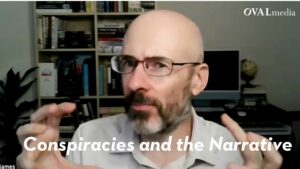
The third time is, it's immediate. Without delay. Hello, good evening. My name is Robert Cibis. I'm very pleased to be allowed to welcome you again to a new programme of Narrative. I'm here with Dirk Pohlmann, he's a colleague, a person who has made a great many television documentaries, often investigative ones, as director and author, but has also written excellent books and is generally someone who really gets to the bottom of things. And that is also something for which he, Dirk Pohlmann, is known throughout Germany and admired by many, many people. And now of course today is a very special day, because we can almost celebrate, but it's also a bit sad, it's just both at once. We at OVALmedia have suddenly become relevant.
Yes, we are relevant, we are being attacked, in a concerted way, in various media, only personally, only below the belt and never objectively. I like debates, and I like to have them on the programme, for example on Narrative. I also give my opinion sometimes. But, for example, last Friday there was an article in the Tagesspiegel that had a very great effect, because it was then used via... We'll come to that in a moment. In any case, what is more interesting about the article, if I may just spontaneously say the first thing from my side, is that nothing is in it that I said, but what people who were invited, for example, to the programme Narrative or to the Corona Committee foundation said, or what people said in the chat; what I said is not held against me at all. And I find that a kind of declaration of bankruptcy, where they say, so this Robert Cibis is really terrible.
In his chat people said this or that, or in his programme this or that sentence came up and he didn't contradict it; that is then supposed to be the highest criticism, where I say, yes, it may be that I don't want to talk about medical questions with someone who is a lawyer. With someone who is a musician, I didn't want to debate whether vaccination has risks or not either. For example, we had André Hermlin; that was a wonderful discussion, we talked about many, many different topics. He is a person who nevertheless said of his own accord that he thinks these new vaccines are super and that he would get vaccinated immediately; I didn't immediately contradict him, because I think that isn't the topic now. What interests us with André Hermlin is culture in times of crisis, how he makes music. And what interests me with Beate Bahner is the understanding of law that is now being applied by the organs of government and others, because she is a lawyer, specialised in medical law; we talked about medical law; I won't then talk about art and culture or about things that happen abroad.
And that's a bit, I'm defending myself a bit now, but it's also logical that one has to defend oneself, because what pleased me most when I had read this article was that I thought, super, he disqualifies himself, she found nothing at all. And that is quite funny, you can laugh yourself silly about it, and you see what efforts he has to make to somehow construct something political that is the opposite of the truth. And then going round three corners; we can come to that in a moment. And that's how I received it. And others, on the other hand, including friends of mine or relatives or people I work with, didn't receive it like that at all. On the contrary, they were totally shocked or even had a moment of doubt, where they asked themselves, is there something in it, is Robert now talking confused nonsense, should he get psychiatric care, or is he now a right-winger, or such questions, which I can't understand, because that isn't in the article, it isn't proven and not even hinted at. It is only, so to speak, understandable between the lines. So, the reason I'm giving such a long exposé now is that this is a very special programme today.
Because it's not only about the guest, so to speak, but about both of us. Because Mr Dirk Pohlmann has had similar experiences in the past. And what is so great is that he is far ahead of me in seeing how the whole thing works, what mechanisms there are. And today I can learn from him. This time, so to speak, I'm not only the one asking, but also the one affected, as managing director of the company OVALmedia. And yes, and perhaps I'll ask right away as the first thing: how did you first come into contact with professional defamation?
Dirk PohlmannFunnily enough, it was through Wikipedia. So it was, I had made these two documentaries about the Swedish submarine affair, ten years apart. And at the beginning, simply in the research, I came across Professor Ola Tunander, who appeared in the first film. And over the whole ten years I kept working on this case with him. He is a completely different person. He is polite and shy and reserved, and so to speak very much enjoyed having a Rottweiler who, so to speak, runs out and collects the interviews, for example. So I was really able to contribute relevant things to his academic work. Then there was an article on the Swedish submarine affair in Wikipedia. I had seen it and said,
Robert Cibisperhaps for the young people among us, what is the Swedish submarine affair in one sentence?
Dirk PohlmannYes, very good, because I always take things for granted, as always one's own, everything one has worked on. That's the problem with older people. The Swedish submarine affair was, one can explain it like this, in the times of the Cold War, when Reagan had come to power, that is in 1981, the Americans intended to defeat the Soviet Union. Not in a military conflict; Reagan set out to do it in the economic field. Anyone who has seen it recognises the similarity to today's situation. Oil price down, state spending up through armament, and thus driving the country into bankruptcy. Yes, driving it into a kind of Great Reset, so to speak. And that is, so to speak, the Soviet Union as the enemy image, and then Gorbachev comes round the corner and he changes the whole situation. I still remember how I said back then, if this Gorbachev comes here, I'll stand at the roadside with a little flag and wave to him. It was like this: you couldn't believe what was coming out of the Soviet Union, that is, the land of old men who, shortly after their appointment as general secretary, already had to be given emergency treatment in hospital.
So it was unbelievable what, a reforming zeal that also all these disarmament negotiations, that is, the abolition of intermediate-range weapons, the abolition of an entire weapons category, missile category, what was pushed through there, triggered a storm of enthusiasm. Back then it was called Gorby mania, the Russians said, how the Germans behave. They fail to see how dangerous this man is. That is the basic situation, and then there are two responses to Gorbachev. One is the American one: he's still a Soviet Russian, he still has to be removed. Well-meaning, wonderful, actually a democrat with what his opening did, glasnost; he still has to be removed. And the other variant was the social democratic one in Europe: England, Germany, that is Wilson, Germany Brandt, Bahr above all, and Sweden Palme. Bahr was at the same time the boss, Egon Bahr, the mastermind of this East-West policy together with Brandt, but he was really the one who did it on the ground.
And there was, the thesis was change through rapprochement. We now have the possibility, we move closer together. And then it's not that we both, that is, we transfer it to you, but it is actually a social-democratisation of the Soviet Union as an idea. Palme had ideas like workers being given stakes in the companies, at Saab and so on. They were very similar. And since there really was a democratic background now, I would call Gorbachev a social democrat, a genuine social democrat. That's how it was, and then they wanted to remove that. They wanted to, Wilson was defamed as a crypto-communist in England. Brandt and Bahr could be eliminated relatively easily. Then Schmidt came afterwards, and Schmidt was seen as a loyal follower until he concluded the natural gas pipeline deal with the Soviet Union to secure Germany's energy supply, which however meant income for the Soviets. And then he too fell out of favour.
And that is then, how to me, that's a book I want to do again, because I have sources there, the ZDF won't do it, that it was simply done with money. That is, this switch back then of the FDP, which was in government together with the SPD, the vote of no confidence, and then it went from Genscher- Schmidt to Genscher-Kohl. That's how Kohl came to power, with a vote of no confidence. Later elected too, but first through this act; it is said, that was us too. And in Sweden it wasn't so easy, because Palme enjoyed very high esteem or was completely hated. There were only these two variants in Sweden. He is a traitor, or he is, as it were, the social democratic figure of light. Swedish social democracy was the most significant and powerful in the whole world. And Palme was then murdered. Yes, and shortly before he could meet Gorbachev. The agenda for this meeting... It all has to do with these submarines. That's what I want to explain to you now. And how did the Americans now see to it that Palme was discredited? They did it.
I prove that in this film. It is also increasingly being accepted within the academic scene. These are rearguard actions now being fought by the other side. Submarines were constantly driven into Swedish waters. And the automatic reaction, that was known; so nobody was bribed or anything, but submarines come, you see them, you find them by sonar. You have there... Something is moving around here, it isn't ours. And then the automatic assumption of the military is that these are Soviet submarines. And there were hundreds of such cases. That means, over years, actually from 1982 onwards, until 1990, one can say, 90, even a bit further, there are these sightings again and again. And they lead to the public, the media, going along with it in their own stupid logic and reporting on it and saying, another sighting. Then there are those who write, yes, they're only shoals of herring. Then there are those who say they are a kind of underwater UFO. Then there are others who say, the Soviets are here again.
And then there is such a universe in which one decides for one of these possibilities. And that leads to Palme being seen, in important parts of the security state, as a traitor; he is even called a KGB agent by the CIA counter-intelligence chief, who travels to Sweden and says, your head of state is a KGB agent of influence. And then at some point people get the idea that something has to be done. It can't go on like this. Here there are no people who, so to speak, act. That is roughly the background; that means the submarines are now considered the cleverest measure of psychological warfare ever carried out, because without having to bribe 30,000 people, or 3,000 as with Mockingbird, a reality was constructed that, in the stupidity of the journalistic system and the right-leaning anti-Soviet pig-headedness of the military, which could never have come up with the idea that these were Western submarines, which is what they were. They were exclusively Western submarines that came in. They were interpreted and ensured that Palme's foreign policy had become impossible. That means one was able to turn a whole state, the foreign policy of a whole state, completely by 180 degrees, simply by stupidly driving around with submarines in the waters.
And people do the rest themselves. The stupidity of the political system does that. That is the submarine affair. Now I don't even know how we got onto it. How you came into contact with defamation. So, okay. And then there is an entry about my film, of which it is clear that it is at first a wild thesis. Professor Butter, I think, got fluctuations in blood pressure. I don't know, because he was already active back then. That was the sort of thing he works on. But I had damn good witnesses for it. In my second film I had, so to speak, the people who decided it, the top league, who speak about it and who all tell what they did there. So, and then I see in 2005, it's in Wikipedia, which is relatively fresh, it's just starting and is still a kind of children's encyclopaedia, and then people tell me, oh, but that's an interesting concept and everyone can contribute. So it sounds grassroots-democratic at first. And then there is an article, and then I'm on the discussion page, I look and say, okay, that's somehow, could be done better, yes. And I write in there: hello, I'm the author of the film. I have no idea about Wikipedia, but I'd like to help.
I can certainly provide lots of material, sources; I have collected binders full of sources here and can, so to speak, supply references if that is of interest. And then an answer comes, and funnily enough it's from Felix, which I only registered later, with whom we later, so to speak, the one it was about in Wikipedia. And he writes: antisemitic crackpot Professor Ola Tunander. And I thought, so to speak, why, he deals with naval strategy, yes. With blue-water navy, and he is in the USA at the military academies and is an academic who deals with, how do I get from there, how do I get from breeding sea anemones to antisemitism, how do I get from naval strategy to antisemitism? And I was completely dismayed and said, that's an outrage, this term antisemitic crackpot. Crackpot, idiot, yes. Antisemitic, so the combination of incompetent and malicious.
So I said, that's an unbelievable outrage. Just like that, someone who said, what, what, so to speak, come on.
Robert CibisThat was on Wikipedia, or what?
Dirk PohlmannIt was on Wikipedia. It was on the discussion page, because I had entered something there, and then Felix wrote, people like this antisemitic crackpot. And what was behind it: I then asked Ola Tunander, and he said, I had a, he had a, when Anders Behring Breivik, this right-wing extremist mass murderer, yes, who terribly shot dead 60 young people, under steroids, and staged a computer game with real young people, yes. Social democratic youth somehow, it was on Utøya. And Ola Tunander, because it is his field, security policy too, yes, he was professor for that, and he then examined whether there was a connection with other right-wing extremists or whether he really was a lone perpetrator. The thesis was again lone perpetrator; that's always how it's done, yes. And he came to the result that there are connections to English right-wing extremists, and one of the theses he also examined was whether there were connections to Israel.
From that, there actually were, from what later became, let's say, the QAnon direction, there were people, the things, Muslims are dangerous; that was also the thesis, Breivik wrote such a huge conglomerate. And there were connections. And it was also, what was striking, there was Rubin, he was called, a journalist in Israel, who said, it serves the Norwegians right, because that's where you end up if you cooperate with terrorists like the Palestinians. With such satisfaction: now they will see that they have to come over to us, to our side, after that. And it was claimed that Breivik had a Muslim background. That was so in the USA too. So he had cooperated with Islamic terrorists. And that was, and Ola Tunander had written about it and had examined it too and had said there are no indications that there is anything in it. So he only took it up as a topic and said there are no, no, that's not right, there are no robust indications pointing to it. But the mere fact that he had quoted these articles by this Rubin and these statements led to him in Norway suddenly facing these arguments.
Ola Tunander has been a left-wing social democrat all his life; in '68 he was in Czechoslovakia when the uprising was, so he was always on this side; he thought, so to speak, what is going on here? That's how it is, we have all experienced that. What is this supposed to mean? On what basis? And in retrospect it became clear to me, that's how I would describe it, that Felix got information from another side. Because Norway has six million inhabitants and has no external impact. How does he know about this discussion in Oslo, sitting in Munich? It wasn't reported in any German newspaper. It wasn't reported in any English newspaper, nor in any American one. So how is this, so to speak, this topic that Ola Tunander is examining, what is going on with Breivik? He is now made a target, yes, in the Israeli press. And so to speak, they got upset about it, parts of it at least; there is a wide spectrum in Israel, after all.
It is a very lively press landscape, I would say, by comparison. And that was the first time. Then it started that he then also, that I was then, as it were, attacked. And then there was, when I made the film in 2011, I think, Israel and the Bomb, about the Israeli nuclear weapons programme, I got an entry in Wikipedia. There the Arte documentary was called a shoddy piece of work, again on the discussion page. There was an entry about the film in Wikipedia, which was short and bad. And an entry about me which, so to speak, at the beginning, strangely, was built up. And then I thought, why, what's going on there? And I was lucky that back then an economist, who wrote a doctoral thesis on the company Cargolifter, where I was managing director of a subsidiary, which by the way was a very successful company, who had invited me to an interview for his doctoral thesis on this celebrity firm, as he called it, as an example.
And he kept putting things right. He had a fairly high status in Wikipedia and always, as it were, I knew I had a guardian angel, so to speak, who simply made sure that things were correct. At some point I entered something myself too, simply because I did script and direction for all my films. In some places I was listed as director, whereas I was supposedly only the screenwriter. I once corrected that to the right names for the films. And there were two films that were nominated for the Grimme Prize. The last one received the prize for best foreign film. They have of course deleted all that now. It's no longer in there. So there was someone, and I noticed how I was being worked on. And then, when we started, I nevertheless thought, well, I'm just an isolated case. I'm being worked on. And later I understood, that was after the film by Markus Fiedler, who is a music teacher and biology teacher, he is a microbiologist, and I don't even know whether he has proper music training, he is in any case a piano teacher and so on, all sorts of things in that sector.
Who then made this film, The Dark Side of Wikipedia, which as a film is not the weapon, but has super-good research behind it. And worked on it with scientific meticulousness, with sources, documented sources. And we then, I then got in touch, I was invited to his birthday, he said, I can't believe it. I always thought I'd like to talk to him, and now you're calling me, yes. And I said, yes, it's simply damn good work, what I see there. And then it came about that we dealt with Wikipedia. And then you notice, I can tell it like this: in 2018 I was invited to a conference in Prague, where I gave a 20-minute talk about the story of Felix, that is, of this manipulating author in Wikipedia. And afterwards eight or nine people stood around my table, all of whom had had the same experience as me in 2005, and who understood at that moment that they are not the only ones in the world who are being worked on in Wikipedia, but that this is, so to speak, the machinery of Wikipedia.
The machine produces this discrediting of people who are to be sorted out. Okay, but I'm talking too much, let's go on.
Robert CibisNo, it's interesting how that, so the first defamation you observed was against this professor. Yes.
Dirk PohlmannAnd then you experienced it yourself. Yes, a, a, it is such a, he is a man who actually, one has to say, is 100 per cent friendly. He has, how should I put it, he has as much to do with antisemitism as a rotifer. It simply doesn't fit, this term. Er, everything he has ever done contradicts it, yes. But the technique that is used is that you are attacked in this area and then try to prove that you are not, and you are already caught up in the discussion. So you are automatically on the defensive. You are defamed, slandered by people, by verbal poisoners or snipers, yes, who mostly from anonymity in Wikipedia, well, in Wikipedia exclusively, or like Sebastian Leber, who, er, with a headline, er, thank you very much, dear Antifa, or something like that, thank you, dear Antifa, is the headline. So you think, what is such a liberal-conservative paper doing with, er, so to speak, with people from the Antifa?
How does that work together? It works together precisely through these things. And they have a power of definition, and it is not only a power of definition, they use it as a means of annihilation, to put careers, people out of work, to show, it is a showing, as one said in the Middle Ages before torture: the showing of the instruments. So you can then go and say, er, look here, this is what awaits you, think about whether you'd rather keep your mouth shut, yes, otherwise something will happen. Yes, that's exactly what we should go into.
Robert CibisSo, um, you saw back then, two years ago, you're not alone at all, many felt exactly as you did in 2005, and now, um, one sees in the current crisis that it has picked up even more steam; that is at least my personal impression; I had observed it before, a bit like you, but more from a distance, because I hadn't made such political films, but rather scientific ones; they were then, well, we had perhaps two political films, one about the health system and one about the WHO; those are of course related topics, but that was, that was also, so to speak, first from the scientific side: what makes sense here, why would it be good to coordinate that, should one take iodine if there is a nuclear accident nearby or not, what are the regulations, why isn't the protocol implemented, who opposes it; these mechanisms are interesting, but one first came into the medical field, that's how we got into it, and now one notices that medicine has become the science that defines our everyday life.
Dirk PohlmannYes, that is a really bad aspect; I think one has to understand it once; it was, I very much enjoyed the interview with Professor Esfeld, who is a philosopher of science, and that is actually basic knowledge; at some point we agreed that science is, as it were, in the realm of means and methods, but cannot prescribe normative things. The best, not the nicest, the best example of where such a thing went completely wrong is the whole of eugenics, that is, the idea of a racial improvement, as it was called in the Third Reich, or of eradicating the idiots, as it was called in the USA; that is a movement that, so to speak, I don't know, from 1890 or so until 1930, is the movement of the educated, scientifically educated intelligentsia, not philosophically but scientifically educated, and engineers, physicians of this sector. And they say, there are all these old ideas of Christianity and Christian morality and all that stuff, and now comes the new one, the scientific foundation, and that is precisely this eugenics, that is, the whole racial theory, who then start to measure.
We know today: big bullshit, scientifically big bullshit too; we know today there are no races at all; that is a construct, which one can still understand, why one at some point arrives at it through appearance, but biologically not demonstrable. To put it quite clearly, two central African people who still come, so to speak, from the primordial soup of humanity can be genetically much more different than a German and an Aborigine, who in turn are much closer together. Just because they look different doesn't mean they aren't related; for example the Sami, known to us as Lapps, who live in Lapland, are very closely related to the North American Indians, but are blond and blue-eyed. They are, so to speak, bleached Indians; being blond and blue-eyed is a function of vitamin D absorption and so on. That means these are all things where one sees. That is known today; people didn't know much about genetics in those decades. But what I still want to get at, because the thought is important, is that one cannot make science the foundation, which we are doing again now, which is the absurd thing that Professor Esfeld rightly got upset about, saying science can tell you, if you want to fly to the moon with a rocket, how long it takes to build it, how it has to be built, which materials, everything else.
But the decision whether you fly there is not a decision of science. And so are all normative decisions, ethical decisions. So there is utilitarian thinking on the one hand: does it actually produce the effect? One thing is demonstrable: no. So the dangers that arise, also for the number of deaths and so on, are higher because of the measures. And is it ethically justifiable, so to speak, can one derive that? No, certainly not; one mustn't say it like that. We can talk about what we want to do there. But on the premise that this is not the domain of science. Whereas science as the new religious backing for arguments: you can't be against it; you were a heretic in the past, you're an idiot today, you have no idea about the matter, come along to the hospital and so on. And in this way the thesis of an indubitable reality, which also overrides everything we otherwise have in terms of norms, the Basic Law and so on, all the basic rights, he spoke about that. And that is, again, that is, so to speak, the state of philosophy; there's nothing to quibble about.
One simply has to say, when other ideas come along, we say: you are in the area, it's called scientism, you are in this corner that led us into eugenics. Do you really want to, do you really want to carry on like that?
Robert CibisSo the doctor... What kind of professor is that, in what field is Professor Esfeld?
Dirk PohlmannHe is a philosopher of science, that means he deals with the philosophy of the sciences, that is, the philosophical foundation of science. It has gone through many stages; that is, as it were, at the beginning European intellectual history from 500 BC, and then at some point it becomes international too, but there are the great milestones, and if one teaches philosophy at school now, I think Gunnar Kaiser does that, I don't even know, I think he's a teacher, then one would teach Karl Popper, those things; that is the state of affairs.
Robert CibisInteresting. Briefly on our own behalf: next week on Tuesday, probably not on Wednesday as usual, Jochen Kirchhoff is coming, who is also a philosopher of science, and we will discuss exactly these topics too.
Dirk PohlmannVery good. The thesis is of course that if one elevates science to dogma, then of course science itself is destroyed, because science per se, by definition, can of course not be a dogma. It is a sceptical system, and it is precisely: how does one establish that, and so to speak, if one now says, if that is Popper, with this variant: I have a hypothesis, I have an experiment, I have data, I have a hypothesis; the hypothesis can be verified or falsified. The most important thing about it is the possibility of falsifying, that is, of saying: no, that's not right. That is the decisive yardstick. Not "it's right", yes, although almost all scientific papers looked like that, but the things that say "it's right" have to be verifiable. And then one says, then we come there, and from the hypothesis, from the hypotheses I then make a construct, I create it, as it were, like an artist, yes, from the data, and I have a theory of why it is so, but in science I can test the theory. I test it with ever new hypotheses, and it then becomes a kind of condensed knowledge.
The theory of evolution is a good example of that, and then it stands, but if one finds something that contradicts it, the whole theory isn't invalid, but at that point I have to build on anew or possibly anew. Falsifying is much more important than verifying in science.
Robert CibisFrom the logical point of view, in the line of proof.
Dirk PohlmannRight, in the line of proof; that is a function of logic with this true-false distinction, so that one can do it. If one now looks at reality, Popper held the view that every scientist should work to refute his own hypothesis or theory; in reality that doesn't exist. That means, when someone is attacked, he tries to say why he is right after all. The papers, if you look at them, are always: we measured this, we saw that. We take, I don't know, Artemisia annua plus caffeine and find it helps against Covid-19. We don't yet know exactly why. But we go in first, and so to speak that's what science looks like. And it then backs that up with; the best example I can give is for instance, what's his name, Semmelweis, the physician; back then nothing was known about bacteria yet, and he examines: when people had first taken a corpse apart and then go into the delivery room and deliver a baby without having washed their hands, then many women die of childbed fever.
But if the people wash their hands, they don't die of it. And since one had no explanation behind it, one knew nothing about bacteria, one knew none of that. He simply saw plainly that there is a connection on the basis of the data, that is, so to speak, the basic hypothesis. I have data: when people wash their hands, far fewer deaths. And he was ridiculed, he ended up in a psychiatric institution, his colleagues were hostile to him, he died in the psychiatric institution. That means someone whose existence was destroyed, although what he did was pure science. So from the fact that we have a phenomenon there, one should actually have said, super interesting, let's talk about what we do there; that wasn't done. Thomas Kuhn is something like that, it persists into the present, that one says science should work like that; it doesn't always, but it is probably the best-functioning system for producing knowledge. Not so much for discovery, but for producing knowledge, that is, building an edifice, and whenever something is broken somewhere, it is repaired. Only very rarely do big stones have to be taken out.
So it is a very successful model. But what it doesn't tell us: the decision that human dignity is inviolable is not a scientific category. There we are in a completely different area; that is also Giorgio Agamben, one can say, he is in Rubikon, they have often translated him, he is a very important man in this field, for understanding that we are running into a completely strange area. And it also seems to me as if these ideas are being used deliberately to have a base from which one can mow down one's opponents. So where one no longer has to discuss; that is also, and would be, my attack on newspapers like the Tagesspiegel: that what they actually come from, that is, the educated middle class, they are destroying it completely right now and instead setting up a kind of Vyshinsky show-trial order, where people are simply finished off. And that from a so-called quality medium. I mean, we are, so to speak, seeing live the dying of journalism right now in such things. That would have been a next question now.
Robert CibisWe have now talked about science and the methodology, the scepticism that belongs to it. And of course one can perhaps say the same about journalism. Yes, journalism... Yes, that's what one learns. Prove everything, falsify and so on. There are also opinions. One can say, I find that stupid or something. But that is of course not journalism, it's only a commentary or an opinion. I believe, there I see, so one must, there are questions of definition. Perhaps we can define that briefly.
Dirk PohlmannI don't need to define that at all. The point is that journalism is the area, one has to imagine it like this actually, it is the nature reserve for the interpretation of facts, also of opinion. That means, actually, again from the normative side, it should be like this: I am a journalist and I see that Roland Tichy is being attacked, just as an example. And at that moment it should be completely irrelevant to me which political views Roland Tichy holds; what matters is the fact that he is attacked, this discourse, the discourse we are there for. Yes, we should be the ones who, as knights, protect all the others too. Yes, always: I don't care what you think, what opinion you have, as long as you are someone who stands up for the fact that we have to talk with one another and that we can, and that we argue properly, but according to rules and without aiming at the annihilation of persons, at the discrediting of persons; then I fulfil my task. That means in journalism you can have all sorts of opinions.
You only have to protect this place of opinion, the exchange of opinion, because that is the task. We are there not only to reflect opinion; we are even there, Federal Constitutional Court now, what I'm saying is no philosophical statement, to keep it in motion, to pump in ideas, to see whether someone has a new idea. So to bring in a liveliness. So not only to deliver clean statistics, but something should happen, ideally. That is what we at OVALmedia of course want to do and also do. All good journalists want that. And that is precisely what one sees: that is the failure now of something like the Tagesspiegel. That means the classic media, not all in the same way, but who then go back on that and don't say, there's Robert Cibis, he has been making films for 20 years, he makes films about piano tuners, and he is a nice person. Let's keep things in proportion here instead of constructing such a story. On the contrary, they work like a propaganda instrument of a political grouping, putting together individual pieces that don't belong together, in order to exert a political effect, to exert a power that aims at the annihilation, the existential annihilation of people; they conduct it as information warfare.
That is not journalism, that is information war. And then one must, the liberals, the conservatives, that is, the voters of the CDU, the FDP, the Social Democrats, for all I care also the AfD and the Left; I am extremely disappointed in the Greens, because I was one myself, in how they behave; they should actually all say at this point: wait a moment, that is not how we want this to work here. You are going completely the wrong way, and you are already far away from where one should be. So actually, for systemic reasons, one would have to correct this now.
Robert CibisThat is what I meant at the outset, now in the conversation this evening. I meant that one looks at such an article, and it's not just this one; there are a great many. They are all knitted in a similar way. There isn't a single sentence on the content, not a single contribution to debate, but there is only personal attack; the more personal, the better. And that through very strongly, as they say nowadays, framed terms, which, so to speak, you only say the word and it triggers a whole story. It's like the antisemitism you just mentioned. You only have to hear the word, and already you have the whole story of Holocaust deniers, neo-Nazis, Hitler and all the other criminals and so on. And this story is so strong, the connections are so strong, that one word is enough to trigger something in you. And the word conspiracy theorist or anti-vaxxer is still far from that level, but has a similar effect, in that it also evokes a whole story, so to speak. I mean, I think it's right to criticise every medicine, to see, that is, to criticise, to see: is it good, is it effective, is it necessary, does it have side effects?
And of course that has to be done with vaccines too. That's what the medicines authorities and the approval procedure are for. And if I were just to stand here and translate what the European Medicines Agency itself has written about the current vaccines, then in such a newspaper I would be denounced as an anti-vaxxer. And I say, people, no, I think it's completely fine that other people are of a different opinion, or that I, sometimes one doesn't hold any opinion at all. But the other opinion isn't stated. There is no contribution to debate, no reference, no argument, nothing at all. And that is a mechanism that has certainly also been applied before to such topics that I haven't dealt with in the past. But for me this whole method is new, the whole attitude is new. And let's take an example out of the article, then we needn't deal with it any longer. But I think let's take an example so that we can really convey it simply to the viewers.
My computer probably takes forever until it's on again. I don't even know what we should take.
Dirk PohlmannShall we take the one with this cameraman?
Robert CibisYes. That's because I find it so nicely funny. Some hack really took a lot of time to think about how one could describe my work, or the work of my colleagues, or of OVALmedia in general, as right-wing, openly right-wing somehow. And the interesting thing is, he found nothing. There isn't a single, we have now made, I don't know, I don't know, 20 documentaries. I have worked on an endless number of projects. Evidently there was no possibility, despite days of research, of building or constructing any direct connection to the so-called right-wing spectrum. And the only thing he evidently found, apart from people who made comments in a chat with 3,000 people in it. That's pretty, that could have been the author himself. That really is very thin.
What was it again? Ah, here. So, now you can play in the picture from the computer here, then I'll underline the sentence I mean. Shortly afterwards OVALmedia entered into a cooperation with an activist who also acted as cameraman for the far-right
Dirk Pohlmann"Volkslehrer". So a sentence of such subtlety that, if you read it quickly, it is also read as: ah, they work together with right-wing extremists. Yes, if you skim through such a text, that's what it says, and we have experienced that ourselves with people. I have, as I said, I have a lawyer I deal with, and he said, so to speak, I hope you have nothing to do with OVALmedia, with Robert Cibis. And I said, why? Well, I just read there, the Volkslehrer, yes. And then I thought, why? So, so to speak, I haven't known you that long, but you are, so to speak, the first thing that would occur to me is aesthete, yes. And not, also not a politically active person, but rather someone at home in the field of culture, yes. It's not street fighting, it's the violin concert; that's your world, so to speak, yes. And then I said, no, and then he said, yes, he did, he did, so to speak, himself, it is so, he got himself involved in this story. And then I thought, there you see how it works.
That means, in the brain of someone who as a lawyer is himself trained to take sentences apart with tweezers, yes, this short circuit that is meant to be triggered works. This is an article that triggers lots of short circuits in the brain that lead to people saying, Robert Cibis is a person you can't work with. You didn't say that. In the end, he asks that everywhere, so to speak, with the, let's say, he says something like, Robert Cibis is collaborating with the Volkslehrer, isn't he. Do you think someone like that may be a member at your university or at the Berlinale, so to speak, or at the AG DOK?
Robert CibisYes, it really is quite funny. I can briefly tell an example of that. Last week was the Berlinale. We had a co-production in the Forum section, that is, in the official programme. And we, OVALmedia, co-produced the film. And the other producer is a French company. And the film is about people who were imprisoned in labour camps and concentration camps during the Nazi regime in Germany. And these prisoners, under the hardest, most inhuman conditions, had managed to smuggle cameras into these camps. And they also smuggled in film material and took photos, secretly, as a team. Of course there was then a lookout at every corner so that the guards, so to speak, couldn't see it. They somehow hid the camera under their clothing so that only the lens peeked out, and they simply wanted to document what could be seen there. So it was a mixture of: we'll now show, we'll take photos of ourselves, of what is happening here.
But of course also, and that was surely the main motor: we are documenting the atrocity for posterity, because otherwise nobody will believe us. I have a title for an English edition: Dying to take the picture. And that is of course a great, it is a topic that moves me very much. And the director of the film worked for 15 years in this field. He previously made a film about drawings that were made in concentration camps, and also wrote a 450-page book on the photographs, which was published by the French publisher Éditions du Seuil, which corresponds to Suhrkamp, a very established publisher. And we want to, we are making efforts to get the book published in Germany too.
Dirk PohlmannIt was all in mortal danger, one has to add. It means, if you were caught doing something like that, it meant death for the people.
Robert CibisAbsolutely, exactly, of course. So they had, the author's introduction was also: I have to make this film, because these people risked everything, and these photos, so that these photos are seen, and most of these photos had never been shown. Because we know these prisoners as victims, as victims of National Socialism. We know the pictures; they were taken by the Allies after the liberation of these camps, but we didn't know them as people who were courageous and, as it were, stood up through these acts of empowerment. And that is such a paradigm shift, as one, that's what interested us in it; that was actually the motivation for this project. And this co-producer was called by the Berlinale last Friday, after the article in the Tagesspiegel appeared, and they said: did you know that you are working with an antisemite? And I thought, that's what he told me. And they said, the Berlinale? That means, I don't know how they, I mean, the article only came onto the website at nine in the morning somehow, if they called right away. That means it must have, so to speak, you can't see that so quickly by chance. Especially when it's the Berlinale, even if in this case it was virtual, they actually have a great deal to do.
When you are organising such a festival, I think more than 2,500 films are being looked after, promoted and asked about at the same time. You don't notice when something not related to the Berlinale is published. And of course you only notice it if someone points you to it. And that also matches what I have noticed in other contexts. That was before publication, but still the similar method. The documentary film-makers' association was approached directly by Leber. The university where the co-founder of our company, OVALmedia, works was also approached.
Dirk PohlmannAnd that too. She has nothing to do with it at all. That is guilt by association now.
Robert CibisShe isn't even at our company.
Dirk PohlmannWe have guilt by association.
Robert CibisExactly. She isn't even, at the moment she isn't even working with us and isn't working on these projects that were criticised here at all. So, and that, they were also approached after publication. So there is, so to speak, this approaching: say, do you know whom you're working with there, so to speak? And then not, we are not approached. And then it is also the case that the other associations are a bit afraid, so they don't call. Well, that's not right. The association did then get in touch with us, but the Berlinale, for example, didn't. Although I, we've had films at the Berlinale three times before. The people specifically responsible I probably didn't know. But I still know the festival, the festival knows me, or at least our company. So I think it would have been nice to have a direct conversation. But this fear of confrontation, this fear of friction and this simple flight from stress. It's simply: we don't want any stress. I don't believe, I can't imagine that anyone there seriously fears that we are somehow off the rails.
Rather, I believe that people seriously fear that they will get stress if they are associated with us. And then prefer to play it safe. That is, so to speak, my view of things.
Dirk PohlmannThat is surely right. But it has, so to speak, two sides. One side is that the decision is: if one gives in to these people, one is rid of the stress for now. That means there is an attack. It means that the accusation is already the conviction. Because opposite stands the choice, so to speak the decision tree, benefit, cost: if I throw Robert Cibis out now, then Robert Cibis gets upset. And there probably won't be a big fuss. But if I do it differently, I am dealing with a structure that has a lot of power. I claim it is a structure. I think we need whistleblowers who provide information about these networks that get such things through the most varied media within hours.
Robert CibisThat was an appeal. So please, if you know something, feel free to get in touch with OVAL media. Best just call. The number is on the internet too.
Dirk PohlmannThey can also contact us. We should bring that together. We should collect this knowledge, because I say this is information war. That is my claim. And it is not something that arises by chance, so to speak, but it is organised. We know that from things like the Integrity Initiative, which were set up and which, by the way, are now also being positioned against anti-vaxxers. There a connection to Russia is established in England, because they use the 77th Brigade there, a military unit for psychological warfare that masters everything from hacking to smear campaigns. And if you link it to Russia there, you have a free hand. And I don't know, if here, for example, antisemitism is such a thing where I can imagine it is similar. And the so-called Querdenker are now also covered by the Office for the Protection of the Constitution, among other things, probably monitored for a long time, but now being worked on, yes, in progress, through this connection with the King of Germany, that is Ballweg, that is the stupidest possible faux-pas Olympics he staged there, where he, so to speak, drove things so far that there are people who believe he did it on purpose, which I don't believe; he simply did it out of incompetence in office, yes.
But it is that one sees that, and something occurs to me that I'd like to get off my chest: I had to think of it yesterday, I said, there will then perhaps be a documentary or a feature film about McCarthy, where, so to speak, all the intellectuals sit there and present themselves, so to speak, as artists who are horrified by this, and the question of how such a thing could happen, and they are doing it themselves right now. So the Berlinale is actually doing McCarthyism live, yes, conducting it, is involved in it itself, and that is precisely that the horizon is missing when one looks at it directly like that, and that somehow, what works there is the defence "never again antisemitism", yes, but what doesn't work is the defence "never again McCarthyism", or, so to speak, the exclusion of persons, that is, abandoning the rules that we argue, but don't annihilate, yes. What always impressed me so much in Italy is that in Italy, not to idealise it, but there are people, so to speak, who almost go for each other's throats for political reasons, but go to the football match together.
And I think that is so much closer to life, to being human, than this pure-bred, so to speak nit-picking method of the friend-enemy distinction. Are you my friend, are you my enemy, yes. Life always, so to speak, works differently. If you go about it properly, if you look at it properly, it is, so to speak, always changing. It is always: oh, look at that. And the wonderful moments are the moments of transformation. And what they are doing here is, it's like, in English one says a kangaroo court, a show trial. You come, you have no possibility at all to defend yourself. You are to be humiliated and condemned and then, preferably, publicly executed. Yes. I have to do something here so that your screen doesn't keep going off.
Robert CibisThat's terrible. Yes, I wanted to put this stupid computer away now, but perhaps briefly this sentence first. Start after never. No, nonsense, that's energy. It pulls the whole world, as I my computer there...
Dirk PohlmannI'll say it once more at this moment; this is my request to all people who think something of this democracy: don't share these things from the point of view that it is now about making Sebastian Leber unemployed. That is not my aim. My aim, though, is that I think he would do better to take up gardening than journalism. For three years, or four years, since I've been following it, he has worked in the vilest way in this field. But the point is that one says to the people who are conservative or liberal, or who, so to speak, belong to the normal political spectrum: now don't sort this according to Covid-19, this matter that divides so enormously, but say: can we really want these methods to take hold among us, and to take hold through the people who supposedly support quality journalism, and that people like the two of us, we are very, very similar there. At this point I am actually, so to speak, how should I put it, I am a liberal conservative. With the emphasis on liberal at this point: I want a functioning media system, and I take every interview request seriously, and then people write, he likes to be interviewed by RT.
Die Zeit hasn't asked me yet; they wouldn't get a refusal, they just don't do it. And if one, so to speak, Fair Talk, this programme, which I find wonderful, that's how public service television should look, he then tells me he tries, he tries to invite people, he tries, so to speak, to get someone from the government and sit them opposite someone like Wodarg or like Bhakdi, and the people don't do it. It isn't Wodarg or Bhakdi who refuse, but it is the people who, from the position of power from which they can make decisions, don't have to let themselves be criticised at all. They then say, I don't need to talk to those people at all. I don't talk to some people either; those are people who have insulted or threatened me. For me that is the limit, precisely this existential thing. But Bhakdi didn't threaten Professor Drosten. Mai Thi acted as if she were coughing or throwing up when she said his name. She has already gone in that direction. So if Bhakdi said, I won't talk to that woman, I would understand that. It isn't the category where I would say, now it's completely out of the question. But it is like this: whoever doesn't want that, really, share it from this point of view.
We don't have to talk about whether the investigative committee, so to speak, provides the best form of information, but do you really want it to be no longer possible for us to do something like that? Do you want it pure-bred, with, so to speak, a Reich chamber for order in the media now saying this and that may be reported, or this is still debatable? There were such programmes on RBB. Can one still talk to the Corona deniers at all? Yes, that is like the term Putin-understander. That is idiocy. Every journalist has to be a Putin-understander. Every journalist has to be a Trump-understander. Every journalist has to be a Merkel-understander. That doesn't mean he has to like them. He has to try to see why they, from what universe they act. If one says that as a negative point: one doesn't have to be a fan, but one has to be an understander of everything that comes one's way, so that one can deal with it. So one has to go 360 degrees once all the way round and look at it.
Robert CibisThat is important. So, to conclude this article, because I only wanted to set it out once more, because we just, I read it out, I can imagine that there were certainly viewers who didn't understand it, because, this sentence I mean, because it is so interesting, because that, I think, is always what one also learns, and there one notices how much we too are being misled, and I believe that the same technique is partly applied in the Corona crisis too, where in reports everything is often factually correct, but what is suggested is wrong. For example, some figures are named, case numbers, infection numbers, and it suggests that there are especially many people who are dying. And then one looks at the Federal Statistical Office for the death figures, month by month, week by week, and sees that just as many people died as last year. Yes, and what is suggested is therefore not true. There is no great dying, so there wasn't always, when these figures were. So we even have, that's already a factual debate again, but I found that, I found that the rhetoric, so to speak, one finds there too, just as here.
OVALmedia entered into a cooperation with an activist who also acted as cameraman for the Volkslehrer. Acted means he didn't work as such, but, what does "act" mean? "Act" means one once...
Dirk PohlmannHe was active. He was active as a cameraman. So he has an action, an action. I think we have to go over the case once more, so that it is explained how perfidious it is. We are, I am currently, with Markus Fiedler, we are in the process of unravelling this case bit by bit, how it really is. I now know that the basis for this claim is, we found the article, it comes from, so to speak, an Antifa context. These are people who are out and about, you also see them at the demos; they always try, when you're standing somewhere. For example, I was once standing, there on the opposite side of the street were people against all antisemitism, and there was one who kept holding up both middle fingers at me, I thought. And then I thought, now that's interesting, why? Do they know me, or what is that? And then I looked next to me and there stood someone with such a blue-red- white AfD flag. And then of course at some point there will be a photo: Pohlmann with AfD activists at the demonstration. But I didn't notice; he was standing next to me, yes. That means that's how they work, and there are loads of people out and about trying to take such photos.
Who is out and about with whom? And now perhaps let's approach it from behind. The first thing is: the man had worked for the Volkslehrer. We said yesterday on the programme, we had heard in the research that he didn't work for him, he was only standing next to him. We now know he actually did film for him, because this Kenji, so what we said yesterday is, so to speak, half wrong, let's say a half-right case. Yes, yesterday a programme on Wikihausen on the same topic. We made sure that it comes on KenFM. We offered it to everyone, with the request: you can all take it. If you don't, deal with the topic. What is important is that this topic is worked on and actually that it leaves our filter bubble. We have a huge problem called filter bubble, yes. So back then, on the basis of two telephone enquiries we had made, we were of the opinion that he had only held the camera bag for someone. We now know that is wrong; rather he sat, this, whom I don't know, Kenji sat with Anselm Lenz and someone else.
They sat together and had a discussion round that was, well, good; it was pretty rough. So the opinion, it was clear that Anselm Lenz positioned himself as a left-liberal, let's say, against this one. And Kenji is, as far as I, I would now assess him as a radical democrat. And then there was this, the Volkslehrer himself. And here there was, if you like, an acquaintance between this Kenji and the Volkslehrer. And now the Volkslehrer is at a demo where Kenji is also watching, that is, where he goes and from which he wants to report. And then the Volkslehrer's cameraman comes and says, can you help me, so to speak, I have here, so to speak, can you stand in for me, we have a problem right now. What do you do then? So, so to speak, imagine that concretely now: there is the neighbour you think is crap, and he comes and says, my tyre is flat, can you just help me, I have to make a phone call. Then he says, no, you haven't shown the political attitude that I consider right, I'll do that. So that's the situation now.
That means there is no direct connection. They were at the same demo, they knew each other from this very disparate thing.
Robert CibisI think we don't have to go into such detail, because I always find it so funny, because we are talking about things that really have nothing to do with what we do. It's simply fascinating.
Dirk PohlmannBut that is the one connection. So one makes, the one connection is: there is a cameraman who somehow filmed with the Volkslehrer, for him. And this cameraman then also has a connection with you, because you were in another situation where he was too. So he turns up, so to speak, once there, once on it, and out of this a causal political collaboration is made in this article. That's madness. And it goes so far that people then really believe Robert Cibis, Volkslehrer, that there's some kind of mathematical sign there.
Robert CibisI've noticed with these terms, I have now also read other articles by Sebastian Leber, that the words are placed there. Yes, the word only has to be in the article. And we humans, we all have no time. We skim it. We then see my name and then the name of some bad people. And that is in the same text. And then one says, oh, that's such a rabble, such a bunch. Yes, and then how exactly it all fits together, one doesn't even want to know any more. If the name is already there, that's enough, and one thinks, oh, now he's there too. Yes, so like that. And that is, well, that is also at the beginning of the article, for example, there are links. It says there that finding videos with lies on the internet was known long before Corona. And then there are lies and then there are some, you can click on them and then some very extreme people come up. And that too is linked to us, although there isn't even a connection via three corners; one can't even make one via ten corners. That means, I mean, basically this whole article is an acquittal.
So when I read it, I think he tried to dig up dirt on us. That was an attempt at annihilation. And he found nothing, had to construct it so laboriously. With that, the Tagesspiegel has not only disqualified itself, but we are, so to speak, also acquitted. And it's clear there is no dirt on us, even if one researches for days and weeks and calls all the people we deal with. He didn't even find a quote from me where I say something bad. He didn't even, and I talk so much here all the time. It's fascinating. It's fascinating. And that's why perhaps we don't need to talk about it for so long now. We've already seen that it is perceived differently. But what is exciting now only comes now. The exciting thing is that the two of us, we had in the preliminary talk just now, we had put forward the assumption, also as a working hypothesis, that the article isn't the most important thing at all. For us, for OVALmedia, for me as a person, there are far more important internet presences which perhaps have a far more lasting effect, but which actually, probably, are directly connected with it.
Because the article appeared at 9:21 a.m. or so. And a few hours later, about three hours, three hours later, there was already a long addition to the Wikipedia entry for OVALmedia with not only content from this article but, worse, with twisted content from the article. These hair-raising pieces of information became even more hair-raising. And then, instead of a suggestive lie, they became a bare-faced lie, so to speak. And that in a supposed encyclopaedia, that is in a medium whose promise as an encyclopaedia is the most concise objective information on a topic. That means, sailing under the false flag of an encyclopaedia, this Tagesspiegel article was pimped up once more and reworked in Wikipedia. Provided with credibility for many people; it was just 20 years of Wikipedia, that people believe it is an open system, anyone can write along, and there are luxury problems there.
But in the end it is wonderful, so to speak a blessing for mankind that has descended upon us all through
Dirk PohlmannSilicon Valley. That's why this topic interests me so much, because it is a monopoly. By now a worldwide monopoly. And I have now gained a whole series of contacts in the USA where exactly the same thing is happening as here. So this apparent encyclopaedia is an instrument of manipulation which, if you get it into your hands, is a kind of lightsaber with which you can butcher your opponents. And that's what it's about.
Robert CibisThat's what they're trying to do. Yes, because on Friday it said there, the joke is now, I can't see it any more, I'm on the internet right now, so it isn't recorded, it said there that we work with this Volkslehrer. Exactly. That means this intermediate bridge that had been constructed there was simply gone. Now let me look whether it still says that here.
Dirk PohlmannNo, I got a message yesterday that after our first programme they started to tone down the legally actionable parts. Because that is a false statement of fact, one, and a defamation, because it also aims at getting you thrown out of all your institutions. That's why I said you should definitely also defend yourselves legally against it, because what is being done there is legally actionable.
Robert CibisOf course it's about a lot of money, because we have employees and they have to be paid. And if that is no longer possible, then whoever is to blame for them no longer being able to be paid will have to pay them. And I'm looking forward to that.
Dirk PohlmannI mean, it was in there for a few days already; we of course saved it. So did we. Yes, very good.
Robert CibisBut of course at the same time I am somehow glad that it now no longer says that. Although there is still a lot of false information on Wikipedia. For example, false information is what it says under false information. False information on the Covid-19 pandemic, you can click on it. And then it says there, for example, what did I have recently? Flu comparisons. Um, well, now my demo effect. Here. Of the tested cases, up to April 2020, depending on region and time of measurement, a proportion of, ah, 0.8 to 7.7 percent died. Okay. That has also been changed again. Um, so, a flu, here is, so what it says here is still wrong. So I'll take an example here; you can show the picture again now. On average, according to the European, the European Centre for Disease Control it's called, the ECDC, 0.1 percent die every year of seasonal flu.
That's correct. With flu, it can also be much less, it can be 0.5 percent. That was the case with swine flu, for example. But it can also be 0.8 percent. That was the case, for example, in the 2018 flu season two years ago. Yes, so that, um, or it was 0.7, but in any case it was a stronger one, clearly stronger than these 0.1 percent. And now it says here tested cases up to 7.7 percent. And that actually means nothing at all. That is the so-called case fatality rate. That means you test so many people, and so many of them die. If you now take April 2020, there were still very few tests. Back then they really only tested those who had very strong symptoms in intensive care. And then they were all ventilated as well. And today we know that ventilation was a wrong treatment for many people. It may well be that in some hospitals, for example in northern Italy or in China, 7.7 percent of those who were tested died. But not of those who caught the virus.
That means contrasting these figures is grossly misleading. I would even say, um, deliberately misleading. So, and if we now say, our programme, the infection fatality rate, is as the WHO had published it. So I have to bring that to mind once more. The WHO publishes the figure. And that is also the most important and largest and best peer-reviewed study there is, which combines a great many studies and looks at what the global average mortality is. And there one arrives, with the publication that is still on the WHO website today in October, has been since October, at an infection fatality rate of 0.2 percent. That means a completely different figure from the one on Wikipedia. That means on Wikipedia it's similar to what Leber does: a text that reads as if one were comparing it with a flu is in itself false information about Covid-19. The figures in the individual half-sentence are nevertheless correct.
Because there the case fatality rate is contrasted with the infection fatality rate, for example. Yes. And, um, that means we spread false information about Covid-19. And then, that is, that wouldn't have to be proven, at least not by this text and not by the article by, by Mr Leber, but, um, um, but I would first have to know an argument. So I want to go over it a bit from above. Sorry that I've now got completely muddled. I'll perhaps close this.
Dirk PohlmannYes, that is, uh, that is, um, with the conversations I have now had in the USA. Among them is the, uh, professor from Purdue University who in 2015 carried out a study on Wikipedia which, let's say, in the, in the rough and partly also in the very fine data, um, exactly reflects what Markus Fiedler showed in his documentary. So he produced a really good, he actually produced a scientific, social-science piece of work there, yes. Um, he is now also, well, we are talking with him, the, for whom, for whom it is also fascinating that, uh, let's say, it is similar: in, uh, the USA one percent of the, uh, authors produce 80 percent of the articles, and in Germany one percent, 77 percent. There you see how, well, that is so to speak the same, um, two countries, the same problem, uh, and it is for example like this, to make it clear: we had at Free21, you can on our website, I'm editor-in-chief of it, so that now has a functioning website again after a long time, you can look it up there, Helen Buyniski, a three-part article on Wikipedia, a woman who produced an incredible, uh, piece of work, with all the manipulations, uh, with, uh, three million links where you can check what she says, how, and that, to give just one example, in the German Wikipedia, so glyphosate, which, I think, many people know what that means, so this, uh, and this article was at the start, um, we will deal with that in one of the next programmes, the article on glyphosate was edited by people who work for Monsanto.
So that means, this lightsaber with which one can, uh, so to speak manipulate, uh, one acts as if one were the white knight; in reality one is Darth Vader and, uh, so to speak, promptly butchers Yoda, yes. So what happens there, that means, that is not the only case; we had for example Kübi, who for, uh, an author who works for Merck, who then edited Merck's entries, so the manipulation is massive, and you simply have to imagine it is an invitation. I now have, uh, uh, the, uh, 13th most-clicked website in the world, a year ago it was still five, fifth place, it's not quite clear to me how that is counted, but in any case a monopoly, a worldwide monopoly; if I control what is written there for my area, so if my name is Monsanto and I can enter that in English and German and French and Spanish, uh, uh, then I have the sovereignty of definition, because then a normal journalist, uh, goes in at Wikipedia and looks at what it says and gets the, the things from there. In many cases you do get further information, but you immediately get the signpost and the direction along with it.
And that is massively manipulative. So that means, if for the things from, from, uh, the company Merck the, uh, PR person from Merck writes, and if at Monsanto the employees of Monsanto enter things, that isn't what I expect. If I have seen a documentary on Arte about the promise of Wikipedia, yes, so that means, or, uh, all these fawning articles that came out on the 20th anniversary. So actually it is again, for everyone, um, from conservative to, uh, to left, uh, no question that something like that isn't acceptable. So we wouldn't accept the Tagesschau saying, uh, uh, uh, so that used to be the melody, uh, so to speak the news for Germany, then someone sits there in a suit, like a government spokesman back then, now it's a bit Americanised with 30 years' delay, yes, so to speak come up like that, and then you somehow get told that, and it would all come from the, uh, from the, uh, chancellery of Markus Söder, from the PR apparatus, it would make the news for him and you would say, but that is, uh, public service television obliges one, the broadcasting council, but in reality Markus Söder does everything.
Surprisingly, the Left Party doesn't come off very well in it. We would never accept that. But that's the principle at Wikipedia, and on top of that the people are all anonymous. That means they say, these poisoners, that's what I would call them, snipers, yes, who sit in there, hide behind their anonymity and then say, we need anonymity, because otherwise we'll be threatened. In reality it was me, for example, who was threatened after I had given a lecture about Wikipedia. I got an e-mail, which I went to the police with, in which it says that they want to drink a glass of blood-red wine with me, a blood-red liquid with me, at my home. So that means, if one says, we know where I live, yes, we know so to speak, and Felix writes in where I live and how many children I have. That's the level Wikipedia has been operating at, and I'm not an isolated case of it. So that means, then people stood there, the whole lot stood there. Then a leaflet is handed out there which says Pohlmann is an antisemite, obsessed with the topic of Israel, yes.
Then I get, someone buys an iPhone in my name and I get the bill from the debt collection company; I file another complaint. I mean, they get away with it. So that means, I can prove it, it's a, so to speak, someone in Bottrop ordered it, and I just don't live there, yes. Then I get, I'm signed up on some affair websites. Constantly, constantly, again and again. I've written to them, I'm now doing it with a lawyer too, that I want to stop it. I get, so to speak, well, so to speak the whole spectrum of subversion. And then these people who, so to speak, it's a continuum. There are some who do it in Wikipedia, there are some who do it in articles, and others work on you like this, and others then come round to your home, yes. And look where you live and whether your house can be set on fire. So that is in this, and with tacit acceptance; the Tagesspiegel isn't interested in that. Let me say this: Ken Jebsen was threatened in the street, yes. It goes as far as baseball bats. His children had to leave the country because they were threatened too, the children, because Der Spiegel, so to speak, showed where he lives and made his real Iranian name public.
He has an Iranian name; Ken Jebsen is a stage name. And this name, what is that, for example, in this country, where people pay such close attention to racism? What is it when one says, the half-Iranian? What does that sound like, yes? So on which keyboard are they suddenly playing there, yes, with which they act? And he is threatened, he then gets, so he actually can't be out on the street any more, he had to go away, yes. It's clear what happens in families when something like that is going on. That means, this is, this is, basically these are SA methods, yes. I don't want to make the Nazi comparison now, I'm just thinking whether I can find a better one, but the Mafia or lynch justice against Black people in the USA, where they work like that. People come by at night, smash the windows and set your place on fire, yes. That's how it is. And that with the tacit acceptance of publications like the Tagesspiegel, which go along with it, which then say, oh, we never noticed anything about it going on like that, yes. And then these people who write, who instigate it, so this continuum then says, we need the protection of anonymity, because otherwise we will be threatened, yes.
We would like to be able to pour poison into your tea, because otherwise it might happen that someone isn't nice to us. The best example was this mayor of H., who wrote that he had been threatened. The threat consisted of someone saying you can be charged in court, you can be reported to the police, it may be that you end up in court for it. That is an incredible threat, yes. Threatening with the rule of law. In my case someone says he wants to drink a blood-red liquid with me at home with my family, yes. That's okay. That goes through. Nobody does anything about it either. By the way, I filed this complaint, and it led to nothing. So nobody could be identified. We are dealing with people who are technically very good at covering their tracks. Yes. So that's how it is, that's the continuum.
Robert CibisThat means... The question now, of course, which you have imagined, I mean, it is an incredible spectrum of actions. Yes. And now of course the investigative journalist comes in, whose task is to test assumptions anew. What could it be? Are these all confused activists acting individually, or do they coordinate? Or is it even an organisation, or is it even a company that is paid to do it? Yes. That's why we need the whistleblowers.
Dirk PohlmannWhat is striking, let me put it this way, it is an experience that I, one always says it using the example of a prisoner-of-war camp. We know today that if in a prisoner-of-war camp I simply let things run their course, it becomes hell on earth. If you want it to be at least halfway such that afterwards, after 20 years, you are not ashamed to the core of what some people uncover, then it is a constant effort that one has to make. It's as if, in the garden, if you let the garden grow for 20 years, then probably many animals feel at home in it, but so to speak you can no longer call it a garden. And that is now, that is my accusation, we are dealing with what used to, no, wait a moment, we are dealing with a continuum in which this takes place, which ranges from the Tagesspiegel, which then in its editorial conference approves the latest articles by Sebastian Leber, to the people who send me this red-liquid threat; they are not all on one line.
But if you want to stop it, then you have to become active, at least at the fringes, and make clear: this is where the fun stops. And I say this because, for example, this Psiram, that is Wikipedia on crack, which exists only to defame people, has no imprint. And they write in it: we have no imprint, because otherwise people would be standing at our front door. So probably those, so to speak, as in my case, where it was then publicly, at the lecture, a lecture about Wikipedia, just imagine, there were then threats of violence by a group of left-wingers, Die Partei, Die Partei has a paramilitary group, who turned up there. People don't believe it; they openly call for it, they have videos on their website about the fight of the anarchists in Syria, where they present explosives and mortars, grenade launchers, and with live ammunition shoot around and say, come with us to Syria. That goes through; that means those were the people, the Left, the Greens, I think the SPD too, I don't know exactly, and Die Partei.
After I had talked about Wikipedia, about what is going on at Wikipedia, they stood there and made these threats with the leaflet, and afterwards I get the e-mail. That is the kind of thing; that means it happens. And now there is this Psiram, which more or less arms them with ammunition. I now have proceedings coming up because someone said I was a hardcore Nazi. That was, so to speak, written in a forum at Heise, anonymously of course. And then I have the lovely task of finding out who it was. There is, so to speak, the whole range of those operating in it. And now the state media authorities, which are responsible for supervising the programmes and which threatened Ken Jebsen with legal consequences because he is supposed to have violated the duty of care in four cases. One of these cases was an article by Wolfgang Wodarg. An article by Wolfgang Wodarg is a violation of the duty of care in the view of these, I'll leave out the words, of the people who do this. And these same state media authorities are, according to their own text, responsible for preventing websites without an imprint, that is, not legally tangible; I can't do anything against the companies, because they have no address.
They defame, and it goes through, and the authority responsible for preventing it has been watching for three years. Look, there's Wikipedia, someone is being strangled right now. Oh, look, there, geese, they're flying. That's how they operate all the time. But when Wodarg writes at Ken Jebsen's, then the West is on the brink of collapse. So this, what is it? What should I call it? I can't call that a functioning rule of law. These are conditions where, hence my comparison with the prisoner-of-war camp, where it is allowed to run like this, because the result, that the right people are eliminated, is perhaps expedient. If the state paid due regard to the legal side, it would say, that's not how things work here. We have other procedures here. But it is allowed to run. And that's why I believe there are indeed connections there, again from the point of view of all my intelligence-service experience. It's great. If I have terrorists who shoot people or who do something, and they shoot the right ones for me, then I let them run. If they go after the wrong ones, I have to clear them away.
But I can use all such things. And at the same time I can say, we need more intelligence services, because we have so many terrorists. We had exactly the same in Italy, or in Turkey. So that means I would assume there are connections there. They aren't, so to speak, an organisation chart that reaches identically from the Tagesspiegel to the death threat. That is segmented once again. But on the part of the state one would have to say, let me put it this way, it would be quite simple. We could do an experiment. We do the same as Psiram. A company in Iceland, servers in Bulgaria. We set it up and now write lots of articles like the ones in Psiram about all the Süddeutsche, Tagesspiegel and other journalists and about the politicians. And then we can see whether they too don't get round to taking any action against it for three years. That would be like an experiment; if we have been talking about science, I have only one difference. That is who is attacked. And then let's see whether they don't do anything then either. Whether all are equal before the law. Whether all are equal before the law. That would be my claim. It would be good if someone could implement that technically.
And then we would see: aha, in this case Germany is in danger. And then come the loftiest terms, the legal system, the rule of law and so on. In the other case it is always quite fine when the manure cannon is used. And then we also know how degenerate this kind of politics is that does such things. I would say that anyway. People who did not intervene in this matter are not electable to begin with. And we would have to defend ourselves systematically against these people.
Robert CibisWow. I mean, what many people aren't aware of, and what I only learned recently, is that these aren't only activists, but that it really is an industry. There is, so to speak, an industry called reputation management. These are companies that exist everywhere, in every country. And they do defence when, for example, the reputation is attacked. There is a company, nonsense, there is a documentary that was made for WDR with the title Rufmord, character assassination. It deals with this, for example; I saw it recently. But what they also do, and even mainly, is attack. That means I can pay them and say, yes, I am, I make this product and that is my competitor. And I want him to get a bad reputation, because his product is better than mine. That's why I have to do it differently somehow, so that I can keep or enlarge my market position here.
And then he is accused of something. For example, suddenly child pornography is found on the computer, or people say... Yes, in the past there was cocaine.
Dirk PohlmannBut since cocaine is, so to speak, well represented in the Bundestag, child pornography is the more effective weapon.
Robert CibisYes, exactly. Or who knows what. Or something like antisemitism or who knows what. And it's best if you can find it; if not, then construct it. As we have seen, it is sometimes enough if it is far- fetched. It's enough just to hint at it, and if it is as widespread as possible and often repeated, then it leaves a certain mood behind. So committing such a character assassination isn't that complicated at all. There are a few techniques. You can do it professionally, like the people we are dealing with here. But you can also... But it's easier than you think. And the interesting thing is that it isn't that dangerous for the perpetrators at all. And that is precisely an industry. People are paid there. And the clients are companies, but they are also private individuals. There are also clients who want to commit character assassination against their ex-husband, against their ex-wife, and whatever else. There are agencies that do it. There are agencies that refuse it. There are global agencies for character assassination. It is an industry that is rather like, in the past, the first documentary I had researched, that was in the year 2000, was about so-called headhunters. They were people who secretly spied on companies, looked at what the structures were like there.
You had to lie there, of course. Call somewhere and say, ah, I'm from a company, I'd like to buy the product, who is responsible for that, in order then to know who works in the department. Then you try to intercept him, yes, can I speak freely with him for a moment. Tell me, who is your colleague there? I've got some more information for the chamber of commerce, we're just putting together a catalogue. So then you have to disguise your voice again or call with an accent; someone else had to call. One had, well, I know this so precisely because I even looked inside such a company and even helped out there once and worked there for a few weeks to see how it works, before we then made the documentary. And that was a profession that is a bit borderline, which simply also, actually most of it, 90 percent, 95 percent of what you did was completely secret. Nobody was allowed to know how it works at all, because it was somehow fishy, as one would say in modern German.
Dirk PohlmannSurely only secret because they have to prevent being taken out by the Chinese secret police otherwise.
Robert CibisExactly. And this profession doesn't really exist any more, because the information is all out there anyway, and everyone can play secret service now, and it's all on LinkedIn. Business intelligence is a growing field. But this reputation business is something similar, yes.
Dirk PohlmannIt's very simple with you, when, so to speak, Sebastian Leber now writes about what is in your forum. And for him that is the evidence. So to speak, these posts in the forum are the evidence of your character. And now he only needs three people who, so to speak, either at request or through friendly acceptance, we're defending ourselves against it now, and then something comes in and it says, these, so to speak, Jews are behind the vaccines. He had that in there. And click, he has the proof, the proof is there. That's a chat thing, isn't it? Well, a chat thing, that is an idea; one idea would be that people now perhaps do it at the Tagesspiegel. That they enter things that are in this category, and we then see whether we get screenshots of it, to show what the Tagesspiegel is really like. So that means, it's very simple. These things are so easy to implement that one can deal with it, that it is natural. But that isn't serious journalism. That you, so to speak, fish in a pond until you somehow have a boot and a sardine sauce and say, that is the population of this pond. So that's how it is, that's why I say, for me this is particularly disgusting, because, like Wikipedia, it pretends.
Wikipedia pretends to be an encyclopaedia. The Tagesspiegel pretends to practise serious journalism. And behind this Potemkin facade that they have, they have a kind of slaughterhouse, so to speak, with rats in it. So that is simply, that is disgusting. It is without decency. It has no honour either. So that's how it is: how can one work in such an apparatus and then also say that it's about protecting against antisemitism? So, somehow, with the greatest crimes against humanity in the background as justification, working in the discrediting business, so to speak. And given that the Holtzbrinck group, which owns the Tagesspiegel and also the newspaper Die Zeit, has a very bad Nazi past and also profits from publishing houses that had previously belonged to Jews, before the Third Reich, then it is particularly inappropriate to think like that. Yes, so that is, I don't want to, I don't like these Nazi comparisons that are inflationary. This isn't one, because it points to something, so to speak.
But there too, so to speak, that isn't, well, my comparison that I have for it is McCarthy, because that hits the matter 100%. They are the same methods, it is the same way of working with fear, with the fear of isolation, with the fear of being excluded because you know Robert Cibis. Yes, so it's already enough for them if you, so to speak, lived in the same street, yes. These are all, who, please, wants that, who wants that? Does anyone in the SPD want that? Does anyone in the CDU want that? Does anyone in the FDP want that? That this is how things go in future, yes? Is that really the idea of journalism? You needn't be surprised either that, for example, this Edelman Trust Barometer, which is recorded like this for all societies, once among the elite, once among, is recorded: how great is trust in the institutions? And in the USA it is now 51%, I think that's it. That is as bad as never before. That means they have thoroughly ruined their reputation, for example with this method, anything but Trump. So you don't have to be a Trump fan.
We had that often; I have it with Mathias Bröckers, we are both old leftists, so to speak, in both senses of the word. And we talked about it and said, I don't find Trump disgusting at all. But that means, I find it even more disgusting when the system is brought into position in such a way that one says, you have no decency left at all in the way you deal with it. You make propaganda all the time. People notice that. They destroy their reputation with it. And Germany is on this path too, with this way of dealing with Covid-19, of dealing with such things. So that means one destroys this foundation oneself in the attempt to be politically active as activists. Leber isn't a journalist, after all. He really is an activist who pushes things forward from his political agenda.
Robert CibisWhat would interest me is whether this is now coordinated, whether the article was actually only written so that something could be published on Wikipedia and then on Psiram. Because without this article, well, there were already many articles in which OVALmedia was mentioned. Surely a thousand. Yes, because we released cinema films all over the world. We did world sales. And all thousand articles were positive. Yes, well, I can't remember anything, well, maybe about a film something was said in one sentence, who knows what, something critical about the film's dramaturgy, but that the film was positive overall, that is, the article was positive overall, one can certainly say, for all thousand articles that probably exist in the world about films that OVALmedia had worked on, that they had produced or that I had somehow realised as director. I think I've never had a negative review from anyone. Well, maybe I also blocked them out, but if I'm completely honest, I don't think so. My intelligence-service, my intelligence-service-contaminated brain.
Dirk PohlmannI've now spent 20 years studying how something like this works. So this is Zersetzung, subversion. I once gave a lecture on it too. So that is how you subvert someone, that is how you proceed against a person. I once told this, it's perhaps quite interesting, I once told it at a lecture with Robert Fleischer: the Stasi takes, because I think, breaks into your flat and moves your wardrobe by five centimetres. Yes? And then you notice it, because you know your flat. And then you go out and tell your neighbour, someone was in my flat. Oh yes, what happened? What was stolen? Nothing at all. What did they do? They moved my furniture. And then he thinks it's not only the furniture that's been moved, but the guy too has been moved off his rocker. He's not right in the head. And then empty schnapps bottles turn up in front of your flat. And there are rumours that you're not only having an affair with another woman but also with a homosexual man or with children. And so, then people begin to exclude you. What is now, so to speak, happening with the Tagesspiegel, so to speak, becomes dangerous. And then, so that's how you slowly break someone, and you drive people to suicide with such stories, because nobody can stand it.
That is the technique that is used for such things. And when I see this now, then I see, so to speak, I am now in a Western intelligence service and see OVALmedia, they have a good reputation. So first we have to damage the reputation, yes, so that it works. And we do that with a story like this. We know, for all I care, there is Sebastian Leber, and you only need to put down a little treat for him with some article from an Antifa story with some antisemitism, and then he sets off on his own. Maybe he doesn't set off on his own, he gets a bit of support, who knows. That's all possible, but that's how you can get the thing going. And then you have an environment; now someone can already write the next article: OVALmedia, which was recently discussed critically in connection with antisemitism. So, that is, so to speak, they create for themselves the universe in which they work, and nothing is done against it, because these people want it that way, that's their aim. And you are then in it, and you only have to keep looking in the right place: ah, there's a source of fire, let's come with a bit of petrol and put out the fire with petrol. Ah, over there it's great too, let's go there.
If that is your task, and by now it is so, that is once again, the Office for the Protection of the Constitution was given this whole Covid-19 business as a task. Yes, that isn't just watching what they write there, what they do there, but then there is an operational side, to work on it. And then such discreditation campaigns are the first thing that comes.
Robert CibisYes, that means... But please explain that once more: the Office for the Protection of the Constitution was given the task; what is the task of the Office for the Protection of the Constitution?
Dirk PohlmannIt is, if you then read, so to speak, it is not only being observed, or is now, the Office for the Protection of the Constitution was called on by politicians in connection with this matter, so the mandate was given when the meeting with the Reichsbürger took place. That's one thing, when these demos took place and it was about constituent assemblies or something like that, and the Reichsbürger. We have in the Basic Law, there are these 21 that may not be changed, and Article 20 says, so to speak, republic. That means there is no monarchy. The monarchy is a core element; it must not be. We all find that funny and bizarre now. There is a book, King of Germany, where the election is manipulated. We don't find that so bad. But legally it is an attack on the core substance of the Federal Republic of Germany. And now Ballweg holds a meeting with someone who calls himself King of Germany. It's about this whole Reichsbürger topic, which has also been charged up by idiots to life-threatening. And now, so to speak, the Office for the Protection of the Constitution at this point, with this hare-brained action, says, we are dealing here with anti-constitutional efforts to abolish the free democratic basic order of the Federal Republic of Germany.
That means, they have...
Robert CibisWhat does that have to do with
Dirk PohlmannCovid-19? No, but that's because Ballweg is in it. That means Querdenken. Querdenken has to do with Covid-19 because it is a campaign against the measures taken on account of Covid-19. I explained that to you earlier with England. In England they established the connection with Russia, because against Russia these military intelligence measures are also still permitted. And in Germany they do it with the Reichsbürger. And then you have the possibility of taking action against this, so to speak, against this matter, with all measures. I mean, they need it. In a certain way they have the media so nicely on their side. And you mustn't imagine that there are instructions from the editor-in-chief. That's not how it works. You know that too. It works more subtly. It is, you know, you try to get an editor for a film. And then they say, oh no, I don't want to, because afterwards I want to edit the ZDF documentary too, so better not. That means that's how it works. That means you know you are, it is toxic to get involved with it. You don't touch it. And that's enough. The activity doesn't come from someone saying, if you help edit that tomorrow, you'll be under the guillotine the day after.
That's a, or I'll give you 1,000 euros. That's not how it works. The thing worked. You know by yourself it gets dangerous when you, Covid, when you have such an article by Sebastian Leber, when you know your name is Uwe Steimle and you do cabaret and then you fall into disgrace and then come Zapp and the Tagesspiegel and the Nordwest-Zeitung and the taz and so on, and they come and write about it: the moaner, the antisemitic moaning Ossi. And then you're in it, and he couldn't believe it. I did the interview with him, and he said it was beyond his imagination that something like this would happen and that nobody would support him, that a broadcaster wouldn't support him, the most popular actor of the GDR. They then watch as he is taken out, and he is lying on the stretcher, the coffin is already open and he says, this can't be true. In he goes, lid shut. That's how they operate. So that is, once again, the Office for the Protection of the Constitution; that means, I would say, I wouldn't rule that out, at the moment when one is not only an object of observation, that is, where they look who deals with whom.
One mustn't imagine either, that is much more important than listening in on individual conversations. That would only be for things that are relevant under criminal law; it is above all about knowing, showing networks. Who deals with whom, in order then to be able to cut, to remove connecting elements. That is at the moment when the Office for the Protection of the Constitution is called upon to take action against anti-constitutional efforts. And that is the case with Querdenken. And then you can quite simply say, Robert Cibis is doing this investigative committee, and they were speakers at the following demo, where the Reichstag was also almost stormed. And then you have your universe, your Tagesspiegel universe of possible subversions, built up. So to speak, well, am
Robert CibisI dealing with the Office for the Protection of the Constitution there?
Dirk PohlmannIt would be, yes, it may, I can't tell you that it is so. That's why we actually need whistleblowers, because also in these authorities there should be people, they aren't, so to speak, all idiots, there should be people who say, that isn't my task. My task is, I am actually supposed to watch out, when it gets dangerous, that this is done. If you can be arrested because you walk around with the Basic Law, we already have an ironic situation that I really wouldn't have believed possible. On the internet there are then, I wrote, just a moment, fundamental rights are always rights of defence against the state. They always bind the state and are always the right of the individual. And then people write, yes, that's how you see it, but you can also see it differently. I say, no, no, no, no, no, yes, I'm not talking here about my private opinion. That is, you fail, so to speak, if you say that at university, in an exam on fundamental rights, then there's a minus at that point. It's simply that we are talking about fundamentals here.
And then people come along, and that was interesting to see in connection with Covid: opinion then shifted as to what the state is allowed to do and whether that is justified, it shifted like this: but my feeling tells me we must be protected because of the vaccination. And then freedom of opinion is no longer so important. Or someone wrote, what is there to be said against taking action against Ken Jebsen if he displaces the duty of care? That was, I mean violates, that was established by this authority. And then you think, you know, there was once such a, I once heard something on the radio back then, SWR, in the 90s: why shouldn't we actually torture? If we find out that something comes out and there is a serious crime and we torture, that's good for everyone. And then the calls come in from the listeners, and there really are a third, 40 percent, who say, yes, why not? And you could, if you do that now, you could get people to it; you say there is a stadium with people and then a plane comes, or no, a stadium with people and then there's a bomb, someone has built an atomic bomb under it, and it's a friendly match, they're all a youth team, all 16-year-olds.
And the man who built the bomb, we have him with us at the police. And we know it will explode in an hour. Should they pull out his fingernails or not? These are questions, you know, where it is set up like that, so to speak. And in the end, five years later, you have an area with lots of earth cages where people starved to death in them and the skeletons are lying around, and you have a reign of terror. But it always starts with saying, there is a kind of moral framing with which you can achieve almost anything.
Robert CibisYes, and that is also, well, I had a kind of, I was, I was quite, it may be exaggerated, but I watched with great suspense and pleasure this TV series 24 in the, when was it, the 90s. And basically it is an advertising film for torture.
Dirk PohlmannExactly. Yes, if you look at it like that.
Robert CibisAnd it is always about exactly this story you have just described. The bomb is about to explode, the virus is about to break out, or whatever, and millions of people will die if we don't have it somewhere. And the hero of the series then also tortures fairly often in this series. And there is such understanding for him. There is now really just, and because there is so much pressure, it naturally also has dramatic strength and density, which, and what I found so fascinating is that it was there precisely then, that is, parallel to the production of this series, these were, was it then, it was already coming out, I'm just thinking again, these torture prisons came to public attention, but some were also being created. So in this phase too, I don't know exactly which years it was, around the year 2000, 2002, 2001, there were then, these prisons were also being created, in Eastern Europe, in Egypt, in Tajikistan and other places, we know today,
Dirk PohlmannRomania. Yes, was it in Poland, Lithuania; in the Baltic states there were some, that is in the former Soviet republics.
Robert CibisAnd of course in Afghanistan and so on, and also in these countries, but, so there was a worldwide network of torture prisons that was built in this period. And it then came out a few years later, when it was in the Washington Post, and before that with some whistleblowers on their blogs. And I thought, isn't that strange? Is it connected? That these advertising films for torture, that would be, because that would be politically correct, would it have been politically correct ten years earlier, I asked myself. Or would people have said, ah, you can't show that yet, that he tortures and thereby saves lives?
Dirk PohlmannThat's somehow it, yes. Yes, not only that, he is the identification figure. Yes. He is the one with whom, so to speak, one enters into the emotional bond in the series. He is the protagonist one, so to speak, follows. And it's also not the case that it ends catastrophically in the end. Let me put it this way: Mephisto, Gustaf Gründgens, a film like that. Yes, a great film which I still, so to speak, where one can experience well how it works. And in the end it goes wrong for him too; instead, back then it was absolutely striking. And I may recall that when you want to film in the Pentagon, there is one, there is one for documentaries, there is an office, and for feature films yet another one, which looks at things. And it doesn't then tell you, that's it now, that won't do. And they rewrite it; rather it says, we think the script is really great. It's like this, we would have a suggestion how it could be improved. Just a few things, we know our way around this, you should perhaps portray that differently, because it doesn't correspond to the facts like that and that is misleading. And then we probably wouldn't give a filming permit either, but it's only a small thing you have to change.
And that's how you are then, so to speak, coerced, as they say in English, you are brought round to it.
Robert CibisOr you say... I watched the making-of of this series, and then they actually had these F-15 bombers fly over the scene in one scene, and the military provided it, so to speak, free of charge.
Dirk PohlmannExactly. But for that you have to submit the script for editing. The counter-example is Full Metal Jacket by Stanley Kubrick. He didn't do such things, and he then built Vietnam in London in the studios. And now we both know this: when you have a producer, they are so to speak the accountants, that is the people who have the say in film and the accountants at the same time. And then the military says, yes, you can film here on the aircraft carrier, we'll make it available. Which one do you want? Gerald Ford, Eisenhower. But if you keep your script as it is, you finance it yourself. See where you can get a UH-1D and a Phantom, it's a bit difficult, that's your business then. And then the producer says, yes, for the sake of artistic freedom we'll now spend 300 million more. And so that we... That's not how it goes. That means so... And that is a structure that has been built. So these are all... I always say, that was the free West. So what we were told, what with us... That was no eavesdropping, freedom of opinion, freedom of discourse, no torture.
So to speak an orderly statehood with liberal civil liberties. That's what we stand for. And the other side is evil. That is, so to speak, Igor Kalashnikov, who pulls out your fingernails. Or he then appears in the films as ice-cold Russians. So you can go through that all the way to Salt, or Red Sparrow is also one of those new films, where this same, so to speak, is always conveyed, like the... The Russian. Yes, the Russian is allowed, after all. So if you now say "the Jew", the stomach cramps start immediately. But the Russian... I just saw at Die Zeit, Alina Lipp did that very well, about the Russian man and the Russian woman. So a completely generalising view. So that is... In some corners it carries a penalty, up to the end of one's career. But with the Russians everything is always possible. Yes, there you can, so to speak, let off steam if you want. And that is...
Robert CibisIt is this... A connection to Russia couldn't be established in our case now. That would probably also have been a lever, wouldn't it?
Dirk PohlmannYes, yes. Well, in my case, as I said, they write it in. They write it in. I have always said it. It was like this... There was an enquiry from ZDF, Schlängelschleim, yes, to Sergej Filbert. We'd like to do something about Russian-German conditions. Interesting, with your channel Tusch bei FM. May we film with him? And then I said, listen, I'd be careful there. I smell a rat, as they say in English, yes. And then I made enquiries and, stupidly, got hold of someone who was involved in this production, and then asked, what kind of author is that? And can one... It's always about the people. So it's about... It isn't... ZDF isn't ZDF; it is a great variety of people. I always say, so to speak, there are people whom I would consider fit to be pope in terms of their integrity, yes. If the pope has integrity, I don't even know. Anyway, like that. And then this film came, and then I was invited to give a speech at the Easter Marches on, I spoke about my research back then on Herrhausen and the end of the Cold War.
I had just interviewed people for this film and was able to tell a lot. And then the author came, also Schlängelschleim, so to speak, built up trust, yes, talked with me and said, I said, what did you think of it? Yes, great and so on, yes. And then I appear in the film with one sentence: Dirk Pohlmann likes to let himself, they also wanted, tried to contrive something so that both of us would appear on RT. He said, couldn't you arrange for you at RT, we would like to film. So you and Dirk Pohlmann, Sergej Filbert at RT, yes. And then I said, no, well, there's no reason now, I'm not at RT, I have relatively little to do with it. I know two people at RT, I think, who work there. And yes, so to speak no, that was the attempt. And in this piece I am then a person who believes that the Americans make money from wars. That is a greatly abbreviated version, which isn't even completely wrong. I believe that, so to speak, this waging of war is part of the American empire; I would certainly say that.
But that was it. And that was then, the guy works in a company where the people, where I worked, I think, six or seven years, they know me. The editor who approved it approved my documentaries at ZDF. I've known him for 20 years. Or so to speak. And then I ask myself, I said, there I was introduced as an activist, not as a journalist. Not as a journalist, but, so to speak, I am someone who is an activist for Russia. And I say, how is it possible that these people, you're experiencing that right now too, that you, the people who know you, with whom you have discussions at the approvals, who know exactly how you tick. And that I, so to speak, not, I'm, I'm not an activist for Russia. And if I go there and look at it, that doesn't mean, we don't come along and say, ah, you've been to the USA seven times. You are probably somehow active in the Mafia and connected to the CIA. That would be the same. So I don't go to the USA seven times; I do that for certain reasons. That's how it works. And that means, by people who know me exactly, my whole career there with the films I made, I was suddenly, from one day to the next, something else.
So I was repainted by him from a cheetah into a giraffe. So I wanted to say, I was such that nobody would have recognised me with it. And these are all these effects. I actually have to say now,
Robert CibisI have to go. Yes, well, that is very interesting, how it works. We have now found many examples of how the image of a person can be worked on, how there is a new framing. And that is of course fashion. Of course this doesn't only happen with people. It also happens with methods, with whole parts of society. It happens with whole population groups. It also happens with oneself, and it also happens in one's own head. All of a sudden we have all become potential threats, because we can have this virus. Yes, in the past it was only the serious criminals and so on. So this, this, it is really very remarkable how easily it works and how autosuggestive it is. And the nice thing is that people like you and me notice it and know it. And actually know that we, since we observe these mechanisms, experience them, observe them in others, and perhaps more consciously than others, because we perhaps also, because it also had something more painful at the beginning, as a result we perhaps have something authentic, something even more authentic than many other people.
And I notice that through this action, at least so far, um, I haven't lost any friends; they said to themselves, oh, this causes some stress. Um, you know that you always, uh, that I'm always there for you, or something like that. One or two friends called me about it; I found that really nice. And um, yes, that made me very happy too. Yes, you know that too. At that moment you really appreciate it, yes. Yes, yes, that's nice. And at the same time it is of course the case that, um, through this work I have also gained many new friends, that, um, people also say, Robert, great. Great programme. A man with backbone. All of a sudden I'm attractive. I, that's madness. I actually had a lot of positive things too. And now this, this headwind means you're there. It shows you that you're out of the insignificance in which you can so quickly feel when you produce content and shoot it out onto the internet or, um, publish it somewhere else, even on television. Sometimes we worked on such a film for two, three years or even longer. And then it was shown on television.
And afterwards nothing. Nothing at all. No feedback, hardly any press, not even anything. In the TV guide you had to make sure the two numbers were there. Then you said to yourself, wow, somehow that's quite nihilistic as a job, yes. Because what did we give for it, so that these pictures are there, yes. And, and now it's like this: we make this programme and I get, every day, every day, e-mails from people I don't know who tell me, great that you're doing this. And those are programmes like this one, that's Das wilde Schaf, and, and, um, and, and many other projects that we also do, such as the cinema film, uh, on the current crisis. I also have to, uh, quickly get something off my chest on our own behalf. On 22 March we are showing a kind of prologue to this big project. It's a project that is supposed to be 300 minutes long in the end. And we have a version that is, uh, 75 minutes long. It already shows, um, medical aspects of the current crisis, uh, relatively, well, um, I find it quite factual, and I am very proud too, uh, of whom we got in front of the camera, what we are able to show. Um, so it will be published on 22 March.
Please, dear viewers, subscribe, um, to our Telegram channel, uh, so that you are informed when and where it can be seen. And, uh, if you don't have that, then just sign up for the e-mail list. And, um, yes, and then, uh, since I'm already speaking on our own behalf, we are also very grateful, um, for any kind of support. We need information on how it works. We also need translations and interpreters. We want to translate programmes we make into other languages, um, and not only translate them but also transcribe them. Funnily enough, we mainly lack German-speaking people, um, because we actually know many people who are very good at English, for example, or French, but the Germans somehow haven't come forward, but probably also certainly because of me, because I didn't say it like that. Transcription help is also a great way, a really great way to support us. And last but not least, of course, money. Many people, um, work here to make this programme possible. And I, um, am certainly, uh, only a small cog in the whole works. And, um, you can, I say it again and again, there are about ten people who make this programme possible.
And, um, and they should all earn money for the work, um, because that's how it should be. Yes, um, and that, uh...
Dirk PohlmannHow it was actually accompanied. You can take a look at why. Yes, that is probably connected with it. That is of course right.
Robert CibisPerhaps this whole campaign exists only because we are making this film, which will be shown on 22 March on the anniversary, um, of the lockdown in
Dirk PohlmannGermany. Yes. The headline in the Tagesspiegel article, so to speak: someone who makes documentaries for Arte is now spreading lies about Corona. Somehow the lies also appeared in the title. That would be classic again. That means subversion is carried out in advance, before the thing comes out. So, what you are saying: to run down the credibility beforehand. So look at it from this angle too. It's worth seeing why someone is being worked on. So, uh, you only get an expatriation application, uh, well, uh, expatriation decision, uh, from the GDR if, like Wolf Biermann, you make the corresponding songs. And that's what this is about too.
Robert CibisYes, thank you for those fine closing words. Many thanks, uh, Dirk Pohlmann, for being a guest here on Narrative. Um, it has been a great pleasure.
Dirk PohlmannIt is a part, the point of press freedom. And we, that is, what really unites us now is that we are both of the opinion that we need a really functioning public service media system. We need, I am a fan of public broadcasting, not as it is constituted, but of what it could be. They could, they are, so to speak, they have all the prerequisites to deliver excellent journalism. And, uh, we must make sure that this is possible. So to speak, with the captain's bridge that is on it at the moment, it won't work. But, um, the apparatus of the ship is also too big. It's a tanker. We might need, uh, something in the range of 100 metres, or a few speedboats too, yes.
Robert CibisYes, yes. I had, I had a Narrative programme here with Thomas Frickel, the former chairman of AG Dokumentarfilm. And we said, if public broadcasting only fulfilled its own interstate broadcasting treaty. Fulfilled it. Then this programme Narrative wouldn't be necessary at all. Now we are filling a real vacuum. And then perhaps other media would also be spurred on to work at a different level than is now the case, as with the Tagesspiegel. Yes. So, uh, to these wise, uh, sentences, let me say, self-praising. Um, next week it will probably be on Tuesday, um, with Jochen Kirchhoff. We'll let you know on, on, on Telegram. Also a very good one. Yes. And there we will, um, look closely once more at what happens in our heads with the understanding of science. And I wish you a, um, pleasant evening. Until next time. Thank you very much.
Robert CibisIst das jetzt schon so? Nein, das ist nicht. Okay, super. Man
Braucht einen Sinn. Das dritte Malmein ist, ist das sofort. Unverzüglich. Hallo, schönen guten Abend. Mein Name ist Robert Cibis. Ich bin sehr erfreut, euch wieder zu einer neuen Sendung von Narrative begrüßen zu dürfen. Ich bin hier mit Dirk Pohlmann, das ist ein Kollege, ein Mensch, der sehr viele Fernsehdokumentationen, oft investigative umgesetzt hat als Regisseur und Autor, aber auch hervorragende Bücher geschrieben hat und überhaupt jemand ist, der den Sachen wirklich auf den Grund geht. Und das ist auch etwas, wofür er, Dirk Pohlmann, in ganz Deutschland bekannt ist und von vielen, vielen Menschen bewundert. Und jetzt ist natürlich heute ein ganz besonderer Tag, denn wir können schon fast feiern, es ist aber auch so ein bisschen traurig, es ist halt so beides auf einmal. Wir von OVALmedia sind halt plötzlich relevant.
Ja, wir sind relevant, wir werden angegriffen, konzertiert auf verschiedenen Medien, nur persönlich, nur unter die Gürtellinie und nie sachlich. Ich mag ja Debatten und ich führe die ja auch gerne in der Sendung zum Beispiel mit Narrative. Ich sage auch meine Meinung manchmal. Aber zum Beispiel gab es eben jetzt am letzten Freitag einen Artikel im Tagesspiegel, der sehr große Wirkung hat, weil via dann eingesetzt wurde. Darauf gehen wir dann gleich ein. Jedenfalls ist das interessanter in dem Artikel, wenn ich jetzt mal gerade so spontan das erste dazu sagen würde von meiner Seite her, dass nichts nicht da drin steht, was ich gesagt habe, sondern was Leute, die in zum Beispiel der Sendung Narrative eingeladen waren oder die in der Stiftung Corona-Ausschuss eingeladen waren, gesagt haben oder was Leute im Chat gesagt haben, was ich gesagt habe, wird mir gar nicht vorgeworfen. Und das finde ich schon sozusagen eine Art Bankrotterklärung, wo man sagt, also dieser Robert Cibis ist ja ein ganz schlimmer.
In seinem Chat haben Leute dieses oder jenes gesagt oder in seiner Sendung kam dieser Satz oder jener und er hat dem aber nicht widersprochen, sei dann sozusagen die höchste Kritik, wo ich sage, ja es kann vielleicht sein, dass ich mit jemandem, der Jurist ist, nicht über medizinische Fragen reden möchte. Mit jemandem, der Musiker ist, wollte ich ja auch nicht darüber debattieren, ob das Impfen Risiken hat oder nicht Risiken hat. Zum Beispiel, wir hatten André Hermlin, das war eine wunderbare Diskussion, wir haben über viele, viele verschiedene Themen gesprochen. Er ist ein Mensch, der trotzdem von sich aus gesagt hat, dass er diese neuen Impfstoffe super findet und dass er sich sofort impfen lassen würde, dann habe ich nicht sofort widersprochen, weil ich denke, das ist jetzt nicht das Thema. Was uns interessiert mit André Hermlin ist die Kultur in Zeiten der Krise, wie er Musik macht. Und was mich interessiert mit Beate Bahner ist das Rechtsverständnis, was jetzt von den Organen der Regierung und anderen angewandt wird, denn sie ist Anwältin und zwar auf Medizinrecht spezialisiert, wir haben über das Medizinrecht gesprochen, ich werde dann nicht über Kunst und Kultur reden oder über Sachen, die im Ausland passieren.
Und das ist so ein bisschen, ich verteidige mich jetzt schon so ein bisschen, aber es ist auch logisch, dass man sich verteidigen muss, denn das, was mich am meisten erfreut hat, als ich diesen Artikel gelesen hatte, war, dass ich dachte, super, der disqualifiziert sich ja selber, die hat ja gar nichts gefunden. Und das ist ja schon witzig, man kann sich ja drüber schieflachen und man sieht, welche Bemühungen er machen muss, um irgendwie was politisches zu konstruieren, was dem Gegenteil der Wahrheit entspricht. Und dann über drei Ecken zu gehen, darauf können wir ja gleich eingehen. Und so habe ich den rezipiert. Und andere hingegen, auch Freunde von mir oder Verwandte oder Leute, mit denen ich arbeite, haben das überhaupt nicht so rezipiert. Die waren im Gegenteil total geschockt oder hatten sogar so einen Moment des Zweifels, wo sie sich gefragt haben, ist da was dran, sagt der Robert jetzt wirren Quark, müsste man den ja psychiatrisch betreuen oder ist er jetzt ein Rechter oder solche Fragen, die ich nicht nachvollziehen kann, weil das steht ja nicht im Artikel, das ist doch nicht belegt und noch nicht mal angedeutet. Es ist nur sozusagen zwischen den Zeilen dann doch zu verständlich. So, warum ich so lange jetzt Exposé mache, ist, weil das ist eine ganz besondere Sendung heute.
Denn es geht sozusagen nicht nur um den Gast, sondern um uns beide. Denn der Herr Dirk Pohlmann hat ähnliche Erfahrungen in der Vergangenheit. Und was eben das Tolle ist, er ist mir sehr weit voraus, darin zu sehen, wie das Ganze funktioniert, was es da für Mechanismen gibt. Und ich kann heute von ihm lernen. Ich bin sozusagen diesmal nicht nur der Fragende, sondern auch der Betroffene als Geschäftsführer der Firma OVALmedia. Und ja, und frage da mal vielleicht gleich als erstes, wie bist du das erste Mal in Kontakt mit professioneller Diffamierung gekommen?
Dirk PohlmannDas war lustigerweise über die Wikipedia. Also das war, ich hatte ja diese zwei Dokus gemacht über die schwedische U-Boot-Affäre, so mit zehn Jahren Abstand. Und da habe ich mich, am Anfang habe ich einfach in der Recherche, bin ich auf den Professor Ola Tunander gestoßen, der im ersten Film vorkam. Und ich habe dann über die ganzen zehn Jahre mit ihm immer an diesem Fall weitergearbeitet. Also er ist eine ganz andere Person. Er ist höflich und schüchtern und zurückhaltend und sozusagen hat das sehr genossen, dass er so einen Rottweiler hat, der sozusagen rausläuft und die Interviews zum Beispiel einsammelt. Also ich habe wirklich relevante Sachen für seine akademische Arbeit beitragen können. Dann gab es einen Artikel zu der schwedischen U-Boot-Affäre in Wikipedia. Den hatte ich gesehen, habe gesagt, vielleicht für die jungen
Robert CibisLeute unter uns, was ist die schwedische U-Boot-Affäre in einem Satz?
Dirk PohlmannJa, sehr gut, weil ich sozusagen immer Sachen voraussetze, wie immer das der eigene, was man alles bearbeitet hat. Das ist so das Problem von älteren Leuten. Die schwedische U-Boot-Affäre war, kann man so erklären, in Zeiten des Kalten Krieges, als Reagan an die Macht gekommen war, also 1981, hatten die Amerikaner vor, die Sowjetunion zu besiegen. Nicht in einem militärischen Konflikt, sondern Reagan trat an, das auf wirtschaftlichen Gebiet zu machen. Wer es gesehen hat, erkennt die Ähnlichkeit zur heutigen Situation. Ölpreis runter, durch die Rüstung die Ausgaben des Staates hoch und damit das Land in Bankrott treiben. Ja, also in ein sozusagen Great Reset reinzutreiben. Und das ist sozusagen Sowjetunion als Feindbild und dann kommt Gorbatschow um die Ecke und der verändert die gesamte Situation. Ich weiß noch, wie ich damals gesagt habe, wenn dieser Gorbatschow hierher kommt, stehe ich mit einem Fähnchen am Straßenrand und winke ihm zu. Das war ja so, man konnte nicht glauben, was da aus der Sowjetunion, also dem Land der alten Männer, die kurz nach ihrer Position und Generalsekretär bereits im Krankenhaus notbehandelt werden mussten.
Also das war unglaublich, was da, also ein Reformeifer, der auch diese ganzen Abrüstungsverhandlungen, also die Abschaffung der Mittelstreckenwaffen, die Abschaffung einer kompletten Waffenkategorie, Raketenkategorie, was da durchgesetzt wurde, hat also einen Begeisterungssturm ausgelöst. Es hieß damals Gorby Mania, sagten die Russen, wie die Deutschen sich benehmen. Sie verkennen, wie gefährlich dieser Mann ist. Das ist die Grundsituation und dann gibt es zwei Antworten auf Gorbatschow. Das ist die amerikanische, ist halt ein Sowjetrusse, muss trotzdem abgeräumt werden. Gutwillig, wunderbar, eigentlich ein Demokrat mit dem, was seine Öffnung gemacht hat, Glasnost, der muss trotzdem abgeräumt werden. Und die andere Variante war die sozialdemokratische in Europa, England, Deutschland, also Wilson, Deutschland Brandt, Bahr vor allem und Schweden Palme. Bahr war gleichzeitig der Chef, der Egon Bahr, also der Mastermind dieser Ost-West-Politik mit Brandt zusammen, aber er war wirklich, der es auf dem Boden gemacht hat.
Und da war, die These war Wandel durch Annäherung. Wir haben jetzt die Möglichkeit, wir rücken näher zusammen. Und dann ist es nicht so, dass wir beide, also wir übertragen das auf euch, sondern es ist eigentlich eine Sozialdemokratisierung der Sowjetunion als Idee. Palme hatte ja so Ideen, dass die Arbeiter an den Firmen beteiligt werden, bei Saab und sowas. Das war sich doch sehr ähnlich. Und da jetzt wirklich ein demokratischer Hintergrund kam, also ich würde Gorbatschow als Sozialdemokraten bezeichnen, als echten Sozialdemokraten. Das war so und dann hat man halt, hat man, das wollte man abräumen. Man wollte, Wilson ist diffamiert worden als Kryptokommunist in England. Brandt und Bahr konnte man relativ einfach ausschalten. Es kam dann ja Schmidt hinterher und Schmidt wurde als treuer Gefolgsmann gesehen, bis er das Erdgasröhrengeschäft abschloss mit der Sowjetunion, um die Energiesicherung Deutschlands zu betreiben, was aber Einnahmen für die Sowjets bedeutete. Und dann fiel er auch in Ungnade.
Und das ist dann, wie mir, das ist ein Buch, was ich nochmal machen will, weil ich da Quellen habe, das ZDF-Holz nicht machen, dass das einfach mit Geld gemacht wurde. Also dieser Wechsel damals der FDP, die mit der SPD zusammen in der Regierung war, Misstrauensvotum und dann ging es von Genscher -Schmidt ging es über auf Genscher-Kohl. So ist Kohl an die Macht gekommen mit einem Misstrauensvotum. Dann später gewählt auch, aber erst mal durch diesen Akt, sagt man, das waren wir auch. Und in Schweden war es nicht so einfach, weil Palme sehr hohes Ansehen genoss oder komplett gehasst wurde. Es gab nur diese zwei Varianten in Schweden. Er ist ein Verräter oder er ist quasi die sozialdemokratische Lichtgestalt. Die schwedische Sozialdemokratie war die bedeutendste und mächtigste in der ganzen Welt. Und Palme ist ermordet worden dann. Ja, und zwar kurz bevor er sich mit Gorbatschow treffen konnte. Die Agenda für dieses Treffen... Das hat alles mit diesen U-Booten zu tun. Das jetzt will ich dir erklären. Und wie haben die Amerikaner jetzt dafür gesorgt, dass Palme diskreditiert wurde? Sie haben das gemacht.
Das weise ich in diesem Film nach. Ist auch zunehmend, wird das akzeptiert innerhalb der akademischen Szene. Das sind Rückzugsgefechte, die jetzt laufen von der anderen Seite. Man hat ständig U-Boote in schwedische Gewässer reingefahren. Und die automatische Reaktion, das war bekannt, man hat also nicht bestochen oder sonst irgendetwas, sondern da kommen U-Boote, man sieht die, man findet die über Sonar. Man hat da... Irgendwas fährt hier rum, ist nicht von uns. Und dann ist die automatische Annahme der Militärs, das sind sowjetische U-Boote. Und das waren Hunderte solcher Fälle. Also das heißt, über Jahre, seit eigentlich 1982 folgende, bis 1990 kann man sagen, 90, sogar noch ein bisschen weiter, gibt es immer wieder diese Sichtung. Und die führen dazu, dass die Öffentlichkeit, die Medien gehen da drauf in ihrer eigenen dummen Logik und berichten darüber und sagen, schon wieder eine Sichtung. Dann gibt es welche, die schreiben, ja, das sind ja nur Heringschwärme. Dann gibt es welche, das sind so eine Art Unterwasser-Ufos. Dann gibt es andere, die sagen, die Sowjets sind schon wieder da.
Und dann ist so ein Universum, in dem man sich für eine dieser Möglichkeiten entscheidet. Und das führt dazu, dass Palme in wichtigen Teilen des Sicherheitsstaates als Verräter, er wird sogar als KGB-Agent bezeichnet vom CIA-Antispionage -Chef, der nach Schweden fährt und das sagt, euer Staatschef ist ein KGB-Einflussagent. Und dann kommen irgendwann so Leute auf die Idee, da muss man was machen. Das geht ja so nicht weiter. Hier sind nicht Leute dabei, die sozusagen handeln. Das ist so der Hintergrund, also das heißt, die U-Boote sind, gelten jetzt als geschickteste Maßnahme der psychologischen Kriegführung, die jemals durchgeführt wurde, weil ohne, dass man 30.000 Leute bestechen musste oder 3.000 wie bei Mockingbird, hat man eine Realität konstruiert, die in der Dummheit des journalistischen Systems und der rechtslastigen antisowjetischen Verbohrtheit des Militärs, das gar nicht darauf kommen könnte, dass das westliche U-Boote sind, was es waren. Es waren ausschließlich westliche U-Boote, die reingefahren sind. Die wurden interpretiert und sorgten dafür, dass die Außenpolitik Palmes unmöglich geworden war. Das heißt, man hat einen ganzen Staat, die Außenpolitik eines ganzen Staates komplett 180 Grad umdrehen können, nur indem man dumm rumfährt mit U-Booten in den Gewässern.
Und den Rest machen die Leute selber. Das macht die Dummheit des politischen Systems. Das ist die U-Boot-Affäre. Jetzt weiß ich gar nicht, wie wir darauf kamen. Wie du in Kontakt kamst mit Diffamierung. So, okay. Und dann gibt es einen Eintrag zu meinem Film, von dem klar ist, das ist erstmal eine wilde These. Professor Butter hat, glaube ich, Blutdruckschwankungen gekriegt. Ich weiß nicht, weil er damals schon aktiv war. Das war sowas, was er bearbeitet. Ich hatte aber saugute Zeugen dafür. Ich hatte ja in meinem zweiten Film, habe ich sozusagen die Leute, die es entschieden haben, die oberste Liga, die sich dazu äußern und die das alle erzählen, was sie da gemacht haben. So, und dann sehe ich aber 2005, ist in Wikipedia, das ist relativ frisch, das fängt da an und ist noch so eine Art Kinderlexikon und dann sagen mir Leute, ach, das ist aber ein interessantes Konzept und jeder kann mitschreiben. Also klingt erstmal basisdemokratisch. Und dann gibt es einen Artikel und dann bin ich in der Diskussionsseite, gucke ich und sage, okay, das ist irgendwie, kann man besser machen, ja. Und schreibt da rein, hallo, ich bin der Autor von dem Film. Ich habe keine Ahnung von Wikipedia, ich würde aber gerne mithelfen.
Ich kann auf jeden Fall jede Menge Material, Quellen, ich habe also Aktenordner hier gesammelt mit Quellen und kann, sozusagen kann dafür Belegstellen liefern, wenn das von Interesse ist. Und dann kommt eine Antwort und das ist witzigerweise von Felix, das habe ich später erst registriert, mit dem wir uns da hinterher sozusagen um den es ging in Wikipedia. Und der schreibt, antisemitischer Crackpot Professor Ola Tunander. Und den habe ich gedacht, sozusagen, wieso denn, der beschäftigt sich mit Marinestrategie, ja. Also mit Blue Water Navy und ist da in den USA in den Militärakademien und ist ein Akademiker, der sich mit, wie komme ich denn von da, wie komme ich von der Anemonenzucht auf Antisemitismus, wie komme ich von Marinestrategie auf Antisemitismus. Und ich war vollkommen konsterniert und habe gesagt, das ist ja eine Unverschämtheit, dieser Begriff antisemitischer Crackpot. Also Crackpot, Idiot, ja. Antisemitisch, also die Kombination von unfähig und bösartig.
Also da habe ich gesagt, das ist ja eine unglaubliche Unverschämtheit. Einfach so jemand, der gesagt hat, wie, wie, sozusagen, passt doch mal.
Robert CibisDas stand auf Wikipedia oder was?
Dirk PohlmannDas stand in Wikipedia. Das war in der Diskussionsseite dazu, weil ich hatte da was eingetragen und dann schrieb Felix so Leute wie dieser antisemitische Crackpot. Und was dahinter stand, ich habe dann den Ola Tunander gefragt und er hat gesagt, ich habe da einen, er hat einen, als Anders Behring Breivik, also dieser rechtsradikale Massenmörder, ja, der da 60 Jugendliche furchtbar abgeschossen hat, also unter Steroiden und ein Computerspiel veranstaltet hat mit realen jungen Menschen, ja. Sozialdemokratische Jugend irgendwie, auf Utøya war das. Und da hatte der Ola Tunander, weil es sein Bereich ist, Sicherheitspolitik auch, ja, also für den er dafür war Professor und hat dann untersucht, ob es einen Zusammenhang gibt mit anderen Rechtsradikalen oder ob er wirklich ein Einzeltäter war. Also die These war wieder Einzeltäter, wird ja immer so gemacht, ja. Und er kam dann zum Ergebnis, es gibt Verbindungen zu englischen Rechtsradikalen und eine der Thesen, die er mit untersucht hatte, war, ob es Verbindungen nach Israel gab.
Von dem, da gab es nämlich tatsächlich aus diesem, was später diese, sage ich mal, QAnon-Richtung wurde, gab es so Leute, die Sachen, die Muslime sind gefährlich, das war ja auch die These, Breivik hat ja so ein Riesenkonglomerat geschrieben. Und da gab es Verbindungen. Und es war auch, was auffällig war, das war Rubin, hieß der, ein Journalist in Israel, der sagte, das geschieht den Norwegern ganz recht, weil so, da landet man, wenn man mit Terroristen wie den Palästinensern zusammenarbeitet. Also mit so einer Genugtuung, jetzt werden sie sehen, dass sie bei uns, auf unsere Seite rüberkommen müssen nach dem. Und es wurde behauptet, dass Breivik einen muslimischen Hintergrund hätte. Das war auch in den USA so. Also der hat zusammengearbeitet mit islamischen Terroristen. Und das war, und da hatte der Ola Tunander dazu geschrieben und hatte das mit untersucht und hatte gesagt, es gibt keine Indizien, dass daran was dran ist. Also hat es nur als Thema aufgegriffen, hat gesagt, es gibt keine, nein, das ist nicht richtig, es gibt keine belastbaren Indizien, die darauf hinweisen. Aber allein die Tatsache, dass er diese Artikel von dem Rubin und diese Äußerungen zitiert hatte, führte dazu, dass er in Norwegen dann auf einmal diesen Argumenten gegenüberstand.
Also Ola Tunander ist zeit seines Lebens linker Sozialdemokrat, war 68 in der Tschechoslowakei, als da der Aufstand war, war also immer auf dieser Seite, der dachte sozusagen, was ist denn hier los? Also das ist so, das haben wir alle erlebt. Also was soll denn das? Was ist denn das auf welcher Grundlage? Und da ist mir im Nachhinein klar geworden, so würde ich das beschreiben, dass Felix eben Information von anderer Seite bekommen hat. Weil Norwegen hat sechs Millionen Einwohner, hat keine Außenwirkung. Woher weiß er von dieser Diskussion in Oslo, wo er sitzt in München? Das ist in keiner deutschen Zeitung, ist darüber berichtet worden. Es ist in keiner englischen Zeitung darüber berichtet worden, in keiner amerikanischen. Also wie ist diese, sozusagen dieses Thema Ola Tunander untersucht, was ist bei Breivik los? Er wird jetzt zum Zielobjekt gemacht, ja, in der israelischen Presse. Und sozusagen, die haben sich darüber aufgeregt, also Teile davon, gibt ja nun auch ein weites Spektrum in Israel.
Also sozusagen, es ist eine sehr lebendige Presselandschaft, würde ich sagen, im Verhältnis. Und das war das erste Mal. Dann ging das los, dass er dann auch, ich dann quasi, attackiert wurde. Und dann gab es, als ich 2011, glaube ich, den Film gemacht habe, Israel und die Bombe, über das israelische Nuklearwaffenprogramm, da bekam ich einen Eintrag in Wikipedia. Dort wurde die Arte-Doku als Machwerk bezeichnet, also auch wieder in der Diskussionssparte. Es gab einen Eintrag zu dem Film in Wikipedia, also der kurz und schlecht war. Und einen Eintrag zu mir, der, also sozusagen am Anfang, merkwürdig, also wurde ja so aufgestockt. Und dann dachte ich, wieso, was ist denn da los? Und ich hatte das Glück, dass damals ein Wirtschaftswissenschaftler, der eine Doktorarbeit über die Firma Cargolifter, wo ich bei einer Unterfirma Geschäftsführer war, die übrigens die Firma war sehr erfolgreich, der das Ganze, der mich zu einem Interview auch mal eingeladen hatte für seine Doktorarbeit über diese Celebrity-Firm, hat er das genannt, als Beispiel.
Und der hat immer wieder die Sachen richtig gestellt. Er hatte einen ziemlich hohen Status in der Wikipedia und hat immer quasi, ich wusste, hatte ich so einen sozusagen Guardian Angel, der einfach nur darauf geachtet hat, dass die Sachen stimmen. Irgendwann habe ich selber auch mal was eingetragen, weil ich, also einfach nur, ich habe bei allen meinen Filmen Buch und Regie gemacht. Zum Teil stand ich da als Regisseur, denn da wäre ich nur Drehbuchautor. Das habe ich mal korrigiert auf die richtigen Namen für die Filme. Und es gab zwei Filme, die für den Grimme-Preis nominiert waren. Der letzte hat den Preis als bester ausländischer Film bekommen. Das haben sie natürlich alles gelöscht jetzt. Das ist hier nicht mehr drin. Also das war so, da gab es jemanden und den merkte ich, wie ich bearbeitet wurde. Und dann, als wir angefangen haben, ich habe da trotzdem, habe ich gedacht, naja, ich bin halt ein Einzelfall. Also das ist, ich werde bearbeitet. Und später habe ich dann verstanden, das war nach dem Film von Markus Fiedler, der ja als Musiklehrer und Biologielehrer, also er ist Mikrobiologe und ich weiß gar nicht, ob er eine richtige Musikausbildung hat, ist auf jeden Fall Klavierlehrer und so weiter, alles mögliche in dem Sektor.
Der dann diesen Film gemacht hatte, die dunkle Seite der Wikipedia, die quasi als Film jetzt nicht die Waffe ist, aber eine supergute Recherche hat dazu. Und mit wissenschaftlicher Akribie, mit Quellen, belegten Quellen, das bearbeitet hat. Und wir haben dann, ich habe dann Kontakt aufgenommen, ich bin zum Geburtstag eingeladen, der war, also gesagt, kann ich nicht glauben. Ich habe immer gedacht, mit dem würde ich gerne mal reden, jetzt rufst du mich ja an, ja. Und ich habe gesagt, ja, es ist einfach saugute Arbeit, was ich da sehe. Und dann kam es dazu, dass wir uns damit beschäftigt haben, mit Wikipedia. Und dann kriegt man eben mit, ich kann das so erzählen, ich habe 2018 in Prag eingeladen bei einer Konferenz, wo ich einen 20-Minuten -Vortrag über die Geschichte von Felix, also von diesem manipulierenden Autor in Wikipedia, dargelegt habe. Und hinterher standen acht oder neun Leute um meinen Tisch rum, denen es allen so ging wie mir 2005, die in dem Moment kapiert haben, dass nicht sie die Einzigen sind auf der Welt, die in Wikipedia bearbeitet werden, sondern dass das sozusagen die Maschinerie von Wikipedia ist.
Also die Maschine produziert diese Diskreditierung von Leuten, die aussortiert werden. Okay, aber ich rede zu viel, machen wir.
Robert CibisNee, das ist schon interessant, wie das, also die erste Diffamierung, die du beobachtet hast, war gegen diesen Professor. Ja. Und dann hast du es an dir selbst erlebt.
Dirk PohlmannJa, ein, ein, es ist ein so, also das ist ein, der Mann besteht eigentlich, zu sagen, ist 100 Prozent freundlich. Also das ist, äh, er hat so viel, wie soll ich das sagen, er hat so viel mit Antisemitismus zu tun, wie ein Rädertierchen. Das ist einfach, passt nicht zusammen, dieser Begriff. Ähm, also das, alles, was der jemals gemacht hat, widerstrebt dem, ja. Aber die Technik, die ja angewandt wird, ist, dass man attackiert wird auf diesem Sektor und dann versucht zu beweisen, dass man es nicht ist und ist schon in der Diskussion gefangen. Man ist also automatisch in der Defensive. Man wird diffamiert, verleumdet von Leuten von verbalen Giftmördern oder von Heckenschützen, ja, die aus der Anonymität meistens in Wikipedia, also in Wikipedia ausschließlich, oder eben so wie Sebastian Leber, der, äh, mit einer Schlagzeile, äh, vielen Dank, liebe Antifa, oder so, danke, liebe Antifa, ist die Schlagzeile. Also, man denkt, was macht denn so ein liberal-konservatives Blatt mit, äh, sozusagen mit Leuten von der Antifa?
Wie funktioniert das zusammen? Das funktioniert eben über diese Sachen zusammen. Und die haben eine Definitionsmacht, und das ist nicht nur Definitionsmacht, sie benutzen es als Vernichtungsmöglichkeit, um Karrieren, um Menschen in die Arbeitslosigkeit zu bringen, um zu zeigen, es ist eine Vorzeigen, dass man sagt, so wie man im Mittelalter gesagt hat, vor einer Folter, das Vorzeigen der Instrumente. Also, man kann dann hingehen und sagen, äh, schau mal hier, das ist das, was dir blüht, überleg dir doch mal, ob du nicht lieber das Maul hältst, ja, sonst passiert was. Ja, genau darauf sollten wir eingehen.
Robert CibisAlso, ähm, du hast da so gesehen, vor zwei Jahren, du bist gar nicht alleine, vielen ging es genauso wie dir 2005, und jetzt, ähm, sieht man in der aktuellen Krise, dass das noch mal an Elan zugenommen hat, das ist zumindest mein persönlicher Eindruck, ich muss, ich hab das schon vorher beobachtet, so ein bisschen wie du, aber mehr aus der Entfernung, weil ich ja gar nicht so politische Filme umgesetzt hatte, sondern eher wissenschaftliche, die waren dann, also wir hatten zwei politische Filme vielleicht, einen über das Gesundheitssystem und einen über die WHO, das sind natürlich verwandte Themen, aber das war, das war auch sozusagen erst mal aus der wissenschaftlichen Seite, so, was macht hier Sinn, warum wäre es gut, das zu koordinieren, soll man Jod nehmen, wenn es einen Atomunfall gibt in der Nähe oder nicht, was sind die Verordnungen, warum wird das Protokoll nicht umgesetzt, wer stellt sich dagegen, also diese Mechanismen sind schon interessant, aber man kam erst mal so zum medizinischen Bereich, kamen wir da rein, und jetzt merkt man halt, dass ja die Medizin zu der Wissenschaft geworden ist, die unseren Alltag definiert.
Dirk PohlmannJa, das ist ein ganz schlimmer Aspekt, ich finde, das muss man einmal verstehen, das hat sich in dem, das hat mir großen Spaß gemacht, das Interview mit Professor Esfeld, der Wissenschaftsphilosoph ist, und das ist eigentlich Basiswissen, wir haben uns irgendwann darauf geeinigt, dass die Wissenschaft quasi im Bereich der Mittel und Methoden ist, aber nicht die normativen Sachen vorgeben kann. Das Beste, nicht das Schönste, das Beste Beispiel, wo sowas vollkommen in die Hose ging, ist eben die ganze Eugenik, also das heißt die Vorstellung von einer Aufrassung, wie das im Dritten Reich hieß oder des Ausmerzens der Idioten, wie das in den USA genannt wurde, das ist eine Bewegung, die sozusagen, was weiß ich, 1890 oder sowas und dann bis 1930, ist das die Bewegung der gebildeten, naturwissenschaftlich gebildeten, nicht philosophisch, naturwissenschaftlich gebildeten Intelligenz und Ingenieure, Mediziner dieses Sektors. Und die sagen, da gibt es diese ganzen alten Ideen von Christentum und christlicher Moral und dem ganzen Kram und jetzt kommt die Neue, das wissenschaftliche Fundament und das ist eben diese Eugenik, also die ganze Rassenlehre, die dann anfangen zu vermessen.
Wir wissen heute, großer Bullshit, also auch wissenschaftlich großer Bullshit, wir wissen heute, es gibt gar keine Rassen, das ist ein Konstrukt, was man noch verstehen kann, warum man es durch die Optik irgendwann führt, aber biologisch nicht nachweisbar. Also um es ganz klar zu sagen, zwei zentralafrikanische Menschen, die aus der Ursuppe der Menschheit sozusagen noch stammen, können genetisch ganz viel unterschiedlicher sein als ein Deutscher und ein Aborigine, die wiederum viel näher zusammen sind. Nur weil die anders aussehen, sind sie nicht verwandt, wie zum Beispiel die Sami, die Lappen bei uns bekannt, also die da in Lappland leben, die sind ganz nah verwandt mit den nordamerikanischen Indianern, sind aber blond und blauäugig. Das sind sozusagen gebleichte Indianer, das blond und blauäugig ist eine Funktion von Vitamin-D-Aufnahme und so. Also das heißt, das sind alles Sachen, wo man sieht. Das weiß man heute, man hatte von Genetik ja noch nicht viel Ahnung in diesen Jahrzehnten. Aber worauf ich noch rauswill, weil der Gedanke ist wichtig, dass man eben nicht die Wissenschaft zur Grundlage machen kann, was wir jetzt wieder machen, was das Absurde ist, worüber sich der Professor Esfeld zu Recht aufregte und sagte, die Wissenschaft kann Ihnen sagen, wenn Sie auf den Mond fliegen wollen mit einer Rakete, wie lange das dauert, die zu bauen, wie die gebaut werden muss, welche Materialien, alles Weitere.
Aber die Entscheidung, ob Sie hinfliegen, das ist nicht eine Entscheidung der Wissenschaft. Und so sind alle normativen Entscheidungen, ethischen Entscheidungen. Also es gibt ein Nützlichkeitsdenken auf der einen Seite, erzeugt das eigentlich den Effekt? Da ist eine Sache nachweisbar, nein. Also die Gefährdungen, die raustreten, auch für die Zahl der Toten und so weiter, sind durch die Maßnahmen höher. Und ist es ethisch vertretbar, sozusagen kann man das ableiten? Nein, auf keinen Fall, das darf man so nicht sagen. Wir können uns darüber unterhalten, was wir da machen wollen. Aber unter der Maßgabe, das ist nicht der Bereich der Wissenschaft. Während eben die Wissenschaft als neue religiöse Hinterfütterung von Argumenten, du kannst nicht dagegen sein, du bist ein Ketzer früher, du bist ein Idiot heute, du hast ja keine Ahnung von der Sache und komm mal mit ins Krankenhaus und so weiter. Und auf diese Weise wird ja die These einer unbezweifelbaren Realität, die auch alles außer Kraft setzt, was wir ansonsten an Normen haben, Grundgesetz und so weiter, die ganzen Grundrechte, darüber hat er sich geäußert. Und das ist, nochmal, das ist sozusagen Stand der Philosophie, da gibt es nichts dran rumzudeuteln.
Da muss man einfach sagen, wenn da andere Vorstellungen kommen, wir sagen, ihr seid im Bereich, das nennt man Scientismus, also ihr seid auf dieser Ecke, die uns in die Eugenik reingeführt hat. Wollt ihr da wirklich, wollt ihr da wirklich so weitermachen?
Robert CibisAlso der Arzt... Was ist das denn für Professor, in welchem Bereich ist
Dirk PohlmannDer Professor Esfeld? Der ist Wissenschaftsphilosoph, das heißt, er beschäftigt sich mit der Philosophie der Wissenschaften, also der philosophischen Begründung von Wissenschaft. Die hat ja viele Stadien durchlaufen, das ist quasi die, am Anfang die europäische Geistesgeschichte ab 500 vor Christus und dann wird es auch irgendwann international, aber da gibt es so die großen Meilensteine und wenn man jetzt in der Schule Philosophie unterrichtet, ich glaube, das macht Gunnar Kaiser, ich weiß es gar nicht, ich glaube, der ist Lehrer, dann würde man eben die Karl Popper, die Sachen, das ist so Stand der Dinge.
Robert CibisInteressant. Kurz in eigener Sache, nächste Woche am Dienstag, wahrscheinlich nicht am Mittwoch wie sonst, kommt Jochen Kirchhoff, der auch Wissenschaftsphilosoph ist und wir werden genau diese Themen auch besprechen.
Dirk PohlmannSehr gut. Die These ist natürlich, wenn man die Wissenschaft zum Dogma erhebt, dann ist es natürlich, ist die Wissenschaft an sich zerstört, weil es natürlich Wissenschaft per se, per Definition selbstverständlich kein Dogma sein kann. Das ist ein skeptisches System und das ist eben, wie stellt man das fest und sozusagen, wenn man jetzt sagt, wenn man das ist Popper, also mit dieser Variante, ich habe eine Hypothese, ich habe ein Experiment, ich habe Daten, ich habe eine Hypothese, die Hypothese kann man verifizieren oder falsifizieren. Das Wichtigste daran ist, das heißt die Möglichkeit zu falsifizieren, das heißt zu sagen, nein, stimmt nicht. Das ist der entscheidende Gradmesser. Nicht stimmt, ja, obwohl fast alle wissenschaftlichen Arbeiten so aussahen, aber die Sachen, die sagen stimmt, müssen überprüfbar sein. Und dann sagt man, dann kommen wir da und aus der Hypothese, aus der Hypothesen mache ich dann ein Konstrukt, das schöpfe ich quasi wie ein Künstler, ja, aus den Daten und habe eine Theorie, warum das so ist, aber die Theorie kann ich in der Wissenschaft überprüfen. Ich überprüfe sie mit immer neuen Hypothesen und die wird dann so eine Art kondensiertes Wissen.
Evolutionslehre ist ein gutes Beispiel dafür und dann steht die, aber wenn man eine Sache findet, die dagegen ist, ist nicht die ganze Theorie hinfällig, aber ich muss an der Stelle, muss ich neu anbauen oder eventuell neu. Das Falsifizieren ist viel wichtiger als das Verifizieren in der Wissenschaft.
Robert CibisVon der logischen, in der Beweisführung.
Dirk PohlmannRichtig, in der Beweisführung, das ist eine Funktion der Logik mit dieser Wahr-Falsch-Unterscheidung, damit man das kann. Wenn man jetzt real anguckt, also Popper hat die Auffassung, dass jeder Wissenschaftler daran arbeiten sollte, seine Hypothese oder seine Theorie selber zu widerlegen, das ist in Wirklichkeit nicht vorhanden. Also das heißt, wenn jemand angegriffen wird, versucht er zu sagen, warum er doch recht hat. Die Arbeiten, wenn man sie anguckt, sind die immer, das haben wir gemessen, das haben wir gesehen. Wir nehmen, was weiß ich, Artemisia annua plus Koffein und stellen fest, das hilft gegen Covid-19. Wir wissen noch nicht genau, warum. Gehen wir aber erst rein und sozusagen so sieht Wissenschaft aus. Und die belegt das dann mit, das beste Beispiel, was ich sagen kann, ist meinetwegen der, wie heißt der, Semmelweis, der Mediziner, da wusste man noch nichts von Bakterien und der untersucht, wenn die Leute vorher eine Leiche auseinander genommen haben und gehen dann in den Gebärsaal und bringen ein Baby zur Welt, die haben sich nicht die Hände gewaschen, dann sterben viele Frauen am Kindbettfieber.
Wenn die Leute sich aber die Hände waschen, sterben sie nicht dran. Und da man, man hatte keine Erklärung dahinter, man hatte nichts mit Bakterien, man wusste das alles nicht. Er hat nur ganz blank gesehen, da ist ein Zusammenhang anhand der Daten, also sozusagen die Basishypothese. Ich habe Daten, wenn die Leute Hände waschen, viel weniger Tote. Und er ist lächerlich gemacht worden, er ist in die Psychiatrie gekommen, seine Kollegen haben ihn angefeindet, er ist in der Psychiatrie gestorben. Also das heißt, dass jemand, dessen Existenz zerstört wurde, obwohl das, was er gemacht hat, die reine Wissenschaft war. Man hätte also eigentlich aus der Tatsache, wir haben da ein Phänomen, hätte man sagen müssen, super interessant, lass uns mal darüber reden, was wir da machen, hat man da nicht gemacht. Thomas Kuhn ist so was, setzt sich bis in die Gegenwart durch, dass man sagt, die Wissenschaft sollte so funktionieren, sie tut es nicht immer, aber sie ist wahrscheinlich das am besten funktionierende System zur Produktion von Wissen. Gar nicht so sehr für Entdecken, sondern Produktion von Wissen, also ein Gebäude aufzubauen und immer, wenn irgendwo was kaputt ist, wird es repariert. Ganz selten nur muss man große Steine rausnehmen.
Also es ist ein sehr erfolgreiches Modell. Was aber uns nicht sagt, also die Entscheidung, die Würde des Menschen ist unantastbar, ist keine wissenschaftliche Kategorie. Da sind wir in einem ganz anderen Bereich, das ist auch Giorgio Agamben, kann man sagen, der ist in Rubikon, haben sie den oft übersetzt, ist ein ganz wichtiger Mann auf diesem Sektor, um zu verstehen, dass wir da in eine vollkommen komische Gegend rennen. Und es wirkt auf mich auch so, als wenn man mit Absicht diese Ideen benutzt, um einen Boden zu haben, von dem man aus seine Gegner niederkartetschen kann. Also wo man nicht mehr diskutieren muss, das ist also auch und wäre mein Angriff gegen solche Zeitungen wie den Tagesspiegel, dass das, was sie wohl eigentlich herkommen, also aus dem Bildungsbürgertum, dass sie das gerade komplett zerstören und stattdessen so eine Art Wyschinski-Schauprozessordnung aufmachen, wo Leute einfach nur fertig gemacht werden. Und das von einem sogenannten Qualitätsmedium. Ich meine, wir sehen sozusagen live das Absterben des Journalismus gerade an solchen Sachen. Das wäre jetzt mal eine nächste Frage gewesen.
Robert CibisWir haben jetzt über die Wissenschaft geredet und die Methodik, die Skeptik, die dazugehört. Und natürlich kann man das Gleiche vielleicht auch zum Journalismus sagen. Ja, der Journalismus... Ja, das lernt man ja. Alles belegen, falsifizieren und so weiter. Es gibt auch Meinungen. Man kann sagen, die finde ich blöd oder sowas. Aber das ist natürlich kein Journalismus, sondern das ist nur ein Kommentar oder eine Meinung. Ich glaube, da sehe ich, also man muss, da gibt es Definitionsfragen. Vielleicht können wir das noch kurz definieren.
Dirk PohlmannIch brauche das gar nicht definieren. Also der Punkt ist, dass der Journalismus ist der Bereich, man muss sich das so vorstellen eigentlich, das ist das Naturschutzgebiet der Interpretation von Tatsachen, auch der Meinung. Also das heißt eigentlich von der wieder normativen Seite müsste es so sein, ich bin Journalist und ich sehe, da wird ein Roland Tichy, wird angegriffen, als Beispiel jetzt nur. Und in dem Moment sollte mir vollkommen egal sein, an welche politischen Ansichten Roland Tichy vertritt, sondern die Tatsache, dass angegriffen wird, dieser Diskurs, der Diskurs, für den wir da sind. Ja, also wir müssten die sein, die sozusagen als Ritter alle anderen mitschützen. Ja, immer, das ist mir egal, was du denkst, welche Meinung du hast, solange du jemand bist, der dafür eintritt, dass wir uns unterhalten müssen und dass wir es können und dass wir uns richtig streiten, aber nach Regeln und nicht auf die Vernichtung von Personen, nicht auf die Diskreditierung von Personen ausgehen, erfülle ich meine Aufgabe. Also das heißt, im Journalismus kannst du alles Mögliche an Meinungen haben.
Du musst nur diesen Ort der Meinung, den Austausch der Meinung schützen, weil das ist die Aufgabe. Wir sind dafür da, nicht nur die Meinung abzubilden, wir sind sogar auch dafür da, Bundesverfassungsgericht jetzt, was ich sage, keine philosophische Aussage, dass wir dazu da sind, das in Bewegung zu halten, Ideen reinzupumpen, zu gucken, ob jemand eine neue Vorstellung hat. Also eine Lebendigkeit reinzubringen. Also nicht nur eine saubere Statistik abzuliefern, sondern da soll was passieren im Idealfall. Das ist das, was wir von OVALmedia natürlich machen wollen und auch tun. Alle guten Journalisten wollen das. Und das sieht man eben, das ist das Versagen jetzt von so etwas wie der Tagesspiegel. Das heißt, die klassischen Medien, nicht alle in gleicher Form, aber die dann davon zurückgehen und nicht sagen, da ist der Robert Cibis und der macht seit 20 Jahren Filme und der macht Filme über Klavierstimmer und das ist ein netter Mensch. Lass doch mal die Kirche im Dorf hier von wegen so eine Geschichte herzustellen. Im Gegenteil, sie arbeiten wie ein Propaganda-Instrument einer politischen Gruppierung in dem Zusammenfügen von nicht zusammengehörigen Einzelstücken, um eine politische Wirkung auszuüben, eine Macht auszuüben, die zielt auf die Vernichtung, die existenzielle Vernichtung von Leuten, die betreiben das als Informationskriegführung.
Das ist kein Journalismus, das ist Informationskrieg. Und dann muss man die Liberalen, die Konservativen, also die Wähler von CDU, von FDP, von Sozialdemokraten, von mir aus auch von der AfD und von der Linken, die Grünen bin ich extrem enttäuscht, weil ich selber einer war, wie die sich verhalten, die müssten eigentlich alle an dieser Stelle sagen, Moment mal, das ist nicht das, wie wir wollen, wie das hier funktioniert. Ihr seid vollkommen auf dem falschen Weg unterwegs und ihr seid schon weit weg von dem, wo man sein sollte. Also eigentlich muss man, müsste man aus systemischen Gründen das jetzt
Robert CibisKorrigieren. Das ist ja, was ich eingangs meinte, jetzt bei dem Gespräch heute Abend. Da meinte ich ja, man schaut sich so einen Artikel an und es ist ja nicht nur dieser eine, sondern es gibt ganz viele. Die sind alle so ähnlich gestrickt. Es gibt nicht einen Satz zu den Inhalten, nicht einen Debattenbeitrag, sondern es gibt nur persönlichen Angriff, je persönlicher, desto besser. Und das über so sehr stark, wie man in Neudeutsch sagt, geframte Begriffe, die sozusagen, man sagt nur das Wort und es triggert eine ganze Geschichte. Das ist so wie der Antisemitismus, den du eben erwähnt hast. Man muss nur das Wort hören und schon hat man die ganze Geschichte von Holocaustleugnern, Neonazis, Hitler und allen anderen Verbrechern und so weiter. Und diese Geschichte ist so stark, die Verbindungen sind so stark, dass ein Wort reicht, um etwas in einem auszulösen. Und das Wort Verschwörungstheoretiker oder Impfgegner ist zwar noch lange nicht auf dem Niveau, aber hat den ähnlichen Effekt, dass es auch eine ganze Geschichte sozusagen hervorruft. Ich meine, ich finde es richtig, jedes Medikament zu kritisieren, zu sehen, also zu kritisieren, zu sehen, ist es gut, ist es wirksam, ist es nötig, hat es Nebenwirkungen.
Und das muss man selbstverständlich auch bei Impfstoffen machen. Dafür gibt es ja die Arzneimittelbehörden und das Zulassungsverfahren. Und wenn ich mich jetzt hier nur hinstellen würde und das übersetzen, was die europäische Arzneimittelbehörde selbst geschrieben hat zu den aktuellen Impfstoffen, dann würde ich in so einer Zeitung als Impfgegner denunziert werden. Und ich sage, Leute, nein, ich finde es ist ja völlig in Ordnung, dass andere Menschen anderer Meinung sind oder dass ich, manchmal vertritt man auch gar keine Meinung. Aber die andere Meinung wird nicht gesagt. Es gibt keinen Debattenbeitrag, keine Referenz, kein Argument, kein nichts. Und das ist so ein Mechanismus, den ich bei solchen Themen, die ich in der Vergangenheit nicht behandelt habe, sicher auch schon angewandt wurde. Aber für mich ist diese ganze Methode neu, die ganze Haltung neu. Und wir schauen mal so ein Beispiel mal rausnehmen aus dem Artikel, dann müssen wir den auch nicht länger behandeln. Aber ich denke, wir nehmen mal ein Beispiel, damit man es den Zuschauern auch wirklich einfach vermitteln kann.
Da braucht mein Computer wahrscheinlich ewig, bis er wieder mal an ist. Ich weiß gar nicht, was wir nehmen sollen.
Dirk PohlmannNehmen wir das mit diesem Kameramann hin?
Robert CibisJa. Das ist, weil ich das so schön witzig finde. Da hat sich so ein Schreiberling richtig viel Zeit genommen, zu überlegen, wie man meine Arbeit oder die Arbeit meiner Kollegen oder von OVALmedia im Allgemeinen als rechts, offen rechts irgendwie bezeichnen kann. Und das Interessante ist, er hat nichts gefunden. Es gibt nicht einen, wir haben jetzt weiß ich nicht, ich weiß nicht 20 Dokumentarfilme gemacht. Ich habe an unendlich vielen Projekten mitgearbeitet. Es gab offensichtlich keine Möglichkeit, trotz tagelanger Recherche irgendeine direkte Verbindung zu dem sogenannten rechten Spektrum aufzubauen oder zu konstruieren. Und das Einzige, was er offensichtlich gefunden hat, außer Menschen, die in einem Chat, an dem 3.000 Leute sind, Kommentare gegeben haben. Also das ist nun ziemlich, das kann ja der Autor selbst gewesen sein. Das ist ja nun wirklich auch sehr dünn.
Ist, was war das noch? Ah, hier. So, jetzt könnt ihr mal das Bild hier vom Computer einspielen, dann unterlege ich mal den Satz, den ich meine. Kurz darauf ging, OVALmedia eine Kooperation mit einem Aktivisten ein, der auch als Kameramann des rechtsextremen Volkslehrers fungierte.
Dirk PohlmannAlso ein Satz in der Subtilität, der, wenn man so schnell liest, auch so gelesen wird wie, ah, die arbeiten mit Rechtsextremen zusammen. Ja, so, wenn man das so überfliegt, so ein Text, dann steht das da und wir haben das auch selber erlebt bei Leuten. Ich habe das, wie gesagt, ich habe mit einem Anwalt, mit dem ich zu tun habe und der sagte, sozusagen, du hast ja hoffentlich nichts mit OVALmedia, mit dem Robert Cibis zu tun. Und ich sagte, wieso? Ja, habe ich gerade gelesen da, der Volkslehrer, ja. Und dann dachte ich, wieso? Also sozusagen, ich kenne dich jetzt ja nicht so lange, aber also du bist sozusagen das Erste, was mir einfallen würde, ist Schöngeist, ja. Und nicht, also auch kein politisch aktiver Mensch, sondern eher so in den Bereich Kultur beheimatet, ja. Also das ist nicht der Straßenkampf, sondern das ist das Geigenkonzert, ist deine Welt sozusagen, ja. Und dann habe ich gesagt, nee, und dann hat er gesagt, doch, der hat das doch, hat das doch sozusagen selbst, also ist doch so, er hat sich da reinbegeben in diese Geschichte. Und dann habe ich gedacht, da sieht man, wie das funktioniert.
Das heißt, in einem Gehirn von jemandem, der selber als Jurist darauf geeicht ist, mit der Pinzette Sätze auseinander zu nehmen, ja, funktioniert dieser Kurzschluss, der damit ausgelöst werden soll. Das ist ein Artikel, der lauter Kurzschlüsse auslöst im Gehirn, die dazu führen, dass man sagt, Robert Cibis ist eine Person, mit der man nicht zusammenarbeiten kann. Das hast du ja nicht gesagt. Am Ende, das fragt er überall ab, sozusagen mit dem, sag ich mal, sagt so, Robert Cibis hat ja mit, kollaboriert ja mit dem Volkslehrer. Finden Sie, dass so jemand an der Universität bei Ihnen oder auf der Berlinale sozusagen mit, oder bei der AG DOC Mitglied sein darf?
Robert CibisJa, es ist wirklich ganz witzig. Also da kann ich kurz ein Beispiel erzählen. Letzte Woche war die Berlinale. Wir hatten eine Co-Produktion in der Sektion Forum, das heißt im offiziellen Programm. Und wir, OVALmedia, haben den Film also mit hergestellt. Und der andere Produzent ist eine französische Firma. Und der Film handelt von Menschen, die in Arbeitslagern und in Konzentrationslagern während des Nazi-Regimes in Deutschland gefangen waren. Und diese Gefangenen unter den schwersten menschenverachtenden Bedingungen hatten es geschafft, Kameras hineinzuschmuggeln in diese Lager. Und die haben auch Filmmaterial hineingeschmuggelt und haben Fotos gemacht, heimlich, im Team. Natürlich gab es dann an jeder Ecke einen Aufpasser, dass die Wärter sozusagen das nicht sehen konnten. Sie haben die Kamera so irgendwie unter ihrer Kleidung versteckt, sodass nur das Objektiv rausschaute und haben einfach nur das dokumentieren wollten, was dort zu sehen ist. Also das war so eine Mischung aus, wir zeigen jetzt mal, wir machen Fotos von uns, von dem, was hier passiert.
Aber natürlich auch, und das war bestimmt der Hauptmotor, wir dokumentieren das Gräuel für die Nachkommen, weil das wird sonst uns niemand glauben. Ich habe einen Titel für eine englische Ausgabe, Dying to take the picture. Und das ist natürlich ein tolles, also das ist ein Thema, was mich sehr berührt. Und der Regisseur des Films hat 15 Jahre in diesem Themenbereich gearbeitet. Der hat vorher einen Film gemacht, über Zeichnungen, die in Konzentrationslager gemacht wurden und hat ein 450-seitiges Buch zu den Fotografien auch verfasst, was in der, also in dem französischen Verlag Edition du Seuil, das entspricht dem Suhrkamp Verlag, sehr etablierter Verlag, herausgekommen ist. Und wir wollen uns auch darum, bemühen uns darum, dass das in Deutschland rauskommt, das Buch.
Dirk PohlmannDas ist ja alles in der Lebensgefahr, das muss man ja dazu sagen. Das bedeutet ja, wenn man dabei erwischt wird, sowas zu machen, bedeutet das für die Leute den Tod.
Robert CibisAbsolut, genau, natürlich. Die haben also, der Einleitung des Autors war auch, ich muss diesen Film machen, denn diese Leute haben alles riskiert und diese Fotos, dass diese Fotos gesehen werden und die meisten dieser Fotos waren noch nie gezeigt. Weil wir kennen eben diese Gefangenen als Opfer, als Opfer des Nationalsozialismus. Die Bilder kennen wir, die sind von den Alliierten nach Befreiung dieser Lager gemacht worden, aber wir kannten sie nicht als Menschen, die mutig waren und quasi durch diese Ermächtigungen aufgestanden sind. Und das ist so ein Paradigmenwechsel, wie man, das hatte uns daran interessiert, das war dann eigentlich die Motivation für dieses Projekt. So und das, dieser Co-Produzent wurde von der Berlinale letzten Freitag angerufen, nach dem Artikel im Tagesspiegel erschienen und meinte, wussten Sie, dass Sie mit einem Antisemiten zusammenarbeiten? Und ich dachte, das hat er mir ja so erzählt. Und die haben gesagt, die Berlinale? Das heißt, ich weiß nicht, wie die, ich meine, der kam ja irgendwie morgens um neun erst auf die Webseite der Artikel, wenn die da gleich das angerufen haben. Das heißt, das muss ja sozusagen, das kann man ja nicht so schnell zufällig sehen. Gerade wenn Berlinale ist, selbst wenn es jetzt in dem Fall war es ja virtuell, haben die eigentlich ganz schön viel zu tun.
Wenn man da gerade so ein Festival organisiert, sind ich glaube, mehr als 2500 Filme gleichzeitig betreut und beworben und gefragt. Da kriegt man nicht mit, wenn irgendwas nicht Berlinale-bezogenes veröffentlicht wird. Und das kriegt man natürlich nur mit, wenn man darauf angesprochen wird. Und das entspricht auch dem, was ich in anderen Zusammenhang mitbekommen habe. Also, das war jetzt zwar vor der Veröffentlichung, aber trotzdem die ähnliche Methodik. Der Verband der Dokumentarfilmer wurde angesprochen, direkt von dem Leber. Die Hochschule, wo die Mitgründerin unserer Firma, OVALmedia, arbeitet, wurde auch angesprochen.
Dirk PohlmannUnd das aber auch. Die gar nichts damit zu tun hat. Das ist jetzt sippenhaft.
Robert CibisDie gar nicht bei unserer Firma.
Dirk PohlmannWir haben sippenhaft. Genau.
Robert CibisDie gar nicht mal bei der, im Moment gerade gar nicht bei uns arbeitet und gar nicht an diesen Projekten arbeitet, die jetzt hier kritisiert waren. Also, und das aber auch dann nach der Veröffentlichung angesprochen. Also, man hat sozusagen dieses Ansprechen, sag mal, wisst ihr, mit wem ihr da arbeitet, sozusagen. Und dann aber nicht, wir werden angesprochen. Und auch dann ist es auch so, die anderen Verbände haben dann so ein bisschen Angst, dann rufen die nicht an. Also, das ist falsch gesagt. Der Verband hatte sich dann bei uns gemeldet, aber die Berlinale zum Beispiel nicht. Obwohl ich die ja auch, wir haben schon dreimal vorher Filme auf der Berlinale. Die Leute, die da speziell zuständig waren, kannte ich wahrscheinlich nicht. Aber ich kenne trotzdem das Festival, das Festival kennt mich oder unsere Firma zumindest. So denke ich, dass das schön gewesen wäre, ein direktes Gespräch zu haben. Aber diese Angst der Konfrontation, diese Angst der Reibung und diese einfach diese Flucht vor Stress. Es ist einfach, wir wollen keinen Stress. Ich glaube nicht, ich kann mir nicht vorstellen, dass ernsthaft dort jemand diese Befürchtung hat, dass wir irgendwie schräg drauf sind.
Sondern ich glaube, dass die Leute ernsthaft die Befürchtung haben, dass sie Stress bekommen, wenn sie in Verbindung mit uns gebracht werden. Und da lieber dann auf Vorsicht gehen. Also, das ist sozusagen meine Sicht der Dinge.
Dirk PohlmannDas ist bestimmt richtig. Es hat aber sozusagen zwei Seiten. Also, die eine Seite ist, dass die Entscheidung ist, wenn man diesen Leuten nachgibt, ist man den Stress los zurzeit. Also, das heißt, es gibt eine Attacke. Das bedeutet, dass die Anklage ist bereits die Verurteilung. Weil die steht gegenüber, die Wahl, also sozusagen der Entscheidungsbaum, Nutzen, Kosten ist, wenn ich Robert Cibis jetzt rausschmeiße, dann regt sich Robert Cibis auf. Und wahrscheinlich gibt es keinen großen Trara. Wenn ich das aber anders mache, habe ich es mit einer Struktur zu tun, die viel Macht hat. Ich behaupte, es ist eine Struktur. Ich finde, wir brauchen Whistleblower, die über diese Netzwerke mal Auskunft geben, die innerhalb von Stunden solche Sachen durch verschiedenste Medien
Robert CibisDurchkriegen. Das war ein Aufruf. Also, bitte fragt drum, wenn ihr was wisst, meldet euch gerne bei OVAL media. Einfach anrufen am besten. Die Nummer ist auch im Internet.
Dirk PohlmannKönnen auch bei uns. Wir sollten das zusammenführen. Wir sollten dieses Wissen sammeln, weil ich sage, das ist Informationskrieg. Das ist meine Behauptung. Und das ist keine Sache, die sozusagen zufällig entsteht, sondern das ist organisiert. Wir kennen das ja von solchen Sachen wie Integrity Initiative, die aufgestellt wurden, die jetzt übrigens auch in Position gebracht werden gegen Impfgegner. Dort wird eine Verbindung hergestellt zu Russland in England, weil man benutzt dort die 77. Brigade, also eine militärische Einheit zur psychologischen Kriegführung, die vom Hacking bis zur Schmierenkampagne alles beherrscht. Und wenn man das anknüpft dort an Russland, hat man die freie Hand. Und ich weiß nicht, wenn hier zum Beispiel hier ist, Antisemitismus ist so eine Sache, wo das mir vorstellen kann, wie es ähnlich ist. Und auch die sozusagen Querdenker sind ja verfassungsschutzmäßig jetzt auch erfasst durch diese unter anderem auch, also überwacht wahrscheinlich schon lange, aber jetzt bearbeitet, ja, in Bearbeitung durch diese Verbindung mit dem König von Deutschland, also Ballweg, also die dümmstmögliche Fettnäpfchen -Olympiade, die er da aufgeführt hat, wo er sozusagen die Sache hingetrieben hat, sodass es Leute gibt, die glauben, er hat das mit Absicht gemacht, was ich nicht glaube, er hat es einfach aus Unfähigkeit im Amt, ja.
Aber das ist, dass man das sieht und mir das mir einfällt, das möchte ich noch loswerden, dass ich musste gestern dran denken, da habe ich gesagt, da gibt es dann vielleicht eine Doku oder einen Spielfilm über McCarthy, wo die sozusagen die ganzen Intellektuellen da sitzen und sich sozusagen als Künstler darstellen, die entsetzt sind über dieses und die Frage, wie konnte so etwas passieren und sie machen es gerade selber. Also die Berlinale macht eigentlich McCarthyismus live, ja, führt den, ist selber mit da dran und das ist eben, dass der Horizont fehlt, wenn man das direkt so anguckt und das irgendwie auch die, was dort funktioniert, ist der Abwehr nie wieder Antisemitismus, ja, aber was nicht funktioniert, ist der Abwehr nie mehr McCarthyismus oder sozusagen das Ausgrenzen von Personen, also die Regeln zu verlassen, dass wir uns streiten, aber nicht vernichten, ja. Das hat mir immer in Italien so unheimlich imponiert, dass es in Italien nicht idealisieren, aber da gibt es, gibt es Leute sozusagen, die sich fast an die Gurgel gehen, aus politischen Gründen gehen, aber zusammen zum Fußballspiel.
Und ich denke, das ist so viel Nähe am Leben, am Menschsein, als diese sortenreinen, sozusagen korinthenkackerische Methode der Freund-Feind-Unterscheidung. Bist du mein Freund, bist du mein Feind, ja. Das Leben ist immer sozusagen, funktioniert anders. Wenn man es richtig betreibt, wenn man es richtig anguckt, ist es sozusagen immer zu wandeln. Das ist immer so, ach, guck mal an. Und die wunderbaren Momente sind die Momente der Wandlung. Und was die hier machen ist, das ist so wie eben so, im Englischen sagt man ein Kangaroo Court, Schauprozess. Du kommst ja, du hast ja gar keine Möglichkeit, dich zu verteidigen. Du sollst erniedrigt werden und abgeurteilt werden und dann noch möglichst öffentlich hingerichtet. Ja. Ich muss mal hier machen, dass dein Bildschirm nicht immer ausgeht.
Robert CibisDas ist ja schrecklich. Ja, ich wollte jetzt diesen blöden Computer mal wegräumen, aber noch diesen Satz vielleicht kurz. Start after never. Nein, Quatsch, das ist Energy. Er zieht die ganze Welt, wie ich meinen Computer da so...
Dirk PohlmannIch sage jetzt auch nochmal, in diesem Moment, das ist meine Bitte an alle Leute, die von dieser Demokratie was halten, teilt diese Sachen nicht unter dem Gesichtspunkt, dass es jetzt darum geht, Sebastian Leber arbeitslos zu machen. Das ist nicht mein Ziel. Mein Ziel ist aber, dass ich meine, er sollte sich besser im Gartenbau betätigen als im Journalismus. Er hat drei Jahre lang oder vier Jahre, seit ich das verfolge, übelst gearbeitet, diesen Bereich. Aber der Punkt ist, dass man sagt, für die Leute, die konservative oder liberale sind oder eben sozusagen dem normalen politischen Spektrum auch angehören, jetzt nicht das zu sortieren nach Covid-19, diese Sache, die so ungeheuer viel spaltet, sondern zu sagen, können wir das wirklich wollen, dass diese Methoden bei uns einreißen und dass sie einreißen von den Leuten, die angeblich den Qualitätsjournalismus unterstützen und dass Leute wie wir beide, da sind wir sehr, sehr ähnlich. Also ich bin ja eigentlich an dieser Stelle sozusagen, wie soll ich das sagen, ich bin ein liberal-konservativer. Also mit Betonung auf liberal an dieser Stelle, ich möchte ein funktionierendes Mediensystem und ich nehme jede Interviewanfrage, nehme ich ernst und dann schreiben Leute, er lässt sich gerne von RT interviewen.
Die Zeit hat bei mir noch nicht gefragt, die würde keine Absage bekommen, sie tun es nur nicht. Und wenn man der sozusagen Fair Talk, diese Sendung, den ich wunderbar finde, so sollte öffentlich-rechtliches Fernsehen aussehen, der erzählt mir dann, er versucht, er versucht Leute einzuladen, er versucht sozusagen jemand aus der Regierung zu kriegen und gegenüber zu setzen mit jemand wie Wodarg oder wie Bhakdi und die Leute tun es ja nicht. Es ist ja nicht Wodarg oder Bhakdi, die es ablehnen, sondern das sind die Leute, die aus der Position der Macht, aus der sie Entscheidungen abgeben können, sich gar nicht kritisieren lassen müssen. Sie sagen dann, mit den Leuten brauche ich gar nicht reden. Ich rede auch mit einigen Leuten nicht, das sind Leute, die mich beleidigt haben oder bedroht haben. Da ist für mich die Grenze, eben dieses Existenzielle. Aber Bhakdi hat nicht den Herrn Professor Drosten bedroht. Mai Thi hat so getan, als wenn sie hustet oder kotzt, als sie seinen Namen ausgesprochen hat. Die ist in diese Richtung bereits gegangen. Wenn also Bhakdi sagen würde, mit der Frau rede ich nicht, hätte ich dafür Verständnis. Ist nicht die Kategorie, wo ich sagen würde, jetzt geht's gar nicht mehr. Aber das ist so, das ist, also wer das nicht will, das wirklich, teilt das mit diesem Gesichtspunkt.
Wir müssen nicht darüber reden, ob der Untersuchungsausschuss sozusagen die beste Form der Information bereithält, sondern wollt ihr wirklich, dass das nicht mehr möglich ist, dass wir sowas machen. Wollt ihr sortenrein, dass da eine sozusagen eine Reichskammer für Ordnung in den Medien jetzt sagt, das und das darf berichtet werden oder das ist noch diskutabel. Es gab solche Sendungen im RBB. Kann man mit den Corona-Leugnern überhaupt noch reden? Ja, das ist so wie der Begriff Putin-Versteher. Das ist eine Idiotie. Jeder Journalist muss ein Putin-Versteher sein. Jeder Journalist muss ein Trump-Versteher sein. Jeder Journalist muss ein Merkel-Versteher sein. Das heißt nicht, dass er sie gut finden muss. Er muss versuchen, warum sie, aus welchem Universum sie agiert. Wenn man sagt, das als Negativpunkt, man muss kein Fan sein, aber ein Versteher muss man von allem sein, was einem entgegenkommt, damit man damit umgehen kann. Also man muss 360 Grad einmal rundherum gehen und das angucken.
Robert CibisDas ist wichtig. Also um diesen Artikel abzuschließen, weil ich wollte das nur noch mal aufführen, weil wir haben eben, ich habe ihn vorgelesen, ich kann mir vorstellen, dass es sicher auch Zuschauer gab, die ihn nicht verstanden haben, weil, diesen Satz meine ich, weil er eben so interessant ist, weil das ist glaube ich immer das, was man auch lernt und da merkt man halt, wie sehr wir auch in die Irre geführt werden und ich glaube, dass dieselbe Technik teilweise auch in der Corona-Krise angewandt wird, wo oft in Beiträgen alles sachlich richtig ist, aber das, was suggeriert wird, falsch ist. Also da werden zum Beispiel irgendwelche Zahlen genannt, Fallzahlen, Infektionszahlen und es suggeriert, dass man ganz besonders viele Leute hat, die sterben. Und dann schaut man beim Statistischen Bundesamt auf die Todeszahlen, Monat für Monat, Woche für Woche und sieht, es sind genauso viele Leute gestorben wie letztes Jahr. Ja und das, was suggeriert ist, stimmt also nicht. Es gibt nicht das große Sterben, also gab es nicht nicht immer, als diese Zahlen waren. Also wir haben ja sogar, das ist jetzt schon wieder eine sachliche Debatte, aber ich fand, dass, ich fand, dass die Rhetorik sozusagen man auch da findet, so wie hier.
Also OVALmedia ging eine Kooperation mit einem Aktivisten ein, der auch als Kameramann des Volkslehrers fungierte. Fungierte heißt, er hat nicht als solcher gearbeitet, sondern, was heißt fungieren? Fungieren heißt, man hat es mal...
Dirk PohlmannEr war aktiv. Er war aktiv als Kameramann. Also er hat eine Handlung, eine Handlung. Also den Fall müssen wir, glaube ich, nochmal, damit man erklärt, wie perfide das ist. Wir sind ja, also ich bin jetzt gerade mit dem Markus Fiedler sind wir dabei, diesen Fall nach und nach aufzurollen, wie das jetzt real ist. Ich weiß mittlerweile, dass die Grundlage für diese Behauptung ist, den Artikel haben wir gefunden, das ist aus einem sozusagen Antifa-Zusammenhang. Das sind Leute, die unterwegs sind, die sieht man auch auf den Demos, die versuchen immer, wenn du irgendwo stehst. Ich stand zum Beispiel mal, da war gegenüber auf der Straßenseite, waren Leute gegen jeden Antisemitismus und da war einer, der immer beide Mittelfinger mir entgegenhielt, dachte ich. Und dann dachte ich, das ist jetzt aber interessant, warum denn? Kennen die mich oder was ist das? Und dann guckte ich neben mir und da stand einer mit so einer blau-rot -weißen AfD-Fahne. Und dann wird natürlich jetzt irgendwann wird es ein Foto geben, Pohlmann mit AfD-Aktivisten auf der Demonstration. Ich habe das aber nicht gemerkt, das stand neben mir, ja. Also das heißt, so wird gearbeitet und da sind haufenweise Leute unterwegs, die versuchen, solche Fotos zu schießen.
Wer ist mit wem unterwegs? Und jetzt gehen wir vielleicht mal von hinten ran. Das Erste ist, der Mann hatte für den Volkslehrer gearbeitet. Da haben wir gestern gesagt in der Sendung, das haben wir bei der Recherche, hatten wir gehört, der hat nicht für ihn gearbeitet, der stand nur daneben. Das wissen wir mittlerweile, der hat tatsächlich für ihn gefilmt, weil dieser Kenji, also das war, was wir gestern sagten, ist sozusagen halb falsch, sag ich mal halb richtiger Fall. Ja, gestern eine Sendung auf Wikihausen, zum selben Thema. Wir haben dafür gesorgt, dass sie auf KenFM kommt. Wir haben sie allen angeboten mit der Bitte, ihr könnt sie alle nehmen. Wenn ihr es nicht macht, beschäftigt euch mit dem Thema. Wichtig ist, dass dieses Thema bearbeitet wird und eigentlich, dass es unsere Filterbubble verlässt. Wir haben ein Riesenproblem, das heißt Filterbubble, ja. Also das war, damals waren wir aufgrund von zwei telefonischen Nachfragen, die wir hatten, waren wir der Meinung, dass er nur die Kamera- tasche für jemand gehalten hat. Das wissen wir mittlerweile, das ist falsch, sondern der saß, dieser, den ich nicht kenne, Kenji saß mit Anselm Lenz und noch jemand.
Saßen die zusammen und haben eine Diskussionsrunde gehabt, die also gut war, die war ziemlich derb. Also die Meinung, es war klar, dass Anselm Lenz hat sich positioniert als linksliberaler, sage ich mal, gegen diesen. Und der Kenji ist, soweit ich das, würde ich jetzt als Radikaldemokraten einschätzen. Und dann war eben dieser, der Volkslehrer selber. Und da hier gab es eine, wenn man so will, Bekanntschaft zwischen diesem Kenji und dem Volkslehrer. Und jetzt ist der Volkslehrer, ist auf einer Demo, wo der Kenji auch guckt, also wo er hingeht und von dem, wo er berichten will. Und dann kommt der Kameramann des Volkslehrers und sagt, kannst du mir mal helfen, sozusagen ich habe hier, sozusagen kannst du mal für mich einspringen, wir haben ja gerade ein Problem. Was macht man dann? Also sozusagen steht euch das jetzt konkret vor, da gibt es den Nachbarn, den ihr scheiße findet und der kommt jetzt aber und sagt, mein Reifen ist platt, kannst du mir gerade mal helfen, ich muss telefonieren. Dann sagt er dann, nein, du hast nicht die politische Gesinnung gezeigt, die ich für richtig halte, ich mache das. Also das ist der Situation jetzt.
Das heißt, heißt, es gibt keine direkte Verbindung. Es ist, die waren auf derselben Demo, die kannten sich von dieser sehr
Robert CibisDisparaten. Ich glaube, wir müssen das nicht so ins Detail gehen, weil ich finde es immer so witzig, weil wir reden über Sachen, die wirklich nichts mit dem, was wir tun, zu tun hat. Es ist einfach faszinierend. Aber das ist die eine Verbindung.
Dirk PohlmannMan macht also, die eine Verbindung ist, es gibt einen Kameramann, der irgendwie mit dem Volkslehrer für ihn gedreht hat. Und dieser Kameramann hat dann auch eine Verbindung mit dir, weil du an einer anderen Situation warst, wo er auch war. Er taucht also sozusagen einmal da auf, einmal da drauf und daraus wird eine kausale politische Kollaboration in diesem Artikel. Das ist der Wahnsinn. Und das geht so weit, dass dann Leute wirklich glauben, Robert Cibis Volkslehrer, dass da irgendwie so ein mathematisches Zeichen
Robert CibisIst. Ich habe gemerkt mit diesen Begriffen, ich habe jetzt auch andere Artikel gelesen von Sebastian Leber, dass da die Wörter halt platziert. Ja, also da muss nur im Artikel das Wort sein. Und wir Menschen, wir haben ja alle keine Zeit. Wir überfliegen das. Wir sehen dann meinen Namen und dann den Namen von irgendwelchen schlimmen Leuten. Und das ist im selben Text. Und dann sagt man, ach, das ist so eine Mischpoke, das ist so ein Haufen. Ja, und dann, wie das jetzt genau zusammenhängt, will man dann auch gar nicht mehr wissen. Wenn der Name da schon steht, dann reicht das und denkt man, ach, jetzt ist der auch da. Ja, also so. Und das ist, also das ist man ja auch am Anfang des Artikels zum Beispiel, sind Links. Da steht, dass man im Internet Videos mit Lügen findet, war lange vor Corona bekannt. Und dann gibt es Lügen und dann gibt es irgendwelche, kann man da auf klicken und dann kommen irgendwelche ganz extremen Leute. Und auch das wird in Verbindung mit uns gebracht, obwohl es nicht mal so eine Verbindung gibt, die über drei Ecken ist, sondern man kann nicht mal über zehn Ecken eine machen. Das heißt, ich meine, im Grunde ist dieser ganze Artikel ja ein Freispruch.
Also wenn ich den lese, denke ich, der hat jetzt versucht, Dreck gegen uns zu finden. Das war ein Vernichtungsversuch. Und der hat nichts gefunden, musste das so aufwendig zu konstruieren. Damit hat sich der Tagesspiegel nicht nur disqualifiziert, sondern wir sind sozusagen auch freigesprochen. Und es ist klar, es gibt keinen Dreck bei uns, selbst wenn man Tage und Wochen lang recherchiert und alle Leute, mit denen wir zu tun haben, anruft. Er hat noch nicht mal ein Zitat gefunden von mir, wo ich was Schlimmes sage. Er hat noch nicht mal, also dabei rede ich hier immer so viel. Es ist faszinierend. Es ist faszinierend. Und deswegen müssen wir vielleicht jetzt auch gar nicht so lange darüber reden. Wir haben schon gesehen, dass das unterschiedlich wahrgenommen wird. Aber was jetzt das Spannende ist, das kommt erst jetzt. Das Spannende ist nämlich, dass ich wir beide, wir hatten im Vorgespräch gerade, wir hatten so mal die Vermutung in den Raum gestellt, auch als Arbeitshypothese, dass der Artikel gar nicht das Allerwichtigste ist. Für uns, für OVALmedia, für mich als Person, gibt es viel wichtigere Internetpräsenzen, die vielleicht viel nachhaltigere Wirkung haben, die aber eigentlich, also wahrscheinlich, im direkten Zusammenhang damit stehen.
Denn der Artikel erschien um 9.21 Uhr oder so. Und wenige Stunden später, drei Stunden ungefähr, drei Stunden später, war schon ein langer Zusatz bei dem Wikipedia-Eintrag von OVALmedia mit nicht nur Inhalten aus diesem Artikel, sondern schlimm, mit verdrehten Inhalten aus dem Artikel. Diese haarsträubenden Informationen wurden noch mal haarsträubender. Und dann statt einer suggestiven Lüge wurden sie zu einer blanken Lüge sozusagen. Und das in einem angeblichen Lexikon, also in einem Medium, was das Versprechen eines Lexikons ist ja die kürzeste objektive Information zu einem Thema. Also das heißt, unter der falschen Flagge eines Lexikons segelnd ist dieser Tagesspiegel-Artikel noch mal aufgepimpt in Wikipedia umgearbeitet worden. Mit versehen, mit der Glaubwürdigkeit für viele Leute, war ja gerade 20 Jahre Wikipedia, dass die Leute glauben, das ist ein offenes System, jeder kann mitschreiben und da gibt's Luxusprobleme.
Aber im Endeffekt ist das wunderbar, sozusagen ein Segen der Menschheit, der durch das Silicon Valley auf uns alle herniedergekommen ist.
Dirk PohlmannDeswegen interessiert mich dieses Thema ja so, weil es ist ein Monopol. Mittlerweile ein weltweites Monopol. Und ich habe jetzt eine ganze Reihe von Kontakten in die USA bekommen, wo genau das Gleiche auch abläuft, was hier abläuft. Also dieses scheinbare Lexikon ist ein Manipulationsinstrument, das, wenn man es in die Hand bekommt, so eine Art Laserschwert ist, mit dem man seine Gegner abmetzeln kann. Und darum geht's. Das versuchen sie zu tun.
Robert CibisJa, da stand nämlich am Freitag, der Witz ist jetzt, sehe ich schon nicht mehr, ich bin gerade hier im Internet, das ist also nicht aufgezeichnet, da standen, wir arbeiten mit diesem Volkslehrer zusammen. Genau. Das heißt, diese Zwischenbrücke, die da konstruiert war, war einfach weg. Jetzt gucke ich mal, ob das hier immer noch steht.
Dirk PohlmannNein, ich habe gestern eine Mitteilung bekommen, dass nach unserer ersten Sendung haben sie angefangen, die Sachen zu entschärfen von den Justiziablen. Was, da ist das ja eine falsche Tatsachenbehauptung eins und eine Verleumdung, weil sie zielt auch auf das Rausschmeißen bei euren ganzen Institutionen. Deswegen habe ich gesagt, ihr solltet euch unbedingt auch juristisch dagegen wehren, weil es justiziabel ist, was dort gemacht wird.
Robert CibisEs geht natürlich darum, viel Geld, weil wir haben Angestellte und die müssen bezahlt werden. Und wenn das dann nicht mehr geht, dann muss halt der, der daran schuld ist, dass die nicht mehr bezahlt werden können, die bezahlen. Und darauf freue ich mich.
Dirk PohlmannIch meine, es war jetzt schon ein paar Tage drin, wir haben das natürlich gesichert. Wir auch. Ja, sehr schön.
Robert CibisAber ich bin natürlich auch gleichzeitig irgendwie froh, dass es jetzt dann nicht mehr so steht. Wobei auf Wikipedia trotzdem noch eine Menge Falschinformationen steht. Zum Beispiel ist eine Falschinformation das, was bei Falschinformationen steht. Falschinformationen zur Covid-19-Pandemie, kann man darauf klicken. Und dann steht da zum Beispiel, was hatte ich neulich noch? Grippevergleiche. Ähm, na, jetzt mein Vorführeffekt. Hier. Von den getesteten Fällen starben bis April 2020, je nach Region und Messzeitpunkt, anteilig, ah, 0,8 bis 7,7 Prozent. Okay. Auch das ist wieder geändert worden. Ähm, also, ein Grippe, hier ist, also was hier steht, ist trotzdem falsch. Also, ich nehme jetzt hier ein Beispiel, da könnt ihr das Bild jetzt wieder mal zeigen. Also durchschnittlich sterben an der Grippe laut Europäischer, European Center for Disease Control heißt das, der ECDC, jährlich 0,1 Prozent an der saisonalen Grippe.
Das stimmt. Bei der Grippe, es kann auch viel weniger sein, es kann 0,5 Prozent sein. Zum Beispiel war das so bei der Schweinegrippe. Es kann aber auch 0,8 Prozent sein. So war das zum Beispiel bei der Grippesaison 2018 vor zwei Jahren. Ja, also, das, ähm, oder es war 0,7, aber es war jedenfalls eine stärkere, also deutlich stärker als jetzt da diese 0,1 Prozent. Und jetzt steht aber hier getestete Fälle bis 7,7 Prozent. Und das heißt eigentlich gar nichts. Das ist die sogenannte Fallsterblichkeit. Das heißt, man testet so viele Personen, davon sterben so viele. Wenn man jetzt mal April 2020 nimmt, da gab es noch ganz wenig Tests. Da hat man wirklich nur die getestet, die ganz starke Symptome haben auf der Intensivstation. Und dann wurden die auch noch alle beatmet. Und das Beatmen weiß man ja heute, war eine Fehlbehandlung für viele Menschen. Da kann es gut sein, dass in einigen Krankenhäusern, zum Beispiel in Norditalien oder in China, 7,7 Prozent gestorben sind, von denen, die getestet wurden. Aber nicht von denen, die das Virus abbekommen haben.
Das heißt, diese Zahlen gegenüberzustellen, ist grob irreführend. Ich würde sogar sagen, ähm, bewusst irreführend. So, und wenn wir jetzt sagen, unsere Sendung, die Infektionstodesrate, so ist, so wie das die WHO veröffentlicht hatte. Also muss ich das nochmal vor Augen führen. Die WHO veröffentlicht ja die Zahl. Und das ist auch die wichtigste und größte und am besten peer-reviewte Studie, die es gibt, die ganz viele Studien zusammenfasst und sieht, was ist dann so global der Durchschnitt der Sterblichkeit. Und da kommt eben, da kommt man eben bei der Veröffentlichung, also die auf der WHO-Webseite noch heute im Oktober ist, seit Oktober ist, auf eine Infektionstodesrate von 0,2 Prozent. Das heißt, eine ganz andere Zahl als die, die hier auf Wikipedia steht. Das heißt, auf Wikipedia ist so ähnlich, wie das der Leber macht, ein Text, der sich so liest, als würde man das mit einer Grippe vergleichen, ist an sich schon eine falsche Information zu Covid-19. Die Zahlen, die da aber im einzelnen Halbsatz stehen, stimmen trotzdem.
Weil da wird Fallsterblichkeit, Infektionssterblichkeit gegenübergestellt, zum Beispiel. Ja. Und, ähm, das heißt, wir verbreiten Falschinformationen zu Covid-19. Und dann, das ist, das müsste nicht belegt, jedenfalls nicht durch diesen Text und auch nicht durch den Artikel von, von Herrn Leber, sondern, ähm, ähm, sondern da müsste ich erst mal ein Argument wissen. Also, ich will mal etwas oben drüber gehen. Entschuldigung, dass ich mich jetzt total verdorben habe. Ich mach das mal zu vielleicht.
Dirk PohlmannJa, das ist, äh, das ist, ähm, mit den Gesprächen, die ich jetzt in den USA geführt habe. Darunter ist der, äh, Professor von der Purdue University, der 2015 eine Studie zu Wikipedia durchgeführt hat, die, sag ich mal, in den, in den groben, zum Teil auch in den sehr feinen Daten, ähm, genau das widerspiegelt, was Markus Fiedler in seiner Doku gezeigt hat. Er hat also eine richtig gute, er hat eigentlich eine wissenschaftliche, sozialwissenschaftliche Arbeit da hingelegt, ja. Ähm, der ist jetzt auch, also, wir reden mit dem, der, für den, für den ist es auch faszinierend, dass, äh, sag mal, ähnlich ist in, äh, USA sind ein Prozent, äh, der, äh, Autorenstellen 80 Prozent der Artikel hier und in Deutschland ein Prozent, 77 Prozent. Da sieht man wie eben, also das ist sozusagen dieselbe, ähm, zwei Länder, dieselbe Problematik, äh, und das ist zum Beispiel so, um das jetzt mal klar zu machen, wir hatten bei Free21, kann man bei uns auf der Webseite, davon bin ich ja Chefredakteur, also das ist jetzt, hat jetzt wieder eine funktionierende Webseite nach langer Zeit, da könnt ihr nachgucken, Helen Buyniski, ein dreiteiliger Artikel zur Wikipedia, eine Frau, die eine unglaubliche, äh, Sache dahin gelegt hat, mit den ganzen Manipulationen, äh, mit, äh, drei Millionen Links, wo man das überprüfen kann, was sie erzählt, wie, und das, um nur ein Beispiel zu sagen, in der deutschen Wikipedia, also Glyphosat, was ja nun, glaube ich, viele Leute wissen, was das bedeutet, also dieser, äh, und dieser Artikel wurde zu Beginn, ähm, da werden wir uns in einer der nächsten Sendung mit beschäftigen, der Artikel zu Glyphosat wurde von Leuten bearbeitet, die für Monsanto arbeiten.
Also das heißt deswegen mal nicht dieses Laserschwert, mit dem man, äh, sozusagen manipulieren kann, äh, man tut, als wenn man der Weiße Ritter ist, in Wirklichkeit ist man Darth Vader und metzelt, äh, sozusagen gleich mal Yoda ab, ja. Also das, was da passiert, das heißt, die, das ist nicht der einzige Fall, wir hatten zum Beispiel Kübi, der für, äh, ein Autor, der für Merck arbeitet, der dann die Einträge von Merck bearbeitet hat, also die Manipulation ist massiv, und das muss man einfach vorstellen, das ist eine Einladung. Ich hab jetzt, äh, äh, die, äh, 13. meistangeklickte Webseite der Welt vor einem Jahr war es noch fünf, Platz fünf, mir ist nicht ganz klar, wie das gezählt wird, aber auf jeden Fall ein Monopol, ein weltweites Monopol, wenn ich das beherrsche, was dort geschrieben wird, für meinen Bereich, also wenn ich Monsanto heiße und kann das in Englisch und Deutsch und Französisch und Spanisch, äh, äh, eintragen, dann habe ich die Definitionshoheit, weil dann so ein normaler Journalist, äh, geht dann rein und bei Wikipedia und guckt dann mal, was da steht und holt sich da die, die Sachen her. In vielen Fällen kriegt man ja auch eine weitere Information, aber man kriegt gleich den Wegweiser und die Zielrichtung mit. Und das ist massiv manipulierend.
Also das heißt, wenn da, äh, zu den Sachen von, von, äh, der Firma Merck, der, äh, PR-Mensch von Merck schreibt und wenn bei Monsanto die Mitarbeiter von Monsanto eintragen, ist es nicht das, was ich erwarte. Wenn ich eine Doku auf Arte gesehen habe über das Versprechen Wikipedia, ja, also das heißt, oder, äh, diese ganzen Lobhudel-Artikel, die zum 20. Jahrestag rauskamen. Also eigentlich ist es auch wieder für jeden, ähm, von konservativ bis, äh, bis links, äh, keine Frage, dass sowas nicht geht. Also wir würden nicht akzeptieren, dass die Tagesschau sagt, äh, äh, äh, also das war früher die Melodie, äh, sozusagen die Nachrichten für Deutschland, dann sitzt jemand im Anzug da, so Regierungssprecher früher, jetzt ist so ein bisschen leicht amerikanisiert mit 30 Jahren Verspätung, ja, sozusagen so rangekommen und dann kriegst du irgendwie das mitgeteilt und das würde alles aus der, äh, aus dem, äh, Kanzlei von Markus Söder, aus dem PR-Apparat, der würde dem Nachrichten machen und du würdest sagen, das ist aber, äh, öffentlich-rechtliches Fernsehen verpflichtet einem, Fernsehrat, macht aber in Wirklichkeit alles Markus Söder.
Überraschenderweise kommt die Linkspartei nicht so richtig gut weg dabei. Das würden wir doch nie akzeptieren. So ist aber das Prinzip bei Wikipedia und die Leute sind noch dazu alle anonym. Das heißt, die sagen, diese Giftmörder, so würde ich sie nennen, Heckenschützen, ja, die da drin sitzen, verstecken sich hinter ihrer Anonymität und sagen dann, wir brauchen die Anonymität, weil sonst werden wir bedroht. In Wirklichkeit bin zum Beispiel ich bedroht worden, nachdem ich über Wikipedia einen Vortrag gehalten habe. Da krieg ich eine E-Mail, wo ich mit zur Polizei gegangen bin, wo drin steht, dass man mit mir ein Glas blutroten Weins mit mir, einer blutroten Flüssigkeit mit mir zu Hause trinken will. Also das heißt, wenn man sagt, man weiß, wo ich wohne, ja, man weiß sozusagen, und Felix schreibt rein, wo ich wohne und wie viele Kinder ich habe. Auf diesem Level ist Wikipedia unterwegs gewesen und ich bin kein Einzelfall dafür. Also das heißt, dann standen Leute, stand die ganze Verlangs da. Dann wird ein Flugblatt verteilt dort, wo gesagt wird, der Pohlmann ist Antisemit, arbeitet sich an dem Thema Israel ab, ja.
Dann kriege ich, kauft jemand ein iPhone auf meinen Namen und ich kriege die Rechnung von der Inkasso-Gesellschaft, habe ich wieder eine Anzeige. Ich meine, die kommen damit ja durch. Also das heißt, ich kann ja nachweisen, es ist eine, sozusagen, hat jemand in Bottrop, hat das bestellt, da wohne ich nun mal nicht, ja. Dann kriege ich, werde ich eingetragen in irgendwelche Seitensprung-Webseiten. Konstant, konstant, immer wieder. Habe ich hingeschrieben, mache ich jetzt auch mit einem Anwalt, dass ich das unterbinden will. Ich kriege sozusagen, also sozusagen das ganze Spektrum der Zersetzung. Und dann diese Leute, die da sozusagen, das ist ein Kontinuum. Es gibt welche, die machen das in Wikipedia, es gibt welche, die machen in Artikeln und andere bearbeiten dich so und andere kommen dann mal zu Hause vorbei, ja. Und gucken, wo du wohnst und ob man dein Haus anzünden kann. Also das ist so in diesem und das mit billigender Inkaufnahme, dafür interessiert sich der Tagesspiegel nicht. Ich sage das mal, Ken Jebsen ist auf der Straße bedroht worden, ja. Das geht bis Baseballknüppel. Seine Kinder mussten aus dem Land verschwinden, weil auch sie bedroht wurden, die Kinder, weil der Spiegel das sozusagen gezeigt hat, wo er wohnt und machen seinen richtigen iranischen Namen.
Er hat einen iranischen Namen, Ken Jebsen ist ja ein Kunstname. Und diesen Namen, was ist denn das zum Beispiel in diesem Land, wo ganz genau auf Rassismus geachtet wird? Was ist denn das, wenn man so sagt, der Halbiraner? Nach was klingt denn das, ja? Also auf welcher Klaviatur spielen sie denn da plötzlich, ja, mit der sie agieren? Und der wird bedroht, der kriegt dann, der kann also eigentlich nicht mehr auf die Straße sein, der musste weg, ja. Das ist klar, was in Familien passiert, wenn sowas los ist. Das heißt, das ist, das ist, im Grunde genommen sind das SA-Methoden, ja. Ich will jetzt nicht den Nazi-Vergleich bringen, ich überlege gerade, ob ich einen besseren finde, aber Mafia oder Lynch-Justiz mit den Schwarzen in den USA, wo so gearbeitet wird. Kommen nachts Leute vorbei, schmeißen die Scheiben ein und zünden dir die Hütte an, ja. Also das ist so. Und das mit billigender Inkaufnahme von solchen Publikationen wie Tagesspiegel, die da mitmachen, die dann sagen, oh, da haben wir aber nie was von mitgekriegt, dass das so läuft, ja. Und dann diese Leute, die schreiben, die das anzetteln, also dieses Kontinuum sagen dann, wir brauchen den Schutz der Anonymität, weil sonst wir bedroht werden, ja.
Wir möchten gerne bei euch das Gift in Tee schütten können, weil es könnte sein, dass sonst jemand nicht nett zu uns ist. Das beste Beispiel war dieser Bürgermeister von H., der geschrieben hat, er ist bedroht worden. Die Drohung bestand darin, dass jemand gesagt hat, man kann sie vor Gericht anklagen, man kann sie bei der Polizei anklagen, es kann sein, dass sie vor Gericht kommen dafür. Das ist eine unglaubliche Drohung, ja. Also mit dem Rechtsstaat zu drohen. Bei mir sagt jemand, er möchte zu Hause mit meiner Familie eine blutrote Flüssigkeit mit mir trinken, ja. Das ist okay. Das geht durch. Da macht auch keiner was. Das ist übrigens, diese Anzeige habe ich eingebracht, die es hat zu nichts geführt. Also da war nicht ermittelbar. Wir haben es ja mit Leuten zu tun, die dann technisch sehr gut darin sind, ihre Spuren zu verdrehen. Ja. Also das ist so, das ist das Kontinuum.
Robert CibisDas heißt... Die Frage ist natürlich jetzt, die Sie haben sich vorgestellt, ich meine, es ist ja ein unglaubliches Spektrum von Aktionen. Ja. Und jetzt natürlich kommt dann der investigative Journalist, der ja als Aufgabe hat, Annahmen neu abzudehnen. Was könnte das denn sein? Sind das alles verwirrte Aktivisten, die einzeln handeln oder sprechen die sich ab? Oder ist das sogar eine Organisation oder ist das sogar eine Firma, die dafür bezahlt wird, das zu tun? Ja. Also deswegen brauchen wir die Whistleblower.
Dirk PohlmannWas auffällig ist, ich sag mal so, das ist eine Erfahrung, die ich, man sagt das immer am Beispiel eines Kriegsgefangenenlagers. Man weiß heute, wenn ich in einem Kriegsgefangenenlager die Sachen einfach laufen lasse, wird daraus die Hölle auf Erden. Wenn man will, dass das irgendwie halbwegs so ist, dass man sich hinterher nicht in Grund und Boden schämt nach 20 Jahren, was da irgendwelche Leute aufdecken, dann ist das eine konstante Anstrengung, die man unternehmen muss. Es ist so, als wenn man im Garten, wenn man den Garten 20 Jahre lang wachsen lässt, dann fühlen sich wahrscheinlich viele Tiere wohl drin, aber sozusagen als Garten kann man das nicht mehr bezeichnen. Und das ist jetzt, das ist mein Vorwurf, wir haben es damit zu tun, was früher, nee, warte mal, wir haben es damit zu tun, dass ein Kontinuum, in dem das stattfindet, das reicht vom Tagesspiegel, die dann in ihrer Redaktionskonferenz die neuesten Artikel von Sebastian Leber gutheißen, bis zu den Leuten, die mir diese rote Flüssigkeitsdrohung schicken, die sind nicht alle auf einer Linie.
Aber wenn man das unterbinden will, dann muss man aktiv werden an zumindest den Rändern und muss klar machen, hier hört der Spaß auf. Und ich sage das deswegen, weil zum Beispiel dieses Psiram, also Wikipedia auf Crack, was nur dazu existiert, um Leute zu diffamieren, hat kein Impressum. Und die schreiben da drin, wir haben kein Impressum, weil sonst würden Leute bei uns vor der Haustür stehen. Also wahrscheinlich die, sozusagen so wie bei mir, wo das dann öffentlich bei dem Vortrag, ein Vortrag über Wikipedia, muss man sich mal vorstellen, wird dann mit Gewaltdrohungen mit einer Gruppe von Linken, die Partei, die Partei hat eine paramilitärische Gruppe, die dort auftauchten. Also das glauben die Leute nicht, die rufen so gerade so auf, die haben Videos auf ihrer Webseite zum Kampf der Anarchisten in Syrien, wo sie Sprengstoff vorstellen und so Mörser, so Granatwerfer und mit scharfer Munition rumballern und sagen, komm mit nach Syrien. Das läuft durch, also das heißt, das waren die Leute, Linke, Grüne, ich glaube SPD war auch, das weiß ich nicht genau, und die Partei.
Die standen, nachdem ich über Wikipedia erzählt habe, was Wikipedia los ist, stehen die und geben diese Drohungen mit dem Flugblatt und danach kriege ich die Mail. Das ist so etwas, das heißt, das passiert. Und jetzt gibt es dieses Psiram, was quasi die aufmunitioniert. Ich habe jetzt demnächst ein Verfahren, weil jemand gesagt hat, ich sei ein Hardcore-Nazi. Das ist sozusagen, ist in einem Forum bei Heise geschrieben worden, natürlich auch anonym. Und ich habe dann die schöne Mühe rauszukriegen, wer das gewesen ist. Es gibt sozusagen die Bandbreite davon, die da mit operiert. Und jetzt könnten die Landesmedienanstalten, die zuständig sind für die Aufsicht über die Programme, die Ken Jebsen bedroht haben mit juristischen Konsequenzen, weil er in vier Fällen die Sorgfaltspflicht verletzt haben soll. Einer dieser Fälle ist ein Artikel von Wolfgang Wodarg gewesen. Ein Artikel von Wolfgang Wodarg ist eine Verletzung der Sorgfaltspflicht in der Auffassung dieser, die Wörter lasse ich weg, also der Leute, die das machen. Und diese selbe Landesmedienanstalten sind nach ihrem eigenen Text dafür zuständig, zu verhindern, dass es Webseiten gibt, die ohne Impressum, also nicht juristisch greifbar, ich kann ja nichts gegen die Unternehmen, weil sie haben keine Adresse.
Die diffamieren und das läuft durch und die Anstalt, die dafür zuständig ist, das zu verhindern, guckt seit drei Jahren zu. Guckt mal, da ist Wikipedia, wird gerade jemand erwürgt. Oh, schau mal, da Gänse, sie fliegen. So operieren die die ganze Zeit. Aber wenn Wodarg bei Ken Jebsen schreibt, dann ist das Abendland kurz vor dem Untergang. Also diese, was ist das? Wie soll ich das bezeichnen? Das kann ich doch nicht als funktionierenden Rechtsstaat bezeichnen. Das sind doch Zustände, wo, deswegen mein Vergleich mit dem Kriegsgefangenenlager, wo man das so laufen lässt, weil das Ergebnis, dass da die richtigen Leute beseitigt werden, vielleicht zielführend ist. Würde der Staat die rechtliche Seite würdigen, würde er sagen, so läuft das bei uns nicht. Wir haben hier andere Verfahren. Aber es wird laufen gelassen. Und deswegen glaube ich, dass es da durchaus Verbindung gibt, jetzt wieder aus der Sicht von meinen ganzen Geheimdiensterfahrungen. Ist doch klasse. Wenn ich Terroristen habe, die Leute abschießen oder die was machen und die schießen für mich die richtigen ab, dann lasse ich die laufen. Wenn die an die Falschen rangehen, muss ich sie abräumen.
Aber ich kann doch alle solche Sachen nutzen. Und da kann ich noch gleichzeitig sagen, wir brauchen mehr Geheimdienst, weil wir haben so viele Terroristen. Das haben wir in Italien ja genauso gehabt oder in der Türkei. Also das heißt, ich würde davon ausgehen, dass es dort Verbindungen gibt. Die sind nicht sozusagen ein Organigramm, was vom Tagesspiegel bis zur Morddrohung identisch reicht. Das ist nochmal wieder segmentiert. Aber von Staatsseite müsste man sagen, ich sage mal, das wäre ganz einfach. Wir könnten ein Experiment machen. Wir machen das Gleiche wie Psiram. Firma in Island, Server in Bulgarien. Ziehen wir auf und machen jetzt lauter solche Artikel, wie sie im Psiram drin sind, über die ganzen Süddeutsche, Tagesspiegel und sonstigen Journalisten und über die Politiker. Und dann können wir mal sehen, ob die auch drei Jahre nicht dazu kommen, irgendwie dagegen vorzugehen. Das wäre wie ein Experiment, wenn wir jetzt über Wissenschaft geredet haben, habe ich nur einen Unterschied. Das ist, wer attackiert wird. Und dann schauen wir mal, ob die dann auch nichts machen. Ob alle gleich vor dem Gesetz sind. Ob alle gleich vor dem Gesetz sind. Das wäre meine Behauptung. Wäre gut, wenn das jemand technisch umsetzen kann.
Und dann würden wir sehen, aha, in diesem Fall ist Deutschland in Gefahr. Und da kommen ja immer die höchsten Begriffe, das Rechtssystem, der Rechtsstaat und so weiter. Im anderen Fall ist es immer ganz gut, wenn mit der Güllekanone gearbeitet wird. Und dann wissen wir auch, wie heruntergekommen diese Art von Politik ist, die sowas betreibt. Das würde ich sowieso sagen. Leute, die an dieser Sache nicht eingegriffen haben, sind schon mal nicht wählbar. Und wir müssten uns systematisch gegen diese Leute wehren.
Robert CibisWow. Ich meine, was vielen nicht bewusst ist und was ich auch erst vor kurzem gelernt habe, ist, dass das nicht nur Aktivisten sind, sondern dass das wirklich eine Industrie ist. Es gibt sozusagen eine Industrie, die heißt Reputationsmanagement. Das sind Firmen, die gibt es überall in jedem Land. Und die machen Verteidigung, wenn zum Beispiel die Reputation angegriffen ist. Es gibt eine Firma, Quatsch, es gibt eine Dokumentation, die für den WDR gemacht wurde mit dem Titel Rufmord. Die behandelt das zum Beispiel, die habe ich vor kurzem gesehen. Aber was die auch machen, das sogar hauptsächlich, ist angreifen. Das heißt, ich kann die bezahlen und sage, ja, ich bin, ich stelle dieses Produkt her und das ist mein Konkurrent. Und ich will, dass der einen schlechten Ruf bekommt, weil sein Produkt ist besser als meins. Deswegen muss ich das irgendwie anders machen, dass ich hier meine Marktposition behalte oder vergrößern kann.
Und dann wird dem irgendwas vorgeworfen. Zum Beispiel, plötzlich werden Kinderpornos auf dem Computer gefunden oder man sagt... Ja, früher gab es Kokain.
Dirk PohlmannAber seit Kokain sozusagen im Bundestag gut vertreten ist, ist Kinderporno die wirksamere Waffe. Ja, genau.
Robert CibisOder keine Ahnung was. Oder sowas wie Antisemitismus oder keine Ahnung was. Und das kann man entweder am besten finden, wenn nicht dann konstruieren. Es reicht ja, wie wir gesehen haben, manchmal, wenn es an den Haaren herbeigezogen ist. Es reicht ja nur, wenn man das andeutet und wenn es möglichst breit ist, sich oft wiederholt, dann hinterlässt das so eine Stimmung. Also so einen Rufmord zu begehen, ist gar nicht so kompliziert. Es gibt ein paar Techniken. Das kann man professionell machen, wie die Leute, mit denen wir es hier zu tun haben. Aber das kann man auch... Aber es ist einfacher, als man denkt. Und das Interessante ist, dass das für die Täter gar nicht so gefährlich ist. Und das ist eben eine Industrie. Da werden Leute bezahlt. Und die Kunden sind Unternehmen, das sind aber Privatleute. Es gibt auch Kunden, die wollen Rufmord an ihrem Ex-Mann, an ihrer Ex-Frau begehen und sonst was. Es gibt Agenturen, die machen das. Es gibt Agenturen, die weisen das zurück. Es gibt globale Agenturen für Rufmord. Das ist eine Industrie, die so ähnlich wie früher, die erste Doku, die ich recherchiert hatte, das war im Jahr 2000, war über sogenannte Headhunter. Das waren Leute, die heimlich Unternehmen ausspähten, guckten, wie da die Strukturen sind.
Da musste man doch lügen. Irgendwo anrufen und sagen, ah, ich bin von Unternehmen, ich würde das Produkt gerne kaufen, wer ist denn da zuständig, um dann zu wissen, wer in der Abteilung arbeitet. Dann versucht man ihn abzufangen, ja, kann ich mit ihm mal frei sprechen. Sagen Sie mal, wer ist denn Ihr Kollege da? Ich habe jetzt noch Infos für die Handelskammer, wir machen gerade so einen Katalog. Also dann muss man wieder die Stimme verstellen oder mit einem Akzent anrufen, jemand anders musste anrufen. Man hatte, also ich weiß das so genau, weil ich habe sogar reingesehen in so ein Unternehmen und habe da sogar mal ausgeholfen und habe da gearbeitet für ein paar Wochen, um zu sehen, wie das funktioniert, bevor wir dann die Doku gemacht haben. Und das war so ein Beruf, der so ein bisschen grenzwertig ist, der einfach auch, eigentlich das meiste, 90 Prozent, 95 Prozent des, was man tat, war völlig heimlich. Da durfte niemand wissen, wie das überhaupt funktioniert, weil das war irgendwie fishy, würde man sagen, auf Neudeutsch.
Dirk PohlmannBestimmt nur deswegen heimlich, weil sie verhindern müssen, dass sie sonst von der chinesischen Geheimpolizei abgeräumt werden.
Robert CibisGenau. Und diesen Beruf gibt es ja gar nicht mehr so richtig, weil die Infos alles sowieso draußen sind und jeder kann jetzt Geheimdienst spielen und das steht alles auf LinkedIn. Business Intelligence ist ein wachsender Bereich. Aber diese Reputation ist sowas ähnliches, ja.
Dirk PohlmannDas ist ganz einfach bei euch, wenn jetzt sozusagen Sebastian Leber schreibt darüber, was bei euch im Forum ist. Und das ist ja für ihn der Beleg. Sozusagen diese Artikel im Forum ist der Beleg für deinen Charakter. Und jetzt muss er ja nur drei Leute haben, die sozusagen entweder durch Aufforderung oder durch freundliche Entgegennahme, wir wehren uns jetzt dagegen und dann kommt irgendwas rein und da steht drin, diese sozusagen Juden stecken hinter den Impfstoffen. Das hat er ja da drin gehabt. Und klack hat er sich den Beweis, ist der Beweis da. Das ist ein Chatding, ne? Also ein Chatding, das ist eine Idee, eine Idee wäre, dass Leute jetzt vielleicht beim Tagesspiegel machen. Dass sie Sachen eintragen, die in dieser Kategorie sind und wir schauen dann mal, ob wir davon Screenshots kriegen, um zu zeigen, wie der Tagesspiegel tatsächlich ist. Also das heißt, das ist ja ganz einfach. Die Sachen sind so einfach in der Umsetzung, dass man sich damit beschäftigen kann, dass das natürlich ist. Das ist aber kein seriöser Journalismus. Dass man sozusagen so lange fischt in einem Teich, bis man irgendwie einen Stiefel und eine Sardinensoße hat und sagt, das ist die Besiedlung dieses Teichs. Also das ist so, das ist ja, deswegen sage ich, für mich ist das besonders widerlich, weil es wie Wikipedia vorgibt.
Wikipedia gibt vor, ein Lexikon zu sein. Der Tagesspiegel gibt vor, seriösen Journalismus zu betreiben. Und hinter dieser Potemkin-Fassade, die sie haben, haben sie so eine Schlachterei sozusagen mit Ratten drin. Also das ist einfach, das ist widerlich. Das ist ohne Anstand. Es hat auch keine Ehre. Also das ist so, wie kann man in so einem Apparat mitarbeiten und dann noch sagen, es geht darum, vor Antisemitismus zu schützen. Also irgendwie mit den größten Menschheitsverbrechen im Hintergrund als Begründung sozusagen im diskreditierenden Bereich zu arbeiten. Und dass der Holtzbrinck-Konzern der Inhaber des Tagesspiegels ist und auch der Zeitung Die Zeit eine ganz schlimme Nazi-Vergangenheit hat und auch von Verlagen profitiert, die vorher Juden gehört hatten, vor dem Dritten Reich, dann ist das besonders unpassend, so zu denken. Ja, also das ist, ich möchte nicht, ich mag diese Nazi-Vergleiche nicht, die inflationär sind. Das ist keiner, weil es ja sozusagen auf was hinweist.
Aber auch da sozusagen, das ist nicht, also mein Vergleich, den ich dafür habe, ist McCarthy, weil das trifft 100% die Sache. Es sind dieselben Methoden, es ist dieselbe Art, wie mit Angst gearbeitet wird, mit der Angst vor Isolation, mit der Angst davor, dass man ausgegrenzt wird, weil man Robert Cibis kennt. Ja, also dem reicht es schon, wenn du in derselben Straße, ja, also sozusagen gewohnt hast. Das sind alles, wer bitte möchte, wer möchte das? Will das jemand in der SPD? Will das jemand in der CDU? Will das jemand in der FDP? Dass das so in Zukunft abgeht, ja? Ist das wirklich die Vorstellung von Journalismus? Ihr müsst euch auch nicht wundern, dass zum Beispiel dieses Edelman-Trust-Barometer das für alle Gesellschaften so erfasst wird, ist mal Elite unter, erfasst wird. Wie groß ist das Vertrauen in die Institutionen? Und in den USA ist es mittlerweile 51%, das ist es, glaube ich. Das ist so schlecht wie noch nie. Das heißt, die haben sich ihren Ruf gründlich versaut, zum Beispiel mit dieser Methode, nur nicht Trump. Also du musst kein Trump-Fan sein.
Das hatten wir ja öfters, ich habe es mit Matthias Bröckers, wir sind also beide sozusagen Altlinke in beiden Bedeutungen des Wortes. Und wir haben uns darüber unterhalten und gesagt, ich finde Trump überhaupt nicht widerlich. Aber das heißt, noch widerlicher finde ich, wenn das System so in Stellung gebracht wird, dass man sagt, ihr habt doch überhaupt keinen Anstand mehr, wie ihr damit umgeht. Ihr macht die ganze Zeit Propaganda. Das kriegen die Leute mit. Sie zerstören damit ihre Reputation. Und auf diesem Weg ist Deutschland mit dieser Art, mit Covid-19 umzugehen, mit solchen Sachen umzugehen, auch. Also das heißt, man zerstört sich selber dieses Fundament in dem Versuch politisch aktiv als Aktivisten. Der Leber ist ja kein Journalist. Das ist nun wirklich ein Aktivist, der Dinge voranbringt aus seiner politischen
Robert CibisAgenda. Was mich ja interessieren würde, ist eben, ob das jetzt koordiniert ist, ob der Artikel eigentlich nur geschrieben wurde, damit was auf Wikipedia und dann auf Psiram veröffentlicht werden kann. Weil ohne diesen Artikel, also es gab schon viele Artikel, in denen OVALmedia genannt wurde. Bestimmt tausend. Ja, weil wir haben Kinofilme herausgebracht in der ganzen Welt. Wir haben Weltvertrieb gemacht. Und alle tausend Artikel waren positiv. Ja, also ich kann das mich nicht erinnern, dass irgendetwas, also es wurde vielleicht über einen Film an einem Satz gesagt, keine Ahnung was, irgendwas Kritisches an der Filmdramaturgie, aber dass der Film unterm Strich positiv war, also der Artikel unterm Strich positiv war, kann man schon sagen, bei allen tausend Artikeln, die es wahrscheinlich gibt auf der Welt, über Filme, an denen OVALmedia mitgearbeitet hatte, die sie produziert hatten oder die ich irgendwie als Regisseur umgesetzt hatte. Ich glaube, ich habe noch nie eine negative Kritik gekriegt von irgendeinem. Also, ich habe die vielleicht auch rausgeblendet, aber wenn ich ganz ehrlich bin, ich glaube nicht. Mein Geheimdienst, mein Geheimdienst verseuchtes
Dirk PohlmannGehirn. Ich habe mich jetzt 20 Jahre damit beschäftigt, wie sowas läuft. Also das ist Zersetzung. Ich habe dazu mal einen Vortrag gehalten auch. Also das ist, wie man jemanden zersetzt, also wie man gegen eine Person vorgeht. Ich habe das mal erzählt, das ist vielleicht ganz interessant, ich hatte das bei Robert Fleischer mal bei einem Vortrag erzählt, die Stasi nimmt, weil ich denke, bricht in deine Wohnung ein und verrückt deinen Schrank um fünf Zentimeter. Ja? Und dann, du merkst das, weil du kennst deine Wohnung. Und dann gehst du raus und sagst deinem Nachbarn, bei mir war jemand in der Wohnung drin. Oh ja, was ist passiert? Was ist geklaut worden? Gar nichts. Was haben die gemacht? Die haben meine Möbel verrückt. Und dann denkt der, das sind nicht nur die Möbel verrückt, sondern der Typ auch. Der hat einen Schatten. Und dann tauchen vor deiner Wohnung, tauchen leere Schnapsflaschen auf. Und es gibt Gerüchte, dass du nicht nur eine Affäre mit einer anderen Frau hast, sondern auch noch mit einem homosexuellen Mann oder mit Kindern. Und so wurde, dann fangen die Leute an, grenzen dich aus. Das, was jetzt sozusagen Tagesspiegel mit dem wird, sozusagen wird gefährlich. Und dann wird, also so kriegt man jemand langsam kaputt und du kriegst Leute bis in den Selbstmord mit solchen Geschichten, weil niemand das aushält.
Das ist die Technik, die für sowas angewandt wird. Und wenn ich das jetzt sehe, dann sehe ich, sozusagen, ich bin jetzt in einem westlichen Geheimdienst und sehe OVALmedia, haben eine gute Reputation. Also erstmal müssen wir die Reputation beschädigen, ja, damit das funktioniert. Und das machen wir mit so einer Geschichte. Wir wissen meinetwegen, es gibt da den Sebastian Leber und dem braucht man nur so ein Leckerli hinlegen mit irgendeinem Artikel aus einer Antifa-Geschichte mit irgendwie Antisemitismus, dann geht der schon von alleine los. Vielleicht geht er auch nicht von alleine los, wird ein bisschen unterstützt, was weiß ich. Das ist alles möglich, aber so kann man die Sache in Gang bringen. Und dann hat man ein Umfeld, jetzt kann ja schon jemand schreiben, den nächsten Artikel OVALmedia, die vor Kurzem im Zusammenhang mit Antisemitismus kritisch diskutiert wurden. So, das ist sozusagen, sie schaffen sich selber das Universum, in die sie arbeiten und es wird nicht dagegen vorgegangen, weil diese Leute das ja so wollen, das ist ja ihr Ziel. Und du bist dann da drin und du musst nur an der richtigen Stelle immer gucken, ah, da ist ein Brandherd, kommen wir mal mit ein bisschen Benzin und löschen das Feuer mit Benzin. Ah, da drüben drin ist auch prima, gehen wir hin.
Wenn das deine Aufgabe ist und mittlerweile ist es so, das ist nochmal, der Verfassungsschutz hat ja diese ganze Covid-19-Geschichte als Aufgabe bekommen. Ja, das ist nicht so nur gucken, was schreiben die da, was machen die da, sondern das ist dann eine operative Seite, das zu bearbeiten. Und dann sind solche Diskreditierungskampagnen, sind das Erste, was kommt.
Robert CibisJa, das heißt... Das musst du aber nochmal bitte erklären, also Verfassungsschutz als Auftrag bekommen, was ist denn die Aufgabe des Verfassungsschutz?
Dirk PohlmannDas ist, wenn du liest dann, sozusagen wird nicht nur beobachtet oder wird jetzt, Verfassungsschutz ist aufgefordert worden von der Politik im Zusammenhang mit dieser Sache, also da ist der Auftrag erteilt worden, als das Treffen mit den Reichsbürgern war. Das ist eine Sache, als diese Demos waren und es darum ging, verfassungsgebende Versammlungen oder sowas und die Reichsbürger. Wir haben ja im Grundgesetz, es gibt diesen 21, die nicht verändert werden dürfen und im Artikel 20 steht drin, sozusagen Republik. Das heißt, gibt keine Monarchie. Die Monarchie ist Kernbestandteil, darf nicht sein. Finden wir jetzt alle lustig und skurril. Es gibt ein Buch König von Deutschland, also wo die Wahl manipuliert wird. Finden wir nicht so schlimm. Ist juristisch aber ein Angriff auf die Kernsubstanz der Bundesrepublik Deutschland. Und jetzt macht Ballweg ein Treffen mit jemand, der sich König von Deutschland nennt. Es geht um diese ganze Reichsbürgerthematik, die auch aufgeladen wurde von Idioten auf lebensgefährlich. Und jetzt ist sozusagen der Verfassungsschutz an dieser Stelle mit dieser hirnverbrannten Aktion sagt, wir haben es hier mit verfassungsfeindlichen Bestrebungen zur Abschaffung der freiheitlich-demokratischen Ordnung der Bundesrepublik Deutschland.
Das heißt, man hat sich...
Robert CibisWas hat das denn jetzt mit Covid-19 zu tun?
Dirk PohlmannNee, aber das ist, weil Ballweg da drin ist. Das heißt, Querdenken. Querdenken hat mit Covid-19 zu tun, weil das eine Aktion gegen die Maßnahmen anlässlich Covid-19 ist. Ich habe dir das vorhin erklärt mit England. In England hat man die Verbindung mit Russland hergestellt, weil gegen Russland diese militärischen Militärgeheimdienstmaßnahmen auch noch erlaubt sind. Und in Deutschland macht man das mit Reichsbürgern. Und dann hast du die Möglichkeit, gegen diese sozusagen gegen diese Sache vorzugehen, mit allen Maßnahmen. Ich meine, sie brauchen es. In gewisser Weise haben sie die Medien ja so gut auf ihrer Seite. Und das darf man sich eben nicht so vorstellen, dass es da Anweisungen gibt von der Chefredaktion. So funktioniert das ja nicht. Das kennst du ja auch. Das funktioniert subtiler. Das ist, du weißt, du versuchst einen Cutter zu kriegen für einen Film. Und dann sagen die, oh nee, da will ich nicht, weil hinterher will ich auch noch die ZDF-Doku schneiden und lieber nicht. Das heißt, so funktioniert das. Das heißt, du weißt, du bist, das ist toxisch, sich damit zu beschäftigen. Du gehst da nicht dran. Und das reicht ja. Die Aktivität kommt nicht, indem jemand sagt, wenn Sie morgen da mitschneiden, sind Sie übermorgen unter der Guillotine.
Das ist so eine, oder ich gebe Ihnen 1.000 Euro. So funktioniert das nicht. Die Sache hat funktioniert. Du weißt von alleine, es wird gefährlich, wenn du Covid, wenn du so einen Artikel hast von Sebastian Leber, wenn du weißt, du heißt Uwe Steimle und du machst ein Kabarett und dann kommst du in Ungnade und dann kommt Zapp und der Tagesspiegel und die Nordwestzeitung und die Taz und so weiter und kommen dann und schreiben darüber, der Jammer, der antisemitische Jammer-Ossi Und dann bist du da drin und der konnte es nicht glauben. Ich habe ja mit ihm das Gespräch gemacht und er hat gesagt, das war nicht in seiner Vorstellungskraft, dass sowas passiert und dass niemand ihn unterstützt, dass ein Sender nicht ihn unterstützt, den beliebtesten Schauspieler der DDR. Die gucken dann zu, wie er abgeräumt wird und er liegt auf der Trage, da ist der Sarg schon offen und er sagt, das kann doch wohl nicht wahr sein. Kommt rein, klappe zu. Das ist das, wie da operiert wird. Also das ist, nochmal, Verfassungsschutz, das heißt, ich würde sagen, das würde ich nicht für ausgeschlossen halten, in dem Moment, wo man nicht nur Beobachtungsobjekt ist, also wo man guckt, wer hat mit wem zu tun.
Man darf sich auch nicht vorstellen, das ist viel wichtiger, als die einzelnen Gespräche abzuhören. Das wäre nur bei Sachen, die dann strafrechtlich relevant sind, ist überhaupt zu wissen, Netzwerke zu zeigen. Wer hat mit wem zu tun, um dann schneiden zu können, um Verbindungselemente rauszunehmen. Das ist in dem Moment, wo der Verfassungsschutz aufgerufen ist, gegen verfassungsfeindliche Bestrebungen vorzugehen. Und das ist bei Querdenken der Fall. Und dann kann man recht einfach kann man sagen, der Robert Cibis macht ja diesen Untersuchungsausschuss und die waren ja Redner auf der folgenden Demo, wo auch der Reichstag fast gestürmt wurde. Und dann hast du dein Universum, dein Tagesspiegel-Universum der möglichen Zersetzungen aufgebaut. Sozusagen, also, habe
Robert CibisIch da mit dem Verfassungsschutz zu tun?
Dirk PohlmannEs wäre, ja, es kann, ich kann dir das nicht sagen, dass es so ist. Deswegen brauchen wir eigentlich Whistleblower, weil es sollte auch in diesen Behörden, sollte es Leute geben, es sind ja nicht sozusagen alles Idioten, sollte es Leute geben, sagen, das ist nicht meine Aufgabe. Meine Aufgabe ist, ich soll tatsächlich, wenn es gefährlich wird, aufpassen, dass das gemacht wird. Wenn man festgenommen werden kann, weil man mit dem Grundgesetz rumläuft, haben wir schon eine ironische Situation, von der ich wirklich nicht geglaubt hätte, dass die möglich ist. Im Internet sind dann so, habe ich geschrieben, Moment mal, die Grundrechte sind immer Abwehrrechte gegen den Staat. Sie verpflichten immer den Staat und sind immer das Recht des Individuums. Und dann schreiben Leute, ja, das siehst du so, aber das kann man auch anders sehen. Ich sage, nein, nein, nein, nein, nein, ja, ich rede hier nicht von meiner Privatmeinung. Das ist, du fliegst sozusagen, wenn du das in der Uni so sagst, bei einer Prüfung zum Thema Grundrechte, dann ist da ein Minus an der Stelle. Es ist einfach, wir reden hier von Grundlagen.
Und dann kommen Leute, und das war interessant zu sehen im Zusammenhang mit Covid, verschob sich dann die Meinung, was der Staat alles darf und ob das gerechtfertigt ist, verschob sich so, mein Gefühl sagt mir aber, wir müssen geschützt werden wegen der Impfung. Und dann ist Meinungsfreiheit nicht mehr so wichtig. Oder einer hat geschrieben, was ist denn dagegen zu sagen, wenn Ken Jebsen vorgegangen wird, wenn er die Sorgfaltspflicht versetzt. Das hat ja, also verletzt, das hat ja diese Behörde festgestellt. Und dann denkst du, weißt du, das gab mal so ein, ich habe mal was im Radio damals, SWR, 90er Jahre hatte ich gehört, warum sollen wir eigentlich nicht foltern? Wenn man da rauskriegt, dass mal was rauskommt und da ist ein schweres Verbrechen und wir foltern, ist doch gut für alle. Und dann kommen die Anrufe rein von den Zuhörern und dann gibt es wirklich ein Drittel, 40 Prozent, die sagen, ja, warum denn nicht? Und du könntest die Leute, wenn du das jetzt machst, könntest du die Leute dazu bringen, du sagst, da ist ein Stadion mit Leuten und dann kommt ein Flugzeug oder nee, ein Stadion mit Leuten und dann ist eine Bombe, hat jemand eine Atombombe da drunter gebaut und das ist ein Freundschaftsspiel, das sind alles eine Jugendmannschaft, lauter 16-Jährige.
Und den Mann, der die Bombe gebaut hat, den haben wir bei uns in der Polizei. Und wir wissen, die explodiert in einer Stunde. Sollten die ihm die Fingernägel rausziehen oder nicht? Das sind so Fragen, weißt du, wo das sozusagen so aufgebaut wird. Und im Endeffekt hast du dann fünf Jahre später, hast du eine Gegend mit lauter Erdkäfigen, wo die Leute drin verhungert sind und die Skelette rumliegen und du hast ein Terrorregime. Das fängt aber immer so an, dass es sagt, es gibt so ein moralisches Framing, mit dem man fast alles erreichen kann.
Robert CibisJa, und das ist auch, also ich hatte da so eine Art, ich war, ich war ganz, es ist vielleicht übertrieben, aber ich habe mit großer Spannung und Freude diese Fernsehserie 24 gesehen in den, wann war das, den 90er Jahren. Und im Grunde ist das ein Werbefilm für Folter.
Dirk PohlmannGenau. Ja, wenn man das so sieht.
Robert CibisUnd es geht immer genau um diese Story, die du gerade beschrieben hast. Die Bombe explodiert gleich, das Virus bricht gleich aus oder sonst was und Millionen von Menschen werden sterben, wenn wir es irgendwo nicht haben. Und der Held der Serie foltert dann auch öfter in dieser Serie. Und das ist so ein Verständnis für ihn. Es gibt ja nun wirklich jetzt gerade, und dadurch, dass so viel Druck da ist, hat es natürlich auch dramaturgische Stärke und Dichte, was mich, und was ich eben so faszinierend fand, ist, dass das gerade da war, also parallel zu dieser Produktion dieser Serie, wurden hier diese, war das dann, kam da schon raus, ich überlege gerade noch mal, diese Foltergefängnisse kamen so an die Öffentlichkeit, aber es wurden auch welche geschaffen. Also es wurden auch in dieser Phase, ich weiß jetzt nicht genau, welche Jahre das waren, also um die Jahr 2000 herum, 2002, 2001, da gab es dann, da wurden diese Gefängnisse auch geschaffen, in Osteuropa, in Ägypten, in Tadschikistan und anderen Orten, weiß man heute, Rumänien.
Dirk PohlmannJa, war das in Polen, Litauen, in den baltischen Staaten gab es das, also in den ehemaligen Sowjetrepubliken.
Robert CibisUnd natürlich in Afghanistan und so, und auch in diesen Ländern, aber, also es gab ein weltweites Netz von Foltergefängnissen, was aufgebaut wurde, in diesem Zeitraum. Und es kam dann ein paar Jahre später raus, als es dann in der Washington Post stand und vorher bei einigen Whistleblowern auf ihren Blogs. Und da dachte ich, ist das nicht komisch? Hängt das zusammen? Also dass diese Werbefilme für Folter, das wäre also, weil das wäre ja politisch korrekt, wäre das zehn Jahre vorher politisch korrekt gewesen, habe ich mich gefragt. Oder hätte man gesagt, ah, das kann man noch nicht bringen, dass da foltert und dadurch Leben rettet? Das ist ja irgendwie das, ja.
Dirk PohlmannJa, nicht nur das, er ist ja die Identifikationsfigur. Ja. Er ist derjenige, mit dem man sozusagen die, das gefühlsmäßige Band eingeht in der Serie. Er ist der Protagonist, dem man sozusagen folgt. Und es ist eben auch nicht so, dass es dann am Ende katastrophal endet. Ich sag mal so, Mephisto, Gustaf Gründgens, so ein Film. Ja, also ein toller Film, den ich immer noch sozusagen, wo man das gut erfahren kann, wie das läuft. Und am Ende läuft es dann halt auch für ihn schief, sondern das war damals absolut auffällig. Und ich darf mich daran erinnern, als man hat, wenn man im Pentagon drehen will, hat man da eine, hat man eine für Dokumentarfilme, hat man eine Behörde und für Spielfilme noch eine weitere, die die Sachen anguckt. Und die sagt ihr dann nicht, das ist jetzt, so geht das nicht. Und sie schreiben das um, sondern sie sagt, wir finden das Skript ganz toll. Es ist so, wir hätten einen Vorschlag, wie man das verbessern kann. Also ein paar Sachen, einfach, wir kennen uns ja aus damit, das sollten sie vielleicht anders darstellen, weil es entspricht so nicht den Tatsachen und das ist eine Irreführung. Und wir würden dann wahrscheinlich auch keine Drehgenehmigung geben, aber es ist ja nur eine Kleinigkeit, die sie ändern müssen.
Und so wirst du dann sozusagen coerced, heißt das im Englischen, wirst du dazu gebracht. Oder du sagst...
Robert CibisIch habe das Making-of von dieser Serie gesehen und dann hatten die tatsächlich da bei einer Szene diese F-15-Bomber über die Szene fliegen lassen und das Militär hat das sozusagen umsonst zur Verfügung
Dirk PohlmannGestellt. Genau. Dafür musst du aber das Skript zur Bearbeitung einreichen. Das Gegenbeispiel ist Full Metal Jacket von Stanley Kubrick. Der hat solche Sachen nicht gemacht und der hat dann Vietnam in London in den Studios aufgebaut. Und jetzt kennen wir das beide, wenn du einen Produzenten hast, das ist sozusagen die Buchhalter, also die Leute, die das Sagen haben beim Film und die Buchhalter gleichzeitig. Und dann sagt das Militär, ja, sie können hier auf dem Flugzeugträger drehen, stellen wir zur Verfügung. Welchen wollen sie? Gerald Ford, Eisenhower. Aber wenn sie ihr Skript so behalten, wie sie selber finanzieren. Schauen sie mal, wo sie eine UH-1D ankriegen und ein Phantom, ist ein bisschen schwierig, ist dann ihre Sache. Und der Produzent sagt dann, ja, um der Freiheit der Kunst wegen geben wir jetzt 300 Millionen mehr aus. Und damit wir... So läuft es ja nun nicht. Das heißt so... Und das ist eine Struktur, die aufgebaut ist. Also das sind alles... Ich sage immer, das war der freie Westen. Also das, was man uns erzählt hat, was bei uns... Das war ja nicht abhören, Meinungsfreiheit, Diskursfreiheit, keine Folter.
Also sozusagen eine geregelte Staatlichkeit mit den liberalen Freiheitsrechten. Das dafür stehen wir. Und die andere Seite ist halt böse. Das ist sozusagen Igor Kalaschnikow, der dir die Fingernägel rauszieht. Oder der kommt dann so in den Filmen Eiskalte Russen. Also das kann man dann durchgehen bis Salt oder Red Sparrow ist auch so neue Filme, wo immer diese selbe sozusagen, das transportiert wird wie der... Der Russe. Ja, der Russe ist ja auch erlaubt. Also wenn du jetzt sagst, der Jude, da geht sofort der Magenkrampf los. Aber der Russe... Ich habe gerade bei der Zeit, das hat die Alina Lipp das sehr gut gemacht, über der russische Mann und die russische Frau. Also so eine ganz generalisierende Betrachtung. Also das ist... In einigen Ecken ist es strafbewehrt, bei Ende der Karriere. Bei den Russen ist aber immer alles möglich. Ja, da kann man sich sozusagen ausmehren, wenn man will. Und das ist... Es ist diese...
Robert CibisEine Verbindung zu Russland konnte man bei uns jetzt nicht herstellen. Das wäre wahrscheinlich auch ein Hebel gewesen, oder?
Dirk PohlmannJa, ja. Also bei mir, wie gesagt, schreiben Sie ja rein. Schreiben Sie rein. Ich habe es ja immer mal gesagt. Das war so... Es gab eine Anfrage vom ZDF, Schlängelschleim, ja, bei Sergej Filbert. Wir möchten etwas machen über russlanddeutsche Verhältnisse? Interessant mit ihrem Kanal Tusch bei FM. Dürfen wir denn mit ihm drehen? Und dann habe ich gesagt, hör mal zu, ich würde da aufpassen. Ich rieche, I smell a rat, sagt man im Englischen, ja. Und dann habe ich nachgefragt und habe blöderweise jemand dran, der an dieser Produktion beteiligt war und habe dann gefragt, was ist denn das für ein Autor? Und kann man da... Es geht ja immer um die Leute. Also es geht ja... Es ist ja nicht... Das ZDF ist nicht das ZDF, sondern das ist eine große Variabilität von Leuten. Ich sage immer, sozusagen, Art, dann gibt es Leute, die ich für papstfähig halten würde, von der Integrität hier, ja. Wenn der Papst integer ist, ich weiß gar nicht. Also auf jeden Fall so. Und dann kam dieser Film und dann war ich eingeladen, eine Rede zu halten bei den Ostermärschen zur, ich habe über meine Recherchen damals zu Herrhausen und dem Ende des Kalten Krieges.
Ich hatte ja gerade Leute interviewt für diesen Film und konnte eine Menge erzählen. Und dann kam der Autor, auch Schlängelschleim, sozusagen hat Vertrauen, ja, redete mit mir und sagte, habe ich gesagt, wie fanden Sie das denn jetzt? Ja, super und so, ja. Und dann komme ich vorher in dem Film mit einem Satz, Dirk Pohlmann lässt sich gerne, die wollten auch noch, versuchten etwas zu drechseln, dass wir beide bei RT auftauchen. Er hat gesagt, können Sie das nicht machen, dass Sie bei RT, würden wir gerne drehen. Also Sie und Dirk Pohlmann, Sergei Filbert bei RT, ja. Und dann habe ich gesagt, nö, also es gibt jetzt keinen Grund, ich bin ja nicht bei RT, ich habe damit relativ wenig zu tun. Ich kenne zwei Leute, glaube ich, bei RT, die da arbeiten. Und ja, also sozusagen nein, das war der Versuch. Und in diesem Stück ist dann, bin ich ein Mensch, der glaubt, dass die Amerikaner mit den Kriegen Geld verdienen. Das ist eine stark verkürzte Variante, die nicht mal komplett falsch ist. Ich glaube, dass es sozusagen dieses Krieg führen gehört zum amerikanischen Imperium dazu, das würde ich schon sagen.
Aber das war es. Und das war dann, der Typ arbeitet in einer Firma, wo mich die Leute, wo ich, glaube ich, sechs oder sieben Jahre gearbeitet habe, die kennen mich. Der Redakteur, der das abgenommen hat, hat meine Dokus abgenommen beim ZDF. Also den kenne ich 20 Jahre. Oder sozusagen. Und dann frage ich mich, habe ich gesagt, da wurde ich vorgestellt als Aktivist, nicht als Journalist. Nicht als Journalist, sondern sozusagen, ich bin jemand, der für Russland Aktivist ist. Und ich sage, wie ist das möglich, dass diese Leute, das erlebst du ja auch gerade, dass du die Leute, die dich kennen, mit denen du Diskussionen führst bei den Abnahmen, die dich genau wissen, wie du tickst. Und dass ich sozusagen nicht, ich werde, ich bin kein Aktivist für Russland. Und wenn ich da hinfahre und mir das angucke, heißt das nicht, wir kommen ja nicht zu sagen, ah, sie waren siebenmal in den USA. Sie sind ja wahrscheinlich irgendwie in der Mafia aktiv und mit der CIA verbunden. Das wäre das Gleiche. Also ich fahre nicht siebenmal in die USA, sondern das mache ich aus bestimmten Gründen. So läuft das. Und das heißt, ich wurde von Leuten, die genau mich kennen, meine ganze Karriere dort mit den Filmen, die ich gemacht habe, war ich auf einmal, von einem Tag auf den anderen was anderes.
Also wurde ich umgespritzt vom Gepard zur Giraffe von dem. Also ich wollte sagen, ich war so, dass niemand mich wiedererkannt hätte mit dem. Und das sind alles diese Effekte. Ich muss jetzt eigentlich sagen, ich muss los.
Robert CibisJa, also das ist sehr interessant, wie das geht. Wir haben jetzt viele Beispiele gefunden, wie so an einem Bild von einem Menschen gearbeitet werden kann, wie es ein neues Framing gibt. Und das ist natürlich Mode. Das passiert natürlich nicht nur mit Menschen. Das passiert auch mit Methoden, mit ganzen Gesellschaftsteilen. Das passiert mit ganzen Bevölkerungsgruppen. Das passiert auch mit einem selber und das passiert auch im eigenen Kopf. Auf einmal sind wir alle Gefährder geworden, weil wir dieses Virus haben können. Ja, früher waren es nur die Schwerverbrecher und so weiter. Also dieses, dieses, das ist schon sehr bemerkenswert, wie einfach das geht und wie sehr autosuggestiv das ist. Und das Schöne ist, dass Leute wie du und ich das ja merken und das ja wissen. Und eigentlich wissen, dass wir, da wir diese Mechanismen beobachten, erleben, bei anderen beobachten und vielleicht noch bewusster als andere, weil wir es auch vielleicht, weil es auch etwas Schmerzhafteres hatte am Anfang, dadurch haben wir vielleicht etwas Authentisches, etwas Authentischeres sogar als viele andere Menschen.
Und ich merke, dass ich durch diese Aktion bisher zumindest, ähm, zwar keine Freunde verloren habe, die haben sich ja gesagt, ach, das tut das was an Stress. Ähm, man weiß, dass du immer, äh, dass ich immer da bin für dich oder so. Da haben mich ein, zwei Freunde angerufen, fand ich total nett. Und ähm, ja, das hat mich auch sehr gefreut. Ja, das weiß man auch. In dem Moment weiß man das wirklich zu schätzen, ja. Ja, ja, das ist schön. Und gleichzeitig ist es natürlich so, dass ich, ähm, durch diese Arbeit auch viele neue Freunde gewonnen habe, dass sich auch, ähm, Leute sagen, Robert, toll. Tolle Sendung. Ein Mann mit Rückgrat. Auf einmal bin ich attraktiv. Ich, das ist der Wahnsinn. Ich hatte eigentlich auch viel Positives. Und jetzt dieser, dieser Gegenwind bedeutet ja, man ist da. Es zeigt einem, man ist so aus der Bedeutungslosigkeit, in der man sich so schnell fühlen kann, wenn man Inhalte produziert und diese ins Internet hinausschießt oder, ähm, irgendwo anders publiziert, selbst beim Fernsehen. Manchmal haben wir zwei, drei Jahre in so einem Film gearbeitet oder noch länger. Und dann lief der im Fernsehen.
Und danach nichts. Gar nichts. Keine Rückmeldung, kaum eine Presse, nicht mal was. In der Fernsehzeitung musste man gucken, dass da die zwei Zahlen stehen. Dann sagte man sich, wow, irgendwie ist das schon ganz schön nihilistisch so als Job, ja. Weil das, was haben wir dafür als gegeben, dass diese Bilder da sind, ja. Und, und jetzt ist es so, wir machen diese Sendung und ich kriege jeden Tag, jeden Tag Mails von Leuten, die ich nicht kenne, die mir sagen, toll, dass ihr das macht. Und das sind Sendungen wie diese, das ist das wilde Schaf und, und, ähm, und, und viele andere Projekte, die wir auch machen, wie den Kinofilm, äh, zur aktuellen Krise. Da muss ich auch noch was in eigener Sache, äh, schnell loswerden. Am 22. März zeigen wir so eine Art Prolog zu diesem großen Projekt. Das ist ein Projekt, am Ende soll das 300 Minuten lang sein. Und wir haben eine Fassung, die ist so, äh, 75 Minuten lang. Das zeigt schon mal, ähm, medizinische Aspekte der aktuellen Krise, äh, relativ, also, ähm, ich finde es ziemlich sachlich und ich bin ganz stolz auch darauf, äh, wen wir alles vor die Kamera bekommen haben, was wir alles zeigen können. Ähm, das wird also am 22.
März veröffentlicht. Bitte, liebe Zuschauer, abonniert euch, ähm, bei unserem Telegram-Kanal, äh, dass ihr informiert werdet, wann und wo das zu sehen ist. Und, äh, wenn ihr das nicht habt, dann gerne einfach in die E-Mail -Liste eintragen. Und, ähm, ja, und dann, äh, wo ich schon in eigener Sache rede, wir sind auch sehr dankbar, ähm, über jede Art von Unterstützung. Wir brauchen Informationen, wie das funktioniert. Wir brauchen auch Übersetzungen und Interpreten. Wir wollen Sendungen, die wir machen, in andere Sprachen übersetzen, ähm, und nicht nur übersetzen, sondern auch transkribieren. Uns fehlen witzigerweise hauptsächlich deutschsprachige Leute, ähm, weil wir kennen tatsächlich noch viele Leute, die sehr gut Englisch zum Beispiel oder Französisch können, aber die Deutschen irgendwie haben sich nicht gemeldet, aber wahrscheinlich auch sicher auch an mir, weil ich das nicht so gesagt habe. Transkriptionshilfe ist auch eine große Art, eine ganz tolle Art, uns zu unterstützen. Und nicht zuletzt natürlich auch das Geld. Viele Leute, ähm, arbeiten hier, um diese Sendung möglich zu machen. Und ich, ähm, bin sicher da, äh, nur ein kleines Rädchen im gesamten Werk. Und, ähm, das kann man sich, ich sag das immer mal wieder, das sind so ungefähr zehn Leute, die diese Sendung möglich machen.
Und, ähm, und die sollen auch alle Geld verdienen für die Arbeit, ähm, weil sich das so gehört. Ja, ähm, und das, äh...
Dirk PohlmannWie eigentlich begleitet wurde. Ihr könnt euch angucken, warum. Ja, das dürfte damit zusammenhängen. Das ist natürlich richtig.
Robert CibisVielleicht ist diese ganze Kampagne auch nur deshalb, weil wir diesen Film machen, der am 22. März gezeigt werden wird zum Jahrestag, ähm, des Lockdowns in Deutschland.
Dirk PohlmannJa. Die Überschrift in dem Tagesspiegel-Artikel sozusagen, jemand der für Arte Dokus macht, ist jetzt bei den Corona verbreitet Lügen. Irgendwie die Lügen kamen ja auch in dem Titel vor. Das wäre jetzt wieder klassisch. Das heißt, es wird Zersetzung vorab gemacht, bevor die Sache rauskommt. Also, das, was ihr sagt, die Glaubwürdigkeit vorher, äh, runterzufahren. Also, guckt euch das an unter diesem Aspekt auch. Es lohnt sich zu sehen, warum jemand bearbeitet wird. Also, äh, man kriegt ja einen Ausbürgerungsantrag, äh, also, äh, Ausbürgerungsentscheid, äh, von der DDR nur, wenn man als Wolf Biermann entsprechende Lieder macht. Und darum geht's hier auch.
Robert CibisJa, danke für das schöne Schlusswort. Herzlichen Dank, äh, Dirk Pohlmann, dass du hier zu Gast in Narrative warst. Ähm, es ist eine große Freude gewesen.
Dirk PohlmannEs ist ein Teil, die Punkt der Pressefreiheit. Und wir, das ist, verbindet uns wirklich jetzt, dass wir beide der Meinung sind, wir brauchen ein wirklich funktionierendes öffentlich-rechtliches Mediensystem. Wir brauchen, ich bin ein Fan der Öffentlich-Rechtlichen, nicht wie sie verfasst sind, aber was sie sein könnten. Sie könnten, sie sind sozusagen, haben alle Voraussetzungen, einen hervorragenden Journalismus abzuliefern. Und, äh, dafür müssen wir sorgen, dass das möglich ist. Sozusagen mit der Kapitänsbrücke, die im Moment drauf ist, wird's nicht gehen. Aber, ähm, der Apparat des Schiffes ist auch zu groß. Das ist ein Tanker. Wir bräuchten vielleicht, äh, sowas im Bereich 100 Meter oder ein paar Schnellboote auch, ja.
Robert CibisJa, ja. Das habe ich, ich hatte hier eine Narrative-Sendung mit Thomas Frickel, dem ehemaligen Vorstand der AG Dokumentarfilm. Und wir meinten, wenn die Öffentlich-Rechtlichen nur den eigenen Rundfunkstaatsvertrag erfüllen würden. Erfüllen würden. Dann wäre diese Sendung Narrative gar nicht nötig. Jetzt füllen wir ein richtiges Vakuum. Und dann wären vielleicht auch andere Medien angespornt, auf einem anderen Niveau zu arbeiten, als das jetzt, wie mit dem Tagesspiegel, der Fall ist. Ja. Also, äh, auf diese klugen, äh, Sätze, sag ich mal, selbstlobend. Ähm, nächste Woche ist es wahrscheinlich am Dienstag, ähm, mit Jochen Kirchhoff. Wir sagen noch Bescheid auf, auf, auf Telegram. Auch ein sehr guter. Ja. Und da werden wir die, ähm, was in unseren Köpfen mit dem Wissenschaftsverständnis passiert, nochmal genau untersuchen. Und ich wünsche noch einen ähm, schönen Abend. Bis zum nächsten Mal. Vielen Dank.
Robert CibisIs it already like that? No, it isn't. Okay, super. You need a sense.
Robert CibisIst das jetzt schon so? Nein, das ist nicht. Okay, super. Man
The third time is, it's immediate. Without delay. Hello, good evening. My name is Robert Cibis. I'm very pleased to be allowed to welcome you again to a new programme of Narrative. I'm here with Dirk Pohlmann, he's a colleague, a person who has made a great many television documentaries, often investigative ones, as director and author, but has also written excellent books and is generally someone who really gets to the bottom of things. And that is also something for which he, Dirk Pohlmann, is known throughout Germany and admired by many, many people. And now of course today is a very special day, because we can almost celebrate, but it's also a bit sad, it's just both at once. We at OVALmedia have suddenly become relevant.
Braucht einen Sinn. Das dritte Malmein ist, ist das sofort. Unverzüglich. Hallo, schönen guten Abend. Mein Name ist Robert Cibis. Ich bin sehr erfreut, euch wieder zu einer neuen Sendung von Narrative begrüßen zu dürfen. Ich bin hier mit Dirk Pohlmann, das ist ein Kollege, ein Mensch, der sehr viele Fernsehdokumentationen, oft investigative umgesetzt hat als Regisseur und Autor, aber auch hervorragende Bücher geschrieben hat und überhaupt jemand ist, der den Sachen wirklich auf den Grund geht. Und das ist auch etwas, wofür er, Dirk Pohlmann, in ganz Deutschland bekannt ist und von vielen, vielen Menschen bewundert. Und jetzt ist natürlich heute ein ganz besonderer Tag, denn wir können schon fast feiern, es ist aber auch so ein bisschen traurig, es ist halt so beides auf einmal. Wir von OVALmedia sind halt plötzlich relevant.
Yes, we are relevant, we are being attacked, in a concerted way, in various media, only personally, only below the belt and never objectively. I like debates, and I like to have them on the programme, for example on Narrative. I also give my opinion sometimes. But, for example, last Friday there was an article in the Tagesspiegel that had a very great effect, because it was then used via... We'll come to that in a moment. In any case, what is more interesting about the article, if I may just spontaneously say the first thing from my side, is that nothing is in it that I said, but what people who were invited, for example, to the programme Narrative or to the Corona Committee foundation said, or what people said in the chat; what I said is not held against me at all. And I find that a kind of declaration of bankruptcy, where they say, so this Robert Cibis is really terrible.
Ja, wir sind relevant, wir werden angegriffen, konzertiert auf verschiedenen Medien, nur persönlich, nur unter die Gürtellinie und nie sachlich. Ich mag ja Debatten und ich führe die ja auch gerne in der Sendung zum Beispiel mit Narrative. Ich sage auch meine Meinung manchmal. Aber zum Beispiel gab es eben jetzt am letzten Freitag einen Artikel im Tagesspiegel, der sehr große Wirkung hat, weil via dann eingesetzt wurde. Darauf gehen wir dann gleich ein. Jedenfalls ist das interessanter in dem Artikel, wenn ich jetzt mal gerade so spontan das erste dazu sagen würde von meiner Seite her, dass nichts nicht da drin steht, was ich gesagt habe, sondern was Leute, die in zum Beispiel der Sendung Narrative eingeladen waren oder die in der Stiftung Corona-Ausschuss eingeladen waren, gesagt haben oder was Leute im Chat gesagt haben, was ich gesagt habe, wird mir gar nicht vorgeworfen. Und das finde ich schon sozusagen eine Art Bankrotterklärung, wo man sagt, also dieser Robert Cibis ist ja ein ganz schlimmer.
In his chat people said this or that, or in his programme this or that sentence came up and he didn't contradict it; that is then supposed to be the highest criticism, where I say, yes, it may be that I don't want to talk about medical questions with someone who is a lawyer. With someone who is a musician, I didn't want to debate whether vaccination has risks or not either. For example, we had André Hermlin; that was a wonderful discussion, we talked about many, many different topics. He is a person who nevertheless said of his own accord that he thinks these new vaccines are super and that he would get vaccinated immediately; I didn't immediately contradict him, because I think that isn't the topic now. What interests us with André Hermlin is culture in times of crisis, how he makes music. And what interests me with Beate Bahner is the understanding of law that is now being applied by the organs of government and others, because she is a lawyer, specialised in medical law; we talked about medical law; I won't then talk about art and culture or about things that happen abroad.
In seinem Chat haben Leute dieses oder jenes gesagt oder in seiner Sendung kam dieser Satz oder jener und er hat dem aber nicht widersprochen, sei dann sozusagen die höchste Kritik, wo ich sage, ja es kann vielleicht sein, dass ich mit jemandem, der Jurist ist, nicht über medizinische Fragen reden möchte. Mit jemandem, der Musiker ist, wollte ich ja auch nicht darüber debattieren, ob das Impfen Risiken hat oder nicht Risiken hat. Zum Beispiel, wir hatten André Hermlin, das war eine wunderbare Diskussion, wir haben über viele, viele verschiedene Themen gesprochen. Er ist ein Mensch, der trotzdem von sich aus gesagt hat, dass er diese neuen Impfstoffe super findet und dass er sich sofort impfen lassen würde, dann habe ich nicht sofort widersprochen, weil ich denke, das ist jetzt nicht das Thema. Was uns interessiert mit André Hermlin ist die Kultur in Zeiten der Krise, wie er Musik macht. Und was mich interessiert mit Beate Bahner ist das Rechtsverständnis, was jetzt von den Organen der Regierung und anderen angewandt wird, denn sie ist Anwältin und zwar auf Medizinrecht spezialisiert, wir haben über das Medizinrecht gesprochen, ich werde dann nicht über Kunst und Kultur reden oder über Sachen, die im Ausland passieren.
And that's a bit, I'm defending myself a bit now, but it's also logical that one has to defend oneself, because what pleased me most when I had read this article was that I thought, super, he disqualifies himself, she found nothing at all. And that is quite funny, you can laugh yourself silly about it, and you see what efforts he has to make to somehow construct something political that is the opposite of the truth. And then going round three corners; we can come to that in a moment. And that's how I received it. And others, on the other hand, including friends of mine or relatives or people I work with, didn't receive it like that at all. On the contrary, they were totally shocked or even had a moment of doubt, where they asked themselves, is there something in it, is Robert now talking confused nonsense, should he get psychiatric care, or is he now a right-winger, or such questions, which I can't understand, because that isn't in the article, it isn't proven and not even hinted at. It is only, so to speak, understandable between the lines. So, the reason I'm giving such a long exposé now is that this is a very special programme today.
Und das ist so ein bisschen, ich verteidige mich jetzt schon so ein bisschen, aber es ist auch logisch, dass man sich verteidigen muss, denn das, was mich am meisten erfreut hat, als ich diesen Artikel gelesen hatte, war, dass ich dachte, super, der disqualifiziert sich ja selber, die hat ja gar nichts gefunden. Und das ist ja schon witzig, man kann sich ja drüber schieflachen und man sieht, welche Bemühungen er machen muss, um irgendwie was politisches zu konstruieren, was dem Gegenteil der Wahrheit entspricht. Und dann über drei Ecken zu gehen, darauf können wir ja gleich eingehen. Und so habe ich den rezipiert. Und andere hingegen, auch Freunde von mir oder Verwandte oder Leute, mit denen ich arbeite, haben das überhaupt nicht so rezipiert. Die waren im Gegenteil total geschockt oder hatten sogar so einen Moment des Zweifels, wo sie sich gefragt haben, ist da was dran, sagt der Robert jetzt wirren Quark, müsste man den ja psychiatrisch betreuen oder ist er jetzt ein Rechter oder solche Fragen, die ich nicht nachvollziehen kann, weil das steht ja nicht im Artikel, das ist doch nicht belegt und noch nicht mal angedeutet. Es ist nur sozusagen zwischen den Zeilen dann doch zu verständlich. So, warum ich so lange jetzt Exposé mache, ist, weil das ist eine ganz besondere Sendung heute.
Because it's not only about the guest, so to speak, but about both of us. Because Mr Dirk Pohlmann has had similar experiences in the past. And what is so great is that he is far ahead of me in seeing how the whole thing works, what mechanisms there are. And today I can learn from him. This time, so to speak, I'm not only the one asking, but also the one affected, as managing director of the company OVALmedia. And yes, and perhaps I'll ask right away as the first thing: how did you first come into contact with professional defamation?
Denn es geht sozusagen nicht nur um den Gast, sondern um uns beide. Denn der Herr Dirk Pohlmann hat ähnliche Erfahrungen in der Vergangenheit. Und was eben das Tolle ist, er ist mir sehr weit voraus, darin zu sehen, wie das Ganze funktioniert, was es da für Mechanismen gibt. Und ich kann heute von ihm lernen. Ich bin sozusagen diesmal nicht nur der Fragende, sondern auch der Betroffene als Geschäftsführer der Firma OVALmedia. Und ja, und frage da mal vielleicht gleich als erstes, wie bist du das erste Mal in Kontakt mit professioneller Diffamierung gekommen?
Dirk PohlmannFunnily enough, it was through Wikipedia. So it was, I had made these two documentaries about the Swedish submarine affair, ten years apart. And at the beginning, simply in the research, I came across Professor Ola Tunander, who appeared in the first film. And over the whole ten years I kept working on this case with him. He is a completely different person. He is polite and shy and reserved, and so to speak very much enjoyed having a Rottweiler who, so to speak, runs out and collects the interviews, for example. So I was really able to contribute relevant things to his academic work. Then there was an article on the Swedish submarine affair in Wikipedia. I had seen it and said,
Dirk PohlmannDas war lustigerweise über die Wikipedia. Also das war, ich hatte ja diese zwei Dokus gemacht über die schwedische U-Boot-Affäre, so mit zehn Jahren Abstand. Und da habe ich mich, am Anfang habe ich einfach in der Recherche, bin ich auf den Professor Ola Tunander gestoßen, der im ersten Film vorkam. Und ich habe dann über die ganzen zehn Jahre mit ihm immer an diesem Fall weitergearbeitet. Also er ist eine ganz andere Person. Er ist höflich und schüchtern und zurückhaltend und sozusagen hat das sehr genossen, dass er so einen Rottweiler hat, der sozusagen rausläuft und die Interviews zum Beispiel einsammelt. Also ich habe wirklich relevante Sachen für seine akademische Arbeit beitragen können. Dann gab es einen Artikel zu der schwedischen U-Boot-Affäre in Wikipedia. Den hatte ich gesehen, habe gesagt, vielleicht für die jungen
Robert Cibisperhaps for the young people among us, what is the Swedish submarine affair in one sentence?
Robert CibisLeute unter uns, was ist die schwedische U-Boot-Affäre in einem Satz?
Dirk PohlmannYes, very good, because I always take things for granted, as always one's own, everything one has worked on. That's the problem with older people. The Swedish submarine affair was, one can explain it like this, in the times of the Cold War, when Reagan had come to power, that is in 1981, the Americans intended to defeat the Soviet Union. Not in a military conflict; Reagan set out to do it in the economic field. Anyone who has seen it recognises the similarity to today's situation. Oil price down, state spending up through armament, and thus driving the country into bankruptcy. Yes, driving it into a kind of Great Reset, so to speak. And that is, so to speak, the Soviet Union as the enemy image, and then Gorbachev comes round the corner and he changes the whole situation. I still remember how I said back then, if this Gorbachev comes here, I'll stand at the roadside with a little flag and wave to him. It was like this: you couldn't believe what was coming out of the Soviet Union, that is, the land of old men who, shortly after their appointment as general secretary, already had to be given emergency treatment in hospital.
Dirk PohlmannJa, sehr gut, weil ich sozusagen immer Sachen voraussetze, wie immer das der eigene, was man alles bearbeitet hat. Das ist so das Problem von älteren Leuten. Die schwedische U-Boot-Affäre war, kann man so erklären, in Zeiten des Kalten Krieges, als Reagan an die Macht gekommen war, also 1981, hatten die Amerikaner vor, die Sowjetunion zu besiegen. Nicht in einem militärischen Konflikt, sondern Reagan trat an, das auf wirtschaftlichen Gebiet zu machen. Wer es gesehen hat, erkennt die Ähnlichkeit zur heutigen Situation. Ölpreis runter, durch die Rüstung die Ausgaben des Staates hoch und damit das Land in Bankrott treiben. Ja, also in ein sozusagen Great Reset reinzutreiben. Und das ist sozusagen Sowjetunion als Feindbild und dann kommt Gorbatschow um die Ecke und der verändert die gesamte Situation. Ich weiß noch, wie ich damals gesagt habe, wenn dieser Gorbatschow hierher kommt, stehe ich mit einem Fähnchen am Straßenrand und winke ihm zu. Das war ja so, man konnte nicht glauben, was da aus der Sowjetunion, also dem Land der alten Männer, die kurz nach ihrer Position und Generalsekretär bereits im Krankenhaus notbehandelt werden mussten.
So it was unbelievable what, a reforming zeal that also all these disarmament negotiations, that is, the abolition of intermediate-range weapons, the abolition of an entire weapons category, missile category, what was pushed through there, triggered a storm of enthusiasm. Back then it was called Gorby mania, the Russians said, how the Germans behave. They fail to see how dangerous this man is. That is the basic situation, and then there are two responses to Gorbachev. One is the American one: he's still a Soviet Russian, he still has to be removed. Well-meaning, wonderful, actually a democrat with what his opening did, glasnost; he still has to be removed. And the other variant was the social democratic one in Europe: England, Germany, that is Wilson, Germany Brandt, Bahr above all, and Sweden Palme. Bahr was at the same time the boss, Egon Bahr, the mastermind of this East-West policy together with Brandt, but he was really the one who did it on the ground.
Also das war unglaublich, was da, also ein Reformeifer, der auch diese ganzen Abrüstungsverhandlungen, also die Abschaffung der Mittelstreckenwaffen, die Abschaffung einer kompletten Waffenkategorie, Raketenkategorie, was da durchgesetzt wurde, hat also einen Begeisterungssturm ausgelöst. Es hieß damals Gorby Mania, sagten die Russen, wie die Deutschen sich benehmen. Sie verkennen, wie gefährlich dieser Mann ist. Das ist die Grundsituation und dann gibt es zwei Antworten auf Gorbatschow. Das ist die amerikanische, ist halt ein Sowjetrusse, muss trotzdem abgeräumt werden. Gutwillig, wunderbar, eigentlich ein Demokrat mit dem, was seine Öffnung gemacht hat, Glasnost, der muss trotzdem abgeräumt werden. Und die andere Variante war die sozialdemokratische in Europa, England, Deutschland, also Wilson, Deutschland Brandt, Bahr vor allem und Schweden Palme. Bahr war gleichzeitig der Chef, der Egon Bahr, also der Mastermind dieser Ost-West-Politik mit Brandt zusammen, aber er war wirklich, der es auf dem Boden gemacht hat.
And there was, the thesis was change through rapprochement. We now have the possibility, we move closer together. And then it's not that we both, that is, we transfer it to you, but it is actually a social-democratisation of the Soviet Union as an idea. Palme had ideas like workers being given stakes in the companies, at Saab and so on. They were very similar. And since there really was a democratic background now, I would call Gorbachev a social democrat, a genuine social democrat. That's how it was, and then they wanted to remove that. They wanted to, Wilson was defamed as a crypto-communist in England. Brandt and Bahr could be eliminated relatively easily. Then Schmidt came afterwards, and Schmidt was seen as a loyal follower until he concluded the natural gas pipeline deal with the Soviet Union to secure Germany's energy supply, which however meant income for the Soviets. And then he too fell out of favour.
Und da war, die These war Wandel durch Annäherung. Wir haben jetzt die Möglichkeit, wir rücken näher zusammen. Und dann ist es nicht so, dass wir beide, also wir übertragen das auf euch, sondern es ist eigentlich eine Sozialdemokratisierung der Sowjetunion als Idee. Palme hatte ja so Ideen, dass die Arbeiter an den Firmen beteiligt werden, bei Saab und sowas. Das war sich doch sehr ähnlich. Und da jetzt wirklich ein demokratischer Hintergrund kam, also ich würde Gorbatschow als Sozialdemokraten bezeichnen, als echten Sozialdemokraten. Das war so und dann hat man halt, hat man, das wollte man abräumen. Man wollte, Wilson ist diffamiert worden als Kryptokommunist in England. Brandt und Bahr konnte man relativ einfach ausschalten. Es kam dann ja Schmidt hinterher und Schmidt wurde als treuer Gefolgsmann gesehen, bis er das Erdgasröhrengeschäft abschloss mit der Sowjetunion, um die Energiesicherung Deutschlands zu betreiben, was aber Einnahmen für die Sowjets bedeutete. Und dann fiel er auch in Ungnade.
And that is then, how to me, that's a book I want to do again, because I have sources there, the ZDF won't do it, that it was simply done with money. That is, this switch back then of the FDP, which was in government together with the SPD, the vote of no confidence, and then it went from Genscher- Schmidt to Genscher-Kohl. That's how Kohl came to power, with a vote of no confidence. Later elected too, but first through this act; it is said, that was us too. And in Sweden it wasn't so easy, because Palme enjoyed very high esteem or was completely hated. There were only these two variants in Sweden. He is a traitor, or he is, as it were, the social democratic figure of light. Swedish social democracy was the most significant and powerful in the whole world. And Palme was then murdered. Yes, and shortly before he could meet Gorbachev. The agenda for this meeting... It all has to do with these submarines. That's what I want to explain to you now. And how did the Americans now see to it that Palme was discredited? They did it.
Und das ist dann, wie mir, das ist ein Buch, was ich nochmal machen will, weil ich da Quellen habe, das ZDF-Holz nicht machen, dass das einfach mit Geld gemacht wurde. Also dieser Wechsel damals der FDP, die mit der SPD zusammen in der Regierung war, Misstrauensvotum und dann ging es von Genscher -Schmidt ging es über auf Genscher-Kohl. So ist Kohl an die Macht gekommen mit einem Misstrauensvotum. Dann später gewählt auch, aber erst mal durch diesen Akt, sagt man, das waren wir auch. Und in Schweden war es nicht so einfach, weil Palme sehr hohes Ansehen genoss oder komplett gehasst wurde. Es gab nur diese zwei Varianten in Schweden. Er ist ein Verräter oder er ist quasi die sozialdemokratische Lichtgestalt. Die schwedische Sozialdemokratie war die bedeutendste und mächtigste in der ganzen Welt. Und Palme ist ermordet worden dann. Ja, und zwar kurz bevor er sich mit Gorbatschow treffen konnte. Die Agenda für dieses Treffen... Das hat alles mit diesen U-Booten zu tun. Das jetzt will ich dir erklären. Und wie haben die Amerikaner jetzt dafür gesorgt, dass Palme diskreditiert wurde? Sie haben das gemacht.
I prove that in this film. It is also increasingly being accepted within the academic scene. These are rearguard actions now being fought by the other side. Submarines were constantly driven into Swedish waters. And the automatic reaction, that was known; so nobody was bribed or anything, but submarines come, you see them, you find them by sonar. You have there... Something is moving around here, it isn't ours. And then the automatic assumption of the military is that these are Soviet submarines. And there were hundreds of such cases. That means, over years, actually from 1982 onwards, until 1990, one can say, 90, even a bit further, there are these sightings again and again. And they lead to the public, the media, going along with it in their own stupid logic and reporting on it and saying, another sighting. Then there are those who write, yes, they're only shoals of herring. Then there are those who say they are a kind of underwater UFO. Then there are others who say, the Soviets are here again.
Das weise ich in diesem Film nach. Ist auch zunehmend, wird das akzeptiert innerhalb der akademischen Szene. Das sind Rückzugsgefechte, die jetzt laufen von der anderen Seite. Man hat ständig U-Boote in schwedische Gewässer reingefahren. Und die automatische Reaktion, das war bekannt, man hat also nicht bestochen oder sonst irgendetwas, sondern da kommen U-Boote, man sieht die, man findet die über Sonar. Man hat da... Irgendwas fährt hier rum, ist nicht von uns. Und dann ist die automatische Annahme der Militärs, das sind sowjetische U-Boote. Und das waren Hunderte solcher Fälle. Also das heißt, über Jahre, seit eigentlich 1982 folgende, bis 1990 kann man sagen, 90, sogar noch ein bisschen weiter, gibt es immer wieder diese Sichtung. Und die führen dazu, dass die Öffentlichkeit, die Medien gehen da drauf in ihrer eigenen dummen Logik und berichten darüber und sagen, schon wieder eine Sichtung. Dann gibt es welche, die schreiben, ja, das sind ja nur Heringschwärme. Dann gibt es welche, das sind so eine Art Unterwasser-Ufos. Dann gibt es andere, die sagen, die Sowjets sind schon wieder da.
And then there is such a universe in which one decides for one of these possibilities. And that leads to Palme being seen, in important parts of the security state, as a traitor; he is even called a KGB agent by the CIA counter-intelligence chief, who travels to Sweden and says, your head of state is a KGB agent of influence. And then at some point people get the idea that something has to be done. It can't go on like this. Here there are no people who, so to speak, act. That is roughly the background; that means the submarines are now considered the cleverest measure of psychological warfare ever carried out, because without having to bribe 30,000 people, or 3,000 as with Mockingbird, a reality was constructed that, in the stupidity of the journalistic system and the right-leaning anti-Soviet pig-headedness of the military, which could never have come up with the idea that these were Western submarines, which is what they were. They were exclusively Western submarines that came in. They were interpreted and ensured that Palme's foreign policy had become impossible. That means one was able to turn a whole state, the foreign policy of a whole state, completely by 180 degrees, simply by stupidly driving around with submarines in the waters.
Und dann ist so ein Universum, in dem man sich für eine dieser Möglichkeiten entscheidet. Und das führt dazu, dass Palme in wichtigen Teilen des Sicherheitsstaates als Verräter, er wird sogar als KGB-Agent bezeichnet vom CIA-Antispionage -Chef, der nach Schweden fährt und das sagt, euer Staatschef ist ein KGB-Einflussagent. Und dann kommen irgendwann so Leute auf die Idee, da muss man was machen. Das geht ja so nicht weiter. Hier sind nicht Leute dabei, die sozusagen handeln. Das ist so der Hintergrund, also das heißt, die U-Boote sind, gelten jetzt als geschickteste Maßnahme der psychologischen Kriegführung, die jemals durchgeführt wurde, weil ohne, dass man 30.000 Leute bestechen musste oder 3.000 wie bei Mockingbird, hat man eine Realität konstruiert, die in der Dummheit des journalistischen Systems und der rechtslastigen antisowjetischen Verbohrtheit des Militärs, das gar nicht darauf kommen könnte, dass das westliche U-Boote sind, was es waren. Es waren ausschließlich westliche U-Boote, die reingefahren sind. Die wurden interpretiert und sorgten dafür, dass die Außenpolitik Palmes unmöglich geworden war. Das heißt, man hat einen ganzen Staat, die Außenpolitik eines ganzen Staates komplett 180 Grad umdrehen können, nur indem man dumm rumfährt mit U-Booten in den Gewässern.
And people do the rest themselves. The stupidity of the political system does that. That is the submarine affair. Now I don't even know how we got onto it. How you came into contact with defamation. So, okay. And then there is an entry about my film, of which it is clear that it is at first a wild thesis. Professor Butter, I think, got fluctuations in blood pressure. I don't know, because he was already active back then. That was the sort of thing he works on. But I had damn good witnesses for it. In my second film I had, so to speak, the people who decided it, the top league, who speak about it and who all tell what they did there. So, and then I see in 2005, it's in Wikipedia, which is relatively fresh, it's just starting and is still a kind of children's encyclopaedia, and then people tell me, oh, but that's an interesting concept and everyone can contribute. So it sounds grassroots-democratic at first. And then there is an article, and then I'm on the discussion page, I look and say, okay, that's somehow, could be done better, yes. And I write in there: hello, I'm the author of the film. I have no idea about Wikipedia, but I'd like to help.
Und den Rest machen die Leute selber. Das macht die Dummheit des politischen Systems. Das ist die U-Boot-Affäre. Jetzt weiß ich gar nicht, wie wir darauf kamen. Wie du in Kontakt kamst mit Diffamierung. So, okay. Und dann gibt es einen Eintrag zu meinem Film, von dem klar ist, das ist erstmal eine wilde These. Professor Butter hat, glaube ich, Blutdruckschwankungen gekriegt. Ich weiß nicht, weil er damals schon aktiv war. Das war sowas, was er bearbeitet. Ich hatte aber saugute Zeugen dafür. Ich hatte ja in meinem zweiten Film, habe ich sozusagen die Leute, die es entschieden haben, die oberste Liga, die sich dazu äußern und die das alle erzählen, was sie da gemacht haben. So, und dann sehe ich aber 2005, ist in Wikipedia, das ist relativ frisch, das fängt da an und ist noch so eine Art Kinderlexikon und dann sagen mir Leute, ach, das ist aber ein interessantes Konzept und jeder kann mitschreiben. Also klingt erstmal basisdemokratisch. Und dann gibt es einen Artikel und dann bin ich in der Diskussionsseite, gucke ich und sage, okay, das ist irgendwie, kann man besser machen, ja. Und schreibt da rein, hallo, ich bin der Autor von dem Film. Ich habe keine Ahnung von Wikipedia, ich würde aber gerne mithelfen.
I can certainly provide lots of material, sources; I have collected binders full of sources here and can, so to speak, supply references if that is of interest. And then an answer comes, and funnily enough it's from Felix, which I only registered later, with whom we later, so to speak, the one it was about in Wikipedia. And he writes: antisemitic crackpot Professor Ola Tunander. And I thought, so to speak, why, he deals with naval strategy, yes. With blue-water navy, and he is in the USA at the military academies and is an academic who deals with, how do I get from there, how do I get from breeding sea anemones to antisemitism, how do I get from naval strategy to antisemitism? And I was completely dismayed and said, that's an outrage, this term antisemitic crackpot. Crackpot, idiot, yes. Antisemitic, so the combination of incompetent and malicious.
Ich kann auf jeden Fall jede Menge Material, Quellen, ich habe also Aktenordner hier gesammelt mit Quellen und kann, sozusagen kann dafür Belegstellen liefern, wenn das von Interesse ist. Und dann kommt eine Antwort und das ist witzigerweise von Felix, das habe ich später erst registriert, mit dem wir uns da hinterher sozusagen um den es ging in Wikipedia. Und der schreibt, antisemitischer Crackpot Professor Ola Tunander. Und den habe ich gedacht, sozusagen, wieso denn, der beschäftigt sich mit Marinestrategie, ja. Also mit Blue Water Navy und ist da in den USA in den Militärakademien und ist ein Akademiker, der sich mit, wie komme ich denn von da, wie komme ich von der Anemonenzucht auf Antisemitismus, wie komme ich von Marinestrategie auf Antisemitismus. Und ich war vollkommen konsterniert und habe gesagt, das ist ja eine Unverschämtheit, dieser Begriff antisemitischer Crackpot. Also Crackpot, Idiot, ja. Antisemitisch, also die Kombination von unfähig und bösartig.
So I said, that's an unbelievable outrage. Just like that, someone who said, what, what, so to speak, come on.
Also da habe ich gesagt, das ist ja eine unglaubliche Unverschämtheit. Einfach so jemand, der gesagt hat, wie, wie, sozusagen, passt doch mal.
Robert CibisThat was on Wikipedia, or what?
Robert CibisDas stand auf Wikipedia oder was?
Dirk PohlmannIt was on Wikipedia. It was on the discussion page, because I had entered something there, and then Felix wrote, people like this antisemitic crackpot. And what was behind it: I then asked Ola Tunander, and he said, I had a, he had a, when Anders Behring Breivik, this right-wing extremist mass murderer, yes, who terribly shot dead 60 young people, under steroids, and staged a computer game with real young people, yes. Social democratic youth somehow, it was on Utøya. And Ola Tunander, because it is his field, security policy too, yes, he was professor for that, and he then examined whether there was a connection with other right-wing extremists or whether he really was a lone perpetrator. The thesis was again lone perpetrator; that's always how it's done, yes. And he came to the result that there are connections to English right-wing extremists, and one of the theses he also examined was whether there were connections to Israel.
Dirk PohlmannDas stand in Wikipedia. Das war in der Diskussionsseite dazu, weil ich hatte da was eingetragen und dann schrieb Felix so Leute wie dieser antisemitische Crackpot. Und was dahinter stand, ich habe dann den Ola Tunander gefragt und er hat gesagt, ich habe da einen, er hat einen, als Anders Behring Breivik, also dieser rechtsradikale Massenmörder, ja, der da 60 Jugendliche furchtbar abgeschossen hat, also unter Steroiden und ein Computerspiel veranstaltet hat mit realen jungen Menschen, ja. Sozialdemokratische Jugend irgendwie, auf Utøya war das. Und da hatte der Ola Tunander, weil es sein Bereich ist, Sicherheitspolitik auch, ja, also für den er dafür war Professor und hat dann untersucht, ob es einen Zusammenhang gibt mit anderen Rechtsradikalen oder ob er wirklich ein Einzeltäter war. Also die These war wieder Einzeltäter, wird ja immer so gemacht, ja. Und er kam dann zum Ergebnis, es gibt Verbindungen zu englischen Rechtsradikalen und eine der Thesen, die er mit untersucht hatte, war, ob es Verbindungen nach Israel gab.
From that, there actually were, from what later became, let's say, the QAnon direction, there were people, the things, Muslims are dangerous; that was also the thesis, Breivik wrote such a huge conglomerate. And there were connections. And it was also, what was striking, there was Rubin, he was called, a journalist in Israel, who said, it serves the Norwegians right, because that's where you end up if you cooperate with terrorists like the Palestinians. With such satisfaction: now they will see that they have to come over to us, to our side, after that. And it was claimed that Breivik had a Muslim background. That was so in the USA too. So he had cooperated with Islamic terrorists. And that was, and Ola Tunander had written about it and had examined it too and had said there are no indications that there is anything in it. So he only took it up as a topic and said there are no, no, that's not right, there are no robust indications pointing to it. But the mere fact that he had quoted these articles by this Rubin and these statements led to him in Norway suddenly facing these arguments.
Von dem, da gab es nämlich tatsächlich aus diesem, was später diese, sage ich mal, QAnon-Richtung wurde, gab es so Leute, die Sachen, die Muslime sind gefährlich, das war ja auch die These, Breivik hat ja so ein Riesenkonglomerat geschrieben. Und da gab es Verbindungen. Und es war auch, was auffällig war, das war Rubin, hieß der, ein Journalist in Israel, der sagte, das geschieht den Norwegern ganz recht, weil so, da landet man, wenn man mit Terroristen wie den Palästinensern zusammenarbeitet. Also mit so einer Genugtuung, jetzt werden sie sehen, dass sie bei uns, auf unsere Seite rüberkommen müssen nach dem. Und es wurde behauptet, dass Breivik einen muslimischen Hintergrund hätte. Das war auch in den USA so. Also der hat zusammengearbeitet mit islamischen Terroristen. Und das war, und da hatte der Ola Tunander dazu geschrieben und hatte das mit untersucht und hatte gesagt, es gibt keine Indizien, dass daran was dran ist. Also hat es nur als Thema aufgegriffen, hat gesagt, es gibt keine, nein, das ist nicht richtig, es gibt keine belastbaren Indizien, die darauf hinweisen. Aber allein die Tatsache, dass er diese Artikel von dem Rubin und diese Äußerungen zitiert hatte, führte dazu, dass er in Norwegen dann auf einmal diesen Argumenten gegenüberstand.
Ola Tunander has been a left-wing social democrat all his life; in '68 he was in Czechoslovakia when the uprising was, so he was always on this side; he thought, so to speak, what is going on here? That's how it is, we have all experienced that. What is this supposed to mean? On what basis? And in retrospect it became clear to me, that's how I would describe it, that Felix got information from another side. Because Norway has six million inhabitants and has no external impact. How does he know about this discussion in Oslo, sitting in Munich? It wasn't reported in any German newspaper. It wasn't reported in any English newspaper, nor in any American one. So how is this, so to speak, this topic that Ola Tunander is examining, what is going on with Breivik? He is now made a target, yes, in the Israeli press. And so to speak, they got upset about it, parts of it at least; there is a wide spectrum in Israel, after all.
Also Ola Tunander ist zeit seines Lebens linker Sozialdemokrat, war 68 in der Tschechoslowakei, als da der Aufstand war, war also immer auf dieser Seite, der dachte sozusagen, was ist denn hier los? Also das ist so, das haben wir alle erlebt. Also was soll denn das? Was ist denn das auf welcher Grundlage? Und da ist mir im Nachhinein klar geworden, so würde ich das beschreiben, dass Felix eben Information von anderer Seite bekommen hat. Weil Norwegen hat sechs Millionen Einwohner, hat keine Außenwirkung. Woher weiß er von dieser Diskussion in Oslo, wo er sitzt in München? Das ist in keiner deutschen Zeitung, ist darüber berichtet worden. Es ist in keiner englischen Zeitung darüber berichtet worden, in keiner amerikanischen. Also wie ist diese, sozusagen dieses Thema Ola Tunander untersucht, was ist bei Breivik los? Er wird jetzt zum Zielobjekt gemacht, ja, in der israelischen Presse. Und sozusagen, die haben sich darüber aufgeregt, also Teile davon, gibt ja nun auch ein weites Spektrum in Israel.
It is a very lively press landscape, I would say, by comparison. And that was the first time. Then it started that he then also, that I was then, as it were, attacked. And then there was, when I made the film in 2011, I think, Israel and the Bomb, about the Israeli nuclear weapons programme, I got an entry in Wikipedia. There the Arte documentary was called a shoddy piece of work, again on the discussion page. There was an entry about the film in Wikipedia, which was short and bad. And an entry about me which, so to speak, at the beginning, strangely, was built up. And then I thought, why, what's going on there? And I was lucky that back then an economist, who wrote a doctoral thesis on the company Cargolifter, where I was managing director of a subsidiary, which by the way was a very successful company, who had invited me to an interview for his doctoral thesis on this celebrity firm, as he called it, as an example.
Also sozusagen, es ist eine sehr lebendige Presselandschaft, würde ich sagen, im Verhältnis. Und das war das erste Mal. Dann ging das los, dass er dann auch, ich dann quasi, attackiert wurde. Und dann gab es, als ich 2011, glaube ich, den Film gemacht habe, Israel und die Bombe, über das israelische Nuklearwaffenprogramm, da bekam ich einen Eintrag in Wikipedia. Dort wurde die Arte-Doku als Machwerk bezeichnet, also auch wieder in der Diskussionssparte. Es gab einen Eintrag zu dem Film in Wikipedia, also der kurz und schlecht war. Und einen Eintrag zu mir, der, also sozusagen am Anfang, merkwürdig, also wurde ja so aufgestockt. Und dann dachte ich, wieso, was ist denn da los? Und ich hatte das Glück, dass damals ein Wirtschaftswissenschaftler, der eine Doktorarbeit über die Firma Cargolifter, wo ich bei einer Unterfirma Geschäftsführer war, die übrigens die Firma war sehr erfolgreich, der das Ganze, der mich zu einem Interview auch mal eingeladen hatte für seine Doktorarbeit über diese Celebrity-Firm, hat er das genannt, als Beispiel.
And he kept putting things right. He had a fairly high status in Wikipedia and always, as it were, I knew I had a guardian angel, so to speak, who simply made sure that things were correct. At some point I entered something myself too, simply because I did script and direction for all my films. In some places I was listed as director, whereas I was supposedly only the screenwriter. I once corrected that to the right names for the films. And there were two films that were nominated for the Grimme Prize. The last one received the prize for best foreign film. They have of course deleted all that now. It's no longer in there. So there was someone, and I noticed how I was being worked on. And then, when we started, I nevertheless thought, well, I'm just an isolated case. I'm being worked on. And later I understood, that was after the film by Markus Fiedler, who is a music teacher and biology teacher, he is a microbiologist, and I don't even know whether he has proper music training, he is in any case a piano teacher and so on, all sorts of things in that sector.
Und der hat immer wieder die Sachen richtig gestellt. Er hatte einen ziemlich hohen Status in der Wikipedia und hat immer quasi, ich wusste, hatte ich so einen sozusagen Guardian Angel, der einfach nur darauf geachtet hat, dass die Sachen stimmen. Irgendwann habe ich selber auch mal was eingetragen, weil ich, also einfach nur, ich habe bei allen meinen Filmen Buch und Regie gemacht. Zum Teil stand ich da als Regisseur, denn da wäre ich nur Drehbuchautor. Das habe ich mal korrigiert auf die richtigen Namen für die Filme. Und es gab zwei Filme, die für den Grimme-Preis nominiert waren. Der letzte hat den Preis als bester ausländischer Film bekommen. Das haben sie natürlich alles gelöscht jetzt. Das ist hier nicht mehr drin. Also das war so, da gab es jemanden und den merkte ich, wie ich bearbeitet wurde. Und dann, als wir angefangen haben, ich habe da trotzdem, habe ich gedacht, naja, ich bin halt ein Einzelfall. Also das ist, ich werde bearbeitet. Und später habe ich dann verstanden, das war nach dem Film von Markus Fiedler, der ja als Musiklehrer und Biologielehrer, also er ist Mikrobiologe und ich weiß gar nicht, ob er eine richtige Musikausbildung hat, ist auf jeden Fall Klavierlehrer und so weiter, alles mögliche in dem Sektor.
Who then made this film, The Dark Side of Wikipedia, which as a film is not the weapon, but has super-good research behind it. And worked on it with scientific meticulousness, with sources, documented sources. And we then, I then got in touch, I was invited to his birthday, he said, I can't believe it. I always thought I'd like to talk to him, and now you're calling me, yes. And I said, yes, it's simply damn good work, what I see there. And then it came about that we dealt with Wikipedia. And then you notice, I can tell it like this: in 2018 I was invited to a conference in Prague, where I gave a 20-minute talk about the story of Felix, that is, of this manipulating author in Wikipedia. And afterwards eight or nine people stood around my table, all of whom had had the same experience as me in 2005, and who understood at that moment that they are not the only ones in the world who are being worked on in Wikipedia, but that this is, so to speak, the machinery of Wikipedia.
Der dann diesen Film gemacht hatte, die dunkle Seite der Wikipedia, die quasi als Film jetzt nicht die Waffe ist, aber eine supergute Recherche hat dazu. Und mit wissenschaftlicher Akribie, mit Quellen, belegten Quellen, das bearbeitet hat. Und wir haben dann, ich habe dann Kontakt aufgenommen, ich bin zum Geburtstag eingeladen, der war, also gesagt, kann ich nicht glauben. Ich habe immer gedacht, mit dem würde ich gerne mal reden, jetzt rufst du mich ja an, ja. Und ich habe gesagt, ja, es ist einfach saugute Arbeit, was ich da sehe. Und dann kam es dazu, dass wir uns damit beschäftigt haben, mit Wikipedia. Und dann kriegt man eben mit, ich kann das so erzählen, ich habe 2018 in Prag eingeladen bei einer Konferenz, wo ich einen 20-Minuten -Vortrag über die Geschichte von Felix, also von diesem manipulierenden Autor in Wikipedia, dargelegt habe. Und hinterher standen acht oder neun Leute um meinen Tisch rum, denen es allen so ging wie mir 2005, die in dem Moment kapiert haben, dass nicht sie die Einzigen sind auf der Welt, die in Wikipedia bearbeitet werden, sondern dass das sozusagen die Maschinerie von Wikipedia ist.
The machine produces this discrediting of people who are to be sorted out. Okay, but I'm talking too much, let's go on.
Also die Maschine produziert diese Diskreditierung von Leuten, die aussortiert werden. Okay, aber ich rede zu viel, machen wir.
Robert CibisNo, it's interesting how that, so the first defamation you observed was against this professor. Yes.
Robert CibisNee, das ist schon interessant, wie das, also die erste Diffamierung, die du beobachtet hast, war gegen diesen Professor. Ja. Und dann hast du es an dir selbst erlebt.
Dirk PohlmannAnd then you experienced it yourself. Yes, a, a, it is such a, he is a man who actually, one has to say, is 100 per cent friendly. He has, how should I put it, he has as much to do with antisemitism as a rotifer. It simply doesn't fit, this term. Er, everything he has ever done contradicts it, yes. But the technique that is used is that you are attacked in this area and then try to prove that you are not, and you are already caught up in the discussion. So you are automatically on the defensive. You are defamed, slandered by people, by verbal poisoners or snipers, yes, who mostly from anonymity in Wikipedia, well, in Wikipedia exclusively, or like Sebastian Leber, who, er, with a headline, er, thank you very much, dear Antifa, or something like that, thank you, dear Antifa, is the headline. So you think, what is such a liberal-conservative paper doing with, er, so to speak, with people from the Antifa?
Dirk PohlmannJa, ein, ein, es ist ein so, also das ist ein, der Mann besteht eigentlich, zu sagen, ist 100 Prozent freundlich. Also das ist, äh, er hat so viel, wie soll ich das sagen, er hat so viel mit Antisemitismus zu tun, wie ein Rädertierchen. Das ist einfach, passt nicht zusammen, dieser Begriff. Ähm, also das, alles, was der jemals gemacht hat, widerstrebt dem, ja. Aber die Technik, die ja angewandt wird, ist, dass man attackiert wird auf diesem Sektor und dann versucht zu beweisen, dass man es nicht ist und ist schon in der Diskussion gefangen. Man ist also automatisch in der Defensive. Man wird diffamiert, verleumdet von Leuten von verbalen Giftmördern oder von Heckenschützen, ja, die aus der Anonymität meistens in Wikipedia, also in Wikipedia ausschließlich, oder eben so wie Sebastian Leber, der, äh, mit einer Schlagzeile, äh, vielen Dank, liebe Antifa, oder so, danke, liebe Antifa, ist die Schlagzeile. Also, man denkt, was macht denn so ein liberal-konservatives Blatt mit, äh, sozusagen mit Leuten von der Antifa?
How does that work together? It works together precisely through these things. And they have a power of definition, and it is not only a power of definition, they use it as a means of annihilation, to put careers, people out of work, to show, it is a showing, as one said in the Middle Ages before torture: the showing of the instruments. So you can then go and say, er, look here, this is what awaits you, think about whether you'd rather keep your mouth shut, yes, otherwise something will happen. Yes, that's exactly what we should go into.
Wie funktioniert das zusammen? Das funktioniert eben über diese Sachen zusammen. Und die haben eine Definitionsmacht, und das ist nicht nur Definitionsmacht, sie benutzen es als Vernichtungsmöglichkeit, um Karrieren, um Menschen in die Arbeitslosigkeit zu bringen, um zu zeigen, es ist eine Vorzeigen, dass man sagt, so wie man im Mittelalter gesagt hat, vor einer Folter, das Vorzeigen der Instrumente. Also, man kann dann hingehen und sagen, äh, schau mal hier, das ist das, was dir blüht, überleg dir doch mal, ob du nicht lieber das Maul hältst, ja, sonst passiert was. Ja, genau darauf sollten wir eingehen.
Robert CibisSo, um, you saw back then, two years ago, you're not alone at all, many felt exactly as you did in 2005, and now, um, one sees in the current crisis that it has picked up even more steam; that is at least my personal impression; I had observed it before, a bit like you, but more from a distance, because I hadn't made such political films, but rather scientific ones; they were then, well, we had perhaps two political films, one about the health system and one about the WHO; those are of course related topics, but that was, that was also, so to speak, first from the scientific side: what makes sense here, why would it be good to coordinate that, should one take iodine if there is a nuclear accident nearby or not, what are the regulations, why isn't the protocol implemented, who opposes it; these mechanisms are interesting, but one first came into the medical field, that's how we got into it, and now one notices that medicine has become the science that defines our everyday life.
Robert CibisAlso, ähm, du hast da so gesehen, vor zwei Jahren, du bist gar nicht alleine, vielen ging es genauso wie dir 2005, und jetzt, ähm, sieht man in der aktuellen Krise, dass das noch mal an Elan zugenommen hat, das ist zumindest mein persönlicher Eindruck, ich muss, ich hab das schon vorher beobachtet, so ein bisschen wie du, aber mehr aus der Entfernung, weil ich ja gar nicht so politische Filme umgesetzt hatte, sondern eher wissenschaftliche, die waren dann, also wir hatten zwei politische Filme vielleicht, einen über das Gesundheitssystem und einen über die WHO, das sind natürlich verwandte Themen, aber das war, das war auch sozusagen erst mal aus der wissenschaftlichen Seite, so, was macht hier Sinn, warum wäre es gut, das zu koordinieren, soll man Jod nehmen, wenn es einen Atomunfall gibt in der Nähe oder nicht, was sind die Verordnungen, warum wird das Protokoll nicht umgesetzt, wer stellt sich dagegen, also diese Mechanismen sind schon interessant, aber man kam erst mal so zum medizinischen Bereich, kamen wir da rein, und jetzt merkt man halt, dass ja die Medizin zu der Wissenschaft geworden ist, die unseren Alltag definiert.
Dirk PohlmannYes, that is a really bad aspect; I think one has to understand it once; it was, I very much enjoyed the interview with Professor Esfeld, who is a philosopher of science, and that is actually basic knowledge; at some point we agreed that science is, as it were, in the realm of means and methods, but cannot prescribe normative things. The best, not the nicest, the best example of where such a thing went completely wrong is the whole of eugenics, that is, the idea of a racial improvement, as it was called in the Third Reich, or of eradicating the idiots, as it was called in the USA; that is a movement that, so to speak, I don't know, from 1890 or so until 1930, is the movement of the educated, scientifically educated intelligentsia, not philosophically but scientifically educated, and engineers, physicians of this sector. And they say, there are all these old ideas of Christianity and Christian morality and all that stuff, and now comes the new one, the scientific foundation, and that is precisely this eugenics, that is, the whole racial theory, who then start to measure.
Dirk PohlmannJa, das ist ein ganz schlimmer Aspekt, ich finde, das muss man einmal verstehen, das hat sich in dem, das hat mir großen Spaß gemacht, das Interview mit Professor Esfeld, der Wissenschaftsphilosoph ist, und das ist eigentlich Basiswissen, wir haben uns irgendwann darauf geeinigt, dass die Wissenschaft quasi im Bereich der Mittel und Methoden ist, aber nicht die normativen Sachen vorgeben kann. Das Beste, nicht das Schönste, das Beste Beispiel, wo sowas vollkommen in die Hose ging, ist eben die ganze Eugenik, also das heißt die Vorstellung von einer Aufrassung, wie das im Dritten Reich hieß oder des Ausmerzens der Idioten, wie das in den USA genannt wurde, das ist eine Bewegung, die sozusagen, was weiß ich, 1890 oder sowas und dann bis 1930, ist das die Bewegung der gebildeten, naturwissenschaftlich gebildeten, nicht philosophisch, naturwissenschaftlich gebildeten Intelligenz und Ingenieure, Mediziner dieses Sektors. Und die sagen, da gibt es diese ganzen alten Ideen von Christentum und christlicher Moral und dem ganzen Kram und jetzt kommt die Neue, das wissenschaftliche Fundament und das ist eben diese Eugenik, also die ganze Rassenlehre, die dann anfangen zu vermessen.
We know today: big bullshit, scientifically big bullshit too; we know today there are no races at all; that is a construct, which one can still understand, why one at some point arrives at it through appearance, but biologically not demonstrable. To put it quite clearly, two central African people who still come, so to speak, from the primordial soup of humanity can be genetically much more different than a German and an Aborigine, who in turn are much closer together. Just because they look different doesn't mean they aren't related; for example the Sami, known to us as Lapps, who live in Lapland, are very closely related to the North American Indians, but are blond and blue-eyed. They are, so to speak, bleached Indians; being blond and blue-eyed is a function of vitamin D absorption and so on. That means these are all things where one sees. That is known today; people didn't know much about genetics in those decades. But what I still want to get at, because the thought is important, is that one cannot make science the foundation, which we are doing again now, which is the absurd thing that Professor Esfeld rightly got upset about, saying science can tell you, if you want to fly to the moon with a rocket, how long it takes to build it, how it has to be built, which materials, everything else.
Wir wissen heute, großer Bullshit, also auch wissenschaftlich großer Bullshit, wir wissen heute, es gibt gar keine Rassen, das ist ein Konstrukt, was man noch verstehen kann, warum man es durch die Optik irgendwann führt, aber biologisch nicht nachweisbar. Also um es ganz klar zu sagen, zwei zentralafrikanische Menschen, die aus der Ursuppe der Menschheit sozusagen noch stammen, können genetisch ganz viel unterschiedlicher sein als ein Deutscher und ein Aborigine, die wiederum viel näher zusammen sind. Nur weil die anders aussehen, sind sie nicht verwandt, wie zum Beispiel die Sami, die Lappen bei uns bekannt, also die da in Lappland leben, die sind ganz nah verwandt mit den nordamerikanischen Indianern, sind aber blond und blauäugig. Das sind sozusagen gebleichte Indianer, das blond und blauäugig ist eine Funktion von Vitamin-D-Aufnahme und so. Also das heißt, das sind alles Sachen, wo man sieht. Das weiß man heute, man hatte von Genetik ja noch nicht viel Ahnung in diesen Jahrzehnten. Aber worauf ich noch rauswill, weil der Gedanke ist wichtig, dass man eben nicht die Wissenschaft zur Grundlage machen kann, was wir jetzt wieder machen, was das Absurde ist, worüber sich der Professor Esfeld zu Recht aufregte und sagte, die Wissenschaft kann Ihnen sagen, wenn Sie auf den Mond fliegen wollen mit einer Rakete, wie lange das dauert, die zu bauen, wie die gebaut werden muss, welche Materialien, alles Weitere.
But the decision whether you fly there is not a decision of science. And so are all normative decisions, ethical decisions. So there is utilitarian thinking on the one hand: does it actually produce the effect? One thing is demonstrable: no. So the dangers that arise, also for the number of deaths and so on, are higher because of the measures. And is it ethically justifiable, so to speak, can one derive that? No, certainly not; one mustn't say it like that. We can talk about what we want to do there. But on the premise that this is not the domain of science. Whereas science as the new religious backing for arguments: you can't be against it; you were a heretic in the past, you're an idiot today, you have no idea about the matter, come along to the hospital and so on. And in this way the thesis of an indubitable reality, which also overrides everything we otherwise have in terms of norms, the Basic Law and so on, all the basic rights, he spoke about that. And that is, again, that is, so to speak, the state of philosophy; there's nothing to quibble about.
Aber die Entscheidung, ob Sie hinfliegen, das ist nicht eine Entscheidung der Wissenschaft. Und so sind alle normativen Entscheidungen, ethischen Entscheidungen. Also es gibt ein Nützlichkeitsdenken auf der einen Seite, erzeugt das eigentlich den Effekt? Da ist eine Sache nachweisbar, nein. Also die Gefährdungen, die raustreten, auch für die Zahl der Toten und so weiter, sind durch die Maßnahmen höher. Und ist es ethisch vertretbar, sozusagen kann man das ableiten? Nein, auf keinen Fall, das darf man so nicht sagen. Wir können uns darüber unterhalten, was wir da machen wollen. Aber unter der Maßgabe, das ist nicht der Bereich der Wissenschaft. Während eben die Wissenschaft als neue religiöse Hinterfütterung von Argumenten, du kannst nicht dagegen sein, du bist ein Ketzer früher, du bist ein Idiot heute, du hast ja keine Ahnung von der Sache und komm mal mit ins Krankenhaus und so weiter. Und auf diese Weise wird ja die These einer unbezweifelbaren Realität, die auch alles außer Kraft setzt, was wir ansonsten an Normen haben, Grundgesetz und so weiter, die ganzen Grundrechte, darüber hat er sich geäußert. Und das ist, nochmal, das ist sozusagen Stand der Philosophie, da gibt es nichts dran rumzudeuteln.
One simply has to say, when other ideas come along, we say: you are in the area, it's called scientism, you are in this corner that led us into eugenics. Do you really want to, do you really want to carry on like that?
Da muss man einfach sagen, wenn da andere Vorstellungen kommen, wir sagen, ihr seid im Bereich, das nennt man Scientismus, also ihr seid auf dieser Ecke, die uns in die Eugenik reingeführt hat. Wollt ihr da wirklich, wollt ihr da wirklich so weitermachen?
Robert CibisSo the doctor... What kind of professor is that, in what field is Professor Esfeld?
Robert CibisAlso der Arzt... Was ist das denn für Professor, in welchem Bereich ist
Dirk PohlmannHe is a philosopher of science, that means he deals with the philosophy of the sciences, that is, the philosophical foundation of science. It has gone through many stages; that is, as it were, at the beginning European intellectual history from 500 BC, and then at some point it becomes international too, but there are the great milestones, and if one teaches philosophy at school now, I think Gunnar Kaiser does that, I don't even know, I think he's a teacher, then one would teach Karl Popper, those things; that is the state of affairs.
Dirk PohlmannDer Professor Esfeld? Der ist Wissenschaftsphilosoph, das heißt, er beschäftigt sich mit der Philosophie der Wissenschaften, also der philosophischen Begründung von Wissenschaft. Die hat ja viele Stadien durchlaufen, das ist quasi die, am Anfang die europäische Geistesgeschichte ab 500 vor Christus und dann wird es auch irgendwann international, aber da gibt es so die großen Meilensteine und wenn man jetzt in der Schule Philosophie unterrichtet, ich glaube, das macht Gunnar Kaiser, ich weiß es gar nicht, ich glaube, der ist Lehrer, dann würde man eben die Karl Popper, die Sachen, das ist so Stand der Dinge.
Robert CibisInteresting. Briefly on our own behalf: next week on Tuesday, probably not on Wednesday as usual, Jochen Kirchhoff is coming, who is also a philosopher of science, and we will discuss exactly these topics too.
Robert CibisInteressant. Kurz in eigener Sache, nächste Woche am Dienstag, wahrscheinlich nicht am Mittwoch wie sonst, kommt Jochen Kirchhoff, der auch Wissenschaftsphilosoph ist und wir werden genau diese Themen auch besprechen.
Dirk PohlmannVery good. The thesis is of course that if one elevates science to dogma, then of course science itself is destroyed, because science per se, by definition, can of course not be a dogma. It is a sceptical system, and it is precisely: how does one establish that, and so to speak, if one now says, if that is Popper, with this variant: I have a hypothesis, I have an experiment, I have data, I have a hypothesis; the hypothesis can be verified or falsified. The most important thing about it is the possibility of falsifying, that is, of saying: no, that's not right. That is the decisive yardstick. Not "it's right", yes, although almost all scientific papers looked like that, but the things that say "it's right" have to be verifiable. And then one says, then we come there, and from the hypothesis, from the hypotheses I then make a construct, I create it, as it were, like an artist, yes, from the data, and I have a theory of why it is so, but in science I can test the theory. I test it with ever new hypotheses, and it then becomes a kind of condensed knowledge.
Dirk PohlmannSehr gut. Die These ist natürlich, wenn man die Wissenschaft zum Dogma erhebt, dann ist es natürlich, ist die Wissenschaft an sich zerstört, weil es natürlich Wissenschaft per se, per Definition selbstverständlich kein Dogma sein kann. Das ist ein skeptisches System und das ist eben, wie stellt man das fest und sozusagen, wenn man jetzt sagt, wenn man das ist Popper, also mit dieser Variante, ich habe eine Hypothese, ich habe ein Experiment, ich habe Daten, ich habe eine Hypothese, die Hypothese kann man verifizieren oder falsifizieren. Das Wichtigste daran ist, das heißt die Möglichkeit zu falsifizieren, das heißt zu sagen, nein, stimmt nicht. Das ist der entscheidende Gradmesser. Nicht stimmt, ja, obwohl fast alle wissenschaftlichen Arbeiten so aussahen, aber die Sachen, die sagen stimmt, müssen überprüfbar sein. Und dann sagt man, dann kommen wir da und aus der Hypothese, aus der Hypothesen mache ich dann ein Konstrukt, das schöpfe ich quasi wie ein Künstler, ja, aus den Daten und habe eine Theorie, warum das so ist, aber die Theorie kann ich in der Wissenschaft überprüfen. Ich überprüfe sie mit immer neuen Hypothesen und die wird dann so eine Art kondensiertes Wissen.
The theory of evolution is a good example of that, and then it stands, but if one finds something that contradicts it, the whole theory isn't invalid, but at that point I have to build on anew or possibly anew. Falsifying is much more important than verifying in science.
Evolutionslehre ist ein gutes Beispiel dafür und dann steht die, aber wenn man eine Sache findet, die dagegen ist, ist nicht die ganze Theorie hinfällig, aber ich muss an der Stelle, muss ich neu anbauen oder eventuell neu. Das Falsifizieren ist viel wichtiger als das Verifizieren in der Wissenschaft.
Robert CibisFrom the logical point of view, in the line of proof.
Robert CibisVon der logischen, in der Beweisführung.
Dirk PohlmannRight, in the line of proof; that is a function of logic with this true-false distinction, so that one can do it. If one now looks at reality, Popper held the view that every scientist should work to refute his own hypothesis or theory; in reality that doesn't exist. That means, when someone is attacked, he tries to say why he is right after all. The papers, if you look at them, are always: we measured this, we saw that. We take, I don't know, Artemisia annua plus caffeine and find it helps against Covid-19. We don't yet know exactly why. But we go in first, and so to speak that's what science looks like. And it then backs that up with; the best example I can give is for instance, what's his name, Semmelweis, the physician; back then nothing was known about bacteria yet, and he examines: when people had first taken a corpse apart and then go into the delivery room and deliver a baby without having washed their hands, then many women die of childbed fever.
Dirk PohlmannRichtig, in der Beweisführung, das ist eine Funktion der Logik mit dieser Wahr-Falsch-Unterscheidung, damit man das kann. Wenn man jetzt real anguckt, also Popper hat die Auffassung, dass jeder Wissenschaftler daran arbeiten sollte, seine Hypothese oder seine Theorie selber zu widerlegen, das ist in Wirklichkeit nicht vorhanden. Also das heißt, wenn jemand angegriffen wird, versucht er zu sagen, warum er doch recht hat. Die Arbeiten, wenn man sie anguckt, sind die immer, das haben wir gemessen, das haben wir gesehen. Wir nehmen, was weiß ich, Artemisia annua plus Koffein und stellen fest, das hilft gegen Covid-19. Wir wissen noch nicht genau, warum. Gehen wir aber erst rein und sozusagen so sieht Wissenschaft aus. Und die belegt das dann mit, das beste Beispiel, was ich sagen kann, ist meinetwegen der, wie heißt der, Semmelweis, der Mediziner, da wusste man noch nichts von Bakterien und der untersucht, wenn die Leute vorher eine Leiche auseinander genommen haben und gehen dann in den Gebärsaal und bringen ein Baby zur Welt, die haben sich nicht die Hände gewaschen, dann sterben viele Frauen am Kindbettfieber.
But if the people wash their hands, they don't die of it. And since one had no explanation behind it, one knew nothing about bacteria, one knew none of that. He simply saw plainly that there is a connection on the basis of the data, that is, so to speak, the basic hypothesis. I have data: when people wash their hands, far fewer deaths. And he was ridiculed, he ended up in a psychiatric institution, his colleagues were hostile to him, he died in the psychiatric institution. That means someone whose existence was destroyed, although what he did was pure science. So from the fact that we have a phenomenon there, one should actually have said, super interesting, let's talk about what we do there; that wasn't done. Thomas Kuhn is something like that, it persists into the present, that one says science should work like that; it doesn't always, but it is probably the best-functioning system for producing knowledge. Not so much for discovery, but for producing knowledge, that is, building an edifice, and whenever something is broken somewhere, it is repaired. Only very rarely do big stones have to be taken out.
Wenn die Leute sich aber die Hände waschen, sterben sie nicht dran. Und da man, man hatte keine Erklärung dahinter, man hatte nichts mit Bakterien, man wusste das alles nicht. Er hat nur ganz blank gesehen, da ist ein Zusammenhang anhand der Daten, also sozusagen die Basishypothese. Ich habe Daten, wenn die Leute Hände waschen, viel weniger Tote. Und er ist lächerlich gemacht worden, er ist in die Psychiatrie gekommen, seine Kollegen haben ihn angefeindet, er ist in der Psychiatrie gestorben. Also das heißt, dass jemand, dessen Existenz zerstört wurde, obwohl das, was er gemacht hat, die reine Wissenschaft war. Man hätte also eigentlich aus der Tatsache, wir haben da ein Phänomen, hätte man sagen müssen, super interessant, lass uns mal darüber reden, was wir da machen, hat man da nicht gemacht. Thomas Kuhn ist so was, setzt sich bis in die Gegenwart durch, dass man sagt, die Wissenschaft sollte so funktionieren, sie tut es nicht immer, aber sie ist wahrscheinlich das am besten funktionierende System zur Produktion von Wissen. Gar nicht so sehr für Entdecken, sondern Produktion von Wissen, also ein Gebäude aufzubauen und immer, wenn irgendwo was kaputt ist, wird es repariert. Ganz selten nur muss man große Steine rausnehmen.
So it is a very successful model. But what it doesn't tell us: the decision that human dignity is inviolable is not a scientific category. There we are in a completely different area; that is also Giorgio Agamben, one can say, he is in Rubikon, they have often translated him, he is a very important man in this field, for understanding that we are running into a completely strange area. And it also seems to me as if these ideas are being used deliberately to have a base from which one can mow down one's opponents. So where one no longer has to discuss; that is also, and would be, my attack on newspapers like the Tagesspiegel: that what they actually come from, that is, the educated middle class, they are destroying it completely right now and instead setting up a kind of Vyshinsky show-trial order, where people are simply finished off. And that from a so-called quality medium. I mean, we are, so to speak, seeing live the dying of journalism right now in such things. That would have been a next question now.
Also es ist ein sehr erfolgreiches Modell. Was aber uns nicht sagt, also die Entscheidung, die Würde des Menschen ist unantastbar, ist keine wissenschaftliche Kategorie. Da sind wir in einem ganz anderen Bereich, das ist auch Giorgio Agamben, kann man sagen, der ist in Rubikon, haben sie den oft übersetzt, ist ein ganz wichtiger Mann auf diesem Sektor, um zu verstehen, dass wir da in eine vollkommen komische Gegend rennen. Und es wirkt auf mich auch so, als wenn man mit Absicht diese Ideen benutzt, um einen Boden zu haben, von dem man aus seine Gegner niederkartetschen kann. Also wo man nicht mehr diskutieren muss, das ist also auch und wäre mein Angriff gegen solche Zeitungen wie den Tagesspiegel, dass das, was sie wohl eigentlich herkommen, also aus dem Bildungsbürgertum, dass sie das gerade komplett zerstören und stattdessen so eine Art Wyschinski-Schauprozessordnung aufmachen, wo Leute einfach nur fertig gemacht werden. Und das von einem sogenannten Qualitätsmedium. Ich meine, wir sehen sozusagen live das Absterben des Journalismus gerade an solchen Sachen. Das wäre jetzt mal eine nächste Frage gewesen.
Robert CibisWe have now talked about science and the methodology, the scepticism that belongs to it. And of course one can perhaps say the same about journalism. Yes, journalism... Yes, that's what one learns. Prove everything, falsify and so on. There are also opinions. One can say, I find that stupid or something. But that is of course not journalism, it's only a commentary or an opinion. I believe, there I see, so one must, there are questions of definition. Perhaps we can define that briefly.
Robert CibisWir haben jetzt über die Wissenschaft geredet und die Methodik, die Skeptik, die dazugehört. Und natürlich kann man das Gleiche vielleicht auch zum Journalismus sagen. Ja, der Journalismus... Ja, das lernt man ja. Alles belegen, falsifizieren und so weiter. Es gibt auch Meinungen. Man kann sagen, die finde ich blöd oder sowas. Aber das ist natürlich kein Journalismus, sondern das ist nur ein Kommentar oder eine Meinung. Ich glaube, da sehe ich, also man muss, da gibt es Definitionsfragen. Vielleicht können wir das noch kurz definieren.
Dirk PohlmannI don't need to define that at all. The point is that journalism is the area, one has to imagine it like this actually, it is the nature reserve for the interpretation of facts, also of opinion. That means, actually, again from the normative side, it should be like this: I am a journalist and I see that Roland Tichy is being attacked, just as an example. And at that moment it should be completely irrelevant to me which political views Roland Tichy holds; what matters is the fact that he is attacked, this discourse, the discourse we are there for. Yes, we should be the ones who, as knights, protect all the others too. Yes, always: I don't care what you think, what opinion you have, as long as you are someone who stands up for the fact that we have to talk with one another and that we can, and that we argue properly, but according to rules and without aiming at the annihilation of persons, at the discrediting of persons; then I fulfil my task. That means in journalism you can have all sorts of opinions.
Dirk PohlmannIch brauche das gar nicht definieren. Also der Punkt ist, dass der Journalismus ist der Bereich, man muss sich das so vorstellen eigentlich, das ist das Naturschutzgebiet der Interpretation von Tatsachen, auch der Meinung. Also das heißt eigentlich von der wieder normativen Seite müsste es so sein, ich bin Journalist und ich sehe, da wird ein Roland Tichy, wird angegriffen, als Beispiel jetzt nur. Und in dem Moment sollte mir vollkommen egal sein, an welche politischen Ansichten Roland Tichy vertritt, sondern die Tatsache, dass angegriffen wird, dieser Diskurs, der Diskurs, für den wir da sind. Ja, also wir müssten die sein, die sozusagen als Ritter alle anderen mitschützen. Ja, immer, das ist mir egal, was du denkst, welche Meinung du hast, solange du jemand bist, der dafür eintritt, dass wir uns unterhalten müssen und dass wir es können und dass wir uns richtig streiten, aber nach Regeln und nicht auf die Vernichtung von Personen, nicht auf die Diskreditierung von Personen ausgehen, erfülle ich meine Aufgabe. Also das heißt, im Journalismus kannst du alles Mögliche an Meinungen haben.
You only have to protect this place of opinion, the exchange of opinion, because that is the task. We are there not only to reflect opinion; we are even there, Federal Constitutional Court now, what I'm saying is no philosophical statement, to keep it in motion, to pump in ideas, to see whether someone has a new idea. So to bring in a liveliness. So not only to deliver clean statistics, but something should happen, ideally. That is what we at OVALmedia of course want to do and also do. All good journalists want that. And that is precisely what one sees: that is the failure now of something like the Tagesspiegel. That means the classic media, not all in the same way, but who then go back on that and don't say, there's Robert Cibis, he has been making films for 20 years, he makes films about piano tuners, and he is a nice person. Let's keep things in proportion here instead of constructing such a story. On the contrary, they work like a propaganda instrument of a political grouping, putting together individual pieces that don't belong together, in order to exert a political effect, to exert a power that aims at the annihilation, the existential annihilation of people; they conduct it as information warfare.
Du musst nur diesen Ort der Meinung, den Austausch der Meinung schützen, weil das ist die Aufgabe. Wir sind dafür da, nicht nur die Meinung abzubilden, wir sind sogar auch dafür da, Bundesverfassungsgericht jetzt, was ich sage, keine philosophische Aussage, dass wir dazu da sind, das in Bewegung zu halten, Ideen reinzupumpen, zu gucken, ob jemand eine neue Vorstellung hat. Also eine Lebendigkeit reinzubringen. Also nicht nur eine saubere Statistik abzuliefern, sondern da soll was passieren im Idealfall. Das ist das, was wir von OVALmedia natürlich machen wollen und auch tun. Alle guten Journalisten wollen das. Und das sieht man eben, das ist das Versagen jetzt von so etwas wie der Tagesspiegel. Das heißt, die klassischen Medien, nicht alle in gleicher Form, aber die dann davon zurückgehen und nicht sagen, da ist der Robert Cibis und der macht seit 20 Jahren Filme und der macht Filme über Klavierstimmer und das ist ein netter Mensch. Lass doch mal die Kirche im Dorf hier von wegen so eine Geschichte herzustellen. Im Gegenteil, sie arbeiten wie ein Propaganda-Instrument einer politischen Gruppierung in dem Zusammenfügen von nicht zusammengehörigen Einzelstücken, um eine politische Wirkung auszuüben, eine Macht auszuüben, die zielt auf die Vernichtung, die existenzielle Vernichtung von Leuten, die betreiben das als Informationskriegführung.
That is not journalism, that is information war. And then one must, the liberals, the conservatives, that is, the voters of the CDU, the FDP, the Social Democrats, for all I care also the AfD and the Left; I am extremely disappointed in the Greens, because I was one myself, in how they behave; they should actually all say at this point: wait a moment, that is not how we want this to work here. You are going completely the wrong way, and you are already far away from where one should be. So actually, for systemic reasons, one would have to correct this now.
Das ist kein Journalismus, das ist Informationskrieg. Und dann muss man die Liberalen, die Konservativen, also die Wähler von CDU, von FDP, von Sozialdemokraten, von mir aus auch von der AfD und von der Linken, die Grünen bin ich extrem enttäuscht, weil ich selber einer war, wie die sich verhalten, die müssten eigentlich alle an dieser Stelle sagen, Moment mal, das ist nicht das, wie wir wollen, wie das hier funktioniert. Ihr seid vollkommen auf dem falschen Weg unterwegs und ihr seid schon weit weg von dem, wo man sein sollte. Also eigentlich muss man, müsste man aus systemischen Gründen das jetzt
Robert CibisThat is what I meant at the outset, now in the conversation this evening. I meant that one looks at such an article, and it's not just this one; there are a great many. They are all knitted in a similar way. There isn't a single sentence on the content, not a single contribution to debate, but there is only personal attack; the more personal, the better. And that through very strongly, as they say nowadays, framed terms, which, so to speak, you only say the word and it triggers a whole story. It's like the antisemitism you just mentioned. You only have to hear the word, and already you have the whole story of Holocaust deniers, neo-Nazis, Hitler and all the other criminals and so on. And this story is so strong, the connections are so strong, that one word is enough to trigger something in you. And the word conspiracy theorist or anti-vaxxer is still far from that level, but has a similar effect, in that it also evokes a whole story, so to speak. I mean, I think it's right to criticise every medicine, to see, that is, to criticise, to see: is it good, is it effective, is it necessary, does it have side effects?
Robert CibisKorrigieren. Das ist ja, was ich eingangs meinte, jetzt bei dem Gespräch heute Abend. Da meinte ich ja, man schaut sich so einen Artikel an und es ist ja nicht nur dieser eine, sondern es gibt ganz viele. Die sind alle so ähnlich gestrickt. Es gibt nicht einen Satz zu den Inhalten, nicht einen Debattenbeitrag, sondern es gibt nur persönlichen Angriff, je persönlicher, desto besser. Und das über so sehr stark, wie man in Neudeutsch sagt, geframte Begriffe, die sozusagen, man sagt nur das Wort und es triggert eine ganze Geschichte. Das ist so wie der Antisemitismus, den du eben erwähnt hast. Man muss nur das Wort hören und schon hat man die ganze Geschichte von Holocaustleugnern, Neonazis, Hitler und allen anderen Verbrechern und so weiter. Und diese Geschichte ist so stark, die Verbindungen sind so stark, dass ein Wort reicht, um etwas in einem auszulösen. Und das Wort Verschwörungstheoretiker oder Impfgegner ist zwar noch lange nicht auf dem Niveau, aber hat den ähnlichen Effekt, dass es auch eine ganze Geschichte sozusagen hervorruft. Ich meine, ich finde es richtig, jedes Medikament zu kritisieren, zu sehen, also zu kritisieren, zu sehen, ist es gut, ist es wirksam, ist es nötig, hat es Nebenwirkungen.
And of course that has to be done with vaccines too. That's what the medicines authorities and the approval procedure are for. And if I were just to stand here and translate what the European Medicines Agency itself has written about the current vaccines, then in such a newspaper I would be denounced as an anti-vaxxer. And I say, people, no, I think it's completely fine that other people are of a different opinion, or that I, sometimes one doesn't hold any opinion at all. But the other opinion isn't stated. There is no contribution to debate, no reference, no argument, nothing at all. And that is a mechanism that has certainly also been applied before to such topics that I haven't dealt with in the past. But for me this whole method is new, the whole attitude is new. And let's take an example out of the article, then we needn't deal with it any longer. But I think let's take an example so that we can really convey it simply to the viewers.
Und das muss man selbstverständlich auch bei Impfstoffen machen. Dafür gibt es ja die Arzneimittelbehörden und das Zulassungsverfahren. Und wenn ich mich jetzt hier nur hinstellen würde und das übersetzen, was die europäische Arzneimittelbehörde selbst geschrieben hat zu den aktuellen Impfstoffen, dann würde ich in so einer Zeitung als Impfgegner denunziert werden. Und ich sage, Leute, nein, ich finde es ist ja völlig in Ordnung, dass andere Menschen anderer Meinung sind oder dass ich, manchmal vertritt man auch gar keine Meinung. Aber die andere Meinung wird nicht gesagt. Es gibt keinen Debattenbeitrag, keine Referenz, kein Argument, kein nichts. Und das ist so ein Mechanismus, den ich bei solchen Themen, die ich in der Vergangenheit nicht behandelt habe, sicher auch schon angewandt wurde. Aber für mich ist diese ganze Methode neu, die ganze Haltung neu. Und wir schauen mal so ein Beispiel mal rausnehmen aus dem Artikel, dann müssen wir den auch nicht länger behandeln. Aber ich denke, wir nehmen mal ein Beispiel, damit man es den Zuschauern auch wirklich einfach vermitteln kann.
My computer probably takes forever until it's on again. I don't even know what we should take.
Da braucht mein Computer wahrscheinlich ewig, bis er wieder mal an ist. Ich weiß gar nicht, was wir nehmen sollen.
Dirk PohlmannShall we take the one with this cameraman?
Dirk PohlmannNehmen wir das mit diesem Kameramann hin?
Robert CibisYes. That's because I find it so nicely funny. Some hack really took a lot of time to think about how one could describe my work, or the work of my colleagues, or of OVALmedia in general, as right-wing, openly right-wing somehow. And the interesting thing is, he found nothing. There isn't a single, we have now made, I don't know, I don't know, 20 documentaries. I have worked on an endless number of projects. Evidently there was no possibility, despite days of research, of building or constructing any direct connection to the so-called right-wing spectrum. And the only thing he evidently found, apart from people who made comments in a chat with 3,000 people in it. That's pretty, that could have been the author himself. That really is very thin.
Robert CibisJa. Das ist, weil ich das so schön witzig finde. Da hat sich so ein Schreiberling richtig viel Zeit genommen, zu überlegen, wie man meine Arbeit oder die Arbeit meiner Kollegen oder von OVALmedia im Allgemeinen als rechts, offen rechts irgendwie bezeichnen kann. Und das Interessante ist, er hat nichts gefunden. Es gibt nicht einen, wir haben jetzt weiß ich nicht, ich weiß nicht 20 Dokumentarfilme gemacht. Ich habe an unendlich vielen Projekten mitgearbeitet. Es gab offensichtlich keine Möglichkeit, trotz tagelanger Recherche irgendeine direkte Verbindung zu dem sogenannten rechten Spektrum aufzubauen oder zu konstruieren. Und das Einzige, was er offensichtlich gefunden hat, außer Menschen, die in einem Chat, an dem 3.000 Leute sind, Kommentare gegeben haben. Also das ist nun ziemlich, das kann ja der Autor selbst gewesen sein. Das ist ja nun wirklich auch sehr dünn.
What was it again? Ah, here. So, now you can play in the picture from the computer here, then I'll underline the sentence I mean. Shortly afterwards OVALmedia entered into a cooperation with an activist who also acted as cameraman for the far-right
Ist, was war das noch? Ah, hier. So, jetzt könnt ihr mal das Bild hier vom Computer einspielen, dann unterlege ich mal den Satz, den ich meine. Kurz darauf ging, OVALmedia eine Kooperation mit einem Aktivisten ein, der auch als Kameramann des rechtsextremen Volkslehrers fungierte.
Dirk Pohlmann"Volkslehrer". So a sentence of such subtlety that, if you read it quickly, it is also read as: ah, they work together with right-wing extremists. Yes, if you skim through such a text, that's what it says, and we have experienced that ourselves with people. I have, as I said, I have a lawyer I deal with, and he said, so to speak, I hope you have nothing to do with OVALmedia, with Robert Cibis. And I said, why? Well, I just read there, the Volkslehrer, yes. And then I thought, why? So, so to speak, I haven't known you that long, but you are, so to speak, the first thing that would occur to me is aesthete, yes. And not, also not a politically active person, but rather someone at home in the field of culture, yes. It's not street fighting, it's the violin concert; that's your world, so to speak, yes. And then I said, no, and then he said, yes, he did, he did, so to speak, himself, it is so, he got himself involved in this story. And then I thought, there you see how it works.
Dirk PohlmannAlso ein Satz in der Subtilität, der, wenn man so schnell liest, auch so gelesen wird wie, ah, die arbeiten mit Rechtsextremen zusammen. Ja, so, wenn man das so überfliegt, so ein Text, dann steht das da und wir haben das auch selber erlebt bei Leuten. Ich habe das, wie gesagt, ich habe mit einem Anwalt, mit dem ich zu tun habe und der sagte, sozusagen, du hast ja hoffentlich nichts mit OVALmedia, mit dem Robert Cibis zu tun. Und ich sagte, wieso? Ja, habe ich gerade gelesen da, der Volkslehrer, ja. Und dann dachte ich, wieso? Also sozusagen, ich kenne dich jetzt ja nicht so lange, aber also du bist sozusagen das Erste, was mir einfallen würde, ist Schöngeist, ja. Und nicht, also auch kein politisch aktiver Mensch, sondern eher so in den Bereich Kultur beheimatet, ja. Also das ist nicht der Straßenkampf, sondern das ist das Geigenkonzert, ist deine Welt sozusagen, ja. Und dann habe ich gesagt, nee, und dann hat er gesagt, doch, der hat das doch, hat das doch sozusagen selbst, also ist doch so, er hat sich da reinbegeben in diese Geschichte. Und dann habe ich gedacht, da sieht man, wie das funktioniert.
That means, in the brain of someone who as a lawyer is himself trained to take sentences apart with tweezers, yes, this short circuit that is meant to be triggered works. This is an article that triggers lots of short circuits in the brain that lead to people saying, Robert Cibis is a person you can't work with. You didn't say that. In the end, he asks that everywhere, so to speak, with the, let's say, he says something like, Robert Cibis is collaborating with the Volkslehrer, isn't he. Do you think someone like that may be a member at your university or at the Berlinale, so to speak, or at the AG DOK?
Das heißt, in einem Gehirn von jemandem, der selber als Jurist darauf geeicht ist, mit der Pinzette Sätze auseinander zu nehmen, ja, funktioniert dieser Kurzschluss, der damit ausgelöst werden soll. Das ist ein Artikel, der lauter Kurzschlüsse auslöst im Gehirn, die dazu führen, dass man sagt, Robert Cibis ist eine Person, mit der man nicht zusammenarbeiten kann. Das hast du ja nicht gesagt. Am Ende, das fragt er überall ab, sozusagen mit dem, sag ich mal, sagt so, Robert Cibis hat ja mit, kollaboriert ja mit dem Volkslehrer. Finden Sie, dass so jemand an der Universität bei Ihnen oder auf der Berlinale sozusagen mit, oder bei der AG DOC Mitglied sein darf?
Robert CibisYes, it really is quite funny. I can briefly tell an example of that. Last week was the Berlinale. We had a co-production in the Forum section, that is, in the official programme. And we, OVALmedia, co-produced the film. And the other producer is a French company. And the film is about people who were imprisoned in labour camps and concentration camps during the Nazi regime in Germany. And these prisoners, under the hardest, most inhuman conditions, had managed to smuggle cameras into these camps. And they also smuggled in film material and took photos, secretly, as a team. Of course there was then a lookout at every corner so that the guards, so to speak, couldn't see it. They somehow hid the camera under their clothing so that only the lens peeked out, and they simply wanted to document what could be seen there. So it was a mixture of: we'll now show, we'll take photos of ourselves, of what is happening here.
Robert CibisJa, es ist wirklich ganz witzig. Also da kann ich kurz ein Beispiel erzählen. Letzte Woche war die Berlinale. Wir hatten eine Co-Produktion in der Sektion Forum, das heißt im offiziellen Programm. Und wir, OVALmedia, haben den Film also mit hergestellt. Und der andere Produzent ist eine französische Firma. Und der Film handelt von Menschen, die in Arbeitslagern und in Konzentrationslagern während des Nazi-Regimes in Deutschland gefangen waren. Und diese Gefangenen unter den schwersten menschenverachtenden Bedingungen hatten es geschafft, Kameras hineinzuschmuggeln in diese Lager. Und die haben auch Filmmaterial hineingeschmuggelt und haben Fotos gemacht, heimlich, im Team. Natürlich gab es dann an jeder Ecke einen Aufpasser, dass die Wärter sozusagen das nicht sehen konnten. Sie haben die Kamera so irgendwie unter ihrer Kleidung versteckt, sodass nur das Objektiv rausschaute und haben einfach nur das dokumentieren wollten, was dort zu sehen ist. Also das war so eine Mischung aus, wir zeigen jetzt mal, wir machen Fotos von uns, von dem, was hier passiert.
But of course also, and that was surely the main motor: we are documenting the atrocity for posterity, because otherwise nobody will believe us. I have a title for an English edition: Dying to take the picture. And that is of course a great, it is a topic that moves me very much. And the director of the film worked for 15 years in this field. He previously made a film about drawings that were made in concentration camps, and also wrote a 450-page book on the photographs, which was published by the French publisher Éditions du Seuil, which corresponds to Suhrkamp, a very established publisher. And we want to, we are making efforts to get the book published in Germany too.
Aber natürlich auch, und das war bestimmt der Hauptmotor, wir dokumentieren das Gräuel für die Nachkommen, weil das wird sonst uns niemand glauben. Ich habe einen Titel für eine englische Ausgabe, Dying to take the picture. Und das ist natürlich ein tolles, also das ist ein Thema, was mich sehr berührt. Und der Regisseur des Films hat 15 Jahre in diesem Themenbereich gearbeitet. Der hat vorher einen Film gemacht, über Zeichnungen, die in Konzentrationslager gemacht wurden und hat ein 450-seitiges Buch zu den Fotografien auch verfasst, was in der, also in dem französischen Verlag Edition du Seuil, das entspricht dem Suhrkamp Verlag, sehr etablierter Verlag, herausgekommen ist. Und wir wollen uns auch darum, bemühen uns darum, dass das in Deutschland rauskommt, das Buch.
Dirk PohlmannIt was all in mortal danger, one has to add. It means, if you were caught doing something like that, it meant death for the people.
Dirk PohlmannDas ist ja alles in der Lebensgefahr, das muss man ja dazu sagen. Das bedeutet ja, wenn man dabei erwischt wird, sowas zu machen, bedeutet das für die Leute den Tod.
Robert CibisAbsolutely, exactly, of course. So they had, the author's introduction was also: I have to make this film, because these people risked everything, and these photos, so that these photos are seen, and most of these photos had never been shown. Because we know these prisoners as victims, as victims of National Socialism. We know the pictures; they were taken by the Allies after the liberation of these camps, but we didn't know them as people who were courageous and, as it were, stood up through these acts of empowerment. And that is such a paradigm shift, as one, that's what interested us in it; that was actually the motivation for this project. And this co-producer was called by the Berlinale last Friday, after the article in the Tagesspiegel appeared, and they said: did you know that you are working with an antisemite? And I thought, that's what he told me. And they said, the Berlinale? That means, I don't know how they, I mean, the article only came onto the website at nine in the morning somehow, if they called right away. That means it must have, so to speak, you can't see that so quickly by chance. Especially when it's the Berlinale, even if in this case it was virtual, they actually have a great deal to do.
Robert CibisAbsolut, genau, natürlich. Die haben also, der Einleitung des Autors war auch, ich muss diesen Film machen, denn diese Leute haben alles riskiert und diese Fotos, dass diese Fotos gesehen werden und die meisten dieser Fotos waren noch nie gezeigt. Weil wir kennen eben diese Gefangenen als Opfer, als Opfer des Nationalsozialismus. Die Bilder kennen wir, die sind von den Alliierten nach Befreiung dieser Lager gemacht worden, aber wir kannten sie nicht als Menschen, die mutig waren und quasi durch diese Ermächtigungen aufgestanden sind. Und das ist so ein Paradigmenwechsel, wie man, das hatte uns daran interessiert, das war dann eigentlich die Motivation für dieses Projekt. So und das, dieser Co-Produzent wurde von der Berlinale letzten Freitag angerufen, nach dem Artikel im Tagesspiegel erschienen und meinte, wussten Sie, dass Sie mit einem Antisemiten zusammenarbeiten? Und ich dachte, das hat er mir ja so erzählt. Und die haben gesagt, die Berlinale? Das heißt, ich weiß nicht, wie die, ich meine, der kam ja irgendwie morgens um neun erst auf die Webseite der Artikel, wenn die da gleich das angerufen haben. Das heißt, das muss ja sozusagen, das kann man ja nicht so schnell zufällig sehen. Gerade wenn Berlinale ist, selbst wenn es jetzt in dem Fall war es ja virtuell, haben die eigentlich ganz schön viel zu tun.
When you are organising such a festival, I think more than 2,500 films are being looked after, promoted and asked about at the same time. You don't notice when something not related to the Berlinale is published. And of course you only notice it if someone points you to it. And that also matches what I have noticed in other contexts. That was before publication, but still the similar method. The documentary film-makers' association was approached directly by Leber. The university where the co-founder of our company, OVALmedia, works was also approached.
Wenn man da gerade so ein Festival organisiert, sind ich glaube, mehr als 2500 Filme gleichzeitig betreut und beworben und gefragt. Da kriegt man nicht mit, wenn irgendwas nicht Berlinale-bezogenes veröffentlicht wird. Und das kriegt man natürlich nur mit, wenn man darauf angesprochen wird. Und das entspricht auch dem, was ich in anderen Zusammenhang mitbekommen habe. Also, das war jetzt zwar vor der Veröffentlichung, aber trotzdem die ähnliche Methodik. Der Verband der Dokumentarfilmer wurde angesprochen, direkt von dem Leber. Die Hochschule, wo die Mitgründerin unserer Firma, OVALmedia, arbeitet, wurde auch angesprochen.
Dirk PohlmannAnd that too. She has nothing to do with it at all. That is guilt by association now.
Dirk PohlmannUnd das aber auch. Die gar nichts damit zu tun hat. Das ist jetzt sippenhaft.
Robert CibisShe isn't even at our company.
Robert CibisDie gar nicht bei unserer Firma.
Dirk PohlmannWe have guilt by association.
Dirk PohlmannWir haben sippenhaft. Genau.
Robert CibisExactly. She isn't even, at the moment she isn't even working with us and isn't working on these projects that were criticised here at all. So, and that, they were also approached after publication. So there is, so to speak, this approaching: say, do you know whom you're working with there, so to speak? And then not, we are not approached. And then it is also the case that the other associations are a bit afraid, so they don't call. Well, that's not right. The association did then get in touch with us, but the Berlinale, for example, didn't. Although I, we've had films at the Berlinale three times before. The people specifically responsible I probably didn't know. But I still know the festival, the festival knows me, or at least our company. So I think it would have been nice to have a direct conversation. But this fear of confrontation, this fear of friction and this simple flight from stress. It's simply: we don't want any stress. I don't believe, I can't imagine that anyone there seriously fears that we are somehow off the rails.
Robert CibisDie gar nicht mal bei der, im Moment gerade gar nicht bei uns arbeitet und gar nicht an diesen Projekten arbeitet, die jetzt hier kritisiert waren. Also, und das aber auch dann nach der Veröffentlichung angesprochen. Also, man hat sozusagen dieses Ansprechen, sag mal, wisst ihr, mit wem ihr da arbeitet, sozusagen. Und dann aber nicht, wir werden angesprochen. Und auch dann ist es auch so, die anderen Verbände haben dann so ein bisschen Angst, dann rufen die nicht an. Also, das ist falsch gesagt. Der Verband hatte sich dann bei uns gemeldet, aber die Berlinale zum Beispiel nicht. Obwohl ich die ja auch, wir haben schon dreimal vorher Filme auf der Berlinale. Die Leute, die da speziell zuständig waren, kannte ich wahrscheinlich nicht. Aber ich kenne trotzdem das Festival, das Festival kennt mich oder unsere Firma zumindest. So denke ich, dass das schön gewesen wäre, ein direktes Gespräch zu haben. Aber diese Angst der Konfrontation, diese Angst der Reibung und diese einfach diese Flucht vor Stress. Es ist einfach, wir wollen keinen Stress. Ich glaube nicht, ich kann mir nicht vorstellen, dass ernsthaft dort jemand diese Befürchtung hat, dass wir irgendwie schräg drauf sind.
Rather, I believe that people seriously fear that they will get stress if they are associated with us. And then prefer to play it safe. That is, so to speak, my view of things.
Sondern ich glaube, dass die Leute ernsthaft die Befürchtung haben, dass sie Stress bekommen, wenn sie in Verbindung mit uns gebracht werden. Und da lieber dann auf Vorsicht gehen. Also, das ist sozusagen meine Sicht der Dinge.
Dirk PohlmannThat is surely right. But it has, so to speak, two sides. One side is that the decision is: if one gives in to these people, one is rid of the stress for now. That means there is an attack. It means that the accusation is already the conviction. Because opposite stands the choice, so to speak the decision tree, benefit, cost: if I throw Robert Cibis out now, then Robert Cibis gets upset. And there probably won't be a big fuss. But if I do it differently, I am dealing with a structure that has a lot of power. I claim it is a structure. I think we need whistleblowers who provide information about these networks that get such things through the most varied media within hours.
Dirk PohlmannDas ist bestimmt richtig. Es hat aber sozusagen zwei Seiten. Also, die eine Seite ist, dass die Entscheidung ist, wenn man diesen Leuten nachgibt, ist man den Stress los zurzeit. Also, das heißt, es gibt eine Attacke. Das bedeutet, dass die Anklage ist bereits die Verurteilung. Weil die steht gegenüber, die Wahl, also sozusagen der Entscheidungsbaum, Nutzen, Kosten ist, wenn ich Robert Cibis jetzt rausschmeiße, dann regt sich Robert Cibis auf. Und wahrscheinlich gibt es keinen großen Trara. Wenn ich das aber anders mache, habe ich es mit einer Struktur zu tun, die viel Macht hat. Ich behaupte, es ist eine Struktur. Ich finde, wir brauchen Whistleblower, die über diese Netzwerke mal Auskunft geben, die innerhalb von Stunden solche Sachen durch verschiedenste Medien
Robert CibisThat was an appeal. So please, if you know something, feel free to get in touch with OVAL media. Best just call. The number is on the internet too.
Robert CibisDurchkriegen. Das war ein Aufruf. Also, bitte fragt drum, wenn ihr was wisst, meldet euch gerne bei OVAL media. Einfach anrufen am besten. Die Nummer ist auch im Internet.
Dirk PohlmannThey can also contact us. We should bring that together. We should collect this knowledge, because I say this is information war. That is my claim. And it is not something that arises by chance, so to speak, but it is organised. We know that from things like the Integrity Initiative, which were set up and which, by the way, are now also being positioned against anti-vaxxers. There a connection to Russia is established in England, because they use the 77th Brigade there, a military unit for psychological warfare that masters everything from hacking to smear campaigns. And if you link it to Russia there, you have a free hand. And I don't know, if here, for example, antisemitism is such a thing where I can imagine it is similar. And the so-called Querdenker are now also covered by the Office for the Protection of the Constitution, among other things, probably monitored for a long time, but now being worked on, yes, in progress, through this connection with the King of Germany, that is Ballweg, that is the stupidest possible faux-pas Olympics he staged there, where he, so to speak, drove things so far that there are people who believe he did it on purpose, which I don't believe; he simply did it out of incompetence in office, yes.
Dirk PohlmannKönnen auch bei uns. Wir sollten das zusammenführen. Wir sollten dieses Wissen sammeln, weil ich sage, das ist Informationskrieg. Das ist meine Behauptung. Und das ist keine Sache, die sozusagen zufällig entsteht, sondern das ist organisiert. Wir kennen das ja von solchen Sachen wie Integrity Initiative, die aufgestellt wurden, die jetzt übrigens auch in Position gebracht werden gegen Impfgegner. Dort wird eine Verbindung hergestellt zu Russland in England, weil man benutzt dort die 77. Brigade, also eine militärische Einheit zur psychologischen Kriegführung, die vom Hacking bis zur Schmierenkampagne alles beherrscht. Und wenn man das anknüpft dort an Russland, hat man die freie Hand. Und ich weiß nicht, wenn hier zum Beispiel hier ist, Antisemitismus ist so eine Sache, wo das mir vorstellen kann, wie es ähnlich ist. Und auch die sozusagen Querdenker sind ja verfassungsschutzmäßig jetzt auch erfasst durch diese unter anderem auch, also überwacht wahrscheinlich schon lange, aber jetzt bearbeitet, ja, in Bearbeitung durch diese Verbindung mit dem König von Deutschland, also Ballweg, also die dümmstmögliche Fettnäpfchen -Olympiade, die er da aufgeführt hat, wo er sozusagen die Sache hingetrieben hat, sodass es Leute gibt, die glauben, er hat das mit Absicht gemacht, was ich nicht glaube, er hat es einfach aus Unfähigkeit im Amt, ja.
But it is that one sees that, and something occurs to me that I'd like to get off my chest: I had to think of it yesterday, I said, there will then perhaps be a documentary or a feature film about McCarthy, where, so to speak, all the intellectuals sit there and present themselves, so to speak, as artists who are horrified by this, and the question of how such a thing could happen, and they are doing it themselves right now. So the Berlinale is actually doing McCarthyism live, yes, conducting it, is involved in it itself, and that is precisely that the horizon is missing when one looks at it directly like that, and that somehow, what works there is the defence "never again antisemitism", yes, but what doesn't work is the defence "never again McCarthyism", or, so to speak, the exclusion of persons, that is, abandoning the rules that we argue, but don't annihilate, yes. What always impressed me so much in Italy is that in Italy, not to idealise it, but there are people, so to speak, who almost go for each other's throats for political reasons, but go to the football match together.
Aber das ist, dass man das sieht und mir das mir einfällt, das möchte ich noch loswerden, dass ich musste gestern dran denken, da habe ich gesagt, da gibt es dann vielleicht eine Doku oder einen Spielfilm über McCarthy, wo die sozusagen die ganzen Intellektuellen da sitzen und sich sozusagen als Künstler darstellen, die entsetzt sind über dieses und die Frage, wie konnte so etwas passieren und sie machen es gerade selber. Also die Berlinale macht eigentlich McCarthyismus live, ja, führt den, ist selber mit da dran und das ist eben, dass der Horizont fehlt, wenn man das direkt so anguckt und das irgendwie auch die, was dort funktioniert, ist der Abwehr nie wieder Antisemitismus, ja, aber was nicht funktioniert, ist der Abwehr nie mehr McCarthyismus oder sozusagen das Ausgrenzen von Personen, also die Regeln zu verlassen, dass wir uns streiten, aber nicht vernichten, ja. Das hat mir immer in Italien so unheimlich imponiert, dass es in Italien nicht idealisieren, aber da gibt es, gibt es Leute sozusagen, die sich fast an die Gurgel gehen, aus politischen Gründen gehen, aber zusammen zum Fußballspiel.
And I think that is so much closer to life, to being human, than this pure-bred, so to speak nit-picking method of the friend-enemy distinction. Are you my friend, are you my enemy, yes. Life always, so to speak, works differently. If you go about it properly, if you look at it properly, it is, so to speak, always changing. It is always: oh, look at that. And the wonderful moments are the moments of transformation. And what they are doing here is, it's like, in English one says a kangaroo court, a show trial. You come, you have no possibility at all to defend yourself. You are to be humiliated and condemned and then, preferably, publicly executed. Yes. I have to do something here so that your screen doesn't keep going off.
Und ich denke, das ist so viel Nähe am Leben, am Menschsein, als diese sortenreinen, sozusagen korinthenkackerische Methode der Freund-Feind-Unterscheidung. Bist du mein Freund, bist du mein Feind, ja. Das Leben ist immer sozusagen, funktioniert anders. Wenn man es richtig betreibt, wenn man es richtig anguckt, ist es sozusagen immer zu wandeln. Das ist immer so, ach, guck mal an. Und die wunderbaren Momente sind die Momente der Wandlung. Und was die hier machen ist, das ist so wie eben so, im Englischen sagt man ein Kangaroo Court, Schauprozess. Du kommst ja, du hast ja gar keine Möglichkeit, dich zu verteidigen. Du sollst erniedrigt werden und abgeurteilt werden und dann noch möglichst öffentlich hingerichtet. Ja. Ich muss mal hier machen, dass dein Bildschirm nicht immer ausgeht.
Robert CibisThat's terrible. Yes, I wanted to put this stupid computer away now, but perhaps briefly this sentence first. Start after never. No, nonsense, that's energy. It pulls the whole world, as I my computer there...
Robert CibisDas ist ja schrecklich. Ja, ich wollte jetzt diesen blöden Computer mal wegräumen, aber noch diesen Satz vielleicht kurz. Start after never. Nein, Quatsch, das ist Energy. Er zieht die ganze Welt, wie ich meinen Computer da so...
Dirk PohlmannI'll say it once more at this moment; this is my request to all people who think something of this democracy: don't share these things from the point of view that it is now about making Sebastian Leber unemployed. That is not my aim. My aim, though, is that I think he would do better to take up gardening than journalism. For three years, or four years, since I've been following it, he has worked in the vilest way in this field. But the point is that one says to the people who are conservative or liberal, or who, so to speak, belong to the normal political spectrum: now don't sort this according to Covid-19, this matter that divides so enormously, but say: can we really want these methods to take hold among us, and to take hold through the people who supposedly support quality journalism, and that people like the two of us, we are very, very similar there. At this point I am actually, so to speak, how should I put it, I am a liberal conservative. With the emphasis on liberal at this point: I want a functioning media system, and I take every interview request seriously, and then people write, he likes to be interviewed by RT.
Dirk PohlmannIch sage jetzt auch nochmal, in diesem Moment, das ist meine Bitte an alle Leute, die von dieser Demokratie was halten, teilt diese Sachen nicht unter dem Gesichtspunkt, dass es jetzt darum geht, Sebastian Leber arbeitslos zu machen. Das ist nicht mein Ziel. Mein Ziel ist aber, dass ich meine, er sollte sich besser im Gartenbau betätigen als im Journalismus. Er hat drei Jahre lang oder vier Jahre, seit ich das verfolge, übelst gearbeitet, diesen Bereich. Aber der Punkt ist, dass man sagt, für die Leute, die konservative oder liberale sind oder eben sozusagen dem normalen politischen Spektrum auch angehören, jetzt nicht das zu sortieren nach Covid-19, diese Sache, die so ungeheuer viel spaltet, sondern zu sagen, können wir das wirklich wollen, dass diese Methoden bei uns einreißen und dass sie einreißen von den Leuten, die angeblich den Qualitätsjournalismus unterstützen und dass Leute wie wir beide, da sind wir sehr, sehr ähnlich. Also ich bin ja eigentlich an dieser Stelle sozusagen, wie soll ich das sagen, ich bin ein liberal-konservativer. Also mit Betonung auf liberal an dieser Stelle, ich möchte ein funktionierendes Mediensystem und ich nehme jede Interviewanfrage, nehme ich ernst und dann schreiben Leute, er lässt sich gerne von RT interviewen.
Die Zeit hasn't asked me yet; they wouldn't get a refusal, they just don't do it. And if one, so to speak, Fair Talk, this programme, which I find wonderful, that's how public service television should look, he then tells me he tries, he tries to invite people, he tries, so to speak, to get someone from the government and sit them opposite someone like Wodarg or like Bhakdi, and the people don't do it. It isn't Wodarg or Bhakdi who refuse, but it is the people who, from the position of power from which they can make decisions, don't have to let themselves be criticised at all. They then say, I don't need to talk to those people at all. I don't talk to some people either; those are people who have insulted or threatened me. For me that is the limit, precisely this existential thing. But Bhakdi didn't threaten Professor Drosten. Mai Thi acted as if she were coughing or throwing up when she said his name. She has already gone in that direction. So if Bhakdi said, I won't talk to that woman, I would understand that. It isn't the category where I would say, now it's completely out of the question. But it is like this: whoever doesn't want that, really, share it from this point of view.
Die Zeit hat bei mir noch nicht gefragt, die würde keine Absage bekommen, sie tun es nur nicht. Und wenn man der sozusagen Fair Talk, diese Sendung, den ich wunderbar finde, so sollte öffentlich-rechtliches Fernsehen aussehen, der erzählt mir dann, er versucht, er versucht Leute einzuladen, er versucht sozusagen jemand aus der Regierung zu kriegen und gegenüber zu setzen mit jemand wie Wodarg oder wie Bhakdi und die Leute tun es ja nicht. Es ist ja nicht Wodarg oder Bhakdi, die es ablehnen, sondern das sind die Leute, die aus der Position der Macht, aus der sie Entscheidungen abgeben können, sich gar nicht kritisieren lassen müssen. Sie sagen dann, mit den Leuten brauche ich gar nicht reden. Ich rede auch mit einigen Leuten nicht, das sind Leute, die mich beleidigt haben oder bedroht haben. Da ist für mich die Grenze, eben dieses Existenzielle. Aber Bhakdi hat nicht den Herrn Professor Drosten bedroht. Mai Thi hat so getan, als wenn sie hustet oder kotzt, als sie seinen Namen ausgesprochen hat. Die ist in diese Richtung bereits gegangen. Wenn also Bhakdi sagen würde, mit der Frau rede ich nicht, hätte ich dafür Verständnis. Ist nicht die Kategorie, wo ich sagen würde, jetzt geht's gar nicht mehr. Aber das ist so, das ist, also wer das nicht will, das wirklich, teilt das mit diesem Gesichtspunkt.
We don't have to talk about whether the investigative committee, so to speak, provides the best form of information, but do you really want it to be no longer possible for us to do something like that? Do you want it pure-bred, with, so to speak, a Reich chamber for order in the media now saying this and that may be reported, or this is still debatable? There were such programmes on RBB. Can one still talk to the Corona deniers at all? Yes, that is like the term Putin-understander. That is idiocy. Every journalist has to be a Putin-understander. Every journalist has to be a Trump-understander. Every journalist has to be a Merkel-understander. That doesn't mean he has to like them. He has to try to see why they, from what universe they act. If one says that as a negative point: one doesn't have to be a fan, but one has to be an understander of everything that comes one's way, so that one can deal with it. So one has to go 360 degrees once all the way round and look at it.
Wir müssen nicht darüber reden, ob der Untersuchungsausschuss sozusagen die beste Form der Information bereithält, sondern wollt ihr wirklich, dass das nicht mehr möglich ist, dass wir sowas machen. Wollt ihr sortenrein, dass da eine sozusagen eine Reichskammer für Ordnung in den Medien jetzt sagt, das und das darf berichtet werden oder das ist noch diskutabel. Es gab solche Sendungen im RBB. Kann man mit den Corona-Leugnern überhaupt noch reden? Ja, das ist so wie der Begriff Putin-Versteher. Das ist eine Idiotie. Jeder Journalist muss ein Putin-Versteher sein. Jeder Journalist muss ein Trump-Versteher sein. Jeder Journalist muss ein Merkel-Versteher sein. Das heißt nicht, dass er sie gut finden muss. Er muss versuchen, warum sie, aus welchem Universum sie agiert. Wenn man sagt, das als Negativpunkt, man muss kein Fan sein, aber ein Versteher muss man von allem sein, was einem entgegenkommt, damit man damit umgehen kann. Also man muss 360 Grad einmal rundherum gehen und das angucken.
Robert CibisThat is important. So, to conclude this article, because I only wanted to set it out once more, because we just, I read it out, I can imagine that there were certainly viewers who didn't understand it, because, this sentence I mean, because it is so interesting, because that, I think, is always what one also learns, and there one notices how much we too are being misled, and I believe that the same technique is partly applied in the Corona crisis too, where in reports everything is often factually correct, but what is suggested is wrong. For example, some figures are named, case numbers, infection numbers, and it suggests that there are especially many people who are dying. And then one looks at the Federal Statistical Office for the death figures, month by month, week by week, and sees that just as many people died as last year. Yes, and what is suggested is therefore not true. There is no great dying, so there wasn't always, when these figures were. So we even have, that's already a factual debate again, but I found that, I found that the rhetoric, so to speak, one finds there too, just as here.
Robert CibisDas ist wichtig. Also um diesen Artikel abzuschließen, weil ich wollte das nur noch mal aufführen, weil wir haben eben, ich habe ihn vorgelesen, ich kann mir vorstellen, dass es sicher auch Zuschauer gab, die ihn nicht verstanden haben, weil, diesen Satz meine ich, weil er eben so interessant ist, weil das ist glaube ich immer das, was man auch lernt und da merkt man halt, wie sehr wir auch in die Irre geführt werden und ich glaube, dass dieselbe Technik teilweise auch in der Corona-Krise angewandt wird, wo oft in Beiträgen alles sachlich richtig ist, aber das, was suggeriert wird, falsch ist. Also da werden zum Beispiel irgendwelche Zahlen genannt, Fallzahlen, Infektionszahlen und es suggeriert, dass man ganz besonders viele Leute hat, die sterben. Und dann schaut man beim Statistischen Bundesamt auf die Todeszahlen, Monat für Monat, Woche für Woche und sieht, es sind genauso viele Leute gestorben wie letztes Jahr. Ja und das, was suggeriert ist, stimmt also nicht. Es gibt nicht das große Sterben, also gab es nicht nicht immer, als diese Zahlen waren. Also wir haben ja sogar, das ist jetzt schon wieder eine sachliche Debatte, aber ich fand, dass, ich fand, dass die Rhetorik sozusagen man auch da findet, so wie hier.
OVALmedia entered into a cooperation with an activist who also acted as cameraman for the Volkslehrer. Acted means he didn't work as such, but, what does "act" mean? "Act" means one once...
Also OVALmedia ging eine Kooperation mit einem Aktivisten ein, der auch als Kameramann des Volkslehrers fungierte. Fungierte heißt, er hat nicht als solcher gearbeitet, sondern, was heißt fungieren? Fungieren heißt, man hat es mal...
Dirk PohlmannHe was active. He was active as a cameraman. So he has an action, an action. I think we have to go over the case once more, so that it is explained how perfidious it is. We are, I am currently, with Markus Fiedler, we are in the process of unravelling this case bit by bit, how it really is. I now know that the basis for this claim is, we found the article, it comes from, so to speak, an Antifa context. These are people who are out and about, you also see them at the demos; they always try, when you're standing somewhere. For example, I was once standing, there on the opposite side of the street were people against all antisemitism, and there was one who kept holding up both middle fingers at me, I thought. And then I thought, now that's interesting, why? Do they know me, or what is that? And then I looked next to me and there stood someone with such a blue-red- white AfD flag. And then of course at some point there will be a photo: Pohlmann with AfD activists at the demonstration. But I didn't notice; he was standing next to me, yes. That means that's how they work, and there are loads of people out and about trying to take such photos.
Dirk PohlmannEr war aktiv. Er war aktiv als Kameramann. Also er hat eine Handlung, eine Handlung. Also den Fall müssen wir, glaube ich, nochmal, damit man erklärt, wie perfide das ist. Wir sind ja, also ich bin jetzt gerade mit dem Markus Fiedler sind wir dabei, diesen Fall nach und nach aufzurollen, wie das jetzt real ist. Ich weiß mittlerweile, dass die Grundlage für diese Behauptung ist, den Artikel haben wir gefunden, das ist aus einem sozusagen Antifa-Zusammenhang. Das sind Leute, die unterwegs sind, die sieht man auch auf den Demos, die versuchen immer, wenn du irgendwo stehst. Ich stand zum Beispiel mal, da war gegenüber auf der Straßenseite, waren Leute gegen jeden Antisemitismus und da war einer, der immer beide Mittelfinger mir entgegenhielt, dachte ich. Und dann dachte ich, das ist jetzt aber interessant, warum denn? Kennen die mich oder was ist das? Und dann guckte ich neben mir und da stand einer mit so einer blau-rot -weißen AfD-Fahne. Und dann wird natürlich jetzt irgendwann wird es ein Foto geben, Pohlmann mit AfD-Aktivisten auf der Demonstration. Ich habe das aber nicht gemerkt, das stand neben mir, ja. Also das heißt, so wird gearbeitet und da sind haufenweise Leute unterwegs, die versuchen, solche Fotos zu schießen.
Who is out and about with whom? And now perhaps let's approach it from behind. The first thing is: the man had worked for the Volkslehrer. We said yesterday on the programme, we had heard in the research that he didn't work for him, he was only standing next to him. We now know he actually did film for him, because this Kenji, so what we said yesterday is, so to speak, half wrong, let's say a half-right case. Yes, yesterday a programme on Wikihausen on the same topic. We made sure that it comes on KenFM. We offered it to everyone, with the request: you can all take it. If you don't, deal with the topic. What is important is that this topic is worked on and actually that it leaves our filter bubble. We have a huge problem called filter bubble, yes. So back then, on the basis of two telephone enquiries we had made, we were of the opinion that he had only held the camera bag for someone. We now know that is wrong; rather he sat, this, whom I don't know, Kenji sat with Anselm Lenz and someone else.
Wer ist mit wem unterwegs? Und jetzt gehen wir vielleicht mal von hinten ran. Das Erste ist, der Mann hatte für den Volkslehrer gearbeitet. Da haben wir gestern gesagt in der Sendung, das haben wir bei der Recherche, hatten wir gehört, der hat nicht für ihn gearbeitet, der stand nur daneben. Das wissen wir mittlerweile, der hat tatsächlich für ihn gefilmt, weil dieser Kenji, also das war, was wir gestern sagten, ist sozusagen halb falsch, sag ich mal halb richtiger Fall. Ja, gestern eine Sendung auf Wikihausen, zum selben Thema. Wir haben dafür gesorgt, dass sie auf KenFM kommt. Wir haben sie allen angeboten mit der Bitte, ihr könnt sie alle nehmen. Wenn ihr es nicht macht, beschäftigt euch mit dem Thema. Wichtig ist, dass dieses Thema bearbeitet wird und eigentlich, dass es unsere Filterbubble verlässt. Wir haben ein Riesenproblem, das heißt Filterbubble, ja. Also das war, damals waren wir aufgrund von zwei telefonischen Nachfragen, die wir hatten, waren wir der Meinung, dass er nur die Kamera- tasche für jemand gehalten hat. Das wissen wir mittlerweile, das ist falsch, sondern der saß, dieser, den ich nicht kenne, Kenji saß mit Anselm Lenz und noch jemand.
They sat together and had a discussion round that was, well, good; it was pretty rough. So the opinion, it was clear that Anselm Lenz positioned himself as a left-liberal, let's say, against this one. And Kenji is, as far as I, I would now assess him as a radical democrat. And then there was this, the Volkslehrer himself. And here there was, if you like, an acquaintance between this Kenji and the Volkslehrer. And now the Volkslehrer is at a demo where Kenji is also watching, that is, where he goes and from which he wants to report. And then the Volkslehrer's cameraman comes and says, can you help me, so to speak, I have here, so to speak, can you stand in for me, we have a problem right now. What do you do then? So, so to speak, imagine that concretely now: there is the neighbour you think is crap, and he comes and says, my tyre is flat, can you just help me, I have to make a phone call. Then he says, no, you haven't shown the political attitude that I consider right, I'll do that. So that's the situation now.
Saßen die zusammen und haben eine Diskussionsrunde gehabt, die also gut war, die war ziemlich derb. Also die Meinung, es war klar, dass Anselm Lenz hat sich positioniert als linksliberaler, sage ich mal, gegen diesen. Und der Kenji ist, soweit ich das, würde ich jetzt als Radikaldemokraten einschätzen. Und dann war eben dieser, der Volkslehrer selber. Und da hier gab es eine, wenn man so will, Bekanntschaft zwischen diesem Kenji und dem Volkslehrer. Und jetzt ist der Volkslehrer, ist auf einer Demo, wo der Kenji auch guckt, also wo er hingeht und von dem, wo er berichten will. Und dann kommt der Kameramann des Volkslehrers und sagt, kannst du mir mal helfen, sozusagen ich habe hier, sozusagen kannst du mal für mich einspringen, wir haben ja gerade ein Problem. Was macht man dann? Also sozusagen steht euch das jetzt konkret vor, da gibt es den Nachbarn, den ihr scheiße findet und der kommt jetzt aber und sagt, mein Reifen ist platt, kannst du mir gerade mal helfen, ich muss telefonieren. Dann sagt er dann, nein, du hast nicht die politische Gesinnung gezeigt, die ich für richtig halte, ich mache das. Also das ist der Situation jetzt.
That means there is no direct connection. They were at the same demo, they knew each other from this very disparate thing.
Das heißt, heißt, es gibt keine direkte Verbindung. Es ist, die waren auf derselben Demo, die kannten sich von dieser sehr
Robert CibisI think we don't have to go into such detail, because I always find it so funny, because we are talking about things that really have nothing to do with what we do. It's simply fascinating.
Robert CibisDisparaten. Ich glaube, wir müssen das nicht so ins Detail gehen, weil ich finde es immer so witzig, weil wir reden über Sachen, die wirklich nichts mit dem, was wir tun, zu tun hat. Es ist einfach faszinierend. Aber das ist die eine Verbindung.
Dirk PohlmannBut that is the one connection. So one makes, the one connection is: there is a cameraman who somehow filmed with the Volkslehrer, for him. And this cameraman then also has a connection with you, because you were in another situation where he was too. So he turns up, so to speak, once there, once on it, and out of this a causal political collaboration is made in this article. That's madness. And it goes so far that people then really believe Robert Cibis, Volkslehrer, that there's some kind of mathematical sign there.
Dirk PohlmannMan macht also, die eine Verbindung ist, es gibt einen Kameramann, der irgendwie mit dem Volkslehrer für ihn gedreht hat. Und dieser Kameramann hat dann auch eine Verbindung mit dir, weil du an einer anderen Situation warst, wo er auch war. Er taucht also sozusagen einmal da auf, einmal da drauf und daraus wird eine kausale politische Kollaboration in diesem Artikel. Das ist der Wahnsinn. Und das geht so weit, dass dann Leute wirklich glauben, Robert Cibis Volkslehrer, dass da irgendwie so ein mathematisches Zeichen
Robert CibisI've noticed with these terms, I have now also read other articles by Sebastian Leber, that the words are placed there. Yes, the word only has to be in the article. And we humans, we all have no time. We skim it. We then see my name and then the name of some bad people. And that is in the same text. And then one says, oh, that's such a rabble, such a bunch. Yes, and then how exactly it all fits together, one doesn't even want to know any more. If the name is already there, that's enough, and one thinks, oh, now he's there too. Yes, so like that. And that is, well, that is also at the beginning of the article, for example, there are links. It says there that finding videos with lies on the internet was known long before Corona. And then there are lies and then there are some, you can click on them and then some very extreme people come up. And that too is linked to us, although there isn't even a connection via three corners; one can't even make one via ten corners. That means, I mean, basically this whole article is an acquittal.
Robert CibisIst. Ich habe gemerkt mit diesen Begriffen, ich habe jetzt auch andere Artikel gelesen von Sebastian Leber, dass da die Wörter halt platziert. Ja, also da muss nur im Artikel das Wort sein. Und wir Menschen, wir haben ja alle keine Zeit. Wir überfliegen das. Wir sehen dann meinen Namen und dann den Namen von irgendwelchen schlimmen Leuten. Und das ist im selben Text. Und dann sagt man, ach, das ist so eine Mischpoke, das ist so ein Haufen. Ja, und dann, wie das jetzt genau zusammenhängt, will man dann auch gar nicht mehr wissen. Wenn der Name da schon steht, dann reicht das und denkt man, ach, jetzt ist der auch da. Ja, also so. Und das ist, also das ist man ja auch am Anfang des Artikels zum Beispiel, sind Links. Da steht, dass man im Internet Videos mit Lügen findet, war lange vor Corona bekannt. Und dann gibt es Lügen und dann gibt es irgendwelche, kann man da auf klicken und dann kommen irgendwelche ganz extremen Leute. Und auch das wird in Verbindung mit uns gebracht, obwohl es nicht mal so eine Verbindung gibt, die über drei Ecken ist, sondern man kann nicht mal über zehn Ecken eine machen. Das heißt, ich meine, im Grunde ist dieser ganze Artikel ja ein Freispruch.
So when I read it, I think he tried to dig up dirt on us. That was an attempt at annihilation. And he found nothing, had to construct it so laboriously. With that, the Tagesspiegel has not only disqualified itself, but we are, so to speak, also acquitted. And it's clear there is no dirt on us, even if one researches for days and weeks and calls all the people we deal with. He didn't even find a quote from me where I say something bad. He didn't even, and I talk so much here all the time. It's fascinating. It's fascinating. And that's why perhaps we don't need to talk about it for so long now. We've already seen that it is perceived differently. But what is exciting now only comes now. The exciting thing is that the two of us, we had in the preliminary talk just now, we had put forward the assumption, also as a working hypothesis, that the article isn't the most important thing at all. For us, for OVALmedia, for me as a person, there are far more important internet presences which perhaps have a far more lasting effect, but which actually, probably, are directly connected with it.
Also wenn ich den lese, denke ich, der hat jetzt versucht, Dreck gegen uns zu finden. Das war ein Vernichtungsversuch. Und der hat nichts gefunden, musste das so aufwendig zu konstruieren. Damit hat sich der Tagesspiegel nicht nur disqualifiziert, sondern wir sind sozusagen auch freigesprochen. Und es ist klar, es gibt keinen Dreck bei uns, selbst wenn man Tage und Wochen lang recherchiert und alle Leute, mit denen wir zu tun haben, anruft. Er hat noch nicht mal ein Zitat gefunden von mir, wo ich was Schlimmes sage. Er hat noch nicht mal, also dabei rede ich hier immer so viel. Es ist faszinierend. Es ist faszinierend. Und deswegen müssen wir vielleicht jetzt auch gar nicht so lange darüber reden. Wir haben schon gesehen, dass das unterschiedlich wahrgenommen wird. Aber was jetzt das Spannende ist, das kommt erst jetzt. Das Spannende ist nämlich, dass ich wir beide, wir hatten im Vorgespräch gerade, wir hatten so mal die Vermutung in den Raum gestellt, auch als Arbeitshypothese, dass der Artikel gar nicht das Allerwichtigste ist. Für uns, für OVALmedia, für mich als Person, gibt es viel wichtigere Internetpräsenzen, die vielleicht viel nachhaltigere Wirkung haben, die aber eigentlich, also wahrscheinlich, im direkten Zusammenhang damit stehen.
Because the article appeared at 9:21 a.m. or so. And a few hours later, about three hours, three hours later, there was already a long addition to the Wikipedia entry for OVALmedia with not only content from this article but, worse, with twisted content from the article. These hair-raising pieces of information became even more hair-raising. And then, instead of a suggestive lie, they became a bare-faced lie, so to speak. And that in a supposed encyclopaedia, that is in a medium whose promise as an encyclopaedia is the most concise objective information on a topic. That means, sailing under the false flag of an encyclopaedia, this Tagesspiegel article was pimped up once more and reworked in Wikipedia. Provided with credibility for many people; it was just 20 years of Wikipedia, that people believe it is an open system, anyone can write along, and there are luxury problems there.
Denn der Artikel erschien um 9.21 Uhr oder so. Und wenige Stunden später, drei Stunden ungefähr, drei Stunden später, war schon ein langer Zusatz bei dem Wikipedia-Eintrag von OVALmedia mit nicht nur Inhalten aus diesem Artikel, sondern schlimm, mit verdrehten Inhalten aus dem Artikel. Diese haarsträubenden Informationen wurden noch mal haarsträubender. Und dann statt einer suggestiven Lüge wurden sie zu einer blanken Lüge sozusagen. Und das in einem angeblichen Lexikon, also in einem Medium, was das Versprechen eines Lexikons ist ja die kürzeste objektive Information zu einem Thema. Also das heißt, unter der falschen Flagge eines Lexikons segelnd ist dieser Tagesspiegel-Artikel noch mal aufgepimpt in Wikipedia umgearbeitet worden. Mit versehen, mit der Glaubwürdigkeit für viele Leute, war ja gerade 20 Jahre Wikipedia, dass die Leute glauben, das ist ein offenes System, jeder kann mitschreiben und da gibt's Luxusprobleme.
But in the end it is wonderful, so to speak a blessing for mankind that has descended upon us all through
Aber im Endeffekt ist das wunderbar, sozusagen ein Segen der Menschheit, der durch das Silicon Valley auf uns alle herniedergekommen ist.
Dirk PohlmannSilicon Valley. That's why this topic interests me so much, because it is a monopoly. By now a worldwide monopoly. And I have now gained a whole series of contacts in the USA where exactly the same thing is happening as here. So this apparent encyclopaedia is an instrument of manipulation which, if you get it into your hands, is a kind of lightsaber with which you can butcher your opponents. And that's what it's about.
Dirk PohlmannDeswegen interessiert mich dieses Thema ja so, weil es ist ein Monopol. Mittlerweile ein weltweites Monopol. Und ich habe jetzt eine ganze Reihe von Kontakten in die USA bekommen, wo genau das Gleiche auch abläuft, was hier abläuft. Also dieses scheinbare Lexikon ist ein Manipulationsinstrument, das, wenn man es in die Hand bekommt, so eine Art Laserschwert ist, mit dem man seine Gegner abmetzeln kann. Und darum geht's. Das versuchen sie zu tun.
Robert CibisThat's what they're trying to do. Yes, because on Friday it said there, the joke is now, I can't see it any more, I'm on the internet right now, so it isn't recorded, it said there that we work with this Volkslehrer. Exactly. That means this intermediate bridge that had been constructed there was simply gone. Now let me look whether it still says that here.
Robert CibisJa, da stand nämlich am Freitag, der Witz ist jetzt, sehe ich schon nicht mehr, ich bin gerade hier im Internet, das ist also nicht aufgezeichnet, da standen, wir arbeiten mit diesem Volkslehrer zusammen. Genau. Das heißt, diese Zwischenbrücke, die da konstruiert war, war einfach weg. Jetzt gucke ich mal, ob das hier immer noch steht.
Dirk PohlmannNo, I got a message yesterday that after our first programme they started to tone down the legally actionable parts. Because that is a false statement of fact, one, and a defamation, because it also aims at getting you thrown out of all your institutions. That's why I said you should definitely also defend yourselves legally against it, because what is being done there is legally actionable.
Dirk PohlmannNein, ich habe gestern eine Mitteilung bekommen, dass nach unserer ersten Sendung haben sie angefangen, die Sachen zu entschärfen von den Justiziablen. Was, da ist das ja eine falsche Tatsachenbehauptung eins und eine Verleumdung, weil sie zielt auch auf das Rausschmeißen bei euren ganzen Institutionen. Deswegen habe ich gesagt, ihr solltet euch unbedingt auch juristisch dagegen wehren, weil es justiziabel ist, was dort gemacht wird.
Robert CibisOf course it's about a lot of money, because we have employees and they have to be paid. And if that is no longer possible, then whoever is to blame for them no longer being able to be paid will have to pay them. And I'm looking forward to that.
Robert CibisEs geht natürlich darum, viel Geld, weil wir haben Angestellte und die müssen bezahlt werden. Und wenn das dann nicht mehr geht, dann muss halt der, der daran schuld ist, dass die nicht mehr bezahlt werden können, die bezahlen. Und darauf freue ich mich.
Dirk PohlmannI mean, it was in there for a few days already; we of course saved it. So did we. Yes, very good.
Dirk PohlmannIch meine, es war jetzt schon ein paar Tage drin, wir haben das natürlich gesichert. Wir auch. Ja, sehr schön.
Robert CibisBut of course at the same time I am somehow glad that it now no longer says that. Although there is still a lot of false information on Wikipedia. For example, false information is what it says under false information. False information on the Covid-19 pandemic, you can click on it. And then it says there, for example, what did I have recently? Flu comparisons. Um, well, now my demo effect. Here. Of the tested cases, up to April 2020, depending on region and time of measurement, a proportion of, ah, 0.8 to 7.7 percent died. Okay. That has also been changed again. Um, so, a flu, here is, so what it says here is still wrong. So I'll take an example here; you can show the picture again now. On average, according to the European, the European Centre for Disease Control it's called, the ECDC, 0.1 percent die every year of seasonal flu.
Robert CibisAber ich bin natürlich auch gleichzeitig irgendwie froh, dass es jetzt dann nicht mehr so steht. Wobei auf Wikipedia trotzdem noch eine Menge Falschinformationen steht. Zum Beispiel ist eine Falschinformation das, was bei Falschinformationen steht. Falschinformationen zur Covid-19-Pandemie, kann man darauf klicken. Und dann steht da zum Beispiel, was hatte ich neulich noch? Grippevergleiche. Ähm, na, jetzt mein Vorführeffekt. Hier. Von den getesteten Fällen starben bis April 2020, je nach Region und Messzeitpunkt, anteilig, ah, 0,8 bis 7,7 Prozent. Okay. Auch das ist wieder geändert worden. Ähm, also, ein Grippe, hier ist, also was hier steht, ist trotzdem falsch. Also, ich nehme jetzt hier ein Beispiel, da könnt ihr das Bild jetzt wieder mal zeigen. Also durchschnittlich sterben an der Grippe laut Europäischer, European Center for Disease Control heißt das, der ECDC, jährlich 0,1 Prozent an der saisonalen Grippe.
That's correct. With flu, it can also be much less, it can be 0.5 percent. That was the case with swine flu, for example. But it can also be 0.8 percent. That was the case, for example, in the 2018 flu season two years ago. Yes, so that, um, or it was 0.7, but in any case it was a stronger one, clearly stronger than these 0.1 percent. And now it says here tested cases up to 7.7 percent. And that actually means nothing at all. That is the so-called case fatality rate. That means you test so many people, and so many of them die. If you now take April 2020, there were still very few tests. Back then they really only tested those who had very strong symptoms in intensive care. And then they were all ventilated as well. And today we know that ventilation was a wrong treatment for many people. It may well be that in some hospitals, for example in northern Italy or in China, 7.7 percent of those who were tested died. But not of those who caught the virus.
Das stimmt. Bei der Grippe, es kann auch viel weniger sein, es kann 0,5 Prozent sein. Zum Beispiel war das so bei der Schweinegrippe. Es kann aber auch 0,8 Prozent sein. So war das zum Beispiel bei der Grippesaison 2018 vor zwei Jahren. Ja, also, das, ähm, oder es war 0,7, aber es war jedenfalls eine stärkere, also deutlich stärker als jetzt da diese 0,1 Prozent. Und jetzt steht aber hier getestete Fälle bis 7,7 Prozent. Und das heißt eigentlich gar nichts. Das ist die sogenannte Fallsterblichkeit. Das heißt, man testet so viele Personen, davon sterben so viele. Wenn man jetzt mal April 2020 nimmt, da gab es noch ganz wenig Tests. Da hat man wirklich nur die getestet, die ganz starke Symptome haben auf der Intensivstation. Und dann wurden die auch noch alle beatmet. Und das Beatmen weiß man ja heute, war eine Fehlbehandlung für viele Menschen. Da kann es gut sein, dass in einigen Krankenhäusern, zum Beispiel in Norditalien oder in China, 7,7 Prozent gestorben sind, von denen, die getestet wurden. Aber nicht von denen, die das Virus abbekommen haben.
That means contrasting these figures is grossly misleading. I would even say, um, deliberately misleading. So, and if we now say, our programme, the infection fatality rate, is as the WHO had published it. So I have to bring that to mind once more. The WHO publishes the figure. And that is also the most important and largest and best peer-reviewed study there is, which combines a great many studies and looks at what the global average mortality is. And there one arrives, with the publication that is still on the WHO website today in October, has been since October, at an infection fatality rate of 0.2 percent. That means a completely different figure from the one on Wikipedia. That means on Wikipedia it's similar to what Leber does: a text that reads as if one were comparing it with a flu is in itself false information about Covid-19. The figures in the individual half-sentence are nevertheless correct.
Das heißt, diese Zahlen gegenüberzustellen, ist grob irreführend. Ich würde sogar sagen, ähm, bewusst irreführend. So, und wenn wir jetzt sagen, unsere Sendung, die Infektionstodesrate, so ist, so wie das die WHO veröffentlicht hatte. Also muss ich das nochmal vor Augen führen. Die WHO veröffentlicht ja die Zahl. Und das ist auch die wichtigste und größte und am besten peer-reviewte Studie, die es gibt, die ganz viele Studien zusammenfasst und sieht, was ist dann so global der Durchschnitt der Sterblichkeit. Und da kommt eben, da kommt man eben bei der Veröffentlichung, also die auf der WHO-Webseite noch heute im Oktober ist, seit Oktober ist, auf eine Infektionstodesrate von 0,2 Prozent. Das heißt, eine ganz andere Zahl als die, die hier auf Wikipedia steht. Das heißt, auf Wikipedia ist so ähnlich, wie das der Leber macht, ein Text, der sich so liest, als würde man das mit einer Grippe vergleichen, ist an sich schon eine falsche Information zu Covid-19. Die Zahlen, die da aber im einzelnen Halbsatz stehen, stimmen trotzdem.
Because there the case fatality rate is contrasted with the infection fatality rate, for example. Yes. And, um, that means we spread false information about Covid-19. And then, that is, that wouldn't have to be proven, at least not by this text and not by the article by, by Mr Leber, but, um, um, but I would first have to know an argument. So I want to go over it a bit from above. Sorry that I've now got completely muddled. I'll perhaps close this.
Weil da wird Fallsterblichkeit, Infektionssterblichkeit gegenübergestellt, zum Beispiel. Ja. Und, ähm, das heißt, wir verbreiten Falschinformationen zu Covid-19. Und dann, das ist, das müsste nicht belegt, jedenfalls nicht durch diesen Text und auch nicht durch den Artikel von, von Herrn Leber, sondern, ähm, ähm, sondern da müsste ich erst mal ein Argument wissen. Also, ich will mal etwas oben drüber gehen. Entschuldigung, dass ich mich jetzt total verdorben habe. Ich mach das mal zu vielleicht.
Dirk PohlmannYes, that is, uh, that is, um, with the conversations I have now had in the USA. Among them is the, uh, professor from Purdue University who in 2015 carried out a study on Wikipedia which, let's say, in the, in the rough and partly also in the very fine data, um, exactly reflects what Markus Fiedler showed in his documentary. So he produced a really good, he actually produced a scientific, social-science piece of work there, yes. Um, he is now also, well, we are talking with him, the, for whom, for whom it is also fascinating that, uh, let's say, it is similar: in, uh, the USA one percent of the, uh, authors produce 80 percent of the articles, and in Germany one percent, 77 percent. There you see how, well, that is so to speak the same, um, two countries, the same problem, uh, and it is for example like this, to make it clear: we had at Free21, you can on our website, I'm editor-in-chief of it, so that now has a functioning website again after a long time, you can look it up there, Helen Buyniski, a three-part article on Wikipedia, a woman who produced an incredible, uh, piece of work, with all the manipulations, uh, with, uh, three million links where you can check what she says, how, and that, to give just one example, in the German Wikipedia, so glyphosate, which, I think, many people know what that means, so this, uh, and this article was at the start, um, we will deal with that in one of the next programmes, the article on glyphosate was edited by people who work for Monsanto.
Dirk PohlmannJa, das ist, äh, das ist, ähm, mit den Gesprächen, die ich jetzt in den USA geführt habe. Darunter ist der, äh, Professor von der Purdue University, der 2015 eine Studie zu Wikipedia durchgeführt hat, die, sag ich mal, in den, in den groben, zum Teil auch in den sehr feinen Daten, ähm, genau das widerspiegelt, was Markus Fiedler in seiner Doku gezeigt hat. Er hat also eine richtig gute, er hat eigentlich eine wissenschaftliche, sozialwissenschaftliche Arbeit da hingelegt, ja. Ähm, der ist jetzt auch, also, wir reden mit dem, der, für den, für den ist es auch faszinierend, dass, äh, sag mal, ähnlich ist in, äh, USA sind ein Prozent, äh, der, äh, Autorenstellen 80 Prozent der Artikel hier und in Deutschland ein Prozent, 77 Prozent. Da sieht man wie eben, also das ist sozusagen dieselbe, ähm, zwei Länder, dieselbe Problematik, äh, und das ist zum Beispiel so, um das jetzt mal klar zu machen, wir hatten bei Free21, kann man bei uns auf der Webseite, davon bin ich ja Chefredakteur, also das ist jetzt, hat jetzt wieder eine funktionierende Webseite nach langer Zeit, da könnt ihr nachgucken, Helen Buyniski, ein dreiteiliger Artikel zur Wikipedia, eine Frau, die eine unglaubliche, äh, Sache dahin gelegt hat, mit den ganzen Manipulationen, äh, mit, äh, drei Millionen Links, wo man das überprüfen kann, was sie erzählt, wie, und das, um nur ein Beispiel zu sagen, in der deutschen Wikipedia, also Glyphosat, was ja nun, glaube ich, viele Leute wissen, was das bedeutet, also dieser, äh, und dieser Artikel wurde zu Beginn, ähm, da werden wir uns in einer der nächsten Sendung mit beschäftigen, der Artikel zu Glyphosat wurde von Leuten bearbeitet, die für Monsanto arbeiten.
So that means, this lightsaber with which one can, uh, so to speak manipulate, uh, one acts as if one were the white knight; in reality one is Darth Vader and, uh, so to speak, promptly butchers Yoda, yes. So what happens there, that means, that is not the only case; we had for example Kübi, who for, uh, an author who works for Merck, who then edited Merck's entries, so the manipulation is massive, and you simply have to imagine it is an invitation. I now have, uh, uh, the, uh, 13th most-clicked website in the world, a year ago it was still five, fifth place, it's not quite clear to me how that is counted, but in any case a monopoly, a worldwide monopoly; if I control what is written there for my area, so if my name is Monsanto and I can enter that in English and German and French and Spanish, uh, uh, then I have the sovereignty of definition, because then a normal journalist, uh, goes in at Wikipedia and looks at what it says and gets the, the things from there. In many cases you do get further information, but you immediately get the signpost and the direction along with it.
Also das heißt deswegen mal nicht dieses Laserschwert, mit dem man, äh, sozusagen manipulieren kann, äh, man tut, als wenn man der Weiße Ritter ist, in Wirklichkeit ist man Darth Vader und metzelt, äh, sozusagen gleich mal Yoda ab, ja. Also das, was da passiert, das heißt, die, das ist nicht der einzige Fall, wir hatten zum Beispiel Kübi, der für, äh, ein Autor, der für Merck arbeitet, der dann die Einträge von Merck bearbeitet hat, also die Manipulation ist massiv, und das muss man einfach vorstellen, das ist eine Einladung. Ich hab jetzt, äh, äh, die, äh, 13. meistangeklickte Webseite der Welt vor einem Jahr war es noch fünf, Platz fünf, mir ist nicht ganz klar, wie das gezählt wird, aber auf jeden Fall ein Monopol, ein weltweites Monopol, wenn ich das beherrsche, was dort geschrieben wird, für meinen Bereich, also wenn ich Monsanto heiße und kann das in Englisch und Deutsch und Französisch und Spanisch, äh, äh, eintragen, dann habe ich die Definitionshoheit, weil dann so ein normaler Journalist, äh, geht dann rein und bei Wikipedia und guckt dann mal, was da steht und holt sich da die, die Sachen her. In vielen Fällen kriegt man ja auch eine weitere Information, aber man kriegt gleich den Wegweiser und die Zielrichtung mit. Und das ist massiv manipulierend.
And that is massively manipulative. So that means, if for the things from, from, uh, the company Merck the, uh, PR person from Merck writes, and if at Monsanto the employees of Monsanto enter things, that isn't what I expect. If I have seen a documentary on Arte about the promise of Wikipedia, yes, so that means, or, uh, all these fawning articles that came out on the 20th anniversary. So actually it is again, for everyone, um, from conservative to, uh, to left, uh, no question that something like that isn't acceptable. So we wouldn't accept the Tagesschau saying, uh, uh, uh, so that used to be the melody, uh, so to speak the news for Germany, then someone sits there in a suit, like a government spokesman back then, now it's a bit Americanised with 30 years' delay, yes, so to speak come up like that, and then you somehow get told that, and it would all come from the, uh, from the, uh, chancellery of Markus Söder, from the PR apparatus, it would make the news for him and you would say, but that is, uh, public service television obliges one, the broadcasting council, but in reality Markus Söder does everything.
Also das heißt, wenn da, äh, zu den Sachen von, von, äh, der Firma Merck, der, äh, PR-Mensch von Merck schreibt und wenn bei Monsanto die Mitarbeiter von Monsanto eintragen, ist es nicht das, was ich erwarte. Wenn ich eine Doku auf Arte gesehen habe über das Versprechen Wikipedia, ja, also das heißt, oder, äh, diese ganzen Lobhudel-Artikel, die zum 20. Jahrestag rauskamen. Also eigentlich ist es auch wieder für jeden, ähm, von konservativ bis, äh, bis links, äh, keine Frage, dass sowas nicht geht. Also wir würden nicht akzeptieren, dass die Tagesschau sagt, äh, äh, äh, also das war früher die Melodie, äh, sozusagen die Nachrichten für Deutschland, dann sitzt jemand im Anzug da, so Regierungssprecher früher, jetzt ist so ein bisschen leicht amerikanisiert mit 30 Jahren Verspätung, ja, sozusagen so rangekommen und dann kriegst du irgendwie das mitgeteilt und das würde alles aus der, äh, aus dem, äh, Kanzlei von Markus Söder, aus dem PR-Apparat, der würde dem Nachrichten machen und du würdest sagen, das ist aber, äh, öffentlich-rechtliches Fernsehen verpflichtet einem, Fernsehrat, macht aber in Wirklichkeit alles Markus Söder.
Surprisingly, the Left Party doesn't come off very well in it. We would never accept that. But that's the principle at Wikipedia, and on top of that the people are all anonymous. That means they say, these poisoners, that's what I would call them, snipers, yes, who sit in there, hide behind their anonymity and then say, we need anonymity, because otherwise we'll be threatened. In reality it was me, for example, who was threatened after I had given a lecture about Wikipedia. I got an e-mail, which I went to the police with, in which it says that they want to drink a glass of blood-red wine with me, a blood-red liquid with me, at my home. So that means, if one says, we know where I live, yes, we know so to speak, and Felix writes in where I live and how many children I have. That's the level Wikipedia has been operating at, and I'm not an isolated case of it. So that means, then people stood there, the whole lot stood there. Then a leaflet is handed out there which says Pohlmann is an antisemite, obsessed with the topic of Israel, yes.
Überraschenderweise kommt die Linkspartei nicht so richtig gut weg dabei. Das würden wir doch nie akzeptieren. So ist aber das Prinzip bei Wikipedia und die Leute sind noch dazu alle anonym. Das heißt, die sagen, diese Giftmörder, so würde ich sie nennen, Heckenschützen, ja, die da drin sitzen, verstecken sich hinter ihrer Anonymität und sagen dann, wir brauchen die Anonymität, weil sonst werden wir bedroht. In Wirklichkeit bin zum Beispiel ich bedroht worden, nachdem ich über Wikipedia einen Vortrag gehalten habe. Da krieg ich eine E-Mail, wo ich mit zur Polizei gegangen bin, wo drin steht, dass man mit mir ein Glas blutroten Weins mit mir, einer blutroten Flüssigkeit mit mir zu Hause trinken will. Also das heißt, wenn man sagt, man weiß, wo ich wohne, ja, man weiß sozusagen, und Felix schreibt rein, wo ich wohne und wie viele Kinder ich habe. Auf diesem Level ist Wikipedia unterwegs gewesen und ich bin kein Einzelfall dafür. Also das heißt, dann standen Leute, stand die ganze Verlangs da. Dann wird ein Flugblatt verteilt dort, wo gesagt wird, der Pohlmann ist Antisemit, arbeitet sich an dem Thema Israel ab, ja.
Then I get, someone buys an iPhone in my name and I get the bill from the debt collection company; I file another complaint. I mean, they get away with it. So that means, I can prove it, it's a, so to speak, someone in Bottrop ordered it, and I just don't live there, yes. Then I get, I'm signed up on some affair websites. Constantly, constantly, again and again. I've written to them, I'm now doing it with a lawyer too, that I want to stop it. I get, so to speak, well, so to speak the whole spectrum of subversion. And then these people who, so to speak, it's a continuum. There are some who do it in Wikipedia, there are some who do it in articles, and others work on you like this, and others then come round to your home, yes. And look where you live and whether your house can be set on fire. So that is in this, and with tacit acceptance; the Tagesspiegel isn't interested in that. Let me say this: Ken Jebsen was threatened in the street, yes. It goes as far as baseball bats. His children had to leave the country because they were threatened too, the children, because Der Spiegel, so to speak, showed where he lives and made his real Iranian name public.
Dann kriege ich, kauft jemand ein iPhone auf meinen Namen und ich kriege die Rechnung von der Inkasso-Gesellschaft, habe ich wieder eine Anzeige. Ich meine, die kommen damit ja durch. Also das heißt, ich kann ja nachweisen, es ist eine, sozusagen, hat jemand in Bottrop, hat das bestellt, da wohne ich nun mal nicht, ja. Dann kriege ich, werde ich eingetragen in irgendwelche Seitensprung-Webseiten. Konstant, konstant, immer wieder. Habe ich hingeschrieben, mache ich jetzt auch mit einem Anwalt, dass ich das unterbinden will. Ich kriege sozusagen, also sozusagen das ganze Spektrum der Zersetzung. Und dann diese Leute, die da sozusagen, das ist ein Kontinuum. Es gibt welche, die machen das in Wikipedia, es gibt welche, die machen in Artikeln und andere bearbeiten dich so und andere kommen dann mal zu Hause vorbei, ja. Und gucken, wo du wohnst und ob man dein Haus anzünden kann. Also das ist so in diesem und das mit billigender Inkaufnahme, dafür interessiert sich der Tagesspiegel nicht. Ich sage das mal, Ken Jebsen ist auf der Straße bedroht worden, ja. Das geht bis Baseballknüppel. Seine Kinder mussten aus dem Land verschwinden, weil auch sie bedroht wurden, die Kinder, weil der Spiegel das sozusagen gezeigt hat, wo er wohnt und machen seinen richtigen iranischen Namen.
He has an Iranian name; Ken Jebsen is a stage name. And this name, what is that, for example, in this country, where people pay such close attention to racism? What is it when one says, the half-Iranian? What does that sound like, yes? So on which keyboard are they suddenly playing there, yes, with which they act? And he is threatened, he then gets, so he actually can't be out on the street any more, he had to go away, yes. It's clear what happens in families when something like that is going on. That means, this is, this is, basically these are SA methods, yes. I don't want to make the Nazi comparison now, I'm just thinking whether I can find a better one, but the Mafia or lynch justice against Black people in the USA, where they work like that. People come by at night, smash the windows and set your place on fire, yes. That's how it is. And that with the tacit acceptance of publications like the Tagesspiegel, which go along with it, which then say, oh, we never noticed anything about it going on like that, yes. And then these people who write, who instigate it, so this continuum then says, we need the protection of anonymity, because otherwise we will be threatened, yes.
Er hat einen iranischen Namen, Ken Jebsen ist ja ein Kunstname. Und diesen Namen, was ist denn das zum Beispiel in diesem Land, wo ganz genau auf Rassismus geachtet wird? Was ist denn das, wenn man so sagt, der Halbiraner? Nach was klingt denn das, ja? Also auf welcher Klaviatur spielen sie denn da plötzlich, ja, mit der sie agieren? Und der wird bedroht, der kriegt dann, der kann also eigentlich nicht mehr auf die Straße sein, der musste weg, ja. Das ist klar, was in Familien passiert, wenn sowas los ist. Das heißt, das ist, das ist, im Grunde genommen sind das SA-Methoden, ja. Ich will jetzt nicht den Nazi-Vergleich bringen, ich überlege gerade, ob ich einen besseren finde, aber Mafia oder Lynch-Justiz mit den Schwarzen in den USA, wo so gearbeitet wird. Kommen nachts Leute vorbei, schmeißen die Scheiben ein und zünden dir die Hütte an, ja. Also das ist so. Und das mit billigender Inkaufnahme von solchen Publikationen wie Tagesspiegel, die da mitmachen, die dann sagen, oh, da haben wir aber nie was von mitgekriegt, dass das so läuft, ja. Und dann diese Leute, die schreiben, die das anzetteln, also dieses Kontinuum sagen dann, wir brauchen den Schutz der Anonymität, weil sonst wir bedroht werden, ja.
We would like to be able to pour poison into your tea, because otherwise it might happen that someone isn't nice to us. The best example was this mayor of H., who wrote that he had been threatened. The threat consisted of someone saying you can be charged in court, you can be reported to the police, it may be that you end up in court for it. That is an incredible threat, yes. Threatening with the rule of law. In my case someone says he wants to drink a blood-red liquid with me at home with my family, yes. That's okay. That goes through. Nobody does anything about it either. By the way, I filed this complaint, and it led to nothing. So nobody could be identified. We are dealing with people who are technically very good at covering their tracks. Yes. So that's how it is, that's the continuum.
Wir möchten gerne bei euch das Gift in Tee schütten können, weil es könnte sein, dass sonst jemand nicht nett zu uns ist. Das beste Beispiel war dieser Bürgermeister von H., der geschrieben hat, er ist bedroht worden. Die Drohung bestand darin, dass jemand gesagt hat, man kann sie vor Gericht anklagen, man kann sie bei der Polizei anklagen, es kann sein, dass sie vor Gericht kommen dafür. Das ist eine unglaubliche Drohung, ja. Also mit dem Rechtsstaat zu drohen. Bei mir sagt jemand, er möchte zu Hause mit meiner Familie eine blutrote Flüssigkeit mit mir trinken, ja. Das ist okay. Das geht durch. Da macht auch keiner was. Das ist übrigens, diese Anzeige habe ich eingebracht, die es hat zu nichts geführt. Also da war nicht ermittelbar. Wir haben es ja mit Leuten zu tun, die dann technisch sehr gut darin sind, ihre Spuren zu verdrehen. Ja. Also das ist so, das ist das Kontinuum.
Robert CibisThat means... The question now, of course, which you have imagined, I mean, it is an incredible spectrum of actions. Yes. And now of course the investigative journalist comes in, whose task is to test assumptions anew. What could it be? Are these all confused activists acting individually, or do they coordinate? Or is it even an organisation, or is it even a company that is paid to do it? Yes. That's why we need the whistleblowers.
Robert CibisDas heißt... Die Frage ist natürlich jetzt, die Sie haben sich vorgestellt, ich meine, es ist ja ein unglaubliches Spektrum von Aktionen. Ja. Und jetzt natürlich kommt dann der investigative Journalist, der ja als Aufgabe hat, Annahmen neu abzudehnen. Was könnte das denn sein? Sind das alles verwirrte Aktivisten, die einzeln handeln oder sprechen die sich ab? Oder ist das sogar eine Organisation oder ist das sogar eine Firma, die dafür bezahlt wird, das zu tun? Ja. Also deswegen brauchen wir die Whistleblower.
Dirk PohlmannWhat is striking, let me put it this way, it is an experience that I, one always says it using the example of a prisoner-of-war camp. We know today that if in a prisoner-of-war camp I simply let things run their course, it becomes hell on earth. If you want it to be at least halfway such that afterwards, after 20 years, you are not ashamed to the core of what some people uncover, then it is a constant effort that one has to make. It's as if, in the garden, if you let the garden grow for 20 years, then probably many animals feel at home in it, but so to speak you can no longer call it a garden. And that is now, that is my accusation, we are dealing with what used to, no, wait a moment, we are dealing with a continuum in which this takes place, which ranges from the Tagesspiegel, which then in its editorial conference approves the latest articles by Sebastian Leber, to the people who send me this red-liquid threat; they are not all on one line.
Dirk PohlmannWas auffällig ist, ich sag mal so, das ist eine Erfahrung, die ich, man sagt das immer am Beispiel eines Kriegsgefangenenlagers. Man weiß heute, wenn ich in einem Kriegsgefangenenlager die Sachen einfach laufen lasse, wird daraus die Hölle auf Erden. Wenn man will, dass das irgendwie halbwegs so ist, dass man sich hinterher nicht in Grund und Boden schämt nach 20 Jahren, was da irgendwelche Leute aufdecken, dann ist das eine konstante Anstrengung, die man unternehmen muss. Es ist so, als wenn man im Garten, wenn man den Garten 20 Jahre lang wachsen lässt, dann fühlen sich wahrscheinlich viele Tiere wohl drin, aber sozusagen als Garten kann man das nicht mehr bezeichnen. Und das ist jetzt, das ist mein Vorwurf, wir haben es damit zu tun, was früher, nee, warte mal, wir haben es damit zu tun, dass ein Kontinuum, in dem das stattfindet, das reicht vom Tagesspiegel, die dann in ihrer Redaktionskonferenz die neuesten Artikel von Sebastian Leber gutheißen, bis zu den Leuten, die mir diese rote Flüssigkeitsdrohung schicken, die sind nicht alle auf einer Linie.
But if you want to stop it, then you have to become active, at least at the fringes, and make clear: this is where the fun stops. And I say this because, for example, this Psiram, that is Wikipedia on crack, which exists only to defame people, has no imprint. And they write in it: we have no imprint, because otherwise people would be standing at our front door. So probably those, so to speak, as in my case, where it was then publicly, at the lecture, a lecture about Wikipedia, just imagine, there were then threats of violence by a group of left-wingers, Die Partei, Die Partei has a paramilitary group, who turned up there. People don't believe it; they openly call for it, they have videos on their website about the fight of the anarchists in Syria, where they present explosives and mortars, grenade launchers, and with live ammunition shoot around and say, come with us to Syria. That goes through; that means those were the people, the Left, the Greens, I think the SPD too, I don't know exactly, and Die Partei.
Aber wenn man das unterbinden will, dann muss man aktiv werden an zumindest den Rändern und muss klar machen, hier hört der Spaß auf. Und ich sage das deswegen, weil zum Beispiel dieses Psiram, also Wikipedia auf Crack, was nur dazu existiert, um Leute zu diffamieren, hat kein Impressum. Und die schreiben da drin, wir haben kein Impressum, weil sonst würden Leute bei uns vor der Haustür stehen. Also wahrscheinlich die, sozusagen so wie bei mir, wo das dann öffentlich bei dem Vortrag, ein Vortrag über Wikipedia, muss man sich mal vorstellen, wird dann mit Gewaltdrohungen mit einer Gruppe von Linken, die Partei, die Partei hat eine paramilitärische Gruppe, die dort auftauchten. Also das glauben die Leute nicht, die rufen so gerade so auf, die haben Videos auf ihrer Webseite zum Kampf der Anarchisten in Syrien, wo sie Sprengstoff vorstellen und so Mörser, so Granatwerfer und mit scharfer Munition rumballern und sagen, komm mit nach Syrien. Das läuft durch, also das heißt, das waren die Leute, Linke, Grüne, ich glaube SPD war auch, das weiß ich nicht genau, und die Partei.
After I had talked about Wikipedia, about what is going on at Wikipedia, they stood there and made these threats with the leaflet, and afterwards I get the e-mail. That is the kind of thing; that means it happens. And now there is this Psiram, which more or less arms them with ammunition. I now have proceedings coming up because someone said I was a hardcore Nazi. That was, so to speak, written in a forum at Heise, anonymously of course. And then I have the lovely task of finding out who it was. There is, so to speak, the whole range of those operating in it. And now the state media authorities, which are responsible for supervising the programmes and which threatened Ken Jebsen with legal consequences because he is supposed to have violated the duty of care in four cases. One of these cases was an article by Wolfgang Wodarg. An article by Wolfgang Wodarg is a violation of the duty of care in the view of these, I'll leave out the words, of the people who do this. And these same state media authorities are, according to their own text, responsible for preventing websites without an imprint, that is, not legally tangible; I can't do anything against the companies, because they have no address.
Die standen, nachdem ich über Wikipedia erzählt habe, was Wikipedia los ist, stehen die und geben diese Drohungen mit dem Flugblatt und danach kriege ich die Mail. Das ist so etwas, das heißt, das passiert. Und jetzt gibt es dieses Psiram, was quasi die aufmunitioniert. Ich habe jetzt demnächst ein Verfahren, weil jemand gesagt hat, ich sei ein Hardcore-Nazi. Das ist sozusagen, ist in einem Forum bei Heise geschrieben worden, natürlich auch anonym. Und ich habe dann die schöne Mühe rauszukriegen, wer das gewesen ist. Es gibt sozusagen die Bandbreite davon, die da mit operiert. Und jetzt könnten die Landesmedienanstalten, die zuständig sind für die Aufsicht über die Programme, die Ken Jebsen bedroht haben mit juristischen Konsequenzen, weil er in vier Fällen die Sorgfaltspflicht verletzt haben soll. Einer dieser Fälle ist ein Artikel von Wolfgang Wodarg gewesen. Ein Artikel von Wolfgang Wodarg ist eine Verletzung der Sorgfaltspflicht in der Auffassung dieser, die Wörter lasse ich weg, also der Leute, die das machen. Und diese selbe Landesmedienanstalten sind nach ihrem eigenen Text dafür zuständig, zu verhindern, dass es Webseiten gibt, die ohne Impressum, also nicht juristisch greifbar, ich kann ja nichts gegen die Unternehmen, weil sie haben keine Adresse.
They defame, and it goes through, and the authority responsible for preventing it has been watching for three years. Look, there's Wikipedia, someone is being strangled right now. Oh, look, there, geese, they're flying. That's how they operate all the time. But when Wodarg writes at Ken Jebsen's, then the West is on the brink of collapse. So this, what is it? What should I call it? I can't call that a functioning rule of law. These are conditions where, hence my comparison with the prisoner-of-war camp, where it is allowed to run like this, because the result, that the right people are eliminated, is perhaps expedient. If the state paid due regard to the legal side, it would say, that's not how things work here. We have other procedures here. But it is allowed to run. And that's why I believe there are indeed connections there, again from the point of view of all my intelligence-service experience. It's great. If I have terrorists who shoot people or who do something, and they shoot the right ones for me, then I let them run. If they go after the wrong ones, I have to clear them away.
Die diffamieren und das läuft durch und die Anstalt, die dafür zuständig ist, das zu verhindern, guckt seit drei Jahren zu. Guckt mal, da ist Wikipedia, wird gerade jemand erwürgt. Oh, schau mal, da Gänse, sie fliegen. So operieren die die ganze Zeit. Aber wenn Wodarg bei Ken Jebsen schreibt, dann ist das Abendland kurz vor dem Untergang. Also diese, was ist das? Wie soll ich das bezeichnen? Das kann ich doch nicht als funktionierenden Rechtsstaat bezeichnen. Das sind doch Zustände, wo, deswegen mein Vergleich mit dem Kriegsgefangenenlager, wo man das so laufen lässt, weil das Ergebnis, dass da die richtigen Leute beseitigt werden, vielleicht zielführend ist. Würde der Staat die rechtliche Seite würdigen, würde er sagen, so läuft das bei uns nicht. Wir haben hier andere Verfahren. Aber es wird laufen gelassen. Und deswegen glaube ich, dass es da durchaus Verbindung gibt, jetzt wieder aus der Sicht von meinen ganzen Geheimdiensterfahrungen. Ist doch klasse. Wenn ich Terroristen habe, die Leute abschießen oder die was machen und die schießen für mich die richtigen ab, dann lasse ich die laufen. Wenn die an die Falschen rangehen, muss ich sie abräumen.
But I can use all such things. And at the same time I can say, we need more intelligence services, because we have so many terrorists. We had exactly the same in Italy, or in Turkey. So that means I would assume there are connections there. They aren't, so to speak, an organisation chart that reaches identically from the Tagesspiegel to the death threat. That is segmented once again. But on the part of the state one would have to say, let me put it this way, it would be quite simple. We could do an experiment. We do the same as Psiram. A company in Iceland, servers in Bulgaria. We set it up and now write lots of articles like the ones in Psiram about all the Süddeutsche, Tagesspiegel and other journalists and about the politicians. And then we can see whether they too don't get round to taking any action against it for three years. That would be like an experiment; if we have been talking about science, I have only one difference. That is who is attacked. And then let's see whether they don't do anything then either. Whether all are equal before the law. Whether all are equal before the law. That would be my claim. It would be good if someone could implement that technically.
Aber ich kann doch alle solche Sachen nutzen. Und da kann ich noch gleichzeitig sagen, wir brauchen mehr Geheimdienst, weil wir haben so viele Terroristen. Das haben wir in Italien ja genauso gehabt oder in der Türkei. Also das heißt, ich würde davon ausgehen, dass es dort Verbindungen gibt. Die sind nicht sozusagen ein Organigramm, was vom Tagesspiegel bis zur Morddrohung identisch reicht. Das ist nochmal wieder segmentiert. Aber von Staatsseite müsste man sagen, ich sage mal, das wäre ganz einfach. Wir könnten ein Experiment machen. Wir machen das Gleiche wie Psiram. Firma in Island, Server in Bulgarien. Ziehen wir auf und machen jetzt lauter solche Artikel, wie sie im Psiram drin sind, über die ganzen Süddeutsche, Tagesspiegel und sonstigen Journalisten und über die Politiker. Und dann können wir mal sehen, ob die auch drei Jahre nicht dazu kommen, irgendwie dagegen vorzugehen. Das wäre wie ein Experiment, wenn wir jetzt über Wissenschaft geredet haben, habe ich nur einen Unterschied. Das ist, wer attackiert wird. Und dann schauen wir mal, ob die dann auch nichts machen. Ob alle gleich vor dem Gesetz sind. Ob alle gleich vor dem Gesetz sind. Das wäre meine Behauptung. Wäre gut, wenn das jemand technisch umsetzen kann.
And then we would see: aha, in this case Germany is in danger. And then come the loftiest terms, the legal system, the rule of law and so on. In the other case it is always quite fine when the manure cannon is used. And then we also know how degenerate this kind of politics is that does such things. I would say that anyway. People who did not intervene in this matter are not electable to begin with. And we would have to defend ourselves systematically against these people.
Und dann würden wir sehen, aha, in diesem Fall ist Deutschland in Gefahr. Und da kommen ja immer die höchsten Begriffe, das Rechtssystem, der Rechtsstaat und so weiter. Im anderen Fall ist es immer ganz gut, wenn mit der Güllekanone gearbeitet wird. Und dann wissen wir auch, wie heruntergekommen diese Art von Politik ist, die sowas betreibt. Das würde ich sowieso sagen. Leute, die an dieser Sache nicht eingegriffen haben, sind schon mal nicht wählbar. Und wir müssten uns systematisch gegen diese Leute wehren.
Robert CibisWow. I mean, what many people aren't aware of, and what I only learned recently, is that these aren't only activists, but that it really is an industry. There is, so to speak, an industry called reputation management. These are companies that exist everywhere, in every country. And they do defence when, for example, the reputation is attacked. There is a company, nonsense, there is a documentary that was made for WDR with the title Rufmord, character assassination. It deals with this, for example; I saw it recently. But what they also do, and even mainly, is attack. That means I can pay them and say, yes, I am, I make this product and that is my competitor. And I want him to get a bad reputation, because his product is better than mine. That's why I have to do it differently somehow, so that I can keep or enlarge my market position here.
Robert CibisWow. Ich meine, was vielen nicht bewusst ist und was ich auch erst vor kurzem gelernt habe, ist, dass das nicht nur Aktivisten sind, sondern dass das wirklich eine Industrie ist. Es gibt sozusagen eine Industrie, die heißt Reputationsmanagement. Das sind Firmen, die gibt es überall in jedem Land. Und die machen Verteidigung, wenn zum Beispiel die Reputation angegriffen ist. Es gibt eine Firma, Quatsch, es gibt eine Dokumentation, die für den WDR gemacht wurde mit dem Titel Rufmord. Die behandelt das zum Beispiel, die habe ich vor kurzem gesehen. Aber was die auch machen, das sogar hauptsächlich, ist angreifen. Das heißt, ich kann die bezahlen und sage, ja, ich bin, ich stelle dieses Produkt her und das ist mein Konkurrent. Und ich will, dass der einen schlechten Ruf bekommt, weil sein Produkt ist besser als meins. Deswegen muss ich das irgendwie anders machen, dass ich hier meine Marktposition behalte oder vergrößern kann.
And then he is accused of something. For example, suddenly child pornography is found on the computer, or people say... Yes, in the past there was cocaine.
Und dann wird dem irgendwas vorgeworfen. Zum Beispiel, plötzlich werden Kinderpornos auf dem Computer gefunden oder man sagt... Ja, früher gab es Kokain.
Dirk PohlmannBut since cocaine is, so to speak, well represented in the Bundestag, child pornography is the more effective weapon.
Dirk PohlmannAber seit Kokain sozusagen im Bundestag gut vertreten ist, ist Kinderporno die wirksamere Waffe. Ja, genau.
Robert CibisYes, exactly. Or who knows what. Or something like antisemitism or who knows what. And it's best if you can find it; if not, then construct it. As we have seen, it is sometimes enough if it is far- fetched. It's enough just to hint at it, and if it is as widespread as possible and often repeated, then it leaves a certain mood behind. So committing such a character assassination isn't that complicated at all. There are a few techniques. You can do it professionally, like the people we are dealing with here. But you can also... But it's easier than you think. And the interesting thing is that it isn't that dangerous for the perpetrators at all. And that is precisely an industry. People are paid there. And the clients are companies, but they are also private individuals. There are also clients who want to commit character assassination against their ex-husband, against their ex-wife, and whatever else. There are agencies that do it. There are agencies that refuse it. There are global agencies for character assassination. It is an industry that is rather like, in the past, the first documentary I had researched, that was in the year 2000, was about so-called headhunters. They were people who secretly spied on companies, looked at what the structures were like there.
Robert CibisOder keine Ahnung was. Oder sowas wie Antisemitismus oder keine Ahnung was. Und das kann man entweder am besten finden, wenn nicht dann konstruieren. Es reicht ja, wie wir gesehen haben, manchmal, wenn es an den Haaren herbeigezogen ist. Es reicht ja nur, wenn man das andeutet und wenn es möglichst breit ist, sich oft wiederholt, dann hinterlässt das so eine Stimmung. Also so einen Rufmord zu begehen, ist gar nicht so kompliziert. Es gibt ein paar Techniken. Das kann man professionell machen, wie die Leute, mit denen wir es hier zu tun haben. Aber das kann man auch... Aber es ist einfacher, als man denkt. Und das Interessante ist, dass das für die Täter gar nicht so gefährlich ist. Und das ist eben eine Industrie. Da werden Leute bezahlt. Und die Kunden sind Unternehmen, das sind aber Privatleute. Es gibt auch Kunden, die wollen Rufmord an ihrem Ex-Mann, an ihrer Ex-Frau begehen und sonst was. Es gibt Agenturen, die machen das. Es gibt Agenturen, die weisen das zurück. Es gibt globale Agenturen für Rufmord. Das ist eine Industrie, die so ähnlich wie früher, die erste Doku, die ich recherchiert hatte, das war im Jahr 2000, war über sogenannte Headhunter. Das waren Leute, die heimlich Unternehmen ausspähten, guckten, wie da die Strukturen sind.
You had to lie there, of course. Call somewhere and say, ah, I'm from a company, I'd like to buy the product, who is responsible for that, in order then to know who works in the department. Then you try to intercept him, yes, can I speak freely with him for a moment. Tell me, who is your colleague there? I've got some more information for the chamber of commerce, we're just putting together a catalogue. So then you have to disguise your voice again or call with an accent; someone else had to call. One had, well, I know this so precisely because I even looked inside such a company and even helped out there once and worked there for a few weeks to see how it works, before we then made the documentary. And that was a profession that is a bit borderline, which simply also, actually most of it, 90 percent, 95 percent of what you did was completely secret. Nobody was allowed to know how it works at all, because it was somehow fishy, as one would say in modern German.
Da musste man doch lügen. Irgendwo anrufen und sagen, ah, ich bin von Unternehmen, ich würde das Produkt gerne kaufen, wer ist denn da zuständig, um dann zu wissen, wer in der Abteilung arbeitet. Dann versucht man ihn abzufangen, ja, kann ich mit ihm mal frei sprechen. Sagen Sie mal, wer ist denn Ihr Kollege da? Ich habe jetzt noch Infos für die Handelskammer, wir machen gerade so einen Katalog. Also dann muss man wieder die Stimme verstellen oder mit einem Akzent anrufen, jemand anders musste anrufen. Man hatte, also ich weiß das so genau, weil ich habe sogar reingesehen in so ein Unternehmen und habe da sogar mal ausgeholfen und habe da gearbeitet für ein paar Wochen, um zu sehen, wie das funktioniert, bevor wir dann die Doku gemacht haben. Und das war so ein Beruf, der so ein bisschen grenzwertig ist, der einfach auch, eigentlich das meiste, 90 Prozent, 95 Prozent des, was man tat, war völlig heimlich. Da durfte niemand wissen, wie das überhaupt funktioniert, weil das war irgendwie fishy, würde man sagen, auf Neudeutsch.
Dirk PohlmannSurely only secret because they have to prevent being taken out by the Chinese secret police otherwise.
Dirk PohlmannBestimmt nur deswegen heimlich, weil sie verhindern müssen, dass sie sonst von der chinesischen Geheimpolizei abgeräumt werden.
Robert CibisExactly. And this profession doesn't really exist any more, because the information is all out there anyway, and everyone can play secret service now, and it's all on LinkedIn. Business intelligence is a growing field. But this reputation business is something similar, yes.
Robert CibisGenau. Und diesen Beruf gibt es ja gar nicht mehr so richtig, weil die Infos alles sowieso draußen sind und jeder kann jetzt Geheimdienst spielen und das steht alles auf LinkedIn. Business Intelligence ist ein wachsender Bereich. Aber diese Reputation ist sowas ähnliches, ja.
Dirk PohlmannIt's very simple with you, when, so to speak, Sebastian Leber now writes about what is in your forum. And for him that is the evidence. So to speak, these posts in the forum are the evidence of your character. And now he only needs three people who, so to speak, either at request or through friendly acceptance, we're defending ourselves against it now, and then something comes in and it says, these, so to speak, Jews are behind the vaccines. He had that in there. And click, he has the proof, the proof is there. That's a chat thing, isn't it? Well, a chat thing, that is an idea; one idea would be that people now perhaps do it at the Tagesspiegel. That they enter things that are in this category, and we then see whether we get screenshots of it, to show what the Tagesspiegel is really like. So that means, it's very simple. These things are so easy to implement that one can deal with it, that it is natural. But that isn't serious journalism. That you, so to speak, fish in a pond until you somehow have a boot and a sardine sauce and say, that is the population of this pond. So that's how it is, that's why I say, for me this is particularly disgusting, because, like Wikipedia, it pretends.
Dirk PohlmannDas ist ganz einfach bei euch, wenn jetzt sozusagen Sebastian Leber schreibt darüber, was bei euch im Forum ist. Und das ist ja für ihn der Beleg. Sozusagen diese Artikel im Forum ist der Beleg für deinen Charakter. Und jetzt muss er ja nur drei Leute haben, die sozusagen entweder durch Aufforderung oder durch freundliche Entgegennahme, wir wehren uns jetzt dagegen und dann kommt irgendwas rein und da steht drin, diese sozusagen Juden stecken hinter den Impfstoffen. Das hat er ja da drin gehabt. Und klack hat er sich den Beweis, ist der Beweis da. Das ist ein Chatding, ne? Also ein Chatding, das ist eine Idee, eine Idee wäre, dass Leute jetzt vielleicht beim Tagesspiegel machen. Dass sie Sachen eintragen, die in dieser Kategorie sind und wir schauen dann mal, ob wir davon Screenshots kriegen, um zu zeigen, wie der Tagesspiegel tatsächlich ist. Also das heißt, das ist ja ganz einfach. Die Sachen sind so einfach in der Umsetzung, dass man sich damit beschäftigen kann, dass das natürlich ist. Das ist aber kein seriöser Journalismus. Dass man sozusagen so lange fischt in einem Teich, bis man irgendwie einen Stiefel und eine Sardinensoße hat und sagt, das ist die Besiedlung dieses Teichs. Also das ist so, das ist ja, deswegen sage ich, für mich ist das besonders widerlich, weil es wie Wikipedia vorgibt.
Wikipedia pretends to be an encyclopaedia. The Tagesspiegel pretends to practise serious journalism. And behind this Potemkin facade that they have, they have a kind of slaughterhouse, so to speak, with rats in it. So that is simply, that is disgusting. It is without decency. It has no honour either. So that's how it is: how can one work in such an apparatus and then also say that it's about protecting against antisemitism? So, somehow, with the greatest crimes against humanity in the background as justification, working in the discrediting business, so to speak. And given that the Holtzbrinck group, which owns the Tagesspiegel and also the newspaper Die Zeit, has a very bad Nazi past and also profits from publishing houses that had previously belonged to Jews, before the Third Reich, then it is particularly inappropriate to think like that. Yes, so that is, I don't want to, I don't like these Nazi comparisons that are inflationary. This isn't one, because it points to something, so to speak.
Wikipedia gibt vor, ein Lexikon zu sein. Der Tagesspiegel gibt vor, seriösen Journalismus zu betreiben. Und hinter dieser Potemkin-Fassade, die sie haben, haben sie so eine Schlachterei sozusagen mit Ratten drin. Also das ist einfach, das ist widerlich. Das ist ohne Anstand. Es hat auch keine Ehre. Also das ist so, wie kann man in so einem Apparat mitarbeiten und dann noch sagen, es geht darum, vor Antisemitismus zu schützen. Also irgendwie mit den größten Menschheitsverbrechen im Hintergrund als Begründung sozusagen im diskreditierenden Bereich zu arbeiten. Und dass der Holtzbrinck-Konzern der Inhaber des Tagesspiegels ist und auch der Zeitung Die Zeit eine ganz schlimme Nazi-Vergangenheit hat und auch von Verlagen profitiert, die vorher Juden gehört hatten, vor dem Dritten Reich, dann ist das besonders unpassend, so zu denken. Ja, also das ist, ich möchte nicht, ich mag diese Nazi-Vergleiche nicht, die inflationär sind. Das ist keiner, weil es ja sozusagen auf was hinweist.
But there too, so to speak, that isn't, well, my comparison that I have for it is McCarthy, because that hits the matter 100%. They are the same methods, it is the same way of working with fear, with the fear of isolation, with the fear of being excluded because you know Robert Cibis. Yes, so it's already enough for them if you, so to speak, lived in the same street, yes. These are all, who, please, wants that, who wants that? Does anyone in the SPD want that? Does anyone in the CDU want that? Does anyone in the FDP want that? That this is how things go in future, yes? Is that really the idea of journalism? You needn't be surprised either that, for example, this Edelman Trust Barometer, which is recorded like this for all societies, once among the elite, once among, is recorded: how great is trust in the institutions? And in the USA it is now 51%, I think that's it. That is as bad as never before. That means they have thoroughly ruined their reputation, for example with this method, anything but Trump. So you don't have to be a Trump fan.
Aber auch da sozusagen, das ist nicht, also mein Vergleich, den ich dafür habe, ist McCarthy, weil das trifft 100% die Sache. Es sind dieselben Methoden, es ist dieselbe Art, wie mit Angst gearbeitet wird, mit der Angst vor Isolation, mit der Angst davor, dass man ausgegrenzt wird, weil man Robert Cibis kennt. Ja, also dem reicht es schon, wenn du in derselben Straße, ja, also sozusagen gewohnt hast. Das sind alles, wer bitte möchte, wer möchte das? Will das jemand in der SPD? Will das jemand in der CDU? Will das jemand in der FDP? Dass das so in Zukunft abgeht, ja? Ist das wirklich die Vorstellung von Journalismus? Ihr müsst euch auch nicht wundern, dass zum Beispiel dieses Edelman-Trust-Barometer das für alle Gesellschaften so erfasst wird, ist mal Elite unter, erfasst wird. Wie groß ist das Vertrauen in die Institutionen? Und in den USA ist es mittlerweile 51%, das ist es, glaube ich. Das ist so schlecht wie noch nie. Das heißt, die haben sich ihren Ruf gründlich versaut, zum Beispiel mit dieser Methode, nur nicht Trump. Also du musst kein Trump-Fan sein.
We had that often; I have it with Mathias Bröckers, we are both old leftists, so to speak, in both senses of the word. And we talked about it and said, I don't find Trump disgusting at all. But that means, I find it even more disgusting when the system is brought into position in such a way that one says, you have no decency left at all in the way you deal with it. You make propaganda all the time. People notice that. They destroy their reputation with it. And Germany is on this path too, with this way of dealing with Covid-19, of dealing with such things. So that means one destroys this foundation oneself in the attempt to be politically active as activists. Leber isn't a journalist, after all. He really is an activist who pushes things forward from his political agenda.
Das hatten wir ja öfters, ich habe es mit Matthias Bröckers, wir sind also beide sozusagen Altlinke in beiden Bedeutungen des Wortes. Und wir haben uns darüber unterhalten und gesagt, ich finde Trump überhaupt nicht widerlich. Aber das heißt, noch widerlicher finde ich, wenn das System so in Stellung gebracht wird, dass man sagt, ihr habt doch überhaupt keinen Anstand mehr, wie ihr damit umgeht. Ihr macht die ganze Zeit Propaganda. Das kriegen die Leute mit. Sie zerstören damit ihre Reputation. Und auf diesem Weg ist Deutschland mit dieser Art, mit Covid-19 umzugehen, mit solchen Sachen umzugehen, auch. Also das heißt, man zerstört sich selber dieses Fundament in dem Versuch politisch aktiv als Aktivisten. Der Leber ist ja kein Journalist. Das ist nun wirklich ein Aktivist, der Dinge voranbringt aus seiner politischen
Robert CibisWhat would interest me is whether this is now coordinated, whether the article was actually only written so that something could be published on Wikipedia and then on Psiram. Because without this article, well, there were already many articles in which OVALmedia was mentioned. Surely a thousand. Yes, because we released cinema films all over the world. We did world sales. And all thousand articles were positive. Yes, well, I can't remember anything, well, maybe about a film something was said in one sentence, who knows what, something critical about the film's dramaturgy, but that the film was positive overall, that is, the article was positive overall, one can certainly say, for all thousand articles that probably exist in the world about films that OVALmedia had worked on, that they had produced or that I had somehow realised as director. I think I've never had a negative review from anyone. Well, maybe I also blocked them out, but if I'm completely honest, I don't think so. My intelligence-service, my intelligence-service-contaminated brain.
Robert CibisAgenda. Was mich ja interessieren würde, ist eben, ob das jetzt koordiniert ist, ob der Artikel eigentlich nur geschrieben wurde, damit was auf Wikipedia und dann auf Psiram veröffentlicht werden kann. Weil ohne diesen Artikel, also es gab schon viele Artikel, in denen OVALmedia genannt wurde. Bestimmt tausend. Ja, weil wir haben Kinofilme herausgebracht in der ganzen Welt. Wir haben Weltvertrieb gemacht. Und alle tausend Artikel waren positiv. Ja, also ich kann das mich nicht erinnern, dass irgendetwas, also es wurde vielleicht über einen Film an einem Satz gesagt, keine Ahnung was, irgendwas Kritisches an der Filmdramaturgie, aber dass der Film unterm Strich positiv war, also der Artikel unterm Strich positiv war, kann man schon sagen, bei allen tausend Artikeln, die es wahrscheinlich gibt auf der Welt, über Filme, an denen OVALmedia mitgearbeitet hatte, die sie produziert hatten oder die ich irgendwie als Regisseur umgesetzt hatte. Ich glaube, ich habe noch nie eine negative Kritik gekriegt von irgendeinem. Also, ich habe die vielleicht auch rausgeblendet, aber wenn ich ganz ehrlich bin, ich glaube nicht. Mein Geheimdienst, mein Geheimdienst verseuchtes
Dirk PohlmannI've now spent 20 years studying how something like this works. So this is Zersetzung, subversion. I once gave a lecture on it too. So that is how you subvert someone, that is how you proceed against a person. I once told this, it's perhaps quite interesting, I once told it at a lecture with Robert Fleischer: the Stasi takes, because I think, breaks into your flat and moves your wardrobe by five centimetres. Yes? And then you notice it, because you know your flat. And then you go out and tell your neighbour, someone was in my flat. Oh yes, what happened? What was stolen? Nothing at all. What did they do? They moved my furniture. And then he thinks it's not only the furniture that's been moved, but the guy too has been moved off his rocker. He's not right in the head. And then empty schnapps bottles turn up in front of your flat. And there are rumours that you're not only having an affair with another woman but also with a homosexual man or with children. And so, then people begin to exclude you. What is now, so to speak, happening with the Tagesspiegel, so to speak, becomes dangerous. And then, so that's how you slowly break someone, and you drive people to suicide with such stories, because nobody can stand it.
Dirk PohlmannGehirn. Ich habe mich jetzt 20 Jahre damit beschäftigt, wie sowas läuft. Also das ist Zersetzung. Ich habe dazu mal einen Vortrag gehalten auch. Also das ist, wie man jemanden zersetzt, also wie man gegen eine Person vorgeht. Ich habe das mal erzählt, das ist vielleicht ganz interessant, ich hatte das bei Robert Fleischer mal bei einem Vortrag erzählt, die Stasi nimmt, weil ich denke, bricht in deine Wohnung ein und verrückt deinen Schrank um fünf Zentimeter. Ja? Und dann, du merkst das, weil du kennst deine Wohnung. Und dann gehst du raus und sagst deinem Nachbarn, bei mir war jemand in der Wohnung drin. Oh ja, was ist passiert? Was ist geklaut worden? Gar nichts. Was haben die gemacht? Die haben meine Möbel verrückt. Und dann denkt der, das sind nicht nur die Möbel verrückt, sondern der Typ auch. Der hat einen Schatten. Und dann tauchen vor deiner Wohnung, tauchen leere Schnapsflaschen auf. Und es gibt Gerüchte, dass du nicht nur eine Affäre mit einer anderen Frau hast, sondern auch noch mit einem homosexuellen Mann oder mit Kindern. Und so wurde, dann fangen die Leute an, grenzen dich aus. Das, was jetzt sozusagen Tagesspiegel mit dem wird, sozusagen wird gefährlich. Und dann wird, also so kriegt man jemand langsam kaputt und du kriegst Leute bis in den Selbstmord mit solchen Geschichten, weil niemand das aushält.
That is the technique that is used for such things. And when I see this now, then I see, so to speak, I am now in a Western intelligence service and see OVALmedia, they have a good reputation. So first we have to damage the reputation, yes, so that it works. And we do that with a story like this. We know, for all I care, there is Sebastian Leber, and you only need to put down a little treat for him with some article from an Antifa story with some antisemitism, and then he sets off on his own. Maybe he doesn't set off on his own, he gets a bit of support, who knows. That's all possible, but that's how you can get the thing going. And then you have an environment; now someone can already write the next article: OVALmedia, which was recently discussed critically in connection with antisemitism. So, that is, so to speak, they create for themselves the universe in which they work, and nothing is done against it, because these people want it that way, that's their aim. And you are then in it, and you only have to keep looking in the right place: ah, there's a source of fire, let's come with a bit of petrol and put out the fire with petrol. Ah, over there it's great too, let's go there.
Das ist die Technik, die für sowas angewandt wird. Und wenn ich das jetzt sehe, dann sehe ich, sozusagen, ich bin jetzt in einem westlichen Geheimdienst und sehe OVALmedia, haben eine gute Reputation. Also erstmal müssen wir die Reputation beschädigen, ja, damit das funktioniert. Und das machen wir mit so einer Geschichte. Wir wissen meinetwegen, es gibt da den Sebastian Leber und dem braucht man nur so ein Leckerli hinlegen mit irgendeinem Artikel aus einer Antifa-Geschichte mit irgendwie Antisemitismus, dann geht der schon von alleine los. Vielleicht geht er auch nicht von alleine los, wird ein bisschen unterstützt, was weiß ich. Das ist alles möglich, aber so kann man die Sache in Gang bringen. Und dann hat man ein Umfeld, jetzt kann ja schon jemand schreiben, den nächsten Artikel OVALmedia, die vor Kurzem im Zusammenhang mit Antisemitismus kritisch diskutiert wurden. So, das ist sozusagen, sie schaffen sich selber das Universum, in die sie arbeiten und es wird nicht dagegen vorgegangen, weil diese Leute das ja so wollen, das ist ja ihr Ziel. Und du bist dann da drin und du musst nur an der richtigen Stelle immer gucken, ah, da ist ein Brandherd, kommen wir mal mit ein bisschen Benzin und löschen das Feuer mit Benzin. Ah, da drüben drin ist auch prima, gehen wir hin.
If that is your task, and by now it is so, that is once again, the Office for the Protection of the Constitution was given this whole Covid-19 business as a task. Yes, that isn't just watching what they write there, what they do there, but then there is an operational side, to work on it. And then such discreditation campaigns are the first thing that comes.
Wenn das deine Aufgabe ist und mittlerweile ist es so, das ist nochmal, der Verfassungsschutz hat ja diese ganze Covid-19-Geschichte als Aufgabe bekommen. Ja, das ist nicht so nur gucken, was schreiben die da, was machen die da, sondern das ist dann eine operative Seite, das zu bearbeiten. Und dann sind solche Diskreditierungskampagnen, sind das Erste, was kommt.
Robert CibisYes, that means... But please explain that once more: the Office for the Protection of the Constitution was given the task; what is the task of the Office for the Protection of the Constitution?
Robert CibisJa, das heißt... Das musst du aber nochmal bitte erklären, also Verfassungsschutz als Auftrag bekommen, was ist denn die Aufgabe des Verfassungsschutz?
Dirk PohlmannIt is, if you then read, so to speak, it is not only being observed, or is now, the Office for the Protection of the Constitution was called on by politicians in connection with this matter, so the mandate was given when the meeting with the Reichsbürger took place. That's one thing, when these demos took place and it was about constituent assemblies or something like that, and the Reichsbürger. We have in the Basic Law, there are these 21 that may not be changed, and Article 20 says, so to speak, republic. That means there is no monarchy. The monarchy is a core element; it must not be. We all find that funny and bizarre now. There is a book, King of Germany, where the election is manipulated. We don't find that so bad. But legally it is an attack on the core substance of the Federal Republic of Germany. And now Ballweg holds a meeting with someone who calls himself King of Germany. It's about this whole Reichsbürger topic, which has also been charged up by idiots to life-threatening. And now, so to speak, the Office for the Protection of the Constitution at this point, with this hare-brained action, says, we are dealing here with anti-constitutional efforts to abolish the free democratic basic order of the Federal Republic of Germany.
Dirk PohlmannDas ist, wenn du liest dann, sozusagen wird nicht nur beobachtet oder wird jetzt, Verfassungsschutz ist aufgefordert worden von der Politik im Zusammenhang mit dieser Sache, also da ist der Auftrag erteilt worden, als das Treffen mit den Reichsbürgern war. Das ist eine Sache, als diese Demos waren und es darum ging, verfassungsgebende Versammlungen oder sowas und die Reichsbürger. Wir haben ja im Grundgesetz, es gibt diesen 21, die nicht verändert werden dürfen und im Artikel 20 steht drin, sozusagen Republik. Das heißt, gibt keine Monarchie. Die Monarchie ist Kernbestandteil, darf nicht sein. Finden wir jetzt alle lustig und skurril. Es gibt ein Buch König von Deutschland, also wo die Wahl manipuliert wird. Finden wir nicht so schlimm. Ist juristisch aber ein Angriff auf die Kernsubstanz der Bundesrepublik Deutschland. Und jetzt macht Ballweg ein Treffen mit jemand, der sich König von Deutschland nennt. Es geht um diese ganze Reichsbürgerthematik, die auch aufgeladen wurde von Idioten auf lebensgefährlich. Und jetzt ist sozusagen der Verfassungsschutz an dieser Stelle mit dieser hirnverbrannten Aktion sagt, wir haben es hier mit verfassungsfeindlichen Bestrebungen zur Abschaffung der freiheitlich-demokratischen Ordnung der Bundesrepublik Deutschland.
That means, they have...
Das heißt, man hat sich...
Robert CibisWhat does that have to do with
Robert CibisWas hat das denn jetzt mit Covid-19 zu tun?
Dirk PohlmannCovid-19? No, but that's because Ballweg is in it. That means Querdenken. Querdenken has to do with Covid-19 because it is a campaign against the measures taken on account of Covid-19. I explained that to you earlier with England. In England they established the connection with Russia, because against Russia these military intelligence measures are also still permitted. And in Germany they do it with the Reichsbürger. And then you have the possibility of taking action against this, so to speak, against this matter, with all measures. I mean, they need it. In a certain way they have the media so nicely on their side. And you mustn't imagine that there are instructions from the editor-in-chief. That's not how it works. You know that too. It works more subtly. It is, you know, you try to get an editor for a film. And then they say, oh no, I don't want to, because afterwards I want to edit the ZDF documentary too, so better not. That means that's how it works. That means you know you are, it is toxic to get involved with it. You don't touch it. And that's enough. The activity doesn't come from someone saying, if you help edit that tomorrow, you'll be under the guillotine the day after.
Dirk PohlmannNee, aber das ist, weil Ballweg da drin ist. Das heißt, Querdenken. Querdenken hat mit Covid-19 zu tun, weil das eine Aktion gegen die Maßnahmen anlässlich Covid-19 ist. Ich habe dir das vorhin erklärt mit England. In England hat man die Verbindung mit Russland hergestellt, weil gegen Russland diese militärischen Militärgeheimdienstmaßnahmen auch noch erlaubt sind. Und in Deutschland macht man das mit Reichsbürgern. Und dann hast du die Möglichkeit, gegen diese sozusagen gegen diese Sache vorzugehen, mit allen Maßnahmen. Ich meine, sie brauchen es. In gewisser Weise haben sie die Medien ja so gut auf ihrer Seite. Und das darf man sich eben nicht so vorstellen, dass es da Anweisungen gibt von der Chefredaktion. So funktioniert das ja nicht. Das kennst du ja auch. Das funktioniert subtiler. Das ist, du weißt, du versuchst einen Cutter zu kriegen für einen Film. Und dann sagen die, oh nee, da will ich nicht, weil hinterher will ich auch noch die ZDF-Doku schneiden und lieber nicht. Das heißt, so funktioniert das. Das heißt, du weißt, du bist, das ist toxisch, sich damit zu beschäftigen. Du gehst da nicht dran. Und das reicht ja. Die Aktivität kommt nicht, indem jemand sagt, wenn Sie morgen da mitschneiden, sind Sie übermorgen unter der Guillotine.
That's a, or I'll give you 1,000 euros. That's not how it works. The thing worked. You know by yourself it gets dangerous when you, Covid, when you have such an article by Sebastian Leber, when you know your name is Uwe Steimle and you do cabaret and then you fall into disgrace and then come Zapp and the Tagesspiegel and the Nordwest-Zeitung and the taz and so on, and they come and write about it: the moaner, the antisemitic moaning Ossi. And then you're in it, and he couldn't believe it. I did the interview with him, and he said it was beyond his imagination that something like this would happen and that nobody would support him, that a broadcaster wouldn't support him, the most popular actor of the GDR. They then watch as he is taken out, and he is lying on the stretcher, the coffin is already open and he says, this can't be true. In he goes, lid shut. That's how they operate. So that is, once again, the Office for the Protection of the Constitution; that means, I would say, I wouldn't rule that out, at the moment when one is not only an object of observation, that is, where they look who deals with whom.
Das ist so eine, oder ich gebe Ihnen 1.000 Euro. So funktioniert das nicht. Die Sache hat funktioniert. Du weißt von alleine, es wird gefährlich, wenn du Covid, wenn du so einen Artikel hast von Sebastian Leber, wenn du weißt, du heißt Uwe Steimle und du machst ein Kabarett und dann kommst du in Ungnade und dann kommt Zapp und der Tagesspiegel und die Nordwestzeitung und die Taz und so weiter und kommen dann und schreiben darüber, der Jammer, der antisemitische Jammer-Ossi Und dann bist du da drin und der konnte es nicht glauben. Ich habe ja mit ihm das Gespräch gemacht und er hat gesagt, das war nicht in seiner Vorstellungskraft, dass sowas passiert und dass niemand ihn unterstützt, dass ein Sender nicht ihn unterstützt, den beliebtesten Schauspieler der DDR. Die gucken dann zu, wie er abgeräumt wird und er liegt auf der Trage, da ist der Sarg schon offen und er sagt, das kann doch wohl nicht wahr sein. Kommt rein, klappe zu. Das ist das, wie da operiert wird. Also das ist, nochmal, Verfassungsschutz, das heißt, ich würde sagen, das würde ich nicht für ausgeschlossen halten, in dem Moment, wo man nicht nur Beobachtungsobjekt ist, also wo man guckt, wer hat mit wem zu tun.
One mustn't imagine either, that is much more important than listening in on individual conversations. That would only be for things that are relevant under criminal law; it is above all about knowing, showing networks. Who deals with whom, in order then to be able to cut, to remove connecting elements. That is at the moment when the Office for the Protection of the Constitution is called upon to take action against anti-constitutional efforts. And that is the case with Querdenken. And then you can quite simply say, Robert Cibis is doing this investigative committee, and they were speakers at the following demo, where the Reichstag was also almost stormed. And then you have your universe, your Tagesspiegel universe of possible subversions, built up. So to speak, well, am
Man darf sich auch nicht vorstellen, das ist viel wichtiger, als die einzelnen Gespräche abzuhören. Das wäre nur bei Sachen, die dann strafrechtlich relevant sind, ist überhaupt zu wissen, Netzwerke zu zeigen. Wer hat mit wem zu tun, um dann schneiden zu können, um Verbindungselemente rauszunehmen. Das ist in dem Moment, wo der Verfassungsschutz aufgerufen ist, gegen verfassungsfeindliche Bestrebungen vorzugehen. Und das ist bei Querdenken der Fall. Und dann kann man recht einfach kann man sagen, der Robert Cibis macht ja diesen Untersuchungsausschuss und die waren ja Redner auf der folgenden Demo, wo auch der Reichstag fast gestürmt wurde. Und dann hast du dein Universum, dein Tagesspiegel-Universum der möglichen Zersetzungen aufgebaut. Sozusagen, also, habe
Robert CibisI dealing with the Office for the Protection of the Constitution there?
Robert CibisIch da mit dem Verfassungsschutz zu tun?
Dirk PohlmannIt would be, yes, it may, I can't tell you that it is so. That's why we actually need whistleblowers, because also in these authorities there should be people, they aren't, so to speak, all idiots, there should be people who say, that isn't my task. My task is, I am actually supposed to watch out, when it gets dangerous, that this is done. If you can be arrested because you walk around with the Basic Law, we already have an ironic situation that I really wouldn't have believed possible. On the internet there are then, I wrote, just a moment, fundamental rights are always rights of defence against the state. They always bind the state and are always the right of the individual. And then people write, yes, that's how you see it, but you can also see it differently. I say, no, no, no, no, no, yes, I'm not talking here about my private opinion. That is, you fail, so to speak, if you say that at university, in an exam on fundamental rights, then there's a minus at that point. It's simply that we are talking about fundamentals here.
Dirk PohlmannEs wäre, ja, es kann, ich kann dir das nicht sagen, dass es so ist. Deswegen brauchen wir eigentlich Whistleblower, weil es sollte auch in diesen Behörden, sollte es Leute geben, es sind ja nicht sozusagen alles Idioten, sollte es Leute geben, sagen, das ist nicht meine Aufgabe. Meine Aufgabe ist, ich soll tatsächlich, wenn es gefährlich wird, aufpassen, dass das gemacht wird. Wenn man festgenommen werden kann, weil man mit dem Grundgesetz rumläuft, haben wir schon eine ironische Situation, von der ich wirklich nicht geglaubt hätte, dass die möglich ist. Im Internet sind dann so, habe ich geschrieben, Moment mal, die Grundrechte sind immer Abwehrrechte gegen den Staat. Sie verpflichten immer den Staat und sind immer das Recht des Individuums. Und dann schreiben Leute, ja, das siehst du so, aber das kann man auch anders sehen. Ich sage, nein, nein, nein, nein, nein, ja, ich rede hier nicht von meiner Privatmeinung. Das ist, du fliegst sozusagen, wenn du das in der Uni so sagst, bei einer Prüfung zum Thema Grundrechte, dann ist da ein Minus an der Stelle. Es ist einfach, wir reden hier von Grundlagen.
And then people come along, and that was interesting to see in connection with Covid: opinion then shifted as to what the state is allowed to do and whether that is justified, it shifted like this: but my feeling tells me we must be protected because of the vaccination. And then freedom of opinion is no longer so important. Or someone wrote, what is there to be said against taking action against Ken Jebsen if he displaces the duty of care? That was, I mean violates, that was established by this authority. And then you think, you know, there was once such a, I once heard something on the radio back then, SWR, in the 90s: why shouldn't we actually torture? If we find out that something comes out and there is a serious crime and we torture, that's good for everyone. And then the calls come in from the listeners, and there really are a third, 40 percent, who say, yes, why not? And you could, if you do that now, you could get people to it; you say there is a stadium with people and then a plane comes, or no, a stadium with people and then there's a bomb, someone has built an atomic bomb under it, and it's a friendly match, they're all a youth team, all 16-year-olds.
Und dann kommen Leute, und das war interessant zu sehen im Zusammenhang mit Covid, verschob sich dann die Meinung, was der Staat alles darf und ob das gerechtfertigt ist, verschob sich so, mein Gefühl sagt mir aber, wir müssen geschützt werden wegen der Impfung. Und dann ist Meinungsfreiheit nicht mehr so wichtig. Oder einer hat geschrieben, was ist denn dagegen zu sagen, wenn Ken Jebsen vorgegangen wird, wenn er die Sorgfaltspflicht versetzt. Das hat ja, also verletzt, das hat ja diese Behörde festgestellt. Und dann denkst du, weißt du, das gab mal so ein, ich habe mal was im Radio damals, SWR, 90er Jahre hatte ich gehört, warum sollen wir eigentlich nicht foltern? Wenn man da rauskriegt, dass mal was rauskommt und da ist ein schweres Verbrechen und wir foltern, ist doch gut für alle. Und dann kommen die Anrufe rein von den Zuhörern und dann gibt es wirklich ein Drittel, 40 Prozent, die sagen, ja, warum denn nicht? Und du könntest die Leute, wenn du das jetzt machst, könntest du die Leute dazu bringen, du sagst, da ist ein Stadion mit Leuten und dann kommt ein Flugzeug oder nee, ein Stadion mit Leuten und dann ist eine Bombe, hat jemand eine Atombombe da drunter gebaut und das ist ein Freundschaftsspiel, das sind alles eine Jugendmannschaft, lauter 16-Jährige.
And the man who built the bomb, we have him with us at the police. And we know it will explode in an hour. Should they pull out his fingernails or not? These are questions, you know, where it is set up like that, so to speak. And in the end, five years later, you have an area with lots of earth cages where people starved to death in them and the skeletons are lying around, and you have a reign of terror. But it always starts with saying, there is a kind of moral framing with which you can achieve almost anything.
Und den Mann, der die Bombe gebaut hat, den haben wir bei uns in der Polizei. Und wir wissen, die explodiert in einer Stunde. Sollten die ihm die Fingernägel rausziehen oder nicht? Das sind so Fragen, weißt du, wo das sozusagen so aufgebaut wird. Und im Endeffekt hast du dann fünf Jahre später, hast du eine Gegend mit lauter Erdkäfigen, wo die Leute drin verhungert sind und die Skelette rumliegen und du hast ein Terrorregime. Das fängt aber immer so an, dass es sagt, es gibt so ein moralisches Framing, mit dem man fast alles erreichen kann.
Robert CibisYes, and that is also, well, I had a kind of, I was, I was quite, it may be exaggerated, but I watched with great suspense and pleasure this TV series 24 in the, when was it, the 90s. And basically it is an advertising film for torture.
Robert CibisJa, und das ist auch, also ich hatte da so eine Art, ich war, ich war ganz, es ist vielleicht übertrieben, aber ich habe mit großer Spannung und Freude diese Fernsehserie 24 gesehen in den, wann war das, den 90er Jahren. Und im Grunde ist das ein Werbefilm für Folter.
Dirk PohlmannExactly. Yes, if you look at it like that.
Dirk PohlmannGenau. Ja, wenn man das so sieht.
Robert CibisAnd it is always about exactly this story you have just described. The bomb is about to explode, the virus is about to break out, or whatever, and millions of people will die if we don't have it somewhere. And the hero of the series then also tortures fairly often in this series. And there is such understanding for him. There is now really just, and because there is so much pressure, it naturally also has dramatic strength and density, which, and what I found so fascinating is that it was there precisely then, that is, parallel to the production of this series, these were, was it then, it was already coming out, I'm just thinking again, these torture prisons came to public attention, but some were also being created. So in this phase too, I don't know exactly which years it was, around the year 2000, 2002, 2001, there were then, these prisons were also being created, in Eastern Europe, in Egypt, in Tajikistan and other places, we know today,
Robert CibisUnd es geht immer genau um diese Story, die du gerade beschrieben hast. Die Bombe explodiert gleich, das Virus bricht gleich aus oder sonst was und Millionen von Menschen werden sterben, wenn wir es irgendwo nicht haben. Und der Held der Serie foltert dann auch öfter in dieser Serie. Und das ist so ein Verständnis für ihn. Es gibt ja nun wirklich jetzt gerade, und dadurch, dass so viel Druck da ist, hat es natürlich auch dramaturgische Stärke und Dichte, was mich, und was ich eben so faszinierend fand, ist, dass das gerade da war, also parallel zu dieser Produktion dieser Serie, wurden hier diese, war das dann, kam da schon raus, ich überlege gerade noch mal, diese Foltergefängnisse kamen so an die Öffentlichkeit, aber es wurden auch welche geschaffen. Also es wurden auch in dieser Phase, ich weiß jetzt nicht genau, welche Jahre das waren, also um die Jahr 2000 herum, 2002, 2001, da gab es dann, da wurden diese Gefängnisse auch geschaffen, in Osteuropa, in Ägypten, in Tadschikistan und anderen Orten, weiß man heute, Rumänien.
Dirk PohlmannRomania. Yes, was it in Poland, Lithuania; in the Baltic states there were some, that is in the former Soviet republics.
Dirk PohlmannJa, war das in Polen, Litauen, in den baltischen Staaten gab es das, also in den ehemaligen Sowjetrepubliken.
Robert CibisAnd of course in Afghanistan and so on, and also in these countries, but, so there was a worldwide network of torture prisons that was built in this period. And it then came out a few years later, when it was in the Washington Post, and before that with some whistleblowers on their blogs. And I thought, isn't that strange? Is it connected? That these advertising films for torture, that would be, because that would be politically correct, would it have been politically correct ten years earlier, I asked myself. Or would people have said, ah, you can't show that yet, that he tortures and thereby saves lives?
Robert CibisUnd natürlich in Afghanistan und so, und auch in diesen Ländern, aber, also es gab ein weltweites Netz von Foltergefängnissen, was aufgebaut wurde, in diesem Zeitraum. Und es kam dann ein paar Jahre später raus, als es dann in der Washington Post stand und vorher bei einigen Whistleblowern auf ihren Blogs. Und da dachte ich, ist das nicht komisch? Hängt das zusammen? Also dass diese Werbefilme für Folter, das wäre also, weil das wäre ja politisch korrekt, wäre das zehn Jahre vorher politisch korrekt gewesen, habe ich mich gefragt. Oder hätte man gesagt, ah, das kann man noch nicht bringen, dass da foltert und dadurch Leben rettet? Das ist ja irgendwie das, ja.
Dirk PohlmannThat's somehow it, yes. Yes, not only that, he is the identification figure. Yes. He is the one with whom, so to speak, one enters into the emotional bond in the series. He is the protagonist one, so to speak, follows. And it's also not the case that it ends catastrophically in the end. Let me put it this way: Mephisto, Gustaf Gründgens, a film like that. Yes, a great film which I still, so to speak, where one can experience well how it works. And in the end it goes wrong for him too; instead, back then it was absolutely striking. And I may recall that when you want to film in the Pentagon, there is one, there is one for documentaries, there is an office, and for feature films yet another one, which looks at things. And it doesn't then tell you, that's it now, that won't do. And they rewrite it; rather it says, we think the script is really great. It's like this, we would have a suggestion how it could be improved. Just a few things, we know our way around this, you should perhaps portray that differently, because it doesn't correspond to the facts like that and that is misleading. And then we probably wouldn't give a filming permit either, but it's only a small thing you have to change.
Dirk PohlmannJa, nicht nur das, er ist ja die Identifikationsfigur. Ja. Er ist derjenige, mit dem man sozusagen die, das gefühlsmäßige Band eingeht in der Serie. Er ist der Protagonist, dem man sozusagen folgt. Und es ist eben auch nicht so, dass es dann am Ende katastrophal endet. Ich sag mal so, Mephisto, Gustaf Gründgens, so ein Film. Ja, also ein toller Film, den ich immer noch sozusagen, wo man das gut erfahren kann, wie das läuft. Und am Ende läuft es dann halt auch für ihn schief, sondern das war damals absolut auffällig. Und ich darf mich daran erinnern, als man hat, wenn man im Pentagon drehen will, hat man da eine, hat man eine für Dokumentarfilme, hat man eine Behörde und für Spielfilme noch eine weitere, die die Sachen anguckt. Und die sagt ihr dann nicht, das ist jetzt, so geht das nicht. Und sie schreiben das um, sondern sie sagt, wir finden das Skript ganz toll. Es ist so, wir hätten einen Vorschlag, wie man das verbessern kann. Also ein paar Sachen, einfach, wir kennen uns ja aus damit, das sollten sie vielleicht anders darstellen, weil es entspricht so nicht den Tatsachen und das ist eine Irreführung. Und wir würden dann wahrscheinlich auch keine Drehgenehmigung geben, aber es ist ja nur eine Kleinigkeit, die sie ändern müssen.
And that's how you are then, so to speak, coerced, as they say in English, you are brought round to it.
Und so wirst du dann sozusagen coerced, heißt das im Englischen, wirst du dazu gebracht. Oder du sagst...
Robert CibisOr you say... I watched the making-of of this series, and then they actually had these F-15 bombers fly over the scene in one scene, and the military provided it, so to speak, free of charge.
Robert CibisIch habe das Making-of von dieser Serie gesehen und dann hatten die tatsächlich da bei einer Szene diese F-15-Bomber über die Szene fliegen lassen und das Militär hat das sozusagen umsonst zur Verfügung
Dirk PohlmannExactly. But for that you have to submit the script for editing. The counter-example is Full Metal Jacket by Stanley Kubrick. He didn't do such things, and he then built Vietnam in London in the studios. And now we both know this: when you have a producer, they are so to speak the accountants, that is the people who have the say in film and the accountants at the same time. And then the military says, yes, you can film here on the aircraft carrier, we'll make it available. Which one do you want? Gerald Ford, Eisenhower. But if you keep your script as it is, you finance it yourself. See where you can get a UH-1D and a Phantom, it's a bit difficult, that's your business then. And then the producer says, yes, for the sake of artistic freedom we'll now spend 300 million more. And so that we... That's not how it goes. That means so... And that is a structure that has been built. So these are all... I always say, that was the free West. So what we were told, what with us... That was no eavesdropping, freedom of opinion, freedom of discourse, no torture.
Dirk PohlmannGestellt. Genau. Dafür musst du aber das Skript zur Bearbeitung einreichen. Das Gegenbeispiel ist Full Metal Jacket von Stanley Kubrick. Der hat solche Sachen nicht gemacht und der hat dann Vietnam in London in den Studios aufgebaut. Und jetzt kennen wir das beide, wenn du einen Produzenten hast, das ist sozusagen die Buchhalter, also die Leute, die das Sagen haben beim Film und die Buchhalter gleichzeitig. Und dann sagt das Militär, ja, sie können hier auf dem Flugzeugträger drehen, stellen wir zur Verfügung. Welchen wollen sie? Gerald Ford, Eisenhower. Aber wenn sie ihr Skript so behalten, wie sie selber finanzieren. Schauen sie mal, wo sie eine UH-1D ankriegen und ein Phantom, ist ein bisschen schwierig, ist dann ihre Sache. Und der Produzent sagt dann, ja, um der Freiheit der Kunst wegen geben wir jetzt 300 Millionen mehr aus. Und damit wir... So läuft es ja nun nicht. Das heißt so... Und das ist eine Struktur, die aufgebaut ist. Also das sind alles... Ich sage immer, das war der freie Westen. Also das, was man uns erzählt hat, was bei uns... Das war ja nicht abhören, Meinungsfreiheit, Diskursfreiheit, keine Folter.
So to speak an orderly statehood with liberal civil liberties. That's what we stand for. And the other side is evil. That is, so to speak, Igor Kalashnikov, who pulls out your fingernails. Or he then appears in the films as ice-cold Russians. So you can go through that all the way to Salt, or Red Sparrow is also one of those new films, where this same, so to speak, is always conveyed, like the... The Russian. Yes, the Russian is allowed, after all. So if you now say "the Jew", the stomach cramps start immediately. But the Russian... I just saw at Die Zeit, Alina Lipp did that very well, about the Russian man and the Russian woman. So a completely generalising view. So that is... In some corners it carries a penalty, up to the end of one's career. But with the Russians everything is always possible. Yes, there you can, so to speak, let off steam if you want. And that is...
Also sozusagen eine geregelte Staatlichkeit mit den liberalen Freiheitsrechten. Das dafür stehen wir. Und die andere Seite ist halt böse. Das ist sozusagen Igor Kalaschnikow, der dir die Fingernägel rauszieht. Oder der kommt dann so in den Filmen Eiskalte Russen. Also das kann man dann durchgehen bis Salt oder Red Sparrow ist auch so neue Filme, wo immer diese selbe sozusagen, das transportiert wird wie der... Der Russe. Ja, der Russe ist ja auch erlaubt. Also wenn du jetzt sagst, der Jude, da geht sofort der Magenkrampf los. Aber der Russe... Ich habe gerade bei der Zeit, das hat die Alina Lipp das sehr gut gemacht, über der russische Mann und die russische Frau. Also so eine ganz generalisierende Betrachtung. Also das ist... In einigen Ecken ist es strafbewehrt, bei Ende der Karriere. Bei den Russen ist aber immer alles möglich. Ja, da kann man sich sozusagen ausmehren, wenn man will. Und das ist... Es ist diese...
Robert CibisIt is this... A connection to Russia couldn't be established in our case now. That would probably also have been a lever, wouldn't it?
Robert CibisEine Verbindung zu Russland konnte man bei uns jetzt nicht herstellen. Das wäre wahrscheinlich auch ein Hebel gewesen, oder?
Dirk PohlmannYes, yes. Well, in my case, as I said, they write it in. They write it in. I have always said it. It was like this... There was an enquiry from ZDF, Schlängelschleim, yes, to Sergej Filbert. We'd like to do something about Russian-German conditions. Interesting, with your channel Tusch bei FM. May we film with him? And then I said, listen, I'd be careful there. I smell a rat, as they say in English, yes. And then I made enquiries and, stupidly, got hold of someone who was involved in this production, and then asked, what kind of author is that? And can one... It's always about the people. So it's about... It isn't... ZDF isn't ZDF; it is a great variety of people. I always say, so to speak, there are people whom I would consider fit to be pope in terms of their integrity, yes. If the pope has integrity, I don't even know. Anyway, like that. And then this film came, and then I was invited to give a speech at the Easter Marches on, I spoke about my research back then on Herrhausen and the end of the Cold War.
Dirk PohlmannJa, ja. Also bei mir, wie gesagt, schreiben Sie ja rein. Schreiben Sie rein. Ich habe es ja immer mal gesagt. Das war so... Es gab eine Anfrage vom ZDF, Schlängelschleim, ja, bei Sergej Filbert. Wir möchten etwas machen über russlanddeutsche Verhältnisse? Interessant mit ihrem Kanal Tusch bei FM. Dürfen wir denn mit ihm drehen? Und dann habe ich gesagt, hör mal zu, ich würde da aufpassen. Ich rieche, I smell a rat, sagt man im Englischen, ja. Und dann habe ich nachgefragt und habe blöderweise jemand dran, der an dieser Produktion beteiligt war und habe dann gefragt, was ist denn das für ein Autor? Und kann man da... Es geht ja immer um die Leute. Also es geht ja... Es ist ja nicht... Das ZDF ist nicht das ZDF, sondern das ist eine große Variabilität von Leuten. Ich sage immer, sozusagen, Art, dann gibt es Leute, die ich für papstfähig halten würde, von der Integrität hier, ja. Wenn der Papst integer ist, ich weiß gar nicht. Also auf jeden Fall so. Und dann kam dieser Film und dann war ich eingeladen, eine Rede zu halten bei den Ostermärschen zur, ich habe über meine Recherchen damals zu Herrhausen und dem Ende des Kalten Krieges.
I had just interviewed people for this film and was able to tell a lot. And then the author came, also Schlängelschleim, so to speak, built up trust, yes, talked with me and said, I said, what did you think of it? Yes, great and so on, yes. And then I appear in the film with one sentence: Dirk Pohlmann likes to let himself, they also wanted, tried to contrive something so that both of us would appear on RT. He said, couldn't you arrange for you at RT, we would like to film. So you and Dirk Pohlmann, Sergej Filbert at RT, yes. And then I said, no, well, there's no reason now, I'm not at RT, I have relatively little to do with it. I know two people at RT, I think, who work there. And yes, so to speak no, that was the attempt. And in this piece I am then a person who believes that the Americans make money from wars. That is a greatly abbreviated version, which isn't even completely wrong. I believe that, so to speak, this waging of war is part of the American empire; I would certainly say that.
Ich hatte ja gerade Leute interviewt für diesen Film und konnte eine Menge erzählen. Und dann kam der Autor, auch Schlängelschleim, sozusagen hat Vertrauen, ja, redete mit mir und sagte, habe ich gesagt, wie fanden Sie das denn jetzt? Ja, super und so, ja. Und dann komme ich vorher in dem Film mit einem Satz, Dirk Pohlmann lässt sich gerne, die wollten auch noch, versuchten etwas zu drechseln, dass wir beide bei RT auftauchen. Er hat gesagt, können Sie das nicht machen, dass Sie bei RT, würden wir gerne drehen. Also Sie und Dirk Pohlmann, Sergei Filbert bei RT, ja. Und dann habe ich gesagt, nö, also es gibt jetzt keinen Grund, ich bin ja nicht bei RT, ich habe damit relativ wenig zu tun. Ich kenne zwei Leute, glaube ich, bei RT, die da arbeiten. Und ja, also sozusagen nein, das war der Versuch. Und in diesem Stück ist dann, bin ich ein Mensch, der glaubt, dass die Amerikaner mit den Kriegen Geld verdienen. Das ist eine stark verkürzte Variante, die nicht mal komplett falsch ist. Ich glaube, dass es sozusagen dieses Krieg führen gehört zum amerikanischen Imperium dazu, das würde ich schon sagen.
But that was it. And that was then, the guy works in a company where the people, where I worked, I think, six or seven years, they know me. The editor who approved it approved my documentaries at ZDF. I've known him for 20 years. Or so to speak. And then I ask myself, I said, there I was introduced as an activist, not as a journalist. Not as a journalist, but, so to speak, I am someone who is an activist for Russia. And I say, how is it possible that these people, you're experiencing that right now too, that you, the people who know you, with whom you have discussions at the approvals, who know exactly how you tick. And that I, so to speak, not, I'm, I'm not an activist for Russia. And if I go there and look at it, that doesn't mean, we don't come along and say, ah, you've been to the USA seven times. You are probably somehow active in the Mafia and connected to the CIA. That would be the same. So I don't go to the USA seven times; I do that for certain reasons. That's how it works. And that means, by people who know me exactly, my whole career there with the films I made, I was suddenly, from one day to the next, something else.
Aber das war es. Und das war dann, der Typ arbeitet in einer Firma, wo mich die Leute, wo ich, glaube ich, sechs oder sieben Jahre gearbeitet habe, die kennen mich. Der Redakteur, der das abgenommen hat, hat meine Dokus abgenommen beim ZDF. Also den kenne ich 20 Jahre. Oder sozusagen. Und dann frage ich mich, habe ich gesagt, da wurde ich vorgestellt als Aktivist, nicht als Journalist. Nicht als Journalist, sondern sozusagen, ich bin jemand, der für Russland Aktivist ist. Und ich sage, wie ist das möglich, dass diese Leute, das erlebst du ja auch gerade, dass du die Leute, die dich kennen, mit denen du Diskussionen führst bei den Abnahmen, die dich genau wissen, wie du tickst. Und dass ich sozusagen nicht, ich werde, ich bin kein Aktivist für Russland. Und wenn ich da hinfahre und mir das angucke, heißt das nicht, wir kommen ja nicht zu sagen, ah, sie waren siebenmal in den USA. Sie sind ja wahrscheinlich irgendwie in der Mafia aktiv und mit der CIA verbunden. Das wäre das Gleiche. Also ich fahre nicht siebenmal in die USA, sondern das mache ich aus bestimmten Gründen. So läuft das. Und das heißt, ich wurde von Leuten, die genau mich kennen, meine ganze Karriere dort mit den Filmen, die ich gemacht habe, war ich auf einmal, von einem Tag auf den anderen was anderes.
So I was repainted by him from a cheetah into a giraffe. So I wanted to say, I was such that nobody would have recognised me with it. And these are all these effects. I actually have to say now,
Also wurde ich umgespritzt vom Gepard zur Giraffe von dem. Also ich wollte sagen, ich war so, dass niemand mich wiedererkannt hätte mit dem. Und das sind alles diese Effekte. Ich muss jetzt eigentlich sagen, ich muss los.
Robert CibisI have to go. Yes, well, that is very interesting, how it works. We have now found many examples of how the image of a person can be worked on, how there is a new framing. And that is of course fashion. Of course this doesn't only happen with people. It also happens with methods, with whole parts of society. It happens with whole population groups. It also happens with oneself, and it also happens in one's own head. All of a sudden we have all become potential threats, because we can have this virus. Yes, in the past it was only the serious criminals and so on. So this, this, it is really very remarkable how easily it works and how autosuggestive it is. And the nice thing is that people like you and me notice it and know it. And actually know that we, since we observe these mechanisms, experience them, observe them in others, and perhaps more consciously than others, because we perhaps also, because it also had something more painful at the beginning, as a result we perhaps have something authentic, something even more authentic than many other people.
Robert CibisJa, also das ist sehr interessant, wie das geht. Wir haben jetzt viele Beispiele gefunden, wie so an einem Bild von einem Menschen gearbeitet werden kann, wie es ein neues Framing gibt. Und das ist natürlich Mode. Das passiert natürlich nicht nur mit Menschen. Das passiert auch mit Methoden, mit ganzen Gesellschaftsteilen. Das passiert mit ganzen Bevölkerungsgruppen. Das passiert auch mit einem selber und das passiert auch im eigenen Kopf. Auf einmal sind wir alle Gefährder geworden, weil wir dieses Virus haben können. Ja, früher waren es nur die Schwerverbrecher und so weiter. Also dieses, dieses, das ist schon sehr bemerkenswert, wie einfach das geht und wie sehr autosuggestiv das ist. Und das Schöne ist, dass Leute wie du und ich das ja merken und das ja wissen. Und eigentlich wissen, dass wir, da wir diese Mechanismen beobachten, erleben, bei anderen beobachten und vielleicht noch bewusster als andere, weil wir es auch vielleicht, weil es auch etwas Schmerzhafteres hatte am Anfang, dadurch haben wir vielleicht etwas Authentisches, etwas Authentischeres sogar als viele andere Menschen.
And I notice that through this action, at least so far, um, I haven't lost any friends; they said to themselves, oh, this causes some stress. Um, you know that you always, uh, that I'm always there for you, or something like that. One or two friends called me about it; I found that really nice. And um, yes, that made me very happy too. Yes, you know that too. At that moment you really appreciate it, yes. Yes, yes, that's nice. And at the same time it is of course the case that, um, through this work I have also gained many new friends, that, um, people also say, Robert, great. Great programme. A man with backbone. All of a sudden I'm attractive. I, that's madness. I actually had a lot of positive things too. And now this, this headwind means you're there. It shows you that you're out of the insignificance in which you can so quickly feel when you produce content and shoot it out onto the internet or, um, publish it somewhere else, even on television. Sometimes we worked on such a film for two, three years or even longer. And then it was shown on television.
Und ich merke, dass ich durch diese Aktion bisher zumindest, ähm, zwar keine Freunde verloren habe, die haben sich ja gesagt, ach, das tut das was an Stress. Ähm, man weiß, dass du immer, äh, dass ich immer da bin für dich oder so. Da haben mich ein, zwei Freunde angerufen, fand ich total nett. Und ähm, ja, das hat mich auch sehr gefreut. Ja, das weiß man auch. In dem Moment weiß man das wirklich zu schätzen, ja. Ja, ja, das ist schön. Und gleichzeitig ist es natürlich so, dass ich, ähm, durch diese Arbeit auch viele neue Freunde gewonnen habe, dass sich auch, ähm, Leute sagen, Robert, toll. Tolle Sendung. Ein Mann mit Rückgrat. Auf einmal bin ich attraktiv. Ich, das ist der Wahnsinn. Ich hatte eigentlich auch viel Positives. Und jetzt dieser, dieser Gegenwind bedeutet ja, man ist da. Es zeigt einem, man ist so aus der Bedeutungslosigkeit, in der man sich so schnell fühlen kann, wenn man Inhalte produziert und diese ins Internet hinausschießt oder, ähm, irgendwo anders publiziert, selbst beim Fernsehen. Manchmal haben wir zwei, drei Jahre in so einem Film gearbeitet oder noch länger. Und dann lief der im Fernsehen.
And afterwards nothing. Nothing at all. No feedback, hardly any press, not even anything. In the TV guide you had to make sure the two numbers were there. Then you said to yourself, wow, somehow that's quite nihilistic as a job, yes. Because what did we give for it, so that these pictures are there, yes. And, and now it's like this: we make this programme and I get, every day, every day, e-mails from people I don't know who tell me, great that you're doing this. And those are programmes like this one, that's Das wilde Schaf, and, and, um, and, and many other projects that we also do, such as the cinema film, uh, on the current crisis. I also have to, uh, quickly get something off my chest on our own behalf. On 22 March we are showing a kind of prologue to this big project. It's a project that is supposed to be 300 minutes long in the end. And we have a version that is, uh, 75 minutes long. It already shows, um, medical aspects of the current crisis, uh, relatively, well, um, I find it quite factual, and I am very proud too, uh, of whom we got in front of the camera, what we are able to show. Um, so it will be published on 22 March.
Und danach nichts. Gar nichts. Keine Rückmeldung, kaum eine Presse, nicht mal was. In der Fernsehzeitung musste man gucken, dass da die zwei Zahlen stehen. Dann sagte man sich, wow, irgendwie ist das schon ganz schön nihilistisch so als Job, ja. Weil das, was haben wir dafür als gegeben, dass diese Bilder da sind, ja. Und, und jetzt ist es so, wir machen diese Sendung und ich kriege jeden Tag, jeden Tag Mails von Leuten, die ich nicht kenne, die mir sagen, toll, dass ihr das macht. Und das sind Sendungen wie diese, das ist das wilde Schaf und, und, ähm, und, und viele andere Projekte, die wir auch machen, wie den Kinofilm, äh, zur aktuellen Krise. Da muss ich auch noch was in eigener Sache, äh, schnell loswerden. Am 22. März zeigen wir so eine Art Prolog zu diesem großen Projekt. Das ist ein Projekt, am Ende soll das 300 Minuten lang sein. Und wir haben eine Fassung, die ist so, äh, 75 Minuten lang. Das zeigt schon mal, ähm, medizinische Aspekte der aktuellen Krise, äh, relativ, also, ähm, ich finde es ziemlich sachlich und ich bin ganz stolz auch darauf, äh, wen wir alles vor die Kamera bekommen haben, was wir alles zeigen können. Ähm, das wird also am 22.
Please, dear viewers, subscribe, um, to our Telegram channel, uh, so that you are informed when and where it can be seen. And, uh, if you don't have that, then just sign up for the e-mail list. And, um, yes, and then, uh, since I'm already speaking on our own behalf, we are also very grateful, um, for any kind of support. We need information on how it works. We also need translations and interpreters. We want to translate programmes we make into other languages, um, and not only translate them but also transcribe them. Funnily enough, we mainly lack German-speaking people, um, because we actually know many people who are very good at English, for example, or French, but the Germans somehow haven't come forward, but probably also certainly because of me, because I didn't say it like that. Transcription help is also a great way, a really great way to support us. And last but not least, of course, money. Many people, um, work here to make this programme possible. And I, um, am certainly, uh, only a small cog in the whole works. And, um, you can, I say it again and again, there are about ten people who make this programme possible.
März veröffentlicht. Bitte, liebe Zuschauer, abonniert euch, ähm, bei unserem Telegram-Kanal, äh, dass ihr informiert werdet, wann und wo das zu sehen ist. Und, äh, wenn ihr das nicht habt, dann gerne einfach in die E-Mail -Liste eintragen. Und, ähm, ja, und dann, äh, wo ich schon in eigener Sache rede, wir sind auch sehr dankbar, ähm, über jede Art von Unterstützung. Wir brauchen Informationen, wie das funktioniert. Wir brauchen auch Übersetzungen und Interpreten. Wir wollen Sendungen, die wir machen, in andere Sprachen übersetzen, ähm, und nicht nur übersetzen, sondern auch transkribieren. Uns fehlen witzigerweise hauptsächlich deutschsprachige Leute, ähm, weil wir kennen tatsächlich noch viele Leute, die sehr gut Englisch zum Beispiel oder Französisch können, aber die Deutschen irgendwie haben sich nicht gemeldet, aber wahrscheinlich auch sicher auch an mir, weil ich das nicht so gesagt habe. Transkriptionshilfe ist auch eine große Art, eine ganz tolle Art, uns zu unterstützen. Und nicht zuletzt natürlich auch das Geld. Viele Leute, ähm, arbeiten hier, um diese Sendung möglich zu machen. Und ich, ähm, bin sicher da, äh, nur ein kleines Rädchen im gesamten Werk. Und, ähm, das kann man sich, ich sag das immer mal wieder, das sind so ungefähr zehn Leute, die diese Sendung möglich machen.
And, um, and they should all earn money for the work, um, because that's how it should be. Yes, um, and that, uh...
Und, ähm, und die sollen auch alle Geld verdienen für die Arbeit, ähm, weil sich das so gehört. Ja, ähm, und das, äh...
Dirk PohlmannHow it was actually accompanied. You can take a look at why. Yes, that is probably connected with it. That is of course right.
Dirk PohlmannWie eigentlich begleitet wurde. Ihr könnt euch angucken, warum. Ja, das dürfte damit zusammenhängen. Das ist natürlich richtig.
Robert CibisPerhaps this whole campaign exists only because we are making this film, which will be shown on 22 March on the anniversary, um, of the lockdown in
Robert CibisVielleicht ist diese ganze Kampagne auch nur deshalb, weil wir diesen Film machen, der am 22. März gezeigt werden wird zum Jahrestag, ähm, des Lockdowns in Deutschland.
Dirk PohlmannGermany. Yes. The headline in the Tagesspiegel article, so to speak: someone who makes documentaries for Arte is now spreading lies about Corona. Somehow the lies also appeared in the title. That would be classic again. That means subversion is carried out in advance, before the thing comes out. So, what you are saying: to run down the credibility beforehand. So look at it from this angle too. It's worth seeing why someone is being worked on. So, uh, you only get an expatriation application, uh, well, uh, expatriation decision, uh, from the GDR if, like Wolf Biermann, you make the corresponding songs. And that's what this is about too.
Dirk PohlmannJa. Die Überschrift in dem Tagesspiegel-Artikel sozusagen, jemand der für Arte Dokus macht, ist jetzt bei den Corona verbreitet Lügen. Irgendwie die Lügen kamen ja auch in dem Titel vor. Das wäre jetzt wieder klassisch. Das heißt, es wird Zersetzung vorab gemacht, bevor die Sache rauskommt. Also, das, was ihr sagt, die Glaubwürdigkeit vorher, äh, runterzufahren. Also, guckt euch das an unter diesem Aspekt auch. Es lohnt sich zu sehen, warum jemand bearbeitet wird. Also, äh, man kriegt ja einen Ausbürgerungsantrag, äh, also, äh, Ausbürgerungsentscheid, äh, von der DDR nur, wenn man als Wolf Biermann entsprechende Lieder macht. Und darum geht's hier auch.
Robert CibisYes, thank you for those fine closing words. Many thanks, uh, Dirk Pohlmann, for being a guest here on Narrative. Um, it has been a great pleasure.
Robert CibisJa, danke für das schöne Schlusswort. Herzlichen Dank, äh, Dirk Pohlmann, dass du hier zu Gast in Narrative warst. Ähm, es ist eine große Freude gewesen.
Dirk PohlmannIt is a part, the point of press freedom. And we, that is, what really unites us now is that we are both of the opinion that we need a really functioning public service media system. We need, I am a fan of public broadcasting, not as it is constituted, but of what it could be. They could, they are, so to speak, they have all the prerequisites to deliver excellent journalism. And, uh, we must make sure that this is possible. So to speak, with the captain's bridge that is on it at the moment, it won't work. But, um, the apparatus of the ship is also too big. It's a tanker. We might need, uh, something in the range of 100 metres, or a few speedboats too, yes.
Dirk PohlmannEs ist ein Teil, die Punkt der Pressefreiheit. Und wir, das ist, verbindet uns wirklich jetzt, dass wir beide der Meinung sind, wir brauchen ein wirklich funktionierendes öffentlich-rechtliches Mediensystem. Wir brauchen, ich bin ein Fan der Öffentlich-Rechtlichen, nicht wie sie verfasst sind, aber was sie sein könnten. Sie könnten, sie sind sozusagen, haben alle Voraussetzungen, einen hervorragenden Journalismus abzuliefern. Und, äh, dafür müssen wir sorgen, dass das möglich ist. Sozusagen mit der Kapitänsbrücke, die im Moment drauf ist, wird's nicht gehen. Aber, ähm, der Apparat des Schiffes ist auch zu groß. Das ist ein Tanker. Wir bräuchten vielleicht, äh, sowas im Bereich 100 Meter oder ein paar Schnellboote auch, ja.
Robert CibisYes, yes. I had, I had a Narrative programme here with Thomas Frickel, the former chairman of AG Dokumentarfilm. And we said, if public broadcasting only fulfilled its own interstate broadcasting treaty. Fulfilled it. Then this programme Narrative wouldn't be necessary at all. Now we are filling a real vacuum. And then perhaps other media would also be spurred on to work at a different level than is now the case, as with the Tagesspiegel. Yes. So, uh, to these wise, uh, sentences, let me say, self-praising. Um, next week it will probably be on Tuesday, um, with Jochen Kirchhoff. We'll let you know on, on, on Telegram. Also a very good one. Yes. And there we will, um, look closely once more at what happens in our heads with the understanding of science. And I wish you a, um, pleasant evening. Until next time. Thank you very much.
Robert CibisJa, ja. Das habe ich, ich hatte hier eine Narrative-Sendung mit Thomas Frickel, dem ehemaligen Vorstand der AG Dokumentarfilm. Und wir meinten, wenn die Öffentlich-Rechtlichen nur den eigenen Rundfunkstaatsvertrag erfüllen würden. Erfüllen würden. Dann wäre diese Sendung Narrative gar nicht nötig. Jetzt füllen wir ein richtiges Vakuum. Und dann wären vielleicht auch andere Medien angespornt, auf einem anderen Niveau zu arbeiten, als das jetzt, wie mit dem Tagesspiegel, der Fall ist. Ja. Also, äh, auf diese klugen, äh, Sätze, sag ich mal, selbstlobend. Ähm, nächste Woche ist es wahrscheinlich am Dienstag, ähm, mit Jochen Kirchhoff. Wir sagen noch Bescheid auf, auf, auf Telegram. Auch ein sehr guter. Ja. Und da werden wir die, ähm, was in unseren Köpfen mit dem Wissenschaftsverständnis passiert, nochmal genau untersuchen. Und ich wünsche noch einen ähm, schönen Abend. Bis zum nächsten Mal. Vielen Dank.
Never miss a show
New films, shows and articles by email – free, unsubscribe anytime.