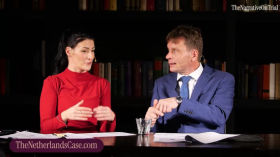
Dr. Predrag Slijepcevic | NARRATIVE #140 by Robert Cibis (DE)
Biocivilizaciones – Dr. Predrag Slijepcevic
(Conversación en inglés)
Cuando el ser humano se considera la corona de la creación, pasa por alto lo esencial, según el biocientífico Predrag Slijepcevic: la vida existe desde hace unos cuatro mil millones de años, el Homo sapiens solo desde hace doscientos o trescientos mil. En una conversación con Robert Cibis, Slijepcevic, autor del libro recién publicado «Biocivilizaciones: una nueva mirada a la ciencia de la vida», traza una imagen de la naturaleza que pone patas arriba la jerarquía habitual. El lenguaje, la ingeniería, la ciencia, el arte, la medicina y la agricultura, todos esos logros que el ser humano reivindica para sí, existían en el mundo natural millones, a veces miles de millones de años antes de nuestra civilización.
Slijepcevic se apoya en la teoría Gaia formulada en los años setenta por James Lovelock y Lynn Margulis, según la cual la biosfera es un sistema coherente, organizado de forma descentralizada y con mente propia. Durante mucho tiempo descartada como acientífica, esta visión gana hoy terreno. Según el biólogo, el ser humano no controla la naturaleza, sino al revés. Considera engañoso el concepto de Antropoceno, popularizado recientemente, que declara al ser humano dueño y señor de la Tierra, pues desde el punto de vista evolutivo somos principiantes.
En cifras, suena así: del peso total de la biosfera, unas 550 gigatoneladas de carbono, alrededor del 70 % corresponde a las plantas, el 25 % a las bacterias y solo un 2 % aproximadamente a todo el reino animal, ser humano incluido. Las bacterias no solo habitan el suelo, sino hasta 70 kilómetros de altura en la atmósfera y entre 20 y 30 kilómetros de profundidad en la corteza terrestre. Según Slijepcevic, fueron ellas las que crearon la biosfera. Sin ellas no sería concebible la vida: modelos matemáticos muestran que, si desaparecieran los microbios, todos los demás organismos morirían en dos o tres meses. El microbioma humano comprende unos 400 billones de bacterias frente a solo 37 billones de células del cuerpo, y tampoco el desarrollo del cerebro humano sería posible sin influencia bacteriana.
Slijepcevic describe de forma especialmente impresionante las estructuras sociales de los insectos. Hormigas, termitas y abejas viven en auténticas ciudades, con vías de tránsito, fortificaciones, agricultura en la que se cultivan hongos como plantas útiles y enterradores que reconocen a sus congéneres muertos por su olor característico. Los investigadores han observado además que las hormigas llevan de vuelta al nido a compañeras heridas en el campo de batalla, desinfectan sus heridas con secreciones antimicrobianas y, si es necesario, amputan patas. Al día siguiente, las tratadas suelen volver al combate. Lo notable es que las hormigas logran semejantes hazañas con cerebros casi inexistentes.
Justo aquí Slijepcevic pone la palanca contra un dogma central de la biología moderna. La visión mecanicista del mundo, que concibe la vida como una máquina que se puede desmontar y volver a montar y lo reduce todo a genes e información, habría llegado a un callejón sin salida. Junto con otros colegas, defiende en el libro «The Sentient Cell» la tesis de que cada organismo, desde la bacteria hasta el ser humano, tiene sensibilidad y un sentido subjetivo de sí mismo. Ya Descartes se equivocó al negar a los animales la capacidad de sentir dolor. También las hormigas tendrían algo así como personalidad. La conciencia, subraya el biólogo, no es lo mismo que la racionalidad: muchas de nuestras decisiones son emocionales y están marcadas por experiencias, historias y metáforas.
Slijepcevic no describe a las bacterias como organismos unicelulares, como hacen los manuales, sino como sociedades de billones de individuos que se comunican entre sí mediante mensajes químicos y, a mayores distancias, mediante impulsos eléctricos. Ya hace unos tres mil millones de años habría surgido algo así como un internet bacteriano, un sistema conectado a escala mundial que explicaría también por qué las resistencias a los antibióticos se propagan tan rápido de un continente a otro, transportadas por sistemas de vientos planetarios en los que las bacterias recorren largas distancias en forma de esporas.
En la conversación, Cibis menciona al filósofo alemán Jochen Kirchhoff, que interpreta el propio cosmos como un organismo vivo, y pregunta por la plausibilidad de esa idea. Slijepcevic recuerda a Alfred North Whitehead, que ya entendía los átomos y los electrones como seres vivos; al biólogo Jakob von Uexküll, nacido en la actual Estonia, fundador de la biosemiótica; y el famoso ensayo de Martin Heidegger sobre la técnica, en el que ya en 1954 advertía contra la reducción de la naturaleza a mero recurso. Un estudio de dos físicos italianos de 2020 mostró además una asombrosa similitud estructural entre la red de galaxias y el cerebro humano. También Roger Penrose, reciente premio Nobel de Física, considera la conciencia algo que no se puede explicar mediante el cálculo, lo que a su vez significa que la vida no es una máquina.
A la pregunta de Cibis sobre las consecuencias sociales de esta visión, Slijepcevic responde con prudencia. Siempre habrá conflictos, está en la naturaleza humana. Solo se podrán abrir caminos para salir de la visión mecanicista mediante un diálogo serio entre financiadores, políticos, ciudadanos de a pie, jóvenes y líderes religiosos, y no solo en Europa occidental, sino incluyendo a África y Asia. Cibis expresa en este contexto su escepticismo ante la instrumentalización política del tema climático en Alemania y distingue expresamente entre el cambio climático y la innegable pérdida de biodiversidad. Slijepcevic coincide en que no hay que meter ambas cosas en el mismo saco, pero subraya que la «aniquilación biológica» de los últimos 100 a 150 años, el fenómeno que los científicos llaman la sexta extinción masiva, se debe claramente a las tecnologías humanas.
Al final, Slijepcevic aboga por la humildad. El ser humano es la incorporación más reciente al caleidoscopio de la evolución y haría bien en aprender de quienes viven en este planeta desde hace miles de millones de años. Cita a Lynn Margulis: en el fondo no seríamos más que comunidades ecológicas de microbios. Cibis concluye observando que también hacer cine es para él algo a lo que contribuye sin controlarlo del todo, un saber descentralizado que actúa a través de él. ¿Quizá ocurre así con todos los proyectos exitosos?
La editorial Neue Erde ha publicado «Biozivilisationen» en alemán.
Hola, me llamo Robert Cibis. Estoy extremadamente orgulloso y contento de estar aquí con el Dr. Predrag Slijepčević, un biocientífico que descubre, desvela y une la ciencia, algo realmente inaudito, al menos para mí y, creo, para la mayoría de la gente. Porque la sofisticación de los organismos vivos supera la imaginación, y siempre tenemos esta visión de lo complicadas que son nuestras vidas, y de hecho incluso la vida de las termitas podría ser complicada. En cierto modo me tranquiliza, porque, vale, nuestra vida es compleja, sabe, eso es lo que aprendí de lo que usted explicó a otros antes, hoy, en la presentación. Entonces, ¿cómo llegó usted, como biocientífico, a interesarse por la biocivilización? Bien. Creo que todos los biocientíficos saben que la vida empezó hace aproximadamente cuatro mil millones de años, y nosotros, los humanos, como especie solo tenemos unos 200, quizá 300 000 años.
Así que en este periodo de unos cuatro mil millones de años, la vida existió sin nosotros, y algunos ejemplos de vida que existían antes de los humanos son tan sofisticados que nuestra civilización en realidad no puede igualarlos. Lo que encuentro en mi propia investigación es que todo tipo de capacidades civilizatorias, digamos los idiomas, la ingeniería, la ciencia, el arte, la medicina, la agricultura, existen todas en el mundo natural y en realidad preceden a nuestra propia civilización en millones o incluso miles de millones de mundos. Así que el mundo natural es, quiero decir, la única palabra correcta que describe el mundo natural es complejidad. Así que es extremadamente complejo, aunque pensemos que nuestra civilización es la más compleja; hay cosas más complejas que nosotros. ¿Ah, sí? Quiero decir, vale, que sean complejas, de algún modo puedo entenderlo, porque no lo
comprendo. Pero ¿cómo puede ser más complejo que la sociedad humana? Quiero decir, usted no… lo sé, sé por qué dice eso. Sí. La verdadera razón por la que lo dice es que no conoce el sistema técnico alemán. ¿Puede repetirlo? Perdón, es una broma. La técnica alemana. La técnica. Ah, sí. Porque, sabe, hay cosas que parecen tan complicadas y absurdas en nuestra civilización que creo que ningún mundo natural tendría eso, sabe, fuera de nuestras vidas. Pero ¿por qué dice eso? Bueno, quiero decir, si se mira el panorama general, sabe, la vida es algo complejo que implica todo tipo de organismos, bacterias, virus, plantas, animales. Pero hay una unidad, algo que unifica la vida. Y eso se conoce como la teoría Gaia. Es toda la biosfera. Y los autores de la teoría Gaia son James Lovelock y Lynn Margulis, ambos lamentablemente
fallecidos. Sabe, desarrollaron esta teoría en los años setenta. Cuando la teoría se mencionó y publicó por primera vez, los científicos de hecho la atacaron como acientífica. Y a Margulis y Lovelock les costó convencer a todos de que tenían razón, y de hecho la tienen. Así que la vida tal como la conocemos, sabe, existe como un fenómeno a escala planetaria que lo abarca todo. Esta hipótesis Gaia significa que en realidad el mundo natural tiene su propia mente, que está completamente descentralizada. Y nosotros, como parte de ello, sabe, humanos, plantas, animales, bacterias, somos en el fondo parte del sistema. Podemos controlar el sistema. Es al revés. El sistema nos controla. Si creemos que podemos hacerlo, creo que probablemente
estamos equivocados. Pero tenemos que convencernos de que hay un, sabe, camino distinto al de, digamos, ese concepto del Antropoceno, que se inventó hace unos 20 años. Antropoceno significa en el fondo que los humanos son, por así decirlo, los dueños y controladores de la naturaleza. Eso no puede ser cierto porque, sabe, somos muy inexpertos evolutivamente. Hay organismos como las bacterias que tienen miles de millones de años más que nosotros. Las plantas son más antiguas que nosotros, los animales, etcétera. Quiero decir, los argumentos a favor de esta idea de que el ser humano es el centro del planeta Tierra y de los organismos vivos son en cierto modo comprensibles si uno mismo es humano. Porque entonces se ve: si se cuentan los grandes animales del planeta, la mayoría vive para ser matada por
los humanos. Sabe, el mundo animal libre es cada vez más pequeño. Y eso da esa sensación de dominio, por poner solo un ejemplo. Otro ejemplo sería, sabe, cómo nosotros, sabe, tenemos calles e infraestructuras por todas partes. Y eso, naturalmente, desplaza los límites de otros organismos vivos, y los animales tienen que adaptarse a nuestras ciudades, etcétera. Así que se tiene esa sensación de una humanidad que se expande y de un resto de la naturaleza que mengua. Quiero decir, y creo sin embargo que usted tiene buenas razones para contradecir esta perspectiva. Cuénteselas, por favor. Bueno, creo que hasta cierto punto es cierto. Quiero decir, sabe, la investigación científica muestra que en los últimos cien años realmente ha habido una diezma de especies animales. Quiero decir, el término que usan los científicos es aniquilación biológica, es decir, sabe, la eliminación, sabe,
de miles de especies distintas. Simplemente mueren por nuestras tecnologías. Pero creo que hay que mirar las cosas desde otra perspectiva. Si se mira toda la biosfera, los animales, el reino animal, son un porcentaje muy pequeño de la biosfera, quizá el 2 %. ¿Ah, sí? Lo que forma la biosfera son las plantas, alrededor del 70 %, y las bacterias, creo, alrededor del 25 %. Así que las plantas y las bacterias son las especies dominantes de la biosfera. Los animales, sabe, un porcentaje minúsculo, nosotros incluidos. Y, sabe, la biosfera es… tenemos la impresión de que la naturaleza es bonita, encantadora, sabe, de que es un sistema estable. Pero en realidad, si miramos el pasado evolutivo, la naturaleza era violenta. Quiero decir, hace tres, cuatro mil millones de años, cuando solo existían bacterias en el planeta Tierra. Se mataban unas a otras porque, sabe, las bacterias en realidad acabaron por… las que sobrevivieron produjeron el oxígeno y produjeron la atmósfera, y de algún modo entraron en simbiosis con las plantas para producir oxígeno para los animales. Quiero decir, la biosfera pasa siempre por periodos de estabilidad seguidos de inestabilidad. Conocemos las llamadas extinciones masivas.
Solo en los últimos 600 años hemos tenido unas cinco o seis extinciones masivas. Y la última es la actual, la que estamos viviendo. Así que la causan los humanos. Entonces… ¿Cuál? Se llama la sexta extinción masiva. ¿Quién se extingue? La extinción de, sabe, animales, plantas, que se produce en los últimos… ¿Y no es continua, dice, más bien como en oleadas? Bueno, es periódica. No es continua. Así que la extinción masiva de especies más reciente la causamos nosotros, los humanos. Vale. Eso es bastante reciente. Solo en los últimos… Es muy reciente. Es la revolución industrial. Vale. Los últimos quizá… Quiero decir, si se quiere ser preciso e investigar la ciencia exacta que hay detrás, se dice que son los últimos 100, 150 años, en los que se ve claramente en los modelos cómo se extinguen especies animales como resultado del desarrollo tecnológico
humano. Y algunos, sabe, hay un joven sociólogo y biólogo estadounidense, se llama Justin McBrien. Él lo llama Necroceno. Necroceno significa, sabe, ese tejido. Necroceno significa, sabe, que los humanos tenemos ese efecto de causar eso en otros organismos con nuestras tecnologías. Y usted habla de la extinción de especies animales. ¿Qué pasa con las plantas y las bacterias? Creo que las bacterias son probablemente el único organismo que no puede extinguirse. Lo sabemos porque hace unos 60 millones de años hubo un gran impacto de un asteroide en el planeta Tierra que mató a los dinosaurios y a muchas especies animales. Y la energía liberada cuando ese asteroide impactó en el planeta fue unas mil millones de veces más fuerte, mayor que todas las armas atómicas que tenemos. Imagínese,
mil millones de veces más. Y, sabe, muchas especies animales murieron, especies vegetales murieron, pero muchos organismos, probablemente microbios, sobrevivieron. Y luego, después de eso, la vida, sabe, floreció en las nuevas condiciones. Así que la biosfera es en el fondo algo que no se puede destruir. Así que siempre, incluso, sabe, cuando ocurra algo grande, sobrevivirá y encontrará nuevos nichos y caminos. Si dice que alrededor del 70 % de la vida son plantas, ¿cómo lo mide? ¿En centímetros cúbicos de vida o en número de organismos vivos? Creo que los científicos usan distintas medidas. Así que lo miden en unidades de peso. ¿Ah, sí? Dicen que el peso total de la biosfera es, creo, de unas 550 gigatoneladas de carbono. Así que lo miden porque el carbono es el elemento clave de la materia
orgánica. Así que 550 gigatoneladas; una gigatonelada es una enorme cantidad de carbono. Y de esas 550 gigatoneladas, las plantas y las bacterias son el 95 %. Quiero decir, entiendo lo de las plantas, claro, pero ¿las bacterias? Quiero decir, sé que hay muchas, pero también sé que son pequeñas. Así que ¿cómo pueden pesar tanto? En el fondo, porque ellas, sabe, donde viven las bacterias, no… sabe, no es solo en el suelo. Viven en el aire, hasta 70 kilómetros de altura. El aire está lleno de bacterias. Y estas son, sabe, tenemos la idea errónea de que las bacterias son malas. Hay bacterias patógenas que causan enfermedades humanas, pero son solo unos pocos cientos de especies. Existen miles de especies de bacterias, y viven hasta 70 kilómetros en la atmósfera, en el suelo, y a unos 20, 30 kilómetros
bajo tierra. ¿Qué? Sí. Así que, sabe, ellas… ¿Las bacterias están a unos 30 kilómetros bajo tierra? Es una locura. Quiero decir, se puede decir que las bacterias fundaron la biosfera. Es impresionante. Así que eso, quiero decir, es un hecho científico, porque son organismos que existen desde hace 4 mil millones de años, y no podemos vivir sin bacterias. Quiero decir, los modelos muestran… son modelos teóricos. Evidentemente no se pueden hacer estos experimentos. Imagínese, sabe, una biosfera, un planeta vivo, y luego se introduce en los modelos una descripción de los humanos, las plantas, los animales, y se le pregunta al modelo –son modelos matemáticos, pero basados en algoritmos muy sofisticados–, se le pregunta al modelo qué pasaría si en teoría elimináramos a los humanos de la
biosfera. Y, sabe, los modelos procesan unas cifras, algoritmos, y dicen: nada. La biosfera simplemente seguirá, sabe, su trayectoria. Pero si se le pregunta al modelo qué pasaría si se quitan las bacterias… El modelo dice de forma muy convincente que al cabo de unos dos o tres meses, sabe, todos los organismos empezarían a morir. Los humanos no podemos vivir sin microbioma. Nuestro microbioma humano, es decir, bacterias, algunos otros microbios, incluidos virus, levaduras, hongos, etcétera. Y ahora hay una palabra muy popular: psicobioma. El psicobioma son bacterias que influyen en el desarrollo de nuestro cerebro durante el desarrollo embrionario. Y, sabe, ni siquiera podemos pensar sin bacterias. Es un descubrimiento,
sabe, asombroso. Sí, aprendí que tenemos más bacterias en nuestro cuerpo que células. Sí, las cifras exactas son: si se mira el cuerpo humano en número de células, tenemos unos 37 billones de células en nuestro cuerpo. Pero nuestro microbioma son 400 billones de bacterias. Así que es aproximadamente… en número; las bacterias son más pequeñas, sabe, bastante pequeñas, pero… Aun así es un kilo, aprendí. Sí. Es impresionante. Así que de ahí viene el carbono. Quiero decir, vaya. Pero usted dijo en su introducción que estos organismos vivos tienen una sociedad, una civilización, que quizá sea más sofisticada que la humana. ¿Cómo puede decir eso? Bueno, quiero decir, para empezar, hay algunos organismos que son sociales, como nosotros, los humanos. ¿Un chimpancé?
No necesariamente. Son menos sociales que nosotros. Quiero decir, los organismos más cercanos a los humanos en cuanto a sociabilidad son los insectos. O sea, las hormigas, las termitas y las abejas. Y tienen la capacidad de… sabe, viven en sociedades. Las sociedades humanas, digamos, París. Sí. Así que tienen… Es una gran ciudad. Una gran ciudad, sí. Así que las hormigas tienen sus propias ciudades que, cuando se analizan en detalle, tienen todo tipo de cosas que existen en nuestras ciudades. Tienen, sabe, autopistas. Tienen edificios en los que cultivan, sabe, las hormigas practican la agricultura. Cultivan, sabe, hongos y, sabe, los usan como alimento. Cogen hojas, se las comen. No pueden digerirlas, pero dan esa papilla, sabe, a los hongos para que la procesen, y luego los hongos producen
alimento. Y eso es en realidad la agricultura de las hormigas. Vaya. Así que dentro de sus ciudades tienen algo así como cuarteles. Quiero decir, sabe, las sociedades de hormigas están divididas por especialidades. Hay hormigas que defienden las ciudades. Incluso hay comisarías. Hay, quiero decir, es asombroso, incluso se pueden encontrar funerarias. Sabe, los científicos, sabe, si ellos, sabe, los científicos en realidad, los entomólogos que investigan insectos, usan trucos. Si, por así decirlo, se pone una gotita de aceite de oliva sobre una hormiga, las otras hormigas la cogen y, sabe, la presencia del aceite de oliva en el cuerpo de una hormiga les indica a las otras hormigas que esa hormiga, esa hormiga está muerta. Porque, sabe, cuando el cuerpo de una hormiga empieza a descomponerse, produce algo que imita el aceite de oliva. Así que los científicos aprenden esos trucos y, cuando, sabe, ponen unas gotas de aceite en el cuerpo de una hormiga, vienen hormigas a recogerla y enterrarla porque creen que
está muerta. Así que, sabe, todo tipo de cosas que existen en las sociedades humanas existen en las sociedades de hormigas, no exactamente de la misma forma, pero de una forma parecida. Vaya. ¿Y cómo… quiero decir, qué hace la hormiga policía? Quiero decir, quizá crean algún tipo de orden, pero eso es, creo, sabe, lo de las comisarías en las ciudades de hormigas todavía es un poco exagerado. Pero cuarteles, sin duda, porque, sabe, hay, sabe, tienen que defender la ciudad, la ciudad de las hormigas, de los ataques de otros insectos. Y luego hay algunas hormigas guerreras, etcétera. Así que en las sociedades de hormigas existe, sabe, un verdadero ejército. ¿Y tienen, digamos, un hospital? Hace poco leí, sabe, una serie de artículos de un grupo de científicos, creo que uno era de Alemania. Lo que descubrieron es que hay las llamadas hormigas guerreras que atacan constantemente a las termitas. Así que, sabe, se forman estas columnas, como verdaderas columnas de ejército, y
son muy ordenadas. En esas columnas hay hormigas pequeñas y hormigas grandes. Las hormigas pequeñas entran en el, no, las hormigas grandes en realidad entran en el nido de termitas y hacen agujeros. Y luego entran hormigas más pequeñas, matan termitas y las sacan. Y luego, en el fondo, los cuerpos de esas termitas se llevan de vuelta al nido de hormigas como alimento. Y en el proceso, cuando matan termitas, es en el fondo una guerra. Las termitas se defienden y algunas hormigas resultan heridas. Y las llevan de vuelta al nido, a su hospital, digamos, sabe, si tienen… Lo que pasa a veces es que las termitas en realidad les arrancan patas a las hormigas. Las hormigas tienen seis patas. Así que las hormigas pueden sobrevivir con tres o cuatro patas. Así que dos patas menos no son nada. Pero alguien, las hormigas en el, sabe, nido tienen que operar eso, quitar esas, sabe,
patas heridas. Y al día siguiente se ve a los, sabe, animales tratados, a las hormigas tratadas en el campo de batalla. Es lo que han descubierto los científicos. Así que las hormigas cirujanas son en realidad bastante hábiles. Así que quitan los restos o, sabe, si hay alguien herido, ¿cómo, qué hacen? Quiero decir, lo primero que hacen cuando una hormiga está herida y no puede moverse es que otra hormiga la lleva de vuelta al nido. Y luego se reúnen hormigas, quizá un pequeño hospital móvil. Las hormigas tienen en el cuerpo glándulas que segregan un líquido antimicrobiano. Y primero tratan las heridas con esos líquidos, o sea, las desinfectan. Así que vienen, hay una hormiga herida, y luego llega una segunda y le da ese líquido de la… Sí, no solo una, varias. Así que
es como un verdadero hospital. Y luego, si hace falta una operación, una intervención quirúrgica, tienen que, digamos, sabe, una pata herida, o bien, sabe, la quitan como es debido, esterilizan eso. ¿Ah, sí? Y pueden moverse con cinco patas, sabe. Así que para ellas no es problema, porque tienen seis patas. La nueva amputación. Sí, amputación, exacto. Es, por supuesto, un grado increíble de sofisticación. ¿Y qué se puede aprender de esto? Sí, creo que quizá lo primero que hay que tener en cuenta es el hecho de que estamos demasiado centrados en nuestro, sabe, en nosotros. Sabe, creemos que somos la especie más sofisticada que ha existido en la historia de la vida. Creo que tenemos que cambiar esa postura y pasar a una postura menos agresiva y compararnos a nosotros y nuestros logros con el resto
de la naturaleza. Y esperemos que de ello salga algo productivo. Pero no es fácil cambiarnos. Quiero decir, nuestra civilización depende de muchas cosas. Suena tan moral. Oh, sí. Sí, lo entiendo. Creo que existe el término bioética. Sí, es ético. Sí. Es una cuestión ética. Pero primero necesito entender esto de algún modo. Quiero decir, la hormiga no tiene realmente un cerebro decente. Sí. ¿Cómo es posible? Bueno, es una pregunta excelente. Tengo un grupo de colegas que hace poco han escrito un libro. Y ese libro, que probablemente se publicará dentro de unos meses, se titula The Sentient Cell. La nueva teoría en biología dice en el fondo que cada organismo es sintiente y consciente. Sintiencia significa la capacidad de percibir el mundo exterior, de tener sentimientos. Consciencia significa un yo subjetivo del
propio cuerpo. Así que todos los organismos son sintientes y conscientes. ¿De verdad? Incluidas las bacterias. Es la nueva postura. No es la postura dominante. Pero creo que la biología, quizá dentro de 50 años, irá en esa dirección. Vaya. Así que tenemos que admitir, en el fondo… Creo, sabe, que el desarrollo de la cultura europea y de la civilización estuvo de algún modo influido por los grandes acontecimientos de hace tres, cuatrocientos años. El Renacimiento y la Ilustración. Y con razón esos pensadores creían que éramos realmente listos e inteligentes. Pero creo que eso se ha sobrestimado hasta cierto punto. Descartes, sabe, el matemático y filósofo francés, en el siglo XVII, sostenía que los únicos organismos con mente son los humanos. Los animales no tendrían sensación de dolor,
serían inconscientes, pero eso no es cierto. Cuando se investiga a las hormigas, aunque su cerebro es muy pequeño, parece que tienen un sentido subjetivo de sí mismas, sabe. ¿Ah, sí? Sí. Porque parecen tener personalidades. Eso es, de nuevo, sabe, investigación más moderna. Bueno, es una revolución en el pensamiento. Lo es. Así que, en esencia, la vida no va de genes. Sabe, el dogma científico actual es que todo está regulado por los genes y los códigos de información. Ese dogma se llama neodarwinismo. Parece que el dogma ha llegado a un callejón sin salida. El nuevo pensamiento en biología: la vida no va de genes, va de sintiencia, va de consciencia. Por supuesto, no podemos imitarlo, no podemos entrar en el mundo de las hormigas y comprobar si ellas,
qué tipo de consciencia tienen. Pero, sabe, tienen sensación de dolor, tienen que tener sensación de dolor. Y todos, sabe, los animales tienen sensación de dolor, tienen sentido de su propio cuerpo, son conscientes, etcétera. Esto, quiero decir, contradice por completo la visión mecanicista del mundo, con la que me siento confrontado a menudo en todos los contextos. Ya sea sobre cómo se puede predecir el comportamiento humano, porque todos, de hecho, nuestra consciencia es en realidad un engaño. Sabe, le doy solo el ejemplo más típico, que seguramente conoce, pero solo para mostrar el otro punto de vista. La consciencia es una ilusión que nos damos a nosotros mismos, porque es mejor para nosotros vivir con ella, pero en realidad no existe, porque tomamos nuestras decisiones inconscientemente. La consciencia solo está ahí para vendérnoslas a nosotros mismos, para que tengamos cierta reflexión sobre ello,
pero el proceso de decisión en sí es inconsciente. Por ejemplo, la prueba de esta teoría en neurobiología es que quiero coger esta taza y, de hecho, se puede ver en mi cerebro que quiero cogerla incluso antes de ser consciente de ello, incluso antes de darme cuenta. ¿Y esto prueba realmente algo? Quiero decir, ¿prueba que la consciencia no es gran cosa? Me alegra que antes haya usado el término mecanicista. Quiero decir, las ciencias de la vida se basan en una especie de enfoque mecanicista que es adecuado para la física. En la ciencia hay una jerarquía en la que, sabe, la física es la ciencia más fundamental, luego la química y luego la biología. Así que la química y la biología pueden derivarse de
la física. Y todos los biólogos dicen, sabe, que la vida puede reducirse a, sabe, principios de la física. Pero en realidad eso no es cierto. Así que la vida no es una máquina. Creo que la ciencia, la ciencia dominante, la biología dominante, entiende en cierto modo la vida en términos mecanicistas. En otras palabras, sabe, la teoría es que la vida es una máquina. Podemos coger una máquina, desmontarla y luego volver a montarla. Pero eso no, sabe, eso funciona con los coches o, sabe, con las lavadoras. Pero no funciona con las bacterias, las plantas o los animales. Así que lo que usted, sabe, la consciencia y la toma de decisiones son en el fondo procesos completamente distintos. Quiero decir, la toma de decisiones es un proceso consciente. Pero la consciencia es algo más grande. La consciencia no es lo mismo que la racionalidad. Quiero decir,
muchas decisiones que tomamos son completamente racionales. En el fondo no confiamos tanto en el cerebro racional. Sabe, muchas decisiones las tomamos emocionalmente, usando metáforas, sabe, experiencias que nos contaron abuelos, padres, o que oímos de, sabe, algunos, sabe, parientes de hace 200 años, sabe, historias, etcétera. Así que creo que la ciencia interpreta la consciencia de forma demasiado racional. La consciencia y la racionalidad son dos cosas distintas. Entonces, ¿qué es la consciencia? Es un sentido subjetivo de uno mismo. Así que eso, quiero decir, es muy difícil de definir. Y mis colegas que han escrito este libro titulado The Sentient Cell intentan evitar definir la consciencia. Porque si se intenta definir algo de lo que no se sabe lo suficiente, es un error. Así que se puede suponer algo muy sencillo hasta construir una imagen más amplia. Lo que podemos decir, entonces, es que la consciencia es simplemente un sentido subjetivo de uno mismo. Así que las bacterias, eso es una sola célula, o sea, un solo cuerpo, las bacterias, esa bacteria tiene sentido de su propio
cuerpo. Y si se mira qué lo causa a nivel molecular, de nuevo, el grupo de científicos que publica este libro, The Sentient Cell, dice que hay tres cosas que determinan esa consciencia a nivel celular y molecular. Una membrana celular, porque es excitable, luego algunas estructuras dentro de la célula llamadas citoesqueleto, y proteínas que se pliegan, por así decirlo, en tres dimensiones y luego definen lo que llamamos el código genético. ¿Son las bacterias también más complejas de lo que pensamos? Sí, en cierto sentido. Si se miran las bacterias, creo que tenemos un enfoque equivocado en la forma de ver las bacterias. Si se coge un libro de texto de medicina o biología, dice que las bacterias son organismos unicelulares. Simplemente no es cierto. Las bacterias son sociedades. Así que lo que les da la inteligencia no es una bacteria, sino una sociedad de billones
de bacterias. Y todo el planeta se llama bacteriosfera. En realidad, las bacterias tienen su propia especie de construcción planetaria, un superorganismo, si se quiere, que se comunica. Y, sabe, he escrito un artículo en el que sostuve que la primera forma de internet que existió en nuestro planeta fue el internet bacteriano, el sistema de comunicación bacteriano que se formó quizá hace tres mil millones de años. Así que las bacterias hablan intercambiando mensajes químicos o impulsos eléctricos, y toda la población de bacterias del planeta Tierra se llama bacteriosfera, y todas se comunican entre sí. Así que, cuando se miran las bacterias, son en el fondo sociedades complejas pluricelulares. Así que son las formas de vida más numerosas, si se mira a nivel celular, las formas biogénicas más numerosas de nuestro planeta.
Vaya. ¿Y si hablan entre sí, qué se dicen? De nuevo, es algo que solo podemos suponer. Sabe, hay científicos que descifran su lenguaje. Quiero decir, ellos, sabe, analizan esas sustancias químicas que actúan, digamos, como palabras o frases en su lenguaje. No son solo sustancias químicas. De hecho, sabe, un grupo de bacterias puede comunicarse, digamos, con ciudades bacterianas lejanas. Sabe, la distancia es distinta en el mundo bacteriano. Se comunican mediante impulsos eléctricos, parecido a, sabe, sabe, una red telefónica entre Nueva York. Así que, sabe, como internet, sí. Pero, quiero decir, incluso se puede simplificar y decir: volvamos al siglo XIX, cuando se inventó el teléfono, la comunicación entre Nueva York y, sabe, ciudades europeas o, sabe, así que se puede decir que esos impulsos en las ciudades bacterianas, sabe, las bacterias individuales hablan mediante mensajes químicos,
la comunicación entre ciudades se produce mediante impulsos eléctricos. Y, como hoy, la red de bacterias también es global. Lo es. Quiero decir, todo está conectado. Así que puede ser, digamos, que algunas bacterias en algún lugar de Dinamarca estén estresadas. ¿Puede ser que las bacterias de Australia lo noten? Creo que eso sería entrar demasiado en detalle, pero sin duda, sabe, lo que sabemos es que las bacterias en realidad se comunican a escala global. ¿Cómo lo sabemos? La práctica médica ha mostrado que, cuando usamos demasiados antibióticos, las bacterias se vuelven resistentes a ellos. Y esa resistencia, por supuesto, sabe, pasa muy rápido a, sabe, un gran territorio. Ah, esa era la prueba. Hasta cierto punto, pero creo… Si se está seguro de que no hay, digamos, una bacteria transmitida a otro lugar. Entonces, ¿qué pasa cuando damos antibióticos para tratar, digamos, una infección bacteriana en nuestro cuerpo? Quizá los antibióticos maten al
99 % de las bacterias. Habrá un 1 % que sobrevive. Y ese 1 % que sobrevive tiene algunos genes resistentes a los antibióticos. Así que seguirán dividiéndose. Quizá viajen. Así que las bacterias que van a la atmósfera, las bacterias viven en el aire. Pueden recorrer largas distancias con el sistema de vientos, el sistema planetario de vientos. Así que hay pruebas de que bacterias o virus pueden viajar por las autopistas del cielo, sabe, de un continente a otro. Porque las bacterias pueden sobrevivir mucho tiempo en la atmósfera. Quiero decir, la atmósfera tiene algo de alimento para ellas, sabe, algo, sabe, de carbono, etcétera. Pero sin duda pueden recorrer largas distancias. Las bacterias también forman esporas, es decir, cuando no hay alimento, simplemente pasan a, sabe, un modo que no es una
semilla de vida. Pero cuando vuelven a tener alimento, reviven. Vaya. Y entonces usted está escribiendo un libro sobre esto. De hecho, usted escribió un libro, ¿verdad? Sí, de hecho, escribí un libro. Que está disponible… Así que el libro se titula Biocivilisations, y el subtítulo es A New Look at the Science of Life. Así que está publicado en Gran Bretaña y en Estados Unidos. La fecha de publicación es el 18 de mayo de este año. ¿Y cuál es la hipótesis de este libro? Quiero decir, ¿qué dice? Quiero decir, el mensaje principal es que, sabe, los humanos somos, sabe, la incorporación más reciente a este caleidoscopio de organismos evolutivos, sabe. Somos muy jóvenes. Quiero decir, solo existimos desde hace 200, 300 000 años. Y tenemos que aprender de organismos que tienen mucha más experiencia evolutiva que nosotros. Quiero decir, las bacterias tienen 4 mil millones
de años. Las plantas tienen quizá 600, 700 millones de años. Quiero decir, hay otros organismos como las amebas, que están en el fondo entre las bacterias y las plantas, quizá mil quinientos millones. Y todos esos hongos, por ejemplo. Y todos ellos produjeron algo en el mundo natural que, sabe, contribuyó a esta complejidad, y tenemos que aprender de ello. Así que ese es, sabe, el mensaje más sencillo. Quiero decir, el concepto de Gaia es bastante impresionante. Si se supone, sabe, que todo está mucho más interconectado de lo que pensamos. Y también supone que existe una consciencia planetaria que hace que todo sea interdependiente. Así que yo sería, por así decirlo, parte de ese ser vivo que es el planeta Tierra, del que forman parte todos los demás animales, plantas, bacterias y hongos. Quiero decir,
suena en cierto modo lógico, porque a lo largo de un periodo tan largo parece haber de algún modo un equilibrio. Que incluso una catástrofe como la que usted mencionó, sabe, ese asteroide que cae sobre el planeta Tierra, pueda superarse. Pero todavía me cuesta imaginarme realmente este concepto. ¿Cómo funciona de verdad la interconexión? Sí. ¿Puede ayudarme con esto? Sí. Creo que tenemos un problema como seres humanos y quizá como parte del reino animal, porque todos los animales tienen cerebro. Y los cerebros son en realidad unidades centrales de procesamiento. No son como ordenadores, pero, sabe, el cerebro sirve, sabe, a los animales que se mueven para evaluar un entorno en constante movimiento. Si se miran las plantas, no tienen cerebro porque no, no se mueven. Son sésiles, inmóviles.
Las bacterias no tienen cerebro. Así que creo que proyectamos esto, el cerebro, quiero decir, hay un hombre, un botánico, que llamó a esta postura chovinismo cerebral. Proyectamos esta imagen de la comprensión del mundo según la cual todo depende del cerebro. En realidad, el cerebro solo existe en la naturaleza en trazas. Si se mira a los animales, es menos de, alrededor del 2 %, quizá como máximo, de toda la biosfera. Así que, sabe, los organismos con cerebro no son tan importantes. Así que esta idea de la consciencia de Gaia, creo, es muy difícil de comprender para nosotros. Yo no iría tan lejos, no lo llamaría consciencia. Lo que sabemos es que Gaia tiene su propia mente, pero la mente es algo completamente distinto. Hubo un cibernético, Gregory Bateson, que era biólogo de formación, pero colaboró con un físico y matemático para establecer la cibernética como disciplina en los
años cuarenta y cincuenta. Así que él tenía la idea de la mente de la naturaleza. La mente de la naturaleza es completamente distinta del cerebro. Está completamente descentralizada. Descentralizada significa que las formas de vida están interconectadas. Y lo que las interconecta es la comunicación entre ellas. Y no somos conscientes de nuestra comunicación con las bacterias. Porque las bacterias viven en nuestro intestino y se comunican con nuestras células cerebrales, no somos conscientes de ello. Así que, sabe, esto que usted llama consciencia a ese nivel es algo completamente distinto. Y no podemos experimentarlo, pero la ciencia puede detectarlo hasta cierto punto. Impresionante. Y, quiero decir, esto corresponde de algún modo a lo que aprendí cuando hice un documental sobre la acupuntura, que, sabe, estimula el sistema nervioso de nuestro cuerpo humano
en distintos puntos. Y se puede, la idea de la acupuntura es que se clava una aguja en algún punto de la mano y eso tiene un efecto en el hígado, por ejemplo. Sea cierto o no, quiero decir, algunas conexiones se han demostrado porque a veces hay simplemente una conexión neurológica. Y realmente activa ese órgano. Y se puede ver que está estimulado. Así que sí, hay una interconexión dentro de nuestro cuerpo. Y lo que aprendí en ese contexto es que el efecto del cerebro no es el cerebro. Que el sistema nervioso de nuestro cuerpo es, de hecho, indistinguible del cerebro. Que el tronco encefálico y todo eso forman parte de él. No son dos cosas. Así que, si me corto en el dedo, en realidad también me duele un poco el cerebro,
porque también hay neuronas en el dedo y forman parte del cerebro. Así que esto también nos da, creo, una idea de lo diversa que es la realidad de la vida dentro de nuestro cuerpo, y de la idea de que el cerebro está ahí y lo decide todo, sabe. Y para ampliar esta forma de pensar, solo quería presentarle a alguien a quien quizá no conozca. Se llama Jochen Kirchhoff. Es un filósofo alemán. Y escribió un libro, Kosmos, que nosotros publicamos. Y dice que el cosmos en su conjunto podría entenderse como un organismo vivo. Y que eso resolvería muchos problemas, también en física, porque, sabe, una gran parte de lo que observamos no está explicada por el momento. Y al principio pensé: oh, es un enfoque un poco sorprendente. Pero escuchándole, sabe, puedo hacerme amigo de esto. Y mucha gente lo es. Y él llegó a esa conclusión estudiando física.
Quiero decir, durante mucho tiempo la historia de la física, sobre todo la historia de los últimos 500 años. Y por eso me pregunto si esto es también una clave para entender por qué el trato hacia los humanos en general se volvió o es siempre tan cruel, porque, sabe, si se tiene en cuenta que somos bastante poderosos en el sentido de que nos resulta fácil sobrevivir en este mundo. Sabe, podríamos producir el doble de lo que toda la humanidad puede comer. Sabe, es fácil construir, sabe, un hogar, tener buenas condiciones de vida. Y aun así hay muchos conflictos. Aun así, la gente es, sabe, envidiosa o intenta dominar a otros. Y, sabe, toda la vida es mucho menos divertida de lo que podría ser. Y me pregunto si esto está de algún modo relacionado con un malentendido de lo que es la vida,
de lo mecánica que es, y de que cada uno de nosotros está solo consigo mismo, o estamos con nuestra comunidad y tenemos que defenderla y estar en contra de la otra. Y si entendiéramos mejor que toda la biosfera es como un gran sistema, quizá también viviríamos menos violencia. Esta es una pregunta que tengo. ¿Usted lo cree? En un mundo ideal, sí. Pero, quiero decir, la naturaleza humana es tal que siempre tendremos, sabe, conflictos. Pero eso es menos importante. Quiero volver a lo que dijo sobre el cosmos vivo. Quiero decir, esa idea no es nueva. Creo que hubo un filósofo y matemático inglés, Alfred North Whitehead, que nació en el siglo XIX. Vivió, murió hace quizá casi 100 años. Enseñaba en el fondo que los átomos son seres vivos, que los electrones son seres vivos, sabe.
Pero nadie lo tomó en serio. Y esa postura en filosofía se conoce como panpsiquismo. Pero si se mira lo que hacen los físicos, hubo un estudio bastante reciente de dos físicos italianos. Analizaron, quiero decir, tenemos una tecnología potente, así que podemos observar el universo con telescopios muy potentes y producir imágenes y modelos asombrosos del universo. Lo que hicieron fue analizar galaxias, una red de galaxias, e intentar ver si había allí algún tipo de estructura coherente. Y una vez construida esa imagen, la compararon con la estructura del cerebro humano. Y el modelo matemático mostró que hay un alto grado de similitud. ¿Ah, sí? Eso se publicó en 2020. Así que esto encaja, sabe,
con esta idea del cosmos vivo. Pero creo que la ciencia es, sabe, es demasiado pronto para que la ciencia entre en esos terrenos. Pero estoy seguro de que hay científicos que piensan, sabe, cuando Alfred North Whitehead enseñaba, sabe, sabe, que los electrones son seres vivos. Sabe, es… Es impresionante. Como concepto es realmente impresionante. Y también quiero mencionar a dos alemanes influyentes, uno filósofo, otro biólogo. Quiero decir, la idea de que el mundo vivo es consciente y tiene su propia inteligencia. El primero que propuso esa idea fue un biólogo que vivió… Era de origen alemán, pero vivió en lo que hoy es Estonia. Jakob von Uexküll. Y creó algo que se llama biosemiótica. Biosemiótica significa entender cómo se produce la comunicación en el mundo natural. Y hoy existe todo un campo de la
biología llamado biosemiótica. Y el filósofo alemán Heidegger, que es controvertido porque apoyaba el nazismo, fue en realidad uno de los filósofos más originales en su forma de interpretar el significado de la técnica. ¿Ah, sí? Y su ensayo sobre el significado de la técnica, en realidad la palabra alemana es, creo, Technik más que tecnología. Tecnología es, sabe, más inglés. Pero es uno de los ensayos más potentes jamás escritos sobre el conflicto entre cómo los humanos vemos el mundo en términos mecanicistas y cómo funciona realmente la naturaleza. Creo que publicó ese ensayo en 1954, algo así. Y qué… así que dijo que hay un fuerte conflicto, y qué era… Quiero decir, el mensaje principal es que, sabe, vemos la naturaleza como recursos, recursos infinitos que queremos usar. Pero la naturaleza es más que eso, no es un recurso. Y es nuestra visión equivocada de la naturaleza la que crea problemas.
Ya veo, ya veo. Y entonces… ¿cree que los electrones tienen consciencia? Creo que eso… para cualquier científico, hacer esa pregunta no tiene ningún sentido. Creo que tenemos que… Puedo de algún modo simpatizar con la visión de… y sin duda estoy de acuerdo con la visión de mis colegas de que las células son conscientes. Sabe, las células son conscientes. Así que no hay ninguna duda al respecto. ¿Y la galaxia? Eso es un terreno completamente distinto. Y quisiera mencionar a uno de los mayores científicos vivos, Sir Roger Penrose. Recibió hace poco el Premio Nobel de Física. En el fondo investigó el significado de la consciencia con su colaborador, que era anestesiólogo de formación. Y de hecho identificaron estructuras en las células llamadas microtúbulos, que según ellos representan semillas de consciencia, y los cambios de los
estados cuánticos. Quiero decir, Roger Penrose es físico. Y dice claramente: sea lo que sea la consciencia, no es computación. Así que eso es decir, sabe, que la vida no es una máquina. Sabe, la vida es algo completamente distinto de un mecanismo. Es… Entonces, ¿qué cree que descubriremos en el futuro? Porque esto… usted menciona muchos estudios recientes. Y sin duda es una revolución en el pensamiento y un cambio de paradigma. Imagine que esto se convierte en el relato dominante. Quiero decir, sinceramente, para mí sería un alivio. Porque siento que estamos en un punto en el que los humanos no solo creen que pueden dominar la naturaleza, sino que creen que pueden dominar también a todos los humanos. No solo a sus esclavos o, sabe, a sus empleados o así, sino a sí mismos y a toda la gente a su alrededor. Y siento que esto no dio buenos resultados en el pasado.
Y tengo mucho miedo de que esto pueda llevar por un camino equivocado. Y por eso me pregunto si habrá ese cambio de paradigma y si este relato será dominante en el futuro. Quiero decir, sabe, las predicciones son en el fondo inútiles. Podemos decir lo que queramos. Pero una cosa está bastante clara. Hay científicos que piensan que el camino que estamos tomando es equivocado. Ejemplo típico: en 2019 se publicó un libro de una profesora estadounidense llamada Shoshana Zuboff. El libro se titulaba La era del capitalismo de la vigilancia. Así que en el libro lo dice claramente. Quiero decir, dominación no significa solo dominación de los humanos sobre la naturaleza, sino dominación de unos humanos sobre otros. Y lo que propone en el libro es que tenemos que tener una visión muy clara de lo que es la inteligencia artificial y de lo que significa usar tecnologías
digitales. Le preocupa el futuro de sus hijos y nietos. Y dice que todos los gobiernos deberían crear zonas seguras en las que no haya tecnología, para que la gente pueda al menos vivir libre y planificar el futuro. Pero eso parecía un escenario muy improbable en las condiciones en que vivimos. Así que, sabe, es… Quiero decir, la postura actual de la biología es que, sabe, este concepto de máquina todavía domina, pero hay gente que piensa lo contrario. Quiero decir, sí, y luego se mezclan, sabe, relatos de la industria. Hablé con el médico que trabaja con Luc Montagnier, que explicaba cómo las células pueden comunicarse entre sí mediante señales electromagnéticas, y decía que podría haber un riesgo si hay muchos campos electromagnéticos a nuestro alrededor que puedan influir o estresar a esas células, y que los riesgos para la salud
ni siquiera se evalúan. Se hacen pocos estudios, hay poco dinero público para ello, y eso es realmente irresponsable. Y lo entendí perfectamente, porque parece un cambio tan fundamental que ahora vivamos en un mundo rodeado de tecnología, que puede tener un impacto en nuestros cuerpos, pero también un impacto en nuestro bienestar psicológico, etcétera. Así que jugar a ser Dios es un juego peligroso, ¿no? Lo es. Quiero decir, el filósofo que mencioné, Heidegger. Quiero decir, lo dijo hace mucho tiempo, y quiero decir, la entrevista que dio antes de su muerte, y que se publicó póstumamente. Su famosa frase, quiero decir: solo un dios puede todavía salvarnos. Como filósofo tenía razón hasta cierto punto, pero, quiero decir, las preguntas que usted me hace son
preguntas prácticas. Nadie tiene la respuesta. Creo que es difícil. Creo que tenemos que entender nuestra posición como civilización. Es muy difícil pasar, digamos, a otro ámbito, porque si se quiere producir, digamos, energía limpia o algo así, hay que, no sé, despedir a 100 000 personas. Luego, sabe, pierden su medio de vida, etcétera. Así que, sabe, ir en otra dirección implica cambiar el rumbo económico. Así que esto, quiero decir, solo puede lograrse mediante un diálogo muy razonable entre lo que llaman partes interesadas. Entre ellas, sabe, gente con dinero, políticos, gente corriente, jóvenes, sabe, líderes religiosos. Y no es solo gente de Europa occidental. Sabe, hay que pensar en la gente de África. Hay que pensar en la gente de, sabe, Asia, etcétera. Así que es un mundo duro, muy duro, y un futuro difícil el que
tenemos por delante. ¿Qué quiere decir con despedir a gente? Quiero decir, es sencillo. Solo para ilustrarlo. Hace unos años, esa joven sueca, Greta Thunberg. Sí. Así que ella abogaba, sabe, sabe, por cambios para lograr un mejor, sabe, planeta vivo. Y tenía una prueba, dice: solo progresaremos cuando las emisiones empiecen, sabe, a bajar. Emisión significa producir CO2. Y tuvo una conversación con el presidente francés Macron. Quiero decir, esto está escrito en un libro, sabe, de un colega mío, recién publicado. Y de hecho Macron fue muy sincero. Dijo: Francia no puede hacer eso. Porque si intentamos reducir las emisiones, nuestra economía caerá. Así que fue lo bastante sincero para decir: vale, tenemos que encontrar soluciones más sofisticadas.
Así que, sabe, es algo difícil. Y no olvide que hay algunos científicos muy serios, gente muy inteligente, que piensan que, sabe, el cambio climático es en realidad algo que ocurría hace mucho tiempo, hace 10 000 años, sin ninguna influencia humana. Así que son, por así decirlo, cambios periódicos. Por casualidad conocí a alguien que dio una presentación, un científico al que respeto mucho en otros aspectos. Y explicó un enfoque parecido, diciendo que incluso en el Polo Norte la cantidad de nieve más bien está aumentando estos últimos años en lugar de disminuir. Así que me confunde lo que usted dijo sobre la extinción de especies, sin embargo, creo…
Eso es completamente distinto del cambio climático. En absoluto. No, no, creo que el cambio climático y la extinción de especies son cosas completamente distintas. Es lo que quería decir. Y creo que no hay duda de que hemos tenido una fuerte pérdida de biodiversidad en los últimos 120 años. Ninguna duda. Pero el cambio climático es algo completamente distinto. Así que son, en efecto, cambios. Sí. Yo, sabe, en los últimos 10 años me he vuelto extremadamente desconfiado cuando un tema que suena bien, sabe, como «protejamos nuestro planeta», suena bien, se vuelve tan político y está tan en primer plano y no se permite disentir. Y se impulsa; en Alemania, el ministro de Economía se llama a sí mismo ministro de Economía y Protección del Clima. Y así está escrito en
el edificio. Así que es, de hecho, bastante impresionante lo político que se ha vuelto este objetivo. Y mi sospecha, y por eso lo menciono, es que quizá se instrumentaliza para algún otro objetivo político que no entiendo del todo. Pero es que, sabe, da la sensación de que se impulsa. Y, y, y, y por eso creo que tenemos que entendernos a nosotros mismos, y, y sin duda también intentaré leer más estudios sobre este tema. Pero volviendo a usted: la civilización es compleja. Y lo que creemos simple, la vida simple, también es muy compleja. Y quizá lo que hacemos, nuestra, nuestra civilización, tampoco viene tanto de nosotros. Quizá también hay un conocimiento descentralizado del que ni siquiera somos
conscientes. Y esto me vuelve loco. Y creo que yo no hice esta película, es simplemente una consciencia que ni siquiera soy yo. Sabe, hacer una película es algo complicado a lo que me gusta contribuir. Y eso me pone en otra posición, que también tiene ventajas. Pero creo que quizá es algo bueno, quizá nos hace más humildes. Sí, creo, creo que sí. Sí. Quiero decir, hubo una mujer, Lynn Margulis, que en cierto modo ayudó a esta teoría Gaia. Ella decía: miradnos. Quiero decir, somos en el fondo comunidades ecológicas de microbios. Eso es todo. Muchísimas gracias por estas reflexiones. Es extremadamente impresionante. Y, y siento pasión por comprender y por su enfoque de la ciencia biológica. Y espero que esto también inspire a otros.
¿Hay algo que quiera añadir? Solo decir muchísimas gracias. Y, sabe, espero que la gente vea este libro, Biocivilisations, cuando salga. Sí. Daremos la referencia, está abajo en la descripción. Y espero que lo tengamos en nuestra librería, oval.media. Quiero dar las gracias a este público por asistir a esta conversación. Y, por supuesto, quiero subrayar que hacemos esta grabación para ustedes, para el público. Y que me encantaría tener una colaboración que vaya en ambos sentidos. Así que, por favor, apóyennos, suscríbanse a Oval Plus o hagan cualquier otra cosa que nos ayude a avanzar, a seguir adelante, compartan este contenido. Y compren este libro, creo que nos iluminará y nos hará entender dónde estamos en el universo y
en este planeta. Les deseo un buen día. Les deseo un buen día. Les deseo un buen día. Adiós.
Hello, my name is Robert Cibis. I'm extremely proud and happy to be here with Dr. Predrag Slijepcevic, a bioscientist, discovering, uncovering, putting science together, which is really unheard of, at least to me and I think to most people, because the sophistication of living organisms is beyond imagination and we always have this point of view of how complicated our lives are. And in fact, even the life of termites might be complicated. So, in a way, it gives ease to me. He says, okay, all life is complex. This is what I learned from this, what you explained to others in a presentation earlier today. So, how, as a bioscientist, you were interested in biocivilization? Right. I think all bioscientists know that the life started roughly 4 billion years ago. And we humans, we are only about 200, maybe 300,000 years old as a species.
So, this period of about 4 billion years, life existed without us. And some examples of life that existed before humans are so sophisticated that actually our civilization cannot match them. So, what I find in my own research is that all types of civilizational skills, say languages, engineering, science, art, medicine, agriculture, these all exist in the natural world and actually precede our own civilization by millions or even billions of years. So, the natural world is, I mean, the right single word that describes natural world is complexity. So, it's extremely complex. Even if we think that our civilization is the most complex one, there are more complex things out there than us. Oh, really? I mean, okay, that there are complex, I somehow can grasp it because I don't understand it.
However, how can it be more complex than human society? I mean, you don't, I know why you're saying this. The real reason you're saying it is that you don't know the German tax system. Say that again. Sorry, it's a joke. German tax. Tax. Oh, yeah. Because, you know, there are things that seem so complicated and absurd in our civilization that I think no natural world could have this, you know, outside of our lives. So, why do you say this? Well, I mean, if you look at the bigger picture, you know, life is a complex thing that involves all sorts of organisms, bacteria, viruses, plants, animals. But there is a unity, something that unifies life, and that's known as the Gaia theory. That's the entire biosphere, and the authors of the Gaia theory are James Lovelock and Lynn Margulis, both unfortunately deceased.
You know, they developed this theory in 1970s. When the theory was first mentioned and published, actually scientists attacked it as unscientific. And Margulis and Lovelock had trouble convincing everyone that they are right, and actually they are right. So, life as we know it, you know, exists as a planetary scale phenomenon encompassing everything. This Gaia hypothesis means that actually the natural world has its own mind, which is completely decentralized. And we as part of that, you know, humans, plants, animals, bacteria, we are basically part of the system. We can control the system. It's the other way around. The system controls us. If we think that we can do that, I think we're probably wrong. But we have to convince ourselves that there is a, you know, different way forward than, say, this concept of Anthropocene, which was invented about 20 years ago.
Anthropocene essentially means that the humans are almost the owners and controllers of nature. That cannot be true. Because, you know, we are very inexperienced evolutionarily. There are organisms like bacteria that are billions of years older than us. Plants are older than us. Animals, etc. I mean, the arguments for this understanding that the human is the center of the planet Earth and the living organisms is in a way understandable if you are a human yourself. Because then you see, look, if you count the big animals on the planet, most of them are living to be killed by humans. You know, the free animal world is getting smaller and smaller. And this gives this feeling of domination, just to give one example.
Another example would be, you know, how we, you know, have streets and infrastructure everywhere. And this, of course, pushes away boundaries of other living organisms. And animals need to adapt to our urban cities and so on and so forth. So, you have this feeling of expanding humanity and decreasing rest of the nature. I mean, and I think, however, you have good reasons to contradict this perspective. Please tell them. Well, I think to some extent that's true. I mean, you know, scientific research shows that the last hundred years, really, there was a decimation of animal species. I mean, the term that scientists use is biological annihilation, meaning, you know, wiping out, you know, thousands of different species.
They simply die because of our technologies. But I think you have to look at the things from a different perspective. If you look at the entire biosphere, animals, the animal kingdom is a very small percentage of the biosphere, maybe 2%. Oh, really? What makes the biosphere are plants, about 70%, and bacteria, I think, about 25%. So, plants and bacteria are the most dominant species in the biosphere. Animals, you know, very tiny percentage, including us. And, you know, the biosphere is, we have this impression that the nature is beautiful, lovely, you know, that it's a stable system. But actually, if we look at the evolutionary past, nature was violent. I mean, three, four billion years ago, when only bacteria existed on the planet Earth.
They were killing each other because, you know, bacteria actually, eventually those who survive produce the oxygen and produce the atmosphere for, and they sort of got into symbiosis with plants to produce oxygen for animals. So, I mean, the biosphere always passes through periods of stability followed by instability. We know so-called mass extinctions. Only the last 600 years, we had about five or six mass extinctions. And the last one is the current one, living one. So, it's caused by the humans. So, which one? It's called the sixth mass extinction. Who is extinct? Extinction of, you know, animals, plants that occur in the last... And it's not continuous, you're saying, like waves? Well, it's periodic, it's not continuous.
So, the most recent mass extinction of species is caused by us, humans. Okay. That is quite recent, only the last... It's very recent. It's the industrial revolution. So, the last maybe... Okay. I mean, if you want to be precise and investigate exact science behind it, people say it's about the last 100, 150 years, when you see clearly on the models, the numbers of animal species getting extinct as a result of human technological development. And some, you know, there is a young American sociologist and biologist, his name is Justin McBrien. He calls this Necrocene. Necrocene means that, you know, that tissue. Necrocene means, you know, humans have this effect to cause that of all the organisms through our technologies. And you're talking about extinction of animal species.
What about plants and bacteria? I think bacteria are probably the only organism that cannot get extinct. We know this because about 60 million years ago, there was a big hit of an asteroid on planet Earth that killed dinosaurs and many animal species. And the energy released when that asteroid hit the planet was about a billion times stronger, greater than all the atomic weapons that we have. Imagine, a billion times more. And, you know, many animal species died, plant species died, but many organisms, probably microbes survived. And then, after that, life, you know, blossomed in the new conditions. So, basically, biosphere is something that you can't destroy. So, it will always even, you know, when something big happens, it will survive and find the new niches and pathways.
So, if you say, like, 70% of life are plants, how do you measure it? In cubic centimeters of life, or in number of living organisms, or...? I think scientists use sort of different terms, so they measure that in weight units. Oh, really? They say the total weight of the biosphere is, I think it's about 550 gigatons of carbon. So, they measure that because carbon is the key element of the organic matter. So, 550 gigatons, gigatons is a huge amount of carbon. And in that 550 gigatons, plants and bacteria, 95%. I mean, I understand plants, of course, but bacteria? I mean, I know there are many, but I also know they are small. So, how can they be so heavy? Basically, because they, you know, where bacteria live.
They don't, you know, it's not only on the ground. They live in the air, up to 70 kilometers in the air. Air is full of bacteria. And these are, you know, we have misconceptions that bacteria are bad. There are pathogenic bacteria that cause human diseases, but it's only a few hundred species. Thousands of species of bacteria exist, and they live up to 70 kilometers into the atmosphere, on the ground, and about 20, 30 kilometers underground. What? So, yeah. So, you know, they... So, bacteria are like 30 kilometers underground. That's crazy. So, I mean, you can say that bacteria founded the biosphere. That's impressive. So, that's, I mean, that's a scientific fact, because these are organisms that exist for four billion years, and we cannot live without bacteria.
I mean, the models show that these are theoretical models. You can't obviously do these experiments. Imagine, you know, a biosphere, a living planet, and then input into the models description of humans, plants, animals, and ask the model. These are mathematical models, but based on very sophisticated algorithms. Ask the model, what would happen if we eliminate, in theory, humans from the biosphere? And, you know, models crunch some numbers, algorithms, and say nothing. So, the biosphere will simply continue, you know, into its trajectory. But, if you ask the model, what would happen if you take bacteria out? The model says, very convincingly, after about two to three months, you know, all organisms would start dying.
We humans cannot live without microbiome. Our human microbiome, so these are bacteria, some other microbes, including viruses, yeast, fungi, et cetera. And there is now a very popular word, psychobiome. Psychobiome, these are bacteria that influence development of our brain during embryonic development. And, you know, we can't even think without bacteria. That's an amazing, you know, discovery. Yes, I learned we have more bacteria in our bodies than cells. Yeah, the exact numbers are, if you look at the human body in terms of cell numbers, we have about 37 trillion cells in our bodies. But our microbiome is 400 trillion bacteria. So, it's about, in number. Bacteria are smaller, you know, quite small, but... It's still a kilo, I learned.
Yes. It's impressive. So, there comes the carbon. I mean, wow. So, but you said in your introduction that these living organisms have a society, a civilization, which might be more sophisticated than the human one. How can you say this? Yes. Well, I mean, to start with, there are some organisms that are social, like we are, humans. Chimpanzee? Not necessarily. They are less social than us. I mean, the closest organisms in terms of sociality to humans are insects. So, these are ants, termites, and honeybees. And they have the capacity to, you know, they live as societies. Human societies, say Paris. Yes. So, they have... It's a big town. Millions of people. Big city, yes. So, ants have their own cities that, when you analyze them in detail, they have all sorts of things that exist in our cities. They have, you know, highways.
They have buildings in which they grow, you know, ants do agriculture. They grow some, you know, fungi and, you know, use them as food. They take some leaves, eat them. They cannot digest them, but give this mulch to, you know, fungi to process them, and then fungi produce food. And that's actually ant agriculture. Wow. So, inside their cities, they have something like military barracks. I mean, you know, ant societies are divided by expertise. There are ants that defend cities. There are even police stations. There are, I mean, it's amazing that you can find even funeral powers there. You know, scientists, you know, if they, you know, scientists actually, those entomologists who investigate insects, they use tricks. If you sort of put a small drop of olive oil on an ant, the other ants would take this and, you know, the presence of the olive oil on an ant body would signal to the other ants that ant, that ant is dead.
Because, you know, when an ant's body starts to disintegrate, it produces something that mimics olive oil. So, you know, scientists learn those tricks and when they, you know, put a few drops of oil on an ant's body, ants come to collect it and to bury that because they think it's dead. So it's, you know, all sorts of things that exist in human societies exist in ant societies, not exactly in the same form, but in a similar format. Wow. And how do you, I mean, what does the police officer ant do? I mean, they create some sort of order, perhaps, but that's, I think, you know, police stations in the ant cities, that's still a bit exaggerated, but definitely army barracks, because, you know, there are, you know, you have to defend the city against ant city, against attacks by other insects.
And then there are some warrior ants, etc. So proper military, you know, exist in ant societies. And like, do they have a hospital? No. I was recently reading, you know, a series of papers by a group of scientists. I think one was from Germany. So what they found, there are so-called warrior ants that constantly attack termites. So, you know, these columns, like proper army columns, form, and they're very orderly. So there are small ants and big ants in those columns. Small ants go into the, no, big ants actually go into the termite nest and make holes in that. And then smaller ants get inside and kill termites and take them out. And then, basically, bodies of that termites are taken back to the ant nest as food. And in the process, when they're killing termites, it's a war, basically. Termites defend, and then some ants get injured, and they take them back to the ant nest in their hospital to say, you know, if they have, so what happens sometimes, termites actually take ants' legs.
So ants have six legs. So ants can survive with three legs or four legs. So two legs missing is nothing. But someone, ants in the, you know, ant nest have to operate on that, remove those, you know, injured legs. And next day, the, you know, treated animals, treated ants are seen on the battlefield. This is what scientists have discovered. So ant surgeons are actually quite talented. So they take away rests or, you know, so if there's a, somebody got hurt, how do they, what do they do? I mean, the first thing they do when an ant gets injured and cannot move, a fellow ant carries that ant back to the nest. And then there will be a gathering of ants, maybe a small mobile hospital. Ants have on their bodies glands that secrete some antimicrobial liquid.
And first they treat wounds with those liquids, so disinfect them. So they come, there's an ant wounded, and then there comes a second and giving this liquid from the... Yeah, it's not only one, several, so it's like a proper hospital. And then if an operation, if a surgery procedure is required, they have to say, you know, do, you know, a leg that's injured, either, you know, they take it away properly, sterilize that. Oh really? And can move with five legs, you know, so it's no problem for them because they have six legs. The new amputation. Yes, amputation, exactly. That is an incredible degree of sophistication, of course. And what can you learn from this? Yeah, I think perhaps the first thing to take into consideration is the fact that we are too heavily centered on our, you know, on us. You know, we think that we are the most sophisticated species that existed in the history of life.
I think we have to change that position. And move into a sort of less aggressive position and compare us and our achievements with the rest of nature. And hopefully there will be something productive from that. But it's not easy to change us. I mean, our civilization depends on many things. This sounds so moral. Oh yeah. Yeah, I understand this. I think there is a term bioethics. Yeah, it's ethical. Yeah. It's an ethical issue. But first of all, I need to understand this somehow. I mean, the ant doesn't really have a decent brain. Yeah. How is this possible? Well, that's an excellent question. I have a group of colleagues who have recently written a book. And that book will be published in probably a few months.
It's called The Sentient Cell. The new theory in biology is basically that every single organism is sentient and conscious. Sentience means the capacity to sense the external world, to have feelings. Consciousness means subjective self of its own body. So all organisms are sentient and conscious. Really? Including bacteria. This is the new position. It's not the mainstream position. But I think biology, maybe 50 years from now, will move into that direction. Wow. So, and we have to admit basically, I think, you know, the development of the European culture and civilization was sort of somehow influenced by the big events three, four hundred years ago. Renaissance and the Enlightenment. And rightly, those thinkers thought we are really clever and intelligent.
But I think this has been overestimated to a degree. Descartes, you know, French mathematician and philosopher, in the 17th century he argued that the only organisms that have mentality are humans. Animals don't have sense of pain. They are subconscious, but that's not true. When you investigate ants, even though their brain is very small, it seems that they have subjective sense of self. Oh, really? Yeah. Because they seem to have personalities. That's, again, you know, more modern research. Well, that's a revolution in thinking. It is. So, essentially, life is not about genes. I mean, you know, the current scientific dogma is that everything is regulated by the genes and information codes. That dogma is called neo-Darwinism.
It seems that the dogma has reached a dead end. The new sort of thinking in biology that life is not about genes. It's about sentience. It's about consciousness. Of course, we can't mimic, we can't get into the ant world and see, check whether they, what sort of consciousness they have. But, you know, they have sense of pain. They must have sense of pain. And all, you know, animals have sense of pain. They have sense of their own body, their conscious, et cetera. This, I mean, it completely contradicts the mechanistic worldview, which I feel often confronted with in all contexts, whether it's about how you can predict human behavior, because it's how we all, in fact, our consciousness is, in fact, a delusion. You know, I just give you the most typical example, which you certainly know of, but it's just to show the other point of view.
It's, consciousness is an illusion given to ourselves because it's better for us to live with this, but it doesn't really exist because we make our decisions unconsciously. The conscious is just there to sell it to ourselves, so that we have some reflection into it. But the decision-making process in itself is unconscious. Like, the proof for this theory in neurobiology is that I want to grab this cup and, in fact, you can see in my brain that I want to grab it even before I'm conscious of it, even though before I'm aware of it. And this, in fact, does it prove anything? I mean, does it prove that consciousness isn't that much? I think I'm glad that you used this term mechanistic earlier. So, I mean, the life sciences are based on a kind of mechanistic approach that's suitable for physics.
In science, you have a hierarchy in which, you know, physics is the most fundamental science, then chemistry and then biology. So, chemistry and biology can be derived from physics. And all biologists say, you know, life can be reduced to, you know, principles of physics. But actually, that's not true. So, life is not a machine. I think science, mainstream science, mainstream biology, sort of understands life in mechanistic terms. In other words, you know, the theory is life is a machine. We can take a machine, dismantle that machine, and then regenerate it again. But that's not, you know, that works in the case of cars or, you know, washing machines. But it does not work in the case of bacteria or plants or animals.
So, what you, you know, consciousness basically and decision making are Completely different processes. I mean, decision making is a conscious process. But consciousness is something bigger. Consciousness is not the same as rationality. I mean, many decisions we make are completely rational. We basically do not rely on the rational brain that much. You know, many decisions we make emotionally, using metaphors, you know, experience that sort of grandparents, parents told us or we heard from, you know, some, you know, relatives from 200 years that, you know, stories, etc. So, I think consciousness, science interprets as too rational. Consciousness and rationality are two different things. So, what is consciousness?
It's subjective sense of self. So, that's, I mean, it's very difficult to define it. And my colleagues who have written this book called The Sentient Self, they try to avoid defining consciousness. Because if you try to define something that you don't know enough about, it's a wrong thing. So, you can assume something very simple until you build a bigger picture. So, what we can say, consciousness is simply a subjective sense of self. So, bacteria, so that's one single cell, so one single body. Bacteria, that bacterium has a sense of its own body. And if you look at what causes that at the molecular level, again, the group of scientists that are publishing this book, The Sentient Cell, they say there are three things that determine that consciousness at the cell and molecular level.
This is a cell membrane because it's excitable, then some structures inside the cell called cytoskeleton, and proteins that sort of fold in three dimensions and then define what we call the genetic code. And are bacteria also more complex than we think they are? Yes, in some sense. If you look at bacteria, I think there is a wrong approach in the way how we see bacteria. If you take a medical or biology textbook, it says that bacteria are single cell organisms. Simply not true. Bacteria are societies. So, what gives them the intelligence is not one bacteria, but a society of trillions of bacteria. And the entire planet is called the bacteriosphere. Actually, bacteria have their own sort of planetary construction, superorganism, if you wish, that communicate.
And, you know, I've written an article in which I argued that the first form of internet that existed on our planet was the bacterial internet, the bacterial communication system that was formed perhaps three billion years ago. So, bacteria talk through exchanging chemical messages or electrical impulses, and the entire population of bacteria on the planet Earth is called the bacteriosphere, and all of them communicate with each other. So, when you look at the bacteria, these are basically multicellular complex societies. So, these are the most numerous form of life, if you look at the cell level, the most numerous biogenic forms on our planet.
Wow. And so, what if they talk to each other, what do they say? Again, this is something that we can only guess. You know, there are scientists who decode their language. I mean, they, you know, analyze those chemicals that act as, say, words or sentences in their language. It's not only chemicals. Actually, they, you know, a group of bacteria can communicate, say, bacterial cities that are distant. You know, distance is different in the bacterial world. They communicate through electrical impulses, similar in, you know, like, you know, telephone network between New York. Like the internet. Yes. But I mean, you can even simplify it and say, when, go back to the 19th century, when the telephone was invented, communication between New York and, you know, European cities or, you know, so you can say that those impulses in bacterial cities, you know, individual bacteria talk through chemical messages, intercity communication occurs through electrical impulses.
And like today, the network of bacteria is also global. It is. I mean, it's all connected. So it can be, let's say, some bacteria in some place in Denmark are stressed. It can be that the bacteria in Australia notice this. I think that that would be too much to go into detail, but certainly, you know, what we know is that bacteria actually communicate on the global scale. How do we know this? Medical practice showed that when we use too much antibiotics, bacteria get resistant to it. And that resistant, resistant, of course, you know, very quickly goes into, you know, big territory. Ah, this was the proof of it. To some extent, but I think... If you are sure that there's no, like, one bacteria transmitted to another place.
So what happens when we give antibiotics to treat, say, bacterial infection in our body, maybe antibiotics will kill 99% of bacteria. There will be 1% that survive. And that 1% that survives has some genes that are resistant to antibiotics. So they will continue to divide. Maybe they will travel. So bacteria that go into the atmosphere, bacteria live in the air. They can move long distances by the wind system, planetary wind system. So there is evidence that bacteria or viruses can travel on the highways in the sky, you know, from one continent to another. Because bacteria can survive in the atmosphere long time. I mean, atmosphere has some food for them, you know, some, you know, carbon, etc. But they can certainly distance, travel long distances.
Bacteria also get into spores, meaning that when there is no food, they will just go into, you know, a mode that's not a life seed. But when they get into food again, they will revive. Wow. And so you're writing a book about this. In fact, you wrote a book, right? Actually, yes, I wrote a book. Which is available. So the book is called The Biocivilizations. And subtitle is A New Look at the Science of Life. So it's published in Great Britain and the United States. The publication date is 18th of May this year. And so what is the hypothesis in this book? I mean, what does it say? I mean, the take home message is that, you know, we humans are, you know, the most recent addition to this kaleidoscope of evolutionary, you know, organisms. We are very young.
I mean, we are only 200, 300,000 years ago. And we have to learn from organisms that are much more experienced than us evolutionarily. I mean, bacteria are 4 billion years old. Plants are maybe 600, 700 million years old. I mean, there are other organisms like amoebas who are basically in between bacteria and plants, maybe a billion and a half. And all these fungi, for example, and all these produced something in the natural world that, you know, contributed to this complexity and we have to learn from it. So that's, you know, the simplest message. I mean, the Gaia concept is quite impressive, seeing, you know, supposing that everything is much more interconnected than we think it is. And it also supposes that there is a planetary consciousness, which makes that everything is interdependent.
So, like, I would be part of that living thing, which is planet Earth, of which all the other animals and plants and bacteria and fungus are part of. I mean, it sounds in a way logical, because through such a long period, there seemed to be a balance somehow that even such a catastrophe, as you mentioned, you know, this asteroid coming on the planet Earth can be overcome. But I still have problems really visualizing this concept. Now, how does the interconnection really work? Can you help me with this? Yeah, I think we have a problem as human beings and perhaps as part of the animal kingdom, because all animals have brains. And brains actually are central processing units. They're not like computers, but, you know, brain serves for, you know, moving animals to assess constantly moving environment.
If you look at plants, they don't have brain, because they don't move. They are sessile, immobile. Bacteria don't have brain. So I think we project this, the brain, I mean, there is a guy who, a botanist, who called this position brain chauvinism. We project this picture of understanding of the world that everything depends on the brain. Actually, brain exists in nature only in traces. If you look at the animals, it's less than one, about 2%, maybe maximum, of the entire biosphere. So, you know, organisms with brains are not that important. So this idea of consciousness of Gaia, I think this is very difficult for us to grasp. I wouldn't go there. I wouldn't call it consciousness. What we know is that Gaia has its own mind, but mind is something completely different.
There was a cyberneticist, Gregory Bateson, who was a biologist by primary education, but collaborated with a physicist and mathematician, to establish cybernetics as a field in 1940s, 1950s. So he had the idea of the mind of nature. Mind of nature is completely different from brain. It's completely decentralized. So decentralized means the living forms are interconnected. And what makes them interconnected is the communication between them. And we are not aware, we're not conscious of our communication with bacteria, because bacteria live in our guts and communicate with our brain cells. We are not conscious of that. So, you know, this kind of what you call consciousness on that level is something completely different. And we can't experience it, but science can detect it to some extent.
Impressive. And, I mean, this somehow corresponds to what I learned when I made a documentary about acupuncture, which, you know, stimulates the neurological system of our human body on different points. The idea of acupuncture is you put a needle somewhere in your hand and it has an effect on the leather, for instance. So, whether it's true or not, I mean, some connections have been proven because there is a neurological connection sometimes, simply. And it really triggers that organ. And you can see that it's stimulated. So, yes, there is an interconnection within our body. And what I learned in that context is that the brain, in fact, is not the brain. That the neurological system of our body is, in fact, undistinguishable to the brain.
That the brain stem and all of this is part of it. It's not like two things. So, if I cut myself in the finger, in fact, my brain is hurt a little bit too. Because there are also some neurons in the finger and they are part of the brain. So, this is also, I think, this gives us the idea how diverse the reality of life is within our body. And the idea that the brain is there and decides everything, you know. And to expand this way of thinking, I just wanted to introduce you to somebody who you might not know. He's called Jochen Kirchhoff. He's a philosopher from Germany. And he wrote a book, Cosmos, which we published. And he's saying that the cosmos as a whole could be understood as a living organism. And that this would solve a lot of problems also in physics.
Because, you know, a big chunk of what we observe is not explained for the moment. And I thought initially, oh, this is a bit surprising as an approach. But listening to you, you know, I can become friends with this. And a lot of people are. And he came to that conclusion in studying physics. I mean, over a long time in the history of physics. Especially the history of the last 500 years. And so I wonder whether this is also a key of understanding why the approach to humans in general became or is always that cruel. Because, you know, considering that we are quite powerful in the sense that it's easy for us to survive in this world. You know, we could be produced twice as much as the whole humanity can eat.
You know, we, it's easy to build, you know, a home to have a nice living condition. And still, there's a lot of conflict. Still, people are, you know, envious or trying to dominate others. And, you know, the whole life is much less fun than it could be. And I wonder whether this is somehow connected to a misunderstanding of what life is. How mechanical it is. And that we are each and one of us alone for ourselves. Or we are with our community and have to defend this one and be against the other one. And if we would more understand that the whole biosphere is like one big system, maybe then we would also live less violence. This is a question I have. Do you think so? In an ideal world, yes. But, I mean, the human nature is such that we will always have, you know, conflicts.
But that's less important. I want to go back to what you said about the living cosmos. I mean, that idea is not new. I think there was an English philosopher and mathematician, Alfred North Whitehead, who sort of was born in the 19th century. He lived, he died maybe around almost 100 years ago. So, he taught basically that atoms are living beings, electrons are living beings, you know. But no one took him seriously. And that position in philosophy is known as panpsychism. But if you look at what physicists do, there was quite a recent study by two Italian physicists. So, they analyzed, I mean, we have powerful technology. So, we can basically look at the universe using very powerful telescopes and produce amazing pictures and models of the universe.
So, what they've done, they analyzed galaxies, a network of galaxies, and try to see whether there is any sort of consistent structure there. And once they build that picture, they compare that with the structure of the human brain. And the mathematical model showed that there is a great degree of similarity. Oh, really? So, this was published in 2020. So, this tallies with, you know, this idea of the living cosmos. But I think science is, you know, it's too early for science to go into those territories. But I'm sure that there are scientists who think, you know, when Alfred North Whitehead taught, you know, electrons are living beings. You know, it's... It's impressive. It's really impressive as a concept.
And I also want to mention two sort of German influential... One philosopher, one biologist. I mean, the idea, actually, that the living world is conscious, and it has its own intelligence. For the first guy who proposed that idea was a biologist who lived... He was German origin, but lived in what's Estonia today. Jakob von Uexküll. Mm-hmm. And he created something that's called biosemiotics. Biosemiotics means understanding how communication occurs in the natural world. And there is now an entire field of biology called biosemiotics. And the German philosopher, Heidegger, who's controversial because he was supporting Nazism, he actually was one of the most original philosophers in the way he interpreted the meaning of technology. Oh, really?
And his essay on the meaning of technology... Actually, the German word, I think, is technique rather than technology. Technology is, you know, a more English word. But this is one of the most powerful essays ever written on the conflict between how we humans see the world in mechanistic terms, and actually how nature operates. So I think he published that, I say, in 1954, something like that. And what...so he said there's a strong conflict, and what was... I mean, the take-home message is that, you know, we see nature as resources, endless resources, which we want to use. But nature is more than that, is not a resource, and it's our wrong vision of nature that creates problems. I see, I see.
And...so... Do you think that electrons have consciousness? I think that's...for any scientist, asking that question does not have any meaning. I think we have to...I can sort of sympathize with the view of...and I certainly agree with the view of my colleagues that cells are conscious. You know, cells are conscious, so there is no doubt about it. And the galaxy? That's a completely different territory. And I would like to mention one of the sort of greatest living scientists, Sir Roger Penrose. He got the Nobel Prize recently for physics. He basically investigated the meaning of consciousness with his collaborator, who was an anesthesiologist by training. And they actually identified structures in the cells called microtubules that they think represent seeds of consciousness, and the changes in the quantum states.
I mean, Roger Penrose is a physicist, and he clearly says, whatever consciousness is, is not computation. So that's saying that, you know, life is not a machine. You know, life is something completely different from mechanism.
It's...so...what do you think we will find out in the future? Because this...you are mentioning a lot of recent studies, and it's certainly a revolution in thinking and a change of paradigm. Imagine this becomes the dominating narrative. I mean, honestly, for me it would be a relief, because I feel we are at the stage where not only humans think they can dominate nature, but they think they can dominate all humans too. Not just their slaves or, you know, employed people or so, but like themselves and all the people around. And I feel this didn't give good results in the past. And I'm very afraid this could lead to a wrong path. And this is why I wonder whether there will be the change of paradigm and this narrative will be dominating in the future.
I mean, you know, predictions are useless, basically. We can say whatever we want, but one thing is quite clear. There are scientists who think that the path we're taking is wrong. Typical example, there was a book published in 2019 by an American professor called Shoshana Zuboff. The book was called Surveillance Capitalism. So in the books she clearly says that. I mean, domination means not only domination of humans over nature, but domination of humans over other humans. And what she proposes in the book is that we have to take a very clear view of what artificial intelligence is and what it means using digital technologies. She's concerned for the future of her children and grandchildren. And she's saying that all the governments should establish safe areas in which there is no technology so that people could live free at least and plan for the future.
But that seemed to be a very unlikely scenario in the conditions in which we live. So, you know, it's, I mean, the current position of biology is that, you know, this machine concept still dominates, but there are people who think opposite. And, I mean, yes, and then you have an intermingled, you know, industry narratives. I spoke to the doctor working with Luc Montagnier explaining how cells can communicate in between with cells through electromagnetic signals and saying that there might be a risk if there's a lot of electromagnetic field around us, which might influence or stress these cells, and the health risks are not even assessed. There are few studies undertaken, little public money for this, and that this is really irresponsible.
And I could completely understand it because it seems such a fundamental change that we now live in a world surrounded with technology which can have an impact on our bodies, but which can also have an impact on our psychological well-being and so on and so forth. So, playing God is a dangerous game, isn't it? It is. I mean, the philosopher I mentioned Heidegger. I mean, he was saying that a long time ago, and, I mean, the interview he has given before his death, and it was published posthumously, his famous saying, I mean, only a god can save us. He was right to an extent as a philosopher, but, I mean, the questions you are asking me are practical questions. No one has the answer. I think it's difficult.
I think we have to understand our position as a civilization. It's very difficult to move, say, into a different area because if you want to make, say, clean energy or something like that, you have to make, I don't know, 100,000 people redundant, then, you know, they use livelihood, et cetera. So, you know, moving into a different direction involves changing the economical pathway. So, this is, I mean, this can only be achieved through a very reasonable dialogue between what they call stakeholders. These include, you know, people who have money, politicians, ordinary people, young people, you know, religious leaders. And it's not only people from Western Europe, you know, you have to think about people in Africa, you have to think about people in, you know, Asia, et cetera. So, it's a tough, tough world and tough future that we're facing.
What do you mean by make people redundant? I mean, it's a simple thing. Just to give you an illustration. A few years ago, this young Swedish lady, Greta Thunberg. Yes. So, she was arguing for, you know, changes to sort of accommodate, to get a better, you know, living planet. And she had a test that she says, we will make progress only when the emissions start, you know, falling. Emission means producing CO2. And she had a conversation with French President Macron. I mean, this was written in a book, you know, of my colleague just published. And actually, Macron was very honest. He said, France cannot do that because if we try to reduce the emission, our economy will go down. So, he was honest enough to say, okay, we have to find more sophisticated solutions.
So, you know, it's a tough thing. And don't forget that there are some very serious scientists, very clever people who think that, you know, the climate change really is something that was happening a long time ago, 10,000 years ago, without any human influence. So, these are sort of periodic changes. By coincidence, I met someone who made a presentation, a scientist I really respect in other regards. And he explained a similar approach, saying that even on the North Pole, the quantity of snow is rather increasing these last years than decreasing. So, I am confused by what you said about the extinction of species. However, I think… That's completely different from the climate change. This is not disputed at all.
No, no, I think the climate change and species extinction are completely different things. This is what I wanted to say. Yeah. And I think there is no doubt about this, that we have a strong loss in biodiversity the last 120 years. No doubt about it. But the climate change is something completely different. So, this is changes indeed. I am, you know, I became in the last 10 years extremely suspicious if a topic which sounds good, you know, like, let's protect our planet, sounds good, becomes a political thing so much in the foreground and no dissent allowed. And it's pushed towards. In Germany, the Minister for Economy calls himself Minister for Economy and Climate Protection. And it's written on the building this way. So, it is in fact quite impressive how political this aim became.
And my suspicion is, and this is why I'm just mentioning it, is that maybe it's instrumentalized for some other political aim, which I don't really understand. But it's just, you know, it feels like it's pushed. And this is why I think we have to understand ourselves. And I will certainly also try to read more studies about this topic. But coming back to you is, civilization is complex. And what we think are simple, simple life is very complex too. And maybe what we are doing, our civilization, isn't so much coming from us neither. Maybe there's also decentralized knowledge, which we are not even aware of. And this is making me crazy. And I think, I didn't do this film. It's just a consciousness, which isn't even me.
You know, to make a film is something complicated. I'd like to contribute to. It puts me into another position, which has also advantages. But I think maybe it's a good thing. Maybe it makes us more humble. Yeah. I think so. Yeah. I mean, there was a lady, Lynn Margulis, who sort of helped this Gaia theory. She was saying, look at us. I mean, we are basically ecological communities of microbes. That's it. Thank you so much for these insights. It's extremely impressive. And I feel a passion for understanding and your approach to biological science. And I hope that this is also inspiring others. Is there anything you want to add to this? Just to say thank you very much. And, you know, I hope people will see this book, Biocivilization, when it's out.
Yes. We'll give the reference. It's down in the description. And I hope we'll have it in our bookshop, oval.media. I want to thank this audience for assisting to this conversation. And of course, I want to stress that we do this filming for you, for the audience. And that I would love to have a partnership which goes both ways. So please support us, subscribe to OVAL Abo or do any other action which helps us to come forward, to go forward, share this content. And by this book, I think it will enlighten us and understand where we are in the universe and on this planet. I wish you a good day.
Hola, me llamo Robert Cibis. Estoy extremadamente orgulloso y contento de estar aquí con el Dr. Predrag Slijepčević, un biocientífico que descubre, desvela y une la ciencia, algo realmente inaudito, al menos para mí y, creo, para la mayoría de la gente. Porque la sofisticación de los organismos vivos supera la imaginación, y siempre tenemos esta visión de lo complicadas que son nuestras vidas, y de hecho incluso la vida de las termitas podría ser complicada. En cierto modo me tranquiliza, porque, vale, nuestra vida es compleja, sabe, eso es lo que aprendí de lo que usted explicó a otros antes, hoy, en la presentación. Entonces, ¿cómo llegó usted, como biocientífico, a interesarse por la biocivilización? Bien. Creo que todos los biocientíficos saben que la vida empezó hace aproximadamente cuatro mil millones de años, y nosotros, los humanos, como especie solo tenemos unos 200, quizá 300 000 años.
Hello, my name is Robert Cibis. I'm extremely proud and happy to be here with Dr. Predrag Slijepcevic, a bioscientist, discovering, uncovering, putting science together, which is really unheard of, at least to me and I think to most people, because the sophistication of living organisms is beyond imagination and we always have this point of view of how complicated our lives are. And in fact, even the life of termites might be complicated. So, in a way, it gives ease to me. He says, okay, all life is complex. This is what I learned from this, what you explained to others in a presentation earlier today. So, how, as a bioscientist, you were interested in biocivilization? Right. I think all bioscientists know that the life started roughly 4 billion years ago. And we humans, we are only about 200, maybe 300,000 years old as a species.
Así que en este periodo de unos cuatro mil millones de años, la vida existió sin nosotros, y algunos ejemplos de vida que existían antes de los humanos son tan sofisticados que nuestra civilización en realidad no puede igualarlos. Lo que encuentro en mi propia investigación es que todo tipo de capacidades civilizatorias, digamos los idiomas, la ingeniería, la ciencia, el arte, la medicina, la agricultura, existen todas en el mundo natural y en realidad preceden a nuestra propia civilización en millones o incluso miles de millones de mundos. Así que el mundo natural es, quiero decir, la única palabra correcta que describe el mundo natural es complejidad. Así que es extremadamente complejo, aunque pensemos que nuestra civilización es la más compleja; hay cosas más complejas que nosotros. ¿Ah, sí? Quiero decir, vale, que sean complejas, de algún modo puedo entenderlo, porque no lo
So, this period of about 4 billion years, life existed without us. And some examples of life that existed before humans are so sophisticated that actually our civilization cannot match them. So, what I find in my own research is that all types of civilizational skills, say languages, engineering, science, art, medicine, agriculture, these all exist in the natural world and actually precede our own civilization by millions or even billions of years. So, the natural world is, I mean, the right single word that describes natural world is complexity. So, it's extremely complex. Even if we think that our civilization is the most complex one, there are more complex things out there than us. Oh, really? I mean, okay, that there are complex, I somehow can grasp it because I don't understand it.
comprendo. Pero ¿cómo puede ser más complejo que la sociedad humana? Quiero decir, usted no… lo sé, sé por qué dice eso. Sí. La verdadera razón por la que lo dice es que no conoce el sistema técnico alemán. ¿Puede repetirlo? Perdón, es una broma. La técnica alemana. La técnica. Ah, sí. Porque, sabe, hay cosas que parecen tan complicadas y absurdas en nuestra civilización que creo que ningún mundo natural tendría eso, sabe, fuera de nuestras vidas. Pero ¿por qué dice eso? Bueno, quiero decir, si se mira el panorama general, sabe, la vida es algo complejo que implica todo tipo de organismos, bacterias, virus, plantas, animales. Pero hay una unidad, algo que unifica la vida. Y eso se conoce como la teoría Gaia. Es toda la biosfera. Y los autores de la teoría Gaia son James Lovelock y Lynn Margulis, ambos lamentablemente
However, how can it be more complex than human society? I mean, you don't, I know why you're saying this. The real reason you're saying it is that you don't know the German tax system. Say that again. Sorry, it's a joke. German tax. Tax. Oh, yeah. Because, you know, there are things that seem so complicated and absurd in our civilization that I think no natural world could have this, you know, outside of our lives. So, why do you say this? Well, I mean, if you look at the bigger picture, you know, life is a complex thing that involves all sorts of organisms, bacteria, viruses, plants, animals. But there is a unity, something that unifies life, and that's known as the Gaia theory. That's the entire biosphere, and the authors of the Gaia theory are James Lovelock and Lynn Margulis, both unfortunately deceased.
fallecidos. Sabe, desarrollaron esta teoría en los años setenta. Cuando la teoría se mencionó y publicó por primera vez, los científicos de hecho la atacaron como acientífica. Y a Margulis y Lovelock les costó convencer a todos de que tenían razón, y de hecho la tienen. Así que la vida tal como la conocemos, sabe, existe como un fenómeno a escala planetaria que lo abarca todo. Esta hipótesis Gaia significa que en realidad el mundo natural tiene su propia mente, que está completamente descentralizada. Y nosotros, como parte de ello, sabe, humanos, plantas, animales, bacterias, somos en el fondo parte del sistema. Podemos controlar el sistema. Es al revés. El sistema nos controla. Si creemos que podemos hacerlo, creo que probablemente
You know, they developed this theory in 1970s. When the theory was first mentioned and published, actually scientists attacked it as unscientific. And Margulis and Lovelock had trouble convincing everyone that they are right, and actually they are right. So, life as we know it, you know, exists as a planetary scale phenomenon encompassing everything. This Gaia hypothesis means that actually the natural world has its own mind, which is completely decentralized. And we as part of that, you know, humans, plants, animals, bacteria, we are basically part of the system. We can control the system. It's the other way around. The system controls us. If we think that we can do that, I think we're probably wrong. But we have to convince ourselves that there is a, you know, different way forward than, say, this concept of Anthropocene, which was invented about 20 years ago.
estamos equivocados. Pero tenemos que convencernos de que hay un, sabe, camino distinto al de, digamos, ese concepto del Antropoceno, que se inventó hace unos 20 años. Antropoceno significa en el fondo que los humanos son, por así decirlo, los dueños y controladores de la naturaleza. Eso no puede ser cierto porque, sabe, somos muy inexpertos evolutivamente. Hay organismos como las bacterias que tienen miles de millones de años más que nosotros. Las plantas son más antiguas que nosotros, los animales, etcétera. Quiero decir, los argumentos a favor de esta idea de que el ser humano es el centro del planeta Tierra y de los organismos vivos son en cierto modo comprensibles si uno mismo es humano. Porque entonces se ve: si se cuentan los grandes animales del planeta, la mayoría vive para ser matada por
Anthropocene essentially means that the humans are almost the owners and controllers of nature. That cannot be true. Because, you know, we are very inexperienced evolutionarily. There are organisms like bacteria that are billions of years older than us. Plants are older than us. Animals, etc. I mean, the arguments for this understanding that the human is the center of the planet Earth and the living organisms is in a way understandable if you are a human yourself. Because then you see, look, if you count the big animals on the planet, most of them are living to be killed by humans. You know, the free animal world is getting smaller and smaller. And this gives this feeling of domination, just to give one example.
los humanos. Sabe, el mundo animal libre es cada vez más pequeño. Y eso da esa sensación de dominio, por poner solo un ejemplo. Otro ejemplo sería, sabe, cómo nosotros, sabe, tenemos calles e infraestructuras por todas partes. Y eso, naturalmente, desplaza los límites de otros organismos vivos, y los animales tienen que adaptarse a nuestras ciudades, etcétera. Así que se tiene esa sensación de una humanidad que se expande y de un resto de la naturaleza que mengua. Quiero decir, y creo sin embargo que usted tiene buenas razones para contradecir esta perspectiva. Cuénteselas, por favor. Bueno, creo que hasta cierto punto es cierto. Quiero decir, sabe, la investigación científica muestra que en los últimos cien años realmente ha habido una diezma de especies animales. Quiero decir, el término que usan los científicos es aniquilación biológica, es decir, sabe, la eliminación, sabe,
Another example would be, you know, how we, you know, have streets and infrastructure everywhere. And this, of course, pushes away boundaries of other living organisms. And animals need to adapt to our urban cities and so on and so forth. So, you have this feeling of expanding humanity and decreasing rest of the nature. I mean, and I think, however, you have good reasons to contradict this perspective. Please tell them. Well, I think to some extent that's true. I mean, you know, scientific research shows that the last hundred years, really, there was a decimation of animal species. I mean, the term that scientists use is biological annihilation, meaning, you know, wiping out, you know, thousands of different species.
de miles de especies distintas. Simplemente mueren por nuestras tecnologías. Pero creo que hay que mirar las cosas desde otra perspectiva. Si se mira toda la biosfera, los animales, el reino animal, son un porcentaje muy pequeño de la biosfera, quizá el 2 %. ¿Ah, sí? Lo que forma la biosfera son las plantas, alrededor del 70 %, y las bacterias, creo, alrededor del 25 %. Así que las plantas y las bacterias son las especies dominantes de la biosfera. Los animales, sabe, un porcentaje minúsculo, nosotros incluidos. Y, sabe, la biosfera es… tenemos la impresión de que la naturaleza es bonita, encantadora, sabe, de que es un sistema estable. Pero en realidad, si miramos el pasado evolutivo, la naturaleza era violenta. Quiero decir, hace tres, cuatro mil millones de años, cuando solo existían bacterias en el planeta Tierra. Se mataban unas a otras porque, sabe, las bacterias en realidad acabaron por… las que sobrevivieron produjeron el oxígeno y produjeron la atmósfera, y de algún modo entraron en simbiosis con las plantas para producir oxígeno para los animales. Quiero decir, la biosfera pasa siempre por periodos de estabilidad seguidos de inestabilidad. Conocemos las llamadas extinciones masivas.
They simply die because of our technologies. But I think you have to look at the things from a different perspective. If you look at the entire biosphere, animals, the animal kingdom is a very small percentage of the biosphere, maybe 2%. Oh, really? What makes the biosphere are plants, about 70%, and bacteria, I think, about 25%. So, plants and bacteria are the most dominant species in the biosphere. Animals, you know, very tiny percentage, including us. And, you know, the biosphere is, we have this impression that the nature is beautiful, lovely, you know, that it's a stable system. But actually, if we look at the evolutionary past, nature was violent. I mean, three, four billion years ago, when only bacteria existed on the planet Earth. They were killing each other because, you know, bacteria actually, eventually those who survive produce the oxygen and produce the atmosphere for, and they sort of got into symbiosis with plants to produce oxygen for animals. So, I mean, the biosphere always passes through periods of stability followed by instability. We know so-called mass extinctions. Only the last 600 years, we had about five or six mass extinctions. And the last one is the current one, living one. So, it's caused by the humans. So, which one? It's called the sixth mass extinction. Who is extinct? Extinction of, you know, animals, plants that occur in the last... And it's not continuous, you're saying, like waves? Well, it's periodic, it's not continuous.
Solo en los últimos 600 años hemos tenido unas cinco o seis extinciones masivas. Y la última es la actual, la que estamos viviendo. Así que la causan los humanos. Entonces… ¿Cuál? Se llama la sexta extinción masiva. ¿Quién se extingue? La extinción de, sabe, animales, plantas, que se produce en los últimos… ¿Y no es continua, dice, más bien como en oleadas? Bueno, es periódica. No es continua. Así que la extinción masiva de especies más reciente la causamos nosotros, los humanos. Vale. Eso es bastante reciente. Solo en los últimos… Es muy reciente. Es la revolución industrial. Vale. Los últimos quizá… Quiero decir, si se quiere ser preciso e investigar la ciencia exacta que hay detrás, se dice que son los últimos 100, 150 años, en los que se ve claramente en los modelos cómo se extinguen especies animales como resultado del desarrollo tecnológico
So, the most recent mass extinction of species is caused by us, humans. Okay. That is quite recent, only the last... It's very recent. It's the industrial revolution. So, the last maybe... Okay. I mean, if you want to be precise and investigate exact science behind it, people say it's about the last 100, 150 years, when you see clearly on the models, the numbers of animal species getting extinct as a result of human technological development. And some, you know, there is a young American sociologist and biologist, his name is Justin McBrien. He calls this Necrocene. Necrocene means that, you know, that tissue. Necrocene means, you know, humans have this effect to cause that of all the organisms through our technologies. And you're talking about extinction of animal species.
humano. Y algunos, sabe, hay un joven sociólogo y biólogo estadounidense, se llama Justin McBrien. Él lo llama Necroceno. Necroceno significa, sabe, ese tejido. Necroceno significa, sabe, que los humanos tenemos ese efecto de causar eso en otros organismos con nuestras tecnologías. Y usted habla de la extinción de especies animales. ¿Qué pasa con las plantas y las bacterias? Creo que las bacterias son probablemente el único organismo que no puede extinguirse. Lo sabemos porque hace unos 60 millones de años hubo un gran impacto de un asteroide en el planeta Tierra que mató a los dinosaurios y a muchas especies animales. Y la energía liberada cuando ese asteroide impactó en el planeta fue unas mil millones de veces más fuerte, mayor que todas las armas atómicas que tenemos. Imagínese,
What about plants and bacteria? I think bacteria are probably the only organism that cannot get extinct. We know this because about 60 million years ago, there was a big hit of an asteroid on planet Earth that killed dinosaurs and many animal species. And the energy released when that asteroid hit the planet was about a billion times stronger, greater than all the atomic weapons that we have. Imagine, a billion times more. And, you know, many animal species died, plant species died, but many organisms, probably microbes survived. And then, after that, life, you know, blossomed in the new conditions. So, basically, biosphere is something that you can't destroy. So, it will always even, you know, when something big happens, it will survive and find the new niches and pathways.
mil millones de veces más. Y, sabe, muchas especies animales murieron, especies vegetales murieron, pero muchos organismos, probablemente microbios, sobrevivieron. Y luego, después de eso, la vida, sabe, floreció en las nuevas condiciones. Así que la biosfera es en el fondo algo que no se puede destruir. Así que siempre, incluso, sabe, cuando ocurra algo grande, sobrevivirá y encontrará nuevos nichos y caminos. Si dice que alrededor del 70 % de la vida son plantas, ¿cómo lo mide? ¿En centímetros cúbicos de vida o en número de organismos vivos? Creo que los científicos usan distintas medidas. Así que lo miden en unidades de peso. ¿Ah, sí? Dicen que el peso total de la biosfera es, creo, de unas 550 gigatoneladas de carbono. Así que lo miden porque el carbono es el elemento clave de la materia
So, if you say, like, 70% of life are plants, how do you measure it? In cubic centimeters of life, or in number of living organisms, or...? I think scientists use sort of different terms, so they measure that in weight units. Oh, really? They say the total weight of the biosphere is, I think it's about 550 gigatons of carbon. So, they measure that because carbon is the key element of the organic matter. So, 550 gigatons, gigatons is a huge amount of carbon. And in that 550 gigatons, plants and bacteria, 95%. I mean, I understand plants, of course, but bacteria? I mean, I know there are many, but I also know they are small. So, how can they be so heavy? Basically, because they, you know, where bacteria live.
orgánica. Así que 550 gigatoneladas; una gigatonelada es una enorme cantidad de carbono. Y de esas 550 gigatoneladas, las plantas y las bacterias son el 95 %. Quiero decir, entiendo lo de las plantas, claro, pero ¿las bacterias? Quiero decir, sé que hay muchas, pero también sé que son pequeñas. Así que ¿cómo pueden pesar tanto? En el fondo, porque ellas, sabe, donde viven las bacterias, no… sabe, no es solo en el suelo. Viven en el aire, hasta 70 kilómetros de altura. El aire está lleno de bacterias. Y estas son, sabe, tenemos la idea errónea de que las bacterias son malas. Hay bacterias patógenas que causan enfermedades humanas, pero son solo unos pocos cientos de especies. Existen miles de especies de bacterias, y viven hasta 70 kilómetros en la atmósfera, en el suelo, y a unos 20, 30 kilómetros
They don't, you know, it's not only on the ground. They live in the air, up to 70 kilometers in the air. Air is full of bacteria. And these are, you know, we have misconceptions that bacteria are bad. There are pathogenic bacteria that cause human diseases, but it's only a few hundred species. Thousands of species of bacteria exist, and they live up to 70 kilometers into the atmosphere, on the ground, and about 20, 30 kilometers underground. What? So, yeah. So, you know, they... So, bacteria are like 30 kilometers underground. That's crazy. So, I mean, you can say that bacteria founded the biosphere. That's impressive. So, that's, I mean, that's a scientific fact, because these are organisms that exist for four billion years, and we cannot live without bacteria.
bajo tierra. ¿Qué? Sí. Así que, sabe, ellas… ¿Las bacterias están a unos 30 kilómetros bajo tierra? Es una locura. Quiero decir, se puede decir que las bacterias fundaron la biosfera. Es impresionante. Así que eso, quiero decir, es un hecho científico, porque son organismos que existen desde hace 4 mil millones de años, y no podemos vivir sin bacterias. Quiero decir, los modelos muestran… son modelos teóricos. Evidentemente no se pueden hacer estos experimentos. Imagínese, sabe, una biosfera, un planeta vivo, y luego se introduce en los modelos una descripción de los humanos, las plantas, los animales, y se le pregunta al modelo –son modelos matemáticos, pero basados en algoritmos muy sofisticados–, se le pregunta al modelo qué pasaría si en teoría elimináramos a los humanos de la
I mean, the models show that these are theoretical models. You can't obviously do these experiments. Imagine, you know, a biosphere, a living planet, and then input into the models description of humans, plants, animals, and ask the model. These are mathematical models, but based on very sophisticated algorithms. Ask the model, what would happen if we eliminate, in theory, humans from the biosphere? And, you know, models crunch some numbers, algorithms, and say nothing. So, the biosphere will simply continue, you know, into its trajectory. But, if you ask the model, what would happen if you take bacteria out? The model says, very convincingly, after about two to three months, you know, all organisms would start dying.
biosfera. Y, sabe, los modelos procesan unas cifras, algoritmos, y dicen: nada. La biosfera simplemente seguirá, sabe, su trayectoria. Pero si se le pregunta al modelo qué pasaría si se quitan las bacterias… El modelo dice de forma muy convincente que al cabo de unos dos o tres meses, sabe, todos los organismos empezarían a morir. Los humanos no podemos vivir sin microbioma. Nuestro microbioma humano, es decir, bacterias, algunos otros microbios, incluidos virus, levaduras, hongos, etcétera. Y ahora hay una palabra muy popular: psicobioma. El psicobioma son bacterias que influyen en el desarrollo de nuestro cerebro durante el desarrollo embrionario. Y, sabe, ni siquiera podemos pensar sin bacterias. Es un descubrimiento,
We humans cannot live without microbiome. Our human microbiome, so these are bacteria, some other microbes, including viruses, yeast, fungi, et cetera. And there is now a very popular word, psychobiome. Psychobiome, these are bacteria that influence development of our brain during embryonic development. And, you know, we can't even think without bacteria. That's an amazing, you know, discovery. Yes, I learned we have more bacteria in our bodies than cells. Yeah, the exact numbers are, if you look at the human body in terms of cell numbers, we have about 37 trillion cells in our bodies. But our microbiome is 400 trillion bacteria. So, it's about, in number. Bacteria are smaller, you know, quite small, but... It's still a kilo, I learned.
sabe, asombroso. Sí, aprendí que tenemos más bacterias en nuestro cuerpo que células. Sí, las cifras exactas son: si se mira el cuerpo humano en número de células, tenemos unos 37 billones de células en nuestro cuerpo. Pero nuestro microbioma son 400 billones de bacterias. Así que es aproximadamente… en número; las bacterias son más pequeñas, sabe, bastante pequeñas, pero… Aun así es un kilo, aprendí. Sí. Es impresionante. Así que de ahí viene el carbono. Quiero decir, vaya. Pero usted dijo en su introducción que estos organismos vivos tienen una sociedad, una civilización, que quizá sea más sofisticada que la humana. ¿Cómo puede decir eso? Bueno, quiero decir, para empezar, hay algunos organismos que son sociales, como nosotros, los humanos. ¿Un chimpancé?
Yes. It's impressive. So, there comes the carbon. I mean, wow. So, but you said in your introduction that these living organisms have a society, a civilization, which might be more sophisticated than the human one. How can you say this? Yes. Well, I mean, to start with, there are some organisms that are social, like we are, humans. Chimpanzee? Not necessarily. They are less social than us. I mean, the closest organisms in terms of sociality to humans are insects. So, these are ants, termites, and honeybees. And they have the capacity to, you know, they live as societies. Human societies, say Paris. Yes. So, they have... It's a big town. Millions of people. Big city, yes. So, ants have their own cities that, when you analyze them in detail, they have all sorts of things that exist in our cities. They have, you know, highways.
No necesariamente. Son menos sociales que nosotros. Quiero decir, los organismos más cercanos a los humanos en cuanto a sociabilidad son los insectos. O sea, las hormigas, las termitas y las abejas. Y tienen la capacidad de… sabe, viven en sociedades. Las sociedades humanas, digamos, París. Sí. Así que tienen… Es una gran ciudad. Una gran ciudad, sí. Así que las hormigas tienen sus propias ciudades que, cuando se analizan en detalle, tienen todo tipo de cosas que existen en nuestras ciudades. Tienen, sabe, autopistas. Tienen edificios en los que cultivan, sabe, las hormigas practican la agricultura. Cultivan, sabe, hongos y, sabe, los usan como alimento. Cogen hojas, se las comen. No pueden digerirlas, pero dan esa papilla, sabe, a los hongos para que la procesen, y luego los hongos producen
They have buildings in which they grow, you know, ants do agriculture. They grow some, you know, fungi and, you know, use them as food. They take some leaves, eat them. They cannot digest them, but give this mulch to, you know, fungi to process them, and then fungi produce food. And that's actually ant agriculture. Wow. So, inside their cities, they have something like military barracks. I mean, you know, ant societies are divided by expertise. There are ants that defend cities. There are even police stations. There are, I mean, it's amazing that you can find even funeral powers there. You know, scientists, you know, if they, you know, scientists actually, those entomologists who investigate insects, they use tricks. If you sort of put a small drop of olive oil on an ant, the other ants would take this and, you know, the presence of the olive oil on an ant body would signal to the other ants that ant, that ant is dead.
alimento. Y eso es en realidad la agricultura de las hormigas. Vaya. Así que dentro de sus ciudades tienen algo así como cuarteles. Quiero decir, sabe, las sociedades de hormigas están divididas por especialidades. Hay hormigas que defienden las ciudades. Incluso hay comisarías. Hay, quiero decir, es asombroso, incluso se pueden encontrar funerarias. Sabe, los científicos, sabe, si ellos, sabe, los científicos en realidad, los entomólogos que investigan insectos, usan trucos. Si, por así decirlo, se pone una gotita de aceite de oliva sobre una hormiga, las otras hormigas la cogen y, sabe, la presencia del aceite de oliva en el cuerpo de una hormiga les indica a las otras hormigas que esa hormiga, esa hormiga está muerta. Porque, sabe, cuando el cuerpo de una hormiga empieza a descomponerse, produce algo que imita el aceite de oliva. Así que los científicos aprenden esos trucos y, cuando, sabe, ponen unas gotas de aceite en el cuerpo de una hormiga, vienen hormigas a recogerla y enterrarla porque creen que
Because, you know, when an ant's body starts to disintegrate, it produces something that mimics olive oil. So, you know, scientists learn those tricks and when they, you know, put a few drops of oil on an ant's body, ants come to collect it and to bury that because they think it's dead. So it's, you know, all sorts of things that exist in human societies exist in ant societies, not exactly in the same form, but in a similar format. Wow. And how do you, I mean, what does the police officer ant do? I mean, they create some sort of order, perhaps, but that's, I think, you know, police stations in the ant cities, that's still a bit exaggerated, but definitely army barracks, because, you know, there are, you know, you have to defend the city against ant city, against attacks by other insects.
está muerta. Así que, sabe, todo tipo de cosas que existen en las sociedades humanas existen en las sociedades de hormigas, no exactamente de la misma forma, pero de una forma parecida. Vaya. ¿Y cómo… quiero decir, qué hace la hormiga policía? Quiero decir, quizá crean algún tipo de orden, pero eso es, creo, sabe, lo de las comisarías en las ciudades de hormigas todavía es un poco exagerado. Pero cuarteles, sin duda, porque, sabe, hay, sabe, tienen que defender la ciudad, la ciudad de las hormigas, de los ataques de otros insectos. Y luego hay algunas hormigas guerreras, etcétera. Así que en las sociedades de hormigas existe, sabe, un verdadero ejército. ¿Y tienen, digamos, un hospital? Hace poco leí, sabe, una serie de artículos de un grupo de científicos, creo que uno era de Alemania. Lo que descubrieron es que hay las llamadas hormigas guerreras que atacan constantemente a las termitas. Así que, sabe, se forman estas columnas, como verdaderas columnas de ejército, y
And then there are some warrior ants, etc. So proper military, you know, exist in ant societies. And like, do they have a hospital? No. I was recently reading, you know, a series of papers by a group of scientists. I think one was from Germany. So what they found, there are so-called warrior ants that constantly attack termites. So, you know, these columns, like proper army columns, form, and they're very orderly. So there are small ants and big ants in those columns. Small ants go into the, no, big ants actually go into the termite nest and make holes in that. And then smaller ants get inside and kill termites and take them out. And then, basically, bodies of that termites are taken back to the ant nest as food. And in the process, when they're killing termites, it's a war, basically. Termites defend, and then some ants get injured, and they take them back to the ant nest in their hospital to say, you know, if they have, so what happens sometimes, termites actually take ants' legs.
son muy ordenadas. En esas columnas hay hormigas pequeñas y hormigas grandes. Las hormigas pequeñas entran en el, no, las hormigas grandes en realidad entran en el nido de termitas y hacen agujeros. Y luego entran hormigas más pequeñas, matan termitas y las sacan. Y luego, en el fondo, los cuerpos de esas termitas se llevan de vuelta al nido de hormigas como alimento. Y en el proceso, cuando matan termitas, es en el fondo una guerra. Las termitas se defienden y algunas hormigas resultan heridas. Y las llevan de vuelta al nido, a su hospital, digamos, sabe, si tienen… Lo que pasa a veces es que las termitas en realidad les arrancan patas a las hormigas. Las hormigas tienen seis patas. Así que las hormigas pueden sobrevivir con tres o cuatro patas. Así que dos patas menos no son nada. Pero alguien, las hormigas en el, sabe, nido tienen que operar eso, quitar esas, sabe,
So ants have six legs. So ants can survive with three legs or four legs. So two legs missing is nothing. But someone, ants in the, you know, ant nest have to operate on that, remove those, you know, injured legs. And next day, the, you know, treated animals, treated ants are seen on the battlefield. This is what scientists have discovered. So ant surgeons are actually quite talented. So they take away rests or, you know, so if there's a, somebody got hurt, how do they, what do they do? I mean, the first thing they do when an ant gets injured and cannot move, a fellow ant carries that ant back to the nest. And then there will be a gathering of ants, maybe a small mobile hospital. Ants have on their bodies glands that secrete some antimicrobial liquid.
patas heridas. Y al día siguiente se ve a los, sabe, animales tratados, a las hormigas tratadas en el campo de batalla. Es lo que han descubierto los científicos. Así que las hormigas cirujanas son en realidad bastante hábiles. Así que quitan los restos o, sabe, si hay alguien herido, ¿cómo, qué hacen? Quiero decir, lo primero que hacen cuando una hormiga está herida y no puede moverse es que otra hormiga la lleva de vuelta al nido. Y luego se reúnen hormigas, quizá un pequeño hospital móvil. Las hormigas tienen en el cuerpo glándulas que segregan un líquido antimicrobiano. Y primero tratan las heridas con esos líquidos, o sea, las desinfectan. Así que vienen, hay una hormiga herida, y luego llega una segunda y le da ese líquido de la… Sí, no solo una, varias. Así que
And first they treat wounds with those liquids, so disinfect them. So they come, there's an ant wounded, and then there comes a second and giving this liquid from the... Yeah, it's not only one, several, so it's like a proper hospital. And then if an operation, if a surgery procedure is required, they have to say, you know, do, you know, a leg that's injured, either, you know, they take it away properly, sterilize that. Oh really? And can move with five legs, you know, so it's no problem for them because they have six legs. The new amputation. Yes, amputation, exactly. That is an incredible degree of sophistication, of course. And what can you learn from this? Yeah, I think perhaps the first thing to take into consideration is the fact that we are too heavily centered on our, you know, on us. You know, we think that we are the most sophisticated species that existed in the history of life.
es como un verdadero hospital. Y luego, si hace falta una operación, una intervención quirúrgica, tienen que, digamos, sabe, una pata herida, o bien, sabe, la quitan como es debido, esterilizan eso. ¿Ah, sí? Y pueden moverse con cinco patas, sabe. Así que para ellas no es problema, porque tienen seis patas. La nueva amputación. Sí, amputación, exacto. Es, por supuesto, un grado increíble de sofisticación. ¿Y qué se puede aprender de esto? Sí, creo que quizá lo primero que hay que tener en cuenta es el hecho de que estamos demasiado centrados en nuestro, sabe, en nosotros. Sabe, creemos que somos la especie más sofisticada que ha existido en la historia de la vida. Creo que tenemos que cambiar esa postura y pasar a una postura menos agresiva y compararnos a nosotros y nuestros logros con el resto
I think we have to change that position. And move into a sort of less aggressive position and compare us and our achievements with the rest of nature. And hopefully there will be something productive from that. But it's not easy to change us. I mean, our civilization depends on many things. This sounds so moral. Oh yeah. Yeah, I understand this. I think there is a term bioethics. Yeah, it's ethical. Yeah. It's an ethical issue. But first of all, I need to understand this somehow. I mean, the ant doesn't really have a decent brain. Yeah. How is this possible? Well, that's an excellent question. I have a group of colleagues who have recently written a book. And that book will be published in probably a few months.
de la naturaleza. Y esperemos que de ello salga algo productivo. Pero no es fácil cambiarnos. Quiero decir, nuestra civilización depende de muchas cosas. Suena tan moral. Oh, sí. Sí, lo entiendo. Creo que existe el término bioética. Sí, es ético. Sí. Es una cuestión ética. Pero primero necesito entender esto de algún modo. Quiero decir, la hormiga no tiene realmente un cerebro decente. Sí. ¿Cómo es posible? Bueno, es una pregunta excelente. Tengo un grupo de colegas que hace poco han escrito un libro. Y ese libro, que probablemente se publicará dentro de unos meses, se titula The Sentient Cell. La nueva teoría en biología dice en el fondo que cada organismo es sintiente y consciente. Sintiencia significa la capacidad de percibir el mundo exterior, de tener sentimientos. Consciencia significa un yo subjetivo del
It's called The Sentient Cell. The new theory in biology is basically that every single organism is sentient and conscious. Sentience means the capacity to sense the external world, to have feelings. Consciousness means subjective self of its own body. So all organisms are sentient and conscious. Really? Including bacteria. This is the new position. It's not the mainstream position. But I think biology, maybe 50 years from now, will move into that direction. Wow. So, and we have to admit basically, I think, you know, the development of the European culture and civilization was sort of somehow influenced by the big events three, four hundred years ago. Renaissance and the Enlightenment. And rightly, those thinkers thought we are really clever and intelligent.
propio cuerpo. Así que todos los organismos son sintientes y conscientes. ¿De verdad? Incluidas las bacterias. Es la nueva postura. No es la postura dominante. Pero creo que la biología, quizá dentro de 50 años, irá en esa dirección. Vaya. Así que tenemos que admitir, en el fondo… Creo, sabe, que el desarrollo de la cultura europea y de la civilización estuvo de algún modo influido por los grandes acontecimientos de hace tres, cuatrocientos años. El Renacimiento y la Ilustración. Y con razón esos pensadores creían que éramos realmente listos e inteligentes. Pero creo que eso se ha sobrestimado hasta cierto punto. Descartes, sabe, el matemático y filósofo francés, en el siglo XVII, sostenía que los únicos organismos con mente son los humanos. Los animales no tendrían sensación de dolor,
But I think this has been overestimated to a degree. Descartes, you know, French mathematician and philosopher, in the 17th century he argued that the only organisms that have mentality are humans. Animals don't have sense of pain. They are subconscious, but that's not true. When you investigate ants, even though their brain is very small, it seems that they have subjective sense of self. Oh, really? Yeah. Because they seem to have personalities. That's, again, you know, more modern research. Well, that's a revolution in thinking. It is. So, essentially, life is not about genes. I mean, you know, the current scientific dogma is that everything is regulated by the genes and information codes. That dogma is called neo-Darwinism.
serían inconscientes, pero eso no es cierto. Cuando se investiga a las hormigas, aunque su cerebro es muy pequeño, parece que tienen un sentido subjetivo de sí mismas, sabe. ¿Ah, sí? Sí. Porque parecen tener personalidades. Eso es, de nuevo, sabe, investigación más moderna. Bueno, es una revolución en el pensamiento. Lo es. Así que, en esencia, la vida no va de genes. Sabe, el dogma científico actual es que todo está regulado por los genes y los códigos de información. Ese dogma se llama neodarwinismo. Parece que el dogma ha llegado a un callejón sin salida. El nuevo pensamiento en biología: la vida no va de genes, va de sintiencia, va de consciencia. Por supuesto, no podemos imitarlo, no podemos entrar en el mundo de las hormigas y comprobar si ellas,
It seems that the dogma has reached a dead end. The new sort of thinking in biology that life is not about genes. It's about sentience. It's about consciousness. Of course, we can't mimic, we can't get into the ant world and see, check whether they, what sort of consciousness they have. But, you know, they have sense of pain. They must have sense of pain. And all, you know, animals have sense of pain. They have sense of their own body, their conscious, et cetera. This, I mean, it completely contradicts the mechanistic worldview, which I feel often confronted with in all contexts, whether it's about how you can predict human behavior, because it's how we all, in fact, our consciousness is, in fact, a delusion. You know, I just give you the most typical example, which you certainly know of, but it's just to show the other point of view.
qué tipo de consciencia tienen. Pero, sabe, tienen sensación de dolor, tienen que tener sensación de dolor. Y todos, sabe, los animales tienen sensación de dolor, tienen sentido de su propio cuerpo, son conscientes, etcétera. Esto, quiero decir, contradice por completo la visión mecanicista del mundo, con la que me siento confrontado a menudo en todos los contextos. Ya sea sobre cómo se puede predecir el comportamiento humano, porque todos, de hecho, nuestra consciencia es en realidad un engaño. Sabe, le doy solo el ejemplo más típico, que seguramente conoce, pero solo para mostrar el otro punto de vista. La consciencia es una ilusión que nos damos a nosotros mismos, porque es mejor para nosotros vivir con ella, pero en realidad no existe, porque tomamos nuestras decisiones inconscientemente. La consciencia solo está ahí para vendérnoslas a nosotros mismos, para que tengamos cierta reflexión sobre ello,
It's, consciousness is an illusion given to ourselves because it's better for us to live with this, but it doesn't really exist because we make our decisions unconsciously. The conscious is just there to sell it to ourselves, so that we have some reflection into it. But the decision-making process in itself is unconscious. Like, the proof for this theory in neurobiology is that I want to grab this cup and, in fact, you can see in my brain that I want to grab it even before I'm conscious of it, even though before I'm aware of it. And this, in fact, does it prove anything? I mean, does it prove that consciousness isn't that much? I think I'm glad that you used this term mechanistic earlier. So, I mean, the life sciences are based on a kind of mechanistic approach that's suitable for physics.
pero el proceso de decisión en sí es inconsciente. Por ejemplo, la prueba de esta teoría en neurobiología es que quiero coger esta taza y, de hecho, se puede ver en mi cerebro que quiero cogerla incluso antes de ser consciente de ello, incluso antes de darme cuenta. ¿Y esto prueba realmente algo? Quiero decir, ¿prueba que la consciencia no es gran cosa? Me alegra que antes haya usado el término mecanicista. Quiero decir, las ciencias de la vida se basan en una especie de enfoque mecanicista que es adecuado para la física. En la ciencia hay una jerarquía en la que, sabe, la física es la ciencia más fundamental, luego la química y luego la biología. Así que la química y la biología pueden derivarse de
In science, you have a hierarchy in which, you know, physics is the most fundamental science, then chemistry and then biology. So, chemistry and biology can be derived from physics. And all biologists say, you know, life can be reduced to, you know, principles of physics. But actually, that's not true. So, life is not a machine. I think science, mainstream science, mainstream biology, sort of understands life in mechanistic terms. In other words, you know, the theory is life is a machine. We can take a machine, dismantle that machine, and then regenerate it again. But that's not, you know, that works in the case of cars or, you know, washing machines. But it does not work in the case of bacteria or plants or animals.
la física. Y todos los biólogos dicen, sabe, que la vida puede reducirse a, sabe, principios de la física. Pero en realidad eso no es cierto. Así que la vida no es una máquina. Creo que la ciencia, la ciencia dominante, la biología dominante, entiende en cierto modo la vida en términos mecanicistas. En otras palabras, sabe, la teoría es que la vida es una máquina. Podemos coger una máquina, desmontarla y luego volver a montarla. Pero eso no, sabe, eso funciona con los coches o, sabe, con las lavadoras. Pero no funciona con las bacterias, las plantas o los animales. Así que lo que usted, sabe, la consciencia y la toma de decisiones son en el fondo procesos completamente distintos. Quiero decir, la toma de decisiones es un proceso consciente. Pero la consciencia es algo más grande. La consciencia no es lo mismo que la racionalidad. Quiero decir,
So, what you, you know, consciousness basically and decision making are Completely different processes. I mean, decision making is a conscious process. But consciousness is something bigger. Consciousness is not the same as rationality. I mean, many decisions we make are completely rational. We basically do not rely on the rational brain that much. You know, many decisions we make emotionally, using metaphors, you know, experience that sort of grandparents, parents told us or we heard from, you know, some, you know, relatives from 200 years that, you know, stories, etc. So, I think consciousness, science interprets as too rational. Consciousness and rationality are two different things. So, what is consciousness?
muchas decisiones que tomamos son completamente racionales. En el fondo no confiamos tanto en el cerebro racional. Sabe, muchas decisiones las tomamos emocionalmente, usando metáforas, sabe, experiencias que nos contaron abuelos, padres, o que oímos de, sabe, algunos, sabe, parientes de hace 200 años, sabe, historias, etcétera. Así que creo que la ciencia interpreta la consciencia de forma demasiado racional. La consciencia y la racionalidad son dos cosas distintas. Entonces, ¿qué es la consciencia? Es un sentido subjetivo de uno mismo. Así que eso, quiero decir, es muy difícil de definir. Y mis colegas que han escrito este libro titulado The Sentient Cell intentan evitar definir la consciencia. Porque si se intenta definir algo de lo que no se sabe lo suficiente, es un error. Así que se puede suponer algo muy sencillo hasta construir una imagen más amplia. Lo que podemos decir, entonces, es que la consciencia es simplemente un sentido subjetivo de uno mismo. Así que las bacterias, eso es una sola célula, o sea, un solo cuerpo, las bacterias, esa bacteria tiene sentido de su propio
It's subjective sense of self. So, that's, I mean, it's very difficult to define it. And my colleagues who have written this book called The Sentient Self, they try to avoid defining consciousness. Because if you try to define something that you don't know enough about, it's a wrong thing. So, you can assume something very simple until you build a bigger picture. So, what we can say, consciousness is simply a subjective sense of self. So, bacteria, so that's one single cell, so one single body. Bacteria, that bacterium has a sense of its own body. And if you look at what causes that at the molecular level, again, the group of scientists that are publishing this book, The Sentient Cell, they say there are three things that determine that consciousness at the cell and molecular level.
cuerpo. Y si se mira qué lo causa a nivel molecular, de nuevo, el grupo de científicos que publica este libro, The Sentient Cell, dice que hay tres cosas que determinan esa consciencia a nivel celular y molecular. Una membrana celular, porque es excitable, luego algunas estructuras dentro de la célula llamadas citoesqueleto, y proteínas que se pliegan, por así decirlo, en tres dimensiones y luego definen lo que llamamos el código genético. ¿Son las bacterias también más complejas de lo que pensamos? Sí, en cierto sentido. Si se miran las bacterias, creo que tenemos un enfoque equivocado en la forma de ver las bacterias. Si se coge un libro de texto de medicina o biología, dice que las bacterias son organismos unicelulares. Simplemente no es cierto. Las bacterias son sociedades. Así que lo que les da la inteligencia no es una bacteria, sino una sociedad de billones
This is a cell membrane because it's excitable, then some structures inside the cell called cytoskeleton, and proteins that sort of fold in three dimensions and then define what we call the genetic code. And are bacteria also more complex than we think they are? Yes, in some sense. If you look at bacteria, I think there is a wrong approach in the way how we see bacteria. If you take a medical or biology textbook, it says that bacteria are single cell organisms. Simply not true. Bacteria are societies. So, what gives them the intelligence is not one bacteria, but a society of trillions of bacteria. And the entire planet is called the bacteriosphere. Actually, bacteria have their own sort of planetary construction, superorganism, if you wish, that communicate.
de bacterias. Y todo el planeta se llama bacteriosfera. En realidad, las bacterias tienen su propia especie de construcción planetaria, un superorganismo, si se quiere, que se comunica. Y, sabe, he escrito un artículo en el que sostuve que la primera forma de internet que existió en nuestro planeta fue el internet bacteriano, el sistema de comunicación bacteriano que se formó quizá hace tres mil millones de años. Así que las bacterias hablan intercambiando mensajes químicos o impulsos eléctricos, y toda la población de bacterias del planeta Tierra se llama bacteriosfera, y todas se comunican entre sí. Así que, cuando se miran las bacterias, son en el fondo sociedades complejas pluricelulares. Así que son las formas de vida más numerosas, si se mira a nivel celular, las formas biogénicas más numerosas de nuestro planeta.
And, you know, I've written an article in which I argued that the first form of internet that existed on our planet was the bacterial internet, the bacterial communication system that was formed perhaps three billion years ago. So, bacteria talk through exchanging chemical messages or electrical impulses, and the entire population of bacteria on the planet Earth is called the bacteriosphere, and all of them communicate with each other. So, when you look at the bacteria, these are basically multicellular complex societies. So, these are the most numerous form of life, if you look at the cell level, the most numerous biogenic forms on our planet.
Vaya. ¿Y si hablan entre sí, qué se dicen? De nuevo, es algo que solo podemos suponer. Sabe, hay científicos que descifran su lenguaje. Quiero decir, ellos, sabe, analizan esas sustancias químicas que actúan, digamos, como palabras o frases en su lenguaje. No son solo sustancias químicas. De hecho, sabe, un grupo de bacterias puede comunicarse, digamos, con ciudades bacterianas lejanas. Sabe, la distancia es distinta en el mundo bacteriano. Se comunican mediante impulsos eléctricos, parecido a, sabe, sabe, una red telefónica entre Nueva York. Así que, sabe, como internet, sí. Pero, quiero decir, incluso se puede simplificar y decir: volvamos al siglo XIX, cuando se inventó el teléfono, la comunicación entre Nueva York y, sabe, ciudades europeas o, sabe, así que se puede decir que esos impulsos en las ciudades bacterianas, sabe, las bacterias individuales hablan mediante mensajes químicos,
Wow. And so, what if they talk to each other, what do they say? Again, this is something that we can only guess. You know, there are scientists who decode their language. I mean, they, you know, analyze those chemicals that act as, say, words or sentences in their language. It's not only chemicals. Actually, they, you know, a group of bacteria can communicate, say, bacterial cities that are distant. You know, distance is different in the bacterial world. They communicate through electrical impulses, similar in, you know, like, you know, telephone network between New York. Like the internet. Yes. But I mean, you can even simplify it and say, when, go back to the 19th century, when the telephone was invented, communication between New York and, you know, European cities or, you know, so you can say that those impulses in bacterial cities, you know, individual bacteria talk through chemical messages, intercity communication occurs through electrical impulses.
la comunicación entre ciudades se produce mediante impulsos eléctricos. Y, como hoy, la red de bacterias también es global. Lo es. Quiero decir, todo está conectado. Así que puede ser, digamos, que algunas bacterias en algún lugar de Dinamarca estén estresadas. ¿Puede ser que las bacterias de Australia lo noten? Creo que eso sería entrar demasiado en detalle, pero sin duda, sabe, lo que sabemos es que las bacterias en realidad se comunican a escala global. ¿Cómo lo sabemos? La práctica médica ha mostrado que, cuando usamos demasiados antibióticos, las bacterias se vuelven resistentes a ellos. Y esa resistencia, por supuesto, sabe, pasa muy rápido a, sabe, un gran territorio. Ah, esa era la prueba. Hasta cierto punto, pero creo… Si se está seguro de que no hay, digamos, una bacteria transmitida a otro lugar. Entonces, ¿qué pasa cuando damos antibióticos para tratar, digamos, una infección bacteriana en nuestro cuerpo? Quizá los antibióticos maten al
And like today, the network of bacteria is also global. It is. I mean, it's all connected. So it can be, let's say, some bacteria in some place in Denmark are stressed. It can be that the bacteria in Australia notice this. I think that that would be too much to go into detail, but certainly, you know, what we know is that bacteria actually communicate on the global scale. How do we know this? Medical practice showed that when we use too much antibiotics, bacteria get resistant to it. And that resistant, resistant, of course, you know, very quickly goes into, you know, big territory. Ah, this was the proof of it. To some extent, but I think... If you are sure that there's no, like, one bacteria transmitted to another place. So what happens when we give antibiotics to treat, say, bacterial infection in our body, maybe antibiotics will kill 99% of bacteria. There will be 1% that survive. And that 1% that survives has some genes that are resistant to antibiotics. So they will continue to divide. Maybe they will travel. So bacteria that go into the atmosphere, bacteria live in the air. They can move long distances by the wind system, planetary wind system. So there is evidence that bacteria or viruses can travel on the highways in the sky, you know, from one continent to another. Because bacteria can survive in the atmosphere long time. I mean, atmosphere has some food for them, you know, some, you know, carbon, etc. But they can certainly distance, travel long distances.
99 % de las bacterias. Habrá un 1 % que sobrevive. Y ese 1 % que sobrevive tiene algunos genes resistentes a los antibióticos. Así que seguirán dividiéndose. Quizá viajen. Así que las bacterias que van a la atmósfera, las bacterias viven en el aire. Pueden recorrer largas distancias con el sistema de vientos, el sistema planetario de vientos. Así que hay pruebas de que bacterias o virus pueden viajar por las autopistas del cielo, sabe, de un continente a otro. Porque las bacterias pueden sobrevivir mucho tiempo en la atmósfera. Quiero decir, la atmósfera tiene algo de alimento para ellas, sabe, algo, sabe, de carbono, etcétera. Pero sin duda pueden recorrer largas distancias. Las bacterias también forman esporas, es decir, cuando no hay alimento, simplemente pasan a, sabe, un modo que no es una
Bacteria also get into spores, meaning that when there is no food, they will just go into, you know, a mode that's not a life seed. But when they get into food again, they will revive. Wow. And so you're writing a book about this. In fact, you wrote a book, right? Actually, yes, I wrote a book. Which is available. So the book is called The Biocivilizations. And subtitle is A New Look at the Science of Life. So it's published in Great Britain and the United States. The publication date is 18th of May this year. And so what is the hypothesis in this book? I mean, what does it say? I mean, the take home message is that, you know, we humans are, you know, the most recent addition to this kaleidoscope of evolutionary, you know, organisms. We are very young.
semilla de vida. Pero cuando vuelven a tener alimento, reviven. Vaya. Y entonces usted está escribiendo un libro sobre esto. De hecho, usted escribió un libro, ¿verdad? Sí, de hecho, escribí un libro. Que está disponible… Así que el libro se titula Biocivilisations, y el subtítulo es A New Look at the Science of Life. Así que está publicado en Gran Bretaña y en Estados Unidos. La fecha de publicación es el 18 de mayo de este año. ¿Y cuál es la hipótesis de este libro? Quiero decir, ¿qué dice? Quiero decir, el mensaje principal es que, sabe, los humanos somos, sabe, la incorporación más reciente a este caleidoscopio de organismos evolutivos, sabe. Somos muy jóvenes. Quiero decir, solo existimos desde hace 200, 300 000 años. Y tenemos que aprender de organismos que tienen mucha más experiencia evolutiva que nosotros. Quiero decir, las bacterias tienen 4 mil millones
I mean, we are only 200, 300,000 years ago. And we have to learn from organisms that are much more experienced than us evolutionarily. I mean, bacteria are 4 billion years old. Plants are maybe 600, 700 million years old. I mean, there are other organisms like amoebas who are basically in between bacteria and plants, maybe a billion and a half. And all these fungi, for example, and all these produced something in the natural world that, you know, contributed to this complexity and we have to learn from it. So that's, you know, the simplest message. I mean, the Gaia concept is quite impressive, seeing, you know, supposing that everything is much more interconnected than we think it is. And it also supposes that there is a planetary consciousness, which makes that everything is interdependent.
de años. Las plantas tienen quizá 600, 700 millones de años. Quiero decir, hay otros organismos como las amebas, que están en el fondo entre las bacterias y las plantas, quizá mil quinientos millones. Y todos esos hongos, por ejemplo. Y todos ellos produjeron algo en el mundo natural que, sabe, contribuyó a esta complejidad, y tenemos que aprender de ello. Así que ese es, sabe, el mensaje más sencillo. Quiero decir, el concepto de Gaia es bastante impresionante. Si se supone, sabe, que todo está mucho más interconectado de lo que pensamos. Y también supone que existe una consciencia planetaria que hace que todo sea interdependiente. Así que yo sería, por así decirlo, parte de ese ser vivo que es el planeta Tierra, del que forman parte todos los demás animales, plantas, bacterias y hongos. Quiero decir,
So, like, I would be part of that living thing, which is planet Earth, of which all the other animals and plants and bacteria and fungus are part of. I mean, it sounds in a way logical, because through such a long period, there seemed to be a balance somehow that even such a catastrophe, as you mentioned, you know, this asteroid coming on the planet Earth can be overcome. But I still have problems really visualizing this concept. Now, how does the interconnection really work? Can you help me with this? Yeah, I think we have a problem as human beings and perhaps as part of the animal kingdom, because all animals have brains. And brains actually are central processing units. They're not like computers, but, you know, brain serves for, you know, moving animals to assess constantly moving environment.
suena en cierto modo lógico, porque a lo largo de un periodo tan largo parece haber de algún modo un equilibrio. Que incluso una catástrofe como la que usted mencionó, sabe, ese asteroide que cae sobre el planeta Tierra, pueda superarse. Pero todavía me cuesta imaginarme realmente este concepto. ¿Cómo funciona de verdad la interconexión? Sí. ¿Puede ayudarme con esto? Sí. Creo que tenemos un problema como seres humanos y quizá como parte del reino animal, porque todos los animales tienen cerebro. Y los cerebros son en realidad unidades centrales de procesamiento. No son como ordenadores, pero, sabe, el cerebro sirve, sabe, a los animales que se mueven para evaluar un entorno en constante movimiento. Si se miran las plantas, no tienen cerebro porque no, no se mueven. Son sésiles, inmóviles.
If you look at plants, they don't have brain, because they don't move. They are sessile, immobile. Bacteria don't have brain. So I think we project this, the brain, I mean, there is a guy who, a botanist, who called this position brain chauvinism. We project this picture of understanding of the world that everything depends on the brain. Actually, brain exists in nature only in traces. If you look at the animals, it's less than one, about 2%, maybe maximum, of the entire biosphere. So, you know, organisms with brains are not that important. So this idea of consciousness of Gaia, I think this is very difficult for us to grasp. I wouldn't go there. I wouldn't call it consciousness. What we know is that Gaia has its own mind, but mind is something completely different.
Las bacterias no tienen cerebro. Así que creo que proyectamos esto, el cerebro, quiero decir, hay un hombre, un botánico, que llamó a esta postura chovinismo cerebral. Proyectamos esta imagen de la comprensión del mundo según la cual todo depende del cerebro. En realidad, el cerebro solo existe en la naturaleza en trazas. Si se mira a los animales, es menos de, alrededor del 2 %, quizá como máximo, de toda la biosfera. Así que, sabe, los organismos con cerebro no son tan importantes. Así que esta idea de la consciencia de Gaia, creo, es muy difícil de comprender para nosotros. Yo no iría tan lejos, no lo llamaría consciencia. Lo que sabemos es que Gaia tiene su propia mente, pero la mente es algo completamente distinto. Hubo un cibernético, Gregory Bateson, que era biólogo de formación, pero colaboró con un físico y matemático para establecer la cibernética como disciplina en los
There was a cyberneticist, Gregory Bateson, who was a biologist by primary education, but collaborated with a physicist and mathematician, to establish cybernetics as a field in 1940s, 1950s. So he had the idea of the mind of nature. Mind of nature is completely different from brain. It's completely decentralized. So decentralized means the living forms are interconnected. And what makes them interconnected is the communication between them. And we are not aware, we're not conscious of our communication with bacteria, because bacteria live in our guts and communicate with our brain cells. We are not conscious of that. So, you know, this kind of what you call consciousness on that level is something completely different. And we can't experience it, but science can detect it to some extent.
años cuarenta y cincuenta. Así que él tenía la idea de la mente de la naturaleza. La mente de la naturaleza es completamente distinta del cerebro. Está completamente descentralizada. Descentralizada significa que las formas de vida están interconectadas. Y lo que las interconecta es la comunicación entre ellas. Y no somos conscientes de nuestra comunicación con las bacterias. Porque las bacterias viven en nuestro intestino y se comunican con nuestras células cerebrales, no somos conscientes de ello. Así que, sabe, esto que usted llama consciencia a ese nivel es algo completamente distinto. Y no podemos experimentarlo, pero la ciencia puede detectarlo hasta cierto punto. Impresionante. Y, quiero decir, esto corresponde de algún modo a lo que aprendí cuando hice un documental sobre la acupuntura, que, sabe, estimula el sistema nervioso de nuestro cuerpo humano
Impressive. And, I mean, this somehow corresponds to what I learned when I made a documentary about acupuncture, which, you know, stimulates the neurological system of our human body on different points. The idea of acupuncture is you put a needle somewhere in your hand and it has an effect on the leather, for instance. So, whether it's true or not, I mean, some connections have been proven because there is a neurological connection sometimes, simply. And it really triggers that organ. And you can see that it's stimulated. So, yes, there is an interconnection within our body. And what I learned in that context is that the brain, in fact, is not the brain. That the neurological system of our body is, in fact, undistinguishable to the brain.
en distintos puntos. Y se puede, la idea de la acupuntura es que se clava una aguja en algún punto de la mano y eso tiene un efecto en el hígado, por ejemplo. Sea cierto o no, quiero decir, algunas conexiones se han demostrado porque a veces hay simplemente una conexión neurológica. Y realmente activa ese órgano. Y se puede ver que está estimulado. Así que sí, hay una interconexión dentro de nuestro cuerpo. Y lo que aprendí en ese contexto es que el efecto del cerebro no es el cerebro. Que el sistema nervioso de nuestro cuerpo es, de hecho, indistinguible del cerebro. Que el tronco encefálico y todo eso forman parte de él. No son dos cosas. Así que, si me corto en el dedo, en realidad también me duele un poco el cerebro,
That the brain stem and all of this is part of it. It's not like two things. So, if I cut myself in the finger, in fact, my brain is hurt a little bit too. Because there are also some neurons in the finger and they are part of the brain. So, this is also, I think, this gives us the idea how diverse the reality of life is within our body. And the idea that the brain is there and decides everything, you know. And to expand this way of thinking, I just wanted to introduce you to somebody who you might not know. He's called Jochen Kirchhoff. He's a philosopher from Germany. And he wrote a book, Cosmos, which we published. And he's saying that the cosmos as a whole could be understood as a living organism. And that this would solve a lot of problems also in physics.
porque también hay neuronas en el dedo y forman parte del cerebro. Así que esto también nos da, creo, una idea de lo diversa que es la realidad de la vida dentro de nuestro cuerpo, y de la idea de que el cerebro está ahí y lo decide todo, sabe. Y para ampliar esta forma de pensar, solo quería presentarle a alguien a quien quizá no conozca. Se llama Jochen Kirchhoff. Es un filósofo alemán. Y escribió un libro, Kosmos, que nosotros publicamos. Y dice que el cosmos en su conjunto podría entenderse como un organismo vivo. Y que eso resolvería muchos problemas, también en física, porque, sabe, una gran parte de lo que observamos no está explicada por el momento. Y al principio pensé: oh, es un enfoque un poco sorprendente. Pero escuchándole, sabe, puedo hacerme amigo de esto. Y mucha gente lo es. Y él llegó a esa conclusión estudiando física.
Because, you know, a big chunk of what we observe is not explained for the moment. And I thought initially, oh, this is a bit surprising as an approach. But listening to you, you know, I can become friends with this. And a lot of people are. And he came to that conclusion in studying physics. I mean, over a long time in the history of physics. Especially the history of the last 500 years. And so I wonder whether this is also a key of understanding why the approach to humans in general became or is always that cruel. Because, you know, considering that we are quite powerful in the sense that it's easy for us to survive in this world. You know, we could be produced twice as much as the whole humanity can eat.
Quiero decir, durante mucho tiempo la historia de la física, sobre todo la historia de los últimos 500 años. Y por eso me pregunto si esto es también una clave para entender por qué el trato hacia los humanos en general se volvió o es siempre tan cruel, porque, sabe, si se tiene en cuenta que somos bastante poderosos en el sentido de que nos resulta fácil sobrevivir en este mundo. Sabe, podríamos producir el doble de lo que toda la humanidad puede comer. Sabe, es fácil construir, sabe, un hogar, tener buenas condiciones de vida. Y aun así hay muchos conflictos. Aun así, la gente es, sabe, envidiosa o intenta dominar a otros. Y, sabe, toda la vida es mucho menos divertida de lo que podría ser. Y me pregunto si esto está de algún modo relacionado con un malentendido de lo que es la vida,
You know, we, it's easy to build, you know, a home to have a nice living condition. And still, there's a lot of conflict. Still, people are, you know, envious or trying to dominate others. And, you know, the whole life is much less fun than it could be. And I wonder whether this is somehow connected to a misunderstanding of what life is. How mechanical it is. And that we are each and one of us alone for ourselves. Or we are with our community and have to defend this one and be against the other one. And if we would more understand that the whole biosphere is like one big system, maybe then we would also live less violence. This is a question I have. Do you think so? In an ideal world, yes. But, I mean, the human nature is such that we will always have, you know, conflicts.
de lo mecánica que es, y de que cada uno de nosotros está solo consigo mismo, o estamos con nuestra comunidad y tenemos que defenderla y estar en contra de la otra. Y si entendiéramos mejor que toda la biosfera es como un gran sistema, quizá también viviríamos menos violencia. Esta es una pregunta que tengo. ¿Usted lo cree? En un mundo ideal, sí. Pero, quiero decir, la naturaleza humana es tal que siempre tendremos, sabe, conflictos. Pero eso es menos importante. Quiero volver a lo que dijo sobre el cosmos vivo. Quiero decir, esa idea no es nueva. Creo que hubo un filósofo y matemático inglés, Alfred North Whitehead, que nació en el siglo XIX. Vivió, murió hace quizá casi 100 años. Enseñaba en el fondo que los átomos son seres vivos, que los electrones son seres vivos, sabe.
But that's less important. I want to go back to what you said about the living cosmos. I mean, that idea is not new. I think there was an English philosopher and mathematician, Alfred North Whitehead, who sort of was born in the 19th century. He lived, he died maybe around almost 100 years ago. So, he taught basically that atoms are living beings, electrons are living beings, you know. But no one took him seriously. And that position in philosophy is known as panpsychism. But if you look at what physicists do, there was quite a recent study by two Italian physicists. So, they analyzed, I mean, we have powerful technology. So, we can basically look at the universe using very powerful telescopes and produce amazing pictures and models of the universe.
Pero nadie lo tomó en serio. Y esa postura en filosofía se conoce como panpsiquismo. Pero si se mira lo que hacen los físicos, hubo un estudio bastante reciente de dos físicos italianos. Analizaron, quiero decir, tenemos una tecnología potente, así que podemos observar el universo con telescopios muy potentes y producir imágenes y modelos asombrosos del universo. Lo que hicieron fue analizar galaxias, una red de galaxias, e intentar ver si había allí algún tipo de estructura coherente. Y una vez construida esa imagen, la compararon con la estructura del cerebro humano. Y el modelo matemático mostró que hay un alto grado de similitud. ¿Ah, sí? Eso se publicó en 2020. Así que esto encaja, sabe,
So, what they've done, they analyzed galaxies, a network of galaxies, and try to see whether there is any sort of consistent structure there. And once they build that picture, they compare that with the structure of the human brain. And the mathematical model showed that there is a great degree of similarity. Oh, really? So, this was published in 2020. So, this tallies with, you know, this idea of the living cosmos. But I think science is, you know, it's too early for science to go into those territories. But I'm sure that there are scientists who think, you know, when Alfred North Whitehead taught, you know, electrons are living beings. You know, it's... It's impressive. It's really impressive as a concept.
con esta idea del cosmos vivo. Pero creo que la ciencia es, sabe, es demasiado pronto para que la ciencia entre en esos terrenos. Pero estoy seguro de que hay científicos que piensan, sabe, cuando Alfred North Whitehead enseñaba, sabe, sabe, que los electrones son seres vivos. Sabe, es… Es impresionante. Como concepto es realmente impresionante. Y también quiero mencionar a dos alemanes influyentes, uno filósofo, otro biólogo. Quiero decir, la idea de que el mundo vivo es consciente y tiene su propia inteligencia. El primero que propuso esa idea fue un biólogo que vivió… Era de origen alemán, pero vivió en lo que hoy es Estonia. Jakob von Uexküll. Y creó algo que se llama biosemiótica. Biosemiótica significa entender cómo se produce la comunicación en el mundo natural. Y hoy existe todo un campo de la
And I also want to mention two sort of German influential... One philosopher, one biologist. I mean, the idea, actually, that the living world is conscious, and it has its own intelligence. For the first guy who proposed that idea was a biologist who lived... He was German origin, but lived in what's Estonia today. Jakob von Uexküll. Mm-hmm. And he created something that's called biosemiotics. Biosemiotics means understanding how communication occurs in the natural world. And there is now an entire field of biology called biosemiotics. And the German philosopher, Heidegger, who's controversial because he was supporting Nazism, he actually was one of the most original philosophers in the way he interpreted the meaning of technology. Oh, really?
biología llamado biosemiótica. Y el filósofo alemán Heidegger, que es controvertido porque apoyaba el nazismo, fue en realidad uno de los filósofos más originales en su forma de interpretar el significado de la técnica. ¿Ah, sí? Y su ensayo sobre el significado de la técnica, en realidad la palabra alemana es, creo, Technik más que tecnología. Tecnología es, sabe, más inglés. Pero es uno de los ensayos más potentes jamás escritos sobre el conflicto entre cómo los humanos vemos el mundo en términos mecanicistas y cómo funciona realmente la naturaleza. Creo que publicó ese ensayo en 1954, algo así. Y qué… así que dijo que hay un fuerte conflicto, y qué era… Quiero decir, el mensaje principal es que, sabe, vemos la naturaleza como recursos, recursos infinitos que queremos usar. Pero la naturaleza es más que eso, no es un recurso. Y es nuestra visión equivocada de la naturaleza la que crea problemas.
And his essay on the meaning of technology... Actually, the German word, I think, is technique rather than technology. Technology is, you know, a more English word. But this is one of the most powerful essays ever written on the conflict between how we humans see the world in mechanistic terms, and actually how nature operates. So I think he published that, I say, in 1954, something like that. And what...so he said there's a strong conflict, and what was... I mean, the take-home message is that, you know, we see nature as resources, endless resources, which we want to use. But nature is more than that, is not a resource, and it's our wrong vision of nature that creates problems. I see, I see.
Ya veo, ya veo. Y entonces… ¿cree que los electrones tienen consciencia? Creo que eso… para cualquier científico, hacer esa pregunta no tiene ningún sentido. Creo que tenemos que… Puedo de algún modo simpatizar con la visión de… y sin duda estoy de acuerdo con la visión de mis colegas de que las células son conscientes. Sabe, las células son conscientes. Así que no hay ninguna duda al respecto. ¿Y la galaxia? Eso es un terreno completamente distinto. Y quisiera mencionar a uno de los mayores científicos vivos, Sir Roger Penrose. Recibió hace poco el Premio Nobel de Física. En el fondo investigó el significado de la consciencia con su colaborador, que era anestesiólogo de formación. Y de hecho identificaron estructuras en las células llamadas microtúbulos, que según ellos representan semillas de consciencia, y los cambios de los
And...so... Do you think that electrons have consciousness? I think that's...for any scientist, asking that question does not have any meaning. I think we have to...I can sort of sympathize with the view of...and I certainly agree with the view of my colleagues that cells are conscious. You know, cells are conscious, so there is no doubt about it. And the galaxy? That's a completely different territory. And I would like to mention one of the sort of greatest living scientists, Sir Roger Penrose. He got the Nobel Prize recently for physics. He basically investigated the meaning of consciousness with his collaborator, who was an anesthesiologist by training. And they actually identified structures in the cells called microtubules that they think represent seeds of consciousness, and the changes in the quantum states.
estados cuánticos. Quiero decir, Roger Penrose es físico. Y dice claramente: sea lo que sea la consciencia, no es computación. Así que eso es decir, sabe, que la vida no es una máquina. Sabe, la vida es algo completamente distinto de un mecanismo. Es… Entonces, ¿qué cree que descubriremos en el futuro? Porque esto… usted menciona muchos estudios recientes. Y sin duda es una revolución en el pensamiento y un cambio de paradigma. Imagine que esto se convierte en el relato dominante. Quiero decir, sinceramente, para mí sería un alivio. Porque siento que estamos en un punto en el que los humanos no solo creen que pueden dominar la naturaleza, sino que creen que pueden dominar también a todos los humanos. No solo a sus esclavos o, sabe, a sus empleados o así, sino a sí mismos y a toda la gente a su alrededor. Y siento que esto no dio buenos resultados en el pasado.
I mean, Roger Penrose is a physicist, and he clearly says, whatever consciousness is, is not computation. So that's saying that, you know, life is not a machine. You know, life is something completely different from mechanism. It's...so...what do you think we will find out in the future? Because this...you are mentioning a lot of recent studies, and it's certainly a revolution in thinking and a change of paradigm. Imagine this becomes the dominating narrative. I mean, honestly, for me it would be a relief, because I feel we are at the stage where not only humans think they can dominate nature, but they think they can dominate all humans too. Not just their slaves or, you know, employed people or so, but like themselves and all the people around. And I feel this didn't give good results in the past. And I'm very afraid this could lead to a wrong path. And this is why I wonder whether there will be the change of paradigm and this narrative will be dominating in the future.
Y tengo mucho miedo de que esto pueda llevar por un camino equivocado. Y por eso me pregunto si habrá ese cambio de paradigma y si este relato será dominante en el futuro. Quiero decir, sabe, las predicciones son en el fondo inútiles. Podemos decir lo que queramos. Pero una cosa está bastante clara. Hay científicos que piensan que el camino que estamos tomando es equivocado. Ejemplo típico: en 2019 se publicó un libro de una profesora estadounidense llamada Shoshana Zuboff. El libro se titulaba La era del capitalismo de la vigilancia. Así que en el libro lo dice claramente. Quiero decir, dominación no significa solo dominación de los humanos sobre la naturaleza, sino dominación de unos humanos sobre otros. Y lo que propone en el libro es que tenemos que tener una visión muy clara de lo que es la inteligencia artificial y de lo que significa usar tecnologías
I mean, you know, predictions are useless, basically. We can say whatever we want, but one thing is quite clear. There are scientists who think that the path we're taking is wrong. Typical example, there was a book published in 2019 by an American professor called Shoshana Zuboff. The book was called Surveillance Capitalism. So in the books she clearly says that. I mean, domination means not only domination of humans over nature, but domination of humans over other humans. And what she proposes in the book is that we have to take a very clear view of what artificial intelligence is and what it means using digital technologies. She's concerned for the future of her children and grandchildren. And she's saying that all the governments should establish safe areas in which there is no technology so that people could live free at least and plan for the future.
digitales. Le preocupa el futuro de sus hijos y nietos. Y dice que todos los gobiernos deberían crear zonas seguras en las que no haya tecnología, para que la gente pueda al menos vivir libre y planificar el futuro. Pero eso parecía un escenario muy improbable en las condiciones en que vivimos. Así que, sabe, es… Quiero decir, la postura actual de la biología es que, sabe, este concepto de máquina todavía domina, pero hay gente que piensa lo contrario. Quiero decir, sí, y luego se mezclan, sabe, relatos de la industria. Hablé con el médico que trabaja con Luc Montagnier, que explicaba cómo las células pueden comunicarse entre sí mediante señales electromagnéticas, y decía que podría haber un riesgo si hay muchos campos electromagnéticos a nuestro alrededor que puedan influir o estresar a esas células, y que los riesgos para la salud
But that seemed to be a very unlikely scenario in the conditions in which we live. So, you know, it's, I mean, the current position of biology is that, you know, this machine concept still dominates, but there are people who think opposite. And, I mean, yes, and then you have an intermingled, you know, industry narratives. I spoke to the doctor working with Luc Montagnier explaining how cells can communicate in between with cells through electromagnetic signals and saying that there might be a risk if there's a lot of electromagnetic field around us, which might influence or stress these cells, and the health risks are not even assessed. There are few studies undertaken, little public money for this, and that this is really irresponsible.
ni siquiera se evalúan. Se hacen pocos estudios, hay poco dinero público para ello, y eso es realmente irresponsable. Y lo entendí perfectamente, porque parece un cambio tan fundamental que ahora vivamos en un mundo rodeado de tecnología, que puede tener un impacto en nuestros cuerpos, pero también un impacto en nuestro bienestar psicológico, etcétera. Así que jugar a ser Dios es un juego peligroso, ¿no? Lo es. Quiero decir, el filósofo que mencioné, Heidegger. Quiero decir, lo dijo hace mucho tiempo, y quiero decir, la entrevista que dio antes de su muerte, y que se publicó póstumamente. Su famosa frase, quiero decir: solo un dios puede todavía salvarnos. Como filósofo tenía razón hasta cierto punto, pero, quiero decir, las preguntas que usted me hace son
And I could completely understand it because it seems such a fundamental change that we now live in a world surrounded with technology which can have an impact on our bodies, but which can also have an impact on our psychological well-being and so on and so forth. So, playing God is a dangerous game, isn't it? It is. I mean, the philosopher I mentioned Heidegger. I mean, he was saying that a long time ago, and, I mean, the interview he has given before his death, and it was published posthumously, his famous saying, I mean, only a god can save us. He was right to an extent as a philosopher, but, I mean, the questions you are asking me are practical questions. No one has the answer. I think it's difficult.
preguntas prácticas. Nadie tiene la respuesta. Creo que es difícil. Creo que tenemos que entender nuestra posición como civilización. Es muy difícil pasar, digamos, a otro ámbito, porque si se quiere producir, digamos, energía limpia o algo así, hay que, no sé, despedir a 100 000 personas. Luego, sabe, pierden su medio de vida, etcétera. Así que, sabe, ir en otra dirección implica cambiar el rumbo económico. Así que esto, quiero decir, solo puede lograrse mediante un diálogo muy razonable entre lo que llaman partes interesadas. Entre ellas, sabe, gente con dinero, políticos, gente corriente, jóvenes, sabe, líderes religiosos. Y no es solo gente de Europa occidental. Sabe, hay que pensar en la gente de África. Hay que pensar en la gente de, sabe, Asia, etcétera. Así que es un mundo duro, muy duro, y un futuro difícil el que
I think we have to understand our position as a civilization. It's very difficult to move, say, into a different area because if you want to make, say, clean energy or something like that, you have to make, I don't know, 100,000 people redundant, then, you know, they use livelihood, et cetera. So, you know, moving into a different direction involves changing the economical pathway. So, this is, I mean, this can only be achieved through a very reasonable dialogue between what they call stakeholders. These include, you know, people who have money, politicians, ordinary people, young people, you know, religious leaders. And it's not only people from Western Europe, you know, you have to think about people in Africa, you have to think about people in, you know, Asia, et cetera. So, it's a tough, tough world and tough future that we're facing.
tenemos por delante. ¿Qué quiere decir con despedir a gente? Quiero decir, es sencillo. Solo para ilustrarlo. Hace unos años, esa joven sueca, Greta Thunberg. Sí. Así que ella abogaba, sabe, sabe, por cambios para lograr un mejor, sabe, planeta vivo. Y tenía una prueba, dice: solo progresaremos cuando las emisiones empiecen, sabe, a bajar. Emisión significa producir CO2. Y tuvo una conversación con el presidente francés Macron. Quiero decir, esto está escrito en un libro, sabe, de un colega mío, recién publicado. Y de hecho Macron fue muy sincero. Dijo: Francia no puede hacer eso. Porque si intentamos reducir las emisiones, nuestra economía caerá. Así que fue lo bastante sincero para decir: vale, tenemos que encontrar soluciones más sofisticadas.
What do you mean by make people redundant? I mean, it's a simple thing. Just to give you an illustration. A few years ago, this young Swedish lady, Greta Thunberg. Yes. So, she was arguing for, you know, changes to sort of accommodate, to get a better, you know, living planet. And she had a test that she says, we will make progress only when the emissions start, you know, falling. Emission means producing CO2. And she had a conversation with French President Macron. I mean, this was written in a book, you know, of my colleague just published. And actually, Macron was very honest. He said, France cannot do that because if we try to reduce the emission, our economy will go down. So, he was honest enough to say, okay, we have to find more sophisticated solutions.
Así que, sabe, es algo difícil. Y no olvide que hay algunos científicos muy serios, gente muy inteligente, que piensan que, sabe, el cambio climático es en realidad algo que ocurría hace mucho tiempo, hace 10 000 años, sin ninguna influencia humana. Así que son, por así decirlo, cambios periódicos. Por casualidad conocí a alguien que dio una presentación, un científico al que respeto mucho en otros aspectos. Y explicó un enfoque parecido, diciendo que incluso en el Polo Norte la cantidad de nieve más bien está aumentando estos últimos años en lugar de disminuir. Así que me confunde lo que usted dijo sobre la extinción de especies, sin embargo, creo…
So, you know, it's a tough thing. And don't forget that there are some very serious scientists, very clever people who think that, you know, the climate change really is something that was happening a long time ago, 10,000 years ago, without any human influence. So, these are sort of periodic changes. By coincidence, I met someone who made a presentation, a scientist I really respect in other regards. And he explained a similar approach, saying that even on the North Pole, the quantity of snow is rather increasing these last years than decreasing. So, I am confused by what you said about the extinction of species. However, I think… That's completely different from the climate change. This is not disputed at all.
Eso es completamente distinto del cambio climático. En absoluto. No, no, creo que el cambio climático y la extinción de especies son cosas completamente distintas. Es lo que quería decir. Y creo que no hay duda de que hemos tenido una fuerte pérdida de biodiversidad en los últimos 120 años. Ninguna duda. Pero el cambio climático es algo completamente distinto. Así que son, en efecto, cambios. Sí. Yo, sabe, en los últimos 10 años me he vuelto extremadamente desconfiado cuando un tema que suena bien, sabe, como «protejamos nuestro planeta», suena bien, se vuelve tan político y está tan en primer plano y no se permite disentir. Y se impulsa; en Alemania, el ministro de Economía se llama a sí mismo ministro de Economía y Protección del Clima. Y así está escrito en
No, no, I think the climate change and species extinction are completely different things. This is what I wanted to say. Yeah. And I think there is no doubt about this, that we have a strong loss in biodiversity the last 120 years. No doubt about it. But the climate change is something completely different. So, this is changes indeed. I am, you know, I became in the last 10 years extremely suspicious if a topic which sounds good, you know, like, let's protect our planet, sounds good, becomes a political thing so much in the foreground and no dissent allowed. And it's pushed towards. In Germany, the Minister for Economy calls himself Minister for Economy and Climate Protection. And it's written on the building this way. So, it is in fact quite impressive how political this aim became.
el edificio. Así que es, de hecho, bastante impresionante lo político que se ha vuelto este objetivo. Y mi sospecha, y por eso lo menciono, es que quizá se instrumentaliza para algún otro objetivo político que no entiendo del todo. Pero es que, sabe, da la sensación de que se impulsa. Y, y, y, y por eso creo que tenemos que entendernos a nosotros mismos, y, y sin duda también intentaré leer más estudios sobre este tema. Pero volviendo a usted: la civilización es compleja. Y lo que creemos simple, la vida simple, también es muy compleja. Y quizá lo que hacemos, nuestra, nuestra civilización, tampoco viene tanto de nosotros. Quizá también hay un conocimiento descentralizado del que ni siquiera somos
And my suspicion is, and this is why I'm just mentioning it, is that maybe it's instrumentalized for some other political aim, which I don't really understand. But it's just, you know, it feels like it's pushed. And this is why I think we have to understand ourselves. And I will certainly also try to read more studies about this topic. But coming back to you is, civilization is complex. And what we think are simple, simple life is very complex too. And maybe what we are doing, our civilization, isn't so much coming from us neither. Maybe there's also decentralized knowledge, which we are not even aware of. And this is making me crazy. And I think, I didn't do this film. It's just a consciousness, which isn't even me.
conscientes. Y esto me vuelve loco. Y creo que yo no hice esta película, es simplemente una consciencia que ni siquiera soy yo. Sabe, hacer una película es algo complicado a lo que me gusta contribuir. Y eso me pone en otra posición, que también tiene ventajas. Pero creo que quizá es algo bueno, quizá nos hace más humildes. Sí, creo, creo que sí. Sí. Quiero decir, hubo una mujer, Lynn Margulis, que en cierto modo ayudó a esta teoría Gaia. Ella decía: miradnos. Quiero decir, somos en el fondo comunidades ecológicas de microbios. Eso es todo. Muchísimas gracias por estas reflexiones. Es extremadamente impresionante. Y, y siento pasión por comprender y por su enfoque de la ciencia biológica. Y espero que esto también inspire a otros.
You know, to make a film is something complicated. I'd like to contribute to. It puts me into another position, which has also advantages. But I think maybe it's a good thing. Maybe it makes us more humble. Yeah. I think so. Yeah. I mean, there was a lady, Lynn Margulis, who sort of helped this Gaia theory. She was saying, look at us. I mean, we are basically ecological communities of microbes. That's it. Thank you so much for these insights. It's extremely impressive. And I feel a passion for understanding and your approach to biological science. And I hope that this is also inspiring others. Is there anything you want to add to this? Just to say thank you very much. And, you know, I hope people will see this book, Biocivilization, when it's out.
¿Hay algo que quiera añadir? Solo decir muchísimas gracias. Y, sabe, espero que la gente vea este libro, Biocivilisations, cuando salga. Sí. Daremos la referencia, está abajo en la descripción. Y espero que lo tengamos en nuestra librería, oval.media. Quiero dar las gracias a este público por asistir a esta conversación. Y, por supuesto, quiero subrayar que hacemos esta grabación para ustedes, para el público. Y que me encantaría tener una colaboración que vaya en ambos sentidos. Así que, por favor, apóyennos, suscríbanse a Oval Plus o hagan cualquier otra cosa que nos ayude a avanzar, a seguir adelante, compartan este contenido. Y compren este libro, creo que nos iluminará y nos hará entender dónde estamos en el universo y
Yes. We'll give the reference. It's down in the description. And I hope we'll have it in our bookshop, oval.media. I want to thank this audience for assisting to this conversation. And of course, I want to stress that we do this filming for you, for the audience. And that I would love to have a partnership which goes both ways. So please support us, subscribe to OVAL Abo or do any other action which helps us to come forward, to go forward, share this content. And by this book, I think it will enlighten us and understand where we are in the universe and on this planet. I wish you a good day.
en este planeta. Les deseo un buen día. Les deseo un buen día. Les deseo un buen día. Adiós.
No se pierda ningún programa
Nuevas películas, programas y artículos por correo: gratis, puede darse de baja en cualquier momento.