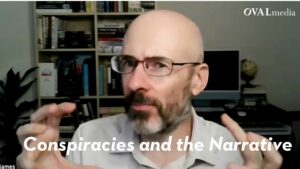
Prof. Dr. Werner Patzelt | NARRATIVE #207 by Robert Cibis
Here is a version of about 30 minutes without restrictions – our OVALmedia subscribers can enjoy the full programme.
Watch the full episode with OVAL Abo
Above you can watch a short version.
from €7 / month · cancel anytime · this and all other films, shows and articles
Already a subscriber? Log in
Social Syntheses
Robert Cibis talks with Professor Dr. Werner Patzelt, known for his extensive work explaining politics and parliamentarism. With striking nuance and distance from the everyday hysteria of the media, the political scientist sketches the state of mind of the Germans – again and again with the slightly hidden smile of the analytical observer of a society in upheaval.
Professor Patzelt describes his motivation as an obligation to give something back to the society that has enabled him to lead a successful life, by thinking through complex matters thoroughly and explaining them. He can be described as a “German-German bridge builder”, someone who explains the West to the East and vice versa.
As for the current mood in Germany, Patzelt advises against hysteria, but notes that many supposed certainties (such as constantly growing prosperity and worldwide peacefulness after 1989) are collapsing. He explains this phenomenon with the concept of “economic marginal utility”: successful policies – for example in migration policy or the welfare state – reach their limits, at which further “investment” no longer brings a proportional benefit. Patzelt stresses that one has to accept intellectually that what was right yesterday need not be right today. The conversation examines the dialectic of cultural and political processes. Above all, Patzelt sees the phenomenon that progressive developments reach their marginal utility and can tip over into the destructive. This, he says, requires a synthesis that combines the old and the new.
With regard to political debate, Patzelt distinguishes between necessary courtesy and the “will to repress” of those who see their cultural and intellectual hegemony challenged – currently a left-wing, green hegemony that arose from the 68ers’ march through the institutions. This hegemony leads to “problem displacement”: instead of discussing problems, critics are excluded with labels such as “racist” or “fascist”, and their language is criticised. Patzelt warns that the resulting “social punishments” stifle public discussion and the spontaneous debate of a free society, thereby choking freedom.
Patzelt analyses the crisis of parliamentarism. He criticises that more and more politicians are entering the Bundestag who have made their careers exclusively within their party and have no authority or achievements in life outside their political office. He suggests changing German electoral law, inspired by the Anglo-Saxon system, so that members of parliament enter parliament only through direct mandates (and not via party lists), making them more dependent on their voters and less on the parties.
Elections do change things, however: the rise of the AfD as a protest party forces the established parties to adapt, which means democracy is working as it should.
With regard to growing international constraints and the undermining of the principle of subsidiarity (decisions should be taken as close as possible to those affected), Patzelt explains that national majorities can be circumvented through higher levels (such as the EU) and strategic litigation before international courts. A central lever, he says, is the state’s allocation of funding and the financing of non-governmental organisations (NGOs). He calls this a “state-sponsored distortion of political competition” or false labelling, since NGOs thereby become “Leninist transmission belts” of government policy. He sees the solution in transparency of money flows – “follow the money”.
In closing, Patzelt calls on listeners to apply the same care, openness and willingness to learn – especially towards those who think differently – when forming political opinions as they do when buying an expensive item.
See also:
Prof. Dr. Werner Patzelt | NARRATIVE #137 – Let’s Get to It!
Good day, my name is Robert Cibis. Welcome to a new Narrative programme. I'm very proud and very honoured to be sitting here with Prof. Dr. Werner Patzelt. He is professor emeritus of political science, has dealt a great deal with our society, politics and parliamentarism, has also published a lot about it, and is of course also known to many people, because he does a great deal of media and enlightenment work. That brings me straight to my first question. What is actually your sense of mission? What aim do you have with all the communication work you do? Put in general terms, our state,
our society, has given me a wonderful life. I was able to turn my hobby into my profession, was successful in it, and consequently there's a certain obligation to give back to society something of what it made possible for me, namely to look at things thoroughly, to think them through, and to acquire a certain skill in explaining these things too. That is, so to speak, the general motive for why I take on and also fulfil my role as, let's say, a public intellectual. And then there's the particular motive. Among the defining experiences of my
life is the fall of the Wall, reunification. And because biographically I had the good fortune to complete my habilitation exactly at the time the Wall fell, I was on the academic job market. And my impulse was: I have to go to the new federal states as quickly as possible to help build a stable democracy and free society there. And that worked out. Shortly after reunification I was founding professor of the Institute of Political Science in Dresden, and since then I've been travelling all over the country, at first explaining democracy and still the West to the East,
and explaining the East to the West. Very good. So you really are a German-German bridge-builder, and indeed you keep having the feeling there are still strong cultural differences, although it's really a long time ago now that Germany was united, politically at least. What's your assessment of the situation? I'd like to make a preliminary remark. The Free State of Bavaria, formerly the Kingdom of Bavaria, formerly the Electorate of Bavaria, formerly the Duchy of Bavaria, this Free State of Bavaria was from the beginning part of the Federal Republic of Germany. Bavaria has even existed longer than Germany. And yet many people have the impression that Bavaria
doesn't really belong to Germany. Willy Brandt once said, in view of Bavarian election results: well, in Bavaria the clocks simply run differently. So if Bavaria, more than a thousand years old, is still felt in Germany to be somehow different, then you mustn't be surprised that the new federal states, which for several decades had a completely different social, economic and political system imposed on them, and where the generations were of course shaped by it, still tick somewhat differently today from the rest of Germany. And having said that,
you have to differentiate straight away. Worlds lie between my home state of Bavaria and the Hanseatic cities. And the Ruhr area functions quite differently from the horse country of Lower Saxony. And the East isn't uniform either. Urban, industrialised Saxony was always something different from backward Mecklenburg, of which Bismarck once said: if the world were to end, he would go to Mecklenburg, because there everything happens 100 years later. That means the new federal states aren't a unity either. Germany is many-shaped, Germany is colourful, Germany is diverse, culturally diverse too, and that's a good thing.
Oh, wonderful. That was a mental journey through our country that you've given me there. We still have a wonderful country, don't we? Many people you talk to think we're in a very bad crisis, and to be honest I think so too. And the bad thing is, that's, so to speak, the only point on which people can almost agree. Which crisis is now the worst of all? People can argue about that. How do you see it? How bad are things in Germany? I'm basically someone who advises against
hysteria. I'm also someone who advises against doomsday moods. And then I go along with Martin Luther, who said: if the world were to end tomorrow, I would still plant an apple tree today. I always add that it may be that the news of the end of the world is a little premature and hasty. Having said that, one has to say we're in a time in which many certainties, the constant increase in prosperity after the Second World War, the worldwide peacefulness that seemed to be breaking out, but really only seemed to after
the fall of the Wall, where many of these certainties are collapsing. Many policies have got into what is called economic marginal utility. You can picture it as follows: someone invents something, invests in his invention, it sells well on the market, but at some point the market is saturated. And if you then invest even more in improving the invention, demand doesn't rise to the same extent. And then, by the way, there are also competitors who by now can do much of what you yourself did better. That's called economic marginal utility, and then it no longer makes much sense to invest in the same thing.
Then you have to move into new fields of business. That's how one can and should think about many of our policies that were successful in the past. Of course we need migration, but there are also limits to the migration a society can absorb in a given time. So our open-hearted migration policy has reached its marginal utility. Of course it's important that the state takes care of social security and social justice in the country and therefore builds up a welfare state. But by now we spend a very, very large part of our gross national product
on the welfare state, which quite obviously has also reached its marginal utility range. And you could describe energy policy, environmental policy, and security policy too, in the same way. In many areas we now have before our eyes, not the failure, admittedly, but the languishing of long-popular, consensual politicians, considered progressive and indeed once progressive. And one now has to come to terms with that mentally. Just because something was right yesterday doesn't mean it still has to be right today. And just because something was wrong yesterday doesn't mean it has to be wrong today. And one has to come to terms with
that intellectually, and one also has to come to terms with it politically. If I've made it clear in my own political camp that my energy policy, my environmental policy, my social policy is absolutely without alternative, and that every criticism of it is driven by prejudices, resentments and so on, then I'll find it hard to get down from this high horse without at some point spraining my ankle or landing in the wrong place. That's roughly how one has to see our time. It calls for intellectual alertness, for careful observation of reality, and for us not to surrender to those intellectual numbskulls who explain the world to us more simply than it really
is. Yes, that's a very important observation. If you go in one direction, there's somewhere a point where, if you overdo it, it does harm. I liked, for example, the progressive culture of the 1970s. Of course that's not what I experienced as an adult, but I was, I was born in '73, so I was partly in the world then, but, I don't know, productions by Peimann and the like, for me that was something, oh, I found that somehow cool,
provocative. And then I imagined this bourgeois Germany that was being provoked. I think it's super if you now stage The Magic Flute with people only from Africa, and they all have a very strong accent when they sing. But if you overdo it, so to speak, and the whole thing just wrecks everything, then I find it repulsive, for example; I find it a pity too, because it destroys something. So there's, so to speak, this attitude where you say: there's a culture, there's a cultural canon,
and as a creative artist you push against it now and then and say: folks, it can move too, it can also develop in another direction, and you can also read from a telephone directory on stage for once. That has something provocative, something subversive, that moves, and this progressiveness that I actually find appealing. And now I have the feeling that in culture, and perhaps even in politics too, this progressiveness has been turned up so far that it's simply destructive, that it destroys, that what was once beautiful, what was there,
only exists in pieces. How do you see it? Do you see it the same way? And if so, why? On the level of observations and descriptions I agree with you. And then, of course, one has to dig a little deeper. And I think it's then worth rediscovering the deep wisdom of dialectics. In short: there's a thesis, something is there, you engage with it, question it and set something else against it, so grandpa's cinema, then auteur film, and then you take it as far as seems appropriate and
notice that at some point you get into dead ends. Then the antithesis you set against the thesis has, so to speak, reached its marginal utility. Then it's time to think about a synthesis, and in it you have to take up again, of course, what you had set yourself apart from, so that what arose productively as antithesis is fed into the further process of development. And that in turn means there is a responsibility on conservatives not simply to hurry after the progressive antithesis of the day. There is the obligation, of course, to be open to the alternative that also opens up new
perspectives. But then at some point there's also the obligation to stand firm so that a synthesis can arise. And when that has again shown its new fruitfulness, when you combine the old and the new and develop new perspectives again out of the combination, yes, then at some point the time comes, and a new generation that says: well, that's all well and good, but the following questions remain open, the following possibilities remain unexplored. It seems to me one simply has to be willing to view history, from the observer's perspective, as a dialectical process,
then to see one's own role in it, and then also to accept that the time for a certain role is over. While in the theatre it was progressive for a long time, so to speak, to leave bourgeois stage language behind, the emergence of, to put it maliciously, modern roaring and shouting theatre of German provenance, which can't do without SA and SS and Nazi uniforms, at some point also came to an end and is no longer fruitful. It was liberating when actors appeared naked, but when King Lear is only played in heroic nakedness,
you also ask yourself what added value that brings, apart from occasionally voyeuristic? But with an old Lear the voyeuristic added value isn't exactly huge either. That means, if you view history and culture as something dialectical, then it's nice now and then to stand on the side of the thesis, nice now and then to stand on the side of the antithesis, and then to make sure that at some point syntheses arise again, which the next generation can work on fruitfully for itself and for
society. More people today think they can't say what they think than the other way round. That's a survey from November 2024, whose result was that it was more or less level. And since then it has gone, so to speak, in the negative direction. And I listen and think: damn it, if only everyone would say what they think, then we'd have a nice jumble of theses. And this nice jumble of theses would, so to speak, force a completely new synthesis. Do you see it that way
too? You can describe it like that, but closer examination brings to light the need for two or three structural layers in this complex of phenomena. The first is that it wouldn't be so good at all if everyone always said what they think. For example, I consider you an absolute idiot. And if I now, of course I think that only as an example, if I now begin our conversation with that... I can imagine. That gets us nowhere. All the rules of politeness are based on not saying everything you think, but on keeping role distance,
towards yourself too. Consequently it's basically nothing wrong if you don't blurt out everything you feel and think straight away. You have to weigh things up. Of course at some point you have to tell the other: friend, you have bad breath. Because otherwise you harm him more than you help him. That's the first layer. So please don't make it an imperative. One must at all times have the possibility to say what one thinks. Because then, on the second layer, you quickly find yourself in the realm of racist and political agitation that develops its own momentum.
It may be that one person doesn't like the Greens and the other doesn't like the AfD. But always shaping the conversation by railing against the Greens or the AfD, or both, doesn't get us any further either, because it simply stands in the way of clarifying the problems at issue, even of taking stock of the facts. That's why it's good if, in the process of education and upbringing, and also in the intellectual alertness of an adult, one works out what should, so to speak, be directly thought and said and done,
and what else could be thought, said and done but is better put aside in favour of higher interests such as social compatibility and an objective climate of discussion. Consequently I do have a fundamental sympathy for the core concern of the demand for politically correct thinking, speaking and acting. Because there's nothing wrong with correctness. But that already brings us to the third layer. If correctness is used, so to speak, as a whip to subjugate others, if the demand for correctness is used as a means of dominance over others, if behind the slogan "we only want to ensure
decent speech and thought" censorship and punitive behaviour are hidden, if in this way one wants to win cheap victories because one doesn't want to discuss the problems that exist, but would rather mock and get worked up about the language of whoever raises problems, then something fundamental is going wrong. Because then a society makes itself stupid, it wraps itself up in speech and thought templates imposed by culturally hegemonic circles, and then it becomes unable to learn. And we are very much in that situation. When a politician says that the townscape is disturbed by people who don't keep to the rules of decency,
cleanliness and of course also non-violence in public space, then the discussion in Germany didn't go in the direction of asking how do we either integrate such people into society as normally functioning people, or how do we get them out of the country. Instead people get worked up about the way of speaking. There's talk of the townscape and of people who disfigure it. And that is supposedly racist, fascist and evidence of the abysmally bad character of people who talk like that. That is then the shifting of the problem that goes hand in hand with the demand for correct speech.
And depending on the level at which the problem is located, it is right or wrong to insist on certain ways of speaking and behaving. To sharpen the point once more. Many people say that in this country you can no longer say what you think. That is evidently false. Everyone can say what they think. But saying what you think is simply not without consequences, unless you say it in the shower, where nobody hears it. Others react to it. Today the social penalties imposed for expressing opinions that are unwelcome politically, in the mass media or in the mainstream, these
social penalties are deterrently large. And that's why many people say: in this circle I don't want to voice that at all, so don't talk about politics at the Christmas dinner table, I don't want to comment on it in front of that circle. But if you take that to extremes and do it constantly, then public discussion suffocates, and spontaneous debate in a free society suffocates too. And when spontaneity suffocates in a free society, then freedom is also gradually being wound down. Thank you very much for this fine
clarity and for pinning down these concepts and boundaries so precisely. Of course you've now raised an incredibly important problem, one that many even critical people are often not so aware of. It's precisely this so-called shifting of the problem that you named, where people simply don't discuss the actual problem at all. Yes, I found, well, you could name lots of examples now, a long list comes to mind straight away. I'll just say, for example, a political activist is shot dead in the USA and everyone only talks about whether he was a good or bad man.
What kind of question is that? Surely the question is why was he shot? How can that happen, so to speak? And how, do you think, does it happen at all that this so-called shifting of the problem, or I'd say false debate, takes place? It seems to me that it has to do with social and communicative power relations. And you can play that through equally under the conditions of a left-wing or green or woke intellectual hegemony as under the conditions of the rather bourgeois-conservative cultural hegemony of the post-war period. The point is this: there are people who believe the world
is arranged halfway properly, politics is going halfway right, because it's going the way they feel comfortable in it. And then come greenhorns, whether that's meant politically or in terms of age, greenhorns who claim it ought to be completely different. They talk about it differently, they question whether the previous concepts are any good. They doubt that the achievement of having built up what exists really is a praiseworthy achievement to be extended into the future. And at present it isn't a bourgeois, conservative, intellectual and cultural hegemony that is being attacked, that has already become brittle, that is partly
breaking apart. It's that left-wing, green, woke intellectual hegemony that began with the march of the 68ers, the student revolution of 1968, through the institutions and has now led in journalism to the majority of journalists seeing themselves as left, left-liberal, left-green, as woke, and accordingly also doing the commentary and by now even the selection of news. And part of the people revolt against that, saying: nope, nope, we do want to be open-minded, but it doesn't have to go that far. As a result, the will to repression, put technically and not as a reproach, simply put,
of those who see their cultural and intellectual hegemony challenged, intensifies to the same extent as broad sections of the population revolt against it. Then at first people try plasters. Those who rebel are then populists, cheap populists, right-wing populists, who at heart are actually fascists. You stick on this plaster or this label and hope to pacify the matter with it. Then you start to exclude, because if you already fend off attacks on your own fortress walls at a distance of three kilometres, then the effect of long-range weapons against your own walls is no longer as great as from the immediate
surroundings. That's the exclusion, the demarcation, where some walls or other are put up, be they firewalls or others. And because defending one's own intellectual and cultural hegemony really is something important, because political power grows out of it, this struggle is then also waged really very seriously, very systematically and using, even unfairly using, all means of power. Antonio Gramsci once explained it like this: in politics in particular it's not just the war of movement that matters, where you try to reach a goal with some army or troop movements; what matters is the war of position, where you defend positions.
And that the left is currently defending its position by emphasising the commandments and prohibitions of political correctness, yes, that is exactly what is to be assumed, but the dialectic of historical and cultural processes will pass over it just as, back then in '68 and the following years, the conservatives had to accept that the new student and then green generation, which has now conquered the media and conquered the cultural scene, made the old self-evident truths and gestures of dominance disappear. Yes, very interesting. I mean, yes, I understand that. I too actually see a kind of culture war, and I'm repeatedly surprised how
few participants in this game are obviously looking for a solution, looking for an improvement in the overall situation, or looking for the synthesis. Because if I'm a journalist now, and I am one, I've worked with television, I know the editorial offices. Everything you say is true. Most of them vote, of course, for the Greens and so on. But that wouldn't stop me from voting for the Greens myself, doesn't stop me from considering what is right. And if I now have a different opinion,
I'd like to give an argument. And especially in this profession, journalist for example, you'd surely also want to let yourself be convinced. You'd actually want to find something out. I think curiosity is also a drive, one that people in these professional fields in particular, such as academic or media professions, can really live out. That's actually why you chose it, because you want to get to know the world. But sometimes I see it on both sides, on the conservative side too, where you can find these behaviour patterns as well,
which also totally surprises me, where I think, why now this, he's on our side, and then there's no open debate about it there either. How do you explain that? I'd like to explain it with an image. In a conflict, or in present-day culture wars, it is one role to be the company commander in action or the battalion commander in the field, and something else to be an analyst of military strategies. As an analyst of military strategies you ask yourself why this battalion commander doesn't grasp that this or
that layout of his defensive or attack formation is of little use. In my role as battalion commander I know how difficult it was to manage at all what is running right now. And the great strategist is welcome to come and tell me something. I am responsible here and now for the front holding at this point. That's roughly how one has to understand a lot. Look, if as a journalist or as a political activist I stand up for a cause, then my energy is basically taken up by my being fit myself, proving myself in battle every day,
and, to use the fashionable term, showing an attitude. And some attitudes are indeed hard to adopt and maintain. And something quite different is the role that I, for instance, have. I can lean back, look at the fighters on both cultural sides, make clear to myself what chances they throw away, because at this point, out of sheer attitude-showing, they don't get round to reflecting on which emotions block their thoughts, because these emotions are necessary to stabilise their attitude. As an observer,
you have it easier there. But a society consisting only of observers wouldn't work either. It would be nice if observers, analysts, strategists and the commanders and fighters on the ground, who then really have to show an attitude, if they were in closer conversation. But at this point there's often a refusal to talk on both sides. The observers are then now and then analytically, academically arrogant and look down on the plight of those who also have to get ahead professionally somehow in their editorial offices. And who of course can only write or present against the zeitgeist once they've ended their active career.
And journalists or political activists, in turn, look down on the analysts and theorists and say: you haven't got a clue. I'll tell you how it is in reality, because that's where I move constantly. Both sides lose a lot this way, and it would be nice if people came closer together. You've described that very nicely. I'm thinking of a conversation I had with a member of the Bundestag, and it was about the WHO treaty, obviously an extremely international matter. And in the Bundestag there
were also a few members who tried to slow down the federal government's support as regards this handing over of rights and so on. And I had told her, yes, I've now met a member of parliament from the government of India, who also wanted to get in touch with members of parliament in Germany and so on. And I noticed the member couldn't really listen any more. She was so caught up in her struggle to survive at all within her party, then within parliament, and to behave in such a way that she isn't excluded there,
which could of course then possibly even lead to losing her job. So there's such pressure in it that you always protect your space in your little world, in quotation marks, it's of course not small, because the Bundestag is of course a big world, but again it's a microcosm. And I had never really understood, folks, for example the WHO treaty is a topic now, you don't have to be analytically brilliant to see that it's an international question. And if there are now members of parliament in
every country in the world who say we ought to coordinate, which are actually the problematic paragraphs, what should be gone through again with lawyers, and perhaps make a counter-proposal, then that would be very efficient. Most of them haven't read it. And this member of parliament from India travelled all over Europe and wanted to meet other members of parliament. And often no meeting came about. And I find that totally fascinating, but it's exactly what you describe. Because such a member of parliament is obviously actually something like a
battalion leader. They have very concrete problems, and if they don't solve them, they're gone. And that's why I found it very instructive as a conversation. So it's just an illustration of what you said. And that perhaps brings us to one of your specialist fields. Parliament. What use is it actually, then, if it can't decide strategically in that way? I mean, in a democracy it's actually like this, at least that's how I imagine it, even in a representative one, parliament is surely at the very top. It basically installs the government, and the laws set the framework,
and above all it's at the top for me because these are the people who were elected by the population. So if the people really are the sovereign, then parliament would have to be, so to speak, the most important power in government. But you know the parliaments. You also know the EU. You know what it's like there. I have the feeling it doesn't work. How is it from your point of view? To understand this complex of topics properly, you have to pull apart at least three dimensions.
One is parliaments as a type of institution that can be used in many ways. The other is parliaments as they are built today into different political systems, so each time a particular use of the type of institution. And the third is the connection between parliamentarism and democracy. Because parliamentarism and democracy initially have not the slightest to do with each other. And these three things have to be gone through in turn now, and consequently the answer will take a little longer. As far as parliament as a type of institution is concerned, parliaments arise from the fact that
the holders of political power, whether kings, dukes or military leaders, repeatedly had to make sure of the willingness to support them of those who then had to carry out what was wanted together. The earliest sources of parliamentarism are found in the Epic of Gilgamesh, where King Gilgamesh wants to go to war and first consults an assembly of the elders, of the most experienced, and then consults the assembly of the young men of the warrior people, who after all then really had to go to war. And this interplay, an assembly of warriors and a council of elders that deliberates in advance,
we find right across history. It was found in pre-colonial Africa, it's found in Asia. And if you look at the early European political systems, at Athens and at Rome, you see it like that too. The popular assembly in ancient Athens is the warrior people, is the army. And its resolutions are prepared by a separate deliberative body. And in Rome the Senate is the assembly of the most experienced of the land, the preparatory body. And the decisions, the important ones, are taken at the so-called comitia centuriata. That is the popular assembly where the Roman people, the men of course, line up arranged in military units.
That is the institutional type of parliament. It then develops in the Germanic sphere as the Thing assembly, the assemblies of the estates come out of that, and so on. Deliberation itself is then perfected in the associations of antiquity, where there are deliberative bodies of all the colleagues and so on everywhere. The Roman Church takes that over in its councils, and later the orders take it over, as when the Cistercians invent the general chapter, which is the precursor of today's federal parliamentarism. And the … Dominicans even invent a sophisticated representative system with democratic elections, and back then, in the early 13th
century, they are far ahead of all secular developments. It is a very versatile type of institution, and it becomes so significant in European history because public authority, kings and princes, as a rule had too little money to fulfil public tasks. Building bridges, maintaining roads, providing military security. And because you couldn't simply steal the money, and you couldn't constantly pawn the crown jewels or rob the Jews or rob the Order of the Templars, you had to turn with requests for money to those who
had the money. And those were, for example, cities. That's how modern parliamentarism arises, with its so-called right to approve taxes, which is better expressed as the duty of governments to request taxes and levies. So that is the type of parliament that can be used in many ways, which achieves the following. First, a linking of the so-called central political decision-making system, where decisions are taken, with society, in particular with politically relevant society, that is, units of troops, as I explained earlier. Second, control of those governing. I am the leader, therefore I must follow those I lead, because otherwise
I won't be the leader for long. That is the dialectic. Then the role of a court of justice or of law-making, out of which today's legislation by parliaments developed. And fourth, and this already in monarchical times, influence on the composition of the government. In regencies and changes of dynasty, the assemblies of the estates necessarily had to be consulted. And when it was a matter of laying down which officials a prince may appoint, whether they must come from the country or not, the representations of the estates also had an important say. That is the type that could then be built into various political systems.
And then a parliament has a completely different role in a parliamentary system of government, which is characterised by the government emerging from parliament, which is the result of the very particular development of English parliamentarism, where political power shifted from the Crown to parliament. A parliament has a completely different role in a presidential system like that of the USA. There it is the counterweight to the popularly elected president. And parliament again has a completely different role in the European Union, where parliament doesn't produce a government in this sense. Certainly,
it elects the Commission and it can subject the Commission to a motion of no confidence, but the commissioners themselves and the Commission presidents are first of all appointed by the national governments. And parliament does have an important influence on legislation, together with the Council of the European Union, but it has no right of legislative initiative. At European level the legislative initiative lies solely with the Commission, which in turn basically isn't really accountable to anyone. And the third problem area is the connection between representation and democracy. Representatives were indeed elected now and then, for instance in the Dominican Order, all offices were elective offices that lapsed again after a certain time.
The representatives of the Third Estate were also elected to the assemblies of the estates in France, and in England the members of the House of Commons were also elected accordingly in their boroughs and shires. But that is not yet democracy in the sense of thinking: yes, there is a people, and it then procures a representation for itself. The guiding idea was: if we want people who take binding decisions for others, so that they take money from them that is to be handed over to the state, to the prince, then it's surely safer to include everyone who is then
to hand over money in the process of forming the will first; then it's easier to enforce. That is the guiding idea of electing. Only when, with Rousseau in the 18th century, the idea of democracy begins its triumphal march does the notion arise that a parliament should be a reduced image of the population, a random sample, so to speak. Just as many per cent men and women and diverse as in a society, should be in parliament, and now, sarcastically exaggerated, just as many alcoholics as in society should also be in the parliaments. Perhaps there are even higher percentages of
addicts in the parliaments than in society, but that's just thrown in as a flippant remark. The connection of democracy and representation changes precisely what made representation strong. In the representative bodies, representation of the estates and so on, powerful people, influential people, rich people were brought in, who were also liable with their own wealth and property for the decisions they took. In the age of democracy it's like this: I'm politically interested. So I go to the Schüler Union or the Young Socialists or the Green Youth. I study a subject close to politics, ideally in a city
where there's a parliament. There I do my internships with the parliamentary groups. I'm active in my party, put up posters, take part in election campaigns, network, and at some point it's my turn in the sense that I now have the right to stand as a candidate. And I'm especially good if, at the tender age of under 30, I get into the Bundestag and am a new face for a new generation there. Without influence in society, without any achievement of my own in life, without any power other than that which my party career has given me. That's now taken to the extreme,
so to speak. The consequence of democratisation in representation. You have people from the population who, however, so to speak, have no authority beyond their political office. That's why the people out there in the country, as Helmut Kohl would have said, question the decisions and the personalities of their members of parliament when these members pursue a different policy from what makes sense to a large part of the population. So when policies get into a range of marginal utility but are nevertheless still promoted as right by their propagators. And that then leads to the crisis of parliamentarism that we very much do have, where parliaments lose authority,
where parliaments and the governments supported by parliaments then create, in the form of state-financed non-governmental organisations, called NGOs in modern German, their own front organisations, which, Lenin sends his regards with his theory of mass organisations as transmissions of the party's will, then carry what is politically wanted into society, and do so bypassing the parliaments, which for their part know of their loss of authority in society. So you see that what is usually assumed as natural, that representation and democracy belong together, not only were not together in history, but when you combine them,
also have some unconsidered and unpleasant side effects. Is the combination of representation and democracy therefore something wrong that should be abandoned? No, because nothing compels representatives more strongly to listen to the represented than that they are liable with their personal fate at the next election for their decisions also pleasing people. For that, admittedly, the electoral law must also be designed accordingly. But what we must improve is the qualification and the biographical standing of our representatives. It simply makes a difference whether a successful official or businessman comes into parliament at the tender age of
50 and stands up there for unpopular positions because he considers them right, or whether a 25- or 30-year-old without any experience outside politics declares things to be right that look pretty nonsensical to most people with experience of life. That means representation and democracy very much belong together, but we must pay attention to other ways of recruiting political personnel. And with that you've seen that it really is a big can of worms that you've opened. And I hope that the three segments of this can now also allow what's inside it to be put in some kind
of mental order. Thank you very much. Yes, I actually feel my thoughts are in better order. I have the feeling that these weak personalities who are nevertheless in important representative roles, many people have observed this, that it happens systemically in several parties, that it's also a result of the parties themselves. So I ask myself, how can it be organised so that members of parliament really feel committed to their voters and not to the party? How can their personal advantage and the advantage of their voters become more aligned? So as not to make a long discussion of it,
I'll come straight to the central instrument that allows members of parliament to be made dependent on their electorate. That would be the introduction of an electoral law under which there are only members elected directly in constituencies, so that nobody can enter a parliament via a party list, but only if they have prevailed against competitors in their constituency. That's an electoral law that is considered completely normal and right in the Anglo-Saxon world, but which in Germany is not very welcome normatively, because in Germany representation is always thought of together with proportionality.
And our latest electoral reforms have indeed led to even directly elected members not being allowed to enter the Bundestag individually if their mandate isn't covered by their party's share of the vote. That is exactly the wrong development, because members who enter parliament solely thanks to their party lists have to safeguard themselves against their party. For them, the relevant part of the population is the party membership. And consequently they become very inward-looking in their thinking, their behaviour, and also in their tactical moves. And that has to be broken open. Members of parliament must be oriented towards the population. And the simplest way to do that is to introduce an English electoral law.
Yes, that's a very logical proposal. And of course the system of rewards and sanctions for the politician, for the representative, would then be completely different. And you'd also have the feeling that the voters hold the strings. And through these intermediaries, which the whole party structure represents, many voters have the feeling that it's not in their hands. And in my eyes the Basic Law would also be more respected, because the member would suddenly really be committed to his voters and perhaps even more to his conscience than seems to
be the case today with the practical whip of the parliamentary group. Like many of our viewers, I of course also have the feeling that, although the parties differ in cultural questions and in taste, on the really big questions, whether it's the economy, migration, international involvement in war and the like, these are after all important questions that concern everyone, the difference is astonishingly small. So you have the feeling that between Angela Merkel, Olaf Scholz and Friedrich Merz, these completely different personalities who stand for a certain face of politics,
but that on the really important questions simply the same thing happens. And that has something frustrating about it too. Then you think, is there any point in voting at all? I'd like to approach this question in three steps. First, the way you introduced it, it sounded as if the member must be committed both to the voters and to his conscience. And that this is no problem, because his conscience would tell him to do the will of the voters. Aha, but what if the voters want something that contradicts normative principles
or is factually wrong? Then conscience demands that the idea comes into play that members of parliament are not only there for their voters, but for the entire community and the common good, and may therefore also contradict their voters. That's why you mustn't treat following your conscience and following the voters, following the voters, as if they were synonymous. That is a gigantic contradiction. Not always, but it can happen. The other is the hope that through a different electoral law you could get rid of the parties altogether. That may come true,
but it's a hope one had better not cherish. Because parties really are the central building blocks of democratic representation. Without political parties you can't organise elections. In particular, once members of parliament have been elected, you can't check whether they're acting more or less in line with what they promised beforehand in the election campaign. Whether, that is, they use their free mandate simply to do what they want, but not what the voters associated with their vote in terms of expectations. So you have to beware of both dangers:
equating following your conscience with following the voters, and declaring parties, so to speak, bad. Parties are not only necessary, they are also good when they fulfil their functions well, which they often don't. And that brings me to the third point, which contained your question. The parties hardly differ any more, so that there's little point in not voting. If you look into current German political debates, you won't get the impression that the CDU, SPD and Greens wanted politically exactly the same as the AfD. Not even the claim that there are many points of overlap
between the Union and the AfD is one that the Federal Chancellor would sign, who, as is well known, is from the CDU. So at least as far as the AfD is concerned, you can't claim that there is complete congruence between the parties, apart from very small nuances. When I was still active before my retirement, I repeatedly had the fun, as a state examination task or in exams at the end of degree courses, of imposing the following topic on the students. Quotation marks: if elections could change anything, they would have been abolished long ago. Exclamation mark, close quotation marks. Discuss this
thesis. Some of them were very surprised, because you then suddenly notice: yes, simply abolishing elections isn't possible, and that they really change nothing isn't true either. There are differences after all, and so on. Do elections change anything? Yes, there too you can easily piece the answer together from the present. The voter, not the voter, a considerable part of the German electorate is dissatisfied with the policy-making that the Union, SPD and Greens have pursued in recent years. For ten years, for a little over ten years, there's been a party that calls itself the Alternative for Germany and
offers alternative policies, especially to the Greens and the SPD, and not terribly alternative policies to the CDU, apart from Angela Merkel's migration policy. For a long time people didn't want to acknowledge this party, wanted to keep silent about it and thereby make it disappear, or declare it racist-Nazi straight away. The voters didn't see it that way. They made the AfD stronger and stronger. The more fiercely the fight against the right, against the AfD, was waged, the stronger it became, at least in eastern Germany. By now many voters no longer vote for the AfD out of protest,
but say the AfD is the only hope for Germany, the only alternative to the other parties. And it can't be ruled out that in 2026 there will be the first AfD minister-president in an eastern German federal state. He will then have been brought into office by elections, and indeed by voting behaviour that has rebelled quite deliberately, systematically and for years against the political wishes of the other parties. Aha, so elections really change nothing? Is there really no point in voting? There certainly is a point. There certainly is. And there's a point especially if the political parties reacted more sensitively
to voting behaviour. Not even the AfD reacts sensitively. It now has many voters who would like to see, so to speak, a reasonable AfD in power, but not a right-wing extremist, demagogic, polemical AfD. Does the AfD react to that? Well, only to a very limited extent. The CDU recognises that many of its voters and quite a few of its former politicians have migrated to the AfD. Does it change its policy as a result, so far only in one area, migration policy? The SPD recognises that many of its voters, especially in North Rhine-Westphalia, now vote for the AfD. Does it change its policy as a result? Yes, it has already begun.
An SPD lord mayor of an important major city won his election against all warnings by putting migration policy at the centre and spreading arguments that you normally hear from the AfD. So is even the obstinate party system changing under the influence of voting behaviour in favour of the AfD? Yes. Is it changing fast enough to, so to speak, prevent the rise of a large protest party? No. What do we learn from this about the functioning of a democracy founded on elections? It works exactly by the textbook. Either the political class aligns itself with what the voters want. Then it is confirmed.
And for a long time in West Germany we had a two-and-a-half party system, because people were satisfied with what the Union and SPD did politically, and merely voted for the FDP as the tip of the scales, one way or the other. That's no longer the case. And what happens then? Well, then a protest party grows big as an alternative to the established ones. Do you have to like that? No. Can you like the fact that our democracy, our representative democracy, is functioning properly by rewarding those people who take up the opinions of the population
and punishing those people who, equipped with the arrogance of power, refuse to accept them? Yes, that is certainly to be praised, because it shows our democracy works, elections change something, and they would change things with less side damage, less collateral damage, if the established parties were more flexible, more sensitive and more willing to change. I understand the point. I wouldn't have put it like that myself, but I find it very easy to follow. I think we really do have great dissatisfaction in the population, and basically you've almost admitted in your answer, admitted in quotation marks,
that the change of policy Merkel-Scholz- Merz wasn't so extreme, but that the alternative was mainly the AfD. I didn't just admit that, I even said it explicitly. Excuse me. Admitted in the sense that in my question there was, in the subtext, a democratic deficit, because the difference between these party decisions was so small. The debates between the SPD and CDU are often heated, you can certainly argue about various points, but in practical politics the difference
really wasn't that big. That's of course now the point; clearly it's certainly also a difference again if the AfD provides a minister-president. Only of course the question arises, and we don't know now, whether practical politics will then really be completely different. Especially when people then say they will try to keep away from extremist positions. What does that even mean? That could possibly also mean that they will then position themselves within this narrower space of debate and won't carry out much of a break with past politics at all.
If you ask me, is that my fear? Perhaps others will say that's what you hope. That's clear. And then there's not only, so to speak, the verdict of the population, which keeps having significance through these elections, but of course there are also other forces, for example international treaties, international constraints that exist through economic or military connections and so on. And I have the feeling that these have increased massively in recent decades. The significance of the international web always existed, of course.
At least since membership of NATO, Germany was not free in all important international questions. And the European Union has of course also contributed to that. The question, so to speak, of the possibilities of co-determination of the individual citizen, or even a group of citizens, or even a larger medium-sized company, so as not to run only along the democracy track in this question, that remains very big for me. And there I of course see that the principle of subsidiarity, which you've just mentioned, is completely undermined and isn't really applied at all properly. Do you still see a solution to this problem,
or do you perhaps not see the problem at all? I very much do see the problem, and I'll pull it apart into individual elements in a moment. Let's start with the observation or the question: why are we actually so relaxed on election days? And the right answer seems to me to be: because we know that no matter how the election turns out, Germany will be pretty much unchanged in the weeks afterwards. We don't have to be afraid of elections, because there are new accents and reshufflings here and there,
but nothing fundamental will change, so that those who are satisfied with the existing state of affairs will probably cope with the changes then in store, and those who are dissatisfied with the existing state of affairs do get something they like better, but can't remodel everything either. And if it were otherwise, politics would be profoundly reshaped after every election, and we would have masses of transaction costs, and at some point the annoyance at constant change would outweigh the pleasure that something is changing. The state in which we don't have to
fear election days and election results, because nothing fundamental changes anyway, is one we shouldn't lament, but one we should be glad about. It relaxes us as citizens of a democracy founded on conflict and dispute. The next point is that of course the decisions on direction and on individual cases to be taken through democratic processes in democratic nation states are embedded in ever closer international webs. Whether those are the webs of the European Union, of a security system like NATO, or of treaties in the framework of the World Trade Organization and so on. And that then smothers much of what one could do,
and some of it one doesn't accept. For instance, that initiatives taken in Germany in economic policy are then repeatedly claimed to clash with and contradict European law. Or that in migration policy nothing can be done because this or that international pact stands precisely against it. Consequently things would have to be allowed to drift. Because, because, because, because. That is to be lamented. On the other hand, we notice that we're in a time when great powers take the liberty of shaking off existing ties. The USA then imposes tariff increases, so to speak out of the blue, at will, with better or worse justification.
The Chinese, long-term supply and economic treaties notwithstanding, decide that they'll cut us off from rare earths, and so on and so forth. What comes about when nation states, especially the powerful ones, no longer play by rules but say: we're now deciding this as a democracy or as a dictatorship, the consequences are not exactly welcome. The boredom of unchangeable conditions is probably preferable, at international level too, to a muddle of activism, of spontaneous reshaping of the international framework. But that brings us to the third point. What must the mix be
between international guidelines for action that one keeps to, and national room for manoeuvre? And precisely at this point the principle of subsidiarity can't be held high enough. It says all decisions should be taken as close as possible to those affected, that is, in case of doubt, lie within the responsibility of the nation state. But decisions or political tasks that can be better tackled together, for those one should create a higher level that shapes precisely those policies which one can't shape so well as a nation state, for instance security policy in Europe. But then one must insist that these levels do
no more than what they are set up for. That they confine themselves to those policies for whose sake one has them, and that they don't then, as the European Union tends to do, meddle in more and more competences that remain with the nation states. And precisely that then creates a lot of dissatisfaction with a rules-based international order and also with supranational governance structures. For example, to give really just one example, the European Union has no competences whatsoever in family policy. Nevertheless it invents some European values or other that the family policy of Hungary, for instance, supposedly contradicts, which is why Hungary allegedly violates the European
treaties and must therefore be punished. At this point, even as a convinced European, you ask yourself whether one isn't harming the European cause more than helping it. Could you please name that concretely, I'm very curious now. So what was that in family policy? A guiding idea of Hungarian family policy is that a family consists of a man, a woman and the children, which is why it's also written in the constitution, and it allegedly violates European legal provisions and values that it's laid down by law that there are men and women. That would contradict reality and the values of
the European Union, which also protects the rights and existence of diverse people, rightly so, mind you. Or in Hungarian family policy it is the general conviction there that parents decide what the sexual or the sex education of their children should be like. When they should be exposed to which sexual experiences, or share in them, or not. which is why the Hungarian government derived school laws from it, that in schools you can't simply, so to speak, advertise homosexuality, transsexuality etc., and that everywhere these things are to be explained by the
teachers and not by activists, by the corresponding NGOs. That too is regarded from the European standpoint as profoundly contradicting European values and European law. And precisely the Hungarians who are enthusiastic about Europe ask themselves whether this really is the community they thought they were joining, and indeed the European Union did not yet practise such overreach in 2010. That only came into play later with the rise of the so-called political Commission under Juncker and its implementation under von der Leyen. Yes, very interesting. I mean, my impression is even that more and more narratives are being spread that justify international responsibility,
even for topics that are actually very regional, not even national. It's not for nothing that, for example, health care in the Federal Republic is a matter for the federal states. And rightly so, the health offices, for example, are responsible for epidemics, in much smaller units than the federal states are structured. Why? Because epidemics are local and not global. Fundamentally. Despite all the travel, the health situation is simply never the same everywhere. And that's just one example, because we experienced it on such a large scale with Corona, that suddenly the federal states were no longer responsible
at all. The conference of minister-presidents resulted in a quasi-nationalisation, as it were, in these questions, in health questions, which were then internationalised again via the EU and the WHO. And that now also affects security questions. So I have the feeling this is a system. There's a kind of systemic disempowerment of the municipalities too, via various levers. One lever is of course psychological manipulation, I was going to say. Do you think one can quite simply counter it with something and say: we're emancipating ourselves from it? Merely saying we're countering it and emancipating ourselves
is no use. You have to see the levers that exist for it. And you will only recognise the levers if you understand what leads to this process you've described in the first place. There are essentially, it seems to me, two connections that matter here and that you would then have to tackle politically if you want to change something. First, money is often made available by higher bodies, whether the European Union or some international programmes supported by the United Nations, to solve problems on the ground. And because as a rule people like to
accept money, they pay attention to the wishes of the bodies from which they could get money. And then the European Union can also advance political goals very purposefully by opening up funding opportunities or designing policy or financing programmes so that you can apply, but must fulfil certain conditions and consequently commitments to goals. And in this way more and more is Europeanised and then internationalised. And whoever doesn't know this lever can imagine all sorts of things. As long as you don't raise enough money yourself to finance your own policy, you will
be dependent on others. That's, so to speak, the more difficult connection, because money can't be created at will if you don't want inflation. The other lever is the following, and it's extremely important politically. If I want to bring about or prevent policy changes, whether in the area of migration policy, LGBTQ+ activities or in other policy areas, and can't prevail domestically, then it may very well be that, as the interest group concerned, I find allies in other countries. And it may be that I organise at European level with
my allies in other countries and can consequently exert influence on the European Commission, which after all initiates all legislative projects, on parliament and also to some extent on the Council of the European Union. So what I can't push through domestically, because I find no majority there for my positions, I can possibly push through via European legislation or by invoking existing international legal norms push it through. And an important means here is so-called strategic litigation. I find out which European norms or international norms exist, how they could be
interpreted so that I'm able to achieve my political goal, and then I take my government, that is my state, before the European Court of Justice or before the European Court of Human Rights or before the international court of arbitration, with the aim of obtaining a judgment against my government that it violates this or that European or international treaty. And because, for example, the European Court of Justice fundamentally rules in a way that is friendly to the Community and expands EU competences, the chances that I'll win are very great. So much of internationalisation and Europeanisation goes back to the fact that NGOs, open brackets, often enough paid by institutions
interested in it, paid for example by the European Union when NGOs support its own policy projects on the part of the Commission, close brackets. So the lever consists in their being able to push through what they can't push through domestically via the lever of supranationality or internationality. And what would be the instrument there? Enforcing transparency. Follow the money, show the flows of money, find out which financially backed interests stand behind which apparently completely unpolitical goings-on of NGOs, and expose these strategies so that a larger part of the public becomes
aware of them. Here you really can do something, it's under way, and at the moment the NGOs in Germany and at European level are howling loudly at every demand for transparency. Very nice. Yes, that's a very, very important point. That's perhaps also an idea with which we can close the conversation. Personally I even find it absurd that governments pay NGOs, that authorities pay NGOs. I think that should be banned. For the most part it's public funds, that is taxpayers' money, which is then used under a false label. If, say, a ministry communicates about something
that it's implementing, then I find that completely fine. If it says underneath: we're the ministry, this is what we're planning, please note it has these advantages and these disadvantages, I think that's great. They should communicate about what they do. But if it's then an NGO that pretends to be neutral and to be genuinely interested in the cause, then that's basically fraud. It's like surreptitious advertising. It's similar to when government advisers stand up and say
they are scientists and are giving a very objective opinion, as was the case with Ms Brinkmann and Mr Drosten in the Corona period. That's simply false labelling. There were laws for that. There were also laws against surreptitious advertising. I once spoke to a lawyer and asked: a James Bond film, it has a lot of surreptitious advertising. Then there's the advertising for this watch and for this car. Then you always see the brand big in the picture. Is that actually allowed to run on German television? He said actually not.
You could sue against it. It just occurred to me. So that's being watered down too, also through EU laws. So perhaps one can exert pressure more often in this respect too, I said to myself, as the population. What do you think? I go along with the argument a long way. If governments pay NGOs as their front organisations, so to speak, then the situation exists that Lenin described in his theory of the socialist state, that the mass organisations are those transmission belts with which the party's policy is transported into society. And if the state pays NGOs for
the purpose of pushing political agendas and political objectives onto the population that are close to the heart of some in government but not of many in the population, then that is exactly what you call false labelling, and what one can perhaps call, even more aptly and sharply, a state-sponsored distortion of political competition that runs counter to the guiding idea of pluralist representative democracy. But one must also add the following: that not all NGOs are the same. I'll pin it down with an example that I personally know well, because for a while I was on the board of the Arbeitskreis für Musik in der
Jugend, which supports youth music-making, music holidays and so on. And there it is of course very welcome when the state, the state government, the federal government etc. gives grants. That is, supports this NGO, a non-governmental organisation. There are many areas where a society undertakes activities of its own accord that simply promote our quality of life, and also the further development of our culture and society. And when the state supports such public-spirited organisations financially, then there's nothing of Lenin's transmission belts to be seen here, then it's not false labelling, then it's the task of a community that supports society subsidiarily. But then transparency is needed too.
And you can clearly see the limits in the federal programme Demokratie jetzt, or more democracy, where the federal government has so far spent considerable millions on a circle of progressive, left-liberal scientists, academics and activists advancing their own agendas. I can still remember a conference a few years ago in Berlin where one of the colleagues who launched one of the key concepts of this whole project, namely the talk of group-focused enmity, said it was quite wonderful that such academic concepts were now also being promoted by the state, and that in this
way one had gained a lever for helping to shape and reshape society. It's good if as a scientist you have opportunities to help shape and reshape society. But you're welcome to do that as a private individual or as an organisation of private individuals, sponsored by business or otherwise, but not, so to speak, promoted by the state with a clear combat mission, namely that everything I label as group-focused enmity, which can now and then also be labelled as enmity-focused groupishness, that the state, so to speak, implements its own goals via such an NGO or such a programme, which cover
only a certain spectrum of the public that after all supports the state. So fundamentally one must take care that the NGOs don't become Leninist transmission belts. One mustn't place all NGOs under general suspicion. Supporting some of them, especially those that aren't directly political, is really desirable and helpful. And the devil isn't driven out with Beelzebub, but with the remedy of transparency. And those who cry out most clearly and loudly against demands for transparency are the ones on whom the transparency requirement must be enforced with particular necessity. Dear Professor Patzelt, thank you very much for this conversation, these valuable thoughts and the analyses. Is there anything else you'd like to
give the listeners and viewers to take with them? Perhaps the following thought. Whenever someone buys a new car or a new television set or a new computer, they read up, talk to others, form standards by which they can form a judgement. And that's sensible. Let everyone ask themselves how they proceed when they form a political opinion. Do they gather advice in such a way that the opinion already formed is underpinned? Or are they open to first determining the criteria of judgement and becoming
clear about them, along which they form an opinion? And is one then also willing to learn through political discourse, and in particular through listening to those who think differently? And whoever doesn't behave in politics the way they behave when buying a car or a computer is doing something wrong. And let everyone examine whether they still have room for improvement. Many, many thanks. Those are very important words. Because far too often political partisanship is driven by emotion, and the frontal brain switches off to a certain extent,
and we're just animals then, and it's a question of identity. I belong to these, those I don't like, and so on. And precisely that is exploited, and people are thus manipulated. And that's of course also a reason for my media work, to say: I want to push back against that. You can also sit down together briefly and consider what you actually want and where it should go. And in this spirit I'd like to ask viewers to share this conversation too, to become an OVALmedia Plus member if you aren't one yet, and to keep looking at our website www.oval.media.
I also thank you for having followed the conversation up to here, and wish you a nice day. Thank you very much.
Guten Tag. Mein Name ist Robert Cibis. Herzlich willkommen zu einer neuen Narrative. Ich bin ganz stolz, ganz geehrt, hier mit Professor Dr. Werner Patzelt zu setzen. Er ist Professor für Politikwissenschaften, hat sich viel mit unserer Gesellschaft, der Politik und dem Parlamentarismus beschäftigt, dazu auch viel publiziert, ist vielen Leuten auch bekannt. Natürlich, weil er sehr viel Medien und Aufklärungsarbeit macht. Da kommt auch schon gleich meine erste Frage Was ist eigentlich Ihr Sendungsbewusstsein? Welches Ziel haben Sie? Durch die viele Kommunikationsarbeit, die Sie tun? Allgemein formuliert Mir hat unser
Staat, unsere Gesellschaft ein wunderbares Leben beschert. Ich konnte mein Hobby zu meinem Beruf machen, war in ihm erfolgreich. Und folglich gibt es eine bestimmte Verpflichtung der Gesellschaft, etwas von dem zurückzugeben, was sie mir ermöglicht hat, nämlich Dinge gründlich zu betrachten, zu bedenken und eine gewisse Fertigkeit zu erwerben, diese Dinge auch zu erläutern. Das ist sozusagen das allgemeine Motiv, warum ich meine Rolle als die, sagen wir mal, eines öffentlichen Intellektuellen wahrnehme und auch erfülle. Und dann gibt es noch das Besondere Motiv Zu den einschneidenden Erlebnissen
meines Lebens gehört der Fall der Mauer, die Wiedervereinigung. Und weil ich biografisch das Glück hatte, genau zum Zeitpunkt des Mauerfalls meine Habilitation abzuschließen, war ich auf dem akademischen Arbeitsmarkt. Und mein Impuls war es, ich muss so schnell wie möglich in die neuen Bundesländer, um dazu beizutragen, dass hier eine stabile Demokratie und freie Gesellschaft aufgebaut wird. Das gelang auch. Kurz nach der Wiedervereinigung war ich Gründungsprofessor des Institut für Politikwissenschaft in Dresden, und seither bin ich im ganzen Lande unterwegs, um im Osten anfangs die Demokratie und immer noch dem Westen zu erklären
und um im Westen den Osten zu erklären. Sie sind also wirklich Deutschschweizer Brückenbauer. Und tatsächlich hat man ja immer wieder das Gefühl, es gibt starke kulturelle Unterschiede. Noch, obwohl das ja schon wirklich lange her ist, dass Deutschland vereint ist. Politisch zumindest. Was ist denn Ihre sbeurteilung? Ich will eine Vorbemerkung machen Den Freistaat Bayern, vormals Königreich Bayern, vormals Kurfürstentum Bayern, vormals Herzogtum Bayern. Dieser Freistaat Bayern war von Anfang an Bestandteil der Bundesrepublik Deutschland. Bayern gibt es sogar länger als Deutschland. Und dennoch haben viele Leute den Eindruck, Bayern gehöre
nicht so richtig zu Deutschland. Willy Brandt sagte einmal angesichts bajuwarischer Wahlergebnisse Ja, in Bayern gehen nun einmal die uhren anders. Wenn also das über 1000-jährige Bayern in Deutschland immer noch als irgendwie anders empfunden wird, dann muss man sich nicht wundern, dass die neuen Bundesländer, die ja einige Jahrzehnte lang ein völlig anderes Gesellschafts, Wirtschafts und Politiksystem verpasst bekommen haben und dort die Generationen natürlich geprägt wurden, dass die heute immer noch etwas anders ticken als der Rest von Deutschland und in dem man das gesagt hat, muss man gleich differenzieren.
Es liegen Welten zwischen meinem Heimatland Bayern und den Hansestädten. Und das Ruhrgebiet funktioniert ziemlich anders als die niedersächsische Pferdelandschaft. Und der Osten ist auch nicht einheitlich. Das städtische, das industrialisierte Sachsen war immer etwas anderes als das rückständige Mecklenburg, von dem Bismarck einmal sagte wenn die Welt unterginge, würde er nach Mecklenburg gehen, denn dort fände alles 100 Jahre später statt. Das heißt, die neuen Bundesländer sind ja auch keine Einheit. Deutschland ist vielgestaltig, Deutschland ist bunt, Deutschland ist divers, auch kulturell divers. Und das ist auch gut so!
Na herrlich. Es war eine gedankliche Reise durch unser Land. Beschert haben. Wir haben noch ein wunderbares Land oder viele Menschen, mit denen man spricht. Denken. Wir sind in einer ganz schlimmen Krise und ich denke es ehrlich gesagt auch. Und das Schlimme ist, das ist sozusagen der einzige Punkt, worauf man sich was einigen kann. Welche Krise denn jetzt die schlimmste von allen ist, darüber kann man sich dann streiten. Wie sehen Sie das denn? Ist es denn. Wie schlimm steht es denn um Deutschland? Ich bin grundsätzlich jemand, der von Hysterie abrät.
Ich bin auch jemand, der von Weltuntergangsstimmung abrät. Und ich halte es dann wie Martin Luther, der sagte Wenn morgen die Welt unterginge, würde ich heute noch einen Apfelbaum pflanzen. Ich ergänze dann immer Es kann ja sein, dass die Nachricht vom Untergang der Welt ein wenig vorzeitig und voreilig ist. Das vorausgeschickt habe und muss man sagen wir befinden uns in einer Zeit, in der viele Selbstverständlichkeiten der ständigen Wohlstandsvermehrung nach dem Zweiten Weltkrieg, der weltweiten Friedlichkeit, die auszubrechen schien, aber wirklich nur schien. Nach dem Fall der Mauer,
wo viele dieser Selbstverständlichkeiten am Zusammenbrechen sind. Viele Politiken sind in das geraten, was man den ökonomischen Grenznutzen nennt. Das ist wie folgt vorzustellen Jemand erfindet etwas, investiert in seine Erfindungen, sie verkauft sie gut auf dem Markt. Aber irgendwann ist der Markt gesättigt. Und wenn man dann noch mehr investiert in die Verbesserung der Erfindung, dann steigt nicht im gleichen Umfang die Nachfrage. Und es gibt dann im Übrigen auch Konkurrenten, die vieles, was man selbst gemacht hat, inzwischen besser können. Das nennt sich ökonomischer Grenznutzen. Und dann macht es nicht mehr viel Sinn, in das Gleiche zu investieren.
Dann muss man sich auf neue Geschäftsfelder begeben. So kann man und sollte man nachdenken über viele unserer in der Vergangenheit erfolgreichen Politiken. Natürlich brauchen wir Migration, aber es gibt auch Grenzen der Migration, die eine Gesellschaft in einer bestimmten Zeit aufnehmen kann. Somit ist unsere offenherzige Migrationspolitik in ihren Grenznutzen geraten. Natürlich ist es wichtig, dass der Staat sich um die soziale Sicherheit und die soziale Gerechtigkeit im Lande kümmert und deswegen einen Sozialstaat ausbaut. Aber wir geben inzwischen einen sehr, sehr großen Teil unseres Bruttosozialproduktes aus. Für den Sozialstaat,
der ganz offenkundig auch in seinen Grenznutzen Bereich gekommen ist. Und so könnte man der Energiepolitik die Umweltpolitik, ja auch die Sicherheitspolitik beschreiben. Wir haben nun in vielen Bereichen vor Augen, dass zwar nicht scheitern, aber eben das Dahinkümmern von lange Zeit populären, konzentrierten, als fortschrittlich geltenden und auch fortschrittlich gewesenen Politikern. Und damit muss man nun geistig zurecht kommen. Bloß weil gestern etwas richtig war, muss es heute nicht auch noch richtig sein, bloß weil gestern etwas falsch war? Muss es nicht auch heute falsch sein? Und damit muss man intellektuell zurecht kommen
und damit muss man auch politisch zurechtkommen. Wenn ich in meinem eigenen politischen Lager klar gemacht habe, dass meine Energiepolitik, meine Umweltpolitik, meine Sozialpolitik absolut alternativlos ist und dass jede Kritik daran getragen wird von Vorurteilen, Ressentiments usw, ja, dann komme ich von diesem hohen Ross nur schwer herunter, ohne mir irgendwann den Fuß zu verstaucht oder an der falschen Stelle aufzukommen. Ungefähr so muss man unsere Zeit sehen. Sie verlangt nach intellektueller Wachheit, nach sorgfältig Wirklichkeitsbeobachtung und danach, dass wir uns nicht jenen intellektuellen Flachzangen ergeben, die uns die Welt einfacher erklären, als sie in Wirklichkeit ist.
Ja, das ist eine sehr wichtige Beobachtung. Wenn man in eine Richtung geht, gibt es irgendwo einen Punkt, wo es, wenn man es übertreibt, schadet. Ich mochte zum Beispiel die progressive Kultur der 1970 er Jahre. Ja, das ist jetzt natürlich nicht das, was ich als erwachsener Mensch erlebt habe. Aber das war halt. Da war ich zu Ich bin ja 73 geboren, also da war ich zum Teil auf der Welt, aber das heißt, ich Inszenierung von Peymann und so was, das war für mich so was. Ach, das ist irgendwann irgendwie cool, provokativ, das.
Und dann habe ich mir so vorgestellt, diese dieses bürgerliche Deutschland, was dann provoziert wurde. Ich finde es super, wenn man jetzt die Zauberflöte mit Menschen aus Afrika inszeniert und die haben alle einen ganz starken Akzent, wenn sie singen. Aber wenn man das sozusagen übertreibt und das Ganze macht nur noch alles kaputt, statt einmal, dann finde ich das zum Beispiel abstoßend. Also will ich das. Schade auch, weil es was kaputt macht. Also es gibt sozusagen diese Haltung, dass man sagt, es gibt eine, einen Kultur, es gibt eine Kultur, eine Kultur, Kanon.
Und als Kulturschaffender stößt man mal dagegen und sagt Leute, es kann sich auch bewegen, es kann auch sich in eine andere Richtung entwickeln. Und man kann auch mal aus einem Telefonbuch vorlesen, auf der auf der Bühne. Das hat was Provokatives, Subversives, was das bewegt und dieses Progressive, was ich eigentlich sympathisch finde. Und jetzt habe ich das Gefühl, dass eben in der Kultur und vielleicht sogar auch in der Politik das Progressive so weit gedreht ist, dass es einfach nur noch destruktiv ist, dass es zerstört, dass einfach das, was mal schön war, was da war,
nur noch in Stücken existiert. Wie sehen Sie das? Also sehen Sie das genauso? Und wenn ja, warum? Auf der Ebene von Beobachtungen und Beschreibungen stimme ich Ihnen zu. Und dann muss man freilich etwas tiefer graben. Und ich meine, dann lohnt es sich schon, die tiefe Weisheit der Dialektik neu zu entdecken. Verkürzt gesagt Es gibt eine These Etwas ist da, man setzt sich mit dem auseinander, hinterfragt es und setzt etwas anderes dagegen. Also Opas Kino, dann den Autorenfilm, und dann treibt man das so weit, wie es eben angemessen erscheint
und merkt irgendwann, man gerät in Sackgassen. Dann hat die Antithese, die man gesetzt hat, zur These sozusagen ihren Grenznutzen erreicht. Dann wird es Zeit, auf eine Synthese zu sinnen. Und bei der muss man das, wovon man sich abgegrenzt hat, natürlich wieder mit aufnehmen, damit das, was produktiv als Antithese entstanden ist, in den weiteren Entwicklungsprozess eingegeben wird. Und das wiederum heißt, es gibt schon eine Verantwortung, vom Konservativen, nicht einfach der jeweils progressiven Antithese hinterherzueilen. Es gibt die Verpflichtung freilich offen zu sein für das Alternative, das ja auch neue Perspektiven eröffnet.
Aber dann gibt es auch irgendwann die Verpflichtung zu stehen, damit eine Synthese entstehen kann. Und wenn die wieder ihre neue Fruchtbarkeit gezeigt hat, wenn man das Alte und das Neue miteinander verbindet und aus der Verbindung wieder neue Perspektiven entwickelt, dann kommt irgendwann die Zeit und eine neue Generation, die sagt Na ja, das ist ja schön und gut, Aber offen bleiben noch die folgenden Fragen und erkundet bleiben die folgenden Möglichkeiten. Man muss einfach, scheint mir, bereit sein, Geschichte aus der Beobachterperspektive als einen dialektischen Prozess zu betrachten,
dann seine eigene Rolle in ihm zu sehen und dann auch zu akzeptieren, dass die Zeit für eine bestimmte Rolle vorbei ist. Während im Theater es lange Zeit progressiv war, sozusagen die bürgerliche Bühnensprache hinter sich zu lassen, ist dann die Entstehung des boshaft formuliert modernen und schreibt Theaters deutscher Provenienz. Was nicht ohne SA und SS und Naziuniformen auskommt, ist es dann irgendwann auch zum Ende gebracht und nicht mehr weiter fruchtbar. Es war befreiend, dass die Schauspieler nackt auftraten. Aber wenn man König Lear bloß noch in heroischer Nacktheit spielt,
fragt man sich auch Also welchen Mehrwert bringt das nun außer ab und zu voyeuristischen? Aber bei einem alten Lear ist dann der voyeuristische Mehrwert auch nicht gerade so riesig groß. Das heißt, wenn man Geschichte und Kultur als was dialektisches betrachtet, dann ist es ab und zu schön, auf der Seite der These zu stehen. Ab und zu schön, auf der Seite der Antithese zu stehen und dann dafür zu sorgen, dass irgendwann wieder Synthesen entstehen, an denen sich die nächste Generation für sie selbst und für die Gesellschaft bringend abarbeiten kann.
Mehr Leute denken heute, dass sie nicht das sagen können, was sie denken, als umgekehrt. Also das hat es seit ich glaube, eine Umfrage vom November 2024, wo das das Ergebnis war, dass es quasi auf Gleichstand war und seitdem ist es sozusagen in die negative Richtung und ich höre ihn zu und denke Verdammt, wenn doch nur jeder das sagen würde, was er denkt, dann hätten wir ein schönes Durcheinander. Der Thesen. Und diese schöne Durcheinander Thesen würde sozusagen eine ganz neue Synthese erzwingen. Sehen Sie das auch so?
Das kann man so beschreiben, aber die nähere Betrachtung fördert dann doch wieder das Verlangen nach 2 bis 3 Strukturschichten in diesem Phänomen komplex zum Tageslicht. Das erste ist So gut wäre es gar nicht, wenn jeder stets das sagen würde, was er denkt. Ich halte sie zum Beispiel für einen absoluten Dummkopf, und wenn ich das jetzt. Ich denke natürlich nicht. Nur als Beispiel, wenn ich jetzt unser Gespräch damit beginnt, weil ich. Mir schon vorstellen. Das bringt nichts. Die ganzen Gebote der Höflichkeit, die beruhen darauf, dass man nicht alles sagt, was man denkt, sondern dass man Rollen Distanz wahrt,
auch zu sich selbst. Folglich ist es grundsätzlich nichts Verkehrtes, wenn man nicht mit allem gleich herausplatzt, was man empfindet und denkt. Man muss abwägen. Natürlich muss man irgendwann dem anderen sagen Freund ist Mundgeruch, weil ansonsten schadet man ihm mehr, als man ihm nutzt. Das ist die erste Schicht. Also folglich bitte nicht im Imperativ machen. Man muss jederzeit die Möglichkeit zu haben, zu sagen, was man denkt, denn dann ist man jetzt auf der zweiten Schicht schnell auch im Bereich der Eigendynamik entwickelten entwickelnden rassistischen und politischen Hetzerei.
Es kann ja sein, dass jemand die Grünen nicht mag und andere der AfD nicht mag, aber stets das Gespräch dadurch zu prägen, dass sie auf die Grünen oder auf die AfD oder auf beide schimpfe. Das bringt auch nicht weiter, weil es dem Klären der Probleme, um die es geht, auch schon der Bestandsaufnahme der Tatsachen einfach im Wege steht. Darum ist es schon gut, wenn man im Bildungs und Erziehungsprozess auch in der intellektuellen Wachheit eines Erwachsenen ausfindig macht, was denn sozusagen direkt gedacht und gesagt und getan werden soll
und was anderes zwar gedacht, gesagt und getan werden könnte, aber besser doch zugunsten von übergeordneten Interessen wie Sozialverträglichkeit, wie sachliches Diskussionsklima hintangestellt wird. Infolgedessen habe ich durchaus eine grundständige Sympathie für das Kernanliegen des Verlangens nach politisch korrektem Denken, Sprechen und Handeln. Denn an der Korrektheit ist nichts Falsches dran. Damit sind wir aber schon bei der dritten Schicht. Wenn die Korrektheit sozusagen als Knute zum Knechten von anderen, falls die Korrektheit anfordern ist, als Mittel zur Dominanz über andere verwendet wird. Falls sich unter dem Schlagwort Wir wollen doch nur für anständiges Reden
und Denken sorgen, Zensur und Bestrafungsverhalten verbirgt, falls man auf diese Weise billige Siege erringen will, weil man nicht die Probleme, die es gibt, besprechen will, sondern sich lieber über die Sprache dessen mokiert und echauffiert, der Probleme anspricht, dann läuft etwas Grundlegendes schief. Dann verdummt sich nämlich eine Gesellschaft, sie spinnt sich ein in von kulturell hegemonialen Kreisen durchgesetzten Sprech und Denkschablonen, und dann wird sie lernunfähig. Und in dieser Lage sind wir durchaus. Wenn ein Politiker sagt, im Stadtbild störten Leute, die sich nicht an Gebote des Anstands, der Reinlichkeit und freilich
auch der Gewaltlosigkeit im öffentlichen Raum hielten, dann ist die Diskussion in Deutschland nicht in die Richtung gegangen, dass man sich fragt Wie bekommen wir solche Leute? Entweder in die Gesellschaft als normal funktionierende Leute integriert, oder wie bekommen wir sie aus dem Land? Stattdessen wird sich echauffiert über die Redeweise Da wird vom Stadtbild und von Leuten, die es verunzieren, geredet und das sei rassistisch, faschistisch. Und zeuge von dem abgründig schlechten Charakter von Leuten, die so redeten. Das ist dann die Problemverschiebung, die einhergeht mit dem Verlangen nach korrektem Reden und je nach der Ebene,
auf der das Problem anzusiedeln ist. Ist es richtig oder falsch, auf bestimmte Rede und Verhaltensweisen zu insistieren? Um die Sache noch einmal zuzuspitzen. Viele Leute sagen, in diesem Land könne man seine Meinung nicht mehr sagen. Das ist evident falsch. Jeder kann seine Meinung sagen, aber Meinung zu sagen, ist ja eben nicht folgenlos. Außer wenn man die Meinung unter der Dusche sagt, wo sie keiner hört. Andere reagieren darauf. Es ist heute so, dass die Sozialstrafen, die auf das Äußern von politisch oder massenmedial oder im Mainstream unerwünschten Meinungen verhängt werden,
dass diese Sozialstrafen abschreckend groß sind und dass deswegen viele Leute sagen Nö, in dem Kreis will ich das gar nicht äußern, also nicht über Politik. An der weihnachtlichen Festtafel sprechen. Vor dem Kreis will ich mich dazu nicht äußern. Aber wenn man das auf die Spitze treibt und ständig macht, dann erstickt die öffentliche Diskussion. Dann erstickt auch die spontane Debatte in einer freien Gesellschaft. Und wenn die Spontaneität in einer freien Gesellschaft erstickt, dann ist die Freiheit auch allmählich am Abgewürgt werden. Vielen herzlichen Dank für diese schöne Klarheit
und darin, diese Begriffe und Grenzen auf den Punkt zu bringen. Natürlich haben Sie ein unglaublich wichtiges Problem jetzt angesprochen, was auch vielen selbstkritischen Menschen oft nicht so bewusst ist, dass es eben diese sogenannte Problemverschiebung, die Sie benannt haben, wo man einfach gar nicht das eigentlich Problem bespricht. Ja, ich fand, da könnte man jetzt ganz viele Beispiele nennen. Eine lange Liste fällt mir gleich ein. Ich sag nur zum Beispiel da wird so ein politischer Aktivist erschossen in den USA und alle reden nur darüber, ob ein guter, schlechter Mann sei. Was ist das für eine Frage?
Die Frage ist doch, warum wurde auf den Geschossen? Wie kann das passieren? So und wie so glauben sie passiert das überhaupt? Das diese das diese sogenannte Problemverschiebung oder ich will sagen falsche Debatte geführt wird? Mir scheint, dass das mit gesellschaftlichen und kommunikativen Machtverhältnissen zu tun hat. Und das kann man gleichermaßen unter den Bedingungen einer linken oder grünen oder Völkern intellektuellen Hegemonie durchspielen wie unter den Bedingungen der bürgerlich konservativen kulturellen Hegemonie der Nachkriegszeit. Der Punkt ist der Es gibt Leute, die glauben, die Welt ist halbwegs richtig
eingerichtet, Die Politik läuft halbwegs richtig, weil sie so läuft, wie man sich in ihr wohlfühlt. Und dann kommen Grünschnäbel, ob das nun politisch oder altersmäßig gemeint ist. Grünschnäbel, die behaupten, es müsste ganz anders sein. Sie reden anders darüber. Sie stellen in Frage, dass die bisherigen Begriffe etwas taugen. Sie bezweifeln, dass die Leistung, das Bestehende aufgebaut zu haben, wirklich eine lobenswerte und in die Zukunft zu verlängern. Die Leistung ist, und derzeit ist es keine bürgerlich konservative, intellektuelle und kulturelle Hegemonie, die angegriffen wird, ja, die schon brüchig geworden ist, die teilweise am Zerbrechen ist.
Es ist jene linke, grüne Wolke intellektuelle Hegemonie, die mit dem Marsch der Achtundsechziger Studenten Revolution von 1968 durch die Institutionen begann und jetzt im Journalismus dazu geführt hat, dass der größte Teil der Journalisten sich als links, linksliberal, links, grün als Volk versteht und entsprechend auch die Kommentierung und sogar inzwischen die Nachrichtenauswahl macht. Und dagegen revoltiert ein Teil der Leute, die sagen Nö, nee, wir wollen zwar aufgeschlossen sein, aber so weit muss es auch nicht gehen. Infolgedessen verschärft sich der technisch ausgedrückt und nicht als Vorwurf. Einfach ausgedrückt der Repressionswille derer,
die ihre kulturelle und intellektuelle Hegemonie herausgefordert sehen. Im gleichen Umfang wie dagegen seitens breiter Bevölkerungsschichten revoltiert wird, dann versucht man es am Anfang mit Pflastern. Jene, die sich auflehnen, das sind dann Populisten, billige Populisten, Rechtspopulisten, die ja nachgerade im Kern Faschisten sind. Man klebt dieses Pflaster oder dieses Etikett auf und hofft, die Sache damit zu befrieden. Dann fängt man an auszugrenzen. Denn wenn man die Angriffe auf die eigenen Festungsmauern schon in drei Kilometern Abstand abwehrt, dann ist die Wirkung der Fernwaffen gegen die eigenen Mauern nicht mehr so groß wie aus der unmittelbaren Umgebung.
Das ist die Ausgrenzung, die Abgrenzung. Da werden irgendwelche Mauern und seien es Brandmauer oder sonstige aufgerichtet. Und weil eben die Verteidigung der eigenen intellektuellen und kulturellen Hegemonie wirklich etwas Wichtiges ist, weil aus ihr heraus politische Macht erwächst, wird dann dieser Kampf auch wirklich sehr ernsthaft, sehr systematisch und unter Nutzung auch unfairen Nutzung aller Machtmittel geführt. Antonio Gramsci hat das einmal so ausgeführt, es käme gerade in der Politik nicht nur auf den Bewegungskrieg an, wo man mit irgendwelchen Heeres oder Truppenbewegungen ein Ziel zu erreichen versucht. Es käme auf den Stellungskrieg an, wo man Stellungen verteidigt.
Und dass die Linke derzeit durch das Betonen von Geboten und Verboten politischer Korrektheit ihre Stellung verteidigt. Ja, das ist genau das, was anzunehmen ist. Aber die Dialektik von Geschichts und Kulturprozessen wird darüber genauso hinweggehen wie damals. 68 fortfolgende, die Konservativen hinnehmen mussten, dass die neue studentische und dann grüne und jetzt die Medien erobert habenden und die Kulturszene erobert haben. Die Generation, die alten Selbstverständlichkeiten und Dominanz Gesten zum Verschwinden gebracht hat. Na ja, sehr interessant. Ich meine da ja, ich verstehe das. Ich sehe auch tatsächlich so eine Art Kulturkampf und ich bin immer wieder überrascht,
wie wenig Teilnehmer in diesem Spiel offensichtlich, ob wir sozusagen eine Lösung suchen. Verbesserung der situation suchen oder die Synthese suchen. Weil, wenn ich jetzt Journalist bin, ich bin ja einer, ich habe ja mit dem Fernsehen gearbeitet, ich kenne ja die Redaktion, das stimmt. Alles, was Sie sagen, das sind die würden die meisten wählen, natürlich die Grünen usw, aber das würde mich ja nicht davon abhalten, auch die Grünen zu wählen. Hält mich ja nicht davon ab zu überlegen, was es richtig und wenn ich jetzt eine andere Meinung hat,
dann würde ich ja gerne ein Argument nennen. Und gerade in diesem Beruf, also Journalist zum Beispiel würde man sich auch überzeugen lassen wollen, man würde ja eigentlich was herausfinden. Ich finde, Neugier ist ja auch ein Trieb, den den gerade in diesen Leute, in diesem Beruf bereichen sind. Wir akademischen Berufen oder Medien berufen ja auch richtig ausleben können. Deswegen hat man das eigentlich auch gewählt, weil man die Welt erklären, kennenlernen möchte. Ich sehe das aber so manchmal auf beiden Seiten, auch auf der konservativen Seiten, wo man dann diese Verhaltensmuster ebenfalls ebenfalls finden kann.
Was mich auch total überrascht, wo ich denke, warum jetzt dieses? Der ist doch von unserer Seite. Und dann gibt es auch da keine offene Debatte zu wie Wie erklären Sie sich das? Ich will es anhand eines Bildes erklären, in einem Konflikt oder in den derzeitigen Kulturkämpfen ist es eine Rolle, der Kompaniechef im Einsatz oder der BataillonsKommandeur im Feld zu sein Und etwas anderes, ein Analytiker von militärischen Strategien zu sein. Als Analytiker von militärischen Strategien fragt man sich, warum begreift dieser BataillonsKommandeur nicht, dass diese oder jene Anlage
seiner Verteidigungs oder Angriffsformation wenig taugt? In meiner Rolle als BataillonsKommandeur weiß ich, wie schwierig es gewesen ist, überhaupt dasjenige hinzukriegen, was jetzt gerade läuft. Und da kann dann der große Stratege gerne kommen, um mir etwas erzählen. Ich bin hier und jetzt verantwortlich, dass an dieser Stelle die Front hält. So ungefähr muss man sich vieles verstehen. Schauen Sie, wenn ich als Journalist oder als politischer Aktivist für eine Sache eintrete, dann wird meine Energie im Grunde davon in Anspruch genommen, dass ich selbst fit bin und dass ich selbst mich jeden Tag im Kampf bewähre.
Und dass ich mit dem modischen Begriff ausgedrückt Haltung zeige. Und manche Haltung ist eben durchaus auch schwer einzunehmen und durchzuhalten. Und etwas ganz anderes ist etwa die Rolle, die etwa ich habe. Ich kann mich zurücklehnen. Kann man die Kämpfe auf den beiden Kulturseiten ansehen, kann mir klar machen, was sie an Chancen sich selbst vergeben, weil sie an dieser Stelle vor lauter Haltung zeigen, gar nicht dazu kommen, zu reflektieren, welche Emotionen ihre Gedanken blockieren, weil diese Emotionen notwendig sind, um ihre Haltung zu stabilisieren. Da tut man sich als Beobachter leichter.
Aber eine Gesellschaft, die nur aus Beobachtern besteht, das würde auch nicht funktionieren. Schön wäre es, wenn Beobachter, Analytiker, Strategen und die Kommandeure und Kämpfer vor Ort, die dann wirklich Haltung zeigen müssen, wenn die Enge im Gespräch werden. Aber an dieser Stelle gibt es oft beiderseits eine Gesprächsverweigerung. Die Beobachter sind dann ab und zu analytisch, akademisch arrogant und schauen herab auf die Nöte derer, die in ihren Redaktionen ja auch irgendwo beruflich vorankommen müssen und die natürlich gegen dem Zeitgeist erst dann anschreiben oder anmoderieren können, wenn sie ihre aktive Karriere beendet haben
und Journalisten oder politische Aktivisten wiederum, Die schauen dann auf die Analytiker und Theoretiker herab und sagen Ihr habt doch keine Ahnung, Ich sage es euch mal, wie es in der Wirklichkeit ist, denn in der bewege ich mich ständig. Beide Seiten vergeben sich auf diese Weise vieles und es wäre schön, wenn man näher zueinander käme. Das haben Sie sehr schön beschrieben. Ich denke da an ein Gespräch, das mich mit einer Bundestagsabgeordneten geführt hatte und es ging um den Wovertragen in the Office. Offensichtlich extrem internationale Angelegenheit. Und im Bundestag gab es auch
ein paar Abgeordnete, die versucht haben, die Unterstützung der Bundesregierung zu bremsen. Das, was diese Abgabe an Rechten usw betrifft und ich hatte erzählt, ja, ich habe da jetzt einen Abgeordneten von einem von der Regierung von Indien getroffen, der auch sich in Kontakt setzen wollte mit Abgeordneten in Deutschland und weiter. Und ich merkte, die Abgeordnete konnte gar nicht mehr richtig zuhören. Sie war so in ihrem Kampf, dass sie überhaupt noch besteht innerhalb ihrer Partei, innerhalb dann dem Parlament. Und das da, die sich so verhält, dass sie dort nicht ausgegrenzt wird.
Was natürlich dann eventuell sogar zum Jobverlust führen könnte. Also da ist so ein Druck drin, dass man immer seinen Raum schützt, ihn in seinem, in seiner kleinen Welt natürlich nicht. Klein, Weil der Bundestag ist natürlich eine große Welt, aber es ist wieder ein Mikrokosmos und ich hatte nie so richtig verstanden, Leute, wo ist jetzt ein Thema? Da muss man jetzt nicht analytisch brillant sein, um zu sehen, dass das eine interessante Frage ist. Und wenn man jetzt es gibt und wenn es jetzt in jedem Land der Welt
Abgeordnete gibt, die sagen, man müsste sich mal koordinieren, was sind eigentlich die problematischen Paragraphen, was müsste man noch mal mit Anwälten durchgehen und einen Gegenvorschlag machen? Dann wäre das ja sehr effizient. Die meisten haben es ja nicht gelesen und der dieser Abgeordnete aus Indien hat es so durch ganz Europa gereist und hat andere Abgeordnete treffen wollen. Und oft kam es nicht zum Termin und ich finde das total faszinierend. Aber es ist genau, was sie beschreiben, weil so ein Abgeordneter ist offensichtlich tatsächlich so etwas wie ein Bataillons Führer da.
Die haben ganz konkrete Probleme und wenn sie die nicht lösen, sind sie weg. Und das fand ich sehr lehrreich für mich als als Gespräch. Deshalb also hier ist so eine Illustration dessen, was Sie gesagt haben, und da kommen wir vielleicht auch zu einem Fachbereich von Ihnen, das Parlament. Was nützt das dann eigentlich, wenn es nicht strategisch so sein entscheiden kann? Also ist es ja eigentlich so in der Demokratie, so stelle ich mir zumindest vor. Auch in der repräsentativen ist doch der das Parlament ganz oben. Das setzt ja im Grunde die Regierung ein und die Gesetze gibt also den Rahmen vor.
Und vor allen Dingen ist es ja deswegen für mich oben, weil das sind ja die Personen, die gewählt wurden von der von der Bevölkerung. Also wenn das Volk wirklich der Souverän ist, dann müsste das Parlament ja sozusagen der wichtigste, die wichtigste Gewalt in der Regierung sein. Aber Sie kennen die Parlamente, Sie kennen das, Sie kennen auch die EU, Sie wissen, wie es da ist. Ich habe das Gefühl, es funktioniert nicht, wie es bei Ihnen. Um diesen Themenkomplex angemessen zu verstehen, muss man mindestens drei Dimensionen auseinander ziehen.
Das eine ist Parlamente als Institution und Typ, der vielfältigen verwendbar ist. Das andere ist Parlamente, so wie sie heute in unterschiedliche politische Systeme eingebaut sind, also jeweils eine besondere Verwendung des Institutionen Typs. Und das dritte ist die Verbindung von Parlamentarismus und Demokratie. Denn Parlamentarismus und Demokratie haben zunächst einmal nicht das Mindeste miteinander zu tun. Und die drei Dinge muss man jetzt der Reihe nach durchgehen. Und folglich dauert die Antwort etwas länger. Was Parlament als Institutionenbetrieb, als Institutionentyp betrifft. Entstehen sie daraus, dass die Inhaber politischer Macht,
ob das nun Könige, Herzöge, Heerführer sind, sich immer wieder der Unterstützungsbereitschaft derer vergewissern mussten, die dann das, was man gemeinsam will, auch auszuführen hatten. Die frühesten Quellen von Parlamentarismus finden sich im Gilgamesch Epos, wo der König Gilgamesch in einen Krieg ziehen will, und da zuerst eine Versammlung der Ältesten, der Erfahrensten befragt und dann die Versammlung der jungen Männer des Kriegsvolkes befragt, die ja dann wirklich in den Krieg ziehen mussten. Und dieses Wechselspiel, eine Kriegerversammlung und ein Ältestenrat, der vor berät. Die finden wir quer durch die Geschichte.
Man fand ihn cool im vorkolonialen Afrika, man findet sie in Asien. Und wenn sie auf die frühen europäischen politischen Systeme blicken, auf Athen und auf Rom, sehen Sie das auch so? Die Volksversammlung im alten Athen ist das Kriegervolk, ist das Heer, und deren Beschlüsse werden vorberaten von einem gesonderten Beratungsgremium. Und in Rom ist der Senat die Versammlung der Erfahrensten des Landes, das vor Beratungsgremien und die Entscheidungen, die wichtigen werden getroffen bei den sogenannten Century Arts Komödien, das ist jene Volksversammlung, wo das römische Volk, die Männer, natürlich gegliedert in militärische Einheiten antreten.
Das ist der Institutionen Typ des Parlaments. Der entwickelt sich dann im germanischen Bereich als thing Versammlung. Da werden die Ständeversammlungen draus usw. Das Beraten selbst. Das wird dann perfektioniert im antiken Vereinswesen, wo es Beratungsgremien der ganzen Kollegien usw überall gibt. Das übernimmt die römische Kirche in ihren Konzilien und später übernehmen das die Orden, indem sie wie die Zisterzienser das Generalkapitel erfinden, was die Vorform des föderalen Parlamentarismus von heute ist. Und die Dominikaner erfinden sogar ein ausgeklügeltes Repräsentativsystem mit demokratischen Wahlen und laufen damals, im frühen 13.
Jahrhundert, allen weltliche Entwicklung weit voraus. Das ist ein sehr vielfältige Institutionentyp, und der wird deswegen in der europäischen Geschichte so bedeutsam, weil ja die öffentliche Gewalt Könige und Fürsten in der Regel zu wenig Geld hatten, um die öffentlichen Aufgaben zu erfüllen. Brücken bauen, Straßen instand zu halten, für militärische Sicherung zu sorgen. Und weil man das Geld nicht einfach klauen konnte und man konnte ja nicht ständig die Kronjuwelen verpfänden oder die Juden berauben oder den Templerorden berauben, mußte man sich bei denen mit Bitten um Geld einfinden, die das Geld eben hatten.
Und das waren zum Beispiel Städte. So entsteht der moderne Parlamentarismus und sein sogenanntes Steuer bewilligungsrecht, das besser ausgedrückt wird als die Steuer und Abgaben erbspflicht von Regierungen. Das ist also der Typ des Parlaments, der vielfältig einsetzbar ist, der Folgendes leistet Erstens eine Vernetzung des sogenannten zentralen politischen Entscheidungssystem, wo die Entscheidungen getroffen werden mit der Gesellschaft, insbesondere mit der politisch relevanten Gesellschaft, also Truppenteile, wie ich es vorhin ausgeführt habe. Zweitens eine Kontrolle der Regierenden. Ich bin der Führer, folglich muss ich denen folgen, die ich führe, denn sonst bin ich nicht mehr lange der Führer.
Das ist die Dialektik, dann die Rolle eines Gerichtshofes. Beziehungsweise der Rechtsetzung, woraus wir heute die Gesetzgebung von Parlamenten wurde und viertens und das auch schon zu monarchischen Zeiten Einfluss auf die Zusammensetzung der Regierung war. Regentschaft und Dynastie wechseln. Wurden die Ständeversammlungen notwendigerweise befragt, und wenn es darum ging, festzulegen, welche Beamte ein Fürst einsetzen darf, ob die aus dem Land stammen müssen oder nicht, da haben die Ständevertretungen auch ein wichtiges Wort gehabt. Das ist der Typ, der man dann in verschiedene politische Systeme einbauen konnte. Und dann hat ein Parlament
eine ganz andere Rolle in einem parlamentarischen Regierungssystem, das dadurch gekennzeichnet ist, dass die Regierung aus dem Parlament hervorgeht, was der Ertrag der ganz besonderen Entwicklung des englischen Parlamentarismus ist, wo die politische Macht sich von der Krone hin zum Parlament verlagerte. Ein Parlament hat eine ganz andere Rolle in einem präsidentiellen System, wie dem der USA. Dort ist es das Gegengewicht zum Volks gewählten Präsidenten. Und das Parlament hat wieder eine ganz andere Rolle in der Europäischen Union, wo das Parlament keine Regierung in diesem Sinne hervorbringt. Gewiss, es wählt die Kommission
und es kann die Kommission mit einem Misstrauensantrag überziehen. Aber die Kommissare selbst und Kommissionspräsidenten werden zunächst einmal von den nationalen Regierungen ernannt. Und das Parlament hat zwar bei der Gesetzgebung einen wichtigen Einfluss. Gemeinsam mit dem Rat der Europäischen Union. Aber es hat kein Gesetzes Initiativrecht. Die Gesetzesinitiative auf europäischer Ebene hat allein die Kommission, die wiederum im Grunde niemandem Rechenschaft zu wirklich schuldet. Und der dritte Problembereich, das ist die Verbindung von Repräsentation und Demokratie. Es wurden zwar Repräsentanten ab und zu gewählt, etwa im Dominikanerorden. Sämtliche Ämter waren Wahlämter, die nach einer gewissen Zeit
wieder erloschen sind. Es wurden auch zu den Ständeversammlungen in Frankreich die Vertreter des Dritten Standes gewählt, und in England wurden die Mitglieder des House of Commons auch in ihren Burroughs und Chairs entsprechend gewählt. Das ist aber noch keine Demokratie in dem Sinne, dass gedacht wird Ja, es gibt ein Volk und das beschafft sich dann eine Vertretung. Der Leitgedanke war Wenn wir schon Leute wollen, die für andere verbindlich entscheiden, dass sie denen Geld abnehmen, das dem Staat, dem Fürsten abzugeben ist, dann ist es doch sicherer, alle, die dann Geld abtreten sollen,
zunächst einmal einzubeziehen in den Willensbildungsprozess. Dann tut man sich leichter mit der Durchsetzung. Das ist der Leitgedanke des Wählers. Erst als der mit Rousseau im 18. Jahrhundert die Denkfigur von der Demokratie ihren Siegeszug anfängt, entsteht die Vorstellung, ein Parlament soll ein verkleinertes Abbild der Bevölkerung sein, sozusagen eine Zufall stichprobe. Genauso viele Prozent Männer und Frauen und diverse diesen eine Gesellschaft sind soll im Parlament sein. Und jetzt sarkastisch überspitzt Genauso viele Alkoholiker wie in der Gesellschaft sollen auch in den Parlamenten sein. Vielleicht sind in den Parlamenten sogar höhere Prozentanteile
von Suchtkranken als in der Gesellschaft, aber das ist jetzt lediglich als flapsige Bemerkung eingestreut. Die Verbindung von Demokratie und Repräsentation verändert genau das, was die Repräsentation stark machte. In den Repräsentativkörperschaften, Ständevertretung usw holte man sich mächtige Leute, einflussreiche Leute, reiche Leute, die auch mit ihrem eigenen Vermögen und Besitz hafteten für die Entscheidungen, die sie trafen. Im Zeitalter der Demokratie ist es so, dass ich politisch interessiert bin. Ich gehe also zur Schülerunion oder zu den Jungsozialisten oder zur Grünen Jugend. Ich studiere ein politiknahes Fach, am besten in einer Stadt, wo es ein Parlament gibt.
Da mache ich meine Praktika bei den Parlamentsfraktionen. Ich bin aktiv in meiner Partei, klebe Plakate, beteilige mich an Wahlkämpfen, vernetzte mich und irgendwann bin ich dran in dem Sinne, dass ich jetzt das Recht zu kandidieren habe. Und ich bin dann besonders gut, wenn ich im zarten Alter unter 30 in den Bundestag komme und dort ein neues Gesicht für eine neue Generation bin, ohne Einfluss in der Gesellschaft, ohne eigene Lebensleistung, ohne andere Macht als jene, die meine Parteikarriere mir verschafft hat. Das ist sozusagen jetzt ins Extrem
geführt. Die Folge von Demokratisierung bei der Repräsentation. Sie haben Leute aus der Bevölkerung, die aber sozusagen keine Autorität jenseits ihres politischen Amtes haben. Deswegen ziehen dann die Leute draußen im Lande, hätte Helmut Kohl gesagt, die Entscheidungen und die Persönlichkeiten ihrer Abgeordneten in Frage, wenn diese Abgeordnete eine andere Politik machen als einem Großteil der Bevölkerung einleuchtet. Wenn also Politik in den Grenznutzen Bereich kommen, dennoch aber von ihren Propagatoren weiterhin als richtig beworben werden. Und das führt dann zu jener Krise des Parlamentarismus, die wir sehr wohl haben, wo die Parlamente an Autorität verlieren,
wo dann Parlamente und die von Parlamenten getragenen Regierungen sich in Gestalt von staatlich finanzierten Nichtregierungsorganisationen, neuhochdeutsch NGOs genannt, ihre eigenen Vorfeldorganisationen schaffen. Die Lenin lässt grüßen mit seiner Theorie von Massenorganisationen als Transmissionen des Parteiwillens, die dann das politisch Gewollte in die Gesellschaft tragen und zwar an den Parlamenten vorbei, die ja ihrerseits um ihre Autoritätsverlust in der Gesellschaft wissen. Man sieht also, dass das, was und Wie natürlich in der Regel vermutet, dass Repräsentation und Demokratie zusammengehören, nicht nur eine Geschichte nicht beieinander waren, sondern wenn man sie verbindet,
auch einige unbedachte und unerfreuliche Nebenwirkungen haben. Ist deswegen die Verbindung von Repräsentation und Demokratie etwas Falsches, was man aufgeben sollte? Nein, denn nichts zwingt stärker Repräsentanten dazu, auf die Repräsentierten zu hören, als dass sie mit ihrem persönlichen Schicksal bei der nächsten Wahl dafür haften, dass ihre Entscheidungen den Leuten auch gefallen. Dann muss freilich das Wahlrecht auch entsprechend ausgestaltet sein. Aber was wir verbessern müssen, ist die Qualifikation und das biografische Standing unserer Repräsentanten. Es macht einfach einen Unterschied, ob ein erfolgreicher Beamter oder Geschäftsmann im zarten Alter von 50 in den Parlamenten kommt
und dort für unpopuläre Positionen eintritt, weil er sie für richtig hält. Oder ob ein 25 oder 30-jähriger ohne alle Erfahrung außerhalb der Politik Dinge als richtig erklärt, die dem größten Teil der lebenserfahrenen Leuten als ziemlich unsinnig ausschauen. Das heißt, Repräsentation und Demokratie gehören sehr wohl verbunden. Aber wir müssen auf andere Wege der Rekrutierung des politischen Personals achten. Und damit haben Sie gesehen, dass das wirklich ein großes Fass ist, das Sie aufgemacht haben. Und ich hoffe, dass die drei Segmente dieses Fasses jetzt es auch erlauben, das, was da drinnen ist, geistig halbwegs zu ordnen.
Herzlichen Dank. Ja, ich fühl meine Gedanken tatsächlich in besserer Ordnung. Ich habe das Gefühl, diese schwachen Persönlichkeiten, die dann doch in wichtiger, repräsentativer Rolle sind, das haben viele Menschen beobachtet, dass das systemisch, also stattfindet in mehreren Parteien, dass das auch ein Ergebnis ist, von Parteien selbst. Also ich frage mich, wie kann man es organisieren, dass Abgeordnete wirklich sich ihren Wählern verpflichtet fühlen und nicht der Partei? Wie kann die sozusagen. Wie kann der persönliche Vorteil, der Vorteil ihrer Wähler noch mehr kongruent werden? Um nicht eine lange Erörterung zu machen,
komme ich gleich auf das zentrale Instrument zu sprechen. Das ist erlaubt, Abgeordnete von ihrer Wählerschaft abhängig zu machen. Das wäre die Einführung eines Wahlrechts, bei dem es nur in Wahlkreisen direkt gewählte Abgeordnete gibt, dass also niemand über eine Parteiliste in ein Parlament einziehen kann, sondern nur dann, wenn es sich in seinem Wahlkreis gegen Konkurrenten durchgesetzt hat. Das ist ein Wahlrecht, das im angelsächsischen Bereich für völlig normal und richtig gehalten wird. Was in Deutschland aber nicht normativ sehr willkommen ist, Weil in Deutschland denkt man immer Repräsentation mit Proportionalität zusammen.
Und unsere jüngsten Wahlrechts reformen haben ja dazu geführt, dass auch direkt gewählte Abgeordnete dann nicht in den Bundestag einziehen dürfen, wenn ihr Mandat nicht durch den Stimmenanteil ihrer Partei gedeckt ist. Das ist genau die Fehlentwicklung. Denn Abgeordnete, die allein dank ihrer Parteilisten ins Parlament einziehen, die müssen sich gegen ihre Partei absichern. Für die ist der relevante Teil der Bevölkerung die Parteimitgliedschaft, und folglich werden sie sehr stark binnenbezogen im Denken, im Verhalten, auch in ihren taktischen Zügen. Und das muss man aufbrechen. Abgeordnete müssen bevölkerungssbezogen sein, und das geht am einfachsten durch die Einführung eines englischen Wahlrechts.
Ja, das ist ein sehr logischer Vorschlag und natürlich würde dann über das Belohnung und Sanktionssystem für den Politiker, für den Repräsentanten ein völlig anderes sein. Und man hätte auch das Gefühl, dass die Wähler die Fäden in der Hand haben Und durch diese Mittler, die die gesamte Parteistruktur repräsentiert, haben viele Wähler das Gefühl, sie haben es nicht in der Hand. Und das Grundgesetz wäre in meinen Augen auch mehr respektiert, denn der der Abgeordnete wäre plötzlich wirklich seinen Wählern und vielleicht sogar mehr seinem Gewissen verpflichtet, als es heute mit dem
praktischen Fraktionszwang zu sein scheint. Ich habe natürlich auch, wie viele viele unserer Zuschauer das Gefühl, dass zwar in Kultur Fragen und in ihrem Gusto sich die Parteien unterscheiden, aber dass bei den ganz großen Fragen, ob es jetzt Wirtschaft ist, Migration, internationale Kriegsbeteiligungen und Ähnliches das sind ja nun wichtige Fragen, die alle beschäftigen, dass da der Unterschied erstaunlich gering ist. Also man hat das Gefühl, dass jetzt zwischen Angela Merkel, Olaf Scholz und Friedrich Merz, dass in diesen diesen doch völlig unterschiedlichen Persönlichkeiten, die für eine gewisses Gesicht
der Politik stehen, aber das doch bei so richtig wichtigen Fragen da einfach alles das Gleiche passiert. Und das hat auch was Frustrierendes. Da denkt man bringt das überhaupt zu wählen. Ich will mich dieser Frage in zwei, in drei Schritten annähern. Erstens so wie Sie es anmoderiert haben, klang es so, als müsse der Abgeordnete sowohl den Wählern als auch seinem Gewissen verpflichtet sein. Und deshalb kein Problem, denn das Gewissen würde eben sagen er hat den Willen der Wähler zu tun. Aha. Nee, das habe ich nicht. Wenn die Wähler etwas wollen, was normativen Prinzipien widerspricht oder
sachlich falsch ist, dann gebietet es das Gewissen, dass er ins Spiel kommt mit der Vorstellung, dass Abgeordnete nicht nur für ihre Wähler da sind, sondern für das gesamte Gemeinwesen und das Gemeinwohl und deshalb ihren Wählern auch widersprechen dürfen. Deswegen darf man die Sache mit dem Gewissen folgen und den Wählern verfolgen, den Wählern folgen, nicht so abhandeln, als sei das gleichbedeutend. Das ist ein gigantischer Widerspruch. Nicht immer, aber er kann vorkommen. Das andere ist die Hoffnung, dass man durch ein anderes Wahlrecht die Parteien loswird. Die kann sich zwar erfüllen, aber sie
ist eine Hoffnung, die man lieber nicht hegen sollte. Denn Parteien sind tatsächlich die zentralen Bausteine von demokratischer Repräsentation. Ohne politische Parteien kann man keine Wahlen organisieren. Kann man insbesondere Abgeordnete, nachdem sie gewählt sind, nicht daraufhin kontrollieren, ob sie halbwegs in Übereinstimmung mit dem handeln, was sie zuvor versprochen haben im Wahlkampf, ob sie also ihr freies Mandat dazu verwenden, dann einfach zu tun, was sie wollen, aber nicht das, was die Wähler mit ihrer Wahlstimme an Erwartungen verbunden haben. Also vor beiden Gefahren muss man sich hüten, Gewissen
folgern und Wähler folgern gleichzusetzen und Parteien sozusagen für schlecht zu erklären. Parteien sind nicht nur notwendig, sie sind auch gut, wenn sie ihre Funktionen gut erfüllen, was sie oft nicht tun. Und damit bin ich beim dritten Punkt, der dann Ihre Frage beinhaltet hat. Die Parteien unterscheiden sich eigentlich kaum mehr, sodass es wenig Sinn macht, NPD zu wählen, wenn sie in die aktuellen deutschen politischen Debatten hineingucken, wird man den Eindruck nicht haben, dass CDU, SPD und Grüne politisch genau das Gleiche wollten als die AfD. Nicht einmal die Behauptung, dass es zwischen Union und AfD
viele Schnittstellen gäbe, ist eine, die der Bundeskanzler unterschreiben würde, der bekanntlich von der CDU ist. Also zumindest was die AfD betrifft, wird man nicht behaupten können, dass es eine vollständige Deckungsgleichheit von ganz kleinen Nuancen abgesehen, zwischen den Parteien gäbe. Ich habe mir, als ich noch aktiv war, vor meiner Emeritierung immer wieder den Spaß gemacht, als Examensaufgabe oder bei Klausuren zum Abschluss von Studiengängen folgendes Thema über die Studierenden zu verhängen Anführungsstriche. Wenn Wahlen etwas ändern könnte, hätte man sie längst abgeschafft. Ausrufezeichen. Anführungsstriche. Erörtern Sie diese These.
Da haben sich manche sehr gewunden, weil man dann plötzlich merkt Ja, Wahlen so einfach abschaffen geht nicht. Und dass sie wirklich nichts ändern, ist auch nicht so, es gibt da dann doch Unterschiede usw. Ändern Wahlen etwas? Ja, auch da kann man aus der Gegenwart sich die Antwort leicht zusammensuchen. Der Wähler, nicht der Wähler. Ein nennenswerter Teil der deutschen Wählerschaft ist unzufrieden mit dem, was Union, SPD, Grüne in den letzten Jahren an Politikgestaltung betrieben haben. Seit zehn Jahren, seit etwas über zehn Jahren, gibt es eine Partei, die nennt sich die Alternative für Deutschland und betet
insbesondere zu den Grünen und zur SPD Alternative Politik an zur CDU nicht so furchtbar. Alternative Politik abgesehen von der Migrationspolitik von Angela Merkel. Diese Partei wollte man lange Zeit nicht wahrhaben, beschweigen und dadurch zum Verschwinden bringen oder gleich als rassistisch, narzisstisch erklären. Die Wähler haben das so nicht eingesehen. Sie haben die AfD stärker und stärker gemacht, je heftiger der Kampf gegen Rechts, gegen die AfD geführt wurde, umso stärker ist sie zumindest in Ostdeutschland geworden. Viele Wähler wählen die AfD inzwischen auch nicht mehr aus Protest, sondern sie sagen
Die AfD ist die einzige Hoffnung für Deutschland, die einzige Alternative zu den anderen Parteien. Und es ist nicht auszuschließen, dass im Jahr 2026 es in einem ostdeutschen Bundesland den ersten AfD Ministerpräsidenten gibt. Der ist dann durch Wahlen ins Amt gebracht worden, und zwar durch ein Wahlverhalten, das sich ganz bewusst und systematisch und langjährig gegen die politischen Wünsche der anderen Parteien aufgelehnt hat. Aha. Ändern also Wahlen wirklich nichts? Macht es wirklich keinen Sinn zu wählen? Es macht schon Sinn. Es macht schon Sinn. Und es machte insbesondere dann Sinn, wenn die politischen Parteien feinfühliger
auf das Wahlverhalten reagieren würden. Feinfühlig reagiert. Und nicht einmal die AfD hat inzwischen viele Wähler, die sozusagen eine vernünftige AfD an der Macht sehen wollten, aber keine rechtsextremistisch demagogisch polemische AfD. Reagiert die AfD darauf? Na ja, nur sehr eingeschränkt. Die CDU erkennt, dass viele ihrer Wähler und endlich auch ihre früheren Politiker zur AfD abgewandert sind. Verändert sie dadurch ihre Politik? Bislang nur in einem Bereich der Migrationspolitik. Die SPD erkennt, dass viele ihrer Wähler, insbesondere in NRW, inzwischen die AfD wählen. Verändert sie dadurch ihre Politik? Ja, sie hat schon angefangen.
Ein SPD Oberbürgermeister von einer wichtigen Großstadt hat wider alle Warnungen seine Wahl dadurch gewonnen, dass er die Migrationspolitik in den Mittelpunkt gestellt hat und Argumente verbreitet hat, die man normalerweise von der AfD hört. Verändert sich also selbst das obstinate Parteiensystem unter dem Einfluss des Wahlverhaltens zugunsten der AfD? Ja, verändert es sich schnell genug, um sozusagen das Aufkommen einer großen Protestpartei zu unterbinden? Nein. Was lernen wir daraus für die Funktionsfähigkeit einer auf Wahlen gegründeten Demokratie? Sie funktioniert exakt nach Lehrbuch. Entweder richtet sich die Politiker schaft nach dem, was die Wähler wünschen, dann wird sie bestätigt.
Und lange Zeit hatten wir in Westdeutschland ein zwei 1/2 Parteien System, weil die Leute zufrieden waren mit dem, was Union und SPD politisch gemacht haben und haben. Lediglich die FDP als Zünglein an der Waage mal so, mal anders gewählt. Das ist inzwischen nicht mehr der Fall. Und was geschieht dann? Ja, dann wird eine Protestpartei als Alternative zu den Etablierten groß. Muss einem das gefallen? Nein. Kann es einem gefallen, dass unsere Demokratie, unsere repräsentative Demokratie ordnungsgemäß funktioniert, indem sie solche Leute belohnt, welche Bevölkerungsmeinungen aufgreifen und solche Leute bestraft,
die sich mit der Arroganz der Macht ausgestattet, dagegen verwahren. Ja, das ist schon zu loben, denn es zeigt Unsere Demokratie funktioniert. Wahlen verändern etwas und sie würden weniger neben Schadens Kollateralschaden Dinge verändern. Wenn die etablierten Parteien flexibler, sensibler und veränderungswilliger wären. Ich verstehe den Punkt. Ich hätte es selber nicht so formuliert, aber ich finde das sehr gut nachvollziehbar. Ich. Ich finde, dass wir tatsächlich eine große Unzufriedenheit der Bevölkerung haben und das und im Grunde haben Sie ja schon fast zugegeben, in Ihrer Antwort in Anführungsstrichen zugegeben,
dass das der Politikwechsel Merkel, Scholz, Merz nicht so extrem war, sondern dass die Alternative eben die AfD war. Hauptsächlich. Und ich habe es nicht nur zugegeben, jetzt sogar ausdrücklich gesagt. Entschuldigen Sie. Zugegeben, im Sinne von bei mir in meiner Frage war im Subtext ein Demokratiemangel, weil weil der Gewalt die Unschärfe zwischen diesen parteilichen Entscheidungen so gering war. Also die Debatten sind oft heiß zwischen SPD und CDU, da kann man sicherlich über verschiedene Punkte streiten. Aber in der praktischen Politik war der Unterschied eben doch nicht so groß.
Das ist natürlich jetzt der Punkt. Klar ist das sicher auch noch mal ein Unterschied. Wenn die AfD einen Ministerpräsidenten stellt. Nur kommt dadurch die Frage auf Da wissen wir jetzt nicht, ob die praktische Politik dann wirklich ganz anders sein wird. Gerade wenn man dann sagt, Sie werden versuchen, sich von extremistischen Positionen fernzuhalten, was heißt denn das überhaupt? Also das könnte ja eventuell auch heißen, dass sie dann innerhalb dieses engeren Debattenraums sich positionieren werden und gar nicht so einen Bruch mit der vergangenen Politik um umsetzen werden.
Wenn Sie mich fragen ist das meine Befürchtung. Vielleicht sagen andere Das ist das, was Sie hoffen. Das ist ja klar. Und dann gibt es ja auch nicht nur das. So sagen die das Verdikt der Bevölkerung, was du durch diese Wahl immer wieder an Bedeutung hat. Sondern natürlich gibt es auch andere Kräfte, zum Beispiel internationale Verträge, internationale Zwänge, die durch wirtschaftliche oder militärische Zusammenhänge bestehen usw. Und ich habe das Gefühl, die sind in den letzten Jahrzehnten massiv gestiegen, also die Bedeutung der internationalen Geflecht. Es gab es schon immer, natürlich mindestens
seit der Mitgliedschaft in der NATO, weil Deutschland nicht in allen internationalen wichtigen Fragen frei und oder die Europäische Union hat dazu beigetragen. Die Frage sozusagen der Mitbestimmungsmöglichkeiten des einzelnen Bürgers oder selbst einer Gruppe von Bürgern oder selbst eines größeren mittelständischen Unternehmens, um jetzt mal nicht nur die Demokratie schiene in der Frage zu fahren, die bleibt bei mir schon noch ganz groß. Und da sehe ich natürlich, dass das Subsidiaritätsprinzip, was Sie eben schon erwähnt haben, völlig unterminiert ist und überhaupt nicht so richtig angewendet wird. Sehen Sie da noch ein eine Lösung
zu dieser Problematik oder sehen Sie die Problematik vielleicht gar nicht? Die Problematik sehe ich sehr wohl und ich werde gleich noch ein bisschen in einzelne Elemente auseinanderziehen. Fangen wir mit der Feststellung oder mit der Frage an Warum sind wir an Wahltagen eigentlich so entspannt? Und die richtige Antwort scheint mir zu sein, weil wir wissen ganz gleich, wie die Wahl ausgeht Deutschland wird in den Wochen danach ziemlich unverändert sein. Wir müssen keine Angst vor Wahlen haben, denn da gibt es zwar neue Akzente und Umschichtungen da und dort,
aber es wird sich nichts Grundsätzliches wandeln, sodass jene, die mit dem bestehenden Zustand zufrieden sind, mit den dann ins Haus stehenden Veränderungen wohl zurechtkommen. Und dass jene, die mit den bestehenden Zuständen unzufrieden sind, schon etwas, was ihnen besser gefällt bekommen, aber auch nicht alles ummodeln können. Und wäre es anders, ja dann würde die Politik nach jeder Wahl tiefgreifend umgestaltet werden und wir hätten jede Menge von Transaktionskosten. Und es würde dann irgendwann der Missmut über die ständige Veränderung, die Freude darüber, dass sich was ändert, überwiegen. Der Zustand, dass wir vor Wahltagen und vor ausgängen
keine Angst haben müssen, weil sich Grundlegendes ohnehin nicht ändert. Das ist einer, den wir nicht beklagen sollten, sondern über den wir uns freuen sollten. Er entspannt uns als Bürger einer auf Konflikt und Streit gegründeten Demokratie. Der nächste Punkt ist der, dass natürlich die durch demokratische Prozesse in demokratischen Nationalstaaten zu treffenden Richtungs und Einzelfallentscheidungen eingebettet sind in immer engere internationale chte. Ob das die Geflechte der Europäischen Union, eines Sicherungssystems wie der NATO sind oder von Verträgen im Rahmen der Welthandelsorganisation usw und das erstickt dann vieles, was man könnte und manches sieht man dann nicht ein.
Etwa, dass Initiativen, die man in Deutschland in der Wirtschaftspolitik macht, dann immer wieder behauptet werden, sie brechen sich und widersprechen europäischem Recht. Oder in der Migrationspolitik könne man nichts tun, weil diese oder jene internationale Pakt genau dagegen stünde. Folglich müsse man die Dinge treiben lassen, weil, weil, weil, weil. Das ist zu beklagen. Andernteils merken wir, dass wir in einer Zeit sind, wo sich große Mächte die Freiheit nehmen, bestehende Bindungen abzustreifen, die USA verhängen und dann sozusagen aus heiterem Himmel Zollerhöhungen nach Lust und Laune besser oder schlechter begründet.
Die Chinesen langfristige Liefer und Wirtschaftsverträge hin und her beschließen dann, dass sie uns von Seltenen Erden abtrennen usw und so fort. Was zustande kommt, wenn Nationalstaaten, insbesondere die Mächtigen, dann nicht mehr nach Regeln spielen, sondern sagen das entschließen wir uns jetzt so als Demokratie oder als Diktatur. Die Folgen sind nicht gerade begrüßenswert. Die Langweiligkeit von unveränderbaren Zuständen sind auch auf internationaler Ebene einem Wirrwarr von Aktivismus, von spontanen Neu Ausgestaltung des internationalen Rahmens vermutlich vorzuziehen. Das bringt aber uns zum Dritten Punkt. Wie muss das Mischungsverhältnis sein zwischen internationalen
Handlungsvorgaben, an die man sich hält, und nationalen Spielräumen? Und genau an dieser Stelle kann man das Subsidiaritätsprinzip gar nicht hoch genug halten. Es besagt Alle Entscheidungen sollen so nahe wie möglich bei den Betroffenen getroffen werden, Das heißt im Zweifelsfall in nationalstaatlicher Verantwortung liegen. Entscheidungen aber oder politische Gestaltungsaufgaben, die man gemeinsam besser anpacken kann, für die sollte man eine übergeordnete Ebene schaffen, die genau jene Politiken gestaltet, die man als Nationalstaat nicht so gut gestalten kann etwa Sicherheitspolitik in Europa. Dann muss man aber darauf beharren, dass diese Ebenen nicht mehr tun
als das, wofür man sie einrichtet, dass sie sich auf jene Politiken beschränken, derentwillen man sie hat, und dass sie dann nicht, wie es die Europäische Union zu handhaben pflegt, sich in immer mehr Zuständigkeiten einbringt, welche bei den Nationalstaaten verbleiben. Und genau das schafft dann viel Unzufriedenheit mit einer regelbasierten internationalen Ordnung und auch supranationalen Regierungsstrukturen zum Beispiel. Um wirklich nur ein Beispiel zu geben, hat die Europäische Union keinerlei Kompetenzen in der Familienpolitik. Dennoch erfindet sie aber irgendwelche europäischen Werte, denen die Familienpolitik etwa Ungarns widersprechen würde, weswegen Ungarn die europäischen Verträge angeblich verletzt
und deshalb bestraft werden muss. An dieser Stelle fragt man sich dann auch als überzeugter Europäer Schadet man da der europäischen Sache nicht mehr, als man ihr nutzt? Also ein Bitte konkret benennen, Da bin ich jetzt sehr neugierig. Also was war das in der Familienpolitik? Ein Leitgedanke der ungarischen Familienpolitik ist, dass eine Familie aus einem Mann eine Frau und den Kindern besteht, weswegen eine Verfassung das auch drin steht. Und angeblich verletzt es europäische Rechtsvorschriften und Werte, dass festgelegt wird gesetzlich, dass es Männer und Frauen gibt. Das wäre der Wirklichkeit und den Werten der Europäischen Union,
die auch die Rechte und die Existenz von Diversen schützt, wohl gerecht. Wohlgemerkt zu Recht. Das widerspräche dem oder in der ungarischen Familienpolitik ist es die allgemeine dortige Überzeugung, dass die Eltern bestimmen, wie es um die sexuelle oder die Sexualerziehung ihrer Kinder bestellt sein soll, wann sie welchen sexuellen Erfahrungen ausgesetzt werden sollen oder ihrer teilhaftig werden sollen oder nicht. Weswegen daraus die ungarische Regierung Schulgesetze abgeleitet hat, dass in den Schulen nicht einfach sozusagen Werbung für Homosexualität, Transsexualität und soweiter gemacht werden kann und dass über all diese Dinge von den Lehrern aufzuklären
ist und nicht von Aktivisten von entsprechenden NGOs. Auch das gilt aus europäischer Warte als zutiefst europäischen Werten und europäischem Recht widersprechend. Und da fragen sich gerade die europabegeisterten Ungarn, ob das wirklich die Gemeinschaft ist, der sie meinten beizutreten. Und tatsächlich Solche Übergriffigkeit hat die europäische Union 2010 noch nicht praktiziert. Das kam erst später. Mit dem Aufkommen der sogenannten politischen Kommission unter Juncker und deren Umsetzung unter von der Leyen ins Spiel. Ja, sehr interessant. Ich meine, mein Eindruck ist sogar, dass immer mehr Narrative gestreut werden, die eine internationale Zuständigkeit rechtfertigen.
Selbst bei Themen, die eigentlich sehr regional sind, nicht mal national. Es ist ja nicht umsonst so, dass zum Beispiel das Gesundheitswesen in der Bundesrepublik Ländersache ist und zu Recht sind die Gesundheitsämter zum Beispiel bei solchen zuständig, die eben in noch viel kleineren Einheiten als die Bundesländer strukturiert sind. Warum? Weil Seuchen lokal sind und nicht global. Grundsätzlich trotz der vielen Reisen ist einfach die Gesundheitslage nie überall gleich. Und das ist ein Beispiel, weil wir haben das jetzt so groß erlebt mit mit großer, dass plötzlich die Länder gar nicht mehr zuständig war.
Die Ministerpräsidentenkonferenz hatte quasi eine quasi Nationalisierung zur Folge. In diesen Fragen, in Gesundheitsfragen, die dann noch mal internationalisiert wurden, aber über EU und WHO und das betrifft jetzt auch die Sicherheitsfragen. Also ich hab das Gefühl, das ist System. Es gibt so eine Art systemische Entmündigung auch der Kommunen. Ja, über verschiedene Hebel. Eine Hebel ist natürlich die psychologische, aber psychologische Manipulation, wollte ich sagen. Glauben Sie, man kann da ganz einfach was entgegensetzen? Sagen wir emanzipieren uns davon. Bloß zu sagen, wir setzen was entgegen und emanzipieren uns, nützt ja nichts.
Man muss nur die Hebel sehen, die es dafür gibt. Und die Hebel wird man nur dann erkennen, wenn man begreift, was überhaupt zu diesem von Ihnen beschriebenen Prozess führt. Es sind im Wesentlichen, scheint mir, zwei Zusammenhänge, die hier wichtig sind und die man dann politisch anpacken müsste, wenn man was ändern will. Erstens Oft wird von übergeordneten Stellen, ob das die Europäische Union oder manche internationalen, von den Vereinten Nationen getragenen Programme sind, Geld zur Verfügung gestellt, um vor Ort Probleme zu lösen. Und weil man in der Regel gerne Geld annimmt,
achtet man auf die Wünsche jener Stellen, von denen man Geld bekommen könnte. Und da kann die Europäische Union dann auch ganz zielgerichtet politische Ziele dadurch voranbringen, dass sie Fördermöglichkeiten eröffnet oder Politik oder Finanzierungsprogramme so gestaltet, dass man sich bewerben kann, aber dafür bestimmte Voraussetzungen und folglich Zielzusagen erfüllen muss. Und auf diese Weise wird immer mehr europäisiert und dann auch internationalisiert. Und wer diesen Hebel nicht kennt, der kann sich dann vieles vorstellen, Solange nicht selbst genügend Geld aufbringt, um seine eigene Politik zu finanzieren, wird er von anderen abhängig sein.
Das ist sozusagen der schwierigere Zusammenhang, denn Geld lässt sich nicht so nach Lust und Laune schöpfen, wenn man keine Inflation haben will. Der andere Hebel ist der folgende, und der ist politisch extrem wichtig. Wenn ich Politikänderungen haben will oder verhindern will, ob das nun im Bereich der Migrationspolitik der LTB Q plus Aktivitäten oder in sonstigen Politikbereichen ist und kann mich innerstaatlich nicht durchsetzen, dann kann es sehr wohl sein, dass ich als entsprechende Interessengruppe Verbündete in anderen Ländern finde. Und es kann sein, dass ich mich mit meinen Verbündeten
in anderen Ländern europäisch organisiere und folglich Einfluss nehmen kann auf die Europäische Kommission, die ja sämtliche Gesetzgebungsvorhaben initiiert, auf das Parlament und auch ein Stück weit auf den Rat der Europäischen Union. Ich kann also das, was ich innerstaatlich, weil ich dort keine Mehrheit für meine Positionen finde, nicht durchsetzen kann, womöglich über europäische Rechtsetzung oder über die Anrufung von vorhandenen internationalen Rechtsnormen durchsetzen. Und ein wichtiges Mittel dabei ist die sogenannte strategische Prozessführung. Ich mache ausfindig, welche europäischen Normen oder internationalen Normen es gibt, wie man sie interpretieren könnte,
damit ich mein politisches Ziel durchzusetzen vermag und dann ziehe ich meine Regierung, also meinen Staat, vor, den Europäischen Gerichtshof oder vor den Europäischen Gerichtshof für Menschenrechte oder vor den Internationalen Schiedsgericht Hof mit dem Ziel, eine Verurteilung meiner Regierung zu erwirken, dass sie diesen oder jenen europäischen oder internationalen Vertrag verletzt. Und weil zum Beispiel der Europäische Gerichtshof grundsätzlich gemeinschaftsfreundlich und die EU Kompetenzen ausdehnen, judiziert, sind die Chancen, dass ich dabei gewinne, sehr groß. Also vieles an Internationalisierung und Europäisierung geht darauf zurück, dass ein Groß auf häufig genug von daran
interessierten Institutionen, bezahlt etwa von der Europäischen Union bezahlt. Wenn NGOs ihre eigenen Politikvorhaben seitens der Kommission unterstützen, zu. Der Hebel besteht also darin, dass die dasjenige, was sie innerstaatlich nicht durchsetzen können, über den Hebel der Supranationalität oder der Internationalität durchsetzen können. Und was wäre da das Instrument? Die Durchsetzung von Transparenz? Follow the money Zeige die Geldströme auf Kriege heraus, welche finanziell untersetzten Interessen hinter welchem anscheinend ganz unpolitisch daherkommenden Tun und Treiben von NGOs stehen und zeige diese Strategien auf, damit sie einem größeren Teil der Öffentlichkeit bewusst werden.
Hier kann man wirklich etwas ansetzen. Man ist dabei und derzeit jaulen ja die NGOs in Deutschland und auf europäischer Ebene bei allen Transparenzforderungen ganz heftig auf. Sehr schön. Ja, das ist ein ganz, ganz wichtiger Punkt. Das ist vielleicht auch eine Idee, mit der wir das Gespräch abschließen können. Ich persönlich finde sogar, dass Regierungen NGOs bezahlen, das Behörden NGOs bezahlen. Absurd. Ich finde, das müsste man verbieten. Es sind ja zum großen Teil öffentliche Mittel, das heißt Steuergelder, die aber dann unter falschem Etikett eingesetzt werden. Wenn jetzt meinetwegen ein Ministerium für irgendetwas zu irgendetwas
kommuniziert, was Sie umsetzen müssen, finde ich das völlig in Ordnung. Wenn da drunter steht, wir sind das Ministerium, wir haben das vor. Bitte beachten Sie das hat diese Vorteile und diese Nachteile. Finde ich das super. Sollen Sie kommunizieren darüber, was Sie tun. Aber wenn das da eine Neo ist, die so tut, als ob sie neutral wäre und sich eigentlich für die Sache interessiere, dann ist das im Grunde Betrug. Das ist so wie Schleichwerbung. Das ist so ähnlich, wie wenn sich, wenn sich Regierungsberater hinstellen und sagen, sie seien Wissenschaftler,
wenn sie objektive Meinung wiedergeben, so wie das mit Frau Brinkmann und Herrn Droste in der Gründerzeit war. Das ist einfach ein Etikettenbetrug. Dazu gab es ja die Gesetze. Dazu gab es ja auch die Gesetze gegen Schleichwerbung. Ich hatte mal einen Anwalt gesprochen, gefragt, so ein James Bond, der der ganzen Schleichwerbung, dann ist dann die Werbung für diese uhr, für dieses Auto sieht man groß auch die Marke in meinem Bild Darf das eigentlich im deutschen Fernsehen laufen? Da meinte er eigentlich nicht. Da könnte man gegen klappern.
Es fiel mir nur so ein also da, das wird ja auch aufgeweicht, auch durch EU Gesetze. Also vielleicht kann man auch in dieser Hinsicht öfter den öfter Druck ausüben, habe ich mir gesagt als Bevölkerung. Was meinen Sie? Ich gehe das Argument über eine große Strecke mit. Wenn Regierungen NGOs sozusagen als ihre Vorfeldorganisationen bezahlen, dann liegt jener Tatbestand vor, den Lenin in seiner Theorie des sozialistischen Staates bezeichnet hat dass die Massenorganisationen jene Transmissionsriemen sind, mit denen die Politik der Partei in die Gesellschaft transportiert wird. Und wenn der Staat NGOs zu dem Zweck bezahlt,
dass sie politische Agenda um politische Zielsetzungen der Bevölkerung pushen, die zwar manchen in der Regierung am Herzen liegen, aber vielen in der Bevölkerung nicht, dann ist das genau das, was sie Etikettenschwindel nennen. Und was man vielleicht noch treffender und schärfer eine staatlich geförderte Verzerrung des politischen Wettbewerbs nennen kann, die den Leitgedanken der pluralistisch repräsentativen Demokratie zuwiderlaufen. Aber man muss auch folgendes hinzufügen Das NEO muss nicht gleich NGOs sind. Ich mach's an einem Beispiel fest, das ich persönlich deswegen gut kenne, weil ich eine Zeit lang im Vorstand des Arbeitskreises für Musik in der Jugend
war, der Jugend Musizieren, Musik, Freizeiten usw unterstützt. Und da ist es natürlich hochwillkommen, wenn der Staat Landesregierungen, Bundesregierung usw Zuschüsse gibt. Also diese NGO eine Nichtregierungsorganisation fördert. Es gibt viele Bereiche, wo eine Gesellschaft aus sich heraus Aktivitäten unternimmt, die einfach unsere Lebensqualität, auch die Weiterentwicklung unserer Kultur und Gesellschaft fördern. Und wenn der Staat solche gemeinsinnischen Organisationen geldlich unterstützt, dann ist hier von Lenin schon Transmissionsriemen nichts zu sehen. Dann ist es kein Etikettenschwindel. Dann ist es die Aufgabe eines subsidiär die Gesellschaft fördernden Gemeinwesens. Dann braucht es allerdings auch Transparenz und die Grenzen
sieht man deutlich bei dem Bundesprogramm Demokratie jetzt oder mehr Demokratie? Wo die Bundesregierung bislang erhebliche Millionenmittel dafür verausgabt, dass ein Kreis von progressiven, Linksliberalen, Wissenschaftlern, Akademikern und Aktivisten ihre eigenen Agenden vorantreibt. Ich kann mich noch an eine Tagung vor wenigen Jahren in Berlin erinnern, wo einer der Kollegen der einen der Leitbegriffe dieses ganzen Vorhabens in die Welt gesetzt hat, nämlich die Rede von der gruppenbezogenen Menschenfeindlichkeit, gesagt hat. Es sei doch ganz wunderbar, dass so akademische Konzepte jetzt auch vom Staat gefördert würden und man auf diese Weise
einen Hebel zur gesellschaftlichen Mit und Umgestaltung bekommen hätte. Es ist gut, wenn man als Wissenschaftler Möglichkeiten zur gesellschaftlichen Mitte und Umgestaltung hat. Aber das hat man als Privatmann oder als Organisation von Privatleuten, gerne auch von der Wirtschaft oder sonstwie gesponsert zu machen. Aber nicht sozusagen vom Staat gefördert mit einem klaren Kampfauftrag, dass nämlich alles, was ich als gruppenbezogene Menschenfeindlichkeit etikettiere, was man auch als menschenfeindliche, gruppenbezogene Halt ab und zu etikettieren kann, dass der Staat sozusagen über eine solche NGO oder eine solch ein solches Programm seine eigenen Ziele umsetzt, die nur ein
bestimmtes Spektrum aus der Öffentlichkeit abdecken, die den Staat ja trägt. Also grundsätzlich muss man aufpassen, dass die NGOs nicht zu leninschen Transmissionsriemen werden. Man darf nicht sämtliche NGOs unter Generalverdacht stellen. Die Förderung von manchen, insbesondere nicht direkt politischen, ist wirklich wünschenswert und hilfreich. Und der Teufel wird nicht mit Beelzebub ausgetrieben, sondern mit dem Heilmittel der Transparenz. Und jene, die gegen Transparenzforderungen am deutlichsten lautesten aufschreien, bei denen ist das Transparenzgebot mit besonderer Notwendigkeit durchzusetzen. Patzelt Vielen Dank für dieses Gespräch. Diese wertvollen Gedanken und die Analysen. Gibt es noch etwas, was Sie den Zuhörern und Zuschauern
mit auf den Weg geben möchten? Vielleicht folgenden Gedanken Wann immer jemand ein neues Auto kauft oder einen neuen Fernsehapparat oder einen neuen Computer, da beschließt er sich, Redet er mit anderen, bildet sich Maßstäbe, anhand derer er sich ein Urteil bilden kann. Und das ist vernünftig. Jeder möge sich fragen, wie er verfährt, wenn er sich eine politische Meinung bildet, holt er sich dann die Ratschläge so zusammen, dass die schon gebildete Meinung untermauert wird? Oder ist er oder sie offen dafür? Zunächst einmal die Urteilskriterien zu bestimmen und sich über
sie klarzuwerden, entlang derer er oder sie sich eine Meinung bildet? Und ist man dann auch willens zu lernen, durch politischen Diskurs und insbesondere durch das Zuhören gegenüber Andersdenkenden? Und wer sich da nicht verhält in der Politik, so wie er sich beim Auto oder Computerkauf verhält, der macht etwas falsch. Und jeder möge sich prüfen, ob er oder sie da noch Luft nach oben hat. Vielen, vielen herzlichen Dank! Das sind sehr wichtige Worte, denn viel zu oft wird politische Parteinahme affektgetrieben Und das, das Frontalhirn setzt gewissermaßen aus.
Und wir sind dann nur noch Tiere. Und es ist so Identitätsfrage. Ich gehöre auch zu diesen, diese mir unsympathisch usw und genau das wird ausgenutzt und somit werden Menschen manipuliert. Und das ist natürlich auch ein Grund für meine Medienarbeit, zu sagen, da will ich gegenhalten. Man kann sich auch mal kurz zusammensetzen und überlegen und was man eigentlich will, wo es hingehen soll. Und in diesem Sinne möchte ich die Zuschauer bitten, auch dieses Gespräch zu teilen oder Mitglied zu werden, falls sie es noch nicht sind und immer wieder auf unsere Webseite www.oval.media kommt wieder zu schauen.
Ich danke Ihnen auch bis hier in dem Gespräch beigewohnt zu haben und wünsche noch einen schönen Tag.
Good day, my name is Robert Cibis. Welcome to a new Narrative programme. I'm very proud and very honoured to be sitting here with Prof. Dr. Werner Patzelt. He is professor emeritus of political science, has dealt a great deal with our society, politics and parliamentarism, has also published a lot about it, and is of course also known to many people, because he does a great deal of media and enlightenment work. That brings me straight to my first question. What is actually your sense of mission? What aim do you have with all the communication work you do? Put in general terms, our state,
Guten Tag. Mein Name ist Robert Cibis. Herzlich willkommen zu einer neuen Narrative. Ich bin ganz stolz, ganz geehrt, hier mit Professor Dr. Werner Patzelt zu setzen. Er ist Professor für Politikwissenschaften, hat sich viel mit unserer Gesellschaft, der Politik und dem Parlamentarismus beschäftigt, dazu auch viel publiziert, ist vielen Leuten auch bekannt. Natürlich, weil er sehr viel Medien und Aufklärungsarbeit macht. Da kommt auch schon gleich meine erste Frage Was ist eigentlich Ihr Sendungsbewusstsein? Welches Ziel haben Sie? Durch die viele Kommunikationsarbeit, die Sie tun? Allgemein formuliert Mir hat unser
our society, has given me a wonderful life. I was able to turn my hobby into my profession, was successful in it, and consequently there's a certain obligation to give back to society something of what it made possible for me, namely to look at things thoroughly, to think them through, and to acquire a certain skill in explaining these things too. That is, so to speak, the general motive for why I take on and also fulfil my role as, let's say, a public intellectual. And then there's the particular motive. Among the defining experiences of my
Staat, unsere Gesellschaft ein wunderbares Leben beschert. Ich konnte mein Hobby zu meinem Beruf machen, war in ihm erfolgreich. Und folglich gibt es eine bestimmte Verpflichtung der Gesellschaft, etwas von dem zurückzugeben, was sie mir ermöglicht hat, nämlich Dinge gründlich zu betrachten, zu bedenken und eine gewisse Fertigkeit zu erwerben, diese Dinge auch zu erläutern. Das ist sozusagen das allgemeine Motiv, warum ich meine Rolle als die, sagen wir mal, eines öffentlichen Intellektuellen wahrnehme und auch erfülle. Und dann gibt es noch das Besondere Motiv Zu den einschneidenden Erlebnissen
life is the fall of the Wall, reunification. And because biographically I had the good fortune to complete my habilitation exactly at the time the Wall fell, I was on the academic job market. And my impulse was: I have to go to the new federal states as quickly as possible to help build a stable democracy and free society there. And that worked out. Shortly after reunification I was founding professor of the Institute of Political Science in Dresden, and since then I've been travelling all over the country, at first explaining democracy and still the West to the East,
meines Lebens gehört der Fall der Mauer, die Wiedervereinigung. Und weil ich biografisch das Glück hatte, genau zum Zeitpunkt des Mauerfalls meine Habilitation abzuschließen, war ich auf dem akademischen Arbeitsmarkt. Und mein Impuls war es, ich muss so schnell wie möglich in die neuen Bundesländer, um dazu beizutragen, dass hier eine stabile Demokratie und freie Gesellschaft aufgebaut wird. Das gelang auch. Kurz nach der Wiedervereinigung war ich Gründungsprofessor des Institut für Politikwissenschaft in Dresden, und seither bin ich im ganzen Lande unterwegs, um im Osten anfangs die Demokratie und immer noch dem Westen zu erklären
and explaining the East to the West. Very good. So you really are a German-German bridge-builder, and indeed you keep having the feeling there are still strong cultural differences, although it's really a long time ago now that Germany was united, politically at least. What's your assessment of the situation? I'd like to make a preliminary remark. The Free State of Bavaria, formerly the Kingdom of Bavaria, formerly the Electorate of Bavaria, formerly the Duchy of Bavaria, this Free State of Bavaria was from the beginning part of the Federal Republic of Germany. Bavaria has even existed longer than Germany. And yet many people have the impression that Bavaria
und um im Westen den Osten zu erklären. Sie sind also wirklich Deutschschweizer Brückenbauer. Und tatsächlich hat man ja immer wieder das Gefühl, es gibt starke kulturelle Unterschiede. Noch, obwohl das ja schon wirklich lange her ist, dass Deutschland vereint ist. Politisch zumindest. Was ist denn Ihre sbeurteilung? Ich will eine Vorbemerkung machen Den Freistaat Bayern, vormals Königreich Bayern, vormals Kurfürstentum Bayern, vormals Herzogtum Bayern. Dieser Freistaat Bayern war von Anfang an Bestandteil der Bundesrepublik Deutschland. Bayern gibt es sogar länger als Deutschland. Und dennoch haben viele Leute den Eindruck, Bayern gehöre
doesn't really belong to Germany. Willy Brandt once said, in view of Bavarian election results: well, in Bavaria the clocks simply run differently. So if Bavaria, more than a thousand years old, is still felt in Germany to be somehow different, then you mustn't be surprised that the new federal states, which for several decades had a completely different social, economic and political system imposed on them, and where the generations were of course shaped by it, still tick somewhat differently today from the rest of Germany. And having said that,
nicht so richtig zu Deutschland. Willy Brandt sagte einmal angesichts bajuwarischer Wahlergebnisse Ja, in Bayern gehen nun einmal die uhren anders. Wenn also das über 1000-jährige Bayern in Deutschland immer noch als irgendwie anders empfunden wird, dann muss man sich nicht wundern, dass die neuen Bundesländer, die ja einige Jahrzehnte lang ein völlig anderes Gesellschafts, Wirtschafts und Politiksystem verpasst bekommen haben und dort die Generationen natürlich geprägt wurden, dass die heute immer noch etwas anders ticken als der Rest von Deutschland und in dem man das gesagt hat, muss man gleich differenzieren.
you have to differentiate straight away. Worlds lie between my home state of Bavaria and the Hanseatic cities. And the Ruhr area functions quite differently from the horse country of Lower Saxony. And the East isn't uniform either. Urban, industrialised Saxony was always something different from backward Mecklenburg, of which Bismarck once said: if the world were to end, he would go to Mecklenburg, because there everything happens 100 years later. That means the new federal states aren't a unity either. Germany is many-shaped, Germany is colourful, Germany is diverse, culturally diverse too, and that's a good thing.
Es liegen Welten zwischen meinem Heimatland Bayern und den Hansestädten. Und das Ruhrgebiet funktioniert ziemlich anders als die niedersächsische Pferdelandschaft. Und der Osten ist auch nicht einheitlich. Das städtische, das industrialisierte Sachsen war immer etwas anderes als das rückständige Mecklenburg, von dem Bismarck einmal sagte wenn die Welt unterginge, würde er nach Mecklenburg gehen, denn dort fände alles 100 Jahre später statt. Das heißt, die neuen Bundesländer sind ja auch keine Einheit. Deutschland ist vielgestaltig, Deutschland ist bunt, Deutschland ist divers, auch kulturell divers. Und das ist auch gut so!
Oh, wonderful. That was a mental journey through our country that you've given me there. We still have a wonderful country, don't we? Many people you talk to think we're in a very bad crisis, and to be honest I think so too. And the bad thing is, that's, so to speak, the only point on which people can almost agree. Which crisis is now the worst of all? People can argue about that. How do you see it? How bad are things in Germany? I'm basically someone who advises against
Na herrlich. Es war eine gedankliche Reise durch unser Land. Beschert haben. Wir haben noch ein wunderbares Land oder viele Menschen, mit denen man spricht. Denken. Wir sind in einer ganz schlimmen Krise und ich denke es ehrlich gesagt auch. Und das Schlimme ist, das ist sozusagen der einzige Punkt, worauf man sich was einigen kann. Welche Krise denn jetzt die schlimmste von allen ist, darüber kann man sich dann streiten. Wie sehen Sie das denn? Ist es denn. Wie schlimm steht es denn um Deutschland? Ich bin grundsätzlich jemand, der von Hysterie abrät.
hysteria. I'm also someone who advises against doomsday moods. And then I go along with Martin Luther, who said: if the world were to end tomorrow, I would still plant an apple tree today. I always add that it may be that the news of the end of the world is a little premature and hasty. Having said that, one has to say we're in a time in which many certainties, the constant increase in prosperity after the Second World War, the worldwide peacefulness that seemed to be breaking out, but really only seemed to after
Ich bin auch jemand, der von Weltuntergangsstimmung abrät. Und ich halte es dann wie Martin Luther, der sagte Wenn morgen die Welt unterginge, würde ich heute noch einen Apfelbaum pflanzen. Ich ergänze dann immer Es kann ja sein, dass die Nachricht vom Untergang der Welt ein wenig vorzeitig und voreilig ist. Das vorausgeschickt habe und muss man sagen wir befinden uns in einer Zeit, in der viele Selbstverständlichkeiten der ständigen Wohlstandsvermehrung nach dem Zweiten Weltkrieg, der weltweiten Friedlichkeit, die auszubrechen schien, aber wirklich nur schien. Nach dem Fall der Mauer,
the fall of the Wall, where many of these certainties are collapsing. Many policies have got into what is called economic marginal utility. You can picture it as follows: someone invents something, invests in his invention, it sells well on the market, but at some point the market is saturated. And if you then invest even more in improving the invention, demand doesn't rise to the same extent. And then, by the way, there are also competitors who by now can do much of what you yourself did better. That's called economic marginal utility, and then it no longer makes much sense to invest in the same thing.
wo viele dieser Selbstverständlichkeiten am Zusammenbrechen sind. Viele Politiken sind in das geraten, was man den ökonomischen Grenznutzen nennt. Das ist wie folgt vorzustellen Jemand erfindet etwas, investiert in seine Erfindungen, sie verkauft sie gut auf dem Markt. Aber irgendwann ist der Markt gesättigt. Und wenn man dann noch mehr investiert in die Verbesserung der Erfindung, dann steigt nicht im gleichen Umfang die Nachfrage. Und es gibt dann im Übrigen auch Konkurrenten, die vieles, was man selbst gemacht hat, inzwischen besser können. Das nennt sich ökonomischer Grenznutzen. Und dann macht es nicht mehr viel Sinn, in das Gleiche zu investieren.
Then you have to move into new fields of business. That's how one can and should think about many of our policies that were successful in the past. Of course we need migration, but there are also limits to the migration a society can absorb in a given time. So our open-hearted migration policy has reached its marginal utility. Of course it's important that the state takes care of social security and social justice in the country and therefore builds up a welfare state. But by now we spend a very, very large part of our gross national product
Dann muss man sich auf neue Geschäftsfelder begeben. So kann man und sollte man nachdenken über viele unserer in der Vergangenheit erfolgreichen Politiken. Natürlich brauchen wir Migration, aber es gibt auch Grenzen der Migration, die eine Gesellschaft in einer bestimmten Zeit aufnehmen kann. Somit ist unsere offenherzige Migrationspolitik in ihren Grenznutzen geraten. Natürlich ist es wichtig, dass der Staat sich um die soziale Sicherheit und die soziale Gerechtigkeit im Lande kümmert und deswegen einen Sozialstaat ausbaut. Aber wir geben inzwischen einen sehr, sehr großen Teil unseres Bruttosozialproduktes aus. Für den Sozialstaat,
on the welfare state, which quite obviously has also reached its marginal utility range. And you could describe energy policy, environmental policy, and security policy too, in the same way. In many areas we now have before our eyes, not the failure, admittedly, but the languishing of long-popular, consensual politicians, considered progressive and indeed once progressive. And one now has to come to terms with that mentally. Just because something was right yesterday doesn't mean it still has to be right today. And just because something was wrong yesterday doesn't mean it has to be wrong today. And one has to come to terms with
der ganz offenkundig auch in seinen Grenznutzen Bereich gekommen ist. Und so könnte man der Energiepolitik die Umweltpolitik, ja auch die Sicherheitspolitik beschreiben. Wir haben nun in vielen Bereichen vor Augen, dass zwar nicht scheitern, aber eben das Dahinkümmern von lange Zeit populären, konzentrierten, als fortschrittlich geltenden und auch fortschrittlich gewesenen Politikern. Und damit muss man nun geistig zurecht kommen. Bloß weil gestern etwas richtig war, muss es heute nicht auch noch richtig sein, bloß weil gestern etwas falsch war? Muss es nicht auch heute falsch sein? Und damit muss man intellektuell zurecht kommen
that intellectually, and one also has to come to terms with it politically. If I've made it clear in my own political camp that my energy policy, my environmental policy, my social policy is absolutely without alternative, and that every criticism of it is driven by prejudices, resentments and so on, then I'll find it hard to get down from this high horse without at some point spraining my ankle or landing in the wrong place. That's roughly how one has to see our time. It calls for intellectual alertness, for careful observation of reality, and for us not to surrender to those intellectual numbskulls who explain the world to us more simply than it really
und damit muss man auch politisch zurechtkommen. Wenn ich in meinem eigenen politischen Lager klar gemacht habe, dass meine Energiepolitik, meine Umweltpolitik, meine Sozialpolitik absolut alternativlos ist und dass jede Kritik daran getragen wird von Vorurteilen, Ressentiments usw, ja, dann komme ich von diesem hohen Ross nur schwer herunter, ohne mir irgendwann den Fuß zu verstaucht oder an der falschen Stelle aufzukommen. Ungefähr so muss man unsere Zeit sehen. Sie verlangt nach intellektueller Wachheit, nach sorgfältig Wirklichkeitsbeobachtung und danach, dass wir uns nicht jenen intellektuellen Flachzangen ergeben, die uns die Welt einfacher erklären, als sie in Wirklichkeit ist.
is. Yes, that's a very important observation. If you go in one direction, there's somewhere a point where, if you overdo it, it does harm. I liked, for example, the progressive culture of the 1970s. Of course that's not what I experienced as an adult, but I was, I was born in '73, so I was partly in the world then, but, I don't know, productions by Peimann and the like, for me that was something, oh, I found that somehow cool,
Ja, das ist eine sehr wichtige Beobachtung. Wenn man in eine Richtung geht, gibt es irgendwo einen Punkt, wo es, wenn man es übertreibt, schadet. Ich mochte zum Beispiel die progressive Kultur der 1970 er Jahre. Ja, das ist jetzt natürlich nicht das, was ich als erwachsener Mensch erlebt habe. Aber das war halt. Da war ich zu Ich bin ja 73 geboren, also da war ich zum Teil auf der Welt, aber das heißt, ich Inszenierung von Peymann und so was, das war für mich so was. Ach, das ist irgendwann irgendwie cool, provokativ, das.
provocative. And then I imagined this bourgeois Germany that was being provoked. I think it's super if you now stage The Magic Flute with people only from Africa, and they all have a very strong accent when they sing. But if you overdo it, so to speak, and the whole thing just wrecks everything, then I find it repulsive, for example; I find it a pity too, because it destroys something. So there's, so to speak, this attitude where you say: there's a culture, there's a cultural canon,
Und dann habe ich mir so vorgestellt, diese dieses bürgerliche Deutschland, was dann provoziert wurde. Ich finde es super, wenn man jetzt die Zauberflöte mit Menschen aus Afrika inszeniert und die haben alle einen ganz starken Akzent, wenn sie singen. Aber wenn man das sozusagen übertreibt und das Ganze macht nur noch alles kaputt, statt einmal, dann finde ich das zum Beispiel abstoßend. Also will ich das. Schade auch, weil es was kaputt macht. Also es gibt sozusagen diese Haltung, dass man sagt, es gibt eine, einen Kultur, es gibt eine Kultur, eine Kultur, Kanon.
and as a creative artist you push against it now and then and say: folks, it can move too, it can also develop in another direction, and you can also read from a telephone directory on stage for once. That has something provocative, something subversive, that moves, and this progressiveness that I actually find appealing. And now I have the feeling that in culture, and perhaps even in politics too, this progressiveness has been turned up so far that it's simply destructive, that it destroys, that what was once beautiful, what was there,
Und als Kulturschaffender stößt man mal dagegen und sagt Leute, es kann sich auch bewegen, es kann auch sich in eine andere Richtung entwickeln. Und man kann auch mal aus einem Telefonbuch vorlesen, auf der auf der Bühne. Das hat was Provokatives, Subversives, was das bewegt und dieses Progressive, was ich eigentlich sympathisch finde. Und jetzt habe ich das Gefühl, dass eben in der Kultur und vielleicht sogar auch in der Politik das Progressive so weit gedreht ist, dass es einfach nur noch destruktiv ist, dass es zerstört, dass einfach das, was mal schön war, was da war,
only exists in pieces. How do you see it? Do you see it the same way? And if so, why? On the level of observations and descriptions I agree with you. And then, of course, one has to dig a little deeper. And I think it's then worth rediscovering the deep wisdom of dialectics. In short: there's a thesis, something is there, you engage with it, question it and set something else against it, so grandpa's cinema, then auteur film, and then you take it as far as seems appropriate and
nur noch in Stücken existiert. Wie sehen Sie das? Also sehen Sie das genauso? Und wenn ja, warum? Auf der Ebene von Beobachtungen und Beschreibungen stimme ich Ihnen zu. Und dann muss man freilich etwas tiefer graben. Und ich meine, dann lohnt es sich schon, die tiefe Weisheit der Dialektik neu zu entdecken. Verkürzt gesagt Es gibt eine These Etwas ist da, man setzt sich mit dem auseinander, hinterfragt es und setzt etwas anderes dagegen. Also Opas Kino, dann den Autorenfilm, und dann treibt man das so weit, wie es eben angemessen erscheint
notice that at some point you get into dead ends. Then the antithesis you set against the thesis has, so to speak, reached its marginal utility. Then it's time to think about a synthesis, and in it you have to take up again, of course, what you had set yourself apart from, so that what arose productively as antithesis is fed into the further process of development. And that in turn means there is a responsibility on conservatives not simply to hurry after the progressive antithesis of the day. There is the obligation, of course, to be open to the alternative that also opens up new
und merkt irgendwann, man gerät in Sackgassen. Dann hat die Antithese, die man gesetzt hat, zur These sozusagen ihren Grenznutzen erreicht. Dann wird es Zeit, auf eine Synthese zu sinnen. Und bei der muss man das, wovon man sich abgegrenzt hat, natürlich wieder mit aufnehmen, damit das, was produktiv als Antithese entstanden ist, in den weiteren Entwicklungsprozess eingegeben wird. Und das wiederum heißt, es gibt schon eine Verantwortung, vom Konservativen, nicht einfach der jeweils progressiven Antithese hinterherzueilen. Es gibt die Verpflichtung freilich offen zu sein für das Alternative, das ja auch neue Perspektiven eröffnet.
perspectives. But then at some point there's also the obligation to stand firm so that a synthesis can arise. And when that has again shown its new fruitfulness, when you combine the old and the new and develop new perspectives again out of the combination, yes, then at some point the time comes, and a new generation that says: well, that's all well and good, but the following questions remain open, the following possibilities remain unexplored. It seems to me one simply has to be willing to view history, from the observer's perspective, as a dialectical process,
Aber dann gibt es auch irgendwann die Verpflichtung zu stehen, damit eine Synthese entstehen kann. Und wenn die wieder ihre neue Fruchtbarkeit gezeigt hat, wenn man das Alte und das Neue miteinander verbindet und aus der Verbindung wieder neue Perspektiven entwickelt, dann kommt irgendwann die Zeit und eine neue Generation, die sagt Na ja, das ist ja schön und gut, Aber offen bleiben noch die folgenden Fragen und erkundet bleiben die folgenden Möglichkeiten. Man muss einfach, scheint mir, bereit sein, Geschichte aus der Beobachterperspektive als einen dialektischen Prozess zu betrachten,
then to see one's own role in it, and then also to accept that the time for a certain role is over. While in the theatre it was progressive for a long time, so to speak, to leave bourgeois stage language behind, the emergence of, to put it maliciously, modern roaring and shouting theatre of German provenance, which can't do without SA and SS and Nazi uniforms, at some point also came to an end and is no longer fruitful. It was liberating when actors appeared naked, but when King Lear is only played in heroic nakedness,
dann seine eigene Rolle in ihm zu sehen und dann auch zu akzeptieren, dass die Zeit für eine bestimmte Rolle vorbei ist. Während im Theater es lange Zeit progressiv war, sozusagen die bürgerliche Bühnensprache hinter sich zu lassen, ist dann die Entstehung des boshaft formuliert modernen und schreibt Theaters deutscher Provenienz. Was nicht ohne SA und SS und Naziuniformen auskommt, ist es dann irgendwann auch zum Ende gebracht und nicht mehr weiter fruchtbar. Es war befreiend, dass die Schauspieler nackt auftraten. Aber wenn man König Lear bloß noch in heroischer Nacktheit spielt,
you also ask yourself what added value that brings, apart from occasionally voyeuristic? But with an old Lear the voyeuristic added value isn't exactly huge either. That means, if you view history and culture as something dialectical, then it's nice now and then to stand on the side of the thesis, nice now and then to stand on the side of the antithesis, and then to make sure that at some point syntheses arise again, which the next generation can work on fruitfully for itself and for
fragt man sich auch Also welchen Mehrwert bringt das nun außer ab und zu voyeuristischen? Aber bei einem alten Lear ist dann der voyeuristische Mehrwert auch nicht gerade so riesig groß. Das heißt, wenn man Geschichte und Kultur als was dialektisches betrachtet, dann ist es ab und zu schön, auf der Seite der These zu stehen. Ab und zu schön, auf der Seite der Antithese zu stehen und dann dafür zu sorgen, dass irgendwann wieder Synthesen entstehen, an denen sich die nächste Generation für sie selbst und für die Gesellschaft bringend abarbeiten kann.
society. More people today think they can't say what they think than the other way round. That's a survey from November 2024, whose result was that it was more or less level. And since then it has gone, so to speak, in the negative direction. And I listen and think: damn it, if only everyone would say what they think, then we'd have a nice jumble of theses. And this nice jumble of theses would, so to speak, force a completely new synthesis. Do you see it that way
Mehr Leute denken heute, dass sie nicht das sagen können, was sie denken, als umgekehrt. Also das hat es seit ich glaube, eine Umfrage vom November 2024, wo das das Ergebnis war, dass es quasi auf Gleichstand war und seitdem ist es sozusagen in die negative Richtung und ich höre ihn zu und denke Verdammt, wenn doch nur jeder das sagen würde, was er denkt, dann hätten wir ein schönes Durcheinander. Der Thesen. Und diese schöne Durcheinander Thesen würde sozusagen eine ganz neue Synthese erzwingen. Sehen Sie das auch so?
too? You can describe it like that, but closer examination brings to light the need for two or three structural layers in this complex of phenomena. The first is that it wouldn't be so good at all if everyone always said what they think. For example, I consider you an absolute idiot. And if I now, of course I think that only as an example, if I now begin our conversation with that... I can imagine. That gets us nowhere. All the rules of politeness are based on not saying everything you think, but on keeping role distance,
Das kann man so beschreiben, aber die nähere Betrachtung fördert dann doch wieder das Verlangen nach 2 bis 3 Strukturschichten in diesem Phänomen komplex zum Tageslicht. Das erste ist So gut wäre es gar nicht, wenn jeder stets das sagen würde, was er denkt. Ich halte sie zum Beispiel für einen absoluten Dummkopf, und wenn ich das jetzt. Ich denke natürlich nicht. Nur als Beispiel, wenn ich jetzt unser Gespräch damit beginnt, weil ich. Mir schon vorstellen. Das bringt nichts. Die ganzen Gebote der Höflichkeit, die beruhen darauf, dass man nicht alles sagt, was man denkt, sondern dass man Rollen Distanz wahrt,
towards yourself too. Consequently it's basically nothing wrong if you don't blurt out everything you feel and think straight away. You have to weigh things up. Of course at some point you have to tell the other: friend, you have bad breath. Because otherwise you harm him more than you help him. That's the first layer. So please don't make it an imperative. One must at all times have the possibility to say what one thinks. Because then, on the second layer, you quickly find yourself in the realm of racist and political agitation that develops its own momentum.
auch zu sich selbst. Folglich ist es grundsätzlich nichts Verkehrtes, wenn man nicht mit allem gleich herausplatzt, was man empfindet und denkt. Man muss abwägen. Natürlich muss man irgendwann dem anderen sagen Freund ist Mundgeruch, weil ansonsten schadet man ihm mehr, als man ihm nutzt. Das ist die erste Schicht. Also folglich bitte nicht im Imperativ machen. Man muss jederzeit die Möglichkeit zu haben, zu sagen, was man denkt, denn dann ist man jetzt auf der zweiten Schicht schnell auch im Bereich der Eigendynamik entwickelten entwickelnden rassistischen und politischen Hetzerei.
It may be that one person doesn't like the Greens and the other doesn't like the AfD. But always shaping the conversation by railing against the Greens or the AfD, or both, doesn't get us any further either, because it simply stands in the way of clarifying the problems at issue, even of taking stock of the facts. That's why it's good if, in the process of education and upbringing, and also in the intellectual alertness of an adult, one works out what should, so to speak, be directly thought and said and done,
Es kann ja sein, dass jemand die Grünen nicht mag und andere der AfD nicht mag, aber stets das Gespräch dadurch zu prägen, dass sie auf die Grünen oder auf die AfD oder auf beide schimpfe. Das bringt auch nicht weiter, weil es dem Klären der Probleme, um die es geht, auch schon der Bestandsaufnahme der Tatsachen einfach im Wege steht. Darum ist es schon gut, wenn man im Bildungs und Erziehungsprozess auch in der intellektuellen Wachheit eines Erwachsenen ausfindig macht, was denn sozusagen direkt gedacht und gesagt und getan werden soll
and what else could be thought, said and done but is better put aside in favour of higher interests such as social compatibility and an objective climate of discussion. Consequently I do have a fundamental sympathy for the core concern of the demand for politically correct thinking, speaking and acting. Because there's nothing wrong with correctness. But that already brings us to the third layer. If correctness is used, so to speak, as a whip to subjugate others, if the demand for correctness is used as a means of dominance over others, if behind the slogan "we only want to ensure
und was anderes zwar gedacht, gesagt und getan werden könnte, aber besser doch zugunsten von übergeordneten Interessen wie Sozialverträglichkeit, wie sachliches Diskussionsklima hintangestellt wird. Infolgedessen habe ich durchaus eine grundständige Sympathie für das Kernanliegen des Verlangens nach politisch korrektem Denken, Sprechen und Handeln. Denn an der Korrektheit ist nichts Falsches dran. Damit sind wir aber schon bei der dritten Schicht. Wenn die Korrektheit sozusagen als Knute zum Knechten von anderen, falls die Korrektheit anfordern ist, als Mittel zur Dominanz über andere verwendet wird. Falls sich unter dem Schlagwort Wir wollen doch nur für anständiges Reden
decent speech and thought" censorship and punitive behaviour are hidden, if in this way one wants to win cheap victories because one doesn't want to discuss the problems that exist, but would rather mock and get worked up about the language of whoever raises problems, then something fundamental is going wrong. Because then a society makes itself stupid, it wraps itself up in speech and thought templates imposed by culturally hegemonic circles, and then it becomes unable to learn. And we are very much in that situation. When a politician says that the townscape is disturbed by people who don't keep to the rules of decency,
und Denken sorgen, Zensur und Bestrafungsverhalten verbirgt, falls man auf diese Weise billige Siege erringen will, weil man nicht die Probleme, die es gibt, besprechen will, sondern sich lieber über die Sprache dessen mokiert und echauffiert, der Probleme anspricht, dann läuft etwas Grundlegendes schief. Dann verdummt sich nämlich eine Gesellschaft, sie spinnt sich ein in von kulturell hegemonialen Kreisen durchgesetzten Sprech und Denkschablonen, und dann wird sie lernunfähig. Und in dieser Lage sind wir durchaus. Wenn ein Politiker sagt, im Stadtbild störten Leute, die sich nicht an Gebote des Anstands, der Reinlichkeit und freilich
cleanliness and of course also non-violence in public space, then the discussion in Germany didn't go in the direction of asking how do we either integrate such people into society as normally functioning people, or how do we get them out of the country. Instead people get worked up about the way of speaking. There's talk of the townscape and of people who disfigure it. And that is supposedly racist, fascist and evidence of the abysmally bad character of people who talk like that. That is then the shifting of the problem that goes hand in hand with the demand for correct speech.
auch der Gewaltlosigkeit im öffentlichen Raum hielten, dann ist die Diskussion in Deutschland nicht in die Richtung gegangen, dass man sich fragt Wie bekommen wir solche Leute? Entweder in die Gesellschaft als normal funktionierende Leute integriert, oder wie bekommen wir sie aus dem Land? Stattdessen wird sich echauffiert über die Redeweise Da wird vom Stadtbild und von Leuten, die es verunzieren, geredet und das sei rassistisch, faschistisch. Und zeuge von dem abgründig schlechten Charakter von Leuten, die so redeten. Das ist dann die Problemverschiebung, die einhergeht mit dem Verlangen nach korrektem Reden und je nach der Ebene,
And depending on the level at which the problem is located, it is right or wrong to insist on certain ways of speaking and behaving. To sharpen the point once more. Many people say that in this country you can no longer say what you think. That is evidently false. Everyone can say what they think. But saying what you think is simply not without consequences, unless you say it in the shower, where nobody hears it. Others react to it. Today the social penalties imposed for expressing opinions that are unwelcome politically, in the mass media or in the mainstream, these
auf der das Problem anzusiedeln ist. Ist es richtig oder falsch, auf bestimmte Rede und Verhaltensweisen zu insistieren? Um die Sache noch einmal zuzuspitzen. Viele Leute sagen, in diesem Land könne man seine Meinung nicht mehr sagen. Das ist evident falsch. Jeder kann seine Meinung sagen, aber Meinung zu sagen, ist ja eben nicht folgenlos. Außer wenn man die Meinung unter der Dusche sagt, wo sie keiner hört. Andere reagieren darauf. Es ist heute so, dass die Sozialstrafen, die auf das Äußern von politisch oder massenmedial oder im Mainstream unerwünschten Meinungen verhängt werden,
social penalties are deterrently large. And that's why many people say: in this circle I don't want to voice that at all, so don't talk about politics at the Christmas dinner table, I don't want to comment on it in front of that circle. But if you take that to extremes and do it constantly, then public discussion suffocates, and spontaneous debate in a free society suffocates too. And when spontaneity suffocates in a free society, then freedom is also gradually being wound down. Thank you very much for this fine
dass diese Sozialstrafen abschreckend groß sind und dass deswegen viele Leute sagen Nö, in dem Kreis will ich das gar nicht äußern, also nicht über Politik. An der weihnachtlichen Festtafel sprechen. Vor dem Kreis will ich mich dazu nicht äußern. Aber wenn man das auf die Spitze treibt und ständig macht, dann erstickt die öffentliche Diskussion. Dann erstickt auch die spontane Debatte in einer freien Gesellschaft. Und wenn die Spontaneität in einer freien Gesellschaft erstickt, dann ist die Freiheit auch allmählich am Abgewürgt werden. Vielen herzlichen Dank für diese schöne Klarheit
clarity and for pinning down these concepts and boundaries so precisely. Of course you've now raised an incredibly important problem, one that many even critical people are often not so aware of. It's precisely this so-called shifting of the problem that you named, where people simply don't discuss the actual problem at all. Yes, I found, well, you could name lots of examples now, a long list comes to mind straight away. I'll just say, for example, a political activist is shot dead in the USA and everyone only talks about whether he was a good or bad man.
und darin, diese Begriffe und Grenzen auf den Punkt zu bringen. Natürlich haben Sie ein unglaublich wichtiges Problem jetzt angesprochen, was auch vielen selbstkritischen Menschen oft nicht so bewusst ist, dass es eben diese sogenannte Problemverschiebung, die Sie benannt haben, wo man einfach gar nicht das eigentlich Problem bespricht. Ja, ich fand, da könnte man jetzt ganz viele Beispiele nennen. Eine lange Liste fällt mir gleich ein. Ich sag nur zum Beispiel da wird so ein politischer Aktivist erschossen in den USA und alle reden nur darüber, ob ein guter, schlechter Mann sei. Was ist das für eine Frage?
What kind of question is that? Surely the question is why was he shot? How can that happen, so to speak? And how, do you think, does it happen at all that this so-called shifting of the problem, or I'd say false debate, takes place? It seems to me that it has to do with social and communicative power relations. And you can play that through equally under the conditions of a left-wing or green or woke intellectual hegemony as under the conditions of the rather bourgeois-conservative cultural hegemony of the post-war period. The point is this: there are people who believe the world
Die Frage ist doch, warum wurde auf den Geschossen? Wie kann das passieren? So und wie so glauben sie passiert das überhaupt? Das diese das diese sogenannte Problemverschiebung oder ich will sagen falsche Debatte geführt wird? Mir scheint, dass das mit gesellschaftlichen und kommunikativen Machtverhältnissen zu tun hat. Und das kann man gleichermaßen unter den Bedingungen einer linken oder grünen oder Völkern intellektuellen Hegemonie durchspielen wie unter den Bedingungen der bürgerlich konservativen kulturellen Hegemonie der Nachkriegszeit. Der Punkt ist der Es gibt Leute, die glauben, die Welt ist halbwegs richtig
is arranged halfway properly, politics is going halfway right, because it's going the way they feel comfortable in it. And then come greenhorns, whether that's meant politically or in terms of age, greenhorns who claim it ought to be completely different. They talk about it differently, they question whether the previous concepts are any good. They doubt that the achievement of having built up what exists really is a praiseworthy achievement to be extended into the future. And at present it isn't a bourgeois, conservative, intellectual and cultural hegemony that is being attacked, that has already become brittle, that is partly
eingerichtet, Die Politik läuft halbwegs richtig, weil sie so läuft, wie man sich in ihr wohlfühlt. Und dann kommen Grünschnäbel, ob das nun politisch oder altersmäßig gemeint ist. Grünschnäbel, die behaupten, es müsste ganz anders sein. Sie reden anders darüber. Sie stellen in Frage, dass die bisherigen Begriffe etwas taugen. Sie bezweifeln, dass die Leistung, das Bestehende aufgebaut zu haben, wirklich eine lobenswerte und in die Zukunft zu verlängern. Die Leistung ist, und derzeit ist es keine bürgerlich konservative, intellektuelle und kulturelle Hegemonie, die angegriffen wird, ja, die schon brüchig geworden ist, die teilweise am Zerbrechen ist.
breaking apart. It's that left-wing, green, woke intellectual hegemony that began with the march of the 68ers, the student revolution of 1968, through the institutions and has now led in journalism to the majority of journalists seeing themselves as left, left-liberal, left-green, as woke, and accordingly also doing the commentary and by now even the selection of news. And part of the people revolt against that, saying: nope, nope, we do want to be open-minded, but it doesn't have to go that far. As a result, the will to repression, put technically and not as a reproach, simply put,
Es ist jene linke, grüne Wolke intellektuelle Hegemonie, die mit dem Marsch der Achtundsechziger Studenten Revolution von 1968 durch die Institutionen begann und jetzt im Journalismus dazu geführt hat, dass der größte Teil der Journalisten sich als links, linksliberal, links, grün als Volk versteht und entsprechend auch die Kommentierung und sogar inzwischen die Nachrichtenauswahl macht. Und dagegen revoltiert ein Teil der Leute, die sagen Nö, nee, wir wollen zwar aufgeschlossen sein, aber so weit muss es auch nicht gehen. Infolgedessen verschärft sich der technisch ausgedrückt und nicht als Vorwurf. Einfach ausgedrückt der Repressionswille derer,
of those who see their cultural and intellectual hegemony challenged, intensifies to the same extent as broad sections of the population revolt against it. Then at first people try plasters. Those who rebel are then populists, cheap populists, right-wing populists, who at heart are actually fascists. You stick on this plaster or this label and hope to pacify the matter with it. Then you start to exclude, because if you already fend off attacks on your own fortress walls at a distance of three kilometres, then the effect of long-range weapons against your own walls is no longer as great as from the immediate
die ihre kulturelle und intellektuelle Hegemonie herausgefordert sehen. Im gleichen Umfang wie dagegen seitens breiter Bevölkerungsschichten revoltiert wird, dann versucht man es am Anfang mit Pflastern. Jene, die sich auflehnen, das sind dann Populisten, billige Populisten, Rechtspopulisten, die ja nachgerade im Kern Faschisten sind. Man klebt dieses Pflaster oder dieses Etikett auf und hofft, die Sache damit zu befrieden. Dann fängt man an auszugrenzen. Denn wenn man die Angriffe auf die eigenen Festungsmauern schon in drei Kilometern Abstand abwehrt, dann ist die Wirkung der Fernwaffen gegen die eigenen Mauern nicht mehr so groß wie aus der unmittelbaren Umgebung.
surroundings. That's the exclusion, the demarcation, where some walls or other are put up, be they firewalls or others. And because defending one's own intellectual and cultural hegemony really is something important, because political power grows out of it, this struggle is then also waged really very seriously, very systematically and using, even unfairly using, all means of power. Antonio Gramsci once explained it like this: in politics in particular it's not just the war of movement that matters, where you try to reach a goal with some army or troop movements; what matters is the war of position, where you defend positions.
Das ist die Ausgrenzung, die Abgrenzung. Da werden irgendwelche Mauern und seien es Brandmauer oder sonstige aufgerichtet. Und weil eben die Verteidigung der eigenen intellektuellen und kulturellen Hegemonie wirklich etwas Wichtiges ist, weil aus ihr heraus politische Macht erwächst, wird dann dieser Kampf auch wirklich sehr ernsthaft, sehr systematisch und unter Nutzung auch unfairen Nutzung aller Machtmittel geführt. Antonio Gramsci hat das einmal so ausgeführt, es käme gerade in der Politik nicht nur auf den Bewegungskrieg an, wo man mit irgendwelchen Heeres oder Truppenbewegungen ein Ziel zu erreichen versucht. Es käme auf den Stellungskrieg an, wo man Stellungen verteidigt.
And that the left is currently defending its position by emphasising the commandments and prohibitions of political correctness, yes, that is exactly what is to be assumed, but the dialectic of historical and cultural processes will pass over it just as, back then in '68 and the following years, the conservatives had to accept that the new student and then green generation, which has now conquered the media and conquered the cultural scene, made the old self-evident truths and gestures of dominance disappear. Yes, very interesting. I mean, yes, I understand that. I too actually see a kind of culture war, and I'm repeatedly surprised how
Und dass die Linke derzeit durch das Betonen von Geboten und Verboten politischer Korrektheit ihre Stellung verteidigt. Ja, das ist genau das, was anzunehmen ist. Aber die Dialektik von Geschichts und Kulturprozessen wird darüber genauso hinweggehen wie damals. 68 fortfolgende, die Konservativen hinnehmen mussten, dass die neue studentische und dann grüne und jetzt die Medien erobert habenden und die Kulturszene erobert haben. Die Generation, die alten Selbstverständlichkeiten und Dominanz Gesten zum Verschwinden gebracht hat. Na ja, sehr interessant. Ich meine da ja, ich verstehe das. Ich sehe auch tatsächlich so eine Art Kulturkampf und ich bin immer wieder überrascht,
few participants in this game are obviously looking for a solution, looking for an improvement in the overall situation, or looking for the synthesis. Because if I'm a journalist now, and I am one, I've worked with television, I know the editorial offices. Everything you say is true. Most of them vote, of course, for the Greens and so on. But that wouldn't stop me from voting for the Greens myself, doesn't stop me from considering what is right. And if I now have a different opinion,
wie wenig Teilnehmer in diesem Spiel offensichtlich, ob wir sozusagen eine Lösung suchen. Verbesserung der situation suchen oder die Synthese suchen. Weil, wenn ich jetzt Journalist bin, ich bin ja einer, ich habe ja mit dem Fernsehen gearbeitet, ich kenne ja die Redaktion, das stimmt. Alles, was Sie sagen, das sind die würden die meisten wählen, natürlich die Grünen usw, aber das würde mich ja nicht davon abhalten, auch die Grünen zu wählen. Hält mich ja nicht davon ab zu überlegen, was es richtig und wenn ich jetzt eine andere Meinung hat,
I'd like to give an argument. And especially in this profession, journalist for example, you'd surely also want to let yourself be convinced. You'd actually want to find something out. I think curiosity is also a drive, one that people in these professional fields in particular, such as academic or media professions, can really live out. That's actually why you chose it, because you want to get to know the world. But sometimes I see it on both sides, on the conservative side too, where you can find these behaviour patterns as well,
dann würde ich ja gerne ein Argument nennen. Und gerade in diesem Beruf, also Journalist zum Beispiel würde man sich auch überzeugen lassen wollen, man würde ja eigentlich was herausfinden. Ich finde, Neugier ist ja auch ein Trieb, den den gerade in diesen Leute, in diesem Beruf bereichen sind. Wir akademischen Berufen oder Medien berufen ja auch richtig ausleben können. Deswegen hat man das eigentlich auch gewählt, weil man die Welt erklären, kennenlernen möchte. Ich sehe das aber so manchmal auf beiden Seiten, auch auf der konservativen Seiten, wo man dann diese Verhaltensmuster ebenfalls ebenfalls finden kann.
which also totally surprises me, where I think, why now this, he's on our side, and then there's no open debate about it there either. How do you explain that? I'd like to explain it with an image. In a conflict, or in present-day culture wars, it is one role to be the company commander in action or the battalion commander in the field, and something else to be an analyst of military strategies. As an analyst of military strategies you ask yourself why this battalion commander doesn't grasp that this or
Was mich auch total überrascht, wo ich denke, warum jetzt dieses? Der ist doch von unserer Seite. Und dann gibt es auch da keine offene Debatte zu wie Wie erklären Sie sich das? Ich will es anhand eines Bildes erklären, in einem Konflikt oder in den derzeitigen Kulturkämpfen ist es eine Rolle, der Kompaniechef im Einsatz oder der BataillonsKommandeur im Feld zu sein Und etwas anderes, ein Analytiker von militärischen Strategien zu sein. Als Analytiker von militärischen Strategien fragt man sich, warum begreift dieser BataillonsKommandeur nicht, dass diese oder jene Anlage
that layout of his defensive or attack formation is of little use. In my role as battalion commander I know how difficult it was to manage at all what is running right now. And the great strategist is welcome to come and tell me something. I am responsible here and now for the front holding at this point. That's roughly how one has to understand a lot. Look, if as a journalist or as a political activist I stand up for a cause, then my energy is basically taken up by my being fit myself, proving myself in battle every day,
seiner Verteidigungs oder Angriffsformation wenig taugt? In meiner Rolle als BataillonsKommandeur weiß ich, wie schwierig es gewesen ist, überhaupt dasjenige hinzukriegen, was jetzt gerade läuft. Und da kann dann der große Stratege gerne kommen, um mir etwas erzählen. Ich bin hier und jetzt verantwortlich, dass an dieser Stelle die Front hält. So ungefähr muss man sich vieles verstehen. Schauen Sie, wenn ich als Journalist oder als politischer Aktivist für eine Sache eintrete, dann wird meine Energie im Grunde davon in Anspruch genommen, dass ich selbst fit bin und dass ich selbst mich jeden Tag im Kampf bewähre.
and, to use the fashionable term, showing an attitude. And some attitudes are indeed hard to adopt and maintain. And something quite different is the role that I, for instance, have. I can lean back, look at the fighters on both cultural sides, make clear to myself what chances they throw away, because at this point, out of sheer attitude-showing, they don't get round to reflecting on which emotions block their thoughts, because these emotions are necessary to stabilise their attitude. As an observer,
Und dass ich mit dem modischen Begriff ausgedrückt Haltung zeige. Und manche Haltung ist eben durchaus auch schwer einzunehmen und durchzuhalten. Und etwas ganz anderes ist etwa die Rolle, die etwa ich habe. Ich kann mich zurücklehnen. Kann man die Kämpfe auf den beiden Kulturseiten ansehen, kann mir klar machen, was sie an Chancen sich selbst vergeben, weil sie an dieser Stelle vor lauter Haltung zeigen, gar nicht dazu kommen, zu reflektieren, welche Emotionen ihre Gedanken blockieren, weil diese Emotionen notwendig sind, um ihre Haltung zu stabilisieren. Da tut man sich als Beobachter leichter.
you have it easier there. But a society consisting only of observers wouldn't work either. It would be nice if observers, analysts, strategists and the commanders and fighters on the ground, who then really have to show an attitude, if they were in closer conversation. But at this point there's often a refusal to talk on both sides. The observers are then now and then analytically, academically arrogant and look down on the plight of those who also have to get ahead professionally somehow in their editorial offices. And who of course can only write or present against the zeitgeist once they've ended their active career.
Aber eine Gesellschaft, die nur aus Beobachtern besteht, das würde auch nicht funktionieren. Schön wäre es, wenn Beobachter, Analytiker, Strategen und die Kommandeure und Kämpfer vor Ort, die dann wirklich Haltung zeigen müssen, wenn die Enge im Gespräch werden. Aber an dieser Stelle gibt es oft beiderseits eine Gesprächsverweigerung. Die Beobachter sind dann ab und zu analytisch, akademisch arrogant und schauen herab auf die Nöte derer, die in ihren Redaktionen ja auch irgendwo beruflich vorankommen müssen und die natürlich gegen dem Zeitgeist erst dann anschreiben oder anmoderieren können, wenn sie ihre aktive Karriere beendet haben
And journalists or political activists, in turn, look down on the analysts and theorists and say: you haven't got a clue. I'll tell you how it is in reality, because that's where I move constantly. Both sides lose a lot this way, and it would be nice if people came closer together. You've described that very nicely. I'm thinking of a conversation I had with a member of the Bundestag, and it was about the WHO treaty, obviously an extremely international matter. And in the Bundestag there
und Journalisten oder politische Aktivisten wiederum, Die schauen dann auf die Analytiker und Theoretiker herab und sagen Ihr habt doch keine Ahnung, Ich sage es euch mal, wie es in der Wirklichkeit ist, denn in der bewege ich mich ständig. Beide Seiten vergeben sich auf diese Weise vieles und es wäre schön, wenn man näher zueinander käme. Das haben Sie sehr schön beschrieben. Ich denke da an ein Gespräch, das mich mit einer Bundestagsabgeordneten geführt hatte und es ging um den Wovertragen in the Office. Offensichtlich extrem internationale Angelegenheit. Und im Bundestag gab es auch
were also a few members who tried to slow down the federal government's support as regards this handing over of rights and so on. And I had told her, yes, I've now met a member of parliament from the government of India, who also wanted to get in touch with members of parliament in Germany and so on. And I noticed the member couldn't really listen any more. She was so caught up in her struggle to survive at all within her party, then within parliament, and to behave in such a way that she isn't excluded there,
ein paar Abgeordnete, die versucht haben, die Unterstützung der Bundesregierung zu bremsen. Das, was diese Abgabe an Rechten usw betrifft und ich hatte erzählt, ja, ich habe da jetzt einen Abgeordneten von einem von der Regierung von Indien getroffen, der auch sich in Kontakt setzen wollte mit Abgeordneten in Deutschland und weiter. Und ich merkte, die Abgeordnete konnte gar nicht mehr richtig zuhören. Sie war so in ihrem Kampf, dass sie überhaupt noch besteht innerhalb ihrer Partei, innerhalb dann dem Parlament. Und das da, die sich so verhält, dass sie dort nicht ausgegrenzt wird.
which could of course then possibly even lead to losing her job. So there's such pressure in it that you always protect your space in your little world, in quotation marks, it's of course not small, because the Bundestag is of course a big world, but again it's a microcosm. And I had never really understood, folks, for example the WHO treaty is a topic now, you don't have to be analytically brilliant to see that it's an international question. And if there are now members of parliament in
Was natürlich dann eventuell sogar zum Jobverlust führen könnte. Also da ist so ein Druck drin, dass man immer seinen Raum schützt, ihn in seinem, in seiner kleinen Welt natürlich nicht. Klein, Weil der Bundestag ist natürlich eine große Welt, aber es ist wieder ein Mikrokosmos und ich hatte nie so richtig verstanden, Leute, wo ist jetzt ein Thema? Da muss man jetzt nicht analytisch brillant sein, um zu sehen, dass das eine interessante Frage ist. Und wenn man jetzt es gibt und wenn es jetzt in jedem Land der Welt
every country in the world who say we ought to coordinate, which are actually the problematic paragraphs, what should be gone through again with lawyers, and perhaps make a counter-proposal, then that would be very efficient. Most of them haven't read it. And this member of parliament from India travelled all over Europe and wanted to meet other members of parliament. And often no meeting came about. And I find that totally fascinating, but it's exactly what you describe. Because such a member of parliament is obviously actually something like a
Abgeordnete gibt, die sagen, man müsste sich mal koordinieren, was sind eigentlich die problematischen Paragraphen, was müsste man noch mal mit Anwälten durchgehen und einen Gegenvorschlag machen? Dann wäre das ja sehr effizient. Die meisten haben es ja nicht gelesen und der dieser Abgeordnete aus Indien hat es so durch ganz Europa gereist und hat andere Abgeordnete treffen wollen. Und oft kam es nicht zum Termin und ich finde das total faszinierend. Aber es ist genau, was sie beschreiben, weil so ein Abgeordneter ist offensichtlich tatsächlich so etwas wie ein Bataillons Führer da.
battalion leader. They have very concrete problems, and if they don't solve them, they're gone. And that's why I found it very instructive as a conversation. So it's just an illustration of what you said. And that perhaps brings us to one of your specialist fields. Parliament. What use is it actually, then, if it can't decide strategically in that way? I mean, in a democracy it's actually like this, at least that's how I imagine it, even in a representative one, parliament is surely at the very top. It basically installs the government, and the laws set the framework,
Die haben ganz konkrete Probleme und wenn sie die nicht lösen, sind sie weg. Und das fand ich sehr lehrreich für mich als als Gespräch. Deshalb also hier ist so eine Illustration dessen, was Sie gesagt haben, und da kommen wir vielleicht auch zu einem Fachbereich von Ihnen, das Parlament. Was nützt das dann eigentlich, wenn es nicht strategisch so sein entscheiden kann? Also ist es ja eigentlich so in der Demokratie, so stelle ich mir zumindest vor. Auch in der repräsentativen ist doch der das Parlament ganz oben. Das setzt ja im Grunde die Regierung ein und die Gesetze gibt also den Rahmen vor.
and above all it's at the top for me because these are the people who were elected by the population. So if the people really are the sovereign, then parliament would have to be, so to speak, the most important power in government. But you know the parliaments. You also know the EU. You know what it's like there. I have the feeling it doesn't work. How is it from your point of view? To understand this complex of topics properly, you have to pull apart at least three dimensions.
Und vor allen Dingen ist es ja deswegen für mich oben, weil das sind ja die Personen, die gewählt wurden von der von der Bevölkerung. Also wenn das Volk wirklich der Souverän ist, dann müsste das Parlament ja sozusagen der wichtigste, die wichtigste Gewalt in der Regierung sein. Aber Sie kennen die Parlamente, Sie kennen das, Sie kennen auch die EU, Sie wissen, wie es da ist. Ich habe das Gefühl, es funktioniert nicht, wie es bei Ihnen. Um diesen Themenkomplex angemessen zu verstehen, muss man mindestens drei Dimensionen auseinander ziehen.
One is parliaments as a type of institution that can be used in many ways. The other is parliaments as they are built today into different political systems, so each time a particular use of the type of institution. And the third is the connection between parliamentarism and democracy. Because parliamentarism and democracy initially have not the slightest to do with each other. And these three things have to be gone through in turn now, and consequently the answer will take a little longer. As far as parliament as a type of institution is concerned, parliaments arise from the fact that
Das eine ist Parlamente als Institution und Typ, der vielfältigen verwendbar ist. Das andere ist Parlamente, so wie sie heute in unterschiedliche politische Systeme eingebaut sind, also jeweils eine besondere Verwendung des Institutionen Typs. Und das dritte ist die Verbindung von Parlamentarismus und Demokratie. Denn Parlamentarismus und Demokratie haben zunächst einmal nicht das Mindeste miteinander zu tun. Und die drei Dinge muss man jetzt der Reihe nach durchgehen. Und folglich dauert die Antwort etwas länger. Was Parlament als Institutionenbetrieb, als Institutionentyp betrifft. Entstehen sie daraus, dass die Inhaber politischer Macht,
the holders of political power, whether kings, dukes or military leaders, repeatedly had to make sure of the willingness to support them of those who then had to carry out what was wanted together. The earliest sources of parliamentarism are found in the Epic of Gilgamesh, where King Gilgamesh wants to go to war and first consults an assembly of the elders, of the most experienced, and then consults the assembly of the young men of the warrior people, who after all then really had to go to war. And this interplay, an assembly of warriors and a council of elders that deliberates in advance,
ob das nun Könige, Herzöge, Heerführer sind, sich immer wieder der Unterstützungsbereitschaft derer vergewissern mussten, die dann das, was man gemeinsam will, auch auszuführen hatten. Die frühesten Quellen von Parlamentarismus finden sich im Gilgamesch Epos, wo der König Gilgamesch in einen Krieg ziehen will, und da zuerst eine Versammlung der Ältesten, der Erfahrensten befragt und dann die Versammlung der jungen Männer des Kriegsvolkes befragt, die ja dann wirklich in den Krieg ziehen mussten. Und dieses Wechselspiel, eine Kriegerversammlung und ein Ältestenrat, der vor berät. Die finden wir quer durch die Geschichte.
we find right across history. It was found in pre-colonial Africa, it's found in Asia. And if you look at the early European political systems, at Athens and at Rome, you see it like that too. The popular assembly in ancient Athens is the warrior people, is the army. And its resolutions are prepared by a separate deliberative body. And in Rome the Senate is the assembly of the most experienced of the land, the preparatory body. And the decisions, the important ones, are taken at the so-called comitia centuriata. That is the popular assembly where the Roman people, the men of course, line up arranged in military units.
Man fand ihn cool im vorkolonialen Afrika, man findet sie in Asien. Und wenn sie auf die frühen europäischen politischen Systeme blicken, auf Athen und auf Rom, sehen Sie das auch so? Die Volksversammlung im alten Athen ist das Kriegervolk, ist das Heer, und deren Beschlüsse werden vorberaten von einem gesonderten Beratungsgremium. Und in Rom ist der Senat die Versammlung der Erfahrensten des Landes, das vor Beratungsgremien und die Entscheidungen, die wichtigen werden getroffen bei den sogenannten Century Arts Komödien, das ist jene Volksversammlung, wo das römische Volk, die Männer, natürlich gegliedert in militärische Einheiten antreten.
That is the institutional type of parliament. It then develops in the Germanic sphere as the Thing assembly, the assemblies of the estates come out of that, and so on. Deliberation itself is then perfected in the associations of antiquity, where there are deliberative bodies of all the colleagues and so on everywhere. The Roman Church takes that over in its councils, and later the orders take it over, as when the Cistercians invent the general chapter, which is the precursor of today's federal parliamentarism. And the … Dominicans even invent a sophisticated representative system with democratic elections, and back then, in the early 13th
Das ist der Institutionen Typ des Parlaments. Der entwickelt sich dann im germanischen Bereich als thing Versammlung. Da werden die Ständeversammlungen draus usw. Das Beraten selbst. Das wird dann perfektioniert im antiken Vereinswesen, wo es Beratungsgremien der ganzen Kollegien usw überall gibt. Das übernimmt die römische Kirche in ihren Konzilien und später übernehmen das die Orden, indem sie wie die Zisterzienser das Generalkapitel erfinden, was die Vorform des föderalen Parlamentarismus von heute ist. Und die Dominikaner erfinden sogar ein ausgeklügeltes Repräsentativsystem mit demokratischen Wahlen und laufen damals, im frühen 13.
century, they are far ahead of all secular developments. It is a very versatile type of institution, and it becomes so significant in European history because public authority, kings and princes, as a rule had too little money to fulfil public tasks. Building bridges, maintaining roads, providing military security. And because you couldn't simply steal the money, and you couldn't constantly pawn the crown jewels or rob the Jews or rob the Order of the Templars, you had to turn with requests for money to those who
Jahrhundert, allen weltliche Entwicklung weit voraus. Das ist ein sehr vielfältige Institutionentyp, und der wird deswegen in der europäischen Geschichte so bedeutsam, weil ja die öffentliche Gewalt Könige und Fürsten in der Regel zu wenig Geld hatten, um die öffentlichen Aufgaben zu erfüllen. Brücken bauen, Straßen instand zu halten, für militärische Sicherung zu sorgen. Und weil man das Geld nicht einfach klauen konnte und man konnte ja nicht ständig die Kronjuwelen verpfänden oder die Juden berauben oder den Templerorden berauben, mußte man sich bei denen mit Bitten um Geld einfinden, die das Geld eben hatten.
had the money. And those were, for example, cities. That's how modern parliamentarism arises, with its so-called right to approve taxes, which is better expressed as the duty of governments to request taxes and levies. So that is the type of parliament that can be used in many ways, which achieves the following. First, a linking of the so-called central political decision-making system, where decisions are taken, with society, in particular with politically relevant society, that is, units of troops, as I explained earlier. Second, control of those governing. I am the leader, therefore I must follow those I lead, because otherwise
Und das waren zum Beispiel Städte. So entsteht der moderne Parlamentarismus und sein sogenanntes Steuer bewilligungsrecht, das besser ausgedrückt wird als die Steuer und Abgaben erbspflicht von Regierungen. Das ist also der Typ des Parlaments, der vielfältig einsetzbar ist, der Folgendes leistet Erstens eine Vernetzung des sogenannten zentralen politischen Entscheidungssystem, wo die Entscheidungen getroffen werden mit der Gesellschaft, insbesondere mit der politisch relevanten Gesellschaft, also Truppenteile, wie ich es vorhin ausgeführt habe. Zweitens eine Kontrolle der Regierenden. Ich bin der Führer, folglich muss ich denen folgen, die ich führe, denn sonst bin ich nicht mehr lange der Führer.
I won't be the leader for long. That is the dialectic. Then the role of a court of justice or of law-making, out of which today's legislation by parliaments developed. And fourth, and this already in monarchical times, influence on the composition of the government. In regencies and changes of dynasty, the assemblies of the estates necessarily had to be consulted. And when it was a matter of laying down which officials a prince may appoint, whether they must come from the country or not, the representations of the estates also had an important say. That is the type that could then be built into various political systems.
Das ist die Dialektik, dann die Rolle eines Gerichtshofes. Beziehungsweise der Rechtsetzung, woraus wir heute die Gesetzgebung von Parlamenten wurde und viertens und das auch schon zu monarchischen Zeiten Einfluss auf die Zusammensetzung der Regierung war. Regentschaft und Dynastie wechseln. Wurden die Ständeversammlungen notwendigerweise befragt, und wenn es darum ging, festzulegen, welche Beamte ein Fürst einsetzen darf, ob die aus dem Land stammen müssen oder nicht, da haben die Ständevertretungen auch ein wichtiges Wort gehabt. Das ist der Typ, der man dann in verschiedene politische Systeme einbauen konnte. Und dann hat ein Parlament
And then a parliament has a completely different role in a parliamentary system of government, which is characterised by the government emerging from parliament, which is the result of the very particular development of English parliamentarism, where political power shifted from the Crown to parliament. A parliament has a completely different role in a presidential system like that of the USA. There it is the counterweight to the popularly elected president. And parliament again has a completely different role in the European Union, where parliament doesn't produce a government in this sense. Certainly,
eine ganz andere Rolle in einem parlamentarischen Regierungssystem, das dadurch gekennzeichnet ist, dass die Regierung aus dem Parlament hervorgeht, was der Ertrag der ganz besonderen Entwicklung des englischen Parlamentarismus ist, wo die politische Macht sich von der Krone hin zum Parlament verlagerte. Ein Parlament hat eine ganz andere Rolle in einem präsidentiellen System, wie dem der USA. Dort ist es das Gegengewicht zum Volks gewählten Präsidenten. Und das Parlament hat wieder eine ganz andere Rolle in der Europäischen Union, wo das Parlament keine Regierung in diesem Sinne hervorbringt. Gewiss, es wählt die Kommission
it elects the Commission and it can subject the Commission to a motion of no confidence, but the commissioners themselves and the Commission presidents are first of all appointed by the national governments. And parliament does have an important influence on legislation, together with the Council of the European Union, but it has no right of legislative initiative. At European level the legislative initiative lies solely with the Commission, which in turn basically isn't really accountable to anyone. And the third problem area is the connection between representation and democracy. Representatives were indeed elected now and then, for instance in the Dominican Order, all offices were elective offices that lapsed again after a certain time.
und es kann die Kommission mit einem Misstrauensantrag überziehen. Aber die Kommissare selbst und Kommissionspräsidenten werden zunächst einmal von den nationalen Regierungen ernannt. Und das Parlament hat zwar bei der Gesetzgebung einen wichtigen Einfluss. Gemeinsam mit dem Rat der Europäischen Union. Aber es hat kein Gesetzes Initiativrecht. Die Gesetzesinitiative auf europäischer Ebene hat allein die Kommission, die wiederum im Grunde niemandem Rechenschaft zu wirklich schuldet. Und der dritte Problembereich, das ist die Verbindung von Repräsentation und Demokratie. Es wurden zwar Repräsentanten ab und zu gewählt, etwa im Dominikanerorden. Sämtliche Ämter waren Wahlämter, die nach einer gewissen Zeit
The representatives of the Third Estate were also elected to the assemblies of the estates in France, and in England the members of the House of Commons were also elected accordingly in their boroughs and shires. But that is not yet democracy in the sense of thinking: yes, there is a people, and it then procures a representation for itself. The guiding idea was: if we want people who take binding decisions for others, so that they take money from them that is to be handed over to the state, to the prince, then it's surely safer to include everyone who is then
wieder erloschen sind. Es wurden auch zu den Ständeversammlungen in Frankreich die Vertreter des Dritten Standes gewählt, und in England wurden die Mitglieder des House of Commons auch in ihren Burroughs und Chairs entsprechend gewählt. Das ist aber noch keine Demokratie in dem Sinne, dass gedacht wird Ja, es gibt ein Volk und das beschafft sich dann eine Vertretung. Der Leitgedanke war Wenn wir schon Leute wollen, die für andere verbindlich entscheiden, dass sie denen Geld abnehmen, das dem Staat, dem Fürsten abzugeben ist, dann ist es doch sicherer, alle, die dann Geld abtreten sollen,
to hand over money in the process of forming the will first; then it's easier to enforce. That is the guiding idea of electing. Only when, with Rousseau in the 18th century, the idea of democracy begins its triumphal march does the notion arise that a parliament should be a reduced image of the population, a random sample, so to speak. Just as many per cent men and women and diverse as in a society, should be in parliament, and now, sarcastically exaggerated, just as many alcoholics as in society should also be in the parliaments. Perhaps there are even higher percentages of
zunächst einmal einzubeziehen in den Willensbildungsprozess. Dann tut man sich leichter mit der Durchsetzung. Das ist der Leitgedanke des Wählers. Erst als der mit Rousseau im 18. Jahrhundert die Denkfigur von der Demokratie ihren Siegeszug anfängt, entsteht die Vorstellung, ein Parlament soll ein verkleinertes Abbild der Bevölkerung sein, sozusagen eine Zufall stichprobe. Genauso viele Prozent Männer und Frauen und diverse diesen eine Gesellschaft sind soll im Parlament sein. Und jetzt sarkastisch überspitzt Genauso viele Alkoholiker wie in der Gesellschaft sollen auch in den Parlamenten sein. Vielleicht sind in den Parlamenten sogar höhere Prozentanteile
addicts in the parliaments than in society, but that's just thrown in as a flippant remark. The connection of democracy and representation changes precisely what made representation strong. In the representative bodies, representation of the estates and so on, powerful people, influential people, rich people were brought in, who were also liable with their own wealth and property for the decisions they took. In the age of democracy it's like this: I'm politically interested. So I go to the Schüler Union or the Young Socialists or the Green Youth. I study a subject close to politics, ideally in a city
von Suchtkranken als in der Gesellschaft, aber das ist jetzt lediglich als flapsige Bemerkung eingestreut. Die Verbindung von Demokratie und Repräsentation verändert genau das, was die Repräsentation stark machte. In den Repräsentativkörperschaften, Ständevertretung usw holte man sich mächtige Leute, einflussreiche Leute, reiche Leute, die auch mit ihrem eigenen Vermögen und Besitz hafteten für die Entscheidungen, die sie trafen. Im Zeitalter der Demokratie ist es so, dass ich politisch interessiert bin. Ich gehe also zur Schülerunion oder zu den Jungsozialisten oder zur Grünen Jugend. Ich studiere ein politiknahes Fach, am besten in einer Stadt, wo es ein Parlament gibt.
where there's a parliament. There I do my internships with the parliamentary groups. I'm active in my party, put up posters, take part in election campaigns, network, and at some point it's my turn in the sense that I now have the right to stand as a candidate. And I'm especially good if, at the tender age of under 30, I get into the Bundestag and am a new face for a new generation there. Without influence in society, without any achievement of my own in life, without any power other than that which my party career has given me. That's now taken to the extreme,
Da mache ich meine Praktika bei den Parlamentsfraktionen. Ich bin aktiv in meiner Partei, klebe Plakate, beteilige mich an Wahlkämpfen, vernetzte mich und irgendwann bin ich dran in dem Sinne, dass ich jetzt das Recht zu kandidieren habe. Und ich bin dann besonders gut, wenn ich im zarten Alter unter 30 in den Bundestag komme und dort ein neues Gesicht für eine neue Generation bin, ohne Einfluss in der Gesellschaft, ohne eigene Lebensleistung, ohne andere Macht als jene, die meine Parteikarriere mir verschafft hat. Das ist sozusagen jetzt ins Extrem
so to speak. The consequence of democratisation in representation. You have people from the population who, however, so to speak, have no authority beyond their political office. That's why the people out there in the country, as Helmut Kohl would have said, question the decisions and the personalities of their members of parliament when these members pursue a different policy from what makes sense to a large part of the population. So when policies get into a range of marginal utility but are nevertheless still promoted as right by their propagators. And that then leads to the crisis of parliamentarism that we very much do have, where parliaments lose authority,
geführt. Die Folge von Demokratisierung bei der Repräsentation. Sie haben Leute aus der Bevölkerung, die aber sozusagen keine Autorität jenseits ihres politischen Amtes haben. Deswegen ziehen dann die Leute draußen im Lande, hätte Helmut Kohl gesagt, die Entscheidungen und die Persönlichkeiten ihrer Abgeordneten in Frage, wenn diese Abgeordnete eine andere Politik machen als einem Großteil der Bevölkerung einleuchtet. Wenn also Politik in den Grenznutzen Bereich kommen, dennoch aber von ihren Propagatoren weiterhin als richtig beworben werden. Und das führt dann zu jener Krise des Parlamentarismus, die wir sehr wohl haben, wo die Parlamente an Autorität verlieren,
where parliaments and the governments supported by parliaments then create, in the form of state-financed non-governmental organisations, called NGOs in modern German, their own front organisations, which, Lenin sends his regards with his theory of mass organisations as transmissions of the party's will, then carry what is politically wanted into society, and do so bypassing the parliaments, which for their part know of their loss of authority in society. So you see that what is usually assumed as natural, that representation and democracy belong together, not only were not together in history, but when you combine them,
wo dann Parlamente und die von Parlamenten getragenen Regierungen sich in Gestalt von staatlich finanzierten Nichtregierungsorganisationen, neuhochdeutsch NGOs genannt, ihre eigenen Vorfeldorganisationen schaffen. Die Lenin lässt grüßen mit seiner Theorie von Massenorganisationen als Transmissionen des Parteiwillens, die dann das politisch Gewollte in die Gesellschaft tragen und zwar an den Parlamenten vorbei, die ja ihrerseits um ihre Autoritätsverlust in der Gesellschaft wissen. Man sieht also, dass das, was und Wie natürlich in der Regel vermutet, dass Repräsentation und Demokratie zusammengehören, nicht nur eine Geschichte nicht beieinander waren, sondern wenn man sie verbindet,
also have some unconsidered and unpleasant side effects. Is the combination of representation and democracy therefore something wrong that should be abandoned? No, because nothing compels representatives more strongly to listen to the represented than that they are liable with their personal fate at the next election for their decisions also pleasing people. For that, admittedly, the electoral law must also be designed accordingly. But what we must improve is the qualification and the biographical standing of our representatives. It simply makes a difference whether a successful official or businessman comes into parliament at the tender age of
auch einige unbedachte und unerfreuliche Nebenwirkungen haben. Ist deswegen die Verbindung von Repräsentation und Demokratie etwas Falsches, was man aufgeben sollte? Nein, denn nichts zwingt stärker Repräsentanten dazu, auf die Repräsentierten zu hören, als dass sie mit ihrem persönlichen Schicksal bei der nächsten Wahl dafür haften, dass ihre Entscheidungen den Leuten auch gefallen. Dann muss freilich das Wahlrecht auch entsprechend ausgestaltet sein. Aber was wir verbessern müssen, ist die Qualifikation und das biografische Standing unserer Repräsentanten. Es macht einfach einen Unterschied, ob ein erfolgreicher Beamter oder Geschäftsmann im zarten Alter von 50 in den Parlamenten kommt
50 and stands up there for unpopular positions because he considers them right, or whether a 25- or 30-year-old without any experience outside politics declares things to be right that look pretty nonsensical to most people with experience of life. That means representation and democracy very much belong together, but we must pay attention to other ways of recruiting political personnel. And with that you've seen that it really is a big can of worms that you've opened. And I hope that the three segments of this can now also allow what's inside it to be put in some kind
und dort für unpopuläre Positionen eintritt, weil er sie für richtig hält. Oder ob ein 25 oder 30-jähriger ohne alle Erfahrung außerhalb der Politik Dinge als richtig erklärt, die dem größten Teil der lebenserfahrenen Leuten als ziemlich unsinnig ausschauen. Das heißt, Repräsentation und Demokratie gehören sehr wohl verbunden. Aber wir müssen auf andere Wege der Rekrutierung des politischen Personals achten. Und damit haben Sie gesehen, dass das wirklich ein großes Fass ist, das Sie aufgemacht haben. Und ich hoffe, dass die drei Segmente dieses Fasses jetzt es auch erlauben, das, was da drinnen ist, geistig halbwegs zu ordnen.
of mental order. Thank you very much. Yes, I actually feel my thoughts are in better order. I have the feeling that these weak personalities who are nevertheless in important representative roles, many people have observed this, that it happens systemically in several parties, that it's also a result of the parties themselves. So I ask myself, how can it be organised so that members of parliament really feel committed to their voters and not to the party? How can their personal advantage and the advantage of their voters become more aligned? So as not to make a long discussion of it,
Herzlichen Dank. Ja, ich fühl meine Gedanken tatsächlich in besserer Ordnung. Ich habe das Gefühl, diese schwachen Persönlichkeiten, die dann doch in wichtiger, repräsentativer Rolle sind, das haben viele Menschen beobachtet, dass das systemisch, also stattfindet in mehreren Parteien, dass das auch ein Ergebnis ist, von Parteien selbst. Also ich frage mich, wie kann man es organisieren, dass Abgeordnete wirklich sich ihren Wählern verpflichtet fühlen und nicht der Partei? Wie kann die sozusagen. Wie kann der persönliche Vorteil, der Vorteil ihrer Wähler noch mehr kongruent werden? Um nicht eine lange Erörterung zu machen,
I'll come straight to the central instrument that allows members of parliament to be made dependent on their electorate. That would be the introduction of an electoral law under which there are only members elected directly in constituencies, so that nobody can enter a parliament via a party list, but only if they have prevailed against competitors in their constituency. That's an electoral law that is considered completely normal and right in the Anglo-Saxon world, but which in Germany is not very welcome normatively, because in Germany representation is always thought of together with proportionality.
komme ich gleich auf das zentrale Instrument zu sprechen. Das ist erlaubt, Abgeordnete von ihrer Wählerschaft abhängig zu machen. Das wäre die Einführung eines Wahlrechts, bei dem es nur in Wahlkreisen direkt gewählte Abgeordnete gibt, dass also niemand über eine Parteiliste in ein Parlament einziehen kann, sondern nur dann, wenn es sich in seinem Wahlkreis gegen Konkurrenten durchgesetzt hat. Das ist ein Wahlrecht, das im angelsächsischen Bereich für völlig normal und richtig gehalten wird. Was in Deutschland aber nicht normativ sehr willkommen ist, Weil in Deutschland denkt man immer Repräsentation mit Proportionalität zusammen.
And our latest electoral reforms have indeed led to even directly elected members not being allowed to enter the Bundestag individually if their mandate isn't covered by their party's share of the vote. That is exactly the wrong development, because members who enter parliament solely thanks to their party lists have to safeguard themselves against their party. For them, the relevant part of the population is the party membership. And consequently they become very inward-looking in their thinking, their behaviour, and also in their tactical moves. And that has to be broken open. Members of parliament must be oriented towards the population. And the simplest way to do that is to introduce an English electoral law.
Und unsere jüngsten Wahlrechts reformen haben ja dazu geführt, dass auch direkt gewählte Abgeordnete dann nicht in den Bundestag einziehen dürfen, wenn ihr Mandat nicht durch den Stimmenanteil ihrer Partei gedeckt ist. Das ist genau die Fehlentwicklung. Denn Abgeordnete, die allein dank ihrer Parteilisten ins Parlament einziehen, die müssen sich gegen ihre Partei absichern. Für die ist der relevante Teil der Bevölkerung die Parteimitgliedschaft, und folglich werden sie sehr stark binnenbezogen im Denken, im Verhalten, auch in ihren taktischen Zügen. Und das muss man aufbrechen. Abgeordnete müssen bevölkerungssbezogen sein, und das geht am einfachsten durch die Einführung eines englischen Wahlrechts.
Yes, that's a very logical proposal. And of course the system of rewards and sanctions for the politician, for the representative, would then be completely different. And you'd also have the feeling that the voters hold the strings. And through these intermediaries, which the whole party structure represents, many voters have the feeling that it's not in their hands. And in my eyes the Basic Law would also be more respected, because the member would suddenly really be committed to his voters and perhaps even more to his conscience than seems to
Ja, das ist ein sehr logischer Vorschlag und natürlich würde dann über das Belohnung und Sanktionssystem für den Politiker, für den Repräsentanten ein völlig anderes sein. Und man hätte auch das Gefühl, dass die Wähler die Fäden in der Hand haben Und durch diese Mittler, die die gesamte Parteistruktur repräsentiert, haben viele Wähler das Gefühl, sie haben es nicht in der Hand. Und das Grundgesetz wäre in meinen Augen auch mehr respektiert, denn der der Abgeordnete wäre plötzlich wirklich seinen Wählern und vielleicht sogar mehr seinem Gewissen verpflichtet, als es heute mit dem
be the case today with the practical whip of the parliamentary group. Like many of our viewers, I of course also have the feeling that, although the parties differ in cultural questions and in taste, on the really big questions, whether it's the economy, migration, international involvement in war and the like, these are after all important questions that concern everyone, the difference is astonishingly small. So you have the feeling that between Angela Merkel, Olaf Scholz and Friedrich Merz, these completely different personalities who stand for a certain face of politics,
praktischen Fraktionszwang zu sein scheint. Ich habe natürlich auch, wie viele viele unserer Zuschauer das Gefühl, dass zwar in Kultur Fragen und in ihrem Gusto sich die Parteien unterscheiden, aber dass bei den ganz großen Fragen, ob es jetzt Wirtschaft ist, Migration, internationale Kriegsbeteiligungen und Ähnliches das sind ja nun wichtige Fragen, die alle beschäftigen, dass da der Unterschied erstaunlich gering ist. Also man hat das Gefühl, dass jetzt zwischen Angela Merkel, Olaf Scholz und Friedrich Merz, dass in diesen diesen doch völlig unterschiedlichen Persönlichkeiten, die für eine gewisses Gesicht
but that on the really important questions simply the same thing happens. And that has something frustrating about it too. Then you think, is there any point in voting at all? I'd like to approach this question in three steps. First, the way you introduced it, it sounded as if the member must be committed both to the voters and to his conscience. And that this is no problem, because his conscience would tell him to do the will of the voters. Aha, but what if the voters want something that contradicts normative principles
der Politik stehen, aber das doch bei so richtig wichtigen Fragen da einfach alles das Gleiche passiert. Und das hat auch was Frustrierendes. Da denkt man bringt das überhaupt zu wählen. Ich will mich dieser Frage in zwei, in drei Schritten annähern. Erstens so wie Sie es anmoderiert haben, klang es so, als müsse der Abgeordnete sowohl den Wählern als auch seinem Gewissen verpflichtet sein. Und deshalb kein Problem, denn das Gewissen würde eben sagen er hat den Willen der Wähler zu tun. Aha. Nee, das habe ich nicht. Wenn die Wähler etwas wollen, was normativen Prinzipien widerspricht oder
or is factually wrong? Then conscience demands that the idea comes into play that members of parliament are not only there for their voters, but for the entire community and the common good, and may therefore also contradict their voters. That's why you mustn't treat following your conscience and following the voters, following the voters, as if they were synonymous. That is a gigantic contradiction. Not always, but it can happen. The other is the hope that through a different electoral law you could get rid of the parties altogether. That may come true,
sachlich falsch ist, dann gebietet es das Gewissen, dass er ins Spiel kommt mit der Vorstellung, dass Abgeordnete nicht nur für ihre Wähler da sind, sondern für das gesamte Gemeinwesen und das Gemeinwohl und deshalb ihren Wählern auch widersprechen dürfen. Deswegen darf man die Sache mit dem Gewissen folgen und den Wählern verfolgen, den Wählern folgen, nicht so abhandeln, als sei das gleichbedeutend. Das ist ein gigantischer Widerspruch. Nicht immer, aber er kann vorkommen. Das andere ist die Hoffnung, dass man durch ein anderes Wahlrecht die Parteien loswird. Die kann sich zwar erfüllen, aber sie
but it's a hope one had better not cherish. Because parties really are the central building blocks of democratic representation. Without political parties you can't organise elections. In particular, once members of parliament have been elected, you can't check whether they're acting more or less in line with what they promised beforehand in the election campaign. Whether, that is, they use their free mandate simply to do what they want, but not what the voters associated with their vote in terms of expectations. So you have to beware of both dangers:
ist eine Hoffnung, die man lieber nicht hegen sollte. Denn Parteien sind tatsächlich die zentralen Bausteine von demokratischer Repräsentation. Ohne politische Parteien kann man keine Wahlen organisieren. Kann man insbesondere Abgeordnete, nachdem sie gewählt sind, nicht daraufhin kontrollieren, ob sie halbwegs in Übereinstimmung mit dem handeln, was sie zuvor versprochen haben im Wahlkampf, ob sie also ihr freies Mandat dazu verwenden, dann einfach zu tun, was sie wollen, aber nicht das, was die Wähler mit ihrer Wahlstimme an Erwartungen verbunden haben. Also vor beiden Gefahren muss man sich hüten, Gewissen
equating following your conscience with following the voters, and declaring parties, so to speak, bad. Parties are not only necessary, they are also good when they fulfil their functions well, which they often don't. And that brings me to the third point, which contained your question. The parties hardly differ any more, so that there's little point in not voting. If you look into current German political debates, you won't get the impression that the CDU, SPD and Greens wanted politically exactly the same as the AfD. Not even the claim that there are many points of overlap
folgern und Wähler folgern gleichzusetzen und Parteien sozusagen für schlecht zu erklären. Parteien sind nicht nur notwendig, sie sind auch gut, wenn sie ihre Funktionen gut erfüllen, was sie oft nicht tun. Und damit bin ich beim dritten Punkt, der dann Ihre Frage beinhaltet hat. Die Parteien unterscheiden sich eigentlich kaum mehr, sodass es wenig Sinn macht, NPD zu wählen, wenn sie in die aktuellen deutschen politischen Debatten hineingucken, wird man den Eindruck nicht haben, dass CDU, SPD und Grüne politisch genau das Gleiche wollten als die AfD. Nicht einmal die Behauptung, dass es zwischen Union und AfD
between the Union and the AfD is one that the Federal Chancellor would sign, who, as is well known, is from the CDU. So at least as far as the AfD is concerned, you can't claim that there is complete congruence between the parties, apart from very small nuances. When I was still active before my retirement, I repeatedly had the fun, as a state examination task or in exams at the end of degree courses, of imposing the following topic on the students. Quotation marks: if elections could change anything, they would have been abolished long ago. Exclamation mark, close quotation marks. Discuss this
viele Schnittstellen gäbe, ist eine, die der Bundeskanzler unterschreiben würde, der bekanntlich von der CDU ist. Also zumindest was die AfD betrifft, wird man nicht behaupten können, dass es eine vollständige Deckungsgleichheit von ganz kleinen Nuancen abgesehen, zwischen den Parteien gäbe. Ich habe mir, als ich noch aktiv war, vor meiner Emeritierung immer wieder den Spaß gemacht, als Examensaufgabe oder bei Klausuren zum Abschluss von Studiengängen folgendes Thema über die Studierenden zu verhängen Anführungsstriche. Wenn Wahlen etwas ändern könnte, hätte man sie längst abgeschafft. Ausrufezeichen. Anführungsstriche. Erörtern Sie diese These.
thesis. Some of them were very surprised, because you then suddenly notice: yes, simply abolishing elections isn't possible, and that they really change nothing isn't true either. There are differences after all, and so on. Do elections change anything? Yes, there too you can easily piece the answer together from the present. The voter, not the voter, a considerable part of the German electorate is dissatisfied with the policy-making that the Union, SPD and Greens have pursued in recent years. For ten years, for a little over ten years, there's been a party that calls itself the Alternative for Germany and
Da haben sich manche sehr gewunden, weil man dann plötzlich merkt Ja, Wahlen so einfach abschaffen geht nicht. Und dass sie wirklich nichts ändern, ist auch nicht so, es gibt da dann doch Unterschiede usw. Ändern Wahlen etwas? Ja, auch da kann man aus der Gegenwart sich die Antwort leicht zusammensuchen. Der Wähler, nicht der Wähler. Ein nennenswerter Teil der deutschen Wählerschaft ist unzufrieden mit dem, was Union, SPD, Grüne in den letzten Jahren an Politikgestaltung betrieben haben. Seit zehn Jahren, seit etwas über zehn Jahren, gibt es eine Partei, die nennt sich die Alternative für Deutschland und betet
offers alternative policies, especially to the Greens and the SPD, and not terribly alternative policies to the CDU, apart from Angela Merkel's migration policy. For a long time people didn't want to acknowledge this party, wanted to keep silent about it and thereby make it disappear, or declare it racist-Nazi straight away. The voters didn't see it that way. They made the AfD stronger and stronger. The more fiercely the fight against the right, against the AfD, was waged, the stronger it became, at least in eastern Germany. By now many voters no longer vote for the AfD out of protest,
insbesondere zu den Grünen und zur SPD Alternative Politik an zur CDU nicht so furchtbar. Alternative Politik abgesehen von der Migrationspolitik von Angela Merkel. Diese Partei wollte man lange Zeit nicht wahrhaben, beschweigen und dadurch zum Verschwinden bringen oder gleich als rassistisch, narzisstisch erklären. Die Wähler haben das so nicht eingesehen. Sie haben die AfD stärker und stärker gemacht, je heftiger der Kampf gegen Rechts, gegen die AfD geführt wurde, umso stärker ist sie zumindest in Ostdeutschland geworden. Viele Wähler wählen die AfD inzwischen auch nicht mehr aus Protest, sondern sie sagen
but say the AfD is the only hope for Germany, the only alternative to the other parties. And it can't be ruled out that in 2026 there will be the first AfD minister-president in an eastern German federal state. He will then have been brought into office by elections, and indeed by voting behaviour that has rebelled quite deliberately, systematically and for years against the political wishes of the other parties. Aha, so elections really change nothing? Is there really no point in voting? There certainly is a point. There certainly is. And there's a point especially if the political parties reacted more sensitively
Die AfD ist die einzige Hoffnung für Deutschland, die einzige Alternative zu den anderen Parteien. Und es ist nicht auszuschließen, dass im Jahr 2026 es in einem ostdeutschen Bundesland den ersten AfD Ministerpräsidenten gibt. Der ist dann durch Wahlen ins Amt gebracht worden, und zwar durch ein Wahlverhalten, das sich ganz bewusst und systematisch und langjährig gegen die politischen Wünsche der anderen Parteien aufgelehnt hat. Aha. Ändern also Wahlen wirklich nichts? Macht es wirklich keinen Sinn zu wählen? Es macht schon Sinn. Es macht schon Sinn. Und es machte insbesondere dann Sinn, wenn die politischen Parteien feinfühliger
to voting behaviour. Not even the AfD reacts sensitively. It now has many voters who would like to see, so to speak, a reasonable AfD in power, but not a right-wing extremist, demagogic, polemical AfD. Does the AfD react to that? Well, only to a very limited extent. The CDU recognises that many of its voters and quite a few of its former politicians have migrated to the AfD. Does it change its policy as a result, so far only in one area, migration policy? The SPD recognises that many of its voters, especially in North Rhine-Westphalia, now vote for the AfD. Does it change its policy as a result? Yes, it has already begun.
auf das Wahlverhalten reagieren würden. Feinfühlig reagiert. Und nicht einmal die AfD hat inzwischen viele Wähler, die sozusagen eine vernünftige AfD an der Macht sehen wollten, aber keine rechtsextremistisch demagogisch polemische AfD. Reagiert die AfD darauf? Na ja, nur sehr eingeschränkt. Die CDU erkennt, dass viele ihrer Wähler und endlich auch ihre früheren Politiker zur AfD abgewandert sind. Verändert sie dadurch ihre Politik? Bislang nur in einem Bereich der Migrationspolitik. Die SPD erkennt, dass viele ihrer Wähler, insbesondere in NRW, inzwischen die AfD wählen. Verändert sie dadurch ihre Politik? Ja, sie hat schon angefangen.
An SPD lord mayor of an important major city won his election against all warnings by putting migration policy at the centre and spreading arguments that you normally hear from the AfD. So is even the obstinate party system changing under the influence of voting behaviour in favour of the AfD? Yes. Is it changing fast enough to, so to speak, prevent the rise of a large protest party? No. What do we learn from this about the functioning of a democracy founded on elections? It works exactly by the textbook. Either the political class aligns itself with what the voters want. Then it is confirmed.
Ein SPD Oberbürgermeister von einer wichtigen Großstadt hat wider alle Warnungen seine Wahl dadurch gewonnen, dass er die Migrationspolitik in den Mittelpunkt gestellt hat und Argumente verbreitet hat, die man normalerweise von der AfD hört. Verändert sich also selbst das obstinate Parteiensystem unter dem Einfluss des Wahlverhaltens zugunsten der AfD? Ja, verändert es sich schnell genug, um sozusagen das Aufkommen einer großen Protestpartei zu unterbinden? Nein. Was lernen wir daraus für die Funktionsfähigkeit einer auf Wahlen gegründeten Demokratie? Sie funktioniert exakt nach Lehrbuch. Entweder richtet sich die Politiker schaft nach dem, was die Wähler wünschen, dann wird sie bestätigt.
And for a long time in West Germany we had a two-and-a-half party system, because people were satisfied with what the Union and SPD did politically, and merely voted for the FDP as the tip of the scales, one way or the other. That's no longer the case. And what happens then? Well, then a protest party grows big as an alternative to the established ones. Do you have to like that? No. Can you like the fact that our democracy, our representative democracy, is functioning properly by rewarding those people who take up the opinions of the population
Und lange Zeit hatten wir in Westdeutschland ein zwei 1/2 Parteien System, weil die Leute zufrieden waren mit dem, was Union und SPD politisch gemacht haben und haben. Lediglich die FDP als Zünglein an der Waage mal so, mal anders gewählt. Das ist inzwischen nicht mehr der Fall. Und was geschieht dann? Ja, dann wird eine Protestpartei als Alternative zu den Etablierten groß. Muss einem das gefallen? Nein. Kann es einem gefallen, dass unsere Demokratie, unsere repräsentative Demokratie ordnungsgemäß funktioniert, indem sie solche Leute belohnt, welche Bevölkerungsmeinungen aufgreifen und solche Leute bestraft,
and punishing those people who, equipped with the arrogance of power, refuse to accept them? Yes, that is certainly to be praised, because it shows our democracy works, elections change something, and they would change things with less side damage, less collateral damage, if the established parties were more flexible, more sensitive and more willing to change. I understand the point. I wouldn't have put it like that myself, but I find it very easy to follow. I think we really do have great dissatisfaction in the population, and basically you've almost admitted in your answer, admitted in quotation marks,
die sich mit der Arroganz der Macht ausgestattet, dagegen verwahren. Ja, das ist schon zu loben, denn es zeigt Unsere Demokratie funktioniert. Wahlen verändern etwas und sie würden weniger neben Schadens Kollateralschaden Dinge verändern. Wenn die etablierten Parteien flexibler, sensibler und veränderungswilliger wären. Ich verstehe den Punkt. Ich hätte es selber nicht so formuliert, aber ich finde das sehr gut nachvollziehbar. Ich. Ich finde, dass wir tatsächlich eine große Unzufriedenheit der Bevölkerung haben und das und im Grunde haben Sie ja schon fast zugegeben, in Ihrer Antwort in Anführungsstrichen zugegeben,
that the change of policy Merkel-Scholz- Merz wasn't so extreme, but that the alternative was mainly the AfD. I didn't just admit that, I even said it explicitly. Excuse me. Admitted in the sense that in my question there was, in the subtext, a democratic deficit, because the difference between these party decisions was so small. The debates between the SPD and CDU are often heated, you can certainly argue about various points, but in practical politics the difference
dass das der Politikwechsel Merkel, Scholz, Merz nicht so extrem war, sondern dass die Alternative eben die AfD war. Hauptsächlich. Und ich habe es nicht nur zugegeben, jetzt sogar ausdrücklich gesagt. Entschuldigen Sie. Zugegeben, im Sinne von bei mir in meiner Frage war im Subtext ein Demokratiemangel, weil weil der Gewalt die Unschärfe zwischen diesen parteilichen Entscheidungen so gering war. Also die Debatten sind oft heiß zwischen SPD und CDU, da kann man sicherlich über verschiedene Punkte streiten. Aber in der praktischen Politik war der Unterschied eben doch nicht so groß.
really wasn't that big. That's of course now the point; clearly it's certainly also a difference again if the AfD provides a minister-president. Only of course the question arises, and we don't know now, whether practical politics will then really be completely different. Especially when people then say they will try to keep away from extremist positions. What does that even mean? That could possibly also mean that they will then position themselves within this narrower space of debate and won't carry out much of a break with past politics at all.
Das ist natürlich jetzt der Punkt. Klar ist das sicher auch noch mal ein Unterschied. Wenn die AfD einen Ministerpräsidenten stellt. Nur kommt dadurch die Frage auf Da wissen wir jetzt nicht, ob die praktische Politik dann wirklich ganz anders sein wird. Gerade wenn man dann sagt, Sie werden versuchen, sich von extremistischen Positionen fernzuhalten, was heißt denn das überhaupt? Also das könnte ja eventuell auch heißen, dass sie dann innerhalb dieses engeren Debattenraums sich positionieren werden und gar nicht so einen Bruch mit der vergangenen Politik um umsetzen werden.
If you ask me, is that my fear? Perhaps others will say that's what you hope. That's clear. And then there's not only, so to speak, the verdict of the population, which keeps having significance through these elections, but of course there are also other forces, for example international treaties, international constraints that exist through economic or military connections and so on. And I have the feeling that these have increased massively in recent decades. The significance of the international web always existed, of course.
Wenn Sie mich fragen ist das meine Befürchtung. Vielleicht sagen andere Das ist das, was Sie hoffen. Das ist ja klar. Und dann gibt es ja auch nicht nur das. So sagen die das Verdikt der Bevölkerung, was du durch diese Wahl immer wieder an Bedeutung hat. Sondern natürlich gibt es auch andere Kräfte, zum Beispiel internationale Verträge, internationale Zwänge, die durch wirtschaftliche oder militärische Zusammenhänge bestehen usw. Und ich habe das Gefühl, die sind in den letzten Jahrzehnten massiv gestiegen, also die Bedeutung der internationalen Geflecht. Es gab es schon immer, natürlich mindestens
At least since membership of NATO, Germany was not free in all important international questions. And the European Union has of course also contributed to that. The question, so to speak, of the possibilities of co-determination of the individual citizen, or even a group of citizens, or even a larger medium-sized company, so as not to run only along the democracy track in this question, that remains very big for me. And there I of course see that the principle of subsidiarity, which you've just mentioned, is completely undermined and isn't really applied at all properly. Do you still see a solution to this problem,
seit der Mitgliedschaft in der NATO, weil Deutschland nicht in allen internationalen wichtigen Fragen frei und oder die Europäische Union hat dazu beigetragen. Die Frage sozusagen der Mitbestimmungsmöglichkeiten des einzelnen Bürgers oder selbst einer Gruppe von Bürgern oder selbst eines größeren mittelständischen Unternehmens, um jetzt mal nicht nur die Demokratie schiene in der Frage zu fahren, die bleibt bei mir schon noch ganz groß. Und da sehe ich natürlich, dass das Subsidiaritätsprinzip, was Sie eben schon erwähnt haben, völlig unterminiert ist und überhaupt nicht so richtig angewendet wird. Sehen Sie da noch ein eine Lösung
or do you perhaps not see the problem at all? I very much do see the problem, and I'll pull it apart into individual elements in a moment. Let's start with the observation or the question: why are we actually so relaxed on election days? And the right answer seems to me to be: because we know that no matter how the election turns out, Germany will be pretty much unchanged in the weeks afterwards. We don't have to be afraid of elections, because there are new accents and reshufflings here and there,
zu dieser Problematik oder sehen Sie die Problematik vielleicht gar nicht? Die Problematik sehe ich sehr wohl und ich werde gleich noch ein bisschen in einzelne Elemente auseinanderziehen. Fangen wir mit der Feststellung oder mit der Frage an Warum sind wir an Wahltagen eigentlich so entspannt? Und die richtige Antwort scheint mir zu sein, weil wir wissen ganz gleich, wie die Wahl ausgeht Deutschland wird in den Wochen danach ziemlich unverändert sein. Wir müssen keine Angst vor Wahlen haben, denn da gibt es zwar neue Akzente und Umschichtungen da und dort,
but nothing fundamental will change, so that those who are satisfied with the existing state of affairs will probably cope with the changes then in store, and those who are dissatisfied with the existing state of affairs do get something they like better, but can't remodel everything either. And if it were otherwise, politics would be profoundly reshaped after every election, and we would have masses of transaction costs, and at some point the annoyance at constant change would outweigh the pleasure that something is changing. The state in which we don't have to
aber es wird sich nichts Grundsätzliches wandeln, sodass jene, die mit dem bestehenden Zustand zufrieden sind, mit den dann ins Haus stehenden Veränderungen wohl zurechtkommen. Und dass jene, die mit den bestehenden Zuständen unzufrieden sind, schon etwas, was ihnen besser gefällt bekommen, aber auch nicht alles ummodeln können. Und wäre es anders, ja dann würde die Politik nach jeder Wahl tiefgreifend umgestaltet werden und wir hätten jede Menge von Transaktionskosten. Und es würde dann irgendwann der Missmut über die ständige Veränderung, die Freude darüber, dass sich was ändert, überwiegen. Der Zustand, dass wir vor Wahltagen und vor ausgängen
fear election days and election results, because nothing fundamental changes anyway, is one we shouldn't lament, but one we should be glad about. It relaxes us as citizens of a democracy founded on conflict and dispute. The next point is that of course the decisions on direction and on individual cases to be taken through democratic processes in democratic nation states are embedded in ever closer international webs. Whether those are the webs of the European Union, of a security system like NATO, or of treaties in the framework of the World Trade Organization and so on. And that then smothers much of what one could do,
keine Angst haben müssen, weil sich Grundlegendes ohnehin nicht ändert. Das ist einer, den wir nicht beklagen sollten, sondern über den wir uns freuen sollten. Er entspannt uns als Bürger einer auf Konflikt und Streit gegründeten Demokratie. Der nächste Punkt ist der, dass natürlich die durch demokratische Prozesse in demokratischen Nationalstaaten zu treffenden Richtungs und Einzelfallentscheidungen eingebettet sind in immer engere internationale chte. Ob das die Geflechte der Europäischen Union, eines Sicherungssystems wie der NATO sind oder von Verträgen im Rahmen der Welthandelsorganisation usw und das erstickt dann vieles, was man könnte und manches sieht man dann nicht ein.
and some of it one doesn't accept. For instance, that initiatives taken in Germany in economic policy are then repeatedly claimed to clash with and contradict European law. Or that in migration policy nothing can be done because this or that international pact stands precisely against it. Consequently things would have to be allowed to drift. Because, because, because, because. That is to be lamented. On the other hand, we notice that we're in a time when great powers take the liberty of shaking off existing ties. The USA then imposes tariff increases, so to speak out of the blue, at will, with better or worse justification.
Etwa, dass Initiativen, die man in Deutschland in der Wirtschaftspolitik macht, dann immer wieder behauptet werden, sie brechen sich und widersprechen europäischem Recht. Oder in der Migrationspolitik könne man nichts tun, weil diese oder jene internationale Pakt genau dagegen stünde. Folglich müsse man die Dinge treiben lassen, weil, weil, weil, weil. Das ist zu beklagen. Andernteils merken wir, dass wir in einer Zeit sind, wo sich große Mächte die Freiheit nehmen, bestehende Bindungen abzustreifen, die USA verhängen und dann sozusagen aus heiterem Himmel Zollerhöhungen nach Lust und Laune besser oder schlechter begründet.
The Chinese, long-term supply and economic treaties notwithstanding, decide that they'll cut us off from rare earths, and so on and so forth. What comes about when nation states, especially the powerful ones, no longer play by rules but say: we're now deciding this as a democracy or as a dictatorship, the consequences are not exactly welcome. The boredom of unchangeable conditions is probably preferable, at international level too, to a muddle of activism, of spontaneous reshaping of the international framework. But that brings us to the third point. What must the mix be
Die Chinesen langfristige Liefer und Wirtschaftsverträge hin und her beschließen dann, dass sie uns von Seltenen Erden abtrennen usw und so fort. Was zustande kommt, wenn Nationalstaaten, insbesondere die Mächtigen, dann nicht mehr nach Regeln spielen, sondern sagen das entschließen wir uns jetzt so als Demokratie oder als Diktatur. Die Folgen sind nicht gerade begrüßenswert. Die Langweiligkeit von unveränderbaren Zuständen sind auch auf internationaler Ebene einem Wirrwarr von Aktivismus, von spontanen Neu Ausgestaltung des internationalen Rahmens vermutlich vorzuziehen. Das bringt aber uns zum Dritten Punkt. Wie muss das Mischungsverhältnis sein zwischen internationalen
between international guidelines for action that one keeps to, and national room for manoeuvre? And precisely at this point the principle of subsidiarity can't be held high enough. It says all decisions should be taken as close as possible to those affected, that is, in case of doubt, lie within the responsibility of the nation state. But decisions or political tasks that can be better tackled together, for those one should create a higher level that shapes precisely those policies which one can't shape so well as a nation state, for instance security policy in Europe. But then one must insist that these levels do
Handlungsvorgaben, an die man sich hält, und nationalen Spielräumen? Und genau an dieser Stelle kann man das Subsidiaritätsprinzip gar nicht hoch genug halten. Es besagt Alle Entscheidungen sollen so nahe wie möglich bei den Betroffenen getroffen werden, Das heißt im Zweifelsfall in nationalstaatlicher Verantwortung liegen. Entscheidungen aber oder politische Gestaltungsaufgaben, die man gemeinsam besser anpacken kann, für die sollte man eine übergeordnete Ebene schaffen, die genau jene Politiken gestaltet, die man als Nationalstaat nicht so gut gestalten kann etwa Sicherheitspolitik in Europa. Dann muss man aber darauf beharren, dass diese Ebenen nicht mehr tun
no more than what they are set up for. That they confine themselves to those policies for whose sake one has them, and that they don't then, as the European Union tends to do, meddle in more and more competences that remain with the nation states. And precisely that then creates a lot of dissatisfaction with a rules-based international order and also with supranational governance structures. For example, to give really just one example, the European Union has no competences whatsoever in family policy. Nevertheless it invents some European values or other that the family policy of Hungary, for instance, supposedly contradicts, which is why Hungary allegedly violates the European
als das, wofür man sie einrichtet, dass sie sich auf jene Politiken beschränken, derentwillen man sie hat, und dass sie dann nicht, wie es die Europäische Union zu handhaben pflegt, sich in immer mehr Zuständigkeiten einbringt, welche bei den Nationalstaaten verbleiben. Und genau das schafft dann viel Unzufriedenheit mit einer regelbasierten internationalen Ordnung und auch supranationalen Regierungsstrukturen zum Beispiel. Um wirklich nur ein Beispiel zu geben, hat die Europäische Union keinerlei Kompetenzen in der Familienpolitik. Dennoch erfindet sie aber irgendwelche europäischen Werte, denen die Familienpolitik etwa Ungarns widersprechen würde, weswegen Ungarn die europäischen Verträge angeblich verletzt
treaties and must therefore be punished. At this point, even as a convinced European, you ask yourself whether one isn't harming the European cause more than helping it. Could you please name that concretely, I'm very curious now. So what was that in family policy? A guiding idea of Hungarian family policy is that a family consists of a man, a woman and the children, which is why it's also written in the constitution, and it allegedly violates European legal provisions and values that it's laid down by law that there are men and women. That would contradict reality and the values of
und deshalb bestraft werden muss. An dieser Stelle fragt man sich dann auch als überzeugter Europäer Schadet man da der europäischen Sache nicht mehr, als man ihr nutzt? Also ein Bitte konkret benennen, Da bin ich jetzt sehr neugierig. Also was war das in der Familienpolitik? Ein Leitgedanke der ungarischen Familienpolitik ist, dass eine Familie aus einem Mann eine Frau und den Kindern besteht, weswegen eine Verfassung das auch drin steht. Und angeblich verletzt es europäische Rechtsvorschriften und Werte, dass festgelegt wird gesetzlich, dass es Männer und Frauen gibt. Das wäre der Wirklichkeit und den Werten der Europäischen Union,
the European Union, which also protects the rights and existence of diverse people, rightly so, mind you. Or in Hungarian family policy it is the general conviction there that parents decide what the sexual or the sex education of their children should be like. When they should be exposed to which sexual experiences, or share in them, or not. which is why the Hungarian government derived school laws from it, that in schools you can't simply, so to speak, advertise homosexuality, transsexuality etc., and that everywhere these things are to be explained by the
die auch die Rechte und die Existenz von Diversen schützt, wohl gerecht. Wohlgemerkt zu Recht. Das widerspräche dem oder in der ungarischen Familienpolitik ist es die allgemeine dortige Überzeugung, dass die Eltern bestimmen, wie es um die sexuelle oder die Sexualerziehung ihrer Kinder bestellt sein soll, wann sie welchen sexuellen Erfahrungen ausgesetzt werden sollen oder ihrer teilhaftig werden sollen oder nicht. Weswegen daraus die ungarische Regierung Schulgesetze abgeleitet hat, dass in den Schulen nicht einfach sozusagen Werbung für Homosexualität, Transsexualität und soweiter gemacht werden kann und dass über all diese Dinge von den Lehrern aufzuklären
teachers and not by activists, by the corresponding NGOs. That too is regarded from the European standpoint as profoundly contradicting European values and European law. And precisely the Hungarians who are enthusiastic about Europe ask themselves whether this really is the community they thought they were joining, and indeed the European Union did not yet practise such overreach in 2010. That only came into play later with the rise of the so-called political Commission under Juncker and its implementation under von der Leyen. Yes, very interesting. I mean, my impression is even that more and more narratives are being spread that justify international responsibility,
ist und nicht von Aktivisten von entsprechenden NGOs. Auch das gilt aus europäischer Warte als zutiefst europäischen Werten und europäischem Recht widersprechend. Und da fragen sich gerade die europabegeisterten Ungarn, ob das wirklich die Gemeinschaft ist, der sie meinten beizutreten. Und tatsächlich Solche Übergriffigkeit hat die europäische Union 2010 noch nicht praktiziert. Das kam erst später. Mit dem Aufkommen der sogenannten politischen Kommission unter Juncker und deren Umsetzung unter von der Leyen ins Spiel. Ja, sehr interessant. Ich meine, mein Eindruck ist sogar, dass immer mehr Narrative gestreut werden, die eine internationale Zuständigkeit rechtfertigen.
even for topics that are actually very regional, not even national. It's not for nothing that, for example, health care in the Federal Republic is a matter for the federal states. And rightly so, the health offices, for example, are responsible for epidemics, in much smaller units than the federal states are structured. Why? Because epidemics are local and not global. Fundamentally. Despite all the travel, the health situation is simply never the same everywhere. And that's just one example, because we experienced it on such a large scale with Corona, that suddenly the federal states were no longer responsible
Selbst bei Themen, die eigentlich sehr regional sind, nicht mal national. Es ist ja nicht umsonst so, dass zum Beispiel das Gesundheitswesen in der Bundesrepublik Ländersache ist und zu Recht sind die Gesundheitsämter zum Beispiel bei solchen zuständig, die eben in noch viel kleineren Einheiten als die Bundesländer strukturiert sind. Warum? Weil Seuchen lokal sind und nicht global. Grundsätzlich trotz der vielen Reisen ist einfach die Gesundheitslage nie überall gleich. Und das ist ein Beispiel, weil wir haben das jetzt so groß erlebt mit mit großer, dass plötzlich die Länder gar nicht mehr zuständig war.
at all. The conference of minister-presidents resulted in a quasi-nationalisation, as it were, in these questions, in health questions, which were then internationalised again via the EU and the WHO. And that now also affects security questions. So I have the feeling this is a system. There's a kind of systemic disempowerment of the municipalities too, via various levers. One lever is of course psychological manipulation, I was going to say. Do you think one can quite simply counter it with something and say: we're emancipating ourselves from it? Merely saying we're countering it and emancipating ourselves
Die Ministerpräsidentenkonferenz hatte quasi eine quasi Nationalisierung zur Folge. In diesen Fragen, in Gesundheitsfragen, die dann noch mal internationalisiert wurden, aber über EU und WHO und das betrifft jetzt auch die Sicherheitsfragen. Also ich hab das Gefühl, das ist System. Es gibt so eine Art systemische Entmündigung auch der Kommunen. Ja, über verschiedene Hebel. Eine Hebel ist natürlich die psychologische, aber psychologische Manipulation, wollte ich sagen. Glauben Sie, man kann da ganz einfach was entgegensetzen? Sagen wir emanzipieren uns davon. Bloß zu sagen, wir setzen was entgegen und emanzipieren uns, nützt ja nichts.
is no use. You have to see the levers that exist for it. And you will only recognise the levers if you understand what leads to this process you've described in the first place. There are essentially, it seems to me, two connections that matter here and that you would then have to tackle politically if you want to change something. First, money is often made available by higher bodies, whether the European Union or some international programmes supported by the United Nations, to solve problems on the ground. And because as a rule people like to
Man muss nur die Hebel sehen, die es dafür gibt. Und die Hebel wird man nur dann erkennen, wenn man begreift, was überhaupt zu diesem von Ihnen beschriebenen Prozess führt. Es sind im Wesentlichen, scheint mir, zwei Zusammenhänge, die hier wichtig sind und die man dann politisch anpacken müsste, wenn man was ändern will. Erstens Oft wird von übergeordneten Stellen, ob das die Europäische Union oder manche internationalen, von den Vereinten Nationen getragenen Programme sind, Geld zur Verfügung gestellt, um vor Ort Probleme zu lösen. Und weil man in der Regel gerne Geld annimmt,
accept money, they pay attention to the wishes of the bodies from which they could get money. And then the European Union can also advance political goals very purposefully by opening up funding opportunities or designing policy or financing programmes so that you can apply, but must fulfil certain conditions and consequently commitments to goals. And in this way more and more is Europeanised and then internationalised. And whoever doesn't know this lever can imagine all sorts of things. As long as you don't raise enough money yourself to finance your own policy, you will
achtet man auf die Wünsche jener Stellen, von denen man Geld bekommen könnte. Und da kann die Europäische Union dann auch ganz zielgerichtet politische Ziele dadurch voranbringen, dass sie Fördermöglichkeiten eröffnet oder Politik oder Finanzierungsprogramme so gestaltet, dass man sich bewerben kann, aber dafür bestimmte Voraussetzungen und folglich Zielzusagen erfüllen muss. Und auf diese Weise wird immer mehr europäisiert und dann auch internationalisiert. Und wer diesen Hebel nicht kennt, der kann sich dann vieles vorstellen, Solange nicht selbst genügend Geld aufbringt, um seine eigene Politik zu finanzieren, wird er von anderen abhängig sein.
be dependent on others. That's, so to speak, the more difficult connection, because money can't be created at will if you don't want inflation. The other lever is the following, and it's extremely important politically. If I want to bring about or prevent policy changes, whether in the area of migration policy, LGBTQ+ activities or in other policy areas, and can't prevail domestically, then it may very well be that, as the interest group concerned, I find allies in other countries. And it may be that I organise at European level with
Das ist sozusagen der schwierigere Zusammenhang, denn Geld lässt sich nicht so nach Lust und Laune schöpfen, wenn man keine Inflation haben will. Der andere Hebel ist der folgende, und der ist politisch extrem wichtig. Wenn ich Politikänderungen haben will oder verhindern will, ob das nun im Bereich der Migrationspolitik der LTB Q plus Aktivitäten oder in sonstigen Politikbereichen ist und kann mich innerstaatlich nicht durchsetzen, dann kann es sehr wohl sein, dass ich als entsprechende Interessengruppe Verbündete in anderen Ländern finde. Und es kann sein, dass ich mich mit meinen Verbündeten
my allies in other countries and can consequently exert influence on the European Commission, which after all initiates all legislative projects, on parliament and also to some extent on the Council of the European Union. So what I can't push through domestically, because I find no majority there for my positions, I can possibly push through via European legislation or by invoking existing international legal norms push it through. And an important means here is so-called strategic litigation. I find out which European norms or international norms exist, how they could be
in anderen Ländern europäisch organisiere und folglich Einfluss nehmen kann auf die Europäische Kommission, die ja sämtliche Gesetzgebungsvorhaben initiiert, auf das Parlament und auch ein Stück weit auf den Rat der Europäischen Union. Ich kann also das, was ich innerstaatlich, weil ich dort keine Mehrheit für meine Positionen finde, nicht durchsetzen kann, womöglich über europäische Rechtsetzung oder über die Anrufung von vorhandenen internationalen Rechtsnormen durchsetzen. Und ein wichtiges Mittel dabei ist die sogenannte strategische Prozessführung. Ich mache ausfindig, welche europäischen Normen oder internationalen Normen es gibt, wie man sie interpretieren könnte,
interpreted so that I'm able to achieve my political goal, and then I take my government, that is my state, before the European Court of Justice or before the European Court of Human Rights or before the international court of arbitration, with the aim of obtaining a judgment against my government that it violates this or that European or international treaty. And because, for example, the European Court of Justice fundamentally rules in a way that is friendly to the Community and expands EU competences, the chances that I'll win are very great. So much of internationalisation and Europeanisation goes back to the fact that NGOs, open brackets, often enough paid by institutions
damit ich mein politisches Ziel durchzusetzen vermag und dann ziehe ich meine Regierung, also meinen Staat, vor, den Europäischen Gerichtshof oder vor den Europäischen Gerichtshof für Menschenrechte oder vor den Internationalen Schiedsgericht Hof mit dem Ziel, eine Verurteilung meiner Regierung zu erwirken, dass sie diesen oder jenen europäischen oder internationalen Vertrag verletzt. Und weil zum Beispiel der Europäische Gerichtshof grundsätzlich gemeinschaftsfreundlich und die EU Kompetenzen ausdehnen, judiziert, sind die Chancen, dass ich dabei gewinne, sehr groß. Also vieles an Internationalisierung und Europäisierung geht darauf zurück, dass ein Groß auf häufig genug von daran
interested in it, paid for example by the European Union when NGOs support its own policy projects on the part of the Commission, close brackets. So the lever consists in their being able to push through what they can't push through domestically via the lever of supranationality or internationality. And what would be the instrument there? Enforcing transparency. Follow the money, show the flows of money, find out which financially backed interests stand behind which apparently completely unpolitical goings-on of NGOs, and expose these strategies so that a larger part of the public becomes
interessierten Institutionen, bezahlt etwa von der Europäischen Union bezahlt. Wenn NGOs ihre eigenen Politikvorhaben seitens der Kommission unterstützen, zu. Der Hebel besteht also darin, dass die dasjenige, was sie innerstaatlich nicht durchsetzen können, über den Hebel der Supranationalität oder der Internationalität durchsetzen können. Und was wäre da das Instrument? Die Durchsetzung von Transparenz? Follow the money Zeige die Geldströme auf Kriege heraus, welche finanziell untersetzten Interessen hinter welchem anscheinend ganz unpolitisch daherkommenden Tun und Treiben von NGOs stehen und zeige diese Strategien auf, damit sie einem größeren Teil der Öffentlichkeit bewusst werden.
aware of them. Here you really can do something, it's under way, and at the moment the NGOs in Germany and at European level are howling loudly at every demand for transparency. Very nice. Yes, that's a very, very important point. That's perhaps also an idea with which we can close the conversation. Personally I even find it absurd that governments pay NGOs, that authorities pay NGOs. I think that should be banned. For the most part it's public funds, that is taxpayers' money, which is then used under a false label. If, say, a ministry communicates about something
Hier kann man wirklich etwas ansetzen. Man ist dabei und derzeit jaulen ja die NGOs in Deutschland und auf europäischer Ebene bei allen Transparenzforderungen ganz heftig auf. Sehr schön. Ja, das ist ein ganz, ganz wichtiger Punkt. Das ist vielleicht auch eine Idee, mit der wir das Gespräch abschließen können. Ich persönlich finde sogar, dass Regierungen NGOs bezahlen, das Behörden NGOs bezahlen. Absurd. Ich finde, das müsste man verbieten. Es sind ja zum großen Teil öffentliche Mittel, das heißt Steuergelder, die aber dann unter falschem Etikett eingesetzt werden. Wenn jetzt meinetwegen ein Ministerium für irgendetwas zu irgendetwas
that it's implementing, then I find that completely fine. If it says underneath: we're the ministry, this is what we're planning, please note it has these advantages and these disadvantages, I think that's great. They should communicate about what they do. But if it's then an NGO that pretends to be neutral and to be genuinely interested in the cause, then that's basically fraud. It's like surreptitious advertising. It's similar to when government advisers stand up and say
kommuniziert, was Sie umsetzen müssen, finde ich das völlig in Ordnung. Wenn da drunter steht, wir sind das Ministerium, wir haben das vor. Bitte beachten Sie das hat diese Vorteile und diese Nachteile. Finde ich das super. Sollen Sie kommunizieren darüber, was Sie tun. Aber wenn das da eine Neo ist, die so tut, als ob sie neutral wäre und sich eigentlich für die Sache interessiere, dann ist das im Grunde Betrug. Das ist so wie Schleichwerbung. Das ist so ähnlich, wie wenn sich, wenn sich Regierungsberater hinstellen und sagen, sie seien Wissenschaftler,
they are scientists and are giving a very objective opinion, as was the case with Ms Brinkmann and Mr Drosten in the Corona period. That's simply false labelling. There were laws for that. There were also laws against surreptitious advertising. I once spoke to a lawyer and asked: a James Bond film, it has a lot of surreptitious advertising. Then there's the advertising for this watch and for this car. Then you always see the brand big in the picture. Is that actually allowed to run on German television? He said actually not.
wenn sie objektive Meinung wiedergeben, so wie das mit Frau Brinkmann und Herrn Droste in der Gründerzeit war. Das ist einfach ein Etikettenbetrug. Dazu gab es ja die Gesetze. Dazu gab es ja auch die Gesetze gegen Schleichwerbung. Ich hatte mal einen Anwalt gesprochen, gefragt, so ein James Bond, der der ganzen Schleichwerbung, dann ist dann die Werbung für diese uhr, für dieses Auto sieht man groß auch die Marke in meinem Bild Darf das eigentlich im deutschen Fernsehen laufen? Da meinte er eigentlich nicht. Da könnte man gegen klappern.
You could sue against it. It just occurred to me. So that's being watered down too, also through EU laws. So perhaps one can exert pressure more often in this respect too, I said to myself, as the population. What do you think? I go along with the argument a long way. If governments pay NGOs as their front organisations, so to speak, then the situation exists that Lenin described in his theory of the socialist state, that the mass organisations are those transmission belts with which the party's policy is transported into society. And if the state pays NGOs for
Es fiel mir nur so ein also da, das wird ja auch aufgeweicht, auch durch EU Gesetze. Also vielleicht kann man auch in dieser Hinsicht öfter den öfter Druck ausüben, habe ich mir gesagt als Bevölkerung. Was meinen Sie? Ich gehe das Argument über eine große Strecke mit. Wenn Regierungen NGOs sozusagen als ihre Vorfeldorganisationen bezahlen, dann liegt jener Tatbestand vor, den Lenin in seiner Theorie des sozialistischen Staates bezeichnet hat dass die Massenorganisationen jene Transmissionsriemen sind, mit denen die Politik der Partei in die Gesellschaft transportiert wird. Und wenn der Staat NGOs zu dem Zweck bezahlt,
the purpose of pushing political agendas and political objectives onto the population that are close to the heart of some in government but not of many in the population, then that is exactly what you call false labelling, and what one can perhaps call, even more aptly and sharply, a state-sponsored distortion of political competition that runs counter to the guiding idea of pluralist representative democracy. But one must also add the following: that not all NGOs are the same. I'll pin it down with an example that I personally know well, because for a while I was on the board of the Arbeitskreis für Musik in der
dass sie politische Agenda um politische Zielsetzungen der Bevölkerung pushen, die zwar manchen in der Regierung am Herzen liegen, aber vielen in der Bevölkerung nicht, dann ist das genau das, was sie Etikettenschwindel nennen. Und was man vielleicht noch treffender und schärfer eine staatlich geförderte Verzerrung des politischen Wettbewerbs nennen kann, die den Leitgedanken der pluralistisch repräsentativen Demokratie zuwiderlaufen. Aber man muss auch folgendes hinzufügen Das NEO muss nicht gleich NGOs sind. Ich mach's an einem Beispiel fest, das ich persönlich deswegen gut kenne, weil ich eine Zeit lang im Vorstand des Arbeitskreises für Musik in der Jugend
Jugend, which supports youth music-making, music holidays and so on. And there it is of course very welcome when the state, the state government, the federal government etc. gives grants. That is, supports this NGO, a non-governmental organisation. There are many areas where a society undertakes activities of its own accord that simply promote our quality of life, and also the further development of our culture and society. And when the state supports such public-spirited organisations financially, then there's nothing of Lenin's transmission belts to be seen here, then it's not false labelling, then it's the task of a community that supports society subsidiarily. But then transparency is needed too.
war, der Jugend Musizieren, Musik, Freizeiten usw unterstützt. Und da ist es natürlich hochwillkommen, wenn der Staat Landesregierungen, Bundesregierung usw Zuschüsse gibt. Also diese NGO eine Nichtregierungsorganisation fördert. Es gibt viele Bereiche, wo eine Gesellschaft aus sich heraus Aktivitäten unternimmt, die einfach unsere Lebensqualität, auch die Weiterentwicklung unserer Kultur und Gesellschaft fördern. Und wenn der Staat solche gemeinsinnischen Organisationen geldlich unterstützt, dann ist hier von Lenin schon Transmissionsriemen nichts zu sehen. Dann ist es kein Etikettenschwindel. Dann ist es die Aufgabe eines subsidiär die Gesellschaft fördernden Gemeinwesens. Dann braucht es allerdings auch Transparenz und die Grenzen
And you can clearly see the limits in the federal programme Demokratie jetzt, or more democracy, where the federal government has so far spent considerable millions on a circle of progressive, left-liberal scientists, academics and activists advancing their own agendas. I can still remember a conference a few years ago in Berlin where one of the colleagues who launched one of the key concepts of this whole project, namely the talk of group-focused enmity, said it was quite wonderful that such academic concepts were now also being promoted by the state, and that in this
sieht man deutlich bei dem Bundesprogramm Demokratie jetzt oder mehr Demokratie? Wo die Bundesregierung bislang erhebliche Millionenmittel dafür verausgabt, dass ein Kreis von progressiven, Linksliberalen, Wissenschaftlern, Akademikern und Aktivisten ihre eigenen Agenden vorantreibt. Ich kann mich noch an eine Tagung vor wenigen Jahren in Berlin erinnern, wo einer der Kollegen der einen der Leitbegriffe dieses ganzen Vorhabens in die Welt gesetzt hat, nämlich die Rede von der gruppenbezogenen Menschenfeindlichkeit, gesagt hat. Es sei doch ganz wunderbar, dass so akademische Konzepte jetzt auch vom Staat gefördert würden und man auf diese Weise
way one had gained a lever for helping to shape and reshape society. It's good if as a scientist you have opportunities to help shape and reshape society. But you're welcome to do that as a private individual or as an organisation of private individuals, sponsored by business or otherwise, but not, so to speak, promoted by the state with a clear combat mission, namely that everything I label as group-focused enmity, which can now and then also be labelled as enmity-focused groupishness, that the state, so to speak, implements its own goals via such an NGO or such a programme, which cover
einen Hebel zur gesellschaftlichen Mit und Umgestaltung bekommen hätte. Es ist gut, wenn man als Wissenschaftler Möglichkeiten zur gesellschaftlichen Mitte und Umgestaltung hat. Aber das hat man als Privatmann oder als Organisation von Privatleuten, gerne auch von der Wirtschaft oder sonstwie gesponsert zu machen. Aber nicht sozusagen vom Staat gefördert mit einem klaren Kampfauftrag, dass nämlich alles, was ich als gruppenbezogene Menschenfeindlichkeit etikettiere, was man auch als menschenfeindliche, gruppenbezogene Halt ab und zu etikettieren kann, dass der Staat sozusagen über eine solche NGO oder eine solch ein solches Programm seine eigenen Ziele umsetzt, die nur ein
only a certain spectrum of the public that after all supports the state. So fundamentally one must take care that the NGOs don't become Leninist transmission belts. One mustn't place all NGOs under general suspicion. Supporting some of them, especially those that aren't directly political, is really desirable and helpful. And the devil isn't driven out with Beelzebub, but with the remedy of transparency. And those who cry out most clearly and loudly against demands for transparency are the ones on whom the transparency requirement must be enforced with particular necessity. Dear Professor Patzelt, thank you very much for this conversation, these valuable thoughts and the analyses. Is there anything else you'd like to
bestimmtes Spektrum aus der Öffentlichkeit abdecken, die den Staat ja trägt. Also grundsätzlich muss man aufpassen, dass die NGOs nicht zu leninschen Transmissionsriemen werden. Man darf nicht sämtliche NGOs unter Generalverdacht stellen. Die Förderung von manchen, insbesondere nicht direkt politischen, ist wirklich wünschenswert und hilfreich. Und der Teufel wird nicht mit Beelzebub ausgetrieben, sondern mit dem Heilmittel der Transparenz. Und jene, die gegen Transparenzforderungen am deutlichsten lautesten aufschreien, bei denen ist das Transparenzgebot mit besonderer Notwendigkeit durchzusetzen. Patzelt Vielen Dank für dieses Gespräch. Diese wertvollen Gedanken und die Analysen. Gibt es noch etwas, was Sie den Zuhörern und Zuschauern
give the listeners and viewers to take with them? Perhaps the following thought. Whenever someone buys a new car or a new television set or a new computer, they read up, talk to others, form standards by which they can form a judgement. And that's sensible. Let everyone ask themselves how they proceed when they form a political opinion. Do they gather advice in such a way that the opinion already formed is underpinned? Or are they open to first determining the criteria of judgement and becoming
mit auf den Weg geben möchten? Vielleicht folgenden Gedanken Wann immer jemand ein neues Auto kauft oder einen neuen Fernsehapparat oder einen neuen Computer, da beschließt er sich, Redet er mit anderen, bildet sich Maßstäbe, anhand derer er sich ein Urteil bilden kann. Und das ist vernünftig. Jeder möge sich fragen, wie er verfährt, wenn er sich eine politische Meinung bildet, holt er sich dann die Ratschläge so zusammen, dass die schon gebildete Meinung untermauert wird? Oder ist er oder sie offen dafür? Zunächst einmal die Urteilskriterien zu bestimmen und sich über
clear about them, along which they form an opinion? And is one then also willing to learn through political discourse, and in particular through listening to those who think differently? And whoever doesn't behave in politics the way they behave when buying a car or a computer is doing something wrong. And let everyone examine whether they still have room for improvement. Many, many thanks. Those are very important words. Because far too often political partisanship is driven by emotion, and the frontal brain switches off to a certain extent,
sie klarzuwerden, entlang derer er oder sie sich eine Meinung bildet? Und ist man dann auch willens zu lernen, durch politischen Diskurs und insbesondere durch das Zuhören gegenüber Andersdenkenden? Und wer sich da nicht verhält in der Politik, so wie er sich beim Auto oder Computerkauf verhält, der macht etwas falsch. Und jeder möge sich prüfen, ob er oder sie da noch Luft nach oben hat. Vielen, vielen herzlichen Dank! Das sind sehr wichtige Worte, denn viel zu oft wird politische Parteinahme affektgetrieben Und das, das Frontalhirn setzt gewissermaßen aus.
and we're just animals then, and it's a question of identity. I belong to these, those I don't like, and so on. And precisely that is exploited, and people are thus manipulated. And that's of course also a reason for my media work, to say: I want to push back against that. You can also sit down together briefly and consider what you actually want and where it should go. And in this spirit I'd like to ask viewers to share this conversation too, to become an OVALmedia Plus member if you aren't one yet, and to keep looking at our website www.oval.media.
Und wir sind dann nur noch Tiere. Und es ist so Identitätsfrage. Ich gehöre auch zu diesen, diese mir unsympathisch usw und genau das wird ausgenutzt und somit werden Menschen manipuliert. Und das ist natürlich auch ein Grund für meine Medienarbeit, zu sagen, da will ich gegenhalten. Man kann sich auch mal kurz zusammensetzen und überlegen und was man eigentlich will, wo es hingehen soll. Und in diesem Sinne möchte ich die Zuschauer bitten, auch dieses Gespräch zu teilen oder Mitglied zu werden, falls sie es noch nicht sind und immer wieder auf unsere Webseite www.oval.media kommt wieder zu schauen.
I also thank you for having followed the conversation up to here, and wish you a nice day. Thank you very much.
Ich danke Ihnen auch bis hier in dem Gespräch beigewohnt zu haben und wünsche noch einen schönen Tag.
Never miss a show
New films, shows and articles by email – free, unsubscribe anytime.