We Need to Talk About Mr. Global – Partie 1
« COMMENT EN SOMMES-NOUS ARRIVÉS LÀ ? »
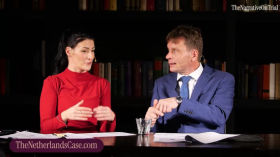
Qu’est-ce que la nouvelle normalité ? Comment en sommes-nous arrivés là ? Qui ou quoi dirige vraiment ce spectacle ? Dans une série de quatre dialogues intimes, l’experte financière Catherine Austin Fitts et le satiriste politique C.J. Hopkins explorent la forme de plus en plus totalitaire de notre meilleur des mondes, nouveau, pathologisé et mondialisé.
Toute la série: We Need to Talk About Mr. Global
Images d’archivesL'Organisation mondiale de la santé déclare que l'Europe est désormais l'épicentre de la pandémie mondiale de coronavirus. Je déclare officiellement l'état d'urgence national. Nous refuserons l'entrée au Canada aux personnes qui ne sont pas citoyens canadiens ou résidents permanents. Nous sommes en guerre. Nous sommes en guerre. Au sens propre, nous sommes en guerre. Dès ce soir, vous ne pourrez quitter votre domicile que pour des raisons bien précises. La vie et, franchement, la liberté telles que nous les connaissons vont changer. On s'attend, et l'on craint, que les marchés s'effondrent ce matin ici aux États-Unis, comme ils l'ont déjà fait aujourd'hui sur les marchés mondiaux. Ce n'est pas une crise financière. C'est un moment passager que nous surmonterons ensemble, comme nation et comme communauté mondiale.
N'est-ce pas magnifique? Il faut l'admettre, la pandémie a été un succès retentissant. Oui. Ouais. Jusqu'ici. Ouais.
C.J. HopkinsOn est quel jour? Le 5 août. C'est le 5 août. 2021. 2021. Et nous en sommes à quoi, 17, 18 mois de la nouvelle normalité? Des soldats patrouillent dans les rues de Sydney pour imposer, vous savez, le strict respect des mesures anti-corona.
Catherine Austin FittsCe qui est impossible. L'Australie, c'est le « pays chanceux ».
C.J. HopkinsÇa ne peut pas arriver. Un système de ségrégation mondial est mis en place dans quels pays? En France? En Italie? Ça se passe dans une certaine mesure en Allemagne.
Catherine Austin FittsÇa arrive. Et je pense que c'est plus qu'une ségrégation, c'est un système de contrôle, et la ségrégation sert à y rabattre tout le monde. Quiconque résiste au système de contrôle est rabattu, et on vous menace d'isolement et désormais, en fait, de faillite et de famine si vous n'acceptez pas d'être rabattu dans le système de contrôle.
C.J. HopkinsEt ouvertement, de manière flagrante, vous savez, qui était le gouverneur de New York, Cuomo vient de déclarer, en gros, faites-vous vacciner ou vous serez exclus de la société.
Catherine Austin FittsEh bien, si c'est lui qui mène, je veux bien être exclu.
C.J. HopkinsMais vraiment, j'essaie de comprendre que cela se passe réellement en France. Non seulement ils vont mettre les non-vaccinés en prison s'ils essaient d'entrer dans un restaurant, mais ils vont aussi mettre en prison les restaurateurs et les commerçants s'ils servent des non-vaccinés. Bref, cela se déploie dans le monde entier.
Catherine Austin FittsQue se passe-t-il d'autre? Ce que vous voyez, c'est la centralisation ultime du pouvoir, car il existe désormais un pouvoir mondial capable de contraindre plus de 190 nations à se comporter d'une manière qui les prive totalement de leur souveraineté. Cela prive donc les nations de leur souveraineté, mais aussi les individus au sein de ces nations. Et c'est littéralement la projection mondiale du pouvoir par, appelez-le comme vous voulez, un syndicat du crime organisé, une tyrannie ou autre. Mais c'est le contrôle central ultime et la destruction de l'État de droit.
C.J. HopkinsVous, vous l'appelez Mr. Global. Oui. Moi, je l'appelle GloboCap, et ce sont tous les deux, vous savez, des termes que nous avons inventés pour tenter de décrire où se situe réellement le pouvoir.
Catherine Austin FittsJ'ai commencé à utiliser l'expression Mr. Global parce qu'il est clair que nous avons un système de gouvernance secret, ce qui est absurde. Pensez-y. Imaginez vivre sur une planète où l'on n'a pas le droit de savoir comment fonctionne la structure de gouvernance. Alors je lui ai simplement donné un nom, car c'est un phénomène complexe, mais il me fallait un terme simple pour décrire une structure de gouvernance secrète.
C.J. HopkinsC'est tout. Et c'est un peu pareil. C'est un peu différent, mais c'est pour la même raison que j'ai trouvé mon terme, GloboCap, dont je parle. La plupart des gens ont encore l'impression de vivre dans un monde de nations souveraines en concurrence avec d'autres nations souveraines. Oui. Et que c'est cela, la structure du pouvoir. Et c'est normal, ce n'est pas parce qu'ils sont bêtes. C'est le monde dans lequel vous et moi avons grandi. Oui. C'est le monde qu'on nous a vendu. C'est le monde qu'on nous projette. Mais ce n'est pas réellement le monde dans lequel nous vivons. Dans le monde où nous vivons, le pouvoir se situe là où vous venez de le décrire. Ce n'est pas seulement que nous ne savons pas qui ils sont; nous essayons juste de formuler ce que c'est. Oui. Ce qu'est cette structure de gouvernance, je crois que les gens commencent tout juste à le faire.
Catherine Austin FittsIl y a par exemple ce fantasme que le président d'un pays dirige le pays. Oui. C'est très simplificateur et très rassurant, parce qu'on sait qui dirige. Et ce, malgré toutes les preuves que cette personne n'est qu'une façade marketing; il est clair que l'actuel président des États- Unis ne dirige rien du tout. Ça ne pourrait pas être plus clair. Oui. Mais c'est en quelque sorte le visage d'Oz. Oui. Une formule rassurante et simplificatrice, mais il est très clair, et c'est le résultat de décennies de coup d'État financier, il est très clair que nous vivons un coup d'État mondial. Oui. C'est un changement fondamental dans la façon dont le système de gouvernance va gérer. La couche de gouvernance est là, mais ils changent maintenant le système de gestion de manière très radicale. Oui.
C.J. HopkinsJe pense que c'est exactement ce qui se passe. C'est une nouvelle étape radicale dans le transfert du pouvoir hors des institutions, du moins nominalement démocratiques, vers ce... Un contrôle beaucoup plus centralisé. Exactement. Et vers cette gouvernance, ce système de gouvernance mondiale que nous ne pouvons pas vraiment comprendre, parce qu'il n'est pas transparent.
Catherine Austin FittsLes changements opérationnels, financiers et juridiques nécessaires pour que cela arrive ont été mis en place au cours des trois dernières décennies. Oui. Et ça s'est fait de manière continue. Il était clair que c'était là que ça menait.
C.J. HopkinsBeaucoup de gens ont averti et écrit que c'était là que ça menait, mais ce qui est remarquable, c'est qu'une grande partie restait invisible au quotidien, et ce n'est que maintenant qu'ils referment le piège. Et si vous regardez le vrai piège qu'ils vont refermer, ils n'ont même pas commencé à dévoiler le piège qu'ils sont en train de préparer. Alors oui, oui, exactement. Et c'est en partie pour ça que je voulais venir vous parler, parce que, vous savez, nous venons d'horizons différents, vraiment très différents, et nous avons des points de vue différents. Mais ce que vous venez de décrire, c'est ce que je martèle depuis des années et des années; vous avez parlé des trois dernières décennies, et ce que j'observe dans mon travail, c'est ce nouveau monde dans lequel nous sommes. Et il a vraiment environ 30 ans, depuis l'effondrement de l'Union soviétique, quand ce dernier véritable conflit idéologique a disparu, nous sommes devenus ce monde capitaliste global, ce monde de Mr. Globo, de Mr. Global. Et ce que nous observons depuis 30 ans est en fait une évolution parfaitement logique.
Catherine Austin FittsC'est la centralisation du pouvoir politique et économique. Et elle progresse de manière continue. C'est ce que George H.W. Bush appelait des mains toujours plus resserrées. Nous concentrons le contrôle dans des mains toujours plus resserrées. Oui, absolument. Absolument. Et je dois dire une chose. Si vous étudiez l'histoire de la fraude financière et des assassinats aux États-Unis, vous verrez qu'ils le font. S'ils font quelque chose et s'en tirent, ils se disent: waouh, on s'en est tirés. Et cela les enhardit, vous savez, et ce que nous voyons, c'est cette structure de gouvernance qui s'enhardit sur ce qu'elle peut se permettre.
C.J. HopkinsJe pense que ce qui se passe en ce moment en est vraiment la preuve. Évidemment, GloboCap, Mr. Globo, les puissants, quelle que soit la façon dont on les décrit. Ils pensent, A, que nous pouvons le faire. Nous pouvons passer de cette vieille simulation de démocratie où tout le monde est libre. Nous pouvons maintenant passer à une structure plus ouvertement totalitaire où l'on vous ordonne de vous injecter des vaccins et de faire toutes ces choses. Et B, non seulement ils pensent pouvoir le faire maintenant, mais ce qui m'intéresse, c'est qu'ils pensent devoir le faire maintenant.
Catherine Austin FittsC'est plus que ça. Ils croient que c'est inévitable. Autrement dit, ils ont une vision de l'avenir qu'ils jugent inévitable. C'était drôle, j'étais à une conférence de l'Aspen Institute et un milliardaire vient pour l'un des panels, puis il reste ensuite pour discuter avec moi. Il explique comment on peut remplacer chaque être humain sur le marché du travail par des logiciels et l'IA, et tout faire tourner avec l'IA et des robots. Ils n'ont pas besoin des gens. Et il avait ce regard qui disait: chérie, j'ai été dans le vaisseau spatial et je te le dis, c'est comme ça que ça va se passer. C'était comme s'il avait renoncé depuis longtemps. Il avait renoncé à l'espoir d'un avenir humain. Mais il avait cette image complète, et pour lui, c'était littéralement inconcevable que cette image ne se réalise pas. Il y a donc là un engagement émotionnel et énergétique, qui est effrayant. Oui. C'est vrai.
C.J. HopkinsLe fait que ça se passe maintenant, ça me fait juste me demander: quel est le besoin? Pourquoi maintenant? Pourquoi est-ce le moment pour Mr. Global de passer à une structure plus ouvertement totalitaire? Parce que, vous savez, c'est, ce n'est pas caché. Ils diffusent clairement le message: oui, nous devenons plus totalitaires.
Catherine Austin FittsJe ne pense pas que nous sachions pourquoi, mais il est clair que le système monétaire crée le besoin d'une nouvelle structure. Et l'une des choses que nous voyons, c'est que le système du dollar américain, qui était en réalité un partenariat entre l'infrastructure budgétaire et l'électorat, qui vote et élit des représentants qui décidaient où allait l'argent des impôts, et les propriétaires des banques privées, avec la politique monétaire via les banques centrales. Cet équilibre des pouvoirs est terminé, et la banque centrale prend le contrôle du Trésor et de la fonction budgétaire, pas seulement aux États-Unis, mais partout. Et quand ils font cela, ils découplent toute l'infrastructure de l'électorat et la transfèrent sous contrôle mondial. Oui. Donc le système du dollar quitte les États-Unis, et avec lui, l'armée. Si vous regardez pas à pas, ils transfèrent le contrôle de l'armée, ils transfèrent le contrôle de la fonction publique, et ils transfèrent le contrôle du Trésor et du pouvoir budgétaire. C'est littéralement comme une chirurgie, presque de la neurochirurgie. Ils découplent simplement étape par étape, et ils y travaillent depuis des années.
C.J. HopkinsOui. Oui. Et ce que nous voyons, c'est un bond quantique en ce moment. Mais c'est un processus en cours depuis longtemps, et je veux en parler beaucoup plus et essayer de l'amener à un niveau où je peux le comprendre, car je suis loin d'en savoir autant que vous sur tous les détails. Mais ça peut être assez simple.
Catherine Austin FittsIl s'agit de transférer le pouvoir qui était censé être le nôtre vers ce réseau d'entités supranationales irresponsables que nous ne pouvons ni regarder, ni surveiller, ni contrôler du tout. L'une des choses remarquables dans votre travail, et pourquoi je l'aime tant, c'est que si vous regardez comment vous en êtes arrivé là et comment moi, je ne fais que suivre les transactions et l'argent. Je suis juste l'argent, l'argent, l'argent, l'argent, l'argent, l'argent. Et vous, vous faites la culture, la culture, la culture, et pourtant nous arrivons au même endroit. C'est comme une pièce, les deux faces d'une même pièce.
C.J. HopkinsC'est assez incroyable, et je pense que vous et moi, rien qu'assis ici à parler, sommes l'exemple de quelque chose de bon et de positif qui se produit, parce que je pense que, pendant que toutes ces choses horribles se produisent, de nouveaux liens se créent. Regardez-nous: nous parlons en ce moment de comment nous en sommes arrivés là. Comment le monde en est arrivé là ces 30 dernières années, mais comment, vous et moi, en sommes-nous arrivés là? Moi, je viens du monde du théâtre expérimental du centre-ville, c'est là que j'ai commencé. 15 ans à New York, à produire des pièces bizarres dans des garages reconvertis, puis j'ai eu de la chance avec l'une d'elles, j'ai percé à Édimbourg, puis j'ai fait des tournées, et voilà, toute la célébrité que j'ai, c'est ça. Vos essais vous ont rendu très célèbre. C'est venu plus tard, mais vous parlez de... le théâtre, c'est 200 personnes à la fois, c'est ça, et c'est de là que je venais, puis j'ai commencé à écrire ma satire politique, j'ai écrit mon roman, et bien sûr, davantage de gens me lisent, mais le fait est que nous venons de mondes complètement différents.
Oui. Et vous venez du côté conservateur. Moi, j'étais libéral, quoi que ça veuille encore dire. Et nous voilà, assis ensemble à essayer de formuler ce que c'est. Et pour moi, c'est porteur d'espoir. Je me fais beaucoup attaquer, par mes collègues de gauche et ainsi de suite. Je ne sais même plus ce que ces termes veulent dire, mais je me fais beaucoup attaquer et accuser de m'aligner sur la droite. Ce qui m'enthousiasme en partie, c'est que, comme nous parlons de beaucoup de choses vraiment effrayantes pour moi et vraiment sombres. Oui. Ce qui m'enthousiasme en partie, c'est que je vois des gens, de plus en plus de gens abandonner ces... Simplifications. Exactement. Et tendre la main par-delà les clivages. Oui. Et commencer à s'unir simplement en tant qu'êtres humains. Un journaliste m'a dit... Qui ne veulent pas vivre comme des esclaves.
Catherine Austin FittsOui. Un journaliste m'a dit, en Suisse, à Noël, il a dit: des amis apparaissent partout.
C.J. HopkinsC'est ça. Si je regarde mon public, euh, c'est vraiment ce mélange de gens de tous horizons, d'orientations politiques différentes, tous réunis, assis, à essayer de comprendre ce qui se passe. C'est un nouveau champ. Et ce que nous pouvons y faire.
Catherine Austin FittsC'est un nouveau champ puissant.
C.J. HopkinsOui, oui. Oui. Et où je veux en venir, c'est à ce qui nous a amenés ici. Ce qui vous a lancée sur votre chemin. Ce qui nous a amenés ici. Cette chose en vous qui vous a fait prendre les décisions que vous avez prises. C'est ce qui nous a amenés ici. Je vais le noter.
Catherine Austin FittsCe que nous avons dit tous les deux, c'est: non, je n'ai pas à suivre ça. C'est vrai. Je n'ai pas à suivre. Je n'ai pas à suivre. J'ai le choix de la liberté. J'ai le choix des libertés. J'ai le choix, parce que ce que nous choisissons tous les deux, c'est l'abondance. Et vous comprenez le pouvoir de l'esprit humain et de l'intelligence pour créer l'abondance. C'est ça, le théâtre. Vous créez des mondes à partir de rien, n'est-ce pas? Oui. Moi, j'essaie de les financer, n'est-ce pas? Mais vous êtes dans le métier de créer de nouveaux mondes, n'est-ce pas? Oui. Et c'est l'abondance, car il n'y a pas de pénurie. C'est infini. Alors, quand l'avez-vous ressenti pour la première fois? Parce qu'on le sent dans les tripes. On le sent dans le ventre. Non, je n'ai pas à suivre ça.
C.J. HopkinsJe vais vous dire la vérité. Je suis né en 1961, donc j'étais à l'école dans les années 70. J'ai grandi en regardant la guerre du Vietnam à la télévision, le Watergate, l'assassinat des Kennedy, l'assassinat de Martin Luther King. Quand je suis devenu adulte, je me sentais en conflit avec le pouvoir. Oui. Je me disais: bon, le mythe, l'histoire qu'on me raconte est une histoire, vous voyez? Et ces gens agissent selon leurs propres règles, et ils se fichent de moi, de mes amis et de ma famille. Oui. Quelqu'un m'a demandé l'autre jour: quand êtes-vous devenue sceptique? Quand avez-vous commencé? Je ne me souviens pas d'une époque où je ne l'étais pas. Où je ne l'étais pas. Vous en parlez en termes de créer de l'abondance, créer de la richesse. Moi, je crois que j'essaie de créer plus de pouvoir chez les gens. C'est ça qui compte, et le prix qu'on paie pour mener ce combat, au cours d'une vie, je n'arrive pas à le mettre en mots.
Catherine Austin FittsOui, mais cela vient d'une compréhension, de l'âme, de qui et de ce que vous êtes en tant qu'âme immortelle. Pour le dire à ma façon, retour à la banque d'investissement: si votre âme est immortelle, quelle est la valeur actuelle d'une trahison pour l'éternité? Ça ne vaut pas l'échange. Quoi qu'on vous offre dans le monde matériel, ça ne vaut pas l'échange, car l'infini est un flux de trésorerie bien plus long, pour le dire en termes d'intérêts composés.
C.J. HopkinsEt vous, comment en êtes-vous arrivée là? Qu'est-ce qui vous a menée à ce point?
Catherine Austin FittsJe me suis énormément disputée avec l'establishment et j'ai été mise à la porte.
C.J. HopkinsOui. Racontez-moi, j'en connais une partie, mais racontez-moi l'histoire.
Catherine Austin FittsJ'ai fait une très belle carrière à Wall Street, puis je suis devenue secrétaire adjointe au Logement dans l'administration Bush. Oui. Si j'en suis arrivée là, c'est entre autres parce que j'avais vu la fraude du HUD détruire mon quartier. Oui. Et cela m'a lancée dans un parcours: comment fonctionne l'argent, et pourquoi cela se passe-t-il? Et c'est drôle, je me souviens, petite fille, je passais devant ce grand panneau, il y avait quatre maisons, en diagonale de chez nous, qui avaient été saisies. Et il y avait ce grand panneau: « Par ordre du secrétaire adjoint au Logement, commissaire fédéral au Logement ». C'est l'un des titres les plus longs de l'administration américaine. Et je me disais: qui est cet idiot? Qui est cet idiot qui laisse ces quatre maisons vides pendant des années alors qu'en face de chez nous vivait une famille entière, toute une famille dans un appartement d'une chambre? Je me disais: c'est fou. Et quand je me retrouve la main sur la Bible et que le secrétaire dit: par ordre du président, je vous déclare secrétaire adjointe au Logement, je me suis dit: oh mon Dieu, l'idiote, c'est moi. Maintenant, c'est moi l'idiote. C'est moi l'idiote. Je suis descendue et la première chose que j'ai dite: nous vidons le stock des saisies. Pas sous ma responsabilité, bien sûr. Évidemment, cela a beaucoup contrarié les barbouzes, mais c'est une autre histoire. Bref, quand j'ai quitté l'administration Bush, je me suis dit: les méchants vont prendre le contrôle de cette technologie.
Je comprenais à quel point la technologie était puissante. Ils vont prendre le contrôle de la technologie.
C.J. HopkinsQuelle technologie? La technologie numérique.
Catherine Austin FittsD'accord. Le numérique et les télécommunications. Ils vont mettre la main sur cette technologie. Ils vont utiliser le pouvoir décentralisé. Nous allons faire face à la tyrannie. Je dois faire quelque chose. Oui. Ma théorie à l'époque, c'était que si je pouvais leur montrer comment décentraliser le pouvoir économique d'une manière qui crée beaucoup plus de richesse. Oui. Je pourrais peut-être les encourager à adopter un modèle plus décentralisé.
C.J. HopkinsAlors j'ai créé une banque d'investissement.
Catherine Austin FittsJe l'ai financée avec mon propre argent. Et le but était de cartographier le fonctionnement de l'argent et de concevoir une façon de réorganiser le système financier en harmonie avec la vie. Je vais vous donner un exemple. Si vous arrivez dans une communauté, il y a un système financier, mais il y a aussi un système vivant. Les plantes, les gens, la vie. Les chiens, les chats. Les chats. Toute la vie, toute l'intelligence de ce lieu. Vous avez donc l'intelligence vivante, et vous avez les actifs et l'intelligence financiers. Et ils ont une relation gagnant-perdant. D'accord. Je vous donne un exemple. L'un des termes que j'ai créés dans l'administration Bush pour exprimer la santé d'un système vivant dans un lieu, c'est l'indice Popsicle. D'accord. L'indice Popsicle est le pourcentage de gens qui pensent qu'un enfant peut quitter son domicile, aller à l'endroit le plus proche pour acheter un Popsicle et rentrer seul en toute sécurité. Oui. Quand j'étais petite, je pouvais courir jusqu'à Spruce Street, acheter un Popsicle, jouer aux flippers, revenir, en toute sécurité, libre de circuler, d'accord?
C.J. HopkinsQuand j'étais petite, l'indice Popsicle de West Philadelphia était de 100 %.
Catherine Austin FittsLe Dow Jones était à 150, d'accord? Le Dow Jones a été multiplié des milliers de fois, et l'indice Popsicle a baissé. Exactement. D'accord. C'est une relation gagnant-perdant. Et ce que j'ai vu à Washington: les promoteurs, les agents immobiliers, les banquiers hypothécaires venaient tous me solliciter pour faire quelque chose qui fasse monter leur indice Dow Jones. Mais ils ne me sollicitaient jamais pour faire monter l'indice Popsicle. Et en fait, beaucoup de choses qui feraient monter leur indice Dow Jones nuiraient à l'indice Popsicle. J'essayais sans cesse de les convaincre, et je me suis dit: si nous finançons toutes les petites entreprises d'une communauté en fonds propres, alors, si l'indice Popsicle monte, les actions monteront. Elles monteront et baisseront ensemble. On passera d'une relation gagnant-perdant à gagnant-gagnant en décentralisant, en somme, les marchés de capitaux privés et publics. Bref. Ce qui s'est passé, et c'est l'une des choses les plus importantes qui me soient arrivées. J'avais ce génie qui travaillait pour moi, que j'avais recruté, nous avions un programme avec le MIT, il avait été sur la place Tiananmen et était parti. Il était malade le jour où ses amis ont été tués.
C.J. HopkinsIl est parti, est venu au MIT, a obtenu son doctorat.
Catherine Austin FittsJe l'ai embauché. Nous avions constitué des bases de données sur le fonctionnement de tous les dollars fédéraux. Ça s'appelle Community Wizard. Et nous avons cartographié comment tout l'argent circulait. Je lui ai donné toute l'infrastructure de bases de données, et je lui ai dit: je veux que tu voies si l'on pourrait réoptimiser tout l'argent pour qu'au lieu de générer des commissions pour nos amis et de nous donner le contrôle politique, on rende simplement l'économie aussi saine que possible. À quoi ça ressemblerait? Je veux que tu simules la réussite. Il est revenu, et le chiffre était si énorme que j'ai dit: c'est forcément faux. C'est forcément faux. Ce n'est pas possible, c'est trop gros. Il disait... Quel chiffre? Pour le dire à ma façon, la richesse existante pourrait être multipliée par cent. C'est ce que je pensais que vous vouliez dire, oui. Oui. Si l'on gérait l'argent public pour optimiser la santé et la richesse du vivant dans son ensemble. Exactement.
C.J. HopkinsDans le scénario gagnant-gagnant. Oui.
Catherine Austin FittsDans le gagnant-gagnant. Si l'on passait du gagnant-perdant au gagnant-gagnant, la richesse était... Je n'arrêtais pas de lui dire que c'était faux. Finalement, il m'a dit: écoutez, il faut que vous fassiez attention. Prenez le week-end et ne faites que ça. J'ai parcouru tous ces chiffres et je me suis dit: mon Dieu, c'est le prix de l'oppression. C'est le prix de la tyrannie. Le contrôle central est un tel gaspillage. Si la vie et l'intelligence pouvaient s'aligner sur l'argent, il n'y a aucune... c'est pourquoi je dis qu'il n'y a aucune raison à la pauvreté, à ma connaissance. Bref, c'est là que j'ai commencé à rire, car j'ai compris que quoi qu'il se passe sur cette planète, ce n'était pas à cause de la pénurie. Et c'était avant que je commence à comprendre la nouvelle technologie disponible. À l'été 2000, un praticien de santé m'a demandé de faire un discours lors d'une conférence appelée Spiritual Frontiers Foundation. D'accord. International. Je venais de publier une série de documents qui sont devenus plus tard un article très célèbre, « Narco-Dollars for Beginners ». C'était censé être une introduction légère et drôle à l'intersection de Wall Street et du crime organisé à Washington.
Comment l'argent sale circule-t-il? Alors j'ai dit: imaginons qu'il y ait un gros bouton rouge ici, sur le pupitre. Si vous appuyez dessus, vous pouvez stopper tout le trafic de drogues dures dans votre ville, votre comté, votre commune, votre État, offensant ainsi ceux qui contrôlent de 500 milliards à mille milliards de dollars et le capital accumulé dessus. Qui ici appuierait sur le bouton? Sur 100 personnes engagées à faire évoluer spirituellement notre société, devinez combien appuieraient sur le bouton? Dix? Une. Une. Une. Moi, je n'ai pas voté. Si j'avais voté, ça aurait fait deux. Et j'ai demandé à tout le monde: pourquoi n'appuieriez-vous pas sur le bouton? Ils ont répondu: nous ne voulons pas que nos IRA baissent, nos comptes de retraite. Nous ne voulons pas que nos chèques de l'État s'arrêtent. Nous ne voulons pas que ceux de nos voisins s'arrêtent. Et nous ne voulons pas que nos impôts augmentent. Et ce que j'ai découvert ce jour-là, c'est que le problème n'était pas qu'ils n'appuieraient pas sur le bouton rouge. Le problème, c'est qu'ils refusaient d'avoir une conversation honnête sur la façon de faire passer le bouton rouge au vert. Comment gagner de l'argent en appuyant sur le bouton rouge? Oui. Parce qu'en fait, si réaligner la vie et l'argent de façon positive multiplie la richesse par cent, on peut appuyer sur le bouton rouge.
Oui. Mais il faut trouver comment le faire ensemble. C'est comme un orchestre symphonique. Il faut changer la partition ensemble. On ne peut pas le faire chacun de son côté. Et ils n'étaient pas prêts à entrer dans la salle d'invention et dire: bon, comment faire passer le bouton rouge au vert? Ils étaient figés. Ils avaient peur.
C.J. HopkinsEt c'est exactement ce qui doit arriver avant que quoi que ce soit d'important change: que les gens se réunissent et imaginent comment faire passer ce bouton au vert. Oui. Au vert. Mais revenons à votre histoire. Mon histoire. En gros, vous appuyez sur le bouton rouge.
Catherine Austin FittsJ'appuie sur le bouton rouge.
C.J. HopkinsC'est ce que je voulais dire en disant que vous marchez sur les pieds des gens. Vous avez appuyé sur ce bouton rouge toute votre vie.
Catherine Austin FittsQuand je dirigeais Hamilton Securities Group, je pensais avoir le plein soutien de l'establishment pour ce que je faisais. Ils voulaient tester des modèles. Ils voulaient des prototypes de modèles. Je pensais être totalement dans la ligne. Et si Nick Brady et ses gars avaient envoyé quelqu'un pour dire: écoutez, vous sortez des clous. Revenez. J'aurais fait exactement ce qu'on me disait, j'étais le bon petit soldat typique. Je ne cherchais rien. Et ce qui est drôle, c'est que quand ils ont fait ce qu'ils ont fait, ils ont enfreint de nombreuses lois, essayé de nous piéger, falsifié des preuves, menti, bla, bla, bla, bla, bla. J'ai fini par me rebiffer. Je me suis dit: votre plan est pourri. Il ne marchera pas. Je ne veux pas en faire partie. Mais c'est, vous savez, la psychopathie ne peut pas diriger une planète.
C.J. HopkinsNon. Et quand vous dites « quand ils ont fait ce qu'ils ont fait »,
Catherine Austin Fittsvous parlez du moment où ils s'en sont pris à vous et à Hamilton, n'est-ce pas? Oui, mais ce n'était pas qu'ils s'en prenaient à moi. Oui. Ça, c'est juste un combat. D'accord. Ce qu'ils faisaient, c'était envoyer des unités du SWAT dans des quartiers pauvres, rafler des innocents et les entasser en prison pour faire monter les actions des prisons. Oui. C'était du travail d'esclave. Oui. C'était absolument du travail d'esclave. Et cela faisait partie de l'importation de drogues pour faire de l'argent, ce qui est un génocide. Oui. Et j'ai dit: en tant qu'Américains, si nous tolérons des camps de travail forcé et un génocide, ce n'est qu'une question de temps avant qu'ils viennent nous chercher tous. Oui. On ne peut pas, c'est une ligne à ne pas franchir. On ne peut pas faire ça. C'est un génocide. Et vous savez, j'aime gagner de l'argent en créant de la richesse.
C.J. HopkinsJe n'aime pas gagner de l'argent en commettant un génocide. Oui. Ou en réduisant les gens en esclavage.
Catherine Austin FittsOui. Rafler ces gens et les mettre dans des prisons privées, c'est de l'esclavage. On dirait bien que vous avez appuyé sur un bouton rouge pendant que vous étiez en ville. Et si vous regardez ce que faisaient mes anciens associés de Wall Street, ce qui m'a valu d'être mise à la porte, je pensais que ce qu'ils faisaient violait la loi, violait nos lois informelles. Et je pensais qu'ils commettaient une terrible erreur. Je ne voulais pas y participer, car je pensais qu'il nous fallait une meilleure voie. Et il m'était impossible d'inventer une meilleure voie de l'intérieur. Oui. Ils n'allaient pas me le permettre, ce qui voulait dire que je devais partir. Je devais partir dans le désert si je voulais créer une meilleure voie. Oui. Je ne veux pas être une esclave. Et je ne veux pas gagner de l'argent en faisant d'autres esclaves. C'est ce que j'observe. Je vois la plupart des gens que je connais aller au travail chaque jour et aider à construire une machine d'esclavage. Et ma question, c'est: vous n'êtes pas obligés de faire ça. Je pense que je ne suis pas obligée de faire ça. Oui. Et je pense que si je construis une machine d'esclavage, elle finira par se retourner contre moi. Et c'est bien sûr le message que tout le monde reçoit.
C.J. HopkinsMaintenant que vous les avez aidés à construire une machine d'esclavage, ils se retournent contre vous et vont faire de vous un esclave.
Catherine Austin FittsAlors peut-être devriez-vous arrêter de construire la machine d'esclavage. Oui. Mais l'autre chose, c'est que je ne faisais pas confiance au système. C'est pourquoi je n'ai jamais pu. J'ai beaucoup essayé de trouver comment avoir des enfants. Oui. Et je n'ai jamais trouvé comment les protéger. Et dès le moment où j'ai décidé que je ne pouvais pas avoir d'enfant parce que je ne pouvais pas le protéger physiquement. Oui. Alors je me suis dit: par intégrité, je dois faire quelque chose. Je dois faire quelque chose qui permette à d'autres de grandir dans un monde à indice Popsicle élevé. Si je ne peux pas le faire, au moins avoir l'intégrité. Et c'est très intéressant, parce que je me sens toujours à l'aise avec les enfants.
C.J. HopkinsJe n'ai aucun mal à les regarder en face.
Catherine Austin FittsSi je n'avais pas fait ça, je ne pourrais pas les regarder en face.
C.J. HopkinsJe ne pourrais pas. Mais, vous savez, certaines personnes m'écrivent et me disent: C. J., vous êtes si courageux. Merci pour ce que vous faites. Vous êtes si courageux. Et j'apprécie, j'apprécie leurs remerciements et tout. Mais je leur dis que ce n'est pas vraiment du courage. Je veux juste pouvoir me regarder en face le matin. C'est une question d'intégrité. C'est égoïste. Oui. C'est très égoïste. Moi, je veux pouvoir me regarder dans le miroir. Je veux pouvoir dormir la nuit. Oui. Et je ne pense pas qu'on puisse faire plus égoïste que ça.
Catherine Austin FittsOui. Je suis tout à fait d'accord, c'est égoïste. Oui. Et ils diraient que je suis mégalomane de croire que je peux réaligner le Dow Jones ou l'indice Popsicle. Et mon attitude, c'est: très bien. Si je ne le fais pas, qui le fera? Oui. Et une question honnête, vraiment honnête, honnête, Catherine.
C.J. HopkinsOui. Combien de vos anciens compatriotes à Wall Street et dans ce monde-là pensaient vraiment à l'indice Popsicle?
Catherine Austin FittsBeaucoup pensaient à l'indice Popsicle, mais beaucoup se sentaient contraints et avaient peur, car c'était dangereux d'essayer d'aller trop loin. Et ce qui m'est arrivé, il faut comprendre que j'ai été mise à la porte. Je ne cherchais pas à partir. J'ai été mise à la porte. Je sais. Mais je croyais vraiment pouvoir le faire. Je croyais vraiment, si vous regardez ceux qui ont bâti les cathédrales, ils commençaient un plan qui allait durer plus longtemps que leur vie. Oui, exactement. Et quand j'ai commencé ce chemin avec l'indice Popsicle, je supposais qu'il faudrait plus que ma vie pour le comprendre, sans parler de faire quoi que ce soit. Mais que d'autres viendraient.
C.J. HopkinsOui. Et ce que j'essayais simplement de dire, c'est que, même si vous avez la capacité de le faire, il y a toujours le choix. Oui. Est-ce que c'est ce que je veux faire? Absolument. Oui. Ou est-ce que je veux juste me remplir les poches et m'occuper de moi?
Catherine Austin FittsCe n'est pas un monde qui m'intéresse. Et c'est la réponse. C'est la réponse à la question. Je ne peux pas fréquenter des gens comme ça, dans ce monde-là. Je ne peux pas, vous savez, vous êtes ici.
C.J. HopkinsJe pense que ce que je veux dire, c'est que, nous, à partir de points de départ complètement différents. Oui. Et nos parcours complètement différents à travers des territoires différents. Au fond, soit on est comme ça, soit on ne l'est pas.
Catherine Austin FittsOui.
C.J. HopkinsPour conclure cette séance, j'aimerais parler un peu de ce dont nous allons parler. D'accord. Ce dont je veux parler, c'est que je veux comprendre, nous parlons de Mr. Global. Oui. Oui. Nous parlons de... moi, j'écris, je parle de GloboCap. Je parle de Mr. Global. Une chose que je veux approfondir avec vous, nous en avons déjà beaucoup abordé aujourd'hui, mais je veux essayer de rendre ça simple pour que des gens comme moi, qui n'arrivent pas tout à fait à suivre des gens comme vous, je veux essayer de simplifier. Je veux parler du fonctionnement de cette machine, et je veux parler de ce transfert, ce transfert d'argent et de pouvoir hors des structures, des institutions et structures qui devraient nous appartenir, le transfert de ce pouvoir et de cet argent vers Mr. Global et GloboCap. Oui.
Catherine Austin FittsJe veux donc parler de l'argent d'une personne ou d'une famille et de la façon dont il se déverse dans cette machinerie qui se transforme ensuite en pouvoir, par lequel Mr. Global peut nous contrôler avec notre propre argent.
C.J. HopkinsVoilà. Oui. Je veux approfondir ça avec vous. Oui. Je veux expliquer pourquoi des gens comme moi, qui ne suivent pas les questions financières, devraient y prêter attention. Oui. Et prendre des mesures, les mesures que nous pouvons prendre pour l'arrêter. Comment on nous a trompés et comment ne plus l'être. Oui. Oui. Oui. Oui. Je ne sais pas combien de temps il nous reste.
Catherine Austin FittsC'est court. Oui, mais Mr. Global nous mène quelque part.
C.J. HopkinsOui. Oui. Et je veux, vous savez, encore une fois, essayer de saisir ça. Vous voulez apprendre à tous comment chacun de nous peut introduire un maximum de friction dans tout le processus. Absolument. Oui. Et d'abord, je veux jeter un regard froid et lucide sur là où nous allons, sans détourner les yeux ni enjoliver les choses, un regard froid et lucide sur où tout cela mène.
Catherine Austin FittsOui. Oui. Parce que la plupart des gens ne peuvent pas imaginer à quel point c'est sombre.
Images d’archivesLe gouvernement autrichien a approuvé un nouveau confinement qui ne s'appliquera qu'aux personnes non vaccinées. Le pire reste à venir. Les prix de l'essence aux États-Unis ont atteint un nouveau record. Le prix du blé a doublé. Les coûts de l'énergie ont augmenté. Tous les indicateurs pointent dans la mauvaise direction. La faim dans le monde atteint un nouveau sommet. En deux ans seulement, le nombre de personnes en insécurité alimentaire grave a doublé. La perspective d'un conflit nucléaire, autrefois impensable, est de nouveau dans le domaine du possible.
Archive footageThe World Health Organization says Europe is now the epicenter of the global coronavirus pandemic. I am officially declaring a national emergency. We will be denying entry to Canada to people who are not Canadian citizens or permanent residents. Nous sommes en guerre. We're at war. In a true sense, we're at war. From tonight, you can only leave your home for very specific reasons. Life and frankly freedom as we know it are both going to change. And the expectation and fear is that we will see markets in free fall this morning here in the U.S. as they have done in the global markets already today. This is not a financial crisis. This is just a temporary moment that we will overcome together as a nation and as a world.
Isn't that beautiful? You have to admit the pandemic's been wildly successful. Yeah. Yep. So far. Yep.
C.J. HopkinsWhat is it? It's August 5th. It's August 5th. 2021. 2021. And we are, what, 17, 18 months into the new normal? Soldiers are patrolling the streets of Sydney to enforce, you know, strict compliance with corona measures.
Catherine Austin FittsWhich is impossible. This is, Australia is the lucky country.
C.J. HopkinsThat can't happen. You know, a global segregation system is being rolled out in which countries? In France? In Italy? You know, it's happening to some degree in Germany.
Catherine Austin FittsIt's coming. Well, and I think it's more than a segregation, it's a control system, and the segregation is designed to herd everyone into it. So anybody resisting the control system is being herded and you're being threatened with isolation and essentially now bankruptcy and starvation if you don't agree to be herded into the control system.
C.J. HopkinsWell, and blatantly, and blatantly so, you know, who was the governor of New York, Cuomo just came out and said, you know, you've got to get vaccinated or you're going to be shut out of society.
Catherine Austin FittsYou know, well, if he's leading it, I'm happy to get shut out.
C.J. HopkinsBut really, I mean, I try to get my mind around that this is actually happening in France. They're not only going to put the unvaccinated in prison if they try to go into a restaurant, but they're also going to put the restaurateurs and business owners in prison if they serve the unvaccinated. You know, so this is being rolled out across the world.
Catherine Austin FittsWhat else is happening? Well, what you're watching is the ultimate centralization of power because you now have global power that can project and force 190 plus nations to behave in a way which strips them completely of sovereignty. So it strips the nations of sovereignty, but it strips the individuals within the nation of sovereignty. And it's literally the global projection of power by, you know, call it what you want, an organized crime syndicate or tyranny or whatever. But it's the ultimate central control and the destruction of the rule of law.
C.J. HopkinsWell, you've been calling it Mr. Global. Right. I've been calling it GloboCap, and, you know, these are both, you know, just terms that we've come up with to try to describe, you know, where power is actually located.
Catherine Austin FittsSo the reason I started using the expression Mr. Global is it's clear we have a secret governance system, which is ridiculous. Think about it. Think about living on a planet and you're not allowed to know, you know, how the governance structure works. So I just created a name for it because it's a complex phenomena, but I needed a simple term to describe a secret governance structure.
C.J. HopkinsAnd that's all it is. And it's kind of the same. It's a little different, but the same reason that I came up with my term, you know, GloboCap that I'm talking about. Most people, the majority of people still kind of feel like we're living in a world, you know, of sovereign nations competing with sovereign nations. Right. You know, and that that is the structure of power. And naturally, it's not because they're stupid. You know, that's the world that you and I grew up in. Right. That's the world that was sold to us. That's the world that is projected to us. But it's not actually the world we're living in. The world we're living in is where power is located is what you just described. It's not only that we don't know, you know, who they are, you know, just trying to articulate what it is. Right. What this governance structure is, you know, I think people are just beginning to do that.
Catherine Austin FittsWell, there's a fantasy, for example, that the president of a country runs the country. Right. And that's very simplifying and it's very comforting because you know who who's running it. And it, despite every piece of evidence to suggest that that person is a marketing front and is clearly, I mean, it's clear that the current president of the United States is not running anything. It couldn't be clearer. Right. But, but it's a, you know, it's sort of the face of Oz. Yeah. It's a comforting, simplifying expression, but it is very clear, and this is the result of decades of financial coup. It's very clear that we are experiencing a global coup d'état. Yeah. This is a fundamental change in how the governance system will manage. So the governance layer is there, but now they're changing the management system in a very radical way. Right.
C.J. HopkinsI think that's exactly, you know, what is happening. This is another radical step in transferring power out of, you know, at least nominally democratic institutions into this, you know. Much more centralized control. Exactly. And, and into this governance, this global governance system that, you know, we can't really understand completely because it's not transparent.
Catherine Austin FittsSo the, the changes operationally and financially and legally that needed to occur for this to happen have been rolled out over the last three decades. Yeah. And it's been happening steadily. It's been clear this is where it's leading.
C.J. HopkinsWe see many people who've warned and written about this is where it's leading, but what was remarkable about it, a lot of it was very invisible in the day-to-day life, and it's only now that they're throwing the trap. And if you look at the real trap they're going to throw, they haven't begun to show their hands of the trap that they're, they're about, they're working into. So, yeah, yeah, yeah, exactly. And this is part of why I wanted to come in and, and, and talk to you because, you know, we, we come from different places and looking, you know, really different places and, and looking at different perspectives. But what you just described is the same drum that I've been beating for years and years and years, you know, you, you talked about the last three decades, you know, and what I've been tracking, you know, in my work is this new world that we're in. And, and, and it really is about 30 years old, you know, when the, when the Soviet Union collapsed and that last really, you know, a real ideological conflict disappeared, we, we became this, you know, global capitalist, Mr. Globo, you know, Mr. Global world. And what we've been watching for the last 30 years is actually a, a, a completely logical development.
Catherine Austin FittsIt's, it's, it's, it's the centralization of political and economic power. And it's been, it's been going on steadily. It's what George H.W. Bush used to call tighter and righter hands. We're pulling control into tighter and righter hands. Yeah, absolutely. Absolutely. And, you know, I have to say one thing. If you go back and you study the history of financial fraud and assassination in the United States, what you'll hear is they do. If you do something, they get away with it and they're like, wow, we got away with it. And, and, but it emboldens them, you know, and, and what we're watching is the emboldening of that, of that governance structure as to what they can get away with.
C.J. HopkinsI think what is happening right now is, you know, is just really testament to that. Obviously, you know, GloboCap, Mr. Globo, the powers that be, you know, however you want to describe them. They feel that, you know, A, we can do this. We can, we can transition from, you know, this old, you know, simulation of, you know, democracy and everybody's free and that. We can now transition to a more openly totalitarian structure where we order you to, you know, inject yourself with, you know, vaccines and, and do all of these things. And B, and B, and the thing that, not only do they feel that they can do this now, it's interesting to me that they feel that they need to do this now.
Catherine Austin FittsWell, it's more than that. They believe that this is inevitable. In other words, they have a vision of the future, which they consider inevitable. And it was funny, I was at the Aspen Institute at a conference and some billionaire shows up for the, one of the panels and he stays afterwards to talk with me. And he's talking about how they can replace every human being in the labor force with software and AI and run everything with AI and robots. They don't need people. And he had this look in his eyes like, honey, I've been up in the spaceship and I'm telling you, this is how it's going to go. You know, and it was almost like long ago he'd given up. He'd given up hope for a human future. But he had this complete picture and, and he was literally, it was inconceivable to him that this picture wouldn't happen. So there, there's an emotional and, and, and energetic commitment there, which is frightening. Yeah. Right.
C.J. HopkinsThe, the fact that, that it is happening now, it, it just makes me ask, okay, what is the need? You know, why now? Why is, why is this the time for, you know, Mr. Global to make the transition to a more openly totalitarian structure? Because they're, you know, it's, it's, it's, it's not being hidden. They're clearly broadcasting the message, yes, we're going more totalitarian.
Catherine Austin FittsSo we don't, I don't think we know why, but clearly the currency system is creating a need for a new structure. And, and one of the things we're seeing is the U.S. dollar system, which was really a partnership of the fiscal infrastructure with the electorate, basically voting and representatives who determined where the tax money went and the private banking owners with monetary policies through the central banks. That balance of power is over and the central bank is taking over the treasury and the fiscal function, not just in the United States, but everywhere. But when they do that, they are de-linking the entire infrastructure from the electorate and shifting it into global, global control. Yeah. So, so the, the dollar system is leaving the U.S. and with it, the military. So if you look incrementally, they're shifting the control of the military, they're shifting control of the civil service operations, and they're shifting control of the treasury and fiscal power. And they're literally, it's like a surgery, it's almost like neurosurgery. They're just de-linking it step by step, and they've been working on it for years.
C.J. HopkinsRight. Right. And what we're seeing is, you know, is a quantum leap right now. But this is a process that has been ongoing, and I want to talk much more about this and try to get it, you know, to a level where I can get my head around it, because I'm nowhere near as knowledgeable as you are about all the details of this. But it can be pretty simple.
Catherine Austin FittsWhat it's talking about is transferring the power that was supposed to be ours, you know, into this network of unaccountable, you know, supranational entities that we can't look at or monitor or check at all. One of the things that's so remarkable about your work and why I love your work so much is if you look at how you came to this and you look at how I'm just following transactions and money. I'm just following money, money, money, money, money, money. And you're doing culture, culture, culture, and yet we're coming to the same place. It's like a coin, two sides of a coin.
C.J. HopkinsWell, it's pretty amazing, and I think that you and I, I mean, just sitting here talking are an example of something good and something positive that is happening, you know, because I think that while all of this horrific stuff is happening, there are new connections that are, you know, that are being established. I mean, if you look at us, I mean, we're talking right now about, you know, how did we get here? How did the world get here over the last 30 years, you know, but how did, how did you and I get here? You know, I come from, you know, the downtown experimental theater world is where I got started. You know, 15 years in New York City, producing, you know, weird plays in converted garages, you know, and then got lucky with one of them, you know, and broke through in Edinburgh and then toured and, you know, this, whatever fame I have, that's, that's it. Now your essays make you very famous. And that's later, but, you know, you're talking about, you know, the theater, it's like 200 people at a time, you know, is this is, and that's, and, and that's where, where I was coming from, you know, and then, yeah, I started writing my political satire and, you know, I wrote my novel and sure people, you know, some more people are, are reading, but the point is we, we just, we come from completely different worlds.
Right. You know, and you come from the conservative side. I used to be a liberal, whatever the hell that even means anymore. And here we are, you know, sitting together trying to, you know, articulate what this is. And, and to me, that's hopeful. You know, we get, I get attacked a lot, you know, by my leftist colleagues and what have you. I don't know what these terms even mean anymore, but I, I get attacked a lot and accused of, you know, aligning with the right. Part of what's exciting to me is, is, is, you know, because we're talking about a lot of stuff that's just really scary to me and, and really dark. Right. But part of what's exciting to me is that I am seeing people, more and more people dropping, you know, these, these. Oversimplified. Exactly. And, and reaching across lines. Right. And starting to unite as, as just human beings. One journalist said to me. Who don't want to live like slaves, you know.
Catherine Austin FittsRight. One journalist said to me, in Switzerland at Christmas time, he said, friends are turning up everywhere.
C.J. HopkinsThat's it. You know, if I look at my audience, um, you know, it is really this mixture, you know, of, of, of people from all different backgrounds, different, you know, political orientations, all united together, sitting down, trying to figure out what is going on. It's a new field. And what can we do about it?
Catherine Austin FittsIt's a new powerful field.
C.J. HopkinsYeah, yeah. Yeah. And what I'm getting at is, you know, what it is that brought us here. You know, what it is that took you on your journey. What brought us here is. That thing, that thing in you that made you make the decisions that you've made. That's what brought us here. I'll scribble it.
Catherine Austin FittsWhat we both said is, no, I don't have to go along with this. That's right. I don't have to go along. I don't have to go along. I have an option to choose freedom. I have an option to choose liberty. I have an option to choose, because what we're both choosing is abundance. And you understand the power of the human mind and intelligence to create abundance. That's what the theater is. You're creating worlds out of nothing, right? Yeah. I'm trying to finance them, right? But that's, you're in the business of creating new worlds, right? Yeah. And that's abundant, because there's no shortage. You know, it's infinite. Okay, so when was the first time you felt it? Because you feel it in your gut. You feel it in your stomach. No, I don't have to go along with this.
C.J. HopkinsI'll tell you the truth. I was born in 1961, so I was, you know, in school in the 70s. I grew up watching the Vietnam War on television, watching Watergate, watching the Kennedys be assassinated, watching Martin Luther King be assassinated. You know, by the time I came of age, I felt in conflict with power. Right. I felt like, okay, the myth, the story they're telling me is a story, you know? You know, and these people are, you know, operating, you know, according to rules of their own, and they don't really care about me and my friends and my family. Right. Somebody asked me this the other day, you know, when did you become skeptical? When did you start, it's like, I can't remember a time when I wasn't. Wasn't. You talk about it in terms of, you know, creating abundance, creating wealth. You know, I think I'm trying to create more power, you know, in people, you know. You know, that's the stuff that's important, and the price that you pay for fighting that fight, you know, in that lifetime is, I can't quite put it into words.
Catherine Austin FittsRight, but it comes from an understanding from a soul of who and what you are in terms of your immortal soul. I mean, the way I would say, this is back to investment banking, you know, if your soul is immortal, what is the present value of selling out for infinity? You know, it doesn't, it's not worth the trade. Whatever they offer you in the material world, it's not worth the trade, because infinity is a much longer cash flow, you know, to be, to put it into the expression of compound interest.
C.J. HopkinsDo you know what, how did you get here? What brought you to this point, you know?
Catherine Austin FittsWell, I got in a huge squabble with the establishment and got booted out.
C.J. HopkinsYeah. Tell me, I know some of it, but, you know, tell me the story.
Catherine Austin FittsSo, I'd had a very successful career in Wall Street, then I went to, to be Assistant Secretary of Housing in the Bush Administration. Yeah. And one of the reasons I ended up there was I had watched HUD fraud destroy my neighborhood. Right. And then it set me on a journey of, well, how does the money work and why is this going on? And, you know, and it's funny because I remember as a little girl, I would walk by this big sign of four, there were four homes, catty cornered to our house that were foreclosed on. And there was this big sign by order of the Assistant Secretary of Housing, Federal Housing Commissioner. It's one of the longest titles in the U.S. government. And I would think, who is that idiot? Who is that idiot that they would leave these four homes empty for years while there were, you know, we had a family living across from us that was a whole family in a one-bedroom apartment. I was like, this is crazy. And so when I'm sitting there with my hand in the Bible and the secretary says, by order of the president, I now declare you're the Assistant Secretary of Housing, I thought, oh, God, I'm the idiot. Now I'm the idiot. Now I'm the idiot. And I went downstairs and the first thing I did was I said, we are cleaning out the foreclosure pipeline. This will not happen on my watch, of course. So, of course, that was very upsetting to the spooky guys, but that's another story. But anyway, so when I left the Bush Administration, I said, you know, the bad guys are going to get control of this technology.
I understood how powerful the technology was. They're going to get control of the technology.
C.J. HopkinsWhat technology? Digital technology.
Catherine Austin FittsOkay, yeah. Digital and telecommunications. They're going to get a hold of this technology. They're going to use decentralized power. We're going to face tyranny. I've got to do something. Right. And my theory at the time was if I could show them how to decentralize economic power in a way that would make, create much more wealth. Right. That I might be able to encourage them to come more to a more decentralized model.
C.J. HopkinsSo, I created an investment bank.
Catherine Austin FittsI financed it with my own money. And the goal of the investment bank was to map out how money works and design a way of reorganizing the financial system in a way that aligned with life. So, let me give you an example. If you come into a community, you have a financial system going on, but then you have a living system. You know, plants, people, life. Dogs, cats. Cats. All life, all intelligence in that place. So, you have living intelligence and you have financial assets and intelligence. And they have a win-lose relationship. Okay. So, let me give you an example. One of the terms I created when I worked in the Bush administration to express the health of a living system within a place was the Popsicle Index. Okay. The Popsicle Index is the percent of people who believe a child can leave their home, go to the nearest place to buy a Popsicle, and come home alone safely. Right. So, when I was a little girl, I could run up to Spruce Street, buy a Popsicle, play the pins, come back, totally safe, free to roam, okay?
C.J. HopkinsWhen I was a little girl, the Popsicle Index in West Philadelphia was 100%.
Catherine Austin FittsThe Dow Jones was 150, okay? The Dow Jones has increased by thousands of multiples, and the Popsicle Index has gone down. Exactly. Okay. That's a win-lose relationship. And one of the things I watched in Washington, the home builders, the realtors, the mortgage bankers would all come lobby me to do something that would make their Dow Jones Index go up. But they would never lobby me to do something that would make the Popsicle Index go up. And, in fact, many of the things that would make their Dow Jones Index go up would hurt the Popsicle Index. And I kept trying to persuade them, and I thought, well, if we finance all the small business in a community with equity, then if you get the Popsicle Index to go up, the stocks will go up. They'll go up and down together. So we'll go from a win-lose relationship to a win-win by decentralizing, essentially, the private and public equity markets. Anyway. So what happened, and this is one of the most important things that happened to me in my life. I had this genius working for me who I had hired from, we had a program with MIT, and he had been in Tiananmen Square and had left. He was sick the day that his friends got killed.
C.J. HopkinsHe left and came to MIT, got his PhD.
Catherine Austin FittsI hired him. And I asked him, we put together databases of how all the federal dollars worked. It's called Community Wizard. And we mapped out how all the money worked. And so I gave the whole database infrastructure to him, and I said, I want you to go figure out if we could re-optimize all the money so that instead of generating fees for our friends and giving us political control, we just made the economy as healthy as possible. What would it look like? I want you to simulate success. He came back, and the number was so big, I said, it has to be wrong. It has to be wrong. It can't be, you know, it's too big. I mean, he was saying- What number? My way of saying it, existing wealth could be increased a hundredfold. That's what I thought you meant, yeah. Right. If we just ran the government money to optimize total living health and wealth. Exactly.
C.J. HopkinsIn the win-win scenario. Right.
Catherine Austin FittsIn the win-win. So if we went from win-lose to win-win, the wealth was- I kept saying to him, it has to be wrong. And finally he said, look, you have to pay attention. I want you to take the weekend off and just do this. And I went through all those numbers and I said, oh my God, that's the price of oppression. That's the price of tyranny. Central control is so waste. If life and intelligence could align with money, you know, there's no- that's why I say there's no reason for poverty that I know of. Anyway, so that's when I started to laugh because I realized, you know, whatever was going on in this planet, it was not because there was scarcity. And that's before I began to understand the new technology that was available. So in the summer of 2000, I was asked by a health care practitioner to give a speech at a conference called Spiritual Frontiers Foundation. Okay. International. And I had just been publishing a series of materials and this later became a very famous article called Narco-Dollars for Beginners. And it was meant to be a light and funny introduction to the intersection of Wall Street and organized crime in Washington.
You know, how does dirty money flow in? So I said, okay, well, let's pretend there's a big red button up here on the lectern. And if you push that button, you can stop all hard narcotics trafficking in your city, your county, your town, your state, thus offending the people who control $500 billion to a trillion dollars and the accumulated capital thereon. Who here will push the button? And out of 100 people dedicated to evolving our society spiritually, guess how many would push the button? Ten? One. One. One. So I wouldn't let him talk. If I had voted, it would be two. And I said to everyone, okay, why would you not push the button? And they said, we don't want our IRAs to go down, so our retirement accounts. We don't want our government checks to stop. We don't want our neighbor's government's checks to stop. And we don't want our taxes to go up. And what I discovered that day is the problem was not that they would not push the red button. The problem is that they would not have an honest conversation about how do we turn the red button green? How do we make money pushing the red button? Right. Because, in fact, if realigning life and money on a positive note will increase wealth 100 times fold, you can push the red button.
Right. But you have to figure out how to do it together. You know, it's like a symphony orchestra. You know, you have to change the score together. You can't do it separate. And they were not willing to go into the invention room and say, okay, how can we turn the red button green? They were frozen. They were afraid.
C.J. HopkinsAnd this is exactly what has to happen before anything major will change, is people getting together and conceiving the way to turn that red button green. Right. Green, you know. But getting back to your story. My story. Basically, you're a red button pusher.
Catherine Austin FittsI've been pushing the red button.
C.J. HopkinsYou've been, this is what I meant by you're stepping on people's toes. You've been pushing that red button throughout your whole life.
Catherine Austin FittsWhen I was doing Hamilton Securities Group, I thought I had full support of the establishment to do what I was doing. They wanted models tested. They wanted models prototyped. I thought I was totally on the page. And if Nick Brady and the boys had sent someone and said, look, you're off the line. Get back here. I would have done exactly what I was the, I was the, the typical good soldier. I was not looking. And what was funny is when they did what they did, and they broke many laws, they tried to frame us, they falsified evidence, they lied, blah, blah, blah, blah, blah. I finally got my back up. I thought, your plan stinks. It won't work. I don't want to be part of it. But it's a, you know, it's a, you know, we, we, psych, psychopathy cannot lead a planet.
C.J. HopkinsNo. And when, and when you say when they did what they did,
Catherine Austin Fittsyou're talking about when they came after you and Hamilton, right? Right, but it wasn't, it wasn't that they came after me. Yeah. You know, that's just a fight. Okay. What they were doing was, they were dropping SWAT teams into poor neighborhoods, rounding up innocent people and stuffing them into prison to make the prison stocks go up. Yeah. It was slave labor. Yeah. It was absolutely slave labor. And it was part of bringing drugs in, in a way that was making the money, which is genocide. Right. And what I said is, as Americans, if we allow slave labor camps and genocide, then it's simply a matter of time before they come for all of us. Right. So you can't, this is a line that can't be crossed. You can't do this. It's genocide. And, and, you know, I get a kick out of making money from building wealth.
C.J. HopkinsI don't get a kick out of making money from genociding people. Right. Or turning them into slaves.
Catherine Austin FittsYeah. By rounding these people up and putting them in the private prisons, it's slavery. It certainly sounds like you pushed some red button while you were, you know, in town. And if you look at what my old partners on Wall Street were up to, that sort of got me booted out, I thought what they were doing was in violation of the law, was in violation of our informal laws. And I thought they were making a terrible mistake. And I didn't want to be a part of it because I thought we needed a better way. And there was no way that I could invent a better way inside. Right. They weren't going to permit me to, which meant I had to leave. I had to go out in the wilderness if I was going to create a better way. Right. I don't want to be a slave. And I don't want to make money making other people slaves. I mean, that's what I watch. I watch most people I know go into work every day and help build a slavery machine. And, you know, my question is, you don't have to do that. You know, I think I don't have to do that. Right. And I think if I'm building a slavery machine, ultimately it's going to come around and get me. And that is, of course, the message that everybody's getting.
C.J. HopkinsNow that you've helped them build a slavery machine, they're coming around and they're going to make you a slave.
Catherine Austin FittsSo maybe you should stop building the slavery machine. Right. But the other thing is, you know, I did not trust the system. That's why I could never. I tried very hard to figure out how to have children. Yeah. And I could never figure out how to keep them safe. And from the moment I decided I can't have a child because I can't protect that child physically. Yeah. Then I thought, you know, as a matter of integrity, I have to do something about this. I have to do something that will make it possible for other people to grow up in a high popsicle index world. If I can't do it, then at least have the integrity. And it's really interesting because, you know, I always feel comfortable around children.
C.J. HopkinsI feel I have no problem looking in the face.
Catherine Austin FittsIf I hadn't done that, I couldn't look them in the face.
C.J. HopkinsI couldn't. But, you know, some people write to me and, you know, say, you know, you know, C. J., you're so brave. And so thank you for what you're doing. You're so brave. You know, and I appreciate it, and I appreciate their thanks and everything. But I tell them it really isn't bravery. I just want to be able to look myself in the face in the morning. Well, it's about integrity. It's selfish. Right. It's very selfish. The way I see it is I want to be able to look myself in the face in the mirror. I want to be able to sleep at night. Right. You know, and I don't think it gets any more selfish than that.
Catherine Austin FittsRight. I completely agree it is selfish. Yeah. And they would say I'm a megalomaniac that I think I can realign the Dow Jones or the popsicle index. And my attitude is fine. If I don't do it, who will? Right. And I'm just honest, just honest, honest question, Catherine.
C.J. HopkinsYeah. How many, how many of your, you know, former compatriots, you know, on Wall Street and in that world were really thinking about the popsicle index?
Catherine Austin FittsA lot of them thought about the popsicle index, but a lot of them felt constrained and afraid because it was dangerous to try and go too far out. And what happened to me, you have to understand, I got booted out. I wasn't looking to get out. I got booted out. I know. But I really believed I could do it. I really believed, you know, if you look at the people who built the cathedrals, they would begin a plan that was going to take longer than their lifetime. Yeah, exactly. And when I started this journey with the popsicle index, I assumed that it was going to take longer than my lifetime to figure it out, let alone do anything. But that other people would come.
C.J. HopkinsRight. And the only point that I was trying to make is, you know, even though you have the ability to do that, right, there is still the choice. Right. You know, is that what I want to do? Absolutely. Right. Or do I just want to line my pockets and take care of myself?
Catherine Austin FittsIt's not a world that I find of interest. And that's the answer to it. That's the answer to the question. I can't hang out with people like that in that world. I can't, you know, you're here.
C.J. HopkinsI think what I'm getting at is, you know, us from our completely different, you know, starting points. Yeah. You know, and our completely different journeys through different territories. You know, at the core of it, it's you're either that way or you aren't.
Catherine Austin FittsRight.
C.J. HopkinsYou know what I'd like to do to wrap up this session is talk a little bit about what we're going to talk about. Okay. What I want to talk about, you know, is I want to understand, you know, we're talking about Mr. Global. Right. Right. We're talking about, you know, I write, I talk about Globocap. I'm talking about Mr. Global. One thing that I want to get into with you, we got into a lot of it today already, but I want to try to make it simple so that people like me who can't quite, you know, follow people like you, I want to try to get it simple. And I want to talk about how this machine works, and I want to talk about that transfer, that transfer of money and power out of the structures, the institutions and structures that should belong to us, the transfer of that power and money to Mr. Global and Globocap. Right.
Catherine Austin FittsSo I want to talk about a person's or a family's money and how it flows into this machinery that then translates into power through which Mr. Global can control us with our own money.
C.J. HopkinsThere you go. Yeah. I want to get into this with you. Right. I want to talk about why, you know, people like me who don't follow financial matters, why we should be paying attention to this. Right. You know, and taking steps, taking the steps that we can to stop it. How we've been tricked and how we get untricked. Yes. Yes. Yes. Yes. You know, I don't know what the window is.
Catherine Austin FittsIt's short. Yeah, but Mr. Global is taking us somewhere.
C.J. HopkinsRight. Right. And I want to, you know, again, try to get that. You want to teach everyone about how each one of us can infuse the whole process with maximum friction. Absolutely. Right. And first, I want to take, you know, a cold, hard look at where we're going and not look away from it and not sugarcoat it and take a cold, hard look at where this is headed.
Catherine Austin FittsRight. Right. Because most people cannot fathom how dark this is.
Archive footageAustria's government has approved a new lockdown, which will only apply to unvaccinated people. First is yet to come. Gas prices in the US have soared to a new record high. The price of wheat has doubled. Energy costs have risen. All the arrows are pointing in the wrong direction. Global hunger levels are at a new high. In just two years, the number of severely food insecure people has doubled. The prospect of nuclear conflict, once unthinkable, is now back within the realm of possibility.
Images d’archivesL'Organisation mondiale de la santé déclare que l'Europe est désormais l'épicentre de la pandémie mondiale de coronavirus. Je déclare officiellement l'état d'urgence national. Nous refuserons l'entrée au Canada aux personnes qui ne sont pas citoyens canadiens ou résidents permanents. Nous sommes en guerre. Nous sommes en guerre. Au sens propre, nous sommes en guerre. Dès ce soir, vous ne pourrez quitter votre domicile que pour des raisons bien précises. La vie et, franchement, la liberté telles que nous les connaissons vont changer. On s'attend, et l'on craint, que les marchés s'effondrent ce matin ici aux États-Unis, comme ils l'ont déjà fait aujourd'hui sur les marchés mondiaux. Ce n'est pas une crise financière. C'est un moment passager que nous surmonterons ensemble, comme nation et comme communauté mondiale.
The World Health Organization says Europe is now the epicenter of the global coronavirus pandemic. I am officially declaring a national emergency. We will be denying entry to Canada to people who are not Canadian citizens or permanent residents. Nous sommes en guerre. We're at war. In a true sense, we're at war. From tonight, you can only leave your home for very specific reasons. Life and frankly freedom as we know it are both going to change. And the expectation and fear is that we will see markets in free fall this morning here in the U.S. as they have done in the global markets already today. This is not a financial crisis. This is just a temporary moment that we will overcome together as a nation and as a world.
N'est-ce pas magnifique? Il faut l'admettre, la pandémie a été un succès retentissant. Oui. Ouais. Jusqu'ici. Ouais.
Isn't that beautiful? You have to admit the pandemic's been wildly successful. Yeah. Yep. So far. Yep.
C.J. HopkinsOn est quel jour? Le 5 août. C'est le 5 août. 2021. 2021. Et nous en sommes à quoi, 17, 18 mois de la nouvelle normalité? Des soldats patrouillent dans les rues de Sydney pour imposer, vous savez, le strict respect des mesures anti-corona.
What is it? It's August 5th. It's August 5th. 2021. 2021. And we are, what, 17, 18 months into the new normal? Soldiers are patrolling the streets of Sydney to enforce, you know, strict compliance with corona measures.
Catherine Austin FittsCe qui est impossible. L'Australie, c'est le « pays chanceux ».
Which is impossible. This is, Australia is the lucky country.
C.J. HopkinsÇa ne peut pas arriver. Un système de ségrégation mondial est mis en place dans quels pays? En France? En Italie? Ça se passe dans une certaine mesure en Allemagne.
That can't happen. You know, a global segregation system is being rolled out in which countries? In France? In Italy? You know, it's happening to some degree in Germany.
Catherine Austin FittsÇa arrive. Et je pense que c'est plus qu'une ségrégation, c'est un système de contrôle, et la ségrégation sert à y rabattre tout le monde. Quiconque résiste au système de contrôle est rabattu, et on vous menace d'isolement et désormais, en fait, de faillite et de famine si vous n'acceptez pas d'être rabattu dans le système de contrôle.
It's coming. Well, and I think it's more than a segregation, it's a control system, and the segregation is designed to herd everyone into it. So anybody resisting the control system is being herded and you're being threatened with isolation and essentially now bankruptcy and starvation if you don't agree to be herded into the control system.
C.J. HopkinsEt ouvertement, de manière flagrante, vous savez, qui était le gouverneur de New York, Cuomo vient de déclarer, en gros, faites-vous vacciner ou vous serez exclus de la société.
Well, and blatantly, and blatantly so, you know, who was the governor of New York, Cuomo just came out and said, you know, you've got to get vaccinated or you're going to be shut out of society.
Catherine Austin FittsEh bien, si c'est lui qui mène, je veux bien être exclu.
You know, well, if he's leading it, I'm happy to get shut out.
C.J. HopkinsMais vraiment, j'essaie de comprendre que cela se passe réellement en France. Non seulement ils vont mettre les non-vaccinés en prison s'ils essaient d'entrer dans un restaurant, mais ils vont aussi mettre en prison les restaurateurs et les commerçants s'ils servent des non-vaccinés. Bref, cela se déploie dans le monde entier.
But really, I mean, I try to get my mind around that this is actually happening in France. They're not only going to put the unvaccinated in prison if they try to go into a restaurant, but they're also going to put the restaurateurs and business owners in prison if they serve the unvaccinated. You know, so this is being rolled out across the world.
Catherine Austin FittsQue se passe-t-il d'autre? Ce que vous voyez, c'est la centralisation ultime du pouvoir, car il existe désormais un pouvoir mondial capable de contraindre plus de 190 nations à se comporter d'une manière qui les prive totalement de leur souveraineté. Cela prive donc les nations de leur souveraineté, mais aussi les individus au sein de ces nations. Et c'est littéralement la projection mondiale du pouvoir par, appelez-le comme vous voulez, un syndicat du crime organisé, une tyrannie ou autre. Mais c'est le contrôle central ultime et la destruction de l'État de droit.
What else is happening? Well, what you're watching is the ultimate centralization of power because you now have global power that can project and force 190 plus nations to behave in a way which strips them completely of sovereignty. So it strips the nations of sovereignty, but it strips the individuals within the nation of sovereignty. And it's literally the global projection of power by, you know, call it what you want, an organized crime syndicate or tyranny or whatever. But it's the ultimate central control and the destruction of the rule of law.
C.J. HopkinsVous, vous l'appelez Mr. Global. Oui. Moi, je l'appelle GloboCap, et ce sont tous les deux, vous savez, des termes que nous avons inventés pour tenter de décrire où se situe réellement le pouvoir.
Well, you've been calling it Mr. Global. Right. I've been calling it GloboCap, and, you know, these are both, you know, just terms that we've come up with to try to describe, you know, where power is actually located.
Catherine Austin FittsJ'ai commencé à utiliser l'expression Mr. Global parce qu'il est clair que nous avons un système de gouvernance secret, ce qui est absurde. Pensez-y. Imaginez vivre sur une planète où l'on n'a pas le droit de savoir comment fonctionne la structure de gouvernance. Alors je lui ai simplement donné un nom, car c'est un phénomène complexe, mais il me fallait un terme simple pour décrire une structure de gouvernance secrète.
So the reason I started using the expression Mr. Global is it's clear we have a secret governance system, which is ridiculous. Think about it. Think about living on a planet and you're not allowed to know, you know, how the governance structure works. So I just created a name for it because it's a complex phenomena, but I needed a simple term to describe a secret governance structure.
C.J. HopkinsC'est tout. Et c'est un peu pareil. C'est un peu différent, mais c'est pour la même raison que j'ai trouvé mon terme, GloboCap, dont je parle. La plupart des gens ont encore l'impression de vivre dans un monde de nations souveraines en concurrence avec d'autres nations souveraines. Oui. Et que c'est cela, la structure du pouvoir. Et c'est normal, ce n'est pas parce qu'ils sont bêtes. C'est le monde dans lequel vous et moi avons grandi. Oui. C'est le monde qu'on nous a vendu. C'est le monde qu'on nous projette. Mais ce n'est pas réellement le monde dans lequel nous vivons. Dans le monde où nous vivons, le pouvoir se situe là où vous venez de le décrire. Ce n'est pas seulement que nous ne savons pas qui ils sont; nous essayons juste de formuler ce que c'est. Oui. Ce qu'est cette structure de gouvernance, je crois que les gens commencent tout juste à le faire.
And that's all it is. And it's kind of the same. It's a little different, but the same reason that I came up with my term, you know, GloboCap that I'm talking about. Most people, the majority of people still kind of feel like we're living in a world, you know, of sovereign nations competing with sovereign nations. Right. You know, and that that is the structure of power. And naturally, it's not because they're stupid. You know, that's the world that you and I grew up in. Right. That's the world that was sold to us. That's the world that is projected to us. But it's not actually the world we're living in. The world we're living in is where power is located is what you just described. It's not only that we don't know, you know, who they are, you know, just trying to articulate what it is. Right. What this governance structure is, you know, I think people are just beginning to do that.
Catherine Austin FittsIl y a par exemple ce fantasme que le président d'un pays dirige le pays. Oui. C'est très simplificateur et très rassurant, parce qu'on sait qui dirige. Et ce, malgré toutes les preuves que cette personne n'est qu'une façade marketing; il est clair que l'actuel président des États- Unis ne dirige rien du tout. Ça ne pourrait pas être plus clair. Oui. Mais c'est en quelque sorte le visage d'Oz. Oui. Une formule rassurante et simplificatrice, mais il est très clair, et c'est le résultat de décennies de coup d'État financier, il est très clair que nous vivons un coup d'État mondial. Oui. C'est un changement fondamental dans la façon dont le système de gouvernance va gérer. La couche de gouvernance est là, mais ils changent maintenant le système de gestion de manière très radicale. Oui.
Well, there's a fantasy, for example, that the president of a country runs the country. Right. And that's very simplifying and it's very comforting because you know who who's running it. And it, despite every piece of evidence to suggest that that person is a marketing front and is clearly, I mean, it's clear that the current president of the United States is not running anything. It couldn't be clearer. Right. But, but it's a, you know, it's sort of the face of Oz. Yeah. It's a comforting, simplifying expression, but it is very clear, and this is the result of decades of financial coup. It's very clear that we are experiencing a global coup d'état. Yeah. This is a fundamental change in how the governance system will manage. So the governance layer is there, but now they're changing the management system in a very radical way. Right.
C.J. HopkinsJe pense que c'est exactement ce qui se passe. C'est une nouvelle étape radicale dans le transfert du pouvoir hors des institutions, du moins nominalement démocratiques, vers ce... Un contrôle beaucoup plus centralisé. Exactement. Et vers cette gouvernance, ce système de gouvernance mondiale que nous ne pouvons pas vraiment comprendre, parce qu'il n'est pas transparent.
I think that's exactly, you know, what is happening. This is another radical step in transferring power out of, you know, at least nominally democratic institutions into this, you know. Much more centralized control. Exactly. And, and into this governance, this global governance system that, you know, we can't really understand completely because it's not transparent.
Catherine Austin FittsLes changements opérationnels, financiers et juridiques nécessaires pour que cela arrive ont été mis en place au cours des trois dernières décennies. Oui. Et ça s'est fait de manière continue. Il était clair que c'était là que ça menait.
So the, the changes operationally and financially and legally that needed to occur for this to happen have been rolled out over the last three decades. Yeah. And it's been happening steadily. It's been clear this is where it's leading.
C.J. HopkinsBeaucoup de gens ont averti et écrit que c'était là que ça menait, mais ce qui est remarquable, c'est qu'une grande partie restait invisible au quotidien, et ce n'est que maintenant qu'ils referment le piège. Et si vous regardez le vrai piège qu'ils vont refermer, ils n'ont même pas commencé à dévoiler le piège qu'ils sont en train de préparer. Alors oui, oui, exactement. Et c'est en partie pour ça que je voulais venir vous parler, parce que, vous savez, nous venons d'horizons différents, vraiment très différents, et nous avons des points de vue différents. Mais ce que vous venez de décrire, c'est ce que je martèle depuis des années et des années; vous avez parlé des trois dernières décennies, et ce que j'observe dans mon travail, c'est ce nouveau monde dans lequel nous sommes. Et il a vraiment environ 30 ans, depuis l'effondrement de l'Union soviétique, quand ce dernier véritable conflit idéologique a disparu, nous sommes devenus ce monde capitaliste global, ce monde de Mr. Globo, de Mr. Global. Et ce que nous observons depuis 30 ans est en fait une évolution parfaitement logique.
We see many people who've warned and written about this is where it's leading, but what was remarkable about it, a lot of it was very invisible in the day-to-day life, and it's only now that they're throwing the trap. And if you look at the real trap they're going to throw, they haven't begun to show their hands of the trap that they're, they're about, they're working into. So, yeah, yeah, yeah, exactly. And this is part of why I wanted to come in and, and, and talk to you because, you know, we, we come from different places and looking, you know, really different places and, and looking at different perspectives. But what you just described is the same drum that I've been beating for years and years and years, you know, you, you talked about the last three decades, you know, and what I've been tracking, you know, in my work is this new world that we're in. And, and, and it really is about 30 years old, you know, when the, when the Soviet Union collapsed and that last really, you know, a real ideological conflict disappeared, we, we became this, you know, global capitalist, Mr. Globo, you know, Mr. Global world. And what we've been watching for the last 30 years is actually a, a, a completely logical development.
Catherine Austin FittsC'est la centralisation du pouvoir politique et économique. Et elle progresse de manière continue. C'est ce que George H.W. Bush appelait des mains toujours plus resserrées. Nous concentrons le contrôle dans des mains toujours plus resserrées. Oui, absolument. Absolument. Et je dois dire une chose. Si vous étudiez l'histoire de la fraude financière et des assassinats aux États-Unis, vous verrez qu'ils le font. S'ils font quelque chose et s'en tirent, ils se disent: waouh, on s'en est tirés. Et cela les enhardit, vous savez, et ce que nous voyons, c'est cette structure de gouvernance qui s'enhardit sur ce qu'elle peut se permettre.
It's, it's, it's, it's the centralization of political and economic power. And it's been, it's been going on steadily. It's what George H.W. Bush used to call tighter and righter hands. We're pulling control into tighter and righter hands. Yeah, absolutely. Absolutely. And, you know, I have to say one thing. If you go back and you study the history of financial fraud and assassination in the United States, what you'll hear is they do. If you do something, they get away with it and they're like, wow, we got away with it. And, and, but it emboldens them, you know, and, and what we're watching is the emboldening of that, of that governance structure as to what they can get away with.
C.J. HopkinsJe pense que ce qui se passe en ce moment en est vraiment la preuve. Évidemment, GloboCap, Mr. Globo, les puissants, quelle que soit la façon dont on les décrit. Ils pensent, A, que nous pouvons le faire. Nous pouvons passer de cette vieille simulation de démocratie où tout le monde est libre. Nous pouvons maintenant passer à une structure plus ouvertement totalitaire où l'on vous ordonne de vous injecter des vaccins et de faire toutes ces choses. Et B, non seulement ils pensent pouvoir le faire maintenant, mais ce qui m'intéresse, c'est qu'ils pensent devoir le faire maintenant.
I think what is happening right now is, you know, is just really testament to that. Obviously, you know, GloboCap, Mr. Globo, the powers that be, you know, however you want to describe them. They feel that, you know, A, we can do this. We can, we can transition from, you know, this old, you know, simulation of, you know, democracy and everybody's free and that. We can now transition to a more openly totalitarian structure where we order you to, you know, inject yourself with, you know, vaccines and, and do all of these things. And B, and B, and the thing that, not only do they feel that they can do this now, it's interesting to me that they feel that they need to do this now.
Catherine Austin FittsC'est plus que ça. Ils croient que c'est inévitable. Autrement dit, ils ont une vision de l'avenir qu'ils jugent inévitable. C'était drôle, j'étais à une conférence de l'Aspen Institute et un milliardaire vient pour l'un des panels, puis il reste ensuite pour discuter avec moi. Il explique comment on peut remplacer chaque être humain sur le marché du travail par des logiciels et l'IA, et tout faire tourner avec l'IA et des robots. Ils n'ont pas besoin des gens. Et il avait ce regard qui disait: chérie, j'ai été dans le vaisseau spatial et je te le dis, c'est comme ça que ça va se passer. C'était comme s'il avait renoncé depuis longtemps. Il avait renoncé à l'espoir d'un avenir humain. Mais il avait cette image complète, et pour lui, c'était littéralement inconcevable que cette image ne se réalise pas. Il y a donc là un engagement émotionnel et énergétique, qui est effrayant. Oui. C'est vrai.
Well, it's more than that. They believe that this is inevitable. In other words, they have a vision of the future, which they consider inevitable. And it was funny, I was at the Aspen Institute at a conference and some billionaire shows up for the, one of the panels and he stays afterwards to talk with me. And he's talking about how they can replace every human being in the labor force with software and AI and run everything with AI and robots. They don't need people. And he had this look in his eyes like, honey, I've been up in the spaceship and I'm telling you, this is how it's going to go. You know, and it was almost like long ago he'd given up. He'd given up hope for a human future. But he had this complete picture and, and he was literally, it was inconceivable to him that this picture wouldn't happen. So there, there's an emotional and, and, and energetic commitment there, which is frightening. Yeah. Right.
C.J. HopkinsLe fait que ça se passe maintenant, ça me fait juste me demander: quel est le besoin? Pourquoi maintenant? Pourquoi est-ce le moment pour Mr. Global de passer à une structure plus ouvertement totalitaire? Parce que, vous savez, c'est, ce n'est pas caché. Ils diffusent clairement le message: oui, nous devenons plus totalitaires.
The, the fact that, that it is happening now, it, it just makes me ask, okay, what is the need? You know, why now? Why is, why is this the time for, you know, Mr. Global to make the transition to a more openly totalitarian structure? Because they're, you know, it's, it's, it's, it's not being hidden. They're clearly broadcasting the message, yes, we're going more totalitarian.
Catherine Austin FittsJe ne pense pas que nous sachions pourquoi, mais il est clair que le système monétaire crée le besoin d'une nouvelle structure. Et l'une des choses que nous voyons, c'est que le système du dollar américain, qui était en réalité un partenariat entre l'infrastructure budgétaire et l'électorat, qui vote et élit des représentants qui décidaient où allait l'argent des impôts, et les propriétaires des banques privées, avec la politique monétaire via les banques centrales. Cet équilibre des pouvoirs est terminé, et la banque centrale prend le contrôle du Trésor et de la fonction budgétaire, pas seulement aux États-Unis, mais partout. Et quand ils font cela, ils découplent toute l'infrastructure de l'électorat et la transfèrent sous contrôle mondial. Oui. Donc le système du dollar quitte les États-Unis, et avec lui, l'armée. Si vous regardez pas à pas, ils transfèrent le contrôle de l'armée, ils transfèrent le contrôle de la fonction publique, et ils transfèrent le contrôle du Trésor et du pouvoir budgétaire. C'est littéralement comme une chirurgie, presque de la neurochirurgie. Ils découplent simplement étape par étape, et ils y travaillent depuis des années.
So we don't, I don't think we know why, but clearly the currency system is creating a need for a new structure. And, and one of the things we're seeing is the U.S. dollar system, which was really a partnership of the fiscal infrastructure with the electorate, basically voting and representatives who determined where the tax money went and the private banking owners with monetary policies through the central banks. That balance of power is over and the central bank is taking over the treasury and the fiscal function, not just in the United States, but everywhere. But when they do that, they are de-linking the entire infrastructure from the electorate and shifting it into global, global control. Yeah. So, so the, the dollar system is leaving the U.S. and with it, the military. So if you look incrementally, they're shifting the control of the military, they're shifting control of the civil service operations, and they're shifting control of the treasury and fiscal power. And they're literally, it's like a surgery, it's almost like neurosurgery. They're just de-linking it step by step, and they've been working on it for years.
C.J. HopkinsOui. Oui. Et ce que nous voyons, c'est un bond quantique en ce moment. Mais c'est un processus en cours depuis longtemps, et je veux en parler beaucoup plus et essayer de l'amener à un niveau où je peux le comprendre, car je suis loin d'en savoir autant que vous sur tous les détails. Mais ça peut être assez simple.
Right. Right. And what we're seeing is, you know, is a quantum leap right now. But this is a process that has been ongoing, and I want to talk much more about this and try to get it, you know, to a level where I can get my head around it, because I'm nowhere near as knowledgeable as you are about all the details of this. But it can be pretty simple.
Catherine Austin FittsIl s'agit de transférer le pouvoir qui était censé être le nôtre vers ce réseau d'entités supranationales irresponsables que nous ne pouvons ni regarder, ni surveiller, ni contrôler du tout. L'une des choses remarquables dans votre travail, et pourquoi je l'aime tant, c'est que si vous regardez comment vous en êtes arrivé là et comment moi, je ne fais que suivre les transactions et l'argent. Je suis juste l'argent, l'argent, l'argent, l'argent, l'argent, l'argent. Et vous, vous faites la culture, la culture, la culture, et pourtant nous arrivons au même endroit. C'est comme une pièce, les deux faces d'une même pièce.
What it's talking about is transferring the power that was supposed to be ours, you know, into this network of unaccountable, you know, supranational entities that we can't look at or monitor or check at all. One of the things that's so remarkable about your work and why I love your work so much is if you look at how you came to this and you look at how I'm just following transactions and money. I'm just following money, money, money, money, money, money. And you're doing culture, culture, culture, and yet we're coming to the same place. It's like a coin, two sides of a coin.
C.J. HopkinsC'est assez incroyable, et je pense que vous et moi, rien qu'assis ici à parler, sommes l'exemple de quelque chose de bon et de positif qui se produit, parce que je pense que, pendant que toutes ces choses horribles se produisent, de nouveaux liens se créent. Regardez-nous: nous parlons en ce moment de comment nous en sommes arrivés là. Comment le monde en est arrivé là ces 30 dernières années, mais comment, vous et moi, en sommes-nous arrivés là? Moi, je viens du monde du théâtre expérimental du centre-ville, c'est là que j'ai commencé. 15 ans à New York, à produire des pièces bizarres dans des garages reconvertis, puis j'ai eu de la chance avec l'une d'elles, j'ai percé à Édimbourg, puis j'ai fait des tournées, et voilà, toute la célébrité que j'ai, c'est ça. Vos essais vous ont rendu très célèbre. C'est venu plus tard, mais vous parlez de... le théâtre, c'est 200 personnes à la fois, c'est ça, et c'est de là que je venais, puis j'ai commencé à écrire ma satire politique, j'ai écrit mon roman, et bien sûr, davantage de gens me lisent, mais le fait est que nous venons de mondes complètement différents.
Well, it's pretty amazing, and I think that you and I, I mean, just sitting here talking are an example of something good and something positive that is happening, you know, because I think that while all of this horrific stuff is happening, there are new connections that are, you know, that are being established. I mean, if you look at us, I mean, we're talking right now about, you know, how did we get here? How did the world get here over the last 30 years, you know, but how did, how did you and I get here? You know, I come from, you know, the downtown experimental theater world is where I got started. You know, 15 years in New York City, producing, you know, weird plays in converted garages, you know, and then got lucky with one of them, you know, and broke through in Edinburgh and then toured and, you know, this, whatever fame I have, that's, that's it. Now your essays make you very famous. And that's later, but, you know, you're talking about, you know, the theater, it's like 200 people at a time, you know, is this is, and that's, and, and that's where, where I was coming from, you know, and then, yeah, I started writing my political satire and, you know, I wrote my novel and sure people, you know, some more people are, are reading, but the point is we, we just, we come from completely different worlds.
Oui. Et vous venez du côté conservateur. Moi, j'étais libéral, quoi que ça veuille encore dire. Et nous voilà, assis ensemble à essayer de formuler ce que c'est. Et pour moi, c'est porteur d'espoir. Je me fais beaucoup attaquer, par mes collègues de gauche et ainsi de suite. Je ne sais même plus ce que ces termes veulent dire, mais je me fais beaucoup attaquer et accuser de m'aligner sur la droite. Ce qui m'enthousiasme en partie, c'est que, comme nous parlons de beaucoup de choses vraiment effrayantes pour moi et vraiment sombres. Oui. Ce qui m'enthousiasme en partie, c'est que je vois des gens, de plus en plus de gens abandonner ces... Simplifications. Exactement. Et tendre la main par-delà les clivages. Oui. Et commencer à s'unir simplement en tant qu'êtres humains. Un journaliste m'a dit... Qui ne veulent pas vivre comme des esclaves.
Right. You know, and you come from the conservative side. I used to be a liberal, whatever the hell that even means anymore. And here we are, you know, sitting together trying to, you know, articulate what this is. And, and to me, that's hopeful. You know, we get, I get attacked a lot, you know, by my leftist colleagues and what have you. I don't know what these terms even mean anymore, but I, I get attacked a lot and accused of, you know, aligning with the right. Part of what's exciting to me is, is, is, you know, because we're talking about a lot of stuff that's just really scary to me and, and really dark. Right. But part of what's exciting to me is that I am seeing people, more and more people dropping, you know, these, these. Oversimplified. Exactly. And, and reaching across lines. Right. And starting to unite as, as just human beings. One journalist said to me. Who don't want to live like slaves, you know.
Catherine Austin FittsOui. Un journaliste m'a dit, en Suisse, à Noël, il a dit: des amis apparaissent partout.
Right. One journalist said to me, in Switzerland at Christmas time, he said, friends are turning up everywhere.
C.J. HopkinsC'est ça. Si je regarde mon public, euh, c'est vraiment ce mélange de gens de tous horizons, d'orientations politiques différentes, tous réunis, assis, à essayer de comprendre ce qui se passe. C'est un nouveau champ. Et ce que nous pouvons y faire.
That's it. You know, if I look at my audience, um, you know, it is really this mixture, you know, of, of, of people from all different backgrounds, different, you know, political orientations, all united together, sitting down, trying to figure out what is going on. It's a new field. And what can we do about it?
Catherine Austin FittsC'est un nouveau champ puissant.
It's a new powerful field.
C.J. HopkinsOui, oui. Oui. Et où je veux en venir, c'est à ce qui nous a amenés ici. Ce qui vous a lancée sur votre chemin. Ce qui nous a amenés ici. Cette chose en vous qui vous a fait prendre les décisions que vous avez prises. C'est ce qui nous a amenés ici. Je vais le noter.
Yeah, yeah. Yeah. And what I'm getting at is, you know, what it is that brought us here. You know, what it is that took you on your journey. What brought us here is. That thing, that thing in you that made you make the decisions that you've made. That's what brought us here. I'll scribble it.
Catherine Austin FittsCe que nous avons dit tous les deux, c'est: non, je n'ai pas à suivre ça. C'est vrai. Je n'ai pas à suivre. Je n'ai pas à suivre. J'ai le choix de la liberté. J'ai le choix des libertés. J'ai le choix, parce que ce que nous choisissons tous les deux, c'est l'abondance. Et vous comprenez le pouvoir de l'esprit humain et de l'intelligence pour créer l'abondance. C'est ça, le théâtre. Vous créez des mondes à partir de rien, n'est-ce pas? Oui. Moi, j'essaie de les financer, n'est-ce pas? Mais vous êtes dans le métier de créer de nouveaux mondes, n'est-ce pas? Oui. Et c'est l'abondance, car il n'y a pas de pénurie. C'est infini. Alors, quand l'avez-vous ressenti pour la première fois? Parce qu'on le sent dans les tripes. On le sent dans le ventre. Non, je n'ai pas à suivre ça.
What we both said is, no, I don't have to go along with this. That's right. I don't have to go along. I don't have to go along. I have an option to choose freedom. I have an option to choose liberty. I have an option to choose, because what we're both choosing is abundance. And you understand the power of the human mind and intelligence to create abundance. That's what the theater is. You're creating worlds out of nothing, right? Yeah. I'm trying to finance them, right? But that's, you're in the business of creating new worlds, right? Yeah. And that's abundant, because there's no shortage. You know, it's infinite. Okay, so when was the first time you felt it? Because you feel it in your gut. You feel it in your stomach. No, I don't have to go along with this.
C.J. HopkinsJe vais vous dire la vérité. Je suis né en 1961, donc j'étais à l'école dans les années 70. J'ai grandi en regardant la guerre du Vietnam à la télévision, le Watergate, l'assassinat des Kennedy, l'assassinat de Martin Luther King. Quand je suis devenu adulte, je me sentais en conflit avec le pouvoir. Oui. Je me disais: bon, le mythe, l'histoire qu'on me raconte est une histoire, vous voyez? Et ces gens agissent selon leurs propres règles, et ils se fichent de moi, de mes amis et de ma famille. Oui. Quelqu'un m'a demandé l'autre jour: quand êtes-vous devenue sceptique? Quand avez-vous commencé? Je ne me souviens pas d'une époque où je ne l'étais pas. Où je ne l'étais pas. Vous en parlez en termes de créer de l'abondance, créer de la richesse. Moi, je crois que j'essaie de créer plus de pouvoir chez les gens. C'est ça qui compte, et le prix qu'on paie pour mener ce combat, au cours d'une vie, je n'arrive pas à le mettre en mots.
I'll tell you the truth. I was born in 1961, so I was, you know, in school in the 70s. I grew up watching the Vietnam War on television, watching Watergate, watching the Kennedys be assassinated, watching Martin Luther King be assassinated. You know, by the time I came of age, I felt in conflict with power. Right. I felt like, okay, the myth, the story they're telling me is a story, you know? You know, and these people are, you know, operating, you know, according to rules of their own, and they don't really care about me and my friends and my family. Right. Somebody asked me this the other day, you know, when did you become skeptical? When did you start, it's like, I can't remember a time when I wasn't. Wasn't. You talk about it in terms of, you know, creating abundance, creating wealth. You know, I think I'm trying to create more power, you know, in people, you know. You know, that's the stuff that's important, and the price that you pay for fighting that fight, you know, in that lifetime is, I can't quite put it into words.
Catherine Austin FittsOui, mais cela vient d'une compréhension, de l'âme, de qui et de ce que vous êtes en tant qu'âme immortelle. Pour le dire à ma façon, retour à la banque d'investissement: si votre âme est immortelle, quelle est la valeur actuelle d'une trahison pour l'éternité? Ça ne vaut pas l'échange. Quoi qu'on vous offre dans le monde matériel, ça ne vaut pas l'échange, car l'infini est un flux de trésorerie bien plus long, pour le dire en termes d'intérêts composés.
Right, but it comes from an understanding from a soul of who and what you are in terms of your immortal soul. I mean, the way I would say, this is back to investment banking, you know, if your soul is immortal, what is the present value of selling out for infinity? You know, it doesn't, it's not worth the trade. Whatever they offer you in the material world, it's not worth the trade, because infinity is a much longer cash flow, you know, to be, to put it into the expression of compound interest.
C.J. HopkinsEt vous, comment en êtes-vous arrivée là? Qu'est-ce qui vous a menée à ce point?
Do you know what, how did you get here? What brought you to this point, you know?
Catherine Austin FittsJe me suis énormément disputée avec l'establishment et j'ai été mise à la porte.
Well, I got in a huge squabble with the establishment and got booted out.
C.J. HopkinsOui. Racontez-moi, j'en connais une partie, mais racontez-moi l'histoire.
Yeah. Tell me, I know some of it, but, you know, tell me the story.
Catherine Austin FittsJ'ai fait une très belle carrière à Wall Street, puis je suis devenue secrétaire adjointe au Logement dans l'administration Bush. Oui. Si j'en suis arrivée là, c'est entre autres parce que j'avais vu la fraude du HUD détruire mon quartier. Oui. Et cela m'a lancée dans un parcours: comment fonctionne l'argent, et pourquoi cela se passe-t-il? Et c'est drôle, je me souviens, petite fille, je passais devant ce grand panneau, il y avait quatre maisons, en diagonale de chez nous, qui avaient été saisies. Et il y avait ce grand panneau: « Par ordre du secrétaire adjoint au Logement, commissaire fédéral au Logement ». C'est l'un des titres les plus longs de l'administration américaine. Et je me disais: qui est cet idiot? Qui est cet idiot qui laisse ces quatre maisons vides pendant des années alors qu'en face de chez nous vivait une famille entière, toute une famille dans un appartement d'une chambre? Je me disais: c'est fou. Et quand je me retrouve la main sur la Bible et que le secrétaire dit: par ordre du président, je vous déclare secrétaire adjointe au Logement, je me suis dit: oh mon Dieu, l'idiote, c'est moi. Maintenant, c'est moi l'idiote. C'est moi l'idiote. Je suis descendue et la première chose que j'ai dite: nous vidons le stock des saisies. Pas sous ma responsabilité, bien sûr. Évidemment, cela a beaucoup contrarié les barbouzes, mais c'est une autre histoire. Bref, quand j'ai quitté l'administration Bush, je me suis dit: les méchants vont prendre le contrôle de cette technologie.
So, I'd had a very successful career in Wall Street, then I went to, to be Assistant Secretary of Housing in the Bush Administration. Yeah. And one of the reasons I ended up there was I had watched HUD fraud destroy my neighborhood. Right. And then it set me on a journey of, well, how does the money work and why is this going on? And, you know, and it's funny because I remember as a little girl, I would walk by this big sign of four, there were four homes, catty cornered to our house that were foreclosed on. And there was this big sign by order of the Assistant Secretary of Housing, Federal Housing Commissioner. It's one of the longest titles in the U.S. government. And I would think, who is that idiot? Who is that idiot that they would leave these four homes empty for years while there were, you know, we had a family living across from us that was a whole family in a one-bedroom apartment. I was like, this is crazy. And so when I'm sitting there with my hand in the Bible and the secretary says, by order of the president, I now declare you're the Assistant Secretary of Housing, I thought, oh, God, I'm the idiot. Now I'm the idiot. Now I'm the idiot. And I went downstairs and the first thing I did was I said, we are cleaning out the foreclosure pipeline. This will not happen on my watch, of course. So, of course, that was very upsetting to the spooky guys, but that's another story. But anyway, so when I left the Bush Administration, I said, you know, the bad guys are going to get control of this technology.
Je comprenais à quel point la technologie était puissante. Ils vont prendre le contrôle de la technologie.
I understood how powerful the technology was. They're going to get control of the technology.
C.J. HopkinsQuelle technologie? La technologie numérique.
What technology? Digital technology.
Catherine Austin FittsD'accord. Le numérique et les télécommunications. Ils vont mettre la main sur cette technologie. Ils vont utiliser le pouvoir décentralisé. Nous allons faire face à la tyrannie. Je dois faire quelque chose. Oui. Ma théorie à l'époque, c'était que si je pouvais leur montrer comment décentraliser le pouvoir économique d'une manière qui crée beaucoup plus de richesse. Oui. Je pourrais peut-être les encourager à adopter un modèle plus décentralisé.
Okay, yeah. Digital and telecommunications. They're going to get a hold of this technology. They're going to use decentralized power. We're going to face tyranny. I've got to do something. Right. And my theory at the time was if I could show them how to decentralize economic power in a way that would make, create much more wealth. Right. That I might be able to encourage them to come more to a more decentralized model.
C.J. HopkinsAlors j'ai créé une banque d'investissement.
So, I created an investment bank.
Catherine Austin FittsJe l'ai financée avec mon propre argent. Et le but était de cartographier le fonctionnement de l'argent et de concevoir une façon de réorganiser le système financier en harmonie avec la vie. Je vais vous donner un exemple. Si vous arrivez dans une communauté, il y a un système financier, mais il y a aussi un système vivant. Les plantes, les gens, la vie. Les chiens, les chats. Les chats. Toute la vie, toute l'intelligence de ce lieu. Vous avez donc l'intelligence vivante, et vous avez les actifs et l'intelligence financiers. Et ils ont une relation gagnant-perdant. D'accord. Je vous donne un exemple. L'un des termes que j'ai créés dans l'administration Bush pour exprimer la santé d'un système vivant dans un lieu, c'est l'indice Popsicle. D'accord. L'indice Popsicle est le pourcentage de gens qui pensent qu'un enfant peut quitter son domicile, aller à l'endroit le plus proche pour acheter un Popsicle et rentrer seul en toute sécurité. Oui. Quand j'étais petite, je pouvais courir jusqu'à Spruce Street, acheter un Popsicle, jouer aux flippers, revenir, en toute sécurité, libre de circuler, d'accord?
I financed it with my own money. And the goal of the investment bank was to map out how money works and design a way of reorganizing the financial system in a way that aligned with life. So, let me give you an example. If you come into a community, you have a financial system going on, but then you have a living system. You know, plants, people, life. Dogs, cats. Cats. All life, all intelligence in that place. So, you have living intelligence and you have financial assets and intelligence. And they have a win-lose relationship. Okay. So, let me give you an example. One of the terms I created when I worked in the Bush administration to express the health of a living system within a place was the Popsicle Index. Okay. The Popsicle Index is the percent of people who believe a child can leave their home, go to the nearest place to buy a Popsicle, and come home alone safely. Right. So, when I was a little girl, I could run up to Spruce Street, buy a Popsicle, play the pins, come back, totally safe, free to roam, okay?
C.J. HopkinsQuand j'étais petite, l'indice Popsicle de West Philadelphia était de 100 %.
When I was a little girl, the Popsicle Index in West Philadelphia was 100%.
Catherine Austin FittsLe Dow Jones était à 150, d'accord? Le Dow Jones a été multiplié des milliers de fois, et l'indice Popsicle a baissé. Exactement. D'accord. C'est une relation gagnant-perdant. Et ce que j'ai vu à Washington: les promoteurs, les agents immobiliers, les banquiers hypothécaires venaient tous me solliciter pour faire quelque chose qui fasse monter leur indice Dow Jones. Mais ils ne me sollicitaient jamais pour faire monter l'indice Popsicle. Et en fait, beaucoup de choses qui feraient monter leur indice Dow Jones nuiraient à l'indice Popsicle. J'essayais sans cesse de les convaincre, et je me suis dit: si nous finançons toutes les petites entreprises d'une communauté en fonds propres, alors, si l'indice Popsicle monte, les actions monteront. Elles monteront et baisseront ensemble. On passera d'une relation gagnant-perdant à gagnant-gagnant en décentralisant, en somme, les marchés de capitaux privés et publics. Bref. Ce qui s'est passé, et c'est l'une des choses les plus importantes qui me soient arrivées. J'avais ce génie qui travaillait pour moi, que j'avais recruté, nous avions un programme avec le MIT, il avait été sur la place Tiananmen et était parti. Il était malade le jour où ses amis ont été tués.
The Dow Jones was 150, okay? The Dow Jones has increased by thousands of multiples, and the Popsicle Index has gone down. Exactly. Okay. That's a win-lose relationship. And one of the things I watched in Washington, the home builders, the realtors, the mortgage bankers would all come lobby me to do something that would make their Dow Jones Index go up. But they would never lobby me to do something that would make the Popsicle Index go up. And, in fact, many of the things that would make their Dow Jones Index go up would hurt the Popsicle Index. And I kept trying to persuade them, and I thought, well, if we finance all the small business in a community with equity, then if you get the Popsicle Index to go up, the stocks will go up. They'll go up and down together. So we'll go from a win-lose relationship to a win-win by decentralizing, essentially, the private and public equity markets. Anyway. So what happened, and this is one of the most important things that happened to me in my life. I had this genius working for me who I had hired from, we had a program with MIT, and he had been in Tiananmen Square and had left. He was sick the day that his friends got killed.
C.J. HopkinsIl est parti, est venu au MIT, a obtenu son doctorat.
He left and came to MIT, got his PhD.
Catherine Austin FittsJe l'ai embauché. Nous avions constitué des bases de données sur le fonctionnement de tous les dollars fédéraux. Ça s'appelle Community Wizard. Et nous avons cartographié comment tout l'argent circulait. Je lui ai donné toute l'infrastructure de bases de données, et je lui ai dit: je veux que tu voies si l'on pourrait réoptimiser tout l'argent pour qu'au lieu de générer des commissions pour nos amis et de nous donner le contrôle politique, on rende simplement l'économie aussi saine que possible. À quoi ça ressemblerait? Je veux que tu simules la réussite. Il est revenu, et le chiffre était si énorme que j'ai dit: c'est forcément faux. C'est forcément faux. Ce n'est pas possible, c'est trop gros. Il disait... Quel chiffre? Pour le dire à ma façon, la richesse existante pourrait être multipliée par cent. C'est ce que je pensais que vous vouliez dire, oui. Oui. Si l'on gérait l'argent public pour optimiser la santé et la richesse du vivant dans son ensemble. Exactement.
I hired him. And I asked him, we put together databases of how all the federal dollars worked. It's called Community Wizard. And we mapped out how all the money worked. And so I gave the whole database infrastructure to him, and I said, I want you to go figure out if we could re-optimize all the money so that instead of generating fees for our friends and giving us political control, we just made the economy as healthy as possible. What would it look like? I want you to simulate success. He came back, and the number was so big, I said, it has to be wrong. It has to be wrong. It can't be, you know, it's too big. I mean, he was saying- What number? My way of saying it, existing wealth could be increased a hundredfold. That's what I thought you meant, yeah. Right. If we just ran the government money to optimize total living health and wealth. Exactly.
C.J. HopkinsDans le scénario gagnant-gagnant. Oui.
In the win-win scenario. Right.
Catherine Austin FittsDans le gagnant-gagnant. Si l'on passait du gagnant-perdant au gagnant-gagnant, la richesse était... Je n'arrêtais pas de lui dire que c'était faux. Finalement, il m'a dit: écoutez, il faut que vous fassiez attention. Prenez le week-end et ne faites que ça. J'ai parcouru tous ces chiffres et je me suis dit: mon Dieu, c'est le prix de l'oppression. C'est le prix de la tyrannie. Le contrôle central est un tel gaspillage. Si la vie et l'intelligence pouvaient s'aligner sur l'argent, il n'y a aucune... c'est pourquoi je dis qu'il n'y a aucune raison à la pauvreté, à ma connaissance. Bref, c'est là que j'ai commencé à rire, car j'ai compris que quoi qu'il se passe sur cette planète, ce n'était pas à cause de la pénurie. Et c'était avant que je commence à comprendre la nouvelle technologie disponible. À l'été 2000, un praticien de santé m'a demandé de faire un discours lors d'une conférence appelée Spiritual Frontiers Foundation. D'accord. International. Je venais de publier une série de documents qui sont devenus plus tard un article très célèbre, « Narco-Dollars for Beginners ». C'était censé être une introduction légère et drôle à l'intersection de Wall Street et du crime organisé à Washington.
In the win-win. So if we went from win-lose to win-win, the wealth was- I kept saying to him, it has to be wrong. And finally he said, look, you have to pay attention. I want you to take the weekend off and just do this. And I went through all those numbers and I said, oh my God, that's the price of oppression. That's the price of tyranny. Central control is so waste. If life and intelligence could align with money, you know, there's no- that's why I say there's no reason for poverty that I know of. Anyway, so that's when I started to laugh because I realized, you know, whatever was going on in this planet, it was not because there was scarcity. And that's before I began to understand the new technology that was available. So in the summer of 2000, I was asked by a health care practitioner to give a speech at a conference called Spiritual Frontiers Foundation. Okay. International. And I had just been publishing a series of materials and this later became a very famous article called Narco-Dollars for Beginners. And it was meant to be a light and funny introduction to the intersection of Wall Street and organized crime in Washington.
Comment l'argent sale circule-t-il? Alors j'ai dit: imaginons qu'il y ait un gros bouton rouge ici, sur le pupitre. Si vous appuyez dessus, vous pouvez stopper tout le trafic de drogues dures dans votre ville, votre comté, votre commune, votre État, offensant ainsi ceux qui contrôlent de 500 milliards à mille milliards de dollars et le capital accumulé dessus. Qui ici appuierait sur le bouton? Sur 100 personnes engagées à faire évoluer spirituellement notre société, devinez combien appuieraient sur le bouton? Dix? Une. Une. Une. Moi, je n'ai pas voté. Si j'avais voté, ça aurait fait deux. Et j'ai demandé à tout le monde: pourquoi n'appuieriez-vous pas sur le bouton? Ils ont répondu: nous ne voulons pas que nos IRA baissent, nos comptes de retraite. Nous ne voulons pas que nos chèques de l'État s'arrêtent. Nous ne voulons pas que ceux de nos voisins s'arrêtent. Et nous ne voulons pas que nos impôts augmentent. Et ce que j'ai découvert ce jour-là, c'est que le problème n'était pas qu'ils n'appuieraient pas sur le bouton rouge. Le problème, c'est qu'ils refusaient d'avoir une conversation honnête sur la façon de faire passer le bouton rouge au vert. Comment gagner de l'argent en appuyant sur le bouton rouge? Oui. Parce qu'en fait, si réaligner la vie et l'argent de façon positive multiplie la richesse par cent, on peut appuyer sur le bouton rouge.
You know, how does dirty money flow in? So I said, okay, well, let's pretend there's a big red button up here on the lectern. And if you push that button, you can stop all hard narcotics trafficking in your city, your county, your town, your state, thus offending the people who control $500 billion to a trillion dollars and the accumulated capital thereon. Who here will push the button? And out of 100 people dedicated to evolving our society spiritually, guess how many would push the button? Ten? One. One. One. So I wouldn't let him talk. If I had voted, it would be two. And I said to everyone, okay, why would you not push the button? And they said, we don't want our IRAs to go down, so our retirement accounts. We don't want our government checks to stop. We don't want our neighbor's government's checks to stop. And we don't want our taxes to go up. And what I discovered that day is the problem was not that they would not push the red button. The problem is that they would not have an honest conversation about how do we turn the red button green? How do we make money pushing the red button? Right. Because, in fact, if realigning life and money on a positive note will increase wealth 100 times fold, you can push the red button.
Oui. Mais il faut trouver comment le faire ensemble. C'est comme un orchestre symphonique. Il faut changer la partition ensemble. On ne peut pas le faire chacun de son côté. Et ils n'étaient pas prêts à entrer dans la salle d'invention et dire: bon, comment faire passer le bouton rouge au vert? Ils étaient figés. Ils avaient peur.
Right. But you have to figure out how to do it together. You know, it's like a symphony orchestra. You know, you have to change the score together. You can't do it separate. And they were not willing to go into the invention room and say, okay, how can we turn the red button green? They were frozen. They were afraid.
C.J. HopkinsEt c'est exactement ce qui doit arriver avant que quoi que ce soit d'important change: que les gens se réunissent et imaginent comment faire passer ce bouton au vert. Oui. Au vert. Mais revenons à votre histoire. Mon histoire. En gros, vous appuyez sur le bouton rouge.
And this is exactly what has to happen before anything major will change, is people getting together and conceiving the way to turn that red button green. Right. Green, you know. But getting back to your story. My story. Basically, you're a red button pusher.
Catherine Austin FittsJ'appuie sur le bouton rouge.
I've been pushing the red button.
C.J. HopkinsC'est ce que je voulais dire en disant que vous marchez sur les pieds des gens. Vous avez appuyé sur ce bouton rouge toute votre vie.
You've been, this is what I meant by you're stepping on people's toes. You've been pushing that red button throughout your whole life.
Catherine Austin FittsQuand je dirigeais Hamilton Securities Group, je pensais avoir le plein soutien de l'establishment pour ce que je faisais. Ils voulaient tester des modèles. Ils voulaient des prototypes de modèles. Je pensais être totalement dans la ligne. Et si Nick Brady et ses gars avaient envoyé quelqu'un pour dire: écoutez, vous sortez des clous. Revenez. J'aurais fait exactement ce qu'on me disait, j'étais le bon petit soldat typique. Je ne cherchais rien. Et ce qui est drôle, c'est que quand ils ont fait ce qu'ils ont fait, ils ont enfreint de nombreuses lois, essayé de nous piéger, falsifié des preuves, menti, bla, bla, bla, bla, bla. J'ai fini par me rebiffer. Je me suis dit: votre plan est pourri. Il ne marchera pas. Je ne veux pas en faire partie. Mais c'est, vous savez, la psychopathie ne peut pas diriger une planète.
When I was doing Hamilton Securities Group, I thought I had full support of the establishment to do what I was doing. They wanted models tested. They wanted models prototyped. I thought I was totally on the page. And if Nick Brady and the boys had sent someone and said, look, you're off the line. Get back here. I would have done exactly what I was the, I was the, the typical good soldier. I was not looking. And what was funny is when they did what they did, and they broke many laws, they tried to frame us, they falsified evidence, they lied, blah, blah, blah, blah, blah. I finally got my back up. I thought, your plan stinks. It won't work. I don't want to be part of it. But it's a, you know, it's a, you know, we, we, psych, psychopathy cannot lead a planet.
C.J. HopkinsNon. Et quand vous dites « quand ils ont fait ce qu'ils ont fait »,
No. And when, and when you say when they did what they did,
Catherine Austin Fittsvous parlez du moment où ils s'en sont pris à vous et à Hamilton, n'est-ce pas? Oui, mais ce n'était pas qu'ils s'en prenaient à moi. Oui. Ça, c'est juste un combat. D'accord. Ce qu'ils faisaient, c'était envoyer des unités du SWAT dans des quartiers pauvres, rafler des innocents et les entasser en prison pour faire monter les actions des prisons. Oui. C'était du travail d'esclave. Oui. C'était absolument du travail d'esclave. Et cela faisait partie de l'importation de drogues pour faire de l'argent, ce qui est un génocide. Oui. Et j'ai dit: en tant qu'Américains, si nous tolérons des camps de travail forcé et un génocide, ce n'est qu'une question de temps avant qu'ils viennent nous chercher tous. Oui. On ne peut pas, c'est une ligne à ne pas franchir. On ne peut pas faire ça. C'est un génocide. Et vous savez, j'aime gagner de l'argent en créant de la richesse.
you're talking about when they came after you and Hamilton, right? Right, but it wasn't, it wasn't that they came after me. Yeah. You know, that's just a fight. Okay. What they were doing was, they were dropping SWAT teams into poor neighborhoods, rounding up innocent people and stuffing them into prison to make the prison stocks go up. Yeah. It was slave labor. Yeah. It was absolutely slave labor. And it was part of bringing drugs in, in a way that was making the money, which is genocide. Right. And what I said is, as Americans, if we allow slave labor camps and genocide, then it's simply a matter of time before they come for all of us. Right. So you can't, this is a line that can't be crossed. You can't do this. It's genocide. And, and, you know, I get a kick out of making money from building wealth.
C.J. HopkinsJe n'aime pas gagner de l'argent en commettant un génocide. Oui. Ou en réduisant les gens en esclavage.
I don't get a kick out of making money from genociding people. Right. Or turning them into slaves.
Catherine Austin FittsOui. Rafler ces gens et les mettre dans des prisons privées, c'est de l'esclavage. On dirait bien que vous avez appuyé sur un bouton rouge pendant que vous étiez en ville. Et si vous regardez ce que faisaient mes anciens associés de Wall Street, ce qui m'a valu d'être mise à la porte, je pensais que ce qu'ils faisaient violait la loi, violait nos lois informelles. Et je pensais qu'ils commettaient une terrible erreur. Je ne voulais pas y participer, car je pensais qu'il nous fallait une meilleure voie. Et il m'était impossible d'inventer une meilleure voie de l'intérieur. Oui. Ils n'allaient pas me le permettre, ce qui voulait dire que je devais partir. Je devais partir dans le désert si je voulais créer une meilleure voie. Oui. Je ne veux pas être une esclave. Et je ne veux pas gagner de l'argent en faisant d'autres esclaves. C'est ce que j'observe. Je vois la plupart des gens que je connais aller au travail chaque jour et aider à construire une machine d'esclavage. Et ma question, c'est: vous n'êtes pas obligés de faire ça. Je pense que je ne suis pas obligée de faire ça. Oui. Et je pense que si je construis une machine d'esclavage, elle finira par se retourner contre moi. Et c'est bien sûr le message que tout le monde reçoit.
Yeah. By rounding these people up and putting them in the private prisons, it's slavery. It certainly sounds like you pushed some red button while you were, you know, in town. And if you look at what my old partners on Wall Street were up to, that sort of got me booted out, I thought what they were doing was in violation of the law, was in violation of our informal laws. And I thought they were making a terrible mistake. And I didn't want to be a part of it because I thought we needed a better way. And there was no way that I could invent a better way inside. Right. They weren't going to permit me to, which meant I had to leave. I had to go out in the wilderness if I was going to create a better way. Right. I don't want to be a slave. And I don't want to make money making other people slaves. I mean, that's what I watch. I watch most people I know go into work every day and help build a slavery machine. And, you know, my question is, you don't have to do that. You know, I think I don't have to do that. Right. And I think if I'm building a slavery machine, ultimately it's going to come around and get me. And that is, of course, the message that everybody's getting.
C.J. HopkinsMaintenant que vous les avez aidés à construire une machine d'esclavage, ils se retournent contre vous et vont faire de vous un esclave.
Now that you've helped them build a slavery machine, they're coming around and they're going to make you a slave.
Catherine Austin FittsAlors peut-être devriez-vous arrêter de construire la machine d'esclavage. Oui. Mais l'autre chose, c'est que je ne faisais pas confiance au système. C'est pourquoi je n'ai jamais pu. J'ai beaucoup essayé de trouver comment avoir des enfants. Oui. Et je n'ai jamais trouvé comment les protéger. Et dès le moment où j'ai décidé que je ne pouvais pas avoir d'enfant parce que je ne pouvais pas le protéger physiquement. Oui. Alors je me suis dit: par intégrité, je dois faire quelque chose. Je dois faire quelque chose qui permette à d'autres de grandir dans un monde à indice Popsicle élevé. Si je ne peux pas le faire, au moins avoir l'intégrité. Et c'est très intéressant, parce que je me sens toujours à l'aise avec les enfants.
So maybe you should stop building the slavery machine. Right. But the other thing is, you know, I did not trust the system. That's why I could never. I tried very hard to figure out how to have children. Yeah. And I could never figure out how to keep them safe. And from the moment I decided I can't have a child because I can't protect that child physically. Yeah. Then I thought, you know, as a matter of integrity, I have to do something about this. I have to do something that will make it possible for other people to grow up in a high popsicle index world. If I can't do it, then at least have the integrity. And it's really interesting because, you know, I always feel comfortable around children.
C.J. HopkinsJe n'ai aucun mal à les regarder en face.
I feel I have no problem looking in the face.
Catherine Austin FittsSi je n'avais pas fait ça, je ne pourrais pas les regarder en face.
If I hadn't done that, I couldn't look them in the face.
C.J. HopkinsJe ne pourrais pas. Mais, vous savez, certaines personnes m'écrivent et me disent: C. J., vous êtes si courageux. Merci pour ce que vous faites. Vous êtes si courageux. Et j'apprécie, j'apprécie leurs remerciements et tout. Mais je leur dis que ce n'est pas vraiment du courage. Je veux juste pouvoir me regarder en face le matin. C'est une question d'intégrité. C'est égoïste. Oui. C'est très égoïste. Moi, je veux pouvoir me regarder dans le miroir. Je veux pouvoir dormir la nuit. Oui. Et je ne pense pas qu'on puisse faire plus égoïste que ça.
I couldn't. But, you know, some people write to me and, you know, say, you know, you know, C. J., you're so brave. And so thank you for what you're doing. You're so brave. You know, and I appreciate it, and I appreciate their thanks and everything. But I tell them it really isn't bravery. I just want to be able to look myself in the face in the morning. Well, it's about integrity. It's selfish. Right. It's very selfish. The way I see it is I want to be able to look myself in the face in the mirror. I want to be able to sleep at night. Right. You know, and I don't think it gets any more selfish than that.
Catherine Austin FittsOui. Je suis tout à fait d'accord, c'est égoïste. Oui. Et ils diraient que je suis mégalomane de croire que je peux réaligner le Dow Jones ou l'indice Popsicle. Et mon attitude, c'est: très bien. Si je ne le fais pas, qui le fera? Oui. Et une question honnête, vraiment honnête, honnête, Catherine.
Right. I completely agree it is selfish. Yeah. And they would say I'm a megalomaniac that I think I can realign the Dow Jones or the popsicle index. And my attitude is fine. If I don't do it, who will? Right. And I'm just honest, just honest, honest question, Catherine.
C.J. HopkinsOui. Combien de vos anciens compatriotes à Wall Street et dans ce monde-là pensaient vraiment à l'indice Popsicle?
Yeah. How many, how many of your, you know, former compatriots, you know, on Wall Street and in that world were really thinking about the popsicle index?
Catherine Austin FittsBeaucoup pensaient à l'indice Popsicle, mais beaucoup se sentaient contraints et avaient peur, car c'était dangereux d'essayer d'aller trop loin. Et ce qui m'est arrivé, il faut comprendre que j'ai été mise à la porte. Je ne cherchais pas à partir. J'ai été mise à la porte. Je sais. Mais je croyais vraiment pouvoir le faire. Je croyais vraiment, si vous regardez ceux qui ont bâti les cathédrales, ils commençaient un plan qui allait durer plus longtemps que leur vie. Oui, exactement. Et quand j'ai commencé ce chemin avec l'indice Popsicle, je supposais qu'il faudrait plus que ma vie pour le comprendre, sans parler de faire quoi que ce soit. Mais que d'autres viendraient.
A lot of them thought about the popsicle index, but a lot of them felt constrained and afraid because it was dangerous to try and go too far out. And what happened to me, you have to understand, I got booted out. I wasn't looking to get out. I got booted out. I know. But I really believed I could do it. I really believed, you know, if you look at the people who built the cathedrals, they would begin a plan that was going to take longer than their lifetime. Yeah, exactly. And when I started this journey with the popsicle index, I assumed that it was going to take longer than my lifetime to figure it out, let alone do anything. But that other people would come.
C.J. HopkinsOui. Et ce que j'essayais simplement de dire, c'est que, même si vous avez la capacité de le faire, il y a toujours le choix. Oui. Est-ce que c'est ce que je veux faire? Absolument. Oui. Ou est-ce que je veux juste me remplir les poches et m'occuper de moi?
Right. And the only point that I was trying to make is, you know, even though you have the ability to do that, right, there is still the choice. Right. You know, is that what I want to do? Absolutely. Right. Or do I just want to line my pockets and take care of myself?
Catherine Austin FittsCe n'est pas un monde qui m'intéresse. Et c'est la réponse. C'est la réponse à la question. Je ne peux pas fréquenter des gens comme ça, dans ce monde-là. Je ne peux pas, vous savez, vous êtes ici.
It's not a world that I find of interest. And that's the answer to it. That's the answer to the question. I can't hang out with people like that in that world. I can't, you know, you're here.
C.J. HopkinsJe pense que ce que je veux dire, c'est que, nous, à partir de points de départ complètement différents. Oui. Et nos parcours complètement différents à travers des territoires différents. Au fond, soit on est comme ça, soit on ne l'est pas.
I think what I'm getting at is, you know, us from our completely different, you know, starting points. Yeah. You know, and our completely different journeys through different territories. You know, at the core of it, it's you're either that way or you aren't.
Catherine Austin FittsOui.
Right.
C.J. HopkinsPour conclure cette séance, j'aimerais parler un peu de ce dont nous allons parler. D'accord. Ce dont je veux parler, c'est que je veux comprendre, nous parlons de Mr. Global. Oui. Oui. Nous parlons de... moi, j'écris, je parle de GloboCap. Je parle de Mr. Global. Une chose que je veux approfondir avec vous, nous en avons déjà beaucoup abordé aujourd'hui, mais je veux essayer de rendre ça simple pour que des gens comme moi, qui n'arrivent pas tout à fait à suivre des gens comme vous, je veux essayer de simplifier. Je veux parler du fonctionnement de cette machine, et je veux parler de ce transfert, ce transfert d'argent et de pouvoir hors des structures, des institutions et structures qui devraient nous appartenir, le transfert de ce pouvoir et de cet argent vers Mr. Global et GloboCap. Oui.
You know what I'd like to do to wrap up this session is talk a little bit about what we're going to talk about. Okay. What I want to talk about, you know, is I want to understand, you know, we're talking about Mr. Global. Right. Right. We're talking about, you know, I write, I talk about Globocap. I'm talking about Mr. Global. One thing that I want to get into with you, we got into a lot of it today already, but I want to try to make it simple so that people like me who can't quite, you know, follow people like you, I want to try to get it simple. And I want to talk about how this machine works, and I want to talk about that transfer, that transfer of money and power out of the structures, the institutions and structures that should belong to us, the transfer of that power and money to Mr. Global and Globocap. Right.
Catherine Austin FittsJe veux donc parler de l'argent d'une personne ou d'une famille et de la façon dont il se déverse dans cette machinerie qui se transforme ensuite en pouvoir, par lequel Mr. Global peut nous contrôler avec notre propre argent.
So I want to talk about a person's or a family's money and how it flows into this machinery that then translates into power through which Mr. Global can control us with our own money.
C.J. HopkinsVoilà. Oui. Je veux approfondir ça avec vous. Oui. Je veux expliquer pourquoi des gens comme moi, qui ne suivent pas les questions financières, devraient y prêter attention. Oui. Et prendre des mesures, les mesures que nous pouvons prendre pour l'arrêter. Comment on nous a trompés et comment ne plus l'être. Oui. Oui. Oui. Oui. Je ne sais pas combien de temps il nous reste.
There you go. Yeah. I want to get into this with you. Right. I want to talk about why, you know, people like me who don't follow financial matters, why we should be paying attention to this. Right. You know, and taking steps, taking the steps that we can to stop it. How we've been tricked and how we get untricked. Yes. Yes. Yes. Yes. You know, I don't know what the window is.
Catherine Austin FittsC'est court. Oui, mais Mr. Global nous mène quelque part.
It's short. Yeah, but Mr. Global is taking us somewhere.
C.J. HopkinsOui. Oui. Et je veux, vous savez, encore une fois, essayer de saisir ça. Vous voulez apprendre à tous comment chacun de nous peut introduire un maximum de friction dans tout le processus. Absolument. Oui. Et d'abord, je veux jeter un regard froid et lucide sur là où nous allons, sans détourner les yeux ni enjoliver les choses, un regard froid et lucide sur où tout cela mène.
Right. Right. And I want to, you know, again, try to get that. You want to teach everyone about how each one of us can infuse the whole process with maximum friction. Absolutely. Right. And first, I want to take, you know, a cold, hard look at where we're going and not look away from it and not sugarcoat it and take a cold, hard look at where this is headed.
Catherine Austin FittsOui. Oui. Parce que la plupart des gens ne peuvent pas imaginer à quel point c'est sombre.
Right. Right. Because most people cannot fathom how dark this is.
Images d’archivesLe gouvernement autrichien a approuvé un nouveau confinement qui ne s'appliquera qu'aux personnes non vaccinées. Le pire reste à venir. Les prix de l'essence aux États-Unis ont atteint un nouveau record. Le prix du blé a doublé. Les coûts de l'énergie ont augmenté. Tous les indicateurs pointent dans la mauvaise direction. La faim dans le monde atteint un nouveau sommet. En deux ans seulement, le nombre de personnes en insécurité alimentaire grave a doublé. La perspective d'un conflit nucléaire, autrefois impensable, est de nouveau dans le domaine du possible.
Austria's government has approved a new lockdown, which will only apply to unvaccinated people. First is yet to come. Gas prices in the US have soared to a new record high. The price of wheat has doubled. Energy costs have risen. All the arrows are pointing in the wrong direction. Global hunger levels are at a new high. In just two years, the number of severely food insecure people has doubled. The prospect of nuclear conflict, once unthinkable, is now back within the realm of possibility.
Source: OVALmedia, « We Need to Talk About Mr. Global – Partie 1 ». Transcription et traductions: OVALmedia.
Ne manquez aucune émission
Nouveaux films, émissions et articles par e-mail – gratuit, désabonnement à tout moment.