The Narrative on Trial: The Press Conference, 22 October 2026
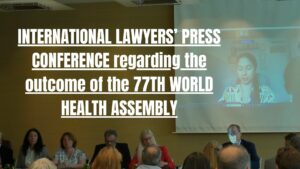
Following the first substantive hearing before the District Court of the Northern Netherlands in Leeuwarden on 22 October 2026, plaintiffs, their attorney and expert witnesses met the press. Since July 2023, seven people who say they were injured by the COVID-19 injections have been suing 17 defendants – among them Bill Gates, Pfizer CEO Albert Bourla and the Dutch state. All case documents are available at thenetherlandscase.com.
The press conference is in English. Subtitles are available in English, German, French, Spanish and Italian – choose them directly below the video.
Summary: “We are putting the narrative on trial”
After the first substantive oral hearing, the plaintiffs and expert witnesses met the press on 22 October 2026. Their message: the judges must now engage with the evidence – and the case has long since become bigger than a single lawsuit.
It has been a long day when the group gathers in the evening in front of an audience and a livestream. Since July 2023, seven people who say their health was damaged by the COVID-19 vaccination have been suing 17 defendants in the Netherlands, among them Bill Gates, Pfizer CEO Albert Bourla and the Dutch state. Two of the plaintiffs have since died. On this day, after more than three years, the first oral hearing on the merits of the case took place before the District Court of the Northern Netherlands in Leeuwarden, lasting around five hours.
The press conference is hosted by Briton Fiona Rose Diamond, founder of “The Narrative on Trial”, who built the website thenetherlandscase.com and, in her own words, has been raising awareness of the case without pay since March. On the panel: attorney Peter W. H. Stassen, the expert witnesses Sasha Latypova and Dr Joseph Sansone, and plaintiff Reginald Dijkstra. Joining by video are Dr Michael Yeadon, formerly head of research at Pfizer, and financial expert Catherine Austin Fitts.
Right at the start, Fiona Rose Diamond explains what the case is – and what it is not: “It is a civil case, not a criminal case.” It is about compensation for physical and psychological harm. But the plaintiffs, she says, are not in it for the money; they want the truth to come out.
“They have stepped into my arena”
Attorney Peter W. H. Stassen sums up the core of the lawsuit: COVID-19 was “not a disease but a project”, carried out by a group pursuing its goals under names such as Agenda 2030. Under Dutch tort law, his clients are seeking not only damages but above all a ruling from the court that they were unlawfully misled and were vaccinated as a result.
Stassen calls it one of his biggest surprises that all the defendants appeared in court. He would have advised them to stay away. “Now they have stepped into the arena – and this arena is mine too.” In the courtroom the defendants stuck to their line that the vaccines were safe and effective. For Stassen they are the “executors” of the project.
In the courtroom he held up Klaus Schwab’s book “COVID-19: The Great Reset” and called it “Mein Kampf 2.0”. The judges, he reports, said nothing.
His central appeal to the court: the expert reports have not yet been seriously considered, and without them there can be no justice. Fiona Rose Diamond describes the road to this point as a hard-fought struggle. In November 2025 the court refused to hear the experts in person. Stassen then submitted a four-and-a-half-hour video plea featuring the experts, which was first rejected and, after two objections, partly admitted to the file. From the plaintiffs’ point of view, one thing has already been achieved: Bill Gates failed in his challenge to the jurisdiction of the Dutch court.
The experts: “You don’t have to be an expert”
Dr Michael Yeadon, by his own account for 17 years vice president and worldwide head of allergy and respiratory research at Pfizer, responds to Pfizer CEO Albert Bourla’s claim in the statement of defence that he is not qualified. His first degree was in biochemistry and toxicology, Yeadon stresses – and Bourla is a veterinarian. He names three points that in his view show the products were not developed in good faith: a timeframe of under a year, which he says makes safe development impossible; a design with “built-in toxicity”; and a development process that was merely simulated. Yeadon offers to testify under oath: “That is an offer and a challenge.”
Sasha Latypova, who says she worked in the pharmaceutical industry for around 25 years, including in drug safety, reports that she was sharply attacked by the other side in the courtroom. Nine attorneys for the defendants faced a single attorney for the plaintiffs. The attorney for the Dutch state, she says, misrepresented her qualifications and her testimony. Her expert report of more than 100 pages argues that the products were classified as military “countermeasures” and are therefore indistinguishable from weapons.
Dr Joseph Sansone recalls the late international law scholar Francis Boyle, who had called the injections bioweapons as early as December 2020 and was due to appear as a witness. Sansone also reports that security staff harassed the group in the building and entered their room uninvited. He calls for “righteous anger” and hopes for lawyers around the world to file similar suits.
Catherine Austin Fitts, formerly Assistant Secretary of Housing at the US Department of Housing and Urban Development, describes pandemic policy as an economic “reset”. Lockdowns hit small businesses while large corporations gained market share. Her advice to the audience: use cash, reject digital identities and sell shares in the companies involved. “Courts follow the culture.”
The plaintiff: “For everyone who was harmed”
The quietest moment of the evening belongs to Reginald Dijkstra, one of the plaintiffs. He describes heart problems, three open-heart operations within one week, blood clots, brain fog and daily exhaustion. “We have waited more than three years for this day,” he says. The lawsuit, he adds, is not only for him but for everyone who was harmed by the injections.
During the questions, Sasha Latypova points to the PREP Act. This US law shields manufacturers from lawsuits, which is why thousands of cases in the United States have been dismissed – and why the Dutch case matters for the whole world. Asked by a Finnish journalist what the judges are now weighing, Peter W. H. Stassen answers: “Which side is right?” The plaintiffs, he says, have presented enough evidence to raise at least reasonable doubt.
What happens next
The verdict could be delivered on 9 December 2026, but given the complexity of the case possibly not until February 2027. If the court dismisses the claim, Stassen intends to appeal. Unlike in Britain or the United States, he explains, a Dutch appeal allows new facts and evidence to be introduced, so the case can effectively be heard again. Costs are also low because they depend on the amount in dispute; the plaintiffs paid around 300 euros in court fees at the start.
Fiona Rose Diamond stresses that neither the experts nor she herself are paid, and asks for donations via thenetherlandscase.com. Dr Michael Yeadon closes with a sentence that captures the mood of the evening: the fact that they are still being censored almost seven years later shows “that they have not won”. Stassen himself calls the day “really remarkably positive”: “We have seen that we can bring a message into the court.”
Note: This text reflects the views and statements of the participants as presented at the press conference. The other side was not present. It is based on the transcript of the recording (running time about 1 hour 55 minutes) and the video description on YouTube.
Okay, so for the sake of the people on the live stream, today was the the substantive hearing on the merits in the case not just against Bill Gates, but this was the first major hearing on the merits that's happened. It's not the end of the road, whatever the decision is today. So Peter presented fiercely lionhearted as he always does. Um the 17 defendants, uh if you go to uh the thenetherlandscase.com, you'll see all the information there about this case. Um, but I want to be clear about what this case is and what this case is not. There's been a lot of um, great hype and positive hype around the case and the world is really looking at this now. And I think previously they hadn't been. It had been quite suppressed and silenced and not a lot of people were talking about it and it's been going on since July 2023. Now we have an awful lot of attention. And I think it's really important for us to be very very specific and measured as Brian might say in what we are saying. So this case is a civil case. It's not a criminal case. It is not a case again, you know, crimes against humanity. That is obviously something that we're expressing that it absolutely is. Um but it's not a criminal trial. It's a civil case for damages for the harm, psychological and physical harm that seven injured Pfizer injured plaintiffs have taken this case um filed in July 2023 and damages would be the result but they have they're not just seeking money.
They are seeking the truth exposure exposure of the truth for the love of truth. So I've got a lot of respect for the seven plaintiffs. Two of them have sadly died since litigation began. And we have one with us in the room who'll be saying a few words later. So I've got a huge amount of respect for somebody who wants to just put the whole truth on trial and the narrative on trial and you'll hear more about it. But I would like to welcome Dr. Joseph Sansone. If you can give massive round of applause. Woo. All right. and also uh Sasha Latypova who's probably going to talk about how ripped apart she got today by those judges and she'll set them absolutely straight. And of course um on the do we have them we've got Catherine Austin Fitts who's another expert witness. Can we have a round of applause for Catherine? I hope she can see us.
And also Dr. Mike Yeadon. Can we make some noise for our expert winners? This is incredible. Thank you.
Hello. Can you hear me, Fiona, Catherine?
Yes, I can hear you very well.
Very good. You look wonderful.
Oh, this this is I'm going to wave that way. I'm here, by the way. So, this is going to be a wonderful conversation, but also I'll add into the room the man of the hour, the lion heart spine that he's got. Honestly, he blows me away. And in seven years, I've never supported a case. I've never supported any action in the last seven years against this. But this man is telling the whole truth and nothing but the truth. He's so brave. He's so incredible. He's putting everything on trial. Please welcome Mr. Peter Stassen. Y. All right. Do you want to just for a minute cuz some people weren't in the room. I mean, just say hello. They want to just have Yes.
And we we're just going to have a nice informal chat. I think what we've got here, this is wonderful that Mike and Catherine can join us as well. So, if you can take a seat around here, Peter,
I will do.
Yes. Thank you. Yeah. Wonderful. So, we've got people watching live. I don't know how many people we'll have on the live, but I also I want to be able to address the people watching us on the live streams who weren't in the courtroom who may not have seen the live stream today and may not know everything that this case is about. So, I think you're the best person to explain for the sake of the room and for those watching just a brief overview of this case and just a brief overview of what we saw in the courtroom today and what the purpose of the hearing was today.
Yeah, thank you Fiona for also the nice introduction and all the applause from the audience. Very much appreciated. Yay.
In the first place, this is an honor for me as an attorney to represent also one of the clients here. And these are clients who do not settle for some damages. They want the truth. And that's the reason that in 2023 I had seven clients coming to me and also then Arno van Kessel
and they wanted the truth out about the COVID-19 narrative. So we started making a writ of summons. Yeah, that's how you start litigation. Uh where we explained that COVID-19 is not a disease but a project. That's a very important statement to make to the court. It's a project and this means that a project then you also have people acting on behalf of this project and that's where we identified a group of people which are also discussed today in court which is having a agenda and we know this agenda by many names agenda 21 agenda 2030 we know it by many names we know the sustainable development goals. So what is this case about? This case is about a project. But how does that come to a civil case? That's an important thing to understand.
In the Netherlands, of course, we have the doctrine of tort, which means that when somebody acts unlawful and you meet, of course, some more legal requirements, then you can ask for damages as Fiona told in the in the introduction. But you can do one thing more. You can also ask for a declaration from the court that something is true. So my clients in first instance want the declaration from the court that that what they state about the COVID-19 injections and the damage they suffered is true. So this court case is a civil case and the basis of it is that this COVID-19 project was the means of misleading my clients and this misleading is done in an unlawful way. So what we actually say in this claim is my clients were misled and because they were misled they were more or less willing to take this COVID 19 injection. That's what we stated in 2023 as the as the basis of this litigation and I think that's that's a courage stand to take also by my clients but it should have it's it's the necess is necessary because we want to have the truth and nothing but the truth and so from this writ of summons I think one of the biggest surprises I had is that in fact all defendants showed up if uh this is Uh I can tell this now because they cannot undo what they have done. But if I advised them, I would have advised them to stay away because then the court could only look at the writ of summons and say well I don't know let's dismiss it. But now they stepped into the arena and I'm very grateful for that because that arena happens to be also my arena. So the go.
Yay.
So they gave their defenses and of course it was clear that they stick to what we say is the official narrative about COVID-19. We all have heard the propaganda so we know exactly what it is. And when the court case went further, we were of course looking for more evidence. And there I had I think the luck uh to have the great great experts coming in. So in fact the it was in December 2025 that we came at a point that we could put expert evidence in of the great experts you see here from Michael Yeadon from Catherine Austin Fitts we could uh put uh all this great evidence in also from Joseph Sansone which was very important for us because he could also explain that Boyle, the leading authority could explain that this injection should be seen for what it is and it's in fact a bioweapon you can argue it's legal to a bioweapon of equal to a bioweapon but when you say it's equal to then I can think you can say it's a bioweapon so that means that my clients were coerced of taking a bioweapon accepting a bioweapon in their bodies and that's a hard reality so getting this evidence in also meant that we could focus the discussion and and we got it in and it took a lot of effort and we had several rounds of litig procedural literation with with with with statements. It all took very long. We came from July 2023 and we are in fact sitting here for the first oral hearing on the real content of the case and in between we have some steps. We have seen that with Bill Gates who who challenged jurisdiction of the court. He lost that.
I could also advise him and told him before because this case is based on Dutch law and the international law says that when you have a group of people and they act together then there is competence of the court. also if one lives abroad outside the Netherlands and so I think it's all interesting but what's really about is about this misleading about these COVID-19 injections and what they are and today we were at the point that we had the first court hearing addressing that and we could still see after all this time that the stand from the defendants is the COVID-19 vaccines were safe and effective and what we did was a very good thing. We worked very hard and that's in fact incredible after all we have seen from evidence that you still take that stand and I think there's one very logical explanation for that and that's what we are telling to the court we are showing to the court based on what they said themselves what they wrote themselves we are looking at executors of the COVID-19 project and that's the real explanation why they keep telling the same thing.
Um, so today was the first hearing. It was very important that the judges see the evidence that is produced by the experts. And I think one thing to stress out is that I made quite clear in court that this expert evidence was not really discussed in a procedural debate as it should be. So if you think what I think from the court hearing today, I think we gave a very clear sign to the court that there can be no justice if the court is not willing to look further at this expert evidence because only then you can come to a judgment based on truth and a real discussion between the parties. So I think we had the chance to show to the court that we are not afraid to calling the things like they are. I had a long introduction about who this group is of people who the defendants belong to. I was not afraid to call the book COVID-19 The Great Reset a Mein Kampf 2.0.
Oh can I ask? Yes. I don't know if my sound's on here but did you show the book?
Yes I did.
Yes. So great cuz I we had the it's when you send a visual message to people. We discussed this and I brought the book by the way all the way from my home in South Yorkshire cuz I thought just show it so everybody knows what you're talking about and what was the reaction to that just cuz I wasn't in the courtroom.
I think the judges were silent on that. Oh, I and it but they saw it and I think it's it's a visual because this same book which I showed by hand is also in the picture that I show them in my plea on paper that you can see this this book is in the middle of the whole project. It's also from a figure of sight it's also presented like that by the world economic forum itself. But it's important to show people that this thing really exists and they keep they call this a conspiracy theory. But that's also why I think it's probably a good time to go to Catherine. Can we get Catherine? Jamie, can we get Catherine on the Zoom so we can see her because Catherine is probably the expert um on going direct reset and telling us all about it. And you submitted um this is the importance of the evidence that the they didn't seem to want to hear. they didn't seem to want to see, but multiple reports that Catherine has written over such an extended period of time, the expert that she is, was submitted
and obviously they can't ignore it, but I think it would be interesting to hear from Catherine. First of all, Catherine, we sorry I don't want to keep you too long. Um, I know you're super super busy, but so good to have you here. Um, did you get a chance to see anything today or at least
No, I I I didn't see anything. I was on the highway. Um, but I heard the description of what happened and I just have to commend you for doing this. I was reading Peter's statement last night and it's very important that when we object to what has happened that we lay down the truth and I think you guys have done really a remarkable job of putting forward the truth as well as witnesses who can testify to the truth whether it's economic or um economic or or medical and scientific related. I I do want to say three things there. There are three ways you can destroy family wealth. One is to poison a family, particularly its children. That has remarkable financial ramifications. The second is to shut down its sources of independent income, whether it's its businesses and um and its farms and other civic institution and community institutions like like churches and temples that give people support and are important, you know, part of the economy. including the schools and education. And then of course the third way is to uh engage in monetary policy that is inflationary in a way that helps consolidate central control. And that's what we saw during the pandemic. We used we saw health care policy justified to poison you know people with independent income shut down their businesses and their farms while the large companies stayed open and thanks uh in part to that injection of monetary stimulus was able to consolidate huge market share.
Um and and so if you look at the policies from a standpoint of building central and economic control, you know, it was a reset and um whether it's described by the WEF as a reset or the central bankers is going direct reset, it was a reset and as an economic reset, it was very very uh successful. Now, I've served as a uh a political appointee and assistant secretary uh of housing in the Federal Housing Administration in Washington. And one of the things I learned when I was in that position is how it is absolutely possible to kill with a pen. um you can embed into monetary policy and fiscal policy assumptions or laws or regulations that engineer the economy in a way that absolutely kills. And that's what we've seen. We saw the engineering of economic, fiscal, and monetary policies justified by health care policy that absolutely uh did a sweeping consolidation of the economy. And um and if you look at the people lied to and then harmed as a result of believing the people who were lying with a pen or lying with their media statements um it's it's a just an absolute mass atrocity, a tragedy. But whatever it was, it was an economic reset. And I'm so glad that you have brought this out to the courts because it just it needs to be boldly said and the people who engineered it need to know that we know Yeah, thank you, Catherine. Um, because we'll move on, I think, to um I know where I want to go because this is the struggle.
So, in November 2025, on the 26th of November 25, I think it was, there'd been a long sort of battle to get expert witness testimony in the courtroom, specifically oral testimony. And all of the expert witnesses were offered to to give oral testimony. You offered them up and said, "Scrutinize them under oath and speak to let them speak in the courtroom. And if you think that you can uh contradict or prove that what they're saying is wrong, well, let's do it in a public forum in an open courtroom. But it was on the 26th of November 25 that the court ruled no, we will not hear them. And I think the point is that how do you how do you really scrutinize the evidence and hear the evidence without hearing your voices? So, long story short, some of you may have seen the if I can do that. Some of you may have seen the film um that we released about the oral uh video testimony that was that was submitted on the 22nd of September. Um that was initially rejected uh by the court in its entirety and Peter's so creative in trying to get their voices in evidence. They rejected it. you objected or to that rejection twice and also it was made public. So when it was submitted it was made public. We put that oral testimony out there for the world to see and that public pressure I think you did say this to me.
Yeah. I think it makes a difference because the rule is justice must be seen because otherwise there's no justice. And now somehow you made it clear what this what this evidence is and made it also clear what is it exactly that is not to be seen. And I think that was at least a positive contribution
uh to the
the public pressure
to the to the decision. For sure. For sure. And it also had a very uh formally it was in fact a strange week for me because we put in this evidence and then I also mean this uh video plea with the experts in it. We send it I think over at the 22nd. Then I got a I of course asked to the court did it come in or not. I didn't hear any answer. Also the defendants all the lawyers you saw today they didn't object to it. It was silent.
Mhm. So it was silent from the side of the court and silent from the court of the from the side of the defendants. And we we we I got a message that I needed to look next day. It was I think the 24th on the what we call docket. And then I saw, hey, it's rejected. Oh, what's this? So I had to object.
Mhm. Again, a supplementary objection. You said Yeah. Which I thought was you're belligerent.
Yeah. I I don't stop because there's there's no reason to stop. So I objected then the first time and then of course they rejected again and in the rejection they said well it's not evidence what you put in and I think that's that's very strange because I think you have some great evidence sitting next to me and also
online and so they said it was only partly evidence because what the lawyer said was no evidence.
Okay. So, we we might as well say that it kind of really was a clever way of you saying more than the time that they were giving you in the 5-hour hearing today. Just that you told them about the limited time.
I I asked for of course hours of speaking time today didn't get. Yeah.
So, it was 4 and a half hour video plea and we made it public and we think the public scrutiny and the the pressure of the eyes of the world on the case which they've which they are and it's never been like this before. We've never had this many eyes on the case. And I mean, I remember the last press conference, which was wonderful, by the way, but that was like the first press conference in Amsterdam, the separate case appeal. Yeah.
And thank you.
Yeah, it was still wonderful. It was really It was really quaint, by the way. But um this this is what happens. It's growing. You know, I I came in Amsterdam. I came on the 9th of March and offered my help and that's why this has been organized. So, I'm only doing what I can to try to bring exposure to this case. And it's been we have been interfered with. I'm technologically we really, really, really have. I don't think I've slept in about 4 months. And I'm usually quite concise and brief and I can I can explain things well when I've had more than two hours sleep. But the importance of that expert testimony, which I'm going to go to Mike because I know that there's I understand um the cynicism and the kind of pessimism and around the case thinking we've had so much sort of thrown our way over the last seven years that people have gotten very tired and weary. And I think that Mike can relate to that. And I hope you don't mind me saying, Mike, I I've been I've been there. But with the video testimony being accepted on the evidentary record was in itself quite a win.
Um,
yeah. And your voice has been suppressed more than most people's. Um, honestly, people that have spoken up because you have you've you've directly claimed that the the jabs were toxic by design. There's no question you had to choose those ingredients. and you are the former VP of Pfizer and Mr. Albert Bourla personally attacked Mike for a few pages in his defense. He got quite emotional and had the nerve to call Dr. Mike Yeadon unqualified when Albert Bourla is a vet.
So Mike, speak to that because I love I you you you're very you're very humble with it though with with Albert Bourla but just tell us specifically about that and Yeah,
I will. Yeah. So, uh, thank you, thank you, Fiona for setting this up. Um, my thanks also to Mr. Stassen, Peter. I think you're a courageous example of what each of us need to do in our own sphere. I I often say without being pessimistic that no one is coming to save us, but we can save ourselves
and through our actions influence other people to save themselves. Ultimately the people operating COVID-19 the great reset which is intended to address everything about our lives uh require our consent to it. So if you if you decide that the risks uh of being called a conspiracy theorist are warranted um then you just simply need to decline uh there will be I think in my view a forcing of mandatory digital ID and I urge you to not do it no matter what punishments financial social and otherwise are pro provided because you don't need a new digital ID. You can already identify yourself to whomever needs to know it by perfectly satisfactory methods like passports, driving licenses. They need us to sign up to a dynamic digital ID that is updated in real time. And if we let them have it, I'm afraid it's over because it just simply needs to remove cash at that point. as Catherine has emphasized, if we have all digital money and digital ID that's dynamic, um we've we've walked into the trap. So, I'm not going to do that and I know millions of people aren't going to do it. So, just in terms of responding to uh Mr. Bourla, yes, he said, well, Yeadon's not qualified to comment. Let me say that my first degree was in fact biochemistry and toxicology.
So I more than him am qualified and subsequently decades of practice of looking very hard at the design of experimental medicines with one goal in mind and that's to avoid harming people. Um, a clinical colleague I worked with for many years said, "Mike, it's great that you're enthusiastic about your new mech mechanism for reducing symptoms of asthma, whatever it is." But he said, you know, the most important quality of any medical intervention and most importantly when it's given widely potentially to everybody is safety, safety, safety. So, because you might help people, you might help some vulnerable people, but if you've got a medicine that's not squeaky clean, you will harm more people than you could possibly help. So, that's the one thing. So, I'm qualified to comment on it. And my toxicology degree is in what they call mechanistic toxicology. on the lookout for how deliberately or accidentally you could be harmed by chemicals or b by biochemical substances. So it was with that in mind I think there are three things to you don't need to be an expert to understand what I'm about to tell you. This proves they didn't produce these injections with good good intent.
One is time scale. Uh I think Peter in his summing up said responding to a an alleged pandemic with a vaccine is it's nonsensical. Why? Even Bill Gates in open testimony have said developing vaccines takes about a decade. Some have said five years. The truth probably lays somewhere in between the two. So it is understood by experts that 5 to 10 years is the kind of time scale you need and you can't shorten it very much. And yet we are told that I think 10 or 11 months from claiming that there was this new threat to look these products ready to roll out was well under a year. You can't do all of the steps required to show this medicine is safe and effective and can be manufactured consistently in under a year. It's formally impossible.
That means they lied to you. they didn't make what they said or they started it earlier and neither of these are any good. So time scale what I've said is true you cannot do it uh in a few months. Uh and so they they directly lied and I would speak to Bourla and say if you look at your project plan it wasn't done in a year sir it wasn't. Uh but maybe they didn't teach you about that in in in vet school. I don't know maybe not. So time scale is one thing that tells you you've been lied to and they can't rebut this. They never address it because they know it's a fatal flaw in their whole story. And you would never start with an attempt to make a vaccine. Um because I mean I don't even think pandemics are real anymore. But let's pretend their preferred reality is true. The longest a claims pandemic has ever lasted in the past is something like a year to 18 months. And they knew and have admitted that it would take five to 10 years to make a vaccine. Can you see ladies and gentlemen? You don't need to be a scientist. Just need to remember what I told you. You know how long it takes.
And you know how brief all historical claims pandemics have been to realize they don't match. They don't match. It's the completely wrong response. Now, they lied about everything. But even if it had been true that there was a pandemic, even if they were trying to make a vaccine, it's illogical to go down that route. So that's one thing, time scale. The next one is design. Now, this is where I spent my entire professional life working with talented medicinal chemists and others with my eye on safety all the time. How do we get an objective reach without harming people to minimize the risk that unexpected bad things might happen? And I I knew in 2020 that by virtue of the design choices made in every one of these alleged vaccines, they had toxicity built into the design. They don't address it because they can't rebut it because it's true. If if if you make the body manufacture something that's nonhuman, your self-defense system will recognize that and attack it. And that's why many people have been injured in diverse ways because it depends on where this material lands and the particular sensitivity of your body to foreign objects. It's exactly the same immunology, Mr. Bourla in the first lesson of immunological textbooks that all the public know is true because it's the same biology that underlies organ transplant rejection, t blood uh transfusions. It's the same basic principle. So time scale was impossible and the design choices they all made inevitably produced toxicity. And the third one, Sasha is the expert on this.
It's process the what did they actually do between inventing it and injecting you and your children with it. Did they take it through the conventional steps of safety, manufacturing consistency? No, they didn't. that is on the record. You can see the reports generated were theatrical. They were a partial uh simulation of the development of a new product. So, you know, it it could not have been done at the speed they claimed. The design would inevitably harm people and they didn't even bother to pretend really that they had taken it through development. Um, so just a couple of other things on timing. I think they they point at liars. One is Mr. Schwab. Uh the other is Dr. Ted Ross. So to Mr. Schwab, Peter held up in his hand a book called The Great Reset. It wasn't just called The Great Reset though, folks, was it? It was called COVID-19: The Great Reset. It was published sometime in the middle of 2020. I don't know exactly when. I've been involved in authoring, editing and publishing books including uh textbooks.
You can't do it in a few months. So the the idea that he wrote a textbook about The Great Reset COVID-19 what starting in January in January nobody knew
even according to the fiction they didn't know it was going to be this big thing. So I again I believe he didn't write it and it was written long before this this episode which by the way was preceded by at least a dozen tabletop simulations of pretend pandemics over the last 20 years. Um so and then the the only other thing um I would say about the speediness so that was Schwab's book there was another one. Yes. So Mr. Tedros, I would say if you're going to announce that there is a public health emergency of international concern, a PH E IC, which believe it or not is pronounced fake, P H E I C. Um, by sheer coincidence, I'm sure they're not playing with us at all. Um, but in order to declare an international episode, you have to have, do you not, more people dying than usual or more people sick than usual. And you try as you might, ladies and gentlemen, prior to Tedros announcing a pandemic, you will not find anywhere in the world that there were more people dying of anything, let alone alleged COVID-19. There weren't even more sick people than before. We've looked at the NHS um emergency call log for people calling up with severe acute respiratory problems or turning up in the emergency room accidents and emergency. So nothing happens prior to Tedros calling an emergency. You know what? He's not a mind readader. He's not a fortune teller. He can't see the future. So I put it to you that in order that his claim of a pandemic was true, he had to have preceding information. Oh my word, look, there's all these people dying and getting sick.
That evidence doesn't exist because it didn't happen. So, I think I'm going to pause at that point, but I think I've given non-experts enough information to know you've been lied to and injured on purpose, and it fits with all the other ghastly things I've learned from Catherine uh and Sasha and numerous other people over the last seven years. So, I'm going to pause there, but
I'd love to be on the stand under oath. I'd love to give evidence in open court and face cross-examination by your lawyers. So this is an offer and a challenge. Thank you.
Thank you, Mike.
Thank you. Yeah, I think um I think we can all agree. Can people hear me? Is my Can people hear me? Yeah, I think we can all agree that there was no real medical pandemic and the and the jabs aren't safe and effective. I think it would be great if we Yeah, exactly. We all agree on that. I know that there's debate over whether there was a new pathogen or not. I'm very strong on that. I completely agree with Mike. I don't think it existed. But do you see perhaps the this this case the fact that your oral testimony was put before a court and Albert Bourla actually got a bit emotional and
tried to attack you.
So I think the where I am now Fiona is I suppose I've known this for a long time and and but I'm probably more positive about the realization than I was before. So let me just say what I think. I think early on many of us hoped that if we were able to speak loudly and clearly we could divert or even halt what whatever was going on. Um I don't think that's likely but what I think we are in is an attritional battle really an attritional battle. So there will be no day on which one declares victory. But I think what we can do is gradually hinder the perpetrators efforts to as it were enslave us. And so having my testimony and that of my colleagues officially entered into the into the evidentiary record is is very uplifting because I think Peter, you and colleagues have for the first time managed to compress into one identifiable location and u official event the allegations and the evidence.
And so, Fiona, to your point, this can be used repeatedly regardless of the outcome of this specific case.
Thank you so much, Mike. And I'm going to um I'm going to go back to Catherine. Catherine wanted to ask a question. She raised her hand before I get to Joseph and Sasha in the room. Sorry if you guys are probably super tired, but Catherine's been wanting to ask a question. And yeah, we'll go to Catherine again now. Thanks for that, Mike. It's always great to listen. So um Mike did not describe the position he held at Pfizer but my understanding had a very important uh position head of respiratory uh research and diseases for a very long period of time. Is it possible for Peter to ask Bourla or follow up with Bourla why he would have people in positions that important who were not qualified?
Yeah. I mean, yeah, exactly.
Mike, could you just describe the position you held at Pfizer?
Yeah, just very briefly. Yes. So, I was u vice president and worldwide head of research into allergic and respiratory diseases. I was enrolled I think for about 17 years. Um I have good qualifications, joint first class, honors, first degree, um a PhD in a relevant subject in respiratory by the way. And then I I led a growing team that was maybe 50 or 60 direct employees and over 300 indirectly in all of the partner lines. And the the budgets would have been double figures, millions each year. Um and we and we did eventually succeed, Catherine, the when the UK base closed, I and others worked to get new owners for projects in development, some of which have reached the market and are commercially successful. So yeah, I enjoyed my job. I knew what I was doing. I was passionate about it, sad it ended and left to become an independent in which I succeeded as well as a biotech uh CEO. And um uh so Albert Bourla's uh previous direct report who ran the whole of Pfizer's R&D, a guy called John LaMattina, uh he was a Pfizer board member and he wrote up my biotech exploits in 2017 uh calling them out as remarkable in in a business magazine, Forbes. So it's a great point Catherine that when I left the industry uh I was I would say I was held in good esteem you liked and respected. So it's surprising that Dr.
Bourla would say I'm you know in some way inadequate.
Thank you both. You can stick around because we might come back to a little group predictions thing. I think that would be worthy to touch on. But I'm gonna switcheroo here because Mike mentioned Sasha is you talk about process your 107 pages that you submitted. You'd updated a report that had been previously submitted I think in December 25,
but they gave you a real hard time today. They have tried to rip you to shreds, but it didn't really work because you just came out and set them straight. But do you want to set them straight now and tell us about what happened?
Yeah. So, so today in court, um I and I I'm not familiar so much with the Dutch court procedure, but these very high-powered, so there were nine defense attorneys versus one for the plaintiffs. And these nine high-powered the, you know, the best the most expensive attorneys money can buy in the Netherlands or in in the whole EU, uh probably charging their clients $10,000 a minute. Um so they managed to uh say uh several verifiable lies in a very short statement. So the um the I believe it was the head attorney for the state of the Netherlands
who said that I have only a bachelor degree and that I have no experience in this industry. And uh also he misstated my evidence. In my evidence I'm very clear. where I'm saying that these shots are indistinguishable from bioweapons. He said that I'm saying that they are bioweapons without having expertise. Um so those are three lies for which in you know in my to my knowledge in the United States an attorney would be severely punished for lying like this in court for something that's in the evidence. They also claimed that they responded to the evidence that they reviewed the evidence. uh my credentials have been in the evidence since late 2025. So how come they don't know the basics of who I am, what my credentials are, what my evidence says, yet they're insisting that they have responded substantively to the to the evidence. So those are just
your credentials.
My credentials. So my background is I um well I in addition to the bachelor's degree I have a graduate degree uh from Dartmouth College which is a prestigious US institution one of the four original Ivy League and uh I have worked in the pharmaceutical industry for about 25 years. I ran my own companies um my own clinical research organizations. I worked in drug safety. I worked in other um in in medical imaging CRO but mostly for the my later career was in drug safety. So I worked in all therapeutic areas developing all sorts of products including for infectious disease. Um and uh Pfizer was my large client. I also worked for about 60 other pharmaceutical companies worldwide as clients. Um, I submitted data for FDA approval, for EMA approval, for Japanese approvals. So, I'm very familiar with regulatory frameworks and how the process is supposed to work. And my testimony um really examines the the major difference between a pharmaceutical product which is protected by the expected consumer safety protection laws, regulations um and uh also manufacturers liability which makes it from a chemical into a pharmaceutical consumable product versus counter measures which is what these uh substances have been designated as from the very beginning everywhere in the US and in Europe.
um and countermeasure and a and a consumable or pharmaceutical product are completely incompatible. They live in two different worlds. One is in in military frameworks deployed under declared public health emergencies. As Mike said, they're fakes. They're they're they're pronounced as fakes. Um so they're declared based on a say so of a of one bureaucrat uh a health minister or HHS secretary in the United States. And it's just his opinion that issues that declaration that then puts the whole country on a on a war footing. In fact, the the government bureaucrats repeatedly said that we're at war in various settings in propaganda. Uh again in the US and in Europe uh they said we're at war. We're at war. Uh they called it this uh they used many military terms. They put military in charge, military officers in charge of what ostensibly were public health activities. So, as I said, the the um counter measures and medicines have nothing in common. And counter measures, if you examine them, and that's what my testimony is about, um examines all the evidence and proves that counter measures are indistinguishable from weapons. So, uh defendants cannot respond to my evidence substantively. So they try to attack me. They try to attack my credentials and they just try to deny that this evidence exists and they try to escape the debate. And this is very critical debate. The public needs to know that they were lied to that everything that that the government said and the manufacturers
recording in progress.
Oops.
Yeah. I just want to say the collective of people that we've got here. I was probably foolish to think that this would go smoothly. Um, I I'm I'm just really really grateful and I'm and it is being recorded and don't worry about that that I'm I'm just apologetic that the live is down and thank you for sitting at the front and doing that.
I'm going to let Joseph speak um because I think it's a good follow on from what I know don't know if you were finished Sasha but you yeah we'll come back to you but um
yeah so I I provided a statement detail on Dr. Boyle's legal view doc look Dr. Francis Boyle uh is the law professor who drafted the biological weapons and anti-terrorism act in 1989. Uh he was scheduled to testify in this ta in this case and you know as a witness after he agreed and a few weeks later he passed away. Um but um he had endorsed my original band of jab resolution and uh um he in fact did that while I was in the hospital. But uh he came out in December of 2020 stating that these uh injections were bioweapons. Um everything should have halted right then. He's arguably the world's leading legal authority on bioweapons. But uh one of the things that I want to talk segue over to is um the pandemic of psychopathic authoritarianism because that is sweeping the globe and we really experienced it today. What you guys don't know is that we were being harassed um by the security within the facility. They were coming into our private room spying on us uh you know like refusing to close the door. um to real harassment like interfering with attorney client privilege. Uh stuff that um would be reminiscent of East Germany and Stasi. Uh and this is the Netherlands. This is supposed to Excuse me. This is supposed to be the free West. Um it's falling. It's falling quick.
Um and look, they they've poisoned most people you know and love. Most people you know and love will have a likely have a shortened lifespan because of these injections because of chronic diseases being caused by them. uh you need to get angry about that. It's it's not okay. They're they're trying to normalize like really truly psychopathic authoritarian behavior. And and the modern state is a psychopath.
Uh and we cannot accept this any longer. A government can only exist if you allow it to exist. We do not exist by their decree. They exist by our decree.
Regardless of the country you live in and you just you just can't look the other way. You can't stay out of the arena. Um, Peter has entered the arena. Uh, and he's fearless with it. Sasha is in the arena. Dr. Michael Yeadon's in the arena. Catherine Austin Fitts is in the arena. You need to be in the arena. We're fighting for the survival of our species. Whether we become a slave race, whether we even remain as human beings, uh, these people are trying to depopulate our planet. They're technocratic overlords and they're into this transhumanism thing where they really want to merge biology with technologies. They're nuts. And as soon as you recognize, and this is partly, you know, why I wrote my book, soon as you recognize that you are dealing with psychopathic authoritarians, that they are not normal people that you're dealing with basically people that are criminally insane, the better off you are because otherwise you're going to rationalize like, well, why would they do this or why don't they do that? No, they're they're deliberately harmed you and your family. How could you How could you put up with that?
How could you allow that? You shouldn't allow that.
You should be very angry. They really do believe in fear. They're cowards. That's why they terrorize the whole planet. What we need to do is excite enough people and create enough legitimate anger. This is not a racket emotion. You should have legitimate anger about what occurred to the people you know and love that were violated. And we need to create enough anger among you, those of you watching and listening right now who have been harmed or family members have been harmed so that these psychopathic authoritarians truly understand the meaning of the word fear. They need to fear you. Nothing will happen until they fear you. And that that's just the reality. You can you can you can pray for peace. You can pray for happiness. That's all fine. But get out there and fight for your liberty and your and and the people you know and love because if you don't if you do not do this, we're done.
Now, this case is just the beginning.
This case, you know, it's going to move forward no matter what. But this is just the beginning. We need people to start firing. We need attorneys to grow a backbone like Peter Stassen and start filing cases everywhere. That's what needs to happen. We need to overwhelm the system because we have more victims on this planet than we do people that are not victims when it comes to these injections. And so, um, that's pretty much all I have to say on this point.
YAY.
The real fraud was never exposed. Fauci sitting there and talking about the six me
actually they are they are they are rolling out force right now. Um actually earlier today
we saw it
we saw it uh uh children's hospital of Philadelphia it's a humongous um institution in the United States posted advertisement saying that they will vaccinate children who are under general anesthesia undergoing surgery
without consent and they are calling it close your eyes will immunize and this is a advertising campaign so they're using force they're telling you We we will force vaccinate you. We will vaccinate your child without consent when they're
we've we've this is what I mean though. I think it's it's it's worse than that. I think we we we'd seen that through the the the pandemic. The the they they rolled out people going doortodoor in the UK and handing out leaflets telling you to get it. They used the military at the mass vaccination centers with 15,000 people per day getting jabbed. They did take children away from their parents because they they had an antivax mother. So, I think we've seen this, but I don't I think what my my point would have been that the the fraud has not until now
been fully exposed. And that's why this case matters because Peter's not afraid to say it all.
And that we're not we haven't even touched on this satanic mindbending system and this malicious globalist.
I elite, but it's they're parasites. It's who goes it's incredible. And that's I'm, you know, that's why I feel so strongly about it is that he says everything.
There's nothing that he doesn't say.
So the the fraud is being fully exposed. You just expose little bits over the years, but I think honestly that's what I think that this case is. And I think this is the beginning of um potential accountability, global accountability. I I really think this is the beginning.
They exist on the illusion of power and we need to just break that illusion.
Yeah. I I I'm going to go I think back to Peter because I think everyone would be interesting interested to hear what they said uh what the judge what the judges said would happen from now. I heard 9th of December. I heard certain things. So I also heard February next year. So I think we should talk about quite briefly what the possible outcomes of today are, why it's not the end, regardless of the outcome or the judgment or the decision um and what it means, but as simply as possible. So one outcome could be that you've not met five requirements that they expect you to meet and they could simply say to you and serve a letter whether it's in December or February saying well you've met this requirement this requirement this one but not these two and that would be a simple
that would be um of course a judge need to check the requirements see if they're there of course we all stated them that's that's for clear but the judge does not need to agree on them that's something else. Um so in theory it would be possible that the judges just re reach a final verdict and I would find that the absolutely wrong verdict. Uh because we offered we presented a lot of evidence. We offered a lot of evidence. There's also some rules of litigation when you offer evidence. It's not easy for a judge to pass that offering especially when it's about witnesses. So then the judge would really need to explain why she leaves out all this evidence. We also made an appeal on the judge today to say you need to look at the evidence which is currently in now. It's not discussed
in a decent matter. So yes, theoretically a judge can after a oral hearing say I'll end the case because I think it's not met the requirements. I think the judge just should understand that in this case that's not the right way to go.
Um to cut in because this is where it's misunderstood across the world. If that were to happen there would be what you would call a determined appeal. You would appeal.
I would appeal
in the US in the UK. Appeal is a very very different thing. It's not the same here in the Netherlands. in England or you the UK for example when you appeal and you go to the court of appeal or any appalate court all you're doing is arguing that the previous judge made the wrong decision and they look at the judge's decision not the case so you're arguing to get a decision essentially overturned to then open a door to potentially fight again I hope I get this right in the Netherlands you essentially to a different extent ent they can put limitations on you or they could say that you can do this this and this and but not this when you appeal you could potentially have the opportunity to redo and to correct mistakes so if they say that Peter hasn't met his five requirements and and they say maybe one or two it probably call um calls all link and something else say it with with that
he would know what he didn't do and what the court expected him to do So he could try and do it. Do you understand what I mean? So he could enter expert evidence. He could you can you file an appeal. They would tell you, you know, what your limitations are. But in the Netherlands, it could lead to almost a potential doover.
We can do the case if necessary. I don't hope so.
If necessary, fully over. So
I'm just committing him to another three years.
Yeah.
But okay. In an appeal, you need to work with grounds. We call them. You need of course to tell to the judges in the appalent court what is wrong with the verdict. We need to state that. But in doing so we have all the freedom to put in new facts, new evidence, new grounds. We can even we could even take another legal basis of the claim. It would all be possible. So of course there need to be grounds and you can make the appeal as big as you want.
You could limit it to one ground but you can of course give as much as you want. And if you give as much as you want and you put in as much as you want then in the end you have a full new case which is 100% or even bigger than the one one the first instance to be addressed by the appellate court
can I just I'll come to you in a second not you just give me a minute um yeah carry on
yeah so the answer is yes in the end we can we can do it if if it comes to the can I don't want to go there too quick because I would really I know. I'm sorry. I know you need a break a little bit. I think a few weeks would be nice, but I'm just I wanted to emphasize it's different. So, if you if you're in the US and you're hearing this, it's not it's it's it's a different process. And the other positive thing about any outcome would be, and I'm sorry, I'm not committing you to to more. I'm just I just want to tell people why it's so different here in the Netherlands is is the cost of the system. So losing wouldn't mean paying hundreds and hundreds of thousands or millions of euros to the uh perpetrators that you're trying to sue and and bankrolling the beast. It it wouldn't mean that it works on a point system. I just want to make it clear because we have internationals here. So when people when you say lose uh potentially people would assume certainly in the US and certainly I think I'm not wrong about that and in the UK you can probably tell me they'd assume that your costs would be half a million at least right and then that would go straight in Bill Gates pocket or straight in Albert Bourla's pocket.
That's not the way it works here. So this is the place to do it. The Netherlands is the place to take this case all the way. And I'm not committing you. I'm just saying it's been really it'd be really really good if you did. I think there is there are two major things which make this a good place to litigate. It's the cost aspect as you said that's one indeed we have a point system we look at the value of the of the claim and in this case the value is in fact zero because in first instance we asked the judges to declare that what happened was unlawful and then we asked to start another procedure that nobody understands
in the UK that would be an undetermined amount so you can sue someone and then you talk about well how much do I want later it's a kind of under and that's the lowest catery you need to pay so I I I forgot but I think for all the plaintiffs you pay €300 or something to get the case in court so that's that's really a low amount
um
can I just say the experts aren't being paid so I just I reiterate to get the case
they've worked for they've worked yeah but I'm making a point and I think it's a necessary point to make because of something else
um that I'm very aware of surrounding this case is that Sasha Latypova, Dr. Mike Yeadon, Catherine Austin Fitts, they're sat here now on this Zoom. You can see Mike and Catherine. We can still see you by the way. And I'm uh and we really, really, really thank you for for being here. None of them have been paid a penny for their time, for appearing here, for even writing their reports. Sasha's over 100 pages, and it's been more Sasha's been a real advocate for this case publicly. She called me in March and said, "Can you come and do something?" I'm like, well, I'm not a journalist, but I'll try do my best. I only got six million views, Sasha. So, I hope it was worth it. But I'm just I want to reiterate everybody working on this essentially is they're not they're not being paid. They're not rolling in it. And they deserve a round of applause, please. Everybody, thank you. So, thank you very much. And I can't say, you know, much else about certain things. Um, but I volunteered my time because of the what people are putting into this. They've got faith in it. They believe in it. It's real. It can go somewhere. It could be the big the beginning of accountability. And if another lawyer with a spine around the world can stand up and do a better job than Peter, well, we actually want that to happen. So it we you've made it it's it's possible because jur jurisdiction obviously the jurisdictional argument with Bill Gates he lost the billionaires aren't untouchable that it that's that's that's precedent itself winning jurisdiction over Bill Gates and Bourla and forcing them to submit a substantive defense. Bourla has gone on for hundreds of pages all emotional about how bitter this feels that he's being sued if he wouldn't care so much. And this is what I'm saying. I'm super passionate about it. It means so much worldwide and I just the I just I'm blown away by the experts but I also I want to I'm going to take a mic to Reggie. I'm really happy that you're still here Mike and Catherine. Um uh Catherine just asked a question that I would I wanted Catherine asked me a question. Um are the mics on? Is this on? If I do this is the mic the mic's on.
Okay. Um is it What am I talking? Is that loud enough?
Yeah. Can I hear from the audience if that's loud enough? Because all I'm hearing is a nod from the people at the back. I'll be honest, this doesn't sound great. I'm getting a few people.
Is it okay?
Right.
Um Reggie,
I know where you are. I'm not blind, but come with me, Reggie. Um Reggie is incredible. Reggie is Pfizer. I'm not going to call it a vaccine. Injectable injured. And like I said, one of the reasons I really really respect I don't know I've got a mic on my face. I'm I don't know why I'm talking. Uh can I Is my mic on?
Yeah. Good. I don't know why I was doing that. I had two. So the one of the reasons I respect you so much is because you just care about the exposure of the truth. You are attacked in their defense statements as far as I believe. and I've got a lot of respect for you as someone who could have just sought, you know, justice in another way through, you know, an easy payday, but you haven't done that. You're still here 3 years on. Um, I'm going to let you sit down here next to Peter and say a few words and perhaps you can have that discussion, but can we have a round of applause for for Reggie, please, who
take your time.
Yes, today uh it was a great day. It's uh we've been waiting for uh more than three years on this day and uh this case this lawsuit is not only for me but it's for all the people around the world for all the people who got damaged by this injections. uh for all the people who died millions of people died from this injections and the people who is responsible they must get their punishment. That is what I want to say to the whole world. Thank you.
Yes. If there is any questions you uh you can ask me.
Yeah, what's up?
I think
How are you feeling?
I'm feeling uh yeah, not not that great. I'm still I'm still sick.
Heart injured. What's your injuries?
Yes, I have heart heart problems. I uh I have an open heart surgery three times in a week.
I have blood clots. Uh brain mist. How they say that in English? That is
brain fog. brain fog
and uh yeah very tired every day. Every day you get tired and uh yeah it it it don't goes away. It don't go away. So uh there's a lot of more people uh who have the same uh issues and uh yeah I think about them. I think about them.
How has it impacted your life?
Yeahffect my life for years now. And uh you got to live with it. You got to live with it. That's why this case is so important. What is this happened about the so-called pandemic? It's uh we got to send this important message to the world.
Yes.
Thank you.
You can you can stay there. Just Yeah. Stay there. we can come back to you because I want to go to some um questions possibly. If I can get both these mics on that would be really handy for me if they can both be on. I'll give one back to you. I I want to go to Catherine. Catherine's asked a question in in the chat. So I just I
So Fiona, you and Peter have put up an a marvelous website with lots of material and documentation. Could you describe for everybody the website where they can find it and also once you have a recording of today where they can find that as well as how they can make a donation because I know there are thousands of people who would love to support this. So if you could describe to them what's the pathway whereby they get support for Peter's efforts and the website.
Um Catherine, thank you so much for raising that. um you beat me to it. That's never at the forefront of my mind is, you know, raising donations and talking about certain things. But the thenetherlandscase.com was a website that um I built um when I got involved in this case, what was it? I mean back in March. Um and I came to the appeal. Uh this I could see how important it was and I invested my time, held this press conference. Yes. So I I identified that there was no website that basically said what this case is, gave people the information that they needed to read it, translated it to English, so it wasn't just in Dutch. Um, which is why obviously now there's been so much exposure. So that a lot of effort went into the website just to inform people and also expose what's what what's actually happening here because so many people had no idea. So I'd called it the narrative on trial um because the narrative is on trial. The great reset's on trial. It's been happening for the last three years since litigation began.
That's exactly what this case has done. So, I wanted people to see what I saw and I hope that the website has done that and it's you can download everything. It's all available for free and I just I get so invested in things. I like, oh, I'll do a website. So, that's how that happened. Um and then the um donations obviously I'd committed to helping organize this press conference and I was originally was trying to guide the foundation to do that. Where we are now the foundation that some of you might know if you are Dutch are no longer involved in in this case at all and I will say that they didn't want to do a press conference. They didn't want to do a press conference in Amsterdam. Peter actually had to book that himself um to even have that press conference done and that was Sasha like massive huge thanks to like we Yeah, it was it was brilliant. I love that pizza restaurant.
They donated the pizza place donated the
Yeah, exactly. So, it was great.
Um but it's been more challenging than people realize to pull these things together. So, it's gone from me trying to help a foundation do their job to me doing their job. So, that's why I'm stood in front of you today. I don't host press conferences. I don't do interviews, but Peter and I did one. I just do what needs to be done and that's it. Um, and I've got the skills to do it. So, thank you. Thanks, mate. And thank you very much, Catherine. And if people do want to um if people do want to uh donate, if you know, so just we've got the live here. Um so yeah, www.thenetherlandscase.com. And we're not just funding this whole thing because I've been funding to pay for this press conference. Peter's paid towards this press conference. Okay. This is not normal that a lawyer that's litigating the case. So yes. So that's why I'm so passionate right now. Thank you. Yes. Thank you, Peter, for helping.
No, thank you.
Yeah,
thank you.
And um yes, so if people do want to help, it isn't you're not just funding this press conference here today or funding the media and the exposure, which we will be doing. I volunteered for four months. I've not been paid a penny for the work that I've done for four months. I'm telling you, I've literally bled and cried and slept for two hours a night for about four months. Um and I very much appreciate it. But this is also funding ongoing litigation. So it's it's actually really important to sustain this case. I'm really passionate about it. I'll keep committing to this. I think many people and I'm sure Joseph and Sasha will, Catherine, Mike. Um but we need to keep funding this case because I think this is the only place in the world right now that's got it's taken three years to get here. Today isn't the end of the road. Any decision isn't the end of the road. And I am committing Peter to it. I've said it many many times. I think you've got no choice now, Peter. Right. I've committed you. Please do help this case. Please help us expose this because we have had interference, nonsense with with these live streams, with the sound, with everything. I've never experienced anything like it before. They don't want this case to be seen and let's make sure it is seen. So, that's what your funds will go to. I appreciate Catherine for raising. You want it. You can clap now if you want.
Love it. I've seen you waiting for you a while and um
maybe I can say something to that question.
No, I can't.
Yeah. Yeah. No, no, I was Yeah, cuz we I tell you what, I'll take a few questions soon, but not right now. No, no, no. Hands up. Put them down. Thank you very much. Um not yet.
Peter will say a few words. Yes, you can. I was going to go to questions next. Yes.
Very good. Now, I know you already thanked everybody here,
but there's also somebody who needs to be thanked, and that's you. Yes, thank God for the
I can I can say from personal experience that how you covered Amsterdam was very impressive. It also had a lot of success. That was the other hearing where you did this. And after that I felt confident enough to get fur again in contact and explaining that there was in fact something to do where we could use your help.
Mhm.
And you were very very kind and very very willing to do this and it was not I will not say too much about that but for you the time frame and one in which in which I made this request was in fact unbelievable bad for you. Oh yeah, I got diagnosed with eye cancer. So that's what he's talking about around about the same time.
Yeah.
So yeah,
and some other things and doesn't matter. But it was the worst the worst. It was easy to say at this moment of your life, well I'm very willing but I will not do it.
Yeah.
And so but you stepped in and you helped me a lot. There were some things where also you made sure that Phil could do things. Yeah. So we we did a we did this great video plea with the experts in that was really really really a lot to do with your efforts to get it organized because I can I am I'm an attorney but I'm not an organizer so I can try but this is not my profession and it's clearly yours because you are a very good very good organizer and what you're telling about the efforts and the difficulties I will not go in detail I will just confirm they were all there and I thank the fact that we are sitting here today uh and having the publicity around this court hearing is 100% on your I don't know how to say on your on your account. So
thank you
and I think that should be rewarded and
thank you thank you.
I never um I never feel like Can I Can you hear me? Is it just me that feels like I'm deaf?
Yes.
Yes. Okay. I must be deaf or just talking too much. Um, thank you. It means a lot to me. I think that might be the sort of first time in seven years that someone's actually thanked me and it means a lot coming from you and I'm invested in this case in you for the for the forever. And I think that's what's really important as well. So, um, the truth, the only thing that matters is the truth. And this is why I started fighting in the first place. And this is what I see to be the potential future of accountability that could lead to criminal accountability. So, I'm in I'm in. I'm in. and I'm not going anywhere. So, I want to Oh, she's talking. I want to give a round of applause for our expert panel because I am going to move to some questions now because we're running um on a bit
but thank you to Catherine and thank you to Mike. I don't know where I think has Catherine raised a hand again. Is that
was that again?
Let's Why don't you go to questions? But I'd like to make one point before we close after the questions.
Ask the question.
Oh, after Okay. So, are you you're all happy to take questions? I'm going to go around the room with with
um seems really quiet up here is what I'm saying. So, all right.
Okay. Um are you all happy to take questions? Yes. So, if I go around, I'm going to um Okay, you can put your hands up if you want to ask a question at all.
The hand's not up over here. I was I'm I'm surprised by that. Um
Monique,
I'll I'll hold it. Is is Michael still with us?
Yeah.
Okay. Uh, hi Michael. My name's Monique. I'm an independent journalist from Toronto, Canada. Um, my question for you is I recently watched a video of yours where you had said that when you recognized that the spike protein was accumulate accumulating in the women's ovaries that you couldn't sleep that night.
Um, and that you cried. So based on some of the research I've done in Canada, um we have two provinces that are the most vaccinated. Once is, uh Newfoundland and Labrador. The second is Quebec. Newfoundland, Newfoundland and Labrador is 96% vaccinated against the COVID-19 vaccine and they are experiencing the highest infertility right now. And then Quebec is second. I also have an article here from the Toronto Star that say the business page and it's Toronto's baby bus. So, we're actually below the replacement rate for humans right now in Canada without mass immigration. My question for you is, what was it that made you so terrified and made you cry after recognizing what is happening in the women's ovaries with the spike protein?
Monique, thank you. Thank you for that question.
It's not and the painful reminder which affects me still. Uh, Tassy, it's easier to feel it than explain it. Um, I think that was the moment that I realized, as Joe Sansone has put it, I think that was the moment I realized we were facing people who would who would do anything that there's nothing they won't do to accomplish their goals. I I think that's probably that probably was the night you know when I I kept looking at the data and and I I looked at it a there was a published review by the way published I think about 2012 that started with uh it is widely recognized in the the pharmaceutical development specialty within pharma that the use of lipid nanoparticles provides a risk risk to reproductive health because the cargos carried by these materials these these um vehicles uh tend to accumulate in reproductive tissue. So I I've seen this paper and I realized they knew that the people who chose this material uh the Pfizer and the Moderna product specifically they knew this would this would happen.
It's not adventitious. It's not inadvertent. It's not a mistake. And I think I think I was walking around my garden in the afternoon and I was kind of battling with myself which is on the one hand my brain told me what I've just said to you. They knew and my heart wouldn't accept it. Um and then later it wasn't exactly that time but very soon after that I saw a report from some animal experiments that the Japanese regulators had forced Pfizer to do. They have said they said something like you don't understand where your product goes in the body after administration. We need you to do what's called a distribution study. You need to radio label some of this material or some material that's similar enough to it and inject some animals that you must choose and then you should show us the the distribution. Basically, it should it should be in the injection site and then just fade away. Well, it was in the injection site and then it faded away.
But it was taken up by numerous visceral organs and on a weight forweight basis even at the end of the study which was like two days after administering it was increasing in the ovaries hour by hour and so the experiments that Pfizer did for the Japanese regulators and the review I had read some years previously said that's what these materials do and it was that coupled with my qualifications. I wasn't guessing. That led me to say it is my belief that women and girls of reproductive potential, these materials are concentrating in your ovaries. And I think the objective was not to kill everybody, not to sterilize everybody, but to reduce people's life expectancy, to reduce their fertility. These people are calculating. They're ruthless. incredibly patient and um I'm devastated to hear, Monique, what you told me about those two provinces, but unfortunately it's it's exactly what I expected to happen.
Thank you.
Okay. Um Connell Connell wants to ask a question.
Who's your question too? Actually, first of all,
yes, actually got two questions. One for Mike And another that Peter Stassen might be able to answer.
We've got a few I just want to be on time. So, we do want to get to a few people that have got questions. Yeah.
Mike, I've heard that one of the products in the the substances referred to as Sorry, can you hear me now?
Yeah.
Yeah. one of the one of the sub or items in the substances referred to as vaccines as SV40. Can you just tell us what exactly is SV40 and what does it do to the human body?
And secondly,
okay,
do you mind if I just finish your second question? Is that okay?
I repeatedly hear the respondents stating safe and effective. When they say safe and effective, what exactly do they mean? what is safe and to what purpose is it effective? Thank you.
Yeah, good. They're very good questions. Uh I I won't be able to answer completely because as so many other things that I thought I knew uh I I too have been lied to in my professional training and I've operated on the basis of things that I now uh believe not all were true. So, uh, the simple one Fiona and I know is it took it was an effort for me to get there, but and you won't not everybody's going to believe me, but acute respiratory illnesses are not caused by submicroscopic particles called viruses. That's a lie. It's caused in other ways by uh susceptible bodies encountering troublesome environments, physical humidity, temperature, food, motion, things like that. It's not caused by viruses. It's just a complete lie. As a consequence, those acute illnesses which are real are not contagious. That's a lie as well. These are illnesses that occur sufficiently often that you can nearly always find someone who was symptomatic a few days or weeks beforehand. And so that's that's it works so well this deception um because the frequency of acute respiratory illnesses is common. So it's very fundamentally important. I want to finish this. It took me some time to work that out, but I'm absolutely sure about it. And I can show anybody who wants to know. And I even have an explanation for what the disease is if it's not viruses. So there aren't these viruses. That's just a lie. The diseases attributed to viruses are not contagious. That is also a lie. There's no literature published showing transmission.
And if you don't have if it is not true that these illnesses are caused by viruses, if it is not true that these illnesses allegedly caused by viruses are contagious, there is no basis for human or animal vaccines. And there is no basis for human and animal vaccines. Um I'm not an antivaxer. I'm a proud revealer of the deception of viruses, contagion, and vaccines. And ladies and gentlemen, you'll be well advised to never allow anyone to puncture your skin with a syringe claim to be a vaccine ever again in your life. Um, I'm very lucky. my younger grandchildren having heard this from their from whatever their mothers having heard this from me uh have their their grand their youngest grandchildren have never had their skin punctured by a needle and they never will. So so I've been lied to and I've had to learn and change and it's been difficult and I've been attacked with the truth but like Fiona there's no point in me doing anything if I'm not going to say the truth as I understand it and if I'm mistaken I'll change my mind and apologize. So I'm not sure what SV40 actually is, but my the learning I had was that it was a genetic sequence that is a vac that is a cancerpromoting genetic sequence. So I don't know if that's true, but that's certainly the that's certainly the official story about it. And so if that's true and you were injected with uh a genetic material containing it, I would anticipate the recipient would develop uh cancer at a greater frequency than the background.
So I'm not saying that's the truth because I actually don't know enough about it. But to the your point about safe and effective, I've even tried this with friends. I've said to them, I'm going to say a word. It's an association game. I'm going to say a word and I want to hear you react. And we we've tried it with things like, you know, sun and moon or cloud and rain. And then I said vaccine. And they all sang safe and effective, right? It's you've we've all been brainwashed to think safe and effective goes with the word vaccine. But if you listen to me early, you'll know that the underlying basis for the existence of these injected products does not exist. These people have been planning to assault us in my view for at least hundred years.
Thank you, Mike. Thank you. I'm going to
Okay,
we love you, Mike. And by the way, I I am an antivaxer or what what do you say, Sasha? 100% vac hostile. You should not be vaccine hesitant. You should be vaccine hostile.
100%. And I love it. Now, um Gareth,
we're gonna
Yeah. Can you say who your question is for obviously and then just I I trust you.
Yeah.
I don't know why.
Yeah. My name is Gareth and it's it's kind of open to everyone. I don't expect everyone to give an individual answer because of course we'll be here all day.
Um thank you so much first of all for everything that you're doing every single one of you. Um obviously learning about vaccine harms. I I'm I'm a proud antivaxer too and I've not I've not been I've not had my skin um broken by a needle my whole life and I'm privileged to say that. Um, but I know lots of people that would consider themselves provaxers that became antivaxers and they're learning all this stuff and it's very alarming and it's it's almost kind of disheartening in a way because you're learning about this stuff and people feel quite well what can I do now? This is in my body. It's in millions of people's billions of people's bodies. We're all doomed. Um but as someone that I'm not a religious guy but I believe in the power of the human spirit and I think that that you know I believe that if your child is underneath a car somehow you can lift that car like so science doesn't have all the answers right so I guess my my question is do you believe that there is a power within humanity within the human spirit that can rise above this stuff that is within people
that actually if you're injected then the human body can can fight these nano particles and and and this do you know I'm I'm looking for some positivity basically is what I go for but you get my question like that it's not a foregone conclusion that actually
we can reject it or not
because I'll say something very briefly it is my opinion I've got good reasons for it and probably Sasha would agree because she did fantastic work identifying that different batches of ostensibly the same product had very different sort of clinical safety, clinical toxicology consequences. And my conclusion from that was there were marked differences in the vials of uh batches that were safer as opposed to batches that were more dangerous. And so my conclusion is most people who have been injected have been injected with a dose of a material which although harmful only injures and kills a low percentage of people. And and I think their I think the plots of the people behind this great reset I think their objective is to inject people repeatedly and thereby to take the population to the number they want. I I think the people who've been injected so far I don't think that do not believe they're all doomed at all. I think most people are going to make it.
Yeah. One safe vaccine, one safe vaccine turned into 17 boosters. I'm actually going to encourage people also, please, to ask a question about the case and the litigation because we're here.
Um, yeah. Yeah.
So, yeah. No, that's fine. And if Yeah, I'm just going to encourage people to to do that. Gareth, that was a great question, by the way. It wasn't you that prompted that at all.
Okay. Thank you.
No, no, no, it wasn't.
Thank you, Fiona. And it's great to meet so many people around the world here. Peter, this is especially for you. I had already the privilege to interview Sasha and also Catherine before. um as a lawyer um and as a student of law by the way and I represent my own media company from Finland. I looked at your case and your strategy and I think it's a phenomenon. I want to know what happened in your head when you turn it to this narrative versus narrative. What was the turning point? And then I want to know what do you think is the most important question the judges are asking themselves now after today.
Thank you. That's a great really really really good question.
Yeah, taking such a case is only possible when you have courageous clients. So you need a client, you need a sitting one who is willing to put the case in a way forward to the court that takes it all that goes about the whole narrative which is legally maybe you could also address this otherwise not necessary but I have a client who wants the whole truth to be out so that's why the team of the case is as it is the co 19 great reset case for me as an attorney doing that it felt very good because I want to have the full truth before the court. I can tell you very honestly. I uh I made these 17 writs of summons and I drove through Amsterdam to the bailiff because I didn't dare to pose them because I didn't know what the pose would do and things like that go through your head. Um so I I left them there and I think wow what will happen now because it's in fact an incredible case if you start it.
goes totally against the official narrative. Um so yeah, doing such a case brings you in a very special position for special clients for a um yeah to bring this to the court. And the other question is what do you think the court will be thinking? I think there's only real one real question on their minds. Which of them is right? because it's the one or the other. And I think we we put off put in enough evidence to at least have reasonable doubt. Doesn't matter who you are. There's very strong evidence from Sasha. If you read such a report, I did it myself. You cannot be untouched. I don't believe I don't believe that you can be untouched about the force of the arguments and the documents and the sources uses there. So I think the judges have a have a battle also in themselves to see and accept which one of the one is which one of the narratives is true and I think it's also for the judges not an easy not an easy thing to realize as for example clients of mine have to come to realized that what I state in the in this case as the basis of the claim the unlawful ful misleading of my clients also applies probably I don't know but probably to them and um yeah I think that's on their minds it should be on their minds yeah
coming to thank you Peter yeah Jamila
um I have two questions for Peter Stassen um the first is in the last hearing in Amsterdam there was still the testimony of Katherine Watt uh but her testimony was not here today and what was the reason? That's one question. The other one is I think the judges said that people parties could still submit something if they thought a certain subject hadn't been covered before they made their verdict. Um now I noticed that both you and the other parties didn't introduce any case law. You didn't refer to other um judgments. Is that still an opportunity for you as you refer to the context of this situation? And there have been many cases in the Netherlands where um people took the state to court and they lost because of the context they were in. So you could quote those cases as a friend of mine pointed out um in your litigation.
I'm just going to interject really really quickly because there might be a misconception about the hearing that happened in Amsterdam. Can I just do that before you answer Jamila's question? Is that okay?
The they're two separate cases. So for people like recording and any we keep talking about the 9th of March. The 9th of March was a separate appeal hearing um about a pre preliminary evidentiary hearing. So a wonderful amazing incredible strategy because he has an awful lot of it by the way by Peter Stassen. when they refused the expert witnesses to be heard, you started a process to have them heard with uh two uh two or three three other clients, right? Same defendants, same evidence, three new clients to try to start a process which doesn't exist, I think, in most places. It certainly doesn't exist in the UK. So, it's about getting evidence without actually having a trial at the time or or suing somebody, but putting evidence on the record, you know, under oath, oral, and under scrutiny. So, it was a it was a strategy, like I say, an incredible one, which so many people don't realize that Peter was trying desperately to get this oral testimony and this incredible expert evidence heard. So, the 9th of March was an appeals hearing in a separate but connected case. three different claimants, same defendants, same experts and evidence that they wanted just wanted it in the public domain. I think I think I might have explained that correctly.
Yes.
Is that all right?
So that that just just to clarify for anyone recording that these were two separate things. Um I will say briefly on on Katherine Watt. um she was asked to submit she was asked to submit a video or partake in it and she chose not to submit in the video evidence. So that was one thing that was proposed and she said no I I I won't submit and everybody obviously had the opportunity to submit further evidence but she chose not to partake in the video plea to get their oral testimony on the record on the evidentary records. That was a choice of Catherine. I'm going to let Peter answer the rest and the other question that is needed.
Okay. Thank you. Um yeah, regarding the case law and mentioning this to the court, well, there are a few aspects on that. I don't think uh we have case law which really applies to this case. This we still need to make and that's what we are doing in the court. So I think we don't have case law which really addresses what we address in the court. uh there is no case law on COVID-19 The Great Reset and I think it's in fact a bit also in the in the Netherlands the whole case law thing is overrated because we have a civil code and the civil code gives five relatively simply requirements for filing a a claim and we use them so I know there's always a lot about case law uh but I think it's also for peace there is of course very decisive case law in the Netherlands from a high court which really gives us a point of view how how the law should be applied and these are very relevant to know but in this case there are no high court uh decisions which are very relevant I think to put uh in this case against the background and the context we are dealing with so that's uh that's because that's I think I understood your question maybe not fully then you should address it. But uh I think that's one of the reason why I think we should keep it simple and leave the case law out and make our own. Yeah.
And the Well, that was the second that was the second question. I think the the first question
was about Catherine as Yeah.
Did you say it? Sorry. Did you answer?
No, I I think you already addressed it.
I think I I think I addressed it in that it it was a choice. It's it's not that our evidence that we used on December 7 which is admitted to the court is out of the uh uh out of the case file. No, it's still in and I think it's also uh we used it before and it is used for a reason. The point is in this stage of the litigation we wanted to address the evidence a bit more and I as a lawyer as an attorney decide of course what the cause should be and what answers needs to be addressed and there in what what she offered I could not find really what I was looking for and I don't say there's any wrong anything wrong with it and I think she also wrote about it somewhere on her page But I think it was fair from all sides to not use it and not to come to an agreement. Was also no time for that. That was also an aspect to what to do with it. So
time was time was an issue. There was a deadline. Um because she's made it public people can can read for herself. You you've asked the question. So the the honest and transparent answer which I'll say and obviously Peter gives his answer is that the case anything presented has to be in the best interests of the claimants and presenting evidence or a memo or a think piece criticizing some of the plaintiff's claims some of the other experts and their witness their testimony as well as the lawyers litigation is not something that you put before a court before a substantive hearing. So, I'll say that because she's made it available for people to read. So, her submission was demonstrabably not in the the claimants or the plaintiff's best interests. They're the ones that matter and the truth matters. It's not an opportunity to lecture people on what you would have done or criticize other experts and the litigation style. And that's my personal and I actually think it's quite objective to be honest because I saw it and read it. So it was a choice not to include it because the overriding duty of Peter is to act in the best interests of his clients and her submission simply didn't do it. So Shannon,
yes, thank you. Um I have a question from one of the live audience members on Twitter and I know that we visited this in in different aspects, but they are curious about why this court proceeding in the Netherlands has any impact on the United States or other countries or what they're asking why does this matter? And Sasha, you want to take that?
Yeah. Um, it it definitely matters for the United States and for the world. Um, I explained it a few times already. uh in the United States we cannot even bring a lawsuit like this. In the United States we have what's called PREP act which is a piece of unconstitutional legislation introduced in 2005. In itself it's evidence of premeditation of this global crime. Uh because uh there is no accident in the law. Law is an intentional act. Uh law making is intentional act. In 2005, our Congress um conspired to commit this crime by writing this piece of law. It was introduced by the Republicans um in Congress uh in the middle of the night on Christmas on the weekend as we usually do, very important legislation. Uh it was uh stuck into a multi,000page appropriations bill. Uh the Republicans claimed it's not the law, it's just part of appropriations. But clearly this is a huge piece of unconstitutional law. Uh Democrats um objected to it on constitutional grounds, wrote extensive memo. Um uh you may you may be shocked, but Hillary Clinton and Joe Biden at the time senators are in congressional record in 2005 arguing against this law and saying that it's unconstitutional.
Uh and I agree with every word they said.
Yeah.
Um but of course the next day they turned around and voted yes for it. committing essentially committing treason. Uh so in any case, this is a key piece of evidence. This law preempts any law that's in conflict with it. Uh state or federal. So for example, federal we have regulations for pharmaceuticals governed by food and drugs and cosmetics act and public health services act through mutual recognition agreements. These laws have been harmonized with Europe and uh western world and Japan. So they essentially are the same everywhere. Um so but the PREP act uh conflicts with these laws because these laws protect consumer safety. So when anything conflicts with PREP act prep act wins and it says explicitly that manufacturers or any covered person meaning anybody who ever touched this product in distribution administration propaganda um anything is a covered person as long as they follow the government orders.
And a covered person using cover covered countermeasure is immune from suit and liability meaning you can't even sue them. So we in the United States and in fact there is an enormous case law in the United States. I have reviewed it. There are thousands of cases who were brought by injured people uh who were harmed by vaccines, beraved people, people who lost their children um and thousands of cases and they were all dismissed based on the prep act. The defense always invokes the PREP act. Pfizer invoked PREP act numerous times and they always win. So in the United States, we're completely locked out of any judicial system, any justice on this. And this is a unique unique jurisdiction for many reasons as we discussed
a license to kill.
Yes, we'll call PREP act internally license to kill because that's exactly what it is. So in the United States until this license to kill is um taken away from these criminals they they will continue and that's why Bourla is so so brazen in lying propagandizing the public on media everywhere calling it safe and effective even today in court they quoted 95% efficacy as if as if that's true this been already overturned numerous times this already shown not true numerous times yet today in court this was brought as yes fact, you know, this lie. And so they do it by um because they know that they are protected. Um that's why for us it's so important so important to support it because this could be the the beginning of real um accountability, real justice or um we we just need help for people to understand that this case exists. It's real and it's going forward.
Go to thenetherlandscase.com. I suppose find out more file. I'm going to get you some water. Um, Catherine, before we go, because I think I'm very aware that you've been working hard all day. Um, especially you, Peter. Catherine has raised her hand, so I want to go to Catherine before we go to final thoughts and potential next steps because it it time is getting on. So, Catherine, I believe you want Yeah. So, I want to mention that we have the power as citizens to to uh exercise our uh choices at the voting at the polls and we have the right to go into court if we can find someone as brave as Peter and and a team to support him. But we also vote in the marketplace. And if you look at Europe and the United States, Europeans have approximately 20 to 25% of their wealth in stocks and bonds. In the United States, it's now up to almost 50% of their wealth in stocks and bonds.
And if you look at many of the people who've had family me members murdered or disabled by these companies, they own the stock. They have the right to go to the annual meeting and ask Pfizer why they're murdering their customers, but they also have the ability to sell their stock in essentially a shunning of these companies. They have the ability to go to their churches and their foundations and say, "We don't want you buying that stock either." And I have to tell you if there was a wholesale walk away from Pfizer stock, from Moderna stock, from Microsoft stock, from the stock of the people doing this and it was expressed to the asset managers and the investment advisors and the money managers, there would be an absolute revolution. And so we have the power to shun them in the marketplace. And courts follow culture. I assure you if people started divesting enormous amounts of the stocks of these people um the courts would take notice and it would give them confidence because it's one thing to say to ask the courts to take a position but if our portfolios are full of their stocks and we're making money on their stocks and thinking it's okay to invest in them you know then we have a multiple personality disorder. Mike earlier mentioned cash and I just want to focus for a second on cash because one of the financial goals of the so-called pandemic was to get people to stop using cash because if you want absolute control of people's health policies, their food policies and their financial policies, you need to get financial transaction control and that requires an all digital system with a digital ID. And so if we direct the digital ID, but we also refuse to give up cash. There are many things that every one of us can do in our daily lives to use cash. And um and if you want to push back and push back hard, this is one of the things you can do.
keep cash alive and understand, refuse, you know, tell everybody, look, I'm not going to use these digital transaction systems because I know they're surveillance systems and I know ultimately they're going to be used to control. So, I would just um ask that that one of the things we can all do to support courts uh or attorneys going to court is to vote in the marketplace every day with our money and our communications and our support, including donations. I want to make another pitch for donations to support this effort. Let's vote in the marketplace with our money because again courts follow culture and if we can shun these people in the marketplace that will help to turn the courts. So I just wanted to make that point Fiona. Thank you and thank you Peter for everything.
Thank you.
I what I love about Catherine is that when she raises a hand for something to say, she's always got something really really great to say. One day I hope to be as informed and as good a speaker as Catherine. So I'm gonna thank everyone again um on the panel. We're not just done. I want to go to final thoughts. But um Sasha Latypova, Dr. Joseph Sansone, Catherine Austin Fitts, and Mike Yeadon if we can. Dr. Mike Yeadon if he's still on the screen. I'm not sure. But I want yeah a massive round of applause from everyone in the room please for those. Huge respect to Reggie. Huge respect to Reggie. I love you. Yeah, I'm fanirling over you this time, I think. Um, thank you so much, honestly. So, please, everyone, round of applause for Reggie. And yeah, obviously, Peter, I I I think you're incredible. I admire you. We're all here for a reason, in support of you. And I think if it wasn't you and you weren't as humble as you were and didn't have the line heart you did, I don't think that this would be happening. I don't think people would feel as invested. So, I think we're going to support you all the way. And and Catherine's right. If you can support I don't know which camera I'm looking at. Can't even see. Um then then please do and go to the thenetherlandscase.com. ww www.thenetherlandscase.com.
More is being uploaded. I've got the case file. I'm putting on all of the defendants evidence as well, translating all the documents um to make them available. And everything I've translated for the room today in Dutch, German, Danish, I'll pop on there as well. So, I'll put a file on there from what you've received today so you all have it in your own language. And also feel free to do it yourselves. If you download an English PDF that's redacted, go and run it through a a Deep L software and translate it and share it and talk about it. Um because that's why we're here. It's really important. So, I'm going to go final thoughts from each of you. Um, if we've got anything just very very briefly.
Yeah. Very, very briefly. Is there anything that you want to any message that you want to send to people at all?
Yeah. Uh, I do truth. Uh it's true that uh a lot of the batches were inert for early early damages, but our blood supply is totally contaminated,
which means that that might not apply to some of the long-term effects we're seeing. So just because people get injured early on, they could be getting injured. Now, to answer Gareth's question, um you know, divinity is imminent and transcendent in here and out there. So anything's possible uh when it comes to your personal recovery. But um having said that, some of the pain and suffering you may experience is also going to be a prompt for spiritual growth. But um the reality is is that uh pretty much most of the world's governments poison their population. So my hope is that this case will prompt other cases and quite frankly prompt global revolution.
Yeah. Yeah. you know, a global liberty movement to replace these psychopathic authoritarians. That's all I got.
Incredible. Thank you, Joseph and Sasha. Um, yeah. So, I actually also wanted to address Gareth's Gareth's question a little bit and give a different perspective. Um, I I I do not buy into gloom and doom. Um, yes, a lot of people got injected. Did they get poisoned? Um, there was an attempt to poison them. The what happens actually health is inner peace. Health is not in the body. You are not the body. You're spirit. And it's and as you know people may believe and not believe but I truly believe that every hair on your head is counted.
Don't worry. Don't be not afraid. If you are not believing that you are a victim, you're not the victim.
See his hairs are being very easily.
It had to come up. you wouldn't believe with a video. Uh so yeah that's my message and I have seen and I from my my I can't I can't give you a proof and and very definitive data on this but I I have seen horistically I can tell you it's my informed opinion educated opinion that you can recover from this people can rec body body our bodies are are amazing and they can clear this junk um you just need to stop stop injections do not get any further injections you need to recognize yourself that if you if you did get injection it was a mistake. You were lied to. I injected my children. I injured my daughter. I didn't know. I was stupid. Um uh but she has made an incredible recovery from pots and not being able to move. She can now play uh volleyball and and she works and and she's happy. So, having seen that, I know that our bodies can recover. We're built in amazing ways that we don't understand. So trust that and have faith and um find that inner peace and you will heal.
Oh, I like that. And um I'm going to go to Reggie first before we finish on Peter. So no pressure, Peter, but final thoughts Reggie?
Yes. I uh I all want to thank the people here in this room so uh for coming and uh yeah we must uh send this message to the whole wide world. So uh and we got to save what we can save. So it's important thing to do. Thank you.
Thank you. And I I thank you. I've not forgotten actually. I don't know Catherine if you have a final word or if Mike final thought Mike
I think
but we are on a time limit just so you know
I just yeah I just got a very quick very quick one that occurred to me you were talking about interference and censorship and blocking
this again you don't need to be a genius to work this out the fact that these people nearly seven years on are frightened of Peter Reggie and Catherine Sasha and Joe and me and all of you tells tells me this. They haven't won.
They haven't won and they're not going to win. They're not going to win. Right. So, we they're not going to stop censoring, but we can spread this word. I'm not none of us here are frightened. We're annoyed by them. I'm not frightened by any of them. And the fact that they're censoring us to this day tells us they're still frightened. They haven't won and they're not going to win. Amazing. And Peter, no pressure. Oh, sorry, Catherine.
Catherine, let me just add because I agree with Mike. In the last
uh in the last four weeks, I've been in 10 states and three different countries. And what I have to tell you is freedom is breaking out everywhere. They are few, we are many. And um it's amazing what one person can do. So, just remember that throughout history, it always looks bad and then freedom wins. And I'm with Mike. It's going to happen again. And what you do matters. So, uh, you know, do everything you can do. Everybody's unique. Everybody's different. But now's the time to get off the couch and take action because there are a lot of people doing it.
So, true.
And Peter,
yeah. Final thoughts. I think it was really truly remarkable positive what happened today because the it's not only about me. I'm just the attorney. But there is so much energy that really yeah really does not want anything else than the truth getting out that I think we should be very very confident that as people like Michael Yeadon and all the experts we are sitting here everybody wants to get it out. We should realize what an enormous energy knowledge force is behind that. So we I think today is a really good day. We have seen what energy we have. We have seen that we can bring a message in accord. We have seen that this message is taken even if they don't really react to it. And I think for that we should be grateful that we could do this all together with all the support which is there and we can be very very confident that you don't get rid of this energy which really only wants the truth.
Never miss a show
New films, shows and articles by email – free, unsubscribe anytime.