Dr. Wolfgang Wodarg | NARRATIVE #12 by Robert Cibis
Gold rush: global corporations are happy about more data
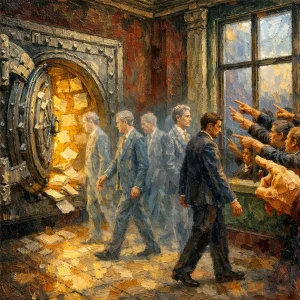
Data is the gold of the 21st century. Companies fight for personal information and pull every lever of public relations to get more information about potential customers or other funders. For many years the health politician Wolfgang Wodarg has been fighting to ensure that patient data is only passed on according to medical need. The corona crisis has turned earlier standards for this upside down. There is a gold-rush mood, but not among the patients…
More from Wolfgang Wodarg
Robert CibisA narrative doesn't necessarily need an enemy. A narrative does need a goal. You need a sense of purpose. The third, to my knowledge, is the immediately. Without delay. Hello and welcome to NARRATIVE number 12. I'm here with Dr. Wolfgang Wodarg. He has become a figure of symbolic significance in this corona crisis and stands for criticism of the measures. But of course, as always with NARRATIVE, it's not only about the current crisis; it's about uncovering narratives that happen, that are important and at work in the heads of all of us. Everything we think must be so, must be so. You can also see everything differently. That is basically the approach of NARRATIVE. Today it's about what I would perhaps even call the most important topic we have ever talked about on the NARRATIVE show. Because this is really about what power means in
the 21st century, namely data. That sounds abstract and far away from us at first, and many say to themselves, I've often said it to myself too: I have nothing to hide, I'm not a criminal either. But the more I deal with it, the more I notice that it's not only about this intimacy, this feeling of being watched, but that it's about how manipulable I am, whether actually my life is determined not only outwardly but also inwardly. Because whoever knows me automatically has potential power over me. So, that by way of introduction; but in recent weeks and months we've heard a lot about the corona app. Then there was a real debate in Germany. Should it be decentralised, should it be centralised? And I was a bit annoyed about this debate, because I thought it's a distraction debate, because of course the question is: do we want such an app or not, and what is it good for or what is it not good for?
Now let's zoom out for a moment. What all happened before we got this corona
Dr. Wolfgang Wodargapp in Germany? I was already concerned with data when I was in the Bundestag. There were, for example, genetic data; people were trying to decode the genome. And then the question was what happens to people's self-determination, to personal rights, and are they perhaps attacked, do you become more naked there than at a nudist beach? That means, can people be X-rayed there and things predicted, and who can do that? There was an Enquete Commission in which I worked. It was also about genetic data.
Robert CibisOh, interesting.
Dr. Wolfgang WodargAnd in what framework was this commission? It was an Enquete Commission of the Bundestag. It was like this, we fought for it and we managed it too. And then half of it were scientists and the other half were politicians from all parliamentary groups. And each group could nominate scientists, and we really picked out good people. And we did many topics there: beginning of life, end of life, preimplantation diagnostics, the whole stem cell debate and all that sort of thing. And one topic was also genetic diagnostics. And there is a Genetic Diagnostics Act in Germany. Then there are guidelines that were made on how we deal with genetic data. Yes. And I'm a patient representative on a commission at the Robert Koch Institute that deals with the handling of genetic data. And it then also tries to make guidelines there. Oh, interesting. Who may handle it? What may be looked up? And under what circumstances? May only doctors do it or may others too? All such things
Robert Cibisare dealt with there? Let me ask briefly, because you obviously have many professions. What I know: you're a health politician, above all of course you were in the Bundestag, but also a doctor. But patient representative is also an activity that can probably be
Dr. Wolfgang Wodargquite consuming. As a doctor I stand by the patients' side, and in these bodies I use my experience, my knowledge, to strengthen the rights
Robert Cibisof patients. Which I value very much in you, because there are few people who have this ability to see the systemic too. A doctor who is only in his practice of course can't do that so well. And a person who was only in the Bundestag, even if he had medical expertise but was never in practice, would of course also not know it so well, because these are simply different worlds, which however have a
Dr. Wolfgang Wodarggreat impact on each other. For me that was a key when I discovered it: systemic thinking, and then always this feedback of one action on other actions, and the possible, also the transparency that must be there to recognise things. Also the fact that people within a system with a certain function think in their categories, and people in another system, scientists, think differently, for example, than the helping professions or politicians, completely differently. Because they have a different code, they're there for other things. And you simply have to understand that, have to know it, and an awful lot is said at cross
Robert Cibispurposes. That's when the narratives don't match and you don't get it that you have to jump from one to the other. And there is a narrative that over the last 150 years somehow began to roll in on our society and has probably by now advanced so far that today one could read on the Tagesschau: governments are not better entrepreneurs. Quote from Bundesbank President Weidmann. And I found that quite funny, because the subtext suggests: you have to let companies do the entrepreneurial work. The government shouldn't interfere there; that positions it above the government too. So the entrepreneurial or the market-economic, that then also means, in the second step of thought, is above the political, and that also fits with the fact that this corporate narrative has penetrated our health
Dr. Wolfgang Wodargcare. I think that simply came from business. Politicians are nominated in their constituencies, are elected, and the voters tell them: but you have to stand up for me, otherwise I won't vote for you. So they have a political mandate. And since the interests of the electorate are very, very different, there are also entrepreneurs in the electorate, and there are workers, and there are employees, civil servants, and they all have different interests. That's conflicting. And as a politician you're then on a platform in parliament where these interests clash. And politics is there to make rules nevertheless that everyone keeps to. For that it needs power. Because if the referee has no power, there's no football. That means there do have to be rules; they may sometimes be bad, then they have to be improved; if you've forgotten someone, then they speak up, then they demonstrate and then it's changed again and so on. It's a process. In a democracy the impulses come from below; people are sent from below, they get the mandate: you make the rules that we will then all
keep to. And that's politics. And that has nothing to do with earning money. That means primarily it has something to do with power. We are empowered; as a member of parliament you're empowered to make rules. And the government is empowered to make sure the rules are kept. Yes. [uncertain] can then hire regulation companies, can hire professional lobbyists who already know every politician, who were perhaps politicians themselves and now earn money with it on the side, that's often the case. Then of course they have much better access and can push their interests through much,
much more strongly there. They deliver ready-made laws, they deliver ready-made proposals, they bring them in, give them to the MPs and say: here, do this, and you can make an amendment and so on. So a lot happens non-transparently
Robert Cibisthere too. And now regarding data. When did you notice that this was influencing our data,
Dr. Wolfgang Wodargour patient data? Data is about knowledge. And, as you already said earlier, knowledge is power. If I know something about the other person, know more about him than he knows about me, then I have very big advantages. And you know the term trade secret. In business you want unique selling points, you want monopolies, the other one mustn't know. A lot of secrecy, a lot of non-transparency. And that's where competition is. And competition lives from non-transparency. It gives competitive advantages through knowing more than the competitor. That means we have what is actually a precondition in politics for it to work well, that is transparency: that those who have been given a mandate, who have been entrusted with something, can be watched closely and you notice in time when they do something else. Transparency. And in business as little transparency as possible, but rather, if I want to earn something myself, that's, the economy is organised egoism. It's not meant
badly. Well, but it's legitimate. People want to live well, they want a great life, want to earn money and so on. And that has something egoistic about it. It's not primarily the thought of how I help others, but how I can be successful with my idea and with my life. And of course, so that egoism doesn't get out of hand, we need these laws and we need rules within which such things may take place. If those who themselves have a great deal of knowledge, they can exert much more influence on politics. And they can also influence the rules that are then made, so that they have advantages. Yes. And I've experienced that in the health system for a very, very long time, actually from the beginning. But we were always in a solidarity community. That means where all of us, each from his pay packet or from his income, pays health insurance contributions every month. Yes. So that 250 billion, 300 billion then end up on the table per year. That's a lot of money. That's a lot of money. That was almost always the size of the federal budget, roughly in that order of magnitude.
It's always a few hundred billion. And that's a lot of money, and we hand it over. And then there are some who administer it. And those are our solidarity funds. And there has been a development. In the past the funds were, are self-governing. There are different funds. In the past they were like sports clubs. People got together as a solidarity community. There were 1,000 of them. Or 2,000 in Germany. So very, very many. And Bismarck said: yes, do it, man. Help each other. And then later there were fewer and fewer. And it was always a bit like this, that you looked which fund you could join. The worker wasn't allowed in with the employees. The employees kept to themselves. The craftsmen had their own fund. And then there was this story where Seehofer, the current interior minister, who was health minister at the time, was the main driver of it. And in the SPD it was Dressler. Rudolf Dressler. And the two of them reached an agreement. And then they said: it can't go on like this. The funds have to
be professionalised. Of course the solidarity community also has to make sure that it's well administered. And they have to be professionals too, sure. But that's what they did to professionalise it. They put the funds into competition, set them against each other, the solidarity funds, which are all actually supposed to do the same thing. And because they thought: yes, if they're in competition, they'll come up with more, they'll be more ambitious, they'll think up new things, it'll become more creative and new services will be invented. And then it'll also become cheaper. But that didn't turn out to be true; instead the creativity of the health insurers went in the direction of having as few expenses as possible and as much income as possible. Because when you're in competition, it's about survival. And at the beginning there were a few hundred funds, and now there are only 100 funds left. And the funds that are particularly successful at increasing income and minimising expenses survive, so that the management in the funds is now actually primarily looking at how we can survive as a fund, and thinks similarly to commercial
companies. They no longer differ that much from commercial companies, although they are public, corporations under public law. Although our, they are, our contributions are like earmarked taxes. We have to pay them, depending on income. Only they may be used only for health. That means as a fund I have advantages if I have high earners with me. And as a fund I have advantages if I have many young people who don't get ill so often. That means there is on the one hand the risk that you have to insure people who have many children, who earn nothing, are co-insured. There's a burden-sharing for that. And there's a risk structure compensation. And that's calculated, so that the fund that insures many non-earning or low-earning people gets something from the other funds. And today it's all, they put it all into a health fund. And from there it's then distributed according to these risk profiles of the individual funds. But of course every fund looks at what its risk profile is. That means the fund has to know a great deal: whom have I insured and what do they cost? And for certain diseases, a certain chronic disease, if I have MS or rheumatism or something that doesn't go away any more, something, diabetes, which always costs something.
Or if I'm mentally ill and can't get rid of it so quickly, then the fund gets something extra. That's sometimes 2,000, 3,000 euros extra per insured person. And per year.
Robert CibisFrom the common pot. From the common pot,
Dr. Wolfgang Wodargah yes. Companies specialised in this; they went to the doctors on behalf of the funds and discussed with the doctors whether they couldn't make them a bit sicker. That was a scandal three
Robert Cibisyears ago. Logical that I then, so the fund is happy to have sick people, because it then gets money
Dr. Wolfgang Wodargfrom the pot. Is that right? Yes, it goes by diagnoses. Yes. And the diagnoses are then verified, checked by looking at which medicines were prescribed to the people. And there was, for example, a fund in Lower Saxony that made a contract with a private company. Yes, that was a subsidiary of a psychiatric drug company. And this company offered the fund: we'll take care of your schizophrenia patients. You don't need to worry about it any more. Give us a certain amount of money and then it's like this, we do it at a flat rate. With a flat, for a flat sum. And the fund did that, and the criterion for a payment from the health fund for schizophrenia is whether they need a psychiatric drug on at least 180 days a year. But this company that did this care, had taken it over, was a psychiatric drug
Robert Cibissubsidiary. So who
Dr. Wolfgang Wodargsets this criterion? The Federal Insurance Office is the organisation that regulates this for the nationwide funds. And it's regulated in such a way that it's then also adopted for the other funds. It's actually a statutory
Robert Cibisregulation. I have to first, because that's such a contradictory logic in my head. Because on the one hand the fund wants to insure healthy patients, because then of course fewer costs arise. On the other hand it wants to have sick people, because it then gets more burden payments from the big pot. Those are two logics that are absolutely opposed. How does that fit together? So what's
Dr. Wolfgang Wodargbetter now? As manager of the fund I have to watch carefully that I only court or take care of those sick people for whom
Robert CibisI know I'll get something back. Ah, that means if, for example, you had a mentally ill person who didn't get 180 doses of psychiatric drugs a year,
Dr. Wolfgang Wodargbut only 150? For him I get nothing. There are of course consulting firms galore that advise the funds. And that do such risk analyses. And then there are congresses for the funds. They're very expensive, 2,000 euros admission if you want to go. For everyone, for the health market, that's what it's called. And the representatives of the health market are then also fund managers. It's the pharmaceutical industry; people from the whole health system are there.
Robert CibisAnd it's always about money. I'm slowly understanding now why we're talking about data. Because given this whole mix, these precise data are of course really worth a lot of money. Depending on how precise the treatment, for example, for a patient is, generate money or make you
Dr. Wolfgang Wodarglose money. For all participants in this health care, or as they say in these circles, in the health market, data are extremely important. They're also important for hospitals. Hospitals are paid according to diagnosis-related flat rates. And they look very closely: which diagnosis is it and how much do you get for it, and how long do they have to stay, how many costs does such a diagnosis cause, and what range of diagnoses they then admit. The pharmaceutical industry is of course tremendously interested. That was the further trick that deregulated the funds even more: that the funds may make selective contracts. The funds may make contracts with individual pharmaceutical companies about their pills. You notice that at the pharmacy when you say: I'd like some blood pressure medication. And then the pharmacist asks: which fund are you with? Or you show your card? Because every fund has different medicines under contract.
Robert CibisWell, then of course there are efficiency fans like me who say: that should be
Dr. Wolfgang Wodargstandardised. Or is that... The market gurus who rampage around in the health system say: yes, but if there's competition, then the funds can buy cheaply and save money. Then they can negotiate with the companies. Then the patient can't choose which medicine he takes; instead the fund can make contracts beforehand and negotiate discounts. That's it. And the pharmaceutical industry of course laughs itself silly. The funds come together there. Then they say: no, no, we only want this, we want low cost, good quality. And if the funds buy it together, all companies get together, form purchasing groups so that they can buy more cheaply. And the funds are in competition as buyers. That kind of thing only
Robert Cibisexists at an auction. Ah,
Dr. Wolfgang Wodargthat's another knot in my head. And at an auction, they know what happens to the price. It doesn't go down. And the pharma bosses laugh themselves silly about these idiots, about the politicians who put the funds into competition and then also claim that it
Robert Cibisproduces lower prices. Exactly: competition for the seller and for the buyer makes the price rise;
Dr. Wolfgang Wodargthat makes total sense somehow. It's a competition system, and that leads to a complete deregulation of our health system. And there are constraints for such a poor fund manager who starts out with full idealism and says: I want to do something for my insured. He's immediately confronted with this competitive situation,
Robert Cibiswith what the other funds do. Yes, okay. You wonder how that comes about. Because nobody can be that stupid. Yes they can. Yes,
Dr. Wolfgang Wodargis that really so? We're talking about interests, conflicts of interest. If we now have the fund managers, they have to stand up for their insured and not so much for the economic interests. If the fund doesn't look after the patients well, then we don't need it. Even if it may outrun the others in competition, but if it doesn't take care of those who need it most, but also cherry-picks there, then such a fund is more harmful than useful.
Robert CibisYes. So what I understand now is that patient data are becoming more and more important in such a complicated situation. And they arise in many different places. The question is how they are
Dr. Wolfgang Wodargcollected. Yes, that started around 2004. That's when the competition between funds was intensified. Then there was the risk structure compensation, which was then also allowed to make the illness data and the prescription data available to the funds. The legislator did that. Before that there were only general data, only indirect risk parameters like age, sex, income, number of children. Yes, those were simple risk factors. But to know about the illness, the associations of statutory health insurance physicians, the doctors didn't need to tell anything. The funds weren't allowed to know that at all, didn't need to know it. But then, when people like Lauterbach came along, who then calculated all sorts of things, that competition could be made fairer, there were always the same experts there. [uncertain] We kept running into them. And they always said: yes, we can still fine-tune here and fine-tune there, so that competition between funds becomes even fairer, so that it is balanced. And so that it can be balanced, the funds needed precise data about the patients, about their insured,
from the doctors. That means it became more complicated for the doctors too. They suddenly had to make the diagnoses available. And it became more complicated for pharmacies. It was all digitalised and done electronically, so that it became easier again, but there were more and more data that were made available. And when you went to the health fairs, in the past much more medical stuff was discussed there. Health was a topic there. Since the whole thing has become health economy fairs, you see nothing but companies there that work with data. Certification companies, and there are data processing companies, software companies. They offer digital solutions for all sorts of things and [uncertain] apps. It's tremendous, into this trading and collecting of data. These are all data that have something to do with money. In business you have to know who can pay. That's one thing, that you have the data, would like them to say something about the ability to pay. But the second data are just as, if not even more important: those are the data about
people's need. Because where the need is greatest, I can charge the highest prices. People who, shortly before death, would spend all their money so that they can live a bit longer, that's where you can get the most. And that's cancer, for example. Or rare diseases that nobody takes care of, whose sufferers feel abandoned. There you can charge very high prices. And politics goes along with it, because the public, what, you don't take care of these people in such need, and you really have to do everything there. Whether that's always sensible, whether it's even, perhaps sometimes it's not at all in the interest of those affected, but that's a kind of dynamic that comes in, that the data where the need is greatest, where people,
Robert Cibiswhere they need something. We should perhaps take a look at everything that has happened. Yes, to see what has happened in the last two years in terms of data collection. Yes,
Dr. Wolfgang Wodargthat's good. Then, because they have... A whole lot has happened there. Yes. And it really got going with the new health minister. In the time back then with Ulla Schmidt it was already like that, but Ulla Schmidt wasn't the driving force; rather, there were people in her entourage around her who got her to do it, who told her this is how it has to be done. Yes. Most of them are now somewhere in the health insurance funds or in business somewhere; they're all still around. And then, yes, it intensified when we got the new health minister, when we got Spahn. He did it very intensively. And I still know Spahn from the Bundestag; back then, when he sat with me on the committee, I didn't know it. But at that time he had a lobbying firm and back then, it said, if, so it addressed pharmaceutical companies as clients: we arrange contacts in the Bundestag for you and so on, so as a lobbying broker. And that's what he
Robert Cibisstill is. How is it possible that a federal government has a minister for health who previously earned money as a lobbyist precisely in that field? That's, so to speak, how can you sell that to the voters? How can you sell that to the opposition? Because you could exploit that quite a bit politically. It would be much more intelligent, I would at least have thought, if the government took someone who doesn't have such a CV, but who pretends to be for the citizens and then perhaps conceals some conflicts of interest. But that it's such an open game really
Dr. Wolfgang Wodargimpressed me. Apparently people quickly forget that. It's a headline, it once was, it came out through journalists. I think it was Focus back then. They said it then, researched it and then also pilloried him, and then he said: oh yes, that's true of course, and then I'd rather stop doing it. So it was public, and then he stopped and said: oh, I didn't see it that way at all, and then it was gone. But that he of course has the connections and has remained the contact person for these interests, you can see that very clearly. When he became health minister, it was then like this, it became clear pretty quickly that he's very much after the data. Not him, but the people who put him on track. And if you ask why someone like that becomes health minister, well, then you go to the Chancellor and say:
Robert Cibiswe want him. Ah,
Dr. Wolfgang Wodargand who goes there? Industry. The Chemical Industry Association or the VFA, the Association of Research-Based Pharmaceutical Companies. These are lobbyists, they have their wishes, and I'm sure they also express their wishes to politicians. That they've had good experiences with him, and if you want to develop the health market in Germany further, he understands something about it and so on. That's how such
Robert Cibisthings go. Yes, yes. This entrepreneurial thing, well, what had already been observed ten years ago was that in the health system it was always the case that hospitals were the most expensive. [uncertain] That is taken, yes. And that it's a big expenditure item, and that after that came the practices, the doctors, and after that the medicines. And I think that had already changed about ten years ago. So to speak, medicines are now more expensive in the health system than the doctors, and the doctors don't earn the same, but considerably less. And I was always a bit envious, because doctors earn so much. But proportionally you notice that there, I tell myself now, having heard it like that, that this is also an industrialisation. Because if you're an entrepreneur, I learned that, you always have to standardise processes and consider what is scalable. Medicines are extremely scalable,
Dr. Wolfgang Wodargcare is very little scalable. Well, we have many doctors who go to Scandinavia, and there they are paid much better. But there you're not paid so much per individual service. The silly thing is, the incentive arises because I, like a merchant, sell things at a certain price. but if I get a good salary and for that money have to take care of people, even that they are healthy, and even get paid if I keep them healthy, if they don't get ill at all, then I'm the best doctor. [uncertain] Yes. If I take care, if I take the trouble, also with smoking, and tell them stories so that they do it too, and support them in it, to get off booze, off smoking, to lose weight, to exercise, then that's great. And I can't sell anything there, can't sell any pills, but I'm the better doctor. Yes. And a society that pays doctors to keep people healthy is actually smarter.
Because if we have a society, if we have doctors or hospitals and a health business and a health system that is paid for treating the sick, then it earns all the more, the more sick people there are.
Robert CibisYes, of course. And now it's the case that these companies in the health sector are particularly successful in the USA, because there the share of gross domestic product is 17 percent, I had read. That's enormous,
Dr. Wolfgang Wodargconsidering how big the country is. That's twice as much as in Scandinavia, and they're half as healthy. That, that,
Robert Cibisthat says it all. So what can also be proven, I think, is: the more money someone has, the healthier he or she lives. If as a single mother I always have to go to the job centre and can't travel, but always have to be there and wait until I get some offer, and then I also have the child and then also have trouble with the rent somehow and things like that,
Dr. Wolfgang Wodargthat makes me ill. That's... Exactly. And body and mind are connected, and there are a thousand such examples,
Robert Cibisand the psychological is connected with the physical. Money makes you healthy, but not,
Dr. Wolfgang Wodargyou can still spend it stupidly, obviously.
Robert CibisYou can't say that so generally. And that's... There are efficiency ideas there too, and obviously competition isn't efficient in
Dr. Wolfgang Wodargthat case. The good thing about our solidarity system is that we always put all the money, according to our income, into the fund and then promise each other that we'll get help when we need it. That's actually such a great thing. It's such a social achievement, it's so valuable that we agree with it. It's 14, over 14 percent every month that we then hand over. And I think that's a very important thing, and I also think the employer's share is very important. It's important because employers then have an interest in keeping an eye on the health economy, on the people. Because then they also have to pay more contributions for their employees if the pharmaceutical industry grabs a lot now and if the clinic takes our money, they always have to pay half. That means the other employers from the metal trade and the craftsmen and whoever else, they have an interest in it not becoming too expensive, the health system. And the CDU once tried, for a while it was also the case that the employer's share was fixed and didn't rise.
When health costs rose, only the insured person's share rose. And they said: so, now we don't have to bother about it any more. Now the doctors can take as much as they want. For employers it doesn't matter. That's dangerous. And fortunately the SPD reversed that again. When was that? That was only one or two years ago or so. It was
Robert Cibisrecent. But now
Dr. Wolfgang Wodargback again. Before the last,
Robert CibisI think it was part of the coalition negotiations. Oh, really? Yes. It's all connected. That's why we have to, I didn't find it so now, I think it's quite good that we made these excursions, because of course it's about money, and we didn't speak of a gold rush for nothing.
Dr. Wolfgang WodargYes,
Robert Cibisit's crazy what's going on now. So what all was
Dr. Wolfgang Wodargthere before corona? It also started, for example, with the organ transplant clinics, which were afraid they couldn't supply their patients. And there Spahn, for example, the data of patients lying in intensive care, which are normally protected by medical confidentiality, suddenly people were allowed in to spy out whether there's anyone who might come into question as an organ donor. They were allowed to look into the files. And the other doctors had to allow someone to come and look into the files to see whether this might be someone who might come into question as an organ donor. That was already pretty, I found that pretty...
Robert CibisThat was two years ago,
Dr. Wolfgang Wodargwasn't it? Yes, that's about two years ago. Ah yes. And then came the next thing, then came the story with the implants. There was the scandal with the breast implants, that they were so bad, and that was immediately exploited, so that all people who have implants, because of the quality, so that the quality can be ensured. That was the pretext. And now all data of patients who have implants, the whole medical history,
Robert Cibisis now collected and stored centrally.
Dr. Wolfgang WodargAnd where is it stored? So that you can see if something happens with the implants. and that's done, the DIMDI did it, but these data also go to the health insurance funds, where exactly they're stored. Whether that now also goes via the gematik, I'd have to look it up. In any case they're collected centrally. And then there are further things, like the electronic sick note, which of course simplifies things for employers, for employees, but at the same time leads to these sick-note data being collected centrally. Otherwise they're with the doctor, with the health insurance fund, and with the employer for the individual case. The electronic prescriptions that now exist, there too the whole, the overview of doctors' prescribing habits: which doctor prescribes which medicine, how often; the pharmaceutical industry wants to know that. And the funds want to know
Robert Cibisit too. Are all these measures that began about two years ago with the
Dr. Wolfgang Wodargnew federal health minister? Yes, a great many laws were made under the
Robert Cibisheading of digitalisation. Yes, what's it called? Patient Data Protection Act.
Dr. Wolfgang WodargYes, exactly.
Robert CibisAnd the electronic patient record. And the vaccination card.
Dr. Wolfgang WodargIs that all still before corona? That was all before corona, yes. Crazy. The vaccination card is practically one of those things too; it started with the measles vaccination. They used it, this discussion about measles vaccination. Measles weren't that important at all. Nor the vaccination. But the vaccination card, that's what they wanted to push through. And they succeeded with this law. That laid the foundation for these vaccinations to be registered centrally. So that you have an overview: who gets vaccinated, who doesn't get vaccinated. And now you can effortlessly, once you have that, these structures, once you've paved them through such an occasion, then you can exploit them and can put the other vaccinations in there too. You already have the structures and have already paved the data
Robert Cibishighway. Incredible. You just mentioned
Dr. Wolfgang Wodargthe gematik. Yes, that was a company that formed, that was founded by the funds and by the KV, i.e. the KBV, the National Association of Statutory Health Insurance Physicians, and the funds; together they founded this company to prepare a health card more sensibly, with which you can make everything simpler when you go to the doctor, and simpler for the doctor too. And they were supposed to prepare that. There were long discussions about what goes in, what doesn't go in, whether the blood group, the emergency card goes in, and the organ donation thing goes in, and which data more closely
Robert Cibisand which not. So a standardisation
Dr. Wolfgang Wodargorganisation. Nationwide. Yes. There were always a lot of people from industry who made fun of it, especially from the data industry. They said: ridiculous, they're getting nowhere, they're, you always read that in the newspapers too, they really ran it down. Oh, really? Yes. And then Spahn, as a lobbyist of these interests, simply went into an ongoing law, into a legislative procedure that was already under way anyway, where there was nothing about it. He simply added, in the framework of, in a committee meeting an amendment came in saying that the federal government takes over 51 percent of the shares of the gematik. You can write that into a law. These are laws that bundle lots of different initiatives, everything
Robert Cibisis put into articles. So is the gematik a
Dr. Wolfgang Wodarggovernment body? No, it was self-administration,
Robert Cibisbut now... Self-administration of the
Dr. Wolfgang Wodargfunds? [uncertain] Self-administration. For small children, I don't know, I'm a bit slow. Of the panel doctors and the health insurance funds. Ah yes, okay. They had it together, and the hospitals were also involved. The hospitals too, the hospital federation. And then the, then Spahn practically secured for himself, via this law, the right that the federal government, i.e. the Federal Ministry of Health, takes over 51 percent of this organisation. And with that he automatically had the majority in this body and could now say about the data: so, now I say what is to be done. The first thing he did, in July last year, he made a pharma manager the boss. Wow. That's someone who was a top manager at Ratiopharm and, I think, at a Japanese company too; he was at several big pharmaceutical companies, always close to lobbying, always close to politics, and he made him boss of this gematik. So the gematik collects patient data in Germany. It builds the highway on which
the data are to flow. It coordinates that. It makes the rules, it shapes it, it regulates the data flows, it makes sure that all doctors are connected, makes the contracts and does the administration of this
Robert Cibisdata highway in the health system. Ah yes, we can briefly show something of all the data movements there are at a
Dr. Wolfgang Wodargdoctor's practice. Yes, that would be good. That is, we have in the doctor's practice, it's a kind of Bermuda Triangle, a quadrangle. Yes. And there's, there's the patient on the one hand. The patient pays his health insurance fund. Mhm. The health insurance fund pays the Association of Statutory Health Insurance Physicians. Mhm. They're organised at state level. Mhm. There are 17 of them. And the associations of statutory health insurance physicians, they pay, the doctors sit there, all specialists, family doctors, and they fight, they always squabble over who gets which shares, what is paid how. [uncertain] Yes. And then, they settle that among themselves, in their self-administration, what points the medical services bring, what money they bring. And, so they get, they get it from the funds, they get a budget and they divide it among themselves. And the doctors then deliver the service back to the patient. That means there are four players, and all of them have to know exactly that they're not being ripped off,
that they get enough. And those are millions of, of, of data that, those are tremendous amounts
Robert Cibisof data flowing there. Yes, yes, yes. Show the other graphic again, the one with the dark background. There you can see all the movements. Yes. Yes. Those are millions of data
Dr. Wolfgang Wodargper day. Those are billions. Those are, it's billed quarterly, so those are huge amounts of data, yes. Yes. And then, in addition, from this quadrangle there are cross-connections, those are the direct contracts. I don't even know how many tens of thousands of direct contracts there are. What infrastructure is needed just to make these selective contracts, to monitor this whole contract landscape, not even the Federal Insurance Office knows, which is also supposed to assess these contracts as to whether they're lawful or something. I think they can't keep up with it any more either. So that's a pretty non-transparent contract jungle that
Robert Cibishas emerged. Incredible. And one could say: it's good if the data are central. And I saw on the website of the federal health minister that everything is supposed to be well protected. Isn't that better than all the paperwork, especially when it's about millions, billions of data? Who is supposed to administer them,
Dr. Wolfgang Wodargso to speak? There's a tremendous run on patient data, because data knowledge is power, and everyone picks out the plums where he thinks he'll come
Robert Cibisoff better. And how is it organised now? I mean, is it true, is there still a lot that
Dr. Wolfgang Wodarghappens on paper? No, no. There was once a scientific study measuring how much time the doctor looks at the screen and how long he looks at the patient. And that was measured before the introduction of the electronic health record. It works in some countries; such records already exist there, but they're not central, they're decentralised. But these, and that's also the case here, every doctor has practice software. And when you come in, he has the medical history on the screen. And they saw that since the introduction of this technology doctors spend about, what was it, 40 percent of the time looking at the screen and are no longer directly in dialogue with the patient,
Robert Cibisin contact. Yes, that's of course part of it, that we merge with machines, at work and in private life. When I look the patient in the eyes and, for example, feel the suffering through the mirror, one speaks of mirror neurons, that's what they say. That's compassion. This compassion, this empathy, slows down the standardised process and logically leads to reduced scalability, let me put it in
Dr. Wolfgang Wodargentrepreneurial terms. I can imagine that it speeds it up. Because if I feel with the patient, if I empathise, I notice much faster what's really bothering him and can help him much more effectively. Yes, the question is what the goal is:
Robert Cibisturnover or helping. I've only now, and I'm trying to transfer the entrepreneurial line of thought, and that's about billing as much as possible per hour.
Dr. Wolfgang WodargFine, then the doctor says: I think we have to do that again, we haven't done that for a long time, so let's do it. And I still have so and so much physiotherapy. And then he calls them in,
Robert Cibisjust so that he can provide another service. Exactly, because it's,
Dr. Wolfgang Wodargentrepreneurially you have a different objective. That's said to happen with dentists too, yes. These are
Robert Cibisdramatic stories. You notice that the economic narrative and the help-the-patient narrative naturally can't be
Dr. Wolfgang Wodargidentical. Doesn't fit, doesn't fit,
Robert Cibisthe conflicts. Because a sick patient, ideally chronically ill, is of course the best customer. Because I also want you to watch NARRATIVE every Wednesday and be there. That's my interest. But it can't be the doctor's interest that the patient should come back.
Dr. Wolfgang WodargThat's of course totally absurd. No, if you make yourself superfluous, you should be very well paid.
Robert CibisYes, exactly. So what has happened now? What else has corona
Dr. Wolfgang Wodargbrought? Yes, this data collecting frenzy, it has always, it has always run whenever there were occasions. It was taken as an occasion. Sometimes the occasions were made. I think the measles story was made to push the vaccination card. And this scandal with the breast implants was exploited. So the big companies say patient data are the gold of the future. Lots of data are collected centrally, supposedly always anonymously. But at all the hearings, all the data protection officers say: if you have so much data on people, you can very easily match it and you can't keep it anonymous at all. You can always de-anonymise it, you can always identify again who it is.
Robert CibisThat's a very important point. I think you really have to make that clear to yourself. I once played a mind game in the shower: what do I actually want if, that I call someone and nobody knows that I'm calling that person. What would I have to do? I know the device itself has a number. When I buy it, it's already registered. Let's assume I find one on the street. Then I go to a country and buy a prepaid card where I don't give my name. In Germany I don't even know if that's still possible. You have to register your name. Then I have to, maybe I also find a SIM card on the street that happens to still have credit and is a prepaid card. And then comes the moment when I think: but I can't set up my e-mail account on the smartphone now, because once that's set up, all this
Dr. Wolfgang Wodarganalysis is gone. The data are so networked, that's also the case in the health system, that it's very easy to re-identify someone. And the health insurance funds have all the data. They know how much money you earn, contributions are based on that, they know where you live, how many children you have, how old you are, and whether you're ill or not ill, which medicines you take, all the data come together there. Many doctors have resisted handing over these data. Because when I'm ill, I'd like to be able to tell the doctor something without having the feeling that others will find out. I'd like to say, you talk about very intimate things there, and that's, you would, and the doctor is even criminally liable if he tells someone else. That's a very strict data protection rule, a double data protection rule. There's data protection everywhere in civil life anyway, and at the authorities too. But this medical confidentiality, because it's very intimate data, it is especially strong, and it has been completely suspended now. Doctors now have to deliver these data to the funds via these electronic channels. For now the electronic patient record is
still voluntary. That means it's made out that if you use it, you have lots of advantages, then every doctor you go to can access it. Of course you decide something yourself, but the trick is that you first manage to get the legislator to set up these structures. And once they're there, then everything goes in. And then it'll always, then you can no longer take part, then life is never as convenient if you don't go along with it. More and more pressure is applied until everyone is in. We see that with everything. If you shop on the internet today, you have to hand over all kinds of data, and otherwise you don't get any further, otherwise you can't use the internet at all any more. And that's what will happen there too. Those where the data come together and who have access will then have a complete profile of your financial strength, of your health aches and pains, and they'll then work out what to do with you. And the bad thing is when there's a combination of putting pressure on people and at the same time earning money. For example, if they say: we'll get, we need an immunity passport, otherwise you can't travel any more, otherwise you can't go abroad any more, you won't get back, or you have to go into quarantine. So you make life difficult for people if they don't go along. And then they go along and then you can steer them, then you can think up the next thing where they're not allowed to go, not to the cinema, then they're not allowed to send their children to kindergarten, or have to fulfil some
conditions. You can always blackmail people. Unless they cooperate with us. It's like a protection racket with the mafia. We protect you, but then you have to reveal yourselves, you then have to do something for it. And in the process the data are collected. And this immunity passport, which is complete nonsense: who wants an immunity that is as complex as our memory? The immune system has a memory. Everything we encounter, that our body encounters, is stored. We're allergic to certain things, or we've got to know certain things and react quite normally to them. But everything is stored. Yes, which of that do you want in such an immunity passport? What are we all supposed to be immune against? And only against the vaccination. That means only people are interested in it who want to sell us some vaccinations. They can't change our immunity otherwise. And supposedly the vaccination is supposed to be useful, but we see that with
the flu vaccination. That's the greatest example. That's been going on for a few years already. Flu vaccination is done. People say: yes, if you're over 60, you should do it and so on. It's recommended everywhere. Germany is looking for its vaccination card. And then people go to the doctor and get vaccinated against flu. Yes, then something was done to the immune system. Then it was made sure that certain pathogens don't have it so easy any more. They're then fended off more easily. But there are hundreds of pathogens, and the others are delighted. They get ill just as often. They don't get the ones they're vaccinated against, but the others have more room then. That means what this means for health is always only established afterwards. That's why vaccination is such a brilliant business. If you have these seasonal vaccinations, corona vaccination and influenza vaccination, you can think up something new every year, and you only ever know the year after whether it did any good or not. But that no longer counts for anything for the next year, because then new pathogens come again. They're new every year. You need a new vaccine every year. You can never say in advance;
it's a permanent business. And that's being set up right now, and they even want to blackmail people into going along with it, through such an immunity passport. That's such a nasty business trick, and it's so clear, also from the evidence, that it brings nothing, no plus in health and no protection. It's pure money-making, and that politics, and the Robert Koch Institute, the Paul Ehrlich Institute, those are experts who know about it, that they sell us something like that, that they go along with it, I really can't explain that to myself,
Robert Cibisother than that they take instructions from Mr Spahn. Yes, and of course the comparison with Sweden has already come up. The question:
Dr. Wolfgang Wodargis it better there? They get a regional budget for a certain number of inhabitants. In the regions of Sweden there is a budget in each, and there is a council that always considers what they do with the money for health. That means they're very close to it and they're self-responsible, and they would always do things where they save money. That means if they can do something so that people don't get ill, and it's cheaper, they'd rather do that. We have, for example, too many heart attacks in the region of Nyköping or wherever, and then they consider: do we buy a helicopter so that we're there quickly in the countryside, or do we buy two emergency ambulances instead, or what do we do, and then they hit on it: then we'll do first aid courses for all inhabitants. That's the cheapest, and if they learn that, they can always, if they help immediately. That brings the most. And you have to research something like that. What's best? And the central government does that. It does such projects, it does best-practice solutions, it recommends to the regions what you can get for the money and
Robert Cibiswhat brings the most. The example of Sweden now shows that there
Dr. Wolfgang Wodargare regional budgets. We have that in Schleswig-Holstein too, by the way. Oh, really? For psychiatry. That has proved very successful. In Itzehoe there was once 52 euros per head per year. Per head of the population. And the funds calculated that. And then they said: good, Steinburg district, you do it. You get the money that we otherwise spent, 50 euros. We give you the money and it's now the responsibility of this district. And it went great. Really great. The district earned from people not cracking up. It largely dissolved its hospital beds and set up many small counselling centres, visited people at home. In Lauenburg I once went along. Great, they do home care. And the chief physician says: people get ill in the jungle; you can't cure them in the zoo. So not in the institution; rather, he goes home, looks where the conflicts are,
Robert Cibishow the person has to cope. Super good.
Dr. Wolfgang WodargAnd that works with the regional budget. For over 10
Robert Cibisyears already. Super good. In Germany. That's totally exciting. Sometimes in all these conversations I also miss something positive. A perspective. A perspective. How should society be organised so that the money that can make it healthy, or at least healthier, really does make it healthier and not sicker,
Dr. Wolfgang Wodargas in the USA? Well, I think we have to work subsidiarity through for our society. That means that where the problems arise, that's where they must be able to be solved. Very close to it. Immediately. By the neighbours or by the municipality, by the people who know each other. Then we don't need any overhead costs, we don't need any data highways. For care, for example, the municipality has to be responsible, nobody else. A nationwide care organisation can't do that. What's that supposed to be? That's complete nonsense. In Finland they've municipalised it. Wherever care is municipalised, it works. There people are ashamed if those in need of care are doing badly. There you also know who's responsible. You go there and make sure it gets better. Here it's some, here they have a certificate hanging on the door, have had themselves certified, paid well for it. And then they say: well, we have a certificate, the care is good with us. So that's completely detached, and like a commodity. But care is not a
commodity. Care has to do with relationship, with trust. You can get annoyed and argue, but you always know these are other people who are responsible for you, and they get paid for it, and they should be paid well. But it has to be such that this mistrust effort, the documentation, and that's already a quarter of the resources, simply goes away. And it doesn't go away, it goes to companies that do it. That has nothing whatsoever to do with health. Those aren't people who have any interest in our health. They have an interest in our money. And the bigger, the more we're in need, we don't want that. Illness isn't a business field. We want to help each other, and we're so proud that we had a solidarity system. And the solidarity system, that's a burden. It's not a business. We pay it because we know it makes sense. And we're proud that we help each other. It's fun to help
other people. That's good. Solidarity, that's solidarity. Which there's so much talk about. Not when you keep your mouth shut. Rather, solidarity sometimes also means getting loud, standing up so that other people aren't left in the lurch in old people's homes. That you take care of them, that you know who does it. There's the joint-stock company XY, which has a big home and says: yes, unfortunately we have to and so on. But if you can go to the mayor and to the public health officer and say: he's responsible, then you can discuss with him, say: why are you doing that? My grandmother can decide for herself whether she takes the risk of a cold, an infection, whether it's so important to her that the grandchildren come, or whether she'd rather be afraid, whether she's afraid and says: no, come back in 14 days. She can do that herself. That can be arranged. These are things where, I think, something is being imposed on us now for
Robert Cibisquite different reasons. When it's big, then again the need as a structure to standardise the processes so that they work. Or that... Yes,
Dr. Wolfgang Wodargif I standardise... The companies want to standardise it, they just do it. They have here... Our offer is, and then you have a list and tick what you want, and then it's a service, and then it goes by contract, and with care and with responsibility and with trust it only has something to do in the advertising. Family doctor care too, exactly the same. We even have the big joint-stock companies now buying up doctors' practices. Even the established doctors, they're disappearing in the meantime. Everything is becoming joint-stock companies, everything, yes,
Robert Cibisbig ones. So what could one practically do now? Well,
Dr. Wolfgang Wodargwe have viewers... Well, what... I have a very concrete proposal. I see this as a huge political opportunity for someone who wants to do something good. That you practically write into the SGB V, for the health insurance funds, the health insurance funds have to, at state level, that's the most obvious thing that's feasible, join together at state level into a working group so that they make joint contracts and have a joint office that care at state level, that's already worth a lot, organises and is responsible for. And now it's like this: if I'm treated badly in the health system, I go to my fund and say: the hospital has... The fund doesn't take care of that, there are 100 other funds. Why should this fund take on the trouble with the hospital? But if it's one office that's responsible for all hospitals, where all funds then watch together that for the money something proper is delivered, it has power. It can say: not like that, then you won't get any more money. Then we no longer need risk structure compensation, then we no longer need these data that make the compensation between the health insurance funds, because then it's all thrown into
one pot. Then there's a state budget and the services are paid from it. Then this whole data collection falls away, it all falls away. That would be something I would do
Robert Cibisas health minister. Very good. We have a plan. Now there's one more big topic we have to go into. There is a personal data profile that is completely undiscussed, well, little discussed at the moment, but probably the most decisive, at least for our health, but perhaps even for our personal future in general. And that is the intimate data set
Dr. Wolfgang Wodargof DNA. Yes. Yes, it's not only DNA, it's all genetically relevant data at all, or all control data that are active within our body. And there are very, very many of them. And the new boss, who comes from the pharmaceutical industry, Mr Leyck Dieken of the gematik, has already said in an interview, made sure that in the electronic patient record there is already a drawer, practically a compartment for people's biological data. And that of course also means genetic data. In January the federal government joined a treaty, an international agreement, called the One Million Genomes project. That means they want to collect data, genetic data, and as much as possible, sequence the whole genome of people if possible. And it's said, it's like the pharmaceutical industry, of course wants that, it's the driving force there, it wants these genome data, because, so it says, you can develop things, you can recognise risks in people, you can recognise connections and recognise weaknesses, so that you can develop medicines for a defect, a genetic defect, which you can then replace. And so they promise us a great deal.
If we know that, if we have your genetic data, then we can develop much better medicines. Moreover, we can then develop tailored drugs for each individual, that means custom-made medicines for you and for you. And they want to do that also by having direct patient contact, that's the declared goal of the pharmaceutical industry, direct patient contact. That means this industry no longer needs the
Robert Cibisdoctor at all. Exactly. Okay. That's a bit like Netflix and Amazon or such internet platforms compared with television. On television you just have the one... The offer is tailor-made. That as a one-off offer, and the big platforms boast that every viewer is offered a different programme. Amazon knows exactly what I've bought so far, knows exactly what I like to do, what I don't do, what I've looked at,
Dr. Wolfgang Wodargwhat I don't look at. And if you then combine these data with genetic data, so that you can combine people's profiles, so that you can ask new questions, you of course have tremendous power and can influence people very, very strongly. You address them exactly where you think they're weak, and there you offer them something that makes them stronger, and then they pay. And you do that mainly with
Robert Cibisthose who can pay. Abuse is then logically conceivable in all possible
Dr. Wolfgang Wodargfields. Well, in the Enquete Commission I spoke of at the beginning, we noticed that, and I campaigned hard for it back then with Mr Altmaier, who is now economics minister, and Mr Meier, Ulf Meier, who is a lawyer in the SPD; they were both Germany's representatives on this body that drew up the EU Charter of Fundamental Rights. And there it says in the fundamental rights in the EU, it says in the Charter, that nobody may be discriminated against because of their genetic make-up. That's already in there, nowhere else in the world. And we did that with foresight, because we knew that something like that would come: that someone doesn't get a job, that someone isn't accepted into insurance, that he has to pay more if he has a greater risk, all these things. And if they now start to modify us genetically, by genetic engineering, our genome isn't changed, but we are modified by genetic engineering in such a way that our body produces protein as a bioreactor. What then the vaccine, which used to be produced in the bioreactor, which we then got injected, now we get such an RNA injected, and it makes sure that our cells are changed so that they produce the vaccine, that we become a bioreactor and produce proteins ourselves.
We don't know exactly where and how and whether, which dangers; it was only tried out very briefly, it's a tremendous risk. And whether it does any good is completely questionable. There may be, if you now look at antibodies, yes, which viruses do they help against, don't we perhaps already have them beforehand? Don't we have enough protection? That's all completely open. And they're now taking this risk, want to vaccinate us, and whoever doesn't get vaccinated, whoever can't prove immunity,
Robert Cibismay no longer do this, may no longer do that. But back to these, the data: what
Dr. Wolfgang Wodargdoes corona have to do with it? Corona is a pretext. Corona is a pretext for all these, corona makes us afraid. Corona can be used because nobody knew it before. It was always there, but it was never used; so nobody bothered about it. The Robert Koch Institute, the virus specialists, sentinel practices all over Germany, always observe all viruses; corona wasn't so important. But they know they were always there. They are, and in exactly the order of magnitude in which they are there now. If we look at all the tests, the test in Germany has never, never been more than 9% positive. That's how it always was. Corona was a pretext, for what? It was a pretext, first of all for the apps, so that they also get the data on who travelled with whom on the underground, how many stations. Yes. So that one looks, it's completely crazy. You get personal data, movement profiles, tracking of a great many people. That's one thing. Yes. And I'm very worried, because now these swabs, hundreds of thousands of swabs taken, millions, we have in Germany, I don't know, already taken seven million swabs.
Yes, yes, that's how it is. Over seven million. We're 80 million. So we have already, almost a tenth of the population has already, we've already collected the cells. The genome is in these cells, the complete genome. These cells are also examined genetically with the help of PCR for these virus particles. A genome like that is valuable. Germany is doing the one million genome programme. These are private companies. Where is the data protection officer who makes sure that my cells, which are swabbed from my throat, aren't sequenced? They have my address, because of the reporting procedures, so that you're sent into quarantine, they know exactly where I live, who I am, and then they also get my genome. I want to know, when a swab is taken from me, where the swab is, where it goes, what is done with it, who has access, and that has to be regulated by data protection. That's partly, these swabs are taken with the help of private companies, they're hired, and one has to take more swabs, Mr Söder says we have to take swabs of the whole population
if possible. Who controls them? Nobody controls them. 170 different labs do it in Germany, 300 different tests, but they all collect the cells. the test is worth nothing. The test that shows, it has an error rate of 0.6 percent now, but they take this swab
Robert Cibisfrom us. It's always: where is the cause, where is the effect, who jumps on which bandwagon; in reality that's always pretty complicated, but one thing is certain, in any case: we hand over our data when we're tested, and there's no regulation of what happens to
Dr. Wolfgang Wodargthese data. Well, legally it's certainly not allowed to use this material for anything other than what's written on the form. But who controls that? Yes, that's always the question. What use are laws if nobody is interested in what's done with them? So my question to the data protection officer is: what are you doing, or what are you doing with these genetic data? How do you make sure that they can't somehow be misused? I also ask the medical association, I ask the associations of statutory health insurance physicians: what security mechanisms are there, who controls that? But it's actually a matter, yes, it has a bit to do with quality control, but it's more than quality control, it's data protection. And data protection is always something that has to be installed beforehand. Data once stored somewhere never go away again. and genetic data, they're valid for your whole life. And they also count for my children,
because I pass them on. That means it's not, it's not like the Schufa credit agency. Fortunately the bank account changes. It's sometimes more, sometimes less. And that doesn't say much. If I win the lottery, I'm a completely different person with the Schufa. But with genes you can't win the lottery. They stay for life and are a subject of discrimination with which I can be discriminated against. And discriminated against very, very dangerously. That's why the highest, highest vigilance is called for. I say that as a
Robert Cibispatient representative too. Yes,
Dr. Wolfgang Wodargthat's a conspiracy theory. No, that's caution. I'd like the, we know that such things are misused, that if the data can be had, they will be used. Iceland, I was in Iceland. They were the first. The people in Iceland trusted a company that sequenced the genome of the Icelanders. A lot of it. And they also have the medical histories. And the man who did it later sold it to a French company, all the data. It was a tremendous fury. They trusted that it would be used for good purposes. And that is, he simply made money with it. And if you look at this event that just took place, organised by the Handelsblatt, it's addressed quite openly there. [uncertain] The companies, the pharma people, say: we want these data that are collected by the gematik, we want access to them, because with them we can develop beneficial medicines and
Robert Cibisso on. Blah blah blah. Yes. And the gematik,
Dr. Wolfgang Wodargwhich is effectively controlled by Spahn's ministry. Yes, right, it's steered by the former pharma
Robert Cibismanager. Yes, him, yes.
Dr. Wolfgang WodargThat's pretty twisted. Yes, I call that institutional corruption. It's something that no longer does what it's actually supposed to do. Where second, where secondary interests, where outside interests have such great influence that the work of this institution becomes frightening, that you can no longer trust it, that it's no longer transparent, that you're considered a conspiracy theorist if you ask questions. That's something that, yes, worries me a great deal. And, um, we have to ask questions there. Yes. Fortunately there is FragDenStaat, and there are, well, there are such platforms that do that. But people have to use them, and they have to draw the consequences. They have to make demands of their MPs. Soon, next year,
Robert Cibisthere's the Bundestag election. What concerns me personally: there are a number of companies that push this, that aren't from the health system at all, but come from the digital world. Yes. I'll just give one example. Everyone among the viewers probably knows the Bill and Melinda Gates Foundation. Many already know that it of course has big, um, connections to the company Microsoft, because the founder is the same. The pharmaceutical industry. In a similar industry and also to the pharmaceutical industry. But, um, another example is the founder of eBay, Pierre Omidyar, who is one of the main funders of Correctiv in Germany. And, the funder, yes, well, who mainly, where I think, why finance, why does Correctiv go so hard on these pharma topics? they've changed, after all. At some point it started. And, and what does eBay have to do with it, or why is it, why does precisely this man do it, who on the side is also stamping a media group out of the ground, which has only existed for two years and which is also trying to compete with Netflix.
And then I think: pharma, internet, Correctiv, what, [uncertain] so why is Germany playing? Well, it's all like that, these are such connections, you first have to understand: yes,
Dr. Wolfgang Wodargpersonal data. I've been president of self-help groups for a long time, and it's like this that I, well, it's a self-help organisation, and it's like this that they, well, the pharmaceutical industry keeps coming when there are chronically ill people who organise themselves; then they come with a doctor who gives a talk, whom they pay well, and then they're all very enthusiastic, there's coffee and cake, and at the back sits someone from the pharmaceutical company, and the doctor of course says that this medicine is of course the very best, and then they go to their doctor and say: doctor, why don't you prescribe that for me? So they, that's direct-to-consumer marketing, and this contact, direct contact with patients, is what the pharmaceutical industry declaredly wants, and the doctor is put under great pressure by the health insurance funds, which on the one hand make the contracts, so he can only prescribe what the fund has under contract, and on the other hand by the patients, through the self-help organisation and through this direct influence on the patients. There's, here in Berlin there was once such an advertisement, it was something, everywhere at the underground there was a man looking into his trousers, and then there was some advert for some remedy against premature ejaculation.
If you have something like that, go to a urologist. Then you go to the urologist, and that was financed by a company that markets a sedative, markets a tranquilliser, which it had approved for this purpose and which in this way, via the urologists, together with the urologists, it wanted to bring onto the market. It invented a disease. And we've experienced such things very often. Depression is, everyone there, Germany is, do you know why there are so many depressions in Germany? No. When the health insurance fund makes, writes the diagnosis depression, it gets something out of the health fund. And we count diseases on the basis of these health insurance funds' statistics. That means the reward for a diagnosis makes the diagnosis be made more often. Covid-19, a diagnosis that in the USA means that hospitals get 20 percent more. For every pneumonia 20 percent, that's 8,000 dollars extra. Or with ventilation 30,000 dollars extra. Just because the diagnosis Covid-19 is there, of course the hospital makes it great for itself. A test for everyone, and preferably takes the tests that come out positive. Where the highest false positives
mostly are. There are a great many false incentives that play a role there and that strongly influence our picture of
Robert Cibiswhat's happening. Because that's always what I too only now understand, thanks to the corona crisis, to be honest. I understand that it's not only about others, understanding them, spying on them or observing them and grasping how they work. But when you have that, this knowledge, then the information goes in both directions. Thanks to digitalisation there's tailor-made communication, and with it you can separate the person from their own environment, or also influence them very specifically, as you otherwise couldn't, of course, with advertising as we classically imagine it.
Dr. Wolfgang WodargThe children from the parents, the parents from the grandparents, you can nicely separate them, then everything, you can influence, influence separately. And at the same time we see this obedience, that they're apparently also testing how obediently we go along with it. And when I see that with the mask, this supposed exercise in solidarity, it's embarrassing, it's simply embarrassing. I've just seen another review that really looked very thoroughly at the mask in relation to influenza, what did it achieve, worldwide reviews of studies,
Robert Cibisand it achieves nothing. Yes, bringing solidarity and social distancing together in your head, that's actually like, that makes like, that doesn't fit together. if we don't, the other people, if we don't come too close,
Dr. Wolfgang Wodargthen we're the good ones. Exactly. If we don't take care of other people but keep a distance, then we're the good ones. That's similar: we're stronger if we separate as funds and not with the auction procedure the prices. That's divide and rule, and whoever designs that prevents people from discussing together, from saying: what, do you even know a sick person? Yes. Do you know, is it more than last year? Let's try together to, no, no, nothing together. Just watch
Robert Cibistelevision. Well,
Dr. Wolfgang Wodargor hang on the computer. But not the little things there on the internet; rather, always nicely watch state television. This Lauterbach, it's a disaster what he says. The man lies through his teeth, he changes his opinion every day, he contradicts himself constantly, he has no idea what
Robert Cibishe's talking about. It's a disaster. He's on television a lot.
Dr. Wolfgang WodargYes, I know. I've known him for, I don't know, for 20 years or so. I find it terrible, irresponsible, how he makes people afraid, how he encourages people being locked away, not being allowed to travel, and always acts very important doing it. When I wanted to organise health events, I once invited him to come. But not on health topics. That was his condition. So we did an event
Robert Cibison education. He was scared. And much of what's happening in this corona crisis at all, I would say probably 90 percent of the protocols work similarly
Dr. Wolfgang Wodargin every country. I believe that this story with Covid-19, that a great many, a great many interests are shared there. It's the interest of the pharmaceutical industry, but the pharmaceutical industry has a data interest, and the big data corporations too, and together they are of course tremendously powerful. If the state supports that,
Robert Cibisthen, yes. Of course the important question: what options are there for us so that [uncertain] it all stops, from Rose Rose or Rose Rose. These are pragmatic questions. That's also what I want, because I can't stand this mere complaining. Well, complaining is a good thing, but on its own it doesn't help. We want real discussions. We actually don't want to just complain;
Dr. Wolfgang Wodargwe'd like to [uncertain] talk with people.
Robert CibisDon't complain, I'm only Tim. No, I'm talking about our channel now, I mean. We want to do NARRATIVE, but also the other contributions we've made, talking with each other again, so that there isn't just one single, one-dimensional narrative but several narratives, so that we face the complexity of this world. My goal is of course that we don't exclude anyone, and we also invite people from every side to talk. And there I come back to it. How can it be that this works so well globally? If a system defends itself as little as the German system is doing now, for example, then it no
Dr. Wolfgang Wodarglonger exists. The question was what one can do. And there I do think it's important that you simply try to assert your rights. And I think it's important that people sue, and people should get together for that. And that's also one of our goals: that in Germany we introduce a class action for such things. So that not everyone has to go to a lawyer alone and pay, but that people get together. The parties are called upon. I say this to everyone who is now going into the election campaign. Now stand up for introducing a class action in Germany, so that such things don't happen again. So that there really is a, so that it's not the powerful who can do everything, but those affected should be able to claim their rights. And that's only possible if you do something like a
Robert Cibisclass action. That now refers to the Corona Committee. Yes, that's why I'm glad, we have that on our channel, it's always streamed live
Dr. Wolfgang Wodargthere too. Exactly, that's why we're doing it with the lawyers. What is being done here are overreactions, they are, it starts with the Federal Constitutional Court, which refers to the Robert Koch Institute, but only to the top of the Robert Koch Institute, because the base of the Robert Koch Institute delivers data that don't fit at all. It says that the base data of the Robert Koch Institute say: no more deaths than in other years, the cases are falling sharply, the hit rate of the tests is as high as the error rate of the tests. That's what the data of the Robert Koch Institute say, and the head of the Robert Koch Institute always looks to the health minister, Mr Spahn: what should I say? He doesn't look; that's why I support it, but I think the lawyers who are doing it,
Robert CibisI think that's great. We're still a constitutional state, aren't we?
Dr. Wolfgang Wodarg[uncertain] Yes, a rhetorical question. You can try... We're still a constitutional state, and nobody has yet suspended the laws. Some have, but they're disputed, and this dispute isn't happening. It isn't happening at the constitutional courts. It isn't pushed through, and so the litigation is
Robert Cibisfragmented among the many, many small ones. Marlies asks very practically: mask requirement. How do we deal with it now? How should
Dr. Wolfgang Wodargwe behave? There's actually no mask requirement. Fines, administrative fines are imposed if you don't do it in certain situations. There too I'd wish that people dealt with it more courageously, that they got together and fought such things through the courts. That you say: so, who ordered that, and why? What's the effect? You may not order anything that is then an arbitrary measure; rather, if there's an indication for a mask requirement, then there's a reversal of the burden of proof. The one who tells me I have to wear my mask has to
Robert Cibisprove to me why.
Dr. Wolfgang WodargYes, that's also fascinating. That doesn't happen. Be more courageous. Sue. I'm not saying: don't put it on. But defend yourselves against it. I won't call for unlawful acts. But it has to be
Robert Cibisclarified legally. Ralf Peter asks: do the planned RNA vaccines contradict the UN Charter?
Dr. Wolfgang WodargWell, in many countries it's forbidden to change the human genome. To intervene in the germ line. Here there is no explicit intervention in the germ line. Here genetic engineering methods are used to get human cells to produce substances they didn't produce before. When we do something like that with plants, we speak of transgenic plants. When we do something like that with animals, we modify them genetically so that certain proteins or certain substances are expressed. We will express proteins. It's not a vaccination if we are changed like that by this intervention. It's a genetic engineering intervention. It's not a vaccination. In a vaccination antibodies are given. In a passive vaccination you get foreign antibodies. In an active vaccination antigens are given and you form antibodies [uncertain] against them. But there they don't, the [uncertain] expressly don't meet the laws, because the lobby in Brussels at EU level made sure that these applications are excluded, that they aren't regulated in the law
at all. That was known beforehand. They made sure beforehand that there are exceptions. The release of genetically modified organisms is very [uncertain] strictly regulated in agriculture, with... It
Robert Cibisis fascinating. I really have many questions with: what can we do? Whom to sue?
Dr. Wolfgang WodargPeople ask that too. The health office. I think we have to much more often, because what is ordered and what is done in practice, the one who imposes the fine, you can lodge an objection. It's an administrative act. You can lodge an objection against administrative acts. That's the first step. And you can lodge the objection, you can give reasons, but you have to, you can also do that later. And then there's a formal procedure, then there's information on legal remedies, then they have to tell you on what legal basis they did it. And you can show that to your lawyer and then you can sue against it, at the administrative court. That's the normal step. And there the burden of proof is then reversed. [uncertain] There the one has to, the freedoms of this person, they had to be restricted. And I know, I was a public health officer, how serious the reasons have to be for that to be allowed at all. And if I put someone in quarantine,
I'm depriving him of his freedom. It's similar to compulsory admission to psychiatry. That's only possible with a court order. Within two days or 24 hours the judge has to say: yes, that is justified.
Robert CibisA judge. Where is all that? Don't you have connections to politics, so that you can achieve even more there, because you are a politician,
Dr. Wolfgang Wodargor were? I'm a member of the SPD, and I hope that they'll invite me some time, that they're not scared of me. I'm invited by the AfD, but I don't go.
Robert CibisThe SPD is also, [uncertain] with the SPD happened, were they now with the corona crisis, the SPD is
Dr. Wolfgang Wodargalso in government. There are two faces of the SPD. One is the one close to the citizens. One is where the dialogue with the people, who in the constituency or who are engaged in the region. There you're bombarded with questions, and there you're insulted, and there this confrontation takes place; there you have to prove yourself. There you have to say honestly what you think, and if people have the feeling that you do that, then they say: good, then you do that for us. Then they vote for you. And then there's the other side of the SPD, those who don't look down but always look up: what's, where the money is? Up there is the money, money shows the direction, because the hierarchy, in Germany it says the people are sovereign, the people ought to be at the top. Today knowledge is also exchanged for money, that is today, when science can be bought. That's exactly the kind of thing, this institutional corruption, that the political system no longer does what it's there for, but is so strongly influenced by business that by now in politics everyone talks of the
Robert Cibishealth economy instead of the health system. Now some viewers are afraid of compulsory vaccinations. For example, Frank Kittmann asks: do doctors make themselves liable to prosecution if they forcibly vaccinate unwilling people under a vaccination requirement, under the current
Dr. Wolfgang Wodarglaws? Yes, yes, indeed. Well, with measles now, nobody may be treated against their will, not even diagnosed, actually. There are very few exceptions; under the Infection Protection Act there are few exceptions that you even, you then have to prove that it's really important for preventing communicable diseases. But you have to prove that, and then you may not even diagnose, let alone carry out any interventions against the patient's will. Consent is always required there. On the other hand, if you
Robert Cibisdon't do that, it's bodily harm. Yes. Well, and some have also asked, that's really nice, I found, how, if we have more resources, because time is, I think, very valuable, is good at the moment, and as far as content support goes for the work that the Corona Committee, for example, is doing now. Well, to have such
Dr. Wolfgang Wodarga collection platform, where people can then find out, is perhaps another idea. But that you, that's of course all time. Then people have to, they have to get involved, have to say: I'll take part, I want to take part. And that then has to happen in a coordinated way. That, those are decisions that are made very concretely at local level, and you can defend yourself against them, lodge an objection, administrative court, and for that you need lawyers who support you. And that can, it is sometimes enough if you fight it through as an example. Sometimes you have to get together, and if there's someone who has defended himself, that you support him financially, that you help him if it's someone who has no money. So there are a great many possibilities. You can yourself, you can found self-help for someone, such things, that you pool money, and if something happens to someone, that he has to pay a fine, that you finance the case from the pooled money. So such things, that you simply consider: what can I put aside, because something else is more important, because something bigger would otherwise be dangerous?
Robert CibisBut that's not the case with corona. Thank you very much for these valuable words and these many insights into the system in which we all move. It's a great honour and pleasure to have had this conversation with you, and I hope we'll be allowed to learn more from you. And I also hope that you'll stay loyal to OVALmedia and the NARRATIVES and the other shows. We really think this Corona Committee is a great thing and are very happy to support it with these live broadcasts. And take a look there too. We'll carry on.
Robert CibisNarrativ braucht nicht unbedingt einen Feind. Narrativ braucht es mal ein Ziel. Man braucht einen Sinn. Das dritte meiner Kenntnis ist das Sofort. Unverzüglich. Hallo und herzlich willkommen zu Narrative Nummer 12. Ich bin hier mit Dr. Wolfgang Wodarg. Er ist eine Figur mit symbolischer Bedeutung geworden in dieser Corona -Krise und steht für die Kritik an den Maßnahmen. Aber es geht natürlich, wie immer bei Narrative, nicht nur um die aktuelle Krise, sondern es geht eben darum, Narrative aufzudecken, die passieren, die in den Köpfen von uns allen wichtig sind und wirken. Alles, was wir denken, was so sein muss, muss so sein. Man kann alles auch anders sehen. Das ist im Grunde der Ansatz von Narrative. Heute geht es um das, ich würde vielleicht sogar sagen, wichtigste Thema, was wir je bei der Sendung Narrative gesprochen haben. Denn es geht hier wirklich um das, was die Macht im 21.
Jahrhundert bedeutet, nämlich Daten. Das klingt erstmal so abstrakt und weit weg von uns und viele sagen sich, das habe ich mir auch selber oft gesagt, ich habe ja nichts zu verbergen, ich bin auch kein Verbrecher. Aber je mehr ich mich damit beschäftige, merke ich, dass es gar nicht nur um diese Intimität, um dieses Gefühl von Überwachtheit geht, sondern dass es darum geht, wie manipulierbar ich denn bin, wäre eigentlich mein Leben nicht nur äußerlich, sondern auch innerlich bestimmt. Denn wer mich kennt, der hat eben automatisch Machtpotenzial über mich. So, das einleitend, aber wir haben ja in den letzten Wochen und Monaten viel zur Corona-App gehört. Dann gab es in Deutschland eine richtige Debatte. Soll sie dezentral sein, soll sie zentral sein? Und ich habe mich ein bisschen über diese Debatte geärgert, weil ich dachte, das ist so eine Ablenkungsdebatte, weil natürlich geht es um die Frage, wollen wir so eine App oder nicht und was nützt sie oder was nützt sie nicht? Jetzt machen wir mal kurz Zoom zurück.
Was ist alles passiert, bevor wir diese Corona-App bekamen in Deutschland?
Dr. Wolfgang WodargUm Daten habe ich mich schon gekümmert, als ich im Bundestag war. Da gab es zum Beispiel die genetischen Daten, die man, das Genom versuchte man zu entschlüsseln. Und da ging es dann darum, was wird dann mit der Selbstbestimmung der Menschen, mit den Persönlichkeitsrechten, und werden die vielleicht angegriffen, wird man da vielleicht nackter als beim FKK. Das heißt, kann man da Menschen durchleuchten und voraussagen Dinge und wer kann das dann? Da gab es ja eine Enquete-Kommission, in der ich mitgearbeitet habe. Da ging es auch um die Gendaten.
Robert CibisAch, interessant. Und in welchem Rahmen war diese Kommission?
Dr. Wolfgang WodargDas war eine Enquete-Kommission des Bundestages. Das war so, die haben wir erkämpft und das haben wir auch geschafft. Und dann gab es da Wissenschaftler zur Hälfte und zur anderen Hälfte waren das Politiker aus allen Fraktionen. Und jede Fraktion konnte den Wissenschaftler benennen und da haben wir uns wirklich gute Leute rausgesucht. Und da haben wir viele Themen, Lebensanfang, Lebensende, Präimplantationsdiagnostik, die ganze Stammzelldebatte und alles sowas haben wir gemacht. Und ein Thema war eben auch die Gendiagnostik. Und es gibt ja in Deutschland ein Gendiagnostikgesetz. Da gibt es dann Richtlinien, die da gemacht haben, wie gehen wir mit Gendaten um. Ja. Und ich bin Patientenvertreter in einer Kommission, die sich beim Robert-Koch-Institut um den Umgang mit genetischen Daten kümmert. Und die versucht dort dann auch Richtlinien zu machen. Ach, interessant. Was darf damit umgehen? Was darf man nachgucken? Und unter welchen Umständen? Dürfen das nur Ärzte oder dürfen das auch andere? All solche Sachen werden da?
Robert CibisIch frage jetzt kurz mal ein, weil Sie haben offensichtlich viele Berufe. Was ich weiß, Sie sind Gesundheitspolitiker, vor allen Dingen natürlich im Bundestag gewesen, aber auch Arzt. Aber Patientenvertreter ist ja nun auch eine Aktivität, die an sich wahrscheinlich
Dr. Wolfgang WodargEinnehmend sein kann. Ich stelle mich als Arzt den Patienten an die Seite und in diesen Gremien und nutze meine Erfahrungen, mein Wissen, um die Rechte der Patienten zu stärken.
Robert CibisWas ich an Ihnen sehr schätze, weil es gibt eben wenig Menschen, die diese Fähigkeit haben, das Systemische auch zu sehen. Das kann ein Arzt, der nur in seiner Praxis ist, natürlich nicht so gut. Und ein Mensch, der nur im Bundestag wäre, selbst wenn er medizinisches Fachwissen hätte, aber nie in der Praxis wäre, würde das natürlich auch nicht so gut kennen, weil es einfach verschiedene Welten sind, die aber aufeinander große Auswirkungen haben.
Dr. Wolfgang WodargDas ist für mich ein Schlüssel gewesen, als ich das entdeckt habe, das systemische Denken und dann immer diese Rückkopplung einer Handlung auf andere Handlungen und die mögliche, auch die Transparenz, die da sein muss, um Dinge zu erkennen. Auch die Tatsache, dass Menschen innerhalb eines Systems mit einer bestimmten Funktion in ihren Kategorien denken und Menschen in einem anderen System, Wissenschaftler, denken anders zum Beispiel als helfende Berufe oder als Politiker, völlig anders. Weil sie einen anderen Code haben, sie sind für andere Sachen da. Und das muss man einfach verstehen, muss man wissen und es wird unheimlich viel aneinander vorbeigeredet.
Robert CibisDas ist, wenn die Narrative nicht zusammen stimmen und man nicht kapiert, dass man von einem ins andere springen muss. Und es gibt eben ein Narrativ, was die letzten 150 Jahre irgendwie auf unsere Gesellschaft anfing einzurollen und wahrscheinlich mittlerweile so weit vorgedrungen ist, dass heute auf Tagesschau zu lesen war, Regierungen sind keine besseren Unternehmer. Zitat Bundesbankpräsident Weidmann. Und das fand ich ganz witzig, weil es so im Subtext suggeriert, Man muss die Unternehmen schon die unternehmerische Arbeit machen lassen. Da sollte sich die Regierung nicht einmischen, das positioniert sie halt auch über die Regierung. Also das Unternehmerische oder das Marktwirtschaftliche, heißt das ja dann ja auch im zweiten Denkschritt, sei über den politischen und das passt zudem, dass dieses Unternehmensnarrativ eingedrungen ist in unsere Gesundheitsversorgung.
Dr. Wolfgang WodargIch glaube, das ist einfach von der Wirtschaft gekommen. Die Politiker werden ja aufgestellt in ihren Wahlkreisen, werden gewählt und die Wähler sagen ihnen, du musst aber für mich dich einsetzen, sonst wähle ich dich nicht. Also die haben einen politischen Auftrag. Und da die Interessen der Wählerschaft sehr, sehr unterschiedlich sind, da gibt es eben in der Wählerschaft auch Unternehmer und da gibt es Arbeiter und da gibt es Angestellte, Beamte und die haben alle andere Interessen. Das ist konfligierend. Und als Politiker, da ist man eben nachher auf einer Plattform im Parlament, wo diese Interessen aneinanderstoßen. Und die Politik ist dazu da, trotzdem Regeln zu machen, an die sich alle halten. Dafür braucht sie Macht. Denn wenn der Schiedsrichter keine Macht hat, dann gibt es keinen Fußball. Also das heißt, das müssen schon Regeln sein, die können dann mal schlecht sein, dann müssen sie verbessert werden, hat man einen vergessen, dann melden die sich, dann demonstrieren sie und dann wird das wieder geändert und so weiter. Das ist ja ein Prozess. In der Demokratie kommen die Impulse von unten, die Leute werden von unten geschickt, die kriegen den Auftrag, mach du mal die Regeln, an die wir uns dann aber auch alle halten.
Und das ist die Politik. Und das hat mit Geldverdienen nichts zu tun. Das heißt, primär hat das was mit Macht zu tun. Wir sind ermächtigt, als Abgeordneter ist man ermächtigt, Regeln zu machen. Und die Regierung ist ermächtigt, darauf zu achten, dass die Regeln eingehalten werden. Ja. [unsicher] Regelnungsunternehmen dann anheuern kann, Profi-Lobbyisten anheuern kann, die jeden Politiker schon kennen, die vielleicht selber mal Politiker waren und jetzt nebenbei damit Geld verdienen, gibt es ja häufig. Dann haben die natürlich einen viel besseren Zugang und können ihre Interessen da viel, viel stärker durchsetzen.
Die liefern fertige Gesetze, die liefern fertige Vorschläge, die bringen sie ein, geben sie den Abgeordneten und sagen, hier, mach mal das und kannst ja einen Änderungsantrag machen und so. Also da geht viel dann auch intransparent.
Robert CibisUnd jetzt bezüglich Daten. Wann hat man gemerkt, dass das Einfluss auf unsere Daten, unsere
Dr. Wolfgang WodargPatientendaten nahm? Bei Daten geht es ja um Wissen. Und das, das hatten Sie ja vorhin schon gesagt, Wissen ist Macht. Wenn ich was über den anderen weiß, mehr über ihn weiß als er über mich, dann habe ich ganz große Vorteile. Und Sie kennen den Begriff Geschäftsgeheimnis. Also in der Wirtschaft will man Alleinstellungsmerkmale, will man Monopole, der andere darf es nicht wissen. Viel Geheimhaltung, viel Intransparenz. Und da ist der Wettbewerb. Und der Wettbewerb lebt von der Intransparenz. Der gibt Wettbewerbsvorteile dadurch, dass man mehr weiß als der Mitbewerber. Das heißt, wir haben das, was in der Politik eigentlich eine Voraussetzung ist, dass es gut funktioniert, das ist die Transparenz, dass die, die ja einen Auftrag gekriegt haben, denen was anvertraut wurde, dass man denen auf die Finger gucken kann und rechtzeitig merkt, wenn sie was anderes machen. Transparenz. Und in der Wirtschaft möglichst keine Transparenz, sondern möglichst, wenn ich selber was verdienen will, das ist ja, die Wirtschaft ist der organisierte Egoismus. Es ist nicht bös gemeint.
Also, aber das ist legitim. Menschen wollen gut leben, die wollen prima, wollen Geld verdienen und sowas. Und das hat ja was Egoistisches. Das ist nicht primär der Gedanke, wie helfe ich den anderen, sondern wie kann ich erfolgreich sein mit meiner Idee und mit meinem Leben. Und das muss man natürlich, damit der Egoismus nicht ausufert, brauchen wir diese Gesetze und brauchen wir Regeln, in denen sowas stattfinden darf. Wenn die, die jetzt da selber, die sehr viel Wissen haben, die können viel mehr Einfluss nehmen auf die Politik. Und die können auch Einfluss nehmen auf die Regeln, die dann gemacht werden, sodass sie Vorteile haben. Ja. Und ich habe das im Gesundheitswesen schon sehr, sehr lange, von Anfang an eigentlich erlebt. Aber wir waren immer in einer Solidargemeinschaft. Das heißt, wo wir alle, jeder aus seiner Lohntüte oder von seinem Einkommen, jeden Monat Krankenkassenbeiträge zahlt. Ja. Sodass da 250 Milliarden, 300 Milliarden dann nachher auf dem Tisch liegen, pro Jahr. Das ist eine Menge Geld. Das ist viel Geld. Das war fast immer die Größe des Bundeshaushaltes, so in der Größenordnung. Das sind immer ein paar hundert Milliarden.
Und das ist viel Geld und das geben wir ab. Und dann sind da welche, die verwalten das. Und das sind unsere Solidarkassen. Und da hat es eine Entwicklung gegeben. Früher waren die Kassen so, sind selbstverwaltet. Da gibt es ja unterschiedliche Kassen. Das waren ja früher so wie Sportvereine. Die haben sich die Leute als Solidargemeinschaft zusammengetan. Dann gab es da 1.000 Stück von. Oder 2.000 in Deutschland. Also sehr, sehr viele. Und Bismarck hat gesagt, ja, macht das, Mann. Helft euch mal gegenseitig. Und das ist dann, nachher ist das dann immer weniger geworden. Und es gab schon immer so ein bisschen so, dass man guckte, in welche Kasse kann ich. Der Arbeiter durfte nicht bei den Angestellten mit rein. Die Angestellten waren unter sich. Die Handwerker hatten ihre eigene Kasse. Und dann gab es eben diese Geschichte, wo der Seehofer, der jetzige Innenminister, der war damals Gesundheitsminister, der hat das hauptsächlich betrieben. Und bei der SPD war das der Dressler. Und der Rudolf Dressler. Und die beiden haben sich geeinigt. Und dann haben sie gesagt, so geht das nicht mehr weiter. Die Kassen müssen professionalisiert werden.
Natürlich muss die Solidargemeinschaft auch darauf achten, dass sie gut verwaltet wird. Und das müssen auch Profis sein, klar. Aber das ist, was man da gemacht hat, um es zu professionalisieren. Man hat die Kassen in den Wettbewerb gestellt, gegeneinander gestellt, die Solidarkassen, die eigentlich alle das Gleiche machen sollen. Und weil man gemeint hat, ja, wenn sie im Wettbewerb sind, dann fällt ihnen mehr ein, dann sind sie mehr ehrgeizig, denn lassen sich neue Dinge einfallen, dann wird es kreativer und dann neue Leistungen werden dann erfunden. Und dann wird es auch kostengünstiger. Es hat sich aber nicht bewahrheitet, sondern die Kreativität der Krankenkassen, die ging dann in die Richtung, dass sie möglichst wenig Ausgaben hatten und möglichst viel Einnahmen hatten. Denn wenn man im Wettbewerb ist, dann geht es ums Überleben. Und es gab ja zu Anfang ein paar hundert Kassen und jetzt gibt es nur noch 100 Kassen. Und die Kassen, die besonders erfolgreich sind, die Einnahmen zu steigern und die Ausgaben zu minimieren, die überleben, sodass das Management in den Kassen primär eigentlich jetzt guckt, wie können wir als Kasse überleben und so ähnlich denkt wie in Wirtschaftsunternehmen.
Die unterscheiden sich gar nicht mehr so sehr von Wirtschaftsunternehmen, obwohl das öffentlich, Körperschaften öffentlichen Rechts sind. Obwohl sie unsere, das sind ja, unsere Beiträge sind ja wie zweckgebundene Steuern. Wir müssen sie zahlen, abhängig vom Einkommen. Nur die dürfen nur für Gesundheit verwendet werden. Das heißt, da habe ich als Kasse Vorteile, wenn ich Gutverdienende habe bei mir. Und da habe ich als Kasse Vorteile, wenn ich viele junge Menschen habe, die nicht so oft krank werden. Das heißt, da gibt er einmal das Risiko, dass man Menschen versichern muss, die viele Kinder haben, die nichts verdienen, mitverdienen. Da gibt es einen Lastenausgleich. Und da gibt es einen Risikostrukturausgleich. Und das wird ausgerechnet, sodass die Kasse, die viele nichtverdienende oder schlechtverdienende Menschen versichert, die kriegt was von den anderen Kassen. Und das wird ja heute alles, tun sie alles in einem Gesundheitsfonds. Und von da aus wird es dann nach diesen Risikoprofilen der einzelnen Kassen, wird es dann verteilt. Aber jede Kasse guckt natürlich, wie ist mein Risikoprofil. Das heißt, die Kasse muss ganz viel wissen, wen habe ich versichert und was kosten die. Und da ist für bestimmte Krankheiten, eine bestimmte chronische Krankheit, wenn ich eine MS habe oder Rheuma habe oder irgendwas, was nicht mehr weggeht, irgendwas, was Diabetes, was immer was kostet.
Oder wenn ich psychisch krank bin und kriege das nicht so schnell weg, da kriegt die Kasse was extra. Das sind manchmal 2.000, 3.000 Euro extra für einen Versicherten. Und im Jahr. Aus dem gemeinsamen Topf.
Robert CibisAus dem gemeinsamen Topf, ah ja.
Dr. Wolfgang WodargDa haben sich Firmen spezialisiert, die sind zu den Ärzten gegangen im Auftrag der Kassen und haben mit den Ärzten besprochen, ob sie die nicht noch ein bisschen kranker machen können. Das war so ein Skandal, der mal vor drei Jahren war.
Robert CibisLogisch, dass ich da eine, also die Kasse freut sich, Kranke zu haben, weil sie dann ja aus dem Topf bekommt.
Dr. Wolfgang WodargIst das richtig? Ja, das geht nach Diagnosen. Ja. Und die Diagnosen werden dann verifiziert, werden überprüft, dadurch, dass man guckt, welche Medikamente wurden den Menschen verordnet. Und da gab es zum Beispiel eine Kasse, die in Niedersachsen, die einen Vertrag gemacht hat mit einer privaten Firma. Ja, das war eine Tochterfirma von einer Psychopharmaka-Firma. Und diese Firma bot der Kasse an, wir kümmern uns um eure Schizophrenie -Kranken. Braucht ihr euch nicht mehr darum zu kümmern. Gebt uns da eine bestimmte Menge Geld und dann ist das so, machen das pauschal. Mit einem pauschalen, für eine pauschale Summe. Und das hat die Kasse gemacht und das Kriterium für eine Zahlung aus dem Gesundheitsfonds für eine Schizophrenie ist, ob sie an mindestens 180 Tagen im Jahr ein Psychopharmakon brauchen. Aber diese Firma, die diese Betreuung machte, übernommen hatte, das war eine Psychopharmaka-Tochter.
Robert CibisAlso, wer legt denn dieses Kriterium fest?
Dr. Wolfgang WodargDas Bundesversicherungsamt ist die Organisation, die das für die bundesweiten Kassen regelt. Und das wird aber so geregelt, dass es dann für die anderen Kassen dann auch mit übernommen wird. Eigentlich ist das eine gesetzliche Regelung.
Robert CibisDas muss ich jetzt erstmal, weil das ist ja so eine widerstrebende Logik in meinem Kopf. Weil einerseits möchte die Kassen gesunde Patienten versichern, weil dann fallen natürlich weniger Kosten an. Andererseits möchte sie Kranke haben, weil sie dann mehr Lasten aus dem großen Topf kriegt. Das sind ja zwei Logiken, die absolut gegensätzlich sind. Wie passt das denn zusammen? Also, was ist denn jetzt besser?
Dr. Wolfgang WodargMuss ich als Manager der Kasse genau aufpassen, dass ich nur solche Kranken mich bewerbe oder mich um sie kümmere, bei denen ich weiß, dass ich da
Robert CibisWas wieder kriege. Ah, das heißt, wenn man jetzt zum Beispiel einen psychisch kranken Menschen hätte, der aber nicht 180 Dosen Psychopharmaka pro Jahr
Dr. Wolfgang WodargBekäme, sondern nur 150? Für den kriege ich nichts. Da gibt es natürlich Beraterfirmen noch und nöcher, die die Kassen beraten. Und die so Risikoanalysen machen. Und dann gibt es Kongresse für die Kassen. Die sind sehr teuer, kostet 2000 Euro Eintritt, wenn man da hin will. Für jeden, für den Gesundheitsmarkt, so heißt das dann. Und die Vertreter des Gesundheitsmarktes sind dann auch Kassenmanager. Das ist die Pharmaindustrie, da sind aus dem ganzen Gesundheitswesen Leute da. Und da geht es immer um Geld.
Robert CibisIch verstehe jetzt so langsam, warum wir über Daten reden. Weil aufgrund dieser ganzen Gemengelage sind natürlich diese genauen Daten wirklich viel Geld wert. Je nachdem, wie genau die Behandlung zum Beispiel für einen Patienten ist, Geld generieren oder Geld verlieren lassen.
Dr. Wolfgang WodargFür alle Teilnehmer an dieser Gesundheitsversorgung oder wie man in diesen Kreisen sagt, am Gesundheitsmarkt sind die Daten extrem wichtig. Auch für die Krankenhäuser sind sie wichtig. Die Krankenhäuser kriegen ja nach Diagnosepauschalen bezahlt. Und die gucken ganz genau, welche Diagnose ist das und wie viel gibt es dafür und wie lange müssen die bleiben, wie viele Kosten macht so eine Diagnose und was sie für ein Diagnosespektrum dann aufnehmen. Die Pharmaindustrie ist natürlich unheimlich interessiert. Das war der weitere Trick, der die Kassen noch mehr dereguliert hat, dass die Kassen Selektivverträge machen dürfen. Die Kassen dürfen mit einzelnen Pharmaunternehmen Verträge machen über ihre Pillen. Das merkt man in der Apotheke, wenn man sagt, ich möchte irgendwie ein Blutdruckmittel haben. Und dann fragt der Apotheker, in welcher Kasse sind sie? Oder legt man seine Karte vor? Denn jede Kasse hat andere Medikamente im Vertrag.
Robert CibisGut, dann gibt es sich dann natürlich so Effizienzfreunde, wie ich, sagen dann, das müsste man doch vereinheitlichen.
Dr. Wolfgang WodargOder ist das... Die Marktgurus, die da im Gesundheitswesen rumtoben, die sagen eben, ja, aber wenn der Wettbewerb da ist, dann können die Kassen doch, dann können sie günstig einkaufen und sparen sie Geld. Dann können sie mit den Firmen ja verhandeln. Dann kann der Patient nicht aussuchen, welches Medikament er nimmt, sondern dann kann die Kasse vorher Verträge machen und dann kann sie Rabatte raushandeln. Das ist das. Und die Pharmaindustrie lacht sich natürlich kaputt. Die Kassen, die kommen da zusammen. Dann sagen sie, nee, nee, wir wollen nur das, wir wollen kostengünstig, gute Qualität. Und wenn die Kassen das zusammen einkaufen, alle Firmen tun sich zusammen, machen Einkaufsgemeinschaften, damit sie günstiger einkaufen können. Und die Kassen sind als Käufer im Wettbewerb. So was gibt es nur auf der Auktion.
Robert CibisAh, das ist wieder so ein Knoten im Kopf.
Dr. Wolfgang WodargUnd bei der Auktion, die wissen ja, was mit dem Preis passiert. Der geht nicht runter. Und die Pharma-Bosse lachen sich über diese Idioten, über die Politiker kaputt, die die Kassen in den Wettbewerb gestellt haben und dann noch behaupten, das gibt niedrigere Preise.
Robert CibisGenau, Wettbewerb ist für den Verkäufer und für den Einkäufer, lässt den Preis steigen, macht irgendwie total Sinn.
Dr. Wolfgang WodargDas ist ein Wettbewerb-System und das führt zu einer kompletten Deregulierung unseres Gesundheitswesens. Und es gibt Sachzwänge für so einen armen Kassenmanager, der mit vollem Idealismus anfängt und sagt, ich will was für meine Versicherten tun. Der ist sofort konfrontiert mit dieser Wettbewerbssituation, was die anderen
Robert CibisKassen machen. Ja, okay. Man fragt sich, wie das denn kommt. Weil so dumm kann man doch nicht sein. Doch. Ja, ist das wirklich so?
Dr. Wolfgang WodargWir sprechen ja von Interessen, Interessenkonflikten. Wenn wir jetzt die Kassenmanager haben, die müssen sich für ihre Versicherten einsetzen und nicht so sehr für die wirtschaftlichen Interessen. Wenn die Kasse die Patienten nicht gut versorgt, dann brauchen wir die nicht. Auch wenn sie im Wettbewerb vielleicht dann den anderen wegläuft, aber wenn sie sich nicht um die kümmert, die es am nötigsten haben, sondern sich da auch Rosinen pickt, dann ist solche Kasse eher schädlich als nützlich.
Robert CibisJa. Also, was ich jetzt verstehe, ist, dass Patientendaten immer wichtiger werden in so einer komplizierten Situation. Und die fallen ja auch an vielen verschiedenen Stellen an. Es ist die Frage, wie werden die denn gesammelt?
Dr. Wolfgang WodargJa, das ging so 2004 ungefähr, ging das los. Da wurde der Kassenwettbewerb verschärft. Da gab es dann den Risikostrukturausgleich, der dann auch die Krankheitsdaten und die Verordnungsdaten mit den Kassen zur Verfügung stellen durfte. Das hat der Gesetzgeber gemacht. Vorher gab es nur so allgemeine Daten, gab es nur so indirekte Risikoparameter wie Alter, Geschlecht, Einkommen, Zahl der Kinder. Ja, also das waren so einfache Risikofaktoren. Aber da wollte man über die Krankheit, brauchten die Kassenärztlichen Vereinigungen, die Ärzte brauchen nichts zu erzählen. Die Kassen durften das gar nicht wissen, mussten das auch nicht wissen. Aber dann, als dann solche Leute wie Lauterbach kamen, die dann so alles ausrechneten, dass man den Wettbewerb doch gerechter machen kann, da waren immer die gleichen Sachverständigen da. [unsicher] Die sind uns in den Dauern begegnet. Und die haben immer gesagt, ja, da können wir noch feilen und hier noch feilen, damit der Kassenwettbewerb noch gerechter wird, damit es ausgeglichen wird. Und damit es ausgeglichen werden kann, brauchten die Kassen genaue Daten über die Patienten, über ihre Versicherten, von den Ärzten.
Das heißt, auch für die Ärzte wurde es komplizierter. Die mussten jetzt plötzlich die Diagnosen da zur Verfügung stellen. Und für die Apotheken wurde es komplizierter. Das wurde zwar dann alles digitalisiert und elektronisch gemacht, sodass es wieder leichter ging, aber es waren immer mehr Daten, die dann zur Verfügung gestellt wurden. Und wenn man auf die Gesundheitsmessen ging, da wurde ja früher sehr viel mehr so Medizinisches besprochen. Da wurde mal Gesundheit ein Thema. Seit das Ganze Gesundheitswirtschaftsmessen sind, sieht man da lauter Firmen, die mit Daten arbeiten. Zertifizierungsfirmen, und da sind Datenverarbeitungsfirmen, Softwarefirmen. Die bieten digitale Lösungen für alles Mögliche an und [unsicher] Apps an. Das ist unheimlich in dieses Handeln und Sammeln von Daten. Das sind alles Daten, die was mit Geld zu tun haben. Man muss in der Wirtschaft wissen, wer kann zahlen. Das ist das eine, dass man die Daten haben, möchte die was aussagen über die Zahlungsfähigkeit. Aber die zweiten Daten, die sind genauso, wenn nicht noch wichtiger, das sind die Daten über die Not der Leute.
Denn da kann ich, wo der Mangel am größten ist, da kann ich die höchsten Preise nehmen. Menschen, die kurz vor dem Tod noch alles Geld ausgeben würden, damit sie noch ein bisschen länger leben können, da kann man am meisten holen. Und das ist Krebs zum Beispiel. Oder das sind seltene Erkrankungen, um die sich keiner kümmert, die sich verlassen fühlen. Da kann man ganz hohe Preise nehmen. Und die Politik macht da auch mit, weil sie die Öffentlichkeit, was, ihr kümmert euch nicht um diese Menschen so in Not und da müsst ihr doch wirklich alles machen. Ob das dann immer sinnvoll ist, ob das sogar, vielleicht manchmal ist es so gar nicht im Interesse der Betroffenen, aber das ist so eine Dynamik, die da reinkommt, dass die Daten, wo die Not am größten ist, wo die Menschen, wo sie was brauchen.
Robert CibisWir sollten uns vielleicht mal anschauen, was alles passiert ist. Ja, um zu sehen, was in den letzten zwei Jahren passiert ist, in Sachen Datensammeln. Ja, das ist gut.
Dr. Wolfgang WodargDann, weil die haben... Da ist eine ganze Menge passiert. Ja. Und zwar ist es losgegangen mit dem neuen Gesundheitsminister, so richtig. Also in der Zeit damals mit Ulla Schmidt war das auch schon so, aber Ulla Schmidt war nicht die treibende Kraft dabei, sondern da waren Leute in ihrer Entourage um sie herum, die sie dazu gebracht haben, die ihr gesagt haben, so muss man das machen. Ja. Die sind jetzt meistens irgendwo in den Krankenkassen oder in der Wirtschaft irgendwo, die gibt es alle noch. Und da, ja, das hat sich dann verschärft, als wir den neuen Gesundheitsminister, als wir Spahn kriegten. Der hat das also ganz intensiv gemacht. Und Spahn kenne ich ja noch aus dem Bundestag, der war damals, als er mit mir zusammen im Ausschuss saß, wusste ich das nicht. Aber der hatte damals eine Lobbyfirma und hat sich damals, hat sie gesagt, wenn, so hat die Pharmafirmen adressiert als Kunden und wir vermitteln ihnen Kontakte in den Bundestag und so, also als Lobbyvermittler. Und das ist er immer noch.
Robert CibisWie ist das möglich, dass eine Bundesregierung einen Minister hat für Gesundheit, der vorher ausgerechnet in dem Bereich als Lobbyist Geld verdient hat? Das ist ja sozusagen, wie kann man das den Wählern verkaufen? Wie kann man das der Opposition verkaufen? Weil das kann man ja ganz schön ausschlachten politisch. Das wäre ja viel intelligenter, hätte ich jetzt zumindest gedacht, dass die Regierung jemanden nimmt, der nicht so einen Lebenslauf hat, aber der so tut, als ob er für die Bürger ist und dann vielleicht irgendwelche Interessenkonflikte verheimlicht. Aber dass das so ein offenes Spiel ist, das hat mich schon
Dr. Wolfgang WodargZiemlich beeindruckt. Das ist offenbar so, dass Menschen das schnell wieder vergessen. Das ist eine Schlagzeile, das war ja mal, das ist ja rausgekommen durch Journalisten. Ich glaube, Focus war das damals. Die haben das dann gesagt, haben das recherchiert und haben ihn dann auch an den Pranger gestellt und dann hat er auch gesagt, oh ja, das stimmt natürlich und dann höre ich dann lieber auf damit. Also das war ein öffentlicher und dann hat er aufgehört und gesagt, ach so, das habe ich gar nicht so gesehen und dann war es weg. Aber dass er dann natürlich die Verbindungen hat und dass er weiterhin Ansprechpartner für diese Interessen geblieben ist, das sieht man ganz deutlich. als er Gesundheitsminister wurde, da war es dann so, wurde es ziemlich schnell klar, dass er ganz stark hinter den Daten her ist. Nicht er, sondern die Leute, die ihn aufs Gleis gesetzt haben. Und wenn Sie fragen, weshalb wird so einer Gesundheitsminister, ja dann, da geht man zur Kanzlerin hin und sagt, den wollen wir.
Robert CibisAh, und wer geht da hin? Die Industrie.
Dr. Wolfgang WodargDer Verband Chemischer Industrie oder der VFA, Verband Forschender Arzneimittelhersteller. Das sind Lobbyisten, die haben schon ihre Wünsche und ich bin mir sicher, dass die auch ihre Wünsche äußern gegenüber der Politik. Dass die mit dem gute Erfahrungen gemacht haben und wenn man den Gesundheitsmarkt in Deutschland weiterentwickeln will, der versteht da was von und so weiter. Wie solche Sachen so laufen.
Robert CibisJa, ja. Dieses Unternehmerische ist ja, also was man schon vor zehn Jahren beobachtet hatte, war ja, dass eigentlich es immer so im Gesundheitswesen war, dass die Krankenhäuser das teuerste sind. [unsicher] Das ist herzugenommen, ja. Und dass das ein großer Ausgabenpunkt ist und dass danach die Praxen, die Ärzte kamen und dass danach die Medikamente kamen. Und das hatte sich, glaube ich, vor ungefähr zehn Jahren schon geändert. Da sind sozusagen die Medikamente teurer im Gesundheitswesen mittlerweile als die Ärzte, und die Ärzte verdienen nicht gleich viel, sondern deutlich weniger. Und ich war immer so ein bisschen neidisch, weil die Ärzte verdienen ja so viel. Aber im Verhältnis merkt man, dass da, sag ich mir jetzt auch, wo ich das so gehört habe, dass das auch eine Industrialisierung ist. Also, weil, wenn man Unternehmer ist, das habe ich gelernt, muss man immer Prozesse standardisieren und man überlegt, was ist denn skalierbar. Medikamente sind extrem skalierbar, Pflege ist sehr wenig skalierbar.
Dr. Wolfgang WodargAlso, wir haben ja viele Ärzte, die gehen nach Skandinavien und da werden die viel besser bezahlt. Aber da wird man nicht so nach Einzelleistung bezahlt. Das Dumme ist, der Anreiz entsteht ja dadurch, dass ich wie ein Kaufmann Dinge zu einem bestimmten Preis verkaufe. wenn ich aber ein gutes Gehalt kriege und mich für das Geld um Leute kümmern muss, sogar, dass sie gesund und sogar bezahlt werden, wenn ich sie gesund halte, wenn die gar nicht krank werden, dann bin ich ja der beste Arzt. [unsicher] Ja. Wenn ich aufpasse, wenn ich mir mühegefährdlich auch mit dem Rauchen und ihnen Geschichten erzähle, dass sie das auch machen und sie dabei unterstütze, vom Saufen, vom Rauchen wegzukommen, abzunehmen, sich zu bewegen, dann ist das toll. Und da kann ich nichts verkaufen, kann ich keine Tabletten verkaufen, aber ich bin der bessere Arzt. Ja. Und wenn ich eine Gesellschaft, die die Ärzte dafür bezahlt, dass sie die Menschen gesund hält, die ist eigentlich klüger.
Denn wenn wir eine Gesellschaft, wenn wir Ärzte oder Krankenhäuser und einen Gesundheitsbetrieb haben und ein Gesundheitswesen haben, was dafür bezahlt wird, dass es Kranke behandelt, dann verdient es umso mehr, je mehr Kranke da sind. Ja, klar.
Robert CibisUnd jetzt ist es so, dass ja diese Unternehmen im Gesundheitswesen besonders erfolgreich in den USA sind, denn dort ist der Anteil am Bruttoinlandsprodukt 17 Prozent, hatte ich gelesen. Also das ist enorm, wenn man sich überlegt, wie groß das Land ist.
Dr. Wolfgang WodargDas ist doppelt so viel wie in Skandinavien und die sind halb so gesund. Das ist, das ist, das sagt ja alles.
Robert CibisAlso was man, glaube ich, auch belegen kann, ist, je mehr Geld jemand hat, desto gesünder lebt er oder sie. Wenn ich als alleinerziehende Mutter immer zum Jobcenter muss und nicht verreisen kann, sondern immer da sein muss und warten muss, dass ich irgendein Angebot kriege, und dann noch das Kind habe und dann noch irgendwie mit der Miete Ärger habe und sowas, das macht mich doch krank.
Dr. Wolfgang WodargDas ist doch... Genau. Und Körper und Geist hängen zusammen und da gibt es tausend solcher Beispiele und das psychologische hängt körperlich zusammen.
Robert CibisGeld macht gesund, aber nicht, man kann es trotzdem auch dumm ausgeben,
Dr. Wolfgang WodargOffensichtlich. Das kann man nicht so allgemein.
Robert CibisUnd das ist... Effizienzgedanken gibt es eben auch da und da ist offensichtlich Konkurrenz nicht effizient in dem Fall.
Dr. Wolfgang WodargDas Gute an unserem Solidarsystem, dass wir alles Geld immer je nach unserem Einkommen, dass wir das in die Kasse tun und dann uns versprechen, dass wir Hilfe kriegen, wenn wir sie brauchen. Das ist eigentlich so was Tolles. Das ist so eine gesellschaftliche Errungenschaft, die ist so wertvoll, dass wir da mit einverstanden sind. Es sind 14, über 14 Prozent jeden Monat, die wir dann abgeben. Und das finde ich eine ganz wichtige Sache und ich finde auch den Arbeitgeberanteil dabei ganz wichtig. Der ist deshalb wichtig, weil die Arbeitgeber dann ein Interesse haben, auf die Gesundheitswirtschaft, auf die Leute aufzupassen. Denn sie müssen dann nämlich auch mehr zahlen für ihre Angestellten an Beiträgen, wenn die Pharmaindustrie jetzt ordentlich hinlangt und wenn die Klinik, uns das Geld abknöpft, die müssen immer die Hälfte zahlen. Das heißt, die anderen Arbeitgeber aus dem Metallgewerbe und die Handwerker und wer auch alle, die haben ein Interesse daran, dass das nicht zu teuer wird, das Gesundheitswesen. Und die CDU hat ja mal versucht, eine Zeit lang war das ja auch so, dass der Arbeitgeberanteil festgeschrieben wurde und nicht stieg.
Wenn die Krankenkosten stiegen, dann stieg nur der Versichertenanteil. Und die haben gesagt, so, jetzt müssen wir uns nicht mehr drum kümmern. Jetzt können die Ärzte so viel, die nehmen, wie sie wollen. Für die Arbeitgeber ist das egal. Das ist gefährlich. Und das hat die SPD zum Glück wieder zurückgedreht. Wann war das? Das ist erst vor ein, zwei Jahren oder so gewesen. Das ist kürzlich gewesen.
Robert CibisAber jetzt nochmal zurück.
Dr. Wolfgang WodargVor der letzten, das war, glaube ich, Teil der Koalitionsverhandlung.
Robert CibisAch, wirklich? Ja. Es hängt alles zusammen. Deswegen müssen wir, ich fand es jetzt nicht so, finde ich es ganz gut, dass wir diese Ausflüge gemacht haben, weil das natürlich um Geld geht und wir haben nicht umsonst von Goldgräberstimmung gesprochen.
Dr. Wolfgang WodargJa, das ist ja Wahnsinn, was da jetzt läuft.
Robert CibisAlso, was war denn alles vor Corona?
Dr. Wolfgang WodargDas ging auch zum Beispiel damit los, dass die Organtransplantationskliniken, die hatten Angst, dass sie ihre Patienten nicht versorgen können. Und da hat Spahn zum Beispiel die Daten von Patienten, die auf der Intensivstation liegen, die normalerweise durch die ärztliche Schweigepflicht geschützt sind, da durften plötzlich Leute hin, die ausspähen, ob da irgendeiner ist, der vielleicht mal als Organspender infrage kommt. Die durften in die Akten gucken. Und das mussten die anderen Ärzte zulassen, dass da einer kommt und in die Akten guckt, ob das vielleicht jemand ist, der mal als Organspender infrage kommt. Das war schon ziemlich, das fand ich schon ziemlich...
Robert CibisDas war vor zwei Jahren, oder?
Dr. Wolfgang WodargJa, das ist ungefähr zwei Jahre her. Ah ja. Und dann kam das nächste, dann kam die Geschichte mit den Implantaten. Da war ja der Skandal mit den Brustimplantaten, dass da die so schlecht waren und das wurde gleich ausgenutzt, um alle Leute, die Implantate haben, wegen der Qualität, damit man die Qualität sichern kann. Das war der Vorwand. Und jetzt müssen alle Daten von Patienten, die Implantate haben, die ganze Krankengeschichte, die wird jetzt gesammelt und gespeichert,
Robert CibisZentral. Und wo wird es gespeichert?
Dr. Wolfgang WodargDamit man sehen kann, wenn mit den Implantaten irgendwas passiert. und das macht, da hat es DIMDI gemacht, aber diese Daten, die gehen auch in die Krankenkassen, wo die genau gespeichert werden. Ob das jetzt auch über die Gematik läuft, müsste ich nachgucken. Es werden jedenfalls zentral gesammelt. Und so gibt es dann weitere Dinge, waren die elektronische Krankschreibung, die natürlich was vereinfacht für die Arbeitgeber, für die Arbeitnehmer, aber die gleichzeitig dazu führt, dass diese Krankschreibungsdaten zentral gesammelt werden. Sonst liegen die beim Arzt, bei der Krankenkasse und sie liegen beim Arbeitgeber für den einzelnen Fall. Die elektronischen Rezepte, die es jetzt gibt, auch da werden die ganzen, die Übersicht über die Verordnungsweisen der Ärzte, welcher Arzt verschreibt, welches Medikament, wie oft, das will die Pharmaindustrie wissen. Und die Kassen wollen es auch wissen.
Robert CibisDas sind alles Maßnahmen, die so vor zwei Jahren begonnen haben mit dem neuen Bundesgesundheitsminister?
Dr. Wolfgang WodargJa, da sind ganz viele Gesetze gemacht worden unter dem Stichwort Digitalisierung.
Robert CibisJa, wie heißt das? Patientendatenschutzgesetz.
Dr. Wolfgang WodargJa, genau. Und die elektronische Patientenakte.
Robert CibisUnd der Impfausweis. Das ist auch noch alles vor Corona?
Dr. Wolfgang WodargDas ist alles vor Corona gewesen, ja. Krass. Der Impfausweis ist praktisch auch so ein Ding, das ging mit der Masernimpfung los. Da hat man es genommen, diese Diskussion um die Masernimpfung. Die Masern sind gar nicht so wichtig gewesen. Die Impfung auch nicht. Aber der Impfausweis, das ist das, was man durchsetzen wollte. Und das ist mit diesem Gesetz gelungen. Das hat den Grundstein gelegt dafür, dass diese Impfungen zentral registriert werden. Sodass man Übersicht hat, wer lässt sich impfen, wer lässt sich nicht impfen. Und da kann man jetzt mühelos, wenn man das einmal hat, diese Strukturen, wenn man die einmal gebahnt hat durch solchen Anlass, dann kann man die ausnutzen und kann die anderen Impfungen dann auch gleich da mit rein tun. Da hat man die Strukturen schon und hat die Datenautobahn schon gepflastert. Wahnsinn.
Robert CibisSie haben eben Gematik genannt.
Dr. Wolfgang WodargJa, das ist ja eine Gesellschaft gewesen, die sich gebildet, die von den Kassen und von der KV, also die KBV, die Kassenärztliche Bundesvereinigung und die Kassen, die haben zusammen diese Gesellschaft gegründet, um eine Gesundheitskarte vernünftiger vorzubereiten, mit der man alles einfacher machen kann, wenn man zum Arzt geht und für den Arzt auch einfacher. Und das sollten die vorbereiten. Es hat lange Diskussionen gegeben, was da reinkommt, was da nicht reinkommt, ob da die Blutgruppe, der Notfallausweis mit reinkommt und Organspende -Dings mit reinkommt und welche Daten näher und welche nicht.
Robert CibisAlso eine Standardisierungsorganisation.
Dr. Wolfgang WodargBundesweit. Ja. Da gab es dann immer sehr viele, die dann von der Industrie, die dann da sich drüber mokiert haben, auch aus der Datenwirtschaft besonders. Die haben gesagt, lächerlich, die kommen ja nicht zu Potte, die kommen, das las man auch immer in den Zeitungen, die haben das richtig mies gemacht. Ah, wirklich? Ja. Und dann hat der Spahn, also als Lobbyist, dieser Interessen, der ist einfach in ein laufendes Gesetz, in ein Gesetzverfahren, was schon sowieso unterwegs war, da war da gar nichts von drin. Da hat er einfach dazu geschrieben, im Rahmen, in eine Ausschussverhandlung ist ein Änderungsantrag gekommen, wo drin stand, dass eben die Bundesregierung 51 Prozent der Anteile der Gematik übernimmt. Das kann man in einem Gesetz schreiben. Das sind Gesetze, die bündeln dann so ganz viele verschiedene Initiativen, wird alles in Artikel gesetzt.
Robert CibisIst die Gematik also ein Regierungsorgan?
Dr. Wolfgang WodargNein, das ist die Selbstverwaltung gewesen, aber jetzt...
Robert CibisSelbstverwaltung der Kassen?
Dr. Wolfgang Wodarg[unsicher] Selbstverwaltung. Für kleine Kinder, ich weiß nicht, ich bin so ein bisschen langer. Der Kassenärzte und der Krankenkassen. Ah ja, okay. Die haben das zusammen gehabt und die Krankenhäuser waren da auch dabei. Die Krankenhäuser auch, Krankenhausgesellschaft. Und dann ist aber der, dann hat Spahn sich da praktisch über dieses Gesetz das Recht gesichert, dass die Bundesregierung, das heißt das Bundesgesundheitsministerium, 51 Prozent dieser Organisation übernimmt. Und damit hatte er automatisch die Mehrheit in diesem Gremium und konnte jetzt sagen, von den Daten sagen, so jetzt sag ich, was gemacht werden soll. Das Erste, was er gemacht hat, im Juli vorigen Jahres, hat er einen Pharma-Manager zum Boss gemacht. Wow. Das ist jemand, der war einer Top-Manager von Ratiopharm und ich glaube bei einer japanischen Firma noch, der war bei mehreren großen Pharmafirmen, war immer so lobbynah, immer politiknah und den hat er zum Boss gemacht, dieser Gematik. Also die Gematik sammelt die Patientendaten in Deutschland. Die baut die Autobahn, wo die Daten fließen sollen.
Die koordiniert das. Die macht die Regeln, die gestaltet das, die regelt die Datenflüsse, die sorgt dafür, dass die Ärzte alle angeschlossen werden, macht die Verträge und macht da diese Administration dieser Datenautobahn
Robert CibisIm Gesundheitswesen. Ah ja, wir können mal kurz was einblenden, was alles so für Datenbewegungen sind bei einer Arztpraxis.
Dr. Wolfgang WodargJa, das wäre gut. Das ist, wir haben ja in der Arztpraxis, ist das ja so ein Bermuda-Viereck. Ja. Und da ist, das ist einmal der Patient. Der Patient, der zahlt seine Krankenkasse. Mhm. Die Krankenkasse zahlt der Kassenärztlichen Vereinigung. Mhm. Das ist auf Landesebene sind die organisiert. Mhm. Gibt es 17 davon. Und die Kassenärztlichen Vereinigungen, die zahlen, da sitzen die Ärzte, alle Fachärzte, Hausärzte, und die schlagen, die kloppen sich dann immer da drum, wer kriegt welche Anteile, was wird wie bezahlt. [unsicher] Ja. Und dann, das regeln die untereinander, seltener Selbstverwaltung, was die ärztlichen Leistungen für Punkte bringen, für Geld bringen. Und, also die kriegen, die kriegen dann das von, von den Kassen, da kriegen sie ein, ein Budget und das teilen die untereinander auf. Und die Ärzte bringen dann die Leistung wieder an den Patienten. Das heißt, es sind vier Player und alle müssen sie genau wissen, dass sie nicht übers Ohr gehauen werden, dass sie genug kriegen.
Und das sind Millionen von, von, von Daten, die da, das sind unheimliche Mengen von Daten, die da fließen.
Robert CibisJa, ja, ja. Ich zeig doch nochmal die andere Grafik mit dem dunklen Hintergrund. Da, da sieht man dann die ganzen Bewegungen. Ja. Ja. Das sind ja Millionen von Daten pro Tag.
Dr. Wolfgang WodargDas sind Milliarden. Das sind ja, quartalsmäßig wird das ja abgerechnet, das sind also Unmengen von Daten, ja. Ja. Und dann gibt es noch zusätzlich von diesem Viereck gibt es da Querverbindungen, das sind die Direktverträge. Ich weiß gar nicht, wie viele 10.000 Direktverträge es gibt. Was da für eine Infrastruktur nötig ist, allein um diese Selektivverträge zu machen, um diese ganze Vertragslandschaft zu überwachen, das weiß selbst das Bundesversicherungsamt, welches ja auch diese Verträge begutachten soll, ob sie dann auch rechtsmäßig sind oder so. Ich glaube, die kommen da auch schon nicht gar nicht mehr hinterher. Das ist also ein ziemlich intransparenter Vertragsdschungel, der da entstanden
Robert CibisIst. Wahnsinn. Und man könnte ja sagen, ist doch gut, wenn die Daten zentral sind. Und ich habe gesehen, auf der Webseite des Bundesgesundheitsministers, dass doch alles gut geschützt sein soll. Ist doch besser, als die ganze Zettelwirtschaft, gerade wenn es um Millionen, Milliarden von Daten gibt. Wer soll die denn verwalten, sozusagen?
Dr. Wolfgang WodargDas ist ein wahnsinniger Run auf die Patientendaten, weil Datenwissen ist Macht und da sucht sich dann jeder seine Rosinen heraus, wo er dann meint, besser dabei wegzukommen.
Robert CibisUnd wie ist es denn jetzt organisiert? Ich meine, es stimmt, gibt es noch viel, was auf Papier passiert?
Dr. Wolfgang WodargNein, nein. Es gab mal eine wissenschaftliche Arbeit, da hat man gemessen, welche Zeit der Arzt auf dem Bildschirm guckt und wie lange er den Patienten anguckt. Und das hat man gemessen vor Einführung der elektronischen Gesundheitsakte. Das geht in einigen Ländern, gibt es solche Akten schon, die sind aber nicht zentral, sondern die sind dann dezentral. Aber diese, und das ist bei uns ja auch, jeder Arzt hat eine Praxissoftware. Und wenn man da kommt, dann hat er die Krankengeschichte auf dem Bildschirm. Und da hat man gesehen, seit der Einführung dieser Technologie, dass da die Ärzte dann etwa, was war das, 40 Prozent der Zeit ungefähr auf dem Bildschirm gucken und nicht mehr mit dem Patienten direkt so im Dialog
Robert CibisSind, im Kontakt sind. Ja, das gehört natürlich dazu, dass wir mit den Maschinen verschmelzen, im Beruf und im Privatleben. Wenn ich den Patienten in die Augen sehe und zum Beispiel das Leid fühle, durch die Spiegel, man sagt mal Spiegelneuronen, so sagt man ja. Das ist ein Mitgefühl. Dieses Mitgefühl, dieses Empathische, das verlangsamt ja auch den standardisierten Vorgang und führt logischerweise zu einer verminderten Skalierbarkeit, sage ich jetzt mal unternehmerisch geredet.
Dr. Wolfgang WodargIch kann mir vorstellen, dass das das beschleunigt. Also wenn ich mitfühle mit dem Patienten, wenn ich mich einfühle, merke ich viel schneller, was ihn wirklich drückt und kann ihm viel wirksamer helfen. Ja, die Frage ist, was das Ziel ist, Umsatz oder helfen.
Robert CibisIch habe ja jetzt nur und das versucht mal den unternehmerischen Duktus zu übertragen und da geht es ja darum, möglichst viel abzurechnen pro Stunde.
Dr. Wolfgang WodargIst gut, dann sagt der Doktor, ich glaube, wir müssen mal wieder das machen, das haben wir lange nicht mehr gemacht, dann machen wir das. Und ich habe noch so und so viel Physiotherapie mit. Und dann bestellt er sie ein, nur damit er noch eine Leistung erbringen
Robert CibisKann. Genau, weil es ist ja, unternehmerisch hat man ja eine andere Zielsetzung.
Dr. Wolfgang WodargDas soll es bei Zahnärzten auch geben, ja. Das sind dramatische Geschichten.
Robert CibisMerkt man, dass das Wirtschafts-Narrativ und das Patienten-Helfen-Narrativ natürlich nicht identisch sein kann.
Dr. Wolfgang WodargPasst nicht, passt nicht, die Konflikte.
Robert CibisWeil ein kranker Patient, am besten chronisch krank, ist natürlich der beste Kunde. Denn ich möchte ja auch, dass ihr jeden Mittwoch Narrative schaut und dabei seid. Das ist mein Interesse. Aber das kann nicht das Interesse des Arztes sein, dass der Patient wiederkommen soll. Das ist natürlich total absurd.
Dr. Wolfgang WodargNee, wenn man sich überflüssig macht, dann soll man sehr gut bezahlt werden.
Robert CibisJa, genau. Was ist denn jetzt dann passiert? Was hat denn Corona noch gebracht?
Dr. Wolfgang WodargJa, diese Datensammelwut, die hat immer, die ist immer gelaufen, wenn irgendwelche Anlässe waren. Es wurde zum Anlass genommen. Manchmal wurden die Anlässe gemacht. Ich glaube, die Masern-Geschichte wurde gemacht, um den Impfausweis zu pushen. Und dieser Skandal mit den Brustimplantaten wurde ausgenutzt. Also, die großen Unternehmen sagen, die Patientendaten sind das Gold der Zukunft. Ganz viele Daten werden zentral gesammelt, angeblich immer anonym. Aber bei allen Anhörungen und alle Datenschützer sagen, man kann, wenn man so viele Daten von Menschen hat, kann man das ganz leicht matchen und man kann die überhaupt nicht anonym halten. Man kann das immer de-anonymisieren, man kann das immer wieder identifizieren, wer das ist. Das ist ein ganz wichtiger Punkt.
Robert CibisIch glaube, das muss man sich wirklich vor Augen führen. Ich habe mal unter der Dusche das Gedankenspiel gemacht, was will ich denn eigentlich, wenn, dass ich mal jemanden anrufe und keiner weiß, dass ich die Person anrufe. Was müsste ich dann machen? Ich weiß ja, das Gerät selbst hat eine Nummer. Wenn ich es kaufe, ist es schon mal registriert. Nehmen wir mal an, ich finde eins auf der Straße. Dann gehe ich in ein Land und kaufe mir eine Prepaid-Karte, wo ich nicht meinen Namen sage. In Deutschland weiß ich gar nicht, ob das noch geht. Man muss seinen Namen registrieren. Dann muss ich es also, vielleicht finde ich auch eine SIM-Karte auf der Straße und die zufällig noch Guthaben hat und eine Prepaid-Karte ist. Und dann kommt der Moment, wo ich denke, aber ich kann doch gar nicht mein E-Mail-Konto jetzt auf dem Smartphone einrichten, weil wenn das eingerichtet ist, ist ja diese ganze Analyse weg.
Dr. Wolfgang WodargDie Daten sind so vernetzt, das ist im Gesundheitswesen auch so, dass es ganz leicht ist, jemanden zu reidentifizieren. Und die Krankenkassen haben alle Daten. Die wissen, wie viel Geld sie verdienen, danach richten sich die Beiträge, die wissen, wo sie wohnen, wie viele Kinder sie haben, wie alt sie sind, und ob sie krank sind oder nicht krank sind, welche Medikamente sie nehmen, da kommen alle Daten zusammen. Viele Ärzte haben sich dagegen gewehrt, diese Daten rauszugeben. Denn wenn ich krank bin, dann möchte ich gerne dem Arzt was erzählen können, ohne dass ich das Gefühl habe, das kriegen andere zu wissen. Ich möchte dann schon sagen, da spricht man über ganz intime Dinge und das ist ja, das würde man, und der Arzt ist strafrechtlich sogar belangbar, wenn er das jemandem anders weitererzählt. Das ist eine ganz strenge Datenschutzregelung, eine doppelte Datenschutzregelung. Sowieso gibt es Datenschutz im Zivilleben überall und auch bei den Ämtern. Aber diese ärztliche Schweigepflicht, weil es sehr intime Daten sind, die ist besonders stark und die ist total außer Kraft gesetzt jetzt. Die Ärzte müssen über diese elektronischen Wege jetzt den Kassen diese Daten liefern. Jetzt ist die elektronische Patientenakte noch freiwillig.
Das heißt, es wird so getan, wenn man sie benutzt, hat man ganz viele Vorteile, dann weiß jeder Arzt, wo man hingeht, kann darauf zugreifen. Natürlich bestimmt man selbst was, aber der Trick dabei ist, dass man erst mal es schafft, beim Gesetzgeber diese Strukturen einzurichten. Und wenn die dann erst mal da sind, dann kommt da alles rein. Und dann wird das immer, dann kann man eben nicht mehr teilhaben, dann ist das Leben immer nicht so bequem, wenn man da nicht mitmacht. Da wird immer mehr Druck gemacht, bis alle drin sind. Das sehen wir ja bei allen Sachen so. Wenn sie heute im Internet einkaufen, müssen sie alle möglichen Daten abgeben und sonst kommen sie gar nicht mehr, sonst können sie das Internet gar nicht mehr nutzen. Und so wird es da auch passieren. Da wird diejenigen, bei denen die Daten zusammenlaufen und die da Zugriff haben, die werden dann ein vollständiges Profil haben von ihrer Finanzkraft, von ihren gesundheitlichen Wehwehchen und die werden sich dann ausrechnen, was sie mit ihnen machen. Und das Schlimme ist eben, wenn es eine Kombination gibt zwischen Druck machen auf die Leute, und gleichzeitig Geld verdienen. Also zum Beispiel, wenn sie sagen, wir kriegen einen, wir brauchen einen Immunitätsausweis, sonst dürfen sie nicht mehr verreisen, sonst dürfen sie nicht mehr ins Ausland, sie kommen nicht mehr zurück oder sie müssen in Quarantäne. Also man macht den Leuten das Leben schwer, wenn sie da nicht mitmachen. Und dann machen sie da mit und dann kann man sie steuern, dann kann man sich das Nächste ausdenken, wo sie nicht hin dürfen, nicht ins Kino, dann dürfen ihre Kinder nicht in den Kindergarten schicken oder müssen irgendwelche Bedingungen erfüllen.
Sie können die Leute immer erpressen. Es sei denn, sie machen bei uns mit. Das ist wie eine Schutzgelderpressung bei der Mafia. Wir schützen sie, aber sie müssen dann, sich offenbaren, sie müssen dann auch was dafür tun. Und dabei werden die Daten gesammelt. Und dieser Immunitätsausweis, der völliger Blödsinn ist, wer will denn eine Immunität, die so komplex ist wie unser Gedächtnis? Das Immunsystem hat ein Gedächtnis. Alles, was uns begegnet, unserem Körper begegnet, wird gespeichert. Wir sind gegen bestimmte Dinge allergisch oder wir haben bestimmte Dinge kennengelernt und reagieren da ganz normal drauf. Aber alles ist abgespeichert. Ja, was davon will man denn da in so einem Immunitätsausweis? Wogegen sollen wir denn alles immun sein? Und nur gegen die Impfung. Das heißt, da haben dann nur Leute Interesse daran, die uns irgendwelche Impfungen verkaufen wollen. Die können ja unsere Immunität sonst nicht ändern. Und angeblich soll die Impfung was nützen, aber wir sehen das bei der Grippeimpfung.
Das ist ja das tollste Beispiel. Das läuft ja schon seit ein paar Jahren. Grippeimpfung wird gemacht. Man sagt, ja, wenn man über 60 ist, dann soll man das machen und so weiter. Das wird ja überall empfohlen. Deutschland sucht seinen Impfausweis. Und dann gehen die Leute zum Arzt und lassen sich gegen Grippe impfen. Ja, dann hat man da was gemacht bei dem Immunsystem. Dann hat man dafür gesorgt, dass bestimmte Erreger es nicht mehr so leicht haben. Die werden dann leichter abgewehrt. Aber es gibt hunderte von Erreger und die anderen freuen sich. Sie werden genauso oft krank. Sie kriegen zwar die nicht, gegen die sie geimpft sind, aber die anderen haben mehr Platz dann. Das heißt, was das gesundheitlich bedeutet, das wird immer erst hinterher festgestellt. Deshalb ist die Impfung ja so ein geniales Geschäft. Wenn Sie diese saisonalen Impfungen haben, Corona-Impfung und Influenza -Impfung, können Sie jedes Jahr sich was Neues ausdenken und Sie wissen erst immer im Jahr danach, ob es was gebracht hat oder nicht. Das zählt aber schon nichts mehr für das nächste Jahr, weil da ja wieder neue Erreger kommen. Die sind ja jedes Jahr neu. Sie brauchen jedes Jahr einen neuen Impfstoff. Nie können Sie im Voraus sagen, das ist ein Dauergeschäft.
Und das richtet man sich gerade ein und will die Leute auch noch erpressen, da mitzumachen, durch so einen Immunitätsausweis. Das ist ein so fieser Geschäftstrick und das ist so klar, auch Evidenz, dass das nichts, keinen Plus an Gesundheit bringt und keinen Schutz bringt. Das ist eine reine Geschäftsmache und dass die Politik uns da und das Robert -Koch-Institut, das Paul-Ehrlich-Institut, das sind Fachleute, die wissen da Bescheid, dass die uns sowas verkaufen, dass die da mitmachen, das kann ich mir nun gar nicht erklären, dass sie eben Weisungsempfänger sind von
Robert CibisHerrn Spahn. Ja, und natürlich war eben der Vergleich mit Schweden schon gefallen. Die Frage, ist es dort besser?
Dr. Wolfgang WodargDie kriegen ein Regionalbudget für eine bestimmte Zahl von Einwohnern. In den Regionen Schwedens gibt es jeweils ein Budget und da gibt es so einen Rat, die überlegen sich dann immer, was sie von dem Geld machen für die Gesundheit. Das heißt, die sind sehr nah dran und die sind selbstverantwortlich und die würden immer Sachen machen, wo sie Geld sparen. Das heißt, wenn sie was machen können, dass die Leute nicht krank werden und das Billigeren machen sie lieber das. Wir haben zum Beispiel zu viele Herzinfarkte in der Region Nyköping oder weiß ich wo und dann überlegen die ja, kaufen wir uns einen Hubschrauber, dass man schnell da ist auf dem Lande oder kaufen wir uns lieber zwei Notarztwagen oder was machen wir und dann sind sie drauf gekommen, dann machen wir Erste -Hilfe-Kurse für alle Einwohner. Das ist das Billigste und wenn die das lernen, können die immer, wenn sie sofort helfen. Das bringt am meisten. Und so was muss man ja erforschen. Was ist das Beste? Und das macht dann die Zentralregierung. Die macht solche Projekte, die macht Best-Practice-Lösungen, die empfiehlt den Regionen, was man fürs Geld dann kriegen kann und was am meisten bringt.
Robert CibisDas Beispiel mit Schweden zeigt jetzt, dass es regionale Budgets gibt.
Dr. Wolfgang WodargDas gibt es bei uns in Schleswig-Holstein übrigens auch. Ach, wirklich? Für die Psychiatrie. Das hat sich sehr bewährt. In Itzehoe gab es mal für pro Kopf 52 Euro im Jahr. Pro Kopf der Bevölkerung. Und das haben die ausgerechnet, die Kassen. Und dann haben sie gesagt, gut, Kreis Steinburg, mach du das mal. Du kriegst dir das Geld, was wir sonst für 50 Euro ausgegeben haben. Wir geben dir das Geld und das ist jetzt in der Verantwortung dieses Kreises. Und das ist toll gelaufen. Ganz toll. Der Kreis hat daran verdient, dass die Leute nicht durchgedreht sind. Der hat seine Krankenhausbetten aufgelöst zum großen Teil und hat viele kleine Beratungsstellen gemacht, hat die Leute zu Hause besucht. In Lauenburg bin ich mal mitgefahren da. Toll, die machen Homecare. Und der Chefarzt sagt, die Leute, die werden im Dschungel krank, die kann man noch nicht im Zoo kurieren. Also nicht in der Anstalt, sondern der geht mal nach Hause, guckt, wo sind die Konflikte, wie muss der Mensch klarkommen.
Robert CibisSuper gut. Und das geht mit dem Regionalbudget.
Dr. Wolfgang WodargSchon seit über 10 Jahren.
Robert CibisSuper gut. In Deutschland. Das ist total spannend. Manchmal fehlt mir in den ganzen Gesprächen auch was Positives. Eine Perspektive. Eine Perspektive. Wie sollte denn die Gesellschaft organisiert sein, damit das Geld, was er gesund machen kann, oder gesünder machen kann zumindest, auch wirklich gesünder macht und nicht kränker wie in den USA?
Dr. Wolfgang WodargAlso ich finde, dass wir die Subsidiarität durchdeklinieren müssen für unsere Gesellschaft. Das heißt, dass das, wo die Probleme entstehen, da müssen sie auch gelöst werden können. Ganz nah dran. Sofort. Durch die Nachbarn oder durch die Kommune, durch die Leute, die sich kennen. Da brauchen wir nämlich keine Overhead-Kosten, da brauchen wir keine Datenautobahnen. Da brauchen wir für die Pflege zum Beispiel, da muss die Kommune zuständig sein, kein anderer. Das kann doch keine bundesweite Pflegeorganisation. Was soll denn das? Das ist ein völliger Quatsch. In Finnland haben sie das kommunalisiert. Überall, wo die Pflege kommunalisiert ist, da funktioniert sie auch. Da schämt man sich, wenn es den Pflegebedürftigen schlecht geht. Da weiß man auch, wer verantwortlich ist. Da geht man hin und sorgt dafür, dass es besser wird. Hier ist es irgendeine, hier haben die ein Zertifikat an der Tür hängen, haben sich zertifizieren lassen, haben sie ordentlich für bezahlt. Und dann sagen sie so, wir haben doch ein Zertifikat, die Pflege ist doch gut bei uns. Also das ist völlig abgehoben und wie eine Ware. Aber Pflege ist keine Ware.
Pflege hat was mit Beziehung, mit Vertrauen zu tun. Da kann man sich ärgern und streiten, aber man weiß immer, das sind andere Menschen, die sind für einen verantwortlich und die kriegen da auch was für bezahlt und die sollen gut bezahlt werden. Aber das muss so sein, dass da dieser Misstrauensaufwand, das Dokumentieren und das ist ja schon ein Viertel der Ressourcen geht da einfach weg. Und der geht ja nicht weg, der geht ja zu Firmen, die das machen. Das hat alles mit Gesundheit nichts zu tun. Das sind keine Leute, die irgendein Interesse an unserer Gesundheit haben. Die haben Interesse an unserem Geld. Und je größer, je mehr wir in Not sind, das wollen wir doch nicht. Krankheit ist doch kein Geschäftsfeld. Wir wollen uns helfen und wir sind doch so stolz drauf, dass wir ein Solidarsystem hatten. Und das Solidarsystem, das ist eine Last. Das ist kein Geschäft. Das zahlen wir, weil wir wissen, das ist sinnvoll. Und wir sind stolz drauf, dass wir uns gegenseitig helfen. Es macht Spaß, anderen Menschen zu helfen.
Das ist gut. Solidarität, das ist Solidarität. Da wo so viel von geredet wird. Nicht, wenn man die Klappe hält. Sondern Solidarität ist manchmal auch, wenn man laut wird, wenn man sich dafür einsetzt, dass andere Leute nicht im Stich gelassen werden in Altenheimen. Dass man sich um sie kümmert, dass man weiß, wer das macht. Da ist die Aktiengesellschaft XY, die hat ein großes Heim, die sagt, ja, leider müssen wir und so. Und wenn man aber zum Bürgermeister gehen kann und zum Amtsarzt und sagt, der ist verantwortlich, dann kann man mit ihm diskutieren, sagen, weshalb machst du das? Meine Großmutter, die kann doch selber entscheiden, ob sie das Risiko einer Erkältung, einer Infektion eingeht, ob es ihr so wichtig ist, dass die Enkel kommen oder ob sie lieber Angst, ob sie Angst hat und sagt, nee, komm mal in 14 Tagen wieder. Das kann sie doch selbst. Das kann man doch regeln. Das sind Sachen, die, denke ich, da wird uns was aufoktroyiert, jetzt aus
Robert CibisGanz anderen Gründen. Wenn es groß ist, dann wieder das Bedürfnis als Struktur, die Vorgänge zu standardisieren, damit sie funktionieren. Oder sich das... Ja, wenn ich standardisieren...
Dr. Wolfgang WodargDie Firmen wollen das standardisieren, die machen das einfach. Die haben dann hier... Unser Angebot ist und dann hat man eine Liste und kreuzt an, was man alles will und dann ist das eine Dienstleistung und dann geht das nach Vertrag und hat mit der Zuwendung und mit Verantwortung und mit Vertrauen, hat das nur in der Reklame was zu tun. Auch die hausärztliche Betreuung, genau das Gleiche. Wir haben ja sogar die großen Aktiengesellschaften kaufen jetzt Arztpraxen auf. Auch die niedergelassenen Arzt, die verschwinden so lange dann. Werden alles Aktiengesellschaften, werden alles, ja, große.
Robert CibisAlso was könnte man jetzt praktisch dann tun? Also wir haben ja Zuschauer...
Dr. Wolfgang WodargAlso was... Ich habe einen ganz konkreten Vorschlag. Ich sehe das als riesen politische Chance an für jemanden, der was Gutes machen will. Dass man die Krankenkassen im SGB V praktisch reinschreibt, die Krankenkassen müssen sich auf Landesebene, das ist das Naheliegendste, was machbar ist, auf Landesebene zu einer Arbeitsgemeinschaft so zusammenschließen, dass sie gemeinsame Verträge machen und dass sie eine gemeinsame Stelle haben, die die Versorgung auf Landesebene, das ist schon mal viel wert, organisiert und verantwortet. Und jetzt ist es ja so, wenn ich im Gesundheitswesen schlecht behandelt werde, gehe ich zu meiner Kasse hin und sage, das Krankenhaus hat... Da kümmert sich die Kasse nicht drum, da sind 100 andere Kassen. Warum soll sich diese Kasse den Ärger mit dem Krankenhaus machen? Also, aber wenn das eine Stelle ist, die für alle Krankenhäuser zuständig ist, wo alle Kassen dann eben zusammen aufpassen, dass für das Geld was Richtiges geliefert wird, die hat Power. Die kann sagen, so nicht, dann kriegst du kein Geld mehr. Dann brauchen wir keinen Risikostrukturausgleich mehr, dann brauchen wir diese Daten nicht mehr, die zwischen den Krankenkassen dann den Ausgleich machen, weil das dann in einem Pott zusammengeschmissen wird.
Dann gibt es ein Landesbudget und daraus werden die Leistungen bezahlt. Dann fällt diese ganze Datensammelei, das fällt dann alles weg. Das wäre eine Sache, die würde ich machen als Gesundheitsminister.
Robert CibisSehr gut. Wir haben einen Plan. Jetzt gibt es noch ein großes Thema, auf das wir eingehen müssen. Es gibt ein persönliches Datenprofil, was völlig undiskutiert, also wenig diskutiert wird im Moment aber wahrscheinlich das Entscheidendste, zumindest für unsere Gesundheit, aber vielleicht sogar für unsere persönliche Zukunft im Allgemeinen gilt. Und das ist der intime Datensatz der DNA.
Dr. Wolfgang WodargJa. Ja, es ist nicht nur die DNA, das sind überhaupt alle genetisch relevanten Daten oder alle Steuerungsdaten, die innerhalb unseres Körpers wirksam sind. Und das sind ja sehr, sehr viele. Und der neue Chef, der von der Pharmaindustrie kommt, der Herr Leyck Dieken von der Gematik, der hat auch schon in einem Interview gesagt, macht, dass in der elektronischen Patientenakte schon eine Schublade ist, praktisch ein Fach für biologische Daten der Menschen. Und damit sind natürlich auch genetische Daten gemeint. Die Bundesregierung ist im Januar beigetreten einem Vertrag, einem internationalen Agreement, das heißt Eine-Million-Genome-Projekt. Das heißt, sie wollen Daten einsammeln, Gendaten, und zwar möglichst viele, möglichst das ganze Genom sequenzieren von Menschen. Und das sagt man, das ist wie die Pharmaindustrie, möchte das natürlich, die ist die treibende Kraft da, die möchte diese Genomdaten haben, weil, so sagt er, kann man Dinge entwickeln, kann man Risiken erkennen bei Menschen, kann man Zusammenhänge erkennen und Schwächen erkennen, so dass man Medikamente entwickeln kann bei einem Defekt, einem genetischen Defekt, den man dann ersetzen kann. Und also die versprechen uns da ganz viel.
Wenn wir das wissen, wenn wir eure Gendaten haben, dann können wir viel bessere Medikamente entwickeln. Außerdem können wir dann bei jedem einzelnen Tailored Drugs entwickeln, das heißt maßgeschneiderte Medikamente für dich und für dich. Und das wollen sie machen dadurch auch, dass sie direkten Patientenkontakt, das ist erklärtes Ziel der Pharmaindustrie, direkten Patientenkontakt. Das heißt, dass diese Industrie den Arzt gar nicht mehr braucht.
Robert CibisGenau. Okay. Das ist so ein bisschen wie Netflix und Amazon oder so Internetplattformen im Vergleich zum Fernsehen. Im Fernsehen hat man halt so das einmal... Das Angebot ist maßgeschneidert. Das als einmal Angebot und die großen Plattformen rühmen sich damit, dass jeder Zuschauer ein anderes Programm angeboten bekommt. Amazon weiß genau, was ich gekauft habe bisher, weiß genau, was ich gerne mache, was ich nicht mache, was ich mir angeguckt habe, was ich nicht angucke.
Dr. Wolfgang WodargUnd wenn man diese Daten dann kombiniert mit genetischen Daten, dass man die Profile der Menschen kombinieren kann, dass man neue Fragen stellen kann, hat man natürlich eine wahnsinnige Macht und kann die Menschen sehr, sehr stark beeinflussen. Man spricht sie genau da an, wo man meint, wo sie schwach sind und da bietet man ihnen was an, was sie stärker macht und dann bezahlen sie. Und das macht man hauptsächlich bei denen, die auch
Robert CibisBezahlen können. Missbrauch ist ja dann logischerweise eben über alle möglichen Felder denkbar.
Dr. Wolfgang WodargAlso wir haben in der Enquete-Kommission, von der ich zu Anfang sprach, da ist uns das aufgefallen und ich habe mich sehr dafür eingesetzt damals mit Herrn Altmaier, der jetzt Wirtschaftsminister ist und Herrn Meier, Ulf Meier, der Jurist ist in der SPD, die waren beide die Vertreter Deutschlands in diesem Gremium, was die Grundrechtscharta der EU gemacht hat. Und da steht in den Grundrechten in der EU, in der Charta steht drin, dass niemand wegen seiner genetischen Ausstattung diskriminiert werden darf. Das steht da schon drin, sonst nirgends auf der Welt. Und das haben wir voraussehend gemacht, weil wir wussten, dass sowas kommen wird, dass jemand keinen Job kriegt, dass jemand nicht in die Versicherung aufgenommen wird, dass er mehr bezahlen muss, wenn er größeres Risiko hat, all diese Dinge. Und wenn die jetzt anfangen, uns genetisch, gentechnisch zu verändern, wird ja nicht unser Genom verändert, aber wir werden gentechnisch so verändert, dass unser Körper als Bioreaktor Eiweiß produziert. Was denn der Impfstoff, der sonst früher im Bioreaktor produziert wurde, den wir dann reingespritzt kriegten, da kriegen wir jetzt so eine RNA gespritzt und die sorgt dafür, dass unsere Zellen so verändert werden, dass sie den Impfstoff, dass wir Bioreaktor werden und dass wir selbst Proteine herstellen.
Wissen wir nicht genau wo und wie und ob welche Gefahren, das ist ganz kurz nur ausprobiert, ist ein wahnsinns Risiko. Und ob das was bringt, ist völlig fragwürdig. Da sind vielleicht, wenn man jetzt mal Antikörper sieht, ja, gegen welche Viren helfen die, haben wir die nicht vielleicht sogar schon vorher? Haben wir nicht genügend Schutz? Das ist völlig offen alles. Und dieses Risiko geht man jetzt ein, will uns impfen und wer sich nicht impfen, wer keine Immunität nachweisen kann, der darf nicht mehr das, der
Robert CibisDarf nicht mehr das. Aber zurück zu diesen, den Daten, was
Dr. Wolfgang WodargHat Corona damit zu tun? Corona ist ein Vorwand. Corona ist ein Vorwand, um all diese, Corona macht uns Angst. Corona kann man deshalb nehmen, weil das vorher keiner kannte. Es war schon immer da, aber das hat man nie benutzt, als das hat man sich nicht drum gekümmert. Robert Koch-Institut, die Spezialisten für Viren, Sentinel-Praxen in ganz Deutschland, beobachten alle Viren immer, Corona war nicht so wichtig. Aber sie wissen, waren schon immer dabei. Sie sind und zwar genau in der Größenordnung, wie sie jetzt auch da sind. Wenn wir die ganzen Tests sehen, der Test ist in Deutschland nie, sind mehr als 9% positiv gewesen. So war es immer. Corona war ein Vorwand, wofür? War ein Vorwand, erst mal für die Apps, dass sie auch noch die Daten kriegen, wer mit wem in der U-Bahn, wie viele Stationen gefahren ist. Ja. Also, dass man guckt, es ist völlig wahnsinnig. Da kriegt man persönliche Daten, Bewegungsprofile, Tracking von ganz vielen Menschen. Das ist das eine. Ja. Und ich habe eine große Sorge, dadurch, dass jetzt diese Abstriche, Hunderttausende von Abstrichen gemacht, Millionen, wir haben in Deutschland, weiß ich nicht, sieben Millionen Abstriche schon gemacht.
Ja, ja, das ist ja so. Über sieben Millionen. Wir sind 80 Millionen. Also, wir haben schon fast ein Zehntel der Bevölkerung ist schon, da haben wir schon die Zellen eingesammelt. In diesen Zellen ist das Genom drin, das vollständige Genom. Diese Zellen werden auch mithilfe von PCR, gentechnisch untersucht, auf diese Viruspartikel. So ein Genom ist wertvoll. Deutschland macht das eine Million Genomprogramm. Das sind Privatfirmen. Wo ist der Datenschützer, der aufpasst, dass meine Zellen, die mir abgestrichen werden aus dem Rachen, dass die nicht sequenziert werden. Die haben meine Adresse, die haben wegen der Meldegeschichten, damit man Quarantäne dann geschickt wird, wissen die genau, wo ich wohne, wer ich bin und dann kriegen sie auch noch mein Genom. Ich möchte wissen, wenn bei mir ein Abstrich gemacht wird, wo ist der Tupfer, wo kommt er hin, was wird mit dem gemacht, wer hat da Zugriff und das muss der Datenschutz regeln. Das wird ja zum Teil, diese Abstriche werden gemacht mithilfe von Privatfirmen, die werden angeheuert und man müssen mehr Abstriche, Herr Söder sagt, wir müssen die ganze Bevölkerung möglichst Abstriche machen.
Wer kontrolliert, keiner kontrolliert die. 170 verschiedene Labore machen das in Deutschland, 300 verschiedene Tests, aber alle sammeln sie die Zellen ein. der Test ist nichts wert. Der Test, der zeigt, der hat eine Fehlerquote von jetzt 0,6 Prozent, aber man nimmt uns diesen Abstrich.
Robert CibisEs ist ja immer, wo ist Ursache, wo ist Wirkung, wer springt auf welchen Zug auf, das ist ja in Wirklichkeit immer ziemlich kompliziert, aber eins steht jedenfalls fest, wir geben unsere Daten ab, wenn wir getestet werden und es gibt aber keine Regelung, was mit diesen Daten passiert.
Dr. Wolfgang WodargAlso gesetzlich ist es sicherlich nicht erlaubt, dass man dieses Material für was anderes nimmt, als das, was auf dem Zettel steht. Aber wer kontrolliert das? Ja, das ist immer die Frage. Was nützen Gesetze, wenn da keiner sich interessiert, was damit gemacht wird? Also meine Frage an den Datenschützer ist, was machst du oder was machen sie mit diesen Gendaten? Wie stellen sie sicher, dass das nicht irgendwie missbraucht werden kann? Das frage ich auch die Ärztekammer, das frage ich die Kassenärztlichen Vereinigungen, welche Sicherheitsmechanismen sind da, wer kontrolliert das? Aber es ist eigentlich eine Sache, ja, es hat ein bisschen was mit Qualitätskontrolle zu tun, aber das ist mehr als Qualitätskontrolle, das ist Datenschutz. Und Datenschutz ist immer etwas, was man vorher installieren muss. Daten, die mal irgendwo gespeichert sind, gehen nie wieder weg. und Gendaten, die sind das ganze Leben lang, sind die gültig. Und zählen auch bei meinen Kindern, weil ich das ja vererbe.
Das heißt nicht, das ist nicht wie die Schufa. Zum Glück ändert sich das Bankkonto. Das wird mal mehr, mal weniger. Und das sagt nicht viel aus. Wenn ich im Lotto gewinne, dann bin ich ein ganz anderer Mensch bei der Schufa. Aber bei Genen kann man nicht im Lotto gewinnen. Die bleiben das Leben lang und sind ein Diskriminierungsgegenstand, mit dem ich diskriminiert werden kann. Und zwar sehr, sehr gefährlich diskriminiert werden kann. Deshalb ist da höchste, höchste Wachsamkeit gefordert. Das sage ich auch als Patientenvertreter.
Robert CibisJa, ist ja Verschwörungstheorie.
Dr. Wolfgang WodargNein, das ist Vorsicht. Ich möchte den, wir wissen, dass solche Dinge missbraucht werden, dass wenn man die Daten haben kann, dass die dann genutzt werden. Island, ich war in Island. Die waren die Ersten. Die Menschen in Island haben einer Firma vertraut, die das Genom der Isländer sequenziert hat. Ganz viel. Und die haben auch die Krankengeschichten. Und der, der das gemacht hat, der hat das nachher an eine französische Firma verkauft, die ganzen Daten. War eine Wahnsinnswut. Die haben vertraut, dass das für gute Zwecke benutzt wird. Und das ist, der hat da einfach nur Geld mitgemacht. Und wenn man guckt, jetzt diese Veranstaltung, die jetzt gerade war, die vom Handelsblatt gemacht wurde, da wird das ganz offen angesprochen. [unsicher] Die Firmen, die Fahmanns, die sagen, wir wollen diese Daten, die da von der Gematik gesammelt werden, da wollen wir Zugriff haben, weil damit können wir nutzbringende Medikamente entwickeln und so weiter.
Robert CibisBlablabla. Ja. Und die Gematik, die quasi von dem Ministerium von Spahn
Dr. Wolfgang WodargKontrolliert wird. Ja, ne, die wird gesteuert von dem ehemaligen Pharma
Robert Cibis-Manager. Ja, der, ja. Das ist schon ziemlich
Dr. Wolfgang WodargVerquer. Ja, das ist eine institutionelle Korruption, nenne ich sowas. Das ist etwas, was nicht mehr das tut, was es eigentlich machen soll. Das wo zweit, wo Sekundärinteressen, wo Fremdinteressen so großen Einfluss haben, dass die Arbeit dieser Institution dadurch Angst macht, dass man ihm nicht mehr vertrauen kann, dass sie nicht mehr transparent ist, dass man als Verschwörungstheoretiker gilt, wenn man Fragen stellt. Das ist etwas, was, ja, was mir sehr viel Sorgen macht. Und, ähm, wir müssen da Fragen stellen. Ja. Es gibt zum Glück, FragDenStaat, und es gibt, also es gibt solche Plattformen, die das machen. Aber die Menschen müssen es brauchen und die müssen die Konsequenzen ziehen. Die müssen ihre Abgeordneten fordern. Bald ist im nächsten Jahr die Bundestagswahl.
Robert CibisWas mich persönlich beschäftigt, es gibt eine Reihe von Unternehmen, die das pushen, die gar nicht aus dem Gesundheitswesen sind, die aber aus der digitalen Welt kommen. Ja. Ich nenne mal nur ein Beispiel. Also jeder kennt die Bill-und-Melinda-Gates-Stiftung wahrscheinlich von den Zuschauern. Da, viele wissen schon, dass die große, ähm, Verbindungen natürlich zu dem Unternehmen Microsoft haben, weil der Gründer ist derselbe. Die Pharmaindustrie. In der ähnlichen Industrie und auch zur Pharmaindustrie. Aber, ähm, ein anderes Beispiel ist auch der Gründer von Ebay, Pierre Omidyar, der einer der Hauptfinanzierer von Correctiv in Deutschland ist. Und, das Finanzierer, ja, also der das hauptsächlich, wo ich denke, wieso finanziert, wieso geht das Correctiv so ab auf diese Pharma-Themen? die haben sich ja gewandelt. Irgendwann ging das los. Und, und was hat Ebay damit zu tun oder warum ist, macht das ausgerechnet dieser Mann, der nebenbei auch Medienkonzern gerade aus dem Boden stampft, den gibt es erst seit zwei Jahren und der versucht, auch Netflix Konkurrenz zu machen.
Und dann denke ich, Pharma, Internet, Correctiv, was, [unsicher] also warum spielt Deutschland? Also, das ist alles so, das sind so Verbindungen, da muss man erst mal verstehen, ja, personenbezogene Daten.
Dr. Wolfgang WodargIch bin Präsident von Selbsthilfegruppen schon lange und da ist es so, dass ich, also das ist so eine Selbsthilfeorganisation und da ist es so, dass die, na da dauernd kommt die Pharmaindustrie, wenn das chronisch Kranke sind, die sich da selbst organisieren, dann kommen die mit einem Arzt an, der einen Vortrag hält, den bezahlen die gut und dann sind die alle ganz begeistert, gibt es Kaffee und Kuchen und hier hinten sitzt einer von der Pharmafirma und der Arzt erzählt dann natürlich, dass dieses Medikament natürlich das allerbeste ist und dann gehen die zu ihrem Arzt und dann sagen, Herr Doktor, warum verschreiben Sie mir das nicht? Also die, das ist Direct-to-Consumer-Marketing und dieser Kontakt, direkte Kontakt mit den Patienten, das ist das, was die Pharmaindustrie erklärtermaßen will und der Arzt wird ganz stark unter Zugzwang gesetzt durch die Krankenkassen, die einerseits die Verträge machen, der kann dann nur noch das verordnen, was die Krankenkasse im Vertrag hat und auf der anderen Seite durch die Patienten, die durch die Selbsthilfeorganisation und durch diesen Direkteinfluss auf die Patienten. Da ist, ich habe hier mal in Berlin war so eine Werbung, das war irgendwie was, da stand überall an der U-Bahn war so ein Mann, der guckte sich in die Hose und dann war da irgendeine Reklame für so ein Mittel gegen vorzeitigen Samenerguss.
Wenn Sie sowas haben, gehen Sie zu einem Urologen. Dann gehen Sie zum Urologen und das hat eine Firma finanziert, die so ein Sedativum vermarktet, ein Beruhigungsmittel vermarktet, was sie für diesen Zweck zugelassen hat und was sie auf diese Weise über die Urologen, gemeinsam mit den Urologen, auf den Markt bringen wollte. Da hat sie eine Krankheit erfunden. Und solche Sachen haben wir schon ganz oft erlebt. Da werden Depressionen, werden da alle, Deutschland ist, wissen Sie, weshalb in Deutschland so viele Depressionen sind? Nein. Wenn die Krankenkasse die Diagnose Depressionen macht, schreibt, kriegt sie was aus im Gesundheitsfonds. Und wir zählen die Krankheiten aufgrund der Statistik dieser Krankenkassen. Das heißt, die Belohnung für eine Diagnose sorgt dafür, dass Diagnose häufiger gestellt wird. Covid-19, eine Diagnose, die in den USA dazu führt, dass die Krankenhäuser 20 Prozent mehr kriegen. Für jede Lungenentzündung 20 Prozent, das sind 8.000 Dollar extra. Oder bei einer Beatmung 30.000 Dollar extra. Nur weil da die Diagnose Covid-19 steht, natürlich macht das Krankenhaus sich das super. Bei jedem einen Test und möglichst die Teste nimmt, die positiv ausfallen. Wo die meist die höchsten Falsch-Positiven sind.
Es ist sehr, sehr viel Fehlanreize, was die da eine Rolle spielen und die unser Bild von dem, was geschieht, ganz stark beeinflussen.
Robert CibisDenn das ist immer das, was auch ich erst jetzt verstehe, dank der Corona -Krise, ehrlich gesagt. Ich verstehe, dass es geht nicht nur darum, andere zu verstehen, auszuspähen oder zu beobachten und zu kapieren, wie sie funktionieren. Sondern wenn man das nämlich hat, dieses Wissen, dann geht die Information nämlich in beide Richtungen. Dank Digitalisierung ist maßgeschneiderte Kommunikation und damit kann man die Person auch separieren von der eigenen Umgebung oder eben auch ganz speziell beeinflussen, wie man es sonst über Werbung, wie wir uns die klassisch vorstellen, natürlich nicht schaffen könnte.
Dr. Wolfgang WodargDie Kinder von den Eltern, die Eltern von den Großeltern, kann man schön trennen, dann alles, kann man beeinflussen, getrennt beeinflussen. Und wir sehen ja gleichzeitig diesen Gehorsam, dass man offenbar austestet auch, wie gehorsam wir das mitmachen. Und wenn ich das sehe mit der Maske, diese angebliche Solidaritätsübung, es ist peinlich, es ist einfach peinlich. Ich habe jetzt gerade wieder ein Review gesehen, dass die Maske in Bezug auf Influenza wirklich ganz gründlich nachgeguckt haben, was hat es gebracht, weltweite Reviews zu Studien und das bringt nichts.
Robert CibisJa, Solidarität und Social Distancing miteinander im Kopf zusammenzubringen, das ist ja eigentlich so, das macht so, das passt nicht zusammen. wenn wir uns nicht um die anderen Leute, wenn wir nicht zu nahe kommen, dann sind wir die Guten. Genau.
Dr. Wolfgang WodargWenn wir uns nicht um die anderen Leute kümmern, sondern einen Abstand halten, dann sind wir die Guten. Das ist so ähnlich, wir sind stärker, wenn wir uns trennen als Kassen und nicht mit dem Auktionsverfahren die Preise. Das ist Teile und Herrsche und wer das gestaltet, der verhindert, dass die Menschen zusammen diskutieren, dass sie sagen, was, kennst du überhaupt einen Kranken? Ja. Weißt du, ist das mehr als im letzten Jahr? Lass uns doch mal gemeinsam versuchen, da uns ein, nein, nein, nichts gemeinsam. Guckt mal schön Fernsehen.
Robert CibisNaja, oder hängt am Computer an.
Dr. Wolfgang WodargAber nicht die kleinen Dinger da im Internet, sondern guckt mal schön immer ein Staatsfernsehen. Diesen Lauterbach, das ist eine Katastrophe, was der sagt. Der Mann lügt wie gedruckt, der ändert seine Meinung jeden Tag, der widerspricht sich laufend, der hat keine Ahnung von dem, was er redet.
Robert CibisEs ist eine Katastrophe. Er ist ganz viel im Fernsehen.
Dr. Wolfgang WodargJa, das weiß ich. Ich kenne ihn ja schon seit, weiß nicht was, seit 20 Jahren weit oder so. Ich finde es entsetzlich, unverantwortlich, wie der den Leuten Angst macht, wie er es begünstigt, dass die Menschen weggesperrt, dass sie nicht verreisen dürfen und immer ganz wichtig dabei tut. Wenn ich Gesundheitsveranstaltungen machen wollte, habe ich ihn mal eingeladen, dass er mal kommt. Aber nicht über gesundheitliche Themen. Das war seine Bedingung. Haben wir über Bildung eine Veranstaltung gemacht.
Robert CibisWar der Schiss. Und vieles überhaupt, was in dieser Corona-Krise passiert, ich würde sagen, wahrscheinlich 90 Prozent der Protokolle wirken in jedem
Dr. Wolfgang WodargLand ähnlich. Ich glaube, dass diese Geschichte bei Covid-19, dass da sehr, sehr viele Interessen gemeinsam sind. Das ist das Interesse der Pharmaindustrie, aber die Pharmaindustrie hat ein Dateninteresse und die großen Datenkonzerne auch und gemeinsam sind die natürlich unheimlich mächtig. Wenn der Staat das unterstützt, dann, ja.
Robert CibisNatürlich die wichtige Frage, welche Möglichkeiten gibt es für uns, damit [unsicher] das alles aufhört, von Rose Rose oder Rose Rose. Das ist so pragmatische Fragen. Das ist auch, was ich wünsche, weil ich kann dieses reine Schimpfen. Also Schimpfen ist ja eine gute Sache, aber das alleine hilft ja nicht. Wir möchten echte Diskussionen. Wir möchten eigentlich gar nicht nur schimpfen, sondern wir würden gerne
Dr. Wolfgang Wodarg[unsicher] mit Menschen reden. Schimpf ja nicht, ich bin nur Tim.
Robert CibisNein, ich rede ja jetzt von unserem Kanal, meine ich jetzt. Wir wollen Narrative machen, aber auch die anderen Beiträge, die wir gemacht haben, wieder miteinander redet, dass es nicht nur ein einziges, eindimensionales Narrativ gibt, sondern mehrere Narrative, dass wir uns der Komplexität dieser Welt stellen. Mein Ziel ist natürlich, dass wir niemanden ausgrenzen und wir laden auch Leute von jeder Seite ein zum Gespräch. Und da komme ich wieder zu. Wie kann es sein, dass das global so gut funktioniert? Wenn ein System sich so wenig wehrt, wie es das deutsche System jetzt beispielhaft tut, dann ist es doch schon nicht mehr existent.
Dr. Wolfgang WodargDie Frage war, was kann man machen? Und da finde ich schon wichtig, dass man seine Rechte einfach versucht wahrzunehmen. Und ich finde es wichtig, dass man klagt und das sollten sich Menschen zusammentun. Und das ist ja auch einer unserer Ziele ist, dass wir in Deutschland eine Sammelklage einführen bei solchen Sachen. Dass nicht jeder allein zum Rechtsanwalt gehen und zahlen muss, sondern dass sich Menschen zusammentun. Die Parteien sind aufgerufen. Ich sage das allen, die mal jetzt in den Wahlkampf ziehen. Jetzt setzt euch für eine Einführung einer Sammelklage in Deutschland ein, damit solche Sachen nicht nochmal passieren. Damit es wirklich eine, damit es nicht die Mächtigen alles machen können, sondern die Betroffenen sollen ihre Rechte einfordern können. Und das geht nur, wenn man so etwas macht wie eine Sammelklage.
Robert CibisDas bezieht sich jetzt auf den Corona-Ausschuss. Ja, deshalb bin ich froh, wir haben das ja auf unserem Kanal, da wird das ja auch immer live gestreamt.
Dr. Wolfgang WodargGenau, deshalb machen wir das mit den Juristen. Was hier gemacht wird, das sind Überreaktionen, sind, das fängt beim Bundesverfassungsgericht an, was sich auf das Robert-Koch-Institut beruft, aber nur auf die Spitze des Robert-Koch-Instituts, denn die Basis des Robert-Koch-Instituts liefert Daten, die überhaupt nicht dazu passen. Die sagt, dass die Basisdaten des Robert-Koch-Instituts sagen, nicht mehr Tote als die anderen Jahre, die Fälle gehen ganz stark zurück, die Trefferquote der Tests ist so hoch wie die Fehlerquote der Tests. Das sagen die Daten des Robert-Koch-Instituts und der Chef vom Robert-Koch -Institut guckt immer zum Gesundheitsminister, Herr Spahn, was soll ich sagen? Der guckt nicht, deshalb unterstütze ich das, aber ich finde, die Rechtsanwälte, die das machen, das finde ich super.
Robert CibisWir sind immer noch ein Rechtsstaat, oder nicht?
Dr. Wolfgang Wodarg[unsicher] Ja, eine tolische Frage. Man kann es ja mal... Wir sind immer noch ein Rechtsstaat und die Gesetze hat noch keiner außer Kraft gesetzt. Einige ja schon, aber die sind strittig und dieser Streit erfolgt nicht. Er erfolgt nicht bei den Verfassungsgerichten. Der wird nicht durchgezogen und das atomisiert sich die Klagerei mit den
Robert CibisVielen, vielen Kleinen. Marlies fragt ganz praktisch: Maskenpflicht. Wie gehen wir jetzt damit um? Wie sollen wir uns verhalten?
Dr. Wolfgang WodargEs gibt keine Maskenpflicht eigentlich. Es werden Ordnungsgelder, Bußgelder verhängt, wenn man in bestimmten Situationen das nicht macht. Auch da würde ich mir wünschen, dass man da mutiger mit umgeht, dass man sich zusammentut und dass man solche Dinge dann durchklagt. Dass man sagt, so, wer hat das weshalb angeordnet? Was ist der Effekt? Man darf nichts anordnen, was als Willkürmaßnahme dann ist, sondern wenn eine Indikation für eine Maskenpflicht besteht, dann gibt es eine Beweislastumkehr. Da muss der, der mir sagt, du musst deine Maske tragen, mir beweisen weshalb.
Robert CibisJa, das ist auch faszinierend.
Dr. Wolfgang WodargDas geschieht nicht. Seid mutiger. Klagt. Ich sage nicht, setz sie nicht auf. Aber wehrt euch dagegen. Ich werde nicht aufrufen zu ungesetzlichen Handlungen. Das muss aber gesetzlich geklärt werden.
Robert CibisRalf Peter fragt, widersprechen die geplanten RNA-Impfstoffe der UN-Charta?
Dr. Wolfgang WodargAlso, es ist in vielen Ländern verboten, das Genom des Menschen zu verändern. Eingriff in die Keimbahn zu machen. Hier wird kein expliziter Eingriff in die Keimbahn gemacht. Hier werden gentechnische Methoden benutzt, um die menschlichen Zellen zur Produktion von Stoffen zu bringen, die sie vorher nicht produziert haben. Wenn wir sowas bei Pflanzen machen, dann sprechen wir von transgenen Pflanzen. Wenn wir sowas bei Tieren machen, dann verändern wir sie gentechnisch, dass da bestimmte Proteine oder bestimmte Stoffe exprimiert werden. Wir werden Proteine exprimieren. Das ist keine Impfung, wenn wir so verändert werden durch diesen Eingriff. Das ist ein gentechnischer Eingriff. Das ist keine Impfung. Bei einer Impfung werden Antikörper gegeben. Bei einer passiven Impfung kriegt man fremde Antikörper. Bei einer aktiven Impfung werden Antigene gegeben und man bildet Antikörper [unsicher] dagegen. Aber da werden nicht die bespricht [unsicher] ausdrücklich den Gesetzen nicht, weil die Lobby in Brüssel auf EU -Level dafür gesorgt hat, dass diese Anwendungen ausgeschlossen sind, dass die gar nicht im Gesetz geregelt sind.
Das wusste man vorher. Man hat vorher dafür gesorgt, dass es Ausnahmen gibt. Die Freisetzung von gentechnisch veränderten Organismen ist ganz [unsicher] streng geregelt in der Landwirtschaft, bei Es
Robert CibisIst faszinierend. Ich habe wirklich viele Fragen mit Was können wir tun? Gegen wen klagen? Fragen auch Leute.
Dr. Wolfgang WodargGegen das Gesundheitsamt. Ich finde, wir müssen viel häufiger, denn das, was angeordnet wird und was gemacht wird in der Praxis, derjenige, der das Ordnungsgeld verhängt, da kann man Widerspruch einlegen. Das ist ein Verwaltungsakt. Gegen Verwaltungsakte kann man Widerspruch einlegen. Das ist der erste Schritt. Und der Widerspruch kann man einlegen, das kann man begründen, aber muss man, kann man später auch machen. Und dann gibt es ein formales Verfahren, dann gibt es eine Rechtsmittelbelehrung, dann müssen die einem sagen, auf welcher rechtlichen Grundlage sie das gemacht haben. Und das kann man seinem Rechtsanwalt zeigen und dann kann man dagegen klagen, im Verwaltungsgericht. Das ist der normale Schritt. Und da ist dann die Beweislastumkehr. [unsicher] Da muss der Freiheitsrechte dieses Menschen, die mussten eingeschränkt werden. Und ich weiß, ich war Amtsarzt, wie schwerwiegend die Gründe sein müssen, damit das überhaupt erlaubt ist. Und wenn ich jemanden in Quarantäne stecke, beraube ich ihn ja seiner Freiheit.
Das ist so ähnlich wie eine Zwangseinweisung in der Psychiatrie. Das geht nur mit richterlichem Beschluss. Innerhalb von zwei Tagen oder 24 Stunden muss der Richter sagen, ja, das ist gerechtfertigt. Ein Richter.
Robert CibisWo ist das alles? Haben Sie nicht Beziehungen zur Politik, dass Sie da noch mehr bewirken können, weil Sie sind ja Politiker oder waren Ich bin
Dr. Wolfgang WodargMitglied in der SPD und ich hoffe, dass die mich mal zu einladen, dass sie keinen Schiss vor mir haben. Ich werde von der AfD eingeladen, da gehe ich aber nicht hin.
Robert CibisDie SPD steht ja auch, [unsicher] mit der SPD passiert, waren die jetzt mit der Corona-Krise, da ist die SPD ja auch in der Regierung.
Dr. Wolfgang WodargEs gibt zwei Gesichter der SPD. Das eine ist das bürgernahe. Das eine ist, wo der Dialog mit den Menschen, die im Wahlkreis oder die sich engagieren in der Region. Da wird man gelöchert und gefragt, und da wird man beschimpft, und da findet diese Auseinandersetzung, da muss man sich bewähren. Da muss man aufrichtig sagen, was man denkt, und wenn die Menschen das Gefühl haben, dass man das tut, dann sagen die: Gut, dann mach du das mal für uns. Dann wählen sie einen auch. Und dann gibt es die andere Seite der SPD, die, die gucken nicht nach unten, sondern die gucken immer nach oben: Was ist, wo das Geld ist? Oben ist das Geld, das Geld zeigt die Richtung, weil die Hierarchie, in Deutschland heißt es doch, das Volk sei souverän, das Volk müsste doch oben sein. Man tauscht heute auch Wissen gegen Geld, das ist heute, wenn die Wissenschaft käuflich ist. Das ist ja genau so was, diese institutionelle Korruption, dass das politische System nicht mehr das macht, wofür es da ist, sondern von der Wirtschaft so stark beeinflusst ist, dass die inzwischen in der Politik auch alle von Gesundheitswirtschaft sprechen
Robert CibisStatt vom Gesundheitswesen. Jetzt haben einige Zuschauer Angst vor Zwangsimpfungen. Zum Beispiel fragt Frank Kittmann: Machen sich Ärzte strafbar, wenn sie bei einer Impfpflicht Unwillige unter Zwang impfen, bei den jetzigen
Dr. Wolfgang WodargGesetzen? Ja, ja, tatsächlich. Also bei Masern jetzt, darf man niemand gegen seinen Willen behandeln, noch nicht mal diagnostizieren eigentlich. Da gibt es ganz wenige Ausnahmen, nach Infektionsschutzgesetz gibt es wenige Ausnahmen, dass man überhaupt, das muss man dann nachweisen, dass das wirklich wichtig ist für die Verhinderung von übertragbaren Krankheiten. Das muss man aber belegen, und dann darf man also noch nicht mal diagnostizieren, geschweige denn darf man gegen den Willen des Patienten irgendwelche Eingriffe machen. Da ist immer die Zustimmung erforderlich. Andererseits, wenn man das
Robert CibisNicht macht, ist das Körperverletzung. Ja. Also, und einige haben auch gefragt, das ist total nett, fand ich, wie, wenn wir mehr Mittel haben, denn die Zeit ist, glaube ich, sehr wertvoll, ist gut aktuell, und was die Unterstützung inhaltlich angeht der Arbeit, die jetzt zum Beispiel der Corona-Ausschuss macht. Also so
Dr. Wolfgang WodargEine Sammelplattform haben, dass man sich dann erkundigen kann, ist vielleicht noch eine Idee. Aber dass man, das ist natürlich alles Zeit. Dann müssen Leute, sie müssen sich engagieren, müssen sagen: Ich mache da mit, ich möchte da mitmachen. Und das muss dann aber koordiniert geschehen. Das, das sind Entscheidungen, die werden ganz konkret auf lokaler Ebene gefällt, und da kann man sich gegen wehren, Widerspruch einlegen, Verwaltungsgericht, und da braucht man Rechtsanwälte, die einen unterstützen. Und das kann, reicht manchmal, wenn man das beispielhaft durchkämpft. Manchmal muss man sich zusammentun, und wenn da einer ist, der sich gewehrt hat, dass man den finanziell unterstützt, dass man ihm hilft, wenn das jemand ist, der kein Geld hat. Also, das gibt es ganz viele Möglichkeiten. Man kann selbst, kann man Selbsthilfe für einen gründen, solche Sachen, dass man Geld zusammenlegt, und wenn einem was passiert, dass er Bußgeld zahlen muss, dass man aus dem zusammengelegten Geld den Prozess finanziert. Also solche Sachen, dass man einfach mal überlegt: Was kann ich zurückstecken, weil was anderes wichtiger ist, weil irgendwas Größeres da sonst gefährlich
Robert CibisIst? Aber das ist bei Corona nicht der Fall. Vielen Dank für diese wertvollen Worte und diese vielen Einsichten in das System, in dem wir uns alle bewegen. Es ist eine große Ehre und Freude, dieses Gespräch mit Ihnen geführt zu haben, und ich hoffe, wir werden noch weiter von Ihnen lernen dürfen. Und ich hoffe auch, dass ihr weiter OVALmedia und den NARRATIVEN und den anderen Sendungen treu bleibt. Wir finden tatsächlich diesen Corona-Ausschuss eine ganz tolle Sache und unterstützen das auch sehr gerne mit diesen Liveübertragungen. Und schaut auch da rein. Wir machen weiter.
Robert CibisA narrative doesn't necessarily need an enemy. A narrative does need a goal. You need a sense of purpose. The third, to my knowledge, is the immediately. Without delay. Hello and welcome to NARRATIVE number 12. I'm here with Dr. Wolfgang Wodarg. He has become a figure of symbolic significance in this corona crisis and stands for criticism of the measures. But of course, as always with NARRATIVE, it's not only about the current crisis; it's about uncovering narratives that happen, that are important and at work in the heads of all of us. Everything we think must be so, must be so. You can also see everything differently. That is basically the approach of NARRATIVE. Today it's about what I would perhaps even call the most important topic we have ever talked about on the NARRATIVE show. Because this is really about what power means in
Robert CibisNarrativ braucht nicht unbedingt einen Feind. Narrativ braucht es mal ein Ziel. Man braucht einen Sinn. Das dritte meiner Kenntnis ist das Sofort. Unverzüglich. Hallo und herzlich willkommen zu Narrative Nummer 12. Ich bin hier mit Dr. Wolfgang Wodarg. Er ist eine Figur mit symbolischer Bedeutung geworden in dieser Corona -Krise und steht für die Kritik an den Maßnahmen. Aber es geht natürlich, wie immer bei Narrative, nicht nur um die aktuelle Krise, sondern es geht eben darum, Narrative aufzudecken, die passieren, die in den Köpfen von uns allen wichtig sind und wirken. Alles, was wir denken, was so sein muss, muss so sein. Man kann alles auch anders sehen. Das ist im Grunde der Ansatz von Narrative. Heute geht es um das, ich würde vielleicht sogar sagen, wichtigste Thema, was wir je bei der Sendung Narrative gesprochen haben. Denn es geht hier wirklich um das, was die Macht im 21.
the 21st century, namely data. That sounds abstract and far away from us at first, and many say to themselves, I've often said it to myself too: I have nothing to hide, I'm not a criminal either. But the more I deal with it, the more I notice that it's not only about this intimacy, this feeling of being watched, but that it's about how manipulable I am, whether actually my life is determined not only outwardly but also inwardly. Because whoever knows me automatically has potential power over me. So, that by way of introduction; but in recent weeks and months we've heard a lot about the corona app. Then there was a real debate in Germany. Should it be decentralised, should it be centralised? And I was a bit annoyed about this debate, because I thought it's a distraction debate, because of course the question is: do we want such an app or not, and what is it good for or what is it not good for?
Jahrhundert bedeutet, nämlich Daten. Das klingt erstmal so abstrakt und weit weg von uns und viele sagen sich, das habe ich mir auch selber oft gesagt, ich habe ja nichts zu verbergen, ich bin auch kein Verbrecher. Aber je mehr ich mich damit beschäftige, merke ich, dass es gar nicht nur um diese Intimität, um dieses Gefühl von Überwachtheit geht, sondern dass es darum geht, wie manipulierbar ich denn bin, wäre eigentlich mein Leben nicht nur äußerlich, sondern auch innerlich bestimmt. Denn wer mich kennt, der hat eben automatisch Machtpotenzial über mich. So, das einleitend, aber wir haben ja in den letzten Wochen und Monaten viel zur Corona-App gehört. Dann gab es in Deutschland eine richtige Debatte. Soll sie dezentral sein, soll sie zentral sein? Und ich habe mich ein bisschen über diese Debatte geärgert, weil ich dachte, das ist so eine Ablenkungsdebatte, weil natürlich geht es um die Frage, wollen wir so eine App oder nicht und was nützt sie oder was nützt sie nicht? Jetzt machen wir mal kurz Zoom zurück.
Now let's zoom out for a moment. What all happened before we got this corona
Was ist alles passiert, bevor wir diese Corona-App bekamen in Deutschland?
Dr. Wolfgang Wodargapp in Germany? I was already concerned with data when I was in the Bundestag. There were, for example, genetic data; people were trying to decode the genome. And then the question was what happens to people's self-determination, to personal rights, and are they perhaps attacked, do you become more naked there than at a nudist beach? That means, can people be X-rayed there and things predicted, and who can do that? There was an Enquete Commission in which I worked. It was also about genetic data.
Dr. Wolfgang WodargUm Daten habe ich mich schon gekümmert, als ich im Bundestag war. Da gab es zum Beispiel die genetischen Daten, die man, das Genom versuchte man zu entschlüsseln. Und da ging es dann darum, was wird dann mit der Selbstbestimmung der Menschen, mit den Persönlichkeitsrechten, und werden die vielleicht angegriffen, wird man da vielleicht nackter als beim FKK. Das heißt, kann man da Menschen durchleuchten und voraussagen Dinge und wer kann das dann? Da gab es ja eine Enquete-Kommission, in der ich mitgearbeitet habe. Da ging es auch um die Gendaten.
Robert CibisOh, interesting.
Robert CibisAch, interessant. Und in welchem Rahmen war diese Kommission?
Dr. Wolfgang WodargAnd in what framework was this commission? It was an Enquete Commission of the Bundestag. It was like this, we fought for it and we managed it too. And then half of it were scientists and the other half were politicians from all parliamentary groups. And each group could nominate scientists, and we really picked out good people. And we did many topics there: beginning of life, end of life, preimplantation diagnostics, the whole stem cell debate and all that sort of thing. And one topic was also genetic diagnostics. And there is a Genetic Diagnostics Act in Germany. Then there are guidelines that were made on how we deal with genetic data. Yes. And I'm a patient representative on a commission at the Robert Koch Institute that deals with the handling of genetic data. And it then also tries to make guidelines there. Oh, interesting. Who may handle it? What may be looked up? And under what circumstances? May only doctors do it or may others too? All such things
Dr. Wolfgang WodargDas war eine Enquete-Kommission des Bundestages. Das war so, die haben wir erkämpft und das haben wir auch geschafft. Und dann gab es da Wissenschaftler zur Hälfte und zur anderen Hälfte waren das Politiker aus allen Fraktionen. Und jede Fraktion konnte den Wissenschaftler benennen und da haben wir uns wirklich gute Leute rausgesucht. Und da haben wir viele Themen, Lebensanfang, Lebensende, Präimplantationsdiagnostik, die ganze Stammzelldebatte und alles sowas haben wir gemacht. Und ein Thema war eben auch die Gendiagnostik. Und es gibt ja in Deutschland ein Gendiagnostikgesetz. Da gibt es dann Richtlinien, die da gemacht haben, wie gehen wir mit Gendaten um. Ja. Und ich bin Patientenvertreter in einer Kommission, die sich beim Robert-Koch-Institut um den Umgang mit genetischen Daten kümmert. Und die versucht dort dann auch Richtlinien zu machen. Ach, interessant. Was darf damit umgehen? Was darf man nachgucken? Und unter welchen Umständen? Dürfen das nur Ärzte oder dürfen das auch andere? All solche Sachen werden da?
Robert Cibisare dealt with there? Let me ask briefly, because you obviously have many professions. What I know: you're a health politician, above all of course you were in the Bundestag, but also a doctor. But patient representative is also an activity that can probably be
Robert CibisIch frage jetzt kurz mal ein, weil Sie haben offensichtlich viele Berufe. Was ich weiß, Sie sind Gesundheitspolitiker, vor allen Dingen natürlich im Bundestag gewesen, aber auch Arzt. Aber Patientenvertreter ist ja nun auch eine Aktivität, die an sich wahrscheinlich
Dr. Wolfgang Wodargquite consuming. As a doctor I stand by the patients' side, and in these bodies I use my experience, my knowledge, to strengthen the rights
Dr. Wolfgang WodargEinnehmend sein kann. Ich stelle mich als Arzt den Patienten an die Seite und in diesen Gremien und nutze meine Erfahrungen, mein Wissen, um die Rechte der Patienten zu stärken.
Robert Cibisof patients. Which I value very much in you, because there are few people who have this ability to see the systemic too. A doctor who is only in his practice of course can't do that so well. And a person who was only in the Bundestag, even if he had medical expertise but was never in practice, would of course also not know it so well, because these are simply different worlds, which however have a
Robert CibisWas ich an Ihnen sehr schätze, weil es gibt eben wenig Menschen, die diese Fähigkeit haben, das Systemische auch zu sehen. Das kann ein Arzt, der nur in seiner Praxis ist, natürlich nicht so gut. Und ein Mensch, der nur im Bundestag wäre, selbst wenn er medizinisches Fachwissen hätte, aber nie in der Praxis wäre, würde das natürlich auch nicht so gut kennen, weil es einfach verschiedene Welten sind, die aber aufeinander große Auswirkungen haben.
Dr. Wolfgang Wodarggreat impact on each other. For me that was a key when I discovered it: systemic thinking, and then always this feedback of one action on other actions, and the possible, also the transparency that must be there to recognise things. Also the fact that people within a system with a certain function think in their categories, and people in another system, scientists, think differently, for example, than the helping professions or politicians, completely differently. Because they have a different code, they're there for other things. And you simply have to understand that, have to know it, and an awful lot is said at cross
Dr. Wolfgang WodargDas ist für mich ein Schlüssel gewesen, als ich das entdeckt habe, das systemische Denken und dann immer diese Rückkopplung einer Handlung auf andere Handlungen und die mögliche, auch die Transparenz, die da sein muss, um Dinge zu erkennen. Auch die Tatsache, dass Menschen innerhalb eines Systems mit einer bestimmten Funktion in ihren Kategorien denken und Menschen in einem anderen System, Wissenschaftler, denken anders zum Beispiel als helfende Berufe oder als Politiker, völlig anders. Weil sie einen anderen Code haben, sie sind für andere Sachen da. Und das muss man einfach verstehen, muss man wissen und es wird unheimlich viel aneinander vorbeigeredet.
Robert Cibispurposes. That's when the narratives don't match and you don't get it that you have to jump from one to the other. And there is a narrative that over the last 150 years somehow began to roll in on our society and has probably by now advanced so far that today one could read on the Tagesschau: governments are not better entrepreneurs. Quote from Bundesbank President Weidmann. And I found that quite funny, because the subtext suggests: you have to let companies do the entrepreneurial work. The government shouldn't interfere there; that positions it above the government too. So the entrepreneurial or the market-economic, that then also means, in the second step of thought, is above the political, and that also fits with the fact that this corporate narrative has penetrated our health
Robert CibisDas ist, wenn die Narrative nicht zusammen stimmen und man nicht kapiert, dass man von einem ins andere springen muss. Und es gibt eben ein Narrativ, was die letzten 150 Jahre irgendwie auf unsere Gesellschaft anfing einzurollen und wahrscheinlich mittlerweile so weit vorgedrungen ist, dass heute auf Tagesschau zu lesen war, Regierungen sind keine besseren Unternehmer. Zitat Bundesbankpräsident Weidmann. Und das fand ich ganz witzig, weil es so im Subtext suggeriert, Man muss die Unternehmen schon die unternehmerische Arbeit machen lassen. Da sollte sich die Regierung nicht einmischen, das positioniert sie halt auch über die Regierung. Also das Unternehmerische oder das Marktwirtschaftliche, heißt das ja dann ja auch im zweiten Denkschritt, sei über den politischen und das passt zudem, dass dieses Unternehmensnarrativ eingedrungen ist in unsere Gesundheitsversorgung.
Dr. Wolfgang Wodargcare. I think that simply came from business. Politicians are nominated in their constituencies, are elected, and the voters tell them: but you have to stand up for me, otherwise I won't vote for you. So they have a political mandate. And since the interests of the electorate are very, very different, there are also entrepreneurs in the electorate, and there are workers, and there are employees, civil servants, and they all have different interests. That's conflicting. And as a politician you're then on a platform in parliament where these interests clash. And politics is there to make rules nevertheless that everyone keeps to. For that it needs power. Because if the referee has no power, there's no football. That means there do have to be rules; they may sometimes be bad, then they have to be improved; if you've forgotten someone, then they speak up, then they demonstrate and then it's changed again and so on. It's a process. In a democracy the impulses come from below; people are sent from below, they get the mandate: you make the rules that we will then all
Dr. Wolfgang WodargIch glaube, das ist einfach von der Wirtschaft gekommen. Die Politiker werden ja aufgestellt in ihren Wahlkreisen, werden gewählt und die Wähler sagen ihnen, du musst aber für mich dich einsetzen, sonst wähle ich dich nicht. Also die haben einen politischen Auftrag. Und da die Interessen der Wählerschaft sehr, sehr unterschiedlich sind, da gibt es eben in der Wählerschaft auch Unternehmer und da gibt es Arbeiter und da gibt es Angestellte, Beamte und die haben alle andere Interessen. Das ist konfligierend. Und als Politiker, da ist man eben nachher auf einer Plattform im Parlament, wo diese Interessen aneinanderstoßen. Und die Politik ist dazu da, trotzdem Regeln zu machen, an die sich alle halten. Dafür braucht sie Macht. Denn wenn der Schiedsrichter keine Macht hat, dann gibt es keinen Fußball. Also das heißt, das müssen schon Regeln sein, die können dann mal schlecht sein, dann müssen sie verbessert werden, hat man einen vergessen, dann melden die sich, dann demonstrieren sie und dann wird das wieder geändert und so weiter. Das ist ja ein Prozess. In der Demokratie kommen die Impulse von unten, die Leute werden von unten geschickt, die kriegen den Auftrag, mach du mal die Regeln, an die wir uns dann aber auch alle halten.
keep to. And that's politics. And that has nothing to do with earning money. That means primarily it has something to do with power. We are empowered; as a member of parliament you're empowered to make rules. And the government is empowered to make sure the rules are kept. Yes. [uncertain] can then hire regulation companies, can hire professional lobbyists who already know every politician, who were perhaps politicians themselves and now earn money with it on the side, that's often the case. Then of course they have much better access and can push their interests through much,
Und das ist die Politik. Und das hat mit Geldverdienen nichts zu tun. Das heißt, primär hat das was mit Macht zu tun. Wir sind ermächtigt, als Abgeordneter ist man ermächtigt, Regeln zu machen. Und die Regierung ist ermächtigt, darauf zu achten, dass die Regeln eingehalten werden. Ja. [unsicher] Regelnungsunternehmen dann anheuern kann, Profi-Lobbyisten anheuern kann, die jeden Politiker schon kennen, die vielleicht selber mal Politiker waren und jetzt nebenbei damit Geld verdienen, gibt es ja häufig. Dann haben die natürlich einen viel besseren Zugang und können ihre Interessen da viel, viel stärker durchsetzen.
much more strongly there. They deliver ready-made laws, they deliver ready-made proposals, they bring them in, give them to the MPs and say: here, do this, and you can make an amendment and so on. So a lot happens non-transparently
Die liefern fertige Gesetze, die liefern fertige Vorschläge, die bringen sie ein, geben sie den Abgeordneten und sagen, hier, mach mal das und kannst ja einen Änderungsantrag machen und so. Also da geht viel dann auch intransparent.
Robert Cibisthere too. And now regarding data. When did you notice that this was influencing our data,
Robert CibisUnd jetzt bezüglich Daten. Wann hat man gemerkt, dass das Einfluss auf unsere Daten, unsere
Dr. Wolfgang Wodargour patient data? Data is about knowledge. And, as you already said earlier, knowledge is power. If I know something about the other person, know more about him than he knows about me, then I have very big advantages. And you know the term trade secret. In business you want unique selling points, you want monopolies, the other one mustn't know. A lot of secrecy, a lot of non-transparency. And that's where competition is. And competition lives from non-transparency. It gives competitive advantages through knowing more than the competitor. That means we have what is actually a precondition in politics for it to work well, that is transparency: that those who have been given a mandate, who have been entrusted with something, can be watched closely and you notice in time when they do something else. Transparency. And in business as little transparency as possible, but rather, if I want to earn something myself, that's, the economy is organised egoism. It's not meant
Dr. Wolfgang WodargPatientendaten nahm? Bei Daten geht es ja um Wissen. Und das, das hatten Sie ja vorhin schon gesagt, Wissen ist Macht. Wenn ich was über den anderen weiß, mehr über ihn weiß als er über mich, dann habe ich ganz große Vorteile. Und Sie kennen den Begriff Geschäftsgeheimnis. Also in der Wirtschaft will man Alleinstellungsmerkmale, will man Monopole, der andere darf es nicht wissen. Viel Geheimhaltung, viel Intransparenz. Und da ist der Wettbewerb. Und der Wettbewerb lebt von der Intransparenz. Der gibt Wettbewerbsvorteile dadurch, dass man mehr weiß als der Mitbewerber. Das heißt, wir haben das, was in der Politik eigentlich eine Voraussetzung ist, dass es gut funktioniert, das ist die Transparenz, dass die, die ja einen Auftrag gekriegt haben, denen was anvertraut wurde, dass man denen auf die Finger gucken kann und rechtzeitig merkt, wenn sie was anderes machen. Transparenz. Und in der Wirtschaft möglichst keine Transparenz, sondern möglichst, wenn ich selber was verdienen will, das ist ja, die Wirtschaft ist der organisierte Egoismus. Es ist nicht bös gemeint.
badly. Well, but it's legitimate. People want to live well, they want a great life, want to earn money and so on. And that has something egoistic about it. It's not primarily the thought of how I help others, but how I can be successful with my idea and with my life. And of course, so that egoism doesn't get out of hand, we need these laws and we need rules within which such things may take place. If those who themselves have a great deal of knowledge, they can exert much more influence on politics. And they can also influence the rules that are then made, so that they have advantages. Yes. And I've experienced that in the health system for a very, very long time, actually from the beginning. But we were always in a solidarity community. That means where all of us, each from his pay packet or from his income, pays health insurance contributions every month. Yes. So that 250 billion, 300 billion then end up on the table per year. That's a lot of money. That's a lot of money. That was almost always the size of the federal budget, roughly in that order of magnitude.
Also, aber das ist legitim. Menschen wollen gut leben, die wollen prima, wollen Geld verdienen und sowas. Und das hat ja was Egoistisches. Das ist nicht primär der Gedanke, wie helfe ich den anderen, sondern wie kann ich erfolgreich sein mit meiner Idee und mit meinem Leben. Und das muss man natürlich, damit der Egoismus nicht ausufert, brauchen wir diese Gesetze und brauchen wir Regeln, in denen sowas stattfinden darf. Wenn die, die jetzt da selber, die sehr viel Wissen haben, die können viel mehr Einfluss nehmen auf die Politik. Und die können auch Einfluss nehmen auf die Regeln, die dann gemacht werden, sodass sie Vorteile haben. Ja. Und ich habe das im Gesundheitswesen schon sehr, sehr lange, von Anfang an eigentlich erlebt. Aber wir waren immer in einer Solidargemeinschaft. Das heißt, wo wir alle, jeder aus seiner Lohntüte oder von seinem Einkommen, jeden Monat Krankenkassenbeiträge zahlt. Ja. Sodass da 250 Milliarden, 300 Milliarden dann nachher auf dem Tisch liegen, pro Jahr. Das ist eine Menge Geld. Das ist viel Geld. Das war fast immer die Größe des Bundeshaushaltes, so in der Größenordnung. Das sind immer ein paar hundert Milliarden.
It's always a few hundred billion. And that's a lot of money, and we hand it over. And then there are some who administer it. And those are our solidarity funds. And there has been a development. In the past the funds were, are self-governing. There are different funds. In the past they were like sports clubs. People got together as a solidarity community. There were 1,000 of them. Or 2,000 in Germany. So very, very many. And Bismarck said: yes, do it, man. Help each other. And then later there were fewer and fewer. And it was always a bit like this, that you looked which fund you could join. The worker wasn't allowed in with the employees. The employees kept to themselves. The craftsmen had their own fund. And then there was this story where Seehofer, the current interior minister, who was health minister at the time, was the main driver of it. And in the SPD it was Dressler. Rudolf Dressler. And the two of them reached an agreement. And then they said: it can't go on like this. The funds have to
Und das ist viel Geld und das geben wir ab. Und dann sind da welche, die verwalten das. Und das sind unsere Solidarkassen. Und da hat es eine Entwicklung gegeben. Früher waren die Kassen so, sind selbstverwaltet. Da gibt es ja unterschiedliche Kassen. Das waren ja früher so wie Sportvereine. Die haben sich die Leute als Solidargemeinschaft zusammengetan. Dann gab es da 1.000 Stück von. Oder 2.000 in Deutschland. Also sehr, sehr viele. Und Bismarck hat gesagt, ja, macht das, Mann. Helft euch mal gegenseitig. Und das ist dann, nachher ist das dann immer weniger geworden. Und es gab schon immer so ein bisschen so, dass man guckte, in welche Kasse kann ich. Der Arbeiter durfte nicht bei den Angestellten mit rein. Die Angestellten waren unter sich. Die Handwerker hatten ihre eigene Kasse. Und dann gab es eben diese Geschichte, wo der Seehofer, der jetzige Innenminister, der war damals Gesundheitsminister, der hat das hauptsächlich betrieben. Und bei der SPD war das der Dressler. Und der Rudolf Dressler. Und die beiden haben sich geeinigt. Und dann haben sie gesagt, so geht das nicht mehr weiter. Die Kassen müssen professionalisiert werden.
be professionalised. Of course the solidarity community also has to make sure that it's well administered. And they have to be professionals too, sure. But that's what they did to professionalise it. They put the funds into competition, set them against each other, the solidarity funds, which are all actually supposed to do the same thing. And because they thought: yes, if they're in competition, they'll come up with more, they'll be more ambitious, they'll think up new things, it'll become more creative and new services will be invented. And then it'll also become cheaper. But that didn't turn out to be true; instead the creativity of the health insurers went in the direction of having as few expenses as possible and as much income as possible. Because when you're in competition, it's about survival. And at the beginning there were a few hundred funds, and now there are only 100 funds left. And the funds that are particularly successful at increasing income and minimising expenses survive, so that the management in the funds is now actually primarily looking at how we can survive as a fund, and thinks similarly to commercial
Natürlich muss die Solidargemeinschaft auch darauf achten, dass sie gut verwaltet wird. Und das müssen auch Profis sein, klar. Aber das ist, was man da gemacht hat, um es zu professionalisieren. Man hat die Kassen in den Wettbewerb gestellt, gegeneinander gestellt, die Solidarkassen, die eigentlich alle das Gleiche machen sollen. Und weil man gemeint hat, ja, wenn sie im Wettbewerb sind, dann fällt ihnen mehr ein, dann sind sie mehr ehrgeizig, denn lassen sich neue Dinge einfallen, dann wird es kreativer und dann neue Leistungen werden dann erfunden. Und dann wird es auch kostengünstiger. Es hat sich aber nicht bewahrheitet, sondern die Kreativität der Krankenkassen, die ging dann in die Richtung, dass sie möglichst wenig Ausgaben hatten und möglichst viel Einnahmen hatten. Denn wenn man im Wettbewerb ist, dann geht es ums Überleben. Und es gab ja zu Anfang ein paar hundert Kassen und jetzt gibt es nur noch 100 Kassen. Und die Kassen, die besonders erfolgreich sind, die Einnahmen zu steigern und die Ausgaben zu minimieren, die überleben, sodass das Management in den Kassen primär eigentlich jetzt guckt, wie können wir als Kasse überleben und so ähnlich denkt wie in Wirtschaftsunternehmen.
companies. They no longer differ that much from commercial companies, although they are public, corporations under public law. Although our, they are, our contributions are like earmarked taxes. We have to pay them, depending on income. Only they may be used only for health. That means as a fund I have advantages if I have high earners with me. And as a fund I have advantages if I have many young people who don't get ill so often. That means there is on the one hand the risk that you have to insure people who have many children, who earn nothing, are co-insured. There's a burden-sharing for that. And there's a risk structure compensation. And that's calculated, so that the fund that insures many non-earning or low-earning people gets something from the other funds. And today it's all, they put it all into a health fund. And from there it's then distributed according to these risk profiles of the individual funds. But of course every fund looks at what its risk profile is. That means the fund has to know a great deal: whom have I insured and what do they cost? And for certain diseases, a certain chronic disease, if I have MS or rheumatism or something that doesn't go away any more, something, diabetes, which always costs something.
Die unterscheiden sich gar nicht mehr so sehr von Wirtschaftsunternehmen, obwohl das öffentlich, Körperschaften öffentlichen Rechts sind. Obwohl sie unsere, das sind ja, unsere Beiträge sind ja wie zweckgebundene Steuern. Wir müssen sie zahlen, abhängig vom Einkommen. Nur die dürfen nur für Gesundheit verwendet werden. Das heißt, da habe ich als Kasse Vorteile, wenn ich Gutverdienende habe bei mir. Und da habe ich als Kasse Vorteile, wenn ich viele junge Menschen habe, die nicht so oft krank werden. Das heißt, da gibt er einmal das Risiko, dass man Menschen versichern muss, die viele Kinder haben, die nichts verdienen, mitverdienen. Da gibt es einen Lastenausgleich. Und da gibt es einen Risikostrukturausgleich. Und das wird ausgerechnet, sodass die Kasse, die viele nichtverdienende oder schlechtverdienende Menschen versichert, die kriegt was von den anderen Kassen. Und das wird ja heute alles, tun sie alles in einem Gesundheitsfonds. Und von da aus wird es dann nach diesen Risikoprofilen der einzelnen Kassen, wird es dann verteilt. Aber jede Kasse guckt natürlich, wie ist mein Risikoprofil. Das heißt, die Kasse muss ganz viel wissen, wen habe ich versichert und was kosten die. Und da ist für bestimmte Krankheiten, eine bestimmte chronische Krankheit, wenn ich eine MS habe oder Rheuma habe oder irgendwas, was nicht mehr weggeht, irgendwas, was Diabetes, was immer was kostet.
Or if I'm mentally ill and can't get rid of it so quickly, then the fund gets something extra. That's sometimes 2,000, 3,000 euros extra per insured person. And per year.
Oder wenn ich psychisch krank bin und kriege das nicht so schnell weg, da kriegt die Kasse was extra. Das sind manchmal 2.000, 3.000 Euro extra für einen Versicherten. Und im Jahr. Aus dem gemeinsamen Topf.
Robert CibisFrom the common pot. From the common pot,
Robert CibisAus dem gemeinsamen Topf, ah ja.
Dr. Wolfgang Wodargah yes. Companies specialised in this; they went to the doctors on behalf of the funds and discussed with the doctors whether they couldn't make them a bit sicker. That was a scandal three
Dr. Wolfgang WodargDa haben sich Firmen spezialisiert, die sind zu den Ärzten gegangen im Auftrag der Kassen und haben mit den Ärzten besprochen, ob sie die nicht noch ein bisschen kranker machen können. Das war so ein Skandal, der mal vor drei Jahren war.
Robert Cibisyears ago. Logical that I then, so the fund is happy to have sick people, because it then gets money
Robert CibisLogisch, dass ich da eine, also die Kasse freut sich, Kranke zu haben, weil sie dann ja aus dem Topf bekommt.
Dr. Wolfgang Wodargfrom the pot. Is that right? Yes, it goes by diagnoses. Yes. And the diagnoses are then verified, checked by looking at which medicines were prescribed to the people. And there was, for example, a fund in Lower Saxony that made a contract with a private company. Yes, that was a subsidiary of a psychiatric drug company. And this company offered the fund: we'll take care of your schizophrenia patients. You don't need to worry about it any more. Give us a certain amount of money and then it's like this, we do it at a flat rate. With a flat, for a flat sum. And the fund did that, and the criterion for a payment from the health fund for schizophrenia is whether they need a psychiatric drug on at least 180 days a year. But this company that did this care, had taken it over, was a psychiatric drug
Dr. Wolfgang WodargIst das richtig? Ja, das geht nach Diagnosen. Ja. Und die Diagnosen werden dann verifiziert, werden überprüft, dadurch, dass man guckt, welche Medikamente wurden den Menschen verordnet. Und da gab es zum Beispiel eine Kasse, die in Niedersachsen, die einen Vertrag gemacht hat mit einer privaten Firma. Ja, das war eine Tochterfirma von einer Psychopharmaka-Firma. Und diese Firma bot der Kasse an, wir kümmern uns um eure Schizophrenie -Kranken. Braucht ihr euch nicht mehr darum zu kümmern. Gebt uns da eine bestimmte Menge Geld und dann ist das so, machen das pauschal. Mit einem pauschalen, für eine pauschale Summe. Und das hat die Kasse gemacht und das Kriterium für eine Zahlung aus dem Gesundheitsfonds für eine Schizophrenie ist, ob sie an mindestens 180 Tagen im Jahr ein Psychopharmakon brauchen. Aber diese Firma, die diese Betreuung machte, übernommen hatte, das war eine Psychopharmaka-Tochter.
Robert Cibissubsidiary. So who
Robert CibisAlso, wer legt denn dieses Kriterium fest?
Dr. Wolfgang Wodargsets this criterion? The Federal Insurance Office is the organisation that regulates this for the nationwide funds. And it's regulated in such a way that it's then also adopted for the other funds. It's actually a statutory
Dr. Wolfgang WodargDas Bundesversicherungsamt ist die Organisation, die das für die bundesweiten Kassen regelt. Und das wird aber so geregelt, dass es dann für die anderen Kassen dann auch mit übernommen wird. Eigentlich ist das eine gesetzliche Regelung.
Robert Cibisregulation. I have to first, because that's such a contradictory logic in my head. Because on the one hand the fund wants to insure healthy patients, because then of course fewer costs arise. On the other hand it wants to have sick people, because it then gets more burden payments from the big pot. Those are two logics that are absolutely opposed. How does that fit together? So what's
Robert CibisDas muss ich jetzt erstmal, weil das ist ja so eine widerstrebende Logik in meinem Kopf. Weil einerseits möchte die Kassen gesunde Patienten versichern, weil dann fallen natürlich weniger Kosten an. Andererseits möchte sie Kranke haben, weil sie dann mehr Lasten aus dem großen Topf kriegt. Das sind ja zwei Logiken, die absolut gegensätzlich sind. Wie passt das denn zusammen? Also, was ist denn jetzt besser?
Dr. Wolfgang Wodargbetter now? As manager of the fund I have to watch carefully that I only court or take care of those sick people for whom
Dr. Wolfgang WodargMuss ich als Manager der Kasse genau aufpassen, dass ich nur solche Kranken mich bewerbe oder mich um sie kümmere, bei denen ich weiß, dass ich da
Robert CibisI know I'll get something back. Ah, that means if, for example, you had a mentally ill person who didn't get 180 doses of psychiatric drugs a year,
Robert CibisWas wieder kriege. Ah, das heißt, wenn man jetzt zum Beispiel einen psychisch kranken Menschen hätte, der aber nicht 180 Dosen Psychopharmaka pro Jahr
Dr. Wolfgang Wodargbut only 150? For him I get nothing. There are of course consulting firms galore that advise the funds. And that do such risk analyses. And then there are congresses for the funds. They're very expensive, 2,000 euros admission if you want to go. For everyone, for the health market, that's what it's called. And the representatives of the health market are then also fund managers. It's the pharmaceutical industry; people from the whole health system are there.
Dr. Wolfgang WodargBekäme, sondern nur 150? Für den kriege ich nichts. Da gibt es natürlich Beraterfirmen noch und nöcher, die die Kassen beraten. Und die so Risikoanalysen machen. Und dann gibt es Kongresse für die Kassen. Die sind sehr teuer, kostet 2000 Euro Eintritt, wenn man da hin will. Für jeden, für den Gesundheitsmarkt, so heißt das dann. Und die Vertreter des Gesundheitsmarktes sind dann auch Kassenmanager. Das ist die Pharmaindustrie, da sind aus dem ganzen Gesundheitswesen Leute da. Und da geht es immer um Geld.
Robert CibisAnd it's always about money. I'm slowly understanding now why we're talking about data. Because given this whole mix, these precise data are of course really worth a lot of money. Depending on how precise the treatment, for example, for a patient is, generate money or make you
Robert CibisIch verstehe jetzt so langsam, warum wir über Daten reden. Weil aufgrund dieser ganzen Gemengelage sind natürlich diese genauen Daten wirklich viel Geld wert. Je nachdem, wie genau die Behandlung zum Beispiel für einen Patienten ist, Geld generieren oder Geld verlieren lassen.
Dr. Wolfgang Wodarglose money. For all participants in this health care, or as they say in these circles, in the health market, data are extremely important. They're also important for hospitals. Hospitals are paid according to diagnosis-related flat rates. And they look very closely: which diagnosis is it and how much do you get for it, and how long do they have to stay, how many costs does such a diagnosis cause, and what range of diagnoses they then admit. The pharmaceutical industry is of course tremendously interested. That was the further trick that deregulated the funds even more: that the funds may make selective contracts. The funds may make contracts with individual pharmaceutical companies about their pills. You notice that at the pharmacy when you say: I'd like some blood pressure medication. And then the pharmacist asks: which fund are you with? Or you show your card? Because every fund has different medicines under contract.
Dr. Wolfgang WodargFür alle Teilnehmer an dieser Gesundheitsversorgung oder wie man in diesen Kreisen sagt, am Gesundheitsmarkt sind die Daten extrem wichtig. Auch für die Krankenhäuser sind sie wichtig. Die Krankenhäuser kriegen ja nach Diagnosepauschalen bezahlt. Und die gucken ganz genau, welche Diagnose ist das und wie viel gibt es dafür und wie lange müssen die bleiben, wie viele Kosten macht so eine Diagnose und was sie für ein Diagnosespektrum dann aufnehmen. Die Pharmaindustrie ist natürlich unheimlich interessiert. Das war der weitere Trick, der die Kassen noch mehr dereguliert hat, dass die Kassen Selektivverträge machen dürfen. Die Kassen dürfen mit einzelnen Pharmaunternehmen Verträge machen über ihre Pillen. Das merkt man in der Apotheke, wenn man sagt, ich möchte irgendwie ein Blutdruckmittel haben. Und dann fragt der Apotheker, in welcher Kasse sind sie? Oder legt man seine Karte vor? Denn jede Kasse hat andere Medikamente im Vertrag.
Robert CibisWell, then of course there are efficiency fans like me who say: that should be
Robert CibisGut, dann gibt es sich dann natürlich so Effizienzfreunde, wie ich, sagen dann, das müsste man doch vereinheitlichen.
Dr. Wolfgang Wodargstandardised. Or is that... The market gurus who rampage around in the health system say: yes, but if there's competition, then the funds can buy cheaply and save money. Then they can negotiate with the companies. Then the patient can't choose which medicine he takes; instead the fund can make contracts beforehand and negotiate discounts. That's it. And the pharmaceutical industry of course laughs itself silly. The funds come together there. Then they say: no, no, we only want this, we want low cost, good quality. And if the funds buy it together, all companies get together, form purchasing groups so that they can buy more cheaply. And the funds are in competition as buyers. That kind of thing only
Dr. Wolfgang WodargOder ist das... Die Marktgurus, die da im Gesundheitswesen rumtoben, die sagen eben, ja, aber wenn der Wettbewerb da ist, dann können die Kassen doch, dann können sie günstig einkaufen und sparen sie Geld. Dann können sie mit den Firmen ja verhandeln. Dann kann der Patient nicht aussuchen, welches Medikament er nimmt, sondern dann kann die Kasse vorher Verträge machen und dann kann sie Rabatte raushandeln. Das ist das. Und die Pharmaindustrie lacht sich natürlich kaputt. Die Kassen, die kommen da zusammen. Dann sagen sie, nee, nee, wir wollen nur das, wir wollen kostengünstig, gute Qualität. Und wenn die Kassen das zusammen einkaufen, alle Firmen tun sich zusammen, machen Einkaufsgemeinschaften, damit sie günstiger einkaufen können. Und die Kassen sind als Käufer im Wettbewerb. So was gibt es nur auf der Auktion.
Robert Cibisexists at an auction. Ah,
Robert CibisAh, das ist wieder so ein Knoten im Kopf.
Dr. Wolfgang Wodargthat's another knot in my head. And at an auction, they know what happens to the price. It doesn't go down. And the pharma bosses laugh themselves silly about these idiots, about the politicians who put the funds into competition and then also claim that it
Dr. Wolfgang WodargUnd bei der Auktion, die wissen ja, was mit dem Preis passiert. Der geht nicht runter. Und die Pharma-Bosse lachen sich über diese Idioten, über die Politiker kaputt, die die Kassen in den Wettbewerb gestellt haben und dann noch behaupten, das gibt niedrigere Preise.
Robert Cibisproduces lower prices. Exactly: competition for the seller and for the buyer makes the price rise;
Robert CibisGenau, Wettbewerb ist für den Verkäufer und für den Einkäufer, lässt den Preis steigen, macht irgendwie total Sinn.
Dr. Wolfgang Wodargthat makes total sense somehow. It's a competition system, and that leads to a complete deregulation of our health system. And there are constraints for such a poor fund manager who starts out with full idealism and says: I want to do something for my insured. He's immediately confronted with this competitive situation,
Dr. Wolfgang WodargDas ist ein Wettbewerb-System und das führt zu einer kompletten Deregulierung unseres Gesundheitswesens. Und es gibt Sachzwänge für so einen armen Kassenmanager, der mit vollem Idealismus anfängt und sagt, ich will was für meine Versicherten tun. Der ist sofort konfrontiert mit dieser Wettbewerbssituation, was die anderen
Robert Cibiswith what the other funds do. Yes, okay. You wonder how that comes about. Because nobody can be that stupid. Yes they can. Yes,
Robert CibisKassen machen. Ja, okay. Man fragt sich, wie das denn kommt. Weil so dumm kann man doch nicht sein. Doch. Ja, ist das wirklich so?
Dr. Wolfgang Wodargis that really so? We're talking about interests, conflicts of interest. If we now have the fund managers, they have to stand up for their insured and not so much for the economic interests. If the fund doesn't look after the patients well, then we don't need it. Even if it may outrun the others in competition, but if it doesn't take care of those who need it most, but also cherry-picks there, then such a fund is more harmful than useful.
Dr. Wolfgang WodargWir sprechen ja von Interessen, Interessenkonflikten. Wenn wir jetzt die Kassenmanager haben, die müssen sich für ihre Versicherten einsetzen und nicht so sehr für die wirtschaftlichen Interessen. Wenn die Kasse die Patienten nicht gut versorgt, dann brauchen wir die nicht. Auch wenn sie im Wettbewerb vielleicht dann den anderen wegläuft, aber wenn sie sich nicht um die kümmert, die es am nötigsten haben, sondern sich da auch Rosinen pickt, dann ist solche Kasse eher schädlich als nützlich.
Robert CibisYes. So what I understand now is that patient data are becoming more and more important in such a complicated situation. And they arise in many different places. The question is how they are
Robert CibisJa. Also, was ich jetzt verstehe, ist, dass Patientendaten immer wichtiger werden in so einer komplizierten Situation. Und die fallen ja auch an vielen verschiedenen Stellen an. Es ist die Frage, wie werden die denn gesammelt?
Dr. Wolfgang Wodargcollected. Yes, that started around 2004. That's when the competition between funds was intensified. Then there was the risk structure compensation, which was then also allowed to make the illness data and the prescription data available to the funds. The legislator did that. Before that there were only general data, only indirect risk parameters like age, sex, income, number of children. Yes, those were simple risk factors. But to know about the illness, the associations of statutory health insurance physicians, the doctors didn't need to tell anything. The funds weren't allowed to know that at all, didn't need to know it. But then, when people like Lauterbach came along, who then calculated all sorts of things, that competition could be made fairer, there were always the same experts there. [uncertain] We kept running into them. And they always said: yes, we can still fine-tune here and fine-tune there, so that competition between funds becomes even fairer, so that it is balanced. And so that it can be balanced, the funds needed precise data about the patients, about their insured,
Dr. Wolfgang WodargJa, das ging so 2004 ungefähr, ging das los. Da wurde der Kassenwettbewerb verschärft. Da gab es dann den Risikostrukturausgleich, der dann auch die Krankheitsdaten und die Verordnungsdaten mit den Kassen zur Verfügung stellen durfte. Das hat der Gesetzgeber gemacht. Vorher gab es nur so allgemeine Daten, gab es nur so indirekte Risikoparameter wie Alter, Geschlecht, Einkommen, Zahl der Kinder. Ja, also das waren so einfache Risikofaktoren. Aber da wollte man über die Krankheit, brauchten die Kassenärztlichen Vereinigungen, die Ärzte brauchen nichts zu erzählen. Die Kassen durften das gar nicht wissen, mussten das auch nicht wissen. Aber dann, als dann solche Leute wie Lauterbach kamen, die dann so alles ausrechneten, dass man den Wettbewerb doch gerechter machen kann, da waren immer die gleichen Sachverständigen da. [unsicher] Die sind uns in den Dauern begegnet. Und die haben immer gesagt, ja, da können wir noch feilen und hier noch feilen, damit der Kassenwettbewerb noch gerechter wird, damit es ausgeglichen wird. Und damit es ausgeglichen werden kann, brauchten die Kassen genaue Daten über die Patienten, über ihre Versicherten, von den Ärzten.
from the doctors. That means it became more complicated for the doctors too. They suddenly had to make the diagnoses available. And it became more complicated for pharmacies. It was all digitalised and done electronically, so that it became easier again, but there were more and more data that were made available. And when you went to the health fairs, in the past much more medical stuff was discussed there. Health was a topic there. Since the whole thing has become health economy fairs, you see nothing but companies there that work with data. Certification companies, and there are data processing companies, software companies. They offer digital solutions for all sorts of things and [uncertain] apps. It's tremendous, into this trading and collecting of data. These are all data that have something to do with money. In business you have to know who can pay. That's one thing, that you have the data, would like them to say something about the ability to pay. But the second data are just as, if not even more important: those are the data about
Das heißt, auch für die Ärzte wurde es komplizierter. Die mussten jetzt plötzlich die Diagnosen da zur Verfügung stellen. Und für die Apotheken wurde es komplizierter. Das wurde zwar dann alles digitalisiert und elektronisch gemacht, sodass es wieder leichter ging, aber es waren immer mehr Daten, die dann zur Verfügung gestellt wurden. Und wenn man auf die Gesundheitsmessen ging, da wurde ja früher sehr viel mehr so Medizinisches besprochen. Da wurde mal Gesundheit ein Thema. Seit das Ganze Gesundheitswirtschaftsmessen sind, sieht man da lauter Firmen, die mit Daten arbeiten. Zertifizierungsfirmen, und da sind Datenverarbeitungsfirmen, Softwarefirmen. Die bieten digitale Lösungen für alles Mögliche an und [unsicher] Apps an. Das ist unheimlich in dieses Handeln und Sammeln von Daten. Das sind alles Daten, die was mit Geld zu tun haben. Man muss in der Wirtschaft wissen, wer kann zahlen. Das ist das eine, dass man die Daten haben, möchte die was aussagen über die Zahlungsfähigkeit. Aber die zweiten Daten, die sind genauso, wenn nicht noch wichtiger, das sind die Daten über die Not der Leute.
people's need. Because where the need is greatest, I can charge the highest prices. People who, shortly before death, would spend all their money so that they can live a bit longer, that's where you can get the most. And that's cancer, for example. Or rare diseases that nobody takes care of, whose sufferers feel abandoned. There you can charge very high prices. And politics goes along with it, because the public, what, you don't take care of these people in such need, and you really have to do everything there. Whether that's always sensible, whether it's even, perhaps sometimes it's not at all in the interest of those affected, but that's a kind of dynamic that comes in, that the data where the need is greatest, where people,
Denn da kann ich, wo der Mangel am größten ist, da kann ich die höchsten Preise nehmen. Menschen, die kurz vor dem Tod noch alles Geld ausgeben würden, damit sie noch ein bisschen länger leben können, da kann man am meisten holen. Und das ist Krebs zum Beispiel. Oder das sind seltene Erkrankungen, um die sich keiner kümmert, die sich verlassen fühlen. Da kann man ganz hohe Preise nehmen. Und die Politik macht da auch mit, weil sie die Öffentlichkeit, was, ihr kümmert euch nicht um diese Menschen so in Not und da müsst ihr doch wirklich alles machen. Ob das dann immer sinnvoll ist, ob das sogar, vielleicht manchmal ist es so gar nicht im Interesse der Betroffenen, aber das ist so eine Dynamik, die da reinkommt, dass die Daten, wo die Not am größten ist, wo die Menschen, wo sie was brauchen.
Robert Cibiswhere they need something. We should perhaps take a look at everything that has happened. Yes, to see what has happened in the last two years in terms of data collection. Yes,
Robert CibisWir sollten uns vielleicht mal anschauen, was alles passiert ist. Ja, um zu sehen, was in den letzten zwei Jahren passiert ist, in Sachen Datensammeln. Ja, das ist gut.
Dr. Wolfgang Wodargthat's good. Then, because they have... A whole lot has happened there. Yes. And it really got going with the new health minister. In the time back then with Ulla Schmidt it was already like that, but Ulla Schmidt wasn't the driving force; rather, there were people in her entourage around her who got her to do it, who told her this is how it has to be done. Yes. Most of them are now somewhere in the health insurance funds or in business somewhere; they're all still around. And then, yes, it intensified when we got the new health minister, when we got Spahn. He did it very intensively. And I still know Spahn from the Bundestag; back then, when he sat with me on the committee, I didn't know it. But at that time he had a lobbying firm and back then, it said, if, so it addressed pharmaceutical companies as clients: we arrange contacts in the Bundestag for you and so on, so as a lobbying broker. And that's what he
Dr. Wolfgang WodargDann, weil die haben... Da ist eine ganze Menge passiert. Ja. Und zwar ist es losgegangen mit dem neuen Gesundheitsminister, so richtig. Also in der Zeit damals mit Ulla Schmidt war das auch schon so, aber Ulla Schmidt war nicht die treibende Kraft dabei, sondern da waren Leute in ihrer Entourage um sie herum, die sie dazu gebracht haben, die ihr gesagt haben, so muss man das machen. Ja. Die sind jetzt meistens irgendwo in den Krankenkassen oder in der Wirtschaft irgendwo, die gibt es alle noch. Und da, ja, das hat sich dann verschärft, als wir den neuen Gesundheitsminister, als wir Spahn kriegten. Der hat das also ganz intensiv gemacht. Und Spahn kenne ich ja noch aus dem Bundestag, der war damals, als er mit mir zusammen im Ausschuss saß, wusste ich das nicht. Aber der hatte damals eine Lobbyfirma und hat sich damals, hat sie gesagt, wenn, so hat die Pharmafirmen adressiert als Kunden und wir vermitteln ihnen Kontakte in den Bundestag und so, also als Lobbyvermittler. Und das ist er immer noch.
Robert Cibisstill is. How is it possible that a federal government has a minister for health who previously earned money as a lobbyist precisely in that field? That's, so to speak, how can you sell that to the voters? How can you sell that to the opposition? Because you could exploit that quite a bit politically. It would be much more intelligent, I would at least have thought, if the government took someone who doesn't have such a CV, but who pretends to be for the citizens and then perhaps conceals some conflicts of interest. But that it's such an open game really
Robert CibisWie ist das möglich, dass eine Bundesregierung einen Minister hat für Gesundheit, der vorher ausgerechnet in dem Bereich als Lobbyist Geld verdient hat? Das ist ja sozusagen, wie kann man das den Wählern verkaufen? Wie kann man das der Opposition verkaufen? Weil das kann man ja ganz schön ausschlachten politisch. Das wäre ja viel intelligenter, hätte ich jetzt zumindest gedacht, dass die Regierung jemanden nimmt, der nicht so einen Lebenslauf hat, aber der so tut, als ob er für die Bürger ist und dann vielleicht irgendwelche Interessenkonflikte verheimlicht. Aber dass das so ein offenes Spiel ist, das hat mich schon
Dr. Wolfgang Wodargimpressed me. Apparently people quickly forget that. It's a headline, it once was, it came out through journalists. I think it was Focus back then. They said it then, researched it and then also pilloried him, and then he said: oh yes, that's true of course, and then I'd rather stop doing it. So it was public, and then he stopped and said: oh, I didn't see it that way at all, and then it was gone. But that he of course has the connections and has remained the contact person for these interests, you can see that very clearly. When he became health minister, it was then like this, it became clear pretty quickly that he's very much after the data. Not him, but the people who put him on track. And if you ask why someone like that becomes health minister, well, then you go to the Chancellor and say:
Dr. Wolfgang WodargZiemlich beeindruckt. Das ist offenbar so, dass Menschen das schnell wieder vergessen. Das ist eine Schlagzeile, das war ja mal, das ist ja rausgekommen durch Journalisten. Ich glaube, Focus war das damals. Die haben das dann gesagt, haben das recherchiert und haben ihn dann auch an den Pranger gestellt und dann hat er auch gesagt, oh ja, das stimmt natürlich und dann höre ich dann lieber auf damit. Also das war ein öffentlicher und dann hat er aufgehört und gesagt, ach so, das habe ich gar nicht so gesehen und dann war es weg. Aber dass er dann natürlich die Verbindungen hat und dass er weiterhin Ansprechpartner für diese Interessen geblieben ist, das sieht man ganz deutlich. als er Gesundheitsminister wurde, da war es dann so, wurde es ziemlich schnell klar, dass er ganz stark hinter den Daten her ist. Nicht er, sondern die Leute, die ihn aufs Gleis gesetzt haben. Und wenn Sie fragen, weshalb wird so einer Gesundheitsminister, ja dann, da geht man zur Kanzlerin hin und sagt, den wollen wir.
Robert Cibiswe want him. Ah,
Robert CibisAh, und wer geht da hin? Die Industrie.
Dr. Wolfgang Wodargand who goes there? Industry. The Chemical Industry Association or the VFA, the Association of Research-Based Pharmaceutical Companies. These are lobbyists, they have their wishes, and I'm sure they also express their wishes to politicians. That they've had good experiences with him, and if you want to develop the health market in Germany further, he understands something about it and so on. That's how such
Dr. Wolfgang WodargDer Verband Chemischer Industrie oder der VFA, Verband Forschender Arzneimittelhersteller. Das sind Lobbyisten, die haben schon ihre Wünsche und ich bin mir sicher, dass die auch ihre Wünsche äußern gegenüber der Politik. Dass die mit dem gute Erfahrungen gemacht haben und wenn man den Gesundheitsmarkt in Deutschland weiterentwickeln will, der versteht da was von und so weiter. Wie solche Sachen so laufen.
Robert Cibisthings go. Yes, yes. This entrepreneurial thing, well, what had already been observed ten years ago was that in the health system it was always the case that hospitals were the most expensive. [uncertain] That is taken, yes. And that it's a big expenditure item, and that after that came the practices, the doctors, and after that the medicines. And I think that had already changed about ten years ago. So to speak, medicines are now more expensive in the health system than the doctors, and the doctors don't earn the same, but considerably less. And I was always a bit envious, because doctors earn so much. But proportionally you notice that there, I tell myself now, having heard it like that, that this is also an industrialisation. Because if you're an entrepreneur, I learned that, you always have to standardise processes and consider what is scalable. Medicines are extremely scalable,
Robert CibisJa, ja. Dieses Unternehmerische ist ja, also was man schon vor zehn Jahren beobachtet hatte, war ja, dass eigentlich es immer so im Gesundheitswesen war, dass die Krankenhäuser das teuerste sind. [unsicher] Das ist herzugenommen, ja. Und dass das ein großer Ausgabenpunkt ist und dass danach die Praxen, die Ärzte kamen und dass danach die Medikamente kamen. Und das hatte sich, glaube ich, vor ungefähr zehn Jahren schon geändert. Da sind sozusagen die Medikamente teurer im Gesundheitswesen mittlerweile als die Ärzte, und die Ärzte verdienen nicht gleich viel, sondern deutlich weniger. Und ich war immer so ein bisschen neidisch, weil die Ärzte verdienen ja so viel. Aber im Verhältnis merkt man, dass da, sag ich mir jetzt auch, wo ich das so gehört habe, dass das auch eine Industrialisierung ist. Also, weil, wenn man Unternehmer ist, das habe ich gelernt, muss man immer Prozesse standardisieren und man überlegt, was ist denn skalierbar. Medikamente sind extrem skalierbar, Pflege ist sehr wenig skalierbar.
Dr. Wolfgang Wodargcare is very little scalable. Well, we have many doctors who go to Scandinavia, and there they are paid much better. But there you're not paid so much per individual service. The silly thing is, the incentive arises because I, like a merchant, sell things at a certain price. but if I get a good salary and for that money have to take care of people, even that they are healthy, and even get paid if I keep them healthy, if they don't get ill at all, then I'm the best doctor. [uncertain] Yes. If I take care, if I take the trouble, also with smoking, and tell them stories so that they do it too, and support them in it, to get off booze, off smoking, to lose weight, to exercise, then that's great. And I can't sell anything there, can't sell any pills, but I'm the better doctor. Yes. And a society that pays doctors to keep people healthy is actually smarter.
Dr. Wolfgang WodargAlso, wir haben ja viele Ärzte, die gehen nach Skandinavien und da werden die viel besser bezahlt. Aber da wird man nicht so nach Einzelleistung bezahlt. Das Dumme ist, der Anreiz entsteht ja dadurch, dass ich wie ein Kaufmann Dinge zu einem bestimmten Preis verkaufe. wenn ich aber ein gutes Gehalt kriege und mich für das Geld um Leute kümmern muss, sogar, dass sie gesund und sogar bezahlt werden, wenn ich sie gesund halte, wenn die gar nicht krank werden, dann bin ich ja der beste Arzt. [unsicher] Ja. Wenn ich aufpasse, wenn ich mir mühegefährdlich auch mit dem Rauchen und ihnen Geschichten erzähle, dass sie das auch machen und sie dabei unterstütze, vom Saufen, vom Rauchen wegzukommen, abzunehmen, sich zu bewegen, dann ist das toll. Und da kann ich nichts verkaufen, kann ich keine Tabletten verkaufen, aber ich bin der bessere Arzt. Ja. Und wenn ich eine Gesellschaft, die die Ärzte dafür bezahlt, dass sie die Menschen gesund hält, die ist eigentlich klüger.
Because if we have a society, if we have doctors or hospitals and a health business and a health system that is paid for treating the sick, then it earns all the more, the more sick people there are.
Denn wenn wir eine Gesellschaft, wenn wir Ärzte oder Krankenhäuser und einen Gesundheitsbetrieb haben und ein Gesundheitswesen haben, was dafür bezahlt wird, dass es Kranke behandelt, dann verdient es umso mehr, je mehr Kranke da sind. Ja, klar.
Robert CibisYes, of course. And now it's the case that these companies in the health sector are particularly successful in the USA, because there the share of gross domestic product is 17 percent, I had read. That's enormous,
Robert CibisUnd jetzt ist es so, dass ja diese Unternehmen im Gesundheitswesen besonders erfolgreich in den USA sind, denn dort ist der Anteil am Bruttoinlandsprodukt 17 Prozent, hatte ich gelesen. Also das ist enorm, wenn man sich überlegt, wie groß das Land ist.
Dr. Wolfgang Wodargconsidering how big the country is. That's twice as much as in Scandinavia, and they're half as healthy. That, that,
Dr. Wolfgang WodargDas ist doppelt so viel wie in Skandinavien und die sind halb so gesund. Das ist, das ist, das sagt ja alles.
Robert Cibisthat says it all. So what can also be proven, I think, is: the more money someone has, the healthier he or she lives. If as a single mother I always have to go to the job centre and can't travel, but always have to be there and wait until I get some offer, and then I also have the child and then also have trouble with the rent somehow and things like that,
Robert CibisAlso was man, glaube ich, auch belegen kann, ist, je mehr Geld jemand hat, desto gesünder lebt er oder sie. Wenn ich als alleinerziehende Mutter immer zum Jobcenter muss und nicht verreisen kann, sondern immer da sein muss und warten muss, dass ich irgendein Angebot kriege, und dann noch das Kind habe und dann noch irgendwie mit der Miete Ärger habe und sowas, das macht mich doch krank.
Dr. Wolfgang Wodargthat makes me ill. That's... Exactly. And body and mind are connected, and there are a thousand such examples,
Dr. Wolfgang WodargDas ist doch... Genau. Und Körper und Geist hängen zusammen und da gibt es tausend solcher Beispiele und das psychologische hängt körperlich zusammen.
Robert Cibisand the psychological is connected with the physical. Money makes you healthy, but not,
Robert CibisGeld macht gesund, aber nicht, man kann es trotzdem auch dumm ausgeben,
Dr. Wolfgang Wodargyou can still spend it stupidly, obviously.
Dr. Wolfgang WodargOffensichtlich. Das kann man nicht so allgemein.
Robert CibisYou can't say that so generally. And that's... There are efficiency ideas there too, and obviously competition isn't efficient in
Robert CibisUnd das ist... Effizienzgedanken gibt es eben auch da und da ist offensichtlich Konkurrenz nicht effizient in dem Fall.
Dr. Wolfgang Wodargthat case. The good thing about our solidarity system is that we always put all the money, according to our income, into the fund and then promise each other that we'll get help when we need it. That's actually such a great thing. It's such a social achievement, it's so valuable that we agree with it. It's 14, over 14 percent every month that we then hand over. And I think that's a very important thing, and I also think the employer's share is very important. It's important because employers then have an interest in keeping an eye on the health economy, on the people. Because then they also have to pay more contributions for their employees if the pharmaceutical industry grabs a lot now and if the clinic takes our money, they always have to pay half. That means the other employers from the metal trade and the craftsmen and whoever else, they have an interest in it not becoming too expensive, the health system. And the CDU once tried, for a while it was also the case that the employer's share was fixed and didn't rise.
Dr. Wolfgang WodargDas Gute an unserem Solidarsystem, dass wir alles Geld immer je nach unserem Einkommen, dass wir das in die Kasse tun und dann uns versprechen, dass wir Hilfe kriegen, wenn wir sie brauchen. Das ist eigentlich so was Tolles. Das ist so eine gesellschaftliche Errungenschaft, die ist so wertvoll, dass wir da mit einverstanden sind. Es sind 14, über 14 Prozent jeden Monat, die wir dann abgeben. Und das finde ich eine ganz wichtige Sache und ich finde auch den Arbeitgeberanteil dabei ganz wichtig. Der ist deshalb wichtig, weil die Arbeitgeber dann ein Interesse haben, auf die Gesundheitswirtschaft, auf die Leute aufzupassen. Denn sie müssen dann nämlich auch mehr zahlen für ihre Angestellten an Beiträgen, wenn die Pharmaindustrie jetzt ordentlich hinlangt und wenn die Klinik, uns das Geld abknöpft, die müssen immer die Hälfte zahlen. Das heißt, die anderen Arbeitgeber aus dem Metallgewerbe und die Handwerker und wer auch alle, die haben ein Interesse daran, dass das nicht zu teuer wird, das Gesundheitswesen. Und die CDU hat ja mal versucht, eine Zeit lang war das ja auch so, dass der Arbeitgeberanteil festgeschrieben wurde und nicht stieg.
When health costs rose, only the insured person's share rose. And they said: so, now we don't have to bother about it any more. Now the doctors can take as much as they want. For employers it doesn't matter. That's dangerous. And fortunately the SPD reversed that again. When was that? That was only one or two years ago or so. It was
Wenn die Krankenkosten stiegen, dann stieg nur der Versichertenanteil. Und die haben gesagt, so, jetzt müssen wir uns nicht mehr drum kümmern. Jetzt können die Ärzte so viel, die nehmen, wie sie wollen. Für die Arbeitgeber ist das egal. Das ist gefährlich. Und das hat die SPD zum Glück wieder zurückgedreht. Wann war das? Das ist erst vor ein, zwei Jahren oder so gewesen. Das ist kürzlich gewesen.
Robert Cibisrecent. But now
Robert CibisAber jetzt nochmal zurück.
Dr. Wolfgang Wodargback again. Before the last,
Dr. Wolfgang WodargVor der letzten, das war, glaube ich, Teil der Koalitionsverhandlung.
Robert CibisI think it was part of the coalition negotiations. Oh, really? Yes. It's all connected. That's why we have to, I didn't find it so now, I think it's quite good that we made these excursions, because of course it's about money, and we didn't speak of a gold rush for nothing.
Robert CibisAch, wirklich? Ja. Es hängt alles zusammen. Deswegen müssen wir, ich fand es jetzt nicht so, finde ich es ganz gut, dass wir diese Ausflüge gemacht haben, weil das natürlich um Geld geht und wir haben nicht umsonst von Goldgräberstimmung gesprochen.
Dr. Wolfgang WodargYes,
Dr. Wolfgang WodargJa, das ist ja Wahnsinn, was da jetzt läuft.
Robert Cibisit's crazy what's going on now. So what all was
Robert CibisAlso, was war denn alles vor Corona?
Dr. Wolfgang Wodargthere before corona? It also started, for example, with the organ transplant clinics, which were afraid they couldn't supply their patients. And there Spahn, for example, the data of patients lying in intensive care, which are normally protected by medical confidentiality, suddenly people were allowed in to spy out whether there's anyone who might come into question as an organ donor. They were allowed to look into the files. And the other doctors had to allow someone to come and look into the files to see whether this might be someone who might come into question as an organ donor. That was already pretty, I found that pretty...
Dr. Wolfgang WodargDas ging auch zum Beispiel damit los, dass die Organtransplantationskliniken, die hatten Angst, dass sie ihre Patienten nicht versorgen können. Und da hat Spahn zum Beispiel die Daten von Patienten, die auf der Intensivstation liegen, die normalerweise durch die ärztliche Schweigepflicht geschützt sind, da durften plötzlich Leute hin, die ausspähen, ob da irgendeiner ist, der vielleicht mal als Organspender infrage kommt. Die durften in die Akten gucken. Und das mussten die anderen Ärzte zulassen, dass da einer kommt und in die Akten guckt, ob das vielleicht jemand ist, der mal als Organspender infrage kommt. Das war schon ziemlich, das fand ich schon ziemlich...
Robert CibisThat was two years ago,
Robert CibisDas war vor zwei Jahren, oder?
Dr. Wolfgang Wodargwasn't it? Yes, that's about two years ago. Ah yes. And then came the next thing, then came the story with the implants. There was the scandal with the breast implants, that they were so bad, and that was immediately exploited, so that all people who have implants, because of the quality, so that the quality can be ensured. That was the pretext. And now all data of patients who have implants, the whole medical history,
Dr. Wolfgang WodargJa, das ist ungefähr zwei Jahre her. Ah ja. Und dann kam das nächste, dann kam die Geschichte mit den Implantaten. Da war ja der Skandal mit den Brustimplantaten, dass da die so schlecht waren und das wurde gleich ausgenutzt, um alle Leute, die Implantate haben, wegen der Qualität, damit man die Qualität sichern kann. Das war der Vorwand. Und jetzt müssen alle Daten von Patienten, die Implantate haben, die ganze Krankengeschichte, die wird jetzt gesammelt und gespeichert,
Robert Cibisis now collected and stored centrally.
Robert CibisZentral. Und wo wird es gespeichert?
Dr. Wolfgang WodargAnd where is it stored? So that you can see if something happens with the implants. and that's done, the DIMDI did it, but these data also go to the health insurance funds, where exactly they're stored. Whether that now also goes via the gematik, I'd have to look it up. In any case they're collected centrally. And then there are further things, like the electronic sick note, which of course simplifies things for employers, for employees, but at the same time leads to these sick-note data being collected centrally. Otherwise they're with the doctor, with the health insurance fund, and with the employer for the individual case. The electronic prescriptions that now exist, there too the whole, the overview of doctors' prescribing habits: which doctor prescribes which medicine, how often; the pharmaceutical industry wants to know that. And the funds want to know
Dr. Wolfgang WodargDamit man sehen kann, wenn mit den Implantaten irgendwas passiert. und das macht, da hat es DIMDI gemacht, aber diese Daten, die gehen auch in die Krankenkassen, wo die genau gespeichert werden. Ob das jetzt auch über die Gematik läuft, müsste ich nachgucken. Es werden jedenfalls zentral gesammelt. Und so gibt es dann weitere Dinge, waren die elektronische Krankschreibung, die natürlich was vereinfacht für die Arbeitgeber, für die Arbeitnehmer, aber die gleichzeitig dazu führt, dass diese Krankschreibungsdaten zentral gesammelt werden. Sonst liegen die beim Arzt, bei der Krankenkasse und sie liegen beim Arbeitgeber für den einzelnen Fall. Die elektronischen Rezepte, die es jetzt gibt, auch da werden die ganzen, die Übersicht über die Verordnungsweisen der Ärzte, welcher Arzt verschreibt, welches Medikament, wie oft, das will die Pharmaindustrie wissen. Und die Kassen wollen es auch wissen.
Robert Cibisit too. Are all these measures that began about two years ago with the
Robert CibisDas sind alles Maßnahmen, die so vor zwei Jahren begonnen haben mit dem neuen Bundesgesundheitsminister?
Dr. Wolfgang Wodargnew federal health minister? Yes, a great many laws were made under the
Dr. Wolfgang WodargJa, da sind ganz viele Gesetze gemacht worden unter dem Stichwort Digitalisierung.
Robert Cibisheading of digitalisation. Yes, what's it called? Patient Data Protection Act.
Robert CibisJa, wie heißt das? Patientendatenschutzgesetz.
Dr. Wolfgang WodargYes, exactly.
Dr. Wolfgang WodargJa, genau. Und die elektronische Patientenakte.
Robert CibisAnd the electronic patient record. And the vaccination card.
Robert CibisUnd der Impfausweis. Das ist auch noch alles vor Corona?
Dr. Wolfgang WodargIs that all still before corona? That was all before corona, yes. Crazy. The vaccination card is practically one of those things too; it started with the measles vaccination. They used it, this discussion about measles vaccination. Measles weren't that important at all. Nor the vaccination. But the vaccination card, that's what they wanted to push through. And they succeeded with this law. That laid the foundation for these vaccinations to be registered centrally. So that you have an overview: who gets vaccinated, who doesn't get vaccinated. And now you can effortlessly, once you have that, these structures, once you've paved them through such an occasion, then you can exploit them and can put the other vaccinations in there too. You already have the structures and have already paved the data
Dr. Wolfgang WodargDas ist alles vor Corona gewesen, ja. Krass. Der Impfausweis ist praktisch auch so ein Ding, das ging mit der Masernimpfung los. Da hat man es genommen, diese Diskussion um die Masernimpfung. Die Masern sind gar nicht so wichtig gewesen. Die Impfung auch nicht. Aber der Impfausweis, das ist das, was man durchsetzen wollte. Und das ist mit diesem Gesetz gelungen. Das hat den Grundstein gelegt dafür, dass diese Impfungen zentral registriert werden. Sodass man Übersicht hat, wer lässt sich impfen, wer lässt sich nicht impfen. Und da kann man jetzt mühelos, wenn man das einmal hat, diese Strukturen, wenn man die einmal gebahnt hat durch solchen Anlass, dann kann man die ausnutzen und kann die anderen Impfungen dann auch gleich da mit rein tun. Da hat man die Strukturen schon und hat die Datenautobahn schon gepflastert. Wahnsinn.
Robert Cibishighway. Incredible. You just mentioned
Robert CibisSie haben eben Gematik genannt.
Dr. Wolfgang Wodargthe gematik. Yes, that was a company that formed, that was founded by the funds and by the KV, i.e. the KBV, the National Association of Statutory Health Insurance Physicians, and the funds; together they founded this company to prepare a health card more sensibly, with which you can make everything simpler when you go to the doctor, and simpler for the doctor too. And they were supposed to prepare that. There were long discussions about what goes in, what doesn't go in, whether the blood group, the emergency card goes in, and the organ donation thing goes in, and which data more closely
Dr. Wolfgang WodargJa, das ist ja eine Gesellschaft gewesen, die sich gebildet, die von den Kassen und von der KV, also die KBV, die Kassenärztliche Bundesvereinigung und die Kassen, die haben zusammen diese Gesellschaft gegründet, um eine Gesundheitskarte vernünftiger vorzubereiten, mit der man alles einfacher machen kann, wenn man zum Arzt geht und für den Arzt auch einfacher. Und das sollten die vorbereiten. Es hat lange Diskussionen gegeben, was da reinkommt, was da nicht reinkommt, ob da die Blutgruppe, der Notfallausweis mit reinkommt und Organspende -Dings mit reinkommt und welche Daten näher und welche nicht.
Robert Cibisand which not. So a standardisation
Robert CibisAlso eine Standardisierungsorganisation.
Dr. Wolfgang Wodargorganisation. Nationwide. Yes. There were always a lot of people from industry who made fun of it, especially from the data industry. They said: ridiculous, they're getting nowhere, they're, you always read that in the newspapers too, they really ran it down. Oh, really? Yes. And then Spahn, as a lobbyist of these interests, simply went into an ongoing law, into a legislative procedure that was already under way anyway, where there was nothing about it. He simply added, in the framework of, in a committee meeting an amendment came in saying that the federal government takes over 51 percent of the shares of the gematik. You can write that into a law. These are laws that bundle lots of different initiatives, everything
Dr. Wolfgang WodargBundesweit. Ja. Da gab es dann immer sehr viele, die dann von der Industrie, die dann da sich drüber mokiert haben, auch aus der Datenwirtschaft besonders. Die haben gesagt, lächerlich, die kommen ja nicht zu Potte, die kommen, das las man auch immer in den Zeitungen, die haben das richtig mies gemacht. Ah, wirklich? Ja. Und dann hat der Spahn, also als Lobbyist, dieser Interessen, der ist einfach in ein laufendes Gesetz, in ein Gesetzverfahren, was schon sowieso unterwegs war, da war da gar nichts von drin. Da hat er einfach dazu geschrieben, im Rahmen, in eine Ausschussverhandlung ist ein Änderungsantrag gekommen, wo drin stand, dass eben die Bundesregierung 51 Prozent der Anteile der Gematik übernimmt. Das kann man in einem Gesetz schreiben. Das sind Gesetze, die bündeln dann so ganz viele verschiedene Initiativen, wird alles in Artikel gesetzt.
Robert Cibisis put into articles. So is the gematik a
Robert CibisIst die Gematik also ein Regierungsorgan?
Dr. Wolfgang Wodarggovernment body? No, it was self-administration,
Dr. Wolfgang WodargNein, das ist die Selbstverwaltung gewesen, aber jetzt...
Robert Cibisbut now... Self-administration of the
Robert CibisSelbstverwaltung der Kassen?
Dr. Wolfgang Wodargfunds? [uncertain] Self-administration. For small children, I don't know, I'm a bit slow. Of the panel doctors and the health insurance funds. Ah yes, okay. They had it together, and the hospitals were also involved. The hospitals too, the hospital federation. And then the, then Spahn practically secured for himself, via this law, the right that the federal government, i.e. the Federal Ministry of Health, takes over 51 percent of this organisation. And with that he automatically had the majority in this body and could now say about the data: so, now I say what is to be done. The first thing he did, in July last year, he made a pharma manager the boss. Wow. That's someone who was a top manager at Ratiopharm and, I think, at a Japanese company too; he was at several big pharmaceutical companies, always close to lobbying, always close to politics, and he made him boss of this gematik. So the gematik collects patient data in Germany. It builds the highway on which
Dr. Wolfgang Wodarg[unsicher] Selbstverwaltung. Für kleine Kinder, ich weiß nicht, ich bin so ein bisschen langer. Der Kassenärzte und der Krankenkassen. Ah ja, okay. Die haben das zusammen gehabt und die Krankenhäuser waren da auch dabei. Die Krankenhäuser auch, Krankenhausgesellschaft. Und dann ist aber der, dann hat Spahn sich da praktisch über dieses Gesetz das Recht gesichert, dass die Bundesregierung, das heißt das Bundesgesundheitsministerium, 51 Prozent dieser Organisation übernimmt. Und damit hatte er automatisch die Mehrheit in diesem Gremium und konnte jetzt sagen, von den Daten sagen, so jetzt sag ich, was gemacht werden soll. Das Erste, was er gemacht hat, im Juli vorigen Jahres, hat er einen Pharma-Manager zum Boss gemacht. Wow. Das ist jemand, der war einer Top-Manager von Ratiopharm und ich glaube bei einer japanischen Firma noch, der war bei mehreren großen Pharmafirmen, war immer so lobbynah, immer politiknah und den hat er zum Boss gemacht, dieser Gematik. Also die Gematik sammelt die Patientendaten in Deutschland. Die baut die Autobahn, wo die Daten fließen sollen.
the data are to flow. It coordinates that. It makes the rules, it shapes it, it regulates the data flows, it makes sure that all doctors are connected, makes the contracts and does the administration of this
Die koordiniert das. Die macht die Regeln, die gestaltet das, die regelt die Datenflüsse, die sorgt dafür, dass die Ärzte alle angeschlossen werden, macht die Verträge und macht da diese Administration dieser Datenautobahn
Robert Cibisdata highway in the health system. Ah yes, we can briefly show something of all the data movements there are at a
Robert CibisIm Gesundheitswesen. Ah ja, wir können mal kurz was einblenden, was alles so für Datenbewegungen sind bei einer Arztpraxis.
Dr. Wolfgang Wodargdoctor's practice. Yes, that would be good. That is, we have in the doctor's practice, it's a kind of Bermuda Triangle, a quadrangle. Yes. And there's, there's the patient on the one hand. The patient pays his health insurance fund. Mhm. The health insurance fund pays the Association of Statutory Health Insurance Physicians. Mhm. They're organised at state level. Mhm. There are 17 of them. And the associations of statutory health insurance physicians, they pay, the doctors sit there, all specialists, family doctors, and they fight, they always squabble over who gets which shares, what is paid how. [uncertain] Yes. And then, they settle that among themselves, in their self-administration, what points the medical services bring, what money they bring. And, so they get, they get it from the funds, they get a budget and they divide it among themselves. And the doctors then deliver the service back to the patient. That means there are four players, and all of them have to know exactly that they're not being ripped off,
Dr. Wolfgang WodargJa, das wäre gut. Das ist, wir haben ja in der Arztpraxis, ist das ja so ein Bermuda-Viereck. Ja. Und da ist, das ist einmal der Patient. Der Patient, der zahlt seine Krankenkasse. Mhm. Die Krankenkasse zahlt der Kassenärztlichen Vereinigung. Mhm. Das ist auf Landesebene sind die organisiert. Mhm. Gibt es 17 davon. Und die Kassenärztlichen Vereinigungen, die zahlen, da sitzen die Ärzte, alle Fachärzte, Hausärzte, und die schlagen, die kloppen sich dann immer da drum, wer kriegt welche Anteile, was wird wie bezahlt. [unsicher] Ja. Und dann, das regeln die untereinander, seltener Selbstverwaltung, was die ärztlichen Leistungen für Punkte bringen, für Geld bringen. Und, also die kriegen, die kriegen dann das von, von den Kassen, da kriegen sie ein, ein Budget und das teilen die untereinander auf. Und die Ärzte bringen dann die Leistung wieder an den Patienten. Das heißt, es sind vier Player und alle müssen sie genau wissen, dass sie nicht übers Ohr gehauen werden, dass sie genug kriegen.
that they get enough. And those are millions of, of, of data that, those are tremendous amounts
Und das sind Millionen von, von, von Daten, die da, das sind unheimliche Mengen von Daten, die da fließen.
Robert Cibisof data flowing there. Yes, yes, yes. Show the other graphic again, the one with the dark background. There you can see all the movements. Yes. Yes. Those are millions of data
Robert CibisJa, ja, ja. Ich zeig doch nochmal die andere Grafik mit dem dunklen Hintergrund. Da, da sieht man dann die ganzen Bewegungen. Ja. Ja. Das sind ja Millionen von Daten pro Tag.
Dr. Wolfgang Wodargper day. Those are billions. Those are, it's billed quarterly, so those are huge amounts of data, yes. Yes. And then, in addition, from this quadrangle there are cross-connections, those are the direct contracts. I don't even know how many tens of thousands of direct contracts there are. What infrastructure is needed just to make these selective contracts, to monitor this whole contract landscape, not even the Federal Insurance Office knows, which is also supposed to assess these contracts as to whether they're lawful or something. I think they can't keep up with it any more either. So that's a pretty non-transparent contract jungle that
Dr. Wolfgang WodargDas sind Milliarden. Das sind ja, quartalsmäßig wird das ja abgerechnet, das sind also Unmengen von Daten, ja. Ja. Und dann gibt es noch zusätzlich von diesem Viereck gibt es da Querverbindungen, das sind die Direktverträge. Ich weiß gar nicht, wie viele 10.000 Direktverträge es gibt. Was da für eine Infrastruktur nötig ist, allein um diese Selektivverträge zu machen, um diese ganze Vertragslandschaft zu überwachen, das weiß selbst das Bundesversicherungsamt, welches ja auch diese Verträge begutachten soll, ob sie dann auch rechtsmäßig sind oder so. Ich glaube, die kommen da auch schon nicht gar nicht mehr hinterher. Das ist also ein ziemlich intransparenter Vertragsdschungel, der da entstanden
Robert Cibishas emerged. Incredible. And one could say: it's good if the data are central. And I saw on the website of the federal health minister that everything is supposed to be well protected. Isn't that better than all the paperwork, especially when it's about millions, billions of data? Who is supposed to administer them,
Robert CibisIst. Wahnsinn. Und man könnte ja sagen, ist doch gut, wenn die Daten zentral sind. Und ich habe gesehen, auf der Webseite des Bundesgesundheitsministers, dass doch alles gut geschützt sein soll. Ist doch besser, als die ganze Zettelwirtschaft, gerade wenn es um Millionen, Milliarden von Daten gibt. Wer soll die denn verwalten, sozusagen?
Dr. Wolfgang Wodargso to speak? There's a tremendous run on patient data, because data knowledge is power, and everyone picks out the plums where he thinks he'll come
Dr. Wolfgang WodargDas ist ein wahnsinniger Run auf die Patientendaten, weil Datenwissen ist Macht und da sucht sich dann jeder seine Rosinen heraus, wo er dann meint, besser dabei wegzukommen.
Robert Cibisoff better. And how is it organised now? I mean, is it true, is there still a lot that
Robert CibisUnd wie ist es denn jetzt organisiert? Ich meine, es stimmt, gibt es noch viel, was auf Papier passiert?
Dr. Wolfgang Wodarghappens on paper? No, no. There was once a scientific study measuring how much time the doctor looks at the screen and how long he looks at the patient. And that was measured before the introduction of the electronic health record. It works in some countries; such records already exist there, but they're not central, they're decentralised. But these, and that's also the case here, every doctor has practice software. And when you come in, he has the medical history on the screen. And they saw that since the introduction of this technology doctors spend about, what was it, 40 percent of the time looking at the screen and are no longer directly in dialogue with the patient,
Dr. Wolfgang WodargNein, nein. Es gab mal eine wissenschaftliche Arbeit, da hat man gemessen, welche Zeit der Arzt auf dem Bildschirm guckt und wie lange er den Patienten anguckt. Und das hat man gemessen vor Einführung der elektronischen Gesundheitsakte. Das geht in einigen Ländern, gibt es solche Akten schon, die sind aber nicht zentral, sondern die sind dann dezentral. Aber diese, und das ist bei uns ja auch, jeder Arzt hat eine Praxissoftware. Und wenn man da kommt, dann hat er die Krankengeschichte auf dem Bildschirm. Und da hat man gesehen, seit der Einführung dieser Technologie, dass da die Ärzte dann etwa, was war das, 40 Prozent der Zeit ungefähr auf dem Bildschirm gucken und nicht mehr mit dem Patienten direkt so im Dialog
Robert Cibisin contact. Yes, that's of course part of it, that we merge with machines, at work and in private life. When I look the patient in the eyes and, for example, feel the suffering through the mirror, one speaks of mirror neurons, that's what they say. That's compassion. This compassion, this empathy, slows down the standardised process and logically leads to reduced scalability, let me put it in
Robert CibisSind, im Kontakt sind. Ja, das gehört natürlich dazu, dass wir mit den Maschinen verschmelzen, im Beruf und im Privatleben. Wenn ich den Patienten in die Augen sehe und zum Beispiel das Leid fühle, durch die Spiegel, man sagt mal Spiegelneuronen, so sagt man ja. Das ist ein Mitgefühl. Dieses Mitgefühl, dieses Empathische, das verlangsamt ja auch den standardisierten Vorgang und führt logischerweise zu einer verminderten Skalierbarkeit, sage ich jetzt mal unternehmerisch geredet.
Dr. Wolfgang Wodargentrepreneurial terms. I can imagine that it speeds it up. Because if I feel with the patient, if I empathise, I notice much faster what's really bothering him and can help him much more effectively. Yes, the question is what the goal is:
Dr. Wolfgang WodargIch kann mir vorstellen, dass das das beschleunigt. Also wenn ich mitfühle mit dem Patienten, wenn ich mich einfühle, merke ich viel schneller, was ihn wirklich drückt und kann ihm viel wirksamer helfen. Ja, die Frage ist, was das Ziel ist, Umsatz oder helfen.
Robert Cibisturnover or helping. I've only now, and I'm trying to transfer the entrepreneurial line of thought, and that's about billing as much as possible per hour.
Robert CibisIch habe ja jetzt nur und das versucht mal den unternehmerischen Duktus zu übertragen und da geht es ja darum, möglichst viel abzurechnen pro Stunde.
Dr. Wolfgang WodargFine, then the doctor says: I think we have to do that again, we haven't done that for a long time, so let's do it. And I still have so and so much physiotherapy. And then he calls them in,
Dr. Wolfgang WodargIst gut, dann sagt der Doktor, ich glaube, wir müssen mal wieder das machen, das haben wir lange nicht mehr gemacht, dann machen wir das. Und ich habe noch so und so viel Physiotherapie mit. Und dann bestellt er sie ein, nur damit er noch eine Leistung erbringen
Robert Cibisjust so that he can provide another service. Exactly, because it's,
Robert CibisKann. Genau, weil es ist ja, unternehmerisch hat man ja eine andere Zielsetzung.
Dr. Wolfgang Wodargentrepreneurially you have a different objective. That's said to happen with dentists too, yes. These are
Dr. Wolfgang WodargDas soll es bei Zahnärzten auch geben, ja. Das sind dramatische Geschichten.
Robert Cibisdramatic stories. You notice that the economic narrative and the help-the-patient narrative naturally can't be
Robert CibisMerkt man, dass das Wirtschafts-Narrativ und das Patienten-Helfen-Narrativ natürlich nicht identisch sein kann.
Dr. Wolfgang Wodargidentical. Doesn't fit, doesn't fit,
Dr. Wolfgang WodargPasst nicht, passt nicht, die Konflikte.
Robert Cibisthe conflicts. Because a sick patient, ideally chronically ill, is of course the best customer. Because I also want you to watch NARRATIVE every Wednesday and be there. That's my interest. But it can't be the doctor's interest that the patient should come back.
Robert CibisWeil ein kranker Patient, am besten chronisch krank, ist natürlich der beste Kunde. Denn ich möchte ja auch, dass ihr jeden Mittwoch Narrative schaut und dabei seid. Das ist mein Interesse. Aber das kann nicht das Interesse des Arztes sein, dass der Patient wiederkommen soll. Das ist natürlich total absurd.
Dr. Wolfgang WodargThat's of course totally absurd. No, if you make yourself superfluous, you should be very well paid.
Dr. Wolfgang WodargNee, wenn man sich überflüssig macht, dann soll man sehr gut bezahlt werden.
Robert CibisYes, exactly. So what has happened now? What else has corona
Robert CibisJa, genau. Was ist denn jetzt dann passiert? Was hat denn Corona noch gebracht?
Dr. Wolfgang Wodargbrought? Yes, this data collecting frenzy, it has always, it has always run whenever there were occasions. It was taken as an occasion. Sometimes the occasions were made. I think the measles story was made to push the vaccination card. And this scandal with the breast implants was exploited. So the big companies say patient data are the gold of the future. Lots of data are collected centrally, supposedly always anonymously. But at all the hearings, all the data protection officers say: if you have so much data on people, you can very easily match it and you can't keep it anonymous at all. You can always de-anonymise it, you can always identify again who it is.
Dr. Wolfgang WodargJa, diese Datensammelwut, die hat immer, die ist immer gelaufen, wenn irgendwelche Anlässe waren. Es wurde zum Anlass genommen. Manchmal wurden die Anlässe gemacht. Ich glaube, die Masern-Geschichte wurde gemacht, um den Impfausweis zu pushen. Und dieser Skandal mit den Brustimplantaten wurde ausgenutzt. Also, die großen Unternehmen sagen, die Patientendaten sind das Gold der Zukunft. Ganz viele Daten werden zentral gesammelt, angeblich immer anonym. Aber bei allen Anhörungen und alle Datenschützer sagen, man kann, wenn man so viele Daten von Menschen hat, kann man das ganz leicht matchen und man kann die überhaupt nicht anonym halten. Man kann das immer de-anonymisieren, man kann das immer wieder identifizieren, wer das ist. Das ist ein ganz wichtiger Punkt.
Robert CibisThat's a very important point. I think you really have to make that clear to yourself. I once played a mind game in the shower: what do I actually want if, that I call someone and nobody knows that I'm calling that person. What would I have to do? I know the device itself has a number. When I buy it, it's already registered. Let's assume I find one on the street. Then I go to a country and buy a prepaid card where I don't give my name. In Germany I don't even know if that's still possible. You have to register your name. Then I have to, maybe I also find a SIM card on the street that happens to still have credit and is a prepaid card. And then comes the moment when I think: but I can't set up my e-mail account on the smartphone now, because once that's set up, all this
Robert CibisIch glaube, das muss man sich wirklich vor Augen führen. Ich habe mal unter der Dusche das Gedankenspiel gemacht, was will ich denn eigentlich, wenn, dass ich mal jemanden anrufe und keiner weiß, dass ich die Person anrufe. Was müsste ich dann machen? Ich weiß ja, das Gerät selbst hat eine Nummer. Wenn ich es kaufe, ist es schon mal registriert. Nehmen wir mal an, ich finde eins auf der Straße. Dann gehe ich in ein Land und kaufe mir eine Prepaid-Karte, wo ich nicht meinen Namen sage. In Deutschland weiß ich gar nicht, ob das noch geht. Man muss seinen Namen registrieren. Dann muss ich es also, vielleicht finde ich auch eine SIM-Karte auf der Straße und die zufällig noch Guthaben hat und eine Prepaid-Karte ist. Und dann kommt der Moment, wo ich denke, aber ich kann doch gar nicht mein E-Mail-Konto jetzt auf dem Smartphone einrichten, weil wenn das eingerichtet ist, ist ja diese ganze Analyse weg.
Dr. Wolfgang Wodarganalysis is gone. The data are so networked, that's also the case in the health system, that it's very easy to re-identify someone. And the health insurance funds have all the data. They know how much money you earn, contributions are based on that, they know where you live, how many children you have, how old you are, and whether you're ill or not ill, which medicines you take, all the data come together there. Many doctors have resisted handing over these data. Because when I'm ill, I'd like to be able to tell the doctor something without having the feeling that others will find out. I'd like to say, you talk about very intimate things there, and that's, you would, and the doctor is even criminally liable if he tells someone else. That's a very strict data protection rule, a double data protection rule. There's data protection everywhere in civil life anyway, and at the authorities too. But this medical confidentiality, because it's very intimate data, it is especially strong, and it has been completely suspended now. Doctors now have to deliver these data to the funds via these electronic channels. For now the electronic patient record is
Dr. Wolfgang WodargDie Daten sind so vernetzt, das ist im Gesundheitswesen auch so, dass es ganz leicht ist, jemanden zu reidentifizieren. Und die Krankenkassen haben alle Daten. Die wissen, wie viel Geld sie verdienen, danach richten sich die Beiträge, die wissen, wo sie wohnen, wie viele Kinder sie haben, wie alt sie sind, und ob sie krank sind oder nicht krank sind, welche Medikamente sie nehmen, da kommen alle Daten zusammen. Viele Ärzte haben sich dagegen gewehrt, diese Daten rauszugeben. Denn wenn ich krank bin, dann möchte ich gerne dem Arzt was erzählen können, ohne dass ich das Gefühl habe, das kriegen andere zu wissen. Ich möchte dann schon sagen, da spricht man über ganz intime Dinge und das ist ja, das würde man, und der Arzt ist strafrechtlich sogar belangbar, wenn er das jemandem anders weitererzählt. Das ist eine ganz strenge Datenschutzregelung, eine doppelte Datenschutzregelung. Sowieso gibt es Datenschutz im Zivilleben überall und auch bei den Ämtern. Aber diese ärztliche Schweigepflicht, weil es sehr intime Daten sind, die ist besonders stark und die ist total außer Kraft gesetzt jetzt. Die Ärzte müssen über diese elektronischen Wege jetzt den Kassen diese Daten liefern. Jetzt ist die elektronische Patientenakte noch freiwillig.
still voluntary. That means it's made out that if you use it, you have lots of advantages, then every doctor you go to can access it. Of course you decide something yourself, but the trick is that you first manage to get the legislator to set up these structures. And once they're there, then everything goes in. And then it'll always, then you can no longer take part, then life is never as convenient if you don't go along with it. More and more pressure is applied until everyone is in. We see that with everything. If you shop on the internet today, you have to hand over all kinds of data, and otherwise you don't get any further, otherwise you can't use the internet at all any more. And that's what will happen there too. Those where the data come together and who have access will then have a complete profile of your financial strength, of your health aches and pains, and they'll then work out what to do with you. And the bad thing is when there's a combination of putting pressure on people and at the same time earning money. For example, if they say: we'll get, we need an immunity passport, otherwise you can't travel any more, otherwise you can't go abroad any more, you won't get back, or you have to go into quarantine. So you make life difficult for people if they don't go along. And then they go along and then you can steer them, then you can think up the next thing where they're not allowed to go, not to the cinema, then they're not allowed to send their children to kindergarten, or have to fulfil some
Das heißt, es wird so getan, wenn man sie benutzt, hat man ganz viele Vorteile, dann weiß jeder Arzt, wo man hingeht, kann darauf zugreifen. Natürlich bestimmt man selbst was, aber der Trick dabei ist, dass man erst mal es schafft, beim Gesetzgeber diese Strukturen einzurichten. Und wenn die dann erst mal da sind, dann kommt da alles rein. Und dann wird das immer, dann kann man eben nicht mehr teilhaben, dann ist das Leben immer nicht so bequem, wenn man da nicht mitmacht. Da wird immer mehr Druck gemacht, bis alle drin sind. Das sehen wir ja bei allen Sachen so. Wenn sie heute im Internet einkaufen, müssen sie alle möglichen Daten abgeben und sonst kommen sie gar nicht mehr, sonst können sie das Internet gar nicht mehr nutzen. Und so wird es da auch passieren. Da wird diejenigen, bei denen die Daten zusammenlaufen und die da Zugriff haben, die werden dann ein vollständiges Profil haben von ihrer Finanzkraft, von ihren gesundheitlichen Wehwehchen und die werden sich dann ausrechnen, was sie mit ihnen machen. Und das Schlimme ist eben, wenn es eine Kombination gibt zwischen Druck machen auf die Leute, und gleichzeitig Geld verdienen. Also zum Beispiel, wenn sie sagen, wir kriegen einen, wir brauchen einen Immunitätsausweis, sonst dürfen sie nicht mehr verreisen, sonst dürfen sie nicht mehr ins Ausland, sie kommen nicht mehr zurück oder sie müssen in Quarantäne. Also man macht den Leuten das Leben schwer, wenn sie da nicht mitmachen. Und dann machen sie da mit und dann kann man sie steuern, dann kann man sich das Nächste ausdenken, wo sie nicht hin dürfen, nicht ins Kino, dann dürfen ihre Kinder nicht in den Kindergarten schicken oder müssen irgendwelche Bedingungen erfüllen.
conditions. You can always blackmail people. Unless they cooperate with us. It's like a protection racket with the mafia. We protect you, but then you have to reveal yourselves, you then have to do something for it. And in the process the data are collected. And this immunity passport, which is complete nonsense: who wants an immunity that is as complex as our memory? The immune system has a memory. Everything we encounter, that our body encounters, is stored. We're allergic to certain things, or we've got to know certain things and react quite normally to them. But everything is stored. Yes, which of that do you want in such an immunity passport? What are we all supposed to be immune against? And only against the vaccination. That means only people are interested in it who want to sell us some vaccinations. They can't change our immunity otherwise. And supposedly the vaccination is supposed to be useful, but we see that with
Sie können die Leute immer erpressen. Es sei denn, sie machen bei uns mit. Das ist wie eine Schutzgelderpressung bei der Mafia. Wir schützen sie, aber sie müssen dann, sich offenbaren, sie müssen dann auch was dafür tun. Und dabei werden die Daten gesammelt. Und dieser Immunitätsausweis, der völliger Blödsinn ist, wer will denn eine Immunität, die so komplex ist wie unser Gedächtnis? Das Immunsystem hat ein Gedächtnis. Alles, was uns begegnet, unserem Körper begegnet, wird gespeichert. Wir sind gegen bestimmte Dinge allergisch oder wir haben bestimmte Dinge kennengelernt und reagieren da ganz normal drauf. Aber alles ist abgespeichert. Ja, was davon will man denn da in so einem Immunitätsausweis? Wogegen sollen wir denn alles immun sein? Und nur gegen die Impfung. Das heißt, da haben dann nur Leute Interesse daran, die uns irgendwelche Impfungen verkaufen wollen. Die können ja unsere Immunität sonst nicht ändern. Und angeblich soll die Impfung was nützen, aber wir sehen das bei der Grippeimpfung.
the flu vaccination. That's the greatest example. That's been going on for a few years already. Flu vaccination is done. People say: yes, if you're over 60, you should do it and so on. It's recommended everywhere. Germany is looking for its vaccination card. And then people go to the doctor and get vaccinated against flu. Yes, then something was done to the immune system. Then it was made sure that certain pathogens don't have it so easy any more. They're then fended off more easily. But there are hundreds of pathogens, and the others are delighted. They get ill just as often. They don't get the ones they're vaccinated against, but the others have more room then. That means what this means for health is always only established afterwards. That's why vaccination is such a brilliant business. If you have these seasonal vaccinations, corona vaccination and influenza vaccination, you can think up something new every year, and you only ever know the year after whether it did any good or not. But that no longer counts for anything for the next year, because then new pathogens come again. They're new every year. You need a new vaccine every year. You can never say in advance;
Das ist ja das tollste Beispiel. Das läuft ja schon seit ein paar Jahren. Grippeimpfung wird gemacht. Man sagt, ja, wenn man über 60 ist, dann soll man das machen und so weiter. Das wird ja überall empfohlen. Deutschland sucht seinen Impfausweis. Und dann gehen die Leute zum Arzt und lassen sich gegen Grippe impfen. Ja, dann hat man da was gemacht bei dem Immunsystem. Dann hat man dafür gesorgt, dass bestimmte Erreger es nicht mehr so leicht haben. Die werden dann leichter abgewehrt. Aber es gibt hunderte von Erreger und die anderen freuen sich. Sie werden genauso oft krank. Sie kriegen zwar die nicht, gegen die sie geimpft sind, aber die anderen haben mehr Platz dann. Das heißt, was das gesundheitlich bedeutet, das wird immer erst hinterher festgestellt. Deshalb ist die Impfung ja so ein geniales Geschäft. Wenn Sie diese saisonalen Impfungen haben, Corona-Impfung und Influenza -Impfung, können Sie jedes Jahr sich was Neues ausdenken und Sie wissen erst immer im Jahr danach, ob es was gebracht hat oder nicht. Das zählt aber schon nichts mehr für das nächste Jahr, weil da ja wieder neue Erreger kommen. Die sind ja jedes Jahr neu. Sie brauchen jedes Jahr einen neuen Impfstoff. Nie können Sie im Voraus sagen, das ist ein Dauergeschäft.
it's a permanent business. And that's being set up right now, and they even want to blackmail people into going along with it, through such an immunity passport. That's such a nasty business trick, and it's so clear, also from the evidence, that it brings nothing, no plus in health and no protection. It's pure money-making, and that politics, and the Robert Koch Institute, the Paul Ehrlich Institute, those are experts who know about it, that they sell us something like that, that they go along with it, I really can't explain that to myself,
Und das richtet man sich gerade ein und will die Leute auch noch erpressen, da mitzumachen, durch so einen Immunitätsausweis. Das ist ein so fieser Geschäftstrick und das ist so klar, auch Evidenz, dass das nichts, keinen Plus an Gesundheit bringt und keinen Schutz bringt. Das ist eine reine Geschäftsmache und dass die Politik uns da und das Robert -Koch-Institut, das Paul-Ehrlich-Institut, das sind Fachleute, die wissen da Bescheid, dass die uns sowas verkaufen, dass die da mitmachen, das kann ich mir nun gar nicht erklären, dass sie eben Weisungsempfänger sind von
Robert Cibisother than that they take instructions from Mr Spahn. Yes, and of course the comparison with Sweden has already come up. The question:
Robert CibisHerrn Spahn. Ja, und natürlich war eben der Vergleich mit Schweden schon gefallen. Die Frage, ist es dort besser?
Dr. Wolfgang Wodargis it better there? They get a regional budget for a certain number of inhabitants. In the regions of Sweden there is a budget in each, and there is a council that always considers what they do with the money for health. That means they're very close to it and they're self-responsible, and they would always do things where they save money. That means if they can do something so that people don't get ill, and it's cheaper, they'd rather do that. We have, for example, too many heart attacks in the region of Nyköping or wherever, and then they consider: do we buy a helicopter so that we're there quickly in the countryside, or do we buy two emergency ambulances instead, or what do we do, and then they hit on it: then we'll do first aid courses for all inhabitants. That's the cheapest, and if they learn that, they can always, if they help immediately. That brings the most. And you have to research something like that. What's best? And the central government does that. It does such projects, it does best-practice solutions, it recommends to the regions what you can get for the money and
Dr. Wolfgang WodargDie kriegen ein Regionalbudget für eine bestimmte Zahl von Einwohnern. In den Regionen Schwedens gibt es jeweils ein Budget und da gibt es so einen Rat, die überlegen sich dann immer, was sie von dem Geld machen für die Gesundheit. Das heißt, die sind sehr nah dran und die sind selbstverantwortlich und die würden immer Sachen machen, wo sie Geld sparen. Das heißt, wenn sie was machen können, dass die Leute nicht krank werden und das Billigeren machen sie lieber das. Wir haben zum Beispiel zu viele Herzinfarkte in der Region Nyköping oder weiß ich wo und dann überlegen die ja, kaufen wir uns einen Hubschrauber, dass man schnell da ist auf dem Lande oder kaufen wir uns lieber zwei Notarztwagen oder was machen wir und dann sind sie drauf gekommen, dann machen wir Erste -Hilfe-Kurse für alle Einwohner. Das ist das Billigste und wenn die das lernen, können die immer, wenn sie sofort helfen. Das bringt am meisten. Und so was muss man ja erforschen. Was ist das Beste? Und das macht dann die Zentralregierung. Die macht solche Projekte, die macht Best-Practice-Lösungen, die empfiehlt den Regionen, was man fürs Geld dann kriegen kann und was am meisten bringt.
Robert Cibiswhat brings the most. The example of Sweden now shows that there
Robert CibisDas Beispiel mit Schweden zeigt jetzt, dass es regionale Budgets gibt.
Dr. Wolfgang Wodargare regional budgets. We have that in Schleswig-Holstein too, by the way. Oh, really? For psychiatry. That has proved very successful. In Itzehoe there was once 52 euros per head per year. Per head of the population. And the funds calculated that. And then they said: good, Steinburg district, you do it. You get the money that we otherwise spent, 50 euros. We give you the money and it's now the responsibility of this district. And it went great. Really great. The district earned from people not cracking up. It largely dissolved its hospital beds and set up many small counselling centres, visited people at home. In Lauenburg I once went along. Great, they do home care. And the chief physician says: people get ill in the jungle; you can't cure them in the zoo. So not in the institution; rather, he goes home, looks where the conflicts are,
Dr. Wolfgang WodargDas gibt es bei uns in Schleswig-Holstein übrigens auch. Ach, wirklich? Für die Psychiatrie. Das hat sich sehr bewährt. In Itzehoe gab es mal für pro Kopf 52 Euro im Jahr. Pro Kopf der Bevölkerung. Und das haben die ausgerechnet, die Kassen. Und dann haben sie gesagt, gut, Kreis Steinburg, mach du das mal. Du kriegst dir das Geld, was wir sonst für 50 Euro ausgegeben haben. Wir geben dir das Geld und das ist jetzt in der Verantwortung dieses Kreises. Und das ist toll gelaufen. Ganz toll. Der Kreis hat daran verdient, dass die Leute nicht durchgedreht sind. Der hat seine Krankenhausbetten aufgelöst zum großen Teil und hat viele kleine Beratungsstellen gemacht, hat die Leute zu Hause besucht. In Lauenburg bin ich mal mitgefahren da. Toll, die machen Homecare. Und der Chefarzt sagt, die Leute, die werden im Dschungel krank, die kann man noch nicht im Zoo kurieren. Also nicht in der Anstalt, sondern der geht mal nach Hause, guckt, wo sind die Konflikte, wie muss der Mensch klarkommen.
Robert Cibishow the person has to cope. Super good.
Robert CibisSuper gut. Und das geht mit dem Regionalbudget.
Dr. Wolfgang WodargAnd that works with the regional budget. For over 10
Dr. Wolfgang WodargSchon seit über 10 Jahren.
Robert Cibisyears already. Super good. In Germany. That's totally exciting. Sometimes in all these conversations I also miss something positive. A perspective. A perspective. How should society be organised so that the money that can make it healthy, or at least healthier, really does make it healthier and not sicker,
Robert CibisSuper gut. In Deutschland. Das ist total spannend. Manchmal fehlt mir in den ganzen Gesprächen auch was Positives. Eine Perspektive. Eine Perspektive. Wie sollte denn die Gesellschaft organisiert sein, damit das Geld, was er gesund machen kann, oder gesünder machen kann zumindest, auch wirklich gesünder macht und nicht kränker wie in den USA?
Dr. Wolfgang Wodargas in the USA? Well, I think we have to work subsidiarity through for our society. That means that where the problems arise, that's where they must be able to be solved. Very close to it. Immediately. By the neighbours or by the municipality, by the people who know each other. Then we don't need any overhead costs, we don't need any data highways. For care, for example, the municipality has to be responsible, nobody else. A nationwide care organisation can't do that. What's that supposed to be? That's complete nonsense. In Finland they've municipalised it. Wherever care is municipalised, it works. There people are ashamed if those in need of care are doing badly. There you also know who's responsible. You go there and make sure it gets better. Here it's some, here they have a certificate hanging on the door, have had themselves certified, paid well for it. And then they say: well, we have a certificate, the care is good with us. So that's completely detached, and like a commodity. But care is not a
Dr. Wolfgang WodargAlso ich finde, dass wir die Subsidiarität durchdeklinieren müssen für unsere Gesellschaft. Das heißt, dass das, wo die Probleme entstehen, da müssen sie auch gelöst werden können. Ganz nah dran. Sofort. Durch die Nachbarn oder durch die Kommune, durch die Leute, die sich kennen. Da brauchen wir nämlich keine Overhead-Kosten, da brauchen wir keine Datenautobahnen. Da brauchen wir für die Pflege zum Beispiel, da muss die Kommune zuständig sein, kein anderer. Das kann doch keine bundesweite Pflegeorganisation. Was soll denn das? Das ist ein völliger Quatsch. In Finnland haben sie das kommunalisiert. Überall, wo die Pflege kommunalisiert ist, da funktioniert sie auch. Da schämt man sich, wenn es den Pflegebedürftigen schlecht geht. Da weiß man auch, wer verantwortlich ist. Da geht man hin und sorgt dafür, dass es besser wird. Hier ist es irgendeine, hier haben die ein Zertifikat an der Tür hängen, haben sich zertifizieren lassen, haben sie ordentlich für bezahlt. Und dann sagen sie so, wir haben doch ein Zertifikat, die Pflege ist doch gut bei uns. Also das ist völlig abgehoben und wie eine Ware. Aber Pflege ist keine Ware.
commodity. Care has to do with relationship, with trust. You can get annoyed and argue, but you always know these are other people who are responsible for you, and they get paid for it, and they should be paid well. But it has to be such that this mistrust effort, the documentation, and that's already a quarter of the resources, simply goes away. And it doesn't go away, it goes to companies that do it. That has nothing whatsoever to do with health. Those aren't people who have any interest in our health. They have an interest in our money. And the bigger, the more we're in need, we don't want that. Illness isn't a business field. We want to help each other, and we're so proud that we had a solidarity system. And the solidarity system, that's a burden. It's not a business. We pay it because we know it makes sense. And we're proud that we help each other. It's fun to help
Pflege hat was mit Beziehung, mit Vertrauen zu tun. Da kann man sich ärgern und streiten, aber man weiß immer, das sind andere Menschen, die sind für einen verantwortlich und die kriegen da auch was für bezahlt und die sollen gut bezahlt werden. Aber das muss so sein, dass da dieser Misstrauensaufwand, das Dokumentieren und das ist ja schon ein Viertel der Ressourcen geht da einfach weg. Und der geht ja nicht weg, der geht ja zu Firmen, die das machen. Das hat alles mit Gesundheit nichts zu tun. Das sind keine Leute, die irgendein Interesse an unserer Gesundheit haben. Die haben Interesse an unserem Geld. Und je größer, je mehr wir in Not sind, das wollen wir doch nicht. Krankheit ist doch kein Geschäftsfeld. Wir wollen uns helfen und wir sind doch so stolz drauf, dass wir ein Solidarsystem hatten. Und das Solidarsystem, das ist eine Last. Das ist kein Geschäft. Das zahlen wir, weil wir wissen, das ist sinnvoll. Und wir sind stolz drauf, dass wir uns gegenseitig helfen. Es macht Spaß, anderen Menschen zu helfen.
other people. That's good. Solidarity, that's solidarity. Which there's so much talk about. Not when you keep your mouth shut. Rather, solidarity sometimes also means getting loud, standing up so that other people aren't left in the lurch in old people's homes. That you take care of them, that you know who does it. There's the joint-stock company XY, which has a big home and says: yes, unfortunately we have to and so on. But if you can go to the mayor and to the public health officer and say: he's responsible, then you can discuss with him, say: why are you doing that? My grandmother can decide for herself whether she takes the risk of a cold, an infection, whether it's so important to her that the grandchildren come, or whether she'd rather be afraid, whether she's afraid and says: no, come back in 14 days. She can do that herself. That can be arranged. These are things where, I think, something is being imposed on us now for
Das ist gut. Solidarität, das ist Solidarität. Da wo so viel von geredet wird. Nicht, wenn man die Klappe hält. Sondern Solidarität ist manchmal auch, wenn man laut wird, wenn man sich dafür einsetzt, dass andere Leute nicht im Stich gelassen werden in Altenheimen. Dass man sich um sie kümmert, dass man weiß, wer das macht. Da ist die Aktiengesellschaft XY, die hat ein großes Heim, die sagt, ja, leider müssen wir und so. Und wenn man aber zum Bürgermeister gehen kann und zum Amtsarzt und sagt, der ist verantwortlich, dann kann man mit ihm diskutieren, sagen, weshalb machst du das? Meine Großmutter, die kann doch selber entscheiden, ob sie das Risiko einer Erkältung, einer Infektion eingeht, ob es ihr so wichtig ist, dass die Enkel kommen oder ob sie lieber Angst, ob sie Angst hat und sagt, nee, komm mal in 14 Tagen wieder. Das kann sie doch selbst. Das kann man doch regeln. Das sind Sachen, die, denke ich, da wird uns was aufoktroyiert, jetzt aus
Robert Cibisquite different reasons. When it's big, then again the need as a structure to standardise the processes so that they work. Or that... Yes,
Robert CibisGanz anderen Gründen. Wenn es groß ist, dann wieder das Bedürfnis als Struktur, die Vorgänge zu standardisieren, damit sie funktionieren. Oder sich das... Ja, wenn ich standardisieren...
Dr. Wolfgang Wodargif I standardise... The companies want to standardise it, they just do it. They have here... Our offer is, and then you have a list and tick what you want, and then it's a service, and then it goes by contract, and with care and with responsibility and with trust it only has something to do in the advertising. Family doctor care too, exactly the same. We even have the big joint-stock companies now buying up doctors' practices. Even the established doctors, they're disappearing in the meantime. Everything is becoming joint-stock companies, everything, yes,
Dr. Wolfgang WodargDie Firmen wollen das standardisieren, die machen das einfach. Die haben dann hier... Unser Angebot ist und dann hat man eine Liste und kreuzt an, was man alles will und dann ist das eine Dienstleistung und dann geht das nach Vertrag und hat mit der Zuwendung und mit Verantwortung und mit Vertrauen, hat das nur in der Reklame was zu tun. Auch die hausärztliche Betreuung, genau das Gleiche. Wir haben ja sogar die großen Aktiengesellschaften kaufen jetzt Arztpraxen auf. Auch die niedergelassenen Arzt, die verschwinden so lange dann. Werden alles Aktiengesellschaften, werden alles, ja, große.
Robert Cibisbig ones. So what could one practically do now? Well,
Robert CibisAlso was könnte man jetzt praktisch dann tun? Also wir haben ja Zuschauer...
Dr. Wolfgang Wodargwe have viewers... Well, what... I have a very concrete proposal. I see this as a huge political opportunity for someone who wants to do something good. That you practically write into the SGB V, for the health insurance funds, the health insurance funds have to, at state level, that's the most obvious thing that's feasible, join together at state level into a working group so that they make joint contracts and have a joint office that care at state level, that's already worth a lot, organises and is responsible for. And now it's like this: if I'm treated badly in the health system, I go to my fund and say: the hospital has... The fund doesn't take care of that, there are 100 other funds. Why should this fund take on the trouble with the hospital? But if it's one office that's responsible for all hospitals, where all funds then watch together that for the money something proper is delivered, it has power. It can say: not like that, then you won't get any more money. Then we no longer need risk structure compensation, then we no longer need these data that make the compensation between the health insurance funds, because then it's all thrown into
Dr. Wolfgang WodargAlso was... Ich habe einen ganz konkreten Vorschlag. Ich sehe das als riesen politische Chance an für jemanden, der was Gutes machen will. Dass man die Krankenkassen im SGB V praktisch reinschreibt, die Krankenkassen müssen sich auf Landesebene, das ist das Naheliegendste, was machbar ist, auf Landesebene zu einer Arbeitsgemeinschaft so zusammenschließen, dass sie gemeinsame Verträge machen und dass sie eine gemeinsame Stelle haben, die die Versorgung auf Landesebene, das ist schon mal viel wert, organisiert und verantwortet. Und jetzt ist es ja so, wenn ich im Gesundheitswesen schlecht behandelt werde, gehe ich zu meiner Kasse hin und sage, das Krankenhaus hat... Da kümmert sich die Kasse nicht drum, da sind 100 andere Kassen. Warum soll sich diese Kasse den Ärger mit dem Krankenhaus machen? Also, aber wenn das eine Stelle ist, die für alle Krankenhäuser zuständig ist, wo alle Kassen dann eben zusammen aufpassen, dass für das Geld was Richtiges geliefert wird, die hat Power. Die kann sagen, so nicht, dann kriegst du kein Geld mehr. Dann brauchen wir keinen Risikostrukturausgleich mehr, dann brauchen wir diese Daten nicht mehr, die zwischen den Krankenkassen dann den Ausgleich machen, weil das dann in einem Pott zusammengeschmissen wird.
one pot. Then there's a state budget and the services are paid from it. Then this whole data collection falls away, it all falls away. That would be something I would do
Dann gibt es ein Landesbudget und daraus werden die Leistungen bezahlt. Dann fällt diese ganze Datensammelei, das fällt dann alles weg. Das wäre eine Sache, die würde ich machen als Gesundheitsminister.
Robert Cibisas health minister. Very good. We have a plan. Now there's one more big topic we have to go into. There is a personal data profile that is completely undiscussed, well, little discussed at the moment, but probably the most decisive, at least for our health, but perhaps even for our personal future in general. And that is the intimate data set
Robert CibisSehr gut. Wir haben einen Plan. Jetzt gibt es noch ein großes Thema, auf das wir eingehen müssen. Es gibt ein persönliches Datenprofil, was völlig undiskutiert, also wenig diskutiert wird im Moment aber wahrscheinlich das Entscheidendste, zumindest für unsere Gesundheit, aber vielleicht sogar für unsere persönliche Zukunft im Allgemeinen gilt. Und das ist der intime Datensatz der DNA.
Dr. Wolfgang Wodargof DNA. Yes. Yes, it's not only DNA, it's all genetically relevant data at all, or all control data that are active within our body. And there are very, very many of them. And the new boss, who comes from the pharmaceutical industry, Mr Leyck Dieken of the gematik, has already said in an interview, made sure that in the electronic patient record there is already a drawer, practically a compartment for people's biological data. And that of course also means genetic data. In January the federal government joined a treaty, an international agreement, called the One Million Genomes project. That means they want to collect data, genetic data, and as much as possible, sequence the whole genome of people if possible. And it's said, it's like the pharmaceutical industry, of course wants that, it's the driving force there, it wants these genome data, because, so it says, you can develop things, you can recognise risks in people, you can recognise connections and recognise weaknesses, so that you can develop medicines for a defect, a genetic defect, which you can then replace. And so they promise us a great deal.
Dr. Wolfgang WodargJa. Ja, es ist nicht nur die DNA, das sind überhaupt alle genetisch relevanten Daten oder alle Steuerungsdaten, die innerhalb unseres Körpers wirksam sind. Und das sind ja sehr, sehr viele. Und der neue Chef, der von der Pharmaindustrie kommt, der Herr Leyck Dieken von der Gematik, der hat auch schon in einem Interview gesagt, macht, dass in der elektronischen Patientenakte schon eine Schublade ist, praktisch ein Fach für biologische Daten der Menschen. Und damit sind natürlich auch genetische Daten gemeint. Die Bundesregierung ist im Januar beigetreten einem Vertrag, einem internationalen Agreement, das heißt Eine-Million-Genome-Projekt. Das heißt, sie wollen Daten einsammeln, Gendaten, und zwar möglichst viele, möglichst das ganze Genom sequenzieren von Menschen. Und das sagt man, das ist wie die Pharmaindustrie, möchte das natürlich, die ist die treibende Kraft da, die möchte diese Genomdaten haben, weil, so sagt er, kann man Dinge entwickeln, kann man Risiken erkennen bei Menschen, kann man Zusammenhänge erkennen und Schwächen erkennen, so dass man Medikamente entwickeln kann bei einem Defekt, einem genetischen Defekt, den man dann ersetzen kann. Und also die versprechen uns da ganz viel.
If we know that, if we have your genetic data, then we can develop much better medicines. Moreover, we can then develop tailored drugs for each individual, that means custom-made medicines for you and for you. And they want to do that also by having direct patient contact, that's the declared goal of the pharmaceutical industry, direct patient contact. That means this industry no longer needs the
Wenn wir das wissen, wenn wir eure Gendaten haben, dann können wir viel bessere Medikamente entwickeln. Außerdem können wir dann bei jedem einzelnen Tailored Drugs entwickeln, das heißt maßgeschneiderte Medikamente für dich und für dich. Und das wollen sie machen dadurch auch, dass sie direkten Patientenkontakt, das ist erklärtes Ziel der Pharmaindustrie, direkten Patientenkontakt. Das heißt, dass diese Industrie den Arzt gar nicht mehr braucht.
Robert Cibisdoctor at all. Exactly. Okay. That's a bit like Netflix and Amazon or such internet platforms compared with television. On television you just have the one... The offer is tailor-made. That as a one-off offer, and the big platforms boast that every viewer is offered a different programme. Amazon knows exactly what I've bought so far, knows exactly what I like to do, what I don't do, what I've looked at,
Robert CibisGenau. Okay. Das ist so ein bisschen wie Netflix und Amazon oder so Internetplattformen im Vergleich zum Fernsehen. Im Fernsehen hat man halt so das einmal... Das Angebot ist maßgeschneidert. Das als einmal Angebot und die großen Plattformen rühmen sich damit, dass jeder Zuschauer ein anderes Programm angeboten bekommt. Amazon weiß genau, was ich gekauft habe bisher, weiß genau, was ich gerne mache, was ich nicht mache, was ich mir angeguckt habe, was ich nicht angucke.
Dr. Wolfgang Wodargwhat I don't look at. And if you then combine these data with genetic data, so that you can combine people's profiles, so that you can ask new questions, you of course have tremendous power and can influence people very, very strongly. You address them exactly where you think they're weak, and there you offer them something that makes them stronger, and then they pay. And you do that mainly with
Dr. Wolfgang WodargUnd wenn man diese Daten dann kombiniert mit genetischen Daten, dass man die Profile der Menschen kombinieren kann, dass man neue Fragen stellen kann, hat man natürlich eine wahnsinnige Macht und kann die Menschen sehr, sehr stark beeinflussen. Man spricht sie genau da an, wo man meint, wo sie schwach sind und da bietet man ihnen was an, was sie stärker macht und dann bezahlen sie. Und das macht man hauptsächlich bei denen, die auch
Robert Cibisthose who can pay. Abuse is then logically conceivable in all possible
Robert CibisBezahlen können. Missbrauch ist ja dann logischerweise eben über alle möglichen Felder denkbar.
Dr. Wolfgang Wodargfields. Well, in the Enquete Commission I spoke of at the beginning, we noticed that, and I campaigned hard for it back then with Mr Altmaier, who is now economics minister, and Mr Meier, Ulf Meier, who is a lawyer in the SPD; they were both Germany's representatives on this body that drew up the EU Charter of Fundamental Rights. And there it says in the fundamental rights in the EU, it says in the Charter, that nobody may be discriminated against because of their genetic make-up. That's already in there, nowhere else in the world. And we did that with foresight, because we knew that something like that would come: that someone doesn't get a job, that someone isn't accepted into insurance, that he has to pay more if he has a greater risk, all these things. And if they now start to modify us genetically, by genetic engineering, our genome isn't changed, but we are modified by genetic engineering in such a way that our body produces protein as a bioreactor. What then the vaccine, which used to be produced in the bioreactor, which we then got injected, now we get such an RNA injected, and it makes sure that our cells are changed so that they produce the vaccine, that we become a bioreactor and produce proteins ourselves.
Dr. Wolfgang WodargAlso wir haben in der Enquete-Kommission, von der ich zu Anfang sprach, da ist uns das aufgefallen und ich habe mich sehr dafür eingesetzt damals mit Herrn Altmaier, der jetzt Wirtschaftsminister ist und Herrn Meier, Ulf Meier, der Jurist ist in der SPD, die waren beide die Vertreter Deutschlands in diesem Gremium, was die Grundrechtscharta der EU gemacht hat. Und da steht in den Grundrechten in der EU, in der Charta steht drin, dass niemand wegen seiner genetischen Ausstattung diskriminiert werden darf. Das steht da schon drin, sonst nirgends auf der Welt. Und das haben wir voraussehend gemacht, weil wir wussten, dass sowas kommen wird, dass jemand keinen Job kriegt, dass jemand nicht in die Versicherung aufgenommen wird, dass er mehr bezahlen muss, wenn er größeres Risiko hat, all diese Dinge. Und wenn die jetzt anfangen, uns genetisch, gentechnisch zu verändern, wird ja nicht unser Genom verändert, aber wir werden gentechnisch so verändert, dass unser Körper als Bioreaktor Eiweiß produziert. Was denn der Impfstoff, der sonst früher im Bioreaktor produziert wurde, den wir dann reingespritzt kriegten, da kriegen wir jetzt so eine RNA gespritzt und die sorgt dafür, dass unsere Zellen so verändert werden, dass sie den Impfstoff, dass wir Bioreaktor werden und dass wir selbst Proteine herstellen.
We don't know exactly where and how and whether, which dangers; it was only tried out very briefly, it's a tremendous risk. And whether it does any good is completely questionable. There may be, if you now look at antibodies, yes, which viruses do they help against, don't we perhaps already have them beforehand? Don't we have enough protection? That's all completely open. And they're now taking this risk, want to vaccinate us, and whoever doesn't get vaccinated, whoever can't prove immunity,
Wissen wir nicht genau wo und wie und ob welche Gefahren, das ist ganz kurz nur ausprobiert, ist ein wahnsinns Risiko. Und ob das was bringt, ist völlig fragwürdig. Da sind vielleicht, wenn man jetzt mal Antikörper sieht, ja, gegen welche Viren helfen die, haben wir die nicht vielleicht sogar schon vorher? Haben wir nicht genügend Schutz? Das ist völlig offen alles. Und dieses Risiko geht man jetzt ein, will uns impfen und wer sich nicht impfen, wer keine Immunität nachweisen kann, der darf nicht mehr das, der
Robert Cibismay no longer do this, may no longer do that. But back to these, the data: what
Robert CibisDarf nicht mehr das. Aber zurück zu diesen, den Daten, was
Dr. Wolfgang Wodargdoes corona have to do with it? Corona is a pretext. Corona is a pretext for all these, corona makes us afraid. Corona can be used because nobody knew it before. It was always there, but it was never used; so nobody bothered about it. The Robert Koch Institute, the virus specialists, sentinel practices all over Germany, always observe all viruses; corona wasn't so important. But they know they were always there. They are, and in exactly the order of magnitude in which they are there now. If we look at all the tests, the test in Germany has never, never been more than 9% positive. That's how it always was. Corona was a pretext, for what? It was a pretext, first of all for the apps, so that they also get the data on who travelled with whom on the underground, how many stations. Yes. So that one looks, it's completely crazy. You get personal data, movement profiles, tracking of a great many people. That's one thing. Yes. And I'm very worried, because now these swabs, hundreds of thousands of swabs taken, millions, we have in Germany, I don't know, already taken seven million swabs.
Dr. Wolfgang WodargHat Corona damit zu tun? Corona ist ein Vorwand. Corona ist ein Vorwand, um all diese, Corona macht uns Angst. Corona kann man deshalb nehmen, weil das vorher keiner kannte. Es war schon immer da, aber das hat man nie benutzt, als das hat man sich nicht drum gekümmert. Robert Koch-Institut, die Spezialisten für Viren, Sentinel-Praxen in ganz Deutschland, beobachten alle Viren immer, Corona war nicht so wichtig. Aber sie wissen, waren schon immer dabei. Sie sind und zwar genau in der Größenordnung, wie sie jetzt auch da sind. Wenn wir die ganzen Tests sehen, der Test ist in Deutschland nie, sind mehr als 9% positiv gewesen. So war es immer. Corona war ein Vorwand, wofür? War ein Vorwand, erst mal für die Apps, dass sie auch noch die Daten kriegen, wer mit wem in der U-Bahn, wie viele Stationen gefahren ist. Ja. Also, dass man guckt, es ist völlig wahnsinnig. Da kriegt man persönliche Daten, Bewegungsprofile, Tracking von ganz vielen Menschen. Das ist das eine. Ja. Und ich habe eine große Sorge, dadurch, dass jetzt diese Abstriche, Hunderttausende von Abstrichen gemacht, Millionen, wir haben in Deutschland, weiß ich nicht, sieben Millionen Abstriche schon gemacht.
Yes, yes, that's how it is. Over seven million. We're 80 million. So we have already, almost a tenth of the population has already, we've already collected the cells. The genome is in these cells, the complete genome. These cells are also examined genetically with the help of PCR for these virus particles. A genome like that is valuable. Germany is doing the one million genome programme. These are private companies. Where is the data protection officer who makes sure that my cells, which are swabbed from my throat, aren't sequenced? They have my address, because of the reporting procedures, so that you're sent into quarantine, they know exactly where I live, who I am, and then they also get my genome. I want to know, when a swab is taken from me, where the swab is, where it goes, what is done with it, who has access, and that has to be regulated by data protection. That's partly, these swabs are taken with the help of private companies, they're hired, and one has to take more swabs, Mr Söder says we have to take swabs of the whole population
Ja, ja, das ist ja so. Über sieben Millionen. Wir sind 80 Millionen. Also, wir haben schon fast ein Zehntel der Bevölkerung ist schon, da haben wir schon die Zellen eingesammelt. In diesen Zellen ist das Genom drin, das vollständige Genom. Diese Zellen werden auch mithilfe von PCR, gentechnisch untersucht, auf diese Viruspartikel. So ein Genom ist wertvoll. Deutschland macht das eine Million Genomprogramm. Das sind Privatfirmen. Wo ist der Datenschützer, der aufpasst, dass meine Zellen, die mir abgestrichen werden aus dem Rachen, dass die nicht sequenziert werden. Die haben meine Adresse, die haben wegen der Meldegeschichten, damit man Quarantäne dann geschickt wird, wissen die genau, wo ich wohne, wer ich bin und dann kriegen sie auch noch mein Genom. Ich möchte wissen, wenn bei mir ein Abstrich gemacht wird, wo ist der Tupfer, wo kommt er hin, was wird mit dem gemacht, wer hat da Zugriff und das muss der Datenschutz regeln. Das wird ja zum Teil, diese Abstriche werden gemacht mithilfe von Privatfirmen, die werden angeheuert und man müssen mehr Abstriche, Herr Söder sagt, wir müssen die ganze Bevölkerung möglichst Abstriche machen.
if possible. Who controls them? Nobody controls them. 170 different labs do it in Germany, 300 different tests, but they all collect the cells. the test is worth nothing. The test that shows, it has an error rate of 0.6 percent now, but they take this swab
Wer kontrolliert, keiner kontrolliert die. 170 verschiedene Labore machen das in Deutschland, 300 verschiedene Tests, aber alle sammeln sie die Zellen ein. der Test ist nichts wert. Der Test, der zeigt, der hat eine Fehlerquote von jetzt 0,6 Prozent, aber man nimmt uns diesen Abstrich.
Robert Cibisfrom us. It's always: where is the cause, where is the effect, who jumps on which bandwagon; in reality that's always pretty complicated, but one thing is certain, in any case: we hand over our data when we're tested, and there's no regulation of what happens to
Robert CibisEs ist ja immer, wo ist Ursache, wo ist Wirkung, wer springt auf welchen Zug auf, das ist ja in Wirklichkeit immer ziemlich kompliziert, aber eins steht jedenfalls fest, wir geben unsere Daten ab, wenn wir getestet werden und es gibt aber keine Regelung, was mit diesen Daten passiert.
Dr. Wolfgang Wodargthese data. Well, legally it's certainly not allowed to use this material for anything other than what's written on the form. But who controls that? Yes, that's always the question. What use are laws if nobody is interested in what's done with them? So my question to the data protection officer is: what are you doing, or what are you doing with these genetic data? How do you make sure that they can't somehow be misused? I also ask the medical association, I ask the associations of statutory health insurance physicians: what security mechanisms are there, who controls that? But it's actually a matter, yes, it has a bit to do with quality control, but it's more than quality control, it's data protection. And data protection is always something that has to be installed beforehand. Data once stored somewhere never go away again. and genetic data, they're valid for your whole life. And they also count for my children,
Dr. Wolfgang WodargAlso gesetzlich ist es sicherlich nicht erlaubt, dass man dieses Material für was anderes nimmt, als das, was auf dem Zettel steht. Aber wer kontrolliert das? Ja, das ist immer die Frage. Was nützen Gesetze, wenn da keiner sich interessiert, was damit gemacht wird? Also meine Frage an den Datenschützer ist, was machst du oder was machen sie mit diesen Gendaten? Wie stellen sie sicher, dass das nicht irgendwie missbraucht werden kann? Das frage ich auch die Ärztekammer, das frage ich die Kassenärztlichen Vereinigungen, welche Sicherheitsmechanismen sind da, wer kontrolliert das? Aber es ist eigentlich eine Sache, ja, es hat ein bisschen was mit Qualitätskontrolle zu tun, aber das ist mehr als Qualitätskontrolle, das ist Datenschutz. Und Datenschutz ist immer etwas, was man vorher installieren muss. Daten, die mal irgendwo gespeichert sind, gehen nie wieder weg. und Gendaten, die sind das ganze Leben lang, sind die gültig. Und zählen auch bei meinen Kindern, weil ich das ja vererbe.
because I pass them on. That means it's not, it's not like the Schufa credit agency. Fortunately the bank account changes. It's sometimes more, sometimes less. And that doesn't say much. If I win the lottery, I'm a completely different person with the Schufa. But with genes you can't win the lottery. They stay for life and are a subject of discrimination with which I can be discriminated against. And discriminated against very, very dangerously. That's why the highest, highest vigilance is called for. I say that as a
Das heißt nicht, das ist nicht wie die Schufa. Zum Glück ändert sich das Bankkonto. Das wird mal mehr, mal weniger. Und das sagt nicht viel aus. Wenn ich im Lotto gewinne, dann bin ich ein ganz anderer Mensch bei der Schufa. Aber bei Genen kann man nicht im Lotto gewinnen. Die bleiben das Leben lang und sind ein Diskriminierungsgegenstand, mit dem ich diskriminiert werden kann. Und zwar sehr, sehr gefährlich diskriminiert werden kann. Deshalb ist da höchste, höchste Wachsamkeit gefordert. Das sage ich auch als Patientenvertreter.
Robert Cibispatient representative too. Yes,
Robert CibisJa, ist ja Verschwörungstheorie.
Dr. Wolfgang Wodargthat's a conspiracy theory. No, that's caution. I'd like the, we know that such things are misused, that if the data can be had, they will be used. Iceland, I was in Iceland. They were the first. The people in Iceland trusted a company that sequenced the genome of the Icelanders. A lot of it. And they also have the medical histories. And the man who did it later sold it to a French company, all the data. It was a tremendous fury. They trusted that it would be used for good purposes. And that is, he simply made money with it. And if you look at this event that just took place, organised by the Handelsblatt, it's addressed quite openly there. [uncertain] The companies, the pharma people, say: we want these data that are collected by the gematik, we want access to them, because with them we can develop beneficial medicines and
Dr. Wolfgang WodargNein, das ist Vorsicht. Ich möchte den, wir wissen, dass solche Dinge missbraucht werden, dass wenn man die Daten haben kann, dass die dann genutzt werden. Island, ich war in Island. Die waren die Ersten. Die Menschen in Island haben einer Firma vertraut, die das Genom der Isländer sequenziert hat. Ganz viel. Und die haben auch die Krankengeschichten. Und der, der das gemacht hat, der hat das nachher an eine französische Firma verkauft, die ganzen Daten. War eine Wahnsinnswut. Die haben vertraut, dass das für gute Zwecke benutzt wird. Und das ist, der hat da einfach nur Geld mitgemacht. Und wenn man guckt, jetzt diese Veranstaltung, die jetzt gerade war, die vom Handelsblatt gemacht wurde, da wird das ganz offen angesprochen. [unsicher] Die Firmen, die Fahmanns, die sagen, wir wollen diese Daten, die da von der Gematik gesammelt werden, da wollen wir Zugriff haben, weil damit können wir nutzbringende Medikamente entwickeln und so weiter.
Robert Cibisso on. Blah blah blah. Yes. And the gematik,
Robert CibisBlablabla. Ja. Und die Gematik, die quasi von dem Ministerium von Spahn
Dr. Wolfgang Wodargwhich is effectively controlled by Spahn's ministry. Yes, right, it's steered by the former pharma
Dr. Wolfgang WodargKontrolliert wird. Ja, ne, die wird gesteuert von dem ehemaligen Pharma
Robert Cibismanager. Yes, him, yes.
Robert Cibis-Manager. Ja, der, ja. Das ist schon ziemlich
Dr. Wolfgang WodargThat's pretty twisted. Yes, I call that institutional corruption. It's something that no longer does what it's actually supposed to do. Where second, where secondary interests, where outside interests have such great influence that the work of this institution becomes frightening, that you can no longer trust it, that it's no longer transparent, that you're considered a conspiracy theorist if you ask questions. That's something that, yes, worries me a great deal. And, um, we have to ask questions there. Yes. Fortunately there is FragDenStaat, and there are, well, there are such platforms that do that. But people have to use them, and they have to draw the consequences. They have to make demands of their MPs. Soon, next year,
Dr. Wolfgang WodargVerquer. Ja, das ist eine institutionelle Korruption, nenne ich sowas. Das ist etwas, was nicht mehr das tut, was es eigentlich machen soll. Das wo zweit, wo Sekundärinteressen, wo Fremdinteressen so großen Einfluss haben, dass die Arbeit dieser Institution dadurch Angst macht, dass man ihm nicht mehr vertrauen kann, dass sie nicht mehr transparent ist, dass man als Verschwörungstheoretiker gilt, wenn man Fragen stellt. Das ist etwas, was, ja, was mir sehr viel Sorgen macht. Und, ähm, wir müssen da Fragen stellen. Ja. Es gibt zum Glück, FragDenStaat, und es gibt, also es gibt solche Plattformen, die das machen. Aber die Menschen müssen es brauchen und die müssen die Konsequenzen ziehen. Die müssen ihre Abgeordneten fordern. Bald ist im nächsten Jahr die Bundestagswahl.
Robert Cibisthere's the Bundestag election. What concerns me personally: there are a number of companies that push this, that aren't from the health system at all, but come from the digital world. Yes. I'll just give one example. Everyone among the viewers probably knows the Bill and Melinda Gates Foundation. Many already know that it of course has big, um, connections to the company Microsoft, because the founder is the same. The pharmaceutical industry. In a similar industry and also to the pharmaceutical industry. But, um, another example is the founder of eBay, Pierre Omidyar, who is one of the main funders of Correctiv in Germany. And, the funder, yes, well, who mainly, where I think, why finance, why does Correctiv go so hard on these pharma topics? they've changed, after all. At some point it started. And, and what does eBay have to do with it, or why is it, why does precisely this man do it, who on the side is also stamping a media group out of the ground, which has only existed for two years and which is also trying to compete with Netflix.
Robert CibisWas mich persönlich beschäftigt, es gibt eine Reihe von Unternehmen, die das pushen, die gar nicht aus dem Gesundheitswesen sind, die aber aus der digitalen Welt kommen. Ja. Ich nenne mal nur ein Beispiel. Also jeder kennt die Bill-und-Melinda-Gates-Stiftung wahrscheinlich von den Zuschauern. Da, viele wissen schon, dass die große, ähm, Verbindungen natürlich zu dem Unternehmen Microsoft haben, weil der Gründer ist derselbe. Die Pharmaindustrie. In der ähnlichen Industrie und auch zur Pharmaindustrie. Aber, ähm, ein anderes Beispiel ist auch der Gründer von Ebay, Pierre Omidyar, der einer der Hauptfinanzierer von Correctiv in Deutschland ist. Und, das Finanzierer, ja, also der das hauptsächlich, wo ich denke, wieso finanziert, wieso geht das Correctiv so ab auf diese Pharma-Themen? die haben sich ja gewandelt. Irgendwann ging das los. Und, und was hat Ebay damit zu tun oder warum ist, macht das ausgerechnet dieser Mann, der nebenbei auch Medienkonzern gerade aus dem Boden stampft, den gibt es erst seit zwei Jahren und der versucht, auch Netflix Konkurrenz zu machen.
And then I think: pharma, internet, Correctiv, what, [uncertain] so why is Germany playing? Well, it's all like that, these are such connections, you first have to understand: yes,
Und dann denke ich, Pharma, Internet, Correctiv, was, [unsicher] also warum spielt Deutschland? Also, das ist alles so, das sind so Verbindungen, da muss man erst mal verstehen, ja, personenbezogene Daten.
Dr. Wolfgang Wodargpersonal data. I've been president of self-help groups for a long time, and it's like this that I, well, it's a self-help organisation, and it's like this that they, well, the pharmaceutical industry keeps coming when there are chronically ill people who organise themselves; then they come with a doctor who gives a talk, whom they pay well, and then they're all very enthusiastic, there's coffee and cake, and at the back sits someone from the pharmaceutical company, and the doctor of course says that this medicine is of course the very best, and then they go to their doctor and say: doctor, why don't you prescribe that for me? So they, that's direct-to-consumer marketing, and this contact, direct contact with patients, is what the pharmaceutical industry declaredly wants, and the doctor is put under great pressure by the health insurance funds, which on the one hand make the contracts, so he can only prescribe what the fund has under contract, and on the other hand by the patients, through the self-help organisation and through this direct influence on the patients. There's, here in Berlin there was once such an advertisement, it was something, everywhere at the underground there was a man looking into his trousers, and then there was some advert for some remedy against premature ejaculation.
Dr. Wolfgang WodargIch bin Präsident von Selbsthilfegruppen schon lange und da ist es so, dass ich, also das ist so eine Selbsthilfeorganisation und da ist es so, dass die, na da dauernd kommt die Pharmaindustrie, wenn das chronisch Kranke sind, die sich da selbst organisieren, dann kommen die mit einem Arzt an, der einen Vortrag hält, den bezahlen die gut und dann sind die alle ganz begeistert, gibt es Kaffee und Kuchen und hier hinten sitzt einer von der Pharmafirma und der Arzt erzählt dann natürlich, dass dieses Medikament natürlich das allerbeste ist und dann gehen die zu ihrem Arzt und dann sagen, Herr Doktor, warum verschreiben Sie mir das nicht? Also die, das ist Direct-to-Consumer-Marketing und dieser Kontakt, direkte Kontakt mit den Patienten, das ist das, was die Pharmaindustrie erklärtermaßen will und der Arzt wird ganz stark unter Zugzwang gesetzt durch die Krankenkassen, die einerseits die Verträge machen, der kann dann nur noch das verordnen, was die Krankenkasse im Vertrag hat und auf der anderen Seite durch die Patienten, die durch die Selbsthilfeorganisation und durch diesen Direkteinfluss auf die Patienten. Da ist, ich habe hier mal in Berlin war so eine Werbung, das war irgendwie was, da stand überall an der U-Bahn war so ein Mann, der guckte sich in die Hose und dann war da irgendeine Reklame für so ein Mittel gegen vorzeitigen Samenerguss.
If you have something like that, go to a urologist. Then you go to the urologist, and that was financed by a company that markets a sedative, markets a tranquilliser, which it had approved for this purpose and which in this way, via the urologists, together with the urologists, it wanted to bring onto the market. It invented a disease. And we've experienced such things very often. Depression is, everyone there, Germany is, do you know why there are so many depressions in Germany? No. When the health insurance fund makes, writes the diagnosis depression, it gets something out of the health fund. And we count diseases on the basis of these health insurance funds' statistics. That means the reward for a diagnosis makes the diagnosis be made more often. Covid-19, a diagnosis that in the USA means that hospitals get 20 percent more. For every pneumonia 20 percent, that's 8,000 dollars extra. Or with ventilation 30,000 dollars extra. Just because the diagnosis Covid-19 is there, of course the hospital makes it great for itself. A test for everyone, and preferably takes the tests that come out positive. Where the highest false positives
Wenn Sie sowas haben, gehen Sie zu einem Urologen. Dann gehen Sie zum Urologen und das hat eine Firma finanziert, die so ein Sedativum vermarktet, ein Beruhigungsmittel vermarktet, was sie für diesen Zweck zugelassen hat und was sie auf diese Weise über die Urologen, gemeinsam mit den Urologen, auf den Markt bringen wollte. Da hat sie eine Krankheit erfunden. Und solche Sachen haben wir schon ganz oft erlebt. Da werden Depressionen, werden da alle, Deutschland ist, wissen Sie, weshalb in Deutschland so viele Depressionen sind? Nein. Wenn die Krankenkasse die Diagnose Depressionen macht, schreibt, kriegt sie was aus im Gesundheitsfonds. Und wir zählen die Krankheiten aufgrund der Statistik dieser Krankenkassen. Das heißt, die Belohnung für eine Diagnose sorgt dafür, dass Diagnose häufiger gestellt wird. Covid-19, eine Diagnose, die in den USA dazu führt, dass die Krankenhäuser 20 Prozent mehr kriegen. Für jede Lungenentzündung 20 Prozent, das sind 8.000 Dollar extra. Oder bei einer Beatmung 30.000 Dollar extra. Nur weil da die Diagnose Covid-19 steht, natürlich macht das Krankenhaus sich das super. Bei jedem einen Test und möglichst die Teste nimmt, die positiv ausfallen. Wo die meist die höchsten Falsch-Positiven sind.
mostly are. There are a great many false incentives that play a role there and that strongly influence our picture of
Es ist sehr, sehr viel Fehlanreize, was die da eine Rolle spielen und die unser Bild von dem, was geschieht, ganz stark beeinflussen.
Robert Cibiswhat's happening. Because that's always what I too only now understand, thanks to the corona crisis, to be honest. I understand that it's not only about others, understanding them, spying on them or observing them and grasping how they work. But when you have that, this knowledge, then the information goes in both directions. Thanks to digitalisation there's tailor-made communication, and with it you can separate the person from their own environment, or also influence them very specifically, as you otherwise couldn't, of course, with advertising as we classically imagine it.
Robert CibisDenn das ist immer das, was auch ich erst jetzt verstehe, dank der Corona -Krise, ehrlich gesagt. Ich verstehe, dass es geht nicht nur darum, andere zu verstehen, auszuspähen oder zu beobachten und zu kapieren, wie sie funktionieren. Sondern wenn man das nämlich hat, dieses Wissen, dann geht die Information nämlich in beide Richtungen. Dank Digitalisierung ist maßgeschneiderte Kommunikation und damit kann man die Person auch separieren von der eigenen Umgebung oder eben auch ganz speziell beeinflussen, wie man es sonst über Werbung, wie wir uns die klassisch vorstellen, natürlich nicht schaffen könnte.
Dr. Wolfgang WodargThe children from the parents, the parents from the grandparents, you can nicely separate them, then everything, you can influence, influence separately. And at the same time we see this obedience, that they're apparently also testing how obediently we go along with it. And when I see that with the mask, this supposed exercise in solidarity, it's embarrassing, it's simply embarrassing. I've just seen another review that really looked very thoroughly at the mask in relation to influenza, what did it achieve, worldwide reviews of studies,
Dr. Wolfgang WodargDie Kinder von den Eltern, die Eltern von den Großeltern, kann man schön trennen, dann alles, kann man beeinflussen, getrennt beeinflussen. Und wir sehen ja gleichzeitig diesen Gehorsam, dass man offenbar austestet auch, wie gehorsam wir das mitmachen. Und wenn ich das sehe mit der Maske, diese angebliche Solidaritätsübung, es ist peinlich, es ist einfach peinlich. Ich habe jetzt gerade wieder ein Review gesehen, dass die Maske in Bezug auf Influenza wirklich ganz gründlich nachgeguckt haben, was hat es gebracht, weltweite Reviews zu Studien und das bringt nichts.
Robert Cibisand it achieves nothing. Yes, bringing solidarity and social distancing together in your head, that's actually like, that makes like, that doesn't fit together. if we don't, the other people, if we don't come too close,
Robert CibisJa, Solidarität und Social Distancing miteinander im Kopf zusammenzubringen, das ist ja eigentlich so, das macht so, das passt nicht zusammen. wenn wir uns nicht um die anderen Leute, wenn wir nicht zu nahe kommen, dann sind wir die Guten. Genau.
Dr. Wolfgang Wodargthen we're the good ones. Exactly. If we don't take care of other people but keep a distance, then we're the good ones. That's similar: we're stronger if we separate as funds and not with the auction procedure the prices. That's divide and rule, and whoever designs that prevents people from discussing together, from saying: what, do you even know a sick person? Yes. Do you know, is it more than last year? Let's try together to, no, no, nothing together. Just watch
Dr. Wolfgang WodargWenn wir uns nicht um die anderen Leute kümmern, sondern einen Abstand halten, dann sind wir die Guten. Das ist so ähnlich, wir sind stärker, wenn wir uns trennen als Kassen und nicht mit dem Auktionsverfahren die Preise. Das ist Teile und Herrsche und wer das gestaltet, der verhindert, dass die Menschen zusammen diskutieren, dass sie sagen, was, kennst du überhaupt einen Kranken? Ja. Weißt du, ist das mehr als im letzten Jahr? Lass uns doch mal gemeinsam versuchen, da uns ein, nein, nein, nichts gemeinsam. Guckt mal schön Fernsehen.
Robert Cibistelevision. Well,
Robert CibisNaja, oder hängt am Computer an.
Dr. Wolfgang Wodargor hang on the computer. But not the little things there on the internet; rather, always nicely watch state television. This Lauterbach, it's a disaster what he says. The man lies through his teeth, he changes his opinion every day, he contradicts himself constantly, he has no idea what
Dr. Wolfgang WodargAber nicht die kleinen Dinger da im Internet, sondern guckt mal schön immer ein Staatsfernsehen. Diesen Lauterbach, das ist eine Katastrophe, was der sagt. Der Mann lügt wie gedruckt, der ändert seine Meinung jeden Tag, der widerspricht sich laufend, der hat keine Ahnung von dem, was er redet.
Robert Cibishe's talking about. It's a disaster. He's on television a lot.
Robert CibisEs ist eine Katastrophe. Er ist ganz viel im Fernsehen.
Dr. Wolfgang WodargYes, I know. I've known him for, I don't know, for 20 years or so. I find it terrible, irresponsible, how he makes people afraid, how he encourages people being locked away, not being allowed to travel, and always acts very important doing it. When I wanted to organise health events, I once invited him to come. But not on health topics. That was his condition. So we did an event
Dr. Wolfgang WodargJa, das weiß ich. Ich kenne ihn ja schon seit, weiß nicht was, seit 20 Jahren weit oder so. Ich finde es entsetzlich, unverantwortlich, wie der den Leuten Angst macht, wie er es begünstigt, dass die Menschen weggesperrt, dass sie nicht verreisen dürfen und immer ganz wichtig dabei tut. Wenn ich Gesundheitsveranstaltungen machen wollte, habe ich ihn mal eingeladen, dass er mal kommt. Aber nicht über gesundheitliche Themen. Das war seine Bedingung. Haben wir über Bildung eine Veranstaltung gemacht.
Robert Cibison education. He was scared. And much of what's happening in this corona crisis at all, I would say probably 90 percent of the protocols work similarly
Robert CibisWar der Schiss. Und vieles überhaupt, was in dieser Corona-Krise passiert, ich würde sagen, wahrscheinlich 90 Prozent der Protokolle wirken in jedem
Dr. Wolfgang Wodargin every country. I believe that this story with Covid-19, that a great many, a great many interests are shared there. It's the interest of the pharmaceutical industry, but the pharmaceutical industry has a data interest, and the big data corporations too, and together they are of course tremendously powerful. If the state supports that,
Dr. Wolfgang WodargLand ähnlich. Ich glaube, dass diese Geschichte bei Covid-19, dass da sehr, sehr viele Interessen gemeinsam sind. Das ist das Interesse der Pharmaindustrie, aber die Pharmaindustrie hat ein Dateninteresse und die großen Datenkonzerne auch und gemeinsam sind die natürlich unheimlich mächtig. Wenn der Staat das unterstützt, dann, ja.
Robert Cibisthen, yes. Of course the important question: what options are there for us so that [uncertain] it all stops, from Rose Rose or Rose Rose. These are pragmatic questions. That's also what I want, because I can't stand this mere complaining. Well, complaining is a good thing, but on its own it doesn't help. We want real discussions. We actually don't want to just complain;
Robert CibisNatürlich die wichtige Frage, welche Möglichkeiten gibt es für uns, damit [unsicher] das alles aufhört, von Rose Rose oder Rose Rose. Das ist so pragmatische Fragen. Das ist auch, was ich wünsche, weil ich kann dieses reine Schimpfen. Also Schimpfen ist ja eine gute Sache, aber das alleine hilft ja nicht. Wir möchten echte Diskussionen. Wir möchten eigentlich gar nicht nur schimpfen, sondern wir würden gerne
Dr. Wolfgang Wodargwe'd like to [uncertain] talk with people.
Dr. Wolfgang Wodarg[unsicher] mit Menschen reden. Schimpf ja nicht, ich bin nur Tim.
Robert CibisDon't complain, I'm only Tim. No, I'm talking about our channel now, I mean. We want to do NARRATIVE, but also the other contributions we've made, talking with each other again, so that there isn't just one single, one-dimensional narrative but several narratives, so that we face the complexity of this world. My goal is of course that we don't exclude anyone, and we also invite people from every side to talk. And there I come back to it. How can it be that this works so well globally? If a system defends itself as little as the German system is doing now, for example, then it no
Robert CibisNein, ich rede ja jetzt von unserem Kanal, meine ich jetzt. Wir wollen Narrative machen, aber auch die anderen Beiträge, die wir gemacht haben, wieder miteinander redet, dass es nicht nur ein einziges, eindimensionales Narrativ gibt, sondern mehrere Narrative, dass wir uns der Komplexität dieser Welt stellen. Mein Ziel ist natürlich, dass wir niemanden ausgrenzen und wir laden auch Leute von jeder Seite ein zum Gespräch. Und da komme ich wieder zu. Wie kann es sein, dass das global so gut funktioniert? Wenn ein System sich so wenig wehrt, wie es das deutsche System jetzt beispielhaft tut, dann ist es doch schon nicht mehr existent.
Dr. Wolfgang Wodarglonger exists. The question was what one can do. And there I do think it's important that you simply try to assert your rights. And I think it's important that people sue, and people should get together for that. And that's also one of our goals: that in Germany we introduce a class action for such things. So that not everyone has to go to a lawyer alone and pay, but that people get together. The parties are called upon. I say this to everyone who is now going into the election campaign. Now stand up for introducing a class action in Germany, so that such things don't happen again. So that there really is a, so that it's not the powerful who can do everything, but those affected should be able to claim their rights. And that's only possible if you do something like a
Dr. Wolfgang WodargDie Frage war, was kann man machen? Und da finde ich schon wichtig, dass man seine Rechte einfach versucht wahrzunehmen. Und ich finde es wichtig, dass man klagt und das sollten sich Menschen zusammentun. Und das ist ja auch einer unserer Ziele ist, dass wir in Deutschland eine Sammelklage einführen bei solchen Sachen. Dass nicht jeder allein zum Rechtsanwalt gehen und zahlen muss, sondern dass sich Menschen zusammentun. Die Parteien sind aufgerufen. Ich sage das allen, die mal jetzt in den Wahlkampf ziehen. Jetzt setzt euch für eine Einführung einer Sammelklage in Deutschland ein, damit solche Sachen nicht nochmal passieren. Damit es wirklich eine, damit es nicht die Mächtigen alles machen können, sondern die Betroffenen sollen ihre Rechte einfordern können. Und das geht nur, wenn man so etwas macht wie eine Sammelklage.
Robert Cibisclass action. That now refers to the Corona Committee. Yes, that's why I'm glad, we have that on our channel, it's always streamed live
Robert CibisDas bezieht sich jetzt auf den Corona-Ausschuss. Ja, deshalb bin ich froh, wir haben das ja auf unserem Kanal, da wird das ja auch immer live gestreamt.
Dr. Wolfgang Wodargthere too. Exactly, that's why we're doing it with the lawyers. What is being done here are overreactions, they are, it starts with the Federal Constitutional Court, which refers to the Robert Koch Institute, but only to the top of the Robert Koch Institute, because the base of the Robert Koch Institute delivers data that don't fit at all. It says that the base data of the Robert Koch Institute say: no more deaths than in other years, the cases are falling sharply, the hit rate of the tests is as high as the error rate of the tests. That's what the data of the Robert Koch Institute say, and the head of the Robert Koch Institute always looks to the health minister, Mr Spahn: what should I say? He doesn't look; that's why I support it, but I think the lawyers who are doing it,
Dr. Wolfgang WodargGenau, deshalb machen wir das mit den Juristen. Was hier gemacht wird, das sind Überreaktionen, sind, das fängt beim Bundesverfassungsgericht an, was sich auf das Robert-Koch-Institut beruft, aber nur auf die Spitze des Robert-Koch-Instituts, denn die Basis des Robert-Koch-Instituts liefert Daten, die überhaupt nicht dazu passen. Die sagt, dass die Basisdaten des Robert-Koch-Instituts sagen, nicht mehr Tote als die anderen Jahre, die Fälle gehen ganz stark zurück, die Trefferquote der Tests ist so hoch wie die Fehlerquote der Tests. Das sagen die Daten des Robert-Koch-Instituts und der Chef vom Robert-Koch -Institut guckt immer zum Gesundheitsminister, Herr Spahn, was soll ich sagen? Der guckt nicht, deshalb unterstütze ich das, aber ich finde, die Rechtsanwälte, die das machen, das finde ich super.
Robert CibisI think that's great. We're still a constitutional state, aren't we?
Robert CibisWir sind immer noch ein Rechtsstaat, oder nicht?
Dr. Wolfgang Wodarg[uncertain] Yes, a rhetorical question. You can try... We're still a constitutional state, and nobody has yet suspended the laws. Some have, but they're disputed, and this dispute isn't happening. It isn't happening at the constitutional courts. It isn't pushed through, and so the litigation is
Dr. Wolfgang Wodarg[unsicher] Ja, eine tolische Frage. Man kann es ja mal... Wir sind immer noch ein Rechtsstaat und die Gesetze hat noch keiner außer Kraft gesetzt. Einige ja schon, aber die sind strittig und dieser Streit erfolgt nicht. Er erfolgt nicht bei den Verfassungsgerichten. Der wird nicht durchgezogen und das atomisiert sich die Klagerei mit den
Robert Cibisfragmented among the many, many small ones. Marlies asks very practically: mask requirement. How do we deal with it now? How should
Robert CibisVielen, vielen Kleinen. Marlies fragt ganz praktisch: Maskenpflicht. Wie gehen wir jetzt damit um? Wie sollen wir uns verhalten?
Dr. Wolfgang Wodargwe behave? There's actually no mask requirement. Fines, administrative fines are imposed if you don't do it in certain situations. There too I'd wish that people dealt with it more courageously, that they got together and fought such things through the courts. That you say: so, who ordered that, and why? What's the effect? You may not order anything that is then an arbitrary measure; rather, if there's an indication for a mask requirement, then there's a reversal of the burden of proof. The one who tells me I have to wear my mask has to
Dr. Wolfgang WodargEs gibt keine Maskenpflicht eigentlich. Es werden Ordnungsgelder, Bußgelder verhängt, wenn man in bestimmten Situationen das nicht macht. Auch da würde ich mir wünschen, dass man da mutiger mit umgeht, dass man sich zusammentut und dass man solche Dinge dann durchklagt. Dass man sagt, so, wer hat das weshalb angeordnet? Was ist der Effekt? Man darf nichts anordnen, was als Willkürmaßnahme dann ist, sondern wenn eine Indikation für eine Maskenpflicht besteht, dann gibt es eine Beweislastumkehr. Da muss der, der mir sagt, du musst deine Maske tragen, mir beweisen weshalb.
Robert Cibisprove to me why.
Robert CibisJa, das ist auch faszinierend.
Dr. Wolfgang WodargYes, that's also fascinating. That doesn't happen. Be more courageous. Sue. I'm not saying: don't put it on. But defend yourselves against it. I won't call for unlawful acts. But it has to be
Dr. Wolfgang WodargDas geschieht nicht. Seid mutiger. Klagt. Ich sage nicht, setz sie nicht auf. Aber wehrt euch dagegen. Ich werde nicht aufrufen zu ungesetzlichen Handlungen. Das muss aber gesetzlich geklärt werden.
Robert Cibisclarified legally. Ralf Peter asks: do the planned RNA vaccines contradict the UN Charter?
Robert CibisRalf Peter fragt, widersprechen die geplanten RNA-Impfstoffe der UN-Charta?
Dr. Wolfgang WodargWell, in many countries it's forbidden to change the human genome. To intervene in the germ line. Here there is no explicit intervention in the germ line. Here genetic engineering methods are used to get human cells to produce substances they didn't produce before. When we do something like that with plants, we speak of transgenic plants. When we do something like that with animals, we modify them genetically so that certain proteins or certain substances are expressed. We will express proteins. It's not a vaccination if we are changed like that by this intervention. It's a genetic engineering intervention. It's not a vaccination. In a vaccination antibodies are given. In a passive vaccination you get foreign antibodies. In an active vaccination antigens are given and you form antibodies [uncertain] against them. But there they don't, the [uncertain] expressly don't meet the laws, because the lobby in Brussels at EU level made sure that these applications are excluded, that they aren't regulated in the law
Dr. Wolfgang WodargAlso, es ist in vielen Ländern verboten, das Genom des Menschen zu verändern. Eingriff in die Keimbahn zu machen. Hier wird kein expliziter Eingriff in die Keimbahn gemacht. Hier werden gentechnische Methoden benutzt, um die menschlichen Zellen zur Produktion von Stoffen zu bringen, die sie vorher nicht produziert haben. Wenn wir sowas bei Pflanzen machen, dann sprechen wir von transgenen Pflanzen. Wenn wir sowas bei Tieren machen, dann verändern wir sie gentechnisch, dass da bestimmte Proteine oder bestimmte Stoffe exprimiert werden. Wir werden Proteine exprimieren. Das ist keine Impfung, wenn wir so verändert werden durch diesen Eingriff. Das ist ein gentechnischer Eingriff. Das ist keine Impfung. Bei einer Impfung werden Antikörper gegeben. Bei einer passiven Impfung kriegt man fremde Antikörper. Bei einer aktiven Impfung werden Antigene gegeben und man bildet Antikörper [unsicher] dagegen. Aber da werden nicht die bespricht [unsicher] ausdrücklich den Gesetzen nicht, weil die Lobby in Brüssel auf EU -Level dafür gesorgt hat, dass diese Anwendungen ausgeschlossen sind, dass die gar nicht im Gesetz geregelt sind.
at all. That was known beforehand. They made sure beforehand that there are exceptions. The release of genetically modified organisms is very [uncertain] strictly regulated in agriculture, with... It
Das wusste man vorher. Man hat vorher dafür gesorgt, dass es Ausnahmen gibt. Die Freisetzung von gentechnisch veränderten Organismen ist ganz [unsicher] streng geregelt in der Landwirtschaft, bei Es
Robert Cibisis fascinating. I really have many questions with: what can we do? Whom to sue?
Robert CibisIst faszinierend. Ich habe wirklich viele Fragen mit Was können wir tun? Gegen wen klagen? Fragen auch Leute.
Dr. Wolfgang WodargPeople ask that too. The health office. I think we have to much more often, because what is ordered and what is done in practice, the one who imposes the fine, you can lodge an objection. It's an administrative act. You can lodge an objection against administrative acts. That's the first step. And you can lodge the objection, you can give reasons, but you have to, you can also do that later. And then there's a formal procedure, then there's information on legal remedies, then they have to tell you on what legal basis they did it. And you can show that to your lawyer and then you can sue against it, at the administrative court. That's the normal step. And there the burden of proof is then reversed. [uncertain] There the one has to, the freedoms of this person, they had to be restricted. And I know, I was a public health officer, how serious the reasons have to be for that to be allowed at all. And if I put someone in quarantine,
Dr. Wolfgang WodargGegen das Gesundheitsamt. Ich finde, wir müssen viel häufiger, denn das, was angeordnet wird und was gemacht wird in der Praxis, derjenige, der das Ordnungsgeld verhängt, da kann man Widerspruch einlegen. Das ist ein Verwaltungsakt. Gegen Verwaltungsakte kann man Widerspruch einlegen. Das ist der erste Schritt. Und der Widerspruch kann man einlegen, das kann man begründen, aber muss man, kann man später auch machen. Und dann gibt es ein formales Verfahren, dann gibt es eine Rechtsmittelbelehrung, dann müssen die einem sagen, auf welcher rechtlichen Grundlage sie das gemacht haben. Und das kann man seinem Rechtsanwalt zeigen und dann kann man dagegen klagen, im Verwaltungsgericht. Das ist der normale Schritt. Und da ist dann die Beweislastumkehr. [unsicher] Da muss der Freiheitsrechte dieses Menschen, die mussten eingeschränkt werden. Und ich weiß, ich war Amtsarzt, wie schwerwiegend die Gründe sein müssen, damit das überhaupt erlaubt ist. Und wenn ich jemanden in Quarantäne stecke, beraube ich ihn ja seiner Freiheit.
I'm depriving him of his freedom. It's similar to compulsory admission to psychiatry. That's only possible with a court order. Within two days or 24 hours the judge has to say: yes, that is justified.
Das ist so ähnlich wie eine Zwangseinweisung in der Psychiatrie. Das geht nur mit richterlichem Beschluss. Innerhalb von zwei Tagen oder 24 Stunden muss der Richter sagen, ja, das ist gerechtfertigt. Ein Richter.
Robert CibisA judge. Where is all that? Don't you have connections to politics, so that you can achieve even more there, because you are a politician,
Robert CibisWo ist das alles? Haben Sie nicht Beziehungen zur Politik, dass Sie da noch mehr bewirken können, weil Sie sind ja Politiker oder waren Ich bin
Dr. Wolfgang Wodargor were? I'm a member of the SPD, and I hope that they'll invite me some time, that they're not scared of me. I'm invited by the AfD, but I don't go.
Dr. Wolfgang WodargMitglied in der SPD und ich hoffe, dass die mich mal zu einladen, dass sie keinen Schiss vor mir haben. Ich werde von der AfD eingeladen, da gehe ich aber nicht hin.
Robert CibisThe SPD is also, [uncertain] with the SPD happened, were they now with the corona crisis, the SPD is
Robert CibisDie SPD steht ja auch, [unsicher] mit der SPD passiert, waren die jetzt mit der Corona-Krise, da ist die SPD ja auch in der Regierung.
Dr. Wolfgang Wodargalso in government. There are two faces of the SPD. One is the one close to the citizens. One is where the dialogue with the people, who in the constituency or who are engaged in the region. There you're bombarded with questions, and there you're insulted, and there this confrontation takes place; there you have to prove yourself. There you have to say honestly what you think, and if people have the feeling that you do that, then they say: good, then you do that for us. Then they vote for you. And then there's the other side of the SPD, those who don't look down but always look up: what's, where the money is? Up there is the money, money shows the direction, because the hierarchy, in Germany it says the people are sovereign, the people ought to be at the top. Today knowledge is also exchanged for money, that is today, when science can be bought. That's exactly the kind of thing, this institutional corruption, that the political system no longer does what it's there for, but is so strongly influenced by business that by now in politics everyone talks of the
Dr. Wolfgang WodargEs gibt zwei Gesichter der SPD. Das eine ist das bürgernahe. Das eine ist, wo der Dialog mit den Menschen, die im Wahlkreis oder die sich engagieren in der Region. Da wird man gelöchert und gefragt, und da wird man beschimpft, und da findet diese Auseinandersetzung, da muss man sich bewähren. Da muss man aufrichtig sagen, was man denkt, und wenn die Menschen das Gefühl haben, dass man das tut, dann sagen die: Gut, dann mach du das mal für uns. Dann wählen sie einen auch. Und dann gibt es die andere Seite der SPD, die, die gucken nicht nach unten, sondern die gucken immer nach oben: Was ist, wo das Geld ist? Oben ist das Geld, das Geld zeigt die Richtung, weil die Hierarchie, in Deutschland heißt es doch, das Volk sei souverän, das Volk müsste doch oben sein. Man tauscht heute auch Wissen gegen Geld, das ist heute, wenn die Wissenschaft käuflich ist. Das ist ja genau so was, diese institutionelle Korruption, dass das politische System nicht mehr das macht, wofür es da ist, sondern von der Wirtschaft so stark beeinflusst ist, dass die inzwischen in der Politik auch alle von Gesundheitswirtschaft sprechen
Robert Cibishealth economy instead of the health system. Now some viewers are afraid of compulsory vaccinations. For example, Frank Kittmann asks: do doctors make themselves liable to prosecution if they forcibly vaccinate unwilling people under a vaccination requirement, under the current
Robert CibisStatt vom Gesundheitswesen. Jetzt haben einige Zuschauer Angst vor Zwangsimpfungen. Zum Beispiel fragt Frank Kittmann: Machen sich Ärzte strafbar, wenn sie bei einer Impfpflicht Unwillige unter Zwang impfen, bei den jetzigen
Dr. Wolfgang Wodarglaws? Yes, yes, indeed. Well, with measles now, nobody may be treated against their will, not even diagnosed, actually. There are very few exceptions; under the Infection Protection Act there are few exceptions that you even, you then have to prove that it's really important for preventing communicable diseases. But you have to prove that, and then you may not even diagnose, let alone carry out any interventions against the patient's will. Consent is always required there. On the other hand, if you
Dr. Wolfgang WodargGesetzen? Ja, ja, tatsächlich. Also bei Masern jetzt, darf man niemand gegen seinen Willen behandeln, noch nicht mal diagnostizieren eigentlich. Da gibt es ganz wenige Ausnahmen, nach Infektionsschutzgesetz gibt es wenige Ausnahmen, dass man überhaupt, das muss man dann nachweisen, dass das wirklich wichtig ist für die Verhinderung von übertragbaren Krankheiten. Das muss man aber belegen, und dann darf man also noch nicht mal diagnostizieren, geschweige denn darf man gegen den Willen des Patienten irgendwelche Eingriffe machen. Da ist immer die Zustimmung erforderlich. Andererseits, wenn man das
Robert Cibisdon't do that, it's bodily harm. Yes. Well, and some have also asked, that's really nice, I found, how, if we have more resources, because time is, I think, very valuable, is good at the moment, and as far as content support goes for the work that the Corona Committee, for example, is doing now. Well, to have such
Robert CibisNicht macht, ist das Körperverletzung. Ja. Also, und einige haben auch gefragt, das ist total nett, fand ich, wie, wenn wir mehr Mittel haben, denn die Zeit ist, glaube ich, sehr wertvoll, ist gut aktuell, und was die Unterstützung inhaltlich angeht der Arbeit, die jetzt zum Beispiel der Corona-Ausschuss macht. Also so
Dr. Wolfgang Wodarga collection platform, where people can then find out, is perhaps another idea. But that you, that's of course all time. Then people have to, they have to get involved, have to say: I'll take part, I want to take part. And that then has to happen in a coordinated way. That, those are decisions that are made very concretely at local level, and you can defend yourself against them, lodge an objection, administrative court, and for that you need lawyers who support you. And that can, it is sometimes enough if you fight it through as an example. Sometimes you have to get together, and if there's someone who has defended himself, that you support him financially, that you help him if it's someone who has no money. So there are a great many possibilities. You can yourself, you can found self-help for someone, such things, that you pool money, and if something happens to someone, that he has to pay a fine, that you finance the case from the pooled money. So such things, that you simply consider: what can I put aside, because something else is more important, because something bigger would otherwise be dangerous?
Dr. Wolfgang WodargEine Sammelplattform haben, dass man sich dann erkundigen kann, ist vielleicht noch eine Idee. Aber dass man, das ist natürlich alles Zeit. Dann müssen Leute, sie müssen sich engagieren, müssen sagen: Ich mache da mit, ich möchte da mitmachen. Und das muss dann aber koordiniert geschehen. Das, das sind Entscheidungen, die werden ganz konkret auf lokaler Ebene gefällt, und da kann man sich gegen wehren, Widerspruch einlegen, Verwaltungsgericht, und da braucht man Rechtsanwälte, die einen unterstützen. Und das kann, reicht manchmal, wenn man das beispielhaft durchkämpft. Manchmal muss man sich zusammentun, und wenn da einer ist, der sich gewehrt hat, dass man den finanziell unterstützt, dass man ihm hilft, wenn das jemand ist, der kein Geld hat. Also, das gibt es ganz viele Möglichkeiten. Man kann selbst, kann man Selbsthilfe für einen gründen, solche Sachen, dass man Geld zusammenlegt, und wenn einem was passiert, dass er Bußgeld zahlen muss, dass man aus dem zusammengelegten Geld den Prozess finanziert. Also solche Sachen, dass man einfach mal überlegt: Was kann ich zurückstecken, weil was anderes wichtiger ist, weil irgendwas Größeres da sonst gefährlich
Robert CibisBut that's not the case with corona. Thank you very much for these valuable words and these many insights into the system in which we all move. It's a great honour and pleasure to have had this conversation with you, and I hope we'll be allowed to learn more from you. And I also hope that you'll stay loyal to OVALmedia and the NARRATIVES and the other shows. We really think this Corona Committee is a great thing and are very happy to support it with these live broadcasts. And take a look there too. We'll carry on.
Robert CibisIst? Aber das ist bei Corona nicht der Fall. Vielen Dank für diese wertvollen Worte und diese vielen Einsichten in das System, in dem wir uns alle bewegen. Es ist eine große Ehre und Freude, dieses Gespräch mit Ihnen geführt zu haben, und ich hoffe, wir werden noch weiter von Ihnen lernen dürfen. Und ich hoffe auch, dass ihr weiter OVALmedia und den NARRATIVEN und den anderen Sendungen treu bleibt. Wir finden tatsächlich diesen Corona-Ausschuss eine ganz tolle Sache und unterstützen das auch sehr gerne mit diesen Liveübertragungen. Und schaut auch da rein. Wir machen weiter.
Never miss a show
New films, shows and articles by email – free, unsubscribe anytime.