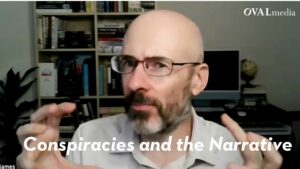
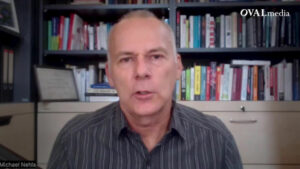
Prof. Dr. Ulrich Vosgerau | NARRATIVE #179 by Robert Cibis
Here is a version of about 30 minutes without restrictions – our OVALmedia subscribers can enjoy the full programme.
Watch the full episode with OVAL Abo
Above you can watch a short version.
from €7 / month · cancel anytime · this and all other films, shows and articles
Already a subscriber? Log in
Blow against Tagesschau – Prof. Dr. Ulrich Vosgerau
Breaking news: the Tagesschau, Germany’s main public TV news programme, has lost a lawsuit against representatives of the “Potsdam meeting”. It may no longer claim that the expulsion of people with a migration background was discussed there. Many major media had conveyed it that way, often hidden in wording that, as “opinion”, is legally unassailable. This caused great outrage, although the obvious question should have been why all of Germany had to be stirred up over an informal meeting of private individuals. In any case, the result was large demonstrations and the disappearance of the farmers’ protests from media reports…
The non-profit company CORRECTIV had launched this campaign against the AfD. Are we dealing with mercenaries of the federal government in the information war? Prof. Dr. Ulrich Vosgerau explains to Robert Cibis the scenarios he could imagine.
Robert CibisHello, my name is Robert Cibis. A warm welcome to OVALmedia. Our domain is www.oval.media. All our videos can be seen there. I've often not said that. And I notice that even people who often watch our programme forget what our domain is called and where the videos can be seen. I'm very proud, very honoured to be sitting here with Prof. Dr. Ulrich Vosgerau for a new episode in the Narrative series. We've spoken once before, but now there's breaking news, as I like to say in modern German, because a really decisive court ruling has been handed down, which perhaps ought to encourage one, in the information war that now prevails, to win back some ground. It's often not about what's true and what's false, but often about how the narrative is supported or weakened. So what is this breaking news?
Prof. Dr. Ulrich VosgerauExactly, the latest breaking news is that on 23 July we obtained a new decision of the Hanseatic Higher Regional Court in Hamburg by which the Tagesschau is prohibited from continuing to claim on Tagesschau online that within the framework of the so-called Potsdam meeting there was ever talk of expulsion, deportation, whatever, let alone of domestic citizens. That was reported on Tagesschau online for a long time. They fell for the narrative – the word really fits very well here – of Correctiv. It was like this: we've conducted a whole series of lawsuits; this is only the most recent. And very early on, already in February of this year, 2024, Correctiv GmbH had to concede before the courts that they weren't by any means asserting facts, but that their whole narrative was only a collection of expressions of opinion, that they had never claimed, for example, in the sense of an assertion of fact, that Martin Sellner had demanded anything unlawful or unconstitutional within the framework of the Potsdam meeting. They had to concede that early on, already in February, before the courts. But a war of narratives is being waged here on several levels.
In court it's claimed – which does indeed correspond to the legal situation – that everything Correctiv wrote was only expressions of opinion, speculation, insinuations, and as such legally not open to challenge. At the same time, many media, above all public-service broadcasting, speak of revelations and of research that had supposedly been carried out. There was never any research from the start, since the text by Correctiv, as the … reader sees at first glance, is a fictional play in which no evidence at all is provided for any assertions of fact, and no assertions of fact in the narrower sense are made either.
Robert CibisI mean, yes, I remember this text; it really did have something theatrical, and it discussed – described a lot in this text about how the event had been observed, which hidden cameras, and that was this James Bond or secret-service aspect that was then the interesting thing about the text, I found, somewhat; what it was actually about in terms of content, I don't really remember anymore.
Prof. Dr. Ulrich VosgerauExactly, the cameras were there to make the thing artificially interesting. When you read the text, it didn't become clear what the cameras were actually there for. Because the subject of the speculation that was then engaged in in this text was the supposed secret thoughts, or the consequences to which these supposed secret thoughts of the participants, even if they hadn't been expressed, would amount. And you couldn't photograph secret thoughts even with a camera. In that respect, a set of facts that wasn't disputed at all by the participants was to be made artificially interesting here.
Robert CibisAnd I mean, the whole thing was huge. And this ruling is evidently also huge accordingly. Do you have the impression that it's now making huge waves too?
Prof. Dr. Ulrich VosgerauWe hope so. Overall my impression is that what we were able to achieve, we have achieved. The numerous lawsuits that we – not only against Correctiv, but also against other media that took Correctiv's speculations at face value – conducted were necessary to get our version into the media. This really is about a media war in which facts play no great role, never did from the start. It begins with the fact that any journalist who had even just printed out the original text – it's 28 pages, and it's a fictional play – who had even just read this original text, would immediately have had to notice that there's nothing to this narrative, that no evidence for anything is provided there, that in the narrower sense hardly any facts are presented, but that it's a strange mélange with many associative allusions to facts, historical facts from the Third Reich, which have nothing at all to do with the matter. So no counter-statement, no denial by the participants would even have been needed to notice that there's nothing to this. Regardless of that, from 10 January 2024 numerous media, above all public-service broadcasting, with Deutschlandfunk right at the front, spoke of supposed revelations based on research.
Since 10 January, Deutschlandfunk really covered the topic anew every day for five weeks in pretty much all its news programmes. That means it was reported on much more intensively than, for example, the first manned moon landing in 1969. You can see what effort was made. And you can see there was nothing to it from the start. As I said, it wasn't about some outrageous factual claims being made that hadn't yet been proven at the beginning, and the people concerned dispute them perhaps and say it was different. And then the question is who bears the burden of proof, and so on. It wasn't like that here at all; rather, as I said, anyone who consulted the original text had to notice there's nothing to it, it's all humbug. Nevertheless it was treated as a supposed sensation, above all by the public-service broadcasters and also by other media. And I'm also personally sure – it simply seems to me that looking at it with common sense shows this – that there must have been arrangements. There must probably have been real secret meetings, because basically a single journalist at any public-service broadcaster – I think there are ten broadcasting corporations, and then there are a few other organisations like Deutschlandfunk in Cologne and Deutschlandfunk Kultur and the like – only a single journalist from these media would simply have had to do what he learned in his journalism training, namely counter-research and source criticism.
And the whole thing would have collapsed. And the fact that this didn't happen over many weeks seems to me to indicate that there must have been arrangements in advance. And that there was some kind of agreement – the contact of this strange Correctiv gGmbH, especially with public-service media, is very close – that they had agreed: yes, something very big is coming, and please don't counter-check it, just blast it out.
Robert CibisAnd the claim in the air was – you've just said it, I just want to say it again now for little children who may have forgotten everything again – that important people meet there who basically represent the AfD, and they want all sorts of people of foreign origin – my father was born in Poland, so me, for example – to be deported, so to speak. So that – or then the question was there all the time. So that, so to speak, hadn't been claimed and has now, so to speak, been refuted, and wasn't even in the Correctiv article itself.
Prof. Dr. Ulrich VosgerauQuite right, quite right. That means the whole thing was entirely a kind of Chinese whispers effect.
Yes, indeed, you can describe it like that. Correctiv itself now places the greatest value on stating that they never claimed that. But quite a few media either fell for it or they also deliberately blew it up. We've conducted numerous successful lawsuits, also against, for example, the so-called publisher of Correctiv, Mr Schraven, who then, after the Hamburg proceedings – where we had only been able to challenge details, quite simply because only very isolated assertions of fact had been made there; we were partly able to challenge those successfully – Mr Schraven then tried to spin it, in an interview with the Frankfurter Allgemeine Sonntagszeitung, as if the Hamburg Regional Court, on all the other points that we hadn't challenged, because they couldn't be challenged as pure expressions of opinion, had now confirmed Correctiv's version. That was then an incorrect assertion of fact, against which we were also able to proceed successfully. Other media, for example Telekom – what are they called – Ströer Telemedien, then voluntarily signed cease-and-desist declarations after we had pointed out to them that we had the better arguments here, or that they couldn't prove anything.
So in that respect, by and large, we've been quite successful. What we can't enforce to this day, at least as far as I know, is that public-service broadcasting, which for many weeks spread the Correctiv narrative of the supposed … conference, where some conspiracies and plans were supposedly made – to correct publicly for once that this narrative has really crumbled to dust before the courts; in my view that has never been reported like that in, say, the Tagesschau or on ZDF. We can't force them to do that either. So that's still outstanding for the time being. I even believe I notice a defiant reaction. Correctiv has recently received two media prizes, about which again – specifically for this so-called research, in fact a fictional play. One is probably not so important, the Leipzig Media Prize, which I think was donated by the Sparkasse. And then a prize – I didn't even know beforehand that it existed – awarded by this Netzwerk Recherche, where public-service broadcasters work together with other media. All with a big media echo, and I actually interpret it as a defiant reaction to our successes in court.
Our successes in court aren't reported on public-service television. There's, so to speak, a spiral of silence, or rather an information blockade has been imposed there. Of course people find out anyway, because the structures in the media aren't monolithic. There's now a huge selection of media that people like to call alternative media. They sometimes don't like being called that. It's indeed doubtful too, because they're not different in quality. Media such as Junge Freiheit or Tichys Einblick or NIUS or Achse des Guten are of course on our side anyway, but also numerous media that certainly belong to the established ones, like Cicero, like the Berliner Zeitung, like Die Welt, which wavered a little at first and then clearly came down on our side, the Neue Zürcher Zeitung from the start. So people do find out, even if it isn't on the Tagesschau. And because people do find out, also via Twitter, for example – also an important medium where you can spread things with which you unfortunately don't get through on public-service television – because people do find out, there now seems to me to be a kind of defiant reaction on the part of the public-service media, in that media prizes are demonstratively awarded to this Correctiv team for its so-called research, and on public-service broadcasting there's then a lot of loud talk about how prestigious these prizes are and how important the achievement that was honoured.
That's the counter-fire, so to speak. It's always about creating another narrative to cover the first narrative. Sometimes it doesn't matter who's right; ultimately it's a struggle about belonging. Absolutely, absolutely. You can say that. There are various narratives in Germany that have each been spread mainly by public-service broadcasting. And there it really plays a role who wants to belong to the elites. Whoever doesn't want to be a crank and conspiracy theorist has to profess fervently certain narratives. Even if he actually knows, or must know, that there's nothing to them. And the best example to this day is, as is well known, the Chemnitz "hunts" that supposedly took place there. What actually happened is that there was an asylum seeker who should never have been let into Germany, because he had already filed an asylum application in Greece before. But he was let in during the big border opening of 2015–16. And then asylum proceedings were conducted in Germany. He had already been rejected too. That means, at the latest after his rejection in the actually inadmissible asylum proceedings, he would have had to be deported from Germany. That didn't happen either. And that put him in a position to commit a robbery-murder in Chemnitz.
He wanted a passer-by's bank card, and the man, who wouldn't hand it over voluntarily – he stabbed him to death. That happened; it happened at a funfair. The funfair was broken off after the murder, and then visitors of this funfair spontaneously formed a spontaneous demonstration march. And that caused the greatest unrest, also among the media, and there the counter-narrative was created, which wasn't true from the outset. That was cleared up by Tichys Einblick, among others. This story of supposed hunts for foreigners that had supposedly come out of this spontaneous demonstration march – there was never anything to it; it didn't happen, but it's still the valid narrative to this day. There's even a separate Wikipedia entry, if I see it correctly, just as there's a Wikipedia entry on the so-called Potsdam meeting. The Potsdam meeting took place, nobody disputes that, and then the Wikipedia entry says it was a meeting of right-wing extremists; it's right there in the heading. And that, I believe, is a very important point for explaining the whole excitement and the matter: what so terribly upsets the prevailing opinion and the political-media complex about the whole thing is that actually no right-wing extremists were present; rather, this informal circle that organised it, the so-called Düsseldorf Circle, is a circle of friends without a legal personality.
And it consists of entrepreneurs, freelancers, self-employed people who are simply connected in friendship and meet once a year and then invite various guests who interest them somehow. And this year, 2023, in November, among others – he was only one of the speakers, but among others – Martin Sellner was there too, who presented nothing at all exciting or anything so exciting, but simply presented his latest book, which at that point, when he presented his book to us, had been completely legally available everywhere in shops for about a year. In that respect it was nothing new or exciting at all. But what so terribly bothers the political-media complex about it is precisely that completely normal, thoroughly established businesspeople Martin Sellner, who – whom you otherwise hardly see in public, who for example has never been invited to public-service talk shows so far, and who overall has been given very little opportunity to express his own view in public for once. You could perhaps read in the report of the Office for the Protection of the Constitution that they consider him really bad, but the thinking person is interested, after all, in talking to such a man himself for once, in being able to find out at all whether all that is true. Yes, and that we quite simply did that – that completely normal, relatively established businesspeople and freelancers simply no longer let this left-utopian conglomerate, which wants to act everywhere in our society as police, as moral police, as political police, in the end even as food police and whatnot – simply no longer let it dictate their thinking and acting, but say, first of all we'll do what we want.
That's not forbidden, after all. Every person has the inalienable right to talk to Martin Sellner if he'd like to. And that's what we did. Incidentally, he made a positive impression on us; so going by what he told us in Potsdam, I can't understand why the Office for the Protection of the Constitution gives him so much space in its reports. I don't know whether he perhaps says something different elsewhere; I can't judge that. What he told us was completely fine, and it wasn't anti-constitutional either, which, incidentally, Correctiv itself concedes. And that's precisely what shocks them, that we no longer let ourselves have the rules dictated to us.
Robert CibisI mean, there are lots of points right away that open up a larger field, which I'd like to go into. First of all, of course, I'll start with a tactical matter. You put it so nicely just now: basically we have a Chinese whispers effect. And something is said that's actually already an opinion, as Correctiv opened it, and then it's taken over in other media. And then it gets twisted so that the opinion is formulated as facts. And then there's a kind of chain of effects, so to speak, in which something ambiguous becomes a lie. I know that from lawyers. They're very good at it. They only say true sentences, but insinuate something that would be a lie, but don't say it out loud. But that's how it comes across to the other side – so of course it's not only lawyers, they do it professionally, but also when you have a PR agency, you do that too. You try – it has something manipulative about it. I can only – I'll give an example now with a topic I know better. When in March 2020 the media were so heavily on – what was it called again – corona, the WHO website then said in big letters: 3.6 case fatality rate.
That means in the hospital where they measured, in the intensive care unit, 3.6 per cent of those with respiratory illness actually died. And in all the newspapers that same week it said – I still remember the headline of The Sun, so in English – 3.6 per cent of the infected die. That's of course false, that's a lie, because of course it wasn't of the infected, but only of those who were in intensive care, and there where it had been measured. And that's then basically – but you also had the feeling it was so deliberate. Also how it already stood on the WHO website back then, and that was also looked after by an advertising agency, the same one that had also organised this war-starting lie for the Iraq War in 2003; it also helped design this website, which – I believe it was already such that you had to misunderstand it on the website, or could, as a journalist. So where you don't even know exactly who the villain was, so that it turned into a lie. Do you see a kind of Machiavellian plan there too?
Prof. Dr. Ulrich VosgerauI happen to be a lawyer in my civilian profession too, and I have to say, first of all, lawyers aren't allowed to lie at all. And I'd also say that I personally don't insinuate anything that wouldn't be true. I'm not one of those. No, no, but I know such people. I know a great many such people, I have to say. Ah yes, okay, may well be. So indeed, this two-track approach that we've seen in the Correctiv affair, in the Correctiv reporting, from the start – there I do believe that it can't have settled in purely by chance, because the balance would simply be far too sensitive. Only one person would have had to step out of line and do counter-research. Everything would have collapsed at once, but on public-service television nobody did. That's why I do believe there's planning behind it. You have to start with this. Firstly, the core competence of these Correctiv people and of comparable NGOs is indeed to produce cease-and-desist-proof texts, that is, texts against which you can't successfully bring an injunction suit, because in substance they consist only of evaluations, expressions of opinion, journalistic judgements and summaries, whatever it's all called, which are, however, written in such a way that the layman and the unpractised reader has the impression of taking in concentrated facts.
Incidentally, I already analysed that years ago, in 2018 – a while ago now – in a different context in a book. That's the work Herrschaft des Unrechts. There, in one chapter, I already described a dispute back then with the Süddeutsche Zeitung and tried to clarify media law for once, where legal protection always fails there. So the core competence of people like Correctiv is by no means research or the like – they don't do that at all – but rather being able to produce texts that the layman considers laden with facts and that in truth contain no facts. But from the start this two-track approach could be observed: that numerous media, above all public-service broadcasting, where journalists sit who of course see through that, can hardly claim that they too fell for Correctiv. They must have read the original text. It must actually have been clear to them that there's nothing to it. Nevertheless they then go down a different track and deliberately create the impression that Correctiv had revealed facts, covering themselves with phrasing like "as Correctiv reports". That's true again, that's again a true fact, that they somehow report it or otherwise put it out there. And so in court injunction suits can be dismissed with the clarification that it's all only opinion, it's all only evaluation, while at the same time the opposite impression is created in public. That's done deliberately, yes.
Yes,
Robert CibisI'm also impressed by the professionalism of writing precisely along this narrow ridge. Do you know how you learn that?
Prof. Dr. Ulrich VosgerauWell, you can certainly learn it, and all journalists are practised at it. And journalists who have no intention at all of uncovering the truth, but want to manipulate. There was this interesting interlude where we were then able to show very quickly that this main actor of Correctiv, who had always walked around with the headphones there and who, incidentally, is a violent offender with a criminal record, maintained a private homepage where it said, in essence, I make up stories to manipulate political processes. That was then taken off the internet as fast as possible when we pointed it out. So journalists who don't even try to uncover the truth, who aren't interested in the truth at all, but simply want to manipulate – they're particularly good at it. In principle every journalist has to be able to do that to some extent, of course, also to cover himself. I'm just trying to remember the example I gave back in 2018. So if you say, for example, about a lecture speaker: he claimed the Earth is a sphere – that's an assertion of fact. Then he could sue against it and could say: I said nothing at all about the shape of the Earth. And that's why journalists actually never write "he claimed the Earth was a sphere". They'd rather write: the speaker talked all kinds of confused nonsense about the supposed shape of the Earth.
And that works. It sounds pretty ugly, but there's nothing you can do about it.
Robert CibisInteresting. And tell me, the one with the headphones – was that the one who had also rented a room there? Yes, exactly. And wasn't it the case that he had rented this room before you'd received an invitation? Yes, that was striking.
Prof. Dr. Ulrich VosgerauThe room had been rented very early. Now, to frame it. The thing wasn't secret. There was never a secret meeting. It was private at most. And several rooms in the hotel were rented out at the same time. It was by no means the only one. I know Correctiv has meanwhile tried to spin it as if no rooms could be rented in the regular way, and he'd found some workaround – that's nonsense. Rooms were rented out quite regularly; there were several guests there, not only him, but he then walked around with the headphones like that. Because he always walked around with the headphones, I'm also convinced that of course a directional microphone was used, which Correctiv denies, because it would be a criminal offence, but that's how it came about. I continue to have the impression that this directional microphone can't have worked particularly well, especially with the things concerning my talk, which was the subject of the very first proceedings, at the Hamburg Regional Court; I had the feeling from the start that the false account was based not only on malice, but that he evidently didn't catch very much acoustically either. But it was interesting: the room was rented very early, actually before the time when invitations had gone out, if I'm correctly informed; we're actually convinced by now, because it can't really be interpreted any other way. That was actually also the result of Tichy's research, which is still ongoing, that the thing can evidently only be explained by Correctiv gGmbH having received the tip directly from the German Federal Office for the Protection of the Constitution, which in turn was probably informed by the Austrian intelligence services.
And that it then evidently looks – this suspicion is in the air, at any rate – as if the Federal Office for the Protection of the Constitution itself set Correctiv on the matter. And if that could be proven one day – we can't prove it so far; we can only say we can't make sense of the story any other way, if they knew before us, so to speak, that the event was going to take place. If that could ever be proven, it would be one of the biggest intelligence scandals in the history of the Federal Republic of Germany, easily comparable to the Spiegel affair or similar things. Because it is of course not the task of a domestic intelligence service to have subversion measures carried out by private parties who supposedly exercise their fundamental rights, but are partly financed by the state and are then deliberately deployed to systematically run down in public people who are presumably suspected of being somehow oppositional. That is of course not the task of the Federal Office for the Protection of the Constitution. It's problematic enough that we have such an authority at all. That's a special German path. Normally such a thing doesn't exist in free democracies. A domestic intelligence service that doesn't deal with crimes, not even primarily.
That's what the police are there for, the public prosecutor's office and so on. But one that pursues the convictions of citizens, even and especially when they're pursued by completely peaceful and legal means.
Robert CibisThere you're opening up … a can of worms; of course I'd love to ask about that right away, but before I do, back once more to this sequence of events, this consideration that it may have been these intelligence services and that Austria plays into it – how can that be explained, why can you only make sense of it that way, who knew about the event and when?
Prof. Dr. Ulrich VosgerauWell, in any case Correctiv seems to have known about the event before the guests who were invited later had even known about the event. That's very striking in any case. Correctiv, if I'm correctly informed, denies that and generally tries – they also deny that a directional microphone was used, and try to spin these things as if there had been not just one but several informants in this circle, this very small, manageable circle, who had busily made memory protocols and then handed them over to Correctiv. This story is totally implausible and actually makes no sense. The disadvantages that many of those involved suffered – and nobody was exempted from them; it's not as if three people were somehow exempted who would have said: we were the informants, we mustn't be disadvantaged. That didn't happen. They're also so great that it simply can't be explained why anyone should take this risk upon themselves solely for the reason of harming a few old friends, where the motive doesn't make sense at all. So we don't believe that. Interesting.
Robert CibisYes, well, I know that as a documentary filmmaker; lawyers often tell me: yes, when you do research, you mustn't somehow record on the phone. Not even as – so you have to make memory protocols, and you can then have them voiced afterwards. By actors, for example. And then it's almost as if you'd recorded it; you have to tell yourself beforehand to memorise it well. But you can see there, of course, of course there are documentary filmmakers who record it and then write it down and then have it voiced. That's of course because who's going to check where exactly the text comes from? So that's of course – and those are the methods; I do notice, well, they then once asked, what should they write? That's how it sounded.
Prof. Dr. Ulrich VosgerauI assume that they, after they had at any rate gained a rough impression of the content of the event, whether the directional microphone, whose use I consider plausible, worked well here or badly, and that in the first moment, when they had the material together, they were terribly disappointed. Because these supposedly right-wing businesspeople, who then privately even meet Martin Sellner, when they believe themselves completely unobserved, still never say anything that would be remotely anti-constitutional. So at first they stood there and probably said: we have absolutely nothing in our hands. Yes, it could have taken place anywhere. And then they considered: what do we do now? And because there was possibly also a wish on the part of the Office for the Protection of the Constitution to create a scandal there, they then hit upon this method of the fictional play, in which you work with associations and insinuations. The first keyword is already Wannsee Conference. They then wanted to deny that. Later on television they tried to create the impression that they had never spoken of the Wannsee Conference. And that quite different people had done so, because precisely this metaphor or this association did lead to annoyance, also very much in left-wing circles, where people are ideologically quite in agreement with Correctiv, but were nevertheless outraged about it, because it's an enormous trivialisation if a private meeting of, I think, 19 people, where there's then a book presentation – if you somehow tried to equate that with such historical events.
Robert CibisOf course you make it big and important, and the bigger and more important it is, the more the narrative has significance. And sometimes that's only a feeling that's conveyed, a kind of feeling that something's happening here. And then – so society is tipping – I mean, that it wasn't rational is explicable to everyone, as you put it so nicely. But nevertheless there's: oh, we don't want the right-wingers here. They wanted to convey this feeling, and it goes very much through the gut. That's why it's so demagogic, because it isn't a debate, and because the debate isn't sought either. And it's also astonishing what it achieved. Of course the first thing you think of are these big demonstrations. I don't even know how big they were. They were certainly made a bit bigger than they really were, but still. And then also above all – that's, I think, the most important thing – the really monumental farmers' protests then disappeared into nirvana. Only in media terms, of course. In reality they continued to take place. And that was of course a huge relief, because I believe if it had gone on, there would have been a mood in the population that says: dear government, that's enough now, but we're standing behind our farmers.
Because making them unsympathetic didn't succeed. Saying they're all right-wing radicals didn't succeed. Hardly any citizen believed that, although some articles actually insinuated it.
Prof. Dr. Ulrich VosgerauThat they were being instigated by the Russians and the like. Indeed, and that's what it was about. So the farmers' protests – it was the second half of 2023 – were incredibly bad for the traffic-light government. So yes, first came the heating law, which was indeed a huge blow, that millions of German citizens, with a stroke of the legislator's pen, so to speak, have their property – which for millions of people is the only significant asset – devalued, because they don't have 100,000 lying around to have the heat pump installed. And then came the farmers' protests, which basically were also self-employed people's protests in the broadest sense. And they did indeed want to choke that off, they wanted to at any price. And that did indeed succeed for a while.
Robert CibisTo stay with new English, with new German. So basically you have a kind of real popular movement, these farmers' protests on the one side, and then a kind of astroturfing on the other side, where a kind of protest is fully staged.
Prof. Dr. Ulrich VosgerauOne has to say something about that, yes. It was partly staged; there were apparently already first preparations in the old year '23. So certain circles knew that something would be coming. But one must also say that to some extent the protests were genuine from a different point of view. These protests were carried – they were always the backbone, they also pulled others along. But the backbone of these protests was what I too call the second public service that exists in Germany, which since the year 2000, since the beginning of Gerhard Schröder's so-called uprising of the decent, has been expanded further and further. This second public service is the epitome of those people, mostly humanities or social scientists, who studied something relatively superfluous and who have now found work at one of the countless – there are hundreds, if not thousands of so-called NGOs, non-governmental organisations, which are, however, all financed from federal funds and which are busy influencing political debates and steering them in that direction and giving them a spin. They're paid for being left-wing, so to speak. And this second public service has now got into a crisis in connection with the fact that the traffic-light government completely miscalculated with the energy transition.
It's like this – you can sum it up like this – the energy transition is incredibly expensive, because you eliminate a functioning energy supply, one of the best there ever was in the world in the past, and replace it with a very unreliable energy supply, where everything always has to be there twice. So on the one hand the wind turbines are there, on the other hand there has to be a backup when the wind isn't blowing. That's why, among other things, the switch to gas power plants with cheap Russian gas was made, because that was simply the cheapest option. Otherwise this duplication couldn't have been managed at all. And you could also say polemically that these wind turbines that now stand everywhere are basically only a backdrop. Economically you could have left them out and then just taken the Russian gas straight away. And then in November 2023 the Federal Constitutional Court also recalled the debt brake and knocked away a very important last resort from the government. They had planned to take so-called special funds already set up and approved during the corona period, which of course are largely just special debts, and simply rededicate them and continue using them. And there the Federal Constitutional Court made clear that you may not circumvent the Basic Law's debt brake in this way. And that knocked the legs out from under them considerably in financial terms. And ever since the ruling of the Federal Constitutional Court, I believe on 9 November 2023, it was pretty clear to many people that in the NGO sector there would be some beacons that would of course keep shining.
These include the famous Amadeu Antonio Foundation, and certainly also the German Institute for Human Rights, which gets its funds approved by the Bundestag. But that there are many hundreds of others whose financing had now become very, very questionable, because the federal government simply miscalculated thoroughly with the energy transition. And they now got into a panic too. And that's why these demonstrations, especially in spring 2024, were also an attempt by these NGOs, this second public service – there are thousands, there are close to 100,000 people, I believe, in total, if you count everyone, including part-time positions and freelancers who are regularly booked by them – to remind people of themselves and to show the government: you still urgently need us in the fight against the right, which is now the most important thing. That played an important role.
Robert CibisYes, thank you, that's an important aspect, of course. If I see it that way, then it was only the question or the answer: where does the impulse come from? De facto nothing works without something taking hold. Just as the attempts to portray the farmers in public as right-wing radicals failed, so the attempts to stir up fear of the right succeeded, because it's there. We all learned at school how terrible the Nazis were. And the longer National Socialism is over, the harder it's fought. That's also a good feeling, so to speak. People like fighting evil, above all evil that ruled two or three generations ago by now. Yes, but the structural side – that's quite a crazy story, and of course it also includes where Correctiv is financed from. You're just speaking of NGOs; it's a non-profit GmbH, as you just said, so practically like an NGO. And in the past there were normal citizens who liked donating something to Correctiv. We thought, you have to do research, you also have to keep an eye on the many politicians and so on.
And then you find out, yes, there's a kind of complex there. Back in 2020 I had looked at who Correctiv's funders are. And then, as you could have expected back then, ARD and ZDF are among them, the government too, but the main funder was Pierre Omidyar. And then I thought, who's that again? I don't think I know him at all. And then of course I looked on the internet: yes, yes, one of the founders of PayPal, possibly still the owner – we know PayPal – Peter Thiel, Elon Musk, that's evidently the clique of the digital people. And then I find out he also owned these microcredit firms that were so very brutal in India, and he makes sure that the school system in Africa is privatised, so that there are no public but rather private schools. And he's a co-founder of the Poynter Institute, a kind of umbrella for all these fact-checkers, who now so wretchedly misuse this word, because fact-checker isn't a good word, but facts, as you've just discussed, aren't what it's about at all.
And then it's also the case that Correctiv is paid by Facebook and carries out deletion campaigns for other such platforms, which then, however, evidently – as also came out regarding the Russia and Ukraine war – there, I think, NachDenkSeiten had received a leak from the Federal Ministry of the Interior that all this is in fact coordinated from within the Federal Ministry of the Interior. So what Correctiv deletes or attacks, for example, is coordinated with politics, so to speak, but paid for by Facebook, for example. And the whole structure is financed by the eBay co-founder, who also co-owns PayPal. So you get the feeling: wow, that's the worst conspiracy theory you can come up with, so to speak, that practically eBay, all these digital platforms, together with the government, are working against the public space of debate. And I found that, and then I also read in the newspaper – I'm giving my perspective now, so to speak – that the Federal Chancellor meets the heads of Correctiv months before it all kicks off.
Prof. Dr. Ulrich VosgerauThat surprised me too, I must say. How do you assess that? That it came out that leading Correctiv employees evidently have access with a certain routine even to the Federal Chancellor – I wouldn't have guessed that beforehand. And when that came out, it did seem to me an indication that the Federal Chancellery regards Correctiv to a high degree as a private intelligence service, so to speak. That is, as an operation working in the state's interest, working in the government's interest, but outsourced into private law – we've known that since Gerhard Schröder, since the uprising of the decent: that all the things the state, the government would like to do but isn't allowed to do, because constitutionally there's the requirement of party-political neutrality of the state, are outsourced to private parties who supposedly only exercise their fundamental rights, but are financed by the state and guided by the state in doing so. So a circumvention of the neutrality requirement. So that's striking, and it belongs in this wide field of increasingly managed democracy. We're currently in the process of the emergence of a managed democracy. That, incidentally, was a term which, if I see it correctly, journalists of public-service broadcasting invented to describe the Putin system in Russia.
And you could almost start wondering whether such a quite apt term, when it's invented to brand someone else with it, doesn't also have a projective element. Because journalists at German public-service broadcasters perhaps do have a precise feeling for what they themselves are actually doing, and that in this country too they're very heavily involved in steering. And this steering doesn't only happen through state funds – Correctiv has been supported both by the federal government and by federal states, North Rhine-Westphalia for example, among others. The support is probably even greater from, say, these transatlantic billionaires who pursue a somewhat unclear agenda; it isn't clear to me. I would say, however – that's also the experience as a lawyer – which says that when a very, very rich person takes a very, very large amount of money and uses it for something somewhere, then according to general experience of life he normally doesn't do so for completely selfless purposes. There are people who are relatively selfless, but they normally don't become billionaires. Those people who become billionaires through their own efforts mostly pursue their own goals.
They may be crazy in an individual case, but they're their own goals too. What goals international organisations pursue that pursue Correctiv, or foundations that support Correctiv, isn't clear to me. If I remember correctly, incidentally, Coca-Cola, I believe, also played a big role in building up the Amadeu Antonio Foundation. That is, foundations that probably originally emerged somehow from German Coca-Cola in Essen – that played a role. What agendas they're pursuing there in detail, I don't know.
Robert CibisI made this detour and told it in a bit of detail, precisely with the financing of Correctiv. Yes, precisely to open this can of worms, because what I described there is evidently a social impulse with enormous force. And back then, in 2020, 2019, the eBay and PayPal owner was also the main sponsor. That was the largest sum, by a wide margin, at Correctiv. And in Africa and in others – they influence society in other countries, also in Germany, towards privatisation. But a privatisation that the few, very rich, big structures benefit, so to speak. So a privatisation that's coupled with a concentration of power or economic concentration. And so there too you have to – I have to assume, also because they, for example, the same Pierre Omidyar, together with personalities known to us, like Bill Gates and similar people, also helped launch this initiative for ID2020, where a kind of worldwide passport system is to be built up.
So that's the nice thing about this, what you've just experienced, and now also with the lawsuit. Basically you're standing up against a global agenda, although it's actually something German when you first look at it. Yes,
Prof. Dr. Ulrich VosgerauI don't know. It's impenetrable to me. It's like this: whoever wanted to earn money here in Germany – that could be the biggest egoist, who perhaps also wants to have a monopoly, who perhaps also wants to finish off our German firms so as to earn money here alone. But taking all that as a hypothetical basis, even whoever wanted that would actually, by human standards, have to have a great interest in us in Germany controlling immigration, above all immigration into the social systems, better and also fending it off better than we've done in recent years, because otherwise at some point chaos and collapse will reign here. So I can't see the reason in it, not even the reason of someone else; whoever works towards us carrying on as before with the largely uncontrolled immigration into the social systems can't actually achieve anything positive with it.
Robert CibisVery interesting point, and because that's also what the attacks against you are about, against the AfD and so on, that's what it's about – there you have a nice arc, because that's why it's all the more interesting that the financing doesn't necessarily come from Germany at all, and that the people who are now in power in Germany – let's take Federal Chancellor Scholz as an example, but you could name many other ministers or functionaries – of course also coordinate closely with their foreign partner governments. That's no secret either; they say so themselves. So in almost all questions, whether economic, legal and of course also military questions – we're de facto practically at war with Russia, at least that's what the foreign minister says, and she must know – then you do have a big – well, not always the feeling that someone is speaking for Germany like that; rather you always have the feeling, yes, the federal – Mr Scholz, to underpin it once more, wasn't all that popular as an SPD politician before he became the candidate for chancellor.
There were – well, he was certainly a leading figure, but there were a number. It wasn't at all clear that he would become the candidate for chancellor. But then there was, which for example points to international coordination, the fact that he was the only one from the SPD who was invited to the Bilderberg meeting before the elections in Germany. And you could suspect that people came to arrangements there. So those are then the secret meetings; they're not so secret at all. They have a website; everything is on it. It also says who was there.
Prof. Dr. Ulrich VosgerauFrankly, I don't believe in that; all sorts of people were there. Olaf Scholz came to the chancellorship out of the blue. He did indeed have an interesting career, in that for a long time in the SPD he was more of a kind of underdog, was very unpopular, as general secretary without a rival candidate got terribly bad election results, and basically became Federal Chancellor – that was a very special situation; he first became candidate for chancellor when nobody somehow believed that the SPD could have a chance. That was also the reason why the current SPD parliamentary group changed so very much from the previous one and thereby also moved massively to the left, also has a huge share of very young Young Socialists. That came about because a great many long-serving SPD politicians gave up their constituencies, didn't stand again, because they foresaw a defeat. And so Jusos came into these constituencies, because everyone foresaw a defeat. And then the SPD did surprisingly well in the last election, evidently because Mr Laschet went down so badly. And that's how it all came about. Then there was the case of the interim Federal Defence Minister Lambrecht.
She had already said goodbye to politics. She had already announced her departure, had claimed she was so looking forward to being able to work as a lawyer again. And when the SPD then did so surprisingly well, she went to the Federal Chancellor and said: I want to become defence minister after all. And she did become it too – as we know, not with such resounding success. No, in my view that has nothing to do with the Bilderbergers, but with this very strange situation that sometimes arises historically. When nobody believes in success, people suddenly come into high positions for which there's no competition.
Robert CibisThat's a very interesting narrative. So they don't necessarily contradict each other. Yes, well, you'd still propose the most attractive man or woman for the role as candidate for chancellor, wouldn't you? From the party at least.
Prof. Dr. Ulrich VosgerauSo the question is who is attractive from which points of view, and that's a bit unpredictable.
Robert CibisI see. Well, of course we won't know conclusively, but that's something that always occupies me, because I don't understand it. Because there are many things where I say: that seems illogical to me now. Absolutely. Exactly. And then I ask myself, okay, but perhaps you don't say it at all – perhaps the reason for the decision isn't the one you say. So what reason is it then? And then I sometimes look abroad. That's how my line of argument just now comes about too. Correct me.
Prof. Dr. Ulrich VosgerauAlthough I believe I can contribute something here. Well, it's a typical consideration that the citizen who is burningly interested in politics but isn't involved in politics, who ultimately sits isolated in his kitchen-diner and thinks about why politicians do what they do, can then come up with the wildest theories, sometimes also conspiracy theories. The point seems to me to be that active politicians nowadays actually don't think about substantive questions at all, but always think only in a very foreshortened way; basically a politician always thinks about the question of how I can prevent losing power in the next 14 days, falling victim to some intrigue, falling victim to a media campaign. That means it's actually always only about opportunities. Polls are read constantly; people orient themselves by them. Horst Seehofer once said: as Bavarian minister-president I don't need a coalition, I have a coalition with the people. And that was his way of expressing that he governed exclusively according to poll results. And that's said to have been partly similar with Angela
Robert CibisMerkel. Yes, but now I have to say, you know just as well as I do a few examples where the population was quite clearly of a different opinion from what the government had implemented. Yes, yes, that exists too. Three occur to me right away; I believe you probably 30. How does that come about, then?
Prof. Dr. Ulrich VosgerauWell, my impression of Angela Merkel – let's take her as an example – was that when Angela Merkel first stood for Federal Chancellor in 2005, the polls and the forecasts were initially so tremendously good, because there was evidently great fatigue with Gerhard Schröder's red-green government, that in the CDU there was very serious thought about whether they even still needed the FDP as coalition partner or would get an absolute majority straight away. That seemed to be on the table at times in 2005. And then Angela Merkel evidently had a very sobering experience, namely that this landslide victory, already seen within reach, very quickly fell apart. And on election night it finally looked as if Gerhard Schröder had caught up so strongly again that on election night itself he was probably under the impression that he might perhaps even have won, if you recounted properly. And that led to this strange appearance in the elephants' round. And now many people say you can't establish that, because it's hypothetical history, but there's a lot to suggest that Angela Merkel, because of the really unexpectedly bad election result, would basically have been out of the picture as an unsuitable leader of the CDU, if it hadn't come to this appearance of Gerhard Schröder in the elephants' round, which in turn led to the CDU having to close ranks.
Because now the CDU had to prove: we won't let the narrowly defeated rival candidate dictate to us whom we throw out, but we now all stand behind Angela Merkel. So that's why she became Federal Chancellor, was able to establish the first black-yellow government then. But I assume that for her it was a tremendously impressive experience, the campaign against the professor from Heidelberg whom they believed they had as a special trump card, Paul Kirchhof, and who was then run down so badly, also by the public-service media, that he almost became a millstone round their neck. That, I believe, impressed Mrs Merkel very much, and it will have contributed to her ultimately – and that's how in my view, at any rate, the second half of her long term in office of almost 16 years is explained – to her saying at some point: we simply won't do anything any more that public-service broadcasting doesn't appreciate. We'll orient ourselves by public-service broadcasting, and that will at some point lead to it not only stopping shooting at us, but at some point becoming our protecting power. And that did succeed here. And that had never existed before. There had never before been a CDU chancellor for whom public-service television built a wagon fort, so to speak, and said: we won't let anything touch her.
She achieved that, at any rate. And why did she do it? Why, for example, did she open the borders, which public-service broadcasting liked and which really triggered a kind of frenzy of enthusiasm among the German elites? People still remember Mr Zetsche, then chairman of the board of Daimler- Benz, who said in all seriousness that the asylum seekers from Syria or wherever would trigger a new economic miracle. That didn't turn out that way after all. You can hardly imagine that he could have seriously believed that subjectively. But at any rate he said it. Yes, and why did Mrs Merkel do all that? Well, I believe I can at any rate say why she didn't do it. She didn't do it in order to be chased out of office at some point in disgrace. And that did succeed too. And incidentally, I was also one of those who thought in the second half of 2015 and the first half of 2016 that Angela Merkel had now finally overstepped the mark with the border opening and that the CDU wouldn't go along with it in the long run. And since the CDU as a party has a lot of experience with chasing off the premises lead candidates who no longer deliver, even if they were very successful before – that happened with Adenauer, that happened with Erhard, that happened with Kiesinger – I actually thought her time was over. I was also in quite good company. There was Christoph Schwennicke back then, then editor-in-chief of Cicero.
He actually didn't write back then "Merkel must go". He wrote instead: Merkel has long since gone. She's just the only one who still hasn't noticed. By and large I saw it similarly too. That back then – that, as is well known, turned out to be a mistake. It was like this: of course this shift to the left in the CDU, this opening to green ideas – the shift to the left in the CDU is much older, it goes back to Heiner Geißler, that would be a topic of its own, we can of course talk about that too – it led to the founding of the AfD, led to – well, not to its founding, it had already been founded, but it led to the strengthening of the AfD, led to the AfD entering the Bundestag in 2017 as the third-strongest force and then, because a grand coalition was formed in 2017, also immediately being leader of the opposition. In truth, however, that didn't affect Mrs Merkel's position as party leader and Federal Chancellor all that negatively. On the contrary. Because ever since the AfD was in the Bundestag, and then as strongly as in 2017, the wagon-fort mentality applied once again. Now nobody from the CDU parliamentary group could say anything against the Federal Chancellor any more, because that would of course have benefited the AfD again. So that had an enormous disciplining effect.
Very interesting.
Robert CibisThere too I'm now – we live in a complex world, and I don't believe that you've contradicted me so diametrically with that, but rather we're describing different forces that have to be weighed somehow. It could be that it has some influence, but perhaps only 0.01 per cent on events. Perhaps it was a greater influence too.
Prof. Dr. Ulrich VosgerauWell, I believe at any rate – I'm even fairly sure of it – if Angela Merkel had stood once more in 2021 – towards the end she was probably somewhat worn down herself and didn't feel like it any more – I'm fairly sure that if she had stood again in 2021, the CDU/CSU would have won the election again. She would have provided by far the strongest group and could then have chosen coalition partners from among many applicants. That was also – one has to say it outwardly – simply one of Mrs Merkel's successes. Today we no longer live in a chancellor democracy, as it once said in old textbooks from the sixties; rather we've long been living in a coalition democracy, and Mrs Merkel managed to make the CDU able to form coalitions with every party, in particular with the Greens, today incidentally also quite with the Left Party, which, however, is itself going under, and then along comes the Sahra Wagenknecht Alliance – they're able to form coalitions with everyone. And that's of course also an important option for preserving power that plays a role there. So if Mrs Merkel had stood again in 2021, she would probably have been confirmed as Federal Chancellor. You also can't fail to recognise – that's true too – the reasons for it aren't familiar to me, but you can't quite fail to recognise that the German people, or at any rate large parts of it, absolutely wanted to be governed by Mrs Merkel.
That's also how these strange things are explained, which as a normal person you can't comprehend, that they then stand for ten minutes at the CDU party conference in Essen or elsewhere and applaud for ten minutes standing. The background to that is that they saw: as long as we put up Mrs Merkel as candidate for chancellor, we'll stay in power. That's essentially what it's about for the CDU. And the Bilderbergers can't influence that at all. The Germans voted that way of their own accord. Why, I don't know.
Robert CibisWell, how do you know they can't influence that?
Prof. Dr. Ulrich VosgerauWell, because millions of Germans, as long as Mrs Merkel was standing, gave the CDU their vote. And when Mrs Merkel no longer stood, but instead Mr Laschet came, the Germans in turn elected the candidate, by a majority, who probably reminded them most strongly of Mrs Merkel. That wasn't Mr Laschet then. There was another one who was similar. I do understand.
Robert CibisI mean, I asked that so provocatively now because – I only took that as an example now; there are many of these contacts, networks, people who help each other. And that's of course completely normal. Is it just good to name it? Or is it in the spirit of a democracy that this is as transparent as possible, so that you know where the motivation for which actions may come from? And that's why such questions of course come up, because you can't follow things. It's just that there are also political lines that various politicians or parties pursue. And this strong transatlantic alliance, for example, has always been part of the CDU. But it's also part of many editorial boards of big media houses. And when you then see who's at such meetings, where Olaf Scholz was, then these media houses are there too. That of course doesn't mean that this meeting has great significance. It means that the people who are there have great significance, and that this meeting is evidence that they're in contact. I don't want to say any more than that. I'm not saying it's a committee; I'm only saying that you know: of course they coordinate with each other. I notice it myself.
You often coordinate with like-minded people almost without noticing it.
Prof. Dr. Ulrich VosgerauAnd elites are always in contact with each other; it can't be otherwise.
Robert CibisExactly, I worked with a musician who had worked with Madonna, that pop star. And he said they just sit together with all the other pop stars at the dinner table, because they just coordinate with each other. They're in the same position, socially. And he found that totally impressive, because because of her he got into the team, so to speak. And that's how it is everywhere. I'm now a new medium, and everyone who does new media, I know. I've already met them all. And I haven't even interviewed them, mostly. It just somehow came about, because you were at the same events, and those I can always call, and others say: oh, you have contact with them – he's just like me, they do the same thing. Just as you probably know a whole number of lawyers and can get to people whom I can't get to so easily. That's how it is, of course. Everyone is in his world. And that's not the problem either. The problem is only when it's against the interests of the population, or too much for one's own interests, when it is after all our money and our power, which we actually entrust to governments.
Prof. Dr. Ulrich VosgerauYes, conventionally these interests are articulated in legal form and formally in elections, which do take place. There would certainly be the opportunity to insist on one's own interests.
Robert CibisNow you have an outlook, where things should perhaps go. You've basically also just expressed the theories about the Office for the Protection of the Constitution, which I've also often heard already from other examples. That is, that it interferes in domestic political questions, for example, and then does government defence rather than defence of the Basic Law. There are many indications of that, and I've also heard that Mausfeld already had examples from 2015 of how it happens in other countries too. So although the same structure doesn't exist there, he named the example of Great Britain, how there had been a smear campaign against the opposition leader Corbyn, that he was antisemitic, was peddled in the media, and that had in fact – so it came out – been put into the media by the militarily organised domestic intelligence service. And that came out, was a small scandal, but only so small that in Germany there was a small article about it in the FAZ and nothing more.
Prof. Dr. Ulrich VosgerauWell, Corbyn is a topic of his own now in Great Britain. I did have the feeling that he's sufficiently antisemitic. And meanwhile the Labour Party has completely separated from him. He no longer plays any role at all. He's even been expelled from the party, I believe. Because of antisemitism? Because of this suspicion? This whole Israel complex probably played a role there. But I don't know that now. I only know that Mr Corbyn has been expelled from the Labour Party. That's also irrelevant on this point. The conduct of the Office for the Protection of the Constitution in Germany has changed, indeed. It has undergone an enormous escalation. There was that famous press conference, I believe on 13 February, with Mrs Faeser and Mr Haldenwang among others, where those famous phrases were uttered that freedom of expression is no carte blanche for enemies of the constitution or those considered as such. And that below the threshold of criminal liability there was also a need for action and scope for action for the Office for the Protection of the Constitution – so basically hair-raising things, which he then, I believe on 1 April 2024 in a guest article – 1 April sounds like it, but it probably wasn't an April Fool's joke – in a guest article for the FAZ, reaffirmed once more. Yes, instead of using the situation, say, to say: we were misunderstood there, and perhaps it sounded like that.
No, he expressly confirmed everything once again. And there you could observe – this perhaps makes one a little bit confident, despite, also in view of these problems with the new role of the Office for the Protection of the Constitution – that, as far as I can see, it met with unanimous rejection from lawyers in Germany. A whole number of prominent public-law experts, that is, constitutional experts, commented on Mr Haldenwang and his statements. And the rejection was actually unanimous. You can hardly see it any other way in a free state.
Robert CibisAt the federal press conference the gentleman did describe: yes, yes, but actually everyone would be in favour of these Islamists being monitored. And everything they say and do may be lawful and legal. But if they want to found a caliphate here, then surely that has to be monitored. Surely you agree on that – that's roughly how he put it. And what do you say to that?
Prof. Dr. Ulrich VosgerauWell, precisely at this famous press conference on 13 February it was mainly right-wing aspirations that were talked about, and now less the caliphate; that the Islamist threat, which of course exists, is now pushed into the foreground like that is of course also problematic insofar as it's a problem that would above all have to be solved through border protection. That's the other side. If you of course let people in indiscriminately – we can also flash back to 2015, when the big border opening happened; it's almost impossible to describe how back then the Federal Intelligence Service, that is, the foreign intelligence service, threw up its hands in despair. The Federal Intelligence Service had in fact spent years and spared no cost or effort to compile a worldwide database of potential threats with persons who, if at all possible, must never be let into the Federal Republic of Germany. From all sorts of countries, a big focus indeed on Islamism, and you can imagine that this list, which was compiled over years and for millions, with investigations and the like, is of course relatively worthless if you let people in indiscriminately and don't even ask for identity documents. And here we see, of course, how the problem of Islamism, international terrorism, should be tackled first and foremost.
If you say: first we let in millions, and then the Office for the Protection of the Constitution should see about who wants to set up a caliphate here – that's of course from the outset not the most practical solution you can find. Moreover – this can't be emphasised enough, because many Germans don't seem to be aware of it at all – this German solution with the domestic intelligence service, that is, the Office for the Protection of the Constitution, is a special German path, as we know it. It is not the task of this Office for the Protection of the Constitution primarily to take care of unlawful conduct. It's of course the case that every state in the world protects its constitution, but free democracies protect their constitution against unlawful efforts to abolish it in general and violent efforts in particular. It's different with us. If someone does something unlawful, something that's a criminal offence, the public prosecutor's office would be responsible. If someone does something that endangers public safety, the police would be responsible. From this alone it follows, conversely, that the Office for the Protection of the Constitution isn't primarily responsible for either, but is responsible for investigating the thoughts of citizens. If someone has supposedly anti-constitutional thoughts, even if he pursues them by absolutely peaceful means, then that's to be ruled out by the Office for the Protection of the Constitution, investigated thoroughly, and can then lead to bans on associations, also to bans on parties.
That's certainly a special path; it isn't compelling. And precisely recently, in the last year or so, two important books have appeared. One by an editor of the Süddeutsche Zeitung, already about a year ago, and then by Mathias Brodkorb, only recently, who was once finance minister of Mecklenburg-Western Pomerania, a Social Democrat. Neither are right-wing radicals, and both authors come in their books to the conclusion that an Office for the Protection of the Constitution as it exists in Germany isn't actually needed and should better be abolished in the interest of a truly free democracy. In other Western liberal democratic states such a thing doesn't exist either.
Robert CibisAs I just said – I can understand that very well – but in other democracies there is in fact the misuse of intelligence services for government work against the opposition, and in Germany we have, I believe, 17 intelligence services, if you now count the state intelligence services…
Prof. Dr. Ulrich VosgerauAh, I was just going to say, there are basically three to begin with. There's the foreign intelligence service, the Federal Intelligence Service, there's the domestic intelligence service, the Office for the Protection of the Constitution, and then there's the Military Counterintelligence Service. And it's true that in every federal state there's also a State Office for the Protection of the Constitution. That's organised differently. Sometimes it's independent with a president at the top, sometimes it's also, as here in Berlin, I believe, simply a department of the Senate Department for the Interior. Then it's called director, not president. Of course it's always subordinate to the Federal Interior Minister or the respective state interior minister. That's clear; it's all within the civil-service hierarchy. And it's clear that instruments of power that exist will always be misused politically.
Robert CibisThat's part of general life. And there are also quasi-intelligence activities by the police, special units that work like intelligence services. At least an intelligence expert once told me that. I wouldn't know about that.
Prof. Dr. Ulrich VosgerauIn general it's assumed that there's a rule that has constitutional rank, even if it isn't directly in the constitution itself but rather belongs to unwritten constitutional law or constitutional customary law. And that's the rule of the Chinese wall, of the absolute separation between police activities and powers and intelligence ones. That's not the case in every country in the world either. There's always this famous precedent, which is why in the Federal Republic of Germany you can't imagine it at all. That was the Gestapo, the Secret State Police. In the Third Reich it was a combination of police, criminal police and domestic intelligence service. But such a thing also exists in the USA in the form of the FBI. There we have the same mixed function. And in Germany, according to the overwhelmingly prevailing opinion, on the basis of unwritten constitutional law or constitutional customary law, it mustn't exist. That means the intelligence services have no police powers whatsoever, and the police have no intelligence powers or capabilities whatsoever. Now it happens, when you examine what the Office for the Protection of the Constitution does, it happens again and again that the Office for the Protection of the Constitution, with the intelligence means it uses, such as telephone surveillance, gets on the trail of criminal offences.
When it does that, interestingly it doesn't have to inform the police about it. So here the principle of mandatory prosecution doesn't apply. The intelligence service can also say: we don't want to frighten the horses, but we want to continue observing and listening. And for that it's necessary that they carry on. But it can of course inform the police, and has often done so. That too is of course a grey area, because the police, in their investigations and also in their responsibility for preventing imminent criminal offences, must of course act within the framework of the relevant laws – here that's above all the Code of Criminal Procedure – and the Office for the Protection of the Constitution doesn't always do that. That's certainly a grey area, but that there are police units that use intelligence means outside the Code of Criminal Procedure – I wouldn't know about that; it would in any case be illegal, would also be unconstitutional.
Robert CibisAh, that's an interesting point, but I mean, we all know these men – police officers – who come in from outside, mingle with the demonstrators, then throw bottles at the police officers and are then so-called agents provocateurs and then provide a pretext for the police to move against the demonstrators. I've observed that personally at several demos, and it was quite clear that these people didn't belong to the demonstrators, just like you know it from the textbook…
Prof. Dr. Ulrich VosgerauI can't say; I personally don't know any police officer who does that; it may have happened.
Robert CibisIt happened to me recently: a guy came – but then that was probably the Office for the Protection of the Constitution man – a guy came up to me, well, to my colleague, knocked the camera he was filming with out of his hand onto the ground and then smashed it, and of course the police were nearby, grabbed him and said: we'll do a confrontation now, and then it took an hour, and they said, yes, this is absolutely – well, then it came out the guy wasn't at all – well, wasn't somehow a demonstrator, or was supposedly a Querdenker; he wasn't a Querdenker. And then – well, they first thought so, and then there was no – well, I have – then it could of course be that he was an Office for the Protection of the Constitution man, couldn't it? Or may an Office for the Protection of the Constitution man knock the camera out of my hand?
Prof. Dr. Ulrich VosgerauIt wouldn't be the task of Office for the Protection of the Constitution staff to attract attention socially in any way.
Robert CibisWell, there were no proceedings. It was quite clear he was in cahoots with the police. They came to me and basically told me so too. We're sorry, we don't understand either why he knocked the camera out of your hand. You do have a press card, and of course you may film at the demo. Well, the purpose of intelligence services, the purpose of the Office for the Protection of the Constitution, is to generate information.
Prof. Dr. Ulrich VosgerauAnd an intelligence officer who is noticed by other people at all would be doing something wrong.
Robert CibisWell, that's a debate of its own. I know we don't have much time left now. Just perhaps as an impulse for the next conversation, I think, I once read that generating information at all is only a small part of the effort, also of the Federal Office for the Protection of the Constitution. They have so many actions that happen, like the one you just described. If what we're now only suspecting should be true, that the Federal Office for the Protection of the Constitution was also involved in this campaign against the AfD, for which this meeting in Potsdam was misused, then that would be an example of an action that goes further than generating information.
Prof. Dr. Ulrich VosgerauYes, and what I have indeed heard – I did say that if it can be proven that Correctiv was tipped off by the Office for the Protection of the Constitution with the aim of initiating subversion measures, so to speak, against the participants of this meeting, as then happened, that would be a tremendous scandal. However, I've also heard several times from journalists – I know a whole number of journalists, and when I tell them: imagine that, if that could be proven, it would be the biggest scandal of all time – then experienced journalists, and not only one, tell me: well, you know, the Office for the Protection of the Constitution talks to us all the time. It wouldn't be anything so special for the Office for the Protection of the Constitution to talk to media people. Officially that's quite certainly not its task. The Office for the Protection of the Constitution is supposed to generate information to make it available to the government. And alongside that it also has the task – which I believe nowadays is very strongly overemphasised, also overemphasised in a constitutionally problematic way – of informing the public. This activity of the Office for the Protection of the Constitution, informing the public, in the form of the report on the protection of the constitution, has by now taken on forms that indeed rather bring to mind a managed democracy, because a kind of political education of the citizen is already being undertaken there, and because oppositional activities that attain a sufficient consistency, without having to be anti-constitutional for that reason, are then presented in a censoring manner after all.
Then it's certainly a huge problem, but it's clearly not the constitutional task of the Office for the Protection of the Constitution to inform the press about anything or even to deploy journalists for opinion-forming of any kind.
Robert CibisSo now, that means if that came out, one could take legal action, you're saying, for example.
Prof. Dr. Ulrich VosgerauThose affected ought to be able to, yes, exactly, exactly. You now have disadvantages too.
Robert CibisYou now had lawsuits, for court costs, and other people who took part in it lost their jobs. So what had happened there was certainly significant for the person. And if now – if it came out, so to speak, that it was someone from the Office for the Protection of the Constitution who smashed my camera, then I could also bring criminal proceedings or could make a kind of inquiry. So thank you now for the legal advice, excuse me. I don't want to misuse you. As I said, we're at the end, but I'd perhaps like to close with this.
Prof. Dr. Ulrich VosgerauMore interesting would be – if a camera got broken, the state liability claim would probably be more interesting. You get nothing out of criminal proceedings. Yes, what do you want to achieve with that? The payment obligation would probably be more interesting. But as I said, that's a legal case I don't know. It would surprise me very much if an employee of the Office for the Protection of the Constitution smashed other people's cameras at demonstrations. Not only because that isn't their task. I do myself suspect that they occasionally do things that don't fall within their constitutional tasks, but because that's simply far too conspicuous. An intelligence service generally doesn't attract attention. Yes, interesting. Interesting.
Robert CibisAll right, that all has to be examined case by case. Thank you very much for the conversation. Thank you very much for drawing the big arc and setting out such connections for us. It remains exciting. We live in exciting times, and I have the feeling that thinking along, grasping what's happening in our world right now, is particularly important for us. It's very hard to be completely apolitical, I find. And perhaps that has something good about it too. Thank you. Thanks to the viewers as well. That's arbitrary in here, isn't it. Yes, that's how it was addressed. That's how it is. No intention.
Robert CibisHallo, mein Name ist Robert Cibis. Herzlich willkommen bei Oval Media. Unsere Domain ist www.oval.media. Da sind all unsere Videos zu sehen. Ich habe das oft nicht gesagt. Und mir fällt auf, dass selbst Leute, die unsere Sendung oft sehen, vergessen, wie unsere Domain heißt und wo eben die Videos zu sehen sind. Ich bin ganz stolz, ganz geehrt, hier mit Prof. Dr. Ulrich Vosgerau zu sitzen für eine neue Sendung in der Reihe Narrative. Wir hatten schon einmal gesprochen, aber jetzt gibt es Breaking News, wie ich gerne auf Neudeutsch sage, weil ein wirklich entscheidendes Gerichtsurteil gefällt ist, was vielleicht eben dann einen auch bestärken müsste, im Informationskrieg, der ja nun herrscht, etwas Land wieder zu gewinnen. Also es geht ja oft nicht darum, was wahr und was falsch ist, sondern es geht eben oft darum, wie das Narrativ gestützt oder geschwächt wird. Was sind denn diese Breaking News?
Prof. Dr. Ulrich VosgerauGanz genau, die letzten Breaking News sind, dass wir jetzt am 23. Juli einen neuen Beschluss des Hanseatischen Oberlandesgerichts in Hamburg erwirkt haben, durch den die Tagesschau eben untersagt wird, auf Tagesschau Online weiterhin zu behaupten, dass im Rahmen des sogenannten Potsdamer Treffens jemals über Vertreibung, Deportation, was auch immer, gar von inländischen Staatsbürgern die Rede gewesen ist. Das ist nämlich lange Zeit auf Tagesschau online gemeldet gewesen. Die sind auf das Narrativ, hier passt das Wort wirklich sehr gut, von Korrektiv hereingefallen. Es war ja so, wir haben eine ganze Reihe von Prozessen geführt, das ist ja erst der jüngste. Und schon sehr früh, bereits im Februar diesen Jahres 2024, hatte ja Korrektiv GmbH vor den Gerichten einräumen müssen, dass sie keineswegs Tatsachen behaupten, sondern dass ihr ganzes Narrativ nur eine Sammlung von Meinungsäußerungen sind, dass sie auch etwa niemals behauptet hätten im Sinne einer Tatsachenbehauptung, dass etwa der Martin Sellner im Rahmen des Potsdamer Treffens irgendetwas Rechts - oder Verfassungswidriges gefordert hätte. Das haben die früh schon, also im Februar bereits, vor den Gerichten einräumen müssen. Aber es wird eben hier ein Narrativkrieg auf mehreren Ebenen geführt.
Also vor Gericht wird eben behauptet, was dann eben auch der Rechtslage in der Tat entspricht, dass alles, was Korrektiv geschrieben hat, nur Meinungsäußerungen, Spekulationen, Insinuationen gewesen sind und mit denen eben rechtlich nicht angreifbar. Gleichzeitig wird in vielen Medien, allen voran dem öffentlich -rechtlichen Rundfunk, von Enthüllungen gesprochen und von einer Recherche, die angestellt worden sei. Recherche gab es von Anfang an nicht, da der Text, der von Korrektiv, wie der Glückte Leser auf den ersten Blick sieht, ein fiktives Theaterstück ist, wo gar keine Belege für irgendwelche Tatsachenbehauptungen geliefert werden, auch keine Tatsachenbehauptungen im engeren Sinne erhoben werden. Ich meine, ja, ich erinnere mich an diesen Text,
Robert Cibisder hatte ja tatsächlich was Theatralisches und man besprach, also beschrieb in diesem Text viel, wie denn da das Event beobachtet worden sei. welche versteckten Kameras, und das war dieser James -Bond - oder Geheimdienst -Aspekt, der dann das Interessante am Text war, fand ich so ein bisschen, worum es dann inhaltlich ging, erinnere ich mich gar nicht mehr so richtig.
Prof. Dr. Ulrich VosgerauGenau, die Kameras waren dazu da, die Sache künstlich interessant zu machen. Wenn man den Text las, dann wurde nicht deutlich, wozu die Kameras eigentlich da sind. Denn Gegenstand der Spekulationen, die dann in diesem Text angestellt wurden, waren ja die vermeintlichen geheimen Gedanken oder die Konsequenzen, auf die diese vermeintlichen geheimen Gedanken der Teilnehmer, auch wenn sie nicht geäußert worden seien, hinauslaufen würden. Und die geheimen Gedanken zu fotografieren, das könnte man ja selbst mit einer Kamera nicht. Insofern sollte hier ein Sachverhalt, der von Seiten der Beteiligten gar nicht bestritten worden ist, künstlich interessant gemacht werden.
Robert CibisUnd ich meine, das Ganze war ja ein Riesending. und dieses Urteil ist ja offensichtlich dementsprechend auch ein Riesending. Haben Sie den Eindruck, dass das jetzt auch eine Riesenwelle schlägt?
Prof. Dr. Ulrich VosgerauDas wollen wir hoffen. Insgesamt ist mein Eindruck, dass das, was wir haben erreichen können, dass wir das erreicht haben. Die zahlreichen Prozesse, die wir, die nicht nur gegen Korrektiv, sondern eben auch gegen andere Medien, die die Spekulationen von Korrektiv für bare Münze genommen haben, geführt haben, waren eben erforderlich, unsererseits unsere Fassung in die Medien zu bringen. Es geht hier wirklich einen medialen Krieg, wo Tatsachen gar keine große Rolle spielen, von Anfang an nicht. Das beginnt eben damit, dass jeglicher Journalist, der auch nur den Urtext ausgedruckt sind, das ist ja 28 Seiten und das ist eben ein fiktives Theaterstück, der auch nur diesen Urtext gelesen hätte, sofort hätte merken müssen, dass an diesem Narrativ nichts dran ist, dass dort keine Belege für irgendetwas geliefert werden, dass auch im engeren Sinne kaum Tatsachen vorgestellt werden, sondern dass das so eine seltsame Melange ist mit vielen assoziativen Anlehnungen an Tatsachen, geschichtliche Tatsachen im Dritten Reich, die gar nichts mit dem Sachverhalt zu tun haben. Also es hätte keiner Gegenrede, es hätte keines Bestreitens der Beteiligten auch nur Bedürft damit auffällt, dass an dieser Sache nichts dran ist. Dessen ungeachtet haben eben zahlreiche Medien ab dem 10. Januar 2024, allen voran der öffentlich -rechtliche Hohenfunk, auch der Deutschlandfunk ganz vorneweg mit dabei, eben von vermeintlichen Enthüllungen aufgrund einer Recherche gesprochen.
Der Deutschlandfunk hat ja das Thema seit dem 10. Januar wirklich fünf Wochen lang jeden Tag aufs Neue in so ziemlich allen Nachrichtensendungen aufs Neue behandelt. Das heißt, es ist sehr viel intensiver darüber berichtet worden als beispielsweise über die erste bemannte Motlandung im Jahre 1969. Kann man mal sehen, was für ein Aufwand getrieben worden ist. Und es ist eben zu sehen, es war von Anfang an nichts dran. Wie gesagt, es ging also nicht darum, dass beispielsweise irgendwelche ungeheuren Behauptungen tatsächlicher Art aufgestellt werden, die aber am Anfang noch nicht erwiesen sind und die Betroffenen sagen, streiten das vielleicht und sagen, das war anders. Und dann ist die Frage, wer die Beweislast trägt und so weiter. So war es hier ja gar nicht, sondern wie gesagt, jedem, der den Urtext zu Rate zog, dem musste auffallen, da ist nichts dran, das ist alles Schmuh. Dennoch ist es eben von den öffentlich -rechtlichen Rundfunkanstalten voran und auch anderen Medien eben als vermeintliche Sensation behandelt worden. Und ich bin mir persönlich auch sicher, das scheint mir ganz einfach die Betrachtung mit gesundem Menschenverstand zu zeigen, da muss es auch Absprachen gegeben haben. Also da muss es wahrscheinlich wirkliche Geheimtreffen gegeben haben, denn es hätte ja im Grunde ein einziger Journalist in einer beliebigen öffentlich -rechtlichen Senderanstalt, ich glaube es gibt zehn Senderanstalten und dann gibt es noch ein paar andere Organisationen wie etwa Deutschlandfunk in Köln und Deutschlandfunk Kultur und dergleichen.
Es hätte nur ein einziger Journalist aus diesen Medien einfach nur das tun müssen, was in seiner Journalistenausbildung gelernt hat, nämlich Gegenrecherche und Quellenkritik. Und schon wäre die ganze Sache zerfallen. Und dass das über viele Wochen hin nicht passiert ist, scheint mir anzudeuten, dass es da wohl Absprachen gegeben haben muss im Vorfeld. Und dass es schon eine Art Verabredung gab, also der Kontakt von dieser seltsamen Korrektiv GGMBH, speziell zu öffentlichen rechtlichen Medien, ist ja doch sehr eng, dass man sich da abgesprochen hat. Ja, da kommt ein ganz großes Ding und das wird bitte nicht gegenrecherchiert, sondern das wird einfach rausgeblasen.
Robert CibisUnd die Behauptung im Raum war ja, das haben Sie gerade schon gesagt, ich will es nur nochmal jetzt für kleine Kinder, die vielleicht schon wieder alles vergessen haben, sagen, dass dort sich wichtige Leute treffen, die im Grunde die AfD vertreten. und die wollen, dass alle möglichen Leute, die ausländischen Ursprungs sind, mein Vater ist in Polen geboren, dann zum Beispiel ich, sozusagen deportiert werden. Also das, oder dann ist die Frage wohl die ganze Zeit. So, das sozusagen war nicht behauptet worden und ist sozusagen jetzt auch widerlegt und stand selbst nicht in dem Korrektivartikel.
Prof. Dr. Ulrich VosgerauGanz richtig, ganz richtig. Das heißt, das Ganze war völlig eine Art stille Post
-Effekt. Ja, in der Tat, so kann man das beschreiben. Also Korrektiv selber lebt ja größten Wert inzwischen auf die Feststellung, dass sie das nie behauptet hätten. Es sind aber doch etliche Medien entweder darauf hereingefallen oder sie haben es auch bewusst aufgebauscht. Wir haben ja zahlreiche erfolgreiche Prozesse geführt, auch gegen etwa den sogenannten Publisher von Korrektiv, Herrn Schraven, der dann im Nachgang zum Hamburger Verfahren, wo wir ja nur Details hatten eingreifen können, ganz einfach, weil dort nur ganz vereinzelt Tatsachenbehauptungen aufgestellt worden sind, die haben wir teilweise erfolgreich angreifen können. Herr Schraven hat es dann so zu drehen versucht in einem Interview mit der Frankfurter Allgemeinen Sonntagszeitung, als habe das Landgericht Hamburg, An allen übrigen Punkten, die etwa von uns nicht angegriffen worden sind, weil sie gar nicht angreifbar waren als reine Meinungsäußerung, nun die Version von Korrektiv bestätigt. Das war dann eine unzutreffende Tatsachenbehauptung, gegen die wir auch erfolgreich haben vorgehen können. Andere Medien, zum Beispiel Telekom, wie heißen die, also Schröer Telemedien, die haben dann freiwillig Unterlassungserklärungen unterschrieben, nachdem wir sie darauf aufmerksam gemacht haben, dass wir hier doch die besseren Argumente haben, beziehungsweise dass sie nichts
beweisen können. Also insofern sind wir im Großen und Ganzen schon ziemlich erfolgreich gewesen. Was wir nicht durchsetzen können, bis auf den heutigen Tag, jedenfalls nach meinem Informationsstand, ist, dass der öffentlich -rechtliche Rundfunk, der ja über viele Wochen lang das Korrektiv -Narrativ von der angeblichen Geheimfond -Konferenz, wo dann irgendwelche Verschwörungen und Pläne gemacht worden sein sollen, Also dieses mal öffentlich richtig zu stellen, dass dieses Narrativ nun wirklich vor den Gerichten zu Staub zerfallen ist, das ist meines Erachtens etwa in der Tagesschau oder auch im ZDF niemals so gemeldet worden. Dazu können wir die auch nicht zwingen. Also das steht noch bis auf Weiteres aus. Ich glaube sogar eine Trotzreaktion zu bemerken. Es ist ja so, dass Korrektiv in der letzten Zeit zwei Medienpreise erhalten hat, worüber auch wieder, Also speziell für diese sogenannte Recherche, also de facto ein fiktives Theaterstück. Einer dürfte nicht so wichtig sein, der Leipziger Medienpreis, der da glaube ich von der Sparkasse gespendet worden ist. Und dann eben ein Preis, ich wusste vorher gar nicht, dass es den gibt, der von diesem Netzwerk Recherche, wo also Öffentlich -Rechtliche mit anderen Medien zusammenarbeiten, verliehen wird. Alles mit großem Medienecho und ich interpretiere das eigentlich als eine Trotzreaktion auf unsere Erfolge vor den Gerichten.
Also im öffentlich -rechtlichen Fernsehen wird über unsere Erfolge vor den Gerichten nicht berichtet. Da ist sozusagen eine Schweigespirale bzw. eine Informationsblockade ist da erlassen worden. Natürlich erfahren die Leute es trotzdem, denn die Strukturen in den Medien, die sind ja nicht monolithisch. Es gibt ja inzwischen eine Riesenauswahl an Medien, die man gern alternative Medien nennt. Die möchten manchmal nicht gern so genannt werden. Es ist auch in der Tat zweifelhaft, denn die sind ja qualitativ nicht anders. Also solche Medien wie die Junge Freiheit oder Tichys Einblick oder News oder die Achse des Guten, die sind natürlich sowieso auf unserer Seite, aber auch eben zahlreiche Medien, die durchaus zu den Etablierten gehören. wie Cicero, wie die Berliner Zeitung, wie dann die Welt, die am Anfang ein bisschen laviert hat und dann sich doch klar auf unsere Seite geschlagen hat, die neue Zürcher Zeitung von Anfang an. Also die Leute erfahren es ja doch, auch wenn es in der Tagesschau nicht kommt. Und weil die Leute es eben doch erfahren, auch zum Beispiel über Twitter, auch ein wichtiges Medium, wo man Dinge verbreiten kann, mit denen man also beim öffentlich -rechtlichen Fernsehen leider nicht landet. Weil die Leute es doch erfahren, scheint es mir jetzt auf Seiten der öffentlich -rechtlichen Medien so eine Art Trotzreaktion zu geben, dass also demonstrativ diesem Korrektiv -Team für seine sogenannte Recherche Medienpreise verliehen wird und im öffentlich -rechtlichen Rundfunk wird dann groß herumgetönt, wie renommiert diese Preise seien und wie wichtig die Leistung, die da ausgezeichnet worden ist.
Das ist sozusagen das Gegenfeuer. Es geht immer darum, ein anderes Narrativ zu schaffen, das erste Narrativ zu überdecken. Manchmal kommt es ja auch nicht darauf an, wer Recht hat, sondern letztendlich ist es dann so ein Zugehörigkeitskampf. Absolut, absolut. Das kann man sagen. Also, es gibt verschiedene Narrative in Deutschland, die eben jeweils schwerpunktmäßig vom öffentlich -rechtlichen Rundfunk verbreitet worden sind. Und da ist es wirklich, es gibt es eine Rolle, wer zu den Eliten dazugehören will. Wer also kein Schwurbler und Verschwörungstheoretiker sein will, der muss sich feurig zu gewissen Narrativen bekennen. Auch wenn eigentlich weiß oder wissen muss, dass da gar nichts dran ist. Und das beste Beispiel bis heute sind ja bekanntlich die Chemnitzer Hetzjagden, die es da gegeben habe. Was ja in der Tat passiert ist, ist, dass da ein Asylbewerber war, der niemals nach Deutschland hätte eingelassen werden dürfen, da nämlich schon in Griechenland einen Asylantrag zuvor gestellt hatte. wurde aber reingelassen im Rahmen der großen Grenzöffnung von 2015 -16. Und dann ist ein Asylverfahren in Deutschland durchgeführt worden. war auch schon abgelehnt. Das heißt, spätestens nach seiner Ablehnung beim eigentlich unzulässigen Asylverfahren hätte spätestens dann aus Deutschland abgeschoben werden müssen. Das ist ebenfalls nicht passiert. Und das hat ihn eben in die Lage versetzt, einen Raubmord in Chemnitz zu begehen.
Also wollte von einem Passanten die EC -Karte haben und der, der die nicht freiwillig herausgegeben hat, hat ihn erstochen. Das ist passiert, das ist auf einem Volksfest passiert, das Volksfest wurde abgebrochen nach dem Mord und dann haben sich also spontan Besucher dieses Volksfestes zu einem spontanen Demonstrationszug formiert. Und das hat eben größte Beunruhigung ausgelöst, auch bei den Medien und da hat man das Gegennarrativ geschaffen, was eben von vornherein nicht stimmte. Das ist ja unter anderem durch Tichys Einblick aufgeklärt worden. Diese Erzählung von angeblichen Hetzjagden auf Ausländer, die es aus diesem spontanen Demonstrationszug herausgegeben habe, da war nie etwas dran, das ist nicht passiert, aber das ist eben bis heute geltendes Narrativ. Es gibt auch einen eigenen Wikipedia -Eintrag, wenn ich das richtig sehe, genau wie es auch einen Wikipedia -Eintrag zum sogenannten Potsdamer Treffen gibt. Das Potsdamer Treffen, das hat sich ereignet, das bestreitet ja niemand und da steht dann im Wikipedia -Eintrag drin, das sei ein Treffen von Rechtsextremisten gewesen, steht gleich in der Überschrift. Und das ist, glaube ich, ein ganz wichtiger Punkt, die ganze Aufregung und die Sache zu erklären, was die herrschende Meinung und was den politisch -medialen Komplex so wahnsinnig aufregt an der ganzen Sache, ist, dass eigentlich keine Rechtsextremisten anwesend gewesen sind, sondern dieser formlose Kreis, der das veranstaltet, sogenannte Düsseldorfer Kreis, ist ein Freundeskreis ohne eine Rechtspersönlichkeit. Und besteht aus Unternehmern, Freiberuflern,
Selbstständigen, die eben freundschaftlich sich verbunden sind und sich einmal im Jahr treffen und dann verschiedene Gäste einladen, die sie irgendwie interessieren. Und in diesem Jahr 2023 im November war eben unter anderem, war nur einer der Redner, aber unter anderem eben auch der Martin Sellner dabei, der gar nichts Aufregendes oder so Aufregendes vorgetragen hat, sondern eben sein letztes Buch vorgestellt hat, was zu diesem Zeitpunkt, wo bei uns sein Buch vorgestellt hat, seit etwa einem Jahr im Handel überall völlig legal zu erwerben war. Insofern war das also gar nichts Neues oder Aufregendes. Aber was eben den politisch -medialen Komplex so wahnsinnig daran stört, ist eben, dass ganz normale, durchaus etablierte Geschäftsleute sich den Martin Sellner, der ja, die man ansonsten ja kaum in der Öffentlichkeit sieht, der also zum Beispiel in öffentlich -rechtliche Talkshows bisher ja niemals eingeladen worden ist, und der insgesamt sehr wenig Gelegenheit erhalten hat, in der Öffentlichkeit mal selber seine Auffassung zu äußern. Man konnte vielleicht im Verfassungsschutzbericht nachlesen, dass die den für ganz übel halten, aber es interessiert ja den denkenden Menschen doch, sich mit einem solchen Mann da mal selber zu unterhalten, überhaupt herausfinden zu können, ob das alles so stimmt. Ja, und dass wir das ganz einfach gemacht haben, dass da also ganz normale, relativ etablierte Geschäftsleute und Freiberufler sich von diesem links -utopistischen Konglomerat, das überall in unserer Gesellschaft als Polizei auftreten will, als moralische Polizei, als politische Polizei, am Ende noch als Ernährungspolizei und was nicht alles, sich von dem einfach nicht mehr das Denken und das Handeln vorschreiben lässt, sondern sagt, wir machen erstmal, was wir möchten.
Das ist ja nicht verboten. Jeder Mensch hat das unveräußerliche Recht, sich mit Martin Sellner zu unterhalten, wenn das gerne möchte. Und das haben wir gemacht. Nebenhergesagt hat auf uns einen positiven Eindruck gemacht, also nach dem, was bei uns in Potsdam erzählt hat, kann ich jetzt nicht verstehen, dass der Verfassungsschutz ihn so breit berücksichtigt in seinen Berichten. Ich weiß nicht, ob woanders vielleicht auch mal was anderes erzählt, das kann ich nicht beurteilen. Was bei uns erzählt hat, das war völlig in Ordnung und das war auch nicht verfassungsfeindlich, was übrigens auch korrektiv selber einräumt. Und das ist es eben, was die schockt, dass wir uns die Regeln nicht mehr haben vorschreiben lassen.
Robert CibisIch meine, da gibt es gleich ganz viele Punkte, die ein größeres Feld aufmachen, auf die ich eingehen möchte. Erst einmal natürlich fange ich mal an mit einer taktischen Sache. Sie haben es gerade so schön gesagt, im Grunde haben wir einen stillen Post -Effekt. Und etwas wird gesagt, was eigentlich schon eine Meinung ist, wie es korrektiv eröffnet ist, und dann wird das in anderen Medien übernommen. Und dann wird es schon so verdreht, dass man die Meinung zu Tatsachen formuliert. Und dann gibt es so eine Wirkkette, wozu sagen, etwas Missverständliches zu Lüge wird. Ich kenne das von Anwälten. Die sind da sehr gut drin. Die sagen nur wahre Sätze, aber insinuieren etwas, was eine Lüge wäre, aber sprechen es nicht aus. Aber es kommt bei der anderen Seite so an, also es sind natürlich nicht nur Anwälte, die machen das ja beruflich, aber auch, wenn man jetzt eine PR -Agentur hat, dann macht man das ja auch. Man versucht, es hat was Manipulatives. Ich kann nur, ich nenne mal jetzt ein Beispiel mit einem Thema, mit dem ich mich besser auskenne, Als es im März 2020 in den Medien so stark die, wie hieß das nochmal, Corona ging, da hatte dann auf der WHO -Webseite stand dann groß 3,6 Falltodesrate. Das heißt, im Krankenhaus, wo sie gemessen haben,
auf der Intensivstation, sind 3,6 Prozent der Atemwegserkrankten tatsächlich verstorben. Und in allen Zeitungen stand dann in derselben Woche, ich erinnere mich noch an den Titel von The Sun, also in Englisch, 3,6 Prozent der Infizierten sterben. Das ist natürlich falsch, das ist eine Lüge, weil natürlich das nicht von den Infizierten war, sondern nur von denen, die intensiv waren und da, wo man gemessen hatte. Und das ist dann im Grunde, aber man hatte auch das Gefühl, das war so absichtlich. Auch wie das schon auf der WHO -Webseite damals stand, und das wurde ja auch betreut von einer Werbeagentur, dieselbe, die auch diese Kriegsbeginnslüge zum Irak -Krieg 2003 organisiert hatte, die hat ja auch diese Webseite mitgestaltet, die, ich glaube, das war schon so, dass man das auf der Webseite falsch verstehen musste oder konnte als Journalist. Also wo man gar nicht genau weiß, wer der Bösewicht war, sodass es zu Lüge kam. Sehen Sie da auch so einen Machiavellischen Plan?
Prof. Dr. Ulrich VosgerauIch bin ja zufällig auch Rechtsanwalt im Zivilberuf und ich muss sagen, also erstens, Rechtsanwälte dürfen ja gar nicht lügen. Und ich würde auch sagen, ich persönlich insinuiere auch nichts, was nicht stimmen würde. Das ist nicht so einer. Nein, nein, ich kenne aber solche. Ich kenne ganz viele solche, muss ich sagen. Ah ja, okay, mag ja sein. Also in der Tat, diese Zweigleisigkeit, die wir in der Korrektivaffäre, in der Korrektivberichterstattung von Anfang an sehen, Da glaube ich dann schon, dass die sich nicht rein zufällig eingependelt haben kann, weil eben das Gleichgewicht allzu sensibel wäre. Es müsste nur einer aus der Reihe tanzen und Gegenrecherche machen. Schon wäre alles zusammengebrochen, hat aber im öffentlich -rechtlichen Fernsehen keiner gemacht. Deswegen glaube ich schon, dass da eine Planung ist. Man muss mal damit anfangen. Erstens, die Kernkompetenz von diesen Korrektivleuten und auch vergleichbaren NGOs ist es in der Tat, unterlassungsfeste Texte zu produzieren, also Texte, gegen die man erfolgreich keine Unterlassungsklage machen kann, weil sie eben in der Sache nur aus Wertungen, Meinungsäußerungen, journalistischen Werten und Zusammenfassungen, wie das alles heißt, bestehen, die aber so abgefasst sind, dass der Laie und der ungeübte Leser den Eindruck hat, geballte Tatsachen zur Kenntnis zu nehmen.
Ich habe das übrigens schon vor Jahren, 2018, inzwischen ein bisschen her, in einem anderen Zusammenhang mal in einem Buch analysiert. Das ist diese Schrift Herrschaft des Unrechts. Da habe ich ja auch schon in einem Kapitel dann eine damalige Auseinandersetzung mit der Süddeutschen Zeitung geschildert und habe da versucht, das Medienrecht mal klarzustellen, worin denn der Rechtsschutz dort immer scheitert. Also die Kernkompetenz von so Leuten wie Korrektiv ist keineswegs Recherche oder dergleichen, machen die ja gar nicht, sondern ist es eben Texte herstellen zu können, die der Laie für Tatsachen befrachtet hält und in Wahrheit keine Tatsachen enthalten. Es ist aber von Anfang an eben diese Zweigleisigkeit zu beobachten, dass zahlreiche Medien, vor allem der öffentlich -rechtliche Rundfunk, wo ja Journalisten sitzen, die das natürlich durchschauen, die können sich ja nun kaum darauf berufen, dass sie auch auf Korrektiv reingefallen sind. Die müssen ja den Originaltext gelesen haben. Den muss eigentlich klar gewesen sein, dass da nichts dran ist. Dennoch befahren die dann eine andere Schiene und erwecken gezielt den Anschein, Korrektiv habe Tatsachen enthüllt, sichern sich dabei ab durch Formulierung, wie Korrektiv berichtet. Das stimmt dann ja wieder, das ist dann wieder eine wahre Tatsache, dass die das irgendwie berichten oder anderweitig in den Raum stellen. Und das also vor Gericht dann eben Unterlassungsklagen abgewertet werden können mit der Klarstellung, es sei ja alles nur Meinung, es sei ja alles nur Wertung, das gleichzeitig aber in der Öffentlichkeit der gegenteilige Eindruck erweckt wird.
Das macht man bewusst, ja. Ja, ich bin auch beeindruckt von der Professionalität,
Robert Cibisgenau auf diesem schmalen Grad zu schreiben. Wissen Sie, wie man das lernt? Also das kann man auf jeden Fall lernen und da sind
Prof. Dr. Ulrich Vosgeraualle Journalisten geübt drin. Und Journalisten, die gar nicht die Absicht haben, die Wahrheit aufzuklären, sondern manipulieren wollen. Es gab ja diese interessante Zwischenepisode, dass wir dann sehr schnell zeigen konnten, dass dieser Hauptakteur von Korrektiv, der da immer mit den Kopfhörern herumgelaufen war und der übrigens ein vorbestrafter Gewalttäter ist, dass der eine private Homepage unterhielt, wo dann sinngemäß stand, ich denke mir Geschichten aus, politische Prozesse zu manipulieren. Das wurde dann schnellstens aus dem Internet genommen, als wir darauf hingewiesen haben. Also Journalisten, die gar nicht versuchen, die Wahrheit aufzuklären, die an der Wahrheit gar nicht interessiert sind, sondern eben manipulieren wollen, die können das besonders gut. Im Prinzip muss das natürlich jeder Journalist ein Stück weit können, auch sich eben abzusichern. Ich versuche mich gerade an das Beispiel zu erinnern, das ich damals 2018 gebracht habe. Also wenn man nun beispielsweise sagt über einen Vortragsredner, behauptete, die Erde ist eine Kugel, ist das eine Tatsachenbehauptung. Dann könnte der dagegen klagen und könnte sagen, ich habe überhaupt nichts über die Form der Erde gesagt. Und deswegen schreiben das Journalisten eigentlich nie, behauptete, die Erde sei eine Kugel. Die schreiben eher, der Redner redete alles mögliche wirre Zeug über die angebliche Gestalt der Erde. Und das geht dann.
Das klingt zwar ziemlich hässlich, aber dagegen kann man dann nichts tun.
Robert CibisInteressant. Und sagen Sie, der mit dem Kopfhörer war das der, der sich dort auch ein Zimmer gemietet hatte? Ja, ganz genau. Und war es nicht so, dass dieses Zimmer gemietet hatte, bevor Sie eine Einladung bekommen hatten? Ja, das war auffällig. Das Zimmer war sehr früh gemietet worden.
Prof. Dr. Ulrich VosgerauJetzt mal zur Einrahmung. Die Sache war ja nicht geheim. Es gab niemals ein Geheimtreffen. Das war allenfalls privat. Und es waren in dem Hotel gleichzeitig noch mehrere Zimmer vermietet. Das war keineswegs der einzige. Ich weiß, Korrektiv hat das zwischenzeitlich so zu drehen versucht, als seien regulär keine Zimmer zu mieten gewesen. und die hätten irgendeine Umgehung gefunden, das ist Unsinn. Es wurden ganz regulär Zimmer vermietet, es waren mehrere Gäste da, nicht nur der, aber der lief dann ebenso mit dem Kopfhörer rum. Weil immer mit dem Kopfhörer herumlief, bin ich auch überzeugt, dass natürlich ein Richtmikrofon eingesetzt worden ist, was korrektiv bestreitet, weil es eben eine Straftat wäre, aber so ist das zustande gekommen. Ich habe weiterhin den Eindruck, dass dieses Richtmikrofon nicht sonderlich gut funktioniert haben kann, gerade bei den Dingen, die meinen Vortrag betreffen, was Gegenstand des allerersten Verfahrens war, vom Landgericht Hamburg, da hatte ich von Anfang an das Gefühl, dass die falsche Darstellung nicht nur auf Böswilligkeit beruht, sondern dass der offenbar auch akustisch nicht allzu viel mitbekommen hat. Aber es war eben interessant, das Zimmer war sehr früh angemietet, eigentlich vor dem Zeitpunkt, wo Einladungen herausgegangen waren, wenn ich da richtig informiert bin, wir sind inzwischen eigentlich der Überzeugung, weil es anders eigentlich nicht zu deuten ist. Das ist ja auch das Ergebnis eigentlich von Tichys Recherchen gewesen, die ja immer noch weiterlaufen, dass die Sache offenbar nur so zu erklären ist, dass Korrektiv GGMBH den Tipp unmittelbar vom Deutschen Bundesamt für Verfassungsschutz erhalten hat, das wohl seinerseits von den österreichischen Geheimdiensten informiert worden ist.
Und dass es dann offenbar so aussieht, dieser Verdacht steht jedenfalls im Raum, dass das Bundesamt für Verfassungsschutz korrektiv selber auf die Sache angesetzt hat. Und wenn das eines Tages erwiesen werden könnte, wir können das bisher nicht beweisen, wir können nur sagen, wir können uns die Geschichte anders nicht zusammenreimen, wenn die das quasi vor uns wussten, dass es die Veranstaltung geben soll. Wenn das jemals erwiesen werden könnte, dann wäre es einer der größten Geheimdienstskandale in der Geschichte der Bundesrepublik Deutschland, also ohne weiteres vergleichbar mit der Spiegelaffäre oder vergleichbaren Dingen. Denn es ist selbstverständlich nicht Aufgabe eines Inlandsnachrichtendienstes, Zersetzungsmaßnahmen ins Werk setzen zu lassen, durch Private, die dann vermeintlich ihre Grundrechte ausüben, aber staatlich ja mitfinanziert werden und die dann also gezielt angesetzt werden, Menschen, die man wohl im Verdacht hat, irgendwie oppositionell eingestellt zu sein, also systematisch in der Öffentlichkeit schlecht zu machen. Das ist natürlich nicht Aufgabe des Bundesamtes für Verfassungsschutz. Es ist problematisch genug, dass wir überhaupt so eine Behörde haben. Das ist ja ein deutscher Sonderweg. Normalerweise gibt es sowas nicht in freiheitlichen Demokratien. Ein Inlandsgeheimdienst, der sich eben nicht und auch nicht mal schwerpunkthaft mit Straftaten beschäftigt. Dafür ist ja die Polizei da, die Staatsanwaltschaft und so
weiter. Sondern der die Gesinnungen der Bürger verfolgt, auch und gerade dann, wenn sie mit vollkommen friedlichen und legalen Mitteln verfolgt werden.
Robert CibisDa machen sie dann ein Trantes. Fass auf, da hätte ich natürlich gleich Lust noch nachzufragen, aber bevor ich das tue, nochmal zurück zu diesem Ablauf, also diese Überlegung, dass es eventuell diese Geheimdienste sein und dass Österreich damit reinspielt, also wie ist denn das zu erklären, warum können Sie sich das nur so zusammenreimen, wer hat denn wann von dem Event gewusst?
Prof. Dr. Ulrich VosgerauAlso jedenfalls scheint Korrektiv von dem Event gewusst zu haben, bevor die Gäste auch nur, die später eingeladen wurden, von dem Event gewusst haben. Das ist jedenfalls sehr auffällig. Korrektiv, wenn ich da richtig informiert bin, stellt das in Abrede und versucht ja generell, die stellen ja auch in Abrede, dass ein Richtmikrofon benutzt worden sei und versuchen diese Dinge so zu drehen, als wenn es nicht nur einen, sondern gleich mehrere Informanten in diesem Kreis, sehr kleinen Kreis, überschaubaren Kreis gegeben habe, die also eifrig Gedächtnisprotokolle gefertigt hätten und diese dann korrektiv übergeben haben. Diese Geschichte ist total unglaubhaft und macht eigentlich keinen Sinn. Die Nachteile, die viele der Beteiligten erlitten haben und von denen ja auch keiner ausgenommen war, da sind ja nicht irgendwie drei Personen ausgenommen worden, die gesagt hätten, wir waren die Informanten, wir dürfen nicht benachteiligt werden. Das ist ja nicht eingetreten. Die sind auch sehr groß, dass einfach nicht erklärlich werde, dass irgendjemand dieses Risiko auf sich nehmen sollte, einzig und allein aus dem Grund ein paar alten Freunden zu schaden, wo das Motiv gar nicht einleuchtet. Also das glauben wir nicht. Interessant.
Robert CibisJa, also ich kenne das als Dokumentarfilmer, sagen mir oft die Anwälte, ja, sie dürfen jetzt, wenn sie da Recherchen machen, nicht irgendwie am Telefon mitschneiden. Auch nicht als, also sie müssen Gedächtnisprotokolle machen und die können sie dann nachträglich einsprechen. Von Schauspielern zum Beispiel. Und dann ist es fast so, als hätte man es mitgeschnitten, muss man sich vorher sagen, dass man es sich gut merkt. Aber da sieht man natürlich, natürlich gibt es dann Dokumentarfilmer, die schneiden es mit und schreiben es dann auf und lassen es dann einsprechen. Das ist natürlich, weil wer will denn das überprüfen, woher der Text jetzt genau kommt? Also das ist natürlich, und das sind so die Methoden, da merke ich schon, naja, die haben dann einmal gefragt, was sollen sie schreiben? So klang das. Ich nehme an, dass die, nachdem sie also jedenfalls einen
Prof. Dr. Ulrich Vosgerauungefähren Eindruck vom Inhalt der Veranstaltung gewonnen hatten, ob das Richtmikrofon, dessen Einsatz ich für plausibel halte, hier nun gut funktioniert hat oder schlecht, und dass die im ersten Augenblick, als sie das Material beisammen haben, furchtbar enttäuscht gewesen sind. Weil also diese vermeintlich rechten Geschäftsleute, die sich dann privat sogar mit Martin Sellner treffen, wenn die sich völlig unbeobachtet glauben, sagen die doch immer nichts, was im Entferntesten verfassungsfeindlich wäre. Die haben also erstmal davor gestanden und haben wohl gesagt, wir haben absolut gar nichts in Händen. Ja, das hätte überall stattfinden können. Und dann haben die sich eben überlegt, was machen wir jetzt? Und weil es ja auch möglicherweise vom Verfassungsschutz den Wunsch gab, da eine Skandalisierung zu erzeugen, ist man dann eben auf diese Methode verfallen des fiktiven Theaterstücks, wo eben mit Assoziationen und Insinuationen gearbeitet wird. Das erste Stärkwort ist ja schon Wannsee -Konferenz. Das haben die dann in Abrede stellen wollen. Die haben dann später im Fernsehen den Eindruck zu erwecken versucht, sie hätten ja niemals von der Wannsee -Konferenz gesprochen. Und das hätten ganz andere getan, weil nämlich gerade diese Metapher oder diese Assoziation, die hat doch zu Verärgerung geführt, auch durchaus in linken Kreisen, wo man ideologisch mit Korrektiv durchaus einig ist, aber dennoch darüber empört war, denn es ist ja eine gewaltige Verharmlosung, wenn man ein privates Treffen von, ich glaube, 19 Personen, wo es dann eine Buchvorstellung gibt, wenn man das also mit solchen historischen Ereignissen irgendwie in eins zu setzen
Robert Cibisversucht hat. Man macht es natürlich groß und wichtig und je größer und wichtiger es ist, desto eher hat das Narrativ eine Bedeutung. Und das ist ja dann manchmal auch nur so ein Gefühl, was dann vermittelt wird, von so einem Gefühl, hier tut sich was. Und dann, also die Gesellschaft kippt, ich meine, dass das nicht rational war, ist jedem, wie sie so schön ausformuliert haben, erklärbar. Aber trotzdem gibt es, ach, wir wollen doch nicht die Rechten hier. Dieses Gefühl wollten sie vermitteln und es geht sehr über den Bauch. Deswegen ist es ja auch so demagogisch, weil es eben nicht eine Debatte ist und weil die Debatte auch nicht gesucht wird. Und es ist ja auch erstaunlich, was es bewirkt hat. Natürlich denkt man als erstes an diese großen Demonstrationen. Ich weiß gar nicht, wie groß die waren. Die wurden sicher ein bisschen größer gemacht, als sie in echt waren, aber trotzdem. Und dann aber auch vor allen Dingen, das ist, glaube ich, das Wichtigste, Die wirklich monumentalen Bauernproteste sind dann im Nirwana verschwunden. Also medial gesehen natürlich nur. Im Echt haben sie noch weiter stattgefunden. Und das hat natürlich eine Riesenerleichterung gewesen, weil ich glaube, wenn das noch weitergegangen wäre, wäre schon eine Stimmung in der Bevölkerung gewesen, die sagt, liebe Regierung, jetzt reicht es, hinter unsere Bauern stellen
wir uns aber. Denn dass man die unsympathisch macht, das ist nicht gelungen. Dass man die sagt, das sind alles Rechtsradikale, ist nicht gelungen. Das hat kaum ein Bürger geglaubt, obwohl einige Artikel das tatsächlich
Prof. Dr. Ulrich Vosgerauinsinuierten. Dass die von den Russen angestiftet werden und dergleichen. In der Tat, und darum ging es. Also die Bauernproteste, es war ja die zweite Jahreshälfte 2023, war ja für die Ampelregierung unglaublich schlecht. Also ja, erst gab es gegen das Heizungsgesetz, was ja in der Tat ein Riesenhammer war, dass also Millionen von Bundesbürgern mit einem Fehlerstrich des Gesetzgebers sozusagen das Eigentum, was für Millionen Menschen der einzige nennenswerte Vermögensgegenstand ist, entwertet wird, weil die keine 100.000 auf der Naht haben, die Wärmepumpe einbauen zu lassen. Und dann kam es eben zu den Bauernprotesten, die ja im Grunde auch selbstständigen Proteste im weitesten Sinne gewesen sind. Und das wollte man in der Tat, das wollte man jeden Preis abwürgen. Und das ist ja auch in der Tat eine Zeit lang gelungen.
Robert Cibisbeim Neuenglisch, beim Neudeutsch zu bleiben. Also man hat ja im Grunde so eine Art wirkliche Volksbewegung, eben diese Bauernproteste auf der einen Seite. und dann so ein Astro -Turfing auf der anderen Seite, wo so eine Art Protest voll durchinszeniert wird. Dazu muss man was sagen, ja.
Prof. Dr. Ulrich VosgerauEs war teilweise inszeniert, es gab auch wohl schon im alten Jahr 23 erste Vorbereitungen. Da wussten also gewisse Kreise, dass da was kommen würde. Man muss aber auch sagen, ein Stück weit waren die Proteste schon echt unter einem anderen Gesichtspunkt. Also getragen worden sind diese Proteste, die waren immer das Rückgrat, die haben auch andere mitgezogen. Aber das Rückgrat dieser Proteste war der auch von mir sogenannte zweite öffentliche Dienst, den es in Deutschland gibt, der seit dem Jahr 2000, seit dem Beginn des sogenannten Aufstands der Anständigen von Gerhard Schröder immer weiter ausgeweitet worden ist. Dieser zweite öffentliche Dienst, das ist der Inbegriff derjenigen Personen, meist Geistes - oder Sozialwissenschaftler, die etwas relativ Überflüssiges studiert haben und die nun untergekommen sind beruflich bei einer der Zahllosen. Es sind ja aber hunderte, wenn nicht tausende sogenannte NGOs, nicht Regierungsorganisationen, die aber allesamt aus Bundesmitteln finanziert werden und die sich damit beschäftigen, politische Debatten zu beeinflussen und in die Richtung zu steuern und einen Spin dort zu geben. Die werden sozusagen fürs Linkssein bezahlt. Und dieser zweite öffentliche Dienst, der ist jetzt in eine Krise geraten im Zusammenhang damit, dass die Ampelregierung sich eben mit der Energiewende vollkommen verspekuliert hat. Es ist ja so, so kann man das zusammenfassen,
die Energiewende ist unglaublich teuer, weil man ja eine funktionierende Energieversorgung, eine der besten, die es in der Welt gegeben hat früher, beseitigt und durch eine sehr unzuverlässige Energieversorgung ersetzt, wo eben alles immer doppelt da sein muss. Also einerseits sind die Windräder da, andererseits muss ein Backup da sein, wenn der Wind gerade nicht weht. Deswegen unter anderem hat man diese Umstellung auf Gaskraftwerke mit billigem russischen Gas gemacht, weil das eben die billigste Variante war. Anders wäre diese Doppelung gar nicht mehr darstellbar gewesen. Und man könnte auch polemisch sagen, diese Windräder, die jetzt überall stehen, die sind im Grunde nur Kulisse. Die hätte man wirtschaftlich auch weglassen können und hätte dann gleich das russische Gas genommen. Und dann hat eben auch noch im November 2023 das Bundesverfassungsgericht ja die Schuldenbremse in Erinnerung gerufen und hat der Regierung einen ganz wichtigen Notnagel weggeschlagen. Die hatten ja vorgehabt, bereits in der Corona -Zeit eingerichte und bewilligte sogenannte Sondervermögen, die natürlich in weitem nur Sonderschulden sind, einfach umzuwidmen und weiter zu benutzen. Und da hat das Bundesverfassungsgericht dargestellt, dass man auf diese Weise die Schuldenbremse des Grundgesetzes nicht umgehen darf. Und das hat denen finanziell erheblich die Beine weggeschlagen. Und seit eben dem Urteil des Bundesverfassungsgerichts, ich glaube am 9.
November 2023, war vielen Leuten doch so ziemlich klar, dass es im Bereich der NGOs einige Leuchttürme geben würde, die natürlich weiter leuchten. Dazu gehört die berühmte Amadeo Antonio Stiftung und dazu gehört auch sicherlich das Deutsche Institut für Menschenrechte, was seine Mittel vom Bundestag bewilligt bekommt. Aber dass es eben viele hundert andere gibt, deren Finanzierung nun sehr, sehr fragwürdig geworden war, weil die Bundesregierung sich einfach mit der Energiewende gründlich verspekuliert hat. Und die gerieten nun auch in Panik. Und deswegen waren diese Demonstrationen, also gerade im Frühjahr 2024, eben auch ein Versuch dieser NGOs, dieses zweiten öffentlichen Dienstes. Es sind ja aber Tausende, es sind ja an die 100.000 Personen, glaube ich, insgesamt, wenn man alle mitrechnet, auch Teilzeitstellen und Freiberufler, die regelmäßig von denen also gebucht werden, sich in Erinnerung zu rufen und der Regierung vor Augen zu führen, ihr braucht uns noch dringend im Kampf gegen rechts, der ja nun das Wichtigste ist. Das hat ja eine wichtige Rolle gespielt.
Robert CibisJa, danke, das ist ein wichtiger Aspekt natürlich. Wenn ich das so meine, dann ist ja auch nur die Frage oder die Antwort gewesen, woher kommt der Impuls? De facto funktioniert ja nichts, ohne dass man da auch das etwas greift. Wie sozusagen die Versuche misslungen sind, die Bauern als Rechtsradikale in der Öffentlichkeit darzustellen, so sind eben die Versuche gelungen, Angst vor Rechts zu schüren, denn die ist da. Wir haben es alle in der Schule gelernt, wie schlimm die Nazis waren. Und je länger der Nationalsozialismus vorbei ist, desto härter wird bekämpft. Das ist ja auch sozusagen ein gutes Gefühl. Man kämpft ja auch gerne gegen das Böse, vor allen Dingen, das schon vor zwei Generationen oder drei Generationen mittlerweile geherrscht hatte. Ja, aber das Strukturelle, also das ist ja schon eine Wahnsinnsgeschichte und natürlich gehört auch dazu, woher das Korrektiv finanziert ist. Sie sprechen gerade von NGOs, es ist ja eine gemeinnützige GmbH, wie Sie gerade gesagt haben, also quasi wie eine NGO. und es gab früher normale Bürger, die gerne dem Korrektiv was gespendet hatten. Wir dachten ja, man muss ja mal recherchieren, man muss ja auch die vielen Politikern auf die Finger schauen und so weiter.
Und dann stellt man aber fest, ja, da ist so eine Art Komplex. Ich hatte mir damals 2020 angeschaut, wer sind denn die Geldgeber vom Korrektiv? Und dann, wie man das damals erwarten konnte, ARD und ZDF sind dabei, die Regierung auch, aber der Hauptgeldgeber war Pierre Omidyar. Und dann dachte ich, wer ist denn das nochmal? Das kenne ich, glaube ich, gar nicht. Und dann habe ich natürlich geguckt im Internet, ja, ja, einer der Gründer von PayPal, möglicherweise immer noch Inhaber, PayPal kennen wir ja, Peter Thiel, Elon Musk, das ist offensichtlich so die Clique der Digitalleute. Und dann stelle ich fest, der hat auch diese Mikrokreditfirmen, die so sehr brutal in Indien waren, besessen und kümmert sich darum, dass das Schulwesen in Afrika privatisiert wird, dass es also keine öffentlichen, sondern eher private Schulen gibt. und es ist ein Mitgründer des Pointer -Instituts, so ein Deckmantel für all diese Faktenchecker, die ja jetzt so leidlich dieses Wort missbrauchen, weil Faktenchecker ist kein gutes Wort, aber Fakten, wie sie gerade erörtert haben, geht es ja gar nicht.
Und dann ist es ja so, dass das Korrektiv auch von Facebook bezahlt wird und für andere dieser Plattformen Löschungsaktionen macht, Die dann aber offensichtlich auch, wie auch rauskam bezüglich Russland - und Ukraine -Krieg, da hat ja, ich glaube, man sieht Nachdenkseiten, die hatten einen Leak vom Bundesinnenministerium bekommen, dass tatsächlich das alles koordiniert wird vom Bundesinnenministerium heraus. Also was das Korrektiv zum Beispiel löscht oder angreift, wird sozusagen koordiniert mit der Politik, aber bezahlt von zum Beispiel Facebook. Und die ganze Struktur ist finanziert von dem eBay -Mitgründer, der eben auch PayPal mitbesitzt. Also da hat man das Gefühl, wow, das ist sozusagen die schlimmste Verschwörungstheorie, die man anstellen kann, dass quasi Ebay, diese ganzen digitalen Plattformen zusammen mit der Regierung gegen den öffentlichen Debattenraum arbeiten. Und das fand ich dann, und dann lese ich noch in der Zeitung, ich sage jetzt sozusagen meine Perspektive, dass der Bundeskanzler da die Chefe von das Korrektiv trifft, Monate bevor das los ist.
Prof. Dr. Ulrich VosgerauDas hat mich allerdings auch überrascht, muss ich sagen. Wie beantworten Sie das ein? Dass herauskam, dass also führende Korrektivmitarbeiter offenbar mit einer gewissen Routine Zugang sogar zum Bundeskanzler haben, das hätte ich vorher nicht geahnt. Und als das dann herausgekommen ist, da schien mir das doch ein Indiz dafür zu sein, dass das Bundeskanzleramt Korrektiv doch in einem hohen Maße sozusagen als privaten Geheimdienst ansieht. Also schon als eine Veranstaltung, die im staatlichen Interesse arbeitet, die im Interesse der Regierung arbeitet, allerdings ins Privatrecht ausgelagert ist, das kennen wir ja seit Gerhard Schröder, seit dem Aufstand der Anständigen, dass all die Dinge, die der Staat, die die Regierung gerne machen würde, aber nicht machen darf, weil es eben verfassungsrechtlich das Gebot der parteipolitischen Neutralität des Staates gibt, dass das ausgelagert wird an Private, die angeblich nur ihre Grundrechte ausüben, aber dabei staatlich finanziert werden, staatlich angeleitet werden. Also eine Umgehung des Neutralitätsgebots. Also das ist auffällig und das gehört eben in dieses weite Feld der zunehmend gelenkten Demokratie. Wir stecken gerade im Prozess der Entstehung einer gelenkten Demokratie. Das war übrigens ein Begriff, den, wenn ich das richtig sehe, Journalisten des öffentlich -rechtlichen Rundfunks erfunden haben, das Putin -System in Russland zu beschreiben.
Und da kann man ja fast ins Nachdenken geraten, ob ein solcher durchaus treffender Begriff, wenn der dann erfunden wird, jemand anders damit zu brandmarken, ob das nicht auch einen projektiven Anteil hat. Weil eben Journalisten bei deutschen öffentlich -rechtlichen Sendeanstalten vielleicht doch ein genaues Gefühl dafür haben, was sie eigentlich selber machen und dass sie doch auch hierzulande sehr stark an einer Lenkung beteiligt sind. Und diese Lenkung, die erfolgt eben nicht nur durch staatliche Mittel, also korrektiv ist ja sowohl vom Bund wie auch von Bundesländern, Nordrhein -Westfalen zum Beispiel, unterstützt worden unter anderem. Noch größer dürfte eben die Unterstützung sein, etwa durch diese transatlantischen Milliardäre, die eine etwas unklare Agenda verfolgen, mir ist das nicht klar. Ich würde allerdings sagen, das ist dann auch die rechtsanwaltliche Erfahrung, die eben besagt, wenn ein sehr, sehr reicher Mensch sehr, sehr viel Geld in die Hand nimmt und irgendwo für verwendet, dann tut das normalerweise nach der allgemeinen Lebenserfahrung nicht aus völlig selbstlosen Zwecken. Es gibt zwar auch Menschen, die relativ selbstlos sind, die werden aber normalerweise keine Milliardäre. Diejenigen Menschen, die aus eigener Kraft Milliardär werden, die verfolgen schon meist eigene Ziele.
Die mögen wahnsinnig sein im Einzelfall, aber es sind auch die eigenen Ziele. Welche Ziele internationale Organisationen verfolgen, die Korrektiv oder Stiftungen verfolgen, die Korrektiv unterstützen, ist mir nicht klar. Wenn ich das richtig erinnere, hat übrigens auch Coca -Cola, glaube ich, eine große Rolle gespielt beim Aufbau der Amadeo Antonio Stiftung. Das heißt also Stiftungen, die wohl ursprünglich aus dem deutschen Coca -Cola in Essen irgendwie hervorgegangen sind, Das hat eine Rolle gespielt. Was die da für Agenten verfolgen im Einzelnen, weiß ich nicht.
Robert CibisIch habe diesen Schlenker gemacht und das so ein bisschen ausführlich erzählt, eben mit der Finanzierung von das Korrektiv. Ja, genau dieses Fass aufzumachen, denn was ich da beschrieben habe, ist ja offensichtlich ein gesellschaftlicher Impuls, enorme Wucht hat. Und damals 2020, 2019 war der Ebay - und Paypal -Inhaber auch der Hauptsponsor. Das war die größte Summe, war mit großem Abstand bei das Korrektiv. Und in Afrika und in anderen, die beeinflussen die Gesellschaft in anderen Ländern, auch in Deutschland, auf eine Privatisierung hin. Aber eine Privatisierung, die wenigen, ganz reichen, großen Strukturen sozusagen nützt. Also eine Privatisierung, die gekoppelt ist mit einer Machtkonzentration oder wirtschaftlichen Konzentration. Und so muss man auch da, also muss ich davon ausgehen, auch weil die haben ja zum Beispiel derselbe Pyramid Jahr, hat mit uns bekannten Persönlichkeiten, wie jetzt Bill Gates und ähnlichen, auch diese Initiative für die ID2020 mit losgestoßen, wo eben eine Art weltweites Passsystem aufgebaut werden soll. Also das ist eben das Schöne an diesem,
was Sie jetzt gerade erlebt hatten und jetzt auch mit dem Prozess. Im Grunde stehen Sie einer globalen Agenda entgegen, obwohl es eigentlich sowas Deutsches ist, wenn man erst einmal drauf schaut. Ja, weiß ich nicht.
Prof. Dr. Ulrich VosgerauIst mir undurchschaubar. Es ist so, wer hier in Deutschland Geld verdienen wollte, das könnte der größte Ögoist sein, der möchte auch vielleicht ein Monopol haben, der möchte vielleicht auch unsere deutschen Firmen fertig machen, hier alleine Geld zu verdienen. Aber das alles einmal hypothetisch zugrunde gelegt, selbst wer das wollte, müsste eigentlich nach menschlichem Messen ein großes Interesse daran haben, dass wir in Deutschland die Zuwanderung, vor allem die Zuwanderung in die Sozialsysteme, besser kontrollieren und auch besser abwehren, als wir das in den letzten Jahren gemacht haben, weil sonst hier irgendwann Chaos und Zusammenbruch herrschen wird. Also ich kann die Vernunft darin nicht erblicken, auch nicht die Vernunft eines anderen, wer immer daraufhin arbeitet, dass wir mit der weithin unkontrollierten Zuwanderung in die Sozialsysteme so weitermachen wie bisher, der kann damit eigentlich nichts Positives erreichen.
Robert CibisSehr interessanter Punkt und weil darum geht es ja auch in den Angriffen gegen Sie, gegen die AfD und so weiter, darum geht es ja, da hat man einen schönen Bogen, weil darum ist es auch umso interessanter, dass die Finanzierung gar nicht unbedingt aus Deutschland kommt und dass die Menschen, die jetzt in Deutschland an der Macht sind, nehmen wir Bundeskanzler Scholz als Beispiel, aber man könnte viele andere Minister nennen oder Funktionäre, natürlich auch mit ihren ausländischen Partnerregierungen sich eng koordinieren. Das ist auch kein Geheimnis, das sagen sie ja selber. Also in fast allen Fragen, ob es jetzt wirtschaftliche, rechtliche und natürlich auch militärische Fragen sind, wir sind ja de facto quasi im Krieg mit Russland, so sagt zumindest die Außenministerin, und die muss es ja wissen, dann hat man ja schon große, also nicht immer das Gefühl, da spricht jemand für Deutschland so, sondern man hat immer das Gefühl, ja, der Bund, der Herr Scholz, es jetzt nochmal zu untermauern, war ja gar nicht so beliebt als SPD -Politiker, bevor dann der Kanzlerkandidat wurde.
Es gab, also war sicher ein Führender, aber es gab eine Reihe. Es war gar nicht so klar, dass der Kanzlerkandidat würde. Aber dann gab es doch, was jetzt zum Beispiel auf internationale Koordination hindeutet, die Tatsache, dass der Einzige aus der SPD war, der eingeladen war beim Bilderbergtreffen vor den Wahlen in Deutschland. Und man könnte ja vermuten, da haben sich Leute abgesprochen. Also das sind dann die Geheimtreffen, die sind ja gar nicht so geheim. Die haben ja eine Webseite, da steht ja alles drauf. Da steht ja auch drauf, wer da war.
Prof. Dr. Ulrich Vosgerauglaube ich ehrlich gesagt nicht dran also da waren schon alle möglichen leute olav scholz ist zur kanzlerschaft gekommen wie die jungfrau zum kind hat in der tat eine interessante karriere gemacht dass war ja in der spd lange zeit eher eine art underdog war sehr unbeliebt hat als generalsekretär ohne gegenkandidat furchtbar schlechte wahlergebnisse eingefahren und im grunde ist bundeskanzler geworden das war eine ganz besondere Situation, Kanzlerkandidat ist ja zunächst geworden, wo niemand irgendwie daran glaubte, dass die SPD eine Chance haben könnte. Das war ja auch der Grund, warum die jetzige SPD -Bundestagsfraktion sich zur vorigen so sehr stark verändert hat und dadurch auch gewaltig nach links gerückt ist, einen Riesenanteil von sehr jungen Jungsozialisten auch hat. Das kam so, weil ganz viele altgediente SPD -Politiker ihre Wahlkreise aufgegeben haben, nicht mehr angetreten sind, weil sie eine Niederlage vorhergesehen haben. Und so sind dann Jusos an diese Wahlkreise gekommen, weil alle eine Niederlage vorhergesehen haben. Und dann hat die SPD bei der letzten Wahl überraschend gut abgeschnitten, offenbar, weil Herr Laschet so schlecht ankam. Und so kam das alles. Es gab dann den Fall von der zeitweiligen Bundesverteidigungsministerin Lamprecht.
Die hatte sich ja auch schon aus der Politik verabschiedet. Die hatte ja schon ihren Abschied bekannt gegeben, hatte behauptet, sie freue sich so als Rechtsanwältin wieder tätig werden zu können. Und als die SPD dann so überraschend ruht, Abschnitt, da kam sie da auf den Bundeskanzler zu und sagt, ich will jetzt doch Verteidigungsministerin werden. Und wurde das auch noch, wie wir wissen, dann nicht mit so durchschlagendem Erfolg. Nein, das hat meines Erachtens nichts mit den Bilderbergern zu tun, sondern mit dieser ganz seltsamen Situation, die sich geschichtlich manchmal ergibt. Wenn niemand an den Erfolg glaubt, dann kommen plötzlich Leute auf hohe Positionen, für die es da keine Konkurrenz gibt.
Robert CibisDas ist ja ein sehr interessantes Narrativ. Also es widerspricht sich nicht unbedingt. Ja, also man würde doch trotzdem den attraktivsten Mann oder Frau für die Rolle vorschlagen als Kanzlerkandidat, oder? Also aus der Partei zumindest. Also das ist die Frage, wer unter welchen
Prof. Dr. Ulrich VosgerauGesichtspunkten attraktiv ist und das ist ein bisschen unberechenbar.
Robert CibisIch verstehe. Naja, wir werden es natürlich nicht abschließend wissen, aber das ist eine Sache, die mich immer beschäftigt, weil ich es nicht verstehe. Weil es gibt eben viele Sachen, wo ich sage, das erscheint mir jetzt unlogisch. Absolut. Genau. Und dann frage ich mich, okay, aber vielleicht sagen Sie gar nicht, ist der Grund für die Entscheidung gar nicht der, den Sie sagen. Also welcher Grund ist es dann? Und dann schaue ich manchmal ins Ausland. So kommt auch meine Argumentation von eben zustande.
Prof. Dr. Ulrich VosgerauKorrigieren Sie mich. Wobei ich glaube, hier etwas beitragen zu können. Also, es ist eine typische Überlegung, dass der Bürger, der sich zwar brennend für Politik interessiert, aber an der Politik nicht beteiligt ist, also letztlich dann isoliert in seiner Wohnküche sitzt und sich darüber Gedanken macht, warum tun Politiker das, was sie tun, der kann sich dann die tollsten Theorien, auch Verschwörungstheorien manchmal ausdenken. Der Punkt scheint mir der zu sein, dass tätige Politiker in der heutigen Zeit über inhaltliche Fragen eigentlich gar nicht nachdenken, sondern sie denken immer nur sehr verkürzt, also im Grunde denkt ein Politiker immer über die Frage nach, wie kann ich es verhindern, in den nächsten 14 Tagen die Macht zu verlieren, irgendeiner Intrige zum Opfer zu fallen, einer Medienkampagne zum Opfer zu fallen. Das heißt, es geht eigentlich immer nur Opportunitäten. Es werden dauernd Umfragen gelesen, man orientiert sich daran. Es hat ja Horst Seehofer schon mal gesagt, brauche keine Koalition als bayerischer Ministerpräsident, habe eine Koalition mit dem Volk. Und das war eben seine Ausdrucksweise dafür, dass ausschließlich nach Umfrageergebnissen regiert. Und das soll bei Angela Merkel teilweise so ähnlich gewesen sein.
Robert CibisJa, aber jetzt muss ich mal sagen, Sie wissen doch genauso gut wie ich, ein paar Beispiele, wo die Bevölkerung ganz eindeutig anderer Meinung war, als das, was die Regierung umgesetzt hatte. Ja, ja, das gibt es auch. Wir fallen gleich drei ein, ich glaube Ihnen wahrscheinlich 30. Wie kommt das denn dann zustande?
Prof. Dr. Ulrich VosgerauAlso mein Eindruck zu Angela Merkel, nehmen wir die mal als Beispiel, war der, als Angela Merkel zum ersten Mal antrat als Bundeskanzlerin 2005, da waren die Umfragen und die Vorhersagen ja anfänglich so ungeheuer gut, Weil es offenbar eine große Ermüdung gab mit der rot -grünen Regierung Gerhard Schröders, dass es bei der CDU doch sehr ernsthaft ein Nachdenken darüber gab, ob man überhaupt noch die FDP als Koalitionspartner brauche oder gleich eine absolute Mehrheit bekommt. Das schien also 2005 zeitweilig im Raume zu stehen. Und dann machte Angela Merkel offenbar eine sehr ernüchternde Erfahrung, nämlich dass dieser schon zum Greifen nahegesehene Erdrutschsieg ganz schnell zerfiel. Und in der Wahlnacht sah es ja schließlich so aus, dass Gerhard Schröder nochmal so stark aufgeholt hatte, dass in der Wahlnacht selber wohl dem Eindruck unterlag, könne vielleicht sogar noch gewonnen haben, wenn man nochmal richtig nachzählt. Und das führte ja zu diesem merkwürdigen Auftritt eben in der Elefantenrunde. Und nun sagen viele Menschen, das kann man nicht ermitteln, weil das ist hypothetische Geschichte, aber es spricht doch viel dafür, dass Angela Merkel aufgrund des wirklich unerwartet schlechten Wahlergebnisses im Grunde weg vom Fenster gewesen wäre, als ungeeignete Anführerin der CDU, wenn es nicht zu diesem Auftritt Gerhard Schröders in der Elefantenrunde gekommen wäre, der dann wiederum dazu führte, dass sich in der CDU die Reihen schließen mussten.
Denn nun musste die CDU unter Beweis stellen, wir lassen uns nicht von dem knapp unterlegenen Gegenkandidaten vorschreiben, wen wir rausschmeißen, sondern wir stehen jetzt alle hinter Angela Merkel. So, deswegen wurde sie Bundeskanzlerin, konnte die erste schwarz -gelbe Regierung eben dann begründen. Aber ich nehme an, dass das für sie ein wahnsinnig eindrucksvolles Erlebnis war, die Kampagne gegen den Professor als Heidelberg, den man glaubte, als besondere Trumpfkarte Paul Kirchhoff zu haben. und der dann so schlecht gemacht worden ist, also auch von den öffentlich -rechtlichen Medien, dass es also ein Klotz am Bein wurde fast. Das hat, glaube ich, Frau Merkel sehr beeindruckt und es wird dazu beigetragen haben, dass sie letztlich, und so erklärt sich meines Erachtens jedenfalls die zweite Hälfte ihrer langen Legislaturperiode von fast 16 Jahren, also dass sie an irgendeinem Punkt gesagt hat, wir machen einfach nichts mehr, was der öffentlich -rechtliche Rundfunk nicht schätzt. Wir orientieren uns am öffentlich -rechtlichen Rundfunk Und das wird dann irgendwann dazu führen, dass der nicht nur aufhört, gegen uns zu schießen, sondern dass der irgendwann zu unserer Schutzmacht wird. Und das ist hier ja gelungen. Und das gab es ja zuvor nie. Es gab niemals zuvor einen CDU -Kanzler, den sozusagen das öffentlich -rechtliche Fernsehen eine Wagenburg baut und sagt, auf die lassen wir nichts kommen.
Das hat sie jedenfalls erreicht. Und warum hat sie es gemacht? Warum hat sie zum Beispiel die Grenzöffnung gemacht, die dem öffentlich -rechtlichen Rundfunk gefallen hat und die ja wirklich eine Art Begeisterungstaumel in den deutschen Eliten ausgelöst hat. Man erinnert sich noch an Herrn Setsche, der damals Vorstandsvorsitzende von Daimler -Benz, der allen Ernstes sagte, die Asylanten aus Syrien oder woher auch immer würden ja ein neues Wirtschaftswunder auslösen. Das ist ja dann doch nicht so gekommen. Man kann sich auch kaum vorstellen, dass der das ernsthaft subjektiv geglaubt haben sollte. Aber jedenfalls hat es gesagt. Ja, und warum hat Frau Merkel das alles getan? Also ich glaube, auf jeden Fall sagen zu können, warum sie es nicht getan hat. Sie hat es nicht getan, irgendwann mit Schimpf und Schande dann aus dem Amt gejagt zu werden. Und das ist ja auch gelungen. Und ich gehörte übrigens auch zu denen, die gedacht haben in der zweiten Jahreshilfe 2015 und der ersten Jahreshilfe 2016, dass Angela Merkel nun endgültig den Bogen überspannt hat mit der Grenzöffnung und dass die CDU das auf Dauer nicht mitmachen wird. Und da die CDU ja als Partei viel Erfahrung damit hat, Spitzenkandidaten, die es nicht mehr bringen, auch wenn sie früher sehr erfolgreich waren, eben vom Hof zu jagen. das ist ja mit Adenauer passiert, das ist mit Erhard passiert, das ist mit Kiesinger passiert, dachte ich eigentlich, ihre Zeit ist vorbei. Ich war auch durchaus in guter Gesellschaft. Es gab damals den Christoph Schwennecke, damals Chefredakteur Cicero.
Der hat ja eigentlich damals gar nicht geschrieben, Merkel muss weg. Der hat vielmehr geschrieben, Merkel ist schon längst weg. Sie ist nur die Einzige, der es immer noch nicht bemerkt hat. Im Großen und Ganzen habe ich das auch ähnlich gesehen. Das hat damals, das hat sich bekanntlich als Irrtum herausgestellt. Es war eben so, es hat natürlich dieser Linksruck in der CDU, diese Öffnung für grüne Ideen, der Linksruck in der CDU ist ja viel älter, da geht schon auf Heiner Geißer zurück, das wäre ein eigenes Thema, darüber können wir natürlich auch reden. der hat zur Gründung der AfD geführt, hat dazu geführt, also nicht zur Gründung, sondern die war ja schon gegründet, aber hat eben zum Erstarken der AfD geführt, hat dazu geführt, dass die AfD 2017 als drittstärkste Kraft in den Bundestag kam und dann eben, weil 2017 eine große Koalition gemacht wurde, dann auch gleich Oppositionsführer war. In Wahrheit hat das aber die Position von Frau Merkel als Parteivorsitzende und Bundeskanzlerin gar nicht so negativ beeinträchtigt. Im Gegenteil. Denn seitdem die AfD und dann auch noch so stark wie 2017 im Bundestag war, galt ja nunmehr wiederum die Wagenburg -Mentalität. Nun konnte keiner mehr was aus der CDU -Fraktion gegen die Bundeskanzlerin sagen, weil das dann natürlich wieder der AfD genützt hat. Das hatte also eine enorme disziplinierende Wirkung.
Sehr interessant.
Robert CibisAuch da bin ich jetzt, wir leben ja in einer komplexen Welt und ich glaube nicht, dass Sie mir jetzt so diametral widersprochen haben damit. sondern wir beschreiben verschiedene Kräfte, die irgendwie gewertet werden müssen. Es könnte ja sein, dass die irgendeinen Einfluss hat, aber vielleicht wäre da nur 0,01 Prozent auf die Ereignisse. Vielleicht war es auch ein höherer Einfluss.
Prof. Dr. Ulrich VosgerauAlso ich glaube jedenfalls, ich bin mir da sogar ziemlich sicher, wenn Angela Merkel 2021 noch einmal angetreten wäre, sie war ja dann gegen Ende wohl selber etwas zermürbt und hatte auch keine Lust mehr. Ich bin mir ziemlich sicher, wenn sie 2021 nochmal angetreten wäre, dann hätte die CDU, CSU schon wieder die Wahl gewonnen. Sie hätte die deutlich stärkste Fraktion gestellt und hätte sich dann unter vielen Bewerbern, Koalitionspartner aussuchen können. Das war ja auch eine, muss man mal äußerlich sagen, einfach der Erfolge von Frau Merkel. Wir leben heute nicht mehr in einer Kanzlerdemokratie, wie das in alten Lehrbüchern aus den 60er Jahren mal stand, sondern wir leben längst in einer Koalitionsdemokratie und Frau Merkel hat es eben geschafft, dass die CDU mit jeder Partei, insbesondere auch mit den Grünen, heute auch übrigens durchaus mit der Linkspartei, die allerdings ihrerseits untergeht und dann kommt eben das Bündnis Sarawakirch, die sind mit allen koalitionsfähig. Und das ist natürlich auch eine wichtige Machterhaltsoption, die da eine Rolle spielt. Also wenn Frau Merkel 2021 wieder angetreten wäre, dann wäre sie wahrscheinlich bestätigt worden als Bundeskanzlerin. Man kann eben auch nicht verkennen, auch das ist richtig, die Gründe dafür sind mir zwar nicht geläufig, aber man kann nicht ganz verkennen, dass das deutsche Volk oder jedenfalls weite Teile dessen unbedingt von Frau Merkel regiert werden wollten.
So erklärt sich auch diese seltsamen Dinge, die man als normalen Mensch gar nicht begreifen kann, dass die dann beim CDU -Parteitag in Essen oder anderweitig zehn Minuten lang stehen und zehn Minuten lang im Stehen dann applaudieren. Der Hintergrund dessen ist, dass die eben gesehen haben, solange wir Frau Merkel als Kanzlerkandidatin aufstellen, werden wir an der Macht bleiben. Darum geht es bei der CDU im Wesentlichen. Und da können die Bilder aber ja gar nicht beeinflussen. Das haben die Deutschen schon so gewählt. Warum, weiß ich nicht. Naja, woher wissen Sie, dass die das nicht beeinflussen
Robert Cibiskönnen?
Prof. Dr. Ulrich VosgerauJa, weil ja Millionen von Deutschen, solange Frau Merkel kandidierte, der CDU ihre Stimme gegeben haben. Und als Frau Merkel nicht mehr kandidierte, sondern stattdessen der Herr Laschet kam, da haben die Deutschen wiederum denjenigen Kandidaten gewählt, mehrheitlich, der sie wohl am stärksten an Frau Merkel erinnerte. Das war dann nicht Herr Laschet. Es gab noch ein ähnlicher. Ich verstehe schon.
Robert CibisIch meine, ich habe das jetzt so provokativ gefragt, weil es, ich habe das jetzt auch nur als Beispiel genommen, es gibt ja viele dieser Kontakte, Netzwerke, Menschen, die sich gegenseitig helfen. Und so ist es natürlich ganz normal. Ist es nur gut, das zu benennen? Oder ist es im Sinne einer Demokratie, dass das möglichst transparent ist, damit man weiß, wo eventuell die Motivation für welches Handeln herkommt? Und deswegen kommen natürlich solche Fragen, weil man die Sachen nicht nachvollzieht. Es ist halt so, dass es dann schon auch so politische Linien gibt, die verschiedene Politiker verfolgen oder Parteien. Und dieses starke transatlantische Bündnis zum Beispiel gehörte schon immer zur CDU. Und das gehört aber auch zu vielen Chefredaktionen von großen Medienhäusern. Und wenn man dann sieht, wer ist bei solchen Treffen, wo jetzt da der Olaf Scholz war, dann sind da auch diese Medienhäuser. Das heißt natürlich nicht, dass dieses Treffen eine große Bedeutung hat. Das heißt, dass die Leute, die dort sind, eine große Bedeutung hat und dass dieses Treffen ein Beleg dafür ist, dass sie in Kontakt sind. Mehr will ich ja gar nicht sagen. Ich sage ja nicht, dass das ein Gremium sei, sondern ich sage nur, dass man weiß, natürlich sprechen die sich ab. Ich merke das ja selber. Man spricht sich mit gleichen Gesinnten oft ab,
fast ohne, dass man sie merkt. Und Eliten sind immer in Kontakt zueinander,
Prof. Dr. Ulrich Vosgeraudas geht ja gar nicht anders. Genau, ich habe mit einem Musiker zusammengearbeitet,
Robert Cibisder mit Madonna zusammengearbeitet hat, diesem Popstar. Und da meinte dann sitzen die halt mit allen anderen Popstars zusammen am Abendtisch, weil die sprechen sich halt ab. Die sind in derselben Position, gesellschaftlich. Und der fand das total beeindruckend, weil wegen ihr dazukam sozusagen in das Team. und so ist es ja überall. Ich bin jetzt neues Medium und alle, die neue Medien machen, kenne ich. Habe alle schon getroffen. Dabei habe ich die nicht mal interviewt, meistens. Sondern das hat sich nur irgendwie so ergeben, weil man auf dem selben Events war und mit denen, die kann ich auch immer anrufen und andere sagen, ach, du hast Kontakt zu denen, der ist halt so wie ich, die machen ja das Gleiche. So wie Sie wahrscheinlich auch eine ganze Reihe Rechtsanwälte kennen und an Leute herankommen, an die ich nicht so leicht herankomme. So ist das dann natürlich. Jeder ist in seiner Welt. Und das ist ja auch nicht das Problem. Das Problem ist ja nur, wenn es gegen die Interessen der Bevölkerung ist oder zu sehr für die eigenen Interessen ist, wenn es dann doch unser Geld ist und unsere Macht, die wir ja eigentlich den Regierungen anvertrauen.
Prof. Dr. Ulrich VosgerauJa, herkömmlicherweise artikulieren sich eben diese Interessen dann rechtsförmig und formell in Wahlen, die ja stattfinden. Da wäre ja durchaus die Möglichkeit, auf die eigenen Interessen zu pochen.
Robert CibisJetzt haben Sie jetzt mal Ausblick, wo soll es hingehen vielleicht. Sie haben ja eben auch im Grunde die Theorien zum Verfassungsschutz geäußert, die ich auch schon an anderen Beispielen oft gehört habe. Also dass sich einmischt in innenpolitische Fragen zum Beispiel und dann eher Regierungsverteidigung macht als Grundgesetzverteidigung. Da gibt es viele Indizien für und ich habe auch gehört, der Mausfeld hatte damals schon aus 2015 Beispiele, wie das in anderen Ländern auch passiert. Also obwohl es da nicht dieselbe Struktur gibt, hat sich das Beispiel von Großbritannien genannt, wie es eine Schmierkampagne gegen den Oppositionsführer Corbyn gegeben hatte, sei antisemitisch, wurde in den Medien kolportiert und das war tatsächlich, so kam es raus, von der militärisch organisierten Inlandsgeheimdienst in die Medien gebracht worden. Und das kam raus, war ein kleiner Skandal, aber so klein nur, dass es in Deutschland einen kleinen Artikel in der FAZ dazu gab
Prof. Dr. Ulrich Vosgerauund nicht mehr. Also Corbyn ist ein eigenes Thema jetzt in Großbritannien. Ich hatte schon das Gefühl, dass der hinlänglich antisemitisch ist. Und inzwischen hat sich ja die Labour Party völlig von ihm getrennt. Der spielt ja gar keine Rolle mehr. ist, glaube ich, aus der Partei sogar ausgeschlossen worden. Wegen Antisemitismus? Wegen diesem Verdacht? Da spielte wohl dieser ganze Israel -Komplex eine Rolle. Aber das weiß ich jetzt nicht. Ich weiß nur, dass eben Herr Korbin aus der Labour -Partei ausgeschlossen ist. Das ist ja auch irrelevant in dem Punkt. Das Handeln des Verfassungsschutzes in Deutschland hat sich verändert, in der Tat. Das hat eine enorme Zuspitzung erfahren. Es gab da einmal diese berühmte Pressekonferenz, ich glaube am 13. Februar, mit Frau Faeser und Herrn Haldenwang unter anderem, wo dann eben diese berühmten Formulierungen gefallen sind, dass die Meinungsfreiheit ja kein Freibrief sei für Verfassungsfeinde oder solche, die man dafür hält. Und dass es unterhalb der Strafbarkeitsschwelle, also auch Handlungsbedarf und Handlungsmöglichkeiten für den Verfassungsschutz gäbe, also im Grunde haarsträubende Dinge, die dann ja erhalten waren, ich glaube am 1. April 2024 in einem Gastbeitrag, also 1. April klingt ja so, aber es war wohl kein April -Scherz, in einem Gastbeitrag für die FAZ dann noch einmal bekräftigt hat. Ja, statt etwa die Situation zu nutzen, zu sagen, wir sind da auch falsch verstanden worden und das hat vielleicht so geklungen.
Nein, hat das ausdrücklich alles nochmal bestätigt. Und da war ja zu beobachten, das stimmt einem vielleicht ein kleines Stück weit zuversichtlich, trotz des, auch angesichts dieser Probleme mit der neuen Rolle des Verfassungsschutzes, dass das ja, soweit mir erkennbar, ist auf einhellige Ablehnung der Juristen in Deutschland getroffen. Da haben sich ja eine ganze Reihe von prominenten Öffentlich -Rechtlern, also Verfassungsexperten, zu Herrn Haldenwang und seinen Äußerungen geäußert. Und da war die Ablehnung eigentlich einhellig. Das kann man auch eigentlich kaum anders sehen im freiheitlichen Staat.
Robert CibisBei der Bundespressekonferenz hatte der Herr doch beschrieben, ja, ja, aber eigentlich wäre doch jeder dafür, dass man diese Islamisten beobachtet. Und alles, was Sie sagen und tun, sei möglicherweise rechtens und legal. Aber wenn Sie hier so ein Kalifat gründen möchten, dann müsse man das doch beobachten. Da sind Sie doch sicher einer Meinung, so ungefähr hat das formuliert. Und was sagen Sie denn dazu? Na gerade bei dieser berühmten Pressekonferenz am 13.
Prof. Dr. Ulrich VosgerauFebruar, da war ja doch hauptsächlich von rechten Bestrebungen die Rede und jetzt weniger vom Kalifat, dass man jetzt die islamistische Bedrohung, die selbstverständlich existiert, so in den Vordergrund rückt, ist natürlich auch insofern problematisch, als es sich ein Problem handelt, das vor allem durch Grenzschutz zu lösen wäre. Das ist ja die andere Seite. Wenn man natürlich wahllos Menschen hereinlässt, wir können auch mal zurückblenden ins Jahr 2015, als also die große Grenzöffnung sich ereignete, es ist fast nicht zu beschreiben, wie damals der Bundesnachrichtendienst, also der Auslandsgeheimdienst, die Hände über den Kopf zusammengeschlagen hat. Der Bundesnachrichtendienst hatte nämlich Jahre damit verbracht und keinerlei Kosten und Mühen gescheut, eine weltweite Gefährderdatei zu erstellen mit Personen, die nach Möglichkeit niemals in die Bundesrepublik Deutschland gelassen werden dürfen. Aus allen möglichen Ländern großer Schwerpunkt in der Tat Islamismus und man kann sich vorstellen, dass diese Liste, die wird über Jahre hinweg und für Millionen erstellt worden ist, mit Nachforschung und dergleichen, dass die natürlich relativ wertlos ist, wenn man Leute wahllos reinlässt und noch nicht mal nach Ausweisdokumenten fragt. Und hier sehen wir natürlich, wie das Problem Islamismus, internationaler Terrorismus in erster Linie anzugehen wäre.
Wenn man sagt, wir lassen erstmal Millionen ein und dann soll der Verfassungsschutz sich mal drum kümmern, wer hier ein Kalifat aufmachen will, das ist natürlich von vornherein nicht die praktischste Lösung, die man finden kann. Im Übrigen gilt, das kann man nicht genug betonen, weil das vielen Deutschen gar nicht bewusst zu sein scheint, dass diese deutsche Lösung mit dem Inlandsgeheimdienst, also jetzt dem Verfassungsschutz, ein deutscher Sonderweg ist, so wie wir den kennen. Es ist nämlich nicht Aufgabe dieses Verfassungsschutzes in erster Linie, sich rechtswidriges Handeln zu kümmern. Es ist selbstverständlich so, jeder Staat der Welt schützt seine Verfassung, aber freiheitliche Demokratien schützen ihre Verfassung gegen rechtswidrige Bestrebungen zu ihrer Beseitigung im Allgemeinen und gewalttätigen Bestrebungen im Besonderen. Das ist bei uns anders. Wenn irgendjemand etwas tut, was rechtswidrig ist, was eine Straftat ist, da wäre die Staatsanwaltschaft für zuständig. Wenn jemand etwas tut, was die öffentliche Sicherheit gefährdet, wäre die Polizei zuständig. Schon daraus folgt, dass im Umkehrschluss der Verfassungsschutz für beides nicht in erster Linie zuständig ist, sondern der ist zuständig für die Erforschung der Gedanken der Bürger. Wenn irgendjemand vermeintlich verfassungsfeindliche Gedanken hat, auch wenn die mit absolut friedlichen Mitteln verfolgt, dann soll das eben durch den Verfassungsschutz ausgeschlossen werden, ausermittelt werden und kann dann zu Vereinsverboten, auch zu Parteiverboten führen.
Das ist durchaus ein Sonderweg, der ist nicht zwingend. Und es sind gerade in letzter Zeit, also im letzten Jahr etwa, zwei wichtige Bücher erschienen. Einmal von einem Redakteur der Süddeutschen Zeitung, schon vor einem Jahr etwa, und dann eben von Matthias Brotkorb, erst unlängst, der ja mal Finanzminister von Mecklenburg -Vorpommern war, Sozialdemokrat. Es sind beides keine Rechtsradikalen und beide Autoren kommen in ihren Büchern zu dem Ergebnis, dass ein Verfassungsschutz, so wie in Deutschland besteht, eigentlich nicht gebraucht wird und besser abgeschafft werden sollte im Sinne einer wirklich freiheitlichen Demokratie. Also in anderen westlichen liberalen demokratischen Staaten gibt es so etwas auch nicht.
Robert CibisWie ich eben schon sagte, also das kann ich sehr gut nachvollziehen, gibt es aber in anderen Demokratien tatsächlich den Missbrauch von Geheimdiensten für Regierungsarbeit gegen die Opposition und in Deutschland haben wir glaube ich 17 Geheimdienste, wenn man jetzt die Ländergeheimdienste...
Prof. Dr. Ulrich VosgerauAchso, ich wollte gerade sagen, es gibt ja grundsätzlich drei erstmal. Es gibt den Auslandsgeheimdienst, der Bundesnachrichtendienst, es gibt den Inlandsgeheimdienst, der Verfassungsschutz und dann gibt es den militärischen Abschirmdienst. Und richtig ist, es gibt in jedem Bundesland eben auch ein Landesamt für Verfassungsschutz. Das ist unterschiedlich organisiert. Mal ist das selbstständig mit einem Präsidenten an der Spitze, mal ist es auch, wie hier in Berlin, glaube ich, einfach eine Abteilung der Senatsverwaltung für Inneres. Dann heißt der Direktor, nicht Präsident. Selbstverständlich ist der immer dem Bundesinnenminister oder dem Landesinnenminister jeweils unterstellt. Das ist klar, das ist alles in der beamtenrechtlichen Hierarchie drin. Und es ist klar, dass Machtmittel, die nun mal da sind, politisch immer missbraucht werden. Das gehört zur allgemeinen Lebenssache.
Robert CibisUnd es gibt doch auch von der Polizei quasi geheimdienstliche Aktivitäten, also Sondereinheiten, die wie Geheimdienste arbeiten. Mir hat das zumindest ein Geheimdienstexperte mal gesagt. Das wüsste ich nicht. Also im Allgemeinen wird davon ausgegangen,
Prof. Dr. Ulrich Vosgeraudass es eine Regel gibt, die Verfassungsrang hat, auch wenn sie nicht unmittelbar in der Verfassung selber drinsteht, sondern eher dem ungeschriebenen Verfassungsrecht oder Verfassungsgewohnheitsrecht angehört. Und das ist eben die Regel von der chinesischen Mauer, von der absoluten Trennung zwischen polizeilichen Aktivitäten und Befugnissen und Geheimdienstlichen. Auch das ist nicht in jedem Land der Welt so. Es gibt ja immer dieses berühmte Vorbild, weswegen man das in der Bundesrepublik Deutschland sich überhaupt nicht vorstellen kann. Das war eben die Gestapo, die geheime Staatspolizei. Im Dritten Reich war eine Kombination aus Polizei, Kriminalpolizei und Inlandsgeheimdienst. Es gibt aber dergleichen auch durchaus in den USA in Gestalt des FBI. Da haben wir also dieselbe Mischfunktion. Und in Deutschland darf es das nach ganz herrschender Meinung aufgrund ungeschriebenen Verfassungsrechts oder Verfassungsgewohnheitsrechts nicht geben. Das heißt, die Geheimdienste haben keinerlei polizeiliche Kompetenzen und die Polizei hat keinerlei geheimdienstliche Befugnisse oder Möglichkeiten. Nun kommt es dazu, wenn man untersucht, was der Verfassungsschutz so macht, kommt es immer wieder dazu, dass der Verfassungsschutz mit den Nachrichten, die dienstlichen Mitteln, die eben einsetzt, wie beispielsweise Telefonüberwachung, Straftaten auf die Spur kommt. Wenn das tut, dann muss interessanterweise die
Polizei nicht darüber informieren. Hier gilt also nicht das Legalitätsprinzip. Der Geheimdienst kann auch sagen, wir möchten nicht die Pferde scheu machen, sondern wir möchten weiterhin beobachten und lauschen. Und dazu ist es erforderlich, dass die weitermachen. Aber kann natürlich die Polizei informieren und hat das auch schon häufig getan. Auch das ist natürlich ein Graubereich, denn die Polizei muss bei ihren Ermittlungen und auch bei ihrer Zuständigkeit für die Verhinderung noch bevorstehender Straftaten natürlich im Rahmen der einschlägigen Gesetze, das ist hier vor allem die Strafprozessordnung, agieren und der Verfassungsschutz tut das nicht immer. Das ist durchaus ein Graubereich, aber dass es eben polizeiliche Einheiten gibt, die außerhalb der Strafprozessordnung geheimdienstliche Mittel einsetzen, das wüsste ich nicht, wäre auf jeden Fall illegal, wäre auch verfassungswidrig.
Robert CibisAh, das ist ein interessanter Punkt, aber ich meine, wir alle kennen doch diese Männer, die von außen reiner Polizisten kommen, sich unter die Demonstranten mischen, dann Flaschen auf die Polizisten werfen und dann sogenannte Agent -Provokateur sind und dann einen Vorwand dafür liefern, dass die Polizei gegen die Demonstranten vorgeht. Ich habe das persönlich auf mehreren Demos beobachtet und es war ganz klar, dass diese Leute nicht zu den Demonstranten gehören, also so wie man das aus dem Lehrbuch...
Prof. Dr. Ulrich VosgerauKann ich nicht sagen, also ich kenne persönlich keinen Polizisten, der das macht, das kann vorgekommen sein.
Robert CibisMir ist neulich passiert, da kam ein Typ, aber dann war das wahrscheinlich der Verfassungsschutzler, da kam ein Typ auf mich zu, also genau meinen Kollegen, hat dem die Hand aus der Kamera, mit der gerade filmte, auf den Boden gehauen und dann zerschmettert und da war natürlich die Polizei in der Nähe, hat sich den geklappt und meinte, da machen wir jetzt eine Gegenüberstellung und dann hat das eine Stunde gedauert und meinte, ja, das ist jetzt unbedingt, also dann kam raus, der Typ war gar nicht, also war jetzt irgendwie nicht Demonstrant oder war wohl ein Querdenker, das war kein Querdenker. Und dann, also haben sie es erst gemeint und dann gab es kein, also ich habe, dann könnte es natürlich sein, dass das ein Verfassungsschutzler war, oder? Also, oder darf ein Verfassungsschutzler mir die Kamera aus der Hand hauen?
Prof. Dr. Ulrich VosgerauEs wäre nicht die Aufgabe von Verfassungsschutzmitarbeitern in irgendeiner Weise sozial auffällig zu werden. Also es gab kein Verfahren.
Robert CibisEs war ganz klar, dass der mit der Polizei unter einer Decke stand. Die kamen zu mir und haben mir das im Grunde auch gesagt. Tut uns leid, wir verstehen auch nicht, warum Ihnen die Kamera aus der Hand geschlagen hat. Sie haben ja auch einen Presseausweis und natürlich dürfen Sie auf
Prof. Dr. Ulrich Vosgerauder Demo filmen. Also der Zweck von Geheimdiensten, der Zweck des Verfassungsschutzes ist, Informationen zu generieren. Und ein Geheimdienstmitarbeiter, der überhaupt bemerkt wird von anderen Personen, würde irgendwas verkehrt machen.
Robert CibisAlso das ist eine eigene Debatte. Ich weiß, wir haben jetzt auch nicht mehr viel Zeit. Nur vielleicht so als Impuls fürs nächste Gespräch denke ich mir, ich habe mal gelesen, dass es nur ein kleiner Teil des Aufwands auch des Bundesverfassungsschutzes überhaupt Informationen zu generieren. Sie haben ja so viele Aktionen auch, die passieren, wie die, die Sie gerade beschrieben haben. Wenn das jetzt stimmen sollte, was wir jetzt nur vermuten, dass der Bundesverfassungsschutz auch beteiligt war an dieser Kampagne, Gegen die AfD, wozu dieses Treffen in Potsdam missbraucht wurde, dann wäre das ja ein Beispiel für eine Aktion, die weiter darüber hinausgeht, Informationen zu generieren. Ja, und was ich in der Tat gehört habe,
Prof. Dr. Ulrich Vosgerauich habe ja gesagt, also wenn das erwiesen werden kann, dass das korrektiv gesteckt worden ist vom Verfassungsschutz mit dem Ziel, sozusagen Zersetzungsmaßnahmen gegen die Teilnehmer dieses Treffens einzuleiten, wie es ja dann gekommen ist, dass das dann ein ungeheurer Skandal wäre. Ich habe allerdings auch mehrfach gehört von Journalisten, ich kann eine ganze Reihe Journalisten und wenn ich denen dann erzähle, stellt euch das mal vor, wenn das erwiesen werden könnte, das wäre der größte Skandal aller Zeiten, dann sagen mir erfahrene Journalisten und nicht nur einer allerdings, ja weißt du, der Verfassungsschutz, der redet dauernd mit uns. Das wäre nicht so etwas Besonderes, dass der Verfassungsschutz mit Medienleuten redet. Also offiziell ist das ganz gewiss nicht seine Aufgabe. Der Verfassungsschutz soll Informationen generieren, sie der Regierung zur Verfügung zu stellen. Und nebenher hat eben auch die Aufgabe, was glaube ich in der heutigen Zeit sehr stark überbetont wird, auch in verfassungsrechtlich problematischer Weise überbetont wird, die Öffentlichkeit zu informieren. Diese Tätigkeit des Verfassungsschutzes, der Information der Öffentlichkeit, eben in Gestalt des Verfassungsschutzberichtes, der hat ja inzwischen Formen angenommen, die eben in der Tat an eine gelenkte Demokratie eher denken lassen, weil dort eben schon eine Art politische Erziehung des Bürgers vorgenommen wird und weil dort oppositionelle Aktivitäten, die eine hinlängliche Konsequenz erreichen, ohne deswegen verfassungsfeindlich sein zu müssen, dann doch also in einer zensierenden Art dargestellt werden.
Dann ist es sicherlich ein Riesenproblem, aber es ist eindeutig nicht verfassungsrechtliche Aufgabe des Verfassungsschutzes, die Presse über irgendetwas zu informieren oder gar Journalisten einzusetzen zur Meinungsbildung in irgendeiner Art.
Robert CibisAlso jetzt, das heißt, wenn das rauskäme, könnte man juristisch vorgehen, sagen Sie, also das zum Beispiel.
Prof. Dr. Ulrich VosgerauDie Betroffenen müssten das eigentlich können, ja genau, genau. Sie haben jetzt auch Nachteile.
Robert CibisSie mussten jetzt Prozesse für Gerichtskosten und andere Leute, die daran teilgenommen haben, haben ihren Job verloren. Also es war ja für die Person auf jeden Fall von Bedeutung, was da passiert war. Und wenn jetzt mir, wenn herauskäme sozusagen, dass das jemand vom Verfassungsschutz war, der mir die Kamera kaputtgeschlagen hat, dann könnte ich da auch ein Strafverfahren anstrengen oder könnte ich eine Art Anfrage stellen. Also danke jetzt für die juristische Beratung, Entschuldigung Sie. Ich will Sie nicht missbrauchen. Wie gesagt, wir sind am Ende, aber ich will vielleicht damit abschließen.
Prof. Dr. Ulrich VosgerauInteressanter wäre, also wenn dann eine Kamera kaputt gegangen ist, interessanter dürfte der Staatshaftungsanspruch sein. Von dem Strafverfahren hat man ja nichts. Ja, was will man damit erreichen? interessanter dürfte die Zahlungspflicht sein. Aber wie gesagt, das ist ein Rechtsfall, den ich nicht kenne. Mich würde es sehr wundern, wenn ein Mitarbeiter des Verfassungsschutzes auf Demonstrationen anderer Leute Kameras zerschlägt. Nicht nur, weil das nicht deren Aufgabe ist. Ich habe ja selbst den Verdacht, dass die gelegentlich Dinge tun, die nicht in ihre verfassungsrechtlichen Aufgaben fallen, sondern weil das einfach viel zu auffällig ist. Ein Geheimdienst fällt im Allgemeinen nicht auf. Ja, interessant. Interessant. Na gut, das ist dann alles im Einzelfall zu prüfen.
Robert CibisIch danke Ihnen sehr für das Gespräch. Vielen Dank, dass Sie den großen Bogen geschlagen haben und uns solche Zusammenhänge dargestellt haben. Es bleibt spannend. Wir leben in spannenden Zeiten und ich habe das Gefühl, dass das Mitdenken, das Kapieren dessen, was jetzt so passiert in unserer Welt, für uns besonders wichtig ist. Es ist sehr schwer, völlig unpolitisch zu sein, finde ich. Und vielleicht hat das auch was Gutes. Danke. Danke auch an die Zuschauer. Das ist doch beliebig hier drin. Ja, das ist ja so angesprochen. Das ist ja auch so. Keine Absicht.
Robert CibisHello, my name is Robert Cibis. A warm welcome to OVALmedia. Our domain is www.oval.media. All our videos can be seen there. I've often not said that. And I notice that even people who often watch our programme forget what our domain is called and where the videos can be seen. I'm very proud, very honoured to be sitting here with Prof. Dr. Ulrich Vosgerau for a new episode in the Narrative series. We've spoken once before, but now there's breaking news, as I like to say in modern German, because a really decisive court ruling has been handed down, which perhaps ought to encourage one, in the information war that now prevails, to win back some ground. It's often not about what's true and what's false, but often about how the narrative is supported or weakened. So what is this breaking news?
Robert CibisHallo, mein Name ist Robert Cibis. Herzlich willkommen bei Oval Media. Unsere Domain ist www.oval.media. Da sind all unsere Videos zu sehen. Ich habe das oft nicht gesagt. Und mir fällt auf, dass selbst Leute, die unsere Sendung oft sehen, vergessen, wie unsere Domain heißt und wo eben die Videos zu sehen sind. Ich bin ganz stolz, ganz geehrt, hier mit Prof. Dr. Ulrich Vosgerau zu sitzen für eine neue Sendung in der Reihe Narrative. Wir hatten schon einmal gesprochen, aber jetzt gibt es Breaking News, wie ich gerne auf Neudeutsch sage, weil ein wirklich entscheidendes Gerichtsurteil gefällt ist, was vielleicht eben dann einen auch bestärken müsste, im Informationskrieg, der ja nun herrscht, etwas Land wieder zu gewinnen. Also es geht ja oft nicht darum, was wahr und was falsch ist, sondern es geht eben oft darum, wie das Narrativ gestützt oder geschwächt wird. Was sind denn diese Breaking News?
Prof. Dr. Ulrich VosgerauExactly, the latest breaking news is that on 23 July we obtained a new decision of the Hanseatic Higher Regional Court in Hamburg by which the Tagesschau is prohibited from continuing to claim on Tagesschau online that within the framework of the so-called Potsdam meeting there was ever talk of expulsion, deportation, whatever, let alone of domestic citizens. That was reported on Tagesschau online for a long time. They fell for the narrative – the word really fits very well here – of Correctiv. It was like this: we've conducted a whole series of lawsuits; this is only the most recent. And very early on, already in February of this year, 2024, Correctiv GmbH had to concede before the courts that they weren't by any means asserting facts, but that their whole narrative was only a collection of expressions of opinion, that they had never claimed, for example, in the sense of an assertion of fact, that Martin Sellner had demanded anything unlawful or unconstitutional within the framework of the Potsdam meeting. They had to concede that early on, already in February, before the courts. But a war of narratives is being waged here on several levels.
Prof. Dr. Ulrich VosgerauGanz genau, die letzten Breaking News sind, dass wir jetzt am 23. Juli einen neuen Beschluss des Hanseatischen Oberlandesgerichts in Hamburg erwirkt haben, durch den die Tagesschau eben untersagt wird, auf Tagesschau Online weiterhin zu behaupten, dass im Rahmen des sogenannten Potsdamer Treffens jemals über Vertreibung, Deportation, was auch immer, gar von inländischen Staatsbürgern die Rede gewesen ist. Das ist nämlich lange Zeit auf Tagesschau online gemeldet gewesen. Die sind auf das Narrativ, hier passt das Wort wirklich sehr gut, von Korrektiv hereingefallen. Es war ja so, wir haben eine ganze Reihe von Prozessen geführt, das ist ja erst der jüngste. Und schon sehr früh, bereits im Februar diesen Jahres 2024, hatte ja Korrektiv GmbH vor den Gerichten einräumen müssen, dass sie keineswegs Tatsachen behaupten, sondern dass ihr ganzes Narrativ nur eine Sammlung von Meinungsäußerungen sind, dass sie auch etwa niemals behauptet hätten im Sinne einer Tatsachenbehauptung, dass etwa der Martin Sellner im Rahmen des Potsdamer Treffens irgendetwas Rechts - oder Verfassungswidriges gefordert hätte. Das haben die früh schon, also im Februar bereits, vor den Gerichten einräumen müssen. Aber es wird eben hier ein Narrativkrieg auf mehreren Ebenen geführt.
In court it's claimed – which does indeed correspond to the legal situation – that everything Correctiv wrote was only expressions of opinion, speculation, insinuations, and as such legally not open to challenge. At the same time, many media, above all public-service broadcasting, speak of revelations and of research that had supposedly been carried out. There was never any research from the start, since the text by Correctiv, as the … reader sees at first glance, is a fictional play in which no evidence at all is provided for any assertions of fact, and no assertions of fact in the narrower sense are made either.
Also vor Gericht wird eben behauptet, was dann eben auch der Rechtslage in der Tat entspricht, dass alles, was Korrektiv geschrieben hat, nur Meinungsäußerungen, Spekulationen, Insinuationen gewesen sind und mit denen eben rechtlich nicht angreifbar. Gleichzeitig wird in vielen Medien, allen voran dem öffentlich -rechtlichen Rundfunk, von Enthüllungen gesprochen und von einer Recherche, die angestellt worden sei. Recherche gab es von Anfang an nicht, da der Text, der von Korrektiv, wie der Glückte Leser auf den ersten Blick sieht, ein fiktives Theaterstück ist, wo gar keine Belege für irgendwelche Tatsachenbehauptungen geliefert werden, auch keine Tatsachenbehauptungen im engeren Sinne erhoben werden. Ich meine, ja, ich erinnere mich an diesen Text,
Robert CibisI mean, yes, I remember this text; it really did have something theatrical, and it discussed – described a lot in this text about how the event had been observed, which hidden cameras, and that was this James Bond or secret-service aspect that was then the interesting thing about the text, I found, somewhat; what it was actually about in terms of content, I don't really remember anymore.
Robert Cibisder hatte ja tatsächlich was Theatralisches und man besprach, also beschrieb in diesem Text viel, wie denn da das Event beobachtet worden sei. welche versteckten Kameras, und das war dieser James -Bond - oder Geheimdienst -Aspekt, der dann das Interessante am Text war, fand ich so ein bisschen, worum es dann inhaltlich ging, erinnere ich mich gar nicht mehr so richtig.
Prof. Dr. Ulrich VosgerauExactly, the cameras were there to make the thing artificially interesting. When you read the text, it didn't become clear what the cameras were actually there for. Because the subject of the speculation that was then engaged in in this text was the supposed secret thoughts, or the consequences to which these supposed secret thoughts of the participants, even if they hadn't been expressed, would amount. And you couldn't photograph secret thoughts even with a camera. In that respect, a set of facts that wasn't disputed at all by the participants was to be made artificially interesting here.
Prof. Dr. Ulrich VosgerauGenau, die Kameras waren dazu da, die Sache künstlich interessant zu machen. Wenn man den Text las, dann wurde nicht deutlich, wozu die Kameras eigentlich da sind. Denn Gegenstand der Spekulationen, die dann in diesem Text angestellt wurden, waren ja die vermeintlichen geheimen Gedanken oder die Konsequenzen, auf die diese vermeintlichen geheimen Gedanken der Teilnehmer, auch wenn sie nicht geäußert worden seien, hinauslaufen würden. Und die geheimen Gedanken zu fotografieren, das könnte man ja selbst mit einer Kamera nicht. Insofern sollte hier ein Sachverhalt, der von Seiten der Beteiligten gar nicht bestritten worden ist, künstlich interessant gemacht werden.
Robert CibisAnd I mean, the whole thing was huge. And this ruling is evidently also huge accordingly. Do you have the impression that it's now making huge waves too?
Robert CibisUnd ich meine, das Ganze war ja ein Riesending. und dieses Urteil ist ja offensichtlich dementsprechend auch ein Riesending. Haben Sie den Eindruck, dass das jetzt auch eine Riesenwelle schlägt?
Prof. Dr. Ulrich VosgerauWe hope so. Overall my impression is that what we were able to achieve, we have achieved. The numerous lawsuits that we – not only against Correctiv, but also against other media that took Correctiv's speculations at face value – conducted were necessary to get our version into the media. This really is about a media war in which facts play no great role, never did from the start. It begins with the fact that any journalist who had even just printed out the original text – it's 28 pages, and it's a fictional play – who had even just read this original text, would immediately have had to notice that there's nothing to this narrative, that no evidence for anything is provided there, that in the narrower sense hardly any facts are presented, but that it's a strange mélange with many associative allusions to facts, historical facts from the Third Reich, which have nothing at all to do with the matter. So no counter-statement, no denial by the participants would even have been needed to notice that there's nothing to this. Regardless of that, from 10 January 2024 numerous media, above all public-service broadcasting, with Deutschlandfunk right at the front, spoke of supposed revelations based on research.
Prof. Dr. Ulrich VosgerauDas wollen wir hoffen. Insgesamt ist mein Eindruck, dass das, was wir haben erreichen können, dass wir das erreicht haben. Die zahlreichen Prozesse, die wir, die nicht nur gegen Korrektiv, sondern eben auch gegen andere Medien, die die Spekulationen von Korrektiv für bare Münze genommen haben, geführt haben, waren eben erforderlich, unsererseits unsere Fassung in die Medien zu bringen. Es geht hier wirklich einen medialen Krieg, wo Tatsachen gar keine große Rolle spielen, von Anfang an nicht. Das beginnt eben damit, dass jeglicher Journalist, der auch nur den Urtext ausgedruckt sind, das ist ja 28 Seiten und das ist eben ein fiktives Theaterstück, der auch nur diesen Urtext gelesen hätte, sofort hätte merken müssen, dass an diesem Narrativ nichts dran ist, dass dort keine Belege für irgendetwas geliefert werden, dass auch im engeren Sinne kaum Tatsachen vorgestellt werden, sondern dass das so eine seltsame Melange ist mit vielen assoziativen Anlehnungen an Tatsachen, geschichtliche Tatsachen im Dritten Reich, die gar nichts mit dem Sachverhalt zu tun haben. Also es hätte keiner Gegenrede, es hätte keines Bestreitens der Beteiligten auch nur Bedürft damit auffällt, dass an dieser Sache nichts dran ist. Dessen ungeachtet haben eben zahlreiche Medien ab dem 10. Januar 2024, allen voran der öffentlich -rechtliche Hohenfunk, auch der Deutschlandfunk ganz vorneweg mit dabei, eben von vermeintlichen Enthüllungen aufgrund einer Recherche gesprochen.
Since 10 January, Deutschlandfunk really covered the topic anew every day for five weeks in pretty much all its news programmes. That means it was reported on much more intensively than, for example, the first manned moon landing in 1969. You can see what effort was made. And you can see there was nothing to it from the start. As I said, it wasn't about some outrageous factual claims being made that hadn't yet been proven at the beginning, and the people concerned dispute them perhaps and say it was different. And then the question is who bears the burden of proof, and so on. It wasn't like that here at all; rather, as I said, anyone who consulted the original text had to notice there's nothing to it, it's all humbug. Nevertheless it was treated as a supposed sensation, above all by the public-service broadcasters and also by other media. And I'm also personally sure – it simply seems to me that looking at it with common sense shows this – that there must have been arrangements. There must probably have been real secret meetings, because basically a single journalist at any public-service broadcaster – I think there are ten broadcasting corporations, and then there are a few other organisations like Deutschlandfunk in Cologne and Deutschlandfunk Kultur and the like – only a single journalist from these media would simply have had to do what he learned in his journalism training, namely counter-research and source criticism.
Der Deutschlandfunk hat ja das Thema seit dem 10. Januar wirklich fünf Wochen lang jeden Tag aufs Neue in so ziemlich allen Nachrichtensendungen aufs Neue behandelt. Das heißt, es ist sehr viel intensiver darüber berichtet worden als beispielsweise über die erste bemannte Motlandung im Jahre 1969. Kann man mal sehen, was für ein Aufwand getrieben worden ist. Und es ist eben zu sehen, es war von Anfang an nichts dran. Wie gesagt, es ging also nicht darum, dass beispielsweise irgendwelche ungeheuren Behauptungen tatsächlicher Art aufgestellt werden, die aber am Anfang noch nicht erwiesen sind und die Betroffenen sagen, streiten das vielleicht und sagen, das war anders. Und dann ist die Frage, wer die Beweislast trägt und so weiter. So war es hier ja gar nicht, sondern wie gesagt, jedem, der den Urtext zu Rate zog, dem musste auffallen, da ist nichts dran, das ist alles Schmuh. Dennoch ist es eben von den öffentlich -rechtlichen Rundfunkanstalten voran und auch anderen Medien eben als vermeintliche Sensation behandelt worden. Und ich bin mir persönlich auch sicher, das scheint mir ganz einfach die Betrachtung mit gesundem Menschenverstand zu zeigen, da muss es auch Absprachen gegeben haben. Also da muss es wahrscheinlich wirkliche Geheimtreffen gegeben haben, denn es hätte ja im Grunde ein einziger Journalist in einer beliebigen öffentlich -rechtlichen Senderanstalt, ich glaube es gibt zehn Senderanstalten und dann gibt es noch ein paar andere Organisationen wie etwa Deutschlandfunk in Köln und Deutschlandfunk Kultur und dergleichen.
And the whole thing would have collapsed. And the fact that this didn't happen over many weeks seems to me to indicate that there must have been arrangements in advance. And that there was some kind of agreement – the contact of this strange Correctiv gGmbH, especially with public-service media, is very close – that they had agreed: yes, something very big is coming, and please don't counter-check it, just blast it out.
Es hätte nur ein einziger Journalist aus diesen Medien einfach nur das tun müssen, was in seiner Journalistenausbildung gelernt hat, nämlich Gegenrecherche und Quellenkritik. Und schon wäre die ganze Sache zerfallen. Und dass das über viele Wochen hin nicht passiert ist, scheint mir anzudeuten, dass es da wohl Absprachen gegeben haben muss im Vorfeld. Und dass es schon eine Art Verabredung gab, also der Kontakt von dieser seltsamen Korrektiv GGMBH, speziell zu öffentlichen rechtlichen Medien, ist ja doch sehr eng, dass man sich da abgesprochen hat. Ja, da kommt ein ganz großes Ding und das wird bitte nicht gegenrecherchiert, sondern das wird einfach rausgeblasen.
Robert CibisAnd the claim in the air was – you've just said it, I just want to say it again now for little children who may have forgotten everything again – that important people meet there who basically represent the AfD, and they want all sorts of people of foreign origin – my father was born in Poland, so me, for example – to be deported, so to speak. So that – or then the question was there all the time. So that, so to speak, hadn't been claimed and has now, so to speak, been refuted, and wasn't even in the Correctiv article itself.
Robert CibisUnd die Behauptung im Raum war ja, das haben Sie gerade schon gesagt, ich will es nur nochmal jetzt für kleine Kinder, die vielleicht schon wieder alles vergessen haben, sagen, dass dort sich wichtige Leute treffen, die im Grunde die AfD vertreten. und die wollen, dass alle möglichen Leute, die ausländischen Ursprungs sind, mein Vater ist in Polen geboren, dann zum Beispiel ich, sozusagen deportiert werden. Also das, oder dann ist die Frage wohl die ganze Zeit. So, das sozusagen war nicht behauptet worden und ist sozusagen jetzt auch widerlegt und stand selbst nicht in dem Korrektivartikel.
Prof. Dr. Ulrich VosgerauQuite right, quite right. That means the whole thing was entirely a kind of Chinese whispers effect.
Prof. Dr. Ulrich VosgerauGanz richtig, ganz richtig. Das heißt, das Ganze war völlig eine Art stille Post
Yes, indeed, you can describe it like that. Correctiv itself now places the greatest value on stating that they never claimed that. But quite a few media either fell for it or they also deliberately blew it up. We've conducted numerous successful lawsuits, also against, for example, the so-called publisher of Correctiv, Mr Schraven, who then, after the Hamburg proceedings – where we had only been able to challenge details, quite simply because only very isolated assertions of fact had been made there; we were partly able to challenge those successfully – Mr Schraven then tried to spin it, in an interview with the Frankfurter Allgemeine Sonntagszeitung, as if the Hamburg Regional Court, on all the other points that we hadn't challenged, because they couldn't be challenged as pure expressions of opinion, had now confirmed Correctiv's version. That was then an incorrect assertion of fact, against which we were also able to proceed successfully. Other media, for example Telekom – what are they called – Ströer Telemedien, then voluntarily signed cease-and-desist declarations after we had pointed out to them that we had the better arguments here, or that they couldn't prove anything.
-Effekt. Ja, in der Tat, so kann man das beschreiben. Also Korrektiv selber lebt ja größten Wert inzwischen auf die Feststellung, dass sie das nie behauptet hätten. Es sind aber doch etliche Medien entweder darauf hereingefallen oder sie haben es auch bewusst aufgebauscht. Wir haben ja zahlreiche erfolgreiche Prozesse geführt, auch gegen etwa den sogenannten Publisher von Korrektiv, Herrn Schraven, der dann im Nachgang zum Hamburger Verfahren, wo wir ja nur Details hatten eingreifen können, ganz einfach, weil dort nur ganz vereinzelt Tatsachenbehauptungen aufgestellt worden sind, die haben wir teilweise erfolgreich angreifen können. Herr Schraven hat es dann so zu drehen versucht in einem Interview mit der Frankfurter Allgemeinen Sonntagszeitung, als habe das Landgericht Hamburg, An allen übrigen Punkten, die etwa von uns nicht angegriffen worden sind, weil sie gar nicht angreifbar waren als reine Meinungsäußerung, nun die Version von Korrektiv bestätigt. Das war dann eine unzutreffende Tatsachenbehauptung, gegen die wir auch erfolgreich haben vorgehen können. Andere Medien, zum Beispiel Telekom, wie heißen die, also Schröer Telemedien, die haben dann freiwillig Unterlassungserklärungen unterschrieben, nachdem wir sie darauf aufmerksam gemacht haben, dass wir hier doch die besseren Argumente haben, beziehungsweise dass sie nichts
So in that respect, by and large, we've been quite successful. What we can't enforce to this day, at least as far as I know, is that public-service broadcasting, which for many weeks spread the Correctiv narrative of the supposed … conference, where some conspiracies and plans were supposedly made – to correct publicly for once that this narrative has really crumbled to dust before the courts; in my view that has never been reported like that in, say, the Tagesschau or on ZDF. We can't force them to do that either. So that's still outstanding for the time being. I even believe I notice a defiant reaction. Correctiv has recently received two media prizes, about which again – specifically for this so-called research, in fact a fictional play. One is probably not so important, the Leipzig Media Prize, which I think was donated by the Sparkasse. And then a prize – I didn't even know beforehand that it existed – awarded by this Netzwerk Recherche, where public-service broadcasters work together with other media. All with a big media echo, and I actually interpret it as a defiant reaction to our successes in court.
beweisen können. Also insofern sind wir im Großen und Ganzen schon ziemlich erfolgreich gewesen. Was wir nicht durchsetzen können, bis auf den heutigen Tag, jedenfalls nach meinem Informationsstand, ist, dass der öffentlich -rechtliche Rundfunk, der ja über viele Wochen lang das Korrektiv -Narrativ von der angeblichen Geheimfond -Konferenz, wo dann irgendwelche Verschwörungen und Pläne gemacht worden sein sollen, Also dieses mal öffentlich richtig zu stellen, dass dieses Narrativ nun wirklich vor den Gerichten zu Staub zerfallen ist, das ist meines Erachtens etwa in der Tagesschau oder auch im ZDF niemals so gemeldet worden. Dazu können wir die auch nicht zwingen. Also das steht noch bis auf Weiteres aus. Ich glaube sogar eine Trotzreaktion zu bemerken. Es ist ja so, dass Korrektiv in der letzten Zeit zwei Medienpreise erhalten hat, worüber auch wieder, Also speziell für diese sogenannte Recherche, also de facto ein fiktives Theaterstück. Einer dürfte nicht so wichtig sein, der Leipziger Medienpreis, der da glaube ich von der Sparkasse gespendet worden ist. Und dann eben ein Preis, ich wusste vorher gar nicht, dass es den gibt, der von diesem Netzwerk Recherche, wo also Öffentlich -Rechtliche mit anderen Medien zusammenarbeiten, verliehen wird. Alles mit großem Medienecho und ich interpretiere das eigentlich als eine Trotzreaktion auf unsere Erfolge vor den Gerichten.
Our successes in court aren't reported on public-service television. There's, so to speak, a spiral of silence, or rather an information blockade has been imposed there. Of course people find out anyway, because the structures in the media aren't monolithic. There's now a huge selection of media that people like to call alternative media. They sometimes don't like being called that. It's indeed doubtful too, because they're not different in quality. Media such as Junge Freiheit or Tichys Einblick or NIUS or Achse des Guten are of course on our side anyway, but also numerous media that certainly belong to the established ones, like Cicero, like the Berliner Zeitung, like Die Welt, which wavered a little at first and then clearly came down on our side, the Neue Zürcher Zeitung from the start. So people do find out, even if it isn't on the Tagesschau. And because people do find out, also via Twitter, for example – also an important medium where you can spread things with which you unfortunately don't get through on public-service television – because people do find out, there now seems to me to be a kind of defiant reaction on the part of the public-service media, in that media prizes are demonstratively awarded to this Correctiv team for its so-called research, and on public-service broadcasting there's then a lot of loud talk about how prestigious these prizes are and how important the achievement that was honoured.
Also im öffentlich -rechtlichen Fernsehen wird über unsere Erfolge vor den Gerichten nicht berichtet. Da ist sozusagen eine Schweigespirale bzw. eine Informationsblockade ist da erlassen worden. Natürlich erfahren die Leute es trotzdem, denn die Strukturen in den Medien, die sind ja nicht monolithisch. Es gibt ja inzwischen eine Riesenauswahl an Medien, die man gern alternative Medien nennt. Die möchten manchmal nicht gern so genannt werden. Es ist auch in der Tat zweifelhaft, denn die sind ja qualitativ nicht anders. Also solche Medien wie die Junge Freiheit oder Tichys Einblick oder News oder die Achse des Guten, die sind natürlich sowieso auf unserer Seite, aber auch eben zahlreiche Medien, die durchaus zu den Etablierten gehören. wie Cicero, wie die Berliner Zeitung, wie dann die Welt, die am Anfang ein bisschen laviert hat und dann sich doch klar auf unsere Seite geschlagen hat, die neue Zürcher Zeitung von Anfang an. Also die Leute erfahren es ja doch, auch wenn es in der Tagesschau nicht kommt. Und weil die Leute es eben doch erfahren, auch zum Beispiel über Twitter, auch ein wichtiges Medium, wo man Dinge verbreiten kann, mit denen man also beim öffentlich -rechtlichen Fernsehen leider nicht landet. Weil die Leute es doch erfahren, scheint es mir jetzt auf Seiten der öffentlich -rechtlichen Medien so eine Art Trotzreaktion zu geben, dass also demonstrativ diesem Korrektiv -Team für seine sogenannte Recherche Medienpreise verliehen wird und im öffentlich -rechtlichen Rundfunk wird dann groß herumgetönt, wie renommiert diese Preise seien und wie wichtig die Leistung, die da ausgezeichnet worden ist.
That's the counter-fire, so to speak. It's always about creating another narrative to cover the first narrative. Sometimes it doesn't matter who's right; ultimately it's a struggle about belonging. Absolutely, absolutely. You can say that. There are various narratives in Germany that have each been spread mainly by public-service broadcasting. And there it really plays a role who wants to belong to the elites. Whoever doesn't want to be a crank and conspiracy theorist has to profess fervently certain narratives. Even if he actually knows, or must know, that there's nothing to them. And the best example to this day is, as is well known, the Chemnitz "hunts" that supposedly took place there. What actually happened is that there was an asylum seeker who should never have been let into Germany, because he had already filed an asylum application in Greece before. But he was let in during the big border opening of 2015–16. And then asylum proceedings were conducted in Germany. He had already been rejected too. That means, at the latest after his rejection in the actually inadmissible asylum proceedings, he would have had to be deported from Germany. That didn't happen either. And that put him in a position to commit a robbery-murder in Chemnitz.
Das ist sozusagen das Gegenfeuer. Es geht immer darum, ein anderes Narrativ zu schaffen, das erste Narrativ zu überdecken. Manchmal kommt es ja auch nicht darauf an, wer Recht hat, sondern letztendlich ist es dann so ein Zugehörigkeitskampf. Absolut, absolut. Das kann man sagen. Also, es gibt verschiedene Narrative in Deutschland, die eben jeweils schwerpunktmäßig vom öffentlich -rechtlichen Rundfunk verbreitet worden sind. Und da ist es wirklich, es gibt es eine Rolle, wer zu den Eliten dazugehören will. Wer also kein Schwurbler und Verschwörungstheoretiker sein will, der muss sich feurig zu gewissen Narrativen bekennen. Auch wenn eigentlich weiß oder wissen muss, dass da gar nichts dran ist. Und das beste Beispiel bis heute sind ja bekanntlich die Chemnitzer Hetzjagden, die es da gegeben habe. Was ja in der Tat passiert ist, ist, dass da ein Asylbewerber war, der niemals nach Deutschland hätte eingelassen werden dürfen, da nämlich schon in Griechenland einen Asylantrag zuvor gestellt hatte. wurde aber reingelassen im Rahmen der großen Grenzöffnung von 2015 -16. Und dann ist ein Asylverfahren in Deutschland durchgeführt worden. war auch schon abgelehnt. Das heißt, spätestens nach seiner Ablehnung beim eigentlich unzulässigen Asylverfahren hätte spätestens dann aus Deutschland abgeschoben werden müssen. Das ist ebenfalls nicht passiert. Und das hat ihn eben in die Lage versetzt, einen Raubmord in Chemnitz zu begehen.
He wanted a passer-by's bank card, and the man, who wouldn't hand it over voluntarily – he stabbed him to death. That happened; it happened at a funfair. The funfair was broken off after the murder, and then visitors of this funfair spontaneously formed a spontaneous demonstration march. And that caused the greatest unrest, also among the media, and there the counter-narrative was created, which wasn't true from the outset. That was cleared up by Tichys Einblick, among others. This story of supposed hunts for foreigners that had supposedly come out of this spontaneous demonstration march – there was never anything to it; it didn't happen, but it's still the valid narrative to this day. There's even a separate Wikipedia entry, if I see it correctly, just as there's a Wikipedia entry on the so-called Potsdam meeting. The Potsdam meeting took place, nobody disputes that, and then the Wikipedia entry says it was a meeting of right-wing extremists; it's right there in the heading. And that, I believe, is a very important point for explaining the whole excitement and the matter: what so terribly upsets the prevailing opinion and the political-media complex about the whole thing is that actually no right-wing extremists were present; rather, this informal circle that organised it, the so-called Düsseldorf Circle, is a circle of friends without a legal personality.
Also wollte von einem Passanten die EC -Karte haben und der, der die nicht freiwillig herausgegeben hat, hat ihn erstochen. Das ist passiert, das ist auf einem Volksfest passiert, das Volksfest wurde abgebrochen nach dem Mord und dann haben sich also spontan Besucher dieses Volksfestes zu einem spontanen Demonstrationszug formiert. Und das hat eben größte Beunruhigung ausgelöst, auch bei den Medien und da hat man das Gegennarrativ geschaffen, was eben von vornherein nicht stimmte. Das ist ja unter anderem durch Tichys Einblick aufgeklärt worden. Diese Erzählung von angeblichen Hetzjagden auf Ausländer, die es aus diesem spontanen Demonstrationszug herausgegeben habe, da war nie etwas dran, das ist nicht passiert, aber das ist eben bis heute geltendes Narrativ. Es gibt auch einen eigenen Wikipedia -Eintrag, wenn ich das richtig sehe, genau wie es auch einen Wikipedia -Eintrag zum sogenannten Potsdamer Treffen gibt. Das Potsdamer Treffen, das hat sich ereignet, das bestreitet ja niemand und da steht dann im Wikipedia -Eintrag drin, das sei ein Treffen von Rechtsextremisten gewesen, steht gleich in der Überschrift. Und das ist, glaube ich, ein ganz wichtiger Punkt, die ganze Aufregung und die Sache zu erklären, was die herrschende Meinung und was den politisch -medialen Komplex so wahnsinnig aufregt an der ganzen Sache, ist, dass eigentlich keine Rechtsextremisten anwesend gewesen sind, sondern dieser formlose Kreis, der das veranstaltet, sogenannte Düsseldorfer Kreis, ist ein Freundeskreis ohne eine Rechtspersönlichkeit. Und besteht aus Unternehmern, Freiberuflern,
And it consists of entrepreneurs, freelancers, self-employed people who are simply connected in friendship and meet once a year and then invite various guests who interest them somehow. And this year, 2023, in November, among others – he was only one of the speakers, but among others – Martin Sellner was there too, who presented nothing at all exciting or anything so exciting, but simply presented his latest book, which at that point, when he presented his book to us, had been completely legally available everywhere in shops for about a year. In that respect it was nothing new or exciting at all. But what so terribly bothers the political-media complex about it is precisely that completely normal, thoroughly established businesspeople Martin Sellner, who – whom you otherwise hardly see in public, who for example has never been invited to public-service talk shows so far, and who overall has been given very little opportunity to express his own view in public for once. You could perhaps read in the report of the Office for the Protection of the Constitution that they consider him really bad, but the thinking person is interested, after all, in talking to such a man himself for once, in being able to find out at all whether all that is true. Yes, and that we quite simply did that – that completely normal, relatively established businesspeople and freelancers simply no longer let this left-utopian conglomerate, which wants to act everywhere in our society as police, as moral police, as political police, in the end even as food police and whatnot – simply no longer let it dictate their thinking and acting, but say, first of all we'll do what we want.
Selbstständigen, die eben freundschaftlich sich verbunden sind und sich einmal im Jahr treffen und dann verschiedene Gäste einladen, die sie irgendwie interessieren. Und in diesem Jahr 2023 im November war eben unter anderem, war nur einer der Redner, aber unter anderem eben auch der Martin Sellner dabei, der gar nichts Aufregendes oder so Aufregendes vorgetragen hat, sondern eben sein letztes Buch vorgestellt hat, was zu diesem Zeitpunkt, wo bei uns sein Buch vorgestellt hat, seit etwa einem Jahr im Handel überall völlig legal zu erwerben war. Insofern war das also gar nichts Neues oder Aufregendes. Aber was eben den politisch -medialen Komplex so wahnsinnig daran stört, ist eben, dass ganz normale, durchaus etablierte Geschäftsleute sich den Martin Sellner, der ja, die man ansonsten ja kaum in der Öffentlichkeit sieht, der also zum Beispiel in öffentlich -rechtliche Talkshows bisher ja niemals eingeladen worden ist, und der insgesamt sehr wenig Gelegenheit erhalten hat, in der Öffentlichkeit mal selber seine Auffassung zu äußern. Man konnte vielleicht im Verfassungsschutzbericht nachlesen, dass die den für ganz übel halten, aber es interessiert ja den denkenden Menschen doch, sich mit einem solchen Mann da mal selber zu unterhalten, überhaupt herausfinden zu können, ob das alles so stimmt. Ja, und dass wir das ganz einfach gemacht haben, dass da also ganz normale, relativ etablierte Geschäftsleute und Freiberufler sich von diesem links -utopistischen Konglomerat, das überall in unserer Gesellschaft als Polizei auftreten will, als moralische Polizei, als politische Polizei, am Ende noch als Ernährungspolizei und was nicht alles, sich von dem einfach nicht mehr das Denken und das Handeln vorschreiben lässt, sondern sagt, wir machen erstmal, was wir möchten.
That's not forbidden, after all. Every person has the inalienable right to talk to Martin Sellner if he'd like to. And that's what we did. Incidentally, he made a positive impression on us; so going by what he told us in Potsdam, I can't understand why the Office for the Protection of the Constitution gives him so much space in its reports. I don't know whether he perhaps says something different elsewhere; I can't judge that. What he told us was completely fine, and it wasn't anti-constitutional either, which, incidentally, Correctiv itself concedes. And that's precisely what shocks them, that we no longer let ourselves have the rules dictated to us.
Das ist ja nicht verboten. Jeder Mensch hat das unveräußerliche Recht, sich mit Martin Sellner zu unterhalten, wenn das gerne möchte. Und das haben wir gemacht. Nebenhergesagt hat auf uns einen positiven Eindruck gemacht, also nach dem, was bei uns in Potsdam erzählt hat, kann ich jetzt nicht verstehen, dass der Verfassungsschutz ihn so breit berücksichtigt in seinen Berichten. Ich weiß nicht, ob woanders vielleicht auch mal was anderes erzählt, das kann ich nicht beurteilen. Was bei uns erzählt hat, das war völlig in Ordnung und das war auch nicht verfassungsfeindlich, was übrigens auch korrektiv selber einräumt. Und das ist es eben, was die schockt, dass wir uns die Regeln nicht mehr haben vorschreiben lassen.
Robert CibisI mean, there are lots of points right away that open up a larger field, which I'd like to go into. First of all, of course, I'll start with a tactical matter. You put it so nicely just now: basically we have a Chinese whispers effect. And something is said that's actually already an opinion, as Correctiv opened it, and then it's taken over in other media. And then it gets twisted so that the opinion is formulated as facts. And then there's a kind of chain of effects, so to speak, in which something ambiguous becomes a lie. I know that from lawyers. They're very good at it. They only say true sentences, but insinuate something that would be a lie, but don't say it out loud. But that's how it comes across to the other side – so of course it's not only lawyers, they do it professionally, but also when you have a PR agency, you do that too. You try – it has something manipulative about it. I can only – I'll give an example now with a topic I know better. When in March 2020 the media were so heavily on – what was it called again – corona, the WHO website then said in big letters: 3.6 case fatality rate.
Robert CibisIch meine, da gibt es gleich ganz viele Punkte, die ein größeres Feld aufmachen, auf die ich eingehen möchte. Erst einmal natürlich fange ich mal an mit einer taktischen Sache. Sie haben es gerade so schön gesagt, im Grunde haben wir einen stillen Post -Effekt. Und etwas wird gesagt, was eigentlich schon eine Meinung ist, wie es korrektiv eröffnet ist, und dann wird das in anderen Medien übernommen. Und dann wird es schon so verdreht, dass man die Meinung zu Tatsachen formuliert. Und dann gibt es so eine Wirkkette, wozu sagen, etwas Missverständliches zu Lüge wird. Ich kenne das von Anwälten. Die sind da sehr gut drin. Die sagen nur wahre Sätze, aber insinuieren etwas, was eine Lüge wäre, aber sprechen es nicht aus. Aber es kommt bei der anderen Seite so an, also es sind natürlich nicht nur Anwälte, die machen das ja beruflich, aber auch, wenn man jetzt eine PR -Agentur hat, dann macht man das ja auch. Man versucht, es hat was Manipulatives. Ich kann nur, ich nenne mal jetzt ein Beispiel mit einem Thema, mit dem ich mich besser auskenne, Als es im März 2020 in den Medien so stark die, wie hieß das nochmal, Corona ging, da hatte dann auf der WHO -Webseite stand dann groß 3,6 Falltodesrate. Das heißt, im Krankenhaus, wo sie gemessen haben,
That means in the hospital where they measured, in the intensive care unit, 3.6 per cent of those with respiratory illness actually died. And in all the newspapers that same week it said – I still remember the headline of The Sun, so in English – 3.6 per cent of the infected die. That's of course false, that's a lie, because of course it wasn't of the infected, but only of those who were in intensive care, and there where it had been measured. And that's then basically – but you also had the feeling it was so deliberate. Also how it already stood on the WHO website back then, and that was also looked after by an advertising agency, the same one that had also organised this war-starting lie for the Iraq War in 2003; it also helped design this website, which – I believe it was already such that you had to misunderstand it on the website, or could, as a journalist. So where you don't even know exactly who the villain was, so that it turned into a lie. Do you see a kind of Machiavellian plan there too?
auf der Intensivstation, sind 3,6 Prozent der Atemwegserkrankten tatsächlich verstorben. Und in allen Zeitungen stand dann in derselben Woche, ich erinnere mich noch an den Titel von The Sun, also in Englisch, 3,6 Prozent der Infizierten sterben. Das ist natürlich falsch, das ist eine Lüge, weil natürlich das nicht von den Infizierten war, sondern nur von denen, die intensiv waren und da, wo man gemessen hatte. Und das ist dann im Grunde, aber man hatte auch das Gefühl, das war so absichtlich. Auch wie das schon auf der WHO -Webseite damals stand, und das wurde ja auch betreut von einer Werbeagentur, dieselbe, die auch diese Kriegsbeginnslüge zum Irak -Krieg 2003 organisiert hatte, die hat ja auch diese Webseite mitgestaltet, die, ich glaube, das war schon so, dass man das auf der Webseite falsch verstehen musste oder konnte als Journalist. Also wo man gar nicht genau weiß, wer der Bösewicht war, sodass es zu Lüge kam. Sehen Sie da auch so einen Machiavellischen Plan?
Prof. Dr. Ulrich VosgerauI happen to be a lawyer in my civilian profession too, and I have to say, first of all, lawyers aren't allowed to lie at all. And I'd also say that I personally don't insinuate anything that wouldn't be true. I'm not one of those. No, no, but I know such people. I know a great many such people, I have to say. Ah yes, okay, may well be. So indeed, this two-track approach that we've seen in the Correctiv affair, in the Correctiv reporting, from the start – there I do believe that it can't have settled in purely by chance, because the balance would simply be far too sensitive. Only one person would have had to step out of line and do counter-research. Everything would have collapsed at once, but on public-service television nobody did. That's why I do believe there's planning behind it. You have to start with this. Firstly, the core competence of these Correctiv people and of comparable NGOs is indeed to produce cease-and-desist-proof texts, that is, texts against which you can't successfully bring an injunction suit, because in substance they consist only of evaluations, expressions of opinion, journalistic judgements and summaries, whatever it's all called, which are, however, written in such a way that the layman and the unpractised reader has the impression of taking in concentrated facts.
Prof. Dr. Ulrich VosgerauIch bin ja zufällig auch Rechtsanwalt im Zivilberuf und ich muss sagen, also erstens, Rechtsanwälte dürfen ja gar nicht lügen. Und ich würde auch sagen, ich persönlich insinuiere auch nichts, was nicht stimmen würde. Das ist nicht so einer. Nein, nein, ich kenne aber solche. Ich kenne ganz viele solche, muss ich sagen. Ah ja, okay, mag ja sein. Also in der Tat, diese Zweigleisigkeit, die wir in der Korrektivaffäre, in der Korrektivberichterstattung von Anfang an sehen, Da glaube ich dann schon, dass die sich nicht rein zufällig eingependelt haben kann, weil eben das Gleichgewicht allzu sensibel wäre. Es müsste nur einer aus der Reihe tanzen und Gegenrecherche machen. Schon wäre alles zusammengebrochen, hat aber im öffentlich -rechtlichen Fernsehen keiner gemacht. Deswegen glaube ich schon, dass da eine Planung ist. Man muss mal damit anfangen. Erstens, die Kernkompetenz von diesen Korrektivleuten und auch vergleichbaren NGOs ist es in der Tat, unterlassungsfeste Texte zu produzieren, also Texte, gegen die man erfolgreich keine Unterlassungsklage machen kann, weil sie eben in der Sache nur aus Wertungen, Meinungsäußerungen, journalistischen Werten und Zusammenfassungen, wie das alles heißt, bestehen, die aber so abgefasst sind, dass der Laie und der ungeübte Leser den Eindruck hat, geballte Tatsachen zur Kenntnis zu nehmen.
Incidentally, I already analysed that years ago, in 2018 – a while ago now – in a different context in a book. That's the work Herrschaft des Unrechts. There, in one chapter, I already described a dispute back then with the Süddeutsche Zeitung and tried to clarify media law for once, where legal protection always fails there. So the core competence of people like Correctiv is by no means research or the like – they don't do that at all – but rather being able to produce texts that the layman considers laden with facts and that in truth contain no facts. But from the start this two-track approach could be observed: that numerous media, above all public-service broadcasting, where journalists sit who of course see through that, can hardly claim that they too fell for Correctiv. They must have read the original text. It must actually have been clear to them that there's nothing to it. Nevertheless they then go down a different track and deliberately create the impression that Correctiv had revealed facts, covering themselves with phrasing like "as Correctiv reports". That's true again, that's again a true fact, that they somehow report it or otherwise put it out there. And so in court injunction suits can be dismissed with the clarification that it's all only opinion, it's all only evaluation, while at the same time the opposite impression is created in public. That's done deliberately, yes.
Ich habe das übrigens schon vor Jahren, 2018, inzwischen ein bisschen her, in einem anderen Zusammenhang mal in einem Buch analysiert. Das ist diese Schrift Herrschaft des Unrechts. Da habe ich ja auch schon in einem Kapitel dann eine damalige Auseinandersetzung mit der Süddeutschen Zeitung geschildert und habe da versucht, das Medienrecht mal klarzustellen, worin denn der Rechtsschutz dort immer scheitert. Also die Kernkompetenz von so Leuten wie Korrektiv ist keineswegs Recherche oder dergleichen, machen die ja gar nicht, sondern ist es eben Texte herstellen zu können, die der Laie für Tatsachen befrachtet hält und in Wahrheit keine Tatsachen enthalten. Es ist aber von Anfang an eben diese Zweigleisigkeit zu beobachten, dass zahlreiche Medien, vor allem der öffentlich -rechtliche Rundfunk, wo ja Journalisten sitzen, die das natürlich durchschauen, die können sich ja nun kaum darauf berufen, dass sie auch auf Korrektiv reingefallen sind. Die müssen ja den Originaltext gelesen haben. Den muss eigentlich klar gewesen sein, dass da nichts dran ist. Dennoch befahren die dann eine andere Schiene und erwecken gezielt den Anschein, Korrektiv habe Tatsachen enthüllt, sichern sich dabei ab durch Formulierung, wie Korrektiv berichtet. Das stimmt dann ja wieder, das ist dann wieder eine wahre Tatsache, dass die das irgendwie berichten oder anderweitig in den Raum stellen. Und das also vor Gericht dann eben Unterlassungsklagen abgewertet werden können mit der Klarstellung, es sei ja alles nur Meinung, es sei ja alles nur Wertung, das gleichzeitig aber in der Öffentlichkeit der gegenteilige Eindruck erweckt wird.
Yes,
Das macht man bewusst, ja. Ja, ich bin auch beeindruckt von der Professionalität,
Robert CibisI'm also impressed by the professionalism of writing precisely along this narrow ridge. Do you know how you learn that?
Robert Cibisgenau auf diesem schmalen Grad zu schreiben. Wissen Sie, wie man das lernt? Also das kann man auf jeden Fall lernen und da sind
Prof. Dr. Ulrich VosgerauWell, you can certainly learn it, and all journalists are practised at it. And journalists who have no intention at all of uncovering the truth, but want to manipulate. There was this interesting interlude where we were then able to show very quickly that this main actor of Correctiv, who had always walked around with the headphones there and who, incidentally, is a violent offender with a criminal record, maintained a private homepage where it said, in essence, I make up stories to manipulate political processes. That was then taken off the internet as fast as possible when we pointed it out. So journalists who don't even try to uncover the truth, who aren't interested in the truth at all, but simply want to manipulate – they're particularly good at it. In principle every journalist has to be able to do that to some extent, of course, also to cover himself. I'm just trying to remember the example I gave back in 2018. So if you say, for example, about a lecture speaker: he claimed the Earth is a sphere – that's an assertion of fact. Then he could sue against it and could say: I said nothing at all about the shape of the Earth. And that's why journalists actually never write "he claimed the Earth was a sphere". They'd rather write: the speaker talked all kinds of confused nonsense about the supposed shape of the Earth.
Prof. Dr. Ulrich Vosgeraualle Journalisten geübt drin. Und Journalisten, die gar nicht die Absicht haben, die Wahrheit aufzuklären, sondern manipulieren wollen. Es gab ja diese interessante Zwischenepisode, dass wir dann sehr schnell zeigen konnten, dass dieser Hauptakteur von Korrektiv, der da immer mit den Kopfhörern herumgelaufen war und der übrigens ein vorbestrafter Gewalttäter ist, dass der eine private Homepage unterhielt, wo dann sinngemäß stand, ich denke mir Geschichten aus, politische Prozesse zu manipulieren. Das wurde dann schnellstens aus dem Internet genommen, als wir darauf hingewiesen haben. Also Journalisten, die gar nicht versuchen, die Wahrheit aufzuklären, die an der Wahrheit gar nicht interessiert sind, sondern eben manipulieren wollen, die können das besonders gut. Im Prinzip muss das natürlich jeder Journalist ein Stück weit können, auch sich eben abzusichern. Ich versuche mich gerade an das Beispiel zu erinnern, das ich damals 2018 gebracht habe. Also wenn man nun beispielsweise sagt über einen Vortragsredner, behauptete, die Erde ist eine Kugel, ist das eine Tatsachenbehauptung. Dann könnte der dagegen klagen und könnte sagen, ich habe überhaupt nichts über die Form der Erde gesagt. Und deswegen schreiben das Journalisten eigentlich nie, behauptete, die Erde sei eine Kugel. Die schreiben eher, der Redner redete alles mögliche wirre Zeug über die angebliche Gestalt der Erde. Und das geht dann.
And that works. It sounds pretty ugly, but there's nothing you can do about it.
Das klingt zwar ziemlich hässlich, aber dagegen kann man dann nichts tun.
Robert CibisInteresting. And tell me, the one with the headphones – was that the one who had also rented a room there? Yes, exactly. And wasn't it the case that he had rented this room before you'd received an invitation? Yes, that was striking.
Robert CibisInteressant. Und sagen Sie, der mit dem Kopfhörer war das der, der sich dort auch ein Zimmer gemietet hatte? Ja, ganz genau. Und war es nicht so, dass dieses Zimmer gemietet hatte, bevor Sie eine Einladung bekommen hatten? Ja, das war auffällig. Das Zimmer war sehr früh gemietet worden.
Prof. Dr. Ulrich VosgerauThe room had been rented very early. Now, to frame it. The thing wasn't secret. There was never a secret meeting. It was private at most. And several rooms in the hotel were rented out at the same time. It was by no means the only one. I know Correctiv has meanwhile tried to spin it as if no rooms could be rented in the regular way, and he'd found some workaround – that's nonsense. Rooms were rented out quite regularly; there were several guests there, not only him, but he then walked around with the headphones like that. Because he always walked around with the headphones, I'm also convinced that of course a directional microphone was used, which Correctiv denies, because it would be a criminal offence, but that's how it came about. I continue to have the impression that this directional microphone can't have worked particularly well, especially with the things concerning my talk, which was the subject of the very first proceedings, at the Hamburg Regional Court; I had the feeling from the start that the false account was based not only on malice, but that he evidently didn't catch very much acoustically either. But it was interesting: the room was rented very early, actually before the time when invitations had gone out, if I'm correctly informed; we're actually convinced by now, because it can't really be interpreted any other way. That was actually also the result of Tichy's research, which is still ongoing, that the thing can evidently only be explained by Correctiv gGmbH having received the tip directly from the German Federal Office for the Protection of the Constitution, which in turn was probably informed by the Austrian intelligence services.
Prof. Dr. Ulrich VosgerauJetzt mal zur Einrahmung. Die Sache war ja nicht geheim. Es gab niemals ein Geheimtreffen. Das war allenfalls privat. Und es waren in dem Hotel gleichzeitig noch mehrere Zimmer vermietet. Das war keineswegs der einzige. Ich weiß, Korrektiv hat das zwischenzeitlich so zu drehen versucht, als seien regulär keine Zimmer zu mieten gewesen. und die hätten irgendeine Umgehung gefunden, das ist Unsinn. Es wurden ganz regulär Zimmer vermietet, es waren mehrere Gäste da, nicht nur der, aber der lief dann ebenso mit dem Kopfhörer rum. Weil immer mit dem Kopfhörer herumlief, bin ich auch überzeugt, dass natürlich ein Richtmikrofon eingesetzt worden ist, was korrektiv bestreitet, weil es eben eine Straftat wäre, aber so ist das zustande gekommen. Ich habe weiterhin den Eindruck, dass dieses Richtmikrofon nicht sonderlich gut funktioniert haben kann, gerade bei den Dingen, die meinen Vortrag betreffen, was Gegenstand des allerersten Verfahrens war, vom Landgericht Hamburg, da hatte ich von Anfang an das Gefühl, dass die falsche Darstellung nicht nur auf Böswilligkeit beruht, sondern dass der offenbar auch akustisch nicht allzu viel mitbekommen hat. Aber es war eben interessant, das Zimmer war sehr früh angemietet, eigentlich vor dem Zeitpunkt, wo Einladungen herausgegangen waren, wenn ich da richtig informiert bin, wir sind inzwischen eigentlich der Überzeugung, weil es anders eigentlich nicht zu deuten ist. Das ist ja auch das Ergebnis eigentlich von Tichys Recherchen gewesen, die ja immer noch weiterlaufen, dass die Sache offenbar nur so zu erklären ist, dass Korrektiv GGMBH den Tipp unmittelbar vom Deutschen Bundesamt für Verfassungsschutz erhalten hat, das wohl seinerseits von den österreichischen Geheimdiensten informiert worden ist.
And that it then evidently looks – this suspicion is in the air, at any rate – as if the Federal Office for the Protection of the Constitution itself set Correctiv on the matter. And if that could be proven one day – we can't prove it so far; we can only say we can't make sense of the story any other way, if they knew before us, so to speak, that the event was going to take place. If that could ever be proven, it would be one of the biggest intelligence scandals in the history of the Federal Republic of Germany, easily comparable to the Spiegel affair or similar things. Because it is of course not the task of a domestic intelligence service to have subversion measures carried out by private parties who supposedly exercise their fundamental rights, but are partly financed by the state and are then deliberately deployed to systematically run down in public people who are presumably suspected of being somehow oppositional. That is of course not the task of the Federal Office for the Protection of the Constitution. It's problematic enough that we have such an authority at all. That's a special German path. Normally such a thing doesn't exist in free democracies. A domestic intelligence service that doesn't deal with crimes, not even primarily.
Und dass es dann offenbar so aussieht, dieser Verdacht steht jedenfalls im Raum, dass das Bundesamt für Verfassungsschutz korrektiv selber auf die Sache angesetzt hat. Und wenn das eines Tages erwiesen werden könnte, wir können das bisher nicht beweisen, wir können nur sagen, wir können uns die Geschichte anders nicht zusammenreimen, wenn die das quasi vor uns wussten, dass es die Veranstaltung geben soll. Wenn das jemals erwiesen werden könnte, dann wäre es einer der größten Geheimdienstskandale in der Geschichte der Bundesrepublik Deutschland, also ohne weiteres vergleichbar mit der Spiegelaffäre oder vergleichbaren Dingen. Denn es ist selbstverständlich nicht Aufgabe eines Inlandsnachrichtendienstes, Zersetzungsmaßnahmen ins Werk setzen zu lassen, durch Private, die dann vermeintlich ihre Grundrechte ausüben, aber staatlich ja mitfinanziert werden und die dann also gezielt angesetzt werden, Menschen, die man wohl im Verdacht hat, irgendwie oppositionell eingestellt zu sein, also systematisch in der Öffentlichkeit schlecht zu machen. Das ist natürlich nicht Aufgabe des Bundesamtes für Verfassungsschutz. Es ist problematisch genug, dass wir überhaupt so eine Behörde haben. Das ist ja ein deutscher Sonderweg. Normalerweise gibt es sowas nicht in freiheitlichen Demokratien. Ein Inlandsgeheimdienst, der sich eben nicht und auch nicht mal schwerpunkthaft mit Straftaten beschäftigt. Dafür ist ja die Polizei da, die Staatsanwaltschaft und so
That's what the police are there for, the public prosecutor's office and so on. But one that pursues the convictions of citizens, even and especially when they're pursued by completely peaceful and legal means.
weiter. Sondern der die Gesinnungen der Bürger verfolgt, auch und gerade dann, wenn sie mit vollkommen friedlichen und legalen Mitteln verfolgt werden.
Robert CibisThere you're opening up … a can of worms; of course I'd love to ask about that right away, but before I do, back once more to this sequence of events, this consideration that it may have been these intelligence services and that Austria plays into it – how can that be explained, why can you only make sense of it that way, who knew about the event and when?
Robert CibisDa machen sie dann ein Trantes. Fass auf, da hätte ich natürlich gleich Lust noch nachzufragen, aber bevor ich das tue, nochmal zurück zu diesem Ablauf, also diese Überlegung, dass es eventuell diese Geheimdienste sein und dass Österreich damit reinspielt, also wie ist denn das zu erklären, warum können Sie sich das nur so zusammenreimen, wer hat denn wann von dem Event gewusst?
Prof. Dr. Ulrich VosgerauWell, in any case Correctiv seems to have known about the event before the guests who were invited later had even known about the event. That's very striking in any case. Correctiv, if I'm correctly informed, denies that and generally tries – they also deny that a directional microphone was used, and try to spin these things as if there had been not just one but several informants in this circle, this very small, manageable circle, who had busily made memory protocols and then handed them over to Correctiv. This story is totally implausible and actually makes no sense. The disadvantages that many of those involved suffered – and nobody was exempted from them; it's not as if three people were somehow exempted who would have said: we were the informants, we mustn't be disadvantaged. That didn't happen. They're also so great that it simply can't be explained why anyone should take this risk upon themselves solely for the reason of harming a few old friends, where the motive doesn't make sense at all. So we don't believe that. Interesting.
Prof. Dr. Ulrich VosgerauAlso jedenfalls scheint Korrektiv von dem Event gewusst zu haben, bevor die Gäste auch nur, die später eingeladen wurden, von dem Event gewusst haben. Das ist jedenfalls sehr auffällig. Korrektiv, wenn ich da richtig informiert bin, stellt das in Abrede und versucht ja generell, die stellen ja auch in Abrede, dass ein Richtmikrofon benutzt worden sei und versuchen diese Dinge so zu drehen, als wenn es nicht nur einen, sondern gleich mehrere Informanten in diesem Kreis, sehr kleinen Kreis, überschaubaren Kreis gegeben habe, die also eifrig Gedächtnisprotokolle gefertigt hätten und diese dann korrektiv übergeben haben. Diese Geschichte ist total unglaubhaft und macht eigentlich keinen Sinn. Die Nachteile, die viele der Beteiligten erlitten haben und von denen ja auch keiner ausgenommen war, da sind ja nicht irgendwie drei Personen ausgenommen worden, die gesagt hätten, wir waren die Informanten, wir dürfen nicht benachteiligt werden. Das ist ja nicht eingetreten. Die sind auch sehr groß, dass einfach nicht erklärlich werde, dass irgendjemand dieses Risiko auf sich nehmen sollte, einzig und allein aus dem Grund ein paar alten Freunden zu schaden, wo das Motiv gar nicht einleuchtet. Also das glauben wir nicht. Interessant.
Robert CibisYes, well, I know that as a documentary filmmaker; lawyers often tell me: yes, when you do research, you mustn't somehow record on the phone. Not even as – so you have to make memory protocols, and you can then have them voiced afterwards. By actors, for example. And then it's almost as if you'd recorded it; you have to tell yourself beforehand to memorise it well. But you can see there, of course, of course there are documentary filmmakers who record it and then write it down and then have it voiced. That's of course because who's going to check where exactly the text comes from? So that's of course – and those are the methods; I do notice, well, they then once asked, what should they write? That's how it sounded.
Robert CibisJa, also ich kenne das als Dokumentarfilmer, sagen mir oft die Anwälte, ja, sie dürfen jetzt, wenn sie da Recherchen machen, nicht irgendwie am Telefon mitschneiden. Auch nicht als, also sie müssen Gedächtnisprotokolle machen und die können sie dann nachträglich einsprechen. Von Schauspielern zum Beispiel. Und dann ist es fast so, als hätte man es mitgeschnitten, muss man sich vorher sagen, dass man es sich gut merkt. Aber da sieht man natürlich, natürlich gibt es dann Dokumentarfilmer, die schneiden es mit und schreiben es dann auf und lassen es dann einsprechen. Das ist natürlich, weil wer will denn das überprüfen, woher der Text jetzt genau kommt? Also das ist natürlich, und das sind so die Methoden, da merke ich schon, naja, die haben dann einmal gefragt, was sollen sie schreiben? So klang das. Ich nehme an, dass die, nachdem sie also jedenfalls einen
Prof. Dr. Ulrich VosgerauI assume that they, after they had at any rate gained a rough impression of the content of the event, whether the directional microphone, whose use I consider plausible, worked well here or badly, and that in the first moment, when they had the material together, they were terribly disappointed. Because these supposedly right-wing businesspeople, who then privately even meet Martin Sellner, when they believe themselves completely unobserved, still never say anything that would be remotely anti-constitutional. So at first they stood there and probably said: we have absolutely nothing in our hands. Yes, it could have taken place anywhere. And then they considered: what do we do now? And because there was possibly also a wish on the part of the Office for the Protection of the Constitution to create a scandal there, they then hit upon this method of the fictional play, in which you work with associations and insinuations. The first keyword is already Wannsee Conference. They then wanted to deny that. Later on television they tried to create the impression that they had never spoken of the Wannsee Conference. And that quite different people had done so, because precisely this metaphor or this association did lead to annoyance, also very much in left-wing circles, where people are ideologically quite in agreement with Correctiv, but were nevertheless outraged about it, because it's an enormous trivialisation if a private meeting of, I think, 19 people, where there's then a book presentation – if you somehow tried to equate that with such historical events.
Prof. Dr. Ulrich Vosgerauungefähren Eindruck vom Inhalt der Veranstaltung gewonnen hatten, ob das Richtmikrofon, dessen Einsatz ich für plausibel halte, hier nun gut funktioniert hat oder schlecht, und dass die im ersten Augenblick, als sie das Material beisammen haben, furchtbar enttäuscht gewesen sind. Weil also diese vermeintlich rechten Geschäftsleute, die sich dann privat sogar mit Martin Sellner treffen, wenn die sich völlig unbeobachtet glauben, sagen die doch immer nichts, was im Entferntesten verfassungsfeindlich wäre. Die haben also erstmal davor gestanden und haben wohl gesagt, wir haben absolut gar nichts in Händen. Ja, das hätte überall stattfinden können. Und dann haben die sich eben überlegt, was machen wir jetzt? Und weil es ja auch möglicherweise vom Verfassungsschutz den Wunsch gab, da eine Skandalisierung zu erzeugen, ist man dann eben auf diese Methode verfallen des fiktiven Theaterstücks, wo eben mit Assoziationen und Insinuationen gearbeitet wird. Das erste Stärkwort ist ja schon Wannsee -Konferenz. Das haben die dann in Abrede stellen wollen. Die haben dann später im Fernsehen den Eindruck zu erwecken versucht, sie hätten ja niemals von der Wannsee -Konferenz gesprochen. Und das hätten ganz andere getan, weil nämlich gerade diese Metapher oder diese Assoziation, die hat doch zu Verärgerung geführt, auch durchaus in linken Kreisen, wo man ideologisch mit Korrektiv durchaus einig ist, aber dennoch darüber empört war, denn es ist ja eine gewaltige Verharmlosung, wenn man ein privates Treffen von, ich glaube, 19 Personen, wo es dann eine Buchvorstellung gibt, wenn man das also mit solchen historischen Ereignissen irgendwie in eins zu setzen
Robert CibisOf course you make it big and important, and the bigger and more important it is, the more the narrative has significance. And sometimes that's only a feeling that's conveyed, a kind of feeling that something's happening here. And then – so society is tipping – I mean, that it wasn't rational is explicable to everyone, as you put it so nicely. But nevertheless there's: oh, we don't want the right-wingers here. They wanted to convey this feeling, and it goes very much through the gut. That's why it's so demagogic, because it isn't a debate, and because the debate isn't sought either. And it's also astonishing what it achieved. Of course the first thing you think of are these big demonstrations. I don't even know how big they were. They were certainly made a bit bigger than they really were, but still. And then also above all – that's, I think, the most important thing – the really monumental farmers' protests then disappeared into nirvana. Only in media terms, of course. In reality they continued to take place. And that was of course a huge relief, because I believe if it had gone on, there would have been a mood in the population that says: dear government, that's enough now, but we're standing behind our farmers.
Robert Cibisversucht hat. Man macht es natürlich groß und wichtig und je größer und wichtiger es ist, desto eher hat das Narrativ eine Bedeutung. Und das ist ja dann manchmal auch nur so ein Gefühl, was dann vermittelt wird, von so einem Gefühl, hier tut sich was. Und dann, also die Gesellschaft kippt, ich meine, dass das nicht rational war, ist jedem, wie sie so schön ausformuliert haben, erklärbar. Aber trotzdem gibt es, ach, wir wollen doch nicht die Rechten hier. Dieses Gefühl wollten sie vermitteln und es geht sehr über den Bauch. Deswegen ist es ja auch so demagogisch, weil es eben nicht eine Debatte ist und weil die Debatte auch nicht gesucht wird. Und es ist ja auch erstaunlich, was es bewirkt hat. Natürlich denkt man als erstes an diese großen Demonstrationen. Ich weiß gar nicht, wie groß die waren. Die wurden sicher ein bisschen größer gemacht, als sie in echt waren, aber trotzdem. Und dann aber auch vor allen Dingen, das ist, glaube ich, das Wichtigste, Die wirklich monumentalen Bauernproteste sind dann im Nirwana verschwunden. Also medial gesehen natürlich nur. Im Echt haben sie noch weiter stattgefunden. Und das hat natürlich eine Riesenerleichterung gewesen, weil ich glaube, wenn das noch weitergegangen wäre, wäre schon eine Stimmung in der Bevölkerung gewesen, die sagt, liebe Regierung, jetzt reicht es, hinter unsere Bauern stellen
Because making them unsympathetic didn't succeed. Saying they're all right-wing radicals didn't succeed. Hardly any citizen believed that, although some articles actually insinuated it.
wir uns aber. Denn dass man die unsympathisch macht, das ist nicht gelungen. Dass man die sagt, das sind alles Rechtsradikale, ist nicht gelungen. Das hat kaum ein Bürger geglaubt, obwohl einige Artikel das tatsächlich
Prof. Dr. Ulrich VosgerauThat they were being instigated by the Russians and the like. Indeed, and that's what it was about. So the farmers' protests – it was the second half of 2023 – were incredibly bad for the traffic-light government. So yes, first came the heating law, which was indeed a huge blow, that millions of German citizens, with a stroke of the legislator's pen, so to speak, have their property – which for millions of people is the only significant asset – devalued, because they don't have 100,000 lying around to have the heat pump installed. And then came the farmers' protests, which basically were also self-employed people's protests in the broadest sense. And they did indeed want to choke that off, they wanted to at any price. And that did indeed succeed for a while.
Prof. Dr. Ulrich Vosgerauinsinuierten. Dass die von den Russen angestiftet werden und dergleichen. In der Tat, und darum ging es. Also die Bauernproteste, es war ja die zweite Jahreshälfte 2023, war ja für die Ampelregierung unglaublich schlecht. Also ja, erst gab es gegen das Heizungsgesetz, was ja in der Tat ein Riesenhammer war, dass also Millionen von Bundesbürgern mit einem Fehlerstrich des Gesetzgebers sozusagen das Eigentum, was für Millionen Menschen der einzige nennenswerte Vermögensgegenstand ist, entwertet wird, weil die keine 100.000 auf der Naht haben, die Wärmepumpe einbauen zu lassen. Und dann kam es eben zu den Bauernprotesten, die ja im Grunde auch selbstständigen Proteste im weitesten Sinne gewesen sind. Und das wollte man in der Tat, das wollte man jeden Preis abwürgen. Und das ist ja auch in der Tat eine Zeit lang gelungen.
Robert CibisTo stay with new English, with new German. So basically you have a kind of real popular movement, these farmers' protests on the one side, and then a kind of astroturfing on the other side, where a kind of protest is fully staged.
Robert Cibisbeim Neuenglisch, beim Neudeutsch zu bleiben. Also man hat ja im Grunde so eine Art wirkliche Volksbewegung, eben diese Bauernproteste auf der einen Seite. und dann so ein Astro -Turfing auf der anderen Seite, wo so eine Art Protest voll durchinszeniert wird. Dazu muss man was sagen, ja.
Prof. Dr. Ulrich VosgerauOne has to say something about that, yes. It was partly staged; there were apparently already first preparations in the old year '23. So certain circles knew that something would be coming. But one must also say that to some extent the protests were genuine from a different point of view. These protests were carried – they were always the backbone, they also pulled others along. But the backbone of these protests was what I too call the second public service that exists in Germany, which since the year 2000, since the beginning of Gerhard Schröder's so-called uprising of the decent, has been expanded further and further. This second public service is the epitome of those people, mostly humanities or social scientists, who studied something relatively superfluous and who have now found work at one of the countless – there are hundreds, if not thousands of so-called NGOs, non-governmental organisations, which are, however, all financed from federal funds and which are busy influencing political debates and steering them in that direction and giving them a spin. They're paid for being left-wing, so to speak. And this second public service has now got into a crisis in connection with the fact that the traffic-light government completely miscalculated with the energy transition.
Prof. Dr. Ulrich VosgerauEs war teilweise inszeniert, es gab auch wohl schon im alten Jahr 23 erste Vorbereitungen. Da wussten also gewisse Kreise, dass da was kommen würde. Man muss aber auch sagen, ein Stück weit waren die Proteste schon echt unter einem anderen Gesichtspunkt. Also getragen worden sind diese Proteste, die waren immer das Rückgrat, die haben auch andere mitgezogen. Aber das Rückgrat dieser Proteste war der auch von mir sogenannte zweite öffentliche Dienst, den es in Deutschland gibt, der seit dem Jahr 2000, seit dem Beginn des sogenannten Aufstands der Anständigen von Gerhard Schröder immer weiter ausgeweitet worden ist. Dieser zweite öffentliche Dienst, das ist der Inbegriff derjenigen Personen, meist Geistes - oder Sozialwissenschaftler, die etwas relativ Überflüssiges studiert haben und die nun untergekommen sind beruflich bei einer der Zahllosen. Es sind ja aber hunderte, wenn nicht tausende sogenannte NGOs, nicht Regierungsorganisationen, die aber allesamt aus Bundesmitteln finanziert werden und die sich damit beschäftigen, politische Debatten zu beeinflussen und in die Richtung zu steuern und einen Spin dort zu geben. Die werden sozusagen fürs Linkssein bezahlt. Und dieser zweite öffentliche Dienst, der ist jetzt in eine Krise geraten im Zusammenhang damit, dass die Ampelregierung sich eben mit der Energiewende vollkommen verspekuliert hat. Es ist ja so, so kann man das zusammenfassen,
It's like this – you can sum it up like this – the energy transition is incredibly expensive, because you eliminate a functioning energy supply, one of the best there ever was in the world in the past, and replace it with a very unreliable energy supply, where everything always has to be there twice. So on the one hand the wind turbines are there, on the other hand there has to be a backup when the wind isn't blowing. That's why, among other things, the switch to gas power plants with cheap Russian gas was made, because that was simply the cheapest option. Otherwise this duplication couldn't have been managed at all. And you could also say polemically that these wind turbines that now stand everywhere are basically only a backdrop. Economically you could have left them out and then just taken the Russian gas straight away. And then in November 2023 the Federal Constitutional Court also recalled the debt brake and knocked away a very important last resort from the government. They had planned to take so-called special funds already set up and approved during the corona period, which of course are largely just special debts, and simply rededicate them and continue using them. And there the Federal Constitutional Court made clear that you may not circumvent the Basic Law's debt brake in this way. And that knocked the legs out from under them considerably in financial terms. And ever since the ruling of the Federal Constitutional Court, I believe on 9 November 2023, it was pretty clear to many people that in the NGO sector there would be some beacons that would of course keep shining.
die Energiewende ist unglaublich teuer, weil man ja eine funktionierende Energieversorgung, eine der besten, die es in der Welt gegeben hat früher, beseitigt und durch eine sehr unzuverlässige Energieversorgung ersetzt, wo eben alles immer doppelt da sein muss. Also einerseits sind die Windräder da, andererseits muss ein Backup da sein, wenn der Wind gerade nicht weht. Deswegen unter anderem hat man diese Umstellung auf Gaskraftwerke mit billigem russischen Gas gemacht, weil das eben die billigste Variante war. Anders wäre diese Doppelung gar nicht mehr darstellbar gewesen. Und man könnte auch polemisch sagen, diese Windräder, die jetzt überall stehen, die sind im Grunde nur Kulisse. Die hätte man wirtschaftlich auch weglassen können und hätte dann gleich das russische Gas genommen. Und dann hat eben auch noch im November 2023 das Bundesverfassungsgericht ja die Schuldenbremse in Erinnerung gerufen und hat der Regierung einen ganz wichtigen Notnagel weggeschlagen. Die hatten ja vorgehabt, bereits in der Corona -Zeit eingerichte und bewilligte sogenannte Sondervermögen, die natürlich in weitem nur Sonderschulden sind, einfach umzuwidmen und weiter zu benutzen. Und da hat das Bundesverfassungsgericht dargestellt, dass man auf diese Weise die Schuldenbremse des Grundgesetzes nicht umgehen darf. Und das hat denen finanziell erheblich die Beine weggeschlagen. Und seit eben dem Urteil des Bundesverfassungsgerichts, ich glaube am 9.
These include the famous Amadeu Antonio Foundation, and certainly also the German Institute for Human Rights, which gets its funds approved by the Bundestag. But that there are many hundreds of others whose financing had now become very, very questionable, because the federal government simply miscalculated thoroughly with the energy transition. And they now got into a panic too. And that's why these demonstrations, especially in spring 2024, were also an attempt by these NGOs, this second public service – there are thousands, there are close to 100,000 people, I believe, in total, if you count everyone, including part-time positions and freelancers who are regularly booked by them – to remind people of themselves and to show the government: you still urgently need us in the fight against the right, which is now the most important thing. That played an important role.
November 2023, war vielen Leuten doch so ziemlich klar, dass es im Bereich der NGOs einige Leuchttürme geben würde, die natürlich weiter leuchten. Dazu gehört die berühmte Amadeo Antonio Stiftung und dazu gehört auch sicherlich das Deutsche Institut für Menschenrechte, was seine Mittel vom Bundestag bewilligt bekommt. Aber dass es eben viele hundert andere gibt, deren Finanzierung nun sehr, sehr fragwürdig geworden war, weil die Bundesregierung sich einfach mit der Energiewende gründlich verspekuliert hat. Und die gerieten nun auch in Panik. Und deswegen waren diese Demonstrationen, also gerade im Frühjahr 2024, eben auch ein Versuch dieser NGOs, dieses zweiten öffentlichen Dienstes. Es sind ja aber Tausende, es sind ja an die 100.000 Personen, glaube ich, insgesamt, wenn man alle mitrechnet, auch Teilzeitstellen und Freiberufler, die regelmäßig von denen also gebucht werden, sich in Erinnerung zu rufen und der Regierung vor Augen zu führen, ihr braucht uns noch dringend im Kampf gegen rechts, der ja nun das Wichtigste ist. Das hat ja eine wichtige Rolle gespielt.
Robert CibisYes, thank you, that's an important aspect, of course. If I see it that way, then it was only the question or the answer: where does the impulse come from? De facto nothing works without something taking hold. Just as the attempts to portray the farmers in public as right-wing radicals failed, so the attempts to stir up fear of the right succeeded, because it's there. We all learned at school how terrible the Nazis were. And the longer National Socialism is over, the harder it's fought. That's also a good feeling, so to speak. People like fighting evil, above all evil that ruled two or three generations ago by now. Yes, but the structural side – that's quite a crazy story, and of course it also includes where Correctiv is financed from. You're just speaking of NGOs; it's a non-profit GmbH, as you just said, so practically like an NGO. And in the past there were normal citizens who liked donating something to Correctiv. We thought, you have to do research, you also have to keep an eye on the many politicians and so on.
Robert CibisJa, danke, das ist ein wichtiger Aspekt natürlich. Wenn ich das so meine, dann ist ja auch nur die Frage oder die Antwort gewesen, woher kommt der Impuls? De facto funktioniert ja nichts, ohne dass man da auch das etwas greift. Wie sozusagen die Versuche misslungen sind, die Bauern als Rechtsradikale in der Öffentlichkeit darzustellen, so sind eben die Versuche gelungen, Angst vor Rechts zu schüren, denn die ist da. Wir haben es alle in der Schule gelernt, wie schlimm die Nazis waren. Und je länger der Nationalsozialismus vorbei ist, desto härter wird bekämpft. Das ist ja auch sozusagen ein gutes Gefühl. Man kämpft ja auch gerne gegen das Böse, vor allen Dingen, das schon vor zwei Generationen oder drei Generationen mittlerweile geherrscht hatte. Ja, aber das Strukturelle, also das ist ja schon eine Wahnsinnsgeschichte und natürlich gehört auch dazu, woher das Korrektiv finanziert ist. Sie sprechen gerade von NGOs, es ist ja eine gemeinnützige GmbH, wie Sie gerade gesagt haben, also quasi wie eine NGO. und es gab früher normale Bürger, die gerne dem Korrektiv was gespendet hatten. Wir dachten ja, man muss ja mal recherchieren, man muss ja auch die vielen Politikern auf die Finger schauen und so weiter.
And then you find out, yes, there's a kind of complex there. Back in 2020 I had looked at who Correctiv's funders are. And then, as you could have expected back then, ARD and ZDF are among them, the government too, but the main funder was Pierre Omidyar. And then I thought, who's that again? I don't think I know him at all. And then of course I looked on the internet: yes, yes, one of the founders of PayPal, possibly still the owner – we know PayPal – Peter Thiel, Elon Musk, that's evidently the clique of the digital people. And then I find out he also owned these microcredit firms that were so very brutal in India, and he makes sure that the school system in Africa is privatised, so that there are no public but rather private schools. And he's a co-founder of the Poynter Institute, a kind of umbrella for all these fact-checkers, who now so wretchedly misuse this word, because fact-checker isn't a good word, but facts, as you've just discussed, aren't what it's about at all.
Und dann stellt man aber fest, ja, da ist so eine Art Komplex. Ich hatte mir damals 2020 angeschaut, wer sind denn die Geldgeber vom Korrektiv? Und dann, wie man das damals erwarten konnte, ARD und ZDF sind dabei, die Regierung auch, aber der Hauptgeldgeber war Pierre Omidyar. Und dann dachte ich, wer ist denn das nochmal? Das kenne ich, glaube ich, gar nicht. Und dann habe ich natürlich geguckt im Internet, ja, ja, einer der Gründer von PayPal, möglicherweise immer noch Inhaber, PayPal kennen wir ja, Peter Thiel, Elon Musk, das ist offensichtlich so die Clique der Digitalleute. Und dann stelle ich fest, der hat auch diese Mikrokreditfirmen, die so sehr brutal in Indien waren, besessen und kümmert sich darum, dass das Schulwesen in Afrika privatisiert wird, dass es also keine öffentlichen, sondern eher private Schulen gibt. und es ist ein Mitgründer des Pointer -Instituts, so ein Deckmantel für all diese Faktenchecker, die ja jetzt so leidlich dieses Wort missbrauchen, weil Faktenchecker ist kein gutes Wort, aber Fakten, wie sie gerade erörtert haben, geht es ja gar nicht.
And then it's also the case that Correctiv is paid by Facebook and carries out deletion campaigns for other such platforms, which then, however, evidently – as also came out regarding the Russia and Ukraine war – there, I think, NachDenkSeiten had received a leak from the Federal Ministry of the Interior that all this is in fact coordinated from within the Federal Ministry of the Interior. So what Correctiv deletes or attacks, for example, is coordinated with politics, so to speak, but paid for by Facebook, for example. And the whole structure is financed by the eBay co-founder, who also co-owns PayPal. So you get the feeling: wow, that's the worst conspiracy theory you can come up with, so to speak, that practically eBay, all these digital platforms, together with the government, are working against the public space of debate. And I found that, and then I also read in the newspaper – I'm giving my perspective now, so to speak – that the Federal Chancellor meets the heads of Correctiv months before it all kicks off.
Und dann ist es ja so, dass das Korrektiv auch von Facebook bezahlt wird und für andere dieser Plattformen Löschungsaktionen macht, Die dann aber offensichtlich auch, wie auch rauskam bezüglich Russland - und Ukraine -Krieg, da hat ja, ich glaube, man sieht Nachdenkseiten, die hatten einen Leak vom Bundesinnenministerium bekommen, dass tatsächlich das alles koordiniert wird vom Bundesinnenministerium heraus. Also was das Korrektiv zum Beispiel löscht oder angreift, wird sozusagen koordiniert mit der Politik, aber bezahlt von zum Beispiel Facebook. Und die ganze Struktur ist finanziert von dem eBay -Mitgründer, der eben auch PayPal mitbesitzt. Also da hat man das Gefühl, wow, das ist sozusagen die schlimmste Verschwörungstheorie, die man anstellen kann, dass quasi Ebay, diese ganzen digitalen Plattformen zusammen mit der Regierung gegen den öffentlichen Debattenraum arbeiten. Und das fand ich dann, und dann lese ich noch in der Zeitung, ich sage jetzt sozusagen meine Perspektive, dass der Bundeskanzler da die Chefe von das Korrektiv trifft, Monate bevor das los ist.
Prof. Dr. Ulrich VosgerauThat surprised me too, I must say. How do you assess that? That it came out that leading Correctiv employees evidently have access with a certain routine even to the Federal Chancellor – I wouldn't have guessed that beforehand. And when that came out, it did seem to me an indication that the Federal Chancellery regards Correctiv to a high degree as a private intelligence service, so to speak. That is, as an operation working in the state's interest, working in the government's interest, but outsourced into private law – we've known that since Gerhard Schröder, since the uprising of the decent: that all the things the state, the government would like to do but isn't allowed to do, because constitutionally there's the requirement of party-political neutrality of the state, are outsourced to private parties who supposedly only exercise their fundamental rights, but are financed by the state and guided by the state in doing so. So a circumvention of the neutrality requirement. So that's striking, and it belongs in this wide field of increasingly managed democracy. We're currently in the process of the emergence of a managed democracy. That, incidentally, was a term which, if I see it correctly, journalists of public-service broadcasting invented to describe the Putin system in Russia.
Prof. Dr. Ulrich VosgerauDas hat mich allerdings auch überrascht, muss ich sagen. Wie beantworten Sie das ein? Dass herauskam, dass also führende Korrektivmitarbeiter offenbar mit einer gewissen Routine Zugang sogar zum Bundeskanzler haben, das hätte ich vorher nicht geahnt. Und als das dann herausgekommen ist, da schien mir das doch ein Indiz dafür zu sein, dass das Bundeskanzleramt Korrektiv doch in einem hohen Maße sozusagen als privaten Geheimdienst ansieht. Also schon als eine Veranstaltung, die im staatlichen Interesse arbeitet, die im Interesse der Regierung arbeitet, allerdings ins Privatrecht ausgelagert ist, das kennen wir ja seit Gerhard Schröder, seit dem Aufstand der Anständigen, dass all die Dinge, die der Staat, die die Regierung gerne machen würde, aber nicht machen darf, weil es eben verfassungsrechtlich das Gebot der parteipolitischen Neutralität des Staates gibt, dass das ausgelagert wird an Private, die angeblich nur ihre Grundrechte ausüben, aber dabei staatlich finanziert werden, staatlich angeleitet werden. Also eine Umgehung des Neutralitätsgebots. Also das ist auffällig und das gehört eben in dieses weite Feld der zunehmend gelenkten Demokratie. Wir stecken gerade im Prozess der Entstehung einer gelenkten Demokratie. Das war übrigens ein Begriff, den, wenn ich das richtig sehe, Journalisten des öffentlich -rechtlichen Rundfunks erfunden haben, das Putin -System in Russland zu beschreiben.
And you could almost start wondering whether such a quite apt term, when it's invented to brand someone else with it, doesn't also have a projective element. Because journalists at German public-service broadcasters perhaps do have a precise feeling for what they themselves are actually doing, and that in this country too they're very heavily involved in steering. And this steering doesn't only happen through state funds – Correctiv has been supported both by the federal government and by federal states, North Rhine-Westphalia for example, among others. The support is probably even greater from, say, these transatlantic billionaires who pursue a somewhat unclear agenda; it isn't clear to me. I would say, however – that's also the experience as a lawyer – which says that when a very, very rich person takes a very, very large amount of money and uses it for something somewhere, then according to general experience of life he normally doesn't do so for completely selfless purposes. There are people who are relatively selfless, but they normally don't become billionaires. Those people who become billionaires through their own efforts mostly pursue their own goals.
Und da kann man ja fast ins Nachdenken geraten, ob ein solcher durchaus treffender Begriff, wenn der dann erfunden wird, jemand anders damit zu brandmarken, ob das nicht auch einen projektiven Anteil hat. Weil eben Journalisten bei deutschen öffentlich -rechtlichen Sendeanstalten vielleicht doch ein genaues Gefühl dafür haben, was sie eigentlich selber machen und dass sie doch auch hierzulande sehr stark an einer Lenkung beteiligt sind. Und diese Lenkung, die erfolgt eben nicht nur durch staatliche Mittel, also korrektiv ist ja sowohl vom Bund wie auch von Bundesländern, Nordrhein -Westfalen zum Beispiel, unterstützt worden unter anderem. Noch größer dürfte eben die Unterstützung sein, etwa durch diese transatlantischen Milliardäre, die eine etwas unklare Agenda verfolgen, mir ist das nicht klar. Ich würde allerdings sagen, das ist dann auch die rechtsanwaltliche Erfahrung, die eben besagt, wenn ein sehr, sehr reicher Mensch sehr, sehr viel Geld in die Hand nimmt und irgendwo für verwendet, dann tut das normalerweise nach der allgemeinen Lebenserfahrung nicht aus völlig selbstlosen Zwecken. Es gibt zwar auch Menschen, die relativ selbstlos sind, die werden aber normalerweise keine Milliardäre. Diejenigen Menschen, die aus eigener Kraft Milliardär werden, die verfolgen schon meist eigene Ziele.
They may be crazy in an individual case, but they're their own goals too. What goals international organisations pursue that pursue Correctiv, or foundations that support Correctiv, isn't clear to me. If I remember correctly, incidentally, Coca-Cola, I believe, also played a big role in building up the Amadeu Antonio Foundation. That is, foundations that probably originally emerged somehow from German Coca-Cola in Essen – that played a role. What agendas they're pursuing there in detail, I don't know.
Die mögen wahnsinnig sein im Einzelfall, aber es sind auch die eigenen Ziele. Welche Ziele internationale Organisationen verfolgen, die Korrektiv oder Stiftungen verfolgen, die Korrektiv unterstützen, ist mir nicht klar. Wenn ich das richtig erinnere, hat übrigens auch Coca -Cola, glaube ich, eine große Rolle gespielt beim Aufbau der Amadeo Antonio Stiftung. Das heißt also Stiftungen, die wohl ursprünglich aus dem deutschen Coca -Cola in Essen irgendwie hervorgegangen sind, Das hat eine Rolle gespielt. Was die da für Agenten verfolgen im Einzelnen, weiß ich nicht.
Robert CibisI made this detour and told it in a bit of detail, precisely with the financing of Correctiv. Yes, precisely to open this can of worms, because what I described there is evidently a social impulse with enormous force. And back then, in 2020, 2019, the eBay and PayPal owner was also the main sponsor. That was the largest sum, by a wide margin, at Correctiv. And in Africa and in others – they influence society in other countries, also in Germany, towards privatisation. But a privatisation that the few, very rich, big structures benefit, so to speak. So a privatisation that's coupled with a concentration of power or economic concentration. And so there too you have to – I have to assume, also because they, for example, the same Pierre Omidyar, together with personalities known to us, like Bill Gates and similar people, also helped launch this initiative for ID2020, where a kind of worldwide passport system is to be built up.
Robert CibisIch habe diesen Schlenker gemacht und das so ein bisschen ausführlich erzählt, eben mit der Finanzierung von das Korrektiv. Ja, genau dieses Fass aufzumachen, denn was ich da beschrieben habe, ist ja offensichtlich ein gesellschaftlicher Impuls, enorme Wucht hat. Und damals 2020, 2019 war der Ebay - und Paypal -Inhaber auch der Hauptsponsor. Das war die größte Summe, war mit großem Abstand bei das Korrektiv. Und in Afrika und in anderen, die beeinflussen die Gesellschaft in anderen Ländern, auch in Deutschland, auf eine Privatisierung hin. Aber eine Privatisierung, die wenigen, ganz reichen, großen Strukturen sozusagen nützt. Also eine Privatisierung, die gekoppelt ist mit einer Machtkonzentration oder wirtschaftlichen Konzentration. Und so muss man auch da, also muss ich davon ausgehen, auch weil die haben ja zum Beispiel derselbe Pyramid Jahr, hat mit uns bekannten Persönlichkeiten, wie jetzt Bill Gates und ähnlichen, auch diese Initiative für die ID2020 mit losgestoßen, wo eben eine Art weltweites Passsystem aufgebaut werden soll. Also das ist eben das Schöne an diesem,
So that's the nice thing about this, what you've just experienced, and now also with the lawsuit. Basically you're standing up against a global agenda, although it's actually something German when you first look at it. Yes,
was Sie jetzt gerade erlebt hatten und jetzt auch mit dem Prozess. Im Grunde stehen Sie einer globalen Agenda entgegen, obwohl es eigentlich sowas Deutsches ist, wenn man erst einmal drauf schaut. Ja, weiß ich nicht.
Prof. Dr. Ulrich VosgerauI don't know. It's impenetrable to me. It's like this: whoever wanted to earn money here in Germany – that could be the biggest egoist, who perhaps also wants to have a monopoly, who perhaps also wants to finish off our German firms so as to earn money here alone. But taking all that as a hypothetical basis, even whoever wanted that would actually, by human standards, have to have a great interest in us in Germany controlling immigration, above all immigration into the social systems, better and also fending it off better than we've done in recent years, because otherwise at some point chaos and collapse will reign here. So I can't see the reason in it, not even the reason of someone else; whoever works towards us carrying on as before with the largely uncontrolled immigration into the social systems can't actually achieve anything positive with it.
Prof. Dr. Ulrich VosgerauIst mir undurchschaubar. Es ist so, wer hier in Deutschland Geld verdienen wollte, das könnte der größte Ögoist sein, der möchte auch vielleicht ein Monopol haben, der möchte vielleicht auch unsere deutschen Firmen fertig machen, hier alleine Geld zu verdienen. Aber das alles einmal hypothetisch zugrunde gelegt, selbst wer das wollte, müsste eigentlich nach menschlichem Messen ein großes Interesse daran haben, dass wir in Deutschland die Zuwanderung, vor allem die Zuwanderung in die Sozialsysteme, besser kontrollieren und auch besser abwehren, als wir das in den letzten Jahren gemacht haben, weil sonst hier irgendwann Chaos und Zusammenbruch herrschen wird. Also ich kann die Vernunft darin nicht erblicken, auch nicht die Vernunft eines anderen, wer immer daraufhin arbeitet, dass wir mit der weithin unkontrollierten Zuwanderung in die Sozialsysteme so weitermachen wie bisher, der kann damit eigentlich nichts Positives erreichen.
Robert CibisVery interesting point, and because that's also what the attacks against you are about, against the AfD and so on, that's what it's about – there you have a nice arc, because that's why it's all the more interesting that the financing doesn't necessarily come from Germany at all, and that the people who are now in power in Germany – let's take Federal Chancellor Scholz as an example, but you could name many other ministers or functionaries – of course also coordinate closely with their foreign partner governments. That's no secret either; they say so themselves. So in almost all questions, whether economic, legal and of course also military questions – we're de facto practically at war with Russia, at least that's what the foreign minister says, and she must know – then you do have a big – well, not always the feeling that someone is speaking for Germany like that; rather you always have the feeling, yes, the federal – Mr Scholz, to underpin it once more, wasn't all that popular as an SPD politician before he became the candidate for chancellor.
Robert CibisSehr interessanter Punkt und weil darum geht es ja auch in den Angriffen gegen Sie, gegen die AfD und so weiter, darum geht es ja, da hat man einen schönen Bogen, weil darum ist es auch umso interessanter, dass die Finanzierung gar nicht unbedingt aus Deutschland kommt und dass die Menschen, die jetzt in Deutschland an der Macht sind, nehmen wir Bundeskanzler Scholz als Beispiel, aber man könnte viele andere Minister nennen oder Funktionäre, natürlich auch mit ihren ausländischen Partnerregierungen sich eng koordinieren. Das ist auch kein Geheimnis, das sagen sie ja selber. Also in fast allen Fragen, ob es jetzt wirtschaftliche, rechtliche und natürlich auch militärische Fragen sind, wir sind ja de facto quasi im Krieg mit Russland, so sagt zumindest die Außenministerin, und die muss es ja wissen, dann hat man ja schon große, also nicht immer das Gefühl, da spricht jemand für Deutschland so, sondern man hat immer das Gefühl, ja, der Bund, der Herr Scholz, es jetzt nochmal zu untermauern, war ja gar nicht so beliebt als SPD -Politiker, bevor dann der Kanzlerkandidat wurde.
There were – well, he was certainly a leading figure, but there were a number. It wasn't at all clear that he would become the candidate for chancellor. But then there was, which for example points to international coordination, the fact that he was the only one from the SPD who was invited to the Bilderberg meeting before the elections in Germany. And you could suspect that people came to arrangements there. So those are then the secret meetings; they're not so secret at all. They have a website; everything is on it. It also says who was there.
Es gab, also war sicher ein Führender, aber es gab eine Reihe. Es war gar nicht so klar, dass der Kanzlerkandidat würde. Aber dann gab es doch, was jetzt zum Beispiel auf internationale Koordination hindeutet, die Tatsache, dass der Einzige aus der SPD war, der eingeladen war beim Bilderbergtreffen vor den Wahlen in Deutschland. Und man könnte ja vermuten, da haben sich Leute abgesprochen. Also das sind dann die Geheimtreffen, die sind ja gar nicht so geheim. Die haben ja eine Webseite, da steht ja alles drauf. Da steht ja auch drauf, wer da war.
Prof. Dr. Ulrich VosgerauFrankly, I don't believe in that; all sorts of people were there. Olaf Scholz came to the chancellorship out of the blue. He did indeed have an interesting career, in that for a long time in the SPD he was more of a kind of underdog, was very unpopular, as general secretary without a rival candidate got terribly bad election results, and basically became Federal Chancellor – that was a very special situation; he first became candidate for chancellor when nobody somehow believed that the SPD could have a chance. That was also the reason why the current SPD parliamentary group changed so very much from the previous one and thereby also moved massively to the left, also has a huge share of very young Young Socialists. That came about because a great many long-serving SPD politicians gave up their constituencies, didn't stand again, because they foresaw a defeat. And so Jusos came into these constituencies, because everyone foresaw a defeat. And then the SPD did surprisingly well in the last election, evidently because Mr Laschet went down so badly. And that's how it all came about. Then there was the case of the interim Federal Defence Minister Lambrecht.
Prof. Dr. Ulrich Vosgerauglaube ich ehrlich gesagt nicht dran also da waren schon alle möglichen leute olav scholz ist zur kanzlerschaft gekommen wie die jungfrau zum kind hat in der tat eine interessante karriere gemacht dass war ja in der spd lange zeit eher eine art underdog war sehr unbeliebt hat als generalsekretär ohne gegenkandidat furchtbar schlechte wahlergebnisse eingefahren und im grunde ist bundeskanzler geworden das war eine ganz besondere Situation, Kanzlerkandidat ist ja zunächst geworden, wo niemand irgendwie daran glaubte, dass die SPD eine Chance haben könnte. Das war ja auch der Grund, warum die jetzige SPD -Bundestagsfraktion sich zur vorigen so sehr stark verändert hat und dadurch auch gewaltig nach links gerückt ist, einen Riesenanteil von sehr jungen Jungsozialisten auch hat. Das kam so, weil ganz viele altgediente SPD -Politiker ihre Wahlkreise aufgegeben haben, nicht mehr angetreten sind, weil sie eine Niederlage vorhergesehen haben. Und so sind dann Jusos an diese Wahlkreise gekommen, weil alle eine Niederlage vorhergesehen haben. Und dann hat die SPD bei der letzten Wahl überraschend gut abgeschnitten, offenbar, weil Herr Laschet so schlecht ankam. Und so kam das alles. Es gab dann den Fall von der zeitweiligen Bundesverteidigungsministerin Lamprecht.
She had already said goodbye to politics. She had already announced her departure, had claimed she was so looking forward to being able to work as a lawyer again. And when the SPD then did so surprisingly well, she went to the Federal Chancellor and said: I want to become defence minister after all. And she did become it too – as we know, not with such resounding success. No, in my view that has nothing to do with the Bilderbergers, but with this very strange situation that sometimes arises historically. When nobody believes in success, people suddenly come into high positions for which there's no competition.
Die hatte sich ja auch schon aus der Politik verabschiedet. Die hatte ja schon ihren Abschied bekannt gegeben, hatte behauptet, sie freue sich so als Rechtsanwältin wieder tätig werden zu können. Und als die SPD dann so überraschend ruht, Abschnitt, da kam sie da auf den Bundeskanzler zu und sagt, ich will jetzt doch Verteidigungsministerin werden. Und wurde das auch noch, wie wir wissen, dann nicht mit so durchschlagendem Erfolg. Nein, das hat meines Erachtens nichts mit den Bilderbergern zu tun, sondern mit dieser ganz seltsamen Situation, die sich geschichtlich manchmal ergibt. Wenn niemand an den Erfolg glaubt, dann kommen plötzlich Leute auf hohe Positionen, für die es da keine Konkurrenz gibt.
Robert CibisThat's a very interesting narrative. So they don't necessarily contradict each other. Yes, well, you'd still propose the most attractive man or woman for the role as candidate for chancellor, wouldn't you? From the party at least.
Robert CibisDas ist ja ein sehr interessantes Narrativ. Also es widerspricht sich nicht unbedingt. Ja, also man würde doch trotzdem den attraktivsten Mann oder Frau für die Rolle vorschlagen als Kanzlerkandidat, oder? Also aus der Partei zumindest. Also das ist die Frage, wer unter welchen
Prof. Dr. Ulrich VosgerauSo the question is who is attractive from which points of view, and that's a bit unpredictable.
Prof. Dr. Ulrich VosgerauGesichtspunkten attraktiv ist und das ist ein bisschen unberechenbar.
Robert CibisI see. Well, of course we won't know conclusively, but that's something that always occupies me, because I don't understand it. Because there are many things where I say: that seems illogical to me now. Absolutely. Exactly. And then I ask myself, okay, but perhaps you don't say it at all – perhaps the reason for the decision isn't the one you say. So what reason is it then? And then I sometimes look abroad. That's how my line of argument just now comes about too. Correct me.
Robert CibisIch verstehe. Naja, wir werden es natürlich nicht abschließend wissen, aber das ist eine Sache, die mich immer beschäftigt, weil ich es nicht verstehe. Weil es gibt eben viele Sachen, wo ich sage, das erscheint mir jetzt unlogisch. Absolut. Genau. Und dann frage ich mich, okay, aber vielleicht sagen Sie gar nicht, ist der Grund für die Entscheidung gar nicht der, den Sie sagen. Also welcher Grund ist es dann? Und dann schaue ich manchmal ins Ausland. So kommt auch meine Argumentation von eben zustande.
Prof. Dr. Ulrich VosgerauAlthough I believe I can contribute something here. Well, it's a typical consideration that the citizen who is burningly interested in politics but isn't involved in politics, who ultimately sits isolated in his kitchen-diner and thinks about why politicians do what they do, can then come up with the wildest theories, sometimes also conspiracy theories. The point seems to me to be that active politicians nowadays actually don't think about substantive questions at all, but always think only in a very foreshortened way; basically a politician always thinks about the question of how I can prevent losing power in the next 14 days, falling victim to some intrigue, falling victim to a media campaign. That means it's actually always only about opportunities. Polls are read constantly; people orient themselves by them. Horst Seehofer once said: as Bavarian minister-president I don't need a coalition, I have a coalition with the people. And that was his way of expressing that he governed exclusively according to poll results. And that's said to have been partly similar with Angela
Prof. Dr. Ulrich VosgerauKorrigieren Sie mich. Wobei ich glaube, hier etwas beitragen zu können. Also, es ist eine typische Überlegung, dass der Bürger, der sich zwar brennend für Politik interessiert, aber an der Politik nicht beteiligt ist, also letztlich dann isoliert in seiner Wohnküche sitzt und sich darüber Gedanken macht, warum tun Politiker das, was sie tun, der kann sich dann die tollsten Theorien, auch Verschwörungstheorien manchmal ausdenken. Der Punkt scheint mir der zu sein, dass tätige Politiker in der heutigen Zeit über inhaltliche Fragen eigentlich gar nicht nachdenken, sondern sie denken immer nur sehr verkürzt, also im Grunde denkt ein Politiker immer über die Frage nach, wie kann ich es verhindern, in den nächsten 14 Tagen die Macht zu verlieren, irgendeiner Intrige zum Opfer zu fallen, einer Medienkampagne zum Opfer zu fallen. Das heißt, es geht eigentlich immer nur Opportunitäten. Es werden dauernd Umfragen gelesen, man orientiert sich daran. Es hat ja Horst Seehofer schon mal gesagt, brauche keine Koalition als bayerischer Ministerpräsident, habe eine Koalition mit dem Volk. Und das war eben seine Ausdrucksweise dafür, dass ausschließlich nach Umfrageergebnissen regiert. Und das soll bei Angela Merkel teilweise so ähnlich gewesen sein.
Robert CibisMerkel. Yes, but now I have to say, you know just as well as I do a few examples where the population was quite clearly of a different opinion from what the government had implemented. Yes, yes, that exists too. Three occur to me right away; I believe you probably 30. How does that come about, then?
Robert CibisJa, aber jetzt muss ich mal sagen, Sie wissen doch genauso gut wie ich, ein paar Beispiele, wo die Bevölkerung ganz eindeutig anderer Meinung war, als das, was die Regierung umgesetzt hatte. Ja, ja, das gibt es auch. Wir fallen gleich drei ein, ich glaube Ihnen wahrscheinlich 30. Wie kommt das denn dann zustande?
Prof. Dr. Ulrich VosgerauWell, my impression of Angela Merkel – let's take her as an example – was that when Angela Merkel first stood for Federal Chancellor in 2005, the polls and the forecasts were initially so tremendously good, because there was evidently great fatigue with Gerhard Schröder's red-green government, that in the CDU there was very serious thought about whether they even still needed the FDP as coalition partner or would get an absolute majority straight away. That seemed to be on the table at times in 2005. And then Angela Merkel evidently had a very sobering experience, namely that this landslide victory, already seen within reach, very quickly fell apart. And on election night it finally looked as if Gerhard Schröder had caught up so strongly again that on election night itself he was probably under the impression that he might perhaps even have won, if you recounted properly. And that led to this strange appearance in the elephants' round. And now many people say you can't establish that, because it's hypothetical history, but there's a lot to suggest that Angela Merkel, because of the really unexpectedly bad election result, would basically have been out of the picture as an unsuitable leader of the CDU, if it hadn't come to this appearance of Gerhard Schröder in the elephants' round, which in turn led to the CDU having to close ranks.
Prof. Dr. Ulrich VosgerauAlso mein Eindruck zu Angela Merkel, nehmen wir die mal als Beispiel, war der, als Angela Merkel zum ersten Mal antrat als Bundeskanzlerin 2005, da waren die Umfragen und die Vorhersagen ja anfänglich so ungeheuer gut, Weil es offenbar eine große Ermüdung gab mit der rot -grünen Regierung Gerhard Schröders, dass es bei der CDU doch sehr ernsthaft ein Nachdenken darüber gab, ob man überhaupt noch die FDP als Koalitionspartner brauche oder gleich eine absolute Mehrheit bekommt. Das schien also 2005 zeitweilig im Raume zu stehen. Und dann machte Angela Merkel offenbar eine sehr ernüchternde Erfahrung, nämlich dass dieser schon zum Greifen nahegesehene Erdrutschsieg ganz schnell zerfiel. Und in der Wahlnacht sah es ja schließlich so aus, dass Gerhard Schröder nochmal so stark aufgeholt hatte, dass in der Wahlnacht selber wohl dem Eindruck unterlag, könne vielleicht sogar noch gewonnen haben, wenn man nochmal richtig nachzählt. Und das führte ja zu diesem merkwürdigen Auftritt eben in der Elefantenrunde. Und nun sagen viele Menschen, das kann man nicht ermitteln, weil das ist hypothetische Geschichte, aber es spricht doch viel dafür, dass Angela Merkel aufgrund des wirklich unerwartet schlechten Wahlergebnisses im Grunde weg vom Fenster gewesen wäre, als ungeeignete Anführerin der CDU, wenn es nicht zu diesem Auftritt Gerhard Schröders in der Elefantenrunde gekommen wäre, der dann wiederum dazu führte, dass sich in der CDU die Reihen schließen mussten.
Because now the CDU had to prove: we won't let the narrowly defeated rival candidate dictate to us whom we throw out, but we now all stand behind Angela Merkel. So that's why she became Federal Chancellor, was able to establish the first black-yellow government then. But I assume that for her it was a tremendously impressive experience, the campaign against the professor from Heidelberg whom they believed they had as a special trump card, Paul Kirchhof, and who was then run down so badly, also by the public-service media, that he almost became a millstone round their neck. That, I believe, impressed Mrs Merkel very much, and it will have contributed to her ultimately – and that's how in my view, at any rate, the second half of her long term in office of almost 16 years is explained – to her saying at some point: we simply won't do anything any more that public-service broadcasting doesn't appreciate. We'll orient ourselves by public-service broadcasting, and that will at some point lead to it not only stopping shooting at us, but at some point becoming our protecting power. And that did succeed here. And that had never existed before. There had never before been a CDU chancellor for whom public-service television built a wagon fort, so to speak, and said: we won't let anything touch her.
Denn nun musste die CDU unter Beweis stellen, wir lassen uns nicht von dem knapp unterlegenen Gegenkandidaten vorschreiben, wen wir rausschmeißen, sondern wir stehen jetzt alle hinter Angela Merkel. So, deswegen wurde sie Bundeskanzlerin, konnte die erste schwarz -gelbe Regierung eben dann begründen. Aber ich nehme an, dass das für sie ein wahnsinnig eindrucksvolles Erlebnis war, die Kampagne gegen den Professor als Heidelberg, den man glaubte, als besondere Trumpfkarte Paul Kirchhoff zu haben. und der dann so schlecht gemacht worden ist, also auch von den öffentlich -rechtlichen Medien, dass es also ein Klotz am Bein wurde fast. Das hat, glaube ich, Frau Merkel sehr beeindruckt und es wird dazu beigetragen haben, dass sie letztlich, und so erklärt sich meines Erachtens jedenfalls die zweite Hälfte ihrer langen Legislaturperiode von fast 16 Jahren, also dass sie an irgendeinem Punkt gesagt hat, wir machen einfach nichts mehr, was der öffentlich -rechtliche Rundfunk nicht schätzt. Wir orientieren uns am öffentlich -rechtlichen Rundfunk Und das wird dann irgendwann dazu führen, dass der nicht nur aufhört, gegen uns zu schießen, sondern dass der irgendwann zu unserer Schutzmacht wird. Und das ist hier ja gelungen. Und das gab es ja zuvor nie. Es gab niemals zuvor einen CDU -Kanzler, den sozusagen das öffentlich -rechtliche Fernsehen eine Wagenburg baut und sagt, auf die lassen wir nichts kommen.
She achieved that, at any rate. And why did she do it? Why, for example, did she open the borders, which public-service broadcasting liked and which really triggered a kind of frenzy of enthusiasm among the German elites? People still remember Mr Zetsche, then chairman of the board of Daimler- Benz, who said in all seriousness that the asylum seekers from Syria or wherever would trigger a new economic miracle. That didn't turn out that way after all. You can hardly imagine that he could have seriously believed that subjectively. But at any rate he said it. Yes, and why did Mrs Merkel do all that? Well, I believe I can at any rate say why she didn't do it. She didn't do it in order to be chased out of office at some point in disgrace. And that did succeed too. And incidentally, I was also one of those who thought in the second half of 2015 and the first half of 2016 that Angela Merkel had now finally overstepped the mark with the border opening and that the CDU wouldn't go along with it in the long run. And since the CDU as a party has a lot of experience with chasing off the premises lead candidates who no longer deliver, even if they were very successful before – that happened with Adenauer, that happened with Erhard, that happened with Kiesinger – I actually thought her time was over. I was also in quite good company. There was Christoph Schwennicke back then, then editor-in-chief of Cicero.
Das hat sie jedenfalls erreicht. Und warum hat sie es gemacht? Warum hat sie zum Beispiel die Grenzöffnung gemacht, die dem öffentlich -rechtlichen Rundfunk gefallen hat und die ja wirklich eine Art Begeisterungstaumel in den deutschen Eliten ausgelöst hat. Man erinnert sich noch an Herrn Setsche, der damals Vorstandsvorsitzende von Daimler -Benz, der allen Ernstes sagte, die Asylanten aus Syrien oder woher auch immer würden ja ein neues Wirtschaftswunder auslösen. Das ist ja dann doch nicht so gekommen. Man kann sich auch kaum vorstellen, dass der das ernsthaft subjektiv geglaubt haben sollte. Aber jedenfalls hat es gesagt. Ja, und warum hat Frau Merkel das alles getan? Also ich glaube, auf jeden Fall sagen zu können, warum sie es nicht getan hat. Sie hat es nicht getan, irgendwann mit Schimpf und Schande dann aus dem Amt gejagt zu werden. Und das ist ja auch gelungen. Und ich gehörte übrigens auch zu denen, die gedacht haben in der zweiten Jahreshilfe 2015 und der ersten Jahreshilfe 2016, dass Angela Merkel nun endgültig den Bogen überspannt hat mit der Grenzöffnung und dass die CDU das auf Dauer nicht mitmachen wird. Und da die CDU ja als Partei viel Erfahrung damit hat, Spitzenkandidaten, die es nicht mehr bringen, auch wenn sie früher sehr erfolgreich waren, eben vom Hof zu jagen. das ist ja mit Adenauer passiert, das ist mit Erhard passiert, das ist mit Kiesinger passiert, dachte ich eigentlich, ihre Zeit ist vorbei. Ich war auch durchaus in guter Gesellschaft. Es gab damals den Christoph Schwennecke, damals Chefredakteur Cicero.
He actually didn't write back then "Merkel must go". He wrote instead: Merkel has long since gone. She's just the only one who still hasn't noticed. By and large I saw it similarly too. That back then – that, as is well known, turned out to be a mistake. It was like this: of course this shift to the left in the CDU, this opening to green ideas – the shift to the left in the CDU is much older, it goes back to Heiner Geißler, that would be a topic of its own, we can of course talk about that too – it led to the founding of the AfD, led to – well, not to its founding, it had already been founded, but it led to the strengthening of the AfD, led to the AfD entering the Bundestag in 2017 as the third-strongest force and then, because a grand coalition was formed in 2017, also immediately being leader of the opposition. In truth, however, that didn't affect Mrs Merkel's position as party leader and Federal Chancellor all that negatively. On the contrary. Because ever since the AfD was in the Bundestag, and then as strongly as in 2017, the wagon-fort mentality applied once again. Now nobody from the CDU parliamentary group could say anything against the Federal Chancellor any more, because that would of course have benefited the AfD again. So that had an enormous disciplining effect.
Der hat ja eigentlich damals gar nicht geschrieben, Merkel muss weg. Der hat vielmehr geschrieben, Merkel ist schon längst weg. Sie ist nur die Einzige, der es immer noch nicht bemerkt hat. Im Großen und Ganzen habe ich das auch ähnlich gesehen. Das hat damals, das hat sich bekanntlich als Irrtum herausgestellt. Es war eben so, es hat natürlich dieser Linksruck in der CDU, diese Öffnung für grüne Ideen, der Linksruck in der CDU ist ja viel älter, da geht schon auf Heiner Geißer zurück, das wäre ein eigenes Thema, darüber können wir natürlich auch reden. der hat zur Gründung der AfD geführt, hat dazu geführt, also nicht zur Gründung, sondern die war ja schon gegründet, aber hat eben zum Erstarken der AfD geführt, hat dazu geführt, dass die AfD 2017 als drittstärkste Kraft in den Bundestag kam und dann eben, weil 2017 eine große Koalition gemacht wurde, dann auch gleich Oppositionsführer war. In Wahrheit hat das aber die Position von Frau Merkel als Parteivorsitzende und Bundeskanzlerin gar nicht so negativ beeinträchtigt. Im Gegenteil. Denn seitdem die AfD und dann auch noch so stark wie 2017 im Bundestag war, galt ja nunmehr wiederum die Wagenburg -Mentalität. Nun konnte keiner mehr was aus der CDU -Fraktion gegen die Bundeskanzlerin sagen, weil das dann natürlich wieder der AfD genützt hat. Das hatte also eine enorme disziplinierende Wirkung.
Very interesting.
Sehr interessant.
Robert CibisThere too I'm now – we live in a complex world, and I don't believe that you've contradicted me so diametrically with that, but rather we're describing different forces that have to be weighed somehow. It could be that it has some influence, but perhaps only 0.01 per cent on events. Perhaps it was a greater influence too.
Robert CibisAuch da bin ich jetzt, wir leben ja in einer komplexen Welt und ich glaube nicht, dass Sie mir jetzt so diametral widersprochen haben damit. sondern wir beschreiben verschiedene Kräfte, die irgendwie gewertet werden müssen. Es könnte ja sein, dass die irgendeinen Einfluss hat, aber vielleicht wäre da nur 0,01 Prozent auf die Ereignisse. Vielleicht war es auch ein höherer Einfluss.
Prof. Dr. Ulrich VosgerauWell, I believe at any rate – I'm even fairly sure of it – if Angela Merkel had stood once more in 2021 – towards the end she was probably somewhat worn down herself and didn't feel like it any more – I'm fairly sure that if she had stood again in 2021, the CDU/CSU would have won the election again. She would have provided by far the strongest group and could then have chosen coalition partners from among many applicants. That was also – one has to say it outwardly – simply one of Mrs Merkel's successes. Today we no longer live in a chancellor democracy, as it once said in old textbooks from the sixties; rather we've long been living in a coalition democracy, and Mrs Merkel managed to make the CDU able to form coalitions with every party, in particular with the Greens, today incidentally also quite with the Left Party, which, however, is itself going under, and then along comes the Sahra Wagenknecht Alliance – they're able to form coalitions with everyone. And that's of course also an important option for preserving power that plays a role there. So if Mrs Merkel had stood again in 2021, she would probably have been confirmed as Federal Chancellor. You also can't fail to recognise – that's true too – the reasons for it aren't familiar to me, but you can't quite fail to recognise that the German people, or at any rate large parts of it, absolutely wanted to be governed by Mrs Merkel.
Prof. Dr. Ulrich VosgerauAlso ich glaube jedenfalls, ich bin mir da sogar ziemlich sicher, wenn Angela Merkel 2021 noch einmal angetreten wäre, sie war ja dann gegen Ende wohl selber etwas zermürbt und hatte auch keine Lust mehr. Ich bin mir ziemlich sicher, wenn sie 2021 nochmal angetreten wäre, dann hätte die CDU, CSU schon wieder die Wahl gewonnen. Sie hätte die deutlich stärkste Fraktion gestellt und hätte sich dann unter vielen Bewerbern, Koalitionspartner aussuchen können. Das war ja auch eine, muss man mal äußerlich sagen, einfach der Erfolge von Frau Merkel. Wir leben heute nicht mehr in einer Kanzlerdemokratie, wie das in alten Lehrbüchern aus den 60er Jahren mal stand, sondern wir leben längst in einer Koalitionsdemokratie und Frau Merkel hat es eben geschafft, dass die CDU mit jeder Partei, insbesondere auch mit den Grünen, heute auch übrigens durchaus mit der Linkspartei, die allerdings ihrerseits untergeht und dann kommt eben das Bündnis Sarawakirch, die sind mit allen koalitionsfähig. Und das ist natürlich auch eine wichtige Machterhaltsoption, die da eine Rolle spielt. Also wenn Frau Merkel 2021 wieder angetreten wäre, dann wäre sie wahrscheinlich bestätigt worden als Bundeskanzlerin. Man kann eben auch nicht verkennen, auch das ist richtig, die Gründe dafür sind mir zwar nicht geläufig, aber man kann nicht ganz verkennen, dass das deutsche Volk oder jedenfalls weite Teile dessen unbedingt von Frau Merkel regiert werden wollten.
That's also how these strange things are explained, which as a normal person you can't comprehend, that they then stand for ten minutes at the CDU party conference in Essen or elsewhere and applaud for ten minutes standing. The background to that is that they saw: as long as we put up Mrs Merkel as candidate for chancellor, we'll stay in power. That's essentially what it's about for the CDU. And the Bilderbergers can't influence that at all. The Germans voted that way of their own accord. Why, I don't know.
So erklärt sich auch diese seltsamen Dinge, die man als normalen Mensch gar nicht begreifen kann, dass die dann beim CDU -Parteitag in Essen oder anderweitig zehn Minuten lang stehen und zehn Minuten lang im Stehen dann applaudieren. Der Hintergrund dessen ist, dass die eben gesehen haben, solange wir Frau Merkel als Kanzlerkandidatin aufstellen, werden wir an der Macht bleiben. Darum geht es bei der CDU im Wesentlichen. Und da können die Bilder aber ja gar nicht beeinflussen. Das haben die Deutschen schon so gewählt. Warum, weiß ich nicht. Naja, woher wissen Sie, dass die das nicht beeinflussen
Robert CibisWell, how do you know they can't influence that?
Robert Cibiskönnen?
Prof. Dr. Ulrich VosgerauWell, because millions of Germans, as long as Mrs Merkel was standing, gave the CDU their vote. And when Mrs Merkel no longer stood, but instead Mr Laschet came, the Germans in turn elected the candidate, by a majority, who probably reminded them most strongly of Mrs Merkel. That wasn't Mr Laschet then. There was another one who was similar. I do understand.
Prof. Dr. Ulrich VosgerauJa, weil ja Millionen von Deutschen, solange Frau Merkel kandidierte, der CDU ihre Stimme gegeben haben. Und als Frau Merkel nicht mehr kandidierte, sondern stattdessen der Herr Laschet kam, da haben die Deutschen wiederum denjenigen Kandidaten gewählt, mehrheitlich, der sie wohl am stärksten an Frau Merkel erinnerte. Das war dann nicht Herr Laschet. Es gab noch ein ähnlicher. Ich verstehe schon.
Robert CibisI mean, I asked that so provocatively now because – I only took that as an example now; there are many of these contacts, networks, people who help each other. And that's of course completely normal. Is it just good to name it? Or is it in the spirit of a democracy that this is as transparent as possible, so that you know where the motivation for which actions may come from? And that's why such questions of course come up, because you can't follow things. It's just that there are also political lines that various politicians or parties pursue. And this strong transatlantic alliance, for example, has always been part of the CDU. But it's also part of many editorial boards of big media houses. And when you then see who's at such meetings, where Olaf Scholz was, then these media houses are there too. That of course doesn't mean that this meeting has great significance. It means that the people who are there have great significance, and that this meeting is evidence that they're in contact. I don't want to say any more than that. I'm not saying it's a committee; I'm only saying that you know: of course they coordinate with each other. I notice it myself.
Robert CibisIch meine, ich habe das jetzt so provokativ gefragt, weil es, ich habe das jetzt auch nur als Beispiel genommen, es gibt ja viele dieser Kontakte, Netzwerke, Menschen, die sich gegenseitig helfen. Und so ist es natürlich ganz normal. Ist es nur gut, das zu benennen? Oder ist es im Sinne einer Demokratie, dass das möglichst transparent ist, damit man weiß, wo eventuell die Motivation für welches Handeln herkommt? Und deswegen kommen natürlich solche Fragen, weil man die Sachen nicht nachvollzieht. Es ist halt so, dass es dann schon auch so politische Linien gibt, die verschiedene Politiker verfolgen oder Parteien. Und dieses starke transatlantische Bündnis zum Beispiel gehörte schon immer zur CDU. Und das gehört aber auch zu vielen Chefredaktionen von großen Medienhäusern. Und wenn man dann sieht, wer ist bei solchen Treffen, wo jetzt da der Olaf Scholz war, dann sind da auch diese Medienhäuser. Das heißt natürlich nicht, dass dieses Treffen eine große Bedeutung hat. Das heißt, dass die Leute, die dort sind, eine große Bedeutung hat und dass dieses Treffen ein Beleg dafür ist, dass sie in Kontakt sind. Mehr will ich ja gar nicht sagen. Ich sage ja nicht, dass das ein Gremium sei, sondern ich sage nur, dass man weiß, natürlich sprechen die sich ab. Ich merke das ja selber. Man spricht sich mit gleichen Gesinnten oft ab,
You often coordinate with like-minded people almost without noticing it.
fast ohne, dass man sie merkt. Und Eliten sind immer in Kontakt zueinander,
Prof. Dr. Ulrich VosgerauAnd elites are always in contact with each other; it can't be otherwise.
Prof. Dr. Ulrich Vosgeraudas geht ja gar nicht anders. Genau, ich habe mit einem Musiker zusammengearbeitet,
Robert CibisExactly, I worked with a musician who had worked with Madonna, that pop star. And he said they just sit together with all the other pop stars at the dinner table, because they just coordinate with each other. They're in the same position, socially. And he found that totally impressive, because because of her he got into the team, so to speak. And that's how it is everywhere. I'm now a new medium, and everyone who does new media, I know. I've already met them all. And I haven't even interviewed them, mostly. It just somehow came about, because you were at the same events, and those I can always call, and others say: oh, you have contact with them – he's just like me, they do the same thing. Just as you probably know a whole number of lawyers and can get to people whom I can't get to so easily. That's how it is, of course. Everyone is in his world. And that's not the problem either. The problem is only when it's against the interests of the population, or too much for one's own interests, when it is after all our money and our power, which we actually entrust to governments.
Robert Cibisder mit Madonna zusammengearbeitet hat, diesem Popstar. Und da meinte dann sitzen die halt mit allen anderen Popstars zusammen am Abendtisch, weil die sprechen sich halt ab. Die sind in derselben Position, gesellschaftlich. Und der fand das total beeindruckend, weil wegen ihr dazukam sozusagen in das Team. und so ist es ja überall. Ich bin jetzt neues Medium und alle, die neue Medien machen, kenne ich. Habe alle schon getroffen. Dabei habe ich die nicht mal interviewt, meistens. Sondern das hat sich nur irgendwie so ergeben, weil man auf dem selben Events war und mit denen, die kann ich auch immer anrufen und andere sagen, ach, du hast Kontakt zu denen, der ist halt so wie ich, die machen ja das Gleiche. So wie Sie wahrscheinlich auch eine ganze Reihe Rechtsanwälte kennen und an Leute herankommen, an die ich nicht so leicht herankomme. So ist das dann natürlich. Jeder ist in seiner Welt. Und das ist ja auch nicht das Problem. Das Problem ist ja nur, wenn es gegen die Interessen der Bevölkerung ist oder zu sehr für die eigenen Interessen ist, wenn es dann doch unser Geld ist und unsere Macht, die wir ja eigentlich den Regierungen anvertrauen.
Prof. Dr. Ulrich VosgerauYes, conventionally these interests are articulated in legal form and formally in elections, which do take place. There would certainly be the opportunity to insist on one's own interests.
Prof. Dr. Ulrich VosgerauJa, herkömmlicherweise artikulieren sich eben diese Interessen dann rechtsförmig und formell in Wahlen, die ja stattfinden. Da wäre ja durchaus die Möglichkeit, auf die eigenen Interessen zu pochen.
Robert CibisNow you have an outlook, where things should perhaps go. You've basically also just expressed the theories about the Office for the Protection of the Constitution, which I've also often heard already from other examples. That is, that it interferes in domestic political questions, for example, and then does government defence rather than defence of the Basic Law. There are many indications of that, and I've also heard that Mausfeld already had examples from 2015 of how it happens in other countries too. So although the same structure doesn't exist there, he named the example of Great Britain, how there had been a smear campaign against the opposition leader Corbyn, that he was antisemitic, was peddled in the media, and that had in fact – so it came out – been put into the media by the militarily organised domestic intelligence service. And that came out, was a small scandal, but only so small that in Germany there was a small article about it in the FAZ and nothing more.
Robert CibisJetzt haben Sie jetzt mal Ausblick, wo soll es hingehen vielleicht. Sie haben ja eben auch im Grunde die Theorien zum Verfassungsschutz geäußert, die ich auch schon an anderen Beispielen oft gehört habe. Also dass sich einmischt in innenpolitische Fragen zum Beispiel und dann eher Regierungsverteidigung macht als Grundgesetzverteidigung. Da gibt es viele Indizien für und ich habe auch gehört, der Mausfeld hatte damals schon aus 2015 Beispiele, wie das in anderen Ländern auch passiert. Also obwohl es da nicht dieselbe Struktur gibt, hat sich das Beispiel von Großbritannien genannt, wie es eine Schmierkampagne gegen den Oppositionsführer Corbyn gegeben hatte, sei antisemitisch, wurde in den Medien kolportiert und das war tatsächlich, so kam es raus, von der militärisch organisierten Inlandsgeheimdienst in die Medien gebracht worden. Und das kam raus, war ein kleiner Skandal, aber so klein nur, dass es in Deutschland einen kleinen Artikel in der FAZ dazu gab
Prof. Dr. Ulrich VosgerauWell, Corbyn is a topic of his own now in Great Britain. I did have the feeling that he's sufficiently antisemitic. And meanwhile the Labour Party has completely separated from him. He no longer plays any role at all. He's even been expelled from the party, I believe. Because of antisemitism? Because of this suspicion? This whole Israel complex probably played a role there. But I don't know that now. I only know that Mr Corbyn has been expelled from the Labour Party. That's also irrelevant on this point. The conduct of the Office for the Protection of the Constitution in Germany has changed, indeed. It has undergone an enormous escalation. There was that famous press conference, I believe on 13 February, with Mrs Faeser and Mr Haldenwang among others, where those famous phrases were uttered that freedom of expression is no carte blanche for enemies of the constitution or those considered as such. And that below the threshold of criminal liability there was also a need for action and scope for action for the Office for the Protection of the Constitution – so basically hair-raising things, which he then, I believe on 1 April 2024 in a guest article – 1 April sounds like it, but it probably wasn't an April Fool's joke – in a guest article for the FAZ, reaffirmed once more. Yes, instead of using the situation, say, to say: we were misunderstood there, and perhaps it sounded like that.
Prof. Dr. Ulrich Vosgerauund nicht mehr. Also Corbyn ist ein eigenes Thema jetzt in Großbritannien. Ich hatte schon das Gefühl, dass der hinlänglich antisemitisch ist. Und inzwischen hat sich ja die Labour Party völlig von ihm getrennt. Der spielt ja gar keine Rolle mehr. ist, glaube ich, aus der Partei sogar ausgeschlossen worden. Wegen Antisemitismus? Wegen diesem Verdacht? Da spielte wohl dieser ganze Israel -Komplex eine Rolle. Aber das weiß ich jetzt nicht. Ich weiß nur, dass eben Herr Korbin aus der Labour -Partei ausgeschlossen ist. Das ist ja auch irrelevant in dem Punkt. Das Handeln des Verfassungsschutzes in Deutschland hat sich verändert, in der Tat. Das hat eine enorme Zuspitzung erfahren. Es gab da einmal diese berühmte Pressekonferenz, ich glaube am 13. Februar, mit Frau Faeser und Herrn Haldenwang unter anderem, wo dann eben diese berühmten Formulierungen gefallen sind, dass die Meinungsfreiheit ja kein Freibrief sei für Verfassungsfeinde oder solche, die man dafür hält. Und dass es unterhalb der Strafbarkeitsschwelle, also auch Handlungsbedarf und Handlungsmöglichkeiten für den Verfassungsschutz gäbe, also im Grunde haarsträubende Dinge, die dann ja erhalten waren, ich glaube am 1. April 2024 in einem Gastbeitrag, also 1. April klingt ja so, aber es war wohl kein April -Scherz, in einem Gastbeitrag für die FAZ dann noch einmal bekräftigt hat. Ja, statt etwa die Situation zu nutzen, zu sagen, wir sind da auch falsch verstanden worden und das hat vielleicht so geklungen.
No, he expressly confirmed everything once again. And there you could observe – this perhaps makes one a little bit confident, despite, also in view of these problems with the new role of the Office for the Protection of the Constitution – that, as far as I can see, it met with unanimous rejection from lawyers in Germany. A whole number of prominent public-law experts, that is, constitutional experts, commented on Mr Haldenwang and his statements. And the rejection was actually unanimous. You can hardly see it any other way in a free state.
Nein, hat das ausdrücklich alles nochmal bestätigt. Und da war ja zu beobachten, das stimmt einem vielleicht ein kleines Stück weit zuversichtlich, trotz des, auch angesichts dieser Probleme mit der neuen Rolle des Verfassungsschutzes, dass das ja, soweit mir erkennbar, ist auf einhellige Ablehnung der Juristen in Deutschland getroffen. Da haben sich ja eine ganze Reihe von prominenten Öffentlich -Rechtlern, also Verfassungsexperten, zu Herrn Haldenwang und seinen Äußerungen geäußert. Und da war die Ablehnung eigentlich einhellig. Das kann man auch eigentlich kaum anders sehen im freiheitlichen Staat.
Robert CibisAt the federal press conference the gentleman did describe: yes, yes, but actually everyone would be in favour of these Islamists being monitored. And everything they say and do may be lawful and legal. But if they want to found a caliphate here, then surely that has to be monitored. Surely you agree on that – that's roughly how he put it. And what do you say to that?
Robert CibisBei der Bundespressekonferenz hatte der Herr doch beschrieben, ja, ja, aber eigentlich wäre doch jeder dafür, dass man diese Islamisten beobachtet. Und alles, was Sie sagen und tun, sei möglicherweise rechtens und legal. Aber wenn Sie hier so ein Kalifat gründen möchten, dann müsse man das doch beobachten. Da sind Sie doch sicher einer Meinung, so ungefähr hat das formuliert. Und was sagen Sie denn dazu? Na gerade bei dieser berühmten Pressekonferenz am 13.
Prof. Dr. Ulrich VosgerauWell, precisely at this famous press conference on 13 February it was mainly right-wing aspirations that were talked about, and now less the caliphate; that the Islamist threat, which of course exists, is now pushed into the foreground like that is of course also problematic insofar as it's a problem that would above all have to be solved through border protection. That's the other side. If you of course let people in indiscriminately – we can also flash back to 2015, when the big border opening happened; it's almost impossible to describe how back then the Federal Intelligence Service, that is, the foreign intelligence service, threw up its hands in despair. The Federal Intelligence Service had in fact spent years and spared no cost or effort to compile a worldwide database of potential threats with persons who, if at all possible, must never be let into the Federal Republic of Germany. From all sorts of countries, a big focus indeed on Islamism, and you can imagine that this list, which was compiled over years and for millions, with investigations and the like, is of course relatively worthless if you let people in indiscriminately and don't even ask for identity documents. And here we see, of course, how the problem of Islamism, international terrorism, should be tackled first and foremost.
Prof. Dr. Ulrich VosgerauFebruar, da war ja doch hauptsächlich von rechten Bestrebungen die Rede und jetzt weniger vom Kalifat, dass man jetzt die islamistische Bedrohung, die selbstverständlich existiert, so in den Vordergrund rückt, ist natürlich auch insofern problematisch, als es sich ein Problem handelt, das vor allem durch Grenzschutz zu lösen wäre. Das ist ja die andere Seite. Wenn man natürlich wahllos Menschen hereinlässt, wir können auch mal zurückblenden ins Jahr 2015, als also die große Grenzöffnung sich ereignete, es ist fast nicht zu beschreiben, wie damals der Bundesnachrichtendienst, also der Auslandsgeheimdienst, die Hände über den Kopf zusammengeschlagen hat. Der Bundesnachrichtendienst hatte nämlich Jahre damit verbracht und keinerlei Kosten und Mühen gescheut, eine weltweite Gefährderdatei zu erstellen mit Personen, die nach Möglichkeit niemals in die Bundesrepublik Deutschland gelassen werden dürfen. Aus allen möglichen Ländern großer Schwerpunkt in der Tat Islamismus und man kann sich vorstellen, dass diese Liste, die wird über Jahre hinweg und für Millionen erstellt worden ist, mit Nachforschung und dergleichen, dass die natürlich relativ wertlos ist, wenn man Leute wahllos reinlässt und noch nicht mal nach Ausweisdokumenten fragt. Und hier sehen wir natürlich, wie das Problem Islamismus, internationaler Terrorismus in erster Linie anzugehen wäre.
If you say: first we let in millions, and then the Office for the Protection of the Constitution should see about who wants to set up a caliphate here – that's of course from the outset not the most practical solution you can find. Moreover – this can't be emphasised enough, because many Germans don't seem to be aware of it at all – this German solution with the domestic intelligence service, that is, the Office for the Protection of the Constitution, is a special German path, as we know it. It is not the task of this Office for the Protection of the Constitution primarily to take care of unlawful conduct. It's of course the case that every state in the world protects its constitution, but free democracies protect their constitution against unlawful efforts to abolish it in general and violent efforts in particular. It's different with us. If someone does something unlawful, something that's a criminal offence, the public prosecutor's office would be responsible. If someone does something that endangers public safety, the police would be responsible. From this alone it follows, conversely, that the Office for the Protection of the Constitution isn't primarily responsible for either, but is responsible for investigating the thoughts of citizens. If someone has supposedly anti-constitutional thoughts, even if he pursues them by absolutely peaceful means, then that's to be ruled out by the Office for the Protection of the Constitution, investigated thoroughly, and can then lead to bans on associations, also to bans on parties.
Wenn man sagt, wir lassen erstmal Millionen ein und dann soll der Verfassungsschutz sich mal drum kümmern, wer hier ein Kalifat aufmachen will, das ist natürlich von vornherein nicht die praktischste Lösung, die man finden kann. Im Übrigen gilt, das kann man nicht genug betonen, weil das vielen Deutschen gar nicht bewusst zu sein scheint, dass diese deutsche Lösung mit dem Inlandsgeheimdienst, also jetzt dem Verfassungsschutz, ein deutscher Sonderweg ist, so wie wir den kennen. Es ist nämlich nicht Aufgabe dieses Verfassungsschutzes in erster Linie, sich rechtswidriges Handeln zu kümmern. Es ist selbstverständlich so, jeder Staat der Welt schützt seine Verfassung, aber freiheitliche Demokratien schützen ihre Verfassung gegen rechtswidrige Bestrebungen zu ihrer Beseitigung im Allgemeinen und gewalttätigen Bestrebungen im Besonderen. Das ist bei uns anders. Wenn irgendjemand etwas tut, was rechtswidrig ist, was eine Straftat ist, da wäre die Staatsanwaltschaft für zuständig. Wenn jemand etwas tut, was die öffentliche Sicherheit gefährdet, wäre die Polizei zuständig. Schon daraus folgt, dass im Umkehrschluss der Verfassungsschutz für beides nicht in erster Linie zuständig ist, sondern der ist zuständig für die Erforschung der Gedanken der Bürger. Wenn irgendjemand vermeintlich verfassungsfeindliche Gedanken hat, auch wenn die mit absolut friedlichen Mitteln verfolgt, dann soll das eben durch den Verfassungsschutz ausgeschlossen werden, ausermittelt werden und kann dann zu Vereinsverboten, auch zu Parteiverboten führen.
That's certainly a special path; it isn't compelling. And precisely recently, in the last year or so, two important books have appeared. One by an editor of the Süddeutsche Zeitung, already about a year ago, and then by Mathias Brodkorb, only recently, who was once finance minister of Mecklenburg-Western Pomerania, a Social Democrat. Neither are right-wing radicals, and both authors come in their books to the conclusion that an Office for the Protection of the Constitution as it exists in Germany isn't actually needed and should better be abolished in the interest of a truly free democracy. In other Western liberal democratic states such a thing doesn't exist either.
Das ist durchaus ein Sonderweg, der ist nicht zwingend. Und es sind gerade in letzter Zeit, also im letzten Jahr etwa, zwei wichtige Bücher erschienen. Einmal von einem Redakteur der Süddeutschen Zeitung, schon vor einem Jahr etwa, und dann eben von Matthias Brotkorb, erst unlängst, der ja mal Finanzminister von Mecklenburg -Vorpommern war, Sozialdemokrat. Es sind beides keine Rechtsradikalen und beide Autoren kommen in ihren Büchern zu dem Ergebnis, dass ein Verfassungsschutz, so wie in Deutschland besteht, eigentlich nicht gebraucht wird und besser abgeschafft werden sollte im Sinne einer wirklich freiheitlichen Demokratie. Also in anderen westlichen liberalen demokratischen Staaten gibt es so etwas auch nicht.
Robert CibisAs I just said – I can understand that very well – but in other democracies there is in fact the misuse of intelligence services for government work against the opposition, and in Germany we have, I believe, 17 intelligence services, if you now count the state intelligence services…
Robert CibisWie ich eben schon sagte, also das kann ich sehr gut nachvollziehen, gibt es aber in anderen Demokratien tatsächlich den Missbrauch von Geheimdiensten für Regierungsarbeit gegen die Opposition und in Deutschland haben wir glaube ich 17 Geheimdienste, wenn man jetzt die Ländergeheimdienste...
Prof. Dr. Ulrich VosgerauAh, I was just going to say, there are basically three to begin with. There's the foreign intelligence service, the Federal Intelligence Service, there's the domestic intelligence service, the Office for the Protection of the Constitution, and then there's the Military Counterintelligence Service. And it's true that in every federal state there's also a State Office for the Protection of the Constitution. That's organised differently. Sometimes it's independent with a president at the top, sometimes it's also, as here in Berlin, I believe, simply a department of the Senate Department for the Interior. Then it's called director, not president. Of course it's always subordinate to the Federal Interior Minister or the respective state interior minister. That's clear; it's all within the civil-service hierarchy. And it's clear that instruments of power that exist will always be misused politically.
Prof. Dr. Ulrich VosgerauAchso, ich wollte gerade sagen, es gibt ja grundsätzlich drei erstmal. Es gibt den Auslandsgeheimdienst, der Bundesnachrichtendienst, es gibt den Inlandsgeheimdienst, der Verfassungsschutz und dann gibt es den militärischen Abschirmdienst. Und richtig ist, es gibt in jedem Bundesland eben auch ein Landesamt für Verfassungsschutz. Das ist unterschiedlich organisiert. Mal ist das selbstständig mit einem Präsidenten an der Spitze, mal ist es auch, wie hier in Berlin, glaube ich, einfach eine Abteilung der Senatsverwaltung für Inneres. Dann heißt der Direktor, nicht Präsident. Selbstverständlich ist der immer dem Bundesinnenminister oder dem Landesinnenminister jeweils unterstellt. Das ist klar, das ist alles in der beamtenrechtlichen Hierarchie drin. Und es ist klar, dass Machtmittel, die nun mal da sind, politisch immer missbraucht werden. Das gehört zur allgemeinen Lebenssache.
Robert CibisThat's part of general life. And there are also quasi-intelligence activities by the police, special units that work like intelligence services. At least an intelligence expert once told me that. I wouldn't know about that.
Robert CibisUnd es gibt doch auch von der Polizei quasi geheimdienstliche Aktivitäten, also Sondereinheiten, die wie Geheimdienste arbeiten. Mir hat das zumindest ein Geheimdienstexperte mal gesagt. Das wüsste ich nicht. Also im Allgemeinen wird davon ausgegangen,
Prof. Dr. Ulrich VosgerauIn general it's assumed that there's a rule that has constitutional rank, even if it isn't directly in the constitution itself but rather belongs to unwritten constitutional law or constitutional customary law. And that's the rule of the Chinese wall, of the absolute separation between police activities and powers and intelligence ones. That's not the case in every country in the world either. There's always this famous precedent, which is why in the Federal Republic of Germany you can't imagine it at all. That was the Gestapo, the Secret State Police. In the Third Reich it was a combination of police, criminal police and domestic intelligence service. But such a thing also exists in the USA in the form of the FBI. There we have the same mixed function. And in Germany, according to the overwhelmingly prevailing opinion, on the basis of unwritten constitutional law or constitutional customary law, it mustn't exist. That means the intelligence services have no police powers whatsoever, and the police have no intelligence powers or capabilities whatsoever. Now it happens, when you examine what the Office for the Protection of the Constitution does, it happens again and again that the Office for the Protection of the Constitution, with the intelligence means it uses, such as telephone surveillance, gets on the trail of criminal offences.
Prof. Dr. Ulrich Vosgeraudass es eine Regel gibt, die Verfassungsrang hat, auch wenn sie nicht unmittelbar in der Verfassung selber drinsteht, sondern eher dem ungeschriebenen Verfassungsrecht oder Verfassungsgewohnheitsrecht angehört. Und das ist eben die Regel von der chinesischen Mauer, von der absoluten Trennung zwischen polizeilichen Aktivitäten und Befugnissen und Geheimdienstlichen. Auch das ist nicht in jedem Land der Welt so. Es gibt ja immer dieses berühmte Vorbild, weswegen man das in der Bundesrepublik Deutschland sich überhaupt nicht vorstellen kann. Das war eben die Gestapo, die geheime Staatspolizei. Im Dritten Reich war eine Kombination aus Polizei, Kriminalpolizei und Inlandsgeheimdienst. Es gibt aber dergleichen auch durchaus in den USA in Gestalt des FBI. Da haben wir also dieselbe Mischfunktion. Und in Deutschland darf es das nach ganz herrschender Meinung aufgrund ungeschriebenen Verfassungsrechts oder Verfassungsgewohnheitsrechts nicht geben. Das heißt, die Geheimdienste haben keinerlei polizeiliche Kompetenzen und die Polizei hat keinerlei geheimdienstliche Befugnisse oder Möglichkeiten. Nun kommt es dazu, wenn man untersucht, was der Verfassungsschutz so macht, kommt es immer wieder dazu, dass der Verfassungsschutz mit den Nachrichten, die dienstlichen Mitteln, die eben einsetzt, wie beispielsweise Telefonüberwachung, Straftaten auf die Spur kommt. Wenn das tut, dann muss interessanterweise die
When it does that, interestingly it doesn't have to inform the police about it. So here the principle of mandatory prosecution doesn't apply. The intelligence service can also say: we don't want to frighten the horses, but we want to continue observing and listening. And for that it's necessary that they carry on. But it can of course inform the police, and has often done so. That too is of course a grey area, because the police, in their investigations and also in their responsibility for preventing imminent criminal offences, must of course act within the framework of the relevant laws – here that's above all the Code of Criminal Procedure – and the Office for the Protection of the Constitution doesn't always do that. That's certainly a grey area, but that there are police units that use intelligence means outside the Code of Criminal Procedure – I wouldn't know about that; it would in any case be illegal, would also be unconstitutional.
Polizei nicht darüber informieren. Hier gilt also nicht das Legalitätsprinzip. Der Geheimdienst kann auch sagen, wir möchten nicht die Pferde scheu machen, sondern wir möchten weiterhin beobachten und lauschen. Und dazu ist es erforderlich, dass die weitermachen. Aber kann natürlich die Polizei informieren und hat das auch schon häufig getan. Auch das ist natürlich ein Graubereich, denn die Polizei muss bei ihren Ermittlungen und auch bei ihrer Zuständigkeit für die Verhinderung noch bevorstehender Straftaten natürlich im Rahmen der einschlägigen Gesetze, das ist hier vor allem die Strafprozessordnung, agieren und der Verfassungsschutz tut das nicht immer. Das ist durchaus ein Graubereich, aber dass es eben polizeiliche Einheiten gibt, die außerhalb der Strafprozessordnung geheimdienstliche Mittel einsetzen, das wüsste ich nicht, wäre auf jeden Fall illegal, wäre auch verfassungswidrig.
Robert CibisAh, that's an interesting point, but I mean, we all know these men – police officers – who come in from outside, mingle with the demonstrators, then throw bottles at the police officers and are then so-called agents provocateurs and then provide a pretext for the police to move against the demonstrators. I've observed that personally at several demos, and it was quite clear that these people didn't belong to the demonstrators, just like you know it from the textbook…
Robert CibisAh, das ist ein interessanter Punkt, aber ich meine, wir alle kennen doch diese Männer, die von außen reiner Polizisten kommen, sich unter die Demonstranten mischen, dann Flaschen auf die Polizisten werfen und dann sogenannte Agent -Provokateur sind und dann einen Vorwand dafür liefern, dass die Polizei gegen die Demonstranten vorgeht. Ich habe das persönlich auf mehreren Demos beobachtet und es war ganz klar, dass diese Leute nicht zu den Demonstranten gehören, also so wie man das aus dem Lehrbuch...
Prof. Dr. Ulrich VosgerauI can't say; I personally don't know any police officer who does that; it may have happened.
Prof. Dr. Ulrich VosgerauKann ich nicht sagen, also ich kenne persönlich keinen Polizisten, der das macht, das kann vorgekommen sein.
Robert CibisIt happened to me recently: a guy came – but then that was probably the Office for the Protection of the Constitution man – a guy came up to me, well, to my colleague, knocked the camera he was filming with out of his hand onto the ground and then smashed it, and of course the police were nearby, grabbed him and said: we'll do a confrontation now, and then it took an hour, and they said, yes, this is absolutely – well, then it came out the guy wasn't at all – well, wasn't somehow a demonstrator, or was supposedly a Querdenker; he wasn't a Querdenker. And then – well, they first thought so, and then there was no – well, I have – then it could of course be that he was an Office for the Protection of the Constitution man, couldn't it? Or may an Office for the Protection of the Constitution man knock the camera out of my hand?
Robert CibisMir ist neulich passiert, da kam ein Typ, aber dann war das wahrscheinlich der Verfassungsschutzler, da kam ein Typ auf mich zu, also genau meinen Kollegen, hat dem die Hand aus der Kamera, mit der gerade filmte, auf den Boden gehauen und dann zerschmettert und da war natürlich die Polizei in der Nähe, hat sich den geklappt und meinte, da machen wir jetzt eine Gegenüberstellung und dann hat das eine Stunde gedauert und meinte, ja, das ist jetzt unbedingt, also dann kam raus, der Typ war gar nicht, also war jetzt irgendwie nicht Demonstrant oder war wohl ein Querdenker, das war kein Querdenker. Und dann, also haben sie es erst gemeint und dann gab es kein, also ich habe, dann könnte es natürlich sein, dass das ein Verfassungsschutzler war, oder? Also, oder darf ein Verfassungsschutzler mir die Kamera aus der Hand hauen?
Prof. Dr. Ulrich VosgerauIt wouldn't be the task of Office for the Protection of the Constitution staff to attract attention socially in any way.
Prof. Dr. Ulrich VosgerauEs wäre nicht die Aufgabe von Verfassungsschutzmitarbeitern in irgendeiner Weise sozial auffällig zu werden. Also es gab kein Verfahren.
Robert CibisWell, there were no proceedings. It was quite clear he was in cahoots with the police. They came to me and basically told me so too. We're sorry, we don't understand either why he knocked the camera out of your hand. You do have a press card, and of course you may film at the demo. Well, the purpose of intelligence services, the purpose of the Office for the Protection of the Constitution, is to generate information.
Robert CibisEs war ganz klar, dass der mit der Polizei unter einer Decke stand. Die kamen zu mir und haben mir das im Grunde auch gesagt. Tut uns leid, wir verstehen auch nicht, warum Ihnen die Kamera aus der Hand geschlagen hat. Sie haben ja auch einen Presseausweis und natürlich dürfen Sie auf
Prof. Dr. Ulrich VosgerauAnd an intelligence officer who is noticed by other people at all would be doing something wrong.
Prof. Dr. Ulrich Vosgerauder Demo filmen. Also der Zweck von Geheimdiensten, der Zweck des Verfassungsschutzes ist, Informationen zu generieren. Und ein Geheimdienstmitarbeiter, der überhaupt bemerkt wird von anderen Personen, würde irgendwas verkehrt machen.
Robert CibisWell, that's a debate of its own. I know we don't have much time left now. Just perhaps as an impulse for the next conversation, I think, I once read that generating information at all is only a small part of the effort, also of the Federal Office for the Protection of the Constitution. They have so many actions that happen, like the one you just described. If what we're now only suspecting should be true, that the Federal Office for the Protection of the Constitution was also involved in this campaign against the AfD, for which this meeting in Potsdam was misused, then that would be an example of an action that goes further than generating information.
Robert CibisAlso das ist eine eigene Debatte. Ich weiß, wir haben jetzt auch nicht mehr viel Zeit. Nur vielleicht so als Impuls fürs nächste Gespräch denke ich mir, ich habe mal gelesen, dass es nur ein kleiner Teil des Aufwands auch des Bundesverfassungsschutzes überhaupt Informationen zu generieren. Sie haben ja so viele Aktionen auch, die passieren, wie die, die Sie gerade beschrieben haben. Wenn das jetzt stimmen sollte, was wir jetzt nur vermuten, dass der Bundesverfassungsschutz auch beteiligt war an dieser Kampagne, Gegen die AfD, wozu dieses Treffen in Potsdam missbraucht wurde, dann wäre das ja ein Beispiel für eine Aktion, die weiter darüber hinausgeht, Informationen zu generieren. Ja, und was ich in der Tat gehört habe,
Prof. Dr. Ulrich VosgerauYes, and what I have indeed heard – I did say that if it can be proven that Correctiv was tipped off by the Office for the Protection of the Constitution with the aim of initiating subversion measures, so to speak, against the participants of this meeting, as then happened, that would be a tremendous scandal. However, I've also heard several times from journalists – I know a whole number of journalists, and when I tell them: imagine that, if that could be proven, it would be the biggest scandal of all time – then experienced journalists, and not only one, tell me: well, you know, the Office for the Protection of the Constitution talks to us all the time. It wouldn't be anything so special for the Office for the Protection of the Constitution to talk to media people. Officially that's quite certainly not its task. The Office for the Protection of the Constitution is supposed to generate information to make it available to the government. And alongside that it also has the task – which I believe nowadays is very strongly overemphasised, also overemphasised in a constitutionally problematic way – of informing the public. This activity of the Office for the Protection of the Constitution, informing the public, in the form of the report on the protection of the constitution, has by now taken on forms that indeed rather bring to mind a managed democracy, because a kind of political education of the citizen is already being undertaken there, and because oppositional activities that attain a sufficient consistency, without having to be anti-constitutional for that reason, are then presented in a censoring manner after all.
Prof. Dr. Ulrich Vosgerauich habe ja gesagt, also wenn das erwiesen werden kann, dass das korrektiv gesteckt worden ist vom Verfassungsschutz mit dem Ziel, sozusagen Zersetzungsmaßnahmen gegen die Teilnehmer dieses Treffens einzuleiten, wie es ja dann gekommen ist, dass das dann ein ungeheurer Skandal wäre. Ich habe allerdings auch mehrfach gehört von Journalisten, ich kann eine ganze Reihe Journalisten und wenn ich denen dann erzähle, stellt euch das mal vor, wenn das erwiesen werden könnte, das wäre der größte Skandal aller Zeiten, dann sagen mir erfahrene Journalisten und nicht nur einer allerdings, ja weißt du, der Verfassungsschutz, der redet dauernd mit uns. Das wäre nicht so etwas Besonderes, dass der Verfassungsschutz mit Medienleuten redet. Also offiziell ist das ganz gewiss nicht seine Aufgabe. Der Verfassungsschutz soll Informationen generieren, sie der Regierung zur Verfügung zu stellen. Und nebenher hat eben auch die Aufgabe, was glaube ich in der heutigen Zeit sehr stark überbetont wird, auch in verfassungsrechtlich problematischer Weise überbetont wird, die Öffentlichkeit zu informieren. Diese Tätigkeit des Verfassungsschutzes, der Information der Öffentlichkeit, eben in Gestalt des Verfassungsschutzberichtes, der hat ja inzwischen Formen angenommen, die eben in der Tat an eine gelenkte Demokratie eher denken lassen, weil dort eben schon eine Art politische Erziehung des Bürgers vorgenommen wird und weil dort oppositionelle Aktivitäten, die eine hinlängliche Konsequenz erreichen, ohne deswegen verfassungsfeindlich sein zu müssen, dann doch also in einer zensierenden Art dargestellt werden.
Then it's certainly a huge problem, but it's clearly not the constitutional task of the Office for the Protection of the Constitution to inform the press about anything or even to deploy journalists for opinion-forming of any kind.
Dann ist es sicherlich ein Riesenproblem, aber es ist eindeutig nicht verfassungsrechtliche Aufgabe des Verfassungsschutzes, die Presse über irgendetwas zu informieren oder gar Journalisten einzusetzen zur Meinungsbildung in irgendeiner Art.
Robert CibisSo now, that means if that came out, one could take legal action, you're saying, for example.
Robert CibisAlso jetzt, das heißt, wenn das rauskäme, könnte man juristisch vorgehen, sagen Sie, also das zum Beispiel.
Prof. Dr. Ulrich VosgerauThose affected ought to be able to, yes, exactly, exactly. You now have disadvantages too.
Prof. Dr. Ulrich VosgerauDie Betroffenen müssten das eigentlich können, ja genau, genau. Sie haben jetzt auch Nachteile.
Robert CibisYou now had lawsuits, for court costs, and other people who took part in it lost their jobs. So what had happened there was certainly significant for the person. And if now – if it came out, so to speak, that it was someone from the Office for the Protection of the Constitution who smashed my camera, then I could also bring criminal proceedings or could make a kind of inquiry. So thank you now for the legal advice, excuse me. I don't want to misuse you. As I said, we're at the end, but I'd perhaps like to close with this.
Robert CibisSie mussten jetzt Prozesse für Gerichtskosten und andere Leute, die daran teilgenommen haben, haben ihren Job verloren. Also es war ja für die Person auf jeden Fall von Bedeutung, was da passiert war. Und wenn jetzt mir, wenn herauskäme sozusagen, dass das jemand vom Verfassungsschutz war, der mir die Kamera kaputtgeschlagen hat, dann könnte ich da auch ein Strafverfahren anstrengen oder könnte ich eine Art Anfrage stellen. Also danke jetzt für die juristische Beratung, Entschuldigung Sie. Ich will Sie nicht missbrauchen. Wie gesagt, wir sind am Ende, aber ich will vielleicht damit abschließen.
Prof. Dr. Ulrich VosgerauMore interesting would be – if a camera got broken, the state liability claim would probably be more interesting. You get nothing out of criminal proceedings. Yes, what do you want to achieve with that? The payment obligation would probably be more interesting. But as I said, that's a legal case I don't know. It would surprise me very much if an employee of the Office for the Protection of the Constitution smashed other people's cameras at demonstrations. Not only because that isn't their task. I do myself suspect that they occasionally do things that don't fall within their constitutional tasks, but because that's simply far too conspicuous. An intelligence service generally doesn't attract attention. Yes, interesting. Interesting.
Prof. Dr. Ulrich VosgerauInteressanter wäre, also wenn dann eine Kamera kaputt gegangen ist, interessanter dürfte der Staatshaftungsanspruch sein. Von dem Strafverfahren hat man ja nichts. Ja, was will man damit erreichen? interessanter dürfte die Zahlungspflicht sein. Aber wie gesagt, das ist ein Rechtsfall, den ich nicht kenne. Mich würde es sehr wundern, wenn ein Mitarbeiter des Verfassungsschutzes auf Demonstrationen anderer Leute Kameras zerschlägt. Nicht nur, weil das nicht deren Aufgabe ist. Ich habe ja selbst den Verdacht, dass die gelegentlich Dinge tun, die nicht in ihre verfassungsrechtlichen Aufgaben fallen, sondern weil das einfach viel zu auffällig ist. Ein Geheimdienst fällt im Allgemeinen nicht auf. Ja, interessant. Interessant. Na gut, das ist dann alles im Einzelfall zu prüfen.
Robert CibisAll right, that all has to be examined case by case. Thank you very much for the conversation. Thank you very much for drawing the big arc and setting out such connections for us. It remains exciting. We live in exciting times, and I have the feeling that thinking along, grasping what's happening in our world right now, is particularly important for us. It's very hard to be completely apolitical, I find. And perhaps that has something good about it too. Thank you. Thanks to the viewers as well. That's arbitrary in here, isn't it. Yes, that's how it was addressed. That's how it is. No intention.
Robert CibisIch danke Ihnen sehr für das Gespräch. Vielen Dank, dass Sie den großen Bogen geschlagen haben und uns solche Zusammenhänge dargestellt haben. Es bleibt spannend. Wir leben in spannenden Zeiten und ich habe das Gefühl, dass das Mitdenken, das Kapieren dessen, was jetzt so passiert in unserer Welt, für uns besonders wichtig ist. Es ist sehr schwer, völlig unpolitisch zu sein, finde ich. Und vielleicht hat das auch was Gutes. Danke. Danke auch an die Zuschauer. Das ist doch beliebig hier drin. Ja, das ist ja so angesprochen. Das ist ja auch so. Keine Absicht.
Never miss a show
New films, shows and articles by email – free, unsubscribe anytime.