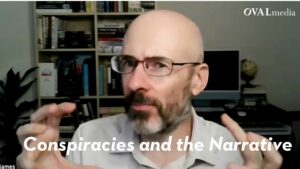
Dr. Milosz Matuschek | NARRATIVE #183 by Robert Cibis
Here is a version of about 15 minutes without restrictions – our OVALmedia subscribers can enjoy the full programme.
Watch the full episode with OVAL Abo
Above you can watch a short version.
from €7 / month · cancel anytime · this and all other films, shows and articles
Already a subscriber? Log in
Decentralised Liberation – Dr. Milosz Matuschek
With his new book “Vom Fluss aufwärts zur Quelle” (“Upstream to the Source”), Dr. Milosz Matuschek publishes a chronicle of the “corona years”. Starting from there, he talks with Robert Cibis about how everyone will have to walk the path we have walked. And about how the totalitarian, globalist project will give way to a decentralised society in which relationships between equals will be more powerful than relationships of dependence.
References:
At min 30:32 Dr. Milosz Matuschek mentions Prof. Dr. Mattias Desmet, whose analyses can be found on OVALmedia. Here is also an English summary of his work, filmed by Robert Cibis and edited by John Kirby.
At 1:14:40 Robert Cibis mentions this conversation with David Webb about the potential theft of shares.
Robert CibisHello, my name is Robert Cibis. Welcome to a new episode of Narrative. The whole programme can be seen on our platform, www.oval.media. I'm very proud, very honoured, to be sitting here with Milosz Matuschek. Dr Milosz Matuschek, not to forget. Professors and doctors are always named as such with us. I think that's quite good too, because I actually often have the feeling I'm talking, so to speak, like David against Goliath, when you always see these mainstream media on the other side. But in reality that's not the case at all. We are the establishment. At least we were; the narrative has just been turned the other way round, so to speak, but the history not at all. And is there a more serious author than you? Of course not. Milosz Matuschek is really a man of letters. He writes like an artist, thinks like an analyst and a philosopher, and yet sometimes he's simply a publicist and journalist. And this very methodical approach perhaps also had a bit of training – that's my personal hypothesis – found in law, because you also taught and studied, and this kind of reflection comes from somewhere.
I mean, it's certainly also in the genes, and we know that's always distributed very unfairly, but not only; it can also be trained. And it really is the case that we're so swamped with information that mainly distracts. And this distraction, I believe, is also the greatest weapon in the information war and probably even in war in general. They say: drum in the west, attack from the east, and that happens all day from morning till night. And seeing clearly then – Milosz Matuschek helps his readers a great deal with that. And I hope that in today's conversation we'll also go in this direction, in the direction of clarity. Now there's another new book; I'll hold it up briefly. Upstream to the Source. It's a chronicle of writings from the last four years and perhaps already shows what we have behind us. And why actually the last four years? Theoretically one could of course say, well, a lot has happened in the last 40 years. Was 2020 really a kind of rupture, as I may indeed have experienced it emotionally, but was it really one in fact, or was it only a rupture in our heads?
Dr. Milosz MatuschekIt's always the question – and that's where the lawyer starts – how do you define rupture, and what has been broken? Well, you can of course say that the trust of very many people, including me, in the institutions has completely broken down. I'd count medicine, science, politics – there I already had a bit less trust before – the media, the judiciary. So basically all the institutions we rely on. And if I had to pin down this rupture – of course there were people who were already critical before on certain other topics, when they saw, okay, things aren't going well with migration. There's a legal situation that isn't being observed. Is the rule of law still functional at all? We have books by former constitutional judges telling us exactly that, that the rule of law no longer works. And yes, that was basically an announced rupture. But if I had to locate the rupture, perhaps a bit sociologically, I'd refer a bit to a sociologist, namely Émile Durkheim. A French sociologist who dealt with the collective consciousness and who distinguished two societies. The old society – I think he calls it the segmentary society – so if we take early societies, which drew their collective consciousness from criminal law, that is, they said: whoever violates such and such customs, traditions and rules doesn't belong to us.
We define ourselves through such and such rules. And at some point this society was left behind and one entered modern society, namely the society of the division of labour. What had previously been a mechanical solidarity became an organic one. And if something has broken for me, then I would say it's this model of the division of labour. Of course none of us are experts in medicine, only in one part of the sciences; we also only have a partial overview of everything that happens. At the same time we're citizens, voters, active citizens in the broadest sense, and now see, as it were live, in this corona experiment – human experiment, whatever you want to call it – that the division of labour doesn't work. As a lawyer, not only can I not rely on the judiciary, but I can't rely on medicine either, nor on politics, nor on the media. And I think that set something in motion, that many people said: okay, I actually have to take care of everything myself. I have to choose my doctor properly. I have to look at what the judiciary is doing. And that's also a kind of, let's say, awakening perhaps for many, so that they realised it was a shock, but perhaps a salutary shock. And yes, that now perhaps as a civil society we all together realise that we always have to look closely at everything ourselves.
We have to do it ourselves. Others won't help us. Of course that's also a stress factor.
Robert CibisPerhaps then there's the doctor you trust, or the lawyer you trust. It is, I think, a difficult search, because you can't oversee everything yourself at the same level, can you? I already said in my introduction that you're intelligent. How much do you oversee, given that you're so intelligent?
Dr. Milosz MatuschekAlso only a small part. Because there's always the large area of – what do you call it in English – unknown unknowns, the things you don't even know that you don't know. That's the big mass of the iceberg under the water. In that respect I'd say I have a rough overview of things. Of course somewhere also an intuition for topics. I've probably read quite a lot. Intelligence is always a relative question, even if my publication is called Freischwebende Intelligenz. But that doesn't have so much to do with the intelligence of IQ; rather, what's meant is the intelligentsia. It was always the freelance, independent thinkers to whom I feel committed. And yes, ultimately it isn't even so much a question of intelligence to understand what happened. I think you don't need to have the overall view of everything and be into all the topics to notice that things have gone wrong. I always say perhaps all it takes is one point, ideally in your own sphere of activity or your own area of competence, where you can then dive deeper. And if you just keep drilling there, more and more actually comes out, and then perhaps you can't get out anymore.
Robert CibisSo you can, so to speak, understand the whole from the small. Exactly.
Dr. Milosz MatuschekLet me give an example. When I was a teenager, I was very into training, strength training, bodybuilding. When I watched commercials at two in the morning on TV for some kind of equipment, I knew it was junk. And then I thought, okay, they're taking you for a ride there. Are they taking you for a ride with the knife box too? Are they taking you for a ride with the jewellery necklace too, and if they take you for a ride in advertising, are they perhaps taking you for a ride in other areas as well? And so, I think, you can go via your own area of competence and start looking there and make comparisons.
Robert CibisYes, the crazy thing is that when you know something particular well, you see where you're being taken for a ride, but you don't automatically assume that it's the same in other areas. And then in the same newspaper in which everything was wrong about what you researched, you read something else and think, yes, maybe that's right. But it's easier somehow to assume something than to assume that you can't assume anything. So of course there's no solution there. So there are two levels, both of which you mentioned. On the one hand understanding things, and then doing things. And going to the doctor is also an action. It's not about: I don't want to understand now how the organ works; I want to know what I should do. And the question is how you can then link that.
Dr. Milosz MatuschekI think you also have to – for me it's a question of authority, and that's also a typically German question. Erich Fromm wrote a lot about the authoritarian character. Alexander Mitscherlich and Margarete Mitscherlich, with The Inability to Mourn, also made a psychological assessment. And all of that is coming back now. So we're being picked up, as it were, on the topics we've actually been preparing for for decades. Namely being critical, distrusting authorities, acting from the bottom up, insisting on transparency, of course upholding all the values, the rule of law and so on, and remembering what happened in the past. So the politics of memory, the culture of remembrance is also a big topic for me. I wrote my doctoral thesis on one part of this topic. That was the ban on Holocaust denial, how it can be justified.
Robert CibisReally? Tell me exactly, what's the summary of the doctoral thesis?
Dr. Milosz MatuschekThe short summary: my work dealt with the question of what this ban on Holocaust denial actually protects. We have Section 130 Paragraph 3 in the Criminal Code; other countries have it too in a similar or different form. And legal scholarship has always remained very, let's say, cloudy with its concepts there. They say it protects public peace. But if you take this package apart a bit, you see that public peace is a kind of Proteus. It constantly changes its shape. So it isn't a very tangible legal interest. And I then tried to build a new legal interest from sociological theories, namely the legal interest of collective memory. For me, that's actually what is protected. And also with the purpose that it doesn't happen again. All the politics of memory we've been doing since, well, perhaps the 80s – before that there wasn't so much – or the 90s, increasingly so by now. So the theme of memory is getting stronger. At the same time we don't notice things in the present. So for me the politics of memory is running on empty. It's a memory that is actually devoted to forgetting. The past is over-polarised and held up.
It's, as it were, the exceptional, which can never, will never and should never happen again. But if it comes in another form, then we're actually back at the question or the topic you raised earlier. You can recognise that something is going wrong and still believe the other thing. In the newspaper, in what you read, you see, as it were, a situation in front of you that is comparable. I'm also a big fan of historical comparisons. I think it's an absolute fallacy to say you mustn't compare this situation today with the earlier one. If we aren't allowed to, then we don't learn from patterns of the past and don't learn to apply these patterns to the present. That's a very dramatic ban on thinking.
Robert CibisSo that's as absurd as saying science – or it's just as absurd as saying you mustn't put forward conspiracy theories. So it's illogical and anti-emancipatory. But nevertheless I'd like to drill a bit further there, because it's totally interesting. Holocaust denial and the uniqueness of the Holocaust, that there's a separate section for it, so to speak, or at least a paragraph, that's also fascinating. Well, I'm of course a bit more critical now than I used to be when someone says you have to believe exactly this, and if you believe the other thing, then you're really bad. Why can't one talk about it? Why mustn't one ask these questions there? What's so sensitive about it? I mean, and then the uniqueness too, which you mentioned – how would you explain that?
Dr. Milosz MatuschekWhy is that so? Well, there was the rupture of civilisation of the Holocaust, and then one... What does – I don't understand that either – what does a rupture of civilisation mean? Basically a major crime committed by the state against a population group in a mechanical manner of killing; that was a novelty in history, probably. And that was formative for the post-war period, above all for Germany. Germany also, in the Basic Law – if you read the Basic Law, you see a great deal of aspiration to prevention, let's say, in the Basic Law. So it isn't purely a negative image of Weimar, but certainly under the historical aspect: we must prevent something like that from happening again. So history is built into the Basic Law, and the Basic Law is dripping with history.
Robert CibisSo systematic murder by the state, so to speak, had never happened like that before?
Dr. Milosz MatuschekProbably it had, actually; if you look at history, there was a lot – when you think about it, it does occur to you – it wasn't as if the Protestants in France weren't systematically murdered; there was St Bartholomew's Night, there were many, but such a state policy of extermination, I think, was a novelty, and also the mechanical execution, and yes, that it actually reached down to the smallest cells, the participation. In any case it was formative for German history, and people wanted to distance themselves from it, and so of course rules were created that reflected that. And yes, at the moment when the memory of the Holocaust became a social topic, at some point criminal law was added. And that was actually a novelty in criminal law, and there are also many who see it very critically and say it's actually a foreign body, such a norm, and one actually mustn't make any topic taboo, and the discussion about this ban also goes in the direction of asking: okay, if we do this with one topic now, will we then perhaps do it much more easily with another topic – the slippery slope to other topics. That was also a danger that I already, back then in my doctoral thesis, addressed, and now we basically see that from the Holocaust denier the path wasn't far at all to the climate denier and the corona denier.
So, as it were – when people say we mustn't compare, they're doing exactly that. They take the term denial, where everyone immediately thinks of the Holocaust denier. Actually almost the worst thing you can do in Germany to put yourself offside is to deny the Holocaust. You also go to prison if you do it publicly.
Robert CibisAnd indeed there was then a nonchalance with this denial theme. There, basically, this paragraph, this law, already had an effect, simply indirectly, through this association with these terms. And then I don't understand the term denier either, because it implies that the person who publicly says something that would correspond to it actually thinks something else. So it has to be a person who knows perfectly well that what happened is what everyone thinks happened. But they go public and deny it. And say: but that's not how it was. So they have to be lying. Whoever isn't lying isn't denying. Exactly. That means if someone seriously, so to speak, told everything differently and said so, they wouldn't be a denier. So how is that regulated, then? Let's assume someone actually thought there had been no Holocaust. You can't imagine that, but let's imagine it purely hypothetically. Would that person also be up for prison? I think so, yes. My doctorate is already 15 years back, though. Yes, but then the term wouldn't actually fit. There was this recent case of this one woman in Hamburg, 100 or 92 years old or I don't know how old she is, very old, who is now supposed to go to prison on probation – or at least was convicted.
So that is relevant.
Dr. Milosz MatuschekRelevant also for the topics we have now. We're talking a lot about the RKI protocols. In 2008 the RKI carried out a reappraisal of its own history. Very late. Under the then president Jörg Hacker. And then everything was put on the table. How strongly the RKI was actually entangled in National Socialism. All the human experiments that were carried out, for example on Sinti and Roma, typhus experiments in Buchenwald. Some results of these experiments later still appeared in West German medical journals; they were still received and still used. So that's also a history that stretches out longer than just the Nazi era. And this RKI back in 2008 made an art installation in its building, which is very impressive, at least from the pictures I've seen on the internet, where people more or less swear that they will look again and again, anew. They will also look at themselves; they will control each other. Those are pairs of eyes of the employees on the walls. You walk into the building as if through a memorial course. And then I think to myself, okay, these employees walked into this building every day for years, walk through this memorial course, and then politics comes and says: there's a pandemic here now, and we have to do this and that, and in the end also carry out an experimental human trial with modRNA vaccines.
And then something happens in me where I think, okay, I need psychological support to explain to me what goes on inside a person there. And then I ask myself, okay, we've learned nothing at all. And we actually walk blindly into every new situation. And if even those who are so committed to reappraisal – assuming it was an honest reappraisal – if they aren't aware of the parallels running there, then our whole politics of memory in Germany – and that's something that is raison d'état, by its character – has absolutely no basis. It's empty air. We perform rituals, public rituals, civil-religious rituals, Sunday speeches, and we learn nothing for it. We learn nothing from it.
Robert CibisThat's put so nicely. Basically you said it gets turned around, as it were. The politics of memory is in reality a politics of forgetting, because one emphasises the uniqueness and says it can't be compared. So if you keep saying we have to remember this, but it can't be compared, then it actually is forgotten. Because you can't make any connection there. That's a fascinating story. So that would be purely psychological.
Dr. Milosz MatuschekThe topic would be walled up in a bubble, but has no connection to anything happening now.
Robert CibisYou raise it so much into the foreground, so far into the foreground, that in the end it, so to speak, fogs things rather than letting you see more clearly by looking at the past. I wonder whether someone in an advertising agency thought that up. I could imagine it, I have to say, because that's often the case; those are also mirror techniques. There are all sorts of manipulation techniques; they're in textbooks too. I could well imagine that being done. But for me those are things – those are tricks; that's high art. The further question one could ask: if it isn't about memory, what is it about with these rituals, then?
Dr. Milosz MatuschekIs it about maintaining a form of guilt cult? Actually a means of constant further humiliation, rubbing this past under people's noses. The Germans are actually awful and bad. Then I have to say history has delivered an irony in locating this corona theme very strongly in Germany too. Saying, okay, if we need a country that lends itself again – because they learn nothing – then we'll do it in Germany. Of course it wasn't a purely German topic, but with Drosten and his PCR test we of course created an international standard. We have the BioNTech founders, who were the first to say they had now isolated a vaccine here, or developed a vaccine. Actually already in February or, I think, in March, very early in spring 2020, within a few minutes. So, yes, we're once again right at the front and at the same time right at the end, I have the feeling.
Robert CibisYes, well, I mean, how to get out of that, I ask myself. The biggest economic power in Europe, and the – I could imagine – well, I'm a bit suspicious that there were deals, that people said: but we'll do this – this company does that and that one does that. There was more in Germany. And then it's also often a kind of proxy company to a large extent. For example, as we also reported in the corona film series, the Chinese company Fosun was involved in BioNTech, and with it also the Chinese government. And the USA also invested in BioNTech via other companies. And of course the famous foundations we all know, Gates and others. So those really are global structures, even if it's now anchored in Germany. But that's sometimes only for show, isn't it? Well, "only" is an exaggeration, because they also pay trade tax in Mainz. But much, or much that's essential, isn't necessarily in Germany. So I think this corona story is very important, because you can show global power structures in a hybrid war, and because they also came to light.
Often one thing is told and something else happens. That also happened with corona, but with corona it was relatively easy to see through, relatively simple to see through, and above all because it was so global, it also had something quite different about it. Global doesn't only mean that something happens all over the world, but that there were, as it were, perpetrators all over the world. That's what impressed me so much, and that governments all over the world went along with it, and that there are evidently power structures that had access to all kinds of governments. Those in India, those in Brazil, those in Russia – you'd think these are such big countries, they could do it differently. But they don't. And of course the big question now is: what happens now? What's the state of things today? And where is the journey going? All sorts of people I meet say they'd like to flee, from war, from everything else, but don't know where to. In the Second World War there were other difficulties. Fleeing itself was perhaps harder. But on the other hand there were a few destinations where you thought there probably wouldn't be any war, or at least no bombs would fall.
And that's not the case at all now. And war also has a different meaning. It's hybrid, as we've already said. And it can be anything. It can be food shortages, other supply bottlenecks, power cuts. It can again be poisoning through medicines, through water. So if you simply start to spin around how one can wage war in all sorts of ways, then lots of other things come to mind. What's your verdict, so to speak? What do we do now?
Dr. Milosz MatuschekIt's actually a form of total technological mobilisation that we're seeing here, but which at the same time never becomes visible to people in the form of war. The war isn't declared. Well, perhaps Macron once said we're at war against the virus. There you could see the war rhetoric for once. But basically it's a form of war in which everything around us can be used as a tool against us. Whether that's corona as a virus, whatever that was, the vaccines against it, whether it's a climate policy that bullies the economy, whether it's trans ideology that confuses young people and causes irreparable damage. So society is currently being bombed to pieces from several sides. And I believe if one isn't aware of that, or if one wants to close oneself off completely to this thought... I've spoken to many people, in the last few months too. I did a reading tour, almost 50 readings throughout the republic in front of surely 3,000 or more people. And of course I also met people there who refuse certain information, who then say at the reading: I don't believe that, it doesn't exist like that, and I don't want to hear it at all.
That was very rare, because of course with my reading tour I mainly serve my readers. But whoever closes themselves off completely is actually in greater danger than the one who opens up to it. Because the one who opens up then sees these patterns everywhere. He starts to see them. You can only see what you know, says Goethe. And what you don't know, you don't see. And that's also a psychological effect. What you see is all there is. That's how media work, always by excerpt. Everything else doesn't exist. When I listen to the news on the radio, I learn nothing about the RKI files, but I learn that Oasis will soon perform together again. But then it's an intact world if you follow this reality. I think that's also the advantage of the critical people. I see an enormous strength in this field among us. Or if I may say us. Definitely. A common – I don't like the word collective, but we're almost like a brotherhood in arms. We didn't choose any of this, but we're sensitised; we see the attacks, and perhaps we can predict them, perhaps parry them more easily.
We don't walk blindly into every trap. And that's why I can only say to everyone who wants to refuse painful, critical information: they're only postponing the pain, as it were, but it comes back double, triple, tenfold. One now has the opportunity, as it were – it's like a psychological experiment; I think there was even a test on it, the marshmallow test. They put a marshmallow in front of children, left the room and said: hey, if you don't eat it in the next three minutes, you'll get another one. And then you see how the children squirm and torment themselves in front of the camera, and some close their eyes and reach for it. It's very cute. And the test measures whether you can postpone rewards or not, or how ready you are to bear pain – can you endure the pain to get the bigger reward. And if you realise a pain early, it tends to stay within limits, rather than if you postpone it, because then it comes uncontrolled. And to be honest, I wouldn't want to be in the shoes of those who are only just setting out on this path and are beginning, okay, to see that things went wrong here and there, and perhaps much, much more. They face a much bigger problem than those who are already critical.
Robert CibisFine, those are really convincing thoughts, but still no answer to my question. So what do we do now?
Dr. Milosz MatuschekI believe this situation set something in motion, namely showing us that there are evidently power circles that work together in an organised way and cooperate. Man is the being that has learned to cooperate, or that's what distinguishes us from other species. Of course there's cooperation in the animal kingdom too, at a certain level, but not in the form that we humans are capable of. And we see that some circles cooperate very well, but the great majority of society, basically scattered individuals, almost lonely – loneliness is also a very big topic in our society, which absolutely shouldn't be underestimated, not only among older people, where it's particularly strong, but increasingly among young people too. When there's an experience of isolation – that's what Mattias Desmet teaches us, the Belgian psychoanalyst – and people are deliberately driven into loneliness and kept there, they develop fears. That means they become more susceptible to free-floating fears that are in the air and absorb these fears more easily. When a topic then comes up where these people can say: I'm now stepping forward and can commit myself to something, or perhaps I'm now experiencing that I can reverse the polarity of fears and say, okay, this is something now onto which I can project everything.
If I fight for it, my fear disappears. And suddenly this isolated person finds himself in a corona situation and walks through the cities with the slogans: we're boosted. Then he suddenly feels that he's finding a connection. And this attempt was, as it were, pushed through or implemented by mass psychology and made people into compliant tools. That means what we can do now, and what I would very much wish for, would be for the rest of society to notice too: okay, these patterns happened. There was perhaps deliberately a policy of isolation under way, with the aim of being able to trigger fears more easily and then rechannel them. And we now have to learn – and that's the great developmental leap ahead of us – to cooperate. We have to find each other now; we have to grow together. That has also been happening in recent years. Back then I also made this appeal with Gunnar Kaiser for free spaces for debate. That was a point where I noticed, okay, circles are suddenly converging now and the paths are getting shorter. Corona then came immediately afterwards, and there too the critical minds found each other more easily, and with them, of course, an audience that suddenly no longer felt so alone.
If we've achieved anything at all in the media in recent years, I think, then it was giving people the feeling that you're not crazy if others see it similarly, because the experience of isolation for many was – and I was told this at many readings – I was the only woman or the only man against 20, or I was the only one in the company, excluded in the family and so on, so this feeling: I must be crazy, or the world is, and I now have to decide for one direction or the other. That was present for many, and there the networking, and also the media work, probably helped many. But that can only be a first step towards getting people to take action too. I think we're now beyond the step where many already know how things work. Not much shocks them anymore. My readers probably no more than your viewers. And the follow-up question is: how do we convert this state of mind that we have now into concrete behaviour that is also reflected in cooperative structures – and whether that's then an association, perhaps of people who say we want an alternative medicine for our group, or we want free daycare centres, or we want to deal with the topic of Bitcoin or with permaculture, these things.
So I hope something gets going there that ultimately makes us more resilient and stronger. And then the whole thing was, above all for these people, a salutary shock and not the end of the world. So it isn't the end of the world. There's no end of the world in that sense, but hopefully only a developmental leap. But if we don't make it, then I have to say history repeats itself in a different way. I see the comparisons with Weimar; for me they're tangible. Hyperinflation, the Roaring Twenties, moral decline, if you like, and decadence – those are the best preconditions for new seizures of power. But they aren't so strong that they reach into all areas either. The history of totalitarian systems teaches us that too. No power can assert itself in the individual branches of society. And at some point an effect of wearing out also sets in. People then no longer believe the propaganda. They still go along. So when it's said the flag has to go out, then you put the flag out.
An hour later they take it in and don't believe in it. Whispered jokes too – all these things that happen show that people ultimately see through something, but have to be careful about what they say.
Robert CibisYes, that fits with what – I recently made an appeal on conspiracy practice. I told people we have to become more conspirators, because that's how you can move things. So basically it's about self-empowerment, with the ideal that the population has a say in what happens to it. And this self-empowerment is something where it's about power. And this will to power is of course perhaps not so much in the foreground among the people who don't play along. And there's perhaps a structural weakness there, so to speak, but also a strength. A strength because my impression is that many authorities, companies and society as a whole have become somewhat more hierarchical, somewhat more concentrated, and had built up somewhat more of a kind of structure of obedience than was still the case in the 80s and 90s, for example. So when I now look at how my professional environment has developed over the last 30 years, also within the TV broadcasters, for example, with whom I've been in contact for so long, I say: wow, yes, it has actually gone from a place where, with public funds, editors could do what they wanted – that's a bit exaggerated, as I say, but that's partly how it felt – to having become a commercial company where there's a very clear brand that was out for exploitation and profit maximisation, vertical integration and above all a hierarchy that has to obey.
The head of feature films, the head of documentaries were then supposed to do exactly what the programme director wants, and he was supposed to do exactly what the director-general wanted. That was, so to speak, the direction things went in the last 30 years, or so it seems to me. And that's surely the same in other sectors now. Others report this to me from the universities. I've already had a number of professors sitting here who told me that too. And you think all of that is terrible, yes, but you also have to say it's also inefficient. Because if you don't use the brains of the best, and above all if the obedient get into the leadership positions and not those who try to understand everything themselves, then you suddenly have a system where the bad ones have the responsibility, or the less competent, let me say now, bad for the position. And you see that everywhere; you see it in politics too. And that's simply an enormous weakness too. And that it's precisely those who want power who reach into this system, which is inefficient in itself, is also, so to speak, a reason why I'm so confident.
I say, well, what they're doing won't work, but it will collapse. The only question is how long it takes. It may take another 20 years, or 10, or 5. I don't know. But it isn't a stable construct. And if that has actually happened now – we know it from the persecution of Christians, that the fact that they were persecuted in the Roman Empire is precisely what made Christianity big, and that they had networked, first with signs. And then there were their own rich people there too. We also know it from the persecution of the Jews. They too were excluded in various societies for centuries, and created a kind of culture of their own, a community of their own, which also has a special value, and there was also a strength there in the end. So weakness became strength. And that's how I've experienced the last few years too, what you just meant with brothers in arms and so on. That's true; the term is right, I think, because you are threatened. And I believe that because there's a different relationship to power among these brothers in arms, power can be structured differently.
That it can be a more decentralised power relationship, a more fluid power system, where the relationship with one another is also more in the foreground, and not only purely material dependence as the opposite pole to the concept of relationship. That's a more complex system and it's a more resilient system, and you can't simply cut off the head and everything collapses, as with the structures I described at the beginning, which things were moving towards – if the director-general is dead, if the programme director is dead, then there isn't much left of the broadcaster, and perhaps you can still repair something there, but it collapses much more easily because it has no inner strength. And there I see an opportunity, so to speak, and what many still lack in my eyes is self-confidence. Self-empowerment comes through self-confidence, and if that awareness is always there, if you create this inner image and say that's where we want to go, then perhaps everyday life and life and actions can simply fill it out.
Dr. Milosz MatuschekPerhaps I'll chip in there, because there's perhaps another aspect of this whole theme of obedience. With obedience and hierarchies we always think, okay, it runs so automatically, as if you hold a magnet somewhere and everything suddenly aligns itself. Sure, it's individual elements that align themselves, but all these elements are basically, let's say, in the civil-service hierarchy, individual persons who aren't only civil servants who have sworn an oath on the constitution, but also citizens with responsibility. The civil servant also has a right of remonstrance. A duty. A duty. So he mustn't carry out unlawful orders at all. That means, basically, yes, it shows psychologically how simply it works and how much stronger a social situation of coercion basically is than the law. That's also a bitter defeat for our legal system, if we're actually not anchored in law, but anchored in a social mode that can change permanently, like a kaleidoscope. Then tomorrow we're against it; today we're for it.
And the great danger of obedience – that's already been touched on a bit. Basically, every time someone is obedient against their conviction, or even just because they haven't looked into it more closely, it takes out the process of something being renegotiated. That means at that moment no one is working on a better solution anymore; the existing solution is merely executed. That means we're, as it were, taking a learning process out of society, there where decisions are already being made. And that's what's fatal, because then decision and implementation are one. Then we have no thinking, active elements in this system, only little cogs. And then society learns nothing, and we don't get better. We actually keep getting worse, and we don't know how it will go next time. In that respect the question of central versus decentral power is, I think, one of the key questions in the coming period, actually already now. We see it everywhere. Bitcoin is also a decentralised system that attacks a central system, namely the banking system. We'll see a shift, I think, towards decentralised systems, because for me they're the most effective systems for breaking up central power.
I'm also not a complete critic of technology, because I see that technology of course has the potential to unfold within a centralist structure, but also to break up centralist structures. It's a tool that works in both directions, probably in many others too. In that respect I believe we're currently in a time in which, perhaps comparable to the Renaissance, a great deal of knowledge has come together. When the Venetian merchants began to develop accounting systems, a banking system arose on that basis, and the wealth in turn led to art and culture flourishing; patrons could commission beautiful sculptures and paintings and of course buildings. So altogether a period of flourishing – that's what I see coming up on the horizon again now. So that's a development that gives me a great deal of hope, especially in the technological field. And we've already cut the first paths. The decentralised media system, to which we would also count ourselves. We're seeing each other for the first time today. We had a bit of contact, but we aren't a group that coordinates on anything.
We're all free-floating elements in this whole game. Or you don't have to call it a game, but a whole topic. And of course we also challenge a central media power and drive it before us. Also with topics we can put on the agenda. Without free media, the RKI files probably wouldn't simply exist in the mainstream media. And the topic of scaremongering in ministries wouldn't have existed without certain free journalists either. So I think we have – even if we don't make it onto the front pages or the main headlines, along the lines of "the Querdenker were right after all" – we do see that ultimately everything is moving in our direction, because we at least have the ability or the possibility to make topics so big that others can no longer ignore them. And with that we automatically withdraw viewers from the central media system too. That's also a question of age, by the way, a demographic question. Who still watches public-service television? Predominantly older people.
Absolutely.
Robert CibisAnd they aren't necessarily the most active in society. … incredibly democratic, even if it's now being used in an incredibly complex and perfidious way against the population. But basically one mustn't – I just want to confirm what you said – one mustn't say, that's still to come, say now: out of this world of manipulation, we're going back to village peasant life. Many are doing that. I understand it, and it also has value. But basically there's also a kind of possibility of emancipation on this technical level. There's a revolution there too. And without the internet many wouldn't have found each other. And that despite this massive censorship and despite this propaganda.
But one must, I think, nevertheless act independently, build one's own structures, just as you do with your own newsletters and platform projects, and as we've been doing since 2020 with our own platform. It's laborious and doesn't pay off financially so quickly, but I believe it's the only solution. And as you said, the good thing is that whoever has once understood where the manipulation was, can't be manipulated so easily. Although counterexamples come to mind; I'm thinking now, for example, many people are rightly critical of this migration policy. Rightly, in my view, because I notice – I've observed so far, I've been to Israel 15 times or so, and seen that the settlement policy really is massive, basically part of the war against the Palestinians, even though they're actually just people who may also be very peace-loving. But they move there, and that gives it something aggressive. And in Northern Cyprus it's the same with the Turkish population that moves there from Anatolia.
That's also a kind of clear claim by Turkey to say these are now our territories and no longer those of the Greek Cypriots. And it's like that everywhere. And if very many immigrants now come to Germany, then of course, if the number is high enough, it has a similar tinge. It isn't the same, but you can certainly compare it as a kind of war, or isolation, so to speak, of the population, which is then divided into different groups again. And many people see that critically. But then again there's this knife attack in Solingen, and then, in my view, many fall for it, because the whole thing goes into it, so that, so to speak, a kind of civil-war atmosphere is created again, a kind of tension and terrorism and so on. And you notice: people, you have the wrong enemy image. It's not the migrants who caused the problem now. We're being attacked from a completely different side right now. But people get busy with each other, because they forget, so to speak, to distinguish cause and effect. Do I see it that way too?
Dr. Milosz MatuschekI haven't followed the case that closely, because I was on a reading tour and also spend a lot of time in the car. But well, many will trace it back to the failed migration policy and say, okay, we let people into the country who evidently don't wish us well. The enrichers we were promised. We read about knife attacks every week, almost daily about knife attacks. And of course that has massive explosive potential. So you can certainly say that through the migration policy a kind of conflict, or new conflicts, are being brought into the country that aren't necessarily our conflicts. But we become the arena for them. And I do understand that people say, okay, then we have to insist a bit more on the law and say, okay, how can so many people come into the country? I can understand everyone there. I have a migration background myself, and somehow I know how to behave as a guest, and perhaps others don't. And it isn't the knife's fault either. The knife doesn't jump from one person to another; it's guided by a hand and by an ideology behind it.
In that respect the situation is serious because it might not even need a real attack, but perhaps just a staged attack to push the emotions so far that there are civil-war-like conditions. So we're actually sitting on a time bomb that can be primed bit by bit. And that will be another completely different challenge, for which I don't have the patent remedy right now. But then saying we mustn't under any circumstances enter into discussions about migration, I think that's completely the wrong way.
Robert CibisAbsolutely. I just want to insist, so to speak, that one also sees the big picture, that it's basically a kind of – that I have the feeling there are people who want there to be tension. Who want there to be friction there, and there one has to try, at the right level, to exert the corresponding pressure, not to play along, not simply: now we fight them.
Dr. Milosz MatuschekThat's actually a dilemma for our society, because we actually have to solve a problem. That's the problem of uncontrolled mass migration, also without transparency about who is actually in the country and what background they have. Terrorists can walk around freely here. And when an attack does happen, immediately those are to blame who point to it and say there's a problem. So that's a form of – it has a potential for escalating that really is dangerous. That means on the one hand we have to solve the one problem without falling into the trap of playing into the hands of those who wish for this escalation.
Robert CibisIf we get into this escalation, then we're basically – perhaps not, then we're in a civil war, but a civil war that benefits those who can say, okay, now once again – what comes to mind? Curfews. Exactly, banning knives and so on, that's of course already banning weapons. That's exactly what I'm afraid of. But it is, the fewer weapons citizens have, whether expressions of opinion or hard physical weapons, the more they're at the mercy of state power. And if you distrust the state and say it can also cross certain lines, then I understand the Americans who say we want to have the right to have our own weapons. And it is de facto the case that the state cracks down less in the regions where people have a lot of weapons.
Dr. Milosz MatuschekIncidentally, the established politicians who now have the say would have a great interest in solving this problem. Because every knife attack plays into the hands of the opposition beyond the firewall, which they permanently want to prevent from coming to power. But everything that has happened in recent weeks and months plays into the hands of precisely this political direction. So basically they've been doing indirect election advertising for the AfD for years.
Robert CibisThat's right. But I'm – yes, I don't know how perfidiously the staging, or the PR agency, proceeds there. Perhaps that's even what they want. Because everything that creates friction, everything that creates conflict, and then a false flag on top – say, a Russian bomb lands in Mannheim – yes, then the powder keg is nice and full and can quickly blow up, and everything blows up around our ears. So that again means less unity. If you take this concept – I've surely heard it 20,000 times in the last four years, divide and rule, divide and rule, I can't bear to hear people talk about it anymore. But the crazy thing is, you keep forgetting it again. Although we discuss it so often and say it so often, divide and rule also means these federal states are now AfD and those are now the other party. The other party – what's it called now – the new unity party. Socialist-ecological-colonist unity party. Exactly, yes. And if the firewalls are then built even higher, that's of course also anti-democratic, even though you think it's great, we have a democracy, people vote, something happens.
And that's why I see there too that one simply has to remain very sober about what is dividing now and what is debating, what is a democratic development now and what simply creates friction. And of course also: what does the bourgeois centre think? And now you've already mentioned Bitcoin twice. That has arrived in the bourgeois centre. It's no longer fringe at all as a currency. I even learned that the average Bitcoin transaction is 42,000 dollars. That means you don't pay for your coffee round the corner with it, mostly; rather, large sums are being moved there by rather wealthy people who also invest in Bitcoin and notice that it's rising. And now of course there are different theories. Why does it exist at all? The cause isn't clear. It's a new technology, with this register technology, which was then heavily advertised, also in the mainstream media. Basically, because it was an advertising campaign for register technology.
Ledger, as the English say. Or blockchain. Blockchain, exactly, the word just escaped me. Exactly, for blockchain technology, and that's basically as you know it from bookkeeping. That you can't simply delete anything; you can only book it back. And the new central bank currency, the digital central bank currency, has this technology, this blockchain technology, and many authorities want to use it too. We don't know exactly yet, I think, do we? Then you'd know which technology it runs on exactly. In principle it's of course a register, where you – basically a centrally kept one – now to be nasty, I mean to think nasty, think evil, one could imagine: the secret services launched blockchain. There are also theories that the code was partly taken over from known cryptographies, from the CIA. There are similar code patterns and so on. So they launched it to prepare for the digital central bank currency, because they used it as an advertising campaign for why blockchain is so secure and that you can do everything with it. And in reality blockchain is a mechanism that can also serve oppression and surveillance.
Above all because instead of money you then trade with passes, and have to trade with them, and everything, so to speak, can be monitored directly by a central computer or a central authority. And then, when the digital central bank currency exists, it could be that blockchain suddenly becomes completely unattractive, because overnight they can say you can no longer exchange it into any other currency. Would it still work then? So is Bitcoin, by its model, a trap? Could it actually be a kind of one-way street? A dead end,
Dr. Milosz MatuschekI mean? Well, I've been dealing – well, nobody is an expert on Bitcoin. Anyone who says they're an expert is lying, because it's too multi-layered a topic. But let's say, since 2017 I've dealt with the topic sometimes more, sometimes less, but very intensively at the beginning. And I consider the possibility that it's a kind of PR coup, a trap, to be relatively far-fetched. Simply for the very simple reason. And for me it makes no logical sense for the state to promote a blockchain technology by first massively withdrawing liquidity from the current money system. That would be as illogical as saying: I want to show you how great I am at plugging holes in the boat.
Robert CibisLet me allow others to make a hole in the boat. I'd like to contradict that. Perhaps I'll just continue briefly.
Dr. Milosz MatuschekBecause you said very specifically there was this code that's similar. There are cryptographic methods that are of course known to experts all over the world. And it would be naive to believe that a cryptographic method – I think this SHA-256 code, which is also used in Bitcoin – is completely unknown to other groups, the CIA or whatever. But that doesn't mean that if one person uses this code, the other has the key. And that brings us to the central question. Can other forces get into this system with superior cryptographic means, yes or no? And at present the answer is no. That could change too. There's also the danger of the quantum computer and so on. There we're probably in a form of competition that we have in all areas of technology. If someone launches a new virus somewhere, the antivirus software has to catch up and update again. So there will probably always be this competition. And I think one has to see the historical situation in which Bitcoin arose; that was the financial crisis of 2008. Bitcoin then came in January 2009. And it was, as it were, the attempt to build a more sustainable system where you can move values in a censorship-resistant way.
Bitcoin is a currency as well as an asset class as well as a distribution channel. That's what makes Bitcoin so strong. It needs no distribution channels outside its own chain. And in that respect I think the question later won't arise so much at all: can I exchange Bitcoin? Because we see that the old system is geared towards hyperinflation and at the same time towards control, if we add the new central bank currencies. A control that can also be coupled with social credit systems and so on. Whoever wants to stay in this system is welcome to do so, but I believe a parallel economic system will in turn emerge, inevitably. And I mean, in our field many are already doing this, accepting Bitcoin donations or paying others in Bitcoin. That's a form of shadow economy that's emerging there. And yes, you can approve of it or condemn it, but it's at least a parallel system you can rely on. And I don't believe the big question will be – I mean, Bitcoin is now at 60,000. Whenever I talk to people, they can never imagine that it will go higher. I couldn't imagine it five or six years ago either, when Bitcoin was at 2,000 or 4,000.
And in the next wave we may be at 150, 200, 250,000 per Bitcoin, and after that at over a million. I don't believe people will then, from a system where they see that purchasing power has been secured steadily and reliably for 15 years now... If you calculate it, Bitcoin rises by 200 per cent per year on average. Not always every year – there are ups and downs – but that's roughly how the amplitude runs. Anyone who still wants to invest in a system that takes 20 per cent of their purchasing power away every year must be mad.
Robert CibisYes, those are very good arguments. I had contradicted the first one a bit, because this withdrawing of the money supply is of course also in the interest of the financial system. Withdrawing liquidity? Yes, they have an incredible amount, too much money. They always have to create the money. Yes, but they distribute it among themselves.
Dr. Milosz MatuschekYes, but like these derivatives and everything, they're basically constructs for parking money. And you could also judge Bitcoin as something like that. I'm not into it enough, but I imagine a system that actually often has a lack of liquidity too. A few years ago we again had such a short bottleneck, where transfers weren't executed, or where the Basel central bank said something had gone wrong. The world actually needs more and more liquidity, and everything that robs it of liquidity... And it's a parallel system par excellence. Until now the money system was a system without competition, unless you say there may be people who exchange things for other things. And perhaps a few regional currencies, which are absolutely not significant in that area. It's actually the prime example of, I'd say, successful resistance, as I'd also wish for it in all areas. That's why for me the topic of Bitcoin isn't a purely financial topic, but a social topic. We can learn from the patterns of Bitcoin how it actually works. Don't criticise the old system; build a better system. And then perhaps show by example why it works better.
And many say, oh, it's so speculative. I'm not naive about the conditio humana. People are either afraid of something and flee, or they're greedy and throw themselves at something. Bitcoin picks many people up through greed, so that they say: I'm missing out on something, the neighbour has already invested, I'm not in yet. That's simply how people work, through incentives. But for very many, this first greed aspect had the effect that they began to look into it more deeply, and they very quickly came to other areas that are much, much more exciting, I really have to say. The whole topic is intellectually far more exciting than the purely financial aspect, that one…
Robert CibisAnd one basically knows – so how transparent is it? I recently read in the newspaper how much we had in Bitcoin, or had earned, or it was wrong, none of it was right. How much you had earned in Bitcoin? Yes, that we – it said – where was that? I have to think for a moment. I think in Der Spiegel; Der Spiegel said that OVALmedia had taken in 20,000 euros in Bitcoin in the last – it was already over a year and a half or so before that – in the last two years. And they could somehow look that up? Yes, it's open.
Dr. Milosz MatuschekIf the address you distribute – if you disclose it and have no, as it were, payment window through which you perhaps – a button and a click and so on – then anyone can look into the blockchain. If I know your public address, I look it up in the Bitcoin blockchain and know all your transactions.
Robert CibisThat's funny, because people always say it's so secret and anonymous.
Dr. Milosz MatuschekIt isn't anonymous, it's pseudonymous. Yes. So everything is visible, so to speak, but only if I know who the wallet belongs to can I lift the anonymisation. So if I didn't know who the address is assigned to, I'd simply only know which transactions took place.
Robert CibisExactly. Yes, yes, but that's also something many people aren't aware of at all. One always thinks it's like that, because then theoretically it's much easier to levy taxes and so on. Anyone can look up what – so they are, if – it will be somewhere, so to speak. Or if you then – because there's also the question whether it's a tax-evasion technique, yes, going into Bitcoin.
Dr. Milosz MatuschekPerhaps some use it for that, but basically – I mean, in Germany, under the current legal situation I think, if you hold Bitcoin for a year it's tax-free anyway, and you can pay anyone with it anyway, just as now, on a private basis.
Robert CibisThat's actually a strange rule. No tax problem. I understand the pragmatism in it, but it's also strange that there's a tax exemption. Exactly; in other countries it's there entirely. In Switzerland, I think, you only pay a wealth tax, which Bitcoin is part of, but you can buy Bitcoin and sell it the next day without paying tax on the profit. Crazy? I mean, people pay taxes on everything, and then not on that? That makes you sceptical again now. Does the state want that? Yes, it's the case anyway that capital income is taxed less than if you work; that's actually pretty extreme. And then the progressive tax rate is always judged to be social, so to speak, but in reality it isn't like that at all. Because the contrast isn't between the person who earns 30 euros an hour compared with the one who earns 20 euros an hour, but the difference is between the person who earns money with shares and the one who earns money with work. That's the real difference. Yes. Yes, wow. So those are – but I think it's great; we're basically already at the various solutions, and I think that has now inspired me too, and this cooperation has also found something there.
I think one should also go aggressively into technology and say here, perhaps if these servers could possibly censor us, then you have to build others, and if this tech... and you can... there are so many ways to communicate technically, and you have to use them all. The whole thing then happens outside the authorities anyway, and outside the state and outside the regulations, because these modern technologies are spaceless anyway, timeless, that is. That's perhaps also a reason why one has to concede that the globalists are right after all. We say the dissolution of the nation is already motivated by technology alone, because we can sit here in Berlin, but perhaps I can pay tax in Hong Kong, and you can transfer something to my account in some other country, or vice versa.
Dr. Milosz MatuschekMoney was always freer than the national structure, but I wouldn't play those off against each other so much. I think those are two different levels: how freely we move in terms of money, and whether we should have open borders or closed borders. So, yes. But I think it will definitely lead to a social kind of change, this Bitcoin topic too. I simply see it with many young people in particular, some of them school pupils, who are suddenly financially independent. They go into society with a different mindset than those who are dependent. And perhaps something like new – I don't want to say the ugly word, but almost feudal structures – are emerging, little principalities on a cryptographic basis. And if that becomes a critical mass, it changes something massively, I think, in the fabric. Because then we have a distribution of wealth that, from very, very few, suddenly to at least a new layer of the rich, let's say, is transferred. The old money that's in shares or perhaps in federal savings bonds won't be what sets the tone in the coming decades, I'd say very cautiously.
And another example where Bitcoin was very helpful was WikiLeaks. Incidentally, Julian Assange was also on the list, on this mailing list of Satoshi Nakamoto, the anonymous founder. He was familiar with this technology from early on, as it were. And it was also he who rejected – or there was a discussion about whether WikiLeaks should accept Bitcoin at an early stage. I think that was as early as 2010, 2011. They said, okay, it isn't secure enough yet. You could, as it were, draw those who are already ill-disposed towards the whole WikiLeaks topic onto it and at the same time destroy Bitcoin with it. Years later, when Bitcoin was established enough, WikiLeaks then accepted it, and yes, that was also urgently needed, because that was the time when all Visa, Mastercard and so on, PayPal transfers were no longer possible. And I also know people from the resistance who say they only survived thanks to Bitcoin, because they were – I think it's also public, I can say the name – Michael Ballweg: everything was taken from him, everything confiscated, but not his Bitcoin. And that's what ultimately, in a phase when push comes to shove, is perhaps even the more important topic than the question of exactly how much it's still worth.
I think it will become worth more, simply because hyperinflation is increasing and Bitcoin is designed for deflation. So it's the complete antagonist of the current system. Everything the system does, Bitcoin profits from. It's antifragile. The current system can only inflate itself, keep inflating. It can only work through expansion. Bitcoin feeds on this expansion and expands as an alternative to it. The background with WikiLeaks in particular also leads me to say it's very, very unlikely that it was launched to lure others into the trap. And then, once they've become rich with Bitcoin, they're supposed to switch to ECB money, central bank money. I don't understand the logic.
Robert CibisAh, yes, yes. Well, that gives hope. But that could create a fork in society.
Dr. Milosz MatuschekBut that again is where I say leading by example is so much more important than lecturing. Because you can't convince people with external content; they have to give themselves the answers. And if in five or ten years they perhaps see, okay, there were the Bitcoiners, they all live freely in their reservations, or wherever, then in their citadel, and they're doing well, and the others have programmed money that's worth less and less, and where the loss of value acts like a tax, as it were. Inflation is a tax. And basically we pay double and triple for our own depreciating money, and then double and triple again on what we earn. When you work, you pay; when you have it, you pay; when you spend it, you pay.
Robert CibisYes, I'd like to point out that we recently published a conversation with David Webb. He's a former investment banker who analysed the financial system in detail and found that the shares one supposedly owns are often not in the possession of the shareholders at all, because they've often been sold on as collateral for third parties, so to speak, without the shareholder knowing. And there's a completely illogical jurisprudence there, which is also in place in the European Union. That means in the event of a big wave of insolvencies, it could be that the shareholders no longer have their shares at all.
Dr. Milosz Matuschek… is unfortunately only available in English at the moment, on the English page of OVALmedia, but those are things where I think, wow, that could still get wild. And by the way, the same applies to the account when people tell me Bitcoin is too virtual for me: 90 per cent of money is virtual anyway. They don't have tons of cash at home; they have everything in numbers and zeros on their desktop and at the bank. And at the bank it isn't direct ownership either, in the sense of – if you had it as a bundle of money in a safe-deposit box, that would be the analogy to Bitcoin. There you really have your own safe-deposit box and are the sole owner of these coins. Towards the bank you have a payment claim. That's something completely different from direct, immediate ownership. And the payment claim also depends on the circumstances. If everyone wants their money at once, it takes a bit longer, or perhaps doesn't happen at all anymore. And then people are already queuing. The same topic with blackouts and crises in the area of electricity. People then think Bitcoin will fail. But it's very unlikely that the power all over the world will fail permanently, forever.
If that happens, we can look forward to it in another way too, because then the internet no longer works and surveillance no longer works. So they won't do that, because they've done everything to set it up. But the cash machines certainly won't work.
Robert CibisVery good arguments. Yes, thank you very much for these thoughts and the conversation. And would you like to add anything in conclusion?
Dr. Milosz MatuschekSimply what I already touched on a little at the beginning, that situations like this one, which are historically difficult, can also be opportunities for us to sharpen and develop our character and our humanity. Life isn't there for us to sleep in a coma in an oxygen tent for 70 years; it's interesting because things happen that also make us grow. And I would simply recommend everyone to position themselves antifragile, that is, not to let the stressors stress them so much that they become immobile, but to try – just as a muscle grows through training, this situation too is, for us as humans, as a species, a training situation through which we can become stronger, better and more cooperative. And if we manage that, we'll definitely be stronger.
Robert CibisThank you very much for these thoughts, and to the viewers too, thank you very much for following the conversation. Stay loyal to OVALmedia, and above all also take a look at Freischwebende Intelligenz and at Milosz Matuschek's publications in general, such as the books; … is good at what he does. Bye. Only good. Sorry. Thanks, that was great. Yes. Yes.
Robert CibisHallo, mein Name ist Robert Zivis. Herzlich willkommen zu einer neuen Sendung Narrative. Die ganze Sendung ist auf unserer Plattform zu sehen, www.oval.media. Ich bin ganz stolz, ganz geehrt, hier mit Milos Matoschek zu sitzen. Dr. Milos Matoschek nicht zu vergessen. Die Professoren und Doktoren sind bei uns immer genannt. Ich finde das auch ganz gut, weil tatsächlich habe ich oft das Gefühl, ich rede sozusagen wie der David gegen den Goliath, Wenn man diese Mainstream -Medien immer auf der anderen Seite sieht. Aber in Wirklichkeit ist das ja gar nicht so. Wir sind ja das Establishment. Zumindest mal gewesen, das Narrativ ist nur eben andersrum sozusagen gedreht, aber die Historie überhaupt nicht. Und gibt es einen seriöseren Autoren als dich? Natürlich nicht. ist wirklich Literat, der Milos Mateschek. schreibt wie ein Künstler, denkt wie ein Analytiker und ein Philosoph und ist dann aber doch manchmal einfach nur Publizist und Journalist. Und dieses sehr Methodische hat vielleicht auch so ein bisschen Training, das ist so meine persönliche Hypothese, gefunden in der Juristerei, weil du eben auch gelehrt hast und studiert und dieses Nachdenken, das kommt ja irgendwo her. Ich meine, das liegt sicher auch in den Genen und wir
wissen, das ist immer sehr unfair verteilt, aber nicht nur, das trainiert sich dann ja auch. Und es ist ja wirklich so, wir werden so zugeschüttet mit Informationen, die hauptsächlich ablenken. Und dieses Ablenken, glaube ich, ist auch die größte Waffe im Informationskrieg und wahrscheinlich sogar im Krieg überhaupt. Man sagt ja, Trommel im Westen greife vom Osten an und das passiert den ganzen Tag von morgens bis abends. Und dann da noch klarzusehen, da hilft Milut Mateschek seinen Lesern sehr. Und ich hoffe, dass wir in dem Gespräch heute auch in diese Richtung gehen, in die Richtung Klarheit. Jetzt gibt es ein noch neues Buch, das halte ich mal kurz in die Hand. Strom aufwärts zur Quelle. Das ist eine Chronik aus Schriften der letzten vier Jahre und zeigt vielleicht auch schon, was wir hinter uns haben. Und warum eigentlich die letzten vier Jahre? Theoretisch könnte man natürlich sagen, ja, es ist ja schon viel passiert die letzten 40 Jahre. Ist denn 2020 wirklich so eine Art Bruch gewesen, wie ich ihn zwar emotional vielleicht tatsächlich erlebt habe, aber war es wirklich faktisch oder war das nur in unseren Köpfen ein Bruch?
Dr. Milosz MatuschekEs ist immer die Frage, und da fängt der Jurist an, wie definiert man Bruch und was ist gebrochen? Also man kann natürlich sagen, das Vertrauen von ganz vielen Leuten, inklusive mir, in die Institutionen ist völlig zerbrochen. Ich würde da zählen, die Medizin, die Wissenschaft, die Politik, da hatte ich schon davor ein bisschen weniger Vertrauen, die Medien, die Justiz. Also im Grunde alle Institutionen, auf die wir uns so verlassen. Und wenn ich das festmachen müsste, diesen Bruch, also natürlich gab es Leute, die davor schon kritisch waren bei bestimmten anderen Themen, Wenn die gesehen haben, okay, das läuft in der Migration nicht rund. Da gibt es eine Gesetzeslage, die wird nicht eingehalten. Ist der Rechtsstaat überhaupt noch funktional? Wir haben Bücher von ehemaligen Verfassungsrichtern, die uns genau das sagen, dass der Rechtsstaat nicht mehr funktioniert. Und ja, das ist im Grunde ein angekündigter Bruch gewesen. Aber wenn ich den Bruch mal verorten müsste, vielleicht ein bisschen soziologisch, würde ich mich ein bisschen beziehen auf einen Soziologen, nämlich Emil Durkheim. Ein französischer Soziologe, der sich mit dem Kollektivbewusstsein auseinandergesetzt hat und der zwei Gesellschaften unterschieden hat. Die alte Gesellschaft, ich glaube, nennt das die segmentäre Gesellschaft, also wenn wir mal Frühgesellschaften, die sich ihr Kollektivbewusstsein über das Strafrecht geholt haben, also gesagt haben, wer gegen die und die Sitten, Traditionen und Regeln verstößt, der gehört nicht zu uns.
Wir definieren uns über die und die Regeln. Und diese Gesellschaft hat man irgendwann zurückgelassen und trat in die moderne Gesellschaft, nämlich die Gesellschaft der Arbeitsteilung. Was davor eine mechanische Solidarität war, wurde eine organische. Und wenn etwas zerbrochen ist für mich, dann würde ich sagen, dieses Modell der Arbeitsteilung. Wir sind natürlich alle keine Experten in Medizin, nur in einem Teil der Wissenschaften, haben auch nur einen Teilüberblick über alles, was passiert. Es sind gleichzeitig Bürger, Wähler, aktive Bürger im weitesten Sinne. und sehen jetzt quasi live an diesem Corona -Experiment, Menschenversuch, wie man es nennen will, dass Arbeitsteilung nicht funktioniert. Ich kann mich als Jurist nicht nur nicht auf die Justiz verlassen, sondern auch nicht auf die Medizin, auch nicht auf die Politik, auch nicht auf die Medien. Und das hat etwas in Gang gesetzt, glaube ich, dass viele Leute gesagt haben, okay, ich muss mich eigentlich alles selbst kümmern. Ich muss meinen Arzt richtig auswählen. Ich muss hinschauen, was die Justiz macht. Und das ist auch eine Art von, sage ich mal, Erweckung vielleicht für viele, sodass sie gemerkt haben, das war ein Schock, aber vielleicht ein heilsamer Schock. Und ja, dass man jetzt vielleicht als Bürgergesellschaft alle zusammen merkt, wir müssen immer auf alles genau selbst hinschauen.
Wir müssen es selbst machen. Andere helfen uns nicht. Das ist natürlich auch so ein Stressfaktor.
Robert CibisVielleicht gibt es ja dann den Arzt, den man dann vertraut oder den Juristen, den man dann vertraut. Es ist, glaube ich, eine schwere Suche, weil man kann ja auch nicht alles selbst auf gleichem Niveau überblicken, oder? Ich habe ja in meiner Einführung schon gesagt, du bist intelligent. Wie viel überblickst du denn, wo du so intelligent bist?
Dr. Milosz MatuschekAuch nur einen kleinen Teilbereich. Denn es gibt immer den großen Bereich der, wie nennt man das auf Englisch, unknown unknowns, also die Sachen, von denen man nicht mal weiß, dass man sie nicht weiß. Das ist der große Berg des Eisbergs unter dem Wasser. Insofern würde ich sagen, habe ich einen groben Überblick über die Dinge. Natürlich irgendwo auch eine Intuition für Themen. Ich habe wahrscheinlich recht viel gelesen. Intelligenz ist immer eine relative Frage, auch wenn meine Publikation Freischwebende Intelligenz heißt. Das hat aber nicht so viel mit der Intelligenz des IQs zu tun, sondern das ist die Intelligenz ja gemeint. Das waren immer die freischaffenden, unabhängigen Denker, denen ich mich verpflichtet fühle. Und ja, letztlich ist es auch gar nicht so sehr eine Intelligenzfrage, zu verstehen, was passiert ist. Ich glaube, man kann, man muss gar nicht den Gesamtüberblick über alles haben und in allen Themen drin sein, zu merken, dass Dinge falsch gelaufen sind. Also ich sage immer, es braucht vielleicht nur einen Punkt, am besten so im eigenen Wirkkreis oder im eigenen Kompetenzbereich, wo man dann tiefer eintauchen kann. Und wenn man da einfach nur bohrt, dann kommt eigentlich immer mehr heraus und dann kann man vielleicht auch gar nicht mehr raus.
Robert CibisAlso man kann dann sozusagen aus dem Kleinen das Ganze verstehen. Genau. Ich sage mal ein Beispiel.
Dr. Milosz MatuschekIch habe mich, als ich Jugendlicher war, viel mit Training, Krafttraining, Bodybuilding beschäftigt. Wenn ich so Werbungen angeguckt habe, so zwei Uhr morgens im Fernsehen für irgendwelche Geräte, dann wusste ich, das ist Schrott. Und dann dachte ich mir, okay, da verarschen sie dich. Verarschen sie dich dann auch bei der Messerbox? verarschen sie dich dann auch bei dem Schmuck -Kollier und wenn sie sich in der Werbung verarschen, verarschen sie dich dann vielleicht in anderen Bereichen auch noch. Und so kann man, glaube ich, über den eigenen Kompetenzbereich gehen und da anfangen mal zu schauen und da Vergleiche anstellen.
Robert CibisJa, das Verrückte ist, dass man, wenn man sich mit irgendetwas Besonderes auskennt, dann sieht, wo man verarscht wird, aber nicht automatisch davon ausgeht, dass es in anderen Bereichen auch so ist. Und dann liest man in derselben Zeitung, in der alles falsch war über das, was man recherchiert hat, was anderes und denkt, ja, stimmt ja vielleicht. Aber es ist ja leichter, irgendwie von irgendwas auszugehen, als davon auszugehen, dass man von nichts ausgehen kann. Also das ist natürlich auch, da gibt es ja keine Lösung. Also da gibt es eben zwei Ebenen, die du auch beide angesprochen hast. Einmal Sachen verstehen und dann Sachen machen. Und zum Arzt gehen ist ja auch eine Handlung. Da geht es ja nicht darum, Ich will jetzt nicht verstehen, wie das Organ funktioniert, sondern ich will wissen, was ich tun soll. Und da ist eben die Frage, wie man das dann verknüpfen kann. Ich glaube,
Dr. Milosz Matuschekman muss auch, es ist für mich eine Autoritätsfrage und das ist auch eine typisch deutsche Frage. Erich Fromm hat viel über den autoritären Charakter geschrieben. Alexander Mitscherlich und Margarete Mitscherlich über die Unfähigkeit des Trauerns auch eine psychologische Bestandsaufnahme gemacht. Und das kommt alles jetzt wieder zurück. Also wir werden quasi bei den Themen abgeholt, auf die wir uns eigentlich seit Jahrzehnten vorbereiten. Nämlich kritisch zu sein, Autoritäten zu misstrauen, von unten nach oben zu agieren, auf Transparenz zu pochen, natürlich die ganzen Werte, Rechtsstaatlichkeiten und so weiter hochzuhalten und uns zu erinnern, was früher passiert ist. Also Erinnerungspolitik, Erinnerungskultur ist auch ein großes Thema bei mir. Ich habe meine Doktorarbeit über einen Teilbereich dieses Themas geschrieben. Das war das Verbot der Holocaust -Leugnung, wie man das begründen kann. Ehrlich?
Robert CibisErzähl mal genau, was ist denn die Zusammenfassung der Doktorarbeit?
Dr. Milosz MatuschekDie Kurzzusammenfassung, also meine Arbeit beschäftigte sich mit der Frage, was schützt denn dieses Verbot der Holocaust -Leugnung? Wir haben den Paragraf 130 Absatz 3 im Strafgesetzbuch, andere Länder haben das auch in ähnlicher oder anderer Form. Und die Rechtswissenschaft ist da mit ihren Konzepten immer sehr, sagen wir mal, wolkig geblieben. Also die sagen, das schützt den öffentlichen Frieden. Wenn man das aber ein bisschen auseinander nimmt, dieses Paket, dann sieht man, der öffentliche Friede ist so ein Pro -Toyce. Der ändert seine Gestalt ständig. Das ist also kein sehr greifbares Rechtsgut. Und ich habe dann versucht, aus den soziologischen Theorien ein neues Rechtsgut zu basteln, nämlich das Rechtsgut der kollektiven Erinnerung. Das ist für mich eigentlich das, was geschützt wird. Und auch mit dem Zweck, dass es sich nicht nochmal ereignet. Alle Erinnerungspolitik, die wir machen seit, naja, vielleicht den 80ern, davor war noch nicht so viel oder 90ern, inzwischen immer stärker. Also die Erinnerungsthematik wird stärker. Gleichzeitig fallen uns die Dinge in der Gegenwart nicht auf. Also die Erinnerungspolitik läuft für mich leer. Es ist eine Erinnerung, die sich eigentlich dem Vergessen widmet. Also die Vergangenheit wird überpolarisiert und hochgehalten.
Das ist quasi das Exzeptionelle, das sich nie wieder eignen kann und wird und soll. Und wenn es aber in einer anderen Form kommt, dann sind wir eigentlich schon wieder bei der Frage oder bei dem Thema, was du vorhin angesprochen hast. Man kann erkennen, dass etwas falsch läuft und dann trotzdem dem anderen glauben. In der Zeitung, was man liest, sieht man quasi eine Situation vor sich, die vergleichbar ist. Ich bin auch ein großer Freund von historischen Vergleichen. Ich glaube, dass es ein absoluter Fehlschuss ist, zu sagen, man darf diese Situation heute mit der früheren nicht vergleichen. Wenn wir das nicht dürfen, dann lernen wir nicht aus Mustern der Vergangenheit und lernen nicht, diese Muster auf die Gegenwart anzuwenden. Das ist ein ganz dramatisches Denkverbot.
Robert CibisDas ist also so absurd, wie zu sagen, die Wissenschaft oder es ist genauso absurd, wie zu sagen, man darf keine Verschwörungstheorien anstellen. Also es ist unlogisch und anti -emanzipatorisch. Aber nichtsdestotrotz möchte ich da schon noch ein bisschen bohren, weil es ist total interessant. Also der Holocaust -Leugnung und der Einmaligkeit des Holocaust, dass es dafür extra einen Paragraf gibt sozusagen, oder einen Absatz zumindest, das ist ja auch faszinierend. Also ich bin jetzt natürlich so ein bisschen kritischer, als ich früher war, wenn jemand sagt, du musst genau das glauben und wenn du das andere glaubst, dann bist du ganz schlimm. Wieso kann man nicht darüber reden? Wieso darf man diese Fragen da nicht stellen? Was ist da so sensibel? Ich meine, und dann die Einmaligkeit auch, die du angesprochen hast, also da, wie würdest du das erklären? Warum ist das so? Naja, man hatte den Zivilisationsbruch des Holocaust und hat
Dr. Milosz Matuschekdann... Was heißt, das verstehe ich auch nicht, was heißt ein Zivilisationsbruch? Im Grunde ein Großverbrechen begangen von staatlicher Seite an einer Bevölkerungsgruppe auf mechanische Weise der Tötungen, war ein Novum wahrscheinlich so in der Geschichte. Und das war prägend für die Nachkriegszeit, vor allem für Deutschland. Deutschland hat sich auch im Grundgesetz, wenn man das Grundgesetz liest, dann sieht man sehr viel Verhinderungsaspiration, sage ich mal, im Grundgesetz. Also es ist nicht ein reines Negativum von Weimar, aber schon unter dem historischen Aspekt, wir müssen verhindern, dass sowas nochmal passiert. Also die Geschichte ist im Grundgesetz mit eingebaut und das Grundgesetz trieft vor Geschichte.
Robert CibisAlso systematischer Mord ist sozusagen von Staats wegen so noch nie passiert?
Dr. Milosz Matuschekdoch wahrscheinlich schon also wenn man sich die Geschichte anschaut gab es viel nachzudenken kommt es einem schon es war nicht so dass die Protestanten in Frankreich da also stimmatisch ermordet wurden es gab Bartholomeus nach es gab viele aber so eine staatliche Politik der Vernichtung das denke ich war ein Novum und auch die maschinelle Durchführung und ja das ist eigentlich das bis in die kleinsten Zellen ging, der Beteiligung. Auf jeden Fall was für die deutsche Geschichte prägend und man wollte sich davon distanzieren und damit schaffte man natürlich auch Regelwerke, die das widerspiegelten. Und ja, in dem Moment, wo die Erinnerung des Holocaust zum gesellschaftlichen Thema wurde, kam irgendwann das Strafrecht dazu. Und das war eigentlich schon ein Novum im Strafrecht und es gibt auch viele, die das sehr kritisch sehen, sagen, das ist eigentlich ein Fremdkörper, so eine norm und man darf eigentlich kein thema tabuisieren und auch die diskussion über dieses verbot geht in die richtung auch zu fragen okay wenn wir das jetzt mit einem thema machen machen wir es dann vielleicht ganz viel einfacher mit einem anderen thema also so die schiefe ebene slippery slope zu anderen themen das war auch eine gefahr die ich damals schon in meiner doktorarbeit angesprochen haben und jetzt sehen wir im grunde dass vom holocaust leugner der Weg gar nicht weit war zum Klimaleugner und zum Corona -Leugner.
Also man hat quasi ja, wenn die Leute sagen, wir dürfen nicht vergleichen, sie machen ja genau das. Sie nehmen den Leugnungsbegriff, wo jeder sofort an den Holocaust -Leugner denkt. Eigentlich das Schlimmste fast, was man in Deutschland machen kann, sich ins Abseits zu stellen, ist den Holocaust zu leugnen. Dann kommt man auch ins Gefängnis, wenn man es öffentlich macht.
Robert CibisUnd tatsächlich war dann eine Nonchalance da, diese Leugnungsthematik Da hat im Grunde dieser Absatz, dieses Gesetz schon gewirkt, einfach indirekt, über diese Assoziation mit diesen Begriffen. Und dann verstehe ich auch den Begriff Leugner nicht, weil das beinhaltet ja, dass die Person, die das öffentlich irgendwas sagt, was dem entsprechen würde, dass die aber was anderes denkt. Also das muss ja eine Person sein, die weiß ganz genau, dass das passiert ist, was alle denken, dass das passiert ist. Aber sie geht in die Öffentlichkeit und leugnet das. Und sagt, das war aber nicht so. Also sie muss ja lügen. Wer nicht lügt, leugnet ja nicht. Genau. Das heißt, wenn jemand ernsthaft sozusagen alles anders erzählen würde und sagt, dann wäre ja kein Leugner. Wie ist denn das dann geregelt? Also nehmen wir mal an, jemand würde tatsächlich denken, ist. hätte keinen Holocaust gegeben. Das kann man sich ja nicht vorstellen, aber stellen wir uns das mal nur rein hypothetisch vor. Wäre die Person auch fürs Gefängnis? Ich denke schon, ja. Das liegt jetzt der Doktor, aber liegt schon 15 Jahre dazu. Ja, aber der Begriff würde dann ja eigentlich nicht passen. Es gab ja dann neulich diesen Fall von dieser einen Frau, die in Hamburg da 100 oder 92 Jahre alt oder ich weiß nicht wie alt sie ist, ganz alt, die auf Bewährung jetzt ins Gefängnis soll. oder zumindest verurteilt wurde.
Also das ist ja schon relevant.
Dr. Milosz MatuschekAuch relevant für die Themen, die wir jetzt haben. Wir reden viel über die RKI -Protokolle. Das RKI hat 2008 eine Aufarbeitung der eigenen Geschichte gemacht. Sehr spät. Unter dem damaligen Präsidenten Jörg Hacker. Und da wurde dann mal alles auf den Tisch gelegt. Wie stark das RKI eigentlich in den Nationalsozialismus verstrickt war. All die Menschenversuche, die man gemacht hat, zum Beispiel an Sinti und Roma, Fleckfieberversuche in Buchenwald. Teilweise noch Ergebnisse dieser Experimente später in bundesdeutschen Ärztezeitschriften, die wurden noch rezipiert und wurden noch verwertet. Also das ist auch eine Geschichte, die sich noch länger zieht, als nur was die Nazizeit betrifft. Und dieses RKI hat damals 2008 eine Kunstinstallation gemacht in ihrem Haus, die sehr eindrücklich ist, zumindest von den Bildern, die ich im Internet gesehen habe, wo man sich quasi schwört, man wird immer wieder hinschauen aufs Neue. Man wird auch sich anschauen, man wird sich gegenseitig kontrollieren. Das sind Augenpaare der Mitarbeiter an den Wänden. Man geht quasi wie durch einen Erinnerungsparcours in das Gebäude hinein. Und dann denke ich mir, okay, diese Mitarbeiter gingen Jahre jeden Tag in dieses Gebäude, gehen durch diesen Erinnerungsparcours und dann kommt die Politik und sagt, hier ist jetzt eine Pandemie und wir müssen das und jenes tun.
und am Ende auch einen experimentellen Menschenversuch mit Mod -RNA -Impfstoffen durchführen. Und da passiert bei mir etwas, wo ich mir denke, okay, da brauche ich psychologische Unterstützung, die mir das erklärt, was da in einem Menschen vorgeht. Und da frage ich mich, okay, wir haben gar nichts gelernt. Und wir laufen blind eigentlich in jede neue Situation hinein. Und wenn selbst diejenigen, die sich so für Aufarbeitung einsetzen, mal unterstellt, Das war ehrliche Aufarbeitung. Wenn denen nicht bewusst ist, was da für Parallelen laufen, dann ist unsere ganze Erinnerungspolitik in Deutschland und das ist etwas, was Staatsräson ist, also vom Charakter her, es hat absolut keine Basis. Das ist leere Luft. Wir machen Rituale, öffentliche Rituale, zivilreligiöse Rituale, Sonntagsreden und wir lernen nichts dafür. Also wir lernen nichts daraus. Das ist eben so schön gesagt.
Robert CibisIm Grunde hast du gesagt, das wird quasi umgedreht. Also das Erinnerungspolitik ist in Wirklichkeit Vergessungspolitik, weil man die Einmaligkeit betont und sagt, man kann es nicht vergleichen. Also wenn man die ganze Zeit sagt, daran müssen wir uns erinnern, aber man kann es nicht vergleichen, dann ist das tatsächlich vergessen. Also weil man ja da keinen Bezug herstellt kann. Das ist eine faszinierende Geschichte. Also da würde es rein psychologisch.
Dr. Milosz MatuschekEs wäre das Thema in eine Blase eingemauert, aber hat keine Verbindung zu irgendwas, was jetzt passiert.
Robert CibisMan hebt es so sehr in den Vordergrund, so weit in den Vordergrund, dass es dann am Ende sozusagen vernebelt, eher als dass man das klarer durch den Blick auf die Vergangenheit sieht. Ich frage mich, ob sich das jemand in der Werbeagnotur so ausgedacht hat. Ich könnte es mir vorstellen, muss ich sagen, weil das ist ja oft so, das sind ja auch Spiegeltechniken. Es gibt ja so ganz so Manipulationstechniken, die sind ja auch in Lehrbüchern. Da könnte ich mir schon vorstellen, dass man das macht. Aber das sind so für mich Sachen, das sind so Tricks, das ist schon hohe Kunst.
Dr. Milosz MatuschekDie weiterführende Frage, die man sich stellen könnte, wenn es nicht Erinnerungen geht, worum geht es denn dann bei diesen Ritualen? Geht es darum, eine Form von Schuldkult aufrecht zu erhalten? Eigentlich ein Mittel der ständigen weiteren Erniedrigungen unter die Nase reiben dieser Vergangenheit. Die Deutschen sind eigentlich schlimm und schlecht. Dann muss ich sagen, hat die Geschichte schon einen Treppenwitz geliefert, diese Corona -Thematik nochmal auch sehr stark in Deutschland anzusiedeln. Zu sagen, okay, wenn wir ein Land brauchen, das sich hergibt erneut, weil sie lernen ja nichts, dann machen wir es in Deutschland. Das war natürlich kein reines deutsches Thema, aber wir haben mit Drosten und seinem PCR -Test natürlich einen internationalen Standard geschaffen. Wir haben die Biontech -Gründer, die die ersten waren, die gesagt haben, sie haben jetzt hier einen Impfstoff isoliert oder einen Impfstoff entwickelt. Eigentlich schon im Februar oder ich glaube im März, sehr früh im Frühjahr 2020, binnen wenigen Minuten. Also das ist, ja, wir sind wieder mal ganz vorne mit dabei und gleichzeitig ganz am Ende,
Robert Cibishabe ich das Gefühl. Ja, nun, ich meine, wie man da rauskommt, das frag ich mich. Die größte Wirtschaftsmacht in Europa und die, ich könnte mir vorstellen, also ich bin da so ein bisschen misstrauisch, dass es da so Deals gab, ja, dass man sich sagt, wir machen aber das, also die Firma macht das und die macht das. In Deutschland war ja mehr. Und dann ist es auch oft so ein Stellvertreterunternehmen zum großen Teil. Also an Biontech ist ja zum Beispiel, darüber haben wir auch in der Corona -Filmreihe berichtet, die chinesische Firma Fuzon beteiligt gewesen und damit auch die chinesische Regierung. Und die USA haben auch über andere Unternehmen in Biontech investiert. Und natürlich die berühmten Stiftungen, die wir alle kennen, also Gates und andere. Also das sind tatsächlich globale Strukturen, auch wenn sie jetzt dann diese in Deutschland verhaftet ist. Aber das ist dann auch nur fürs Bild manchmal nicht. Also nur ist übertrieben, weil die zahlen dann auch Gewerbesteuer in Mainz. Aber vieles oder vieles Essentielles ist nicht unbedingt jetzt dann in Deutschland. Also ich finde diese Corona -Geschichte ganz wichtig, weil man globale Machtstrukturen in einem hybriden Krieg aufzeigen kann und weil die auch zu Tage getreten sind. Oft wird das eine erzählt und das andere passiert aber.
Das ist auch bei Corona passiert, aber bei Corona war es relativ gut zu durchschauen, relativ einfach zu durchschauen und vor allem dadurch, dass es so global war, hat es auch noch mal was ganz anderes. Also global heißt nicht nur, dass irgendwas auf der ganzen Welt passiert, aber dass man quasi Täter hatte auf der ganzen Welt. Das ist ja das, was mich so beeindruckt hat und dass die Regierungen der ganzen Welt mitgemacht haben und dass es da offensichtlich Machtstrukturen gibt, die auf alle möglichen Regierungen Zugriff hatten. Also die in Indien, die in Brasilien, die in Russland, da denkt man, das sind so große Länder, die können es doch auch anders machen. Machen sie es aber nicht. Und da ist natürlich jetzt die große Frage, was passiert denn jetzt? Was ist denn heute der Stand? Und wo geht die Reise hin? Alle möglichen Leute, die ich treffe, sagen, sie würden ja gerne fliehen, vor dem Krieg, vor allem anderen, aber wissen nicht, wohin. Das war beim Zweiten Weltkrieg gab es andere Schwierigkeiten. Da war das Fliehen selbst vielleicht schwerer. Aber dafür gab es so ein paar Ziele, wo man dachte, da ist dann wahrscheinlich kein Krieg oder da fallen zumindest keine Bomben.
Und das ist jetzt überhaupt nicht der Fall. Und Krieg hat auch eine andere Bedeutung. Der ist eben Hybrid, wie wir schon gesagt haben. Und das kann ja alles sein. Das kann Nahrungsmittelknappheit sein, andere Liefereigenpässe, Stromausfall. Das kann wieder eine Vergiftung sein über Medikamente, übers Wasser. Also wenn man sich immer einfach rum anfängt rumzuspinnen, wie man denn alles Krieg machen kann, dann fallen sich ja noch ganz viele andere Sachen ein. Was ist sozusagen dein Urteil? Was machen wir jetzt?
Dr. Milosz MatuschekEs ist eigentlich eine Form der totalen technologischen Mobilmachung, die wir hier sehen, die aber gleichzeitig nie in Form des Krieges sichtbar wird für die Leute. Also der Krieg wird nicht erklärt. Also vielleicht mal Macron sagte, wir sind im Krieg gegen das Virus. Da konnte man die Kriegsrhetorik mal sehen. Aber im Grunde ist es eine Form des Krieges, wo alles, was uns herum ist, als Werkzeug gegen uns verwendet werden kann. Ob das jetzt Corona ist als Virus, was auch immer das war. die Impfstoffe dagegen, ob das eine Klimapolitik ist, die die Wirtschaft gängelt, ob das Transideologie ist, die Jugendliche verwirrt und irreparables Schäden hervorruft. Also die Gesellschaft wird von mehreren Seiten gerade klein gebombt. Und ich glaube, wenn das einem nicht bewusst ist oder wenn man sich diesem Gedanken komplett verschließen will. Ich habe ja jetzt viele Leute gesprochen, auch in den letzten Monaten. Ich habe eine Lesereise gemacht, knapp 50 Lesungen in der ganzen Republik vor bestimmt 3000 oder mehr Menschen. Und da habe ich natürlich auch Menschen kennengelernt, die sich bestimmte Informationen verweigern, die dann in der Lesung sagen, das glaube ich nicht, das gibt es so nicht und das will ich gar nicht hören.
Das war sehr selten, weil ich natürlich vor allem meine Leser mit meiner Lesereise bediene. Aber wer sich dem komplett verschließt, der ist eigentlich in der größeren Gefahr als derjenige, der sich dem öffnet. Denn der, der sich öffnet, der sieht dann diese Muster überall. Der fängt die an zu sehen. Man kann nur sehen, was man weiß, sagt Köthe. Und was man nicht weiß, sieht man nicht. Und das ist auch ein psychologischer Effekt. What you see is all there is. Das ist so, wie Medien funktionieren, immer per Ausschnitt. Alles andere gibt es nicht. Wenn ich im Radio Nachrichten höre, dann erfahre ich nichts über RKI -Files, aber ich erfahre, dass Oasis bald wieder gemeinsam auftreten. Aber dann ist es halt heile Welt, wenn man dieser Realität folgt. Ich glaube, das ist der Vorteil auch von den kritischen Leuten. Ich sehe eine enorme Stärke in diesem Feld bei uns. Oder wenn ich uns sagen darf. Auf jeden Fall. Ein gemeinsames, ich mag das Wort kollektiv nicht, aber wir sind fast wie in so einer Waffenbrüderschaft. Wir haben uns das alles nicht ausgesucht, aber wir sind sensibilisiert, wir sehen die Angriffe und wir können sie vielleicht vorhersagen, vielleicht leichter parieren.
Wir laufen nicht in jede Falle blind hinein. Und deswegen kann ich allen nur sagen, die sich schmerzhaften, kritischen Informationen verweigern wollen, sie schieben quasi den Schmerz nur auf, aber der kommt doppelt, dreifach, zehnfach zurück. Man hat quasi jetzt die Möglichkeit, das ist wie ein psychologisches Experiment, ich glaube, es gab sogar einen Test dazu, Marshmallow -Test. Da hat man Kindern ein Marshmallow hingelegt und ist aus dem Raum gegangen und hat gesagt, hey, wenn du den nicht isst, in den nächsten drei Minuten, dann kriegst du noch einen. Und dann sieht man, wie sich die Kinder winden und quälen vor der Kamera und manche die Augen zu und greifen danach. Also es ist sehr putzig. Und der Test misst, ob man Belohnungen aufschieben kann oder nicht, oder wie schmerzbereit man ist, kann man den Schmerz aushalten, die größere Belohnung zu kriegen. Und wenn man einen Schmerz früh realisiert, hält sich der eher in Grenzen, als wenn man ihn aufschiebt, denn dann kommt unkontrolliert. Und ich will ehrlich gesagt nicht in der Haut derjenigen stecken, die sich erst noch auf diesem Weg befinden und anfangen, okay, zu sehen, hier und da liefen Dinge falsch und vielleicht noch viel, viel mehr. Die sind vor einem viel größeren Problem als die, die schon kritisch sind. Gut, das sind richtig überzeugende Gedanken, trotzdem keine Antwort
Robert Cibisauf meine Frage. Was machen wir denn jetzt? Ich glaube, dass diese Situation etwas in Gang gesetzt
Dr. Milosz Matuschekhat, nämlich uns zu zeigen, es gibt offenbar Machtzirkel, die organisiert zusammenarbeiten und kooperieren. Der Mensch ist das Wesen, das gelernt hat zu kooperieren oder das zeichnet uns aus gegenüber anderen Spezies. Also es gibt Kooperation natürlich auch im Tierrecht auf einer gewissen Ebene, aber nicht in der Form, wie wir Menschen das können. Und wir sehen, dass einige Kreise sehr gut kooperieren, aber die große Mehrheit der Gesellschaft, im Grunde verstreute einzelne, fast vereinsamte, auch das Thema Einsamkeit ist ein sehr großes in unserer Gesellschaft, das man absolut nicht unterschätzt, nicht nur unter älteren Menschen, da besonders stark, sondern auch zunehmend unter jungen Menschen. Wenn eine Isolationserfahrung da ist, das lehrt uns Matthias Desmet, der belgische Psychoanalytiker, und die Menschen bewusst in Vereinsamung getrieben werden und gehalten werden, entwickeln sie Ängste. Das heißt, sie werden anfälliger für freischwebende Ängste, die in der Luft sind und nehmen diese Ängste leichter in sich auf. Wenn dann ein Thema auftaucht, wo diese Menschen sagen können, ich stelle mich jetzt heraus und kann mich engagieren für etwas oder erfahre jetzt vielleicht, dass ich Ängste umpolen kann und sagen kann, okay, das ist jetzt etwas, worauf ich alles projizieren kann.
Wenn ich dafür kämpfe, verschwindet meine Angst. Und plötzlich findet sich dieser vereinzelte Mensch in einer Corona -Situation wieder und geht mit den Sätzen, wir sind geboostert durch die Städte. Dann fühlt auf einmal, dass Anschluss findet. Und dieser Versuch ist quasi massenpsychologisch durchgesetzt worden oder umgesetzt worden und hat die Menschen zu willfährigen Werkzeugen gemacht. Das heißt, was wir jetzt machen können und was ich mir sehr wünschen würde, wäre, dass auch der Rest der Gesellschaft merkt, okay, diese Muster sind passiert. Da war bewusst eine Vereinsamungspolitik vielleicht im Gange, mit dem Ziel, Ängste leichter triggern zu können und dann umzukanalisieren. Und wir müssen jetzt lernen, und das ist der große Entwicklungssprung, den wir vor uns haben, zu kooperieren. Wir müssen uns jetzt finden, wir müssen zusammenwachsen. Das passierte auch in den letzten Jahren. Ich habe auch diesen Appell gemacht mit Gunnar Kaiser damals für freie Debattenräume. Das war so ein Punkt, wo ich gemerkt habe, okay, da nähern sich jetzt auf einmal Kreise an und die Wege werden kürzer. Corona kam dann unmittelbar danach und auch da haben sich dann die kritischen Geister leichter gefunden und mit denen natürlich auch ein Publikum, was sich auf einmal auch nicht mehr so allein gefühlt hat.
wenn wir überhaupt irgendwas geschafft haben glaube ich medial in den letzten Jahren dann war es den Leuten das Gefühl zu geben ihr seid nicht verrückt wenn andere das ähnlich sehen weil die Isolationserfahrung für viele die war und das wurde mir bei vielen Lesungen berichtet ich war die Einzige oder der Einzige gegen 20 oder ich war der Einzige, die Einzige in dem Betrieb in der Familie ausgeschlossen und so weiter also dieses Gefühl ich muss verrückt sein oder die Welt und ich muss mich jetzt entscheiden dafür für die eine oder andere Richtung Das war bei vielen präsent und da hat wahrscheinlich die Vernetzung auch die mediale Arbeit vielen geholfen. Und das kann aber nur ein erster Schritt sein, auch die Menschen ins Tun zu bringen. Also ich glaube, wir sind jetzt über den Schritt hinaus, dass viele schon wissen, wie der Hase läuft. Die schockiert auch nicht mehr viel. Meine Leser wahrscheinlich ebenso wenig wie deine Zuschauer. Und die Folgefrage stellt sich, wie münzen wir diesen gedanklichen Zustand, den wir jetzt haben, in konkreter Verhaltensweisen, die sich auch in kooperativen Strukturen wiederfinden und ob das dann eine Vereinigung ist, vielleicht von Menschen, die sagen, wir wollen eine alternative Medizin für unsere Gruppierung oder wir wollen freie Kitas oder wir wollen uns mit dem Thema Bitcoin beschäftigen oder mit Permakultur.
diesen Dingen. Also ich wünsche mir, dass da was in die Gänge kommt, was uns letztendlich resilienter macht und stärker macht. Und dann war das Ganze eben vor allem für diese Menschen ein heilsamer Schock und nicht das Ende der Welt. Also es ist nicht das Ende der Welt. Es gibt kein Ende der Welt in dem Sinne, sondern hoffentlich nur ein Entwicklungssprung. Und wenn wir den aber nicht machen, dann muss ich sagen, wiederholt sich die Geschichte auf andere Weise. Also ich sehe die Vergleiche mit Weimar, die sind für mich mit Händen zu greifen. Also das Hyperinflation, Roaring Twenties, Sittenverfall, wenn man so will, und Dekadenz, das sind die besten Voraussetzungen für neue Machtergreifungen. Aber die sind auch nicht so stark, dass sie in alle Bereiche gehen. Das lehrt uns auch die Geschichte der totalitären Systeme. Keine Macht kann in die einzelnen Verzweigungen der Gesellschaft sich durchsetzen. Und irgendwann entsteht auch ein Effekt des sich Abnutzens. Die Propaganda glaubt man dann nicht mehr. Man macht dann noch mit. Also wenn es dann heißt, die Fahne muss raus, dann wird man die Fahne raus. Eine Stunde später tun sie rein und glaubt daran
nicht. Auch Flüsterwitze, All diese Sachen, die passieren, das zeigt, dass die Menschen letztendlich etwas auch dann durchschauen, aber eben aufpassen müssen, was sie sagen.
Robert CibisJa, also das passt zu dem, was ich habe neulich einen Appell gemacht zur Verschwörungspraxis. Ich habe den Leuten gesagt, wir müssen mehr Verschwörer werden, weil man so Sachen bewegen kann. Also im Grunde geht es ja eine Selbstermächtigung, also mit dem Ideal, dass die Bevölkerung das Sagen hat für das, was mit ihr passiert. Und diese Selbstermächtigung ist eben schon etwas, da geht es Macht. Und dieser Wille zur Macht, der ist natürlich bei den Leuten, die nicht mitspielen, vielleicht gar nicht so im Vordergrund. Und da ist sozusagen eine strukturelle Schwäche vielleicht, aber auch eine Stärke. Weil Stärke deswegen, weil mein Eindruck ist, dass sich viele Behörden, Unternehmen und überhaupt die gesamte Gesellschaft etwas mehr hierarchisiert hat, etwas mehr konzentriert hat und etwas mehr so eine Art Gehorsamstruktur aufgebaut hatte, als es in den 80ern und 90ern noch der Fall war zum Beispiel. Also wenn das jetzt so, wie ich meine, mein berufliches Umfeldteil, wie es die letzten 30 Jahre sich entwickelt hatte, auch innerhalb der Fernsehsender zum Beispiel, mit denen ich schon so lange in Kontakt bin, sage ich, wow, ja, das ist tatsächlich von einem Ort, wo mit öffentlichen Mitteln Redakteure machen konnten, was sie wollten, Das ist ein bisschen übertrieben, wie ich sage, aber so hat es sich teilweise angefühlt, zu einem kommerziellen Unternehmen geworden, wo es eine ganz klare Marke gibt, die auf Ausbeutung und Gewinnmaximierung aus war, vertikale Integration und vor allen Dingen einer Hierarchie, die gehorchen muss.
Die Leitung für Spielfilm, Leitung für Dokumentarfilm sollte dann unbedingt genau das machen, was der Programmdirektor will und der sollte genau das machen, was der Intendant wollte. Das war sozusagen die Tendenz, in die es ging in den letzten 30 Jahren, so erscheint es mir. Und das ist jetzt sicher in anderen Branchen genauso. Mir berichten das andere von den Universitäten. Ich hatte ja auch schon eine Reihe Professoren sitzen, die das auch erzählten. Und das denkt man ja alles, ja, ist ja schrecklich, aber man muss auch dazu sagen, es ist auch ineffizient. Weil wenn man das Hirn der Besten nicht nutzt und vor allem, wenn die Gehorsamen in die Führungspositionen kommen und nicht die, die selber versuchen alles zu verstehen, dann hat man auf einmal ein System, wo die Schlechten die Verantwortung haben oder die Inkompetenteren, sage ich mal jetzt, schlecht für die Position. Und das sieht man ja überall, man sieht es ja auch in der Politik. und das ist einfach auch eine wahnsinnige Schwäche. Und dass dann ausgerechnet die, die Macht wollen, in dieses System greifen, was aber in sich ineffizient ist, das ist auch sozusagen ein Grund, warum ich so selbstbewusst bin.
Ich sage, naja, das wird schon nicht klappen, was die machen, aber es wird zusammenbrechen. Die Frage ist nur, wie lange es braucht. Es kann vielleicht noch 20 Jahre dauern oder 10 oder 5. Ich weiß es nicht. Aber es ist nicht ein stabiles Konstrukt. Und wenn tatsächlich das jetzt passiert ist, man kennt das ja aus der Christenverfolgung, dass die Tatsache, dass sie verfolgt wurden im Römischen Reich, gerade das Christentum groß gemacht hatte und dass sie sich vernetzt hatten, erst mal mit Zeichen. Und dann gab es auch da die eigenen Reichen. Man kennt das auch von der Judenverfolgung. Die waren ja auch ausgegrenzt in verschiedenen Gesellschaften über Jahrhunderte Und haben so eine Art eigene Kultur, eigene Gemeinschaft geschaffen, die auch einen besonderen Wert hat und auch eine Stärke war da unterm Strich. Also aus der Schwäche wurde eine Stärke. Und so erlebe ich das auch die letzten Jahre, was du eben mit Waffenbrüdern meintest und so weiter. Das stimmt, der Begriff ist, glaube ich, richtig, weil man ist ja bedroht. Und ich glaube eben, dass es dadurch, dass es ein anderes Verhältnis zur Macht gibt bei diesen Wachenbrüdern, dass die Macht sich anders strukturieren
kann. Dass es ein dezentraleres Machtverhältnis sein kann, ein flüssigeres Machtsystem, wo auch die Beziehung zueinander mehr im Vordergrund steht und nicht nur die rein materielle Abhängigkeit als Gegenpol zu dem Konzept Beziehung. das ist ein komplexeres System und es ist ein resilienteres System und man kann auch nicht einfach den Kopf abschneiden und alles bricht zusammen bei den Strukturen, die ich anfangs beschrieben habe, in die es jetzt ging ist der Intendant tot, ist der Programmdirektor tot, dann gibt es nicht mehr viel vom Sender und man kann die vielleicht man kann da vielleicht noch was reparieren aber das bricht viel leichter zusammen weil es keine innere Kraft hat. Und da sehe ich sozusagen eine Chance und was vielen noch fehlt in meinen Augen, ist das Selbstbewusstsein. Also die Selbstermächtigung kommt ja durch das Selbstbewusstsein und wenn das Bewusstsein immer da ist, wenn man dieses innere Bild sich schafft und sagt, da wollen wir hin, dann kann vielleicht der Alltag und das Leben und die Handlungen einfach das noch ausfüllen. Vielleicht hake ich da mal ein, weil vielleicht noch ein
Dr. Milosz Matuschekanderer Aspekt dieser ganzen Gehorsamsthematik. Bei Gehorsam und Hierarchien denken wir immer so, okay, das läuft so automatisiert ab, wie wenn man ein Magnet irgendwo hinhält und alles richtet sich auf einmal aus. Klar, es sind einzelne Elemente, die sich ausrichten, aber all diese Elemente sind ja im Grunde, sagen wir mal, in der beamtischen Hierarchie einzelne Personen, die nicht nur Beamte sind, die ein Eid geleistet haben auf die Verfassung, sondern auch Bürger mit Verantwortung sind. Der Beamte hat auch ein Remonstrationsrecht. Pflicht. Eine Pflicht. Also darf rechtswidrige Befehle ja gar nicht ausführen. Das heißt, im Grunde, ja, es zeigt psychologisch, wie einfach es funktioniert und wie viel stärker im Grunde eine gesellschaftliche Zwangssituation wirkt als das Recht. Das ist auch eine herbe Schlappe für unser Rechtssystem, wenn wir eigentlich nicht im Recht verankert sind, sondern wir sind verankert in einem sozialen Modus, der sich permanent ändern kann, wie ein Kaleidoskop. Dann sind wir halt morgen dagegen, heute sind wir dafür.
Und die große Gefahr des Gehorsams, das ist schon ein bisschen angeschnitten. Im Grunde, jedes Mal, wenn jemand gegen seine Überzeugung oder auch nur, weil sich nicht näher damit beschäftigt, gehorsam ist, nimmt den Prozess raus, dass etwas nachverhandelt wird. Das heißt, es wird in dem Moment nicht mehr an einer besseren Lösung gearbeitet, sondern es wird die bestehende Lösung nur noch exekutiert. Das heißt, wir nehmen quasi einen Lernprozess aus der Gesellschaft heraus, dort wo schon entschieden wird. Und das ist das Fatale, weil dann ist Entscheidung und Umsetzung eins. Dann haben wir keine denkenden, aktiven Elemente in diesem System, sondern wir haben nur Rädchen. und die Gesellschaft lernt dann nichts und wir werden nicht besser. Wir werden eigentlich immer schlechter und wir wissen nicht, wie es beim nächsten Mal laufen wird. Insofern ist die Frage nach zentraler, dezentraler Macht, glaube ich, eine der Schlüsselfragen in der nächsten Zeit, eigentlich schon jetzt. Wir sehen das überall. Bitcoin ist ja auch ein dezentrales System, was ein zentrales System, nämlich das Bankensystem, angreift. Wir werden eine Verschiebung erleben, denke ich, hin zu dezentralen Systemen, weil das die für mich genommen effektivsten Systeme sind, zentrale Macht zu zerteilen. Ich bin auch kein kompletter Technologiekritiker,
weil ich sehe, dass Technologie natürlich die Möglichkeit hat, in einer zentralistischen Struktur sich zu entfalten, aber auch eben zentralistische Strukturen aufzubrechen. Es ist ein Werkzeug, was in beide Richtungen funktioniert, wahrscheinlich noch in viele andere. Insofern glaube ich, sind wir gerade in einer Zeit, in der vielleicht vergleichbar mit der Renaissance sehr viel Wissen zusammengekommen ist. Als die venezianischen Kaufleute anfingen, Buchhaltungssysteme zu entwickeln, darauf aufbauend ein Bankensystem entstand, der Reichtum wiederum dazu geführt hat, dass Kunst, Kultur aufblühte, Mäzene schöne Skulpturen und Bilder und Gebäude natürlich noch in Auftrag geben konnten. also insgesamt eine Blütephase, das sehe ich gerade wieder am Horizont aufkommen. Also das ist eine Entwicklung, die mir sehr viel Hoffnung macht, gerade im technologischen Bereich. Und wir haben ja schon die ersten Schneisen geschlagen. Das dezentrale Mediensystem, zu dem wir uns auch zählen würden. Wir sehen uns heute zum ersten Mal. Wir hatten ein bisschen Kontakt, Aber wir sind ja keine Gruppierung, die sich in irgendwas abspricht.
Wir sind alle freischwebende Elemente in diesem ganzen Spiel. Oder man muss es nicht Spiel nennen, sondern ein ganzes Thema. Und wir fordern natürlich eine zentrale Medienmacht auch heraus und treiben die auch vor uns her. Auch mit Themen, die wir aufs Tapet setzen können. Die RKI -Files gäbe es ohne freie Medien nicht in den Mainstream -Medien wahrscheinlich so einfach. Und das Thema der Panikmache in Ministerien hätte es ohne bestimmte freie Journalisten auch nicht gegeben. Also wir haben schon, denke ich mal, auch wenn wir es nicht auf die Titelseiten schaffen oder auf die Hauptschlagzeilen, so nach dem Motto, die Querdenker hatten jetzt doch recht, sehen wir doch, dass letztendlich alles in unsere Richtung läuft, weil wir zumindest die Fähigkeit haben oder die Möglichkeit haben, Themen so groß zu machen, dass sie andere nicht mehr ignorieren können. Und damit entziehen wir automatisch dem zentralen Mediensystem auch Zuschauer. Das ist auch eine Frage übrigens des Alters, eine demografische Frage. Wer schaut denn noch öffentlich -rechtliches Fernsehen? Das sind überwiegend ältere Leute.
Absolut. Und das sind nicht unbedingt die aktivsten der Gesellschaft.
Robert Cibiswahnsinnig demokratisch, auch wenn sie auf unglaublich komplex und perfide Weise gegen die Bevölkerung jetzt eingesetzt wird. Aber im Grunde darf man nicht, ich will nur bestätigen, was du gesagt hast, darf man nicht sagen, das kommt jetzt noch, sagen jetzt, raus aus dieser Manipulationswelt, wir gehen wieder zurück ins dörfliche Bauernleben. Das machen viele. Ich verstehe es auch und das hat auch einen Wert. Aber im Grunde gibt es auch auf dieser technischen Ebene eine Art Emanzipationsmöglichkeit. Es gibt da auch eine Revolution. Und ohne das Internet hätten sich viele nicht gefunden. Und das trotz dieser massiven Zensur und trotz dieser Propaganda.
Man muss aber eben, finde ich, trotzdem unabhängig handeln, eigene Strukturen aufbauen, so wie du das auch machst mit eigenen Newslettern und Plattformprojekten und wir das auch seit 2020 schon machen mit einer eigenen Plattform. Das ist zwar mühsam und lohnt sich finanziell nicht so schnell, aber es ist, ich glaube, das ist die einzige Lösung. Und wie du schon sagtest, das Gute ist, dass wer einmal versteht hat, verstanden hat, wo die Manipulation war, sich nicht so leicht manipulieren lässt. Wobei, mir fallen Gegenbeispiele ein, ich denke jetzt zum Beispiel, viele Menschen sind zu Recht kritisch bei dieser Migrationspolitik. Aber zu Recht aus meiner Sicht, weil ich merke, ich habe bisher beobachtet, ich war 15 Mal oder so in Israel, habe gesehen, dass die Siedlungspolitik tatsächlich massive ist, im Grunde Teil des Krieges gegen die Palästinenser, obwohl es eigentlich nur Menschen sind, die auch sehr friedlebend sein mögen. Aber die ziehen halt dorthin und dadurch hat es was Aggressives. Und auf dem Nordzypern ist das genauso mit der türkischen Bevölkerung, die es Anatolien dorthin zieht.
Dann ist ja auch eine Art klarer Anspruch der Türkei zu sagen, das sind jetzt unsere Gebiete und nicht mehr die von den griechischen Zyprioten. Und da gibt es überall so. Und wenn jetzt dann ganz viele Zuwanderer nach Deutschland kommen, hat das natürlich, wenn die Zahl hoch genug ist, einen ähnlichen Anstrich. Es ist nicht das Gleiche, aber man kann es schon vergleichen als eine Art Krieg oder Vereinzelung sozusagen der Bevölkerung, die dann in verschiedene Gruppen wieder geteilt wird. Und das sehen dann viele kritisch. Und dann gibt es aber wiederum da diese Messerattacke in Solingen und dann fallen aber aus meiner Sicht viele darauf ein, weil das Ganze darauf rein, dass dann wieder sozusagen eine Art Bürgerkriegsatmosphäre geschaffen wird, eine Art Spannung und Terrorismus und so weiter. Und man merkt, Leute, ihr habt das falsche Feindbild. Das sind jetzt nicht die Migranten, die das Problem bereitet haben. Wir werden gerade von ganz anderer Seite angegriffen. Aber man beschäftigt sich dann so untereinander, weil man vergisst dann sozusagen Ursache und Wirkung zu unterscheiden. Sehe ich das auch so? Ich habe den Fall nicht so genau verfolgt,
Dr. Milosz Matuschekweil ich auf Lesereise war und auch viel Zeit im Auto verbringe. Aber naja, viele werden es schon auf die verfehlte Migrationspolitik zurückführen und sagen, okay, wir haben da Menschen ins Land gelassen, die offenbar uns nicht wohlgesonnen sind. Also die Bereicherer, die uns versprochen wurden. Also wir lesen jede Woche von Messerangriffen, fast täglich von Messerangriffen. Und das hat natürlich ein massives Sprengpotenzial. Also man kann schon sagen, dass da auch durch die Migrationspolitik eine Art von Konflikt oder neue Konflikte ins Land gebracht werden, die nicht unsere Konflikte sind unbedingt. Aber wir werden der Schauplatz dafür. Und da verstehe ich schon, dass die Leute sagen, okay, dann müssen wir mal ein bisschen mehr aufs Recht pochen und sagen, okay, wie können so viele Leute ins Land? Da kann ich jeden nachvollziehen. Ich habe selber einen Migrationshintergrund und irgendwie weiß ich, wie man sich als Gast benimmt und vielleicht andere nicht. Und es ist auch nicht das Messer schuld. Das Messer springt nicht von einem zum anderen, sondern es wird von einer Hand geführt und von einer Ideologie dahinter.
Insofern, die Situation ist deswegen eine ernste, weil es ja gar nicht mal vielleicht einen echten Angriff bräuchte, sondern vielleicht auch nur einen fingierten Angriff, die Emotionen quasi so weit zu bringen, dass es bürgerkriegsähnliche Verhältnisse gibt. Also wir sitzen eigentlich auf einer Zeitbombe, die peu à peu schärfer gemacht werden kann. Und das wird nochmal eine ganz andere Herausforderung, für die ich jetzt nicht das Patentrezept habe. Aber dann zu sagen, wir dürfen jetzt auf keinen Fall in Diskussionen über Migration einsteigen, halte ich für den komplett falschen Weg.
Robert CibisAbsolut. Ich will nur sozusagen darauf pochen, dass man auch das große Ganze sieht, dass das im Grunde eine Art, also dass ich das Gefühl habe, es gibt Leute, die wollen, dass es Spannung gibt. Die wollen, dass es da Reibung gibt und da muss man eben versuchen, auf der richtigen Ebene den entsprechenden Druck auszuüben, nicht mitzuspielen, nicht da einfach nur, jetzt bekämpfen wir die.
Dr. Milosz MatuschekDas ist eigentlich ein Dilemma für unsere Gesellschaft, weil wir eigentlich ein Problem lösen müssten. Das ist das Problem der unkontrollierten Massenmigration, auch ohne Transparenz darüber, wer ist denn eigentlich im Land und was hat der für einen Hintergrund. Also Terroristen können hier frei rumlaufen. Und wenn es dann mal zu einem Anschlag kommt, dann sind sofort diejenigen schuld, die darauf deuten und sagen, da ist ein Problem. Also das ist eine Form von, das hat ein Hochschaukelungspotenzial, was tatsächlich gefährlich ist. Das heißt, wir müssen einerseits das eine Problem lösen, ohne in die Falle zu geraten, denen in die Hand zu spielen, die sich diese Eskalation wünschen.
Robert CibisWenn wir in diese Eskalation kommen, dann sind wir im Grunde zwar nicht vielleicht, dann sind wir in einem Bürgerkrieg, aber ein Bürgerkrieg, der Dänen nutzt, die sagen können, okay, jetzt wieder mal, was fällt uns ein, Ausgangssperren. Genau, das mit den Messern verbieten und so, das ist natürlich schon Waffen verbieten. Das ist genau das, wovor ich Angst habe. Aber es ist ja, je weniger Waffen die Bürger haben, sei es Meinungsäußerungen oder sei es knallhart physische Waffen, desto mehr sind sie der Staatsgewalt ausgeliefert. Und wenn man dem Staat misstraut, sagt, kann auch gewisse Linien überschreiten, dann verstehe ich die Amerikaner, die sagen, wir wollen ein Recht darauf haben, unsere eigenen Waffen zu haben. Und es ist ja auch so de facto, dass der Staat weniger durchgreift in den Regionen, wo Leute viele Waffen haben. Im Übrigen hätte die etablierte Politik,
Dr. Milosz Matuschekdie jetzt das Sagen hat, ja ein großes Interesse daran, dieses Problem zu lösen. Denn jeder Messeangriff spielt der Opposition jenseits der Brandmauer in die Hände, die man ja permanent verhindern will, dass sie an die Macht kommt. Aber alles, was passiert in den letzten Wochen, Monaten, spielt genau dieser politischen Richtung in die Hände. Also im Grunde macht man indirekte Wahlwerbung für die AfD seit Jahren.
Robert CibisDas ist richtig. Ich bin aber, ja, ich weiß nicht, wie perfide die Inszenierung oder die PR -Agentur da vorgeht. Vielleicht will man das ja auch. Weil alles, was Reibung macht, alles, was Konflikt macht und dann noch eine false flag, also meinetwegen eine russische Bombe landet in Mannheim, ja, also dann ist das Pulver fast so richtig schön voll und kann schnell in die Luft gehen und uns fliegt alles die Ohren. Also das ist ja dann auch wieder weniger Einheit. Wenn man dieses Konzept, ich habe 20.000 Mal das bestimmt in den letzten vier Jahren gehört, Teile und Herrscher, Teile und Herrscher, ich kann es schon nicht mehr hören, darüber zu reden. Aber das Verrückte ist, man vergisst es dann immer wieder. Obwohl wir es so oft besprechen und so oft sagen, Teile und Herrscher heißt auch, die Bundesländer sind jetzt AfD und die sind jetzt die andere Partei. Die andere Partei, wie heißt es jetzt, die neue Einheitspartei. Sozialistisch -ökologisch -kolonistische Einheitspartei. Genau, ja. Und wenn dann die Brandmauern noch höher gebaut werden, dann ist das natürlich auch antidemokratisch, obwohl man denkt, ist das super, wir haben eine Demokratie, Leute wählen, es passiert was.
Und deswegen sehe ich da auch, man muss halt schon ganz nüchtern bleiben, was ist jetzt teilen und was ist debattieren, was ist jetzt eine demokratische Entwicklung und was macht einfach nur Reibung. Und natürlich auch, was denkt die bürgerliche Mitte? Und jetzt hattest du schon zweimal Bitcoin erwähnt. Das ist ja bei der bürgerlichen Mitte angekommen. Das ist ja überhaupt nicht mehr Fringe als Währung. Ich habe sogar gelernt, die durchschnittlichen Transaktionen in Bitcoin sind 42.000 Dollar. Das heißt, man zahlt jetzt nicht den Kaffee damit die Ecke meist, sondern es sind große Summen, die da bewegt werden von eher wohlhabenden Leuten, die auch in Bitcoin anlegen und merken, das steigt ja. Und jetzt gibt es natürlich verschiedene Theorien. Warum gibt es das überhaupt? Die Ursache ist ja nicht klar. Es ist eine neue Technologie mit dieser Register -Technologie, die dann groß beworben wurde, auch in den Mainstream -Medien. im Grunde, weil das ja eine Werbeaktion für Registertechnologie. Also Ledger sagen ja die Engländer.
Oder Blockchain. Blockchain, da genau mir fiel das Wort gerade nicht ein. Genau, für Blockchain -Technologie und das ist ja im Grunde, so wie man es aus der Buchhaltung kennt. Dass man nichts einfach löschen kann, sondern dass man nur zurückbuchen kann. Und da die neue Zentralbankwährung, die digitale Zentralbankwährung, hat ja diese Technologie, diese Blockchain -Technologie und viele Behörden wollen die auch anwenden. Genau wissen wir es noch nicht. glaube ich, oder? Da weiß man schon, auf welche Technologie das genau läuft. Im Prinzip ist es natürlich ein Register, wo man also ein zentralistisch geführtes im Grunde, jetzt mal jetzt böse zu sein, also böse zu denken, meine ich, Think Evil, könnte man sich vorstellen. Die Geheimdienste haben Blockchain lanciert. Es gibt ja auch dann Theorien, dass der Code zum Teil übernommen wurde aus Kryptografien, die man kennt, aus von der CIA. Da gibt es dann ähnliche Codemuster und so weiter. Also sie haben das lanciert, auf die digitale Zentralbankwerbung vorzubereiten, weil sie das als Werbungskampagne genutzt haben, warum Blockchain so sicher ist und dass man damit alles machen kann. Und in Wirklichkeit ist Blockchain halt ein Mechanismus, der Unterdrückung und Überwachung eben auch dienen kann.
Vor allen Dingen, weil man dann statt mit Geld mit Passierscheinen handelt und handeln muss und alles sozusagen direkt von einem Zentralkomputer oder von einer zentralen Behörde bewacht werden kann. Und dann, wenn es dann die digitale Zentralbank -Währung gibt, könnte es ja sein, dass Blockchain plötzlich völlig unattraktiv wird, weil sie von heute auf morgen sagen können, ihr könnt es nicht mehr umtauschen in irgendeine andere Währung. Würde es dann trotzdem noch funktionieren? Also ist Bitcoin per Modell, ist es eine Falle? Könnte das tatsächlich so eine Art Eimatsstraße sein? Sackgasse meine ich? Also ich beschäftige mich seit, also keiner ist Experte im
Dr. Milosz MatuschekThema Bitcoin. Jeder, der sagt, ist Experte, lügt, weil es ist ein zu vielschichtiges Thema. Aber ich sage mal, ich bin seit 2017, habe ich mich mit dem Thema mal mehr, mal weniger beschäftigt, aber durchaus am Anfang sehr intensiv. Und ich halte die Möglichkeit, dass es sich eine Art von PR -Coup, eine Falle handelt, für relativ abwegig. Einfach aus dem ganz einfachen Grund. Und es macht für mich logisch keinen Sinn, eine Blockchain -Technologie von Staats wegen zu promoten, indem man erst einmal dem jetzigen Geldsystem massiv Liquidität entzieht. Das wäre ja so unlogisch, wie wenn man sagt, ich will euch mal zeigen, wie toll ich Löcher stopfen kann im Boot.
Robert CibisIch erlaube mal anderen ein Loch in das Boot zu stellen. Da möchte ich schon mal widersprechen. Vielleicht mache ich kurz weiter.
Dr. Milosz MatuschekWeil du ganz konkret gesagt hast, Da gab es diesen Code, der so ähnlich ist. Also es gibt kryptografische Verfahren, die natürlich Experten auf der ganzen Welt bekannt sind. Und es wäre naiv zu glauben, dass ein kryptografisches Verfahren, ich glaube, dieser Schad256 -Code, der auch bei Bitcoin Anwendung findet, dass der anderen Gruppierungen, CIA oder was auch immer, gänzlich unbekannt ist. Das heißt aber nicht, dass wenn einer diesen Code benutzt, dass der andere den Schlüssel hat. Und da sind wir bei der zentralen Frage. Können andere Kräfte in dieses System hineinkommen mit überlegenen kryptographischen Mitteln, ja oder nein? Und derzeit lautet die Frage nein. Die könnte sich auch verändern. Es gibt auch die Gefahr des Quantencomputers und so weiter. Da sind wir wahrscheinlich in einer Form des Wettbewerbs, die wir in allen Bereichen der Technologie haben. Also auch wenn jemand einen neuen Virus irgendwo lanciert, dann muss die Antiviren -Software eben da wieder aufholen und updaten. Also diesen Wettbewerb wird es wahrscheinlich immer geben. Und man muss sehen, glaube ich, die geschichtliche Situation, in der Bitcoin entstanden ist, das war die Finanzkrise 2008. Bitcoin kam dann im Januar 2009. Und es war der Versuch quasi, ein tragfähigeres System zu bauen, wo man sich zensurresistent Werte verschieben kann.
Bitcoin ist sowohl eine Währung als auch eine Vermögensklasse, als auch ein Distributionskanal. Das macht Bitcoin so stark. Also braucht keine Distributionskanäle außerhalb der eigenen Chain. Und insofern wird sich die Frage, glaube ich, später gar nicht mehr so groß stellen, kann ich Bitcoin umtauschen? Denn wir sehen ja, das Altsystem ist auf Hyperinflation angelegt und gleichzeitig auf Kontrolle, wenn wir den neuen Zentralbankwährungen dazu nehmen. Eine Kontrolle, die auch mit Social Credit Systemen und so weiter gekoppelt werden kann. Wer in diesem System bleiben will, der soll es gerne tun, aber ich glaube, es wird sich dann wiederum ein paralleles Wirtschaftssystem herausbilden. zwangsläufig. Und ich meine, in unserem Bereich machen das ja auch schon viele, dass sie Bitcoin -Spenden annehmen oder andere in Bitcoin bezahlen. Das ist eine Form der Schattenwirtschaft, die da entsteht. Und ja, das kann man gutheißen oder auch verurteilen, aber es ist zumindest ein paralleles System, auf das man sich stützen kann. Und ich glaube nicht, dass die große Frage sein wird, ich meine, wir stehen jetzt bei Bitcoin bei 60.000. Immer wenn ich mit Leuten rede, sie können sich immer nicht vorstellen, dass das höher geht. Ich konnte es mir vor 5, 6 Jahren auch nicht vorstellen, als der Bitcoin bei 2.000 oder bei 4.000 stand.
Und in der nächsten Welle stehen wir vielleicht bei 150, 200, 250.000 pro Bitcoin und danach bei über eine Million. Ich glaube nicht, dass die Leute dann aus einem System, wo sie sehen, da wird die Kaufkraft beständig und verlässlich seit nunmehr 15 Jahren gesichert. Wenn man mal umrechnet, steigt Bitcoin im Schnitt 200 Prozent pro Jahr. Nicht immer pro jedes Jahr, aber es gibt Auf und Abs, aber so ungefähr läuft die Amplitude. Wer dann in ein System noch investieren will, das einem 20 Prozent seiner Kaufkraft jedes Jahr abzieht, muss wahnsinnig sein.
Robert CibisJa, das sind sehr gute Argumente. Beim ersten hatte ich so ein bisschen widersprochen, weil dieses mit dem Geldmengeentziehen ist natürlich auch im Sinne des Finanzsystems. Qualitätentziehen? ja, sie haben doch wahnsinnig viel, zu viel Geld. Sie müssen ja immer das Geld schöpfen. Ja, aber das verteilen sie an sich.
Dr. Milosz MatuschekJa, aber so wie diese Derivate und alles, das sind ja im Grunde Konstrukte, Geld zu parken. Und das ist, Bitcoin könnte man ja auch als sowas beurteilen. Da bin ich zu wenig drin, aber ich bilde mir mal ein, ein System, was eigentlich oft auch Liquiditätsmängel hat. Wir hatten ja vor ein paar Jahren auch wieder mal so einen kurzen Engpass, wo dann Überweisungen nicht ausgeführt wurden oder dass die Basler Zentralbank gesagt hat, da ist jetzt irgendwas schiefgelaufen. Eigentlich braucht die Welt immer mehr Liquidität und alles, was ihr Liquidität raubt. Und das ist ein Parallelsystem par excellence. Bisher war das Geldsystem ein konkurrenzloses System, außer wenn man sagt, es gibt vielleicht Leute, die tauschen Dinge aus gegen andere Dinge. Und vielleicht noch ein paar Regionalwährungen, die absolut nicht bedeutungsvoll sind in dem Bereich. Es ist eigentlich das Paradebeispiel für, würde ich sagen, gelungenen Widerstand, wie ich ihn mir in allen Bereichen auch wünsche. Deswegen ist das Thema Bitcoin für mich kein reines Finanzthema, sondern es ist ein Gesellschaftsthema. Wir können an den Mustern von Bitcoin lernen, wie es eigentlich funktioniert. Kritisier nicht das Altsystem, baue ein besseres System. Und dann zeige vielleicht durch Vorbildcharakter, warum es besser funktioniert.
Und viele sagen, oh, das ist so spekulativ. Ich bin nicht naiv, was die Konditio Humana angeht. Die Menschen haben entweder vor etwas Angst und fliehen oder sie sind gierig und stürzen sich auf etwas. Bitcoin holt viele bei der Gier ab, dass sie sagen, da verpasse ich was, der Nachbar hat schon investiert, ich bin noch nicht drin. So funktioniert nun mal der Mensch über Anreize. Aber bei ganz vielen hat eben dieser erste Gier -Aspekt bewirkt, dass sie angefangen haben, sich mal tiefer zu beschäftigen und sie kamen sehr schnell in andere Bereiche, die viel, viel spannender sind, muss ich auch wirklich sagen. Also das ganze Thema ist intellektuell weitaus spannender als der reine finanzielle Aspekt, das man… Und man im Prinzip weiß, also wie
Robert Cibistransparent ist es denn? Ich habe neulich in der Zeitung gelesen, wie viel wir in Bitcoin hätten oder verdient hätten oder war falsch, also stimmte alles nicht. Wie viele in Bitcoin verdient hätten? Ja, also das wir, das stand, wo war das? Ich muss noch kurz überlegen. Ich glaube im Spiegel, im Spiegel stand, dass Ovalmedia in den letzten, also das war ja vorher schon über anderthalb Jahren oder so, in den letzten zwei Jahren 20.000 Euro mit Bitcoin eingenommen hätte. Und die konnten das irgendwie nachsehen? Ja, das ist offen. Also wenn die Adresse, die man
Dr. Milosz Matuschekverbreitet, wenn man die offenlegt und kein quasi Zahlungsfenster hat, über die man vielleicht, also so einen Knopf und Klick und so weiter, dann kann jeder in die Blockchain schauen. Also wenn ich deine Public -Adresse kenne, dann schaue ich in der Bitcoin -Blockchain nach und weiß alle deine Transaktionen.
Robert CibisDas ist ja witzig, weil man sagt immer, es ist so geheim und anonym.
Dr. Milosz MatuschekEs ist nicht anonym, es ist pseudonym. Ja. Also alles ist sozusagen sichtbar, aber nur wenn ich weiß, zu wem die Wallet gehört, kann ich die Anonymisierung aufheben. Also wenn ich nicht wüsste, zu wem die Adresse zugeordnet ist, dann wüsste ich einfach nur, welche Transaktionen gelaufen sind.
Robert CibisGenau. Ja, ja, das ist aber auch eine Sache, die vielen gar nicht bewusst sind. Man denkt immer, das ist so, weil dann ist das ja theoretisch mit den Steuern erheben und so weiter viel einfacher. Da kann jeder nachschauen, was, also sie sind, wenn, irgendwo wird es ja sein sozusagen. Oder wenn man dann, also, weil es ist eben auch die Frage, ist das eine Steuerfluchtechnik, ja, in Bitcoin zu. Vielleicht nutzen es manche dafür, aber im Grunde,
Dr. Milosz Matuschekich meine in Deutschland, wenn man, glaube ich, nach jetziger Rechtslage Bitcoin ein Jahr hält, ist es sowieso steuerfrei und bezahlen kann man ja sowieso jeden damit, so wie jetzt auch, also auf privater Basis.
Robert CibisDas ist doch komische Regelung eigentlich. Kein Steuerproblem. Also ich verstehe den Pragmatismus darin, aber es ist auch komisch, dass da eine Steuerbefreiung ist. Genau, in anderen Ländern ist die gänzlich da. Also in der Schweiz, glaube ich, zahlt man nur eine Vermögenssteuer, zu der auch Bitcoin gehört, aber man kann Bitcoin kaufen und verkaufen am nächsten Tag, ohne Steuern zu zahlen auf den Gewinn. Verrückt? Ich meine, wofür man alle Steuern zahlt und dann dafür nicht? Das macht dich jetzt schon wieder skeptisch. Will der Staat das? Ja, das ist ja sowieso, dass Kapitaleinnahmen geringer versteuert sind, als wenn man arbeitet, das ist ja schon ziemlich krass eigentlich. Und dann wird immer der progressive Steuersatz als sozusagen sozial beurteilt, aber in Wirklichkeit ist das ja gar nicht so. Weil der Kontrast ist ja nicht zwischen der Person, die 30 Euro pro Stunde verdient im Vergleich zu der, die 20 Euro pro Stunde verdient, sondern der Unterschied ist ja zwischen der Person, die mit Aktien Geld verdient und die, die mit Arbeit Geld verdient. Das ist ja der wirkliche Unterschied. Ja. Ja, wow. Also das sind ja, aber das finde ich toll, da sind wir schon im Grunde bei den verschiedenen Lösungen und ich glaube, das hat mich jetzt auch inspiriert und auch diese Kooperation hat da was gefunden.
Ich finde ja, man sollte auch aggressiv sich in die Technik reingehen und sagen hier vielleicht, wenn diese Server eventuell uns zensieren könnten, muss man halt andere bauen und wenn diese Tech... und man kann... es gibt so viele Arten, technisch zu kommunizieren und man muss das alles nutzen. Das Ganze passiert dann sowieso außerhalb der Behörden und außerhalb des Staates und außerhalb der Regularien, weil diese modernen Techniken ja sowieso raumlos, also zeitlos sind. Das ist vielleicht auch so ein Grund, warum man dann den Globalisten doch recht geben muss. Wir sagen, die Auflösung der Nation ist ja auch durch die Technik schon alleine motiviert, weil wir können jetzt hier in Berlin sitzen, aber vielleicht kann ich in Hongkong Steuer zahlen und du kannst mir was auf mein Konto in irgendeinem anderen Land überweisen oder umgekehrt.
Dr. Milosz MatuschekDas Geld war immer freier als die Nationsstruktur, aber ich würde das nicht so sehr gegeneinander ausspielen. Ich glaube, das sind zwei unterschiedliche Ebenen, wie frei wir uns geldmäßig bewegen und ob wir offene Grenzen oder geschlossene Grenzen haben sollten. Also, ja. Aber es wird auf jeden Fall, denke ich, zu einer Veränderung gesellschaftlicher Art führen, auch dieses Bitcoin -Thema. Ich sehe es einfach bei vielen gerade jungen Leuten, teilweise Schüler, die auf einmal finanziell unabhängig sind. Die gehen mit einem anderen Mindset in die Gesellschaft als diejenigen, die abhängig sind. Und da entstehen vielleicht so was wie neue, ich will mal das hässliche Wort nicht sagen, aber fast schon Feudalstrukturen, so kleine Fürstentümmer auf kryptografischer Basis. Und wenn das zu einer kritischen Masse wird, dann verändert das massiv was, denke ich, im Gefüge. Weil dann haben wir eine Vermögensverteilung, die von ganz, ganz wenigen sich auf einmal auf eine zumindest neue Schicht der Reichen, sage ich mal, überträgt. Also das Old Money, was in Aktien steckt oder vielleicht in Bundesschatzbriefen, das wird nicht das sein, was den Ton angibt in den nächsten Jahrzehnten, würde ich mal ganz vorsichtig sagen.
Und noch ein anderes Beispiel, wo Bitcoin sehr hilfreich war, war Wikileaks. Übrigens, Julian Assange war auch auf der Liste, auf dieser Mailing -Liste von Satoshi Nakamoto, dem anonymen Gründer. war mit dieser Technologie von früh auf quasi vertraut. Und war es auch, der abgelehnt hat, dass, oder es gab eine Diskussion, ob man Bitcoin akzeptieren soll als Wikileaks in einer Frühphase. Ich glaube, das war schon 2010, 2011. Man hat gesagt, okay, es ist noch nicht sicher genug. Man könnte quasi diejenigen, die dem ganzen Thema Wikileaks sowieso schon nicht wohlgesonnen sind, die auf sich ziehen und gleichzeitig Bitcoin damit zerstören. Jahre später, als Bitcoin gefestigt genug war, hat man es dann akzeptiert als Wikileaks und ja, das war auch dringend notwendig, weil das war die Zeit, wo alle Visa, Mastercard und so weiter, Paypal -Überweisungen nicht mehr möglich waren. Und ich kenne auch Leute aus dem Widerstand, die sagen, sie haben dank Bitcoin nur überlebt, weil die wurden ich glaube, es ist auch öffentlich, ich kann den Namen sagen, Michael Ballweg, dem wurde alles weggenommen, alles konfisziert, aber seine Bitcoin nicht. Und das ist das, was letztendlich in einer Phase, wo es hart auf hart kommt, vielleicht sogar das wichtigere Thema ist, als die Frage, wie viel ist es genau noch
wert. Ich denke, es wird mehr wert werden, einfach weil die Hyperinflation zunimmt und Bitcoin -Deflation ja angelegt ist. Also es ist der komplette Antagonist zum jetzigen System. Alles, was das System macht, davon profitiert Bitcoin. Es ist antifragil. Das jetzige System kann sich nur aufblähen, weiter aufblähen. Es kann nur über Expansion funktionieren. Von dieser Expansion zehrt Bitcoin und expandiert als Alternative dazu. Also gerade auch der Hintergrund mit Wikileaks führt mich auch dazu, dass ich sage, sehr, sehr unwahrscheinlich, dass das lanciert wurde, andere in der Falle zu locken. Und dann, wenn sie reich geworden sind mit Bitcoin, sollen sie dann in EZB -Geld gehen, Zentralbankgeld. Also ich verstehe die Logik nicht.
Robert CibisAh ja, ja. Ja gut, das macht ja Hoffnung. Aber das könnte eben eine Gabelung der Gesellschaft geben.
Dr. Milosz MatuschekAber das ist dann auch wiederum das, wo ich sage, Vorbildfunktion ist so viel wichtiger als Belehrung. Denn man kann die Leute nicht mit externen Inhalten überzeugen, sie müssen sich die Antworten selbst geben. Und wenn Sie vielleicht in fünf oder zehn Jahren sehen, okay, da gab es die Bitcoiner, die leben alle frei in ihren Reservaten oder wo wir dann in ihrer Citadelle und denen geht es gut und die anderen haben programmiertes Geld, was immer weniger wert wird und wo quasi der Wertverlust wie eine Steuer wirkt. Inflation ist ja eine Steuer. Und im Grunde bezahlen wir für unser eigenes Schwundgeld doppelt und dreifach und dann noch auf das, was wir erarbeiten, auch nochmal doppelt und dreifach. Wenn du arbeitest, zahlst du, wenn du es hast, zahlst du, wenn du es ausgibst,
Robert Cibiszahlst du. Ja, ich möchte darauf hinweisen, wir haben vor kurzem ein Gespräch mit David Webb veröffentlicht. Es ist ein ehemaliger Investmentbanker, der das Finanzsystem ausführlich analysiert hat und festgestellt hat, dass die Aktien, die man vermeintlich besitzt, oft gar nicht im Besitz der Aktienbesitzer ist, denn sie sind als Kaution für Dritte sozusagen oft weiterverkauft, ohne dass es der Aktienbesitzer weiß. Und da gibt es eine völlig unlogische Rechtsprechung, die auch in der Europäischen Union eingesetzt ist. Das heißt, im Falle einer großen Insolvenzwelle könnte es sein, dass die Aktienbesitzer ihre Aktien gar nicht mehr haben.
Dr. Milosz Matuschekerkennt das besser ist leider im moment nur auf englisch also auf der englischen seite von ovalmedia zur verfügung aber das sind so sachen wo ich denke wow das kann ja auch noch bunt werden also dann das gleiche übrigens im konto kommt wenn mir die leute sagen ja bitcoin ist mir zu virtuell 90 prozent des geldes ist sowieso virtuell sie haben ja nicht tonnenweise bargeld zu hause sondern sie haben alles in Zahlen und Nullen auf ihrem Desktop und auf der Bank. Und auf der Bank ist es auch kein direktes Eigentum im Sinne von, wenn man das als Geldbündel im Schließfach hätte, das wäre die Analogie Bitcoin. Da hat man wirklich ein eigenes Schließfach und ist ein einziger Eigentümer an diesen Coins. Gegenüber der Bank hat man einen Zahlungsanspruch. Das ist etwas ganz anderes als direktes, unmittelbares Eigentum. Und der Zahlungsanspruch hängt auch davon ab, wie die Umstände sind. Wenn alle auf einmal das Geld wollen, dauert es ein bisschen länger oder vielleicht gar nicht mehr. Und dann stehen die Leute schon Schlange. Das gleiche Thema mit Blackout und Krisen im Bereich der Elektrizität. Die Leute denken dann, Bitcoin fällt aus. Aber es ist sehr unwahrscheinlich, dass der Strom auf der ganzen Welt permanent für
immer ausfällt. Wenn das passiert, dann können wir uns auch freuen auf eine andere Weise, also weil das Internet geht dann nicht mehr und die Überwachung funktioniert nicht mehr. Also das werden die nicht machen, weil sie alles gemacht haben, das aufzurichten. Aber die Geldautomaten werden sicher nicht funktionieren.
Robert CibisSehr gute Argumente. Ja, vielen Dank für diese Gedanken und das Gespräch. Und möchtest du noch was hinzufügen als Abschluss?
Dr. Milosz MatuschekEinfach nur, was ich schon am Anfang so ein bisschen angesprochen habe, Aber dass Situationen wie diese, die historisch schwierig sind, für uns auch Gelegenheiten sein können, uns charakterlich und menschlich herauszukonturieren, herauszubilden. Das Leben ist ja nicht dafür da, dass wir im Koma in einem Sauerstoffzelt 70 Jahre schlafen, sondern es ist dadurch interessant, dass Dinge passieren, die uns auch wachsen lassen. Und ich würde einfach jedem empfehlen, sich antifragil aufzustellen, also nicht sich von den Stressoren so stressen zu lassen, dass man unbeweglich wird, sondern versucht, wie ein Muskel durch Training wächst, ist auch diese Situation für uns als Menschen, als Spezies eine Trainingssituation, durch die wir stärker werden können, besser werden können und kooperativer werden können. Und wenn wir das hinkriegen, sind wir auf jeden Fall stärker.
Robert CibisVielen Dank für diese Gedanken und auch an die Zuschauer, vielen Dank, dass Sie dem Gespräch beigewohnt haben. Bleiben Sie Uvalmedia treu und vor allen Dingen schauen Sie auch mal in die freischwebende Intelligenz und überhaupt bei den Veröffentlichungen von Milos Matoschek, wie den Büchern, ist gut in dem, was tut. Tschüss. Nur gut. Entschuldigung. Danke, war super. Ja. Ja.
Robert CibisHello, my name is Robert Cibis. Welcome to a new episode of Narrative. The whole programme can be seen on our platform, www.oval.media. I'm very proud, very honoured, to be sitting here with Milosz Matuschek. Dr Milosz Matuschek, not to forget. Professors and doctors are always named as such with us. I think that's quite good too, because I actually often have the feeling I'm talking, so to speak, like David against Goliath, when you always see these mainstream media on the other side. But in reality that's not the case at all. We are the establishment. At least we were; the narrative has just been turned the other way round, so to speak, but the history not at all. And is there a more serious author than you? Of course not. Milosz Matuschek is really a man of letters. He writes like an artist, thinks like an analyst and a philosopher, and yet sometimes he's simply a publicist and journalist. And this very methodical approach perhaps also had a bit of training – that's my personal hypothesis – found in law, because you also taught and studied, and this kind of reflection comes from somewhere.
Robert CibisHallo, mein Name ist Robert Zivis. Herzlich willkommen zu einer neuen Sendung Narrative. Die ganze Sendung ist auf unserer Plattform zu sehen, www.oval.media. Ich bin ganz stolz, ganz geehrt, hier mit Milos Matoschek zu sitzen. Dr. Milos Matoschek nicht zu vergessen. Die Professoren und Doktoren sind bei uns immer genannt. Ich finde das auch ganz gut, weil tatsächlich habe ich oft das Gefühl, ich rede sozusagen wie der David gegen den Goliath, Wenn man diese Mainstream -Medien immer auf der anderen Seite sieht. Aber in Wirklichkeit ist das ja gar nicht so. Wir sind ja das Establishment. Zumindest mal gewesen, das Narrativ ist nur eben andersrum sozusagen gedreht, aber die Historie überhaupt nicht. Und gibt es einen seriöseren Autoren als dich? Natürlich nicht. ist wirklich Literat, der Milos Mateschek. schreibt wie ein Künstler, denkt wie ein Analytiker und ein Philosoph und ist dann aber doch manchmal einfach nur Publizist und Journalist. Und dieses sehr Methodische hat vielleicht auch so ein bisschen Training, das ist so meine persönliche Hypothese, gefunden in der Juristerei, weil du eben auch gelehrt hast und studiert und dieses Nachdenken, das kommt ja irgendwo her. Ich meine, das liegt sicher auch in den Genen und wir
I mean, it's certainly also in the genes, and we know that's always distributed very unfairly, but not only; it can also be trained. And it really is the case that we're so swamped with information that mainly distracts. And this distraction, I believe, is also the greatest weapon in the information war and probably even in war in general. They say: drum in the west, attack from the east, and that happens all day from morning till night. And seeing clearly then – Milosz Matuschek helps his readers a great deal with that. And I hope that in today's conversation we'll also go in this direction, in the direction of clarity. Now there's another new book; I'll hold it up briefly. Upstream to the Source. It's a chronicle of writings from the last four years and perhaps already shows what we have behind us. And why actually the last four years? Theoretically one could of course say, well, a lot has happened in the last 40 years. Was 2020 really a kind of rupture, as I may indeed have experienced it emotionally, but was it really one in fact, or was it only a rupture in our heads?
wissen, das ist immer sehr unfair verteilt, aber nicht nur, das trainiert sich dann ja auch. Und es ist ja wirklich so, wir werden so zugeschüttet mit Informationen, die hauptsächlich ablenken. Und dieses Ablenken, glaube ich, ist auch die größte Waffe im Informationskrieg und wahrscheinlich sogar im Krieg überhaupt. Man sagt ja, Trommel im Westen greife vom Osten an und das passiert den ganzen Tag von morgens bis abends. Und dann da noch klarzusehen, da hilft Milut Mateschek seinen Lesern sehr. Und ich hoffe, dass wir in dem Gespräch heute auch in diese Richtung gehen, in die Richtung Klarheit. Jetzt gibt es ein noch neues Buch, das halte ich mal kurz in die Hand. Strom aufwärts zur Quelle. Das ist eine Chronik aus Schriften der letzten vier Jahre und zeigt vielleicht auch schon, was wir hinter uns haben. Und warum eigentlich die letzten vier Jahre? Theoretisch könnte man natürlich sagen, ja, es ist ja schon viel passiert die letzten 40 Jahre. Ist denn 2020 wirklich so eine Art Bruch gewesen, wie ich ihn zwar emotional vielleicht tatsächlich erlebt habe, aber war es wirklich faktisch oder war das nur in unseren Köpfen ein Bruch?
Dr. Milosz MatuschekIt's always the question – and that's where the lawyer starts – how do you define rupture, and what has been broken? Well, you can of course say that the trust of very many people, including me, in the institutions has completely broken down. I'd count medicine, science, politics – there I already had a bit less trust before – the media, the judiciary. So basically all the institutions we rely on. And if I had to pin down this rupture – of course there were people who were already critical before on certain other topics, when they saw, okay, things aren't going well with migration. There's a legal situation that isn't being observed. Is the rule of law still functional at all? We have books by former constitutional judges telling us exactly that, that the rule of law no longer works. And yes, that was basically an announced rupture. But if I had to locate the rupture, perhaps a bit sociologically, I'd refer a bit to a sociologist, namely Émile Durkheim. A French sociologist who dealt with the collective consciousness and who distinguished two societies. The old society – I think he calls it the segmentary society – so if we take early societies, which drew their collective consciousness from criminal law, that is, they said: whoever violates such and such customs, traditions and rules doesn't belong to us.
Dr. Milosz MatuschekEs ist immer die Frage, und da fängt der Jurist an, wie definiert man Bruch und was ist gebrochen? Also man kann natürlich sagen, das Vertrauen von ganz vielen Leuten, inklusive mir, in die Institutionen ist völlig zerbrochen. Ich würde da zählen, die Medizin, die Wissenschaft, die Politik, da hatte ich schon davor ein bisschen weniger Vertrauen, die Medien, die Justiz. Also im Grunde alle Institutionen, auf die wir uns so verlassen. Und wenn ich das festmachen müsste, diesen Bruch, also natürlich gab es Leute, die davor schon kritisch waren bei bestimmten anderen Themen, Wenn die gesehen haben, okay, das läuft in der Migration nicht rund. Da gibt es eine Gesetzeslage, die wird nicht eingehalten. Ist der Rechtsstaat überhaupt noch funktional? Wir haben Bücher von ehemaligen Verfassungsrichtern, die uns genau das sagen, dass der Rechtsstaat nicht mehr funktioniert. Und ja, das ist im Grunde ein angekündigter Bruch gewesen. Aber wenn ich den Bruch mal verorten müsste, vielleicht ein bisschen soziologisch, würde ich mich ein bisschen beziehen auf einen Soziologen, nämlich Emil Durkheim. Ein französischer Soziologe, der sich mit dem Kollektivbewusstsein auseinandergesetzt hat und der zwei Gesellschaften unterschieden hat. Die alte Gesellschaft, ich glaube, nennt das die segmentäre Gesellschaft, also wenn wir mal Frühgesellschaften, die sich ihr Kollektivbewusstsein über das Strafrecht geholt haben, also gesagt haben, wer gegen die und die Sitten, Traditionen und Regeln verstößt, der gehört nicht zu uns.
We define ourselves through such and such rules. And at some point this society was left behind and one entered modern society, namely the society of the division of labour. What had previously been a mechanical solidarity became an organic one. And if something has broken for me, then I would say it's this model of the division of labour. Of course none of us are experts in medicine, only in one part of the sciences; we also only have a partial overview of everything that happens. At the same time we're citizens, voters, active citizens in the broadest sense, and now see, as it were live, in this corona experiment – human experiment, whatever you want to call it – that the division of labour doesn't work. As a lawyer, not only can I not rely on the judiciary, but I can't rely on medicine either, nor on politics, nor on the media. And I think that set something in motion, that many people said: okay, I actually have to take care of everything myself. I have to choose my doctor properly. I have to look at what the judiciary is doing. And that's also a kind of, let's say, awakening perhaps for many, so that they realised it was a shock, but perhaps a salutary shock. And yes, that now perhaps as a civil society we all together realise that we always have to look closely at everything ourselves.
Wir definieren uns über die und die Regeln. Und diese Gesellschaft hat man irgendwann zurückgelassen und trat in die moderne Gesellschaft, nämlich die Gesellschaft der Arbeitsteilung. Was davor eine mechanische Solidarität war, wurde eine organische. Und wenn etwas zerbrochen ist für mich, dann würde ich sagen, dieses Modell der Arbeitsteilung. Wir sind natürlich alle keine Experten in Medizin, nur in einem Teil der Wissenschaften, haben auch nur einen Teilüberblick über alles, was passiert. Es sind gleichzeitig Bürger, Wähler, aktive Bürger im weitesten Sinne. und sehen jetzt quasi live an diesem Corona -Experiment, Menschenversuch, wie man es nennen will, dass Arbeitsteilung nicht funktioniert. Ich kann mich als Jurist nicht nur nicht auf die Justiz verlassen, sondern auch nicht auf die Medizin, auch nicht auf die Politik, auch nicht auf die Medien. Und das hat etwas in Gang gesetzt, glaube ich, dass viele Leute gesagt haben, okay, ich muss mich eigentlich alles selbst kümmern. Ich muss meinen Arzt richtig auswählen. Ich muss hinschauen, was die Justiz macht. Und das ist auch eine Art von, sage ich mal, Erweckung vielleicht für viele, sodass sie gemerkt haben, das war ein Schock, aber vielleicht ein heilsamer Schock. Und ja, dass man jetzt vielleicht als Bürgergesellschaft alle zusammen merkt, wir müssen immer auf alles genau selbst hinschauen.
We have to do it ourselves. Others won't help us. Of course that's also a stress factor.
Wir müssen es selbst machen. Andere helfen uns nicht. Das ist natürlich auch so ein Stressfaktor.
Robert CibisPerhaps then there's the doctor you trust, or the lawyer you trust. It is, I think, a difficult search, because you can't oversee everything yourself at the same level, can you? I already said in my introduction that you're intelligent. How much do you oversee, given that you're so intelligent?
Robert CibisVielleicht gibt es ja dann den Arzt, den man dann vertraut oder den Juristen, den man dann vertraut. Es ist, glaube ich, eine schwere Suche, weil man kann ja auch nicht alles selbst auf gleichem Niveau überblicken, oder? Ich habe ja in meiner Einführung schon gesagt, du bist intelligent. Wie viel überblickst du denn, wo du so intelligent bist?
Dr. Milosz MatuschekAlso only a small part. Because there's always the large area of – what do you call it in English – unknown unknowns, the things you don't even know that you don't know. That's the big mass of the iceberg under the water. In that respect I'd say I have a rough overview of things. Of course somewhere also an intuition for topics. I've probably read quite a lot. Intelligence is always a relative question, even if my publication is called Freischwebende Intelligenz. But that doesn't have so much to do with the intelligence of IQ; rather, what's meant is the intelligentsia. It was always the freelance, independent thinkers to whom I feel committed. And yes, ultimately it isn't even so much a question of intelligence to understand what happened. I think you don't need to have the overall view of everything and be into all the topics to notice that things have gone wrong. I always say perhaps all it takes is one point, ideally in your own sphere of activity or your own area of competence, where you can then dive deeper. And if you just keep drilling there, more and more actually comes out, and then perhaps you can't get out anymore.
Dr. Milosz MatuschekAuch nur einen kleinen Teilbereich. Denn es gibt immer den großen Bereich der, wie nennt man das auf Englisch, unknown unknowns, also die Sachen, von denen man nicht mal weiß, dass man sie nicht weiß. Das ist der große Berg des Eisbergs unter dem Wasser. Insofern würde ich sagen, habe ich einen groben Überblick über die Dinge. Natürlich irgendwo auch eine Intuition für Themen. Ich habe wahrscheinlich recht viel gelesen. Intelligenz ist immer eine relative Frage, auch wenn meine Publikation Freischwebende Intelligenz heißt. Das hat aber nicht so viel mit der Intelligenz des IQs zu tun, sondern das ist die Intelligenz ja gemeint. Das waren immer die freischaffenden, unabhängigen Denker, denen ich mich verpflichtet fühle. Und ja, letztlich ist es auch gar nicht so sehr eine Intelligenzfrage, zu verstehen, was passiert ist. Ich glaube, man kann, man muss gar nicht den Gesamtüberblick über alles haben und in allen Themen drin sein, zu merken, dass Dinge falsch gelaufen sind. Also ich sage immer, es braucht vielleicht nur einen Punkt, am besten so im eigenen Wirkkreis oder im eigenen Kompetenzbereich, wo man dann tiefer eintauchen kann. Und wenn man da einfach nur bohrt, dann kommt eigentlich immer mehr heraus und dann kann man vielleicht auch gar nicht mehr raus.
Robert CibisSo you can, so to speak, understand the whole from the small. Exactly.
Robert CibisAlso man kann dann sozusagen aus dem Kleinen das Ganze verstehen. Genau. Ich sage mal ein Beispiel.
Dr. Milosz MatuschekLet me give an example. When I was a teenager, I was very into training, strength training, bodybuilding. When I watched commercials at two in the morning on TV for some kind of equipment, I knew it was junk. And then I thought, okay, they're taking you for a ride there. Are they taking you for a ride with the knife box too? Are they taking you for a ride with the jewellery necklace too, and if they take you for a ride in advertising, are they perhaps taking you for a ride in other areas as well? And so, I think, you can go via your own area of competence and start looking there and make comparisons.
Dr. Milosz MatuschekIch habe mich, als ich Jugendlicher war, viel mit Training, Krafttraining, Bodybuilding beschäftigt. Wenn ich so Werbungen angeguckt habe, so zwei Uhr morgens im Fernsehen für irgendwelche Geräte, dann wusste ich, das ist Schrott. Und dann dachte ich mir, okay, da verarschen sie dich. Verarschen sie dich dann auch bei der Messerbox? verarschen sie dich dann auch bei dem Schmuck -Kollier und wenn sie sich in der Werbung verarschen, verarschen sie dich dann vielleicht in anderen Bereichen auch noch. Und so kann man, glaube ich, über den eigenen Kompetenzbereich gehen und da anfangen mal zu schauen und da Vergleiche anstellen.
Robert CibisYes, the crazy thing is that when you know something particular well, you see where you're being taken for a ride, but you don't automatically assume that it's the same in other areas. And then in the same newspaper in which everything was wrong about what you researched, you read something else and think, yes, maybe that's right. But it's easier somehow to assume something than to assume that you can't assume anything. So of course there's no solution there. So there are two levels, both of which you mentioned. On the one hand understanding things, and then doing things. And going to the doctor is also an action. It's not about: I don't want to understand now how the organ works; I want to know what I should do. And the question is how you can then link that.
Robert CibisJa, das Verrückte ist, dass man, wenn man sich mit irgendetwas Besonderes auskennt, dann sieht, wo man verarscht wird, aber nicht automatisch davon ausgeht, dass es in anderen Bereichen auch so ist. Und dann liest man in derselben Zeitung, in der alles falsch war über das, was man recherchiert hat, was anderes und denkt, ja, stimmt ja vielleicht. Aber es ist ja leichter, irgendwie von irgendwas auszugehen, als davon auszugehen, dass man von nichts ausgehen kann. Also das ist natürlich auch, da gibt es ja keine Lösung. Also da gibt es eben zwei Ebenen, die du auch beide angesprochen hast. Einmal Sachen verstehen und dann Sachen machen. Und zum Arzt gehen ist ja auch eine Handlung. Da geht es ja nicht darum, Ich will jetzt nicht verstehen, wie das Organ funktioniert, sondern ich will wissen, was ich tun soll. Und da ist eben die Frage, wie man das dann verknüpfen kann. Ich glaube,
Dr. Milosz MatuschekI think you also have to – for me it's a question of authority, and that's also a typically German question. Erich Fromm wrote a lot about the authoritarian character. Alexander Mitscherlich and Margarete Mitscherlich, with The Inability to Mourn, also made a psychological assessment. And all of that is coming back now. So we're being picked up, as it were, on the topics we've actually been preparing for for decades. Namely being critical, distrusting authorities, acting from the bottom up, insisting on transparency, of course upholding all the values, the rule of law and so on, and remembering what happened in the past. So the politics of memory, the culture of remembrance is also a big topic for me. I wrote my doctoral thesis on one part of this topic. That was the ban on Holocaust denial, how it can be justified.
Dr. Milosz Matuschekman muss auch, es ist für mich eine Autoritätsfrage und das ist auch eine typisch deutsche Frage. Erich Fromm hat viel über den autoritären Charakter geschrieben. Alexander Mitscherlich und Margarete Mitscherlich über die Unfähigkeit des Trauerns auch eine psychologische Bestandsaufnahme gemacht. Und das kommt alles jetzt wieder zurück. Also wir werden quasi bei den Themen abgeholt, auf die wir uns eigentlich seit Jahrzehnten vorbereiten. Nämlich kritisch zu sein, Autoritäten zu misstrauen, von unten nach oben zu agieren, auf Transparenz zu pochen, natürlich die ganzen Werte, Rechtsstaatlichkeiten und so weiter hochzuhalten und uns zu erinnern, was früher passiert ist. Also Erinnerungspolitik, Erinnerungskultur ist auch ein großes Thema bei mir. Ich habe meine Doktorarbeit über einen Teilbereich dieses Themas geschrieben. Das war das Verbot der Holocaust -Leugnung, wie man das begründen kann. Ehrlich?
Robert CibisReally? Tell me exactly, what's the summary of the doctoral thesis?
Robert CibisErzähl mal genau, was ist denn die Zusammenfassung der Doktorarbeit?
Dr. Milosz MatuschekThe short summary: my work dealt with the question of what this ban on Holocaust denial actually protects. We have Section 130 Paragraph 3 in the Criminal Code; other countries have it too in a similar or different form. And legal scholarship has always remained very, let's say, cloudy with its concepts there. They say it protects public peace. But if you take this package apart a bit, you see that public peace is a kind of Proteus. It constantly changes its shape. So it isn't a very tangible legal interest. And I then tried to build a new legal interest from sociological theories, namely the legal interest of collective memory. For me, that's actually what is protected. And also with the purpose that it doesn't happen again. All the politics of memory we've been doing since, well, perhaps the 80s – before that there wasn't so much – or the 90s, increasingly so by now. So the theme of memory is getting stronger. At the same time we don't notice things in the present. So for me the politics of memory is running on empty. It's a memory that is actually devoted to forgetting. The past is over-polarised and held up.
Dr. Milosz MatuschekDie Kurzzusammenfassung, also meine Arbeit beschäftigte sich mit der Frage, was schützt denn dieses Verbot der Holocaust -Leugnung? Wir haben den Paragraf 130 Absatz 3 im Strafgesetzbuch, andere Länder haben das auch in ähnlicher oder anderer Form. Und die Rechtswissenschaft ist da mit ihren Konzepten immer sehr, sagen wir mal, wolkig geblieben. Also die sagen, das schützt den öffentlichen Frieden. Wenn man das aber ein bisschen auseinander nimmt, dieses Paket, dann sieht man, der öffentliche Friede ist so ein Pro -Toyce. Der ändert seine Gestalt ständig. Das ist also kein sehr greifbares Rechtsgut. Und ich habe dann versucht, aus den soziologischen Theorien ein neues Rechtsgut zu basteln, nämlich das Rechtsgut der kollektiven Erinnerung. Das ist für mich eigentlich das, was geschützt wird. Und auch mit dem Zweck, dass es sich nicht nochmal ereignet. Alle Erinnerungspolitik, die wir machen seit, naja, vielleicht den 80ern, davor war noch nicht so viel oder 90ern, inzwischen immer stärker. Also die Erinnerungsthematik wird stärker. Gleichzeitig fallen uns die Dinge in der Gegenwart nicht auf. Also die Erinnerungspolitik läuft für mich leer. Es ist eine Erinnerung, die sich eigentlich dem Vergessen widmet. Also die Vergangenheit wird überpolarisiert und hochgehalten.
It's, as it were, the exceptional, which can never, will never and should never happen again. But if it comes in another form, then we're actually back at the question or the topic you raised earlier. You can recognise that something is going wrong and still believe the other thing. In the newspaper, in what you read, you see, as it were, a situation in front of you that is comparable. I'm also a big fan of historical comparisons. I think it's an absolute fallacy to say you mustn't compare this situation today with the earlier one. If we aren't allowed to, then we don't learn from patterns of the past and don't learn to apply these patterns to the present. That's a very dramatic ban on thinking.
Das ist quasi das Exzeptionelle, das sich nie wieder eignen kann und wird und soll. Und wenn es aber in einer anderen Form kommt, dann sind wir eigentlich schon wieder bei der Frage oder bei dem Thema, was du vorhin angesprochen hast. Man kann erkennen, dass etwas falsch läuft und dann trotzdem dem anderen glauben. In der Zeitung, was man liest, sieht man quasi eine Situation vor sich, die vergleichbar ist. Ich bin auch ein großer Freund von historischen Vergleichen. Ich glaube, dass es ein absoluter Fehlschuss ist, zu sagen, man darf diese Situation heute mit der früheren nicht vergleichen. Wenn wir das nicht dürfen, dann lernen wir nicht aus Mustern der Vergangenheit und lernen nicht, diese Muster auf die Gegenwart anzuwenden. Das ist ein ganz dramatisches Denkverbot.
Robert CibisSo that's as absurd as saying science – or it's just as absurd as saying you mustn't put forward conspiracy theories. So it's illogical and anti-emancipatory. But nevertheless I'd like to drill a bit further there, because it's totally interesting. Holocaust denial and the uniqueness of the Holocaust, that there's a separate section for it, so to speak, or at least a paragraph, that's also fascinating. Well, I'm of course a bit more critical now than I used to be when someone says you have to believe exactly this, and if you believe the other thing, then you're really bad. Why can't one talk about it? Why mustn't one ask these questions there? What's so sensitive about it? I mean, and then the uniqueness too, which you mentioned – how would you explain that?
Robert CibisDas ist also so absurd, wie zu sagen, die Wissenschaft oder es ist genauso absurd, wie zu sagen, man darf keine Verschwörungstheorien anstellen. Also es ist unlogisch und anti -emanzipatorisch. Aber nichtsdestotrotz möchte ich da schon noch ein bisschen bohren, weil es ist total interessant. Also der Holocaust -Leugnung und der Einmaligkeit des Holocaust, dass es dafür extra einen Paragraf gibt sozusagen, oder einen Absatz zumindest, das ist ja auch faszinierend. Also ich bin jetzt natürlich so ein bisschen kritischer, als ich früher war, wenn jemand sagt, du musst genau das glauben und wenn du das andere glaubst, dann bist du ganz schlimm. Wieso kann man nicht darüber reden? Wieso darf man diese Fragen da nicht stellen? Was ist da so sensibel? Ich meine, und dann die Einmaligkeit auch, die du angesprochen hast, also da, wie würdest du das erklären? Warum ist das so? Naja, man hatte den Zivilisationsbruch des Holocaust und hat
Dr. Milosz MatuschekWhy is that so? Well, there was the rupture of civilisation of the Holocaust, and then one... What does – I don't understand that either – what does a rupture of civilisation mean? Basically a major crime committed by the state against a population group in a mechanical manner of killing; that was a novelty in history, probably. And that was formative for the post-war period, above all for Germany. Germany also, in the Basic Law – if you read the Basic Law, you see a great deal of aspiration to prevention, let's say, in the Basic Law. So it isn't purely a negative image of Weimar, but certainly under the historical aspect: we must prevent something like that from happening again. So history is built into the Basic Law, and the Basic Law is dripping with history.
Dr. Milosz Matuschekdann... Was heißt, das verstehe ich auch nicht, was heißt ein Zivilisationsbruch? Im Grunde ein Großverbrechen begangen von staatlicher Seite an einer Bevölkerungsgruppe auf mechanische Weise der Tötungen, war ein Novum wahrscheinlich so in der Geschichte. Und das war prägend für die Nachkriegszeit, vor allem für Deutschland. Deutschland hat sich auch im Grundgesetz, wenn man das Grundgesetz liest, dann sieht man sehr viel Verhinderungsaspiration, sage ich mal, im Grundgesetz. Also es ist nicht ein reines Negativum von Weimar, aber schon unter dem historischen Aspekt, wir müssen verhindern, dass sowas nochmal passiert. Also die Geschichte ist im Grundgesetz mit eingebaut und das Grundgesetz trieft vor Geschichte.
Robert CibisSo systematic murder by the state, so to speak, had never happened like that before?
Robert CibisAlso systematischer Mord ist sozusagen von Staats wegen so noch nie passiert?
Dr. Milosz MatuschekProbably it had, actually; if you look at history, there was a lot – when you think about it, it does occur to you – it wasn't as if the Protestants in France weren't systematically murdered; there was St Bartholomew's Night, there were many, but such a state policy of extermination, I think, was a novelty, and also the mechanical execution, and yes, that it actually reached down to the smallest cells, the participation. In any case it was formative for German history, and people wanted to distance themselves from it, and so of course rules were created that reflected that. And yes, at the moment when the memory of the Holocaust became a social topic, at some point criminal law was added. And that was actually a novelty in criminal law, and there are also many who see it very critically and say it's actually a foreign body, such a norm, and one actually mustn't make any topic taboo, and the discussion about this ban also goes in the direction of asking: okay, if we do this with one topic now, will we then perhaps do it much more easily with another topic – the slippery slope to other topics. That was also a danger that I already, back then in my doctoral thesis, addressed, and now we basically see that from the Holocaust denier the path wasn't far at all to the climate denier and the corona denier.
Dr. Milosz Matuschekdoch wahrscheinlich schon also wenn man sich die Geschichte anschaut gab es viel nachzudenken kommt es einem schon es war nicht so dass die Protestanten in Frankreich da also stimmatisch ermordet wurden es gab Bartholomeus nach es gab viele aber so eine staatliche Politik der Vernichtung das denke ich war ein Novum und auch die maschinelle Durchführung und ja das ist eigentlich das bis in die kleinsten Zellen ging, der Beteiligung. Auf jeden Fall was für die deutsche Geschichte prägend und man wollte sich davon distanzieren und damit schaffte man natürlich auch Regelwerke, die das widerspiegelten. Und ja, in dem Moment, wo die Erinnerung des Holocaust zum gesellschaftlichen Thema wurde, kam irgendwann das Strafrecht dazu. Und das war eigentlich schon ein Novum im Strafrecht und es gibt auch viele, die das sehr kritisch sehen, sagen, das ist eigentlich ein Fremdkörper, so eine norm und man darf eigentlich kein thema tabuisieren und auch die diskussion über dieses verbot geht in die richtung auch zu fragen okay wenn wir das jetzt mit einem thema machen machen wir es dann vielleicht ganz viel einfacher mit einem anderen thema also so die schiefe ebene slippery slope zu anderen themen das war auch eine gefahr die ich damals schon in meiner doktorarbeit angesprochen haben und jetzt sehen wir im grunde dass vom holocaust leugner der Weg gar nicht weit war zum Klimaleugner und zum Corona -Leugner.
So, as it were – when people say we mustn't compare, they're doing exactly that. They take the term denial, where everyone immediately thinks of the Holocaust denier. Actually almost the worst thing you can do in Germany to put yourself offside is to deny the Holocaust. You also go to prison if you do it publicly.
Also man hat quasi ja, wenn die Leute sagen, wir dürfen nicht vergleichen, sie machen ja genau das. Sie nehmen den Leugnungsbegriff, wo jeder sofort an den Holocaust -Leugner denkt. Eigentlich das Schlimmste fast, was man in Deutschland machen kann, sich ins Abseits zu stellen, ist den Holocaust zu leugnen. Dann kommt man auch ins Gefängnis, wenn man es öffentlich macht.
Robert CibisAnd indeed there was then a nonchalance with this denial theme. There, basically, this paragraph, this law, already had an effect, simply indirectly, through this association with these terms. And then I don't understand the term denier either, because it implies that the person who publicly says something that would correspond to it actually thinks something else. So it has to be a person who knows perfectly well that what happened is what everyone thinks happened. But they go public and deny it. And say: but that's not how it was. So they have to be lying. Whoever isn't lying isn't denying. Exactly. That means if someone seriously, so to speak, told everything differently and said so, they wouldn't be a denier. So how is that regulated, then? Let's assume someone actually thought there had been no Holocaust. You can't imagine that, but let's imagine it purely hypothetically. Would that person also be up for prison? I think so, yes. My doctorate is already 15 years back, though. Yes, but then the term wouldn't actually fit. There was this recent case of this one woman in Hamburg, 100 or 92 years old or I don't know how old she is, very old, who is now supposed to go to prison on probation – or at least was convicted.
Robert CibisUnd tatsächlich war dann eine Nonchalance da, diese Leugnungsthematik Da hat im Grunde dieser Absatz, dieses Gesetz schon gewirkt, einfach indirekt, über diese Assoziation mit diesen Begriffen. Und dann verstehe ich auch den Begriff Leugner nicht, weil das beinhaltet ja, dass die Person, die das öffentlich irgendwas sagt, was dem entsprechen würde, dass die aber was anderes denkt. Also das muss ja eine Person sein, die weiß ganz genau, dass das passiert ist, was alle denken, dass das passiert ist. Aber sie geht in die Öffentlichkeit und leugnet das. Und sagt, das war aber nicht so. Also sie muss ja lügen. Wer nicht lügt, leugnet ja nicht. Genau. Das heißt, wenn jemand ernsthaft sozusagen alles anders erzählen würde und sagt, dann wäre ja kein Leugner. Wie ist denn das dann geregelt? Also nehmen wir mal an, jemand würde tatsächlich denken, ist. hätte keinen Holocaust gegeben. Das kann man sich ja nicht vorstellen, aber stellen wir uns das mal nur rein hypothetisch vor. Wäre die Person auch fürs Gefängnis? Ich denke schon, ja. Das liegt jetzt der Doktor, aber liegt schon 15 Jahre dazu. Ja, aber der Begriff würde dann ja eigentlich nicht passen. Es gab ja dann neulich diesen Fall von dieser einen Frau, die in Hamburg da 100 oder 92 Jahre alt oder ich weiß nicht wie alt sie ist, ganz alt, die auf Bewährung jetzt ins Gefängnis soll. oder zumindest verurteilt wurde.
So that is relevant.
Also das ist ja schon relevant.
Dr. Milosz MatuschekRelevant also for the topics we have now. We're talking a lot about the RKI protocols. In 2008 the RKI carried out a reappraisal of its own history. Very late. Under the then president Jörg Hacker. And then everything was put on the table. How strongly the RKI was actually entangled in National Socialism. All the human experiments that were carried out, for example on Sinti and Roma, typhus experiments in Buchenwald. Some results of these experiments later still appeared in West German medical journals; they were still received and still used. So that's also a history that stretches out longer than just the Nazi era. And this RKI back in 2008 made an art installation in its building, which is very impressive, at least from the pictures I've seen on the internet, where people more or less swear that they will look again and again, anew. They will also look at themselves; they will control each other. Those are pairs of eyes of the employees on the walls. You walk into the building as if through a memorial course. And then I think to myself, okay, these employees walked into this building every day for years, walk through this memorial course, and then politics comes and says: there's a pandemic here now, and we have to do this and that, and in the end also carry out an experimental human trial with modRNA vaccines.
Dr. Milosz MatuschekAuch relevant für die Themen, die wir jetzt haben. Wir reden viel über die RKI -Protokolle. Das RKI hat 2008 eine Aufarbeitung der eigenen Geschichte gemacht. Sehr spät. Unter dem damaligen Präsidenten Jörg Hacker. Und da wurde dann mal alles auf den Tisch gelegt. Wie stark das RKI eigentlich in den Nationalsozialismus verstrickt war. All die Menschenversuche, die man gemacht hat, zum Beispiel an Sinti und Roma, Fleckfieberversuche in Buchenwald. Teilweise noch Ergebnisse dieser Experimente später in bundesdeutschen Ärztezeitschriften, die wurden noch rezipiert und wurden noch verwertet. Also das ist auch eine Geschichte, die sich noch länger zieht, als nur was die Nazizeit betrifft. Und dieses RKI hat damals 2008 eine Kunstinstallation gemacht in ihrem Haus, die sehr eindrücklich ist, zumindest von den Bildern, die ich im Internet gesehen habe, wo man sich quasi schwört, man wird immer wieder hinschauen aufs Neue. Man wird auch sich anschauen, man wird sich gegenseitig kontrollieren. Das sind Augenpaare der Mitarbeiter an den Wänden. Man geht quasi wie durch einen Erinnerungsparcours in das Gebäude hinein. Und dann denke ich mir, okay, diese Mitarbeiter gingen Jahre jeden Tag in dieses Gebäude, gehen durch diesen Erinnerungsparcours und dann kommt die Politik und sagt, hier ist jetzt eine Pandemie und wir müssen das und jenes tun.
And then something happens in me where I think, okay, I need psychological support to explain to me what goes on inside a person there. And then I ask myself, okay, we've learned nothing at all. And we actually walk blindly into every new situation. And if even those who are so committed to reappraisal – assuming it was an honest reappraisal – if they aren't aware of the parallels running there, then our whole politics of memory in Germany – and that's something that is raison d'état, by its character – has absolutely no basis. It's empty air. We perform rituals, public rituals, civil-religious rituals, Sunday speeches, and we learn nothing for it. We learn nothing from it.
und am Ende auch einen experimentellen Menschenversuch mit Mod -RNA -Impfstoffen durchführen. Und da passiert bei mir etwas, wo ich mir denke, okay, da brauche ich psychologische Unterstützung, die mir das erklärt, was da in einem Menschen vorgeht. Und da frage ich mich, okay, wir haben gar nichts gelernt. Und wir laufen blind eigentlich in jede neue Situation hinein. Und wenn selbst diejenigen, die sich so für Aufarbeitung einsetzen, mal unterstellt, Das war ehrliche Aufarbeitung. Wenn denen nicht bewusst ist, was da für Parallelen laufen, dann ist unsere ganze Erinnerungspolitik in Deutschland und das ist etwas, was Staatsräson ist, also vom Charakter her, es hat absolut keine Basis. Das ist leere Luft. Wir machen Rituale, öffentliche Rituale, zivilreligiöse Rituale, Sonntagsreden und wir lernen nichts dafür. Also wir lernen nichts daraus. Das ist eben so schön gesagt.
Robert CibisThat's put so nicely. Basically you said it gets turned around, as it were. The politics of memory is in reality a politics of forgetting, because one emphasises the uniqueness and says it can't be compared. So if you keep saying we have to remember this, but it can't be compared, then it actually is forgotten. Because you can't make any connection there. That's a fascinating story. So that would be purely psychological.
Robert CibisIm Grunde hast du gesagt, das wird quasi umgedreht. Also das Erinnerungspolitik ist in Wirklichkeit Vergessungspolitik, weil man die Einmaligkeit betont und sagt, man kann es nicht vergleichen. Also wenn man die ganze Zeit sagt, daran müssen wir uns erinnern, aber man kann es nicht vergleichen, dann ist das tatsächlich vergessen. Also weil man ja da keinen Bezug herstellt kann. Das ist eine faszinierende Geschichte. Also da würde es rein psychologisch.
Dr. Milosz MatuschekThe topic would be walled up in a bubble, but has no connection to anything happening now.
Dr. Milosz MatuschekEs wäre das Thema in eine Blase eingemauert, aber hat keine Verbindung zu irgendwas, was jetzt passiert.
Robert CibisYou raise it so much into the foreground, so far into the foreground, that in the end it, so to speak, fogs things rather than letting you see more clearly by looking at the past. I wonder whether someone in an advertising agency thought that up. I could imagine it, I have to say, because that's often the case; those are also mirror techniques. There are all sorts of manipulation techniques; they're in textbooks too. I could well imagine that being done. But for me those are things – those are tricks; that's high art. The further question one could ask: if it isn't about memory, what is it about with these rituals, then?
Robert CibisMan hebt es so sehr in den Vordergrund, so weit in den Vordergrund, dass es dann am Ende sozusagen vernebelt, eher als dass man das klarer durch den Blick auf die Vergangenheit sieht. Ich frage mich, ob sich das jemand in der Werbeagnotur so ausgedacht hat. Ich könnte es mir vorstellen, muss ich sagen, weil das ist ja oft so, das sind ja auch Spiegeltechniken. Es gibt ja so ganz so Manipulationstechniken, die sind ja auch in Lehrbüchern. Da könnte ich mir schon vorstellen, dass man das macht. Aber das sind so für mich Sachen, das sind so Tricks, das ist schon hohe Kunst.
Dr. Milosz MatuschekIs it about maintaining a form of guilt cult? Actually a means of constant further humiliation, rubbing this past under people's noses. The Germans are actually awful and bad. Then I have to say history has delivered an irony in locating this corona theme very strongly in Germany too. Saying, okay, if we need a country that lends itself again – because they learn nothing – then we'll do it in Germany. Of course it wasn't a purely German topic, but with Drosten and his PCR test we of course created an international standard. We have the BioNTech founders, who were the first to say they had now isolated a vaccine here, or developed a vaccine. Actually already in February or, I think, in March, very early in spring 2020, within a few minutes. So, yes, we're once again right at the front and at the same time right at the end, I have the feeling.
Dr. Milosz MatuschekDie weiterführende Frage, die man sich stellen könnte, wenn es nicht Erinnerungen geht, worum geht es denn dann bei diesen Ritualen? Geht es darum, eine Form von Schuldkult aufrecht zu erhalten? Eigentlich ein Mittel der ständigen weiteren Erniedrigungen unter die Nase reiben dieser Vergangenheit. Die Deutschen sind eigentlich schlimm und schlecht. Dann muss ich sagen, hat die Geschichte schon einen Treppenwitz geliefert, diese Corona -Thematik nochmal auch sehr stark in Deutschland anzusiedeln. Zu sagen, okay, wenn wir ein Land brauchen, das sich hergibt erneut, weil sie lernen ja nichts, dann machen wir es in Deutschland. Das war natürlich kein reines deutsches Thema, aber wir haben mit Drosten und seinem PCR -Test natürlich einen internationalen Standard geschaffen. Wir haben die Biontech -Gründer, die die ersten waren, die gesagt haben, sie haben jetzt hier einen Impfstoff isoliert oder einen Impfstoff entwickelt. Eigentlich schon im Februar oder ich glaube im März, sehr früh im Frühjahr 2020, binnen wenigen Minuten. Also das ist, ja, wir sind wieder mal ganz vorne mit dabei und gleichzeitig ganz am Ende,
Robert CibisYes, well, I mean, how to get out of that, I ask myself. The biggest economic power in Europe, and the – I could imagine – well, I'm a bit suspicious that there were deals, that people said: but we'll do this – this company does that and that one does that. There was more in Germany. And then it's also often a kind of proxy company to a large extent. For example, as we also reported in the corona film series, the Chinese company Fosun was involved in BioNTech, and with it also the Chinese government. And the USA also invested in BioNTech via other companies. And of course the famous foundations we all know, Gates and others. So those really are global structures, even if it's now anchored in Germany. But that's sometimes only for show, isn't it? Well, "only" is an exaggeration, because they also pay trade tax in Mainz. But much, or much that's essential, isn't necessarily in Germany. So I think this corona story is very important, because you can show global power structures in a hybrid war, and because they also came to light.
Robert Cibishabe ich das Gefühl. Ja, nun, ich meine, wie man da rauskommt, das frag ich mich. Die größte Wirtschaftsmacht in Europa und die, ich könnte mir vorstellen, also ich bin da so ein bisschen misstrauisch, dass es da so Deals gab, ja, dass man sich sagt, wir machen aber das, also die Firma macht das und die macht das. In Deutschland war ja mehr. Und dann ist es auch oft so ein Stellvertreterunternehmen zum großen Teil. Also an Biontech ist ja zum Beispiel, darüber haben wir auch in der Corona -Filmreihe berichtet, die chinesische Firma Fuzon beteiligt gewesen und damit auch die chinesische Regierung. Und die USA haben auch über andere Unternehmen in Biontech investiert. Und natürlich die berühmten Stiftungen, die wir alle kennen, also Gates und andere. Also das sind tatsächlich globale Strukturen, auch wenn sie jetzt dann diese in Deutschland verhaftet ist. Aber das ist dann auch nur fürs Bild manchmal nicht. Also nur ist übertrieben, weil die zahlen dann auch Gewerbesteuer in Mainz. Aber vieles oder vieles Essentielles ist nicht unbedingt jetzt dann in Deutschland. Also ich finde diese Corona -Geschichte ganz wichtig, weil man globale Machtstrukturen in einem hybriden Krieg aufzeigen kann und weil die auch zu Tage getreten sind. Oft wird das eine erzählt und das andere passiert aber.
Often one thing is told and something else happens. That also happened with corona, but with corona it was relatively easy to see through, relatively simple to see through, and above all because it was so global, it also had something quite different about it. Global doesn't only mean that something happens all over the world, but that there were, as it were, perpetrators all over the world. That's what impressed me so much, and that governments all over the world went along with it, and that there are evidently power structures that had access to all kinds of governments. Those in India, those in Brazil, those in Russia – you'd think these are such big countries, they could do it differently. But they don't. And of course the big question now is: what happens now? What's the state of things today? And where is the journey going? All sorts of people I meet say they'd like to flee, from war, from everything else, but don't know where to. In the Second World War there were other difficulties. Fleeing itself was perhaps harder. But on the other hand there were a few destinations where you thought there probably wouldn't be any war, or at least no bombs would fall.
Das ist auch bei Corona passiert, aber bei Corona war es relativ gut zu durchschauen, relativ einfach zu durchschauen und vor allem dadurch, dass es so global war, hat es auch noch mal was ganz anderes. Also global heißt nicht nur, dass irgendwas auf der ganzen Welt passiert, aber dass man quasi Täter hatte auf der ganzen Welt. Das ist ja das, was mich so beeindruckt hat und dass die Regierungen der ganzen Welt mitgemacht haben und dass es da offensichtlich Machtstrukturen gibt, die auf alle möglichen Regierungen Zugriff hatten. Also die in Indien, die in Brasilien, die in Russland, da denkt man, das sind so große Länder, die können es doch auch anders machen. Machen sie es aber nicht. Und da ist natürlich jetzt die große Frage, was passiert denn jetzt? Was ist denn heute der Stand? Und wo geht die Reise hin? Alle möglichen Leute, die ich treffe, sagen, sie würden ja gerne fliehen, vor dem Krieg, vor allem anderen, aber wissen nicht, wohin. Das war beim Zweiten Weltkrieg gab es andere Schwierigkeiten. Da war das Fliehen selbst vielleicht schwerer. Aber dafür gab es so ein paar Ziele, wo man dachte, da ist dann wahrscheinlich kein Krieg oder da fallen zumindest keine Bomben.
And that's not the case at all now. And war also has a different meaning. It's hybrid, as we've already said. And it can be anything. It can be food shortages, other supply bottlenecks, power cuts. It can again be poisoning through medicines, through water. So if you simply start to spin around how one can wage war in all sorts of ways, then lots of other things come to mind. What's your verdict, so to speak? What do we do now?
Und das ist jetzt überhaupt nicht der Fall. Und Krieg hat auch eine andere Bedeutung. Der ist eben Hybrid, wie wir schon gesagt haben. Und das kann ja alles sein. Das kann Nahrungsmittelknappheit sein, andere Liefereigenpässe, Stromausfall. Das kann wieder eine Vergiftung sein über Medikamente, übers Wasser. Also wenn man sich immer einfach rum anfängt rumzuspinnen, wie man denn alles Krieg machen kann, dann fallen sich ja noch ganz viele andere Sachen ein. Was ist sozusagen dein Urteil? Was machen wir jetzt?
Dr. Milosz MatuschekIt's actually a form of total technological mobilisation that we're seeing here, but which at the same time never becomes visible to people in the form of war. The war isn't declared. Well, perhaps Macron once said we're at war against the virus. There you could see the war rhetoric for once. But basically it's a form of war in which everything around us can be used as a tool against us. Whether that's corona as a virus, whatever that was, the vaccines against it, whether it's a climate policy that bullies the economy, whether it's trans ideology that confuses young people and causes irreparable damage. So society is currently being bombed to pieces from several sides. And I believe if one isn't aware of that, or if one wants to close oneself off completely to this thought... I've spoken to many people, in the last few months too. I did a reading tour, almost 50 readings throughout the republic in front of surely 3,000 or more people. And of course I also met people there who refuse certain information, who then say at the reading: I don't believe that, it doesn't exist like that, and I don't want to hear it at all.
Dr. Milosz MatuschekEs ist eigentlich eine Form der totalen technologischen Mobilmachung, die wir hier sehen, die aber gleichzeitig nie in Form des Krieges sichtbar wird für die Leute. Also der Krieg wird nicht erklärt. Also vielleicht mal Macron sagte, wir sind im Krieg gegen das Virus. Da konnte man die Kriegsrhetorik mal sehen. Aber im Grunde ist es eine Form des Krieges, wo alles, was uns herum ist, als Werkzeug gegen uns verwendet werden kann. Ob das jetzt Corona ist als Virus, was auch immer das war. die Impfstoffe dagegen, ob das eine Klimapolitik ist, die die Wirtschaft gängelt, ob das Transideologie ist, die Jugendliche verwirrt und irreparables Schäden hervorruft. Also die Gesellschaft wird von mehreren Seiten gerade klein gebombt. Und ich glaube, wenn das einem nicht bewusst ist oder wenn man sich diesem Gedanken komplett verschließen will. Ich habe ja jetzt viele Leute gesprochen, auch in den letzten Monaten. Ich habe eine Lesereise gemacht, knapp 50 Lesungen in der ganzen Republik vor bestimmt 3000 oder mehr Menschen. Und da habe ich natürlich auch Menschen kennengelernt, die sich bestimmte Informationen verweigern, die dann in der Lesung sagen, das glaube ich nicht, das gibt es so nicht und das will ich gar nicht hören.
That was very rare, because of course with my reading tour I mainly serve my readers. But whoever closes themselves off completely is actually in greater danger than the one who opens up to it. Because the one who opens up then sees these patterns everywhere. He starts to see them. You can only see what you know, says Goethe. And what you don't know, you don't see. And that's also a psychological effect. What you see is all there is. That's how media work, always by excerpt. Everything else doesn't exist. When I listen to the news on the radio, I learn nothing about the RKI files, but I learn that Oasis will soon perform together again. But then it's an intact world if you follow this reality. I think that's also the advantage of the critical people. I see an enormous strength in this field among us. Or if I may say us. Definitely. A common – I don't like the word collective, but we're almost like a brotherhood in arms. We didn't choose any of this, but we're sensitised; we see the attacks, and perhaps we can predict them, perhaps parry them more easily.
Das war sehr selten, weil ich natürlich vor allem meine Leser mit meiner Lesereise bediene. Aber wer sich dem komplett verschließt, der ist eigentlich in der größeren Gefahr als derjenige, der sich dem öffnet. Denn der, der sich öffnet, der sieht dann diese Muster überall. Der fängt die an zu sehen. Man kann nur sehen, was man weiß, sagt Köthe. Und was man nicht weiß, sieht man nicht. Und das ist auch ein psychologischer Effekt. What you see is all there is. Das ist so, wie Medien funktionieren, immer per Ausschnitt. Alles andere gibt es nicht. Wenn ich im Radio Nachrichten höre, dann erfahre ich nichts über RKI -Files, aber ich erfahre, dass Oasis bald wieder gemeinsam auftreten. Aber dann ist es halt heile Welt, wenn man dieser Realität folgt. Ich glaube, das ist der Vorteil auch von den kritischen Leuten. Ich sehe eine enorme Stärke in diesem Feld bei uns. Oder wenn ich uns sagen darf. Auf jeden Fall. Ein gemeinsames, ich mag das Wort kollektiv nicht, aber wir sind fast wie in so einer Waffenbrüderschaft. Wir haben uns das alles nicht ausgesucht, aber wir sind sensibilisiert, wir sehen die Angriffe und wir können sie vielleicht vorhersagen, vielleicht leichter parieren.
We don't walk blindly into every trap. And that's why I can only say to everyone who wants to refuse painful, critical information: they're only postponing the pain, as it were, but it comes back double, triple, tenfold. One now has the opportunity, as it were – it's like a psychological experiment; I think there was even a test on it, the marshmallow test. They put a marshmallow in front of children, left the room and said: hey, if you don't eat it in the next three minutes, you'll get another one. And then you see how the children squirm and torment themselves in front of the camera, and some close their eyes and reach for it. It's very cute. And the test measures whether you can postpone rewards or not, or how ready you are to bear pain – can you endure the pain to get the bigger reward. And if you realise a pain early, it tends to stay within limits, rather than if you postpone it, because then it comes uncontrolled. And to be honest, I wouldn't want to be in the shoes of those who are only just setting out on this path and are beginning, okay, to see that things went wrong here and there, and perhaps much, much more. They face a much bigger problem than those who are already critical.
Wir laufen nicht in jede Falle blind hinein. Und deswegen kann ich allen nur sagen, die sich schmerzhaften, kritischen Informationen verweigern wollen, sie schieben quasi den Schmerz nur auf, aber der kommt doppelt, dreifach, zehnfach zurück. Man hat quasi jetzt die Möglichkeit, das ist wie ein psychologisches Experiment, ich glaube, es gab sogar einen Test dazu, Marshmallow -Test. Da hat man Kindern ein Marshmallow hingelegt und ist aus dem Raum gegangen und hat gesagt, hey, wenn du den nicht isst, in den nächsten drei Minuten, dann kriegst du noch einen. Und dann sieht man, wie sich die Kinder winden und quälen vor der Kamera und manche die Augen zu und greifen danach. Also es ist sehr putzig. Und der Test misst, ob man Belohnungen aufschieben kann oder nicht, oder wie schmerzbereit man ist, kann man den Schmerz aushalten, die größere Belohnung zu kriegen. Und wenn man einen Schmerz früh realisiert, hält sich der eher in Grenzen, als wenn man ihn aufschiebt, denn dann kommt unkontrolliert. Und ich will ehrlich gesagt nicht in der Haut derjenigen stecken, die sich erst noch auf diesem Weg befinden und anfangen, okay, zu sehen, hier und da liefen Dinge falsch und vielleicht noch viel, viel mehr. Die sind vor einem viel größeren Problem als die, die schon kritisch sind. Gut, das sind richtig überzeugende Gedanken, trotzdem keine Antwort
Robert CibisFine, those are really convincing thoughts, but still no answer to my question. So what do we do now?
Robert Cibisauf meine Frage. Was machen wir denn jetzt? Ich glaube, dass diese Situation etwas in Gang gesetzt
Dr. Milosz MatuschekI believe this situation set something in motion, namely showing us that there are evidently power circles that work together in an organised way and cooperate. Man is the being that has learned to cooperate, or that's what distinguishes us from other species. Of course there's cooperation in the animal kingdom too, at a certain level, but not in the form that we humans are capable of. And we see that some circles cooperate very well, but the great majority of society, basically scattered individuals, almost lonely – loneliness is also a very big topic in our society, which absolutely shouldn't be underestimated, not only among older people, where it's particularly strong, but increasingly among young people too. When there's an experience of isolation – that's what Mattias Desmet teaches us, the Belgian psychoanalyst – and people are deliberately driven into loneliness and kept there, they develop fears. That means they become more susceptible to free-floating fears that are in the air and absorb these fears more easily. When a topic then comes up where these people can say: I'm now stepping forward and can commit myself to something, or perhaps I'm now experiencing that I can reverse the polarity of fears and say, okay, this is something now onto which I can project everything.
Dr. Milosz Matuschekhat, nämlich uns zu zeigen, es gibt offenbar Machtzirkel, die organisiert zusammenarbeiten und kooperieren. Der Mensch ist das Wesen, das gelernt hat zu kooperieren oder das zeichnet uns aus gegenüber anderen Spezies. Also es gibt Kooperation natürlich auch im Tierrecht auf einer gewissen Ebene, aber nicht in der Form, wie wir Menschen das können. Und wir sehen, dass einige Kreise sehr gut kooperieren, aber die große Mehrheit der Gesellschaft, im Grunde verstreute einzelne, fast vereinsamte, auch das Thema Einsamkeit ist ein sehr großes in unserer Gesellschaft, das man absolut nicht unterschätzt, nicht nur unter älteren Menschen, da besonders stark, sondern auch zunehmend unter jungen Menschen. Wenn eine Isolationserfahrung da ist, das lehrt uns Matthias Desmet, der belgische Psychoanalytiker, und die Menschen bewusst in Vereinsamung getrieben werden und gehalten werden, entwickeln sie Ängste. Das heißt, sie werden anfälliger für freischwebende Ängste, die in der Luft sind und nehmen diese Ängste leichter in sich auf. Wenn dann ein Thema auftaucht, wo diese Menschen sagen können, ich stelle mich jetzt heraus und kann mich engagieren für etwas oder erfahre jetzt vielleicht, dass ich Ängste umpolen kann und sagen kann, okay, das ist jetzt etwas, worauf ich alles projizieren kann.
If I fight for it, my fear disappears. And suddenly this isolated person finds himself in a corona situation and walks through the cities with the slogans: we're boosted. Then he suddenly feels that he's finding a connection. And this attempt was, as it were, pushed through or implemented by mass psychology and made people into compliant tools. That means what we can do now, and what I would very much wish for, would be for the rest of society to notice too: okay, these patterns happened. There was perhaps deliberately a policy of isolation under way, with the aim of being able to trigger fears more easily and then rechannel them. And we now have to learn – and that's the great developmental leap ahead of us – to cooperate. We have to find each other now; we have to grow together. That has also been happening in recent years. Back then I also made this appeal with Gunnar Kaiser for free spaces for debate. That was a point where I noticed, okay, circles are suddenly converging now and the paths are getting shorter. Corona then came immediately afterwards, and there too the critical minds found each other more easily, and with them, of course, an audience that suddenly no longer felt so alone.
Wenn ich dafür kämpfe, verschwindet meine Angst. Und plötzlich findet sich dieser vereinzelte Mensch in einer Corona -Situation wieder und geht mit den Sätzen, wir sind geboostert durch die Städte. Dann fühlt auf einmal, dass Anschluss findet. Und dieser Versuch ist quasi massenpsychologisch durchgesetzt worden oder umgesetzt worden und hat die Menschen zu willfährigen Werkzeugen gemacht. Das heißt, was wir jetzt machen können und was ich mir sehr wünschen würde, wäre, dass auch der Rest der Gesellschaft merkt, okay, diese Muster sind passiert. Da war bewusst eine Vereinsamungspolitik vielleicht im Gange, mit dem Ziel, Ängste leichter triggern zu können und dann umzukanalisieren. Und wir müssen jetzt lernen, und das ist der große Entwicklungssprung, den wir vor uns haben, zu kooperieren. Wir müssen uns jetzt finden, wir müssen zusammenwachsen. Das passierte auch in den letzten Jahren. Ich habe auch diesen Appell gemacht mit Gunnar Kaiser damals für freie Debattenräume. Das war so ein Punkt, wo ich gemerkt habe, okay, da nähern sich jetzt auf einmal Kreise an und die Wege werden kürzer. Corona kam dann unmittelbar danach und auch da haben sich dann die kritischen Geister leichter gefunden und mit denen natürlich auch ein Publikum, was sich auf einmal auch nicht mehr so allein gefühlt hat.
If we've achieved anything at all in the media in recent years, I think, then it was giving people the feeling that you're not crazy if others see it similarly, because the experience of isolation for many was – and I was told this at many readings – I was the only woman or the only man against 20, or I was the only one in the company, excluded in the family and so on, so this feeling: I must be crazy, or the world is, and I now have to decide for one direction or the other. That was present for many, and there the networking, and also the media work, probably helped many. But that can only be a first step towards getting people to take action too. I think we're now beyond the step where many already know how things work. Not much shocks them anymore. My readers probably no more than your viewers. And the follow-up question is: how do we convert this state of mind that we have now into concrete behaviour that is also reflected in cooperative structures – and whether that's then an association, perhaps of people who say we want an alternative medicine for our group, or we want free daycare centres, or we want to deal with the topic of Bitcoin or with permaculture, these things.
wenn wir überhaupt irgendwas geschafft haben glaube ich medial in den letzten Jahren dann war es den Leuten das Gefühl zu geben ihr seid nicht verrückt wenn andere das ähnlich sehen weil die Isolationserfahrung für viele die war und das wurde mir bei vielen Lesungen berichtet ich war die Einzige oder der Einzige gegen 20 oder ich war der Einzige, die Einzige in dem Betrieb in der Familie ausgeschlossen und so weiter also dieses Gefühl ich muss verrückt sein oder die Welt und ich muss mich jetzt entscheiden dafür für die eine oder andere Richtung Das war bei vielen präsent und da hat wahrscheinlich die Vernetzung auch die mediale Arbeit vielen geholfen. Und das kann aber nur ein erster Schritt sein, auch die Menschen ins Tun zu bringen. Also ich glaube, wir sind jetzt über den Schritt hinaus, dass viele schon wissen, wie der Hase läuft. Die schockiert auch nicht mehr viel. Meine Leser wahrscheinlich ebenso wenig wie deine Zuschauer. Und die Folgefrage stellt sich, wie münzen wir diesen gedanklichen Zustand, den wir jetzt haben, in konkreter Verhaltensweisen, die sich auch in kooperativen Strukturen wiederfinden und ob das dann eine Vereinigung ist, vielleicht von Menschen, die sagen, wir wollen eine alternative Medizin für unsere Gruppierung oder wir wollen freie Kitas oder wir wollen uns mit dem Thema Bitcoin beschäftigen oder mit Permakultur.
So I hope something gets going there that ultimately makes us more resilient and stronger. And then the whole thing was, above all for these people, a salutary shock and not the end of the world. So it isn't the end of the world. There's no end of the world in that sense, but hopefully only a developmental leap. But if we don't make it, then I have to say history repeats itself in a different way. I see the comparisons with Weimar; for me they're tangible. Hyperinflation, the Roaring Twenties, moral decline, if you like, and decadence – those are the best preconditions for new seizures of power. But they aren't so strong that they reach into all areas either. The history of totalitarian systems teaches us that too. No power can assert itself in the individual branches of society. And at some point an effect of wearing out also sets in. People then no longer believe the propaganda. They still go along. So when it's said the flag has to go out, then you put the flag out.
diesen Dingen. Also ich wünsche mir, dass da was in die Gänge kommt, was uns letztendlich resilienter macht und stärker macht. Und dann war das Ganze eben vor allem für diese Menschen ein heilsamer Schock und nicht das Ende der Welt. Also es ist nicht das Ende der Welt. Es gibt kein Ende der Welt in dem Sinne, sondern hoffentlich nur ein Entwicklungssprung. Und wenn wir den aber nicht machen, dann muss ich sagen, wiederholt sich die Geschichte auf andere Weise. Also ich sehe die Vergleiche mit Weimar, die sind für mich mit Händen zu greifen. Also das Hyperinflation, Roaring Twenties, Sittenverfall, wenn man so will, und Dekadenz, das sind die besten Voraussetzungen für neue Machtergreifungen. Aber die sind auch nicht so stark, dass sie in alle Bereiche gehen. Das lehrt uns auch die Geschichte der totalitären Systeme. Keine Macht kann in die einzelnen Verzweigungen der Gesellschaft sich durchsetzen. Und irgendwann entsteht auch ein Effekt des sich Abnutzens. Die Propaganda glaubt man dann nicht mehr. Man macht dann noch mit. Also wenn es dann heißt, die Fahne muss raus, dann wird man die Fahne raus. Eine Stunde später tun sie rein und glaubt daran
An hour later they take it in and don't believe in it. Whispered jokes too – all these things that happen show that people ultimately see through something, but have to be careful about what they say.
nicht. Auch Flüsterwitze, All diese Sachen, die passieren, das zeigt, dass die Menschen letztendlich etwas auch dann durchschauen, aber eben aufpassen müssen, was sie sagen.
Robert CibisYes, that fits with what – I recently made an appeal on conspiracy practice. I told people we have to become more conspirators, because that's how you can move things. So basically it's about self-empowerment, with the ideal that the population has a say in what happens to it. And this self-empowerment is something where it's about power. And this will to power is of course perhaps not so much in the foreground among the people who don't play along. And there's perhaps a structural weakness there, so to speak, but also a strength. A strength because my impression is that many authorities, companies and society as a whole have become somewhat more hierarchical, somewhat more concentrated, and had built up somewhat more of a kind of structure of obedience than was still the case in the 80s and 90s, for example. So when I now look at how my professional environment has developed over the last 30 years, also within the TV broadcasters, for example, with whom I've been in contact for so long, I say: wow, yes, it has actually gone from a place where, with public funds, editors could do what they wanted – that's a bit exaggerated, as I say, but that's partly how it felt – to having become a commercial company where there's a very clear brand that was out for exploitation and profit maximisation, vertical integration and above all a hierarchy that has to obey.
Robert CibisJa, also das passt zu dem, was ich habe neulich einen Appell gemacht zur Verschwörungspraxis. Ich habe den Leuten gesagt, wir müssen mehr Verschwörer werden, weil man so Sachen bewegen kann. Also im Grunde geht es ja eine Selbstermächtigung, also mit dem Ideal, dass die Bevölkerung das Sagen hat für das, was mit ihr passiert. Und diese Selbstermächtigung ist eben schon etwas, da geht es Macht. Und dieser Wille zur Macht, der ist natürlich bei den Leuten, die nicht mitspielen, vielleicht gar nicht so im Vordergrund. Und da ist sozusagen eine strukturelle Schwäche vielleicht, aber auch eine Stärke. Weil Stärke deswegen, weil mein Eindruck ist, dass sich viele Behörden, Unternehmen und überhaupt die gesamte Gesellschaft etwas mehr hierarchisiert hat, etwas mehr konzentriert hat und etwas mehr so eine Art Gehorsamstruktur aufgebaut hatte, als es in den 80ern und 90ern noch der Fall war zum Beispiel. Also wenn das jetzt so, wie ich meine, mein berufliches Umfeldteil, wie es die letzten 30 Jahre sich entwickelt hatte, auch innerhalb der Fernsehsender zum Beispiel, mit denen ich schon so lange in Kontakt bin, sage ich, wow, ja, das ist tatsächlich von einem Ort, wo mit öffentlichen Mitteln Redakteure machen konnten, was sie wollten, Das ist ein bisschen übertrieben, wie ich sage, aber so hat es sich teilweise angefühlt, zu einem kommerziellen Unternehmen geworden, wo es eine ganz klare Marke gibt, die auf Ausbeutung und Gewinnmaximierung aus war, vertikale Integration und vor allen Dingen einer Hierarchie, die gehorchen muss.
The head of feature films, the head of documentaries were then supposed to do exactly what the programme director wants, and he was supposed to do exactly what the director-general wanted. That was, so to speak, the direction things went in the last 30 years, or so it seems to me. And that's surely the same in other sectors now. Others report this to me from the universities. I've already had a number of professors sitting here who told me that too. And you think all of that is terrible, yes, but you also have to say it's also inefficient. Because if you don't use the brains of the best, and above all if the obedient get into the leadership positions and not those who try to understand everything themselves, then you suddenly have a system where the bad ones have the responsibility, or the less competent, let me say now, bad for the position. And you see that everywhere; you see it in politics too. And that's simply an enormous weakness too. And that it's precisely those who want power who reach into this system, which is inefficient in itself, is also, so to speak, a reason why I'm so confident.
Die Leitung für Spielfilm, Leitung für Dokumentarfilm sollte dann unbedingt genau das machen, was der Programmdirektor will und der sollte genau das machen, was der Intendant wollte. Das war sozusagen die Tendenz, in die es ging in den letzten 30 Jahren, so erscheint es mir. Und das ist jetzt sicher in anderen Branchen genauso. Mir berichten das andere von den Universitäten. Ich hatte ja auch schon eine Reihe Professoren sitzen, die das auch erzählten. Und das denkt man ja alles, ja, ist ja schrecklich, aber man muss auch dazu sagen, es ist auch ineffizient. Weil wenn man das Hirn der Besten nicht nutzt und vor allem, wenn die Gehorsamen in die Führungspositionen kommen und nicht die, die selber versuchen alles zu verstehen, dann hat man auf einmal ein System, wo die Schlechten die Verantwortung haben oder die Inkompetenteren, sage ich mal jetzt, schlecht für die Position. Und das sieht man ja überall, man sieht es ja auch in der Politik. und das ist einfach auch eine wahnsinnige Schwäche. Und dass dann ausgerechnet die, die Macht wollen, in dieses System greifen, was aber in sich ineffizient ist, das ist auch sozusagen ein Grund, warum ich so selbstbewusst bin.
I say, well, what they're doing won't work, but it will collapse. The only question is how long it takes. It may take another 20 years, or 10, or 5. I don't know. But it isn't a stable construct. And if that has actually happened now – we know it from the persecution of Christians, that the fact that they were persecuted in the Roman Empire is precisely what made Christianity big, and that they had networked, first with signs. And then there were their own rich people there too. We also know it from the persecution of the Jews. They too were excluded in various societies for centuries, and created a kind of culture of their own, a community of their own, which also has a special value, and there was also a strength there in the end. So weakness became strength. And that's how I've experienced the last few years too, what you just meant with brothers in arms and so on. That's true; the term is right, I think, because you are threatened. And I believe that because there's a different relationship to power among these brothers in arms, power can be structured differently.
Ich sage, naja, das wird schon nicht klappen, was die machen, aber es wird zusammenbrechen. Die Frage ist nur, wie lange es braucht. Es kann vielleicht noch 20 Jahre dauern oder 10 oder 5. Ich weiß es nicht. Aber es ist nicht ein stabiles Konstrukt. Und wenn tatsächlich das jetzt passiert ist, man kennt das ja aus der Christenverfolgung, dass die Tatsache, dass sie verfolgt wurden im Römischen Reich, gerade das Christentum groß gemacht hatte und dass sie sich vernetzt hatten, erst mal mit Zeichen. Und dann gab es auch da die eigenen Reichen. Man kennt das auch von der Judenverfolgung. Die waren ja auch ausgegrenzt in verschiedenen Gesellschaften über Jahrhunderte Und haben so eine Art eigene Kultur, eigene Gemeinschaft geschaffen, die auch einen besonderen Wert hat und auch eine Stärke war da unterm Strich. Also aus der Schwäche wurde eine Stärke. Und so erlebe ich das auch die letzten Jahre, was du eben mit Waffenbrüdern meintest und so weiter. Das stimmt, der Begriff ist, glaube ich, richtig, weil man ist ja bedroht. Und ich glaube eben, dass es dadurch, dass es ein anderes Verhältnis zur Macht gibt bei diesen Wachenbrüdern, dass die Macht sich anders strukturieren
That it can be a more decentralised power relationship, a more fluid power system, where the relationship with one another is also more in the foreground, and not only purely material dependence as the opposite pole to the concept of relationship. That's a more complex system and it's a more resilient system, and you can't simply cut off the head and everything collapses, as with the structures I described at the beginning, which things were moving towards – if the director-general is dead, if the programme director is dead, then there isn't much left of the broadcaster, and perhaps you can still repair something there, but it collapses much more easily because it has no inner strength. And there I see an opportunity, so to speak, and what many still lack in my eyes is self-confidence. Self-empowerment comes through self-confidence, and if that awareness is always there, if you create this inner image and say that's where we want to go, then perhaps everyday life and life and actions can simply fill it out.
kann. Dass es ein dezentraleres Machtverhältnis sein kann, ein flüssigeres Machtsystem, wo auch die Beziehung zueinander mehr im Vordergrund steht und nicht nur die rein materielle Abhängigkeit als Gegenpol zu dem Konzept Beziehung. das ist ein komplexeres System und es ist ein resilienteres System und man kann auch nicht einfach den Kopf abschneiden und alles bricht zusammen bei den Strukturen, die ich anfangs beschrieben habe, in die es jetzt ging ist der Intendant tot, ist der Programmdirektor tot, dann gibt es nicht mehr viel vom Sender und man kann die vielleicht man kann da vielleicht noch was reparieren aber das bricht viel leichter zusammen weil es keine innere Kraft hat. Und da sehe ich sozusagen eine Chance und was vielen noch fehlt in meinen Augen, ist das Selbstbewusstsein. Also die Selbstermächtigung kommt ja durch das Selbstbewusstsein und wenn das Bewusstsein immer da ist, wenn man dieses innere Bild sich schafft und sagt, da wollen wir hin, dann kann vielleicht der Alltag und das Leben und die Handlungen einfach das noch ausfüllen. Vielleicht hake ich da mal ein, weil vielleicht noch ein
Dr. Milosz MatuschekPerhaps I'll chip in there, because there's perhaps another aspect of this whole theme of obedience. With obedience and hierarchies we always think, okay, it runs so automatically, as if you hold a magnet somewhere and everything suddenly aligns itself. Sure, it's individual elements that align themselves, but all these elements are basically, let's say, in the civil-service hierarchy, individual persons who aren't only civil servants who have sworn an oath on the constitution, but also citizens with responsibility. The civil servant also has a right of remonstrance. A duty. A duty. So he mustn't carry out unlawful orders at all. That means, basically, yes, it shows psychologically how simply it works and how much stronger a social situation of coercion basically is than the law. That's also a bitter defeat for our legal system, if we're actually not anchored in law, but anchored in a social mode that can change permanently, like a kaleidoscope. Then tomorrow we're against it; today we're for it.
Dr. Milosz Matuschekanderer Aspekt dieser ganzen Gehorsamsthematik. Bei Gehorsam und Hierarchien denken wir immer so, okay, das läuft so automatisiert ab, wie wenn man ein Magnet irgendwo hinhält und alles richtet sich auf einmal aus. Klar, es sind einzelne Elemente, die sich ausrichten, aber all diese Elemente sind ja im Grunde, sagen wir mal, in der beamtischen Hierarchie einzelne Personen, die nicht nur Beamte sind, die ein Eid geleistet haben auf die Verfassung, sondern auch Bürger mit Verantwortung sind. Der Beamte hat auch ein Remonstrationsrecht. Pflicht. Eine Pflicht. Also darf rechtswidrige Befehle ja gar nicht ausführen. Das heißt, im Grunde, ja, es zeigt psychologisch, wie einfach es funktioniert und wie viel stärker im Grunde eine gesellschaftliche Zwangssituation wirkt als das Recht. Das ist auch eine herbe Schlappe für unser Rechtssystem, wenn wir eigentlich nicht im Recht verankert sind, sondern wir sind verankert in einem sozialen Modus, der sich permanent ändern kann, wie ein Kaleidoskop. Dann sind wir halt morgen dagegen, heute sind wir dafür.
And the great danger of obedience – that's already been touched on a bit. Basically, every time someone is obedient against their conviction, or even just because they haven't looked into it more closely, it takes out the process of something being renegotiated. That means at that moment no one is working on a better solution anymore; the existing solution is merely executed. That means we're, as it were, taking a learning process out of society, there where decisions are already being made. And that's what's fatal, because then decision and implementation are one. Then we have no thinking, active elements in this system, only little cogs. And then society learns nothing, and we don't get better. We actually keep getting worse, and we don't know how it will go next time. In that respect the question of central versus decentral power is, I think, one of the key questions in the coming period, actually already now. We see it everywhere. Bitcoin is also a decentralised system that attacks a central system, namely the banking system. We'll see a shift, I think, towards decentralised systems, because for me they're the most effective systems for breaking up central power.
Und die große Gefahr des Gehorsams, das ist schon ein bisschen angeschnitten. Im Grunde, jedes Mal, wenn jemand gegen seine Überzeugung oder auch nur, weil sich nicht näher damit beschäftigt, gehorsam ist, nimmt den Prozess raus, dass etwas nachverhandelt wird. Das heißt, es wird in dem Moment nicht mehr an einer besseren Lösung gearbeitet, sondern es wird die bestehende Lösung nur noch exekutiert. Das heißt, wir nehmen quasi einen Lernprozess aus der Gesellschaft heraus, dort wo schon entschieden wird. Und das ist das Fatale, weil dann ist Entscheidung und Umsetzung eins. Dann haben wir keine denkenden, aktiven Elemente in diesem System, sondern wir haben nur Rädchen. und die Gesellschaft lernt dann nichts und wir werden nicht besser. Wir werden eigentlich immer schlechter und wir wissen nicht, wie es beim nächsten Mal laufen wird. Insofern ist die Frage nach zentraler, dezentraler Macht, glaube ich, eine der Schlüsselfragen in der nächsten Zeit, eigentlich schon jetzt. Wir sehen das überall. Bitcoin ist ja auch ein dezentrales System, was ein zentrales System, nämlich das Bankensystem, angreift. Wir werden eine Verschiebung erleben, denke ich, hin zu dezentralen Systemen, weil das die für mich genommen effektivsten Systeme sind, zentrale Macht zu zerteilen. Ich bin auch kein kompletter Technologiekritiker,
I'm also not a complete critic of technology, because I see that technology of course has the potential to unfold within a centralist structure, but also to break up centralist structures. It's a tool that works in both directions, probably in many others too. In that respect I believe we're currently in a time in which, perhaps comparable to the Renaissance, a great deal of knowledge has come together. When the Venetian merchants began to develop accounting systems, a banking system arose on that basis, and the wealth in turn led to art and culture flourishing; patrons could commission beautiful sculptures and paintings and of course buildings. So altogether a period of flourishing – that's what I see coming up on the horizon again now. So that's a development that gives me a great deal of hope, especially in the technological field. And we've already cut the first paths. The decentralised media system, to which we would also count ourselves. We're seeing each other for the first time today. We had a bit of contact, but we aren't a group that coordinates on anything.
weil ich sehe, dass Technologie natürlich die Möglichkeit hat, in einer zentralistischen Struktur sich zu entfalten, aber auch eben zentralistische Strukturen aufzubrechen. Es ist ein Werkzeug, was in beide Richtungen funktioniert, wahrscheinlich noch in viele andere. Insofern glaube ich, sind wir gerade in einer Zeit, in der vielleicht vergleichbar mit der Renaissance sehr viel Wissen zusammengekommen ist. Als die venezianischen Kaufleute anfingen, Buchhaltungssysteme zu entwickeln, darauf aufbauend ein Bankensystem entstand, der Reichtum wiederum dazu geführt hat, dass Kunst, Kultur aufblühte, Mäzene schöne Skulpturen und Bilder und Gebäude natürlich noch in Auftrag geben konnten. also insgesamt eine Blütephase, das sehe ich gerade wieder am Horizont aufkommen. Also das ist eine Entwicklung, die mir sehr viel Hoffnung macht, gerade im technologischen Bereich. Und wir haben ja schon die ersten Schneisen geschlagen. Das dezentrale Mediensystem, zu dem wir uns auch zählen würden. Wir sehen uns heute zum ersten Mal. Wir hatten ein bisschen Kontakt, Aber wir sind ja keine Gruppierung, die sich in irgendwas abspricht.
We're all free-floating elements in this whole game. Or you don't have to call it a game, but a whole topic. And of course we also challenge a central media power and drive it before us. Also with topics we can put on the agenda. Without free media, the RKI files probably wouldn't simply exist in the mainstream media. And the topic of scaremongering in ministries wouldn't have existed without certain free journalists either. So I think we have – even if we don't make it onto the front pages or the main headlines, along the lines of "the Querdenker were right after all" – we do see that ultimately everything is moving in our direction, because we at least have the ability or the possibility to make topics so big that others can no longer ignore them. And with that we automatically withdraw viewers from the central media system too. That's also a question of age, by the way, a demographic question. Who still watches public-service television? Predominantly older people.
Wir sind alle freischwebende Elemente in diesem ganzen Spiel. Oder man muss es nicht Spiel nennen, sondern ein ganzes Thema. Und wir fordern natürlich eine zentrale Medienmacht auch heraus und treiben die auch vor uns her. Auch mit Themen, die wir aufs Tapet setzen können. Die RKI -Files gäbe es ohne freie Medien nicht in den Mainstream -Medien wahrscheinlich so einfach. Und das Thema der Panikmache in Ministerien hätte es ohne bestimmte freie Journalisten auch nicht gegeben. Also wir haben schon, denke ich mal, auch wenn wir es nicht auf die Titelseiten schaffen oder auf die Hauptschlagzeilen, so nach dem Motto, die Querdenker hatten jetzt doch recht, sehen wir doch, dass letztendlich alles in unsere Richtung läuft, weil wir zumindest die Fähigkeit haben oder die Möglichkeit haben, Themen so groß zu machen, dass sie andere nicht mehr ignorieren können. Und damit entziehen wir automatisch dem zentralen Mediensystem auch Zuschauer. Das ist auch eine Frage übrigens des Alters, eine demografische Frage. Wer schaut denn noch öffentlich -rechtliches Fernsehen? Das sind überwiegend ältere Leute.
Absolutely.
Absolut. Und das sind nicht unbedingt die aktivsten der Gesellschaft.
Robert CibisAnd they aren't necessarily the most active in society. … incredibly democratic, even if it's now being used in an incredibly complex and perfidious way against the population. But basically one mustn't – I just want to confirm what you said – one mustn't say, that's still to come, say now: out of this world of manipulation, we're going back to village peasant life. Many are doing that. I understand it, and it also has value. But basically there's also a kind of possibility of emancipation on this technical level. There's a revolution there too. And without the internet many wouldn't have found each other. And that despite this massive censorship and despite this propaganda.
Robert Cibiswahnsinnig demokratisch, auch wenn sie auf unglaublich komplex und perfide Weise gegen die Bevölkerung jetzt eingesetzt wird. Aber im Grunde darf man nicht, ich will nur bestätigen, was du gesagt hast, darf man nicht sagen, das kommt jetzt noch, sagen jetzt, raus aus dieser Manipulationswelt, wir gehen wieder zurück ins dörfliche Bauernleben. Das machen viele. Ich verstehe es auch und das hat auch einen Wert. Aber im Grunde gibt es auch auf dieser technischen Ebene eine Art Emanzipationsmöglichkeit. Es gibt da auch eine Revolution. Und ohne das Internet hätten sich viele nicht gefunden. Und das trotz dieser massiven Zensur und trotz dieser Propaganda.
But one must, I think, nevertheless act independently, build one's own structures, just as you do with your own newsletters and platform projects, and as we've been doing since 2020 with our own platform. It's laborious and doesn't pay off financially so quickly, but I believe it's the only solution. And as you said, the good thing is that whoever has once understood where the manipulation was, can't be manipulated so easily. Although counterexamples come to mind; I'm thinking now, for example, many people are rightly critical of this migration policy. Rightly, in my view, because I notice – I've observed so far, I've been to Israel 15 times or so, and seen that the settlement policy really is massive, basically part of the war against the Palestinians, even though they're actually just people who may also be very peace-loving. But they move there, and that gives it something aggressive. And in Northern Cyprus it's the same with the Turkish population that moves there from Anatolia.
Man muss aber eben, finde ich, trotzdem unabhängig handeln, eigene Strukturen aufbauen, so wie du das auch machst mit eigenen Newslettern und Plattformprojekten und wir das auch seit 2020 schon machen mit einer eigenen Plattform. Das ist zwar mühsam und lohnt sich finanziell nicht so schnell, aber es ist, ich glaube, das ist die einzige Lösung. Und wie du schon sagtest, das Gute ist, dass wer einmal versteht hat, verstanden hat, wo die Manipulation war, sich nicht so leicht manipulieren lässt. Wobei, mir fallen Gegenbeispiele ein, ich denke jetzt zum Beispiel, viele Menschen sind zu Recht kritisch bei dieser Migrationspolitik. Aber zu Recht aus meiner Sicht, weil ich merke, ich habe bisher beobachtet, ich war 15 Mal oder so in Israel, habe gesehen, dass die Siedlungspolitik tatsächlich massive ist, im Grunde Teil des Krieges gegen die Palästinenser, obwohl es eigentlich nur Menschen sind, die auch sehr friedlebend sein mögen. Aber die ziehen halt dorthin und dadurch hat es was Aggressives. Und auf dem Nordzypern ist das genauso mit der türkischen Bevölkerung, die es Anatolien dorthin zieht.
That's also a kind of clear claim by Turkey to say these are now our territories and no longer those of the Greek Cypriots. And it's like that everywhere. And if very many immigrants now come to Germany, then of course, if the number is high enough, it has a similar tinge. It isn't the same, but you can certainly compare it as a kind of war, or isolation, so to speak, of the population, which is then divided into different groups again. And many people see that critically. But then again there's this knife attack in Solingen, and then, in my view, many fall for it, because the whole thing goes into it, so that, so to speak, a kind of civil-war atmosphere is created again, a kind of tension and terrorism and so on. And you notice: people, you have the wrong enemy image. It's not the migrants who caused the problem now. We're being attacked from a completely different side right now. But people get busy with each other, because they forget, so to speak, to distinguish cause and effect. Do I see it that way too?
Dann ist ja auch eine Art klarer Anspruch der Türkei zu sagen, das sind jetzt unsere Gebiete und nicht mehr die von den griechischen Zyprioten. Und da gibt es überall so. Und wenn jetzt dann ganz viele Zuwanderer nach Deutschland kommen, hat das natürlich, wenn die Zahl hoch genug ist, einen ähnlichen Anstrich. Es ist nicht das Gleiche, aber man kann es schon vergleichen als eine Art Krieg oder Vereinzelung sozusagen der Bevölkerung, die dann in verschiedene Gruppen wieder geteilt wird. Und das sehen dann viele kritisch. Und dann gibt es aber wiederum da diese Messerattacke in Solingen und dann fallen aber aus meiner Sicht viele darauf ein, weil das Ganze darauf rein, dass dann wieder sozusagen eine Art Bürgerkriegsatmosphäre geschaffen wird, eine Art Spannung und Terrorismus und so weiter. Und man merkt, Leute, ihr habt das falsche Feindbild. Das sind jetzt nicht die Migranten, die das Problem bereitet haben. Wir werden gerade von ganz anderer Seite angegriffen. Aber man beschäftigt sich dann so untereinander, weil man vergisst dann sozusagen Ursache und Wirkung zu unterscheiden. Sehe ich das auch so? Ich habe den Fall nicht so genau verfolgt,
Dr. Milosz MatuschekI haven't followed the case that closely, because I was on a reading tour and also spend a lot of time in the car. But well, many will trace it back to the failed migration policy and say, okay, we let people into the country who evidently don't wish us well. The enrichers we were promised. We read about knife attacks every week, almost daily about knife attacks. And of course that has massive explosive potential. So you can certainly say that through the migration policy a kind of conflict, or new conflicts, are being brought into the country that aren't necessarily our conflicts. But we become the arena for them. And I do understand that people say, okay, then we have to insist a bit more on the law and say, okay, how can so many people come into the country? I can understand everyone there. I have a migration background myself, and somehow I know how to behave as a guest, and perhaps others don't. And it isn't the knife's fault either. The knife doesn't jump from one person to another; it's guided by a hand and by an ideology behind it.
Dr. Milosz Matuschekweil ich auf Lesereise war und auch viel Zeit im Auto verbringe. Aber naja, viele werden es schon auf die verfehlte Migrationspolitik zurückführen und sagen, okay, wir haben da Menschen ins Land gelassen, die offenbar uns nicht wohlgesonnen sind. Also die Bereicherer, die uns versprochen wurden. Also wir lesen jede Woche von Messerangriffen, fast täglich von Messerangriffen. Und das hat natürlich ein massives Sprengpotenzial. Also man kann schon sagen, dass da auch durch die Migrationspolitik eine Art von Konflikt oder neue Konflikte ins Land gebracht werden, die nicht unsere Konflikte sind unbedingt. Aber wir werden der Schauplatz dafür. Und da verstehe ich schon, dass die Leute sagen, okay, dann müssen wir mal ein bisschen mehr aufs Recht pochen und sagen, okay, wie können so viele Leute ins Land? Da kann ich jeden nachvollziehen. Ich habe selber einen Migrationshintergrund und irgendwie weiß ich, wie man sich als Gast benimmt und vielleicht andere nicht. Und es ist auch nicht das Messer schuld. Das Messer springt nicht von einem zum anderen, sondern es wird von einer Hand geführt und von einer Ideologie dahinter.
In that respect the situation is serious because it might not even need a real attack, but perhaps just a staged attack to push the emotions so far that there are civil-war-like conditions. So we're actually sitting on a time bomb that can be primed bit by bit. And that will be another completely different challenge, for which I don't have the patent remedy right now. But then saying we mustn't under any circumstances enter into discussions about migration, I think that's completely the wrong way.
Insofern, die Situation ist deswegen eine ernste, weil es ja gar nicht mal vielleicht einen echten Angriff bräuchte, sondern vielleicht auch nur einen fingierten Angriff, die Emotionen quasi so weit zu bringen, dass es bürgerkriegsähnliche Verhältnisse gibt. Also wir sitzen eigentlich auf einer Zeitbombe, die peu à peu schärfer gemacht werden kann. Und das wird nochmal eine ganz andere Herausforderung, für die ich jetzt nicht das Patentrezept habe. Aber dann zu sagen, wir dürfen jetzt auf keinen Fall in Diskussionen über Migration einsteigen, halte ich für den komplett falschen Weg.
Robert CibisAbsolutely. I just want to insist, so to speak, that one also sees the big picture, that it's basically a kind of – that I have the feeling there are people who want there to be tension. Who want there to be friction there, and there one has to try, at the right level, to exert the corresponding pressure, not to play along, not simply: now we fight them.
Robert CibisAbsolut. Ich will nur sozusagen darauf pochen, dass man auch das große Ganze sieht, dass das im Grunde eine Art, also dass ich das Gefühl habe, es gibt Leute, die wollen, dass es Spannung gibt. Die wollen, dass es da Reibung gibt und da muss man eben versuchen, auf der richtigen Ebene den entsprechenden Druck auszuüben, nicht mitzuspielen, nicht da einfach nur, jetzt bekämpfen wir die.
Dr. Milosz MatuschekThat's actually a dilemma for our society, because we actually have to solve a problem. That's the problem of uncontrolled mass migration, also without transparency about who is actually in the country and what background they have. Terrorists can walk around freely here. And when an attack does happen, immediately those are to blame who point to it and say there's a problem. So that's a form of – it has a potential for escalating that really is dangerous. That means on the one hand we have to solve the one problem without falling into the trap of playing into the hands of those who wish for this escalation.
Dr. Milosz MatuschekDas ist eigentlich ein Dilemma für unsere Gesellschaft, weil wir eigentlich ein Problem lösen müssten. Das ist das Problem der unkontrollierten Massenmigration, auch ohne Transparenz darüber, wer ist denn eigentlich im Land und was hat der für einen Hintergrund. Also Terroristen können hier frei rumlaufen. Und wenn es dann mal zu einem Anschlag kommt, dann sind sofort diejenigen schuld, die darauf deuten und sagen, da ist ein Problem. Also das ist eine Form von, das hat ein Hochschaukelungspotenzial, was tatsächlich gefährlich ist. Das heißt, wir müssen einerseits das eine Problem lösen, ohne in die Falle zu geraten, denen in die Hand zu spielen, die sich diese Eskalation wünschen.
Robert CibisIf we get into this escalation, then we're basically – perhaps not, then we're in a civil war, but a civil war that benefits those who can say, okay, now once again – what comes to mind? Curfews. Exactly, banning knives and so on, that's of course already banning weapons. That's exactly what I'm afraid of. But it is, the fewer weapons citizens have, whether expressions of opinion or hard physical weapons, the more they're at the mercy of state power. And if you distrust the state and say it can also cross certain lines, then I understand the Americans who say we want to have the right to have our own weapons. And it is de facto the case that the state cracks down less in the regions where people have a lot of weapons.
Robert CibisWenn wir in diese Eskalation kommen, dann sind wir im Grunde zwar nicht vielleicht, dann sind wir in einem Bürgerkrieg, aber ein Bürgerkrieg, der Dänen nutzt, die sagen können, okay, jetzt wieder mal, was fällt uns ein, Ausgangssperren. Genau, das mit den Messern verbieten und so, das ist natürlich schon Waffen verbieten. Das ist genau das, wovor ich Angst habe. Aber es ist ja, je weniger Waffen die Bürger haben, sei es Meinungsäußerungen oder sei es knallhart physische Waffen, desto mehr sind sie der Staatsgewalt ausgeliefert. Und wenn man dem Staat misstraut, sagt, kann auch gewisse Linien überschreiten, dann verstehe ich die Amerikaner, die sagen, wir wollen ein Recht darauf haben, unsere eigenen Waffen zu haben. Und es ist ja auch so de facto, dass der Staat weniger durchgreift in den Regionen, wo Leute viele Waffen haben. Im Übrigen hätte die etablierte Politik,
Dr. Milosz MatuschekIncidentally, the established politicians who now have the say would have a great interest in solving this problem. Because every knife attack plays into the hands of the opposition beyond the firewall, which they permanently want to prevent from coming to power. But everything that has happened in recent weeks and months plays into the hands of precisely this political direction. So basically they've been doing indirect election advertising for the AfD for years.
Dr. Milosz Matuschekdie jetzt das Sagen hat, ja ein großes Interesse daran, dieses Problem zu lösen. Denn jeder Messeangriff spielt der Opposition jenseits der Brandmauer in die Hände, die man ja permanent verhindern will, dass sie an die Macht kommt. Aber alles, was passiert in den letzten Wochen, Monaten, spielt genau dieser politischen Richtung in die Hände. Also im Grunde macht man indirekte Wahlwerbung für die AfD seit Jahren.
Robert CibisThat's right. But I'm – yes, I don't know how perfidiously the staging, or the PR agency, proceeds there. Perhaps that's even what they want. Because everything that creates friction, everything that creates conflict, and then a false flag on top – say, a Russian bomb lands in Mannheim – yes, then the powder keg is nice and full and can quickly blow up, and everything blows up around our ears. So that again means less unity. If you take this concept – I've surely heard it 20,000 times in the last four years, divide and rule, divide and rule, I can't bear to hear people talk about it anymore. But the crazy thing is, you keep forgetting it again. Although we discuss it so often and say it so often, divide and rule also means these federal states are now AfD and those are now the other party. The other party – what's it called now – the new unity party. Socialist-ecological-colonist unity party. Exactly, yes. And if the firewalls are then built even higher, that's of course also anti-democratic, even though you think it's great, we have a democracy, people vote, something happens.
Robert CibisDas ist richtig. Ich bin aber, ja, ich weiß nicht, wie perfide die Inszenierung oder die PR -Agentur da vorgeht. Vielleicht will man das ja auch. Weil alles, was Reibung macht, alles, was Konflikt macht und dann noch eine false flag, also meinetwegen eine russische Bombe landet in Mannheim, ja, also dann ist das Pulver fast so richtig schön voll und kann schnell in die Luft gehen und uns fliegt alles die Ohren. Also das ist ja dann auch wieder weniger Einheit. Wenn man dieses Konzept, ich habe 20.000 Mal das bestimmt in den letzten vier Jahren gehört, Teile und Herrscher, Teile und Herrscher, ich kann es schon nicht mehr hören, darüber zu reden. Aber das Verrückte ist, man vergisst es dann immer wieder. Obwohl wir es so oft besprechen und so oft sagen, Teile und Herrscher heißt auch, die Bundesländer sind jetzt AfD und die sind jetzt die andere Partei. Die andere Partei, wie heißt es jetzt, die neue Einheitspartei. Sozialistisch -ökologisch -kolonistische Einheitspartei. Genau, ja. Und wenn dann die Brandmauern noch höher gebaut werden, dann ist das natürlich auch antidemokratisch, obwohl man denkt, ist das super, wir haben eine Demokratie, Leute wählen, es passiert was.
And that's why I see there too that one simply has to remain very sober about what is dividing now and what is debating, what is a democratic development now and what simply creates friction. And of course also: what does the bourgeois centre think? And now you've already mentioned Bitcoin twice. That has arrived in the bourgeois centre. It's no longer fringe at all as a currency. I even learned that the average Bitcoin transaction is 42,000 dollars. That means you don't pay for your coffee round the corner with it, mostly; rather, large sums are being moved there by rather wealthy people who also invest in Bitcoin and notice that it's rising. And now of course there are different theories. Why does it exist at all? The cause isn't clear. It's a new technology, with this register technology, which was then heavily advertised, also in the mainstream media. Basically, because it was an advertising campaign for register technology.
Und deswegen sehe ich da auch, man muss halt schon ganz nüchtern bleiben, was ist jetzt teilen und was ist debattieren, was ist jetzt eine demokratische Entwicklung und was macht einfach nur Reibung. Und natürlich auch, was denkt die bürgerliche Mitte? Und jetzt hattest du schon zweimal Bitcoin erwähnt. Das ist ja bei der bürgerlichen Mitte angekommen. Das ist ja überhaupt nicht mehr Fringe als Währung. Ich habe sogar gelernt, die durchschnittlichen Transaktionen in Bitcoin sind 42.000 Dollar. Das heißt, man zahlt jetzt nicht den Kaffee damit die Ecke meist, sondern es sind große Summen, die da bewegt werden von eher wohlhabenden Leuten, die auch in Bitcoin anlegen und merken, das steigt ja. Und jetzt gibt es natürlich verschiedene Theorien. Warum gibt es das überhaupt? Die Ursache ist ja nicht klar. Es ist eine neue Technologie mit dieser Register -Technologie, die dann groß beworben wurde, auch in den Mainstream -Medien. im Grunde, weil das ja eine Werbeaktion für Registertechnologie. Also Ledger sagen ja die Engländer.
Ledger, as the English say. Or blockchain. Blockchain, exactly, the word just escaped me. Exactly, for blockchain technology, and that's basically as you know it from bookkeeping. That you can't simply delete anything; you can only book it back. And the new central bank currency, the digital central bank currency, has this technology, this blockchain technology, and many authorities want to use it too. We don't know exactly yet, I think, do we? Then you'd know which technology it runs on exactly. In principle it's of course a register, where you – basically a centrally kept one – now to be nasty, I mean to think nasty, think evil, one could imagine: the secret services launched blockchain. There are also theories that the code was partly taken over from known cryptographies, from the CIA. There are similar code patterns and so on. So they launched it to prepare for the digital central bank currency, because they used it as an advertising campaign for why blockchain is so secure and that you can do everything with it. And in reality blockchain is a mechanism that can also serve oppression and surveillance.
Oder Blockchain. Blockchain, da genau mir fiel das Wort gerade nicht ein. Genau, für Blockchain -Technologie und das ist ja im Grunde, so wie man es aus der Buchhaltung kennt. Dass man nichts einfach löschen kann, sondern dass man nur zurückbuchen kann. Und da die neue Zentralbankwährung, die digitale Zentralbankwährung, hat ja diese Technologie, diese Blockchain -Technologie und viele Behörden wollen die auch anwenden. Genau wissen wir es noch nicht. glaube ich, oder? Da weiß man schon, auf welche Technologie das genau läuft. Im Prinzip ist es natürlich ein Register, wo man also ein zentralistisch geführtes im Grunde, jetzt mal jetzt böse zu sein, also böse zu denken, meine ich, Think Evil, könnte man sich vorstellen. Die Geheimdienste haben Blockchain lanciert. Es gibt ja auch dann Theorien, dass der Code zum Teil übernommen wurde aus Kryptografien, die man kennt, aus von der CIA. Da gibt es dann ähnliche Codemuster und so weiter. Also sie haben das lanciert, auf die digitale Zentralbankwerbung vorzubereiten, weil sie das als Werbungskampagne genutzt haben, warum Blockchain so sicher ist und dass man damit alles machen kann. Und in Wirklichkeit ist Blockchain halt ein Mechanismus, der Unterdrückung und Überwachung eben auch dienen kann.
Above all because instead of money you then trade with passes, and have to trade with them, and everything, so to speak, can be monitored directly by a central computer or a central authority. And then, when the digital central bank currency exists, it could be that blockchain suddenly becomes completely unattractive, because overnight they can say you can no longer exchange it into any other currency. Would it still work then? So is Bitcoin, by its model, a trap? Could it actually be a kind of one-way street? A dead end,
Vor allen Dingen, weil man dann statt mit Geld mit Passierscheinen handelt und handeln muss und alles sozusagen direkt von einem Zentralkomputer oder von einer zentralen Behörde bewacht werden kann. Und dann, wenn es dann die digitale Zentralbank -Währung gibt, könnte es ja sein, dass Blockchain plötzlich völlig unattraktiv wird, weil sie von heute auf morgen sagen können, ihr könnt es nicht mehr umtauschen in irgendeine andere Währung. Würde es dann trotzdem noch funktionieren? Also ist Bitcoin per Modell, ist es eine Falle? Könnte das tatsächlich so eine Art Eimatsstraße sein? Sackgasse meine ich? Also ich beschäftige mich seit, also keiner ist Experte im
Dr. Milosz MatuschekI mean? Well, I've been dealing – well, nobody is an expert on Bitcoin. Anyone who says they're an expert is lying, because it's too multi-layered a topic. But let's say, since 2017 I've dealt with the topic sometimes more, sometimes less, but very intensively at the beginning. And I consider the possibility that it's a kind of PR coup, a trap, to be relatively far-fetched. Simply for the very simple reason. And for me it makes no logical sense for the state to promote a blockchain technology by first massively withdrawing liquidity from the current money system. That would be as illogical as saying: I want to show you how great I am at plugging holes in the boat.
Dr. Milosz MatuschekThema Bitcoin. Jeder, der sagt, ist Experte, lügt, weil es ist ein zu vielschichtiges Thema. Aber ich sage mal, ich bin seit 2017, habe ich mich mit dem Thema mal mehr, mal weniger beschäftigt, aber durchaus am Anfang sehr intensiv. Und ich halte die Möglichkeit, dass es sich eine Art von PR -Coup, eine Falle handelt, für relativ abwegig. Einfach aus dem ganz einfachen Grund. Und es macht für mich logisch keinen Sinn, eine Blockchain -Technologie von Staats wegen zu promoten, indem man erst einmal dem jetzigen Geldsystem massiv Liquidität entzieht. Das wäre ja so unlogisch, wie wenn man sagt, ich will euch mal zeigen, wie toll ich Löcher stopfen kann im Boot.
Robert CibisLet me allow others to make a hole in the boat. I'd like to contradict that. Perhaps I'll just continue briefly.
Robert CibisIch erlaube mal anderen ein Loch in das Boot zu stellen. Da möchte ich schon mal widersprechen. Vielleicht mache ich kurz weiter.
Dr. Milosz MatuschekBecause you said very specifically there was this code that's similar. There are cryptographic methods that are of course known to experts all over the world. And it would be naive to believe that a cryptographic method – I think this SHA-256 code, which is also used in Bitcoin – is completely unknown to other groups, the CIA or whatever. But that doesn't mean that if one person uses this code, the other has the key. And that brings us to the central question. Can other forces get into this system with superior cryptographic means, yes or no? And at present the answer is no. That could change too. There's also the danger of the quantum computer and so on. There we're probably in a form of competition that we have in all areas of technology. If someone launches a new virus somewhere, the antivirus software has to catch up and update again. So there will probably always be this competition. And I think one has to see the historical situation in which Bitcoin arose; that was the financial crisis of 2008. Bitcoin then came in January 2009. And it was, as it were, the attempt to build a more sustainable system where you can move values in a censorship-resistant way.
Dr. Milosz MatuschekWeil du ganz konkret gesagt hast, Da gab es diesen Code, der so ähnlich ist. Also es gibt kryptografische Verfahren, die natürlich Experten auf der ganzen Welt bekannt sind. Und es wäre naiv zu glauben, dass ein kryptografisches Verfahren, ich glaube, dieser Schad256 -Code, der auch bei Bitcoin Anwendung findet, dass der anderen Gruppierungen, CIA oder was auch immer, gänzlich unbekannt ist. Das heißt aber nicht, dass wenn einer diesen Code benutzt, dass der andere den Schlüssel hat. Und da sind wir bei der zentralen Frage. Können andere Kräfte in dieses System hineinkommen mit überlegenen kryptographischen Mitteln, ja oder nein? Und derzeit lautet die Frage nein. Die könnte sich auch verändern. Es gibt auch die Gefahr des Quantencomputers und so weiter. Da sind wir wahrscheinlich in einer Form des Wettbewerbs, die wir in allen Bereichen der Technologie haben. Also auch wenn jemand einen neuen Virus irgendwo lanciert, dann muss die Antiviren -Software eben da wieder aufholen und updaten. Also diesen Wettbewerb wird es wahrscheinlich immer geben. Und man muss sehen, glaube ich, die geschichtliche Situation, in der Bitcoin entstanden ist, das war die Finanzkrise 2008. Bitcoin kam dann im Januar 2009. Und es war der Versuch quasi, ein tragfähigeres System zu bauen, wo man sich zensurresistent Werte verschieben kann.
Bitcoin is a currency as well as an asset class as well as a distribution channel. That's what makes Bitcoin so strong. It needs no distribution channels outside its own chain. And in that respect I think the question later won't arise so much at all: can I exchange Bitcoin? Because we see that the old system is geared towards hyperinflation and at the same time towards control, if we add the new central bank currencies. A control that can also be coupled with social credit systems and so on. Whoever wants to stay in this system is welcome to do so, but I believe a parallel economic system will in turn emerge, inevitably. And I mean, in our field many are already doing this, accepting Bitcoin donations or paying others in Bitcoin. That's a form of shadow economy that's emerging there. And yes, you can approve of it or condemn it, but it's at least a parallel system you can rely on. And I don't believe the big question will be – I mean, Bitcoin is now at 60,000. Whenever I talk to people, they can never imagine that it will go higher. I couldn't imagine it five or six years ago either, when Bitcoin was at 2,000 or 4,000.
Bitcoin ist sowohl eine Währung als auch eine Vermögensklasse, als auch ein Distributionskanal. Das macht Bitcoin so stark. Also braucht keine Distributionskanäle außerhalb der eigenen Chain. Und insofern wird sich die Frage, glaube ich, später gar nicht mehr so groß stellen, kann ich Bitcoin umtauschen? Denn wir sehen ja, das Altsystem ist auf Hyperinflation angelegt und gleichzeitig auf Kontrolle, wenn wir den neuen Zentralbankwährungen dazu nehmen. Eine Kontrolle, die auch mit Social Credit Systemen und so weiter gekoppelt werden kann. Wer in diesem System bleiben will, der soll es gerne tun, aber ich glaube, es wird sich dann wiederum ein paralleles Wirtschaftssystem herausbilden. zwangsläufig. Und ich meine, in unserem Bereich machen das ja auch schon viele, dass sie Bitcoin -Spenden annehmen oder andere in Bitcoin bezahlen. Das ist eine Form der Schattenwirtschaft, die da entsteht. Und ja, das kann man gutheißen oder auch verurteilen, aber es ist zumindest ein paralleles System, auf das man sich stützen kann. Und ich glaube nicht, dass die große Frage sein wird, ich meine, wir stehen jetzt bei Bitcoin bei 60.000. Immer wenn ich mit Leuten rede, sie können sich immer nicht vorstellen, dass das höher geht. Ich konnte es mir vor 5, 6 Jahren auch nicht vorstellen, als der Bitcoin bei 2.000 oder bei 4.000 stand.
And in the next wave we may be at 150, 200, 250,000 per Bitcoin, and after that at over a million. I don't believe people will then, from a system where they see that purchasing power has been secured steadily and reliably for 15 years now... If you calculate it, Bitcoin rises by 200 per cent per year on average. Not always every year – there are ups and downs – but that's roughly how the amplitude runs. Anyone who still wants to invest in a system that takes 20 per cent of their purchasing power away every year must be mad.
Und in der nächsten Welle stehen wir vielleicht bei 150, 200, 250.000 pro Bitcoin und danach bei über eine Million. Ich glaube nicht, dass die Leute dann aus einem System, wo sie sehen, da wird die Kaufkraft beständig und verlässlich seit nunmehr 15 Jahren gesichert. Wenn man mal umrechnet, steigt Bitcoin im Schnitt 200 Prozent pro Jahr. Nicht immer pro jedes Jahr, aber es gibt Auf und Abs, aber so ungefähr läuft die Amplitude. Wer dann in ein System noch investieren will, das einem 20 Prozent seiner Kaufkraft jedes Jahr abzieht, muss wahnsinnig sein.
Robert CibisYes, those are very good arguments. I had contradicted the first one a bit, because this withdrawing of the money supply is of course also in the interest of the financial system. Withdrawing liquidity? Yes, they have an incredible amount, too much money. They always have to create the money. Yes, but they distribute it among themselves.
Robert CibisJa, das sind sehr gute Argumente. Beim ersten hatte ich so ein bisschen widersprochen, weil dieses mit dem Geldmengeentziehen ist natürlich auch im Sinne des Finanzsystems. Qualitätentziehen? ja, sie haben doch wahnsinnig viel, zu viel Geld. Sie müssen ja immer das Geld schöpfen. Ja, aber das verteilen sie an sich.
Dr. Milosz MatuschekYes, but like these derivatives and everything, they're basically constructs for parking money. And you could also judge Bitcoin as something like that. I'm not into it enough, but I imagine a system that actually often has a lack of liquidity too. A few years ago we again had such a short bottleneck, where transfers weren't executed, or where the Basel central bank said something had gone wrong. The world actually needs more and more liquidity, and everything that robs it of liquidity... And it's a parallel system par excellence. Until now the money system was a system without competition, unless you say there may be people who exchange things for other things. And perhaps a few regional currencies, which are absolutely not significant in that area. It's actually the prime example of, I'd say, successful resistance, as I'd also wish for it in all areas. That's why for me the topic of Bitcoin isn't a purely financial topic, but a social topic. We can learn from the patterns of Bitcoin how it actually works. Don't criticise the old system; build a better system. And then perhaps show by example why it works better.
Dr. Milosz MatuschekJa, aber so wie diese Derivate und alles, das sind ja im Grunde Konstrukte, Geld zu parken. Und das ist, Bitcoin könnte man ja auch als sowas beurteilen. Da bin ich zu wenig drin, aber ich bilde mir mal ein, ein System, was eigentlich oft auch Liquiditätsmängel hat. Wir hatten ja vor ein paar Jahren auch wieder mal so einen kurzen Engpass, wo dann Überweisungen nicht ausgeführt wurden oder dass die Basler Zentralbank gesagt hat, da ist jetzt irgendwas schiefgelaufen. Eigentlich braucht die Welt immer mehr Liquidität und alles, was ihr Liquidität raubt. Und das ist ein Parallelsystem par excellence. Bisher war das Geldsystem ein konkurrenzloses System, außer wenn man sagt, es gibt vielleicht Leute, die tauschen Dinge aus gegen andere Dinge. Und vielleicht noch ein paar Regionalwährungen, die absolut nicht bedeutungsvoll sind in dem Bereich. Es ist eigentlich das Paradebeispiel für, würde ich sagen, gelungenen Widerstand, wie ich ihn mir in allen Bereichen auch wünsche. Deswegen ist das Thema Bitcoin für mich kein reines Finanzthema, sondern es ist ein Gesellschaftsthema. Wir können an den Mustern von Bitcoin lernen, wie es eigentlich funktioniert. Kritisier nicht das Altsystem, baue ein besseres System. Und dann zeige vielleicht durch Vorbildcharakter, warum es besser funktioniert.
And many say, oh, it's so speculative. I'm not naive about the conditio humana. People are either afraid of something and flee, or they're greedy and throw themselves at something. Bitcoin picks many people up through greed, so that they say: I'm missing out on something, the neighbour has already invested, I'm not in yet. That's simply how people work, through incentives. But for very many, this first greed aspect had the effect that they began to look into it more deeply, and they very quickly came to other areas that are much, much more exciting, I really have to say. The whole topic is intellectually far more exciting than the purely financial aspect, that one…
Und viele sagen, oh, das ist so spekulativ. Ich bin nicht naiv, was die Konditio Humana angeht. Die Menschen haben entweder vor etwas Angst und fliehen oder sie sind gierig und stürzen sich auf etwas. Bitcoin holt viele bei der Gier ab, dass sie sagen, da verpasse ich was, der Nachbar hat schon investiert, ich bin noch nicht drin. So funktioniert nun mal der Mensch über Anreize. Aber bei ganz vielen hat eben dieser erste Gier -Aspekt bewirkt, dass sie angefangen haben, sich mal tiefer zu beschäftigen und sie kamen sehr schnell in andere Bereiche, die viel, viel spannender sind, muss ich auch wirklich sagen. Also das ganze Thema ist intellektuell weitaus spannender als der reine finanzielle Aspekt, das man… Und man im Prinzip weiß, also wie
Robert CibisAnd one basically knows – so how transparent is it? I recently read in the newspaper how much we had in Bitcoin, or had earned, or it was wrong, none of it was right. How much you had earned in Bitcoin? Yes, that we – it said – where was that? I have to think for a moment. I think in Der Spiegel; Der Spiegel said that OVALmedia had taken in 20,000 euros in Bitcoin in the last – it was already over a year and a half or so before that – in the last two years. And they could somehow look that up? Yes, it's open.
Robert Cibistransparent ist es denn? Ich habe neulich in der Zeitung gelesen, wie viel wir in Bitcoin hätten oder verdient hätten oder war falsch, also stimmte alles nicht. Wie viele in Bitcoin verdient hätten? Ja, also das wir, das stand, wo war das? Ich muss noch kurz überlegen. Ich glaube im Spiegel, im Spiegel stand, dass Ovalmedia in den letzten, also das war ja vorher schon über anderthalb Jahren oder so, in den letzten zwei Jahren 20.000 Euro mit Bitcoin eingenommen hätte. Und die konnten das irgendwie nachsehen? Ja, das ist offen. Also wenn die Adresse, die man
Dr. Milosz MatuschekIf the address you distribute – if you disclose it and have no, as it were, payment window through which you perhaps – a button and a click and so on – then anyone can look into the blockchain. If I know your public address, I look it up in the Bitcoin blockchain and know all your transactions.
Dr. Milosz Matuschekverbreitet, wenn man die offenlegt und kein quasi Zahlungsfenster hat, über die man vielleicht, also so einen Knopf und Klick und so weiter, dann kann jeder in die Blockchain schauen. Also wenn ich deine Public -Adresse kenne, dann schaue ich in der Bitcoin -Blockchain nach und weiß alle deine Transaktionen.
Robert CibisThat's funny, because people always say it's so secret and anonymous.
Robert CibisDas ist ja witzig, weil man sagt immer, es ist so geheim und anonym.
Dr. Milosz MatuschekIt isn't anonymous, it's pseudonymous. Yes. So everything is visible, so to speak, but only if I know who the wallet belongs to can I lift the anonymisation. So if I didn't know who the address is assigned to, I'd simply only know which transactions took place.
Dr. Milosz MatuschekEs ist nicht anonym, es ist pseudonym. Ja. Also alles ist sozusagen sichtbar, aber nur wenn ich weiß, zu wem die Wallet gehört, kann ich die Anonymisierung aufheben. Also wenn ich nicht wüsste, zu wem die Adresse zugeordnet ist, dann wüsste ich einfach nur, welche Transaktionen gelaufen sind.
Robert CibisExactly. Yes, yes, but that's also something many people aren't aware of at all. One always thinks it's like that, because then theoretically it's much easier to levy taxes and so on. Anyone can look up what – so they are, if – it will be somewhere, so to speak. Or if you then – because there's also the question whether it's a tax-evasion technique, yes, going into Bitcoin.
Robert CibisGenau. Ja, ja, das ist aber auch eine Sache, die vielen gar nicht bewusst sind. Man denkt immer, das ist so, weil dann ist das ja theoretisch mit den Steuern erheben und so weiter viel einfacher. Da kann jeder nachschauen, was, also sie sind, wenn, irgendwo wird es ja sein sozusagen. Oder wenn man dann, also, weil es ist eben auch die Frage, ist das eine Steuerfluchtechnik, ja, in Bitcoin zu. Vielleicht nutzen es manche dafür, aber im Grunde,
Dr. Milosz MatuschekPerhaps some use it for that, but basically – I mean, in Germany, under the current legal situation I think, if you hold Bitcoin for a year it's tax-free anyway, and you can pay anyone with it anyway, just as now, on a private basis.
Dr. Milosz Matuschekich meine in Deutschland, wenn man, glaube ich, nach jetziger Rechtslage Bitcoin ein Jahr hält, ist es sowieso steuerfrei und bezahlen kann man ja sowieso jeden damit, so wie jetzt auch, also auf privater Basis.
Robert CibisThat's actually a strange rule. No tax problem. I understand the pragmatism in it, but it's also strange that there's a tax exemption. Exactly; in other countries it's there entirely. In Switzerland, I think, you only pay a wealth tax, which Bitcoin is part of, but you can buy Bitcoin and sell it the next day without paying tax on the profit. Crazy? I mean, people pay taxes on everything, and then not on that? That makes you sceptical again now. Does the state want that? Yes, it's the case anyway that capital income is taxed less than if you work; that's actually pretty extreme. And then the progressive tax rate is always judged to be social, so to speak, but in reality it isn't like that at all. Because the contrast isn't between the person who earns 30 euros an hour compared with the one who earns 20 euros an hour, but the difference is between the person who earns money with shares and the one who earns money with work. That's the real difference. Yes. Yes, wow. So those are – but I think it's great; we're basically already at the various solutions, and I think that has now inspired me too, and this cooperation has also found something there.
Robert CibisDas ist doch komische Regelung eigentlich. Kein Steuerproblem. Also ich verstehe den Pragmatismus darin, aber es ist auch komisch, dass da eine Steuerbefreiung ist. Genau, in anderen Ländern ist die gänzlich da. Also in der Schweiz, glaube ich, zahlt man nur eine Vermögenssteuer, zu der auch Bitcoin gehört, aber man kann Bitcoin kaufen und verkaufen am nächsten Tag, ohne Steuern zu zahlen auf den Gewinn. Verrückt? Ich meine, wofür man alle Steuern zahlt und dann dafür nicht? Das macht dich jetzt schon wieder skeptisch. Will der Staat das? Ja, das ist ja sowieso, dass Kapitaleinnahmen geringer versteuert sind, als wenn man arbeitet, das ist ja schon ziemlich krass eigentlich. Und dann wird immer der progressive Steuersatz als sozusagen sozial beurteilt, aber in Wirklichkeit ist das ja gar nicht so. Weil der Kontrast ist ja nicht zwischen der Person, die 30 Euro pro Stunde verdient im Vergleich zu der, die 20 Euro pro Stunde verdient, sondern der Unterschied ist ja zwischen der Person, die mit Aktien Geld verdient und die, die mit Arbeit Geld verdient. Das ist ja der wirkliche Unterschied. Ja. Ja, wow. Also das sind ja, aber das finde ich toll, da sind wir schon im Grunde bei den verschiedenen Lösungen und ich glaube, das hat mich jetzt auch inspiriert und auch diese Kooperation hat da was gefunden.
I think one should also go aggressively into technology and say here, perhaps if these servers could possibly censor us, then you have to build others, and if this tech... and you can... there are so many ways to communicate technically, and you have to use them all. The whole thing then happens outside the authorities anyway, and outside the state and outside the regulations, because these modern technologies are spaceless anyway, timeless, that is. That's perhaps also a reason why one has to concede that the globalists are right after all. We say the dissolution of the nation is already motivated by technology alone, because we can sit here in Berlin, but perhaps I can pay tax in Hong Kong, and you can transfer something to my account in some other country, or vice versa.
Ich finde ja, man sollte auch aggressiv sich in die Technik reingehen und sagen hier vielleicht, wenn diese Server eventuell uns zensieren könnten, muss man halt andere bauen und wenn diese Tech... und man kann... es gibt so viele Arten, technisch zu kommunizieren und man muss das alles nutzen. Das Ganze passiert dann sowieso außerhalb der Behörden und außerhalb des Staates und außerhalb der Regularien, weil diese modernen Techniken ja sowieso raumlos, also zeitlos sind. Das ist vielleicht auch so ein Grund, warum man dann den Globalisten doch recht geben muss. Wir sagen, die Auflösung der Nation ist ja auch durch die Technik schon alleine motiviert, weil wir können jetzt hier in Berlin sitzen, aber vielleicht kann ich in Hongkong Steuer zahlen und du kannst mir was auf mein Konto in irgendeinem anderen Land überweisen oder umgekehrt.
Dr. Milosz MatuschekMoney was always freer than the national structure, but I wouldn't play those off against each other so much. I think those are two different levels: how freely we move in terms of money, and whether we should have open borders or closed borders. So, yes. But I think it will definitely lead to a social kind of change, this Bitcoin topic too. I simply see it with many young people in particular, some of them school pupils, who are suddenly financially independent. They go into society with a different mindset than those who are dependent. And perhaps something like new – I don't want to say the ugly word, but almost feudal structures – are emerging, little principalities on a cryptographic basis. And if that becomes a critical mass, it changes something massively, I think, in the fabric. Because then we have a distribution of wealth that, from very, very few, suddenly to at least a new layer of the rich, let's say, is transferred. The old money that's in shares or perhaps in federal savings bonds won't be what sets the tone in the coming decades, I'd say very cautiously.
Dr. Milosz MatuschekDas Geld war immer freier als die Nationsstruktur, aber ich würde das nicht so sehr gegeneinander ausspielen. Ich glaube, das sind zwei unterschiedliche Ebenen, wie frei wir uns geldmäßig bewegen und ob wir offene Grenzen oder geschlossene Grenzen haben sollten. Also, ja. Aber es wird auf jeden Fall, denke ich, zu einer Veränderung gesellschaftlicher Art führen, auch dieses Bitcoin -Thema. Ich sehe es einfach bei vielen gerade jungen Leuten, teilweise Schüler, die auf einmal finanziell unabhängig sind. Die gehen mit einem anderen Mindset in die Gesellschaft als diejenigen, die abhängig sind. Und da entstehen vielleicht so was wie neue, ich will mal das hässliche Wort nicht sagen, aber fast schon Feudalstrukturen, so kleine Fürstentümmer auf kryptografischer Basis. Und wenn das zu einer kritischen Masse wird, dann verändert das massiv was, denke ich, im Gefüge. Weil dann haben wir eine Vermögensverteilung, die von ganz, ganz wenigen sich auf einmal auf eine zumindest neue Schicht der Reichen, sage ich mal, überträgt. Also das Old Money, was in Aktien steckt oder vielleicht in Bundesschatzbriefen, das wird nicht das sein, was den Ton angibt in den nächsten Jahrzehnten, würde ich mal ganz vorsichtig sagen.
And another example where Bitcoin was very helpful was WikiLeaks. Incidentally, Julian Assange was also on the list, on this mailing list of Satoshi Nakamoto, the anonymous founder. He was familiar with this technology from early on, as it were. And it was also he who rejected – or there was a discussion about whether WikiLeaks should accept Bitcoin at an early stage. I think that was as early as 2010, 2011. They said, okay, it isn't secure enough yet. You could, as it were, draw those who are already ill-disposed towards the whole WikiLeaks topic onto it and at the same time destroy Bitcoin with it. Years later, when Bitcoin was established enough, WikiLeaks then accepted it, and yes, that was also urgently needed, because that was the time when all Visa, Mastercard and so on, PayPal transfers were no longer possible. And I also know people from the resistance who say they only survived thanks to Bitcoin, because they were – I think it's also public, I can say the name – Michael Ballweg: everything was taken from him, everything confiscated, but not his Bitcoin. And that's what ultimately, in a phase when push comes to shove, is perhaps even the more important topic than the question of exactly how much it's still worth.
Und noch ein anderes Beispiel, wo Bitcoin sehr hilfreich war, war Wikileaks. Übrigens, Julian Assange war auch auf der Liste, auf dieser Mailing -Liste von Satoshi Nakamoto, dem anonymen Gründer. war mit dieser Technologie von früh auf quasi vertraut. Und war es auch, der abgelehnt hat, dass, oder es gab eine Diskussion, ob man Bitcoin akzeptieren soll als Wikileaks in einer Frühphase. Ich glaube, das war schon 2010, 2011. Man hat gesagt, okay, es ist noch nicht sicher genug. Man könnte quasi diejenigen, die dem ganzen Thema Wikileaks sowieso schon nicht wohlgesonnen sind, die auf sich ziehen und gleichzeitig Bitcoin damit zerstören. Jahre später, als Bitcoin gefestigt genug war, hat man es dann akzeptiert als Wikileaks und ja, das war auch dringend notwendig, weil das war die Zeit, wo alle Visa, Mastercard und so weiter, Paypal -Überweisungen nicht mehr möglich waren. Und ich kenne auch Leute aus dem Widerstand, die sagen, sie haben dank Bitcoin nur überlebt, weil die wurden ich glaube, es ist auch öffentlich, ich kann den Namen sagen, Michael Ballweg, dem wurde alles weggenommen, alles konfisziert, aber seine Bitcoin nicht. Und das ist das, was letztendlich in einer Phase, wo es hart auf hart kommt, vielleicht sogar das wichtigere Thema ist, als die Frage, wie viel ist es genau noch
I think it will become worth more, simply because hyperinflation is increasing and Bitcoin is designed for deflation. So it's the complete antagonist of the current system. Everything the system does, Bitcoin profits from. It's antifragile. The current system can only inflate itself, keep inflating. It can only work through expansion. Bitcoin feeds on this expansion and expands as an alternative to it. The background with WikiLeaks in particular also leads me to say it's very, very unlikely that it was launched to lure others into the trap. And then, once they've become rich with Bitcoin, they're supposed to switch to ECB money, central bank money. I don't understand the logic.
wert. Ich denke, es wird mehr wert werden, einfach weil die Hyperinflation zunimmt und Bitcoin -Deflation ja angelegt ist. Also es ist der komplette Antagonist zum jetzigen System. Alles, was das System macht, davon profitiert Bitcoin. Es ist antifragil. Das jetzige System kann sich nur aufblähen, weiter aufblähen. Es kann nur über Expansion funktionieren. Von dieser Expansion zehrt Bitcoin und expandiert als Alternative dazu. Also gerade auch der Hintergrund mit Wikileaks führt mich auch dazu, dass ich sage, sehr, sehr unwahrscheinlich, dass das lanciert wurde, andere in der Falle zu locken. Und dann, wenn sie reich geworden sind mit Bitcoin, sollen sie dann in EZB -Geld gehen, Zentralbankgeld. Also ich verstehe die Logik nicht.
Robert CibisAh, yes, yes. Well, that gives hope. But that could create a fork in society.
Robert CibisAh ja, ja. Ja gut, das macht ja Hoffnung. Aber das könnte eben eine Gabelung der Gesellschaft geben.
Dr. Milosz MatuschekBut that again is where I say leading by example is so much more important than lecturing. Because you can't convince people with external content; they have to give themselves the answers. And if in five or ten years they perhaps see, okay, there were the Bitcoiners, they all live freely in their reservations, or wherever, then in their citadel, and they're doing well, and the others have programmed money that's worth less and less, and where the loss of value acts like a tax, as it were. Inflation is a tax. And basically we pay double and triple for our own depreciating money, and then double and triple again on what we earn. When you work, you pay; when you have it, you pay; when you spend it, you pay.
Dr. Milosz MatuschekAber das ist dann auch wiederum das, wo ich sage, Vorbildfunktion ist so viel wichtiger als Belehrung. Denn man kann die Leute nicht mit externen Inhalten überzeugen, sie müssen sich die Antworten selbst geben. Und wenn Sie vielleicht in fünf oder zehn Jahren sehen, okay, da gab es die Bitcoiner, die leben alle frei in ihren Reservaten oder wo wir dann in ihrer Citadelle und denen geht es gut und die anderen haben programmiertes Geld, was immer weniger wert wird und wo quasi der Wertverlust wie eine Steuer wirkt. Inflation ist ja eine Steuer. Und im Grunde bezahlen wir für unser eigenes Schwundgeld doppelt und dreifach und dann noch auf das, was wir erarbeiten, auch nochmal doppelt und dreifach. Wenn du arbeitest, zahlst du, wenn du es hast, zahlst du, wenn du es ausgibst,
Robert CibisYes, I'd like to point out that we recently published a conversation with David Webb. He's a former investment banker who analysed the financial system in detail and found that the shares one supposedly owns are often not in the possession of the shareholders at all, because they've often been sold on as collateral for third parties, so to speak, without the shareholder knowing. And there's a completely illogical jurisprudence there, which is also in place in the European Union. That means in the event of a big wave of insolvencies, it could be that the shareholders no longer have their shares at all.
Robert Cibiszahlst du. Ja, ich möchte darauf hinweisen, wir haben vor kurzem ein Gespräch mit David Webb veröffentlicht. Es ist ein ehemaliger Investmentbanker, der das Finanzsystem ausführlich analysiert hat und festgestellt hat, dass die Aktien, die man vermeintlich besitzt, oft gar nicht im Besitz der Aktienbesitzer ist, denn sie sind als Kaution für Dritte sozusagen oft weiterverkauft, ohne dass es der Aktienbesitzer weiß. Und da gibt es eine völlig unlogische Rechtsprechung, die auch in der Europäischen Union eingesetzt ist. Das heißt, im Falle einer großen Insolvenzwelle könnte es sein, dass die Aktienbesitzer ihre Aktien gar nicht mehr haben.
Dr. Milosz Matuschek… is unfortunately only available in English at the moment, on the English page of OVALmedia, but those are things where I think, wow, that could still get wild. And by the way, the same applies to the account when people tell me Bitcoin is too virtual for me: 90 per cent of money is virtual anyway. They don't have tons of cash at home; they have everything in numbers and zeros on their desktop and at the bank. And at the bank it isn't direct ownership either, in the sense of – if you had it as a bundle of money in a safe-deposit box, that would be the analogy to Bitcoin. There you really have your own safe-deposit box and are the sole owner of these coins. Towards the bank you have a payment claim. That's something completely different from direct, immediate ownership. And the payment claim also depends on the circumstances. If everyone wants their money at once, it takes a bit longer, or perhaps doesn't happen at all anymore. And then people are already queuing. The same topic with blackouts and crises in the area of electricity. People then think Bitcoin will fail. But it's very unlikely that the power all over the world will fail permanently, forever.
Dr. Milosz Matuschekerkennt das besser ist leider im moment nur auf englisch also auf der englischen seite von ovalmedia zur verfügung aber das sind so sachen wo ich denke wow das kann ja auch noch bunt werden also dann das gleiche übrigens im konto kommt wenn mir die leute sagen ja bitcoin ist mir zu virtuell 90 prozent des geldes ist sowieso virtuell sie haben ja nicht tonnenweise bargeld zu hause sondern sie haben alles in Zahlen und Nullen auf ihrem Desktop und auf der Bank. Und auf der Bank ist es auch kein direktes Eigentum im Sinne von, wenn man das als Geldbündel im Schließfach hätte, das wäre die Analogie Bitcoin. Da hat man wirklich ein eigenes Schließfach und ist ein einziger Eigentümer an diesen Coins. Gegenüber der Bank hat man einen Zahlungsanspruch. Das ist etwas ganz anderes als direktes, unmittelbares Eigentum. Und der Zahlungsanspruch hängt auch davon ab, wie die Umstände sind. Wenn alle auf einmal das Geld wollen, dauert es ein bisschen länger oder vielleicht gar nicht mehr. Und dann stehen die Leute schon Schlange. Das gleiche Thema mit Blackout und Krisen im Bereich der Elektrizität. Die Leute denken dann, Bitcoin fällt aus. Aber es ist sehr unwahrscheinlich, dass der Strom auf der ganzen Welt permanent für
If that happens, we can look forward to it in another way too, because then the internet no longer works and surveillance no longer works. So they won't do that, because they've done everything to set it up. But the cash machines certainly won't work.
immer ausfällt. Wenn das passiert, dann können wir uns auch freuen auf eine andere Weise, also weil das Internet geht dann nicht mehr und die Überwachung funktioniert nicht mehr. Also das werden die nicht machen, weil sie alles gemacht haben, das aufzurichten. Aber die Geldautomaten werden sicher nicht funktionieren.
Robert CibisVery good arguments. Yes, thank you very much for these thoughts and the conversation. And would you like to add anything in conclusion?
Robert CibisSehr gute Argumente. Ja, vielen Dank für diese Gedanken und das Gespräch. Und möchtest du noch was hinzufügen als Abschluss?
Dr. Milosz MatuschekSimply what I already touched on a little at the beginning, that situations like this one, which are historically difficult, can also be opportunities for us to sharpen and develop our character and our humanity. Life isn't there for us to sleep in a coma in an oxygen tent for 70 years; it's interesting because things happen that also make us grow. And I would simply recommend everyone to position themselves antifragile, that is, not to let the stressors stress them so much that they become immobile, but to try – just as a muscle grows through training, this situation too is, for us as humans, as a species, a training situation through which we can become stronger, better and more cooperative. And if we manage that, we'll definitely be stronger.
Dr. Milosz MatuschekEinfach nur, was ich schon am Anfang so ein bisschen angesprochen habe, Aber dass Situationen wie diese, die historisch schwierig sind, für uns auch Gelegenheiten sein können, uns charakterlich und menschlich herauszukonturieren, herauszubilden. Das Leben ist ja nicht dafür da, dass wir im Koma in einem Sauerstoffzelt 70 Jahre schlafen, sondern es ist dadurch interessant, dass Dinge passieren, die uns auch wachsen lassen. Und ich würde einfach jedem empfehlen, sich antifragil aufzustellen, also nicht sich von den Stressoren so stressen zu lassen, dass man unbeweglich wird, sondern versucht, wie ein Muskel durch Training wächst, ist auch diese Situation für uns als Menschen, als Spezies eine Trainingssituation, durch die wir stärker werden können, besser werden können und kooperativer werden können. Und wenn wir das hinkriegen, sind wir auf jeden Fall stärker.
Robert CibisThank you very much for these thoughts, and to the viewers too, thank you very much for following the conversation. Stay loyal to OVALmedia, and above all also take a look at Freischwebende Intelligenz and at Milosz Matuschek's publications in general, such as the books; … is good at what he does. Bye. Only good. Sorry. Thanks, that was great. Yes. Yes.
Robert CibisVielen Dank für diese Gedanken und auch an die Zuschauer, vielen Dank, dass Sie dem Gespräch beigewohnt haben. Bleiben Sie Uvalmedia treu und vor allen Dingen schauen Sie auch mal in die freischwebende Intelligenz und überhaupt bei den Veröffentlichungen von Milos Matoschek, wie den Büchern, ist gut in dem, was tut. Tschüss. Nur gut. Entschuldigung. Danke, war super. Ja. Ja.
Never miss a show
New films, shows and articles by email – free, unsubscribe anytime.