Claudio Grass | NARRATIVE #217 by Robert Cibis
Here is a version of about 25 minutes without restrictions – our OVALmedia subscribers can enjoy the full programme.
Watch the full episode with OVAL Abo
Above you can watch a short version.
from €7 / month · cancel anytime · this and all other films, shows and articles
Already a subscriber? Log in
Gold Money
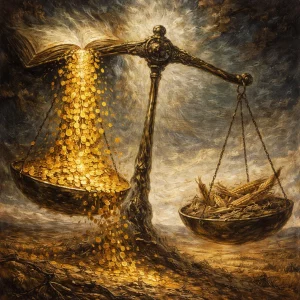
“Gold is the money of kings. Silver is the money of the middle class. Barter is the money of peasants and craftsmen. Paper or debt is the money of servants.”
With this powerful quote, precious-metals expert and advocate of the Austrian School of Economics Claudio Grass opens an in-depth conversation with Robert Cibis. What follows is a fundamental critique of the existing monetary system, a geopolitical analysis of shifts in power and a plea for individual freedom. What do you have to do to free yourself from dependence on banks?
The root of all evil: central banks and the debt-money system
Claudio Grass puts it bluntly: central banks are “the root of all evil”. Together with Robert Cibis he dismantles the myth that these institutions guarantee stability. Instead they are exposed as engines of a gigantic redistribution of wealth – the largest Grass has observed in his lifetime.
The system is based on credit, not on property. “Gold is money, everything else is credit,” Grass quotes J.P. Morgan. The discussion sheds light on how abolishing the link to gold (in the USA in 1971, in Switzerland effectively in 2000) opened the floodgates to unrestrained money creation. The result: bloated balance sheets, artificially low interest rates and the expropriation of savers in favour of debtors.
The geopolitical compass: the West sells, the East buys
A particularly exciting aspect of the conversation is the look at the global stage. While the West sold its gold over recent decades or played down its importance, central banks in the East – above all China and the BRICS states – are buying physical gold on a massive scale.
Grass explains this trend as a direct consequence of the loss of trust in the US dollar. The sanctions against Russia and the freezing of currency reserves signalled to the whole world: whoever holds dollars can be blackmailed. Whoever holds gold has sovereign property. Cibis and Grass discuss whether this is the beginning of the end of dollar hegemony and how the USA, which supposedly still holds over 8,000 tonnes of gold (which no one is allowed to verify), might react.
Switzerland’s original sin
For viewers from the German-speaking world, the analysis of Swiss monetary policy is particularly revealing. Grass describes how Switzerland, once the last country with gold backing in its constitution, gave it up in 2000 through a “sham package”. What was sold as modernisation was, according to Grass, the starting signal for an aggressive monetary policy that made the Swiss National Bank’s balance sheet explode and left the country vulnerable to global financial crises.
Inflation, deflation and the inevitable crash
Where does this path lead? Grass sees us at the end of a long-term debt cycle. The discussion outlines two potentially parallel scenarios: a deflationary collapse in which assets such as shares lose value massively, and/or hyperinflation triggered by a total loss of trust in paper money.
Particularly interesting here is the digression on the “velocity of money”. Cibis and Grass discuss how inflation is driven not only by the money supply but also by people’s psychology. When trust disappears and everyone wants to get rid of their money as quickly as possible, conditions like those in the Weimar Republic loom.
Bitcoin vs. gold: digital nothing or the future?
Of course, cryptocurrencies cannot be missing from such a debate. Here Grass shows himself to be a pragmatist, but also a sceptic. He recognises Bitcoin as a legitimate attempt to escape the central bank system and praises the possibility of peer-to-peer transactions.
In the end, however, gold remains for him the ultimate store of value. While Bitcoin and tech stocks are subject to massive fluctuations as objects of speculation, gold has kept its purchasing power for millennia. Grass provocatively calls cryptocurrencies “digital nothing”, while gold remains physically tangible and limited.
The solution: become your own central bank
In their dialogue, Robert Cibis and Claudio Grass develop concrete approaches for the individual. The advice is clear: out of paper money, into tangible assets. Grass recommends shifting savings that will not be needed in the next few years into physical gold and silver – as insurance against a collapse of the system.
Cibis raises the idea of building a parallel economy. What if we paid for services directly in silver? If the craftsman or the web designer gave discounts when paid in real money instead of euros?
This conversation is an invitation to re-evaluate the money in your own pocket and to take responsibility for your own financial future. It is a dialogue against fear and for the ability to act.
As Claudio Grass quotes: “You can fool some people for some of the time… but you can’t fool them all of the time.”
Claudio GrassThey also say gold is the money of kings, silver is the money of the middle class, barter is the money of peasants and craftsmen, and paper, or debt, is the money of servants. And now they said, well, let's do the Green Bubble, and then along came Corona, which was also a huge redistribution of wealth, the biggest I have ever experienced in my life,
Robert Cibisright? Yes, from whom to whom? Hello, my name is Robert Cibis, and I'm very glad, very honored to be sitting here with Claudio Grass, but first I'd like to say that our shows can always be seen on our website, www.oval.media. They can be watched in full there by those who have taken out an OVAL subscription. But there is also a large part of the show that is simply accessible to everyone. Today we have an expert on precious metals here, but of course this isn't only about things, it is above all about how this metal has taken on a completely new role in our society over the last decades, I think one can say. But of course, if you look at history a little, you see that it has repeatedly been the case that these metals suddenly became very important for transactions.
What is it that is happening right now, very acutely, with metals in economic life over the last, let's say, three or four years? How would you like to sum that up?
Claudio GrassI think what is evident is that today gold is once again the new old world reserve currency. And since this year, for example, if we look at all the central banks in the world, with the exception of the Federal Reserve, these central banks today hold more gold than US Treasuries,
Robert Cibisfor example.
Claudio GrassAnd what is the US dollar? As in American government bonds or
Robert CibisUS dollars.
Claudio GrassI see. Because the US dollar was practically always the global reserve currency, and still is, practically, today. But we have actually seen over the last 16 years that central banks, especially in the rest of the world, meaning not the West, the West has sold its gold, the rest of the world has bought gold, and they have been doing that for about 16 years. That today the reserves have been swapped out of US dollars into gold. Or because the dollar also became a political weapon. And the rest of the world, with the sanctions against Russia, for example, or many central banks have understood that their property, or also US dollars, that they need to break away from them. And they realized that gold is money, everything else is credit.
Robert CibisJP Morgan already said that. I see. That's a good quote. So can one now say that the purchase of gold by, for example, the Chinese government is a kind of attack on the
Claudio GrassUS dollar? Yes, absolutely. But that is tied to this US dollar system.
Robert CibisAnd the Americans used to have a lot of gold and now have little. Is that right?
Claudio GrassThat's how I somehow remember it. After the Second World War, around 70% of the gold holdings of the free world were
Robert Cibisin the USA. Really? So free world means the Western world?
Claudio GrassExactly. And that is also how the dollar practically became the world reserve currency, because it was actually backed by gold. But of course over the decades, right? After the Second World War, that was constantly reduced. Today there are rumors, or it is suspected, the official figure is 8,100 tonnes that the USA is supposed to still have. But whether it is actually still there, nobody knows, because for decades no inspection or audit has been permitted.
Robert CibisThat's crazy too. I mean, I still remember that even the Federal Republic of Germany stores gold in New York. Can you say something
Claudio Grassabout that? Yes, that was a few years ago now, when the discussion came up, when they also started to bring the German gold
Robert Cibis
Claudio Grassback home. Yes. And at the beginning there were a lot of excuses, so they said, well, to bring the gold back, we need several years, etc. How much of it has come back to date, I don't know exactly. I see. But that of course showed that, and it was already the case during the 70s, the Germans also wanted their gold back. And then the American government said, listen, please just leave the gold with us. After all, we also have the troops on the ground who protect you from the Russians
Robert Cibisand so on, right? I see, yes, good point. Yes, yes, I understand. That sounds pretty harsh. Because storing gold for someone can of course also be a kind of false narrative, with no real basis, where one says, I'll store it for you, but I'll keep it. Yes. So that could also be theft. When do you know whether it is theft
Claudio Grassor not? Well, I mean, that is practically the example with the Russians, where they simply said, we are sanctioning now and everyone joins in. Or these are property rights. And if politics now starts to decide when it is still a property right and when not, and acts arbitrarily against it, that has of course caused great uncertainty, right? It has actually caused all the countries, we are moving away from a unipolar world, right? The hegemon, the USA and so on, we are moving into a much more fragmented world, right? And there these, the central banks of this world, simply realized that if they store gold abroad somewhere, it can also be confiscated at any time in an emergency.
Robert CibisExactly, because Russian assets were confiscated, a kind of example was set, which unsettles everyone, the investors. I think Russia is not an outsider, because it is an extremely large country and extremely rich in resources. What about Switzerland? Switzerland has always had a bit of a special role in asset investment, banking and gold matters. Does the Swiss government have a lot of gold?
Claudio GrassWe currently have, Switzerland still has about 1,150 tonnes of gold. In 2000 we had around 2,500 tonnes. And we were also the last country to officially run on a gold standard. So until 2000 we had it regulated in the constitution that 40% of the SNB's circulating currency had to be backed by physical gold. And that is why we always had a very strong currency. That is also why the National Bank could not simply print credit without limit. But in 2000 that was put before the Swiss people. It was not mentioned that they wanted to strike out the gold backing. They actually only said, we are modernizing the constitution. All these decisions made in the past we practically integrate into this new constitution.
But there was no discussion about abolishing
Robert Cibisthe gold standard. Really?
Claudio GrassSo that was a real deceptive package? It was a deceptive package, and it was also put to the people in a shorter time frame. And, as I said, you simply don't
Robert Cibiswrite about it. But does it say anywhere in the text that the gold link is being abolished?
Claudio GrassIt also wasn't,
Robert Cibisit was simply struck out. I
Claudio Grasssee. And that means that until then the Swiss franc was a super strong currency. We had the SNB limited in its credit expansion. And back then we stood at a balance sheet total of 50 billion. And then from 2006 it actually started. 2007, then we went up to 1,000 billion. So roughly a 14-fold increase of the SNB's balance sheet.
Robert CibisWhat does balance sheet mean in this case?
Claudio GrassThe balance sheet, practically how many... Well, after we got rid of the gold backing, the Swiss National Bank then had the possibility to really pump credit, that is, Swiss francs, into the system, to buy some American stocks, European bonds,
Robert Cibisetc. Or they... What year was that
Claudio Grassexactly? It started around 2006, 2007. Really? And then the SNB balance sheet really went like this and then just goes like
Robert Cibisthat. That means one could suspect, also given the timing, that they are partly responsible for that famous bubble of 2007,
Claudio Grass2008. Yes, well, the central banks of course also didn't step in with the
Robert Cibisfinancial crisis. I see, because it was already coming. So if they pumped this money in like that, which was unbacked, that is basically, how should I put it, interesting in terms of timing, because there is the story that the entire financial system could have collapsed if the banks had not stepped in, the central banks had not stepped in and the governments had not stepped in to buy up the bad loans, so to speak, and the like. Is there a connection there,
Claudio Grassdid they see it coming beforehand? In the 90s, Greenspan and so on always said that we also have to guide the markets, practically. Or and then also in the 80s, 90s, so in the 80s the Swiss banks really had a lot of gold. And then the mathematicians slowly came into play, or all the financial instruments etc. And then at some point the solution came from the analysts, right? Listen, we don't need 100% of the gold, we need maybe 20% at most, we can sell the rest of the gold, invest in fixed-income assets, and then we practically have a money machine.
Robert CibisAh, so more return and so on, yes,
Claudio GrassI understand, yes. Exactly. So the banks then bought these gold reserves on the market, and used them to buy long-term government bonds, back then still 6-7% interest. That was a good business as long as the gold price was of course falling and the West also made sure that it stayed
Robert Cibis
Claudio Grassrelatively low. And then came 2000 and that changed everything, and then all the, well, the British threw their gold onto the market. That was Gordon Brown, the finance minister at the time, who even stood up and said that we are selling our gold reserves in the morning. So he announced it, so that the price would go
Robert Cibisdown again. So it was self-sabotage.
Claudio GrassYes, absolutely. So they really, it was like that, a friend, my great mentor was actually Ferdinand Lips, who wrote a wonderful book, The Gold Conspiracy. He was a Swiss banker, the gold pope of Switzerland, so to speak. And his theory was always that in 2000, right, these bullion banks, which had actually lent out the gold, and then the gold price rose, they systematically ran into risks. And that is why the central banks practically had to throw the gold onto the market, or to provide a bailout for them and try to keep the price down.
Robert CibisTell us exactly who the conspirators are and how they profited, explain it for small children. Well,
Claudio Grassthe conspirators are of course always the Central bankers. Or I mean, just the thought that a handful of people decide how much credit there is, on what terms, and who gets it first. Which bubbles do we spike, do we make the Green Bubble now, or do we do the Military Industrial Complex, or do we do Corona, whatever. That's really, I mean the central banks, from my point of view, they're of course the root of all evil. And there's a great deal of power,
Robert Cibisand that power naturally corrupts. Why do they have this power? Can central bankers decide who gets a loan? After all, governments, companies and citizens get loans from the normal,
Claudio Grasscommercial banks. Absolutely, but of course in the background there's the liquidity, the interest rates it takes, all the mechanisms, how much you can do with fractional reserve banking, basically, right? For a while in the eurozone we had a minimum reserve requirement of one percent. Which essentially means that if someone deposited a million at the bank in cash, the banking system could create 100 million in credit. So in the end it's all very, very inflationary, right? And that isn't money, the central bankers, it has nothing to do with a title of ownership, right? It's purely a credit instrument. Or it's a debt-based money system, right? People in debt. As they say, gold is the money of kings. Silver is the money of the middle class. Barter is the money of farmers and craftsmen. And paper, or debt, is the money of servants, right?
And that still fits today, doesn't it? And indeed, I mean, gold, most people no longer know this today, gold was in fact the worldwide standard until 1971. There was already the First World War, the Second World War, then Nixon closing the gold window. And it took several decades to downplay the role of gold. Or the First World War too, right? If everything had run on a gold standard, the First World War would have been over
Robert Cibisafter four weeks.
Claudio GrassWhy? Because the money would have run out, right? The Federal Reserve was also
Robert Cibisfounded in 1913. Well, without this central bank the war wouldn't have been possible at all, because, well, okay, that's true, I'm sure, because I'd heard it from other sources too, that the very fact that governments allowed private money creation, the first central banks were 100% private and completely, well, from a king's point of view, of course an absurd setup, because either you're a king or you're not a king, right? That a private person may simply print money of course seems like, a crime. If I just printed money, I'd end up in prison. And they are allowed to. Why does the government go along with it? I wondered that from the very beginning, and the answer surely lies in this: otherwise you can't finance a war, for example, so from a king's point of view, power is easier to expand when you simply have money available out
of nothing. Then you just wonder why the king doesn't print
Claudio Grasshis own money. Yes, exactly, that's actually my strategy, or what I always tell my clients: become your own central bank, or become your own pension fund. Or you don't want to be in a monetary system that basically, well, inflation is nothing other than the expansion of the money supply. Or, as a small example, because many people partly don't understand this, it really is the most toxic tax we have to pay. Take, for example, ten of us on an island, and one of us decides, okay, we need money, right? One is the banker, who says, okay, we'll print a million of something, island money. And everyone gets ten percent, right? So we have a million in money on the island, and everyone has ten percent, or a hundred thousand,
in their account. And then, the banker, in the future, gets the idea, come on, let's increase the money supply by two million. I keep that and a friend of mine gets some too, right? Then each individual still has a hundred thousand in the account, right? But the money supply is no longer a million, it's now two million. So he no longer has ten percent of the purchasing power, but only five percent. And that's really this improvement,
Robert Cibisof course. Yes, of course,
Claudio Grassthat's basically theft. Absolutely,
Robert Cibisabsolutely. And of course, something I constantly have to remind myself of is that there's interest. Money is never created interest-free. That means the money supply has to increase, because interest means that if you issue a million, then, say interest is five percent, you have to find those 50,000, how much is that? Yes. Yes, 50,000 euros a year, or island money, has to come from somewhere. And it comes from having to take on new debt, or from having done so. And so you always get the development that the money supply increases, and that at some point, purely mathematically, the bank that creates the money owns everything. Yes. Because when there's interest on interest, it happens at an exponential speed. No matter what the interest rate is, whether it's one percent or ten percent, it comes
out the same. At some point the bank owns the entire island, right? Yes. That's the fascinating thing. I think it's totally banal. If you had math in seventh or eighth grade at school, then you know how interest systems and exponential curves work. And is that also why the central bankers are the problem? Or the central banks?
Claudio GrassIt's a centralized system. And what we're actually witnessing at the moment is that it's centralizing more and more. So in the end that's what's decisive, which is why we have this too-big-to-fail strategy. And we have these systemically important companies. They are actually the ones who, no matter what happens, will always get credit, even if they were going under or going bankrupt, they will always be rescued. And they just keep getting the last loans. But the small tenants shut down, so that means
Robert Cibisit's centralizing. I see,
Claudio Grassa huge centralization. It's actually going up. And interest rates today, I mean, or interest in a debt-based money system, we had negative interest rates in Switzerland, for example, right? So where they really, the SNB then said, the Swiss National Bank said, we have to implement negative interest rates so that the Swiss franc doesn't get so strong, because many people of course still thought the Swiss franc is the safe haven and the strongest currency, still backed by gold and so on, so negative interest rates were introduced. But of course that also led to the fact that all those who saved in the past, who lived within their means, a decent life, the normal wage earners, actually had less and less purchasing power, right? The savers, the pensions and so on, they were basically expropriated with the negative interest rates. And the debtors were fueled, right? And favored. And that is of course,
right? That's precisely this debt-based money system, the interest rates too, right? They know, they know, they also create the boom-bust cycles, because they decide when interest rates go up and when they go down. Or they know what actually happens then.
Robert CibisSo you're saying the central banks basically determine when there's a crisis?
Claudio GrassThey at least have it in their hands,
Robert Cibisyes. Absolutely. And they could also avert the crisis? Yes. Right now, for example, we have an economic crisis in Europe. Yes. Probably all over the world, but not the same in every country, though in Europe especially, and in Germany most especially. But it also affects the other countries. If you ask around in Great Britain or France or Italy, it's no better. Could the central banks do something
about it? They actually already did that in the past, right? Today we talk, I also went to school, we talked about millions back then, then billions, right? And today people talk about quadrillions and such things, trillions. And what we've of course experienced since 2008 was simply an expansion. The central banks simply printed money, right? The Federal Reserve, the ECB, and of course the Swiss National Bank too. And I always say,
Claudio GrassAmerica today has something like 33 trillion in debt. In Europe those are "Billionen," in the US they say trillions. But I always tell people, a trillion seconds is 31,709 years. That's an enormous number. We simply can't grasp it anymore, because the numbers are so enormous. And so in the last decades since 2008 we've basically bombed ourselves back
Robert Cibisinto the Stone
Claudio GrassAge 30 times, if you look at it that way.
Robert CibisSo is there a solution, a simple solution,
Claudio Grassfrom the central banks' perspective? In the end, so far the system still works, doesn't it? They simply pumped in debt. They simply fought a debt crisis with even more debt. Of course that led to all the distortions in the market. Take Nvidia today: it has a performance of 460,000 percent since its beginning, or only since 2020, 2022 has it gone up like that. So when the money, these loans go into certain assets, inflation always goes into certain assets, Swiss real estate has risen massively, right? Because in 2008 too they said, hey, low interest rates, it's cheaper to take out a mortgage, to go into debt, than to have to rent the property, right? Ah yes. So the goal is actually always that a debt-based money system has to grow, right?
And you have to stuff people full of debt as long as that works. But at some point the breaking point comes, right? Where inflation, meaning the devaluation of money, becomes visible. Inflation, right? We had it in stock markets, in real estate, and of course that's always desired by many, right? But as long as there's no inflation on Main Street, as they say, lands, right? That suddenly food prices, health insurance, all that stuff goes up. And that's where we are now, of course. And if the central banks keep printing money again, because over the last two years, basically, money was taken out. But they know exactly that if the stock market starts again, if it starts to correct, the central banks will print money again. And then maybe everything goes up once more,
right? But in the end, if the stock market goes up 20% in US dollars, but the US dollar devalues by 20% or 30%, right? Then it's a zero-sum game or even a loss. And most people just don't see that. But we're actually close. Within the next few years we will surely see a hyperinflation or a deflationary collapse,
Robert Cibisright? That's also totally fascinating, that both are possible. Because deflation is the opposite of inflation, when products get cheaper in deflation, you'd think it's the opposite of products getting more expensive in inflation. Why could both possibly lead to a
Claudio Grasscollapse? I mean, a deflationary collapse would mean that if the stock market, well, everything is overvalued. Even if we look at the S&P 500 today, we have about 10 stocks that make up 35-40%
Robert Cibisof the whole
Claudio Grassindex, those big ones, the Magnificent Seven, for example, right? So that, and if those start to
Robert Cibiscorrect,
Claudio Grassright? And the central banks then don't bail them out, so they don't print money and basically supply them with new credit again, right? Then there's a deflationary shock, and
Robert Cibisthe whole thing simply collapses. That also happened in the Twenties, not only in the USA, but also in Europe, that on the one hand, deflation happened, as the stock market collapsed, meaning a share that was worth 100 was suddenly worth only 2, and so, of course, it's worth less, meaning it's deflation, it becomes cheaper to buy the share, but at the same time the bread roll you simply want to buy in the shop, on the street, has become much more expensive, maybe exponentially, and the money supply has risen extremely, which is of course a worst-case scenario, because you get all the disadvantages of everything, so you get the disadvantages of deflation plus those of inflation at the same time. It's a kind of, how should I put it, spreading cancer, where everything, the body works against itself, the economic body. And at the same time, I always think about this, and I have to stress it now, there is indeed the possibility, central banks have done it quite often, that they prevent this too, so that, for example, when loans become questionable, they buy them up. That did happen, so far in a strange way in 2008,
2009, but Richard Werner always tells the following. What does the Bank of England do? Yes, we have just declared war, we have just started the First World War, not a good time to create a banking crisis, so let's see, we'll buy it up at face value and problem solved. They only had one other method, the government also did it, also helped with state money issuance, so that already shows it was an extreme situation, because the bankers, the central bankers, actually don't want that, for the state to issue money too. Because that saves a lot of interest on government credit,
Claudio Grassfrom the taxpayers' perspective,
Robert Cibisbut even that they did briefly and solved the problem. So central banks can be constructive, but they can also be destructive. Constructive, that is,
Claudio GrassI mean also money, money came about, earlier it was paper money, which was a title of ownership to gold and silver that you had deposited. So it was a title of ownership and not some promise to pay, as it is today, or based on nothing, so loans are really, it's through taxes, through inflation, that the whole thing can be financed. And yes, it never works, in a credit-based system credit is never the problem. It's always about the scarcity of goods and services, because we only need money to buy goods and services. Or what we need, a bed, a nice house, or whatever, a car, etc. And of course, if you just put in more credit, but goods and services don't grow at the same rate, but rather even shrink,
then you have cause and effect, prices simply go up and purchasing power dwindles. And that brings us back to Lenin, who once said that if you want to destroy bourgeois society, you must destroy its monetary system. And I believe that's what is currently happening
Robert Cibisin the West. Ah yes, wow. So tell me specifically, what is being destroyed, how,
Claudio Grassand how fast? Exactly, we had hyperinflation in Germany, the Weimar Republic and so on. The first year when they had over 10% inflation, I think 18 months later the hyperinflation came. So it happens relatively quickly. But when it comes, it comes. But it also means hyperinflation is always the loss of trust of the broad population in the institutions, in the government, in the monetary system, etc., where they realize that a lot is really going wrong. So it's no longer the people's perspective, how the individual sees it. And we're not yet at the point where it tips, but you do see many who realize that paper money is dwindling,
purchasing power is declining, so I'm basically forced to invest, to take risks, so I can keep my purchasing power somewhere. And that's the cycle we're in now. And in relation to all those trillions we've pumped up, it's unprecedented, the amount of money we've
Robert Cibiscreated. Yes, exactly, in my view that's unavoidable, as long as money is created out of nothing with interest. Now, it's of course the case that private creation is everywhere, it's somewhat hidden, that's a debate in itself, but even if it were created by a public body, as is claimed for the ECB, for example, it's problematic, because there's also a body, some authority, that basically owns more and more. And then of course there's the Bank for International Settlements, which also plays an opaque role in this whole game, because it apparently coordinates the banks, meaning the central banks, but is also a real power
factor itself, going far beyond simple coordination. Smart people have written smart books about it. And then of course the question is, what's special about you is that you're not only an intellectual, but also a pragmatist. You also say what one does in practical terms to deal with this very shaky, dangerous situation, an impending world war or one already happening, one can argue
Robert Cibisabout that. What would you advise me?
Claudio GrassWell, I started buying gold and silver in 2004, because through monetary history, basically, or 2001, 2000, I had the dotcom bubble, 9/11 and so on, I simply realized I have no idea what's happening. The central bankers are the new heroes, the superstars. And a friend of mine, who today is head of strategy at UBS, told me back then, when I asked him, hey, what's going on, are we in a crisis now, he said, no, Greenspan has cut interest rates, he's injecting liquidity into the system, everything carries on. And I thought, okay,
Robert CibisI don't understand how the whole thing works. Very interesting. I should perhaps interject, you do this professionally, you offer people to buy gold, so you're basically after it yourself, meaning you're also interested, so you have an advantage, so to speak, when people buy gold, when they buy it through you, but you didn't inherit this profession, it wasn't just given to you, it was a conscious decision based on the analyses you made yourself back then. So describe again why you really wanted it.
Claudio GrassI simply noticed that gold is sound money. It's not perfect, but it is, it's limited, and it's still spread all over the world, you find it on every continent. It's easy to divide, you can't print it. And it has been money for the last 5,000 years, just because we've been on a completely unbacked system for 50 years doesn't mean the past is erased. You can fool some people for a certain time, to put it bluntly, but you can't fool them all the time. And as I said, if you just print credit, paper or some computer digits, then that's only part of it, you need it.
Robert CibisThere are always people who say Bitcoin is the solution.
Claudio GrassWhat do you say to them? Well, 10 years ago, with Prince Michael of Liechtenstein and also Karl Reichmuth, we welcomed the whole blockchain from the very start, because as a liberty-minded person I said, great, there are private players entering currency competition with the central banks. That's something positive. And in that respect, Bitcoin, the whole digitalization, yes, if it's all decentralized, it could indeed be the solution. Today, I see it with silver and gold, for example, silver is now around 54 dollars, we were at 50 dollars in 2011,
silver has always stayed down, and now we're at the same level as 2011, gold is at 4,200 dollars, it has gone up massively more. And when I think back, in the past when you had these commodity cycles, you always have stock cycles, commodity cycles, you always saw that the family offices, the money managers, those who wanted to speculate, or where can I make the higher profits, they always bought physical silver. And over the last 10 years, of course, they mainly bought crypto. And that's why we have this lag in the silver market too. So I also think the whole crypto movement has, because people overlap, you know, the crypto followers and the gold followers, to some extent it's a similar
audience. They want to get away from these central currencies, and are really looking for more freedom. But I think the whole AI bubble, the lockdowns, Covid, which we've experienced over the last few years, maybe it really was that the hash comes from the, for mining and so on, comes from the NSA. Or maybe it really was just a teaser for this whole digital thing, right? To basically bring people into
Robert Cibisthis system. Yes,
Claudio Grassthat's a good question. And probably also to dig a bit of a trench for gold and silver, right? To undermine them. I think if there were no Bitcoin, or if crypto hadn't come along, the gold price might already be at 10,000 today, right? It's coming either way.
Robert CibisI mean, that's...
Claudio GrassSure. With Bitcoin we'll see, when this dotcom bubble, we now basically have the second dotcom bubble that we're in, right? We have the bubble within the bubble again, with these seven Nasdaq stocks, basically,
Robert Cibisor AI.
Claudio GrassThose are companies like Google or Facebook, right? Exactly, Nvidia, they have four and a half trillion, that's the valuation. That's absolute madness,
Robert Cibisright? Well, and that comes with this AI narrative, that is, the bubble is that AI changes everything. It does change a lot, just as the internet changed a lot, but that doesn't mean it's worth 10 times or x times as much as what it currently generates.
Claudio GrassYes. So when the bubble bursts, we'll also see how Bitcoin, of course, fares. And to this day it's still a speculation, in my view, because most of it is hoarded; it hasn't established itself as money. There are people who say, okay, we buy real estate with crypto, or there are certain cases. But over the last 10 years, it simply hasn't established itself enough as money, in my view. And that remains to be seen. I don't know either. I'm
Robert Cibisnot personally. Yes, but that's an important point. I mean, Roger Ware recently published a book, a few months ago, telling how Bitcoin came about in the first place. He also sees a conspiracy, a kind of coup, that happened around 2014, I believe, because suddenly it was pushed massively, also by the major media and the big governments, who now have to do everything. And with this Bitcoin, the blockchain ledger narrative, that is, this hype that it's so great, was put out into the world, but basically it was digital surveillance. You can track every product, how far it's gone, and how great that is. And you can track where who travels, and you can't delete it
and can't change it. So that's how it was sold, somehow, and at the same time the same thing happened, the absolute opposite of what was actually intended, because it was supposed to serve transactions. The idea that you can buy something on the internet somewhere, and not have this currency conversion between the umpteen currencies that exist in the world. And every time you suffer a big loss when you have to exchange an Asian currency for a European one, or whatever, the bank earns from it, always insane percentages, the fees are high, it takes a long time. And if you simply say, hey, I want to transfer everything over the internet, and then you have a decentralized system, then something like that is totally practical. But you don't want to have it as a store of value, basically only for conversion. And now it's like this: buying and selling Bitcoin always costs
a lot too. I was very surprised, I once looked, it's often a 3% fee, which I find insanely high. If I'm constantly swapping back and forth, the whole thing is pointless. How do you get out of that?
Claudio GrassOut of Bitcoin?
Robert CibisWell, out of this logic, that basically Bitcoin and the other cryptos have become the opposite of what they originally were, instead of facilitating transactions, it's a store of value. A store of value that is purely virtual, depends only on demand and has no real backing. If I have, say, five cars and put them in the garage, then you can say, okay, they have some value, and I'm storing it in the garage. If I have crypto, it has no value in itself,
Claudio Grassreally. A digital nothing, basically. Yes, so with crypto, how to get out of it. With gold, or I always think, crypto is a superior medium of exchange. Because for me the most important point back in 2011 etc. was that for the first time you could track a payment from Switzerland to Australia or wherever, without going through the banking system. So the peer-to-peer. And that was really the big, that was the big innovation behind it. And now of course we see all the regulators etc. as long as we have these governments, it's all about surveillance. And they're in the digital realm too. Everything has to be whitelisted etc. You have to know the addresses or really look at who is dealing with whom.
And that's of course the dangerous thing about all this, that with the blockchain we're basically bringing in more surveillance, because governments everywhere adapt the regulations accordingly. So what we would need is basically a totally decentralized system, with privacy too, of course. But at the moment that's getting harder and harder. The regulators really want to monitor everything. And that's why crypto, for me, is a superior medium of exchange. Like paper notes were basically better money than gold in everyday use. But gold is still today, in my view too, the best store of value. You can see it too, let's look at it: in 2000 the gold price was $280, and today we're at 4,200.
Robert CibisThat's per ounce.
Claudio GrassThe ounce, one ounce. That means in dollars we've made about 1,300 percent. If we bought in euros, from 2000 until today, we're at 1,000 percent. And in Swiss francs we're at about 700 percent. And three, four weeks ago there was an article in the Swiss newspaper saying that if you bought property in 2000, you did everything right, you're on average 168 percent richer today, right? And that simply shows that gold is the store of value.
Robert CibisMy difference from real estate is of course that you
Claudio Grasscan use it. Absolutely. But as I always say, gold is money, nothing else. Period. It's not a stock, right? It's not an investment, but physical
Robert Cibisgold. And do you also think, exactly, I have the same question again as with Bitcoin. So store of value, yes, of course, as you say, you can simply use it as a store of value. But I think that's not the most important thing. The most important thing, in my view, is that it's used for trade. So if I were to pay someone in gold, would
Claudio Grassthat actually be
Robert Cibislegal? So can I buy a car and pay for
Claudio Grassit in gold? If they
Robert Cibisaccept gold? I mean, of course, on the condition that everyone involved agrees
Claudio Grassto it.
Robert CibisYes, that works. That's of course a huge economic solution that you're hinting at, in that paper money users are the serfs, because if we organized ourselves only with silver, gold and barter, my God, what a beautiful world that would be, we'd have stripped this entire banking system, both private banks and central banks, of their power,
Claudio Grassright? Yes,
Robert Cibisabsolutely. It's quite simple. As a solution that's fantastic, just imagine. I mean, I can't imagine that if you have a butcher who offers his products independently, he would refuse silver coins.
Claudio GrassI don't think so. Well. Nowadays, there was a test in the US once, a guy was always making videos, he'd stand in front of a gold shop, basically, and say, hey, I have a gold coin here, an American Eagle, American Eagle coin, and I have a candy bar, a sugar thing, Mars or whatever, which do you want?
Robert CibisAnd people
Claudio Grassoften took the Snickers. Oh, really? Yes, because somehow, well, people, it's already a generation, generation 2 has forgotten that gold is money, right? And it has really been removed from the collective consciousness, so to speak, especially in the West, right? We had the big party with credit expansion, right? And basically obtained goods from the rest of the world. We sent them worthless paper in exchange, got real goods for it, plundered them, right? Very industrial, so it's just, it's, no, the monetary system is an absolute catastrophe, and if we don't want to be enslaved, then we simply have to abolish the central banks and keep them out. And I hope, so the system we're in, we also had it every 80 years, if we go back in history, we had a reset. Or 80 years back, World War II, 80 years back from that,
you have the Civil War in the US, the great upheavals in Europe, the transition from these monarchies, basically the French Revolution, all the effects. You go back another 80 years, you have the American War of
Robert CibisIndependence. It's probably always these interest rate cycles, that's the moment when
Claudio Grassyou then... It's the interest rate cycles, but also these four generations, where you come out of the war, and then you're... So you have a strong sense of identification, or people are used to all pulling together, etc. And then comes the second generation, a bit weaker, the third is basically the deluded one, which rebels again, the '68ers and so on back then, right? Against these authorities, etc. and the last, the fourth generation, is basically the disillusioned one Youth that smashes pretty much everything, or when they no longer have any prospects for the future,
Robert Cibisor because they've been... Yes, because most of them... I understand that, but I see it now in real life, most people simply want to be left in peace. Yes, of course. They don't want to smash everything. That it happens anyway is then always what's more interesting. I believe that those who profit from it also help promote it, so that it actually happens, so that there's as much destruction as there is now. I mean, it is destruction to buy weapons of war on credit, things that don't actually raise the standard of living at all, and then, above all, to send them into the war, in this case to Ukraine, a party to the war that, so to speak, can only keep the war going because of these weapons and still has to lose the war, because that's how
it is structurally. So that is really destruction in itself. It's similar to blowing up your modern power plants and then saying we'll buy the same products, but from another continent. So that's simply not madness, it's self-sabotage.
Claudio GrassAbsolutely. And it's also central planning, right? Because in the end, if we look at the central banks, right? They said, okay, now we're going to spike this green bubble. And then we've got trillions in this
Robert Cibisgreen crap. Oh,
Claudio Grassso you mean these alternative energies, these little wind turbines and all that, right? It was really pushed and subsidized by the state. And then of course you create it,
Robert Cibisthen you can pour money into this bubble. Exactly, then there are loads of companies saying, hey, we'll start a start-up,
Claudio Grasswe'll do something like that too. But then you also have the people behind it, the politicians too, or the insiders and so on, who profit from it. And now, well, we said, fine, we'll do the green bubble, and then Corona came along. That was also a huge redistribution of wealth, the biggest I've ever seen in my
Robert Cibislife. Yes,
Claudio Grassfrom whom to whom? I mean, the whole sector, the middle class is gone, of course, right? The SMEs, right? It was all directed against them, above all against small and medium-sized businesses. And the healthy backbone of a healthy society is the family businesses, the small ones, right? They want low taxes, leave me alone, fewer regulations, I have my business here, right? And I can feed my family, etc. Those people are actually not wanted, right? What you really want is people who are in debt. I once had a conversation with Prince Michael, and he said, he had said that was his wake-up moment.
Robert Cibis
Claudio GrassOh really? That was my wake-up moment. He'd had a great conversation with a high-ranking OECD official, and the man had described to him what they plan for the future, with savings, etc., right? And then the Prince said again, that was my wake-up moment. He had said, if you implement all this the way you're describing, then there will be no private wealth, no private savings anymore, right? And the man had smiled at him very kindly and said, yes indeed, that's true, of course, right? But we have to steer an economy, and we can only steer an economy with people who have debts, not people who have wealth. They're less predictable and so on. And that's it. So it's, right? That is really it, the debt-money system is for servants, and they enslave us
Robert Cibisevery day. And would life in Liechtenstein be better
Claudio Grassthan in Germany? Currently? Yes? Yes, of course. Well, yes,
Robert CibisI mean, my, Germany. Too bad Liechtenstein is so small, it sounds totally likeable that the Prince woke up
Claudio Grasslike that there. Yes, well, that's of course also, right? The House of Liechtenstein is also the center for Austrian Economics. I'm also a follower of the Austrian School of economics, so those are the classical liberals, where the individual is at the center, the individual stands above the collective, and central planning doesn't work. Or all the central, we also live today, or many people say that this is capitalism, what we're living in here. That's bullshit, it has nothing to do with capitalism. It's all a
Robert Cibiscentrally planned economy. Yes, yes, of course. This whole monopolistic attitude, especially in the digital economy, is something totally collectivist. Yes. So, we all have to, and you mustn't forget, it's regarded as capitalism, or as economic success, when PayPal or Amazon or Uber prevail as companies against others, and that's not true at all. They're all publicly financed, partly publicly owned, in this case also with the US, publicly initiated, meaning that even the initiative behind Facebook and Uber were actually intelligence agency projects. I can add references below as well, because people say, well, how can you prove that? Yes, it can be proven. There are indeed very clear indications of it, and one big indication is when companies like Amazon or Uber can make massive losses for decades without having to
shut down. That's also proof that either there's so much capital behind it that monopolistic economic leadership is possible, or that it's actually being covered by the citizens, because the taxpayer is in reality financing it without
Claudio Grassknowing it. The whole thing is always financed through inflation, of course. And the government basically decides. Back in 2008, UBS, when they crashed, they had to get 70 billion from the Swiss government, back then it was still 70 billion, today the amounts would be larger, right? But there politics decided, okay, we'll give them the 70 billion. But the other companies that perhaps also had problems had to close down. So they simply push and promote this centralization in the system. And that's where it's heading, and then the broad middle class, that is what you've seen in the last two or three years in the West, it's gone. It has really become impoverished. Especially in Germany,
but also in the US. And we see that with gold too, right? Because many who in the past, for example every year they'd, the classic retail customer, would buy gold for 10, 20, 30,000 and put it aside, and in the last two years most of them have sold, the small ones. Because they couldn't pay their insurance, rents went up, right? So they basically had to give up what they had saved. And that is of course a sad development. So that's why, how you can get out and protect yourself. I'm convinced you can start small. One ounce, buying small pieces, the gold Vreneli, there are other formats, they might have 7 grams of gold or so. But legal tender, that is, former official means of payment. But you need gold and silver and really put it aside. But it's not an investment, it's also forgoing consumption.
Because you're saving. And you can't buy and save at the same time. With stocks you can somehow still do it, what you invest carries risks, etc. In return there is interest and so on. And with gold you're really building your own pension fund. Because I always told my clients, 10 years ago I said, only take money you won't need in the next 5 to 10 years. Or it's your pension fund, it's your retirement provision, it's the money for the children. Or it's your insurance against a crash of this system. That's how you have to look at it. And today I also tell my clients, you put it aside and you know exactly that it will gain in purchasing power. It also shapes
your intention. I think that's smart too,
Robert Cibisof course, if you can set something aside, to set it aside. But I think that trying to put aside the famous 10% or so, even if you have little, many economic observers say, especially when you have little money, it's easy to set 10% of it aside, psychologically too, because the sum is then so small. Setting aside such large sums can be difficult for many. So just don't earn too much, no, you will. But that's very important. But honestly, I think another thing is even more important, or just as important, let's say, and that's perhaps a change in thinking, what you just said about transactions, that you simply make a hard-nosed effort to conduct as large a share of your expenses as possible in these independent currencies, like silver, gold or barter. Because that is truly a liberation, because it protects you, for example, from inflation. That's obvious.
And inflation, you said, has already risen very sharply in recent years, but it could actually develop exponentially, potentially. If you have a habit like yes, I always trade with this one, I'm, say, a lawyer and he's a painter, he paints for me. And if there are even three of you, he knows a plumber, then you can settle it among three as well. That's still possible in terms of complexity. I'm not saying you should do this with hundreds or a thousand people, because then it might get too complicated. But there are many things you need often. So if someone likes vegetables, you can always buy the vegetables in silver. And if you have your dealer whom you trust, you can always go to him. And then you don't have to reinvent the wheel every time and discuss with him, by the way,
I'm paying in silver, by the way, I'm paying in silver, You only have to discuss this once. And then
Claudio Grassmaybe everyone's happy. Yes, I mean, we're simply living in a time like this, right now gold is actually still being hoarded. Or rather, the bad money gets spent. It's used for transactions, while the good money is actually hoarded, when it mostly increases. And that's somewhat the case with gold and silver as well. But of course I have many clients who say, hey, instead of a bank account and some Swiss francs, euros or US dollars, I hold my wealth in physical precious metals, in coins and bars. And when they need something, they say, okay, please sell 50,000 or 20,000 worth. And then they can decide whether they want euros, British pounds or whatever. And they're liquid again and have the cash.
Robert CibisThat's what most people do. And of course that's also sensible. You don't want to have money. You don't want to have paper. You don't want to be a servant. That too. That's clear. But I'd say going one step further would be even cooler. Yes, because that would really be a kick in the system's backside, if you really stopped accepting this money so willingly. If you say, quite seriously, I sell my tomatoes, or I'm a web designer offering a service, and I simply tell the customer, I want you to pay me in silver, then it costs this much. If you pay me in this money, though, it costs 5% more. I think that's cool. For example,
there are gas stations in the US, I've seen photos, that actually say if you pay by credit card, the price per gallon of gasoline is this, and if you pay cash, it's this price, and cash is cheaper. Which is fair, because what many people, and I often forget too, is that when you pay by credit card, the merchant pays something like 2, 3% even just for that transaction, which I personally find outrageous, considering how many transactions there are and what sums are involved, I find that percentage extremely high. Yes, and somewhere the customer ends up paying for it anyway. So why should the merchant charge the same price for credit card payment as for cash? Actually it's fair that the customer gets a better price in cash by comparison. But if you now pay in silver, it should actually be even cheaper, because you get added protection against
inflation, it's real money and not debt money, so in my view you could easily negotiate to get the product even cheaper, once you convert it. If you do that when paying, that's already good, but if you offer a service or a product yourself, it's even better to say, hey, you get it cheaper at that amount. I believe that's a real revolution. I think that achieves more than going to a demonstration and ranting against the government, because these are real, actual actions that can transform society.
Claudio GrassAbsolutely. But then there's also, I always tell my clients that if they decide to take paper money out of the system and switch it into physical precious metals, then they won't be financing this system that enslaves us for much longer. They really take it out. So the banks can't create credit anymore, because it's physical gold now, it's no longer in this system, or rather, it's outside of it. And that's the best step. That's what the BRICS are doing, they've really bought gold.
Robert CibisYes, that also shows the general development, where there's decline and rise, you can see where the gold goes. If you look at who had how much gold before and after the Second World War, you understand quite a lot. But that's a different topic. I just want to share one last idea on this topic, money versus gold. The money supply isn't defined only by the money created, but also by circulation and the speed of purchasing. It's clear that on one side you have products and services and on the other side the money supply. And if I had one euro and bought half a liter of milk with it and then three oranges, and the person who sold the milk buys three oranges with it,
and the person who sold the three oranges buys apples with it. Then in reality you only have one euro, but on the other side, on the product scale, you have a liter of milk, three oranges and these apples. So you have three times the value of just the one euro that was created. That means the faster money circulates, so goes through society, the stronger the inflation, because in reality that corresponds to a larger money supply. Because then with fewer euros you get more product, so did I
Claudio Grasssay that correctly? Yes, I mean, you're talking about the velocity of money. Exactly. How fast money passes from one hand
Robert Cibisto another.
Claudio GrassExactly. And you can say that when people look positively to the future and everything is okay and you have a good feeling, then velocity is actually high. Then people are positive, they spend, they earn, or there's a high velocity. And what we've actually experienced over the last 20 years is that velocity has simply fallen massively since
Robert Cibis2008. Yes, because they're afraid...
Claudio GrassAnd that was deflationary overall, of course, right? That partly also drove inflation in
Robert Cibisthe mainstream... But when inflation explodes, velocity also goes up, because people think, oh, whatever you do, don't hold money, because it loses value too fast. And then it goes
Claudio Grassvery quickly. That's where we get to the Weimar Republic, where you came in in the morning and said, I'd like an egg, and they said it costs 2 trillion Reichsmarks, and you paid right away. Because if you had waited until the egg arrived, it might already have cost 2.2 trillion or so, or you'd need another wheelbarrow. So that's it, as you say, velocity, so when trust in institutions or in paper money dwindles, things move fast. And then the opposite happens, which is
Robert Cibisadditionally reinforcing. Exactly, and that means higher velocity, so circulation speed, corresponds to a larger money supply. And so you take the money supply, you slow the money supply down, if you now do the velocity with silver or gold. So in reality you'd also stabilize the system.
Claudio GrassYes, well, velocity is really simply the individual, right? Yes, and the whole thing, value is always subjective, it's in the eye of the beholder. But this velocity is above all psychological, it has less to do with goods, it's really the psychology of the individual, right? That's us: if things go well and I look positively to the future, then you have higher velocity, because
Robert Cibispeople trust. Or fear,
Claudio Grassas I said. And when that collapses, and if not, then we have the opposite, people hoard money. And save, or don't have as much anymore.
Robert CibisOr you have hyperinflation,
Claudio Grassand then velocity also goes up. Or when people see that money really, when they realize what inflation is, which most people don't today, but when they realize it, right? Because you see every day that goods just keep getting more expensive, then they throw the money away, right? Then you want to get rid of paper money as fast as possible and swap it for real
Robert Cibisgoods. Definitely. Yes, thank you for these valuable thoughts. And it also gets me thinking, that's the good thing about it, it also occurs to me that I can do much more myself to protect myself from an overpowering monetary system, really. And these precious metals are of course an obvious step. But it's not just that, you can also do other things, like simply exchanging services. Absolutely. Or distinguishing between tangible assets and paper assets. And transacting outside the system is a whole other matter, because I think the discussions are far too much about stores of value, because people are afraid for their capital, rightly so. But how transactions take place is important too.
Yes, and these are levels that perhaps need to be discussed separately. Claudio Grass, thank you very much for the conversation. And thanks to the viewers who stayed with us until now. Would you like to give
Claudio Grassone last tip? Yes, I always hear people who say, yes, but you can only buy gold if you have a lot of money. The point is, if someone, or if you have 500, 600, you can buy silver coins, which today are maybe around 45 euros, so you'd at least have an ounce of silver, and if you've maybe saved up a few hundred, 600 euros, you can also buy a smaller gold coin, right? You just have to start, right? And if you go and it's just a single coin and you do that regularly, it's also fascinating, the material, I mean, when people hold a kilo of gold in their hand for once, it's two or three small iPhones, right? It's so heavy.
Yes. And it hurts me every time I have to sell a gold coin, right? Your whole relationship to savings and to money as such changes with the
Robert Cibisvisit. The tactile side, the tactile side is nice, though. It's also a kind of, how should I put it, resistance against the digital, when you can simply touch things, when you can touch each other, meet each other. It's also better than a video conference. So, some of the reasons why I prefer to have conversations in real life rather than over video conferences. The viewers have already noticed that, we've never done a NARRATIVE any other way. So,
Claudio Grassstay tuned and see you soon. Thank you.
Claudio GrassMan sagt ja auch Gold ist das Geld der Könige. Silber ist das Geld des Bürgertums. Der Tausch ist das Geld der Bauern und der Handwerker. Und Papier oder Schulden ist das Geld der Knechte. Und jetzt hat man Halt, Haben es auch gut gemacht. Und dann ist man gekommen. Das war auch eine riesen Vermögensumverteilung. Die Größe, die ich in meinem Leben erlebt habe.
Robert CibisJa, von wem? An wen? Hallo, Mein Name ist Robert Cibis, Ich bin ganz froh, ganz geehrt, hier mit Claudio Grass zu sitzen. Aber vorab möchte ich sagen, dass unsere Sendung immer auf unserer Webseite zu sehen sind www.oval.media. Dort sind Sie vollständig für die, die ein Oval Abo abgeschlossen haben, zu sehen. Es gibt aber auch einen großen Teil der Sendung, der einfach so zugänglich ist. Wir haben einen Experten für Edelmetalle heute hier. Aber es geht natürlich dabei nicht nur um Dinge, sondern es geht dabei vor allen Dingen darum, wie dieses Metall in unserer Gesellschaft eine ganz neue Rolle bekommt. In den letzten Jahrzehnten. Kann man, glaube ich, schon sagen. Aber natürlich, wenn man in die Geschichte schaut, sieht man, dass es immer wieder so war, dass diese Metalle dann ganz wichtig waren auf einmal für die Transaktionen.
Was ist denn das, was jetzt ganz akut sich tut bei den Metallen, im wirtschaftlichen Leben, in den letzten, sagen wir mal drei, vier Jahren? Wie würdest du das auf den Punkt bringen wollen?
Claudio GrassIch glaube auch sehr wichtig ist es, dass heute Gold wieder die neue alte Welt Reservewährung ist. Und wir haben seit diesem Jahr zum Beispiel, wenn wir alle Zentralbanken dieser Welt anschauen, mit Ausnahme der Fernsehkurse, dann halten diese Zentralbanken heute mehr Gold als US zu. Also ist zum Beispiel.
Robert CibisWas ist denn.
Claudio GrassAus der amerikanischen Staatsanleihen oder US Dollars?
Robert Cibis Ah ja.
Claudio GrassAlso der US Dollar war quasi immer die globale Welt ist Währung. Es ist auch heute noch. Aber wir sehen ja nicht die letzten 16 Jahre, dass die Zentralbanken insbesondere im Rest der Welt, also nicht im Westen. Der Westen hat sein Gold verkauft, der Rest der Welt Hauptgrund gekauft. Das machen sie seit ungefähr 16 Jahren. Dass heute die Reserven anstelle der US Dollars halt mit Gold ausgetauscht wurden oder weil der Dollar auch eine politische Macht wurde und da. Und der Rest der Welt? Mit den Sanktionen gegen Russland zum Beispiel haben viele Zentralbank bestanden aus ihrem Eigentum oder auch US Dollars, dass sie sich davon lösen müssen. Also und da haben und sie haben realisiert sie auch mein Gold ist Geld, alles andere ist Kredit. Das hat schon JP Morgan gesagt.
Robert CibisJa, ich will jetzt ein gutes Zitat. Jetzt kann man also sagen, dass jetzt der Goldkauf durch zum Beispiel die chinesische Regierung eine Art Angriff auf den US Dollar ist.
Claudio GrassJa, absolut. Das ist eine Koppelung von diesem US Dollar System.
Robert CibisUnd die USA hatten früher viel Gold und haben jetzt wenig. Ist das richtig? So habe ich das irgendwie.
Claudio GrassDie Amerikaner hatten nach dem Zweiten Weltkrieg rund 70 % der Goldbestände der freien Welt, waren in den USA.
Robert CibisAuch wirklich frei wert als westliche Welt. Ja.
Claudio GrassUnd dadurch wurde auch der Auto quasi zur Weltwerdung alleinig Gold gedeckt worden. Aber natürlich, über die Jahrzehnte oder nach dem zweiten Weltkrieg wurde das ständig abgebaut. Man munkelt heute und die offiziellen Zahlen sind die 8900 Tonnen, die die USA immer noch haben sollte. Aber ob die effektiv vorhanden sind, das weiß niemand, weil man ja seit Jahrzehnten auch die keine Inspektionen mehr zugelassen hat, oder?
Robert Cibis Das ist auch verrückt. Ich meine, ich habe immer noch in Erinnerung, dass selbst die Bundesrepublik Deutschland Gold in New York lagert. Kannst du dazu was sagen?
Claudio GrassJa, ich habe das. Das war schon ein paar Jahre her, wo die Diskussion aufgekommen ist, wo man auch angefangen hat, das deutsche Gold zurück zu holen.
Robert CibisJa.
Claudio GrassUnd da gab es am Anfang aber sehr viele Haus. Also man hat gesagt ja aus um das Gold zurückzubringen, brauche mehrere Jahre etc. fehlt das bis heute zurück ist ich weiß es nicht genau, aber das hat natürlich gezeigt es ist und es war es war schon in den Siebzigern wollten die Deutschen auch jeder Gold zurück und dann hat dann aber die amerikanische Regierung gesagt Lasst doch bitte das Gold bei uns. Wir haben ja auch die Truppen vor Ort, die euch vor den Russen schützen und so, oder?
Robert CibisIst ja gut. Ja, ja, ich verstehe. Es klingt ja schon auch hart. Also weil das Gold für jemanden lagern ist natürlich. Kann ja eventuell auch eine Art falsches Narrativ sein. Kann im Grunde sein, dass man sagt ich lager das für dich, aber ich halt mal. Ja, also das könnte auch dann Diebstahl sein. Wann weiß man das, ob das Diebstahl ist oder nicht?
Claudio GrassJa gut, ich meine eben. Also das ist ja quasi das Beispiel mit den Russen. Aber man hat gesagt hat, wir sanktionieren jetzt und alle schließen sich rum und das sind Eigentumsrechte. Und wenn jetzt die Politik anfängt zu entscheiden Bauen ist es noch Eigentumsrechte. War nicht so ein Ziel, geht da willkürlich dagegen vor. Das hat schon eine große Verunsicherung gebracht. Was wäre da nicht all den Ländern, die wir gehen, ja von einer unipolaren Welt oder der Hegemon USA. Und so wie geniale, ja viel, viel mehr aufgesplittert der Welt und und und. Da haben einfach diese die Zentralbanken dieser Welt, die haben einfach realisiert, dass es das, wenn sie Gold auch irgendwo verwahren im Ausland, dass das halt in Europa auch jederzeit konfisziert werden kann.
Robert CibisGenau weil das russische Vermögen konfisziert worden ist, hat man eine Art Beispiel gesetzt, was alle verunsichert, die anlegen. Russland ist eben kein Außenseiter, weil es extrem großes Land ist und extrem ressourcenreiches. Wie ist es da mit der Schweiz? Die Schweiz hat ja im Bereich Wertanlage und Banken und Goldwesen immer so ein bisschen eine Sonderrolle wie Es hat die Schweizer Regierung viel Gold.
Claudio GrassAlso wir haben. Aktuell hat die Schweiz noch ungefähr 1150 Tonnen Gold. Wir hatten im Jahr 2000 rund zweieinhalb 1000 Tonnen. Und wir waren ja auch das letzte Land, das quasi offiziell auf einem Goldstandard gelaufen ist. Also wir haben in der Verfassung. Bis zum Jahr 2000 hatten wir in der Verfassung geregelt, dass 40 % der Umlaufmittel mit physischem Gold gedeckt sein müssen. Und deshalb hatten wir auch immer eine sehr starke Währung. Deshalb hat auch die Nationalbank nicht einfach unlimitiert drucken können. Aber das hat man im Jahr 2000 vor Schweizer Volk gebraucht. Man hat nicht erkannt, dass man die Gold schleifen möchte. Man hat euch nur gesagt Wir modernisieren die Verfassung, all diese Entscheidungen, die Vergangenheit getroffen wurden, integrieren wir quasi in diese neue Verfassung.
Aber es gab keine Diskussion über die Abschaffung des Goldstandards.
Robert CibisDas war so richtig auch eine Mogelpackung.
Claudio GrassEs war eine Mogelpackung und man hat es auch vor die Leute gebracht in einen kürzeren Zeitraum. Und man hat, wie gesagt, eben, man schreibt dann einfach nicht darüber.
Robert CibisAber es steht irgendwo im Text drin, dass man quasi die Goldbindung aufhebt.
Claudio GrassEs wurde gar nicht so einfach rausgestrichen.
Robert CibisAlso die Änderung war das Rausstreichen.
Claudio GrassAch, und das bedeutet das damals war das Schweizer Franken eine so starke Währung, wir hatten eben die Chance, das limitiert in ihrer Kreditausweitung und wir staunten. Damals war eine Bilanzsumme von 50 Milliarden und dann ab 2006 gings los. 2007, das sind wir dann bis auf 1000 Milliarden bar auf, also rund 14 fachung der Bilanz.
Robert CibisWas heißt denn Bilanzen im Fall der Bilanzen?
Claudio GrassQuasi viele. Also der erste Blick hat natürlich, nachdem wir die Golddeckung abgelöst haben, also die Schweizer Nationalbank, dann die Möglichkeit war sie wirklich Das kriegt also Schweizer Franken ins System reinzupumpen, irgendwelche amerikanisches Dogs kaufen oder Page Bei uns hat.
Robert CibisDa das war man muss ich mir aber als genau.
Claudio GrassDas fing alles ab 2006 2007 und dann ging wirklich die also die Bilanz war irgendwie so und dann macht es einfach so oder?
Robert CibisDas heißt, man könnte jetzt vermuten, war auch vom Zeitpunkt her, dass die da mitverantwortlich sind für diese berühmte Blase 2007 2008.
Claudio GrassJa, da hat man oder sind die Zentralbank eingesprungen und dann mit der Finanzkrise.
Robert CibisWeil die schon vorher im Kommen, also wenn sie das Geld also reingepumpt haben, was ungedeckt war. Also das ist ja im Grunde, wie Sie sagen, interessant vom Zeitpunkt her, weil weil man hatte es kennt man die Geschichte, das gesamte Finanzsystem hätte zusammenbrechen können, wenn jetzt die Bank nicht eingesprungen, die Zentralbank nicht angesprungen werden und die Regierung nicht eingesprungen werden, um sozusagen die faulen Kredite aufzukaufen und Ähnliches. Hat das da einen Zusammenhang? Hat man es vorher kommen sehen.
Claudio GrassIn den neuen Greenspan und so hat die mir gesagt wir wir müssen dann quasi auch die die Märkte ergreifen, oder Und dann hat man auch in den Achtzigern und Neunzigern, oder also in den 80er Jahren haben die Schweizer Banken wirklich sehr viel Gold. Und dann kamen ja quasi die Mathematiker langsam ins Spiel oder diese ganzen Finanzinstrumente etc. Ja, und dann kam dann auch mal irgendwann die die Lösung von den Analysten Analysten ob du wir brauchen nicht 100 % des Goldes oder vielleicht maximal 20 %. Wir können den Rest des Goldes verkaufen, festverzinsliche Anlagen investieren. Dann haben wir ja auch die, die Maschinen.
Robert CibisHaben mehr Rendite gemacht.
Claudio GrassAlso die Banken haben dann quasi oder diese Goldreserven auf dem Markt gekauft, haben damit langfristige Staatsanleihen gekauft, sechs 7 % Verzinsung damals noch. Das war ein gutes, gutes Beispiel. Solange der Goldpreis du nicht gefahren ist und der Westen auch immer das geschaut hat, das relativ unten bleibt, dann.
Robert CibisJa.
Claudio GrassUnd dann kam ja 2000 und hat das alles geändert und dann mussten ja auch die ganzen Engländer haben dann ihr Gold auf den Markt geworfen. Das war auch so Gordon Brown damals, Die Finanzminister, der sogar noch hingestellt und gesagt hat, wir verkaufen ab morgen unsere Goldreserven. Also er hat es angekündigt, damit der Preis schon wieder runter gegangen ist.
Robert CibisEs war also Selbstsabotage. Absolut.
Claudio GrassAlso man hat wirklich oder das war so so ein Freund, also ein Mann große Bank verliehen und Laabs, der ein wunderschönes Buch geschrieben hat, die Gold Verschwörung. Es waren die Schweizer Banken, so der Goldpapst in der Schweiz. Und seit die Wahlen immer im Jahr 2000. Oder haben diese Podien Banken, die eigentlich das Gold abgelehnt haben und der Goldpreis dann gestiegen ist, Dann kamen die systematischen in die Risiken rein und deshalb mussten die Zentralbanken quasi das das Gold auf den Markt werfen oder um quasi dort ein Bail out oder sich zu stellen und den Preis weiter unten versuchen zu halten.
Robert CibisSagt doch mal genau, wer die Verschwörer sind und wer wie sie profitiert haben. Also das für kleine Kinder.
Claudio Grass Und die Verschwörer. Das ist natürlich immer die Zentralbanker. Und ich meine, allein der Gedanke, dass ein paar wenige Leute entscheiden, wie viel Kredit gibt es zu welchen Konditionen, Wer kriegt sie zuerst? Welche Bubble spielen wir dann? Also machen wieder. Als die Green Bubble oder auch für militärisch industrielle Komplex? Oder machen wir Korona was auch immer oder das ist wirklich Also die Zentralbanken ist das meiner ich natürlich das Übel, die Wurzel allen Übels und es gibt den sehr viel, sehr viel Macht. Und diese Macht korrumpiert natürlich auch.
Robert CibisWieso haben Sie diese Macht? Können die Zentralbank entscheiden, wer ein Kredit bekommt? Also weil den Kredit kriegen die Regierungen doch und die Unternehmen und die Bürger von den normalen Banken, den kommerziellen Banken?
Claudio GrassAbsolut. Aber natürlich. So händen die Liquidität die Zinsen dafür die es braucht. Die ganzen Mechanismen wie viel? Das man mit den Fragen Reservebanking also quasi oder wenn ich eine zeitlang in der Eurozone haben wir Mindestreserven, die verlangt wurden von einem Prozent, was an sich bedeutet, wenn jemand 1 Million auf die Bank gebracht hat im Crash, dann konnte das Bankensystem 100 Millionen Kredit schöpfen. Also ist alles sehr, sehr inflationär im Endeffekt, oder? Und das hat nicht das Geld, die Zentralbank, das hat nichts mit einem Eigentumstitel zu tun, sondern ist reines Kreditinstrument. Und das ist ein Schuldgeldsystem. Und die Leute in Schulden. Man sagt ja auch Gold ist das Geld der Könige, Silber ist das Geld des Bürgertums. Der Tausch ist das Geld der Bauern und der Handwerker und Papier oder Schulden ist das Geld der Knechte, oder und wenn man das passt, dann auch vor heutzutage.
Und man hat wirklich halt, ja man hat das man Gold und das wissen die meisten Leute heute nicht mehr. Gold war doch bis 1971 wirklich auch weltweit, oder? Der STANDARD Man hat schon erste Weltkrieg, zweite Weltkrieg, dann nächsten Schließung des Goldfensters. Man hat einige Jahrzehnte gebraucht, die Rolle von Gold quasi herunterzuspielen und dann auch der erste Weltkrieg wurde. Wenn das alles auf einem Goldstandard gelaufen wäre, dann wäre der erste Weltkrieg noch vier Wochen fertig gewesen.
Robert CibisWieso?
Claudio GrassWeil das Geld ausgegangen wäre oder die Feinde sehr vor diese nach 1914 gegründet. Das ist.
Robert CibisJa. Ohne diese Zentralbank wäre der Krieg gar nicht möglich gewesen, weil man. Ja, na gut, das stimmt. Ich bestimmt, weil ich hatte es auch von anderer Seite gehört, dass überhaupt die Tatsache, dass Regierungen diese private Geldschöpfung, die die Zentralbanken waren, ja zu 100 % privat und völlig, also aus Königs Sicht schlicht eine absurde Konstellation, weil entweder ist man König oder man ist nicht König oder also die, dass eine Privatperson das Geld einfach drucken darf ist natürlich. Wirkt natürlich wie ein Verbrechen. Wenn ich jetzt einfach Geld drucken würde, käme ich ins Gefängnis und die Doofen da dürfen das. Aber warum macht das die Regierung mit? Hatte ich mich natürlich von Anfang an gefragt und da liegt sicher die Antwort. Man kann sonst zum Beispiel einen Krieg gar nicht finanzieren. Also aus Königs Sicht kann man die Macht leichter ausbreiten, wo man einfach Geld aus dem nicht zur Verfügung hat.
Dann fragt man sich nur, warum ein Doktor König sein Geld dann nicht selber.
Claudio GrassJa klar, also nicht das ist eigentlich meine Strategie oder das auch meinen Kunden immer werde zu euren eigenen Zentralbank oder wertet eure eigene Pensionskasse und ihr wollt nicht in einem Geldsystem drin sein, das quasi halt eben oder wenn man. Inflation ist nichts anderes als die Ausweitung der Geldmenge oder das wenn wir als kleines Beispiel oder weil viele verstehen das zum Teil nicht. Das ist wirklich die die giftigste Steuer, die wir bezahlen müssen und wir uns ein Beispiel Wir sind zehn Leute auf einer Insel und dann entscheidet es okay, wir brauchen Geld. Oder eines der Banker sagt okay, die trockene Million, irgendetwas Insel, Uni und jeder kriegt 10 % gerade. Dann haben wir quasi 1 Million Geld auf der Insel und jeder hat 10 % oder 100.000 auf seinem Konto.
Und wenn man denn dann kommt der Banker in Zukunft kommt dann auf die Idee Ja, komm, wir erhöhen jetzt mal die Geldmenge um 2 Millionen, ich behalte das und ein Freund von mir kriegt noch acht sollen. Dann hat zwar der Einzelne immer noch 100.000 auf dem Konto oder aber die Geldmenge ist nicht mehr. 1 Million. Sind jetzt 2 Millionen Haushalte nicht mehr Kaufkraft von 10 %, sondern hat nur noch Kaufkraft in der Höhe von 5 %, oder? Und das ist wirklich diese Verbesserung natürlich.
Robert CibisJa klar. Das ist im Grunde Diebstahl.
Claudio GrassAbsolut. Nein, es ist.
Robert CibisDas ist ja alles. Und natürlich das, was ich auch immer wieder selber in Erinnerung rufen muss. Es gibt ja Zinsen. Also das Geld ist ja nie zinsfrei geschaffen. Das heißt, die Geldmenge muss sich erhöhen, weil die Zinsen dazu führen, dass man, wenn man 1 Million ausgibt, man ja dann, wenn jetzt 5 % Zinsen sind zum Beispiel, dass man dann ja diese 50.000 wie viel ist das? Ja 50.000 € im Jahr oder Insel Geld, die müssen irgendwo herkommen und wo? Und die kommen ja dadurch her, dass man wieder dann neue Schulden machen muss oder dadurch gemacht hat. Und damit hat man immer die und auch die Entwicklung, dass die Geldmenge sich erhöht und dass irgendwann rein mathematisch die Bank, die das Geld schöpft, alles besitzt. Ja, weil wenn dann noch Zinsen auf sind, sozusagen passiert das in einer Expedition, deren Geschwindigkeit, egal wie der Zinssatz jetzt ob es 1 % oder 10 % ist, das kommt aufs selbe raus.
Irgendwann kommt der Punkt, wo die Bank die gesamte Insel besetzt oder? Das ist doch das Faszinierende. Ich glaube, das ist total banal. Und wenn man Mathematik Klasse sieben, Klasse acht gehabt hat in der Schule, dann, dann weiß man das was wie Sozialsysteme funktionieren, exponentielle Kurven und das wenn das System und das ist und ist das also ist das auch der Grund, warum die Zentralbanker das Problem sind? Weil die Zentralbanken.
Claudio GrassWir sind ja ein zentralisiertes System und was wir eigentlich miterleben auch aktuell ist es zentralisiert immer stärker. Also im Endeffekt ist es entscheidend, das haben wir diese too big to fail Strategie und wir haben diese systemrelevanten Firmen, also sind nicht diejenigen, die egal was passiert, die werden immer mit Krediten, auch wenn sie untergehen würden oder bankrott gehen würden und die werden nicht mehr darum gerettet. Und dann? Die kriegen einfach immer noch die letzten Kredite um die Kleine machen zu. Das heißt.
Robert CibisAlso eine große Zentralisierung.
Claudio GrassEs geht gerade rauf und um die Zinsen heute ja, von der oder der Zins in einem Vollgeldsystem. Also wir haben in der Schweiz zum Beispiel Negativzinsen oder auch das Sprichwort wirklich, die Assemblee hatte gesagt haben die Schweizer Nationalbank hat gesagt haben, wir müssen Minuszinsen implementieren, damit der Schweizer Franken nicht zu stark wird, weil viele Leute nach wie vor dachten, der Schweizer Franken ist das Safe haben und die stärkste Währung und immer noch einen goldgedeckten. So hat man Negativzinsen eingeführt. Aber das hat dann auch dazu geführt, dass all diejenigen, die gespart haben in die Vergangenheit, die innerhalb ihrer Möglichkeiten gelebt haben, ein anständiges Leben, die normalen Lohnempfänger oder die haben eigentlich immer weniger Kaufkraft gehabt. Oder man hatte genauso auf dem Sparer die Renten und so, die hatten quasi enteignet mit den Negativzinsen. Und die Schuldner, die hat man befeuert und bevorteilt und das ist billig.
Aber das ist eben dieses Schuldgeldsystem auch die Zinsen oder wenn die wissen ja, sie wissen ja, sie machen ja auch die Boombar ICOs, weil sie entscheiden am eins zu eins dann auf den Mann rumzuhacken und sie wissen was das heisst.
Robert CibisAlso du sagst, die Zentralbanken im Grunde bestimmen, wann Krise ist.
Claudio GrassSie haben es zumindest in der Hand der.
Robert CibisUnd sie könnten auch die Krise abwehren. Also wir haben ja jetzt zum Beispiel in Europa Wirtschaftskrise. Ja, also wahrscheinlich auf der ganzen Welt kann man aber nicht in jedem Land gleich, aber in Europa, besonders in Deutschland ganz, ganz besonders. Aber es betrifft ja auch die anderen Länder, wo wir jetzt in Großbritannien oder Frankreich oder Italien sich hat das es nicht besser. Könnten die Zentralbanken da was tun?
Claudio Grass Das haben sie ja alle schon gemacht. In Vergangenheit, oder? Ich bin auch in die Schule gegangen, da haben wir Millionen gesprochen, ein Milliardär und heute spricht man über Quadrillionen und solche Geschichten. Trillionen. Und was wir erlebt haben seit 2008, war wirklich einfach eine Ausweitung. Also der hat die Zentralbanken haben einfach Geld gedruckt oder die die Federal Reserve, die AKP, natürlich auch die Schweizer Nationalbank und immer noch und wir und ich sage immer eine.
Claudio GrassUnd Amerika hat heute 33.000.000.000.000.000.000 Verschuldung, das Billionen in Europa in den Mund zu nehmen. Aber ich sage den Leuten immer 1 Billion Sekunden sind umgerechnet 31.709 Jahre. Man was eine gewaltige Zahl und wir haben einfach und wir können es nicht mehr einstellen, weil die Zahlen sind so gewaltig und haben wir haben uns über die letzten Jahrzehnte. Seit 2008 war sie auch zurück in.
Robert CibisDie aber könnten die.
Claudio GrassSteinzeit gebaut haben in so ein bisschen.
Robert CibisAlso gibt es da eine Lösung, Eine einfache Lösung aus Zentralbanksicht.
Claudio GrassIm Endeffekt hat bis jetzt funktioniert das System noch oder man hat einfach Schulden rein und hat einfach eine eigene Schuldenkrise mit noch mehr Schulden bekämpft. Das hat zu diesen ganzen Verzerrungen geführt. Die Markt Ebene wie die ja heute oder die haben eine Performance von 460.000 % seit Anbeginn oder erst seit 20 22 ist das so rauf und ist dann irgendwann das Geld diese Kredite in gewisse Assets gegangen? Die Inflation, die man gewisse Assets sein, also die Schweizer Immobilien sind massiv gestiegen oder weil auch 2008 haben gesagt hat tiefe Zinsen, es ist günstiger, du nimmst eine Hypothek, du gehst in die Schulden, als wenn du jetzt das Objekt mieten müsstest oder Also das oder eben das Ziel ist eigentlich immer ein Schuh. Geldsystem muss wachsen, oder und und.
Man muss die Leute mit Schulden vollstopfen, solange das das geht. Aber irgendwann kommt dann halt der Breaking Point oder wo dann eben die Inflation, also die Gelder wert und sichtbar wird. Die Inflation. Oder hatten wir in 18 Märkten in Immobilien. Das ist immer auch erwünscht. Natürlich bei vielen, aber da solange nicht die Inflation auf der Main Street, wie man so schön sagt, dann kommt das auf einmal die Lebensmittel, die Krankenkassen, all das Zeug aufgeht. Und an diesem Punkt sind wir jetzt natürlich. Und wenn jetzt die Zentralbanken weiterhin wieder Geld drucken, wir haben jetzt die letzten zwei Jahre quasi hat nur Geld rausgenommen. Aber Sie wissen genauso wie das jetzt anfangen wieder mit der Börse und die anfangen zu korrigieren. Dann werden die Zentralbanken wieder Geld drucken und da geht vielleicht noch mal alles rauf.
Oder aber im Endeffekt, wenn das der Markt 20 % aufgeht in US Dollar, aber der US Dollar um 20 oder 30 % abwertet oder ein Nullsummenspiel oder sogar noch minus und das sehen halt die meisten Leute nicht. Aber wir sind eigentlich kurz. Innerhalb der nächsten paar Jahre werden wir sicher oder einer eine Hyperinflation sehen oder ein deflationäre Kollaps.
Robert CibisDas ist auch so total wackelig, dass beides möglich ist. Weil Deflation ist ja das Gegenteil von Inflation. Wenn die Produkte billiger werden. In der Deflation, denkt man, ist es das Gegenteil von wenn die Produkte teurer werden in der Inflation. Wieso kann eventuell beides zu einem Kollaps führen?
Claudio GrassEinen deflationären Kollaps würde heißen oder wenn die Börsen also es ist aus wie bewertet und wenn die heute nach vorne schauen oder da haben wir quasi zehn Aktien, die 35 bis 40 % des gesamten Index.
Robert CibisMachen.
Claudio GrassOder das ist diese große, die Märkte für den Satan zum Beispiel oder also das und wenn jetzt erst anfangen zu korrigieren.
Robert CibisOder okay.
Claudio GrassUnd die Zentralbanken dann nicht beibehalten, also nicht Gelddrucken und die quasi um sie wieder mit neuen Krediten auszustatten, dann gibt es das, dann gibt es zehn Jahre, dann Stillstand, das ganze Zeug.
Robert CibisEin paar ist ja auch in den Zwanzigern passiert, also nicht nur in den USA, sondern auch in Europa. Dass einerseits sozusagen Deflation passiert, in dem der Aktienmarkt zusammenbrach, das heißt, eine Aktie, die 100 wert war, war dann plötzlich nur noch zwei wert, also, und dann ist es natürlich weniger wert. Das heißt, es ist Deflation. Es wird billiger, die Aktie zu kaufen, aber gleichzeitig ist das Brötchen, was man einfach kaufen will, im Laden auf der Straße viel teurer geworden, vielleicht exponentiell teurer und die Geldmenge extrem gestiegen, was natürlich ein Supergau ist, weil du hast alle Nachteile von allem. Also hat man die Nachteile der Deflation plus die Nachteile der Inflation gleichzeitig. Das ist sozusagen eine Art, soll ich sagen wuchernder Krebs, wo einfach alles der Körper gegen sich selbst arbeitet, der Wirtschaftskörper und gleichzeitig also ich denke immer, da muss ich jetzt noch mal betonen, es gibt eben tatsächlich die Möglichkeit, Zentralbank haben das ja schon öfter gemacht, dass sie selbst da auch das verhindern, dass sie zum Beispiel, wenn jetzt Kredite faseln, das Aufkaufen ist ja passiert ist es passiert auf eine komische Art 2008 2009.
Aber der Richard Werner erzählt immer folgendes Was macht die Bank von England? Sie haben es gerade erklärt, glaube ich, gerade den Ersten Weltkrieg angefangen. Kein guter Zeitpunkt, diese zu schaffen. Dann schauen wir mal, dann kaufen wir das mal zum zum Nominalwert auf und Problem gelöst haben. Dann noch eine zweite Methode Hat Regierung auch gemacht. Auch mitgeholfen mit Staatsgeld Ausgabe. Also das zeigt schon, das war es in Extremsituation, weil das wollen die Banken die Zentralbank eigentlich nicht, dass der Staat auch Geld ausgibt. Das spart man sich nämlich sehr viel am Zins auf auf Staatskredit.
Claudio GrassVon der Sicht der.
Robert CibisSteuerzahler her. Aber selbst das haben sie auch kurzfristig gemacht und haben das Problem gelöst. Also Zentralbanken können auch konstruktiv sein, nämlich das, dass es sie können aber auch destruktiv sein, konstruktiv also.
Claudio GrassUnd wenn man auch Geld oder irgendjemand Geld ist entstanden mal früher war das Papiergeld. Das war ein Eigentumstitel an Gold und Silber, das man eingelagert habt, oder? Also es war ein Eigentumstitel und nicht an ein Teilungsversprechen, wie es heute ist oder passieren darf auf nichts, sondern auf Kredite sind wirklich. Das ist über Steuern, über die Inflation oder kann man das Ganze finanzieren und dann und ja und das geht nie In einem Kredit basierten System ist der Kredit nie das Problem oder es ist immer. Es dreht sich immer um die Knappheit von Gütern Services, weil wir brauchen auch Geld nur um Güter und Services zu kaufen, die uns da ein schönes Haus, ein Auto in zentral oder und wenn wir natürlich sehen, also wenn wir einfach mehr Kredit dran gibst, aber die Güter und Services nicht in reichen Anzahl, sondern sie werden eher noch weniger oder dann hast du Ursache und Wirkung.
Also die Preise gehen einfach drauf und die Kaufkraft schwindet. Und das bringt uns wieder zu Lenin, der mal gesagt hat, wenn man die bürgerliche Gesellschaft zerschlagen will, muss man ihr Geldwesen zerstören. Und ich glaube, das ist das, was du dich jetzt derzeit läuft im Westen.
Robert CibisDie auf als dann sag mal konkret was wird zerstört, wie und wie schnell geht's.
Claudio GrassEben das ist also wir hatten also in Deutschland Hyperinflation, Weimarer Republik und so das erste Jahr, als sie mal über 10 % Inflation hatten. Es gab 18 Monate später kam dann die Hyperinflation. Das geht relativ schnell, aber es hat, wenn es dann kommt. Aber das bedeutet auch, Hyperinflation ist immer auch der Vertrauensverlust der breiten Bevölkerung in die Institutionen, also in die Regierung, das Geldwesen etc. Also wo sie realisieren, da das jetzt läuft wirklich sehr vieles falsch, also Systeme, die People Press als Person, also die, die, die oder wie sie jetzt wie sie freizulegen und da sind wir jetzt noch nicht, das ist bereits schon Konnektor, aber man sieht doch viele, die realisieren also das Papiergeld schwindet,
das nimmt der Kaufkraft ab morgen. Also ich bin da quasi gezwungen zu investieren, um Risiken einzugehen, damit ich irgendwo meine Kaufkraft behalten kann. Und das ist so dieser dieser Kreislauf von dem jetzt drin sind und in im Verhältnis mit all diesen Trilliarden, die wir da aufgepumpt haben, das ist und ohne gleichen oder was wir an kriegen.
Robert CibisGenau. Aus meiner Sicht ist das ja unausweichlich, sofern man Geld aus dem Nichts schöpft. Mit Zinsen ist es natürlich so, dass das jetzt private Schöpfung überall sei. Es ist ein bisschen versteckt, ist eine Debatte für sich. Aber selbst wenn es jetzt auf öffentliche Hand geschöpft würde, wie man das bei der EZB zum Beispiel behauptet, ist es. Das ist natürlich problematisch, weil man da auch einen Körper hat, eine Behörde, die quasi immer mehr besitzt und und natürlich gibt es dann das Thema der Bank für Internationalen Zahlungsausgleich, die auch so eine undurchsichtige Rolle hat bei den ganzen Spiel und weil sie eben die Banken scheinbar koordiniert, also die Zentralbanken koordiniert, aber auch selber ein richtiger Machtfaktor ist,
Robert Cibis der weit über einfache Koordination hinaus ist. Kluge Leute haben darüber kluge Bücher geschrieben. Und dann ist natürlich jetzt die Frage Das Besondere an dir ist ja, Du bist ja nicht nur Intellektueller, sondern auch ein Pragmatiker, sagst auch Was macht man rein praktisch, um mit dieser sehr wackligen Situation, gefährlichen Situationen, drohender Weltkrieg oder schon passieren der Weltkrieg? Kann man sich drüber streiten?
Robert CibisUmzugehen? Was würdest du jetzt mir raten?
Claudio GrassJa, also. Aber ich habe. Ich habe angefangen im Jahr 2004 Gold zu kaufen und auch Silber, weil ich da über die monetäre Geschichte quasi oder 2001 2000 habe ich haben und so, da habe ich jetzt jedoch keine Ahnung was passiert. Die Zentralbanken sind die neuen Heros, die Superstars und Freund von mir, der ist heute Hubers oder der hat mir damals, als ich ihn gefragt habe so was läuft, haben jetzt eine Krise. Und das Hauptnetz Greenspan hat die Zinsen gesenkt, er initiiert Liquidität im System, alles geht weiter. Und da habe ich gedacht okay, ich verstehe nicht, wie das Ganze funktioniert.
Robert CibisSehr interessant. Ich muss, ich muss vielleicht einschieben, macht das ja ganz beruflich. Du bietest ja Leuten an, Gold zu kaufen. Ist ja im Grunde selber Hand. Das heißt, du bist jetzt also interessiert, Also hast du einen Vorteil davon, wenn die Leute Gold kaufen, wenn es etwas über dich kauft. Aber du hast diesen Beruf nicht geerbt. Du bist ja nicht so einfach so, dann ist das eine bewusste Entscheidung gewesen. Aufgrund dieser Analysen, die du damals selber gemacht hast. Also dann beschreib mal noch also, warum du das wirklich wolltest.
Claudio GrassIch habe einfach gemerkt oder das eben. Also das Gold ist gesundes Geld und es ist nicht perfekt, aber es ist doch, es ist limitiert oder? Es ist überall auf der ganzen Welt nach wie vor verteilt, auch auf jedem Kontinent. Es ist einfach zu teilen. Man kann es nicht drucken und das als Quelle für die letzten 5000 Jahre. Nur weil wir jetzt quasi seit 50 Jahren komplett auf einem nicht gedeckten System sind, heißt das noch lange nicht, dass die Vergangenheit ausgelöscht ist, sondern man kann ein paar Leute für eine gewisse Zeit verarschen. Auf gut Deutsch oder man kann sie nicht die ganze Zeit verarschen und das. Und dann wie gesagt, wenn man einfach Kredite, wenn man Papier oder irgendeine Computertechnik druckt, dann haben, dann ist das nur ein Teil oder man braucht es.
Robert CibisEs gibt ja immer wieder Leute, die sagen, Bitcoin sei die Lösung. Was sagst du diesen Leuten?
Claudio GrassAlso ich habe. Vor zehn Jahren haben wir mit Prinz Michael von Liechtenstein oder Karl reichen und wir haben die ganze Blockchain auch nicht immer als von Anfang an begrüßt, oder? Ich als freiheitlich denkender Mensch habe ich gesagt Super, wenn Es gibt die Worte auch mit den Zentralbanken auch in den Wettbewerb gehen. Das ist was Positives. Und da von dem der Bitcoin die ganze Digitalisierung ja wenn das alles dezentral ist oder nicht so schon, da könnte das schon die Lösung sein heute, wenn ich sehe es mit Silber und Gold oder und wir haben jetzt zum Beispiel Silber ist jetzt so bei 54 $, wir waren 2011 mal bei 50 $ und dann hat man oder Silber ist immer
noch unten geblieben. Jetzt auf dem gleichen Level wie 2011. Gold ist bei 4.200 $ und das ist massiv mehr abgegangen. Und wenn ich mir überlege, in der Vergangenheit findet diese Rohstoffzyklen, hat es das sehen wir ja auch zehn Zyklen Rohstoffzyklen oder dann auch immer gesehen die Family Officer, die Money Managers, diejenigen, die spekulieren wollten oder wo kann ich die höheren Gewinne machen? Die haben nicht mehr für sich selber gekauft Und die letzten zehn Jahre natürlich haben die Waren Krypto gekauft und deshalb habe ich diese Verzögerung auch im selber Markt. Und ich glaube auch die ganze Bewegung hat, weil die Leute sind ja haben Überschneidungen oder die, die die Krypto anhängen und auch die Gold anhängen. Das ist so zum Teil kommt es, ist es ein heiliges Publikum.
Oder sie wollen weg von diesen Zentralbanken, suchen da eigentlich mehr Freiheit oder ob ich denke die ganze EIb die Lockdown Korona was wir erlebt haben die letzten paar Jahren vielleicht war es auch wirklich und das kommt von daher für das mal einiges was kommt von einer Seite oder vielleicht war es auch wirklich nur eine These für dieses ganze Digitale oder um die Leute quasi da in diese Systeme reinzubringen?
Robert CibisGute Frage.
Claudio Grass Und auch was eigentlich dem Gold und dem Silber messen? Den Graben zu? Aber ich denke, wenn es keine Bitcoins gäbe oder Krypto nicht gekommen wäre, wäre vielleicht Goldpreis heute bei 10.000 bereits einem. Es kommt so oder so aus. Ich meine, das ist.
Robert CibisSo, ist ja.
Claudio GrassBei Bitcoin werden wir sehen, wenn diese da kommen. Aber wir haben jetzt quasi die zweite Dotcom Bubble, in der wir drin sind. Aber wir haben wieder die mit diesen sieben Nasdaq Titeln quasi Oje.
Robert CibisDas sind dann diese Firmen wie Google oder Facebook.
Claudio GrassGenauso wie die anderen. Die haben ihren orgen ist das ist die Bewertung was ein absoluter Wahnsinn oder?
Robert CibisUnd das ist dann die mit diesem Scheinnarrativ, das sozusagen die Babel ist. Die KI ändert alles, sie ändert ja auch viel, wie das Internet auch viel geändert hat. Aber es heißt nicht, dass es gleich zehnmal oder mal viel wert ist. Als es dann gerade generiert.
Claudio GrassAlso wenn die platzt, dann werden ja auch sehen, wie sich der Bitcoin natürlich auch ob er und es ist nach wie vor bis heute immer noch eine Spekulation aus meiner Sicht, weil es wird das meiste wird gehortet. Es hat sich nicht das Geld durchgesetzt, aber es gibt schon Leute, die sagen okay, wir kaufen mobile, es gibt so gewisse. Aber jetzt das die letzten zehn Jahre ist heute einfach sich zu wenig auf Geld hat es sich durchgesetzt aus meiner Sicht und das wird sich zeigen. Ich weiß das auch nicht. Ich bin auch nicht.
Robert CibisPer se ist ein wichtiger Punkt. Ich meine ja. Wer hat jetzt vor kurzem ein Buch veröffentlicht, vor ein paar Monaten und erzählt, wie es überhaupt mit den Bitcoin kam. Er sieht auch eine Verschwörung, so eine Art Coup, der 2014, glaube ich, passiert ist, weil dann plötzlich auf einmal das sozusagen massiv gepusht wurde. Auch mit den großen Medien. Großen Regierungen müssen jetzt alles. Und mit diesem Bitcoin wurde dann sozusagen dieses Blockchain länger Narrativ und dieser Hype, dass das so super ist, weil die Welt gewachsen im Grunde die digitale Überwachung damit ja, also jedermann kann je von jedem Produkt verfolgen, so lange es geht und wie toll das ist. Und man kann verfolgen, wohin der reist und das kann man nicht löschen und nicht ändern.
So, also das wurde damit irgendwie verkauft und gleichzeitig ist damit dann aber auch das gleich, also das absolute Gegenteil von dem passiert, was eigentlich gewollt. Aber es sollte Transaktionen dienen, also die Idee, dass man im Internet irgendwo was kaufen kann und man nicht diese Währungs umrechnung hat zwischen den Währungen, die es auf der Welt gibt. Und jedes Mal hat man einen großen Verlust, Wenn man jetzt asiatische Währungen mit einer europäischen und was weiß ich tauschen muss, dann verdient die Bank daran immer wahnsinnige Prozentsätze. Gebühren sind hoch, es dauert lange und wo man einfach sagt Hey, ich will im Internet alles überweisen und dann hat man eine dezentrale System, dann ist so was ja total praktisch. Aber man will ja nicht das als Wertspeicher haben, sondern im Grunde das nur zum Umrechnen. Jetzt ist es so Krypto, also Bitcoin kaufen, verkaufen kostet auch immer viel.
Ich weiß ja, erstaunlich, hab ich mal also gesehen ist es 3 % Gebühr. Oft sind was ich wahnsinnig hoch finde aber nur weil sie die ganze Zeit umtauschen ist natürlich auch das ganze sinnlos. Wie kommt man heraus.
Claudio GrassAuf den Balkon?
Robert CibisNa ja, aus dieser Logik, dass es also das im Grunde Bitcoin und die anderen Kryptos sind immer das Gegenteil geworden von dem, was eigentlich war. Statt dass eine Transaktion sehr erleichtert ist, ist es ein Wertspeicher und Wertspeicher, der aber total rein virtuelles nur von der Nachfrage abhängt und gar keine echte Deckung hat. Wenn ich jetzt was, das ich fünf Autos habe, dann und ich tue die eine Garage, dann kann man sagen okay, die haben irgendeinen Wert und der den speicher ich jetzt in der Garage, Wenn ich Kryptos habe, dann dann haben die also in sich nichts als Wert.
Claudio GrassAn digitales Nichts quasi. Ja, ja, also mit den mit den Kryptos, wie man so ein Haus kommt. Also eben bei Gold oder ich, ich oder ich denke immer Kryptos oder ist ein Superior Minimal Change war für mich war nicht der wichtigste Punkt, aber 2011, dass man zum Ersten Mal aus der Schweiz eine Zahlung machen konnte, nach Australien, wohin auch immer. Ohne durch das Bankensystem durchzugehen, gehen Peer to Peer Ja, und das war nicht der Große, das war die große Innovation dahinter. Und jetzt haben wir natürlich all die Regulatoren etc. wie du sagst das alles. Es wird solange diese Regierungen haben oder da geht es über die Überwachung und da sind sie auch im digitalen Bereich raus. Muss Wikileaks geleistet sein, muss die Adressen kennen oder wirklich schauen, wer da mit wem.
Und das ist das Gefährliche an der ganzen Sache, dass wir quasi mit der Blockchain eine größere Überwachung einholen, weil die Regierungen überall die Regulationen dementsprechend anpassen. Also was wir brauchen würden, ist quasi wirklich ein total dezentrales. Auch mit der Privatsphäre natürlich. Aber das, das ist derzeit ist das wird das immer schwieriger Leute Regulatoren wollen wirklich alles überwachen und das aber auch eben also Crypto ist für mich also Exchange und das ist wie Papier ist Papiernoten worden, das bessere Geld quasi als Gold im täglichen Gebrauch und ja, aber Gold ist nach wie vor heute aus meiner Sicht der beste Store of Audio an Wertspeicher. Man sieht es auch. Also schauen wir uns an, im Jahr 2000, da lag der Goldpreis bei 82 $ und heute stehen wir bei 4200, das.
Robert CibisIst die uns die.
Claudio GrassUnze alle unsere also das heißt wir haben im Dollar haben wir ungefähr 1.300 % gemacht, wenn wir im Euro gekauft haben. Im Jahr 2000 bis heute sind wir bei 1.000 % und im Schweizer Franken sind wir ungefähr bei 700 %. Und vor drei, vier Wochen war ein Artikel der Schweizer Zeitung, wo es hieß Wenn du im Jahr 2000 die Immobilie gekauft hast, hast du alles richtig gemacht, Was? 168 %. Im Schnitt bist du reicher. Heute und das sagt einfach Ja. Also Gold ist der Wertspeicher.
Robert CibisIm Unterschied zur Immobilie ist natürlich, dass man die benutzen kann.
Claudio GrassAbsolut. Aber eben, ich sage immer Gold ist Geld, nichts anderes. Also es ist keine keine Auktion oder es ist nicht eine Investition, sondern in physisches Gold.
Robert CibisUnd findest du auch das genau was da habe ich auch wieder dieselbe Frage wie bei dem Bitcoin. Also Wertspeicher. Ja natürlich, wie du erkennst kann man es einfach speichern ist aber ich finde ja, das ist ja nicht das Wichtigste. Das Wichtigste aus meiner Sicht ist ja, dass man das zum Teil also als zum Handel verwendet. Also wenn ich jetzt jemanden in Gold bezahlen würde, wär es eigentlich legal.
Claudio GrassJa.
Robert CibisAlso darf ich jetzt ein Auto kaufen, das in Gold bezahlen.
Claudio GrassSofern sofern die Gold annehmen?
Robert CibisIch meine ich natürlich natürlich unter der Voraussetzung, dass alle Beteiligten damit einverstanden sind.
Claudio GrassDas geht.
Robert CibisDas ist natürlich eine riesige wirtschaftliche Lösung, die im Grunde andeutet, mit dem Die Papiergeldnutzer sind die Knechte, weil wenn wir jetzt nur in Silber, Gold und durch Tausch uns organisieren würden, mein Gott, wenn das alles schöne Welt, dann hätten wir sozusagen diesen gesamten Bankensystem sowohl den Privatbanken als auch den Zentralbanken die Macht entzogen, oder?
Claudio GrassAbsolut.
Robert CibisDas ist ja ganz einfach. Also als Lösung ist das ja der Hammer. Stelle mir vor. Ich meine, ich kann mir nicht vorstellen, dass jetzt, wenn man hat ein Metzger, der selbstständig seine Produkte anbietet, das der Silbermünzen ablehnt, glaube ich nicht.
Claudio GrassAlso in der heutigen Zeit und es kann man in den USA man teste auch daneben so Videos gemacht. Das stand da quasi vor dem Goldladen und hat gesagt Hey, ich habe hier eine Goldmünze der amerikanischen. Na egal. American Ego Münze und ich haben Candy Board, also an so einen Zuckermarkt oder was auch immer. Was willst du? Und die Leute haben offen auf den denn den Snickers genommen?
Robert CibisAch wirklich?
Claudio GrassWeil sie irgendwie. Also eben die Leute. Es ist halt eine Generation zwei hat vergessen, dass Gold eben Geld ist. Oder man hat das wirklich aus diesem kollektiven Bewusstsein quasi ausgedacht, insbesondere im Westen. Oder wir hatten die große Party mit Krediten, Ausweitung auf das war und haben dort quasi Güter bezogen aus dem Rest der Welt. Wir haben denen das Papier runter geschickt, haben dafür bekommen sie ausgeplündert oder ganz Industrien. Also es ist eben das ist nein das Geldwesen ist ist eine absolute Katastrophe und wenn wir nicht geknechtet werden wollen, dann müssen wir einfach die Zentralbanken abschaffen, die draußen halten und ich hoffe also, das System, in dem wir drin sehen, wir hatten ja auch alle 80 Jahre, wenn wir zurückgehen in die Geschichte, hatten wir ein Reset oder 80er zurück, zweite Weltkrieg auch zehn Jahre zurück und aus dem Bürgerkrieg in den USA.
Die großen Verwerfungen in Europa als ein Übergang von diesen Monarchien. Quasi Französische Revolution. Die ganzen Auswirkungen. Du gehst wieder 80 Jahre zurück, dann hast du eine Unabhängigkeitskrieg der da.
Robert CibisSie sagen das ist wahrscheinlich immer diese Zinszüglern, das ist der Moment, wo man dann.
Claudio GrassDas sind so die Zinszyklen, es sind aber auch diese vier Generationen oder man kommt da aus dem Krieg raus, dann ist man also ein man hat, man ist, man hat ein starkes Identifizieren und die Leute sind sich gewohnt, alle am gleichen Strick zu ziehen. Und dann kommt die zweite Generation ist die dritte ist dann quasi so die Desillusionierte, die sich dann wieder auflehnt, ja auch und 60er und so damals oder gegen diese Auto, Tatort etc. Und die letzte vierte Generation ist dann nicht so aussieht wie die der Jugend, die quasi alles zerschlagt oder weil sie keine Zukunftsperspektiven mehr haben oder weil man.
Robert CibisNicht ja die meisten. Also das verstehe ich, aber ich krieg es ja jetzt mal im echten Leben mit. Die meisten Leute wollen einfach ihre Ruhe. Ja, aber die wollen gar nicht alles zerschlagen. Dass es dann doch passiert, ist dann immer das Interessante. Da glaube ich eben, dass die davon profitieren. Denn dann da auch das mit befördern, dass das dann auch passiert, dass es so viel Zerstörung gibt wie jetzt. Ich meine, es ist ja Zerstörung, Kriegswaffen zu kaufen auf Kredit, also Dinge, die eigentlich nichts dem Lebensstandard nicht steigern lassen und die dann von noch in den Krieg zu schicken, in diesem Fall in die Ukraine, einer Kriegspartei, die sozusagen nur wegen dieser Waffen den Krieg überhaupt noch weiterführen kann und trotzdem Krieg verlieren muss, weil es strukturell so ist.
Also es ist ja im Grunde scher und es ist so ähnlich, als würde man seine modernen Kraftwerke in die Luft sprengen, um dann zu sagen, wir kaufen dieselben Produkte, aber auf einem anderen Kontinent. Also es ist einfach nur es ist nicht Wahnsinn, sondern es ist, es ist Selbstsabotage. Absolut.
Claudio GrassUnd es ist auch zentral Planung, weil im Endeffekt also wenn jetzt schon die Zentralbanken oder machen wir gesagt okay, wir sprechen jetzt diese Green Bubble und dann habe ich mir Trilliarden sind da diese grüne okay.
Robert CibisAlso damit meine ich diese ganzen.
Claudio GrassDiese alternativen Energien, diese Windrad chen und der ganze oder das man hat das wirklich staatlich gepusht und gefördert und dann schaffst du da natürlich dann noch kannst du Geld in diese.
Robert CibisCloud unternehmen, die dann sagen Hey, wir machen es, Tata, wir machen auch so was.
Claudio GrassJa dann auch selber auch die Leute da hängt also haben die oder auch die Politiker, die da oder die Insider und sowieso davon profitieren ob das ist und jetzt hat man halt, haben es auch gut gemacht und dann ist man gekommen. Das war auch eine riesen Vermögensumverteilung Größe, die ich je in meinem Leben erlebt habe, oder?
Robert CibisJa von wem an wen?
Claudio Grass Auch wenn man die ganze breite Mittelstands und in KMU's und es war alles gegen diese gegen waren, gegen die Kleinen und mittleren Unternehmen gerichtet und die gesunde, die gesunde Rückgrat. Eine gesunde Umwelt fehlt. Oft sind die Familienunternehmen und die Kleinen, aber die wollen die Steuern. Lass mich in Ruhe, So wenig Regulationen, ich habe mein Business oder Und ich meine Familien haben etc. Das die Leute will man eigentlich nicht wirklich die Leute die in Schulden sind. Also ich habe die kann man gesperrt dafür Prince Michael und dann meinte er er sagt er hatte gesagt das war mein Aufwachmoment.
Robert CibisAch wirklich?
Claudio GrassDas war mein Aufwach Moment. Er hatte ein tolles Gespräch geführt mit einem hohen Funktionär der OECD. Und der hatte ihm geschildert, was man in Zukunft plant mit den Ersparnissen etc.. Und dann sagte Prinz noch mal Das war mein Aufwachen mit Also, wenn ihr das alles so implementiert, was sie jetzt sagen, da gibt es keine Privatvermögen, keine besonderen Ersparnisse mehr. Und dann hätte der Mann ihn ganz freundlich angelacht und gesagt Jawohl, das stimmt schon, Aber wir müssen ja auch eine Wirtschaft steuern, und wir können nur eine Wirtschaft steuern mit Leuten mit Schulden, aber nicht Leute, die vermögen haben. Die sind da unberechenbar und so und da zählt also das ist oder das ist wirklich das das so Geldsystem ist für die Knechte und sie knechten uns jeden Tag.
Robert CibisUnd es wäre das Leben in Liechtenstein besser als in Deutschland.
Claudio GrassDerzeit. Ja Money also meine.
Robert CibisGut deutsch scheint das Lichtenstein so klein ist. Das klingt ja total sympathisch, dass der Prinz dort so aufgewacht ist.
Claudio GrassJa, sondern es natürlich auch der oder das Haus Liechtenstein ist auch ein Stand dafür da, die Außen Economics und ich bin auch ein Anhänger der österreichischen Schule der Nationalökonomie aus und so die Liberalen eben das das Individuum steht im Zentrum, also das Individuum steht über dem Kollektiv und nicht Zentralplanung funktioniert nicht. Und also die ganzen Zentralen Wir leben auch heute. Viele Leute sagen, das ist Kapitalismus, was wir hier erleben, das ist ziemlich Bullshit. Das hat nichts mit Kapitalismus zu tun, das ist alles Zentralverwaltungswirtschaft.
Robert CibisJa klar, diese ganze monopolistische Attitude auch in der digitalen Wirtschaft insbesondere, hat ja, was total kollektivistisch ist ja so, wir müssen alle und man darf auch nicht vergessen und wird als ja, das wird als Kapitalismus oder als wirtschaftlicher Erfolg gewertet. Wenn jetzt PayPal oder Amazon oder Uber sich durchsetzen, als Unternehmen gegen andere. Und es ist gar nicht wahr, die sind ja alle öffentlich finanziert, teilweise im öffentlichen Besitz. Jetzt in dem Fall also in der USA öffentlich initiiert, also das heißt, die Initiative von Facebook und Uber waren eigentlich Geheimdienstprojekte, kann ich auch Referenzen und noch reinbringen, weil die. Wie kannst du das belegen? Ja, kann man belegen. Also da gibt es tatsächlich sehr klare Indizien für und ein großes Indiz ist ja auch, wenn solche Unternehmen wie Amazon oder Uber über Jahrzehnte massiven Verlust machen können, ohne schließen zu müssen.
Das ist ja auch ein Beleg dafür, dass das entweder ein so großes Kapital dahinter ist, dass es monopolistische wirtschaftliche Führung möglich ist oder eben sogar einfach tatsächlich, dass gedeckt wird durch die Bürger, weil der Steuerzahler das in Wirklichkeit finanziert, ohne selber zu wissen.
Claudio GrassAber Inflation finanziert man das ganz natürlich immer und die Regierung entscheidet nicht. Quasi eben wie halt auch damals 2008. Europa soll die mussten aus den USA, Asien mussten sie mit 70 Milliarden quasi von der Schweizer Regierung damals waren es auch 70 Milliarden heute sein. Aber da hat die Politik entschieden okay, wir geben den wir sind sie aber die anderen Firmen die vielleicht auch Probleme hatten oder die die mussten dann zumachen und also man man post einfach oder man fördert diese Zentralisierung im System und auf das läuft hinaus und dann ist es ist auch so, was jetzt in den letzten zwei drei Jahren im Westen leben und der Breite Mittelstand, der ist weg und er ist
wirklich also verordnet. Also insbesondere in Deutschland, aber auch in USA. Und das sehen wir auch beim Gold oder weil viele, die in der Vergangenheit zum Beispiel jedes Jahr haben, die so der klassische Militärkunde, der hat so 102030 1000 Leute Gold gekauft, das auf die Seite gelegt, die haben jetzt in den letzten zwei Jahren die meisten verkauft, die Kleinen, weil die sie konnten die Versicherungen nicht bezahlen, die Mieten gegen mehr wurde, aber sie mussten das quasi geben, wo sie gespart haben und da das ist eine traurige, traurige Entwicklung. Also das ist aber eben wie man rauskommen und sich schützen. Also ich bin gern, ich bin überzeugt auch man kann mal anfangen eine Unze also kleine Stückelung kaufen Gold ähnlich. Es gibt da auch andere Formate, die haben auch sieben Gramm Gold oder so, aber solche Gold andere oder ehemalige offizielle Zahlungsmittel oder aber auch Gold und Silber und das wirklich auf die Seite legen.
Aber es ist keine Investition, sondern es ist auch ein Konsumverzicht oder weil man spart und man kann nicht gleichzeitig kaufen und sparen oder man kann das bei Aktien noch irgendwie was man investiert, man hat Risiken etc. für die Zinsen und so beim Gold ist man wirklich man, man baut sich seine eigene Pensionskasse auf oder mal ich habe mal einen Kunden. Vor zehn Jahren habe ich gesagt nehmt nur das Geld, das in den nächsten 5 bis 10 Jahren nicht braucht und das ist eure Pensionskasse, ist euer Altersvorsorge. Es ist das Geld für die Kinder und es ist auch die Versicherung gegen ein Crash von diesem System. Oder soll sich das anschauen? Und heute sage ich meinen Kunden auch haben und dann auf die Seite und du weißt genau, dass wir zulegen in der Kaufkraft.
Wir spielen auch die Inflation.
Robert CibisDas finde ich, ist auch natürlich klug, weil man das dann zur Seite legen kann, man so sagt, aber ich finde, und dass man da die berühmten 10 % oder so was sich versucht Seite zu legen, selbst wenn man wenig hat, sagen viele Wirtschaftsbeobachter. Gerade wenn man wenig Geld hat, ist es leicht, 10 % davon zu legen. Auch psychologisch, weil die Summe dann so klein ist. So große Summen zurückzulegen kann auch für viele schwierig sein. Also bloß nicht zu viel verdienen. Man wird es aber, das ist ganz wichtig. Aber ich finde alle andere Sache ehrlich gesagt noch wichtiger oder genauso wichtig. Sagen wir mal, das ist vielleicht so ein Umdenken. Das, was du meinst mit den Transaktionen, dass man einfach knallhart versucht, möglichst großen Teil seine seine Ausgaben in diesen unabhängigen Währungen wie jetzt Silber, Gold oder Tauschä zu tätigen, weil das wirklich eine Befreiung ist, weil man sich dann zum Beispiel von Inflation schützt.
Das ist ja offensichtlich. Und Inflation sagst, die ging jetzt auch schon sehr stark hoch in den letzten Jahren, aber das kann sich tatsächlich exponentiell entwickeln, potenziell, wenn man jetzt so eine Gewohnheit hat, ja, mit dem tausche ich immer aus. Ich bin was, was ich Rechtsanwalt und er ist Maler, der malt für mich und und wenn und wenn es dann sogar zu dritt ist. Der kennt noch einen, der Klempner ist, dann kann man das auch dann zu dritt verrechnen. Also das ist ja noch möglich von der Komplexität. Ich will jetzt nicht sagen, dass man das mit 101 100.000 macht, weil dann wird es vielleicht zu kompliziert. Aber es gibt ja viele Sachen, die braucht man oft. Ja, also wenn jemand gerne Gemüse mag, dann kann man immer das Gemüse in Silber kaufen und wenn man seinen Händler hat, wo die man vertraut, dann kann man da immer hingehen und dann muss man da nicht irgendwie das Rad jedes Mal neu erfinden und mit dem besprechen.
Das heißt übrigens Silber wollen nur einmal besprechen und dann sind vielleicht alle happy.
Claudio GrassWir haben jetzt mal ein bisschen einfach in dieser Zeit. Oder man wird Gold am Himmel noch gehortet oder quasi das schlechte Geld. Das geht man auch raus mit dem Traum, wem auch immer. Die Transaktionen und das gute Geld wird eigentlich gehortet oder weil man weiß, es nimmt zu. Und das ist ja bei Gold und Silber ein wenig der Fall. Oder Aber ich habe viele Kunden, die sagen Hey, ich und stelle eines Bankkontos und irgendwelche Schweizer Franken Euros und US Dollar halt ich mein Vermögen in physischen Edelmetallen, in Münzen und im Horn. Und wenn sie mal was brauchen, dann sagen sie okay, bitte verkaufe für 50.000 und 20.000 $ und dann können Sie entscheiden, wie diese Euro Bridge und was auch immer und sind und und sind wieder liquide und haben das kann so.
Robert CibisMachen es die meisten. Und das ist natürlich ebenfalls vernünftig. Man will das Geld, man will kein Geld haben wir ehrlich Papier haben. Genau. Man will ja kein Knecht sein, das ist klar. Aber ich würde sagen, noch ein Schritt weiter wäre noch cooler. Ja, weil das wirklich eine sozusagen ein Eintritt ins System wäre, wenn man wirklich dieses Geld gar auch gar nicht mehr so gerne annimmt. Wenn man sagt also ohne. Ganz im Ernst, ich verkaufe meine Tomaten oder ich bin jetzt Webdesigner und mache eine Dienstleistung, dann sage ich einfach dem Kunden Ich will, dass mich in Silber bezahlst, dann kostet soundso viel. Wenn du mich im echten, diesem Geld bezahlt, dann kostet es aber 5 % mehr. Also das finde ich cool. Beispiel Es gibt Tankstellen in den USA.
Ich habe Fotos gesehen, die tatsächlich sagen, wer mit Kreditkarte zahlt, hat diesen Preis pro Gallone, in dem Fall für Benzin und wer aber bar bezahlt, hat diesen Preis in bar bezahlt günstiger, was auch fair ist, weil was viele Leute und ich selber auch oft vergessen wenn man mit Kreditkarte bezahlt, zahlt der Händler da ja irgendwie zwei 3 % so was sogar für nur diese Transaktion. Was ich persönlich als Frechheit empfinde, wenn ich überlege, wie viele Transaktionen das sind und welche Summen das sind, finde ich diesen Prozentsatz extrem hoch. Ja und das irgendwo zahlt es ja dann auch der Kunde. Warum sollte dann der Händler denselben Preis für Kreditkartenzahlung wie Barzahlung nehmen? Es ist auch das Eigentlich ist es fair, dass er in bar, dass man da der Kunde das Embargo günstiger hat im Vergleich So aber wenn sie jetzt noch in Silber zahlst, dann müsste es ja eigentlich noch günstiger sein, weil man hat dann zusätzliche Sicherheit gegen Inflation.
Man hat, man ist also das ist eben echtes Geld und kein Schuldgeld. Ähm, da könnte man eigentlich auch ohne aus meiner Sicht locker verhandeln, dass man es noch günstiger kriegt das Produkt. Wenn man das jetzt umrechnet, wenn man das bei der Bezahlung macht, ist das schon gut. Aber wenn man selber eine Dienstleistung oder ein Produkt anbietet, ist es noch besser, wenn man sagt Hey, du hast das günstiger mit der Summe. Ich glaube, dass da eine richtige Revolution ist. Ich glaube, das bringt. Ich glaube, das bringt mehr, als auf diese Demonstration zu gehen und gegen die Regierung zu kämpfen, weil es wirkliche, wirkliche Handlungen sind, die die Gesellschaft transformieren kann.
Claudio GrassAber dann wäre ich auch und ich sage meinen Kunden immer, wenn sie oder wenn Sie jetzt sich entscheiden, Papiergeld aus dem System zu nehmen, das zu wechseln, physische Edelmetalle, dann finanzieren sie auch dieses System, das uns versklavt. Nicht mehr lange oder Sie haben, dass sie das wirklich raus. Also die Banken können keine Kredite mehr schöpfen mal weil es ist jetzt halt physisch Gold mit diesem System reden, aber es ist quasi draußen und das ist der beste Schritt. Also sehen wir, aber das machen die BRICS oder die haben ja wirklich Gold gekauft.
Robert CibisDas doch, ja, das zeigt ja auch die allgemeine Entwicklung. Da, wo Abstieg und Aufstieg ist, ist das, sieht man, wo das Gold hingeht, das hat was, kann man guckt, wer wie viel Gold vor und nach dem Zweiten Weltkrieg hat. Da kapiert man ziemlich viel. Das ist aber ein anderes Thema. Ich will nur noch ein letzte Idee loswerden zu diesem Thema Geld versus Gold. Wenn man. Die Geldmenge definiert sich ja nicht nur durch das geschöpfte Geld, sondern auch durch die Umlaufgeschwindigkeit. Es ist ja klar, dass man auf der einen Seite Produkte und Dienstleistungen hat und auf einer Seite die Geldmenge. Und wenn ich jetzt 1 € hätte, ich kauf dafür einen halben Liter Milch und dann 3 € und dann kauft die Person, die die Milch verkauft hat, dafür drei Orangen.
Und die Person, die drei Orangen verkauft hat, kauft dafür Äpfel. So, dann hat man in Wirklichkeit nur einen Euro. Aber man hat auf der anderen Seite in einem Produkt Waage hat man einen Liter Milch, drei Orangen und eben diese Äpfel. Also man hat den dreifachen Wert von nur dem einen Euro, der geschöpft wurde. Das heißt, je schneller das Geld sich zirkuliert, also durch die Gesellschaft geht, desto stärker ist die Inflation, weil weil in Wirklichkeit eben das entspricht einer höheren Geldmenge, weil dann du dich mit weniger Euro ist man mehr Produkt. Also habe ich das richtig gesagt?
Claudio GrassJa man das ist unsinnig. Du sprichst da die Wähler Zitat des Geldes aus. Genau wie schnell wechselt das Geld von der einen Hand in die andere?
Robert CibisGenau.
Claudio GrassUnd wenn man kann nicht sagen, wenn die Leute positiv in die Zukunft schauen oder und alles ist okay und ein gutes Gefühl auch, dann ist die Tat hoch und dann sind die Leute positiv. Sie gehen nach Hause, nehmen? Nein oder es gibt eine hohe Tat und was sie eigentlich erlebt haben in den letzten 20 Jahren, ist quasi diese Welt. Zitat ist einfach seit 2008 massiv runter.
Robert CibisJa, weil jetzt Angst haben.
Claudio GrassUnd das war das Defizit in einem Ganzen natürlich auch und das hat dann teilweise auch die Inflation.
Robert CibisAber wenn die Inflation explodiert, geht die Identität halt auch hoch, weil die Leute denken Oh, kann bloß kein Geld halten, weil das wird so schnell erklärt und dann geht es halt ganz schnell.
Claudio GrassDa sind wir dann bei der Weimarer Republik oder übermorgen, quasi übermorgen reingekommen ist und gesagt hat, Ich hätte gern ein Ei, dann ist es ja zwei Trilliarden Reichsmark und dann hat man aber sie weg bezahlt, oder? Weil wenn wir jetzt gewartet haben, ist das Einkommen war dann vielleicht das Jahr schon 2,2 zu was das war auch da brauchst du noch mal eine Schubkarre. Also eben, das ist ja wie das die Mitte. Zitat aus wenn dann eben das Vertrauen Investitionen oder auch in das Papiergeld schwindet oder dann geht es dann los und dann kommt genau dann kommt das Entgegengesetzte, was den Zusatz zusätzlich verstärken ist.
Robert CibisGenau das entspricht also höhere Entität, also Umlaufgeschwindigkeit entspricht einer höheren Geldmenge und man nimmt also die Geldmenge, also man bremst die Geldmenge, wenn man jetzt die mit Silber macht oder Gold, ja also dann würde man sagen, da da auch das System stabilisieren in Wirklichkeit sehr.
Claudio GrassGut aus eben weil das wirklich einfach das ist das Individuum oder wie auch die ganze. Ein Wert ist immer subjektiv, es liegt im Auge des Betrachters, Aber diese wäre Zitat des vor allem eher ein psychologisches hat weniger mit den Gütern zu tun. Sie es wird jetzt die Psychologie des. Des Einzelnen oder sind wir geht es gut? Habe ich so sehr auf sage ich positiv in die Zukunft, dann ist man quasi hat man die höhere Währung. Zitat Oder mal die Leute.
Robert CibisOder die Angst die gesagt.
Claudio GrassUnd wenn die runterbricht und wir das nicht, dann haben wir quasi in den Gegensätzen Horden horten die Leute auch das Geld und sparen oder haben nicht mehr so viel und oder.
Robert CibisMan hat sogar Inflation und dann geht die Brutalität auch hoch.
Claudio GrassOder wenn, dann eben also wenn die Leute sehen, dass das Geld wirklich, also wenn sie realisieren, was Inflation ist, was die meisten heute nicht tun, aber wenn sie das realisieren oder weil man sieht, dass die Güter einfach immer teurer werden, dann werfen sie das Geld unbedingt so schnell wie möglich das Papiergeld loswerden und in reale Güter tauschen.
Robert CibisDefinitiv aus. Ja, vielen Dank für diese wertvollen Gedanken. Und ja, es bringt mich auch zum Denken. Das ist ja das Gute daran. Also wir. Mir fällt auch noch einmal ein, dass ich selber auch noch viel mehr machen kann. Also um um mich zu schützen vor einem übermächtigen Geldsystem in Wirklichkeit. Und diese Edelmetalle sind natürlich ein offensichtlicher Schritt. Aber es gibt nicht nur das. Man kann eben auch noch andere Sachen machen, wie einfach Dienstleistungen tauschen. Absolut, absolut. Oder eben es zwischen Sachwerten und Papierwerten unterscheiden und Transaktionen außerhalb des Systems ist sozusagen dann auch noch ein ganz anderer Akt. Ja, weil ich denke, die Diskussionen sind viel zu viel über Wertspeicher fragen. Wir sollten nicht Angst haben, um ihr Kapital. Zu Recht. Aber wie die Transaktionen stattfinden, ist eben auch wichtig.
Und da sind, das sind eben Ebenen, die die, die man vielleicht auch separat besprechen muss, es ja. Also Claudio Krass, vielen Dank für das Gespräch. Ich danke auch den Zuschauern, die bisher dabei geblieben sind. Möchtest du noch einen letzten Tipp geben?
Claudio GrassJa, also ich höre immer von Leuten, die sagen Ja, aber das kann man nur kaufen. Wir haben viel Geld und so, es geht wirklich. Es geht darum, in jemand oder wenn du fünf 600, also man kann Silbermünzen kaufen, die sind jetzt heute vielleicht um die 45 €, dann hat man zumindest eine Unze Silber und da bin dann vielleicht 636 das zusammen hat. So kann man auch eine kleinere Goldmünze kaufen oder man muss einfach anfangen oder und wenn man mal hingeht. Aber wenn es nur eine einzelne Münze ist und das regelmäßig macht. Es ist auch faszinierend aus diesem Material, also wenn man und die Leute mal ein Kilo Gold in einer Hand halten, das ist 2/3 eines iPhones oder was ist so schwer?
Und was mich schmerzt ist jedes Mal wenn ich einen Gold Coin verkaufen muss oder das ganze Verhältnis zu den Ersparnissen und zum Geld als solches verändert sich mit.
Robert CibisDas hat was haptisch ist aber schön. Es ist ja auch so eine Art, wie soll ich sagen Widerstand gegen das Digitale, wenn man einfach Sachen anfassen kann, wenn man sich sich anfassen kann. Es ist ja auch besser als eine Videokonferenz. Also einer der Gründe, warum ich die Gespräche lieber eigentlich nehme. Für Videokonferenzen, das haben die Zuschauer sicher gemerkt. Ich habe noch keine Narrative anders gemacht. Also dann noch bleiben Sie uns treu und bis bald.
Claudio GrassDa.
Claudio GrassThey also say gold is the money of kings, silver is the money of the middle class, barter is the money of peasants and craftsmen, and paper, or debt, is the money of servants. And now they said, well, let's do the Green Bubble, and then along came Corona, which was also a huge redistribution of wealth, the biggest I have ever experienced in my life,
Claudio GrassMan sagt ja auch Gold ist das Geld der Könige. Silber ist das Geld des Bürgertums. Der Tausch ist das Geld der Bauern und der Handwerker. Und Papier oder Schulden ist das Geld der Knechte. Und jetzt hat man Halt, Haben es auch gut gemacht. Und dann ist man gekommen. Das war auch eine riesen Vermögensumverteilung. Die Größe, die ich in meinem Leben erlebt habe.
Robert Cibisright? Yes, from whom to whom? Hello, my name is Robert Cibis, and I'm very glad, very honored to be sitting here with Claudio Grass, but first I'd like to say that our shows can always be seen on our website, www.oval.media. They can be watched in full there by those who have taken out an OVAL subscription. But there is also a large part of the show that is simply accessible to everyone. Today we have an expert on precious metals here, but of course this isn't only about things, it is above all about how this metal has taken on a completely new role in our society over the last decades, I think one can say. But of course, if you look at history a little, you see that it has repeatedly been the case that these metals suddenly became very important for transactions.
Robert CibisJa, von wem? An wen? Hallo, Mein Name ist Robert Cibis, Ich bin ganz froh, ganz geehrt, hier mit Claudio Grass zu sitzen. Aber vorab möchte ich sagen, dass unsere Sendung immer auf unserer Webseite zu sehen sind www.oval.media. Dort sind Sie vollständig für die, die ein Oval Abo abgeschlossen haben, zu sehen. Es gibt aber auch einen großen Teil der Sendung, der einfach so zugänglich ist. Wir haben einen Experten für Edelmetalle heute hier. Aber es geht natürlich dabei nicht nur um Dinge, sondern es geht dabei vor allen Dingen darum, wie dieses Metall in unserer Gesellschaft eine ganz neue Rolle bekommt. In den letzten Jahrzehnten. Kann man, glaube ich, schon sagen. Aber natürlich, wenn man in die Geschichte schaut, sieht man, dass es immer wieder so war, dass diese Metalle dann ganz wichtig waren auf einmal für die Transaktionen.
What is it that is happening right now, very acutely, with metals in economic life over the last, let's say, three or four years? How would you like to sum that up?
Was ist denn das, was jetzt ganz akut sich tut bei den Metallen, im wirtschaftlichen Leben, in den letzten, sagen wir mal drei, vier Jahren? Wie würdest du das auf den Punkt bringen wollen?
Claudio GrassI think what is evident is that today gold is once again the new old world reserve currency. And since this year, for example, if we look at all the central banks in the world, with the exception of the Federal Reserve, these central banks today hold more gold than US Treasuries,
Claudio GrassIch glaube auch sehr wichtig ist es, dass heute Gold wieder die neue alte Welt Reservewährung ist. Und wir haben seit diesem Jahr zum Beispiel, wenn wir alle Zentralbanken dieser Welt anschauen, mit Ausnahme der Fernsehkurse, dann halten diese Zentralbanken heute mehr Gold als US zu. Also ist zum Beispiel.
Robert Cibisfor example.
Robert CibisWas ist denn.
Claudio GrassAnd what is the US dollar? As in American government bonds or
Claudio GrassAus der amerikanischen Staatsanleihen oder US Dollars?
Robert CibisUS dollars.
Robert Cibis Ah ja.
Claudio GrassI see. Because the US dollar was practically always the global reserve currency, and still is, practically, today. But we have actually seen over the last 16 years that central banks, especially in the rest of the world, meaning not the West, the West has sold its gold, the rest of the world has bought gold, and they have been doing that for about 16 years. That today the reserves have been swapped out of US dollars into gold. Or because the dollar also became a political weapon. And the rest of the world, with the sanctions against Russia, for example, or many central banks have understood that their property, or also US dollars, that they need to break away from them. And they realized that gold is money, everything else is credit.
Claudio GrassAlso der US Dollar war quasi immer die globale Welt ist Währung. Es ist auch heute noch. Aber wir sehen ja nicht die letzten 16 Jahre, dass die Zentralbanken insbesondere im Rest der Welt, also nicht im Westen. Der Westen hat sein Gold verkauft, der Rest der Welt Hauptgrund gekauft. Das machen sie seit ungefähr 16 Jahren. Dass heute die Reserven anstelle der US Dollars halt mit Gold ausgetauscht wurden oder weil der Dollar auch eine politische Macht wurde und da. Und der Rest der Welt? Mit den Sanktionen gegen Russland zum Beispiel haben viele Zentralbank bestanden aus ihrem Eigentum oder auch US Dollars, dass sie sich davon lösen müssen. Also und da haben und sie haben realisiert sie auch mein Gold ist Geld, alles andere ist Kredit. Das hat schon JP Morgan gesagt.
Robert CibisJP Morgan already said that. I see. That's a good quote. So can one now say that the purchase of gold by, for example, the Chinese government is a kind of attack on the
Robert CibisJa, ich will jetzt ein gutes Zitat. Jetzt kann man also sagen, dass jetzt der Goldkauf durch zum Beispiel die chinesische Regierung eine Art Angriff auf den US Dollar ist.
Claudio GrassUS dollar? Yes, absolutely. But that is tied to this US dollar system.
Claudio GrassJa, absolut. Das ist eine Koppelung von diesem US Dollar System.
Robert CibisAnd the Americans used to have a lot of gold and now have little. Is that right?
Robert CibisUnd die USA hatten früher viel Gold und haben jetzt wenig. Ist das richtig? So habe ich das irgendwie.
Claudio GrassThat's how I somehow remember it. After the Second World War, around 70% of the gold holdings of the free world were
Claudio GrassDie Amerikaner hatten nach dem Zweiten Weltkrieg rund 70 % der Goldbestände der freien Welt, waren in den USA.
Robert Cibisin the USA. Really? So free world means the Western world?
Robert CibisAuch wirklich frei wert als westliche Welt. Ja.
Claudio GrassExactly. And that is also how the dollar practically became the world reserve currency, because it was actually backed by gold. But of course over the decades, right? After the Second World War, that was constantly reduced. Today there are rumors, or it is suspected, the official figure is 8,100 tonnes that the USA is supposed to still have. But whether it is actually still there, nobody knows, because for decades no inspection or audit has been permitted.
Claudio GrassUnd dadurch wurde auch der Auto quasi zur Weltwerdung alleinig Gold gedeckt worden. Aber natürlich, über die Jahrzehnte oder nach dem zweiten Weltkrieg wurde das ständig abgebaut. Man munkelt heute und die offiziellen Zahlen sind die 8900 Tonnen, die die USA immer noch haben sollte. Aber ob die effektiv vorhanden sind, das weiß niemand, weil man ja seit Jahrzehnten auch die keine Inspektionen mehr zugelassen hat, oder?
Robert CibisThat's crazy too. I mean, I still remember that even the Federal Republic of Germany stores gold in New York. Can you say something
Robert Cibis Das ist auch verrückt. Ich meine, ich habe immer noch in Erinnerung, dass selbst die Bundesrepublik Deutschland Gold in New York lagert. Kannst du dazu was sagen?
Claudio Grassabout that? Yes, that was a few years ago now, when the discussion came up, when they also started to bring the German gold
Claudio GrassJa, ich habe das. Das war schon ein paar Jahre her, wo die Diskussion aufgekommen ist, wo man auch angefangen hat, das deutsche Gold zurück zu holen.
Robert Cibis
Robert CibisJa.
Claudio Grassback home. Yes. And at the beginning there were a lot of excuses, so they said, well, to bring the gold back, we need several years, etc. How much of it has come back to date, I don't know exactly. I see. But that of course showed that, and it was already the case during the 70s, the Germans also wanted their gold back. And then the American government said, listen, please just leave the gold with us. After all, we also have the troops on the ground who protect you from the Russians
Claudio GrassUnd da gab es am Anfang aber sehr viele Haus. Also man hat gesagt ja aus um das Gold zurückzubringen, brauche mehrere Jahre etc. fehlt das bis heute zurück ist ich weiß es nicht genau, aber das hat natürlich gezeigt es ist und es war es war schon in den Siebzigern wollten die Deutschen auch jeder Gold zurück und dann hat dann aber die amerikanische Regierung gesagt Lasst doch bitte das Gold bei uns. Wir haben ja auch die Truppen vor Ort, die euch vor den Russen schützen und so, oder?
Robert Cibisand so on, right? I see, yes, good point. Yes, yes, I understand. That sounds pretty harsh. Because storing gold for someone can of course also be a kind of false narrative, with no real basis, where one says, I'll store it for you, but I'll keep it. Yes. So that could also be theft. When do you know whether it is theft
Robert CibisIst ja gut. Ja, ja, ich verstehe. Es klingt ja schon auch hart. Also weil das Gold für jemanden lagern ist natürlich. Kann ja eventuell auch eine Art falsches Narrativ sein. Kann im Grunde sein, dass man sagt ich lager das für dich, aber ich halt mal. Ja, also das könnte auch dann Diebstahl sein. Wann weiß man das, ob das Diebstahl ist oder nicht?
Claudio Grassor not? Well, I mean, that is practically the example with the Russians, where they simply said, we are sanctioning now and everyone joins in. Or these are property rights. And if politics now starts to decide when it is still a property right and when not, and acts arbitrarily against it, that has of course caused great uncertainty, right? It has actually caused all the countries, we are moving away from a unipolar world, right? The hegemon, the USA and so on, we are moving into a much more fragmented world, right? And there these, the central banks of this world, simply realized that if they store gold abroad somewhere, it can also be confiscated at any time in an emergency.
Claudio GrassJa gut, ich meine eben. Also das ist ja quasi das Beispiel mit den Russen. Aber man hat gesagt hat, wir sanktionieren jetzt und alle schließen sich rum und das sind Eigentumsrechte. Und wenn jetzt die Politik anfängt zu entscheiden Bauen ist es noch Eigentumsrechte. War nicht so ein Ziel, geht da willkürlich dagegen vor. Das hat schon eine große Verunsicherung gebracht. Was wäre da nicht all den Ländern, die wir gehen, ja von einer unipolaren Welt oder der Hegemon USA. Und so wie geniale, ja viel, viel mehr aufgesplittert der Welt und und und. Da haben einfach diese die Zentralbanken dieser Welt, die haben einfach realisiert, dass es das, wenn sie Gold auch irgendwo verwahren im Ausland, dass das halt in Europa auch jederzeit konfisziert werden kann.
Robert CibisExactly, because Russian assets were confiscated, a kind of example was set, which unsettles everyone, the investors. I think Russia is not an outsider, because it is an extremely large country and extremely rich in resources. What about Switzerland? Switzerland has always had a bit of a special role in asset investment, banking and gold matters. Does the Swiss government have a lot of gold?
Robert CibisGenau weil das russische Vermögen konfisziert worden ist, hat man eine Art Beispiel gesetzt, was alle verunsichert, die anlegen. Russland ist eben kein Außenseiter, weil es extrem großes Land ist und extrem ressourcenreiches. Wie ist es da mit der Schweiz? Die Schweiz hat ja im Bereich Wertanlage und Banken und Goldwesen immer so ein bisschen eine Sonderrolle wie Es hat die Schweizer Regierung viel Gold.
Claudio GrassWe currently have, Switzerland still has about 1,150 tonnes of gold. In 2000 we had around 2,500 tonnes. And we were also the last country to officially run on a gold standard. So until 2000 we had it regulated in the constitution that 40% of the SNB's circulating currency had to be backed by physical gold. And that is why we always had a very strong currency. That is also why the National Bank could not simply print credit without limit. But in 2000 that was put before the Swiss people. It was not mentioned that they wanted to strike out the gold backing. They actually only said, we are modernizing the constitution. All these decisions made in the past we practically integrate into this new constitution.
Claudio GrassAlso wir haben. Aktuell hat die Schweiz noch ungefähr 1150 Tonnen Gold. Wir hatten im Jahr 2000 rund zweieinhalb 1000 Tonnen. Und wir waren ja auch das letzte Land, das quasi offiziell auf einem Goldstandard gelaufen ist. Also wir haben in der Verfassung. Bis zum Jahr 2000 hatten wir in der Verfassung geregelt, dass 40 % der Umlaufmittel mit physischem Gold gedeckt sein müssen. Und deshalb hatten wir auch immer eine sehr starke Währung. Deshalb hat auch die Nationalbank nicht einfach unlimitiert drucken können. Aber das hat man im Jahr 2000 vor Schweizer Volk gebraucht. Man hat nicht erkannt, dass man die Gold schleifen möchte. Man hat euch nur gesagt Wir modernisieren die Verfassung, all diese Entscheidungen, die Vergangenheit getroffen wurden, integrieren wir quasi in diese neue Verfassung.
But there was no discussion about abolishing
Aber es gab keine Diskussion über die Abschaffung des Goldstandards.
Robert Cibisthe gold standard. Really?
Robert CibisDas war so richtig auch eine Mogelpackung.
Claudio GrassSo that was a real deceptive package? It was a deceptive package, and it was also put to the people in a shorter time frame. And, as I said, you simply don't
Claudio GrassEs war eine Mogelpackung und man hat es auch vor die Leute gebracht in einen kürzeren Zeitraum. Und man hat, wie gesagt, eben, man schreibt dann einfach nicht darüber.
Robert Cibiswrite about it. But does it say anywhere in the text that the gold link is being abolished?
Robert CibisAber es steht irgendwo im Text drin, dass man quasi die Goldbindung aufhebt.
Claudio GrassIt also wasn't,
Claudio GrassEs wurde gar nicht so einfach rausgestrichen.
Robert Cibisit was simply struck out. I
Robert CibisAlso die Änderung war das Rausstreichen.
Claudio Grasssee. And that means that until then the Swiss franc was a super strong currency. We had the SNB limited in its credit expansion. And back then we stood at a balance sheet total of 50 billion. And then from 2006 it actually started. 2007, then we went up to 1,000 billion. So roughly a 14-fold increase of the SNB's balance sheet.
Claudio GrassAch, und das bedeutet das damals war das Schweizer Franken eine so starke Währung, wir hatten eben die Chance, das limitiert in ihrer Kreditausweitung und wir staunten. Damals war eine Bilanzsumme von 50 Milliarden und dann ab 2006 gings los. 2007, das sind wir dann bis auf 1000 Milliarden bar auf, also rund 14 fachung der Bilanz.
Robert CibisWhat does balance sheet mean in this case?
Robert CibisWas heißt denn Bilanzen im Fall der Bilanzen?
Claudio GrassThe balance sheet, practically how many... Well, after we got rid of the gold backing, the Swiss National Bank then had the possibility to really pump credit, that is, Swiss francs, into the system, to buy some American stocks, European bonds,
Claudio GrassQuasi viele. Also der erste Blick hat natürlich, nachdem wir die Golddeckung abgelöst haben, also die Schweizer Nationalbank, dann die Möglichkeit war sie wirklich Das kriegt also Schweizer Franken ins System reinzupumpen, irgendwelche amerikanisches Dogs kaufen oder Page Bei uns hat.
Robert Cibisetc. Or they... What year was that
Robert CibisDa das war man muss ich mir aber als genau.
Claudio Grassexactly? It started around 2006, 2007. Really? And then the SNB balance sheet really went like this and then just goes like
Claudio GrassDas fing alles ab 2006 2007 und dann ging wirklich die also die Bilanz war irgendwie so und dann macht es einfach so oder?
Robert Cibisthat. That means one could suspect, also given the timing, that they are partly responsible for that famous bubble of 2007,
Robert CibisDas heißt, man könnte jetzt vermuten, war auch vom Zeitpunkt her, dass die da mitverantwortlich sind für diese berühmte Blase 2007 2008.
Claudio Grass2008. Yes, well, the central banks of course also didn't step in with the
Claudio GrassJa, da hat man oder sind die Zentralbank eingesprungen und dann mit der Finanzkrise.
Robert Cibisfinancial crisis. I see, because it was already coming. So if they pumped this money in like that, which was unbacked, that is basically, how should I put it, interesting in terms of timing, because there is the story that the entire financial system could have collapsed if the banks had not stepped in, the central banks had not stepped in and the governments had not stepped in to buy up the bad loans, so to speak, and the like. Is there a connection there,
Robert CibisWeil die schon vorher im Kommen, also wenn sie das Geld also reingepumpt haben, was ungedeckt war. Also das ist ja im Grunde, wie Sie sagen, interessant vom Zeitpunkt her, weil weil man hatte es kennt man die Geschichte, das gesamte Finanzsystem hätte zusammenbrechen können, wenn jetzt die Bank nicht eingesprungen, die Zentralbank nicht angesprungen werden und die Regierung nicht eingesprungen werden, um sozusagen die faulen Kredite aufzukaufen und Ähnliches. Hat das da einen Zusammenhang? Hat man es vorher kommen sehen.
Claudio Grassdid they see it coming beforehand? In the 90s, Greenspan and so on always said that we also have to guide the markets, practically. Or and then also in the 80s, 90s, so in the 80s the Swiss banks really had a lot of gold. And then the mathematicians slowly came into play, or all the financial instruments etc. And then at some point the solution came from the analysts, right? Listen, we don't need 100% of the gold, we need maybe 20% at most, we can sell the rest of the gold, invest in fixed-income assets, and then we practically have a money machine.
Claudio GrassIn den neuen Greenspan und so hat die mir gesagt wir wir müssen dann quasi auch die die Märkte ergreifen, oder Und dann hat man auch in den Achtzigern und Neunzigern, oder also in den 80er Jahren haben die Schweizer Banken wirklich sehr viel Gold. Und dann kamen ja quasi die Mathematiker langsam ins Spiel oder diese ganzen Finanzinstrumente etc. Ja, und dann kam dann auch mal irgendwann die die Lösung von den Analysten Analysten ob du wir brauchen nicht 100 % des Goldes oder vielleicht maximal 20 %. Wir können den Rest des Goldes verkaufen, festverzinsliche Anlagen investieren. Dann haben wir ja auch die, die Maschinen.
Robert CibisAh, so more return and so on, yes,
Robert CibisHaben mehr Rendite gemacht.
Claudio GrassI understand, yes. Exactly. So the banks then bought these gold reserves on the market, and used them to buy long-term government bonds, back then still 6-7% interest. That was a good business as long as the gold price was of course falling and the West also made sure that it stayed
Claudio GrassAlso die Banken haben dann quasi oder diese Goldreserven auf dem Markt gekauft, haben damit langfristige Staatsanleihen gekauft, sechs 7 % Verzinsung damals noch. Das war ein gutes, gutes Beispiel. Solange der Goldpreis du nicht gefahren ist und der Westen auch immer das geschaut hat, das relativ unten bleibt, dann.
Robert Cibis
Robert CibisJa.
Claudio Grassrelatively low. And then came 2000 and that changed everything, and then all the, well, the British threw their gold onto the market. That was Gordon Brown, the finance minister at the time, who even stood up and said that we are selling our gold reserves in the morning. So he announced it, so that the price would go
Claudio GrassUnd dann kam ja 2000 und hat das alles geändert und dann mussten ja auch die ganzen Engländer haben dann ihr Gold auf den Markt geworfen. Das war auch so Gordon Brown damals, Die Finanzminister, der sogar noch hingestellt und gesagt hat, wir verkaufen ab morgen unsere Goldreserven. Also er hat es angekündigt, damit der Preis schon wieder runter gegangen ist.
Robert Cibisdown again. So it was self-sabotage.
Robert CibisEs war also Selbstsabotage. Absolut.
Claudio GrassYes, absolutely. So they really, it was like that, a friend, my great mentor was actually Ferdinand Lips, who wrote a wonderful book, The Gold Conspiracy. He was a Swiss banker, the gold pope of Switzerland, so to speak. And his theory was always that in 2000, right, these bullion banks, which had actually lent out the gold, and then the gold price rose, they systematically ran into risks. And that is why the central banks practically had to throw the gold onto the market, or to provide a bailout for them and try to keep the price down.
Claudio GrassAlso man hat wirklich oder das war so so ein Freund, also ein Mann große Bank verliehen und Laabs, der ein wunderschönes Buch geschrieben hat, die Gold Verschwörung. Es waren die Schweizer Banken, so der Goldpapst in der Schweiz. Und seit die Wahlen immer im Jahr 2000. Oder haben diese Podien Banken, die eigentlich das Gold abgelehnt haben und der Goldpreis dann gestiegen ist, Dann kamen die systematischen in die Risiken rein und deshalb mussten die Zentralbanken quasi das das Gold auf den Markt werfen oder um quasi dort ein Bail out oder sich zu stellen und den Preis weiter unten versuchen zu halten.
Robert CibisTell us exactly who the conspirators are and how they profited, explain it for small children. Well,
Robert CibisSagt doch mal genau, wer die Verschwörer sind und wer wie sie profitiert haben. Also das für kleine Kinder.
Claudio Grassthe conspirators are of course always the Central bankers. Or I mean, just the thought that a handful of people decide how much credit there is, on what terms, and who gets it first. Which bubbles do we spike, do we make the Green Bubble now, or do we do the Military Industrial Complex, or do we do Corona, whatever. That's really, I mean the central banks, from my point of view, they're of course the root of all evil. And there's a great deal of power,
Claudio Grass Und die Verschwörer. Das ist natürlich immer die Zentralbanker. Und ich meine, allein der Gedanke, dass ein paar wenige Leute entscheiden, wie viel Kredit gibt es zu welchen Konditionen, Wer kriegt sie zuerst? Welche Bubble spielen wir dann? Also machen wieder. Als die Green Bubble oder auch für militärisch industrielle Komplex? Oder machen wir Korona was auch immer oder das ist wirklich Also die Zentralbanken ist das meiner ich natürlich das Übel, die Wurzel allen Übels und es gibt den sehr viel, sehr viel Macht. Und diese Macht korrumpiert natürlich auch.
Robert Cibisand that power naturally corrupts. Why do they have this power? Can central bankers decide who gets a loan? After all, governments, companies and citizens get loans from the normal,
Robert CibisWieso haben Sie diese Macht? Können die Zentralbank entscheiden, wer ein Kredit bekommt? Also weil den Kredit kriegen die Regierungen doch und die Unternehmen und die Bürger von den normalen Banken, den kommerziellen Banken?
Claudio Grasscommercial banks. Absolutely, but of course in the background there's the liquidity, the interest rates it takes, all the mechanisms, how much you can do with fractional reserve banking, basically, right? For a while in the eurozone we had a minimum reserve requirement of one percent. Which essentially means that if someone deposited a million at the bank in cash, the banking system could create 100 million in credit. So in the end it's all very, very inflationary, right? And that isn't money, the central bankers, it has nothing to do with a title of ownership, right? It's purely a credit instrument. Or it's a debt-based money system, right? People in debt. As they say, gold is the money of kings. Silver is the money of the middle class. Barter is the money of farmers and craftsmen. And paper, or debt, is the money of servants, right?
Claudio GrassAbsolut. Aber natürlich. So händen die Liquidität die Zinsen dafür die es braucht. Die ganzen Mechanismen wie viel? Das man mit den Fragen Reservebanking also quasi oder wenn ich eine zeitlang in der Eurozone haben wir Mindestreserven, die verlangt wurden von einem Prozent, was an sich bedeutet, wenn jemand 1 Million auf die Bank gebracht hat im Crash, dann konnte das Bankensystem 100 Millionen Kredit schöpfen. Also ist alles sehr, sehr inflationär im Endeffekt, oder? Und das hat nicht das Geld, die Zentralbank, das hat nichts mit einem Eigentumstitel zu tun, sondern ist reines Kreditinstrument. Und das ist ein Schuldgeldsystem. Und die Leute in Schulden. Man sagt ja auch Gold ist das Geld der Könige, Silber ist das Geld des Bürgertums. Der Tausch ist das Geld der Bauern und der Handwerker und Papier oder Schulden ist das Geld der Knechte, oder und wenn man das passt, dann auch vor heutzutage.
And that still fits today, doesn't it? And indeed, I mean, gold, most people no longer know this today, gold was in fact the worldwide standard until 1971. There was already the First World War, the Second World War, then Nixon closing the gold window. And it took several decades to downplay the role of gold. Or the First World War too, right? If everything had run on a gold standard, the First World War would have been over
Und man hat wirklich halt, ja man hat das man Gold und das wissen die meisten Leute heute nicht mehr. Gold war doch bis 1971 wirklich auch weltweit, oder? Der STANDARD Man hat schon erste Weltkrieg, zweite Weltkrieg, dann nächsten Schließung des Goldfensters. Man hat einige Jahrzehnte gebraucht, die Rolle von Gold quasi herunterzuspielen und dann auch der erste Weltkrieg wurde. Wenn das alles auf einem Goldstandard gelaufen wäre, dann wäre der erste Weltkrieg noch vier Wochen fertig gewesen.
Robert Cibisafter four weeks.
Robert CibisWieso?
Claudio GrassWhy? Because the money would have run out, right? The Federal Reserve was also
Claudio GrassWeil das Geld ausgegangen wäre oder die Feinde sehr vor diese nach 1914 gegründet. Das ist.
Robert Cibisfounded in 1913. Well, without this central bank the war wouldn't have been possible at all, because, well, okay, that's true, I'm sure, because I'd heard it from other sources too, that the very fact that governments allowed private money creation, the first central banks were 100% private and completely, well, from a king's point of view, of course an absurd setup, because either you're a king or you're not a king, right? That a private person may simply print money of course seems like, a crime. If I just printed money, I'd end up in prison. And they are allowed to. Why does the government go along with it? I wondered that from the very beginning, and the answer surely lies in this: otherwise you can't finance a war, for example, so from a king's point of view, power is easier to expand when you simply have money available out
Robert CibisJa. Ohne diese Zentralbank wäre der Krieg gar nicht möglich gewesen, weil man. Ja, na gut, das stimmt. Ich bestimmt, weil ich hatte es auch von anderer Seite gehört, dass überhaupt die Tatsache, dass Regierungen diese private Geldschöpfung, die die Zentralbanken waren, ja zu 100 % privat und völlig, also aus Königs Sicht schlicht eine absurde Konstellation, weil entweder ist man König oder man ist nicht König oder also die, dass eine Privatperson das Geld einfach drucken darf ist natürlich. Wirkt natürlich wie ein Verbrechen. Wenn ich jetzt einfach Geld drucken würde, käme ich ins Gefängnis und die Doofen da dürfen das. Aber warum macht das die Regierung mit? Hatte ich mich natürlich von Anfang an gefragt und da liegt sicher die Antwort. Man kann sonst zum Beispiel einen Krieg gar nicht finanzieren. Also aus Königs Sicht kann man die Macht leichter ausbreiten, wo man einfach Geld aus dem nicht zur Verfügung hat.
of nothing. Then you just wonder why the king doesn't print
Dann fragt man sich nur, warum ein Doktor König sein Geld dann nicht selber.
Claudio Grasshis own money. Yes, exactly, that's actually my strategy, or what I always tell my clients: become your own central bank, or become your own pension fund. Or you don't want to be in a monetary system that basically, well, inflation is nothing other than the expansion of the money supply. Or, as a small example, because many people partly don't understand this, it really is the most toxic tax we have to pay. Take, for example, ten of us on an island, and one of us decides, okay, we need money, right? One is the banker, who says, okay, we'll print a million of something, island money. And everyone gets ten percent, right? So we have a million in money on the island, and everyone has ten percent, or a hundred thousand,
Claudio GrassJa klar, also nicht das ist eigentlich meine Strategie oder das auch meinen Kunden immer werde zu euren eigenen Zentralbank oder wertet eure eigene Pensionskasse und ihr wollt nicht in einem Geldsystem drin sein, das quasi halt eben oder wenn man. Inflation ist nichts anderes als die Ausweitung der Geldmenge oder das wenn wir als kleines Beispiel oder weil viele verstehen das zum Teil nicht. Das ist wirklich die die giftigste Steuer, die wir bezahlen müssen und wir uns ein Beispiel Wir sind zehn Leute auf einer Insel und dann entscheidet es okay, wir brauchen Geld. Oder eines der Banker sagt okay, die trockene Million, irgendetwas Insel, Uni und jeder kriegt 10 % gerade. Dann haben wir quasi 1 Million Geld auf der Insel und jeder hat 10 % oder 100.000 auf seinem Konto.
in their account. And then, the banker, in the future, gets the idea, come on, let's increase the money supply by two million. I keep that and a friend of mine gets some too, right? Then each individual still has a hundred thousand in the account, right? But the money supply is no longer a million, it's now two million. So he no longer has ten percent of the purchasing power, but only five percent. And that's really this improvement,
Und wenn man denn dann kommt der Banker in Zukunft kommt dann auf die Idee Ja, komm, wir erhöhen jetzt mal die Geldmenge um 2 Millionen, ich behalte das und ein Freund von mir kriegt noch acht sollen. Dann hat zwar der Einzelne immer noch 100.000 auf dem Konto oder aber die Geldmenge ist nicht mehr. 1 Million. Sind jetzt 2 Millionen Haushalte nicht mehr Kaufkraft von 10 %, sondern hat nur noch Kaufkraft in der Höhe von 5 %, oder? Und das ist wirklich diese Verbesserung natürlich.
Robert Cibisof course. Yes, of course,
Robert CibisJa klar. Das ist im Grunde Diebstahl.
Claudio Grassthat's basically theft. Absolutely,
Claudio GrassAbsolut. Nein, es ist.
Robert Cibisabsolutely. And of course, something I constantly have to remind myself of is that there's interest. Money is never created interest-free. That means the money supply has to increase, because interest means that if you issue a million, then, say interest is five percent, you have to find those 50,000, how much is that? Yes. Yes, 50,000 euros a year, or island money, has to come from somewhere. And it comes from having to take on new debt, or from having done so. And so you always get the development that the money supply increases, and that at some point, purely mathematically, the bank that creates the money owns everything. Yes. Because when there's interest on interest, it happens at an exponential speed. No matter what the interest rate is, whether it's one percent or ten percent, it comes
Robert CibisDas ist ja alles. Und natürlich das, was ich auch immer wieder selber in Erinnerung rufen muss. Es gibt ja Zinsen. Also das Geld ist ja nie zinsfrei geschaffen. Das heißt, die Geldmenge muss sich erhöhen, weil die Zinsen dazu führen, dass man, wenn man 1 Million ausgibt, man ja dann, wenn jetzt 5 % Zinsen sind zum Beispiel, dass man dann ja diese 50.000 wie viel ist das? Ja 50.000 € im Jahr oder Insel Geld, die müssen irgendwo herkommen und wo? Und die kommen ja dadurch her, dass man wieder dann neue Schulden machen muss oder dadurch gemacht hat. Und damit hat man immer die und auch die Entwicklung, dass die Geldmenge sich erhöht und dass irgendwann rein mathematisch die Bank, die das Geld schöpft, alles besitzt. Ja, weil wenn dann noch Zinsen auf sind, sozusagen passiert das in einer Expedition, deren Geschwindigkeit, egal wie der Zinssatz jetzt ob es 1 % oder 10 % ist, das kommt aufs selbe raus.
out the same. At some point the bank owns the entire island, right? Yes. That's the fascinating thing. I think it's totally banal. If you had math in seventh or eighth grade at school, then you know how interest systems and exponential curves work. And is that also why the central bankers are the problem? Or the central banks?
Irgendwann kommt der Punkt, wo die Bank die gesamte Insel besetzt oder? Das ist doch das Faszinierende. Ich glaube, das ist total banal. Und wenn man Mathematik Klasse sieben, Klasse acht gehabt hat in der Schule, dann, dann weiß man das was wie Sozialsysteme funktionieren, exponentielle Kurven und das wenn das System und das ist und ist das also ist das auch der Grund, warum die Zentralbanker das Problem sind? Weil die Zentralbanken.
Claudio GrassIt's a centralized system. And what we're actually witnessing at the moment is that it's centralizing more and more. So in the end that's what's decisive, which is why we have this too-big-to-fail strategy. And we have these systemically important companies. They are actually the ones who, no matter what happens, will always get credit, even if they were going under or going bankrupt, they will always be rescued. And they just keep getting the last loans. But the small tenants shut down, so that means
Claudio GrassWir sind ja ein zentralisiertes System und was wir eigentlich miterleben auch aktuell ist es zentralisiert immer stärker. Also im Endeffekt ist es entscheidend, das haben wir diese too big to fail Strategie und wir haben diese systemrelevanten Firmen, also sind nicht diejenigen, die egal was passiert, die werden immer mit Krediten, auch wenn sie untergehen würden oder bankrott gehen würden und die werden nicht mehr darum gerettet. Und dann? Die kriegen einfach immer noch die letzten Kredite um die Kleine machen zu. Das heißt.
Robert Cibisit's centralizing. I see,
Robert CibisAlso eine große Zentralisierung.
Claudio Grassa huge centralization. It's actually going up. And interest rates today, I mean, or interest in a debt-based money system, we had negative interest rates in Switzerland, for example, right? So where they really, the SNB then said, the Swiss National Bank said, we have to implement negative interest rates so that the Swiss franc doesn't get so strong, because many people of course still thought the Swiss franc is the safe haven and the strongest currency, still backed by gold and so on, so negative interest rates were introduced. But of course that also led to the fact that all those who saved in the past, who lived within their means, a decent life, the normal wage earners, actually had less and less purchasing power, right? The savers, the pensions and so on, they were basically expropriated with the negative interest rates. And the debtors were fueled, right? And favored. And that is of course,
Claudio GrassEs geht gerade rauf und um die Zinsen heute ja, von der oder der Zins in einem Vollgeldsystem. Also wir haben in der Schweiz zum Beispiel Negativzinsen oder auch das Sprichwort wirklich, die Assemblee hatte gesagt haben die Schweizer Nationalbank hat gesagt haben, wir müssen Minuszinsen implementieren, damit der Schweizer Franken nicht zu stark wird, weil viele Leute nach wie vor dachten, der Schweizer Franken ist das Safe haben und die stärkste Währung und immer noch einen goldgedeckten. So hat man Negativzinsen eingeführt. Aber das hat dann auch dazu geführt, dass all diejenigen, die gespart haben in die Vergangenheit, die innerhalb ihrer Möglichkeiten gelebt haben, ein anständiges Leben, die normalen Lohnempfänger oder die haben eigentlich immer weniger Kaufkraft gehabt. Oder man hatte genauso auf dem Sparer die Renten und so, die hatten quasi enteignet mit den Negativzinsen. Und die Schuldner, die hat man befeuert und bevorteilt und das ist billig.
right? That's precisely this debt-based money system, the interest rates too, right? They know, they know, they also create the boom-bust cycles, because they decide when interest rates go up and when they go down. Or they know what actually happens then.
Aber das ist eben dieses Schuldgeldsystem auch die Zinsen oder wenn die wissen ja, sie wissen ja, sie machen ja auch die Boombar ICOs, weil sie entscheiden am eins zu eins dann auf den Mann rumzuhacken und sie wissen was das heisst.
Robert CibisSo you're saying the central banks basically determine when there's a crisis?
Robert CibisAlso du sagst, die Zentralbanken im Grunde bestimmen, wann Krise ist.
Claudio GrassThey at least have it in their hands,
Claudio GrassSie haben es zumindest in der Hand der.
Robert Cibisyes. Absolutely. And they could also avert the crisis? Yes. Right now, for example, we have an economic crisis in Europe. Yes. Probably all over the world, but not the same in every country, though in Europe especially, and in Germany most especially. But it also affects the other countries. If you ask around in Great Britain or France or Italy, it's no better. Could the central banks do something
Robert CibisUnd sie könnten auch die Krise abwehren. Also wir haben ja jetzt zum Beispiel in Europa Wirtschaftskrise. Ja, also wahrscheinlich auf der ganzen Welt kann man aber nicht in jedem Land gleich, aber in Europa, besonders in Deutschland ganz, ganz besonders. Aber es betrifft ja auch die anderen Länder, wo wir jetzt in Großbritannien oder Frankreich oder Italien sich hat das es nicht besser. Könnten die Zentralbanken da was tun?
about it? They actually already did that in the past, right? Today we talk, I also went to school, we talked about millions back then, then billions, right? And today people talk about quadrillions and such things, trillions. And what we've of course experienced since 2008 was simply an expansion. The central banks simply printed money, right? The Federal Reserve, the ECB, and of course the Swiss National Bank too. And I always say,
Claudio Grass Das haben sie ja alle schon gemacht. In Vergangenheit, oder? Ich bin auch in die Schule gegangen, da haben wir Millionen gesprochen, ein Milliardär und heute spricht man über Quadrillionen und solche Geschichten. Trillionen. Und was wir erlebt haben seit 2008, war wirklich einfach eine Ausweitung. Also der hat die Zentralbanken haben einfach Geld gedruckt oder die die Federal Reserve, die AKP, natürlich auch die Schweizer Nationalbank und immer noch und wir und ich sage immer eine.
Claudio GrassAmerica today has something like 33 trillion in debt. In Europe those are "Billionen," in the US they say trillions. But I always tell people, a trillion seconds is 31,709 years. That's an enormous number. We simply can't grasp it anymore, because the numbers are so enormous. And so in the last decades since 2008 we've basically bombed ourselves back
Claudio GrassUnd Amerika hat heute 33.000.000.000.000.000.000 Verschuldung, das Billionen in Europa in den Mund zu nehmen. Aber ich sage den Leuten immer 1 Billion Sekunden sind umgerechnet 31.709 Jahre. Man was eine gewaltige Zahl und wir haben einfach und wir können es nicht mehr einstellen, weil die Zahlen sind so gewaltig und haben wir haben uns über die letzten Jahrzehnte. Seit 2008 war sie auch zurück in.
Robert Cibisinto the Stone
Robert CibisDie aber könnten die.
Claudio GrassAge 30 times, if you look at it that way.
Claudio GrassSteinzeit gebaut haben in so ein bisschen.
Robert CibisSo is there a solution, a simple solution,
Robert CibisAlso gibt es da eine Lösung, Eine einfache Lösung aus Zentralbanksicht.
Claudio Grassfrom the central banks' perspective? In the end, so far the system still works, doesn't it? They simply pumped in debt. They simply fought a debt crisis with even more debt. Of course that led to all the distortions in the market. Take Nvidia today: it has a performance of 460,000 percent since its beginning, or only since 2020, 2022 has it gone up like that. So when the money, these loans go into certain assets, inflation always goes into certain assets, Swiss real estate has risen massively, right? Because in 2008 too they said, hey, low interest rates, it's cheaper to take out a mortgage, to go into debt, than to have to rent the property, right? Ah yes. So the goal is actually always that a debt-based money system has to grow, right?
Claudio GrassIm Endeffekt hat bis jetzt funktioniert das System noch oder man hat einfach Schulden rein und hat einfach eine eigene Schuldenkrise mit noch mehr Schulden bekämpft. Das hat zu diesen ganzen Verzerrungen geführt. Die Markt Ebene wie die ja heute oder die haben eine Performance von 460.000 % seit Anbeginn oder erst seit 20 22 ist das so rauf und ist dann irgendwann das Geld diese Kredite in gewisse Assets gegangen? Die Inflation, die man gewisse Assets sein, also die Schweizer Immobilien sind massiv gestiegen oder weil auch 2008 haben gesagt hat tiefe Zinsen, es ist günstiger, du nimmst eine Hypothek, du gehst in die Schulden, als wenn du jetzt das Objekt mieten müsstest oder Also das oder eben das Ziel ist eigentlich immer ein Schuh. Geldsystem muss wachsen, oder und und.
And you have to stuff people full of debt as long as that works. But at some point the breaking point comes, right? Where inflation, meaning the devaluation of money, becomes visible. Inflation, right? We had it in stock markets, in real estate, and of course that's always desired by many, right? But as long as there's no inflation on Main Street, as they say, lands, right? That suddenly food prices, health insurance, all that stuff goes up. And that's where we are now, of course. And if the central banks keep printing money again, because over the last two years, basically, money was taken out. But they know exactly that if the stock market starts again, if it starts to correct, the central banks will print money again. And then maybe everything goes up once more,
Man muss die Leute mit Schulden vollstopfen, solange das das geht. Aber irgendwann kommt dann halt der Breaking Point oder wo dann eben die Inflation, also die Gelder wert und sichtbar wird. Die Inflation. Oder hatten wir in 18 Märkten in Immobilien. Das ist immer auch erwünscht. Natürlich bei vielen, aber da solange nicht die Inflation auf der Main Street, wie man so schön sagt, dann kommt das auf einmal die Lebensmittel, die Krankenkassen, all das Zeug aufgeht. Und an diesem Punkt sind wir jetzt natürlich. Und wenn jetzt die Zentralbanken weiterhin wieder Geld drucken, wir haben jetzt die letzten zwei Jahre quasi hat nur Geld rausgenommen. Aber Sie wissen genauso wie das jetzt anfangen wieder mit der Börse und die anfangen zu korrigieren. Dann werden die Zentralbanken wieder Geld drucken und da geht vielleicht noch mal alles rauf.
right? But in the end, if the stock market goes up 20% in US dollars, but the US dollar devalues by 20% or 30%, right? Then it's a zero-sum game or even a loss. And most people just don't see that. But we're actually close. Within the next few years we will surely see a hyperinflation or a deflationary collapse,
Oder aber im Endeffekt, wenn das der Markt 20 % aufgeht in US Dollar, aber der US Dollar um 20 oder 30 % abwertet oder ein Nullsummenspiel oder sogar noch minus und das sehen halt die meisten Leute nicht. Aber wir sind eigentlich kurz. Innerhalb der nächsten paar Jahre werden wir sicher oder einer eine Hyperinflation sehen oder ein deflationäre Kollaps.
Robert Cibisright? That's also totally fascinating, that both are possible. Because deflation is the opposite of inflation, when products get cheaper in deflation, you'd think it's the opposite of products getting more expensive in inflation. Why could both possibly lead to a
Robert CibisDas ist auch so total wackelig, dass beides möglich ist. Weil Deflation ist ja das Gegenteil von Inflation. Wenn die Produkte billiger werden. In der Deflation, denkt man, ist es das Gegenteil von wenn die Produkte teurer werden in der Inflation. Wieso kann eventuell beides zu einem Kollaps führen?
Claudio Grasscollapse? I mean, a deflationary collapse would mean that if the stock market, well, everything is overvalued. Even if we look at the S&P 500 today, we have about 10 stocks that make up 35-40%
Claudio GrassEinen deflationären Kollaps würde heißen oder wenn die Börsen also es ist aus wie bewertet und wenn die heute nach vorne schauen oder da haben wir quasi zehn Aktien, die 35 bis 40 % des gesamten Index.
Robert Cibisof the whole
Robert CibisMachen.
Claudio Grassindex, those big ones, the Magnificent Seven, for example, right? So that, and if those start to
Claudio GrassOder das ist diese große, die Märkte für den Satan zum Beispiel oder also das und wenn jetzt erst anfangen zu korrigieren.
Robert Cibiscorrect,
Robert CibisOder okay.
Claudio Grassright? And the central banks then don't bail them out, so they don't print money and basically supply them with new credit again, right? Then there's a deflationary shock, and
Claudio GrassUnd die Zentralbanken dann nicht beibehalten, also nicht Gelddrucken und die quasi um sie wieder mit neuen Krediten auszustatten, dann gibt es das, dann gibt es zehn Jahre, dann Stillstand, das ganze Zeug.
Robert Cibisthe whole thing simply collapses. That also happened in the Twenties, not only in the USA, but also in Europe, that on the one hand, deflation happened, as the stock market collapsed, meaning a share that was worth 100 was suddenly worth only 2, and so, of course, it's worth less, meaning it's deflation, it becomes cheaper to buy the share, but at the same time the bread roll you simply want to buy in the shop, on the street, has become much more expensive, maybe exponentially, and the money supply has risen extremely, which is of course a worst-case scenario, because you get all the disadvantages of everything, so you get the disadvantages of deflation plus those of inflation at the same time. It's a kind of, how should I put it, spreading cancer, where everything, the body works against itself, the economic body. And at the same time, I always think about this, and I have to stress it now, there is indeed the possibility, central banks have done it quite often, that they prevent this too, so that, for example, when loans become questionable, they buy them up. That did happen, so far in a strange way in 2008,
Robert CibisEin paar ist ja auch in den Zwanzigern passiert, also nicht nur in den USA, sondern auch in Europa. Dass einerseits sozusagen Deflation passiert, in dem der Aktienmarkt zusammenbrach, das heißt, eine Aktie, die 100 wert war, war dann plötzlich nur noch zwei wert, also, und dann ist es natürlich weniger wert. Das heißt, es ist Deflation. Es wird billiger, die Aktie zu kaufen, aber gleichzeitig ist das Brötchen, was man einfach kaufen will, im Laden auf der Straße viel teurer geworden, vielleicht exponentiell teurer und die Geldmenge extrem gestiegen, was natürlich ein Supergau ist, weil du hast alle Nachteile von allem. Also hat man die Nachteile der Deflation plus die Nachteile der Inflation gleichzeitig. Das ist sozusagen eine Art, soll ich sagen wuchernder Krebs, wo einfach alles der Körper gegen sich selbst arbeitet, der Wirtschaftskörper und gleichzeitig also ich denke immer, da muss ich jetzt noch mal betonen, es gibt eben tatsächlich die Möglichkeit, Zentralbank haben das ja schon öfter gemacht, dass sie selbst da auch das verhindern, dass sie zum Beispiel, wenn jetzt Kredite faseln, das Aufkaufen ist ja passiert ist es passiert auf eine komische Art 2008 2009.
2009, but Richard Werner always tells the following. What does the Bank of England do? Yes, we have just declared war, we have just started the First World War, not a good time to create a banking crisis, so let's see, we'll buy it up at face value and problem solved. They only had one other method, the government also did it, also helped with state money issuance, so that already shows it was an extreme situation, because the bankers, the central bankers, actually don't want that, for the state to issue money too. Because that saves a lot of interest on government credit,
Aber der Richard Werner erzählt immer folgendes Was macht die Bank von England? Sie haben es gerade erklärt, glaube ich, gerade den Ersten Weltkrieg angefangen. Kein guter Zeitpunkt, diese zu schaffen. Dann schauen wir mal, dann kaufen wir das mal zum zum Nominalwert auf und Problem gelöst haben. Dann noch eine zweite Methode Hat Regierung auch gemacht. Auch mitgeholfen mit Staatsgeld Ausgabe. Also das zeigt schon, das war es in Extremsituation, weil das wollen die Banken die Zentralbank eigentlich nicht, dass der Staat auch Geld ausgibt. Das spart man sich nämlich sehr viel am Zins auf auf Staatskredit.
Claudio Grassfrom the taxpayers' perspective,
Claudio GrassVon der Sicht der.
Robert Cibisbut even that they did briefly and solved the problem. So central banks can be constructive, but they can also be destructive. Constructive, that is,
Robert CibisSteuerzahler her. Aber selbst das haben sie auch kurzfristig gemacht und haben das Problem gelöst. Also Zentralbanken können auch konstruktiv sein, nämlich das, dass es sie können aber auch destruktiv sein, konstruktiv also.
Claudio GrassI mean also money, money came about, earlier it was paper money, which was a title of ownership to gold and silver that you had deposited. So it was a title of ownership and not some promise to pay, as it is today, or based on nothing, so loans are really, it's through taxes, through inflation, that the whole thing can be financed. And yes, it never works, in a credit-based system credit is never the problem. It's always about the scarcity of goods and services, because we only need money to buy goods and services. Or what we need, a bed, a nice house, or whatever, a car, etc. And of course, if you just put in more credit, but goods and services don't grow at the same rate, but rather even shrink,
Claudio GrassUnd wenn man auch Geld oder irgendjemand Geld ist entstanden mal früher war das Papiergeld. Das war ein Eigentumstitel an Gold und Silber, das man eingelagert habt, oder? Also es war ein Eigentumstitel und nicht an ein Teilungsversprechen, wie es heute ist oder passieren darf auf nichts, sondern auf Kredite sind wirklich. Das ist über Steuern, über die Inflation oder kann man das Ganze finanzieren und dann und ja und das geht nie In einem Kredit basierten System ist der Kredit nie das Problem oder es ist immer. Es dreht sich immer um die Knappheit von Gütern Services, weil wir brauchen auch Geld nur um Güter und Services zu kaufen, die uns da ein schönes Haus, ein Auto in zentral oder und wenn wir natürlich sehen, also wenn wir einfach mehr Kredit dran gibst, aber die Güter und Services nicht in reichen Anzahl, sondern sie werden eher noch weniger oder dann hast du Ursache und Wirkung.
then you have cause and effect, prices simply go up and purchasing power dwindles. And that brings us back to Lenin, who once said that if you want to destroy bourgeois society, you must destroy its monetary system. And I believe that's what is currently happening
Also die Preise gehen einfach drauf und die Kaufkraft schwindet. Und das bringt uns wieder zu Lenin, der mal gesagt hat, wenn man die bürgerliche Gesellschaft zerschlagen will, muss man ihr Geldwesen zerstören. Und ich glaube, das ist das, was du dich jetzt derzeit läuft im Westen.
Robert Cibisin the West. Ah yes, wow. So tell me specifically, what is being destroyed, how,
Robert CibisDie auf als dann sag mal konkret was wird zerstört, wie und wie schnell geht's.
Claudio Grassand how fast? Exactly, we had hyperinflation in Germany, the Weimar Republic and so on. The first year when they had over 10% inflation, I think 18 months later the hyperinflation came. So it happens relatively quickly. But when it comes, it comes. But it also means hyperinflation is always the loss of trust of the broad population in the institutions, in the government, in the monetary system, etc., where they realize that a lot is really going wrong. So it's no longer the people's perspective, how the individual sees it. And we're not yet at the point where it tips, but you do see many who realize that paper money is dwindling,
Claudio GrassEben das ist also wir hatten also in Deutschland Hyperinflation, Weimarer Republik und so das erste Jahr, als sie mal über 10 % Inflation hatten. Es gab 18 Monate später kam dann die Hyperinflation. Das geht relativ schnell, aber es hat, wenn es dann kommt. Aber das bedeutet auch, Hyperinflation ist immer auch der Vertrauensverlust der breiten Bevölkerung in die Institutionen, also in die Regierung, das Geldwesen etc. Also wo sie realisieren, da das jetzt läuft wirklich sehr vieles falsch, also Systeme, die People Press als Person, also die, die, die oder wie sie jetzt wie sie freizulegen und da sind wir jetzt noch nicht, das ist bereits schon Konnektor, aber man sieht doch viele, die realisieren also das Papiergeld schwindet,
purchasing power is declining, so I'm basically forced to invest, to take risks, so I can keep my purchasing power somewhere. And that's the cycle we're in now. And in relation to all those trillions we've pumped up, it's unprecedented, the amount of money we've
das nimmt der Kaufkraft ab morgen. Also ich bin da quasi gezwungen zu investieren, um Risiken einzugehen, damit ich irgendwo meine Kaufkraft behalten kann. Und das ist so dieser dieser Kreislauf von dem jetzt drin sind und in im Verhältnis mit all diesen Trilliarden, die wir da aufgepumpt haben, das ist und ohne gleichen oder was wir an kriegen.
Robert Cibiscreated. Yes, exactly, in my view that's unavoidable, as long as money is created out of nothing with interest. Now, it's of course the case that private creation is everywhere, it's somewhat hidden, that's a debate in itself, but even if it were created by a public body, as is claimed for the ECB, for example, it's problematic, because there's also a body, some authority, that basically owns more and more. And then of course there's the Bank for International Settlements, which also plays an opaque role in this whole game, because it apparently coordinates the banks, meaning the central banks, but is also a real power
Robert CibisGenau. Aus meiner Sicht ist das ja unausweichlich, sofern man Geld aus dem Nichts schöpft. Mit Zinsen ist es natürlich so, dass das jetzt private Schöpfung überall sei. Es ist ein bisschen versteckt, ist eine Debatte für sich. Aber selbst wenn es jetzt auf öffentliche Hand geschöpft würde, wie man das bei der EZB zum Beispiel behauptet, ist es. Das ist natürlich problematisch, weil man da auch einen Körper hat, eine Behörde, die quasi immer mehr besitzt und und natürlich gibt es dann das Thema der Bank für Internationalen Zahlungsausgleich, die auch so eine undurchsichtige Rolle hat bei den ganzen Spiel und weil sie eben die Banken scheinbar koordiniert, also die Zentralbanken koordiniert, aber auch selber ein richtiger Machtfaktor ist,
factor itself, going far beyond simple coordination. Smart people have written smart books about it. And then of course the question is, what's special about you is that you're not only an intellectual, but also a pragmatist. You also say what one does in practical terms to deal with this very shaky, dangerous situation, an impending world war or one already happening, one can argue
Robert Cibis der weit über einfache Koordination hinaus ist. Kluge Leute haben darüber kluge Bücher geschrieben. Und dann ist natürlich jetzt die Frage Das Besondere an dir ist ja, Du bist ja nicht nur Intellektueller, sondern auch ein Pragmatiker, sagst auch Was macht man rein praktisch, um mit dieser sehr wackligen Situation, gefährlichen Situationen, drohender Weltkrieg oder schon passieren der Weltkrieg? Kann man sich drüber streiten?
about that. What would you advise me?
Umzugehen? Was würdest du jetzt mir raten?
Claudio GrassWell, I started buying gold and silver in 2004, because through monetary history, basically, or 2001, 2000, I had the dotcom bubble, 9/11 and so on, I simply realized I have no idea what's happening. The central bankers are the new heroes, the superstars. And a friend of mine, who today is head of strategy at UBS, told me back then, when I asked him, hey, what's going on, are we in a crisis now, he said, no, Greenspan has cut interest rates, he's injecting liquidity into the system, everything carries on. And I thought, okay,
Claudio GrassJa, also. Aber ich habe. Ich habe angefangen im Jahr 2004 Gold zu kaufen und auch Silber, weil ich da über die monetäre Geschichte quasi oder 2001 2000 habe ich haben und so, da habe ich jetzt jedoch keine Ahnung was passiert. Die Zentralbanken sind die neuen Heros, die Superstars und Freund von mir, der ist heute Hubers oder der hat mir damals, als ich ihn gefragt habe so was läuft, haben jetzt eine Krise. Und das Hauptnetz Greenspan hat die Zinsen gesenkt, er initiiert Liquidität im System, alles geht weiter. Und da habe ich gedacht okay, ich verstehe nicht, wie das Ganze funktioniert.
Robert CibisI don't understand how the whole thing works. Very interesting. I should perhaps interject, you do this professionally, you offer people to buy gold, so you're basically after it yourself, meaning you're also interested, so you have an advantage, so to speak, when people buy gold, when they buy it through you, but you didn't inherit this profession, it wasn't just given to you, it was a conscious decision based on the analyses you made yourself back then. So describe again why you really wanted it.
Robert CibisSehr interessant. Ich muss, ich muss vielleicht einschieben, macht das ja ganz beruflich. Du bietest ja Leuten an, Gold zu kaufen. Ist ja im Grunde selber Hand. Das heißt, du bist jetzt also interessiert, Also hast du einen Vorteil davon, wenn die Leute Gold kaufen, wenn es etwas über dich kauft. Aber du hast diesen Beruf nicht geerbt. Du bist ja nicht so einfach so, dann ist das eine bewusste Entscheidung gewesen. Aufgrund dieser Analysen, die du damals selber gemacht hast. Also dann beschreib mal noch also, warum du das wirklich wolltest.
Claudio GrassI simply noticed that gold is sound money. It's not perfect, but it is, it's limited, and it's still spread all over the world, you find it on every continent. It's easy to divide, you can't print it. And it has been money for the last 5,000 years, just because we've been on a completely unbacked system for 50 years doesn't mean the past is erased. You can fool some people for a certain time, to put it bluntly, but you can't fool them all the time. And as I said, if you just print credit, paper or some computer digits, then that's only part of it, you need it.
Claudio GrassIch habe einfach gemerkt oder das eben. Also das Gold ist gesundes Geld und es ist nicht perfekt, aber es ist doch, es ist limitiert oder? Es ist überall auf der ganzen Welt nach wie vor verteilt, auch auf jedem Kontinent. Es ist einfach zu teilen. Man kann es nicht drucken und das als Quelle für die letzten 5000 Jahre. Nur weil wir jetzt quasi seit 50 Jahren komplett auf einem nicht gedeckten System sind, heißt das noch lange nicht, dass die Vergangenheit ausgelöscht ist, sondern man kann ein paar Leute für eine gewisse Zeit verarschen. Auf gut Deutsch oder man kann sie nicht die ganze Zeit verarschen und das. Und dann wie gesagt, wenn man einfach Kredite, wenn man Papier oder irgendeine Computertechnik druckt, dann haben, dann ist das nur ein Teil oder man braucht es.
Robert CibisThere are always people who say Bitcoin is the solution.
Robert CibisEs gibt ja immer wieder Leute, die sagen, Bitcoin sei die Lösung. Was sagst du diesen Leuten?
Claudio GrassWhat do you say to them? Well, 10 years ago, with Prince Michael of Liechtenstein and also Karl Reichmuth, we welcomed the whole blockchain from the very start, because as a liberty-minded person I said, great, there are private players entering currency competition with the central banks. That's something positive. And in that respect, Bitcoin, the whole digitalization, yes, if it's all decentralized, it could indeed be the solution. Today, I see it with silver and gold, for example, silver is now around 54 dollars, we were at 50 dollars in 2011,
Claudio GrassAlso ich habe. Vor zehn Jahren haben wir mit Prinz Michael von Liechtenstein oder Karl reichen und wir haben die ganze Blockchain auch nicht immer als von Anfang an begrüßt, oder? Ich als freiheitlich denkender Mensch habe ich gesagt Super, wenn Es gibt die Worte auch mit den Zentralbanken auch in den Wettbewerb gehen. Das ist was Positives. Und da von dem der Bitcoin die ganze Digitalisierung ja wenn das alles dezentral ist oder nicht so schon, da könnte das schon die Lösung sein heute, wenn ich sehe es mit Silber und Gold oder und wir haben jetzt zum Beispiel Silber ist jetzt so bei 54 $, wir waren 2011 mal bei 50 $ und dann hat man oder Silber ist immer
silver has always stayed down, and now we're at the same level as 2011, gold is at 4,200 dollars, it has gone up massively more. And when I think back, in the past when you had these commodity cycles, you always have stock cycles, commodity cycles, you always saw that the family offices, the money managers, those who wanted to speculate, or where can I make the higher profits, they always bought physical silver. And over the last 10 years, of course, they mainly bought crypto. And that's why we have this lag in the silver market too. So I also think the whole crypto movement has, because people overlap, you know, the crypto followers and the gold followers, to some extent it's a similar
noch unten geblieben. Jetzt auf dem gleichen Level wie 2011. Gold ist bei 4.200 $ und das ist massiv mehr abgegangen. Und wenn ich mir überlege, in der Vergangenheit findet diese Rohstoffzyklen, hat es das sehen wir ja auch zehn Zyklen Rohstoffzyklen oder dann auch immer gesehen die Family Officer, die Money Managers, diejenigen, die spekulieren wollten oder wo kann ich die höheren Gewinne machen? Die haben nicht mehr für sich selber gekauft Und die letzten zehn Jahre natürlich haben die Waren Krypto gekauft und deshalb habe ich diese Verzögerung auch im selber Markt. Und ich glaube auch die ganze Bewegung hat, weil die Leute sind ja haben Überschneidungen oder die, die die Krypto anhängen und auch die Gold anhängen. Das ist so zum Teil kommt es, ist es ein heiliges Publikum.
audience. They want to get away from these central currencies, and are really looking for more freedom. But I think the whole AI bubble, the lockdowns, Covid, which we've experienced over the last few years, maybe it really was that the hash comes from the, for mining and so on, comes from the NSA. Or maybe it really was just a teaser for this whole digital thing, right? To basically bring people into
Oder sie wollen weg von diesen Zentralbanken, suchen da eigentlich mehr Freiheit oder ob ich denke die ganze EIb die Lockdown Korona was wir erlebt haben die letzten paar Jahren vielleicht war es auch wirklich und das kommt von daher für das mal einiges was kommt von einer Seite oder vielleicht war es auch wirklich nur eine These für dieses ganze Digitale oder um die Leute quasi da in diese Systeme reinzubringen?
Robert Cibisthis system. Yes,
Robert CibisGute Frage.
Claudio Grassthat's a good question. And probably also to dig a bit of a trench for gold and silver, right? To undermine them. I think if there were no Bitcoin, or if crypto hadn't come along, the gold price might already be at 10,000 today, right? It's coming either way.
Claudio Grass Und auch was eigentlich dem Gold und dem Silber messen? Den Graben zu? Aber ich denke, wenn es keine Bitcoins gäbe oder Krypto nicht gekommen wäre, wäre vielleicht Goldpreis heute bei 10.000 bereits einem. Es kommt so oder so aus. Ich meine, das ist.
Robert CibisI mean, that's...
Robert CibisSo, ist ja.
Claudio GrassSure. With Bitcoin we'll see, when this dotcom bubble, we now basically have the second dotcom bubble that we're in, right? We have the bubble within the bubble again, with these seven Nasdaq stocks, basically,
Claudio GrassBei Bitcoin werden wir sehen, wenn diese da kommen. Aber wir haben jetzt quasi die zweite Dotcom Bubble, in der wir drin sind. Aber wir haben wieder die mit diesen sieben Nasdaq Titeln quasi Oje.
Robert Cibisor AI.
Robert CibisDas sind dann diese Firmen wie Google oder Facebook.
Claudio GrassThose are companies like Google or Facebook, right? Exactly, Nvidia, they have four and a half trillion, that's the valuation. That's absolute madness,
Claudio GrassGenauso wie die anderen. Die haben ihren orgen ist das ist die Bewertung was ein absoluter Wahnsinn oder?
Robert Cibisright? Well, and that comes with this AI narrative, that is, the bubble is that AI changes everything. It does change a lot, just as the internet changed a lot, but that doesn't mean it's worth 10 times or x times as much as what it currently generates.
Robert CibisUnd das ist dann die mit diesem Scheinnarrativ, das sozusagen die Babel ist. Die KI ändert alles, sie ändert ja auch viel, wie das Internet auch viel geändert hat. Aber es heißt nicht, dass es gleich zehnmal oder mal viel wert ist. Als es dann gerade generiert.
Claudio GrassYes. So when the bubble bursts, we'll also see how Bitcoin, of course, fares. And to this day it's still a speculation, in my view, because most of it is hoarded; it hasn't established itself as money. There are people who say, okay, we buy real estate with crypto, or there are certain cases. But over the last 10 years, it simply hasn't established itself enough as money, in my view. And that remains to be seen. I don't know either. I'm
Claudio GrassAlso wenn die platzt, dann werden ja auch sehen, wie sich der Bitcoin natürlich auch ob er und es ist nach wie vor bis heute immer noch eine Spekulation aus meiner Sicht, weil es wird das meiste wird gehortet. Es hat sich nicht das Geld durchgesetzt, aber es gibt schon Leute, die sagen okay, wir kaufen mobile, es gibt so gewisse. Aber jetzt das die letzten zehn Jahre ist heute einfach sich zu wenig auf Geld hat es sich durchgesetzt aus meiner Sicht und das wird sich zeigen. Ich weiß das auch nicht. Ich bin auch nicht.
Robert Cibisnot personally. Yes, but that's an important point. I mean, Roger Ware recently published a book, a few months ago, telling how Bitcoin came about in the first place. He also sees a conspiracy, a kind of coup, that happened around 2014, I believe, because suddenly it was pushed massively, also by the major media and the big governments, who now have to do everything. And with this Bitcoin, the blockchain ledger narrative, that is, this hype that it's so great, was put out into the world, but basically it was digital surveillance. You can track every product, how far it's gone, and how great that is. And you can track where who travels, and you can't delete it
Robert CibisPer se ist ein wichtiger Punkt. Ich meine ja. Wer hat jetzt vor kurzem ein Buch veröffentlicht, vor ein paar Monaten und erzählt, wie es überhaupt mit den Bitcoin kam. Er sieht auch eine Verschwörung, so eine Art Coup, der 2014, glaube ich, passiert ist, weil dann plötzlich auf einmal das sozusagen massiv gepusht wurde. Auch mit den großen Medien. Großen Regierungen müssen jetzt alles. Und mit diesem Bitcoin wurde dann sozusagen dieses Blockchain länger Narrativ und dieser Hype, dass das so super ist, weil die Welt gewachsen im Grunde die digitale Überwachung damit ja, also jedermann kann je von jedem Produkt verfolgen, so lange es geht und wie toll das ist. Und man kann verfolgen, wohin der reist und das kann man nicht löschen und nicht ändern.
and can't change it. So that's how it was sold, somehow, and at the same time the same thing happened, the absolute opposite of what was actually intended, because it was supposed to serve transactions. The idea that you can buy something on the internet somewhere, and not have this currency conversion between the umpteen currencies that exist in the world. And every time you suffer a big loss when you have to exchange an Asian currency for a European one, or whatever, the bank earns from it, always insane percentages, the fees are high, it takes a long time. And if you simply say, hey, I want to transfer everything over the internet, and then you have a decentralized system, then something like that is totally practical. But you don't want to have it as a store of value, basically only for conversion. And now it's like this: buying and selling Bitcoin always costs
So, also das wurde damit irgendwie verkauft und gleichzeitig ist damit dann aber auch das gleich, also das absolute Gegenteil von dem passiert, was eigentlich gewollt. Aber es sollte Transaktionen dienen, also die Idee, dass man im Internet irgendwo was kaufen kann und man nicht diese Währungs umrechnung hat zwischen den Währungen, die es auf der Welt gibt. Und jedes Mal hat man einen großen Verlust, Wenn man jetzt asiatische Währungen mit einer europäischen und was weiß ich tauschen muss, dann verdient die Bank daran immer wahnsinnige Prozentsätze. Gebühren sind hoch, es dauert lange und wo man einfach sagt Hey, ich will im Internet alles überweisen und dann hat man eine dezentrale System, dann ist so was ja total praktisch. Aber man will ja nicht das als Wertspeicher haben, sondern im Grunde das nur zum Umrechnen. Jetzt ist es so Krypto, also Bitcoin kaufen, verkaufen kostet auch immer viel.
a lot too. I was very surprised, I once looked, it's often a 3% fee, which I find insanely high. If I'm constantly swapping back and forth, the whole thing is pointless. How do you get out of that?
Ich weiß ja, erstaunlich, hab ich mal also gesehen ist es 3 % Gebühr. Oft sind was ich wahnsinnig hoch finde aber nur weil sie die ganze Zeit umtauschen ist natürlich auch das ganze sinnlos. Wie kommt man heraus.
Claudio GrassOut of Bitcoin?
Claudio GrassAuf den Balkon?
Robert CibisWell, out of this logic, that basically Bitcoin and the other cryptos have become the opposite of what they originally were, instead of facilitating transactions, it's a store of value. A store of value that is purely virtual, depends only on demand and has no real backing. If I have, say, five cars and put them in the garage, then you can say, okay, they have some value, and I'm storing it in the garage. If I have crypto, it has no value in itself,
Robert CibisNa ja, aus dieser Logik, dass es also das im Grunde Bitcoin und die anderen Kryptos sind immer das Gegenteil geworden von dem, was eigentlich war. Statt dass eine Transaktion sehr erleichtert ist, ist es ein Wertspeicher und Wertspeicher, der aber total rein virtuelles nur von der Nachfrage abhängt und gar keine echte Deckung hat. Wenn ich jetzt was, das ich fünf Autos habe, dann und ich tue die eine Garage, dann kann man sagen okay, die haben irgendeinen Wert und der den speicher ich jetzt in der Garage, Wenn ich Kryptos habe, dann dann haben die also in sich nichts als Wert.
Claudio Grassreally. A digital nothing, basically. Yes, so with crypto, how to get out of it. With gold, or I always think, crypto is a superior medium of exchange. Because for me the most important point back in 2011 etc. was that for the first time you could track a payment from Switzerland to Australia or wherever, without going through the banking system. So the peer-to-peer. And that was really the big, that was the big innovation behind it. And now of course we see all the regulators etc. as long as we have these governments, it's all about surveillance. And they're in the digital realm too. Everything has to be whitelisted etc. You have to know the addresses or really look at who is dealing with whom.
Claudio GrassAn digitales Nichts quasi. Ja, ja, also mit den mit den Kryptos, wie man so ein Haus kommt. Also eben bei Gold oder ich, ich oder ich denke immer Kryptos oder ist ein Superior Minimal Change war für mich war nicht der wichtigste Punkt, aber 2011, dass man zum Ersten Mal aus der Schweiz eine Zahlung machen konnte, nach Australien, wohin auch immer. Ohne durch das Bankensystem durchzugehen, gehen Peer to Peer Ja, und das war nicht der Große, das war die große Innovation dahinter. Und jetzt haben wir natürlich all die Regulatoren etc. wie du sagst das alles. Es wird solange diese Regierungen haben oder da geht es über die Überwachung und da sind sie auch im digitalen Bereich raus. Muss Wikileaks geleistet sein, muss die Adressen kennen oder wirklich schauen, wer da mit wem.
And that's of course the dangerous thing about all this, that with the blockchain we're basically bringing in more surveillance, because governments everywhere adapt the regulations accordingly. So what we would need is basically a totally decentralized system, with privacy too, of course. But at the moment that's getting harder and harder. The regulators really want to monitor everything. And that's why crypto, for me, is a superior medium of exchange. Like paper notes were basically better money than gold in everyday use. But gold is still today, in my view too, the best store of value. You can see it too, let's look at it: in 2000 the gold price was $280, and today we're at 4,200.
Und das ist das Gefährliche an der ganzen Sache, dass wir quasi mit der Blockchain eine größere Überwachung einholen, weil die Regierungen überall die Regulationen dementsprechend anpassen. Also was wir brauchen würden, ist quasi wirklich ein total dezentrales. Auch mit der Privatsphäre natürlich. Aber das, das ist derzeit ist das wird das immer schwieriger Leute Regulatoren wollen wirklich alles überwachen und das aber auch eben also Crypto ist für mich also Exchange und das ist wie Papier ist Papiernoten worden, das bessere Geld quasi als Gold im täglichen Gebrauch und ja, aber Gold ist nach wie vor heute aus meiner Sicht der beste Store of Audio an Wertspeicher. Man sieht es auch. Also schauen wir uns an, im Jahr 2000, da lag der Goldpreis bei 82 $ und heute stehen wir bei 4200, das.
Robert CibisThat's per ounce.
Robert CibisIst die uns die.
Claudio GrassThe ounce, one ounce. That means in dollars we've made about 1,300 percent. If we bought in euros, from 2000 until today, we're at 1,000 percent. And in Swiss francs we're at about 700 percent. And three, four weeks ago there was an article in the Swiss newspaper saying that if you bought property in 2000, you did everything right, you're on average 168 percent richer today, right? And that simply shows that gold is the store of value.
Claudio GrassUnze alle unsere also das heißt wir haben im Dollar haben wir ungefähr 1.300 % gemacht, wenn wir im Euro gekauft haben. Im Jahr 2000 bis heute sind wir bei 1.000 % und im Schweizer Franken sind wir ungefähr bei 700 %. Und vor drei, vier Wochen war ein Artikel der Schweizer Zeitung, wo es hieß Wenn du im Jahr 2000 die Immobilie gekauft hast, hast du alles richtig gemacht, Was? 168 %. Im Schnitt bist du reicher. Heute und das sagt einfach Ja. Also Gold ist der Wertspeicher.
Robert CibisMy difference from real estate is of course that you
Robert CibisIm Unterschied zur Immobilie ist natürlich, dass man die benutzen kann.
Claudio Grasscan use it. Absolutely. But as I always say, gold is money, nothing else. Period. It's not a stock, right? It's not an investment, but physical
Claudio GrassAbsolut. Aber eben, ich sage immer Gold ist Geld, nichts anderes. Also es ist keine keine Auktion oder es ist nicht eine Investition, sondern in physisches Gold.
Robert Cibisgold. And do you also think, exactly, I have the same question again as with Bitcoin. So store of value, yes, of course, as you say, you can simply use it as a store of value. But I think that's not the most important thing. The most important thing, in my view, is that it's used for trade. So if I were to pay someone in gold, would
Robert CibisUnd findest du auch das genau was da habe ich auch wieder dieselbe Frage wie bei dem Bitcoin. Also Wertspeicher. Ja natürlich, wie du erkennst kann man es einfach speichern ist aber ich finde ja, das ist ja nicht das Wichtigste. Das Wichtigste aus meiner Sicht ist ja, dass man das zum Teil also als zum Handel verwendet. Also wenn ich jetzt jemanden in Gold bezahlen würde, wär es eigentlich legal.
Claudio Grassthat actually be
Claudio GrassJa.
Robert Cibislegal? So can I buy a car and pay for
Robert CibisAlso darf ich jetzt ein Auto kaufen, das in Gold bezahlen.
Claudio Grassit in gold? If they
Claudio GrassSofern sofern die Gold annehmen?
Robert Cibisaccept gold? I mean, of course, on the condition that everyone involved agrees
Robert CibisIch meine ich natürlich natürlich unter der Voraussetzung, dass alle Beteiligten damit einverstanden sind.
Claudio Grassto it.
Claudio GrassDas geht.
Robert CibisYes, that works. That's of course a huge economic solution that you're hinting at, in that paper money users are the serfs, because if we organized ourselves only with silver, gold and barter, my God, what a beautiful world that would be, we'd have stripped this entire banking system, both private banks and central banks, of their power,
Robert CibisDas ist natürlich eine riesige wirtschaftliche Lösung, die im Grunde andeutet, mit dem Die Papiergeldnutzer sind die Knechte, weil wenn wir jetzt nur in Silber, Gold und durch Tausch uns organisieren würden, mein Gott, wenn das alles schöne Welt, dann hätten wir sozusagen diesen gesamten Bankensystem sowohl den Privatbanken als auch den Zentralbanken die Macht entzogen, oder?
Claudio Grassright? Yes,
Claudio GrassAbsolut.
Robert Cibisabsolutely. It's quite simple. As a solution that's fantastic, just imagine. I mean, I can't imagine that if you have a butcher who offers his products independently, he would refuse silver coins.
Robert CibisDas ist ja ganz einfach. Also als Lösung ist das ja der Hammer. Stelle mir vor. Ich meine, ich kann mir nicht vorstellen, dass jetzt, wenn man hat ein Metzger, der selbstständig seine Produkte anbietet, das der Silbermünzen ablehnt, glaube ich nicht.
Claudio GrassI don't think so. Well. Nowadays, there was a test in the US once, a guy was always making videos, he'd stand in front of a gold shop, basically, and say, hey, I have a gold coin here, an American Eagle, American Eagle coin, and I have a candy bar, a sugar thing, Mars or whatever, which do you want?
Claudio GrassAlso in der heutigen Zeit und es kann man in den USA man teste auch daneben so Videos gemacht. Das stand da quasi vor dem Goldladen und hat gesagt Hey, ich habe hier eine Goldmünze der amerikanischen. Na egal. American Ego Münze und ich haben Candy Board, also an so einen Zuckermarkt oder was auch immer. Was willst du? Und die Leute haben offen auf den denn den Snickers genommen?
Robert CibisAnd people
Robert CibisAch wirklich?
Claudio Grassoften took the Snickers. Oh, really? Yes, because somehow, well, people, it's already a generation, generation 2 has forgotten that gold is money, right? And it has really been removed from the collective consciousness, so to speak, especially in the West, right? We had the big party with credit expansion, right? And basically obtained goods from the rest of the world. We sent them worthless paper in exchange, got real goods for it, plundered them, right? Very industrial, so it's just, it's, no, the monetary system is an absolute catastrophe, and if we don't want to be enslaved, then we simply have to abolish the central banks and keep them out. And I hope, so the system we're in, we also had it every 80 years, if we go back in history, we had a reset. Or 80 years back, World War II, 80 years back from that,
Claudio GrassWeil sie irgendwie. Also eben die Leute. Es ist halt eine Generation zwei hat vergessen, dass Gold eben Geld ist. Oder man hat das wirklich aus diesem kollektiven Bewusstsein quasi ausgedacht, insbesondere im Westen. Oder wir hatten die große Party mit Krediten, Ausweitung auf das war und haben dort quasi Güter bezogen aus dem Rest der Welt. Wir haben denen das Papier runter geschickt, haben dafür bekommen sie ausgeplündert oder ganz Industrien. Also es ist eben das ist nein das Geldwesen ist ist eine absolute Katastrophe und wenn wir nicht geknechtet werden wollen, dann müssen wir einfach die Zentralbanken abschaffen, die draußen halten und ich hoffe also, das System, in dem wir drin sehen, wir hatten ja auch alle 80 Jahre, wenn wir zurückgehen in die Geschichte, hatten wir ein Reset oder 80er zurück, zweite Weltkrieg auch zehn Jahre zurück und aus dem Bürgerkrieg in den USA.
you have the Civil War in the US, the great upheavals in Europe, the transition from these monarchies, basically the French Revolution, all the effects. You go back another 80 years, you have the American War of
Die großen Verwerfungen in Europa als ein Übergang von diesen Monarchien. Quasi Französische Revolution. Die ganzen Auswirkungen. Du gehst wieder 80 Jahre zurück, dann hast du eine Unabhängigkeitskrieg der da.
Robert CibisIndependence. It's probably always these interest rate cycles, that's the moment when
Robert CibisSie sagen das ist wahrscheinlich immer diese Zinszüglern, das ist der Moment, wo man dann.
Claudio Grassyou then... It's the interest rate cycles, but also these four generations, where you come out of the war, and then you're... So you have a strong sense of identification, or people are used to all pulling together, etc. And then comes the second generation, a bit weaker, the third is basically the deluded one, which rebels again, the '68ers and so on back then, right? Against these authorities, etc. and the last, the fourth generation, is basically the disillusioned one Youth that smashes pretty much everything, or when they no longer have any prospects for the future,
Claudio GrassDas sind so die Zinszyklen, es sind aber auch diese vier Generationen oder man kommt da aus dem Krieg raus, dann ist man also ein man hat, man ist, man hat ein starkes Identifizieren und die Leute sind sich gewohnt, alle am gleichen Strick zu ziehen. Und dann kommt die zweite Generation ist die dritte ist dann quasi so die Desillusionierte, die sich dann wieder auflehnt, ja auch und 60er und so damals oder gegen diese Auto, Tatort etc. Und die letzte vierte Generation ist dann nicht so aussieht wie die der Jugend, die quasi alles zerschlagt oder weil sie keine Zukunftsperspektiven mehr haben oder weil man.
Robert Cibisor because they've been... Yes, because most of them... I understand that, but I see it now in real life, most people simply want to be left in peace. Yes, of course. They don't want to smash everything. That it happens anyway is then always what's more interesting. I believe that those who profit from it also help promote it, so that it actually happens, so that there's as much destruction as there is now. I mean, it is destruction to buy weapons of war on credit, things that don't actually raise the standard of living at all, and then, above all, to send them into the war, in this case to Ukraine, a party to the war that, so to speak, can only keep the war going because of these weapons and still has to lose the war, because that's how
Robert CibisNicht ja die meisten. Also das verstehe ich, aber ich krieg es ja jetzt mal im echten Leben mit. Die meisten Leute wollen einfach ihre Ruhe. Ja, aber die wollen gar nicht alles zerschlagen. Dass es dann doch passiert, ist dann immer das Interessante. Da glaube ich eben, dass die davon profitieren. Denn dann da auch das mit befördern, dass das dann auch passiert, dass es so viel Zerstörung gibt wie jetzt. Ich meine, es ist ja Zerstörung, Kriegswaffen zu kaufen auf Kredit, also Dinge, die eigentlich nichts dem Lebensstandard nicht steigern lassen und die dann von noch in den Krieg zu schicken, in diesem Fall in die Ukraine, einer Kriegspartei, die sozusagen nur wegen dieser Waffen den Krieg überhaupt noch weiterführen kann und trotzdem Krieg verlieren muss, weil es strukturell so ist.
it is structurally. So that is really destruction in itself. It's similar to blowing up your modern power plants and then saying we'll buy the same products, but from another continent. So that's simply not madness, it's self-sabotage.
Also es ist ja im Grunde scher und es ist so ähnlich, als würde man seine modernen Kraftwerke in die Luft sprengen, um dann zu sagen, wir kaufen dieselben Produkte, aber auf einem anderen Kontinent. Also es ist einfach nur es ist nicht Wahnsinn, sondern es ist, es ist Selbstsabotage. Absolut.
Claudio GrassAbsolutely. And it's also central planning, right? Because in the end, if we look at the central banks, right? They said, okay, now we're going to spike this green bubble. And then we've got trillions in this
Claudio GrassUnd es ist auch zentral Planung, weil im Endeffekt also wenn jetzt schon die Zentralbanken oder machen wir gesagt okay, wir sprechen jetzt diese Green Bubble und dann habe ich mir Trilliarden sind da diese grüne okay.
Robert Cibisgreen crap. Oh,
Robert CibisAlso damit meine ich diese ganzen.
Claudio Grassso you mean these alternative energies, these little wind turbines and all that, right? It was really pushed and subsidized by the state. And then of course you create it,
Claudio GrassDiese alternativen Energien, diese Windrad chen und der ganze oder das man hat das wirklich staatlich gepusht und gefördert und dann schaffst du da natürlich dann noch kannst du Geld in diese.
Robert Cibisthen you can pour money into this bubble. Exactly, then there are loads of companies saying, hey, we'll start a start-up,
Robert CibisCloud unternehmen, die dann sagen Hey, wir machen es, Tata, wir machen auch so was.
Claudio Grasswe'll do something like that too. But then you also have the people behind it, the politicians too, or the insiders and so on, who profit from it. And now, well, we said, fine, we'll do the green bubble, and then Corona came along. That was also a huge redistribution of wealth, the biggest I've ever seen in my
Claudio GrassJa dann auch selber auch die Leute da hängt also haben die oder auch die Politiker, die da oder die Insider und sowieso davon profitieren ob das ist und jetzt hat man halt, haben es auch gut gemacht und dann ist man gekommen. Das war auch eine riesen Vermögensumverteilung Größe, die ich je in meinem Leben erlebt habe, oder?
Robert Cibislife. Yes,
Robert CibisJa von wem an wen?
Claudio Grassfrom whom to whom? I mean, the whole sector, the middle class is gone, of course, right? The SMEs, right? It was all directed against them, above all against small and medium-sized businesses. And the healthy backbone of a healthy society is the family businesses, the small ones, right? They want low taxes, leave me alone, fewer regulations, I have my business here, right? And I can feed my family, etc. Those people are actually not wanted, right? What you really want is people who are in debt. I once had a conversation with Prince Michael, and he said, he had said that was his wake-up moment.
Claudio Grass Auch wenn man die ganze breite Mittelstands und in KMU's und es war alles gegen diese gegen waren, gegen die Kleinen und mittleren Unternehmen gerichtet und die gesunde, die gesunde Rückgrat. Eine gesunde Umwelt fehlt. Oft sind die Familienunternehmen und die Kleinen, aber die wollen die Steuern. Lass mich in Ruhe, So wenig Regulationen, ich habe mein Business oder Und ich meine Familien haben etc. Das die Leute will man eigentlich nicht wirklich die Leute die in Schulden sind. Also ich habe die kann man gesperrt dafür Prince Michael und dann meinte er er sagt er hatte gesagt das war mein Aufwachmoment.
Robert Cibis
Robert CibisAch wirklich?
Claudio GrassOh really? That was my wake-up moment. He'd had a great conversation with a high-ranking OECD official, and the man had described to him what they plan for the future, with savings, etc., right? And then the Prince said again, that was my wake-up moment. He had said, if you implement all this the way you're describing, then there will be no private wealth, no private savings anymore, right? And the man had smiled at him very kindly and said, yes indeed, that's true, of course, right? But we have to steer an economy, and we can only steer an economy with people who have debts, not people who have wealth. They're less predictable and so on. And that's it. So it's, right? That is really it, the debt-money system is for servants, and they enslave us
Claudio GrassDas war mein Aufwach Moment. Er hatte ein tolles Gespräch geführt mit einem hohen Funktionär der OECD. Und der hatte ihm geschildert, was man in Zukunft plant mit den Ersparnissen etc.. Und dann sagte Prinz noch mal Das war mein Aufwachen mit Also, wenn ihr das alles so implementiert, was sie jetzt sagen, da gibt es keine Privatvermögen, keine besonderen Ersparnisse mehr. Und dann hätte der Mann ihn ganz freundlich angelacht und gesagt Jawohl, das stimmt schon, Aber wir müssen ja auch eine Wirtschaft steuern, und wir können nur eine Wirtschaft steuern mit Leuten mit Schulden, aber nicht Leute, die vermögen haben. Die sind da unberechenbar und so und da zählt also das ist oder das ist wirklich das das so Geldsystem ist für die Knechte und sie knechten uns jeden Tag.
Robert Cibisevery day. And would life in Liechtenstein be better
Robert CibisUnd es wäre das Leben in Liechtenstein besser als in Deutschland.
Claudio Grassthan in Germany? Currently? Yes? Yes, of course. Well, yes,
Claudio GrassDerzeit. Ja Money also meine.
Robert CibisI mean, my, Germany. Too bad Liechtenstein is so small, it sounds totally likeable that the Prince woke up
Robert CibisGut deutsch scheint das Lichtenstein so klein ist. Das klingt ja total sympathisch, dass der Prinz dort so aufgewacht ist.
Claudio Grasslike that there. Yes, well, that's of course also, right? The House of Liechtenstein is also the center for Austrian Economics. I'm also a follower of the Austrian School of economics, so those are the classical liberals, where the individual is at the center, the individual stands above the collective, and central planning doesn't work. Or all the central, we also live today, or many people say that this is capitalism, what we're living in here. That's bullshit, it has nothing to do with capitalism. It's all a
Claudio GrassJa, sondern es natürlich auch der oder das Haus Liechtenstein ist auch ein Stand dafür da, die Außen Economics und ich bin auch ein Anhänger der österreichischen Schule der Nationalökonomie aus und so die Liberalen eben das das Individuum steht im Zentrum, also das Individuum steht über dem Kollektiv und nicht Zentralplanung funktioniert nicht. Und also die ganzen Zentralen Wir leben auch heute. Viele Leute sagen, das ist Kapitalismus, was wir hier erleben, das ist ziemlich Bullshit. Das hat nichts mit Kapitalismus zu tun, das ist alles Zentralverwaltungswirtschaft.
Robert Cibiscentrally planned economy. Yes, yes, of course. This whole monopolistic attitude, especially in the digital economy, is something totally collectivist. Yes. So, we all have to, and you mustn't forget, it's regarded as capitalism, or as economic success, when PayPal or Amazon or Uber prevail as companies against others, and that's not true at all. They're all publicly financed, partly publicly owned, in this case also with the US, publicly initiated, meaning that even the initiative behind Facebook and Uber were actually intelligence agency projects. I can add references below as well, because people say, well, how can you prove that? Yes, it can be proven. There are indeed very clear indications of it, and one big indication is when companies like Amazon or Uber can make massive losses for decades without having to
Robert CibisJa klar, diese ganze monopolistische Attitude auch in der digitalen Wirtschaft insbesondere, hat ja, was total kollektivistisch ist ja so, wir müssen alle und man darf auch nicht vergessen und wird als ja, das wird als Kapitalismus oder als wirtschaftlicher Erfolg gewertet. Wenn jetzt PayPal oder Amazon oder Uber sich durchsetzen, als Unternehmen gegen andere. Und es ist gar nicht wahr, die sind ja alle öffentlich finanziert, teilweise im öffentlichen Besitz. Jetzt in dem Fall also in der USA öffentlich initiiert, also das heißt, die Initiative von Facebook und Uber waren eigentlich Geheimdienstprojekte, kann ich auch Referenzen und noch reinbringen, weil die. Wie kannst du das belegen? Ja, kann man belegen. Also da gibt es tatsächlich sehr klare Indizien für und ein großes Indiz ist ja auch, wenn solche Unternehmen wie Amazon oder Uber über Jahrzehnte massiven Verlust machen können, ohne schließen zu müssen.
shut down. That's also proof that either there's so much capital behind it that monopolistic economic leadership is possible, or that it's actually being covered by the citizens, because the taxpayer is in reality financing it without
Das ist ja auch ein Beleg dafür, dass das entweder ein so großes Kapital dahinter ist, dass es monopolistische wirtschaftliche Führung möglich ist oder eben sogar einfach tatsächlich, dass gedeckt wird durch die Bürger, weil der Steuerzahler das in Wirklichkeit finanziert, ohne selber zu wissen.
Claudio Grassknowing it. The whole thing is always financed through inflation, of course. And the government basically decides. Back in 2008, UBS, when they crashed, they had to get 70 billion from the Swiss government, back then it was still 70 billion, today the amounts would be larger, right? But there politics decided, okay, we'll give them the 70 billion. But the other companies that perhaps also had problems had to close down. So they simply push and promote this centralization in the system. And that's where it's heading, and then the broad middle class, that is what you've seen in the last two or three years in the West, it's gone. It has really become impoverished. Especially in Germany,
Claudio GrassAber Inflation finanziert man das ganz natürlich immer und die Regierung entscheidet nicht. Quasi eben wie halt auch damals 2008. Europa soll die mussten aus den USA, Asien mussten sie mit 70 Milliarden quasi von der Schweizer Regierung damals waren es auch 70 Milliarden heute sein. Aber da hat die Politik entschieden okay, wir geben den wir sind sie aber die anderen Firmen die vielleicht auch Probleme hatten oder die die mussten dann zumachen und also man man post einfach oder man fördert diese Zentralisierung im System und auf das läuft hinaus und dann ist es ist auch so, was jetzt in den letzten zwei drei Jahren im Westen leben und der Breite Mittelstand, der ist weg und er ist
but also in the US. And we see that with gold too, right? Because many who in the past, for example every year they'd, the classic retail customer, would buy gold for 10, 20, 30,000 and put it aside, and in the last two years most of them have sold, the small ones. Because they couldn't pay their insurance, rents went up, right? So they basically had to give up what they had saved. And that is of course a sad development. So that's why, how you can get out and protect yourself. I'm convinced you can start small. One ounce, buying small pieces, the gold Vreneli, there are other formats, they might have 7 grams of gold or so. But legal tender, that is, former official means of payment. But you need gold and silver and really put it aside. But it's not an investment, it's also forgoing consumption.
wirklich also verordnet. Also insbesondere in Deutschland, aber auch in USA. Und das sehen wir auch beim Gold oder weil viele, die in der Vergangenheit zum Beispiel jedes Jahr haben, die so der klassische Militärkunde, der hat so 102030 1000 Leute Gold gekauft, das auf die Seite gelegt, die haben jetzt in den letzten zwei Jahren die meisten verkauft, die Kleinen, weil die sie konnten die Versicherungen nicht bezahlen, die Mieten gegen mehr wurde, aber sie mussten das quasi geben, wo sie gespart haben und da das ist eine traurige, traurige Entwicklung. Also das ist aber eben wie man rauskommen und sich schützen. Also ich bin gern, ich bin überzeugt auch man kann mal anfangen eine Unze also kleine Stückelung kaufen Gold ähnlich. Es gibt da auch andere Formate, die haben auch sieben Gramm Gold oder so, aber solche Gold andere oder ehemalige offizielle Zahlungsmittel oder aber auch Gold und Silber und das wirklich auf die Seite legen.
Because you're saving. And you can't buy and save at the same time. With stocks you can somehow still do it, what you invest carries risks, etc. In return there is interest and so on. And with gold you're really building your own pension fund. Because I always told my clients, 10 years ago I said, only take money you won't need in the next 5 to 10 years. Or it's your pension fund, it's your retirement provision, it's the money for the children. Or it's your insurance against a crash of this system. That's how you have to look at it. And today I also tell my clients, you put it aside and you know exactly that it will gain in purchasing power. It also shapes
Aber es ist keine Investition, sondern es ist auch ein Konsumverzicht oder weil man spart und man kann nicht gleichzeitig kaufen und sparen oder man kann das bei Aktien noch irgendwie was man investiert, man hat Risiken etc. für die Zinsen und so beim Gold ist man wirklich man, man baut sich seine eigene Pensionskasse auf oder mal ich habe mal einen Kunden. Vor zehn Jahren habe ich gesagt nehmt nur das Geld, das in den nächsten 5 bis 10 Jahren nicht braucht und das ist eure Pensionskasse, ist euer Altersvorsorge. Es ist das Geld für die Kinder und es ist auch die Versicherung gegen ein Crash von diesem System. Oder soll sich das anschauen? Und heute sage ich meinen Kunden auch haben und dann auf die Seite und du weißt genau, dass wir zulegen in der Kaufkraft.
your intention. I think that's smart too,
Wir spielen auch die Inflation.
Robert Cibisof course, if you can set something aside, to set it aside. But I think that trying to put aside the famous 10% or so, even if you have little, many economic observers say, especially when you have little money, it's easy to set 10% of it aside, psychologically too, because the sum is then so small. Setting aside such large sums can be difficult for many. So just don't earn too much, no, you will. But that's very important. But honestly, I think another thing is even more important, or just as important, let's say, and that's perhaps a change in thinking, what you just said about transactions, that you simply make a hard-nosed effort to conduct as large a share of your expenses as possible in these independent currencies, like silver, gold or barter. Because that is truly a liberation, because it protects you, for example, from inflation. That's obvious.
Robert CibisDas finde ich, ist auch natürlich klug, weil man das dann zur Seite legen kann, man so sagt, aber ich finde, und dass man da die berühmten 10 % oder so was sich versucht Seite zu legen, selbst wenn man wenig hat, sagen viele Wirtschaftsbeobachter. Gerade wenn man wenig Geld hat, ist es leicht, 10 % davon zu legen. Auch psychologisch, weil die Summe dann so klein ist. So große Summen zurückzulegen kann auch für viele schwierig sein. Also bloß nicht zu viel verdienen. Man wird es aber, das ist ganz wichtig. Aber ich finde alle andere Sache ehrlich gesagt noch wichtiger oder genauso wichtig. Sagen wir mal, das ist vielleicht so ein Umdenken. Das, was du meinst mit den Transaktionen, dass man einfach knallhart versucht, möglichst großen Teil seine seine Ausgaben in diesen unabhängigen Währungen wie jetzt Silber, Gold oder Tauschä zu tätigen, weil das wirklich eine Befreiung ist, weil man sich dann zum Beispiel von Inflation schützt.
And inflation, you said, has already risen very sharply in recent years, but it could actually develop exponentially, potentially. If you have a habit like yes, I always trade with this one, I'm, say, a lawyer and he's a painter, he paints for me. And if there are even three of you, he knows a plumber, then you can settle it among three as well. That's still possible in terms of complexity. I'm not saying you should do this with hundreds or a thousand people, because then it might get too complicated. But there are many things you need often. So if someone likes vegetables, you can always buy the vegetables in silver. And if you have your dealer whom you trust, you can always go to him. And then you don't have to reinvent the wheel every time and discuss with him, by the way,
Das ist ja offensichtlich. Und Inflation sagst, die ging jetzt auch schon sehr stark hoch in den letzten Jahren, aber das kann sich tatsächlich exponentiell entwickeln, potenziell, wenn man jetzt so eine Gewohnheit hat, ja, mit dem tausche ich immer aus. Ich bin was, was ich Rechtsanwalt und er ist Maler, der malt für mich und und wenn und wenn es dann sogar zu dritt ist. Der kennt noch einen, der Klempner ist, dann kann man das auch dann zu dritt verrechnen. Also das ist ja noch möglich von der Komplexität. Ich will jetzt nicht sagen, dass man das mit 101 100.000 macht, weil dann wird es vielleicht zu kompliziert. Aber es gibt ja viele Sachen, die braucht man oft. Ja, also wenn jemand gerne Gemüse mag, dann kann man immer das Gemüse in Silber kaufen und wenn man seinen Händler hat, wo die man vertraut, dann kann man da immer hingehen und dann muss man da nicht irgendwie das Rad jedes Mal neu erfinden und mit dem besprechen.
I'm paying in silver, by the way, I'm paying in silver, You only have to discuss this once. And then
Das heißt übrigens Silber wollen nur einmal besprechen und dann sind vielleicht alle happy.
Claudio Grassmaybe everyone's happy. Yes, I mean, we're simply living in a time like this, right now gold is actually still being hoarded. Or rather, the bad money gets spent. It's used for transactions, while the good money is actually hoarded, when it mostly increases. And that's somewhat the case with gold and silver as well. But of course I have many clients who say, hey, instead of a bank account and some Swiss francs, euros or US dollars, I hold my wealth in physical precious metals, in coins and bars. And when they need something, they say, okay, please sell 50,000 or 20,000 worth. And then they can decide whether they want euros, British pounds or whatever. And they're liquid again and have the cash.
Claudio GrassWir haben jetzt mal ein bisschen einfach in dieser Zeit. Oder man wird Gold am Himmel noch gehortet oder quasi das schlechte Geld. Das geht man auch raus mit dem Traum, wem auch immer. Die Transaktionen und das gute Geld wird eigentlich gehortet oder weil man weiß, es nimmt zu. Und das ist ja bei Gold und Silber ein wenig der Fall. Oder Aber ich habe viele Kunden, die sagen Hey, ich und stelle eines Bankkontos und irgendwelche Schweizer Franken Euros und US Dollar halt ich mein Vermögen in physischen Edelmetallen, in Münzen und im Horn. Und wenn sie mal was brauchen, dann sagen sie okay, bitte verkaufe für 50.000 und 20.000 $ und dann können Sie entscheiden, wie diese Euro Bridge und was auch immer und sind und und sind wieder liquide und haben das kann so.
Robert CibisThat's what most people do. And of course that's also sensible. You don't want to have money. You don't want to have paper. You don't want to be a servant. That too. That's clear. But I'd say going one step further would be even cooler. Yes, because that would really be a kick in the system's backside, if you really stopped accepting this money so willingly. If you say, quite seriously, I sell my tomatoes, or I'm a web designer offering a service, and I simply tell the customer, I want you to pay me in silver, then it costs this much. If you pay me in this money, though, it costs 5% more. I think that's cool. For example,
Robert CibisMachen es die meisten. Und das ist natürlich ebenfalls vernünftig. Man will das Geld, man will kein Geld haben wir ehrlich Papier haben. Genau. Man will ja kein Knecht sein, das ist klar. Aber ich würde sagen, noch ein Schritt weiter wäre noch cooler. Ja, weil das wirklich eine sozusagen ein Eintritt ins System wäre, wenn man wirklich dieses Geld gar auch gar nicht mehr so gerne annimmt. Wenn man sagt also ohne. Ganz im Ernst, ich verkaufe meine Tomaten oder ich bin jetzt Webdesigner und mache eine Dienstleistung, dann sage ich einfach dem Kunden Ich will, dass mich in Silber bezahlst, dann kostet soundso viel. Wenn du mich im echten, diesem Geld bezahlt, dann kostet es aber 5 % mehr. Also das finde ich cool. Beispiel Es gibt Tankstellen in den USA.
there are gas stations in the US, I've seen photos, that actually say if you pay by credit card, the price per gallon of gasoline is this, and if you pay cash, it's this price, and cash is cheaper. Which is fair, because what many people, and I often forget too, is that when you pay by credit card, the merchant pays something like 2, 3% even just for that transaction, which I personally find outrageous, considering how many transactions there are and what sums are involved, I find that percentage extremely high. Yes, and somewhere the customer ends up paying for it anyway. So why should the merchant charge the same price for credit card payment as for cash? Actually it's fair that the customer gets a better price in cash by comparison. But if you now pay in silver, it should actually be even cheaper, because you get added protection against
Ich habe Fotos gesehen, die tatsächlich sagen, wer mit Kreditkarte zahlt, hat diesen Preis pro Gallone, in dem Fall für Benzin und wer aber bar bezahlt, hat diesen Preis in bar bezahlt günstiger, was auch fair ist, weil was viele Leute und ich selber auch oft vergessen wenn man mit Kreditkarte bezahlt, zahlt der Händler da ja irgendwie zwei 3 % so was sogar für nur diese Transaktion. Was ich persönlich als Frechheit empfinde, wenn ich überlege, wie viele Transaktionen das sind und welche Summen das sind, finde ich diesen Prozentsatz extrem hoch. Ja und das irgendwo zahlt es ja dann auch der Kunde. Warum sollte dann der Händler denselben Preis für Kreditkartenzahlung wie Barzahlung nehmen? Es ist auch das Eigentlich ist es fair, dass er in bar, dass man da der Kunde das Embargo günstiger hat im Vergleich So aber wenn sie jetzt noch in Silber zahlst, dann müsste es ja eigentlich noch günstiger sein, weil man hat dann zusätzliche Sicherheit gegen Inflation.
inflation, it's real money and not debt money, so in my view you could easily negotiate to get the product even cheaper, once you convert it. If you do that when paying, that's already good, but if you offer a service or a product yourself, it's even better to say, hey, you get it cheaper at that amount. I believe that's a real revolution. I think that achieves more than going to a demonstration and ranting against the government, because these are real, actual actions that can transform society.
Man hat, man ist also das ist eben echtes Geld und kein Schuldgeld. Ähm, da könnte man eigentlich auch ohne aus meiner Sicht locker verhandeln, dass man es noch günstiger kriegt das Produkt. Wenn man das jetzt umrechnet, wenn man das bei der Bezahlung macht, ist das schon gut. Aber wenn man selber eine Dienstleistung oder ein Produkt anbietet, ist es noch besser, wenn man sagt Hey, du hast das günstiger mit der Summe. Ich glaube, dass da eine richtige Revolution ist. Ich glaube, das bringt. Ich glaube, das bringt mehr, als auf diese Demonstration zu gehen und gegen die Regierung zu kämpfen, weil es wirkliche, wirkliche Handlungen sind, die die Gesellschaft transformieren kann.
Claudio GrassAbsolutely. But then there's also, I always tell my clients that if they decide to take paper money out of the system and switch it into physical precious metals, then they won't be financing this system that enslaves us for much longer. They really take it out. So the banks can't create credit anymore, because it's physical gold now, it's no longer in this system, or rather, it's outside of it. And that's the best step. That's what the BRICS are doing, they've really bought gold.
Claudio GrassAber dann wäre ich auch und ich sage meinen Kunden immer, wenn sie oder wenn Sie jetzt sich entscheiden, Papiergeld aus dem System zu nehmen, das zu wechseln, physische Edelmetalle, dann finanzieren sie auch dieses System, das uns versklavt. Nicht mehr lange oder Sie haben, dass sie das wirklich raus. Also die Banken können keine Kredite mehr schöpfen mal weil es ist jetzt halt physisch Gold mit diesem System reden, aber es ist quasi draußen und das ist der beste Schritt. Also sehen wir, aber das machen die BRICS oder die haben ja wirklich Gold gekauft.
Robert CibisYes, that also shows the general development, where there's decline and rise, you can see where the gold goes. If you look at who had how much gold before and after the Second World War, you understand quite a lot. But that's a different topic. I just want to share one last idea on this topic, money versus gold. The money supply isn't defined only by the money created, but also by circulation and the speed of purchasing. It's clear that on one side you have products and services and on the other side the money supply. And if I had one euro and bought half a liter of milk with it and then three oranges, and the person who sold the milk buys three oranges with it,
Robert CibisDas doch, ja, das zeigt ja auch die allgemeine Entwicklung. Da, wo Abstieg und Aufstieg ist, ist das, sieht man, wo das Gold hingeht, das hat was, kann man guckt, wer wie viel Gold vor und nach dem Zweiten Weltkrieg hat. Da kapiert man ziemlich viel. Das ist aber ein anderes Thema. Ich will nur noch ein letzte Idee loswerden zu diesem Thema Geld versus Gold. Wenn man. Die Geldmenge definiert sich ja nicht nur durch das geschöpfte Geld, sondern auch durch die Umlaufgeschwindigkeit. Es ist ja klar, dass man auf der einen Seite Produkte und Dienstleistungen hat und auf einer Seite die Geldmenge. Und wenn ich jetzt 1 € hätte, ich kauf dafür einen halben Liter Milch und dann 3 € und dann kauft die Person, die die Milch verkauft hat, dafür drei Orangen.
and the person who sold the three oranges buys apples with it. Then in reality you only have one euro, but on the other side, on the product scale, you have a liter of milk, three oranges and these apples. So you have three times the value of just the one euro that was created. That means the faster money circulates, so goes through society, the stronger the inflation, because in reality that corresponds to a larger money supply. Because then with fewer euros you get more product, so did I
Und die Person, die drei Orangen verkauft hat, kauft dafür Äpfel. So, dann hat man in Wirklichkeit nur einen Euro. Aber man hat auf der anderen Seite in einem Produkt Waage hat man einen Liter Milch, drei Orangen und eben diese Äpfel. Also man hat den dreifachen Wert von nur dem einen Euro, der geschöpft wurde. Das heißt, je schneller das Geld sich zirkuliert, also durch die Gesellschaft geht, desto stärker ist die Inflation, weil weil in Wirklichkeit eben das entspricht einer höheren Geldmenge, weil dann du dich mit weniger Euro ist man mehr Produkt. Also habe ich das richtig gesagt?
Claudio Grasssay that correctly? Yes, I mean, you're talking about the velocity of money. Exactly. How fast money passes from one hand
Claudio GrassJa man das ist unsinnig. Du sprichst da die Wähler Zitat des Geldes aus. Genau wie schnell wechselt das Geld von der einen Hand in die andere?
Robert Cibisto another.
Robert CibisGenau.
Claudio GrassExactly. And you can say that when people look positively to the future and everything is okay and you have a good feeling, then velocity is actually high. Then people are positive, they spend, they earn, or there's a high velocity. And what we've actually experienced over the last 20 years is that velocity has simply fallen massively since
Claudio GrassUnd wenn man kann nicht sagen, wenn die Leute positiv in die Zukunft schauen oder und alles ist okay und ein gutes Gefühl auch, dann ist die Tat hoch und dann sind die Leute positiv. Sie gehen nach Hause, nehmen? Nein oder es gibt eine hohe Tat und was sie eigentlich erlebt haben in den letzten 20 Jahren, ist quasi diese Welt. Zitat ist einfach seit 2008 massiv runter.
Robert Cibis2008. Yes, because they're afraid...
Robert CibisJa, weil jetzt Angst haben.
Claudio GrassAnd that was deflationary overall, of course, right? That partly also drove inflation in
Claudio GrassUnd das war das Defizit in einem Ganzen natürlich auch und das hat dann teilweise auch die Inflation.
Robert Cibisthe mainstream... But when inflation explodes, velocity also goes up, because people think, oh, whatever you do, don't hold money, because it loses value too fast. And then it goes
Robert CibisAber wenn die Inflation explodiert, geht die Identität halt auch hoch, weil die Leute denken Oh, kann bloß kein Geld halten, weil das wird so schnell erklärt und dann geht es halt ganz schnell.
Claudio Grassvery quickly. That's where we get to the Weimar Republic, where you came in in the morning and said, I'd like an egg, and they said it costs 2 trillion Reichsmarks, and you paid right away. Because if you had waited until the egg arrived, it might already have cost 2.2 trillion or so, or you'd need another wheelbarrow. So that's it, as you say, velocity, so when trust in institutions or in paper money dwindles, things move fast. And then the opposite happens, which is
Claudio GrassDa sind wir dann bei der Weimarer Republik oder übermorgen, quasi übermorgen reingekommen ist und gesagt hat, Ich hätte gern ein Ei, dann ist es ja zwei Trilliarden Reichsmark und dann hat man aber sie weg bezahlt, oder? Weil wenn wir jetzt gewartet haben, ist das Einkommen war dann vielleicht das Jahr schon 2,2 zu was das war auch da brauchst du noch mal eine Schubkarre. Also eben, das ist ja wie das die Mitte. Zitat aus wenn dann eben das Vertrauen Investitionen oder auch in das Papiergeld schwindet oder dann geht es dann los und dann kommt genau dann kommt das Entgegengesetzte, was den Zusatz zusätzlich verstärken ist.
Robert Cibisadditionally reinforcing. Exactly, and that means higher velocity, so circulation speed, corresponds to a larger money supply. And so you take the money supply, you slow the money supply down, if you now do the velocity with silver or gold. So in reality you'd also stabilize the system.
Robert CibisGenau das entspricht also höhere Entität, also Umlaufgeschwindigkeit entspricht einer höheren Geldmenge und man nimmt also die Geldmenge, also man bremst die Geldmenge, wenn man jetzt die mit Silber macht oder Gold, ja also dann würde man sagen, da da auch das System stabilisieren in Wirklichkeit sehr.
Claudio GrassYes, well, velocity is really simply the individual, right? Yes, and the whole thing, value is always subjective, it's in the eye of the beholder. But this velocity is above all psychological, it has less to do with goods, it's really the psychology of the individual, right? That's us: if things go well and I look positively to the future, then you have higher velocity, because
Claudio GrassGut aus eben weil das wirklich einfach das ist das Individuum oder wie auch die ganze. Ein Wert ist immer subjektiv, es liegt im Auge des Betrachters, Aber diese wäre Zitat des vor allem eher ein psychologisches hat weniger mit den Gütern zu tun. Sie es wird jetzt die Psychologie des. Des Einzelnen oder sind wir geht es gut? Habe ich so sehr auf sage ich positiv in die Zukunft, dann ist man quasi hat man die höhere Währung. Zitat Oder mal die Leute.
Robert Cibispeople trust. Or fear,
Robert CibisOder die Angst die gesagt.
Claudio Grassas I said. And when that collapses, and if not, then we have the opposite, people hoard money. And save, or don't have as much anymore.
Claudio GrassUnd wenn die runterbricht und wir das nicht, dann haben wir quasi in den Gegensätzen Horden horten die Leute auch das Geld und sparen oder haben nicht mehr so viel und oder.
Robert CibisOr you have hyperinflation,
Robert CibisMan hat sogar Inflation und dann geht die Brutalität auch hoch.
Claudio Grassand then velocity also goes up. Or when people see that money really, when they realize what inflation is, which most people don't today, but when they realize it, right? Because you see every day that goods just keep getting more expensive, then they throw the money away, right? Then you want to get rid of paper money as fast as possible and swap it for real
Claudio GrassOder wenn, dann eben also wenn die Leute sehen, dass das Geld wirklich, also wenn sie realisieren, was Inflation ist, was die meisten heute nicht tun, aber wenn sie das realisieren oder weil man sieht, dass die Güter einfach immer teurer werden, dann werfen sie das Geld unbedingt so schnell wie möglich das Papiergeld loswerden und in reale Güter tauschen.
Robert Cibisgoods. Definitely. Yes, thank you for these valuable thoughts. And it also gets me thinking, that's the good thing about it, it also occurs to me that I can do much more myself to protect myself from an overpowering monetary system, really. And these precious metals are of course an obvious step. But it's not just that, you can also do other things, like simply exchanging services. Absolutely. Or distinguishing between tangible assets and paper assets. And transacting outside the system is a whole other matter, because I think the discussions are far too much about stores of value, because people are afraid for their capital, rightly so. But how transactions take place is important too.
Robert CibisDefinitiv aus. Ja, vielen Dank für diese wertvollen Gedanken. Und ja, es bringt mich auch zum Denken. Das ist ja das Gute daran. Also wir. Mir fällt auch noch einmal ein, dass ich selber auch noch viel mehr machen kann. Also um um mich zu schützen vor einem übermächtigen Geldsystem in Wirklichkeit. Und diese Edelmetalle sind natürlich ein offensichtlicher Schritt. Aber es gibt nicht nur das. Man kann eben auch noch andere Sachen machen, wie einfach Dienstleistungen tauschen. Absolut, absolut. Oder eben es zwischen Sachwerten und Papierwerten unterscheiden und Transaktionen außerhalb des Systems ist sozusagen dann auch noch ein ganz anderer Akt. Ja, weil ich denke, die Diskussionen sind viel zu viel über Wertspeicher fragen. Wir sollten nicht Angst haben, um ihr Kapital. Zu Recht. Aber wie die Transaktionen stattfinden, ist eben auch wichtig.
Yes, and these are levels that perhaps need to be discussed separately. Claudio Grass, thank you very much for the conversation. And thanks to the viewers who stayed with us until now. Would you like to give
Und da sind, das sind eben Ebenen, die die, die man vielleicht auch separat besprechen muss, es ja. Also Claudio Krass, vielen Dank für das Gespräch. Ich danke auch den Zuschauern, die bisher dabei geblieben sind. Möchtest du noch einen letzten Tipp geben?
Claudio Grassone last tip? Yes, I always hear people who say, yes, but you can only buy gold if you have a lot of money. The point is, if someone, or if you have 500, 600, you can buy silver coins, which today are maybe around 45 euros, so you'd at least have an ounce of silver, and if you've maybe saved up a few hundred, 600 euros, you can also buy a smaller gold coin, right? You just have to start, right? And if you go and it's just a single coin and you do that regularly, it's also fascinating, the material, I mean, when people hold a kilo of gold in their hand for once, it's two or three small iPhones, right? It's so heavy.
Claudio GrassJa, also ich höre immer von Leuten, die sagen Ja, aber das kann man nur kaufen. Wir haben viel Geld und so, es geht wirklich. Es geht darum, in jemand oder wenn du fünf 600, also man kann Silbermünzen kaufen, die sind jetzt heute vielleicht um die 45 €, dann hat man zumindest eine Unze Silber und da bin dann vielleicht 636 das zusammen hat. So kann man auch eine kleinere Goldmünze kaufen oder man muss einfach anfangen oder und wenn man mal hingeht. Aber wenn es nur eine einzelne Münze ist und das regelmäßig macht. Es ist auch faszinierend aus diesem Material, also wenn man und die Leute mal ein Kilo Gold in einer Hand halten, das ist 2/3 eines iPhones oder was ist so schwer?
Yes. And it hurts me every time I have to sell a gold coin, right? Your whole relationship to savings and to money as such changes with the
Und was mich schmerzt ist jedes Mal wenn ich einen Gold Coin verkaufen muss oder das ganze Verhältnis zu den Ersparnissen und zum Geld als solches verändert sich mit.
Robert Cibisvisit. The tactile side, the tactile side is nice, though. It's also a kind of, how should I put it, resistance against the digital, when you can simply touch things, when you can touch each other, meet each other. It's also better than a video conference. So, some of the reasons why I prefer to have conversations in real life rather than over video conferences. The viewers have already noticed that, we've never done a NARRATIVE any other way. So,
Robert CibisDas hat was haptisch ist aber schön. Es ist ja auch so eine Art, wie soll ich sagen Widerstand gegen das Digitale, wenn man einfach Sachen anfassen kann, wenn man sich sich anfassen kann. Es ist ja auch besser als eine Videokonferenz. Also einer der Gründe, warum ich die Gespräche lieber eigentlich nehme. Für Videokonferenzen, das haben die Zuschauer sicher gemerkt. Ich habe noch keine Narrative anders gemacht. Also dann noch bleiben Sie uns treu und bis bald.
Claudio Grassstay tuned and see you soon. Thank you.
Claudio GrassDa.
Never miss a show
New films, shows and articles by email – free, unsubscribe anytime.