Tenemos que hablar de MR. GLOBAL | Parte 1
¿CÓMO HEMOS LLEGADO A ÉSTO?
¿Qué es la nueva normalidad? ¿Cómo hemos podido llegar a esta situación?
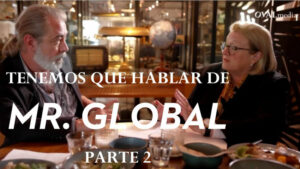
¿Quién o qué está detrás? Tenemos que hablar de MR. GLOBAL.
En una serie de conversaciones en cuatro partes, la experta en finanzas Catherine Austin Fitts (de Solari Report)se reúne con el satírico político C.J. Hopkins. Discuten las formas cada vez más totalitarias de nuestro patologizado y globalizado mundo (que cada vez se parece más al «Mundo feliz» de Huxley).
La Organización Mundial de la Salud dice ahora que Europa se encuentra en el epicentro de la pandemia. Por la presente declaro el estado de emergencia oficial. Prohibiremos la entrada a Canadá a todas las personas que no sean canadienses o que no residan aquí de forma permanente. Estamos en guerra. Estamos en guerra. A partir de esta noche, solo podrá salir de su casa por motivos especiales. La vida y la libertad, tal como las conocemos, han cambiado. Y el temor es que los mercados entren en caída libre, aquí en EE. UU., como ya lo han hecho en otras partes del mundo. Esto no es una crisis financiera. Es solo una crisis temporal que superaremos juntos como nación y como mundo.
¿No es precioso? Tienes que admitir que la pandemia ha sido un éxito rotundo. Sí, correcto. Al menos hasta ahora. Sí. ¿Qué día es hoy? ¿El 5 de agosto? Sí, 5 de agosto. De 2021. 2021. Y llevamos, ¿qué?, 17, 18, 19 meses en la nueva normalidad. ¿Soldados patrullan las calles de Sídney para controlar el estricto cumplimiento de las medidas contra el coronavirus? Eso es imposible. Quiero decir, Australia es el país afortunado. Eso no puede pasar. Se está introduciendo un sistema global de separación en Francia, en Italia y, hasta cierto punto, en Alemania. Pues yo creo que es más que un sistema de separación, es un sistema de control. La separación consiste solo en empujar a todos hacia dentro. Todos los que se resisten simplemente son arrinconados.
Se les amenaza con el aislamiento. De lo contrario, solo pueden irse con Dios o morirse de hambre. Así que, si no... Es evidente. Hemos oído al gobernador de Nueva York decir que hay que vacunarse o se te excluirá de la sociedad. Bueno, si es él quien manda aquí, con gusto me dejo excluir. Vale. Intento entender qué está pasando realmente aquí. Creo que en Francia no solo se mete en la cárcel a los no vacunados, sino también a quienes atienden a no vacunados. ¿Qué más está pasando? Bueno, lo que se está viviendo ahora es la centralización definitiva del poder. Ahora tenemos un poder mundial que puede dirigir a 190 naciones de tal modo que estas ya no tienen ninguna soberanía.
Es decir, el individuo ya no tiene aquí ninguna soberanía, ni tampoco las naciones por separado. Y esto es sencillamente la proyección mundial del poder a través de, bueno, da igual cómo se llame, crimen organizado o sindicato. En todo caso, es el control central definitivo y la destrucción del Estado de derecho.
Lo llamamos Mr. Global, yo lo llamo Globo Cup. Son términos que se nos ocurrieron para intentar describir dónde reside realmente el poder. Yo empecé a usar Mr. Global como término porque está claro que tenemos un sistema de gobierno secreto. Quiero decir, simplemente ideé un nombre para un sistema de gobierno secreto cuyo funcionamiento nadie conoce. Una estructura de gobierno secreta, eso es lo que es. Y es la misma razón por la que desarrollé el término Globo Cup. La mayoría de la gente sigue teniendo la sensación de vivir en un mundo de naciones soberanas que de algún modo compiten entre sí y en el que el poder está repartido. Pero no es así en absoluto.
Ese es el mundo en el que crecimos. Es el mundo que nos vendieron, que nos proyectaron. Pero no es el mundo en el que vivimos actualmente. Vivimos en un mundo donde el poder está en otro lugar completamente distinto. No es solo que no sepamos quién tiene el poder, sino que intentamos expresar qué es ese algo, qué es esa estructura de gobierno. Y creo que la gente está empezando a darse cuenta. También existe la fantasía de que el presidente de un país dirige el país. Pero eso es una simplificación.
Aunque hay pruebas de que el presidente no dirige absolutamente nada en EE. UU. Eso no podría ser más evidente. Es simplemente una idea simplista y tranquilizadora. Está claro que aquí ha tenido lugar durante décadas un golpe financiero. Un golpe de Estado financiero, es decir, un cambio fundamental en la administración del sistema de gobierno. Es decir, ahora tenemos una sustitución radical del sistema de gestión. Sí, creo que eso es exactamente lo que está pasando aquí. Y es un paso radical más en la dirección de trasladar el poder a esa estructura en la sombra. Impuestos mucho más centralizados. Exacto, centralizados. Y este sistema de gobierno global, que no podemos entender del todo porque no hay transparencia.
Ahora hay cambios operativos y financieros que han conducido a esto. Y eso ocurrió en los últimos 30 años. Se aplicó de forma continua y estaba muy claro adónde llevaba. Pero lo notable era que gran parte se desarrollaba de forma invisible en la vida cotidiana. Pero ahora la trampa se cierra.
Y la gente no sabe en absoluto que está cayendo en la trampa. Sí, y por eso quería hablar con usted sobre cómo... Por supuesto, venimos de contextos distintos, literalmente, de lugares diferentes. Pero lo que usted ha descrito es exactamente el mismo drama que yo llevo años describiendo. Ha mencionado los últimos 30 años. Yo lo he seguido en mi trabajo. Y es este nuevo mundo el que he visto surgir. Surge cuando la Unión Soviética colapsó y ese conflicto ideológico se disolvió. Con ello nos convertimos en una estructura capitalista global. Y lo que hemos observado es una evolución completamente lógica. Sí, es la centralización del poder político y económico. Y eso ocurrió de forma continua.
George W. Bush lo llamó «tighter hands», es decir, sujetar las riendas con más fuerza y no soltarlas más, y ponerlas en las manos más adecuadas. Bueno, retrocedamos en la historia. Vemos que el gobierno hace algo y entonces se da cuenta de que se ha salido con la suya. Y entonces se vuelven cada vez más descarados. Y aquí vemos que todos en la estructura de gobierno se vuelven cada vez más descarados. Piensan que se saldrán con la suya. Creo que lo que está pasando ahora es precisamente la prueba de ello. Exacto. Es evidente que Mr. Global se ha hecho aquí con el poder y siente que puede hacerlo. Podemos hacer la transición de este mundo existente y de la simulación de una democracia. Ahora podemos pasar a ser abiertamente totalitarios y establecer las estructuras correspondientes con las vacunas y todas estas cosas.
Simplemente podemos imponerlo. Y B, no solo sienten que pueden hacerlo. Es interesante observar que sienten que tienen que hacerlo. Más aún. Tienen una visión del futuro y piensan que es inevitable. Por ejemplo, estuve en el Instituto Aspen dando una conferencia y en uno de los paneles había un multimillonario; hablamos después y dijo que se puede sustituir a cualquier persona por software e IA. Y tenía esa expresión en la cara de: «Oye, yo he estado en el espacio y sé cómo funciona esto». Y es como si hubiera renunciado hace mucho tiempo en lo relativo al futuro. Tenía esa imagen ante los ojos y para él era inconcebible que esa imagen no llegara a cumplirse.
Es decir, aquí hay en juego un compromiso emocional y energético que resulta perturbador. Sí, el hecho de que esté ocurriendo ahora me hace preguntarme: ¿por qué necesidad? ¿Por qué ahora? ¿Por qué es ahora el momento en que Mr. Global hace esta transición hacia un sistema abiertamente totalitario? El poder ya no está oculto. El mensaje es clarísimo: sí, tenemos que volvernos totalitarios. Creo que no sabemos por qué. Pero el sistema monetario genera presión. Necesitamos una nueva estructura. Lo que también estamos viviendo es lo siguiente. El sistema del dólar estadounidense era una asociación entre la infraestructura fiscal y el electorado. Es decir, los votantes votaban y el presupuesto respondía.
Y ahora, sin embargo, tenemos un desacoplamiento de este balance o de este equilibrio. Ahora han asumido el control los bancos centrales, no solo en EE. UU., sino en todas partes. Aquí se ha producido un desacoplamiento entre la infraestructura y el electorado. Es decir, la infraestructura está ahora sometida al control global. El dólar abandona EE. UU. y también el ejército. Ahora vemos que el mando del ejército se traslada, también el funcionamiento del servicio público y luego el poder fiscal y presupuestario. Todo ello se desvincula, se desacopla. Usted lleva años trabajando en esto. Exacto. Y lo que vemos ahora es un salto cuántico. Pero como resultado de un proceso que lleva ya tiempo en marcha. Ahora no quisiera entrar más en ello.
Solo intento entenderlo. Por supuesto, yo no sé tanto como usted sobre todos los detalles. Pero, por decirlo de forma sencilla, se trata de la transferencia del poder, que en realidad debería pertenecernos a nosotros, a esta red de entidades supranacionales que no se pueden controlar. Lo que es tan notable en tu trabajo, y por eso me encanta tanto, es esto: usted viene de donde viene y yo vengo de donde vengo; yo sigo transacciones y dinero. Simplemente miro de dónde viene el dinero. Y usted viene del sector cultural. Usted sigue la cultura como hilo conductor. Y nos encontramos en algún punto intermedio. Son como dos caras de una misma moneda. Es realmente asombroso. Ahora estamos aquí sentados y somos, en el fondo, un ejemplo de algo positivo, bueno, que está sucediendo ahora mismo.
Porque, mientras pasan todas estas cosas terribles, se están creando nuevas conexiones. Si uno se pone a mirar, nos preguntamos cómo hemos llegado a este punto en los últimos 30 años. Pero ¿cómo hemos llegado los dos hasta aquí? Yo vengo del centro cultural de Nueva York, del Downtown, y hacía espectáculos y obras de teatro disparatados. Y lo hice en Edimburgo. Salí de gira por el mundo, por los teatros. Sí, ahora te has hecho muy famoso de verdad. Sí, pero eso llegó mucho después. Siempre es como con dos personas a la vez. Y de ahí vengo yo. Y bueno, luego hice mis sátiras políticas. Fui involucrando cada vez a más gente. Es decir, venimos de entornos completamente distintos.
Usted es más bien conservador. Yo soy más bien liberal. Sea lo que sea que eso signifique ahora. Y ahora estamos aquí sentados juntos intentando expresar o comprender lo que ha pasado aquí. Me atacan mucho mis colegas de izquierda. Que también es un término del que ya no creo realmente saber qué significa. Por juntarme con las personas correctas o incorrectas. Me atacan por eso, y por hablar de estas cosas que, debo decir, me asustan muchísimo. Una parte de esto, que resulta muy emocionante, es que veo que cada vez más personas dejan caer esta visión del mundo... excesivamente simplificada... sí, y empiezan a conectarse simplemente como seres humanos y ya no como ovejas. Una vez un periodista me dijo en Suiza: de repente salen amigos de sus madrigueras por todas partes.
Exactamente eso es. Sí, exacto. Cuando miro a mi público, es justamente una mezcla de personas de todos los niveles sociales y opiniones políticas, que se reúnen e intentan entender qué está pasando aquí y qué podemos hacer. Sí, es un campo nuevo y enorme. Sí, a lo que quiero llegar es: ¿qué es en realidad lo que nos ha llevado hasta este punto? ¿Qué le ha llevado a usted en su recorrido, que termina ahora aquí? ¿Qué fue eso...? Sí, ¿cómo hemos llegado hasta aquí? ¿Qué le llevó a tomar las decisiones que tomó? Sí, ¿qué nos ha traído hasta aquí? Los dos dijimos que no. Yo dije: no, no tengo que participar. Tengo una elección. Puedo elegir la libertad.
Puedo elegir la abundancia. Eso lo hacemos los dos. Y se trata del poder del ser humano, del espíritu humano. Y eso también se hace en el teatro. Se crean mundos de la nada. Abundancia. Yo intento financiarlo. O sea, usted se dedica al negocio de la creación de mundos. Y eso es abundancia. Entonces, ¿cuándo fue la primera vez que sintió que algo no iba bien, que tuvo una corazonada? Del tipo: no, yo no participo. Si soy sincera, en 1961, cuando vi la guerra en televisión. Vi el asesinato de Kennedy. Vi el asesinato de Luther King. Cuando fui lo bastante mayor, simplemente tuve un conflicto con la autoridad, con el poder. Y con ese mito.
Siempre pensé, ya entonces, que la historia que nos cuentan es eso, una historia. Y que quienes nos representan esa historia lo hacen según sus propias reglas, y que yo les importo un bledo. Alguien me preguntó hace poco: ¿cuándo te volviste escéptica? Y respondí que no recuerdo haber dejado nunca de serlo. Usted habla aquí de riqueza, de prosperidad y de abundancia. Yo simplemente intento crear más poder en las personas. Eso es lo importante. Y el precio que se paga por librar esta batalla es, no puedo expresarlo con palabras.
Pero eso nace de una comprensión. Brota del alma. Es decir, de quién es uno mismo, de quién es la propia alma. Y si el alma es inmortal, ¿cuál es el valor actual de venderse en comparación con la infinitud? Que simplemente es una coacción, no importa lo que se ofrezca en el mundo físico, no vale la pena. Porque la infinitud tiene un flujo de caja mucho más largo, por usar la terminología del interés compuesto. Sí, respecto a la pregunta de qué nos ha traído a este punto: yo me enfrenté al establishment. Quizá pueda explicar un poco la historia. Yo tuve mucho éxito en Wall Street y entonces me nombraron subsecretaria del Departamento de Vivienda.
Y entonces me pregunté: bueno, ¿cómo funciona esto del dinero? Fue curioso. De niña teníamos muchísimos carteles en nuestro entorno. Cuatro casas estaban bajo orden de desalojo. Y ponía, de forma totalmente oficial, por orden del subsecretario de Vivienda. Y yo pensaba: ¿quién es ese tonto? Vaya tonto, que de repente esas cuatro casas tengan que estar vacías durante años. O sea, frente a nosotros vivía toda una familia en un piso de una sola habitación. Y recuerdo cuando presté juramento. Y entonces se dijo: sí, ahora usted es, o ella es, subsecretaria. Y entonces bajé las escaleras y dije: vaya, maldita sea, ahora la tonta soy yo, pero no voy a permitir que estos desalojos continúen.
Y después de dejar el gobierno de Bush, dije: vaya, los malos van a meter sus manos en la tecnología, o van a hacerse con la tecnología. ¿Qué tecnología? Pues las telecomunicaciones y demás. Y mi teoría entonces era que había que demostrar cuánto más puede aportar un poder económico descentralizado. Es decir, que aporta mucho más que un modelo centralizado. Por eso fundé mi banco de inversión con mi propio dinero, y queríamos mostrar cómo funciona el dinero. Queríamos reorganizar el sistema financiero, es decir, ver cómo se puede reorganizar para que coincida con la realidad de la vida. Por ejemplo, cuando uno llega a una sociedad, tiene un sistema financiero y también un sistema vivo.
Plantas, personas, animales, es decir, inteligencia viva, y activos financieros e inteligencia. Y normalmente estos tienen una relación marcada por ganadores y perdedores. Uno de los conceptos que creé durante el gobierno de Bush fue, por ejemplo, un indicador para medir el valor de la vida, el llamado índice de la piruleta. El índice de la piruleta describe cuánta gente da por hecho que un niño puede comprarse una piruleta al otro lado de la calle y volver a casa sano y salvo. Cuando yo era niña, este índice de la piruleta, este índice del polo, era del 100 por ciento. Y el Dow Jones estaba en 150. El Dow Jones se ha multiplicado por mil desde entonces y el índice de la piruleta ha bajado. Esa es una relación marcada por ganadores y perdedores.
Es decir, los banqueros hipotecarios, etc., acudieron todos al gobierno a hacer lobby cuando yo era subsecretaria y dijeron: tienen que hacer esto para que suban nuestras acciones. Pero nunca hicieron lobby por el índice de la piruleta, por el índice del polo. Si financiamos todos los pequeños negocios de una sociedad, el índice de la piruleta sube y también las acciones. Es decir, esto se convierte en una relación win-win cuando se descentraliza todo, esta financiación de capital. Y lo que pasó, y fue uno de los momentos más importantes de mi vida. Este genio absoluto trabajaba para mí. Lo contraté recién salido de la universidad, el MIT. Y sus amigos fueron asesinados en la plaza de Tiananmén.
Él estaba enfermo en aquel momento, por eso no estuvo presente. Estudió en el MIT y se doctoró allí. Y creamos una base de datos sobre cómo se utilizaba el dinero federal, es decir, el dinero del gobierno, cómo trabajaba. Y era toda una base de datos sobre la infraestructura. Y entonces dijimos: bien, ¿cómo podemos optimizar los flujos de dinero para que no hagamos simplemente nepotismo, es decir, cabildeo, sino que el conjunto realmente aporte algo a la sociedad? ¿Cómo funcionaría? ¿Cómo sería rentable? Y entonces él me presentó el cálculo. Yo le dije: «Hombre, tienes que haberte equivocado en las cuentas. Es sencillamente exorbitante». ¿Qué cifra era? Bueno, yo lo expresaría así.
Es decir, la riqueza existente podría multiplicarse por cien si pudiéramos optimizar el conjunto. En el sentido de un escenario win-win. Sí, exacto. Le dije una y otra vez: «Tienes que haberte equivocado». Y él me dijo: «No, compruébalo tú mismo». Lo recalculé y dije: «Vale, este es el precio de la opresión, de la tiranía. El control centralizado». Si la vida y la inteligencia pudieran alinearse realmente con el dinero, sería una ganancia enorme para todos nosotros. Y ahí realmente empecé a reírme. Me quedó claro que, pase lo que pase en este planeta, no se debe a la escasez. Eso fue incluso antes de que empezara a entender las nuevas tecnologías.
En el verano del año 2000, un trabajador del ámbito de la salud me pidió que diera un discurso en un evento sobre High Spiritual Frontiers. Era una conferencia internacional. Publiqué materiales que más tarde se hicieron relativamente famosos: «Drogas y dólares para principiantes: cómo funciona el dinero». Trataba de la intersección entre Wall Street y el crimen organizado. Los flujos de dinero. Dije: «Bien, imaginemos que hay un gran botón rojo y que, al pulsarlo, se puede acabar con el dinero de las drogas duras, con el tráfico, en el propio pueblo, en la ciudad, en el condado, etc.». Son billones de dólares, es decir, entre 500 mil millones y un billón, mil billones de dólares.
Adivina cuántos lo pulsaron. ¿De 100? No, uno. Uno. O sea, si yo lo hubiera pulsado, habrían sido dos. Y entonces pregunté: «¿Por qué no pulsaron el botón, los 99 que faltan?». Y dijeron: «No, no queremos que bajen nuestras pensiones. No queremos que dejen de pagarse los cheques del gobierno, que los vecinos no reciban dinero del gobierno, y no queremos una subida de impuestos». Y lo que me quedó claro no era que no fueran a pulsar el botón rojo, sino que ni siquiera estaban dispuestos a conversar honestamente sobre cómo podemos convertir el botón rojo en un botón verde para que el dinero funcione de otra manera.
Porque si el dinero y la vida trabajan en la misma dirección, la riqueza se multiplicaría por cien. Entonces se puede pulsar el botón rojo, pero hay que asegurarse de que el conjunto funcione unido. Es como un concierto. Hay que cambiar las notas juntos. No se puede hacer en solitario. Y creo que hay que preguntarse, simplemente: ¿cómo se convierte el botón rojo en verde? Y eso es justo lo que tiene que ocurrir antes de que cambie cualquier cosa fundamental. Las personas tienen que reunirse y entender cómo pueden convertir ese botón rojo en verde. Pero volviendo a su historia, usted pulsó el botón rojo y lo sigue haciendo una y otra vez. A eso me refiero: usted pisa los callos a la gente.
En realidad, usted siempre ha pulsado todos los botones rojos que ha encontrado. Bueno, cuando trabajaba en el gobierno, pensaba que el establishment me respaldaba. Ellos querían que se examinaran los modelos. Y yo pensaba: «Ahora voy totalmente por buen camino». Y si Nick Brady y los chicos de entonces me hubieran dicho: «No, oye, baja un poco el ritmo», etc., yo era el tipo, la típica asesora. Me habría atenido totalmente a ello. Pero es muy curioso: cuando hicieron lo que hicieron, infringieron muchas leyes. Intentaron tendernos una trampa. Falsificaron pruebas, etc. Entonces dije: «Hombre, el plan apesta. No va a funcionar. No quiero formar parte de esto».
Es que la psicopatía simplemente no puede gobernar un planeta. No. Y si se dice que la persiguieron a usted y a Hamilton... Sí, no fue solo la persecución contra mí y contra Hamilton. Quiero decir, eso es simplemente una lucha. Es que además irrumpieron en zonas pobres y metieron allí a la gente entre rejas. Y eso era, en realidad, trabajo esclavo. Se trataba simplemente de introducir las drogas en esos barrios, esos barrios desfavorecidos. Y eso es simplemente genocidio. Y creo que, si el genocidio y el trabajo esclavo en Estados Unidos son el pan de cada día, es solo cuestión de tiempo que vengan a por todos nosotros. Hay una línea roja que no se debe cruzar.
Y para mí eso es genocidio. O sea, a mí no me da ningún placer que exista el genocidio, etc., sino generar riqueza. Suena realmente como si usted hubiera pulsado unos cuantos botones rojos cuando todavía estaba dentro, por así decirlo. Sí, y si uno mira lo que hacían mis antiguos socios de Wall Street, los que me echaron, pienso que fue una infracción de nuestras leyes oficiales y no oficiales. Y creo que están cometiendo un error terrible. No quise ser parte de eso. Suponía que había algo mejor. Y desde dentro del sistema no pude encontrar un camino mejor. Por eso tuve que salir. Tuve que adentrarme en lo que llaman la naturaleza salvaje para encontrar un camino mejor.
No quiero sacar dinero de la esclavización de otras personas. Y eso lo viví. O sea, vi cómo se construía una máquina de esclavos. Y mi pregunta es la siguiente: no hay por qué hacerlo. Yo personalmente no tengo que participar. Y si construyo una máquina de esclavos, tarde o temprano también me absorberá a mí.
Y ese es el mensaje que difundo. Así que dejen todos de colaborar con esta máquina de esclavos. Tarde o temprano todos ustedes se convertirán en esclavos. Y sobre todo, ya no confiaba en el sistema. Siempre me preguntaba cómo podía traer hijos al mundo si no sabía cómo protegerlos, protegerlos físicamente. Y entonces me quedó claro que, si yo misma no me atrevo a traer hijos al mundo, tengo que asegurarme de que otras personas al menos tengan la oportunidad de criar a sus hijos en un mundo en el que el Popsicle Index sea alto. Me siento muy a gusto con los niños. No tengo problema en mirarlos a los ojos, pero no habría podido mantenerlo si hubiera actuado de otra manera.
Hay gente que me escribe y me dice: «Eres tan valiente y el trabajo es tan bueno», y claro que me alegro. Pero siempre digo que tengo que hacerlo. Quiero poder mirarme al espejo. Sí, es una cuestión de integridad. En el fondo es muy egoísta. Sí, muy egoísta. Para poder mirarme a los ojos en el espejo y poder dormir tranquila. No se puede actuar de forma más egoísta. Sí, egoísta. Y también dicen de mí que soy megalómana, que creo que puedo reequilibrar las relaciones de poder. Pero pienso: vale, sí, si yo no lo hago, ¿quién lo hará? Una pregunta totalmente sincera: ¿cuántos de sus antiguos compañeros de Wall Street se han preocupado siquiera por el Lollipop Index?
Muchos de ellos sí se lo han planteado, pero sentían que tenían las manos atadas. Tenían miedo. Porque era peligroso atreverse demasiado. Lo que me pasó a mí fue lo siguiente: me echaron. En realidad yo no quería irme, pero me echaron. Pero pensé: bien, miremos a la gente que construyó catedrales. Empezaron un plan sabiendo que duraría más que su propia vida. Y cuando empecé este camino con el Lollipop Index, supe que probablemente tardaría más que mi vida en lograr algo. Pero otros continuarían. Sí, pero aunque usted tenga aquí la capacidad de hacerlo, de desarrollar este plan, sigue habiendo una elección.
¿Es eso lo que quiero hacer? ¿O simplemente quiero llenarme los bolsillos y ocuparme solo de mí mismo? No, creo que ese no es un mundo que me parezca interesante. Digámoslo así. Sí, eso es lo que le distingue. Bueno, yo no quisiera vivir en un mundo así. No sé tratar con ese tipo de gente. Lo que quiero decir es que nosotros dos partimos de puntos de partida completamente opuestos, con recorridos distintos y a través de conceptos distintos. Los dos decimos o así o de ninguna manera. Para resumir, quizá pueda decir algo más sobre el futuro. De lo que también quiero hablar es de que quiero entender, estamos hablando de Mr. Global. Yo lo llamo Global Cup.
Un tema que quiero tratar, que ya hemos mencionado hoy, es que quiero exponerlo de forma sencilla, de modo que personas como yo, que no pueden seguir realmente a personas como usted, puedan entenderlo. Quiero exponerlo de manera sencilla y explicar cómo funciona esta máquina, y quiero hablar de esta transferencia de dinero y poder desde las estructuras consolidadas, que en realidad deberían estar a nuestro servicio, esta transferencia del poder y del dinero a Mr. Global. ¿Cómo funciona? Es decir, quiero hablar del dinero de una persona o de una familia y de cómo entra después en la máquina que lo convierte todo en poder, de modo que Mr. Global pueda controlarnos con nuestro propio dinero.
Exacto, eso es justo lo que quiero saber. ¿Por qué tenemos que interesarnos por las finanzas quienes en realidad no nos interesamos por ellas, y qué pasos podemos dar? Sí, ¿cómo nos atrapan en la trampa? ¿Cómo salimos de ella? Y también la oportunidad, Mr. Global nos lleva a algún sitio y me gustaría volver a… Creo que habría que enseñar a todos, o enseñarles a todos, cómo cada uno de nosotros puede echar la mayor cantidad posible de arena en los engranajes de todo el proceso. Exacto, exacto. Eso es lo que quiero examinar primero y ver adónde lleva. Quiero observarlo con detenimiento. ¿Adónde va esto? Exacto, porque la mayoría ni siquiera se hace una idea de lo sombrío que es en realidad.
El Gobierno australiano ha decretado un nuevo confinamiento que se aplica solo a los no vacunados. Lo peor aún está por venir. Los costes de la energía han aumentado. Todo va en la dirección equivocada.
En solo dos años se ha duplicado el número de personas que no tienen suficiente para comer. La posibilidad de una guerra nuclear se ha acercado. Subtitulación de la ZDF, 2020
The World Health Organization says Europe is now the epicenter of the global coronavirus pandemic. I am officially declaring a national emergency. We will be denying entry to Canada to people who are not Canadian citizens or permanent residents. Nous sommes en guerre. We're at war. In a true sense, we're at war. From tonight, you can only leave your home for very specific reasons. Life and frankly freedom as we know it are both going to change. And the expectation and fear is that we will see markets in free fall this morning here in the U.S. as they have done in the global markets already today. This is not a financial crisis. This is just a temporary moment that we will overcome together as a nation and as a world.
Isn't that beautiful? You have to admit the pandemic's been wildly successful. Yeah. Yep. So far. Yep. What is it? It's August 5th. It's August 5th. 2021. 2021. And we are, what, 17, 18 months into the new normal? Soldiers are patrolling the streets of Sydney to enforce, you know, strict compliance with corona measures. Which is impossible. This is, Australia is the lucky country. That can't happen. You know, a global segregation system is being rolled out in which countries? In France? In Italy? You know, it's happening to some degree in Germany. It's coming. Well, and I think it's more than a segregation, it's a control system, and the segregation is designed to herd everyone into it. So anybody resisting the control system is being herded and you're being threatened with isolation and essentially now bankruptcy and starvation if you don't agree to be herded into the control system.
Well, and blatantly, and blatantly so, you know, who was the governor of New York, Cuomo just came out and said, you know, you've got to get vaccinated or you're going to be shut out of society. You know, well, if he's leading it, I'm happy to get shut out. But really, I mean, I try to get my mind around that this is actually happening in France. They're not only going to put the unvaccinated in prison if they try to go into a restaurant, but they're also going to put the restaurateurs and business owners in prison if they serve the unvaccinated. You know, so this is being rolled out across the world. What else is happening? Well, what you're watching is the ultimate centralization of power because you now have global power that can project and force 190 plus nations to behave in a way which strips them completely of sovereignty.
So it strips the nations of sovereignty, but it strips the individuals within the nation of sovereignty. And it's literally the global projection of power by, you know, call it what you want, an organized crime syndicate or tyranny or whatever. But it's the ultimate central control and the destruction of the rule of law.
Well, you've been calling it Mr. Global. Right. I've been calling it GloboCap, and, you know, these are both, you know, just terms that we've come up with to try to describe, you know, where power is actually located. So the reason I started using the expression Mr. Global is it's clear we have a secret governance system, which is ridiculous. Think about it. Think about living on a planet and you're not allowed to know, you know, how the governance structure works. So I just created a name for it because it's a complex phenomena, but I needed a simple term to describe a secret governance structure. And that's all it is. And it's kind of the same. It's a little different, but the same reason that I came up with my term, you know, GloboCap that I'm talking about.
Most people, the majority of people still kind of feel like we're living in a world, you know, of sovereign nations competing with sovereign nations. Right. You know, and that that is the structure of power. And naturally, it's not because they're stupid. You know, that's the world that you and I grew up in. Right. That's the world that was sold to us. That's the world that is projected to us. But it's not actually the world we're living in. The world we're living in is where power is located is what you just described. It's not only that we don't know, you know, who they are, you know, just trying to articulate what it is. Right. What this governance structure is, you know, I think people are just beginning to do that.
Well, there's a fantasy, for example, that the president of a country runs the country. Right. And that's very simplifying and it's very comforting because you know who who's running it. And it, despite every piece of evidence to suggest that that person is a marketing front and is clearly, I mean, it's clear that the current president of the United States is not running anything. It couldn't be clearer. Right. But, but it's a, you know, it's sort of the face of Oz. Yeah. It's a comforting, simplifying expression, but it is very clear, and this is the result of decades of financial coup. It's very clear that we are experiencing a global coup d'état. Yeah. This is a fundamental change in how the governance system will manage.
So the governance layer is there, but now they're changing the management system in a very radical way. Right. I think that's exactly, you know, what is happening. This is another radical step in transferring power out of, you know, at least nominally democratic institutions into this, you know. Much more centralized control. Exactly. And, and into this governance, this global governance system that, you know, we can't really understand completely because it's not transparent. So the, the changes operationally and financially and legally that needed to occur for this to happen have been rolled out over the last three decades. Yeah. And it's been happening steadily. It's been clear this is where it's leading.
We see many people who've warned and written about this is where it's leading, but what was remarkable about it, a lot of it was very invisible in the day-to-day life, and it's only now that they're throwing the trap. And if you look at the real trap they're going to throw, they haven't begun to show their hands of the trap that they're, they're about, they're working into. So, yeah, yeah, yeah, exactly. And this is part of why I wanted to come in and, and, and talk to you because, you know, we, we come from different places and looking, you know, really different places and, and looking at different perspectives. But what you just described is the same drum that I've been beating for years and years and years, you know, you, you talked about the last three decades, you know, and what I've been tracking, you know, in my work is this new world that we're in.
And, and, and it really is about 30 years old, you know, when the, when the Soviet Union collapsed and that last really, you know, a real ideological conflict disappeared, we, we became this, you know, global capitalist, Mr. Globo, you know, Mr. Global world. And what we've been watching for the last 30 years is actually a, a, a completely logical development. It's, it's, it's, it's the centralization of political and economic power. And it's been, it's been going on steadily. It's what George H.W. Bush used to call tighter and righter hands. We're pulling control into tighter and righter hands. Yeah, absolutely. Absolutely. And, you know, I have to say one thing. If you go back and you study the history of financial fraud and assassination in the United States, what you'll hear is they do.
If you do something, they get away with it and they're like, wow, we got away with it. And, and, but it emboldens them, you know, and, and what we're watching is the emboldening of that, of that governance structure as to what they can get away with. I think what is happening right now is, you know, is just really testament to that. Obviously, you know, GloboCap, Mr. Globo, the powers that be, you know, however you want to describe them. They feel that, you know, A, we can do this. We can, we can transition from, you know, this old, you know, simulation of, you know, democracy and everybody's free and that. We can now transition to a more openly totalitarian structure where we order you to, you know, inject yourself with, you know, vaccines and, and do all of these things.
And B, and B, and the thing that, not only do they feel that they can do this now, it's interesting to me that they feel that they need to do this now. Well, it's more than that. They believe that this is inevitable. In other words, they have a vision of the future, which they consider inevitable. And it was funny, I was at the Aspen Institute at a conference and some billionaire shows up for the, one of the panels and he stays afterwards to talk with me. And he's talking about how they can replace every human being in the labor force with software and AI and run everything with AI and robots. They don't need people. And he had this look in his eyes like, honey, I've been up in the spaceship and I'm telling you, this is how it's going to go.
You know, and it was almost like long ago he'd given up. He'd given up hope for a human future. But he had this complete picture and, and he was literally, it was inconceivable to him that this picture wouldn't happen. So there, there's an emotional and, and, and energetic commitment there, which is frightening. Yeah. Right. The, the fact that, that it is happening now, it, it just makes me ask, okay, what is the need? You know, why now? Why is, why is this the time for, you know, Mr. Global to make the transition to a more openly totalitarian structure? Because they're, you know, it's, it's, it's, it's not being hidden. They're clearly broadcasting the message, yes, we're going more totalitarian. So we don't, I don't think we know why, but clearly the currency system is creating a need for a new structure.
And, and one of the things we're seeing is the U.S. dollar system, which was really a partnership of the fiscal infrastructure with the electorate, basically voting and representatives who determined where the tax money went and the private banking owners with monetary policies through the central banks. That balance of power is over and the central bank is taking over the treasury and the fiscal function, not just in the United States, but everywhere. But when they do that, they are de-linking the entire infrastructure from the electorate and shifting it into global, global control. Yeah. So, so the, the dollar system is leaving the U.S. and with it, the military. So if you look incrementally, they're shifting the control of the military, they're shifting control of the civil service operations, and they're shifting control of the treasury and fiscal power.
And they're literally, it's like a surgery, it's almost like neurosurgery. They're just de-linking it step by step, and they've been working on it for years. Right. Right. And what we're seeing is, you know, is a quantum leap right now. But this is a process that has been ongoing, and I want to talk much more about this and try to get it, you know, to a level where I can get my head around it, because I'm nowhere near as knowledgeable as you are about all the details of this. But it can be pretty simple. What it's talking about is transferring the power that was supposed to be ours, you know, into this network of unaccountable, you know, supranational entities that we can't look at or monitor or check at all. One of the things that's so remarkable about your work and why I love your work so much is if you look at how you came to this and you look at how I'm just following transactions and money.
I'm just following money, money, money, money, money, money. And you're doing culture, culture, culture, and yet we're coming to the same place. It's like a coin, two sides of a coin. Well, it's pretty amazing, and I think that you and I, I mean, just sitting here talking are an example of something good and something positive that is happening, you know, because I think that while all of this horrific stuff is happening, there are new connections that are, you know, that are being established. I mean, if you look at us, I mean, we're talking right now about, you know, how did we get here? How did the world get here over the last 30 years, you know, but how did, how did you and I get here? You know, I come from, you know, the downtown experimental theater world is where I got started. You know, 15 years in New York City, producing, you know, weird plays in converted garages, you know, and then got lucky with one of them, you know, and broke through in Edinburgh and then toured and, you know, this, whatever fame I have, that's, that's it. Now your essays make you very famous.
And that's later, but, you know, you're talking about, you know, the theater, it's like 200 people at a time, you know, is this is, and that's, and, and that's where, where I was coming from, you know, and then, yeah, I started writing my political satire and, you know, I wrote my novel and sure people, you know, some more people are, are reading, but the point is we, we just, we come from completely different worlds. Right. You know, and you come from the conservative side. I used to be a liberal, whatever the hell that even means anymore. And here we are, you know, sitting together trying to, you know, articulate what this is. And, and to me, that's hopeful. You know, we get, I get attacked a lot, you know, by my leftist colleagues and what have you.
I don't know what these terms even mean anymore, but I, I get attacked a lot and accused of, you know, aligning with the right. Part of what's exciting to me is, is, is, you know, because we're talking about a lot of stuff that's just really scary to me and, and really dark. Right. But part of what's exciting to me is that I am seeing people, more and more people dropping, you know, these, these. Oversimplified. Exactly. And, and reaching across lines. Right. And starting to unite as, as just human beings. One journalist said to me. Who don't want to live like slaves, you know. Right. One journalist said to me, in Switzerland at Christmas time, he said, friends are turning up everywhere. That's it. You know, if I look at my audience, um, you know, it is really this mixture, you know, of, of, of people from all different backgrounds, different, you know, political orientations, all united together, sitting down, trying to figure out what is going on.
It's a new field. And what can we do about it? It's a new powerful field. Yeah, yeah. Yeah. And what I'm getting at is, you know, what it is that brought us here. You know, what it is that took you on your journey. What brought us here is. That thing, that thing in you that made you make the decisions that you've made. That's what brought us here. I'll scribble it.
What we both said is, no, I don't have to go along with this. That's right. I don't have to go along. I don't have to go along. I have an option to choose freedom. I have an option to choose liberty. I have an option to choose, because what we're both choosing is abundance. And you understand the power of the human mind and intelligence to create abundance. That's what the theater is. You're creating worlds out of nothing, right? Yeah. I'm trying to finance them, right? But that's, you're in the business of creating new worlds, right? Yeah. And that's abundant, because there's no shortage. You know, it's infinite. Okay, so when was the first time you felt it? Because you feel it in your gut. You feel it in your stomach.
No, I don't have to go along with this. I'll tell you the truth. I was born in 1961, so I was, you know, in school in the 70s. I grew up watching the Vietnam War on television, watching Watergate, watching the Kennedys be assassinated, watching Martin Luther King be assassinated. You know, by the time I came of age, I felt in conflict with power. Right. I felt like, okay, the myth, the story they're telling me is a story, you know? You know, and these people are, you know, operating, you know, according to rules of their own, and they don't really care about me and my friends and my family. Right. Somebody asked me this the other day, you know, when did you become skeptical? When did you start, it's like, I can't remember a time when I wasn't.
Wasn't. You talk about it in terms of, you know, creating abundance, creating wealth. You know, I think I'm trying to create more power, you know, in people, you know. You know, that's the stuff that's important, and the price that you pay for fighting that fight, you know, in that lifetime is, I can't quite put it into words. Right, but it comes from an understanding from a soul of who and what you are in terms of your immortal soul. I mean, the way I would say, this is back to investment banking, you know, if your soul is immortal, what is the present value of selling out for infinity? You know, it doesn't, it's not worth the trade. Whatever they offer you in the material world, it's not worth the trade, because infinity is a much longer cash flow, you know, to be, to put it into the expression of compound interest.
Do you know what, how did you get here? What brought you to this point, you know? Well, I got in a huge squabble with the establishment and got booted out. Yeah. Tell me, I know some of it, but, you know, tell me the story. So, I'd had a very successful career in Wall Street, then I went to, to be Assistant Secretary of Housing in the Bush Administration. Yeah. And one of the reasons I ended up there was I had watched HUD fraud destroy my neighborhood. Right. And then it set me on a journey of, well, how does the money work and why is this going on? And, you know, and it's funny because I remember as a little girl, I would walk by this big sign of four, there were four homes, catty cornered to our house that were foreclosed on.
And there was this big sign by order of the Assistant Secretary of Housing, Federal Housing Commissioner. It's one of the longest titles in the U.S. government. And I would think, who is that idiot? Who is that idiot that they would leave these four homes empty for years while there were, you know, we had a family living across from us that was a whole family in a one-bedroom apartment. I was like, this is crazy. And so when I'm sitting there with my hand in the Bible and the secretary says, by order of the president, I now declare you're the Assistant Secretary of Housing, I thought, oh, God, I'm the idiot. Now I'm the idiot. Now I'm the idiot. And I went downstairs and the first thing I did was I said, we are cleaning out the foreclosure pipeline.
This will not happen on my watch, of course. So, of course, that was very upsetting to the spooky guys, but that's another story. But anyway, so when I left the Bush Administration, I said, you know, the bad guys are going to get control of this technology. I understood how powerful the technology was. They're going to get control of the technology. What technology? Digital technology. Okay, yeah. Digital and telecommunications. They're going to get a hold of this technology. They're going to use decentralized power. We're going to face tyranny. I've got to do something. Right. And my theory at the time was if I could show them how to decentralize economic power in a way that would make, create much more wealth. Right.
That I might be able to encourage them to come more to a more decentralized model. So, I created an investment bank. I financed it with my own money. And the goal of the investment bank was to map out how money works and design a way of reorganizing the financial system in a way that aligned with life. So, let me give you an example. If you come into a community, you have a financial system going on, but then you have a living system. You know, plants, people, life. Dogs, cats. Cats. All life, all intelligence in that place. So, you have living intelligence and you have financial assets and intelligence. And they have a win-lose relationship. Okay. So, let me give you an example. One of the terms I created when I worked in the Bush administration to express the health of a living system within a place was the Popsicle Index.
Okay. The Popsicle Index is the percent of people who believe a child can leave their home, go to the nearest place to buy a Popsicle, and come home alone safely. Right. So, when I was a little girl, I could run up to Spruce Street, buy a Popsicle, play the pins, come back, totally safe, free to roam, okay? When I was a little girl, the Popsicle Index in West Philadelphia was 100%. The Dow Jones was 150, okay? The Dow Jones has increased by thousands of multiples, and the Popsicle Index has gone down. Exactly. Okay. That's a win-lose relationship. And one of the things I watched in Washington, the home builders, the realtors, the mortgage bankers would all come lobby me to do something that would make their Dow Jones Index go up.
But they would never lobby me to do something that would make the Popsicle Index go up. And, in fact, many of the things that would make their Dow Jones Index go up would hurt the Popsicle Index. And I kept trying to persuade them, and I thought, well, if we finance all the small business in a community with equity, then if you get the Popsicle Index to go up, the stocks will go up. They'll go up and down together. So we'll go from a win-lose relationship to a win-win by decentralizing, essentially, the private and public equity markets. Anyway. So what happened, and this is one of the most important things that happened to me in my life. I had this genius working for me who I had hired from, we had a program with MIT, and he had been in Tiananmen Square and had left.
He was sick the day that his friends got killed. He left and came to MIT, got his PhD. I hired him. And I asked him, we put together databases of how all the federal dollars worked. It's called Community Wizard. And we mapped out how all the money worked. And so I gave the whole database infrastructure to him, and I said, I want you to go figure out if we could re-optimize all the money so that instead of generating fees for our friends and giving us political control, we just made the economy as healthy as possible. What would it look like? I want you to simulate success. He came back, and the number was so big, I said, it has to be wrong. It has to be wrong. It can't be, you know, it's too big. I mean, he was saying- What number?
My way of saying it, existing wealth could be increased a hundredfold. That's what I thought you meant, yeah. Right. If we just ran the government money to optimize total living health and wealth. Exactly. In the win-win scenario. Right. In the win-win. So if we went from win-lose to win-win, the wealth was- I kept saying to him, it has to be wrong. And finally he said, look, you have to pay attention. I want you to take the weekend off and just do this. And I went through all those numbers and I said, oh my God, that's the price of oppression. That's the price of tyranny. Central control is so waste. If life and intelligence could align with money, you know, there's no- that's why I say there's no reason for poverty that I know of. Anyway, so that's when I started to laugh because I realized, you know, whatever was going on in this planet, it was not because there was scarcity.
And that's before I began to understand the new technology that was available. So in the summer of 2000, I was asked by a health care practitioner to give a speech at a conference called Spiritual Frontiers Foundation. Okay. International. And I had just been publishing a series of materials and this later became a very famous article called Narco-Dollars for Beginners. And it was meant to be a light and funny introduction to the intersection of Wall Street and organized crime in Washington. You know, how does dirty money flow in? So I said, okay, well, let's pretend there's a big red button up here on the lectern. And if you push that button, you can stop all hard narcotics trafficking in your city, your county, your town, your state, thus offending the people who control $500 billion to a trillion dollars and the accumulated capital thereon.
Who here will push the button? And out of 100 people dedicated to evolving our society spiritually, guess how many would push the button? Ten? One. One. One. So I wouldn't let him talk. If I had voted, it would be two. And I said to everyone, okay, why would you not push the button? And they said, we don't want our IRAs to go down, so our retirement accounts. We don't want our government checks to stop. We don't want our neighbor's government's checks to stop. And we don't want our taxes to go up. And what I discovered that day is the problem was not that they would not push the red button. The problem is that they would not have an honest conversation about how do we turn the red button green? How do we make money pushing the red button?
Right. Because, in fact, if realigning life and money on a positive note will increase wealth 100 times fold, you can push the red button. Right. But you have to figure out how to do it together. You know, it's like a symphony orchestra. You know, you have to change the score together. You can't do it separate. And they were not willing to go into the invention room and say, okay, how can we turn the red button green? They were frozen. They were afraid. And this is exactly what has to happen before anything major will change, is people getting together and conceiving the way to turn that red button green. Right. Green, you know. But getting back to your story. My story. Basically, you're a red button pusher.
I've been pushing the red button. You've been, this is what I meant by you're stepping on people's toes. You've been pushing that red button throughout your whole life. When I was doing Hamilton Securities Group, I thought I had full support of the establishment to do what I was doing. They wanted models tested. They wanted models prototyped. I thought I was totally on the page. And if Nick Brady and the boys had sent someone and said, look, you're off the line. Get back here. I would have done exactly what I was the, I was the, the typical good soldier. I was not looking. And what was funny is when they did what they did, and they broke many laws, they tried to frame us, they falsified evidence, they lied, blah, blah, blah, blah, blah. I finally got my back up.
I thought, your plan stinks. It won't work. I don't want to be part of it. But it's a, you know, it's a, you know, we, we, psych, psychopathy cannot lead a planet. No. And when, and when you say when they did what they did, you're talking about when they came after you and Hamilton, right? Right, but it wasn't, it wasn't that they came after me. Yeah. You know, that's just a fight. Okay. What they were doing was, they were dropping SWAT teams into poor neighborhoods, rounding up innocent people and stuffing them into prison to make the prison stocks go up. Yeah. It was slave labor. Yeah. It was absolutely slave labor. And it was part of bringing drugs in, in a way that was making the money, which is genocide. Right.
And what I said is, as Americans, if we allow slave labor camps and genocide, then it's simply a matter of time before they come for all of us. Right. So you can't, this is a line that can't be crossed. You can't do this. It's genocide. And, and, you know, I get a kick out of making money from building wealth. I don't get a kick out of making money from genociding people. Right. Or turning them into slaves. Yeah. By rounding these people up and putting them in the private prisons, it's slavery. It certainly sounds like you pushed some red button while you were, you know, in town. And if you look at what my old partners on Wall Street were up to, that sort of got me booted out, I thought what they were doing was in violation of the law, was in violation of our informal laws.
And I thought they were making a terrible mistake. And I didn't want to be a part of it because I thought we needed a better way. And there was no way that I could invent a better way inside. Right. They weren't going to permit me to, which meant I had to leave. I had to go out in the wilderness if I was going to create a better way. Right. I don't want to be a slave. And I don't want to make money making other people slaves. I mean, that's what I watch. I watch most people I know go into work every day and help build a slavery machine. And, you know, my question is, you don't have to do that. You know, I think I don't have to do that. Right. And I think if I'm building a slavery machine, ultimately it's going to come around and get me.
And that is, of course, the message that everybody's getting. Now that you've helped them build a slavery machine, they're coming around and they're going to make you a slave. So maybe you should stop building the slavery machine. Right. But the other thing is, you know, I did not trust the system. That's why I could never. I tried very hard to figure out how to have children. Yeah. And I could never figure out how to keep them safe. And from the moment I decided I can't have a child because I can't protect that child physically. Yeah. Then I thought, you know, as a matter of integrity, I have to do something about this. I have to do something that will make it possible for other people to grow up in a high popsicle index world.
If I can't do it, then at least have the integrity. And it's really interesting because, you know, I always feel comfortable around children. I feel I have no problem looking in the face. If I hadn't done that, I couldn't look them in the face. I couldn't. But, you know, some people write to me and, you know, say, you know, you know, C. J., you're so brave. And so thank you for what you're doing. You're so brave. You know, and I appreciate it, and I appreciate their thanks and everything. But I tell them it really isn't bravery. I just want to be able to look myself in the face in the morning. Well, it's about integrity. It's selfish. Right. It's very selfish. The way I see it is I want to be able to look myself in the face in the mirror.
I want to be able to sleep at night. Right. You know, and I don't think it gets any more selfish than that. Right. I completely agree it is selfish. Yeah. And they would say I'm a megalomaniac that I think I can realign the Dow Jones or the popsicle index. And my attitude is fine. If I don't do it, who will? Right. And I'm just honest, just honest, honest question, Catherine. Yeah. How many, how many of your, you know, former compatriots, you know, on Wall Street and in that world were really thinking about the popsicle index? A lot of them thought about the popsicle index, but a lot of them felt constrained and afraid because it was dangerous to try and go too far out. And what happened to me, you have to understand, I got booted out.
I wasn't looking to get out. I got booted out. I know. But I really believed I could do it. I really believed, you know, if you look at the people who built the cathedrals, they would begin a plan that was going to take longer than their lifetime. Yeah, exactly. And when I started this journey with the popsicle index, I assumed that it was going to take longer than my lifetime to figure it out, let alone do anything. But that other people would come. Right. And the only point that I was trying to make is, you know, even though you have the ability to do that, right, there is still the choice. Right. You know, is that what I want to do? Absolutely. Right. Or do I just want to line my pockets and take care of myself?
It's not a world that I find of interest. And that's the answer to it. That's the answer to the question. I can't hang out with people like that in that world. I can't, you know, you're here. I think what I'm getting at is, you know, us from our completely different, you know, starting points. Yeah. You know, and our completely different journeys through different territories. You know, at the core of it, it's you're either that way or you aren't. Right. You know what I'd like to do to wrap up this session is talk a little bit about what we're going to talk about. Okay. What I want to talk about, you know, is I want to understand, you know, we're talking about Mr. Global. Right. Right. We're talking about, you know, I write, I talk about Globocap.
I'm talking about Mr. Global. One thing that I want to get into with you, we got into a lot of it today already, but I want to try to make it simple so that people like me who can't quite, you know, follow people like you, I want to try to get it simple. And I want to talk about how this machine works, and I want to talk about that transfer, that transfer of money and power out of the structures, the institutions and structures that should belong to us, the transfer of that power and money to Mr. Global and Globocap. Right. So I want to talk about a person's or a family's money and how it flows into this machinery that then translates into power through which Mr. Global can control us with our own money. There you go. Yeah. I want to get into this with you.
Right. I want to talk about why, you know, people like me who don't follow financial matters, why we should be paying attention to this. Right. You know, and taking steps, taking the steps that we can to stop it. How we've been tricked and how we get untricked. Yes. Yes. Yes. Yes. You know, I don't know what the window is. It's short. Yeah, but Mr. Global is taking us somewhere. Right. Right. And I want to, you know, again, try to get that. You want to teach everyone about how each one of us can infuse the whole process with maximum friction. Absolutely. Right. And first, I want to take, you know, a cold, hard look at where we're going and not look away from it and not sugarcoat it and take a cold, hard look at where this is headed.
Right. Right. Because most people cannot fathom how dark this is. Austria's government has approved a new lockdown, which will only apply to unvaccinated people. First is yet to come. Gas prices in the US have soared to a new record high. The price of wheat has doubled. Energy costs have risen. All the arrows are pointing in the wrong direction. Global hunger levels are at a new high. In just two years, the number of severely food insecure people has doubled. The prospect of nuclear conflict, once unthinkable, is now back within the realm of possibility.
La Organización Mundial de la Salud dice ahora que Europa se encuentra en el epicentro de la pandemia. Por la presente declaro el estado de emergencia oficial. Prohibiremos la entrada a Canadá a todas las personas que no sean canadienses o que no residan aquí de forma permanente. Estamos en guerra. Estamos en guerra. A partir de esta noche, solo podrá salir de su casa por motivos especiales. La vida y la libertad, tal como las conocemos, han cambiado. Y el temor es que los mercados entren en caída libre, aquí en EE. UU., como ya lo han hecho en otras partes del mundo. Esto no es una crisis financiera. Es solo una crisis temporal que superaremos juntos como nación y como mundo.
The World Health Organization says Europe is now the epicenter of the global coronavirus pandemic. I am officially declaring a national emergency. We will be denying entry to Canada to people who are not Canadian citizens or permanent residents. Nous sommes en guerre. We're at war. In a true sense, we're at war. From tonight, you can only leave your home for very specific reasons. Life and frankly freedom as we know it are both going to change. And the expectation and fear is that we will see markets in free fall this morning here in the U.S. as they have done in the global markets already today. This is not a financial crisis. This is just a temporary moment that we will overcome together as a nation and as a world.
¿No es precioso? Tienes que admitir que la pandemia ha sido un éxito rotundo. Sí, correcto. Al menos hasta ahora. Sí. ¿Qué día es hoy? ¿El 5 de agosto? Sí, 5 de agosto. De 2021. 2021. Y llevamos, ¿qué?, 17, 18, 19 meses en la nueva normalidad. ¿Soldados patrullan las calles de Sídney para controlar el estricto cumplimiento de las medidas contra el coronavirus? Eso es imposible. Quiero decir, Australia es el país afortunado. Eso no puede pasar. Se está introduciendo un sistema global de separación en Francia, en Italia y, hasta cierto punto, en Alemania. Pues yo creo que es más que un sistema de separación, es un sistema de control. La separación consiste solo en empujar a todos hacia dentro. Todos los que se resisten simplemente son arrinconados.
Isn't that beautiful? You have to admit the pandemic's been wildly successful. Yeah. Yep. So far. Yep. What is it? It's August 5th. It's August 5th. 2021. 2021. And we are, what, 17, 18 months into the new normal? Soldiers are patrolling the streets of Sydney to enforce, you know, strict compliance with corona measures. Which is impossible. This is, Australia is the lucky country. That can't happen. You know, a global segregation system is being rolled out in which countries? In France? In Italy? You know, it's happening to some degree in Germany. It's coming. Well, and I think it's more than a segregation, it's a control system, and the segregation is designed to herd everyone into it. So anybody resisting the control system is being herded and you're being threatened with isolation and essentially now bankruptcy and starvation if you don't agree to be herded into the control system.
Se les amenaza con el aislamiento. De lo contrario, solo pueden irse con Dios o morirse de hambre. Así que, si no... Es evidente. Hemos oído al gobernador de Nueva York decir que hay que vacunarse o se te excluirá de la sociedad. Bueno, si es él quien manda aquí, con gusto me dejo excluir. Vale. Intento entender qué está pasando realmente aquí. Creo que en Francia no solo se mete en la cárcel a los no vacunados, sino también a quienes atienden a no vacunados. ¿Qué más está pasando? Bueno, lo que se está viviendo ahora es la centralización definitiva del poder. Ahora tenemos un poder mundial que puede dirigir a 190 naciones de tal modo que estas ya no tienen ninguna soberanía.
Well, and blatantly, and blatantly so, you know, who was the governor of New York, Cuomo just came out and said, you know, you've got to get vaccinated or you're going to be shut out of society. You know, well, if he's leading it, I'm happy to get shut out. But really, I mean, I try to get my mind around that this is actually happening in France. They're not only going to put the unvaccinated in prison if they try to go into a restaurant, but they're also going to put the restaurateurs and business owners in prison if they serve the unvaccinated. You know, so this is being rolled out across the world. What else is happening? Well, what you're watching is the ultimate centralization of power because you now have global power that can project and force 190 plus nations to behave in a way which strips them completely of sovereignty. So it strips the nations of sovereignty, but it strips the individuals within the nation of sovereignty. And it's literally the global projection of power by, you know, call it what you want, an organized crime syndicate or tyranny or whatever. But it's the ultimate central control and the destruction of the rule of law.
Es decir, el individuo ya no tiene aquí ninguna soberanía, ni tampoco las naciones por separado. Y esto es sencillamente la proyección mundial del poder a través de, bueno, da igual cómo se llame, crimen organizado o sindicato. En todo caso, es el control central definitivo y la destrucción del Estado de derecho.
Well, you've been calling it Mr. Global. Right. I've been calling it GloboCap, and, you know, these are both, you know, just terms that we've come up with to try to describe, you know, where power is actually located. So the reason I started using the expression Mr. Global is it's clear we have a secret governance system, which is ridiculous. Think about it. Think about living on a planet and you're not allowed to know, you know, how the governance structure works. So I just created a name for it because it's a complex phenomena, but I needed a simple term to describe a secret governance structure. And that's all it is. And it's kind of the same. It's a little different, but the same reason that I came up with my term, you know, GloboCap that I'm talking about.
Lo llamamos Mr. Global, yo lo llamo Globo Cup. Son términos que se nos ocurrieron para intentar describir dónde reside realmente el poder. Yo empecé a usar Mr. Global como término porque está claro que tenemos un sistema de gobierno secreto. Quiero decir, simplemente ideé un nombre para un sistema de gobierno secreto cuyo funcionamiento nadie conoce. Una estructura de gobierno secreta, eso es lo que es. Y es la misma razón por la que desarrollé el término Globo Cup. La mayoría de la gente sigue teniendo la sensación de vivir en un mundo de naciones soberanas que de algún modo compiten entre sí y en el que el poder está repartido. Pero no es así en absoluto.
Most people, the majority of people still kind of feel like we're living in a world, you know, of sovereign nations competing with sovereign nations. Right. You know, and that that is the structure of power. And naturally, it's not because they're stupid. You know, that's the world that you and I grew up in. Right. That's the world that was sold to us. That's the world that is projected to us. But it's not actually the world we're living in. The world we're living in is where power is located is what you just described. It's not only that we don't know, you know, who they are, you know, just trying to articulate what it is. Right. What this governance structure is, you know, I think people are just beginning to do that.
Ese es el mundo en el que crecimos. Es el mundo que nos vendieron, que nos proyectaron. Pero no es el mundo en el que vivimos actualmente. Vivimos en un mundo donde el poder está en otro lugar completamente distinto. No es solo que no sepamos quién tiene el poder, sino que intentamos expresar qué es ese algo, qué es esa estructura de gobierno. Y creo que la gente está empezando a darse cuenta. También existe la fantasía de que el presidente de un país dirige el país. Pero eso es una simplificación.
Well, there's a fantasy, for example, that the president of a country runs the country. Right. And that's very simplifying and it's very comforting because you know who who's running it. And it, despite every piece of evidence to suggest that that person is a marketing front and is clearly, I mean, it's clear that the current president of the United States is not running anything. It couldn't be clearer. Right. But, but it's a, you know, it's sort of the face of Oz. Yeah. It's a comforting, simplifying expression, but it is very clear, and this is the result of decades of financial coup. It's very clear that we are experiencing a global coup d'état. Yeah. This is a fundamental change in how the governance system will manage.
Aunque hay pruebas de que el presidente no dirige absolutamente nada en EE. UU. Eso no podría ser más evidente. Es simplemente una idea simplista y tranquilizadora. Está claro que aquí ha tenido lugar durante décadas un golpe financiero. Un golpe de Estado financiero, es decir, un cambio fundamental en la administración del sistema de gobierno. Es decir, ahora tenemos una sustitución radical del sistema de gestión. Sí, creo que eso es exactamente lo que está pasando aquí. Y es un paso radical más en la dirección de trasladar el poder a esa estructura en la sombra. Impuestos mucho más centralizados. Exacto, centralizados. Y este sistema de gobierno global, que no podemos entender del todo porque no hay transparencia.
So the governance layer is there, but now they're changing the management system in a very radical way. Right. I think that's exactly, you know, what is happening. This is another radical step in transferring power out of, you know, at least nominally democratic institutions into this, you know. Much more centralized control. Exactly. And, and into this governance, this global governance system that, you know, we can't really understand completely because it's not transparent. So the, the changes operationally and financially and legally that needed to occur for this to happen have been rolled out over the last three decades. Yeah. And it's been happening steadily. It's been clear this is where it's leading.
Ahora hay cambios operativos y financieros que han conducido a esto. Y eso ocurrió en los últimos 30 años. Se aplicó de forma continua y estaba muy claro adónde llevaba. Pero lo notable era que gran parte se desarrollaba de forma invisible en la vida cotidiana. Pero ahora la trampa se cierra.
We see many people who've warned and written about this is where it's leading, but what was remarkable about it, a lot of it was very invisible in the day-to-day life, and it's only now that they're throwing the trap. And if you look at the real trap they're going to throw, they haven't begun to show their hands of the trap that they're, they're about, they're working into. So, yeah, yeah, yeah, exactly. And this is part of why I wanted to come in and, and, and talk to you because, you know, we, we come from different places and looking, you know, really different places and, and looking at different perspectives. But what you just described is the same drum that I've been beating for years and years and years, you know, you, you talked about the last three decades, you know, and what I've been tracking, you know, in my work is this new world that we're in.
Y la gente no sabe en absoluto que está cayendo en la trampa. Sí, y por eso quería hablar con usted sobre cómo... Por supuesto, venimos de contextos distintos, literalmente, de lugares diferentes. Pero lo que usted ha descrito es exactamente el mismo drama que yo llevo años describiendo. Ha mencionado los últimos 30 años. Yo lo he seguido en mi trabajo. Y es este nuevo mundo el que he visto surgir. Surge cuando la Unión Soviética colapsó y ese conflicto ideológico se disolvió. Con ello nos convertimos en una estructura capitalista global. Y lo que hemos observado es una evolución completamente lógica. Sí, es la centralización del poder político y económico. Y eso ocurrió de forma continua.
And, and, and it really is about 30 years old, you know, when the, when the Soviet Union collapsed and that last really, you know, a real ideological conflict disappeared, we, we became this, you know, global capitalist, Mr. Globo, you know, Mr. Global world. And what we've been watching for the last 30 years is actually a, a, a completely logical development. It's, it's, it's, it's the centralization of political and economic power. And it's been, it's been going on steadily. It's what George H.W. Bush used to call tighter and righter hands. We're pulling control into tighter and righter hands. Yeah, absolutely. Absolutely. And, you know, I have to say one thing. If you go back and you study the history of financial fraud and assassination in the United States, what you'll hear is they do.
George W. Bush lo llamó «tighter hands», es decir, sujetar las riendas con más fuerza y no soltarlas más, y ponerlas en las manos más adecuadas. Bueno, retrocedamos en la historia. Vemos que el gobierno hace algo y entonces se da cuenta de que se ha salido con la suya. Y entonces se vuelven cada vez más descarados. Y aquí vemos que todos en la estructura de gobierno se vuelven cada vez más descarados. Piensan que se saldrán con la suya. Creo que lo que está pasando ahora es precisamente la prueba de ello. Exacto. Es evidente que Mr. Global se ha hecho aquí con el poder y siente que puede hacerlo. Podemos hacer la transición de este mundo existente y de la simulación de una democracia. Ahora podemos pasar a ser abiertamente totalitarios y establecer las estructuras correspondientes con las vacunas y todas estas cosas.
If you do something, they get away with it and they're like, wow, we got away with it. And, and, but it emboldens them, you know, and, and what we're watching is the emboldening of that, of that governance structure as to what they can get away with. I think what is happening right now is, you know, is just really testament to that. Obviously, you know, GloboCap, Mr. Globo, the powers that be, you know, however you want to describe them. They feel that, you know, A, we can do this. We can, we can transition from, you know, this old, you know, simulation of, you know, democracy and everybody's free and that. We can now transition to a more openly totalitarian structure where we order you to, you know, inject yourself with, you know, vaccines and, and do all of these things.
Simplemente podemos imponerlo. Y B, no solo sienten que pueden hacerlo. Es interesante observar que sienten que tienen que hacerlo. Más aún. Tienen una visión del futuro y piensan que es inevitable. Por ejemplo, estuve en el Instituto Aspen dando una conferencia y en uno de los paneles había un multimillonario; hablamos después y dijo que se puede sustituir a cualquier persona por software e IA. Y tenía esa expresión en la cara de: «Oye, yo he estado en el espacio y sé cómo funciona esto». Y es como si hubiera renunciado hace mucho tiempo en lo relativo al futuro. Tenía esa imagen ante los ojos y para él era inconcebible que esa imagen no llegara a cumplirse.
And B, and B, and the thing that, not only do they feel that they can do this now, it's interesting to me that they feel that they need to do this now. Well, it's more than that. They believe that this is inevitable. In other words, they have a vision of the future, which they consider inevitable. And it was funny, I was at the Aspen Institute at a conference and some billionaire shows up for the, one of the panels and he stays afterwards to talk with me. And he's talking about how they can replace every human being in the labor force with software and AI and run everything with AI and robots. They don't need people. And he had this look in his eyes like, honey, I've been up in the spaceship and I'm telling you, this is how it's going to go. You know, and it was almost like long ago he'd given up. He'd given up hope for a human future. But he had this complete picture and, and he was literally, it was inconceivable to him that this picture wouldn't happen. So there, there's an emotional and, and, and energetic commitment there, which is frightening. Yeah. Right. The, the fact that, that it is happening now, it, it just makes me ask, okay, what is the need? You know, why now? Why is, why is this the time for, you know, Mr. Global to make the transition to a more openly totalitarian structure? Because they're, you know, it's, it's, it's, it's not being hidden. They're clearly broadcasting the message, yes, we're going more totalitarian. So we don't, I don't think we know why, but clearly the currency system is creating a need for a new structure.
Es decir, aquí hay en juego un compromiso emocional y energético que resulta perturbador. Sí, el hecho de que esté ocurriendo ahora me hace preguntarme: ¿por qué necesidad? ¿Por qué ahora? ¿Por qué es ahora el momento en que Mr. Global hace esta transición hacia un sistema abiertamente totalitario? El poder ya no está oculto. El mensaje es clarísimo: sí, tenemos que volvernos totalitarios. Creo que no sabemos por qué. Pero el sistema monetario genera presión. Necesitamos una nueva estructura. Lo que también estamos viviendo es lo siguiente. El sistema del dólar estadounidense era una asociación entre la infraestructura fiscal y el electorado. Es decir, los votantes votaban y el presupuesto respondía.
And, and one of the things we're seeing is the U.S. dollar system, which was really a partnership of the fiscal infrastructure with the electorate, basically voting and representatives who determined where the tax money went and the private banking owners with monetary policies through the central banks. That balance of power is over and the central bank is taking over the treasury and the fiscal function, not just in the United States, but everywhere. But when they do that, they are de-linking the entire infrastructure from the electorate and shifting it into global, global control. Yeah. So, so the, the dollar system is leaving the U.S. and with it, the military. So if you look incrementally, they're shifting the control of the military, they're shifting control of the civil service operations, and they're shifting control of the treasury and fiscal power.
Y ahora, sin embargo, tenemos un desacoplamiento de este balance o de este equilibrio. Ahora han asumido el control los bancos centrales, no solo en EE. UU., sino en todas partes. Aquí se ha producido un desacoplamiento entre la infraestructura y el electorado. Es decir, la infraestructura está ahora sometida al control global. El dólar abandona EE. UU. y también el ejército. Ahora vemos que el mando del ejército se traslada, también el funcionamiento del servicio público y luego el poder fiscal y presupuestario. Todo ello se desvincula, se desacopla. Usted lleva años trabajando en esto. Exacto. Y lo que vemos ahora es un salto cuántico. Pero como resultado de un proceso que lleva ya tiempo en marcha. Ahora no quisiera entrar más en ello.
And they're literally, it's like a surgery, it's almost like neurosurgery. They're just de-linking it step by step, and they've been working on it for years. Right. Right. And what we're seeing is, you know, is a quantum leap right now. But this is a process that has been ongoing, and I want to talk much more about this and try to get it, you know, to a level where I can get my head around it, because I'm nowhere near as knowledgeable as you are about all the details of this. But it can be pretty simple. What it's talking about is transferring the power that was supposed to be ours, you know, into this network of unaccountable, you know, supranational entities that we can't look at or monitor or check at all. One of the things that's so remarkable about your work and why I love your work so much is if you look at how you came to this and you look at how I'm just following transactions and money.
Solo intento entenderlo. Por supuesto, yo no sé tanto como usted sobre todos los detalles. Pero, por decirlo de forma sencilla, se trata de la transferencia del poder, que en realidad debería pertenecernos a nosotros, a esta red de entidades supranacionales que no se pueden controlar. Lo que es tan notable en tu trabajo, y por eso me encanta tanto, es esto: usted viene de donde viene y yo vengo de donde vengo; yo sigo transacciones y dinero. Simplemente miro de dónde viene el dinero. Y usted viene del sector cultural. Usted sigue la cultura como hilo conductor. Y nos encontramos en algún punto intermedio. Son como dos caras de una misma moneda. Es realmente asombroso. Ahora estamos aquí sentados y somos, en el fondo, un ejemplo de algo positivo, bueno, que está sucediendo ahora mismo.
I'm just following money, money, money, money, money, money. And you're doing culture, culture, culture, and yet we're coming to the same place. It's like a coin, two sides of a coin. Well, it's pretty amazing, and I think that you and I, I mean, just sitting here talking are an example of something good and something positive that is happening, you know, because I think that while all of this horrific stuff is happening, there are new connections that are, you know, that are being established. I mean, if you look at us, I mean, we're talking right now about, you know, how did we get here? How did the world get here over the last 30 years, you know, but how did, how did you and I get here? You know, I come from, you know, the downtown experimental theater world is where I got started. You know, 15 years in New York City, producing, you know, weird plays in converted garages, you know, and then got lucky with one of them, you know, and broke through in Edinburgh and then toured and, you know, this, whatever fame I have, that's, that's it. Now your essays make you very famous.
Porque, mientras pasan todas estas cosas terribles, se están creando nuevas conexiones. Si uno se pone a mirar, nos preguntamos cómo hemos llegado a este punto en los últimos 30 años. Pero ¿cómo hemos llegado los dos hasta aquí? Yo vengo del centro cultural de Nueva York, del Downtown, y hacía espectáculos y obras de teatro disparatados. Y lo hice en Edimburgo. Salí de gira por el mundo, por los teatros. Sí, ahora te has hecho muy famoso de verdad. Sí, pero eso llegó mucho después. Siempre es como con dos personas a la vez. Y de ahí vengo yo. Y bueno, luego hice mis sátiras políticas. Fui involucrando cada vez a más gente. Es decir, venimos de entornos completamente distintos.
And that's later, but, you know, you're talking about, you know, the theater, it's like 200 people at a time, you know, is this is, and that's, and, and that's where, where I was coming from, you know, and then, yeah, I started writing my political satire and, you know, I wrote my novel and sure people, you know, some more people are, are reading, but the point is we, we just, we come from completely different worlds. Right. You know, and you come from the conservative side. I used to be a liberal, whatever the hell that even means anymore. And here we are, you know, sitting together trying to, you know, articulate what this is. And, and to me, that's hopeful. You know, we get, I get attacked a lot, you know, by my leftist colleagues and what have you.
Usted es más bien conservador. Yo soy más bien liberal. Sea lo que sea que eso signifique ahora. Y ahora estamos aquí sentados juntos intentando expresar o comprender lo que ha pasado aquí. Me atacan mucho mis colegas de izquierda. Que también es un término del que ya no creo realmente saber qué significa. Por juntarme con las personas correctas o incorrectas. Me atacan por eso, y por hablar de estas cosas que, debo decir, me asustan muchísimo. Una parte de esto, que resulta muy emocionante, es que veo que cada vez más personas dejan caer esta visión del mundo... excesivamente simplificada... sí, y empiezan a conectarse simplemente como seres humanos y ya no como ovejas. Una vez un periodista me dijo en Suiza: de repente salen amigos de sus madrigueras por todas partes.
I don't know what these terms even mean anymore, but I, I get attacked a lot and accused of, you know, aligning with the right. Part of what's exciting to me is, is, is, you know, because we're talking about a lot of stuff that's just really scary to me and, and really dark. Right. But part of what's exciting to me is that I am seeing people, more and more people dropping, you know, these, these. Oversimplified. Exactly. And, and reaching across lines. Right. And starting to unite as, as just human beings. One journalist said to me. Who don't want to live like slaves, you know. Right. One journalist said to me, in Switzerland at Christmas time, he said, friends are turning up everywhere. That's it. You know, if I look at my audience, um, you know, it is really this mixture, you know, of, of, of people from all different backgrounds, different, you know, political orientations, all united together, sitting down, trying to figure out what is going on.
Exactamente eso es. Sí, exacto. Cuando miro a mi público, es justamente una mezcla de personas de todos los niveles sociales y opiniones políticas, que se reúnen e intentan entender qué está pasando aquí y qué podemos hacer. Sí, es un campo nuevo y enorme. Sí, a lo que quiero llegar es: ¿qué es en realidad lo que nos ha llevado hasta este punto? ¿Qué le ha llevado a usted en su recorrido, que termina ahora aquí? ¿Qué fue eso...? Sí, ¿cómo hemos llegado hasta aquí? ¿Qué le llevó a tomar las decisiones que tomó? Sí, ¿qué nos ha traído hasta aquí? Los dos dijimos que no. Yo dije: no, no tengo que participar. Tengo una elección. Puedo elegir la libertad.
It's a new field. And what can we do about it? It's a new powerful field. Yeah, yeah. Yeah. And what I'm getting at is, you know, what it is that brought us here. You know, what it is that took you on your journey. What brought us here is. That thing, that thing in you that made you make the decisions that you've made. That's what brought us here. I'll scribble it. What we both said is, no, I don't have to go along with this. That's right. I don't have to go along. I don't have to go along. I have an option to choose freedom. I have an option to choose liberty. I have an option to choose, because what we're both choosing is abundance. And you understand the power of the human mind and intelligence to create abundance. That's what the theater is. You're creating worlds out of nothing, right? Yeah. I'm trying to finance them, right? But that's, you're in the business of creating new worlds, right? Yeah. And that's abundant, because there's no shortage. You know, it's infinite. Okay, so when was the first time you felt it? Because you feel it in your gut. You feel it in your stomach.
Puedo elegir la abundancia. Eso lo hacemos los dos. Y se trata del poder del ser humano, del espíritu humano. Y eso también se hace en el teatro. Se crean mundos de la nada. Abundancia. Yo intento financiarlo. O sea, usted se dedica al negocio de la creación de mundos. Y eso es abundancia. Entonces, ¿cuándo fue la primera vez que sintió que algo no iba bien, que tuvo una corazonada? Del tipo: no, yo no participo. Si soy sincera, en 1961, cuando vi la guerra en televisión. Vi el asesinato de Kennedy. Vi el asesinato de Luther King. Cuando fui lo bastante mayor, simplemente tuve un conflicto con la autoridad, con el poder. Y con ese mito.
No, I don't have to go along with this. I'll tell you the truth. I was born in 1961, so I was, you know, in school in the 70s. I grew up watching the Vietnam War on television, watching Watergate, watching the Kennedys be assassinated, watching Martin Luther King be assassinated. You know, by the time I came of age, I felt in conflict with power. Right. I felt like, okay, the myth, the story they're telling me is a story, you know? You know, and these people are, you know, operating, you know, according to rules of their own, and they don't really care about me and my friends and my family. Right. Somebody asked me this the other day, you know, when did you become skeptical? When did you start, it's like, I can't remember a time when I wasn't.
Siempre pensé, ya entonces, que la historia que nos cuentan es eso, una historia. Y que quienes nos representan esa historia lo hacen según sus propias reglas, y que yo les importo un bledo. Alguien me preguntó hace poco: ¿cuándo te volviste escéptica? Y respondí que no recuerdo haber dejado nunca de serlo. Usted habla aquí de riqueza, de prosperidad y de abundancia. Yo simplemente intento crear más poder en las personas. Eso es lo importante. Y el precio que se paga por librar esta batalla es, no puedo expresarlo con palabras.
Wasn't. You talk about it in terms of, you know, creating abundance, creating wealth. You know, I think I'm trying to create more power, you know, in people, you know. You know, that's the stuff that's important, and the price that you pay for fighting that fight, you know, in that lifetime is, I can't quite put it into words. Right, but it comes from an understanding from a soul of who and what you are in terms of your immortal soul. I mean, the way I would say, this is back to investment banking, you know, if your soul is immortal, what is the present value of selling out for infinity? You know, it doesn't, it's not worth the trade. Whatever they offer you in the material world, it's not worth the trade, because infinity is a much longer cash flow, you know, to be, to put it into the expression of compound interest.
Pero eso nace de una comprensión. Brota del alma. Es decir, de quién es uno mismo, de quién es la propia alma. Y si el alma es inmortal, ¿cuál es el valor actual de venderse en comparación con la infinitud? Que simplemente es una coacción, no importa lo que se ofrezca en el mundo físico, no vale la pena. Porque la infinitud tiene un flujo de caja mucho más largo, por usar la terminología del interés compuesto. Sí, respecto a la pregunta de qué nos ha traído a este punto: yo me enfrenté al establishment. Quizá pueda explicar un poco la historia. Yo tuve mucho éxito en Wall Street y entonces me nombraron subsecretaria del Departamento de Vivienda.
Do you know what, how did you get here? What brought you to this point, you know? Well, I got in a huge squabble with the establishment and got booted out. Yeah. Tell me, I know some of it, but, you know, tell me the story. So, I'd had a very successful career in Wall Street, then I went to, to be Assistant Secretary of Housing in the Bush Administration. Yeah. And one of the reasons I ended up there was I had watched HUD fraud destroy my neighborhood. Right. And then it set me on a journey of, well, how does the money work and why is this going on? And, you know, and it's funny because I remember as a little girl, I would walk by this big sign of four, there were four homes, catty cornered to our house that were foreclosed on.
Y entonces me pregunté: bueno, ¿cómo funciona esto del dinero? Fue curioso. De niña teníamos muchísimos carteles en nuestro entorno. Cuatro casas estaban bajo orden de desalojo. Y ponía, de forma totalmente oficial, por orden del subsecretario de Vivienda. Y yo pensaba: ¿quién es ese tonto? Vaya tonto, que de repente esas cuatro casas tengan que estar vacías durante años. O sea, frente a nosotros vivía toda una familia en un piso de una sola habitación. Y recuerdo cuando presté juramento. Y entonces se dijo: sí, ahora usted es, o ella es, subsecretaria. Y entonces bajé las escaleras y dije: vaya, maldita sea, ahora la tonta soy yo, pero no voy a permitir que estos desalojos continúen.
And there was this big sign by order of the Assistant Secretary of Housing, Federal Housing Commissioner. It's one of the longest titles in the U.S. government. And I would think, who is that idiot? Who is that idiot that they would leave these four homes empty for years while there were, you know, we had a family living across from us that was a whole family in a one-bedroom apartment. I was like, this is crazy. And so when I'm sitting there with my hand in the Bible and the secretary says, by order of the president, I now declare you're the Assistant Secretary of Housing, I thought, oh, God, I'm the idiot. Now I'm the idiot. Now I'm the idiot. And I went downstairs and the first thing I did was I said, we are cleaning out the foreclosure pipeline. This will not happen on my watch, of course. So, of course, that was very upsetting to the spooky guys, but that's another story. But anyway, so when I left the Bush Administration, I said, you know, the bad guys are going to get control of this technology. I understood how powerful the technology was. They're going to get control of the technology. What technology? Digital technology. Okay, yeah. Digital and telecommunications. They're going to get a hold of this technology. They're going to use decentralized power. We're going to face tyranny. I've got to do something. Right. And my theory at the time was if I could show them how to decentralize economic power in a way that would make, create much more wealth. Right.
Y después de dejar el gobierno de Bush, dije: vaya, los malos van a meter sus manos en la tecnología, o van a hacerse con la tecnología. ¿Qué tecnología? Pues las telecomunicaciones y demás. Y mi teoría entonces era que había que demostrar cuánto más puede aportar un poder económico descentralizado. Es decir, que aporta mucho más que un modelo centralizado. Por eso fundé mi banco de inversión con mi propio dinero, y queríamos mostrar cómo funciona el dinero. Queríamos reorganizar el sistema financiero, es decir, ver cómo se puede reorganizar para que coincida con la realidad de la vida. Por ejemplo, cuando uno llega a una sociedad, tiene un sistema financiero y también un sistema vivo.
That I might be able to encourage them to come more to a more decentralized model. So, I created an investment bank. I financed it with my own money. And the goal of the investment bank was to map out how money works and design a way of reorganizing the financial system in a way that aligned with life. So, let me give you an example. If you come into a community, you have a financial system going on, but then you have a living system. You know, plants, people, life. Dogs, cats. Cats. All life, all intelligence in that place. So, you have living intelligence and you have financial assets and intelligence. And they have a win-lose relationship. Okay. So, let me give you an example. One of the terms I created when I worked in the Bush administration to express the health of a living system within a place was the Popsicle Index.
Plantas, personas, animales, es decir, inteligencia viva, y activos financieros e inteligencia. Y normalmente estos tienen una relación marcada por ganadores y perdedores. Uno de los conceptos que creé durante el gobierno de Bush fue, por ejemplo, un indicador para medir el valor de la vida, el llamado índice de la piruleta. El índice de la piruleta describe cuánta gente da por hecho que un niño puede comprarse una piruleta al otro lado de la calle y volver a casa sano y salvo. Cuando yo era niña, este índice de la piruleta, este índice del polo, era del 100 por ciento. Y el Dow Jones estaba en 150. El Dow Jones se ha multiplicado por mil desde entonces y el índice de la piruleta ha bajado. Esa es una relación marcada por ganadores y perdedores.
Okay. The Popsicle Index is the percent of people who believe a child can leave their home, go to the nearest place to buy a Popsicle, and come home alone safely. Right. So, when I was a little girl, I could run up to Spruce Street, buy a Popsicle, play the pins, come back, totally safe, free to roam, okay? When I was a little girl, the Popsicle Index in West Philadelphia was 100%. The Dow Jones was 150, okay? The Dow Jones has increased by thousands of multiples, and the Popsicle Index has gone down. Exactly. Okay. That's a win-lose relationship. And one of the things I watched in Washington, the home builders, the realtors, the mortgage bankers would all come lobby me to do something that would make their Dow Jones Index go up.
Es decir, los banqueros hipotecarios, etc., acudieron todos al gobierno a hacer lobby cuando yo era subsecretaria y dijeron: tienen que hacer esto para que suban nuestras acciones. Pero nunca hicieron lobby por el índice de la piruleta, por el índice del polo. Si financiamos todos los pequeños negocios de una sociedad, el índice de la piruleta sube y también las acciones. Es decir, esto se convierte en una relación win-win cuando se descentraliza todo, esta financiación de capital. Y lo que pasó, y fue uno de los momentos más importantes de mi vida. Este genio absoluto trabajaba para mí. Lo contraté recién salido de la universidad, el MIT. Y sus amigos fueron asesinados en la plaza de Tiananmén.
But they would never lobby me to do something that would make the Popsicle Index go up. And, in fact, many of the things that would make their Dow Jones Index go up would hurt the Popsicle Index. And I kept trying to persuade them, and I thought, well, if we finance all the small business in a community with equity, then if you get the Popsicle Index to go up, the stocks will go up. They'll go up and down together. So we'll go from a win-lose relationship to a win-win by decentralizing, essentially, the private and public equity markets. Anyway. So what happened, and this is one of the most important things that happened to me in my life. I had this genius working for me who I had hired from, we had a program with MIT, and he had been in Tiananmen Square and had left. He was sick the day that his friends got killed. He left and came to MIT, got his PhD. I hired him. And I asked him, we put together databases of how all the federal dollars worked. It's called Community Wizard. And we mapped out how all the money worked. And so I gave the whole database infrastructure to him, and I said, I want you to go figure out if we could re-optimize all the money so that instead of generating fees for our friends and giving us political control, we just made the economy as healthy as possible. What would it look like? I want you to simulate success. He came back, and the number was so big, I said, it has to be wrong. It has to be wrong. It can't be, you know, it's too big. I mean, he was saying- What number?
Él estaba enfermo en aquel momento, por eso no estuvo presente. Estudió en el MIT y se doctoró allí. Y creamos una base de datos sobre cómo se utilizaba el dinero federal, es decir, el dinero del gobierno, cómo trabajaba. Y era toda una base de datos sobre la infraestructura. Y entonces dijimos: bien, ¿cómo podemos optimizar los flujos de dinero para que no hagamos simplemente nepotismo, es decir, cabildeo, sino que el conjunto realmente aporte algo a la sociedad? ¿Cómo funcionaría? ¿Cómo sería rentable? Y entonces él me presentó el cálculo. Yo le dije: «Hombre, tienes que haberte equivocado en las cuentas. Es sencillamente exorbitante». ¿Qué cifra era? Bueno, yo lo expresaría así.
My way of saying it, existing wealth could be increased a hundredfold. That's what I thought you meant, yeah. Right. If we just ran the government money to optimize total living health and wealth. Exactly. In the win-win scenario. Right. In the win-win. So if we went from win-lose to win-win, the wealth was- I kept saying to him, it has to be wrong. And finally he said, look, you have to pay attention. I want you to take the weekend off and just do this. And I went through all those numbers and I said, oh my God, that's the price of oppression. That's the price of tyranny. Central control is so waste. If life and intelligence could align with money, you know, there's no- that's why I say there's no reason for poverty that I know of. Anyway, so that's when I started to laugh because I realized, you know, whatever was going on in this planet, it was not because there was scarcity.
Es decir, la riqueza existente podría multiplicarse por cien si pudiéramos optimizar el conjunto. En el sentido de un escenario win-win. Sí, exacto. Le dije una y otra vez: «Tienes que haberte equivocado». Y él me dijo: «No, compruébalo tú mismo». Lo recalculé y dije: «Vale, este es el precio de la opresión, de la tiranía. El control centralizado». Si la vida y la inteligencia pudieran alinearse realmente con el dinero, sería una ganancia enorme para todos nosotros. Y ahí realmente empecé a reírme. Me quedó claro que, pase lo que pase en este planeta, no se debe a la escasez. Eso fue incluso antes de que empezara a entender las nuevas tecnologías.
And that's before I began to understand the new technology that was available. So in the summer of 2000, I was asked by a health care practitioner to give a speech at a conference called Spiritual Frontiers Foundation. Okay. International. And I had just been publishing a series of materials and this later became a very famous article called Narco-Dollars for Beginners. And it was meant to be a light and funny introduction to the intersection of Wall Street and organized crime in Washington. You know, how does dirty money flow in? So I said, okay, well, let's pretend there's a big red button up here on the lectern. And if you push that button, you can stop all hard narcotics trafficking in your city, your county, your town, your state, thus offending the people who control $500 billion to a trillion dollars and the accumulated capital thereon.
En el verano del año 2000, un trabajador del ámbito de la salud me pidió que diera un discurso en un evento sobre High Spiritual Frontiers. Era una conferencia internacional. Publiqué materiales que más tarde se hicieron relativamente famosos: «Drogas y dólares para principiantes: cómo funciona el dinero». Trataba de la intersección entre Wall Street y el crimen organizado. Los flujos de dinero. Dije: «Bien, imaginemos que hay un gran botón rojo y que, al pulsarlo, se puede acabar con el dinero de las drogas duras, con el tráfico, en el propio pueblo, en la ciudad, en el condado, etc.». Son billones de dólares, es decir, entre 500 mil millones y un billón, mil billones de dólares.
Who here will push the button? And out of 100 people dedicated to evolving our society spiritually, guess how many would push the button? Ten? One. One. One. So I wouldn't let him talk. If I had voted, it would be two. And I said to everyone, okay, why would you not push the button? And they said, we don't want our IRAs to go down, so our retirement accounts. We don't want our government checks to stop. We don't want our neighbor's government's checks to stop. And we don't want our taxes to go up. And what I discovered that day is the problem was not that they would not push the red button. The problem is that they would not have an honest conversation about how do we turn the red button green? How do we make money pushing the red button?
Adivina cuántos lo pulsaron. ¿De 100? No, uno. Uno. O sea, si yo lo hubiera pulsado, habrían sido dos. Y entonces pregunté: «¿Por qué no pulsaron el botón, los 99 que faltan?». Y dijeron: «No, no queremos que bajen nuestras pensiones. No queremos que dejen de pagarse los cheques del gobierno, que los vecinos no reciban dinero del gobierno, y no queremos una subida de impuestos». Y lo que me quedó claro no era que no fueran a pulsar el botón rojo, sino que ni siquiera estaban dispuestos a conversar honestamente sobre cómo podemos convertir el botón rojo en un botón verde para que el dinero funcione de otra manera.
Right. Because, in fact, if realigning life and money on a positive note will increase wealth 100 times fold, you can push the red button. Right. But you have to figure out how to do it together. You know, it's like a symphony orchestra. You know, you have to change the score together. You can't do it separate. And they were not willing to go into the invention room and say, okay, how can we turn the red button green? They were frozen. They were afraid. And this is exactly what has to happen before anything major will change, is people getting together and conceiving the way to turn that red button green. Right. Green, you know. But getting back to your story. My story. Basically, you're a red button pusher.
Porque si el dinero y la vida trabajan en la misma dirección, la riqueza se multiplicaría por cien. Entonces se puede pulsar el botón rojo, pero hay que asegurarse de que el conjunto funcione unido. Es como un concierto. Hay que cambiar las notas juntos. No se puede hacer en solitario. Y creo que hay que preguntarse, simplemente: ¿cómo se convierte el botón rojo en verde? Y eso es justo lo que tiene que ocurrir antes de que cambie cualquier cosa fundamental. Las personas tienen que reunirse y entender cómo pueden convertir ese botón rojo en verde. Pero volviendo a su historia, usted pulsó el botón rojo y lo sigue haciendo una y otra vez. A eso me refiero: usted pisa los callos a la gente.
I've been pushing the red button. You've been, this is what I meant by you're stepping on people's toes. You've been pushing that red button throughout your whole life. When I was doing Hamilton Securities Group, I thought I had full support of the establishment to do what I was doing. They wanted models tested. They wanted models prototyped. I thought I was totally on the page. And if Nick Brady and the boys had sent someone and said, look, you're off the line. Get back here. I would have done exactly what I was the, I was the, the typical good soldier. I was not looking. And what was funny is when they did what they did, and they broke many laws, they tried to frame us, they falsified evidence, they lied, blah, blah, blah, blah, blah. I finally got my back up.
En realidad, usted siempre ha pulsado todos los botones rojos que ha encontrado. Bueno, cuando trabajaba en el gobierno, pensaba que el establishment me respaldaba. Ellos querían que se examinaran los modelos. Y yo pensaba: «Ahora voy totalmente por buen camino». Y si Nick Brady y los chicos de entonces me hubieran dicho: «No, oye, baja un poco el ritmo», etc., yo era el tipo, la típica asesora. Me habría atenido totalmente a ello. Pero es muy curioso: cuando hicieron lo que hicieron, infringieron muchas leyes. Intentaron tendernos una trampa. Falsificaron pruebas, etc. Entonces dije: «Hombre, el plan apesta. No va a funcionar. No quiero formar parte de esto».
I thought, your plan stinks. It won't work. I don't want to be part of it. But it's a, you know, it's a, you know, we, we, psych, psychopathy cannot lead a planet. No. And when, and when you say when they did what they did, you're talking about when they came after you and Hamilton, right? Right, but it wasn't, it wasn't that they came after me. Yeah. You know, that's just a fight. Okay. What they were doing was, they were dropping SWAT teams into poor neighborhoods, rounding up innocent people and stuffing them into prison to make the prison stocks go up. Yeah. It was slave labor. Yeah. It was absolutely slave labor. And it was part of bringing drugs in, in a way that was making the money, which is genocide. Right.
Es que la psicopatía simplemente no puede gobernar un planeta. No. Y si se dice que la persiguieron a usted y a Hamilton... Sí, no fue solo la persecución contra mí y contra Hamilton. Quiero decir, eso es simplemente una lucha. Es que además irrumpieron en zonas pobres y metieron allí a la gente entre rejas. Y eso era, en realidad, trabajo esclavo. Se trataba simplemente de introducir las drogas en esos barrios, esos barrios desfavorecidos. Y eso es simplemente genocidio. Y creo que, si el genocidio y el trabajo esclavo en Estados Unidos son el pan de cada día, es solo cuestión de tiempo que vengan a por todos nosotros. Hay una línea roja que no se debe cruzar.
And what I said is, as Americans, if we allow slave labor camps and genocide, then it's simply a matter of time before they come for all of us. Right. So you can't, this is a line that can't be crossed. You can't do this. It's genocide. And, and, you know, I get a kick out of making money from building wealth. I don't get a kick out of making money from genociding people. Right. Or turning them into slaves. Yeah. By rounding these people up and putting them in the private prisons, it's slavery. It certainly sounds like you pushed some red button while you were, you know, in town. And if you look at what my old partners on Wall Street were up to, that sort of got me booted out, I thought what they were doing was in violation of the law, was in violation of our informal laws.
Y para mí eso es genocidio. O sea, a mí no me da ningún placer que exista el genocidio, etc., sino generar riqueza. Suena realmente como si usted hubiera pulsado unos cuantos botones rojos cuando todavía estaba dentro, por así decirlo. Sí, y si uno mira lo que hacían mis antiguos socios de Wall Street, los que me echaron, pienso que fue una infracción de nuestras leyes oficiales y no oficiales. Y creo que están cometiendo un error terrible. No quise ser parte de eso. Suponía que había algo mejor. Y desde dentro del sistema no pude encontrar un camino mejor. Por eso tuve que salir. Tuve que adentrarme en lo que llaman la naturaleza salvaje para encontrar un camino mejor.
And I thought they were making a terrible mistake. And I didn't want to be a part of it because I thought we needed a better way. And there was no way that I could invent a better way inside. Right. They weren't going to permit me to, which meant I had to leave. I had to go out in the wilderness if I was going to create a better way. Right. I don't want to be a slave. And I don't want to make money making other people slaves. I mean, that's what I watch. I watch most people I know go into work every day and help build a slavery machine. And, you know, my question is, you don't have to do that. You know, I think I don't have to do that. Right. And I think if I'm building a slavery machine, ultimately it's going to come around and get me.
No quiero sacar dinero de la esclavización de otras personas. Y eso lo viví. O sea, vi cómo se construía una máquina de esclavos. Y mi pregunta es la siguiente: no hay por qué hacerlo. Yo personalmente no tengo que participar. Y si construyo una máquina de esclavos, tarde o temprano también me absorberá a mí.
And that is, of course, the message that everybody's getting. Now that you've helped them build a slavery machine, they're coming around and they're going to make you a slave. So maybe you should stop building the slavery machine. Right. But the other thing is, you know, I did not trust the system. That's why I could never. I tried very hard to figure out how to have children. Yeah. And I could never figure out how to keep them safe. And from the moment I decided I can't have a child because I can't protect that child physically. Yeah. Then I thought, you know, as a matter of integrity, I have to do something about this. I have to do something that will make it possible for other people to grow up in a high popsicle index world.
Y ese es el mensaje que difundo. Así que dejen todos de colaborar con esta máquina de esclavos. Tarde o temprano todos ustedes se convertirán en esclavos. Y sobre todo, ya no confiaba en el sistema. Siempre me preguntaba cómo podía traer hijos al mundo si no sabía cómo protegerlos, protegerlos físicamente. Y entonces me quedó claro que, si yo misma no me atrevo a traer hijos al mundo, tengo que asegurarme de que otras personas al menos tengan la oportunidad de criar a sus hijos en un mundo en el que el Popsicle Index sea alto. Me siento muy a gusto con los niños. No tengo problema en mirarlos a los ojos, pero no habría podido mantenerlo si hubiera actuado de otra manera.
If I can't do it, then at least have the integrity. And it's really interesting because, you know, I always feel comfortable around children. I feel I have no problem looking in the face. If I hadn't done that, I couldn't look them in the face. I couldn't. But, you know, some people write to me and, you know, say, you know, you know, C. J., you're so brave. And so thank you for what you're doing. You're so brave. You know, and I appreciate it, and I appreciate their thanks and everything. But I tell them it really isn't bravery. I just want to be able to look myself in the face in the morning. Well, it's about integrity. It's selfish. Right. It's very selfish. The way I see it is I want to be able to look myself in the face in the mirror.
Hay gente que me escribe y me dice: «Eres tan valiente y el trabajo es tan bueno», y claro que me alegro. Pero siempre digo que tengo que hacerlo. Quiero poder mirarme al espejo. Sí, es una cuestión de integridad. En el fondo es muy egoísta. Sí, muy egoísta. Para poder mirarme a los ojos en el espejo y poder dormir tranquila. No se puede actuar de forma más egoísta. Sí, egoísta. Y también dicen de mí que soy megalómana, que creo que puedo reequilibrar las relaciones de poder. Pero pienso: vale, sí, si yo no lo hago, ¿quién lo hará? Una pregunta totalmente sincera: ¿cuántos de sus antiguos compañeros de Wall Street se han preocupado siquiera por el Lollipop Index?
I want to be able to sleep at night. Right. You know, and I don't think it gets any more selfish than that. Right. I completely agree it is selfish. Yeah. And they would say I'm a megalomaniac that I think I can realign the Dow Jones or the popsicle index. And my attitude is fine. If I don't do it, who will? Right. And I'm just honest, just honest, honest question, Catherine. Yeah. How many, how many of your, you know, former compatriots, you know, on Wall Street and in that world were really thinking about the popsicle index? A lot of them thought about the popsicle index, but a lot of them felt constrained and afraid because it was dangerous to try and go too far out. And what happened to me, you have to understand, I got booted out.
Muchos de ellos sí se lo han planteado, pero sentían que tenían las manos atadas. Tenían miedo. Porque era peligroso atreverse demasiado. Lo que me pasó a mí fue lo siguiente: me echaron. En realidad yo no quería irme, pero me echaron. Pero pensé: bien, miremos a la gente que construyó catedrales. Empezaron un plan sabiendo que duraría más que su propia vida. Y cuando empecé este camino con el Lollipop Index, supe que probablemente tardaría más que mi vida en lograr algo. Pero otros continuarían. Sí, pero aunque usted tenga aquí la capacidad de hacerlo, de desarrollar este plan, sigue habiendo una elección.
I wasn't looking to get out. I got booted out. I know. But I really believed I could do it. I really believed, you know, if you look at the people who built the cathedrals, they would begin a plan that was going to take longer than their lifetime. Yeah, exactly. And when I started this journey with the popsicle index, I assumed that it was going to take longer than my lifetime to figure it out, let alone do anything. But that other people would come. Right. And the only point that I was trying to make is, you know, even though you have the ability to do that, right, there is still the choice. Right. You know, is that what I want to do? Absolutely. Right. Or do I just want to line my pockets and take care of myself?
¿Es eso lo que quiero hacer? ¿O simplemente quiero llenarme los bolsillos y ocuparme solo de mí mismo? No, creo que ese no es un mundo que me parezca interesante. Digámoslo así. Sí, eso es lo que le distingue. Bueno, yo no quisiera vivir en un mundo así. No sé tratar con ese tipo de gente. Lo que quiero decir es que nosotros dos partimos de puntos de partida completamente opuestos, con recorridos distintos y a través de conceptos distintos. Los dos decimos o así o de ninguna manera. Para resumir, quizá pueda decir algo más sobre el futuro. De lo que también quiero hablar es de que quiero entender, estamos hablando de Mr. Global. Yo lo llamo Global Cup.
It's not a world that I find of interest. And that's the answer to it. That's the answer to the question. I can't hang out with people like that in that world. I can't, you know, you're here. I think what I'm getting at is, you know, us from our completely different, you know, starting points. Yeah. You know, and our completely different journeys through different territories. You know, at the core of it, it's you're either that way or you aren't. Right. You know what I'd like to do to wrap up this session is talk a little bit about what we're going to talk about. Okay. What I want to talk about, you know, is I want to understand, you know, we're talking about Mr. Global. Right. Right. We're talking about, you know, I write, I talk about Globocap. I'm talking about Mr. Global. One thing that I want to get into with you, we got into a lot of it today already, but I want to try to make it simple so that people like me who can't quite, you know, follow people like you, I want to try to get it simple. And I want to talk about how this machine works, and I want to talk about that transfer, that transfer of money and power out of the structures, the institutions and structures that should belong to us, the transfer of that power and money to Mr. Global and Globocap. Right. So I want to talk about a person's or a family's money and how it flows into this machinery that then translates into power through which Mr. Global can control us with our own money. There you go. Yeah. I want to get into this with you.
Un tema que quiero tratar, que ya hemos mencionado hoy, es que quiero exponerlo de forma sencilla, de modo que personas como yo, que no pueden seguir realmente a personas como usted, puedan entenderlo. Quiero exponerlo de manera sencilla y explicar cómo funciona esta máquina, y quiero hablar de esta transferencia de dinero y poder desde las estructuras consolidadas, que en realidad deberían estar a nuestro servicio, esta transferencia del poder y del dinero a Mr. Global. ¿Cómo funciona? Es decir, quiero hablar del dinero de una persona o de una familia y de cómo entra después en la máquina que lo convierte todo en poder, de modo que Mr. Global pueda controlarnos con nuestro propio dinero.
Right. I want to talk about why, you know, people like me who don't follow financial matters, why we should be paying attention to this. Right. You know, and taking steps, taking the steps that we can to stop it. How we've been tricked and how we get untricked. Yes. Yes. Yes. Yes. You know, I don't know what the window is. It's short. Yeah, but Mr. Global is taking us somewhere. Right. Right. And I want to, you know, again, try to get that. You want to teach everyone about how each one of us can infuse the whole process with maximum friction. Absolutely. Right. And first, I want to take, you know, a cold, hard look at where we're going and not look away from it and not sugarcoat it and take a cold, hard look at where this is headed.
Exacto, eso es justo lo que quiero saber. ¿Por qué tenemos que interesarnos por las finanzas quienes en realidad no nos interesamos por ellas, y qué pasos podemos dar? Sí, ¿cómo nos atrapan en la trampa? ¿Cómo salimos de ella? Y también la oportunidad, Mr. Global nos lleva a algún sitio y me gustaría volver a… Creo que habría que enseñar a todos, o enseñarles a todos, cómo cada uno de nosotros puede echar la mayor cantidad posible de arena en los engranajes de todo el proceso. Exacto, exacto. Eso es lo que quiero examinar primero y ver adónde lleva. Quiero observarlo con detenimiento. ¿Adónde va esto? Exacto, porque la mayoría ni siquiera se hace una idea de lo sombrío que es en realidad.
Right. Right. Because most people cannot fathom how dark this is. Austria's government has approved a new lockdown, which will only apply to unvaccinated people. First is yet to come. Gas prices in the US have soared to a new record high. The price of wheat has doubled. Energy costs have risen. All the arrows are pointing in the wrong direction. Global hunger levels are at a new high. In just two years, the number of severely food insecure people has doubled. The prospect of nuclear conflict, once unthinkable, is now back within the realm of possibility.
El Gobierno australiano ha decretado un nuevo confinamiento que se aplica solo a los no vacunados. Lo peor aún está por venir. Los costes de la energía han aumentado. Todo va en la dirección equivocada.
En solo dos años se ha duplicado el número de personas que no tienen suficiente para comer. La posibilidad de una guerra nuclear se ha acercado. Subtitulación de la ZDF, 2020
No se pierda ningún programa
Nuevas películas, programas y artículos por correo: gratis, puede darse de baja en cualquier momento.