From Tobacco to Vaccines: The Perfected Playbook
An essay
Innovation beyond addiction
In December 1953, tobacco company executives gathered at the Plaza Hotel in Manhattan to confront an existential crisis. The scientific evidence linking cigarettes to lung cancer was beyond dispute. Out of this meeting came the so-called “Frank Statement” – a masterpiece of manufactured doubt. It was published in 448 newspapers and reached 43 million Americans. “We believe the products we make are not injurious to health,” they declared, announcing the creation of the Tobacco Industry Research Committee. This was not simple denial. It was a booster for industrialised scientific capture.
The genius of the tobacco industry lay not in refuting science but in corrupting it from within. They founded their own research institutes, funded friendly scientists, ghostwrote articles and turned medical journals into marketing instruments. They manufactured a “controversy” where none existed, keeping their product on the market for decades after its dangers were known. By the time of the 1998 Master Settlement Agreement, smoking had cost millions of lives while generating trillions in profits.
But the tobacco playbook, brilliant as it was, had a fatal flaw: addiction itself became proof of harm. Smokers trying to quit had yellowed teeth, blackened lungs – the damage was visible, undeniable, personal. The industry could delay recognition but never prevent it entirely. It created customers who defended their habit but ultimately knew they were addicted.
Pharmaceutical companies studying this model recognised both its strength and its limits. What if, instead of a product that visibly harms, you sold one that prevents an invisible future harm? What if, instead of addicts who might one day want to quit, you created true believers who force the product on others? What if your customers themselves became your most passionate marketers, your most vigilant police and your most loyal evangelists?
The transformation from the tobacco playbook to vaccine orthodoxy represents a method of capture so perfected that those caught in it will violently defend their captivity. Where tobacco created dependence, vaccines create devotion. Where cigarettes created customers, vaccines create “communities”. The innovation concerned not only the product but the systematic conversion of medicine into theology, of patients into prophets and of public health into public faith.
The tobacco model
The Brown & Williamson documents leaked in 1994 revealed the architecture of deception in astonishing detail. “Doubt is our product,” one executive wrote, “since it is the best means of competing with the ‘body of fact‘ that exists in the mind of the general public.” The strategy was elegant: you don’t have to prove your product is safe, you only have to maintain enough uncertainty to prevent action. You fund research that asks the wrong questions. You set up institutes with academic names. You turn “no evidence of harm” into “evidence of no harm“.
The Tobacco Research Institute, founded in 1958, perfected the art of institutional capture. They didn’t just buy scientists. They bought entire departments. Tobacco-friendly research at Harvard was not corruption – it was investment. The Council for Tobacco Research distributed over 282 million dollars to 1,000 scientists at 350 institutions. They created what the historian Robert Proctor calls “agnotology” – the deliberate production of ignorance. Studies examined everything except what really mattered. Research into genetic predisposition to cancer, the role of personality in disease, air pollution – anything to rule out cigarettes as the cause.
Brilliantly, they twisted language itself. “Safe cigarettes” became “reduced-harm products“. “Addiction” became “habit“. “Carcinogen” became “statistical correlation“. Paving the way for what Orwell had predicted: controlling language to control thought. When Philip Morris‘s own research showed that cigarettes caused cancer, they classified it as “privileged attorney-client communication” and hid the science behind legal procedure.
The pharmaceutical industry recognised this infrastructure and its potential. But while the tobacco industry had to build its scientific apparatus from scratch, the pharmaceutical industry could take over existing institutions. Medical schools already existed, they only needed funding. Journals were already publishing, they only needed advertising revenue. Regulators were already regulating, they only needed “revolving doors”. The Centers for Disease Control and Prevention, founded in 1946, had originally focused on malaria. By the 1980s they had become the Vatican of vaccination, with their leaders moving seamlessly between government and corporate (pharma) positions.
The National Childhood Vaccine Injury Act of 1986 marked the pharmaceutical companies’ improvement on the tobacco standard. While the tobacco industry fought for decades in court over its liability, vaccines pre-emptively obtained complete legal immunity. While cigarette makers faced thousands of lawsuits, vaccine makers did not have to fear a single one. The legislation created a captive market through mandates. At the same time, it eliminated the most important mechanism – litigation – through which the crimes of the tobacco oligarchs were ultimately exposed.
The genius of prevention as opposed to cure
Tobacco’s fundamental weakness was temporal: harm followed consumption inevitably and visibly. A smoker’s cough today predicted cancer tomorrow. The causal link, though denied, was ultimately undeniable. Vaccines, however, operate in the realm of the counterfactual – they prevent diseases most people would never have contracted anyway. You cannot see a disease that did not occur. You cannot prove a negative. This invisibility of benefit, combined with delayed and diffuse harm, creates the perfect product.
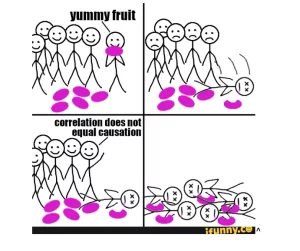
Consider the numbers that should be shocking but aren’t: in 1970, one in 10,000 children was affected by autism. Today it is one in 36. The recommended childhood vaccination schedule in the USA, for example, expanded over the same period from 3 vaccines to 72 today. Most of these are injected several times. The connection is not causal, the advocates cry. But when critics of smoking pointed to the connection between smoking and lung cancer, the same people called it proof. The difference is not scientific but theological. Vaccines occupy a sacred place in the medical pantheon, where doubt is considered heresy.
Genius shows in the way adverse events are interpreted. When a child regresses into autism after a vaccination, it is a coincidence – even if this happens 277 times a day. When thousands of parents report identical patterns of immediate regression after MMR vaccinations (measles, mumps and rubella) , they are dismissed as confused, over-emotional or attention-seeking. The Vaccine Adverse Event Reporting System captures perhaps 1% of actual injuries, yet even this fraction is dismissed as “unconfirmed” and “anecdotal“. Cigarette smoke never achieved such perfect invisibility of harm.
Prevention creates its own scientific bubble. To question vaccines, one has to imagine alternative realities: what if my child would never have caught measles anyway? What if the decline in disease was due to hygiene and not to vaccination? What if the risk of injury exceeded the risk of disease? These questions require complex probabilistic thinking, which can always be met with fear. A photo of a child with measles – a disease that killed 400 Americans a year before the vaccine was introduced – justifies administering dozens of doses to millions of people whose cumulative effects have never been studied.
The masterful argument is to cite the absence of disease as proof of the vaccine’s necessity rather than of its success. Polio has disappeared, so we must keep vaccinating. Measles is rare, so we must remain vigilant. The logic is circular and unshakable: vaccines work because the disease does not occur, and the disease does not occur because the vaccines work. Anyone who points out that smallpox and typhoid disappeared without vaccines is ignored. The counterfactual nature of prevention makes the product intellectually unassailable and emotionally unbeatable.
Consensus building through credentials
Where tobacco would have led to scientific controversy, vaccines inherited scientific authority. The white coat that once advertised Camel now administers vaccines, but with one crucial difference: the doctor sincerely believes in it. Medical schools, where two thirds of professors have ties to the pharmaceutical industry, produce graduates who have never seen measles but have seen careers ruined for questioning vaccines. They emerge from training with 200,000 dollars of debt and are scientifically lobotomised – capable of complex technical procedures but incapable of questioning basic assumptions.
The American Academy of Pediatrics, which receives millions from vaccine manufacturers, publishes guidelines that become gospel. Doctors who deviate from them face not only professional but personal consequences – exclusion from their community, investigations by medical boards, loss of hospital privileges. Dr. Bob Sears was brought before the Medical Board of California, not because he had harmed patients, but because he had issued medical exemptions. Dr. Paul Thomas’s licence was suspended because he published data showing that his unvaccinated patients were healthy. The message is clear: deviation is punished.
This manufactured consensus extends to every medical institution. The CDC’s Advisory Committee on Immunization Practices, which sets vaccination schedules, consists of members with such extensive ties to pharmaceutical companies that they need special waivers. The Institute of Medicine, tasked with examining vaccine safety, declares vaccines “safe and effective” before it has even begun evaluating them. Medical journals, dependent on drug advertising and reprint sales, publish studies written by the industry and reject research that reveals harm. The peer-review process, which is supposed to control the quality of science, becomes a mechanism for enforcing orthodoxy.
The cleverness lies in making dissent appear not only wrong but impossible. “The science is settled” becomes a thought-terminating cliché that obstructs research. “Vaccines save lives” becomes an axiom that requires no evidence. When Dr. William Thompson, a senior CDC scientist, admitted that he had destroyed data suggesting that MMR vaccines increase the risk of autism in African-American boys, this confession vanished from public discourse. When the documentary “Vaxxed” tried to present his evidence, it was pulled from the Tribeca Film Festival under pressure from the pharmaceutical industry. Consensus is not established through evidence but through the systematic suppression of counter-evidence.
Medical students learn immunology from textbooks written by holders of vaccine patents. They memorise antibody responses without ever studying the unvaccinated. They recite vaccination schedules without ever questioning why children in the USA, the most heavily vaccinated population in history, have the worst health outcomes in the developed world. The consensus they take part in is not scientific – it is theological, full of saints (Salk, Sabin), miracles (the eradication of polio) and anathemas against heretics.
Parents as enforcers
Tobacco produced individual consumers who might get friends to smoke. Vaccines create something far more powerful: parents who believe that refusing vaccination is child abuse. Turning customers into law enforcers is the pharmaceutical industry’s greatest innovation. A mother who vaccinates does not merely consume, she preaches, watches and reports. She becomes an unpaid agent of pharmaceutical surveillance, monitoring other mothers with religious zeal.
The mechanism runs deep: parents make irreversible decisions about their children’s bodies, injecting them with dozens of substances they do not understand, while relying on their trust in authority. Once given, this trust is psychologically impossible to withdraw. Questioning vaccines after you have vaccinated your children means confronting the possibility that you may have harmed them. The cognitive dissonance can be unbearable. People would rather defend the practice with growing zeal than face that abyss.
Social media amplifies this compulsion. Mothers post photos of vaccinations like religious mysteries – their infant surrounded by syringes, plasters on tiny thighs, captions about “protecting the community“. They join groups that mock “anti-vaxxers” and share memes portraying hesitant parents as child killers. They demand that unvaccinated children be excluded from schools, parks and birthday parties. They have become willing henchmen of the pharmaceutical industry, enforcing the banishment of others with moral certainty.
The school system institutionalises parental coercion. Mandatory vaccination for school attendance makes every parent an organ of conformity. Those who want to apply for exemptions must fight their way through bureaucratic labyrinths, undergo ideological re-education and endure public humiliation. California’s bill SB277, for example, abolished personal belief exemptions entirely, forcing parents to choose between education and bodily autonomy. Compliant parents invest in the legitimacy of the system – acknowledging the coercion would mean acknowledging their own wrongdoing.
The genius of it is that enforcement appears to come from the grassroots rather than from corporations. When a mother demands that unvaccinated children be banned from her child’s classroom, she is not seen as a pharma representative but as a committed mother. When parents organise to abolish vaccine exemptions, they appear as civic activists rather than corporate puppets. The industry needs no lobbyists when millions of parents are convinced that vaccine mandates protect their children. Every parent becomes a salesperson, every playground a marketplace, every discussion a potential conversion.
How vaccination works
Vaccination has achieved what tobacco never managed: sanctity. The ceremony begins before birth with the mother’s vaccinations, continues with the baby’s “well-child visits“, which take place with religious regularity, and extends into school, university and the workplace. Each injection is a miracle in the church of public health, full of ritual elements that bypass rational thought and engage primitive belief.
The white coat serves as priestly vestment, the syringe as sacred instrument. The vaccination schedule becomes holy scripture, deviation from which is a mortal sin. Parents bring their children to the altar of the examination table, where they hold them down themselves – offerings to the god of prevention. The brief pain, the tears, the fever that follows – all of this becomes a sign of protection, not of harm. “That means it’s working“, they tell parents, teaching them to interpret injury as benefit.
Language itself becomes functional. “Safe and effective” is repeated like a mantra, without evidence being demanded, without questions being allowed. “Vaccines save lives” functions as a creed recited without thinking. “Herd immunity” becomes a moral imperative that turns individual medical decisions into collective obligations. Those who refuse are not merely wrong, but selfish, dangerous, evil. They threaten not only physical health but also the moral fabric of society.
The ritual vaccination calendar creates a temporal structure resembling religious holidays. Two months, four months, six months, twelve months – each appointment is a station on the Way of the Cross of prevention. Parents who miss appointments receive calls, letters, threats. The schedule itself, which has grown from three vaccinations in 1970 to 72 today, is never questioned. Like prayers added to a rosary, each new vaccination is incorporated into the liturgy without its cumulative effect being studied.
Turning vaccination into a metaphysical phenomenon makes rational discussion impossible. You cannot debate Holy Communion with someone who believes it is literally the body and blood of Christ. You cannot debate the dangers of vaccination with someone who believes vaccines are miracles of medicine. The religious framing rules out fact-based discussion. Faith, not facts, determines the rituals. Parents who refuse vaccinations are not making medical decisions – they are committing blasphemy.
This functional framework explains why facts do not matter. When studies show that unvaccinated children are healthier, they are rejected like Protestant criticism of Catholic dogma. When the vaccine court pays billions in compensation, this is ignored like settlements over abuse in the Church. Believers need no evidence, they have their faith. The function of vaccination, performed millions of times a day around the world, is reinforced by repetition, ritual and the powerful psychological effect of costs of every kind already incurred.
When harm strengthens faith
The tobacco model collapsed when the harm became undeniable. But vaccines achieve something paradoxical: harm strengthens faith. When a child regresses into autism after vaccination, the parents face two possibilities: either they harmed their child, or it is a coincidence. The psychological pressure to choose coincidence is overwhelming. Accepting vaccine injury means facing not only personal guilt but also social ostracism. People would rather become the most ardent advocates of vaccination than be its victims.
This psychological trap creates the perfect product – one in which harm reinforces defence. Parents of vaccine-injured children who accept the injury often become the movement’s fiercest critics. Those who deny the injury, however, become its most zealous defenders. They must do so to preserve their sanity. Every defence of vaccination becomes a defence of their own decisions. Every attack on vaccine critics is an attack on their own doubts. The more their child suffers, the more strongly they must believe that the pain has nothing to do with vaccines.
Autism organisations are a typical example of this phenomenon. The organisation “Autism Speaks”, founded by the grandparents of an autistic child, focuses exclusively on genetics, early intervention and acceptance – never on prevention. They receive millions from pharmaceutical companies and promote vaccination despite the link between autism and the expansion of the vaccination schedule. Parents looking for answers turn to fundraising runs, awareness campaigns and genetic studies – anything except investigating the factor staring them in the face.
The medical system reinforces this denial through careful choice of words. Children do not become autistic after vaccination. “They show symptoms that were always there“. They do not regress. “They are entering a developmental phase“. The regression parents observe – loss of speech, of eye contact, of bowel control – is reframed as the revelation of underlying conditions. Parents who insist that their child changed immediately after vaccination are told they are mistaken, that they are confused, that they are looking for someone to blame. Their testimony is discredited, their experience dismissed.
The economic structure deepens the trap. Parents in the USA who spend 50,000 dollars a year on autism therapies have neither the financial nor the psychological means to refuse further vaccinations for younger siblings. Schools require vaccinations for special education services. Therapy centres enforce compliance. Insurance covers autism treatment but not vaccine injury. The system ensures that acknowledging the causal link between vaccination and autism means losing support systems. Parents must choose between truth and survival. Most choose survival, and their choice strengthens the system that harmed them.
The perfect crime
The pharmaceutical companies have achieved what tobacco companies could only dream of: a product that is mandated by law, protected from all liability and turns its victims into advocates. The crime is perfect because the criminals are canonised, the victims silenced and the witnesses blinded. While the tobacco industry faced journalists, lawyers and scientists allied against it, vaccines enjoy the protection of the very institutions whose job it is to oversee them.
The legal immunity granted by the National Childhood Vaccine Injury Act of 1986 has created a moral hazard of unprecedented scale, and not only in the USA. Whether negligence, fraud or contamination: manufacturers cannot be sued directly. The vaccine court, which has paid out over 4 billion dollars in compensation from public funds, operates in secret with special masters instead of juries. Proceedings take years, require proof of causation to standards that are virtually impossible to meet, and cap damages below actual costs. Most families never file claims because they do not even know the system exists. Those who do are bound by gag orders. Their stories are buried in sealed settlements.
The media, dependent on pharmaceutical advertising (70% of advertising revenue), will not investigate vaccine injury. Journalists who try are rejected by their editors, their careers destroyed, and they are personally attacked. Del Bigtree, Emmy-winning producer of the series “The Doctors“, was blacklisted after producing “Vaxxed“. Sharyl Attkisson, five-time Emmy winner, was let go by CBS after reporting on vaccine injuries. The message is clear: discuss anything except vaccines. The result is an information gap in which even parents of injured children do not recognise the visible patterns.
Regulatory capture surpasses tobacco’s wildest achievements. Julie Gerberding, CDC director who oversaw the expansion of the vaccination schedule, became president of Merck’s vaccine division. Scott Gottlieb moved from FDA commissioner to Pfizer board member. The revolving door doesn’t just turn. It is heavily motorised. Organisations whose job is to protect public health have become subsidiaries of the pharmaceutical industry, and their function has shifted from protection to sales and marketing.
The perfection of the crime lies in its invisibility. The harm of smoking was ultimately undeniable – lung cancer, emphysema, death. But the harm of vaccines hides behind complexity, delayed onset and diagnostic manipulation. Autism is genetic. Sudden infant death syndrome (SIDS) is unexplained. Autoimmune diseases are environmental. Allergies are related to hygiene. Every disease with explosive growth can be explained by anything other than the obvious: the 72 vaccinations every child receives. The crime is so perfect that the victims thank their perpetrators, the witnesses deny what they have seen, and the investigators refuse to investigate.
This is the perfect playbook: create a product that prevents invisible diseases, causes delayed harm, establishes its own indispensability and turns medicine into a religion. While it took the tobacco industry decades to build its machinery of deception, vaccines inherited it and improved on it. While cigarettes were eventually put on trial, vaccines enjoy eternal immunity. The student has surpassed the teacher, creating not just addiction but loyalty, not just customers but new communities, not just profit but power. The tobacco playbook was impressive. The vaccine playbook is perfect…
Never miss a show
New films, shows and articles by email – free, unsubscribe anytime.